
In Indian bridal work, long hair carries a lot: jewellery, flowers, a dupatta and sometimes a heavy jada, across functions that can run for days in heat and humidity. The hairstyle also changes how your lehenga, saree, anarkali or gown reads in photos, so I plan the two together. Brides, sisters, bridesmaids and guests all have different jobs on the day, and their hair should reflect that. Below are fifteen long styles, from classic buns and floral braids to open curls and fusion looks, with notes on how each one copes with the weight and hours of a real Indian wedding.
Oil, Henna Dye and Hair Prep in the Weeks Before
Many Indian brides oil their hair regularly, and in the run-up to the wedding I’d keep doing it for the condition of your lengths. The timing is what matters. Oil left in on the day before styling makes pins slide, curls drop within an hour and buns sag. I ask brides to wash it out thoroughly at least a day before each function I’m styling, with a second shampoo if the hair still feels coated.
Hair coloured with henna tends to be drier and a little coarser, which actually helps it hold pins, but it can look dull under flash. A deep conditioning treatment a few days before the main ceremony helps more than any shine spray on the day.
Plan your washes around the mehendi. Once your hands are covered you shouldn’t wet them for hours, and you won’t want to scrub your scalp the next morning while the stain is still darkening. Wash the day before the mehendi so the next styled function isn’t working with oily roots.
1. Indian Bridal Bun For Long Hair
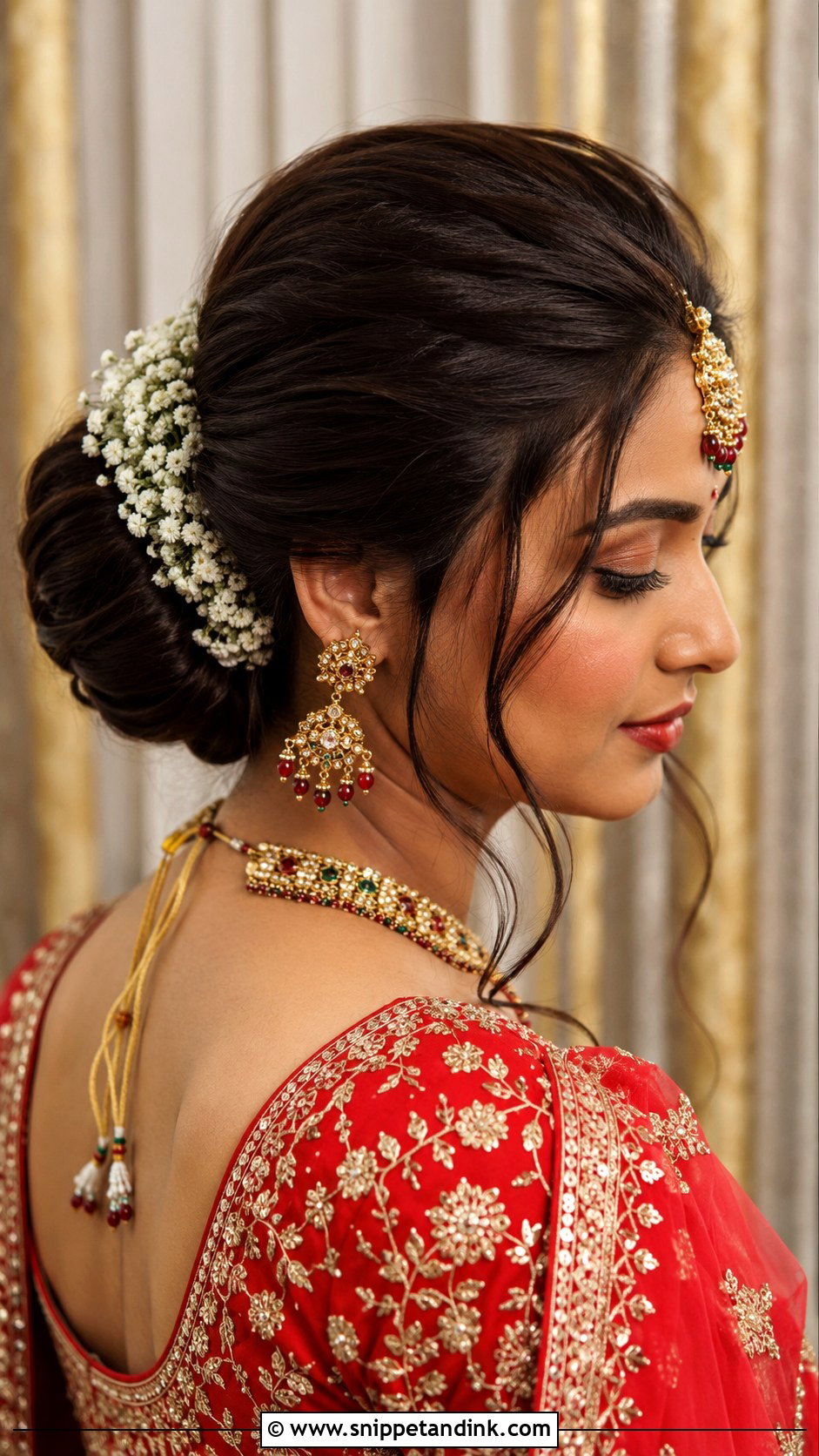
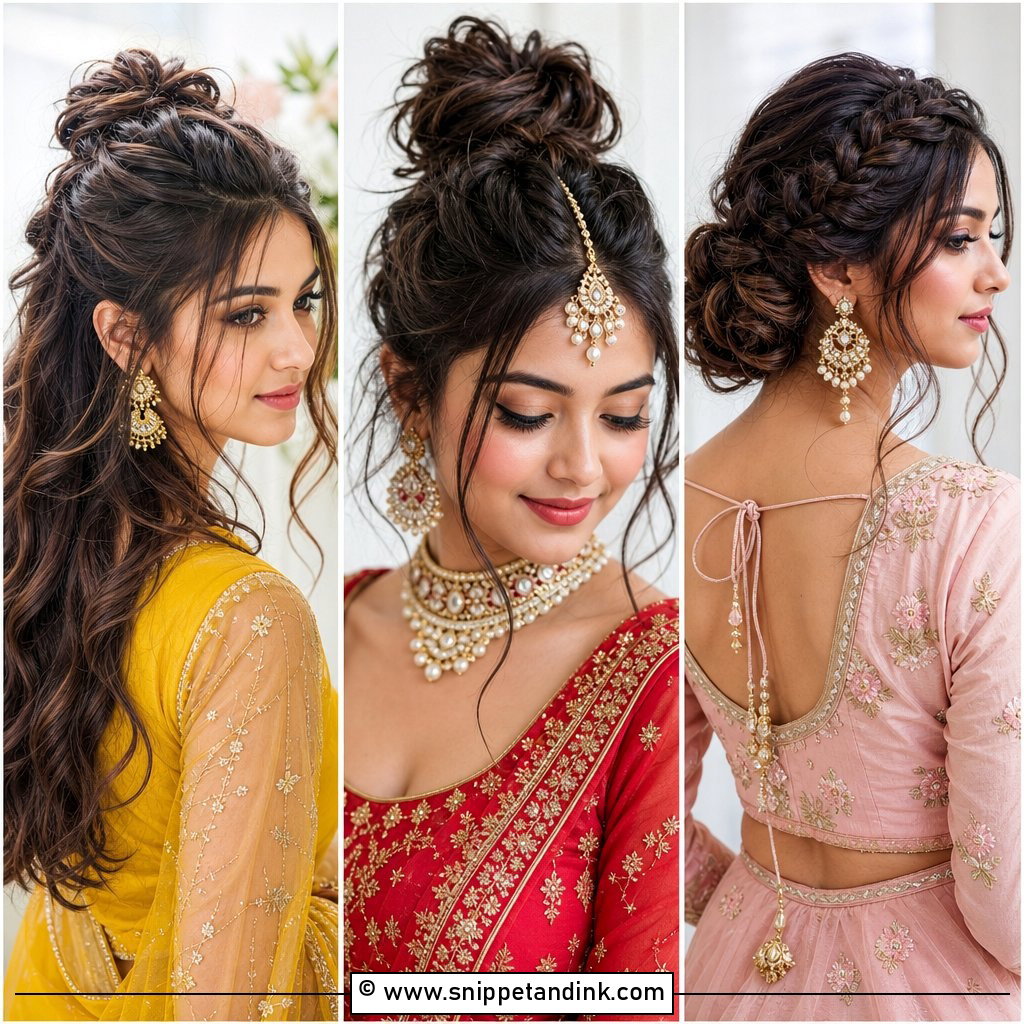
For the main ceremony, a bun is the style I trust most. It holds a dupatta, maang tikka, matha patti, passa and heavy earrings because every piece has something firm to pin into. The front can be softened with gentle volume or a few face-framing strands. The bun itself can be round, braided, textured or wrapped in fresh jasmine. On very long hair I rarely need padding, but I do split the length into two sections and pin each separately, since one bun made from all of it gets heavy by the pheras. It suits lehengas and sarees equally.
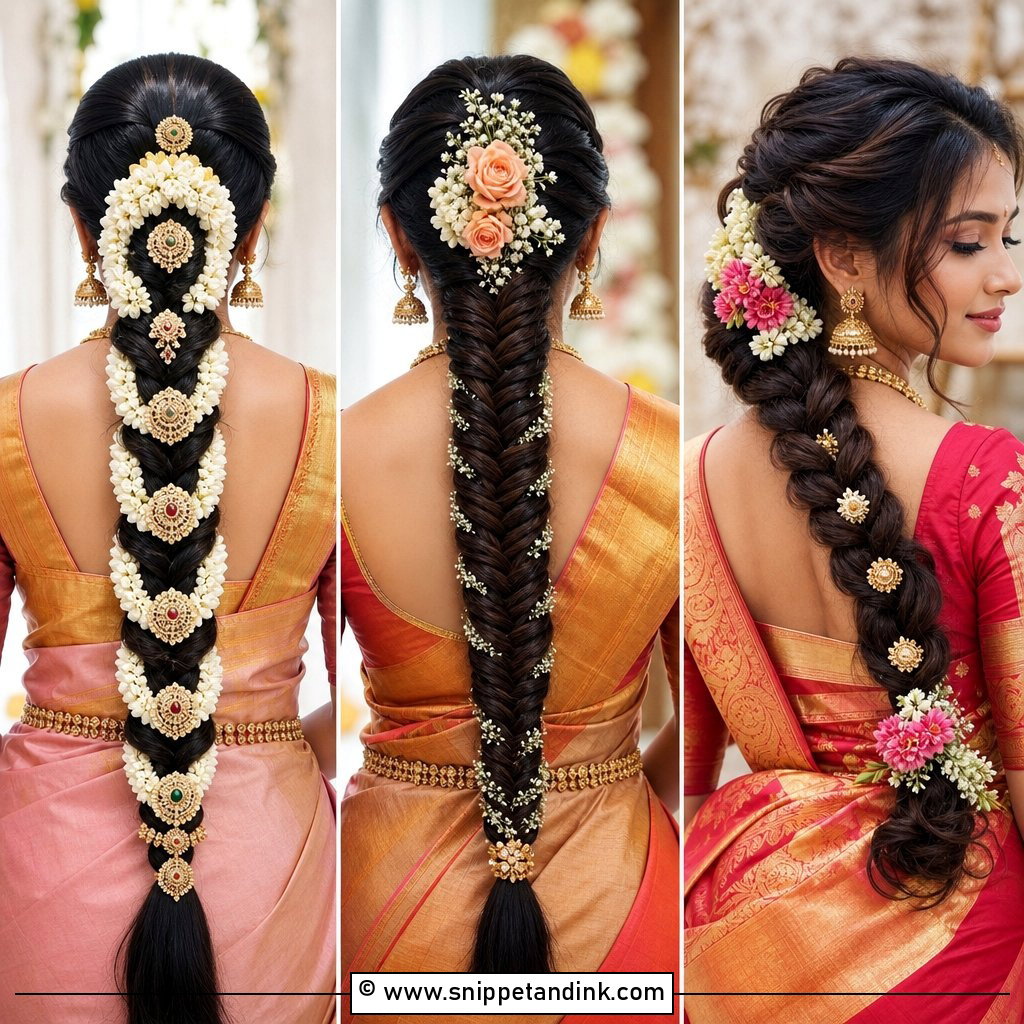
2. South Indian Bridal Braid For Long Hair
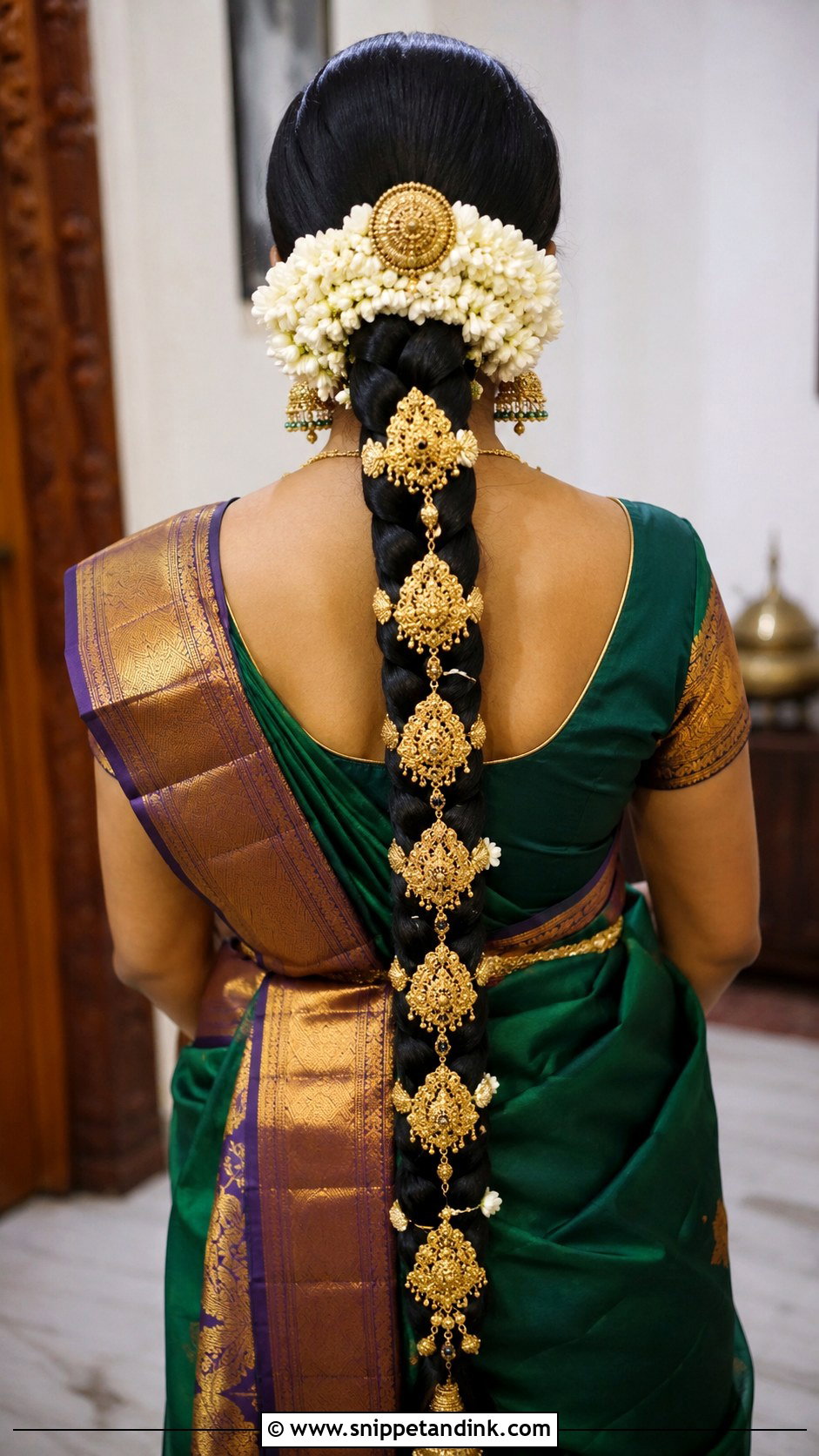
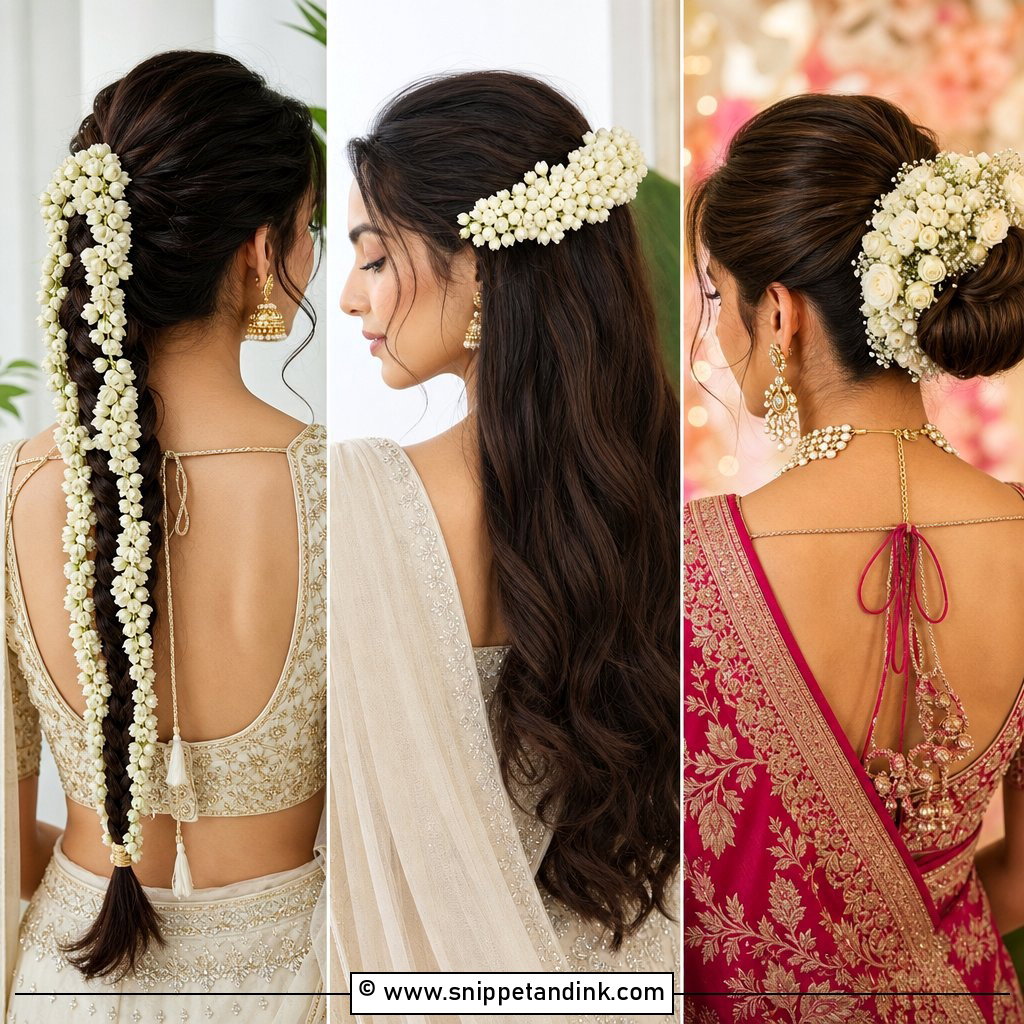
The long South Indian braid starts from a smooth crown, a soft puff or a centre part and runs into a thick plait dressed with flowers, gold ornaments or a classic jada. Silk sarees, temple jewellery and rich makeup suit it. Most brides need extensions to get the length and thickness the jada calls for, and I’d match them at the trial so the braid looks natural from root to tip. A full jada is heavy, so I secure it to a firm base at the crown rather than letting it hang from the braid alone. Done well, it stays neat through the longest rituals.
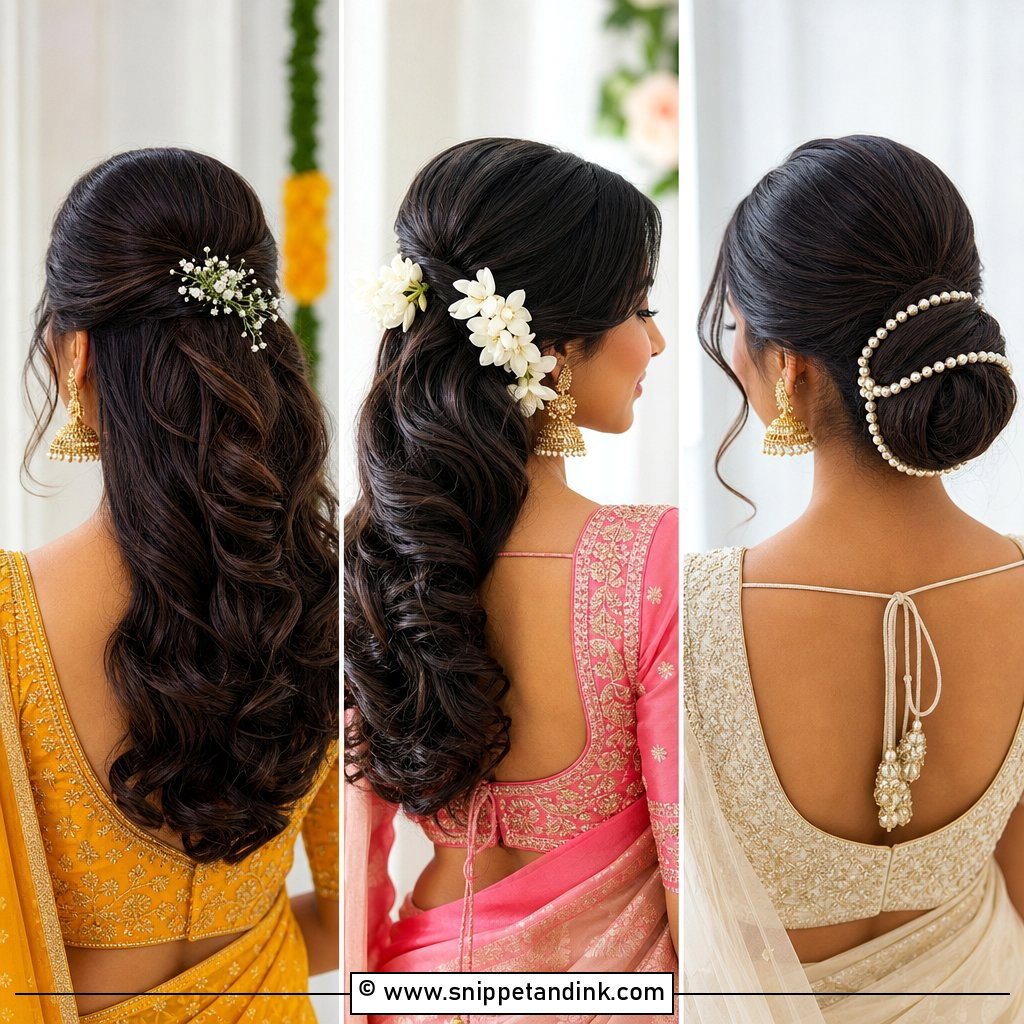
3. Long Hair With Gajra Bun
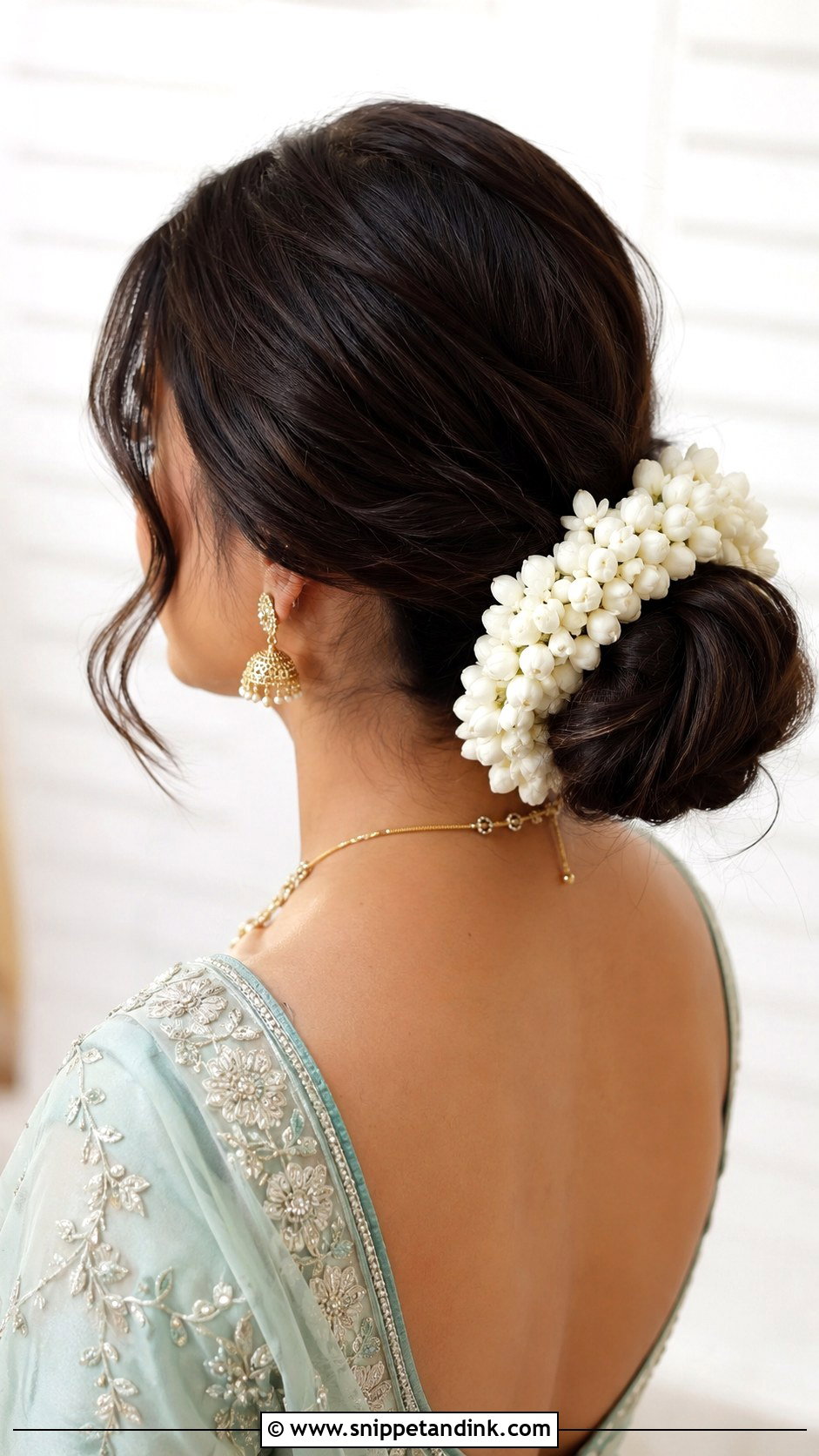
Fresh jasmine wrapped around a bun is about as classic as it gets, and the fragrance is half of its appeal. The bun can sit at the nape or a little higher depending on your face and neckline, and the white flowers give a strong contrast against dark hair. For a modern touch, I style the front with soft waves instead of a slick finish. Order the gajra for the same morning and keep it wrapped in a damp cloth in the fridge until it goes on, because jasmine browns quickly in warm air. Mothers, sisters and guests wear this one as happily as brides.
4. Open Curls For Indian Wedding Long Hair
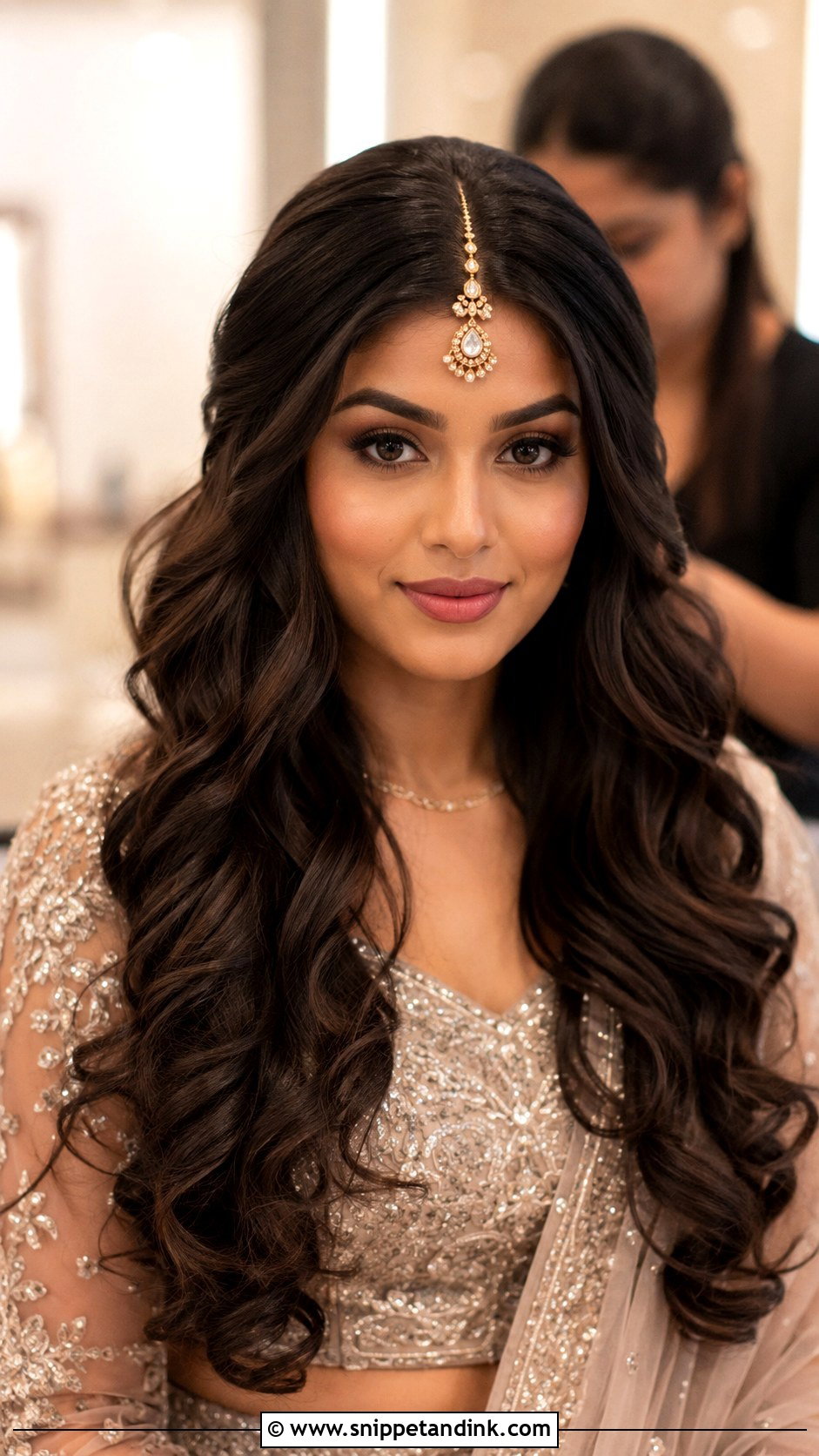
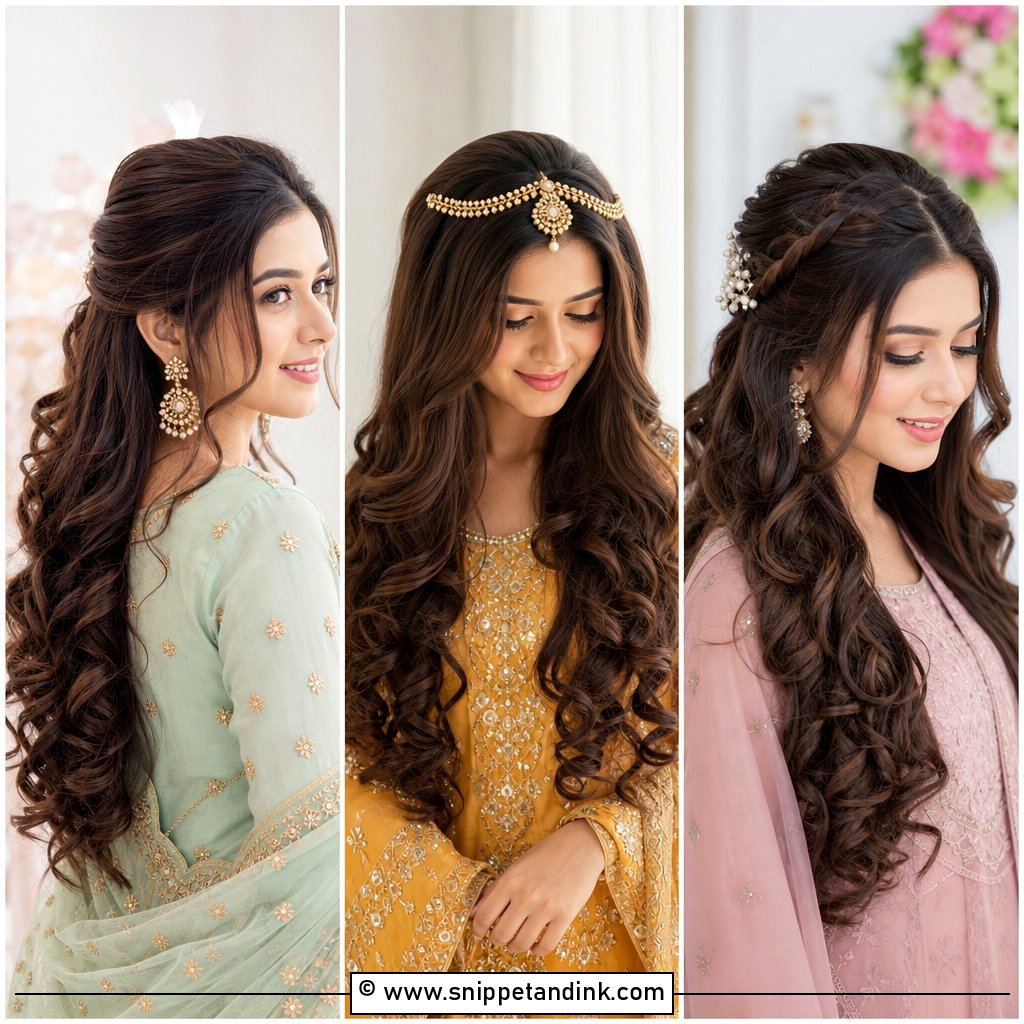
Open curls for Indian wedding long hair put the length front and centre, which suits a sangeet, reception, engagement or a modern guest look. A centre part with a maang tikka makes it bridal; a side part with statement earrings looks more glamorous. Crown volume and defined ends matter most. The risk is humidity: open curls on long hair drop fastest of anything here, so I set each one with a pin while it cools and finish with a firm, flexible spray rather than oil.
5. Half Up Half Down Indian Wedding Hair
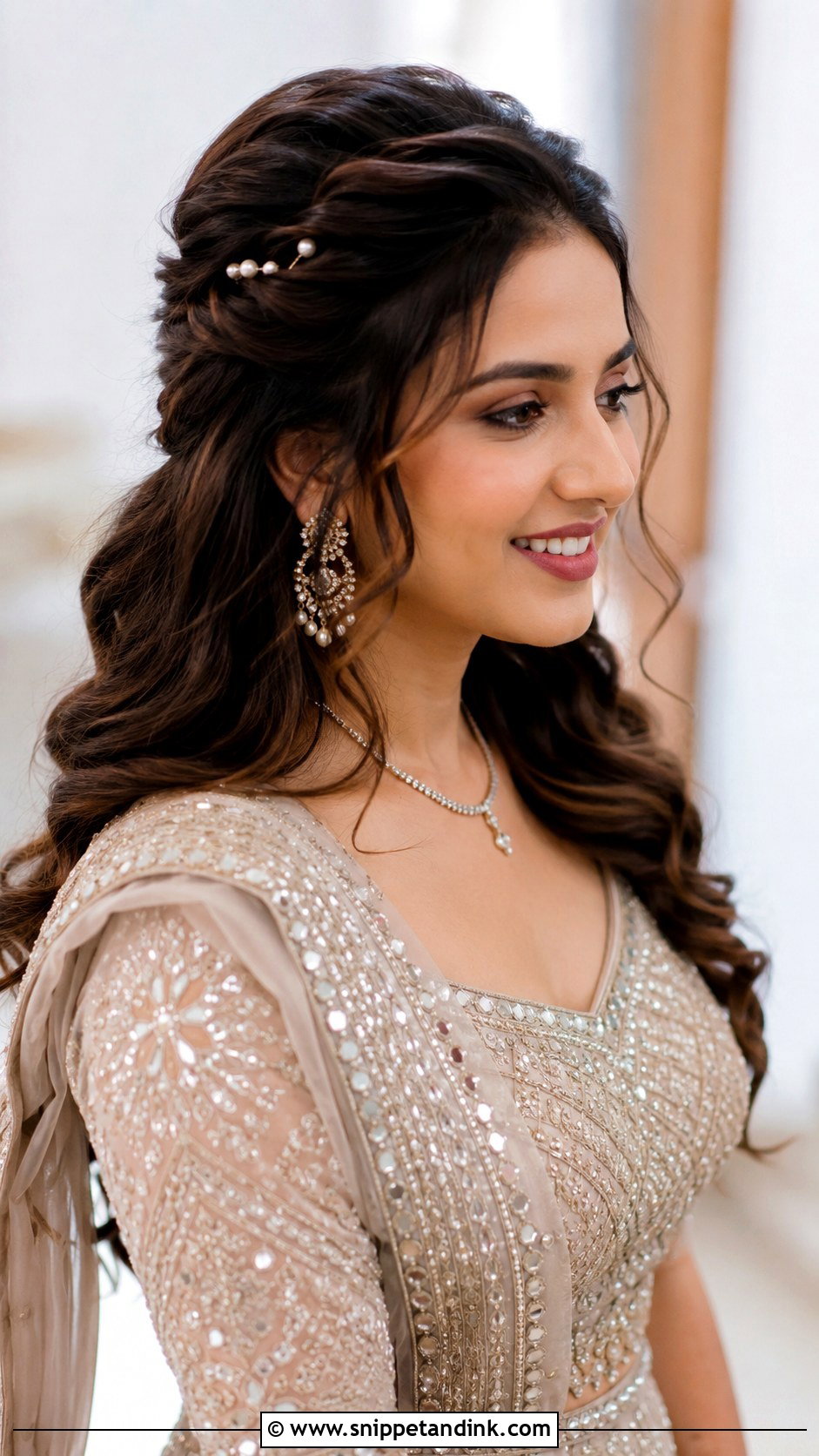
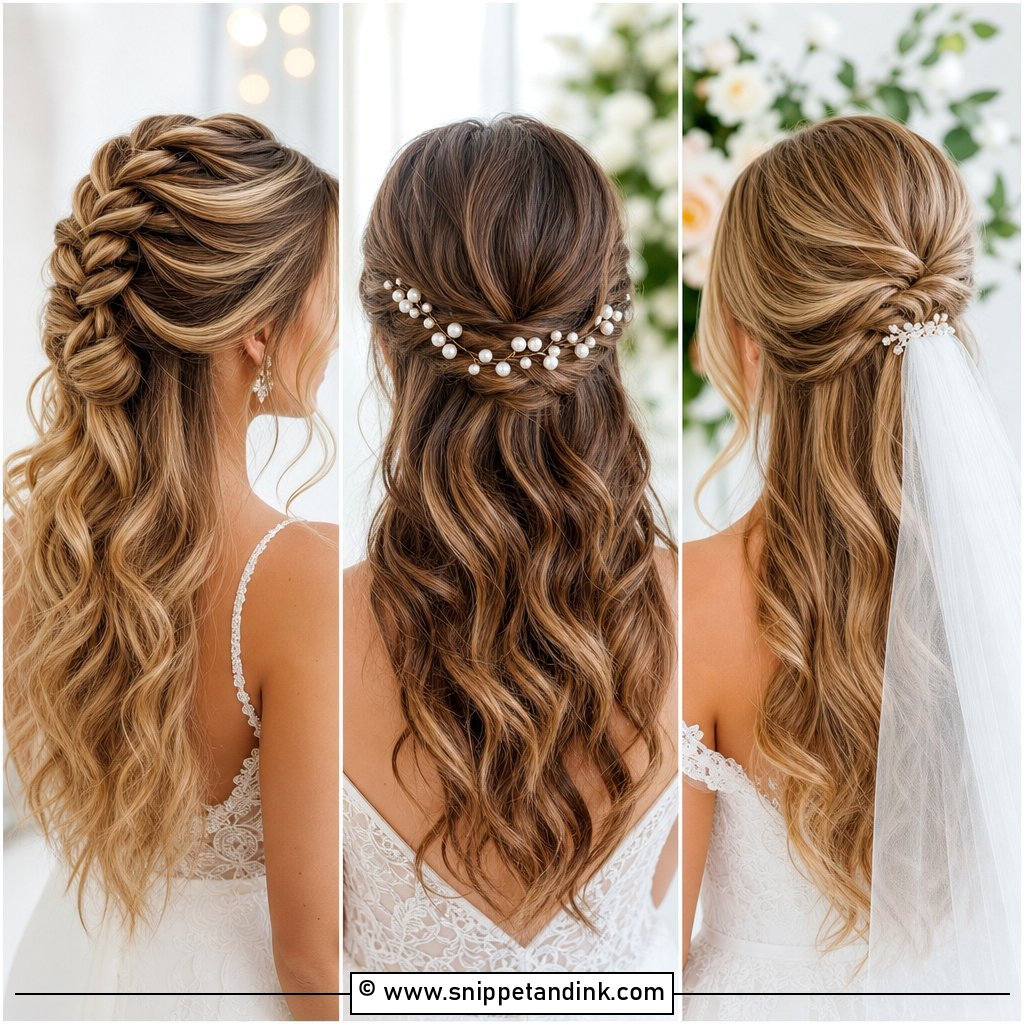
Keeping the front polished and the length free is why half-up hair is so popular with bridesmaids and guests who don’t want a full bun. The top section can be twisted, braided, puffed or pinned with jewelled clips, and the lower length curled into waves or ringlets. It works with lehengas, gowns and Indo-western outfits. If you’re wearing a maang tikka with it, I pin the tikka’s hook into the half-up section rather than loose hair, so it stays centred when you turn your head.
6. Long Braided Ponytail Indian Wedding
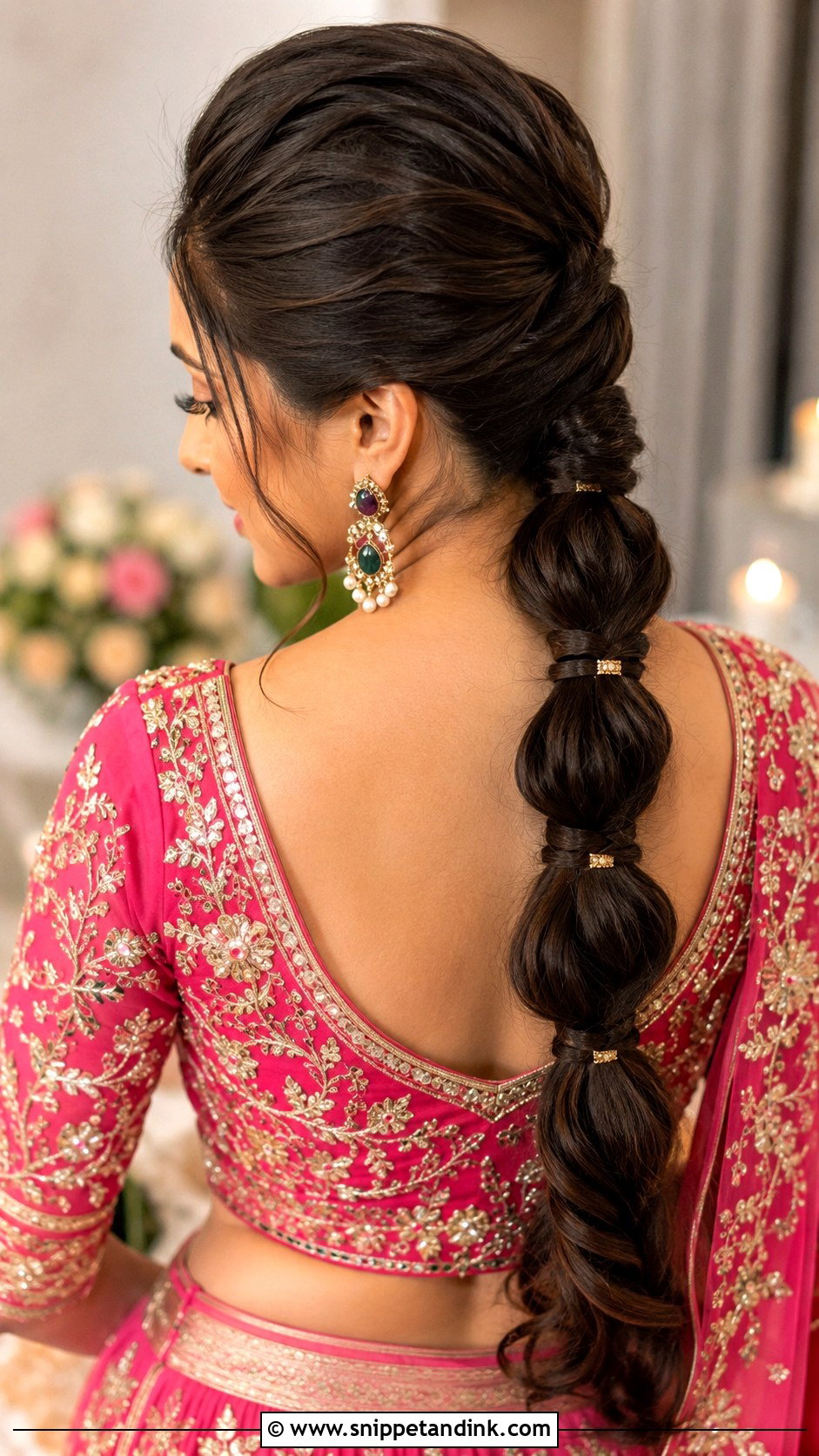
Neat, dramatic and still traditional in feel, a braided ponytail suits a sangeet, mehendi or reception. The crown can be sleek or slightly lifted, with the length flowing into a thick braid that ends in curls. Pearls, small flowers, gold rings or a hair chain all decorate it well. With a backless blouse or an embroidered dupatta, the braid makes a strong vertical line down the back. I tie the ponytail tightly before braiding, because a braid started straight from the scalp tends to twist to one side once you start dancing.
7. Side Braid For Indian Wedding Long Hair
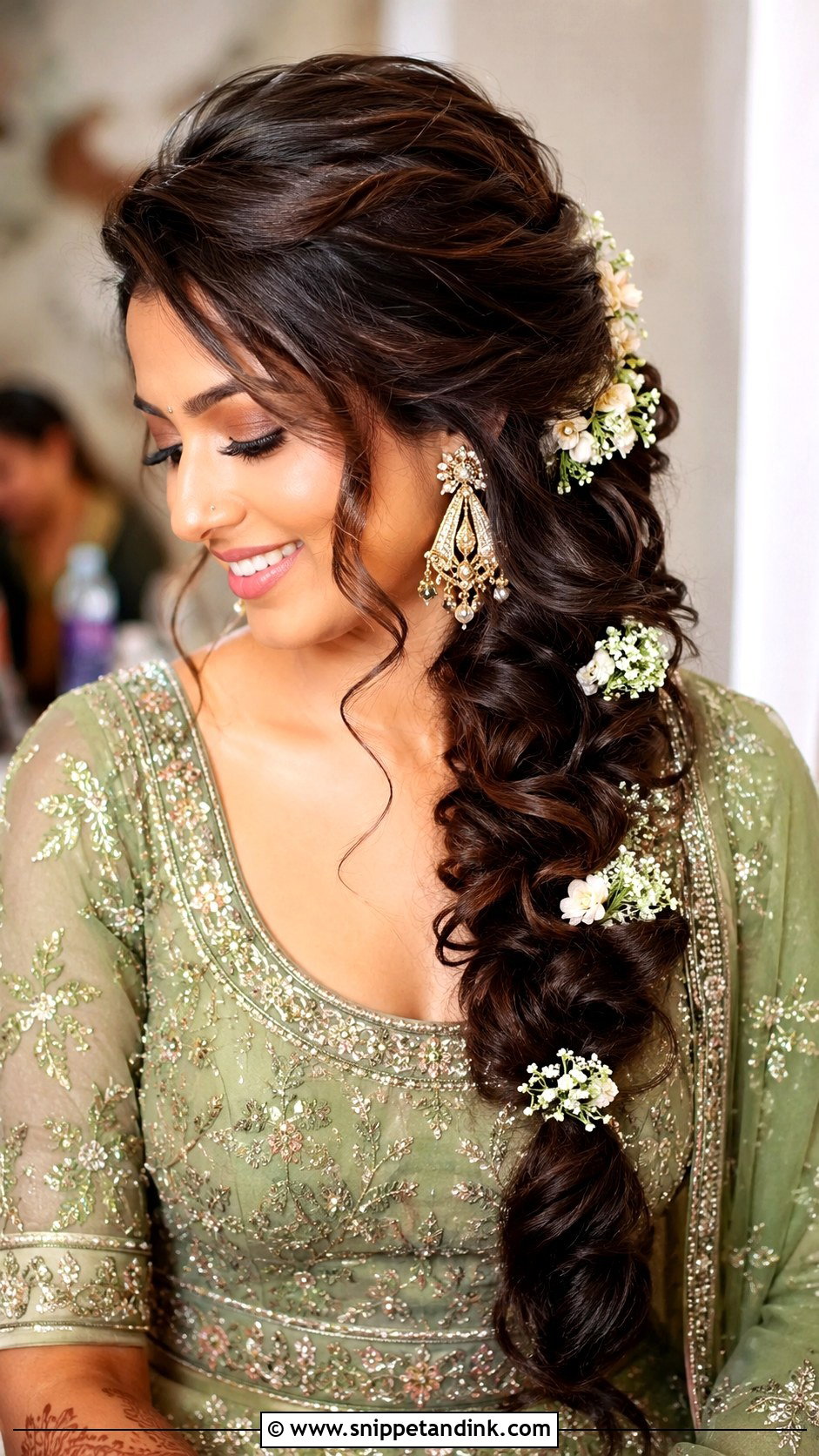
Falling over one shoulder, a side braid shows up well in photos and leaves the back of a worked blouse fully visible. Lehengas, sarees and shararas all pair with it. Fishtail, Dutch, rope or classic three-strand can all be used, depending on how much detail you want. Soft curls around the face keep it romantic, and flowers or pearl pins along the braid add wedding detail. Bridesmaids, sisters and mehendi brides ask for it often. Keep the braid off the side where the dupatta drapes, or the two will tangle all evening.
8. Indian Wedding Fishtail Braid Long Hair
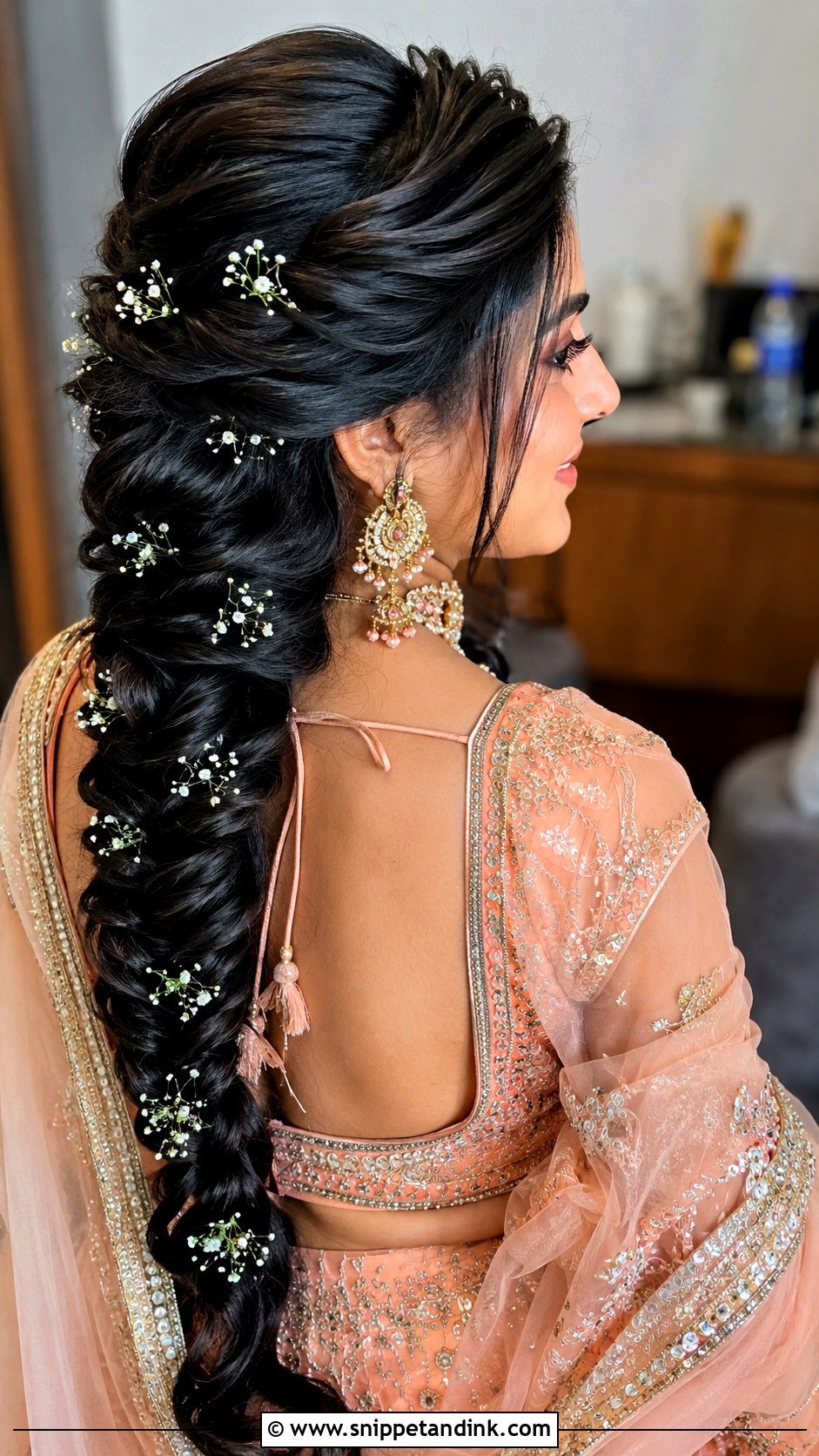
The fishtail’s tight pattern photographs well against embroidered outfits and jewellery. Wear it down the back or swept to the side. For Indian weddings I loosen it after braiding to give fullness, since a tight, flat fishtail can disappear against a heavy outfit. Small flowers, pearls or gold pins make it festive. It’s a good choice for mehendi, haldi, engagement or daytime functions, where it keeps hair out of the way without looking casual.
9. Long Hair With Maang Tikka For Indian Wedding
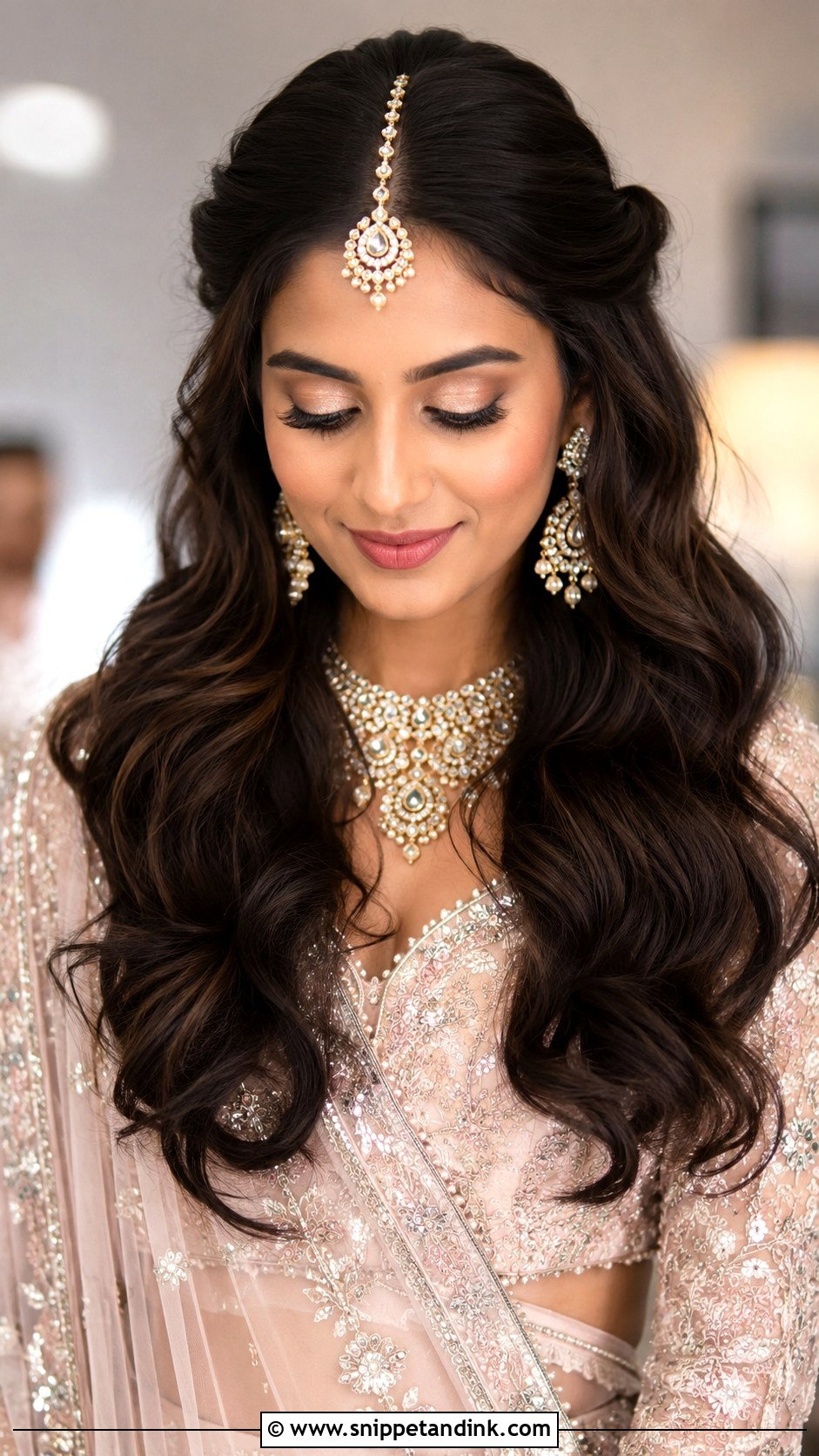
Wearing a maang tikka means the parting is on display, so it has to be clean and centred. Around it, the hair can fall in curls or waves, sit half up or gather into a low bun. The tikka draws attention to the face, which suits soft makeup and statement earrings. I secure the tikka’s chain with a small pin hidden a little behind the hairline, then lay a thin section of hair over it, so it doesn’t slide sideways during the day. For a more secure finish, pin the front sections neatly behind the ears and keep the back full.
10. Reception Hairstyle For Long Hair Indian Wedding
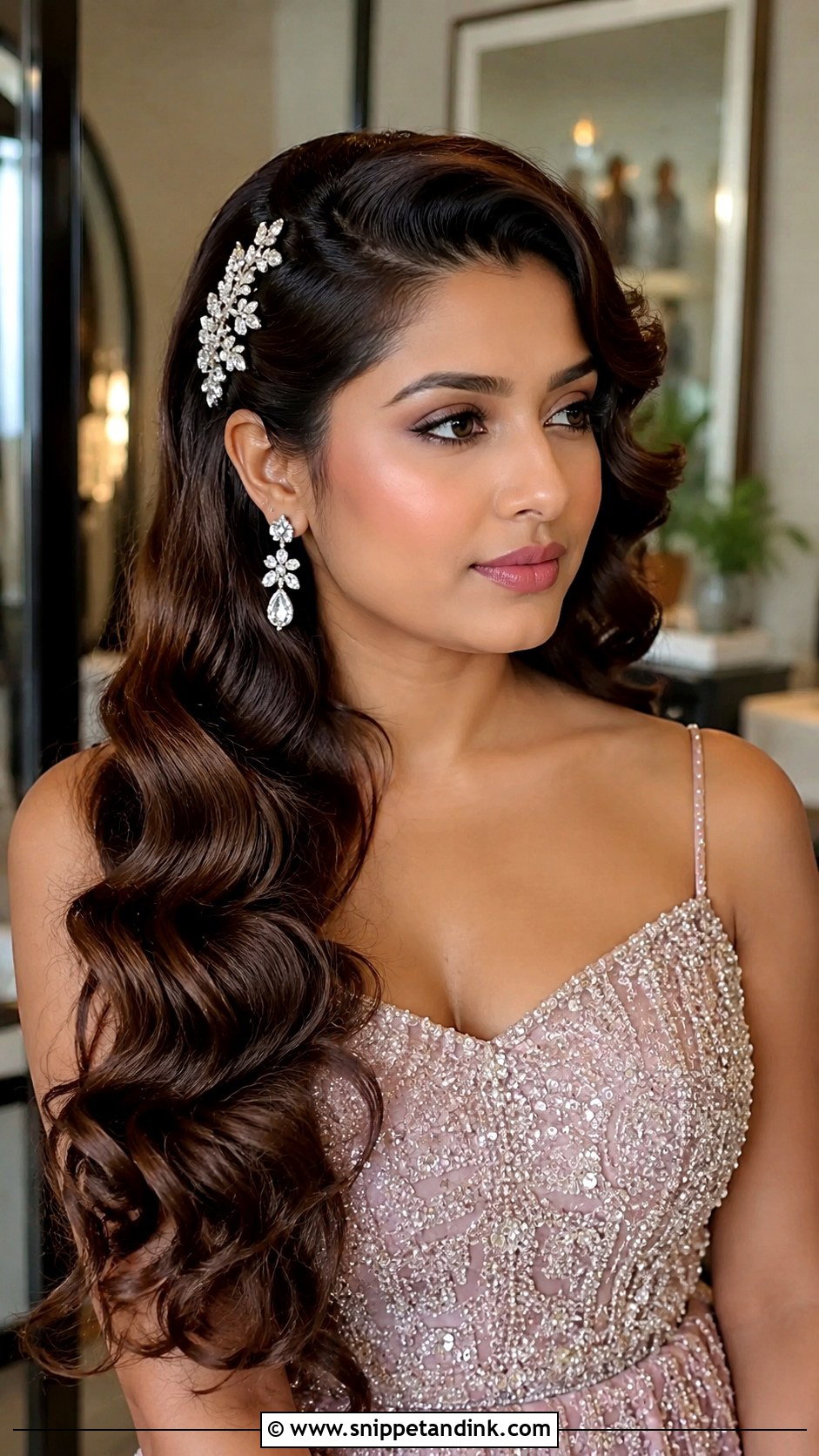
Reception hair can be more polished and modern than the ceremony look. Soft Hollywood waves, a sleek side part or a voluminous half-up style suit evening light and heavy outfits, and this is the function where shine and drama belong. On long hair the waves look richest brushed into one continuous shape instead of separate curls. Crystal pins, a jewelled comb or a sleek accessory can echo your gown or reception lehenga. If you’re switching from a ceremony bun, plan the timing: hair that has been pinned all day needs a proper detangle and a fresh curl before it looks good loose.
11. Mehendi Hairstyle For Long Hair Indian Wedding
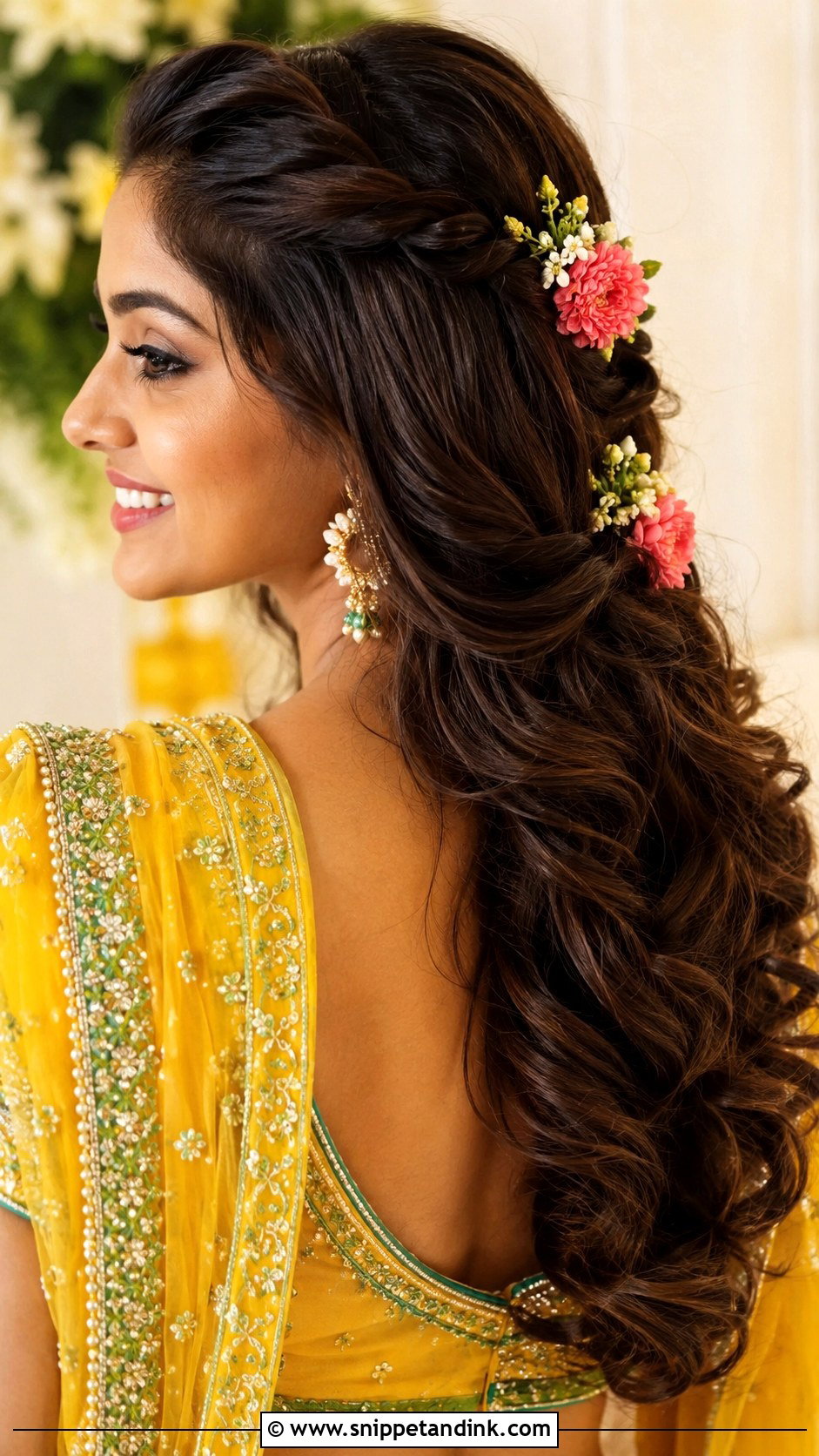
At the mehendi your hands are covered and drying for hours, so your hair has to look after itself. Braids, half-up curls, floral ponytails and pinned-back waves are all practical. This is the function for fresh flowers, colour and softer texture. A long braid with small blooms keeps hair off the face; open hair needs the front pinned back, because you won’t be able to push it away yourself without smudging the design. It should look relaxed but polished enough for family portraits.
12. Sangeet Hairstyle For Long Hair Indian Wedding
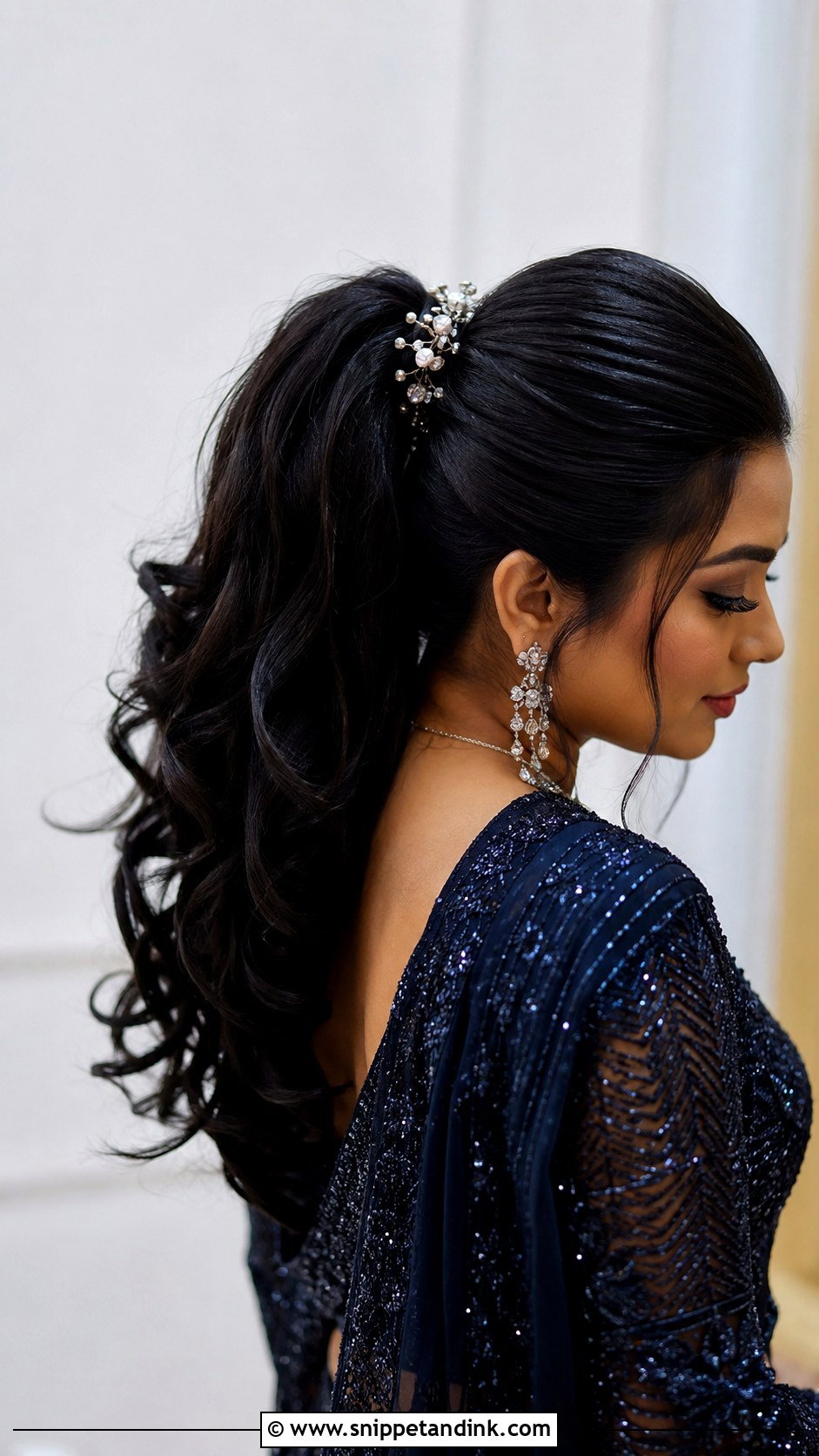
The sangeet means dancing, so the hair needs movement and serious hold. A high ponytail with curls, braided half-up waves or a textured bun with secure pins all hold up. Long hair brings volume and drama, but loose styles get heavy and tangled within an hour of dancing. I keep accessories light at this function; heavy pieces shift on a moving head and pull at the pins. A sleek crown with curled lengths gives a modern look that holds until late.
13. Indian Wedding Hairstyle With Flowers Long Hair
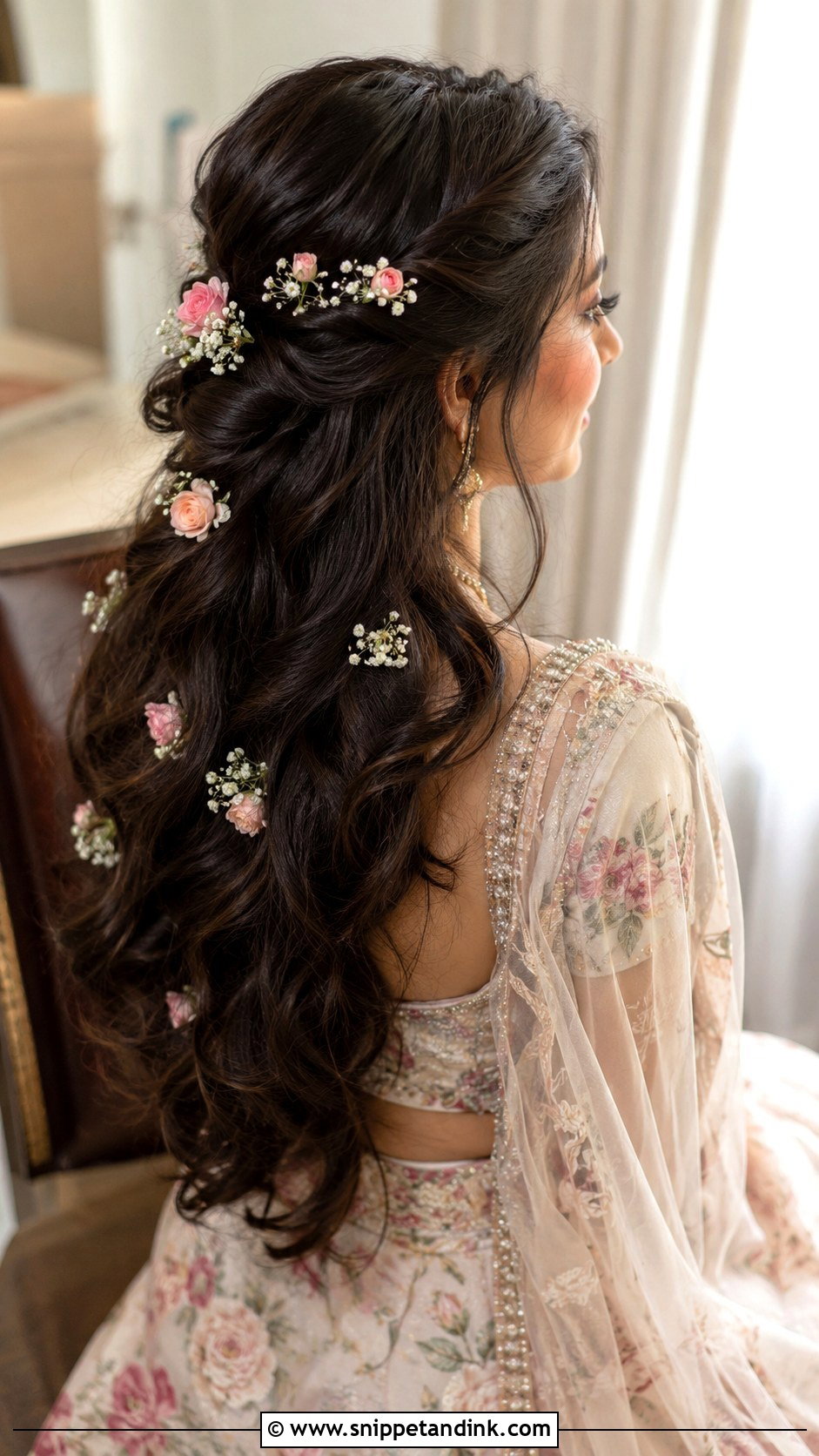
Flowers connect the hair to tradition more than any other accessory, from a full gajra bun to small blooms scattered through curls or a braid. Jasmine is classic, roses feel rich, and baby’s breath reads softer and more modern. Match the flowers to the outfit without letting them compete with your jewellery. Long hair gives room for detail, especially in braids and half-up styles. Fresh flowers wilt under hot lights and in the sun, so for outdoor functions I wire or pin each bloom individually and keep spares chilled for touch-ups.
14. Indian Wedding Hairstyle With Dupatta Long Hair
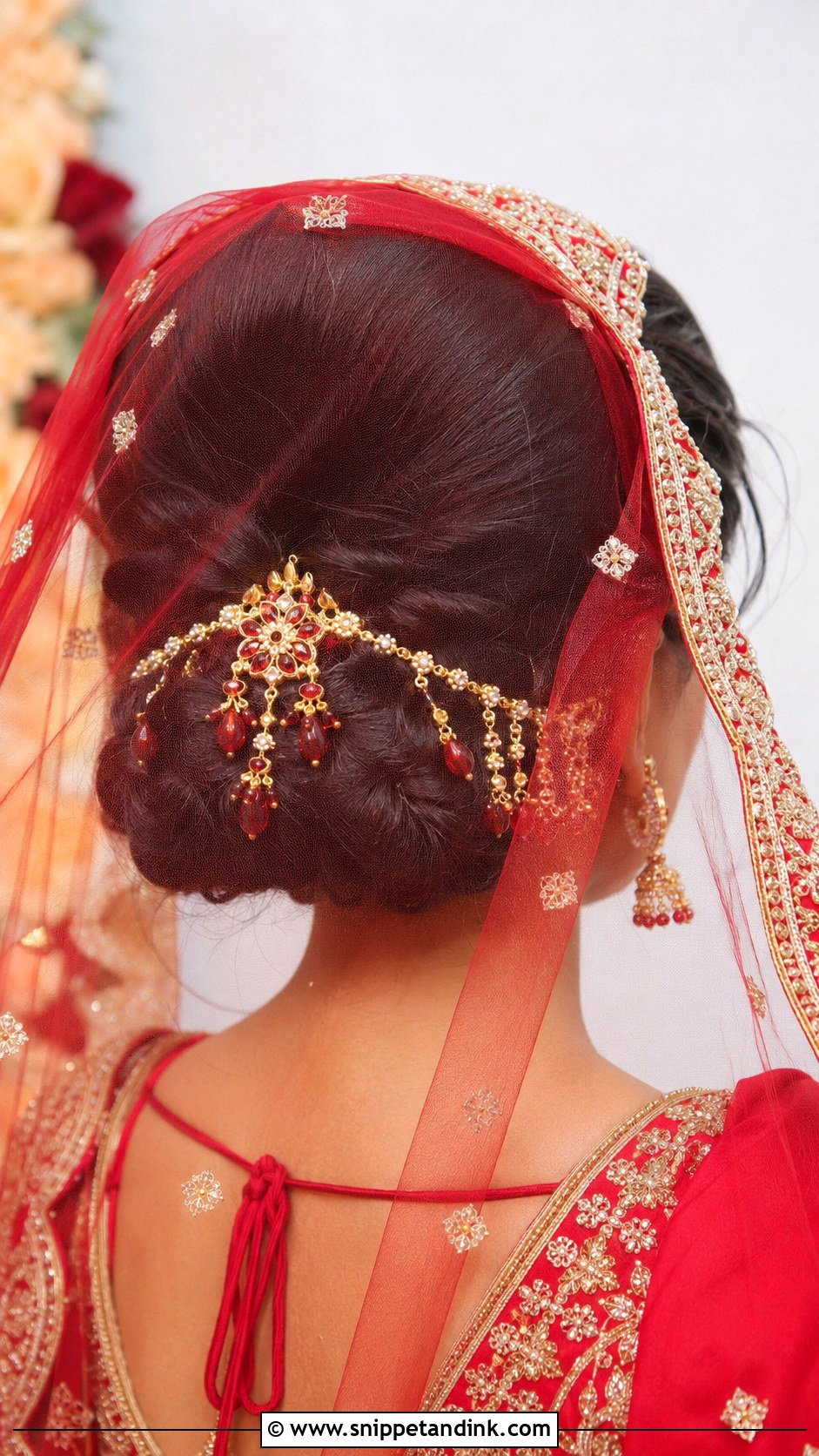
If the dupatta sits on your head, plan the hair around it from the start. A low bun, braided bun or a firm half-up style gives the pins a base, and the crown needs enough structure to hold them without pain. For open hair, pin the front neatly and let the dupatta rest lightly at the back. A heavy, embroidered dupatta can weigh a surprising amount, and it pulls backward on whatever it’s pinned to, so test the style at the trial with the actual dupatta, not a light substitute.
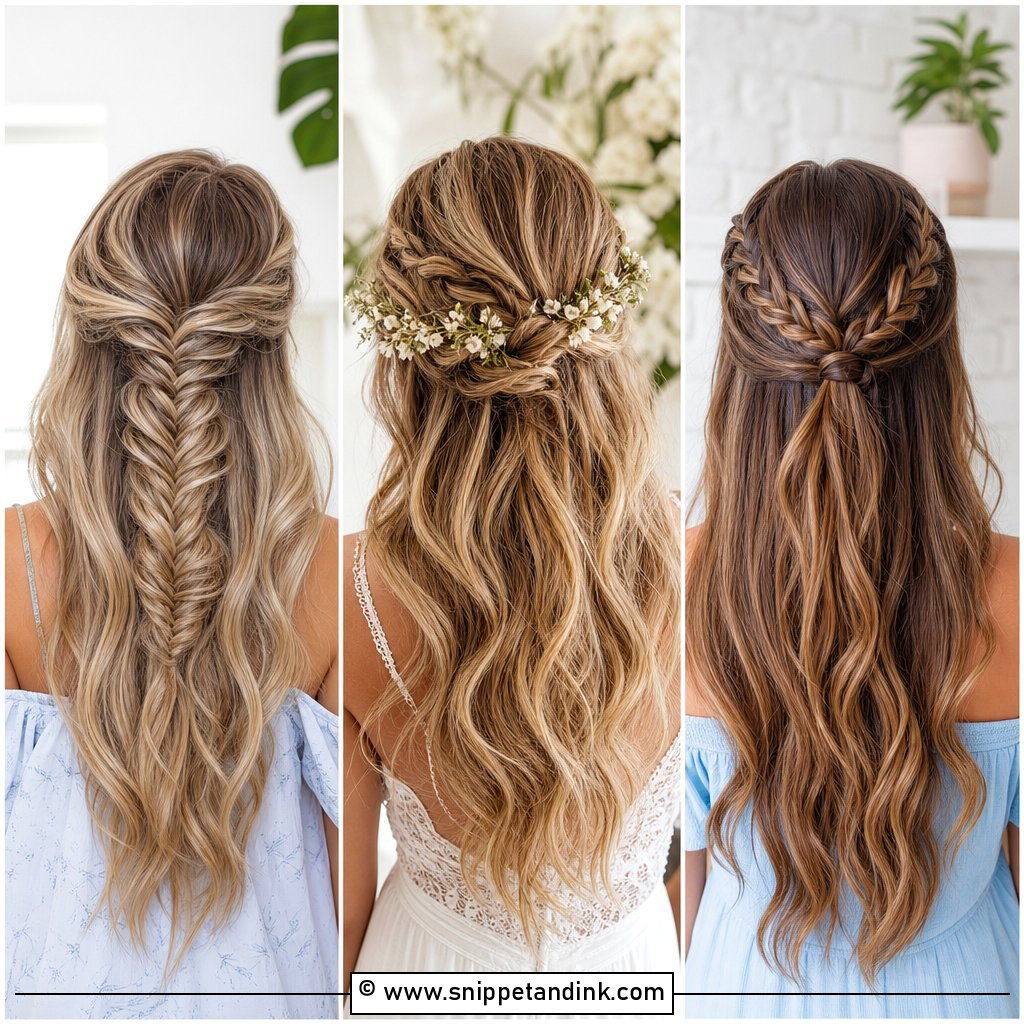
15. Simple Indian Wedding Hairstyle For Long Hair
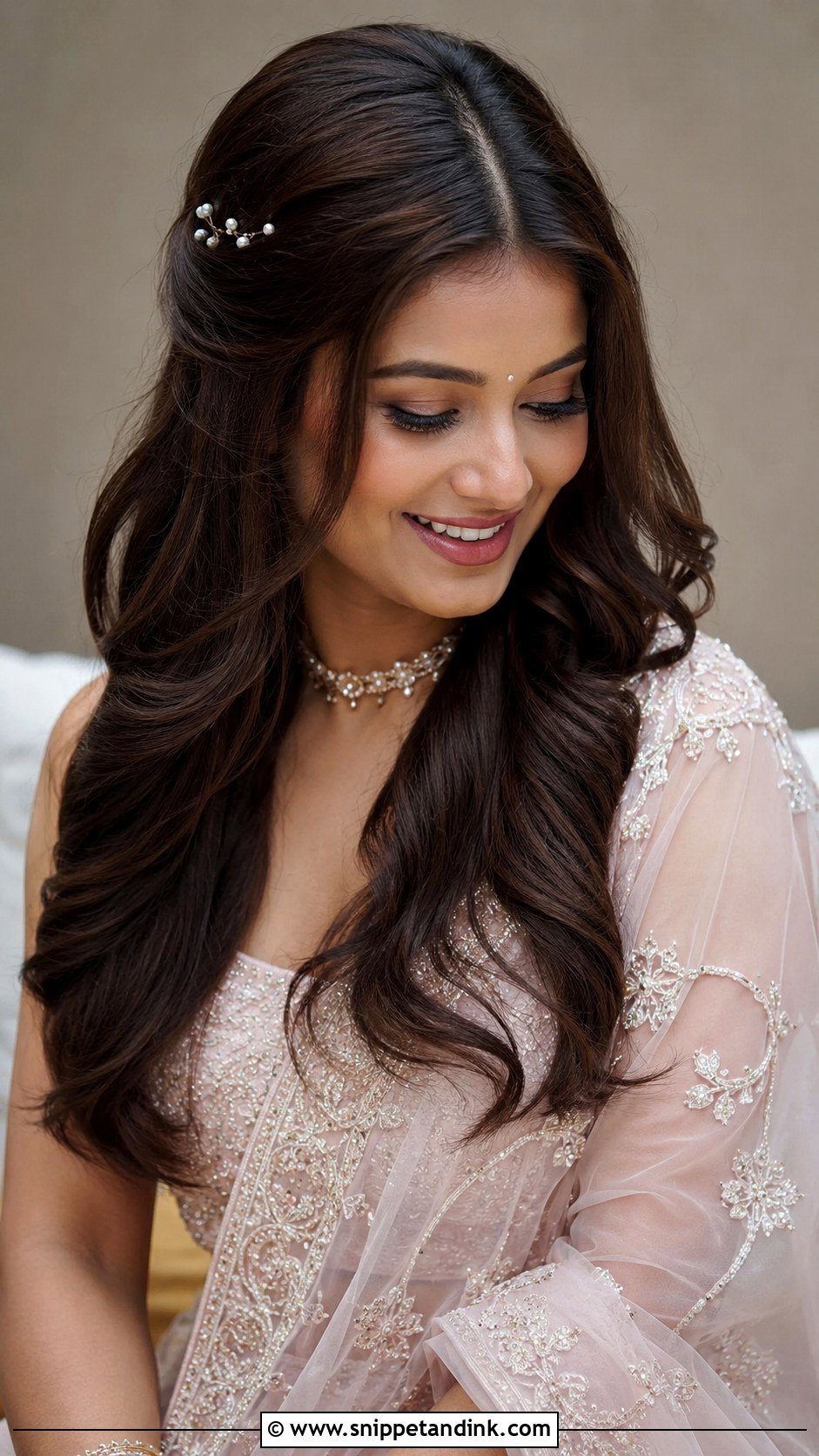
Simple doesn’t mean plain when the finish is clean. Soft curls, a low ponytail, a smooth braid or a minimal half-up style suit guests and smaller functions. A simple look lets the outfit, jewellery and makeup take the lead. Polish the ends, control frizz and place volume where it flatters your face. Then add one detail: a few pearl pins, a small flower cluster or a sleek centre part. One detail placed well reads as more considered than several competing.
Matha Patti, Passa and Jada All Pull on the Same Roots
Bridal jewellery for the head is heavy, and every piece is pinned into hair at a few points. The matha patti hooks at the centre parting and along the sides, a passa sits on one side above the ear, and a jada hangs from the back of the crown. Each one pulls in a different direction. By the end of a long ceremony, that’s the main reason brides get headaches, not the hairstyle itself.
- I build a small hidden braid or a crossed-pin base under each heavy piece, so the weight sits on many hairs instead of a few.
- Bring all your jewellery to the trial. A light imitation piece won’t tell you how the real one sits.
- Hold the passa against your head before buying it. Some are much heavier than they look in a box.
Recovering Long Hair Between Back-to-Back Functions
Three or four days of heat styling, backcombing and pins take a toll on even healthy long hair. When you take a style down, remove every pin first, then work out any backcombing with a wide-tooth comb from the ends upward, never from the root. Apply conditioner and leave it on longer than usual. If one function can be a braid with no heat at all, put it between the two most styled days. Your hair will hold the next curl better for the rest.
Plan Around the Longest Function, Not the Prettiest Photo
The right long style depends on your outfit, jewellery, the function, your hair texture and how many hours it has to last. A bridal bun is classic and secure; open curls and half-up hair are softer and more modern; braids handle tradition, comfort and long celebrations. Flowers, the maang tikka, gajra and dupatta placement can change the whole effect. My test is simple: if a style won’t stay comfortable through the longest ritual, the greetings and the drive home, I’d change it, however good it looks in a reference picture.
You'll Like These Ideas:


Leave a Reply