
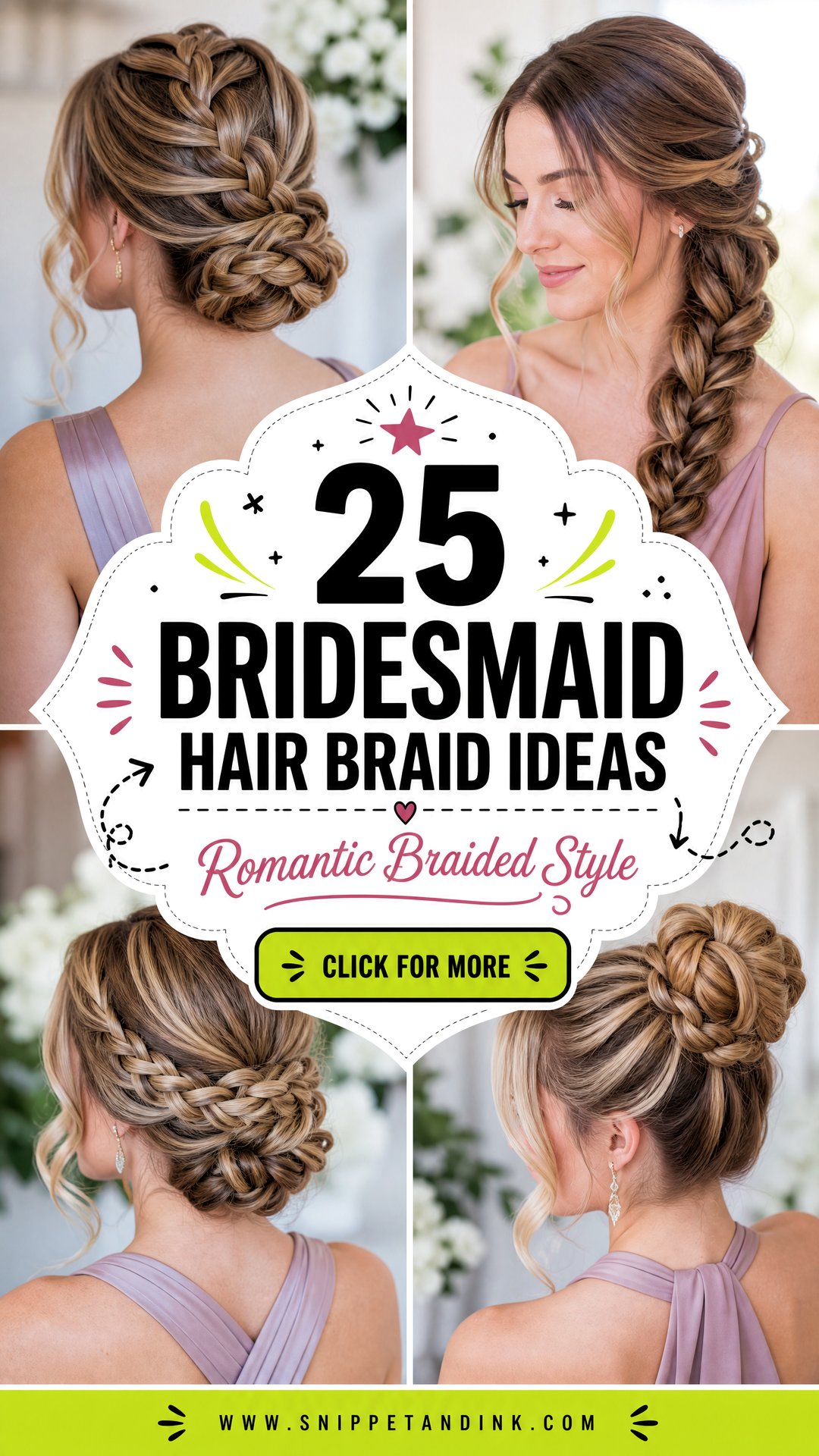
Braids are the hairstyle I reach for most when a bridal party has to stay put through a ceremony, a photo session in the wind and four hours of dancing. A braid is a mechanical hold: the strands lock each other in place, so the style depends far less on hairspray than a set of loose curls does. That also makes braids easy to share across a group without cloning anyone. One bridesmaid can wear a braided bun, another a half up braid and a third a side braid, and they still read as one party in the group shot. Below are 25 braids I’d happily put on bridesmaids, with notes on which hair each one really suits.
One Braid Theme Across Very Different Heads of Hair
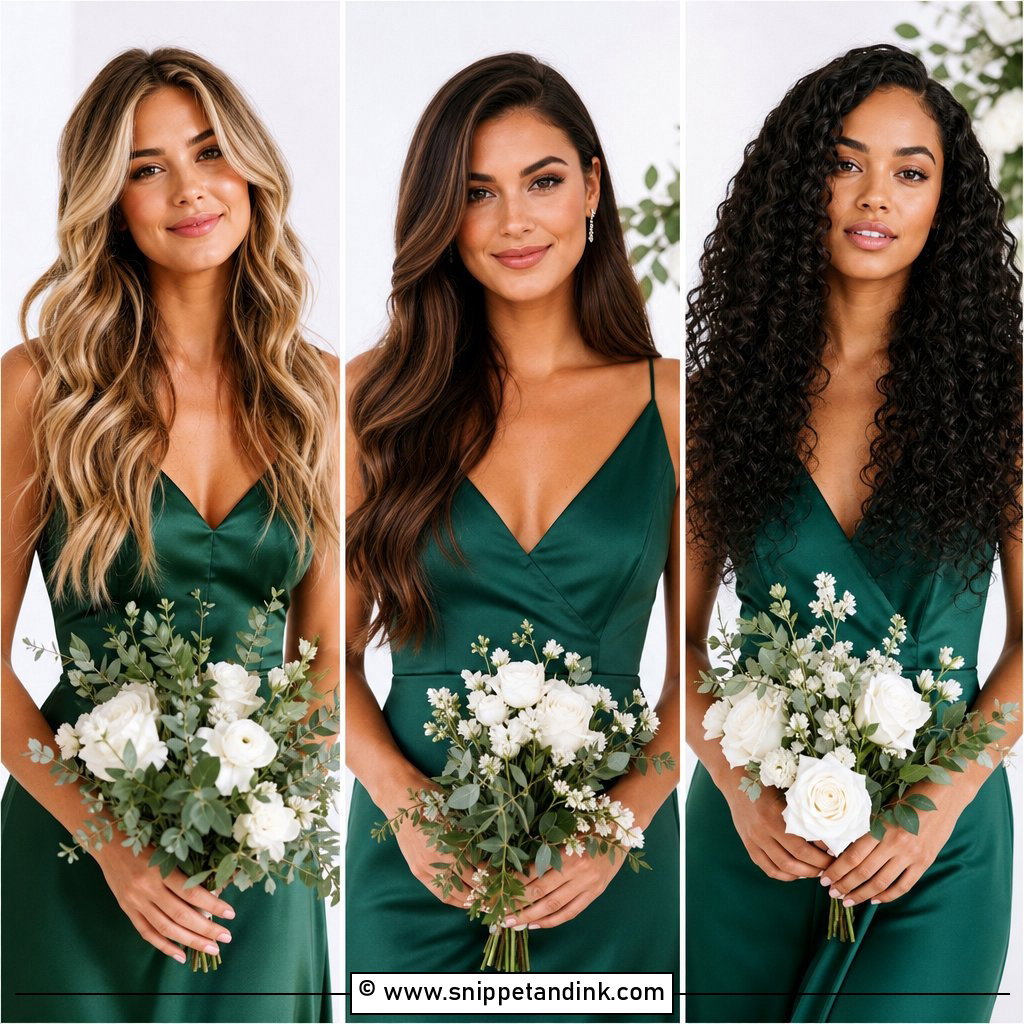
Most bridal parties I style have several hair types in one room: fine straight hair, thick waves, curls or coils, and often someone with a fresh bob. Asking all of them to wear the identical braid usually means one version looks thin and another fights the style all day. What works better is fixing one or two elements across the group and letting everything else adapt.
What I keep the same for everyone
- Placement: every braid sits at the nape, or every braid falls to the left. From the back of the church, that alone reads as matching.
- Finish: either the whole group is polished or the whole group is loosened. Mixing the two is what makes a party look uncoordinated.
- One accessory, such as the same pearl pin or the same sprig of dried flowers, repeated in every head.
How each hair type gets there
- Fine, straight hair: texture spray or dry shampoo first, then a pull through braid or a gently widened three-strand braid for size.
- Thick hair: smaller sections and more pins, often two braids instead of one, so the finished style isn’t heavy on the neck.
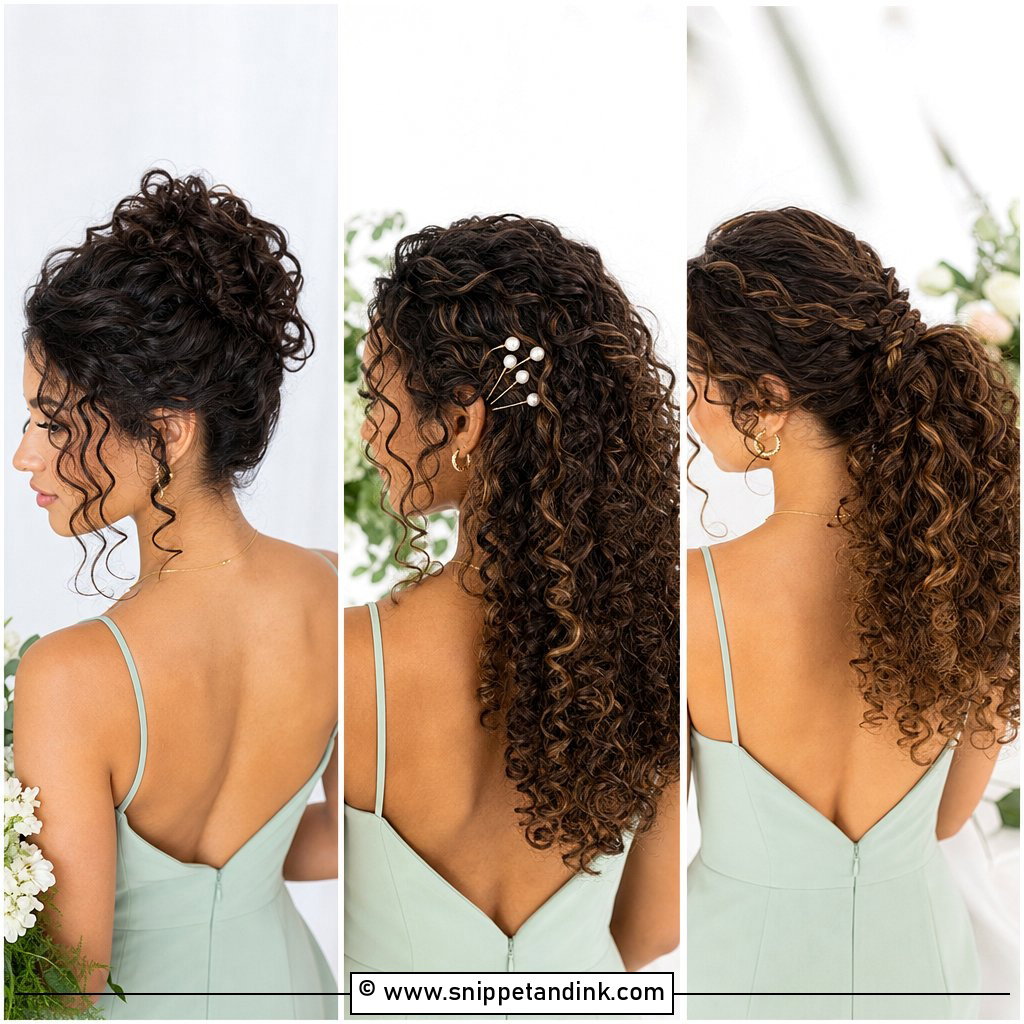
- Curly and coily hair: braided on stretched hair with a cream rather than a spray, letting natural volume fill the braid.
- Bobs and short layers: a small front or side braid placed to echo where everyone else’s braid sits.
I ask each bridesmaid to arrive with hair washed the day before, fully dry and free of oil serums. Freshly washed, silky hair is the hardest to braid and the first to slip.
1. Bridesmaid French Braid Updo
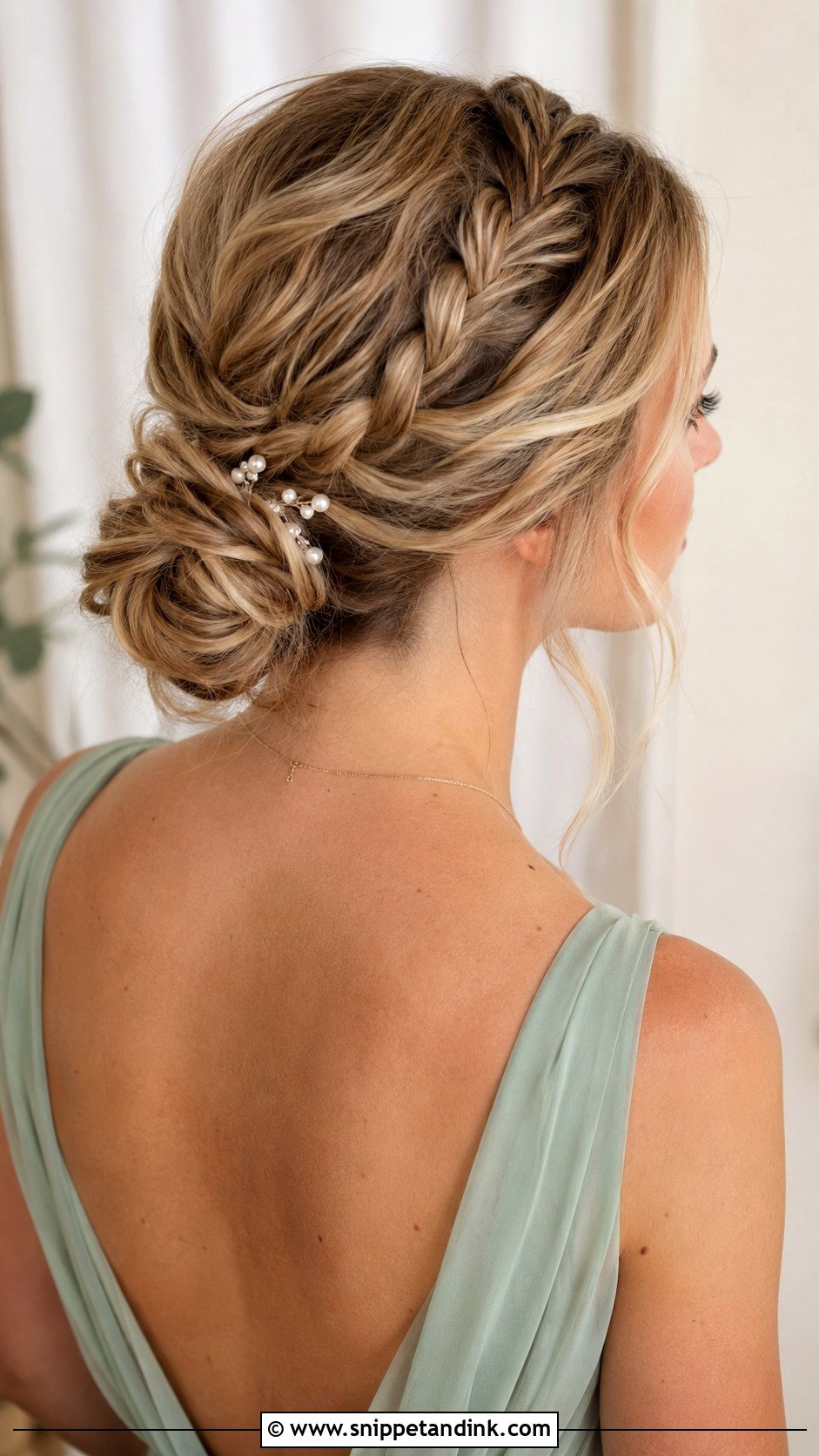
The French braid updo is a classic that only looks stiff when it’s pulled too tight. I start the braid near the crown, take it toward the back and tuck the tail into a low bun or pinned chignon. On a hot day it keeps hair off the neck, and it leaves a detailed dress back on show. It’s also my fix for short layers: the braid catches them as it travels, so they don’t spring loose by noon. For a romantic wedding I leave the hairline soft; for a formal church service I keep the braid smooth and add a few small pearl pins.
2. Bridesmaid Dutch Braid Bun
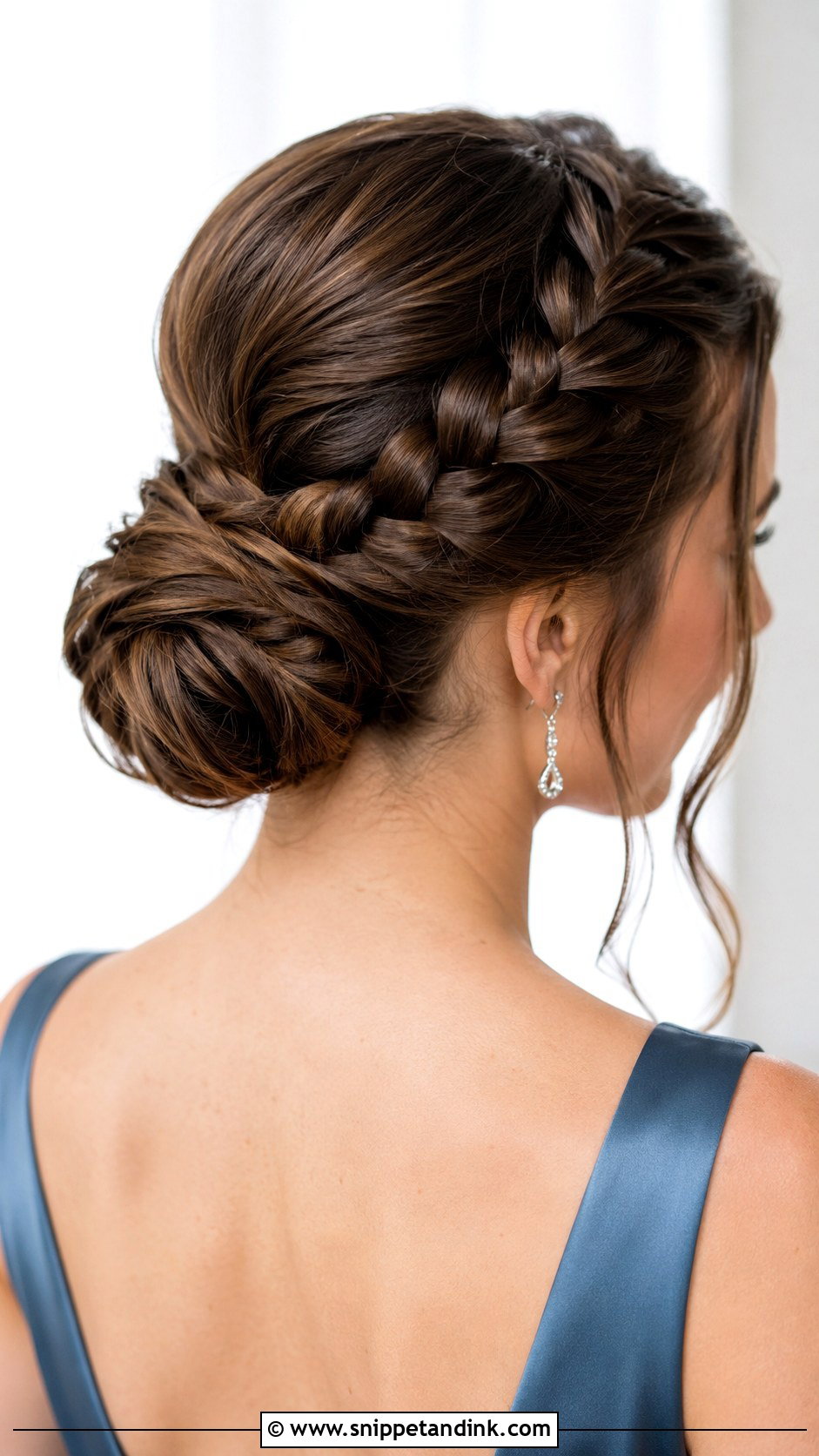
A Dutch braid is crossed under instead of over, so it sits raised on top of the hair, and that relief is why a bridesmaid Dutch braid bun reads so clearly in photos. It shows best on medium or long hair with some dimension in the color. On one flat shade, the pattern can vanish from a few metres away. I wrap it into a low, side or centered bun depending on the neckline. I keep the bun itself a little soft, since a tight bun under a tight braid looks severe. A light shine spray and a flexible hairspray finish it without crunch.
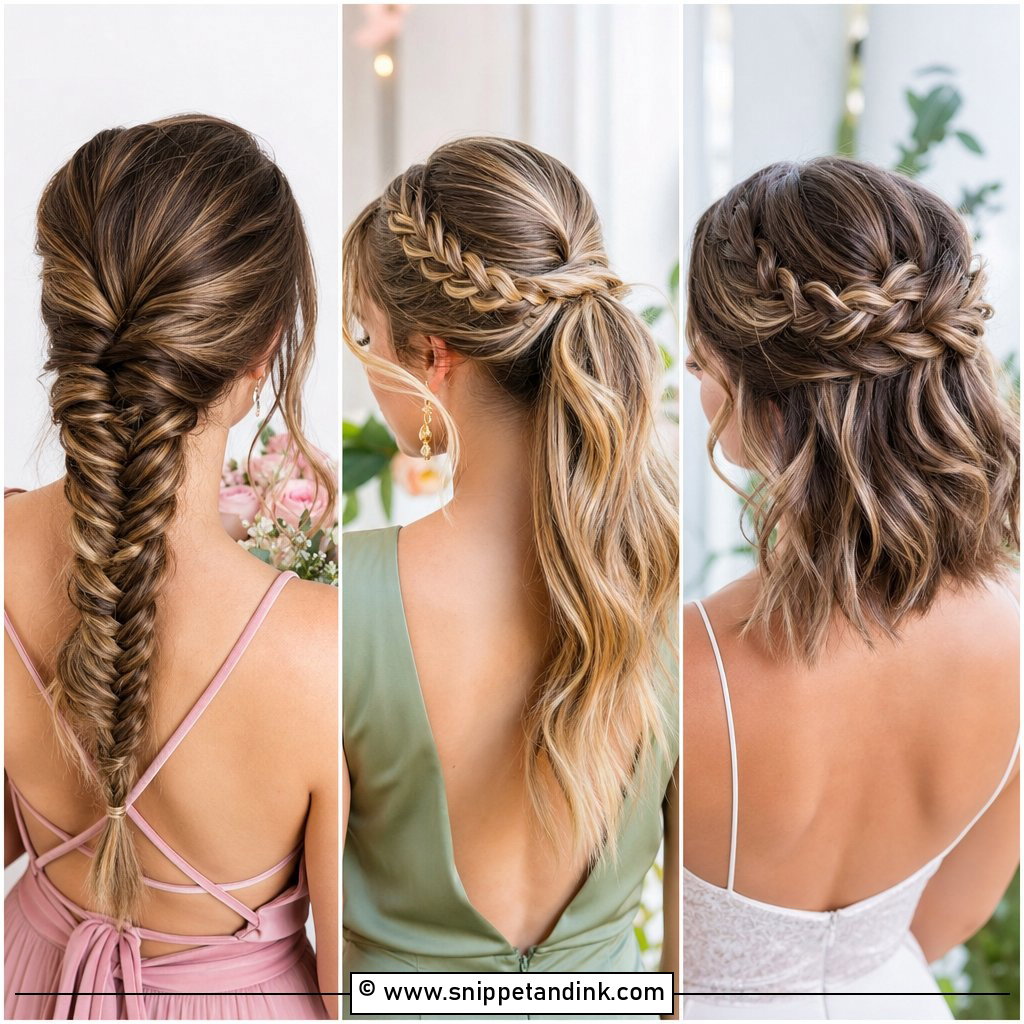
3. Bridesmaid Fishtail Braid
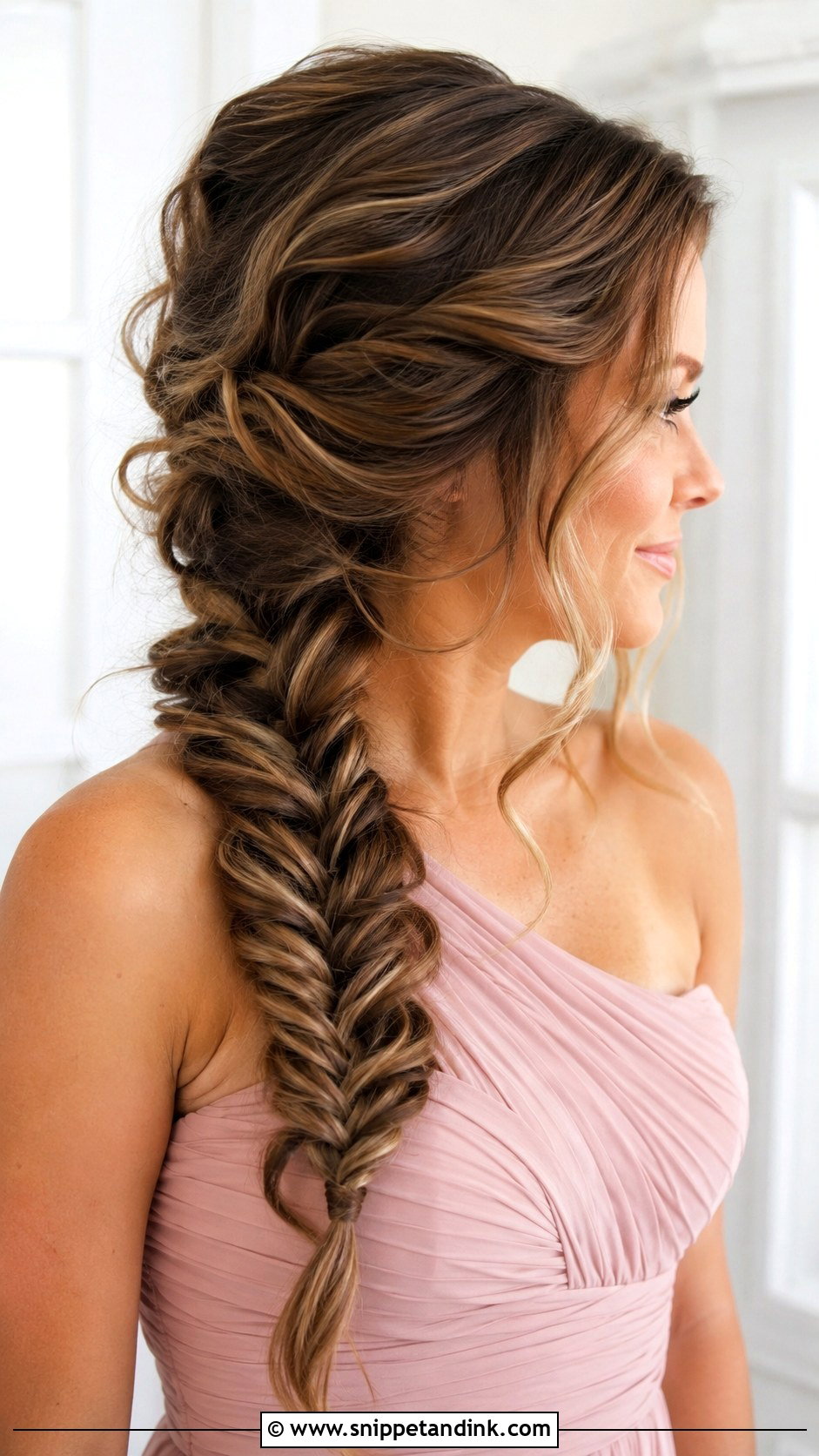
Fishtails take longer than people expect. Each pass moves only a thin piece of hair from one side to the other, so on long, thick hair I budget extra chair time for this one. The payoff is a fine woven texture that works as a side braid, a low back braid or an accent in a half up style. Pulling the edges out a little makes it fuller, and with balayage or highlights the woven pieces pick up the light. On choppy short layers I’d skip it, because ends poke out of every pass. I keep the front polished so the loosened braid looks deliberate rather than slept in.
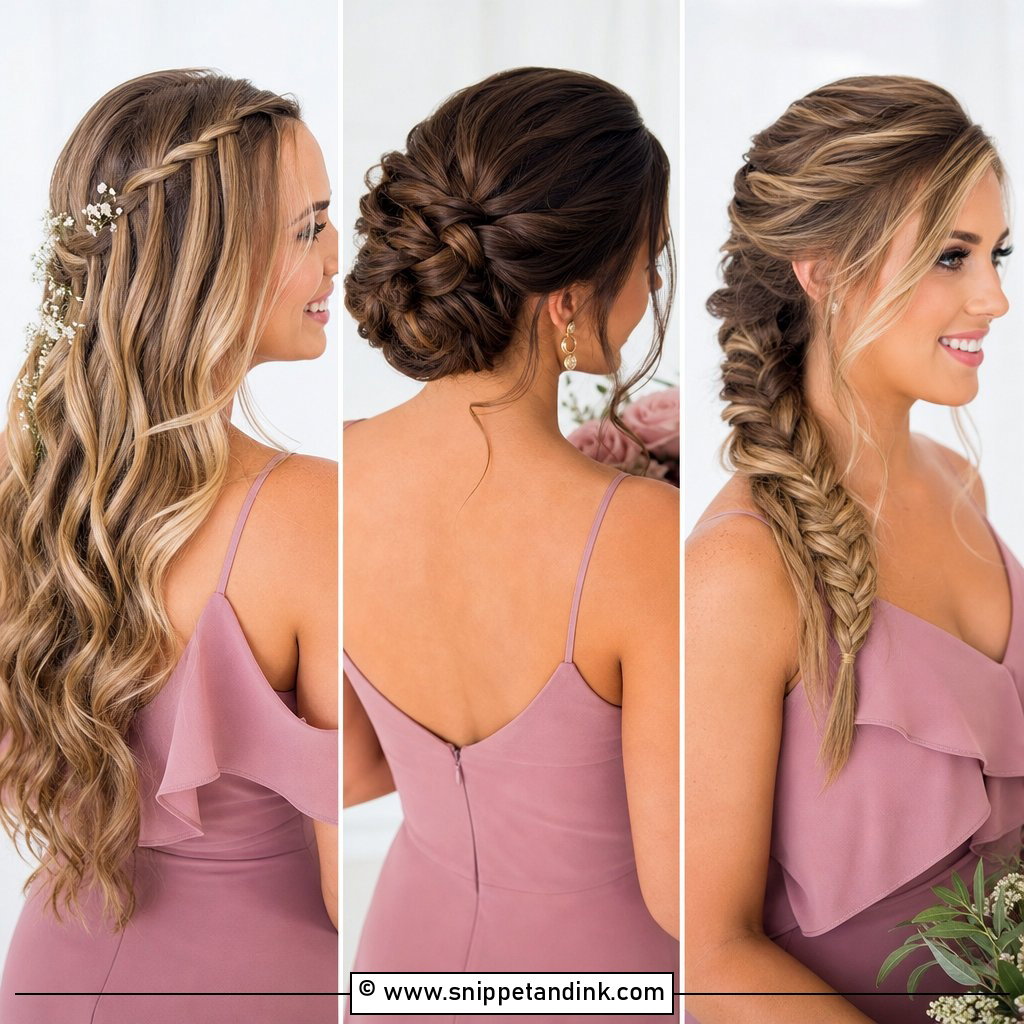
4. Bridesmaid Side Braid
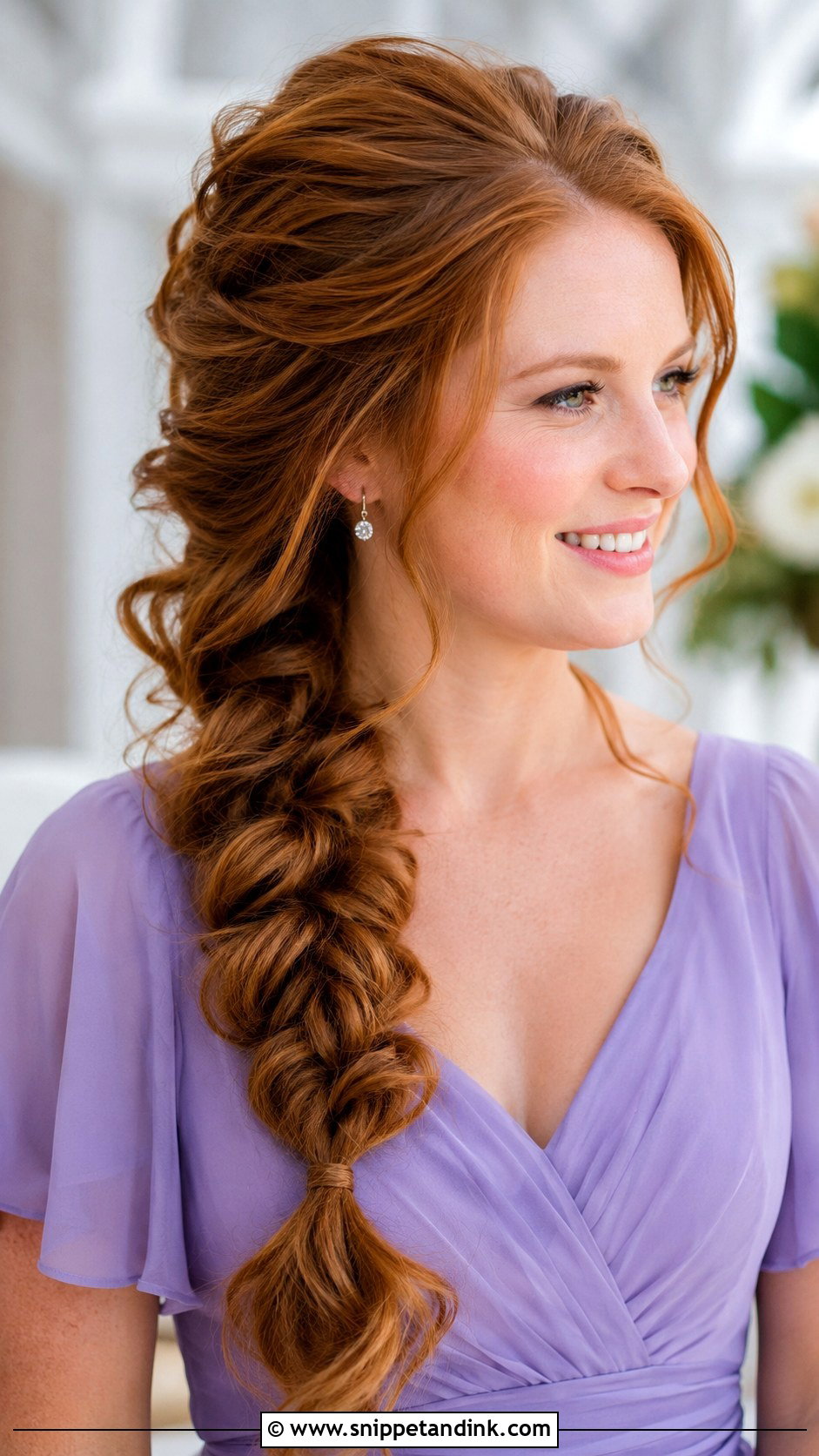
A bridesmaid side braid brings the hair over one shoulder, which keeps the back of the dress visible and gives the photographer a clean line on the other side. It can be French, Dutch, rope or fishtail. Before I start, I ask which side the bridesmaid stands on during the ceremony, so the braid falls on the shoulder facing the guests. I curl the lengths first for volume, then braid. The end gets a small clear elastic with a strand of hair wrapped around it and pinned underneath.
5. Bridesmaid Crown Braid
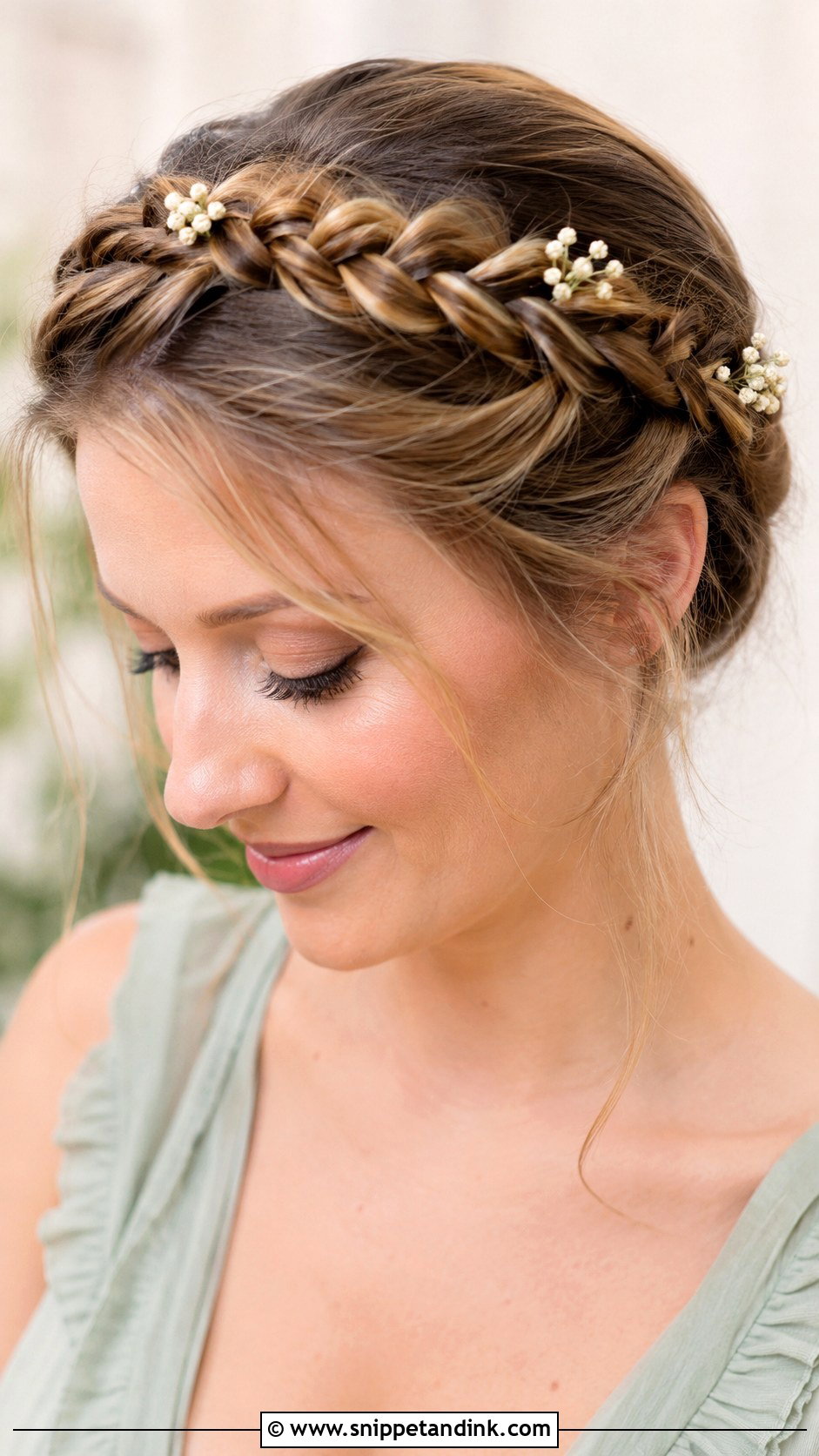
A crown braid wraps the head like a hair accessory made from the hair itself. It needs length to travel all the way round, generally well past the shoulders; on shorter hair I bring in a clip-in braid or extensions. I match the finish to the dress. With simple bridesmaid dresses at a garden or vintage-styled wedding, a fuller, slightly pulled braid looks right, while structured satin wants it neat. Small flowers or pearl pins slot straight into the plaits. Keep the earrings small, because the braid is already doing the decorating.
6. Bridesmaid Halo Braid
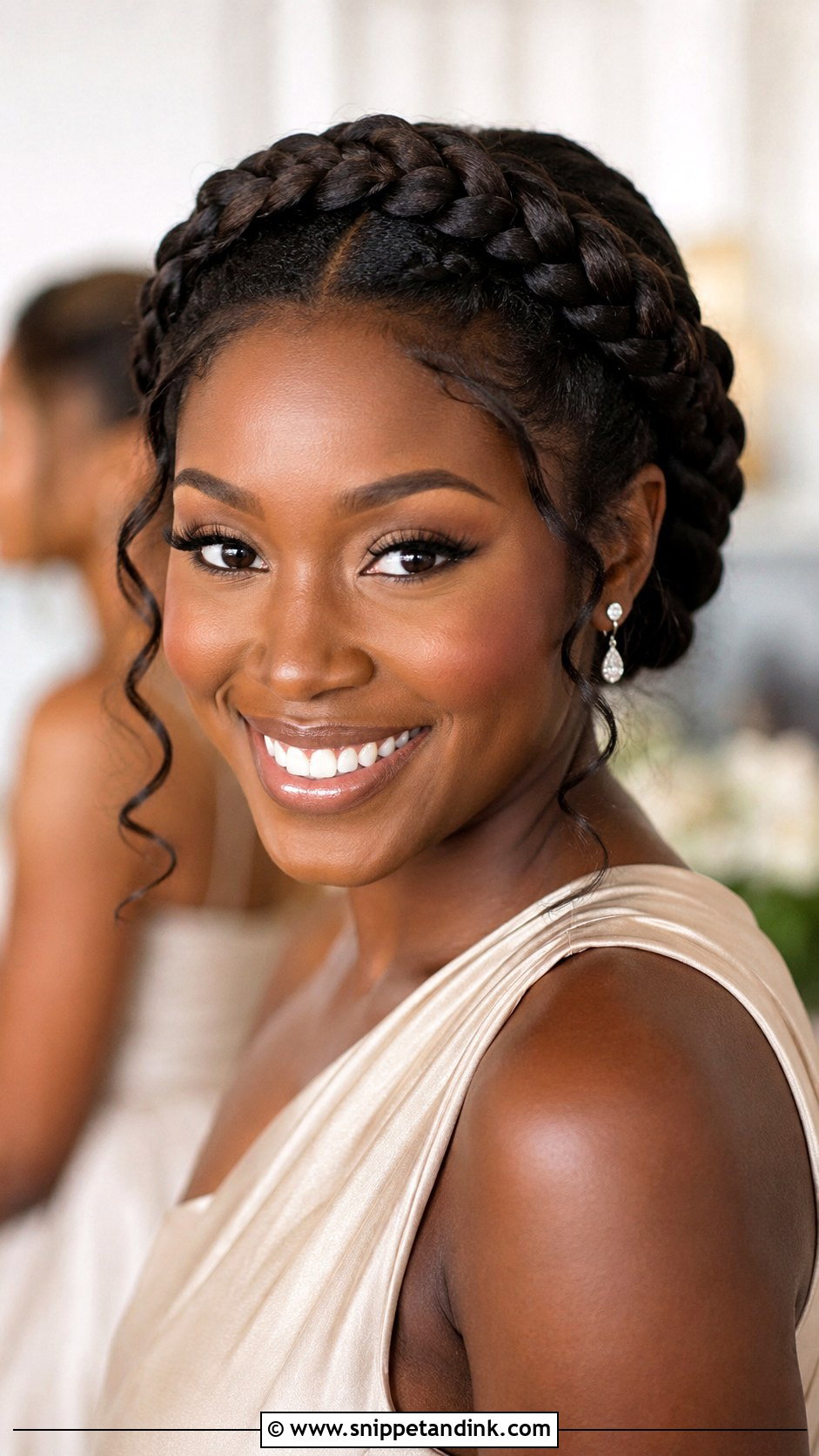
A halo braid sits lower and rounder than a crown braid, circling the head near the hairline rather than across the top. Because every strand is tucked into it, it’s the braid I’d pick for windy venues and long outdoor ceremonies. Textured and curly hair suits it especially well, since natural fullness gives a plump braid without backcombing. I leave a few curled pieces at the temples so it doesn’t sit like a helmet. Under a high neckline it keeps everything above the collar and the outline tidy.
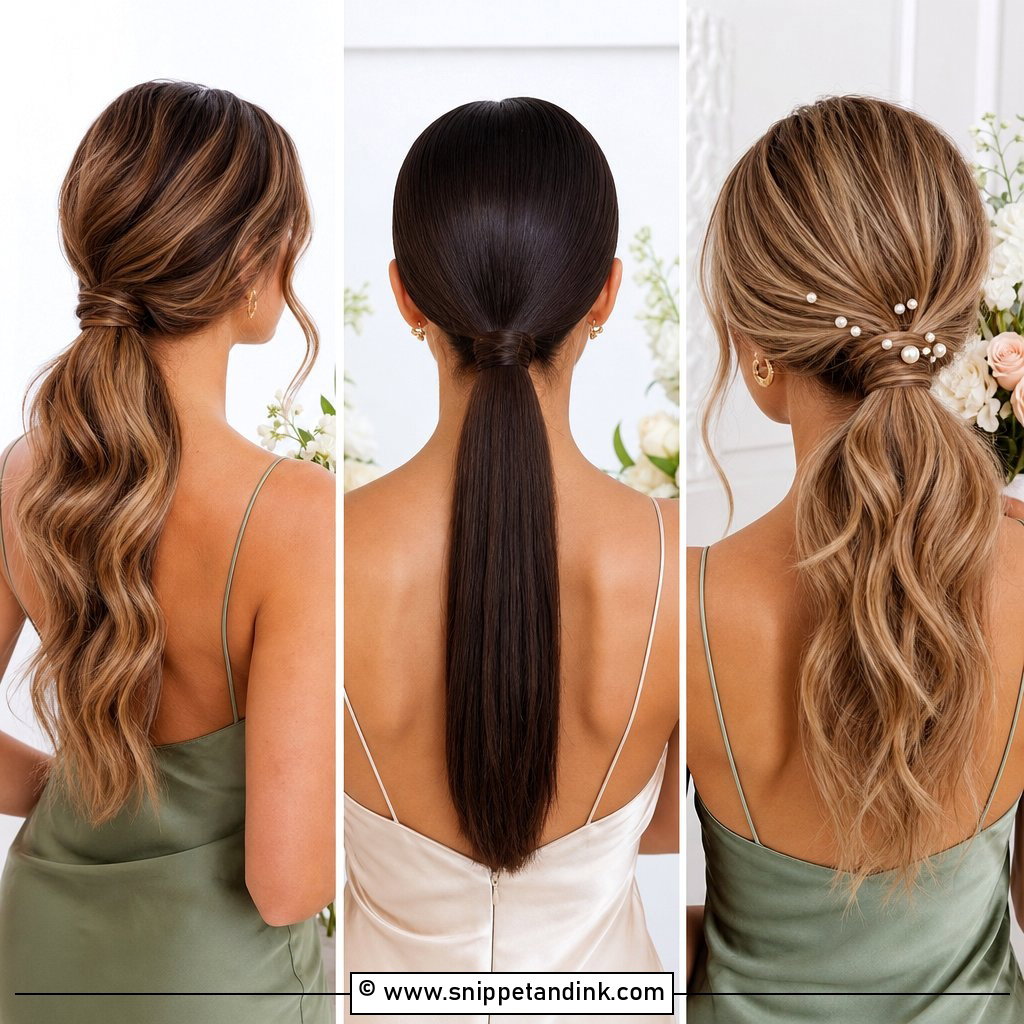
7. Bridesmaid Braided Ponytail
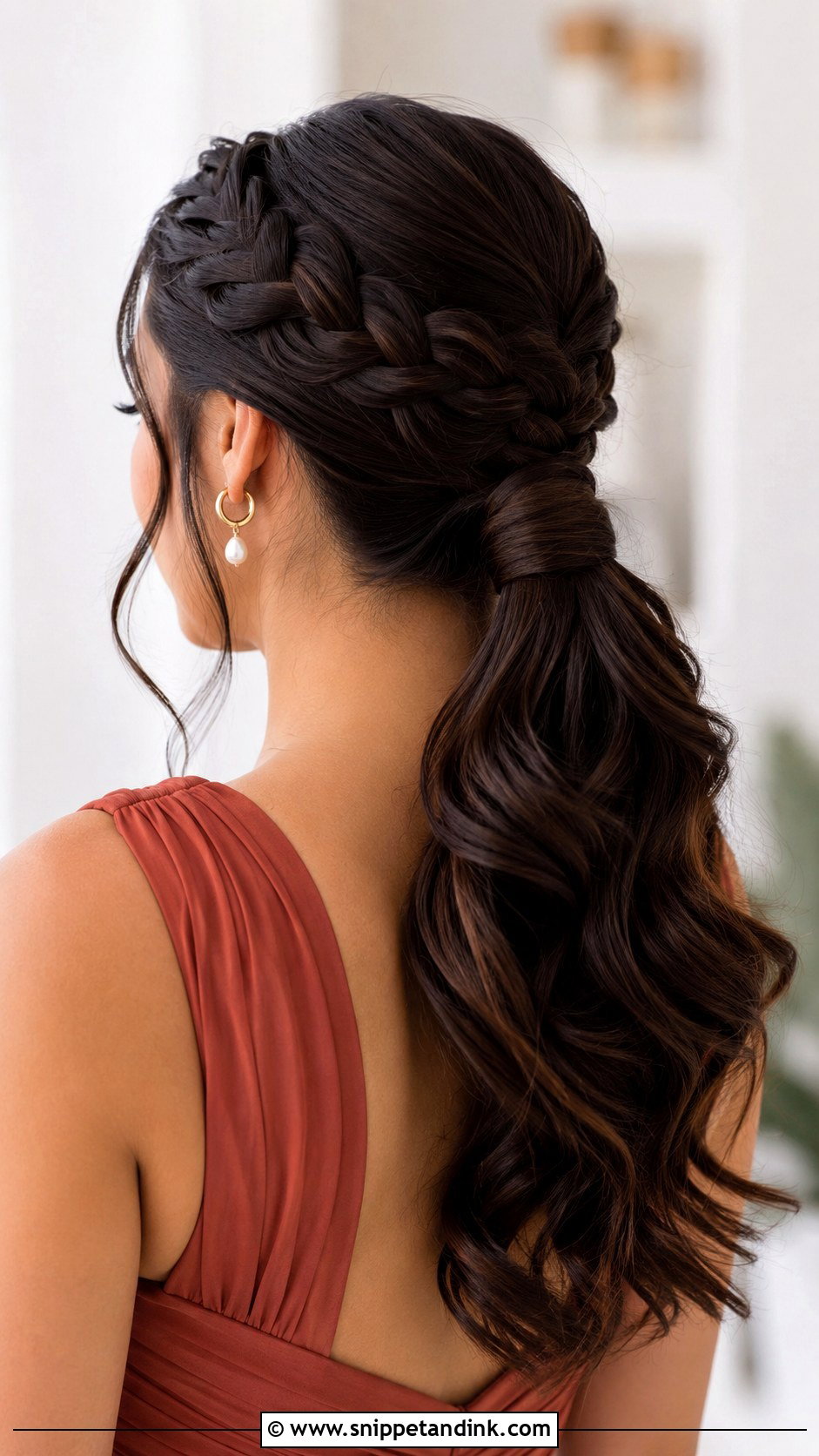
A braided ponytail gives lift at the crown without the weight of an updo, which bridesmaids who get headaches from pins appreciate. The braid can run along the crown into a low or mid ponytail, or the ponytail itself can be braided to the ends. It sits well with one-shoulder dresses and plain satin gowns. My one warning: an elastic placed high pulls on the scalp for hours, so for a long day I set it at the back of the head or lower. A piece of hair wrapped around the elastic and pinned underneath hides the band.
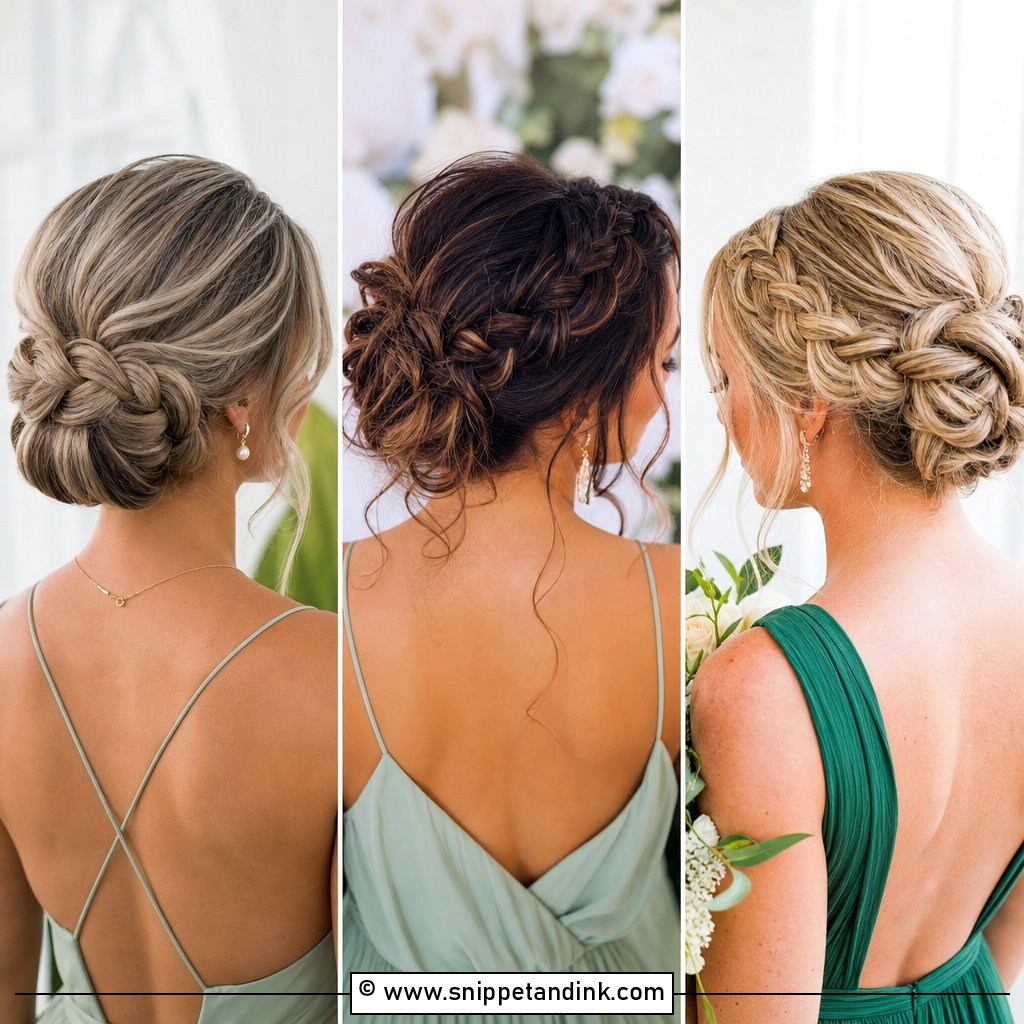
8. Bridesmaid Braided Low Bun
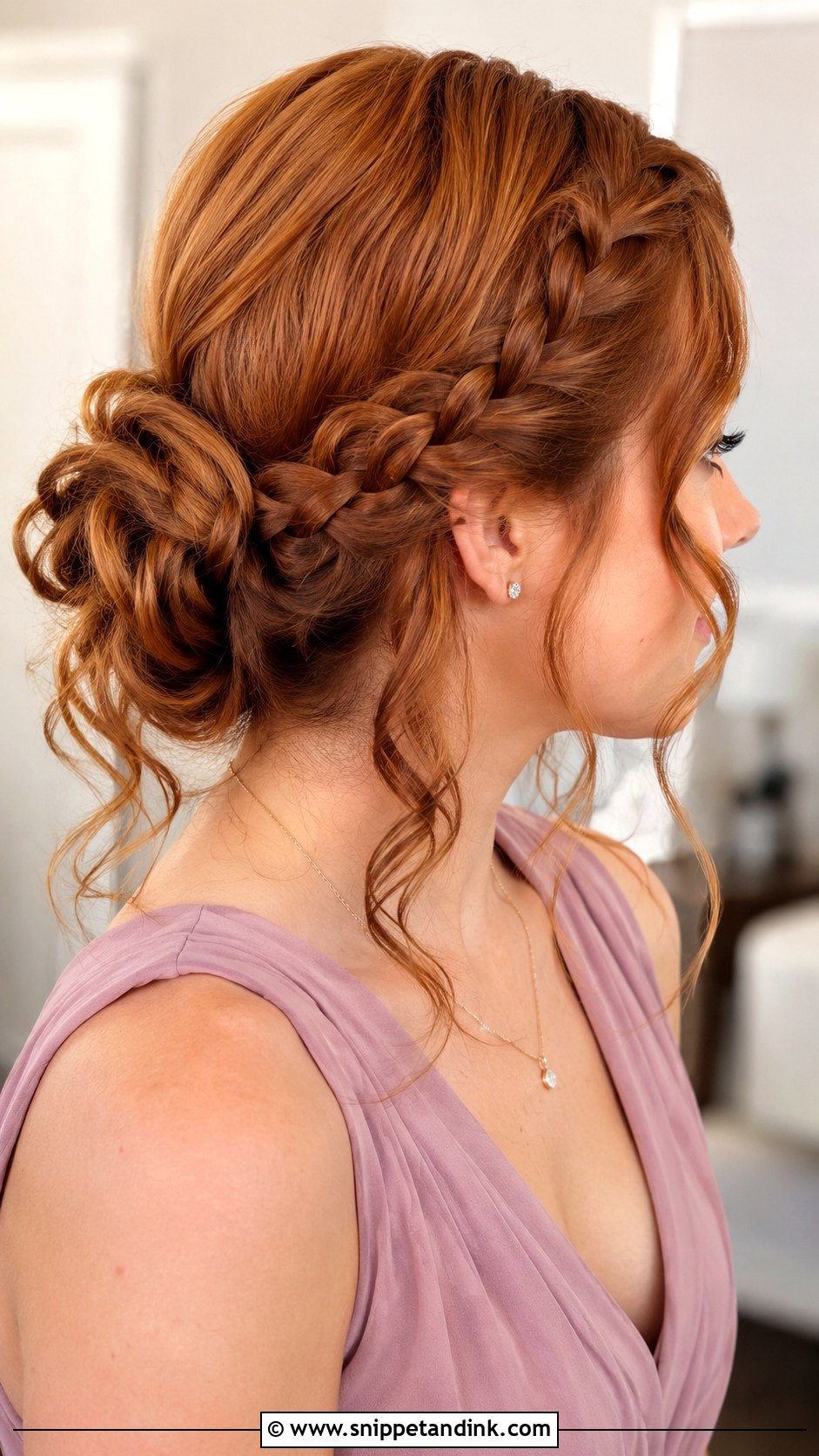
If I had to give one braid to a whole bridal party, it would be a braided low bun. Its formality shifts with braid placement: one thin braid wrapped round the bun is understated, while two thicker braids feeding in from each side look more rustic. Sitting at the nape, it suits almost any face shape and texture, and it doesn’t get crushed when someone leans back in a car seat. For a softer frame I pull out a few strands at the face and curl them away from the cheekbones.
9. Bridesmaid Braided Half Up Hair
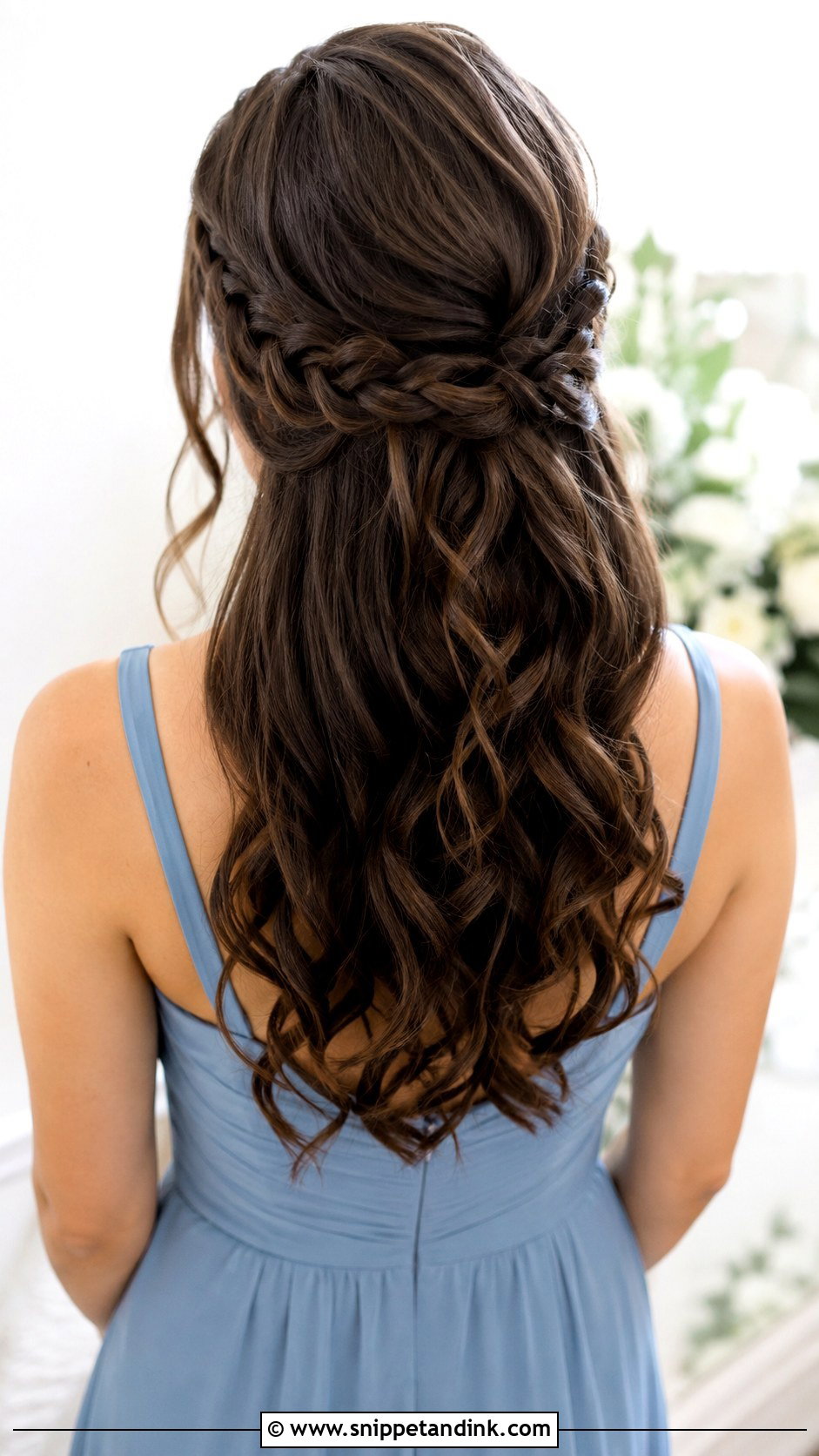
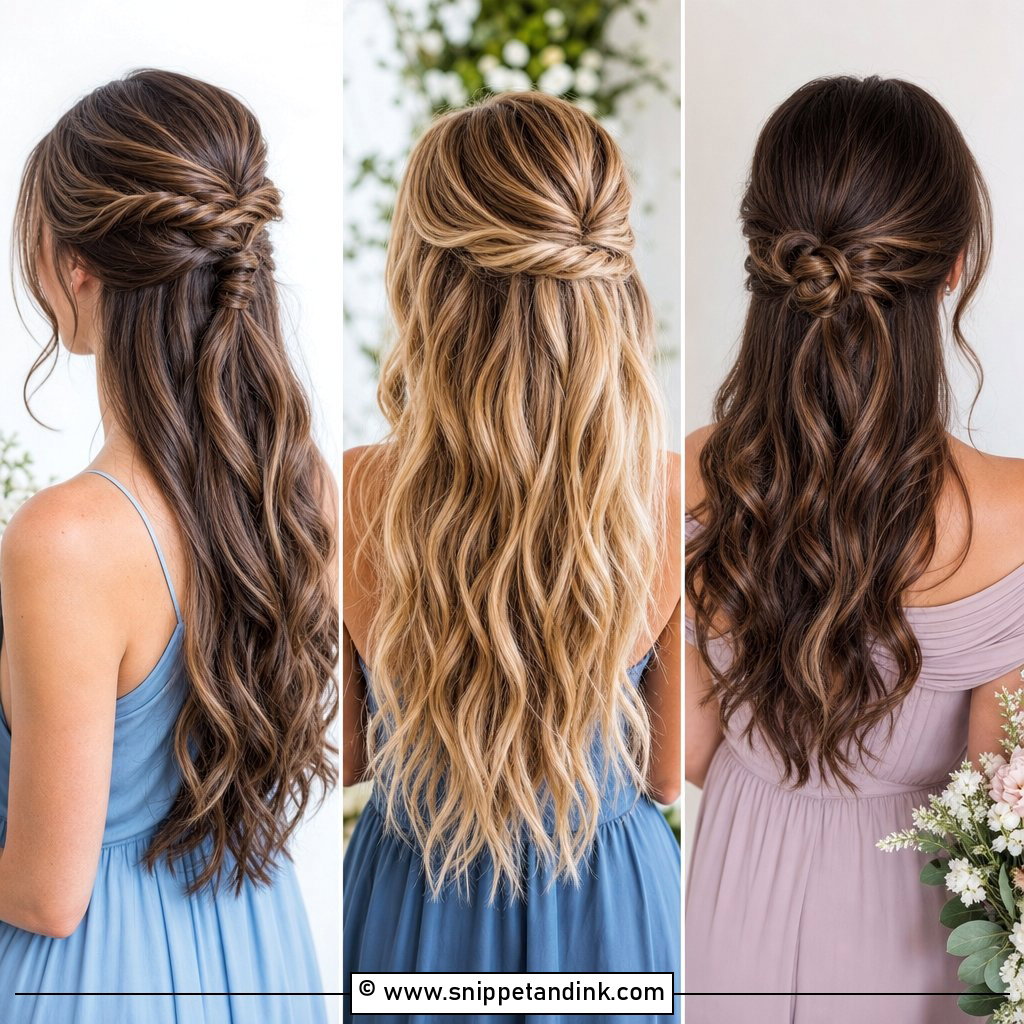
Half up braids give the look of hair worn down, with a braid doing the anchoring. I take a section from each side above the ear, braid both back and pin them where they meet, letting the rest fall in curls or waves. It needs medium or long hair and shows off highlighted color nicely. The weak spot is that meeting point. If the pins only catch the braids, they slide down by evening, so I cross two bobby pins into the hair underneath as well. A little loosening at the crown afterwards gives height that holds for photos.
10. Bridesmaid Waterfall Braid
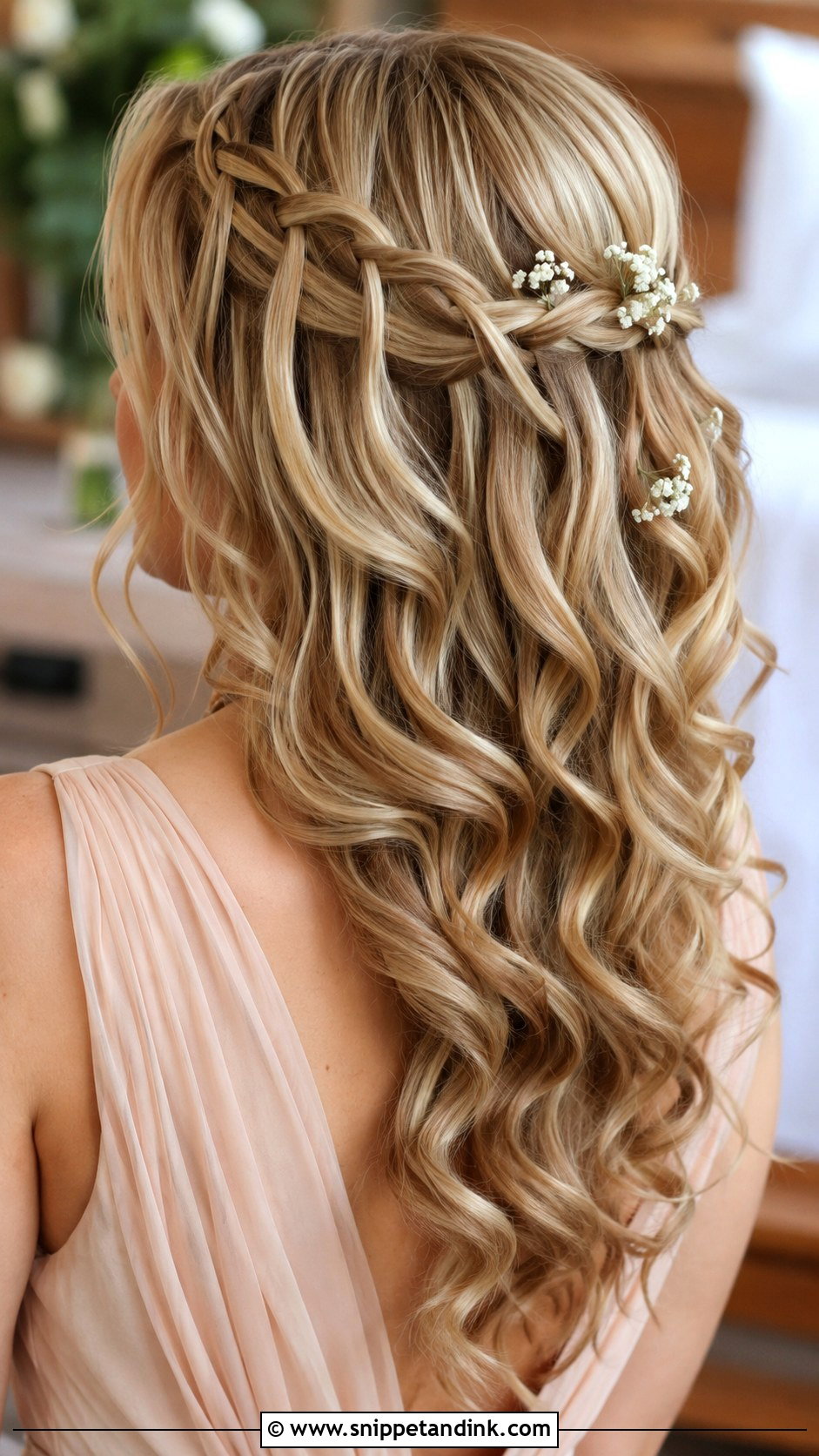
A bridesmaid waterfall braid drops a strand out of each pass, so hair spills through the braid as it travels across the side or back of the head. Those dropped strands need length to show, so I only suggest it from about collarbone length down. I curl before braiding; otherwise the dropped pieces hang straight and the pattern gets lost. It suits bridesmaids who want hair down with a single detail, and it sits naturally with pastel dresses and garden ceremonies. Tiny pins or a couple of fresh flowers are all it needs.
11. Bridesmaid Boho Braid
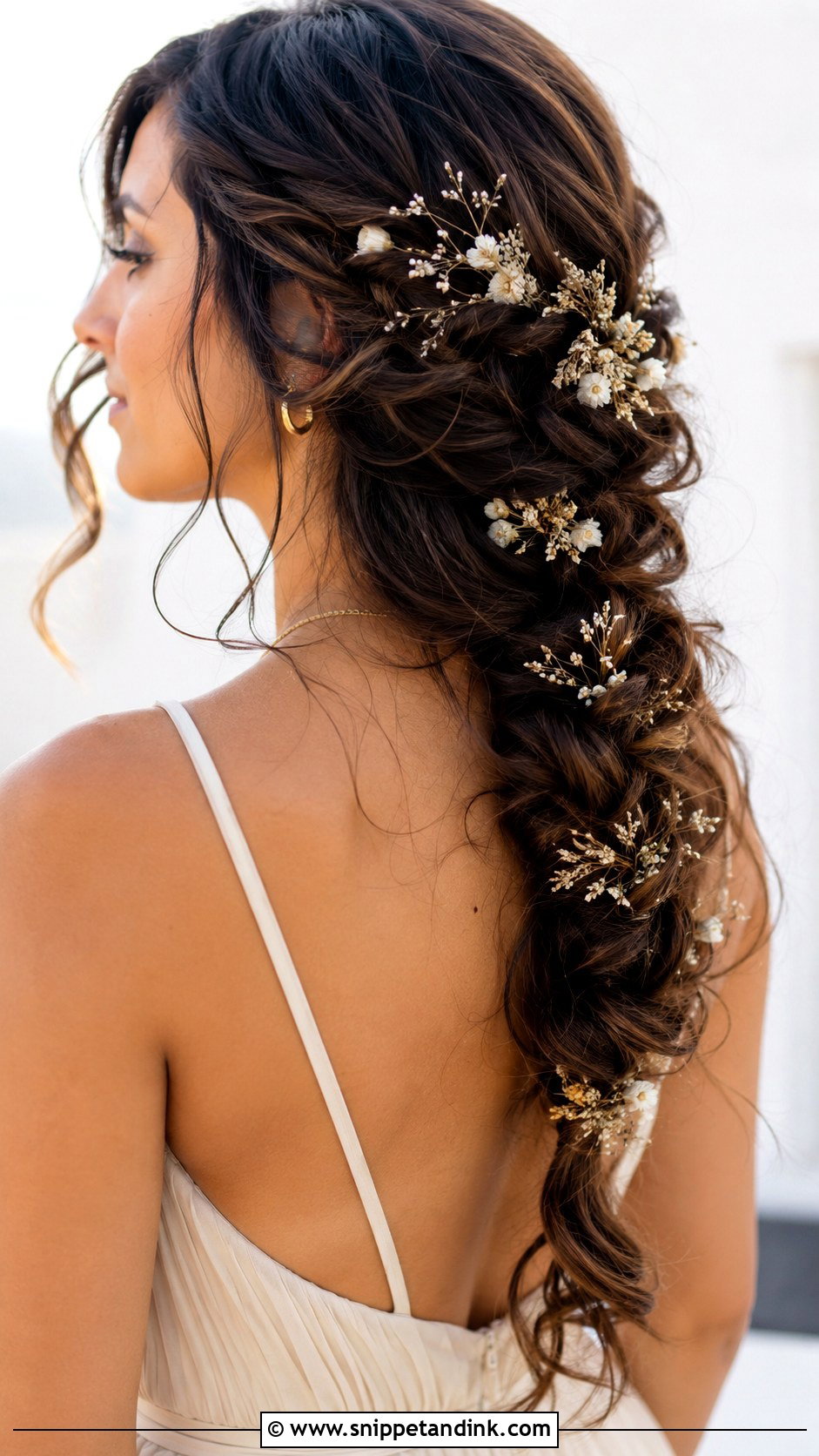
A boho braid only looks undone. Underneath, it is built carefully. I work texture spray or dry shampoo through clean hair first, because slippery hair won’t hold a loose braid for more than an hour. Then the braid goes in loosely with waves and face-framing pieces around it, worn down the back, over a shoulder or worked into a half up style. Chiffon and floral prints are its natural partners. Dried flower accents pinned into the braid tie it to the setting, and they don’t wilt in the heat the way fresh blooms can.
12. Bridesmaid Braided Chignon
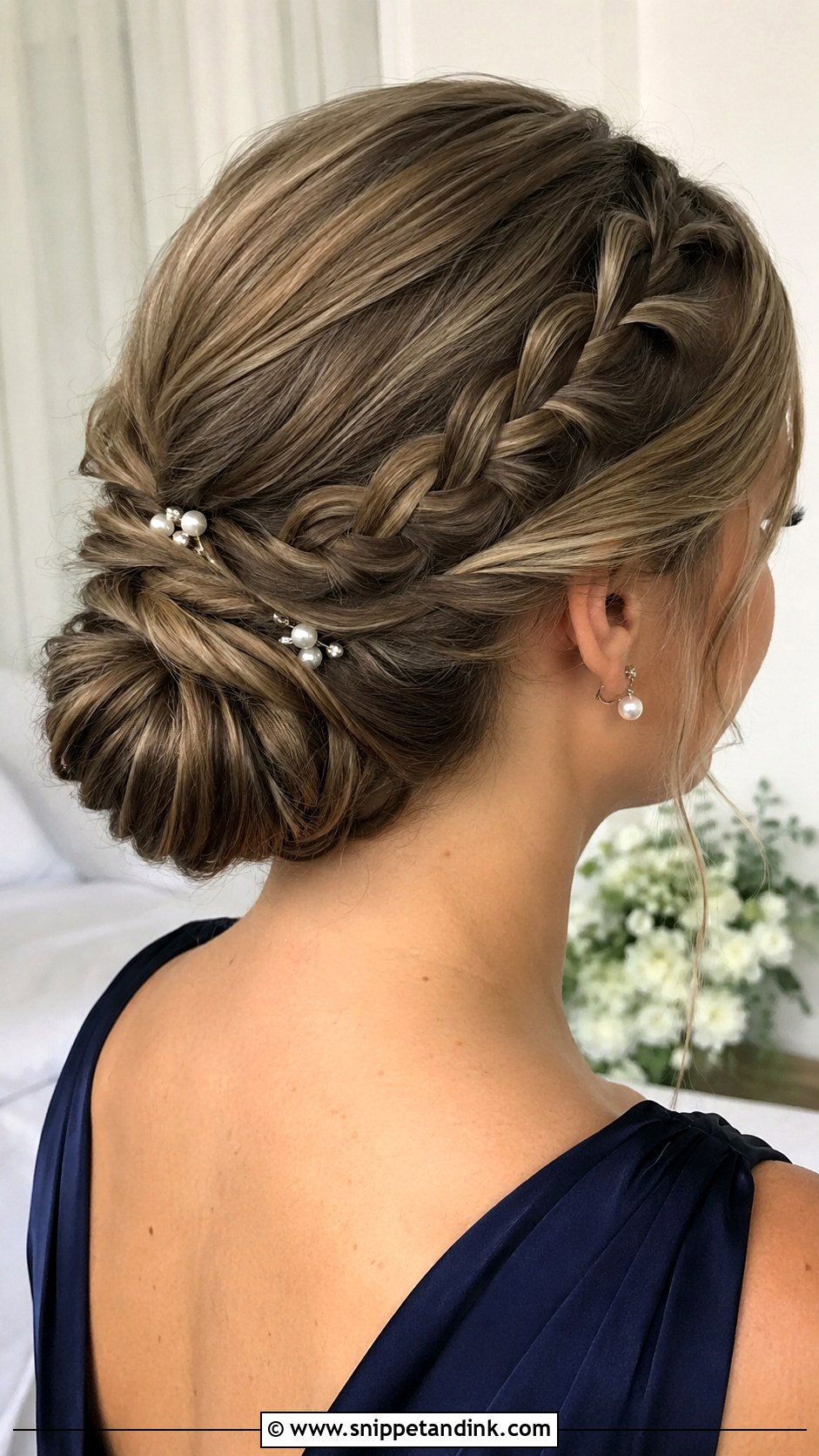
For black-tie receptions and church ceremonies, this is the braid I put forward, because a braided chignon looks neat from the back, the side and the front pew. The braid adds detail to a classic low knot, crossing the crown, running down one side or wrapping the chignon itself. It suits open backs and high necklines equally. I keep the shape low at the nape. If you add sparkle, keep the pins small so the bridesmaids don’t compete with the bride’s headpiece.
13. Bridesmaid Braided Bob
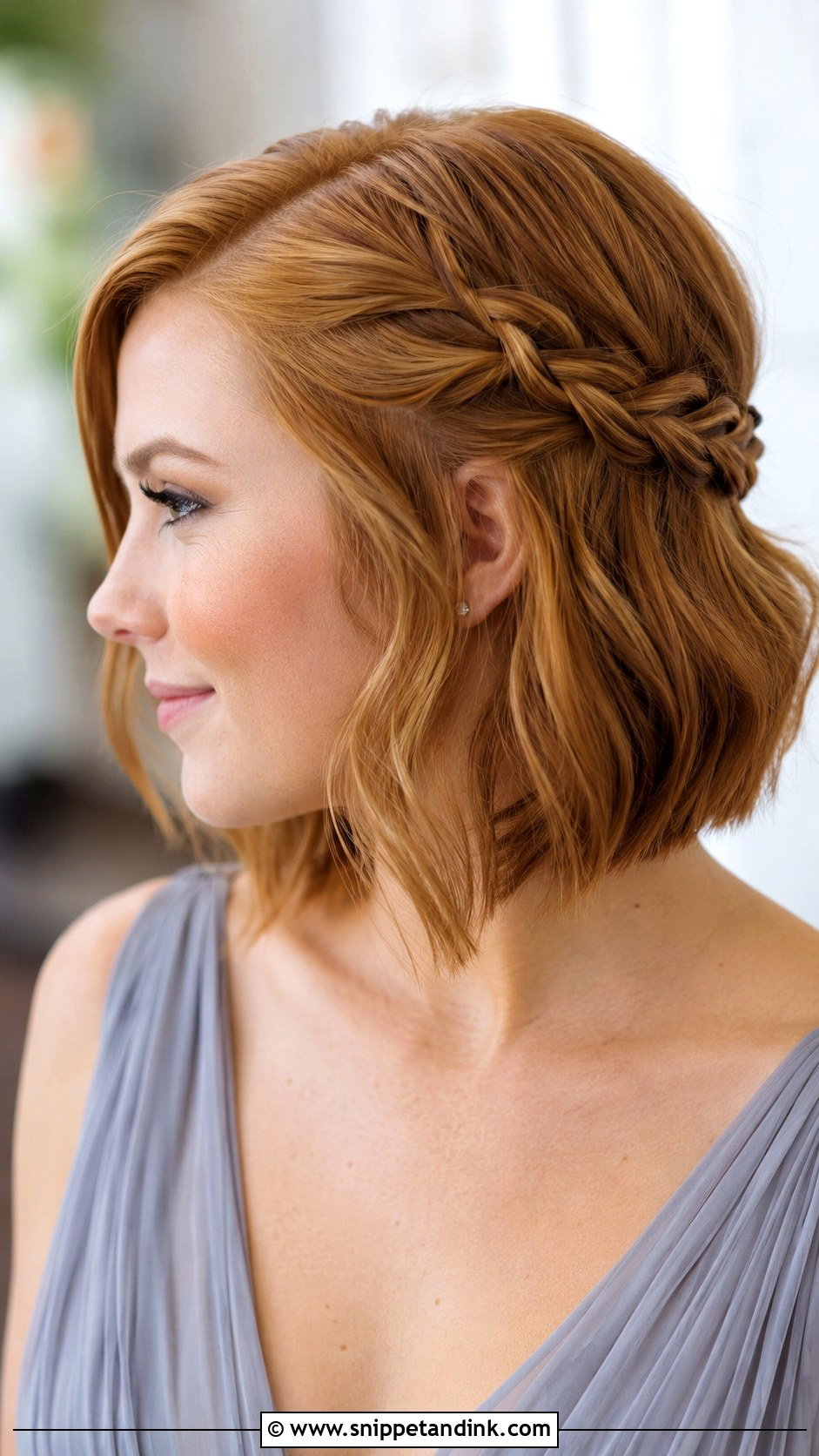
A bridesmaid braided bob shows that short hair can still carry a wedding detail. On a bob I braid small, a side braid or a narrow braided front section, so the cut itself stays visible. I wave the hair first, which gives the braid grip, then hide a bobby pin behind the ear to anchor the end. Layers shorter than the jaw tend to pop out, and a fine-tooth comb with a touch of pomade keeps them in. It’s the option for bridesmaids who don’t want extensions or a pinned-up style. Shine spray at the end keeps the bob smooth.
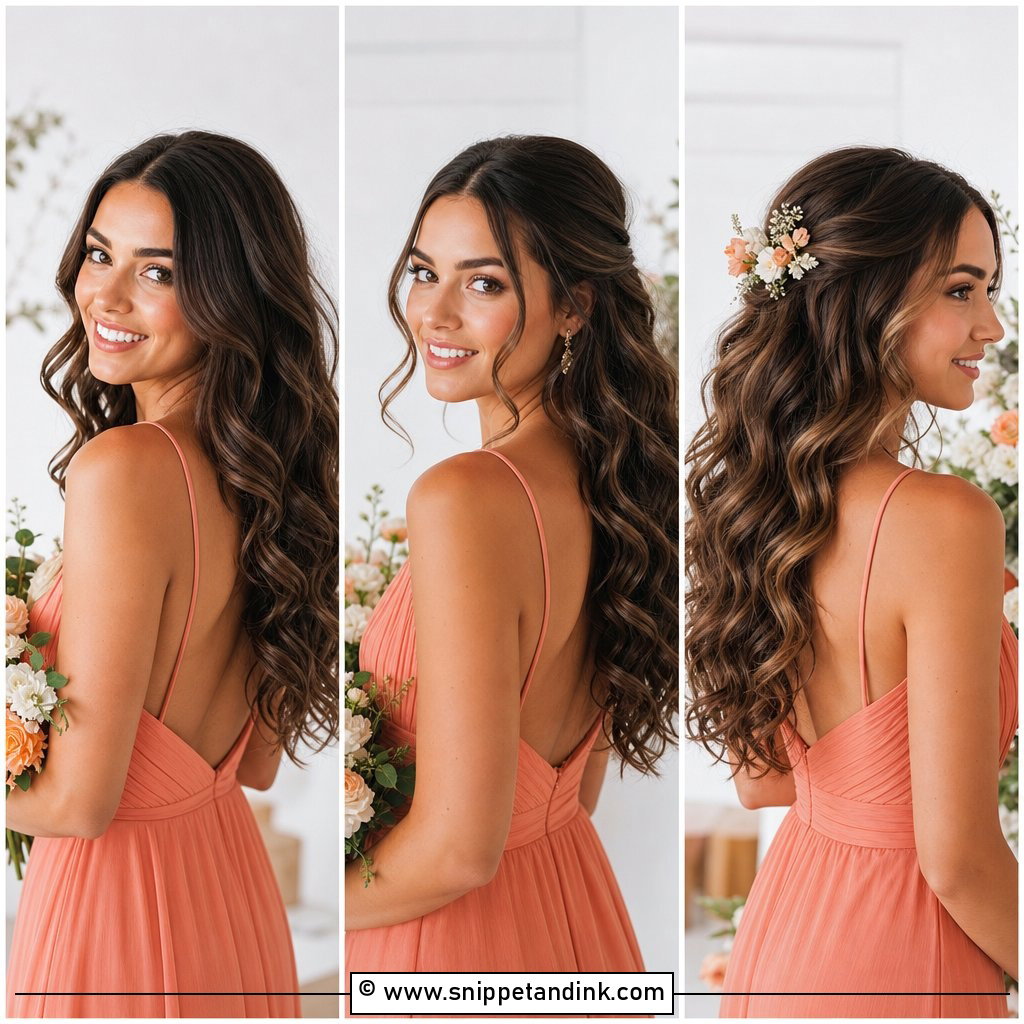
14. Bridesmaid Braids With Curls
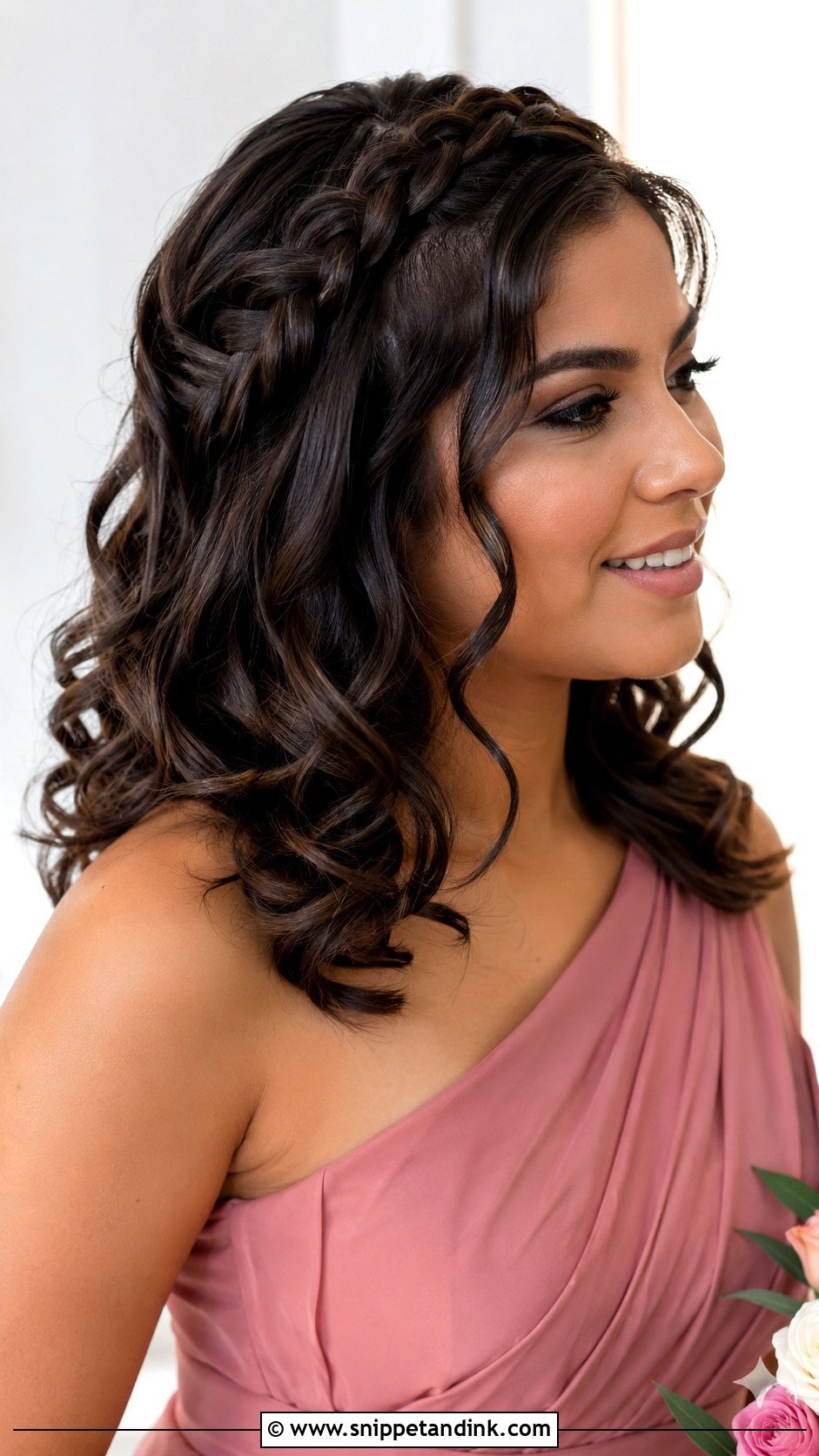
Braids with curls give structure on top and movement at the ends. The order matters here. I curl first, let the curls cool completely, and only then braid, because braiding warm curls stretches them out. The braid can cross the crown, frame one side or join into a half up style while the curls fall around the shoulders. Heatless curls work too if someone’s hair resists the iron. Finish with a flexible hairspray; a strong-hold one turns the curls into stiff ropes by the reception.
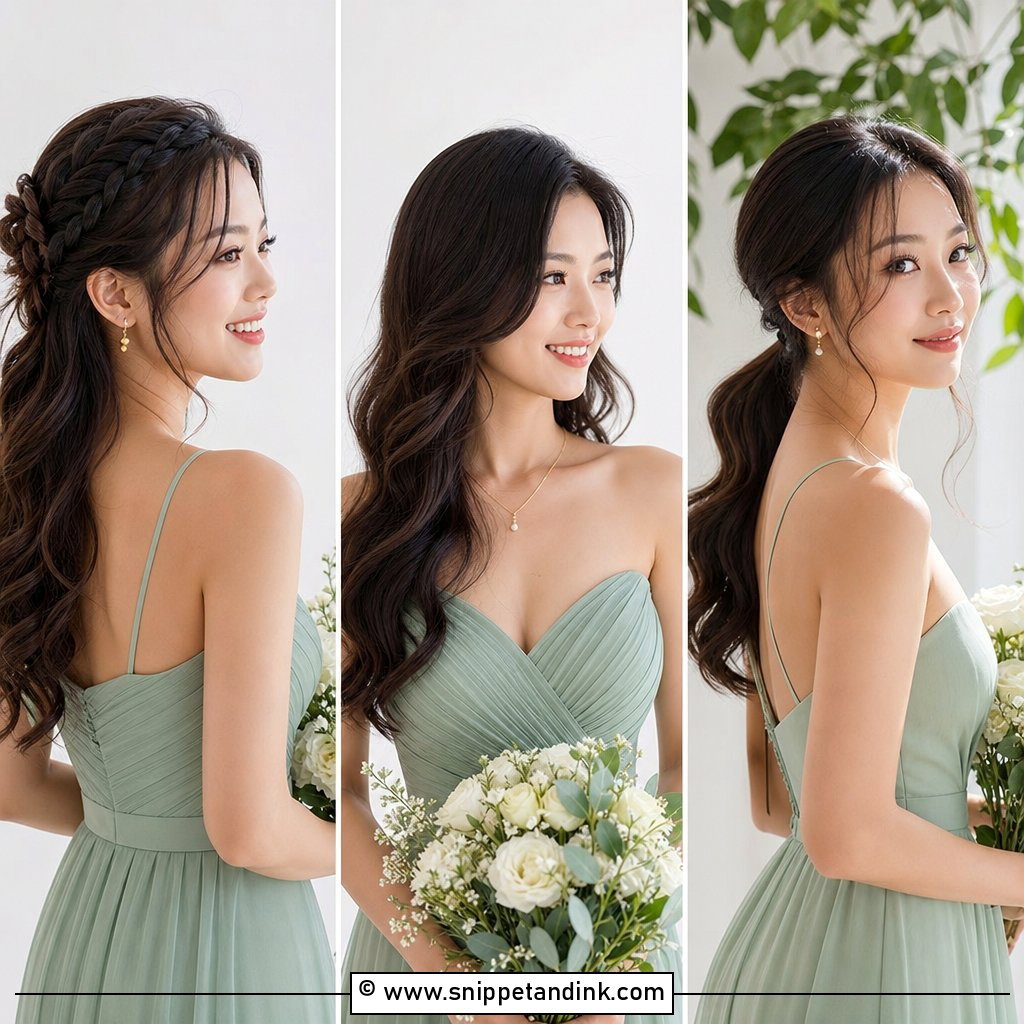
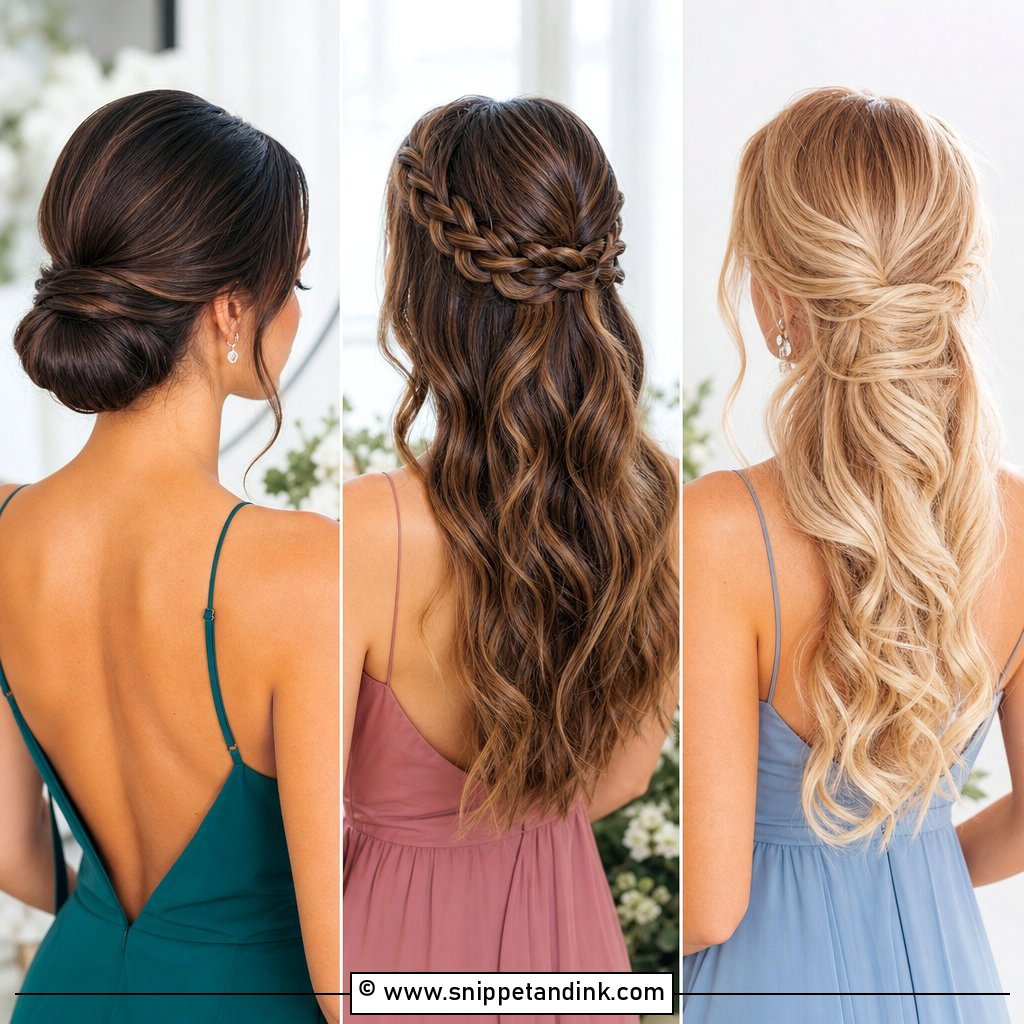
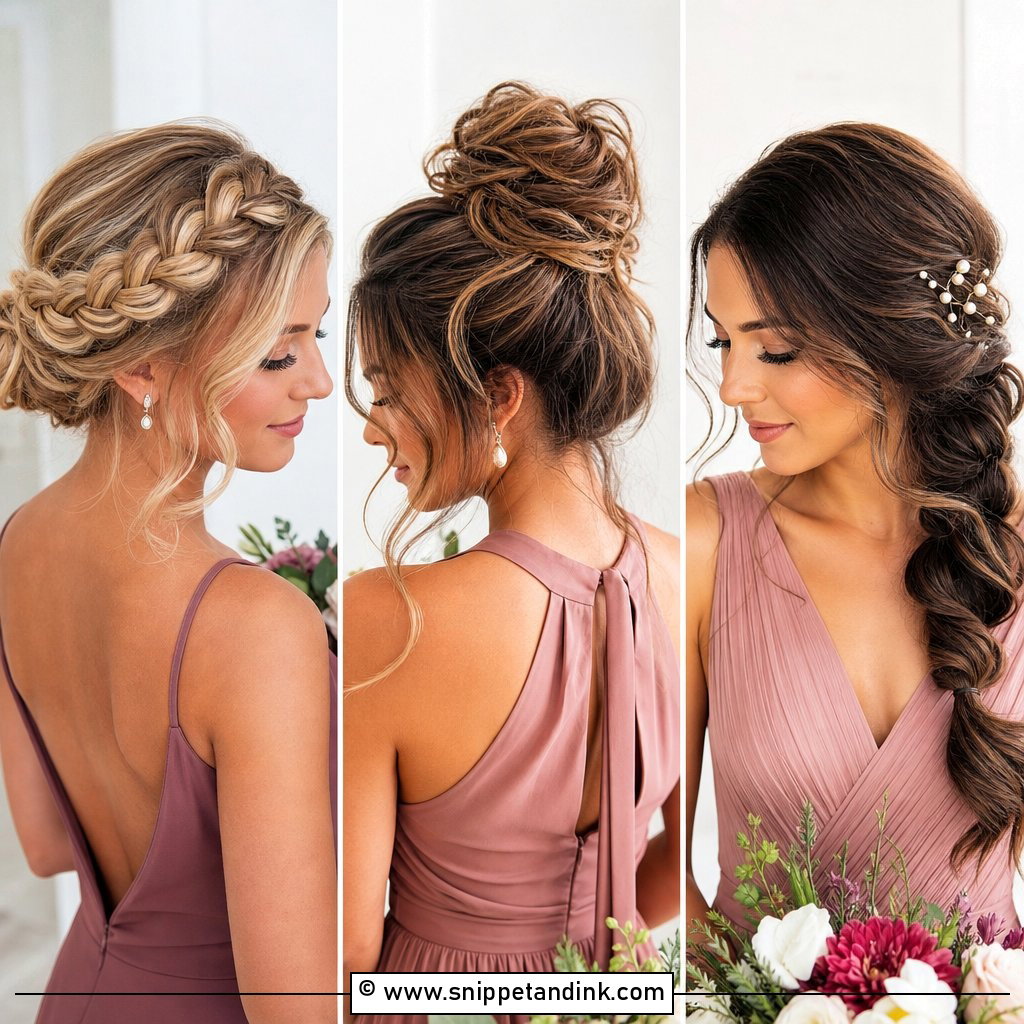
15. Bridesmaid Braided Headband
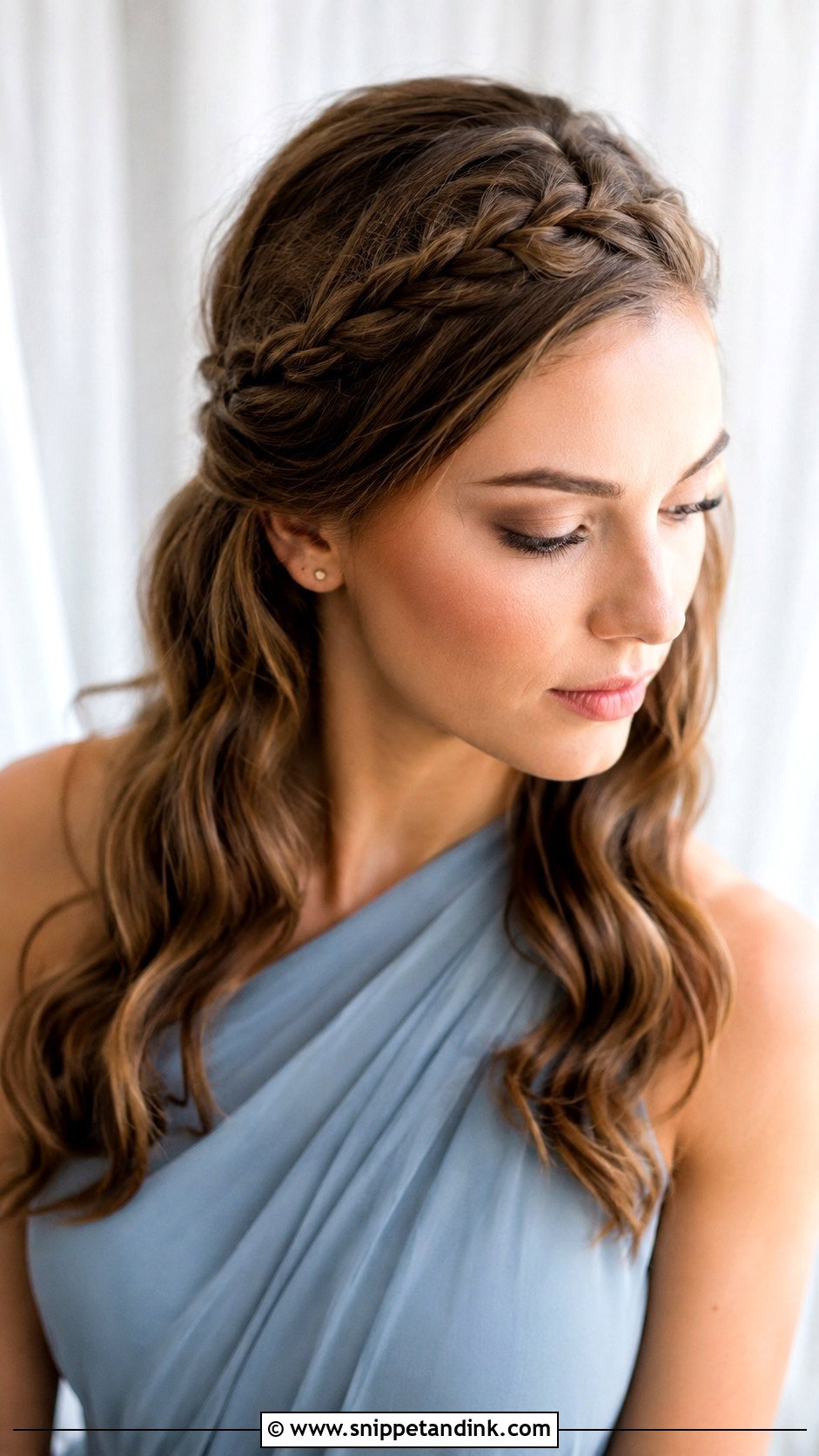
A braided headband runs from one side of the hairline to the other, giving the look of an accessory without a band pressing behind the ears. It blends into loose waves, a bun or a half up style, and medium-length hair suits it best. The mistake I see most is braiding right at the hairline, which pulls at the edges and usually brings a headache by mid-afternoon. I keep it a finger’s width back and secure each end under the hair behind the ear. Sleek reads vintage; pulled out reads younger.
16. Bridesmaid Pull Through Braid
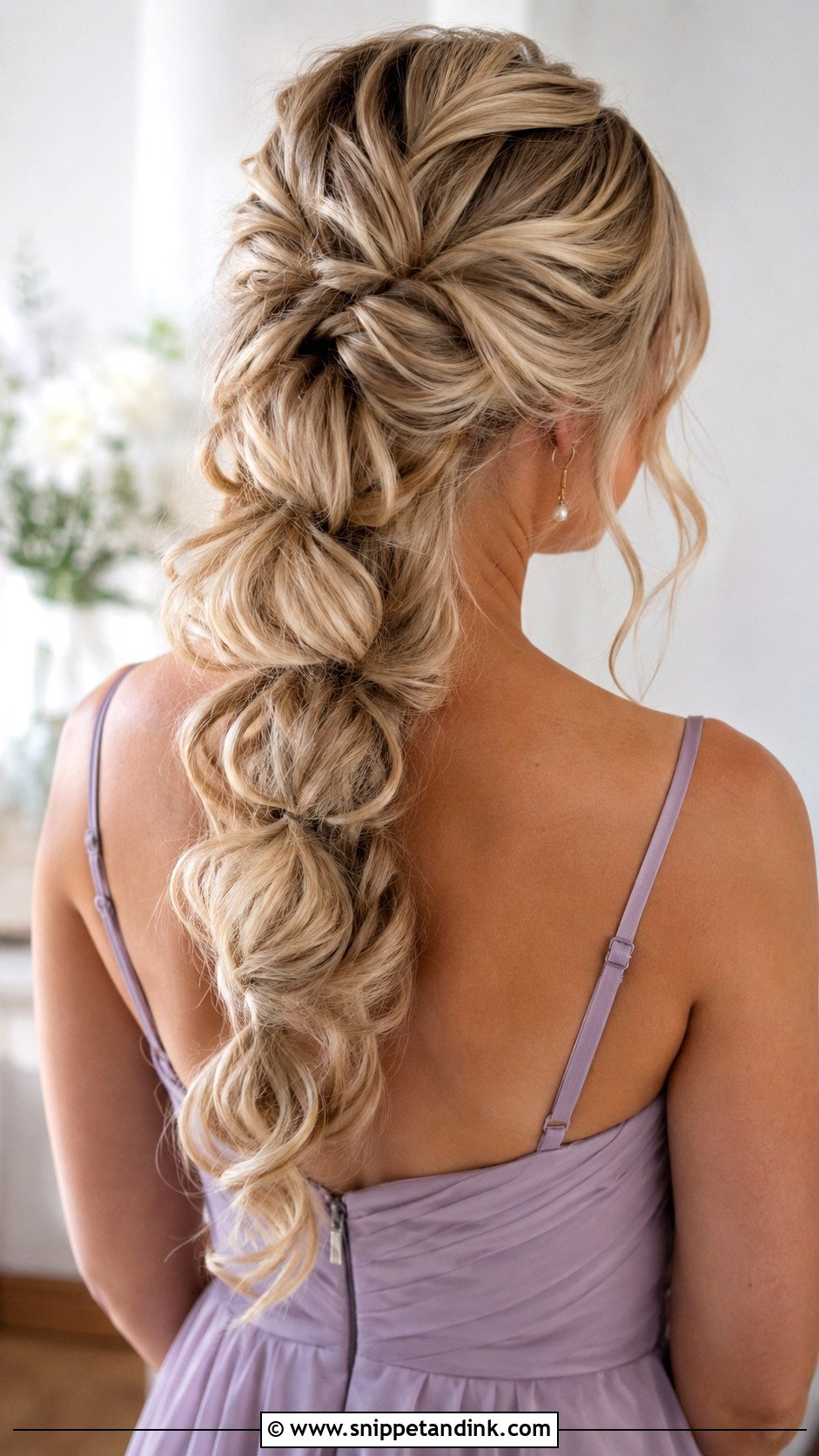
A pull through braid isn’t really braided. It’s a chain of small ponytails, each split and passed over the next, then pulled wide. That’s why I use it on fine hair: each section stretches much further than a woven braid will, so a thin ponytail looks twice its size. It works down the back, over one shoulder or in a half up style. Clear elastics that match the hair color disappear once each section is expanded. On very silky hair the elastics can slide, so I add a light texture spray before starting.
17. Bridesmaid Rope Braid
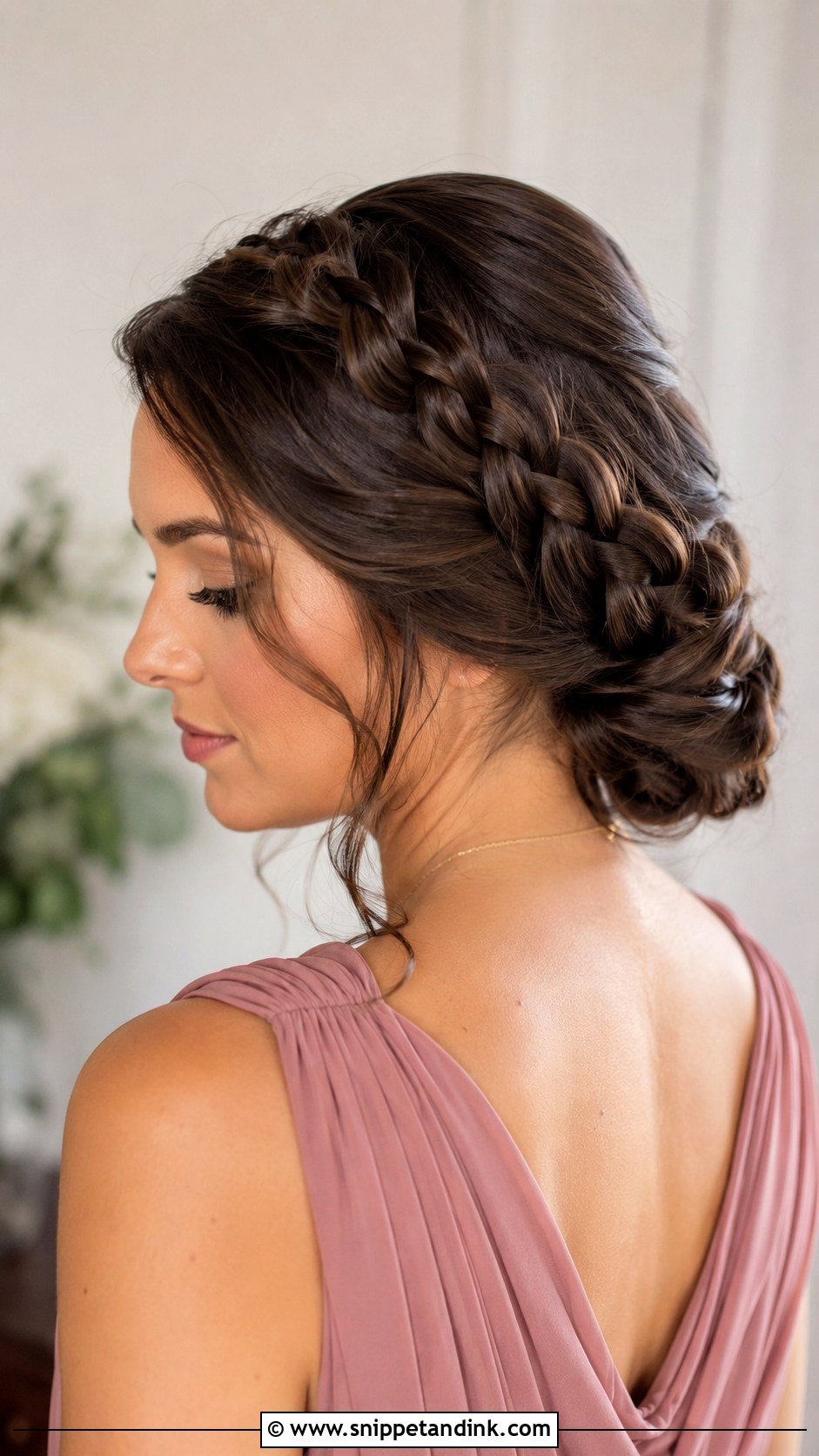
A rope braid is two strands, each twisted one way and then wrapped around each other the opposite way, which is what locks the spiral. Twist them the same direction as the wrap and it unravels within the hour. It’s a softer alternative to a three-strand braid and slots into a low bun, side braid, ponytail or half up style. Shiny, straight hair shows the spiral best. I smooth flyaways with a light styling cream before twisting, and for a softer look I loosen the twist a little and pair it with waves.
18. Bridesmaid Box Braids Updo
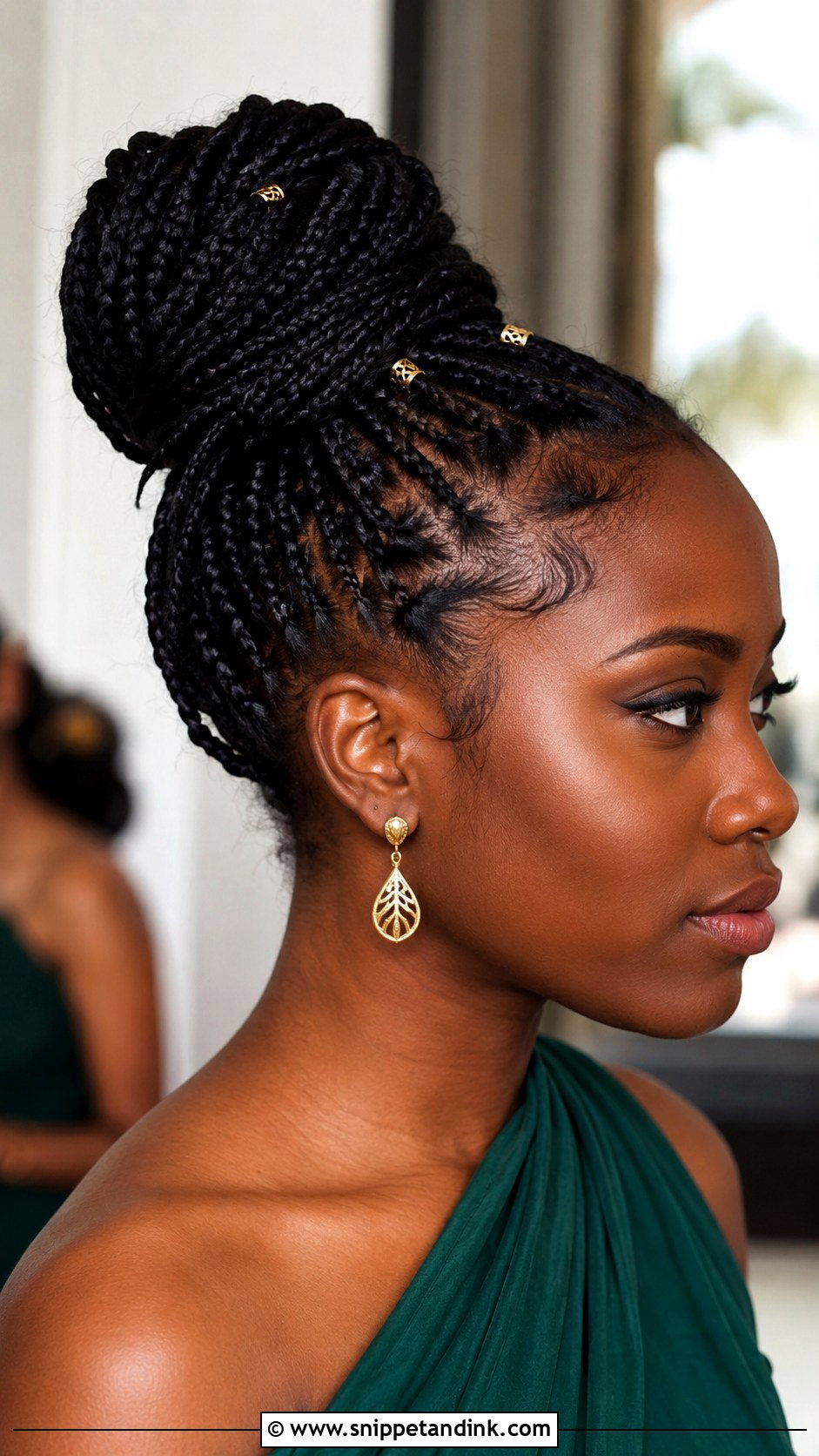
A bridesmaid box braids updo is the natural route for a bridesmaid who already wears box braids and wants a formal shape without taking them out. The braids gather into a high bun, a low bun or a wrapped crown. Weight is what I watch. A full head of long box braids pinned high can pull hard by evening, so for long days I usually go low or split the weight into two sections. Cuffs, decorative pins and small floral accents slide in easily. Lay the edges softly and pick accessories in the wedding colors without crowding the braids.
19. Bridesmaid Cornrow Bun
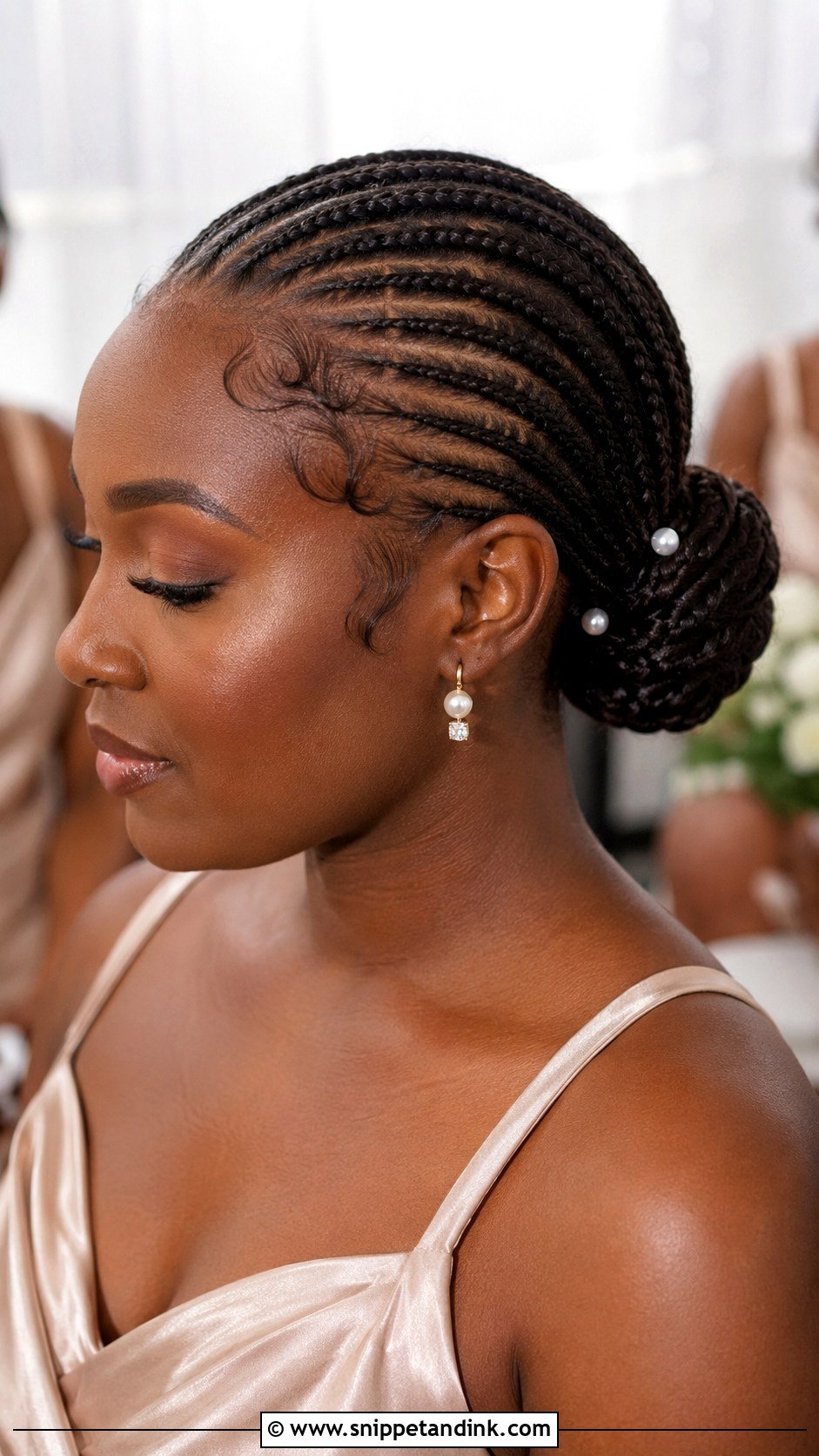
A bridesmaid cornrow bun is one of the most secure styles on this list, which is why I suggest it for heat, humidity and long days. The cornrows can run straight back, curve into a pattern or point toward a low or high bun, and the bun can be natural hair, braided extensions or added hair for fullness. I’d have the cornrows put in a day or two ahead so any scalp tenderness settles, with only moderate tension at the hairline. The open face shows off earrings and makeup, and soft edge styling finishes it.
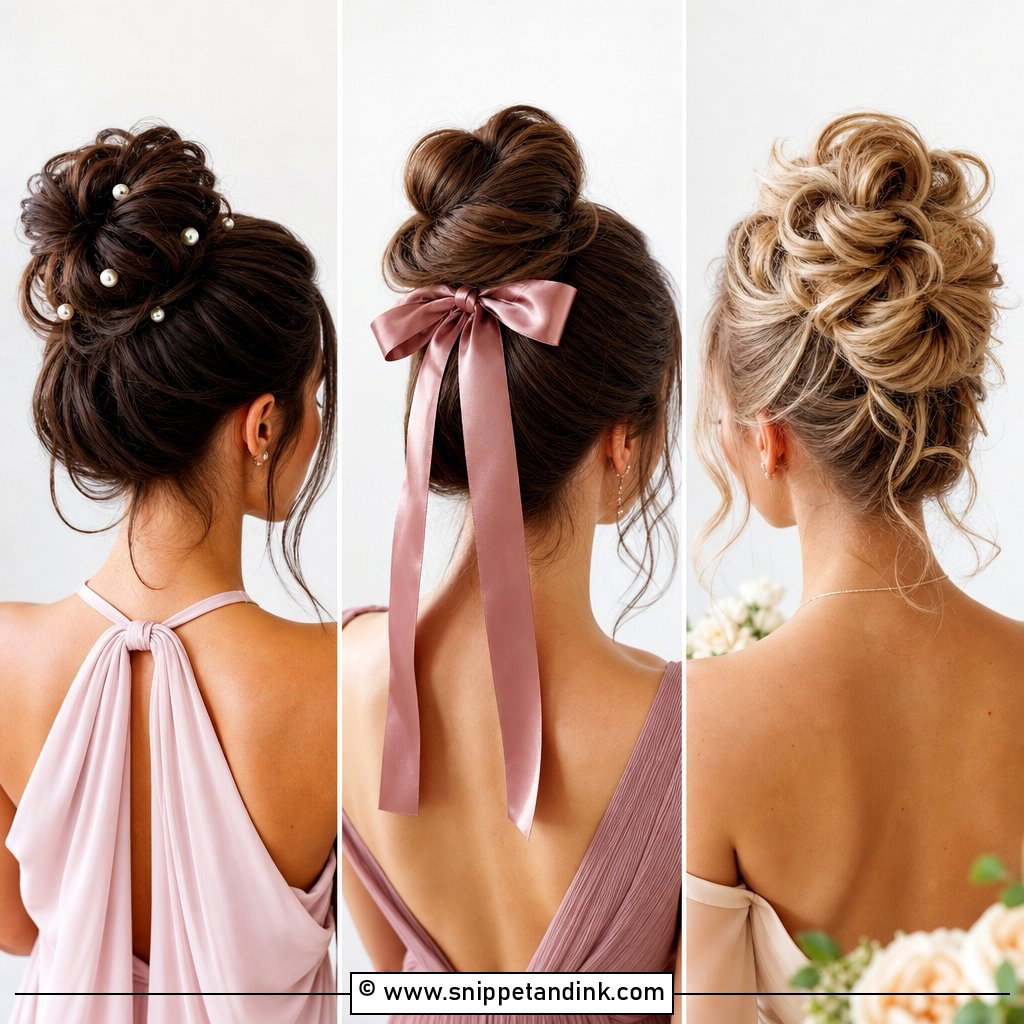
20. Bridesmaid Goddess Braid
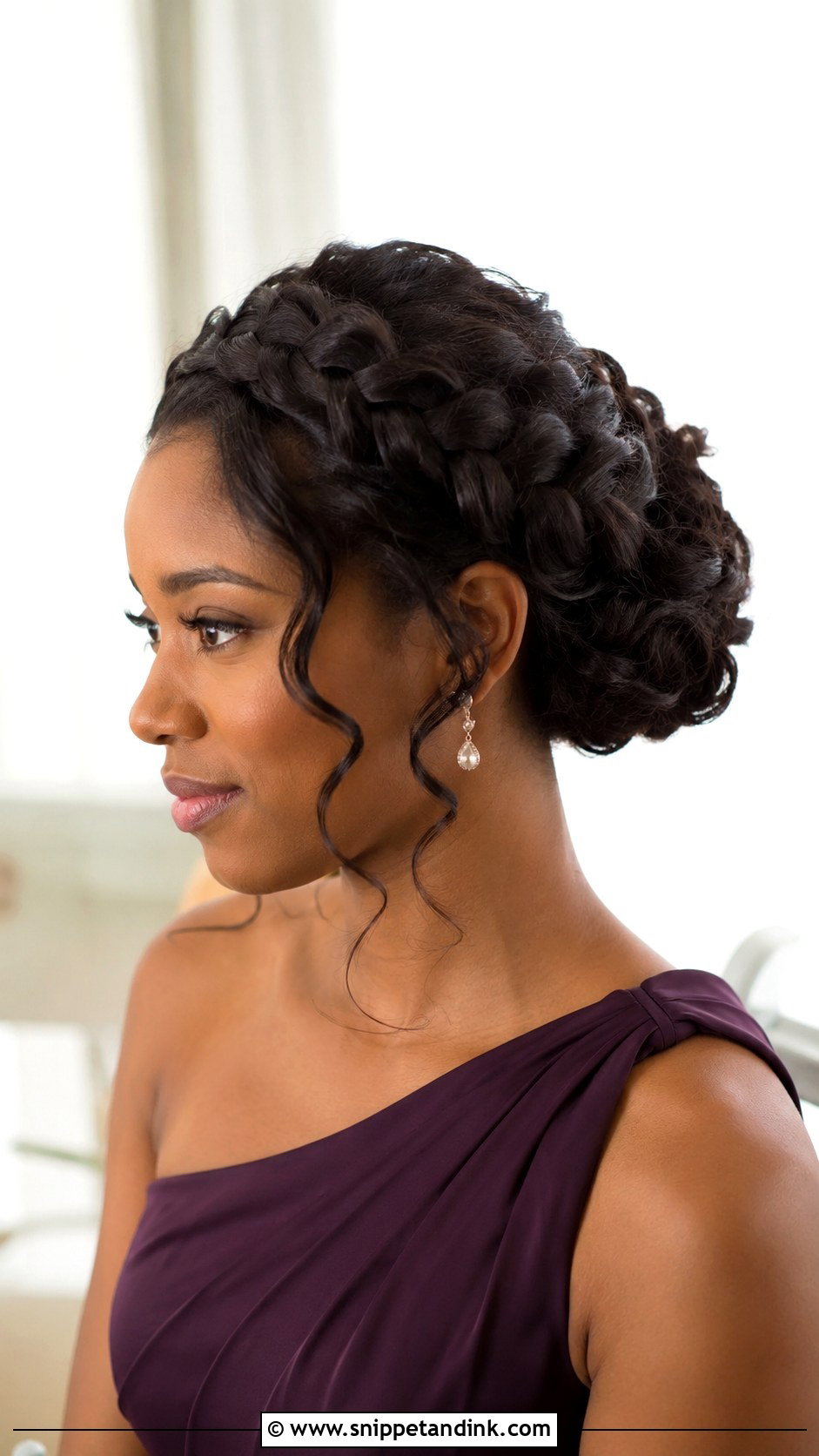
Goddess braids are large braids, often cornrowed with added hair, and their scale is what makes them read across a room. One or two can wrap into a crown, sweep to the side or shape a low updo. They hold their outline through a full day and stay clear even in a wide group photo. Textured hair is where they shine, since it already has the volume to fill them. A few curled tendrils at the face soften the boldness.
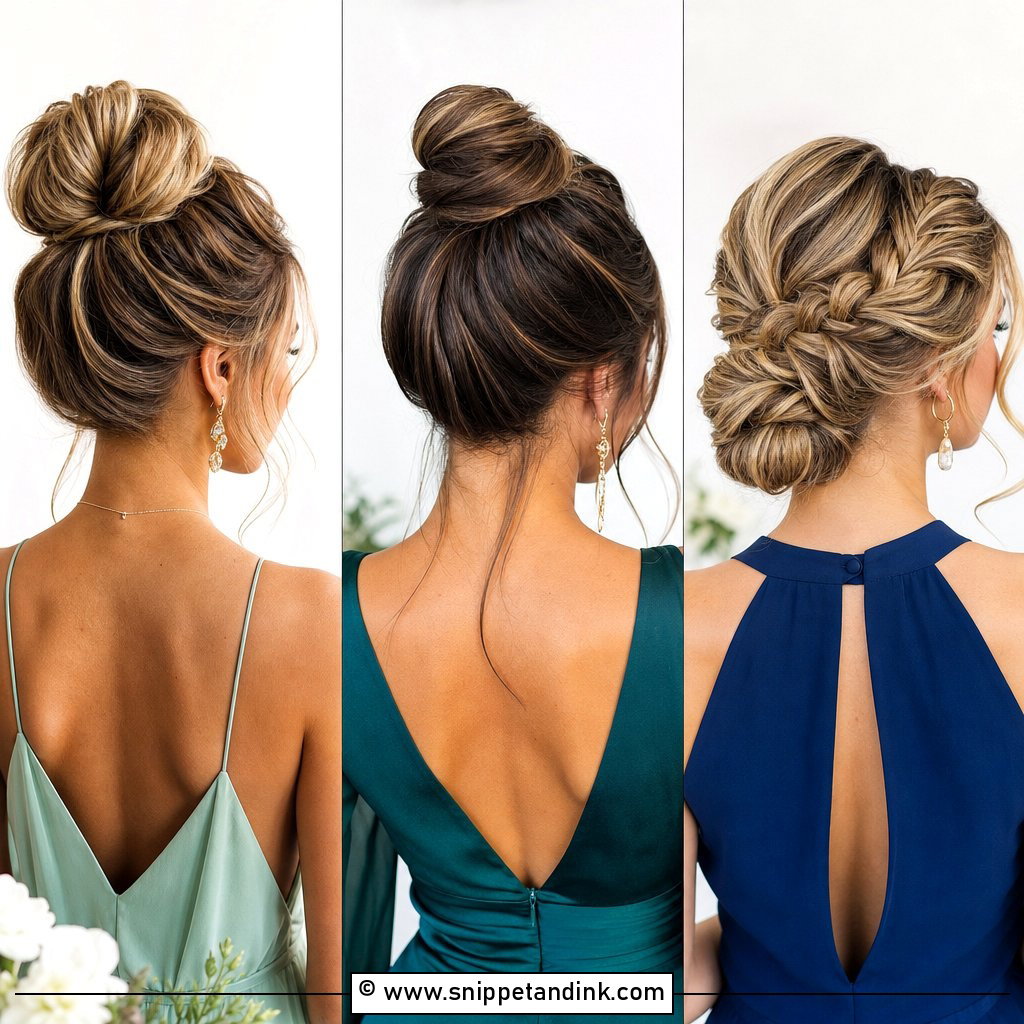
21. Bridesmaid Braided High Bun
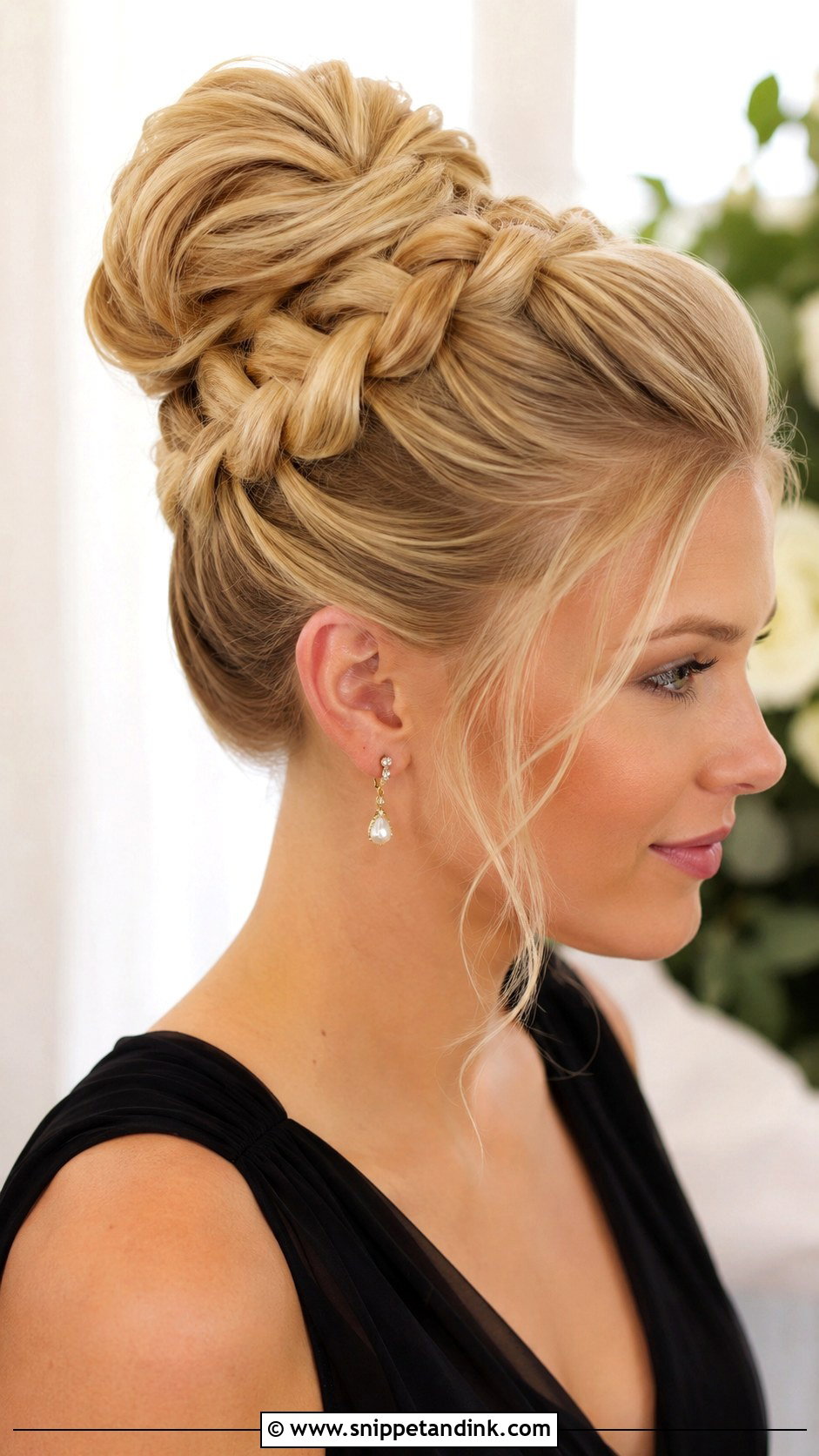
A braided high bun lifts all the hair clear of the shoulders, so it’s my pick for high necklines, detailed shoulders and big earrings. The braid can wrap the base, feed up from the nape or sit inside the bun. Braiding up from the nape takes care: the head has to tip forward, and short nape hairs escape unless I smooth them with a little gel first. Done well, it lengthens the neck. I anchor the pins into the base of the bun rather than jamming them straight down into the scalp, which starts to ache within a couple of hours.
22. Bridesmaid Braided Low Ponytail
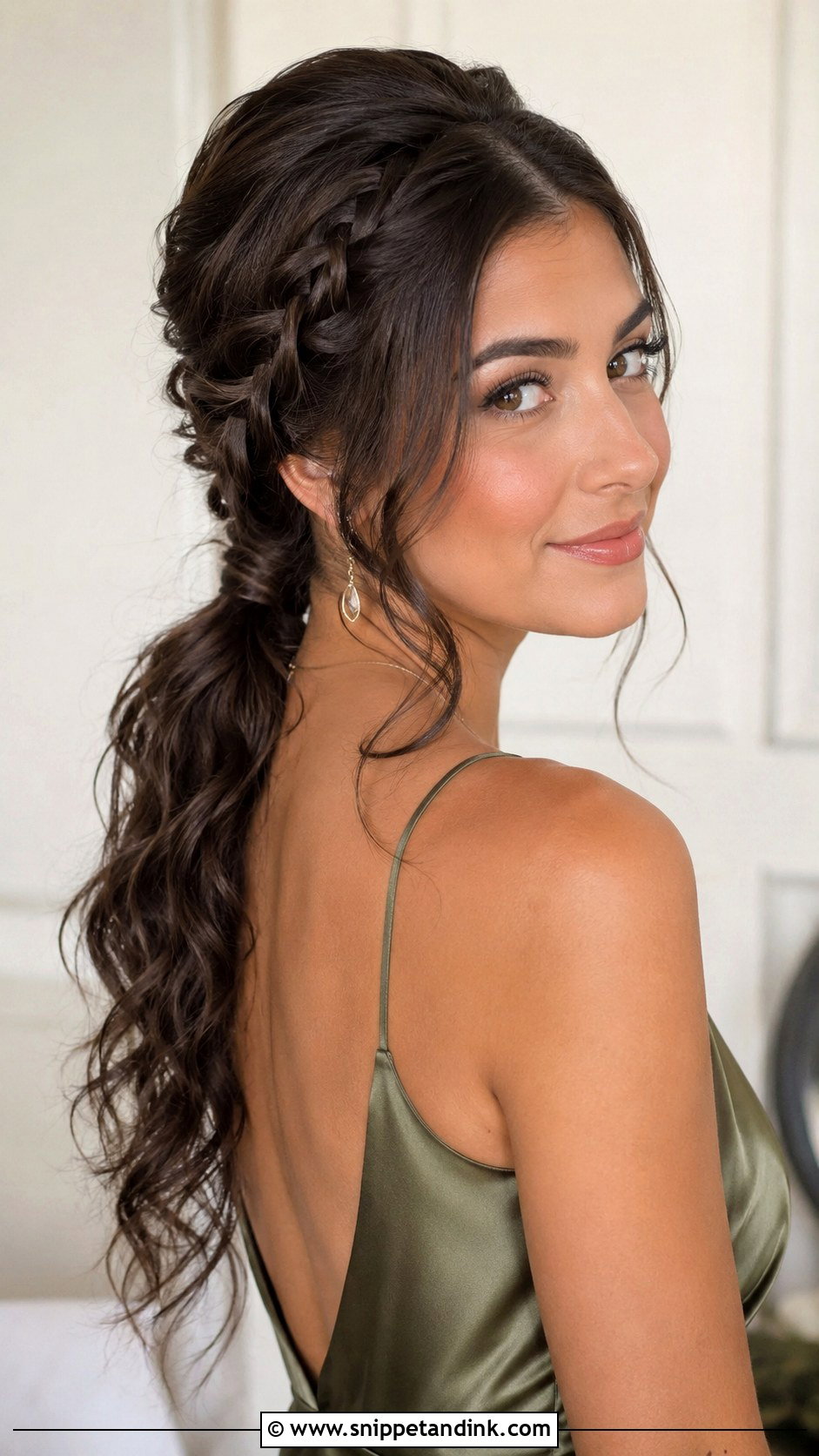
Bridesmaids who want hair back without committing to a bun do well with a braided low ponytail. The braid can start at the crown, run down one side or wrap the base, and the tail can be sleek or waved. It’s a good way to manage very long hair, which stays visible but out of the way during the dancing. Low is also kinder on the scalp than high over a twelve-hour day. A strand wrapped over the elastic makes it formal enough for a wedding.
23. Bridesmaid Loose Braid
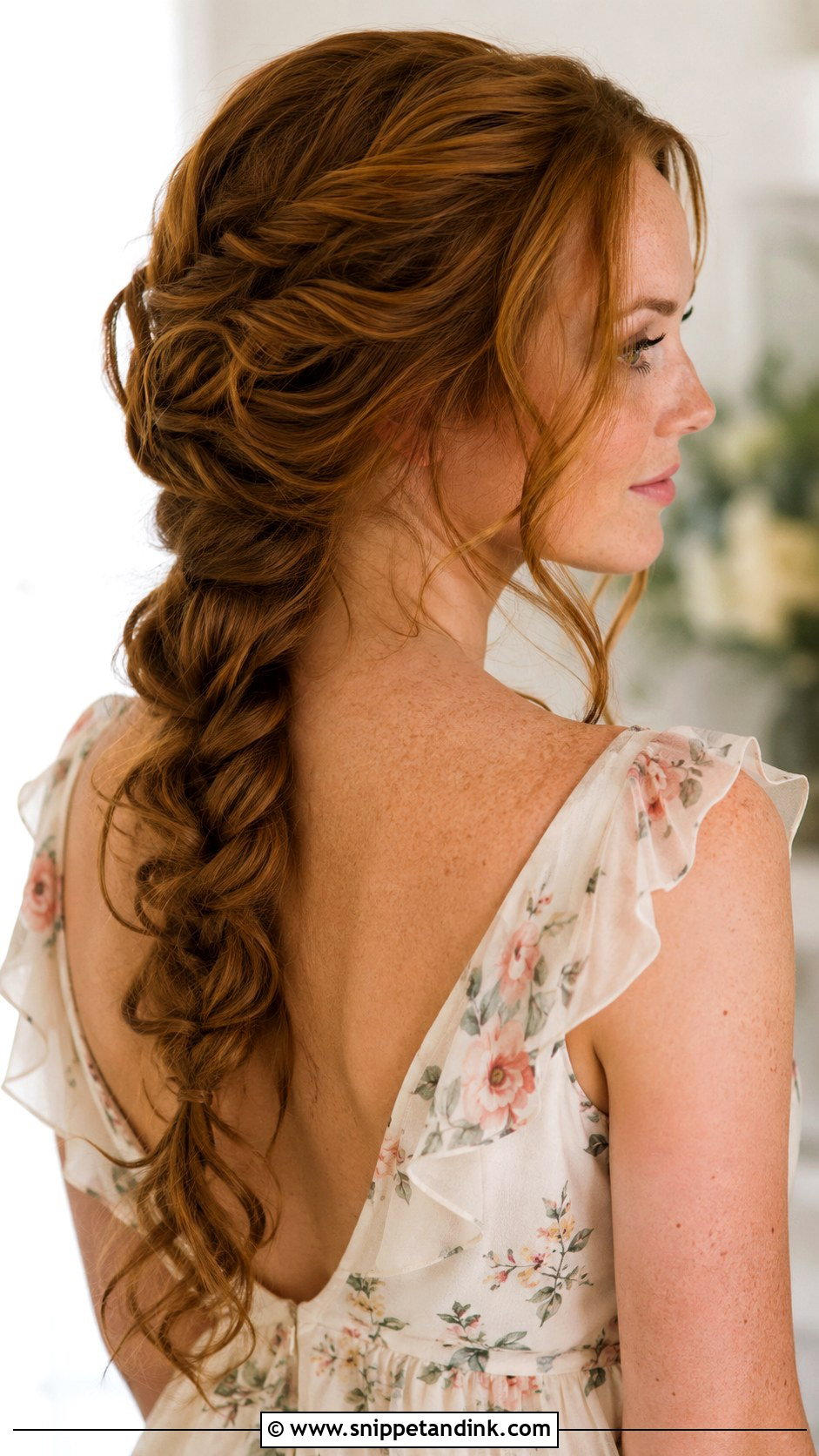
A loose braid should look full and airy, not unfinished, and the difference comes from preparation. I start with curled or waved hair so there’s texture inside the braid, secure it, then pull the sides apart a little at a time from the bottom up. It belongs at rustic venues and outdoor weddings with flowy dresses, worn down the back or over one shoulder. Face-framing layers help, because loose pieces at the front look natural. Use enough hairspray to hold the shape, but not so much that the braid feels stiff to the touch.
24. Bridesmaid Braided Updo For Long Hair
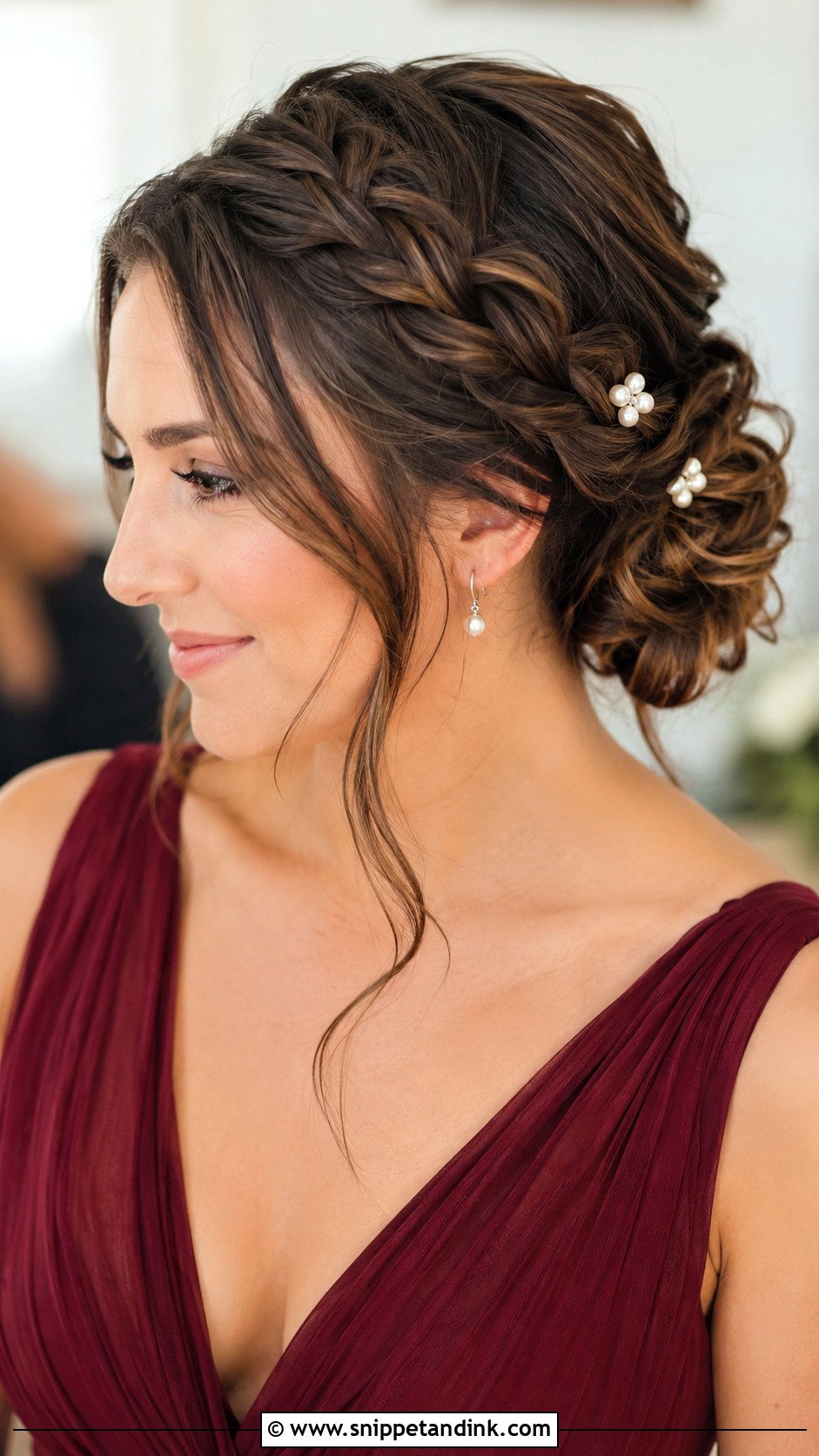
Long hair gives me room to build detail: a crown, a braided bun, a wrapped chignon or a textured updo. The real issue is weight. Very long, thick hair pulled into one knot drags and can work pins loose by the reception, so I divide it into sections and braid each one, which spreads the load across more anchor points. I ask for volume at the crown and softness at the face so it doesn’t feel pulled tight. A few small accessories can pick out the braid pattern.
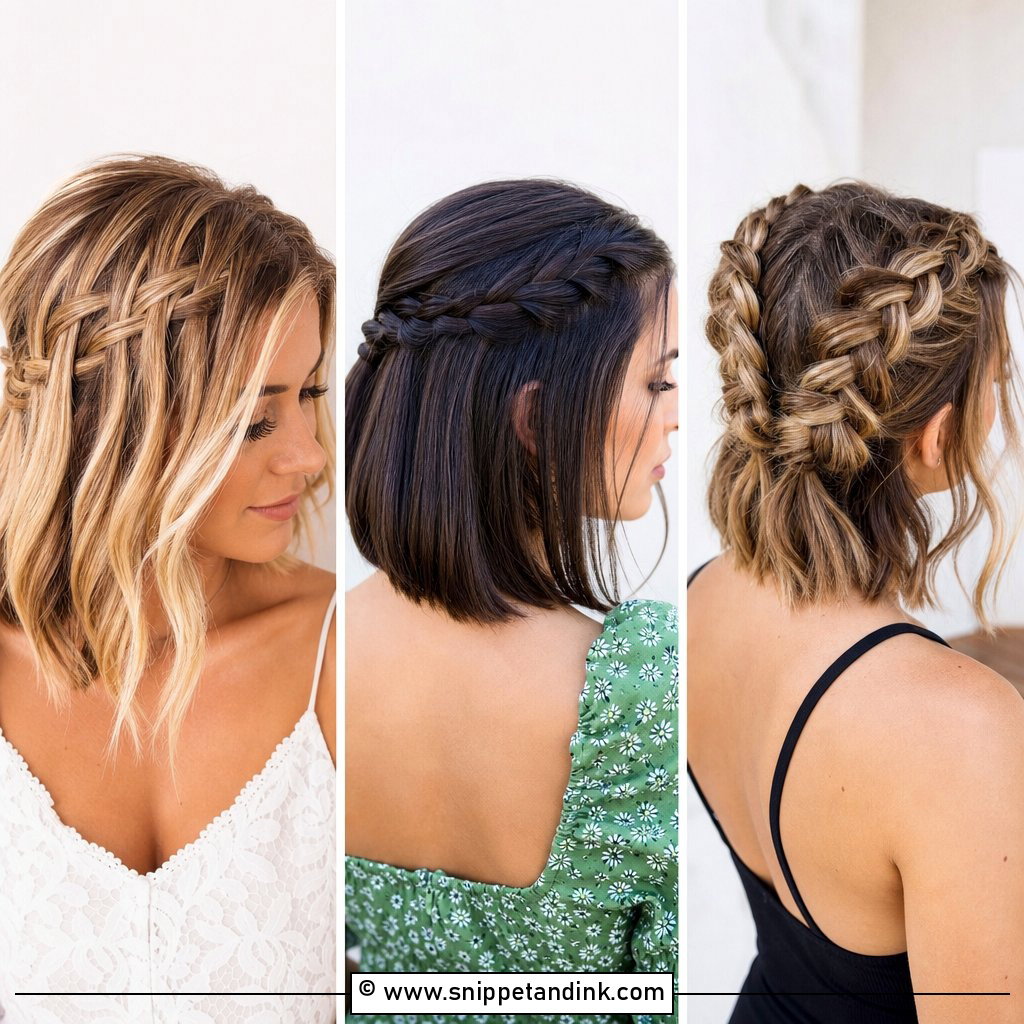
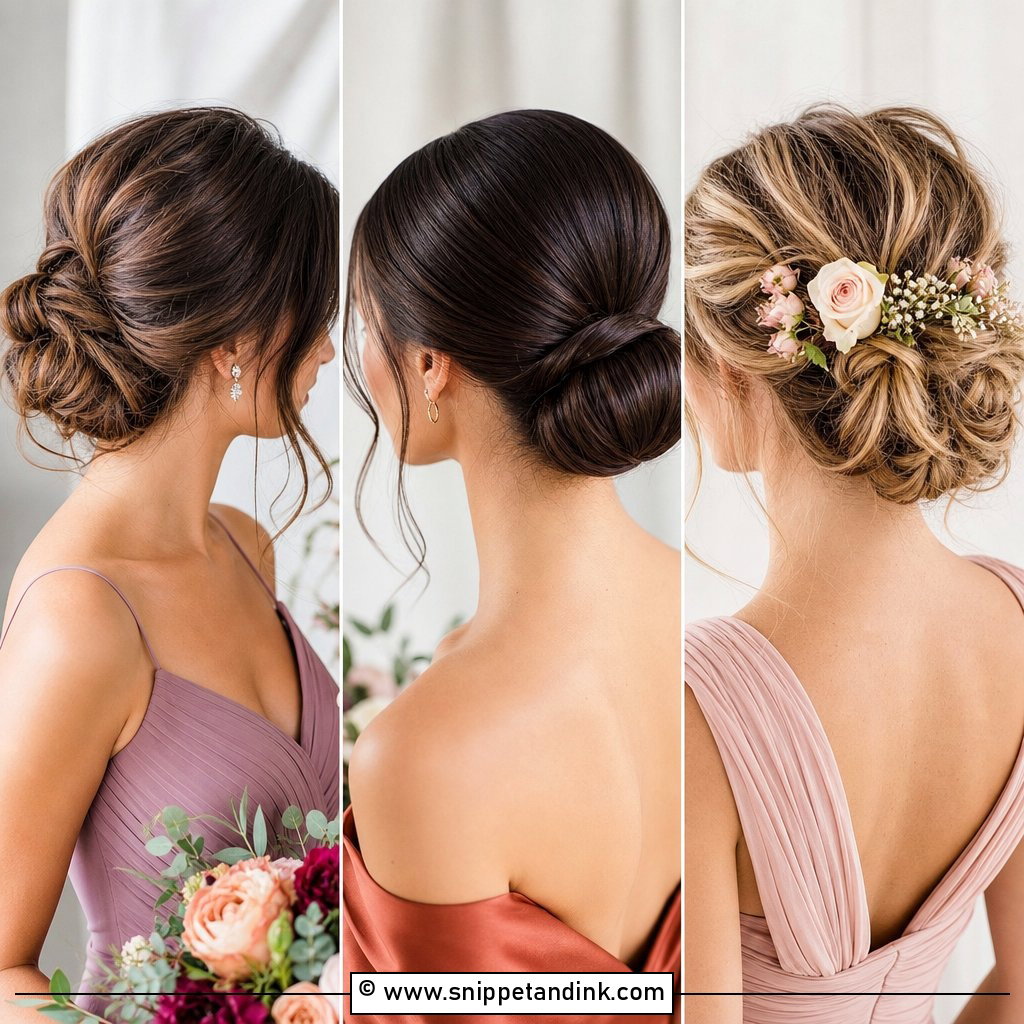
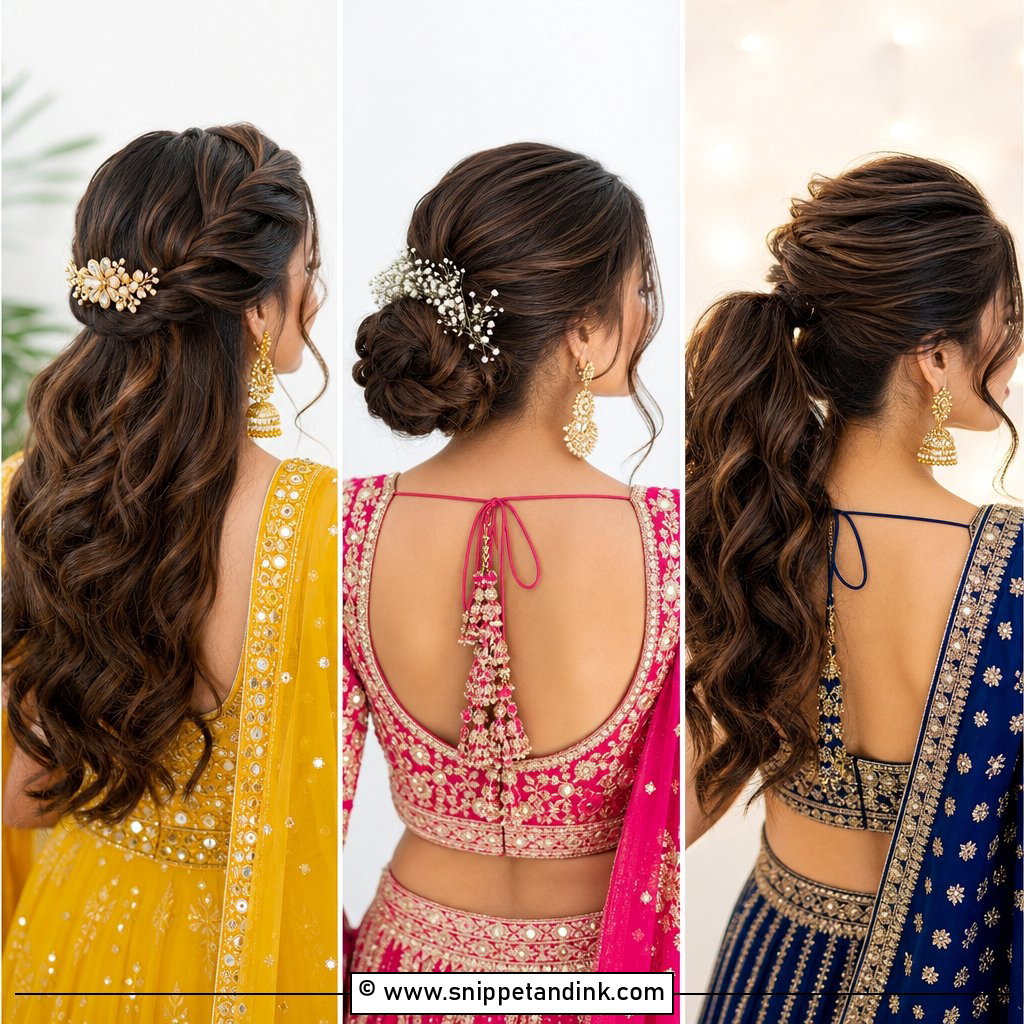
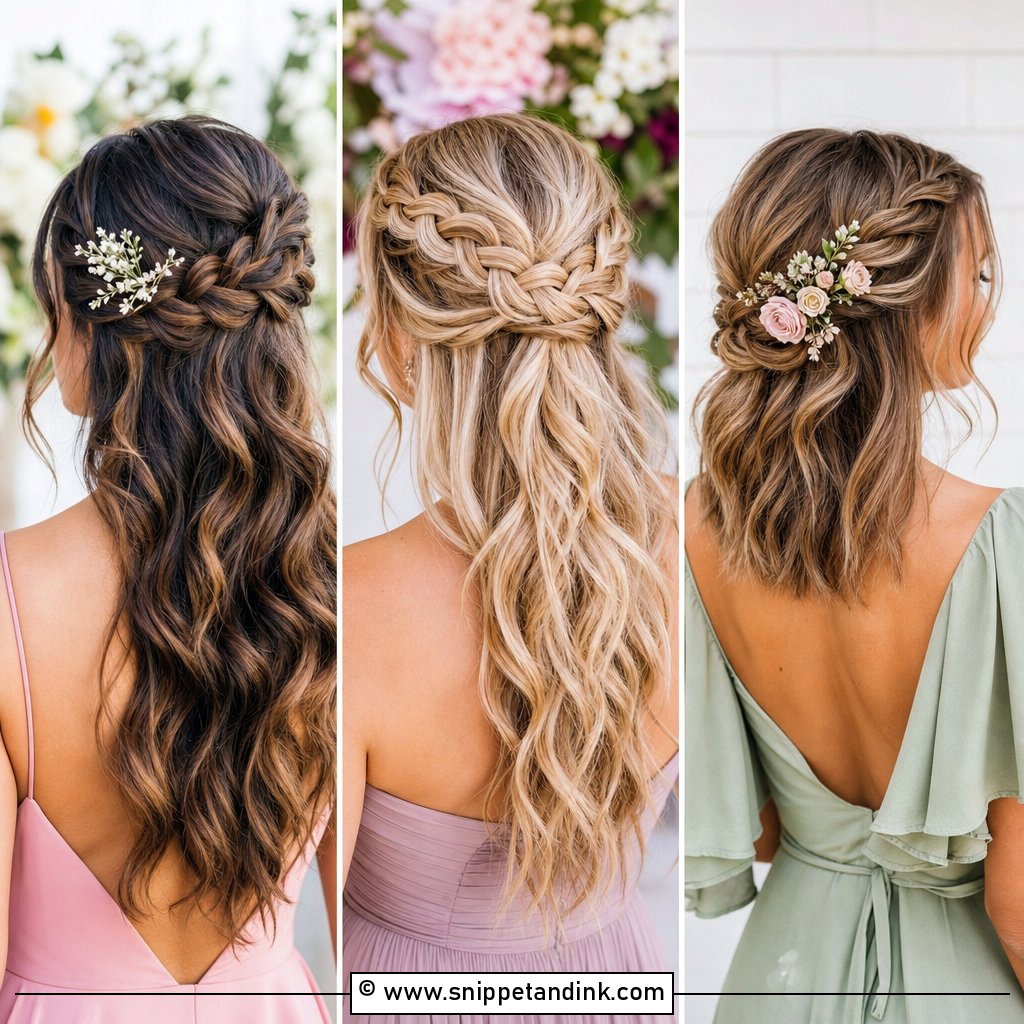
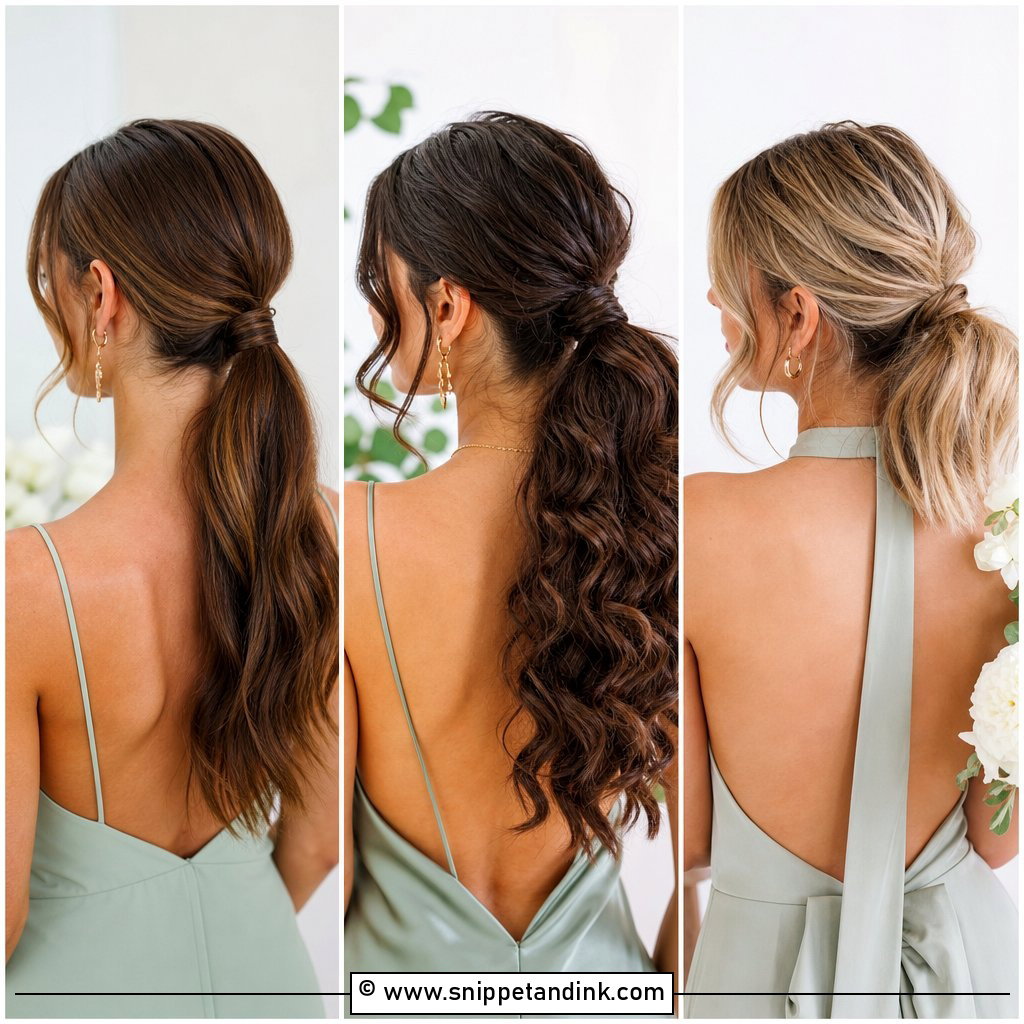
25. Bridesmaid Braided Updo For Medium Hair
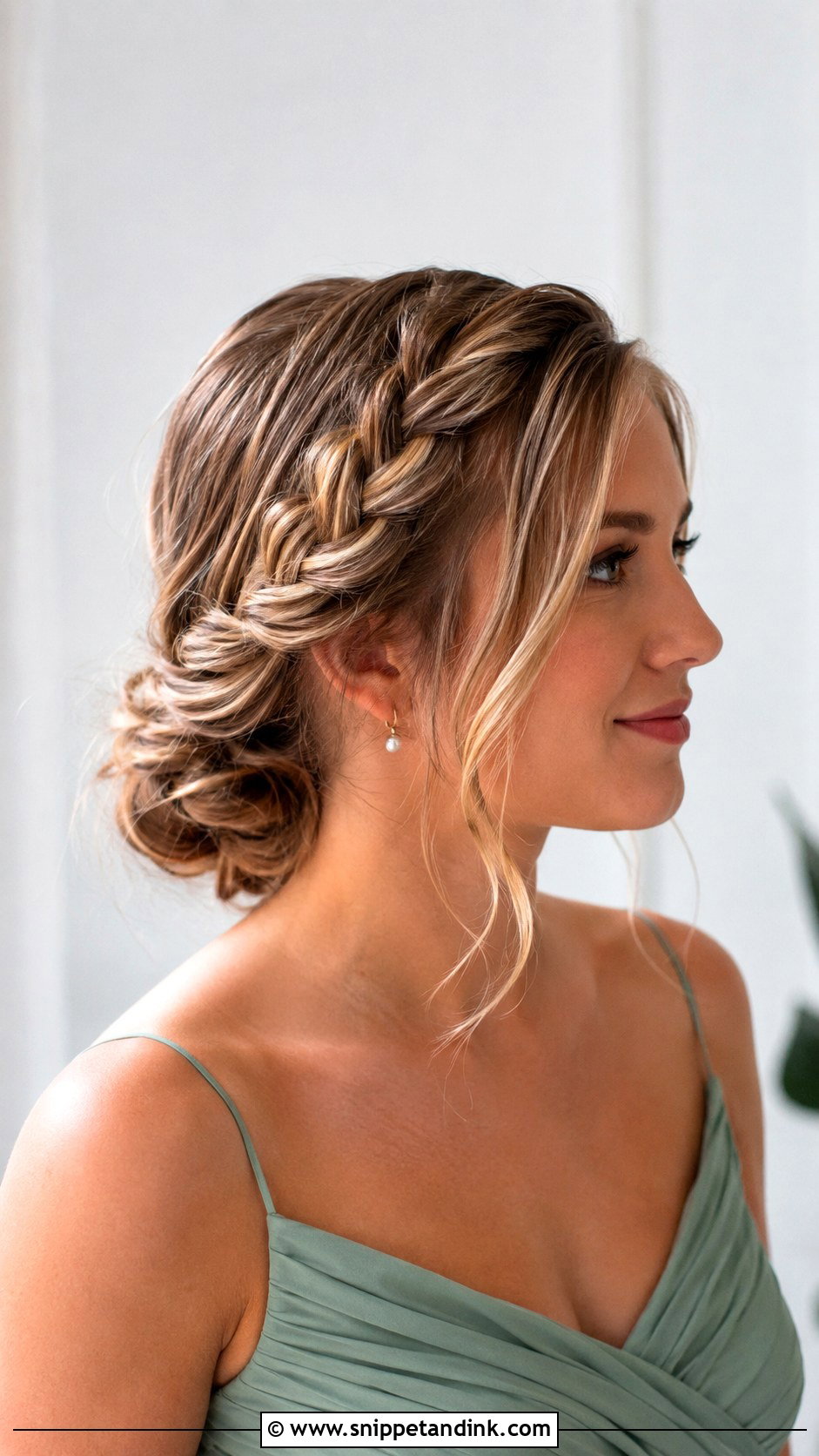
Medium hair can still give the impression of a full updo. A side braid, small crown braid or twisted braid leads into a low bun or a tucked shape at the nape. Shoulder-length hair, lobs and layered cuts all work, and the braid keeps shorter pieces in check through the ceremony. When there isn’t quite enough hair for the bun I want, I curl first and add a small padding piece or clip-in extensions underneath. Keep the front lifted and soft so the shape stays balanced.
Why Braids Slip by the Reception, and How I Stop It
A braid that looked crisp at ten in the morning can look flat and loose by the first dance. When I trace it back, it’s nearly always one of a few causes, and each has a simple fix.
- Widening it too early. If I pull a braid out to full width straight away, it has nothing left to give as it relaxes. I loosen it in two passes, once after styling and a little more just before photos.
- Pins that only hold the braid. A pin has to catch the braid and the hair underneath it. I cross two pins in an X at every anchor point.
- Heat at the nape. Sweat and humidity soften curls first, then the braid edges. A flexible spray at the end and a few minutes of cool air from a dryer help the set before anyone goes outside.
The pouch I leave with the bridesmaids
Bobby pins in their hair colors, two clear elastics, a travel hairspray and a fine-tooth comb. Most fixes during a wedding come down to replacing one pin at the back of a bun, and one bridesmaid can do that for another in under a minute.
A Braid for the Ballroom, Another for the Garden
Braids solve more wedding-day hair problems than any other technique I use: they hold, they add texture and they adapt to almost any hair type. The right one depends on the venue, the weather, the neckline, the length of hair and how formal the day is. A braided chignon fits a ballroom, while a loose boho braid makes more sense in a garden. If your bridesmaids have very different textures, give them a braid theme instead of one exact style, so everyone matches in the photos and nobody spends the day in a style their hair is fighting.
You'll Like These Ideas:


Leave a Reply