
A high ponytail is the bridesmaid style I reach for when the day is long, the dresses have interesting necklines and nobody wants hair stuck to her neck during the first dance. Lifting the weight to the crown clears the shoulders, and once the base is anchored properly it barely moves until someone takes it down. What surprises people is how much range it has. Smooth it flat and it reads modern. Curl the length and soften the hairline and it turns romantic. Braid into it and it holds through humidity that would flatten loose curls. The ideas below are complete styles rather than single details, so save the ones that suit your bridal party’s hair texture and the formality of the venue.
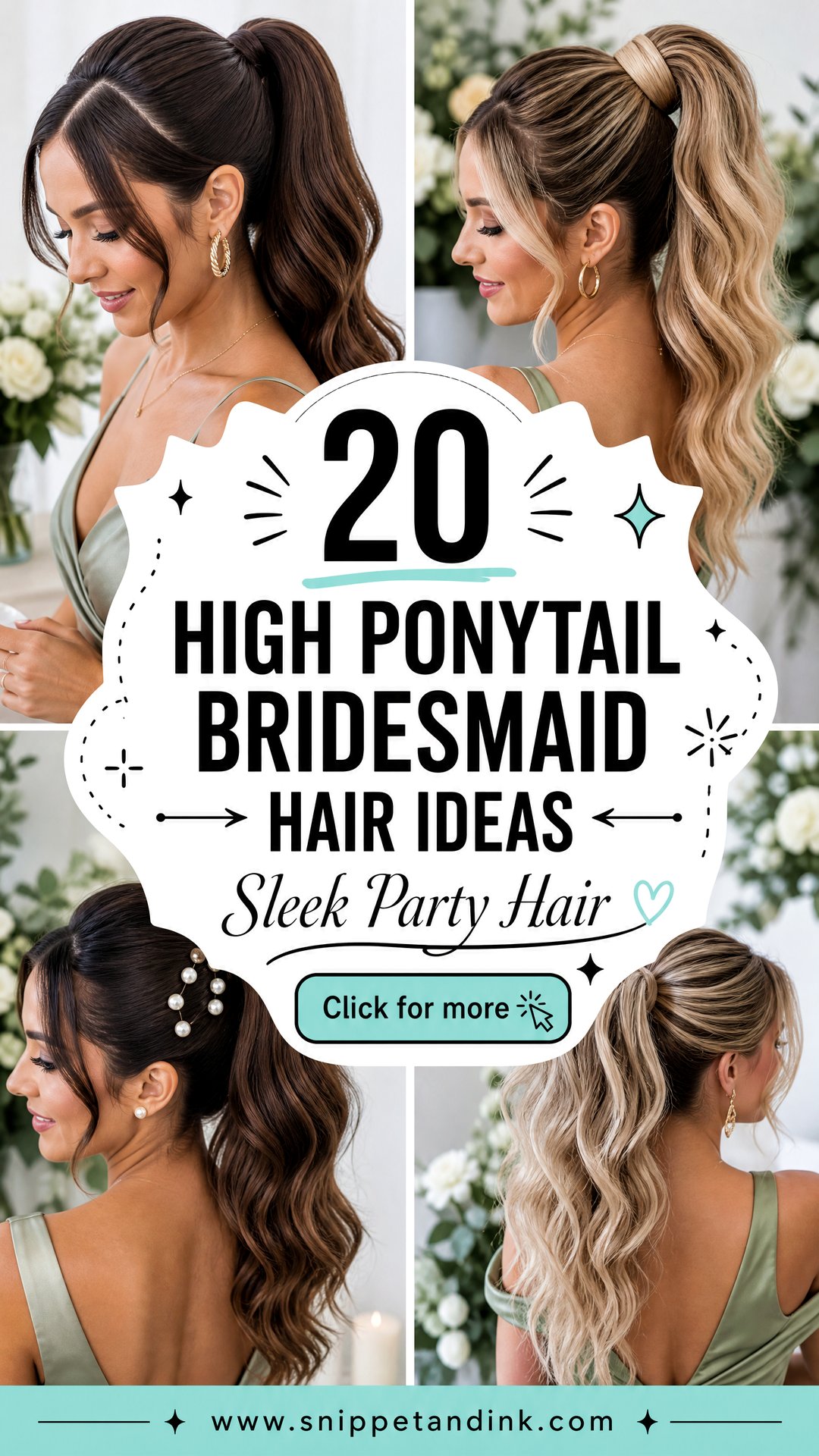
Where the Ponytail Sits Decides How It Looks
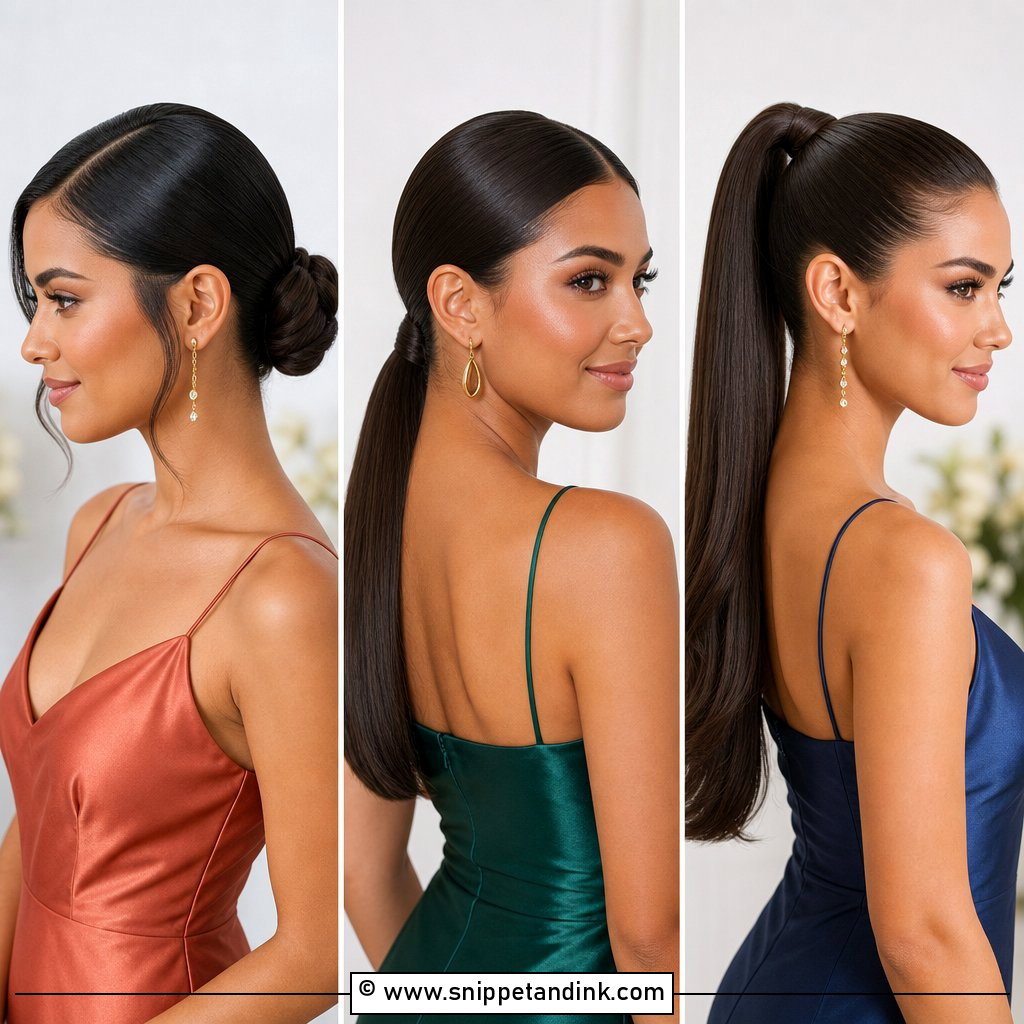
Before anyone picks a finish, I settle the height. The guide I use is a line from the chin up through the cheekbone, carried on to the back of the head. A ponytail anchored on that line looks lifted without tipping into cheerleader. Higher than that reads more fashion and pulls harder on the hairline; lower drifts toward a mid ponytail that rests against the neckline.
Adjusting height for faces, collars and glasses
- Long or narrow faces: anchor slightly below the crown so the height doesn’t stretch the face further.
- Round faces: the higher placement adds length and is usually the most flattering spot.
- High necklines and halters: go higher, so the tail falls clear of the collar instead of resting on it.
- Glasses: keep the base a touch lower and the sides less tight, so the arms of the frames don’t press into a strained hairline.
Comfort counts as much as angles. A ponytail tied tight first thing in the morning can mean a tension headache by dinner, especially for someone who never wears her hair up. I tie it firmly but not painfully and let the pins under the base carry the weight, which spreads the pull across more of the scalp.
Styling Seven Bridesmaids With Seven Different Textures
A bridal party rarely shares one hair type, and asking for identical ponytails usually ends with someone’s hair forced into a shape it won’t hold. I match what people notice from across the room, which is the height, the part and the finish at the base, and let each tail behave the way it naturally wants to.
- Agree on one part for everyone, or one rule such as no part at all, swept straight back.
- Choose one base finish, a hair wrap, ribbon or pearl cuff. That single detail is what makes different ponytails look like a set.
- Let the lengths differ. Straight hair stays straight, curly hair stays curly, and waves sit in between.
- Settle extensions at the trial, so anyone with fine or shoulder-length hair has time to buy a clip-in in her own shade.
Then time each chair. A sleek wrapped ponytail is one of the quicker styles I do, while a curled one with an extension can take close to an hour. Times vary by stylist and hair, so ask yours to build the morning schedule backward from the first photos.
1. Sleek High Ponytail Bridesmaid Hair
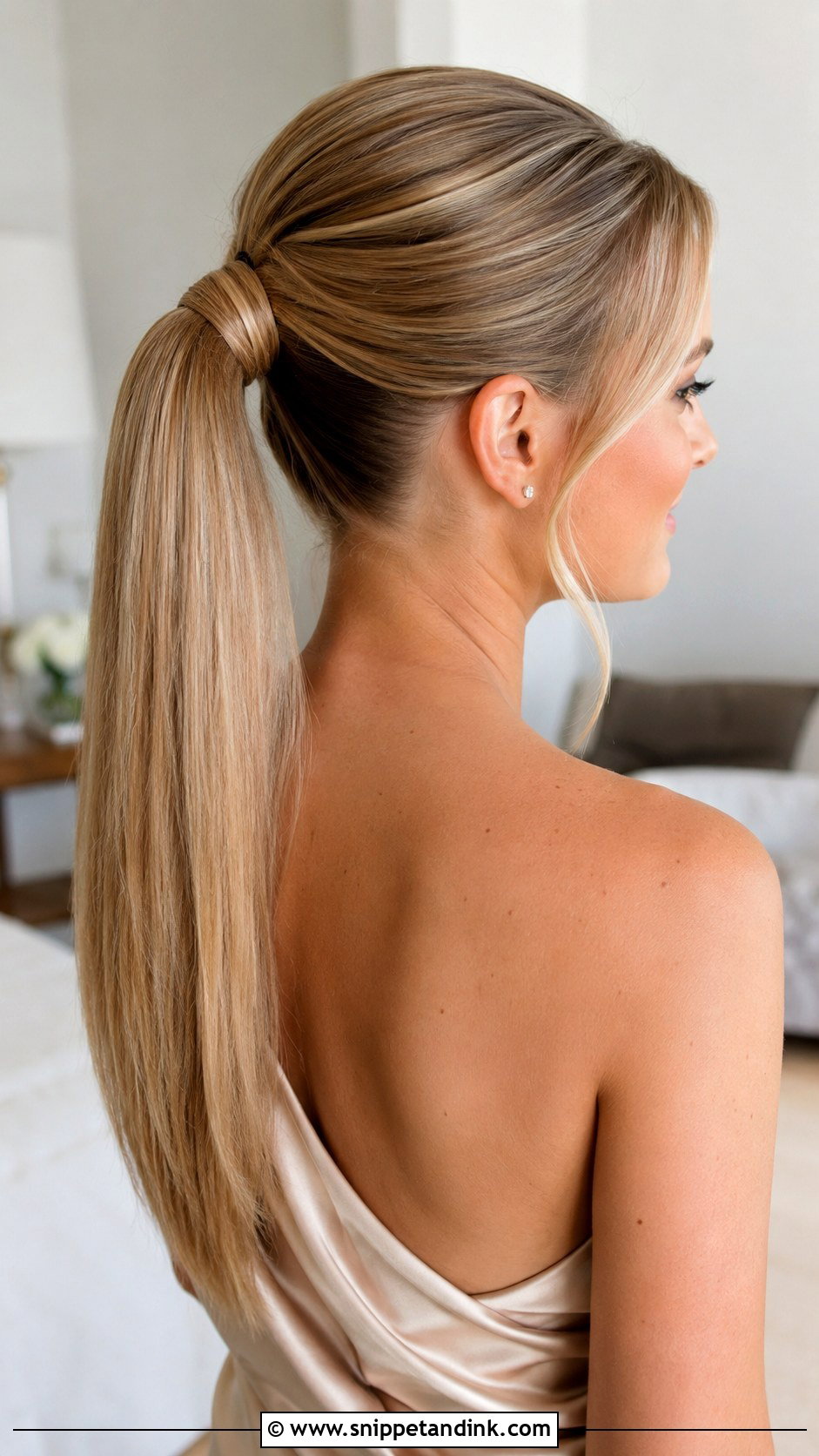
Sleek is the least forgiving version on this list. Every bump at the hairline shows, so I smooth the hair back while it’s still slightly damp with a little cream, brush it into the elastic with a firm bristle brush, and only then let it dry in place. A wrapped base hides the elastic and makes the finish look deliberate rather than gym-ready. Satin, square necklines and one-shoulder gowns suit it, because the clean line of the head echoes the dress. I keep the length straight or give the ends a slight bevel; full curls fight the sharpness you’ve just built.
2. Curly High Ponytail Bridesmaid Hair
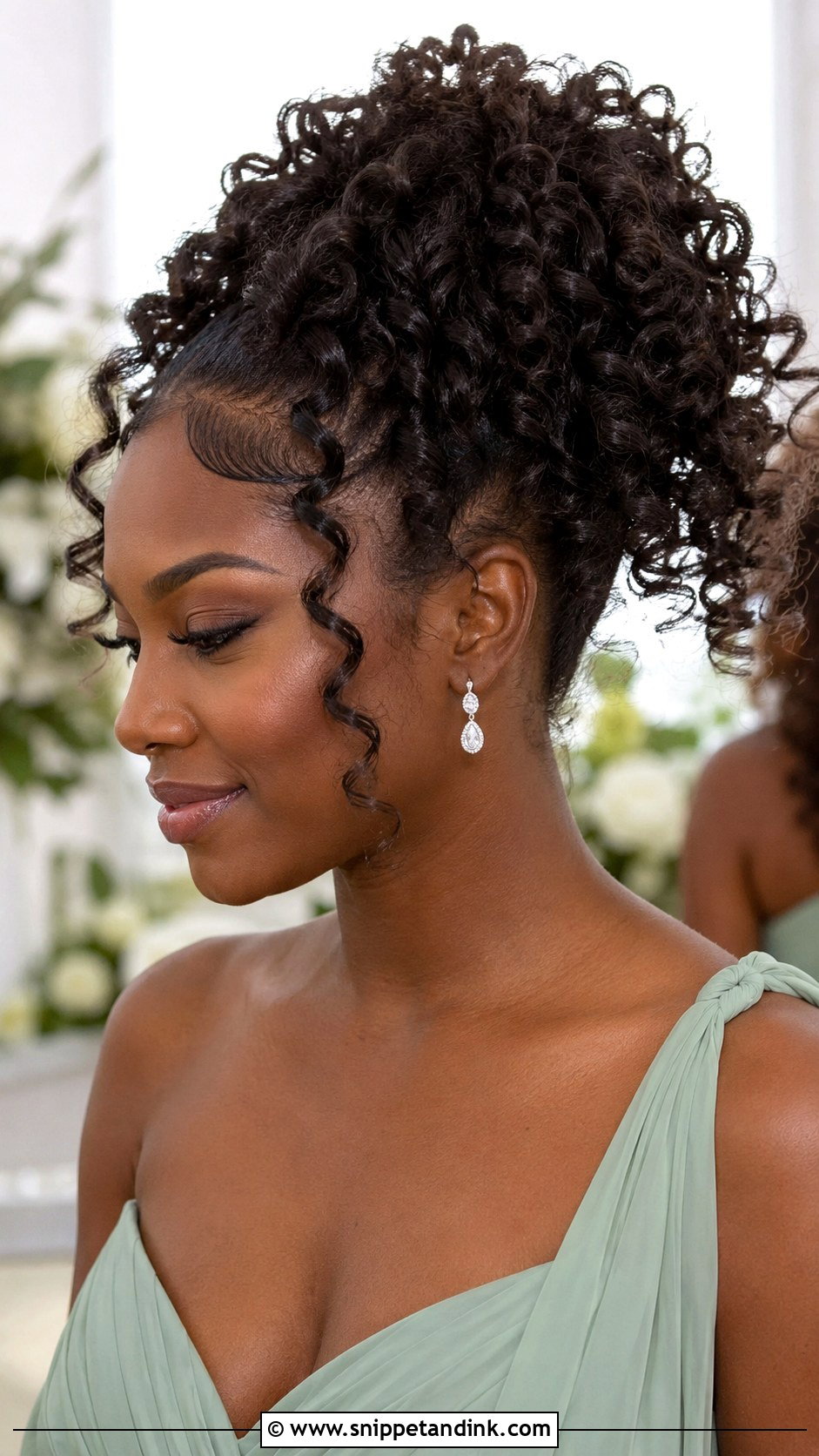
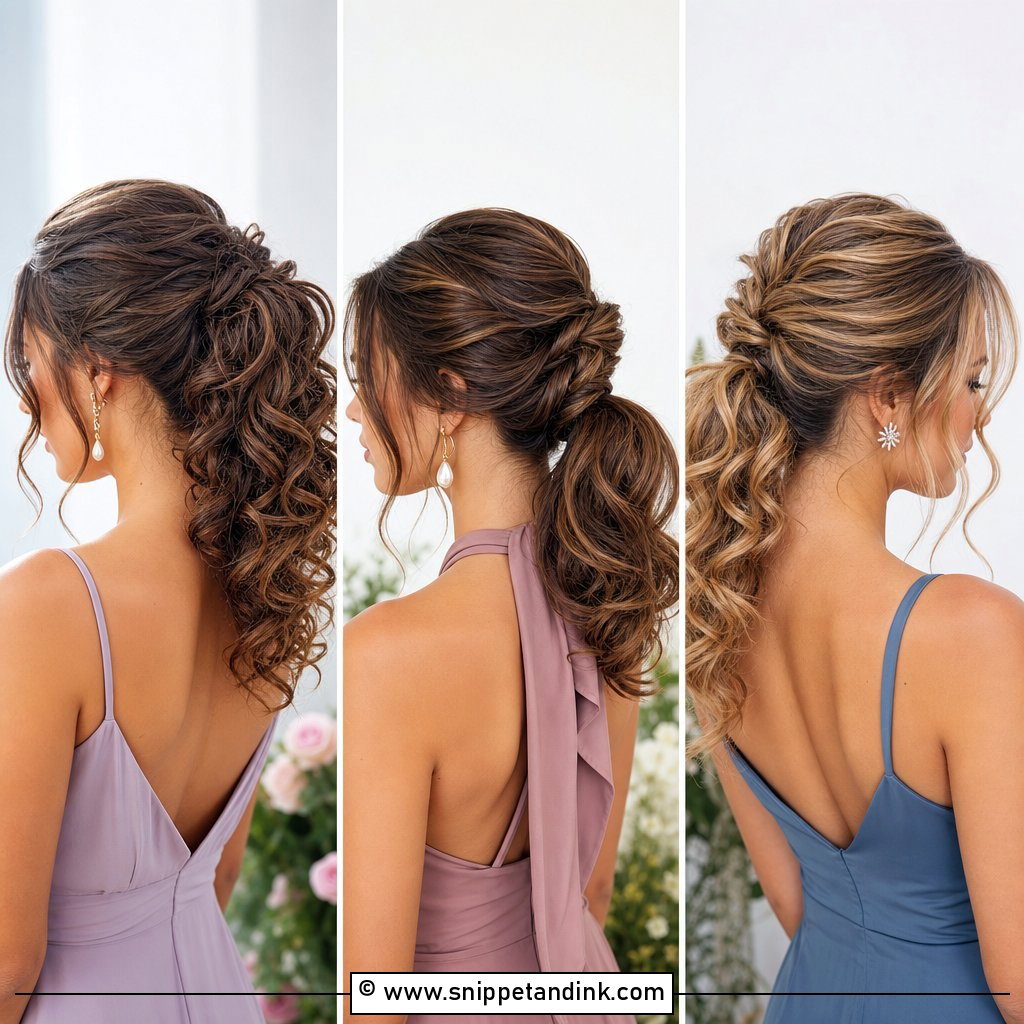
Natural curls hold a high ponytail better than almost any texture, because the curl pattern grips itself and hides the pins. On straighter hair I build the same look with a curling iron, set each curl in a pin curl until it cools, then gather everything up so the height comes from curls stacked at the crown. Keep the front smooth or release two soft pieces. A light mousse defines without crunch. Outdoors it’s forgiving: as the curls relax through the afternoon, they simply look softer instead of ruined.
3. Wavy High Ponytail Bridesmaid Hair
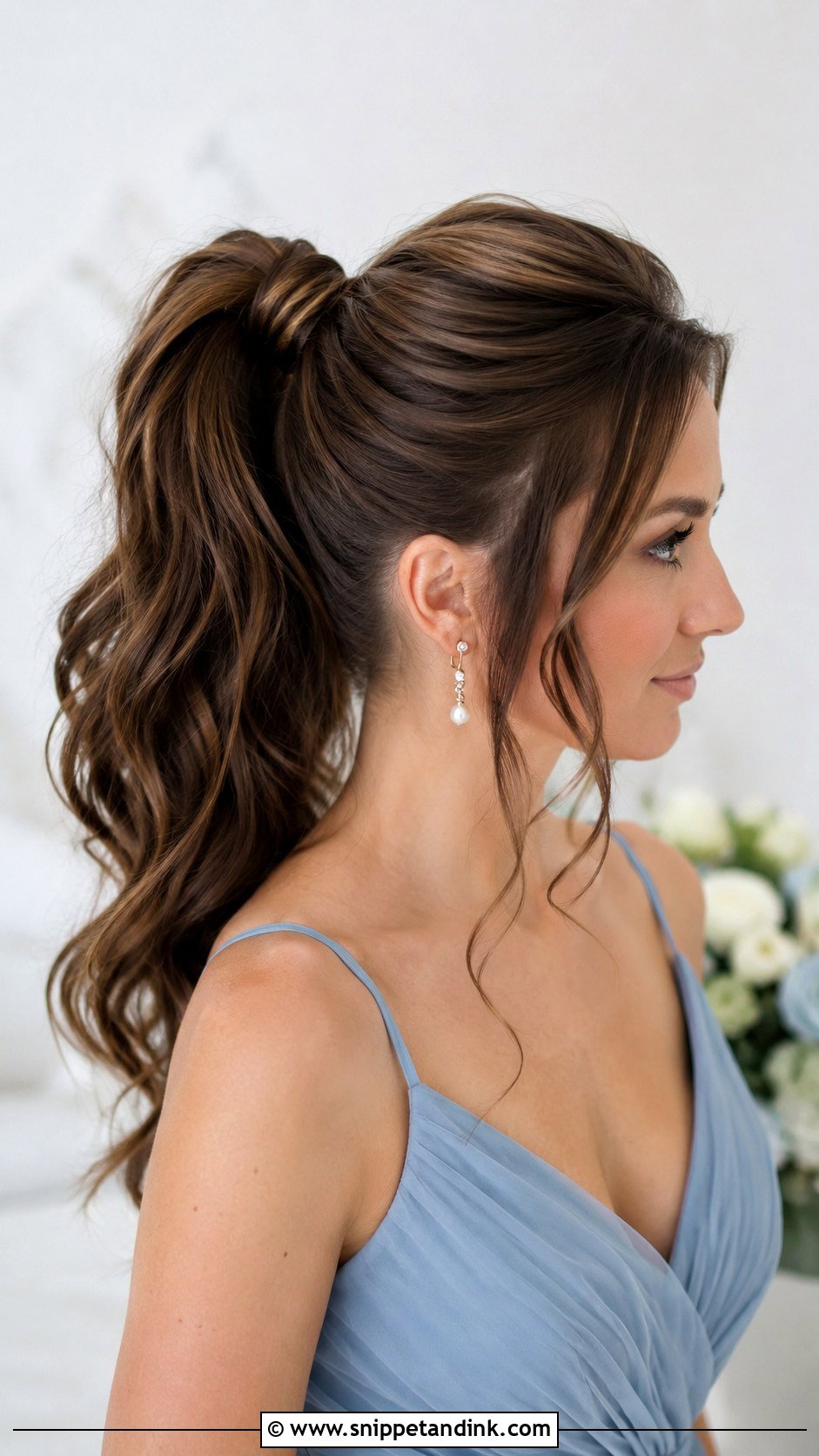
If a group can’t agree on anything else, they usually agree on this. Wavy high ponytail bridesmaid hair sits comfortably next to chiffon, florals and soft makeup without looking overdone. My order of work matters here. I curl the hair first, let it set, tie it up, then brush the waves out and redo any curl the elastic crushed. Curling after the hair is up means working around a heavy tail at an awkward angle, and the waves come out uneven. A little backcombing at the crown and a couple of face-framing strands keep it from looking severe.
4. Braided High Ponytail Bridesmaid Hair
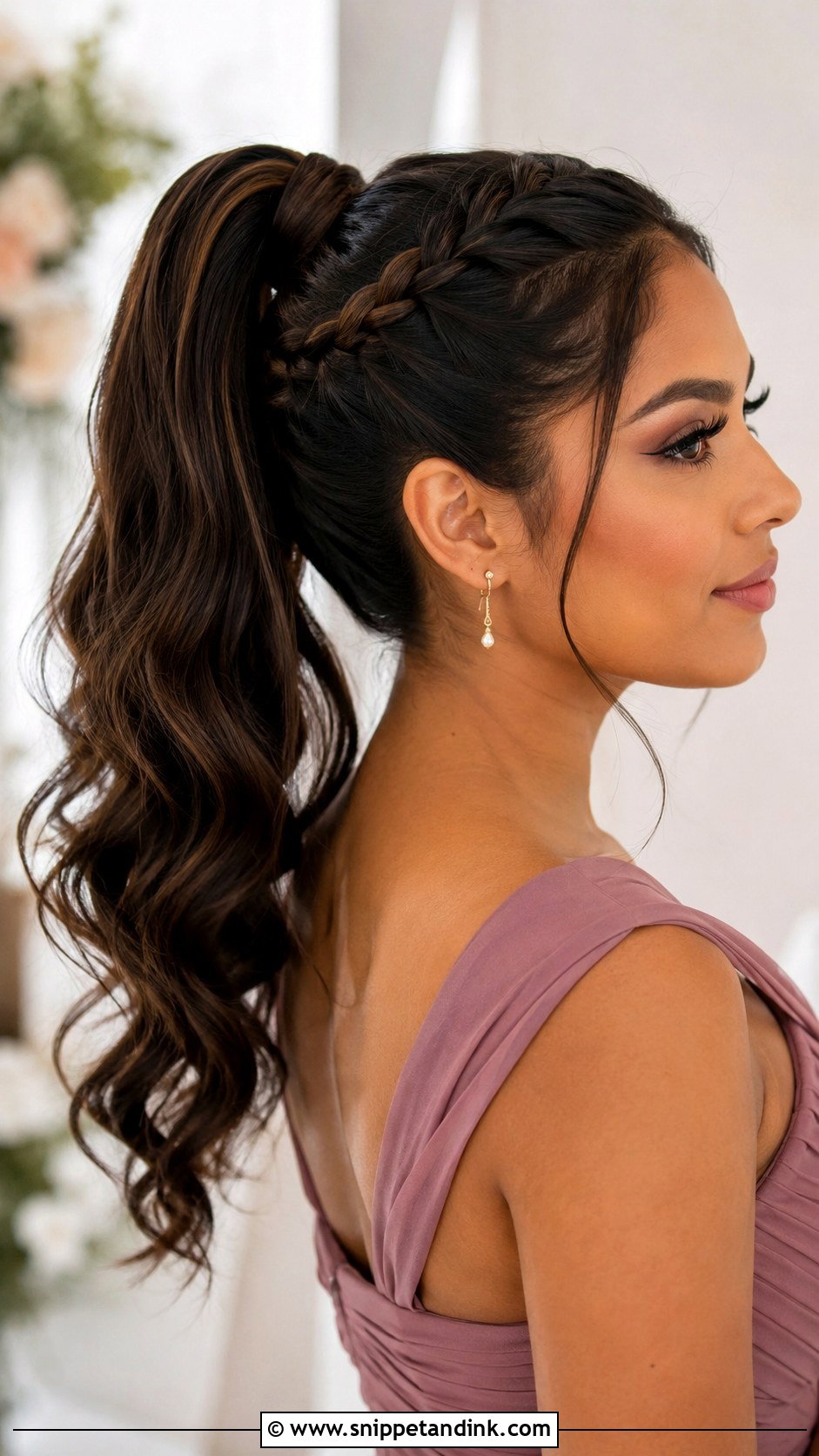
Braids are my insurance policy for humid days and long dance floors. The braid can start at the hairline, wrap the base or run down the tail itself, and every braided section locks its hair in place so there’s far less to fall. When someone has layers that won’t reach the crown, a braid worked upward from the nape catches them before they meet the elastic. Gently pull the braid wider for a softer finish, or leave it tight for a crisp line. Tiny pins or small blooms tuck into the plaits without extra anchoring.
5. High Ponytail With Face Framing Pieces
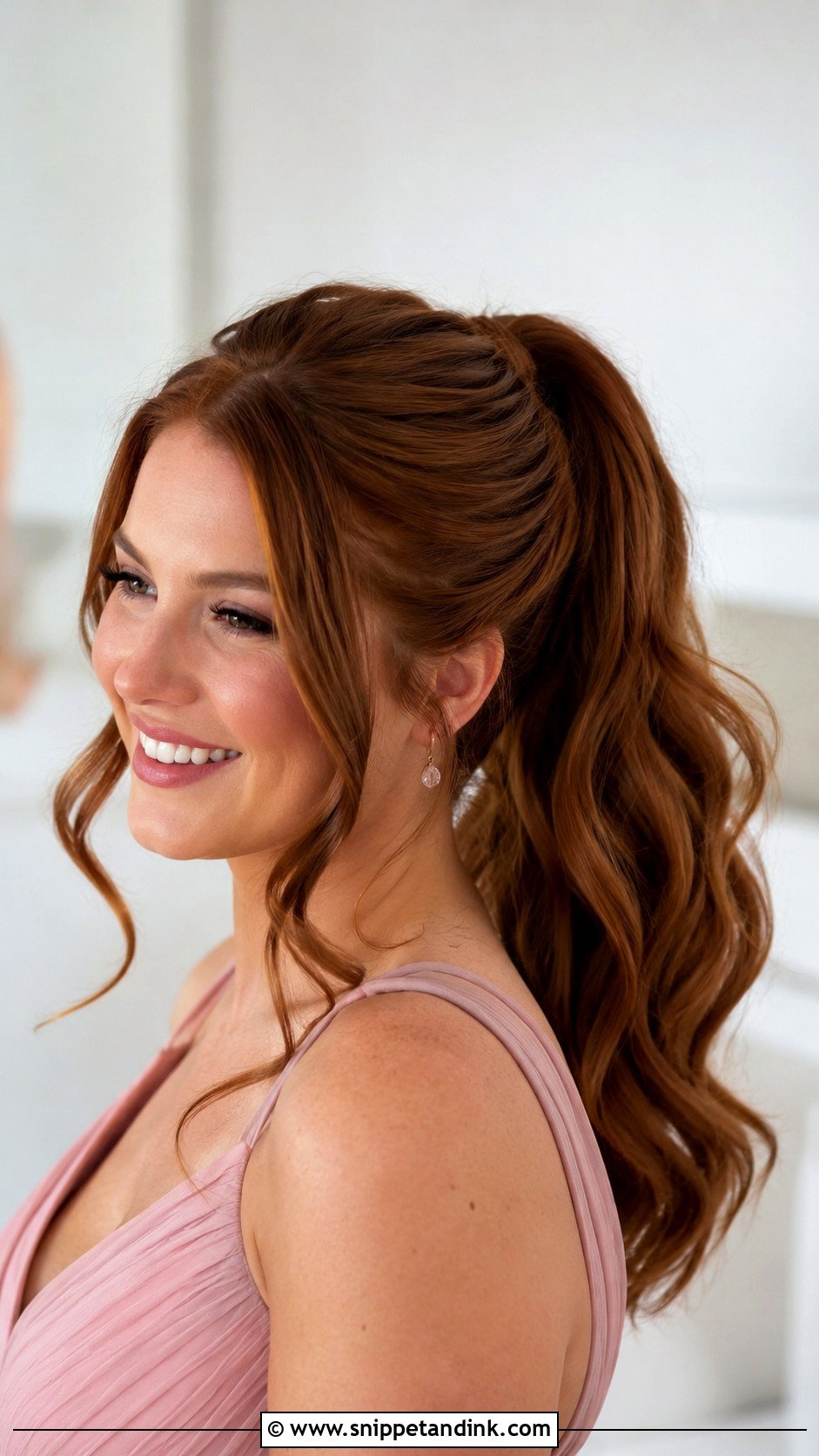
Not everyone feels comfortable with every inch of her face exposed, and that’s who I’d give this version to. Two pieces released at the temples soften the pull of a high pony and frame the cheekbones. Decide on those pieces before tying the hair up; tugging strands out of a finished ponytail loosens the base. I curl them away from the face so they don’t fall into the eyes or stick to lip gloss. They balance high necklines and strapless dresses well, though on fine hair they go limp by evening, so I tell the wearer to give them a quick twist around a finger before the reception photos.
6. High Ponytail With Middle Part
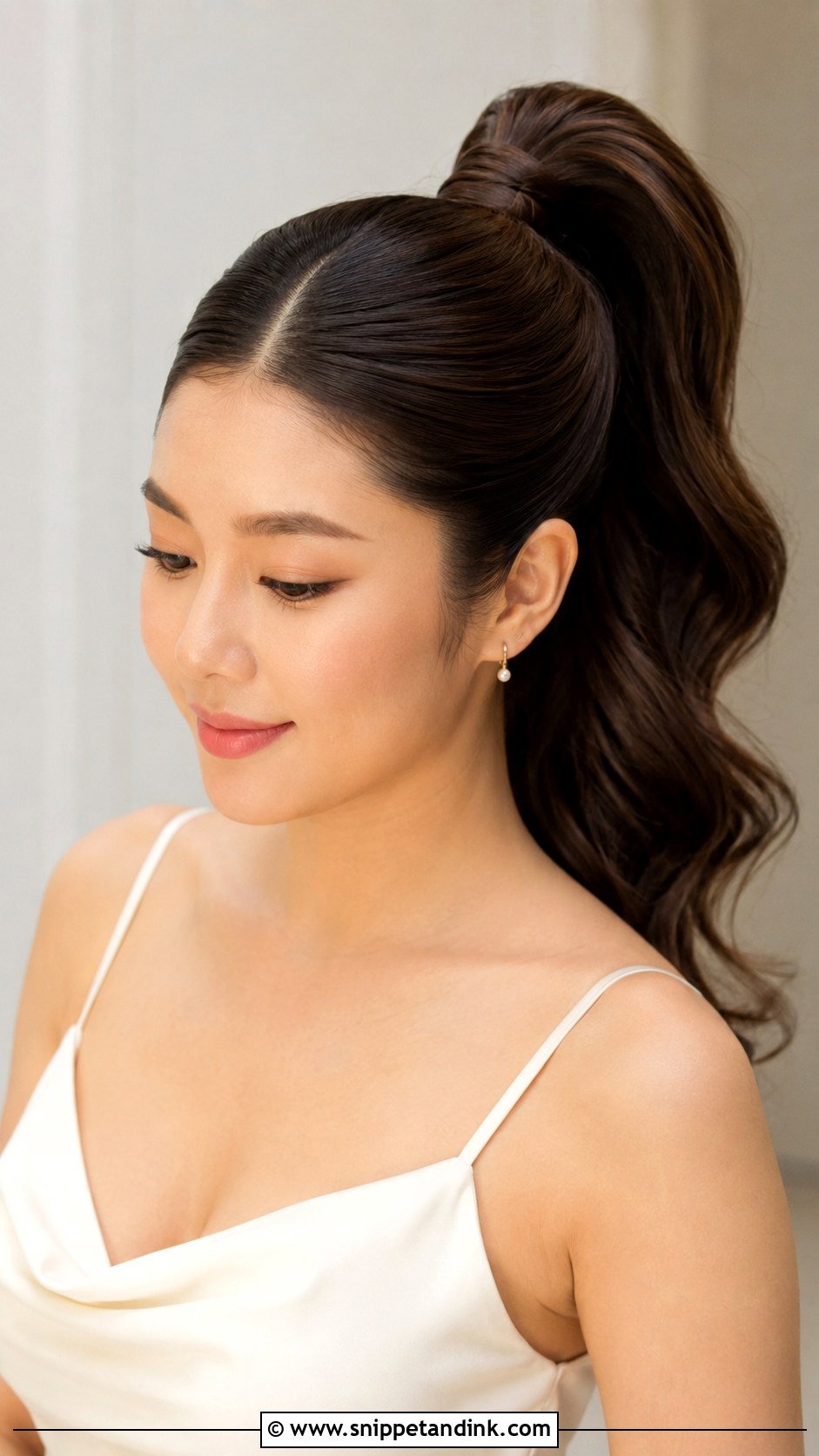
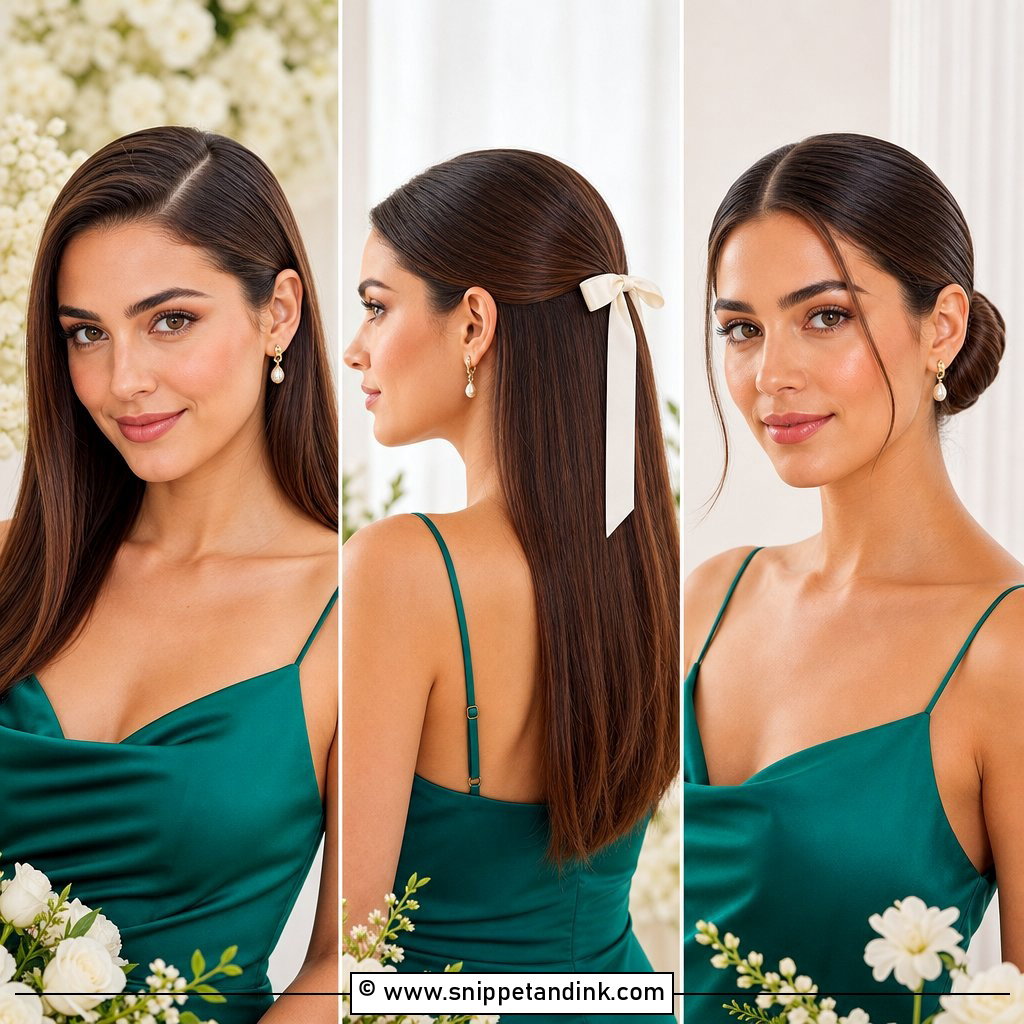
A center part is a precision job. I cut it with the tail of a comb from the middle of the brows back to the crown, then brush each side into the base separately so both halves pull with equal tension. Uneven tension makes the part drift toward one side within an hour. Simple gowns, pearl studs and clean makeup suit it, and straight lengths look the most current. Always finish with a wrapped base, because a center part next to a visible elastic reads casual.
7. High Ponytail With Side Part
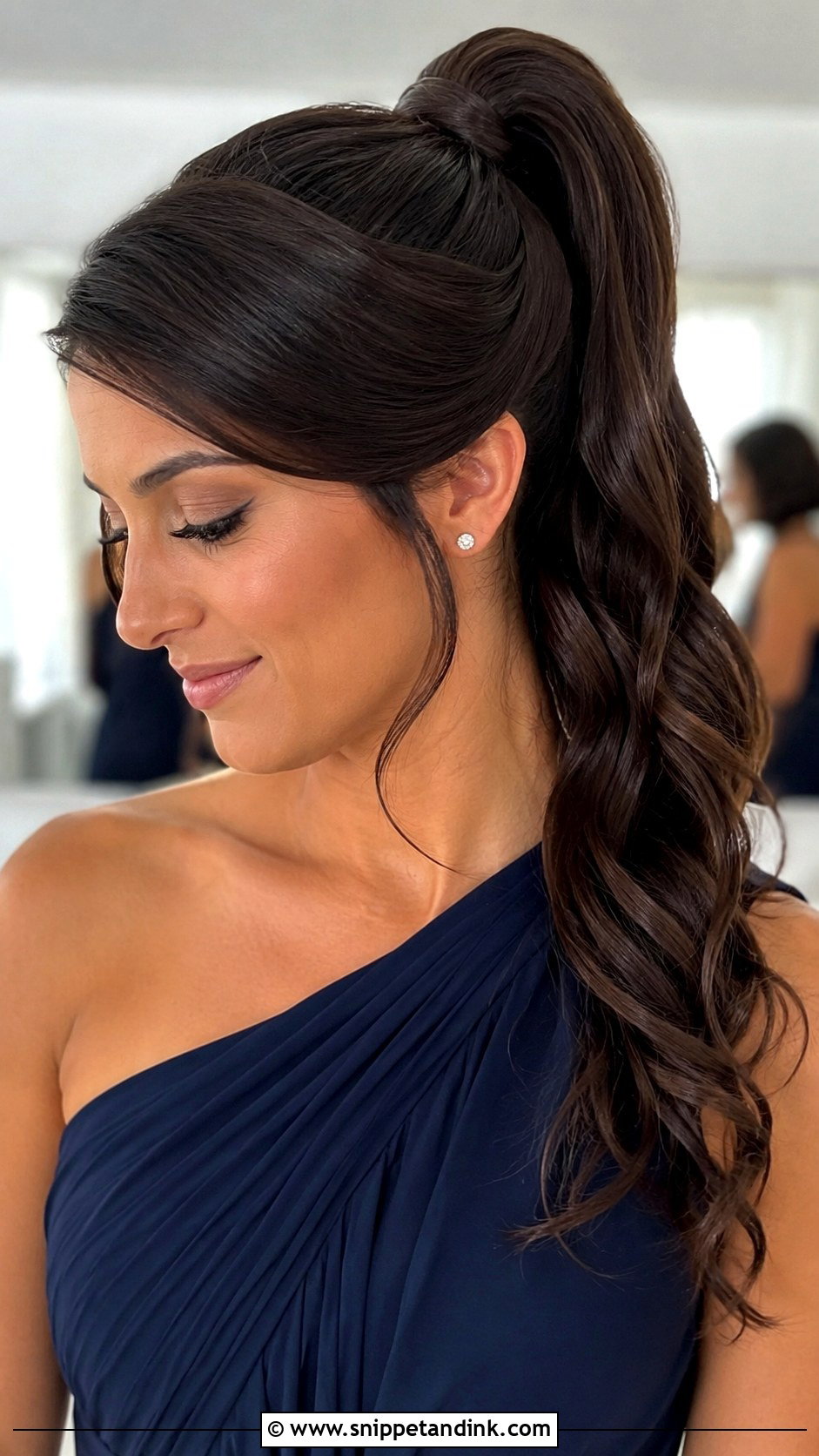
A deep side part changes a face more than almost any other single decision. It adds height on one side, softens a broad forehead and draws attention to the cheekbones. I set the part while the hair is still pliable, sweep the heavier side back with a slight swoop at the temple and pin it behind the ear before it joins the ponytail, so it can’t spring loose. It has a red-carpet feel that suits formal evenings. Shine spray on the swoop and a flexible spray over the rest keep the part neat through hugs and dancing.
8. Voluminous High Ponytail Bridesmaid Hair
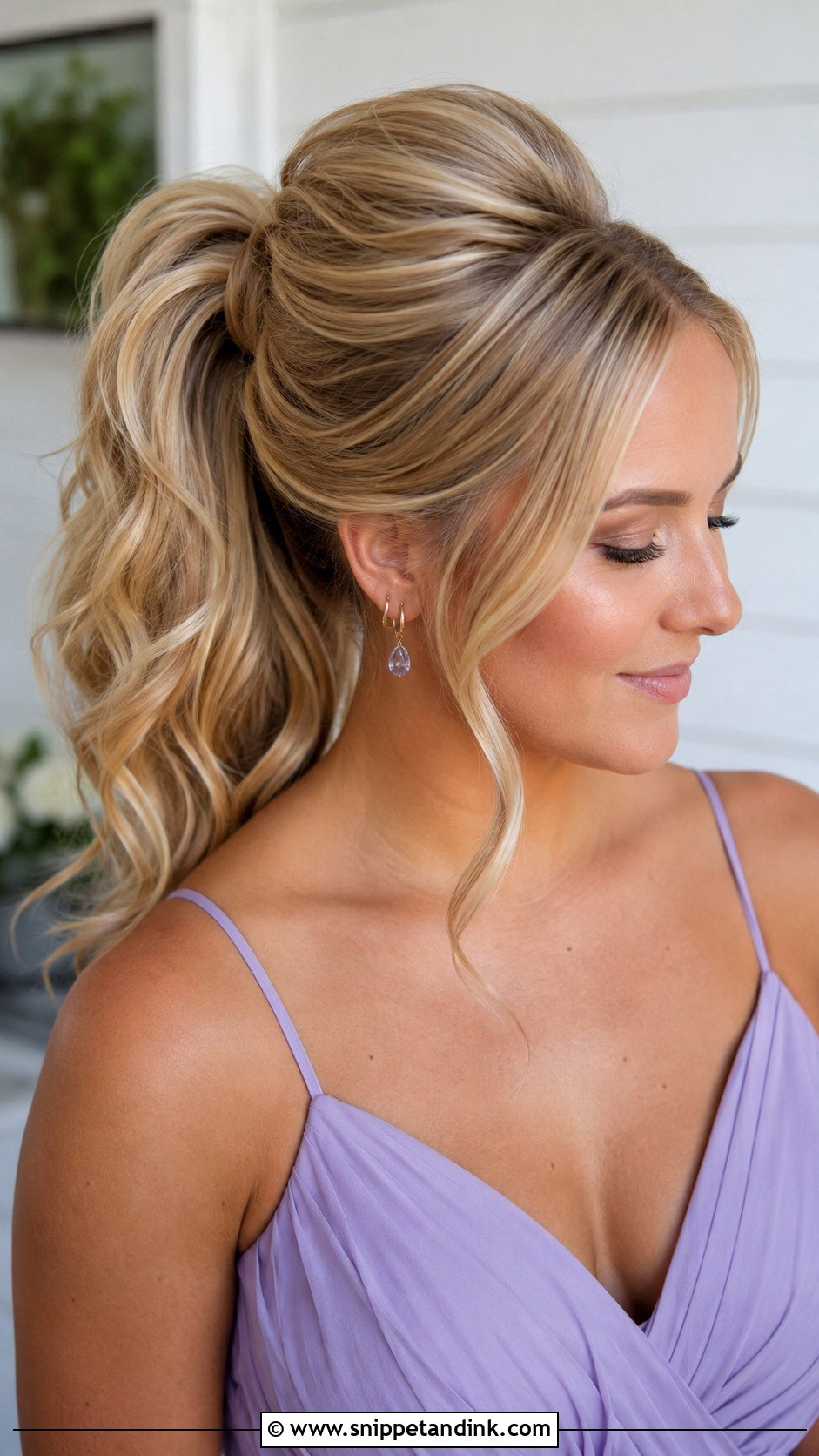
Fine and medium hair gains the most here. Voluminous high ponytail bridesmaid hair depends on teasing the crown in small sections and smoothing only the top layer over it, then curling the tail for body. A clip-in ponytail piece wrapped around the base adds length and density if a natural tail looks thin next to the others. I keep the hairline flat so the lift reads polished, not slept-in. Statement earrings and soft glam go well with it, and it still carries less visual weight than the bride’s styling.
9. High Ponytail With Hair Wrap
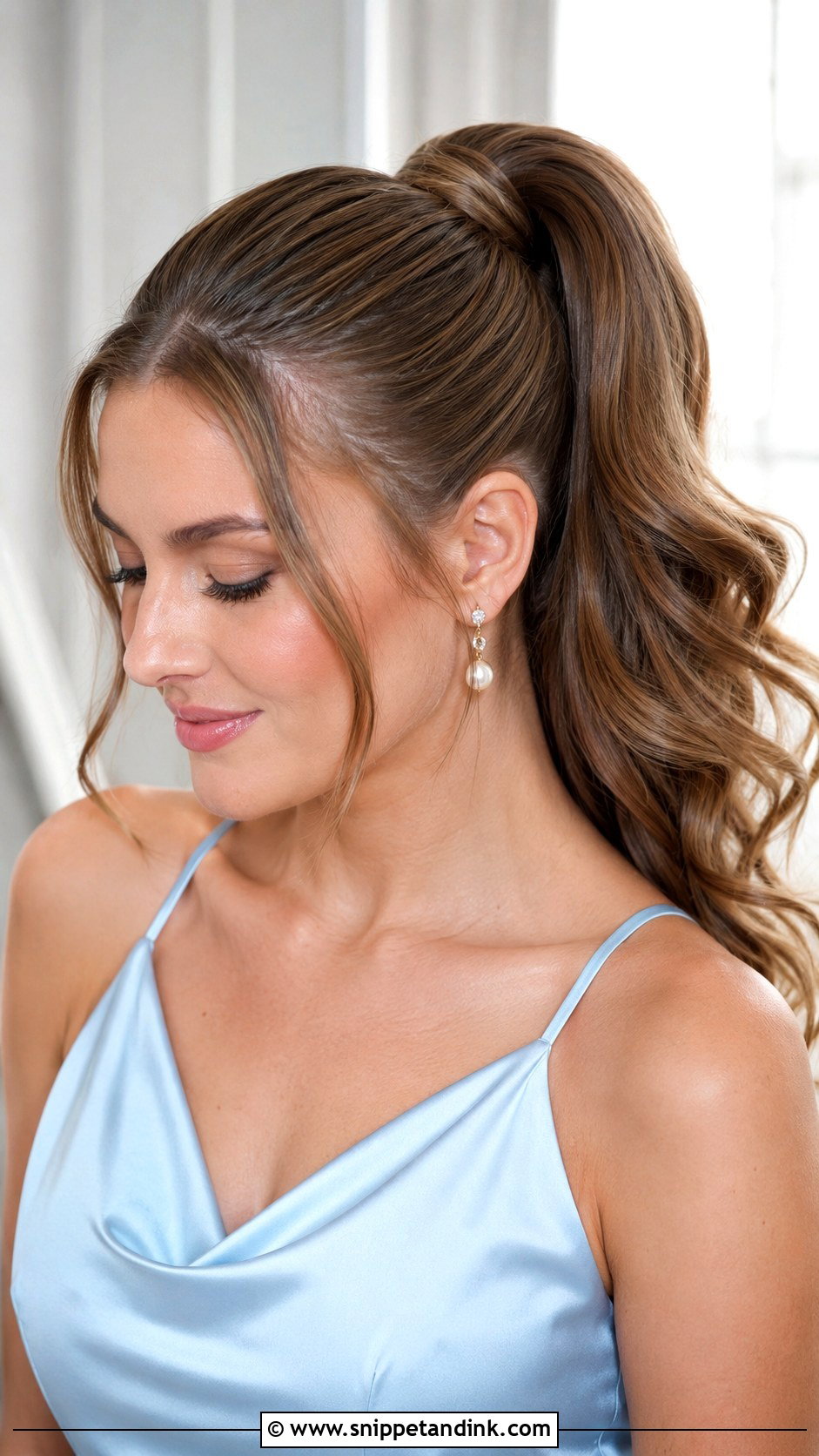
This wrap is the detail I use to tie a mixed bridal party together. Whatever the texture underneath, a strand of each bridesmaid’s own hair wound around the elastic makes the ponytails read as a set. I take that strand from the underside of the tail, never the top, so the gap it leaves doesn’t show. Wrap it snugly, then push a bobby pin up through the wrap into the elastic so it can’t unwind. On short or heavily layered hair the strand may not reach all the way around, and a thin ribbon does the same job.
10. High Ponytail With Ribbon
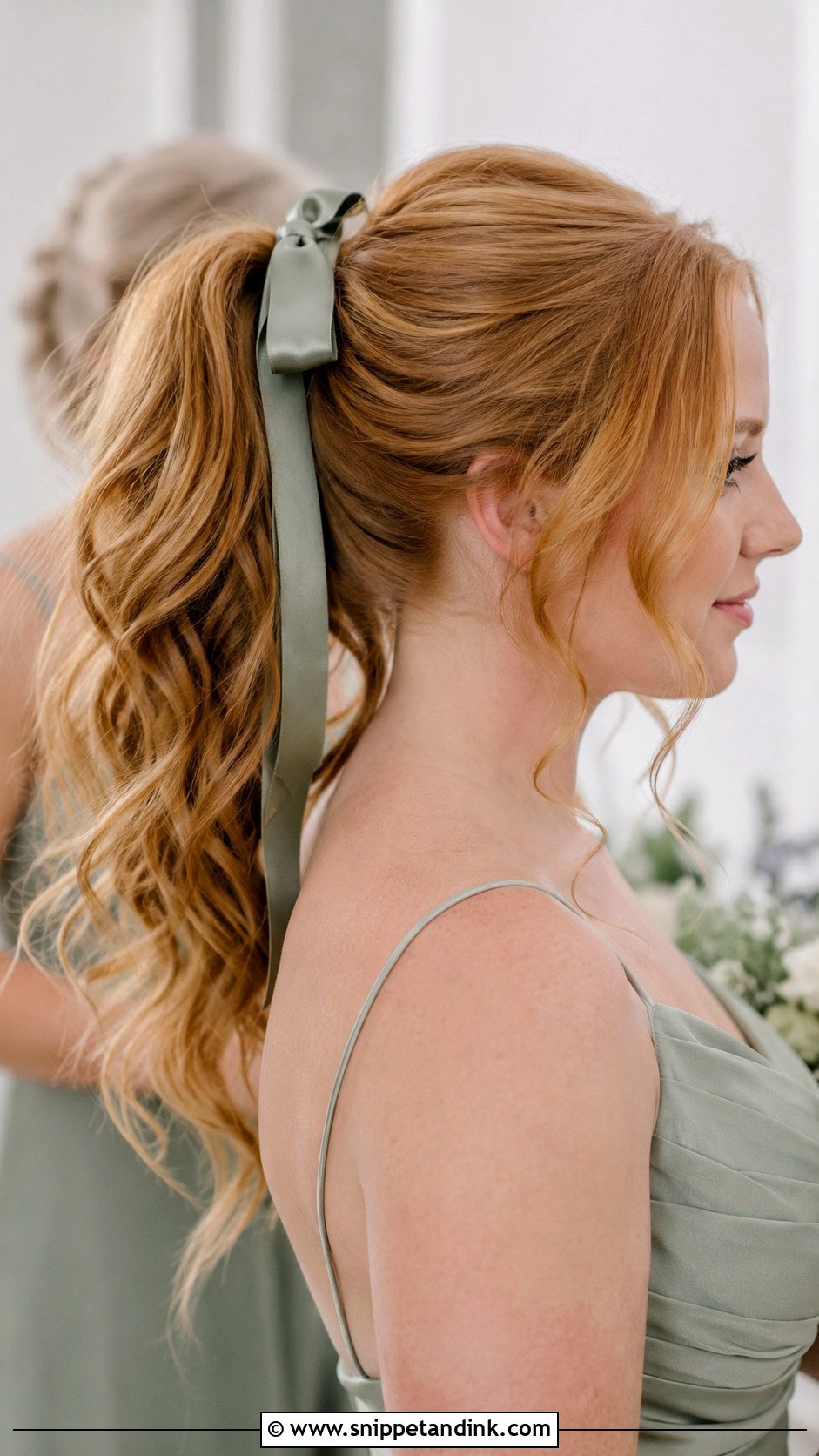
Ribbon is the simplest way to bring the wedding palette into the hair. Tie it at the base with long trailing ends, or make a soft bow and pin its knot to the base so it doesn’t slide. Fabric matters more than people expect. Satin can slip down a sleek ponytail, velvet grips well and suits cooler months, and chiffon floats nicely but frays unless the cut ends are sealed. I tie the ribbon over the elastic, never instead of it. Waved lengths let the ribbon tails move with the hair.
11. High Ponytail With Pearl Pins
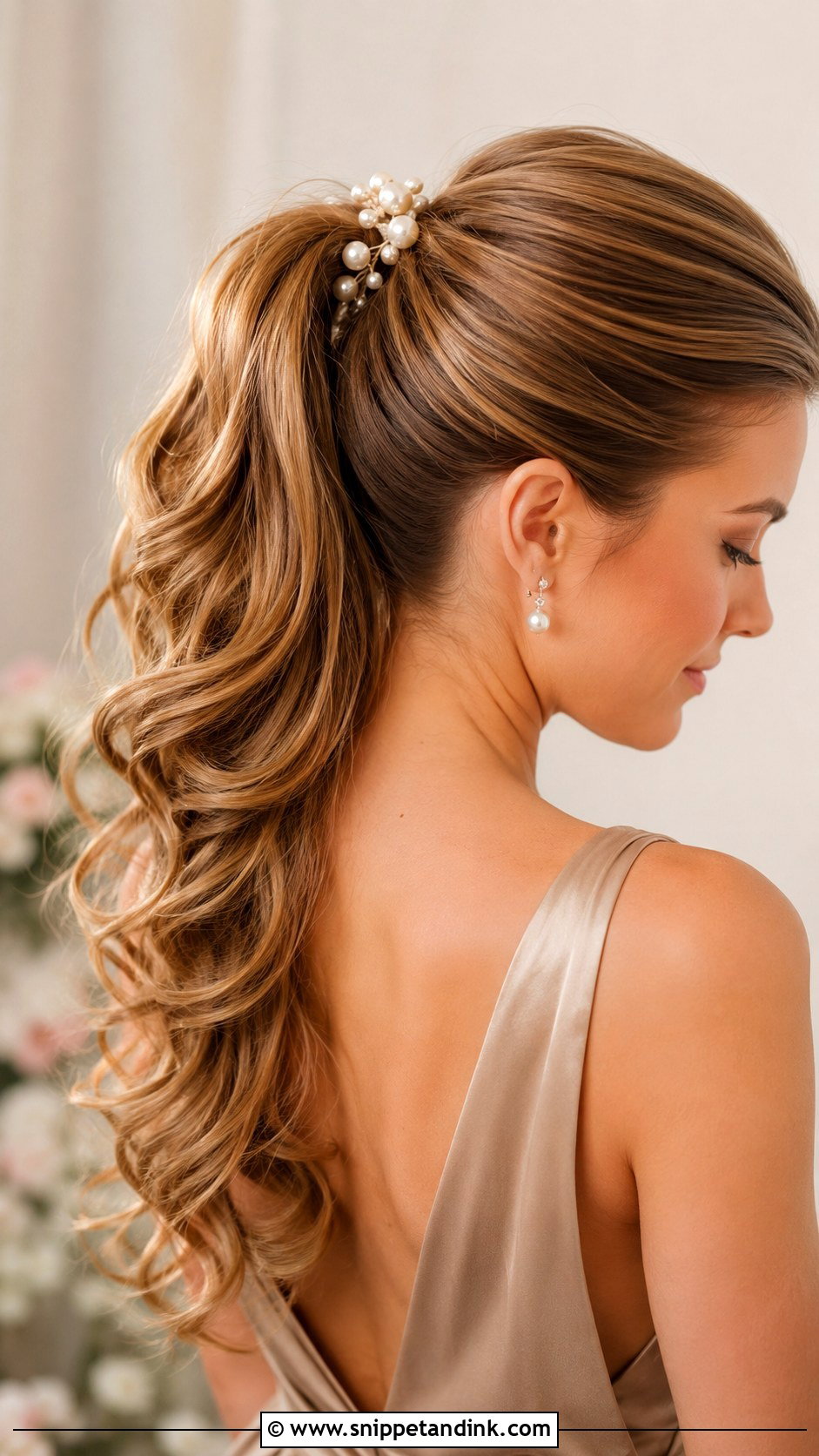
Pearls need restraint. I place them where the eye already goes, around the base or along a braid, and stop before they start looking like a scattered pattern. Soft waves, glossy curls and smooth tails all sit well under them, and pearl earrings with a classic gown are the obvious partners. Use small pins when the dresses are detailed, a few larger pearls when the gowns are plain. Every pin should grip the elastic or a braid, because pearls pushed into loose hair end up on the dance floor.
12. High Ponytail With Loose Curls
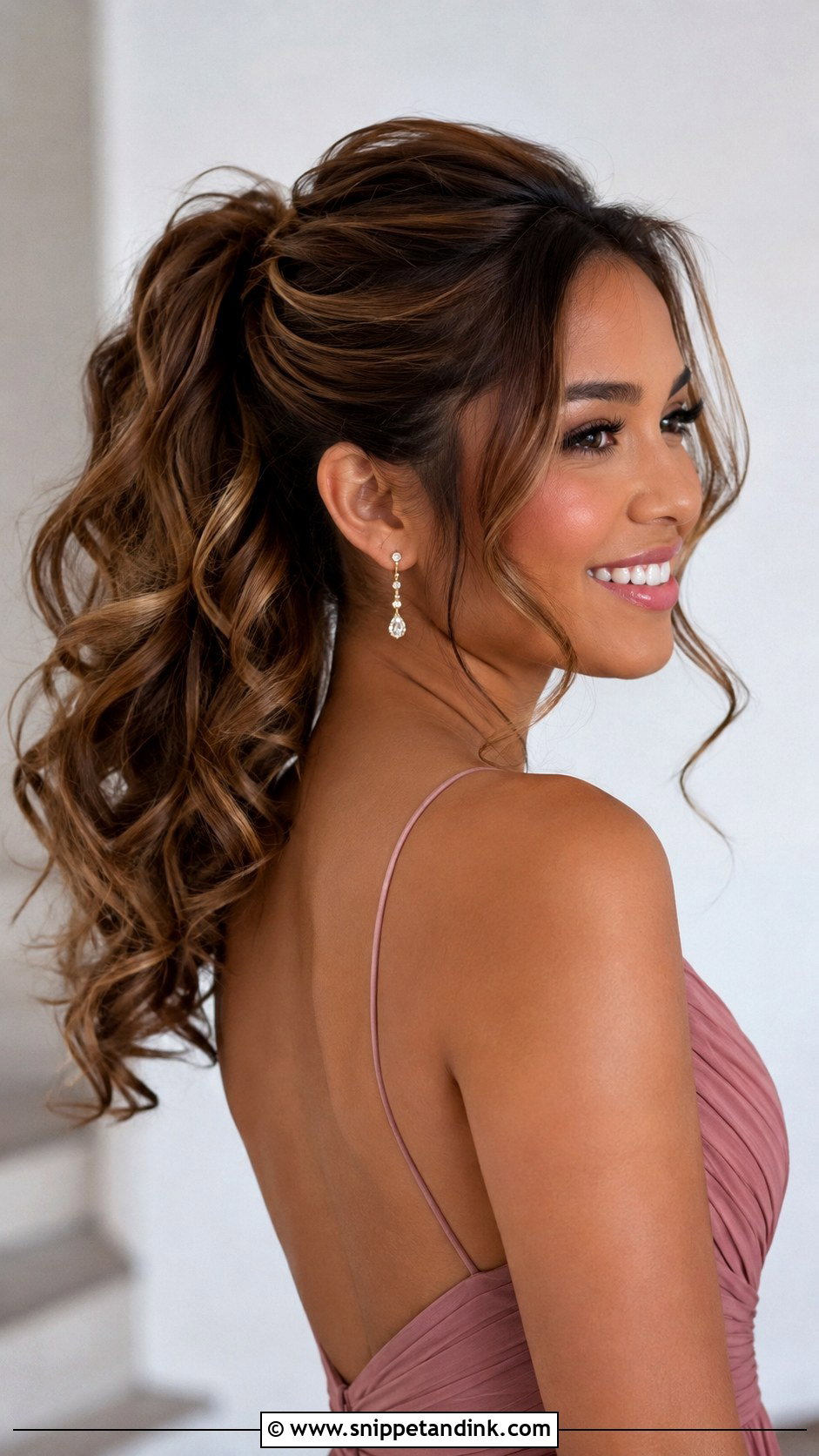
Loose curls sit between sleek and full glam, which makes them easy for a group to agree on. The tail falls in relaxed sections rather than tight ringlets. Long hair does this naturally; medium lengths and layered cuts usually need a clip-in piece so the curls have somewhere to fall. Leave the crown smooth or add slight lift for balance. I finish with a flexible spray instead of a strong-hold one, since a curl that’s supposed to move looks crunchy in candid shots when it can’t.
13. High Ponytail With Hollywood Waves
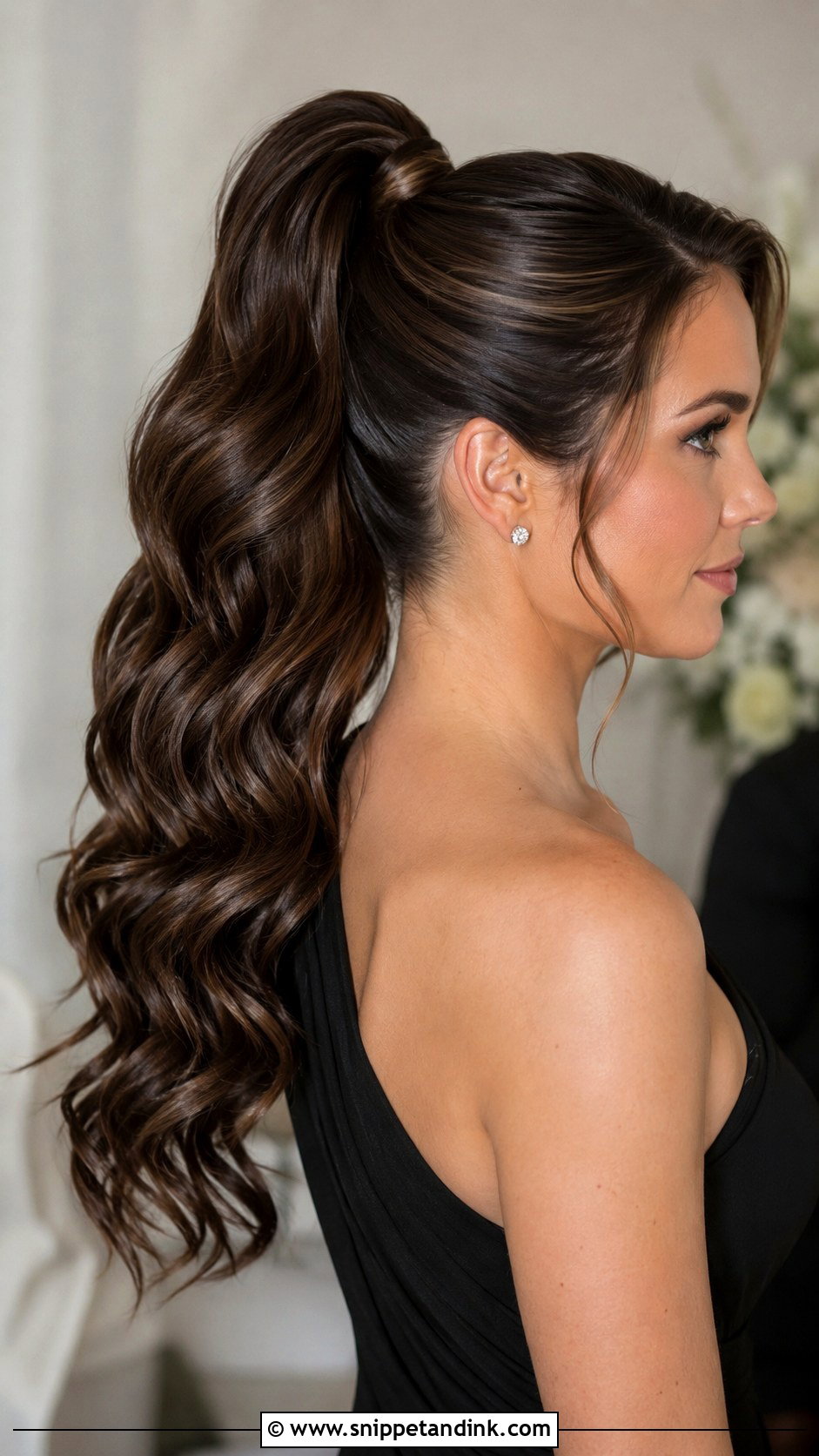
This is the black-tie option. For Hollywood waves, the whole tail is curled in one direction with the same barrel size, pinned to set, then brushed out until the curls join into a single ribbon of wave. Sections curled in different directions break that pattern, and no amount of brushing fixes it afterward. The front can be sleek with a side part or brushed straight back. Evening receptions and heavier fabrics like crepe suit it. A light shine spray at the end gives the waves their glossy edge under flash.
14. Textured High Ponytail Bridesmaid Hair
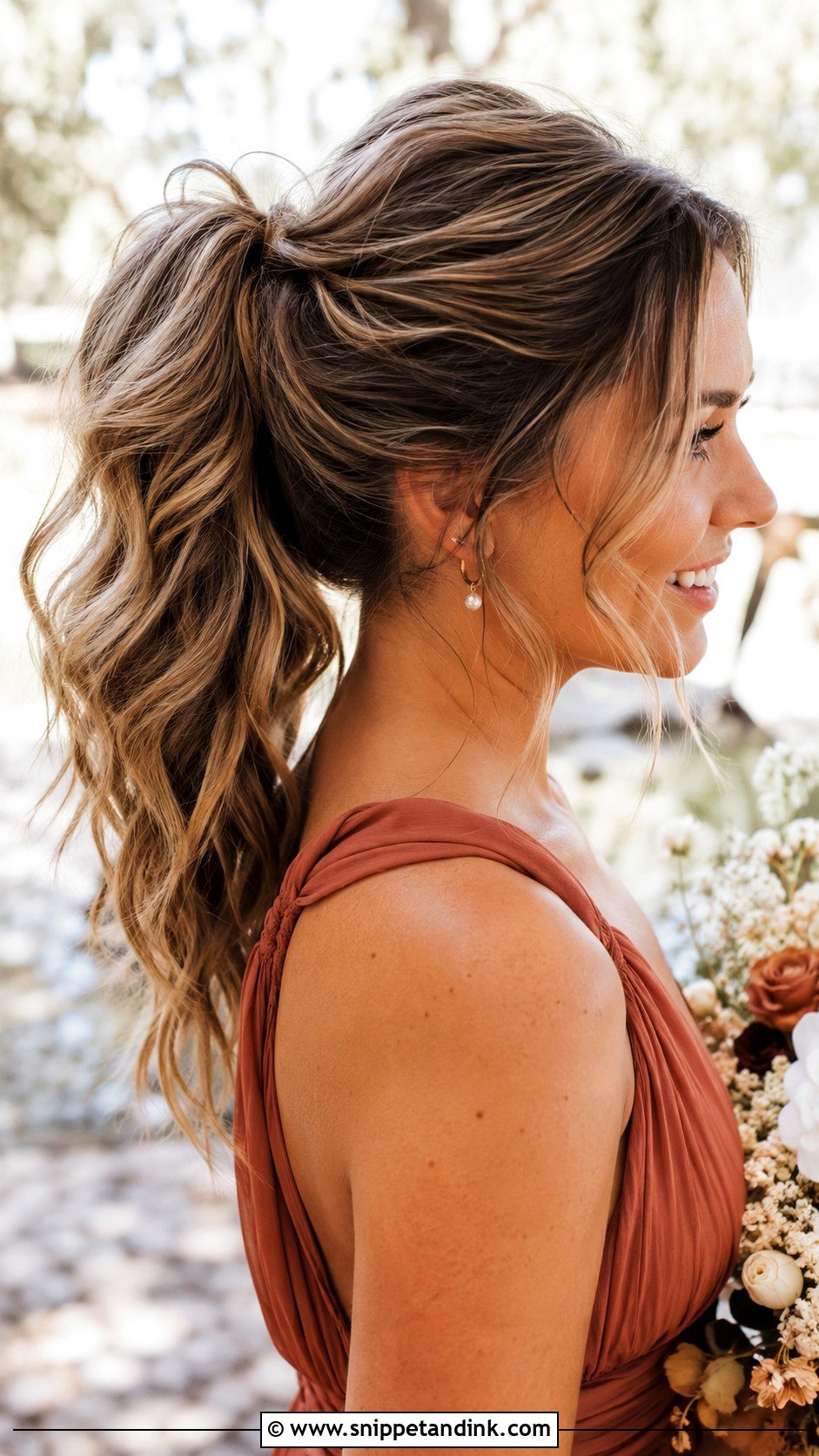
Here’s the relaxed one, for beach ceremonies, barns and bridesmaids who hate the feeling of a lacquered head. The crown carries soft volume and the tail has bend rather than defined curl. I work dry texture spray through the roots before tying anything, because grip at the base is what stops a loose-looking style from actually loosening. It should look controlled but not overworked. Pull a few soft pieces around the face and keep the tail airy, and at a windy venue add a few hidden pins at the crown anyway.
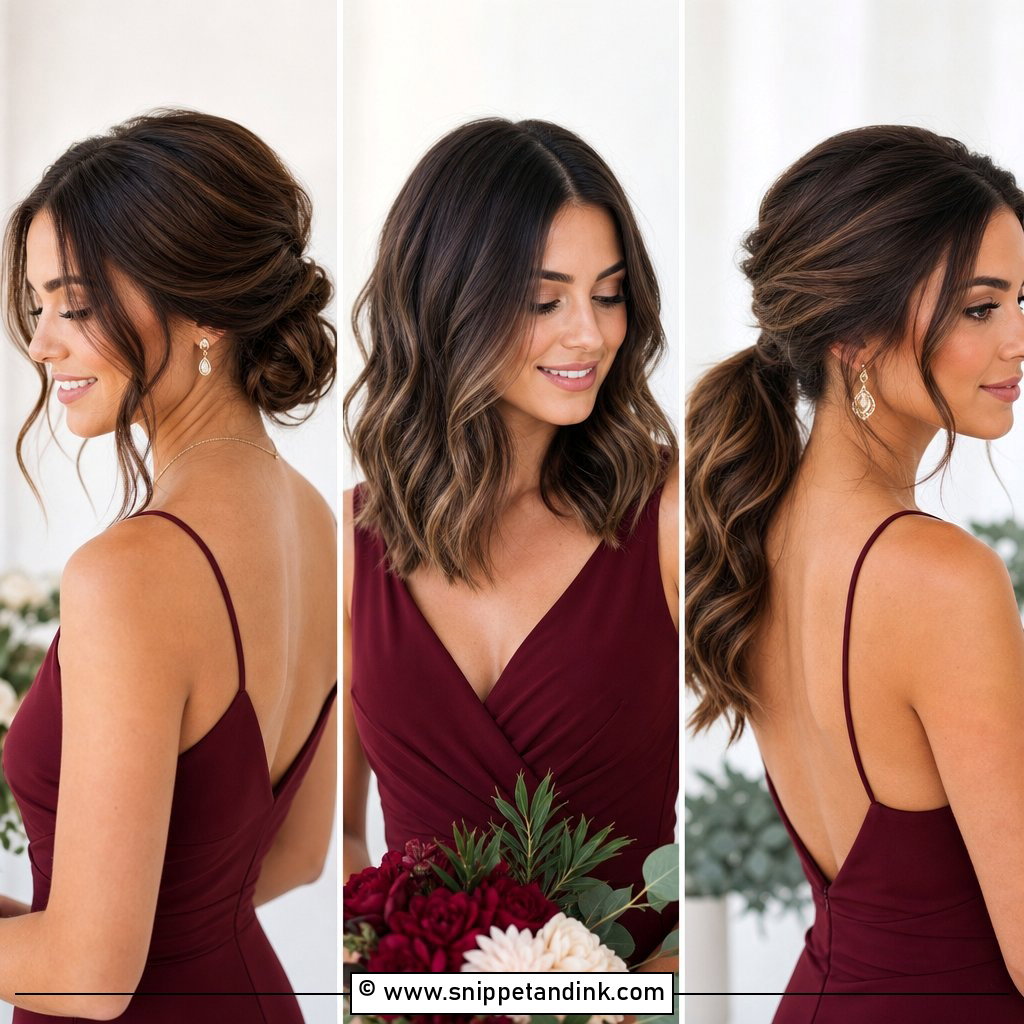
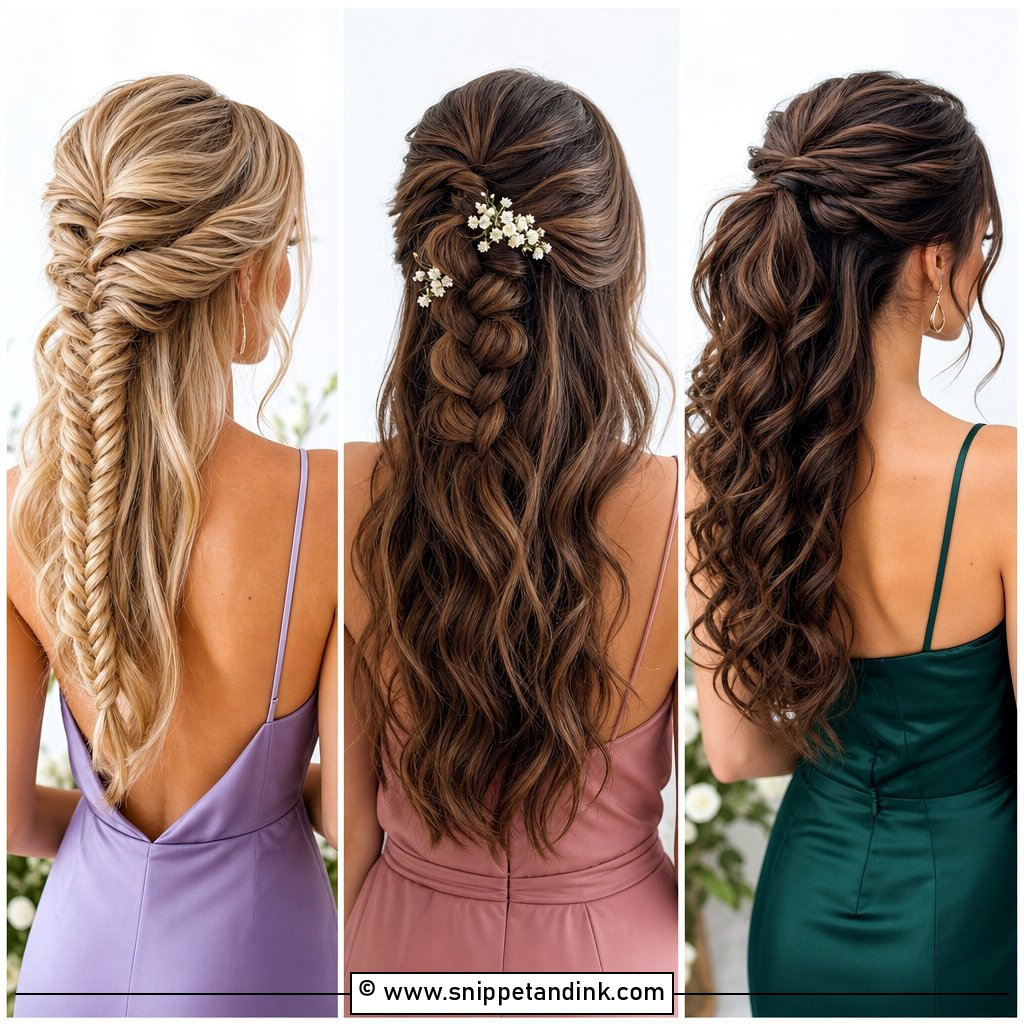
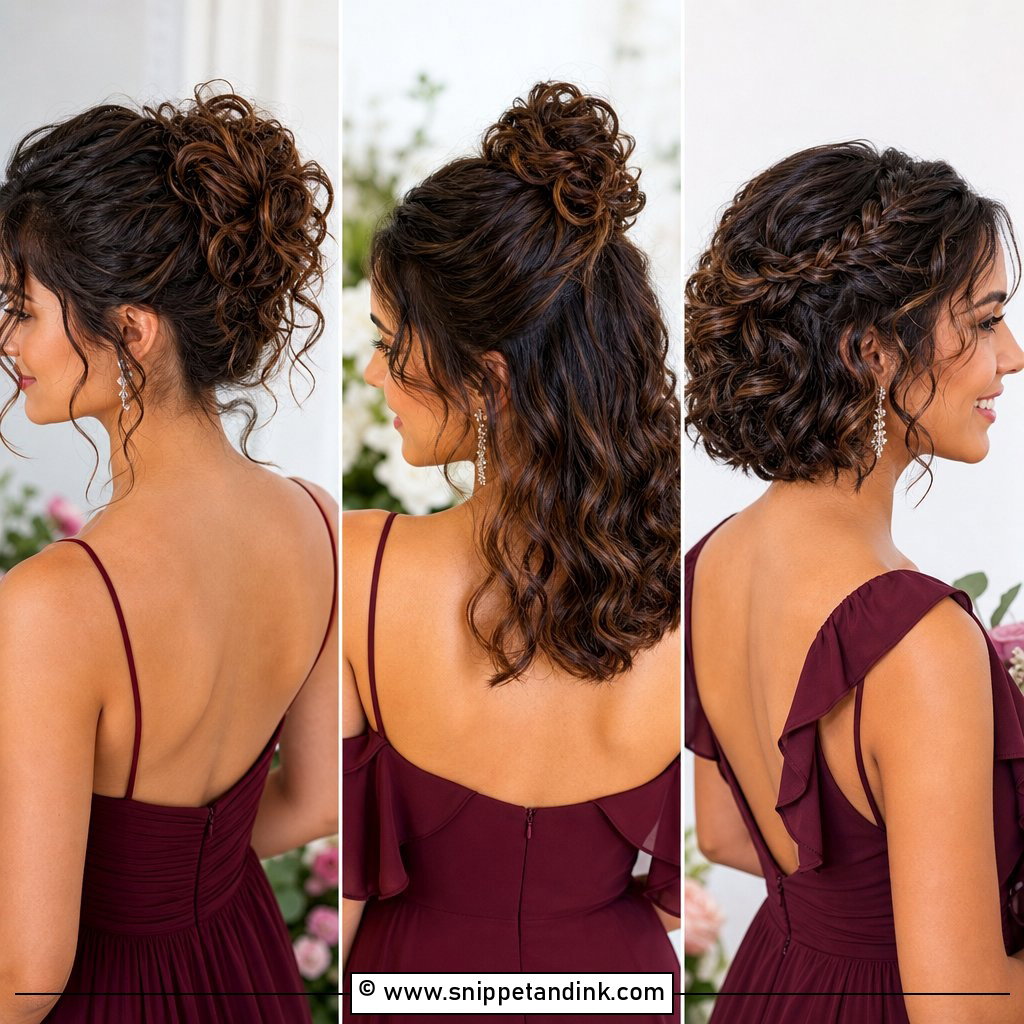
15. High Ponytail For Short Hair Bridesmaid
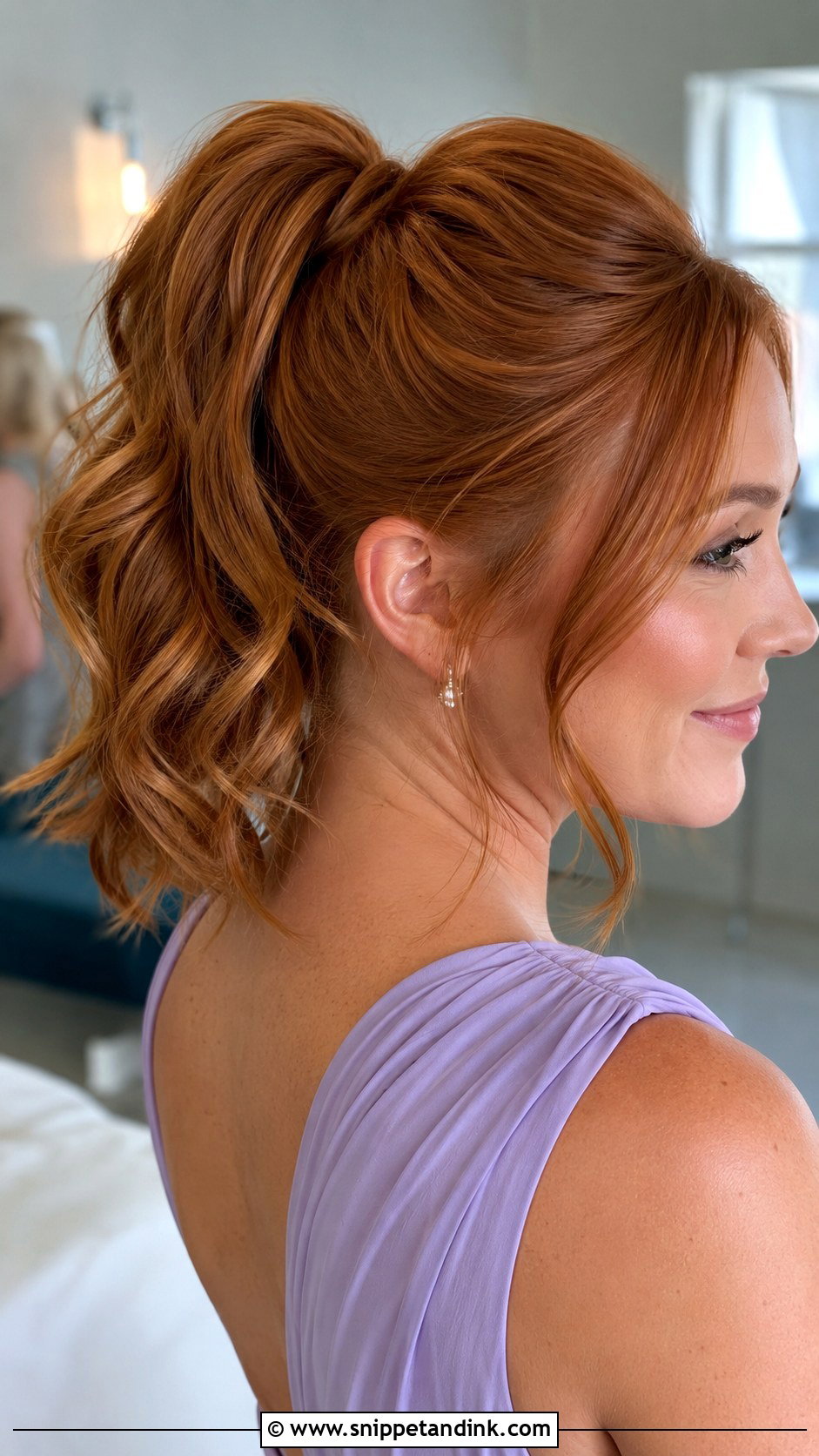
Shoulder-length hair can go into a high pony, but the layers are the problem. Shorter pieces at the nape fall out first, so I curl everything, gather it high, then pin the nape layers upward under the tail with crossed bobby pins. If the tail looks too small, a clip-in ponytail piece adds length and blends easily once it’s curled to match. Face-framing pieces disguise short layers at the front. I’m honest with anyone whose hair sits above the chin: a half-up style often suits that length better than forcing a full high ponytail.
16. High Ponytail For Long Hair Bridesmaid
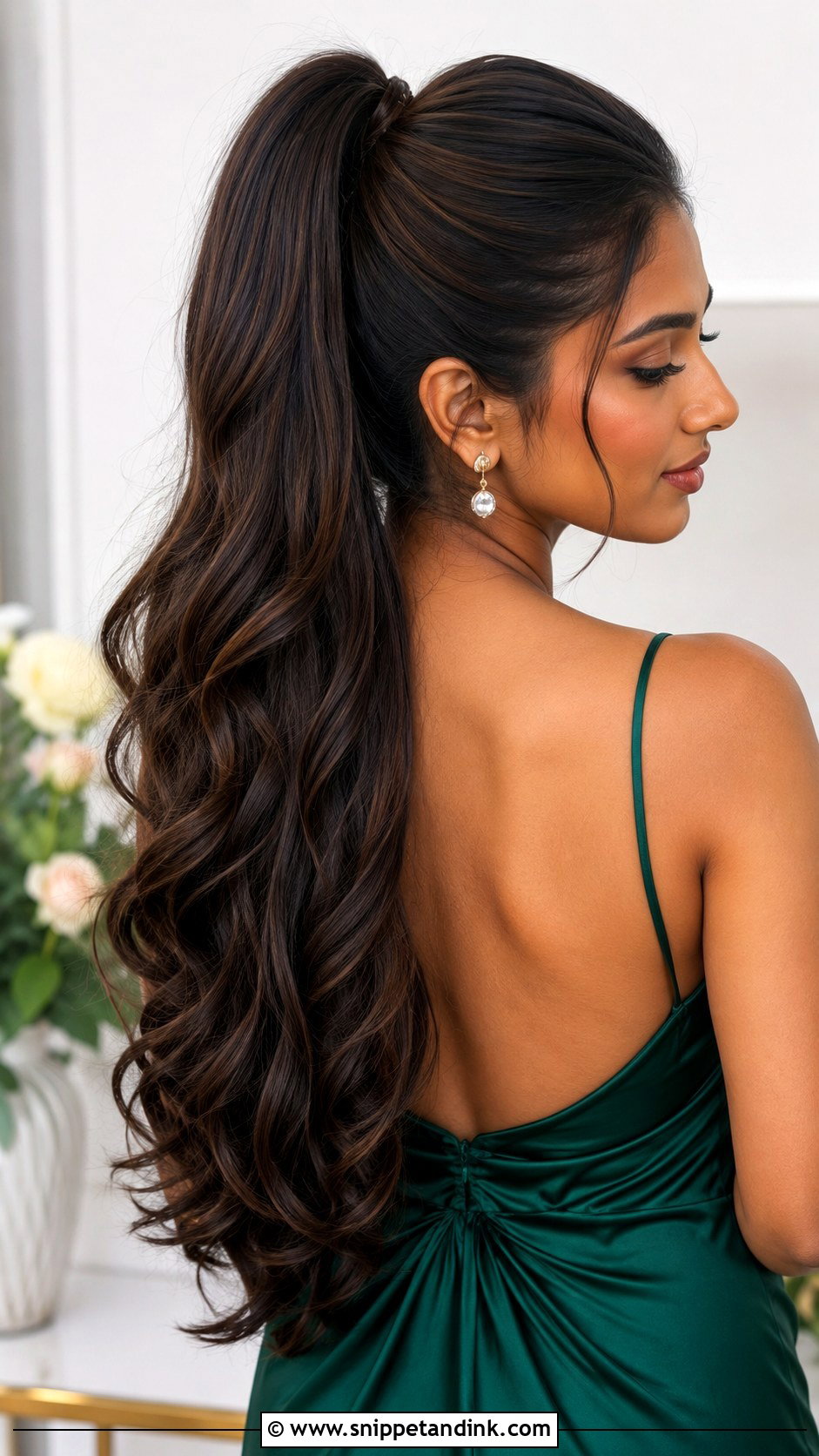
Long hair gives the most dramatic tail, cascading down the back. It also brings weight, and by late afternoon that weight drags the base down and can give the wearer a headache. I secure it with two elastics, one at the base and a second just below it to share the load, then add hidden pins and light backcombing under the base for grip. Open backs, halters and formal gowns show it off. Keep the ends smooth so the tail still looks shaped at the reception.
17. High Ponytail For Thin Hair Bridesmaid
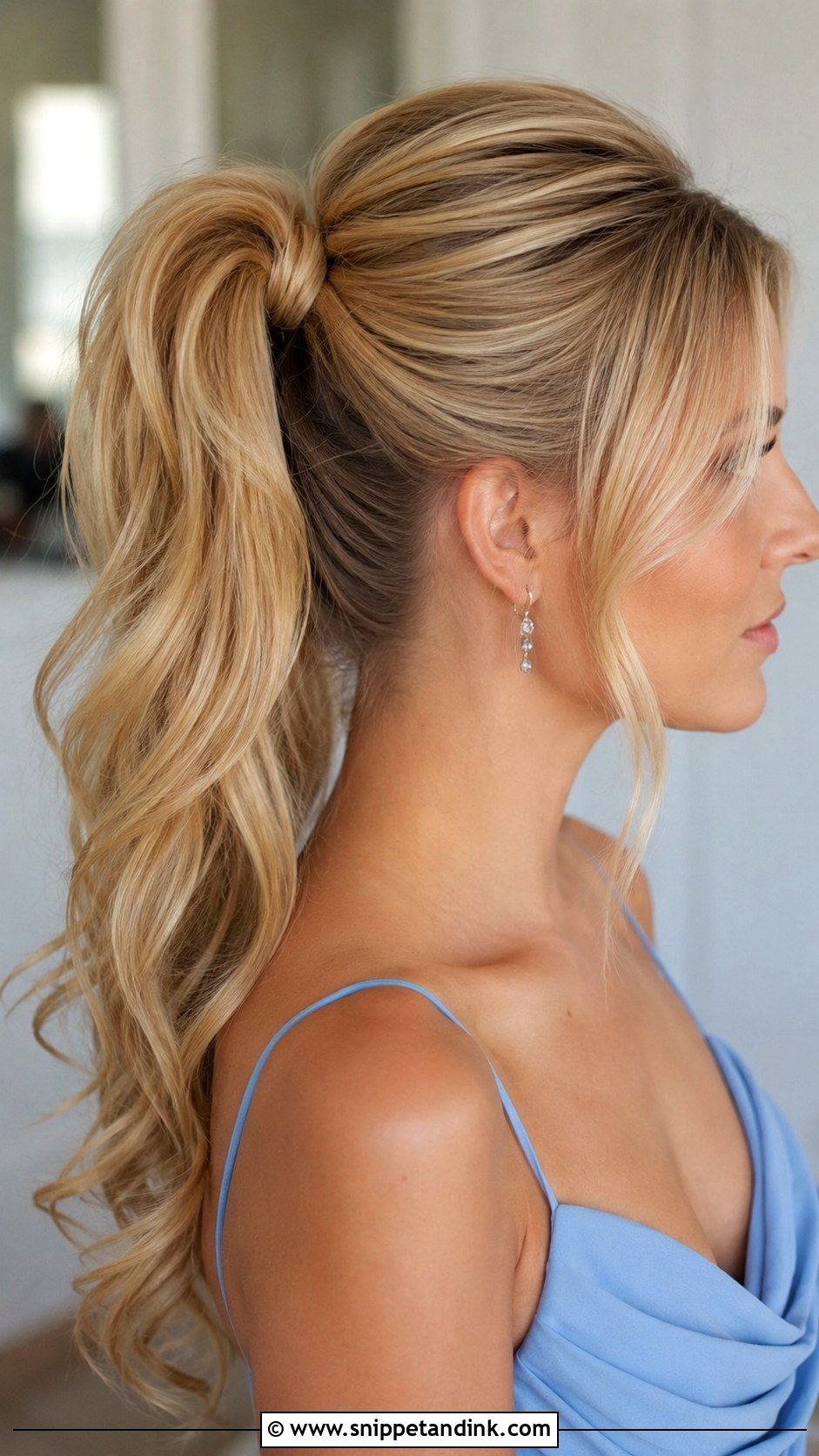
Fine hair needs grip and volume more than polish. I curl before tying it up, tease lightly at the crown and inside the tail, and use texture spray so the strands have something to hold. If the tail still looks thin, a small extension or a padding piece at the base adds thickness. Don’t pull fine hair too tight: tension lets the scalp show through at the hairline, and a slightly softer pull looks fuller.
18. High Ponytail For Thick Hair Bridesmaid
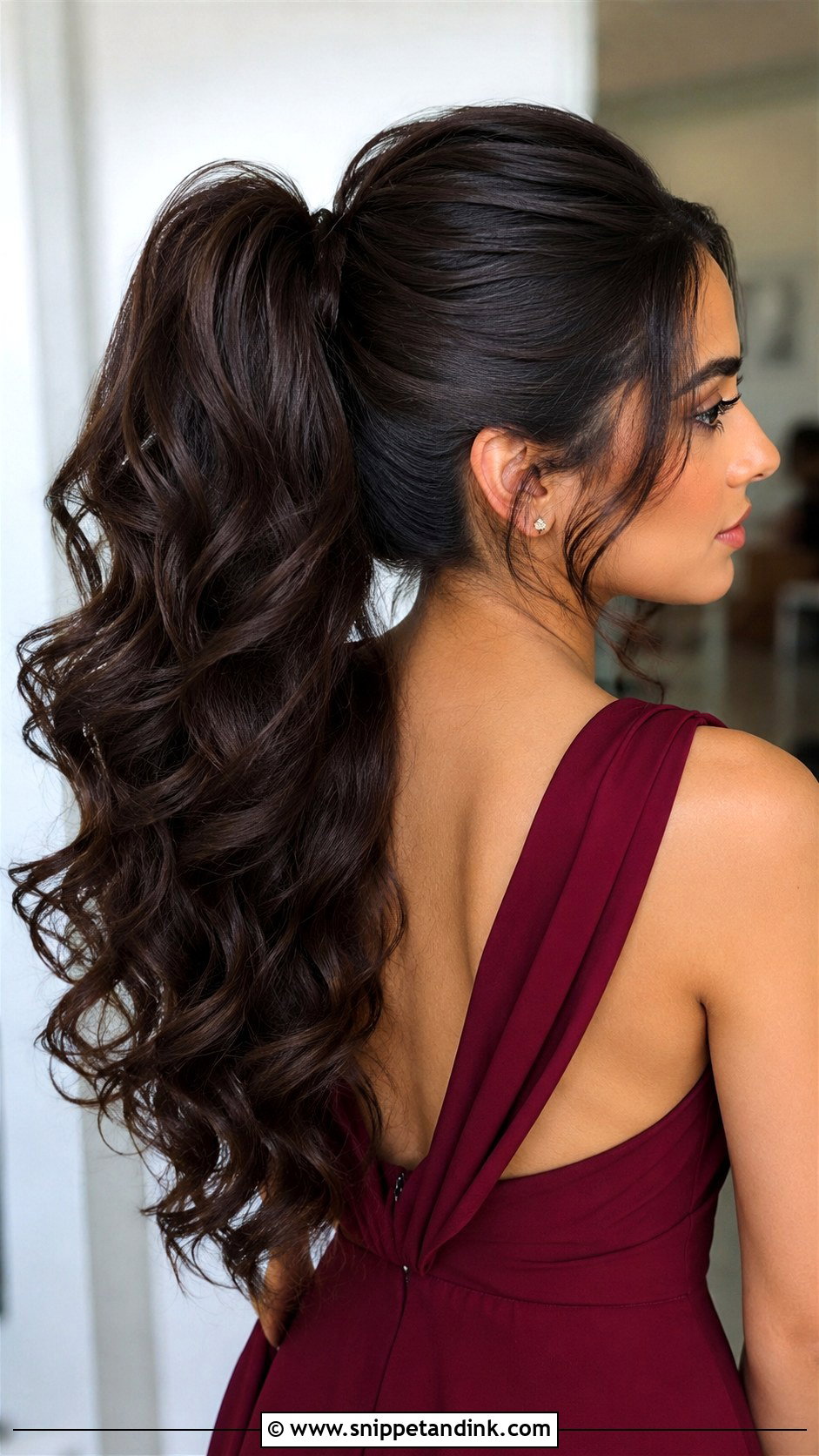
Thick hair has the opposite problem. It holds shape easily, but the base gets bulky and the weight pulls. I smooth the crown flat, use strong elastics with plenty of hidden pins, and sometimes stack two ponytails one above the other so the base lies flatter. Curls or waves through the length show off the natural fullness without adding width. If it fans out too wide, ask your stylist about controlled curling or some internal layering a few weeks before the wedding. A wrapped base keeps the bulk tidy.
19. High Ponytail For Natural Hair Bridesmaid
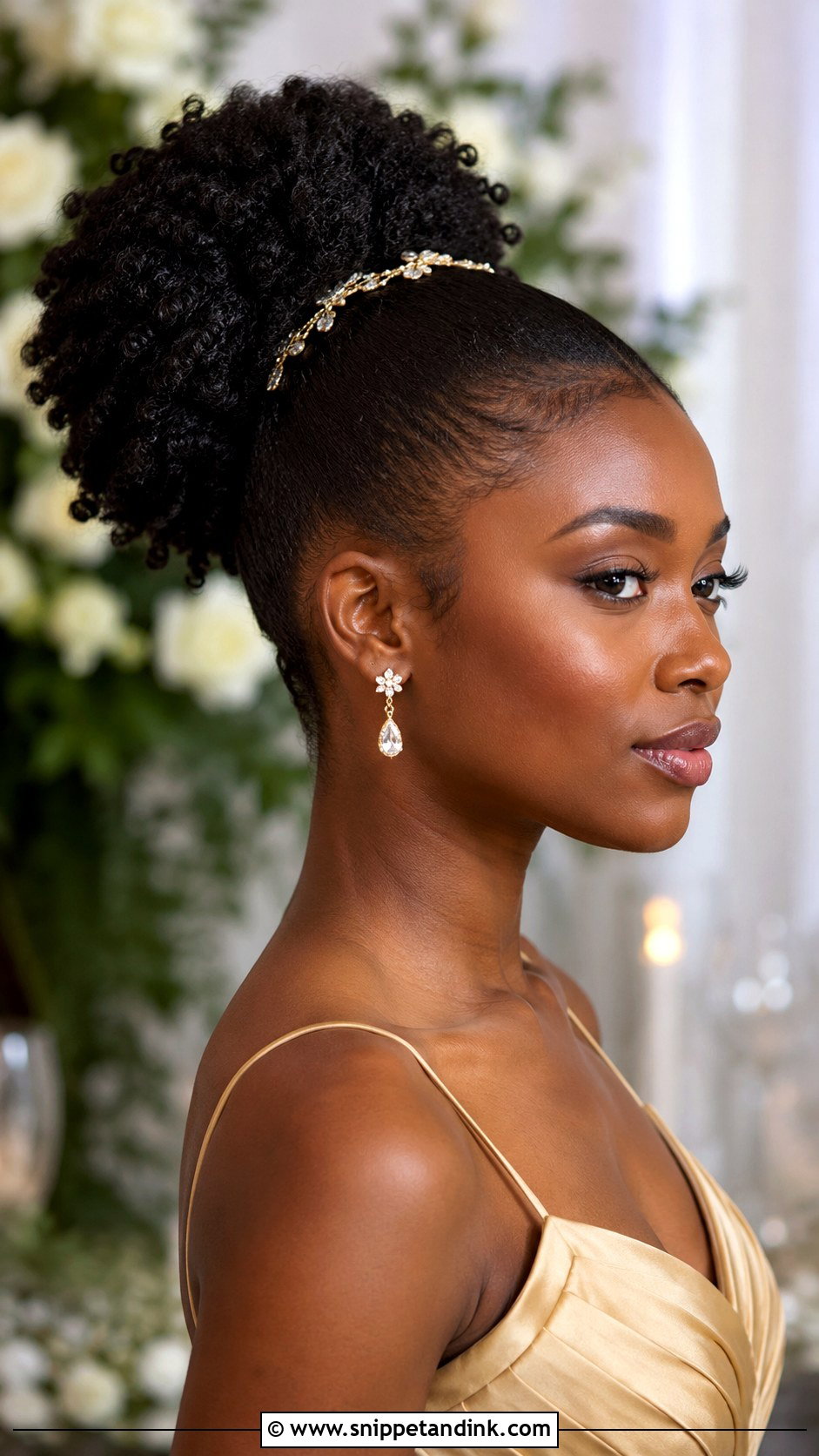
Natural hair can be dressed into a high puff, stretched curls, a twist-out ponytail or a defined coily pony, and the choice should be settled at the trial because stretching takes real time on the morning. Smooth edges and a secure base make any of them formal, while the ponytail itself stays full. Stretched styles shrink in humidity, so for a humid outdoor date I lean toward a twist-out or defined coils, which keep their shape as the air changes. Add pearl pins, gold cuffs, or a soft ribbon if the wedding theme allows a little detail.
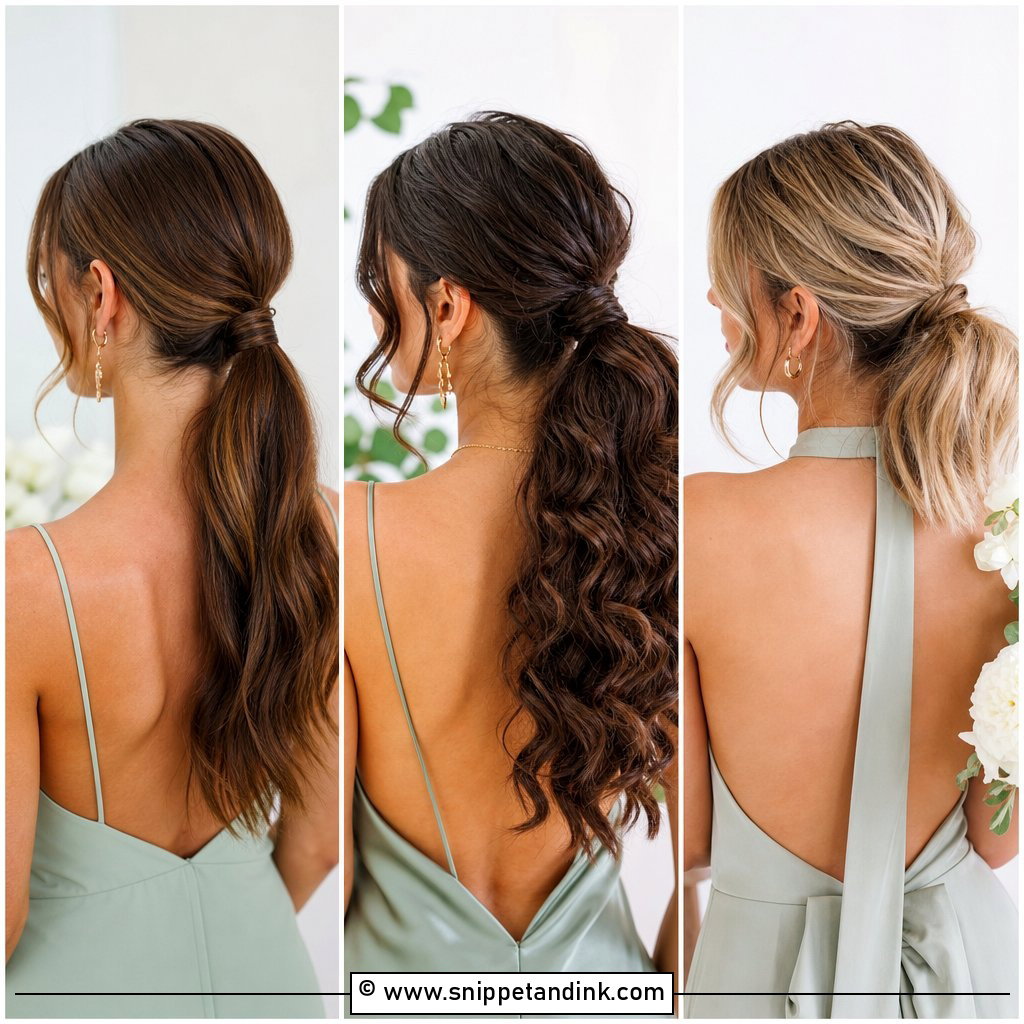
20. High Ponytail With Floral Accessories
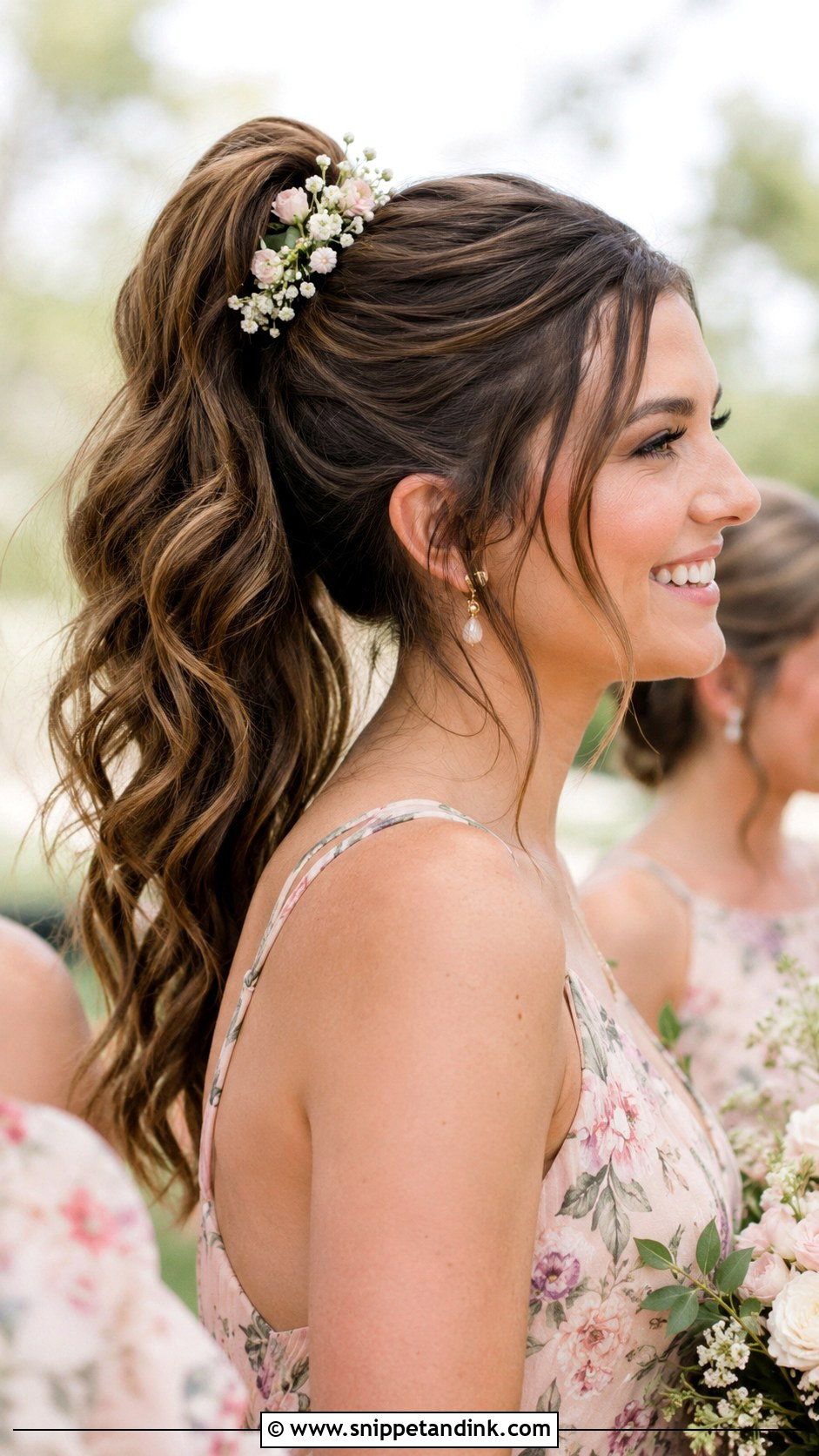
Flowers belong at garden and warm-weather ceremonies, as long as they stay small. I place blooms around the base, tucked into a braid or along one side, and wire them into the hair rather than relying on pins alone. Pick flowers that echo the bouquet but sit smaller than anything in it. Soft-petaled fresh blooms wilt quickly in heat, so for summer I’d use sturdier spray roses or realistic faux flowers. A wavy or textured tail hides the stems far better than a sleek one.
Why a Ponytail Drops, Aches or Dents Before the Reception
Almost every ponytail problem on the day comes from the base, not the tail. Here’s what I see most and what fixes it.
It slides down over a few hours
The elastic was tied over slippery product, or the hair was freshly washed and too soft to grip. Day-old hair with texture spray at the roots holds far better. Crossed bobby pins pushed up under the base and into the elastic stop the slide.
The scalp starts throbbing
That usually means the elastic is carrying all the weight. Loosening the front a little with the tail of a comb, without touching the base, can take the edge off. At the trial, the answer is more pins and less tension.
A crease shows when the hair comes down
Tight flat elastics leave a dent for the after-party. Coil hair ties leave less of a mark, though they hold less firmly on heavy hair, so I only use them on fine or medium textures.
A small shared kit covers most rescues: bobby pins in each hair shade, two clear elastics, a travel-size flexible spray and a fine-tooth comb.
Settling the Ponytail Plan at Your Group Trial
A high ponytail adapts more than most bridesmaid styles. Sleek, curled, braided, pearled or flower-dressed, the structure underneath stays the same, and that structure is what to test. Bring photos of each neckline to the trial, check the height on every face, and ask your stylist how each base will hold on each hair type. Then wear the trial version for a few hours to see whether it pulls or drops. The ponytail that still sits high and feels comfortable at the last song is the one to book.
You'll Like These Ideas:


Leave a Reply