
More brides are asking me for suits, and I understand why. A suit can carry as much ceremony as a gown once the fabric, the fit, the shoes and the accessories agree with each other. The range is wide now: sharp white tuxedos, lace sets, fluid wide-leg trousers, jackets with capes or detachable trains. White and ivory still read as bridal at a glance, while colour suits a bride who is happy to break from tradition. What I look at first is never the trend. It is the venue, the season, the dress code and the silhouette the bride already feels good in, because tailoring exaggerates whatever proportions you give it. The twenty looks below are the ones I’d actually put on a client, with notes on where each one tends to go wrong.
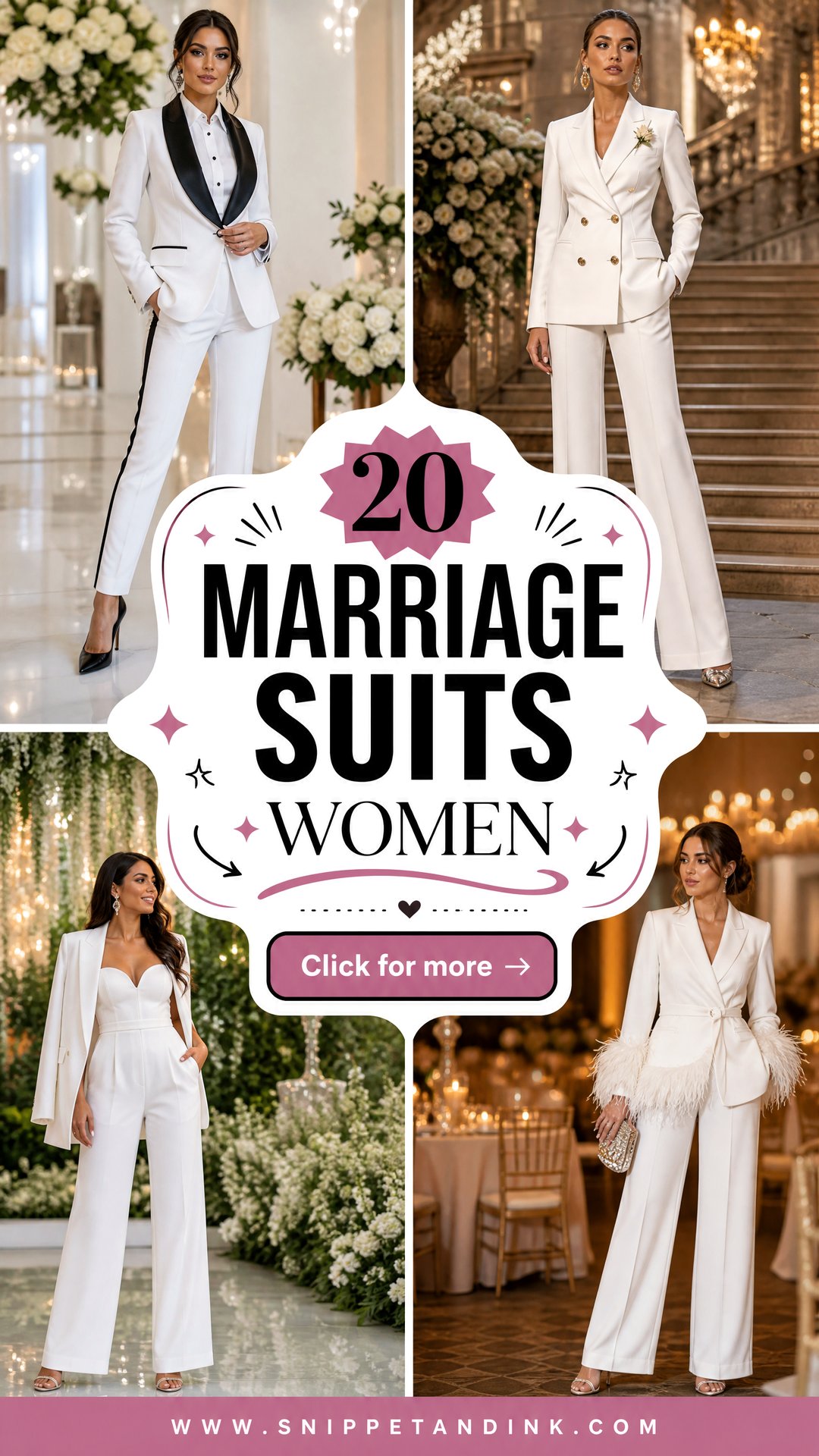
Tailoring Timeline for a Bridal Suit
A suit takes less fabric than a gown, but it needs more precise fitting, and brides often leave it too late. I plan backward from the wedding date. For a ready-to-wear suit I like to have it in hand about three months out, which leaves room for two or three fittings. Made-to-measure and custom pieces need longer, often four to six months, and timelines vary a lot by maker and season.
- First fitting: shoulders and jacket length. These are the hardest parts to change, so if the shoulder seam is wrong, I’d rather you exchange the size than alter it.
- Second fitting: waist, sleeves and trouser seat. Bring the exact top you’ll wear underneath; a corset and a silk cami need different jacket room.
- Final fitting, two to three weeks out: hems. Wear the real wedding shoes and underwear, and bring anything you’ll carry.
Sleeves on a bridal jacket should usually stop at the wrist bone so a ring and bracelet stay visible when you hold hands at the altar. That is a little shorter than most office jackets, so tell your tailor it’s deliberate.
The movement test I do at every fitting
Stand still in the mirror only for a moment. Then sit, lift both arms as if hugging someone taller, bend to pick something up and walk a few steps. A jacket that looks perfect standing can bind across the back when you reach, and trousers that sit well can pull across the seat once you sit down. Any strain line you see now will be in your photographs later.
1. White Tailored Marriage Suit
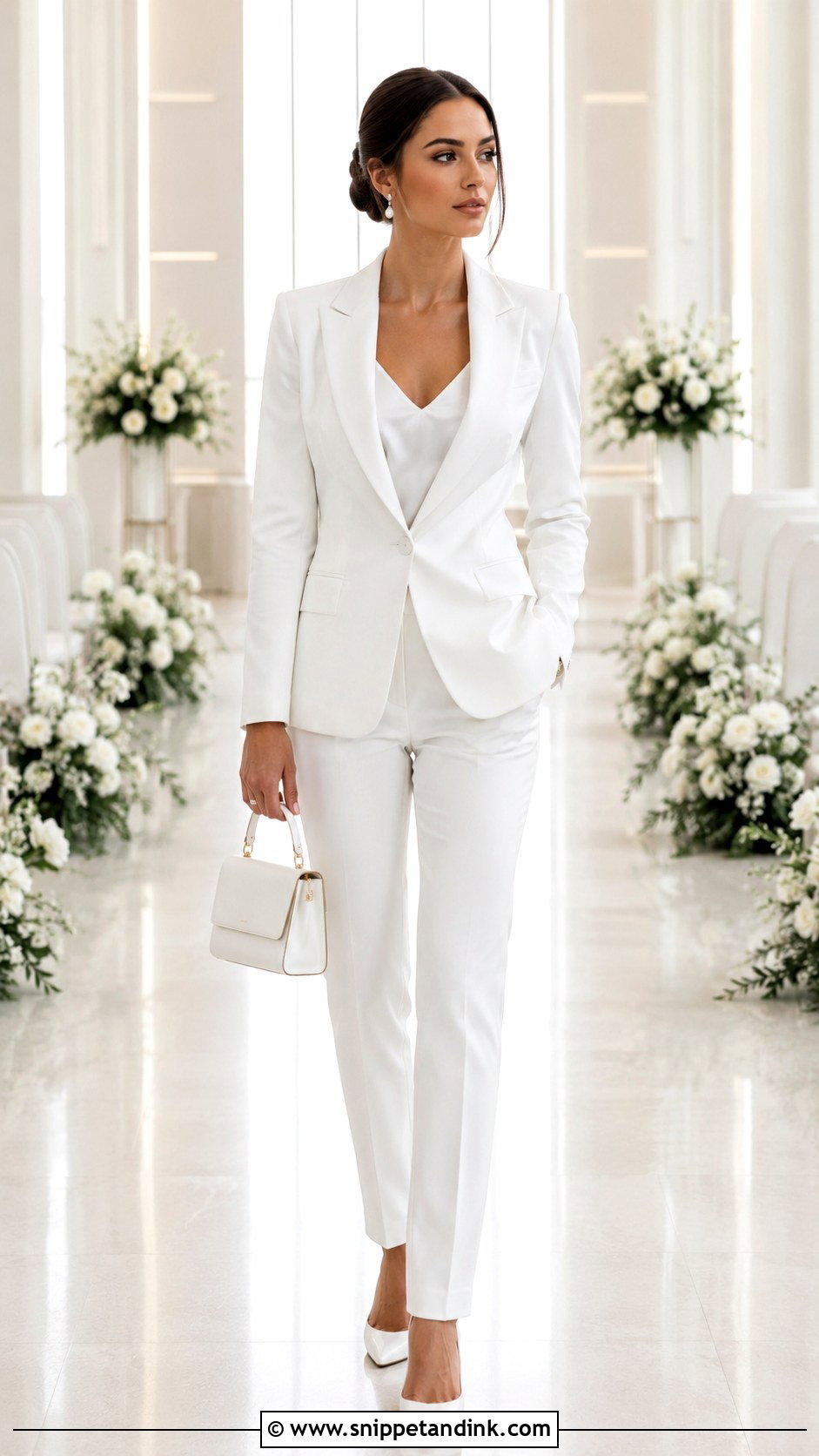
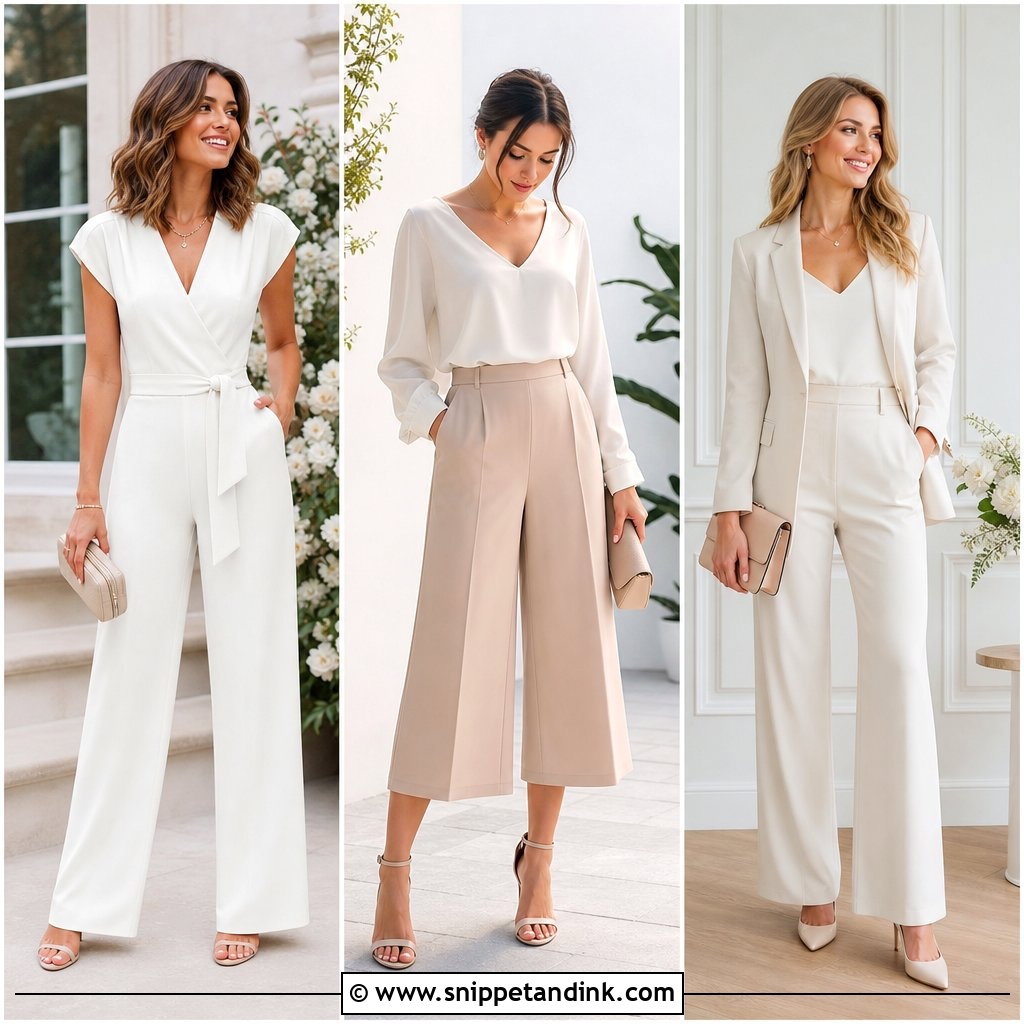
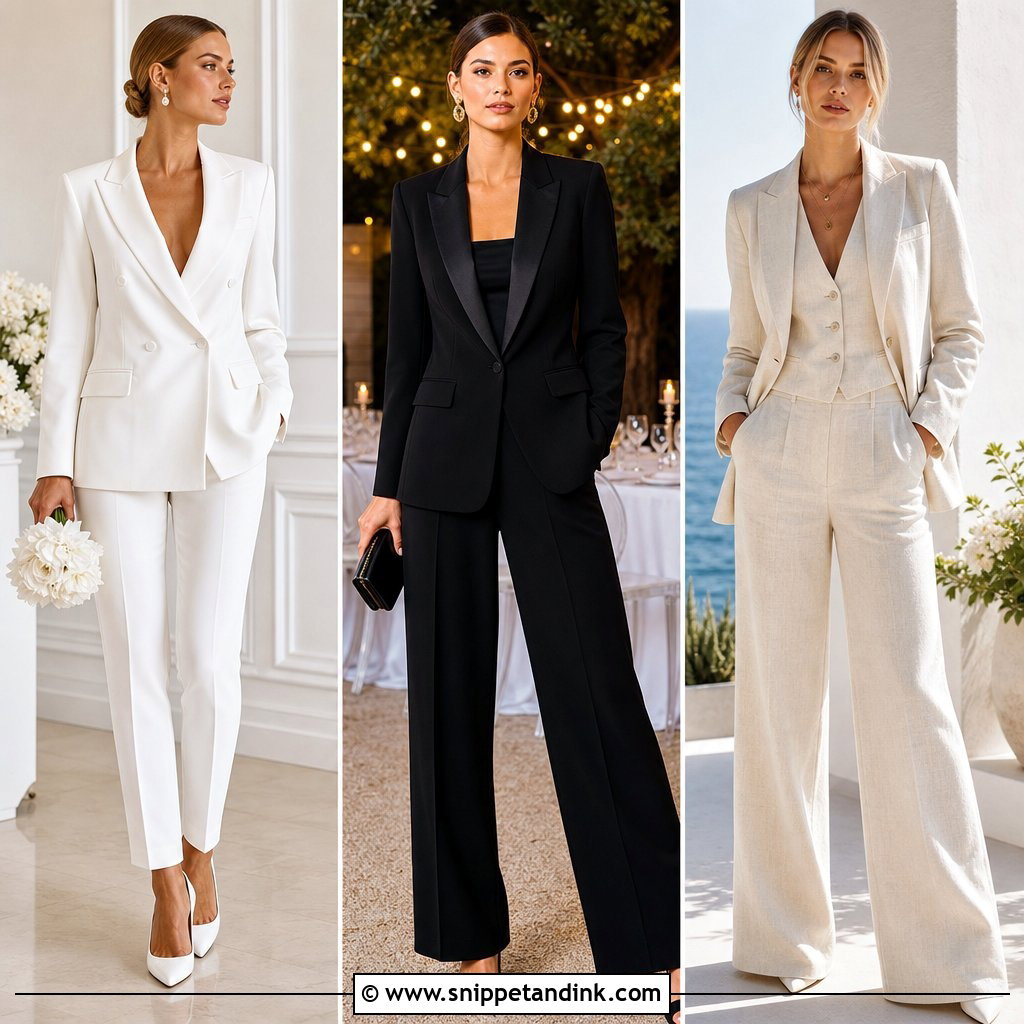
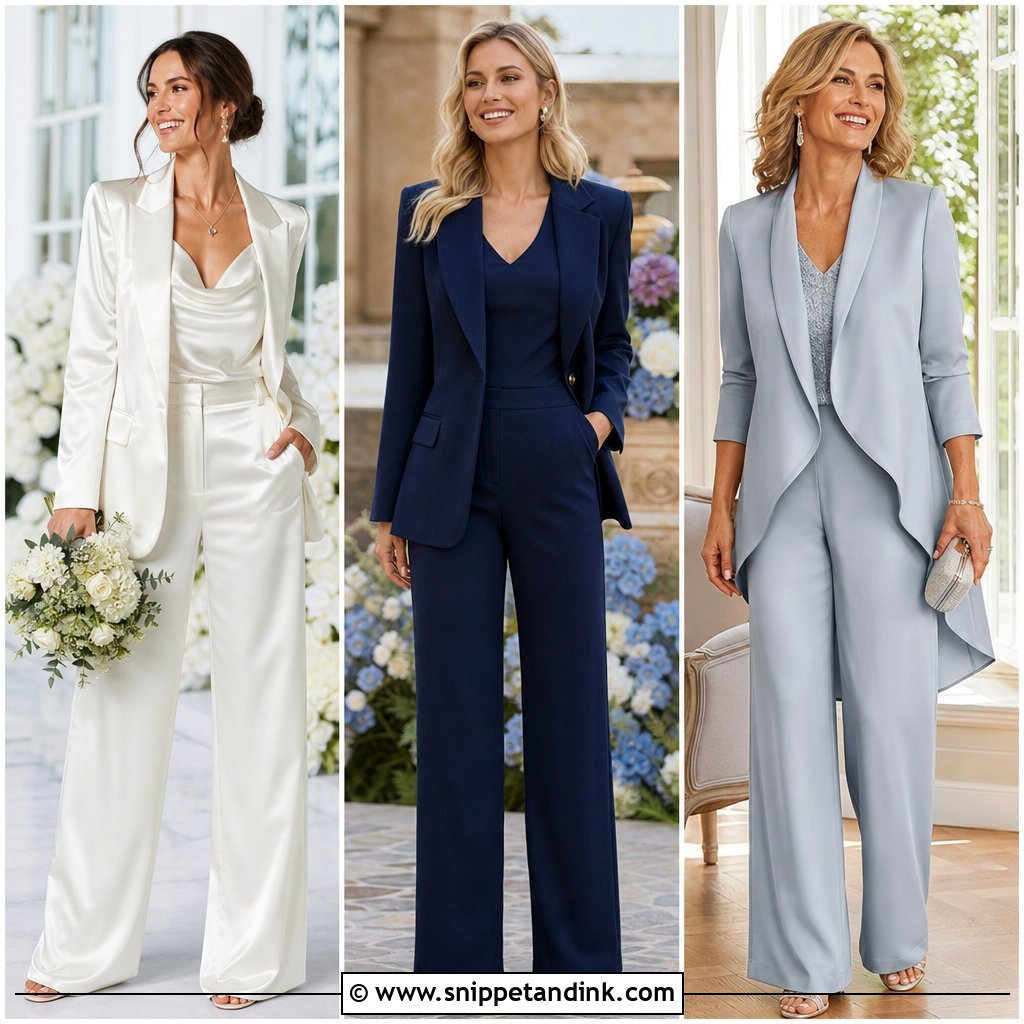
A crisp white suit is the cleanest place to start, and the least forgiving. I’d pair a single-breasted blazer with straight-leg trousers and a silk camisole or satin shell, then keep the rest quiet: pointed white pumps, pearl drops, a small top-handle bag and a low bun or smooth shoulder-length hair. White shows every pull line, so the jacket has to close flat across the bust without the button straining. In summer I’d steer you toward lightweight crepe or tropical wool and let the blazer hang open. If you want more coverage, swap the camisole for a high-neck satin blouse. Have the trousers hemmed so they just kiss the shoe; white fabric pooling at the ankle looks unfinished in every full-length photo.
2. Ivory Wide Leg Marriage Suit
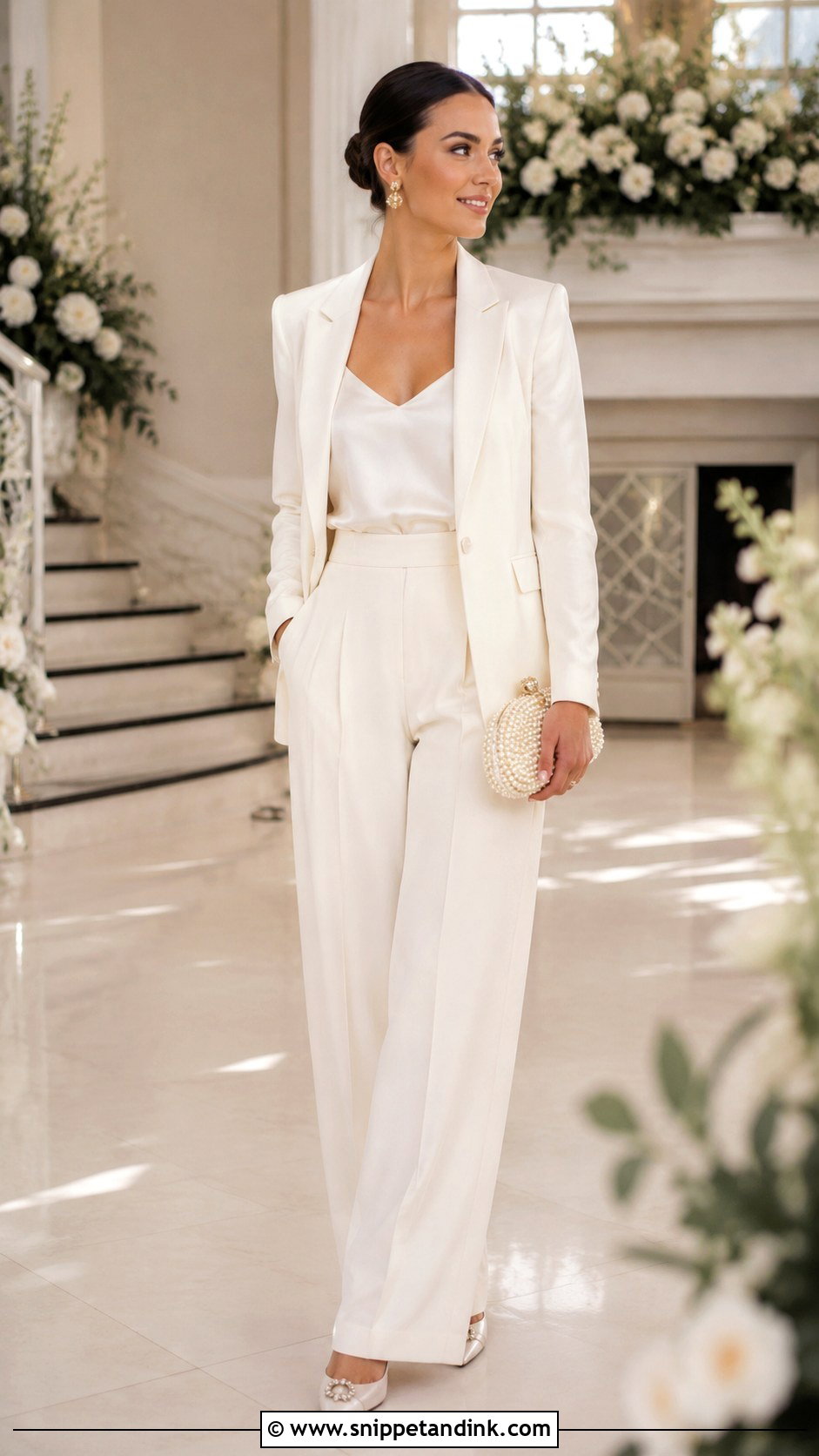
High-waisted ivory trousers that fall straight to the floor give you a long line that rivals a column gown. Pair them with a gently fitted blazer and a silk tank, and here is the trap I see most: three ivory pieces bought from three makers rarely match. One leans yellow, another pink. I lay every piece side by side at a window before anything is altered. Pointed heels, a small pearl clutch, sculptural gold earrings and soft waves finish it. Crepe and satin-backed fabrics drape best here. Keep the jacket sleeves trim, or the volume of the trousers makes the whole outfit look a size too big.
3. Satin Lapel Marriage Tuxedo
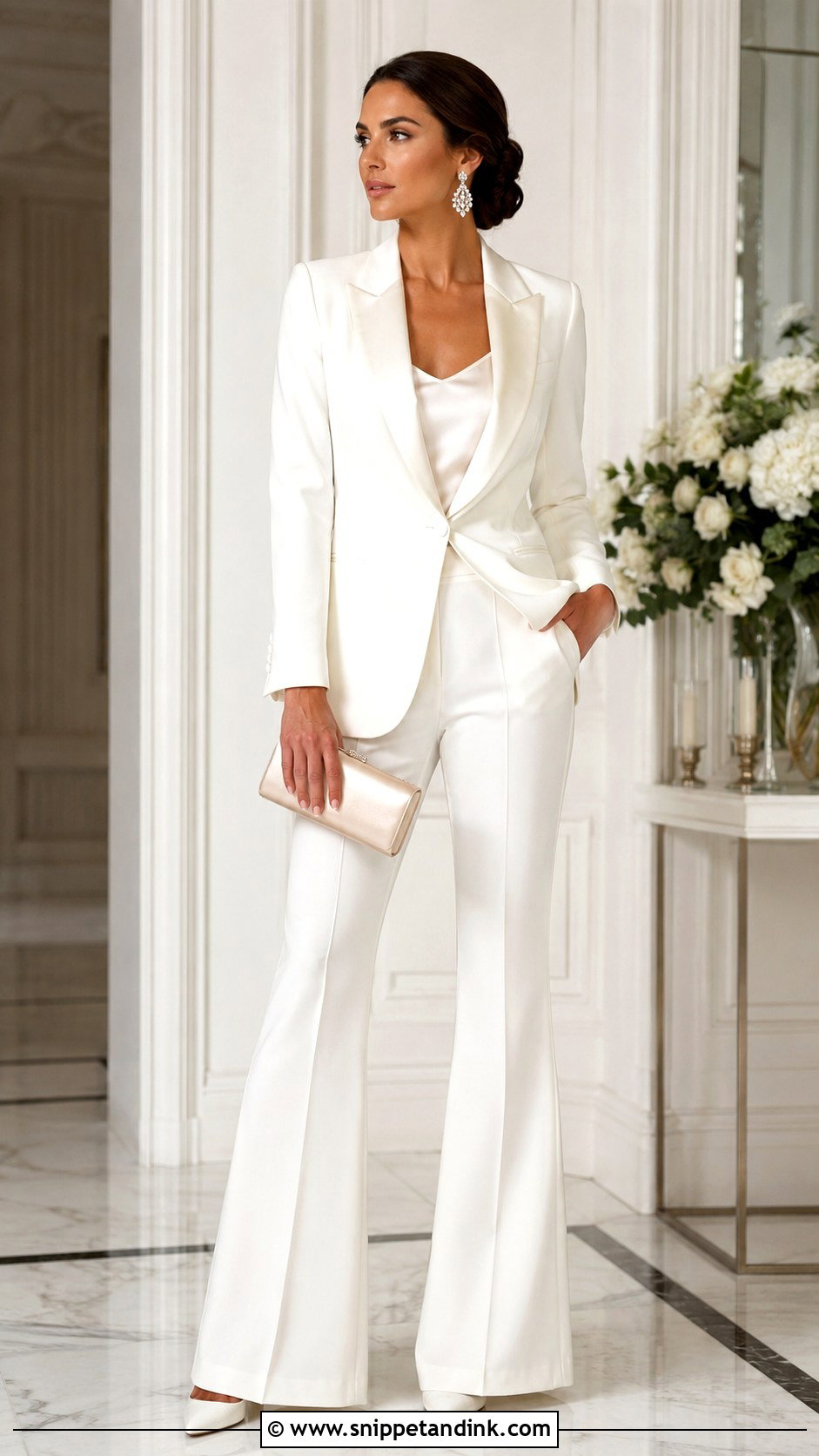
The white tuxedo with satin lapels is for a formal evening and a bride who likes structure. Decide how much contrast you want before you shop: black lapels read dramatic, white-on-white reads quietly expensive. Slim or gently flared trousers both work underneath. If you plan to wear the jacket over a bralette, do a sitting and reaching test at the fitting, because a jacket that gapes when you lean to sign the register is a problem fashion tape cannot fully solve. Keep jewelry to one cuff or brooch. The shoulder is everything here; if the seam sits past your shoulder bone, the tuxedo looks borrowed.
4. Lace Top Marriage Suit
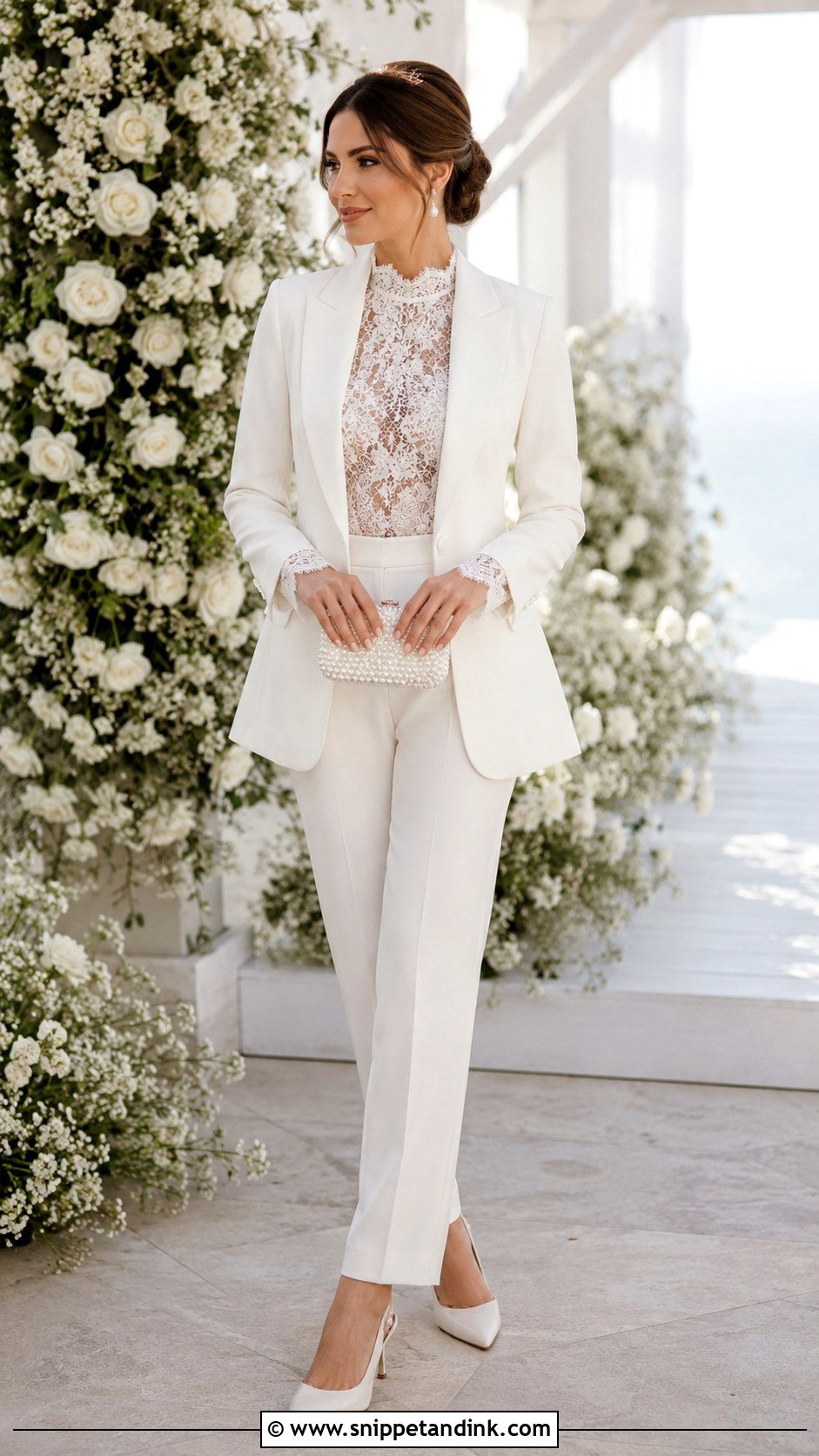
Lace under tailoring works because it softens the suit without changing its shape. I’d build it on an ivory blazer with high-waisted straight-leg trousers and a lined lace blouse, high-necked or scalloped or with sheer sleeves. The lining colour matters more than people expect: a nude lining makes the lace look like skin is showing through, an ivory one makes it read as fabric. Pearl earrings, a slim bracelet and slingbacks are enough. Detailed lace sleeves need extra room inside the blazer arm, so bring the blouse to every fitting, otherwise the lace crushes and bunches at the elbow. I like this one most for daytime and smaller indoor ceremonies.
5. Corset Marriage Suit
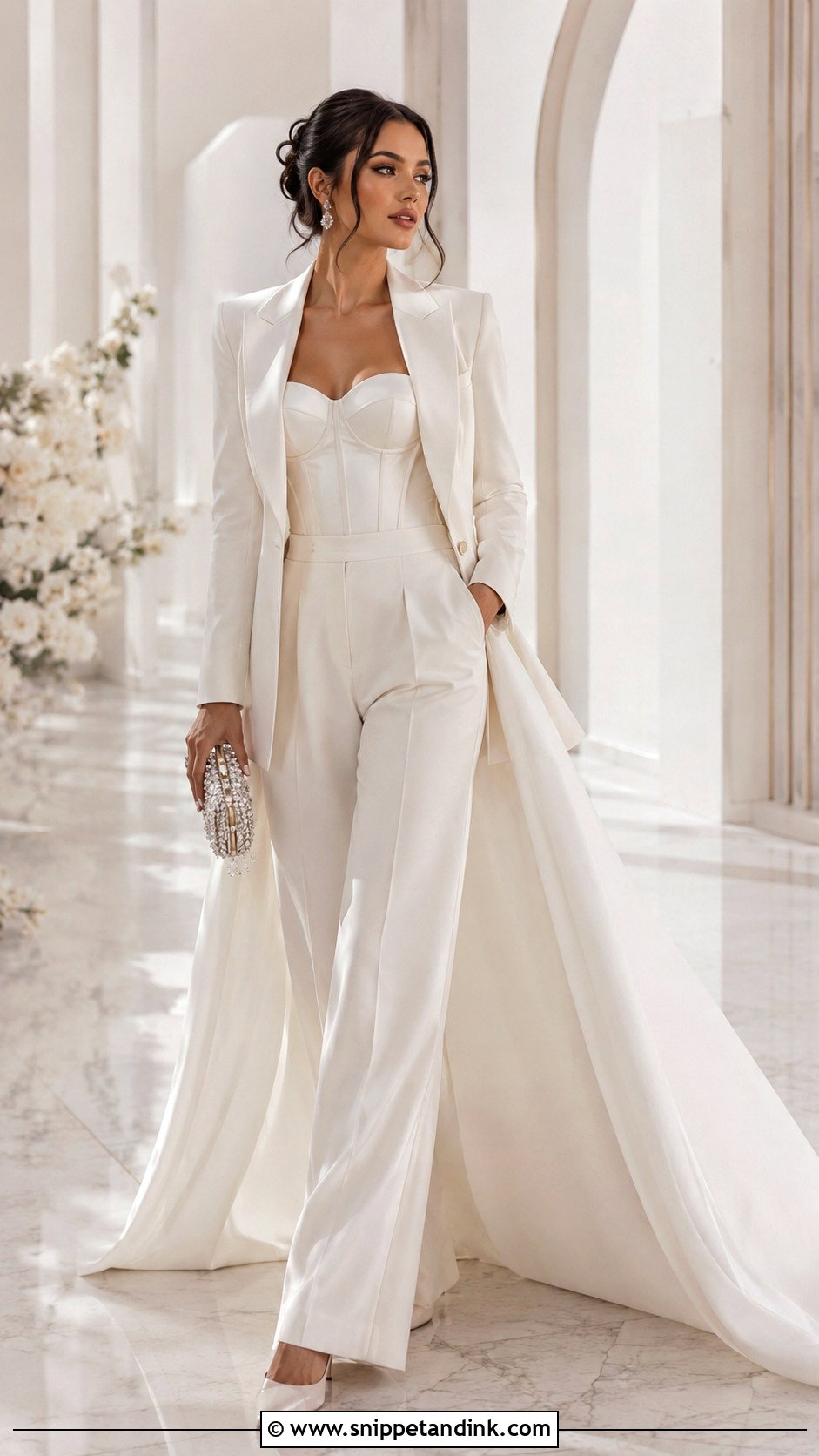
A boned corset with trousers is my answer for a bride who wants a little bodice drama but still wants to dance. The boning should be spiral steel or a good synthetic and the lining soft enough to wear for hours; cheap plastic boning rolls and digs at the ribs by evening. Pair it with high-waisted wide-leg trousers and a fitted blazer for the ceremony. White satin, ivory crepe or a subtle jacquard all feel special. The fitting point I always check is where the corset meets the waistband when you sit: a gap appears there more often than anywhere else. A detachable overskirt adds a gown moment for the aisle and comes off for the reception.
6. Cape Blazer Marriage Suit
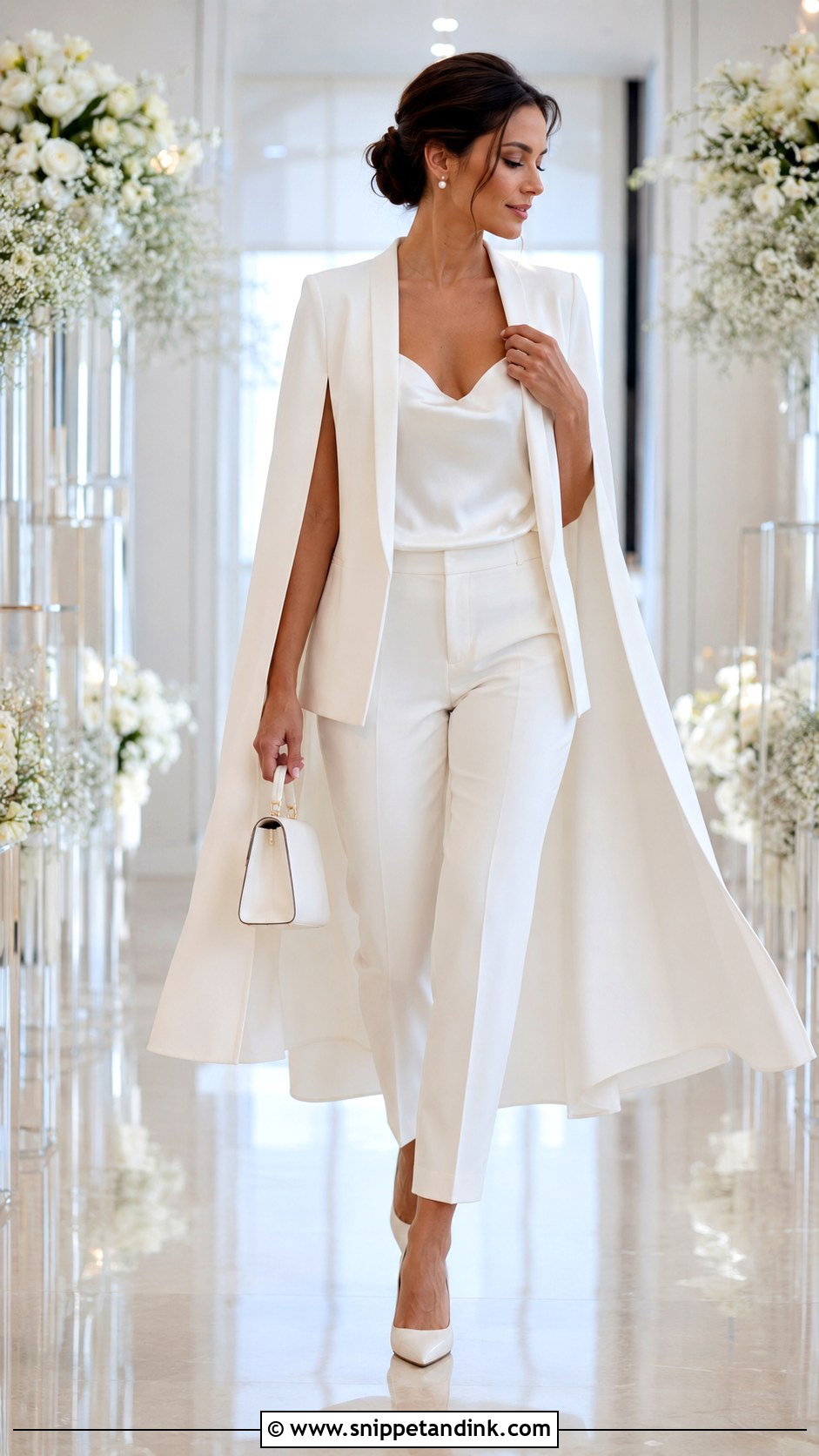
Cape sleeves bring movement to an otherwise straight-lined suit. Look for a white or ivory jacket with open capes falling from the shoulder, worn with slim or slightly flared trousers so the bottom half stays narrow. Underneath, a satin camisole; on the feet, pointed pumps; in hand, a small structured bag. The capes are the jewelry, so I’d keep it to pearl studs or one cuff. Two practical checks at the fitting: hold your bouquet at the height you’ll carry it and see whether the cape catches on the stems, and make sure the back doesn’t trail on the floor. Lightweight crepe moves well; heavier wool makes capes hang like curtains.
7. Peplum Marriage Suit
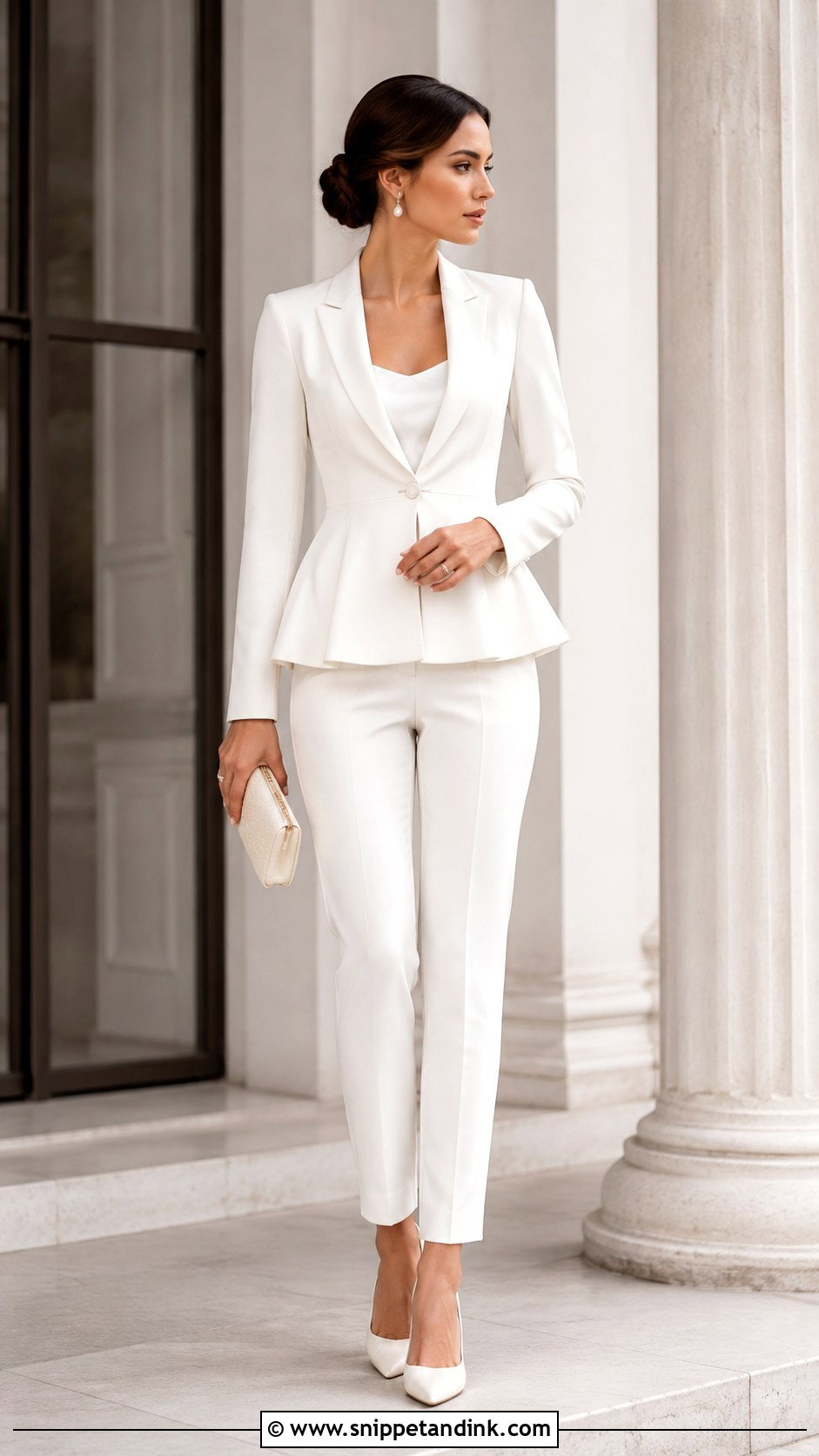
Peplum jackets suit brides who want a defined waist without a corset. The jacket should fit close through the shoulders and torso and flare only from the natural waist; when the peplum starts too high, it shortens the body and adds width over the ribs. Slim or straight ankle trousers balance the flare. A silk shell keeps the neckline smooth, and I’d skip bulky shirt collars and thick belts, which fight the seams. Pointed pumps, pearl earrings and a clutch in ivory or silver are plenty. A removable peplum is worth asking about if you’d like a sleeker jacket for the evening.
8. Double Breasted Marriage Suit
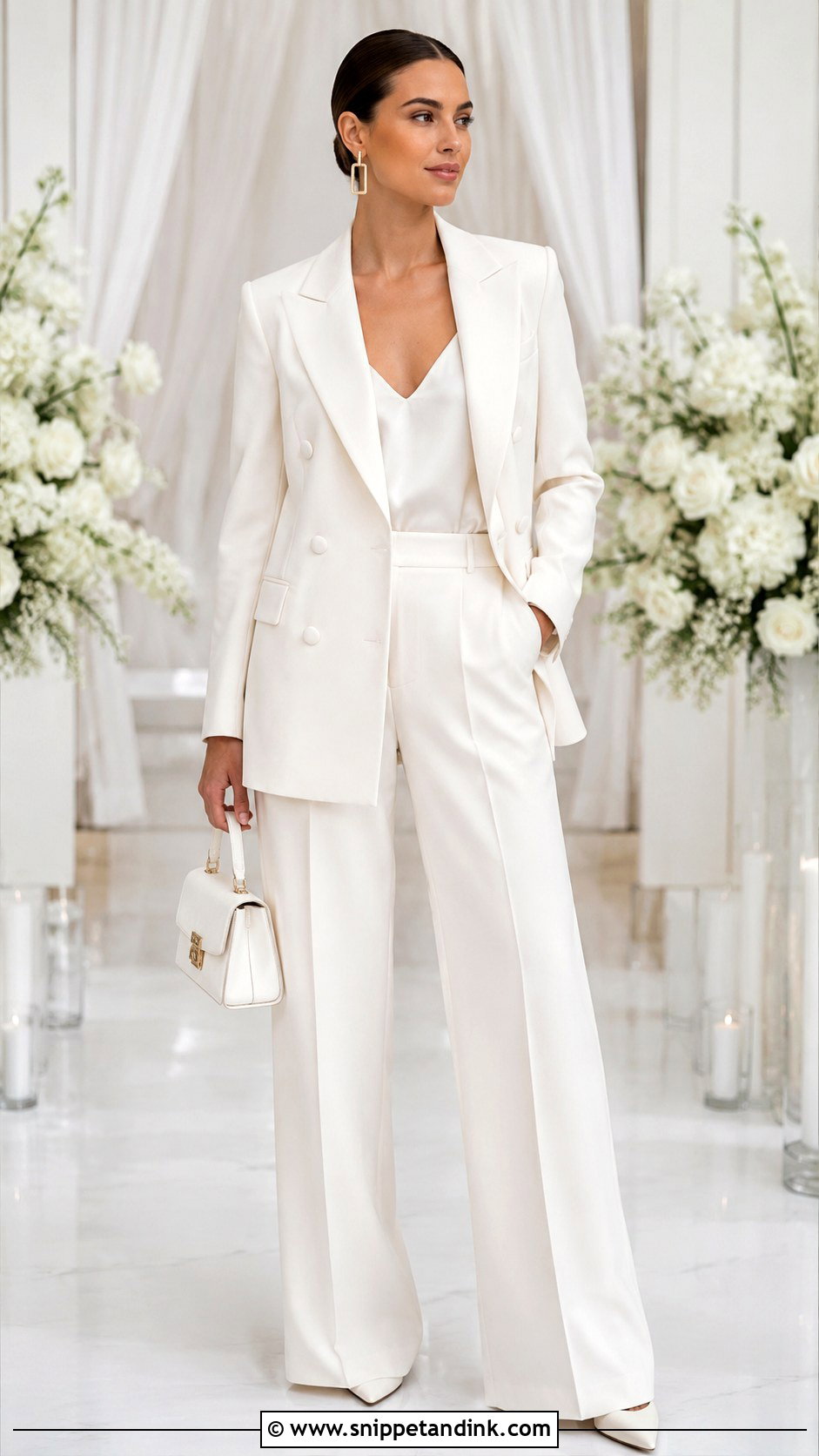
Double-breasted tailoring is bold and graphic, with strong lines and a classic feel. Covered buttons keep it monochrome and bridal rather than corporate. Wide-leg trousers relax it; straight ones sharpen it. Because the overlap adds a layer of fabric across the torso, button placement decides whether this flatters you: if the front pulls into horizontal creases when buttoned, the jacket is too small or the buttons are set wrong, and I’d send it back before going further. A silk camisole or thin bodysuit underneath keeps the layers flat. Petite brides usually look better in a shorter cut, taller brides can carry a longer one. Ivory crepe and lightweight wool hold the shape best.
9. Cropped Blazer Marriage Suit
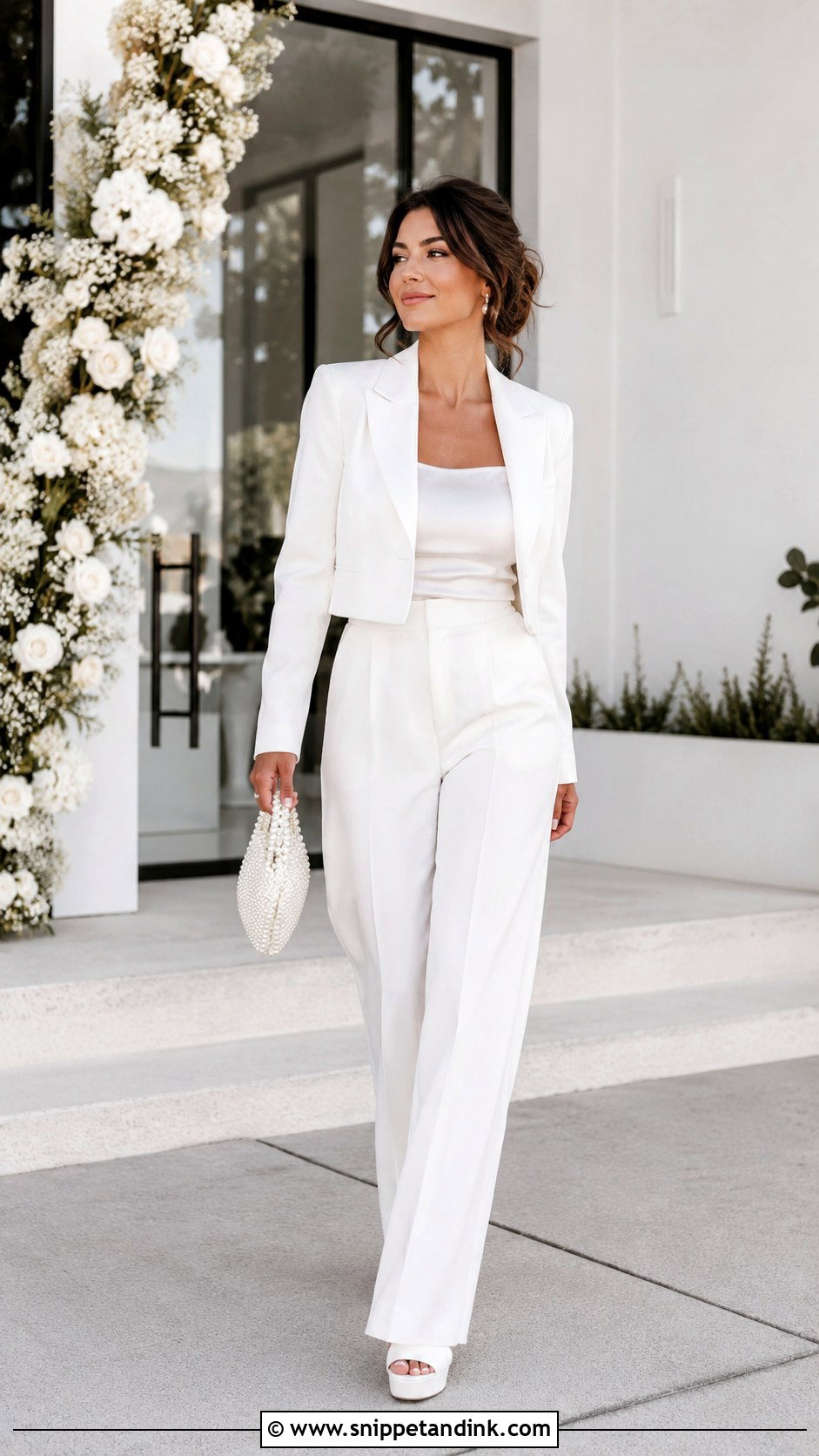
Cropped jackets change the proportions of a modern bridal pantsuit more than any other detail. The jacket should end at the natural waist and meet high-rise wide-leg trousers so the waistband reads as one continuous line. A satin shell, corset top or square-neck bodysuit sits underneath. On petite brides this is the shape I reach for first, because the high waist lengthens the leg, but only if the trousers are hemmed with care; an extra centimetre of wide-leg fabric swallows a small frame. Platform heels or pointed pumps hold the trouser length up. Pearl hoops and a sleek bun keep it light.
10. Three Piece Marriage Suit
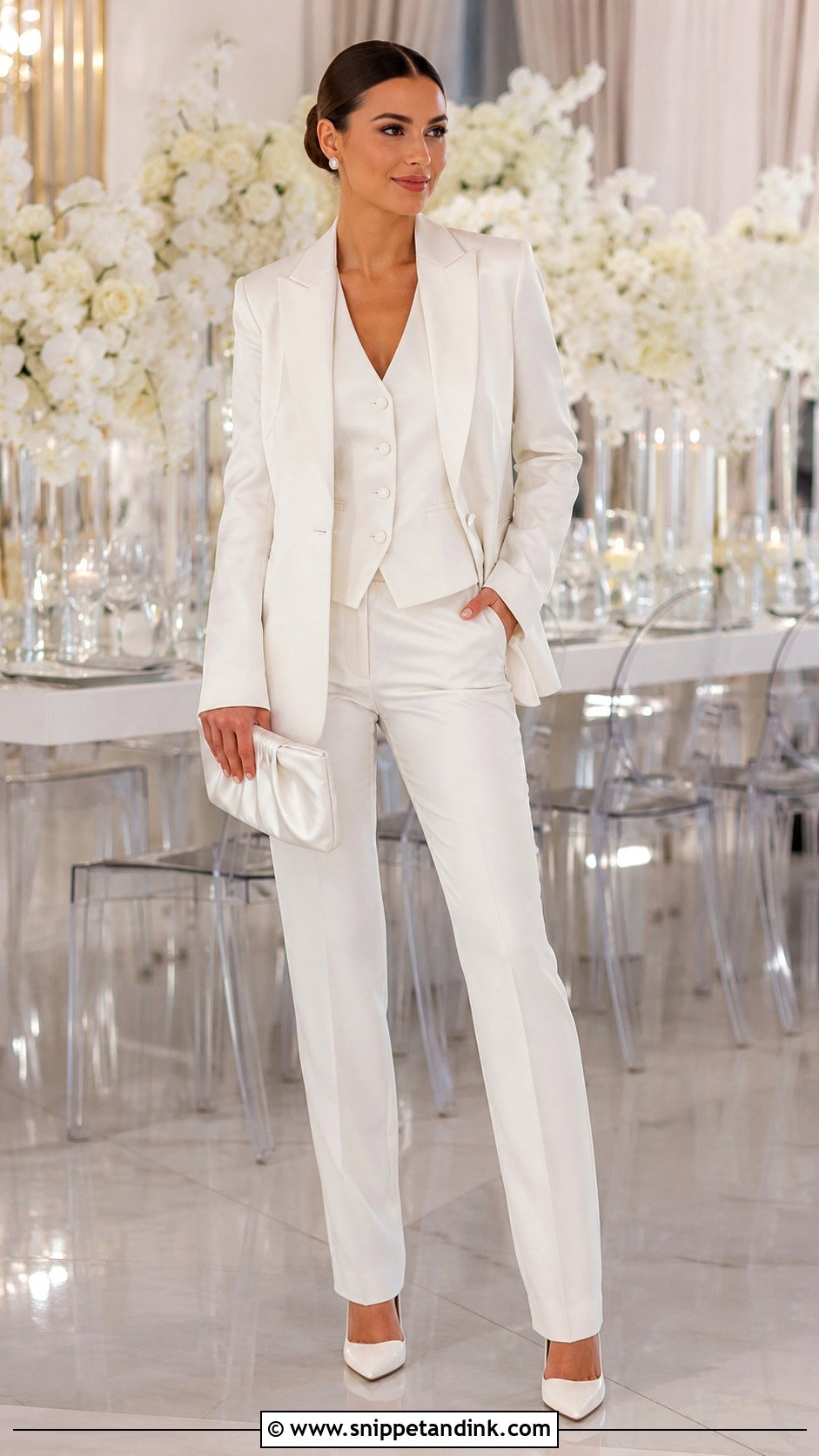
A three-piece marriage suit gives you two looks without a second outfit. Trousers, a fitted vest and a matching blazer in white or soft ivory for the ceremony; jacket off when the dancing starts. Choose wide-leg trousers for ease or straight ones for a traditional finish. The vest is the piece I spend the most fitting time on. Worn as a top, it has to close over the bust without gaping between buttons and sit neatly into the trouser waistband, and that usually means taking it in at the side seams. Finish with pointed heels, pearl earrings and a small satin clutch.
11. Skirt Marriage Suit
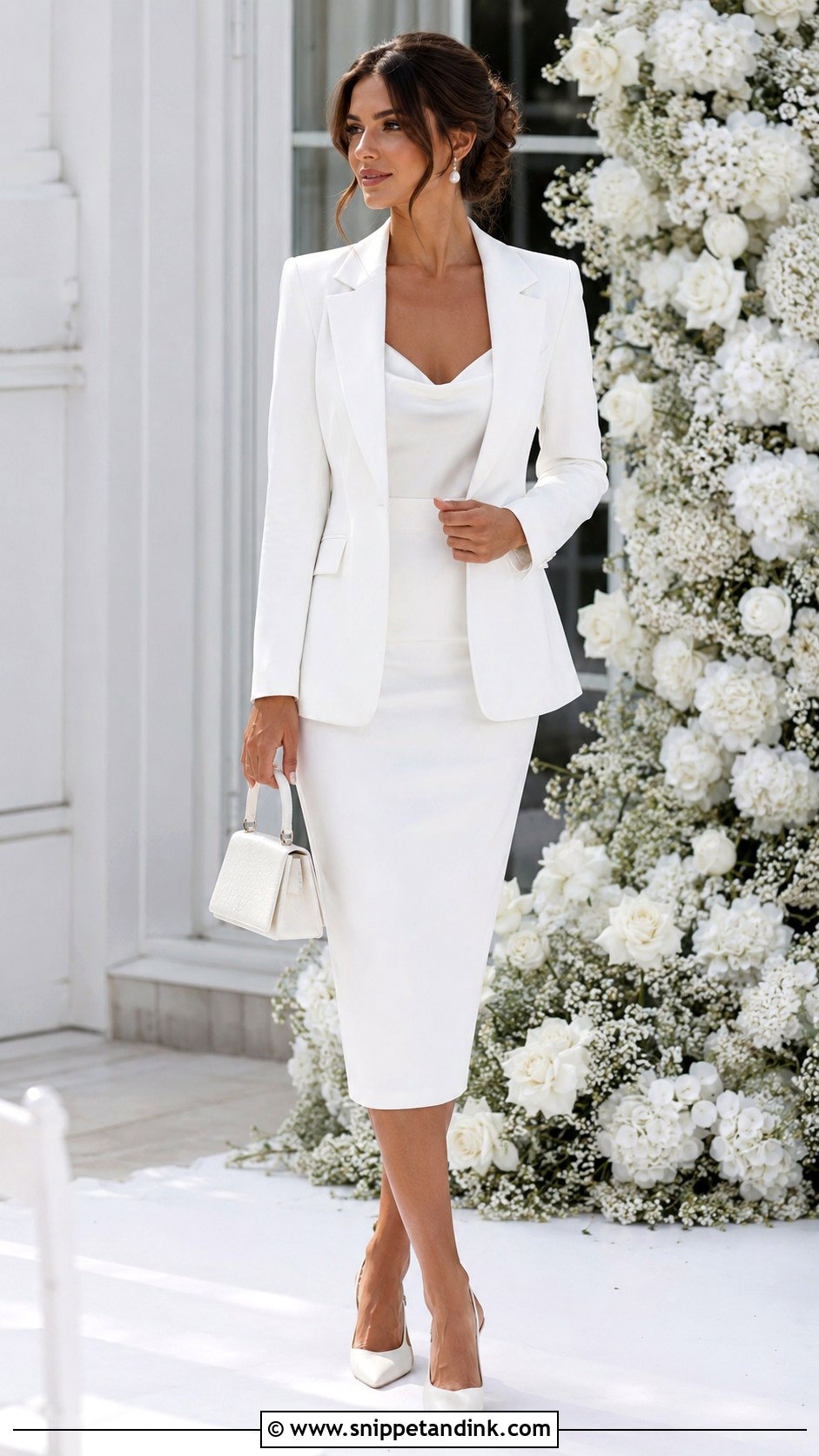
Not every bride wants trousers, and a skirt suit keeps the tailoring without them. Pair a fitted white blazer with a matching midi skirt in an A-line, pencil or softly flared cut. A silk camisole underneath keeps it clean; a lace blouse makes it softer. My test for the skirt is simple: sit down in it. If the hem rides above the knee or the pencil cut stops you from taking a normal step, it needs a back slit or a different shape. Keep both pieces in the same fabric, or the set starts to look like office separates. Slingbacks and pearl earrings finish it.
12. Jumpsuit And Blazer Marriage Suit
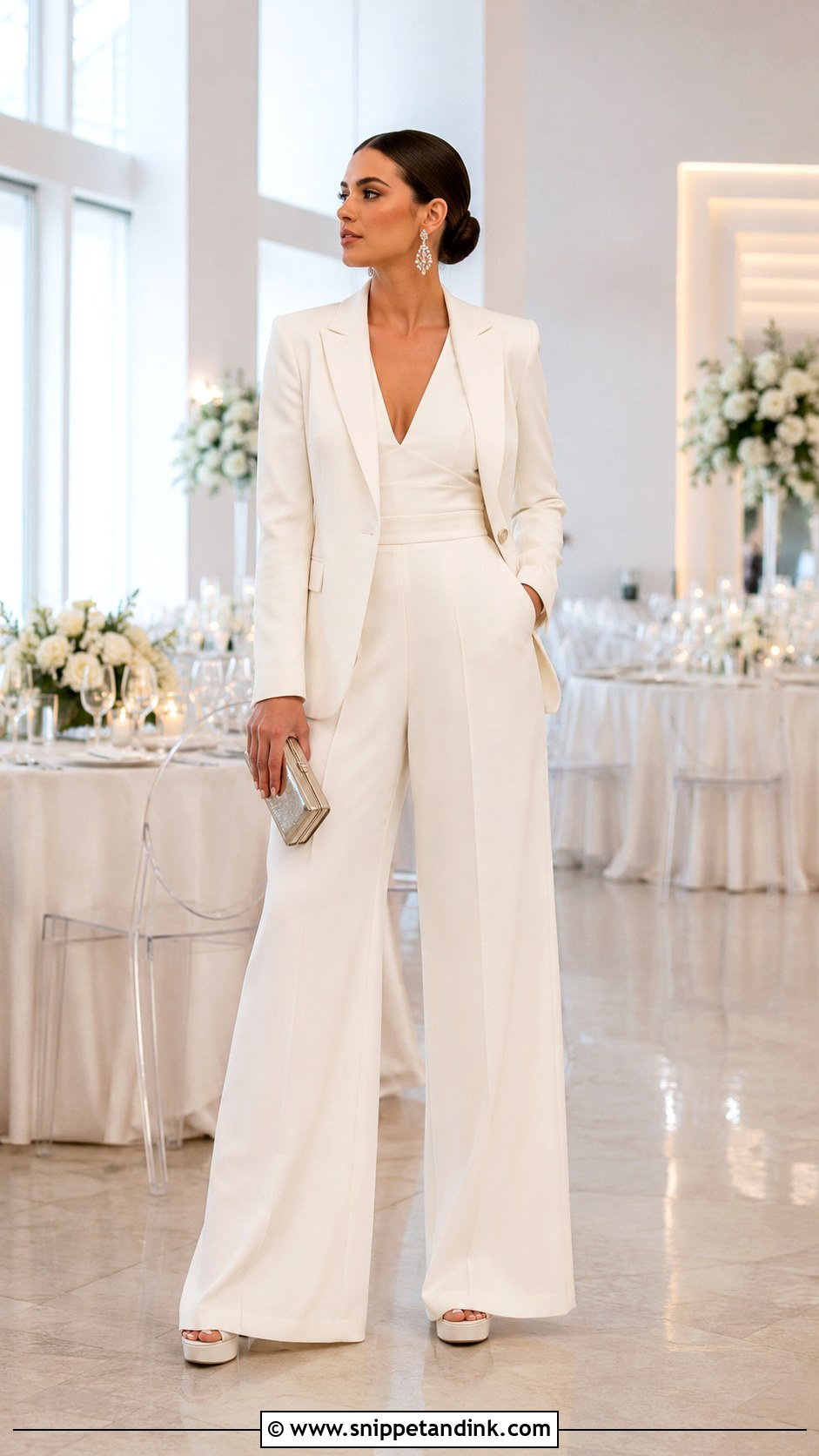
A tailored jumpsuit with a matching blazer gives the line of a suit with no waistband break at all. The jumpsuit needs a defined waist and a structured bodice; wide legs move best. Wear the blazer for the ceremony, then take it off for a lighter reception look. Crepe looks clean, satin adds shine. The torso length is where jumpsuits fail: too short and it pulls uncomfortably when you sit, too long and it bags at the seat. Always pin the hem wearing the exact wedding shoes, since even a small change in heel height shows. Platform heels, crystal earrings and a low ponytail suit it.
13. Linen Marriage Suit
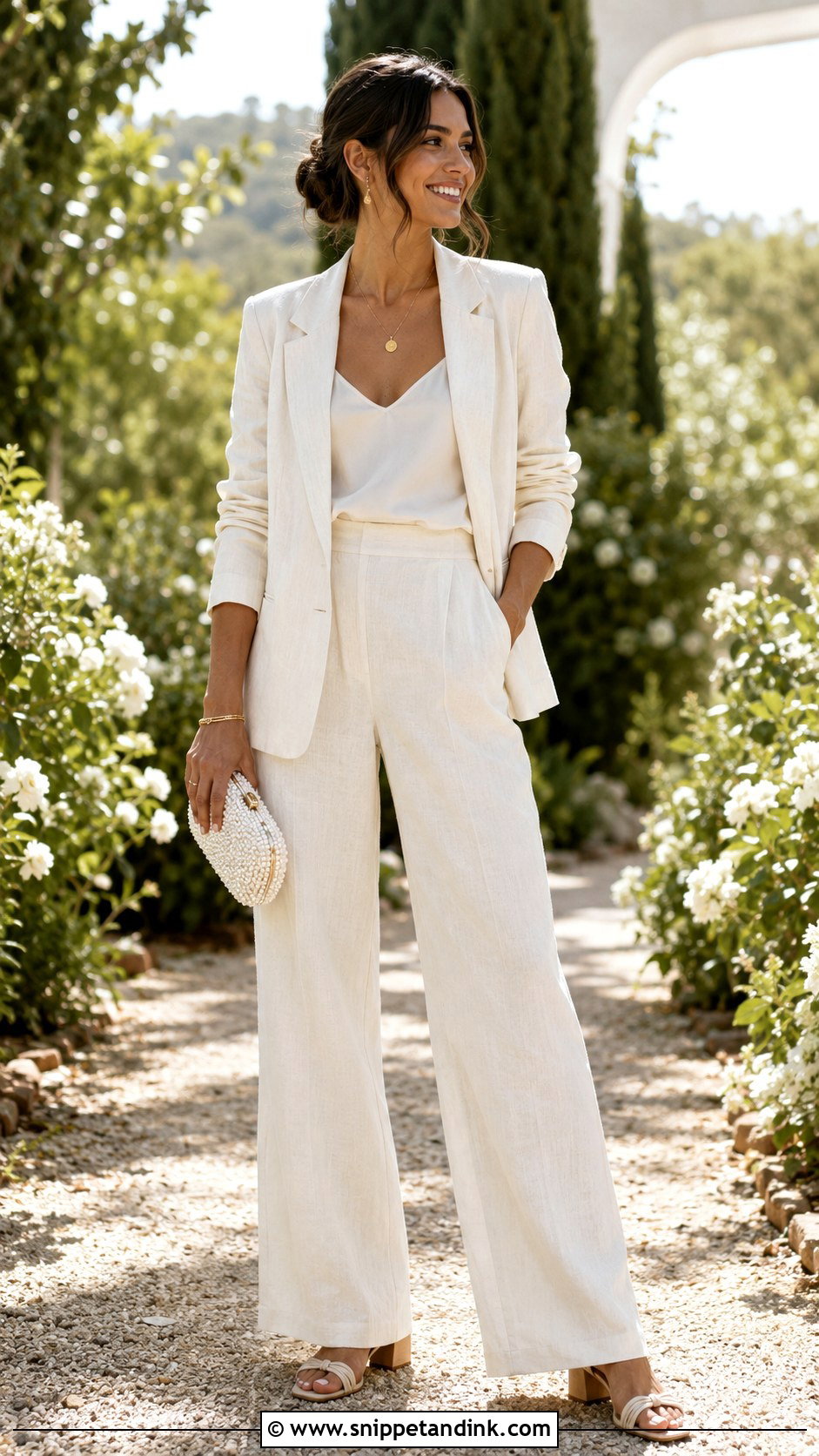
Linen belongs at a warm outdoor or destination wedding, and the honest truth is that it will crease. I’d choose a linen blend over pure linen; the blend breathes nearly as well but wrinkles far less by the time you reach the aisle. Pair the ivory blazer with wide-leg or relaxed straight trousers, a silk camisole, sandals with a stable heel for grass, and a woven or pearl clutch. Delicate gold jewelry and soft waves or a low textured bun match the setting. A partially lined jacket keeps its shape without adding heat. Steam everything shortly before you dress, then accept some softness; a linen suit with no creases at all looks synthetic.
14. Velvet Marriage Suit
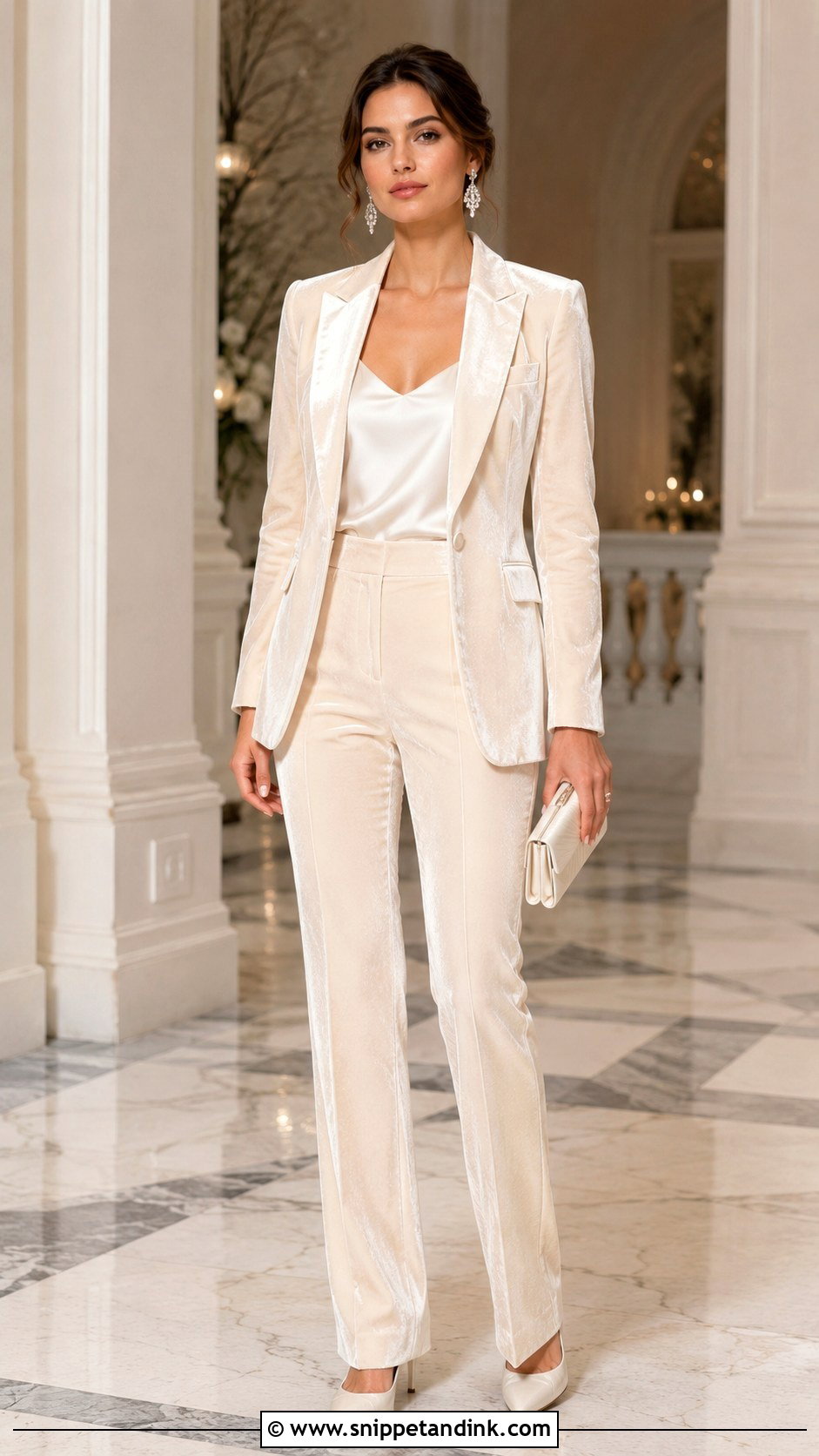
For autumn and winter, velvet is the richest suit fabric I know. White and cream read traditional; deep green or midnight blue suit a less conventional bride. A fitted blazer with straight trousers and a silk camisole is the cleanest build, with pointed pumps, crystal earrings and a satin clutch. Velvet already reflects light, so keep embellishment restrained. One detail a good maker gets right and a cheap one doesn’t: the nap has to run the same direction on every panel of jacket and trousers, or the colour looks patchy in photos. Lined trousers move better. Hang it on padded hangers and never press it flat; steam from the inside.
15. Sequin Marriage Suit
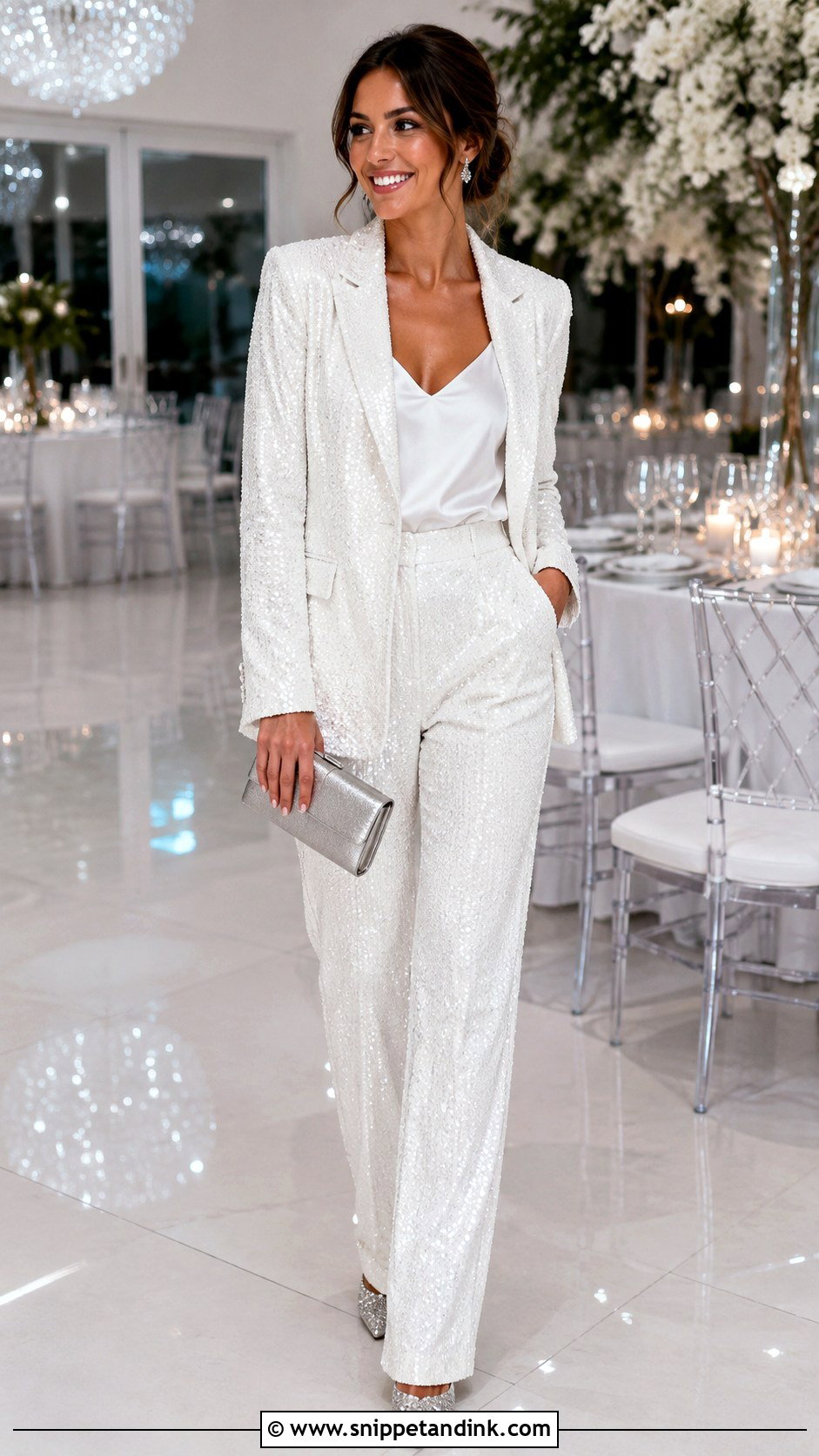
Sequins belong at the reception or an outfit change, when the lights go down. I’d choose fine, flat sequins in white, silver or champagne over large paillettes, which snag on everything and catch the flash unevenly. Wear a satin camisole beneath to protect your skin, and check that the sleeves and inner seams are fully lined; unlined sequin seams scratch the inside of the arm within an hour. Smooth pointed heels, small crystal studs and a plain clutch are enough, because jeweled shoes on top of sequins compete. Straight or wide-leg trousers both work if the sequins sit evenly at the hem. A sleek ponytail or bob keeps it modern.
16. Pastel Marriage Suit
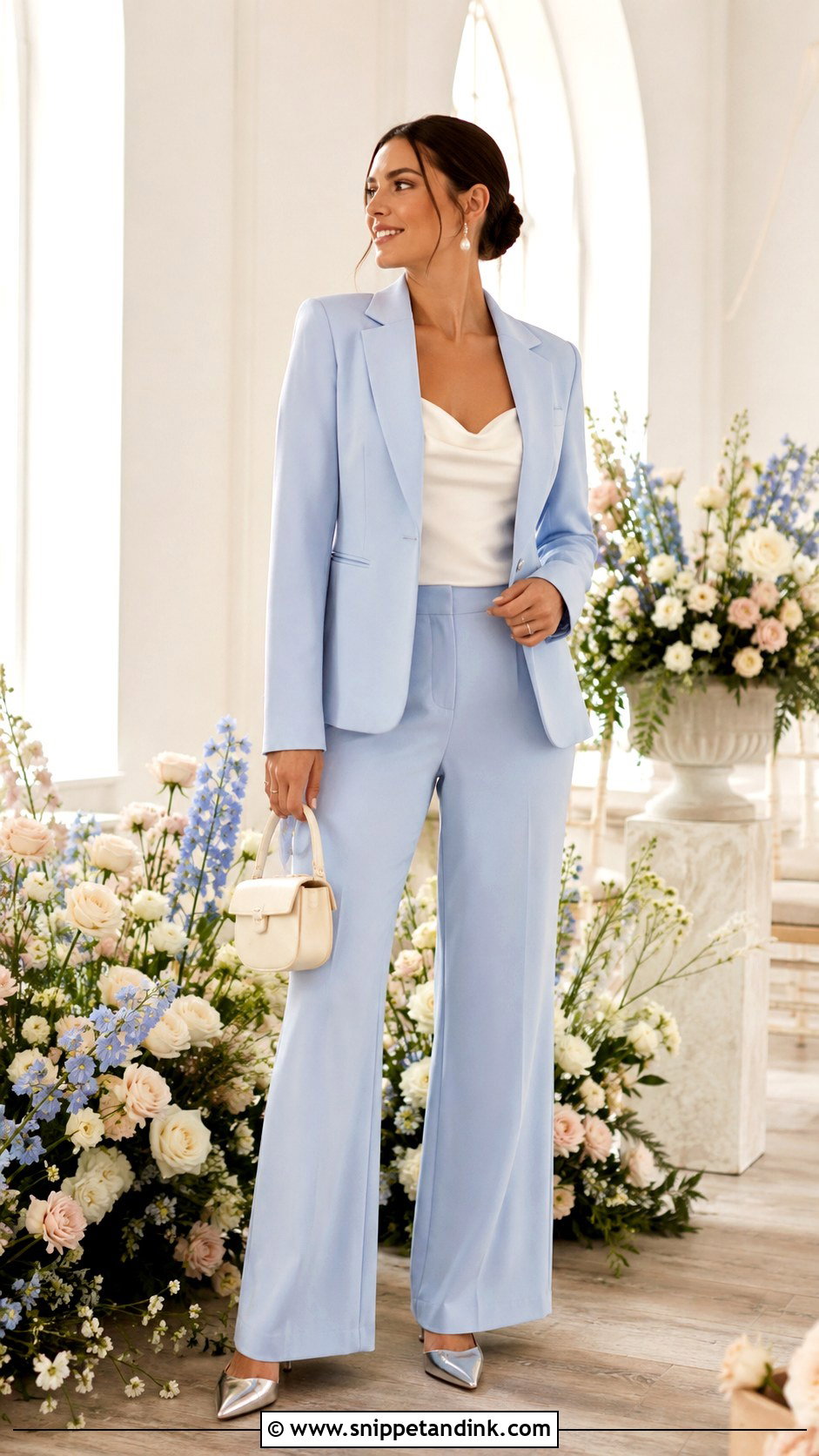
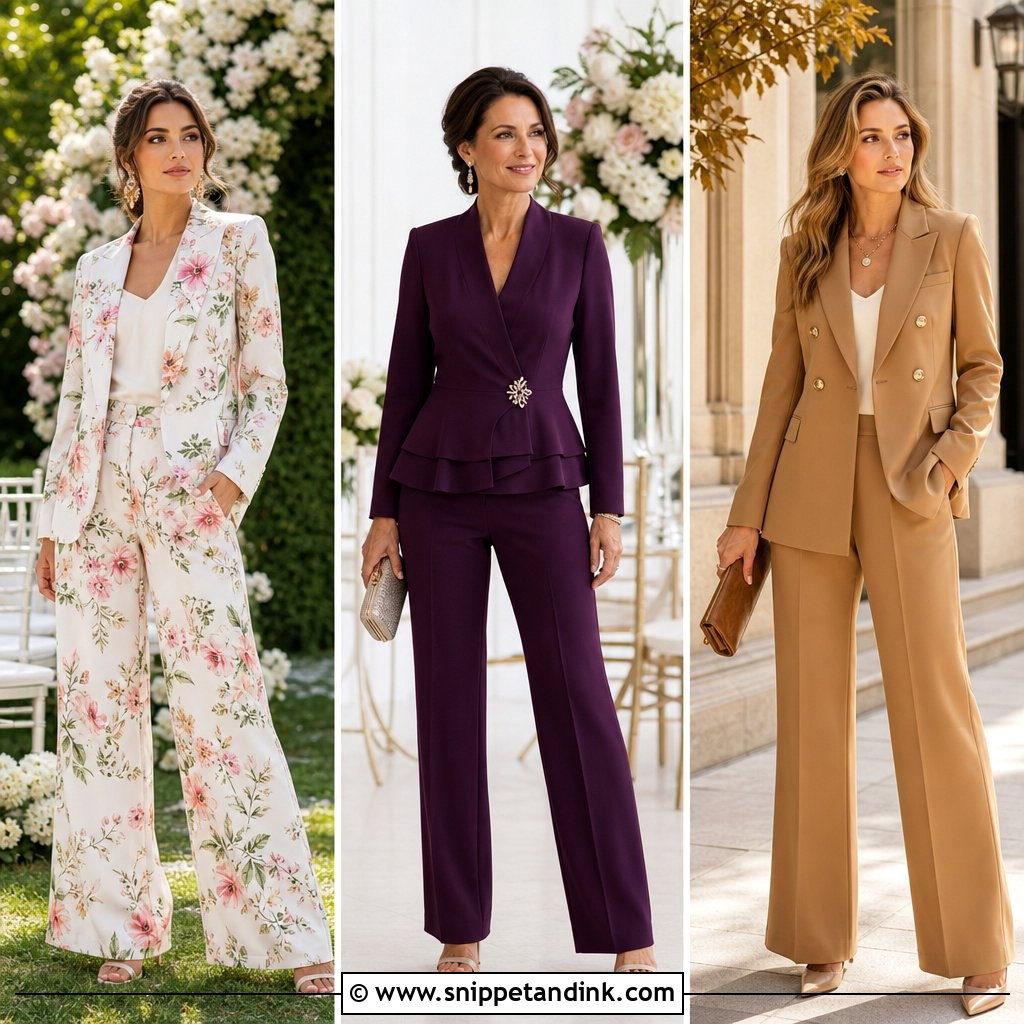
Pastel tailoring is the gentle way out of white. Blush, powder blue, lavender and soft sage all work as a monochrome blazer and trouser set with a satin top in the same family. Matching, nude or metallic pointed heels keep the leg line long, and pearl earrings with an ivory clutch add a small bridal note. Here’s the check I never skip: look at the fabric in daylight and then under the venue’s lighting. Pale colours shift a lot, and lavender in particular can turn grey or blue in warm indoor light. An ivory veil or hair bow adds contrast. Keep the tailoring exact, or a pastel suit can slide toward casual.
17. Floral Marriage Suit
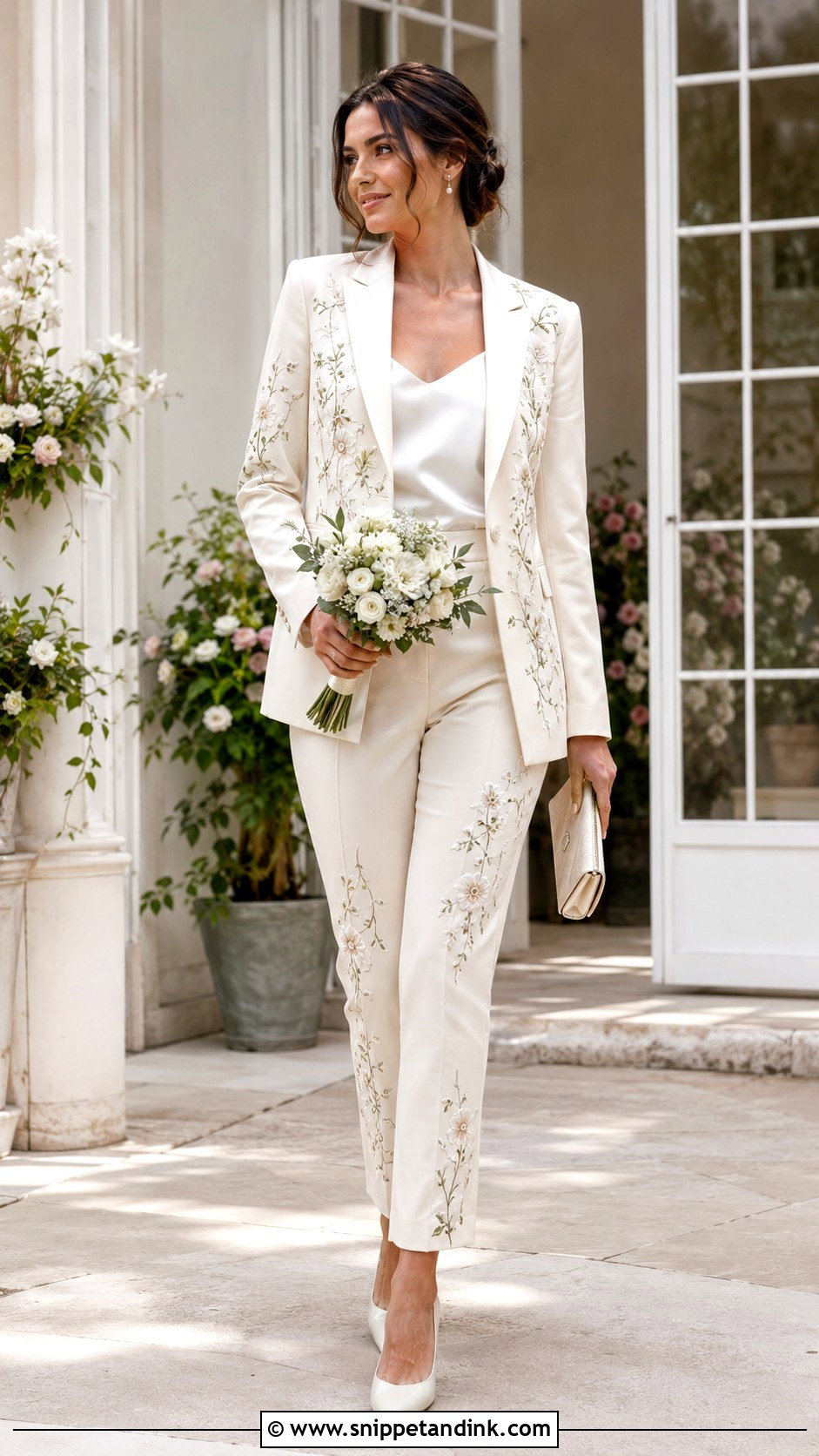
Florals on a suit can be embroidered, woven as a tonal jacquard or printed. Wear the patterned blazer with matching trousers for the full statement, or with plain ivory trousers when the jacket is heavily worked. A silk camisole calms things down. Pointed pumps in ivory, or in one colour lifted from the flowers, are the right shoe, and I’d stop the accessories there: small earrings, a plain clutch, a compact bouquet so you don’t hide the embroidery. Large prints read bold, small tonal motifs read softer. If the suit is custom or being altered, ask how the pattern will meet at the seams and pockets, because a broken motif across the front is hard to unsee.
18. Black And White Marriage Tuxedo
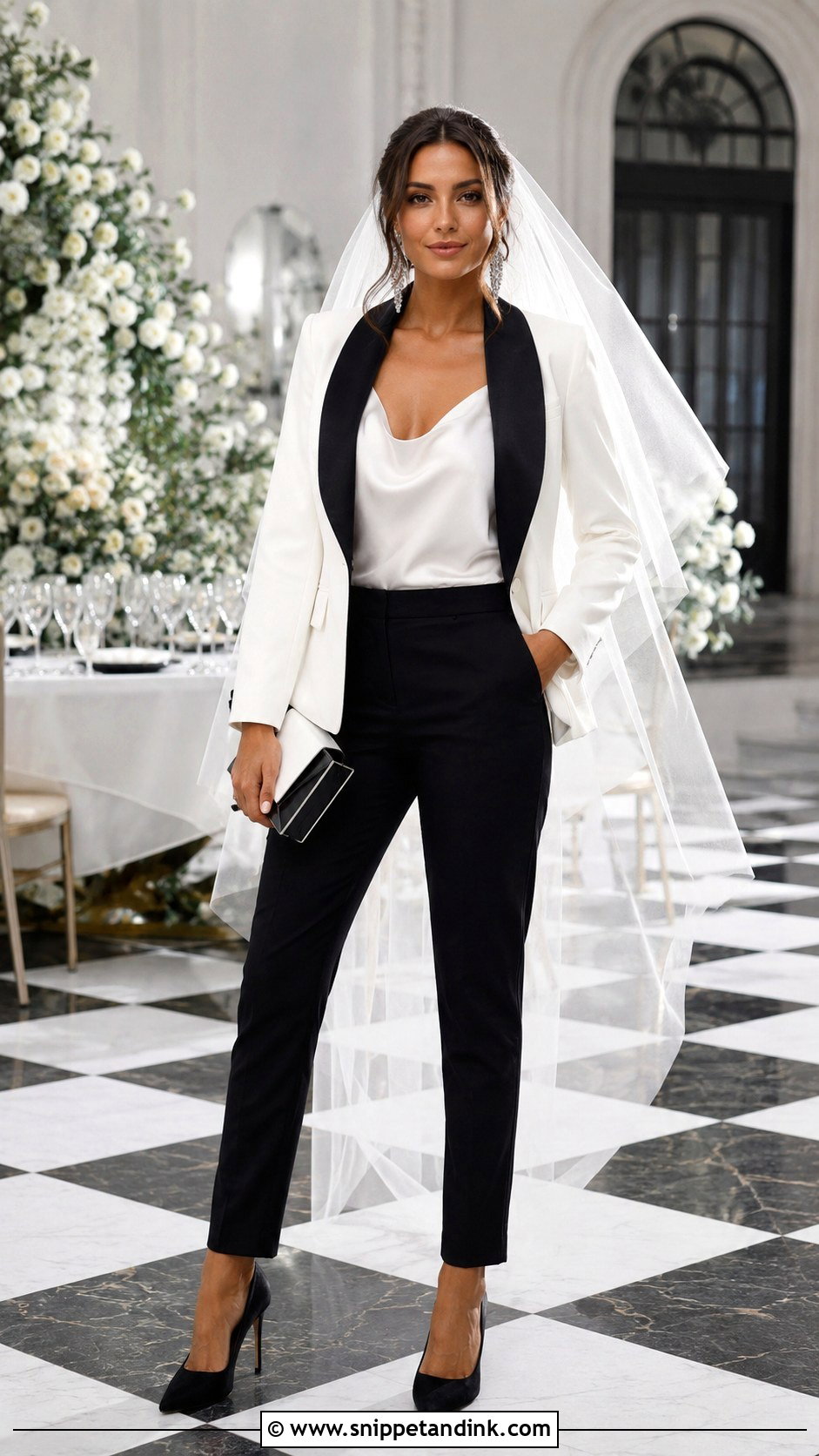
Black and white is the most graphic option here and suits a bride who wants contrast. Start with a white dinner jacket with black satin lapels, black tailored trousers and a white silk camisole, or reverse it with a black jacket and white trousers. Black pumps, crystal earrings and a monochrome clutch keep it sharp; a sleek bun or short polished hair suits the lines. Add a white veil if you want it to read unmistakably bridal. The detail I watch: the black pieces must come from the same fabric and finish. A matte trouser next to a slightly shiny lapel looks like two blacks in photos. Covered buttons and neat pocket work refine the tuxedo, and keep the trousers easy rather than skinny for a long ceremony.
19. Modest Marriage Suit With Longline Blazer
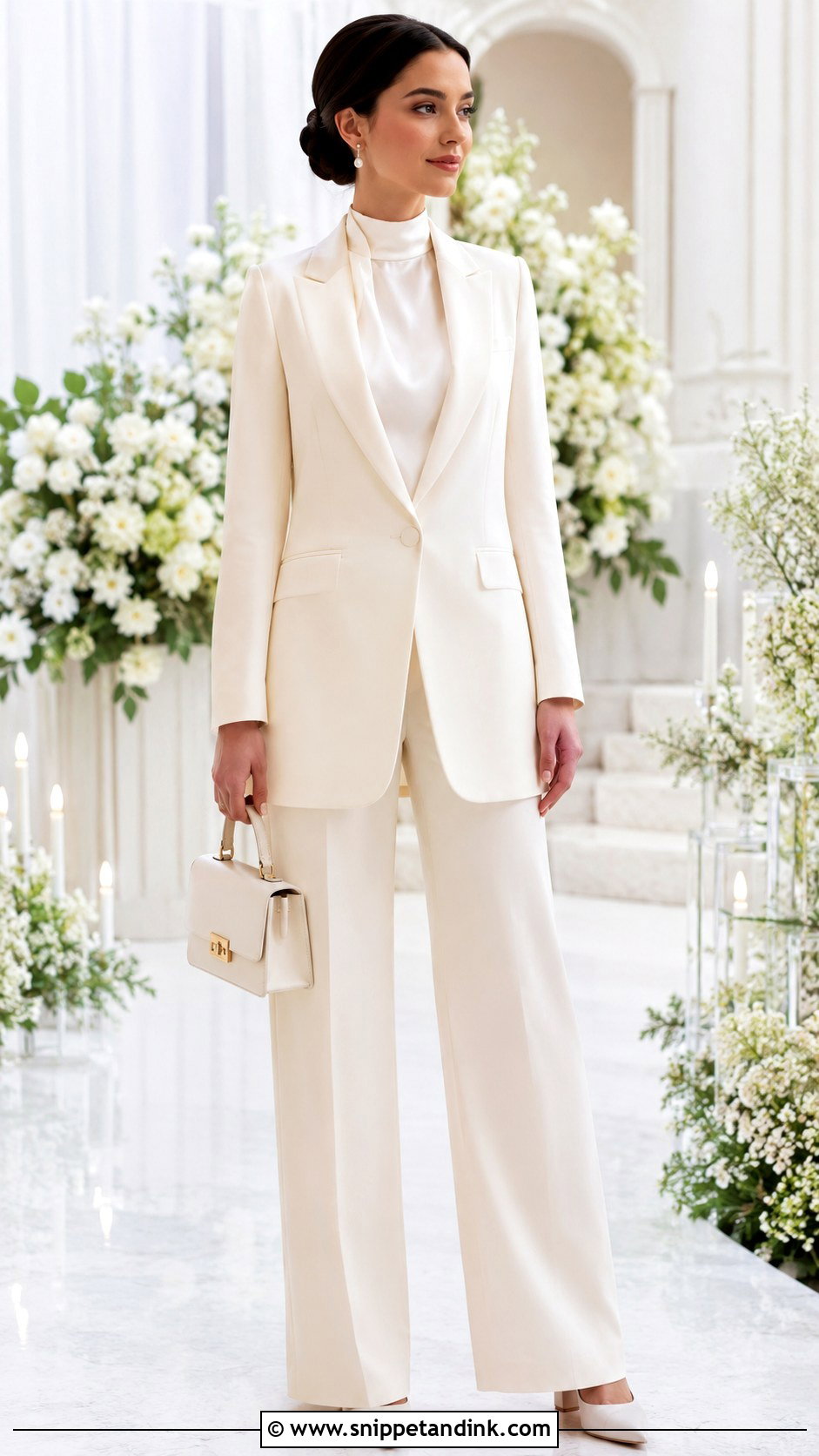
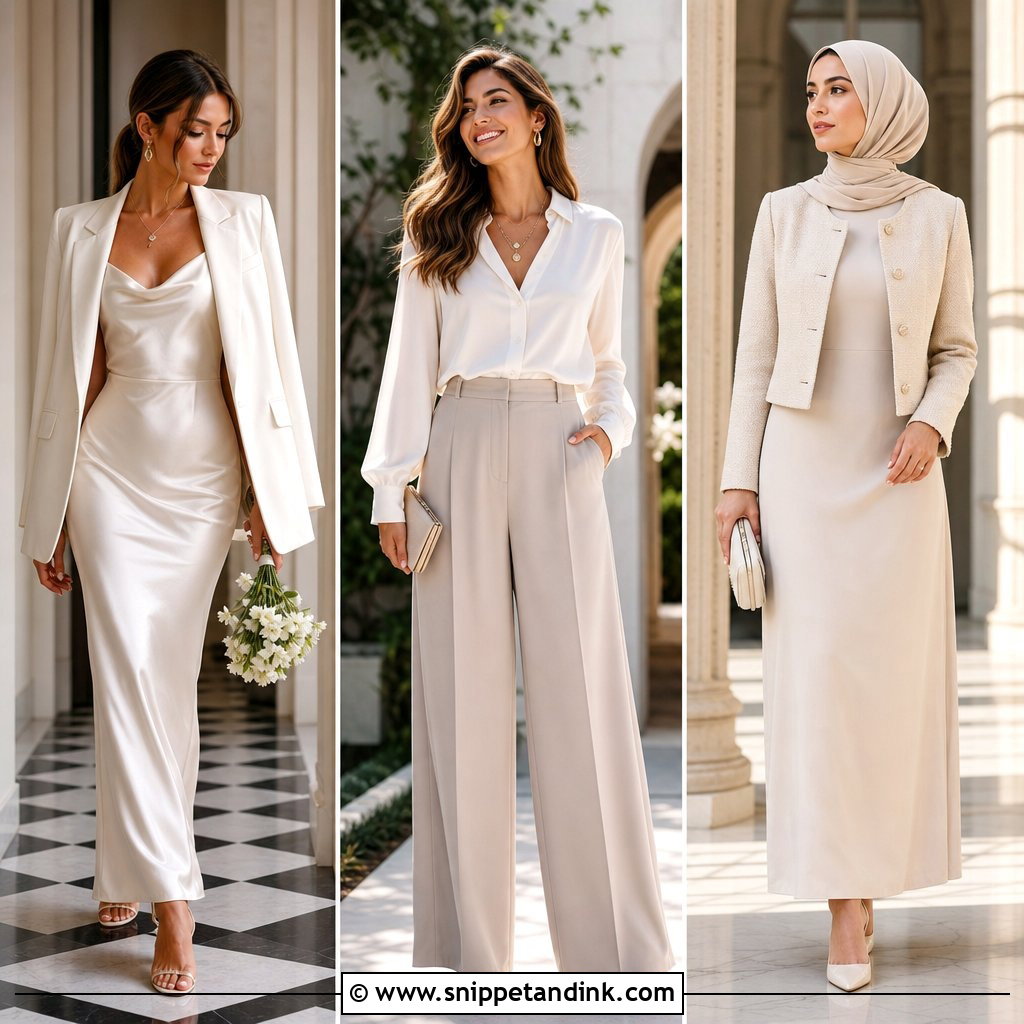
A longline blazer gives coverage without hiding the body under fabric. Choose an ivory jacket that falls below the hips over straight or slightly wide trousers, with a high-neck satin blouse with full sleeves or a smooth fitted shell beneath. Closed-toe pointed heels, pearl earrings and a structured bag keep it polished. Belt it softly for waist definition or leave it open for a long vertical line. I’d avoid a very oversized cut; past a certain length the extra fabric buries the tailoring. Side vents let the jacket sit properly when you walk and sit. A lightweight veil or delicate headpiece adds the ceremony without fighting the silhouette. Crepe drapes best here.
20. Feather Trim Reception Marriage Suit
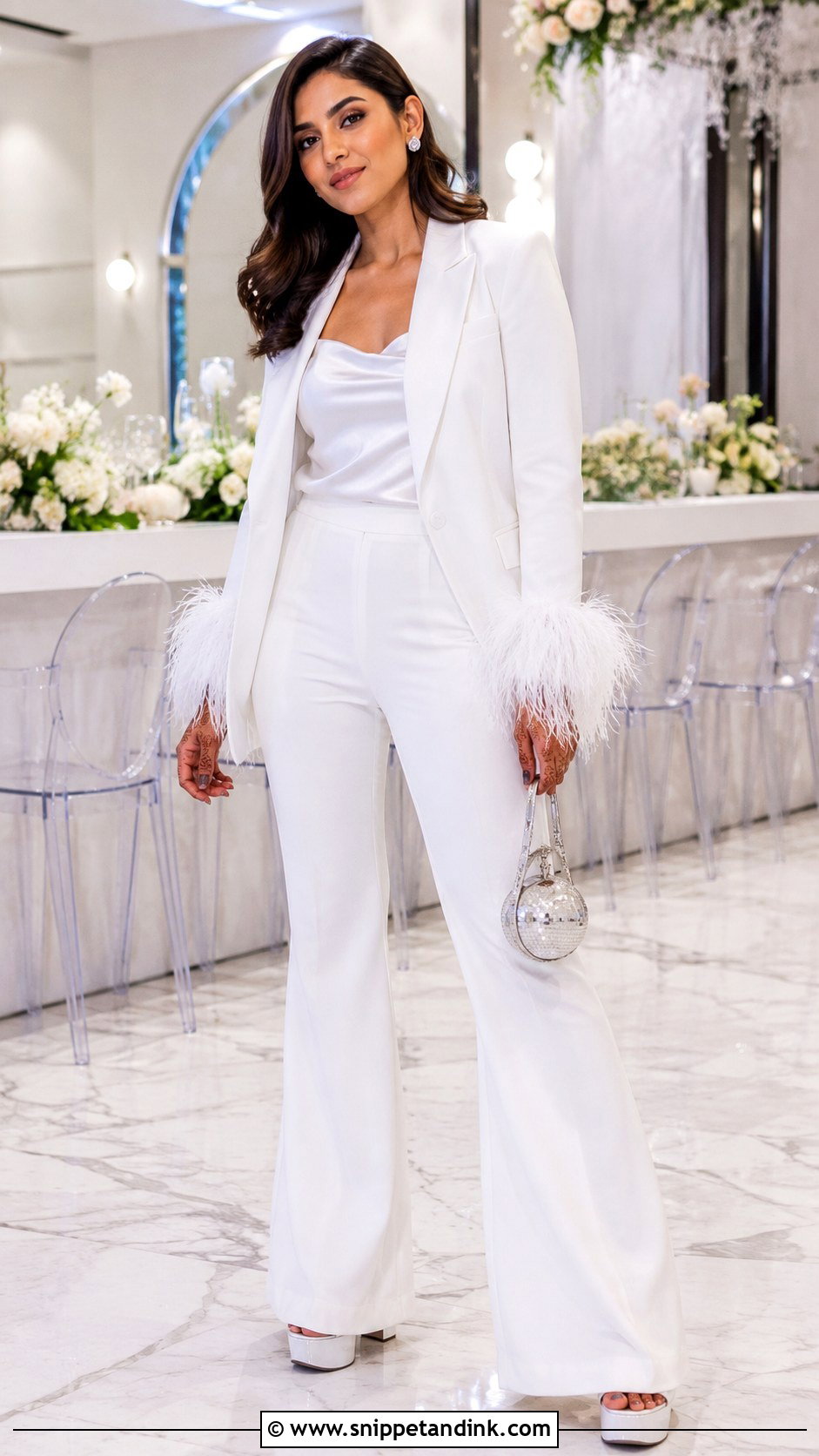
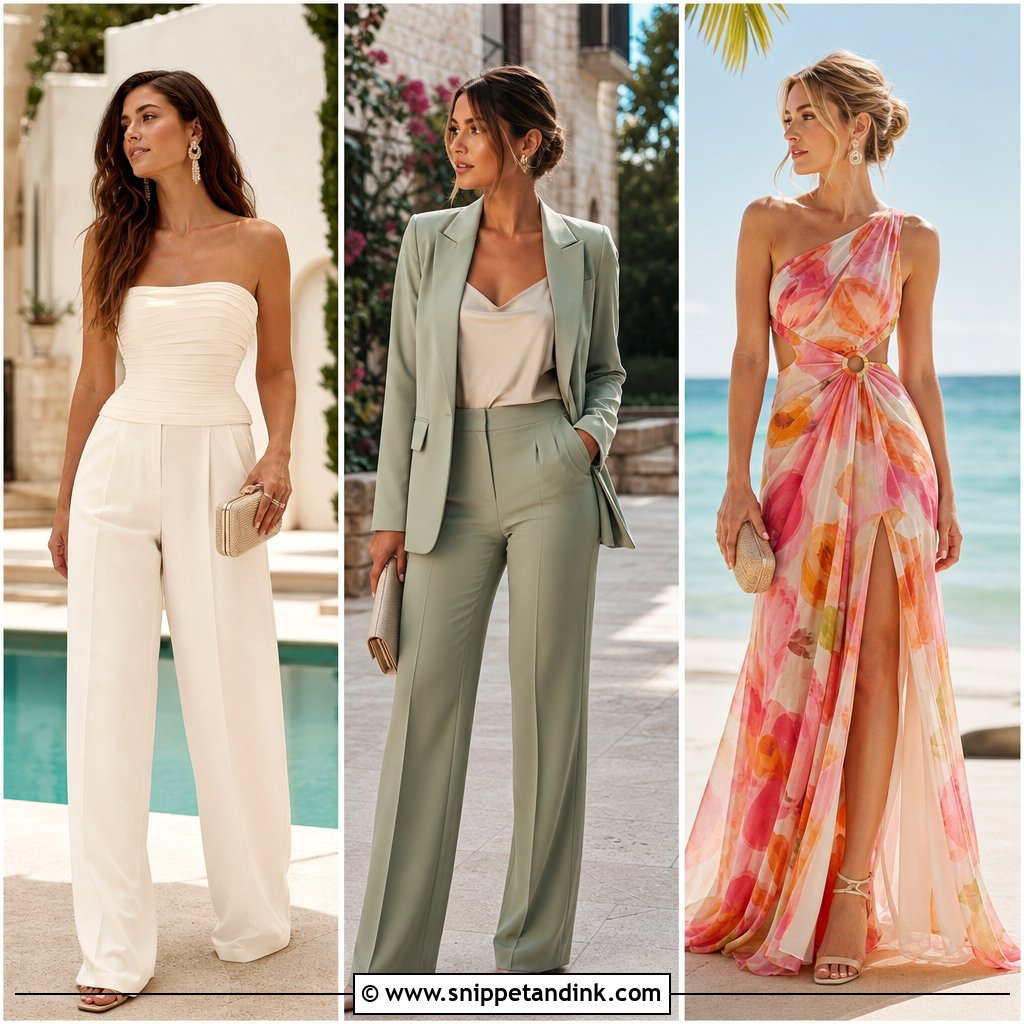
Feather trim is a reception piece, and it is more fragile than it looks. I’d keep the feathers on the cuffs or hem of a fitted white blazer and pair it with sleek straight or flared trousers, plus a plain satin camisole or bodysuit underneath. Platform heels, crystal studs and a small metallic bag finish it. Feathers shed and catch on bracelets, chair backs and other guests’ sleeves, so keep them away from the inner arm. Detachable cuffs are the practical version: you can clip them on for the first dance and take them off before the party gets crowded. A high ponytail or neat bob keeps the trim in focus.
Crepe, Wool or Linen After Eight Hours of Wear
The fabric decides how your suit looks at the end of the night, not just the start. Here is how the common choices behave once you’ve sat through a dinner, hugged half the guest list and danced.
- Crepe is the most forgiving. Its grainy surface hides creases at the elbow and lap, and it drapes without clinging, which is why I recommend it so often for a first suit.
- Lightweight wool recovers well; creases from sitting relax after you stand for a while. Tropical-weight wool is surprisingly cool for a summer ceremony.
- Satin shows everything: lap creases, sweat at the underarm, even water spots. Lovely in photos, but plan on a steamer in the getting-ready room.
- Linen creases within minutes of sitting. A blend helps, and so does accepting it as part of the look.
- Velvet crushes where it is pressed, so avoid sitting for long on a velvet suit if you can, and never iron it.
Packing the Garment Bag the Night Before
A suit has more separate parts than a gown, and that is exactly how things get forgotten. I pack the hanger the night before with the jacket, trousers or skirt, the top that goes underneath, any detachable cape, train or cuffs, and the shoes in a dust bag. In a small pouch: fashion tape, a lint roller, a travel steamer, a few safety pins, clear nail polish for a snag, and a white chalk stick for any mark on ivory fabric.
Dress in the right order, too. Hair and makeup first, then the top, then trousers, then jacket last. Pulling a fitted top over finished makeup is how foundation ends up on a white collar.
A Suit Should Feel Like Yours by the Last Song
Bridal tailoring covers more ground than most people expect, from crisp white crepe and lace to linen, velvet, pastels and sequins. A suit that only looks fashionable on the hanger isn’t the one I’d send you home with. It should be comfortable, right for the venue and recognisably you. Do one full dress rehearsal with the shoes, underwear, jewelry and any veil or headpiece, because that is when hems, sleeves and waist placement show their faults. A good tailor can fix almost all of it if you leave the time. Wear it for the ceremony, the reception or both; a well-fitted suit reads bridal from across the room.
You'll Like These Ideas:




Leave a Reply