
A suited bride gets just as much attention walking in as one in a gown, and the tailoring has to hold up to it. There is more choice now than there used to be: tuxedos cut for a bust and hip, linen suits, waistcoats worn on their own, jumpsuits with a blazer and jackets made to order for all kinds of bodies and identities. In my fittings, the suit itself is rarely the hard decision. Fit, fabric weight, shoes, the venue and how you sit next to your partner in photos are what make it work. Below are twenty complete outfits, from black tie to a courthouse Tuesday, with what I’d pair with each and the alteration I’d watch most closely.
Menswear Cut or Womenswear Cut?
This is the first question I ask, and it decides how much tailoring you’ll need. Menswear jackets are generally cut straight from chest to hip, with no room for a bust and a narrow hip. Womenswear suiting has darts and shaping built in. Neither is better; it depends on your body and the look you want.
- Fit the shoulders first. Shoulders are the hardest and most expensive part of a jacket to change. If the shoulder seam sits on your shoulder bone and the sleeve hangs clean, almost everything else can be adjusted.
- Watch the bust and the hip. A men’s jacket that fits the shoulders may pull across the bust when buttoned, or flare open over the hip. A tailor can add shaping, but only within the seam allowance that’s there.
- Trousers are easier. Waist, seat and hem are routine alterations. Rise is not, so pick trousers whose rise already suits you.
- Buttons sit on different sides. Men’s garments button left over right, women’s right over left. It doesn’t matter to anyone but you, but some brides want it one way.
If nothing off the rack sits right at the shoulder, made-to-measure is worth the money. It usually needs several weeks plus at least one fitting, and wedding season adds to that, so I’d start roughly three months out and ask the maker for their real timeline.
1. White Tuxedo With Black Lapels
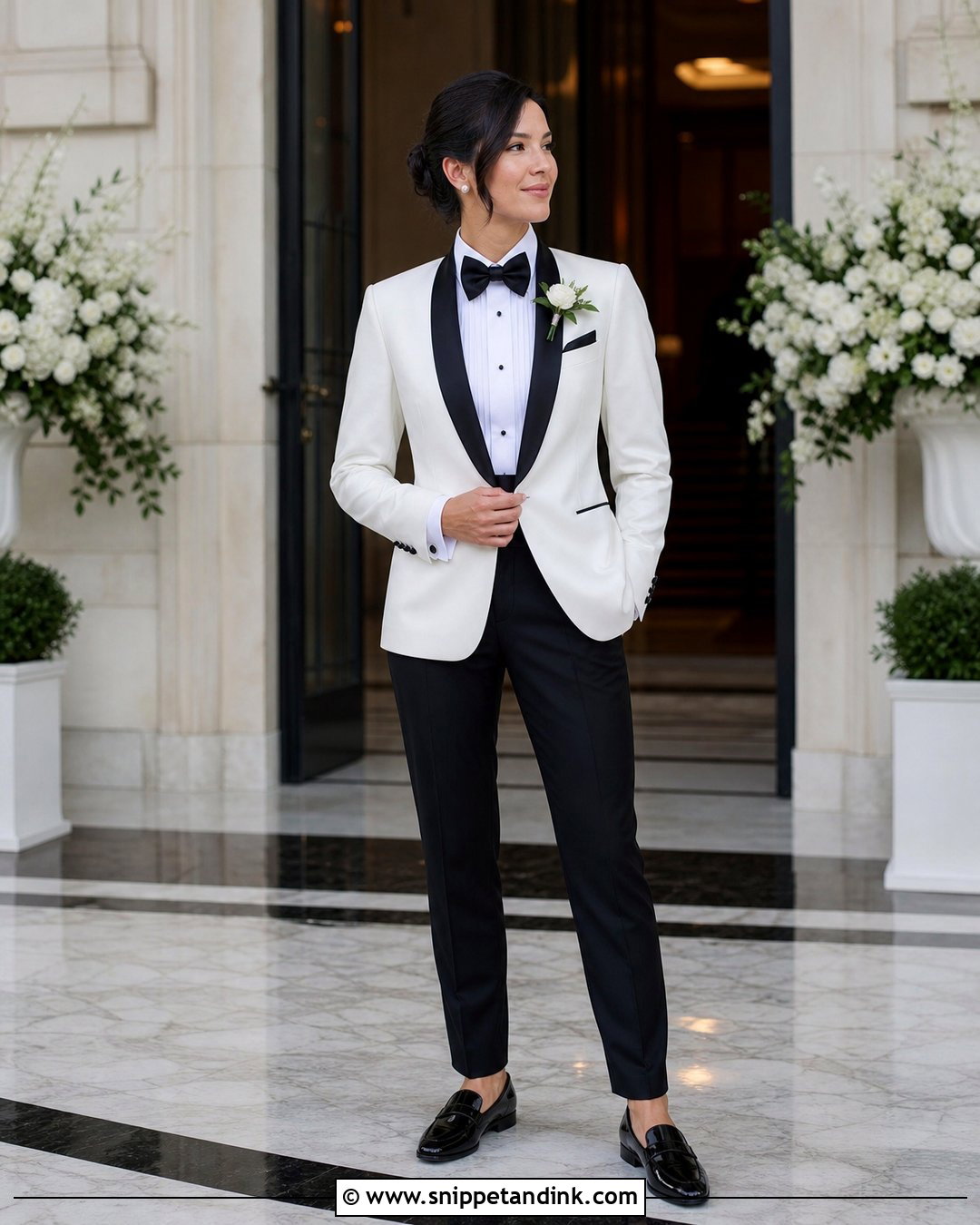
Black lapels on a white jacket give you evening-dress contrast while making sure nobody mistakes you for a guest. I’d go with a single-button jacket with satin peak lapels, tapered black trousers, a white pleated shirt and a slim black bow tie, then patent loafers. Pearl cuff links, a white pocket square or a tiny white boutonniere bring in the bridal side. It belongs in a hotel ballroom or a museum at night. The two places I fuss over are the shoulder and the trouser break. White shows every pull line, and a puddle of fabric at the shoe ruins the long black stripe of the leg.
2. Ivory Three-Piece Wedding Suit
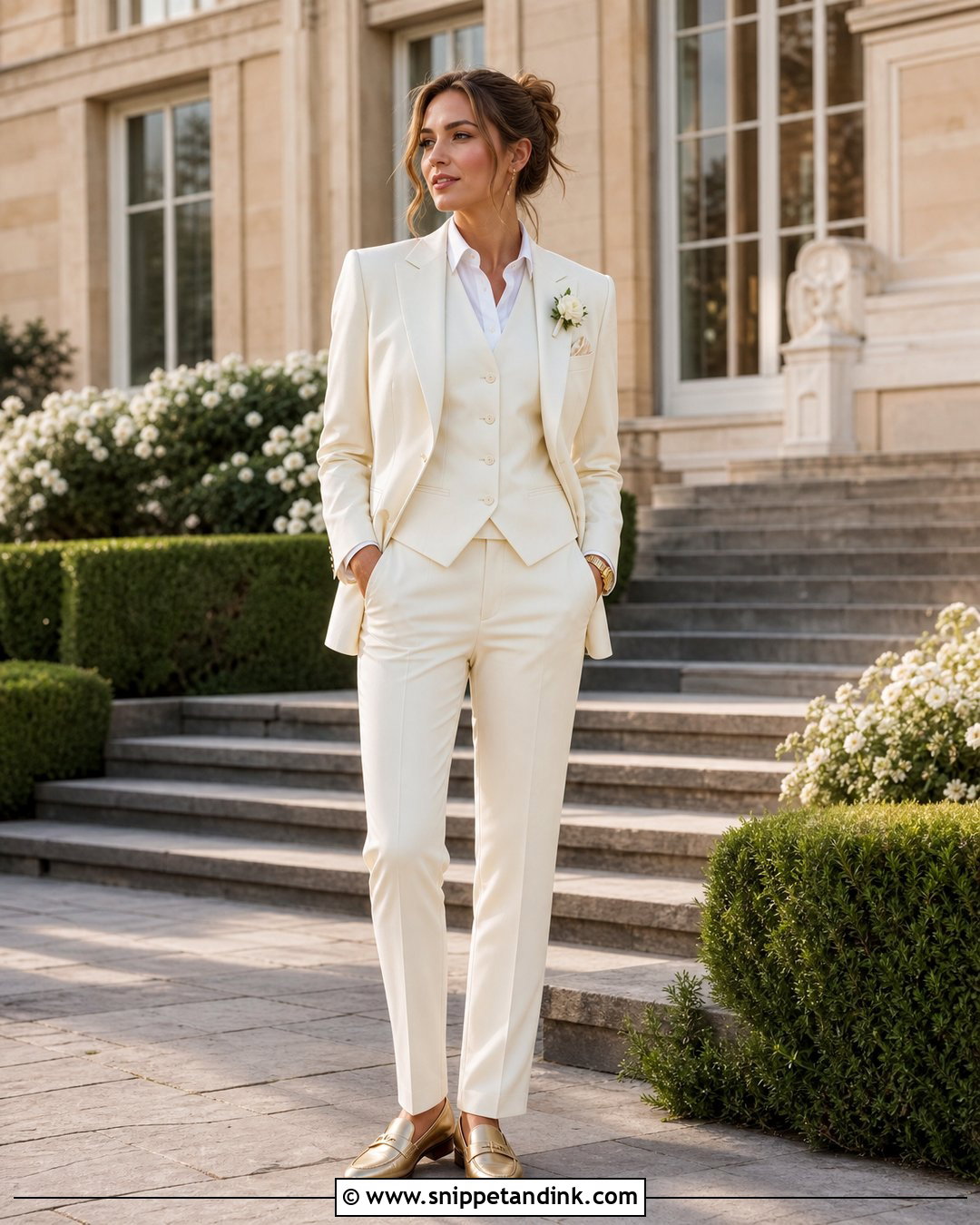
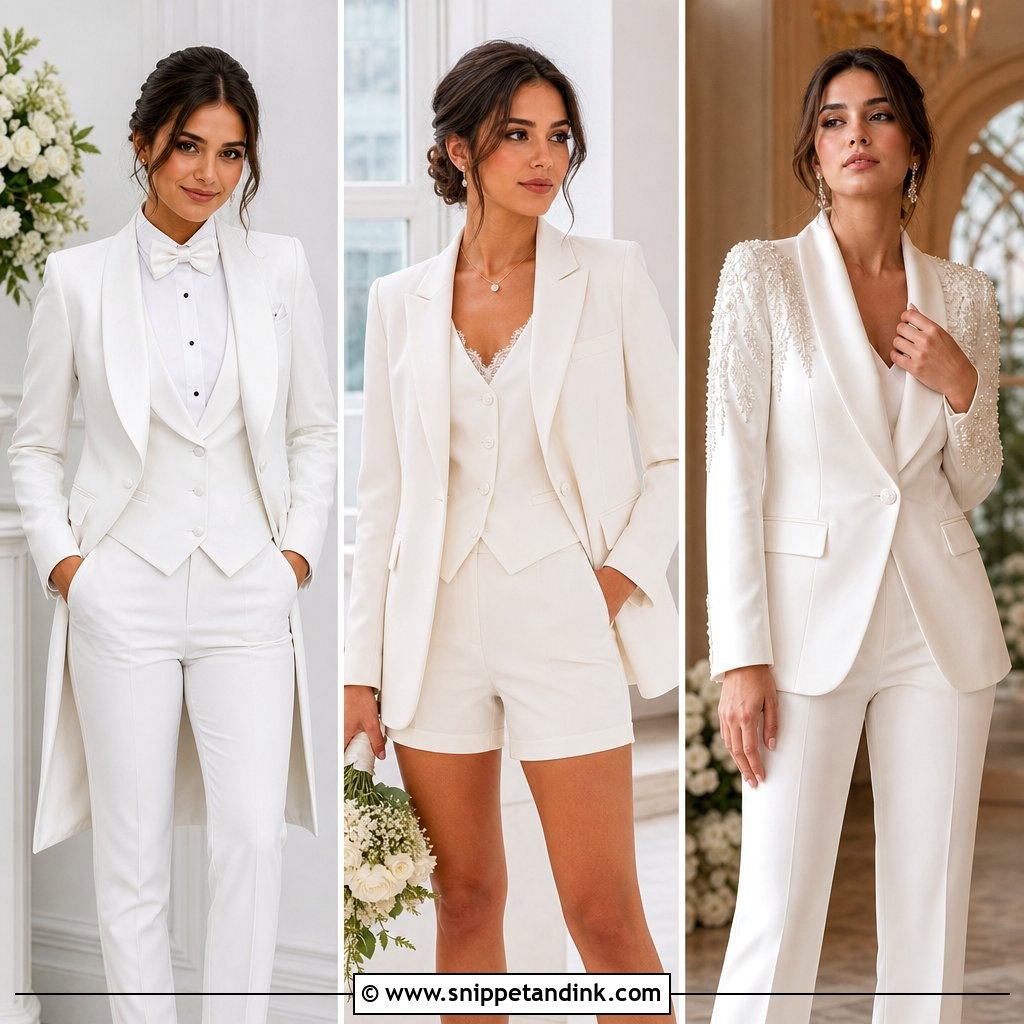
Ivory is softer on most skin than optic white, and it doesn’t flare in flash photos the way pure white can. Build it from a fitted ivory jacket, matching waistcoat and straight trousers in a light wool or crepe, over a soft white shirt so there is a hint of contrast at the collar. Champagne loafers or ivory oxfords, a gold watch, mother-of-pearl cuff links and a pocket square in your flower colour finish it. The waistcoat is the real reason to choose three pieces. When the jacket comes off at dinner, you still look dressed. I have it cut close but with enough room at the lower buttons to sit and eat.
3. Black Tuxedo With White Shirt
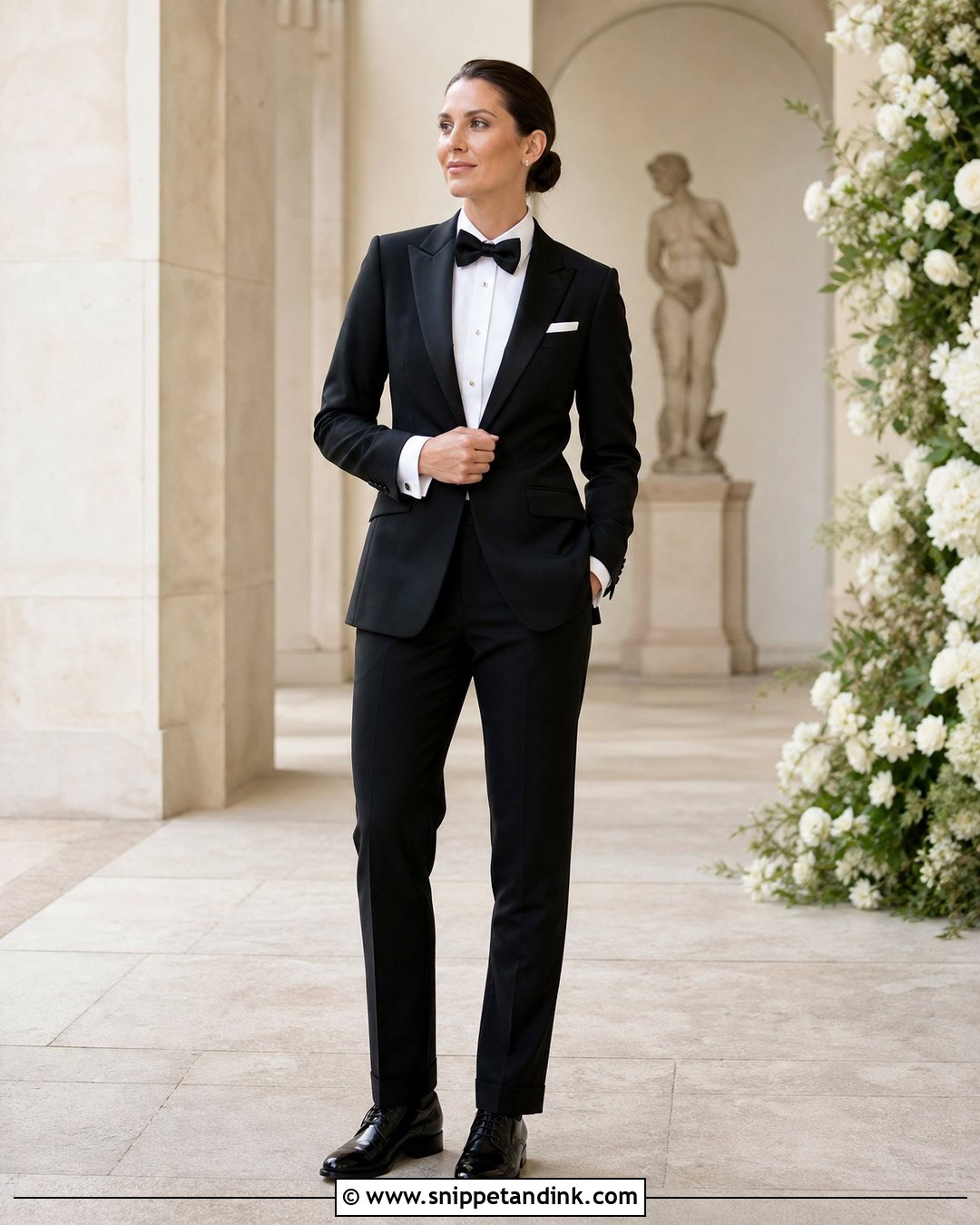
Few things carry as much authority as a sharply tailored black tuxedo. One-button jacket, satin peak lapels, slim or straight trousers, a bright white shirt and a black bow tie: that is the foundation. Silver cuff links and a white pocket square add polish, and patent oxfords, sleek loafers or low block-heel boots all work underneath. What separates a bridal tux from a rental is shaping. I’d ask for a slightly suppressed waist or a longer jacket so it reads as yours, not borrowed. A white boutonniere ties it to the flowers without any extra fuss.
4. Navy Wedding Suit With Floral Tie
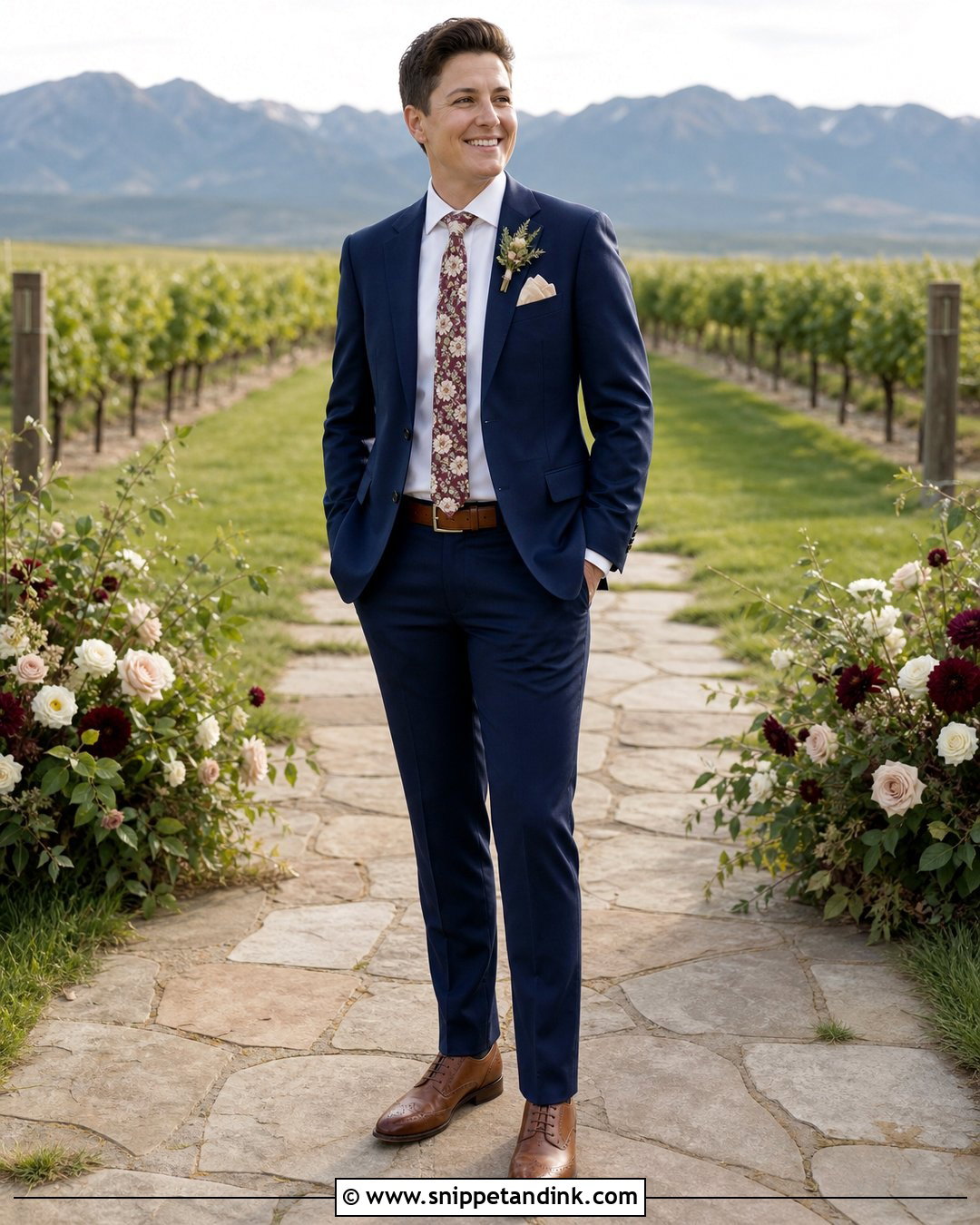
Navy is my go-to when black feels too hard for a daytime wedding. A deep navy two-button suit, white spread-collar shirt and a floral tie in your palette colours carry it, with brown brogues and a matching belt keeping it warm. Pick the pocket square from a background colour in the tie; matching the main print exactly looks like a boxed set. It suits vineyards, gardens and the coast, and it sits easily next to a partner in white, ivory or another suit. Keep jewelry minimal so the tie does the talking.
5. Burgundy Velvet Wedding Tuxedo
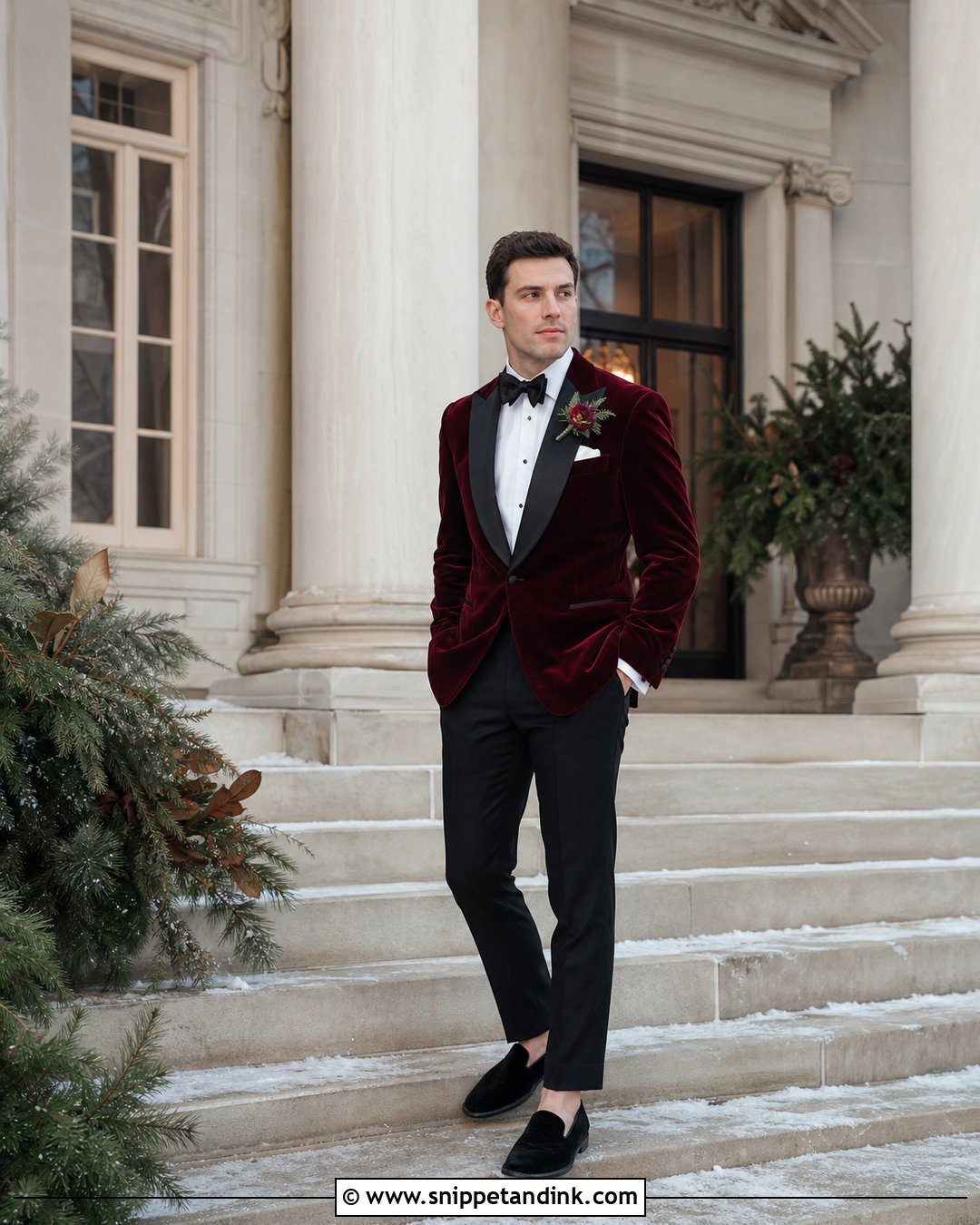
Burgundy velvet is a cold-weather fabric, and I’d only suggest it from autumn onward; under summer sun it’s stifling. A velvet dinner jacket with black satin lapels, black trousers, a white shirt, a black bow tie and polished loafers make a balanced outfit, with gold cuff links or an old watch for warmth. Velvet has a nap that catches light differently depending on the direction, so keep everything around it plain. Look at the jacket in daylight and under warm bulbs before buying, because burgundy can drift from red to purple. And never press velvet flat. Steam it from the inside or the pile crushes into shiny patches.
6. Sage Green Linen Wedding Suit
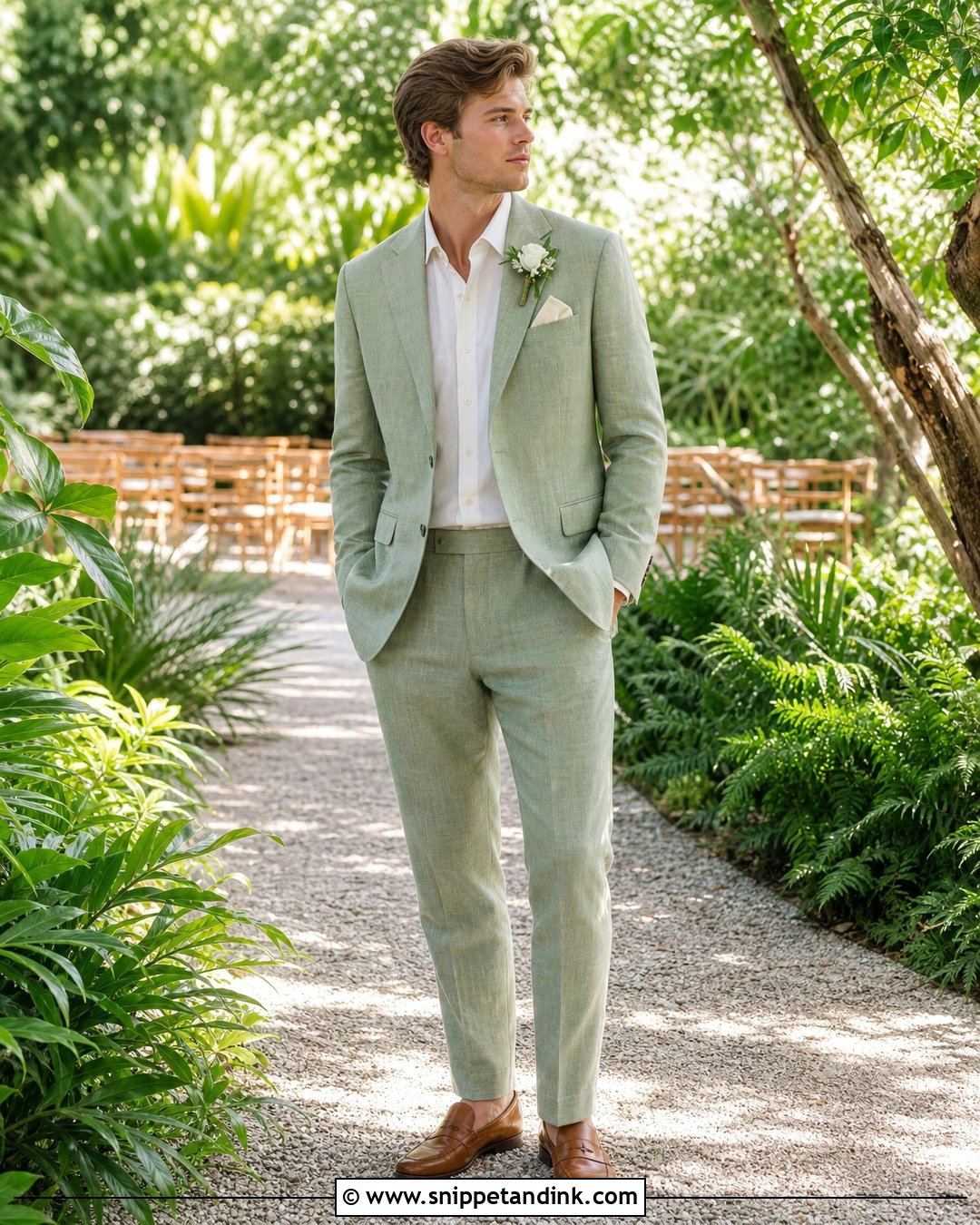
A sage green linen suit is about as relaxed as wedding tailoring gets. A softly structured jacket, matching trousers and an ivory cotton or linen shirt, with tan loafers, a woven belt and a cream pocket square, give it warmth; a small boutonniere of white flowers and leaves suits a garden. The tie is optional. An open collar feels like a destination wedding, and a slim ivory tie makes it more ceremonial. Expect creases. Pure linen wrinkles within an hour of sitting, which I think is part of its charm, but if you want smoother photos choose a linen and wool or linen and cotton blend.
7. Powder Blue Wedding Suit
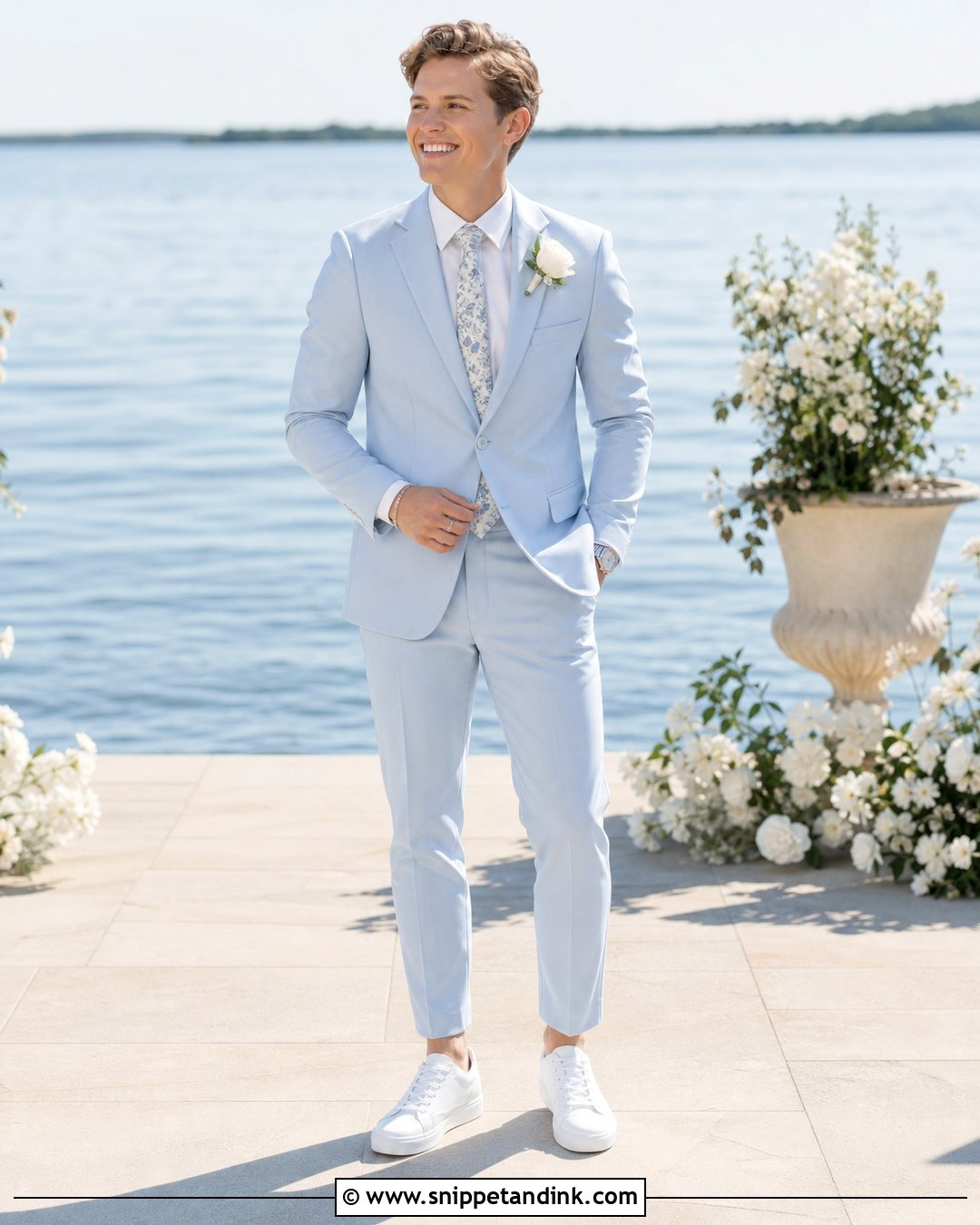
Powder blue gives you a celebratory colour without white. I like a clean single-breasted jacket with ankle-length trousers and a bright white shirt. White leather sneakers make it playful; cream loafers or tan oxfords make it formal. A pale blue bow tie keeps it tonal, while a floral tie with peach or lavender adds contrast, and a white rose boutonniere with silver accessories keeps it crisp. Pale colours look casual fast if the fit is loose, so this is the suit where I’m strictest: structured shoulders, a sleeve that shows a little shirt cuff, and trousers clean through the hip and thigh.
8. Cream Double-Breasted Wedding Suit
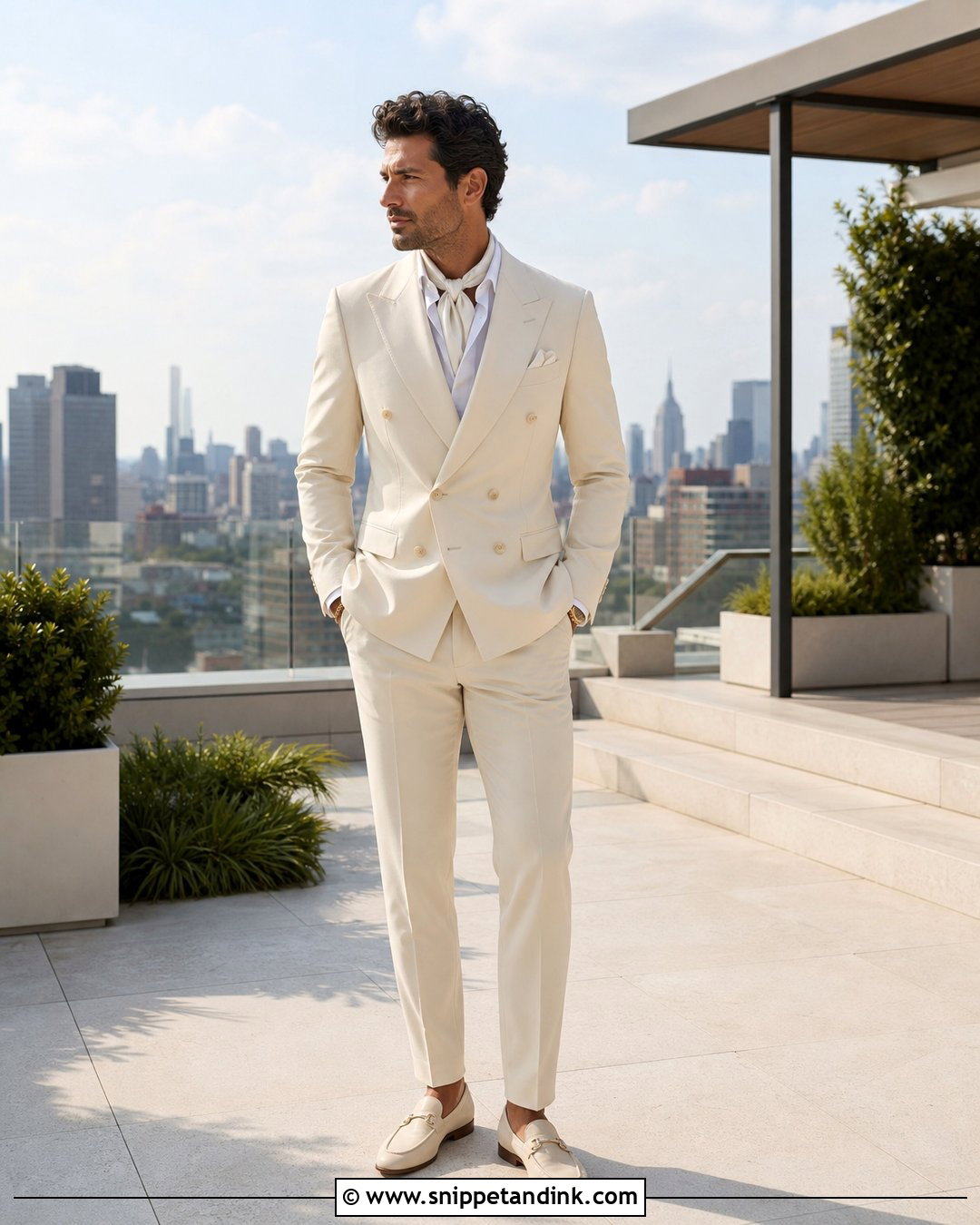
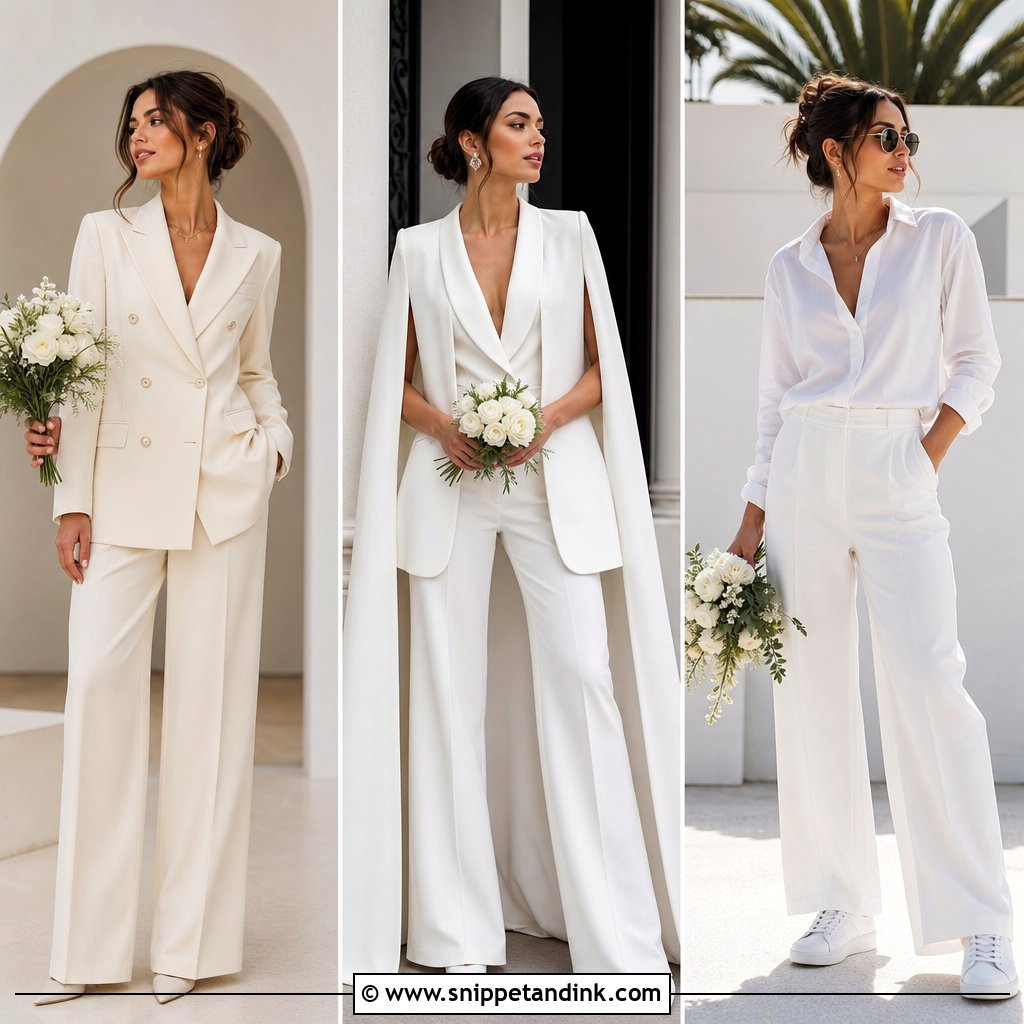
Double-breasted suits are unforgiving to alter, which is why I’d only choose one that already fits your chest well off the rack. A six-button cream jacket with peak lapels and a lightly shaped waist, over high-rise trousers and a white shirt, with cream loafers and a little gold jewelry, looks sharp at a city hall or a rooftop. A silk neck scarf softens it; a slim black bow tie sharpens it. Keep it buttoned for portraits so the overlap holds its shape. If the front pulls into an X across the buttons, it is too small, and taking in the sides won’t fix that.
9. Charcoal Pinstripe Wedding Suit
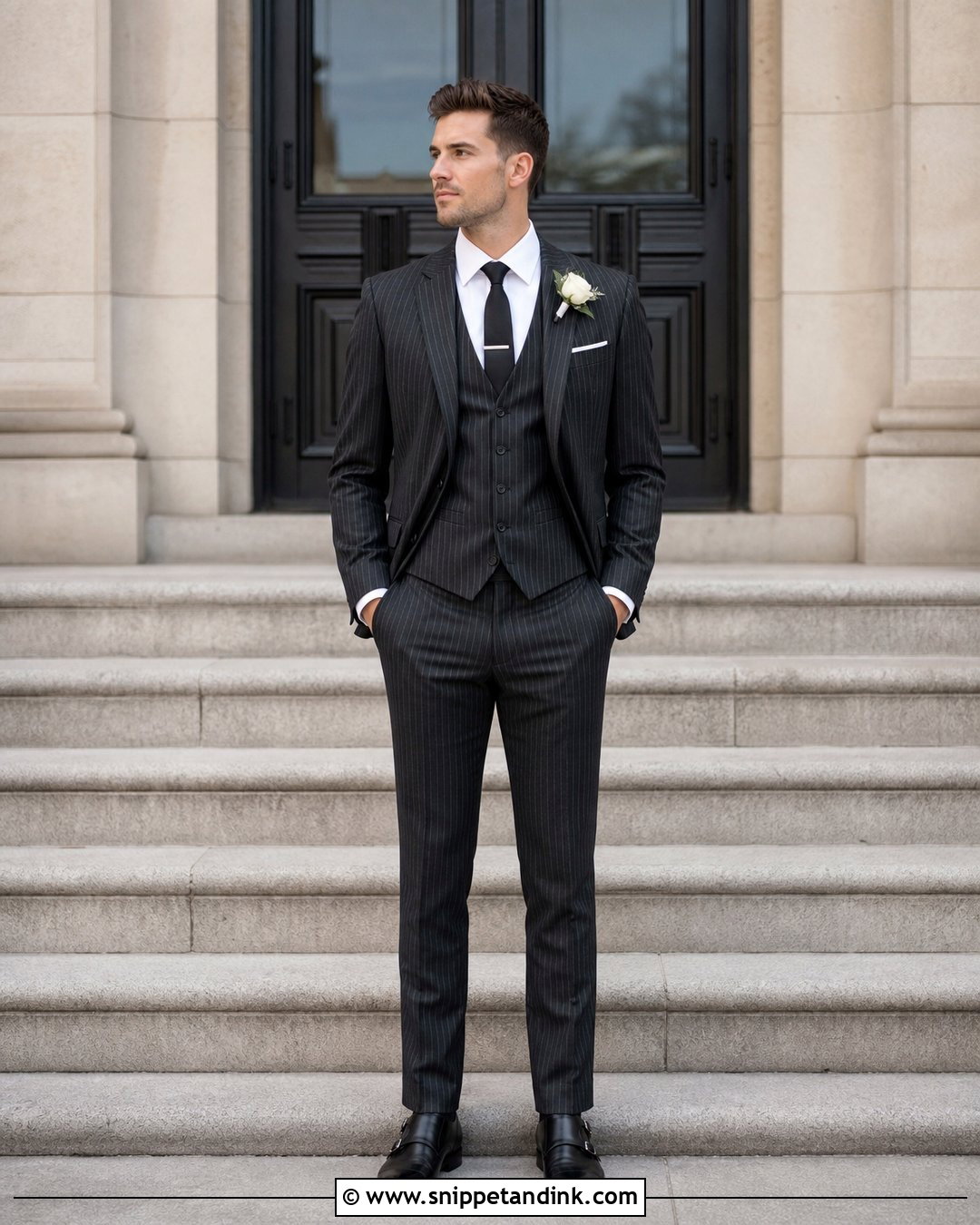
Pinstripes add a slightly old-fashioned character, and a fine stripe keeps it refined on camera; wide chalk stripes can shimmer in digital photos. A charcoal suit, crisp white shirt, charcoal waistcoat and black silk tie make the base, with black monk straps or lace-up oxfords, a silver tie bar, plain cuff links and a white boutonniere. It’s at home at a courthouse or an industrial venue. Pinstripes show every alteration. The stripes should meet at the pockets and seams, and a jacket shortened too much loses the proportion that keeps it from looking like office wear.
10. Emerald Green Velvet Tuxedo
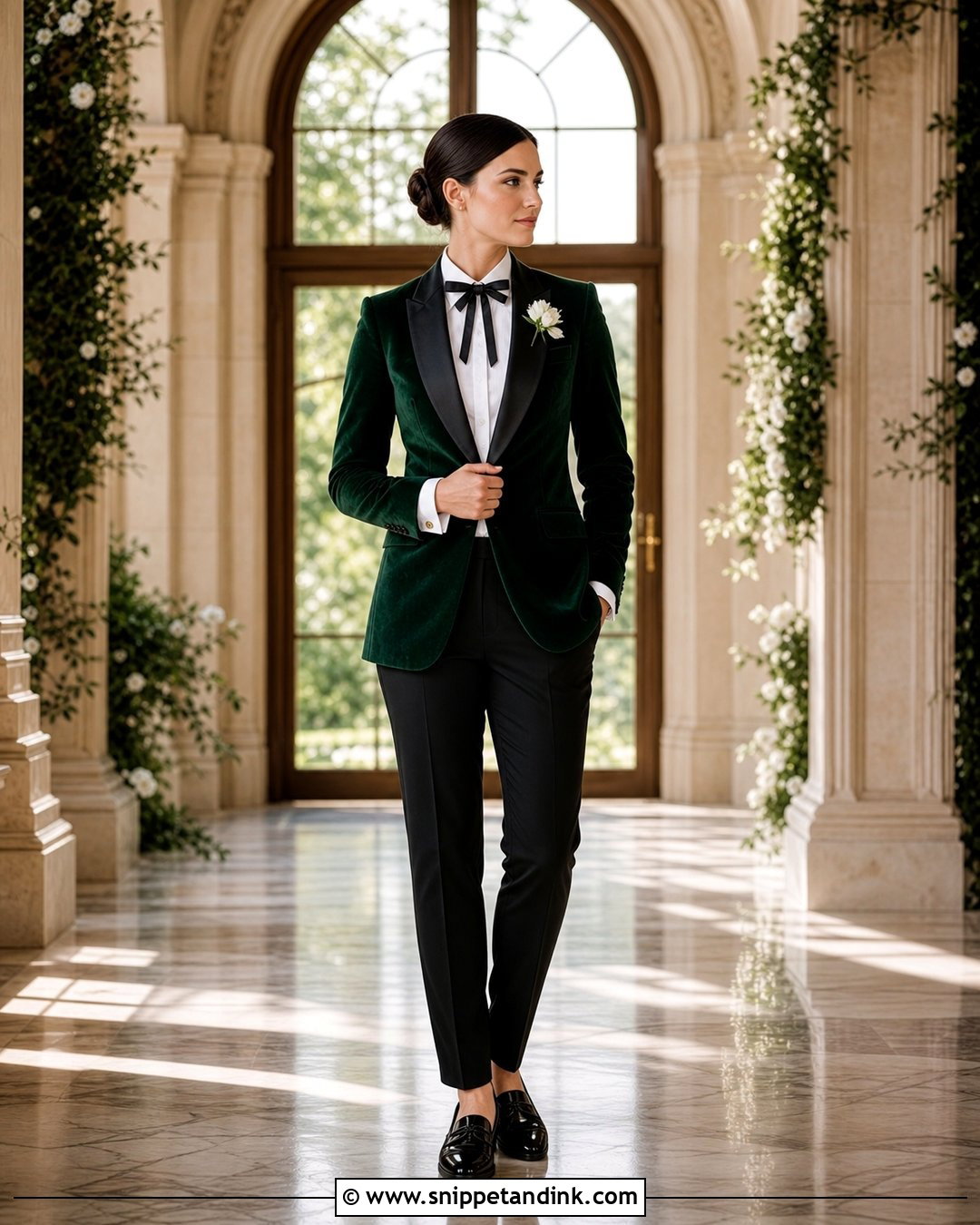
Emerald velvet is a confident jewel tone that works by candlelight. Start with a deep green dinner jacket with black satin shawl lapels, then black tuxedo trousers, a white formal shirt and a black bow tie or narrow ribbon tie. Patent loafers and gold cuff links finish it, with a small white or burgundy boutonniere for the floral link. Don’t add more colour; the jacket is the statement. Velvet adds visual bulk, so the shoulder has to sit close and the sleeve should hang without folds at the elbow.
11. Tan Summer Wedding Suit
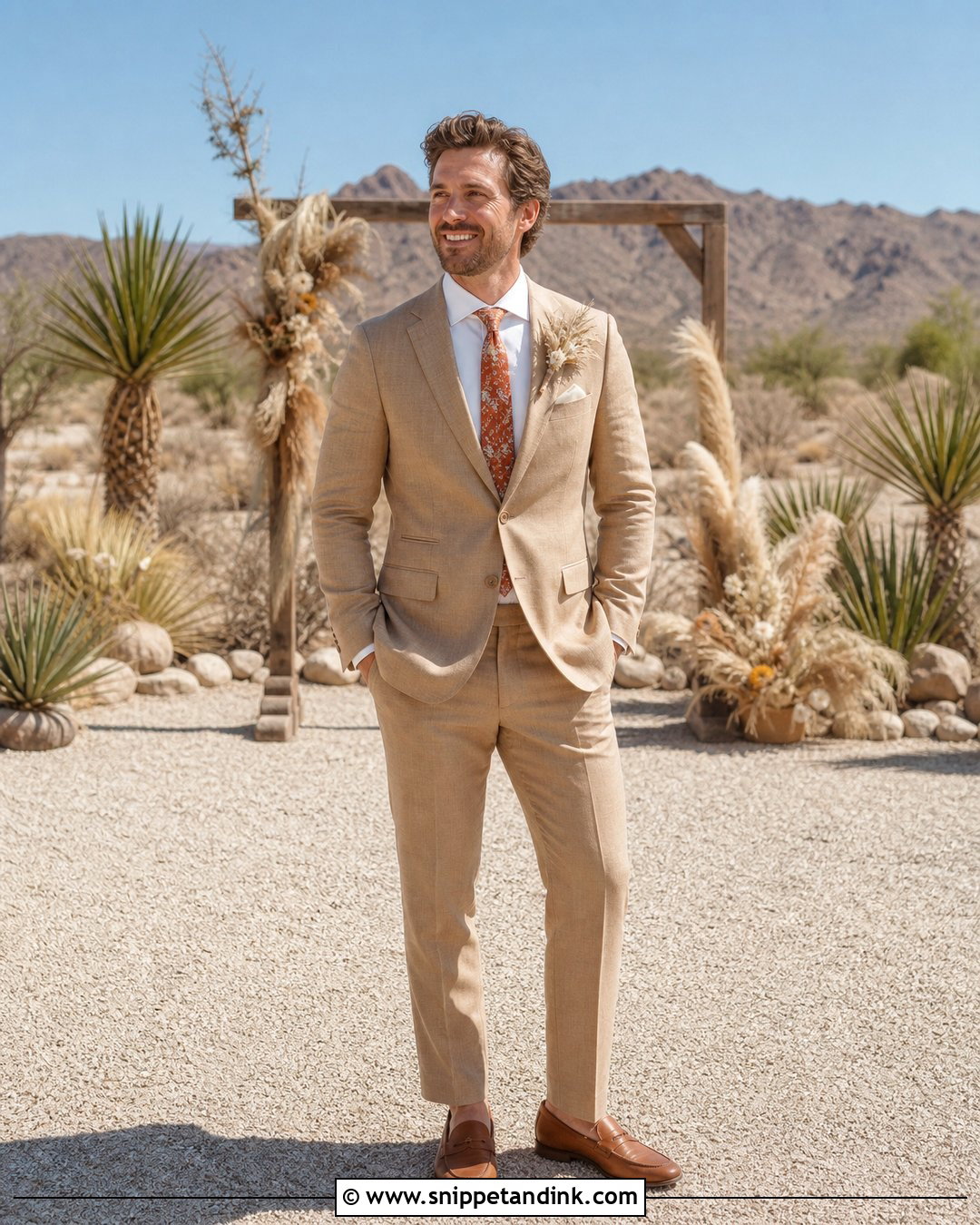
For a sunny ceremony, I want a suit with structure that doesn’t trap heat. Tan in linen, cotton or tropical-weight wool does that. Pair it with a white shirt and a muted floral tie in terracotta, sage or dusty blue, then cognac loafers, a matching belt and a cream pocket square. On a beach, drop the tie and go sockless or wear minimal white sneakers. Dried grasses and small white flowers make a good boutonniere here. One caution: if your skin is close to the tan, the outfit fades into you in photos. Hold the fabric against your face in daylight first.
12. White Wedding Suit With Cape
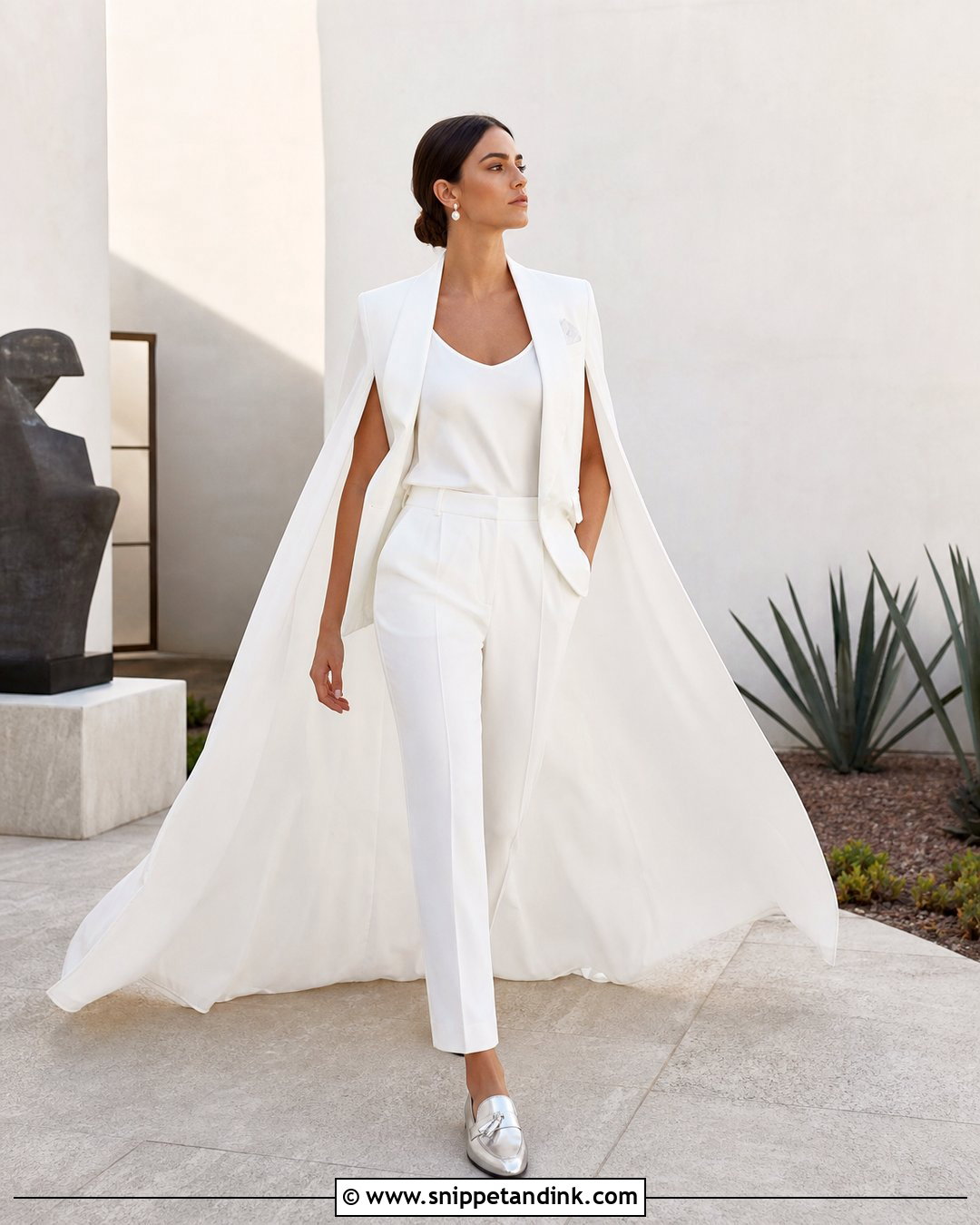
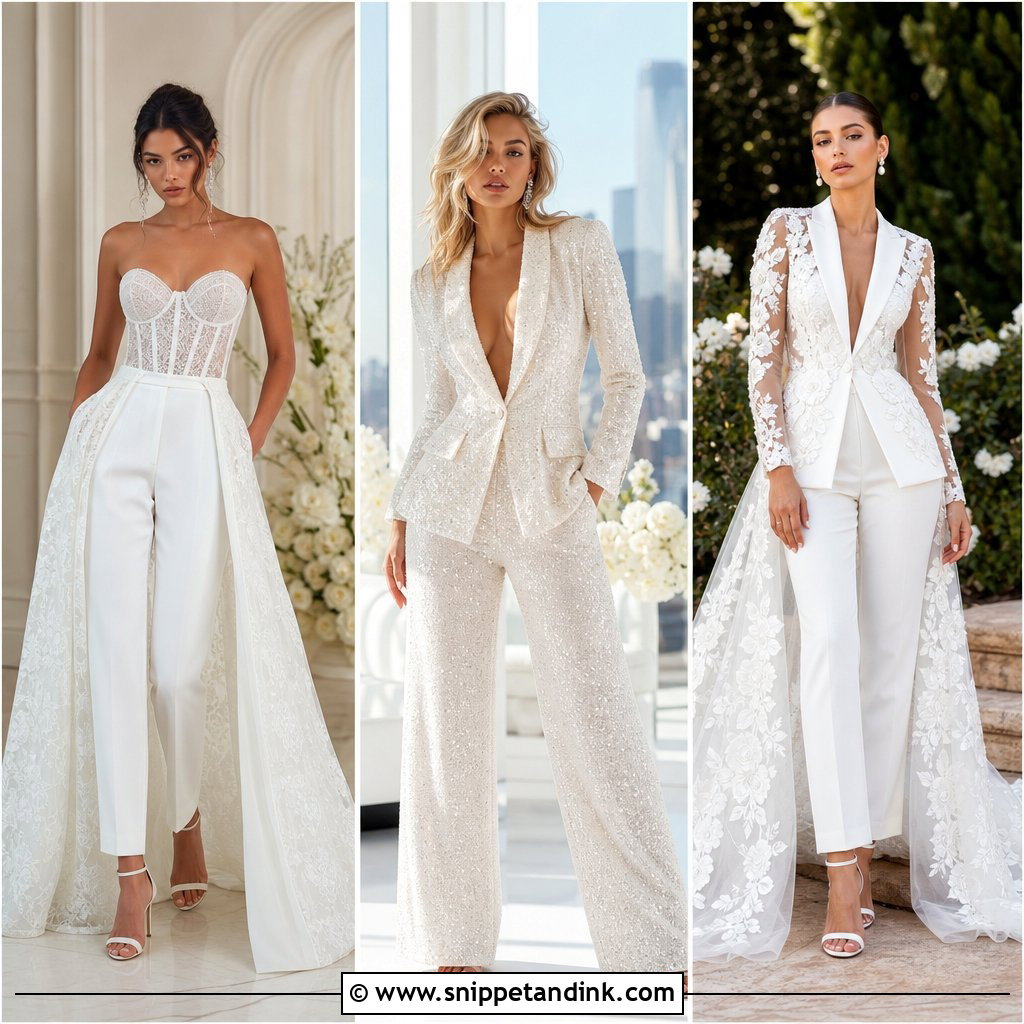
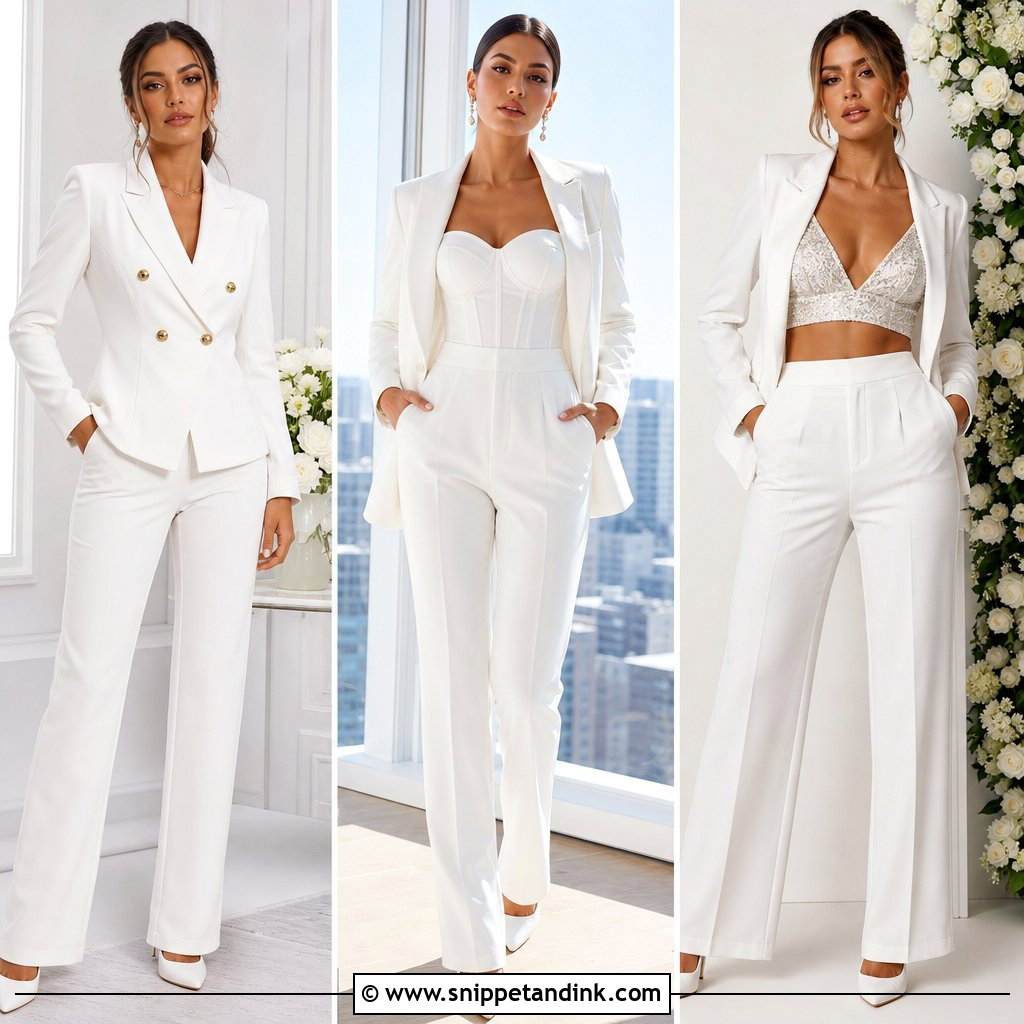
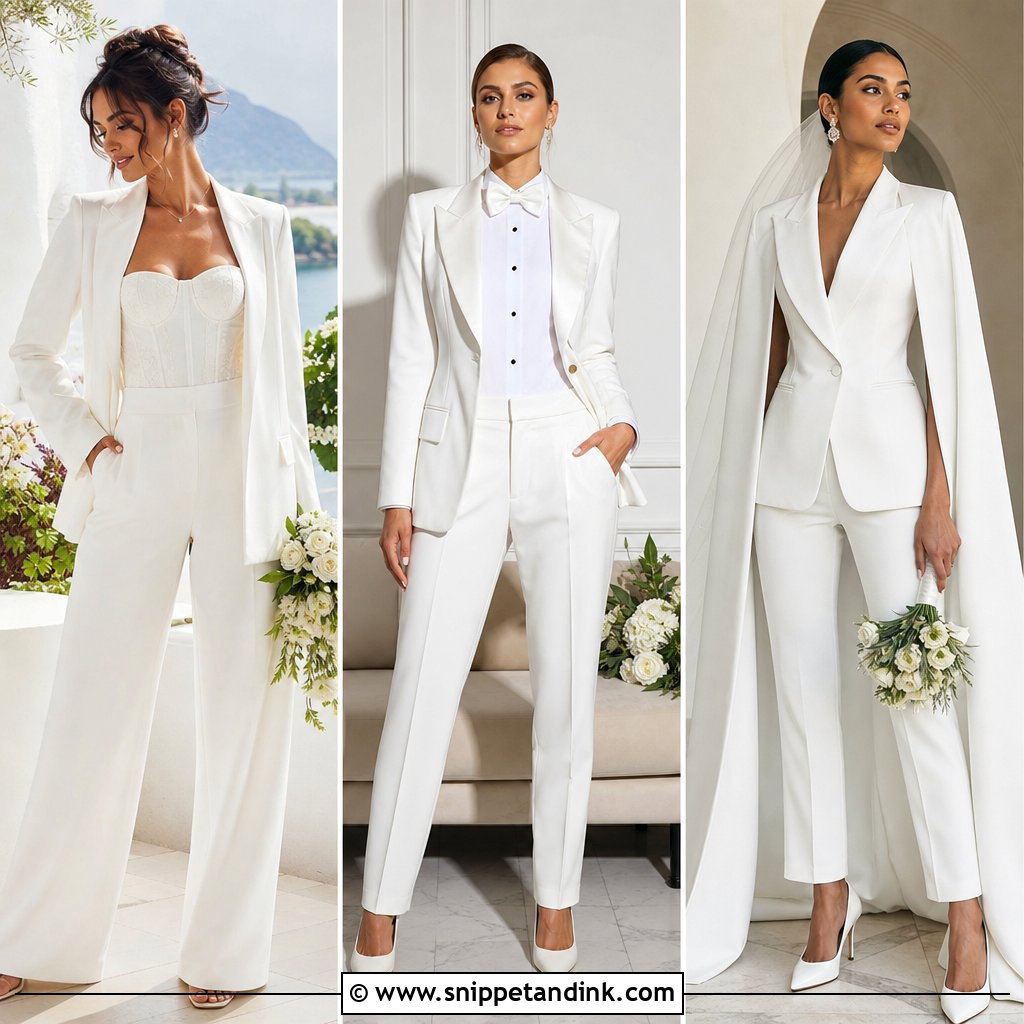
A cape turns a plain white suit into something theatrical. Start with a fitted white blazer and high-waisted trousers, then add a detachable shoulder cape in matching crepe or satin, elbow length for a modern effect or longer for ceremony. Underneath, keep it minimal: a silk shell, a fitted shirt or a collarless blouse. Metallic loafers, pearl earrings and a white pocket square are plenty. I check how the cape attaches before anything else, since snaps under the collar must hold its weight without dragging the jacket back. Take it off after portraits and you have a lighter outfit for dancing.
13. Ivory Jumpsuit With Blazer
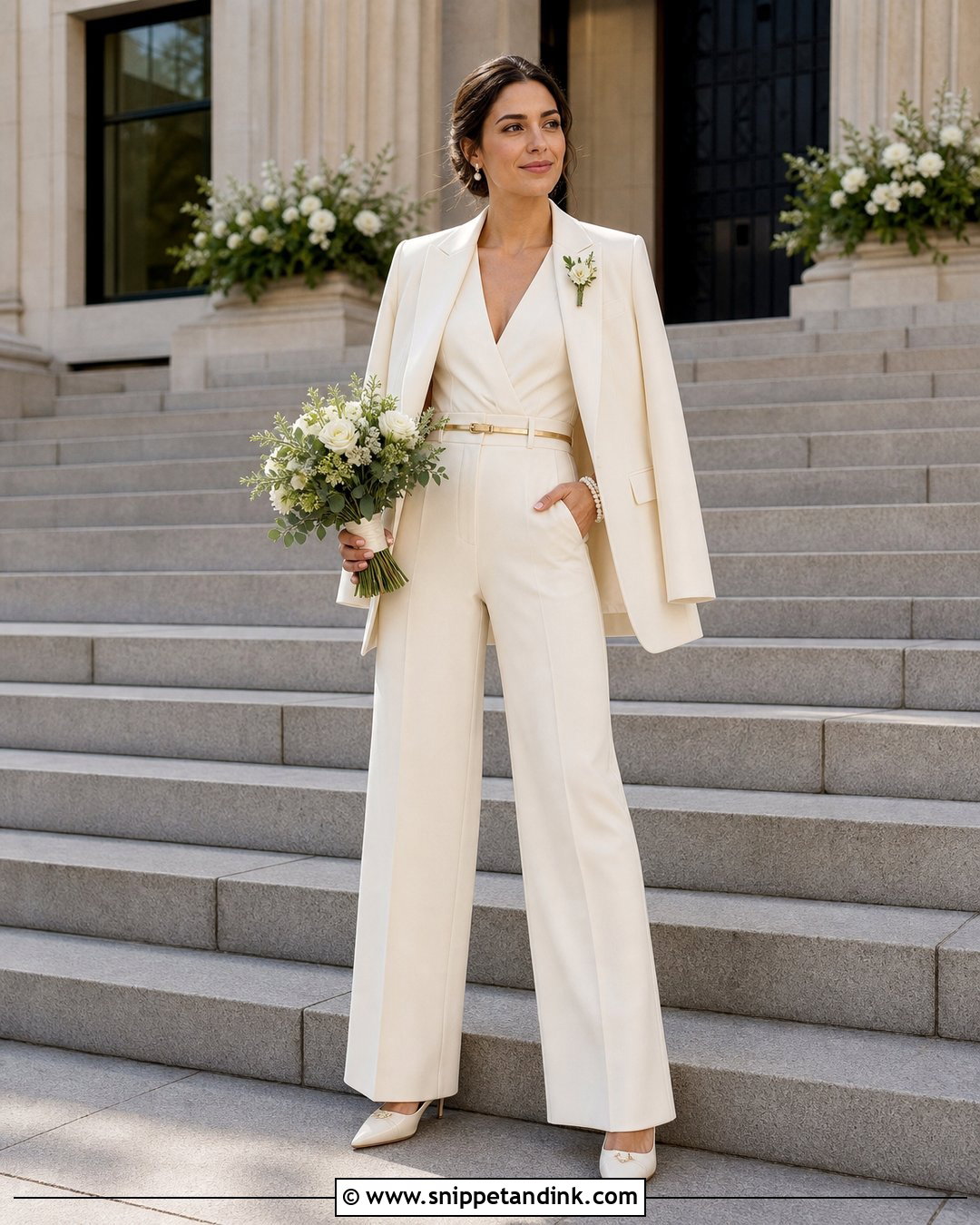
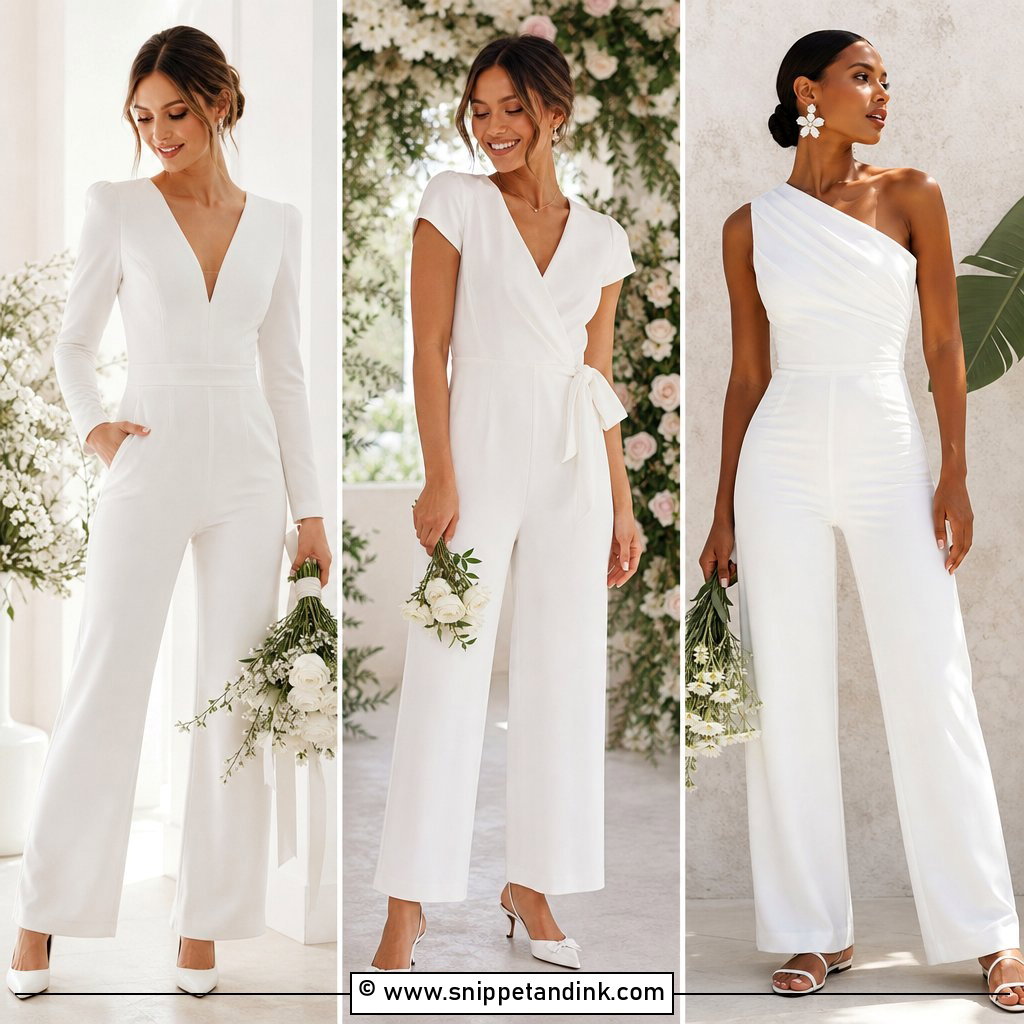
The jumpsuit with a blazer gives the line of a suit with fewer pieces to manage. Look for tailored shoulders, a defined waist and wide or straight legs, with a softly structured ivory blazer over it for the ceremony that comes off later. Pointed loafers, low block heels or ankle boots all work, and a slim belt or gold chain adds definition. The fitting that matters most is torso length: too short and it cuts when you sit, too long and it bags at the waist. And think about the bathroom. A back zip you can’t reach alone is a real problem on the day, so I always ask brides who will be helping them.
14. Brocade Dinner Jacket With Black Trousers
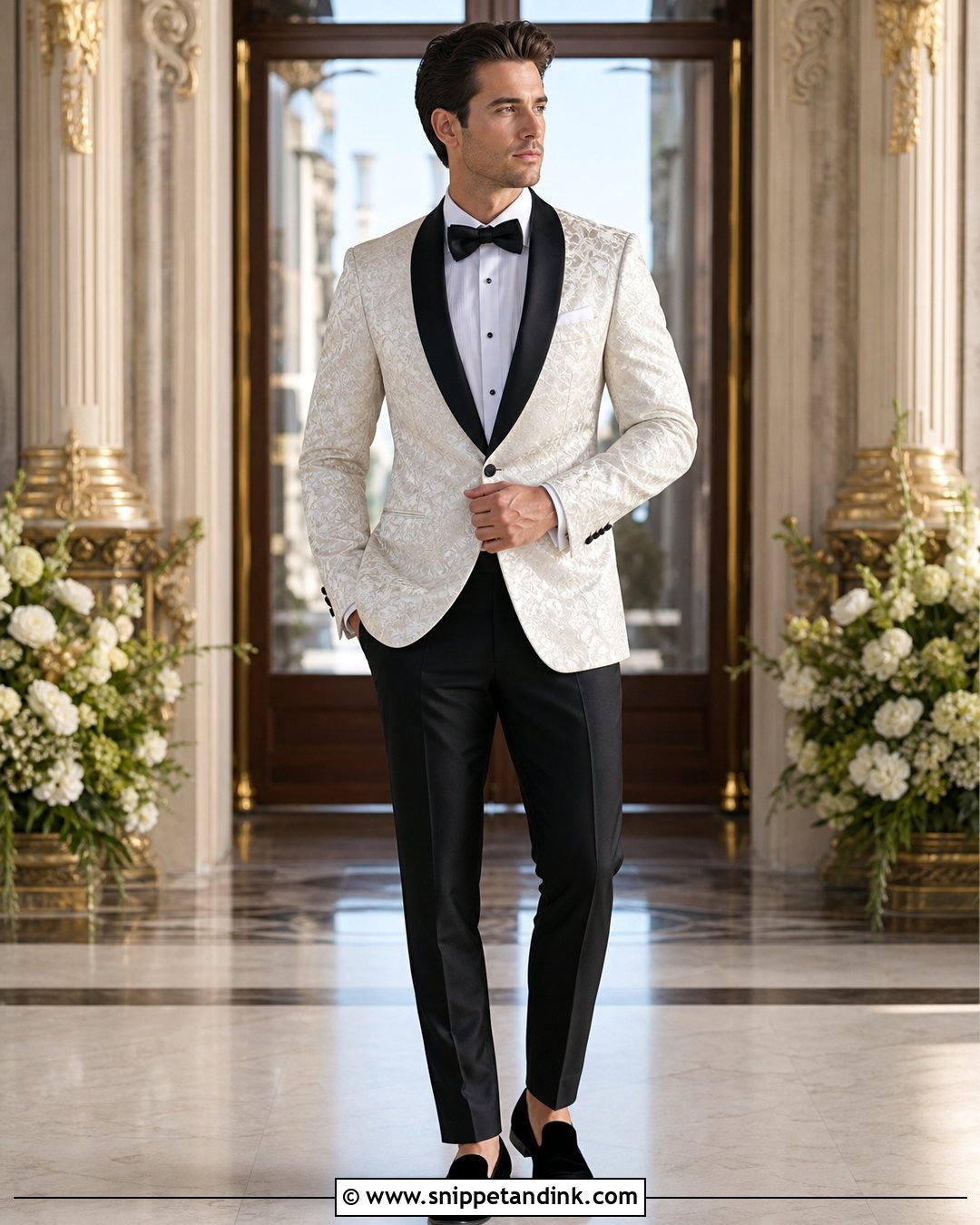
A brocade dinner jacket brings in pattern and texture without loud colour. White, ivory or silver floral brocade with satin lapels over plain black tuxedo trousers, a white shirt and a black bow tie looks right at a theatre or grand hotel, with velvet loafers or patent oxfords. Brocade catches plenty of light, so I’d keep jewelry minimal and go with a plain white pocket square and a small greenery boutonniere. Check the pattern across the front. On a well-cut jacket, the motifs mirror each other on either side of the buttons.
15. White Tailcoat Wedding Suit
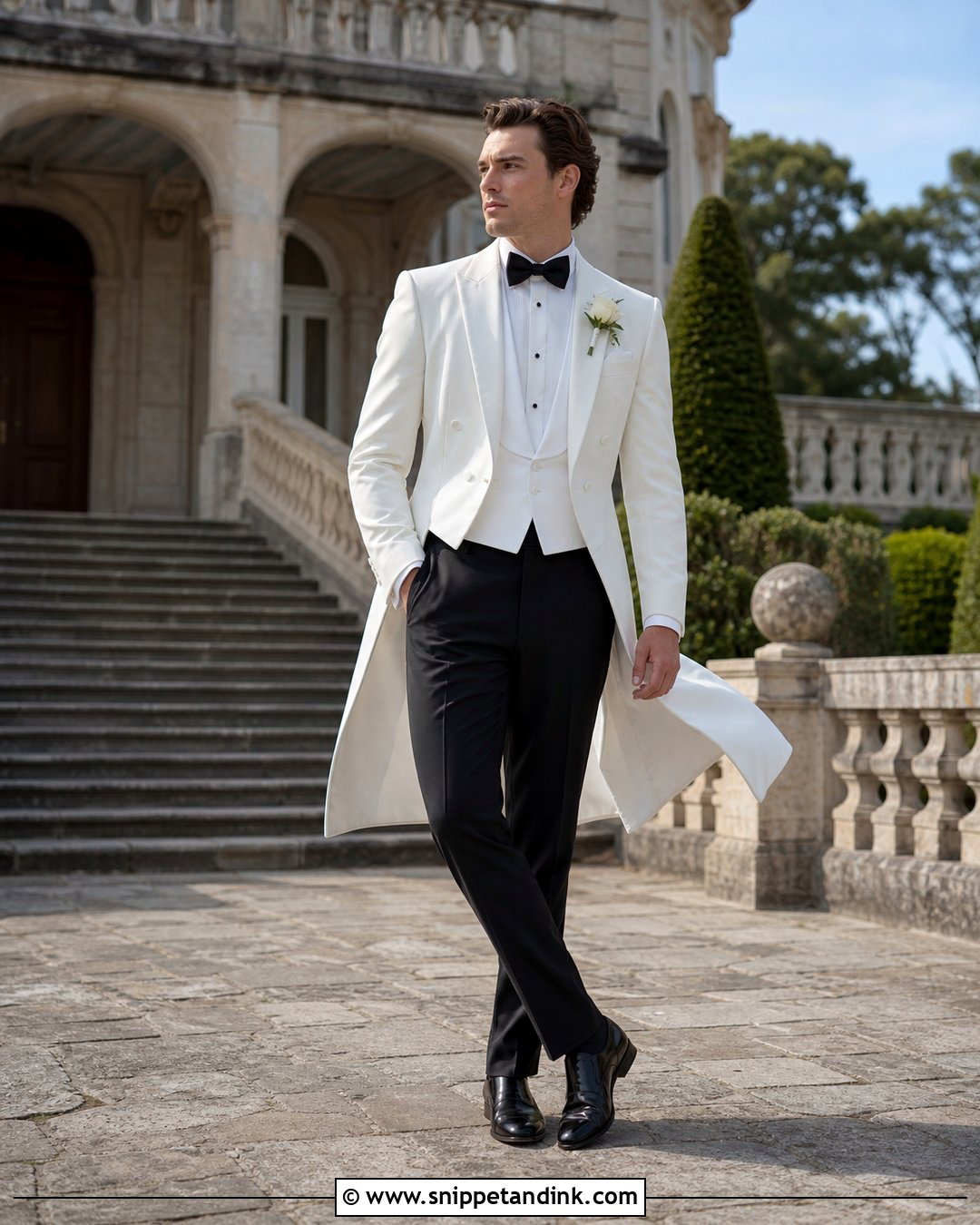
A white tailcoat is the most formal option on this list, and it moves wonderfully down an aisle. Pair it with fitted black trousers, a white wing-collar shirt and a white or black waistcoat, a slim bow tie and black oxfords, adding pearl studs and vintage cuff links for a bridal touch. Proportion is everything with tails. On a shorter frame they can swamp you, so I’d have the coat altered while you wear the exact trousers and shoes for the day. The waistcoat should never peek below the front of the coat. That’s a detail traditional tailors notice instantly.
16. Blush Pink Wedding Suit
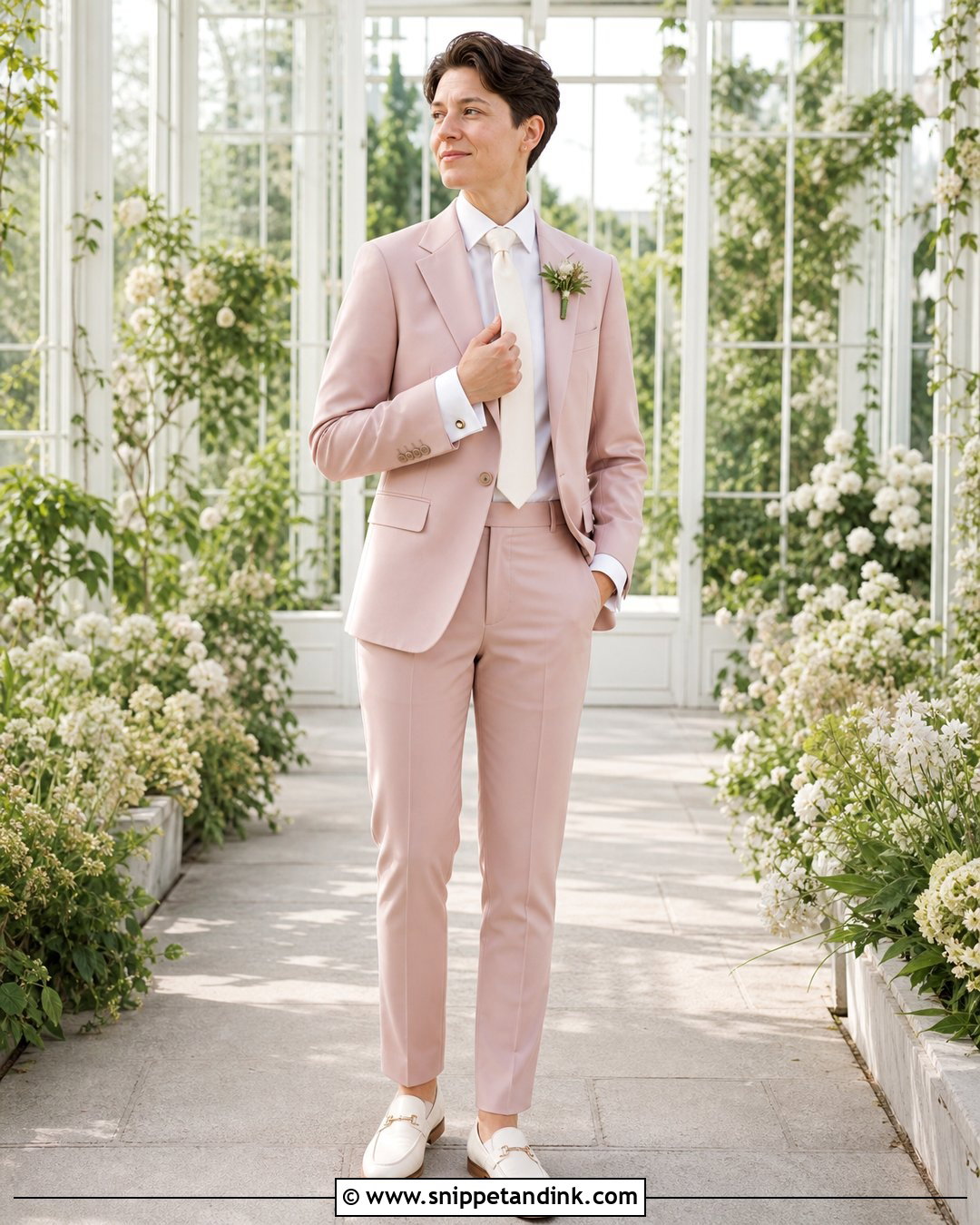
Blush is easier to wear than people think, as long as it’s dusty rather than bright. A muted blush jacket and trousers over a white shirt, with an ivory tie and cream loafers, read romantic but still sharp. Rose-gold cuff links or a fine chain add warmth; a burgundy pocket square deepens it for autumn, while a white one with pale greenery suits spring. Fabric changes the mood more than the colour does. Matte wool is formal, linen is relaxed, and crepe with satin trim feels like fashion. Whatever you choose, keep the tailoring crisp so the soft colour looks deliberate.
17. Plaid Wedding Suit
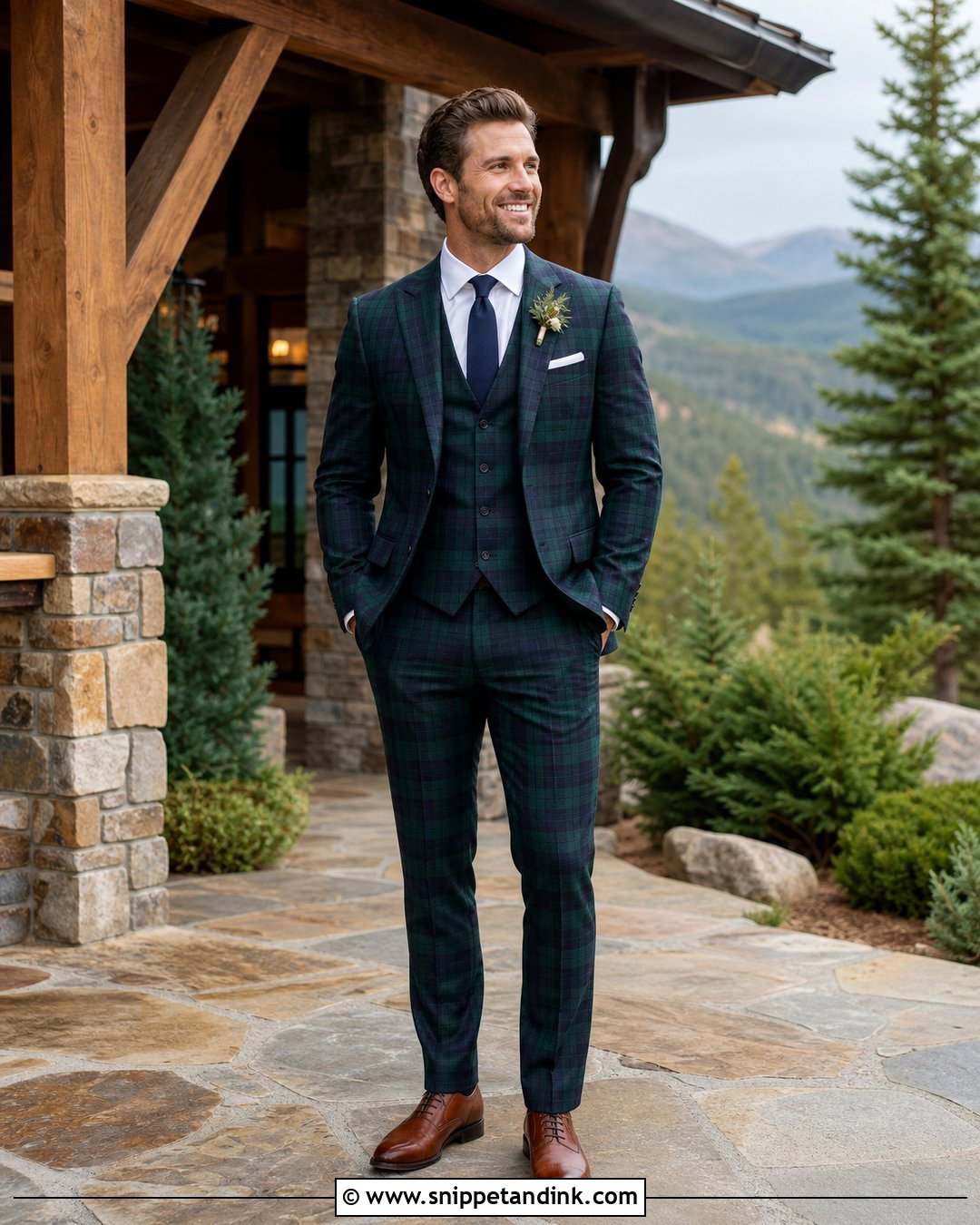
Plaid is festive in the right setting: a lodge, a woodland venue, an autumn wedding. Pick a restrained windowpane, tartan, or small-scale check in navy, grey, brown or forest green. Pair it with a solid white shirt, a tie in one of the quieter colours, plain oxfords and a plain pocket square. A matching waistcoat makes it formal, and an open collar relaxes it. This is the suit where a good tailor earns their fee. Pattern lines need to stay level across the shoulders, lapels, sleeves and trouser seams, and lining up checks is slow work.
18. Wedding Waistcoat With Rolled Sleeves
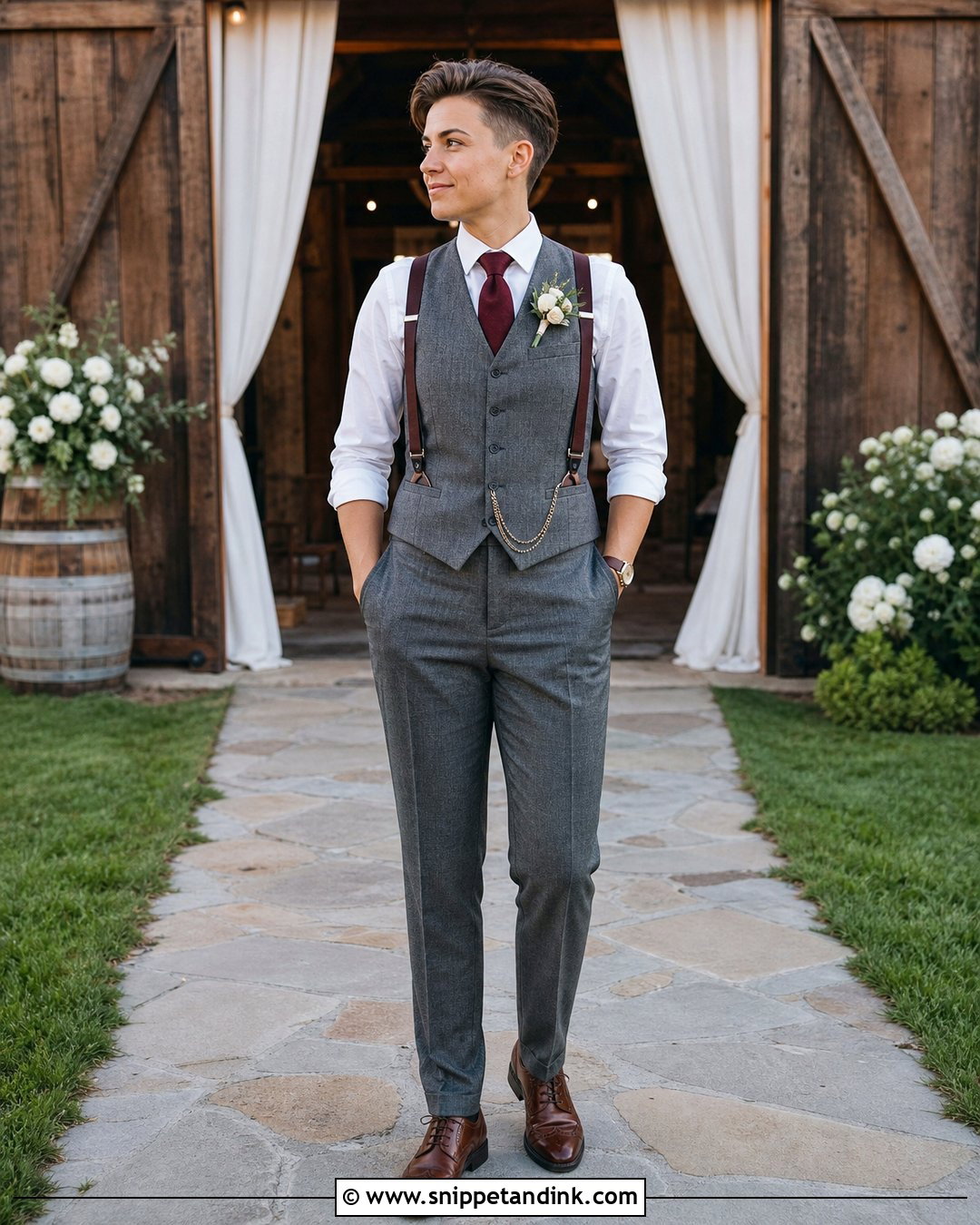
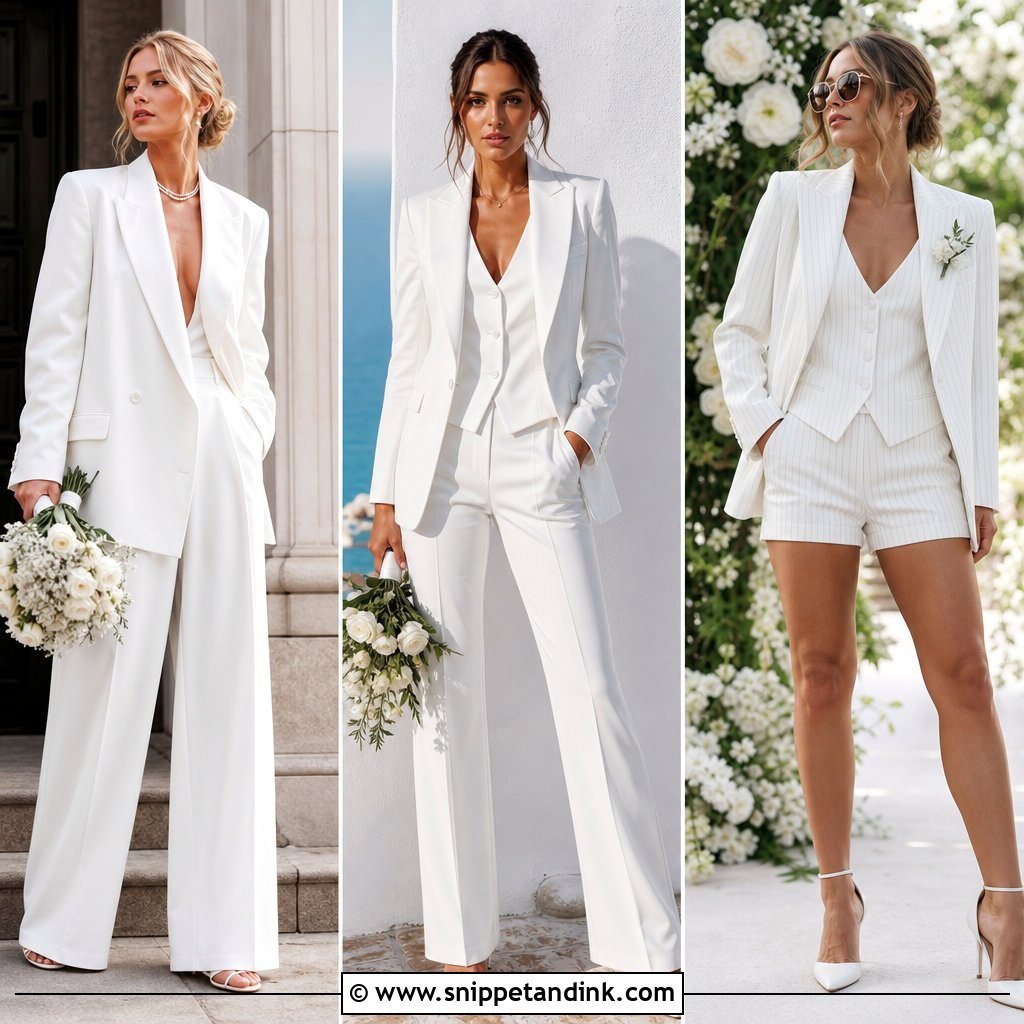
Skipping the jacket is completely valid, and in a hot barn it’s the sensible move. A tailored waistcoat over a crisp shirt, in ivory, grey or navy with matching trousers, looks finished on its own. Rolled sleeves make it relaxed; buttoned cuffs and a tie make it formal. Suspenders, polished brogues and a pocket watch or tie bar suit the mood. The fit point I check is the bottom button. If the waistcoat gapes there or rides up when you raise your arms, the shirt bunches out underneath and it looks untidy in every candid.
19. Black And White Wide-Leg Tuxedo
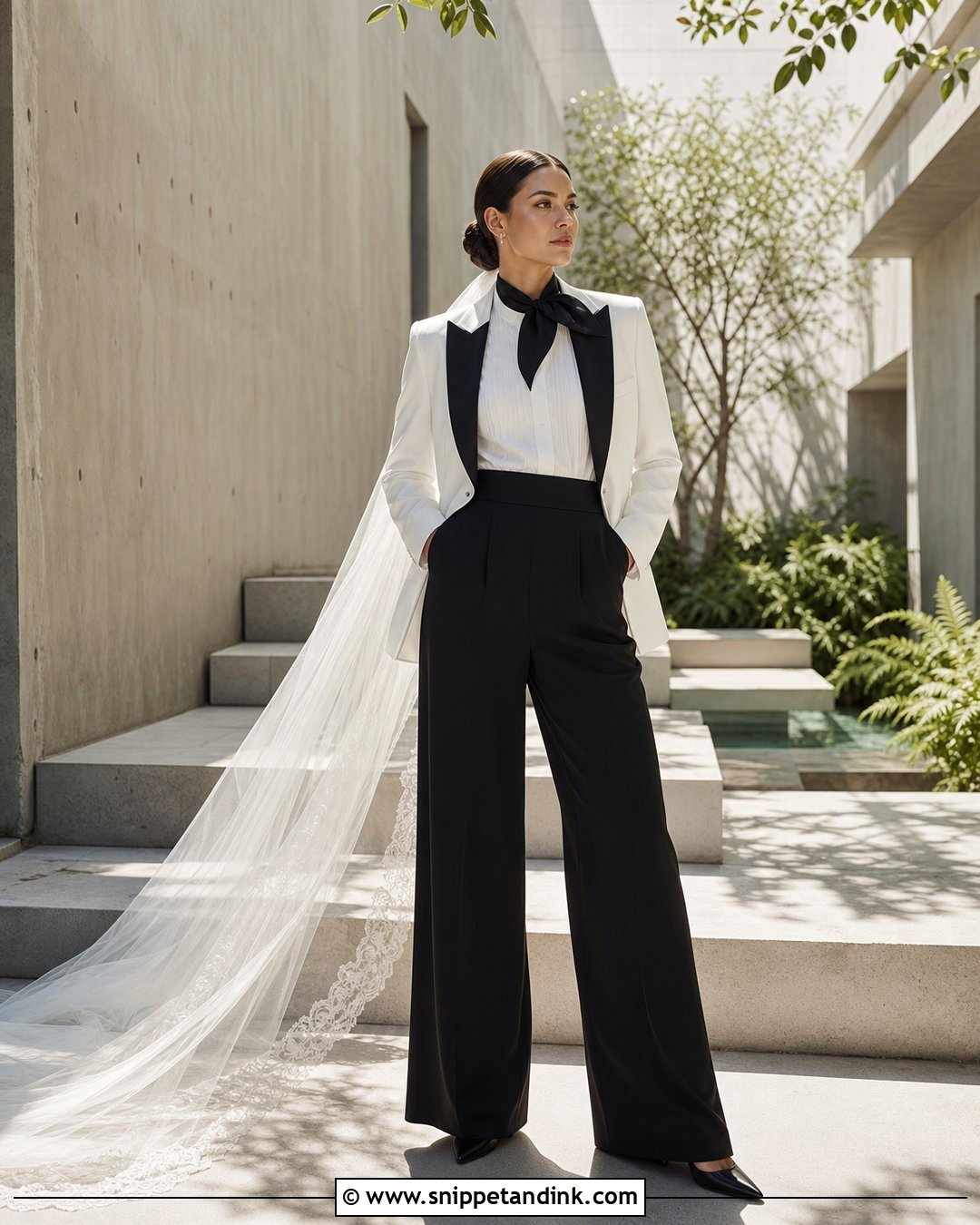
Wide-leg trousers give a black-and-white tux a fashion edge. Pair high-waisted black trousers with a fitted white tuxedo jacket with black satin lapels. Underneath, a pleated shirt, a silk camisole or a collarless top depending on how structured you want it. Pointed black loafers or sleek boots extend the line. A bow tie keeps tradition; a loose silk scarf feels more editorial. Hem the trousers in your wedding shoes so they nearly skim the floor, and keep the jacket close-cut. Volume on top and below together just looks oversized.
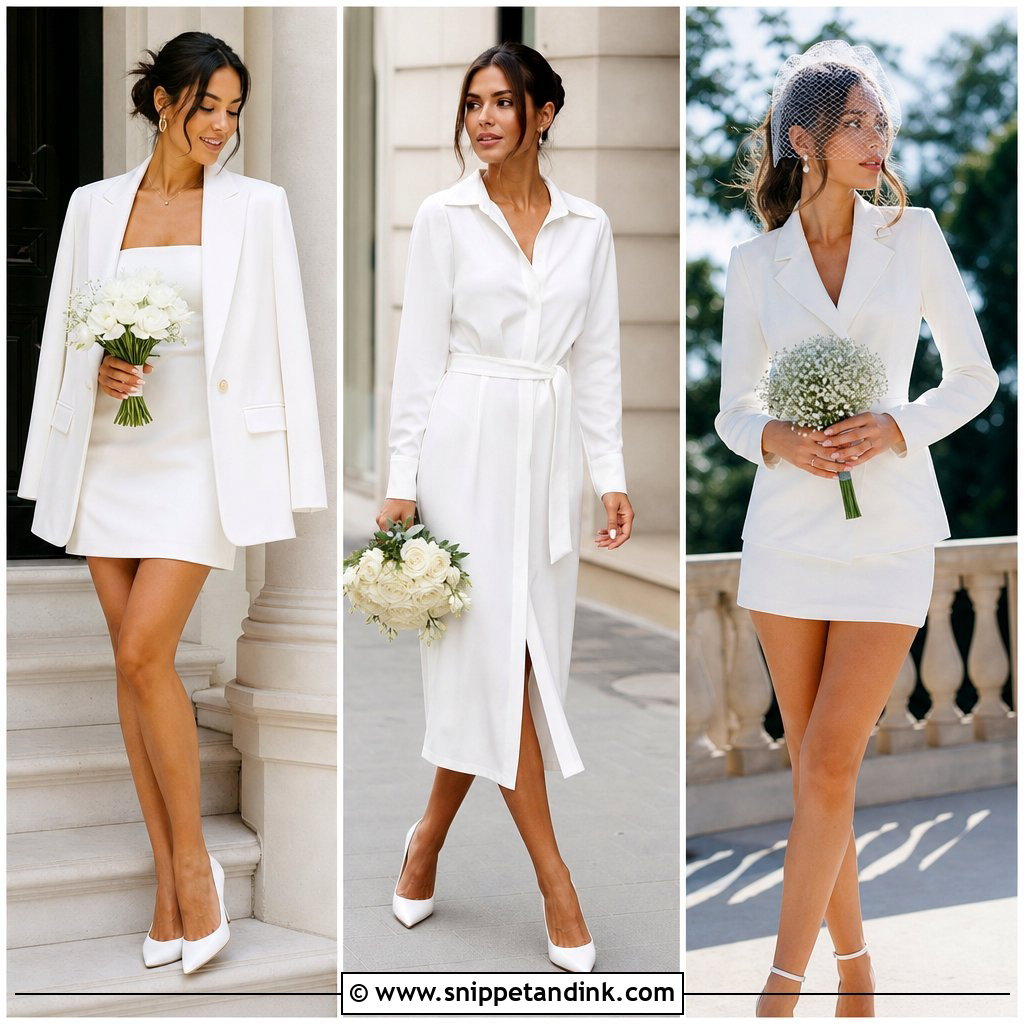

20. Wedding Suit With Jacket Train
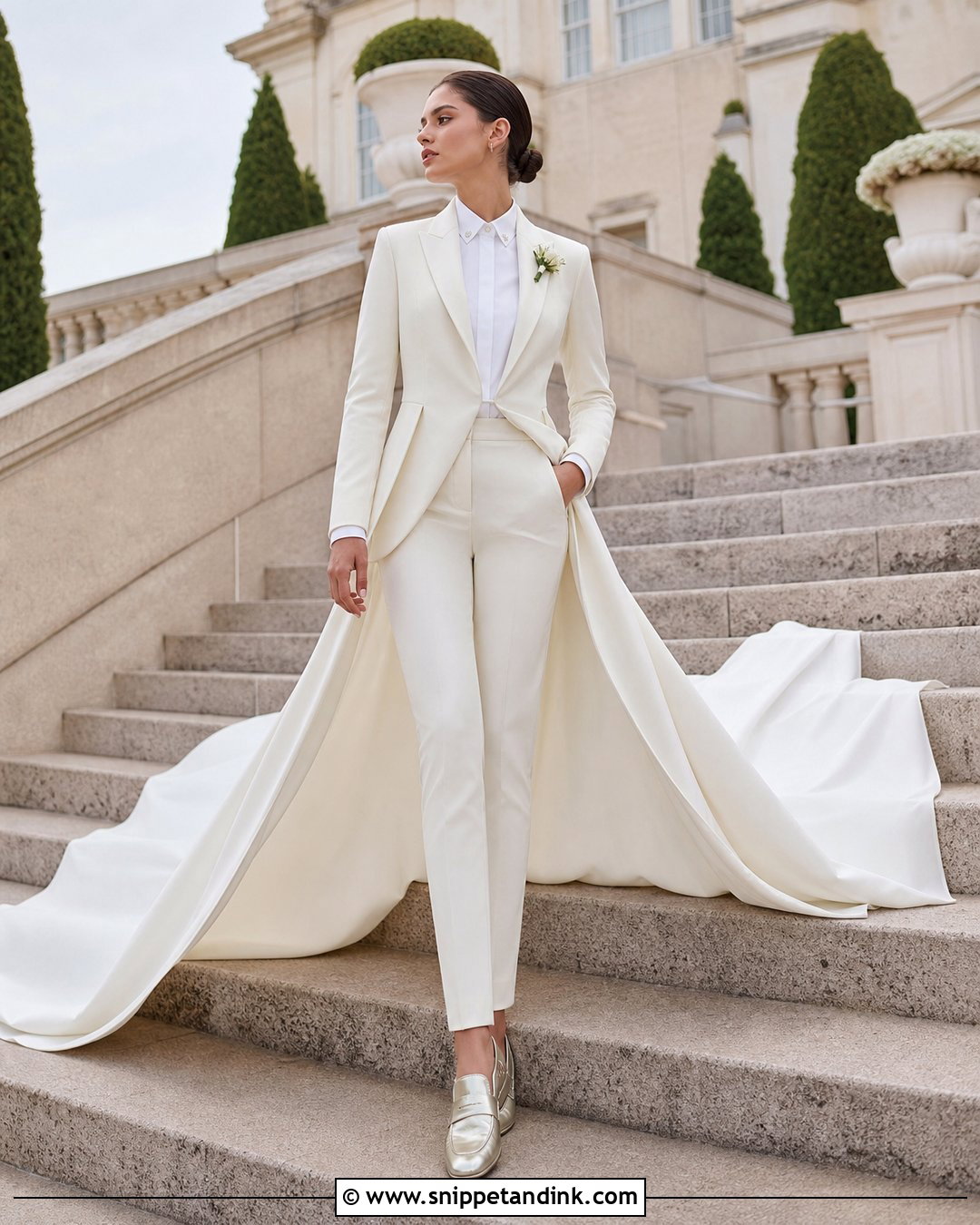
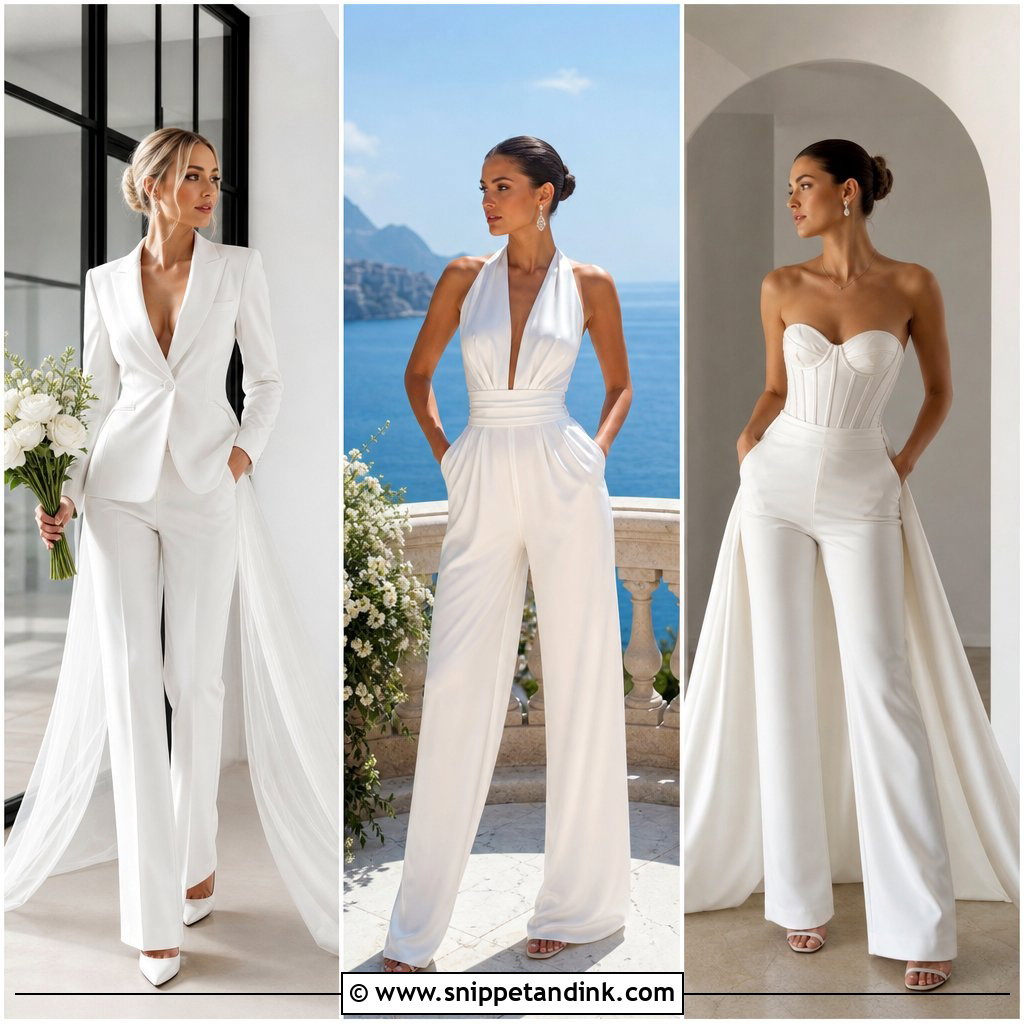
A jacket with a train brings the sweep of a gown to tailoring. Choose a fitted white or ivory jacket with a built-in or detachable back train and pair it with narrow trousers so the volume stays behind you. A plain white shirt, pearl collar pins and metallic loafers keep attention on the jacket. For the reception, detach or bustle the train. The engineering is where this goes right or wrong: the train needs to hang from the back waist or the hem without dragging the shoulders backwards, so I’d only take this to a tailor who has built one before.
Small Hardware That Trips Up a Suited Bride
Gowns come with their own dressing routines, and so do suits. These are the little things I see catch brides out on the morning.
- Cuff links need the right shirt. They only work with French (double) cuffs or link cuffs. A barrel-cuff shirt has buttons sewn on and nowhere for a link to go.
- Tuxedo shirts may need studs. Some formal shirts have holes for studs instead of front buttons. Check before the day, and put the studs in before you put the shirt on.
- Self-tie bow ties take practice. If you want a real one, learn to tie it weeks ahead or ask someone who can. A good pre-tied version is no shame.
- Pockets are not a handbag. Phone, keys and lipstick in jacket pockets drag the front out of shape in every photo. Give them to someone, or carry a small clutch.
- Undershirts and bras show. Thin white shirts show seams and lace underneath. A nude-to-you layer disappears; white doesn’t.
Standing next to your partner
If you’re both in suits, I’d make sure they differ in at least one clear way, whether colour, lapel shape or fabric, so the photos have contrast. If your partner is in a gown, match the warmth of your whites: a cool white suit beside an ivory dress makes the dress look yellow. Bring a fabric swatch to each other’s fittings.
Wear It to Dinner Once Before the Wedding
The right suit is the one you forget you’re wearing by the second hour. Start with the shape you feel strongest in, whether that’s a traditional tuxedo, relaxed linen, a tailored jumpsuit, a waistcoat or a jacket with a train, then refine it with fabric, shoes, accessories and alterations. Think about the venue, the season and what your partner is wearing, but don’t let convention outrank comfort. After your final fitting, wear the whole outfit to sit through a meal at home. Anything that pinches, rides up or creases badly will show itself well before the wedding.
You'll Like These Ideas:




Leave a Reply