
Roses on a wedding dress can mean almost anything, from a single sculpted bloom at the hip to a skirt stitched in pink and coral thread. That range is why I ask brides one question first: do you want the roses to be felt or seen? Tonal embroidery and lace motifs add texture you notice up close, while 3D organza flowers, colored thread and prints read from across the room. The venue and season narrow it further. Airy tulle with colorful flowers suits a spring garden, and a ballroom can carry satin, beadwork and a rose-covered train. Below are twenty dresses, classic to nontraditional, with how I’d style each so the accessories support the flowers instead of fighting them.
Organza, Thread or Print: How Each Kind of Rose Wears Over a Long Day
The roses in a photo all look similar. On the body, the way they’re made changes how they behave from the first look to the last dance, so I ask brides to try the dress sitting down before they fall for it.
Dimensional Organza and Satin Roses
They give the most drama and need the most care. Petals at the hips and on the back of the skirt get flattened when you sit or ride in a car, so ask the shop how they recover. Most organza roses come back with a little steam held a few inches away, never a hot iron. Raised petals can also catch on lace sleeves or a partner’s cufflinks.
Embroidery and Lace Motifs
These are flat, so they barely change over the day and are the easiest to sit in. The one thing to watch is long floats of thread on the back of loose embroidery, which can snag on jewelry or rings. A lining over the reverse side solves it.
Beading and Prints
Beaded roses hold their shape but add weight and can scratch bare arms, so check the lining. Printed roses are the most practical of all; nothing to crush or snag, and they move like any other fabric.
1. 3D Rose Appliqué Ball Gown
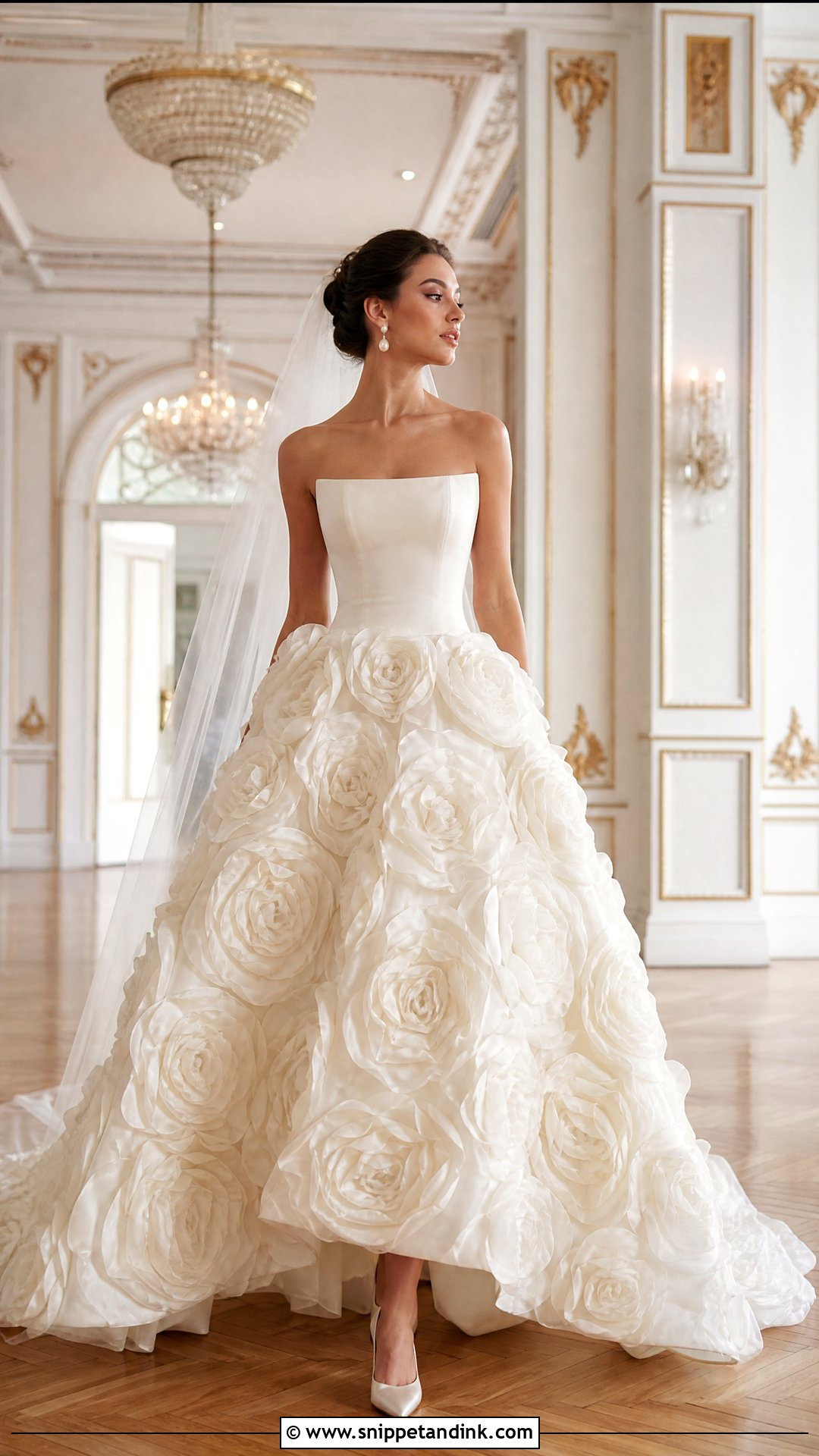
The placement on this gown is what makes it wearable. Organza roses scattered lightly across a structured bodice, then growing fuller over the skirt and train, define the waist while the upper body stays calm. An ivory or soft-white base keeps the petals refined. I’d warn you about one thing: 3D roses on the skirt get crushed when you sit, so ask the shop how the petals are shaped and whether a light steam brings them back. Pointed satin pumps, pearl drop earrings and a cathedral veil with a clean edge are all it needs. Skip the statement necklace and wear a smooth low bun for a ballroom, historic estate or hotel.
2. Rose Embroidered A-Line Wedding Dress
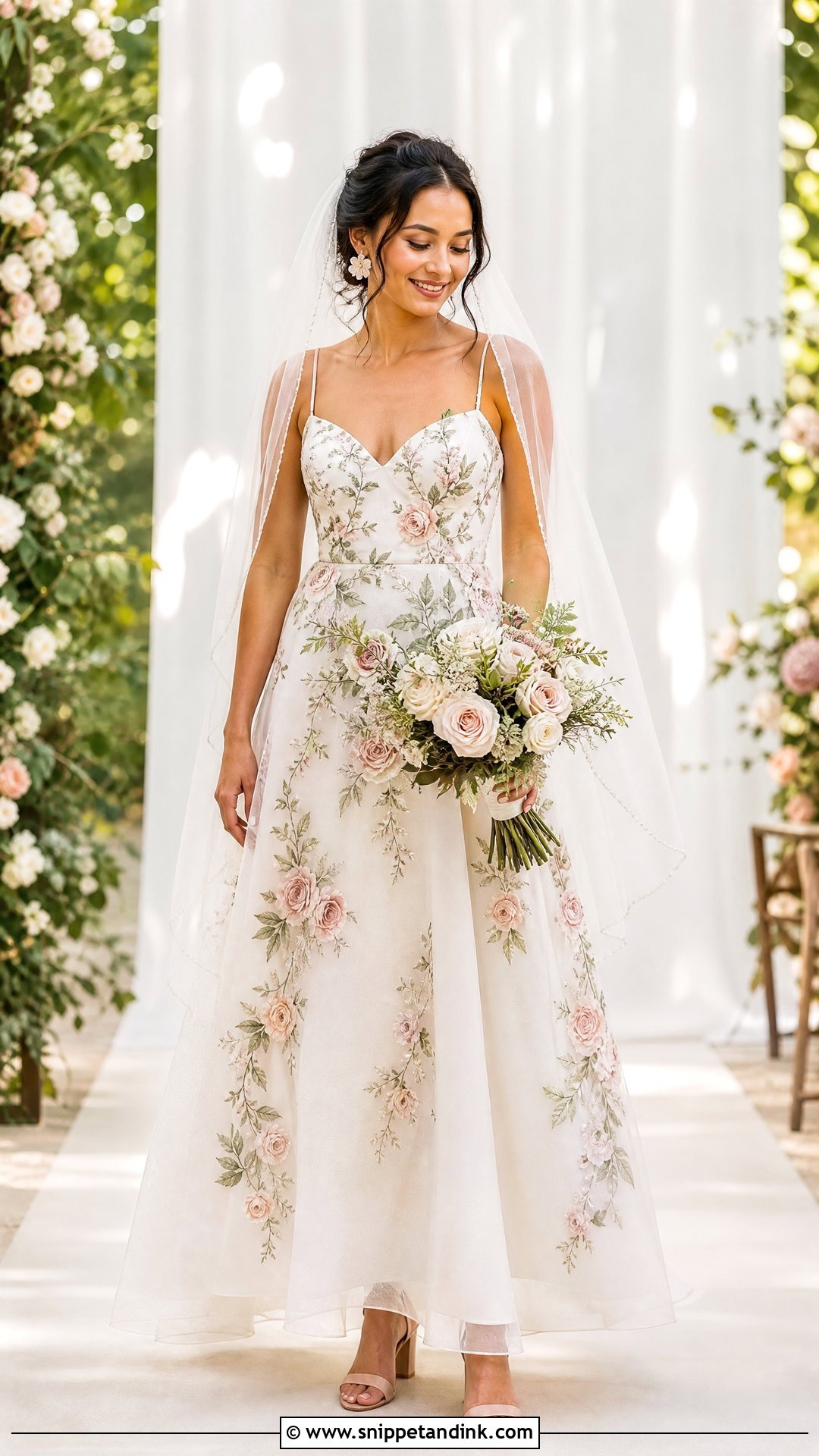
Fine rose embroidery adds detail without volume, which is why it’s the version I suggest to brides who find appliqué too much. On an A-line with a natural waist, the threadwork can start on the bodice and drift lightly into the skirt. Ivory-on-ivory looks traditional; blush, sage or pale blue thread brings in color you’ll mostly see up close. Block-heel sandals, a fingertip veil and small floral earrings that echo the stitching suit it, with a loose chignon. Keep the bouquet to greenery and two or three colors. It’s one of the few dresses on this list that works in a garden, a vineyard and indoors across most seasons.
3. Strapless Satin Wedding Dress With Roses
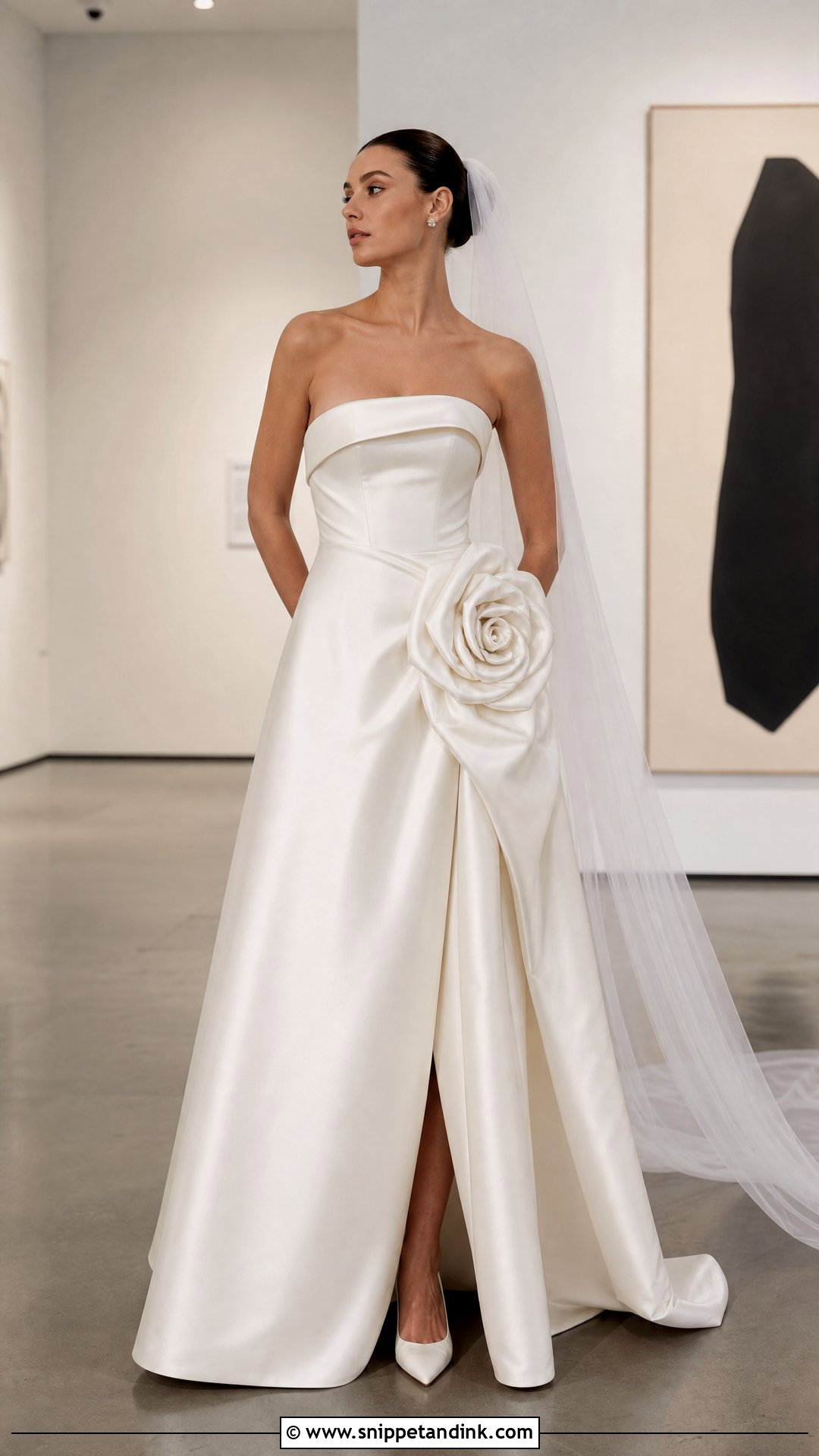
One or two big fabric roses on plain satin look far more deliberate than a scattering of small ones. On a strapless column or A-line with a folded neckline, place the oversized fabric roses at the hip, waist or bust, and think about where your arm and bouquet will rest before you decide. A rose at the hip gets squashed by an arm held at your side all day. An internal corset keeps the satin from wrinkling around the bloom. Pointed ivory heels, crystal studs, a sheer cathedral veil and a structured mini bag for later finish it. Modern hotels, galleries and rooftops suit it best.
4. Blush Tulle Wedding Dress With Roses
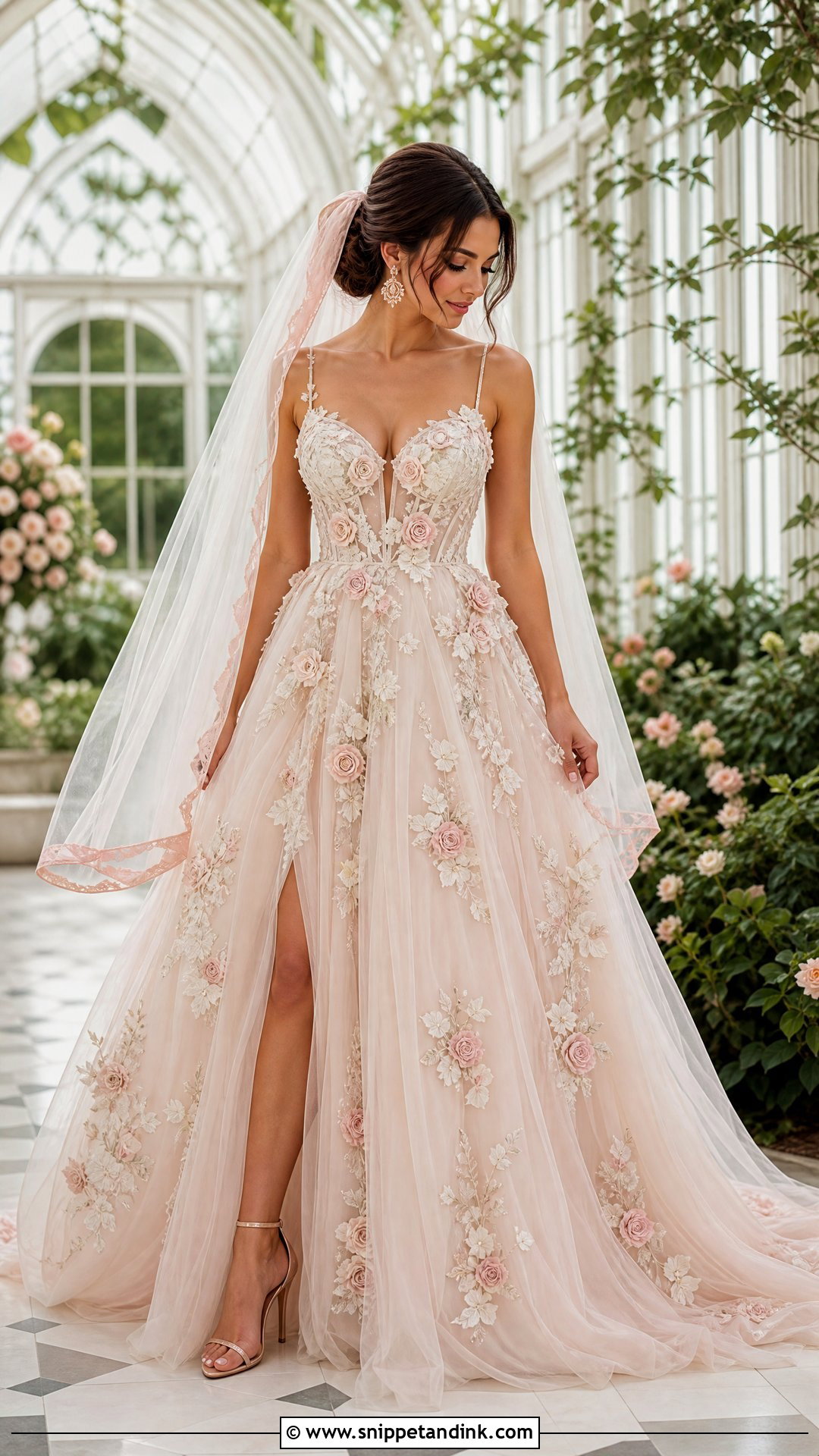
Blush tulle changes color with the light more than any other fabric here, so look at it outdoors before you buy. Imagine pale layers moving under hand-applied roses: still bridal, with a little warmth. I’d pick a fitted bodice with supportive straps and an airy A-line skirt, the ivory and blush appliqués densest near the waist and fading toward the hem. Nude or champagne heels keep the leg line long. Rose-gold earrings, a fine bracelet and a sheer blush-edged veil complete it, with rosy cheeks and a neutral lip. Conservatories, botanical gardens and spring weddings in daylight are where it shines.
5. Colorful Rose Embroidered Wedding Dress
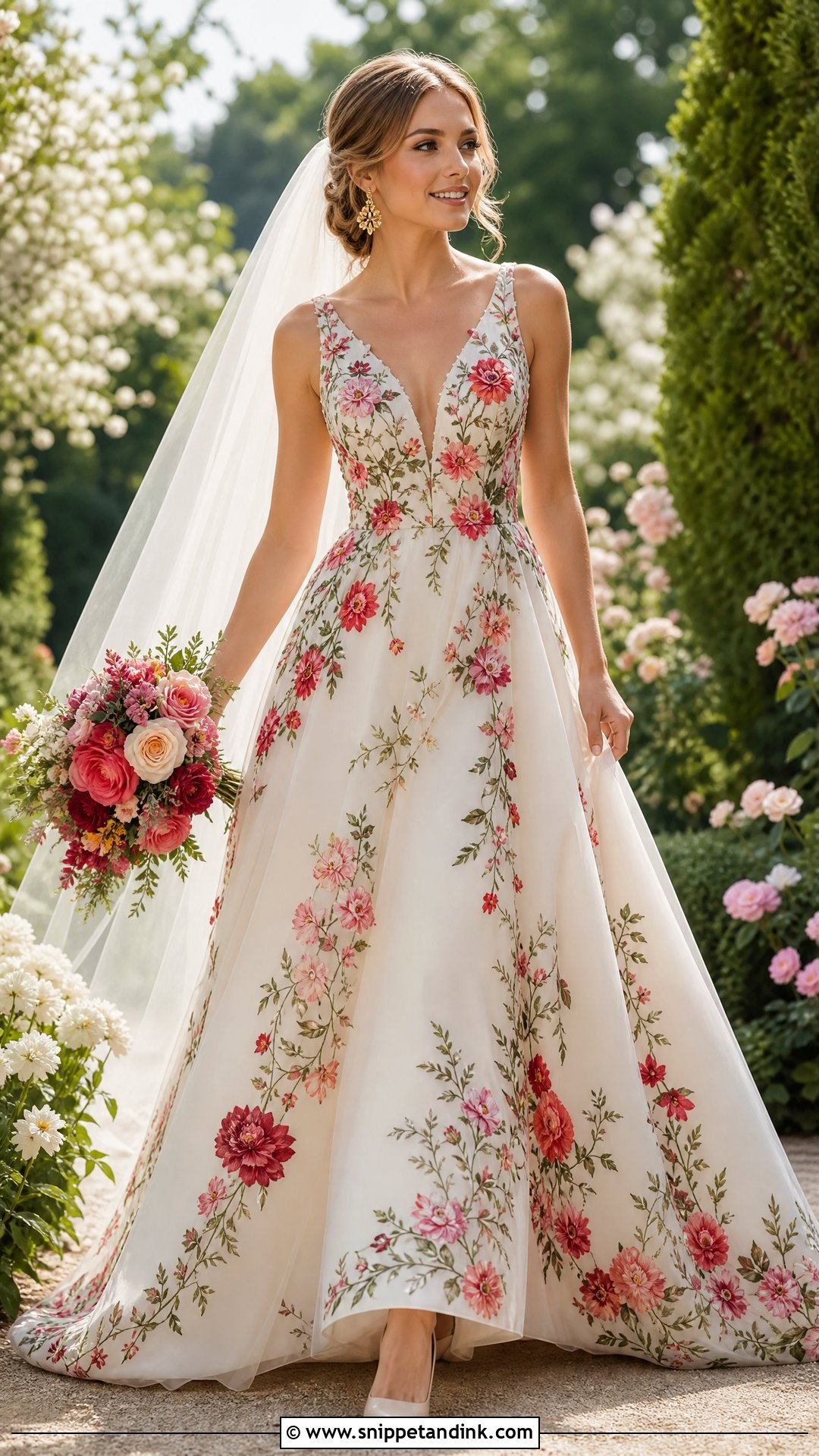
Colored thread is a commitment, and I think it’s worth it for brides who already know they don’t want an all-white gown. Pink, red, coral and green roses on ivory tulle or organza need space, so an A-line skirt and a plain neckline, square or scoop, give the embroidery room. Keep the veil plain and end it before the busiest part of the skirt, otherwise the tulle blurs the stitching. Here’s the bouquet trick I use: pull one dominant color from the dress rather than matching every shade. Neutral pumps, understated gold earrings and soft waves or a low braided bun finish an outfit made for summer estates and greenhouse venues.
6. Long Sleeve Rose Lace Wedding Dress
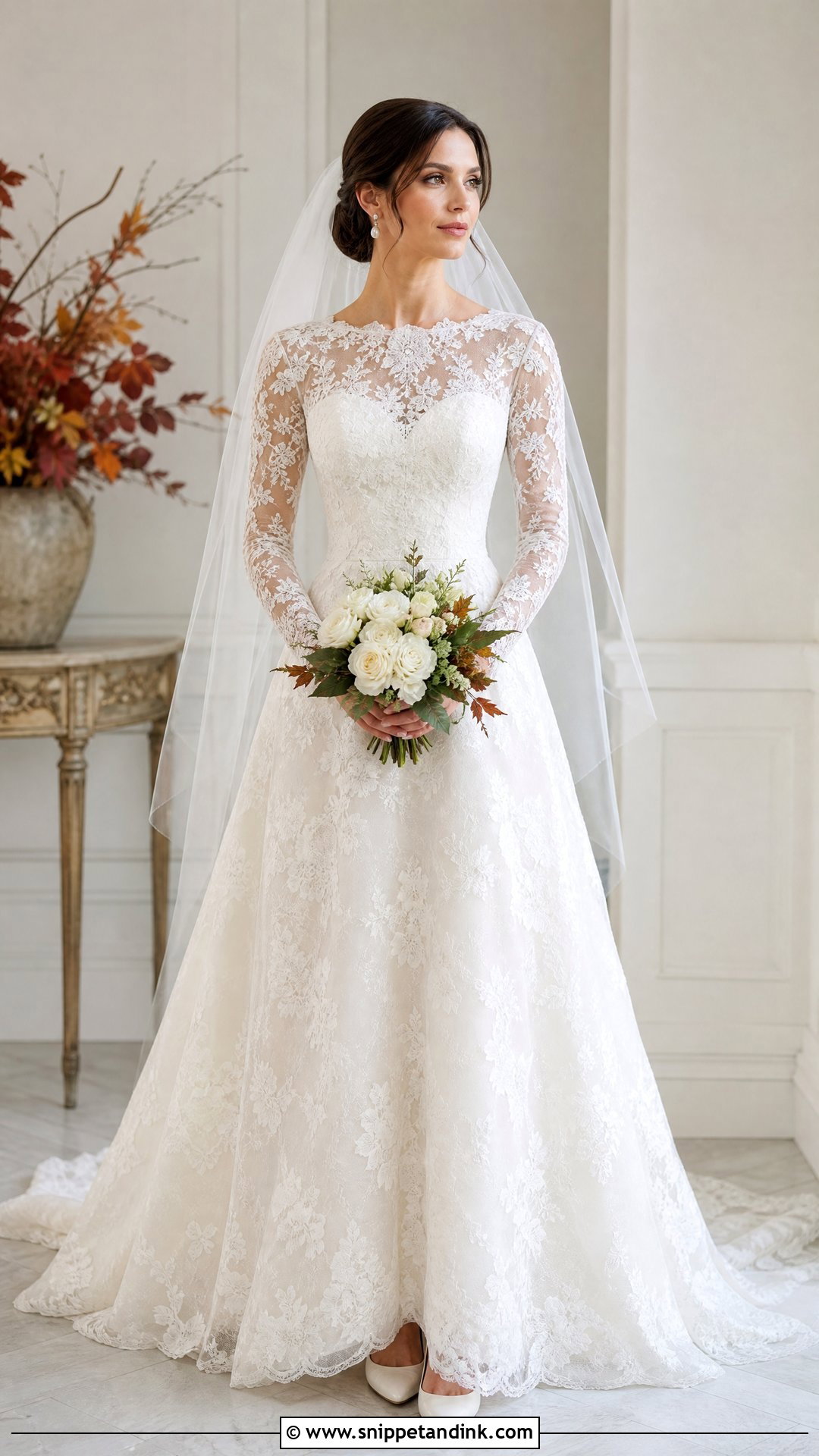
Rose lace on a long sleeve depends almost entirely on how the motifs are cut and placed. On illusion sleeves, you want clearly defined roses with space around them, so the pattern doesn’t turn into a blur in photos, and a lined bodice for comfort. An A-line or fitted sheath skirt keeps the lace from feeling heavy. For a cold-weather wedding, a slightly higher back and a thicker skirt lining make a real difference to warmth. Closed-toe pumps, pearl earrings, a narrow comb and a plain tulle veil let the sleeve pattern show. Carry a moderate, structured bouquet that won’t cover the bodice.
7. Off Shoulder Rose Appliqué Wedding Dress
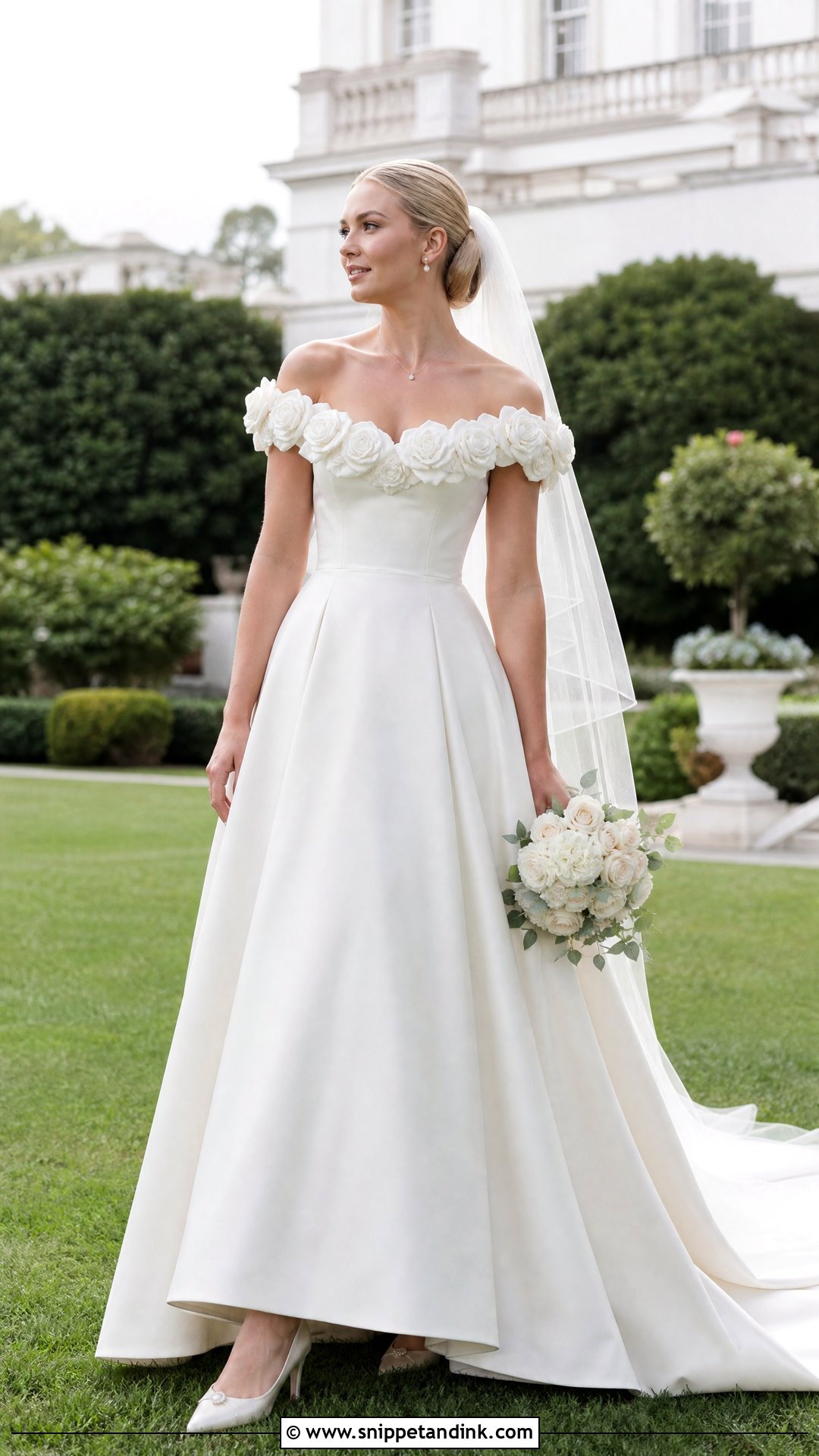
Fabric roses along an off-shoulder neckline frame the collarbone beautifully, until they stop you lifting your arms. So the first thing I check is whether the appliqués follow the neckline without stiffening the band across the upper arm. The bodice needs real internal structure to stay up. Roses can continue onto the waist and upper skirt, but leave some open fabric or the gown looks busy. A collarbone-length pendant, pearl studs and low satin heels suit it. Sweep hair into a low bun or ponytail and attach the veil beneath it so it falls behind the shoulders instead of catching on the flowers.
8. Mermaid Wedding Dress With Cascading Roses
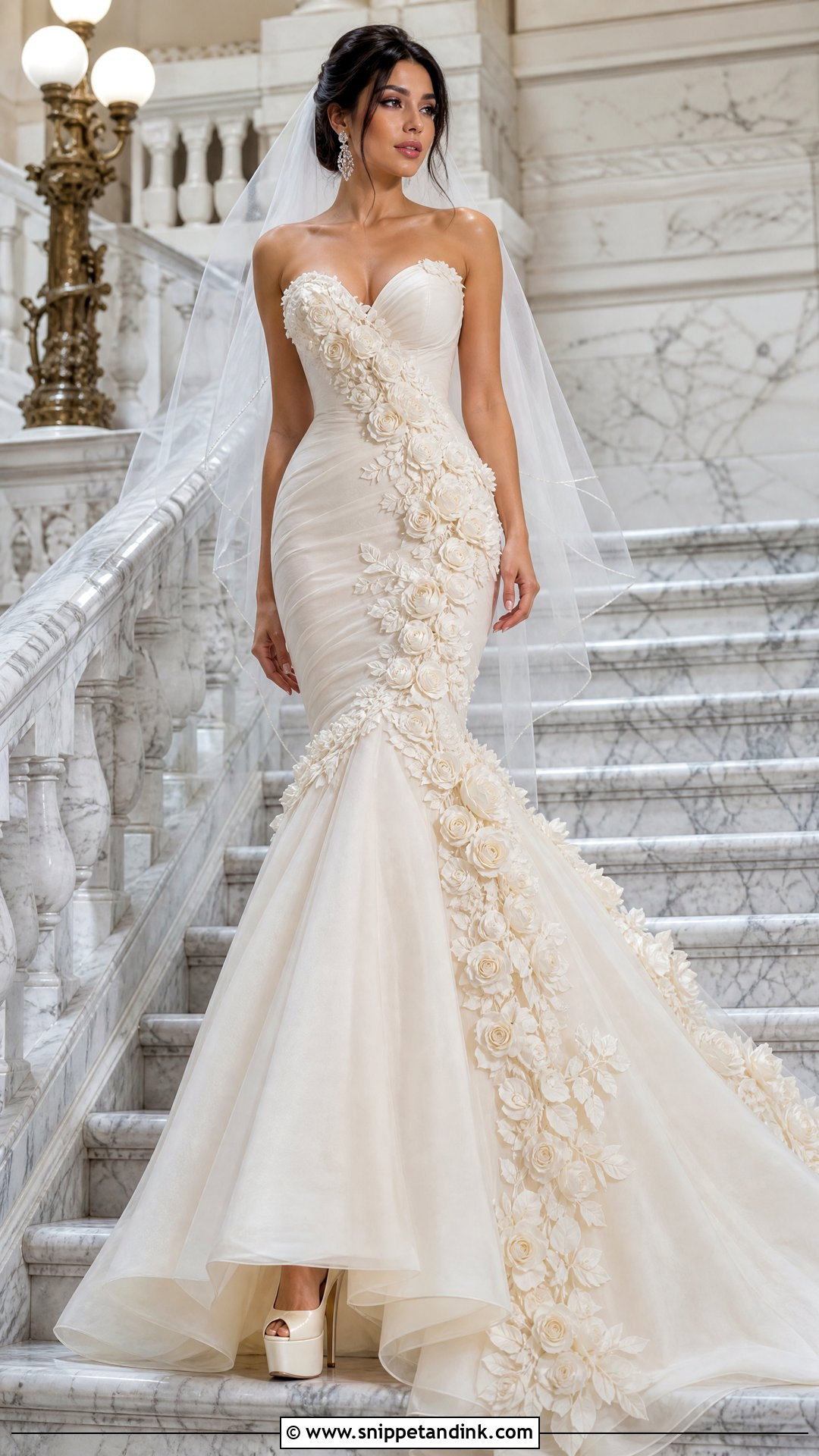
Cascading roses on a mermaid gown pull the eye downward from bodice to flare, which lengthens the whole figure. The comfort issue is at the hips. Appliqués there get sat on and bent all day, so look for lightweight ones that flex. A sweetheart or soft scoop neckline follows the curve without adding another statement. Platform heels help with the narrow skirt and a long aisle, while small crystal earrings and a chapel veil keep things clean. A polished updo lets the silhouette stand out. Hold a compact bouquet low, below the waist, so it doesn’t hide the cascade. Grand staircases and wide aisles show it off best.
9. Square Neck Rose Lace Wedding Dress
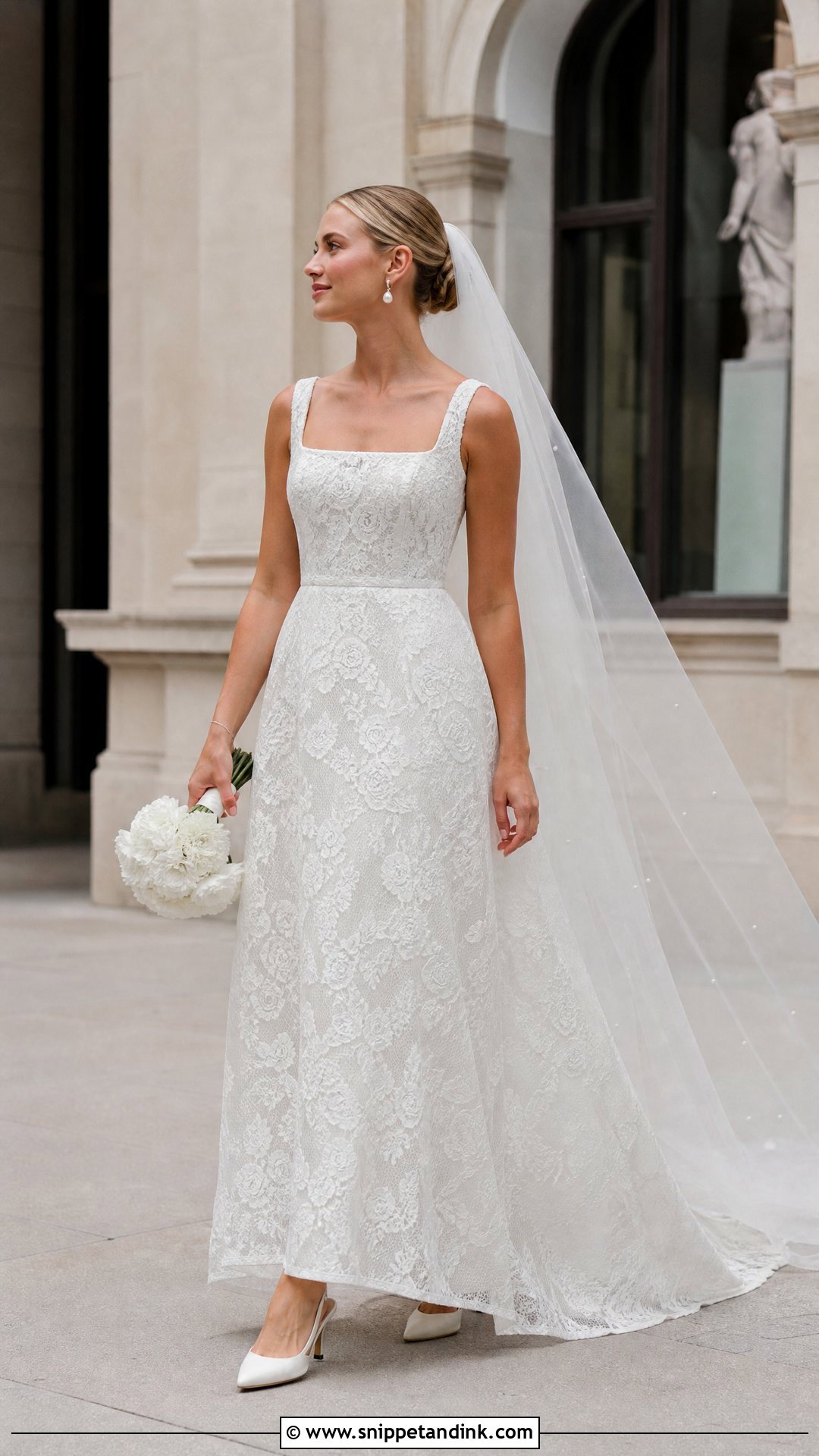
Square necklines straighten out a soft pattern. Here a fitted bodice with wide straps and rose lace running into an A-line or gently fitted skirt feels modern rather than sweet, and the neckline leaves room for a short pendant. Choose medium-sized motifs over tiny all-over flowers; from a few feet away, tiny roses read as texture and you lose the rose entirely. Slingback heels, pearl-and-gold earrings and a smooth fingertip veil suit it. A sleek bun or tidy waves and a small structured bouquet move easily from a formal garden ceremony to a museum or restaurant reception.
10. Corset Tulle Wedding Dress With Roses
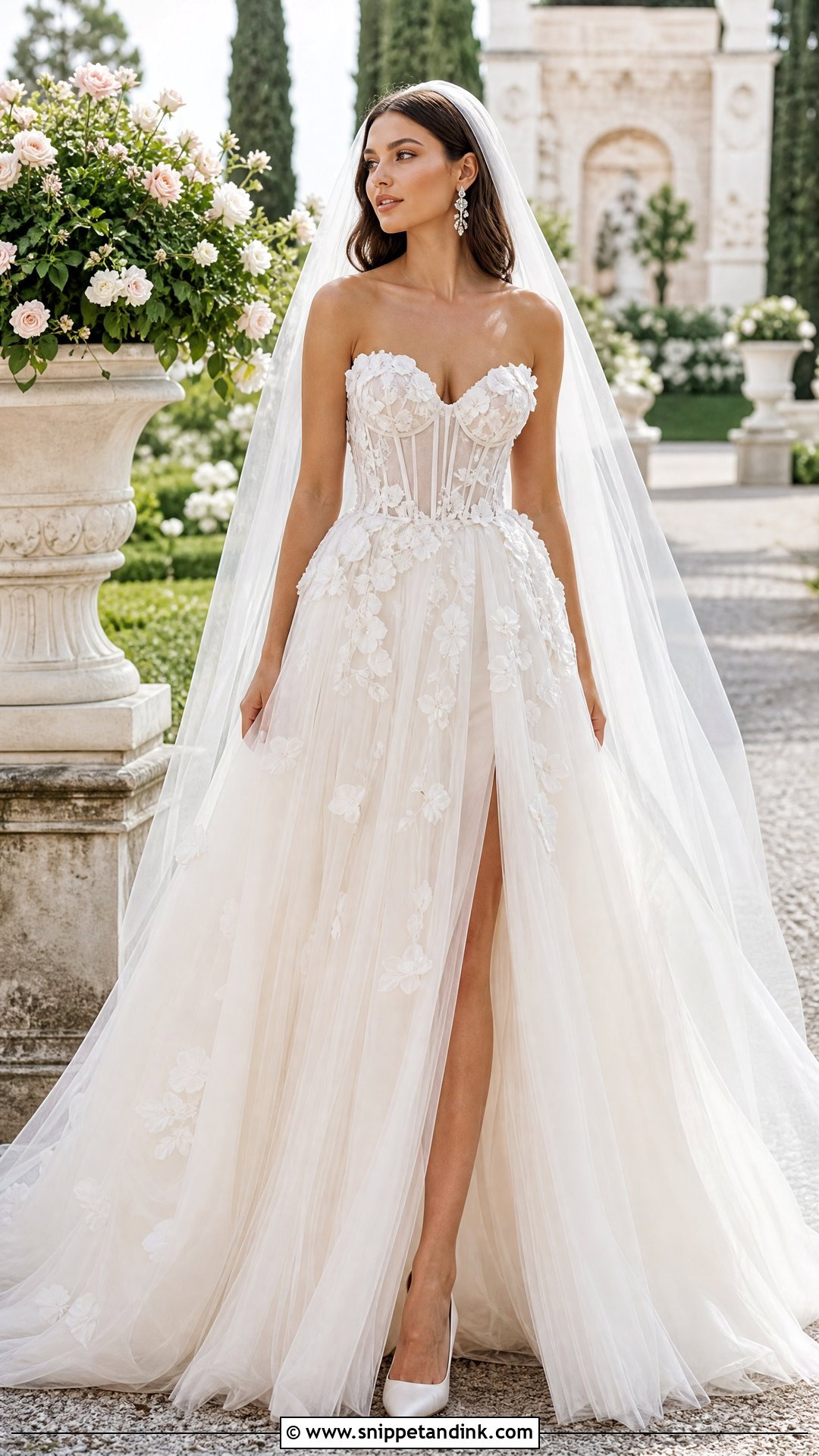
Rose appliqués on a corset are there partly to soften the boning lines. Placed well, they cover the channels without hiding the shape underneath. I’d lean toward a lined bodice or strategically placed flowers instead of a very sheer one, because sheer corsets show every pressure line by the evening. A layered tulle skirt keeps it light. Pointed pumps, a delicate tennis bracelet, small drop earrings and a plain chapel veil balance the detailed top half. Hair in loose waves or a relaxed low bun suits garden estates, modern ballrooms and spring or summer evenings.
11. Drop Waist Wedding Dress With Rose Skirt
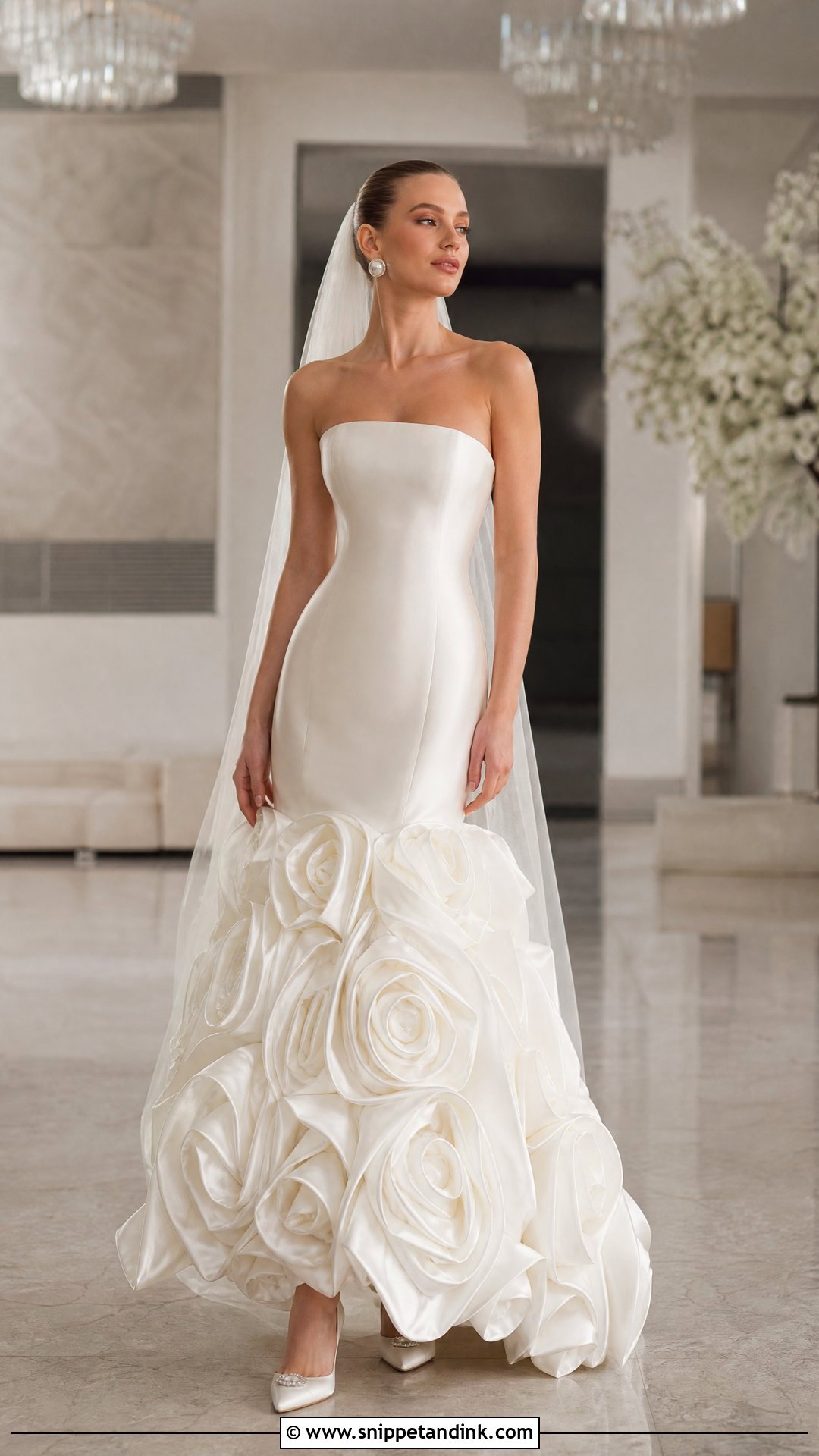
A drop waist is the hardest silhouette on this list to fit, and the rose skirt makes it harder. The smooth satin or mikado bodice runs below the natural waist before the sculpted floral layers begin, and if that seam sits even slightly wrong, you’ll feel it every time you sit. Plan on careful tailoring and at least one fitting where you sit, bend and walk stairs. The payoff is real, since the plain bodice makes the roses look even more dramatic. Simple pointed heels, button earrings and a narrow veil beneath a sleek bun are enough. Skip a necklace if the neckline is curved. Ballrooms, museums and luxury hotels suit it.
12. Minimalist Crepe Wedding Dress With Rose Detail
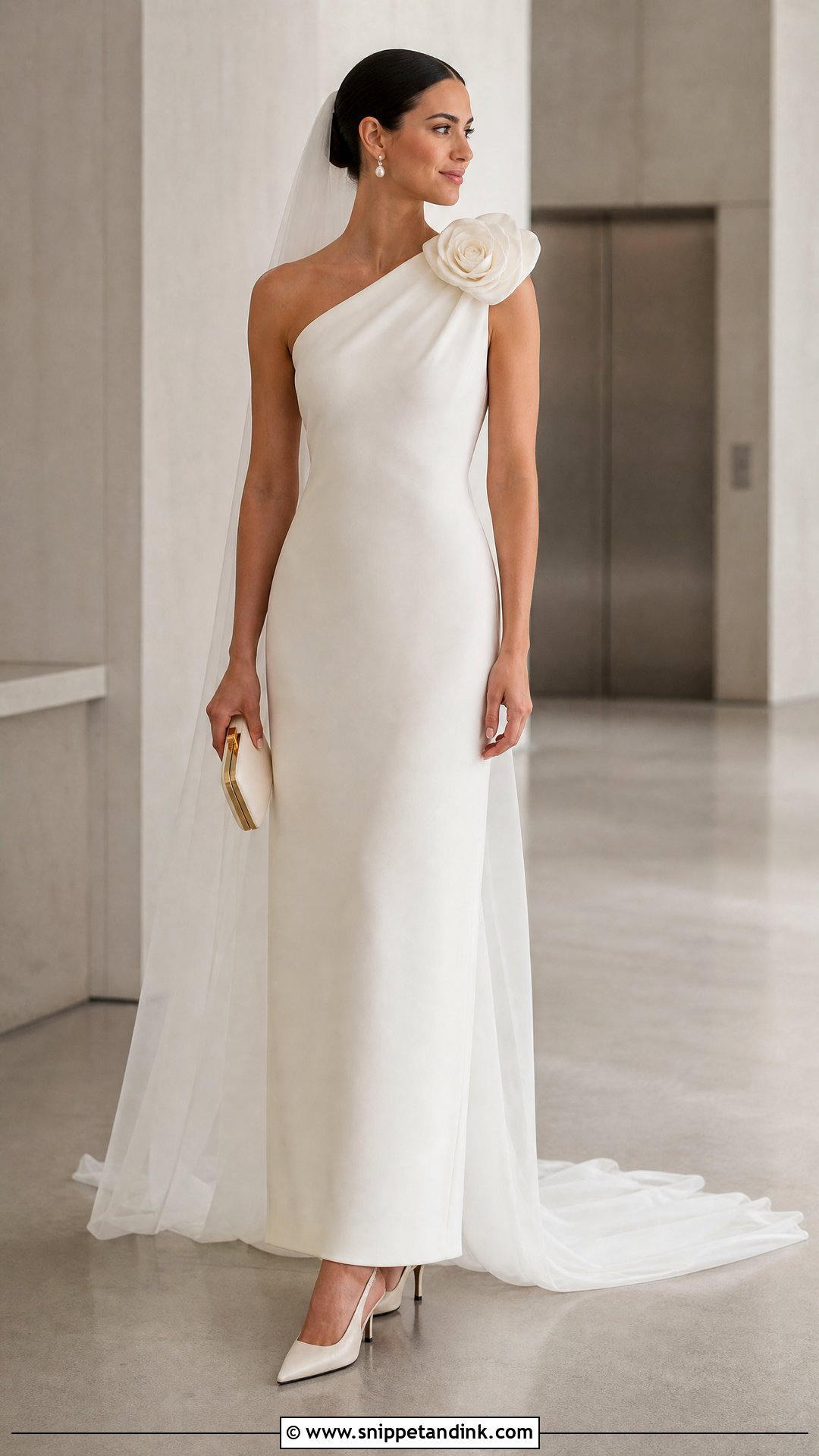
One rose can say more than a hundred. A minimalist crepe gown with a single sculpted bloom at the shoulder, waist or open back is the version I’d choose for a bride who loves clean lines. Size and position are everything: big enough to look deliberate, placed where it won’t be crushed when you sit or hidden by the bouquet. A rose on the open back is the safest bet for that reason. Pair a column or fit-and-flare cut with slim slingbacks, modern pearl earrings and a structured clutch. Either a short plain veil or a sleek floor-length one works, with a center-parted bun. Courthouses and small city weddings suit it.
13. Tea Length Wedding Dress With Rose Print
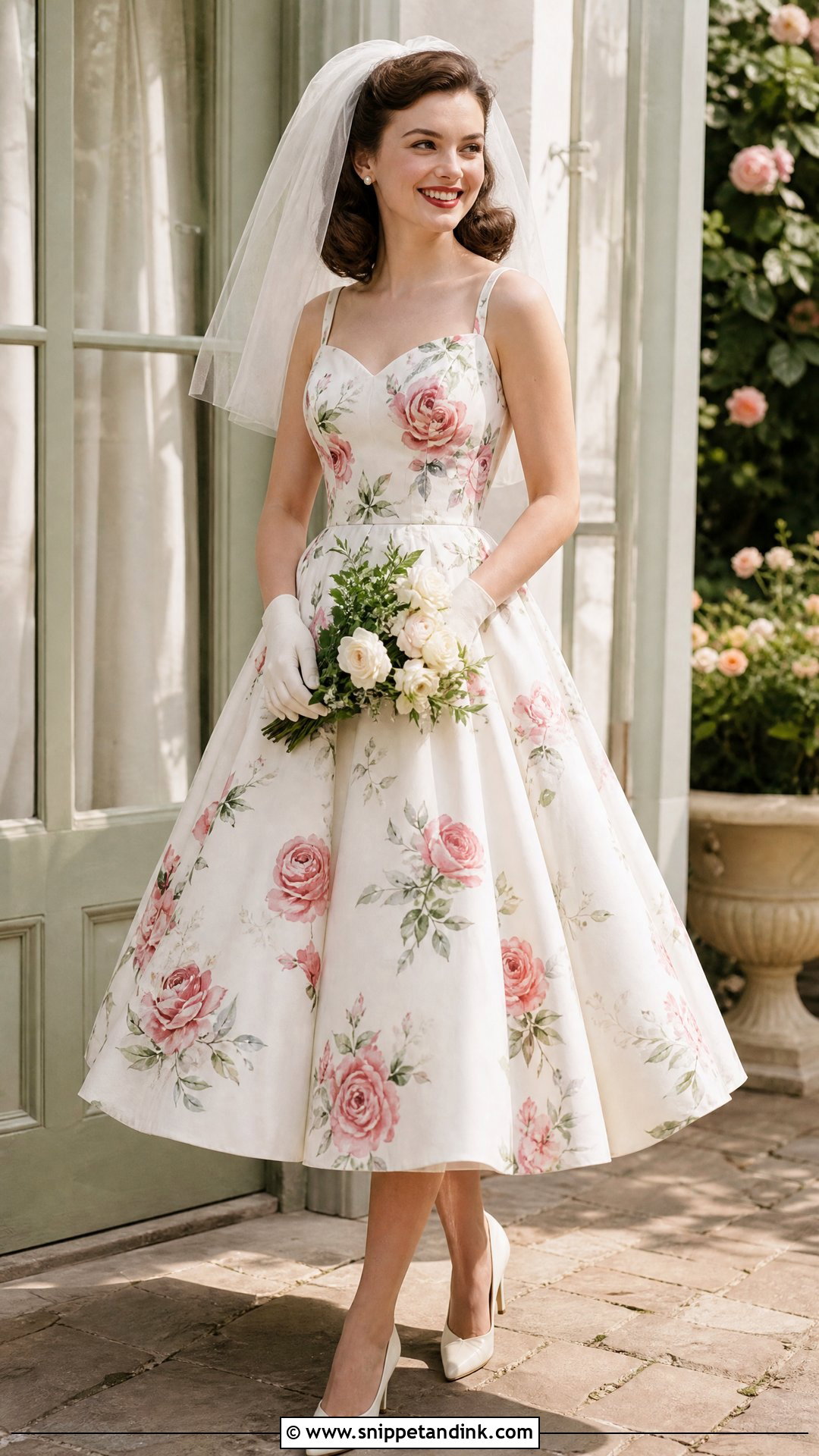
Printed roses are the most relaxed option here and the easiest to dance in. On a tea-length dress with a fitted bodice and full skirt, a rose print reads vintage without effort. A watercolor print feels soft, while a crisp botanical one looks more graphic. The shoes show, so pick them with care: ivory pumps, metallic sandals or low block heels. Pearl studs, short gloves if you like them and a birdcage or shoulder-length veil keep it retro, and a neat chignon or curled bob stops it tipping into costume. Keep the bouquet compact so it doesn’t cover the printed bodice at a daytime party or courthouse.
14. Boho Wedding Dress With Rose Vines
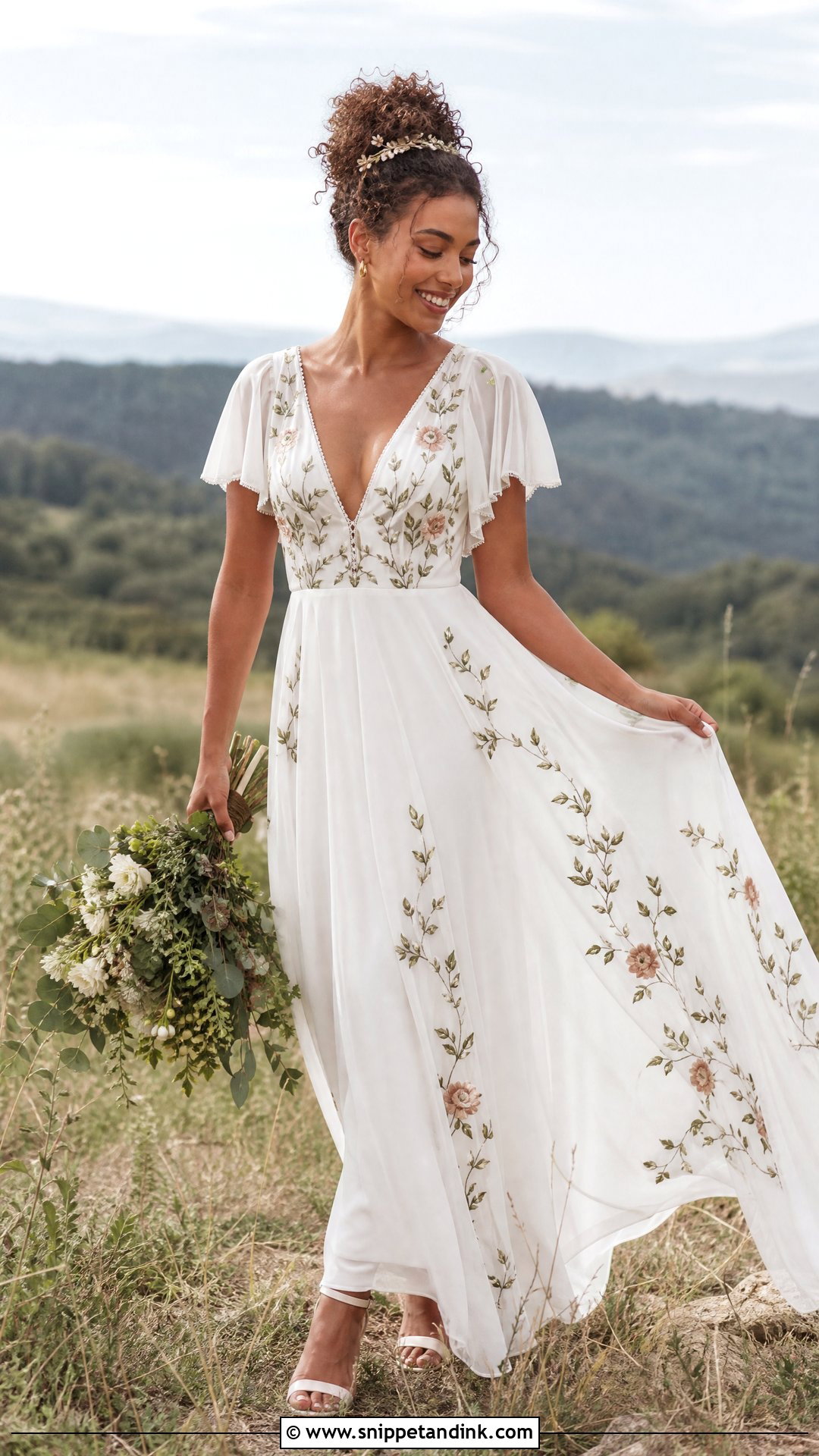
Vines are softer than single roses because the eye follows the stem rather than stopping at each bloom. On lightweight chiffon, tulle or soft lace, leafy vines running from bodice to skirt suit a V-neck, flutter sleeves or an open back. The catch with boho gowns is support. A light gown still needs enough built-in structure to wear comfortably for hours, especially with an open back. Low block-heel sandals, small gold hoops and either a fingertip veil or a floral comb fit the mood, with braids or natural waves. Pull bouquet colors from the embroidery. Resist adding several rustic accessories at once.
15. High Neck Wedding Dress With Roses
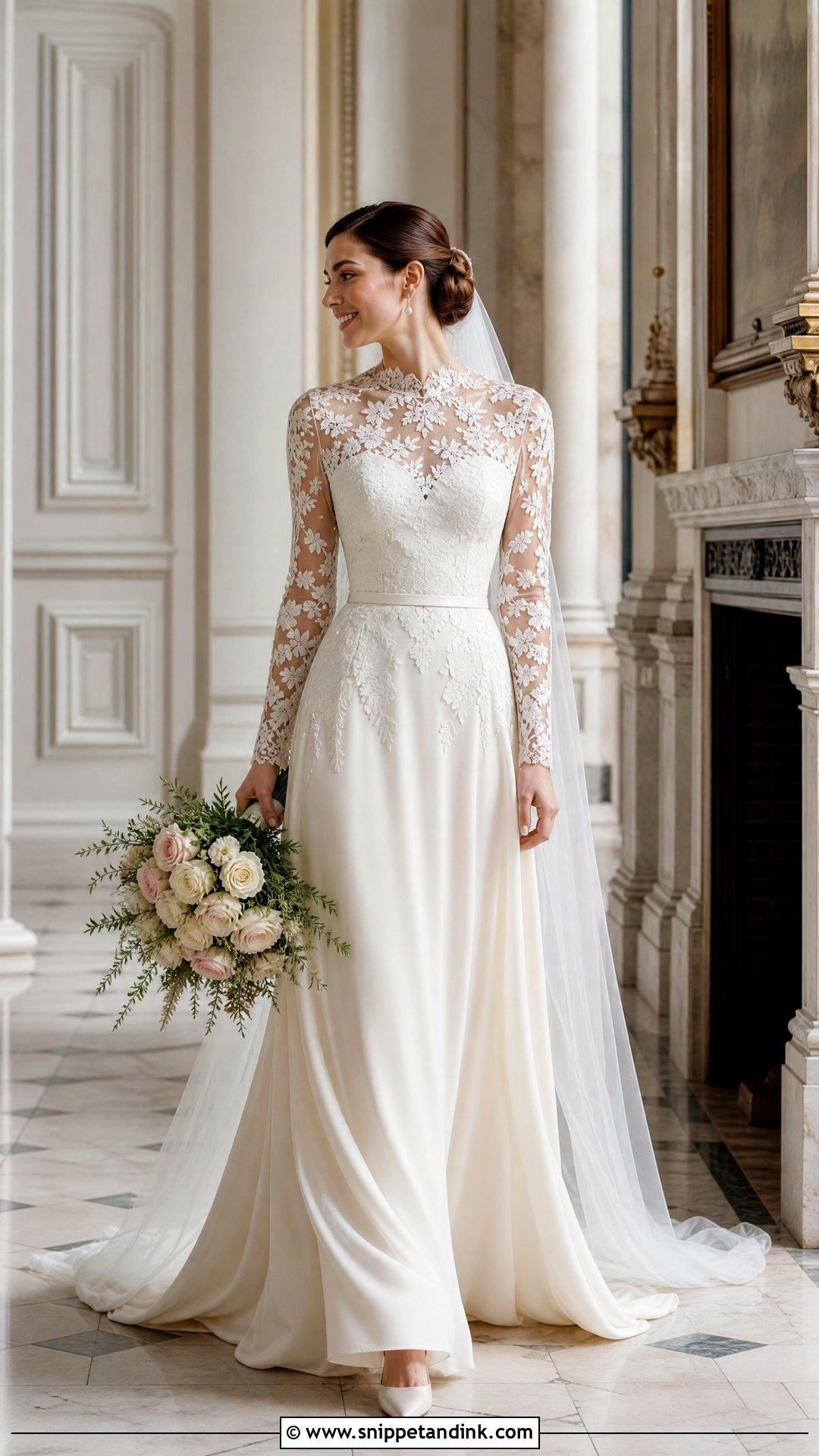
A high neck with roses covers a lot, so the trick is keeping it from looking heavy. Illusion tulle or fine lace with rose motifs at the neckline, shoulders and sleeves stays light against the skin, and a clean A-line or sheath skirt balances the detailed top. A defined waist is essential; without it, all that coverage reads shapeless. The neckline is already decorated, so I’d skip a necklace and wear pearl drops or slim crystal earrings. Closed-toe heels and a plain veil under a tidy low bun suit historic venues and winter weddings. Hold the bouquet at hip level so the bodice stays visible.
16. Black Rose Embroidered Wedding Dress
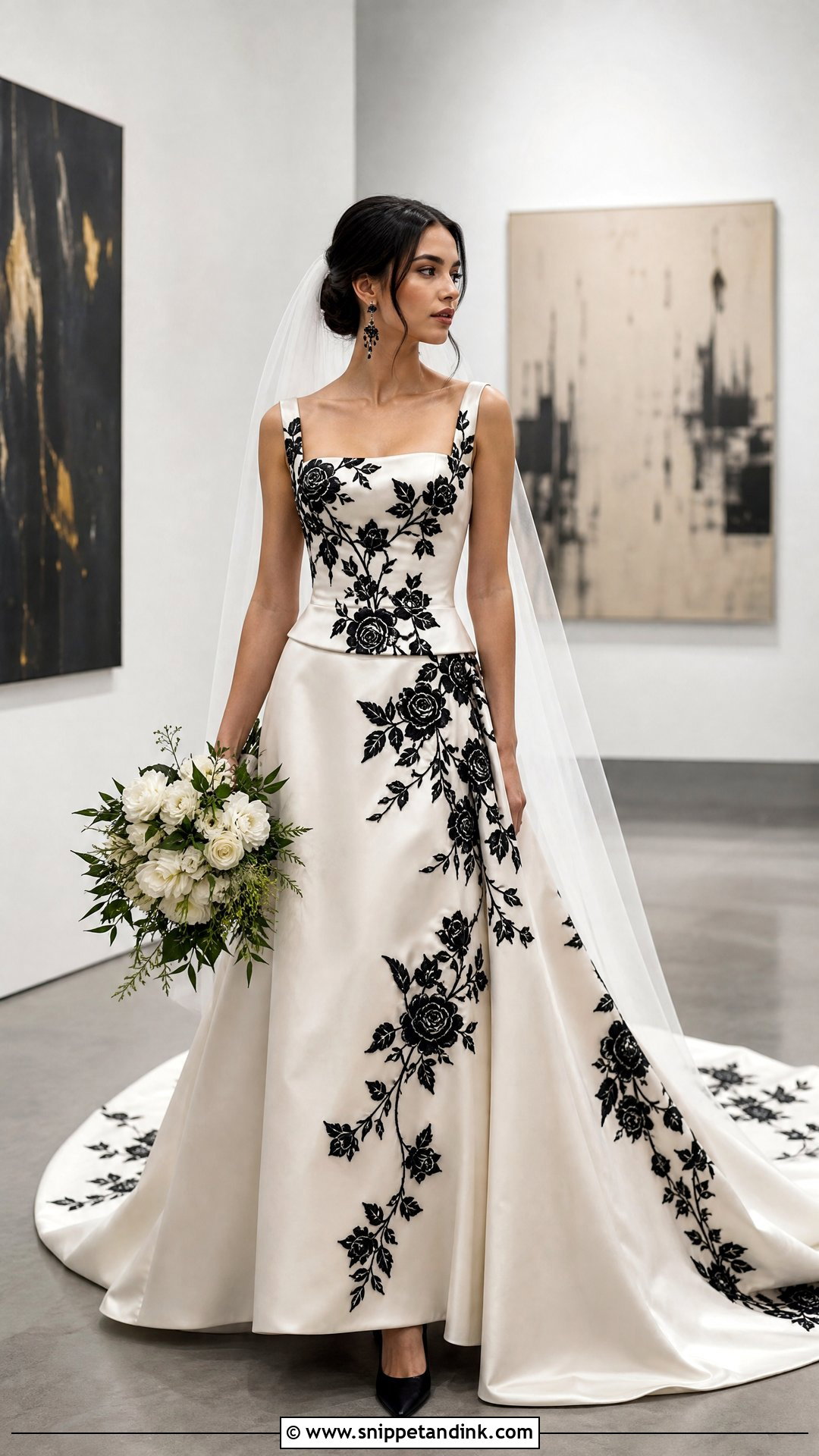
Black thread on ivory is the boldest contrast in this collection, and it works best when it’s concentrated. Keep the black rose embroidery around the bodice, waist or train rather than across the whole gown, on a structured strapless A-line or fitted long sleeve. Black pointed pumps and onyx-style earrings tie in the color, but stop there. A third or fourth dark accessory makes the embroidery look less special. A plain ivory veil, a sleek bun and softly defined eyes keep it modern. Don’t try to match the thread in the bouquet; white flowers with deep green foliage frame it better. Galleries and evening receptions suit it.
17. Blue Rose Embroidered Wedding Dress
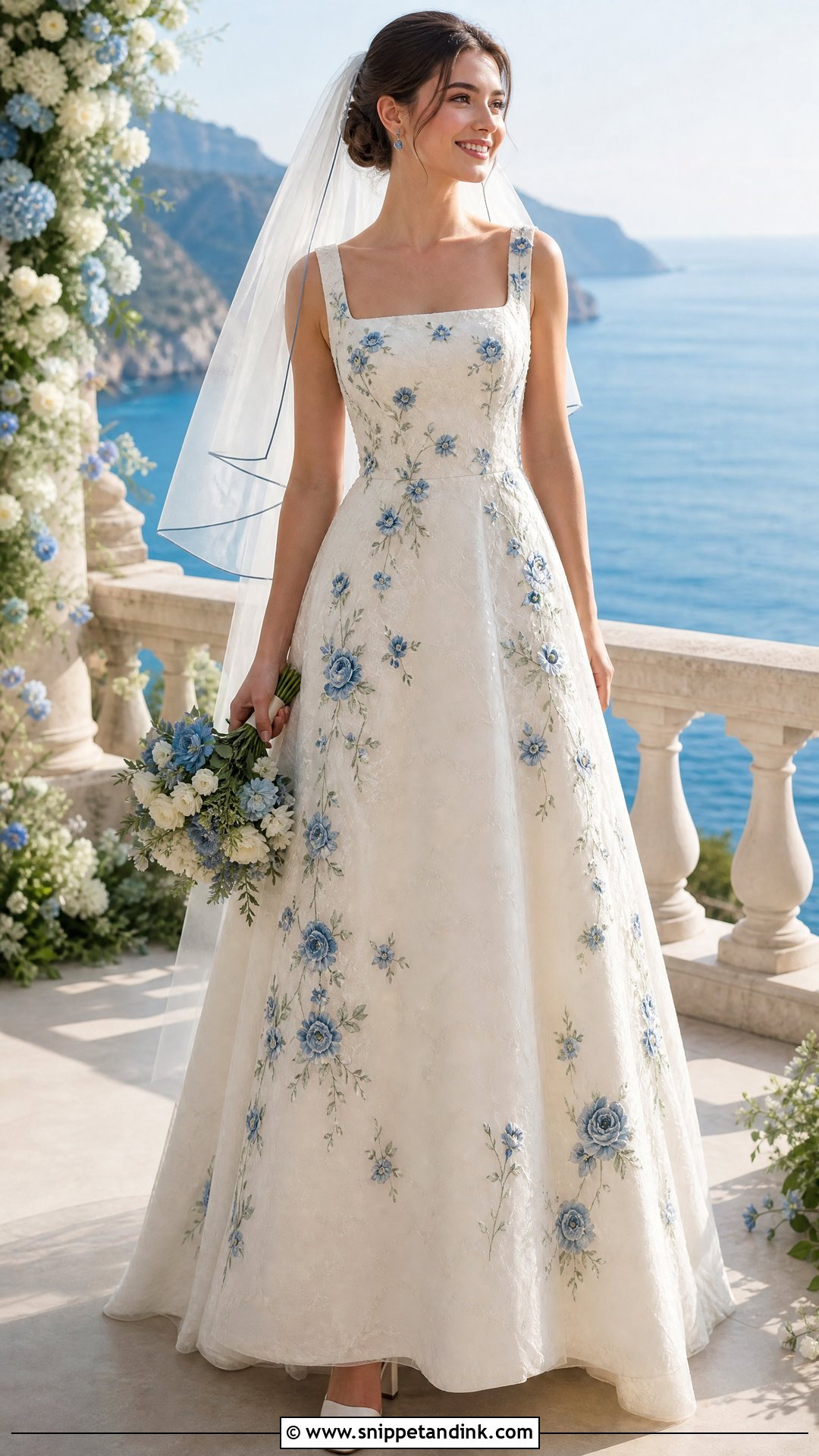
Blue embroidery doubles neatly as a “something blue”, which is why so many brides ask for it. On an ivory A-line, dusty blue, pale blue or navy roses across the bodice and lightly over the skirt keep it bridal, with a square neckline or delicate straps. Navy reads strongest from a distance; dusty blue almost disappears in bright sun, so check it outdoors. Ivory block heels and sapphire-colored studs, plus a plain veil with a narrow blue edge if you want the accent repeated, are plenty. A low twisted bun or smooth waves and a bouquet of white flowers with a few blue accents suit coastal and garden weddings.
18. Beaded Rose Column Wedding Dress
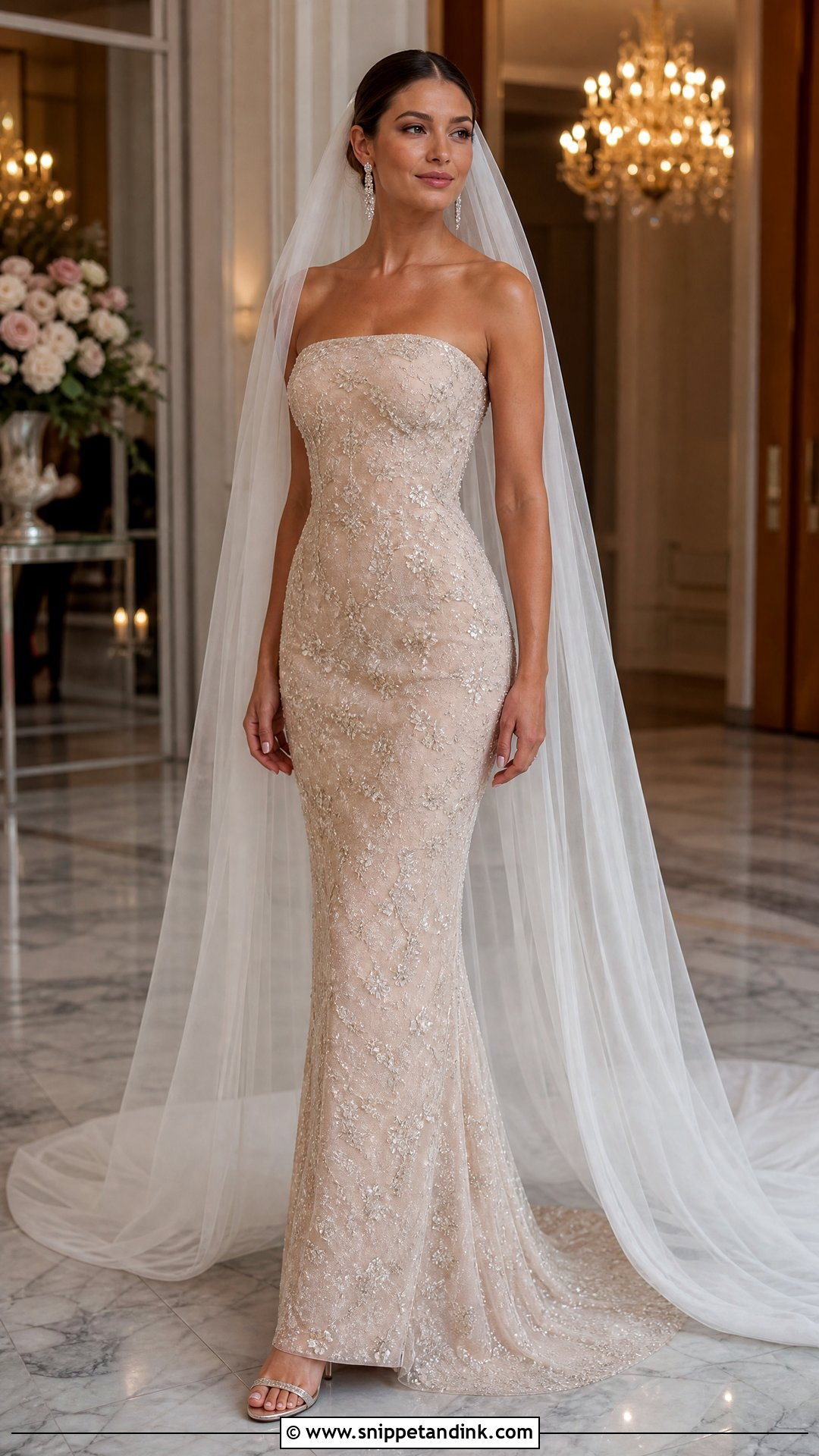
Beaded roses give sparkle with a pattern behind it, which looks far more polished than random all-over glitter. Tonal beads arranged into rose shapes across a column gown’s bodice and skirt feel sleek, and a small train adds the bridal note. Beadwork is heavy and scratchy, so I always check two things: the lining, which should protect your skin from the backs of the beads, and the weight at the hem, which affects how the dress swings when you walk. Metallic sandals, crystal drop earrings and a sheer shoulder-length or chapel veil suit it, with smooth side waves. Hotel ballrooms and formal evening ceremonies are its natural setting.
19. Wedding Dress With Detachable Rose Overskirt
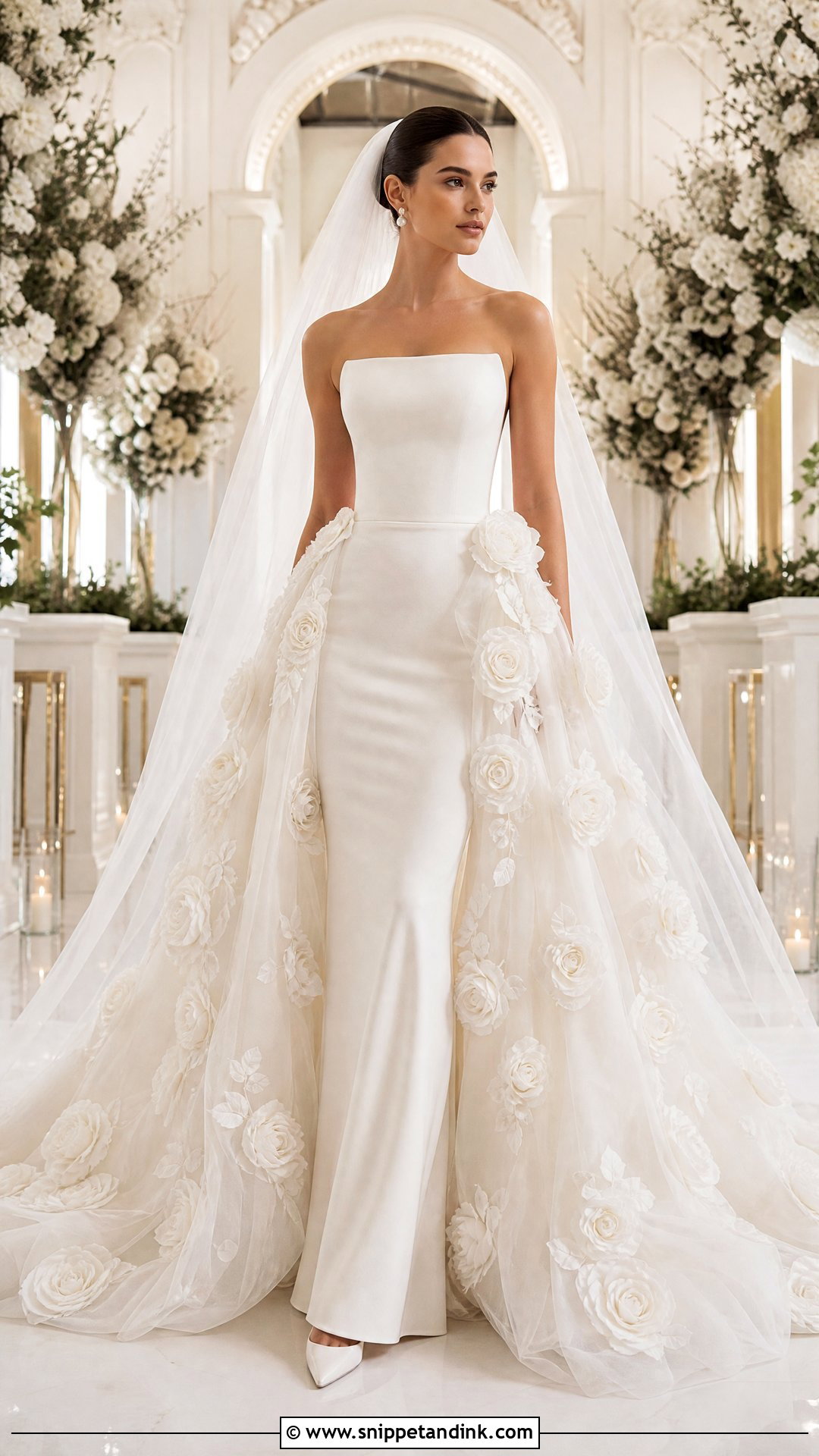
A rose overskirt is the easiest way to get a dramatic entrance and still dance comfortably later. Start with a clean fitted gown in crepe, satin or lace and add a removable tulle overskirt with dimensional roses around the waist, hem or train. The attachment is what I’d scrutinize. Hooks or snaps at the waist should sit flat under the overskirt band and hold firmly while you walk, and someone needs to practice removing it before the day. Pointed heels, pearl earrings and a plain cathedral veil suit the ceremony version; a sleek ponytail or low bun works for both. Wear the full skirt for the entrance photos, then take it off.

20. Wedding Dress With Rose Cape
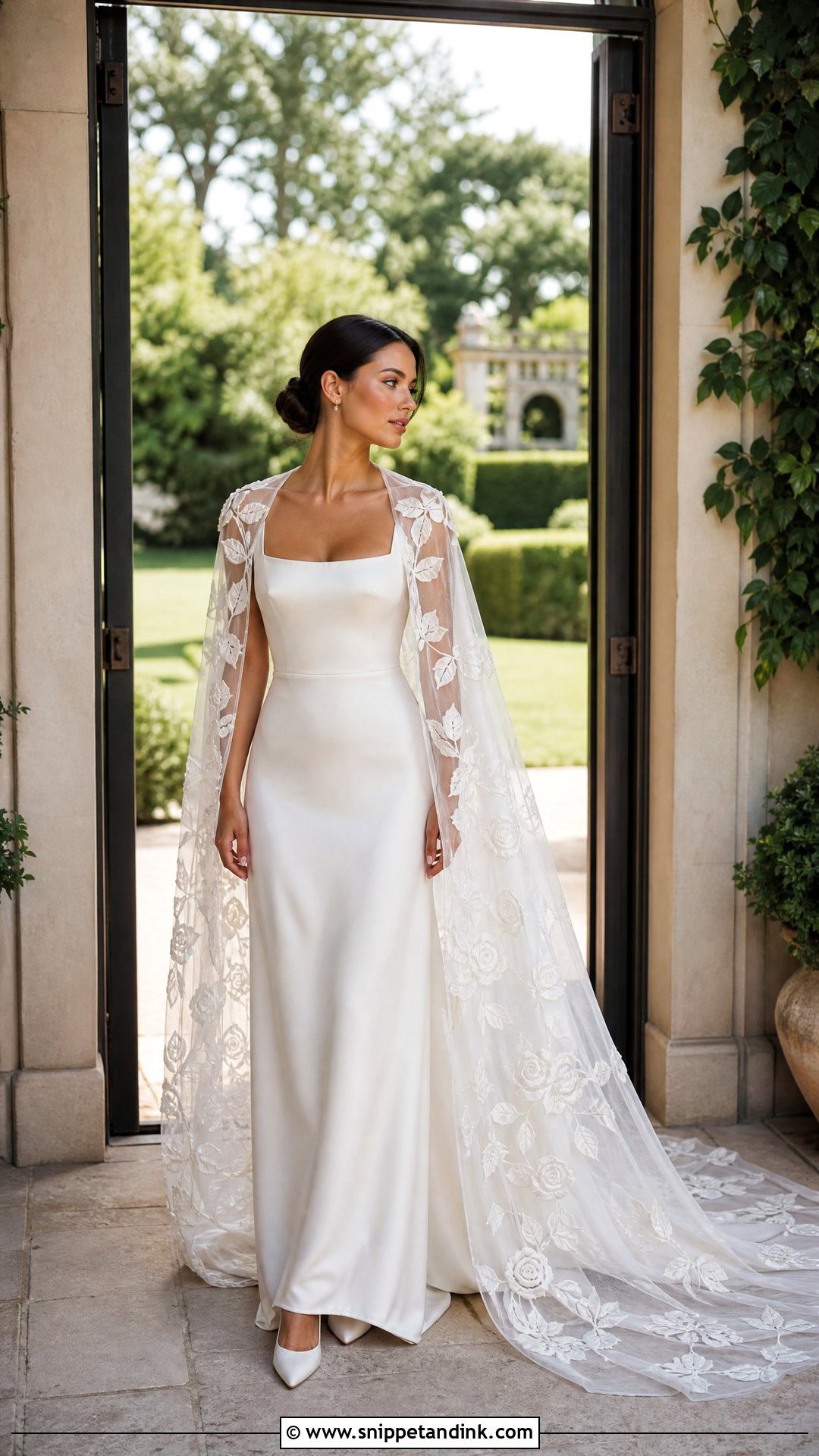
A rose cape can replace a veil entirely, and on a plain gown it carries all the floral detail. Pair a simple strapless, square-neck or long sleeve dress with a sheer tulle cape embroidered with roses, fastened securely at the shoulders and ending at the floor or in a train. Capes pull backward as you walk, so the shoulder fastening has to take that weight without dragging the neckline. Pointed satin shoes, small studs and a low bun that sits clear of the neckline complete it. At the reception, take the cape off for a lighter second look. Wide aisles and formal halls give the fabric space to trail.
Real Roses in Your Hands, Fabric Roses on the Dress
A bouquet of real roses beside a rose gown can either look planned or look like too much of one idea. I usually bring a fabric swatch or a close-up photo of the embroidery to the florist so the flowers are chosen against the actual dress.
- Echo one color, not all of them. If the dress is ivory on ivory, a bouquet of cream or white garden roses looks deliberate; on colored embroidery, pick the strongest shade and let greenery do the rest.
- Vary the scale. Large 3D roses on the gown look best with smaller spray roses or loose garden roses in hand, while a lightly embroidered dress can take big, full blooms.
- Ask the florist to remove every thorn and wrap the stems well. Thorns and rough stems pull threads on tulle and lace, and a damp stem can mark satin.
- Mind the deep reds. Dark petals bruise easily and can leave marks if they’re crushed against ivory fabric during hugs or photos.
Storing a Dimensional Rose Gown Afterward
Don’t fold dimensional roses flat. Have the dress cleaned by someone who handles bridal embellishment, then store it in a breathable garment box with acid-free tissue tucked around and under each raised flower so the petals keep their shape.
Placement Decides Whether Roses Look Couture or Crowded
One motif covers a lot of ground. Dimensional flowers bring couture texture, embroidered vines feel soft and natural, and colored roses offer a personal alternative to white-on-white. Before you decide, sit, walk and turn in the dress, especially when roses cover the sleeves, waist or train, and notice where the flowers press or catch. Then keep the accessories quieter than the gown. With careful tailoring and that restraint, a rose dress will suit your venue and still look like you.
You'll Like These Ideas:


Leave a Reply