
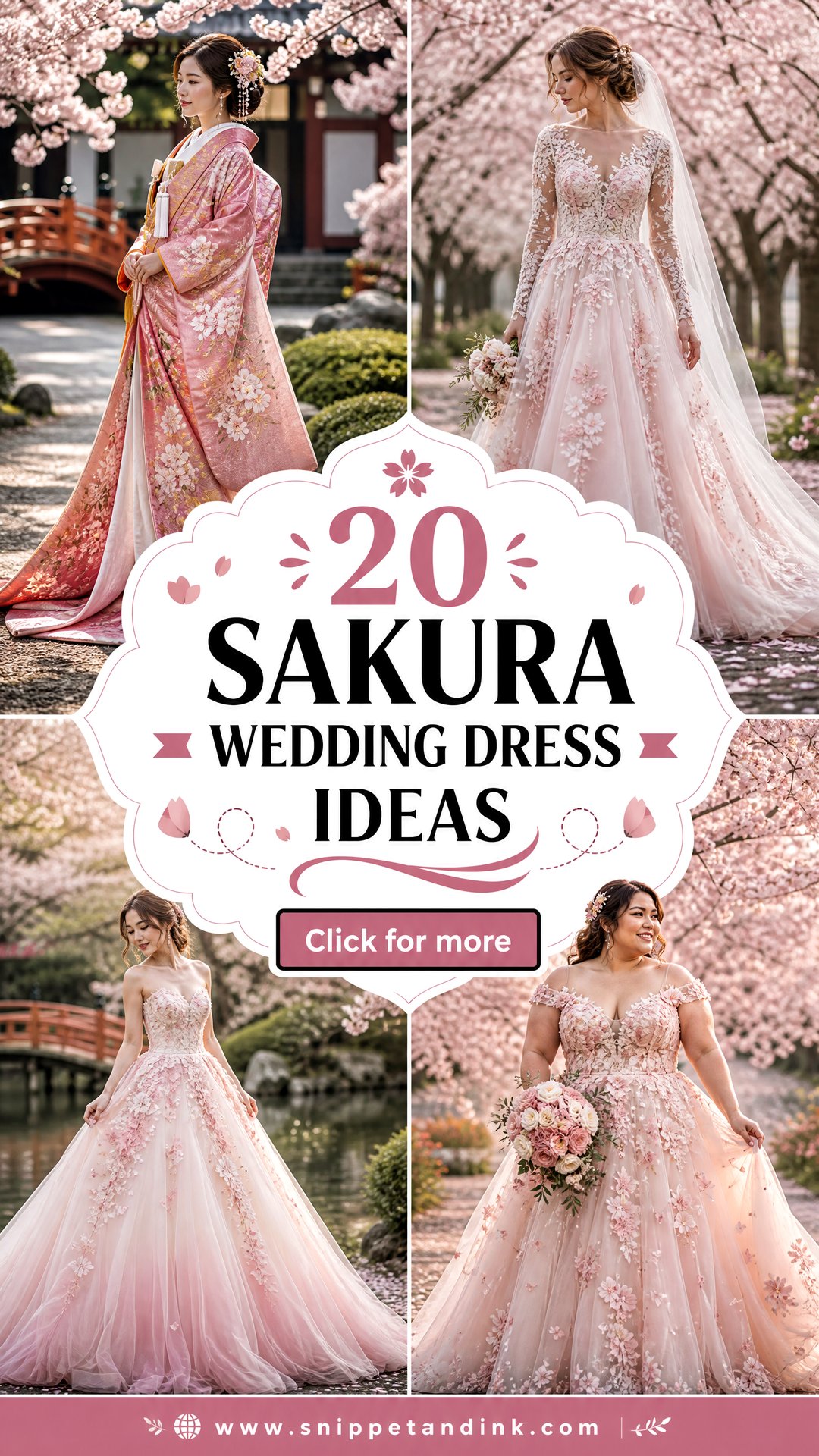
A cherry blossom theme is easy to overdo. Put petals on the dress, the veil, the shoes and the hair at once and the bride starts to look like a centerpiece. When I style a sakura look, I pick one place for the flowers to live, whether that’s petal appliqués, fine embroidery, a blush underlayer or kimono-inspired details, and keep everything else quiet. The twenty looks below run from a full floral ball gown to a plain ivory dress with one embroidered branch, plus traditional Japanese attire for brides with a real connection to it. Think about your venue, the season and how much theme you actually want before you shop.
Testing Blush Against Your Skin Before You Commit to Pink
Blush is the color I see brides regret most, and almost always for the same reason: they chose it from a photo instead of holding it against their own face. Pale pinks lean either cool, toward lilac, or warm, toward peach and nude. Cool blush can make warm or olive skin look grey, while peachy blush can disappear completely on very fair skin and read as a stained white dress.
At an appointment, I ask the bride to stand by a window, take off any makeup on the chest if she can, and drape the fabric right up to her collarbone. Then we take a phone photo with and without flash. If the dress looks fresh in both, it will hold up on the day. If it only works under the salon’s warm lights, it won’t.
- Warm and olive skin: look for peachy or nude blush, or keep pink to the underlayer only.
- Very fair skin: a slightly deeper rose pink keeps the color visible in photos.
- Deep skin: soft blush with a warm undertone tends to glow; icy pink can look chalky.
- Unsure: choose an ivory gown and bring the pink in through embroidery or flowers instead.
1. Blush A-Line Sakura Wedding Dress
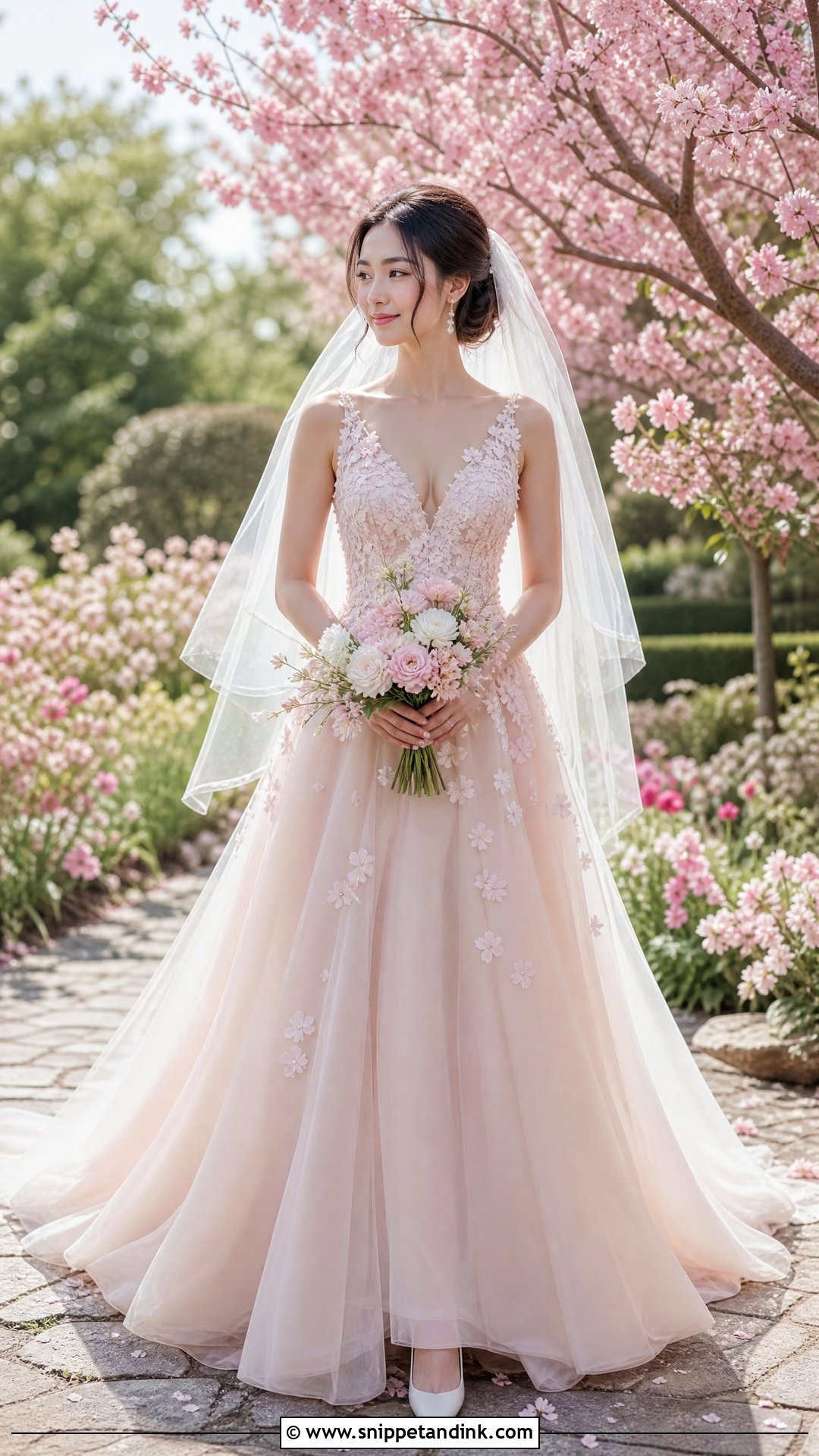
Pale blush on a classic A-line is the closest a dress gets to the color of the blossom itself. I like the appliqués to start at the neckline and thin out toward the hem, so the eye travels down rather than getting stuck on a crowded bodice. The fitted waist and gently flared skirt suit most body shapes. Ivory pointed pumps, pearl drops and a small bouquet of white ranunculus with blush blooms keep the palette soft, while a loose low bun and sheer fingertip veil leave the neckline open. One check before you buy: hold the blush fabric against your bare face in daylight, because some pinks turn sallow next to warmer skin.
2. Ivory Sakura Lace Wedding Dress
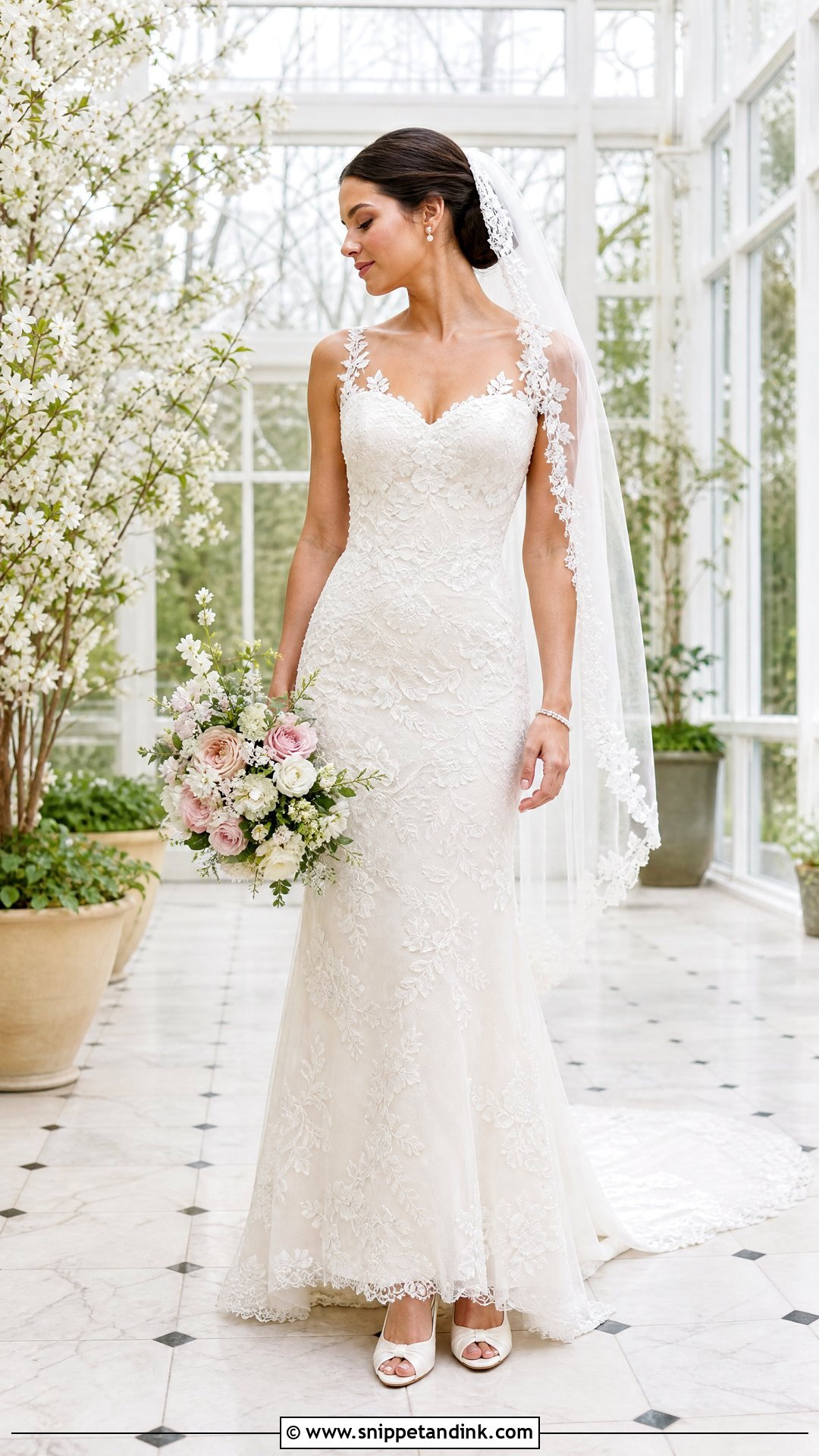
Some ivory laces are woven with branch-like motifs that read as sakura without a single pink thread. On a fit-and-flare, I’d choose fine lace over heavy corded motifs, which add weight and stiffness at the hips. Satin slingbacks, a slim pearl bracelet and small floral studs are enough jewelry, and a smooth chignon or waved bob stops the look from turning busy. For flowers, mix blush sweet peas and ivory roses with a few cherry blossom branches. If you want a lace-edged veil, its pattern has to be simpler than the gown’s or the two start arguing.
3. Sakura Ball Gown Wedding Dress
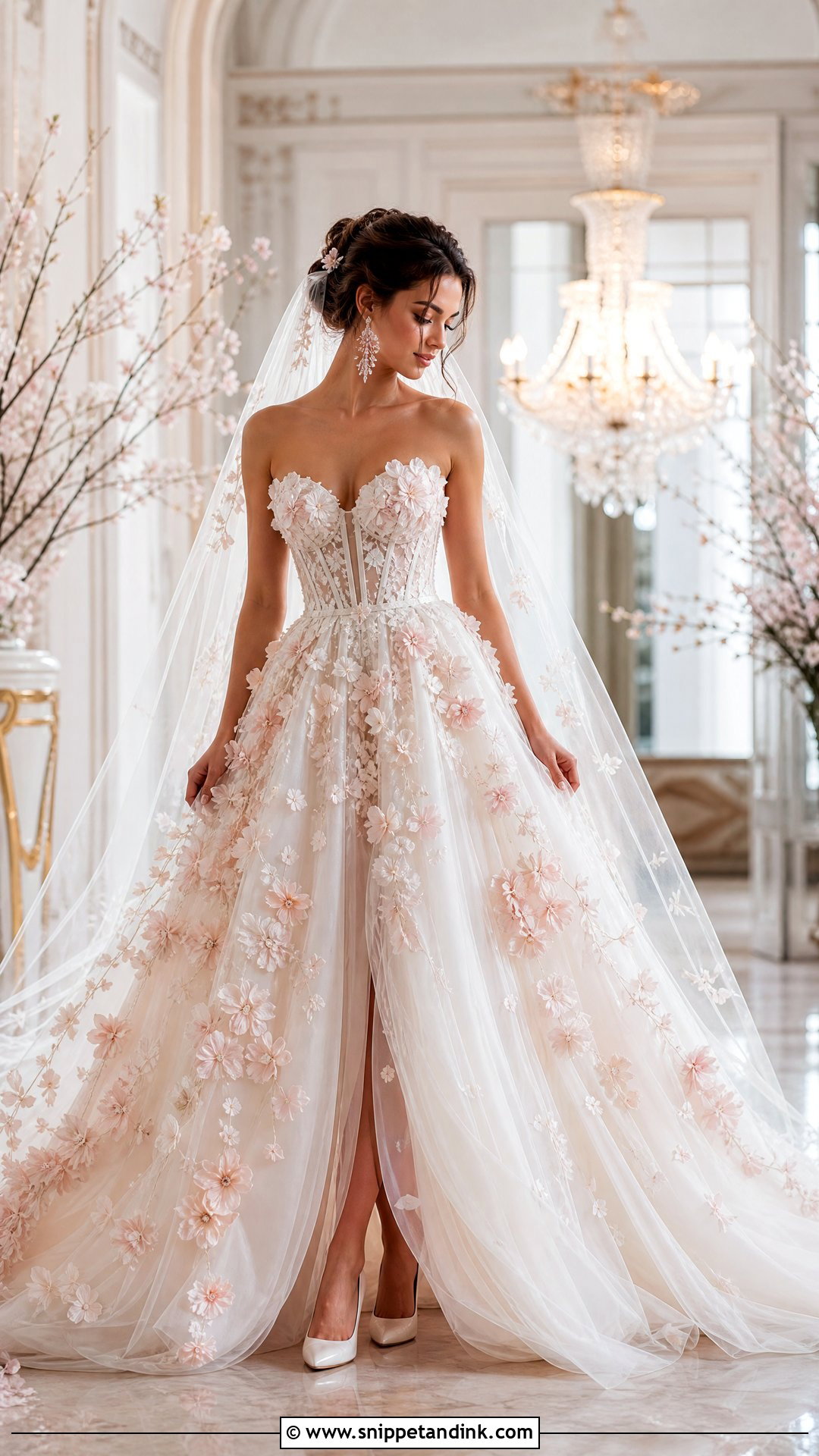
A ball gown covered in three-dimensional blossoms is pure entrance. Underneath, the structured bodice does the work of holding up all that tulle, so make sure it’s boned firmly enough that the skirt’s weight doesn’t drag the neckline down by evening. Mixing ivory, blush and muted pink petals gives the flowers real depth. Everything else stays restrained: crystal studs, white satin pumps, a narrow bracelet and a neat bun with two or three blossom pins on one side. A plain cathedral veil runs behind the skirt without covering the work. Ballrooms and historic estates have the room for it; a narrow chapel aisle does not.
4. Kimono Sleeve Sakura Wedding Dress
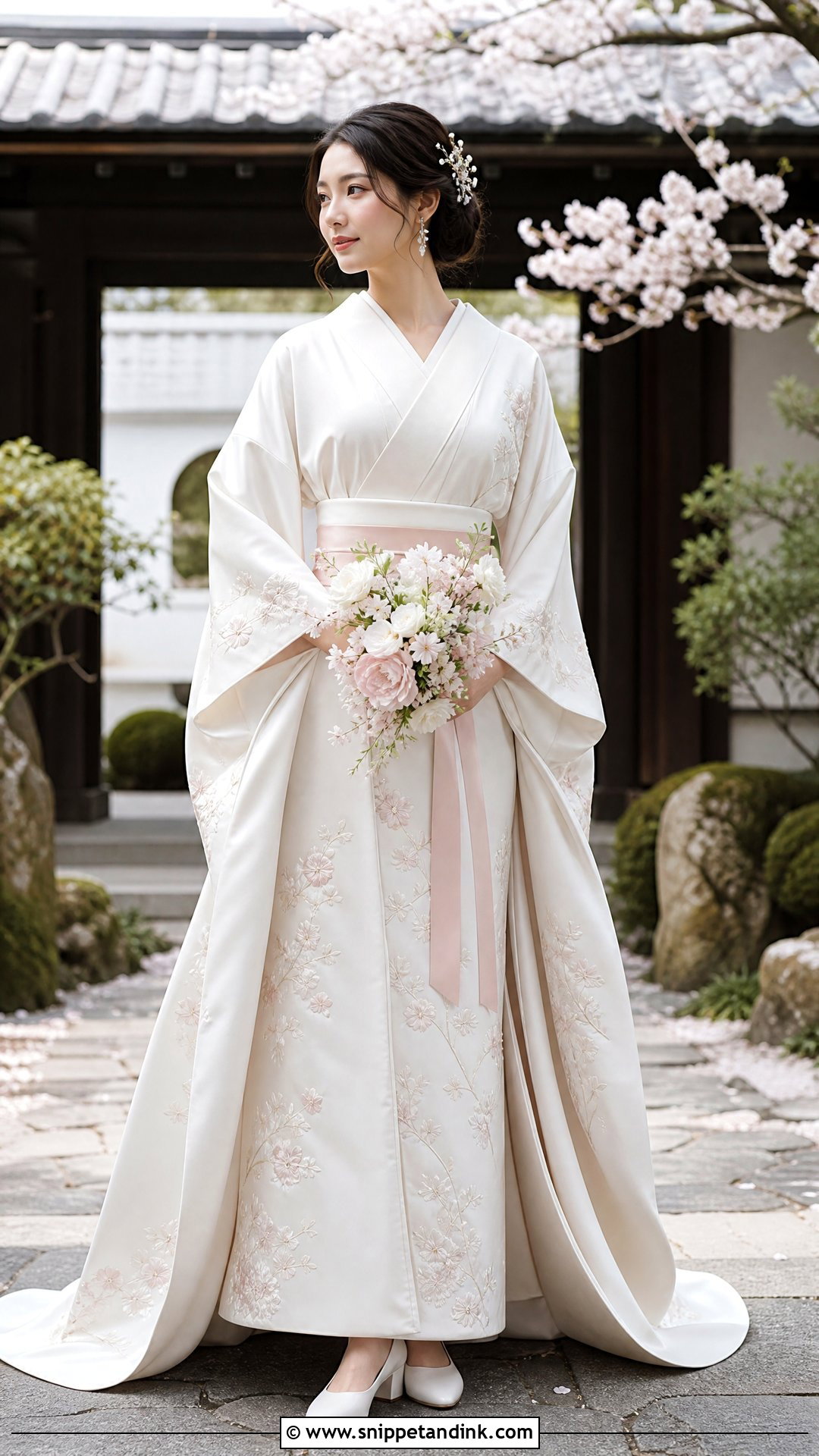
Kimono-style sleeves move well, but on a Western gown I always check how far they open. If they close tightly at the wrist, they restrict your arms when you lift a glass or hug someone, so I prefer sleeves that end above the wrist or split along the arm. A wrap-style ivory bodice with an A-line skirt and light blossom embroidery carries the idea, and a pale blush sash nods to an obi. Closed-toe block heels, pearl hairpins and petal-shaped earrings finish it, with a simple bouquet of white flowers and a few pink blooms. Borrowing from a culture’s dress calls for care: work with a designer who understands the shapes they’re referencing.
5. White Shiromuku Sakura Wedding Kimono
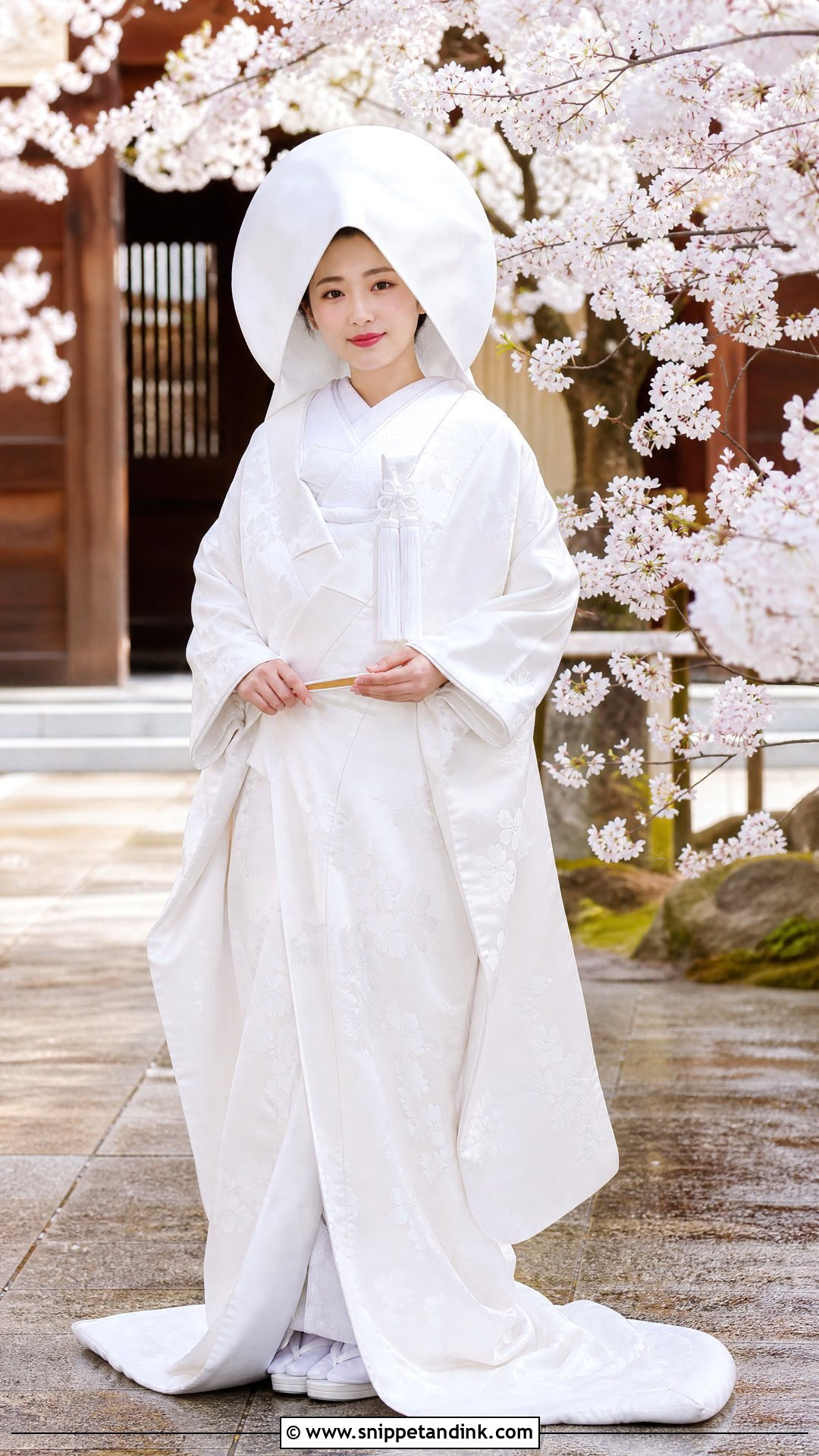
A white shiromuku is the most formal bridal kimono, worn white on white, and its beauty is in woven texture rather than color. Sakura motifs woven into the silk appear only as light moves across it, which is exactly how they should be seen. The ensemble includes a white obi and its accessories, white tabi socks and formal zori, with a wataboshi hood for the ceremony or, where appropriate, a floral hair ornament. This is not something to assemble yourself. A trained kimono dresser handles the layering, fit and order of every piece, and that expertise is what keeps it sitting correctly through hours of portraits. It carries deep meaning for brides honoring Japanese heritage.
6. Pink Iro-Uchikake Sakura Wedding Kimono
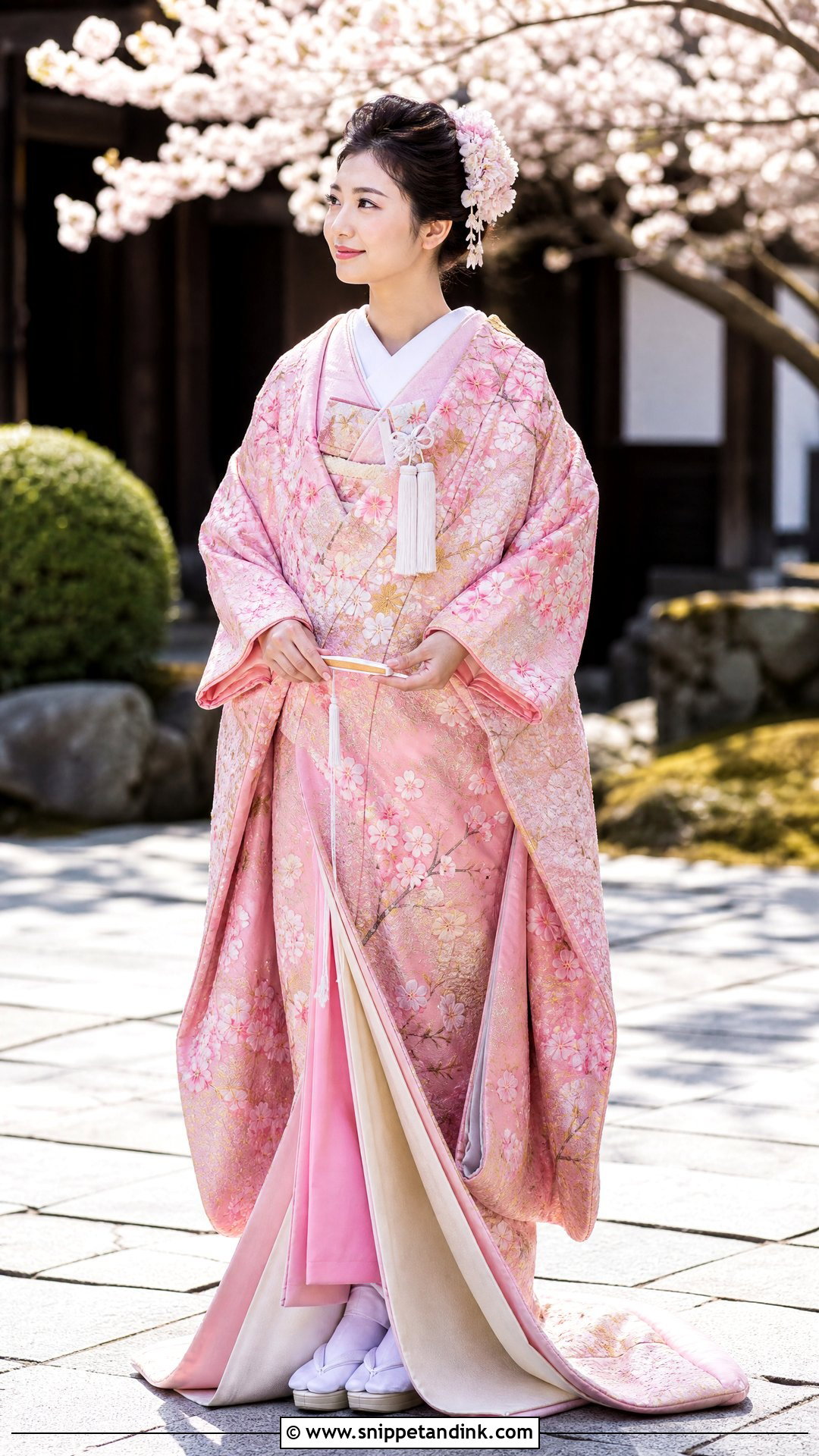
The iro-uchikake is a heavily embroidered outer robe, traditionally worn for the reception entrance or formal portraits. Pink versions with sakura branches are often balanced with motifs in ivory, red or gold. Because the robe does all the talking, the layers beneath and the obi, collar, tabi and zori should be coordinated by a professional dresser rather than chosen piece by piece. A polished updo keeps the embroidery at the shoulders visible, and a refined kanzashi hair ornament should echo the blossoms without copying them exactly. Be ready for the weight: embroidered robes are heavy, and you’ll want help walking and sitting. Brides without a cultural tie to the garment should approach it with respect and expert guidance.
7. Sakura Embroidered Tulle Wedding Dress
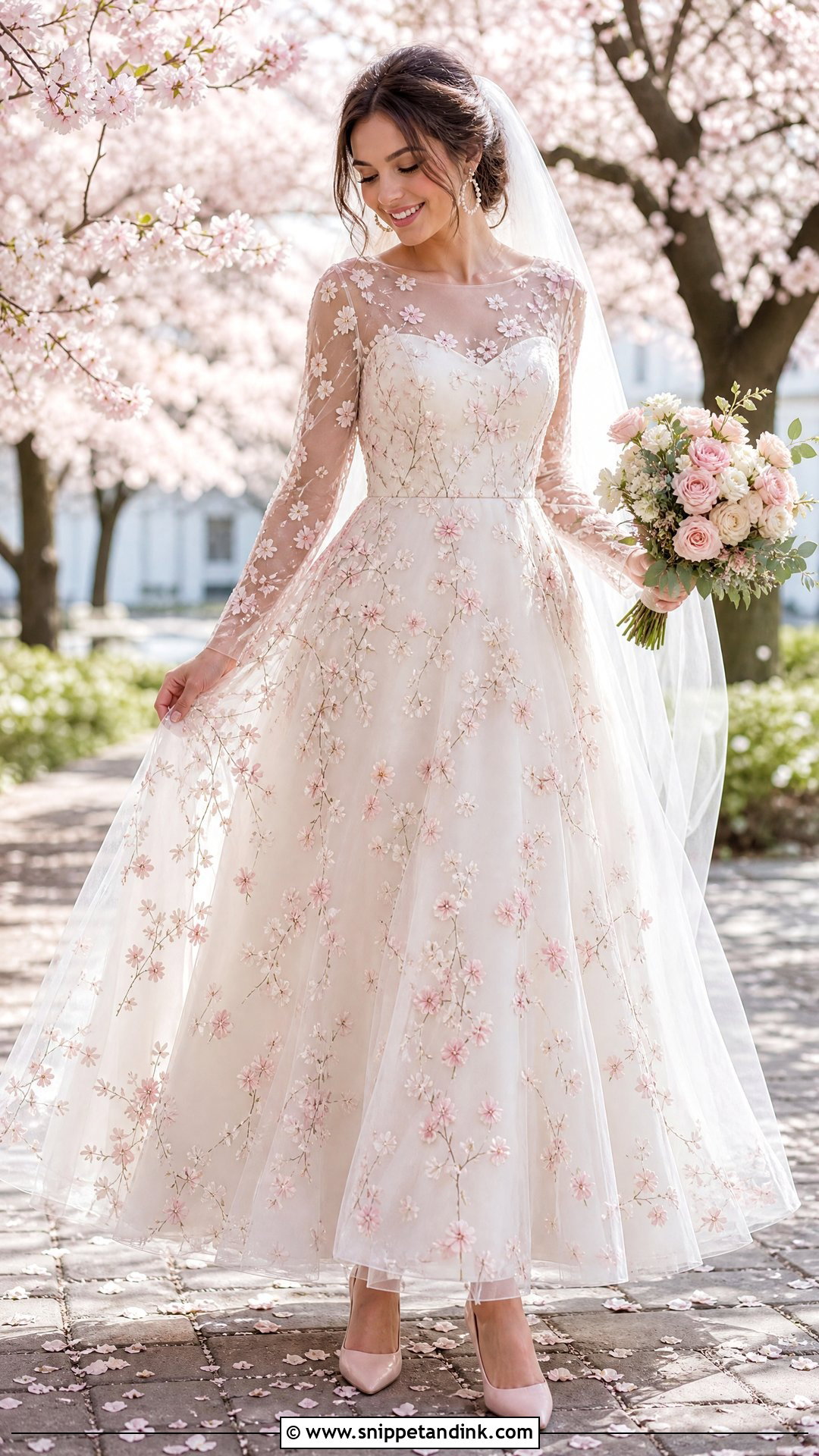
Embroidery on sheer tulle reads like petals floating over the body, but only if the lining underneath is opaque and close to your skin tone. I check that first, under bright light, because see-through tulle without a good lining looks unfinished in flash photos. An A-line with a supportive bodice and embroidery spreading across the neckline, sleeves and skirt is the classic version. Blush and ivory threads give depth. Pale pink pumps and small pearl hoops pair well, and a narrow satin belt helps if the waist needs definition. Wear a half-up style with loose waves and a plain tulle veil.
8. Long Sleeve Sakura Wedding Dress
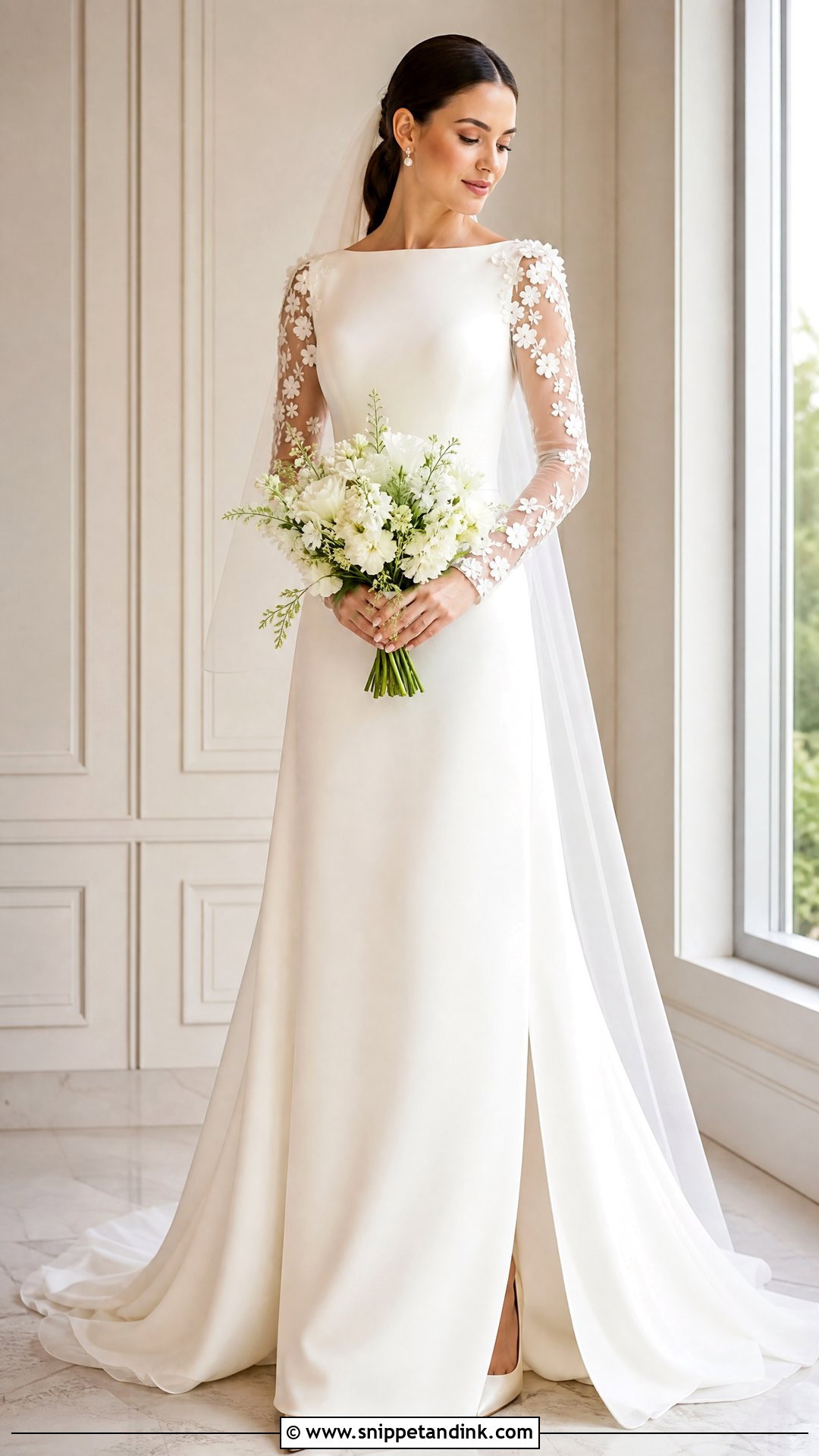
Spring mornings can be cold, and a long sleeve is the honest answer for an early ceremony. Sheer sleeves scattered with sakura appliqués over a smooth crepe or satin body keep the detail on the arms and upper bodice, which leaves the skirt clean. Pointed ivory heels lengthen the line; pearl earrings and a slim comb are plenty. I’d style the hair in a low ponytail or sleek chignon so the shoulders stay visible. A chapel veil adds formality, and a structured bouquet of ivory tulips and blush roses suits the tidy shape. Watch the appliqués at the inner elbow at fittings, since that’s where they rub and lift first.
9. Off-Shoulder Sakura Wedding Dress
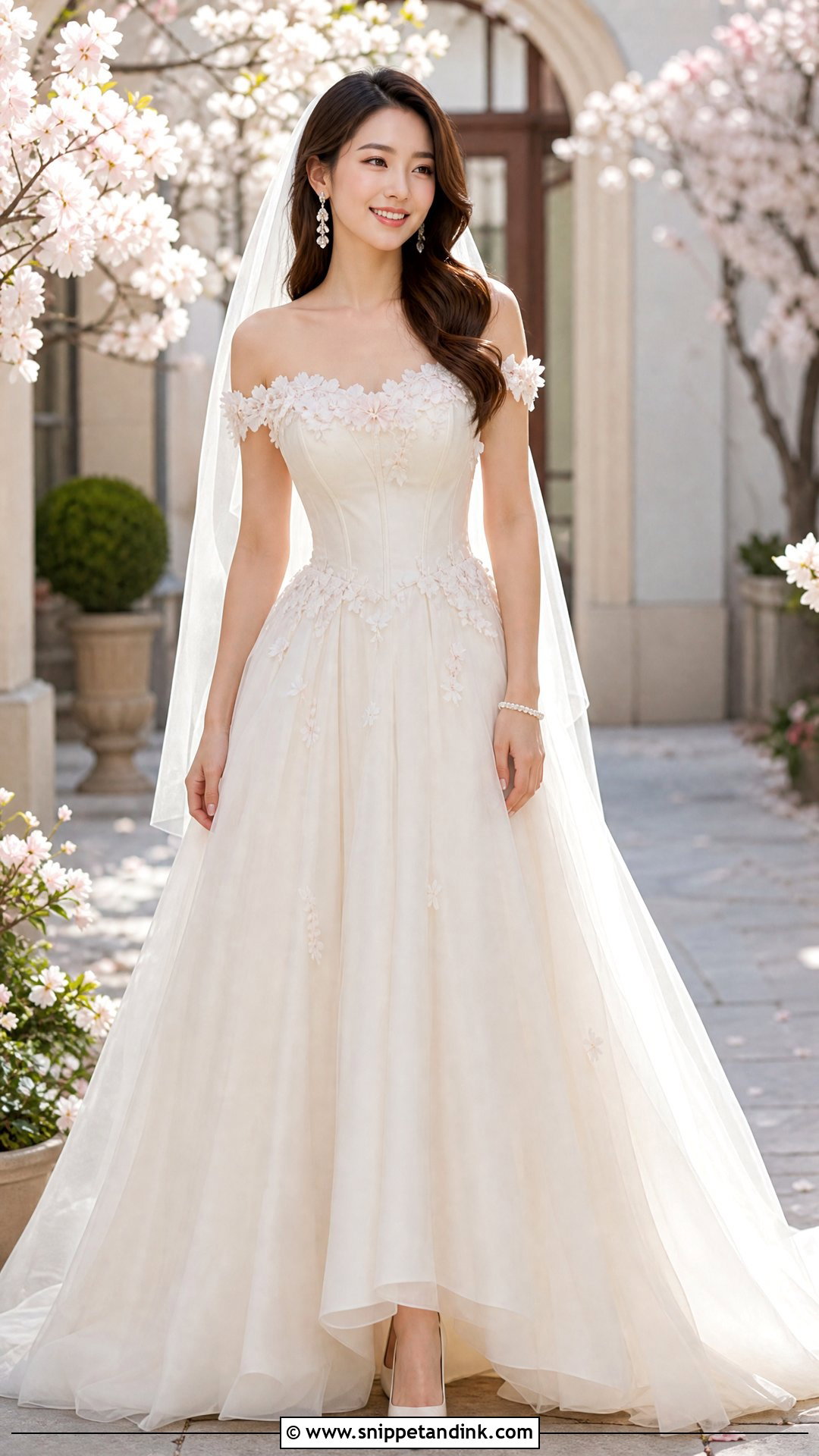
Small sakura petals along an off-shoulder neckline frame the collarbones better than any necklace, so leave the necklace at home. Pair the fitted bodice with a smooth A-line or fit-and-flare skirt, and consider detachable straps if you’d like a slightly different look later. Pearl-and-crystal drops, ivory pumps and one bracelet are enough. Soft waves swept to one side sit naturally against the bare shoulder, and a sheer veil fixed below the hair keeps the neckline clear. I’d test the bands by lifting both arms at the first fitting, because petal-trimmed bands that slide down crush the appliqués against the skin.
10. Minimalist Sakura Wedding Dress
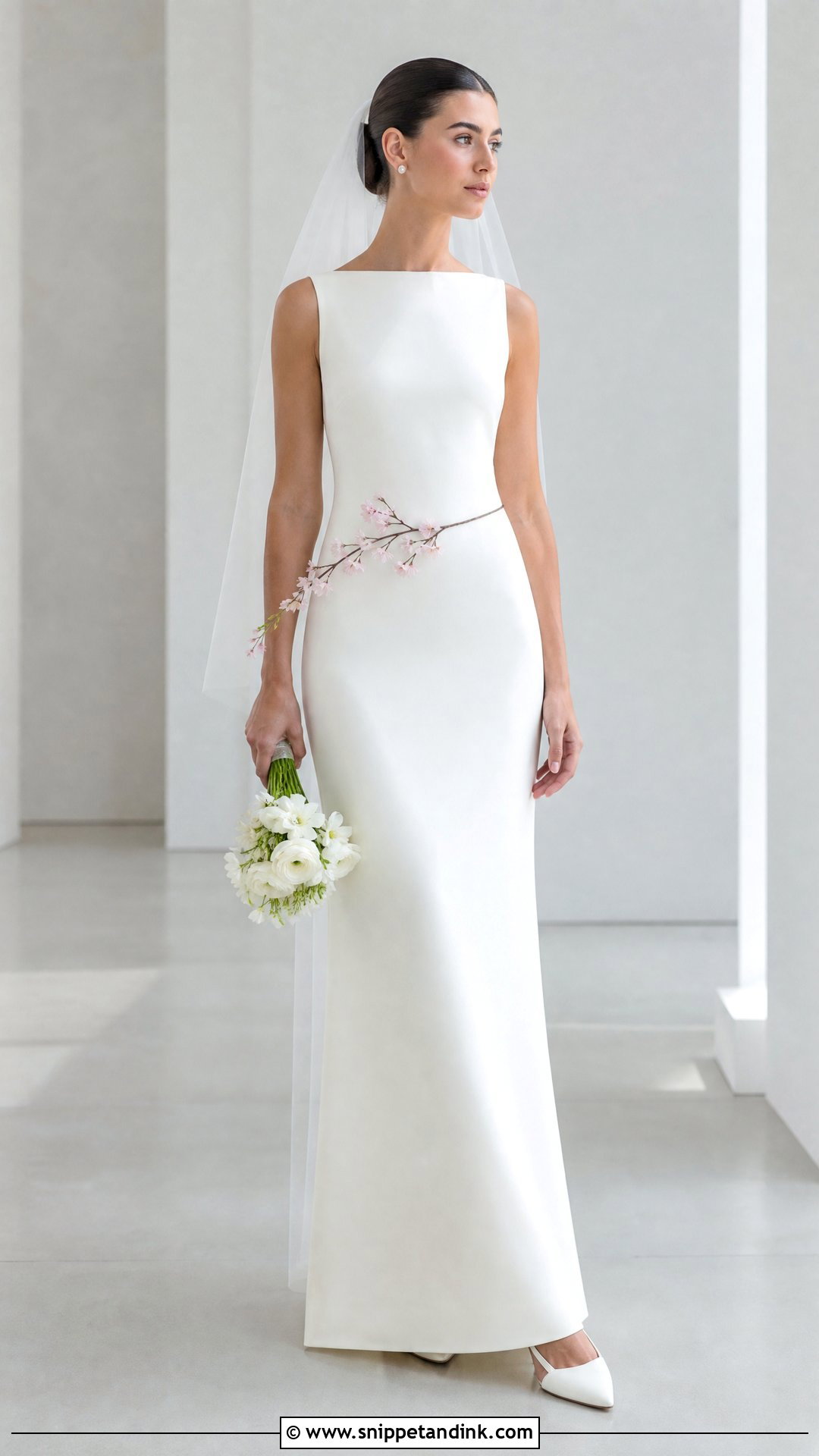
Want only a hint of the theme? Start with an ivory crepe column or A-line and add a single embroidered branch at the waist or shoulder, or a narrow belt with tiny blush blossoms. That one detail gives the dress a story without breaking its clean character. Sleek white slingbacks, pearl studs, a structured mini bouquet and a low bun or polished waves complete it, with a plain chapel veil for softness. This is the version I suggest for galleries, city hotels and courthouse weddings. Crepe is also kind to brides who’ll be sitting a lot, since it hardly creases.
11. Sakura Wedding Dress With Floral Cape
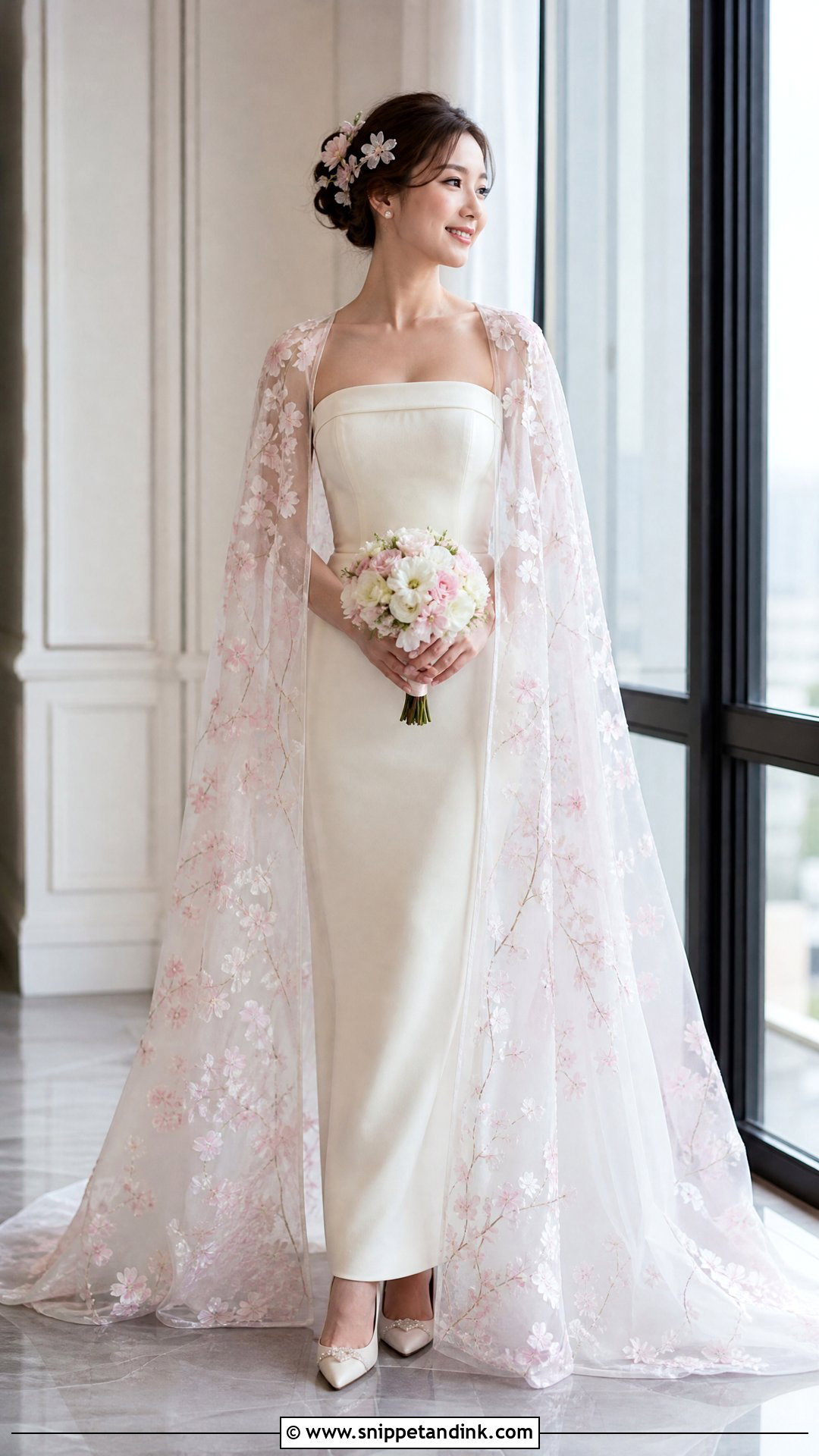
A floral cape adds the blossoms without committing the whole dress to them. Under it, a strapless or sleeveless ivory gown in satin, crepe or mikado stays simple; mikado in particular holds a crisp line that suits a sheer cape on top. The cape, embroidered with pink blossoms and slender branches, can stop at the fingertips or reach the floor depending on formality. It replaces a veil for the ceremony and comes off for dinner, which gives you two quite different sets of photos. Pointed pumps, pearl studs and a low bun with a small blossom comb finish it. Keep the bouquet compact so it doesn’t tangle with the embroidery.
12. Sakura Wedding Dress With Detachable Sleeves
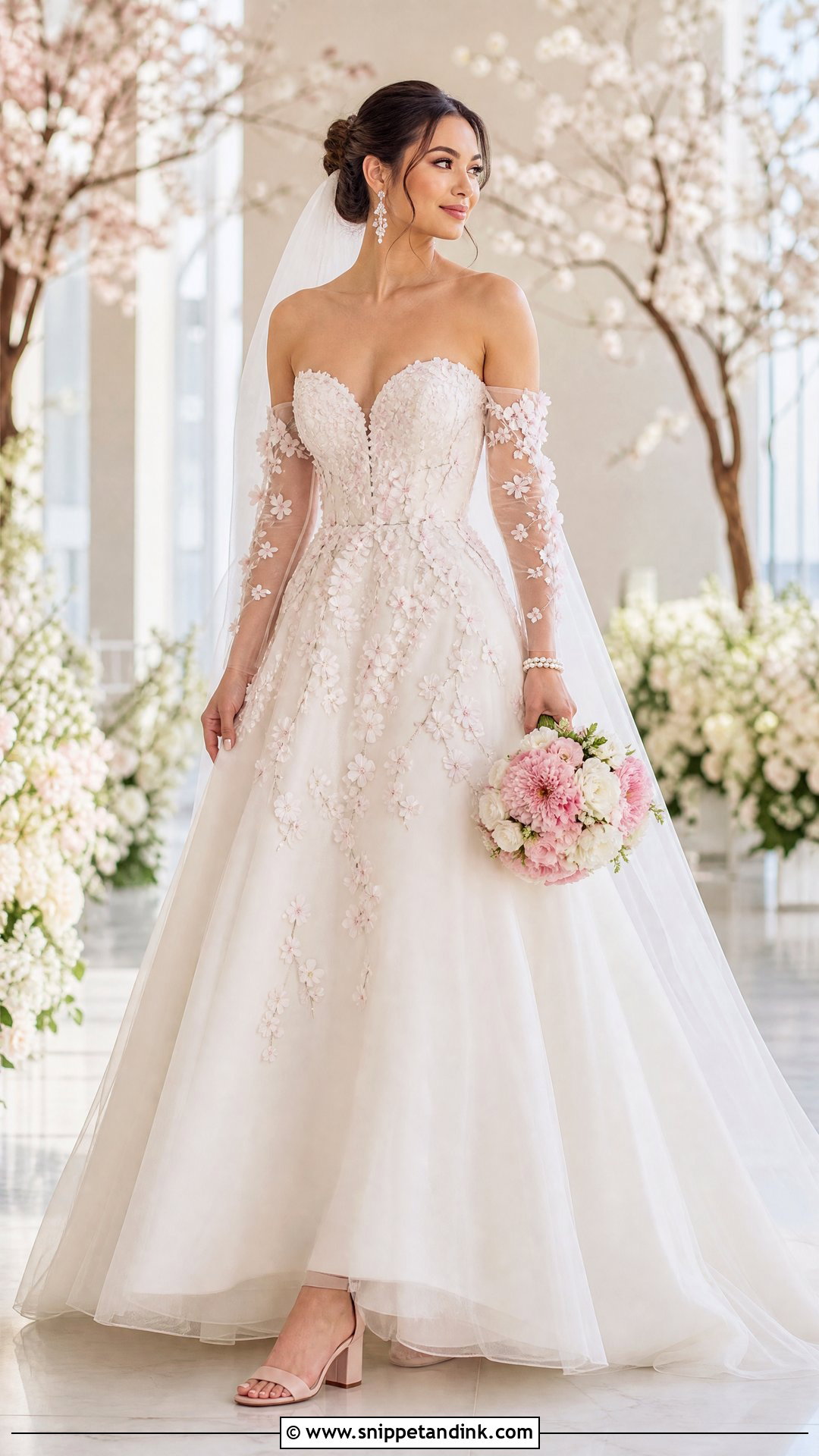
Detachable sleeves let you switch looks without leaving the room. A strapless A-line or fit-and-flare with removable sheer sleeves covered in small sakura appliqués gives you coverage at the ceremony and freedom for dancing later. The bodice has to look finished on its own, so I make sure the sleeve attachment points are hidden and the neckline holds up without them. Blush block heels, a pearl tennis bracelet and small crystal earrings complete the outfit. Sweep the hair back, otherwise loose strands catch on the appliqués. A plain veil and a pink-and-white bouquet keep the palette steady.
13. Blush Ombre Sakura Wedding Dress
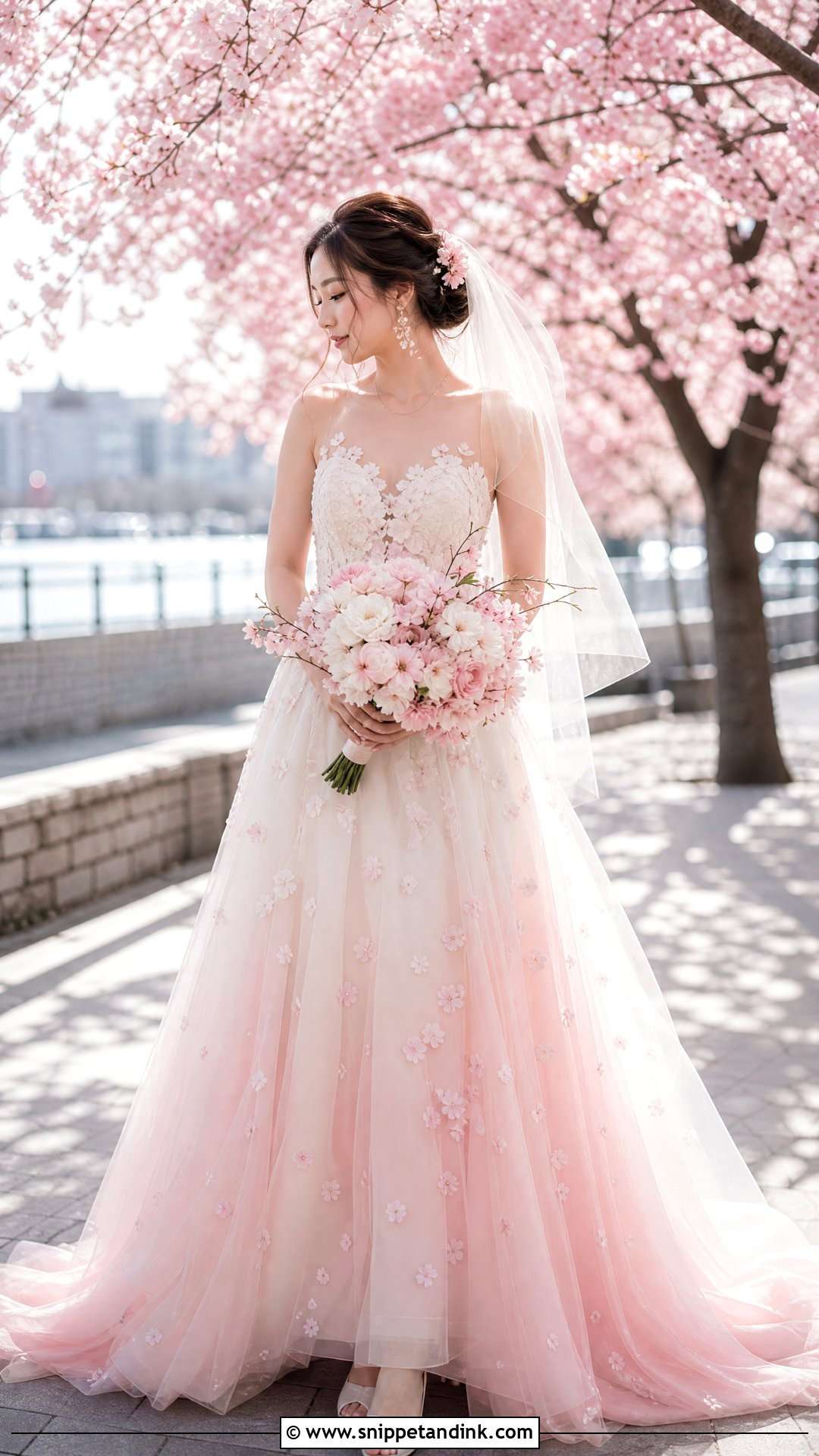
Ombre is the subtlest way to suggest falling petals. The best gowns move from ivory at the bodice to pale pink near the hem gradually, with no visible band where the dye changes. Scattered appliqués can follow the same fade. An A-line skirt gives the gradient room to develop; a slim sheath doesn’t. I’d keep shoes ivory rather than pink so the hem stays the only color moment, with rose-gold earrings, a fine bracelet and a loose low bun. A clean-edged transparent veil won’t interrupt the fade, and ivory and blush flowers tied with a neutral ribbon finish the look.
14. Tea-Length Sakura Wedding Dress
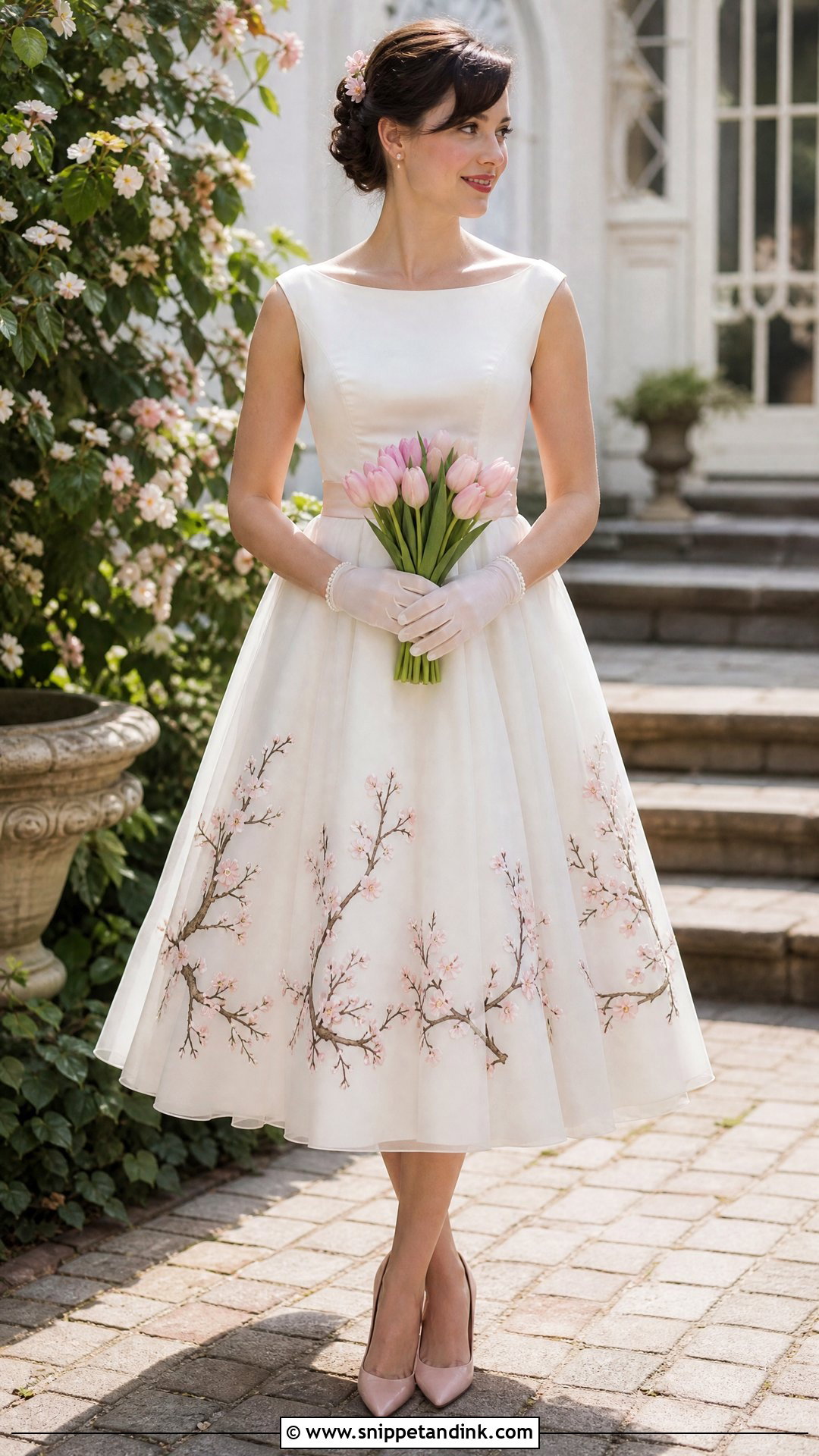
Tea length shows your feet, so the shoes become part of the dress. An ivory gown with a fitted waist, a softly flared skirt and embroidered branches around the hem pairs well with blush pointed pumps or ankle-strap heels. Pearl studs, short gloves and a structured mini bag give a vintage note without tipping into costume. Wear a smooth bun or brushed-out waves with a small floral comb, and add a birdcage veil only if you enjoy retro detail. A compact bouquet of pink tulips and white ranunculus suits courthouse ceremonies, daytime receptions and small garden weddings.
15. Sakura Wedding Dress With Pink Train
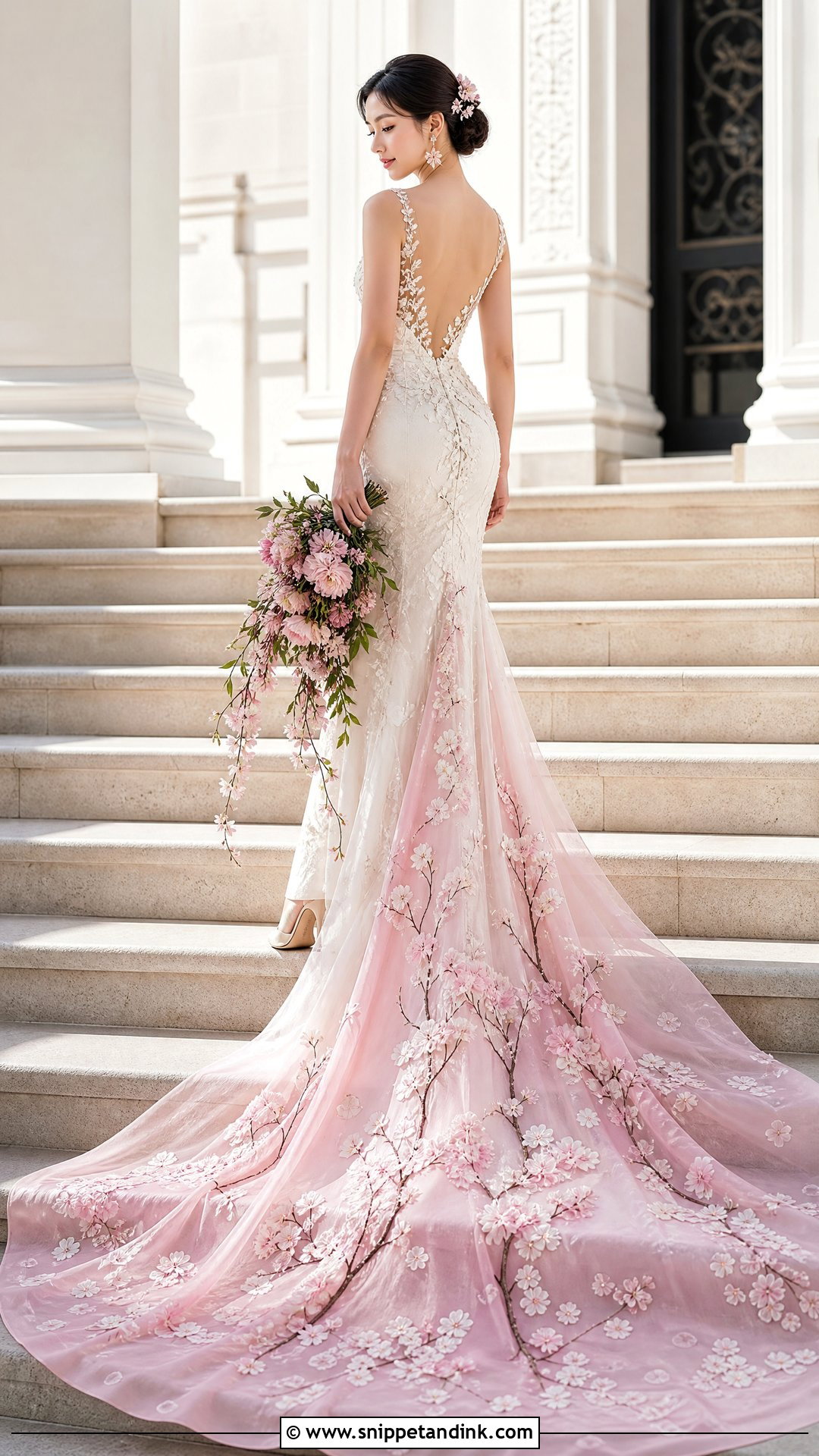
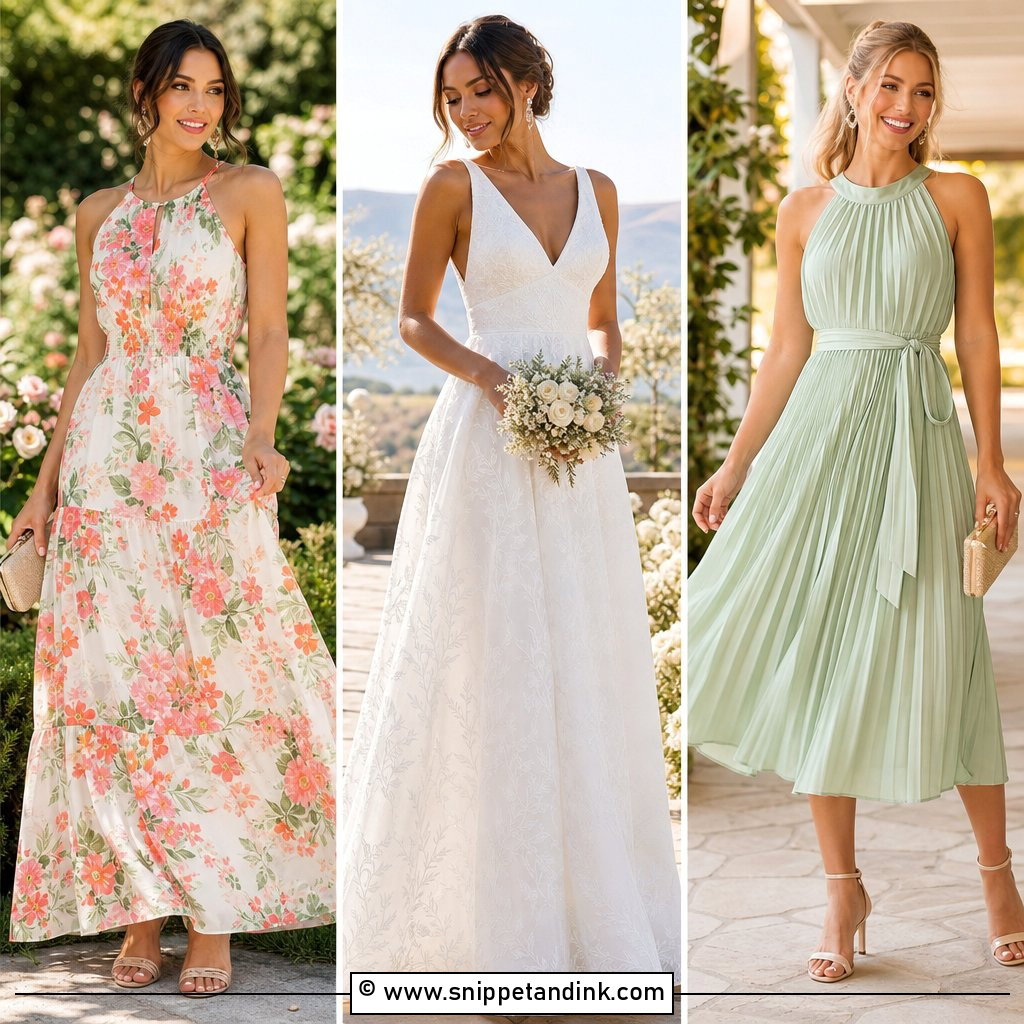
Here the drama sits behind you. An ivory fit-and-flare with a detachable blush overskirt, or a train embroidered with flowering cherry branches, keeps the front simple so the back delivers the moment. A smooth updo reveals the back neckline. If the train is heavily embroidered, I’d skip the veil or choose a short plain one, since tulle over embroidery hides the work you paid for. A narrow cascading bouquet follows the long line. Ask your seamstress for a strong bustle, because embroidered trains are heavy and a weak bustle point tears by mid-reception. Staircases and long aisles show it off.
16. Sakura Wedding Dress With 3D Flowers
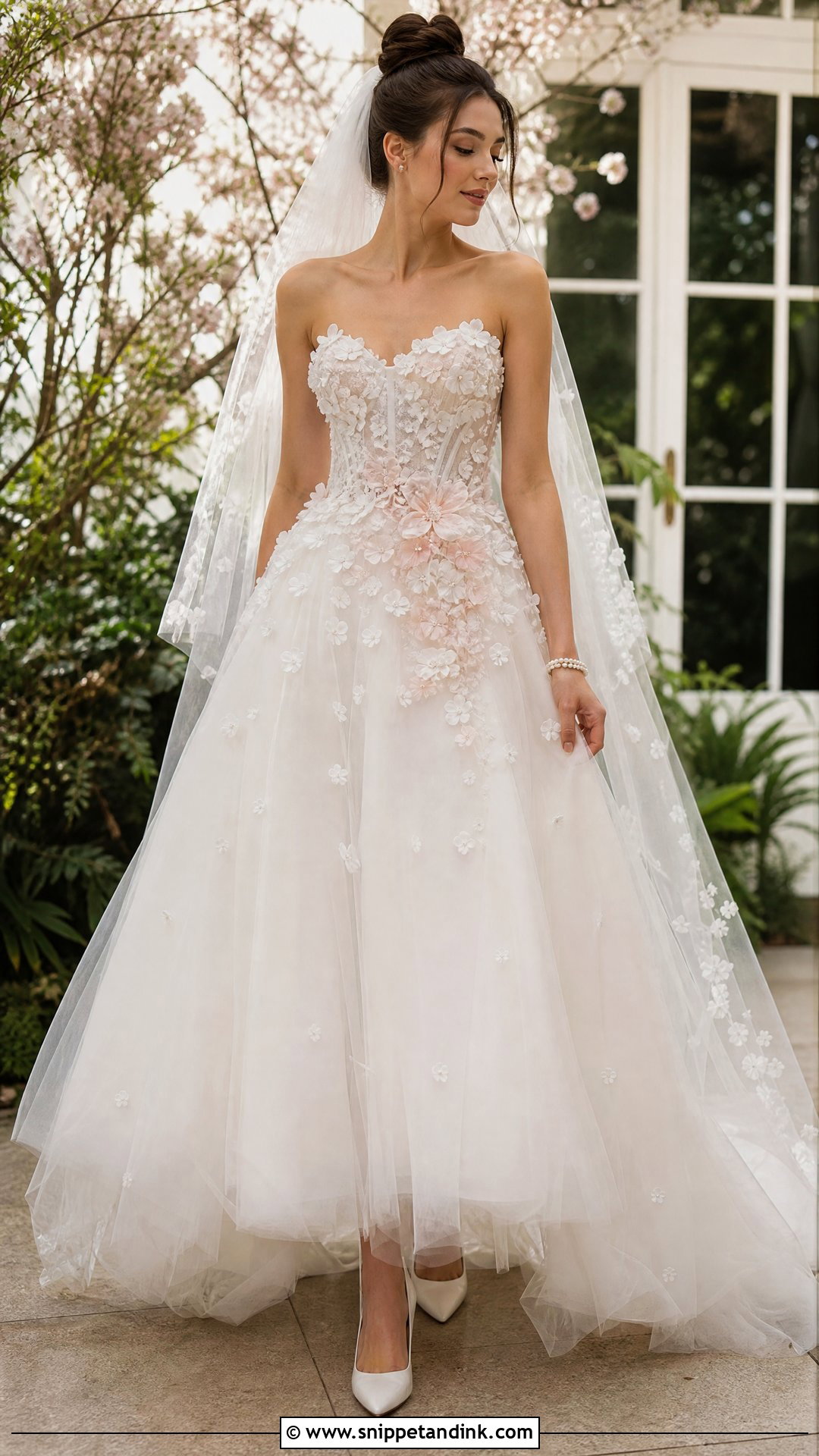
Three-dimensional blossoms change from every angle, which makes them hard to photograph flat and wonderful to see in person. I like them clustered at the waist and scattered across an airy tulle skirt, with a few extending onto the straps. Keep large flowers away from the underarms, where they catch and scratch. Simple white pumps, tiny crystal studs and a narrow pearl bracelet are all the jewelry the dress allows. A clean high bun balances the volume, and a veil with only a few appliqués carries the theme up. A mostly white bouquet with subtle pink accents stops the flowers from competing.
17. Plus Size Sakura Wedding Dress
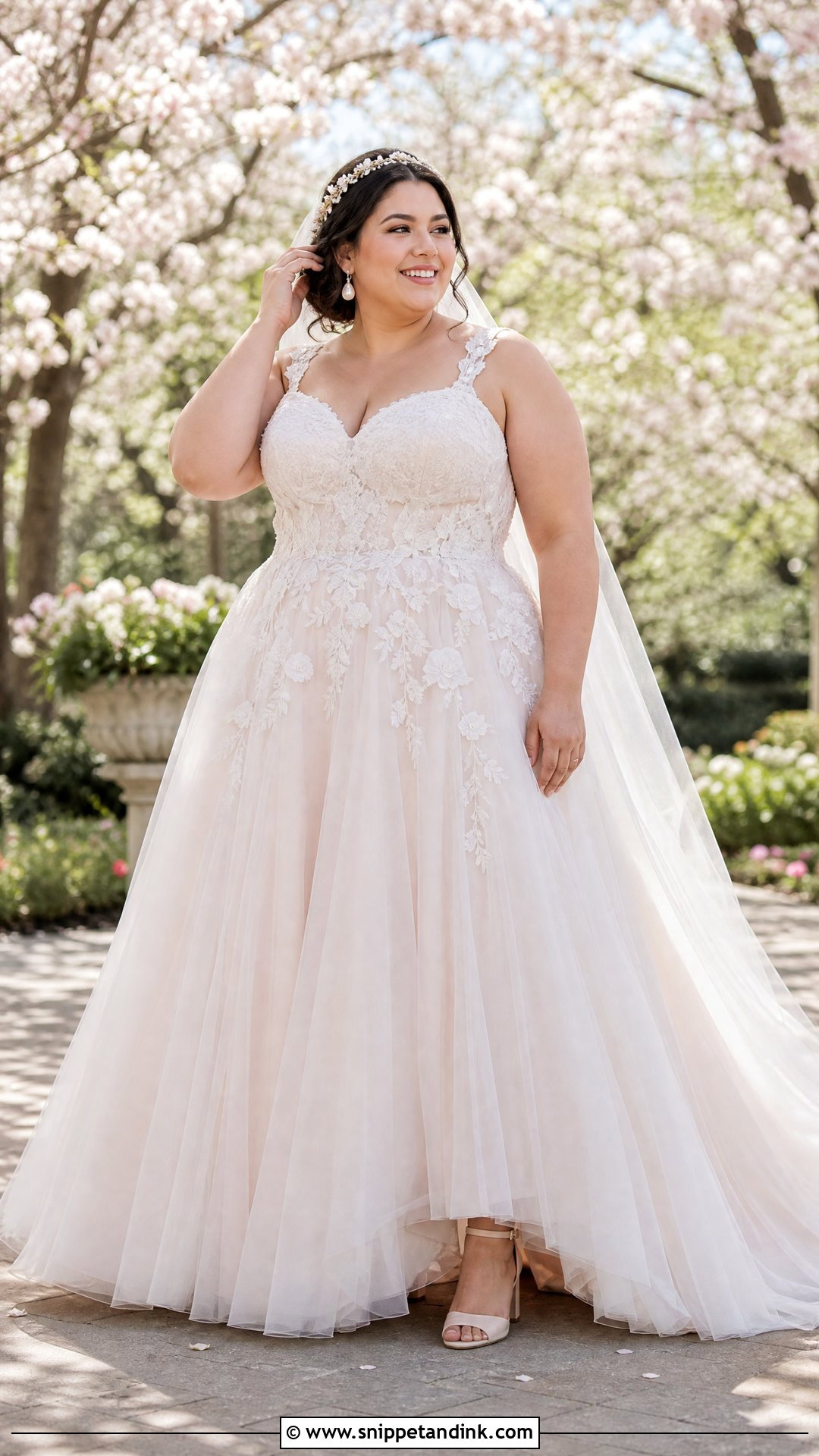
For a plus-size sakura gown, fit and support come before any theme. I look for an A-line with a structured bodice, comfortable straps and embroidery that follows the neckline and waist, because flowers that trace your shape do more than flowers scattered at random. A blush underlayer beneath ivory tulle makes the appliqués stand out without adding bulk. Stable block heels, pearl drops and a flexible hair vine finish it, with a chapel veil fixed below a soft updo. Assess the gown’s built-in support before buying shapewear, then plan for several fittings. Comfort and proportion matter far more than any rule about who should wear what.
18. Modest Sakura Wedding Dress
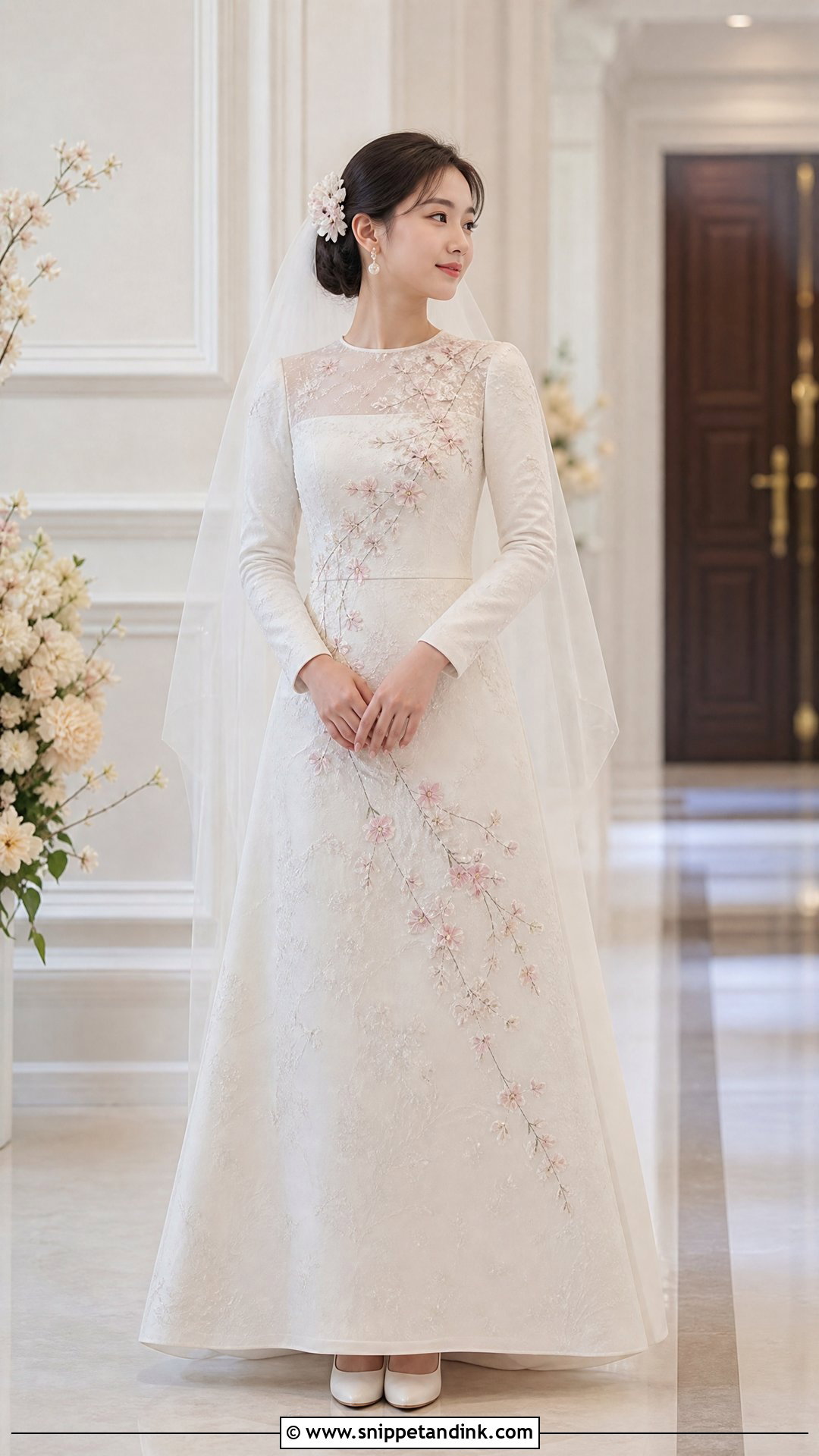
Coverage and sakura detail work well together. A higher illusion neckline, lined long sleeves and a softly shaped A-line give a modest outline, while an embroidered branch running from one shoulder across the bodice creates a lengthening diagonal. Full lining keeps the embroidery crisp rather than letting skin show through in patches. Closed-toe ivory shoes, pearl earrings and a fine bracelet complete it. I’d place a small floral pin above the veil in a low bun, then add a medium veil and a rounded blush-and-white bouquet. Formal ceremonies and cooler days suit it, as does any bride who simply likes being covered.
19. Short Sakura Wedding Reception Dress
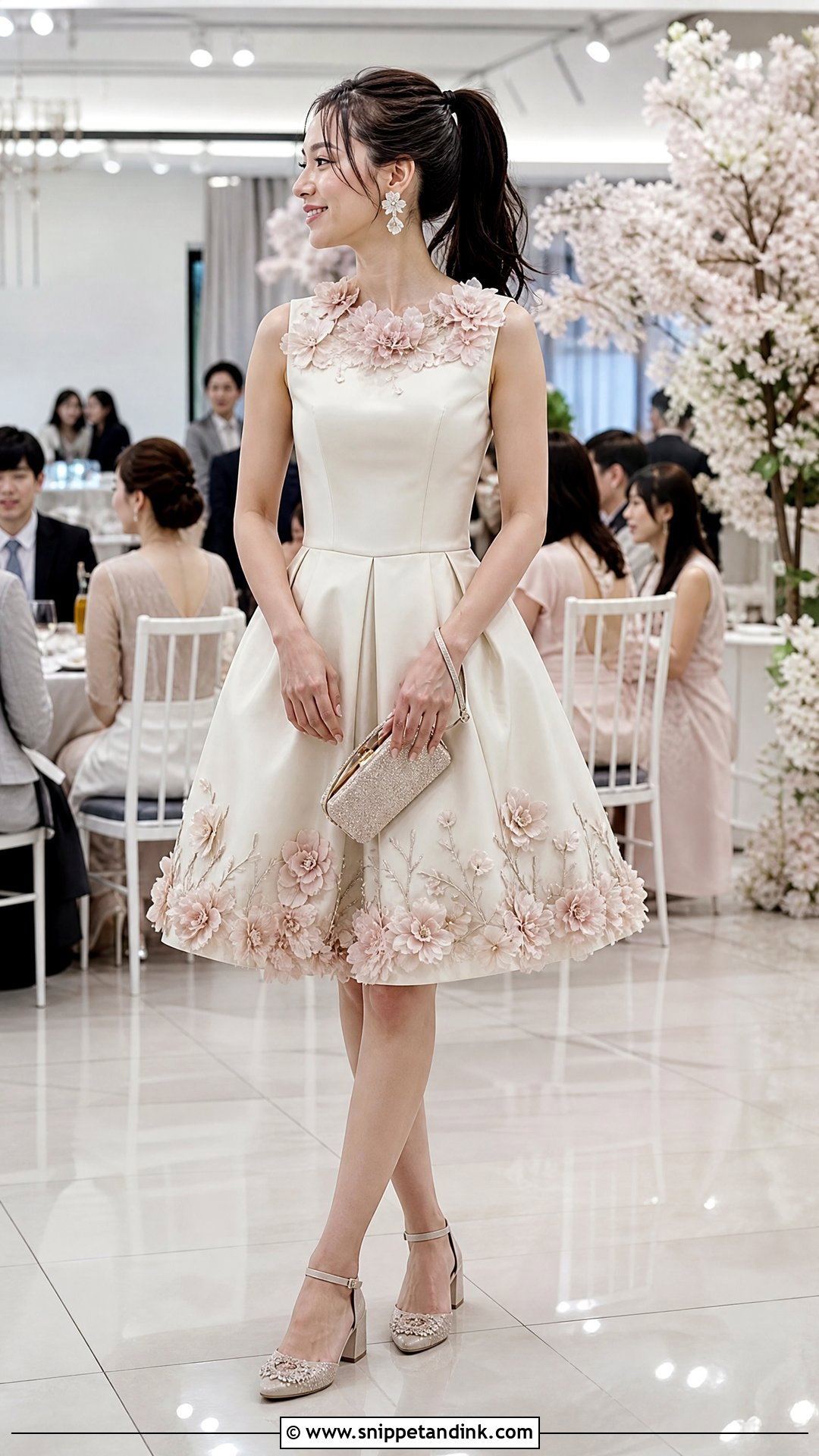
A short second dress gives you room to move once the formal part is over. Choose a structured mini or knee-length dress with a fitted bodice, a flared skirt and dimensional blush flowers at the neckline or hem. An ivory base and good fabric keep it bridal; a casual floral print doesn’t. Low block heels or embellished flats, statement earrings and a small wristlet finish it, and a high ponytail stays put through hours of dancing. Reusing the ceremony hairpins ties both looks together. Leave the veil and bouquet behind.
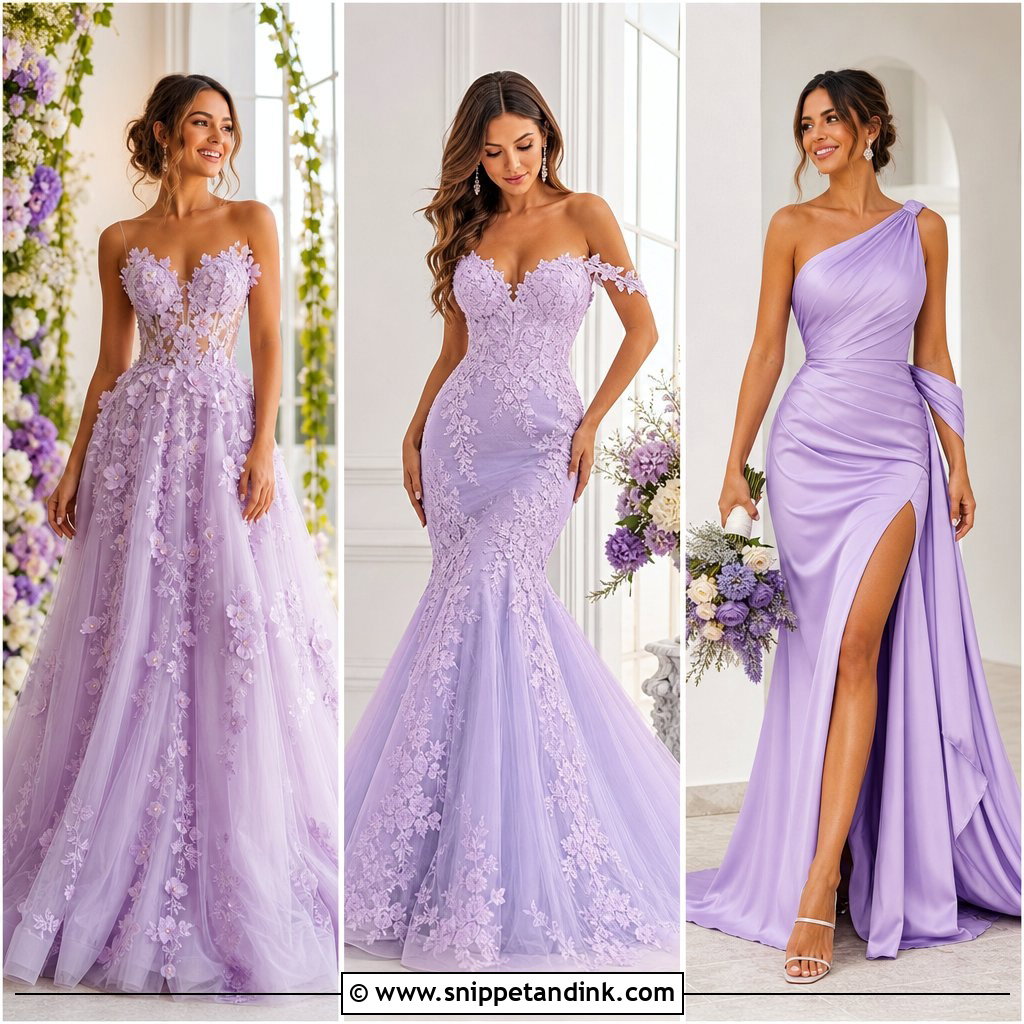
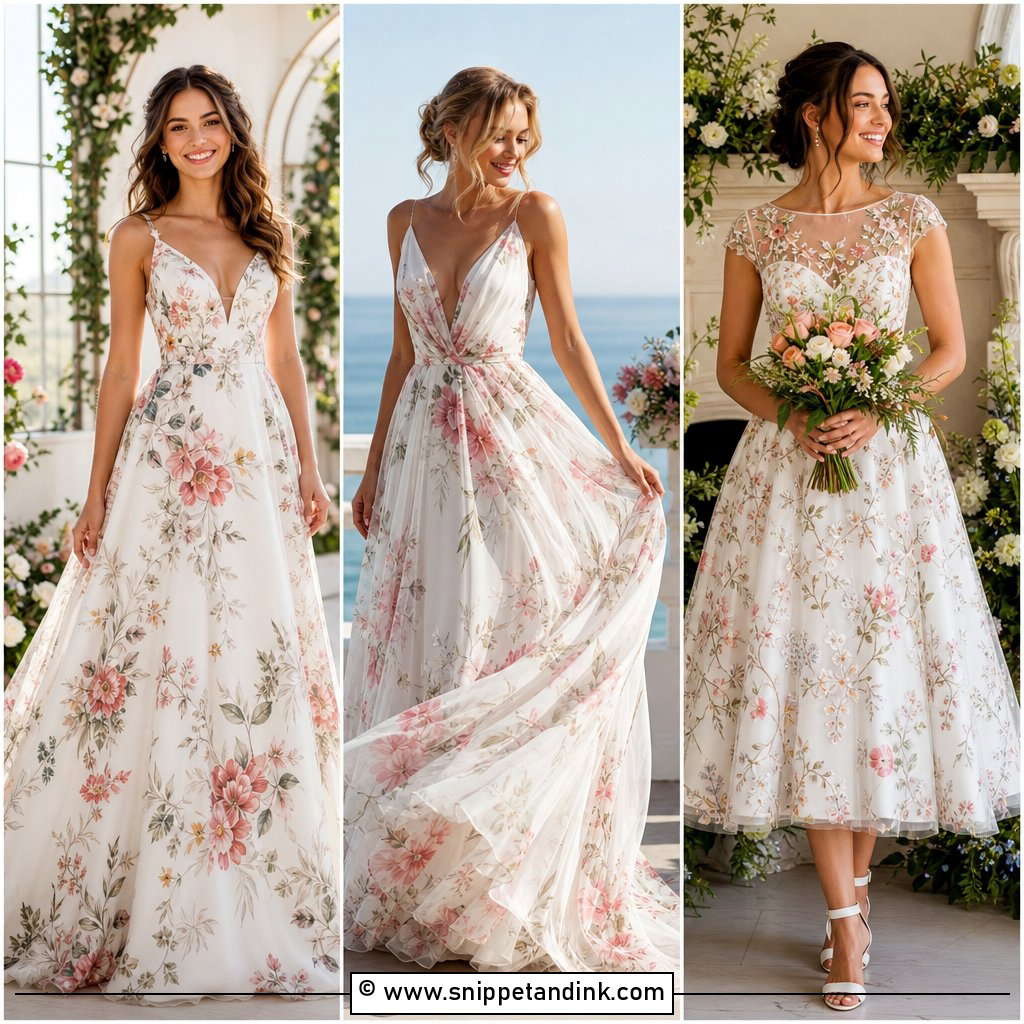

20. Modern Sakura Wedding Pantsuit
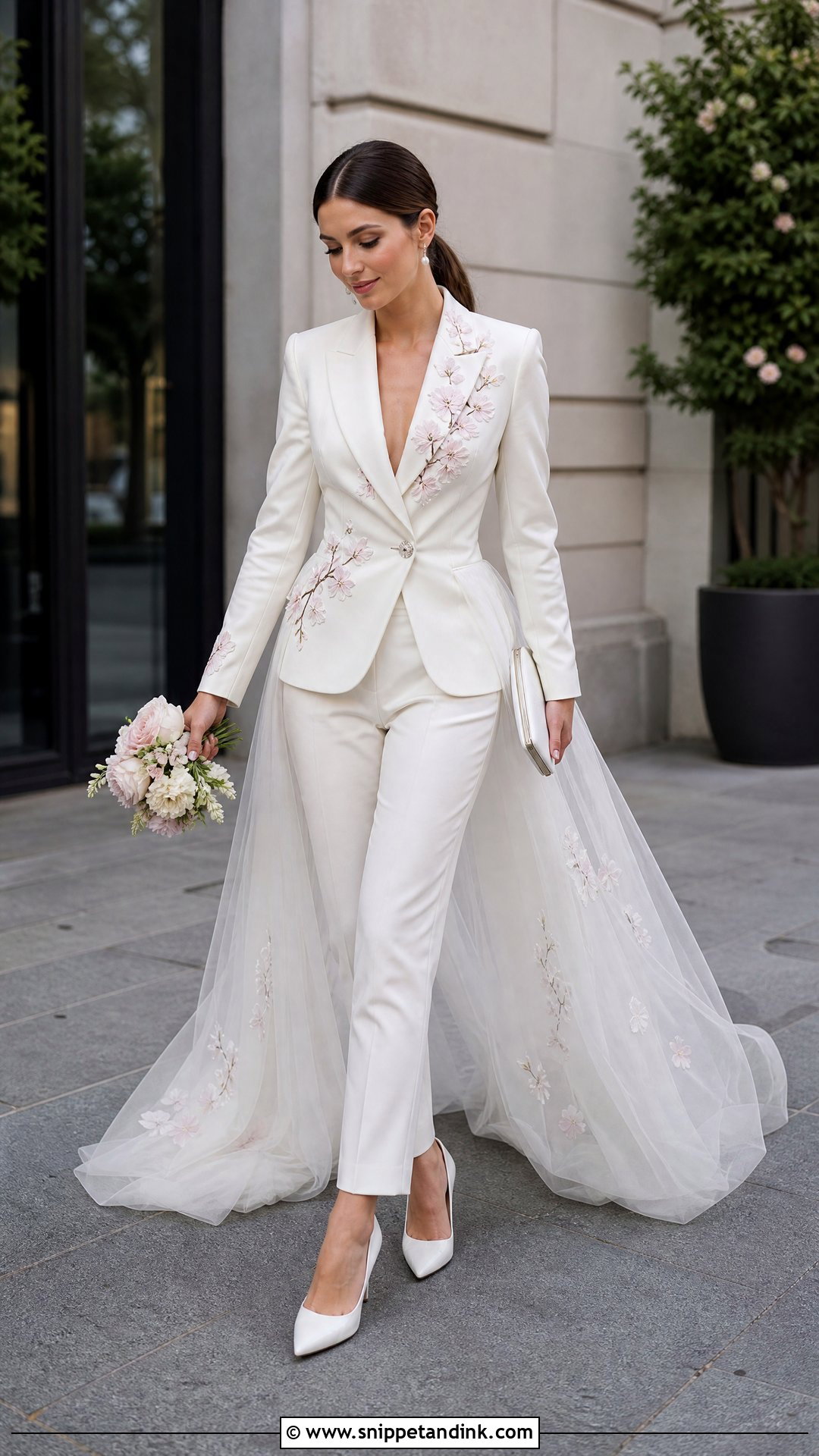
A bridal pantsuit carries sakura just as well as a gown, and it’s what I suggest to brides who have never felt like themselves in a big skirt. Tailored ivory trousers with a fitted blazer or structured corset top work best when the embroidery sits in one spot, along a lapel or down a trouser seam. A detachable tulle overskirt can add ceremony drama before coming off for the reception. Pointed white pumps, pearl drops, a sleek clutch and a low ponytail match the sharp tailoring, and a small blush bouquet softens it. Get the trouser hem fitted with your actual shoes, since a break that’s too long ruins the line.
Real Cherry Blossoms Rarely Wait for Your Date
Many brides picture themselves under actual blossoms, so I raise this early. Cherry trees in any given place usually stay at peak bloom for only about a week, and the timing moves with the weather from year to year. A warm March can bring them forward; a late frost can wipe them out. If the trees are the point of your venue, plan a flexible portrait session or accept that you may get buds or falling petals instead.
Falling petals have their own catch: they stick to tulle, satin trains and veils, and they stain when crushed on a wet path. I tell brides to keep a lint roller and a soft clothes brush in the emergency kit, and to lift the train over damp ground rather than drag it. Cut branches from a florist are fragile too, so ask for them to be added to the bouquet on the morning, not the day before.
Kimono Dressing Takes Longer Than Most Brides Expect
If you’re wearing a shiromuku or uchikake for the ceremony and a gown later, build the dressing time into your morning before anything else. A traditional bridal kimono is put on in layers by a trained dresser, and the hair and makeup usually have to be done around that order. Add time for the change into your Western dress afterward, and for undoing the formal hairstyle if you’re switching to something softer.
Rental is common for these garments, and a good rental service will often include the dresser. Ask exactly which pieces are included, how long the dressing takes for your chosen ensemble, and whether someone stays on to help you sit, move and use the bathroom. In layered silk, you’ll need that help.
One Blossom Detail Is Usually Enough
Whichever silhouette you love, the sakura theme works best when it lives in one place and the rest of the outfit supports it. Petals, embroidery or a blush layer can turn almost any shape into a spring look without swallowing the bride. That could be a ball gown, a pantsuit, a reception mini or traditional Japanese attire worn with real meaning. Keep the shoes practical, the jewelry light and the floral accessories in the same palette as the dress. Then let good tailoring do the rest, because a gown that fits properly always looks more considered than one with more flowers on it.
You'll Like These Ideas:


Leave a Reply