
April is the month I find hardest to dress a bride for. A morning ceremony can be cold enough for goosebumps and the same afternoon can turn warm and humid under a marquee, and none of that shows on the venue’s mood board. So I start with the weather and the ground underfoot, then the formality of the room, and only then the neckline. Lace, chiffon, satin and crepe all have a place in spring, but they behave very differently in wind, damp and a long day of sitting. Below are twenty dresses, each styled head to toe, with notes on where each one copes and where it struggles.
Reading the Forecast Before the Fabric Swatch
Spring weddings get planned in winter, often from photographs taken in June. I ask every April bride three questions before she tries anything on: will any part of the day be outdoors, what is underfoot, and how long is the gap between the ceremony and the reception? The answers rule fabrics in or out faster than any mood board.
- Wind: chiffon and tulle move gracefully; stiff organza and long cathedral veils can turn into sails on an exposed hillside.
- Damp: satin water-spots. A light rain shower leaves rings on silk satin, while lace and crepe shrug it off far better.
- Cold: sleeves, a cape or a tailored jacket beat goosebumps in every photograph. Plan the layer at the fitting so it matches the dress.
- Warm sun in a marquee: lined chiffon breathes; a fully boned satin bodice gets hot by the speeches.
Once you know those answers, the dresses below sort themselves. A bride getting married on a lawn should be looking at different pages from one marrying in a hotel ballroom, even in the same week.
1. Floral Lace A-Line April Wedding Dress
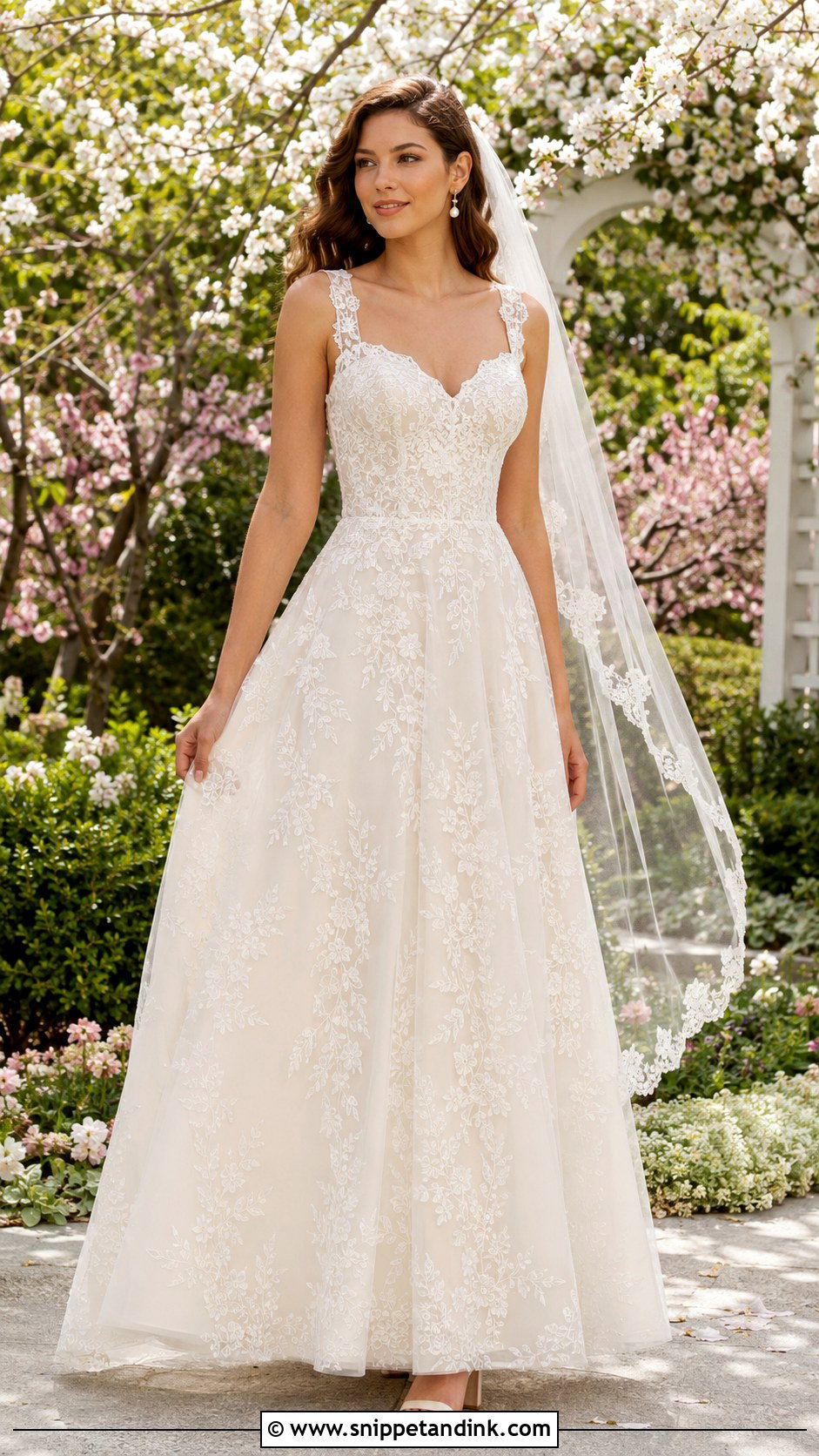
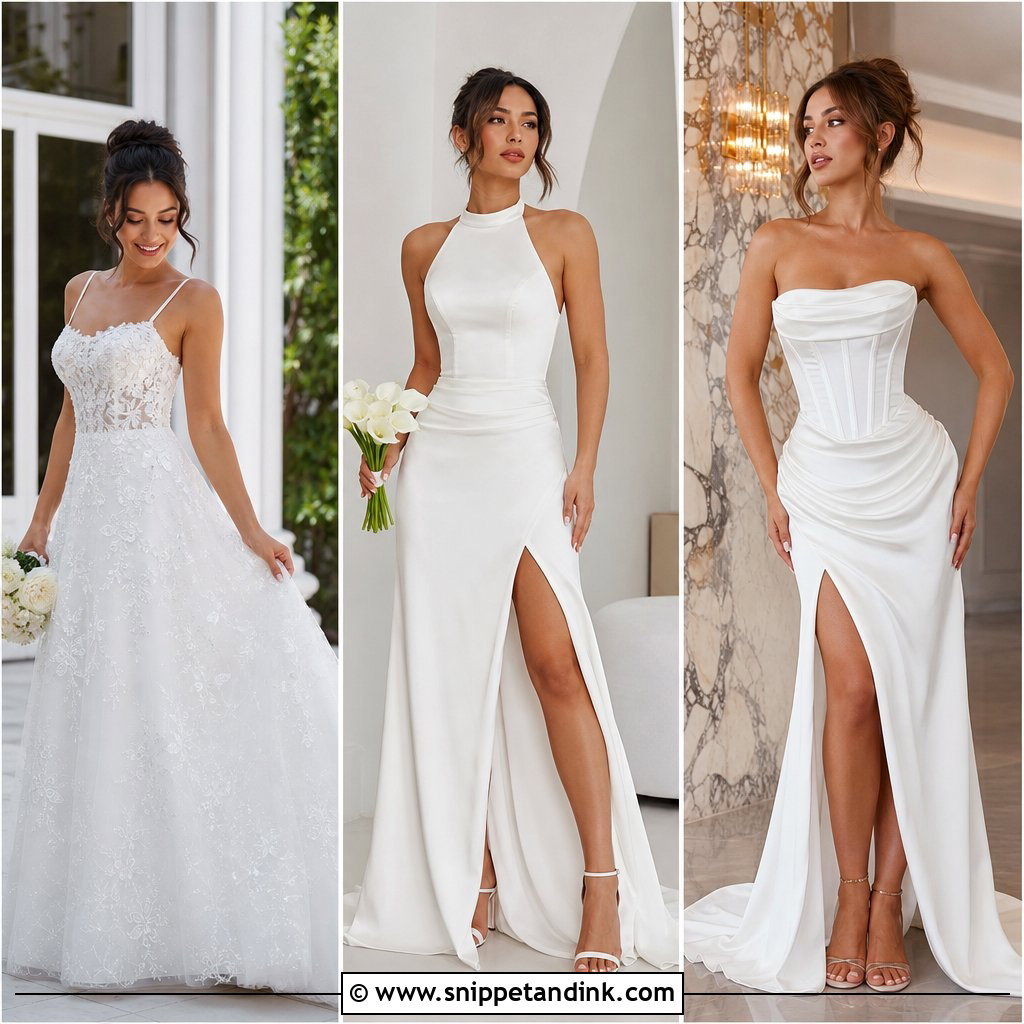
A floral lace A-line is the easiest April dress to wear for twelve hours. The bodice fits, the skirt skims, and nothing fights you when you sit down to eat. I like ivory lace over a nude or champagne lining because it lets the flowers in the pattern read from across a garden instead of melting into a white blur. Check that the straps actually hold the bodice up on their own; lace has some give and will drop a little by evening. Block-heel sandals, pearl drops and a fingertip veil with a matching lace edge finish it, with a loose chignon or soft waves. On a damp lawn, bridal flats or a sturdy heel will save you from sinking at the altar.
2. Long Sleeve Lace April Wedding Dress
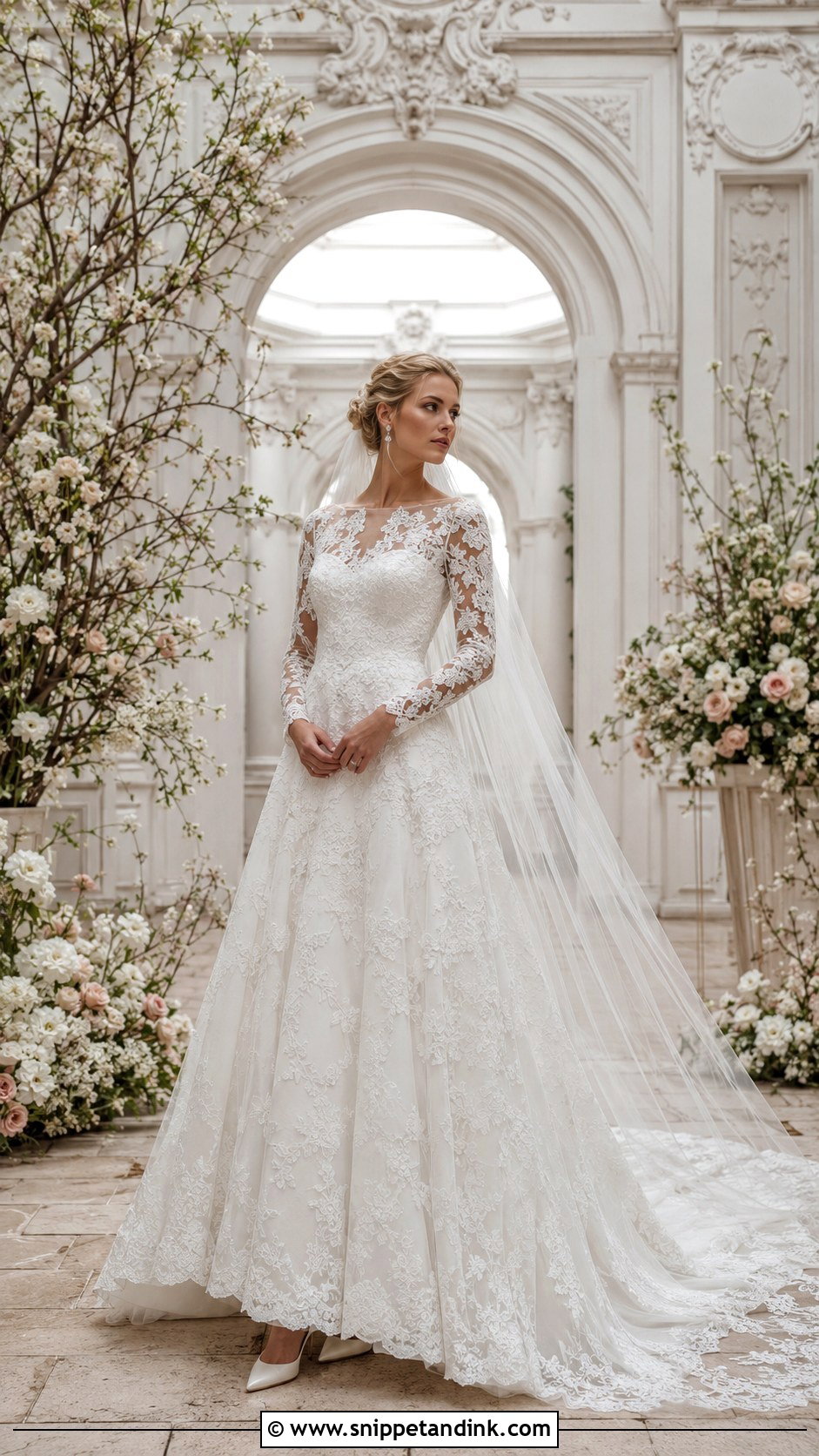
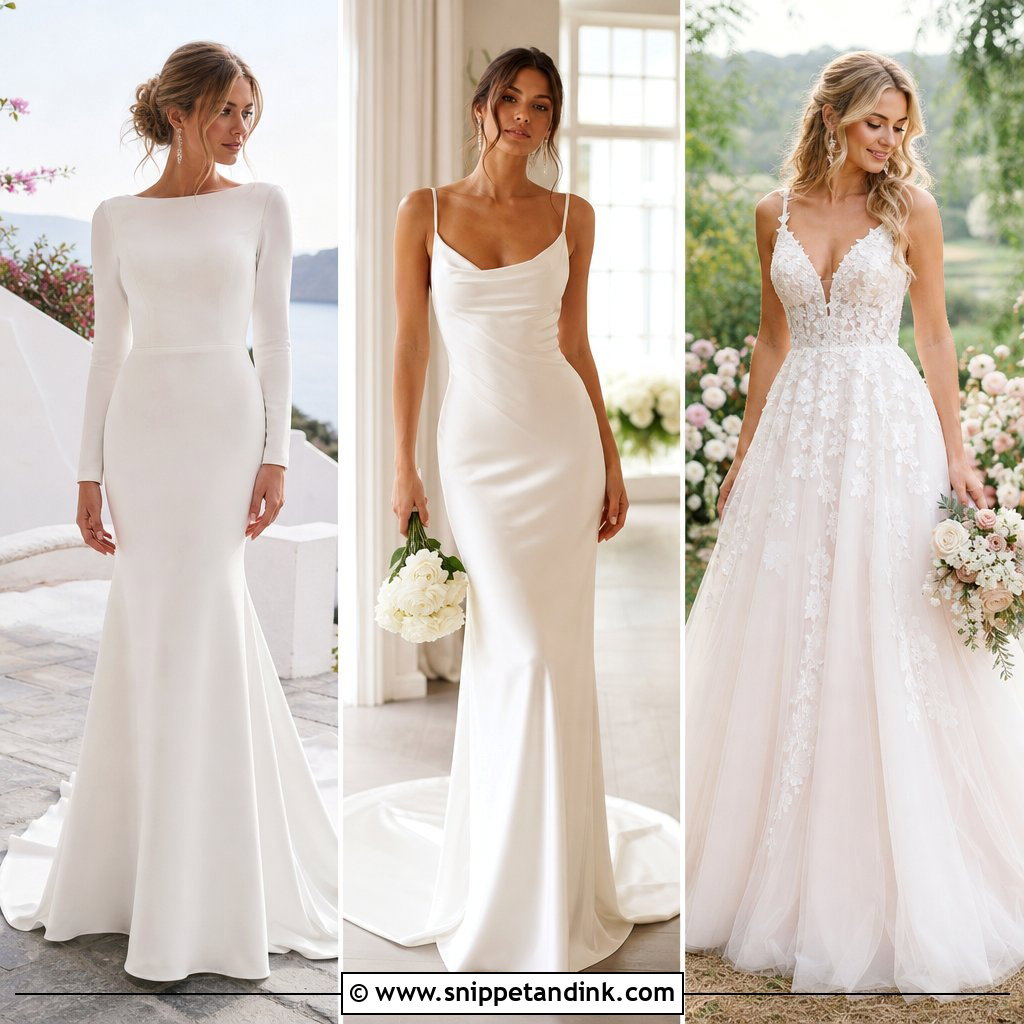
Long lace sleeves are the honest answer to a chilly April ceremony. Illusion sleeves with scattered appliqués give coverage without weight, but I always ask a bride to lift both arms above her head in the fitting room. Tight sleeves restrict hugging and bouquet tosses more than people expect, and a sleeve set too high into the armhole pulls the whole bodice up. A V-neck or open back keeps the dress from feeling buttoned up. Pointed pumps, crystal earrings and a plain cathedral veil suit a ballroom or historic venue, and a low bun shows off the neckline. Bring a light ivory wrap for the walk between buildings.
3. Satin Ball Gown With Detachable Sleeves
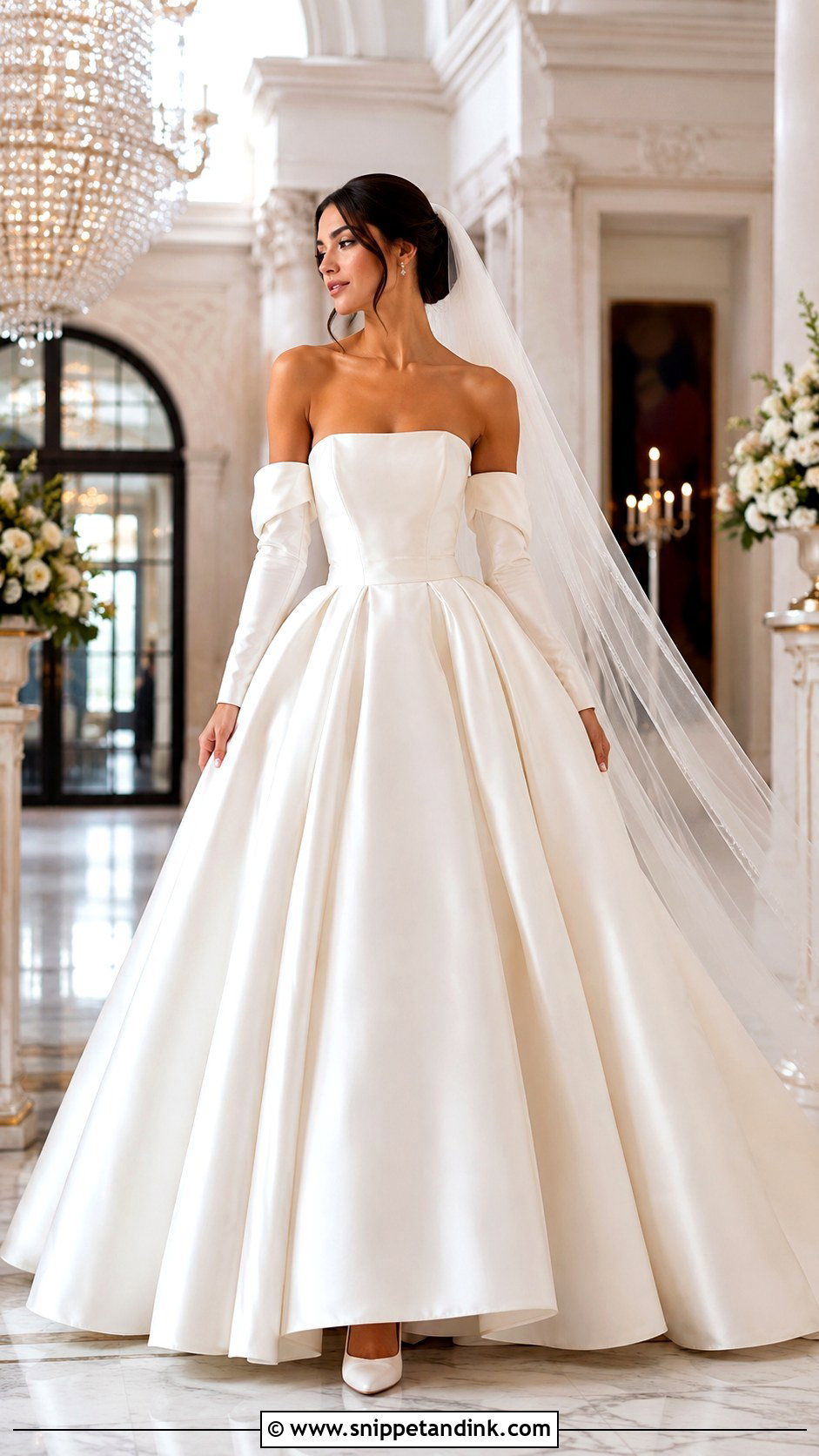
Satin gives a spring dress structure that lighter fabrics can’t, and detachable sleeves give you two outfits for the price of one. Wear them for a cool ceremony, then slip them off for a strapless reception. The catch is the fastening. Sleeves that tie or button at the bodice need a second pair of hands, so I show the maid of honour how they come off at the final fitting rather than leaving it for the night. A fitted bodice and full skirt make the waist without any embellishment. Closed-toe satin heels, a small structured bag and pearl or diamond-style studs complete it, along with a long veil and a sleek bun for a hotel or grand estate.
4. Chiffon Empire Waist April Wedding Dress
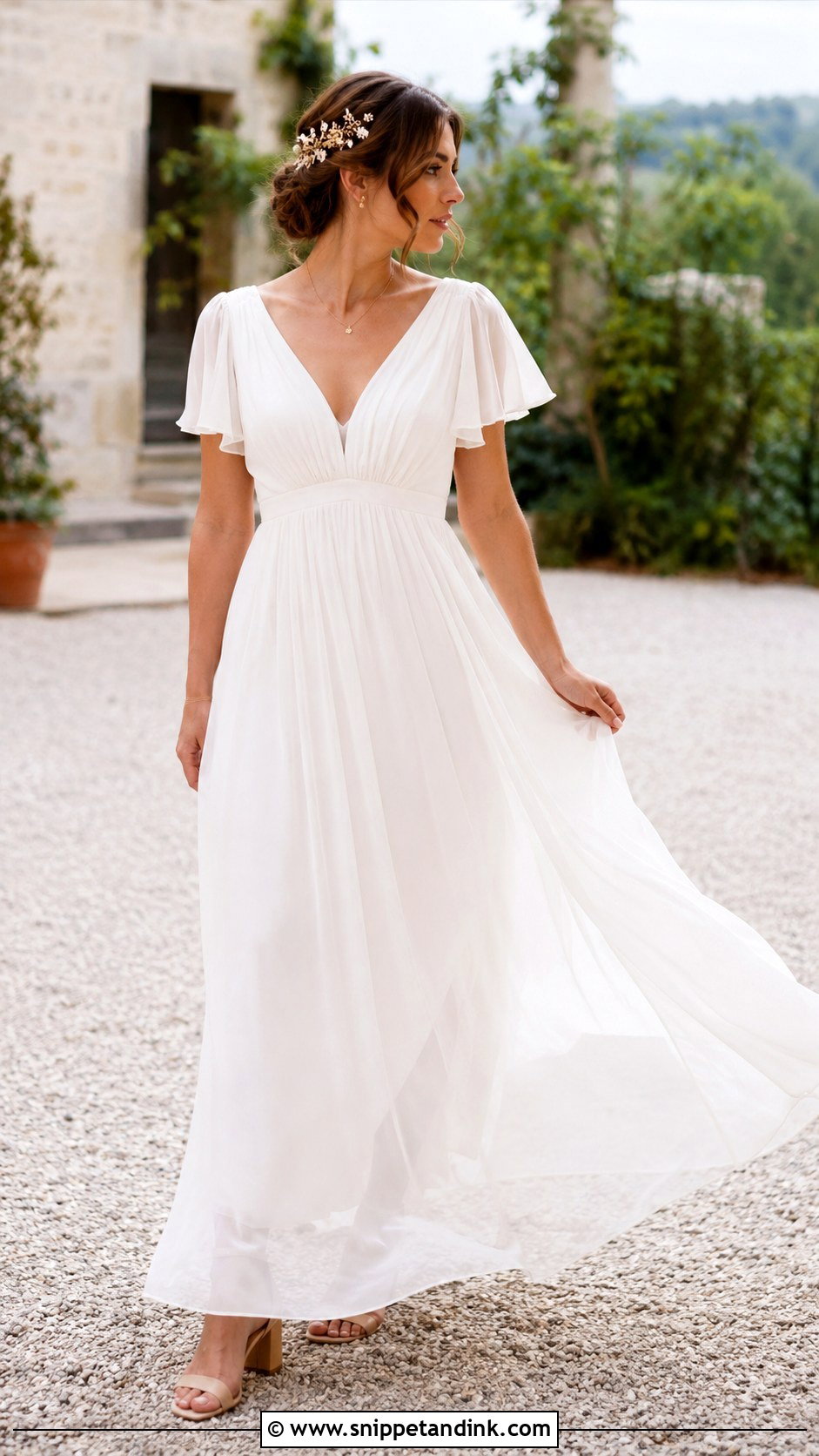
Chiffon is the fabric I reach for when an April wedding is outdoors and breezy. It floats rather than flaps, and an empire waist that starts just under the bust means nothing presses on the stomach all day, which is why it’s such a kind choice for pregnant brides. Do insist on a lined skirt. Unlined chiffon goes see-through in strong sun behind you. Flutter sleeves, a gathered bodice, low block heels, fine gold jewelry and a floral comb keep it relaxed, and a chapel veil adds movement without weight. A cropped cardigan or soft shrug earns its place once the sun drops.
5. Square Neck Crepe April Wedding Dress
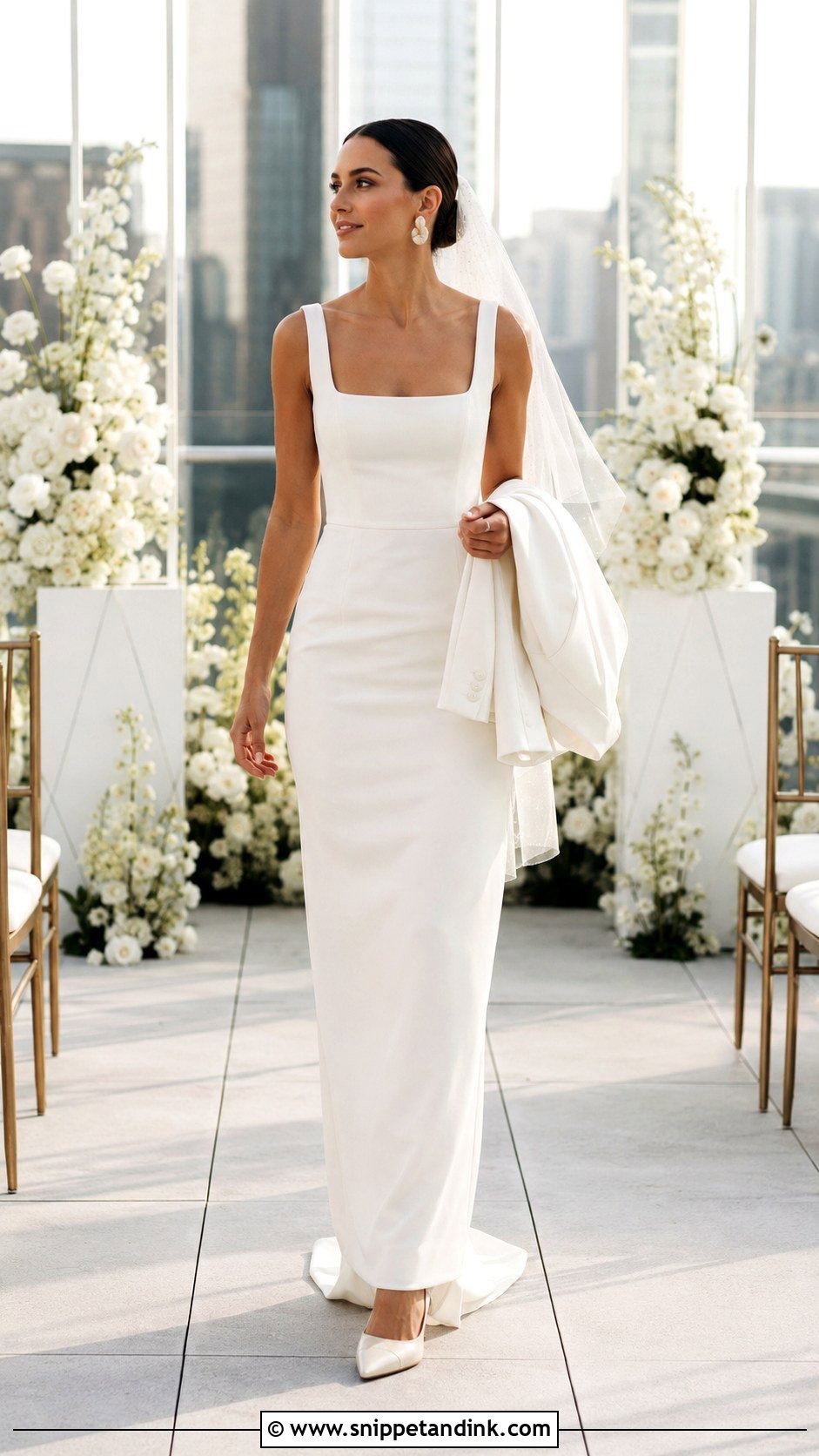
Crepe is unforgiving, and I say that with affection. A square-neck crepe dress has very little surface detail, so every seam, pucker or visible line underneath shows. Book a skilled seamstress and choose smooth, line-free undergarments before the first fitting, not after. Wide straps, a defined waist and either a column or fit-and-flare skirt make a clean silhouette against busy spring flowers. Pointed slingbacks, sculptural earrings and a smooth fingertip veil keep the line modern, with a sleek ponytail or low knot. For a rooftop or a minimalist venue, a tailored ivory blazer adds warmth for photos without hiding the shape.
6. Off Shoulder Mikado April Wedding Dress
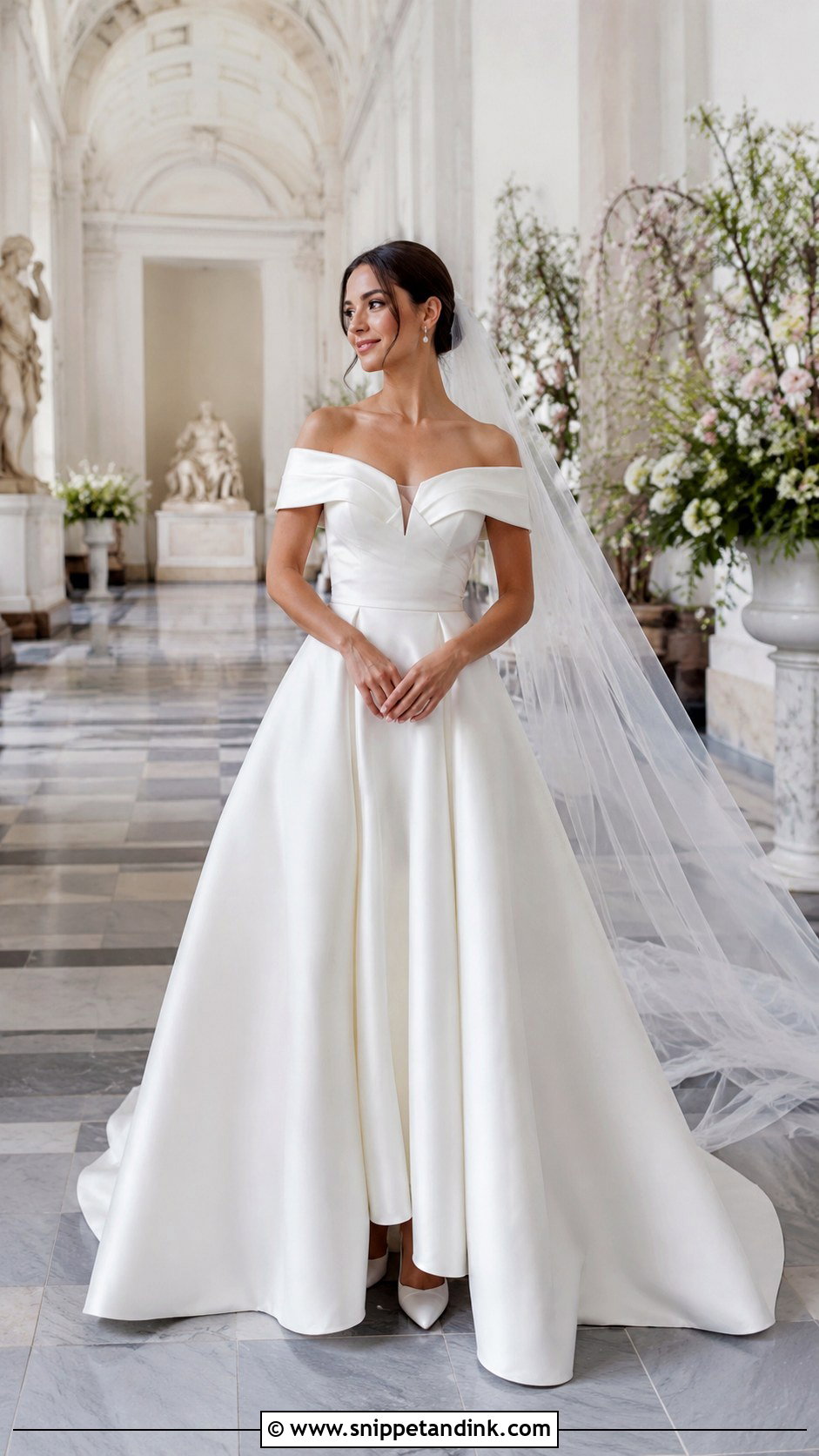
Mikado is a heavy, crisp silk blend that holds a fold or a sculpted neckline exactly where it’s put. That’s its strength in an off-the-shoulder style, and also the thing to watch: the neckline sits on your upper arms, so you won’t raise them fully. I’d test a hug and a champagne toast before signing off. Balance bare shoulders with a cathedral veil, small pearl earrings and a neat updo. Closed-toe pumps cope better with a wet April evening than open sandals. A dramatic train needs a sturdy bustle sewn in by your seamstress, and a satin wrap or matching bolero keeps you warm between ceremony and reception.
7. 3D Floral Tulle April Wedding Dress
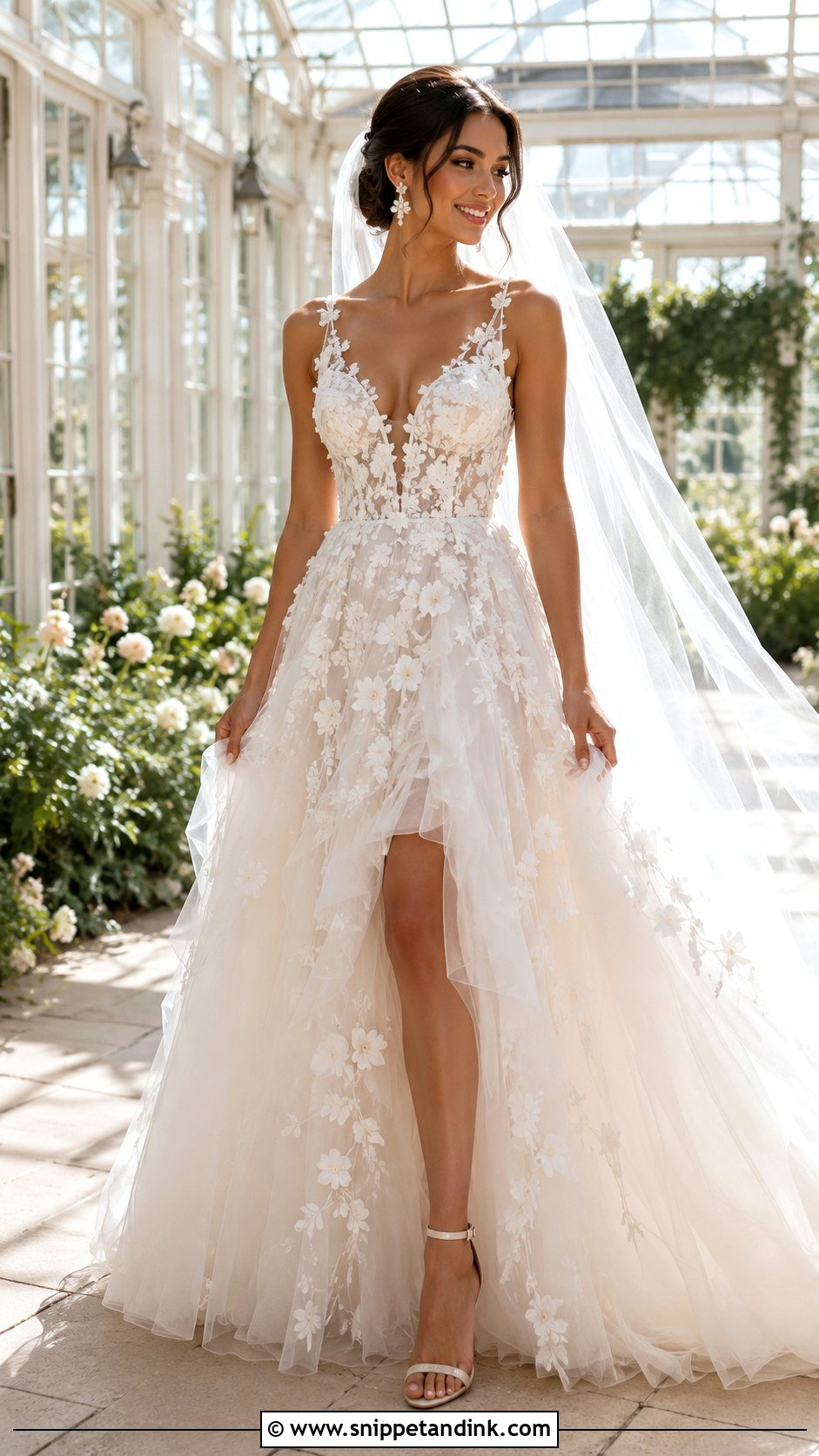
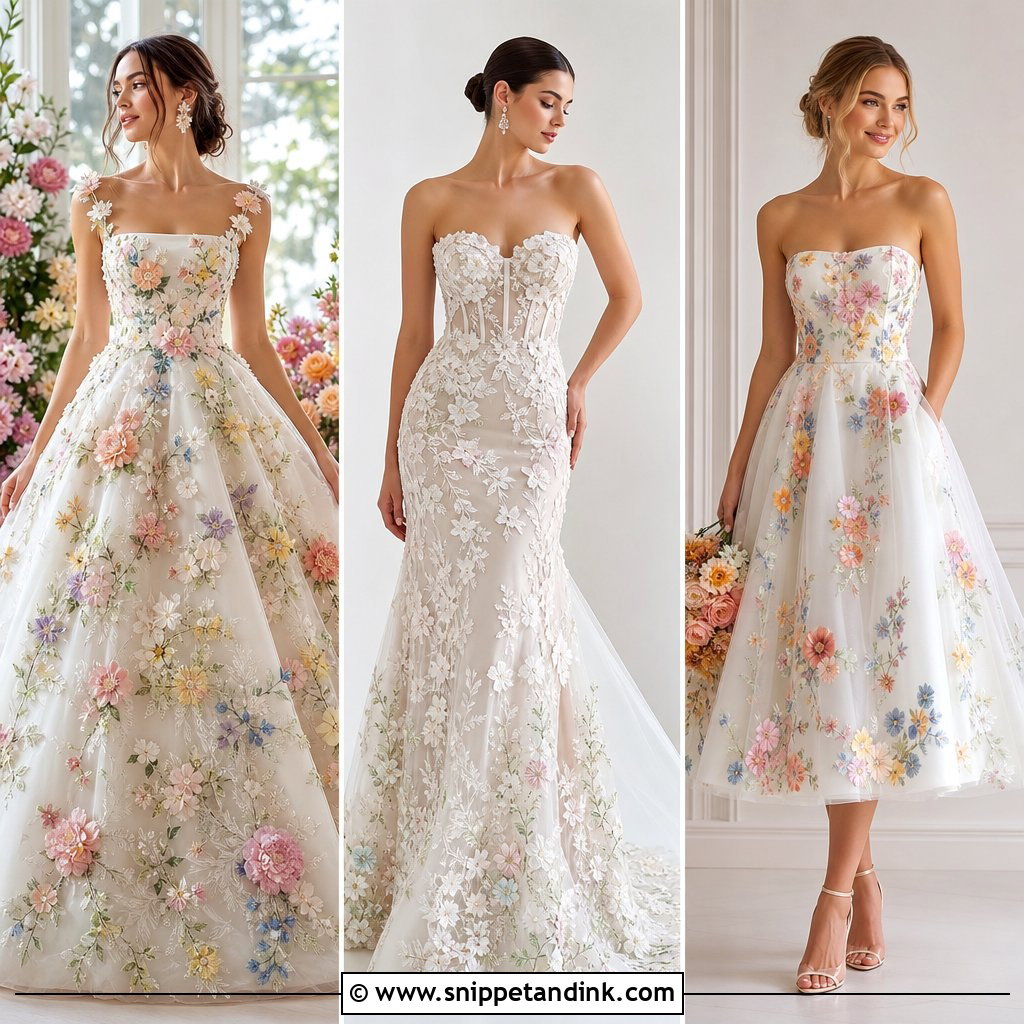
Raised floral appliqués give an April dress its season without any colour. The best versions cluster flowers on the bodice and let them thin out down a layered tulle skirt, so the weight stays where the structure is. Heavy appliqués scattered right to the hem can pull fine tulle out of shape. Keep the veil plain, because two layers of 3D flowers compete. Ankle-strap heels, small floral studs and loose waves or a textured bun suit a conservatory or bright room. Small flowers look delicate; large ones near the neckline or train bring more drama. Either way, I keep the jewelry quiet.
8. Tea Length April Wedding Dress
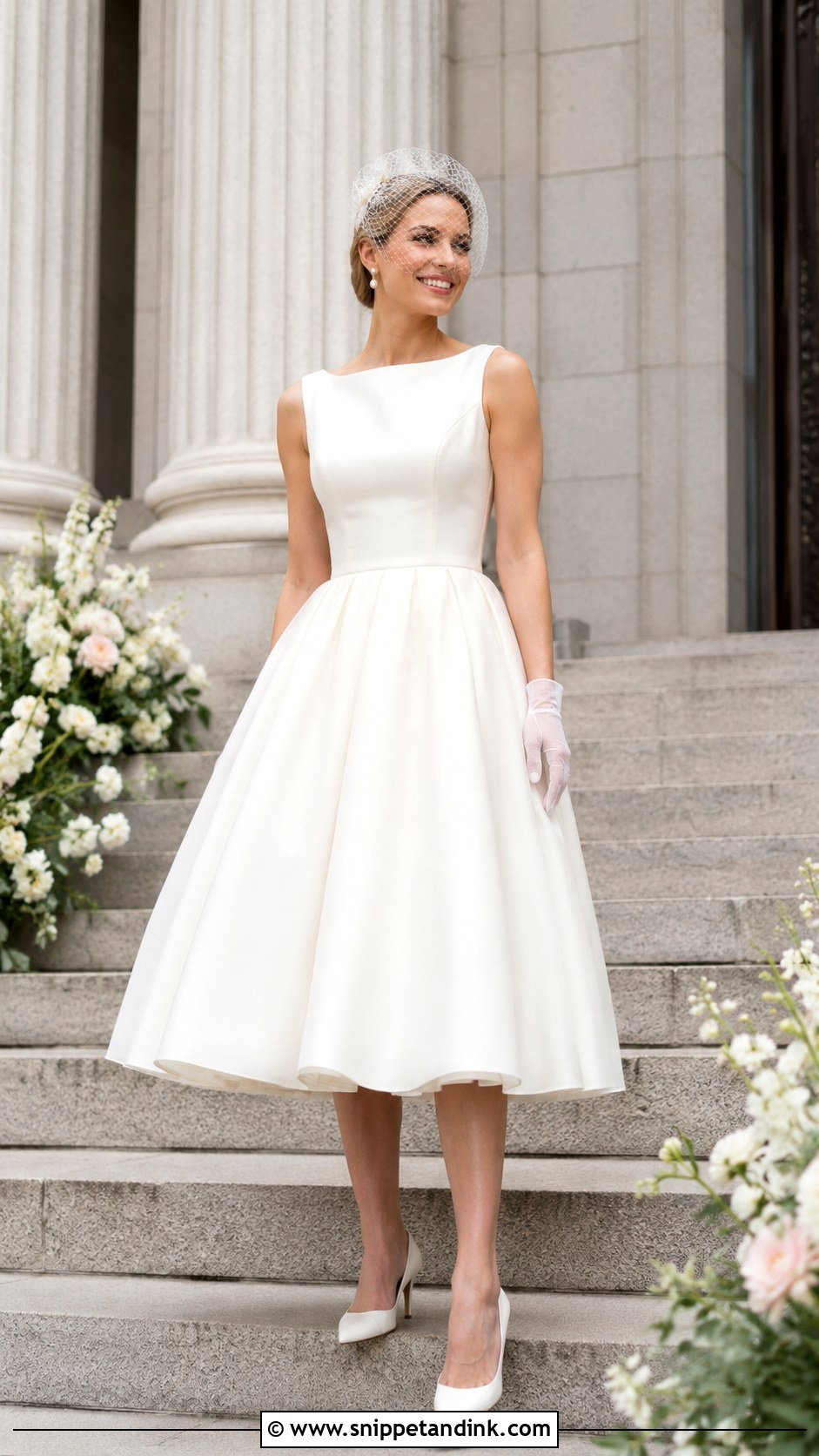
Tea length is cheerful and practical. The hem lands between the knee and ankle, which keeps it off wet grass and courthouse steps and turns your shoes into part of the outfit. A fitted bodice with a full skirt looks classic; a narrower tea-length sheath feels current. Slingback heels, short gloves, pearl earrings and a birdcage veil or bow complete it. The one thing I check is petticoat volume. Too much net under a short skirt makes it stand out like a dance costume, so ask for a softer underlayer if you’re petite. A cropped cardigan or tailored jacket covers you on a cool brunch or restaurant day.
9. Minimalist Slip Wedding Dress With Cape
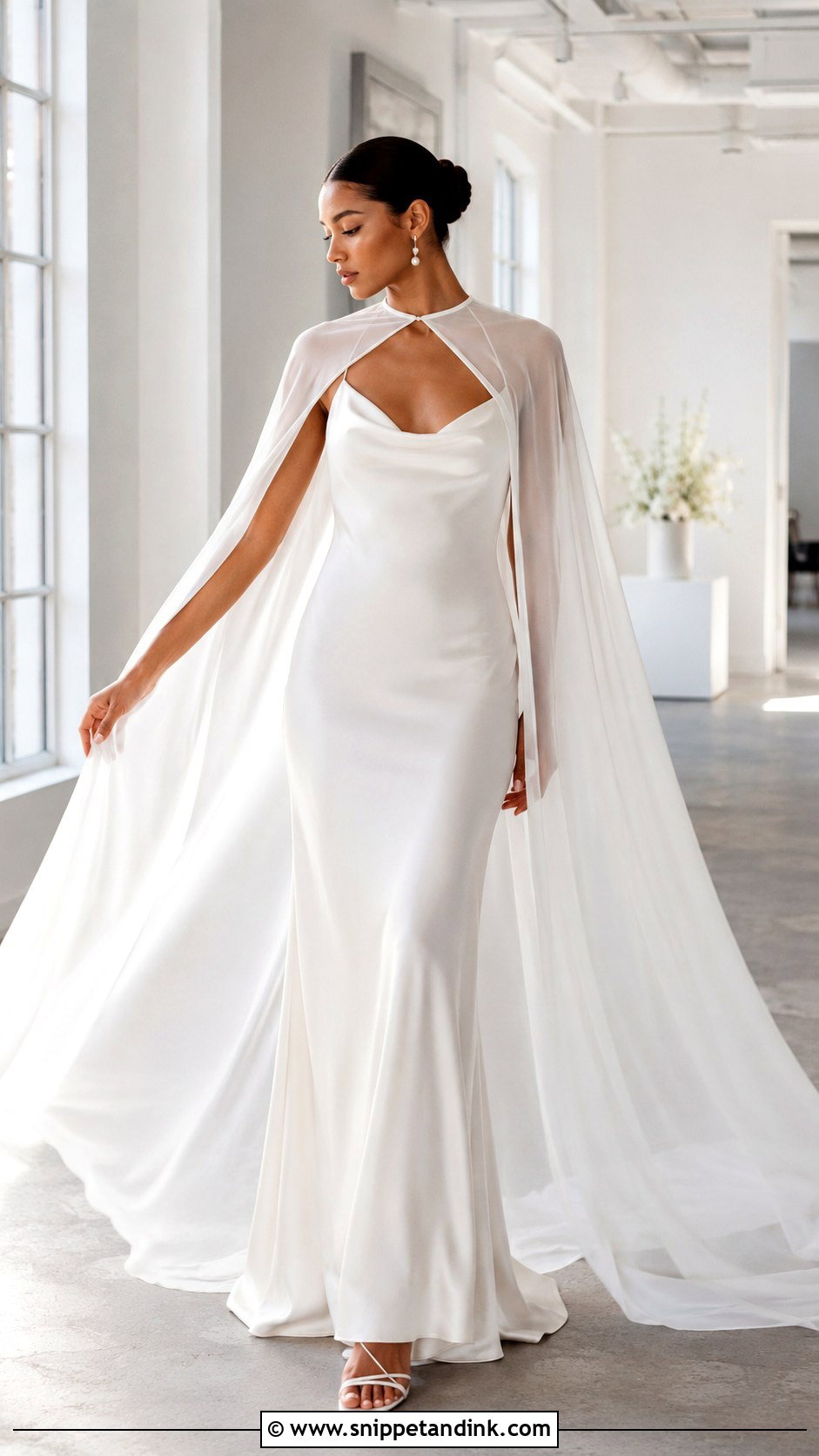
A bias-cut satin slip with a sheer cape is about as simple as bridal gets, and simplicity puts all the pressure on fit. Bias-cut fabric stretches and clings, so it shows every line beneath it and creases where you sit. I’d always see one of these seated for ten minutes before buying. A softly draped neckline or a clean V-neck, a floor-length cape for coverage and movement, strappy heels, a compact clutch and one piece of jewelry finish it. The cape can stand in for a veil in a cool April ceremony. Soft waves keep it relaxed; a sleek bun dresses it up for a loft or coastal hotel.
10. Basque Waist April Wedding Dress
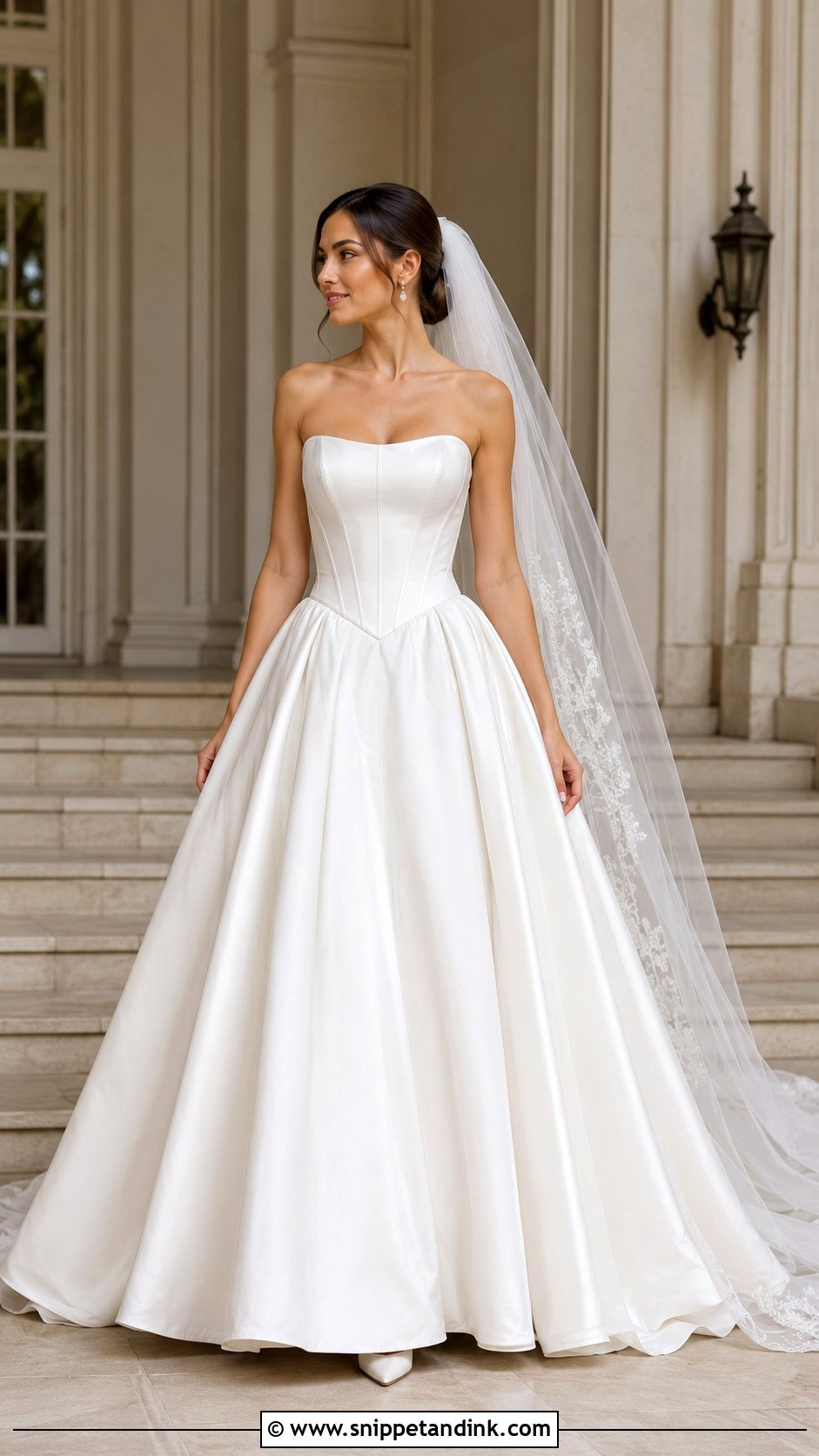
A basque waist dips the bodice into a V below the natural waistline, which lengthens the torso and makes the waist look smaller. For spring, I prefer it with a structured satin or lace bodice over a full skirt that’s lighter than it looks. The boning is everything. Poorly placed bones dig in when you sit and bow out when you lean, so I ask for spiral steel boning in a well-made dress and check it at every fitting. Pointed pumps, a cathedral veil and small drops suit it, with a smooth updo. Detachable sleeves or a lace topper add coverage for a formal estate.
11. Halter Neck April Wedding Dress
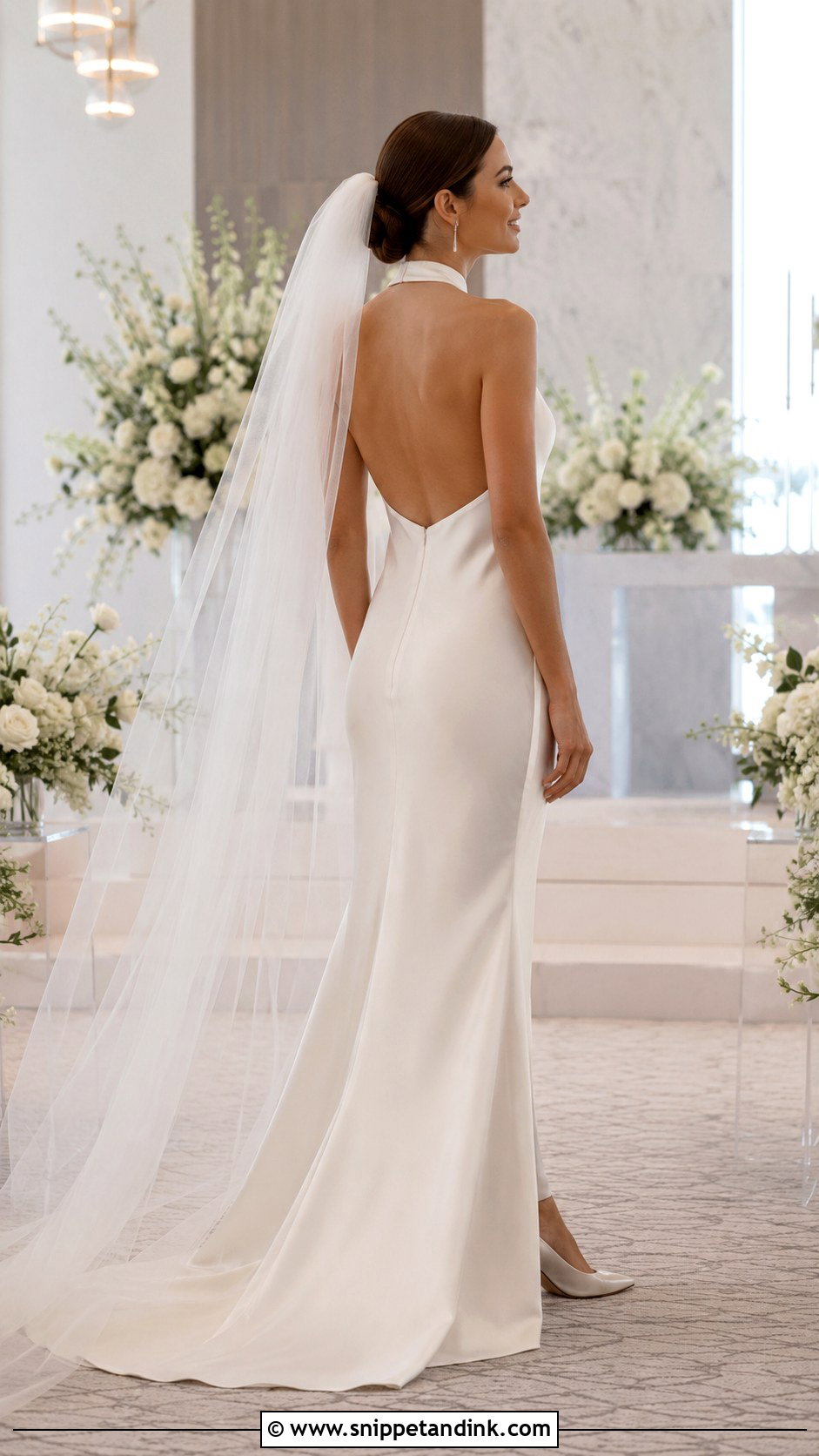
A halter neck frames the shoulders and draws a clean line up through the body. Fluid satin drapes; structured crepe looks tailored. The strap around the neck carries real weight, and on a heavier dress it can start to ache by the reception, so ask whether the bodice has internal support that takes the load off. A low back, fitted waist and gently flared skirt keep it sleek. Skip the necklace; it crowds the line. Drop earrings or a bracelet do more. A low bun with the veil anchored beneath it suits a modern indoor ceremony, and a capelet handles a cool evening portrait.
12. Pearl Embellished April Wedding Dress
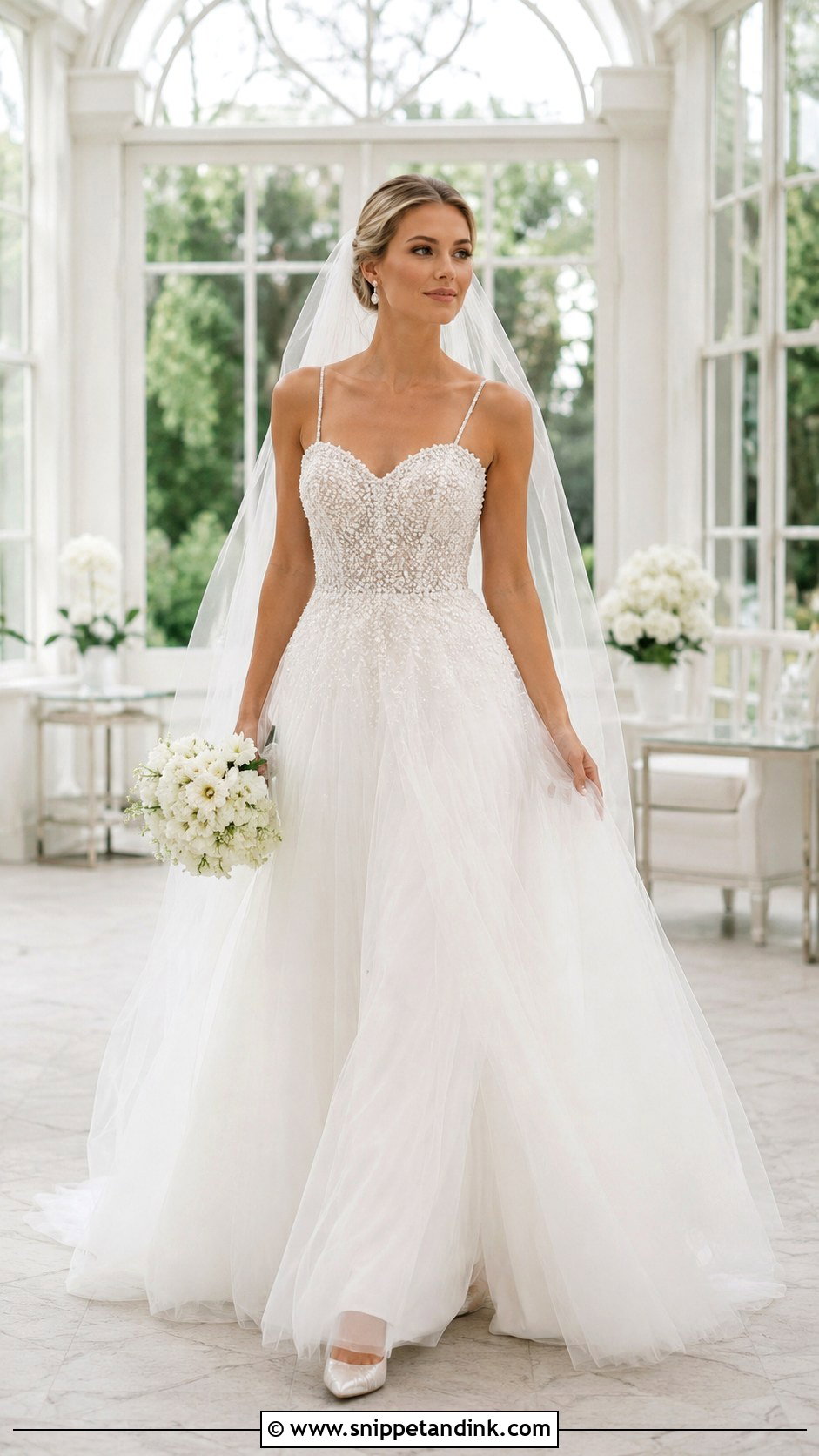
Pearl embellishment gives a soft glow rather than sparkle, which suits daylight. I steer brides toward pearls concentrated on the bodice, straps or sleeves instead of covering the whole skirt, partly for comfort and partly because pearls are heavy and hand-sewn ones can loosen on a train dragged over stone. A fitted top with a flowing tulle or chiffon skirt keeps the balance. Pearl earrings, satin pumps and a plain veil are enough, and a low twisted bun shows off pearl straps. Ask your seamstress for a few spare pearls; it’s easy to stitch one back on the morning of.
13. One Shoulder Draped April Wedding Dress
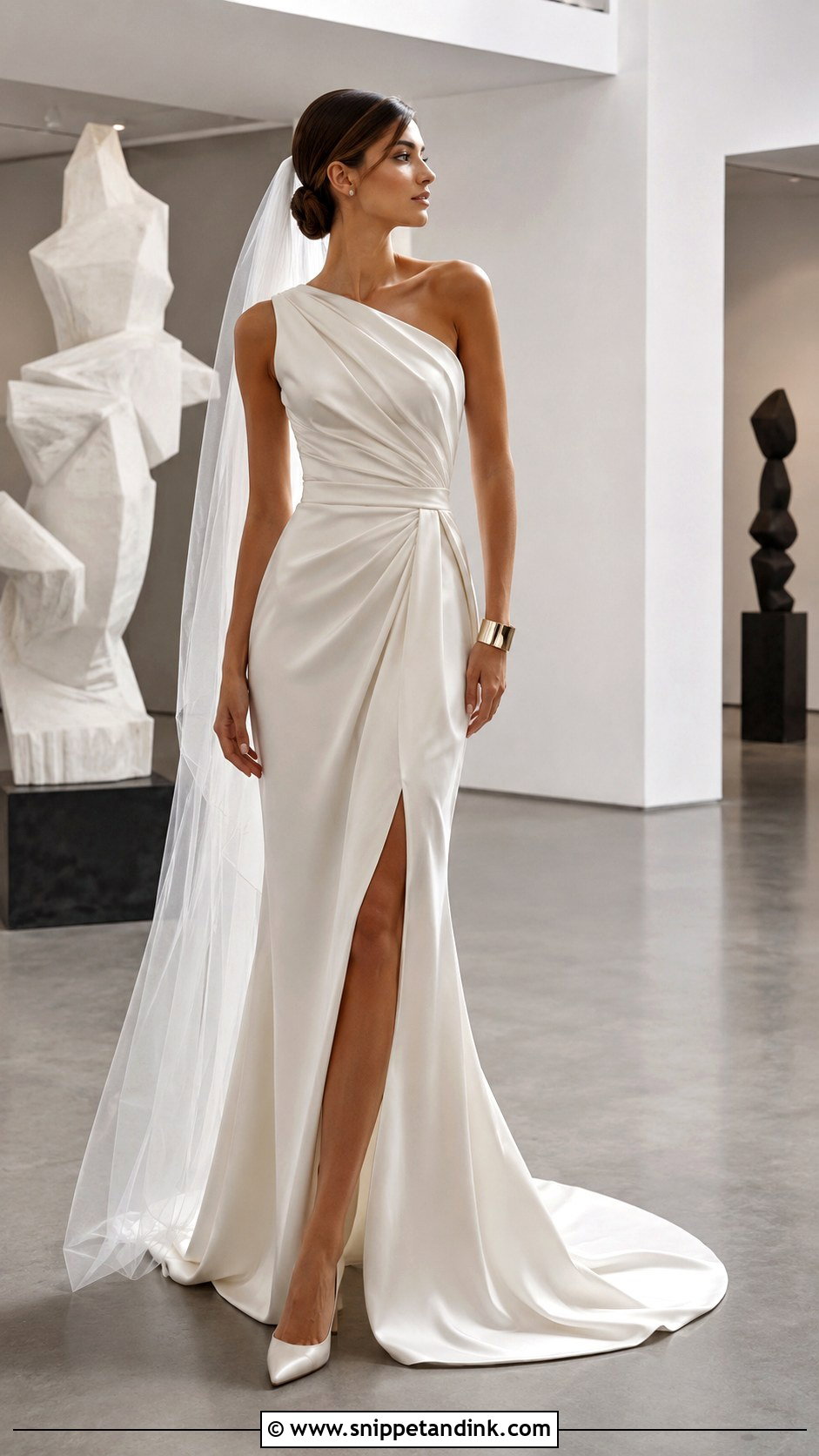
A one-shoulder neckline gives the eye a single focal point without any decoration. With soft draping across the bodice, it defines the waist well, and satin, crepe or light chiffon can each set the formality. A bare shoulder needs a strapless bra solution sorted early; many brides end up having cups sewn into the bodice. Simple studs, a metallic bracelet, pointed heels and a clean-edged veil set low at the back keep the asymmetry clear, with a side-parted bun. If the skirt is fitted, make sure there’s a slit or enough stretch to dance.
14. Lace Mermaid April Wedding Dress
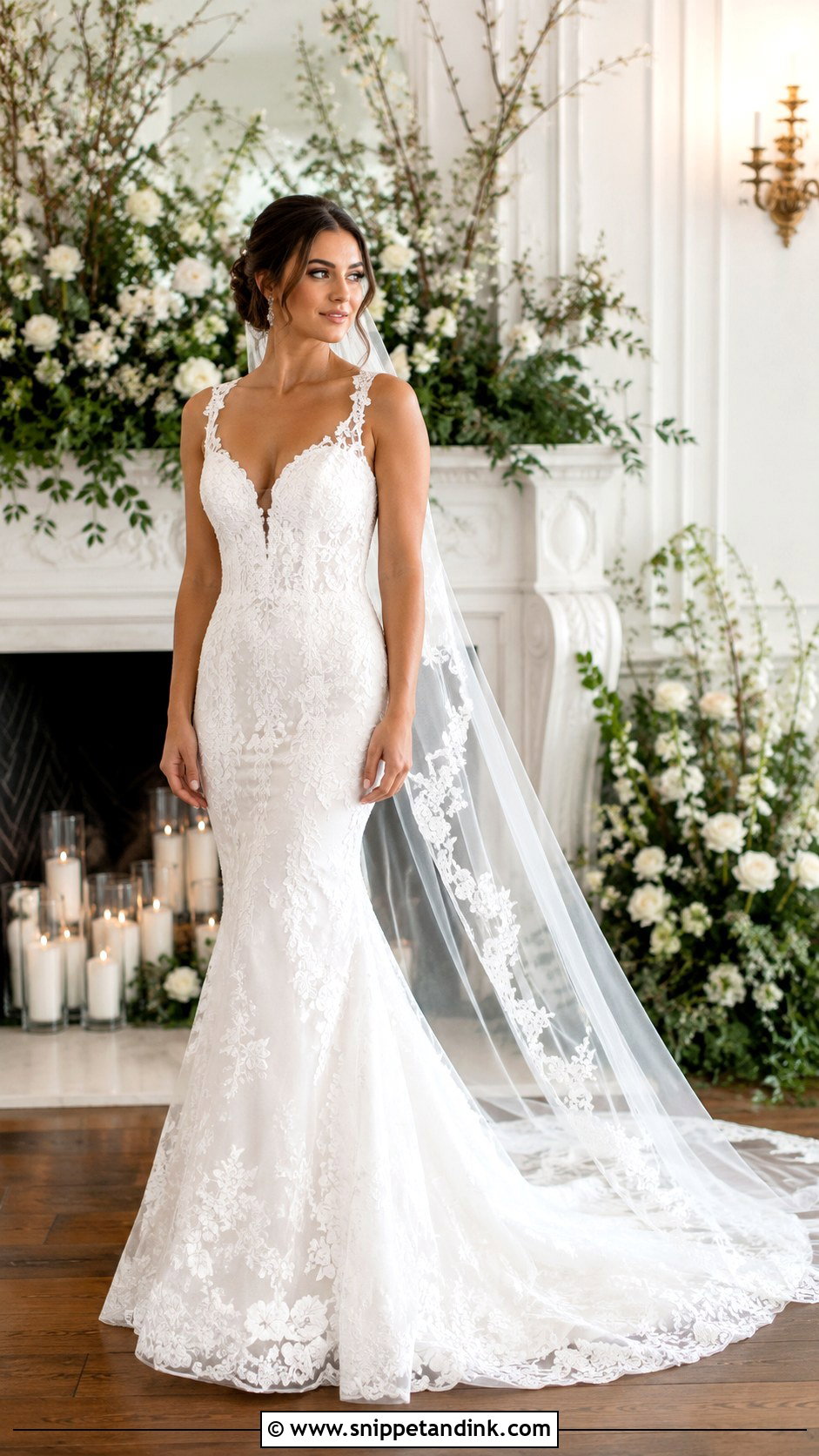
A lace mermaid shows off your shape, and it asks more of you than any other dress here. The flare starts at or below the knee, so walking takes shorter steps and stairs take practice. In fittings I make brides sit, climb a step and walk quickly in it. If the knee is too tight, the seamstress can sometimes drop the flare a little. Botanical lace over a nude underlay suits April, as do platform heels for height without wobble, a scalloped veil and delicate drops. It’s happiest on solid floors indoors. Detachable lace sleeves help if the ceremony runs cool.
15. Organza Ruffle April Wedding Dress
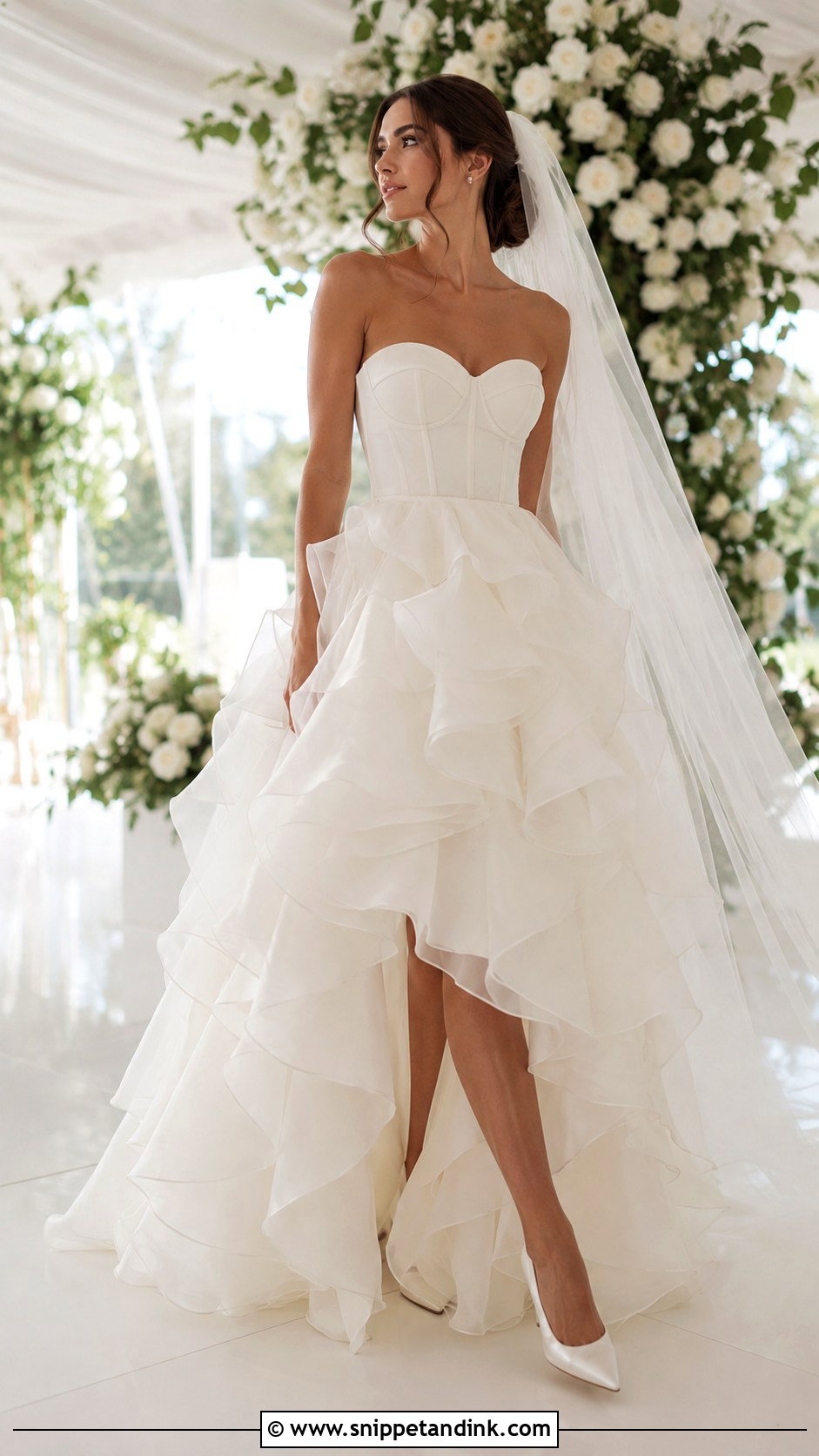
Organza gives volume without weight because the fabric is crisp and sheer, so tiered ruffles or a single ruffled neckline look full but stay airy. The trade-off is snagging. Organza catches on bark, rough stone and Velcro, and its edges show pulls badly in photos. Arrange a reliable bustle and ask someone to lift the train outdoors. Keep the bodice plain, the satin heels understated and the earrings small, with a veil that falls past the train and a neat bun. A fitted bridal jacket keeps a marquee chill away without crushing the ruffles.
16. Blush Floral Print April Wedding Dress
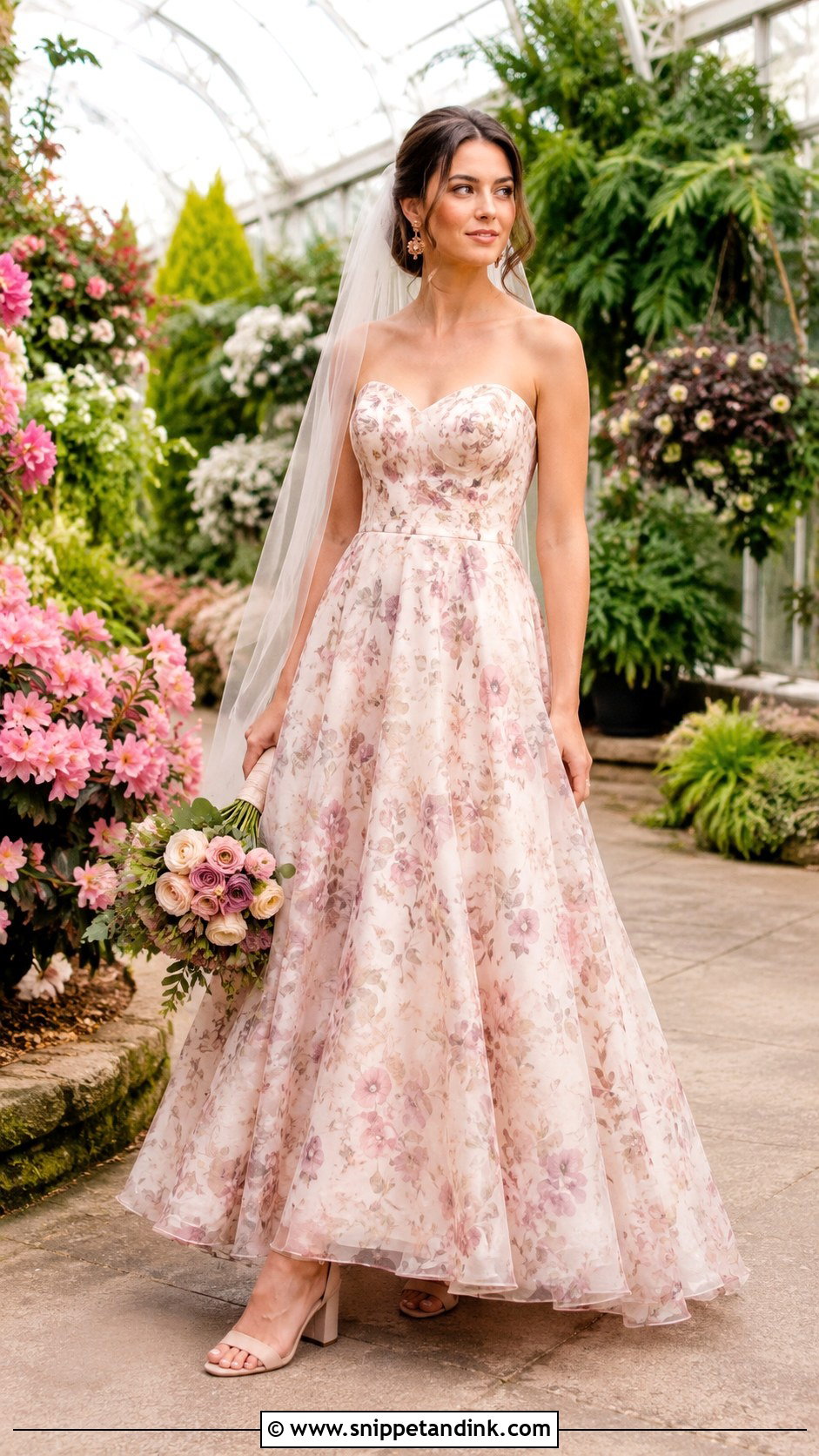
A blush base with a delicate floral print is a gentle way to bring colour into a spring dress. I look for a pale ground and muted botanical shades; a bold print on a bright base starts to look like a guest outfit. Keep the A-line silhouette so it still reads as bridal. Neutral block heels, rose gold jewelry and a blush or ivory veil suit it, with a loose braided updo and natural makeup. Choose bouquet flowers that pick up one colour from the print rather than every shade. An ivory wrap adds warmth without fighting the pattern.
17. Two Piece Lace April Wedding Dress
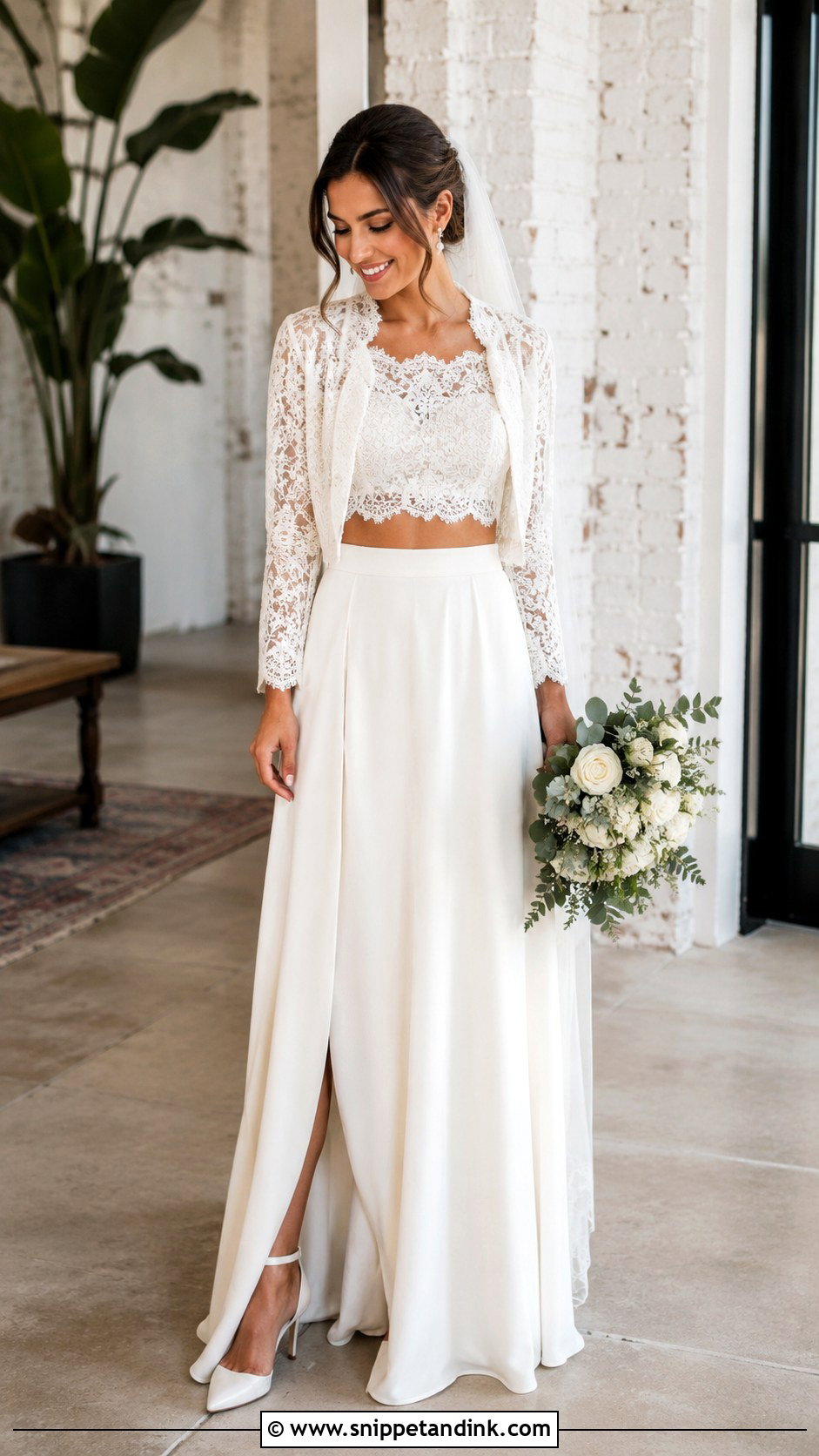
Two-piece bridal sets solve a common fit problem: if your top and bottom are different sizes, each piece is bought and altered separately. A fitted lace top with a high-waisted satin, crepe or chiffon skirt can show a slim gap or overlap for full coverage. Check both whites side by side in daylight before you buy. Ivory from two different fabrics can look mismatched outdoors. Pointed heels, pearl earrings and a chapel veil complete it, and a cropped lace jacket layers over a sleeveless top for the ceremony. The skirt waistband needs a hook and inner grip tape so the top doesn’t ride up.
18. High Low April Wedding Dress
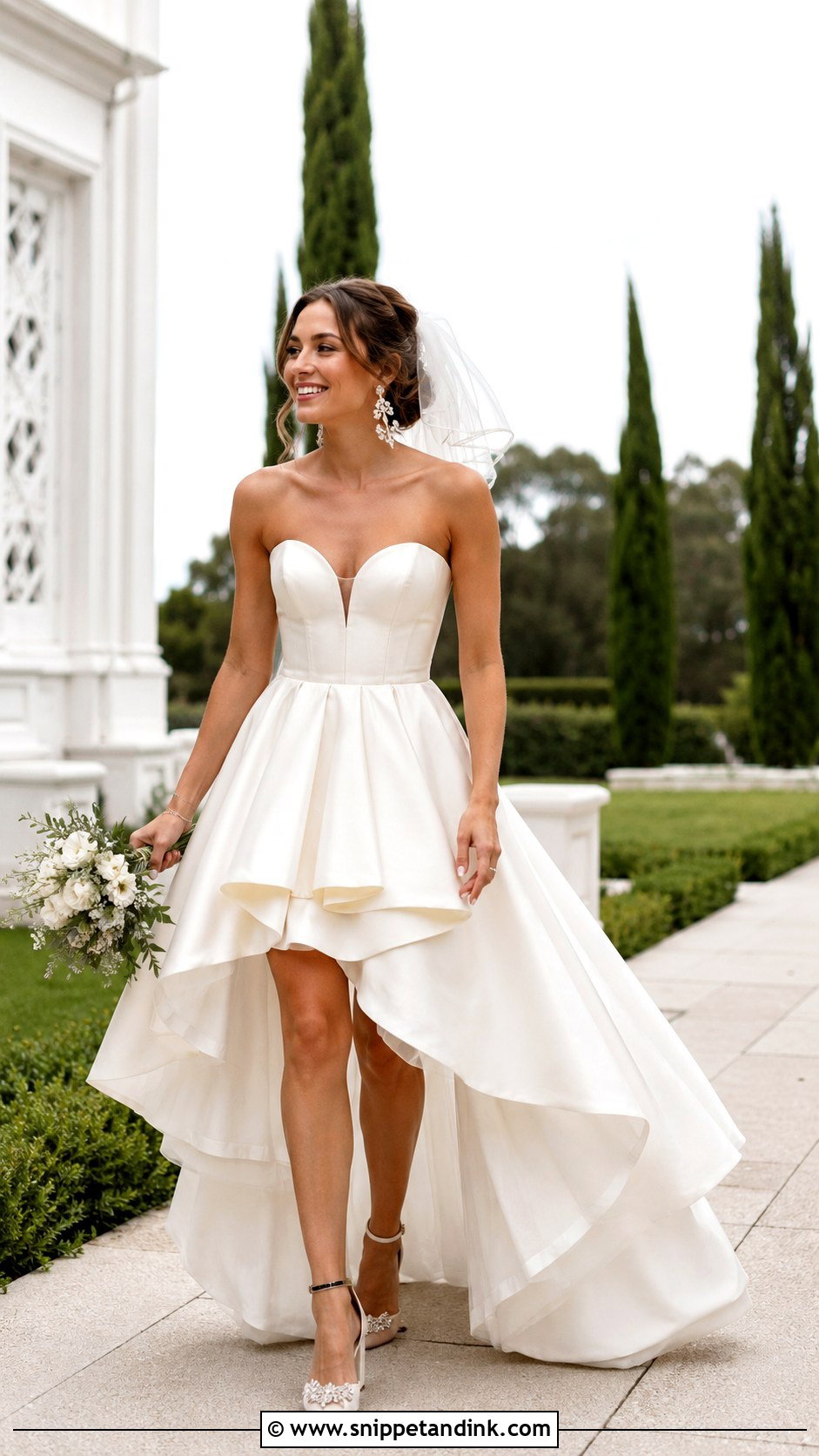
A high-low hem keeps the front clear of wet grass and gravel while the back still trails. The front should sit at or just below the knee. Any higher and it looks like a cocktail dress from the front. Your shoes become part of the design, so embellished pumps or block-heel sandals make sense, with statement earrings and a short veil. A polished ponytail keeps it lively for a destination or informal party. If the back extends far, add a bustle. A fitted blazer gives April coverage without hiding the hemline.
19. Plus Size Wrap Bodice April Wedding Dress
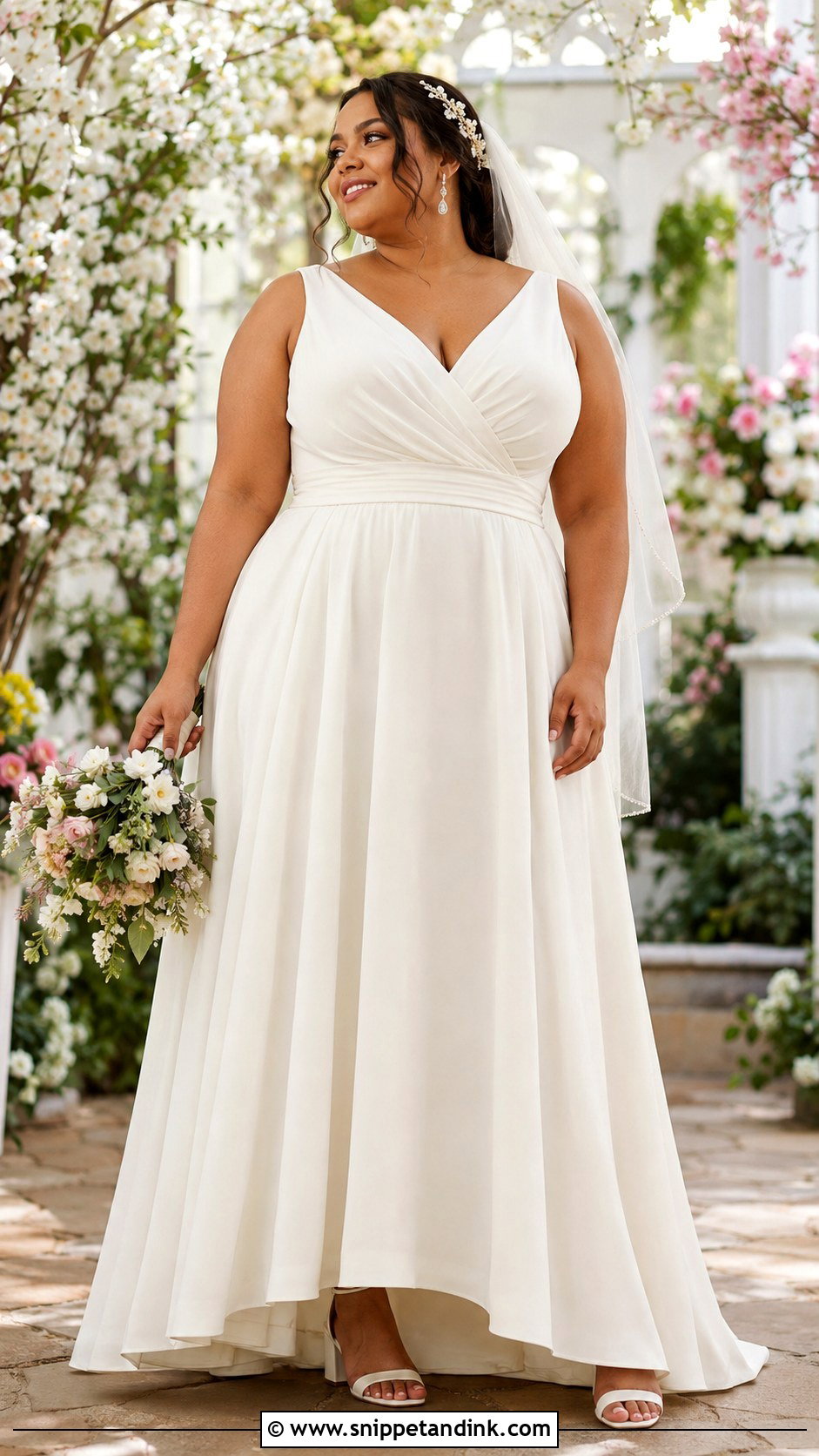
A wrap bodice adjusts across the bust, so it supports a range of sizes better than a fixed sweetheart neckline. For a plus-size bride, I look for wide straps, a defined waistband and an A-line skirt that falls from the waist without clinging. The internal structure matters more than the label size: built-in cups, a waist stay and a stable lining keep the wrap from gaping when you lean forward to sign. Chiffon is soft; lace adds spring texture. Supportive block heels, drop earrings, a fingertip veil and a floral comb over a low bun finish it, with a matching wrap or lace bolero for warmth.
20. Courthouse Midi April Wedding Dress With Blazer
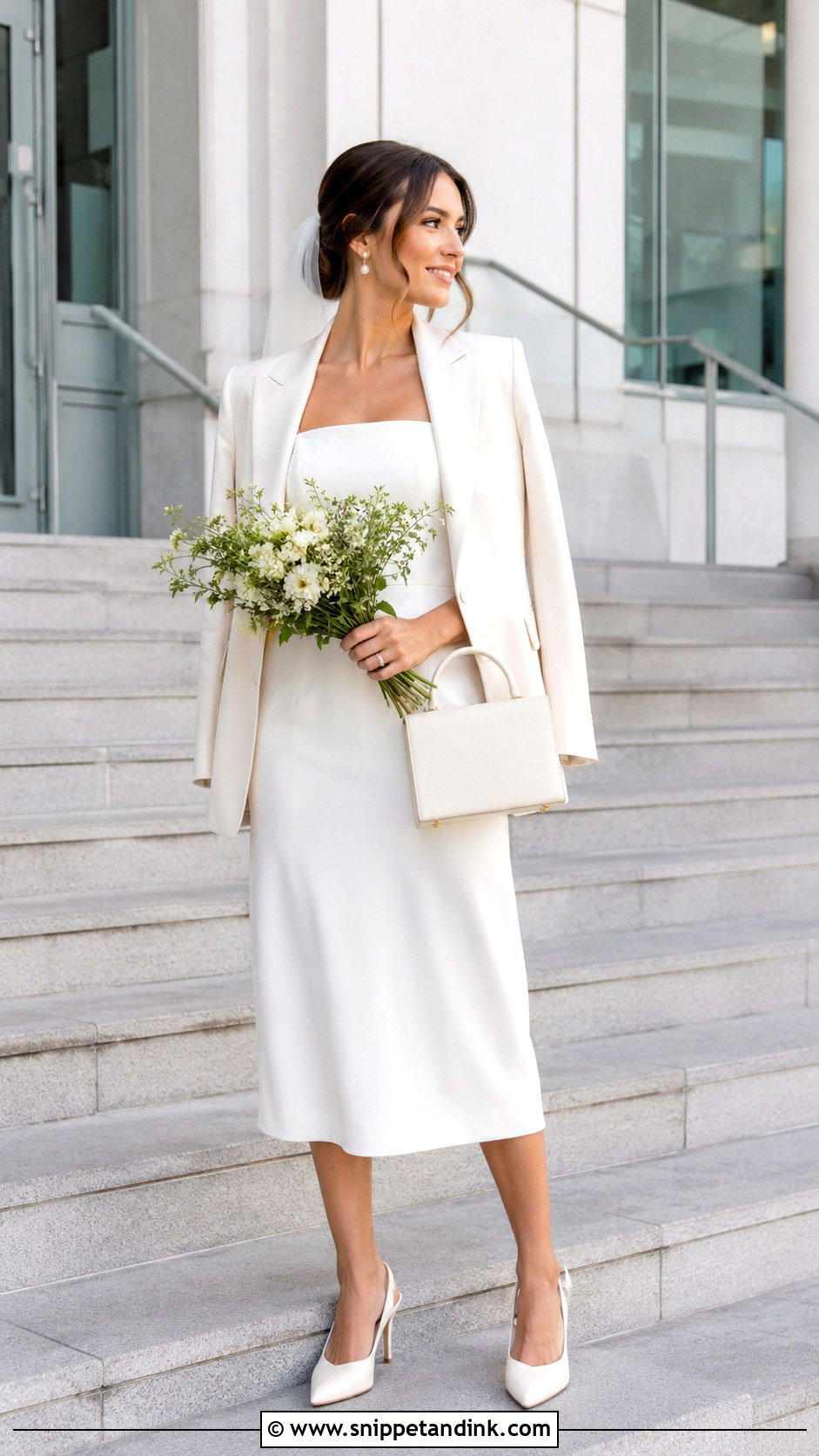
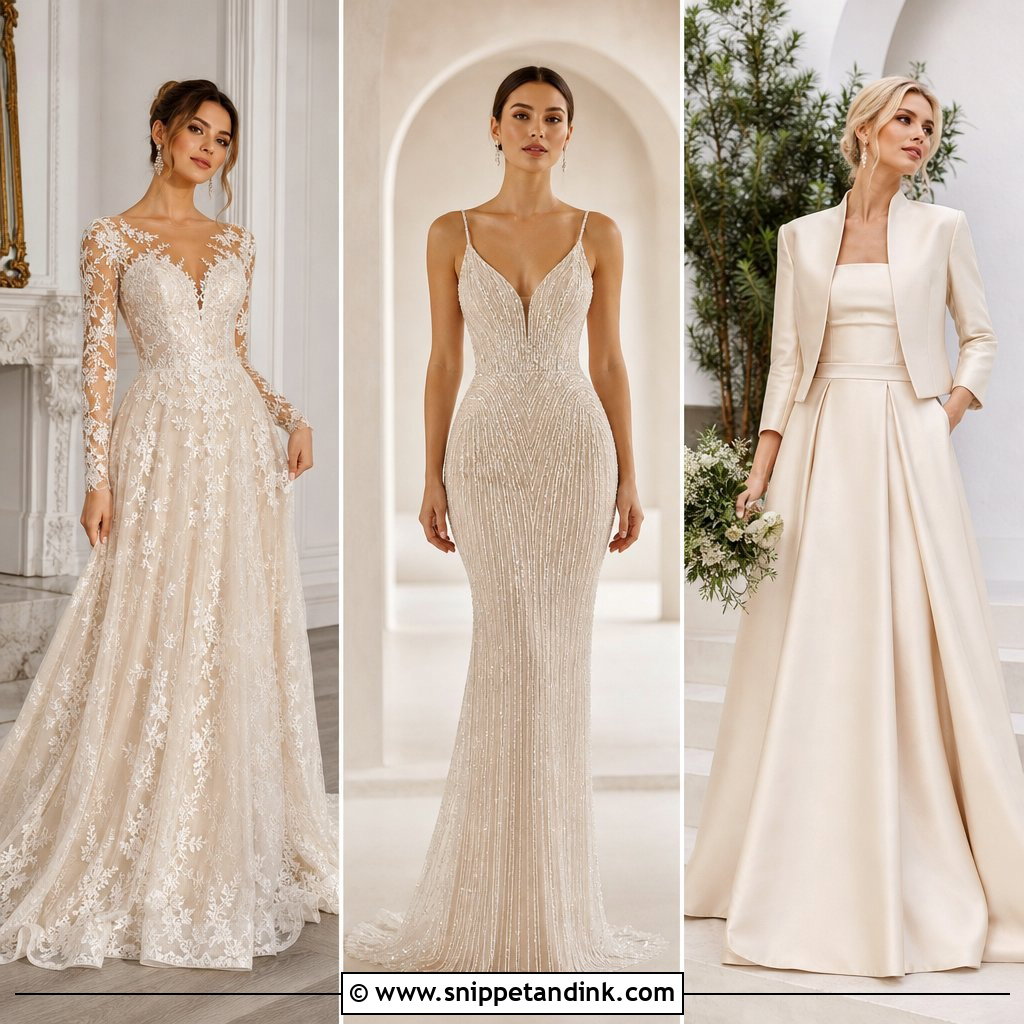
A courthouse day involves security lines, stairs and pavements, so the dress needs to move without fuss. An ivory midi wedding dress with a square neck and fitted waist suits it, under a tailored blazer that comes off for photos or lunch. I ask city brides to sit in the outfit in a car for twenty minutes, because some fabrics come out of a taxi looking slept in; wrinkle-resistant crepe or a blend handles it far better than linen. Slingback pumps you can walk in, a structured bag, pearl earrings and a short veil or polished headband complete it. A small hand-tied bouquet is all the season it needs.
Wet Grass, Pollen and a Muddy Hem
Spring has its own small disasters, and almost all of them happen at the hem. The fixes are simple if someone has them in a bag before the ceremony starts.
Grass and mud
A wet lawn soaks the bottom few inches of a floor-length skirt within minutes, and pale fabric wicks the moisture upward. Have the bustle done before outdoor portraits, not after, and ask the photographer to choose paths or paving for the walking shots. Clear heel protectors stop thin heels sinking. Mud should be left to dry, then brushed off gently. Rubbing it wet pushes it into the weave.
Pollen
Lily pollen stains ivory fabric a stubborn orange. Ask the florist to remove the stamens from any lilies in your bouquet and the bridesmaids’ flowers. If pollen does land on the dress, lift it off with tape or a soft brush. Don’t wipe it with a damp cloth.
After the day
Take the dress to a specialist cleaner within a few weeks, and point out the hem, the underarms and any spill. Grass and sugar stains darken over time if they’re left, even when you can’t see them yet.
Dressing for the April Day You Will Actually Get
April dresses succeed when they’re chosen for the day as it will really be: cool, possibly wet, with long stretches of standing. Light lace and chiffon suit soft outdoor settings, while satin, Mikado and crepe hold structure in formal rooms. Sleeves, capes, wraps and jackets let you adjust as the temperature moves. Before you commit, think about the walking surfaces, the gap between ceremony and reception, and what you’ll do if it rains. Good construction and careful alterations matter as much as colour or decoration. Pick the dress that suits your venue and lets you move, then build the rest of the look around it.
You'll Like These Ideas:


Leave a Reply