
Short lace sleeves are one of the most comfortable bridal choices there is. They cover the tops of the arms, they’re cooler than long sleeves, and they give lace somewhere to show off besides the bodice. The same sleeve can look romantic, modern, vintage, bohemian or minimal depending on the silhouette and the lace under it, so the shapes below cover ballrooms, beaches, gardens and courthouses. In my fittings, the sleeve itself is where most of the adjusting happens: how it sits on the arm, how the armhole is cut and whether you can still hug people. Lace can run over the whole dress or stay on the bodice and sleeves, and the veil, shoes, hair and jewellery should work with it rather than add another pattern. Here are twenty ways to wear it.
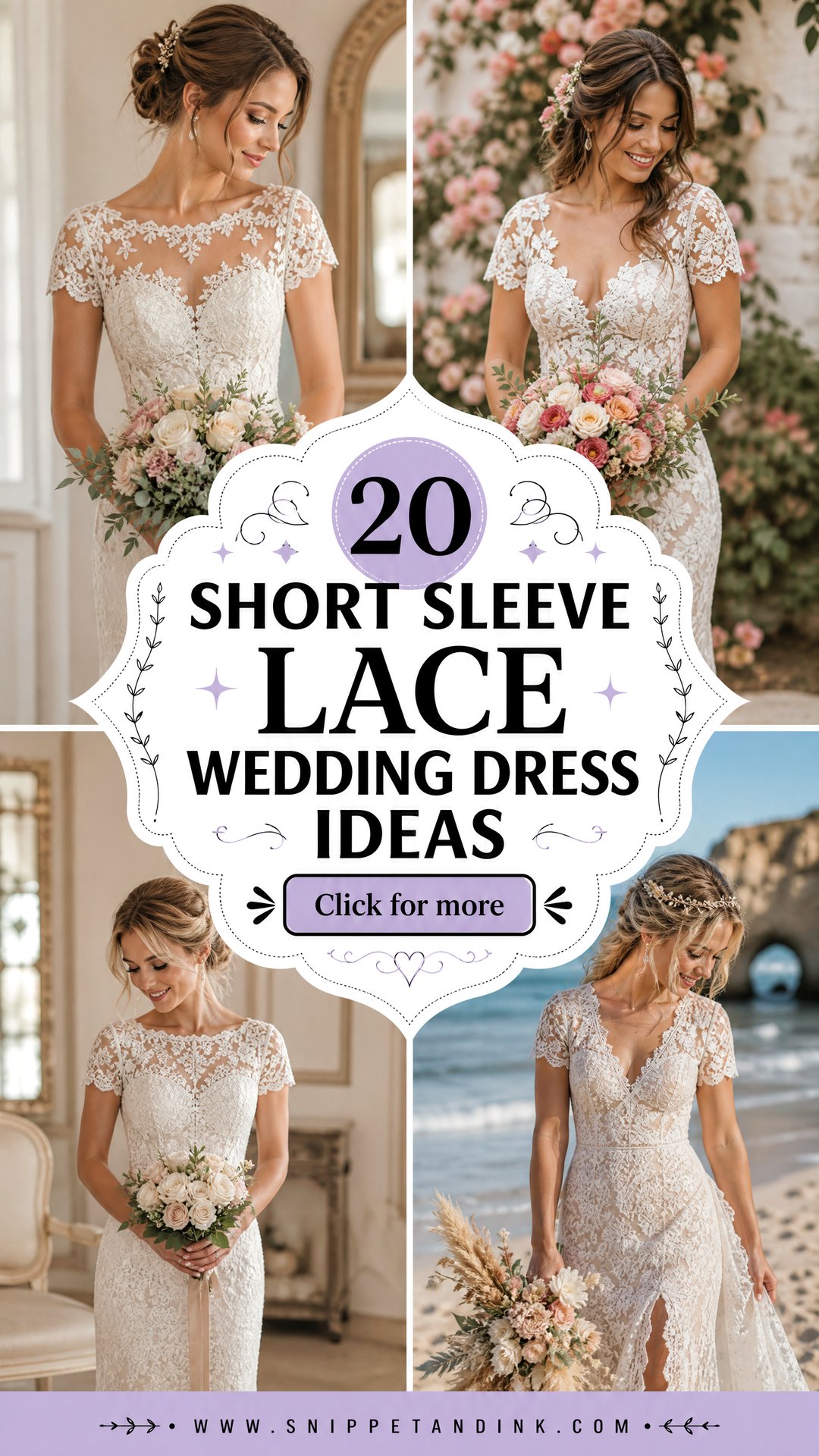
Where a Short Sleeve Should Stop on Your Arm
A short sleeve can stop just over the shoulder, halfway down the upper arm or just above the elbow, and those few centimetres change the whole look. The rule I work from is simple: the eye goes to where the sleeve ends, so end it at a narrow point, not the widest one.
- Cap sleeves sit at the top of the shoulder. They suit narrow shoulders and slim arms, and they give the most freedom to move.
- Mid-upper-arm sleeves are the classic short sleeve. They can widen the arm if they cut straight across the fullest part, so a slight angle or scalloped edge helps.
- Elbow-skimming sleeves cover more and often flatter the arm best, but they need enough room to bend.
Then test the armhole. Raise both arms in front of you as if holding a bouquet up for a photo, then reach as if hugging someone taller. If the whole bodice lifts, the armhole is cut too low or the sleeve is too tight. A seamstress can sometimes add a small gusset under the arm in matching mesh, which nobody will see.
Look at the sleeve edge too. A raw-cut lace edge is light but can fray; a scalloped or eyelash edge sits softer on the skin and photographs cleaner.
1. A-Line Short Sleeve Lace Wedding Dress
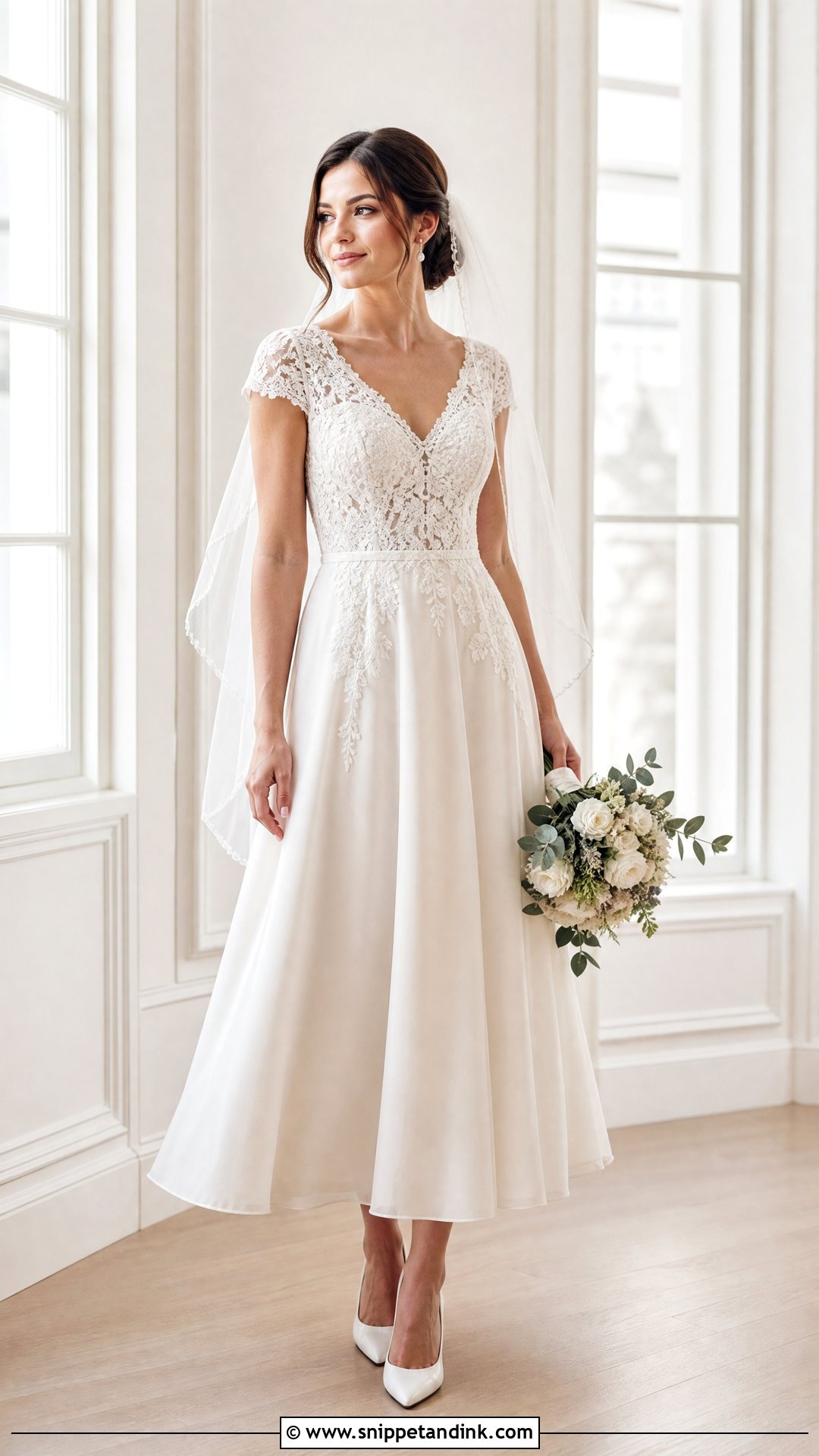
An A-line gives definition at the waist without a fitted skirt, which is why it’s the shape most brides end up trying first. A structured lace bodice flowing into soft tulle, chiffon or a lace-covered skirt. A V-neck or gentle scoop keeps the upper body open. Pearl earrings, a plain fingertip veil and ivory pointed pumps, with a low chignon to show off the sleeves. For an outdoor ceremony, a manageable sweep train is far easier on grass than a cathedral one. A-lines forgive a few kilos up or down before the wedding, which few other shapes do. It suits nearly any season and level of formality.
2. Ball Gown Short Sleeve Lace Wedding Dress
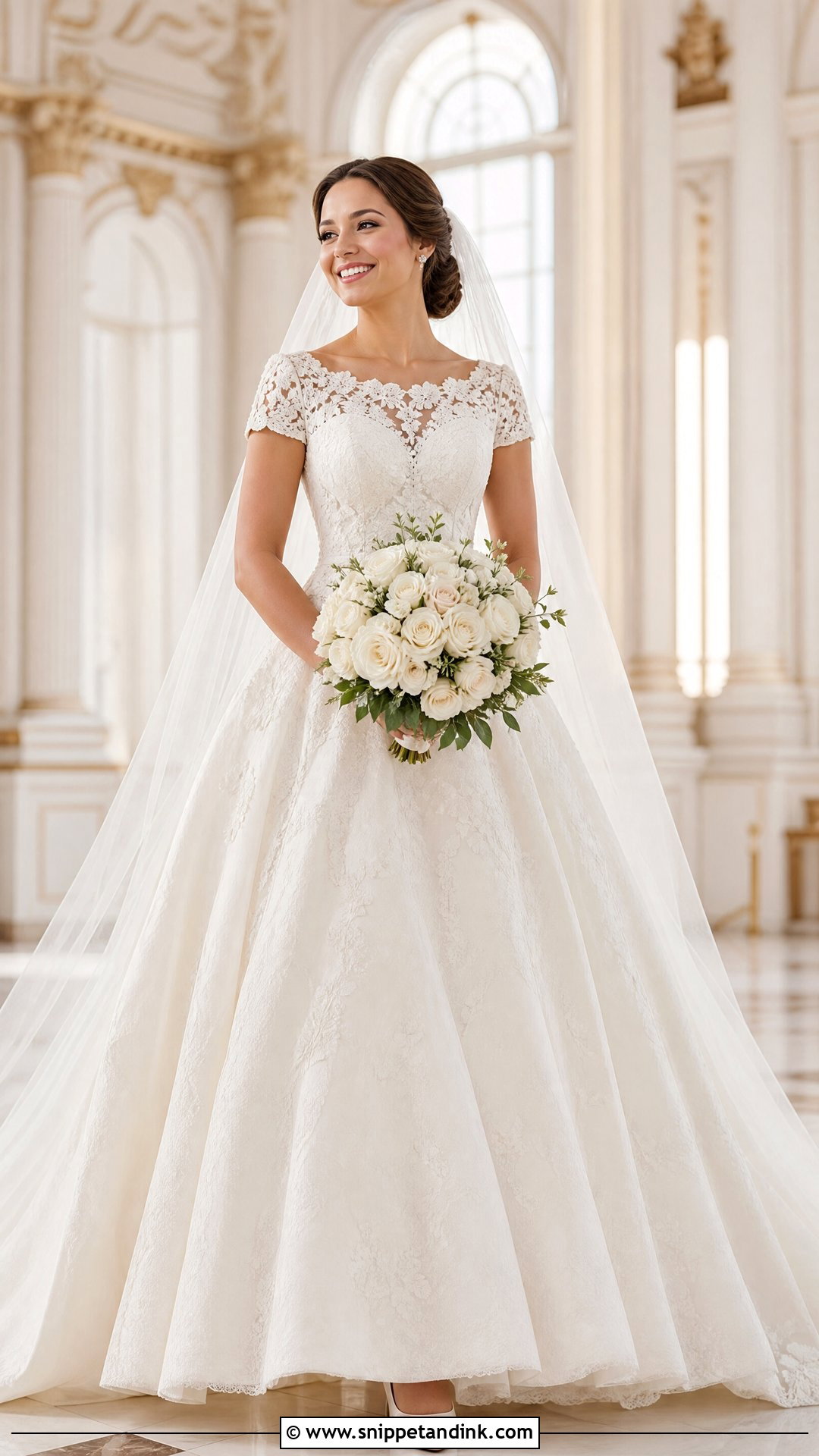
A ball gown with a fitted lace bodice, short sleeves and a full skirt is the traditional entrance. The defined waist separates the detailed top from the volume below. Appliqués can trail lightly onto the skirt to join the two halves without overloading it. A cathedral veil edged in matching lace, crystal studs and closed satin heels, with a smooth bun or curled updo. Skip the big necklace and keep the bouquet structured. Ball gown skirts are heavy, and short sleeves can get pulled down by the weight if the bodice isn’t firmly fitted, so I check that the shoulders don’t drag after ten minutes standing. Ballrooms and historic estates suit it.
3. Mermaid Short Sleeve Lace Wedding Dress
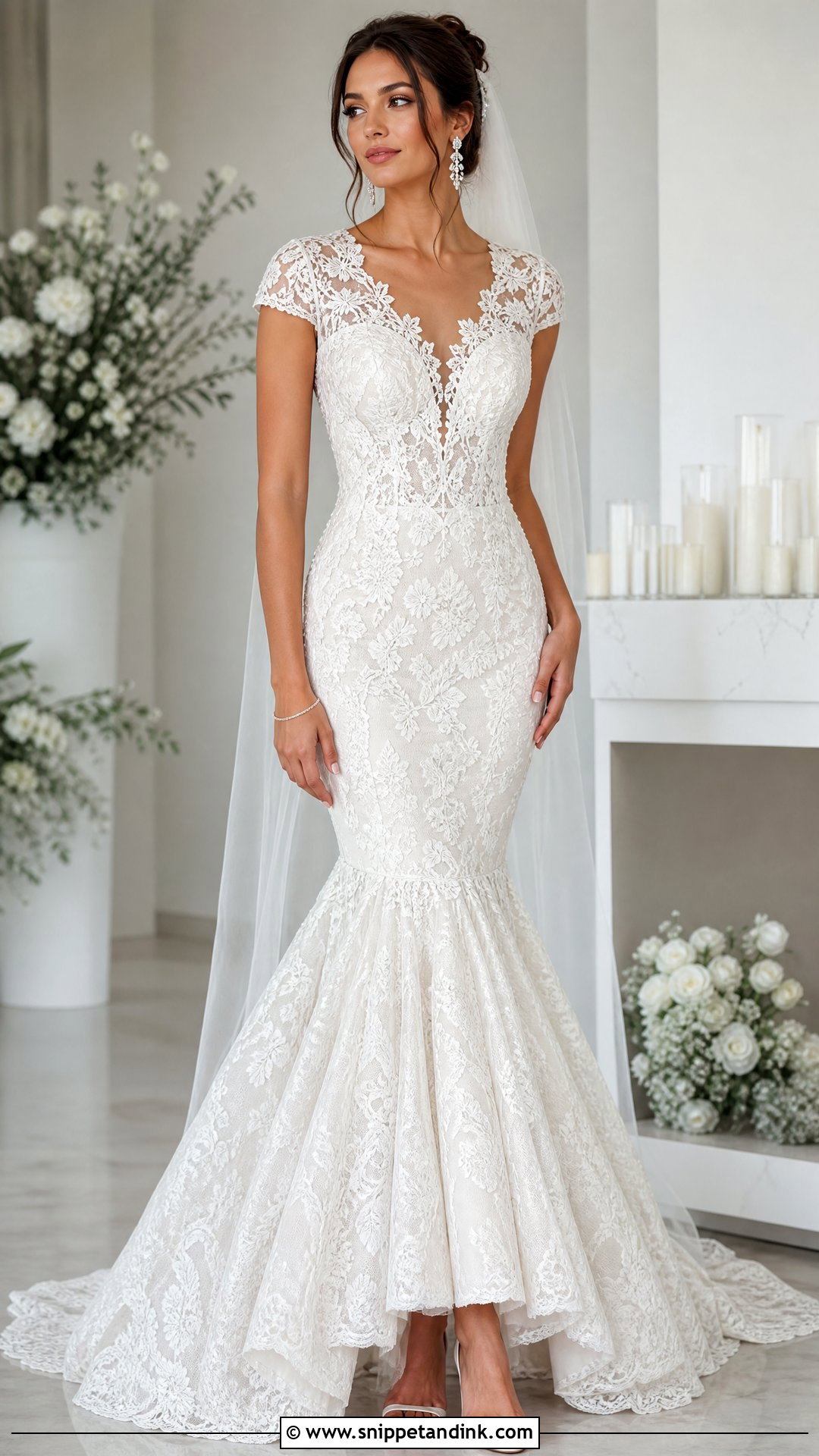
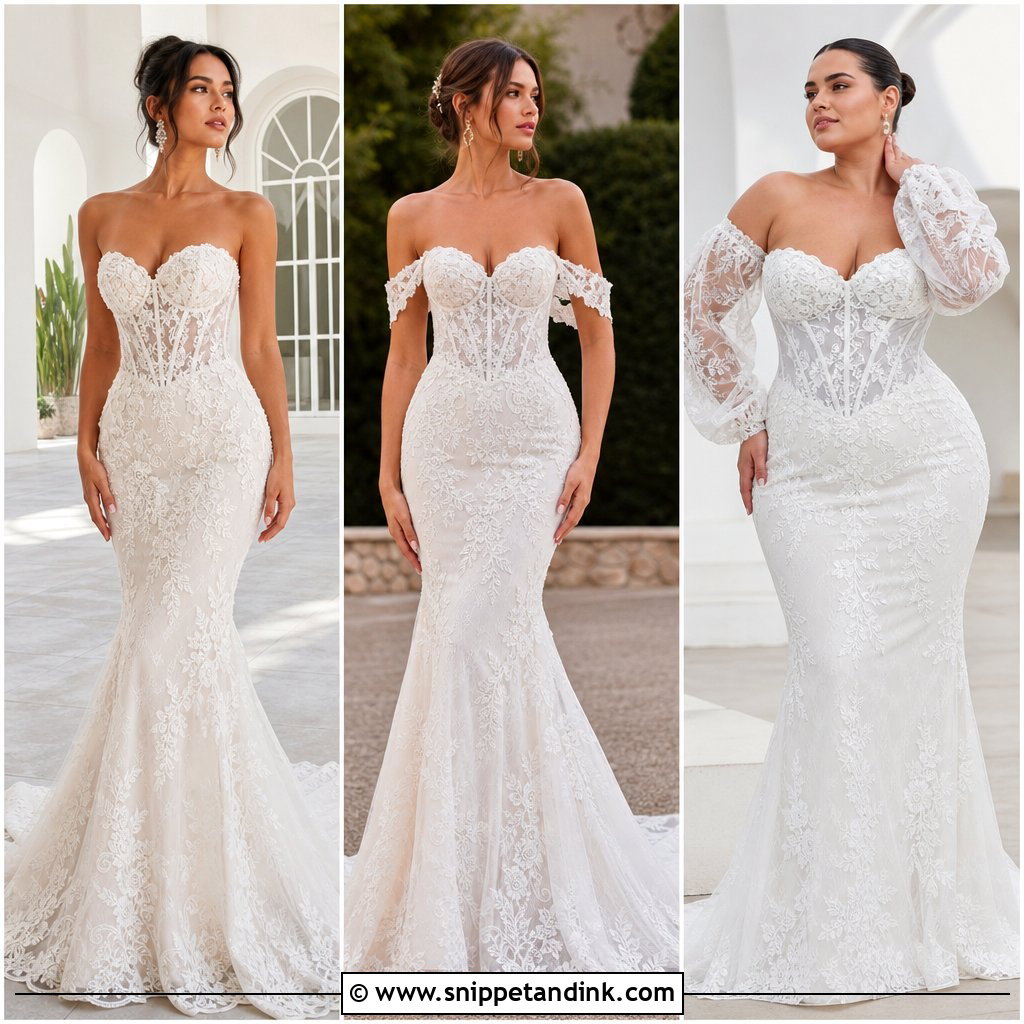
A mermaid gives a sculpted shape with movement below the knee. Look for strong inner construction, a comfortable lining and sleeves cut high enough in the armhole that you can lift your arms. A sweetheart bodice under an illusion lace overlay gives shape and coverage. Drop earrings, a narrow veil and comfortable heeled sandals under the flare, with a side-parted wave or sleek low bun. An elongated bouquet echoes the line. The flare point is the fitting detail I fuss over: set too high it shortens the leg, set too low you can’t take a normal step. Practise sitting and walking at every alteration.
4. Fit-And-Flare Short Sleeve Lace Wedding Dress
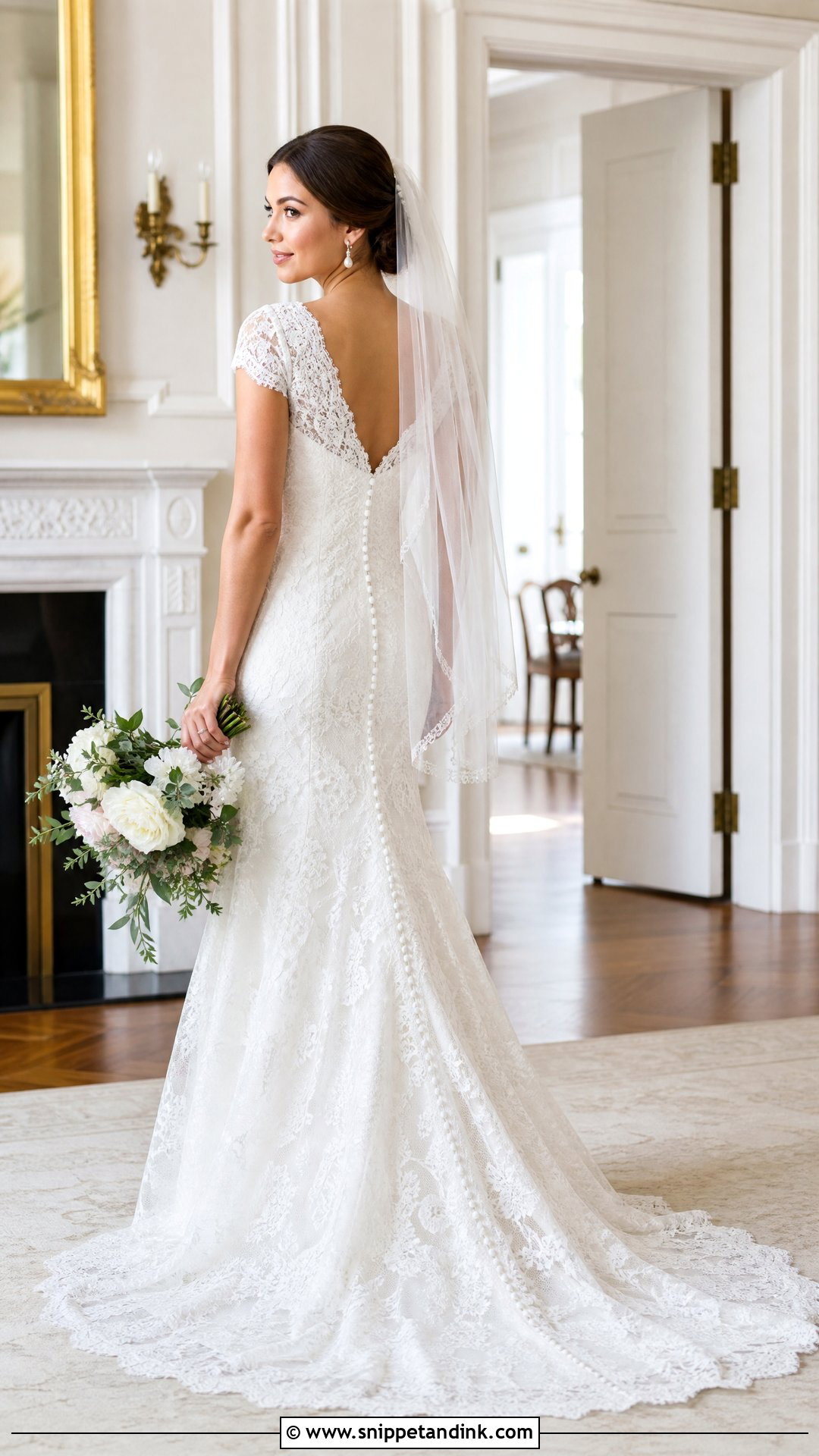
Want a fitted gown that’s easier to move in than a mermaid? Fit-and-flare follows the body through the waist and hips before widening gradually, usually from mid-thigh. Medium-scale floral lace over a supportive ivory lining reads well from across a room. A V-neck, covered buttons and a chapel train add classic detail. Pearl drops, a slim bracelet and low block heels for stability, with soft waves or a loose low bun. A fingertip veil shows the shape instead of burying it. Medium lace is the right scale here; tiny lace disappears on this silhouette and huge motifs get cut awkwardly by the seams.
5. Sheath Short Sleeve Lace Wedding Dress
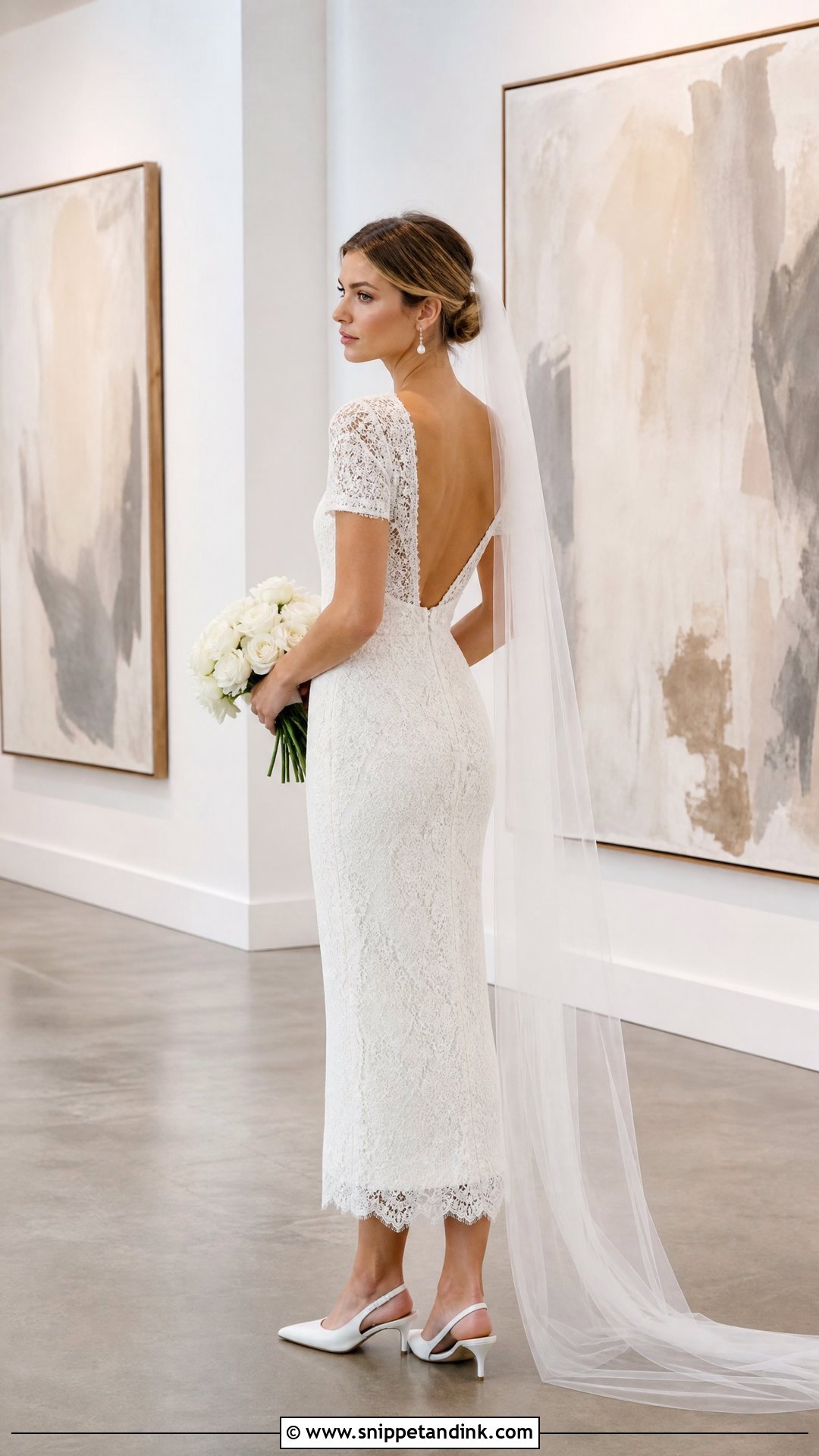
A sheath falls close to the body without the flare of a mermaid, which makes it the cleanest shape on this list. Choose light lace with a smooth lining so it skims rather than clings, and a bateau or shallow V-neck; a low back adds quiet drama. A neat bun, small pearl earrings and pointed slingbacks, with a narrow chapel or shoulder-length veil. A simple bouquet with little greenery. Sheaths are honest dresses. They show the shape of what you wear underneath, so bring the actual underwear to the fittings. City venues, galleries and destination weddings suit it.
6. Boho Short Sleeve Lace Wedding Dress
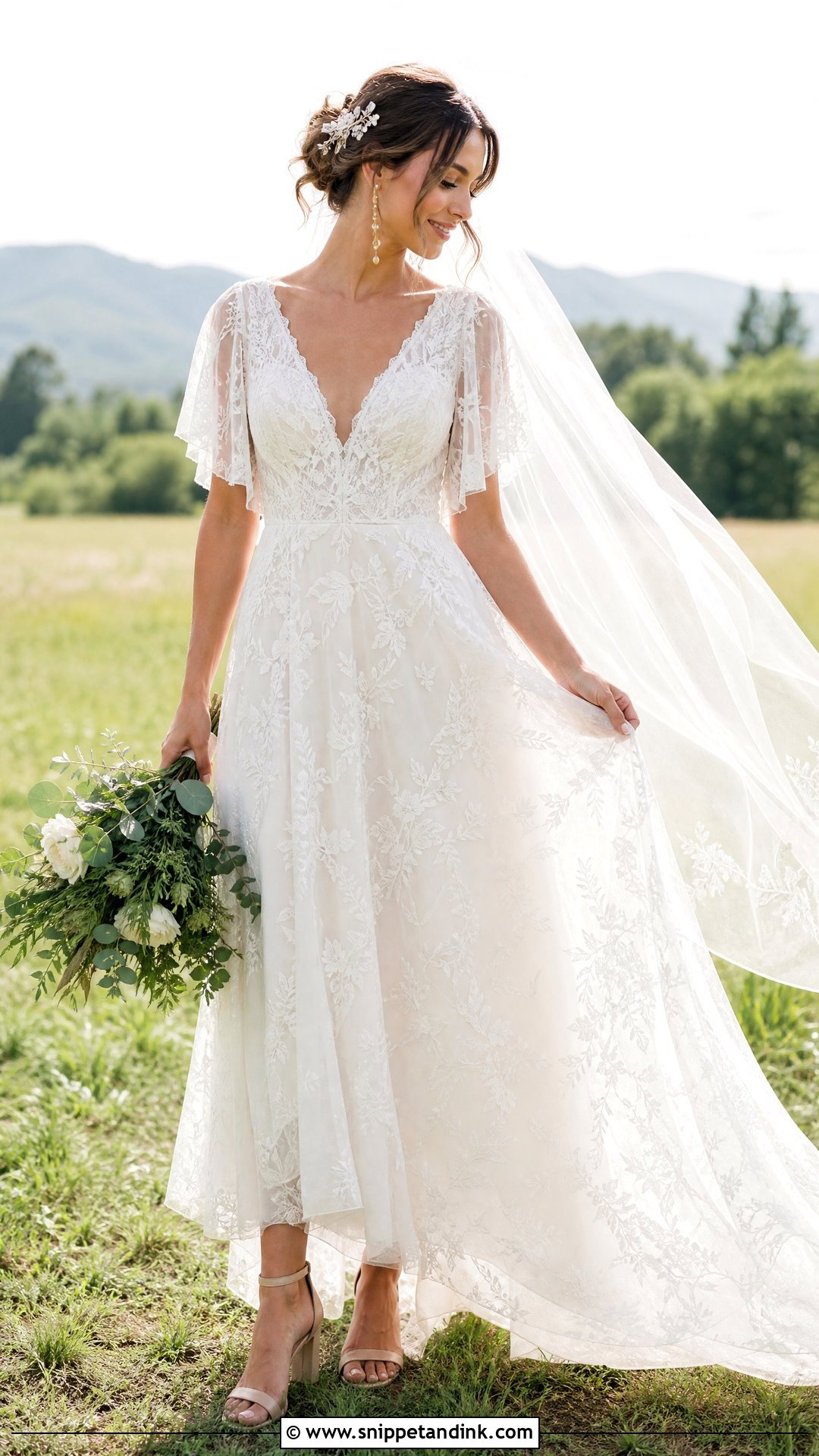
Relaxed movement and natural accessories are what make lace read as boho. A flowing A-line or empire shape in botanical lace, crochet-style trim or lightly textured appliqués. Fluttery short sleeves and a soft V-neck keep it unfussy. Loose waves, a small floral comb and neutral block-heel sandals; delicate gold earrings and a thin bracelet instead of crystal. A soft tulle veil or removable lace cape adds a bit of ceremony. Finish with an organic bouquet of mixed shapes. Crochet-style lace is heavier than it looks and can stretch at the hem when hung for weeks, so store it folded flat. Woodland, meadow, barn and desert settings suit it.
7. Vintage Tea-Length Short Sleeve Lace Wedding Dress
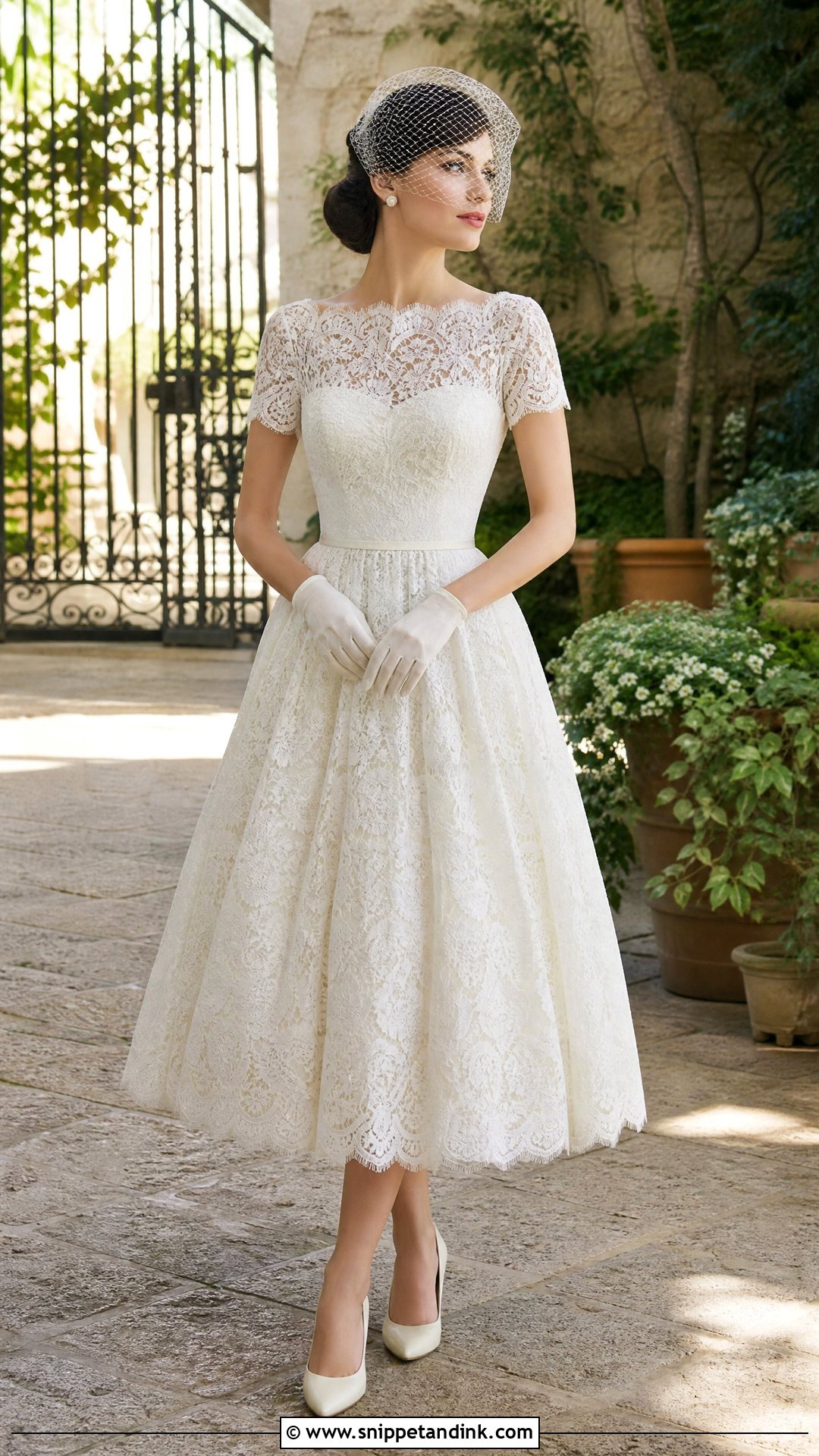
Tea length gives lace a playful vintage feel. A fitted bodice, natural waist and a skirt ending between knee and ankle, with scalloped sleeves and a bateau neckline for a mid-century look. The hem shows your shoes, so choose ivory pumps, low block heels or bridal flats with a nice ankle detail. Pearl studs, short gloves if you like, and a birdcage or shoulder-length veil. A smooth chignon or a softly curled bob suits it. A scalloped lace hem can’t simply be cut shorter; a good seamstress takes it up from the waist or moves the scallop, which takes time, so order early. Daytime ceremonies and garden receptions suit it.
8. Square-Neck Short Sleeve Lace Wedding Dress
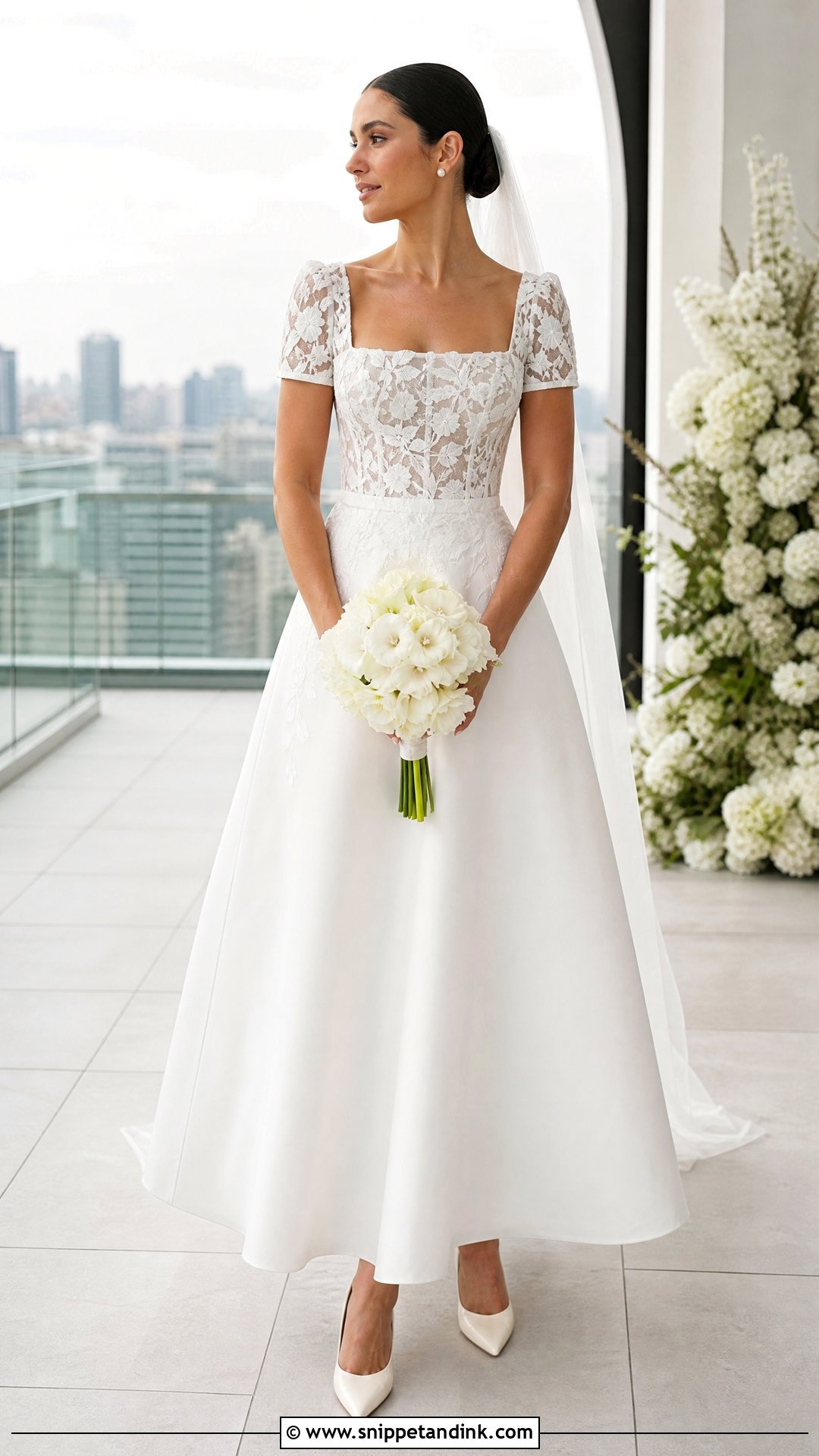
A square neckline gives lace a fresh, crisp frame. It sits well with structured sleeves and a clean A-line or column skirt. Lace with a clear botanical pattern over a smooth lining makes the design read. A sleek low bun, pearl or diamond studs and a narrow veil tucked under the hair. Pointed pumps continue the clean lines, and a structured bouquet matches. Leave the square empty; a large necklace inside it looks crowded. The corners of a square neck on lace need stay tape or a fine wire inside, or they curve inward by the evening. Modern estates, rooftops and galleries suit it.
9. High-Neck Short Sleeve Lace Wedding Dress
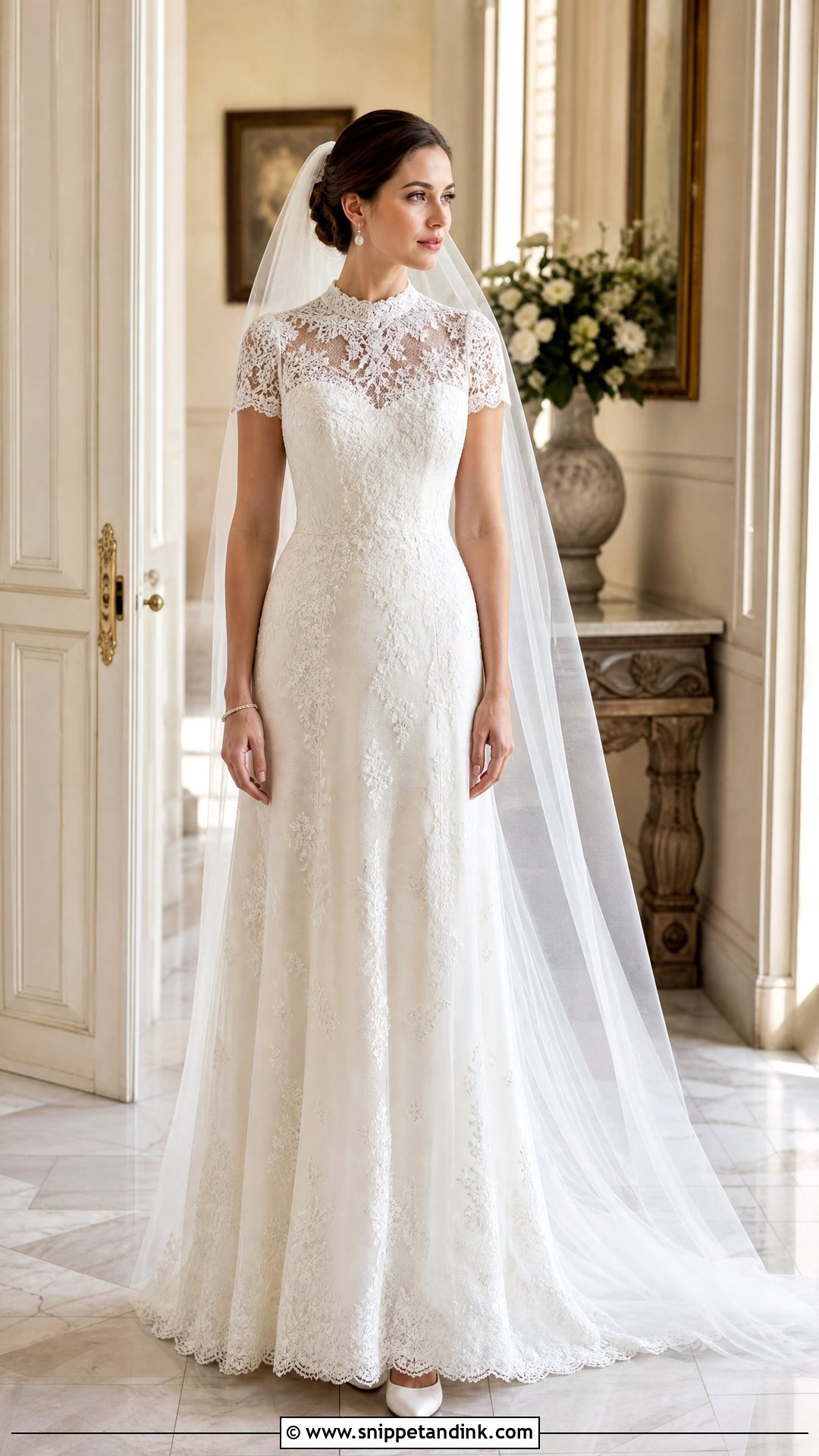
High necks give coverage and put the lace pattern front and centre. Delicate illusion lace with careful lining across the chest keeps the bodice from looking heavy. A softly fitted waist over an A-line, sheath or fit-and-flare skirt. A low bun or high updo leaves the neckline clear. Small earrings and a fine bracelet are plenty, with closed pumps and a plain tulle veil. A low back or covered buttons give interest from behind. On a warm day, a high lace neck can feel close, so I check there’s room for two fingers at the collar and that the fabric doesn’t itch.
10. V-Neck Short Sleeve Lace Wedding Dress
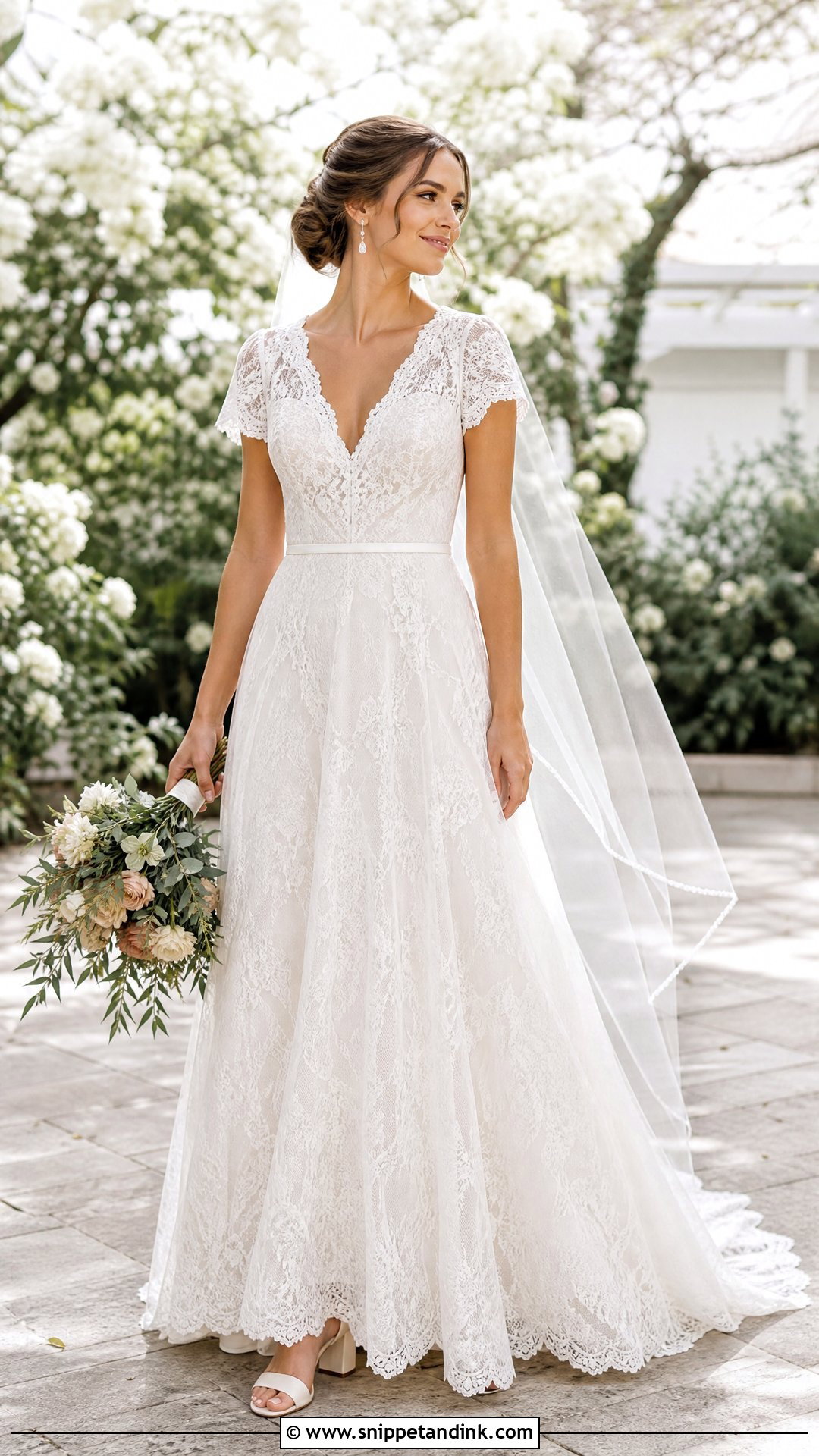
A V-neck lengthens the upper body while the lace keeps it soft. Choose the depth by the support and coverage you need, then sit and move in it. A lace-trimmed V-neck suits a defined waist and flowing A-line skirt. A fine pendant, small earrings and a fingertip veil; with heavy lace, drop the pendant and wear fine drops instead. Ivory block heels give comfort without looking casual. Soft waves or a textured low bun and a loose garden bouquet. Deep Vs on lace need a strip of mesh or a hidden hook at the point, or they gape when you lean forward. It adapts to formal or relaxed weddings.
11. Illusion Neckline Short Sleeve Lace Wedding Dress
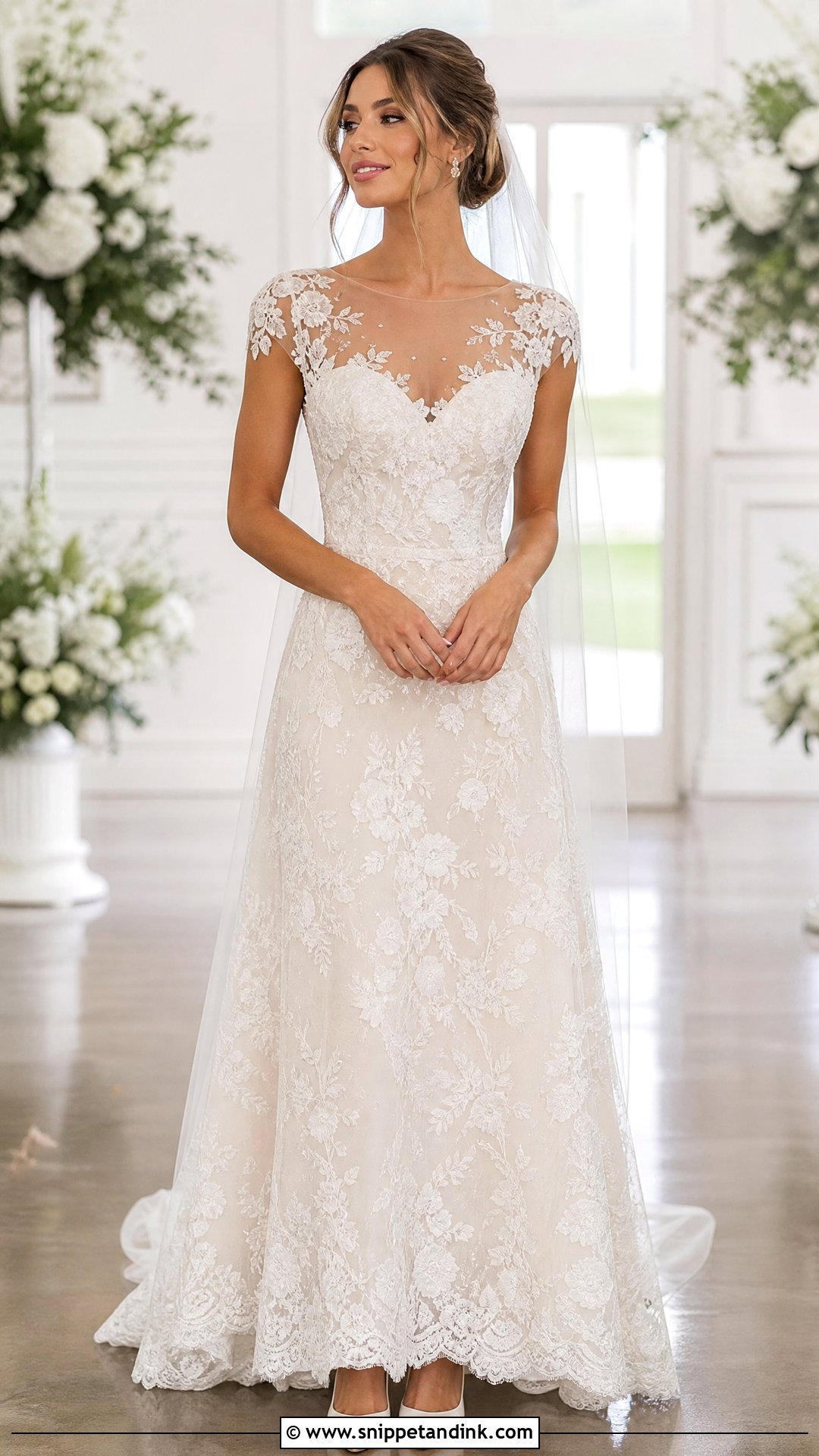
Illusion necklines use fine mesh and placed appliqués so the lace looks like it’s floating on your skin. Mesh that closely matches your skin tone is everything; most bridal shops stock several shades, so ask. A sweetheart lining underneath adds shape, and the skirt sets the drama. Crystal studs, a narrow bracelet and a plain, light tulle veil, with a low updo so the upper half shows. Ivory pumps or block heels rather than embellished shoes. Illusion mesh photographs as skin only in good light; under a strong flash it can show as a faint sheen, which I point out so nobody is surprised by the pictures.
12. Off-The-Shoulder Short Sleeve Lace Wedding Dress
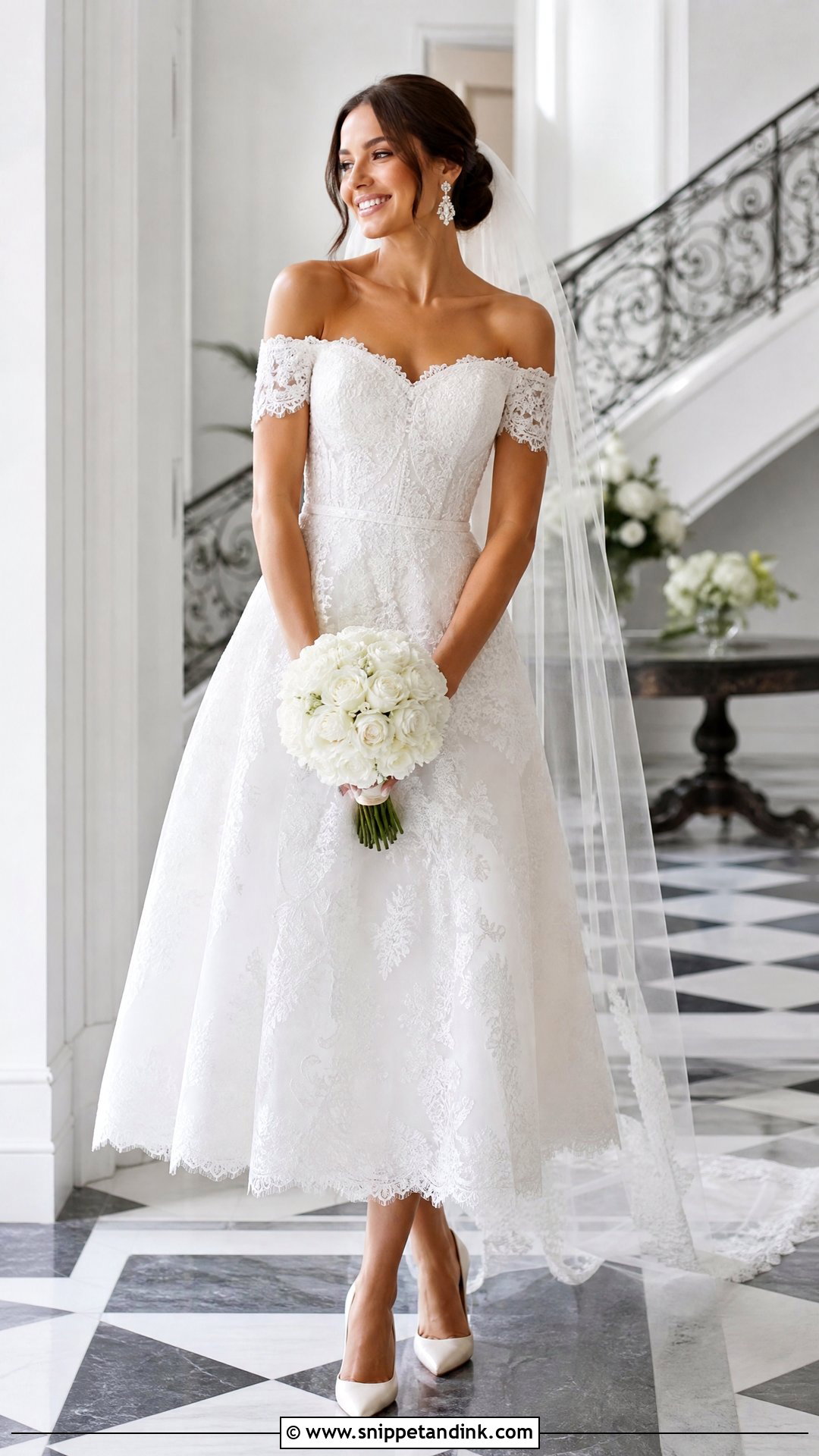
Off-shoulder lace frames the shoulders while the sleeves stay soft. Built-in structure is what keeps it up without constant tugging. Fitted lace bands sit neatly along the upper arm; looser sleeves look softer. Balance it with an A-line, ball gown or fit-and-flare skirt. Statement earrings, a bare neck and a low bun or side-swept waves, with a chapel veil attached under the hair. Comfortable satin pumps and a rounded bouquet. This is the least free sleeve on the list. At fittings, lift your arms to shoulder height; if you can’t, the bands need a little elastic or the sleeves need lifting.
13. Flutter Short Sleeve Lace Wedding Dress
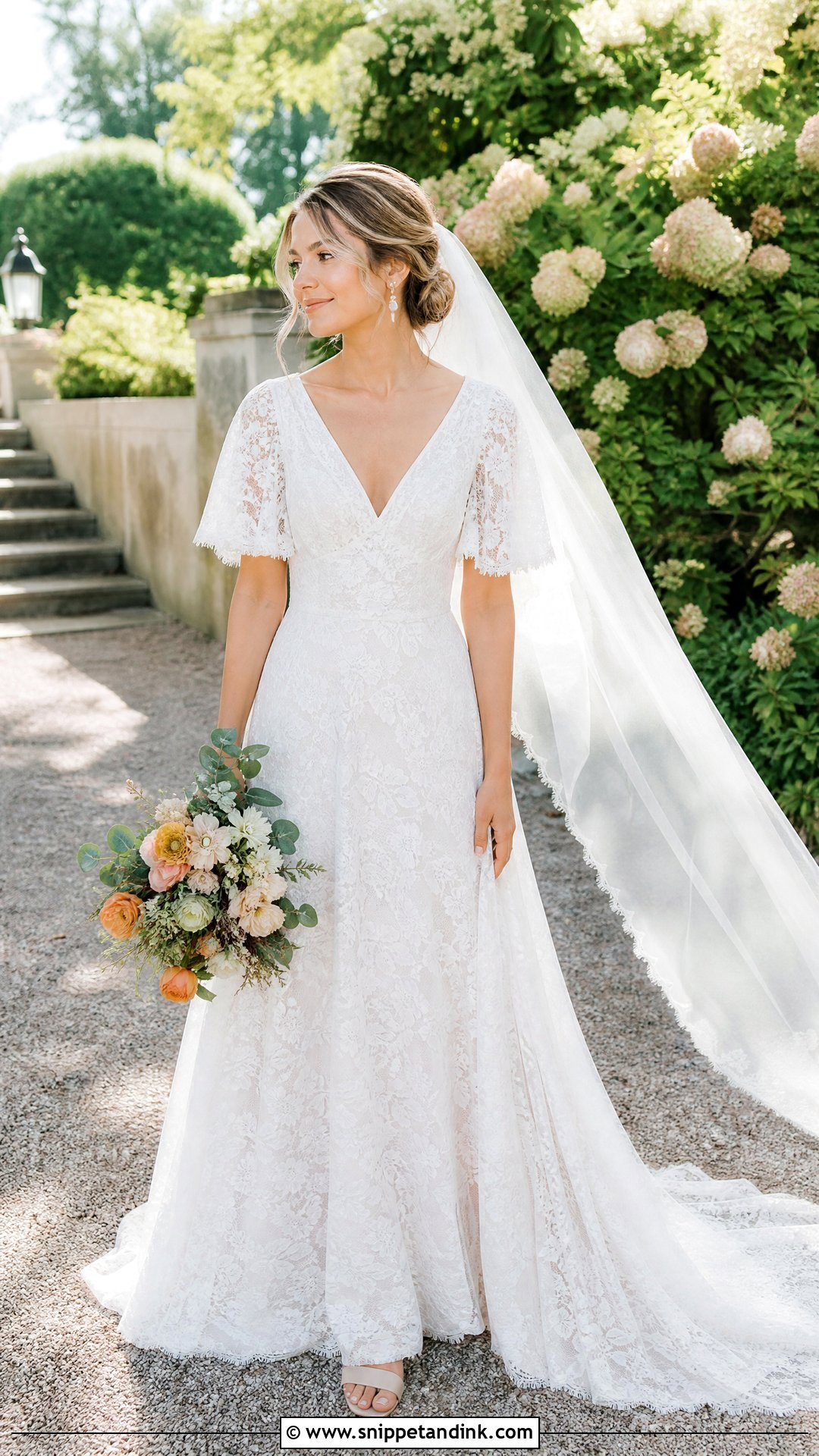
Light flutter sleeves add movement without formality. They suit a relaxed A-line skirt, a V-neck bodice and lightweight floral lace. The sleeves should fall smoothly from the shoulder and stop before they get in the way of eating or holding the bouquet. Loose curls, delicate earrings and low block-heel sandals, with a simple raw-edge veil and soft seasonal flowers. Heavy accessories make the sleeves look out of place. Flutter sleeves are kind to the upper arm because they stand slightly away from it, which is why many brides who dislike fitted sleeves like these. Warm-weather and outdoor weddings suit it.
14. Floral Short Sleeve Lace Wedding Dress
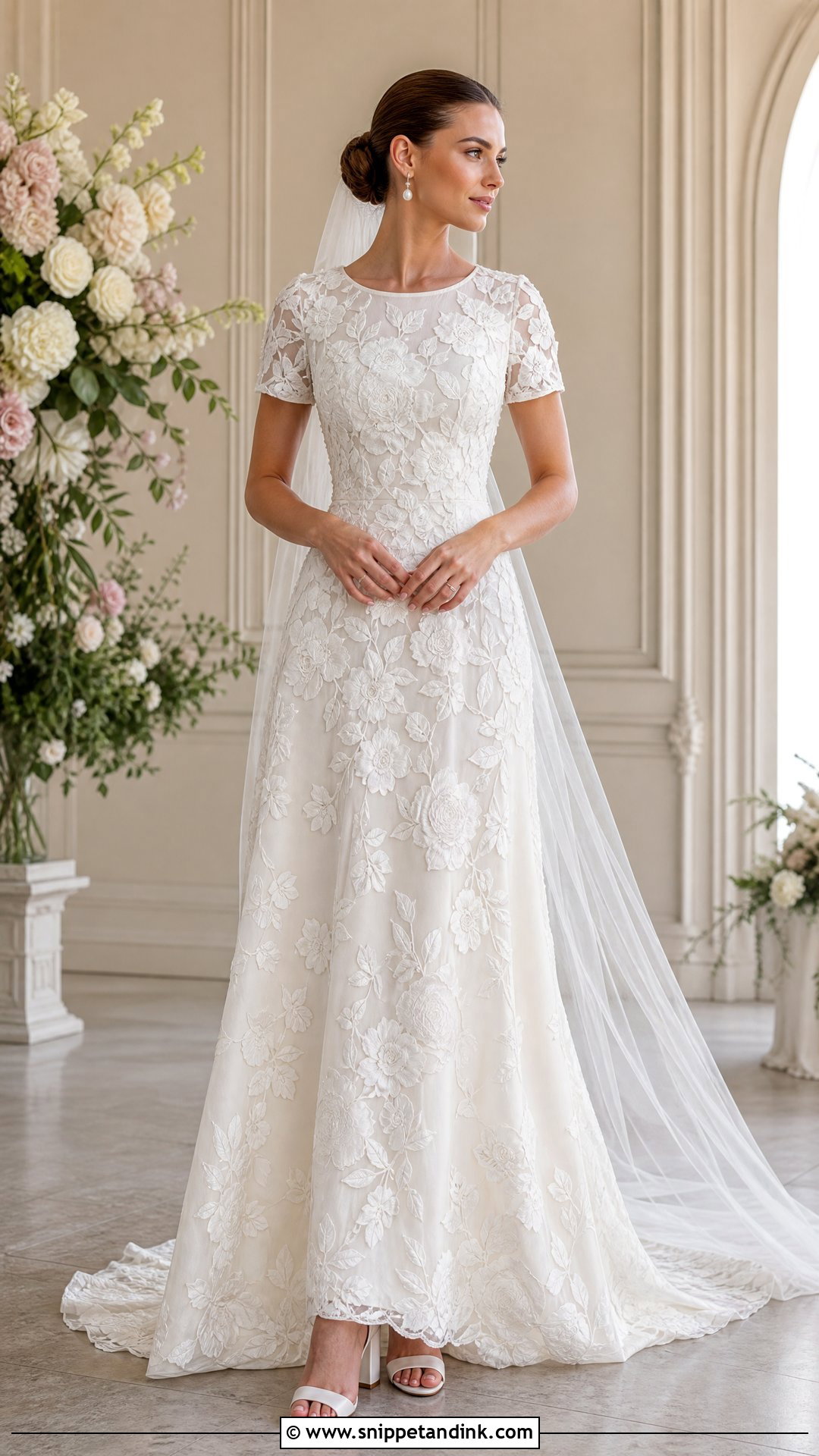
Large floral lace gives a dimensional look that shows up well in photos. The motif scale should suit your frame and continue cleanly from sleeves into bodice or skirt. A clean lining keeps the flowers visible. A simple veil, a polished bun and small pearl earrings, with plain ivory pumps or low block heels. Choose a bouquet with a limited palette rather than copying every flower in the fabric. I always look at where the big motifs land on the body, because a large flower sitting right on the bust or hip draws the eye there whether you want it or not. A good seamstress can move a motif by hand.


15. Chantilly Short Sleeve Lace Wedding Dress
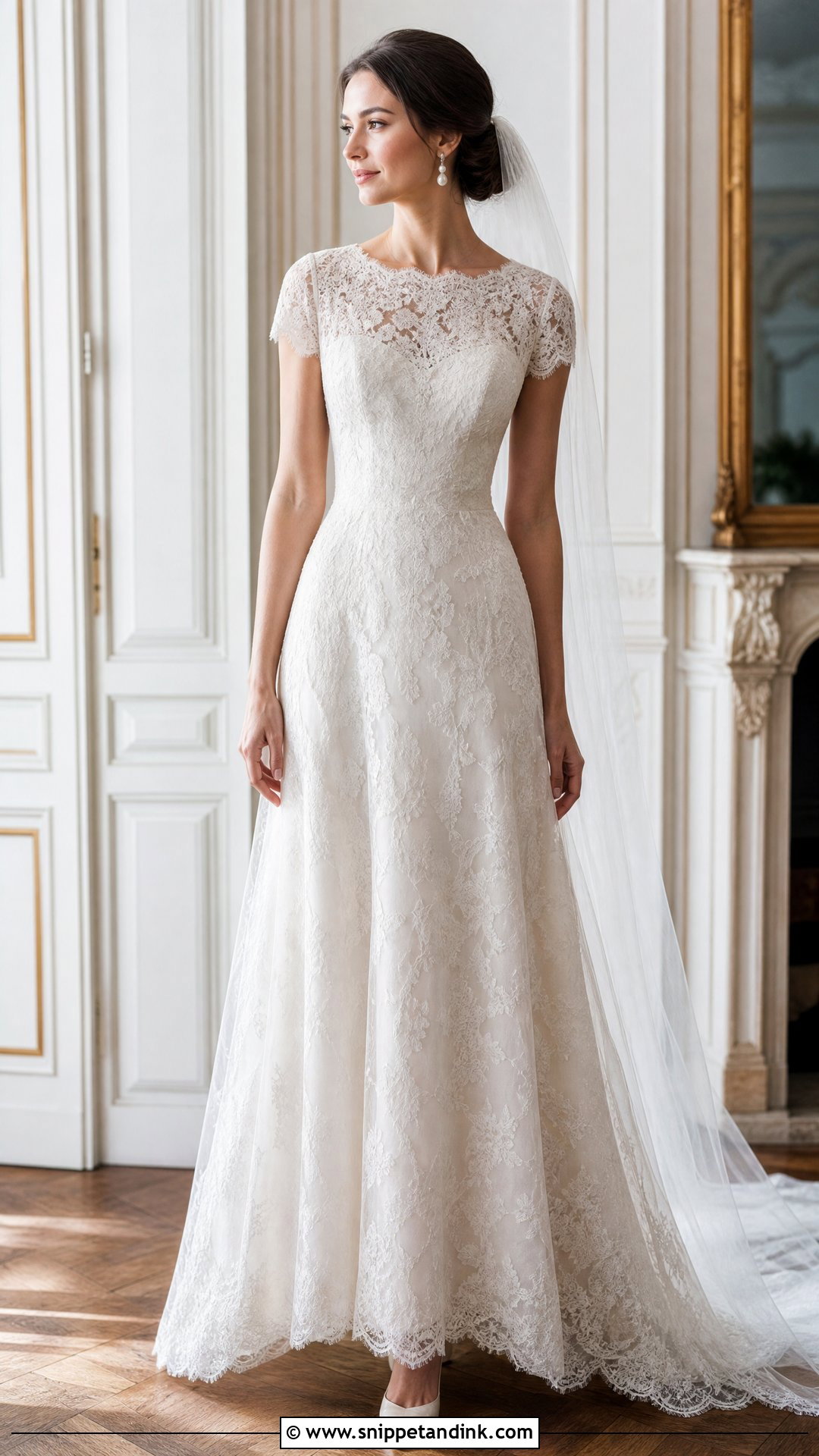
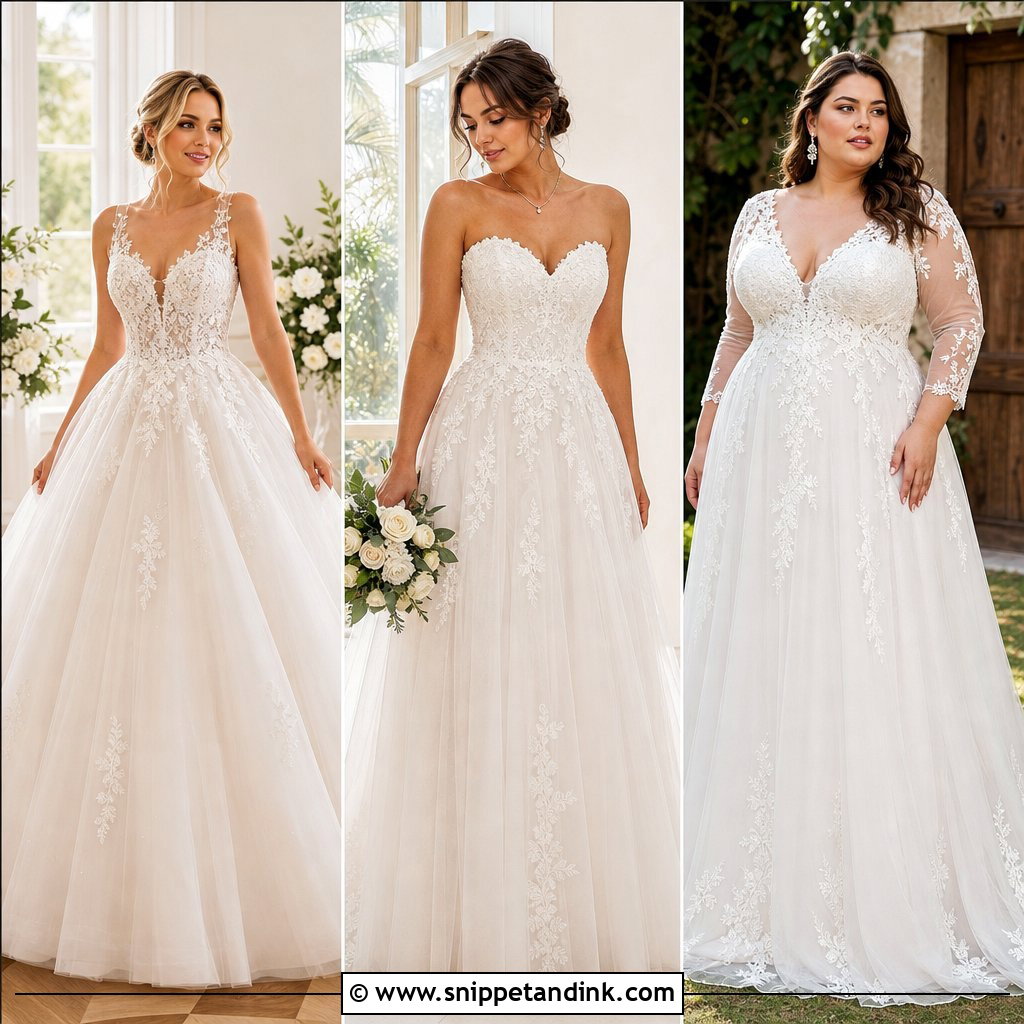
Chantilly is fine, light lace with a delicate pattern, and it gives a short sleeve a nearly weightless look. It suits a fitted bodice, soft sleeves and a flowing skirt. The lining colour changes everything: ivory looks classic, soft white crisper, nude gives the lace more contrast. Pearl drops, pointed satin heels and a sheer veil with a plain edge, with a smooth low chignon that keeps loose hair from snagging. Keep the bouquet and accessories restrained. Chantilly is also fragile. Bracelets, rings and the stems of a bouquet can catch it, so I check jewellery for prongs before the day. Formal venues and intimate ceremonies suit it.
16. Plus-Size Short Sleeve Lace Wedding Dress
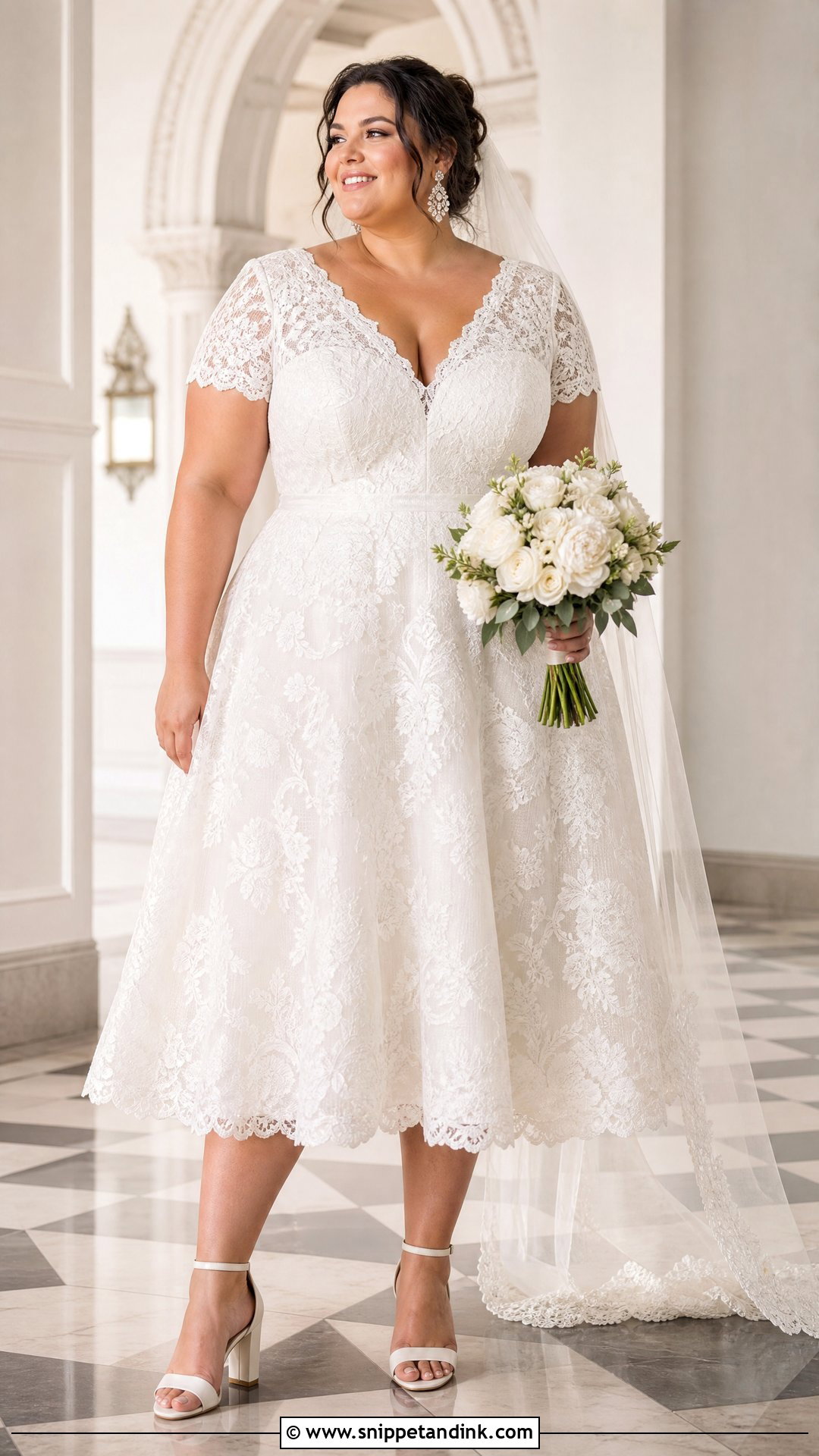
A plus-size lace gown has to support you first and then show off the shape you love. An A-line, ball gown or fit-and-flare with internal boning, a secure back and sleeves that fit the arm without pinching. A V-neck or soft scoop opens the upper body. Place the lace on purpose, whether all over or concentrated at the waist and bodice. Supportive block heels, statement earrings and a veil in proportion to the skirt, with a structured bouquet. Short sleeves are where off-the-rack sizing most often fails, so tailor the dress to your body rather than buying bigger and living with loose shoulders.
17. Petite Short Sleeve Lace Wedding Dress
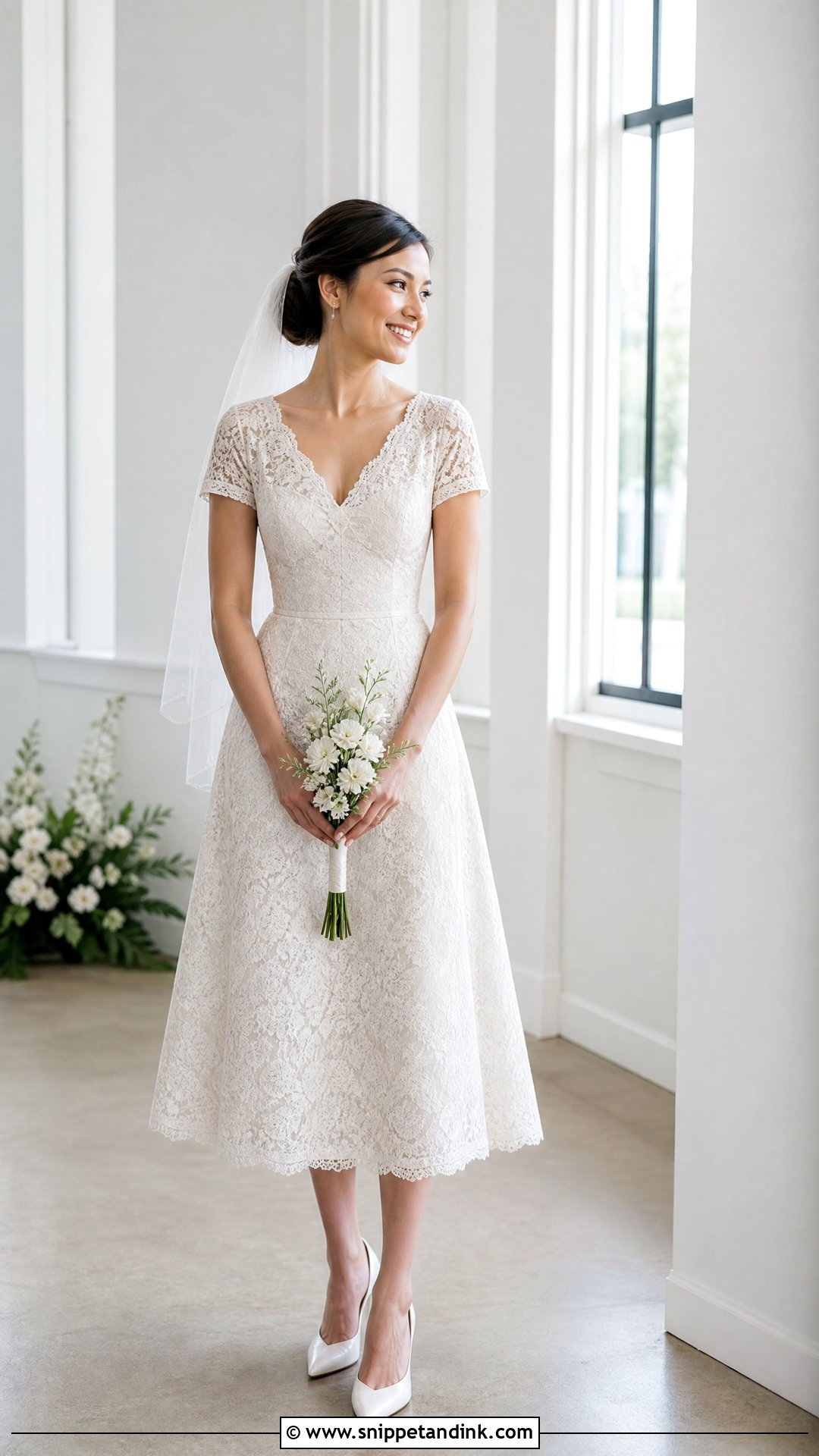
On a petite bride, proportion is the whole game. Look for a raised or natural waist, moderate lace motifs and a skirt with controlled volume. A clean V-neck, square or scoop neck keeps an unbroken vertical line. A sleeve that ends at the widest part of the upper arm makes the arm look wider, so a slightly shorter sleeve is often more flattering. Pointed heels, a narrow bouquet and a fingertip or chapel veil without too many layers, with a high or low bun to add length. Lace hems on petite brides usually need motifs moved rather than cut away, which is careful hand work.
18. Beach Short Sleeve Lace Wedding Dress
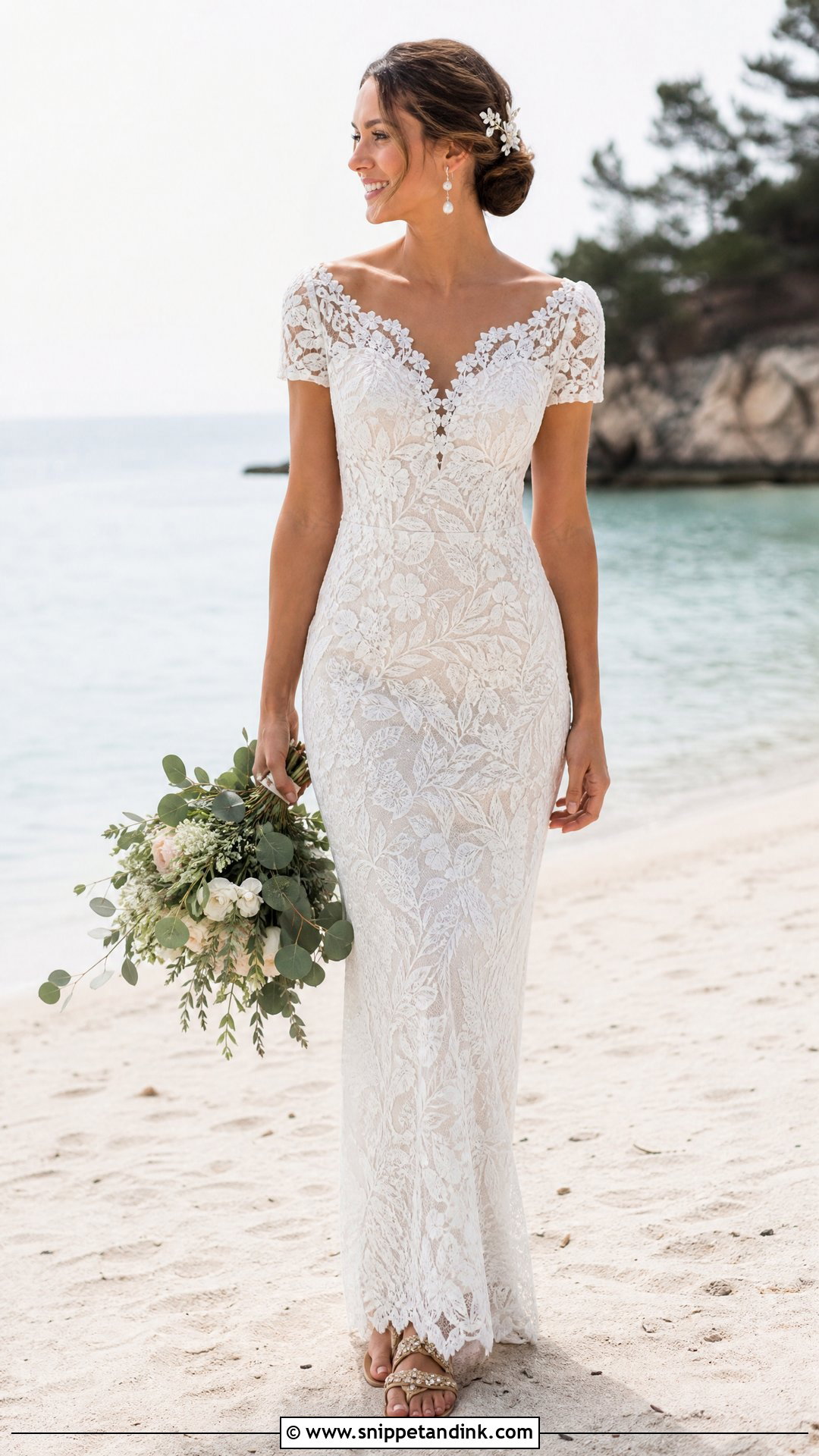
A beach short sleeve lace wedding dress needs to move easily and breathe. Light lace over chiffon or a soft lining, in an A-line, empire or relaxed sheath. Skip heavy layered skirts that collect sand. Flat embellished sandals, pearl earrings and a low textured bun pinned for wind. A short veil, floral comb or simple pin beats a cathedral veil that becomes a sail. Keep the train short or add a wrist loop. Salt water and sunscreen both mark lace, so apply sunscreen well before dressing and let it dry. Finish with a loose bouquet.
19. Garden Short Sleeve Lace Wedding Dress
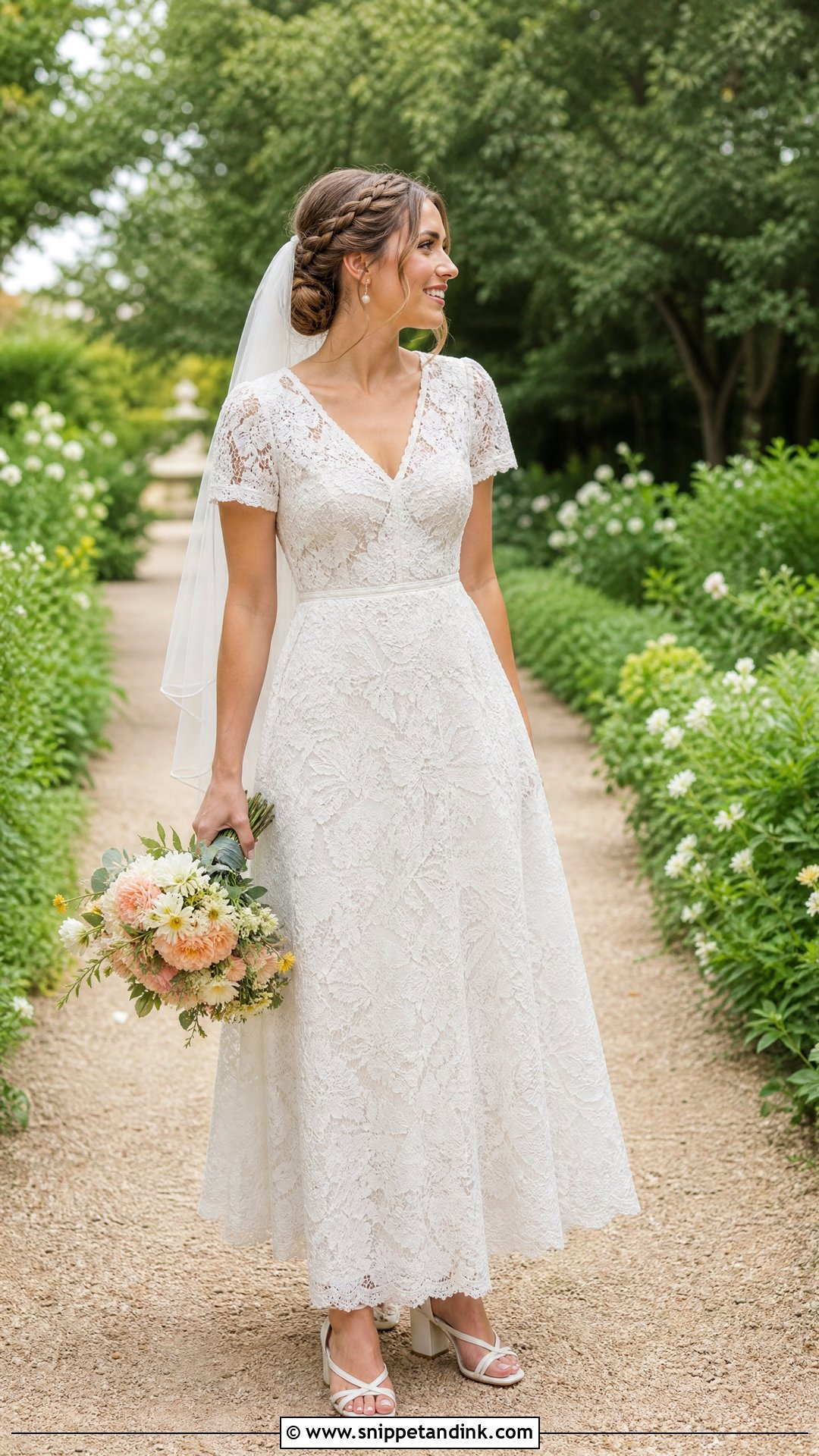
Botanical lace looks at home among flowers and greenery. A defined waist with a flowing A-line or tea-length skirt; short sleeves stay comfortable outdoors. Block heels or flats that won’t sink into lawn, with a fingertip veil, pearl earrings and a loose seasonal bouquet. A braided low bun or soft half-up style holds up in changing weather. Don’t pair a heavy lace veil with a detailed gown. One strong lace element is enough, and the garden can do the rest. Grass stains on a lace hem are hard to lift, so a hem kept just off the ground is worth asking for.


20. Short Sleeve Lace Wedding Mini Dress
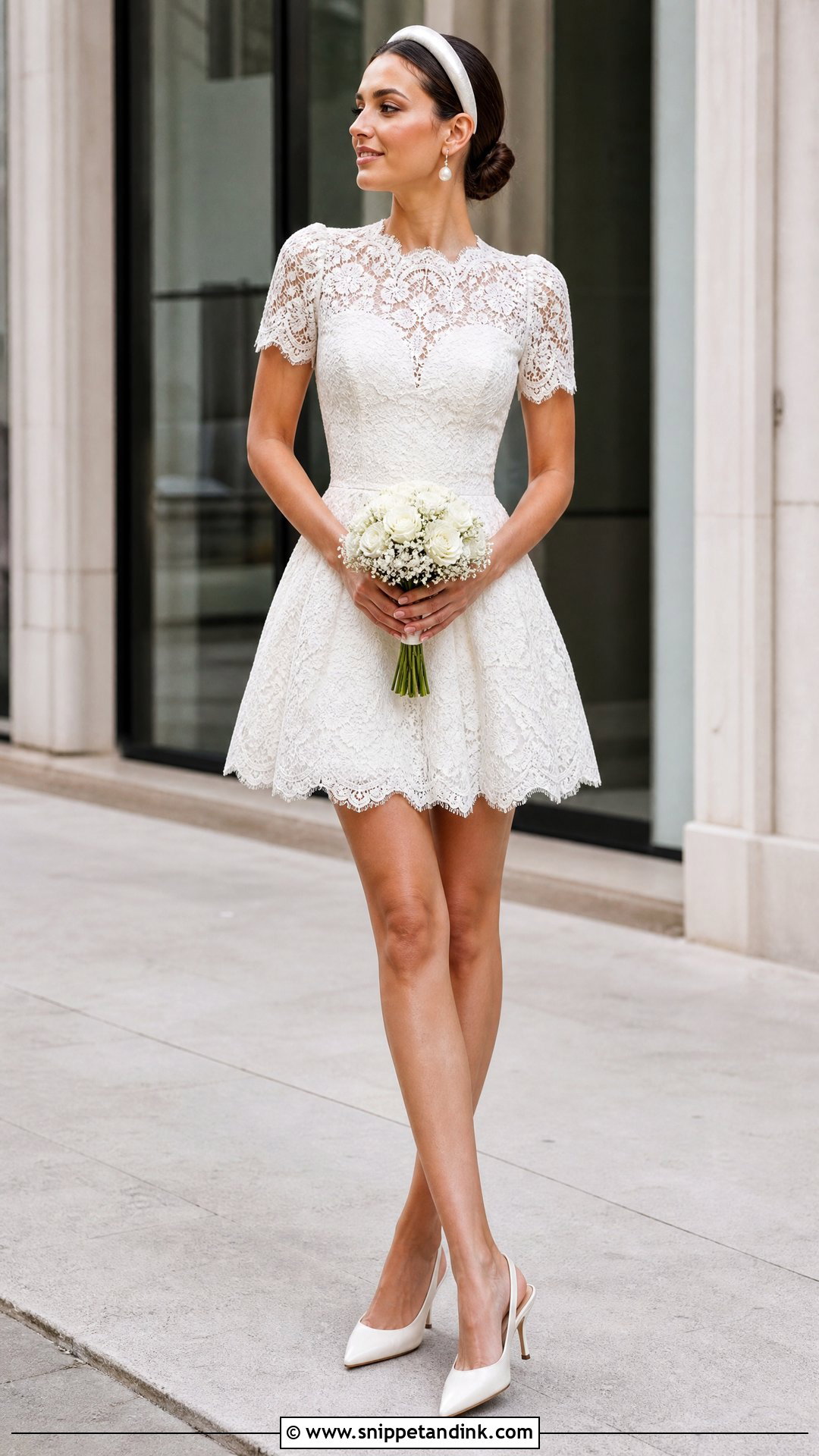
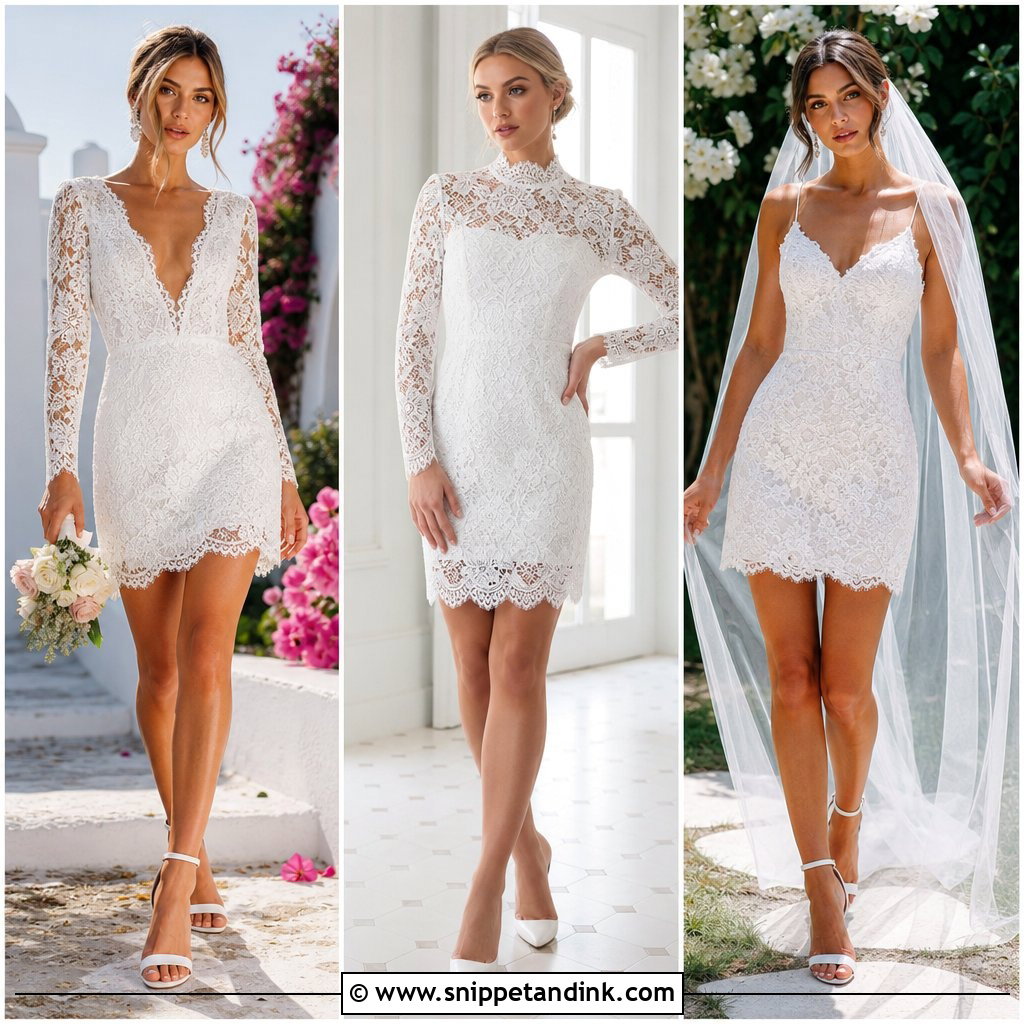
A lace mini is a lively choice for a courthouse ceremony, casual reception or second look. A structured shift, fitted sheath or flared shape, with a secure lining and a hem you can move in. Scalloped sleeves, covered buttons or a small bow keep it bridal. Your legs and shoes are on show, so choose pointed pumps, slingbacks or low block heels, with pearl earrings, a compact bouquet and a short veil or polished headband. A sleek bun looks modern; soft waves relax it. Sit down in the mirror before buying, because short lace rides up more than satin and the scallops show every inch.
Why Lace Alterations Take Longer, and How to Plan for It
Brides are often surprised when a lace gown needs more alteration time than a plain satin one. The reason is that a good seamstress rarely cuts through a lace motif. She lifts appliqués, moves them, and stitches them back by hand so the pattern still looks continuous.
Give yourself room in the calendar
Plan for the dress to arrive several months before the wedding, then allow two or three fittings spread over the last couple of months. Lace hems, sleeve adjustments and moved motifs are slow hand work, and rushing them is how scallops end up crooked.
Ask these at the first fitting
- Can the hem be taken up from the waist so the scallop edge stays intact?
- Is there spare lace in the seams or from the hem for patching sleeves?
- Will the sleeve be taken in at the seam, or does the lace need re-appliquéing?
- Does the lining need to be shortened separately so it doesn’t peek out?
Keep any offcuts the seamstress gives back. A small piece of matching lace is the quickest repair if a sleeve snags on a bracelet or chair during the day.
Start With the Sleeve, Then Let the Lace Lead
A good lace gown should photograph well and still feel comfortable at midnight. One sleeve length works across very different silhouettes, necklines, lace patterns and venues, from a formal ball gown to a beach dress, a vintage tea-length or a bridal mini. Start with the shape you feel most confident in. Then compare how the sleeves move, how the bodice supports you, the lining, the train and what alterations it will need. Accessories should support the lace instead of competing with it. Get the sleeve and the proportions right, and the rest falls into place.
You'll Like These Ideas:


Leave a Reply