
Tulle is the most forgiving fabric I fit and also the most misunderstood. On the hanger a ruffled skirt looks weightless; on a body it can be anything from a whisper of net to a dozen layers of stiff nylon you feel in your hips by evening, and the way it was cut decides which. The gowns below run from dramatic tiered ball gowns to slim shapes with a single fluttering edge. As you look, notice two things the photos only hint at: what holds the bodice up, and where the first ruffle starts. Those two choices decide whether the dress still feels light at the last dance.
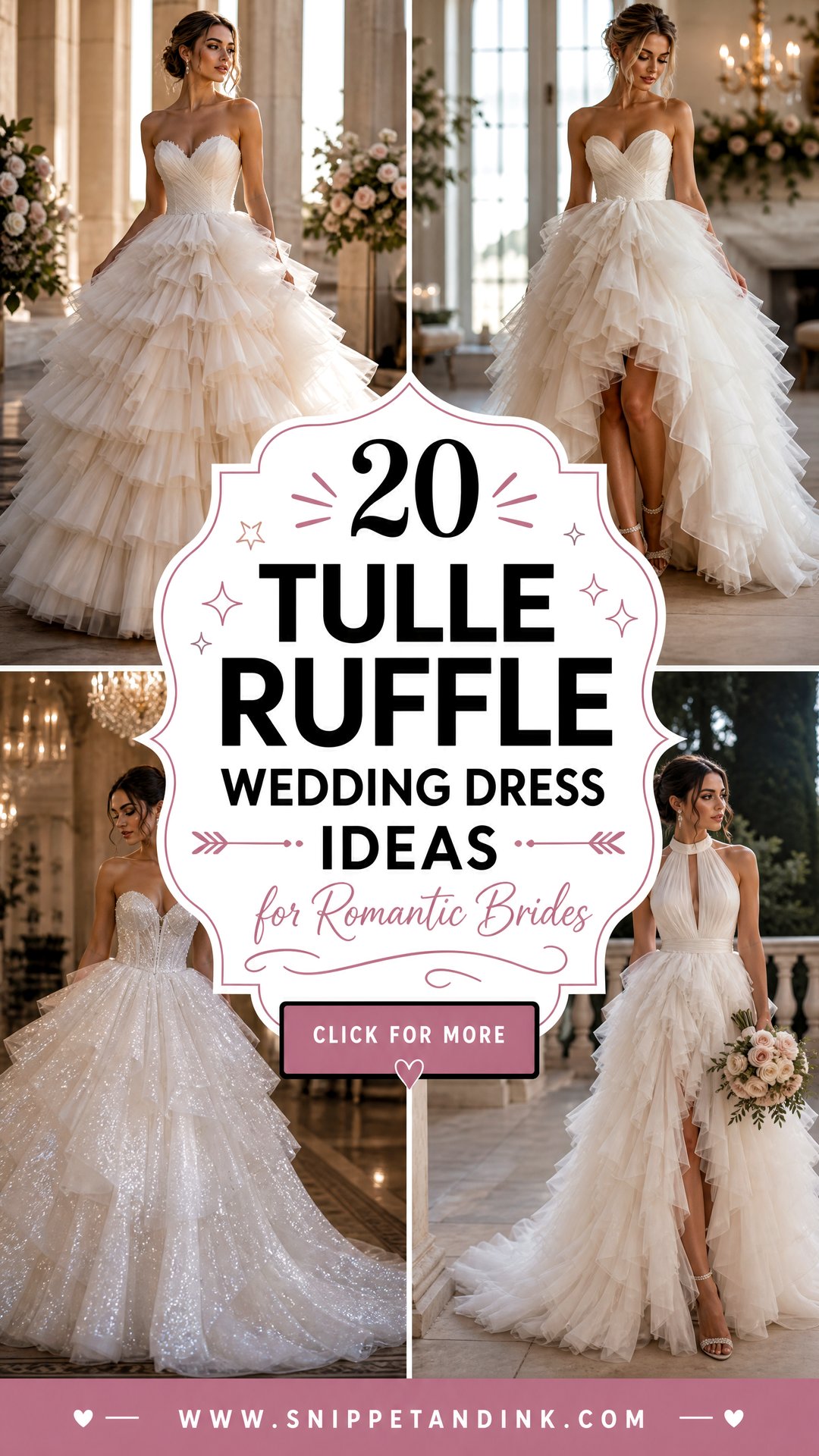
Soft Net, Stiff Net and the Edge of Every Ruffle
Before you fall for a photo, it helps to know that the word tulle covers fabrics that behave very differently. Silk tulle and soft nylon illusion drape close to the body and move with every step. Stiffer nylon net holds a crisp outline, but it rustles, scratches and feels heavier as the layers build up. Most ruffled skirts mix the two, with soft layers on top for movement and firmer ones underneath for shape.
What I check while the dress is still on the hanger
- The ruffle edge. A raw cut edge looks airy and won’t fray, a narrow rolled hem looks finished, and horsehair braid makes a ruffle stand out in waves. Horsehair photographs well but creases when crushed.
- The layer count. Lift the top layer and see roughly how many sit beneath it. More layers mean more volume and more weight resting on your waist.
- The lining against your legs. Net is itchy on bare skin, so there should be a smooth lining between you and the tulle.
- How the tiers attach. Ruffles sewn onto a base layer hold their shape; ruffles gathered only at the waist can collapse after hours of sitting.
Then wear it. Sit for a few minutes, stand up and look at the back in a mirror. Good soft tulle springs back. Cheap stiff net creases and stays flat, and that is exactly how it will look in the evening photos.
1. Strapless Tiered Tulle Ruffle Wedding Dress
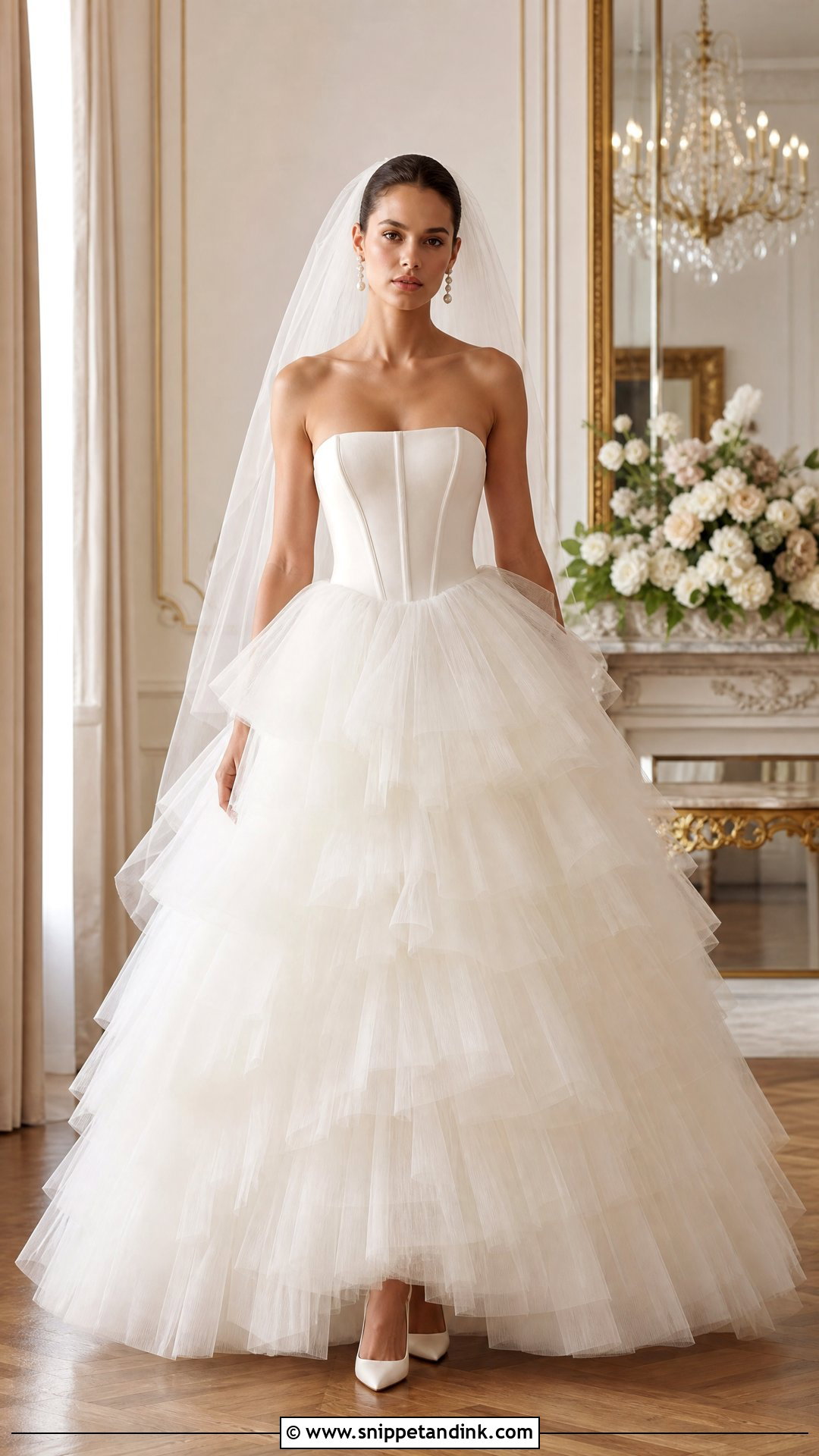
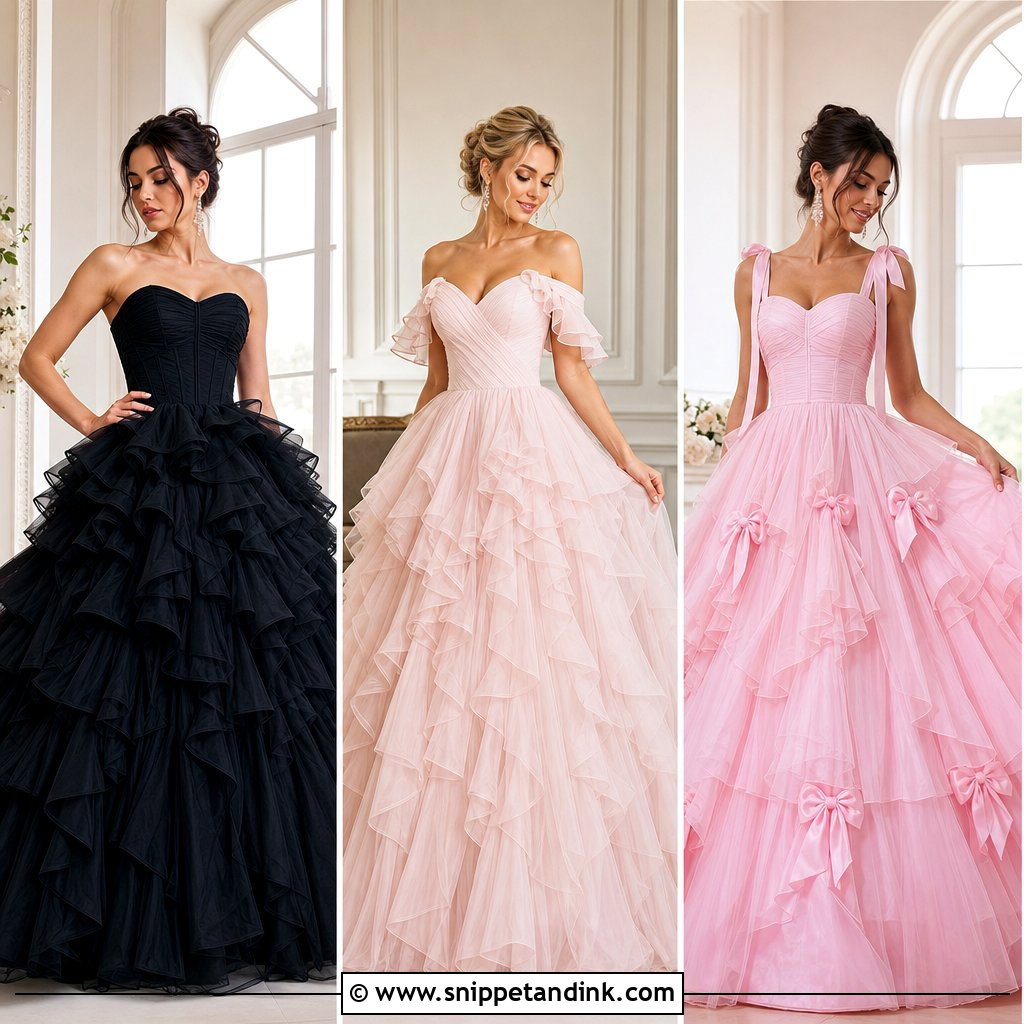
A strapless tiered gown lives or dies by its boning. Every tier adds weight that pulls the bodice down, so at the first fitting I ask the bride to lift her arms and hug someone; if the top edge slips, the corset needs tightening or a waist stay before anyone touches the hem. Wide tiers give a clean, graphic outline, while narrow ruffles move more. A sleek low bun, pearl drops and pointed ivory pumps are plenty. I’d pick a fingertip veil, which frames the shoulders and stops above the busiest part of the skirt, and a compact bouquet that won’t flatten the top tier when you hold it at your waist.
2. Sweetheart Tulle Ruffle Wedding Dress
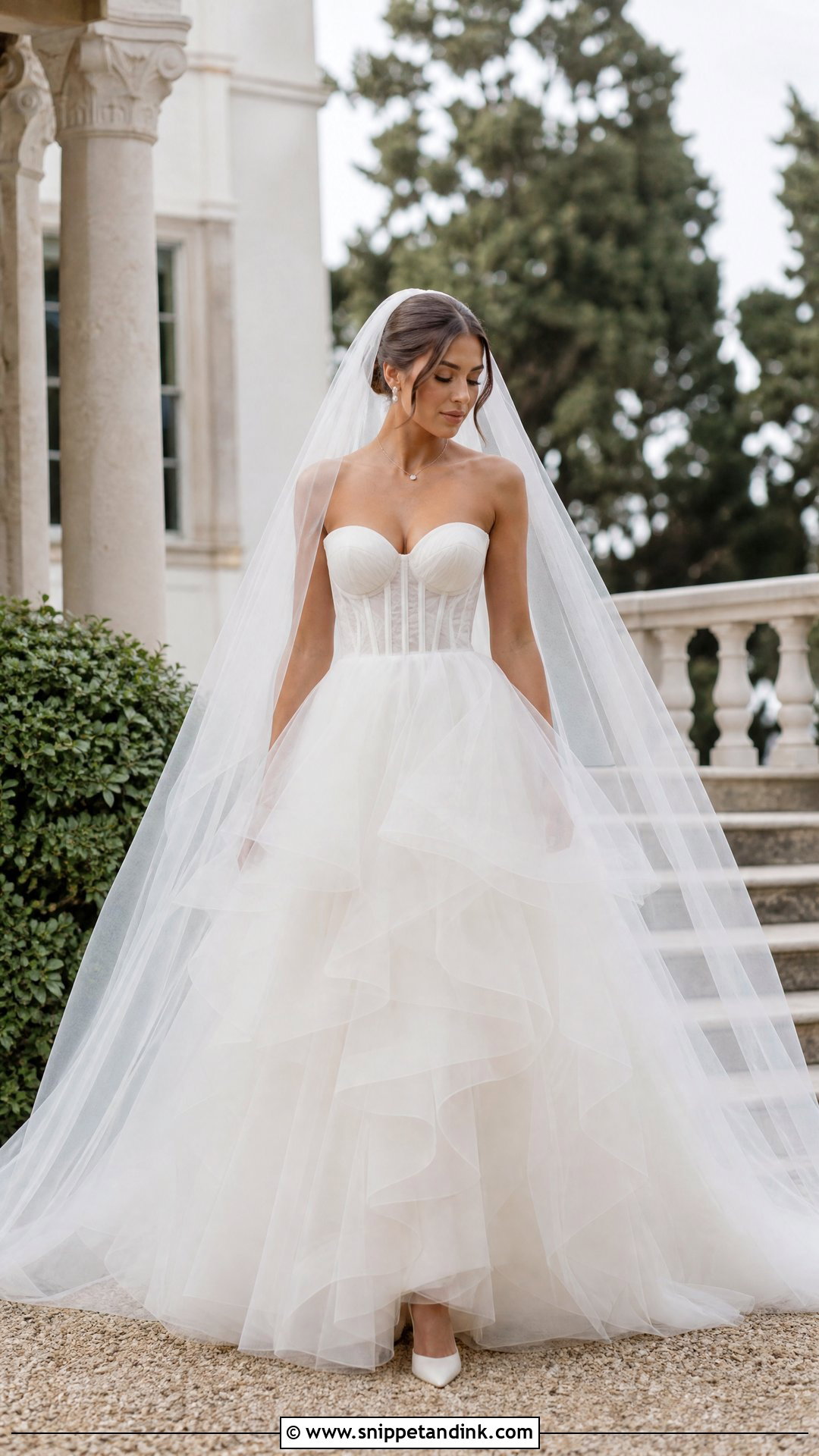
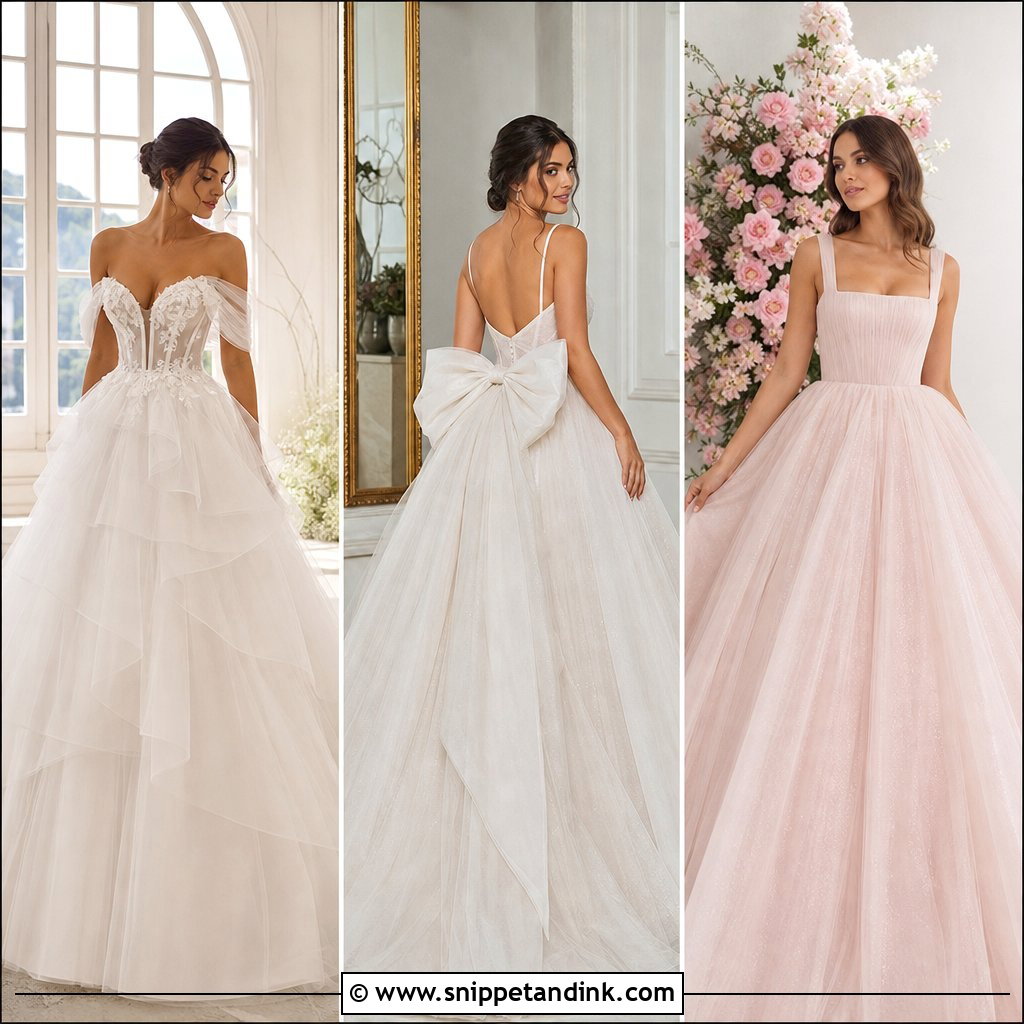
With a sweetheart neckline, the ruffles should start below the natural waist. If they creep up toward the bust, the dress turns top-heavy and the neckline loses its curve. The structured bodice is the contrast here, so I check that the cups stay flat against the skin when she leans forward to sign the register; a sweetheart edge that gapes when you bend is a fault worth fixing early. A fine pendant and a half-up style suit it, with block heels if you’ll be standing on grass. A plain cathedral veil gives the aisle its moment without adding another texture, and white flowers with a neatly wrapped stem keep attention on the sweetheart tulle ruffle wedding dress itself.
3. Off Shoulder Tulle Ruffle Wedding Dress
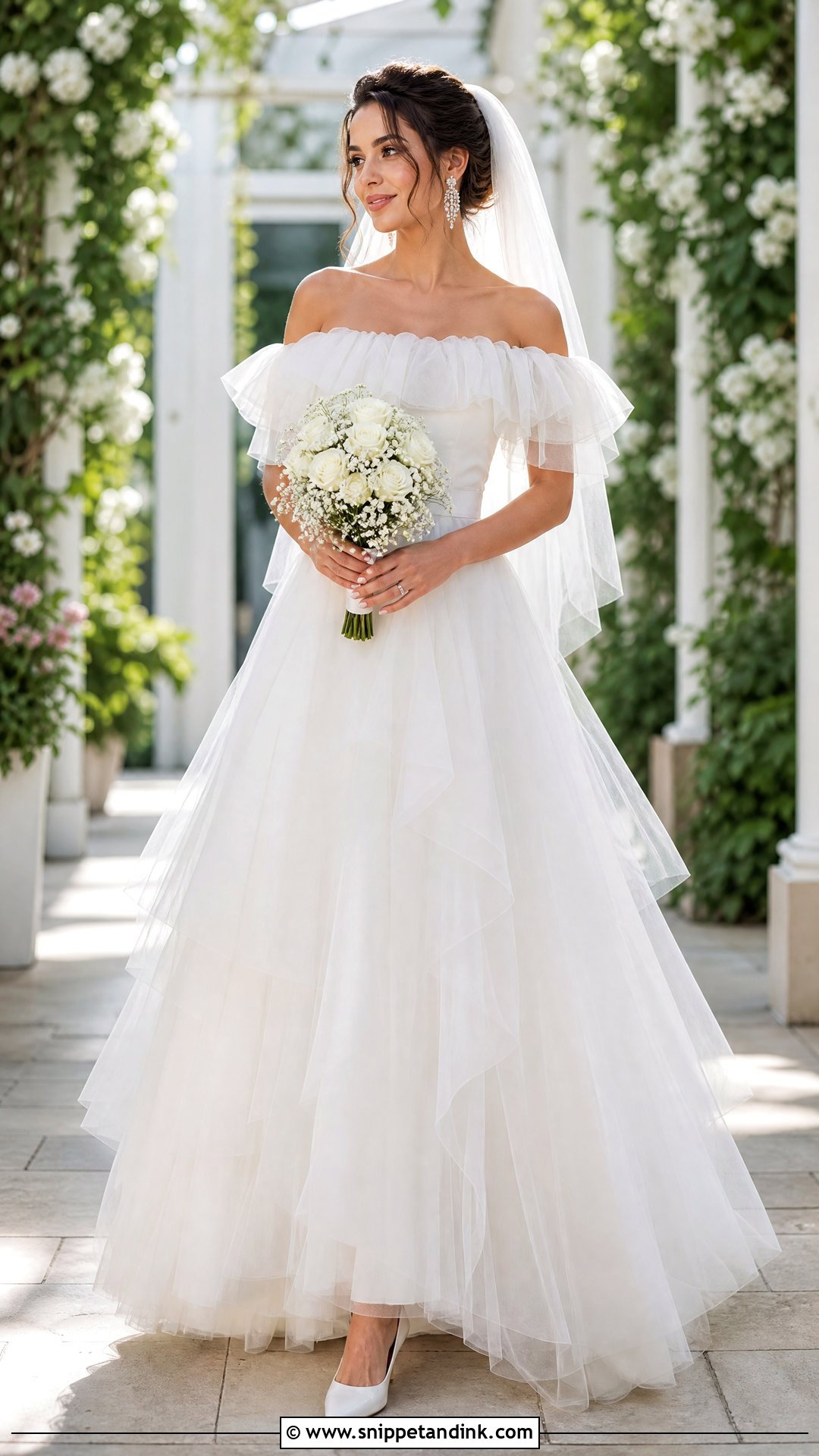
Off-shoulder ruffles restrict your arms more than any other cut on this list. Where the tulle wraps both shoulders, you often can’t raise your hands much above chest height, which matters for hugging, tossing a bouquet and, frankly, eating. At fittings I have brides reach forward as if picking up a glass; if the band rides up, the seamstress can add a little ease or a silicone gripper inside. Skip the necklace for small pearl or crystal earrings, and a loose low chignon keeps the shoulder line clear. Hold a rounded bouquet low so it doesn’t cover the neckline in photos.
4. Long Sleeve Tulle Ruffle Wedding Dress
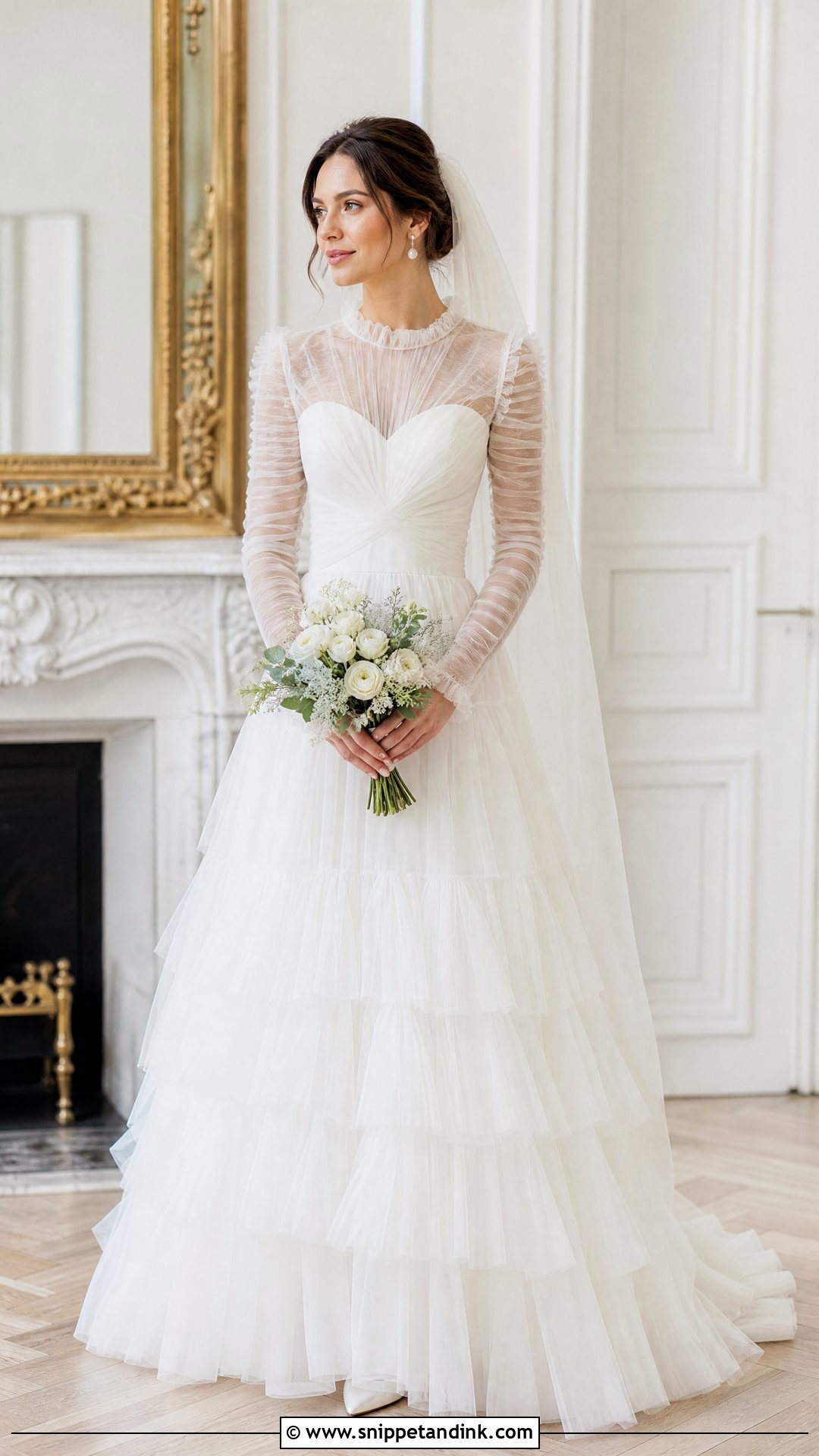
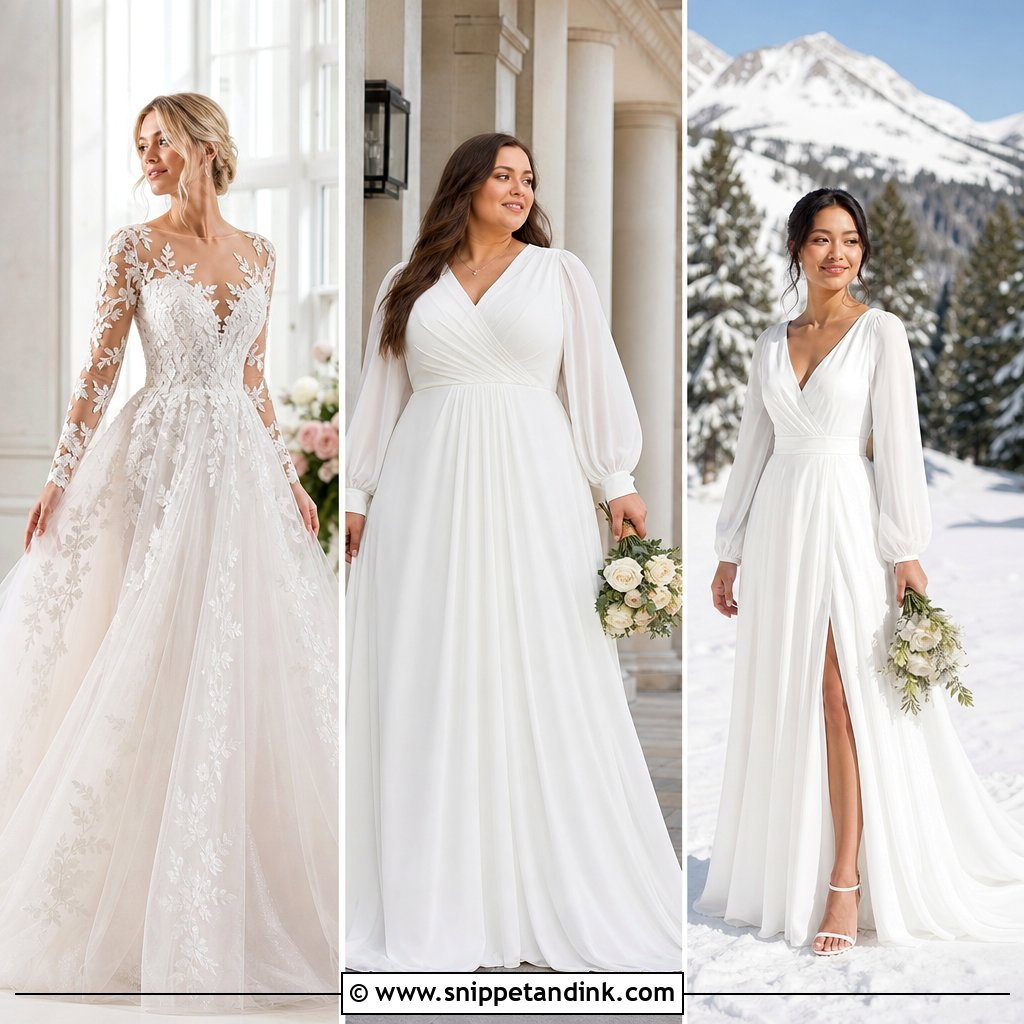
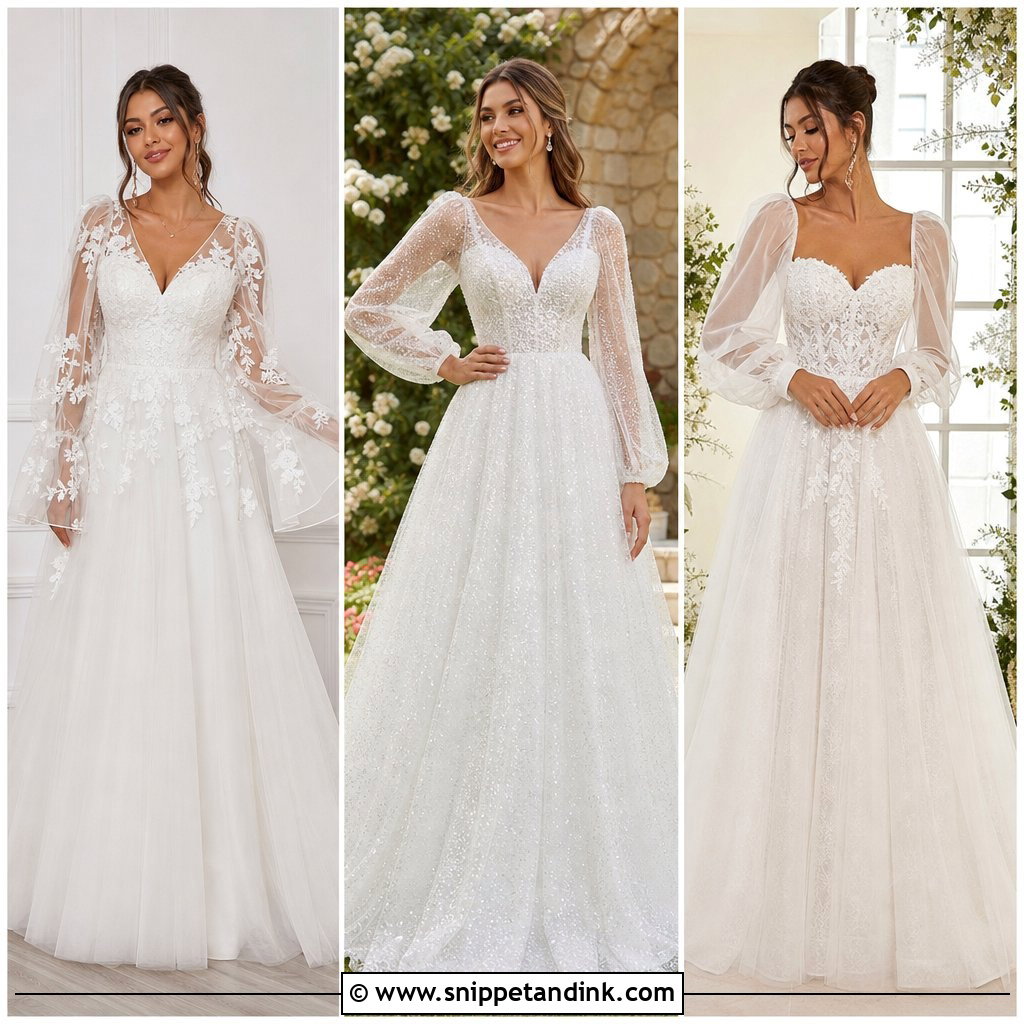
Long illusion sleeves give you a covered yet ethereal bridal look, but illusion mesh is matched to skin tone, and a shade that’s slightly off can turn grey or pink under flash. Ask to see the sleeve in daylight against your bare arm before ordering. Small tulle ruffles at the shoulders or cuffs tie the sleeves to the skirt; keep them small, because a ruffled cuff drags through food and catches on chair backs. A narrow comb works better than a big headpiece if the bodice is already embroidered, and a light veil with plain edging sits smoothly over the layers. This is the sleeve I usually suggest for autumn and winter weddings.
5. A Line Tulle Ruffle Wedding Dress
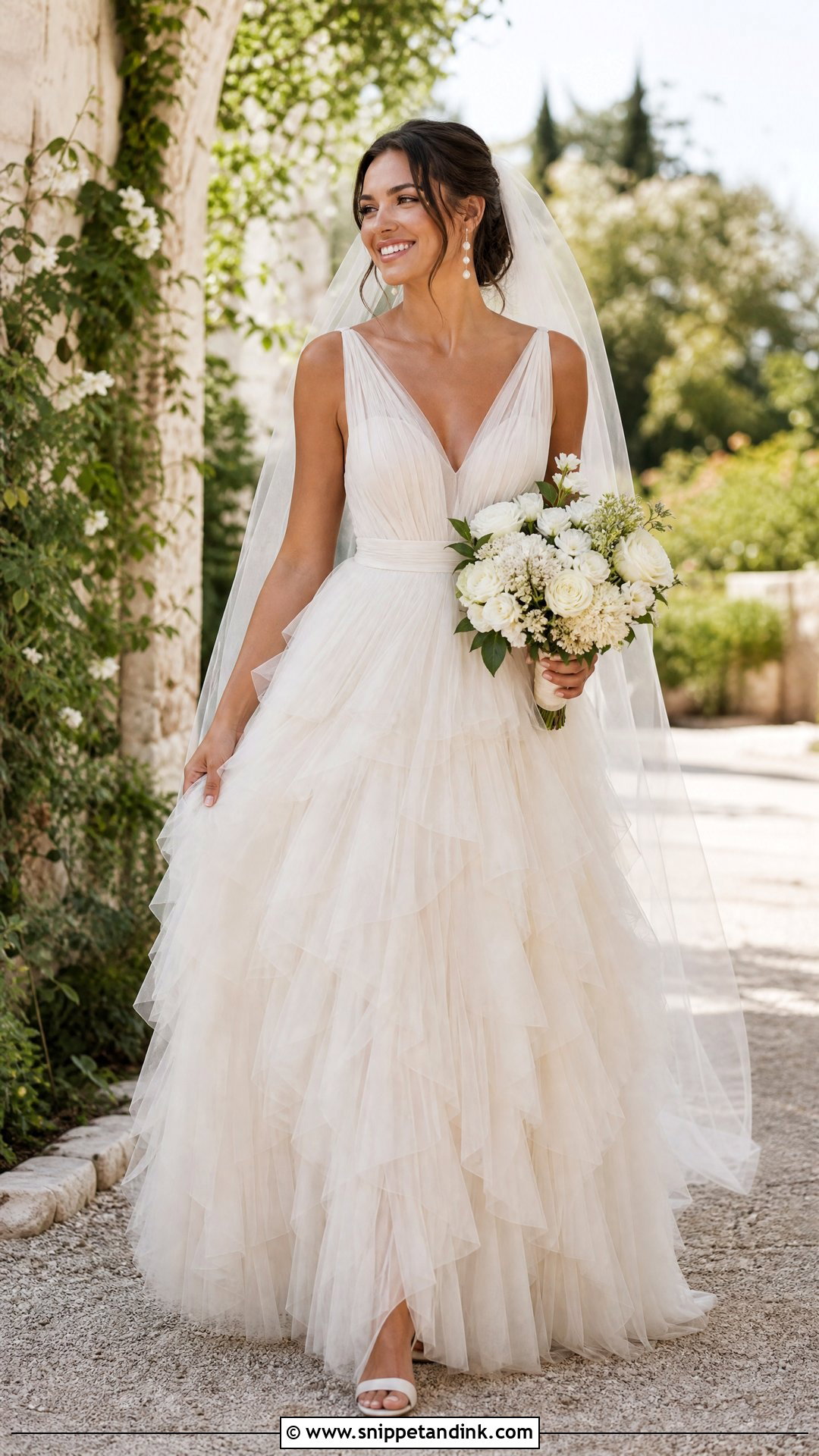
An A-line is the most livable way to wear ruffles. The volume starts at the waist and widens gradually, so you can get through a doorway and sit at the top table without wrestling the skirt. Cascading ruffles move more; evenly spaced tiers look neater. What I’d plan for is the bustle. Ruffled tiers don’t fold up as tidily as a plain train, and a bustle set too high bunches the back. Have your seamstress bustle it while you stand in your actual shoes. Low block heels, small drop earrings and a soft updo with a few loose pieces suit this shape, along with a fingertip veil and a medium bouquet.
6. Mermaid Tulle Ruffle Wedding Dress
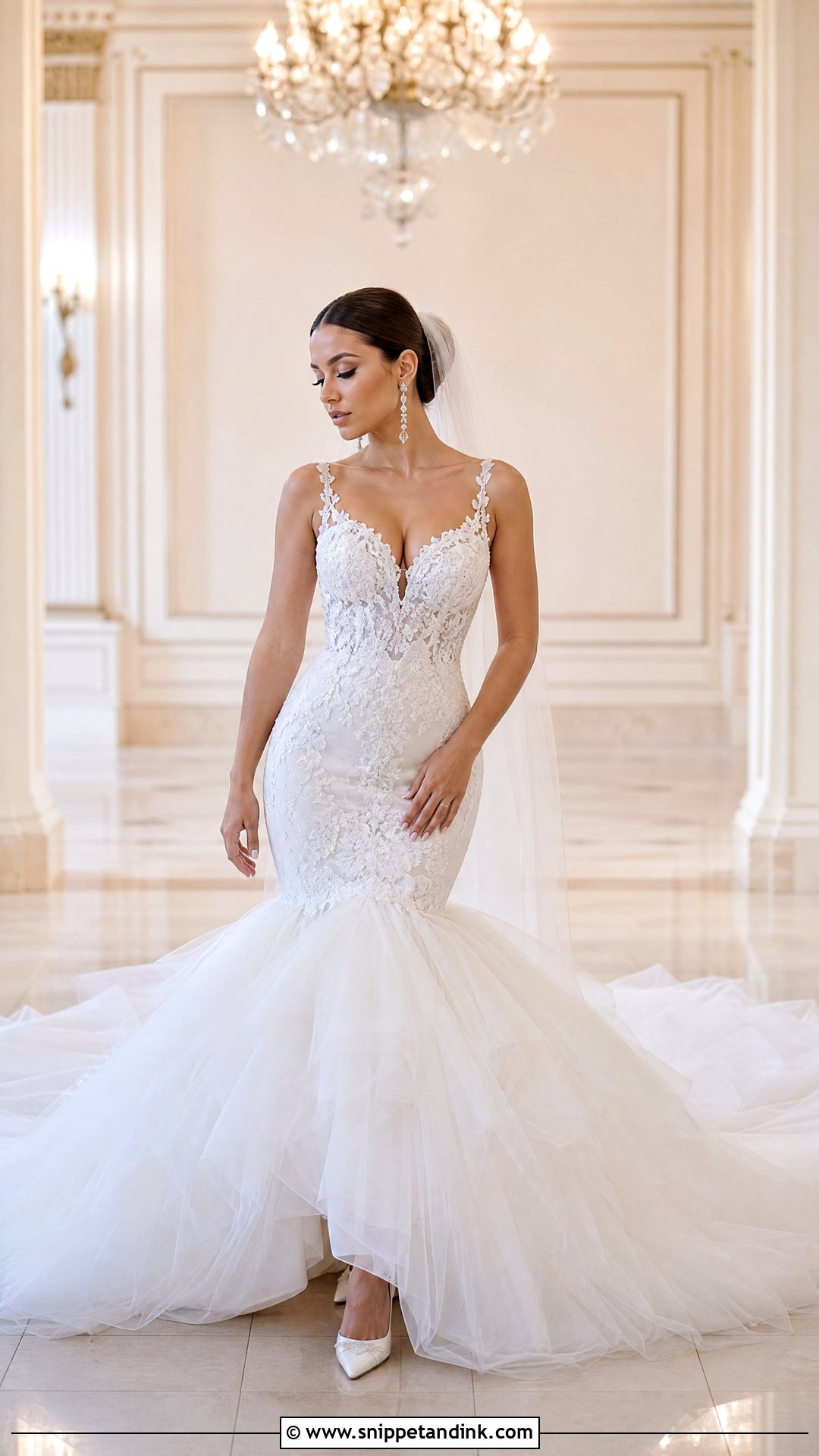
A mermaid with tulle flaring below the knee is the most sculpted cut here, and the one that tests you hardest. The fitted section shortens your stride, so during alterations walk the length of the shop, climb a step and sit on a low chair. If the flare starts too high, stairs become a sideways shuffle. The ruffled flare already carries plenty of detail, so a simple veil, long earrings and a smooth updo are enough, with a compact bouquet that trails slightly to echo the skirt. For a long outdoor walk over uneven ground, I’d steer you toward the A-line instead.
7. Asymmetrical Tulle Ruffle Wedding Dress
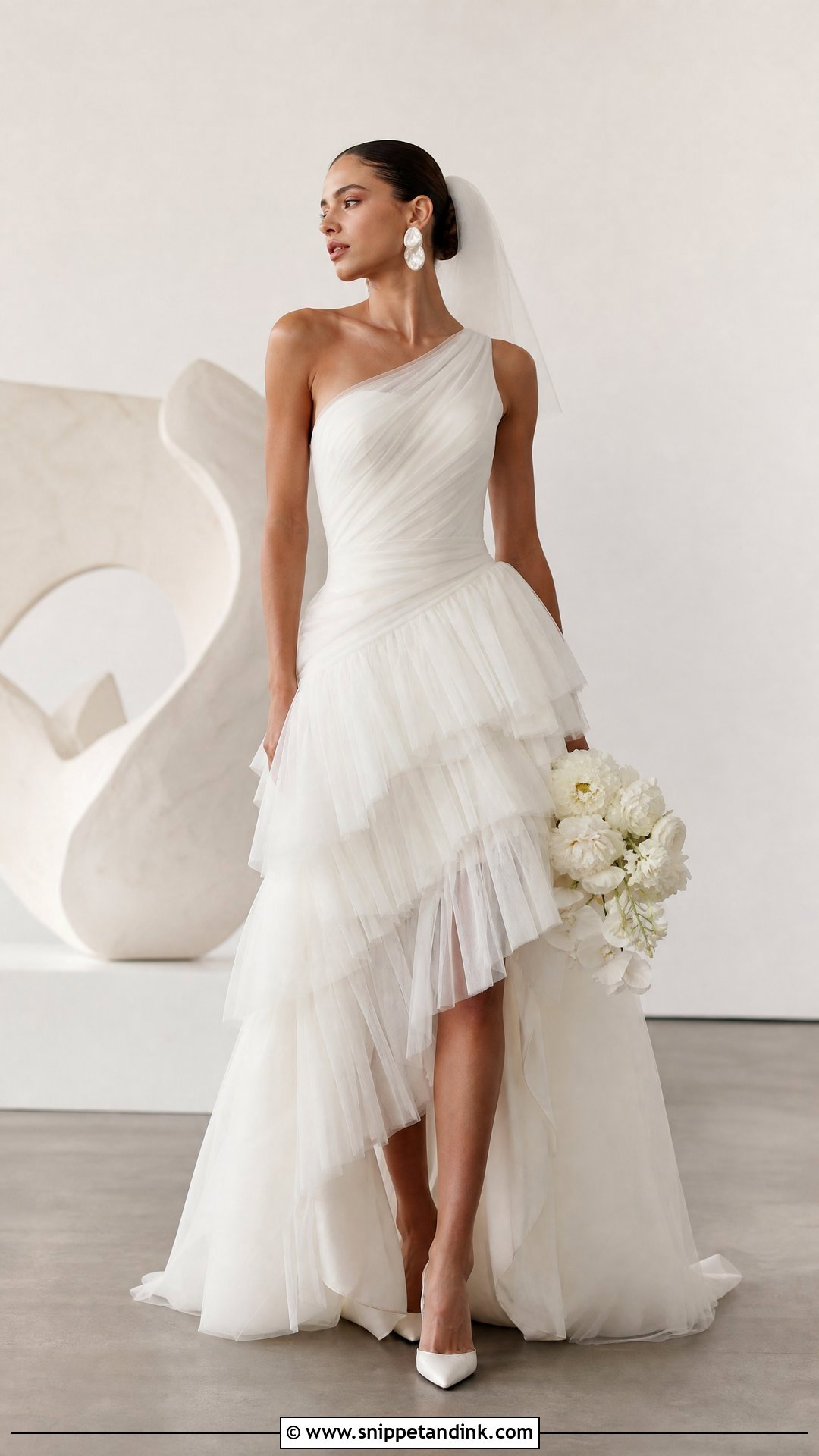
Diagonal ruffles or uneven tier lengths make a gown read as fashion rather than tradition, while the white palette keeps it unmistakably bridal. The risk is busyness. Once the skirt has a strong diagonal, everything else needs to be quiet. A one-shoulder neckline continues the line; a strapless top contrasts with it. I’d go with a sleek bun, modern earrings and plain pointed heels, plus a structured bouquet rather than a loose, trailing one. Keep the veil short or swap it for a small hair accessory so the back of the skirt stays readable. Galleries and rooftop venues suit it best.
8. High Low Tulle Ruffle Wedding Dress
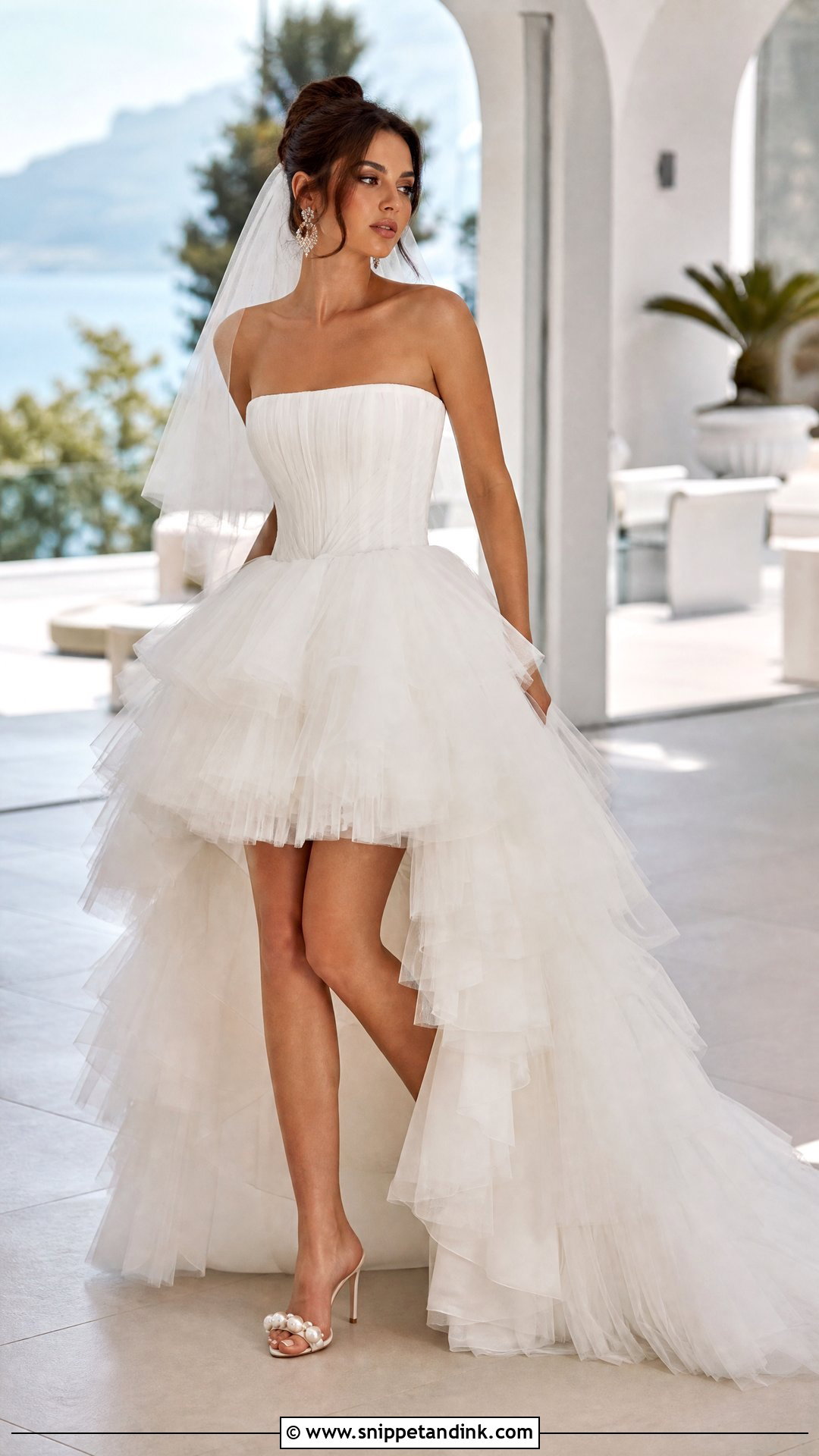
A high-low hem puts your shoes on show, so they need to be a pair you love and can stand in for hours. The real fitting job is the curve: the short front should flow into the longer back in one smooth line, and that only happens if the hem is marked while you’re wearing those shoes. Keep the bodice simple. Small statement earrings, a smooth ponytail and a short veil work well, and a compact bouquet held to one side keeps the front hem visible. It’s my pick for destination and reception-heavy weddings where you plan to dance most of the night.
9. Blush Tulle Ruffle Wedding Dress
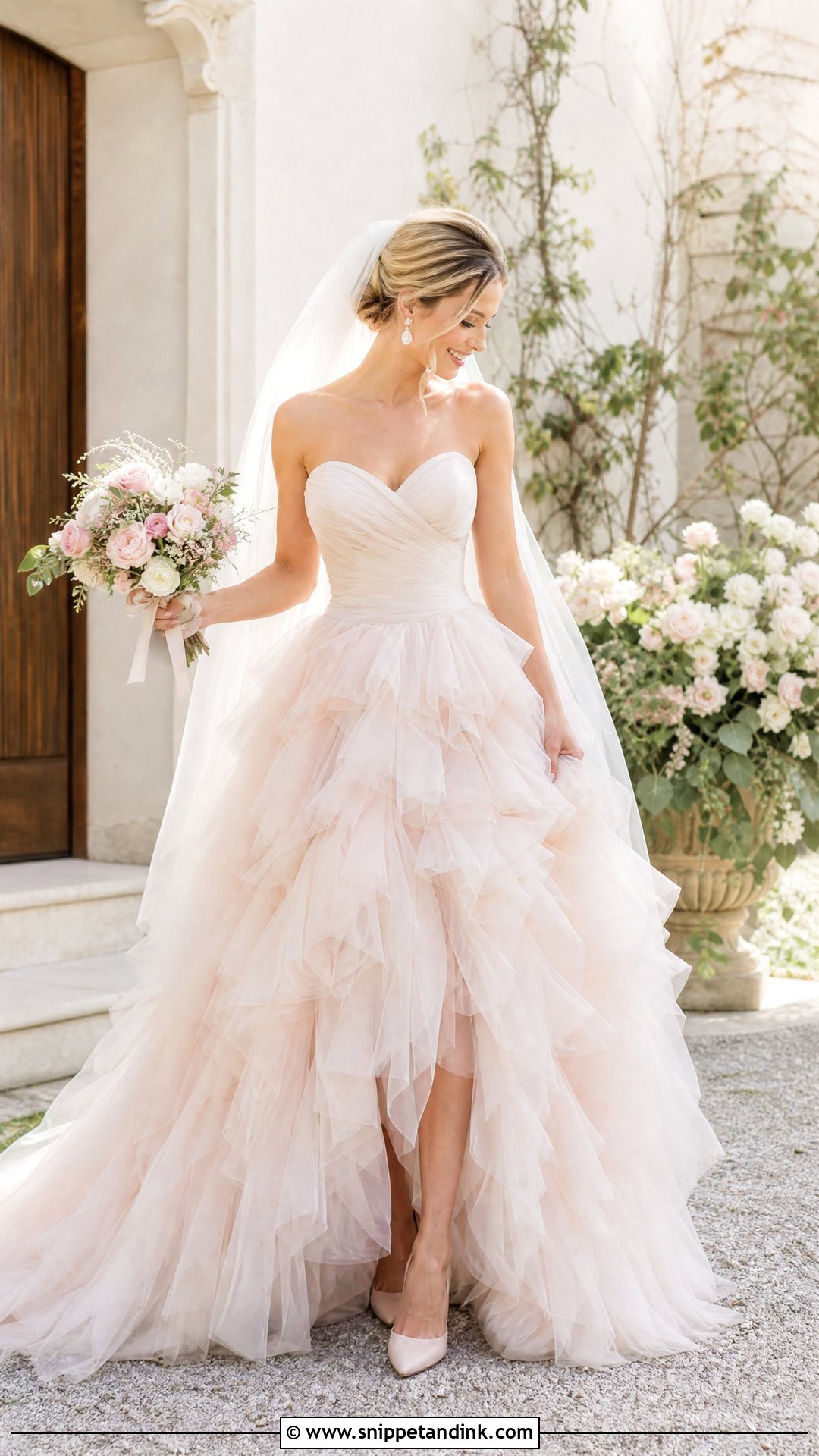
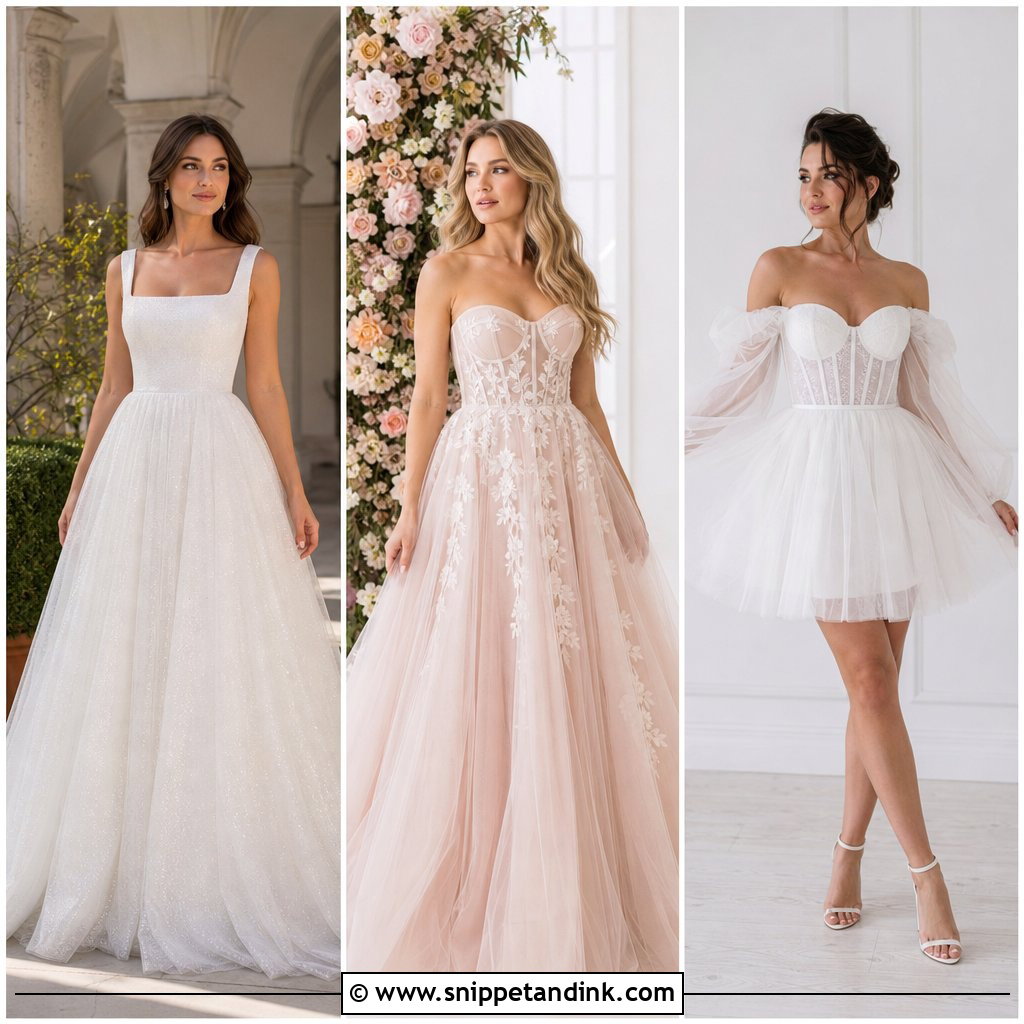
Blush tulle is usually built in layers, pale pink over nude over ivory, and that layering is what gives the ruffles their depth. The catch is skin tone. On very fair skin some blush shades wash out, and on warm or deep skin a nude layer can disappear entirely, so I always hold the swatch near the face in daylight before anyone commits. Pearl, silver or champagne accessories keep the palette calm, and an ivory veil brightens the whole outfit. Romantic waves or a textured low bun, with flowers in white and the palest pink, finish it without looking like a matched set.
10. Floral Tulle Ruffle Wedding Dress
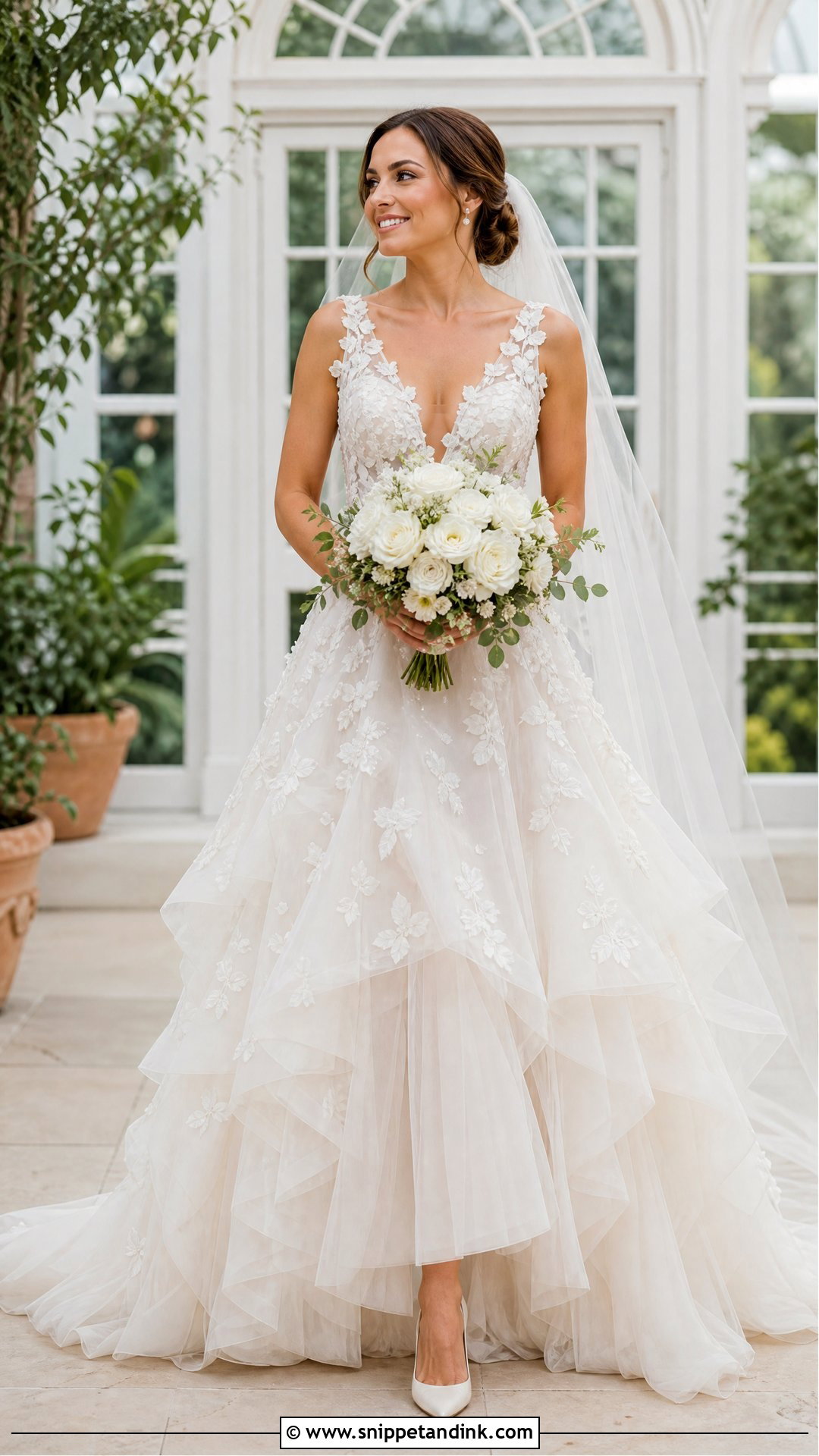
Floral appliqués work best on a ruffled gown when they’re dense at the bodice and thin out as they travel down the skirt, so the eye moves from the fitted top into the volume. Three-dimensional flowers are the part I worry about: they snag veil edges, catch hairpins and flatten if you sit on them for hours. Try the veil over the dress at a fitting and draw it gently across the back to see what catches. Pearl studs, a low bun and neutral pumps keep things quiet, and a bouquet that repeats one or two of the gown’s flowers looks considered without matching everything.
11. Sparkle Tulle Ruffle Wedding Dress
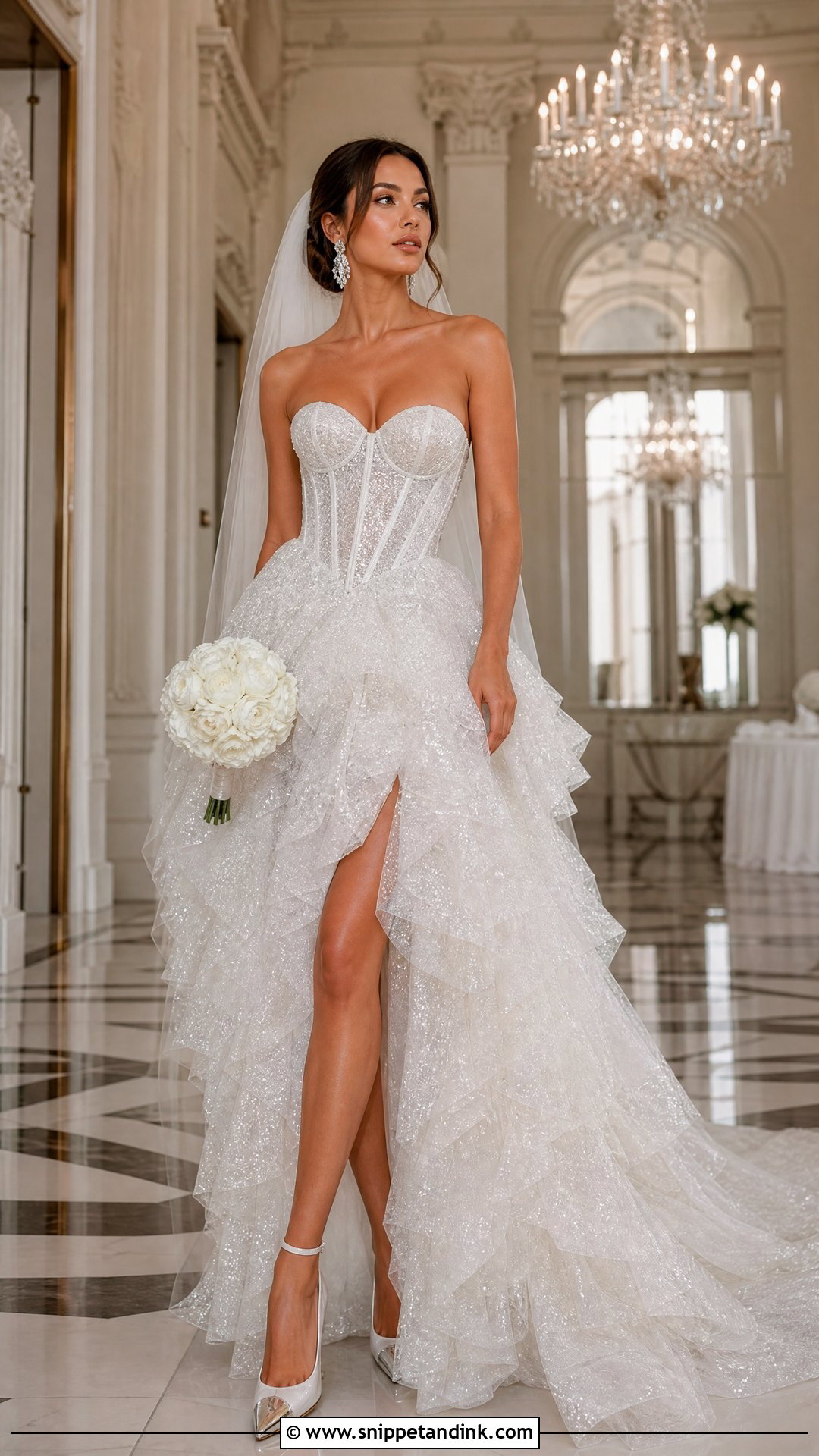
Glitter tulle changes completely with the light. Under candlelight it twinkles; in flat daylight some fabrics look grey or slightly dusty, and phone flash can turn heavy sequins into white spots. Before buying, I take the dress to a window and then into a dim fitting room to see both. Pick one source of shine, either glitter woven into the net or a sequin underlayer, not both. A clean corset bodice gives the skirt a starting point, while crystal studs, a smooth low bun and a plain veil soften the rest. Glitter tulle also sheds a little, so expect sparkle on the groom’s jacket by the end of the night.
12. Lace Bodice Tulle Ruffle Wedding Dress
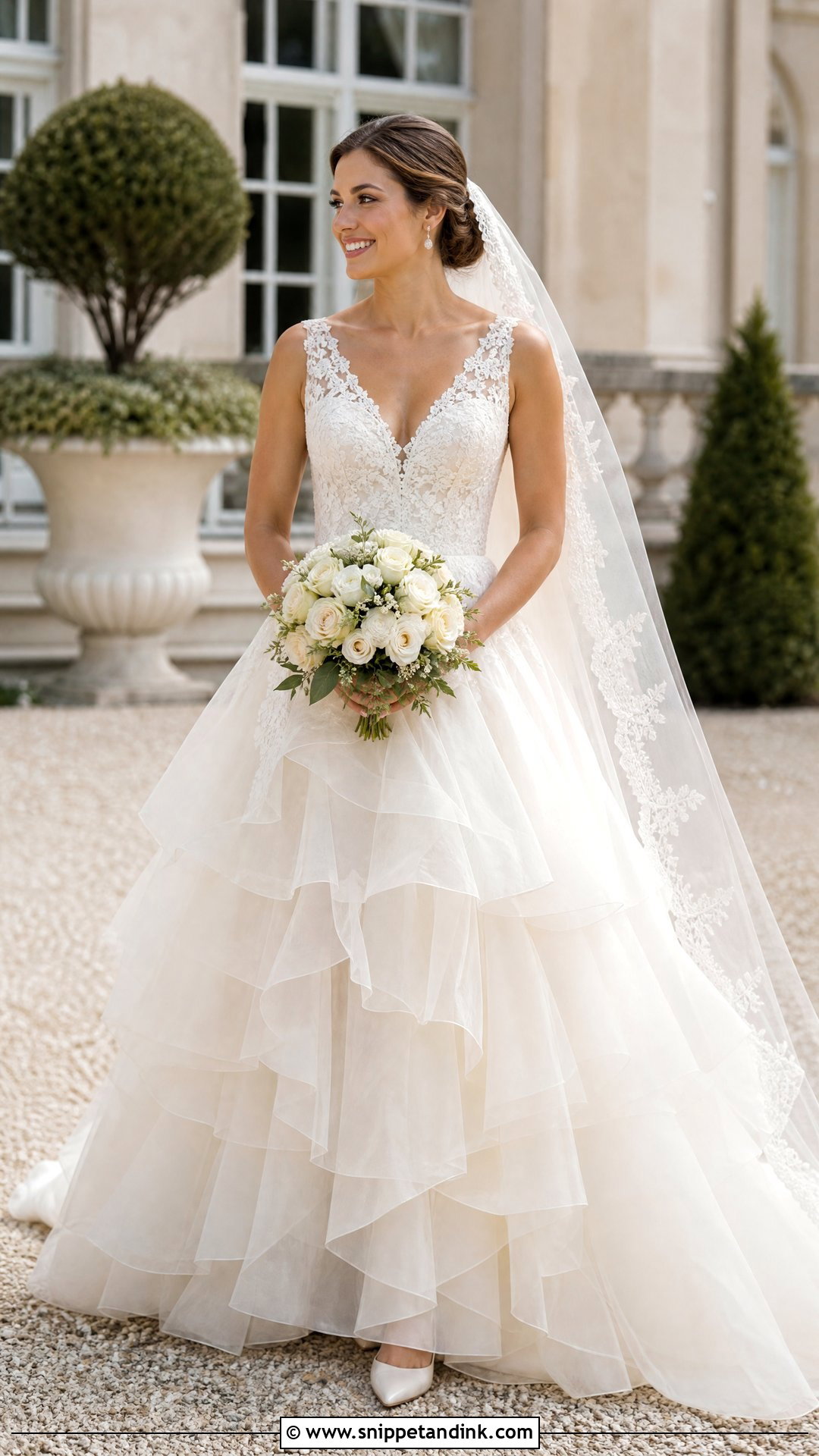
A lace bodice over a soft, tiered tulle skirt looks most cohesive when the lace motifs taper into the skirt instead of stopping in a straight line at the waist. That taper is handwork, cutting around each motif, and a skilled seamstress can often create it on a gown that doesn’t have it. V-neck, scoop and sweetheart shapes all work; choose by the support you need. Pearl earrings, a fine bracelet and a low updo keep the neckline visible. With lace and ruffles both in play, carry a restrained, rounded bouquet, and only choose a lace-edged veil if its lace matches the bodice. Mismatched lace is obvious up close.
13. Minimal Tulle Ruffle Wedding Dress
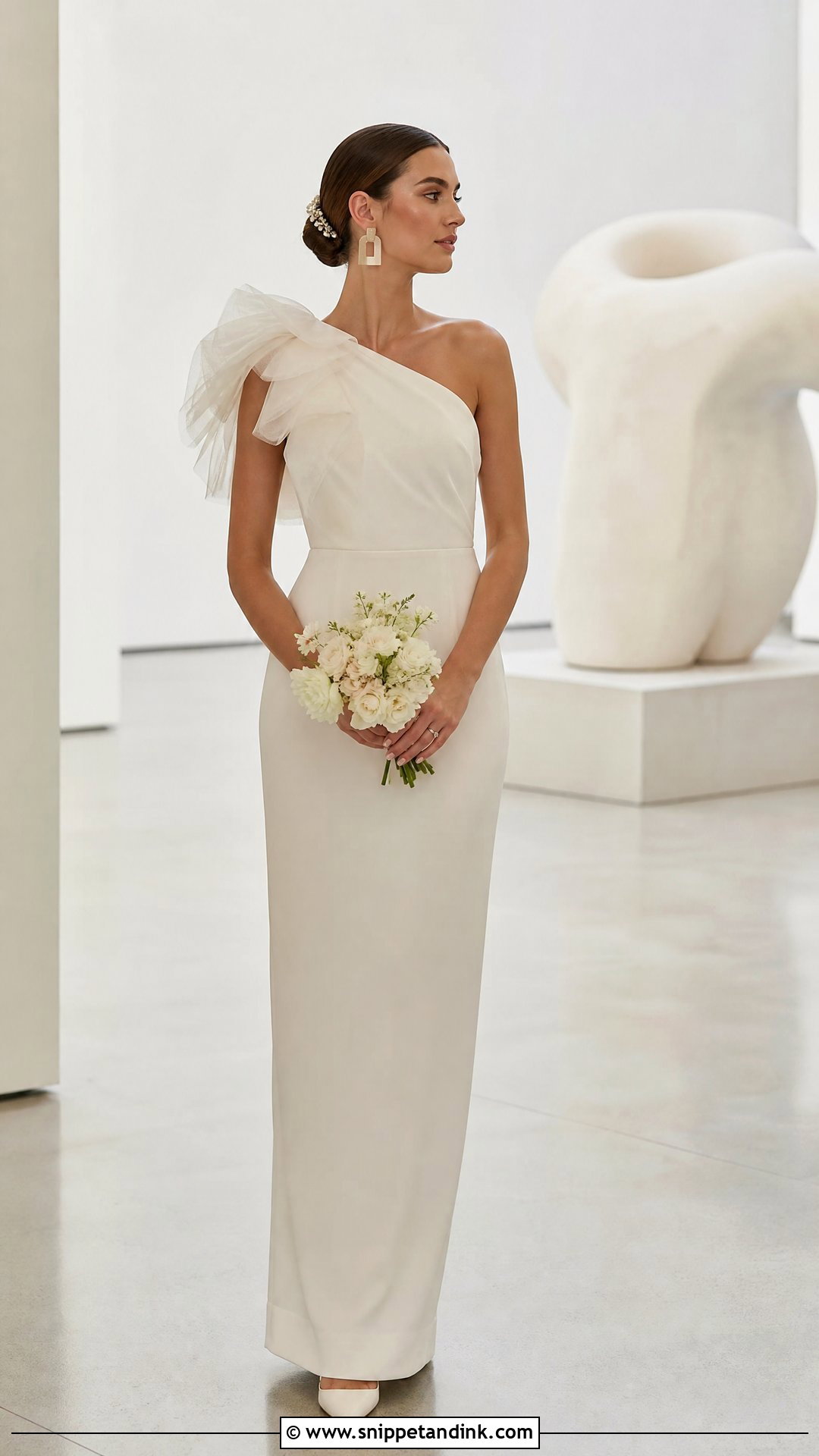
One sculptural ruffle at the neckline, hip or hem can carry a whole gown. The rest of the dress stays smooth, which means every seam shows, so fit matters more on this style than on a busy one. Geometric earrings, a narrow hairpin and plain ivory pumps keep the lines clean. If the ruffle sits at the shoulder, attach the veil below the bun so it falls behind the detail instead of over it. A compact bouquet with long, wrapped stems belongs in lofts, museums and other pared-back rooms.
14. Plus Size Tulle Ruffle Wedding Dress
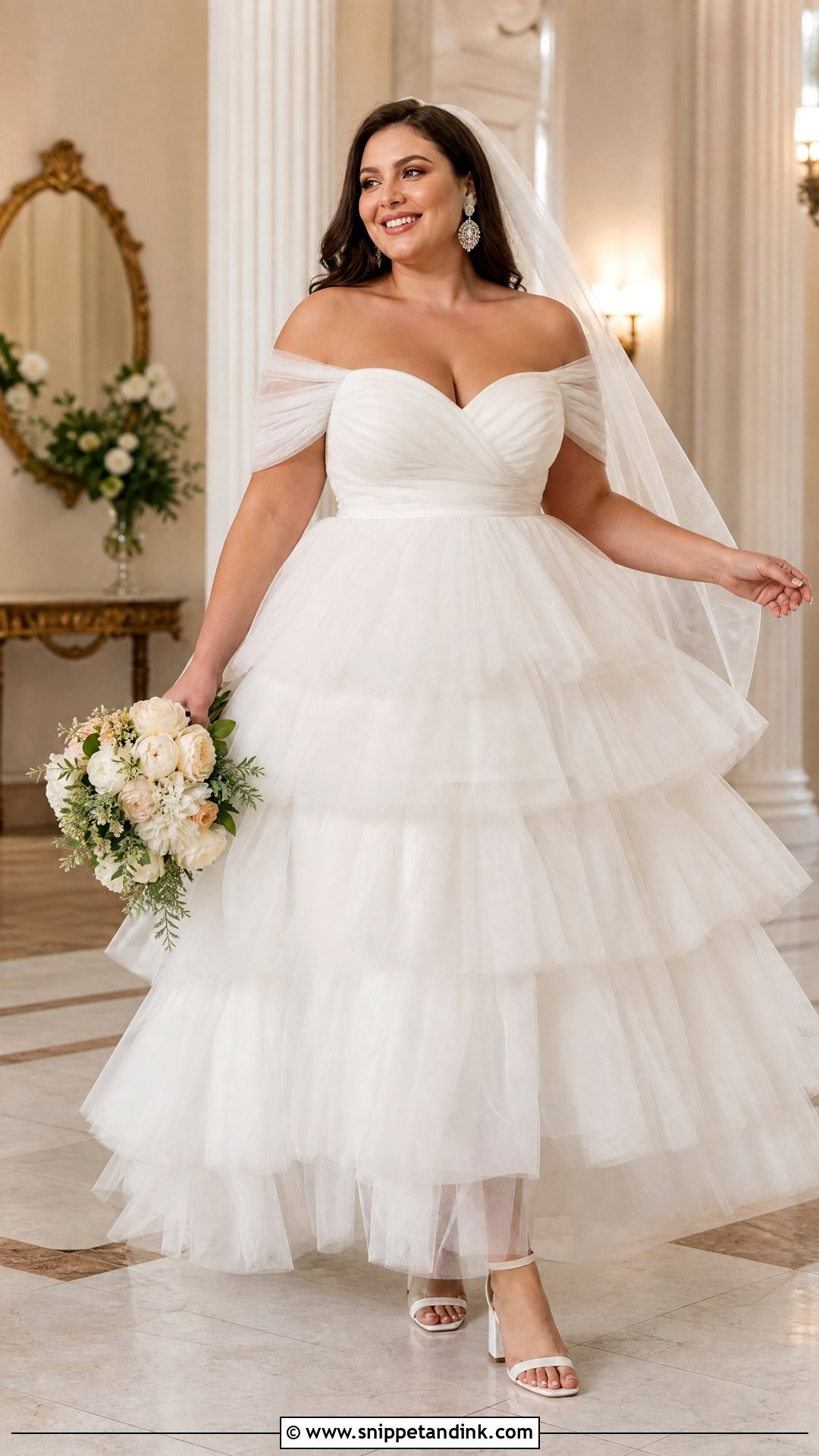
Fitting a ruffled gown on a fuller figure comes down to support first. I look for real boning or a built-in corset, a defined waist, and straps or an off-shoulder band anchored into the bodice rather than tacked on. Wider tiers usually read smoother than lots of tiny ones, which can add bulk at the hip. Block heels, statement earrings and a veil scaled to the skirt keep the proportions even, and a medium bouquet shouldn’t cover the waist. Sit, walk and climb a stair in the full outfit at every fitting. The aim was never to hide your body; it’s a gown secure enough that you forget about it.
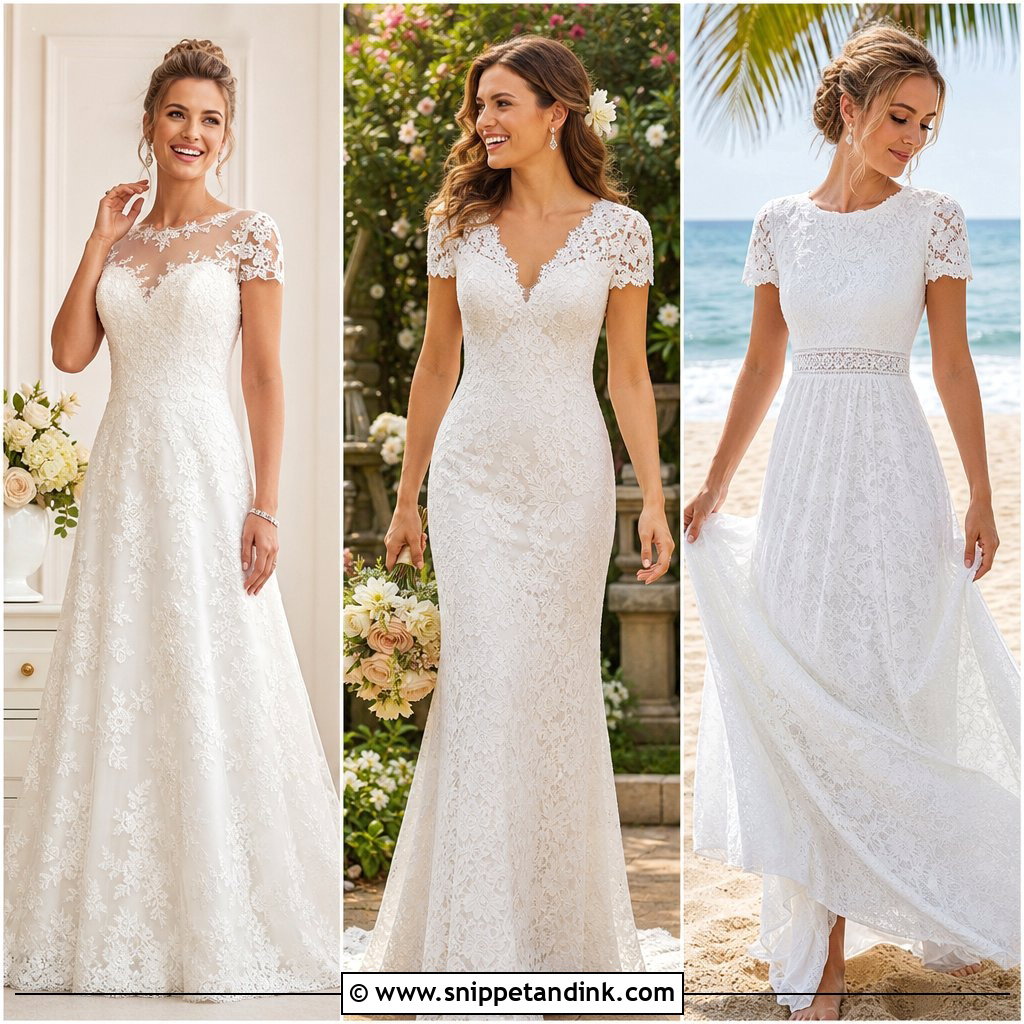

15. Petite Tulle Ruffle Wedding Dress
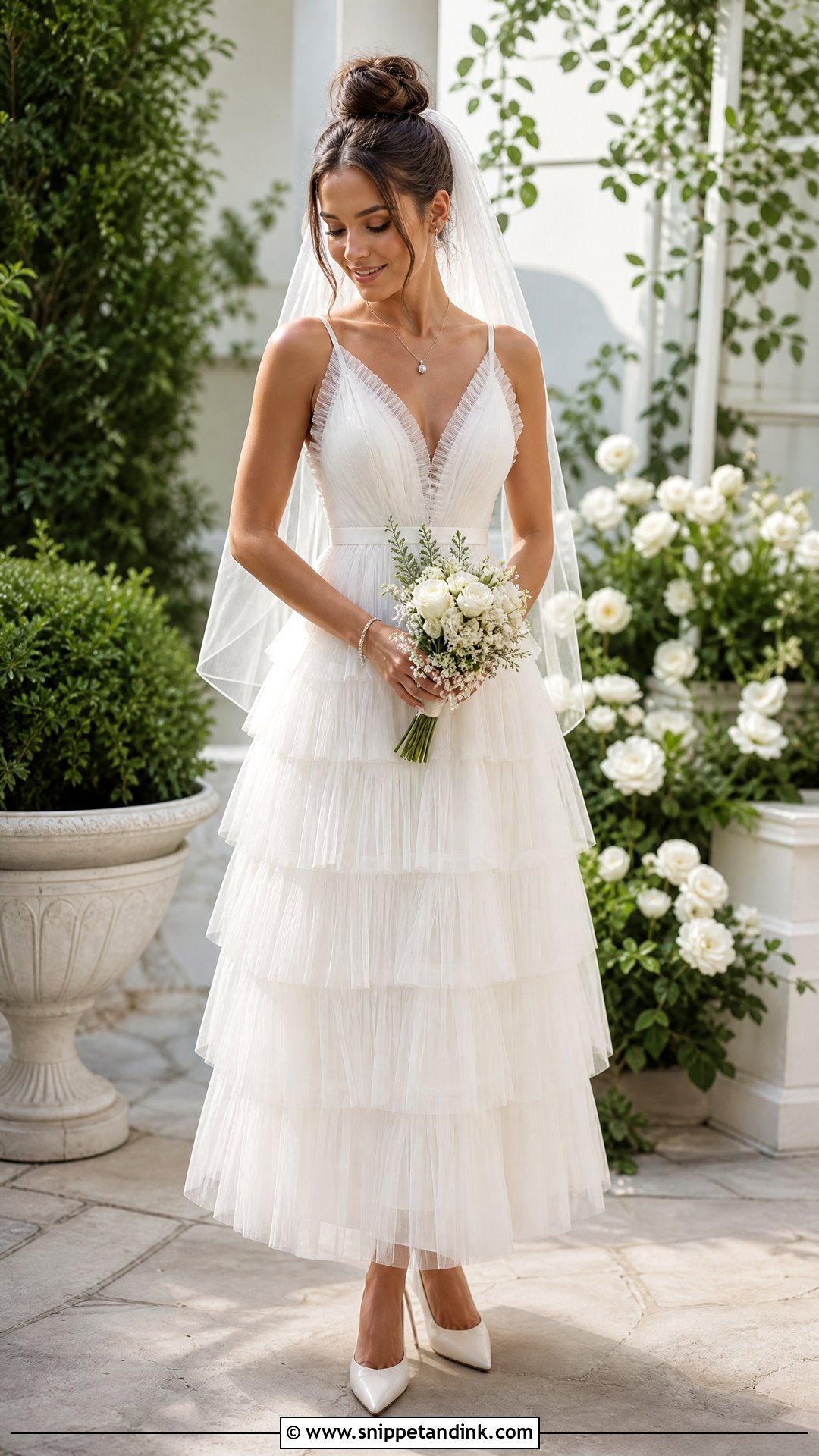
Petite brides can wear ruffles happily. The trouble is usually volume and hem length. Narrow, light layers keep the skirt in proportion, while a very wide crinoline can swallow a smaller frame, and a V-neck or slightly raised waist adds length to the bodice. Hemming tiered tulle is harder than hemming a plain skirt, because shortening from the bottom can cut a tier in half, so ask whether the length can be taken up at the waist instead. Pointed shoes close to the gown’s shade, delicate jewelry, a lifted bun, a slim bouquet and a fingertip veil finish it.
16. Boho Tulle Ruffle Wedding Dress
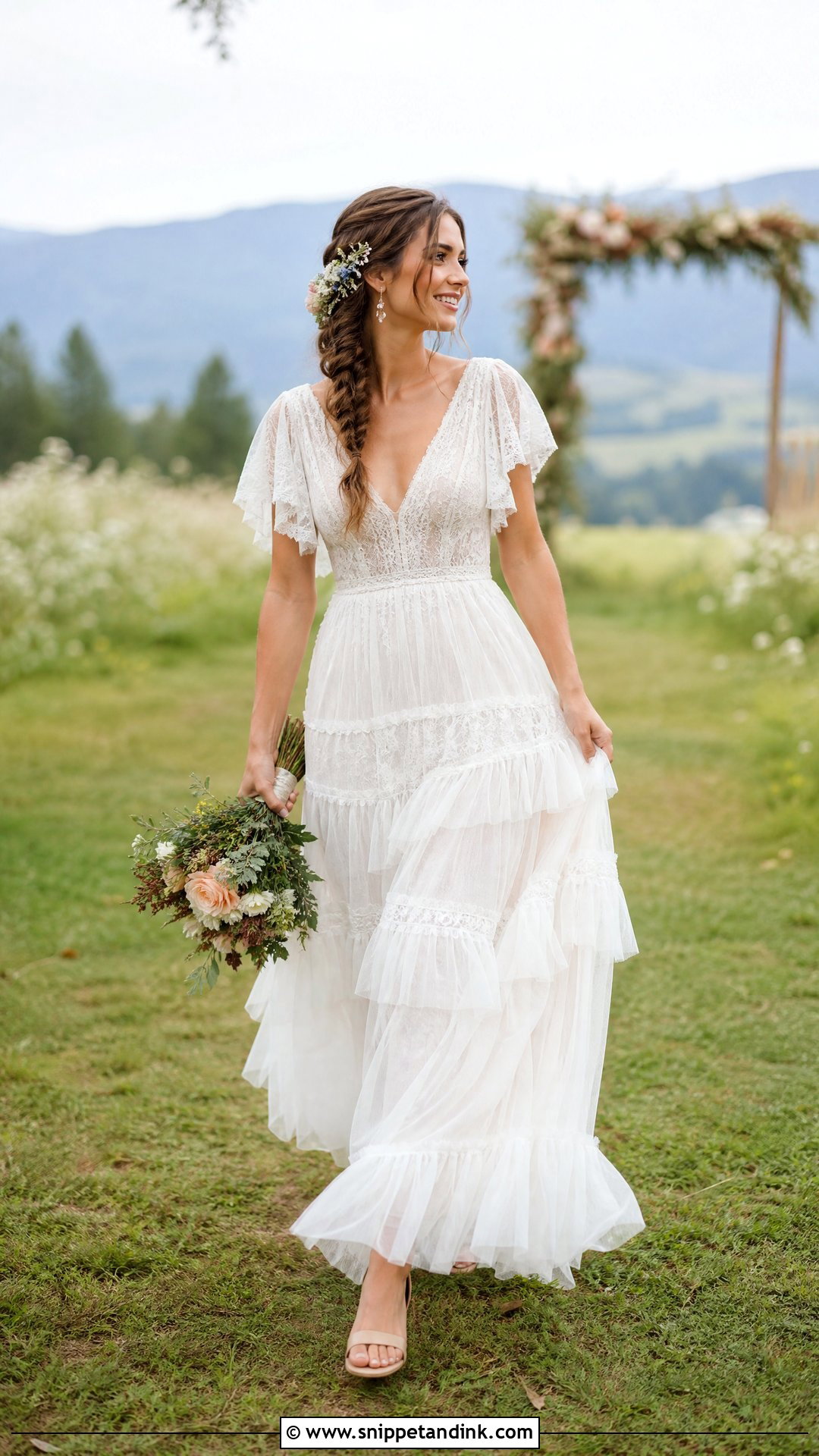
For a relaxed wedding, ruffles work when the tulle is soft and the tiers are gently gathered rather than stiff. A structured ball gown fights that mood, so stay with an A-line that moves when you walk, perhaps with a V-neck or flutter sleeve. Low block heels, small earrings and loose waves or a textured braid fit naturally, and a floral comb can replace the veil. One practical warning for outdoor venues: soft tulle collects grass seeds, burrs and mud at the hem. If the ceremony is in a meadow, ask for a slightly shorter hem and keep a lint roller in the emergency kit.
17. Square Neck Tulle Ruffle Wedding Dress
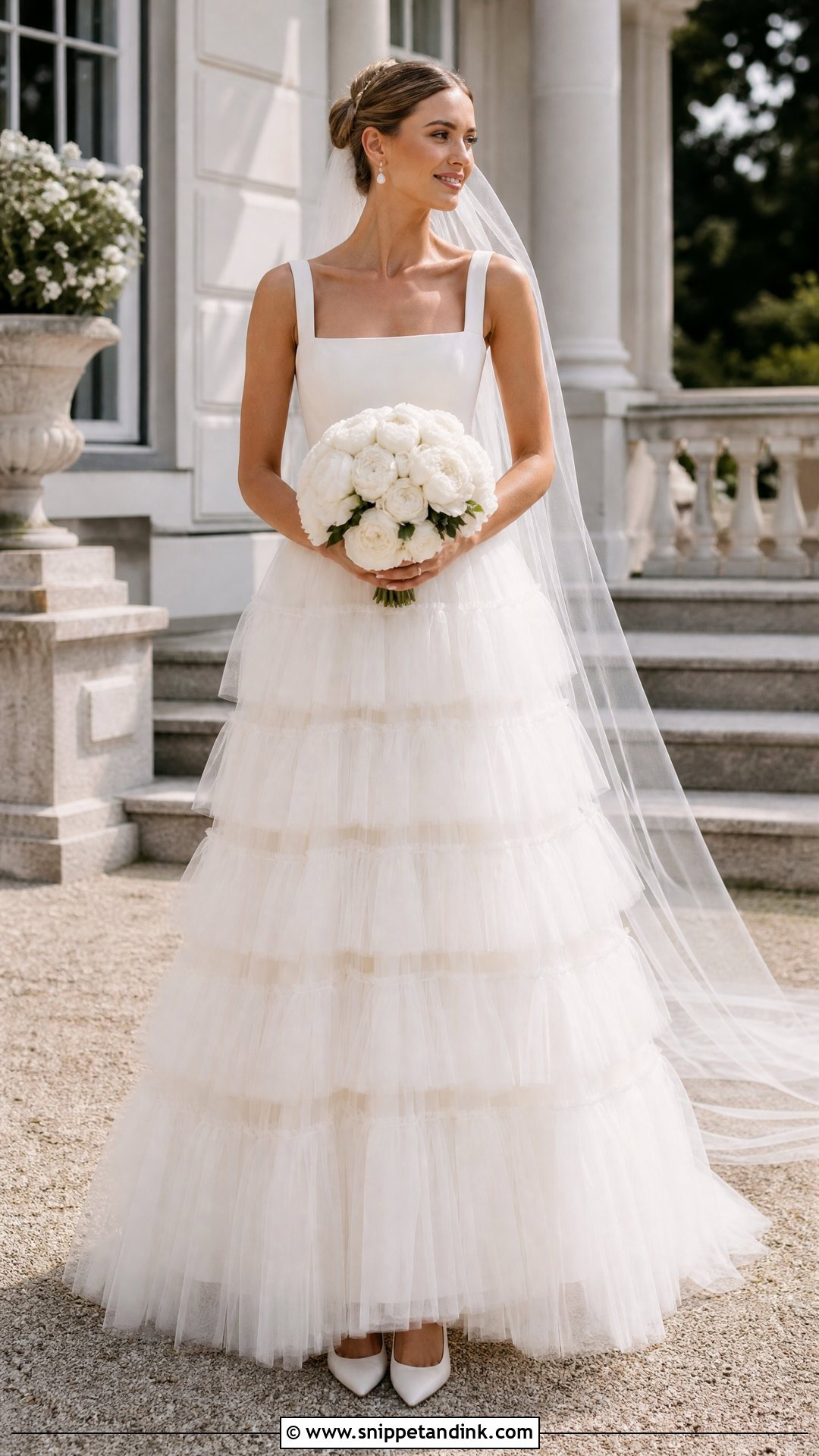
A square neckline gives an airy skirt a structured edge, and it looks sharpest with wide straps or short fitted sleeves. The neckline has to sit perfectly level. If one corner dips, the whole shape looks lopsided in photos, so check it in a three-way mirror at each fitting. Evenly spaced tiers and a defined waist continue the geometry. I’d pair it with pearl drops, a neat bun, a simple veil set at the back of the head and pointed pumps or low slingbacks. A rounded bouquet with very little trailing greenery won’t fight the clean lines.
18. Halter Tulle Ruffle Wedding Dress
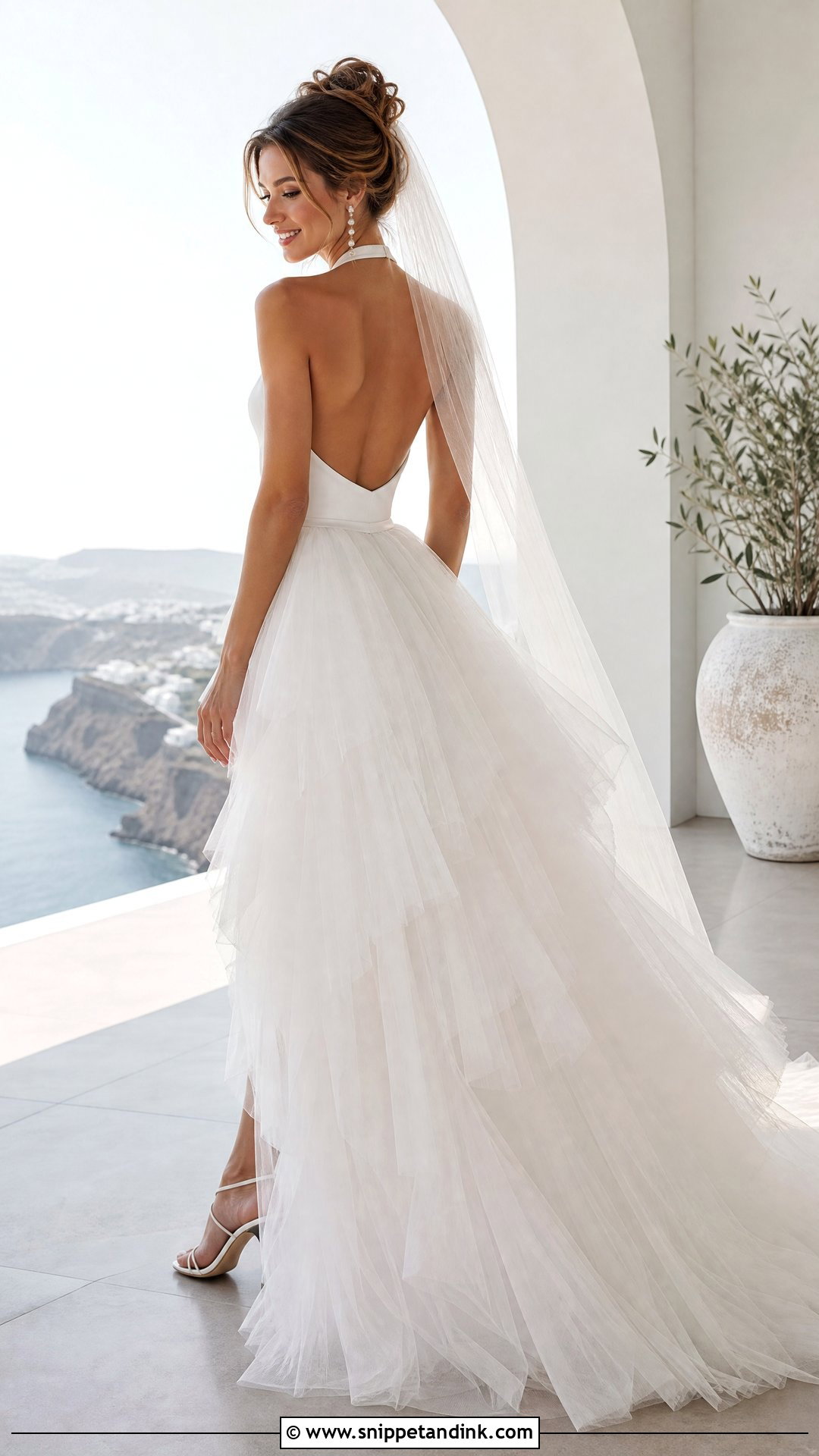
A halter can hang a surprising amount of the skirt’s weight from the back of your neck, and that aches by mid-afternoon if the gown is heavy. Ask whether the bodice has its own internal support, so the halter strap is styling rather than structure. Let the tiers begin at the natural waist. Skip the necklace for refined drop earrings and choose an updo so the halter shape shows from both sides. Narrow-strap heels, a wrist-length or fingertip veil and a compact bouquet complete it; with an open back, set the veil high enough to reveal it in portraits.
19. Detachable Tulle Ruffle Overskirt Wedding Dress
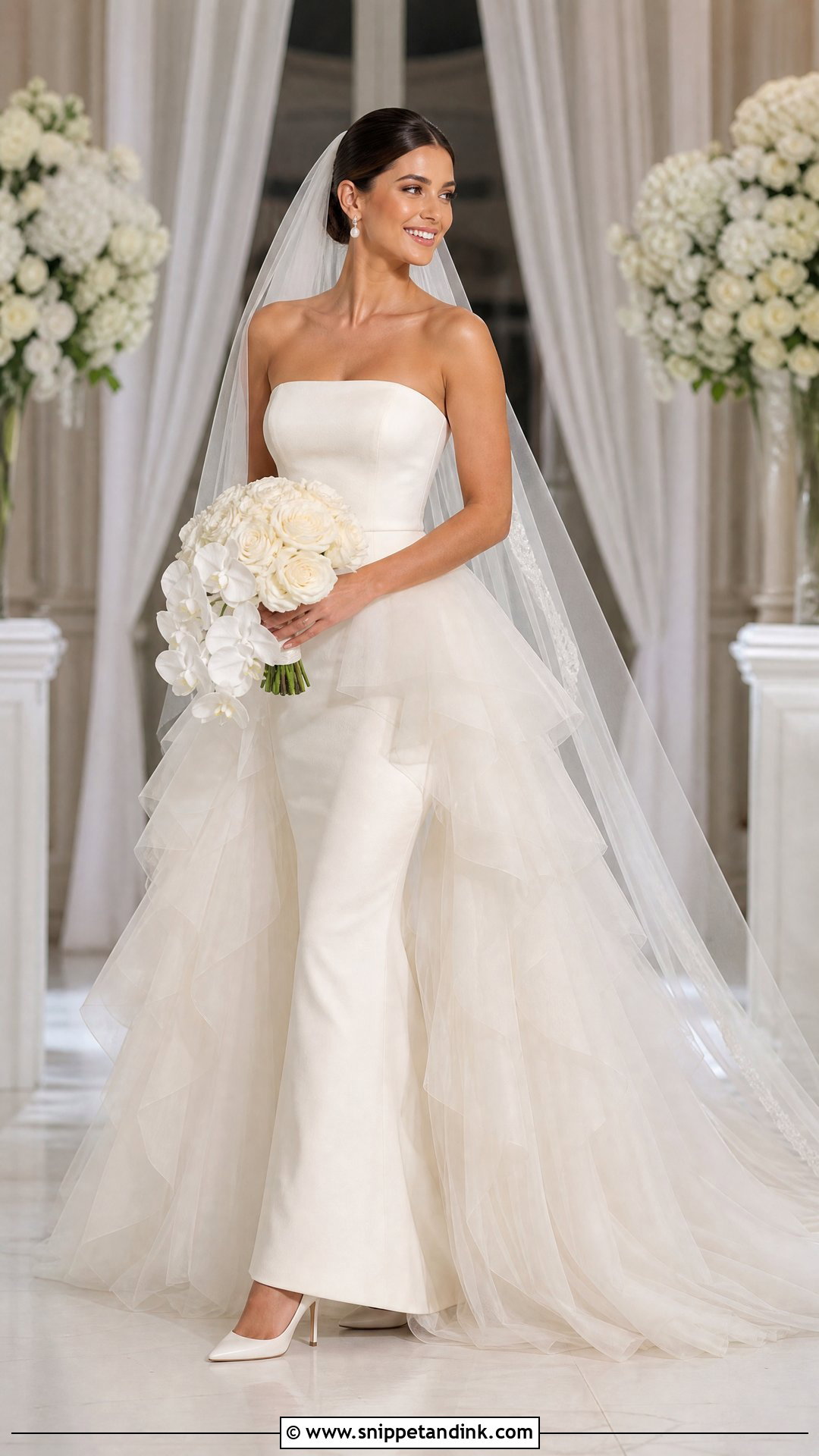
A detachable ruffle overskirt gives you two silhouettes from one dress: full tulle for the ceremony, then a fitted column, crepe or lace gown for dancing. The join should lie flat at the waist under a belt, seam or appliqué. Most overskirts fasten with hooks, snaps or buttons, and whoever helps you out of it should have done it once already, ideally at the final fitting. Plan where the skirt goes afterwards, too: into a large garment bag in the bridal suite, not over a chair. Wear a long veil and pearl earrings for the ceremony, then switch to statement earrings once the overskirt comes off.

20. Tulle Ruffle Mini Wedding Dress
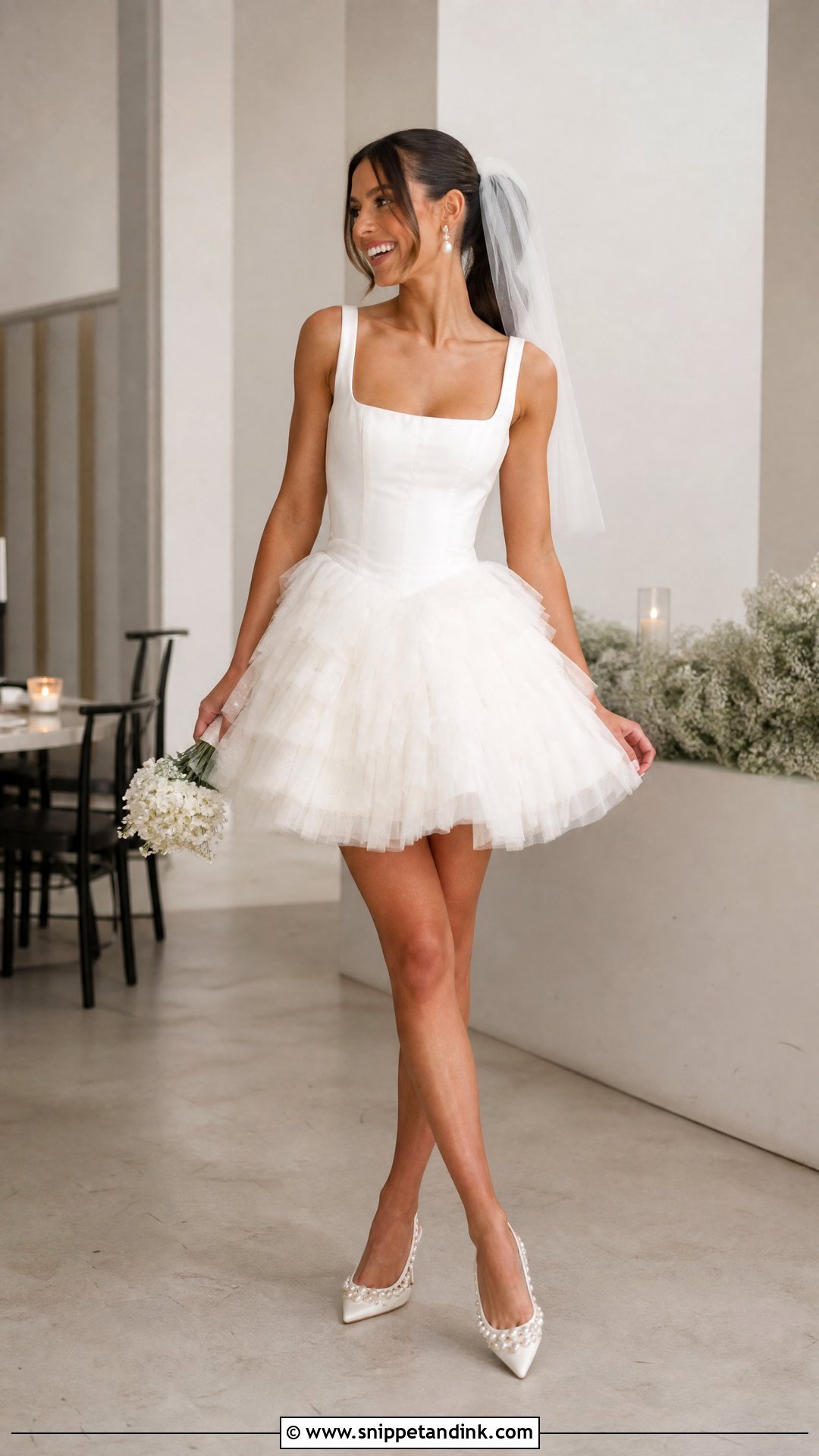
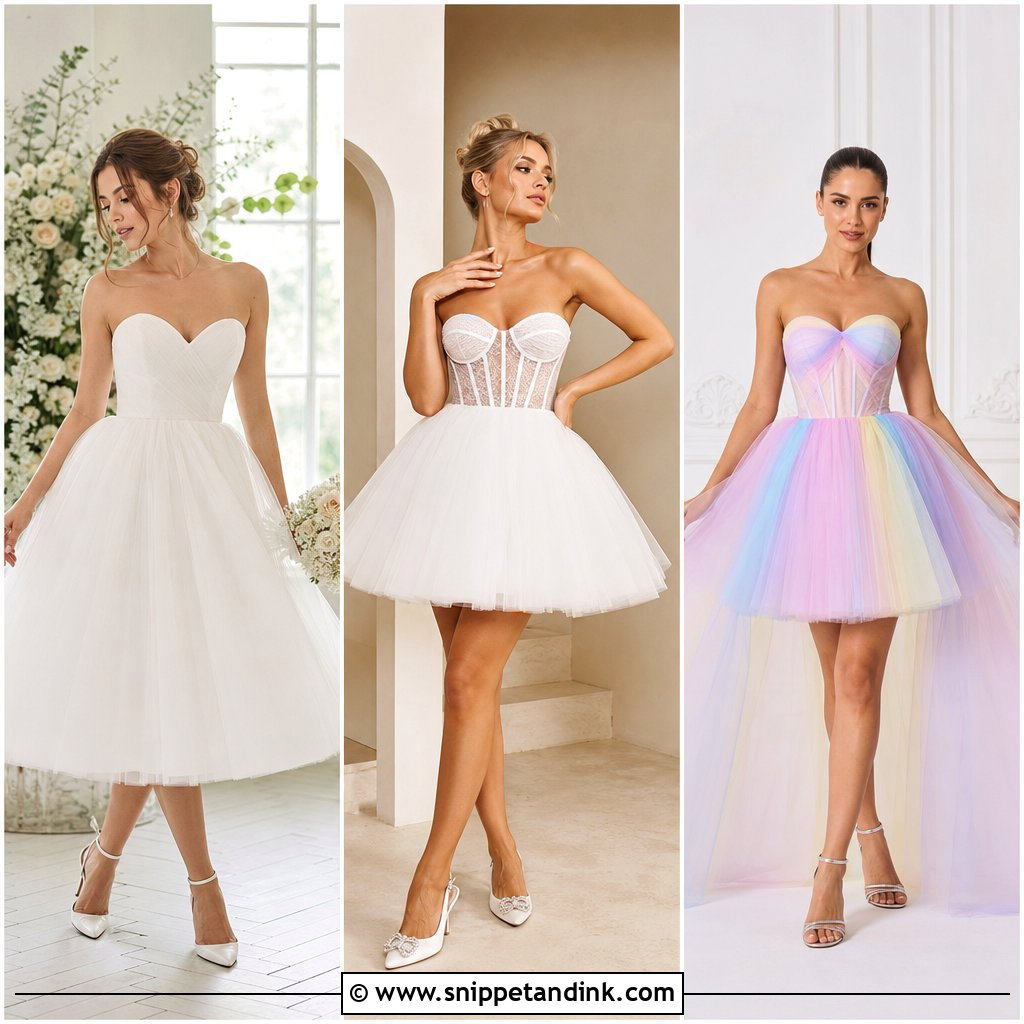
A tulle ruffle mini suits a civil ceremony, a smaller celebration or a reception change. It needs a structured bodice so the short skirt keeps its shape, and a square, strapless or off-shoulder neckline balances the volume below. With the shoes fully on view, pick pearl-trimmed pumps, slingbacks or bridal flats you can dance in. In the fitting room, sit down and then dance a little; ruffled minis tend to ride up when you sit, and you want to know by how much. Drop earrings, a neat ponytail or bun, a short veil and a small bouquet finish it.
Creases, Snags and a Bustle Nobody Practiced
Tulle crushes in transit. When the dress arrives, hang it from its loops as soon as you can and let gravity do the first job. For stubborn creases, use a handheld steamer held a few inches away, working from the inside of the skirt. Never press tulle with an iron: nylon net can melt or go shiny in a second.
Small hazards on the day itself
- Put rings, bracelets and beaded clutches on after the dress. Prongs and rough edges pull threads in net, and a pulled thread is hard to hide.
- Watch for hook-and-loop fastenings on bags, coats and camera straps. They grab tulle instantly.
- Wooden benches, rough stone walls and car door seals catch hems, so lift the skirt as you sit or step into a car.
- If a ruffle tears, a couple of small safety pins on the inside will hold it until the reception. Tuck loose threads under rather than cutting them.
Bustling a ruffled skirt deserves its own rehearsal. Tiers don’t fold the way a plain train does, so the seamstress usually chooses a few lift points that tuck the train up or under between ruffles. Bring whoever will do it on the day to the last fitting, photograph each tie and let them practice twice.
After the wedding, have the gown professionally cleaned within a few weeks, before any spills set. Store it in a breathable cotton bag rather than plastic, folded with acid-free tissue or supported so the bodice isn’t carrying the skirt’s full weight on a hanger for years.
The Part of a Ruffled Gown You Never See
The ruffles get the attention, but the structure underneath decides how the day feels: the boning, the waist stay, the petticoat and the way each tier is joined. Look at any gown from the front, side and back, and bring your wedding shoes to every alteration appointment. Walk, sit and hug someone before you approve the hem. Then keep the jewelry and veil quieter than the skirt, and even a dramatic tiered dress will feel like yours rather than a costume for the cameras.
You'll Like These Ideas:





Leave a Reply