
Color on a wedding dress used to be a quiet rebellion. Now embroidered wildflowers, raised appliqués, botanical prints and hand-painted blooms turn up on ball gowns, mermaid shapes, tea-length dresses and slips alike. The flowers change everything around them. Once a gown carries pink and blue at the waist, your shoes, jewelry, bouquet and even the venue backdrop have to work with that palette rather than compete with it. I usually tell brides to treat the dress as the loudest thing in the outfit and pull everything else back a step. Below are twenty full looks, from barely-there pastel borders to bold printed organza, each styled from the shoes up.
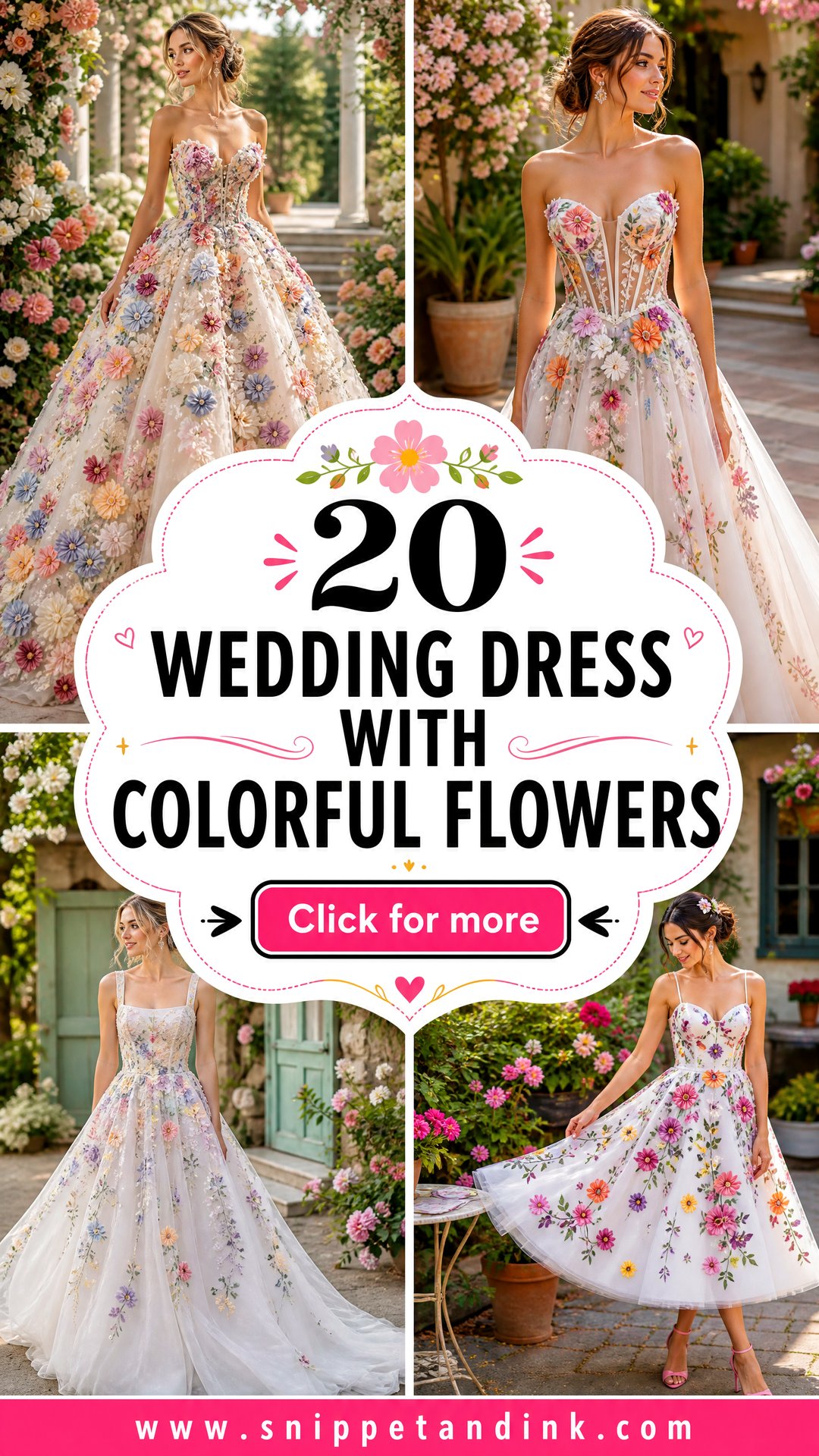
Thread, Petal or Print: What the Flowers Are Made Of Matters
Two dresses can carry the same pink roses and behave completely differently on the day. Before falling for a photo, ask the shop how the color was put on the fabric.
- Flat embroidery is stitched into the fabric. It’s the lightest option and wears well, though dense patches make tulle a little stiffer and heavier in that spot.
- 3D appliqués are cut flowers sewn on top, sometimes with layered petals. They add drama and weight, crush when you sit, and can snag on lace or beaded jackets.
- Printed fabric carries the color in the cloth itself. It’s bold and smooth, but the pattern can’t be moved, so alterations have to work around it.
- Hand-painted designs are one of a kind and very light. They’re also the most delicate to clean, and touch-ups need the original artist.
I’d also ask whether the colored thread or pigment is colorfast. Most bridal suppliers use stable dyes, but it’s worth confirming before a dress with bright red flowers meets a humid summer evening and an ivory skirt underneath.
1. A-Line Wedding Dress With Colorful Floral Embroidery
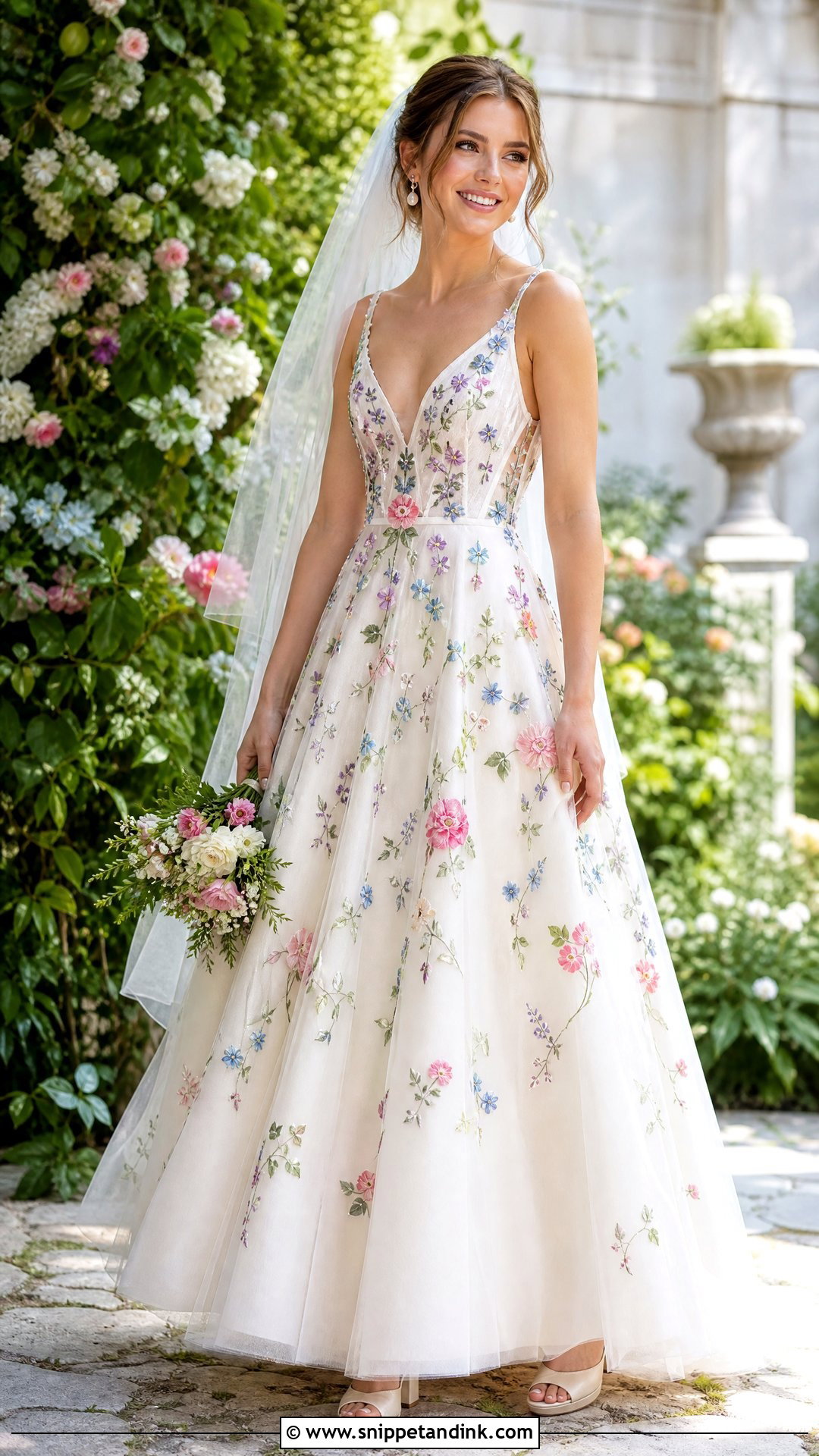
If you’re nervous about color, start here. An ivory tulle A-line with pink, blue, lavender and green embroidery flowing from the bodice into the skirt keeps the silhouette familiar, so the color feels like a detail rather than a costume. The fitted waist gives shape and the widening skirt moves easily on lawns and estate paths. Block-heel sandals, small pearl earrings and a fingertip veil with a plain edge suit it, and a loose low bun or soft waves leave the embroidery on show. For the bouquet, take one or two colors from the dress, not all four. Repeating every thread color in flowers makes the whole picture look busy in photos.
2. Ball Gown Wedding Dress With 3D Colorful Flowers
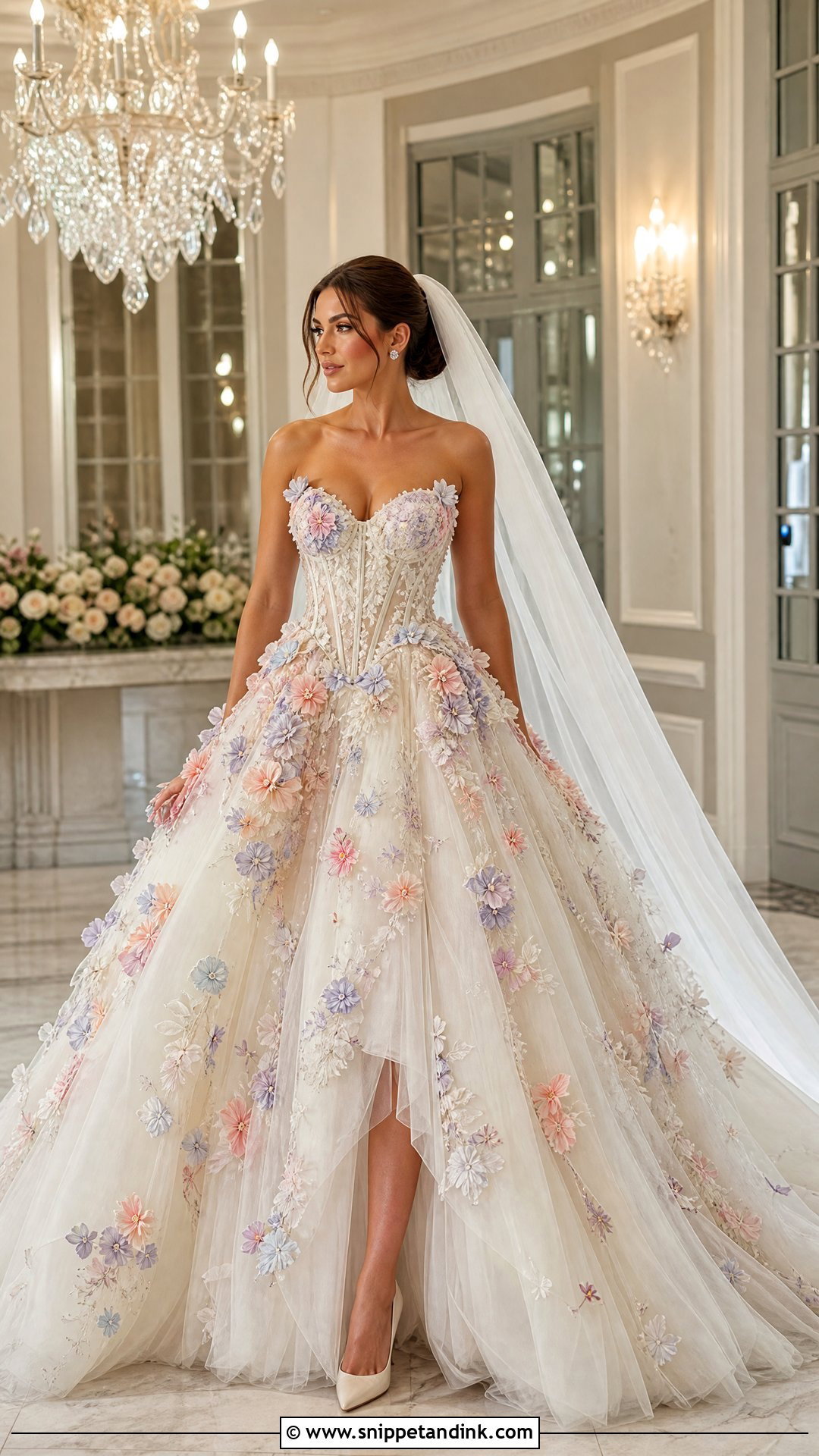
Three-dimensional appliqués are heavy, and placement decides whether a ball gown looks lush or cluttered. I look for the densest blooms at the waist and train, thinning out toward the hem, so the eye reads a pattern rather than scattered patches. A structured ivory corset holds the weight, and tulle layers keep the skirt airy. Blush, coral, lilac, pale blue and soft green is a palette that works well in this format. Raised flowers get crushed when you sit for long stretches, so fluff them gently after dinner and ask your attendants to watch the train in the car. Understated pumps, crystal studs, a sleek bun and a plain cathedral veil let the skirt do the work in a large indoor venue or estate ballroom.
3. Off-Shoulder Wedding Dress With Colorful Flowers
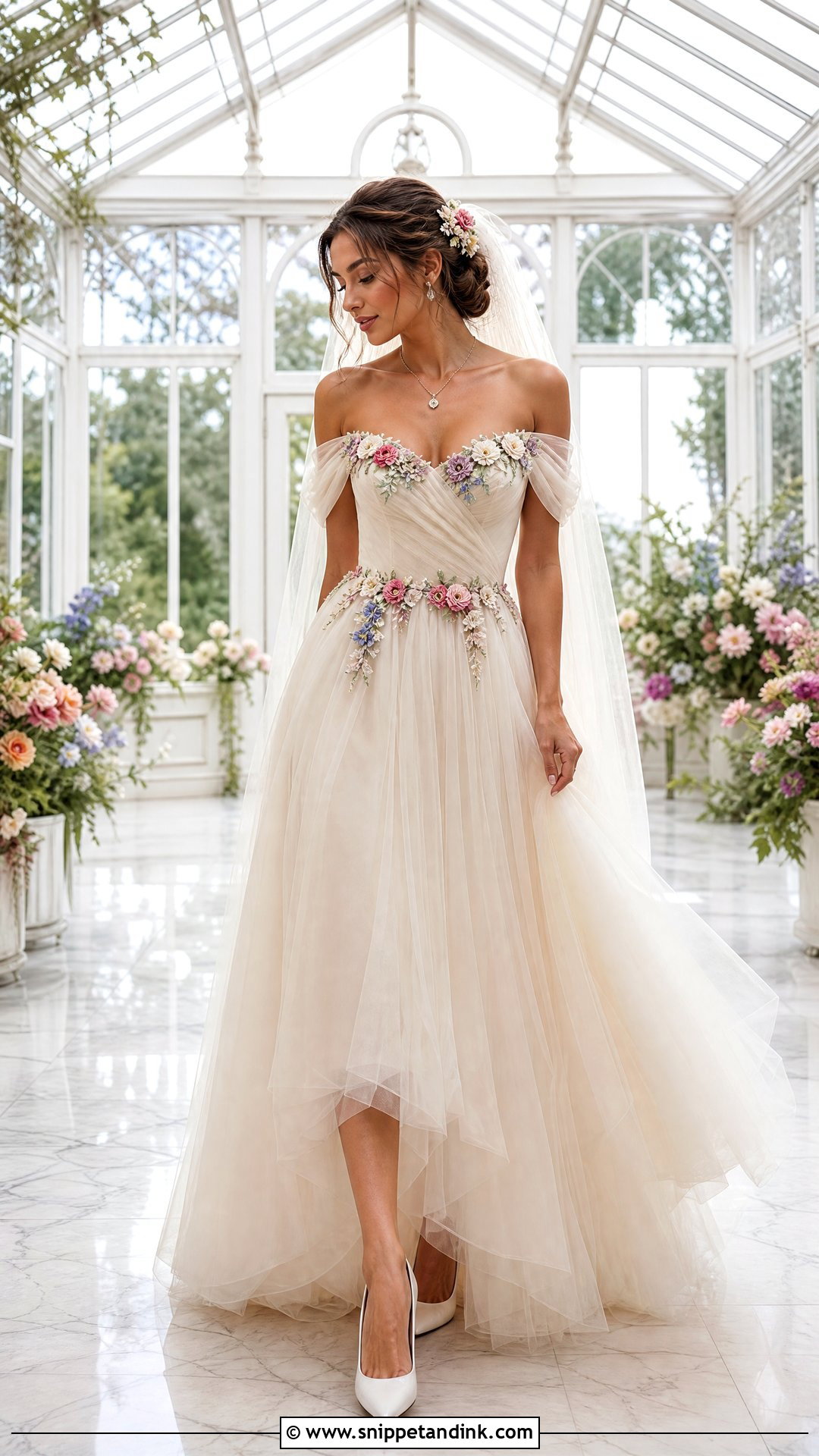
Off-shoulder sleeves put the colorful flowers right at the neckline, which frames your face more than any other placement on this list. Choose a white or light ivory gown with a softly structured bodice, draped tulle sleeves and appliqués around the neck that thin out across the waist and fade down the skirt. A delicate pendant, comfortable pumps and a floral comb picking up one shade from the dress are enough. Pin a medium veil beneath a low chignon so the shoulders stay clear. Because the color sits so close to the face, I’d keep the bouquet mostly white and green. Spring and summer gardens and glass conservatories suit it best.
4. Strapless Corset Wedding Dress With Floral Appliqués
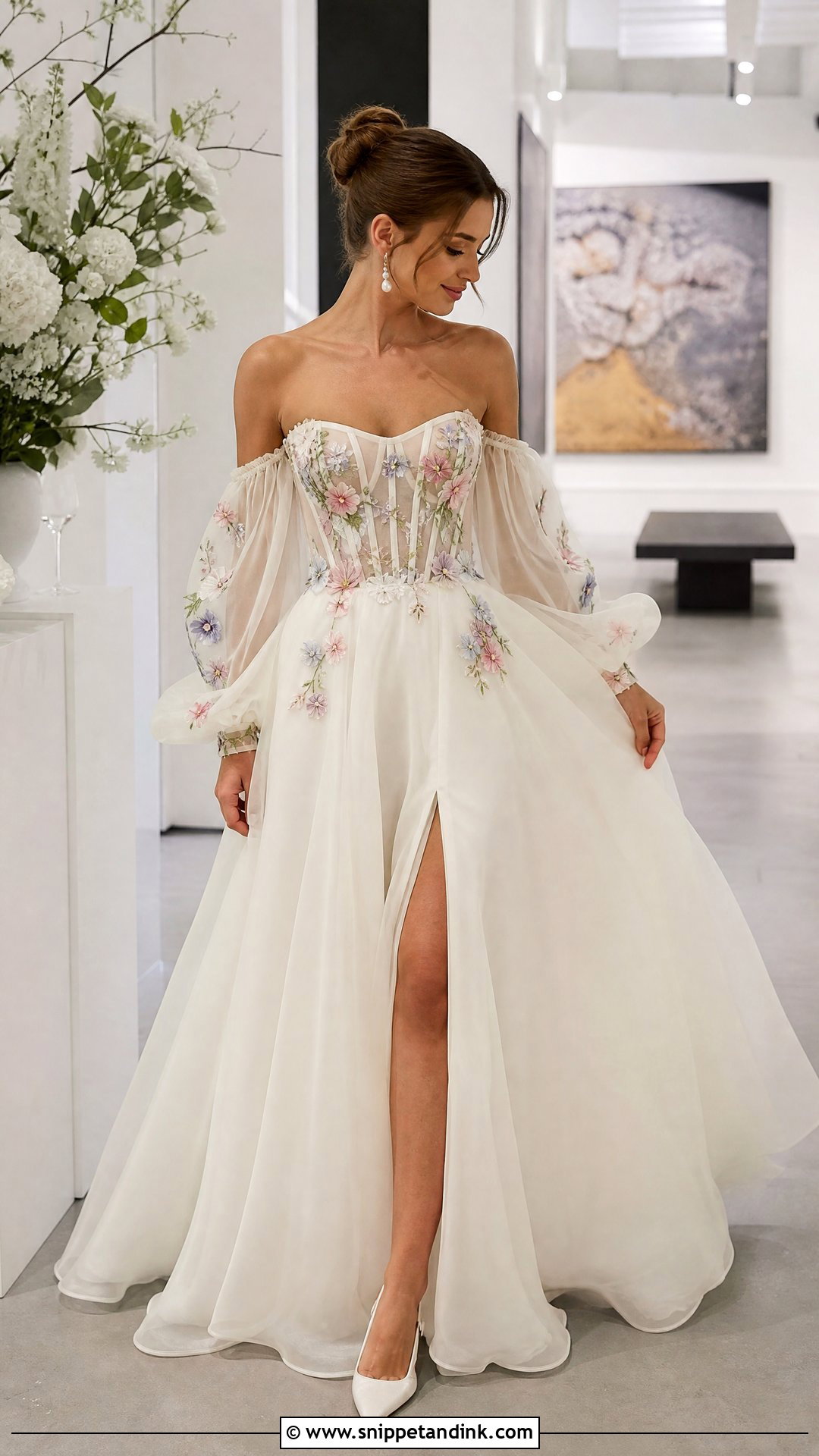
Visible boning and soft petals make a good contrast: the corset says structure, the flowers say garden. Choose a fitted strapless bodice with a straight or gently curved neckline and appliqués concentrated on the cups and waist, then smaller flowers trailing down a tulle or organza skirt. Bare shoulders call for drop earrings instead of a necklace. Pointed slingbacks and a satin clutch keep it sharp. Need coverage for a religious ceremony? A sheer floral bolero or detachable tulle sleeves come off for the reception. Check the strapless fit by bending forward and reaching up; appliqués add weight at the top edge, and a bodice that isn’t fitted closely will slowly creep down. A clean updo suits formal gardens and gallery spaces.
5. Long-Sleeve Wedding Dress With Colorful Flowers
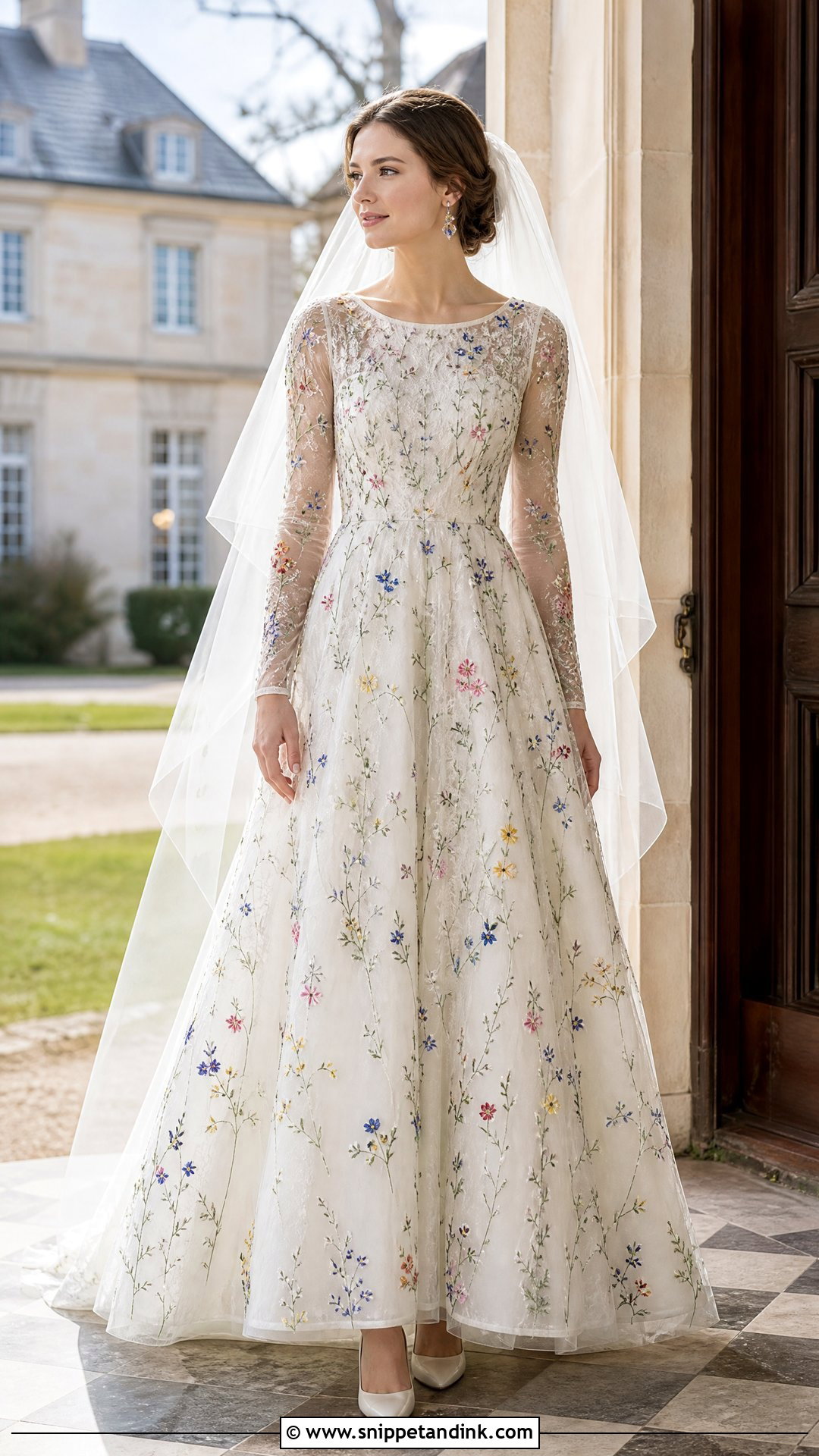
Long sleeves solve cool weather without bulk if the fabric is sheer. Look for an ivory A-line with illusion sleeves embroidered with tiny wildflowers, the pattern continuing over the bodice and lightly onto the skirt. On skin-toned mesh, the flowers look as if they’re resting directly on your arms. Closed-toe pumps, pearl-and-gemstone earrings and a clean chapel veil suit it, with a twisted updo so loose hair doesn’t fight the sleeves. An ivory wool wrap covers the walk between car and ceremony. Ask your seamstress to fit the sleeves with your arms bent, since tight illusion mesh can split at the elbow seam. Early spring and fall are when this shines.
6. Square-Neck Wedding Dress With Pastel Flowers
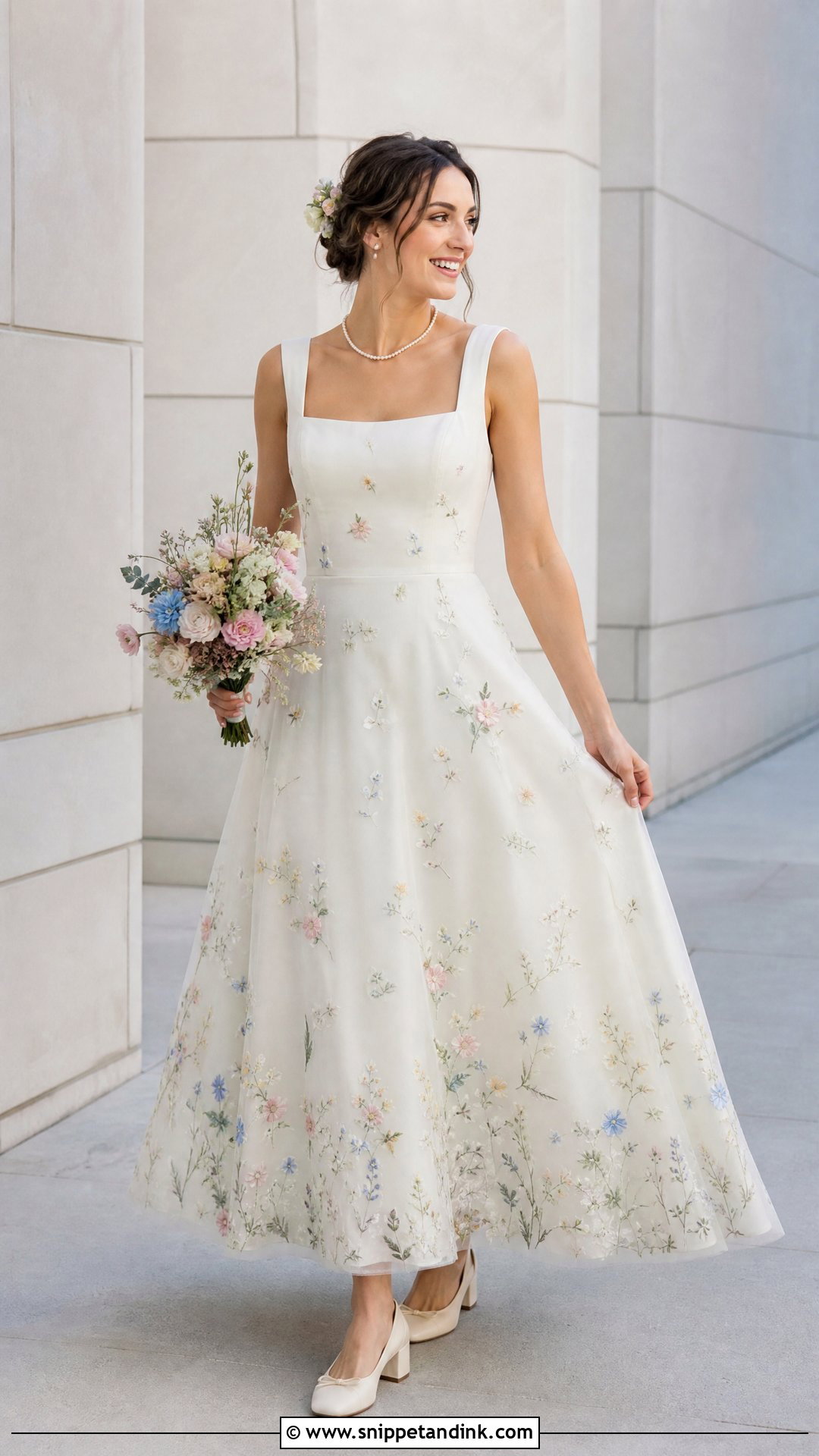
Pastels against ivory are the gentlest version of color, and a square neckline keeps them from tipping into sugary. Choose wide supportive straps, a fitted bodice and an A-line or column skirt embroidered in dusty pink, pale yellow, powder blue and sage, concentrated at the waist and lower skirt so the neckline stays crisp. A short pearl necklace, small earrings and low block heels finish it. A neat half-up style softens the look without covering the straps, and an ivory bow or small floral comb can replace a veil. Pale yellow is the shade I watch most carefully; on very fair or very warm skin it can read as a stain from a distance. This works for courthouse ceremonies and restaurant receptions.
7. V-Neck Wedding Dress With Wildflower Embroidery
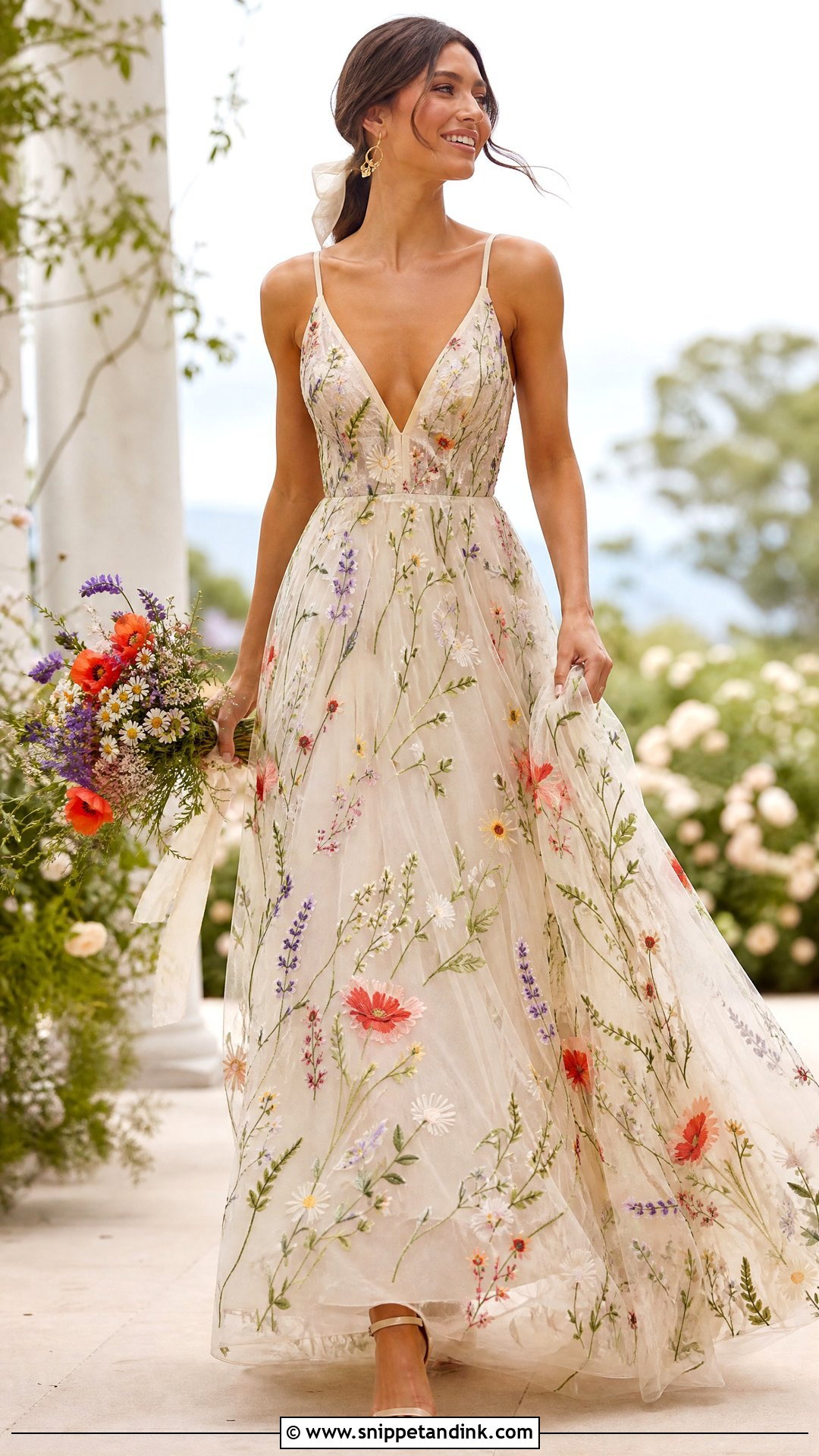
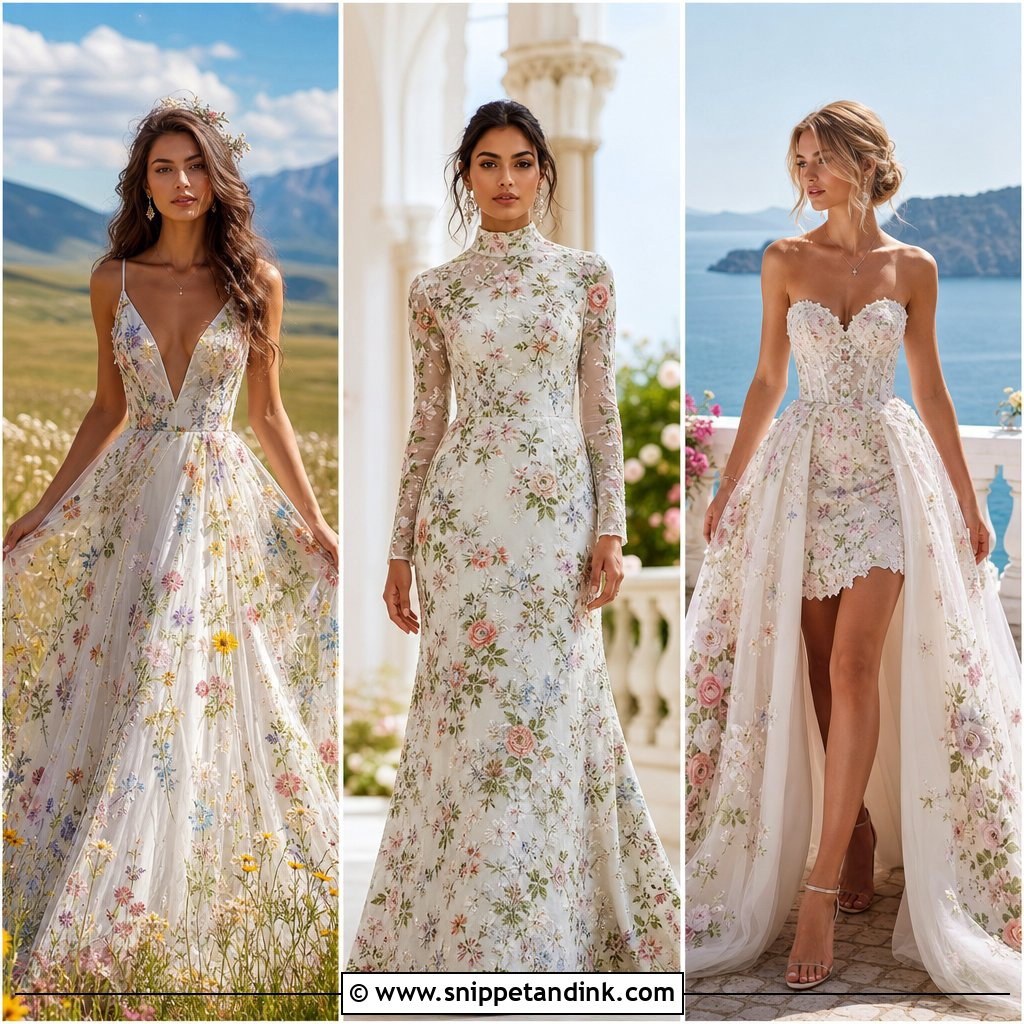
Wildflowers look best when they grow upward, as they do in a field. On a V-neck gown, colorful wildflower embroidery climbing from the waist toward the bodice follows the neckline’s lines. Light tulle or chiffon with a defined waist moves well outdoors, and poppies, daisies, lavender stems and greenery keep the meadow theme honest. If the V is deep, an illusion panel holds it in place without changing the shape. Delicate gold earrings, ankle-strap heels and a ribbon tied around a low ponytail suit it, and a simple tulle veil can come off after the ceremony. Carry a loose meadow-style bouquet that echoes the stitching, at rustic estates or garden venues.
8. Mermaid Wedding Dress With Colorful Floral Details
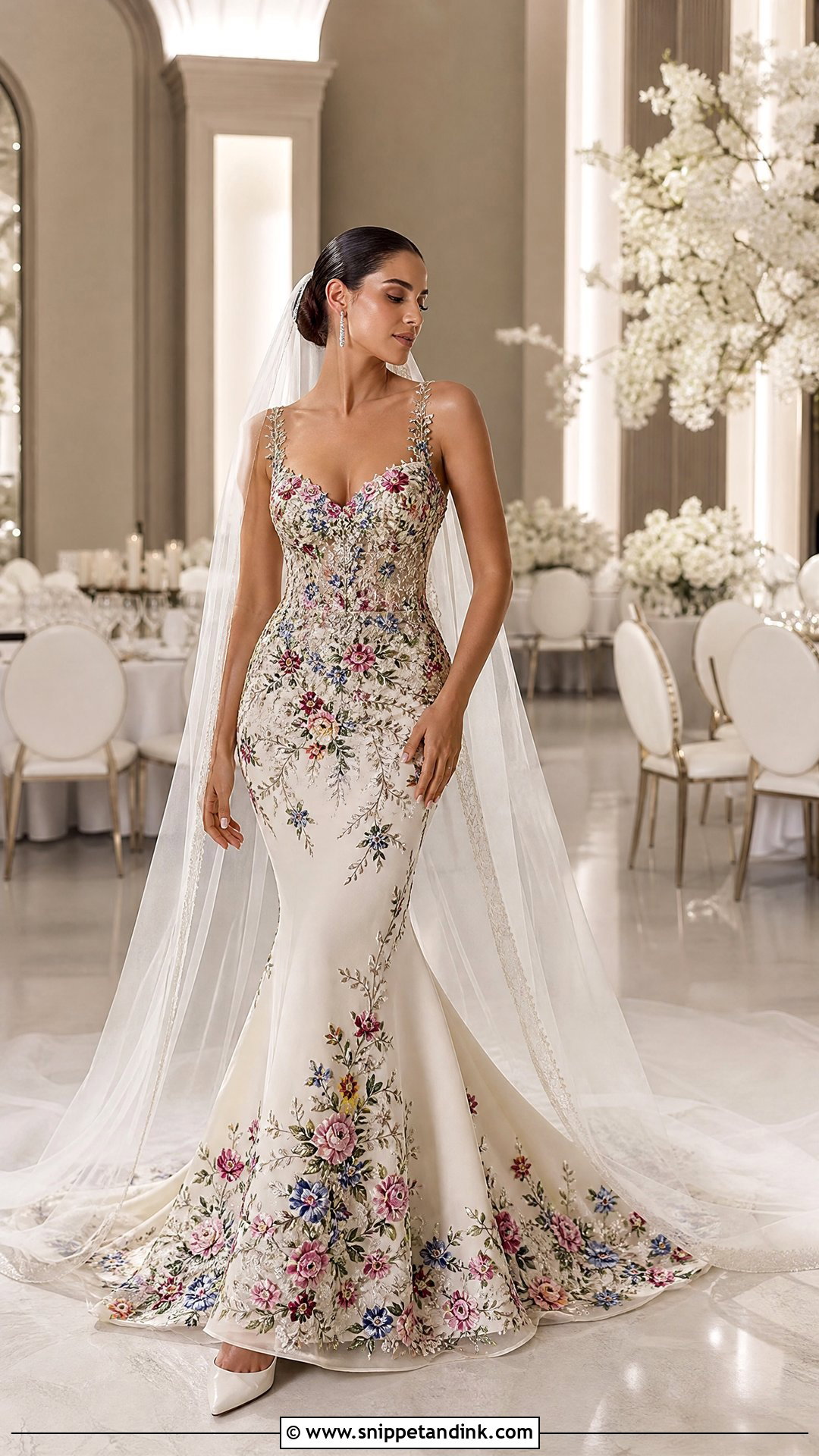
A mermaid shape shows off placement more than any other silhouette, because the embroidery follows your body directly. The flowers should wrap the bodice, hips and flare along natural lines, never pooling into one heavy block of color across the stomach or thighs. Red, pink, violet and green make a bold statement; pastels soften it. Pointed ivory heels, slim drops, a smooth fingertip veil and a side-parted low bun keep the rest sleek. Walk, climb a step and sit at the fitting. Embroidery stiffens fabric, and an embroidered fitted skirt has less give than plain crepe. It suits modern ballrooms and formal hotels.
9. Tea-Length Wedding Dress With Colorful Flowers
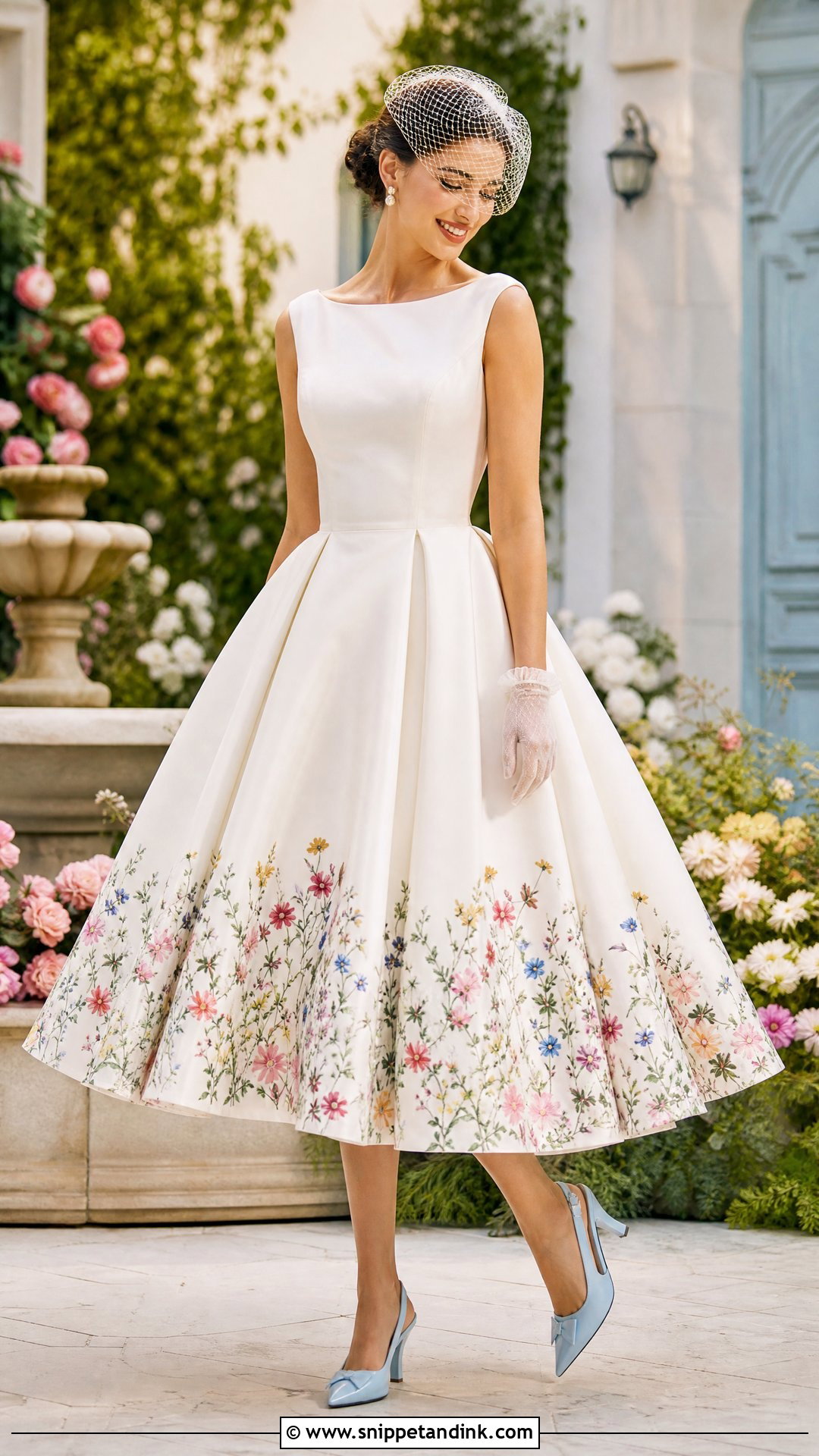
Tea length puts the shoes on show, so they become part of the floral story. Pick an ivory dress with a fitted bodice, defined waist and a skirt ending between knee and ankle, with colorful flowers concentrated at the hem to pull the eye down. Then go for slingback pumps in pale blue, blush or another shade from the embroidery. Pearl studs, short gloves if you like them, and a birdcage veil or small bow suit the length, with a structured mini bouquet keeping proportions neat. Hem placement is what makes or breaks a tea-length dress; I like it to end just below the widest part of the calf. Courthouse ceremonies, brunch receptions and small garden weddings all suit it.
10. Blush Wedding Dress With Colorful Floral Appliqués
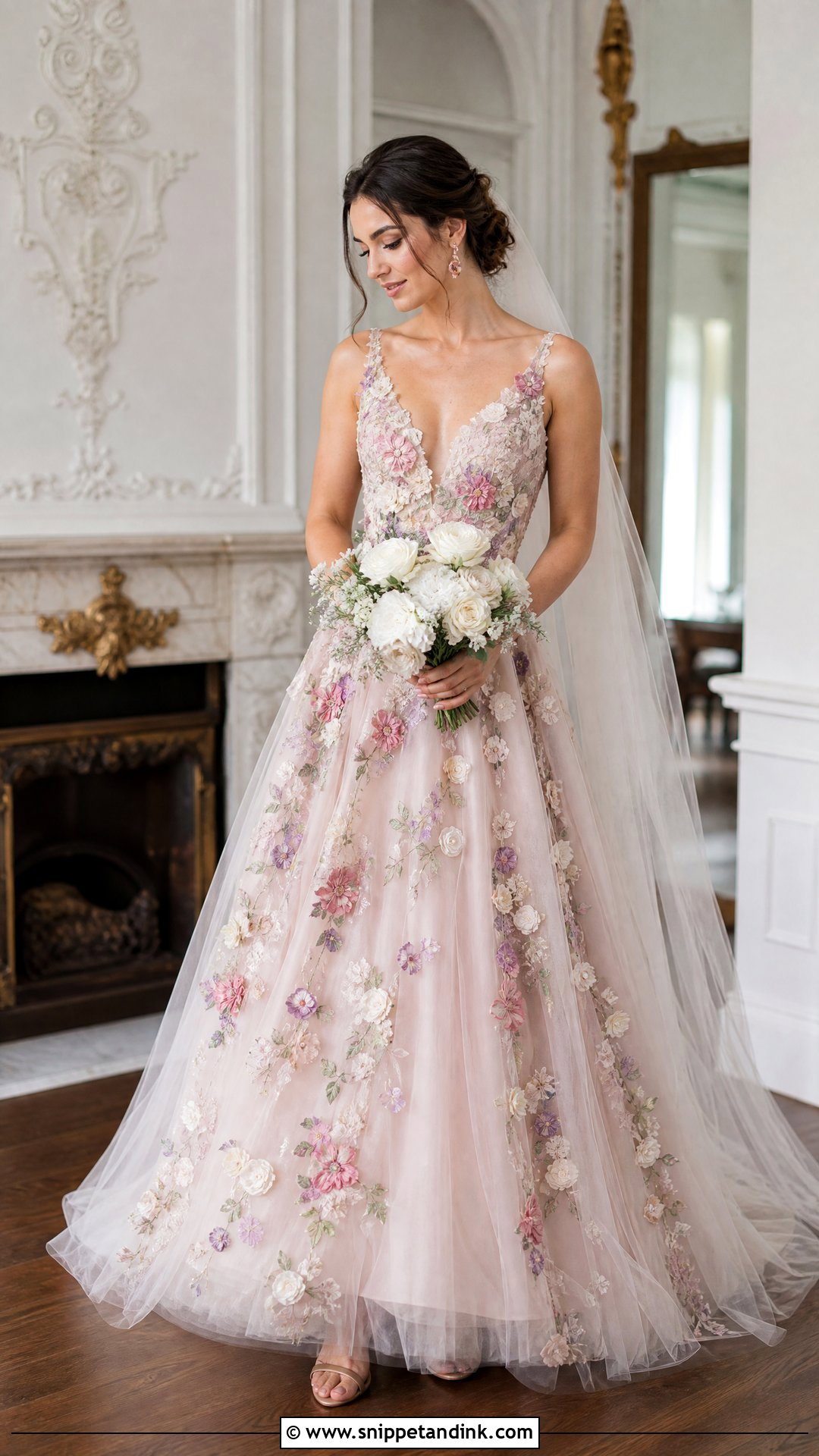
Pale pink underneath changes how every flower on top looks. The blush base warms the appliqués, so raspberry, lavender, ivory and muted green read layered rather than stuck on. Choose a tulle A-line with a fitted bodice and a gently flowing skirt, and vary the appliqué sizes: bigger blooms at the waist, smaller petals near the neckline and hem. Nude or blush heels, rose-gold earrings and an ivory veil that clearly says bride complete it. Hold the blush fabric against your face in daylight before ordering; some pinks flatter, others make skin look ruddy. A mostly ivory bouquet with a few pink accents avoids matching overload.
11. Blue Floral Wedding Dress With Ivory Accessories
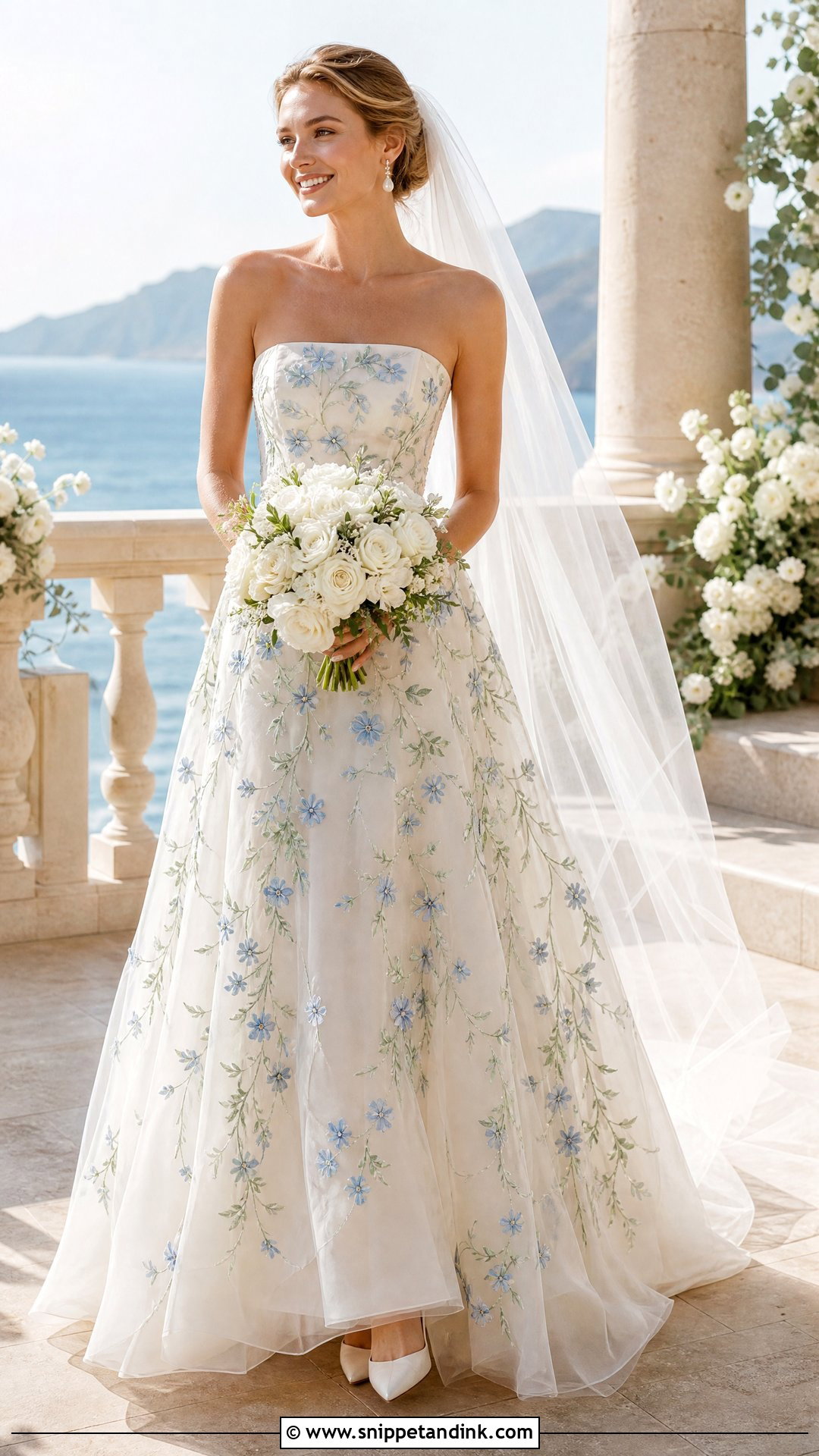
Blue flowers on white feel fresh, and they quietly cover your something blue. An organza or tulle strapless A-line embroidered with hydrangea-style blooms, fine vines and scattered blue petals keeps it classic. Wear ivory accessories, not blue, so the dress stays the only color statement: pointed pumps, pearl drops, a plain cathedral veil and a smooth low bun. The bouquet should be white with greenery and only a few pale blue stems. One thing to watch outdoors is that blue embroidery can turn slightly purple in warm late-afternoon light. That’s not a fault, just worth knowing before you see the photos. Coastal venues and bright ballrooms suit it well.
12. Colorful Wildflower Wedding Dress With Tulle Skirt
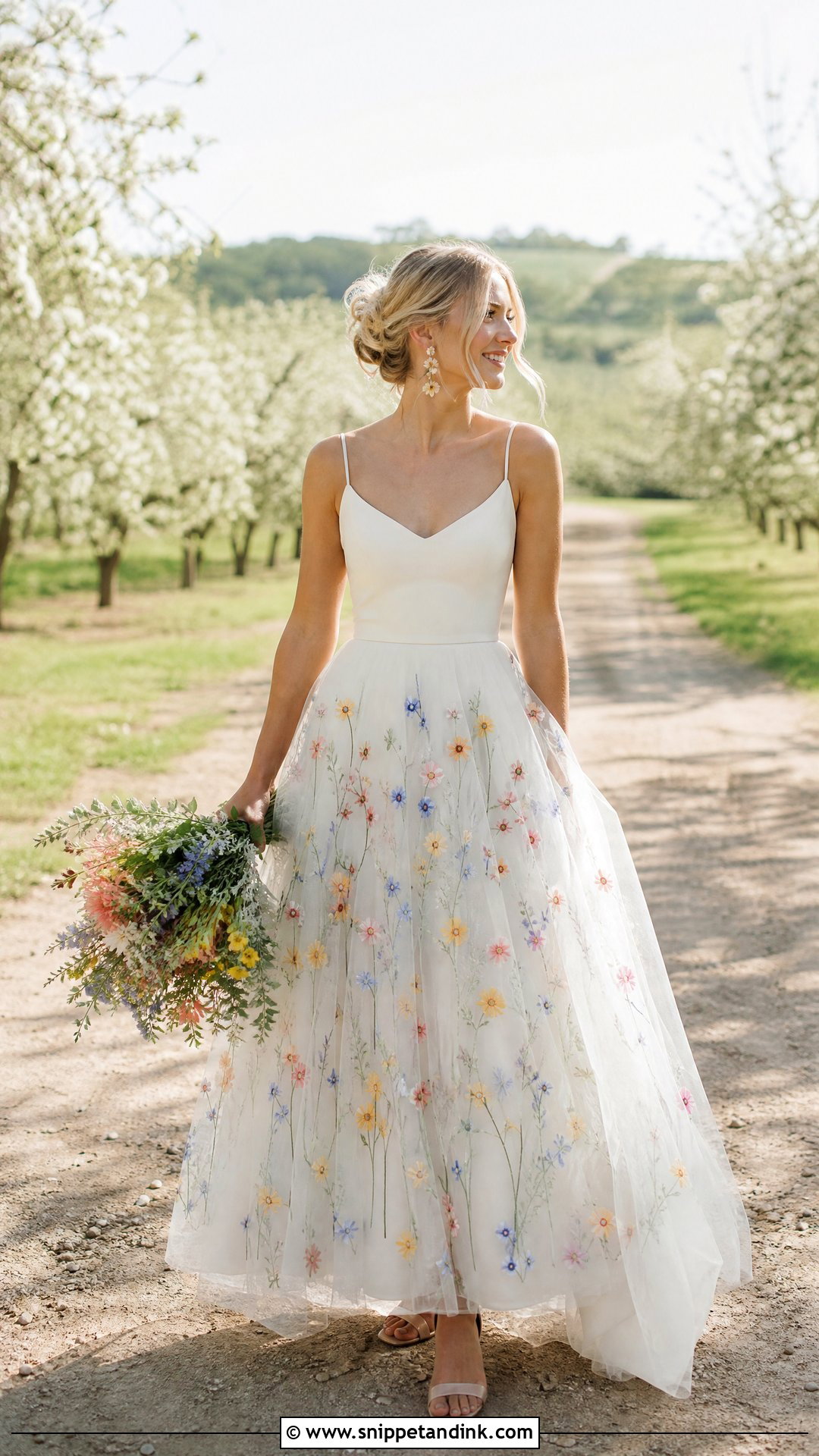
Tiny scattered wildflowers on layers of ivory tulle need room to breathe. The rule I follow is more ivory showing than color, or the dress stops reading as bridal from across a field. A simple fitted bodice and softly gathered skirt keep the embroidery light, in yellow, blue, coral, purple and green. Low block-heel sandals, a fine gold bracelet and small floral earrings go with a loose braided updo or softly pinned waves. A plain shoulder-length veil gives a traditional ceremony touch. Carry a hand-tied bouquet heavy on greenery with only a few seasonal flowers, for orchards and woodland settings.
13. Pastel Floral Wedding Dress With Puff Sleeves
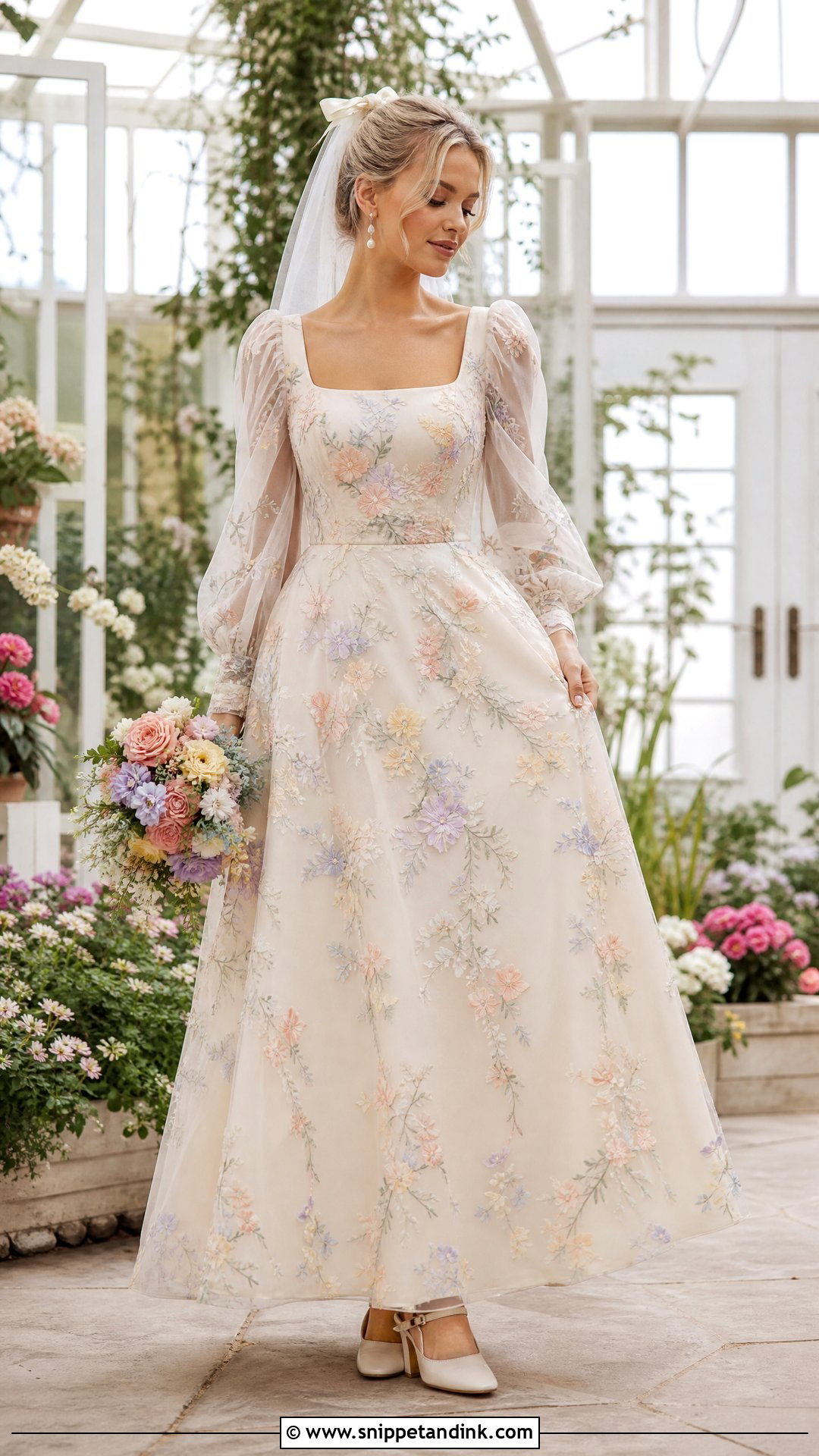
Puff sleeves add a vintage note, and keeping them sheer and lightly embellished stops them from looking like costume. Choose an ivory or pale champagne dress with a fitted waist, square neckline and short sheer puffs, with peach, lilac, blue and butter-yellow flowers on the bodice spacing out across the skirt. Ivory Mary Janes, small pearls and a narrow velvet or satin hair bow suit the era. A compact bouquet of white flowers and muted greenery keeps the palette controlled, and a chapel veil can sit beneath the bow. Sheer puff sleeves are often held up by a fine net lining; ask how they’re supported, because they flatten in humidity if nothing holds them. Historic venues and greenhouses suit this look.
14. Botanical Print Wedding Dress With Bold Flowers
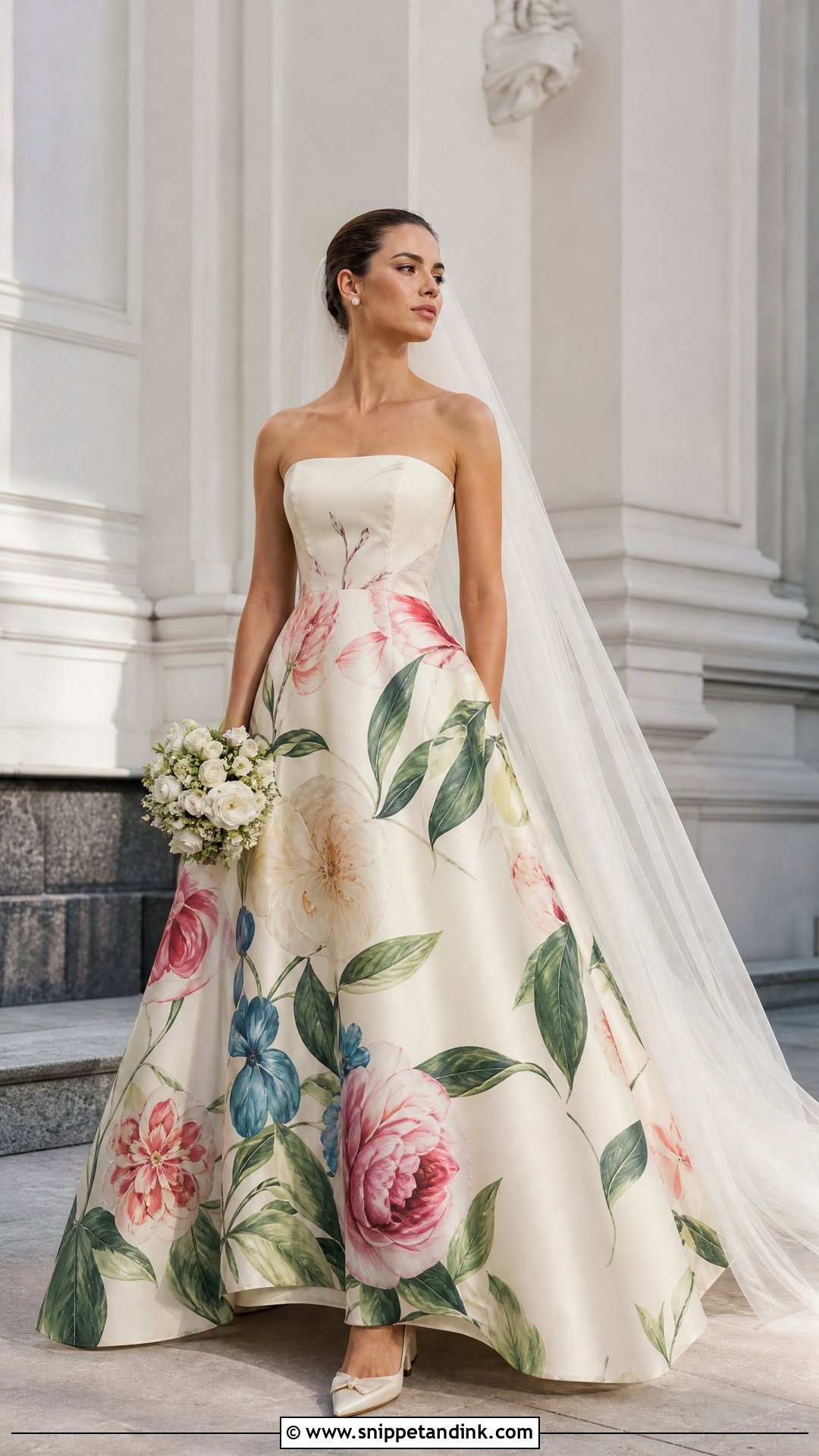
A large botanical print is a different decision from embroidery: it’s flat, it’s bold, and there’s nowhere for it to hide. Structured ivory organza printed with oversized pink, red, blue or purple flowers and green leaves needs a simple strapless or square-neck shape, or the print starts to look complicated. Solid ivory heels, minimal studs and a clean veil without lace suit it. A slick low bun keeps the overall look controlled. Carry flowers in one color pulled from the print. The tailoring matters more than with embroidery, since a big repeating pattern shows every seam that doesn’t line up across the bodice.

15. Wedding Dress With Colorful Floral Hem
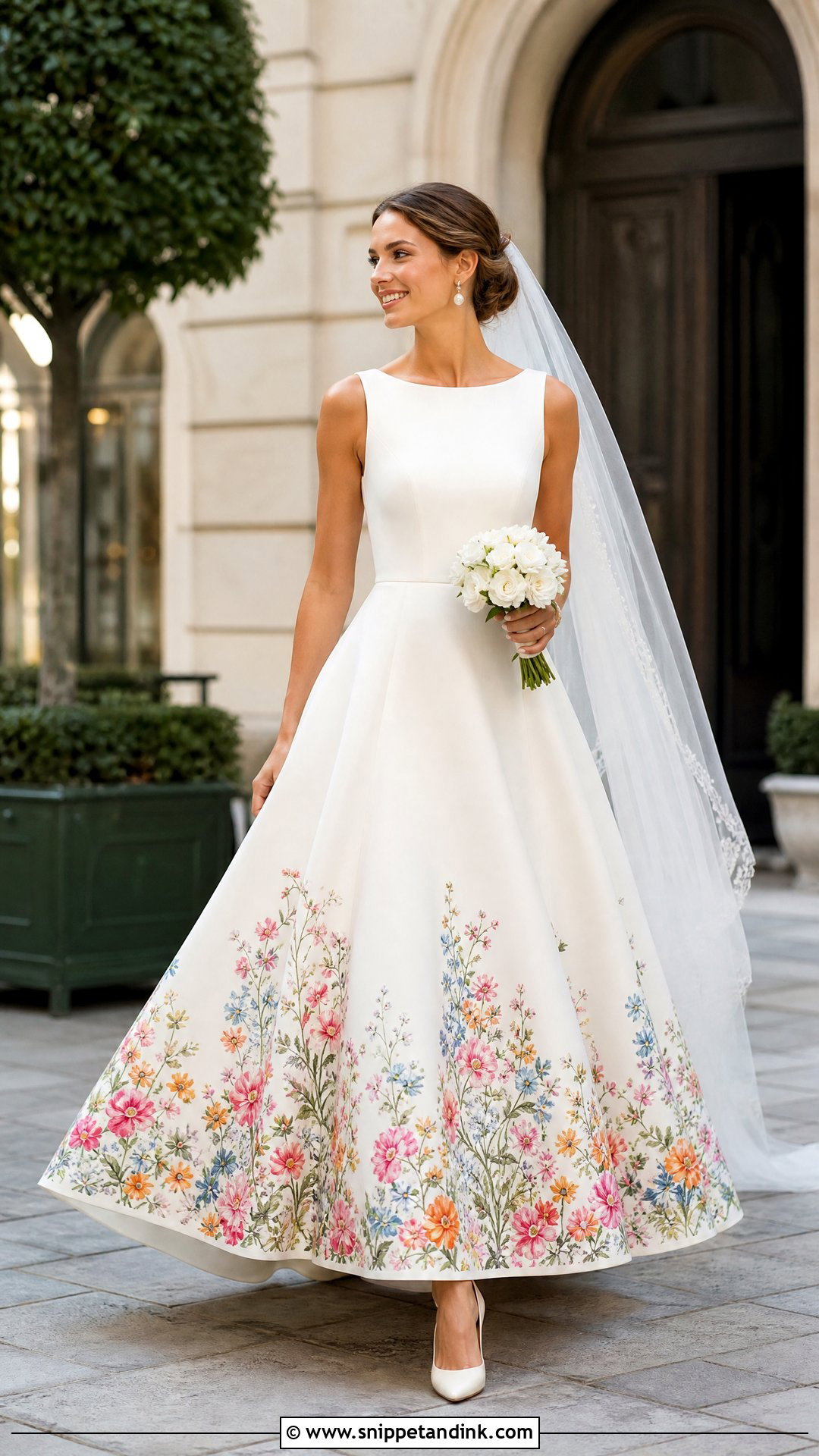
A floral border at the hem is the quietest way to wear color, so I often suggest it to brides whose families expect a traditional gown. Choose a clean ivory column or A-line with embroidery starting low on the skirt and growing denser toward the floor. Pink, orange, blue and green make a bright border that moves as you walk. Ivory heels, pearl earrings, an unembellished veil and a low chignon keep the top plain. A small white bouquet tied with ribbon in one hem color links them. Here’s the catch: if the dress needs shortening, the tailor can’t just cut the bottom off. They’ll have to take it up from the waist or move the embroidery, so raise this at the first fitting.
16. Wedding Dress With Colorful Floral Bodice
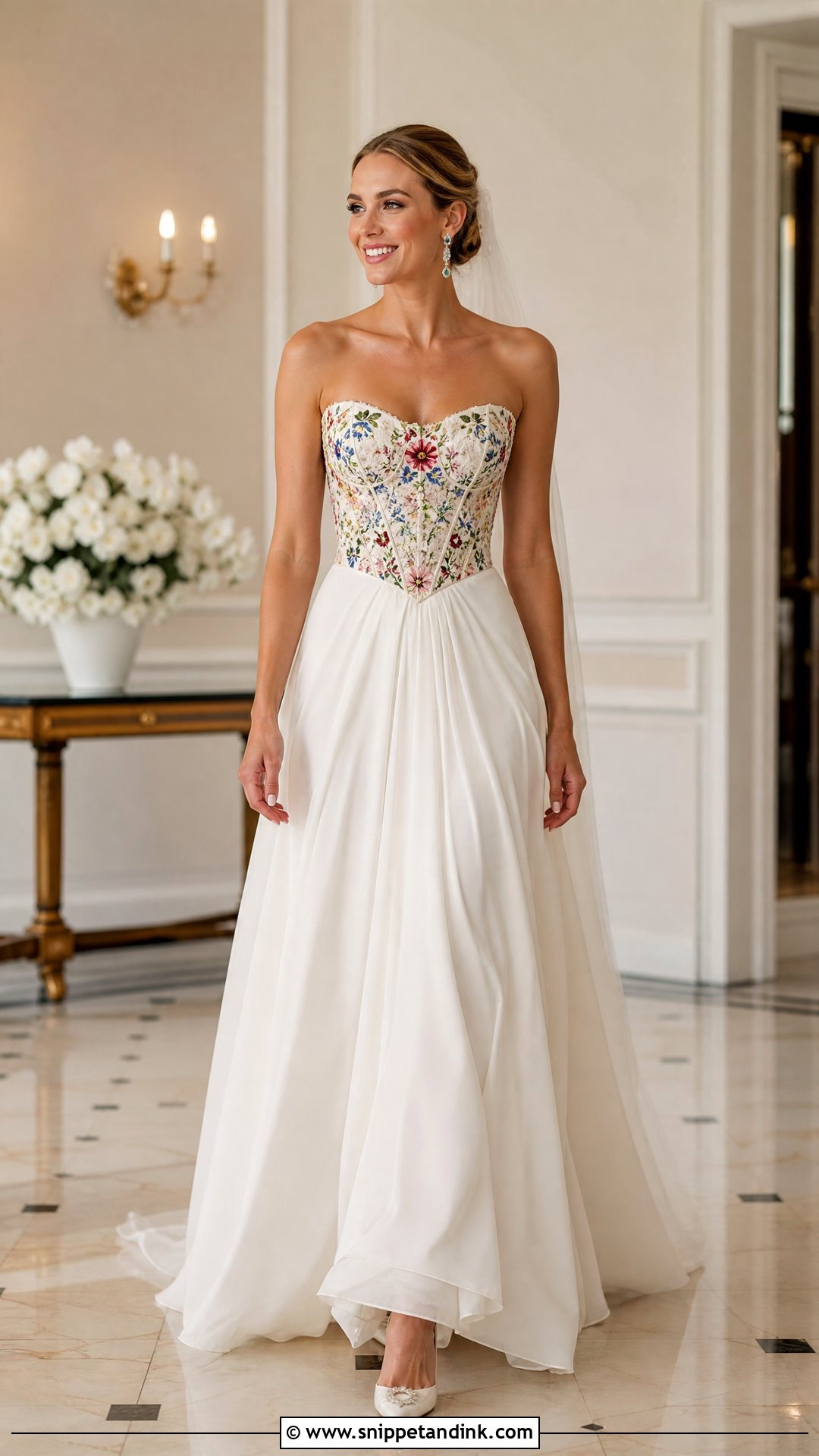
Flowers on the bodice pull attention to your face and waist and leave the skirt plain. Pick an ivory gown with a fitted corset or softly structured top covered in embroidered blooms that shrink as they move onto a chiffon, satin or tulle skirt. Plain pumps, small gemstone earrings and a veil fixed beneath a polished updo finish it. If the flowers already frame the neckline, skip the necklace. A mostly white bouquet sits better against a busy bodice than a colorful one, since bouquets are held right at the waist where the pattern ends. This styling adapts to A-line, ball gown and fitted shapes.
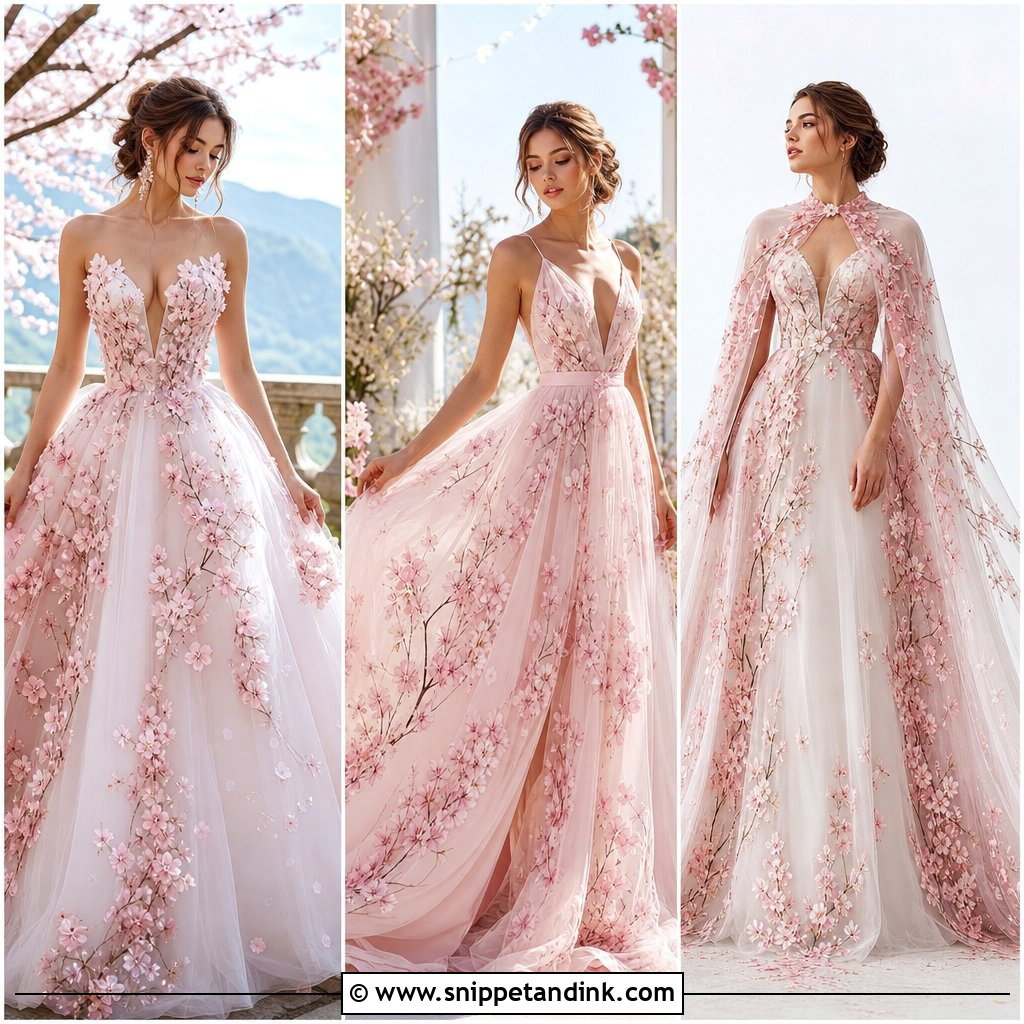
17. Wedding Dress With Floral Cape Sleeves
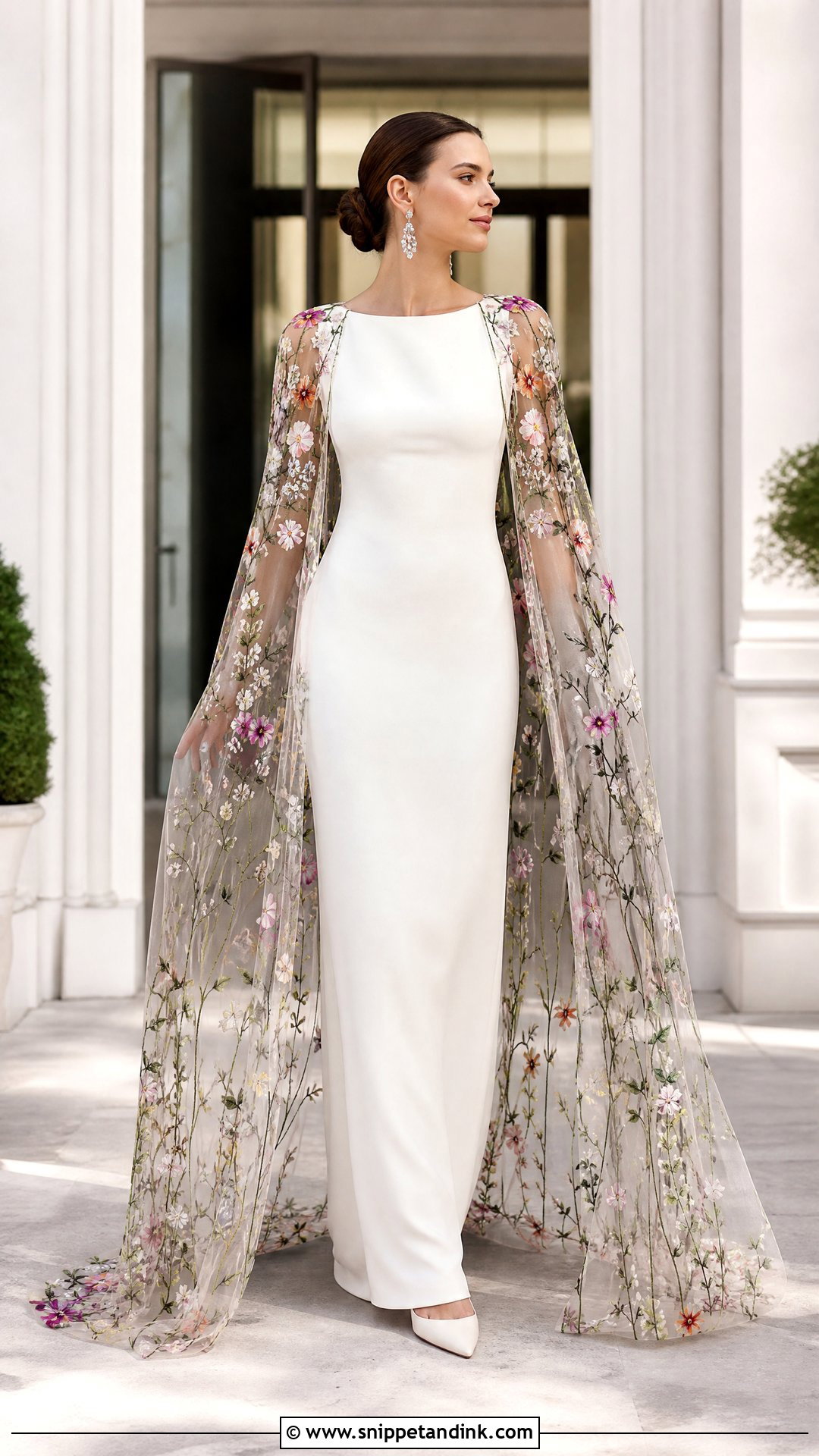
Keeping the color on a cape lets the dress itself stay plain, and gives you two looks. Start with an ivory column or A-line gown with a clean neckline, then layer a sheer shoulder cape embroidered with colorful flowers and vines. Elbow length feels light; floor length makes a formal entrance. Pointed pumps, small crystal earrings, a structured clutch and a low bun suit it, and you may not need a veil at all since the cape already moves behind you. Embroidered capes catch on chair backs and doorframes, so practice sitting with it draped behind you. Take it off for dancing and the gown underneath is ready to go.
18. High-Low Wedding Dress With Colorful Flowers
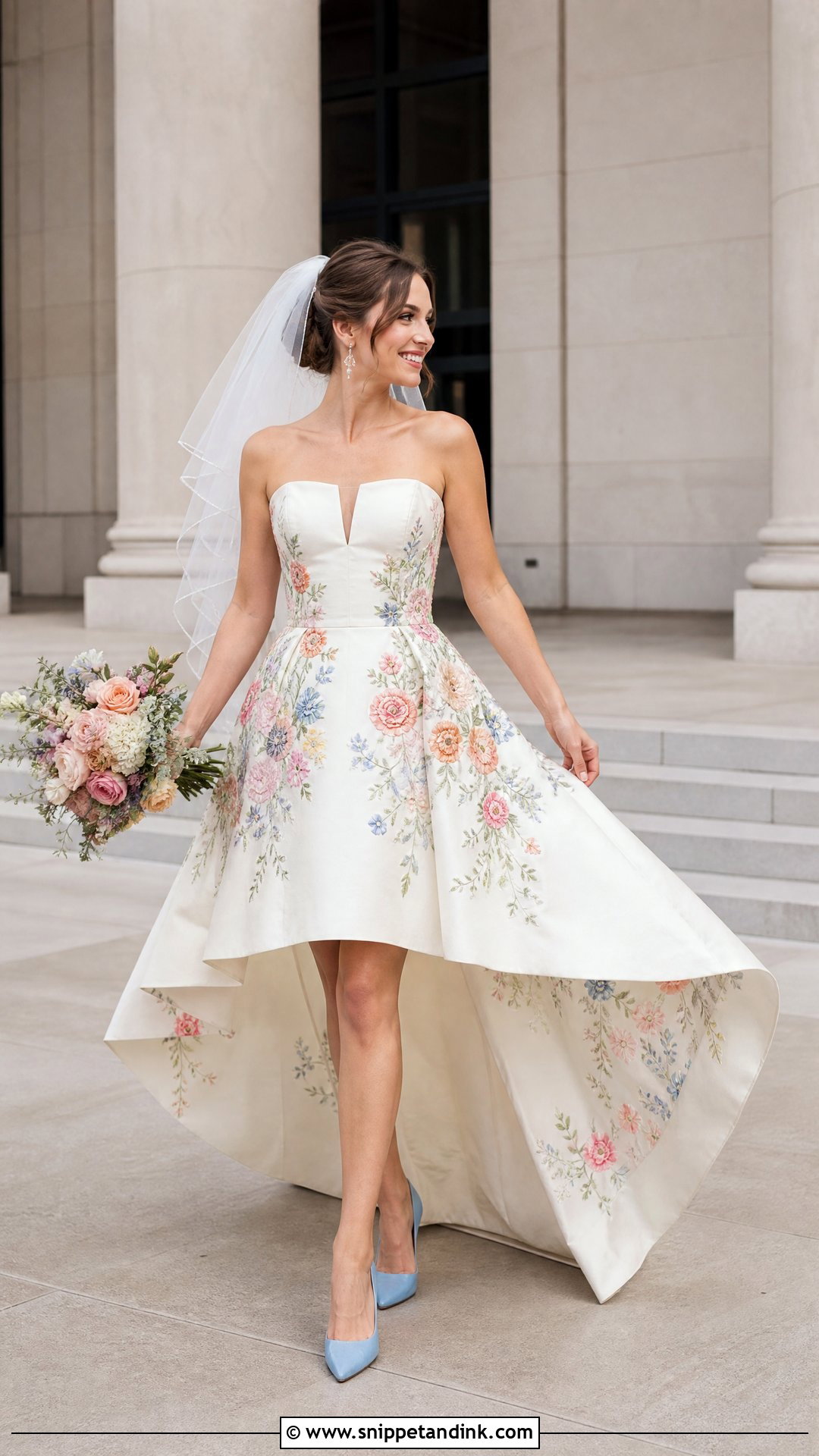
High-low hems are playful, and adding flowers along the curved edge makes the movement obvious. Choose a structured ivory gown that falls at the knee in front and reaches the ankle or floor behind, with color at the neckline, waist and hem. The shoes are on full view, so pointed pumps or slim block-heel sandals in ivory, blush or pale blue matter. Simple drops, a short veil that clears the back hem and a smooth ponytail or soft updo keep it modern. It’s practical where a train would be a nuisance, such as a courthouse, a daytime reception or a grassy outdoor site. Keep the bouquet compact and hold it high so the hemline stays visible in photos.
19. Slip Wedding Dress With Hand-Painted Flowers
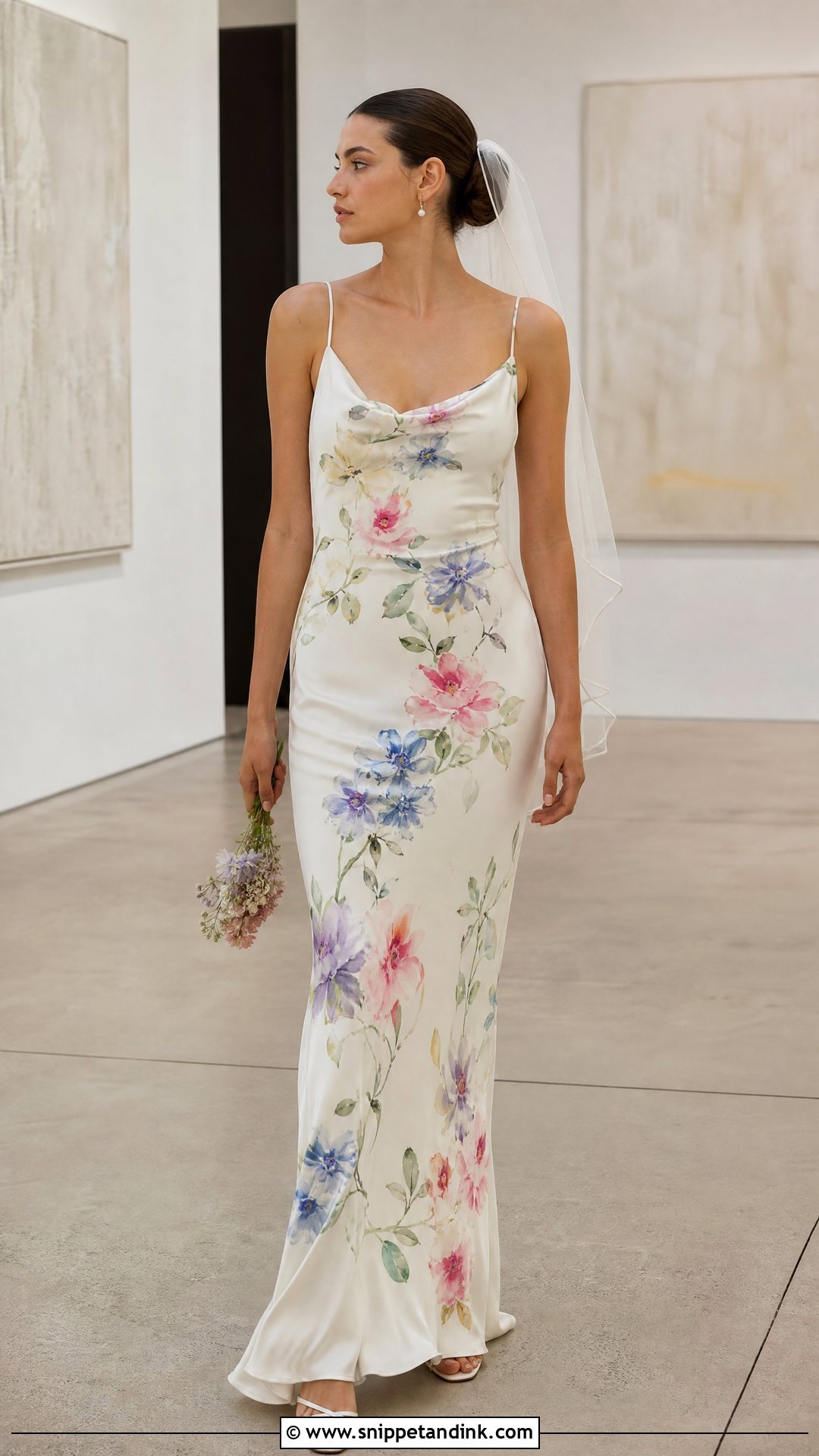
Paint weighs nothing, which is why hand-painted floral artwork suits a satin slip so well. Choose a bias-cut ivory dress with slender straps, a draped neckline and watercolor-like pink, blue, purple and green flowers along one side of the bodice or skirt. Minimal sandals, a fine chain bracelet and small pearls, plus a low twisted bun and sheer fingertip veil, keep it refined. Carry a bouquet in one color from the painting. Painted silk can’t be treated like plain satin. Water spots and stain removers can lift or blur the pigment, so ask the artist how it was set and keep drinks well away. Bias satin also shows every fit issue, so careful alterations and smooth, line-free underwear are a must.
20. Plus-Size Wedding Dress With Colorful Flowers
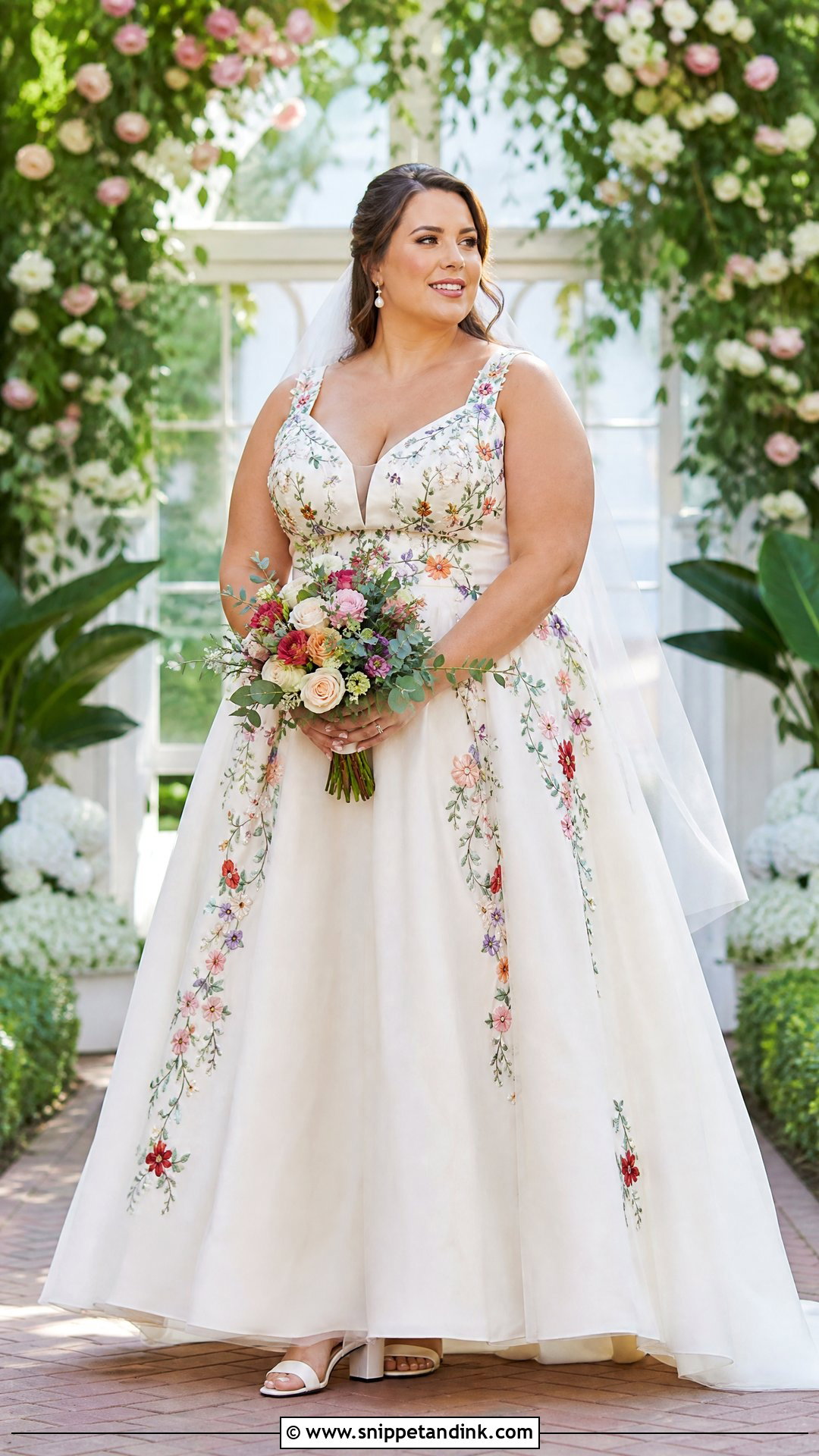
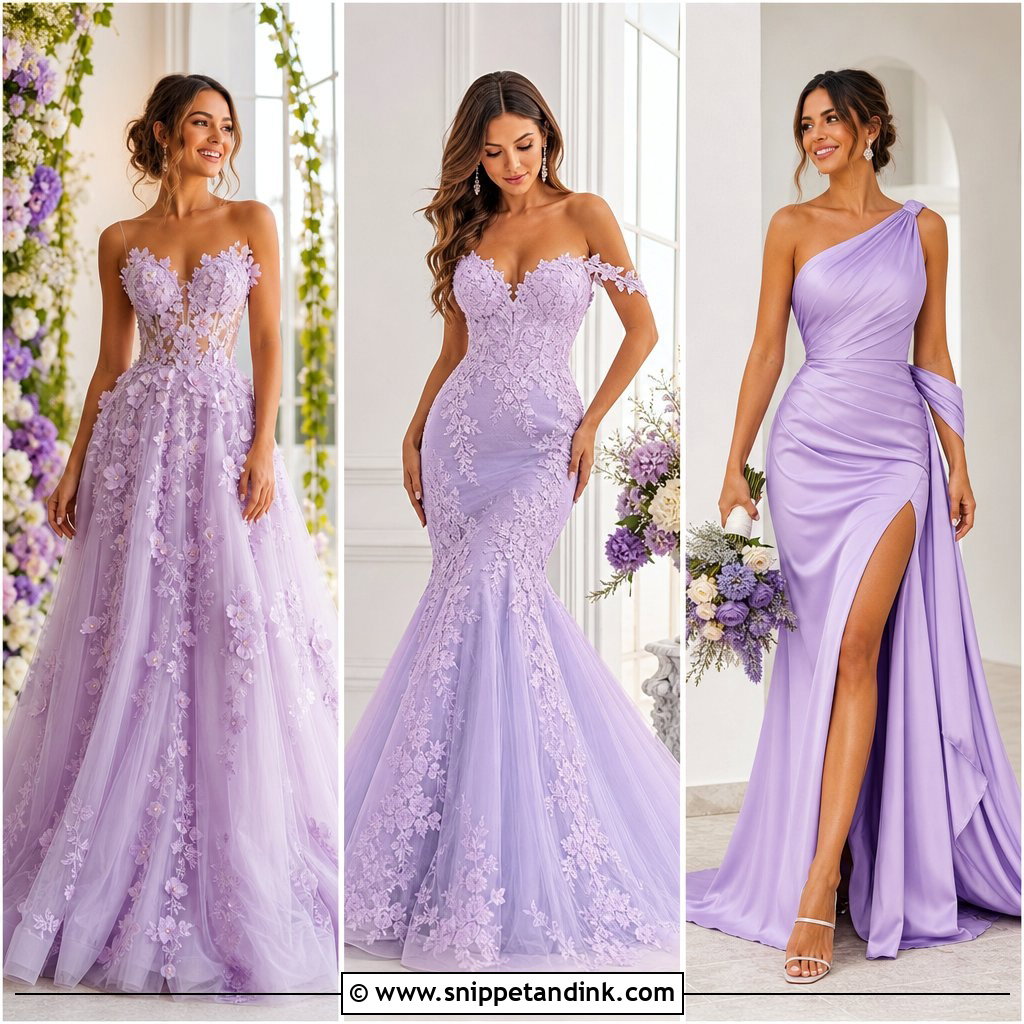
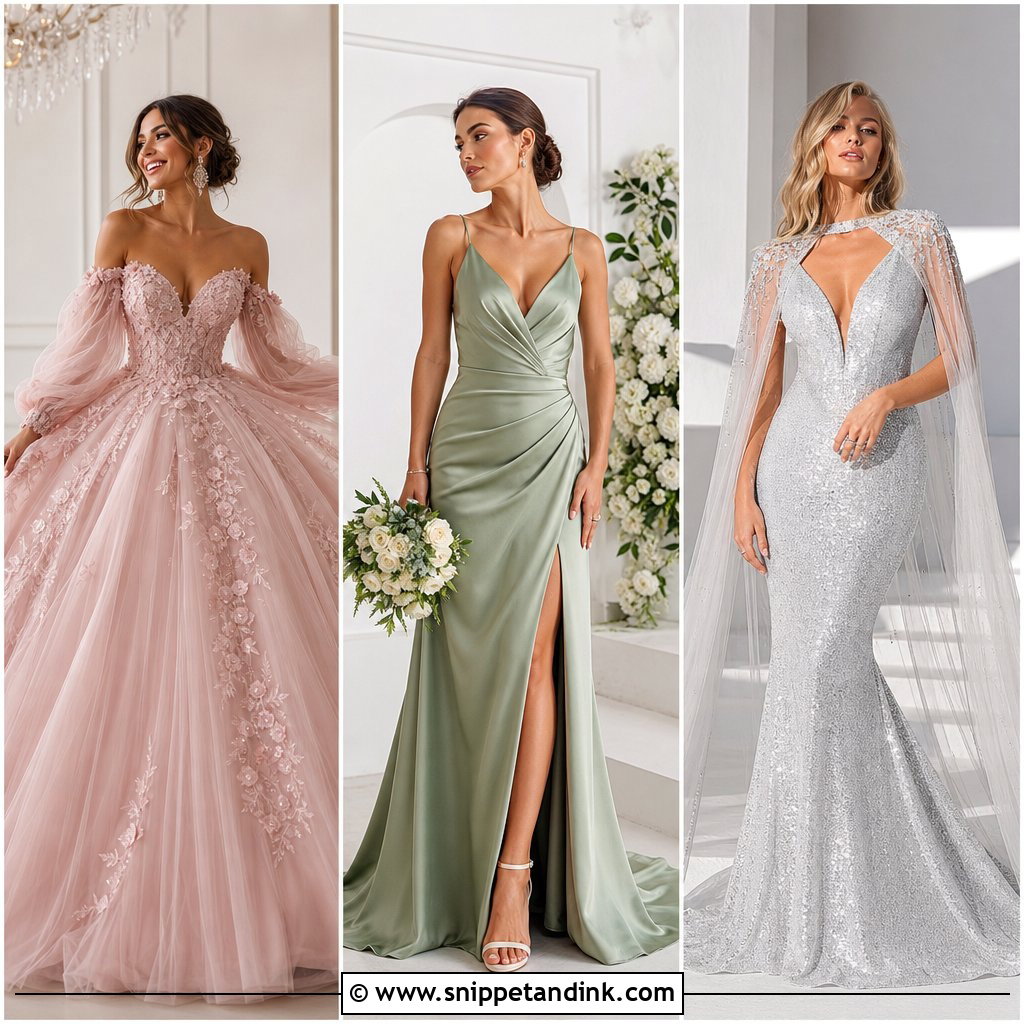
Support comes first in a plus-size floral gown, and the flowers should follow the dress’s structure rather than try to disguise anything. Choose an A-line with a structured bodice, wide straps or supportive off-shoulder sleeves and an adjustable lace-up back, with embroidery linking the neckline, waist and lower skirt. Don’t assume a larger body needs smaller flowers; bold blooms look balanced when they follow the gown’s seams. Supportive block heels, comfortable foundation garments, pearl earrings and a lightweight veil complete it, with a soft updo and a medium bouquet. Order by your current measurements and leave plenty of time for alterations, because adjusting an embroidered bodice is slower than adjusting plain fabric.
Pairing a Bouquet With a Gown That Already Blooms
This is the conversation I wish more brides had with their florist early. When the dress already has flowers, the bouquet is no longer the only floral statement, and matching every color usually makes both look smaller.
Bring a fabric swatch or a clear daylight photo of the embroidery to your florist rather than a list of colors. Thread shades rarely match real petals exactly, and a near miss looks worse than a deliberate contrast. Ask for a bouquet built around one or two of the dress colors with plenty of white and green, and keep it smaller than you’d carry with a plain gown so it doesn’t cover the bodice work. If the flowers on your dress sit at the waist, a cascading bouquet will hide them; a compact round shape held slightly lower won’t.
Cleaning Colored Embroidery After the Wedding
Don’t spot-clean colored flowers with water or a stain pen on the night. Damp thread is when dye is most likely to move into the surrounding ivory. Let marks dry, then take the dress to a cleaner who handles bridalwear and point out every colored area, appliqué and painted section before they start. For storage, wrap the gown in acid-free tissue, keep it in a breathable garment bag rather than plastic, and store it away from windows. Bright thread fades in sunlight long before the ivory around it yellows.
Let Where the Flowers Sit Decide Everything Else
A floral wedding dress can still look unmistakably bridal; the trick is restraint everywhere else. Embroidery gives fine detail, raised appliqués add texture and a print makes the strongest statement. Think about the venue, the season and where the color sits on the gown before you decide. Then choose shoes, jewelry, hairpieces and a veil that let the dress lead, and give your seamstress extra time, because floral patterns need careful handling around seams and hems. A colorful hem border and a bold multicolored ball gown are very different dresses, and both can be right for the right bride.
You'll Like These Ideas:


Leave a Reply