
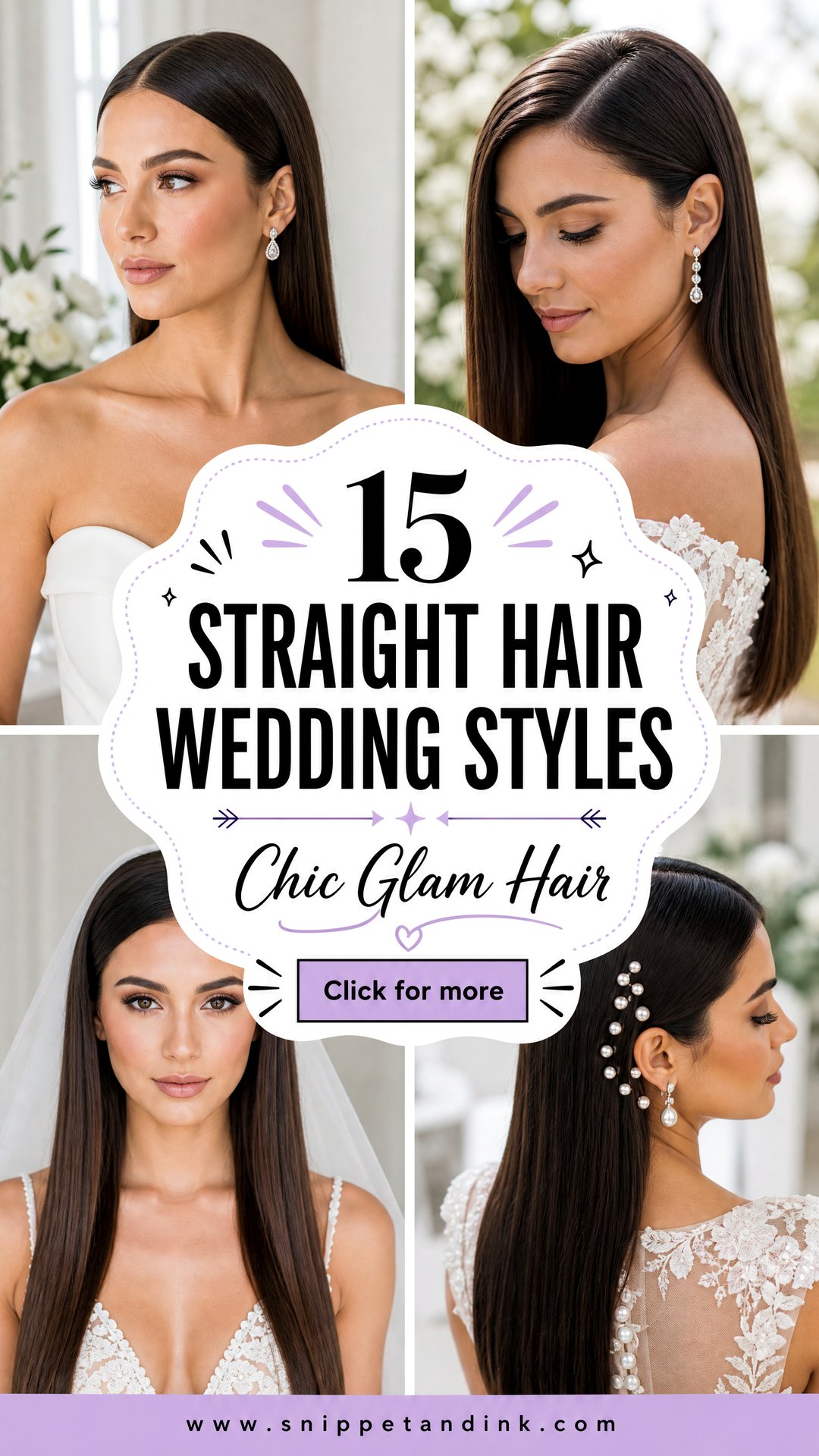
Brides with straight hair often arrive at a consultation slightly apologetic, as if their hair is the problem. It rarely is. Straight texture gives me clean lines, a sharp part and a shine that curls can’t match, and it keeps its shape under a veil better than a set of curls that have already started to drop. What it needs is a definite shape: a bun, a twist, a ponytail, a deliberate part. Satin gowns, minimalist ceremonies and city weddings all suit it. The fifteen styles below are the ones I’d put in front of a straight-haired bride, along with what each one needs to stay put.
Timing Color, Gloss and Smoothing Treatments Before the Wedding
Straight hair shows its condition more than any other texture, so most of my work for these brides happens weeks before the wedding, in the salon calendar rather than the chair on the morning.
Smoothing treatments need the longest lead
Keratin-style smoothing treatments make hair flatter and silkier, which sounds ideal until you try to put an updo in it. They take away grip and volume, so I’d only have one if you plan to wear your hair down, and I’d book it at least four weeks out so the first few washes soften the result. Never try one for the first time close to the wedding.
Color and gloss
Coloring one to two weeks ahead gives the tone time to settle and any scalp sensitivity time to calm. A clear or tinted gloss at the same appointment adds the reflective shine straight hair is known for, and it fades gradually rather than all at once.
The trim and the night before
A trim around two weeks out removes split ends without leaving a stark, freshly cut line. And skip a rich hair mask the night before an updo, because it leaves hair too soft and slippery to pin. Use it three or four days ahead instead.
1. Straight Hair Wedding Low Bun
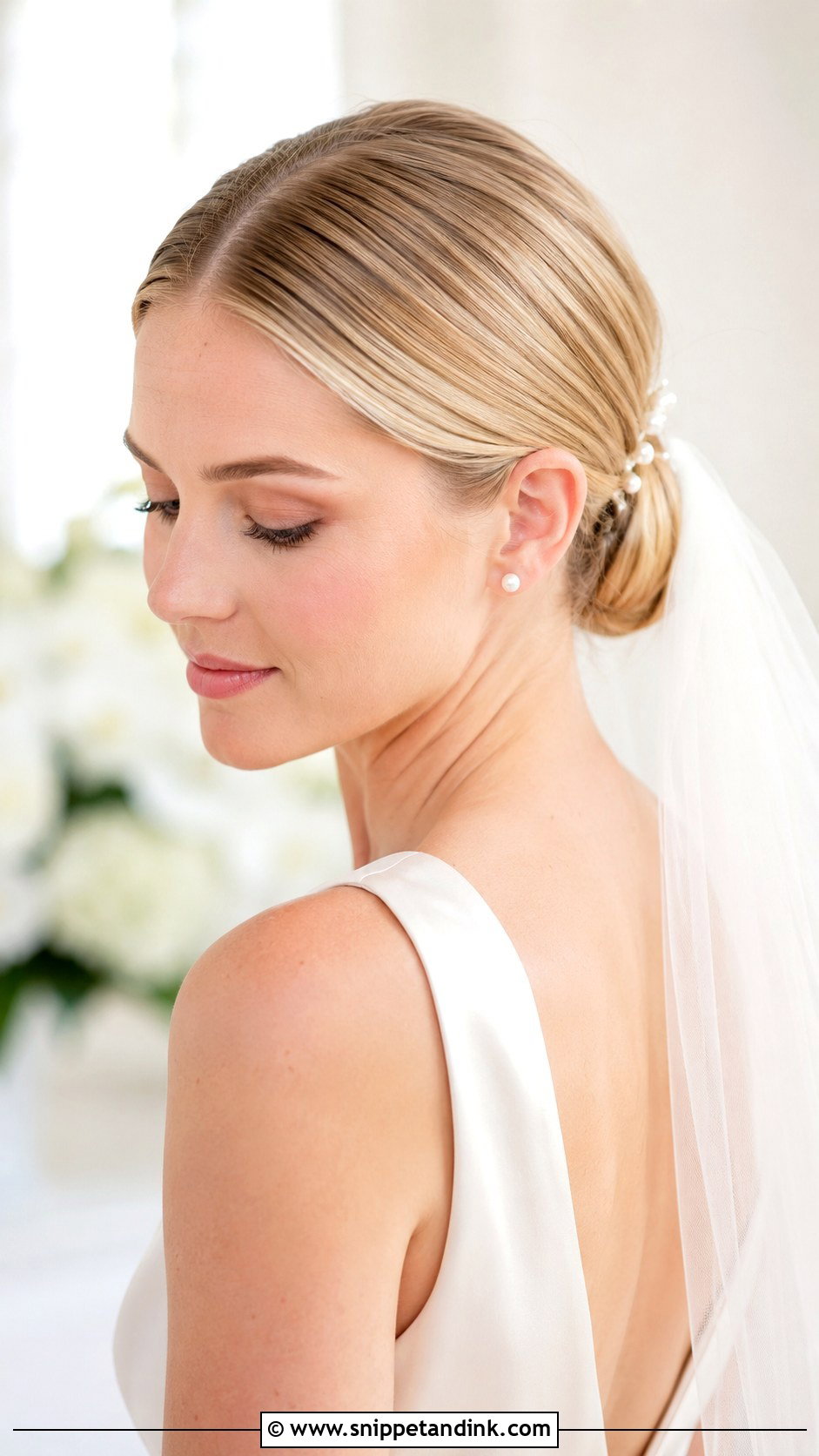
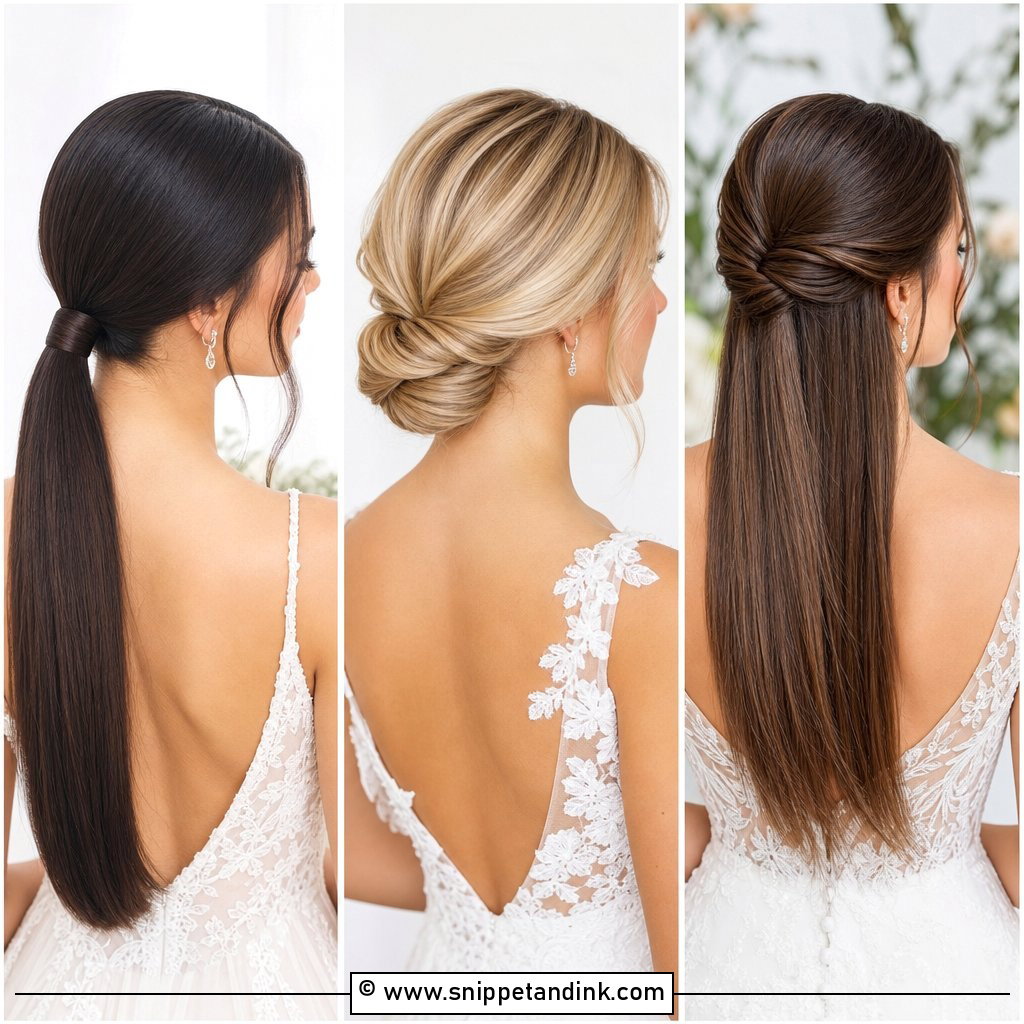
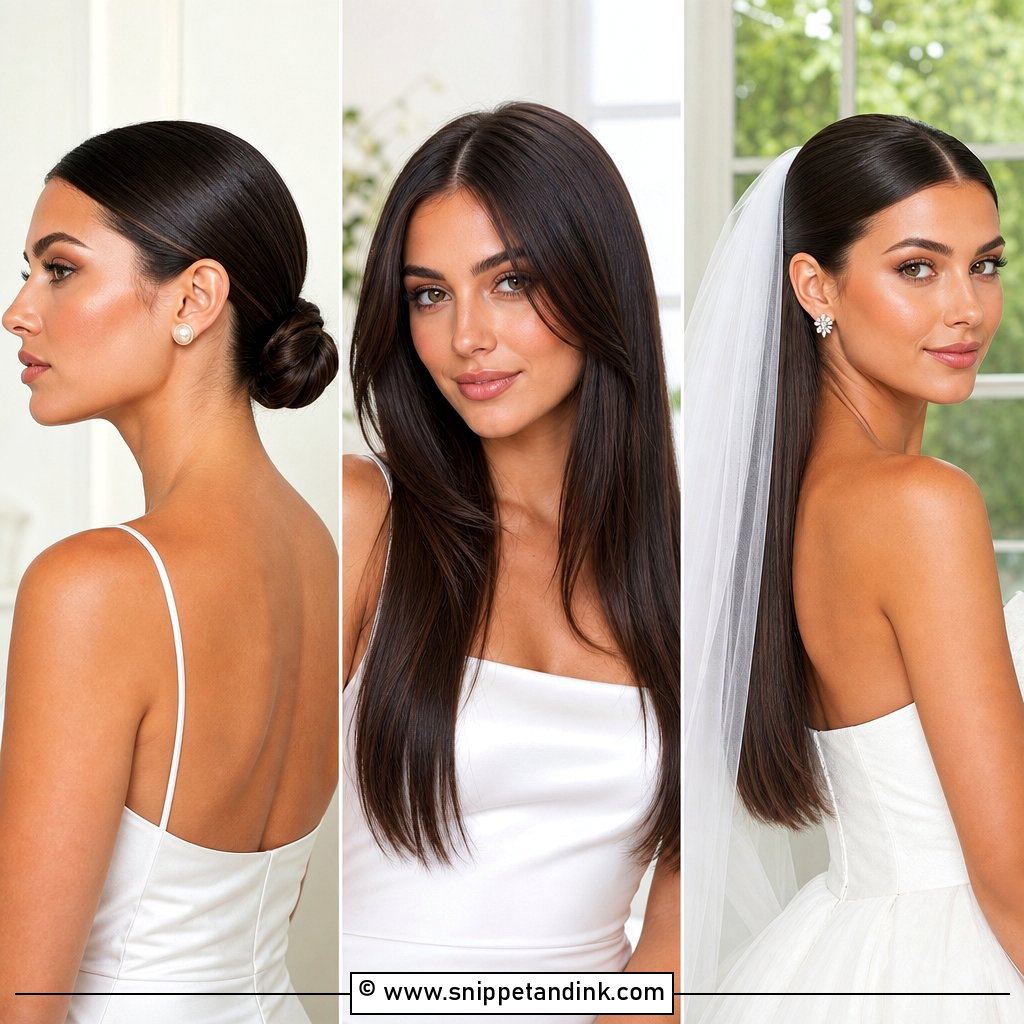
The low bun is where I start most straight-haired brides, because it holds a veil comb securely and doesn’t rely on any curl. I part first, smooth the hair back with a soft brush and a little cream, then build the bun from two or three smaller twists rather than one, which spreads the weight across more pins. Without some lift at the crown it can look scraped back, so I backcomb a small section there before smoothing over it. Pearl pins and crystal combs both sit well in the folds. If you want to stop thinking about your hair by noon, this is the safest bet.
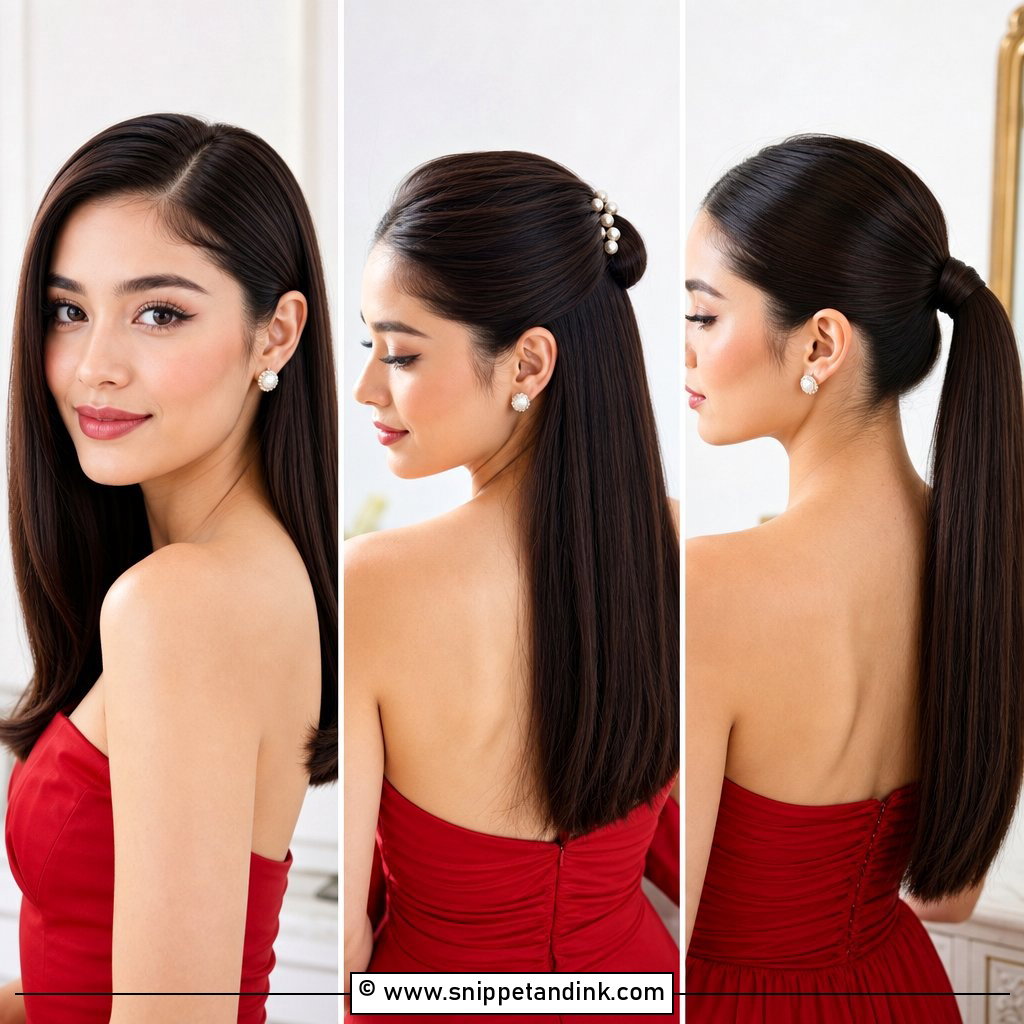
2. Straight Hair Wedding Half Up
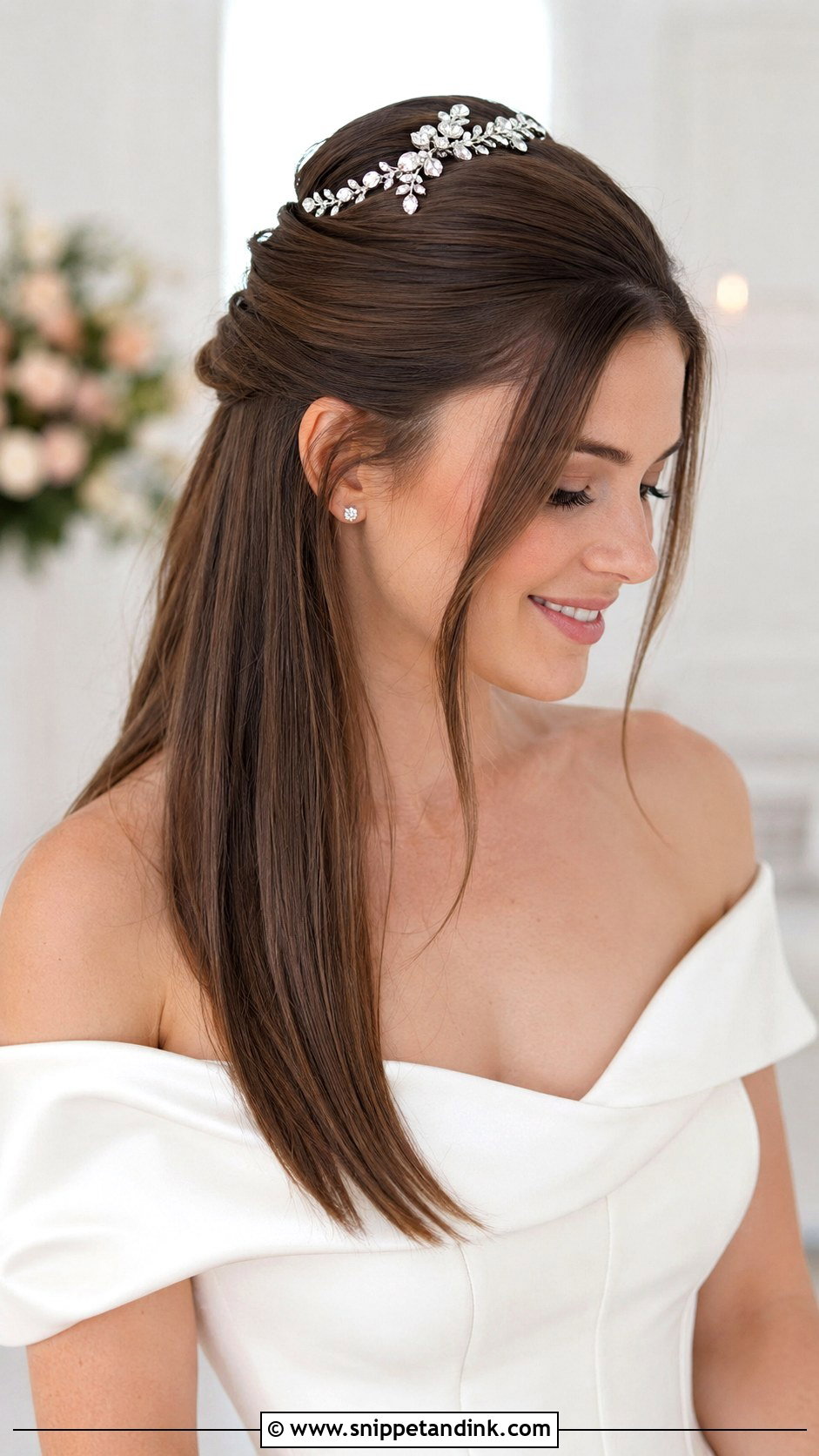
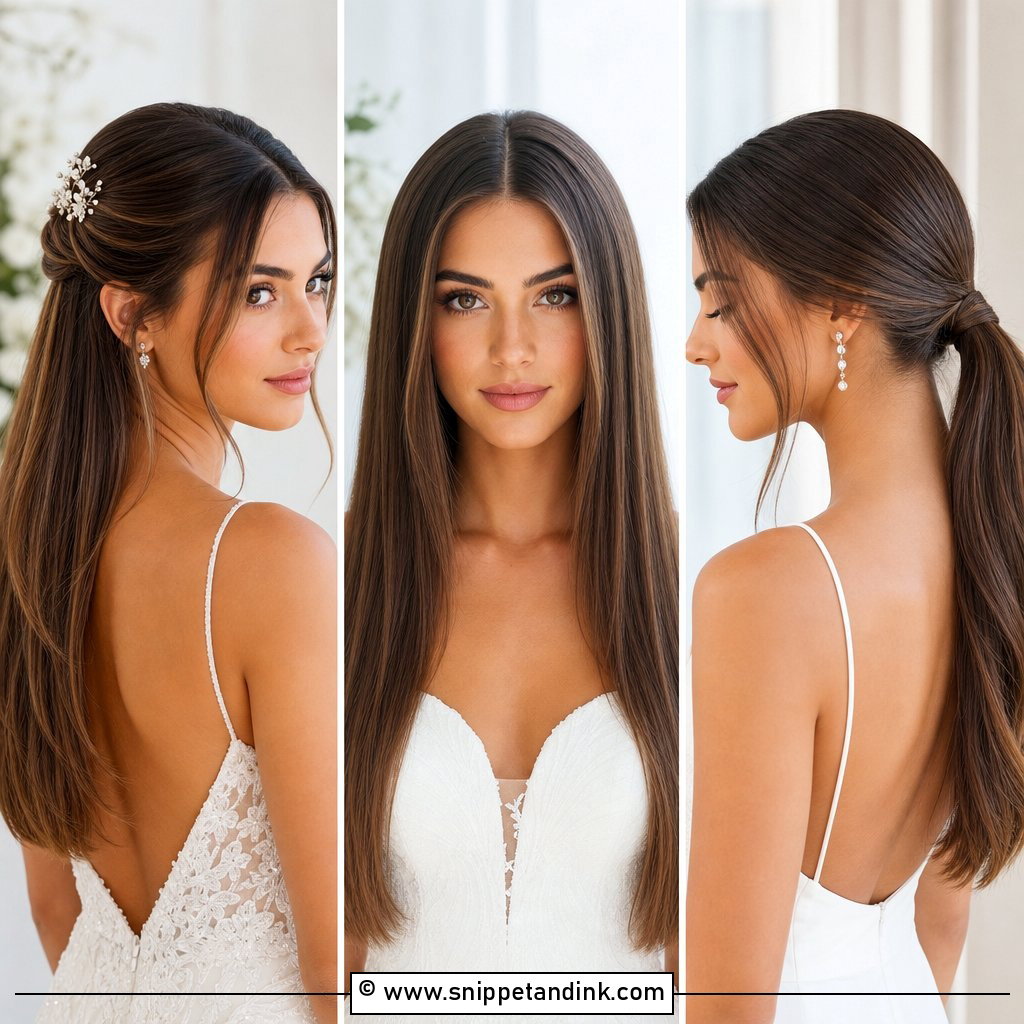
Half up keeps hair off your face during the vows and still shows off your length. The top section can be twisted, braided, pinned or gathered with a small comb. What I watch on straight hair is the join: if the gathered section sits bulky at the back of the crown it reads dated, so I keep it flatter and closer to the head. Freshly trimmed ends with a slight bevel give the lower length that glossy finish. Fine hair gains the most here, since the pinned section adds structure without costing any length.
3. Straight Hair Wedding Ponytail
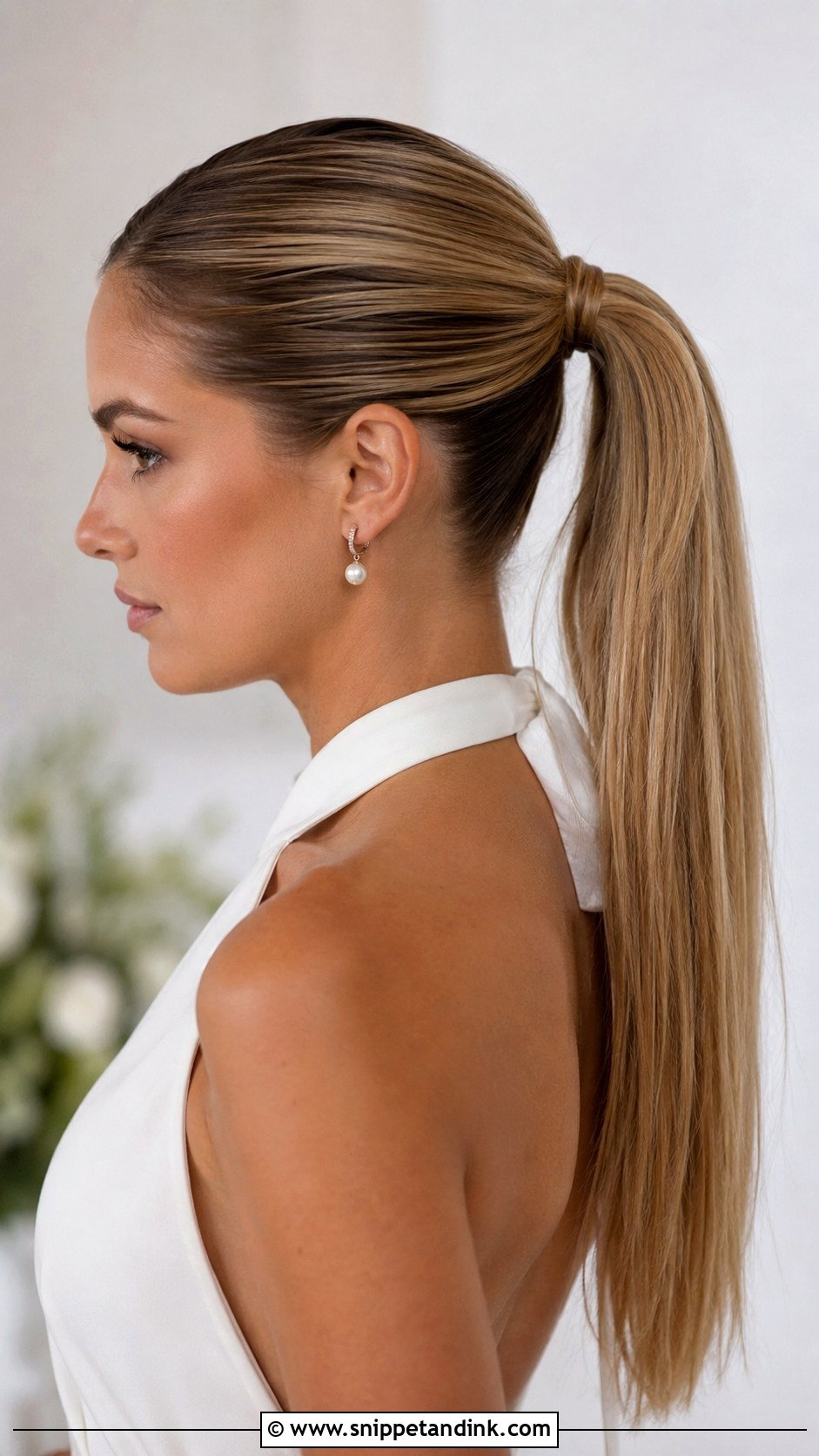
A ponytail puts your face, earrings and neckline in charge, which is why I suggest it to brides wearing minimalist gowns, halter necklines or high-neck dresses. Height changes the mood: at the nape it’s soft, at mid-head it reads sharper and more fashion-led. I always hide the elastic under a wrapped strand or a pearl cuff, because a visible band is the first thing a camera finds. Limp ends are the risk on straight hair, so the last few inches get a smoothing pass and a touch of shine at the very end of the session.
4. Straight Hair Wedding Chignon
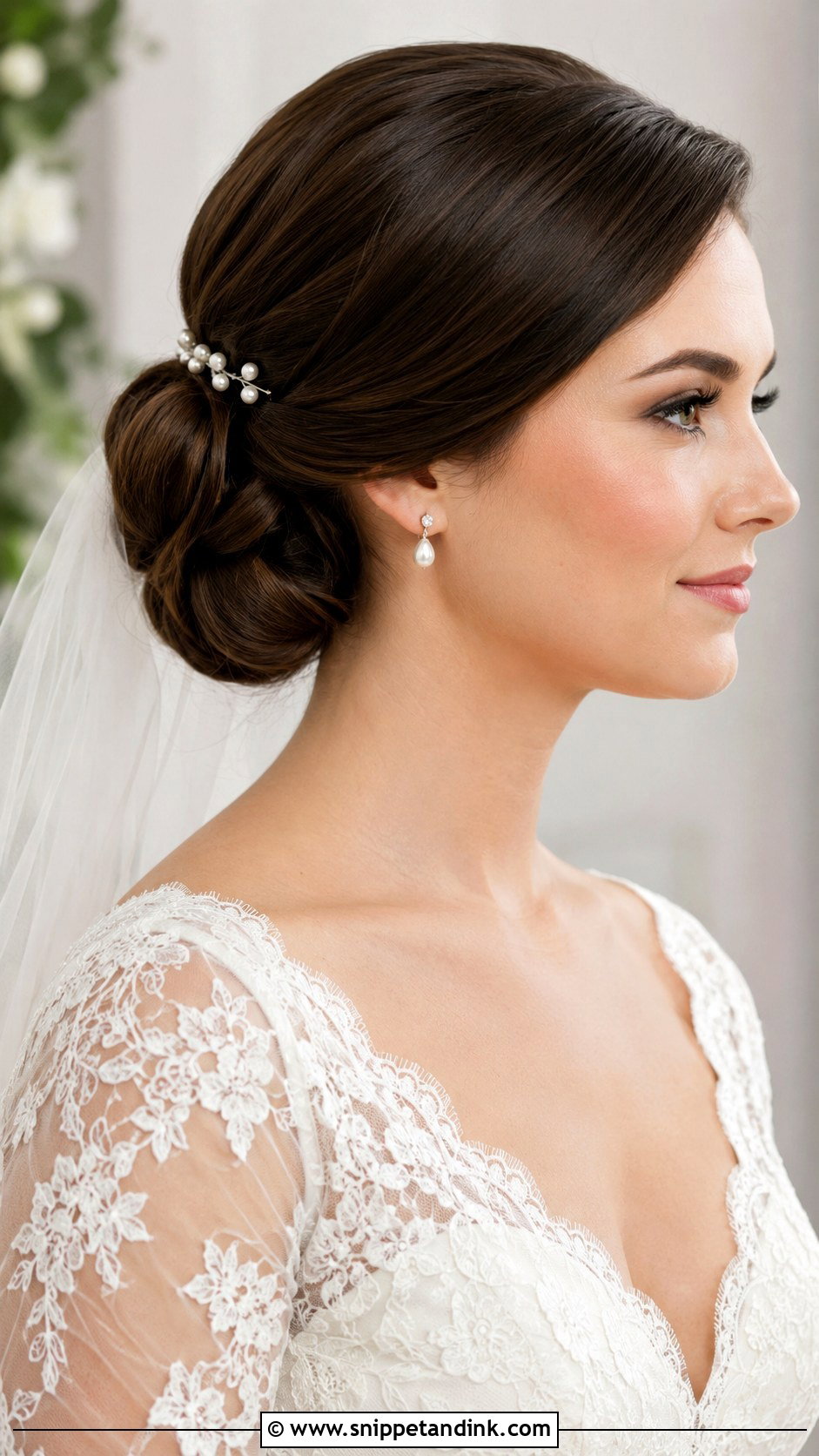
Straight hair turns a chignon from soft and lived-in to clean-folded and architectural. It sits low at the nape, either tight or slightly loosened around the face. Fine straight hair often lacks the bulk to make a chignon look full, so I plan for a small padding form or a few clip-in wefts and settle the question at the trial. Thick hair is the reverse. The volume is there, but so is the weight, and I pin it in sections so it doesn’t drop during the first dance. Lace gowns and cathedral veils sit easily with this shape.
5. Straight Hair Wedding French Twist
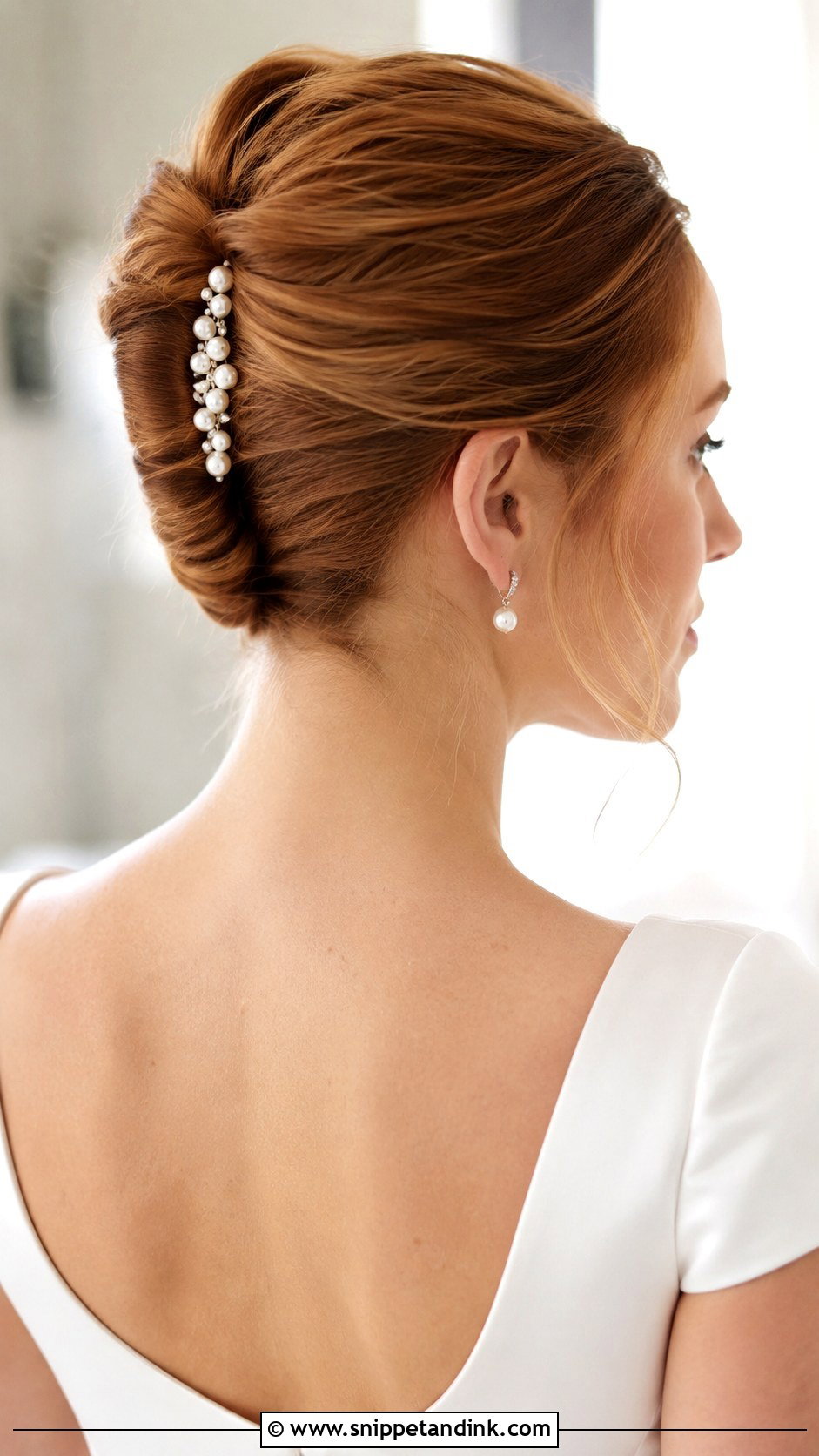
A French twist suits brides who want something vintage without looking costumed. Straight hair makes the vertical roll look sculpted, and lifting the hair off the neck is a real relief at a summer wedding or with a gown whose back detail you want seen. I build it on a line of crossed pins up the back of the head, so the twist wraps around that anchor instead of holding itself together. Leave it sleek for a formal ceremony or release two face-framing pieces. Since most of the interest sits at the back, ask your photographer for at least one profile shot.
6. Straight Hair Wedding Sleek Down
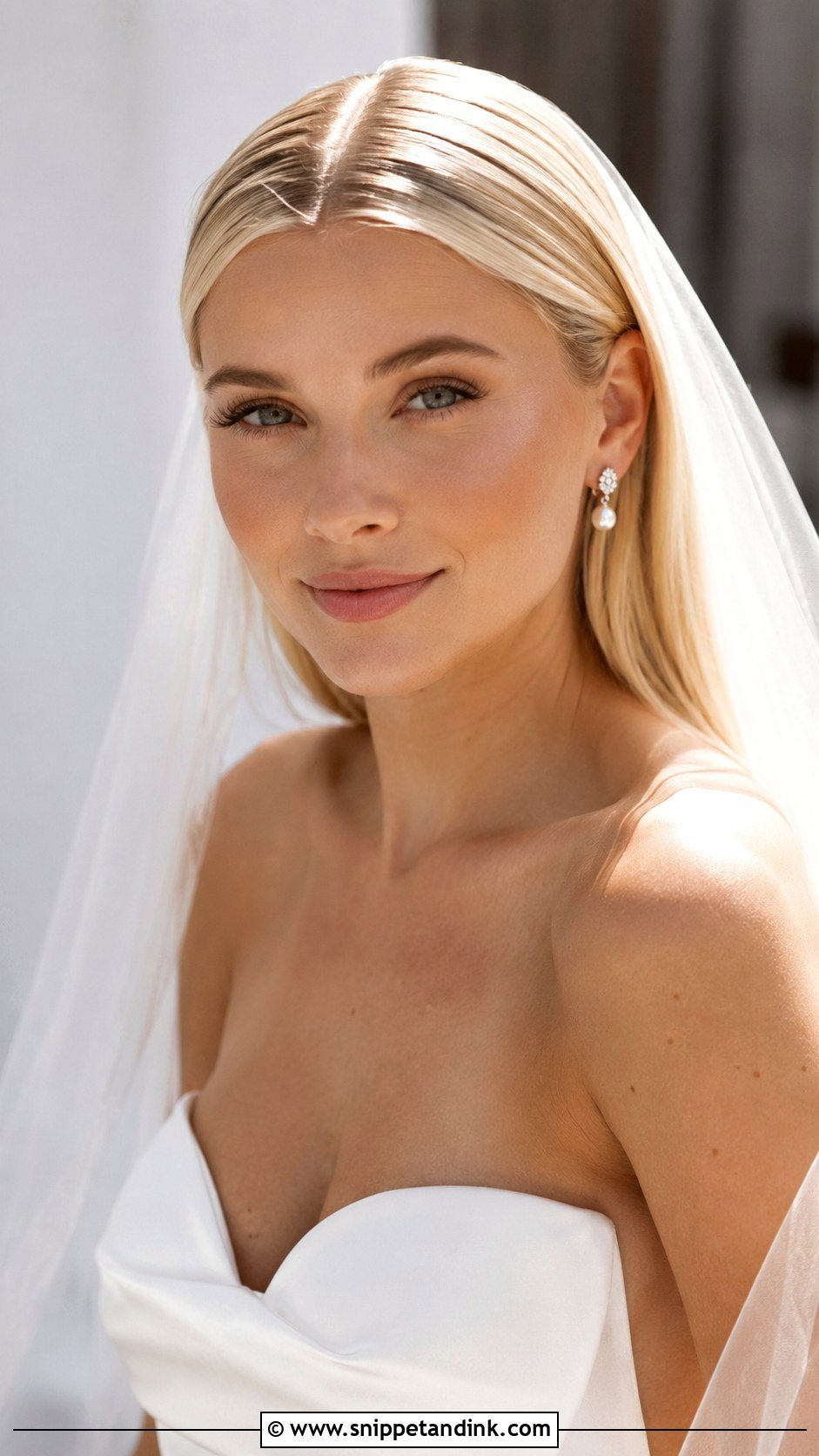
Wearing straight hair fully down is the style with the least margin for error. Every frizzy strand and every split end shows, so the prep matters more than the styling. I give it a smoothing blowout, follow with flat iron passes only where they’re needed, then finish with shine spray and a light-hold spray. With a modern dress, a long veil and simple makeup it looks exceptionally chic. Be realistic about weather, though: in high humidity, hair worn down swells and frizzes faster than any updo, so I’d keep a pinned backup in mind for an outdoor summer date.
7. Straight Hair Wedding Side Part
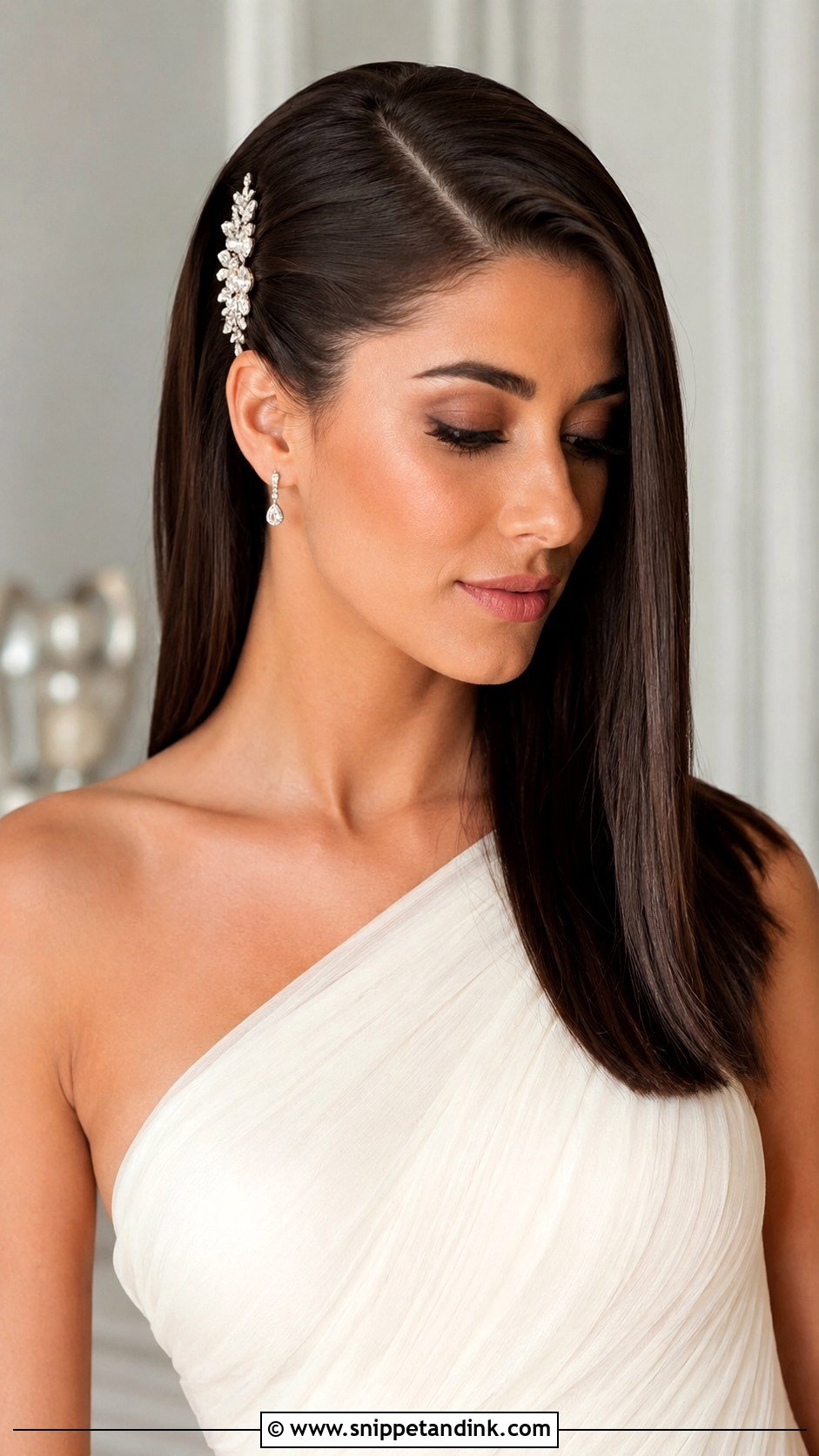
Moving the part deep to one side gives straight hair movement without a single curl. One side can be tucked behind the ear under a pearl clip, crystal barrette or small floral pin, while the other falls across the cheekbone. That heavier side tends to swing into your eyes when you look down to sign the register, so I pin it lightly at the temple underneath, where nobody will see the grip. Asymmetric and one-shoulder gowns pair naturally with the shape.
8. Straight Hair Wedding Center Part
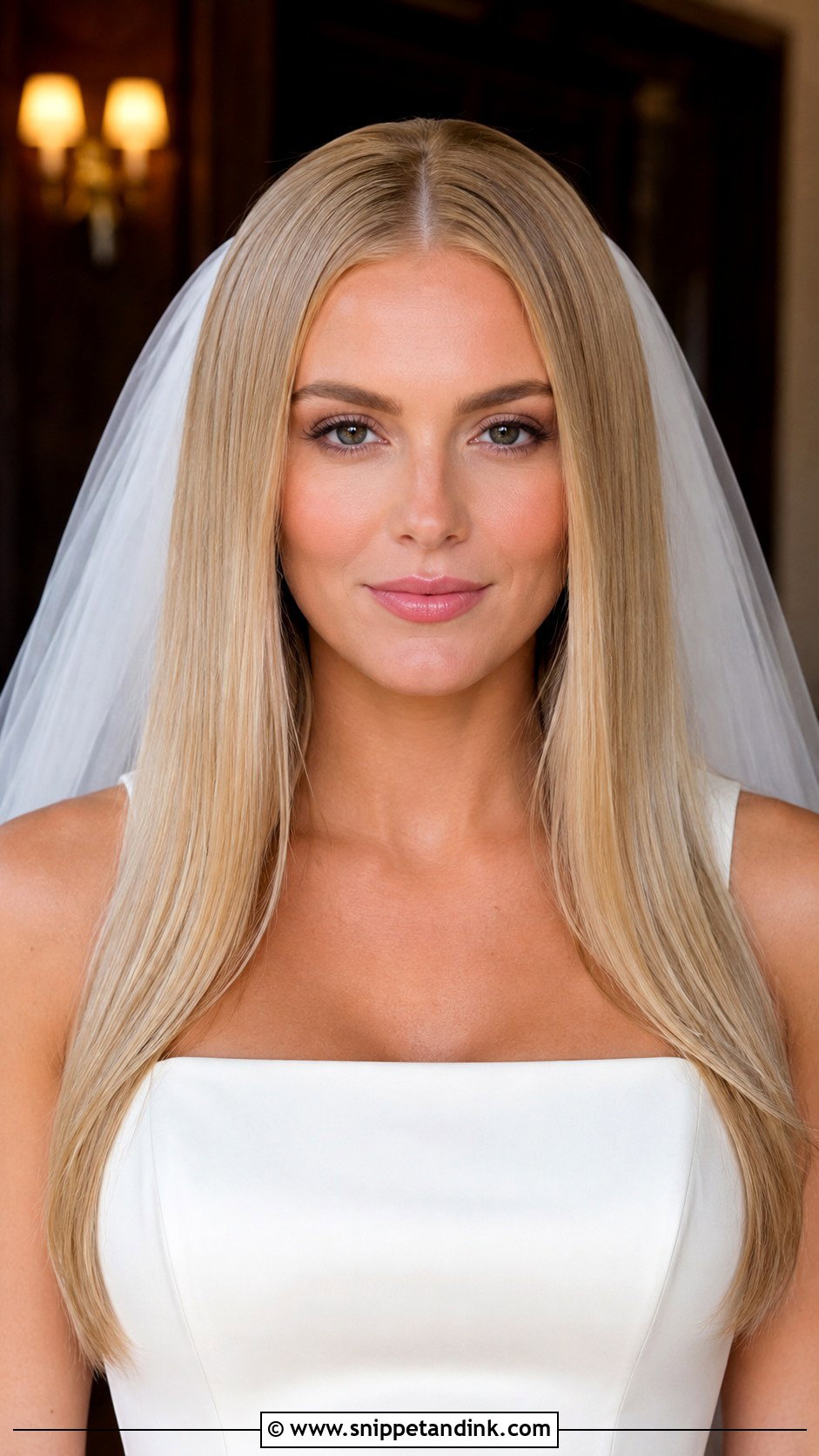
A center part is quietly dramatic and completely unforgiving of a wobbly line, so I draw it with the tail of a comb rather than by eye. Long hair with blunt ends and real shine is where it reads most editorial, with a veil set at the crown or slightly lower. The roots need to look smooth but not oily, and that’s harder than it sounds. If your scalp gets greasy by midday, wash the morning before the wedding rather than two days ahead. Brides who wear minimal makeup tend to suit this best.
9. Straight Hair Wedding High Bun
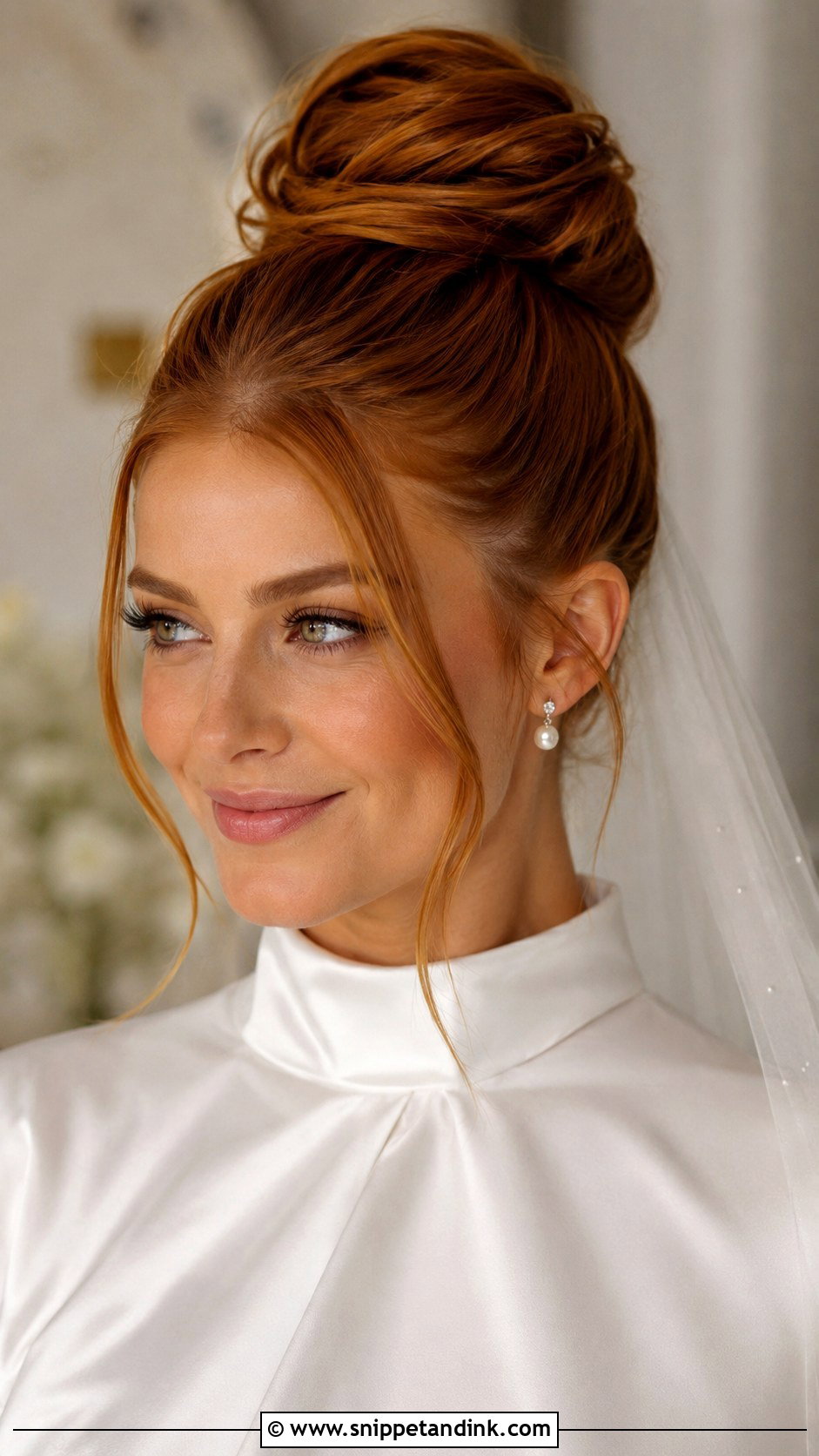
A high bun lifts the whole silhouette and shows off your neck and earrings. Straight hair lies so flat that the bun can look sculpted without any added texture. I like it with ball gowns and high necklines, with the veil tucked in beneath the bun. The trade-off is comfort. A tight high bun pulls on the scalp, and if you’re prone to tension headaches I’d lower it slightly or loosen the base. Small face-framing pieces at the temples soften it if the tight version feels severe.
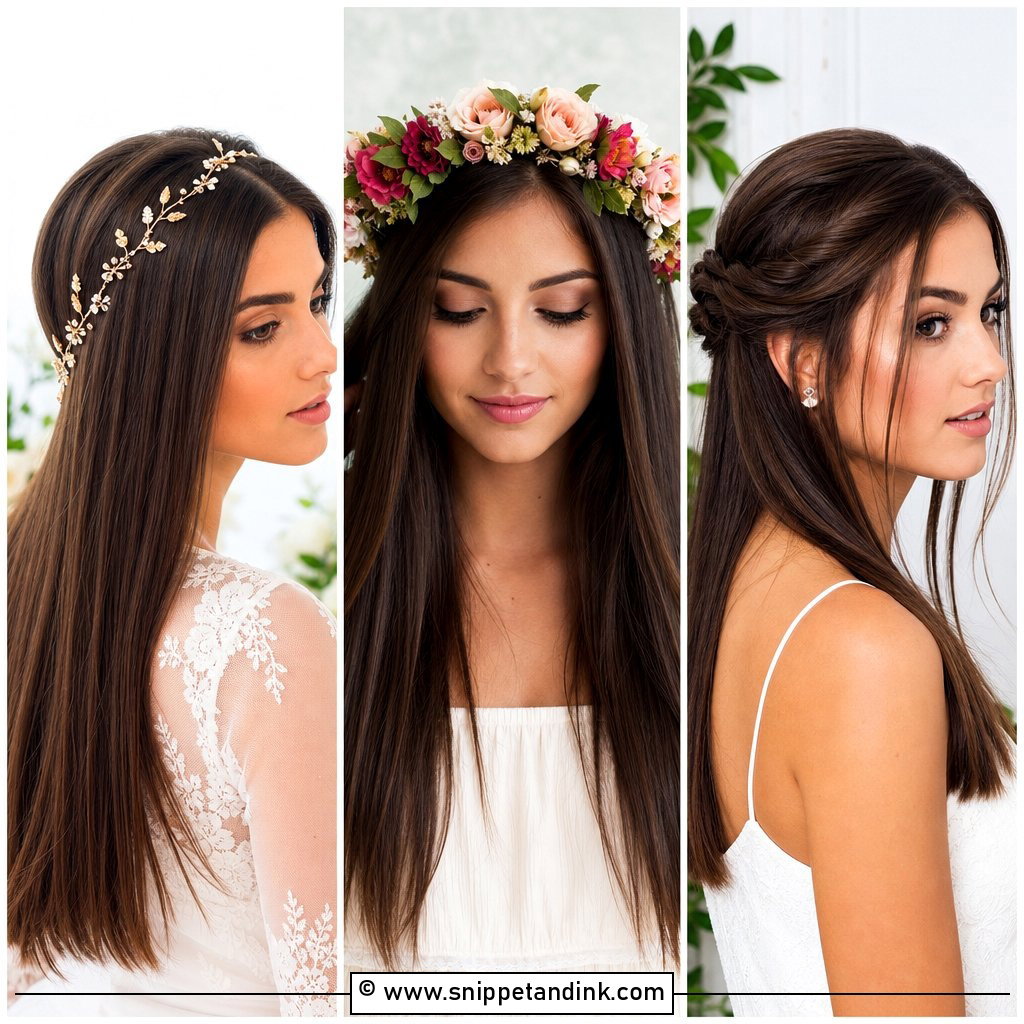
10. Straight Hair Wedding Braided Half Up
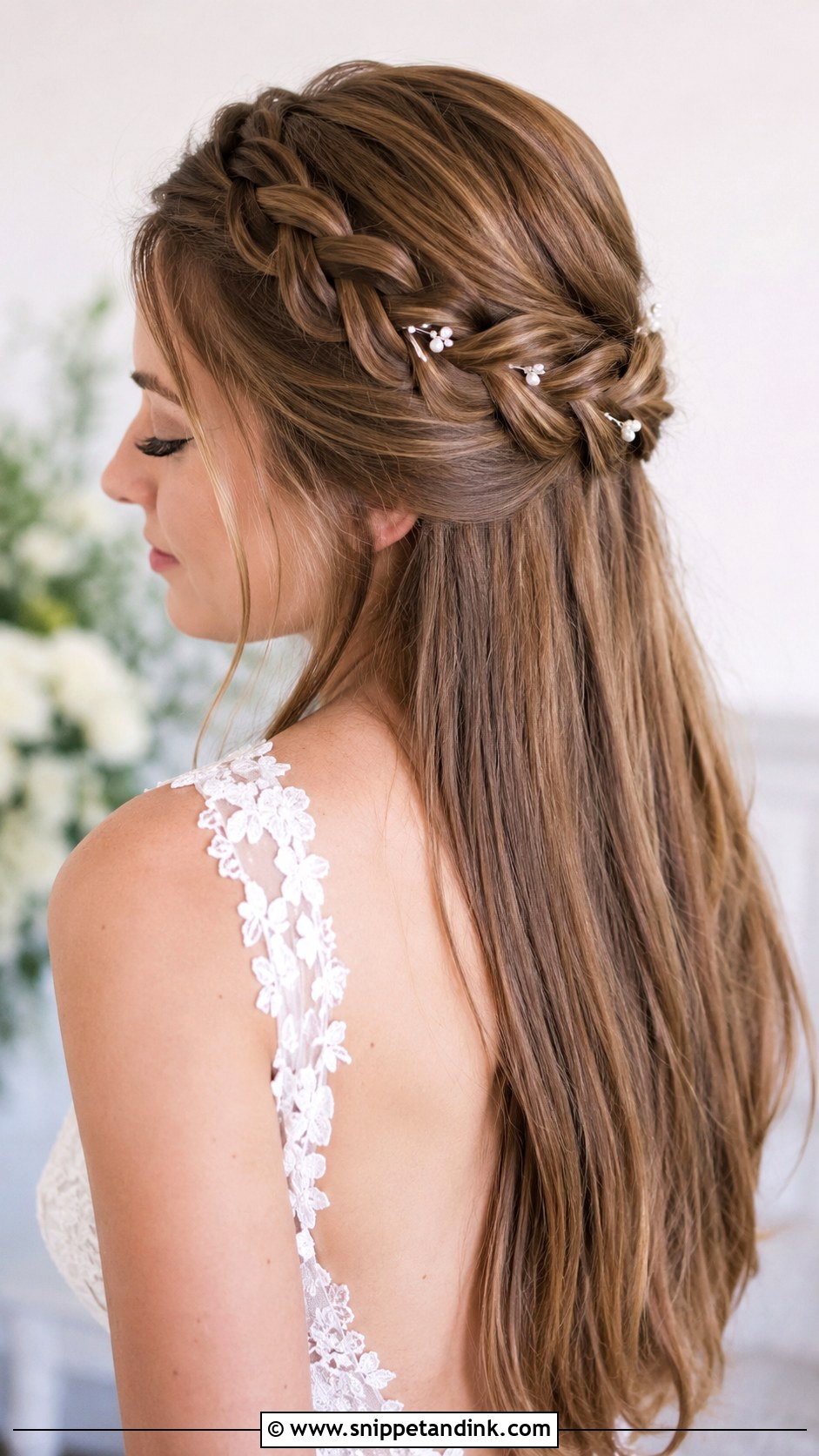
Straight hair shows a braid pattern clearly, which is why braided half-up styles look so neat on this texture. The braid can run across the crown, wrap into a small knot or frame one side before pinning at the back. I gently pull the edges of each loop outward so it doesn’t look tight, but on very silky hair I only do that after a mist of texture spray, or the loops slide straight back. Garden weddings and chapel ceremonies suit it, and a few pearl pins along the braid finish it.
11. Straight Hair Wedding Low Ponytail
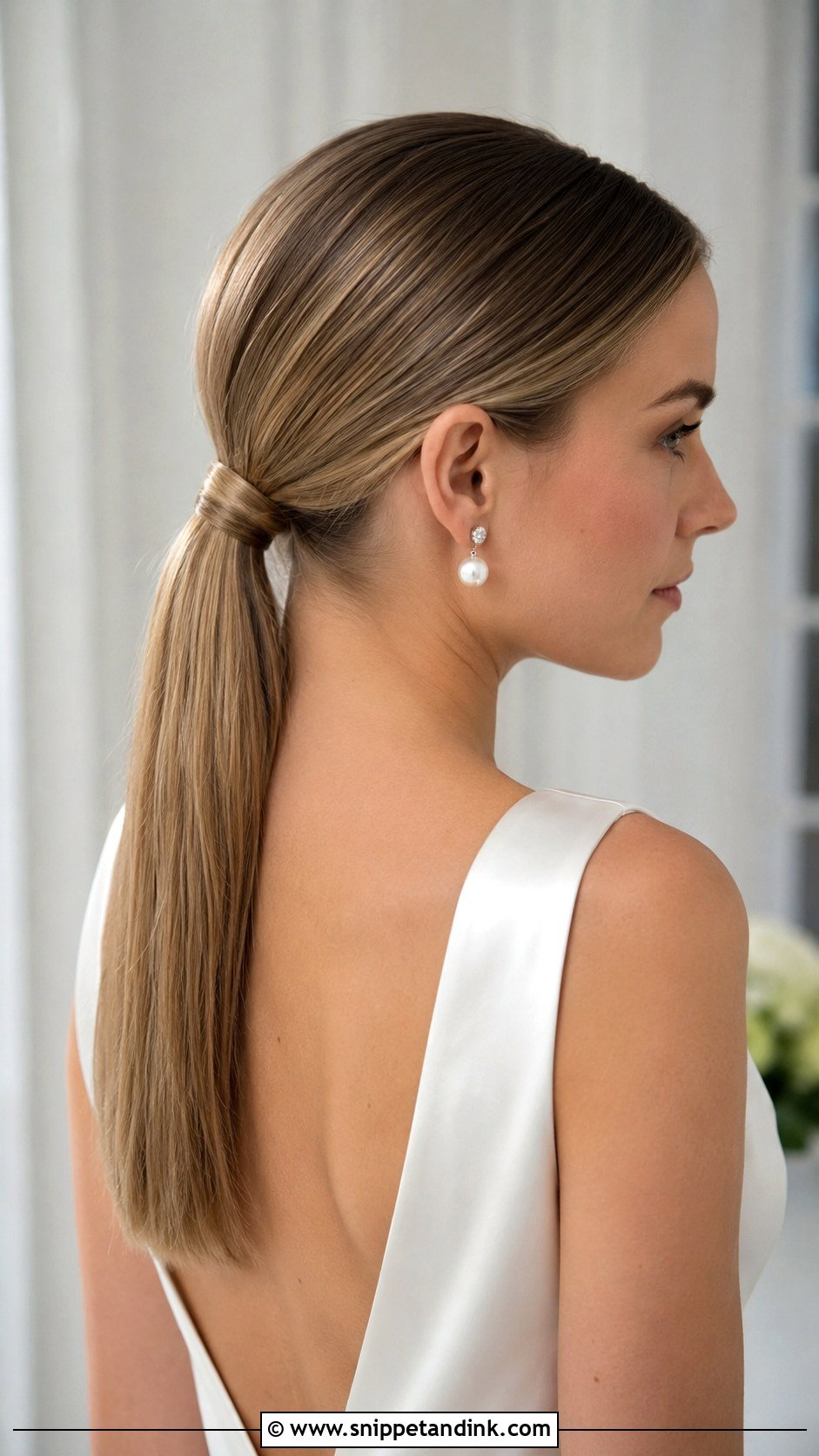
Think of the low ponytail as the bun’s more relaxed cousin. It sits at the nape with sleek roots and a hidden elastic, and it moves when you walk. I suggest it to brides who find buns too formal or who get headaches from heavy pinning. Veils, bows and statement earrings all sit comfortably with it. The one adjustment I make for straight hair is a second elastic hidden under the wrap, since a single band on slippery hair often slides down within a couple of hours.
12. Straight Hair Wedding With Veil
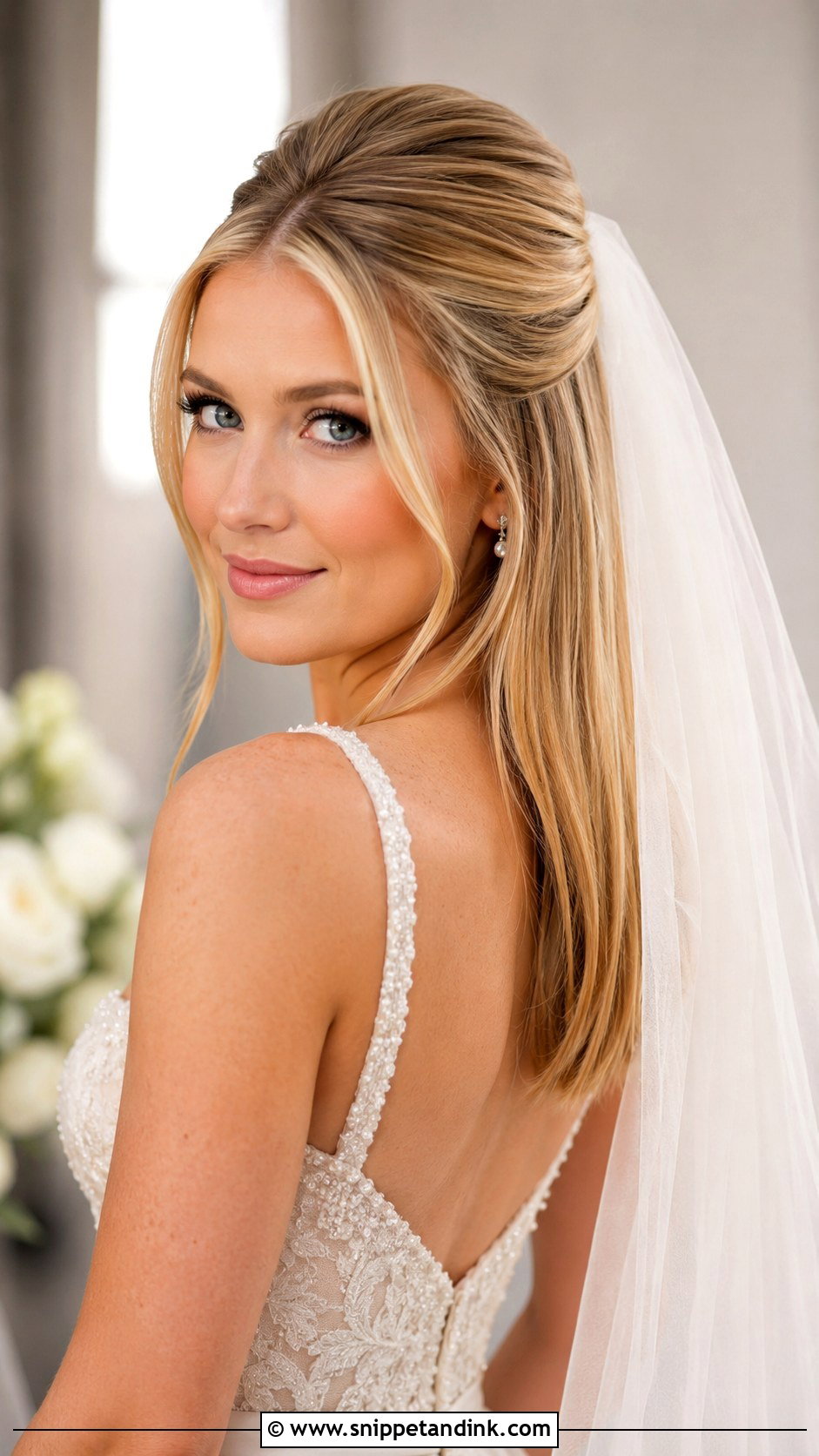
Your veil needs something to grip, and on straight hair that’s the whole challenge. A low bun, chignon, half-up style or low ponytail gives a comb a solid base. If you’re wearing your hair fully down, I build a hidden anchor first, a tiny braid or a row of crossed pins under the crown where the comb will sit, and the comb slides into that rather than into loose hair. Placement shapes the look too: a crown position feels traditional, a lower one softer and more modern. Bring your actual veil to the trial, because a cathedral length pulls very differently from a short blusher.
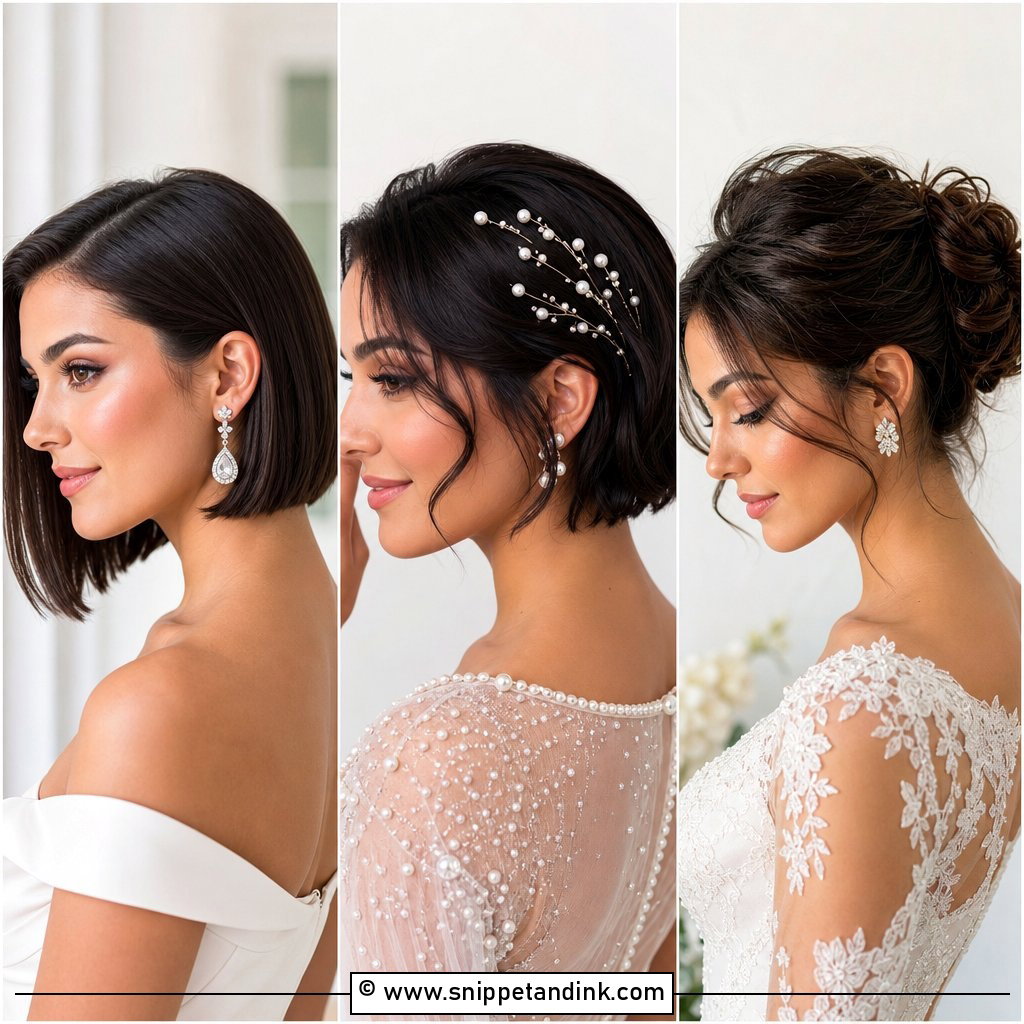
13. Straight Hair Wedding With Pearl Pins
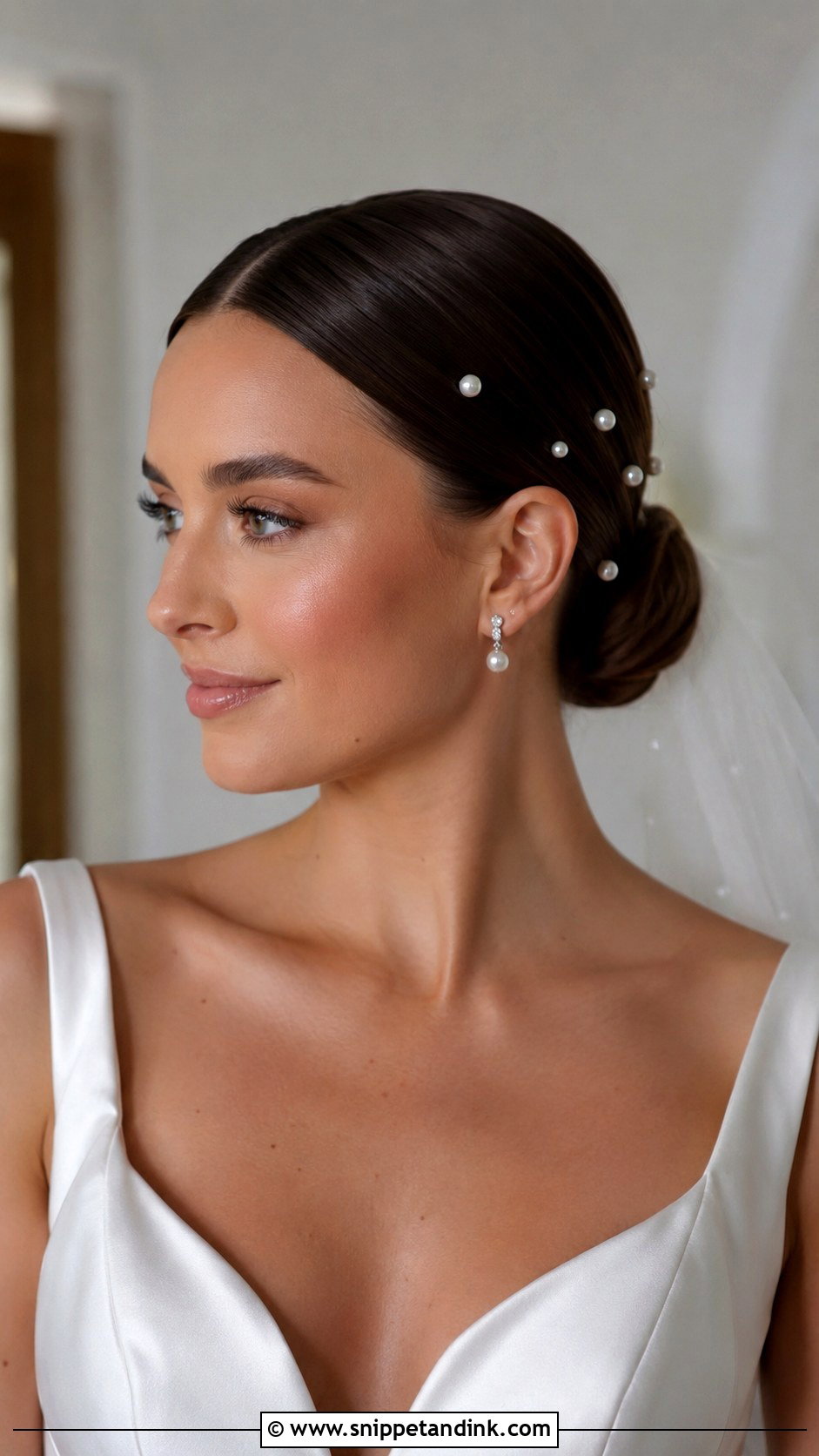
Pearl pins show up clearly against smooth hair, so a few go a long way. I scatter them through a low bun, run them along a half-up twist or line them above one ear. Fewer, well-spaced pins look more refined than a crowded cluster. On straight hair, push each pin in at an angle against the direction of the hair so it bites; pushed straight down, it slowly works its way out over the evening. Satin gowns, lace and simple veils all pair with them.
14. Straight Hair Wedding Bob
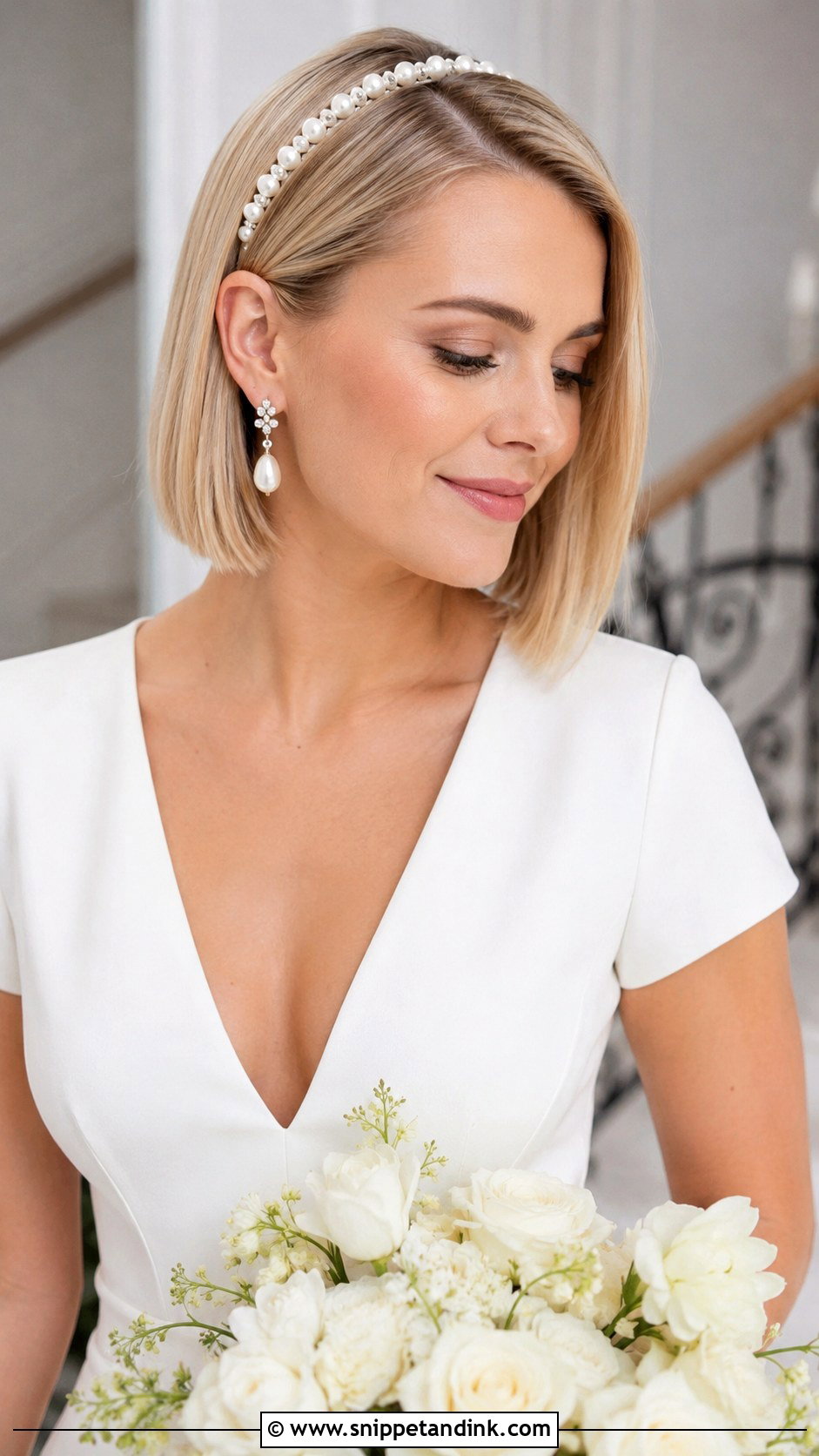
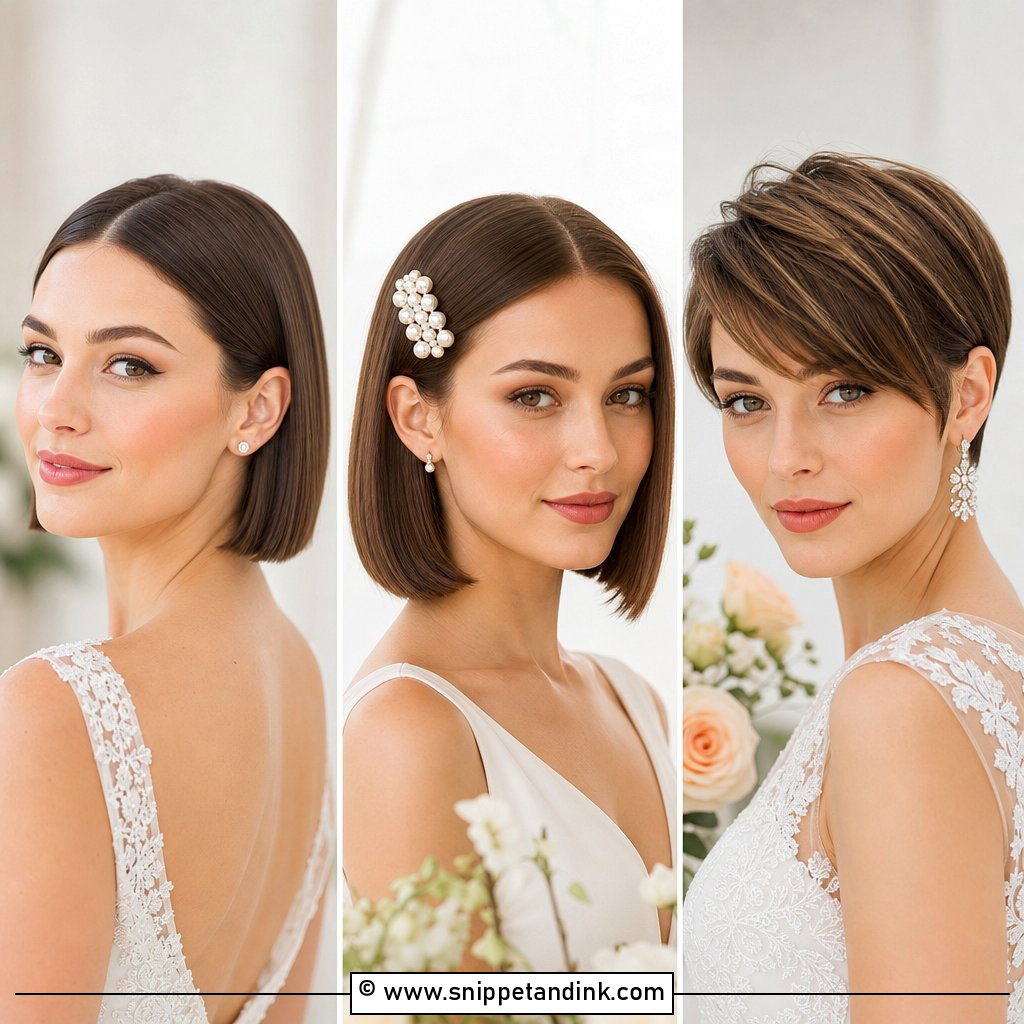
Short hair doesn’t need to grow out for the wedding. A polished straight hair wedding bob can be worn blunt, tucked behind the ears or with a deep side part, and it pairs easily with a veil, pearl headband or crystal clip. The ends make or break it, so book the trim about two weeks out to let the line settle. Fine hair needs root lift; thick hair needs smoothing cream and a careful iron. Even on a bob, a veil comb needs a small pinned base, which I set behind the crown where the hair is longest.
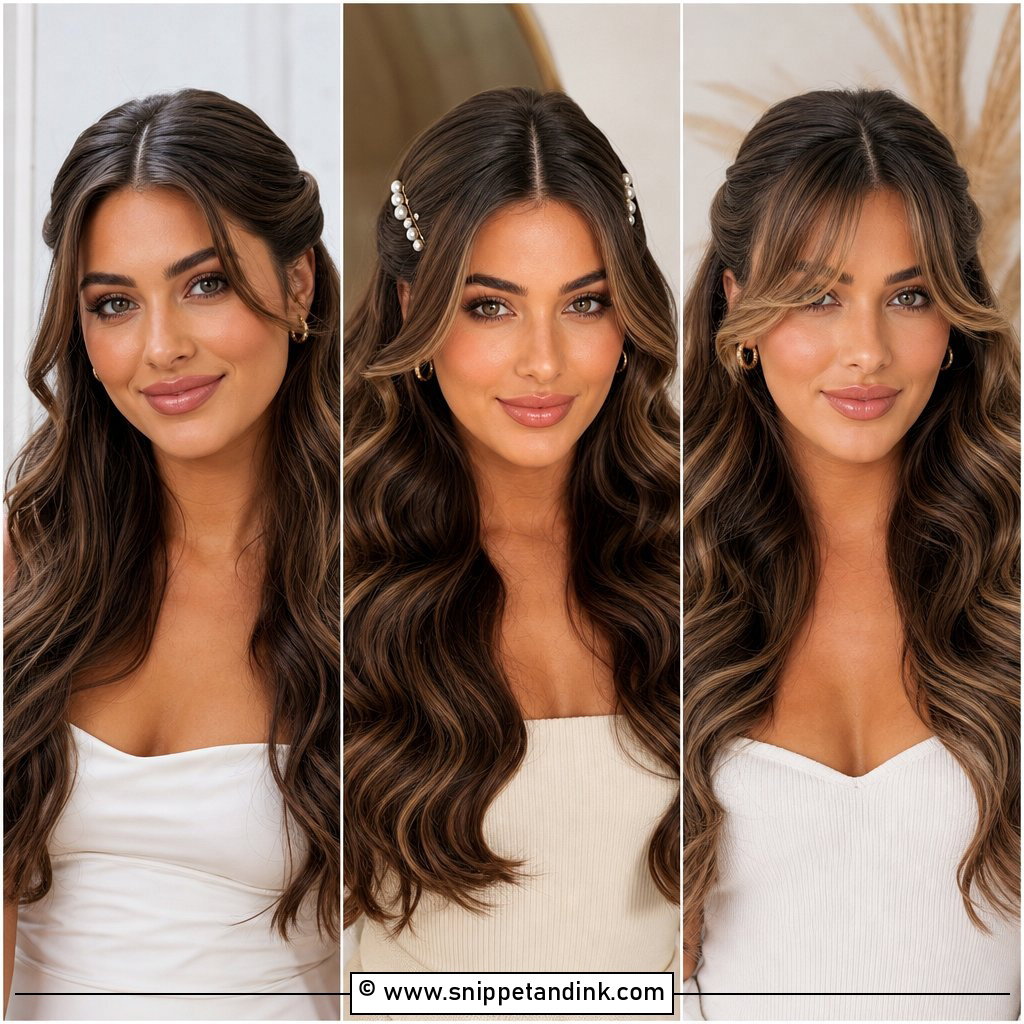
15. Straight Hair Wedding Long Layers
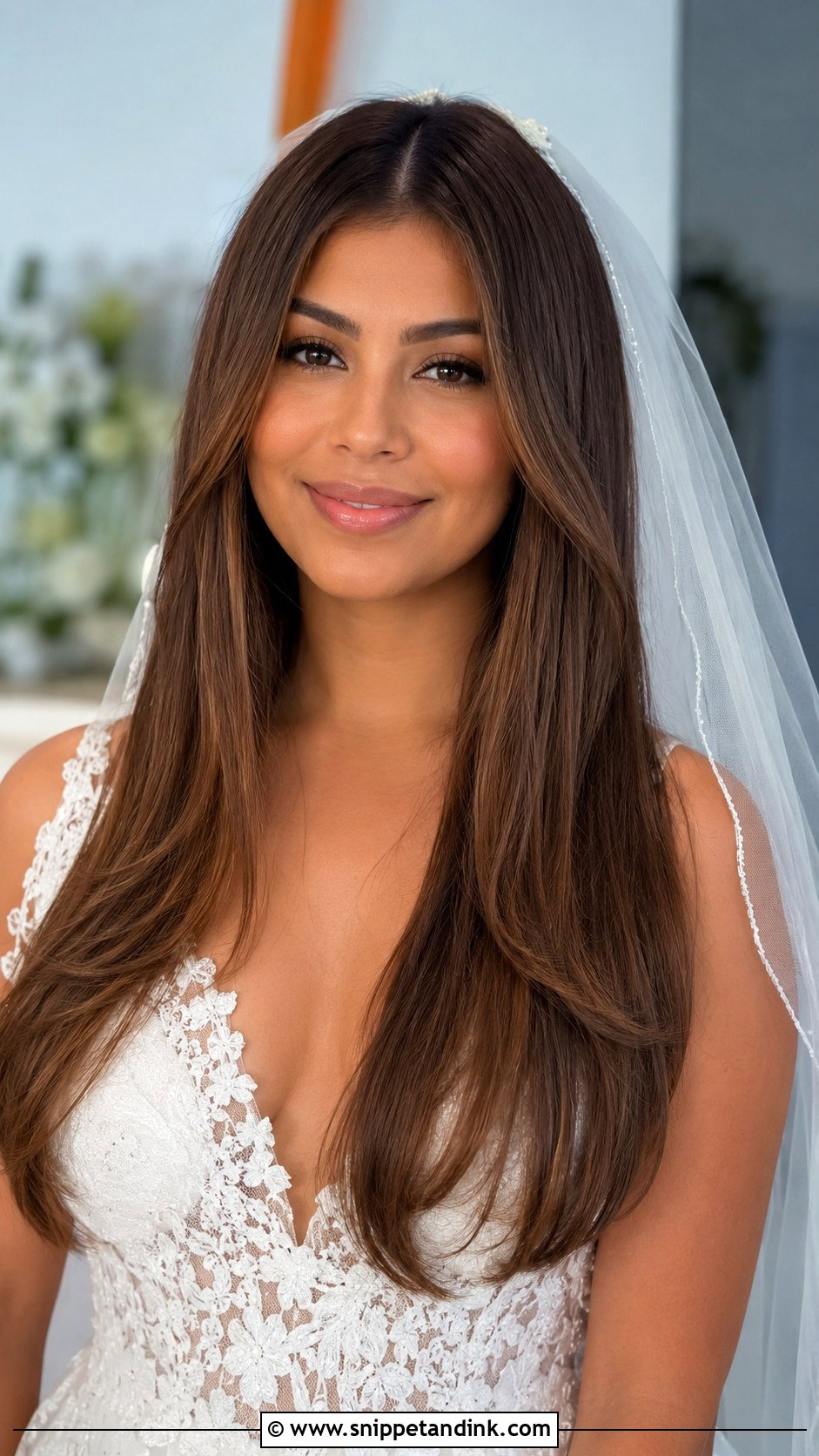
Long layers stop straight hair from hanging like a curtain. The shorter pieces let the ends fall with some movement, and they frame the face well with a center part and a veil set behind the crown. If you want a little shape, I bend the ends with a large iron rather than curling them, which lasts longer on hair that won’t keep a curl. A clean trim and, for frizz-prone hair, a gloss treatment a week or two ahead make a visible difference. You keep the length you’ve grown and gain a finished edge.
Testing a Straight Style Under a Veil, a Flash and a Full Day of Wear
A trial is where straight hair either proves itself or shows its weak points, and those weak points are different from a curly bride’s. Here’s what I put it through.
- Wear the veil, or one of similar weight. A long veil drags on its comb, and silky hair is the first to give way.
- Take a phone photo with the flash on. Shine that looks glossy in a mirror can read as greasy under flash, which tells me to use less serum.
- Keep the style in for the rest of the day and check the part, the ends and the base of any bun at dinner time. Note exactly where it slipped.
- Hug someone and sit back in a car seat. Both flatten hair worn down and loosen pins at the nape.
After the trial I adjust the plan: more texture spray, a different pin angle, a lower placement, an extra hidden elastic. By the wedding morning, nothing in the routine should be new to either of us.
Shine, Structure and a Veil Comb That Stays Put
Straight bridal hair always needs to look chosen rather than left. A low bun reads classic, a polished ponytail reads sharp, and sleek hair worn down reads minimal. Half-up shapes, pearl pins, veils and soft face-framing pieces add detail without depending on curls that might not last. Bring photos to your trial, wear a top with a neckline close to your dress, and test every accessory together. Give straight hair shine, structure and a firm anchor, and it will look exactly as planned when you reach the aisle.
You'll Like These Ideas:


Leave a Reply