
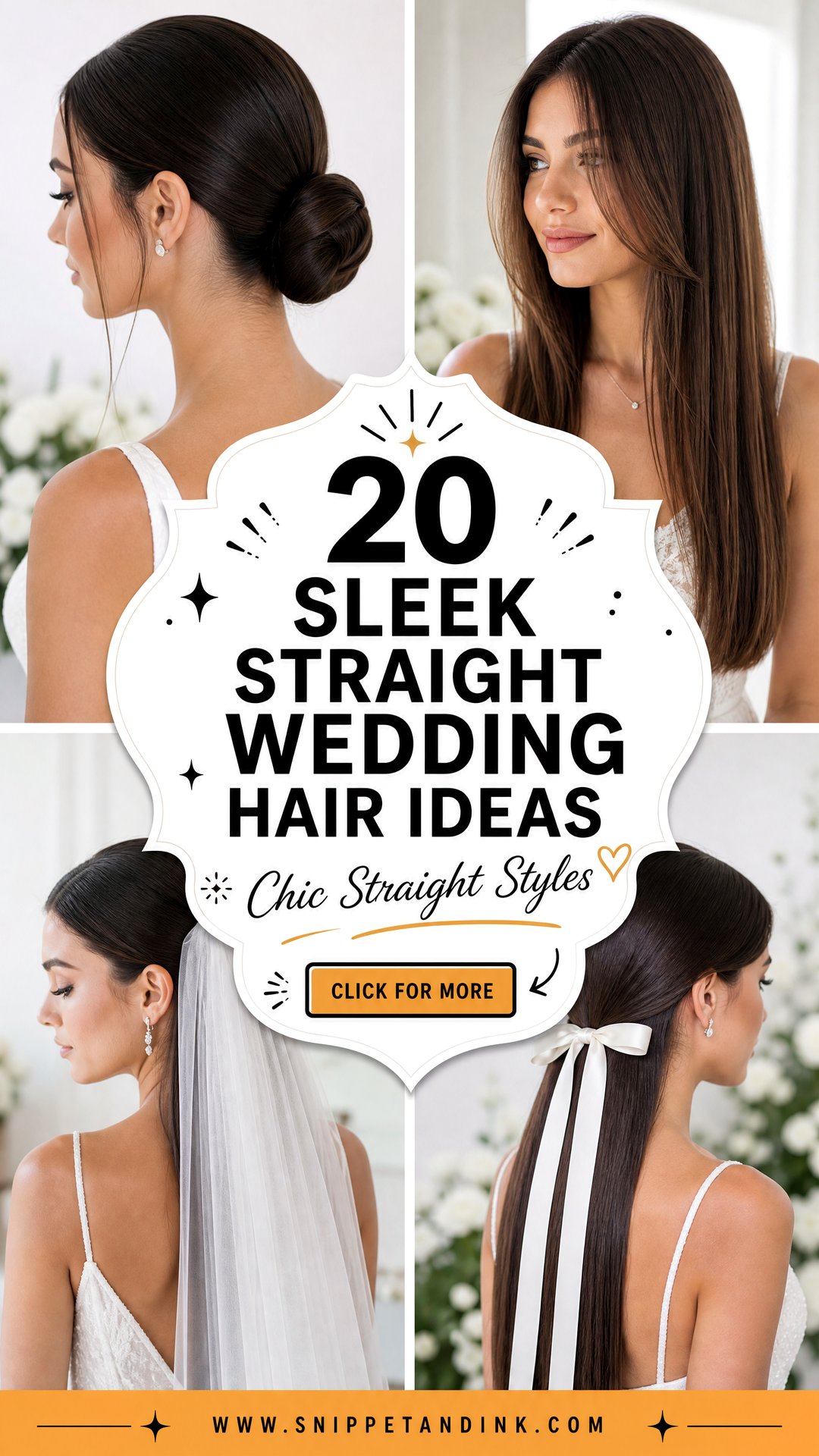
Some brides spend years fighting curls that drop by lunchtime. If that’s you, straight hair is not the compromise it sounds like. Worn smooth and glossy, it looks modern, keeps the attention on the dress and doesn’t fight what your hair naturally wants to do. It also covers more ground than “hair down”: low buns, glassy ponytails, tucked bobs, pearl details and soft face-framing pieces all start from the same flat-ironed base. I’ve included notes on how each style is built and what tends to go wrong, because straight hair shows every flaw in close-up photos.
Why Straight Hair Worn Down Is Harder to Hold Than an Updo
Brides are often surprised when I say hair down takes more planning than a bun. An updo is held by pins. Straight hair worn loose has nothing holding it except the products and the condition of the hair, and over a long day several things work against it.
Oil at the roots
By early evening, straight hair starts to look flat at the crown. I spray a little dry shampoo into the roots before styling, not after, so it absorbs oil as the day goes on.
Humidity
Moisture in the air swells the hair shaft and brings back frizz or a natural wave. Heat protectant, a smoothing cream and a humidity-resistant finishing spray are the minimum outdoors.
Static under a veil
Tulle rubbing against fine straight hair creates static, and strands stick to the veil. A tiny amount of hand cream smoothed over the palms and then over the hair calms it quickly.
Heat on your skin
In summer, loose hair sticks to the neck and back. If your ceremony is outside in the heat, I’d suggest half up or a ponytail you can switch to after the ceremony.
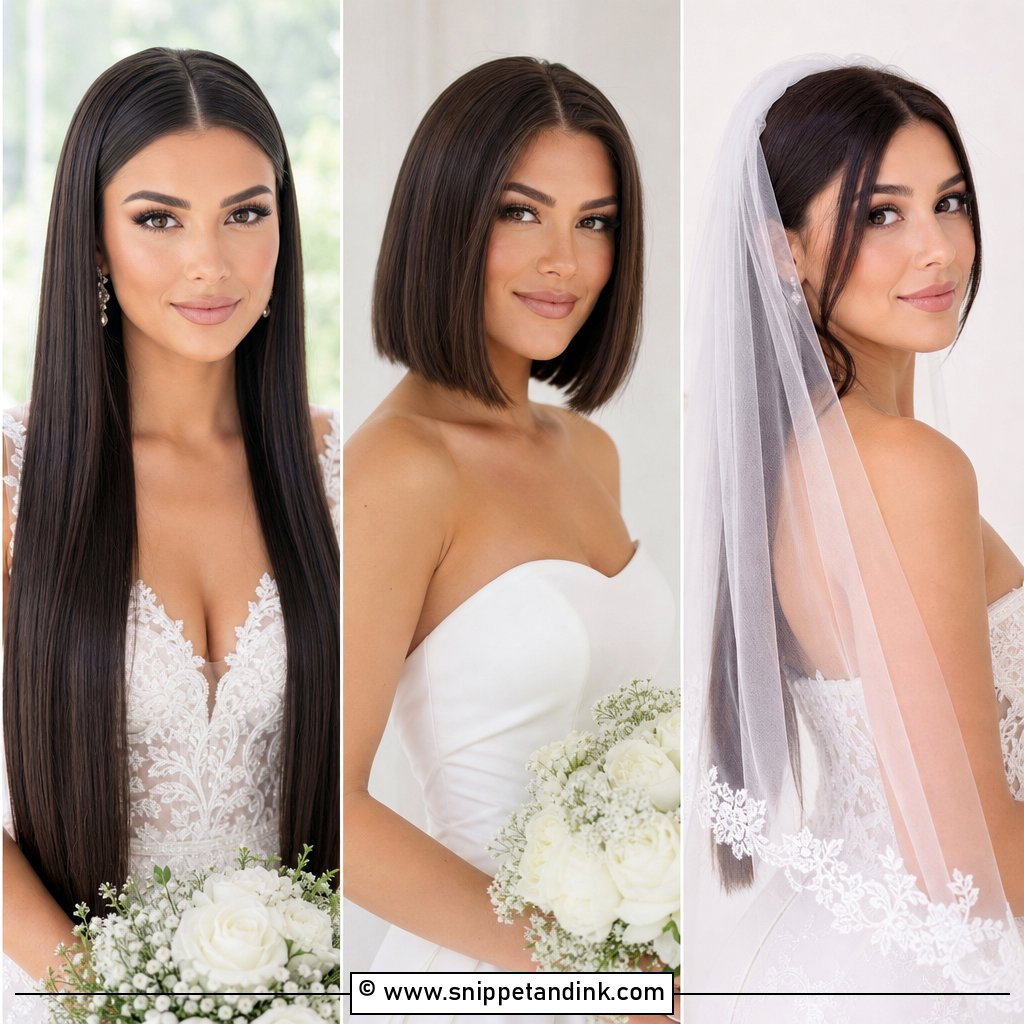
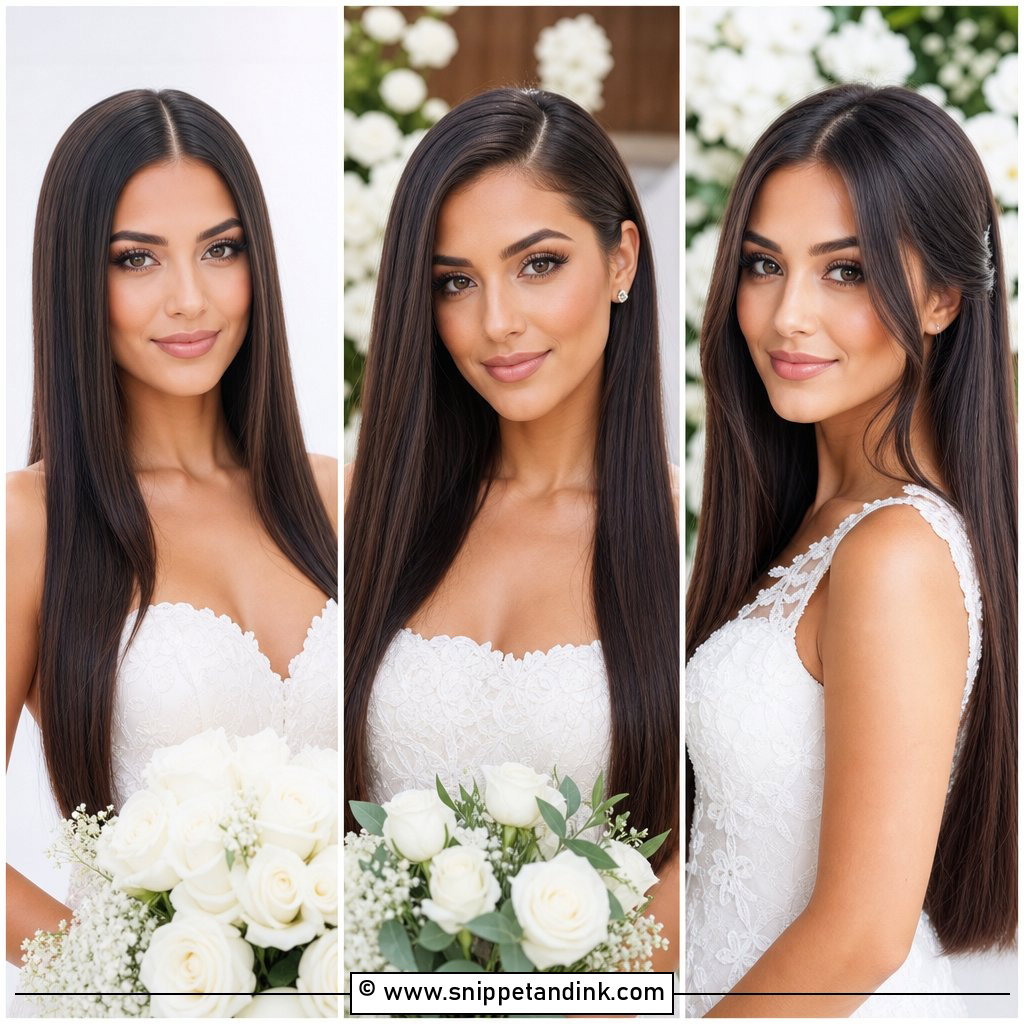
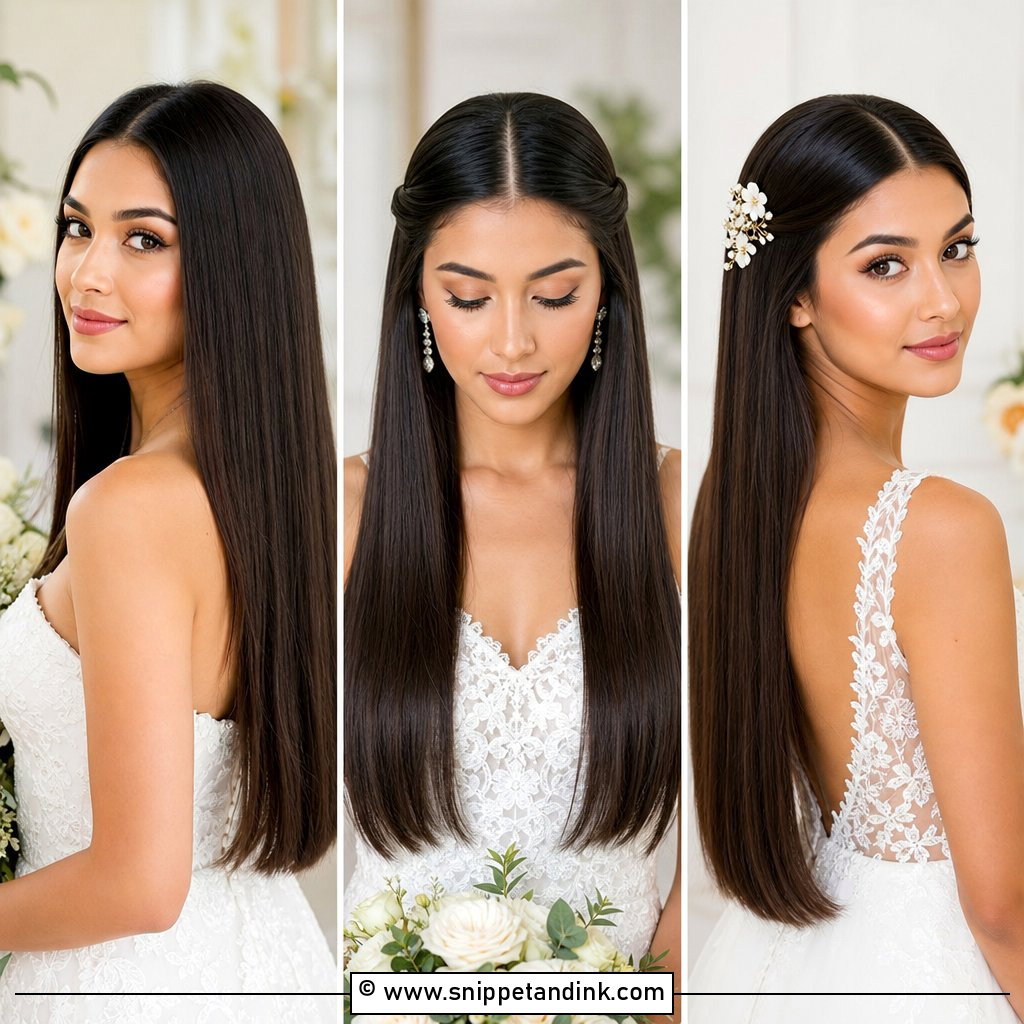
1. Sleek Straight Hair Down With Middle Part
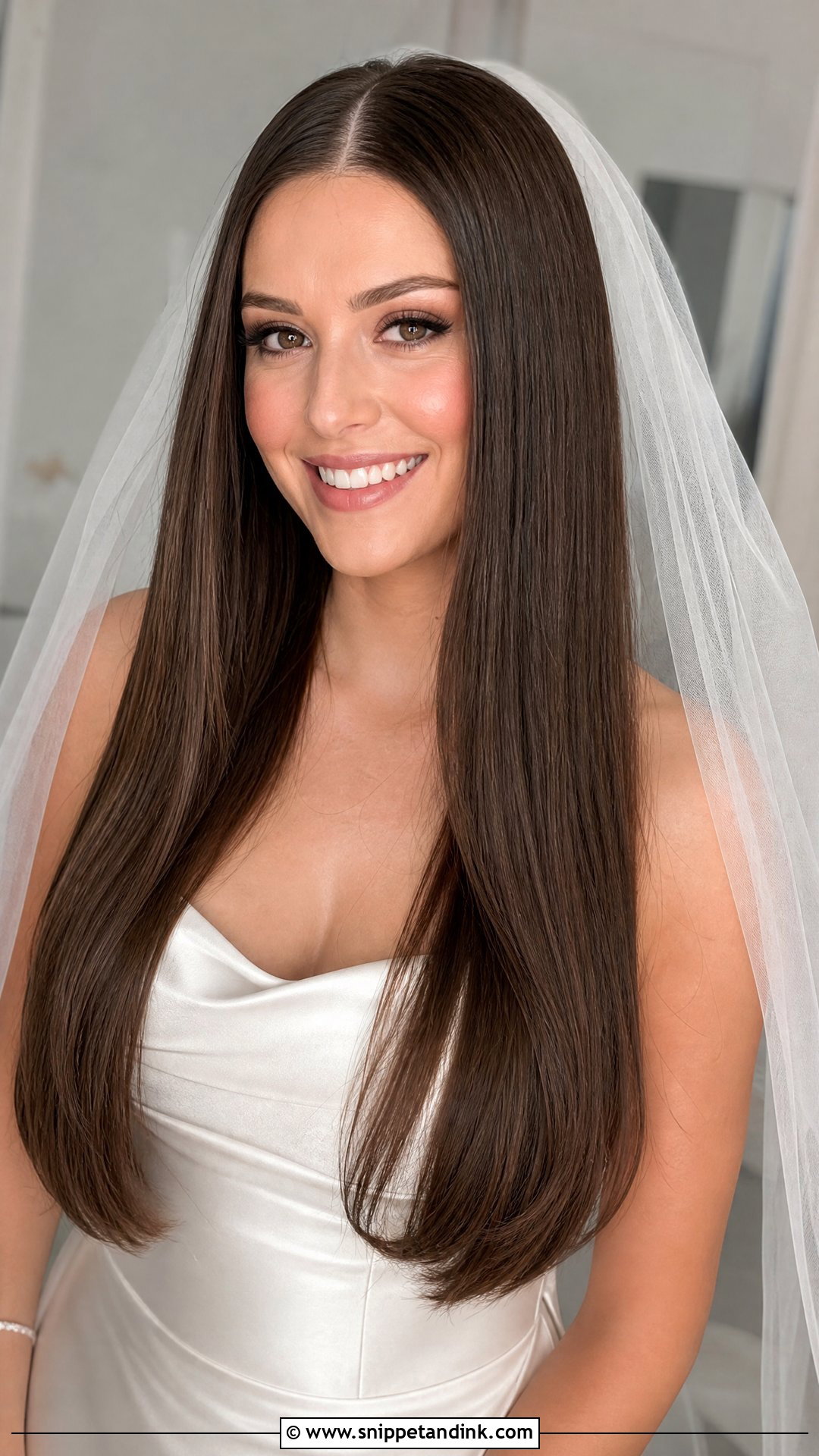
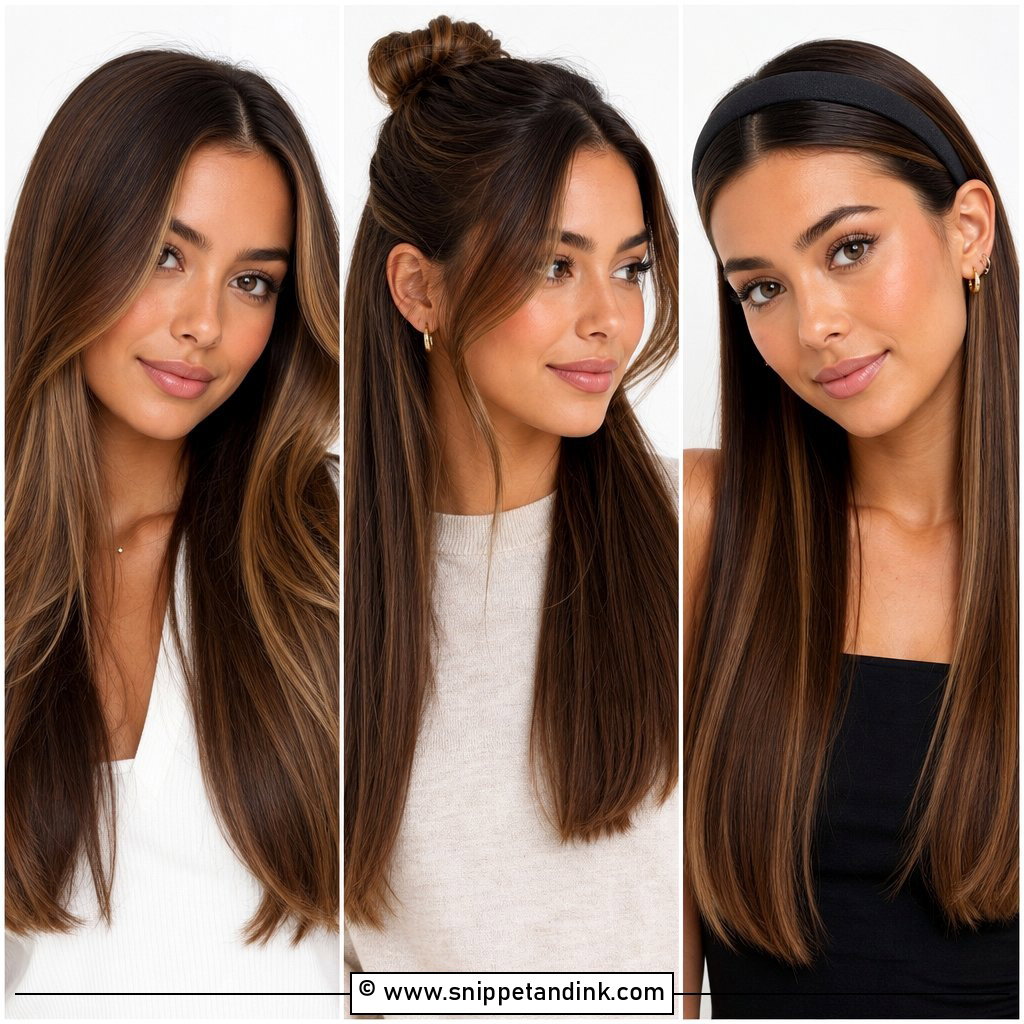
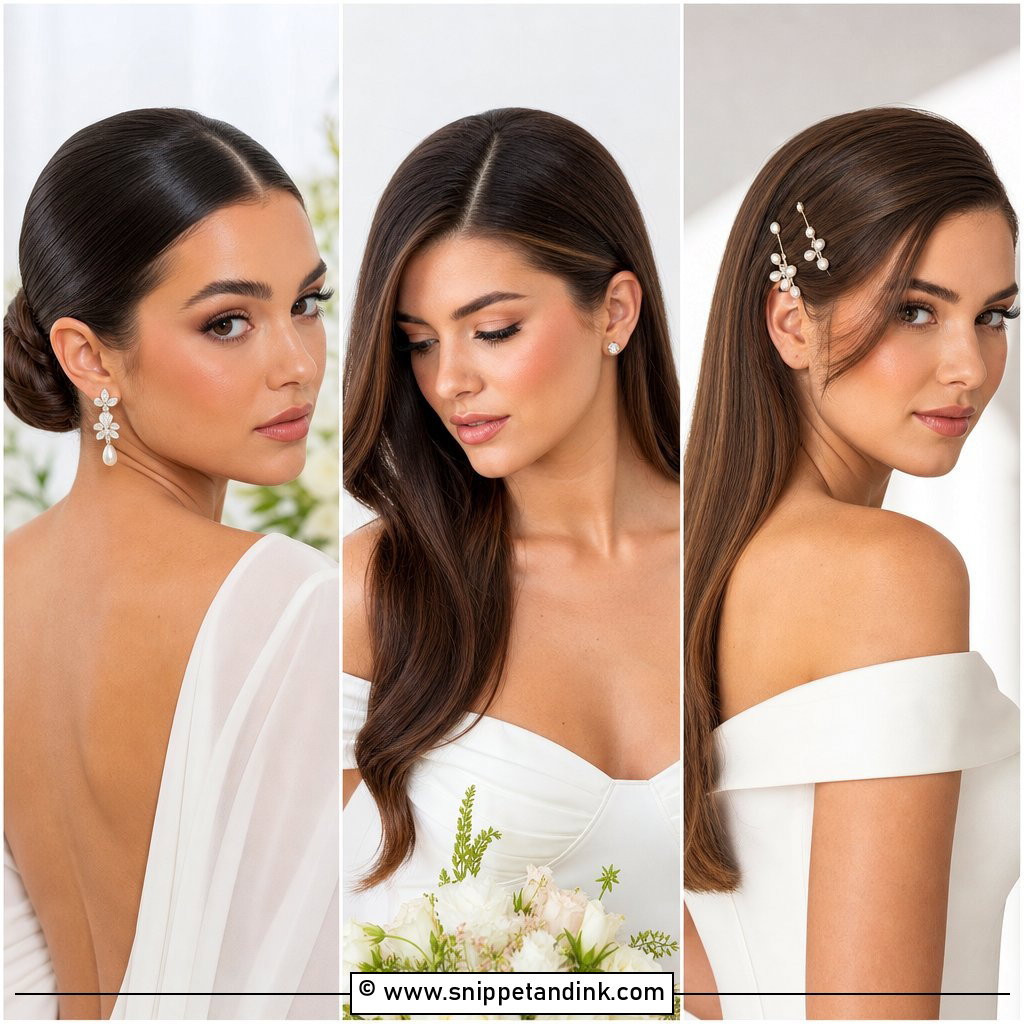
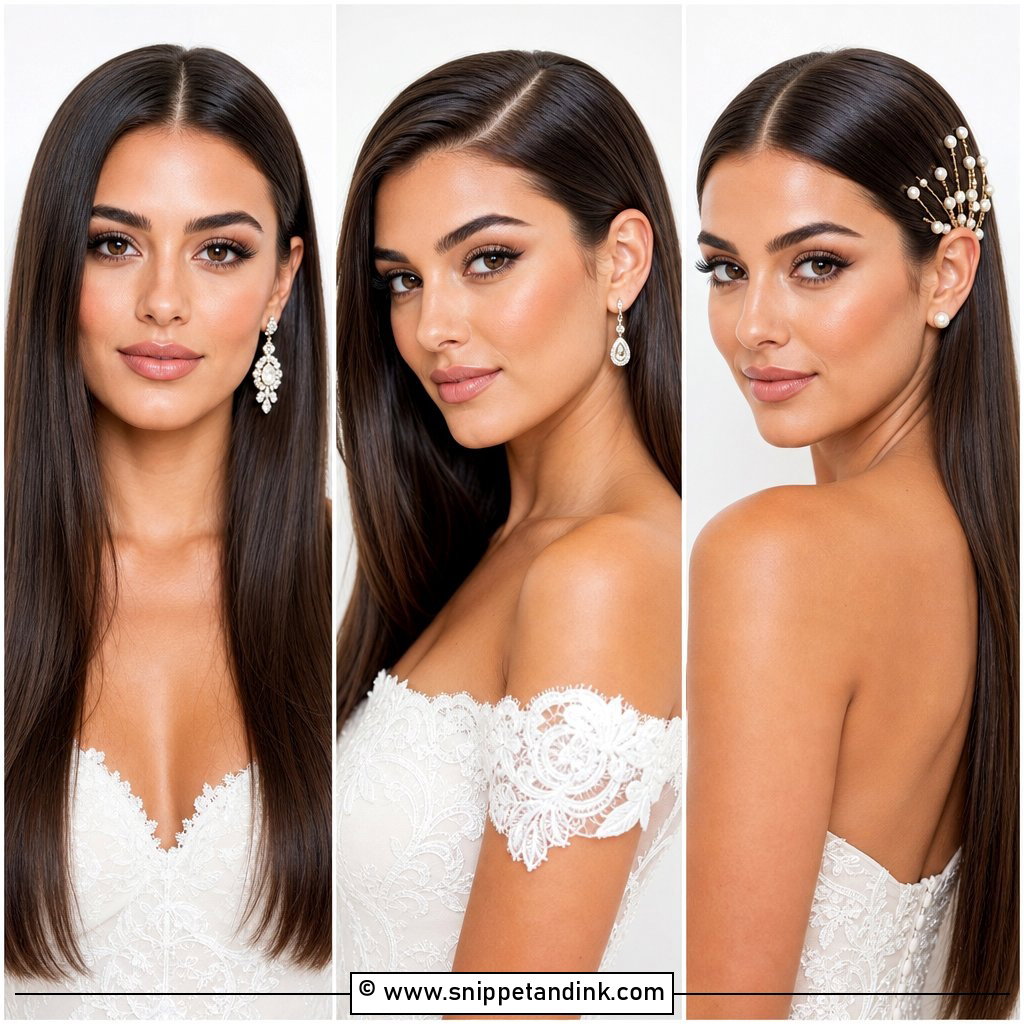
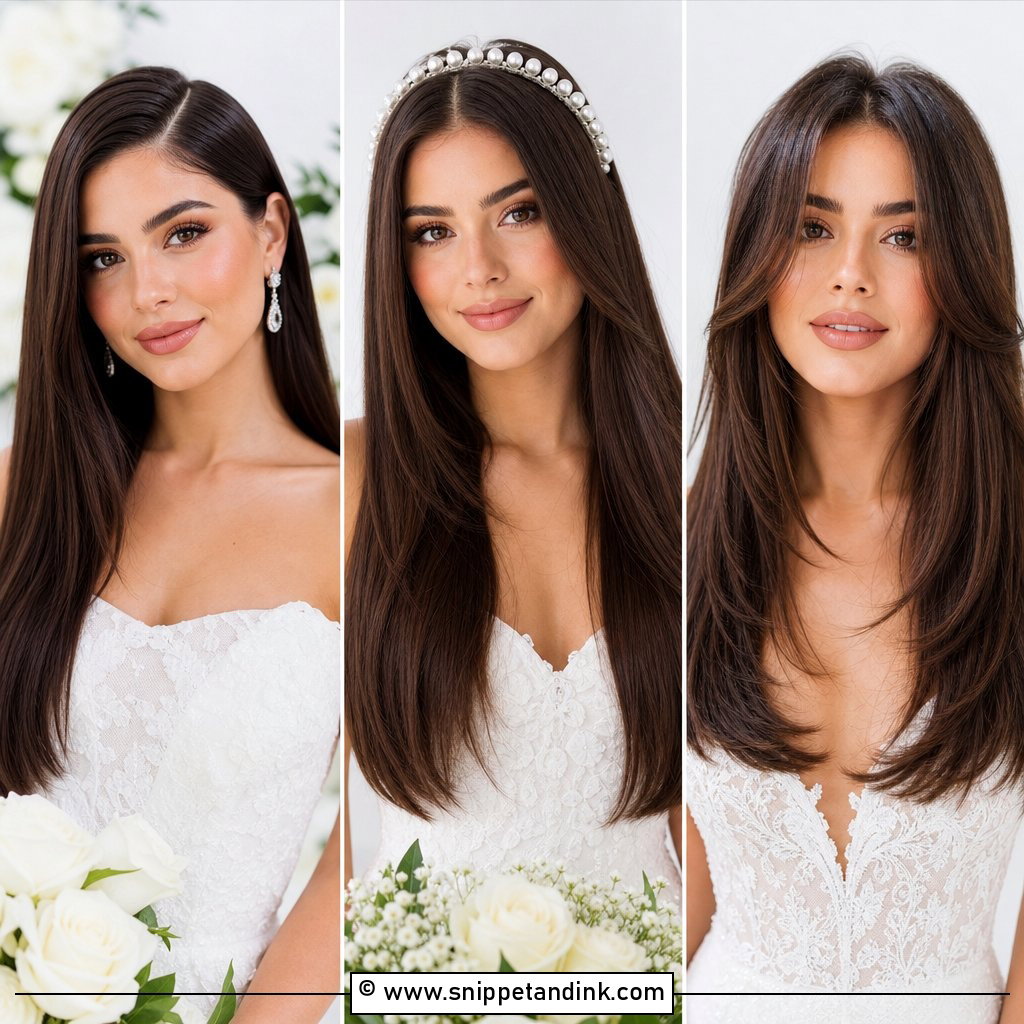
A middle part with the hair fully down is the purest version, and it only looks expensive when the hair is in good condition from roots to ends. I press it smooth in small sections, then put a very slight bend in the last few centimetres so it doesn’t hang dead flat. It suits strapless gowns and square necklines, since nothing competes with the line of the dress. Expect this one to need the most protection from humidity; a smoothing cream before ironing and an anti-humidity spray after make the difference between glossy and fluffy by the reception.
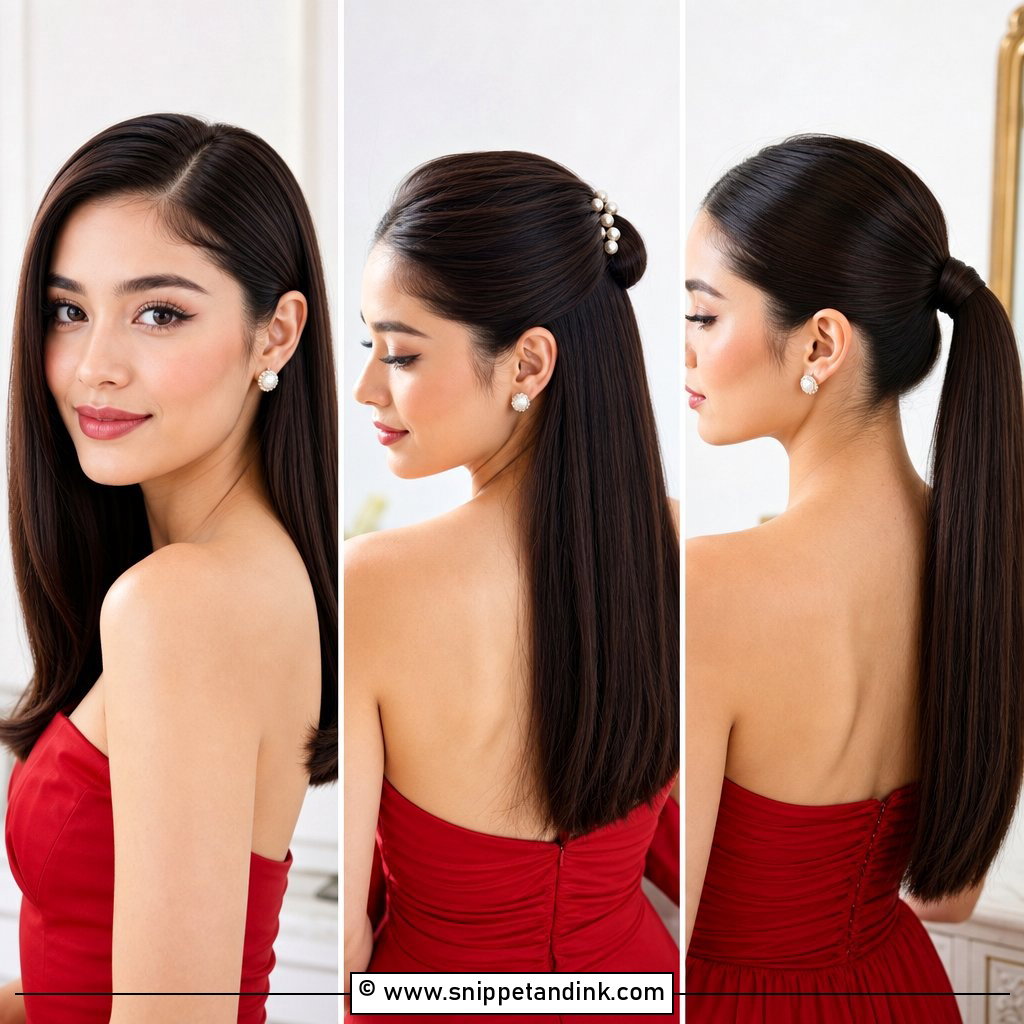
2. Sleek Straight Hair Down With Side Part
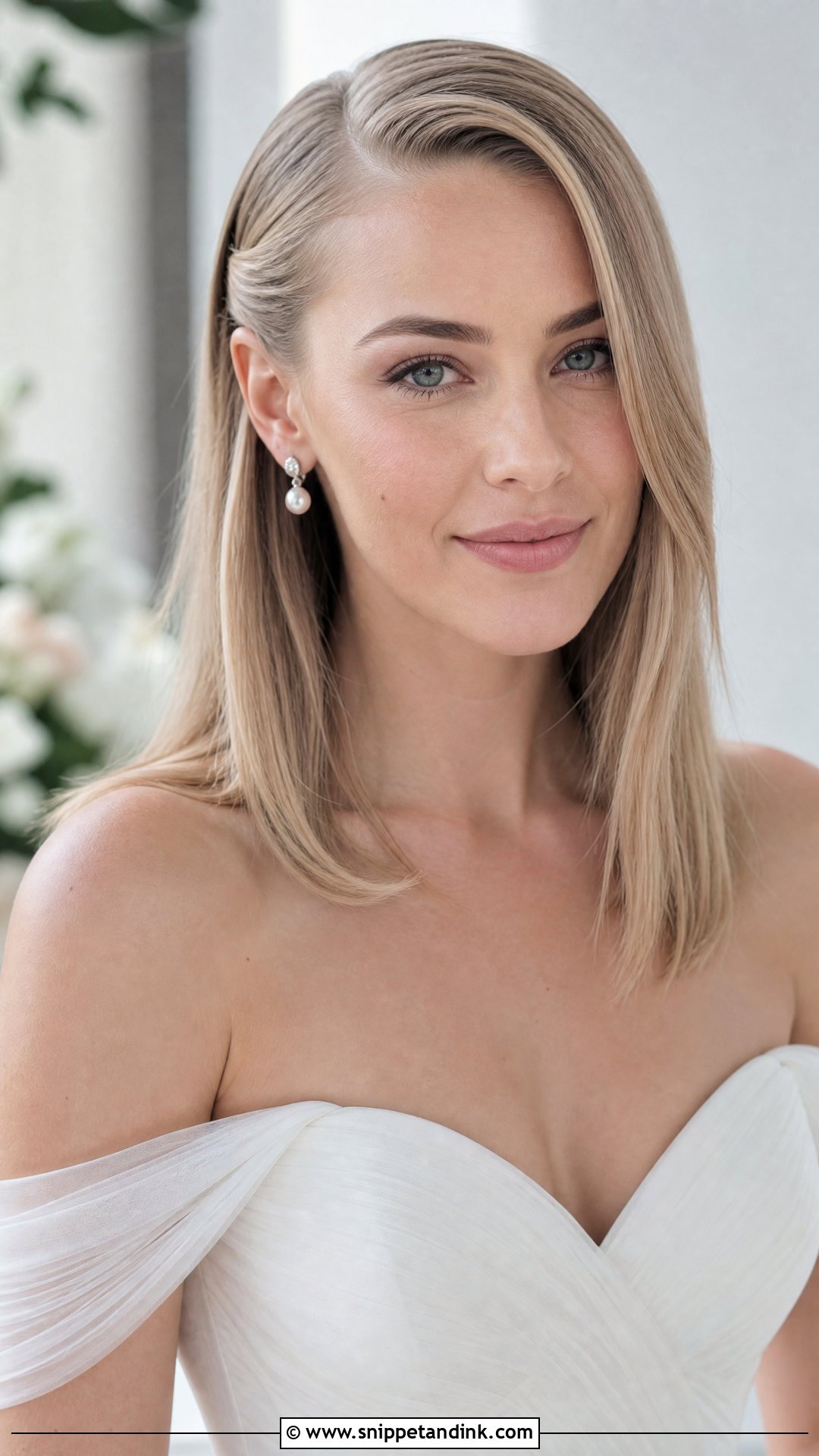
Moving the part to one side gives a straight style a softer, more glamorous shape, and the deeper side creates lift at the crown without any curls. My favourite version leaves one side tucked behind the ear and held with a pearl pin or barrette, so an earring shows. One-shoulder and off-the-shoulder gowns pair naturally with it. I keep the ends blunt or slightly bevelled; feathered ends look thin in photos next to that clean part.
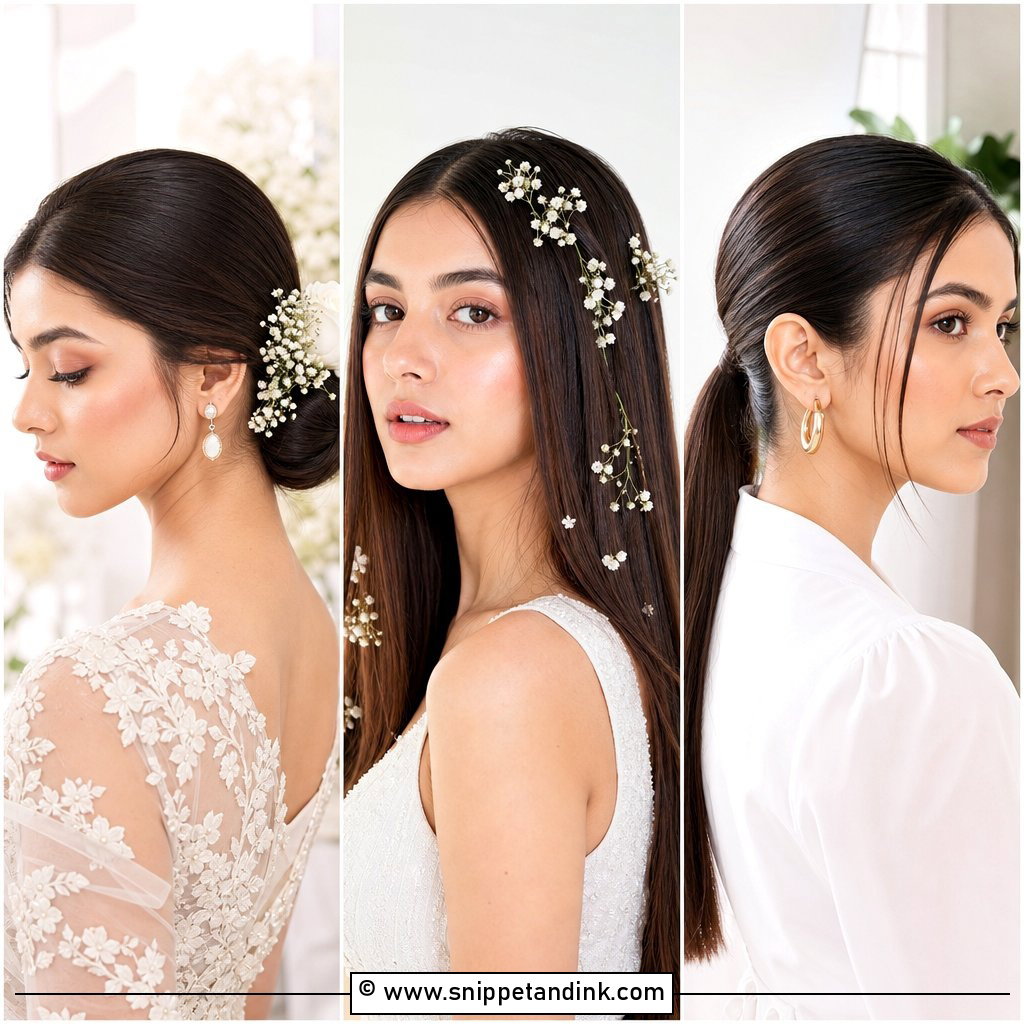
3. Sleek Low Bun For Straight Hair
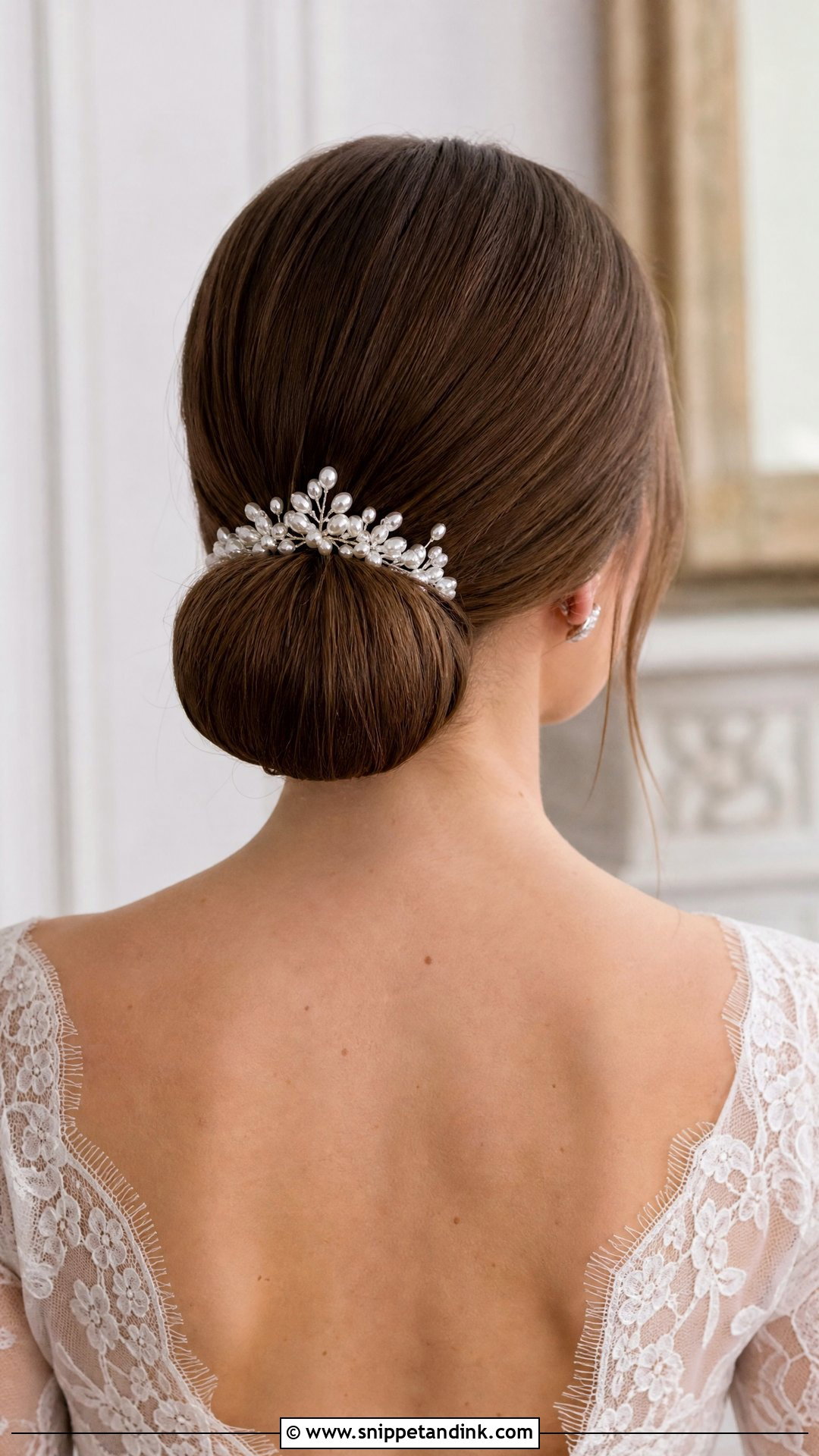
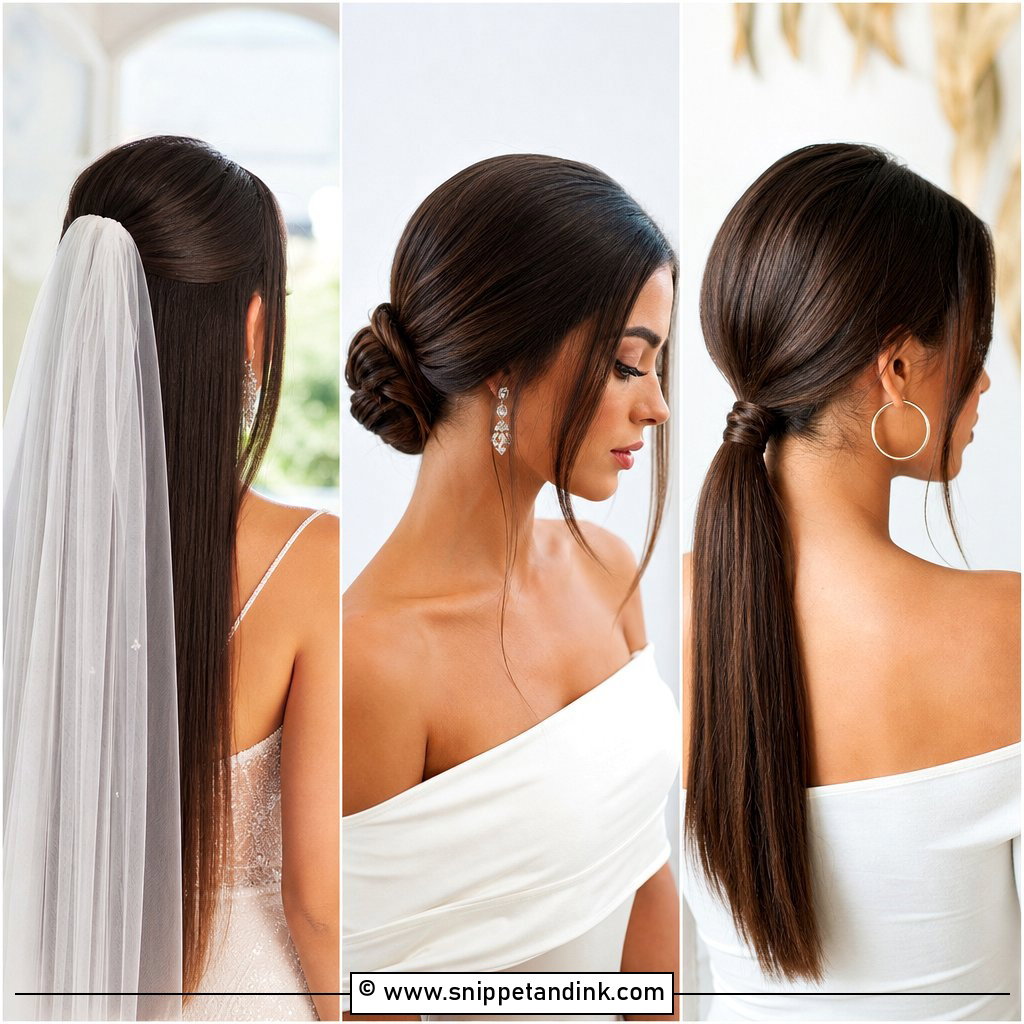
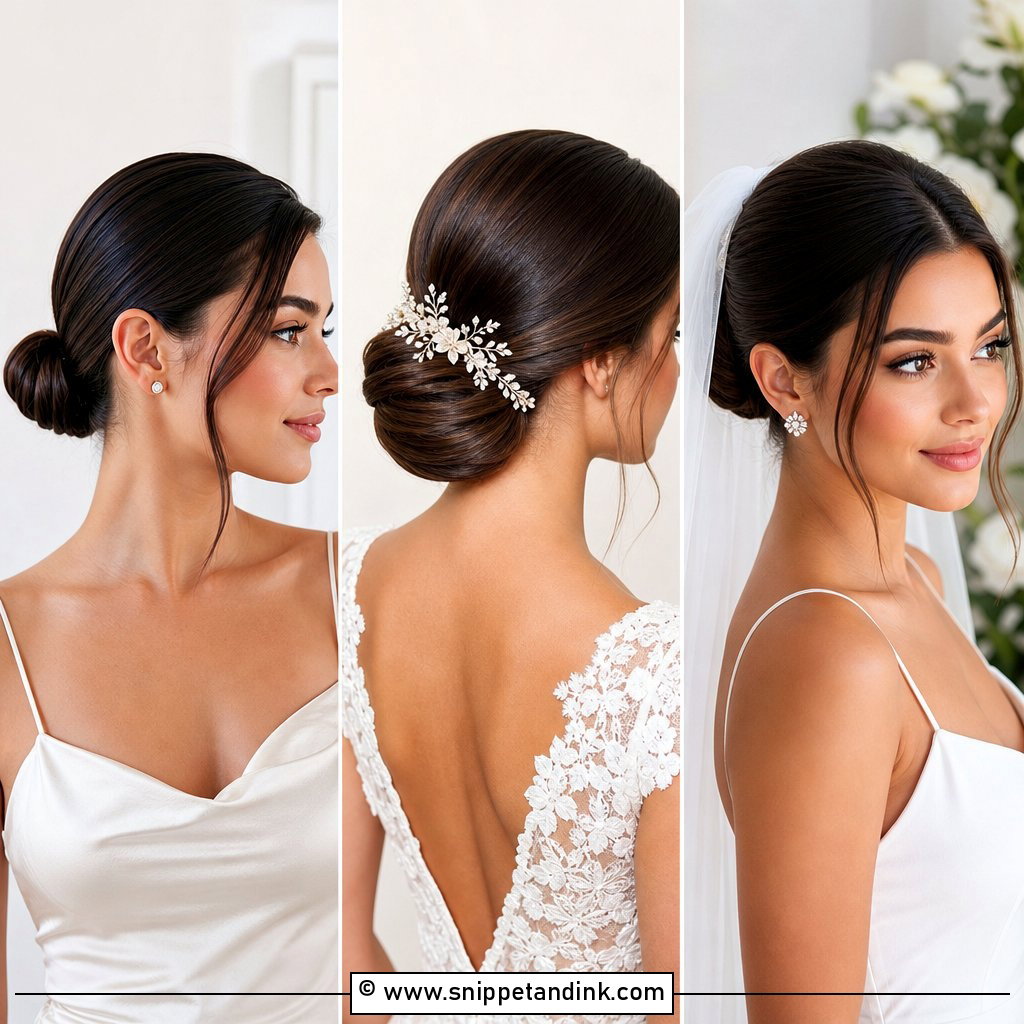
Straight hair makes the smoothest low bun of any texture, which is why I’d suggest it to brides who want their hair fully secured. The bun can sit right at the nape or slightly to one side. It works with veils, high necks, open backs and detailed lace, because it keeps everything off the dress. The challenge with very silky hair is grip: I add a light texture spray before brushing it back, otherwise pins slide straight out. A fine-tooth comb and a soft shine spray finish it, and the result should feel smooth to the touch, not crunchy.
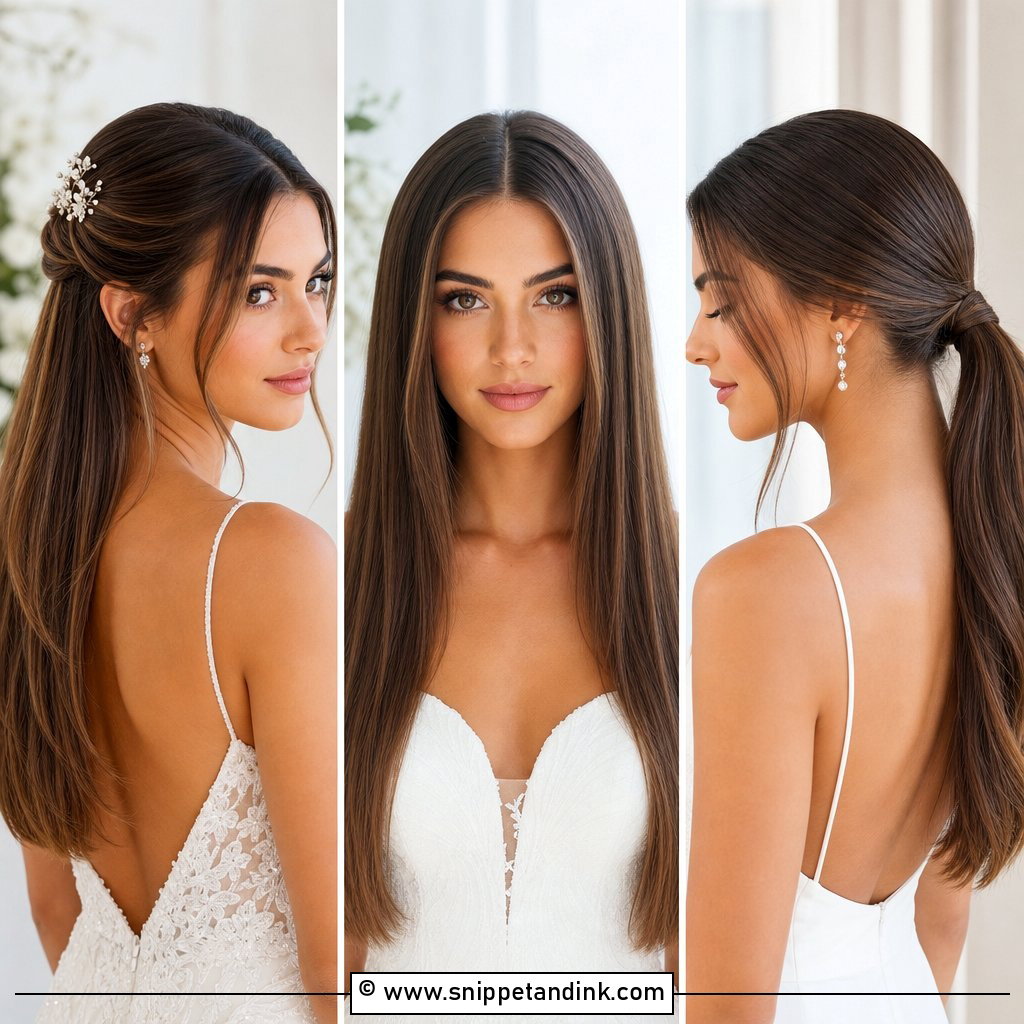
4. Sleek Straight Low Ponytail
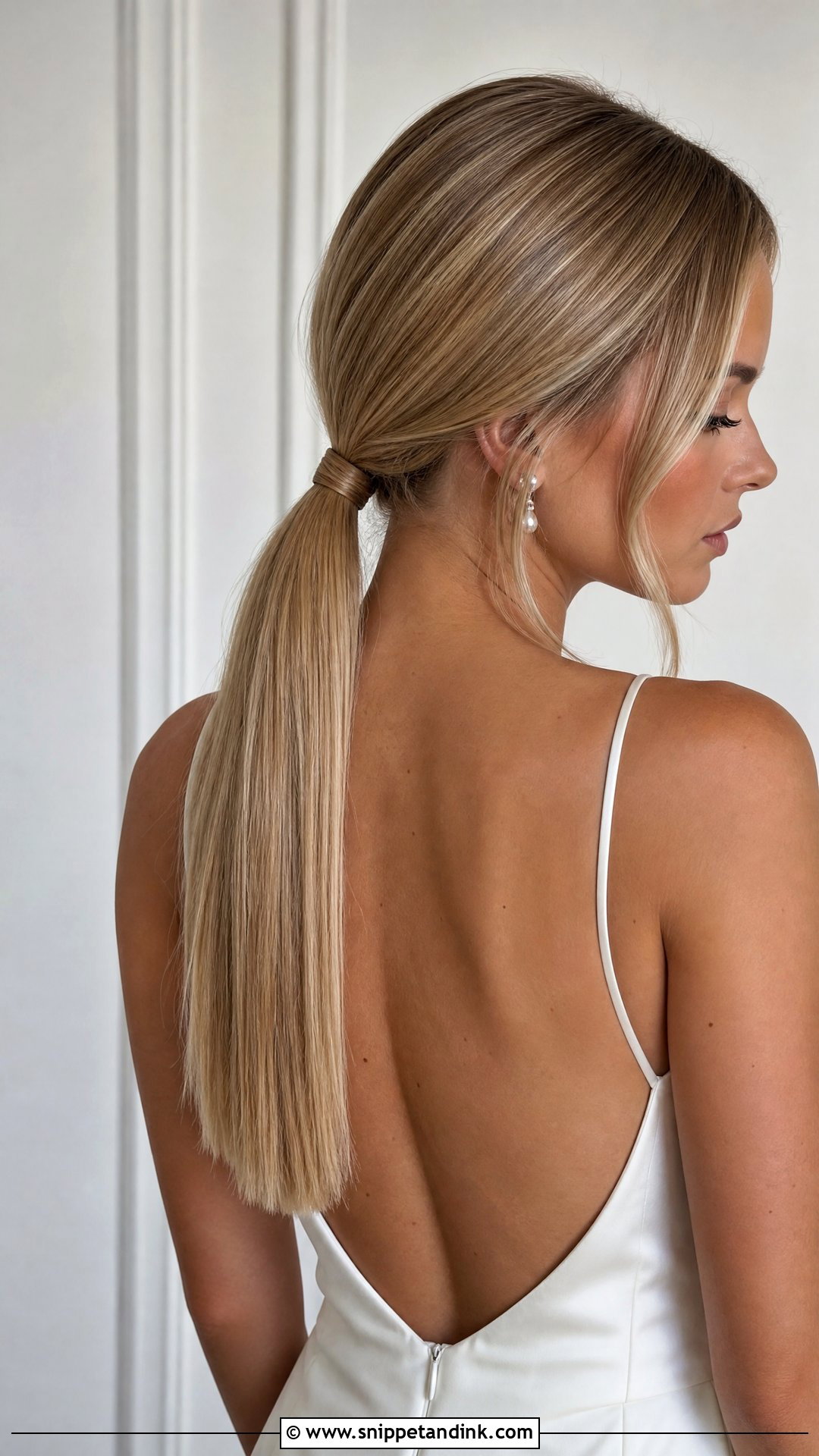
I like a low ponytail on straight hair because the length shows in photos and the hair is still completely out of the way. It’s smoothed close to the head and tied at the nape, with a section of hair wrapped around the elastic and pinned underneath. Trim the ends a week or two before so the tail looks full, and curve the very tips inward with the iron. A veil can go above the elastic for the ceremony. Modern gowns, capes and satin all suit it.
5. Sleek Straight High Ponytail
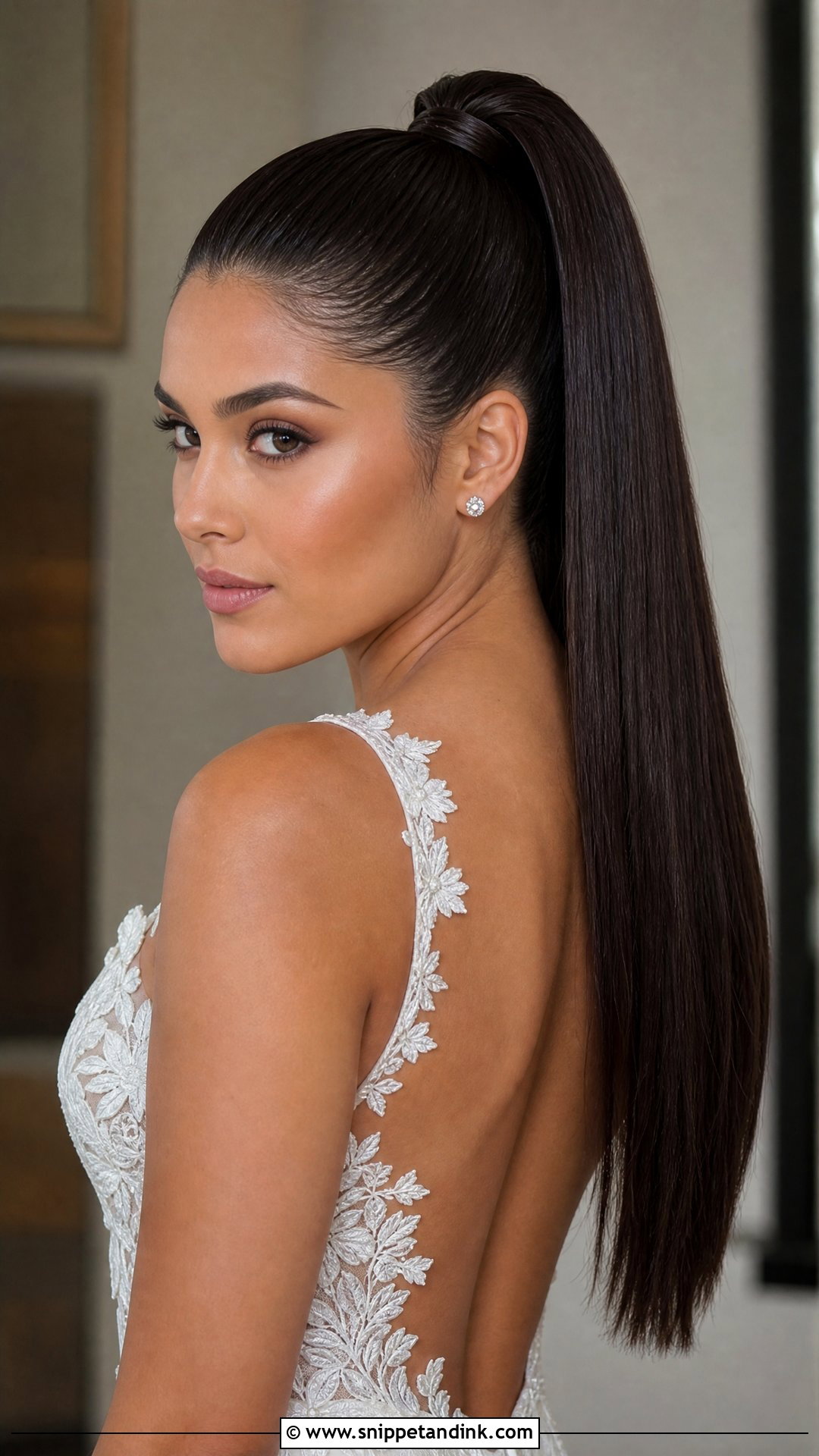
A high ponytail lifts the face and stays put through dancing, photos and warm weather. The base is the hard part. I brush the hair up from several directions so there are no bumps, secure it with a strong elastic, then add a second elastic just below so the tail stands up and doesn’t droop. Fitted gowns and bold earrings sit well with it. A hidden wrap or a satin bow at the base softens it for a bride. If your scalp is sensitive, try wearing it for half a day before choosing it.
6. Sleek Straight Half Up Hair
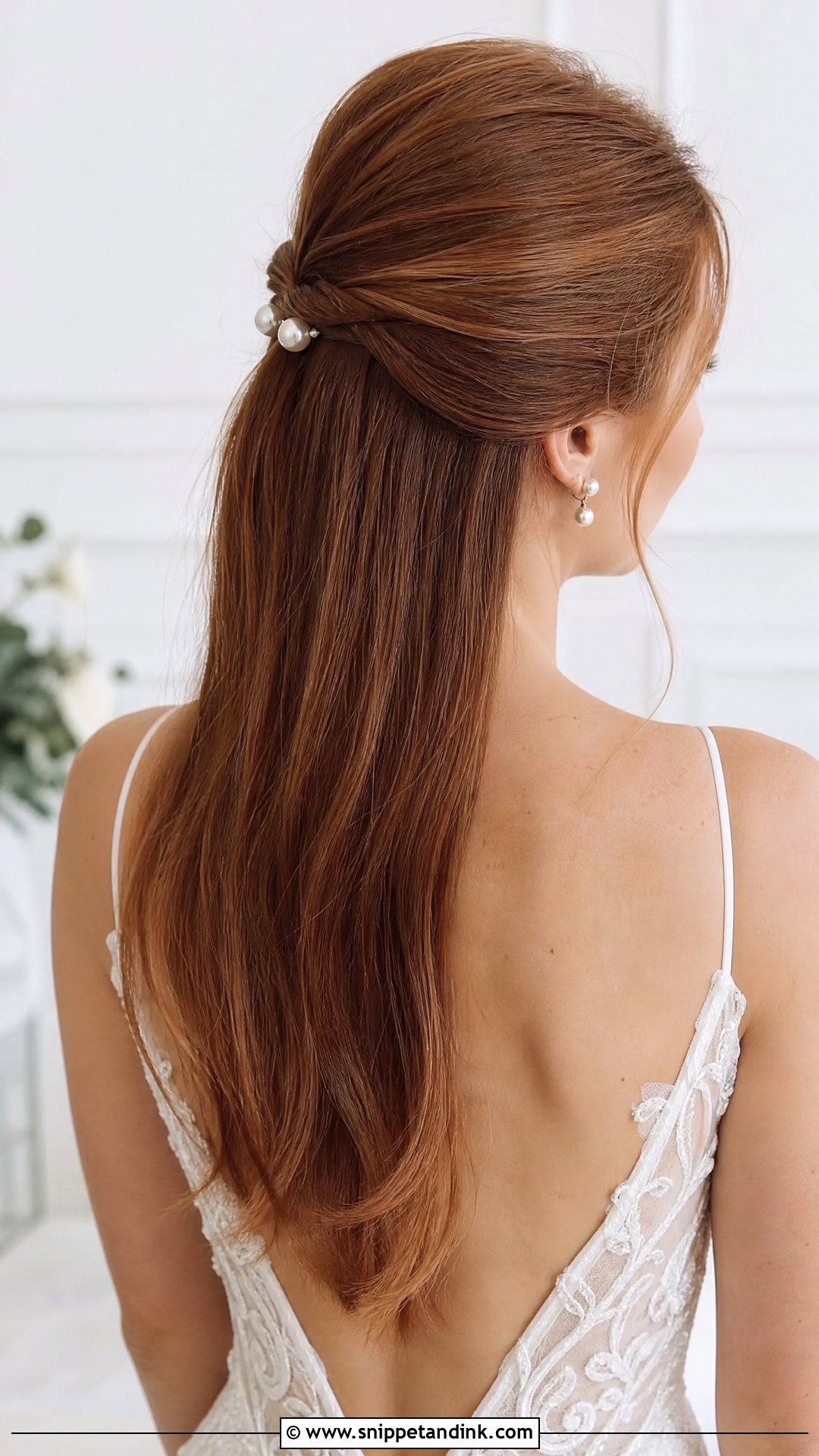
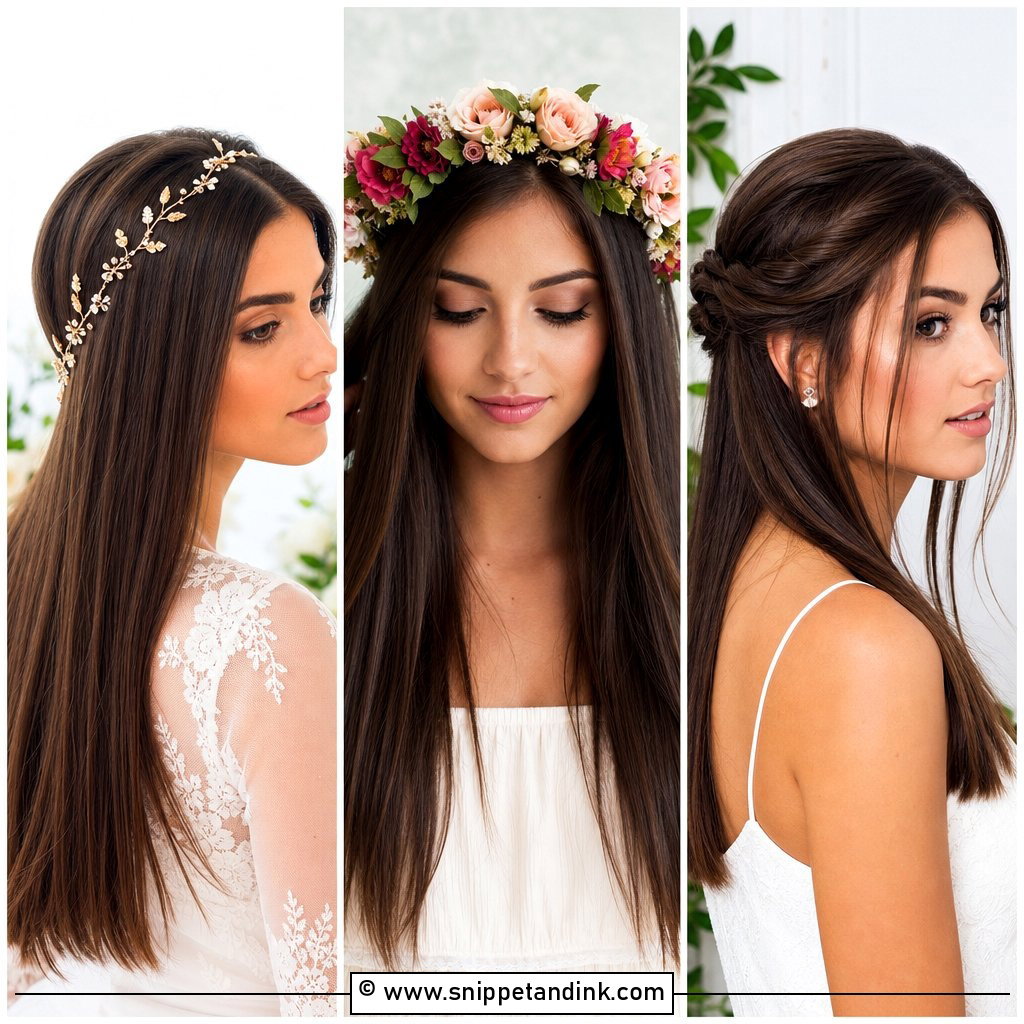
Half up keeps hair off the face during the ceremony and still lets the length fall over the back. The top section is pulled back smoothly and pinned, rather than teased, which keeps the line clean. Medium and long hair show off the shine best. It holds a veil comb, pearl pins or small floral clips well. With very fine, slippery hair, I anchor the pinned section to a small hidden braid so it doesn’t slide down by the evening.
7. Sleek Straight Hair With Pearl Headband
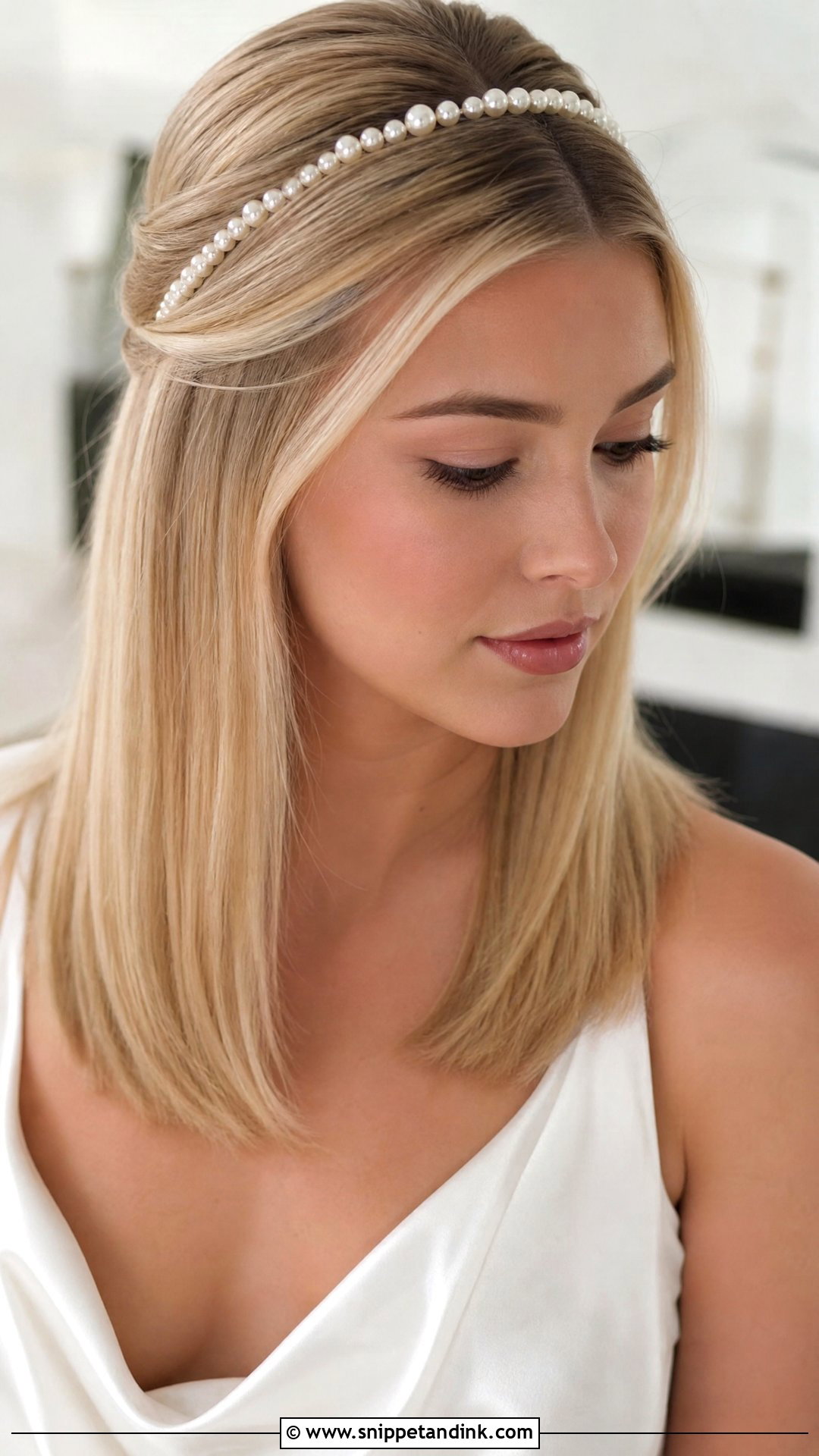
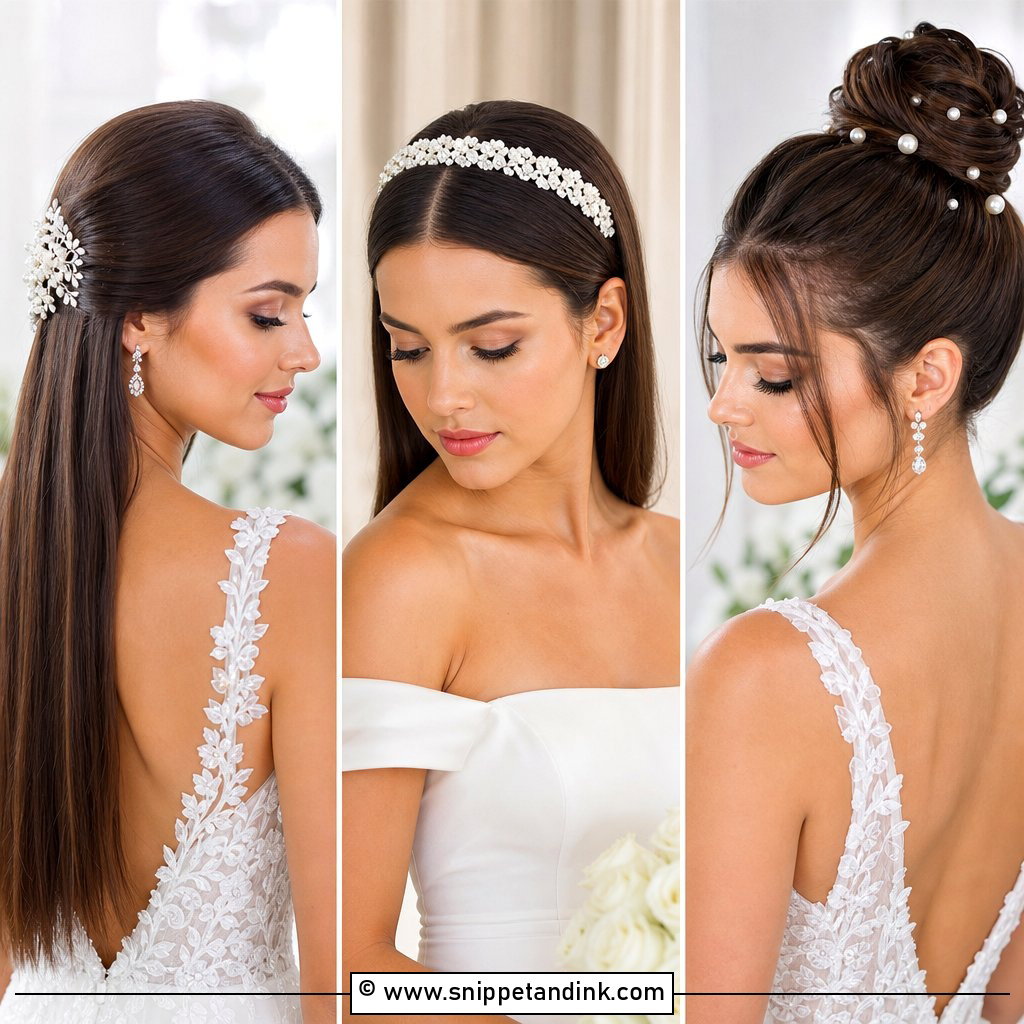
Straight hair gives a headband a clean surface to sit on, so it reads as a clear bridal detail without feeling twee. Push the front back slightly or wear it with a middle part, depending on your face and neckline. A pearl headband pairs naturally with satin gowns, simple silhouettes and classic veils. The common issue is slipping: on fine hair, I spray a little dry texture product under the band so it has something to grip. Keep the rest of the hair glossy so the accessory looks deliberate.
8. Sleek Straight Hair With Pearl Pins
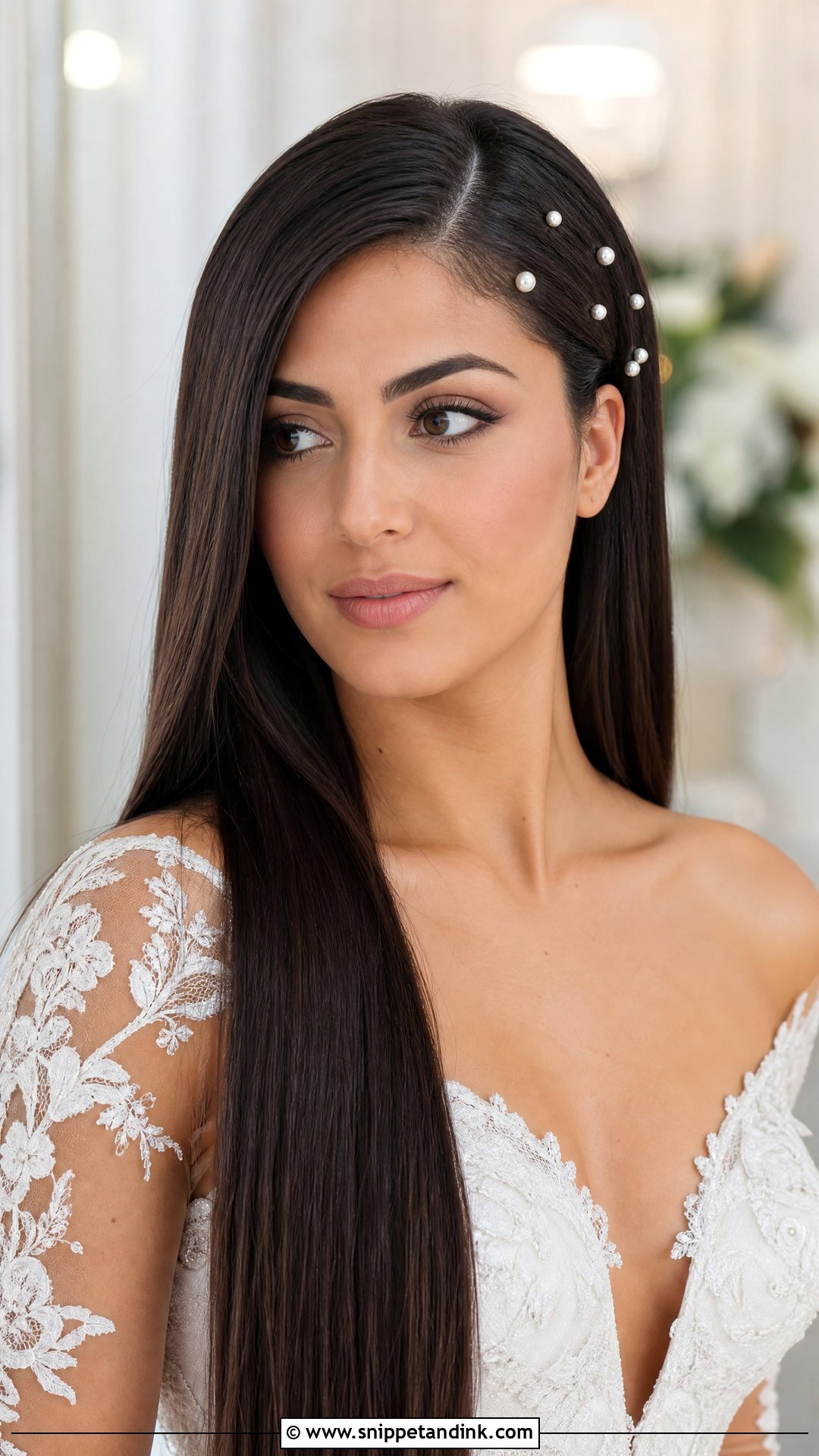
Pearls show up clearly against straight hair, where curls would swallow them. I scatter small pins through hair worn down, half up or tucked behind one ear, and I keep the spacing slightly irregular because a perfect grid looks dated. Garden weddings, courthouse ceremonies and indoor receptions all suit it. Use lightweight pins only. Heavy ones drag down straight hair and leave a dent in the smooth surface, which shows from the side and back.
9. Sleek Straight Bob Wedding Hair
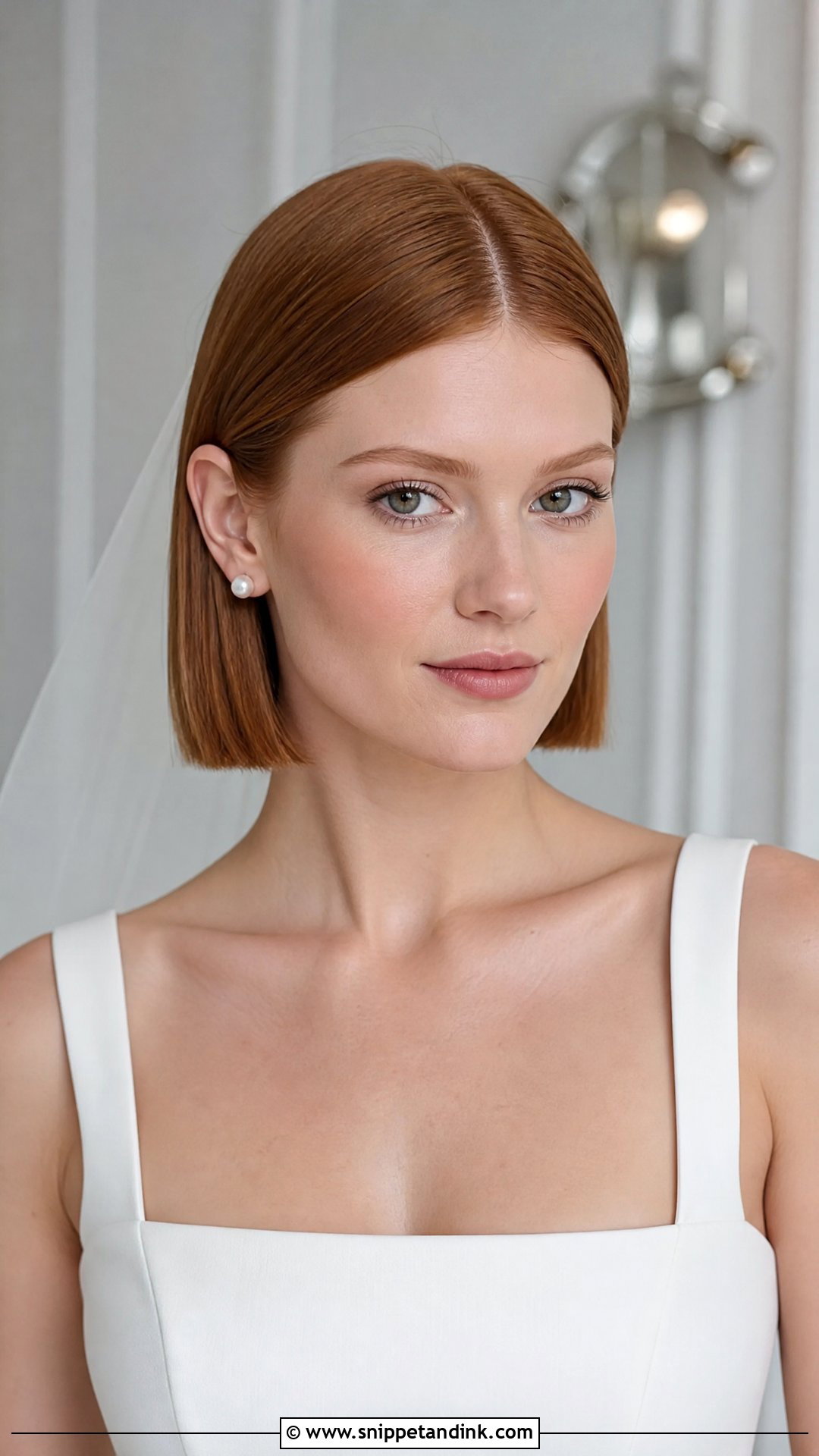
A sleek straight bob frames the jaw and draws attention to the face, earrings and neckline, and it works well with a birdcage veil, a pearl clip or a slim headband. It suits short-haired brides who don’t want extensions. The finish depends almost entirely on the cut, so book your trim a week or two before the wedding, close enough to be sharp but with time for any small correction. A center part feels modern; a side part softens it.
10. Sleek Straight Lob Wedding Hair
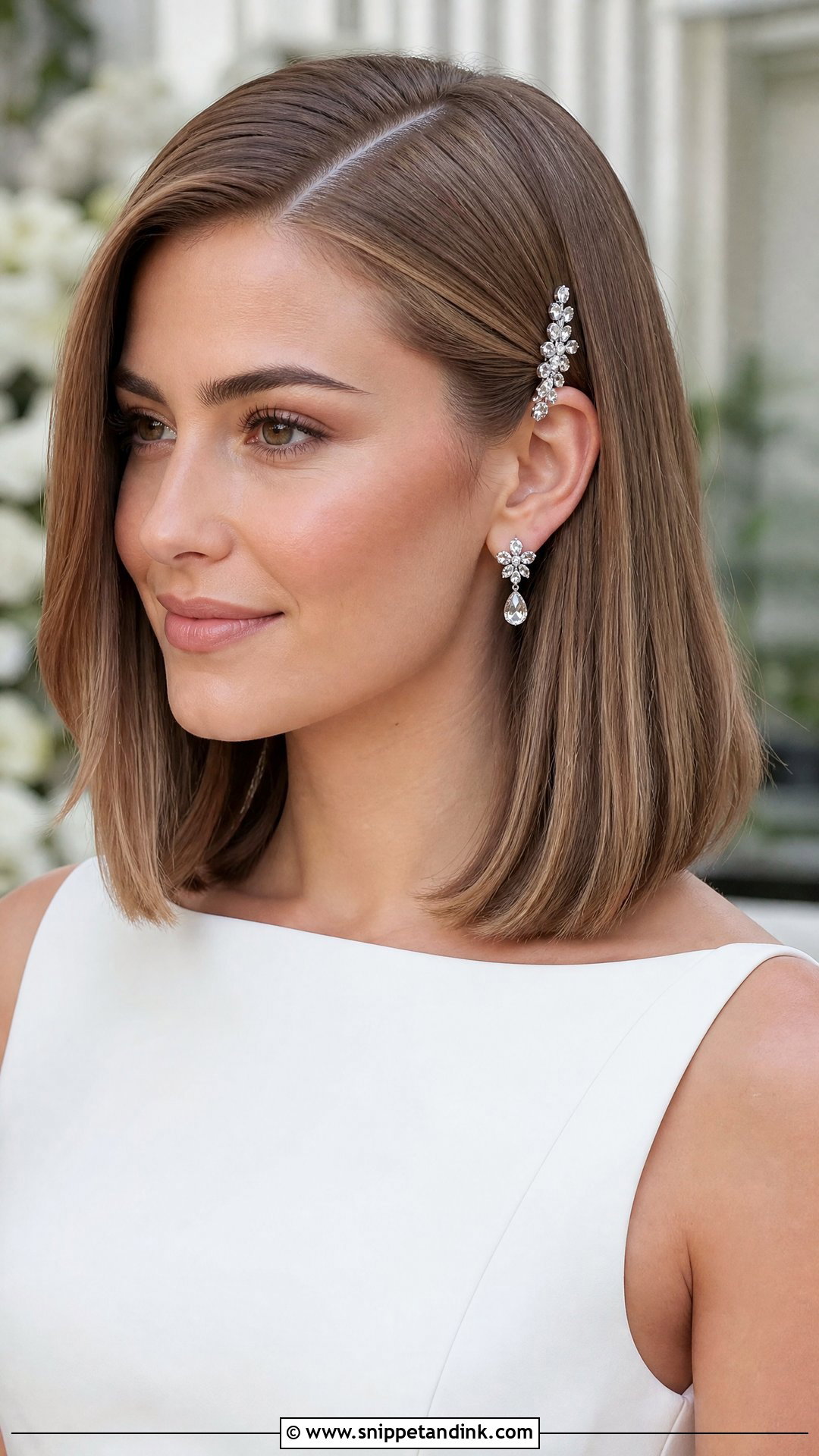
A sleek straight lob gives a little more length than a bob and usually sits around the collarbone, so the neckline stays visible. It’s easy to manage and takes a middle part, a side part, a tucked side or a small clip. Minimalist and city weddings suit it well. The ends are what I work on most, since a lob that touches the shoulders tends to flip outward when you move. I bevel them slightly under with a round brush, and the shape then sits against the collarbone all day.
11. Sleek Straight Hair With Blunt Ends
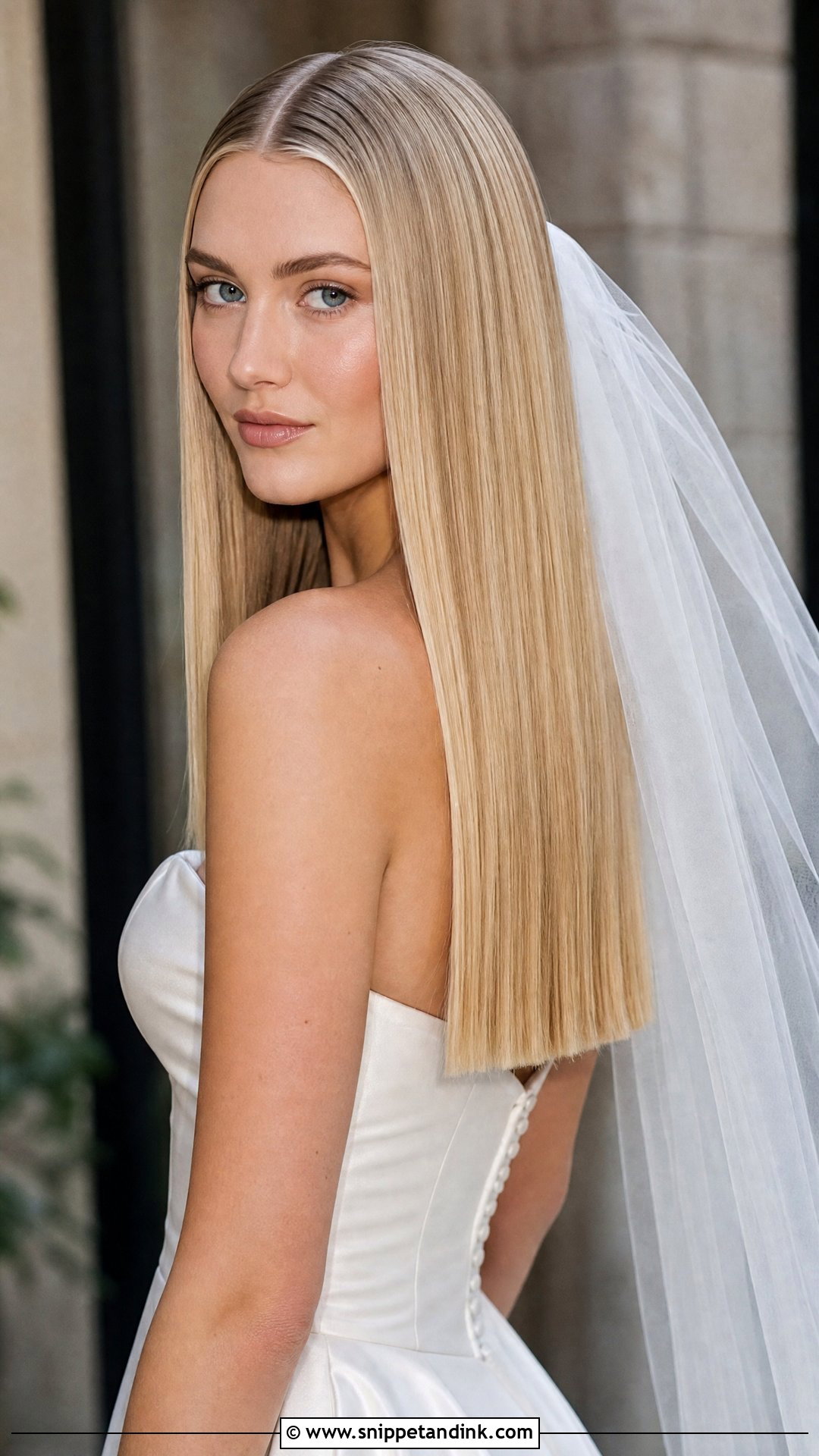
Precision is the whole point here. A blunt line at the bottom makes the hair look thicker and healthier, which is why it suits medium or long straight hair with a middle part and a simple veil. Modern gowns, square necklines and satin go well with it. The risk is looking severe, so I put the smallest bend into the ends. That way the hair moves when you turn rather than swinging as one solid sheet.
12. Sleek Straight Hair With Face Framing Layers
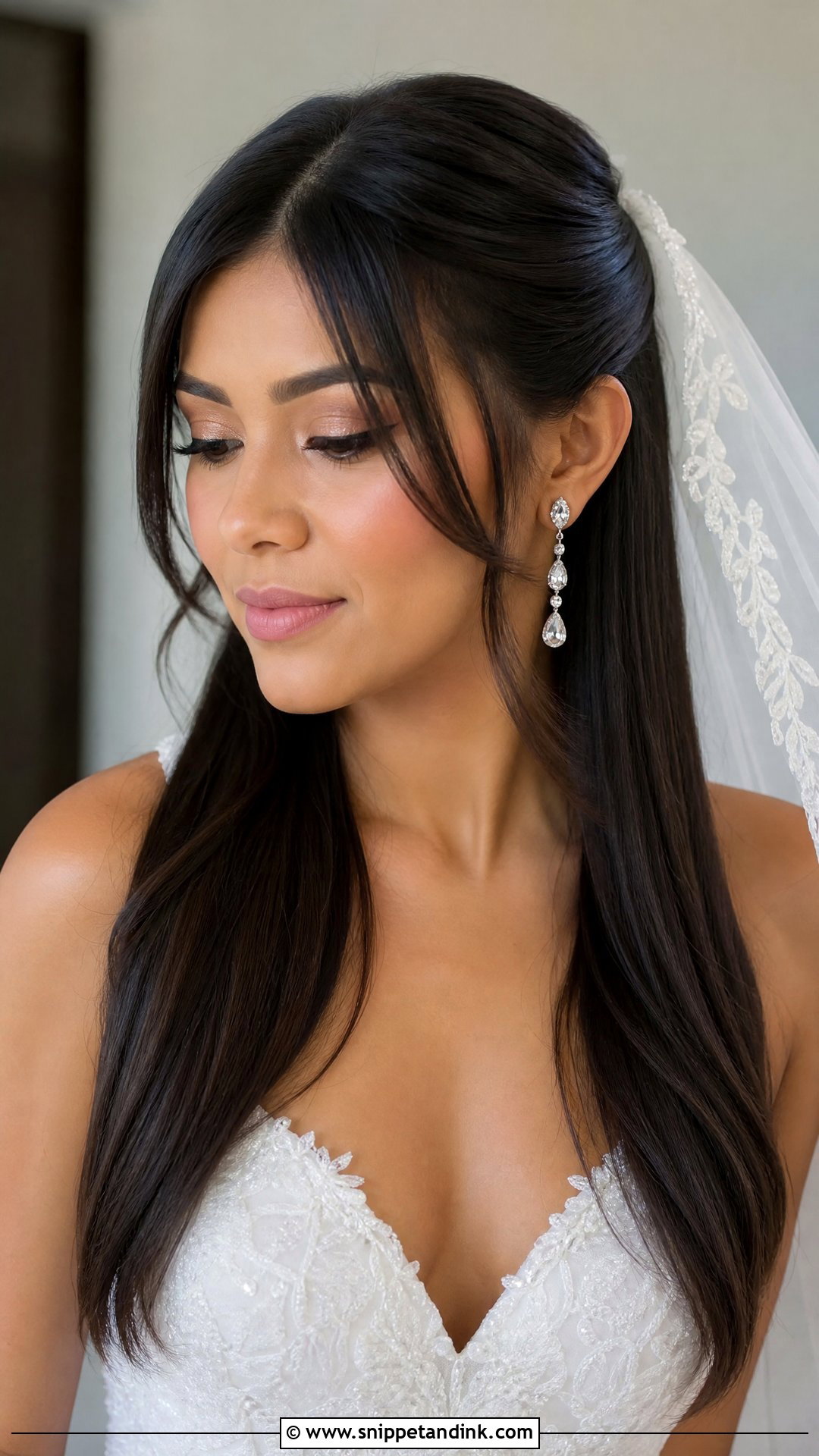
Front layers soften straight hair that might otherwise feel severe, opening up the face while the length stays smooth. They can be tucked behind the ears, brushed slightly forward or blended into a veil. Long hair, medium hair and lobs all suit them, and they let earrings show without pulling the hair back. I style the layers with a small round brush rather than an iron, so they curve away from the face instead of lying flat against the cheeks.
13. Sleek Straight Hair With Tucked Sides
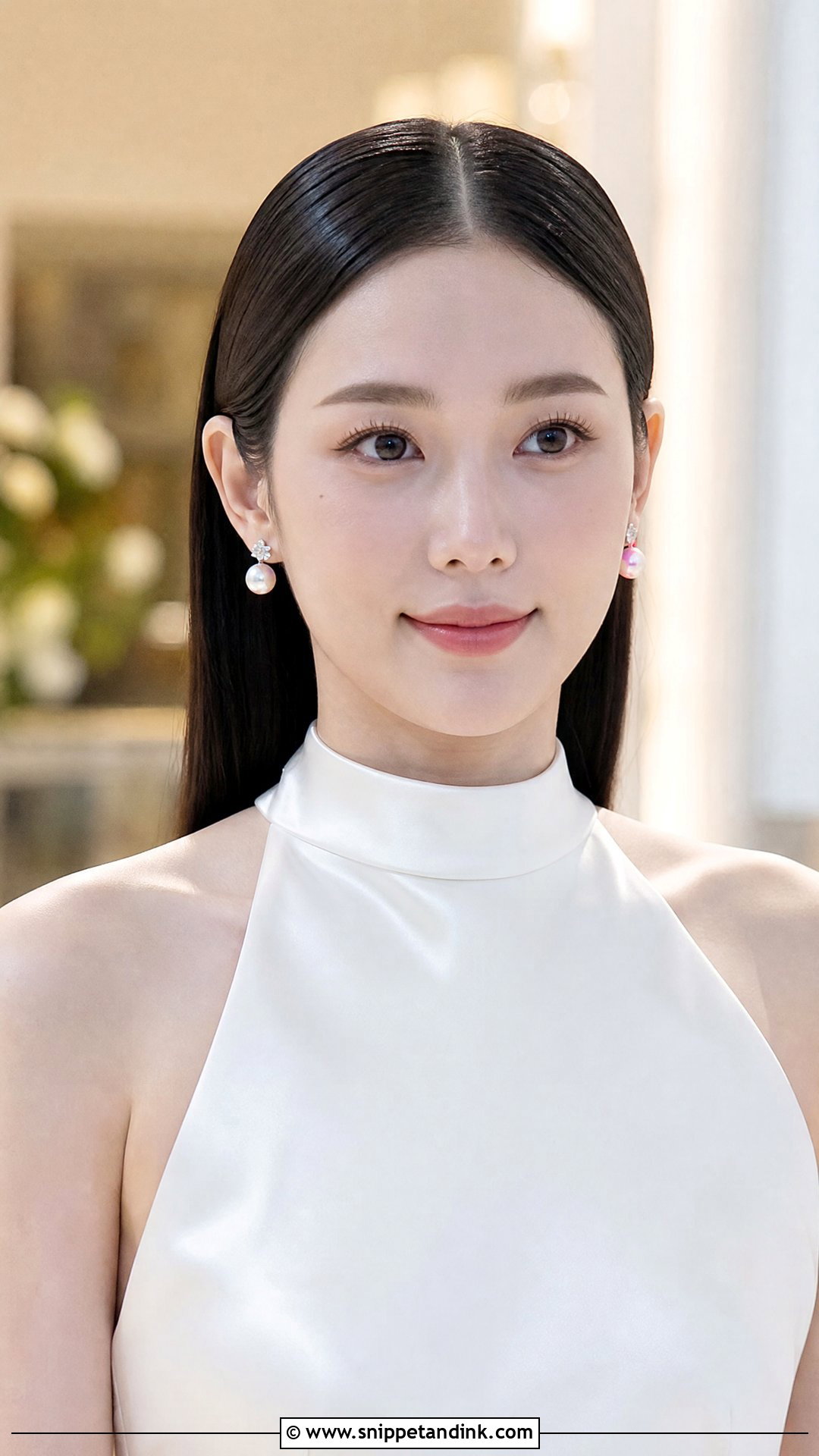
Tucking both sides behind the ears opens the face and keeps the hair under control during outdoor ceremonies and windy portraits. Statement earrings, high neck gowns and dramatic veils all look good with it. I smooth the roots first, then secure each tucked section with a hidden pin slid in behind the ear, plus a little cream so it doesn’t spring forward. It’s a minimal look, but the clean frame it gives the face shows in every close-up.
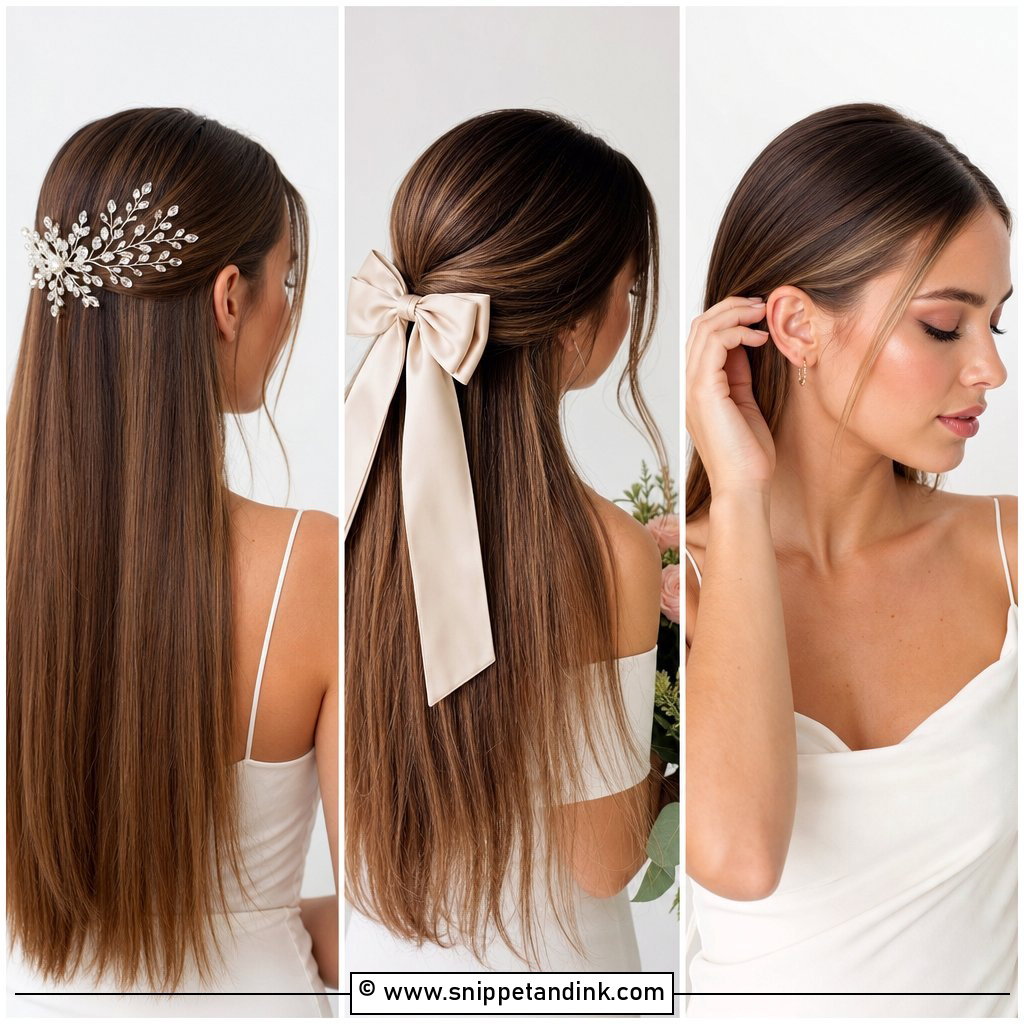
14. Sleek Straight Hair With Bridal Barrette
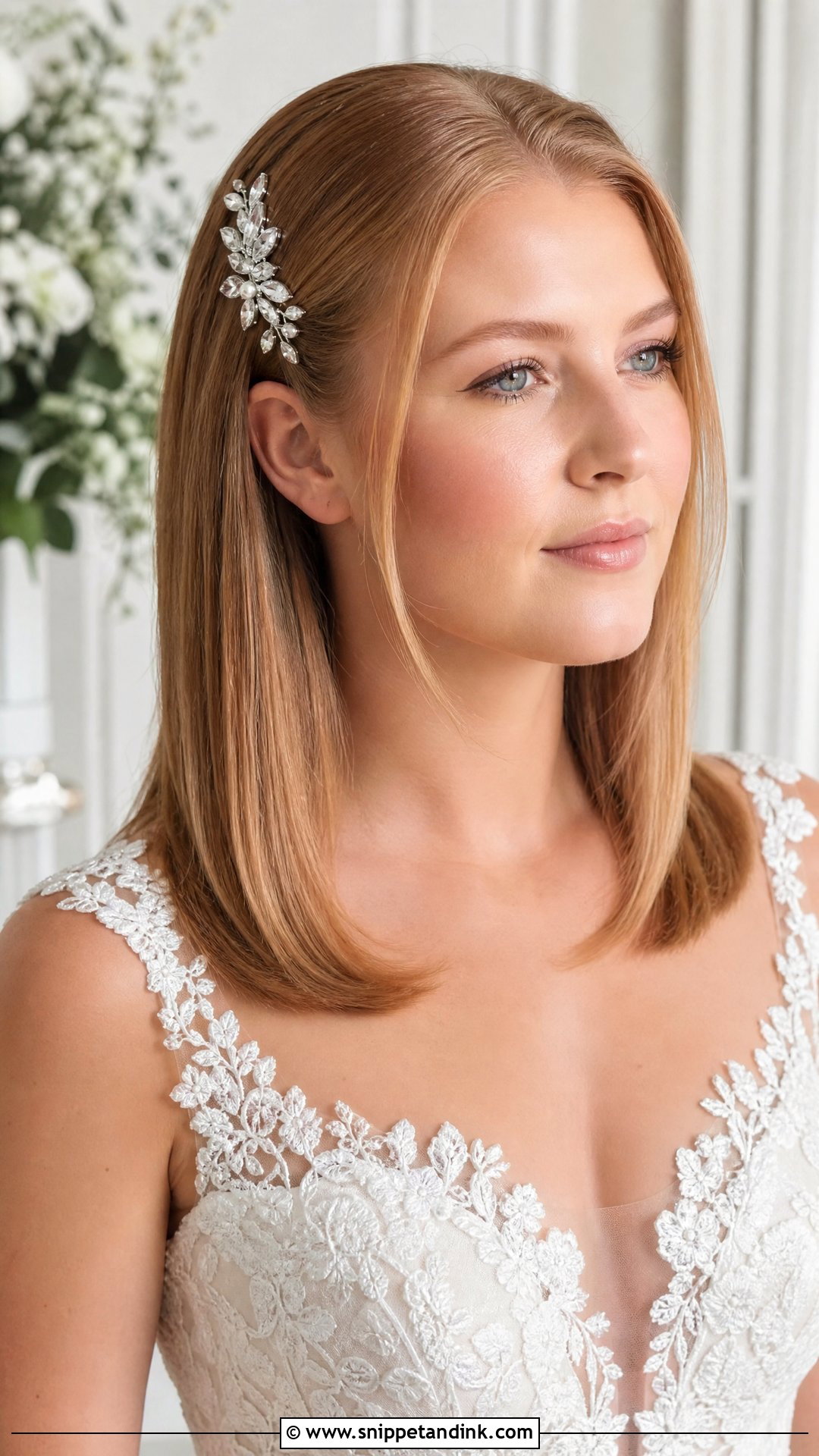
A bridal barrette adds detail without turning the style into an updo. I place it on one side for asymmetry or use it to hold back face-framing pieces. Crystal, pearl and satin barrettes all work, depending on your dress. Straight hair keeps the barrette visible and clean, which is great for close-ups. Snap it closed over a small section only; a barrette clamped over too much hair slides down within an hour.
15. Sleek Straight Hair With Veil
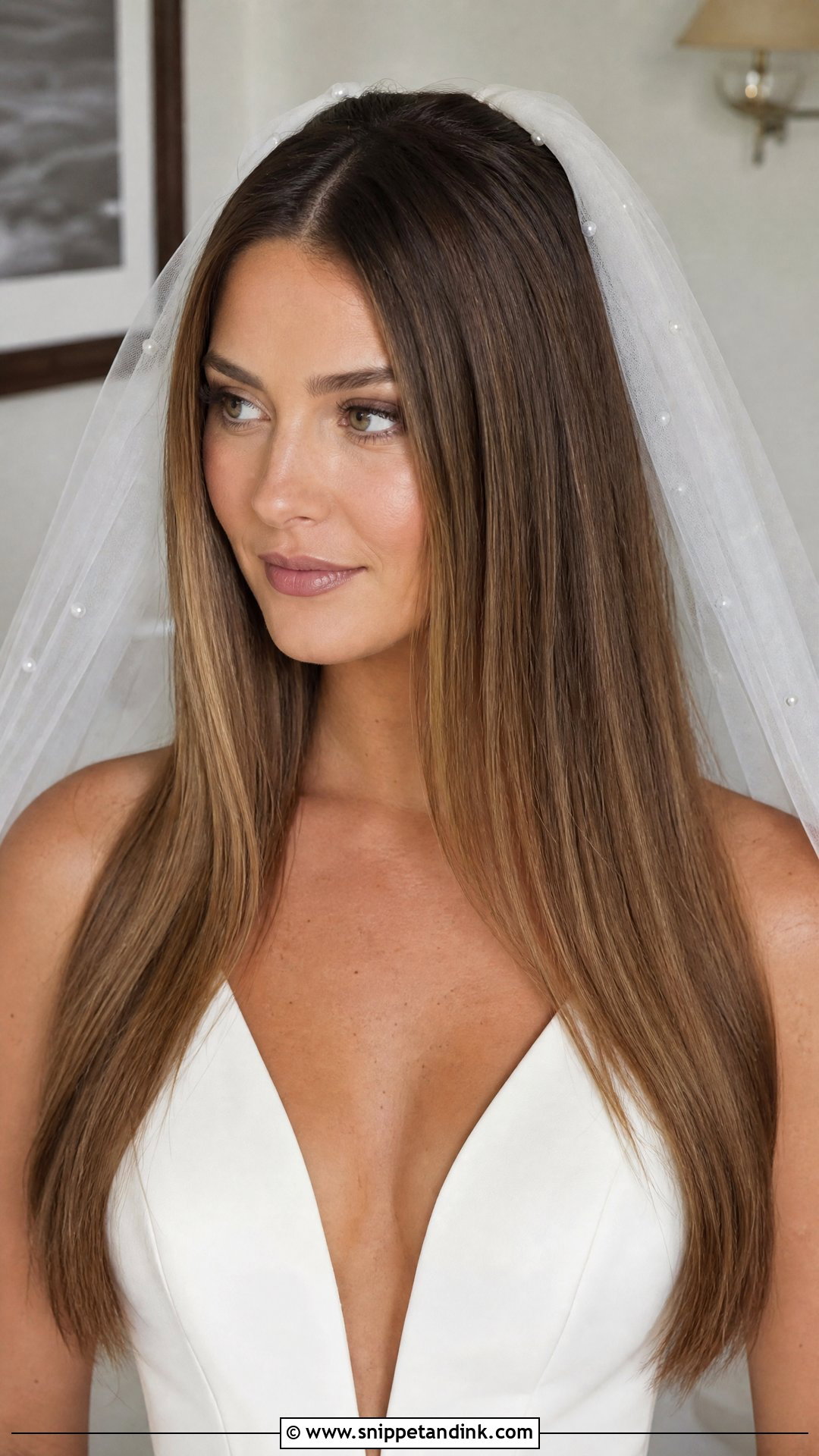
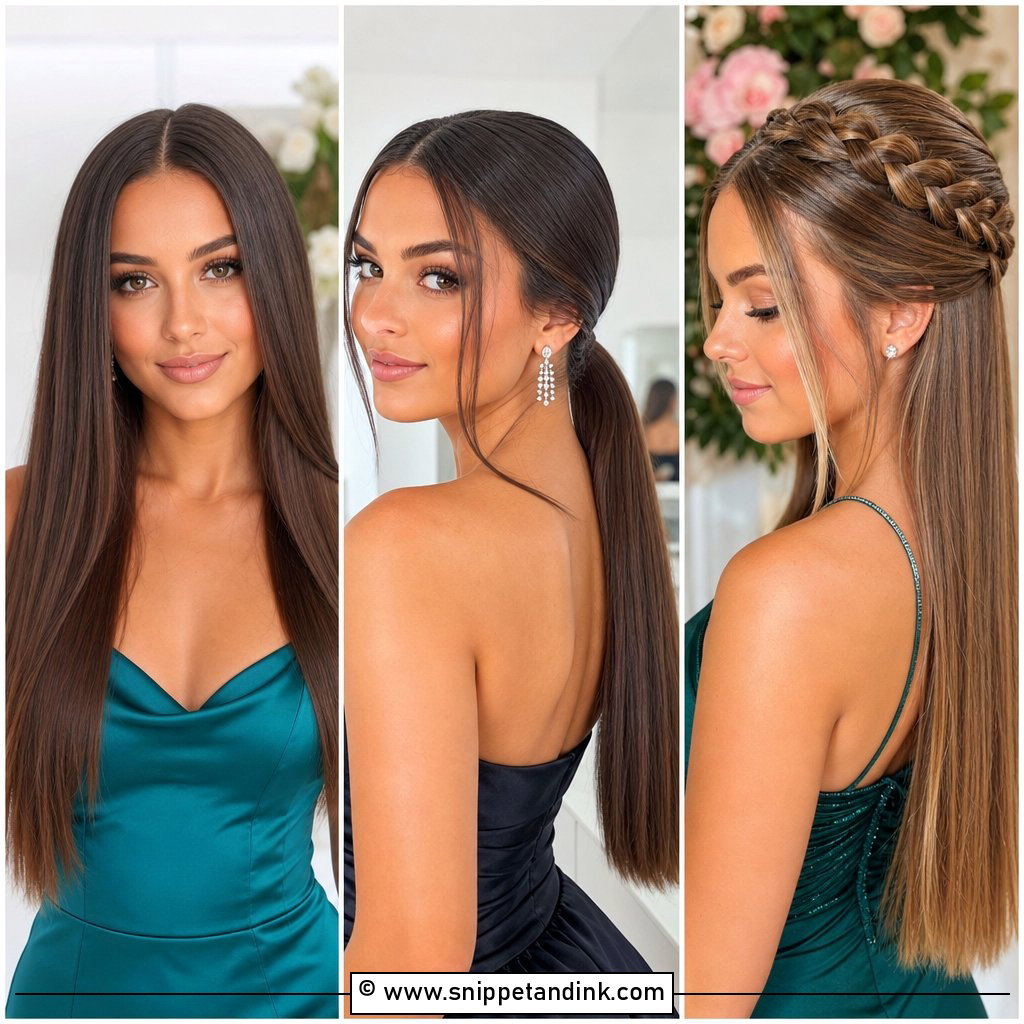
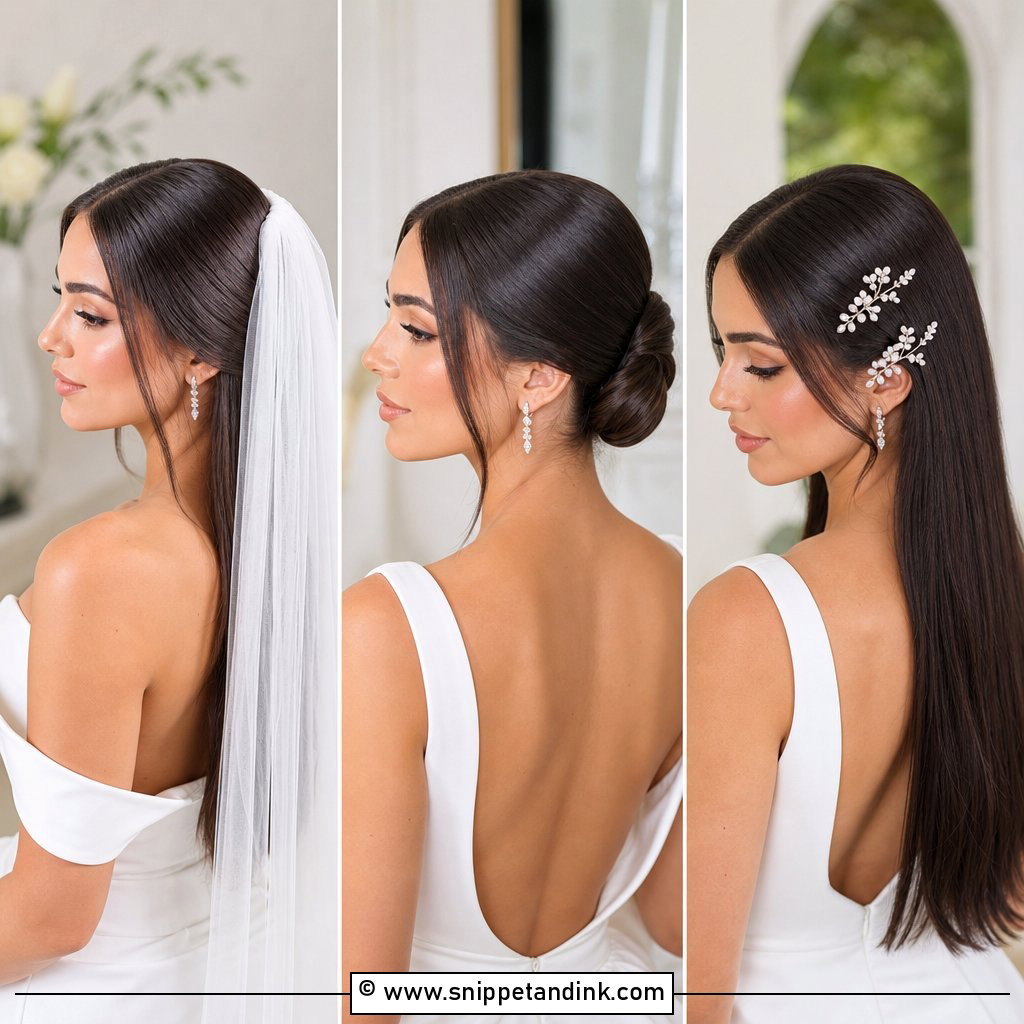
Straight hair and a veil are an easy pair, because the tulle falls neatly without catching on curls or volume. The hair can be down, tucked, half up or in a low ponytail. A center part looks modern and a side part softer. Cathedral, fingertip and simple tulle veils all work. The one thing that catches brides out is how easily a comb slides out of silky straight hair. I build a crossed-pin anchor under the comb, and that holds it for the whole ceremony.
16. Sleek Straight Hair With Center Part Bun
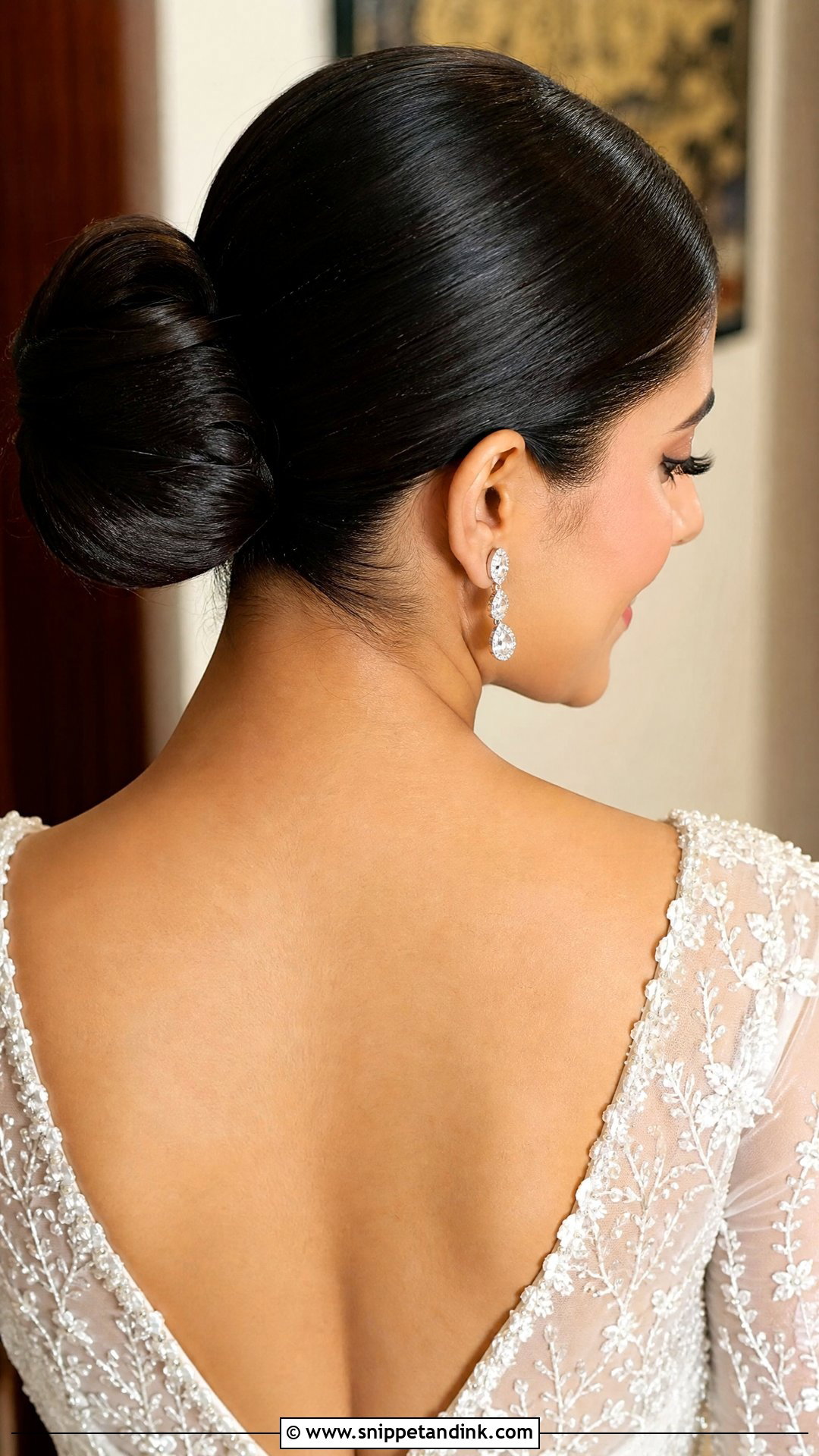
The middle part draws a clean line from forehead to crown, and the low bun keeps everything secure, which suits dramatic earrings, veils and gowns with detailed backs. In warm weather every strand stays controlled. The bun can be smooth, braided or slightly twisted, but the front should stay sleek. Use lightweight products here; heavy oils make straight hair look greasy under flash, especially at the part.
17. Sleek Straight Hair With Side Part Bun
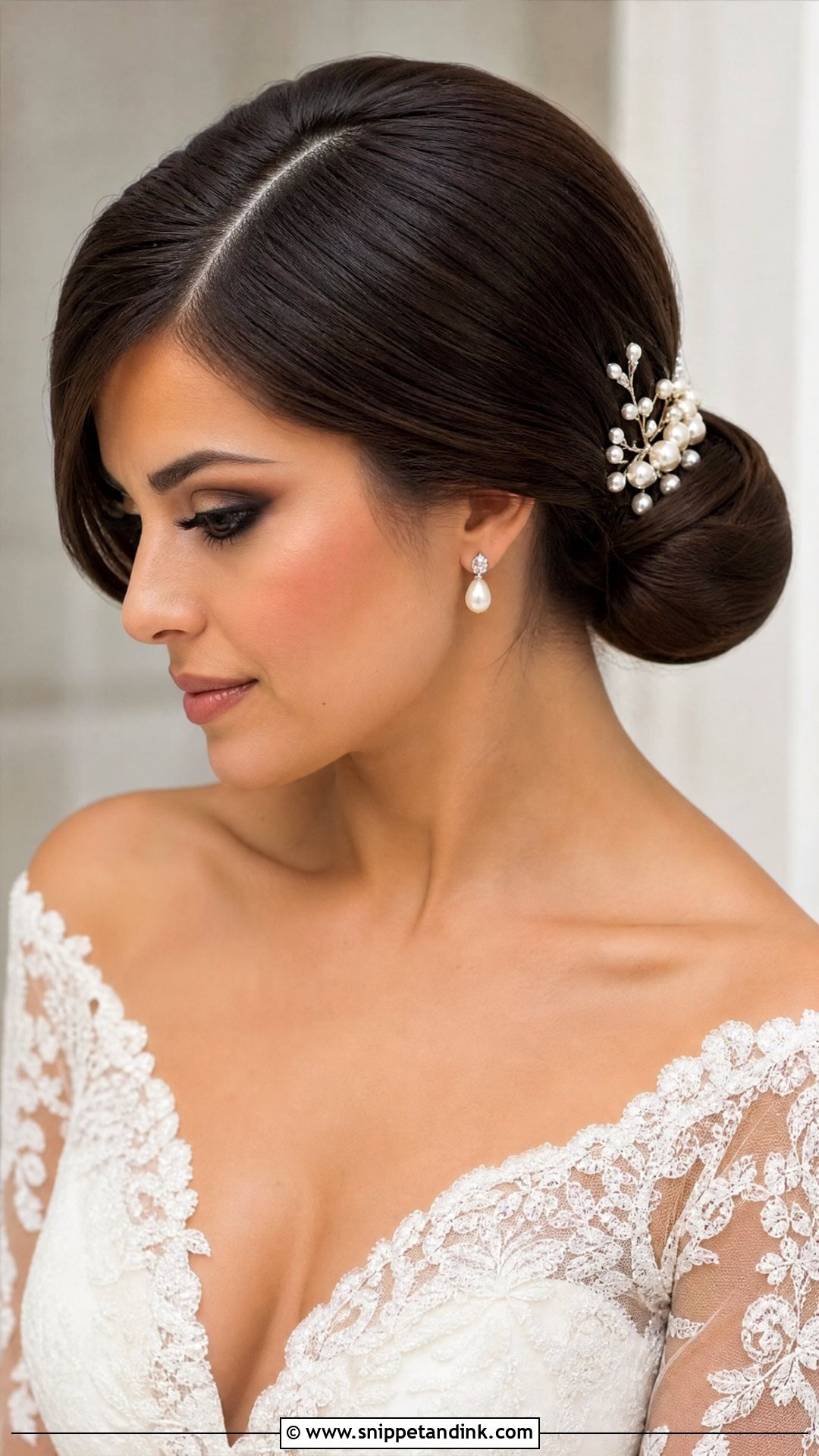
A side part adds movement near the face while the bun keeps the rest tidy. It flatters many face shapes because it breaks up the symmetry. Lace gowns, vintage-inspired dresses and indoor weddings suit it. Place the bun low at the nape or slightly off-center. Add a pearl comb near the bun for a bridal finish, and I’d leave a little softness at the hairline so it doesn’t look scraped back.
18. Sleek Straight Hair With Low Knot
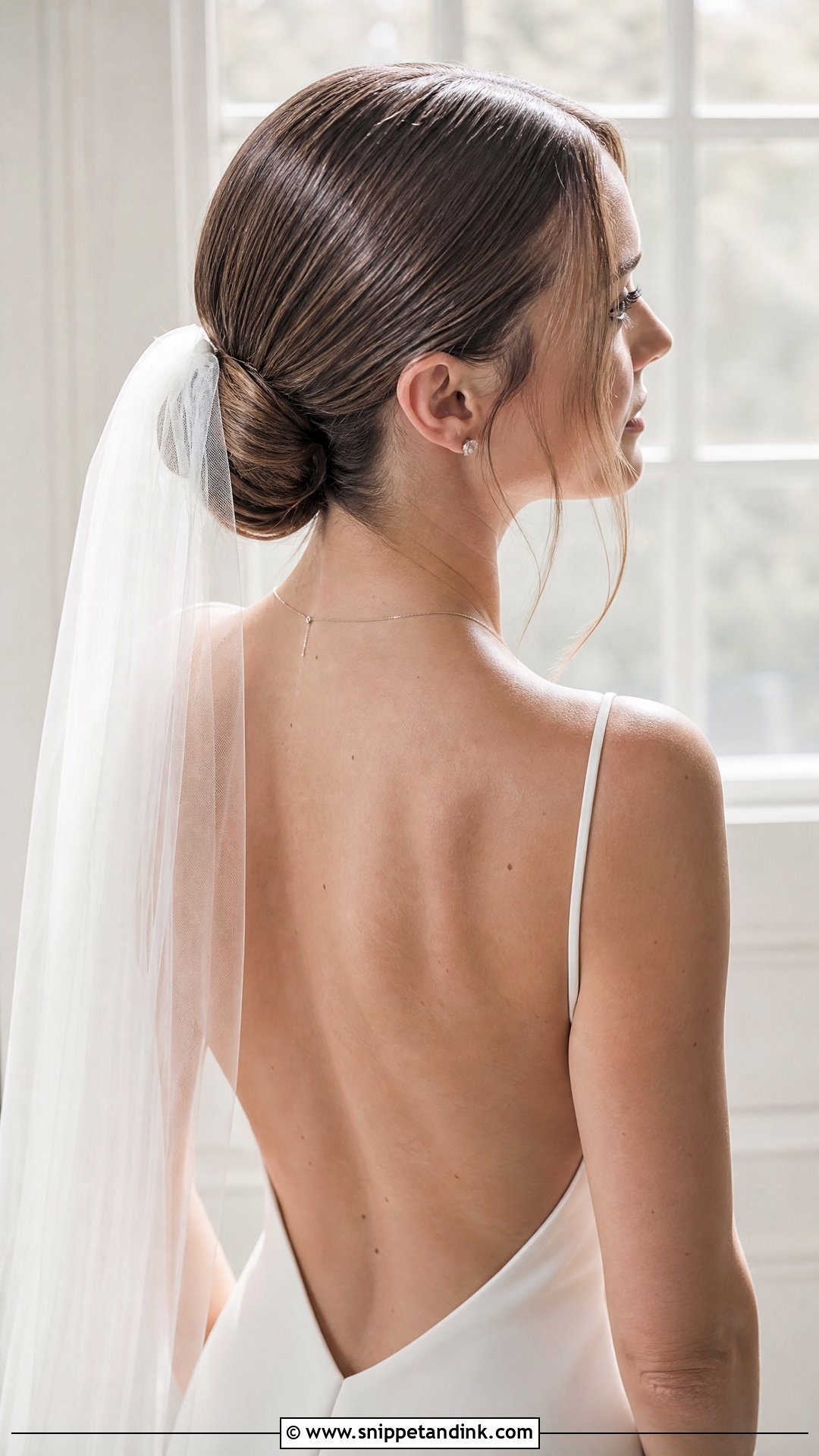
A low knot is a modern alternative to the traditional bun. It sits close to the nape with a clean, twisted shape, and straight hair gives it smooth lines. Minimalist gowns, open backs and long veils go well with it. It’s also one of the most secure styles here for a long ceremony and reception. I split the hair into two even sections before tying, and a little serum on each keeps the knot from looking dry.
19. Sleek Straight Hair With Long Layers
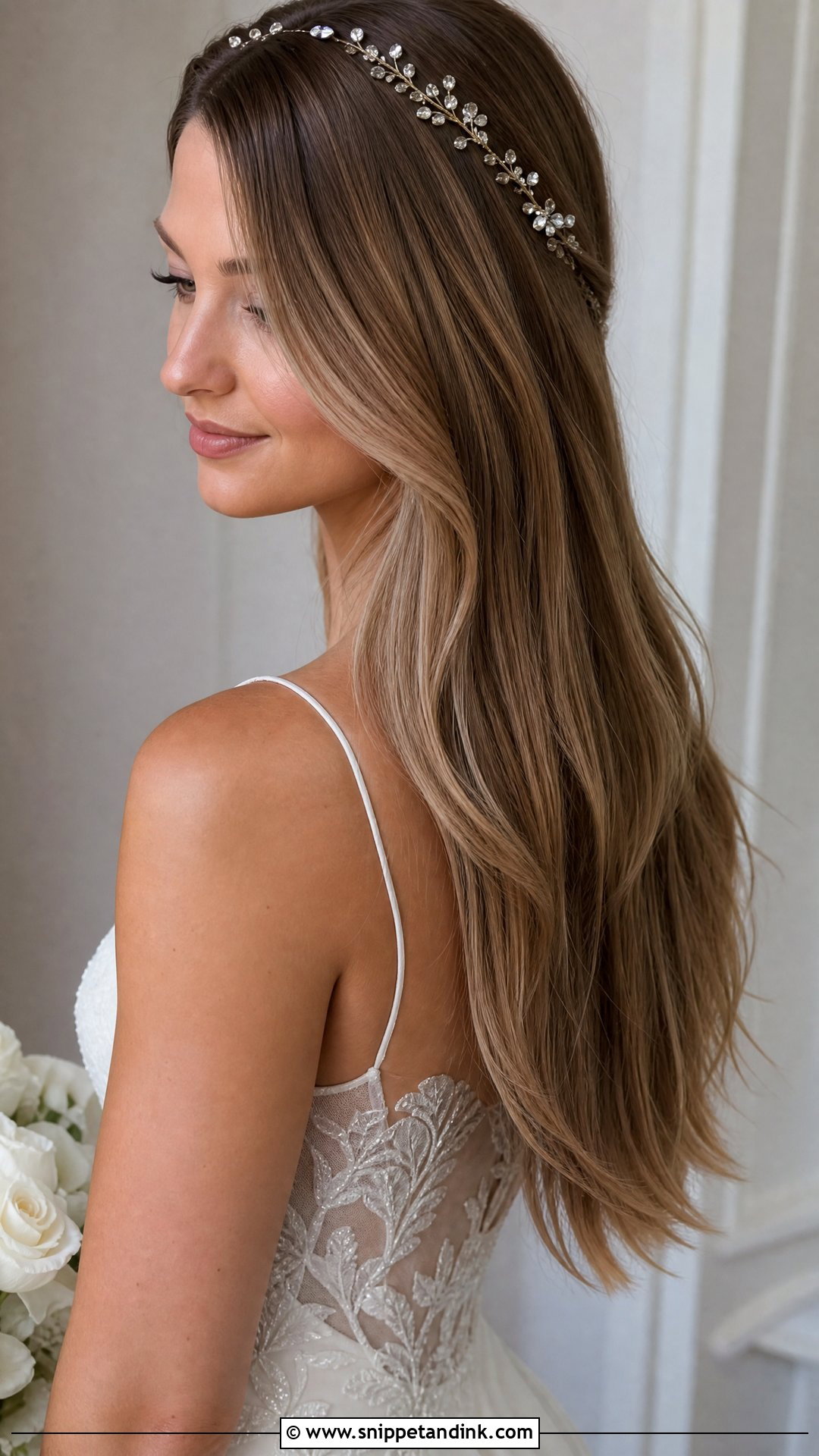
Long layers give straight hair movement so it doesn’t hang heavily. The layering needs to be subtle and blended through the lower length; choppy layers look messy when the rest is sleek. Brides who want their hair down but need a little shape around the ends suit this best. Veils, hair vines and small pins all work. I smooth the roots and polish only the ends with the iron, so the layers move a little when you walk.
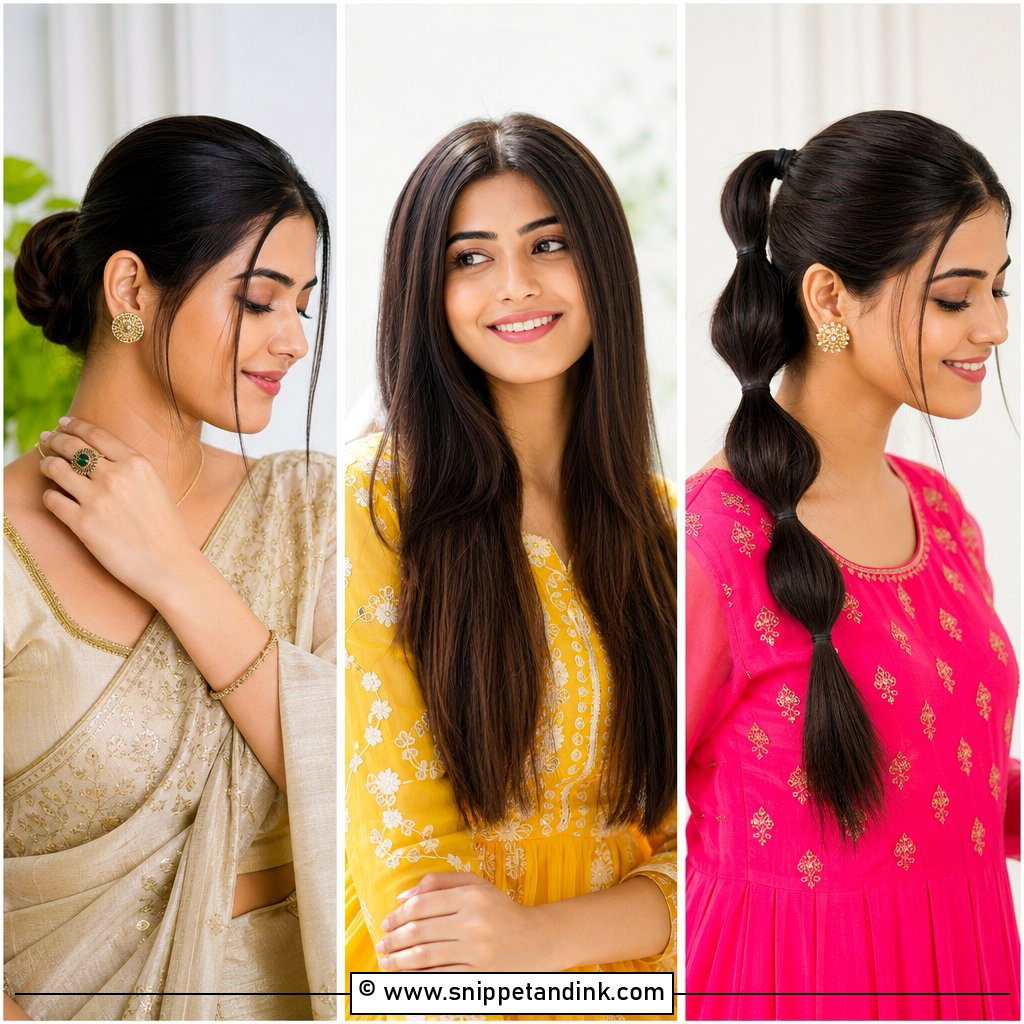
20. Sleek Straight Hair With Ribbon
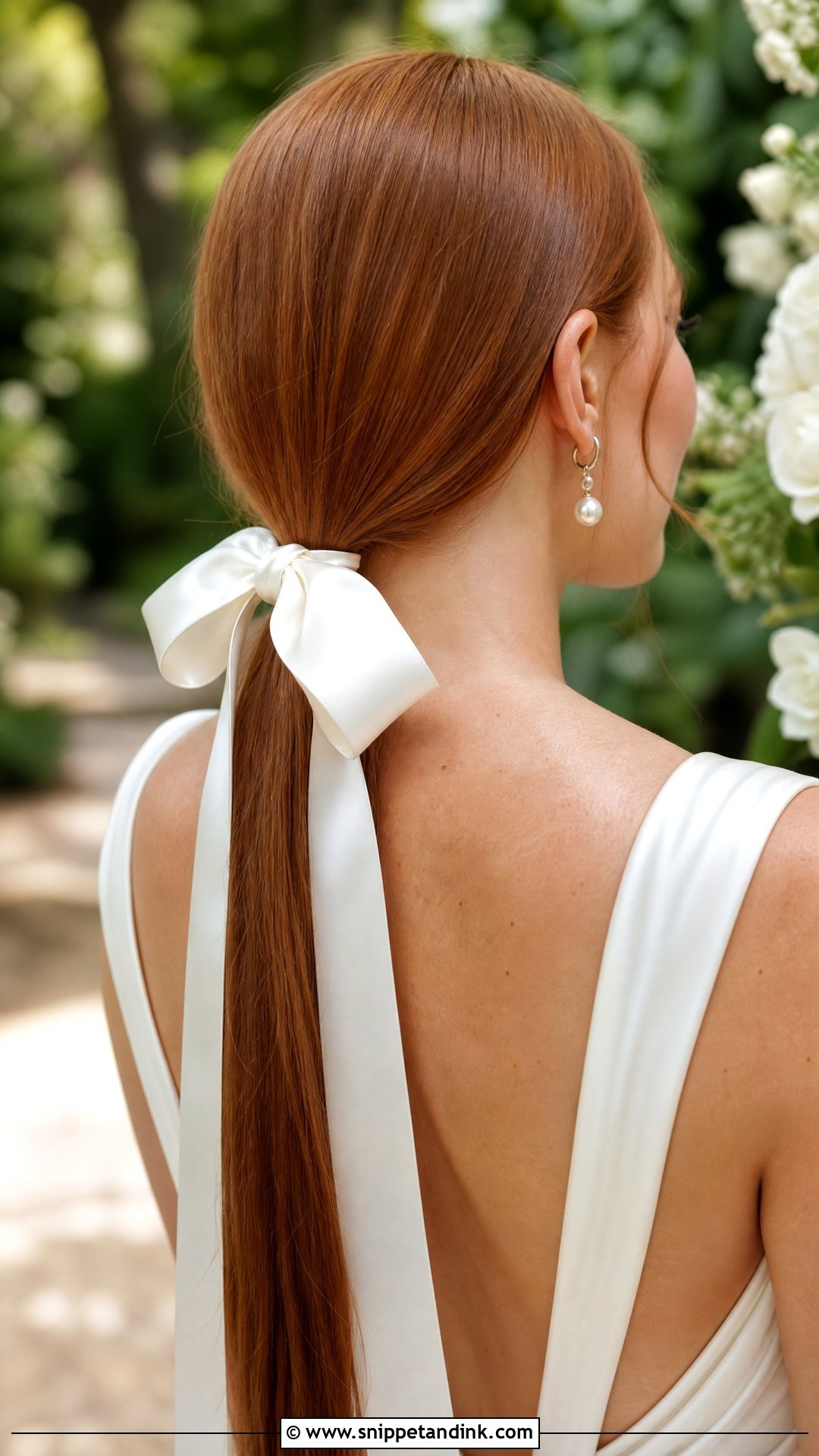
A ribbon gives straight hair a soft, personal touch. Tie it around a low ponytail, a half up section or the hair gathered loosely at the nape. Satin, silk and velvet can match the gown, bouquet or colour palette. Garden weddings, spring ceremonies and simple portraits suit it most. I tie the ribbon over a hidden elastic rather than on its own, because satin ribbon on silky hair slides loose within an hour. Keep the tails no longer than the hair itself, so the ribbon stays a finishing touch rather than the main feature.
A Hair Calendar for the Weeks Before the Wedding
Sleek styles depend on healthy hair more than any other look, and timing salon appointments well is half the result. This is the order I usually suggest, though your own colourist may adjust it.
- Two to three months out: your trial, so you know which style you’re preparing for.
- Three to four weeks out: a smoothing or keratin treatment if you want one, never closer. It needs time to settle and a few washes to lose the flat, just-treated look.
- One to two weeks out: colour and a trim, so the ends are fresh but have had time to lose any sharp line.
- About a week out: a gloss or deep conditioning treatment for shine.
- The night before: wash and dry, ideally with a smooth blowout, and sleep on a silk pillowcase.
If you’re new to keratin or any smoothing treatment, test it months earlier on a normal weekend. I’ve seen enough unexpected results to know the weeks before a wedding are not the time to try something new.
Straight Hair Is a Real Bridal Choice, Not a Fallback
Bridal hair doesn’t need curls to feel special. Straight hair with the right shine, part, accessory and hold can look as romantic as any updo, and it’s often the better choice if your hair refuses to hold a curl. From low buns and ponytails to glassy hair down and pearl accents, there’s a sleek option for every dress and venue. Pick the one that looks most like you on a good day, then give it the prep that keeps it looking that way in the photos.
You'll Like These Ideas:


Leave a Reply