
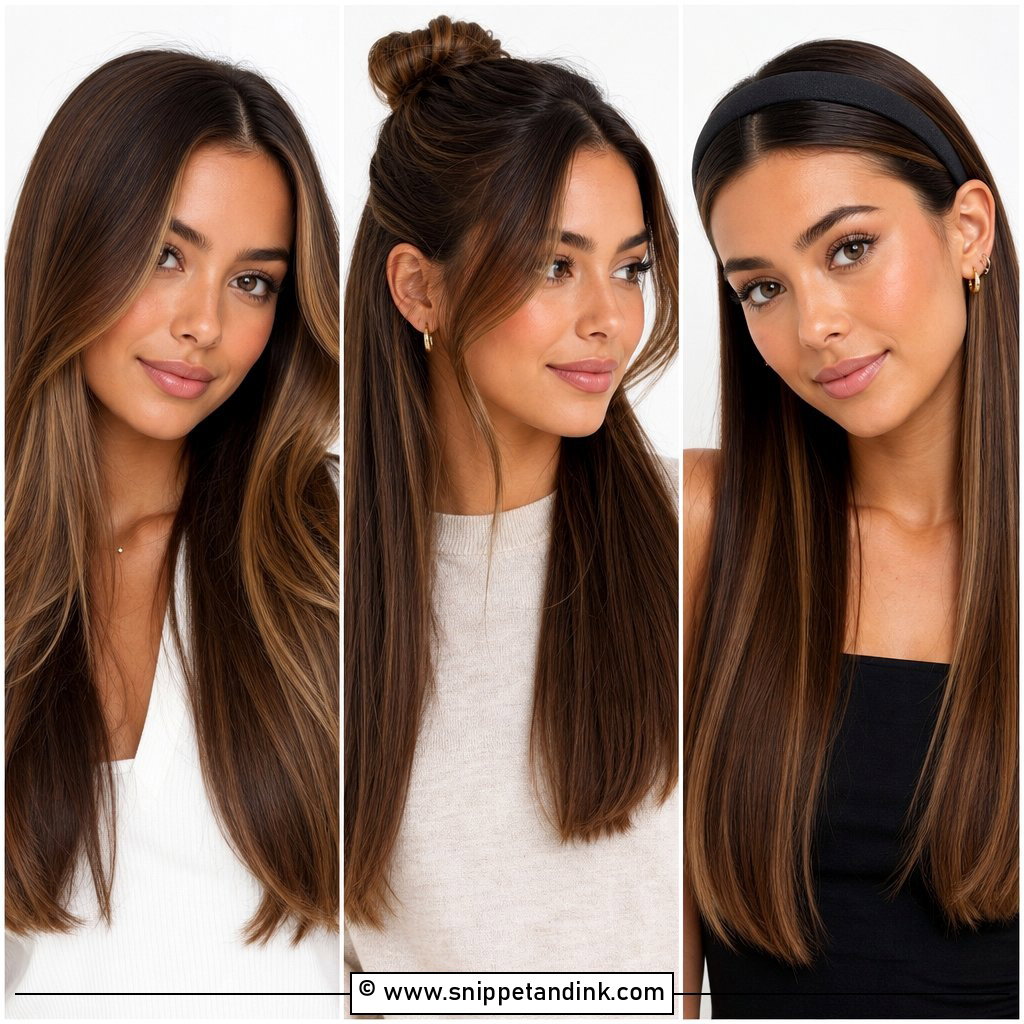
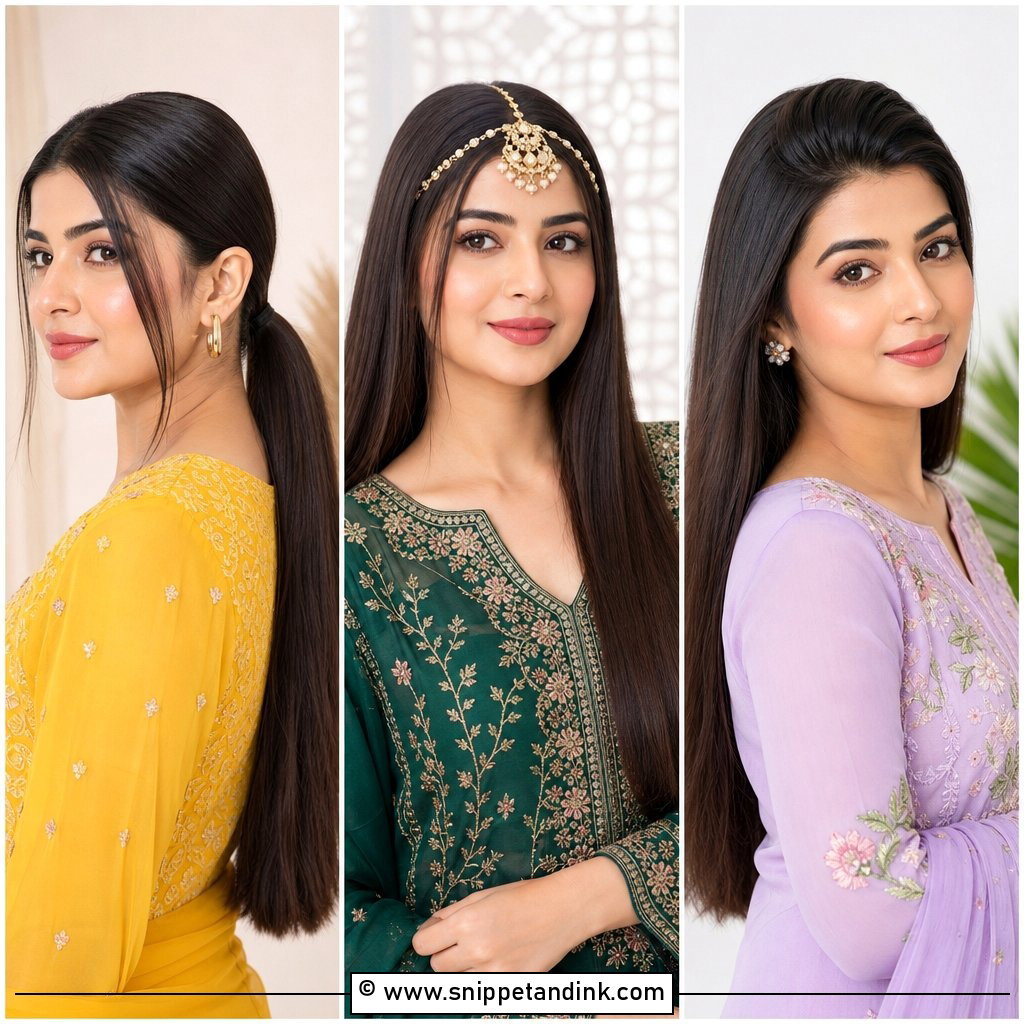
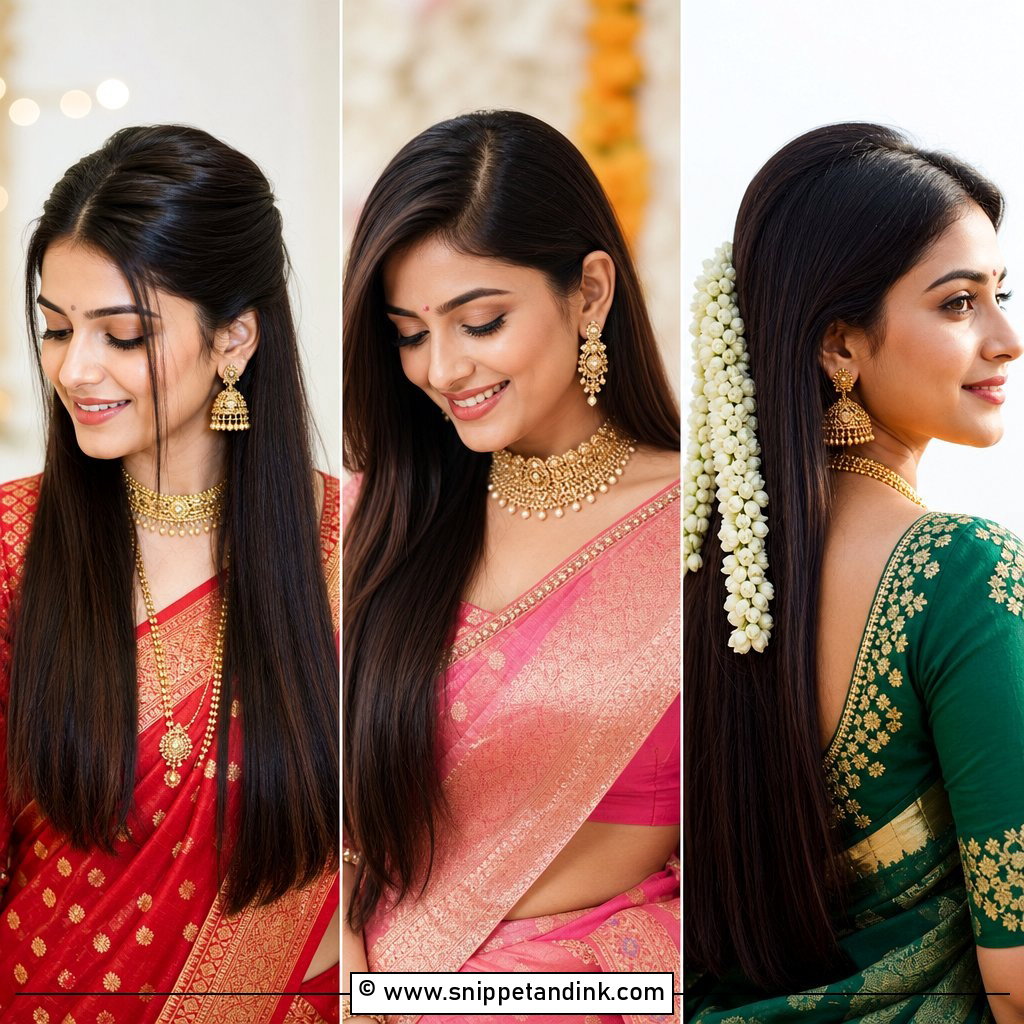
Straight hair is the texture I get the most apologies about at trials, and it shouldn’t be. It has a shine that curly and wavy hair can’t fake, and it shows a clean shape from across a room. The trouble starts when a bride tries to turn it into something else: curls set on very straight, fine hair often relax before the ceremony is over. I’d rather lean into what the hair already does well. A precise part, a glossy surface, a firm anchor underneath and one well-placed accessory carry a straight-hair style for a full day. The styles below suit brides, bridesmaids and guests, and I’ve noted where each one tends to struggle.
Why Silky Hair Slides Out of Pins, and What I Do About It
Straight hair has a smooth, flat cuticle. That’s where the shine comes from, and it’s also why a bobby pin pushed into clean straight hair can slide out within an hour. Nearly every straight-hair failure I see on a wedding day is a grip problem, not a styling problem.
So the prep starts the day before. I ask brides to wash the night before or that morning with a clarifying shampoo and to condition only the ends, never the roots. Silky conditioner on the scalp is the fastest way to lose a bun by the speeches.
- Texture spray or dry shampoo goes on the lengths before any pinning. It adds invisible grit without dulling the surface.
- I build an anchor first, usually a small ponytail or a pair of crossed bobby pins, and attach everything else to it.
- Pins go in crossed in an X, pushed against the direction the hair is pulled, so the weight locks them in.
- Heavy accessories get their own anchor. A crystal comb on a single pin will tilt by the first dance.
None of this shows in photos, which is the point. The surface stays sleek; the grip lives underneath.
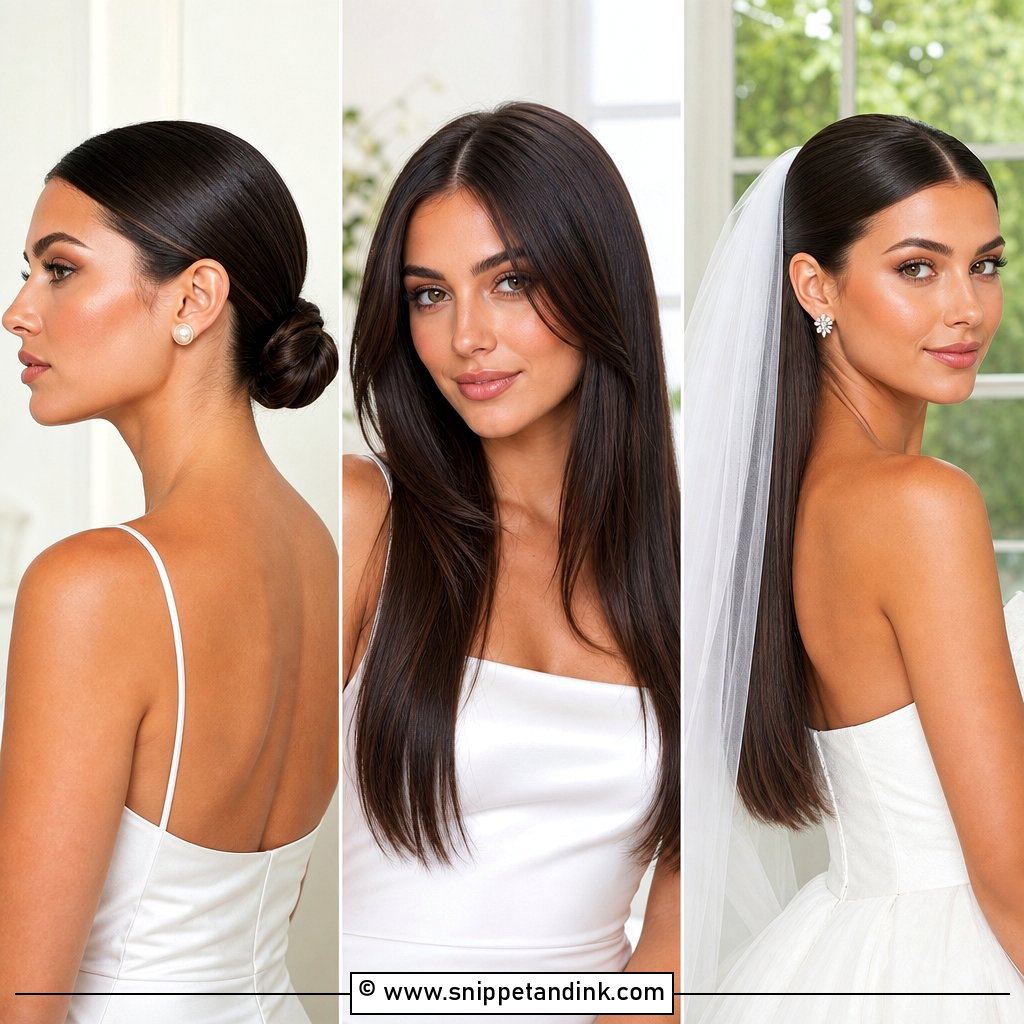
1. Sleek Low Bun Wedding Hairstyle With Straight Hair
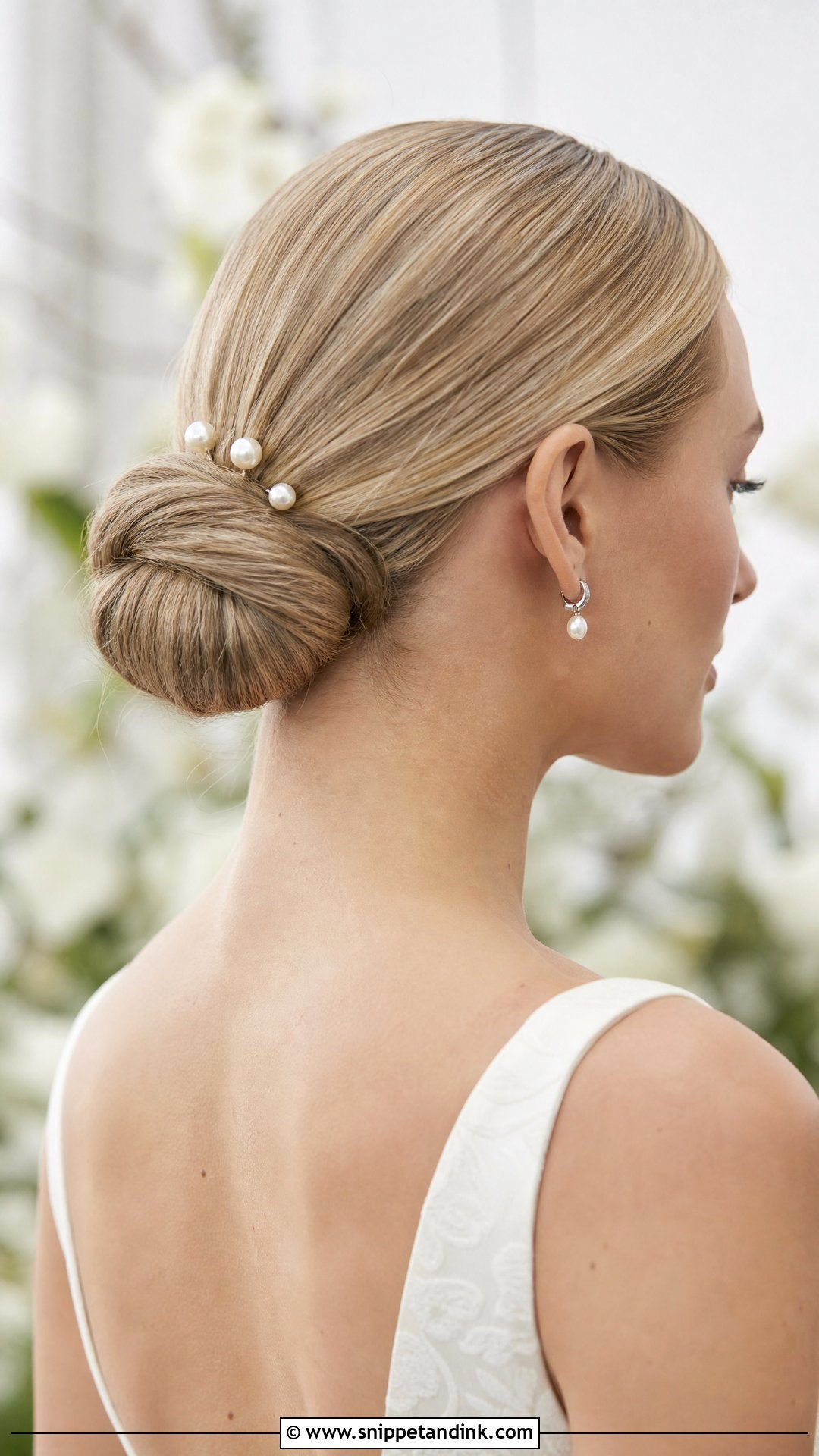
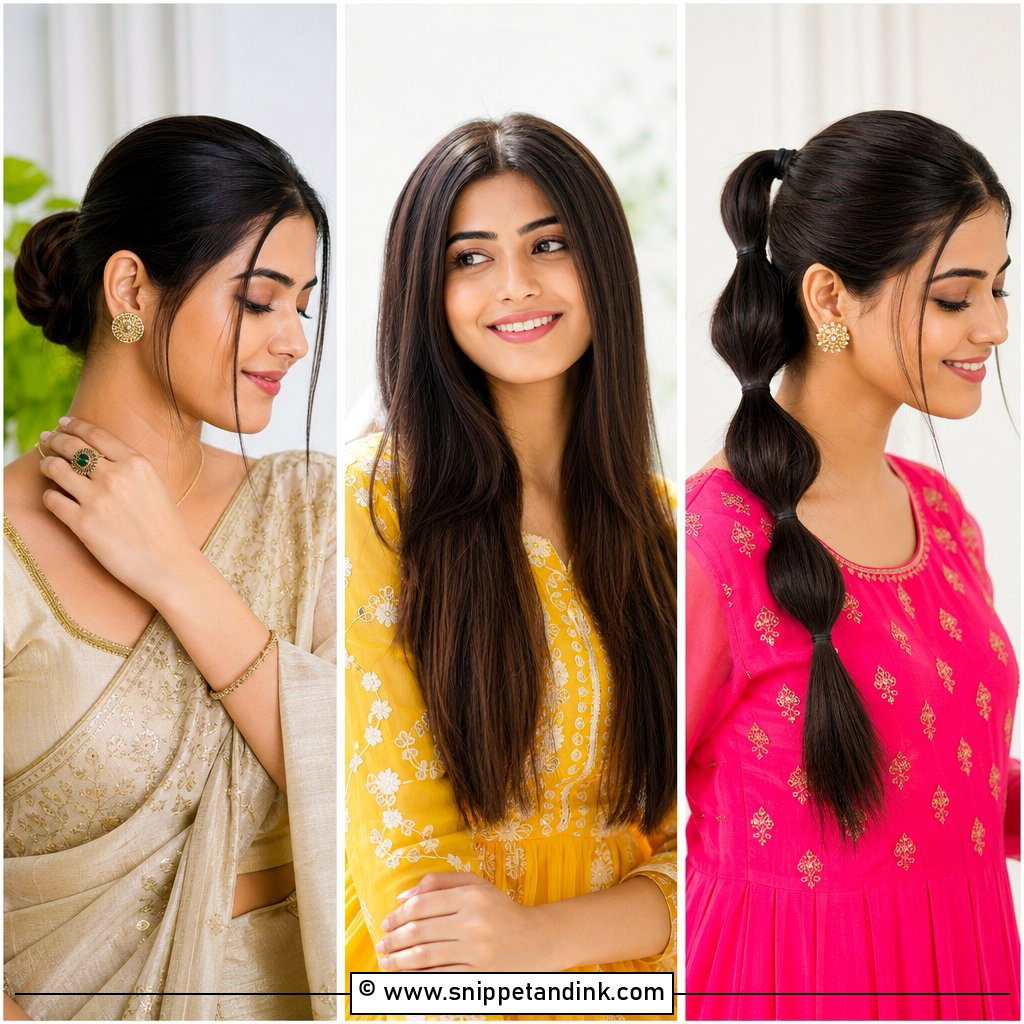
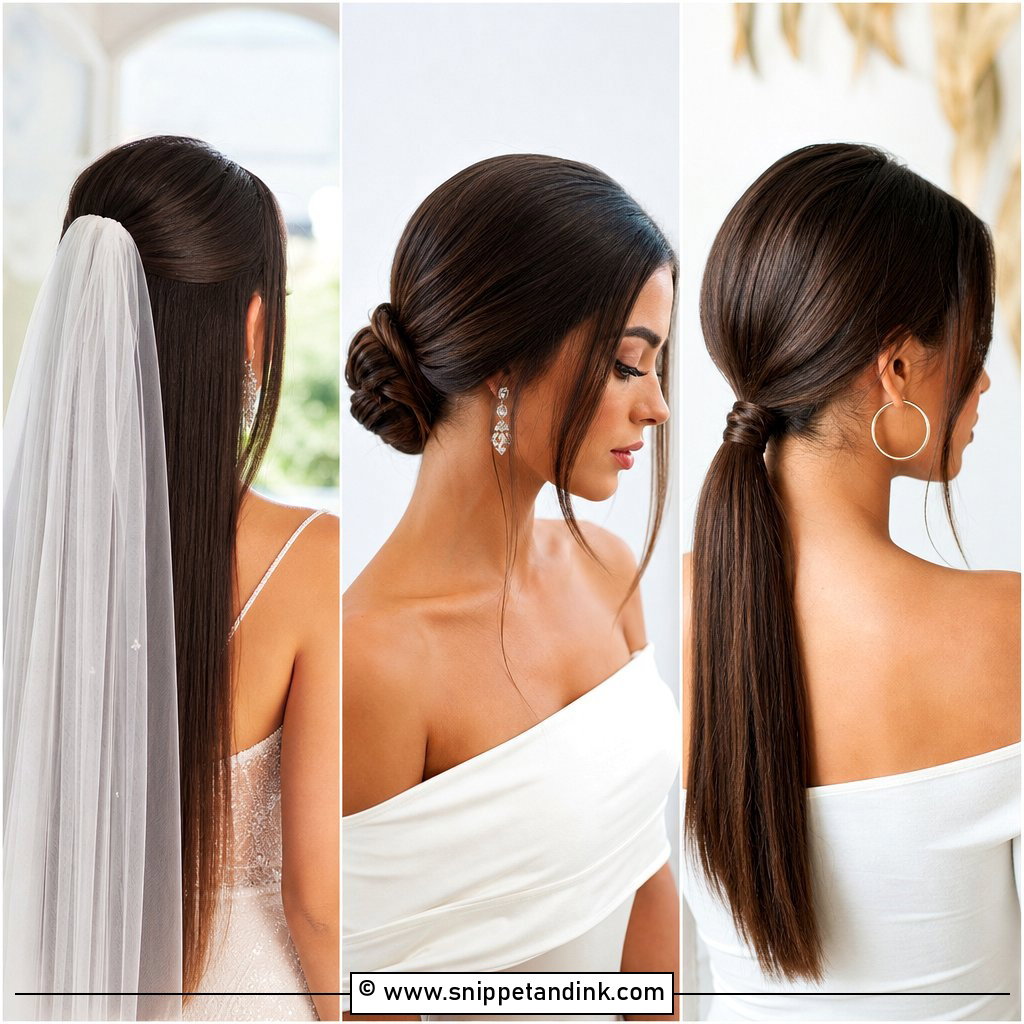
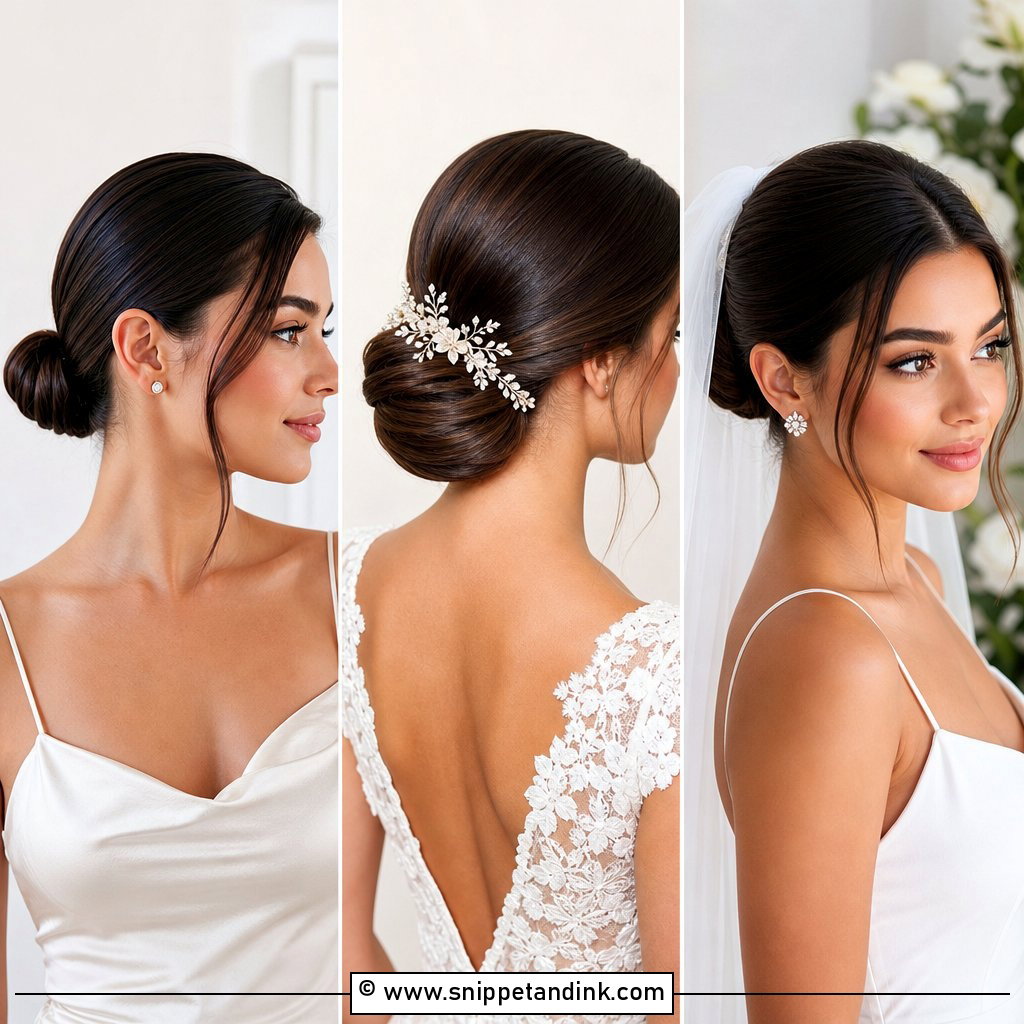
The sleek low bun is the style I reach for when a bride wants something that won’t need touching all day. The hair goes back smooth or from a center part and is gathered at the nape, which leaves the neckline completely open for strapless, high-neck, off-shoulder, and lace gowns. That knot is also the strongest base on the head for a veil comb or pearl pins. On fine hair I tuck a small padding donut inside so the bun reads at a distance; on thick hair I wrap it wider and flatter, because a tall heavy bun pulls at the nape by the reception.
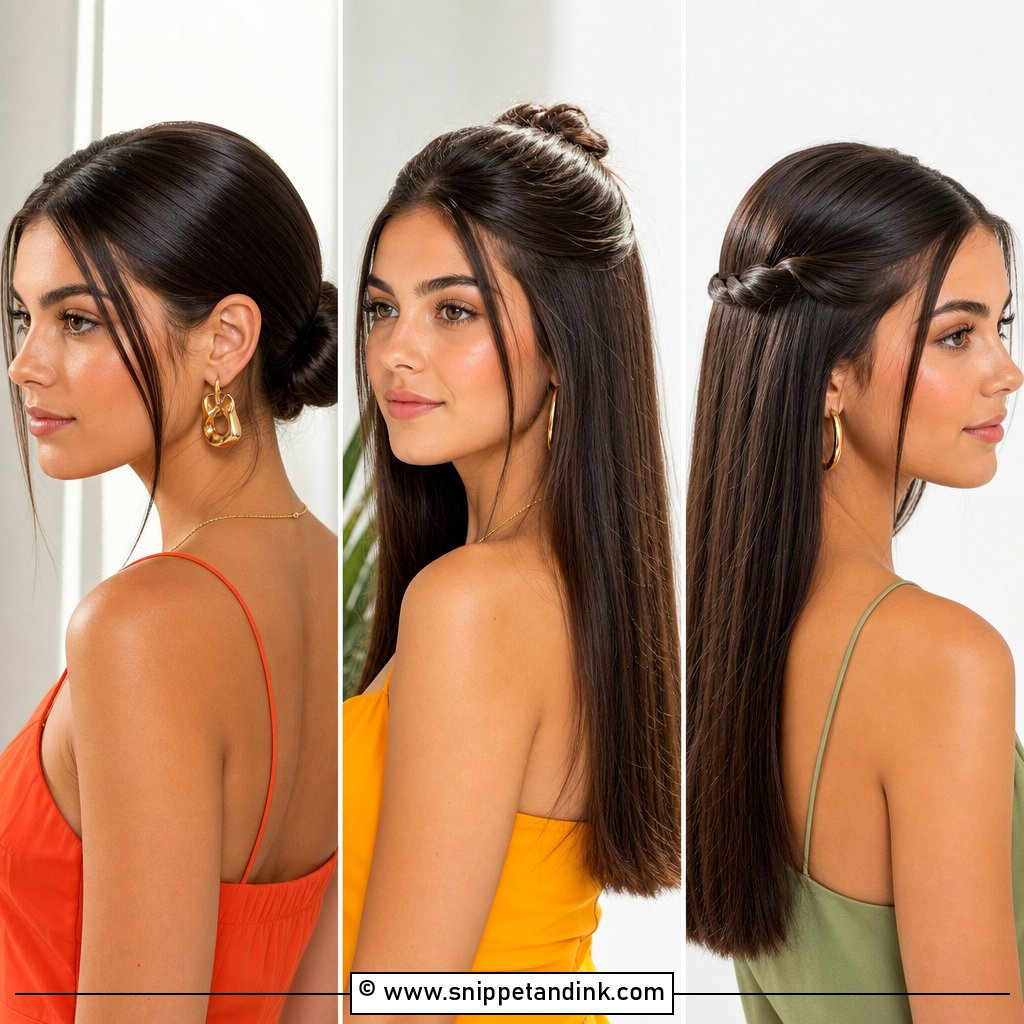
2. Straight Hair Low Ponytail Wedding Hairstyle
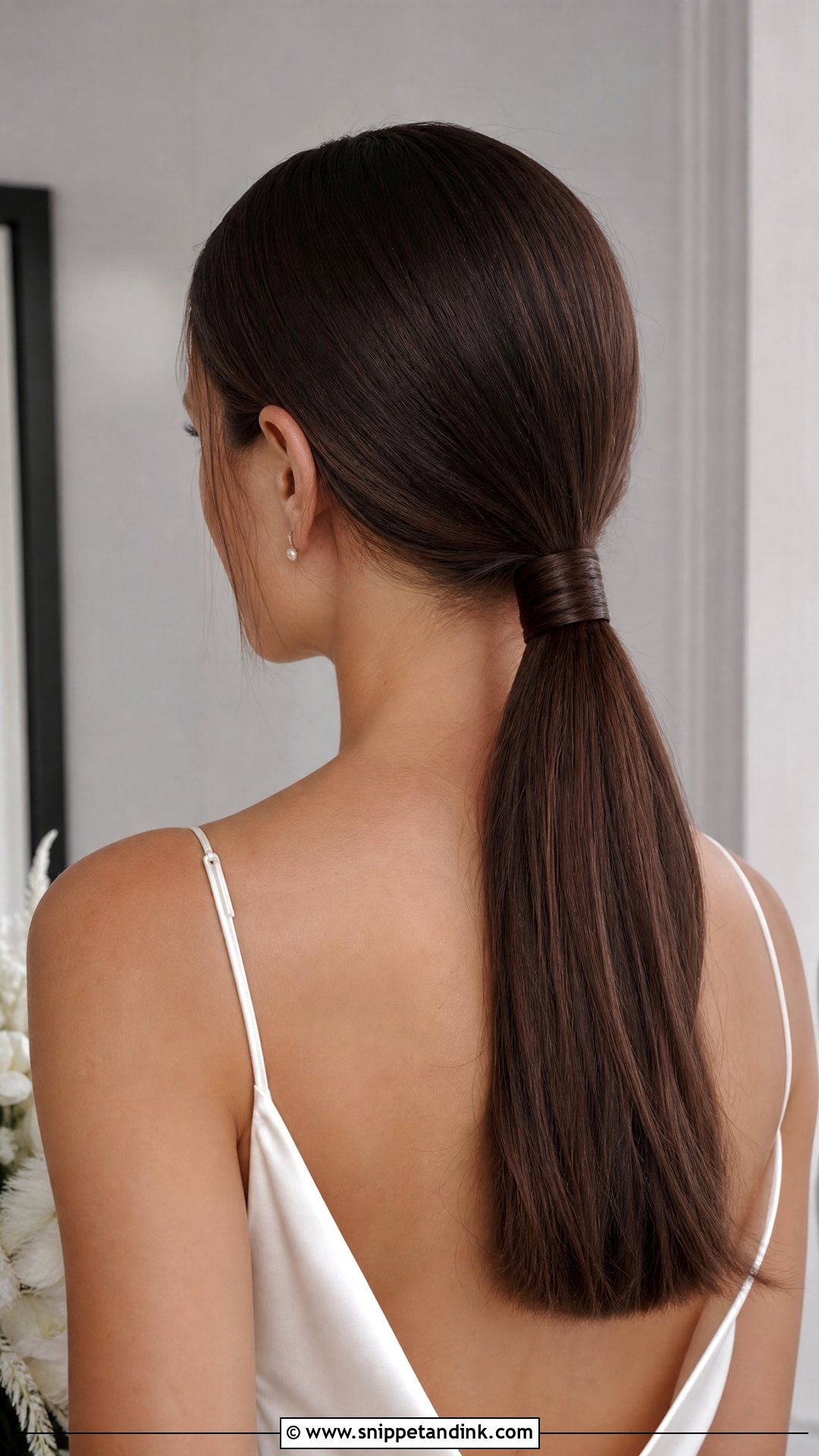
A low ponytail is quicker to finish than a bun and still reads as bridal once the elastic is hidden under a wrapped strand of hair. I smooth the crown, secure the tail, then pin the wrap underneath with two crossed pins so it can’t unwind. Open backs and statement earrings both suit it. Fine hair needs a little root lift at the crown first, or the head looks flat in side photos. With thick hair I set the tail lower, since a heavy ponytail sitting high starts to ache within a few hours.
3. Half Up Straight Hair Wedding Hairstyle
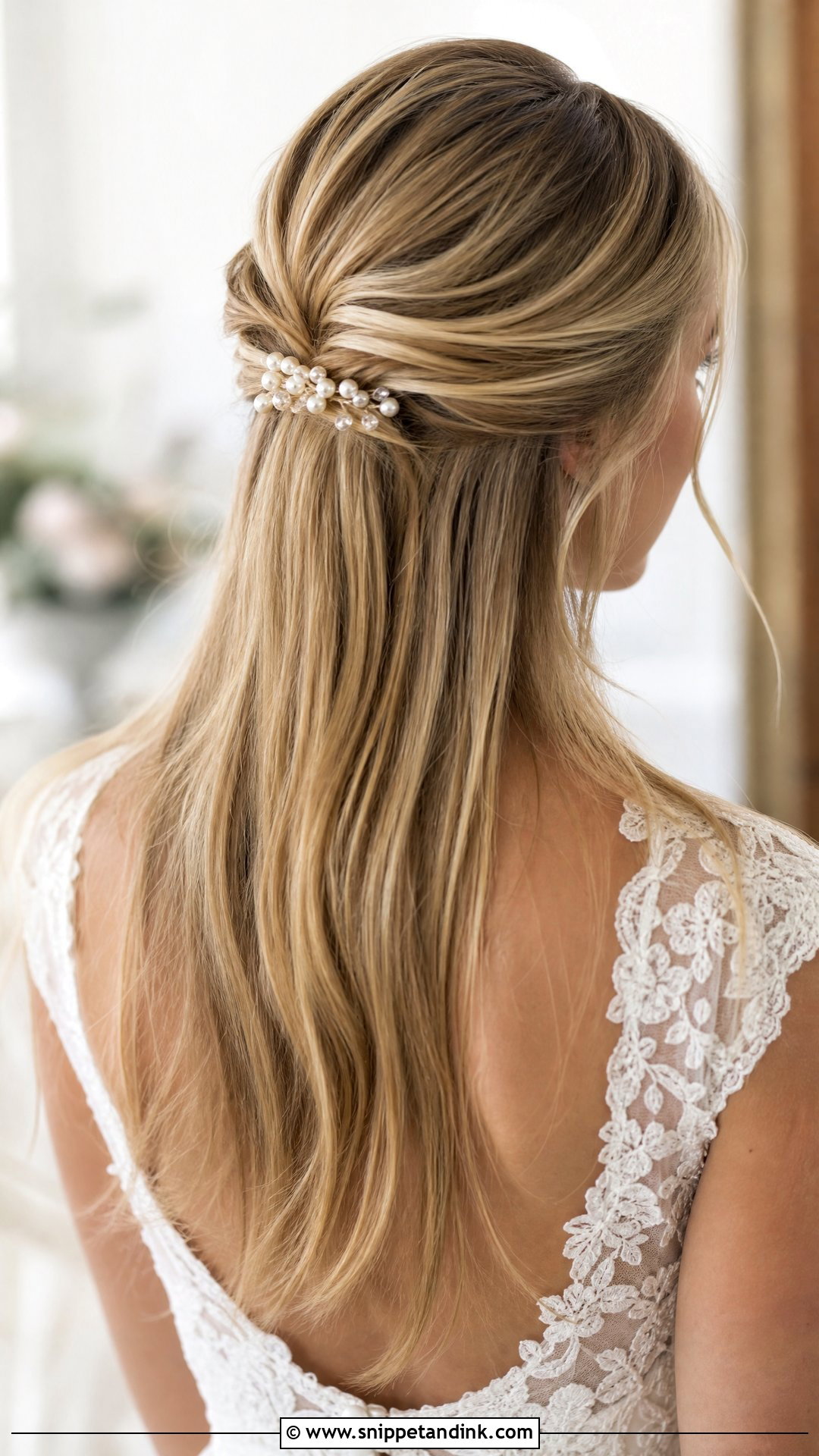
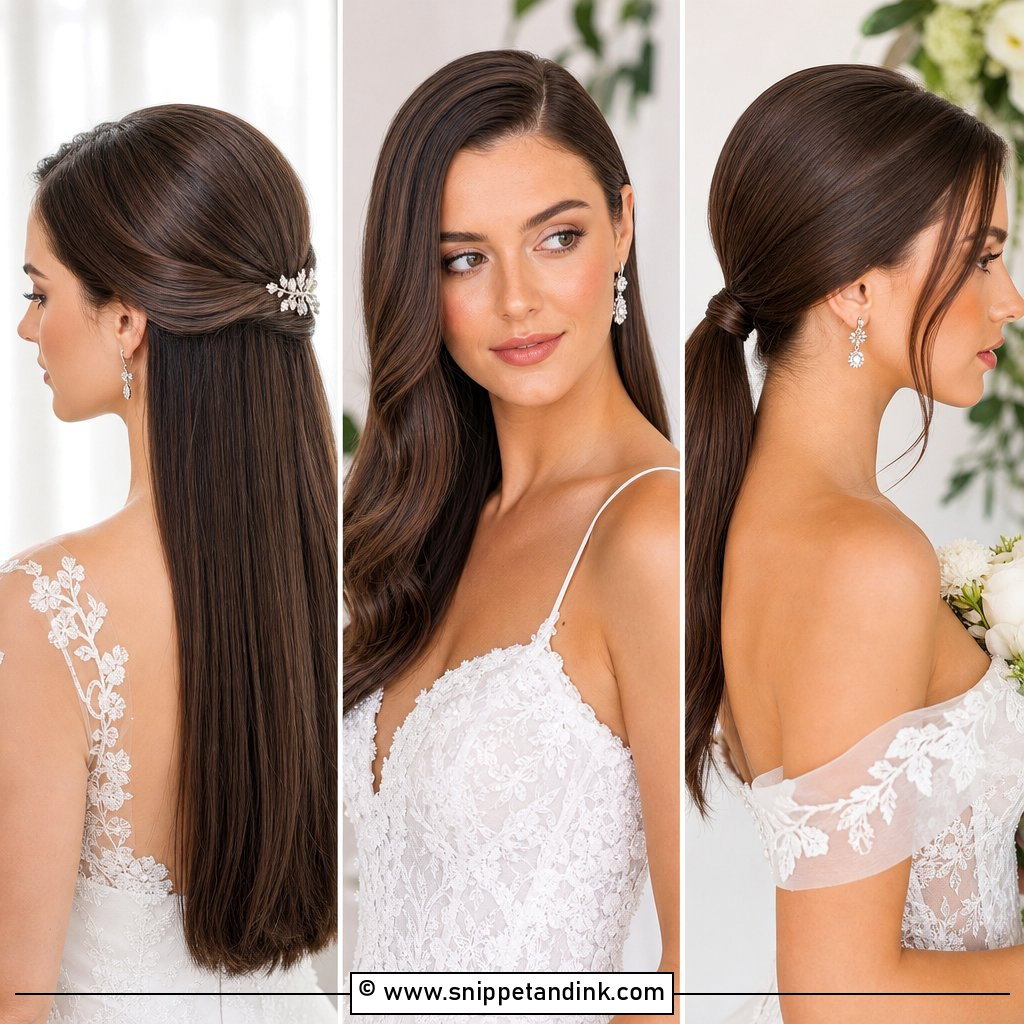
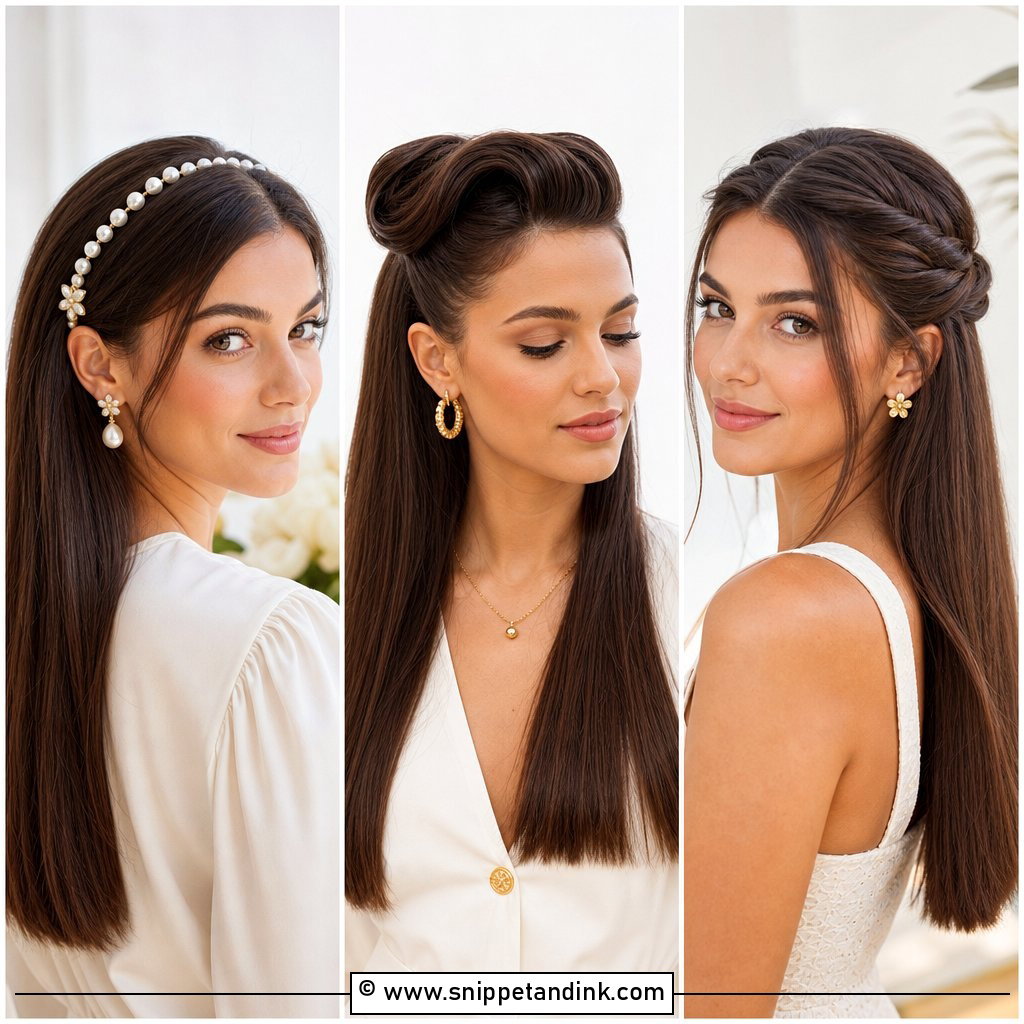
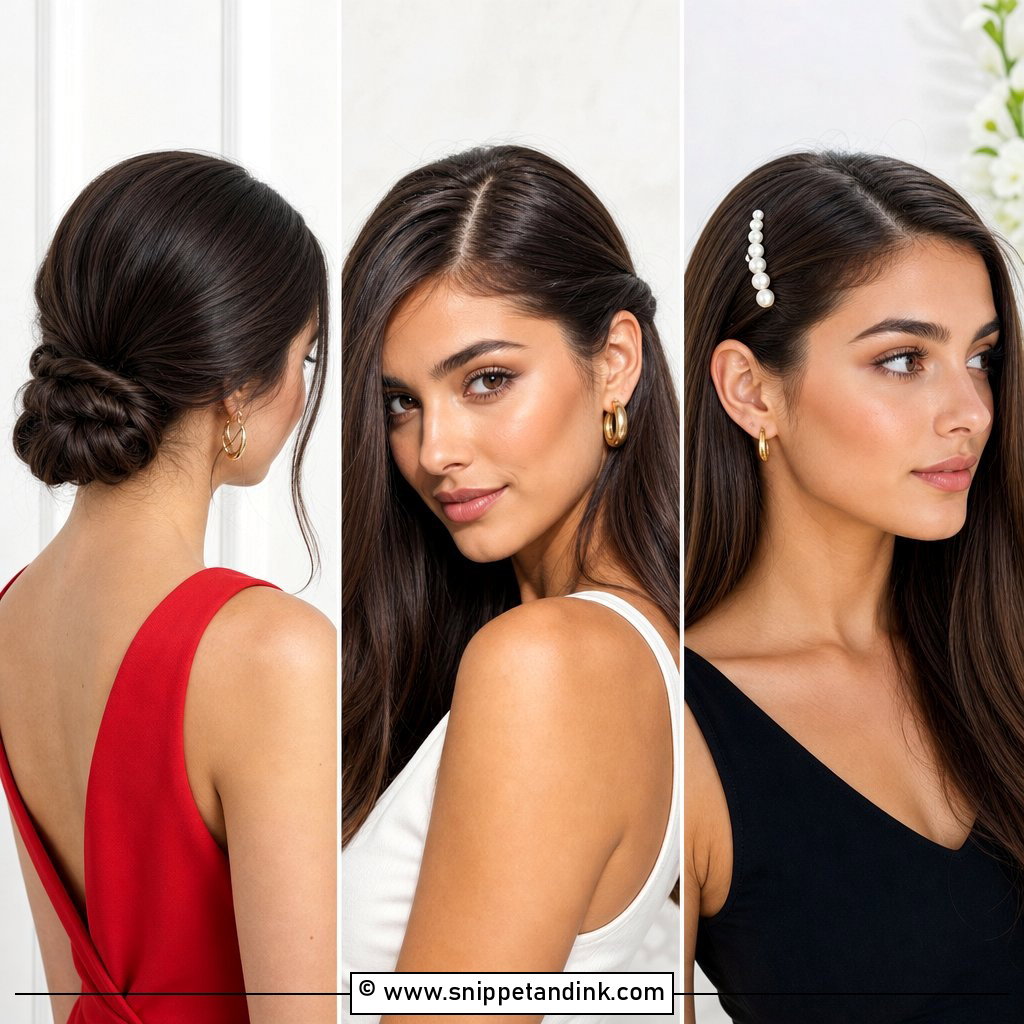
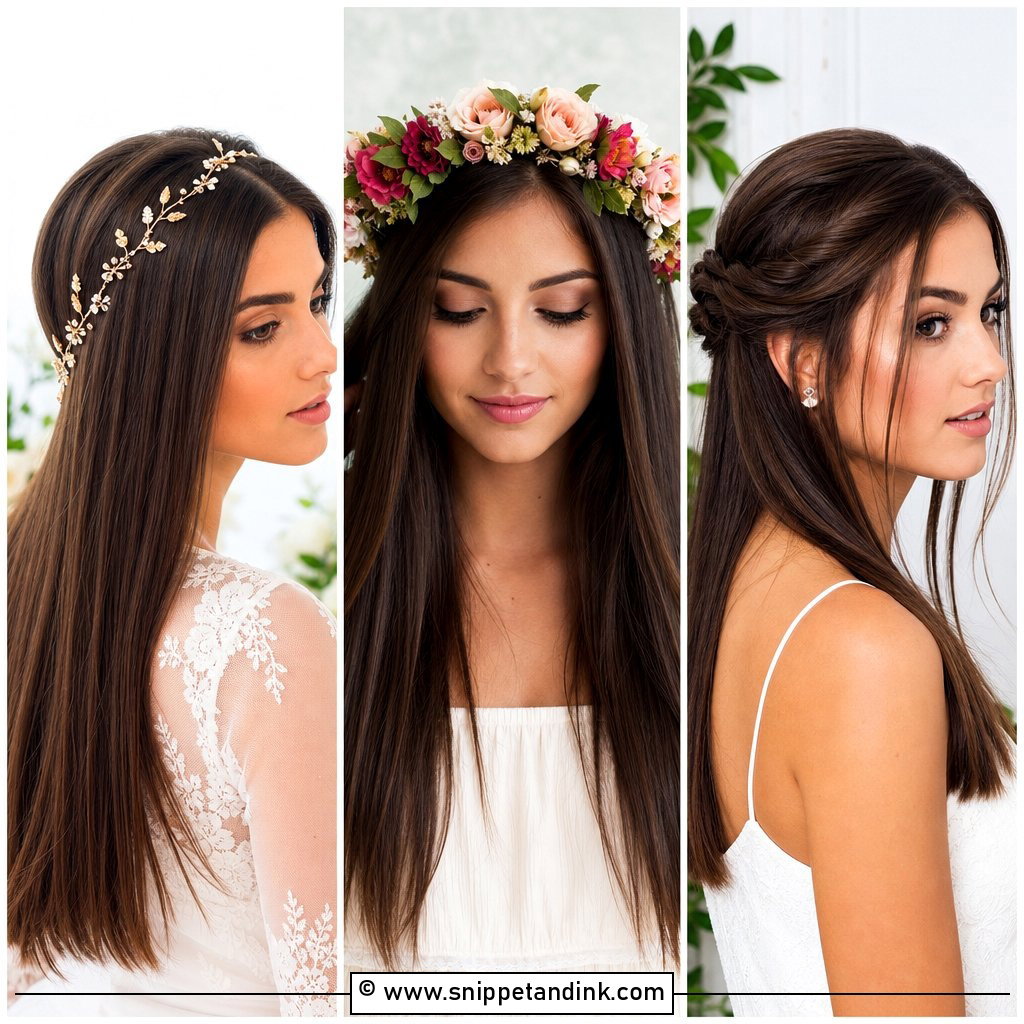
Half up gives you hair down without strands sticking to lip gloss during the vows. The top section can be pinned softly at the back, twisted in from the sides or held with a pearl clip, while the length below stays glossy and smooth. The weak point on straight hair is the clip itself: a heavy barrette slides down silky hair within an hour. I build a tiny anchor first, either a mini ponytail or two crossed bobby pins, and attach the clip to that. Keep a little lift at the crown so the profile doesn’t look flat. It’s an easy pick for bridesmaids, too, because it photographs well from the front and the side.
4. Straight Hair With Middle Part Wedding Hairstyle
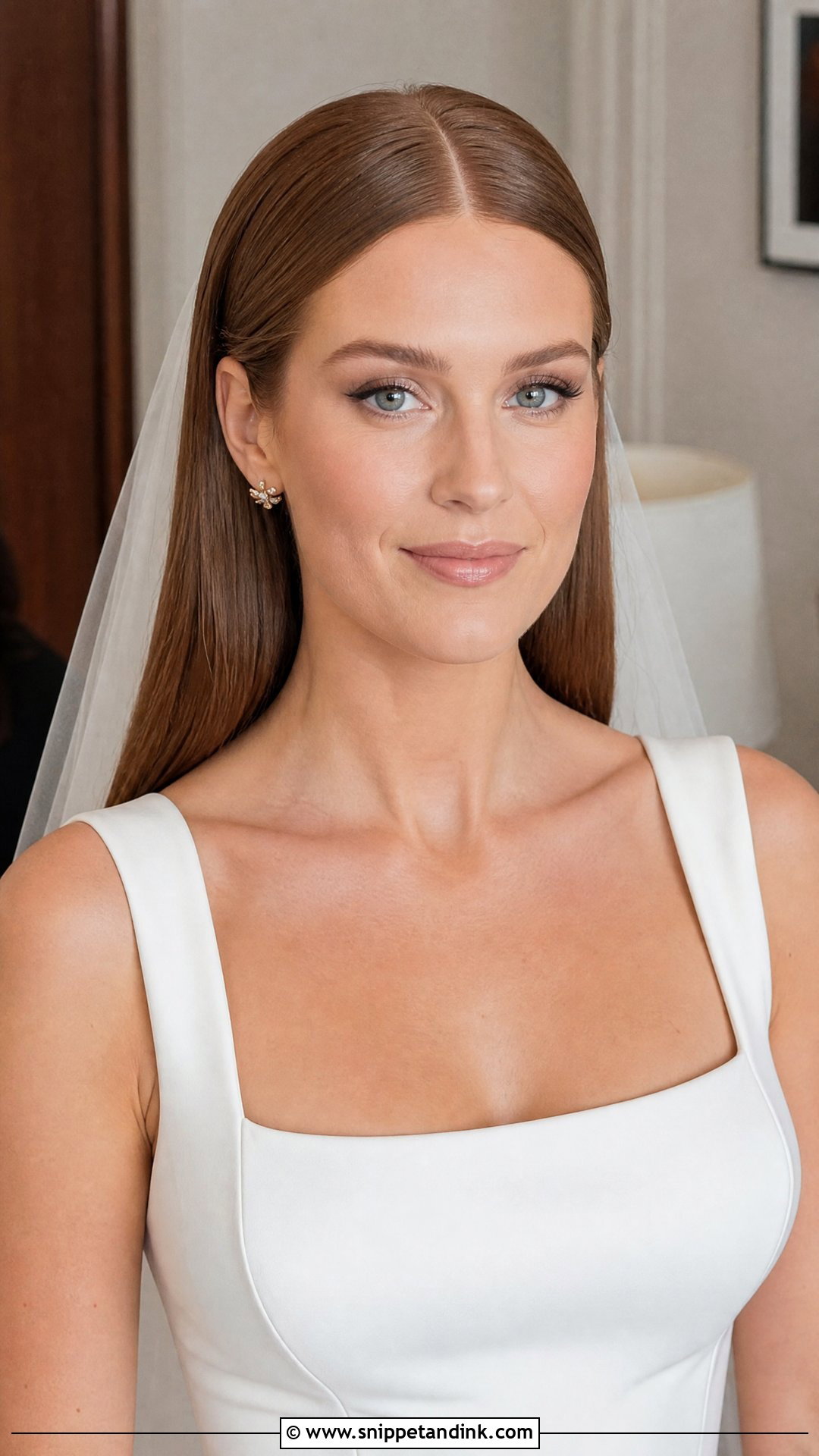
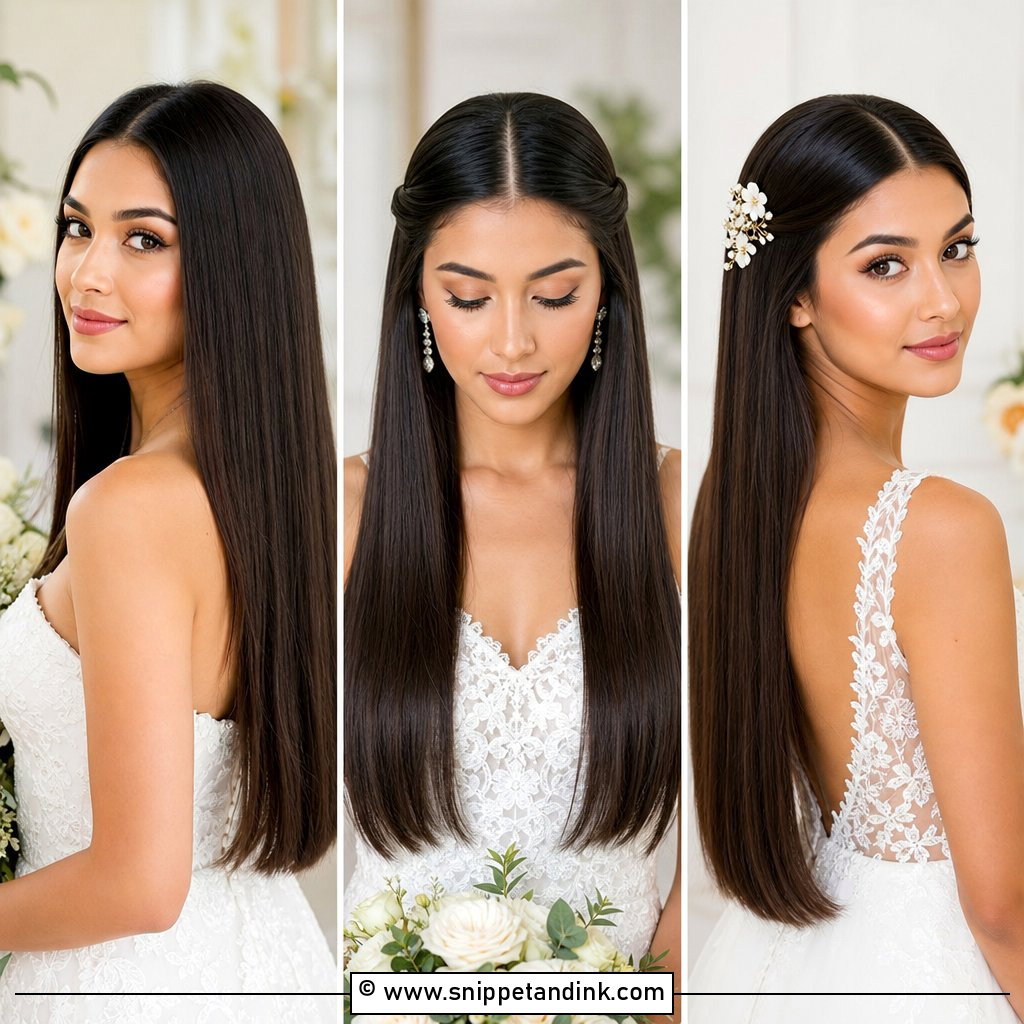
A middle part is unforgiving, and that’s what makes it look so deliberate. Every frizzy hair along the part line shows, so I smooth the roots with a flat brush and a dab of cream before anything else. Wear it fully down, tucked behind both ears, or with a veil set low at the back. Satin gowns, square necklines and simple jewelry suit it. Book your trim about two weeks out so the ends are crisp but have settled, then finish with a light shine spray held well away from the hair so it doesn’t clump.
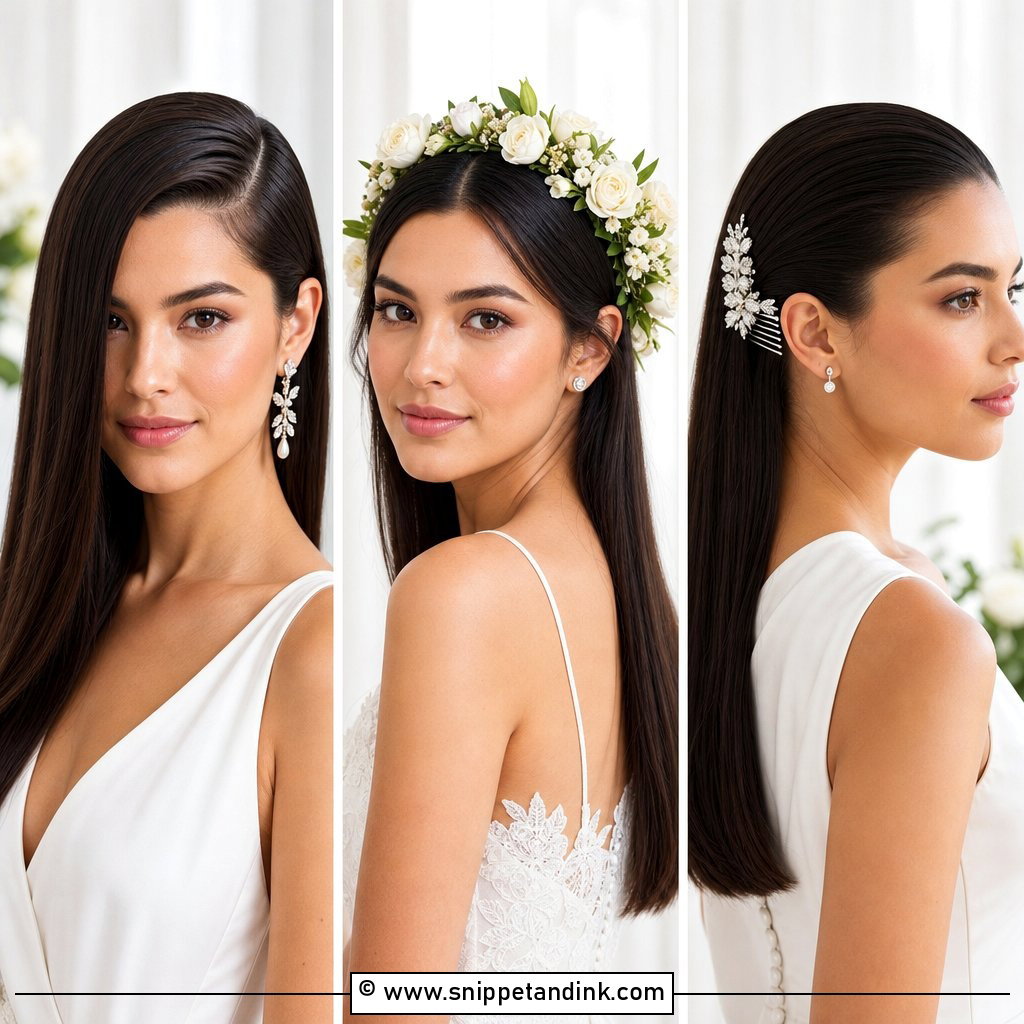
5. Straight Hair With Side Part Wedding Hairstyle
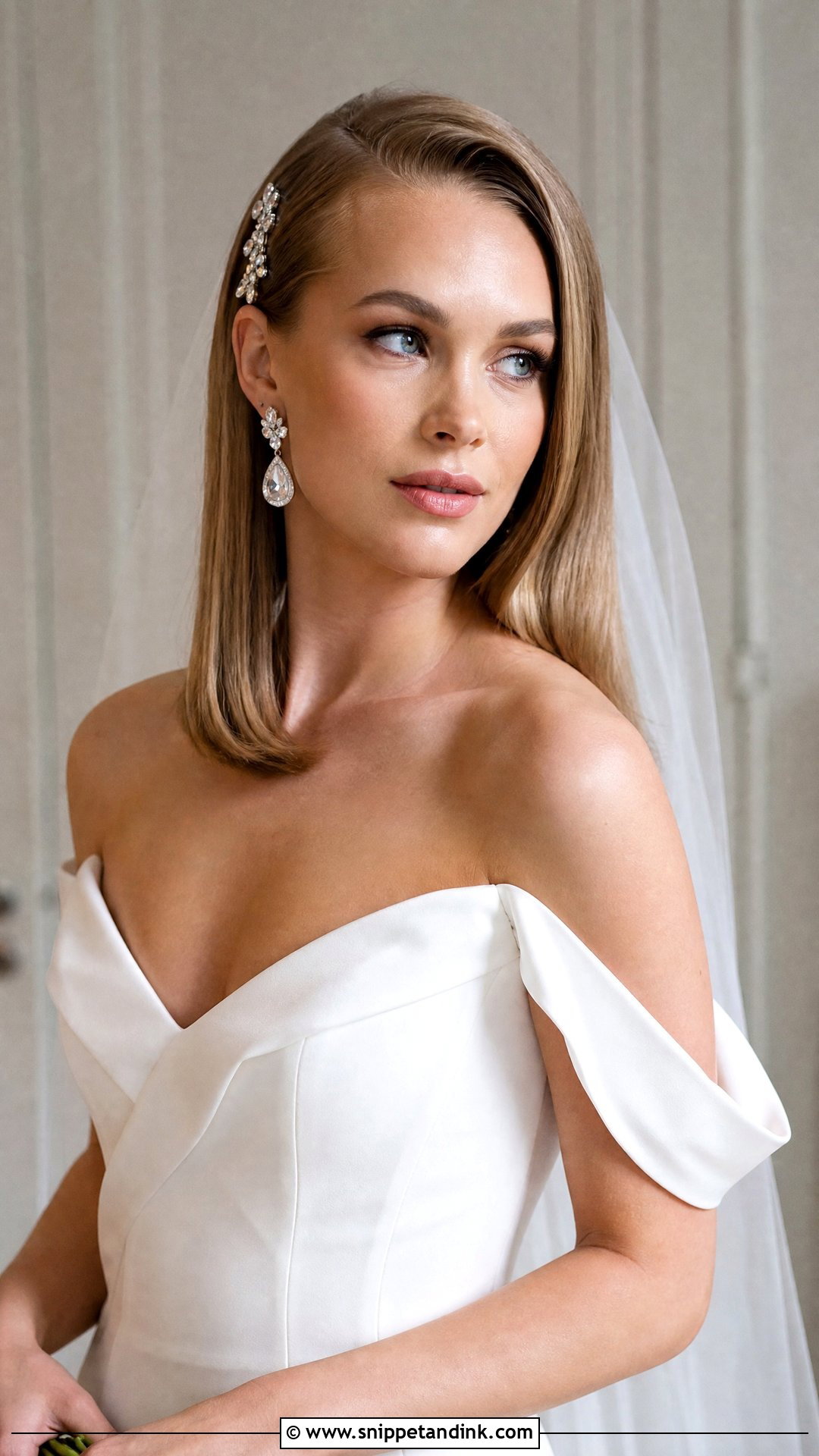
Most straight-haired brides already have a natural part, and I nearly always use that side for a deep side part. Force a part against the growth pattern and it springs back by mid-afternoon. One side tucks behind the ear to show an earring, the other falls across the cheekbone for a little softness without adding waves. Long, medium and shoulder-length hair all work. Combs and crystal pins sit best on the tucked side, where there is more hair behind the ear to grip.
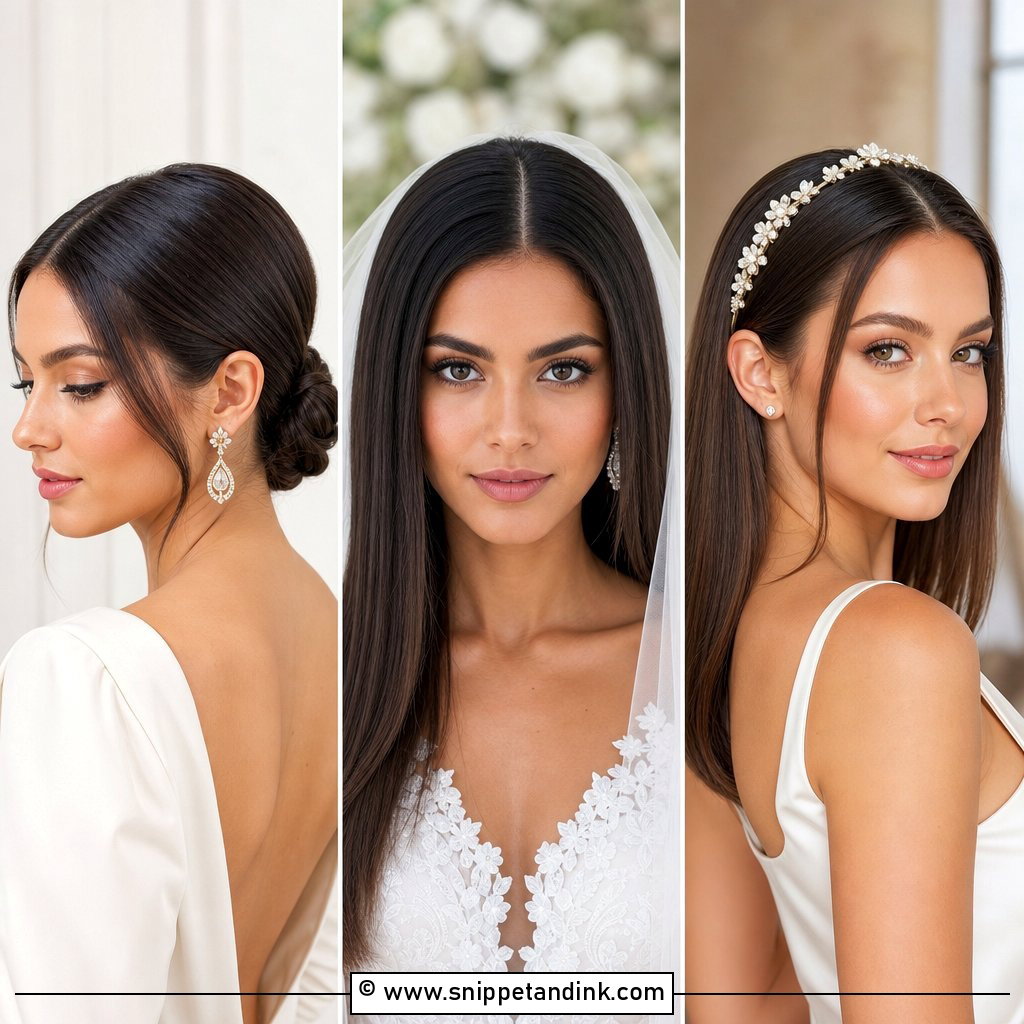
6. Straight Hair Chignon Wedding Hairstyle
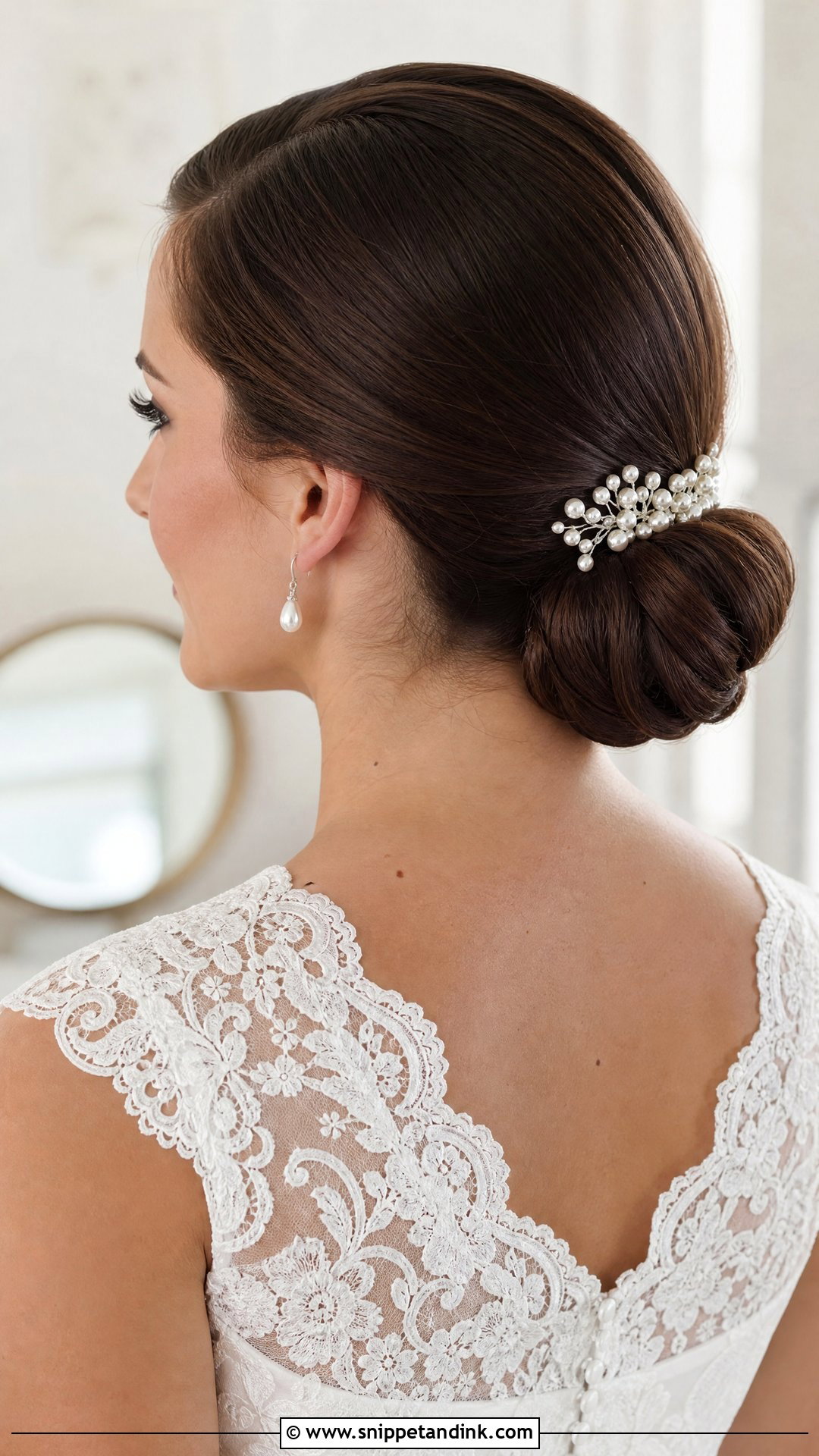
Unlike a textured chignon, this version keeps the surface smooth and the shape controlled. I gather the hair low, twist it and pin it into a rounded knot, then add the veil, tiara or floral comb last. Silky straight hair will push pins straight out, so I mist texture spray on the lengths before twisting; you won’t see it, but the pins grip. Once it’s set, the chignon keeps hair off your face through hugs, photos and the first dance, and it barely moves until you take it down.
7. Straight Hair French Twist Wedding Hairstyle
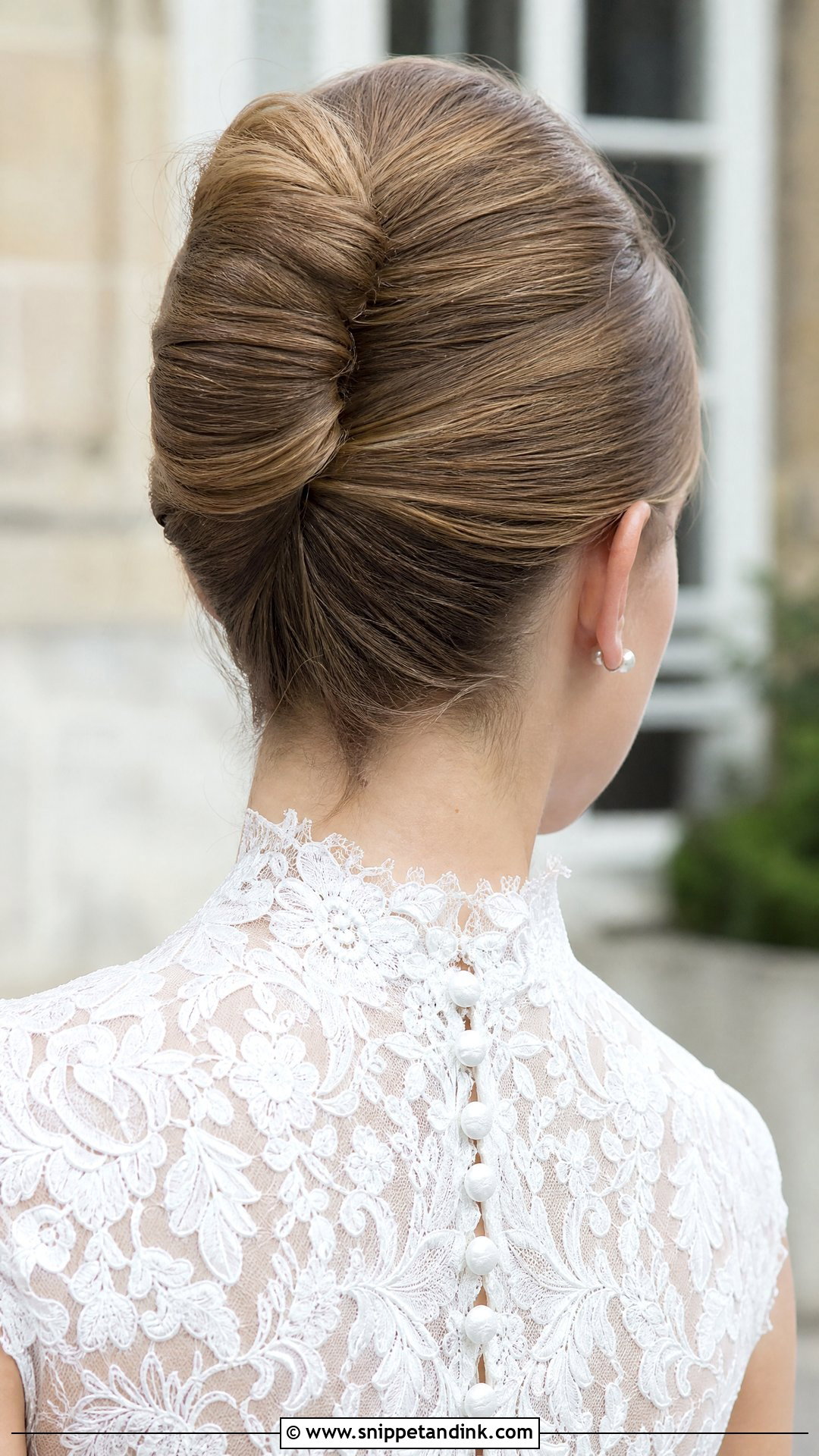
A French twist suits medium to long straight hair that is long enough to fold back on itself; shorter layers tend to poke out of the seam. The vertical roll lifts the profile, which is why it does so well in side-angle photos. I set a row of pins along the inside of the fold, hidden, before the top is tucked in. Fitted gowns and vintage dresses pair naturally with it. If the finish feels severe, I pull out two soft pieces at the temples.
8. Straight Hair With Pearl Pins Wedding Hairstyle
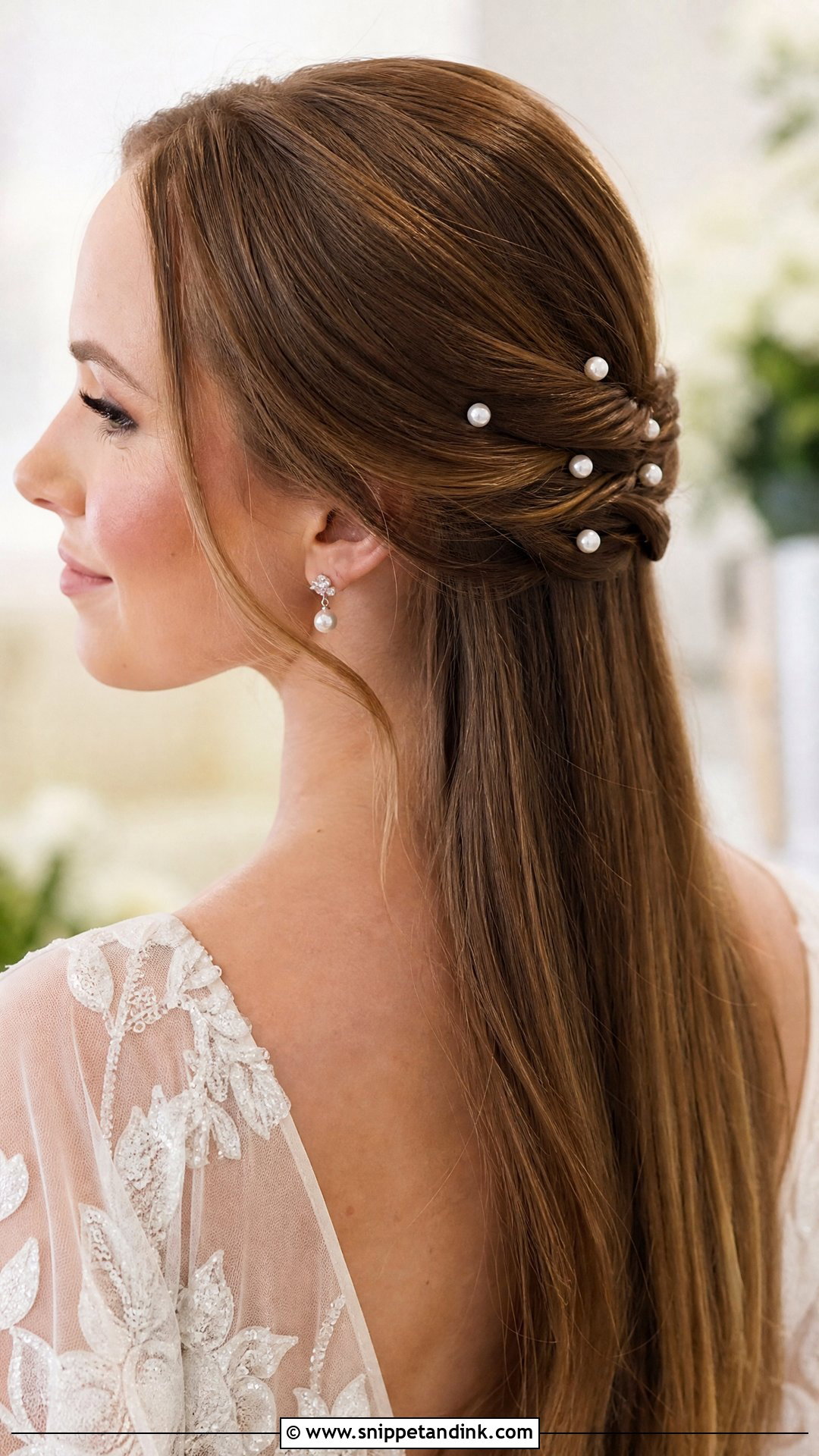
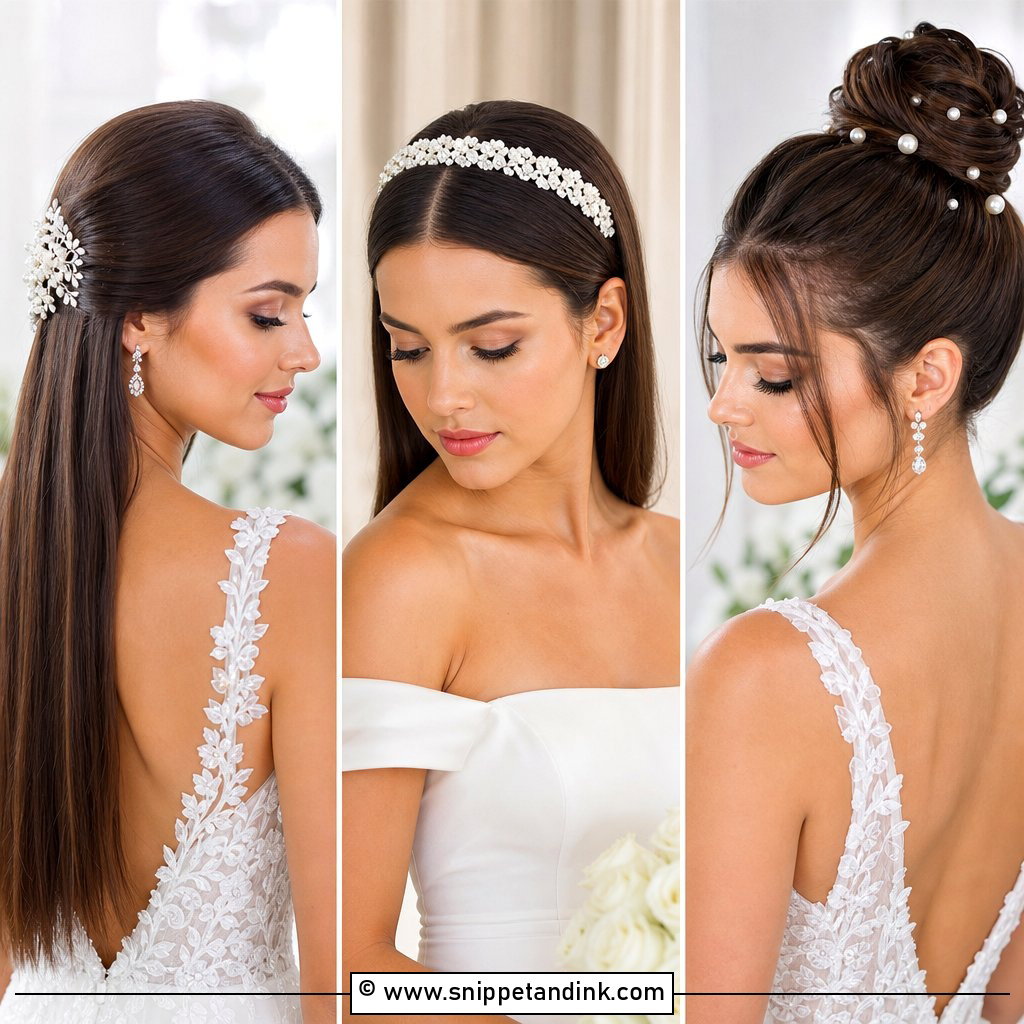
With pearl pins, placement matters more than quantity. I map them in a loose line, a curve following a twist, or a cluster at one side of a bun, and step back to check before adding more. Scattered at random they look like a mistake in photos. Ivory gowns and lace sit naturally with pearls. On very silky hair a single pin will slide, so I push each pearl into a twisted section or slide it across a hidden bobby pin for grip.
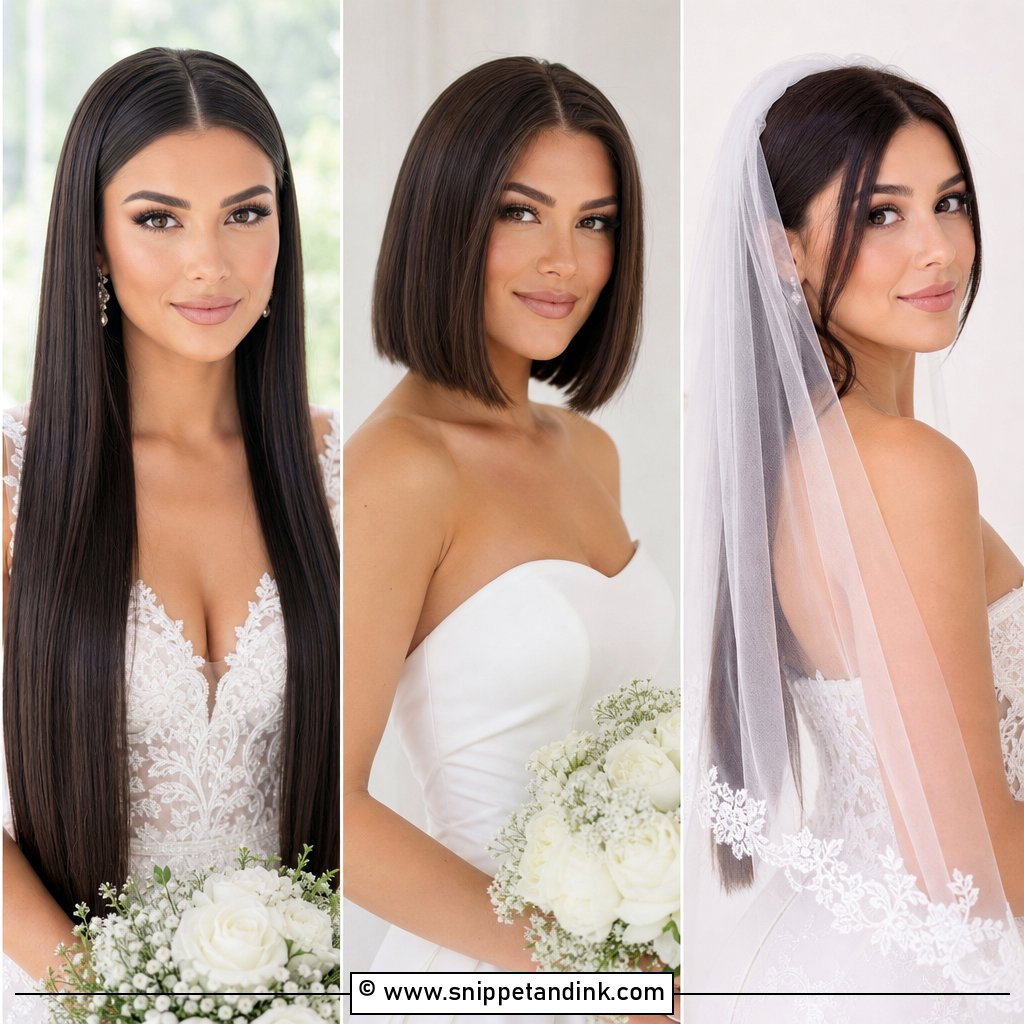
9. Straight Hair With Veil Wedding Hairstyle
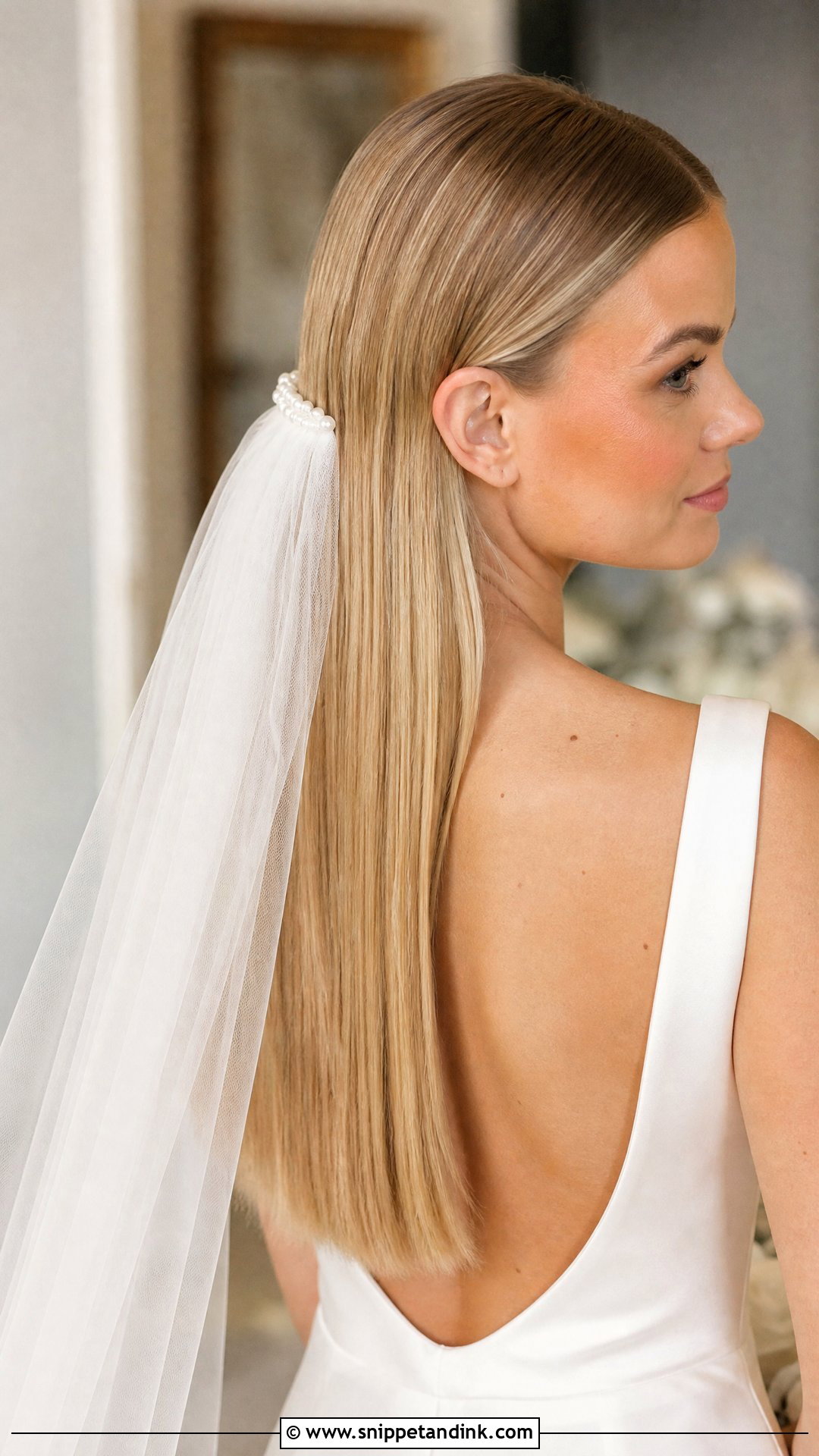
The veil and the hairstyle have to be planned together. For hair worn down, a comb at the crown or just below lets the tulle fall cleanly. With a bun or chignon, the comb sits above the knot for a fuller fall or below it for a softer, low drape, depending on the dress. Straight hair lets the veil fabric stand out because nothing competes with it. It is also slippery, which is why I always test the actual comb at the trial and usually anchor it to two crossed pins underneath.
10. Straight Hair Bridal Blowout Wedding Hairstyle
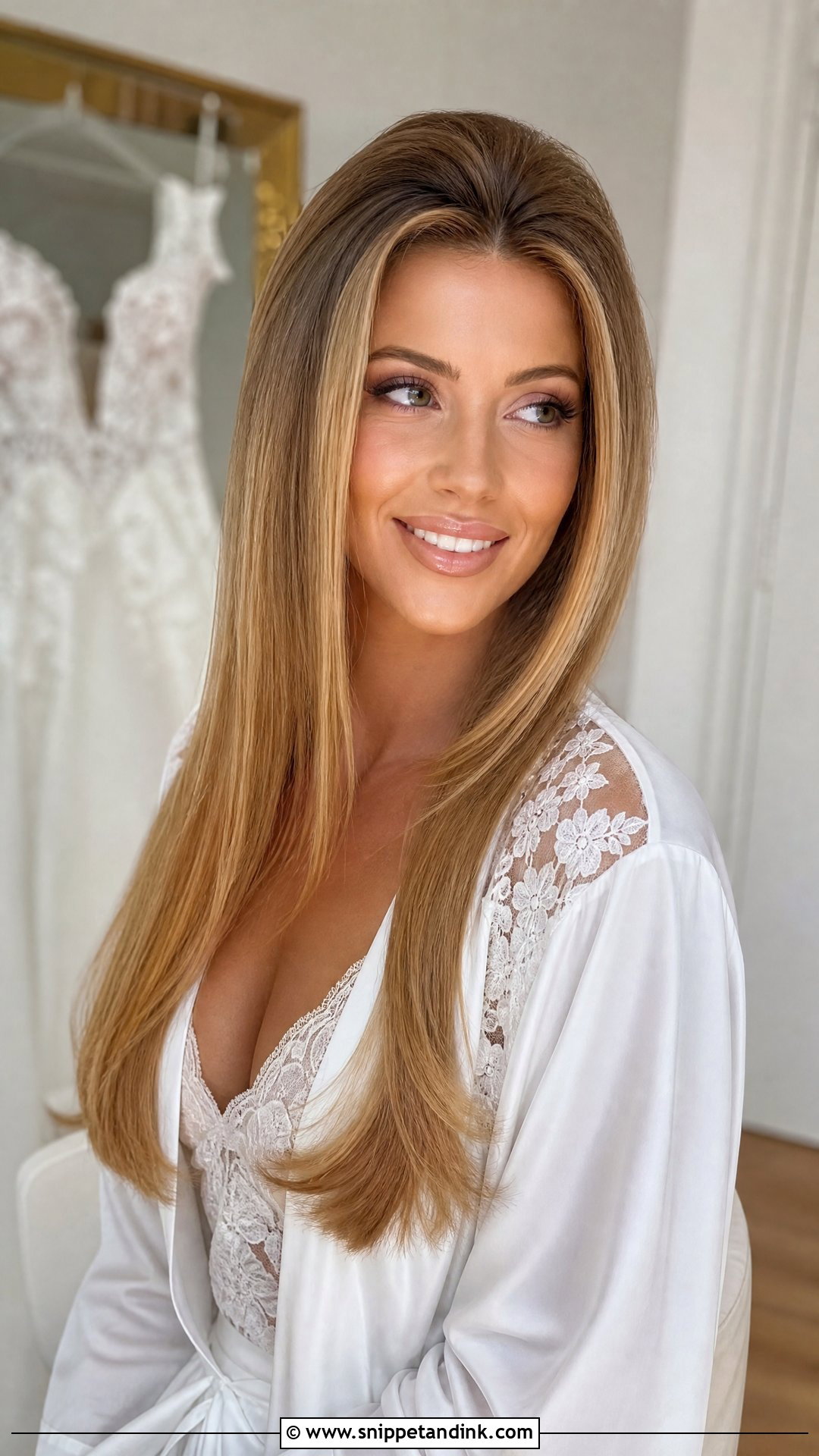
A bridal blowout is the one I suggest to brides who say they want to look like themselves on a good hair day. It isn’t curly; it has lift at the crown and a slight bend at the ends that flat ironing removes. Medium and long hair carry it best. To make it last, I work volumizing mousse into damp roots, round-brush the crown upward and let each section cool on the brush before releasing it. That cooling step does more for hold than extra spray. Finish with a flexible spray so the ends still move.
11. Long Straight Hair Wedding Hairstyle
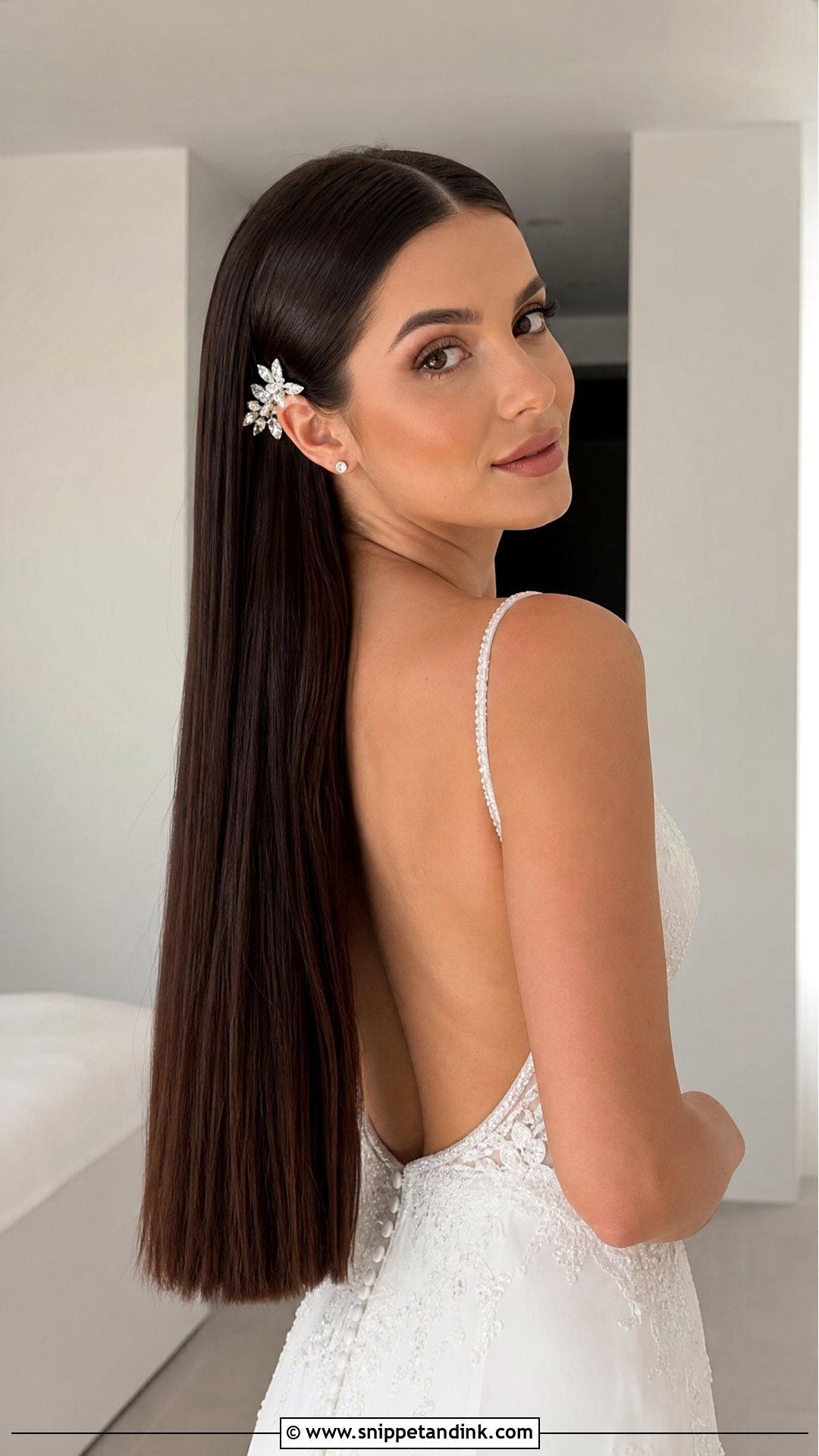
Long straight hair worn down shows every split end, so the trim is the real prep, ideally about two weeks before the wedding. After that, the work is hydration: a gloss or smoothing mask the week before, then a light hand with products on the day, since heavy serum makes long hair look greasy by evening. Part it in the center or to the side, add a low veil, or slide a few pins near one ear. It’s the simplest style on this list, and it looks best when the hair underneath is healthy.
12. Medium Straight Hair Wedding Hairstyle
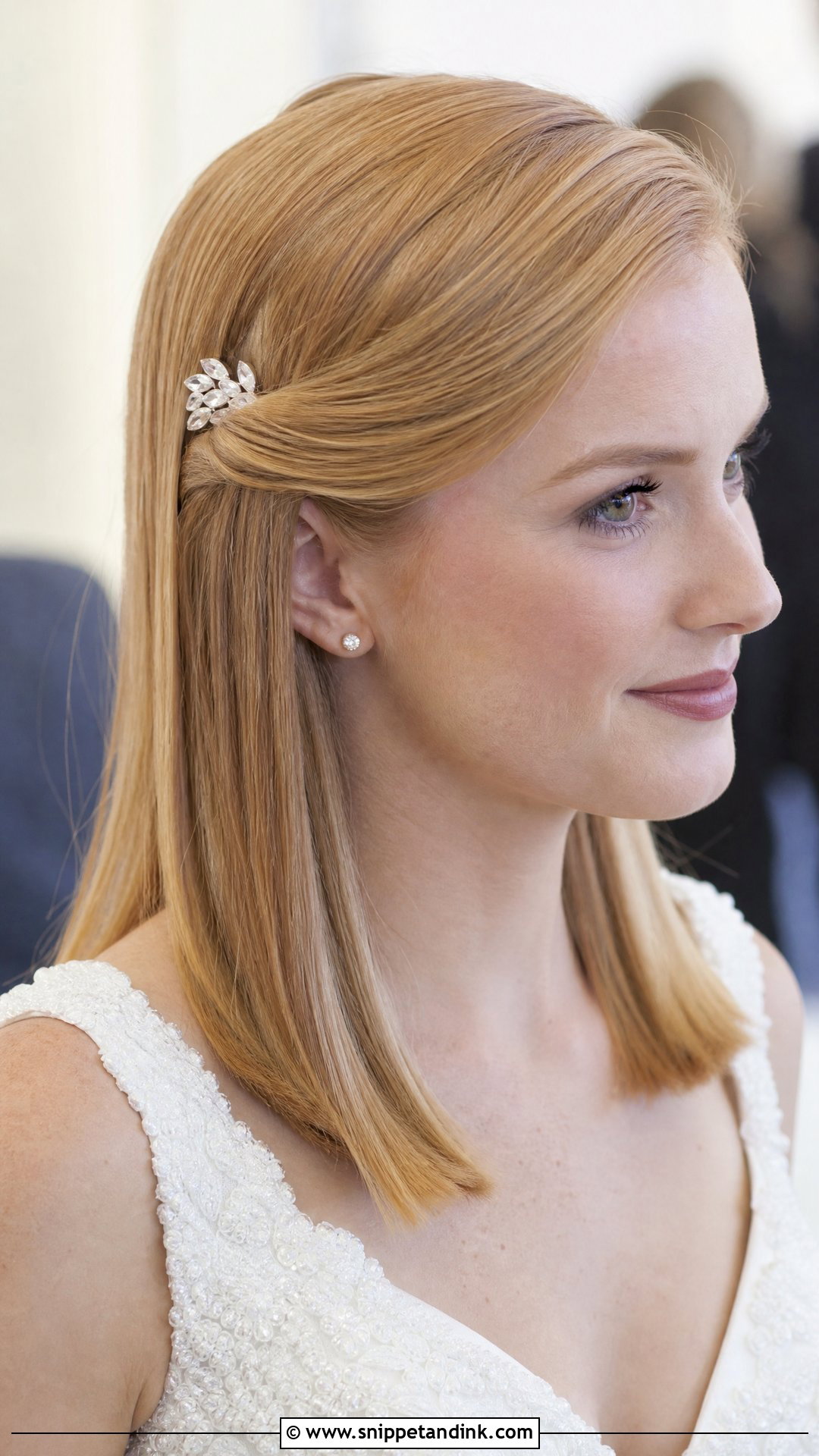
Medium straight hair is the most flexible length I work with: long enough for a small updo, short enough to look neat worn down. A sleek lob, half-up style, low ponytail or tucked side part all suit it. Statement clips stand out at this length instead of disappearing into volume. Where it sits on the shoulders, it tends to flip in random directions as you move, so I bend the ends under, or deliberately out, with a flat iron for a clean edge.
13. Short Straight Hair Wedding Hairstyle
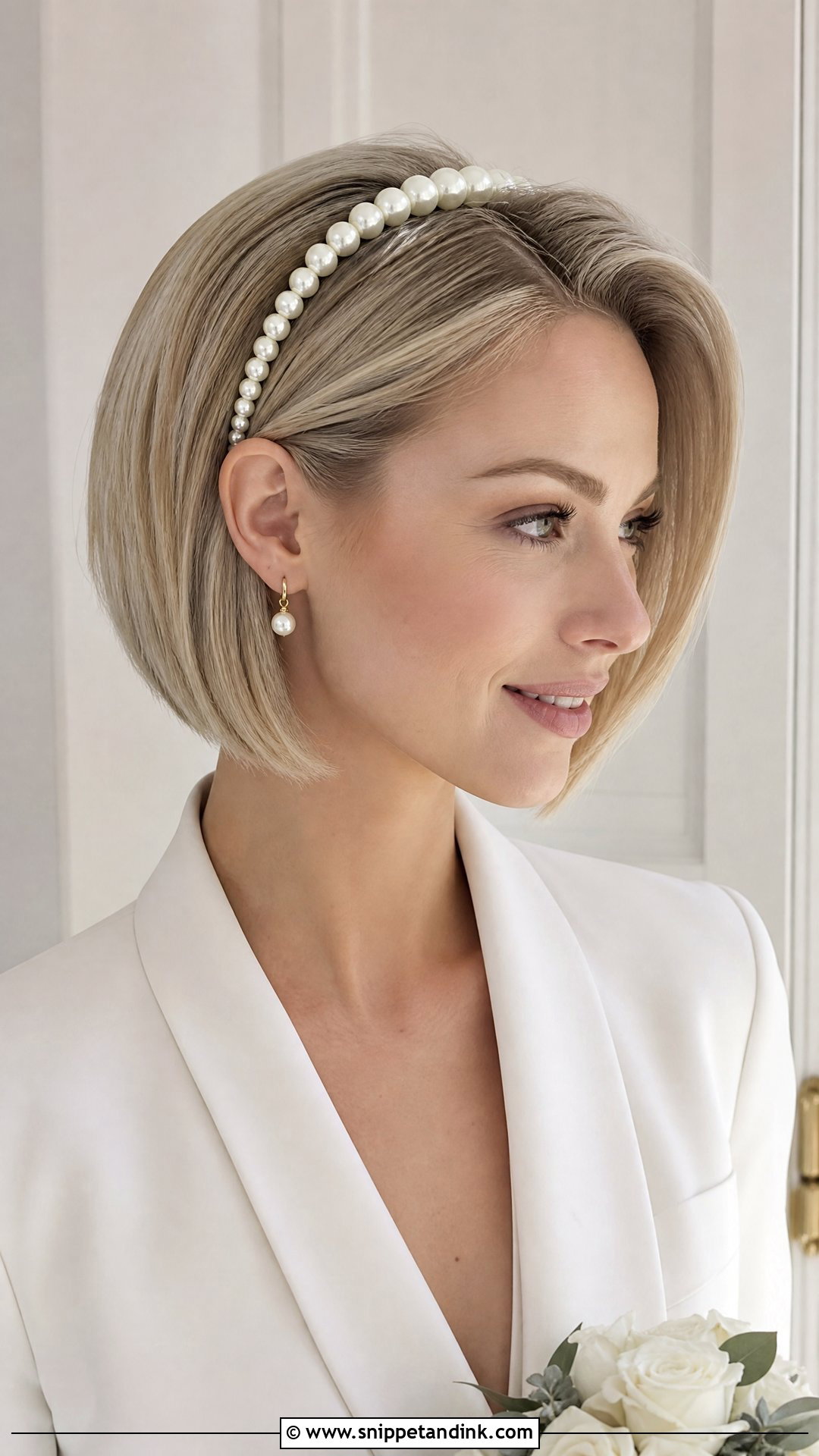
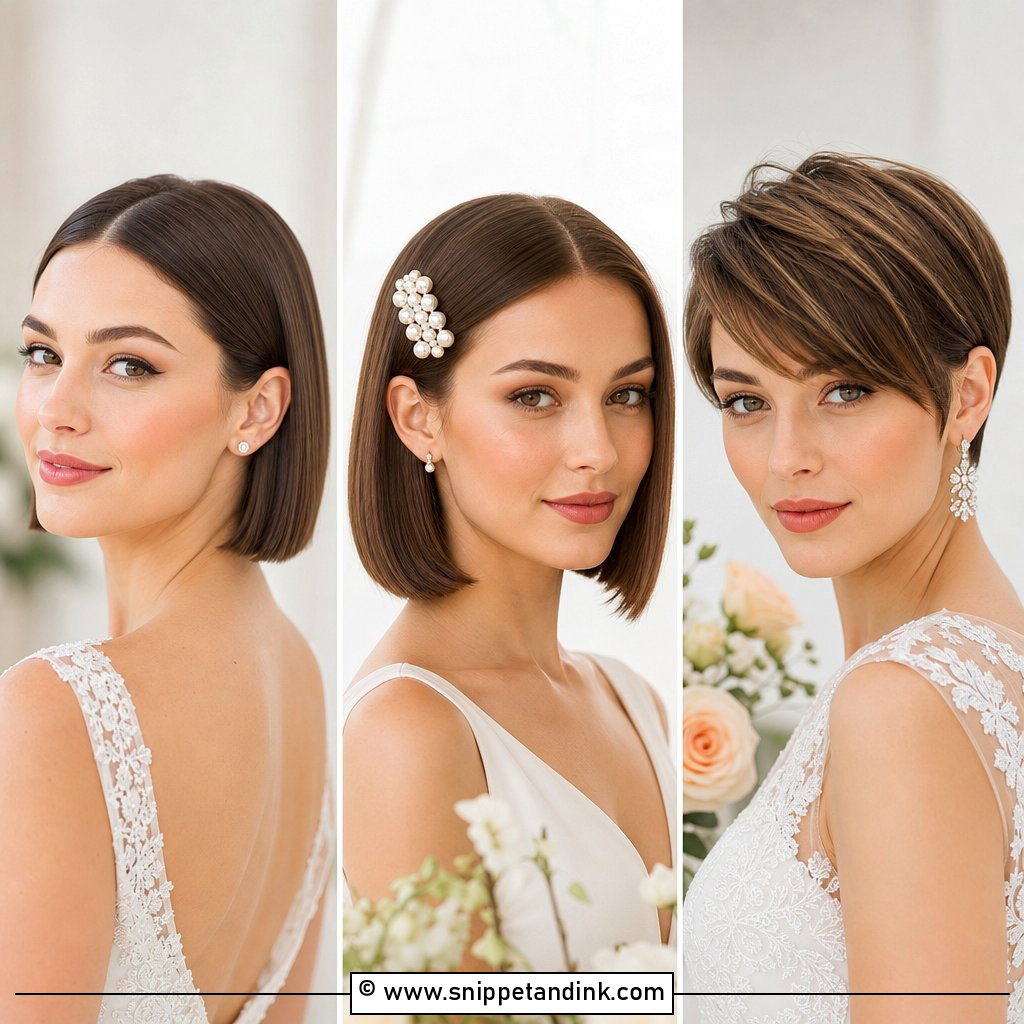
Short straight hair has fewer places to anchor an accessory, so the cut matters more than the styling. A sleek bob, polished pixie, or tucked short cut looks bridal once it is shiny and freshly shaped. I’d book the last cut about a week before, so the edges are sharp without that just-cut look. A pearl headband, crystal barrette or small comb gives the occasion without crowding the head. On a bob, a deep side part adds softness; on a pixie, lifted roots and a smooth surface define the shape.
14. Straight Bob Wedding Hairstyle
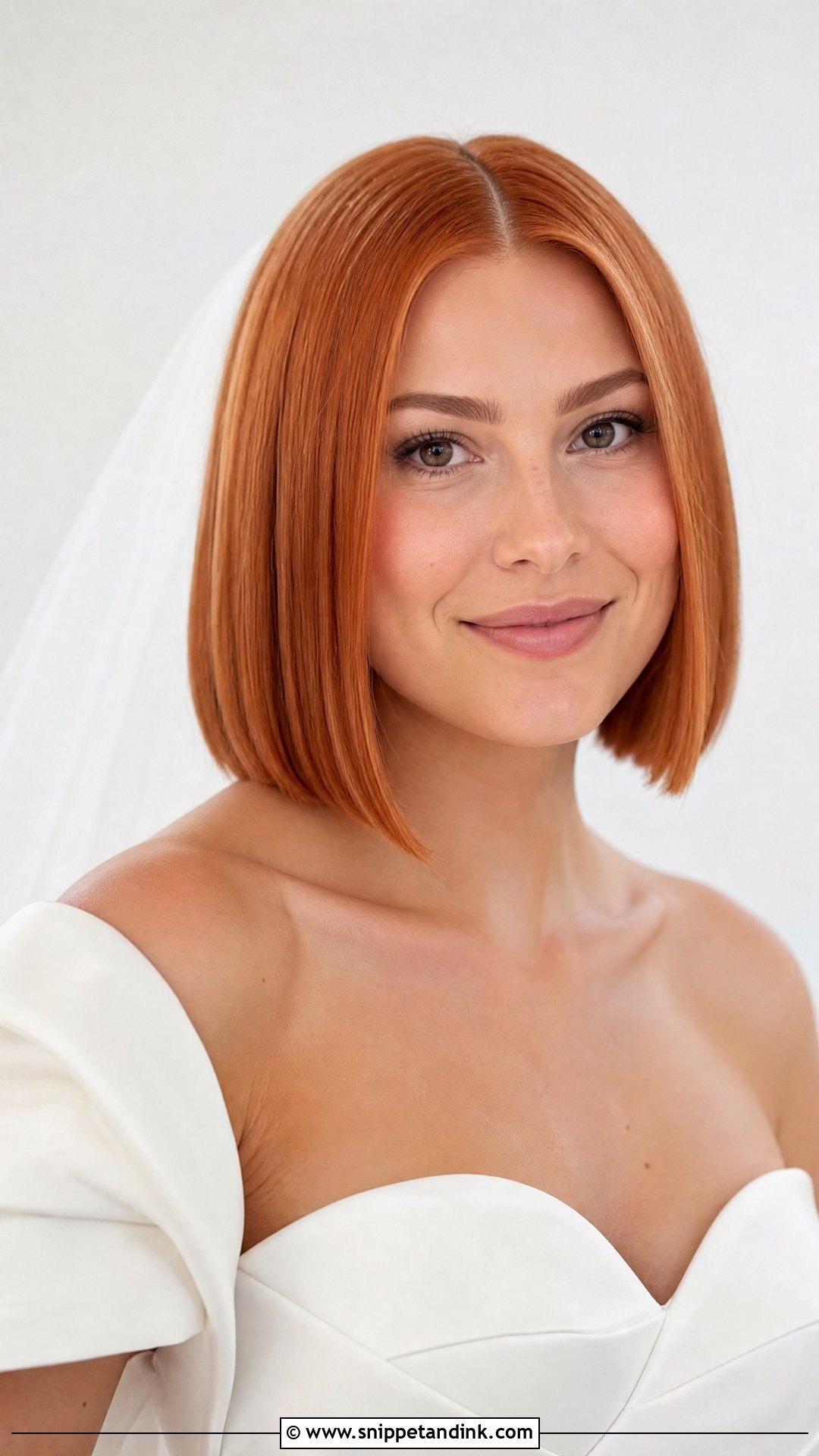
A straight bob lives or dies by its ends. Whether it hits the chin, jaw or shoulders, I bevel the ends slightly under with a flat iron so the line looks deliberate rather than blunt. A center part feels modern; a side part softens it. Minimalist and structured gowns both suit a bob, and a veil still works when the comb is placed low at the back. Shine serum goes on the mid-lengths and ends only. On the roots it collapses volume within an hour.
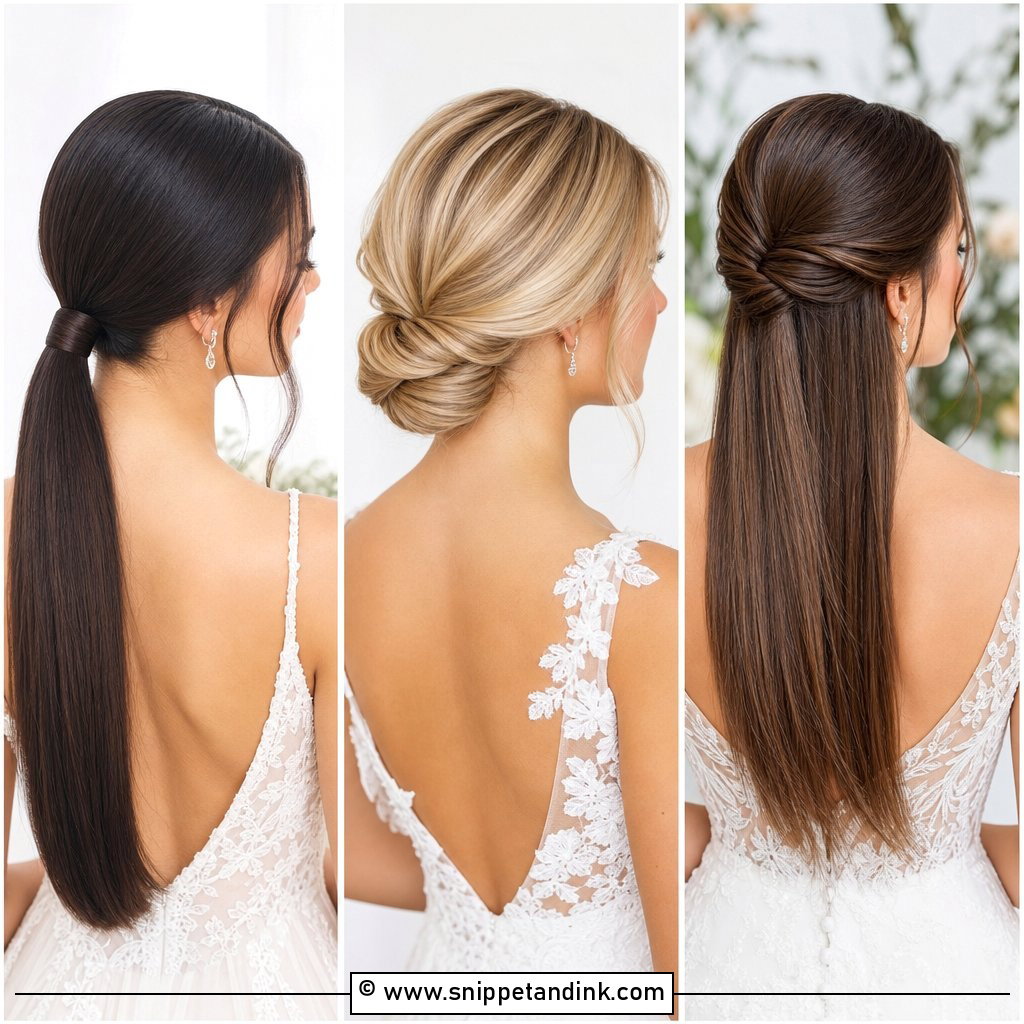
15. Straight Hair With Headband Wedding Hairstyle
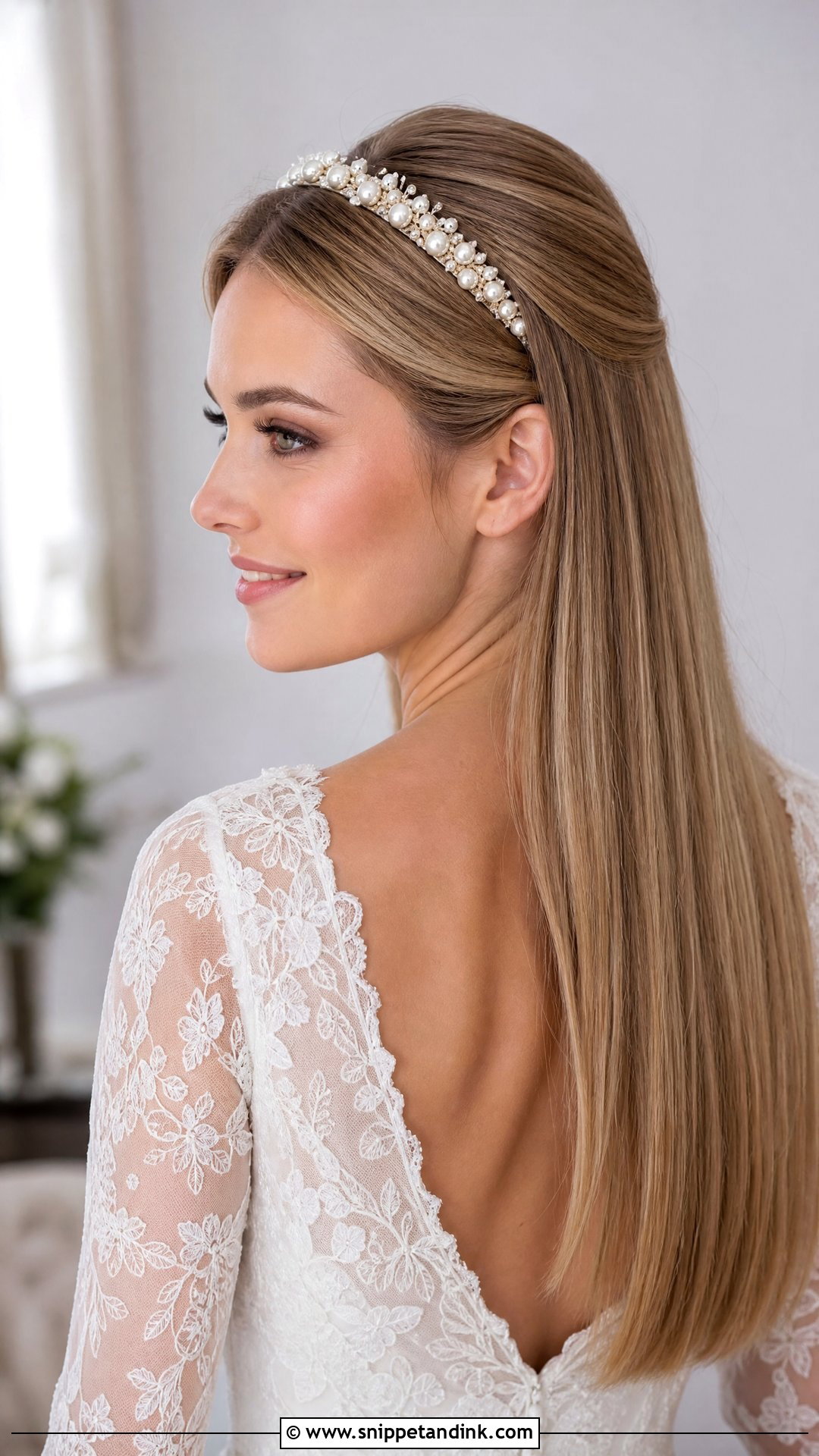
A headband is the fastest way to dress up straight hair, and it suits nearly every style here, from hair worn down to a low bun. Pearl, satin, crystal, or floral headbands each set a different mood, so I match the band to the dress fabric, not to the hair. A rigid band can press a dent into fine roots and give you a headache by the reception, so try it on for at least an hour before the day. Fine hair needs root volume before the band goes on; thick hair needs the sides smoothed so the band sits flat.
16. Straight Hair With Hair Bow Wedding Hairstyle
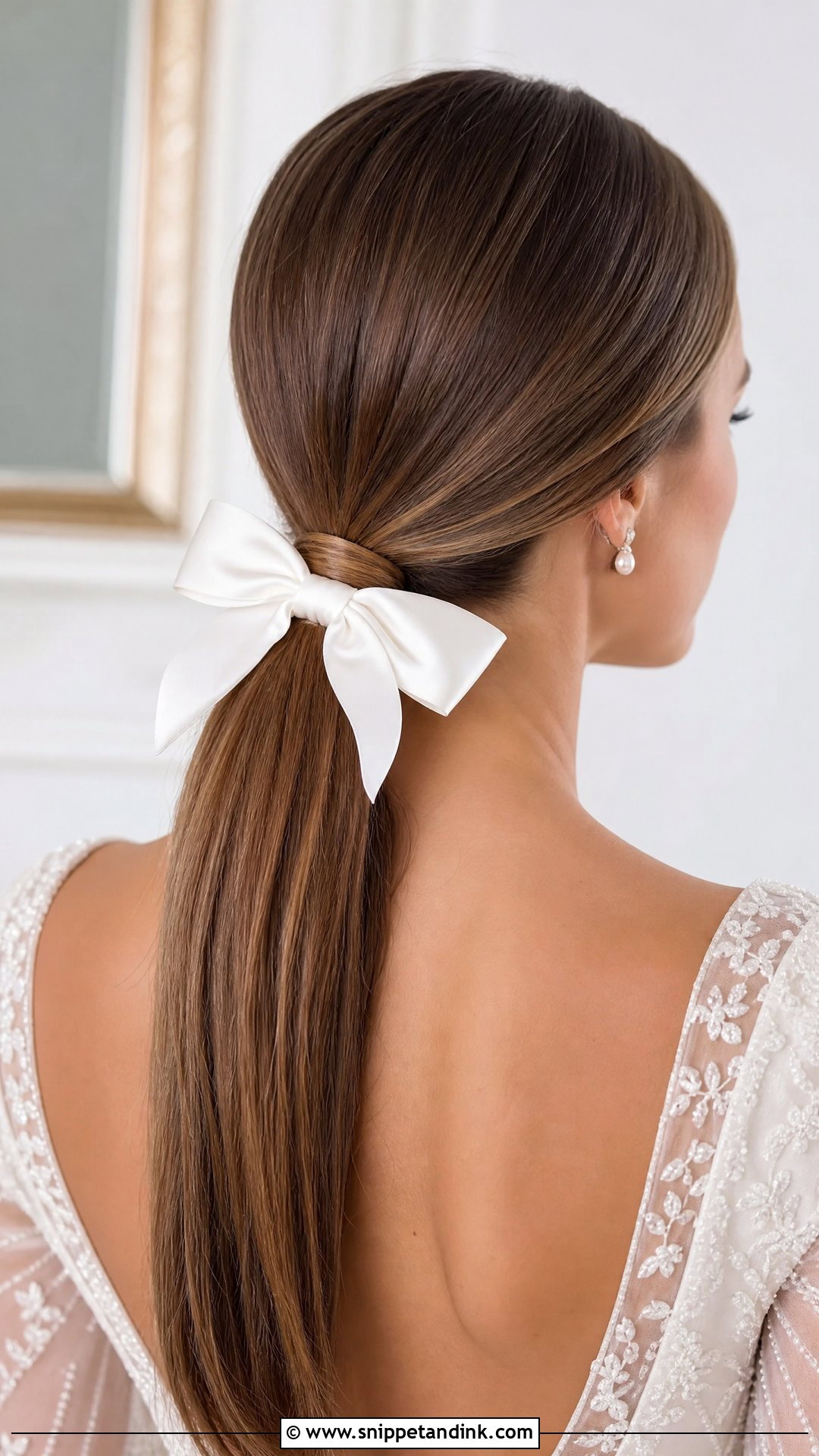
A hair bow softens straight hair without needing curls or heavy styling. It sits best on a half-up style, at the base of a low ponytail, or under a sleek low bun. Satin and organza read as bridal; smaller velvet or pearl-trimmed bows look refined on bridesmaids and guests. I place the bow so it frames the shape, not covers it. On long hair, a bow at the base of a low ponytail gives the ceremony a clean back view, which is the angle guests see most.
17. Straight Hair Side Swept Wedding Hairstyle
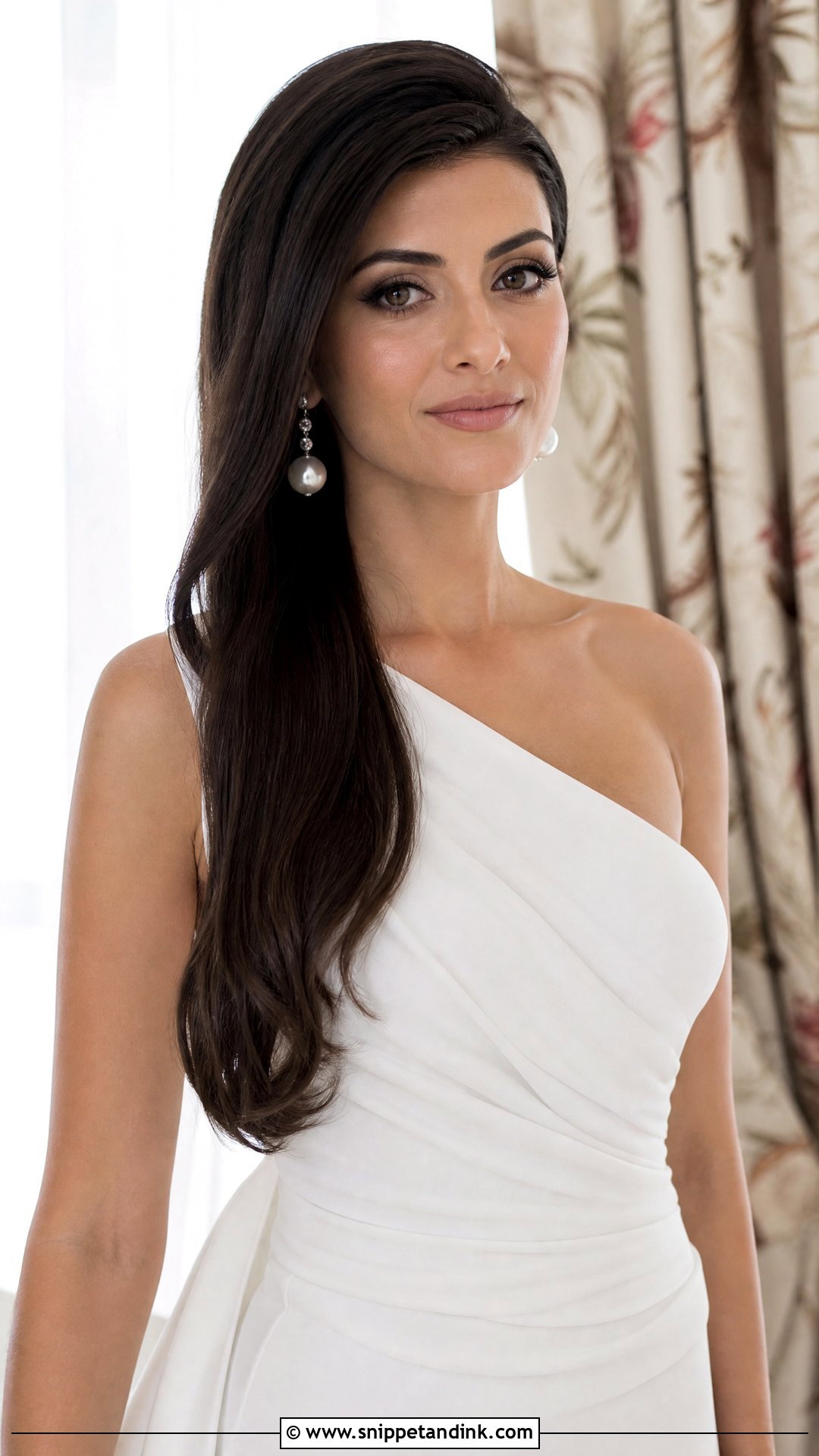
Side swept straight hair brushed over one shoulder suits one-shoulder gowns, strapless dresses and a single statement earring. The weight all sits on one side, so the pinning behind the opposite ear has to carry it. I lock it with crisscrossed bobby pins along a hidden line, then cover them with the top layer. The lengths stay glossy, with the ends lightly bent so they don’t look stiff. Once secured, it stays put through photos better than hair left loose on both sides.
18. Straight Hair Braided Crown Wedding Hairstyle
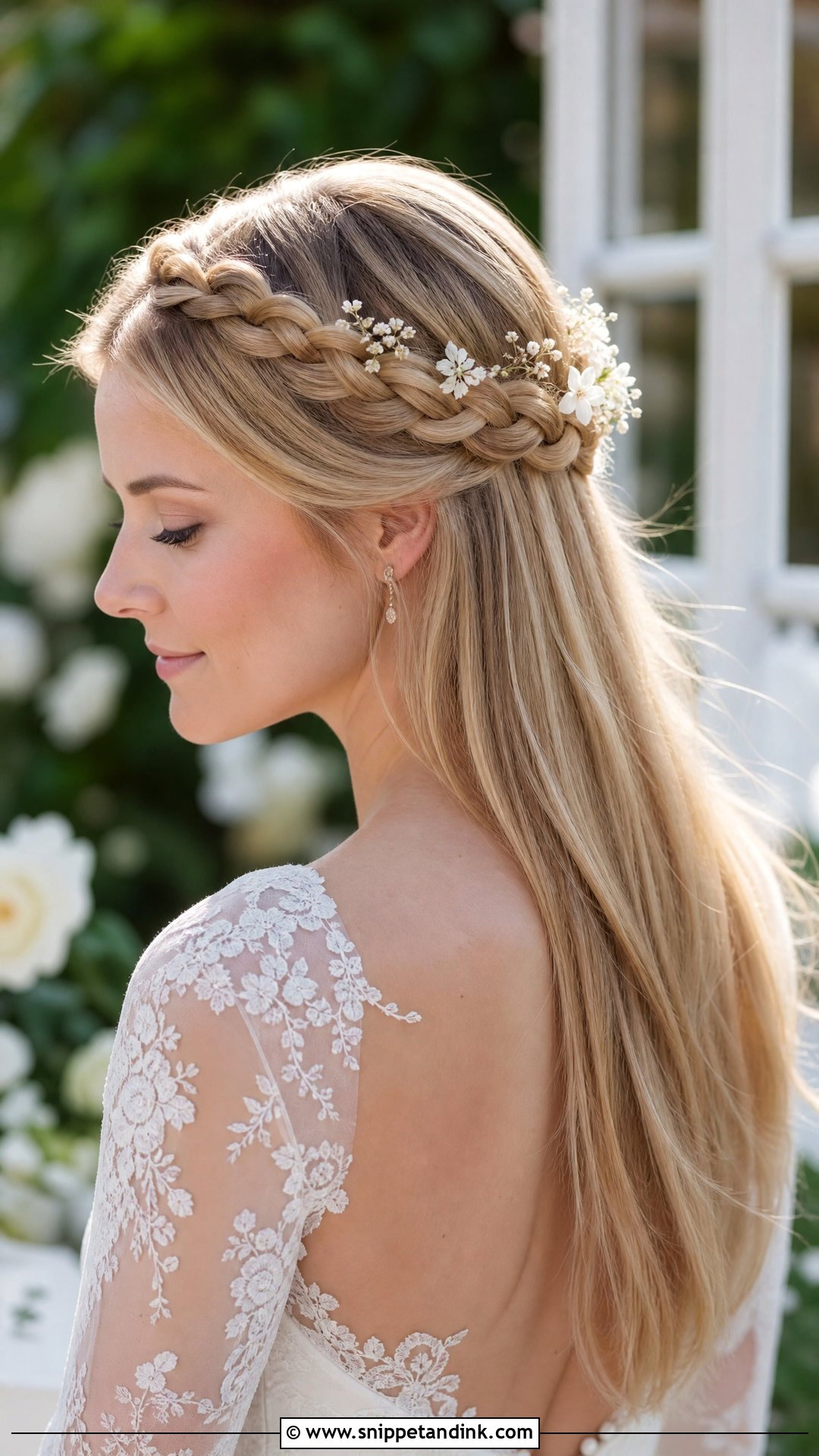
A braided crown gives straight hair some romance while keeping it neat. The braid can wrap across the front like a headband or feed into a low bun at the back. On straight hair the plaits look clean and defined, which suits brides who don’t want a messy texture. Very silky hair makes a braid slip and loosen, so I add texture spray before braiding and pin the braid at several points rather than only at the ends. It suits garden ceremonies and outdoor weddings, where you want hair off the neck.
19. Straight Hair Low Bun With Face Framing Pieces
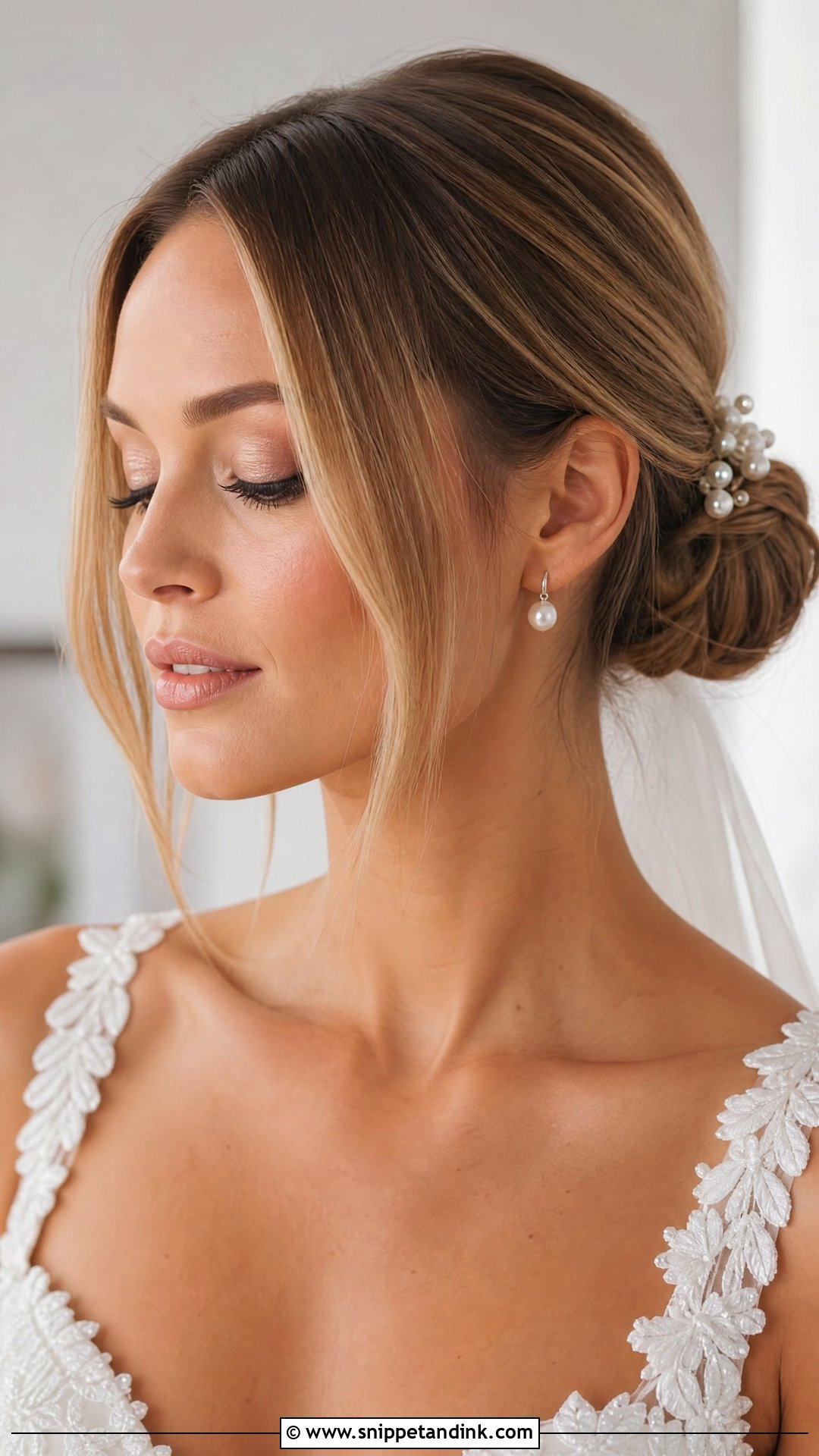
This is the sleek bun for brides who find a fully pulled-back look too tight on the face. The bun stays neat at the nape, and I leave two or three straight pieces at the front. I cut those pieces to hit the cheekbone or jaw depending on the face shape, and I always cut them at the trial, not on the morning. On straight hair they can hang limp, so I give them the slightest bend and a touch of cream so they don’t separate into strings. Veils, pearl pins and soft makeup all pair with it.
20. Straight Hair High Ponytail Wedding Hairstyle
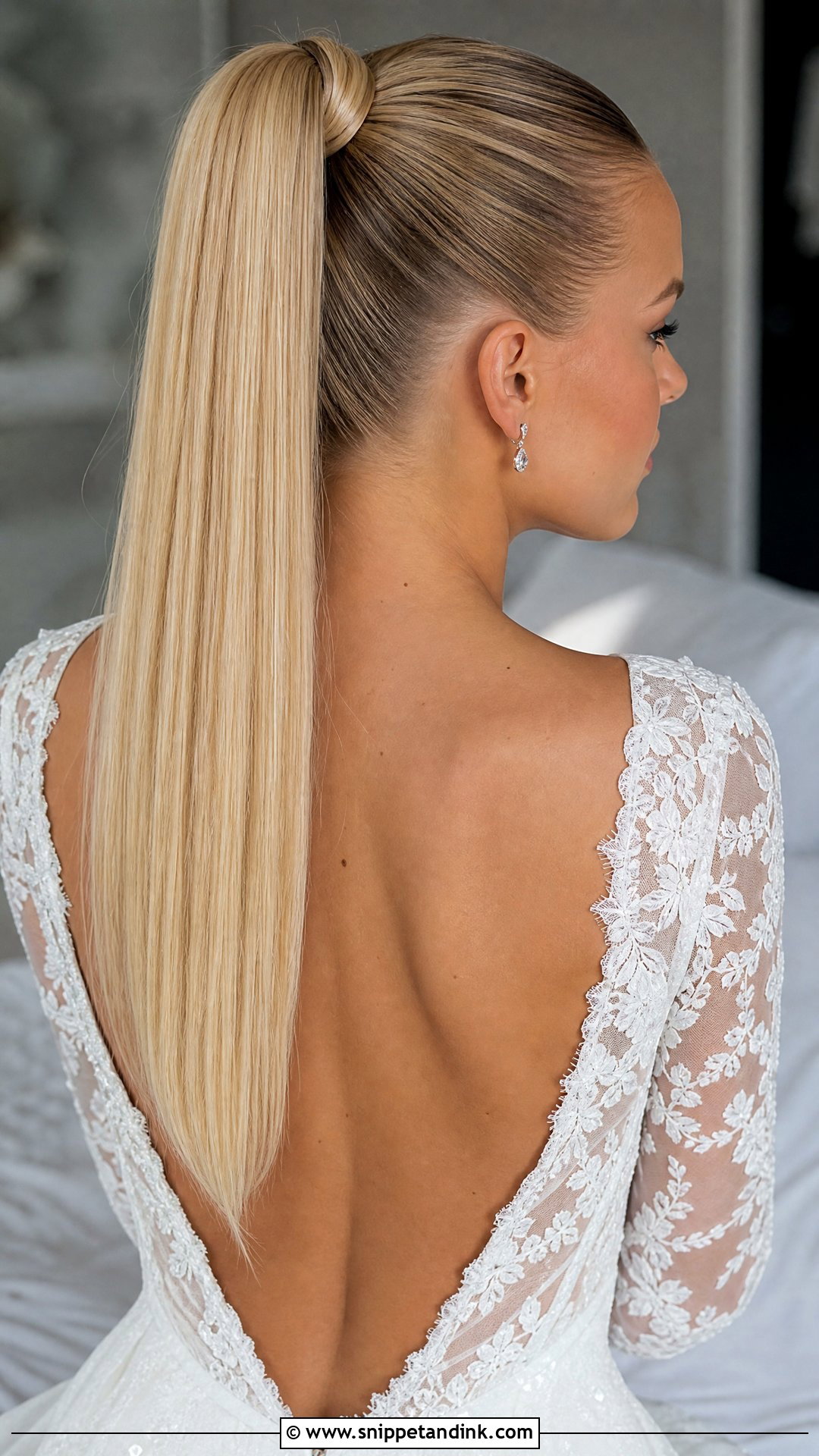
A high ponytail is the boldest option here: the crown is brushed upward and the tail falls sleek from the top or back of the head. It lifts the face and suits clean gowns, dramatic earrings and open backs. A wrapped base makes it formal enough for a wedding. Fine hair often needs a clip-in extension or a little backcombing inside the tail for fullness, while the outer layer stays smooth. Be honest with yourself about comfort: a high, heavy ponytail pulls on the scalp, and by the reception some brides want it lower.
Naturally Straight or Flat-Ironed Straight? It Changes the Plan
At the trial, the first thing I ask is whether your hair dries straight on its own or only after a blow-dry and flat iron. The two behave very differently once the day warms up.
Hair that dries straight
This hair holds a sleek style through humidity, but it fights volume and curl. Expect any bend I put in to relax over the day. I add structure with root lift and padding rather than heat-set waves, and I keep a dry texture spray in the kit for the afternoon.
Hair that is wavy underneath
If your sleek finish comes from a flat iron, moisture in the air will slowly pull the wave back, starting at the hairline and the nape. For a summer, beach or garden wedding, I lean toward updos for this hair, because a pinned shape hides reversion far better than long hair worn down. An anti-humidity spray on the lengths before styling helps, and I’d skip washing the morning of: hair a day past washing holds shape better.
Either way, give your stylist an honest answer and, if you can, schedule the trial on a day with similar weather to your wedding. Hair that looks perfect in an air-conditioned salon can tell a different story outside in July.
Let the Shine Do the Work
Straight hair can be just as romantic and photo-ready as curls when the style works with its texture. Your dress, length, accessories and how much you want to feel the hair all narrow the list. A sleek bun, a glossy ponytail, a smooth half up style or a polished bob each hold up well on straight hair. Book a trial, especially if your hair is fine, slippery or thick, and bring the veil or headband you plan to wear. With grip built in underneath and shine kept on the surface, straight hair stays neat from the aisle to the last photo.
You'll Like These Ideas:


Leave a Reply