
Wedding hair has to survive more than a ceremony. It gets hugged, rained on, danced in and photographed from angles nobody checks in the mirror. Which style fits depends on your role, your outfit, your length and texture, the weather and how formal the room is. Soft waves, low buns, polished ponytails, braids and short cuts all earn their place below because they hold their shape and sit well with most necklines. Right now the looks people ask me for are shiny and moving rather than stiff, with a few face-framing pieces and accessories used sparingly. The twenty that follow come with the notes I’d give you in the chair.
Dressing Your Hair for the Role You Play That Day
A lot of these twenty looks get worn by the whole wedding party, not just the bride. That changes what’s sensible. When I’m booked for a group, I plan each person’s hair around how much attention they need to hold and how much time I have with them.
The Bride
You get the longest slot, the trial, and the most detail. Your style has to work with the veil, the neckline and the full length of the day, so I build in the most security here: padded bases, crossed pins, a set that cools fully. Anything with a structured base, like the low bun, chignon or crown braid, gives me the most control.
Bridesmaids
Matching doesn’t have to mean identical. I often keep one shared element, the same side part or the same wave pattern, and adjust the style to each person’s length. A waterfall braid on long hair and a twisted half-up on a bob can sit together in a lineup. Most bridesmaid styles need to be done in well under an hour each, which rules out the most detailed rolls.
Mothers and Guests
Here I lean toward styles that stay neat with minimal fuss: a low ponytail, a soft chignon, a polished bob. Guests should avoid anything that reads bridal, so skip the full veil-ready updo with a cluster of pearl pins. If you’re styling your own hair as a guest, the sleek ponytail and the twisted half-up are the two on this list I’d trust a non-professional to repeat on the morning.
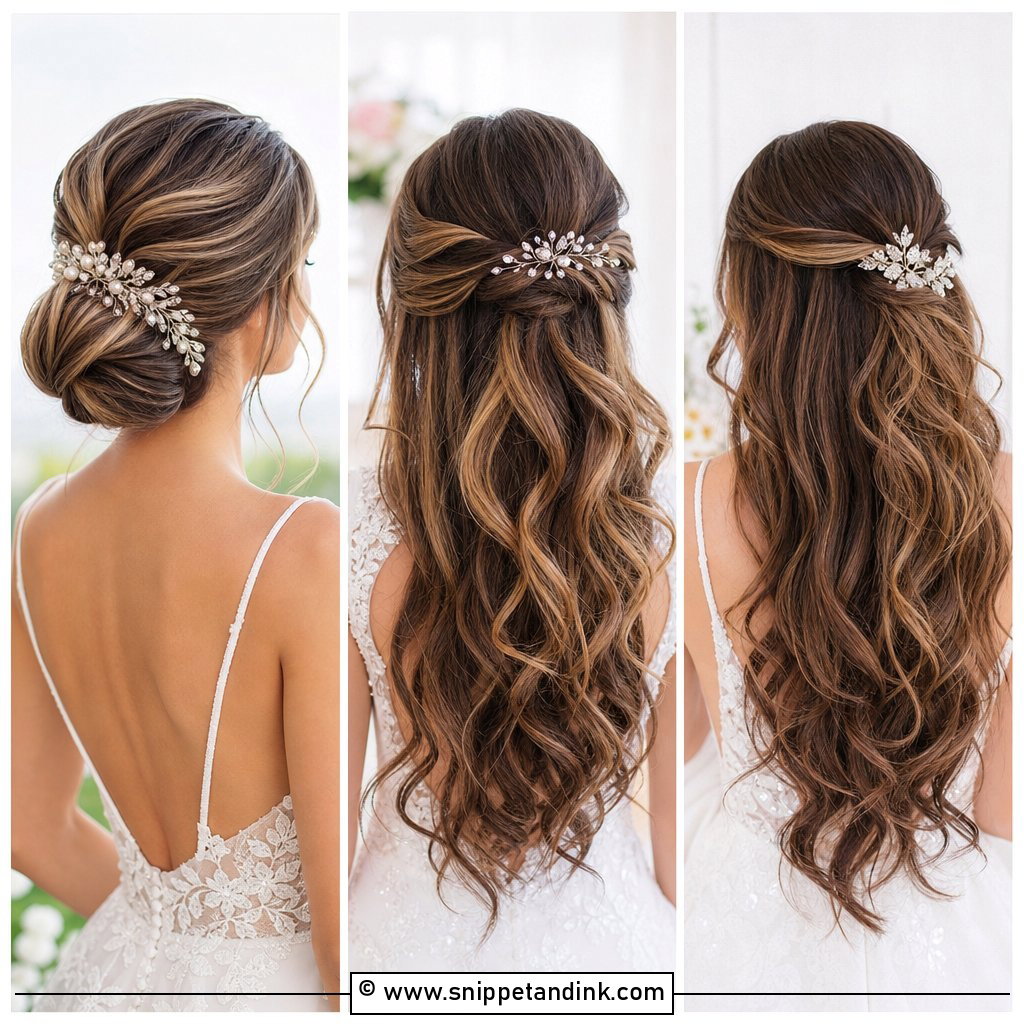
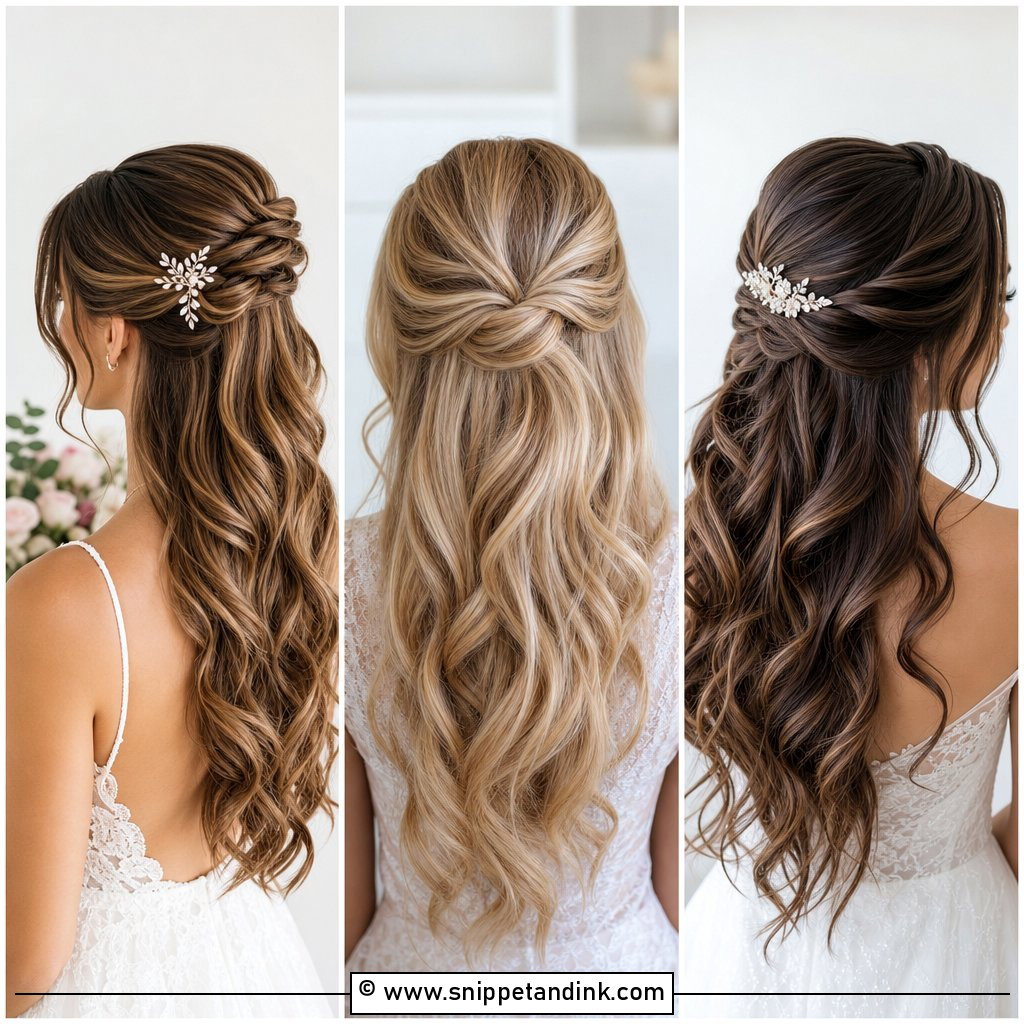
1. Half Up Half Down Wedding Hair
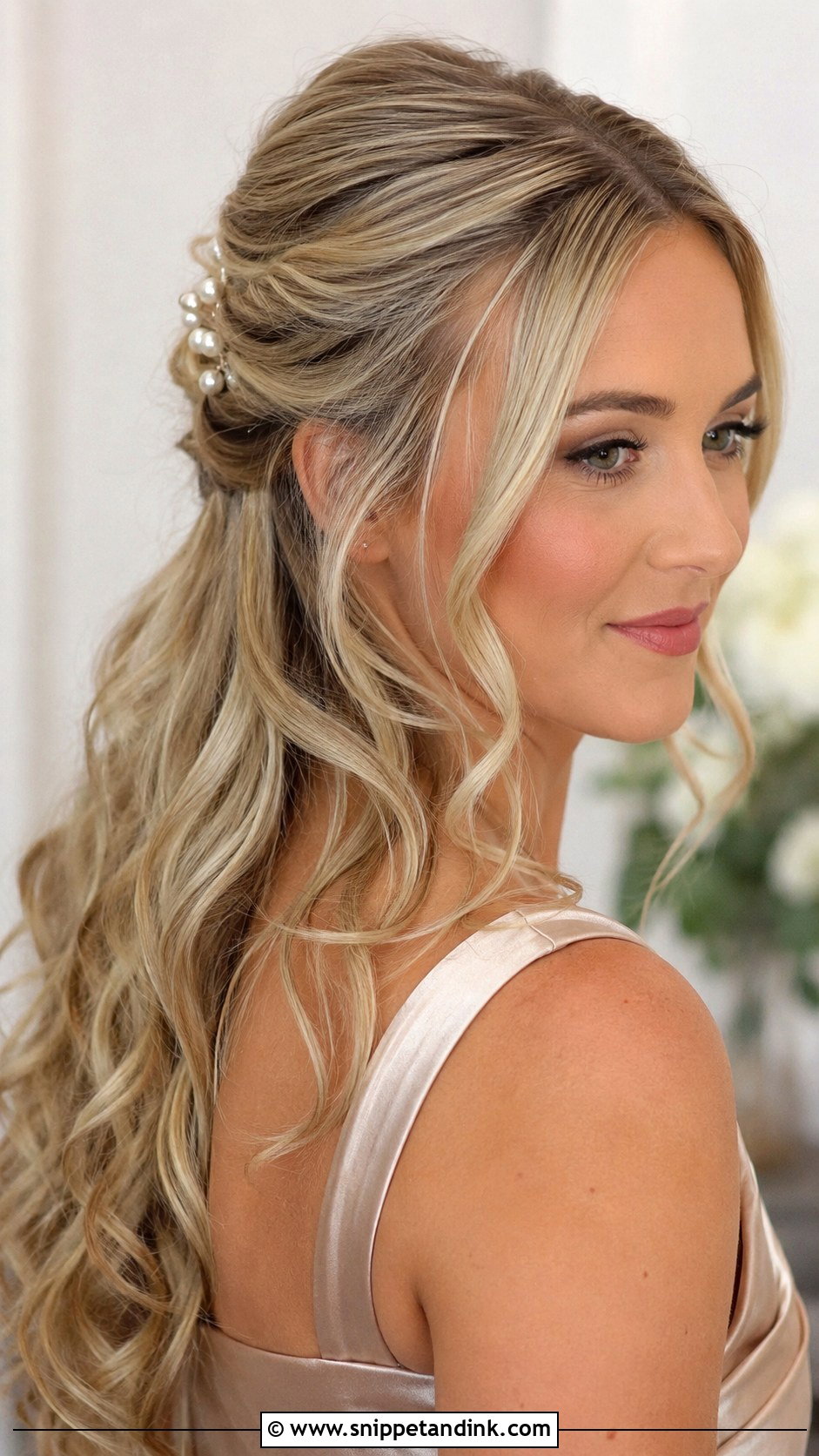
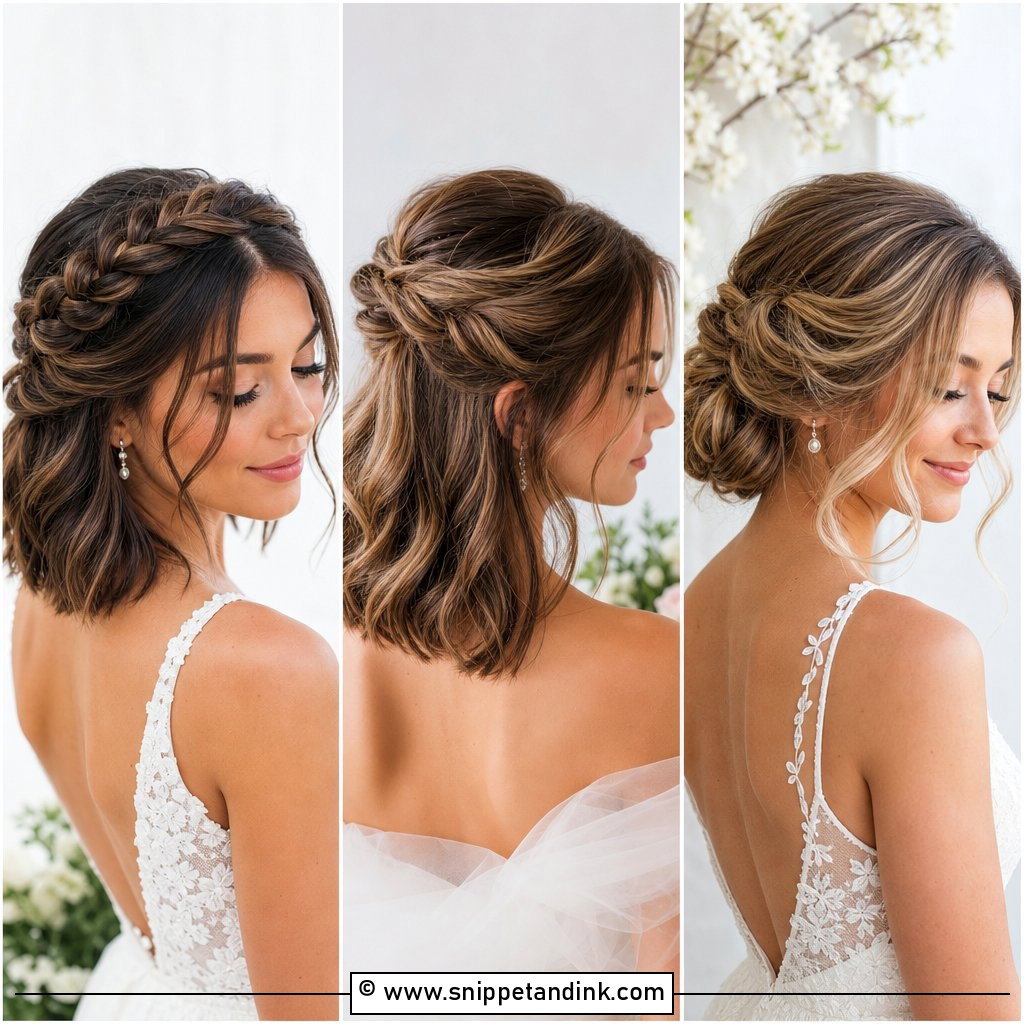
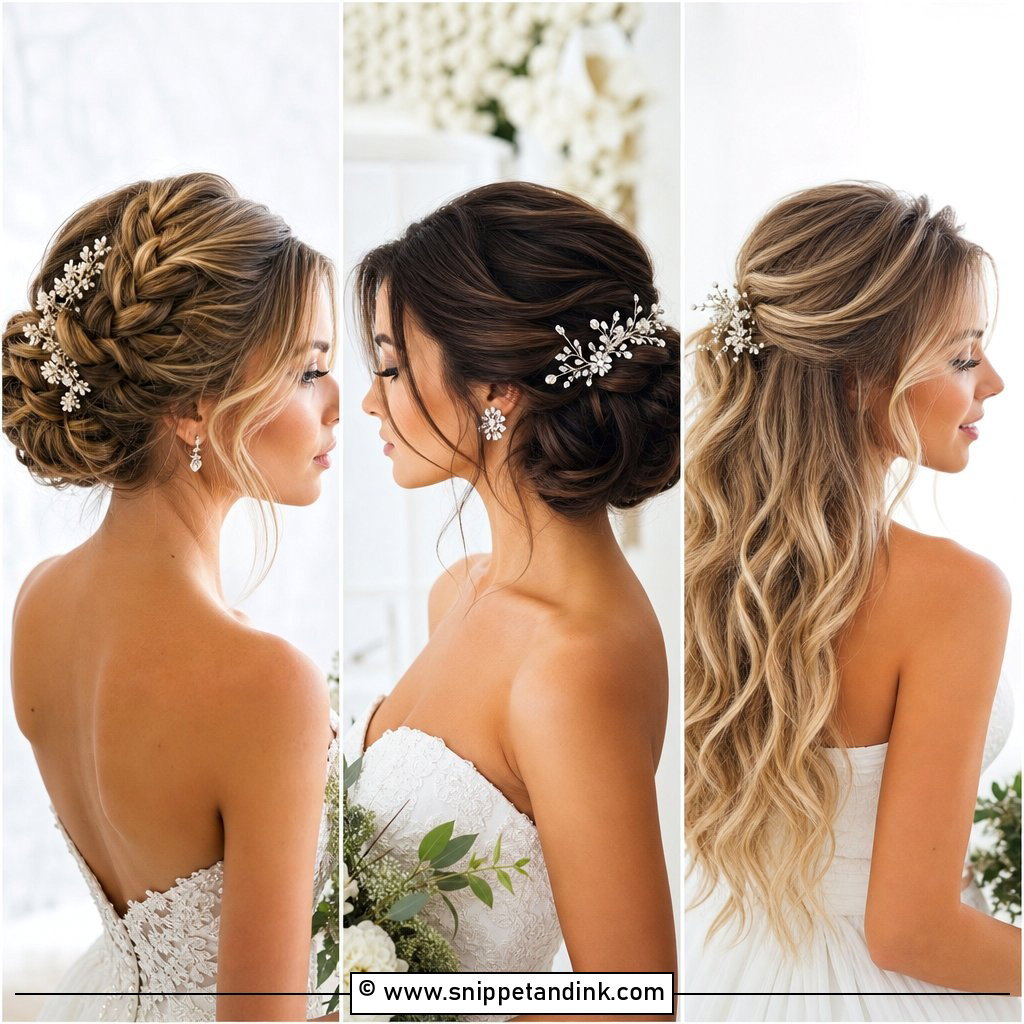
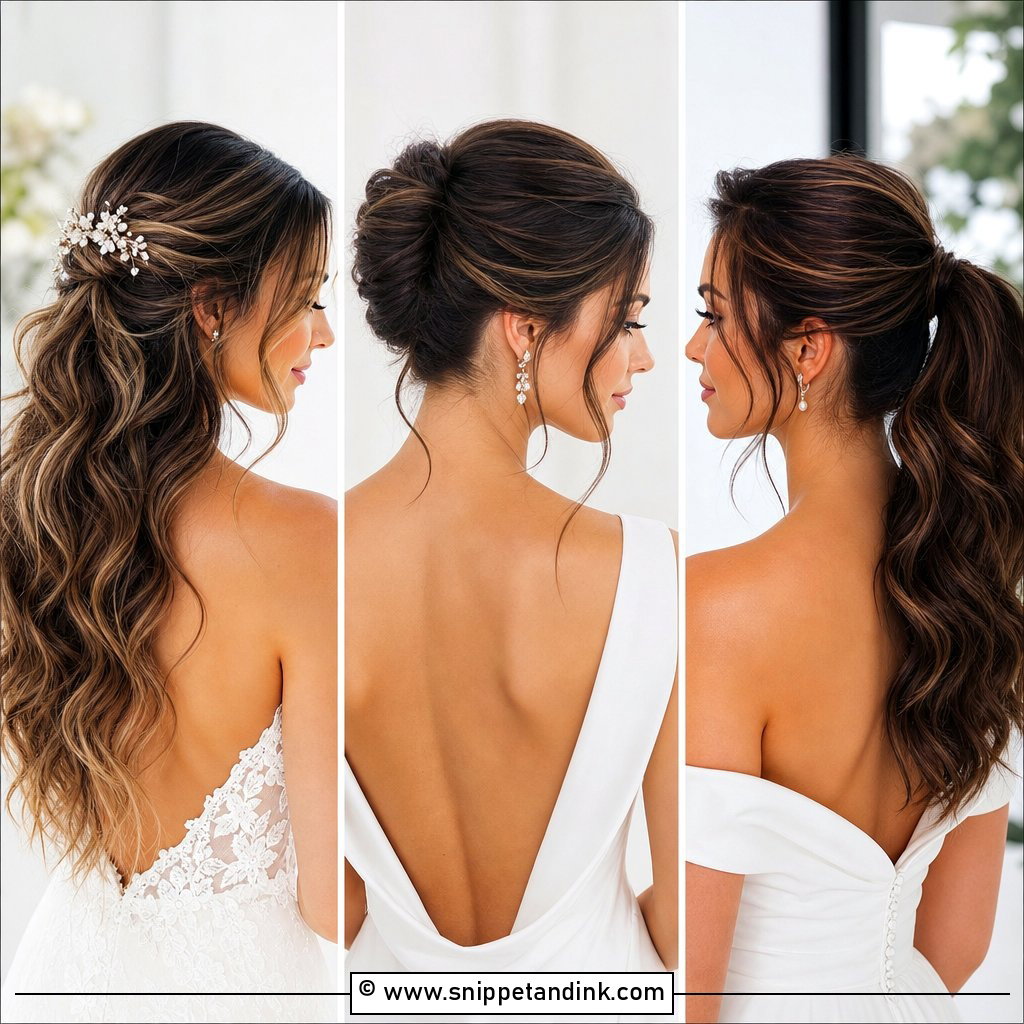
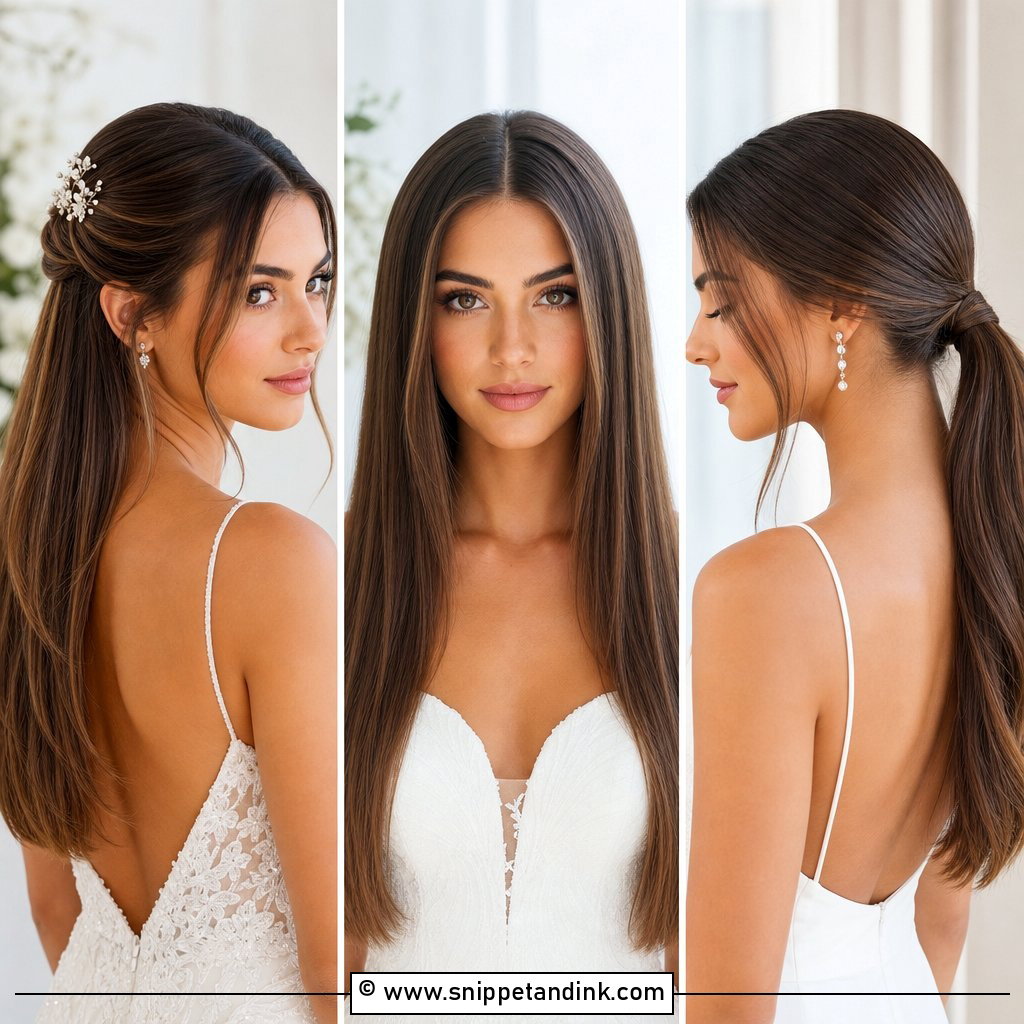
Few styles are as forgiving. The lifted crown keeps hair off your face while the loose length gives movement, so you get some structure without committing to an updo. It suits medium and long hair best, with the ends curled or waved. A veil, pearl pins, a floral clip or a plain barrette all attach easily at the crown. Fine hair needs a little backcombing under the crown section or it flattens within an hour. On thick hair I keep the pinned section smooth and fairly small, because a big pinned section on top of heavy lengths looks top-heavy in profile.
2. Low Bun Wedding Hair
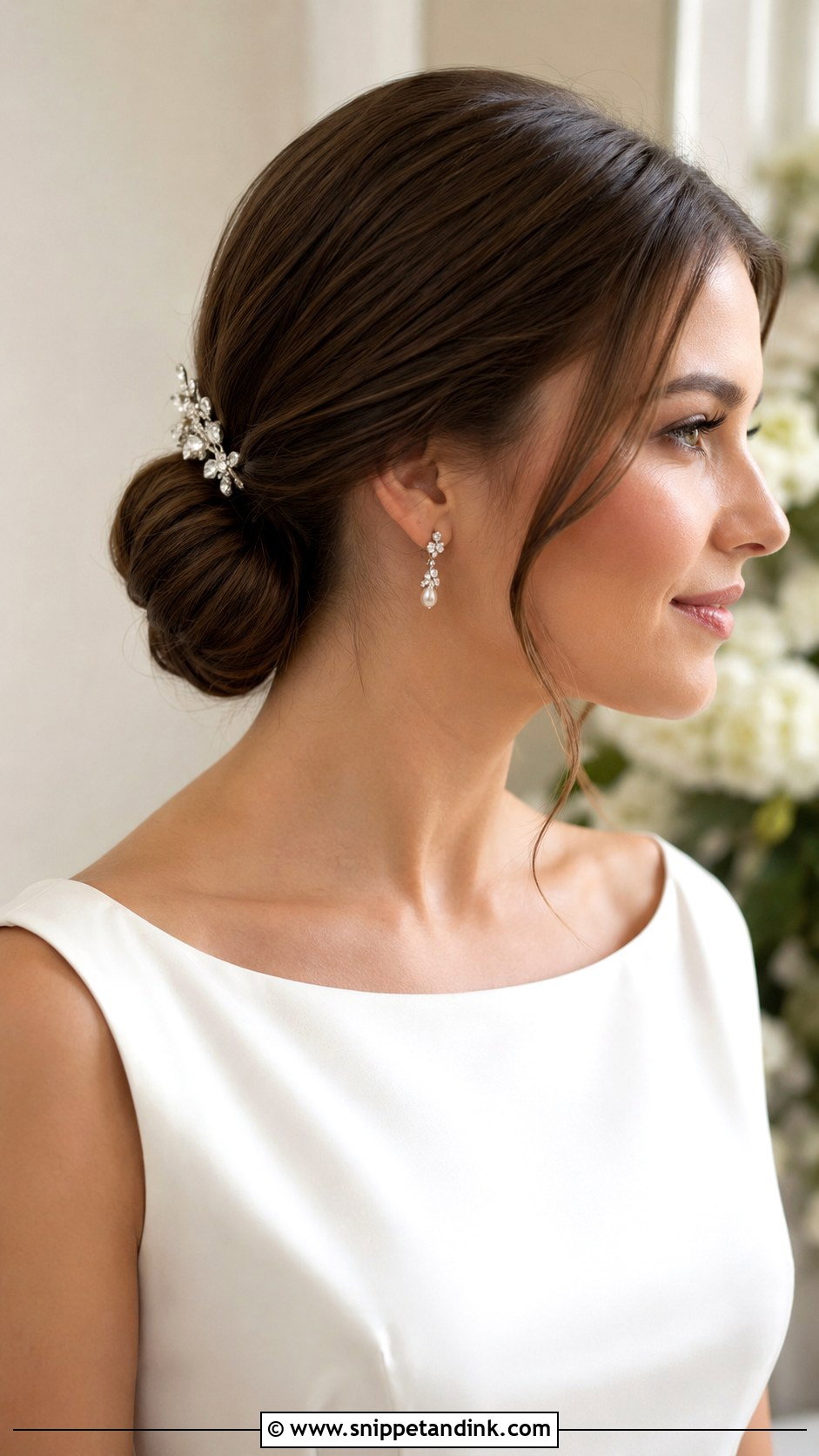
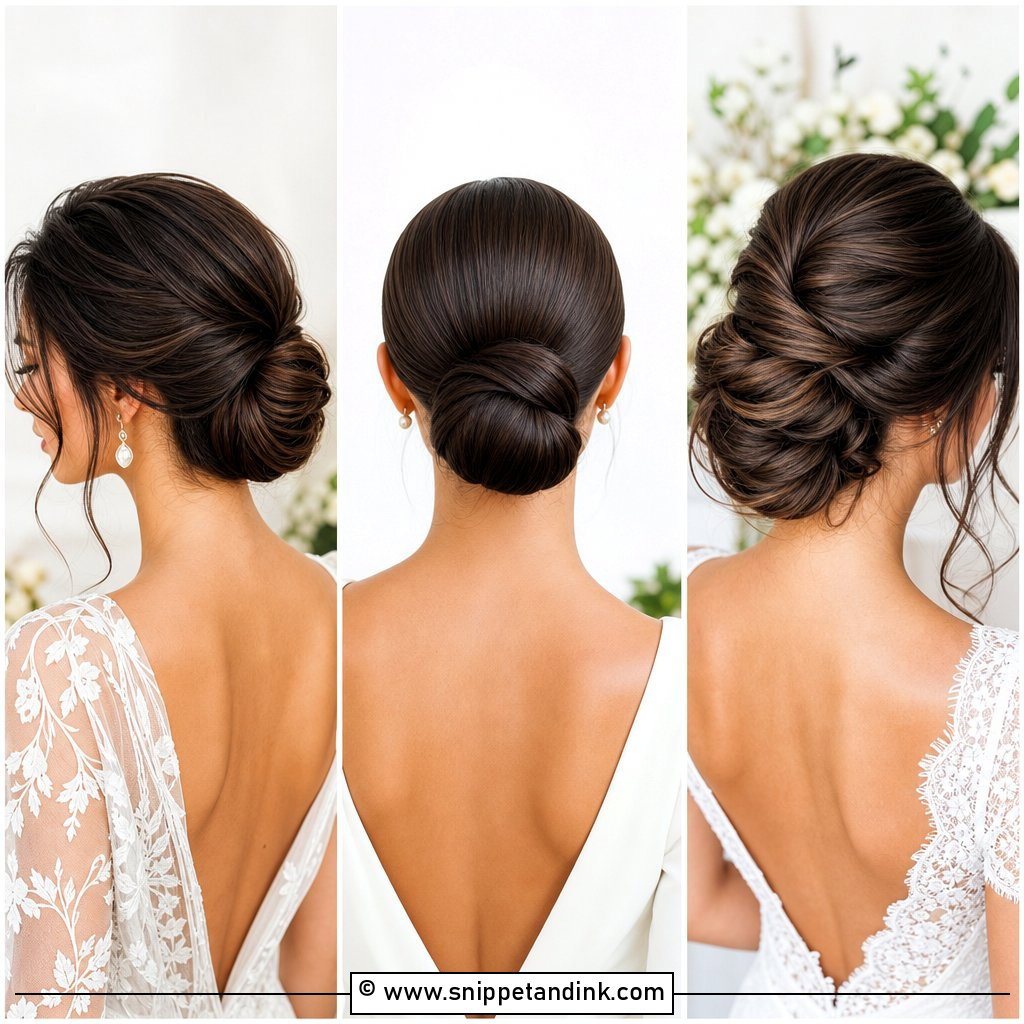
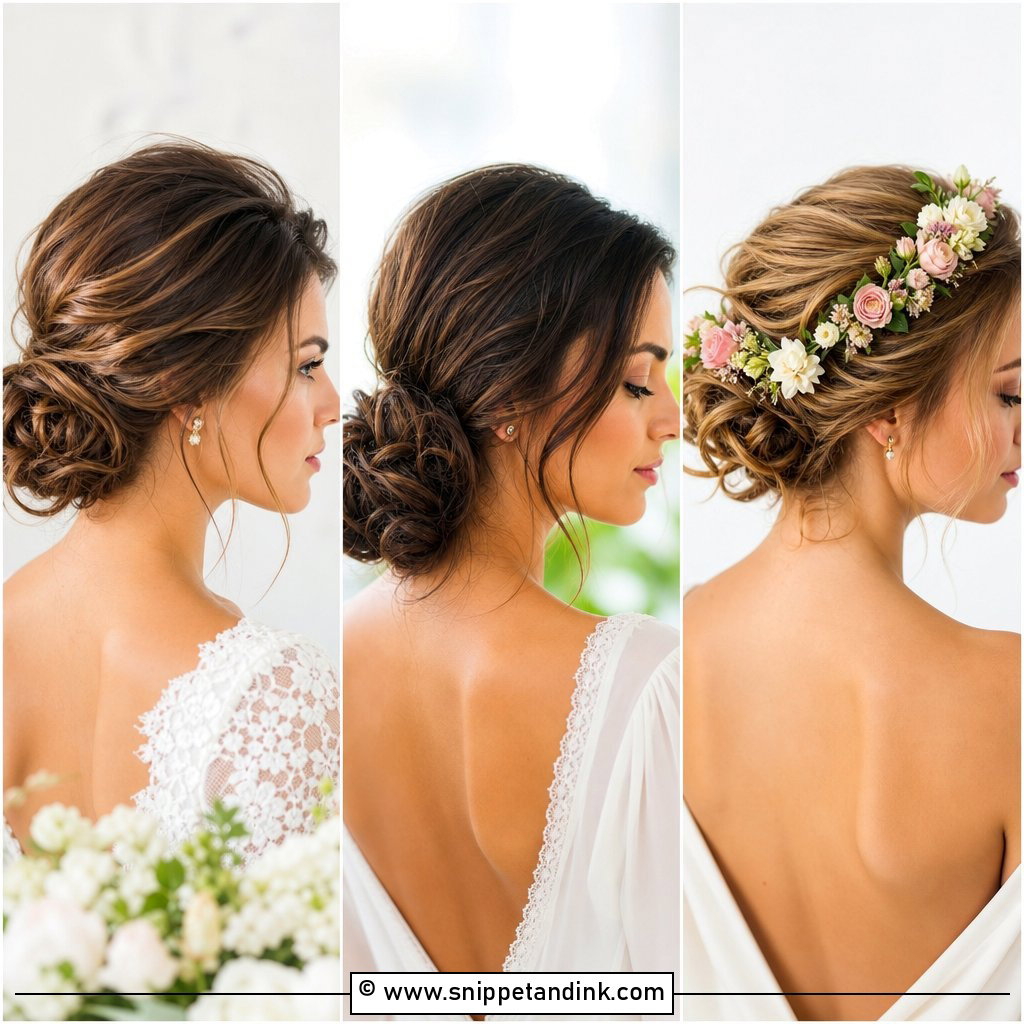
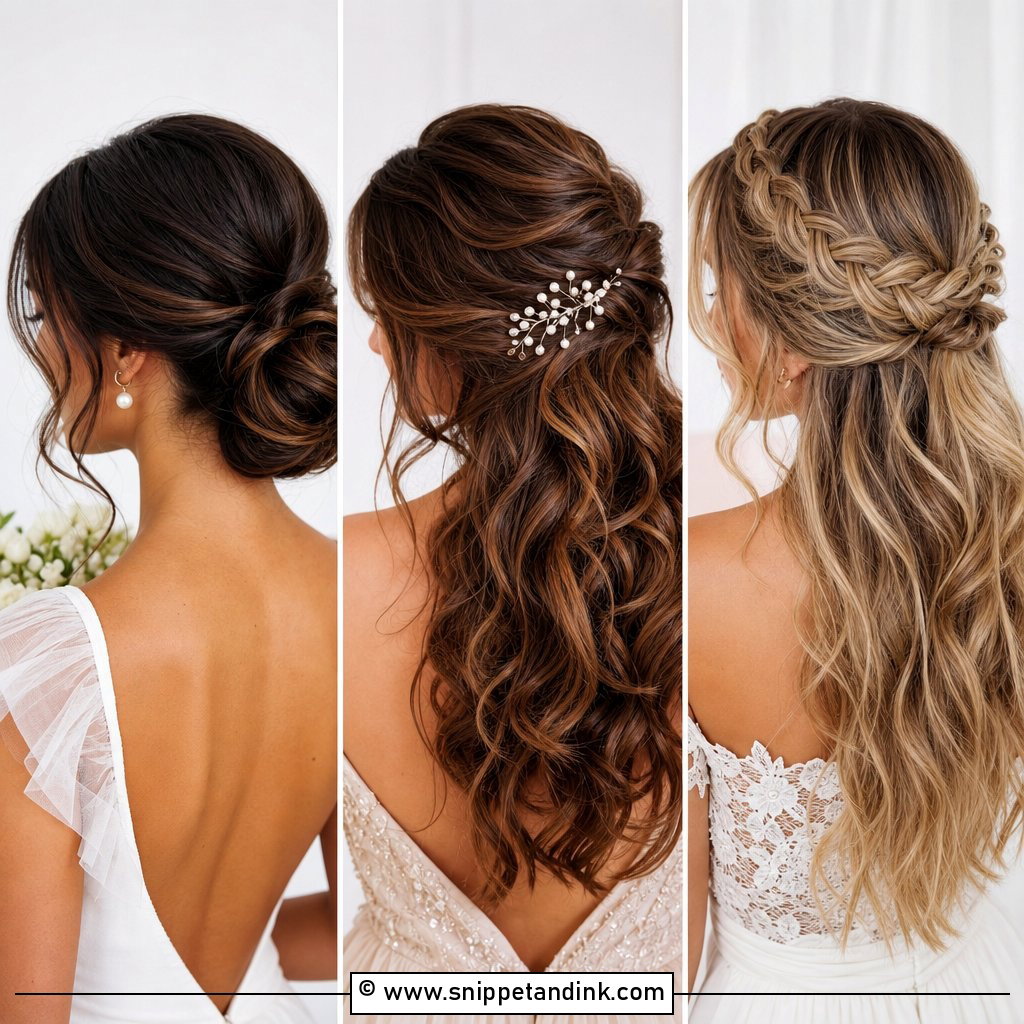
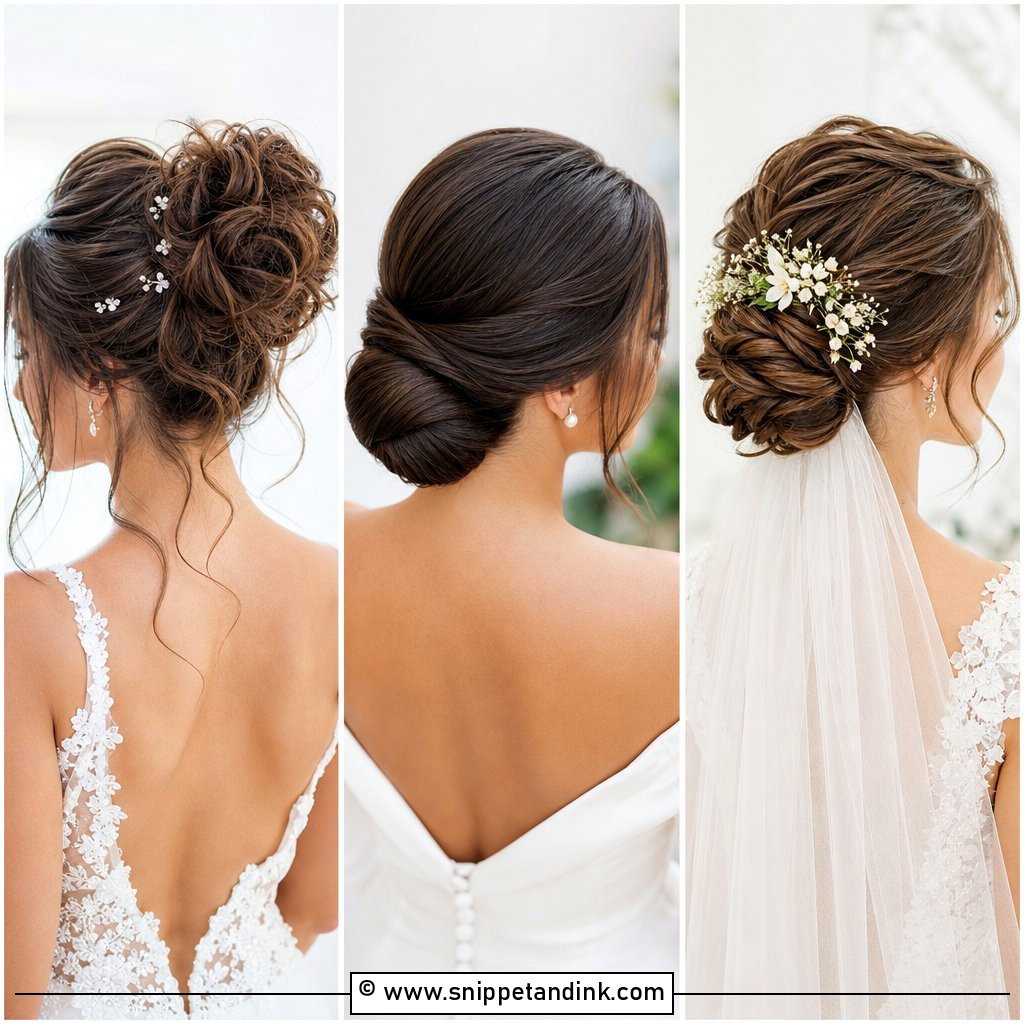
If I had to name one style that copes with a long day, a low bun would be it. Sitting close to the nape, it works under veils, with open backs and high necklines, and leaves the ears free for statement earrings. Sleek suits a formal ceremony; loosened with a few face-framing pieces, it moves to a garden or beach. Wind and dancing barely touch it. For a fuller bun I curl the hair first and wrap it in sections rather than twisting it all in one go, which gives a rounded shape instead of a tight coil. A few pearl pins or one small comb is plenty.
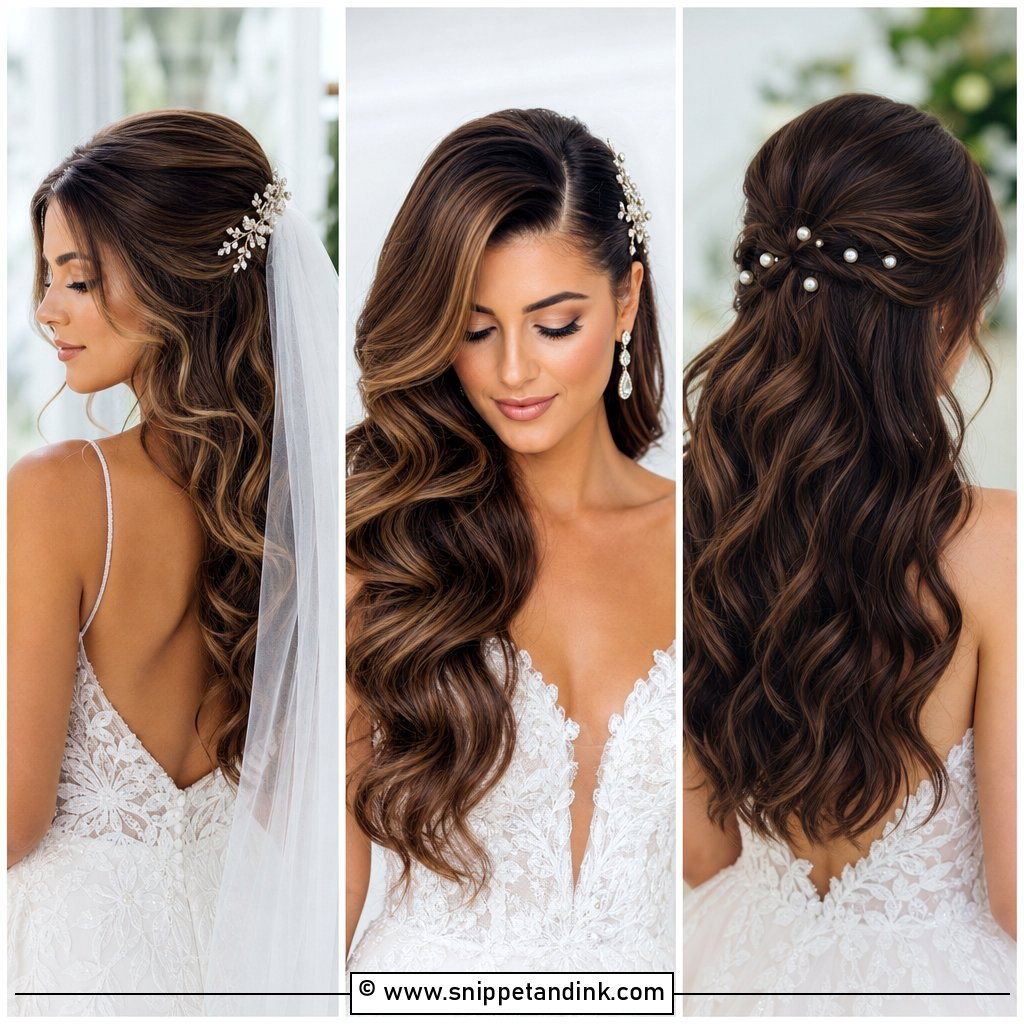
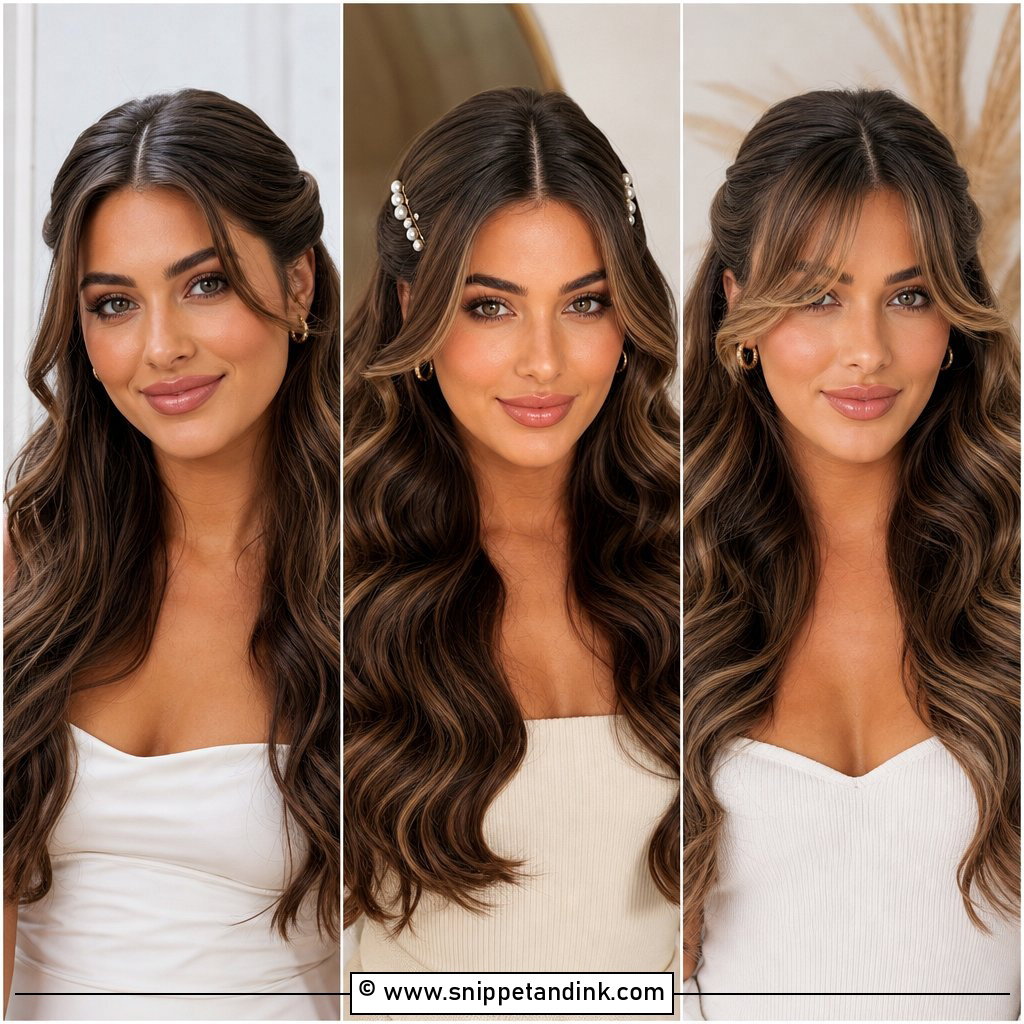
3. Loose Waves Wedding Hair
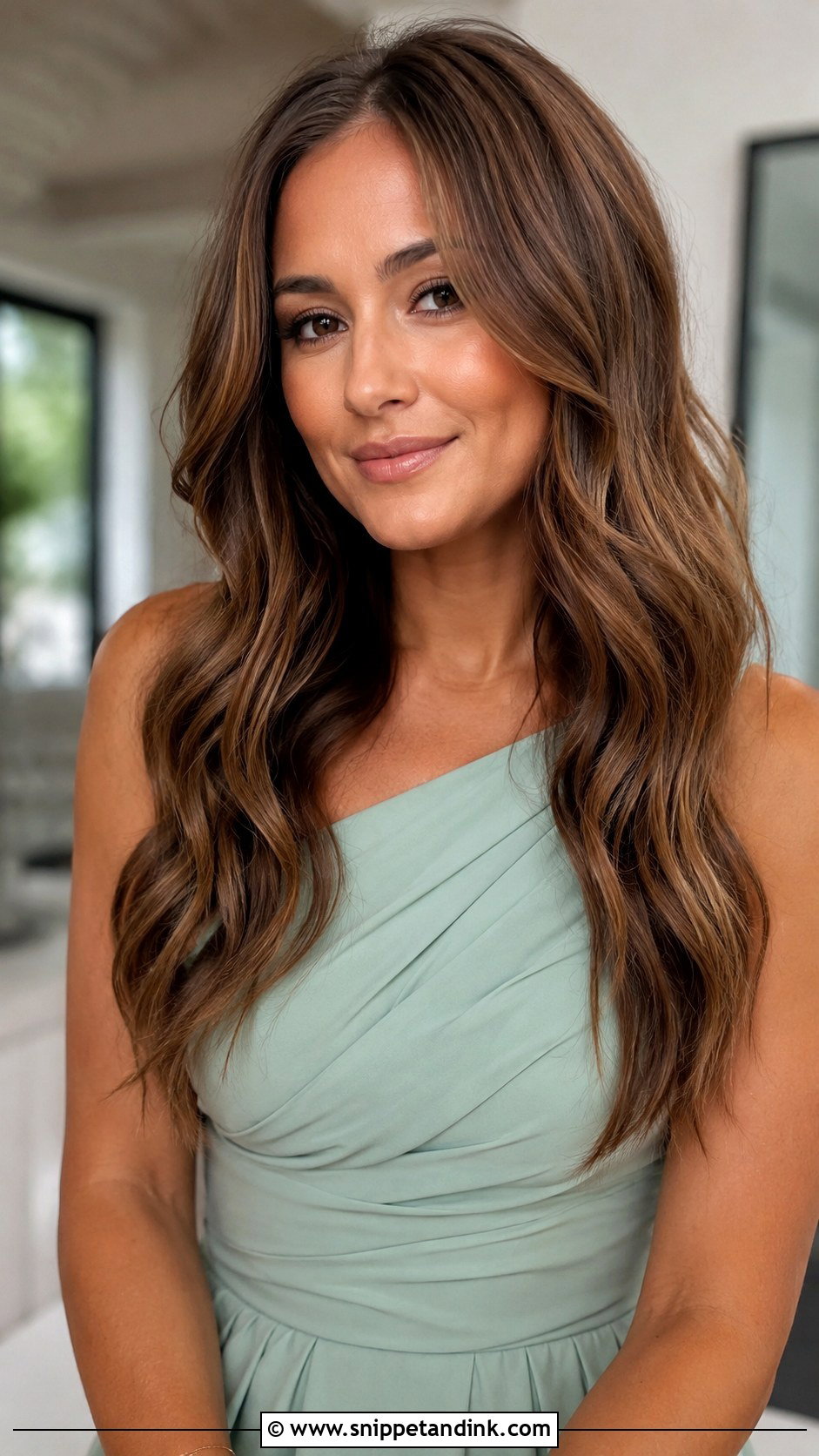
Waves give body and shine, and they move in candid shots in a way straight hair never does. Brides, bridesmaids and guests can all wear them, which makes them useful for a matching bridal party. For the brushed-out version, I curl, let every section cool completely, then brush through with a wide paddle brush and a middle or side part. Outdoors, a flexible-hold spray and an anti-frizz cream keep the shape smooth. Color matters more than people expect here: long layers, balayage or face-framing highlights show off each bend, while one solid dark shade can make waves look flatter in photos.
4. Sleek Ponytail Wedding Hair
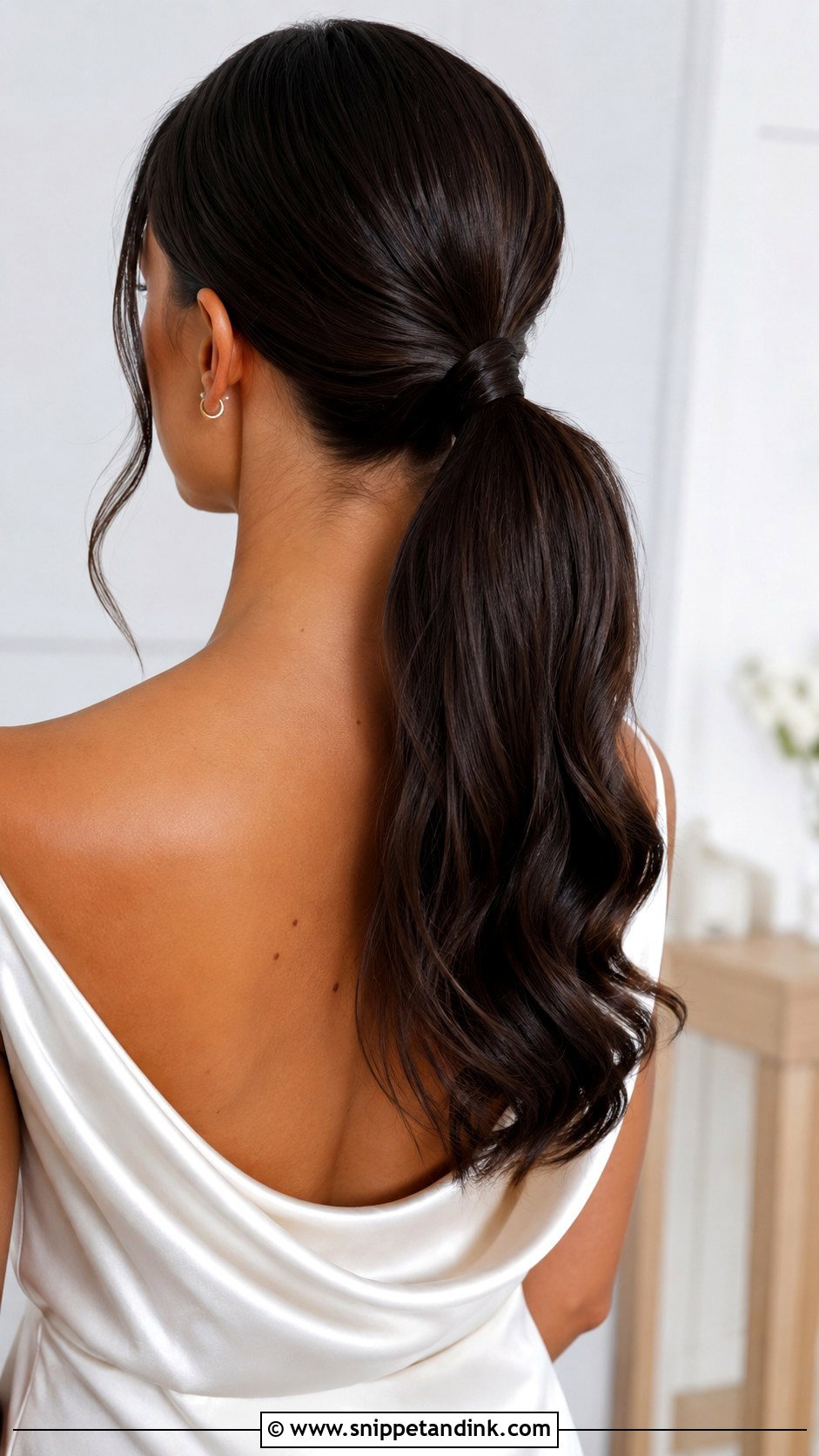
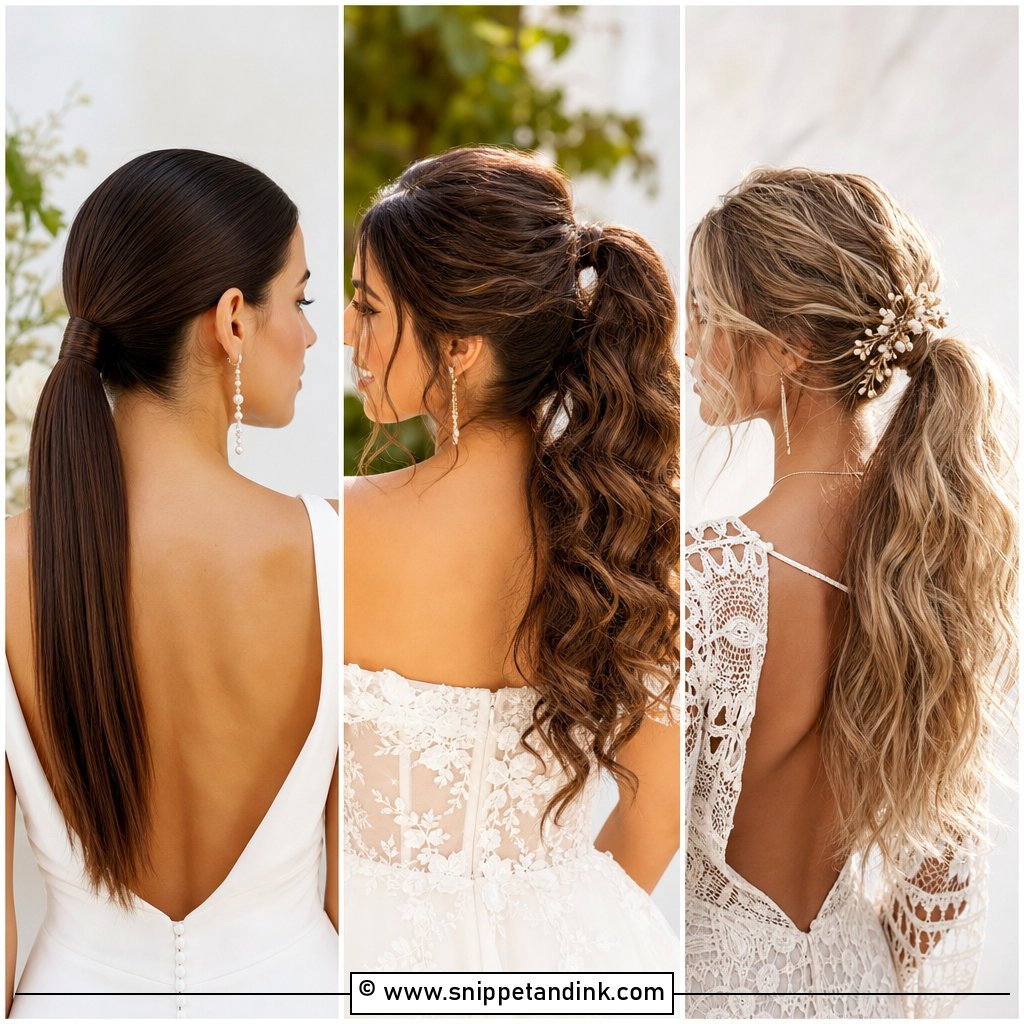
A sleek ponytail looks modern without reading casual. It works with minimalist dresses, fitted gowns, jumpsuits and formal guest outfits. Placement sets the tone: high is bold and glamorous, low is softer and more classic. I wrap a section of hair around the elastic and finish with shine spray through the lengths. Prep is the real work. A ponytail this smooth shows every flyaway, so I blow-dry the hair straight first and set the top with a little gel on a brush before tying it. In warm weather it’s one of the coolest styles to wear because nothing touches your neck.
5. Braided Crown Wedding Hair
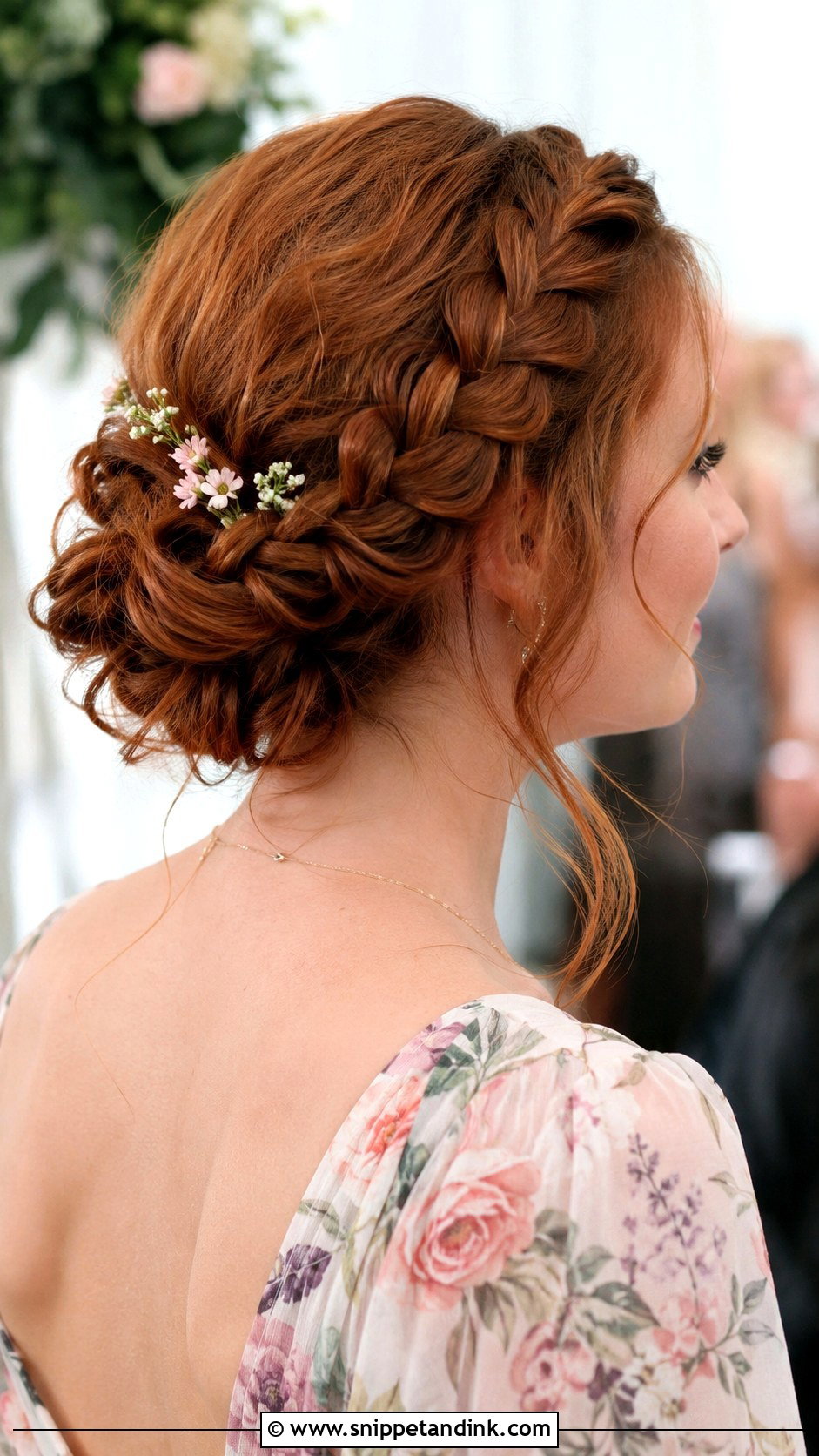
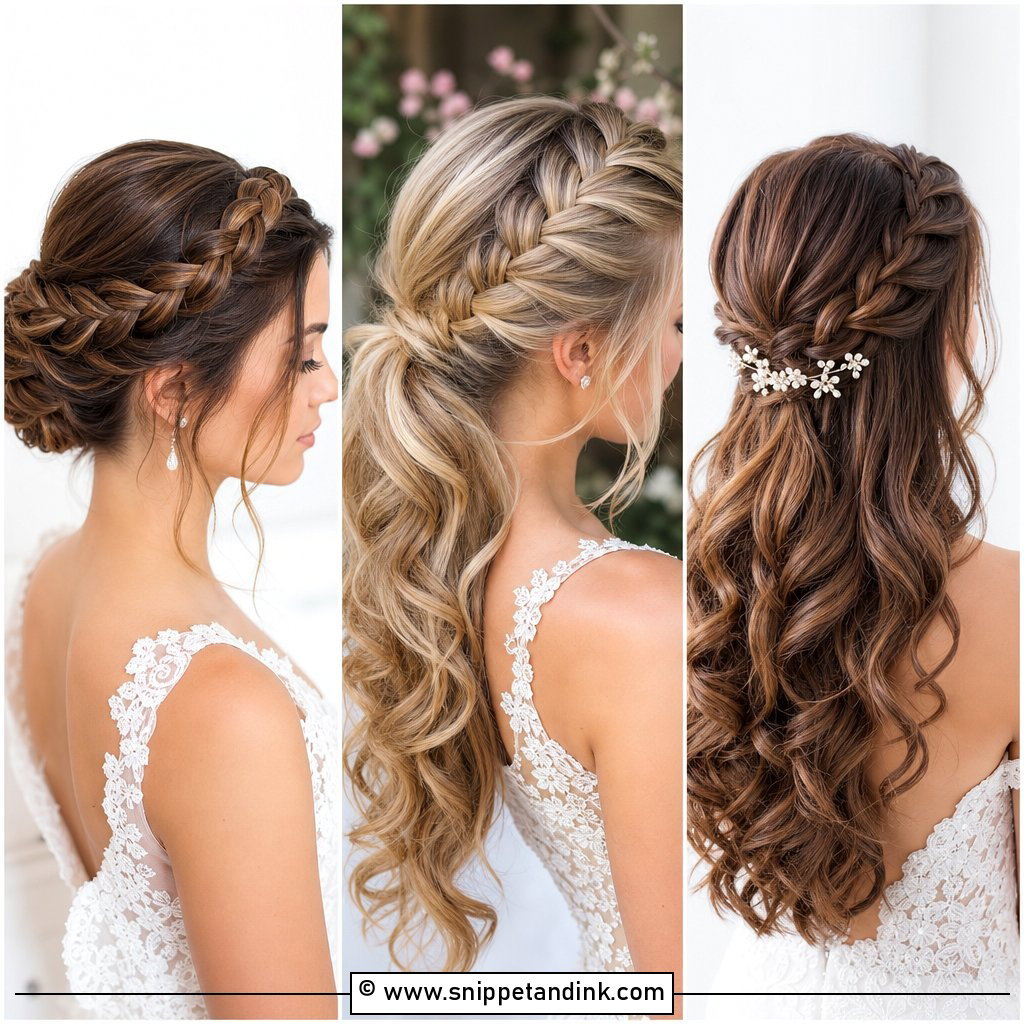
Outdoor ceremonies, rustic venues and gardens all suit a braided crown. The braid frames the head like a soft halo, and the rest of the hair can be tucked, curled or left partly down. It solves a common problem: hair off your face, but still with texture and detail. You can build it as one full crown braid, two side braids meeting at the back, or a braided half-up shape. On shorter or layered hair the two-braid method is the one I use, since a single braid runs out of length. Loosen the braid gently once it’s pinned, and tuck in small flowers last.
6. Hollywood Waves Wedding Hair
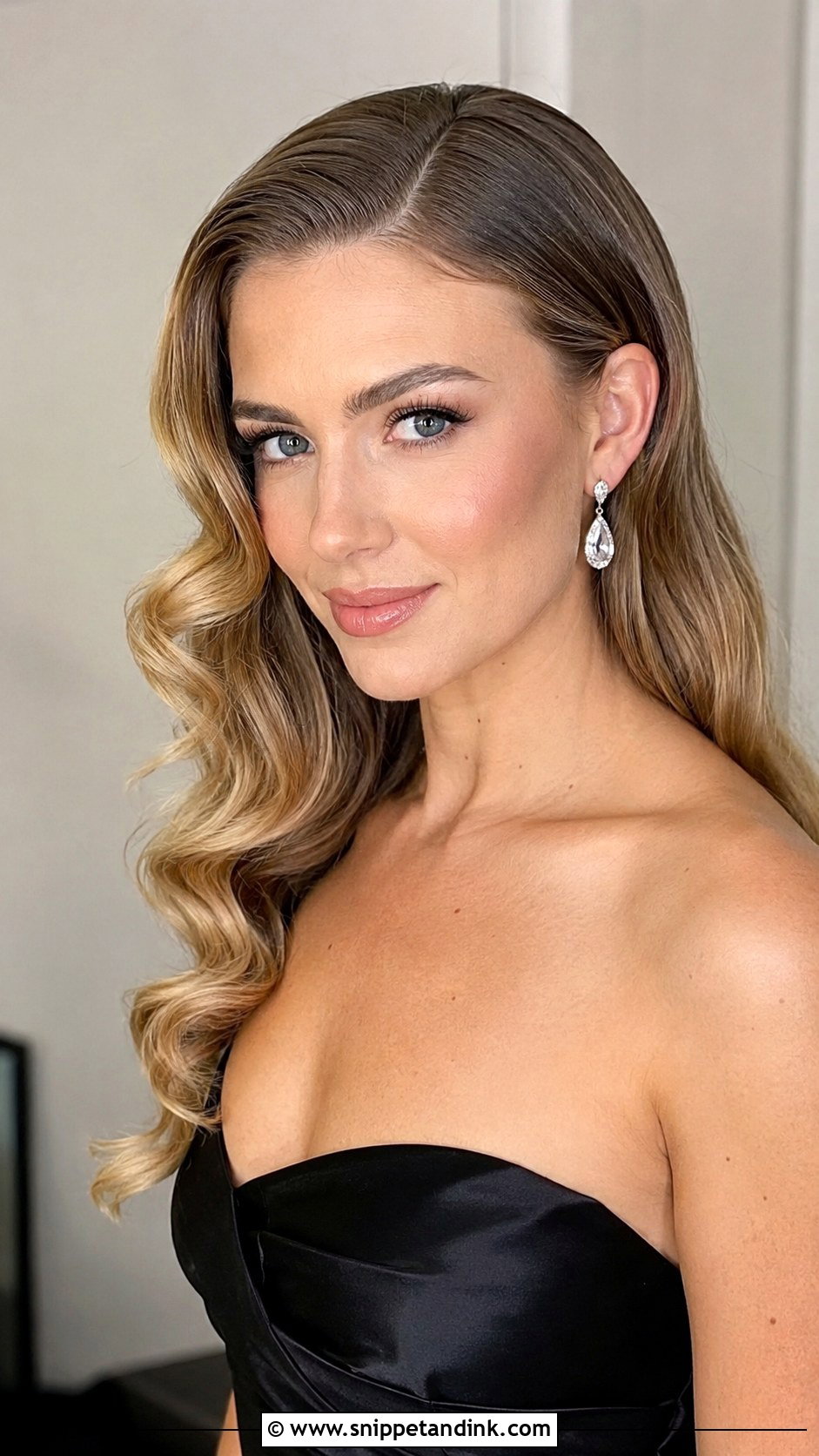
Hollywood waves are sculpted, not tousled, and that’s what makes them formal. They suit side parts, one-shoulder dresses, satin gowns and vintage-inspired outfits, ideally on medium to long hair; extensions can add fullness on thinner hair. The goal is one continuous wave with a glossy surface, not lots of texture. I set the curls all in the same direction, pin them to cool, brush them into a single shape and clip the front waves with flat duckbill clips while the spray sets. The clips come out just before photos. Humidity is the enemy here, so I’d choose something else for a sticky outdoor ceremony.
7. Messy Updo Wedding Hair
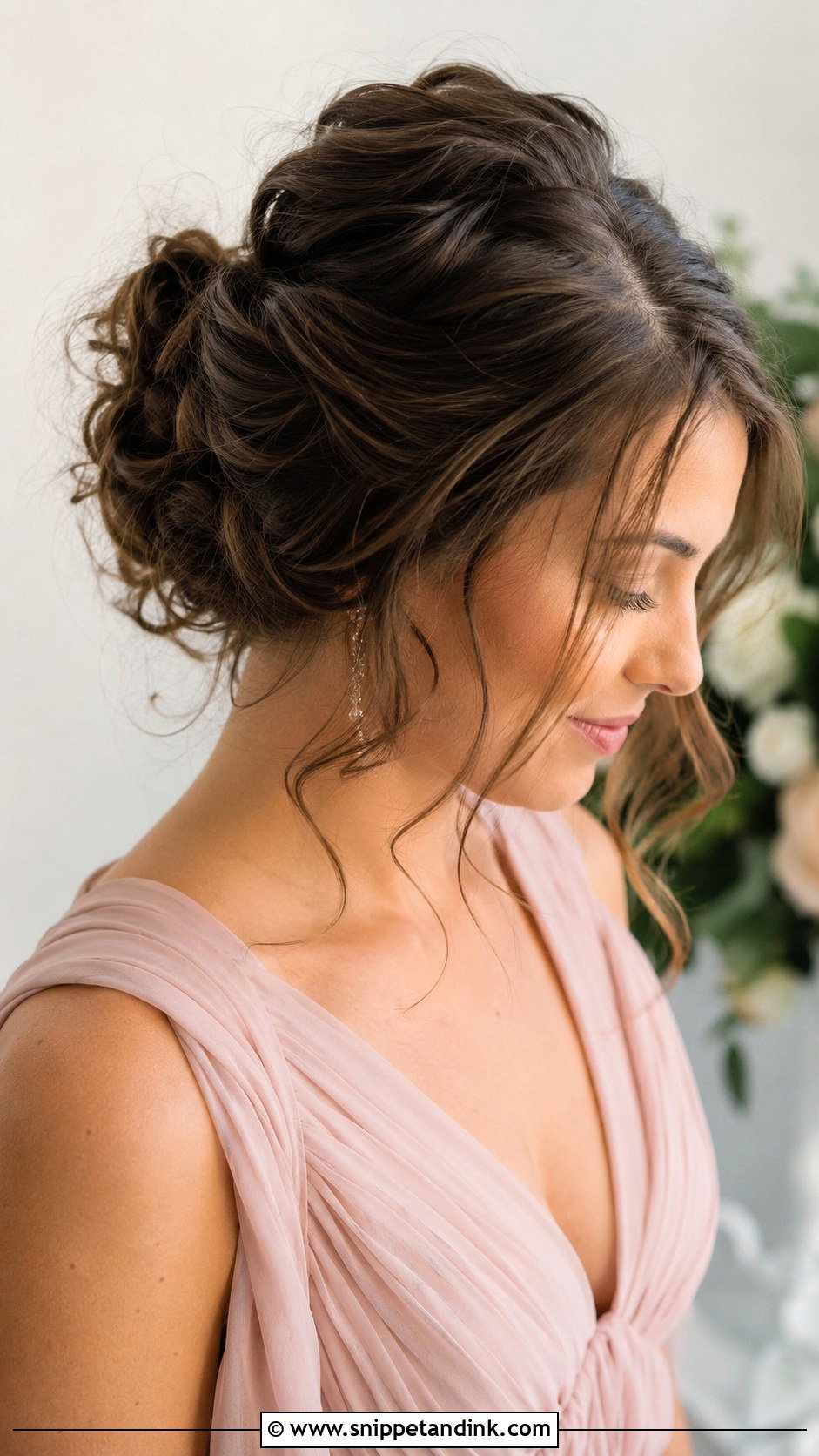
Messy should look relaxed, but underneath it needs a firm foundation. I start with curled hair and a small secure base, then pin curls around it so the soft parts have something to hold onto. A few loose pieces go around the face where they flatter you most, which is why it suits so many face shapes. Brides, bridesmaids, mothers of the bride and guests can all wear it, and it sits naturally with lace, chiffon or floral dresses at an outdoor venue. Keep the texture airy. Heavy backcombing makes it look dated and leaves knots you’ll be brushing out at midnight.
8. Curly Wedding Hair
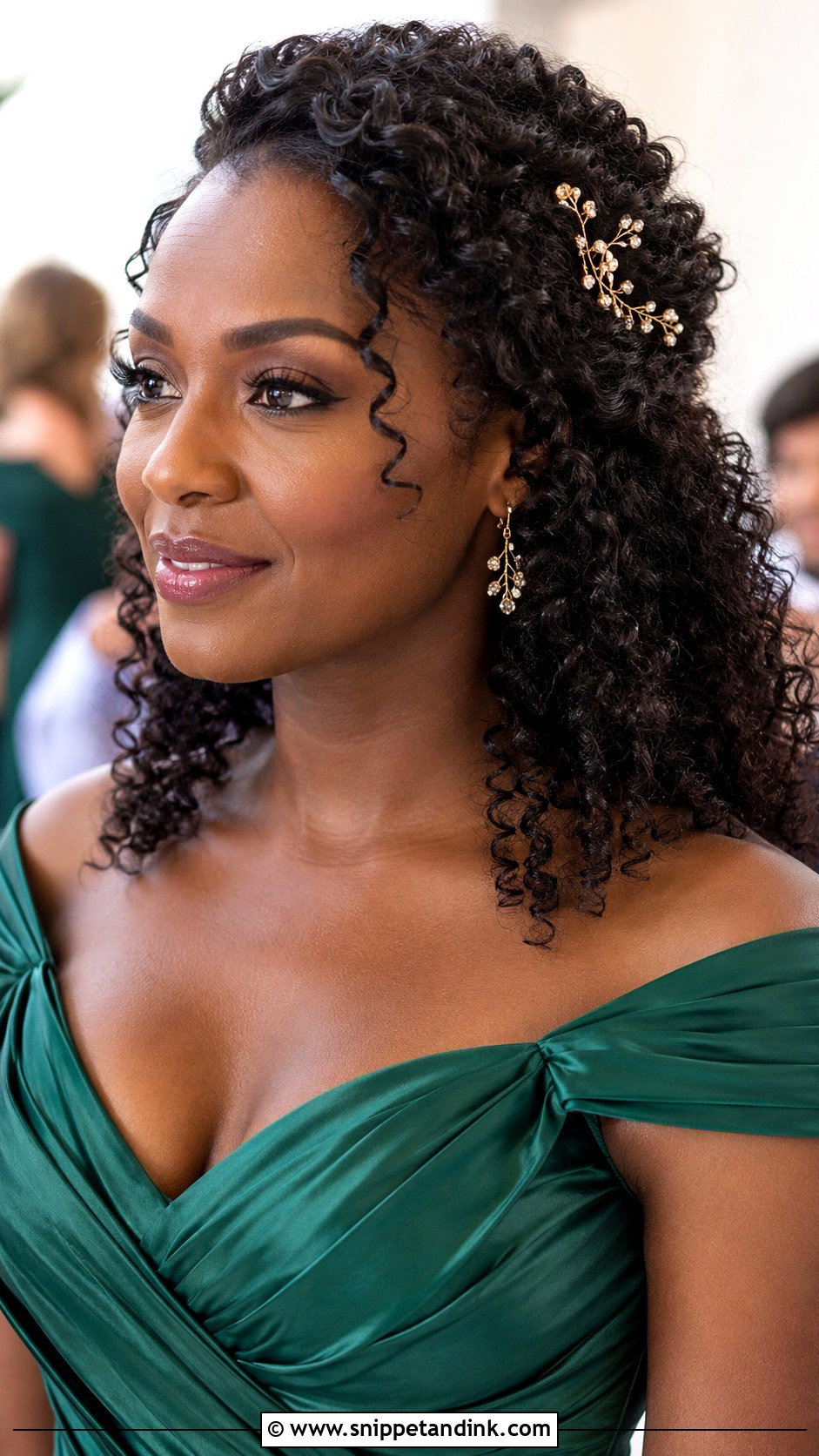
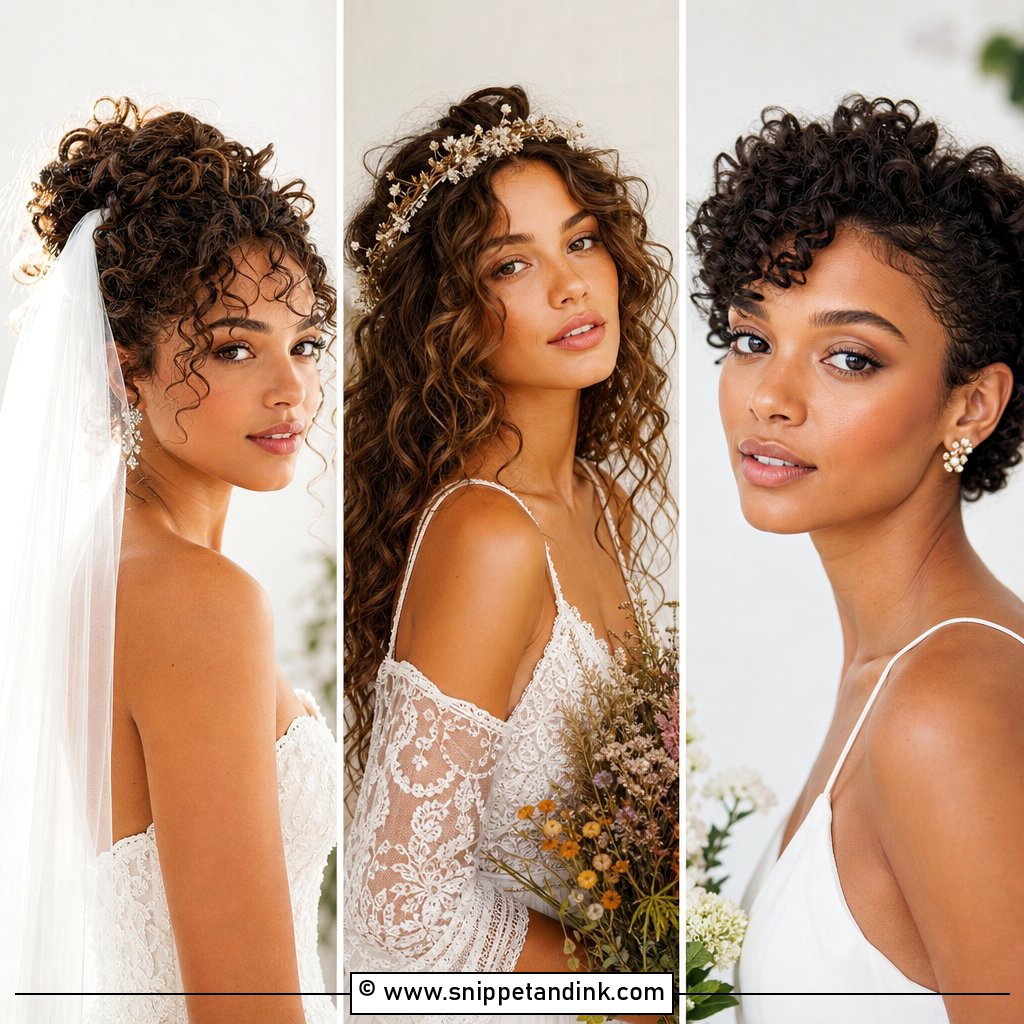
Curls look their best shaped, hydrated and defined, not stretched out. You can wear them down, half up, pinned to one side or gathered into a soft updo. Prep is most of the result: curl-friendly products, no heavy oil at the roots, and a full set before anyone touches the curls, because handling them while damp is what creates frizz. A few pinned sections give shape without hiding the pattern. Floral pins, gold clips or a veil above or below the crown all sit well. I’d test your usual wash routine before the day rather than trying a new product that morning.
9. Short Bob Wedding Hair
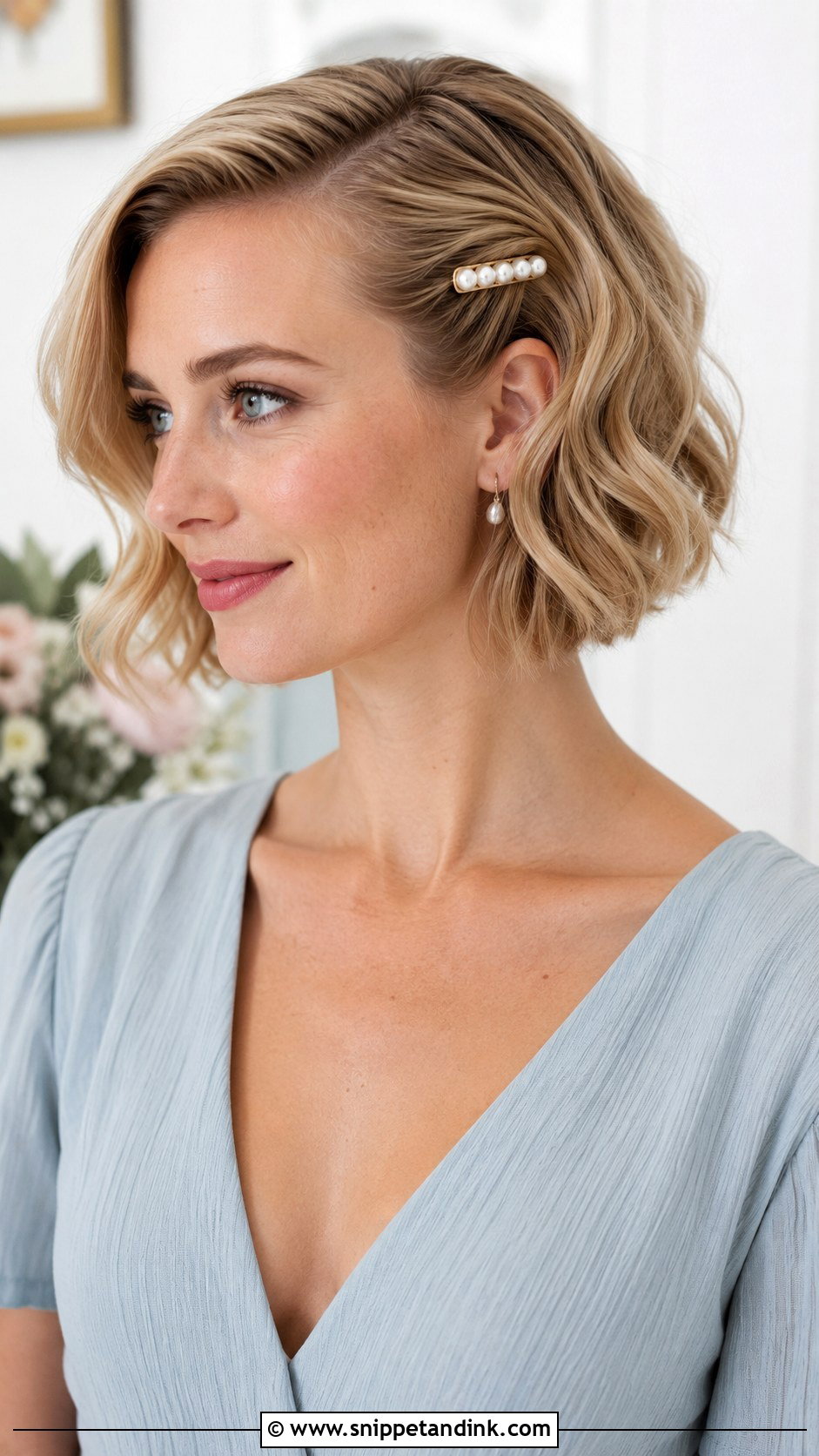
Short bob wedding hair can feel every bit as finished as a long updo. The cut does most of the work, so I keep styling clean: sleek, softly bent, tucked behind one ear or lifted at the roots. For a formal setting, a smooth bob with shine spray and a deep side part looks sharp. For something softer, loose bends and a single pearl clip. A bob also leaves earrings and the neckline fully on show. If you’re due a trim, get it about two weeks out so the ends have settled and don’t look freshly blunt.
10. Textured Pixie Wedding Hair
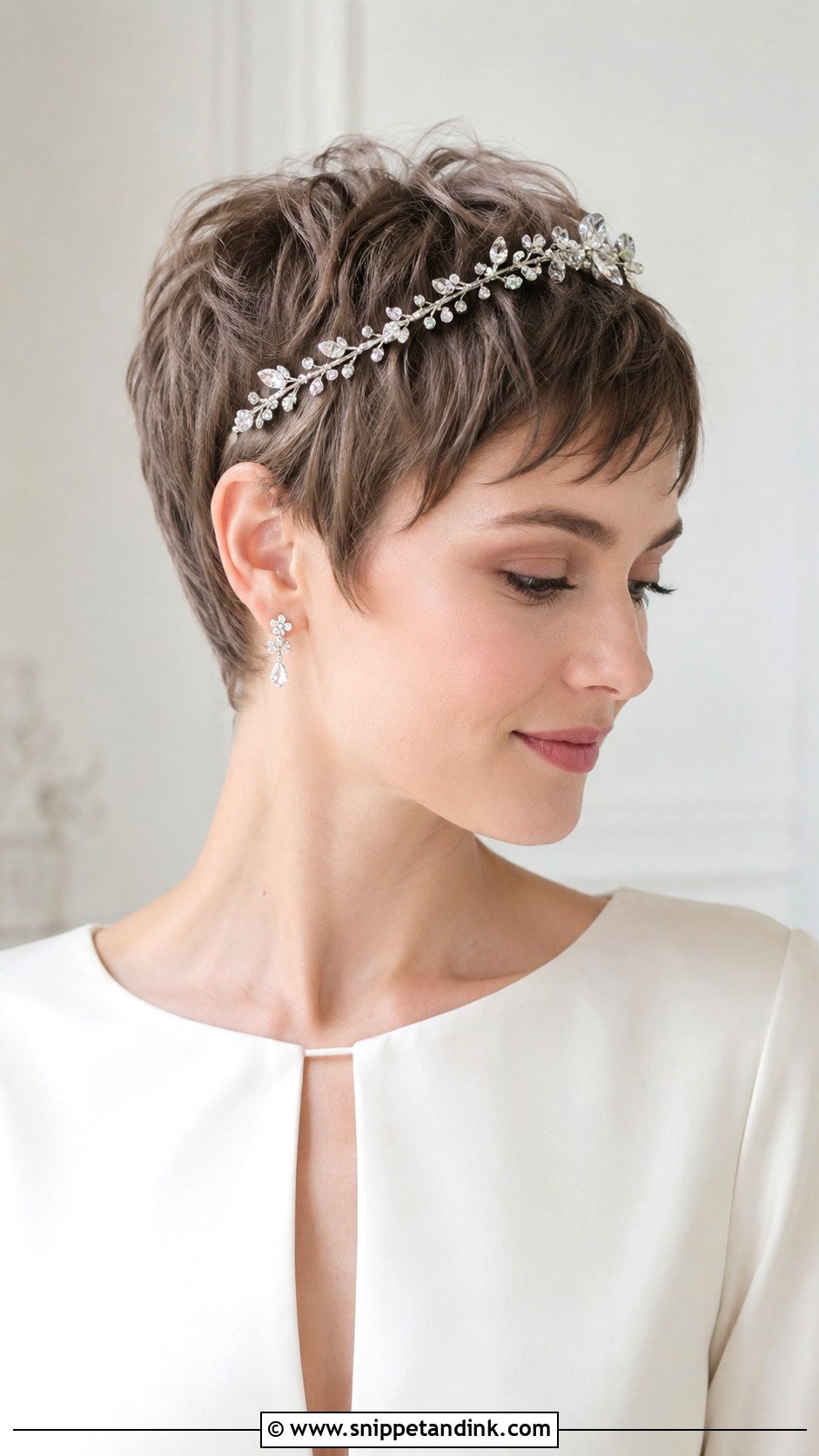
Textured pixie wedding hair doesn’t need hiding for a wedding. I add soft texture through the top with a matte paste, smooth the sides flat and define the front pieces so the shape looks deliberate. For a romantic version, a delicate headband, tiny pins or a short veil on a small comb. For a modern one, a clean side part and a glossy styling cream. The real advantage is comfort: no heavy pins, nothing to fall. The only thing I check is accessory size, because a wide comb has nowhere to grip on hair this short.
11. Side Swept Wedding Hair
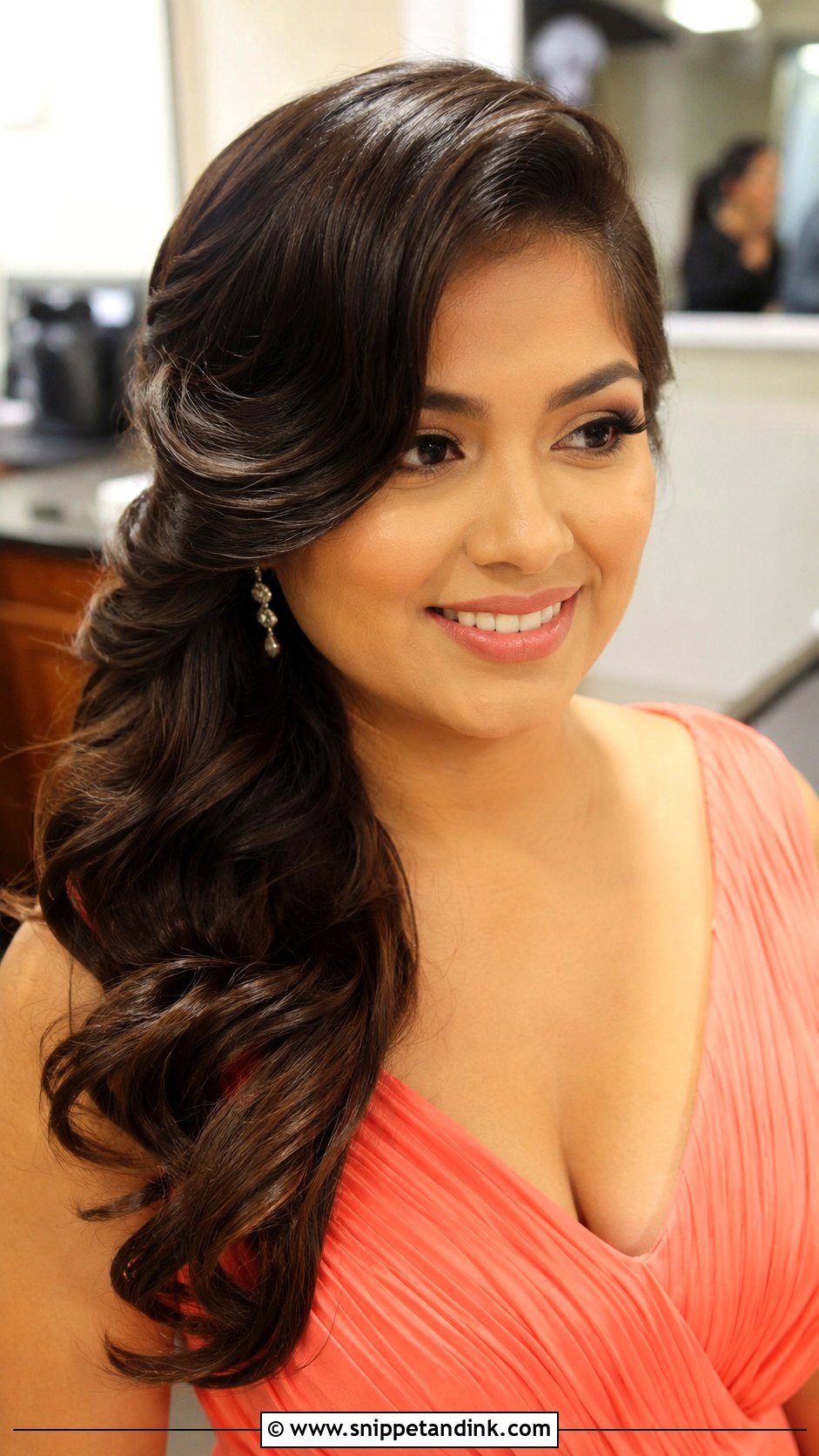
Directing the hair over one shoulder frames the face and shows off length while keeping it controlled. Curls, waves or smooth brushed texture all work. I’d suggest it for dresses with detailed backs, one-shoulder necklines or a dramatic earring on the open side. The secret is underneath: I pin the hidden side flat with crossed bobby pins under the top layer, so the hair doesn’t slide back over your shoulder every time you turn. Depending on the texture it reads classic, glamorous or boho, and it’s my usual suggestion when someone wants hair down but with more structure.
12. High Bun Wedding Hair
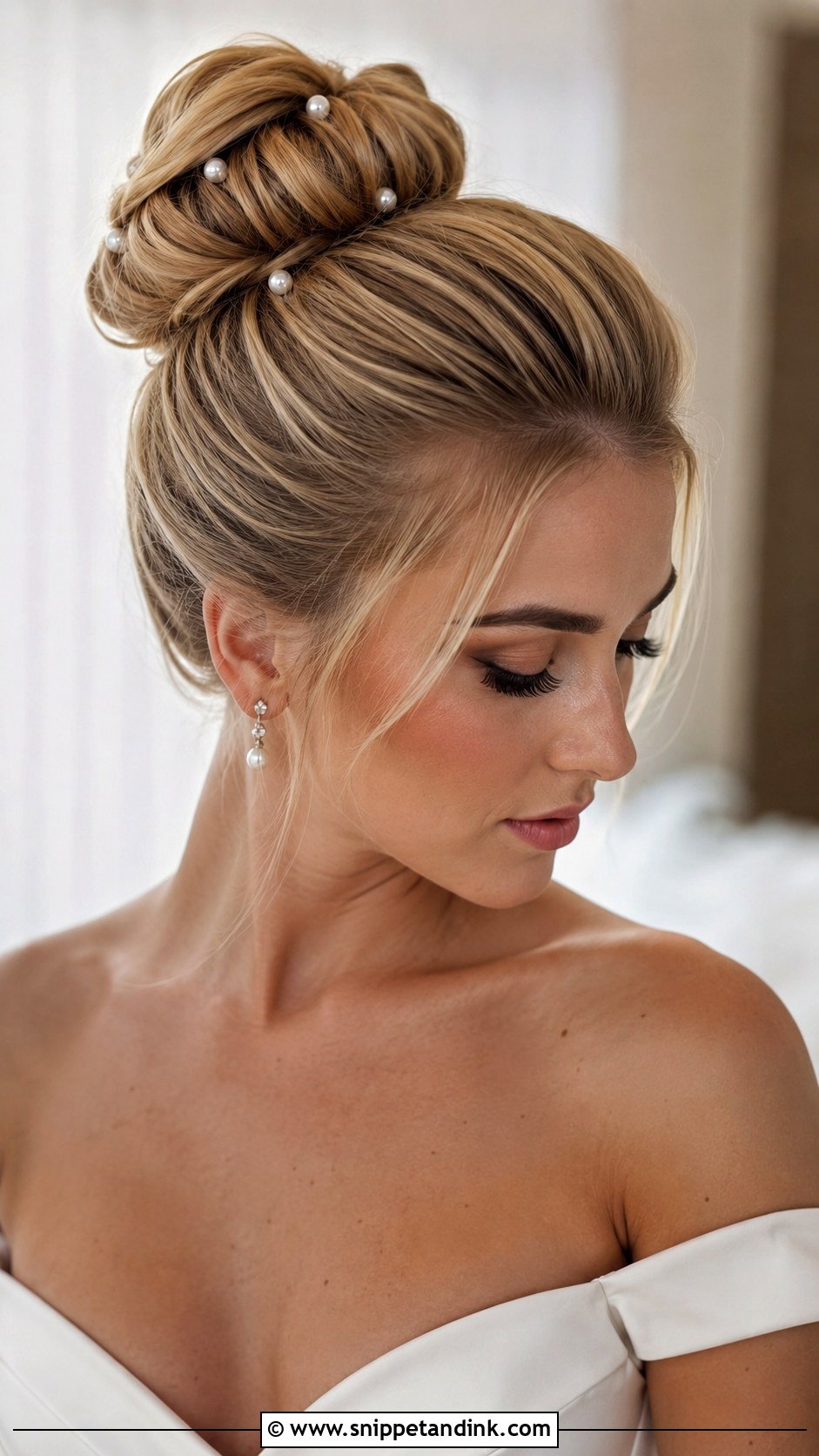
A high bun lengthens the neck and lifts the whole silhouette. It suits formal weddings, summer ceremonies, and gowns with high collars or open shoulders. It can be sleek and ballerina-inspired or softer, with curled pieces wrapped around the base. Hair stays off the neck through the heat and the dancing, and a veil can sit underneath. On fine hair I use a hidden padding piece or a few extensions so the bun isn’t small. The trade-off is tension: a high bun pulled tight can ache by evening, so I keep the ponytail base firm but not painful.
13. Waterfall Braid Wedding Hair
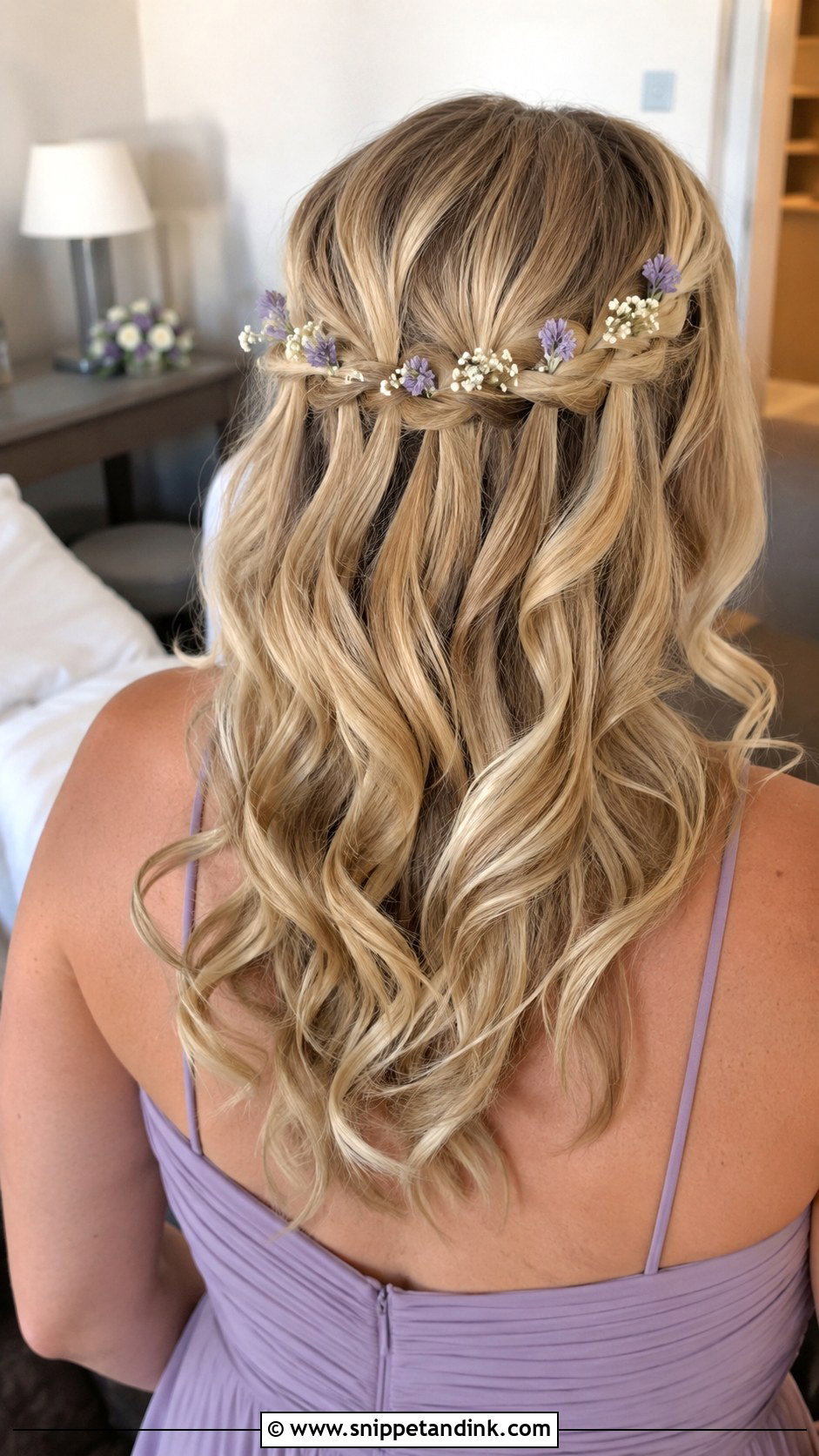
Waterfall braid wedding hair lets you have braided detail without putting all your hair up. The braid runs across the side or back of the head, dropping one strand at each pass so loose curls fall through it. Medium and long hair show the pattern best. It’s popular for bridesmaids and guests as well as brides, and it reads delicate rather than formal. To make it last, I curl the hair first and secure the braid’s end with small hidden pins rather than an elastic. Very fine, slippery hair struggles, because the dropped strands slide out of place.
14. Low Ponytail Wedding Hair
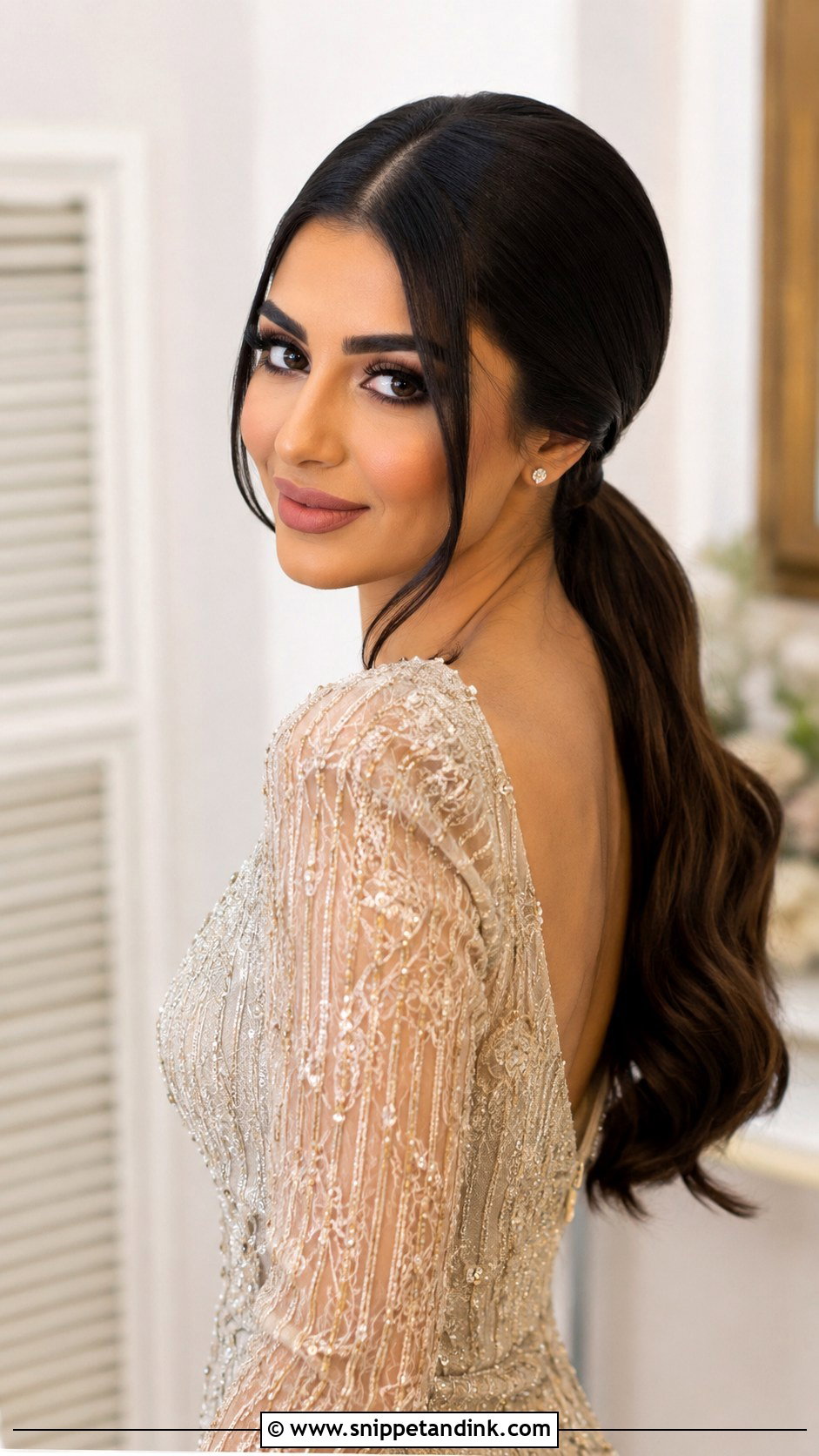
Sitting at the nape, a low ponytail reads far more polished than an everyday one. The front can be sleek, softly parted or left with loose pieces, and the tail can be smooth, curled or wrapped fuller. Modern dresses, bridesmaid gowns and guest outfits all suit it. I cover the elastic with a wrapped strand and add shine to the ends. It’s my go-to for very thick hair, since it controls volume without the weight of a big bun. On silky hair I stack two small elastics so it doesn’t drift down.
15. Chignon Wedding Hair
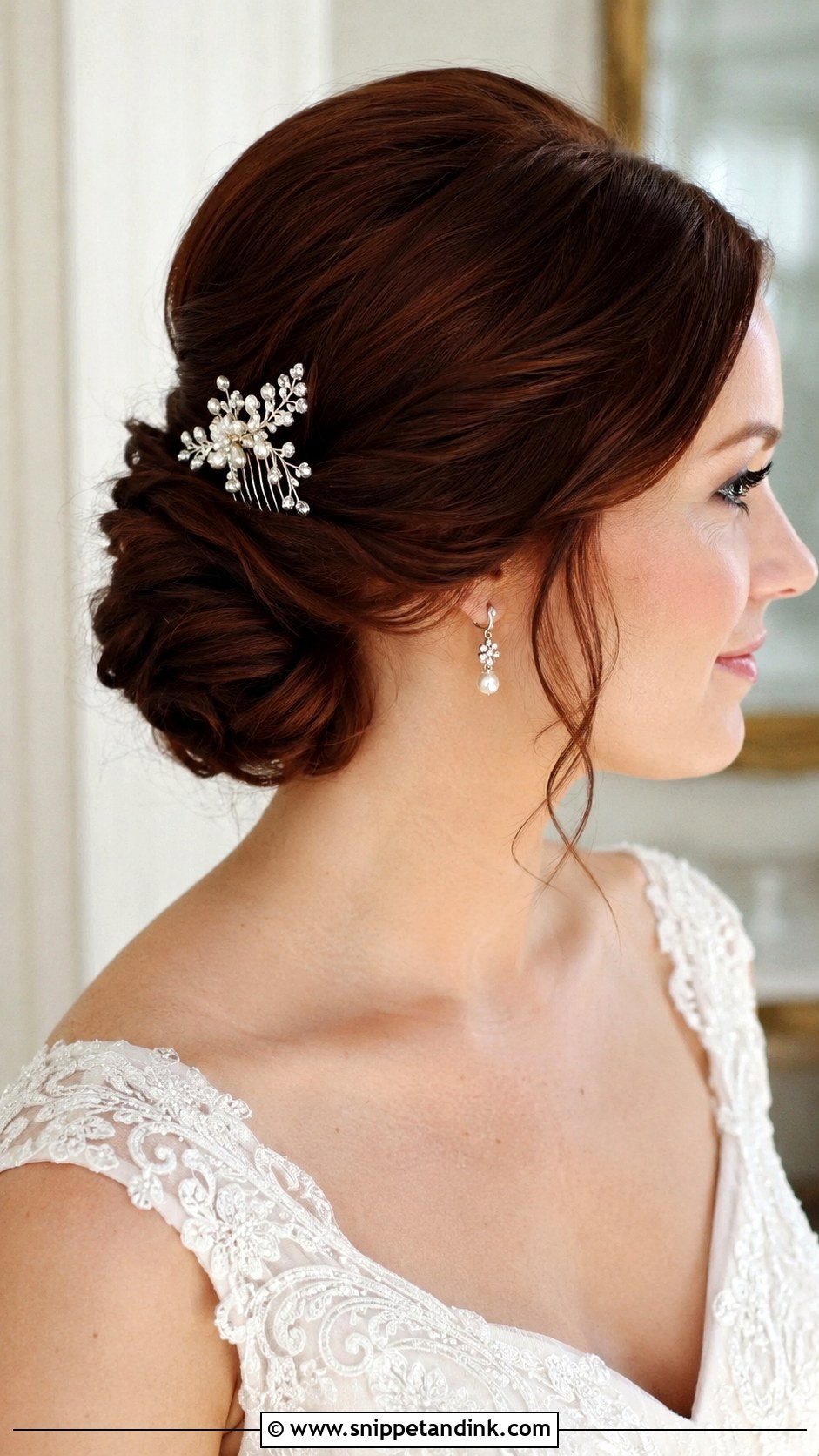
A chignon is the style I’d never worry about looking out of place. Tucked low at the back of the head, it can be sleek for black tie or softly undone for a romantic ceremony. Veils, combs and pearl pins anchor into it securely, and it frames earrings well. Because the hair is shaped and pinned in sections, it works on most hair types, though very short layers can poke out and need extra pins. If you want photos that still feel right years from now, it’s a safe choice. I keep the hairline soft rather than scraped so it looks current.
16. Long Braided Wedding Hair
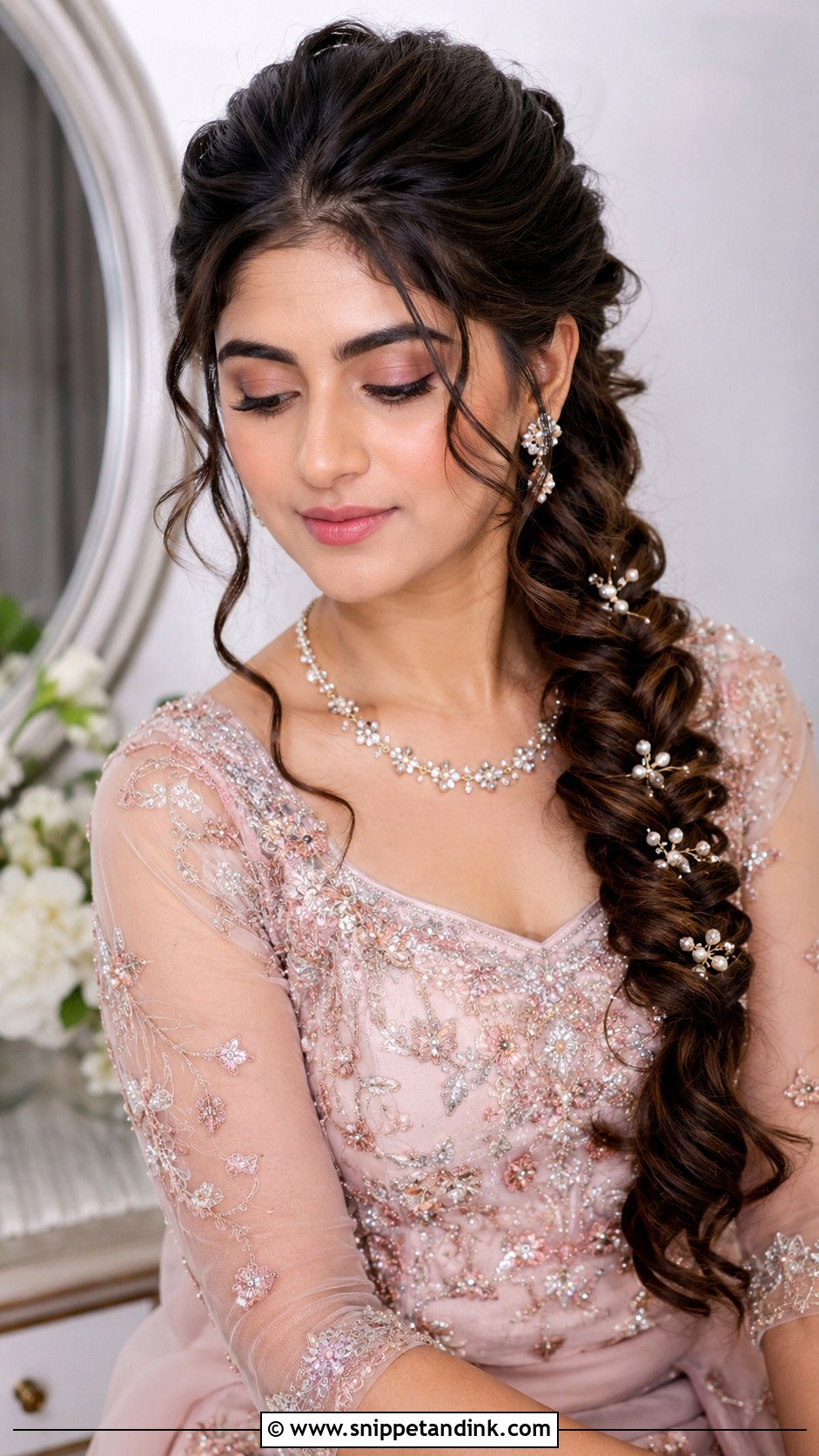
A long braid has staying power, which is its biggest selling point. A loose braid down the back or over one shoulder stays put outdoors while still looking soft. Fishtail, Dutch, French or a relaxed three-strand version all work; a fishtail shows the most detail on camera. I secure the end first, then pull the braid apart gently for fullness. Small flowers, pearls or a ribbon add the wedding note. It suits thick hair and long layers best. If you’re adding extensions for length, have them blended into the braid at the trial so the join doesn’t show.
17. Natural Hair Updo Wedding Hair
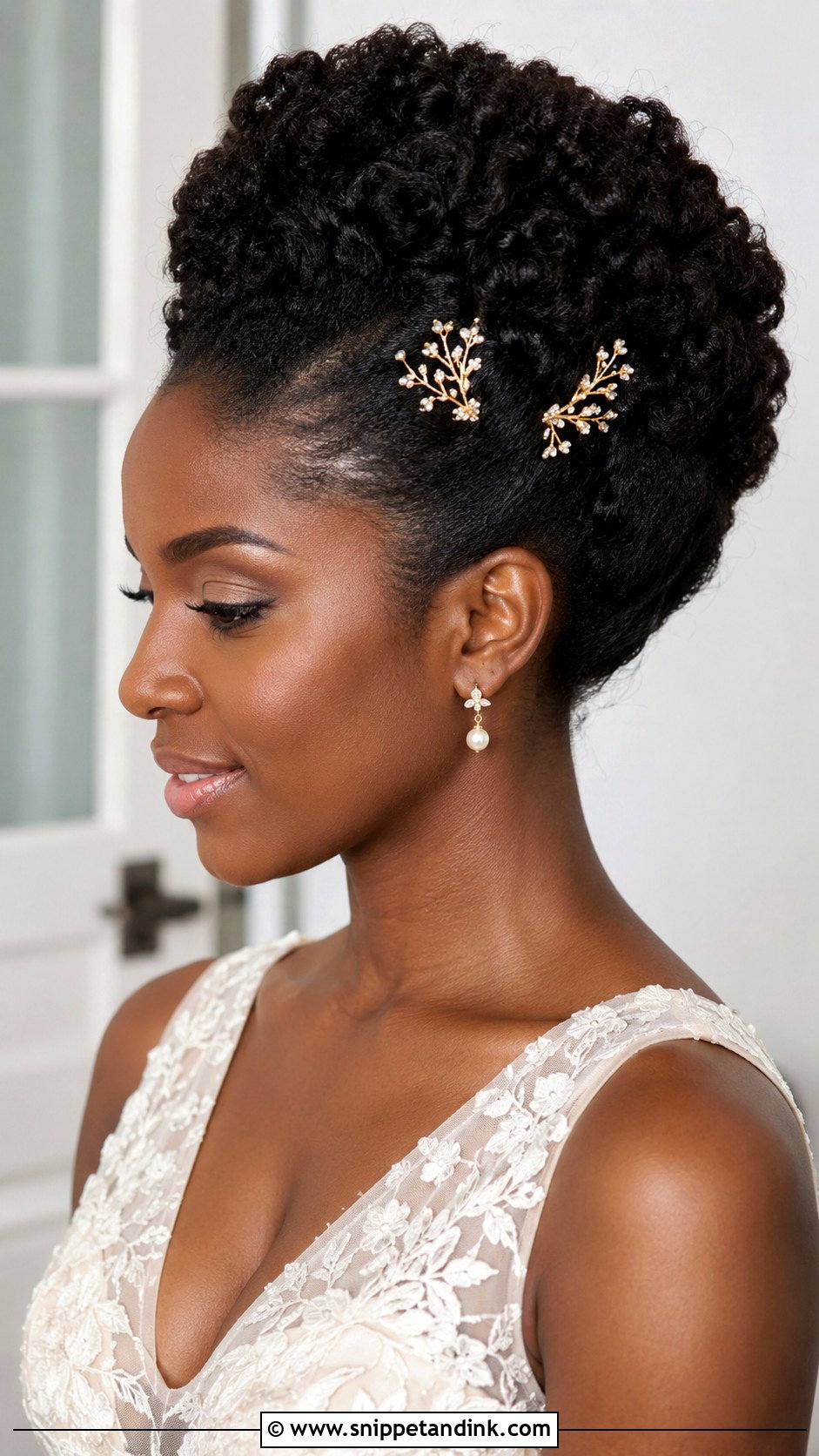
A natural hair updo can be a high puff, pinned curls, flat twists, a sculpted bun or a soft textured shape, and the aim is to honor the texture while creating something secure enough for the ceremony and the reception. Moisture and hold both matter, so I prep with hydrating products first, then add a medium-hold gel only where the shape needs it. Flat twists are often best done the day before, which saves time in the chair and gives them a night to settle. Veils, gold pins, flowers or pearls all sit well, and lifting hair off the neck helps in a warm venue.
18. Vintage Roll Wedding Hair
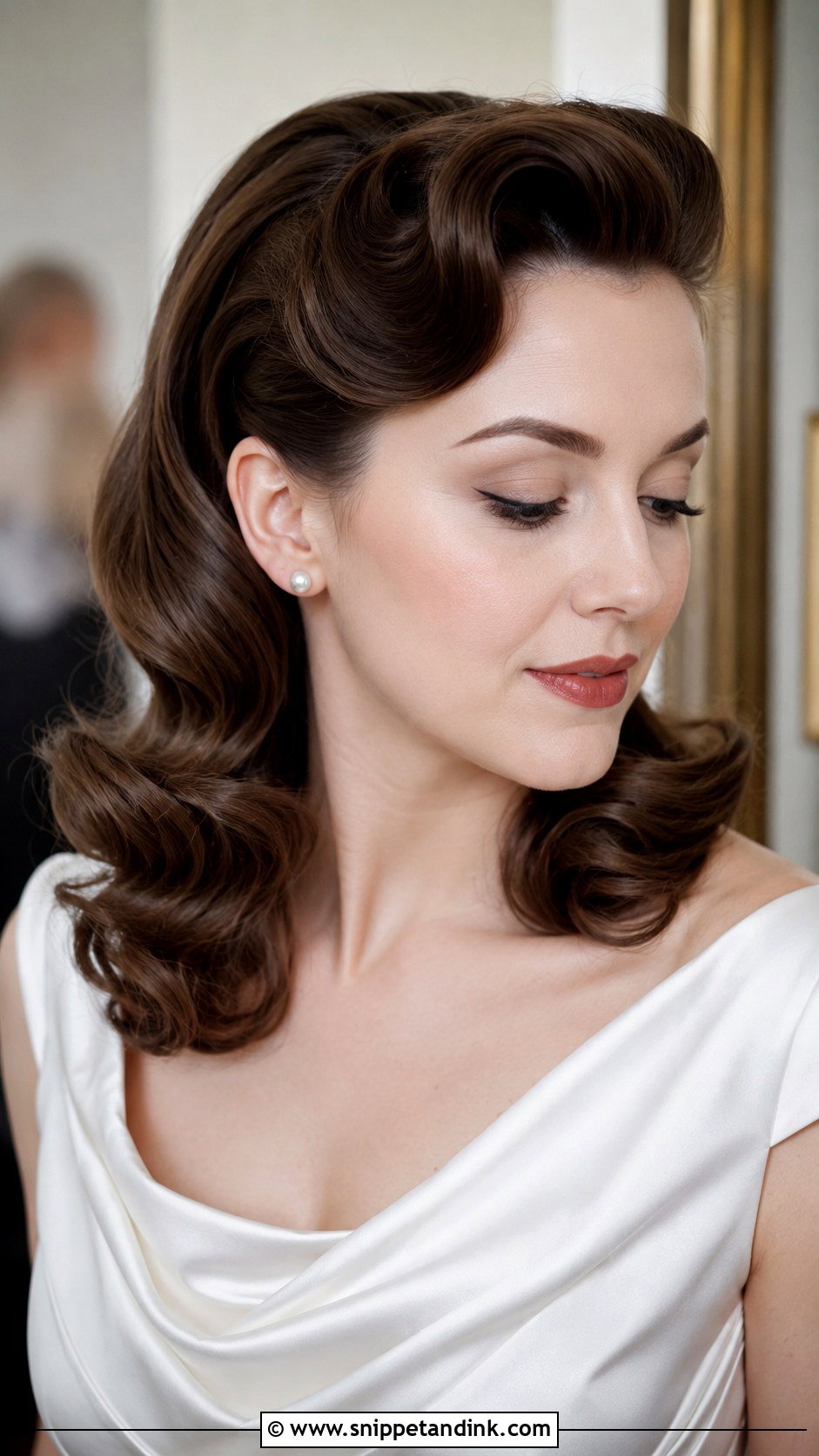
Vintage roll wedding hair needs the rest of the outfit to support it: satin, a tea-length dress, winged liner or classic jewelry. That might be soft victory rolls, rolled bangs, a tucked-back shape or a smooth curled finish. The line between intentional and costume is thin, so I keep the rolls glossy and controlled rather than towering. Each roll is wound around two fingers and pinned from inside so no pins show. It works on medium and long hair and some bob lengths. If waves feel too expected but you love old Hollywood, this is the more unusual route.
19. Soft Twist Wedding Hair
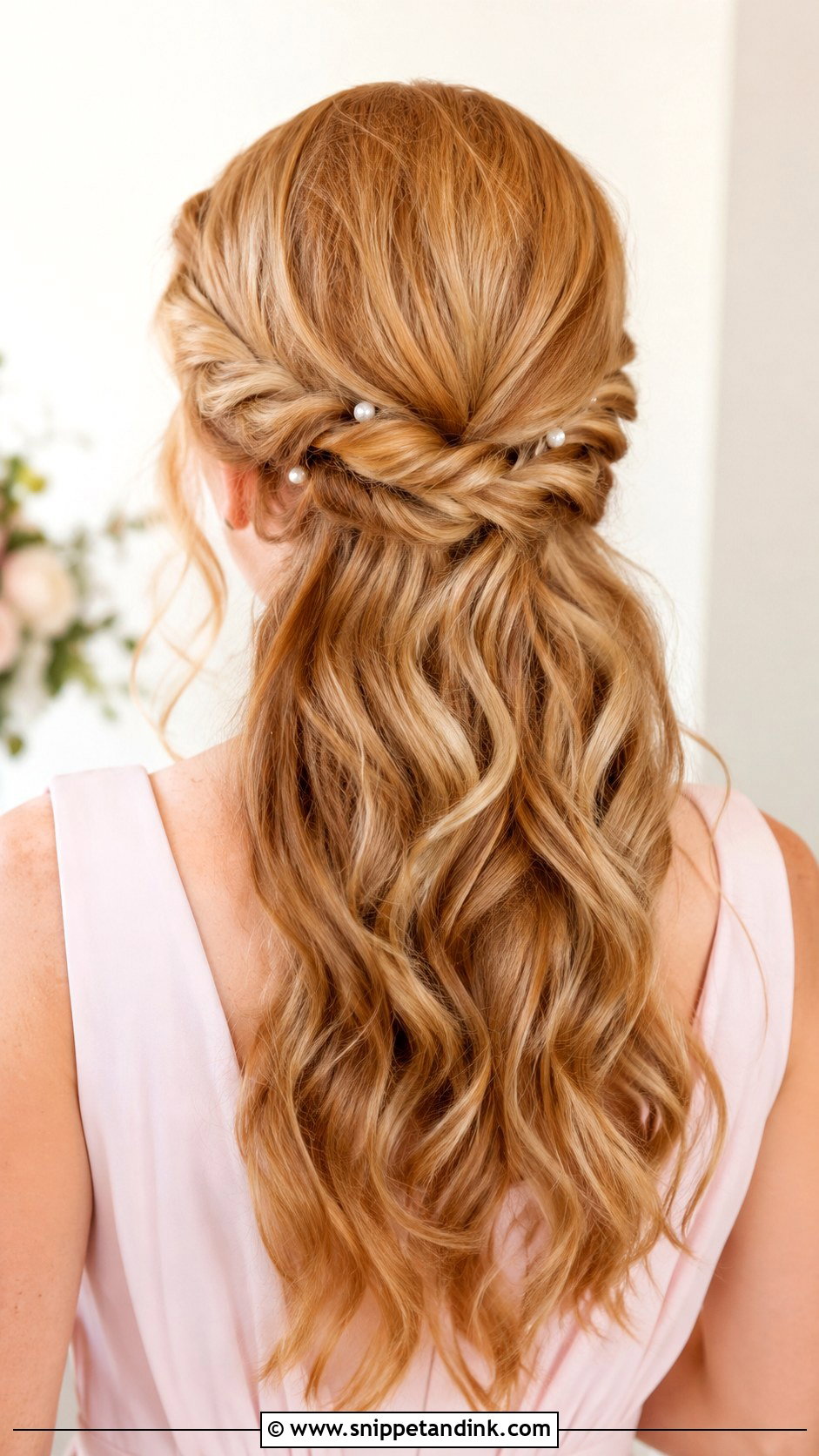
Twists give texture in less time than a braid and loosen more gracefully. Place them on both sides and pin them into a half-up, gather them into a low bun or wrap them into a loose updo. Straight, wavy and curly hair all take a twist, especially with the ends curled first. They’re also handy for pulling growing-out front layers off the face. I twist away from the face and pin each twist with two crossed pins, because a single pin lets it unwind. A small comb or pearl pins near the twist finish it.
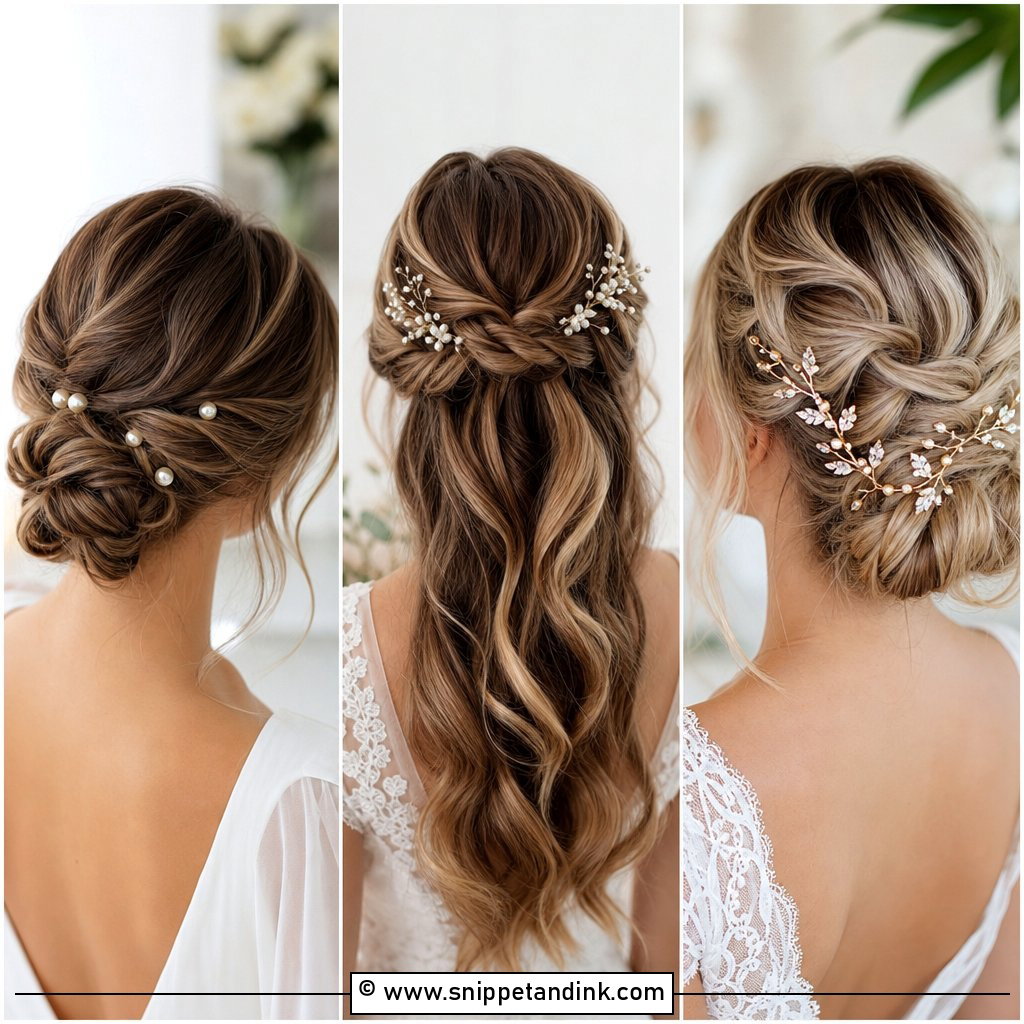
20. Shoulder Length Wedding Hair
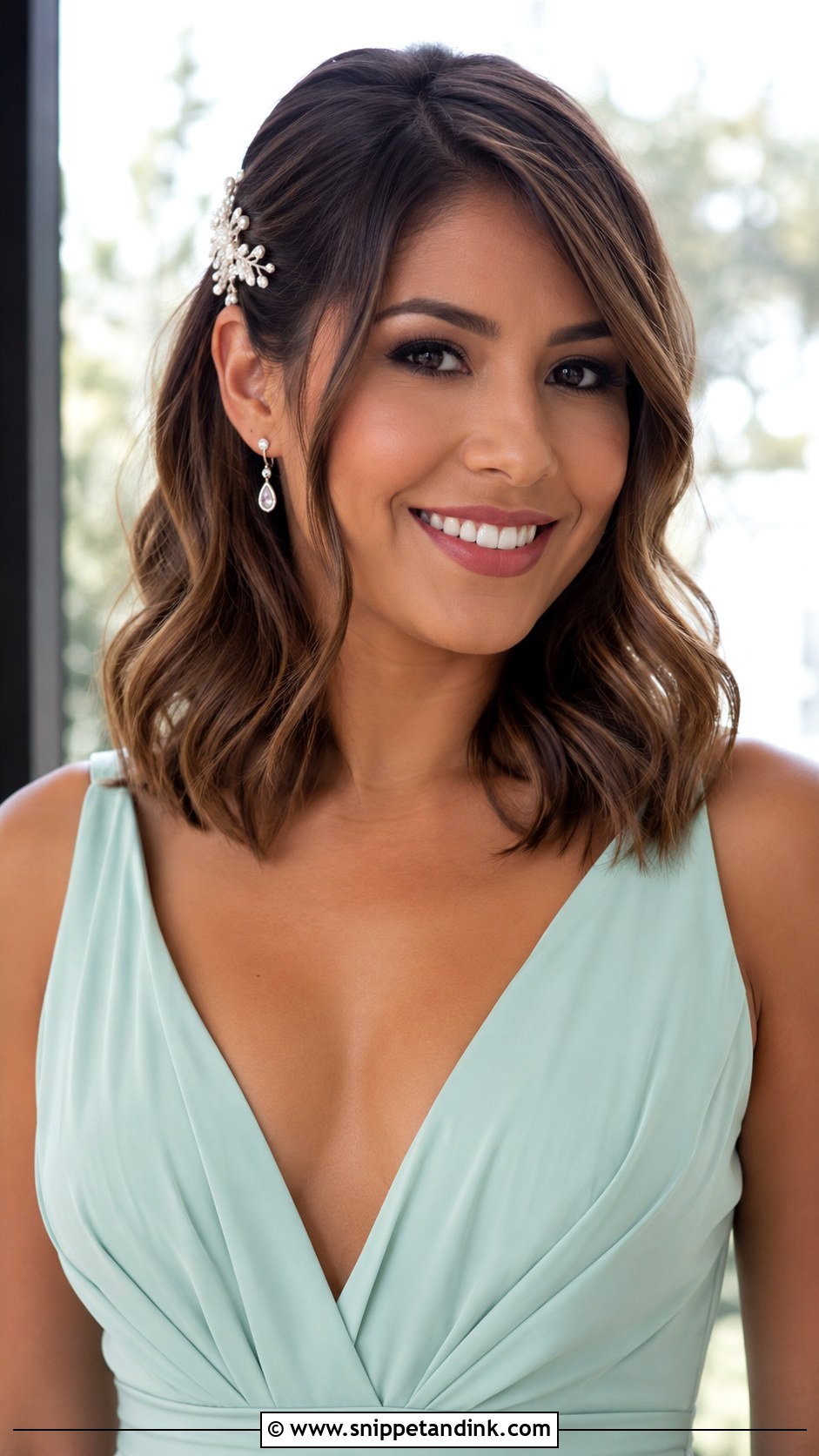
Shoulder length gives you more options than it seems: waved, tucked, half up, pinned to one side or shaped into a small low bun. It has movement without the weight of long hair, so it’s easy to style. Loose waves with face-framing pieces suit most people; for a cleaner look, a smooth side part with tucked ends and a decorative clip. For extra volume I curl in alternating directions and brush through lightly. The one limitation is a full updo, since the shortest layers at the nape usually need a few extra pins or a discreet clip-in.
Four Things I Need From You Before the Trial
A trial goes much better when you arrive with the right information. Photos of hair alone don’t tell me enough, because the same low bun looks very different above a strapless gown and a lace high neck.
- A picture of the dress from the back and the side, not just the front. The back decides where a bun should sit and whether long hair will hide the detail.
- Your actual accessories: the veil, comb, clips or headband you’ll wear. Weight and width change how everything is anchored.
- Two or three inspiration photos, plus one style you know you don’t like. The dislike is often more useful than the likes.
- Hair prepped the way it will be on the day. If you’ll wash the night before, wash the night before the trial too, so we test the same hair.
Wear a top with a similar neckline if you can, and book the trial earlier in the day so you can see how the style looks after several hours. If something feels tight or heavy during the session, tell me then. It’s far easier to move a bun an inch at the trial than to live with a headache through the reception.
The Venue Usually Makes Half the Decision
The right style matches your hair, your outfit, your comfort and the mood of the event. A formal venue leans toward a chignon, sleek ponytail, Hollywood waves or a polished bun. Gardens, beaches and rustic barns sit more naturally with waves, braids, twists or natural texture. Short hair looks finished with shape and shine, and long hair gives room for detailed updos. Save your photos, check the forecast and book a trial if you can. Then trust the version that still feels secure, and still feels like you, at the end of the trial day.
You'll Like These Ideas:


Leave a Reply