
Black tie is the one dress code that really does have rules, and the main one is length. For women that traditionally means a floor-length evening gown, though an impeccably tailored jumpsuit or tuxedo in a proper evening fabric meets the code too. Cocktail dresses don’t, however expensive. I guide clients towards satin, silk, velvet, crepe or jacquard, because cheap fabric shows more at this level than anywhere else. Read the invitation for the venue, the start time and any colour requests before you shop. And keep away from white, ivory and pale champagne; under warm ballroom lighting, they all read as bridal.
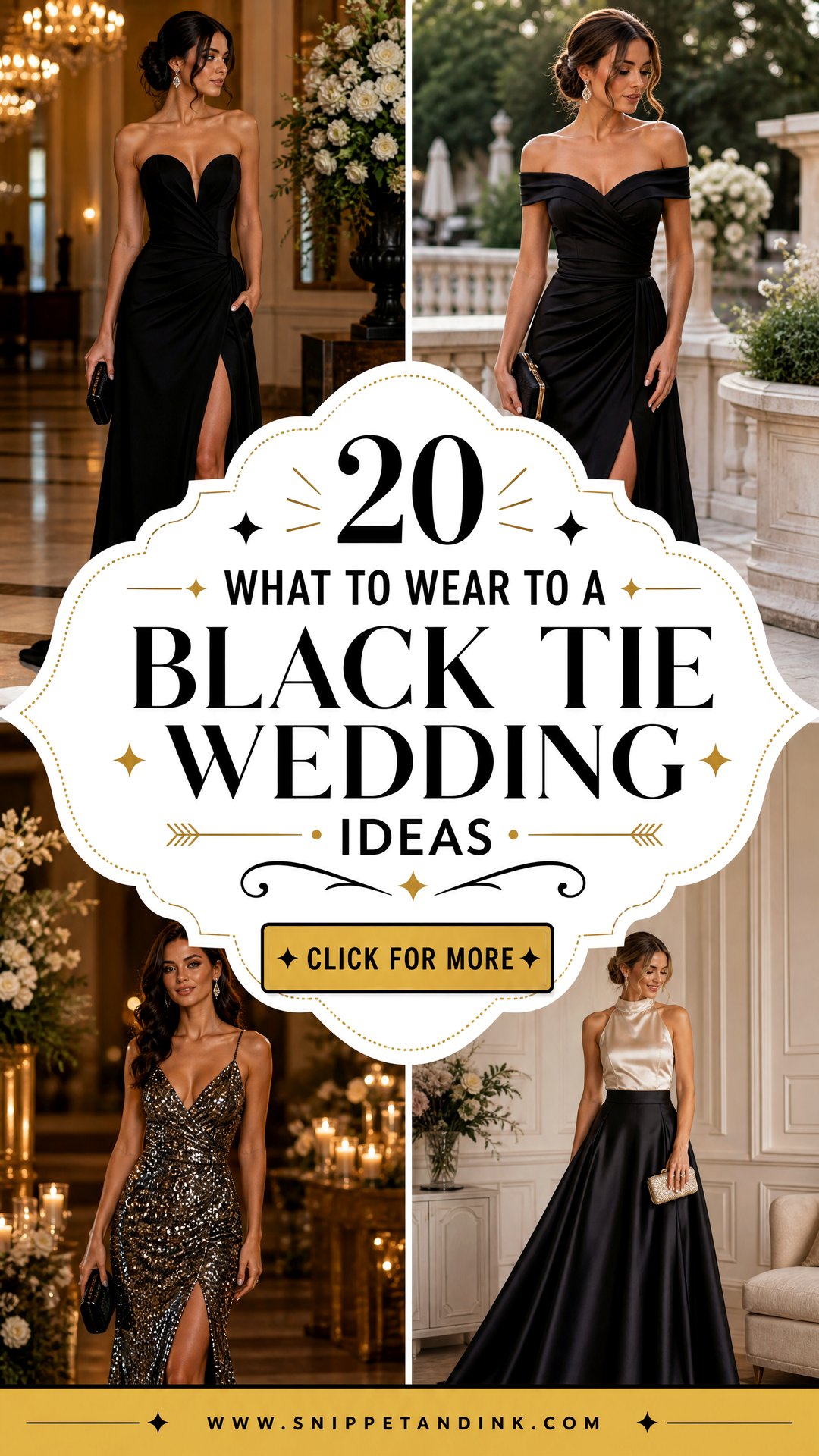
Your Hem Needs a Tailor Weeks Before the Party
The most common black-tie problem I fix isn’t the dress. It’s the length. A floor-length gown bought off the rack is cut for a certain height and heel, and if it’s long, it catches on stairs and drags across a dance floor. If it’s short, it reads as a cocktail dress worn by someone who meant well.
My order of work goes like this:
- Buy the shoes first. Every hem decision depends on them, and a half-inch heel change shifts the whole line.
- Book alterations as soon as the gown arrives. Busy tailors in wedding season can need a few weeks, and gowns with lace edges, multiple layers or a beaded hem take longer.
- Wear the shoes to the fitting and stand naturally. The front hem should just kiss the top of your foot, or sit about a finger’s width off the floor.
- Ask about a hidden wrist loop or a simple bustle if the back has any train at all. It saves the hem from being trodden on at dinner.
If you’re short on time, a jumpsuit or tuxedo is easier to adjust than a layered skirt, so it can be the wiser choice for a late invitation.
1. Black Floor-Length Gown for a Black Tie Wedding
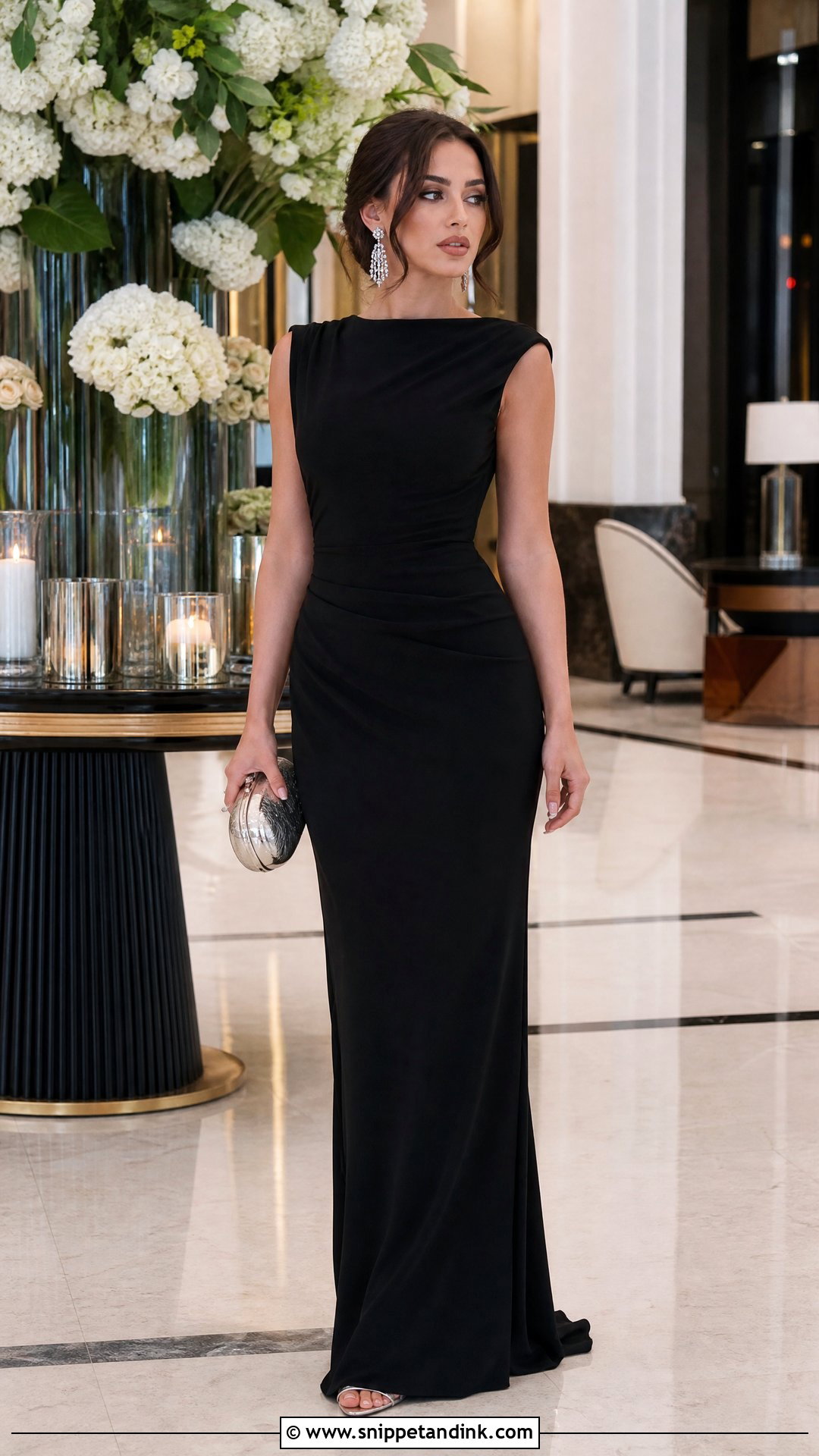
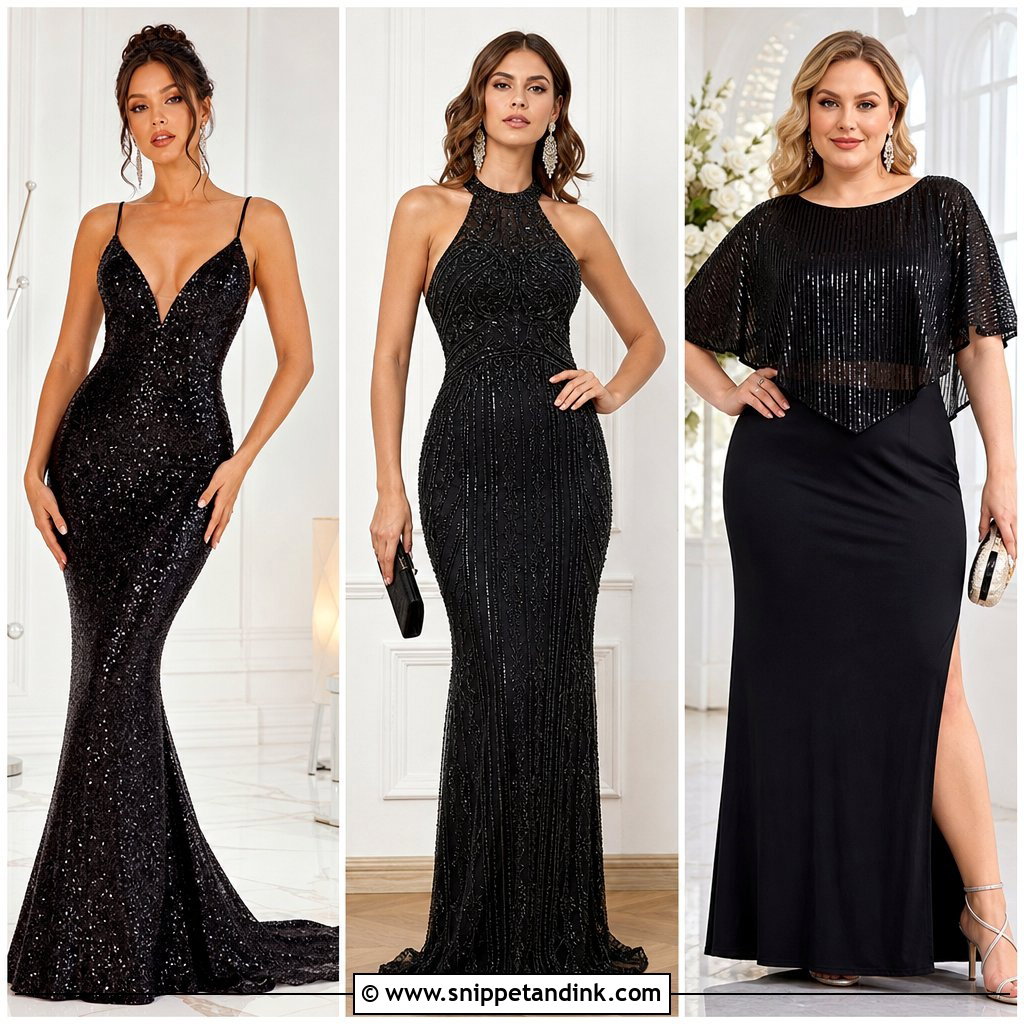
A black floor-length gown is the safest answer to the dress code, and its only risk is looking flat. Black swallows detail in photos, so texture has to do the work: ruching, a gathered neckline, the sheen of satin against matte crepe, or the depth of velvet. A defined waist or a softly structured bodice gives it shape. I’d add metallic heels, a small silver clutch and drop earrings to bring light up near the face. Hair can go sleek and up or soft and down. On black, polish matters more than quantity.
2. Navy Satin Gown for a Black Tie Wedding
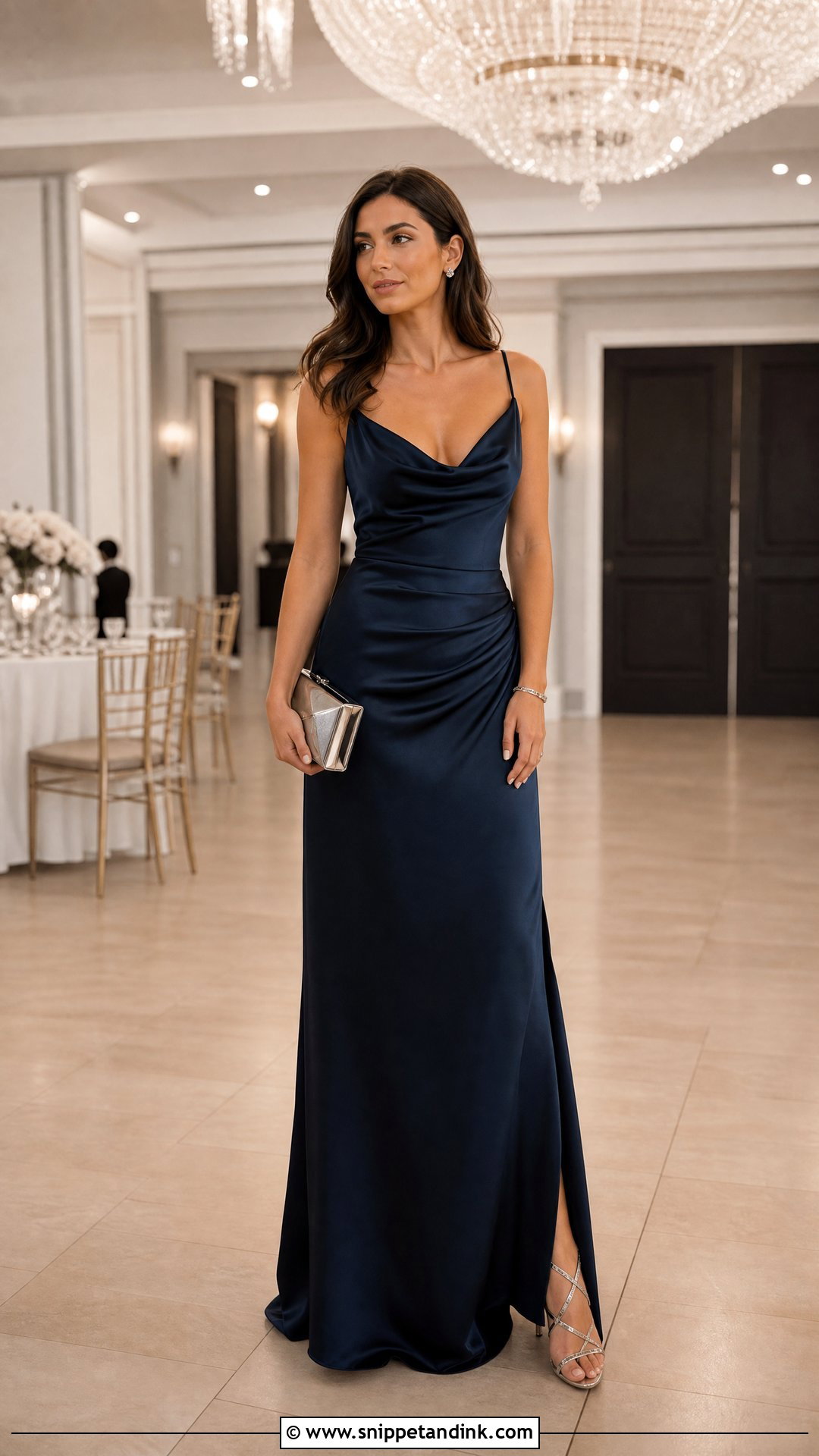
Navy gives you everything black does with a little more life in the room. Satin is where I’d take it, in a cowl neck, wrap bodice or draped skirt, because the fabric catches candlelight in a way navy crepe doesn’t. Silver sandals, a metallic clutch, crystal studs and a slim bracelet suit its cool undertone. One question to ask in the shop: does the satin look substantial? Thin, shiny satin in navy can look like loungewear the moment it creases. Heavier duchess or crepe-back satin holds its line. It works in summer by the water and in a winter ballroom alike.
3. Emerald Green Gown for a Black Tie Wedding
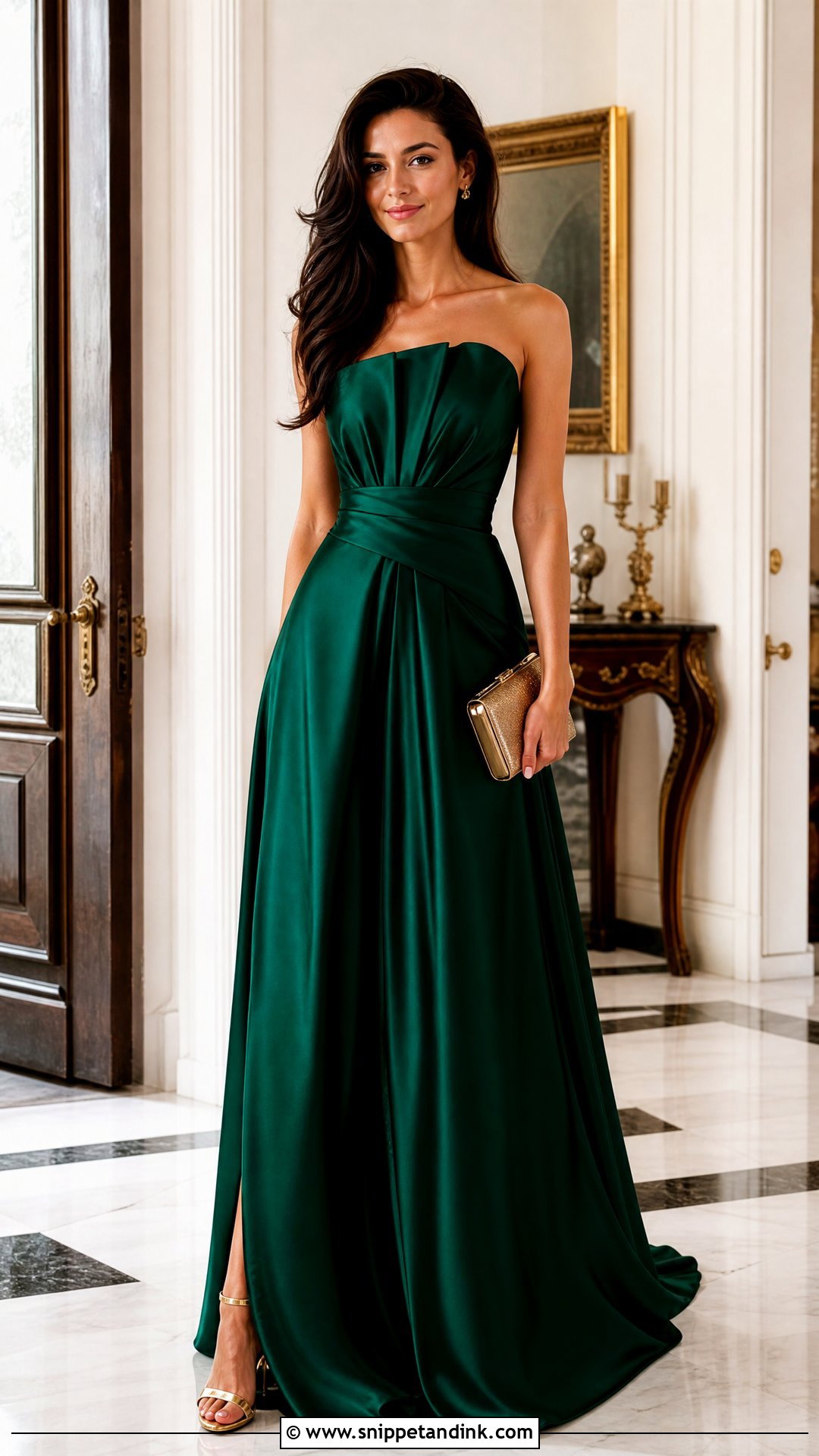
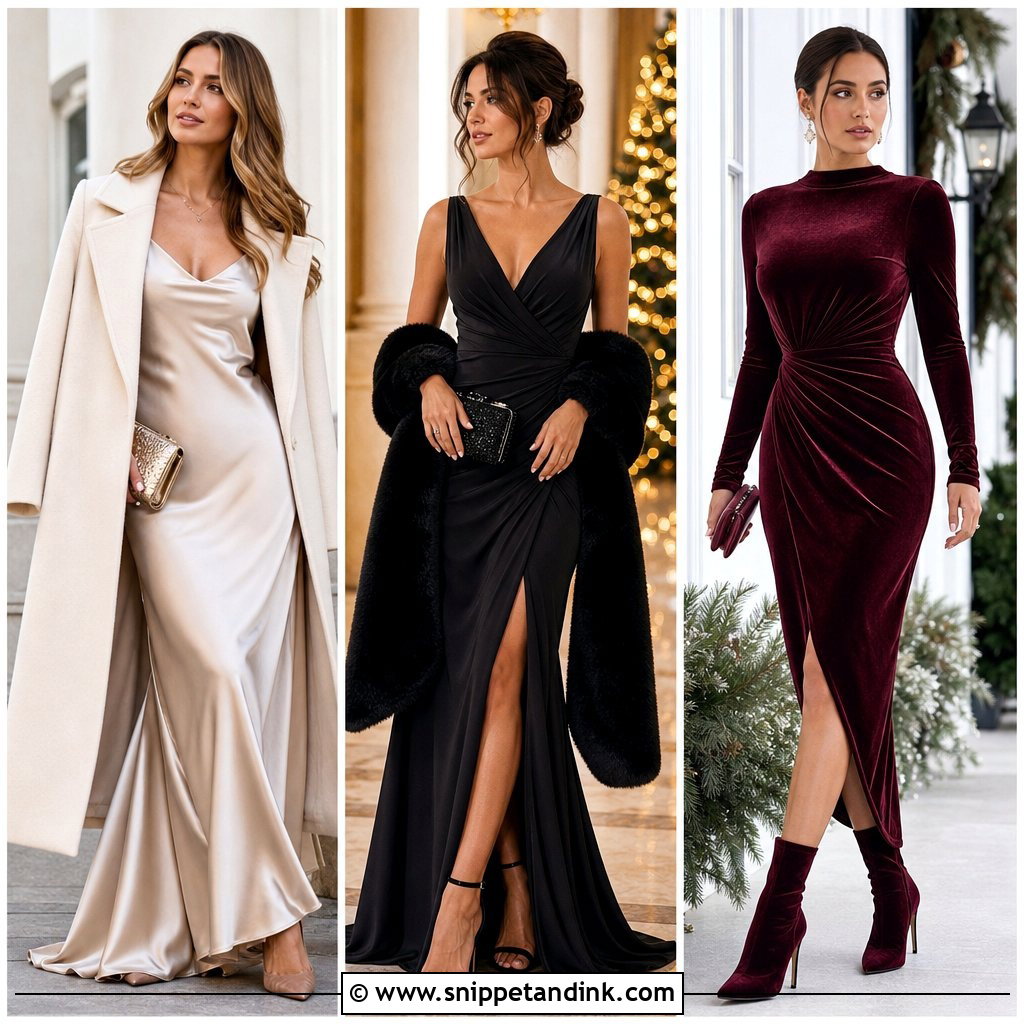
Emerald stands out without being loud, which is a hard balance at a formal wedding. Silk, satin, velvet or fluid crepe all carry it, in a fitted bodice with an A-line or column skirt. Gold warms the green, so I’d choose gold heels and a hard-case clutch, then keep jewellery to small earrings and a single bracelet. Against neutral ballroom walls or old stone, the colour holds up well in pictures. On cool nights a black velvet wrap or a tailored coat looks right over it. Keep the bodice smooth, but make sure the skirt lets you walk and sit without hitching it up.
4. Burgundy Velvet Gown for a Black Tie Wedding
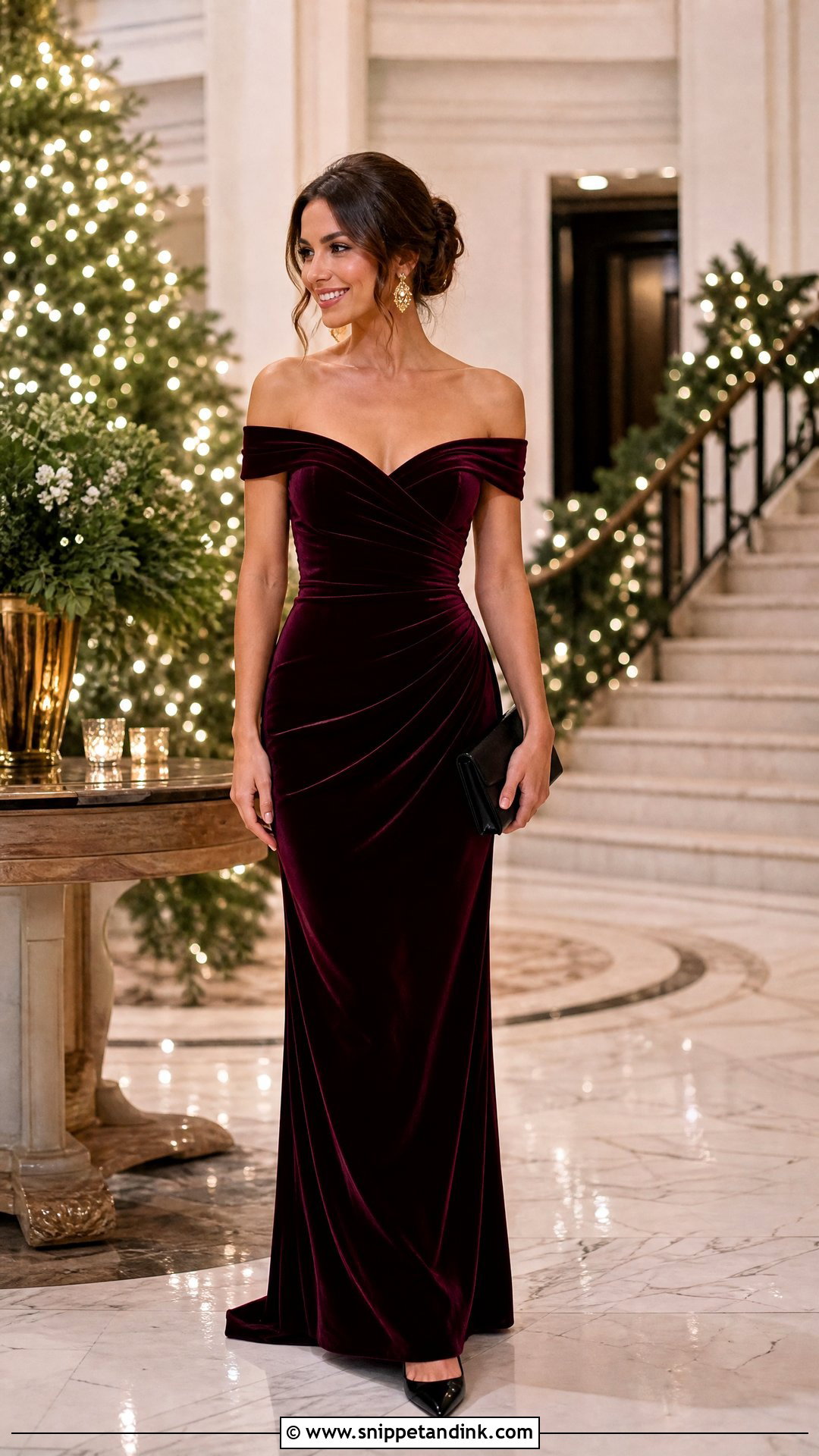
Burgundy velvet belongs to autumn and winter candlelight. Long sleeves, a square neckline or a soft off-the-shoulder bodice all suit the fabric. Velvet has a quirk: it crushes where you sit and lean, and the pile shows those marks as lighter patches. I hang a velvet gown in a steamy bathroom for twenty minutes before the event and never press it flat with an iron. Black pointed pumps, a black satin clutch and gold earrings are all it needs, since the fabric already has richness. A neat bun stops heavy hair competing with heavy fabric. Travel to the venue in a tailored black coat.
5. One-Shoulder Gown for a Black Tie Wedding
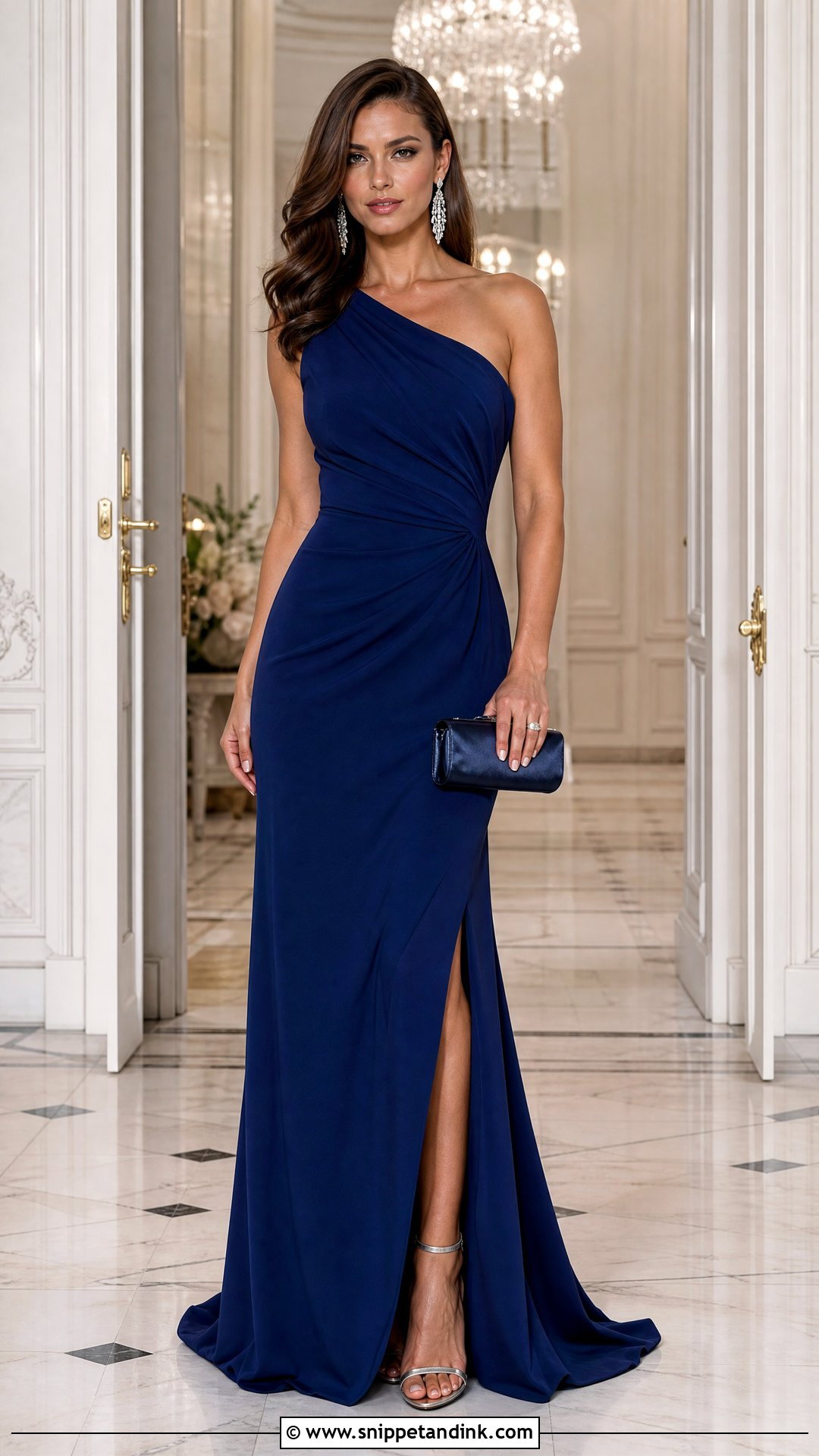
One-shoulder gowns look simple and are fiddly to fit. The single strap carries the whole bodice, so internal support, usually boning or a silicone grip at the neckline, decides whether it stays put. At a fitting I have clients sit, walk and raise both arms as if hugging someone tall; if the bodice shifts, it needs work. Crepe, satin or chiffon in deep blue, plum, forest green or black all suit evening light. Skip the necklace and wear earrings instead. Sweeping hair to the bare side looks unbalanced, so take it towards the strap or up entirely.
6. Off-the-Shoulder Gown for a Black Tie Wedding
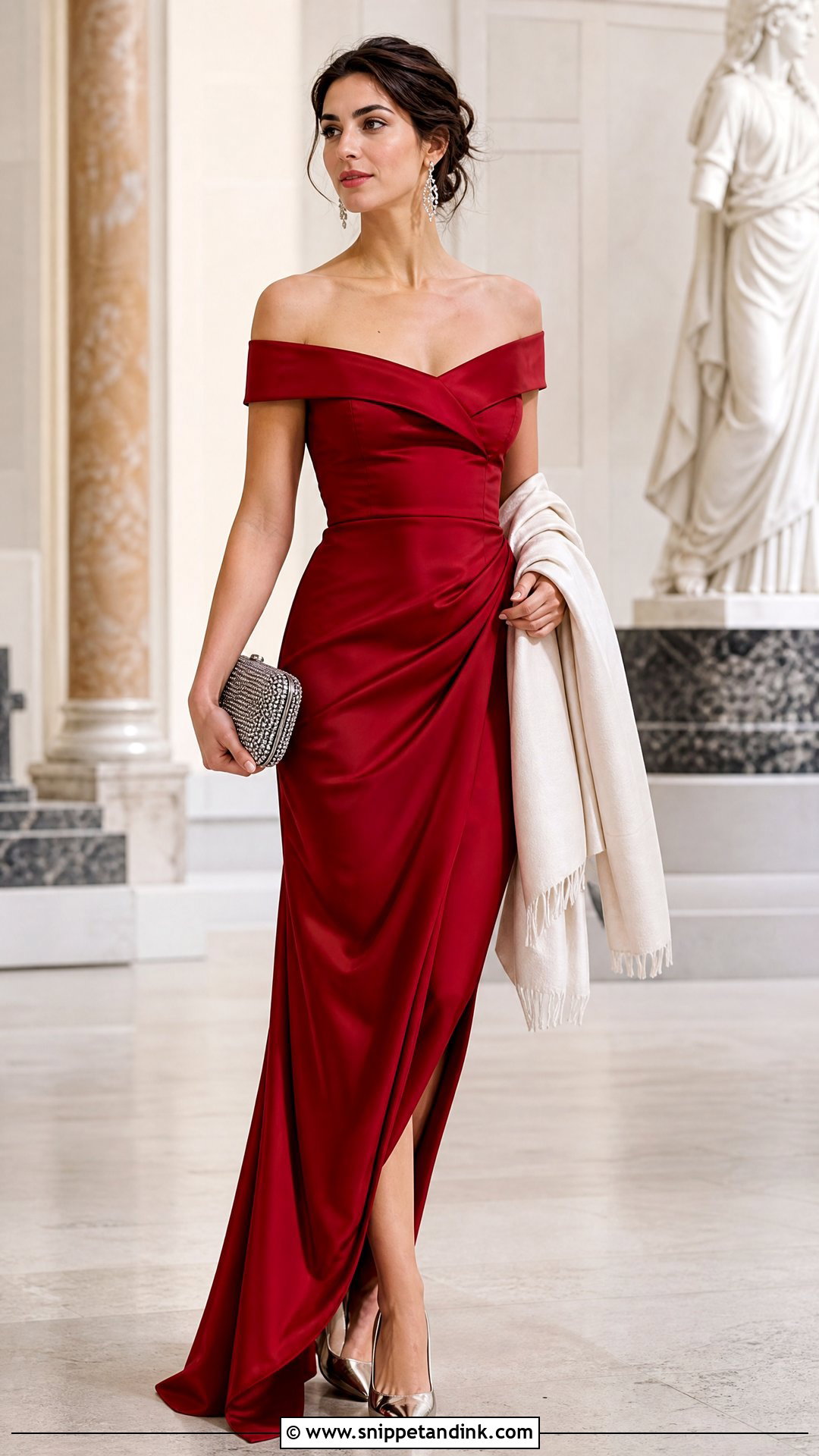
Off-the-shoulder necklines can look romantic, which is exactly why colour matters. Sapphire, aubergine, ruby or dark teal keep it clearly a guest dress; very pale champagne gets too close to bridal. Structured crepe or satin holds the neckline through a long reception better than soft jersey, which tends to droop by the speeches. Elegant pumps, a beaded clutch and chandelier earrings finish it, and a necklace is optional. Bring a silk stole for cool terraces. Get the tailor to check that you can lift your arms enough to eat without the neckline pulling up.
7. Long-Sleeve Gown for a Black Tie Wedding
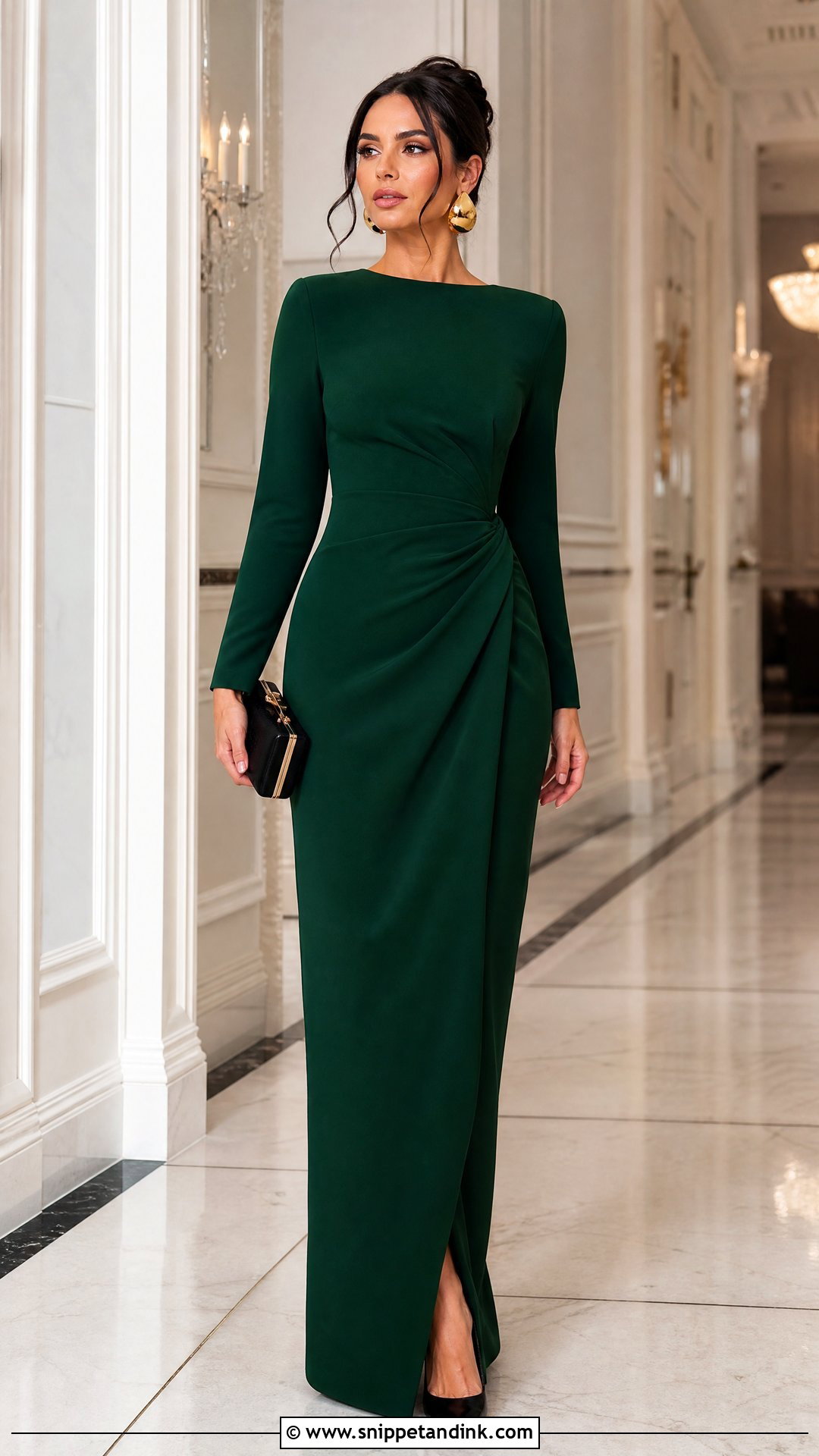
Long sleeves are a practical answer to winter weddings and drafty old venues. A fitted crepe, lace-overlay or velvet gown in navy, burgundy, dark green or black gives a clean evening line. If the sleeves carry lace, embroidery or beading, let them be the jewellery and keep everything else simple. A defined waist or draped skirt stops the full coverage from looking heavy. What I’d change for most clients is the outer layer. A puffer or a cardigan undoes the whole look in arrival photos, so a full-length tailored coat is worth borrowing if you don’t own one. A low bun keeps the neckline clear.
8. Floral Chiffon Gown for a Black Tie Wedding
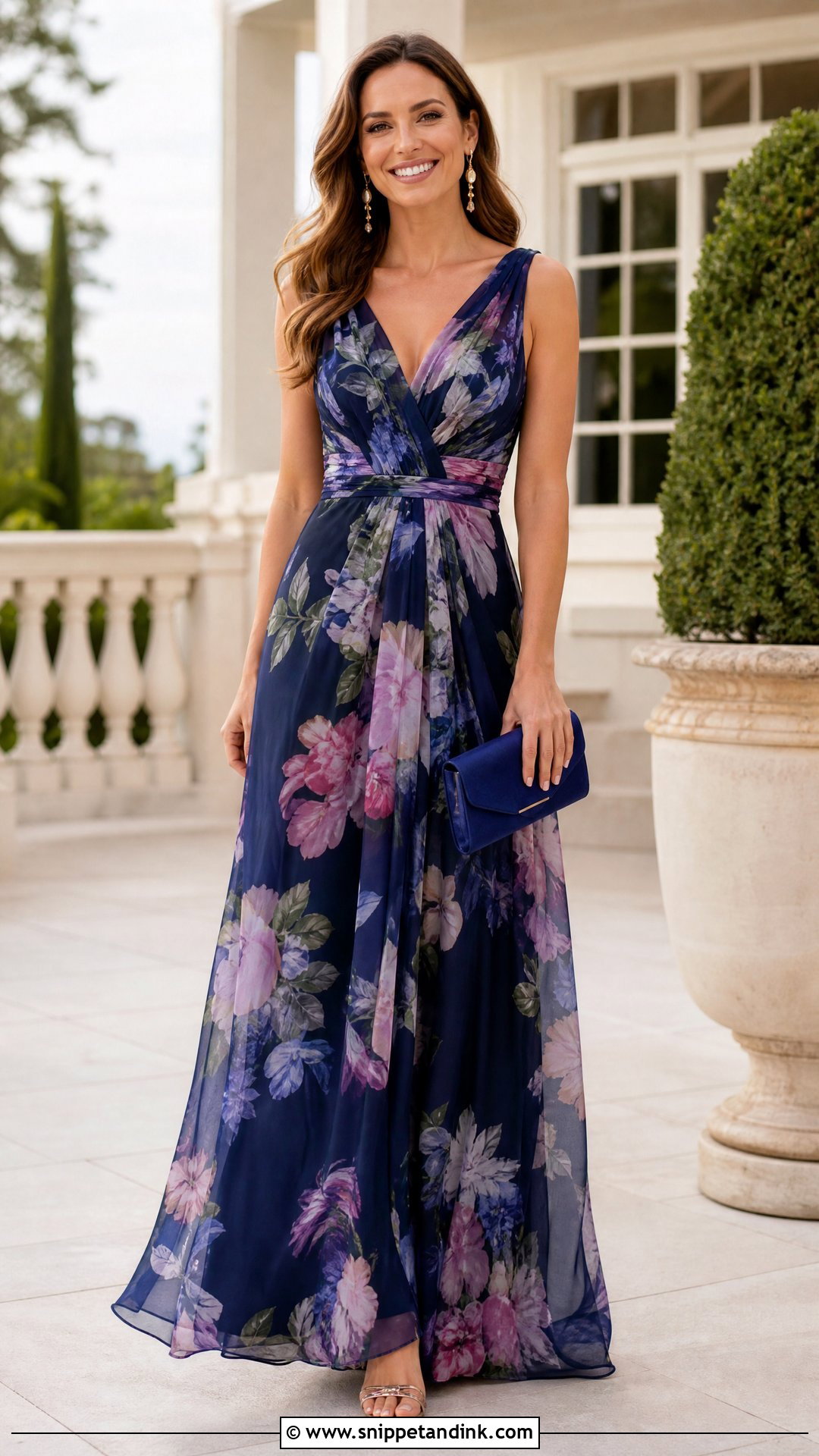
Can florals work at black tie? Yes, but the print has to look like evening wear. Floor-length chiffon with a lined bodice, a flowing skirt and a dark background reads formal; small sprigs on white cotton read as a garden party. Watercolour blooms and tonal botanicals sit somewhere in between and usually work. Pull one colour from the print for a solid clutch, wear slim metallic sandals, and skip a necklace if the pattern reaches the neckline. Soft waves or a polished ponytail suit the movement of chiffon. Spring and summer weddings at estates and gardens are where this one makes most sense.
9. Pleated Chiffon Gown for a Black Tie Wedding
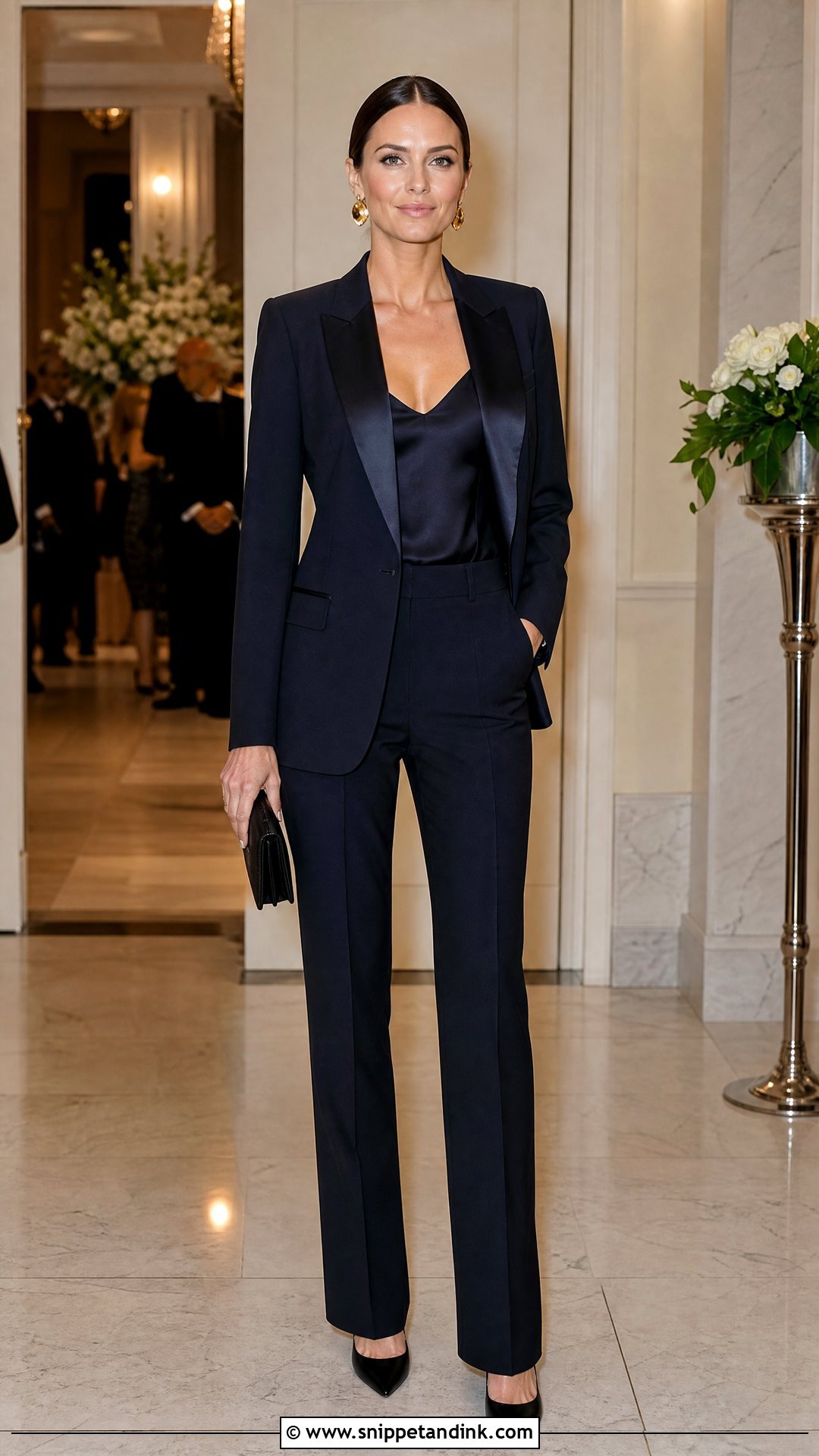
Fine pleats catch light and move every time you walk, which is why pleated chiffon looks so alive in a ballroom. The pleats should be narrow and pressed in, not wide casual folds. A fitted or wrapped bodice anchors all that movement. Dusty blue, plum, deep rose, navy and forest green all suit it, but check the bridesmaids’ colour first so you don’t match them by accident. Satin pumps, a small metallic clutch and pearl or crystal earrings are enough. Chiffon shows every line underneath, so smooth, flat-edged underwear matters more here than with heavier fabrics. A self-fabric belt is fine if it looks built in.
10. Cape Gown for a Black Tie Wedding
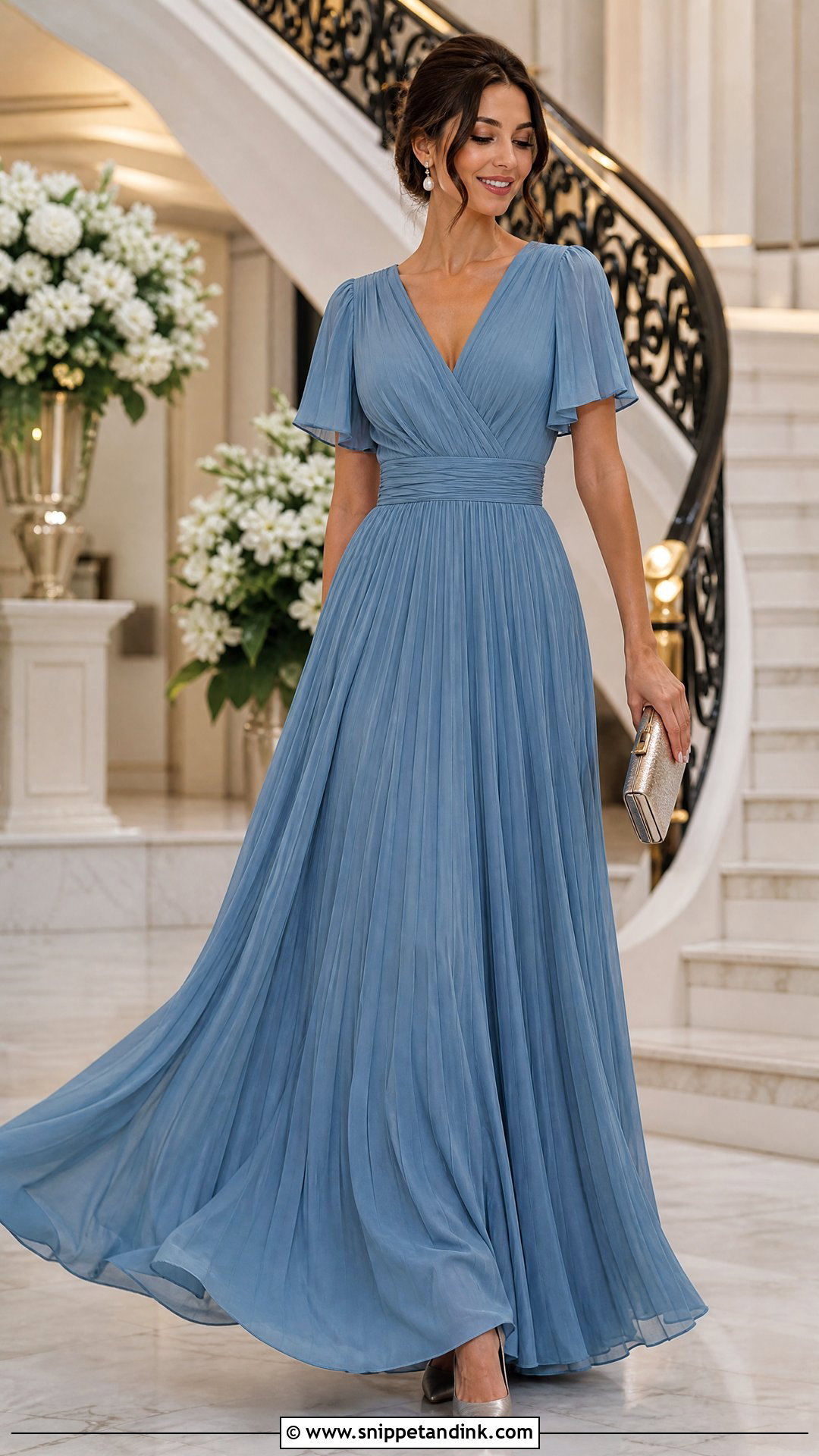
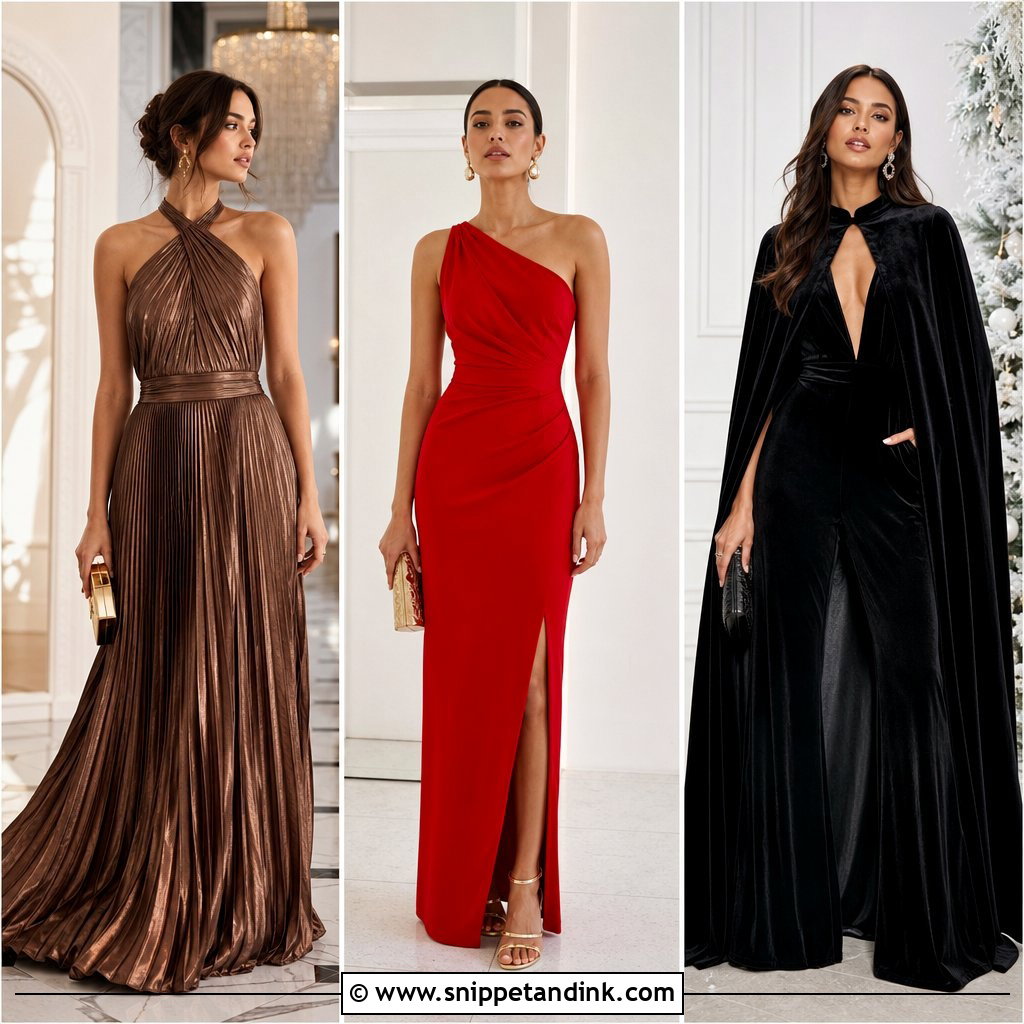
A cape gown gives you drama and arm coverage in one piece. The cape may fall from the shoulders, hang from the sleeves or float as a sheer layer down the back. The rule I hold to is a clean silhouette underneath, otherwise the extra fabric tips into costume. A monochrome gown in black, midnight blue, emerald or wine suits it best. Wear pointed pumps, carry a geometric clutch and stick to studs or drops. Leave the necklace off when the cape frames the neckline. Check where the cape ends when you sit, because a long one can trail under your chair and get stepped on at dinner.
11. Sequin Gown for a Black Tie Wedding
Sequins work at black tie when everything around them is quiet. A column or softly fitted floor-length gown in black, navy, bronze or pewter looks far more grown-up than bright silver, and small, tightly set sequins look richer than large discs. Pair it with plain satin heels, a plain clutch, small earrings and one bracelet. Before the day, rub your bag against the skirt and run a hand down the side seams; sequins snag beaded clutches and scratch the inside of your arms if the seams aren’t finished. Keep hair and makeup polished but restrained so the gown carries the shine.
12. Metallic Gown for a Black Tie Wedding
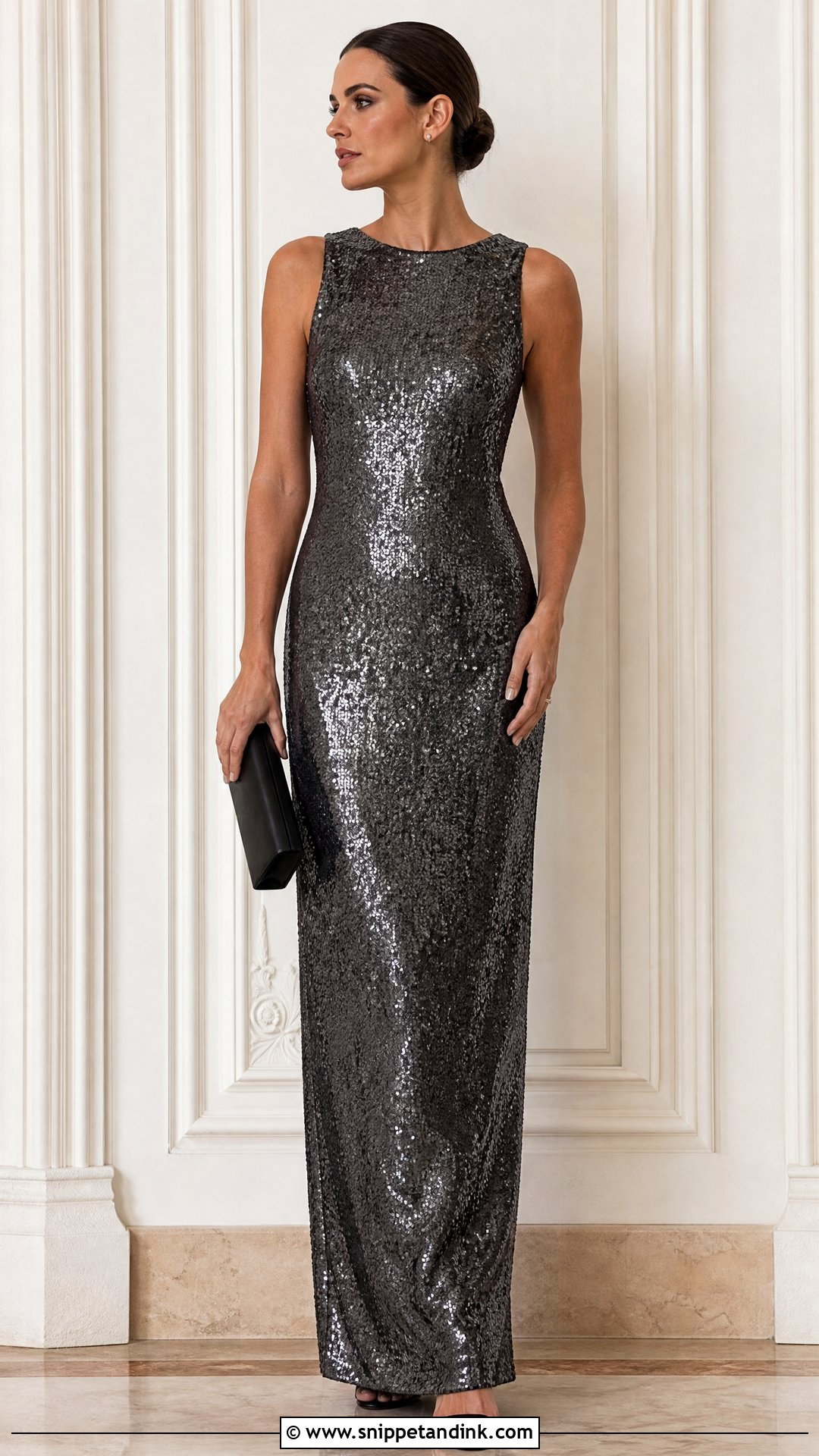
Metallics look modern in muted tones: soft gold, pewter, bronze or gunmetal. A fluid floor-length silhouette lets the finish catch light, and a wrap bodice or clean column keeps it from feeling stiff. Match the shoes to the metal, gold with nude or gold and silver with pewter or black, then carry a plain satin clutch so the outfit isn’t reflective head to toe. My biggest warning is about pale metallics. Look at the fabric by a window and under warm indoor bulbs, because pale gold and silver can photograph almost white or champagne, and nobody wants to look bridal in the group shot.
13. Jewel-Tone Ball Gown for a Black Tie Wedding
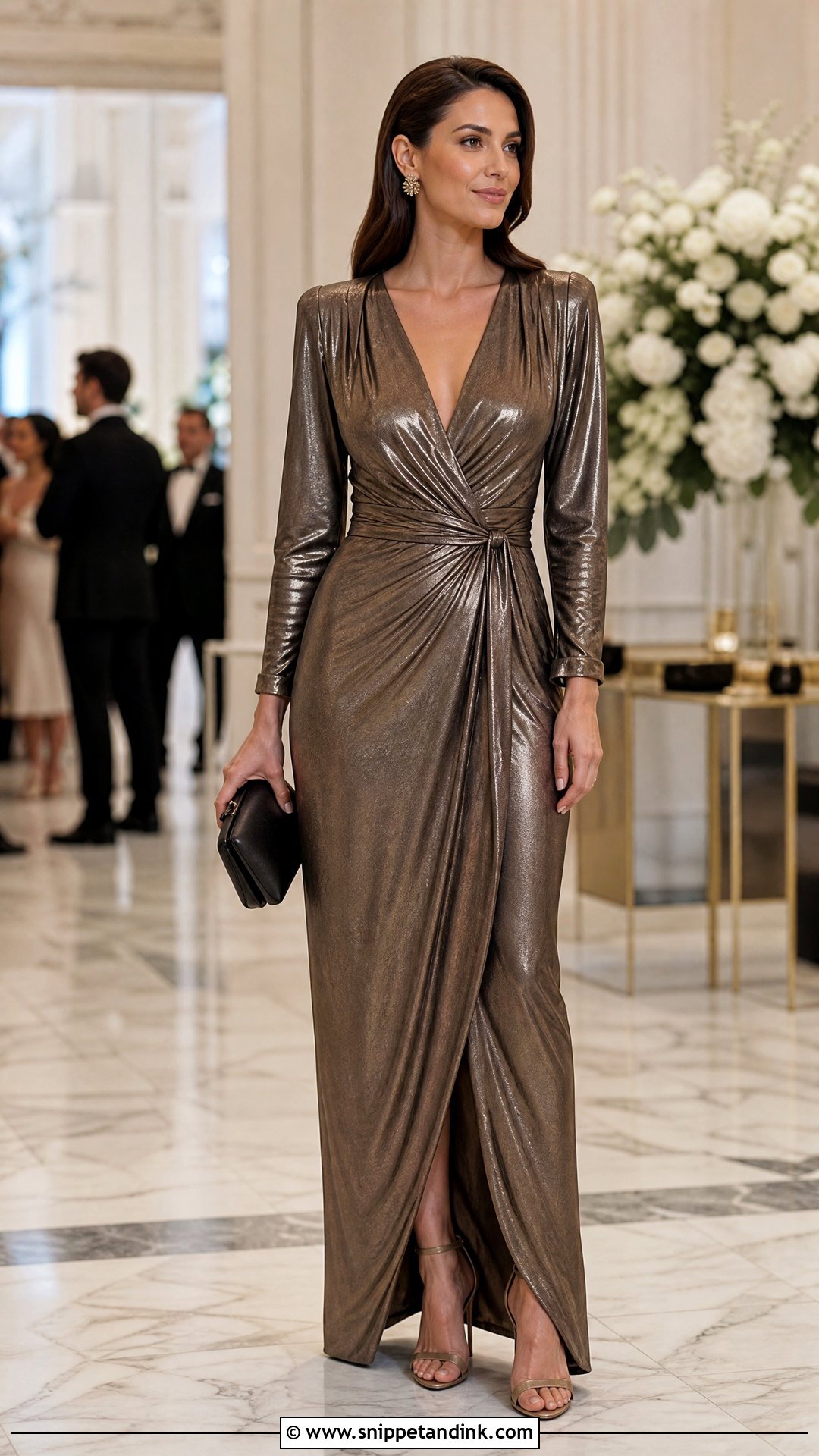
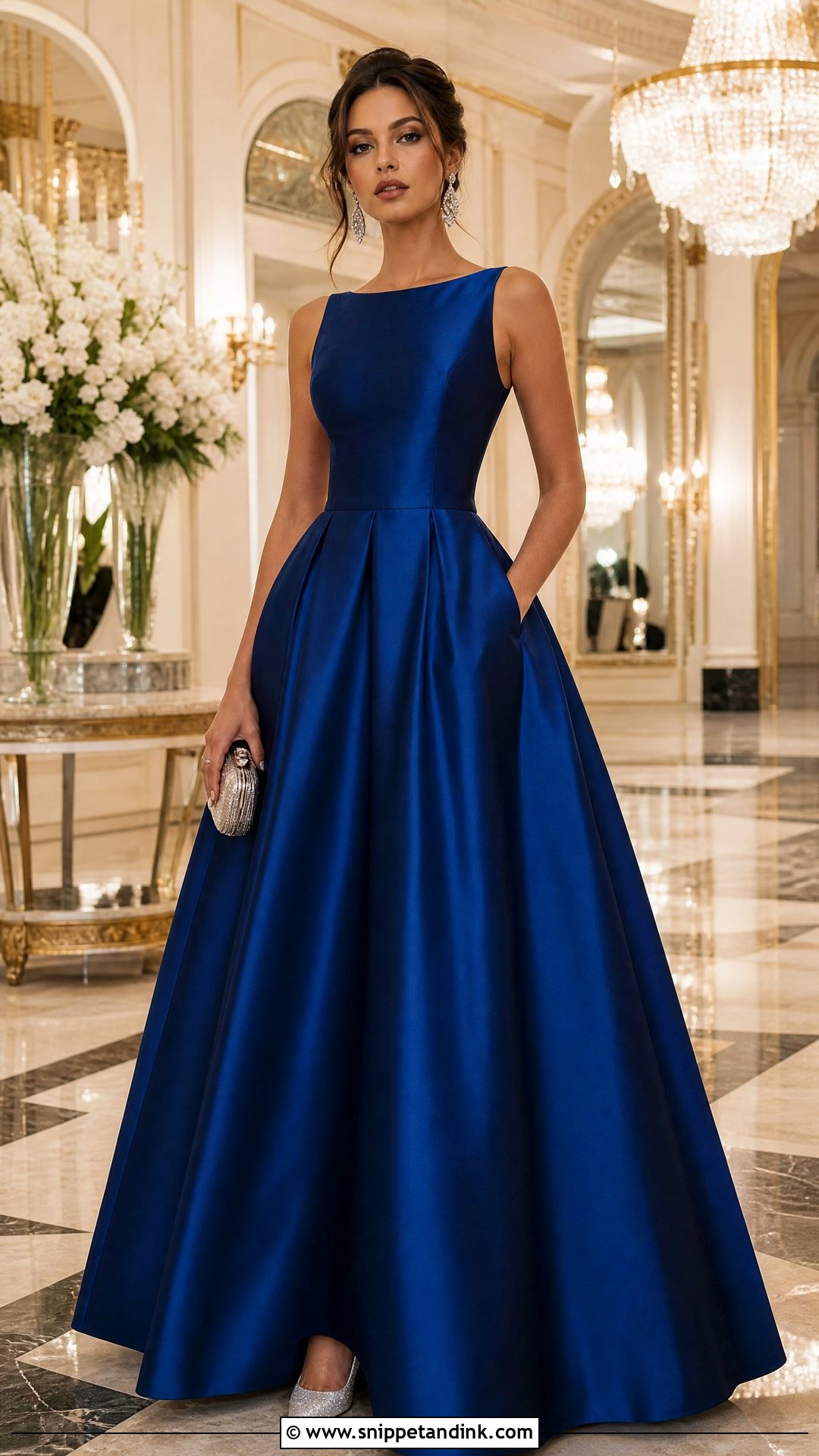
Nothing answers a grand ballroom quite like a jewel-tone ball gown. A fitted bodice with a full skirt is traditional black tie, and sapphire, ruby, amethyst or emerald keeps you distinct from the bride. Choose one statement piece, crystal earrings or a cuff, and keep the rest understated. Closed-toe pumps are easier under a big skirt because there’s less to catch on the petticoat. Hem it while you wear those shoes; a full skirt that’s even half an inch too long will catch your toe on every stair. A smooth updo balances the volume, and a tiny structured clutch keeps your hands free to manage the skirt.
14. Satin Slip Gown for a Black Tie Wedding
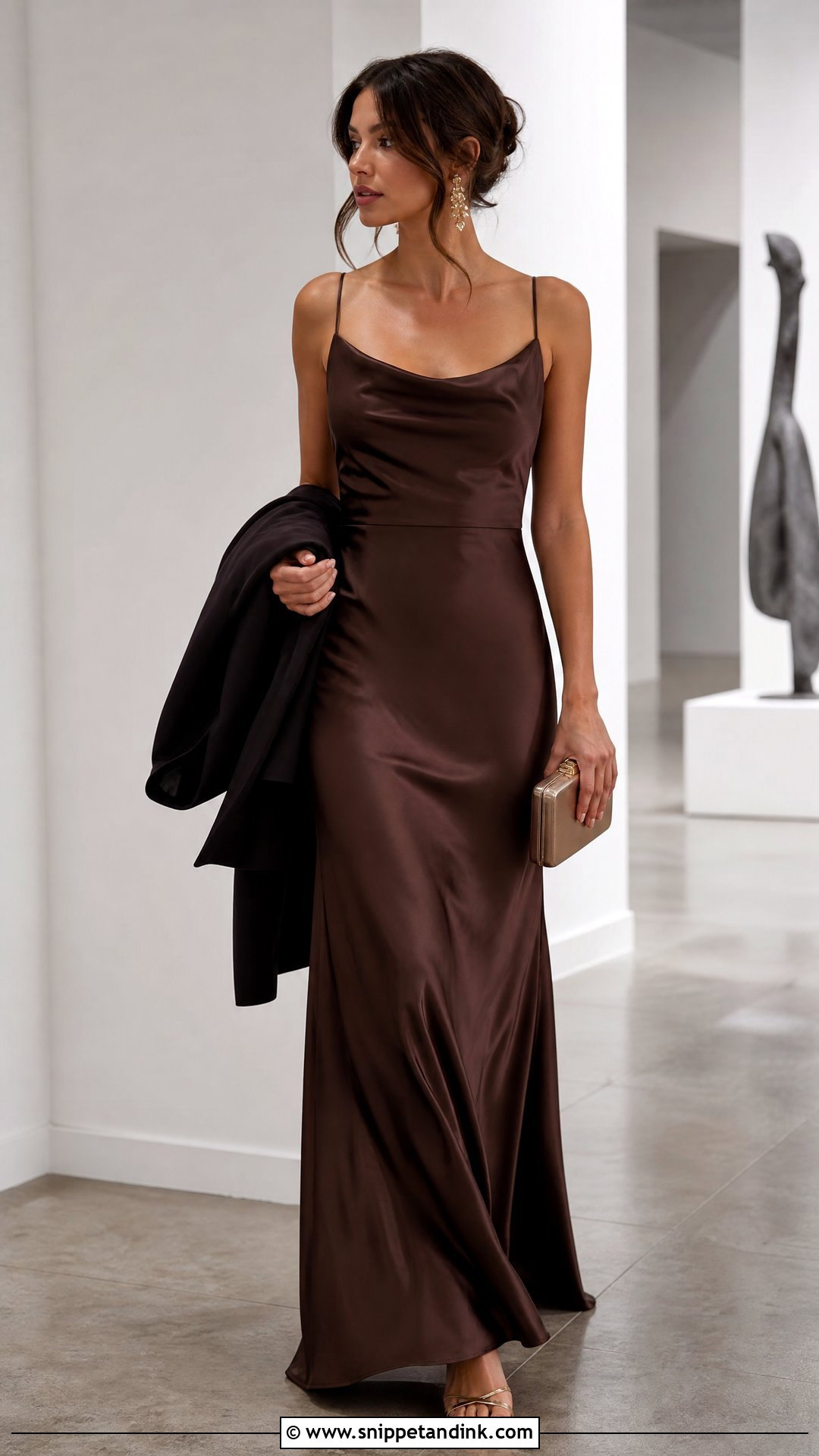
A satin slip gown can meet black tie, but only when the construction feels formal. That means substantial satin, a lined bodice, clean seams and a hem that skims the floor. Thin satin creases at the hips the first time you sit and never recovers. Rich colours such as chocolate, navy, olive, burgundy and black look more formal than pastels. Add a tailored evening coat or silk wrap for arrivals, refined heeled sandals and delicate earrings. A good tailor can fix pulling across the bust or hips, which is the most common reason a slip looks cheap. Leave flat sandals and day bags at home.
15. Formal Jumpsuit for a Black Tie Wedding
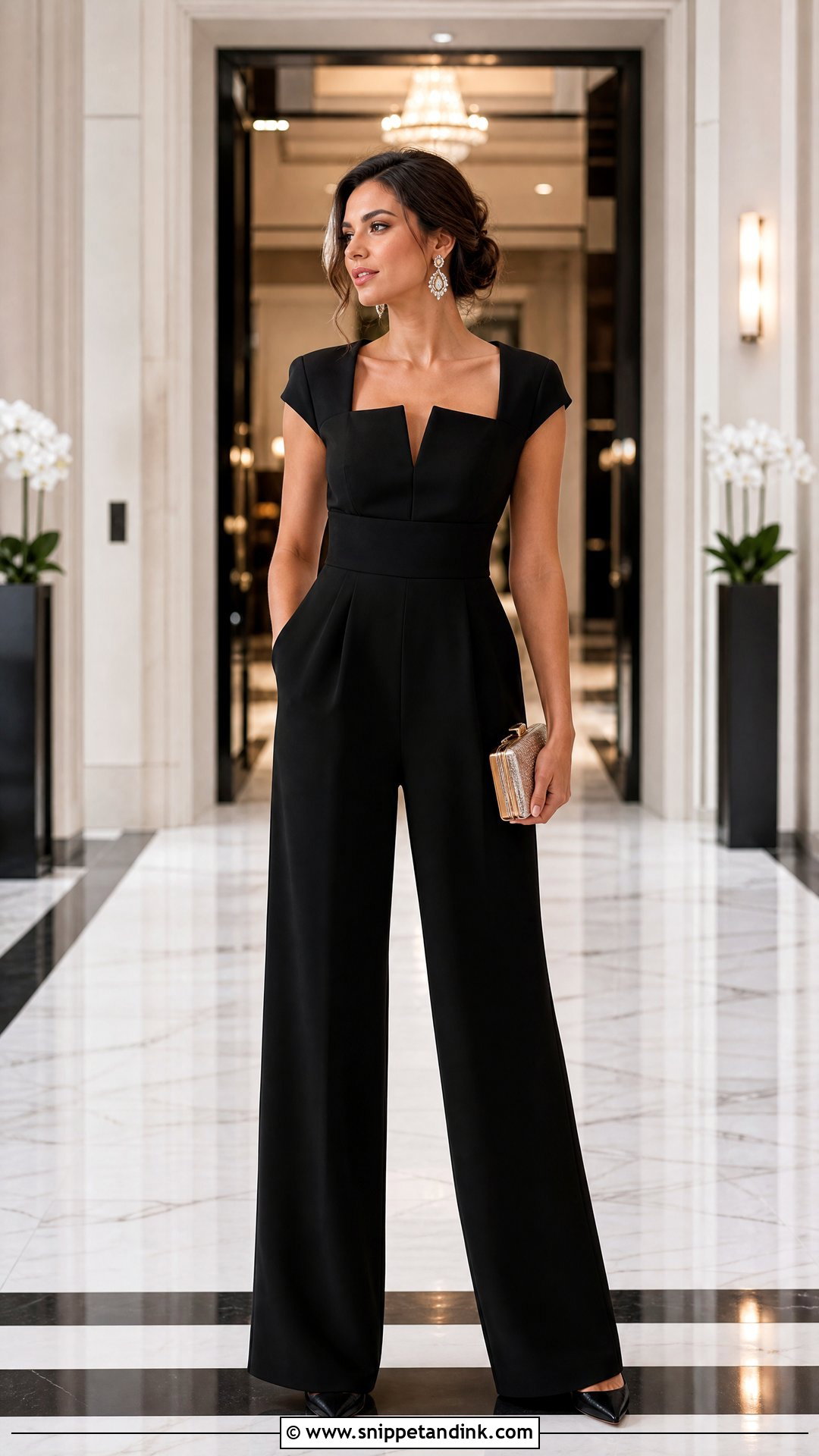
Plenty of guests don’t feel themselves in a gown, and a formal jumpsuit is a properly correct alternative. Heavyweight crepe, satin or velvet with wide legs and a sharp waist is what I look for. Black, navy, burgundy and deep green are dependable. Wear pointed pumps or slim heels so the trousers fall almost to the floor, then add a metallic box clutch and statement earrings. A cape detail or draped bodice lifts the formality further. Fit is the hard part: the rise, waist and leg length all have to agree, and a jumpsuit that’s short in the body pulls every time you sit. Skip jersey, cropped legs and utility pockets.
16. Women’s Tuxedo for a Black Tie Wedding
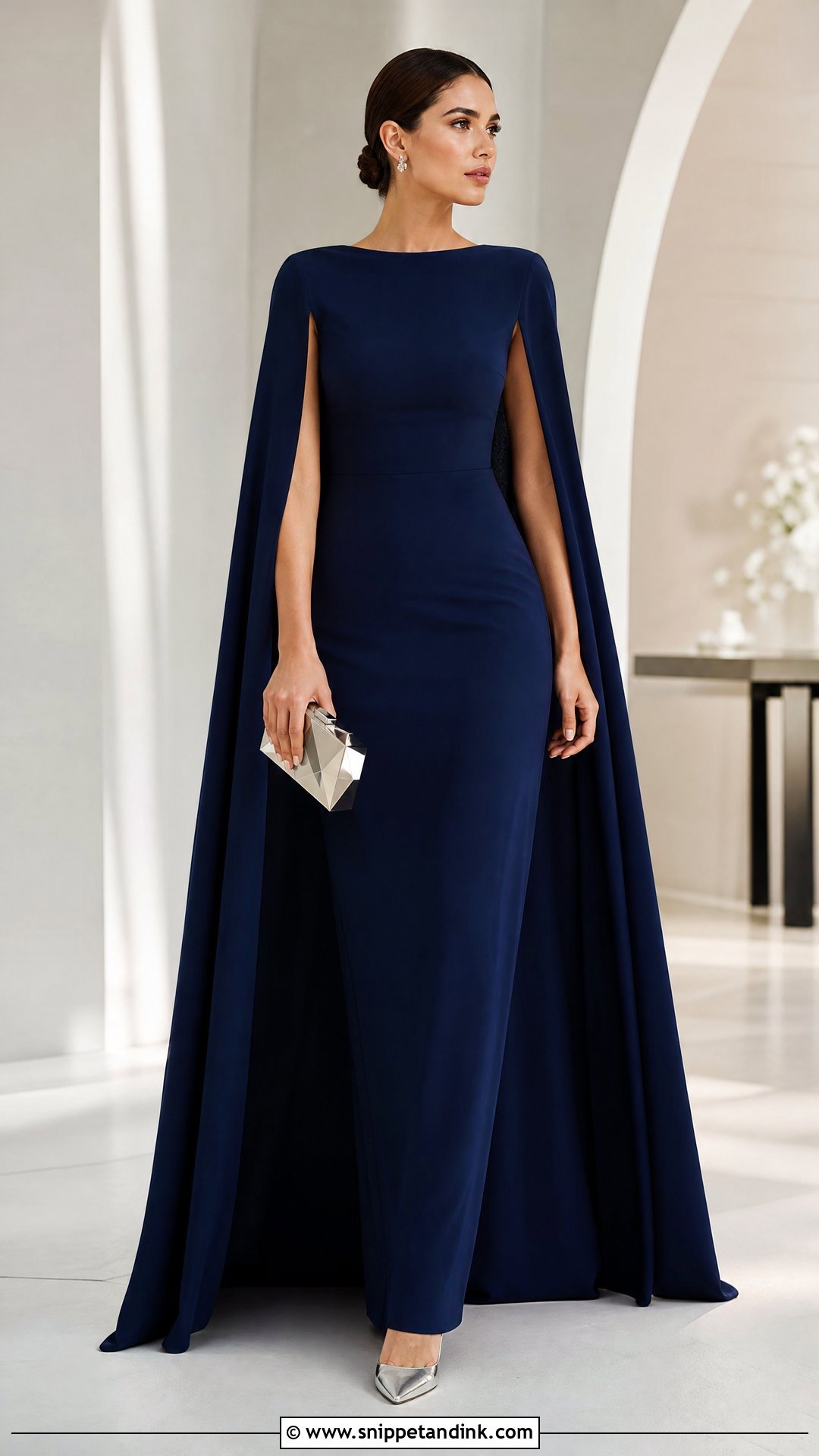
A women’s tuxedo is the sharpest way to wear black tie without a skirt. Start with black or midnight blue, satin lapels and full-length trousers. Underneath, a silk camisole, a bodysuit or a crisp dress shirt all work depending on how covered you want to be. I’d always reach for a bodysuit over a loose cami because it stays tucked through dancing. Pointed pumps, sleek loafers or heeled sandals finish it, plus a compact clutch and one striking accessory such as a brooch. The jacket must sit smoothly across the shoulders. Office suiting fabric and a work tote give the game away instantly.
17. Formal Skirt and Evening Top for a Black Tie Wedding
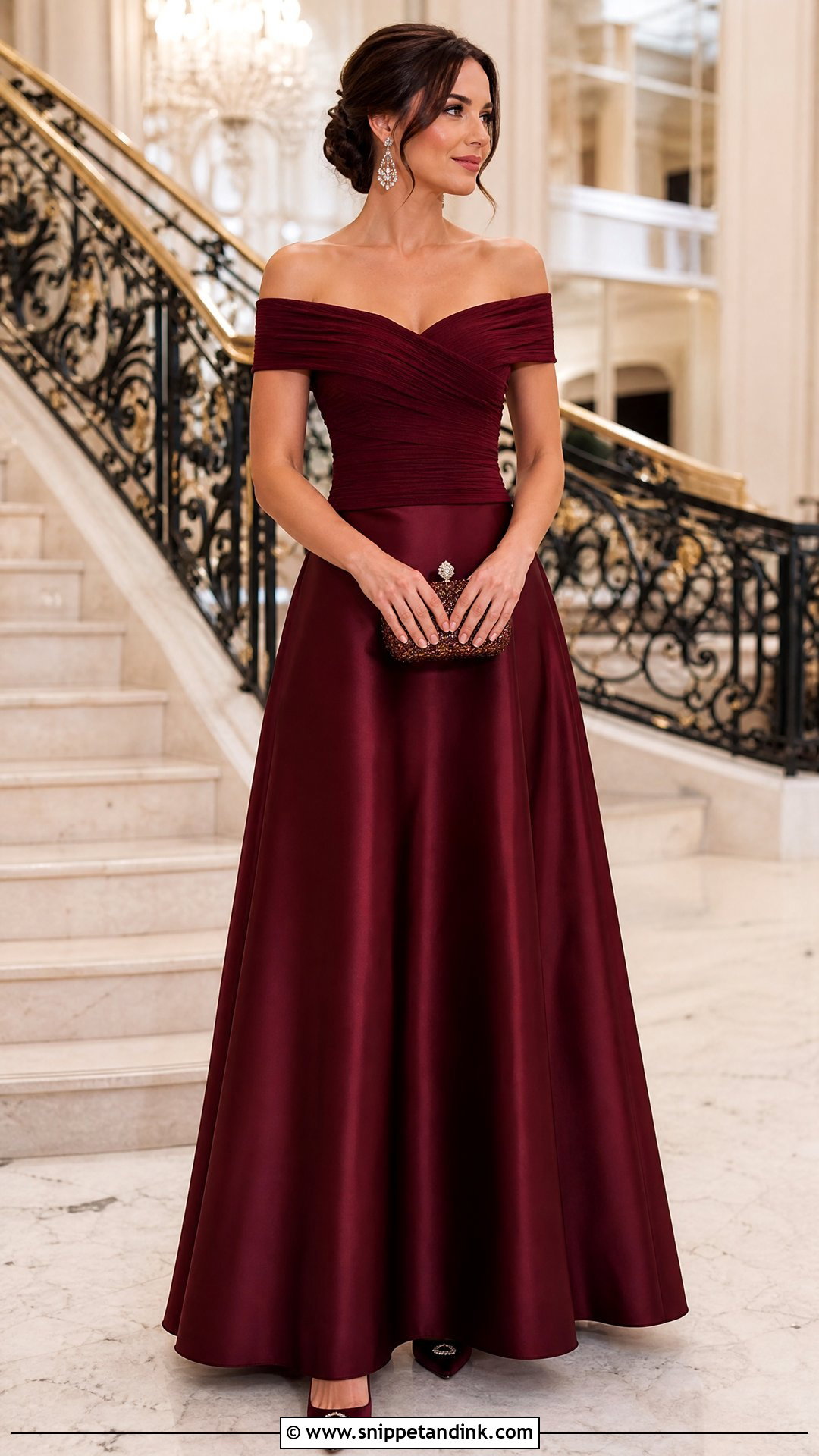
A skirt and evening top can pass as a gown when both pieces are formal on their own. Start with a floor-length satin, taffeta or jacquard skirt with a defined waist, then add a fitted silk blouse, an embellished top or a structured bodice in the same colour family. Show only a sliver of skin at the waist, if any, unless the couple are clearly fashion-forward. Matching fabrics create one long column; a controlled contrast adds depth. Elegant pumps, a small beaded clutch and simple jewellery suit it. The test I use: would each piece look dressy worn alone? If not, swap it. Knit tops and elastic waists never pass.
18. Black Lace Gown for a Black Tie Wedding
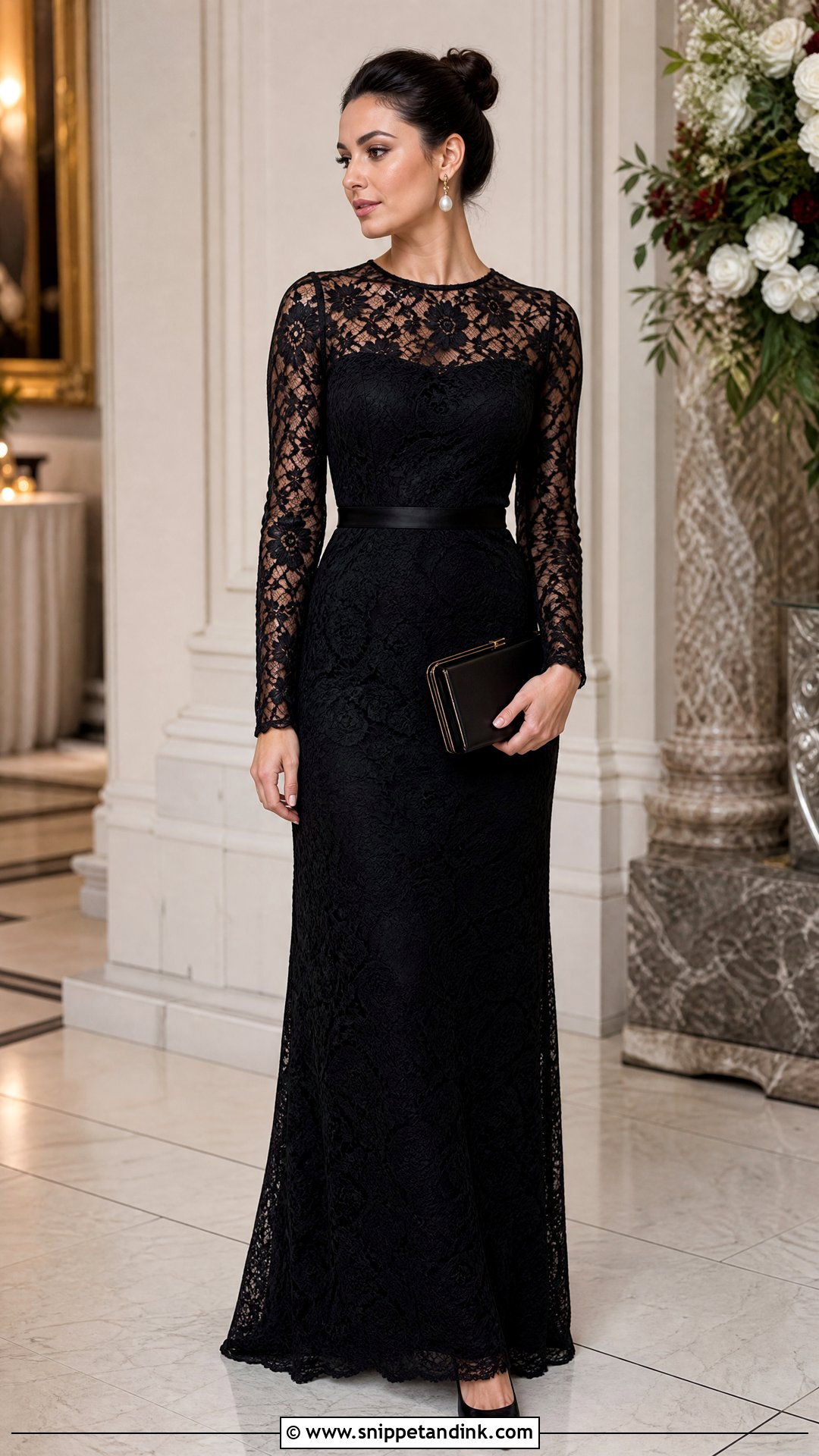
Black lace looks formal or flimsy depending almost entirely on the lining. A fully lined floor-length skirt with sheer sections placed deliberately at the sleeves, neckline or upper back is what you want. Lace with a short lining and large cutouts looks like a party dress. Black satin pumps, a structured clutch with gold or silver hardware, and pearl drops or crystal studs are enough against the pattern. Wear hair up, because loose curls catch in lace and pull threads. In winter, a smooth wool coat is safer than a textured one, since bouclé and fluffy knits snag lace on contact.
19. Plus-Size Wrap Gown for a Black Tie Wedding
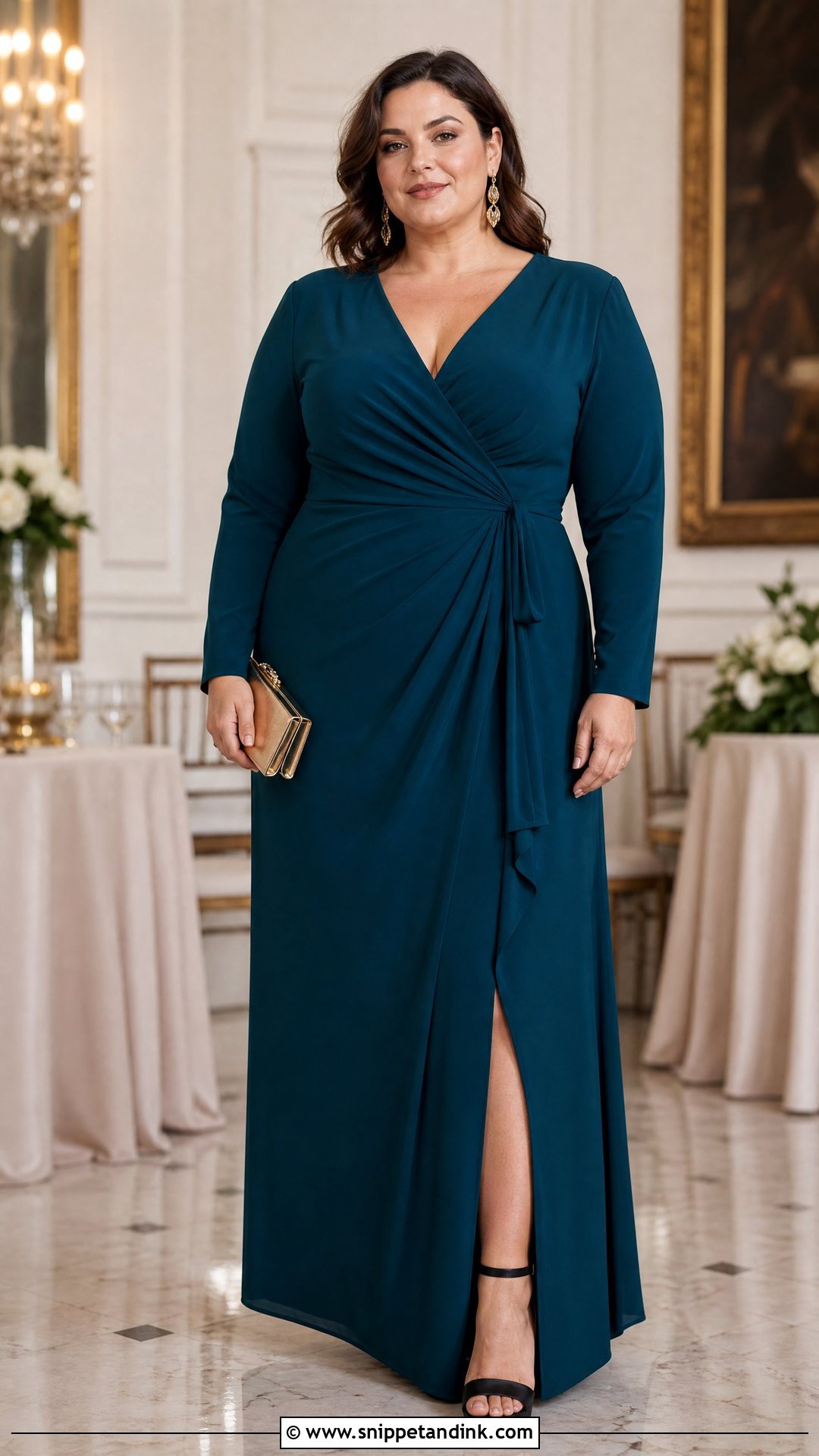
Wrap gowns adjust to the body, which is why I reach for them so often for plus-size clients. Stretch crepe, velvet, satin or layered chiffon all work in a true floor length. The neckline is the weak point. If the wrap opens lower than you’d like, a tailor can sew an invisible snap at the crossover without changing the line. Supportive underwear and proper hemming make the gown comfortable from vows to dancing. Deep teal, berry, navy and black look rich. Pair with stable block heels or pumps, a structured clutch and drop earrings. Oversized clothing rarely feels more comfortable; a gown that fits your actual measurements does.
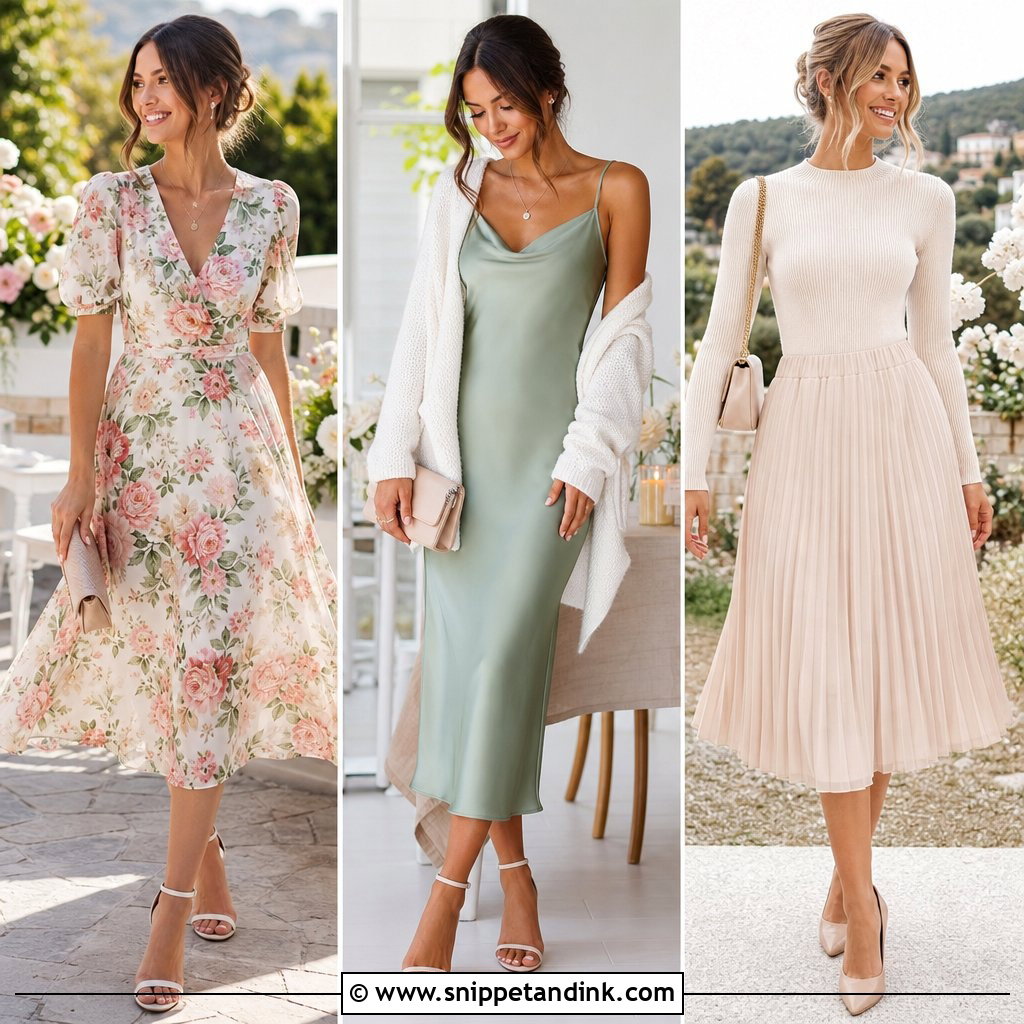

20. Modest High-Neck Gown for a Black Tie Wedding
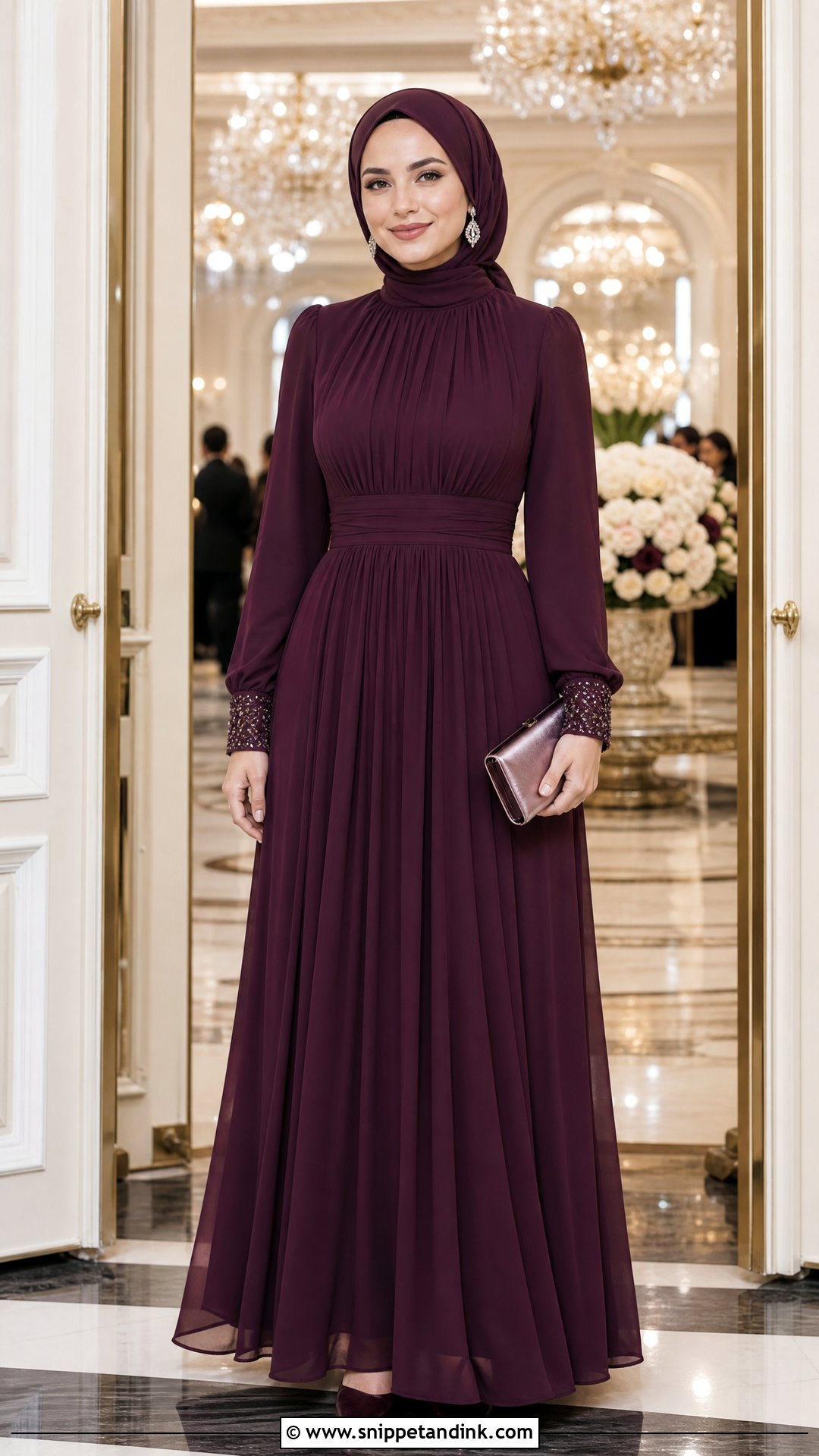
A modest gown can be every bit as luxurious as a lower-cut one. Look for a high neckline, long or elbow-length sleeves and a clearly shaped waist, so the coverage reads as deliberate. Fluid crepe, velvet, chiffon and satin all move well while staying covered. Deep plum, navy, forest green and black suit evening light. Pointed pumps, a small satin clutch and refined earrings worn with a sleek bun or a neatly styled head covering finish it. Subtle beading at the cuffs adds interest. Check opacity under bright light before the day, especially with chiffon, because venue spotlights can show more than a fitting-room mirror.
How a Gown Holds Up From the Ceremony to Midnight
A black-tie wedding is long. You stand through the ceremony, sit through dinner and speeches, then dance. A gown that felt wonderful for five minutes in a fitting room has to work for all of that, so I always ask clients to do a short wear test at home.
Sit for twenty minutes, then stand up
Sitting is where fabrics show their character. Satin and crepe-back satin crease across the lap, velvet crushes, crepe usually springs back. Fitted bodices dig in at the ribs once you’re seated. If the gown creases badly, choose a darker shade or a heavier fabric, or plan to steam it before you leave.
Pack a small rescue kit
My evening-bag kit is tiny: a strip of fashion tape, two safety pins, a few clear elastic bands, blotting papers and a mini lint roller for velvet. A spare pair of flat foldable shoes can live in the car or with the coat check. None of it takes up space in a clutch, and it handles most of what goes wrong after dinner.
Floor Length, Real Fabric and One Strong Accessory
Black tie gets simpler once you stop thinking about trends and start with three things: length, fabric and fit. A floor-length gown is the traditional answer, while a formal jumpsuit, a tailored tuxedo or a matching skirt and top work just as well when the fabric is right. Think about the season and venue, then build around one strong silhouette with comfortable evening shoes, a compact clutch and jewellery that supports the outfit. Follow any notes from the couple. Leave white and pale champagne to the bride, and you’ll walk in looking exactly as the invitation hoped.
You'll Like These Ideas:


Leave a Reply