
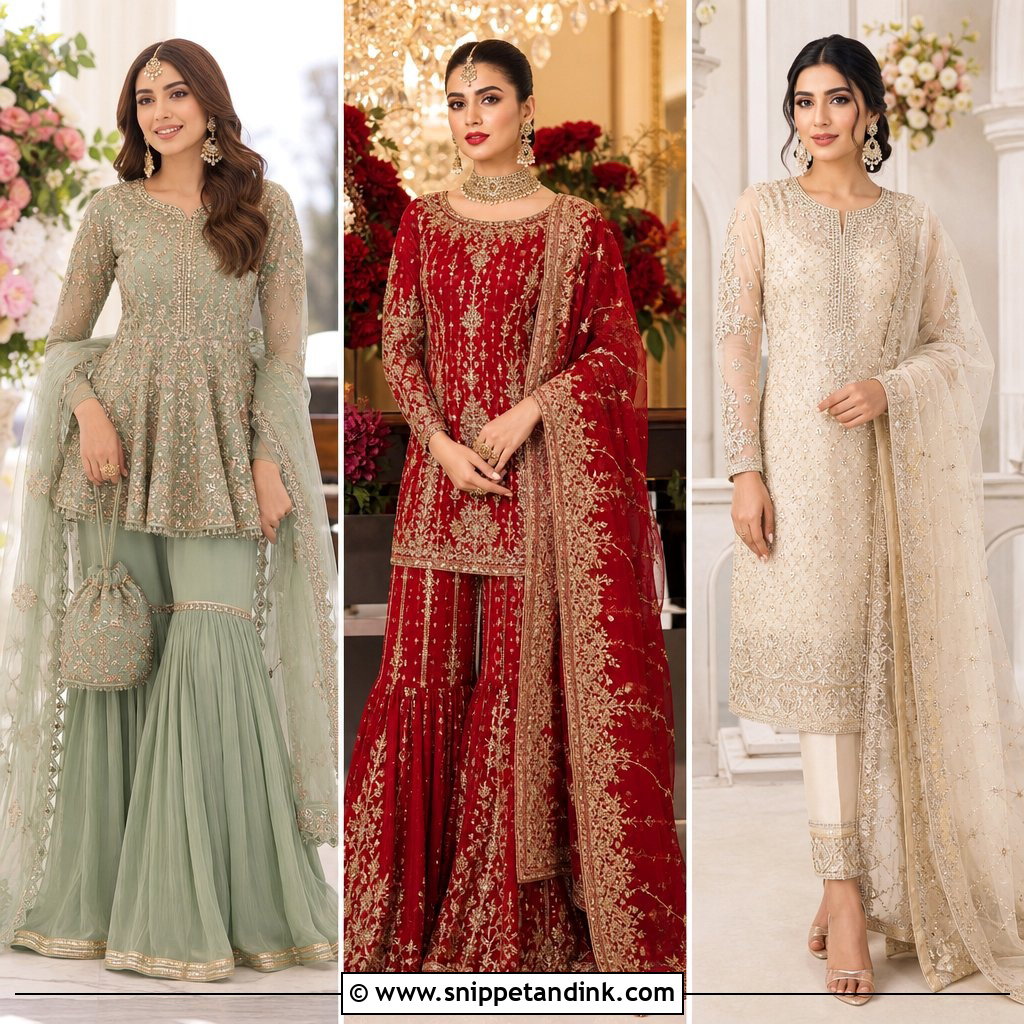
A sharara is the outfit I reach for when a guest tells me she wants to dance all night and still look dressed for a wedding. The flared pants move with you, the short kurta keeps the top half tidy, and the dupatta does whatever the function needs, from covering your head at the ceremony to sitting on one shoulder at the reception. Newer collections play with vests, capes and lighter fabrics, but the rule I style by hasn’t changed: the wider the pant, the more fitted the top. Below are twenty sets, each styled from shoes to hair, with notes on which function and venue they actually suit.
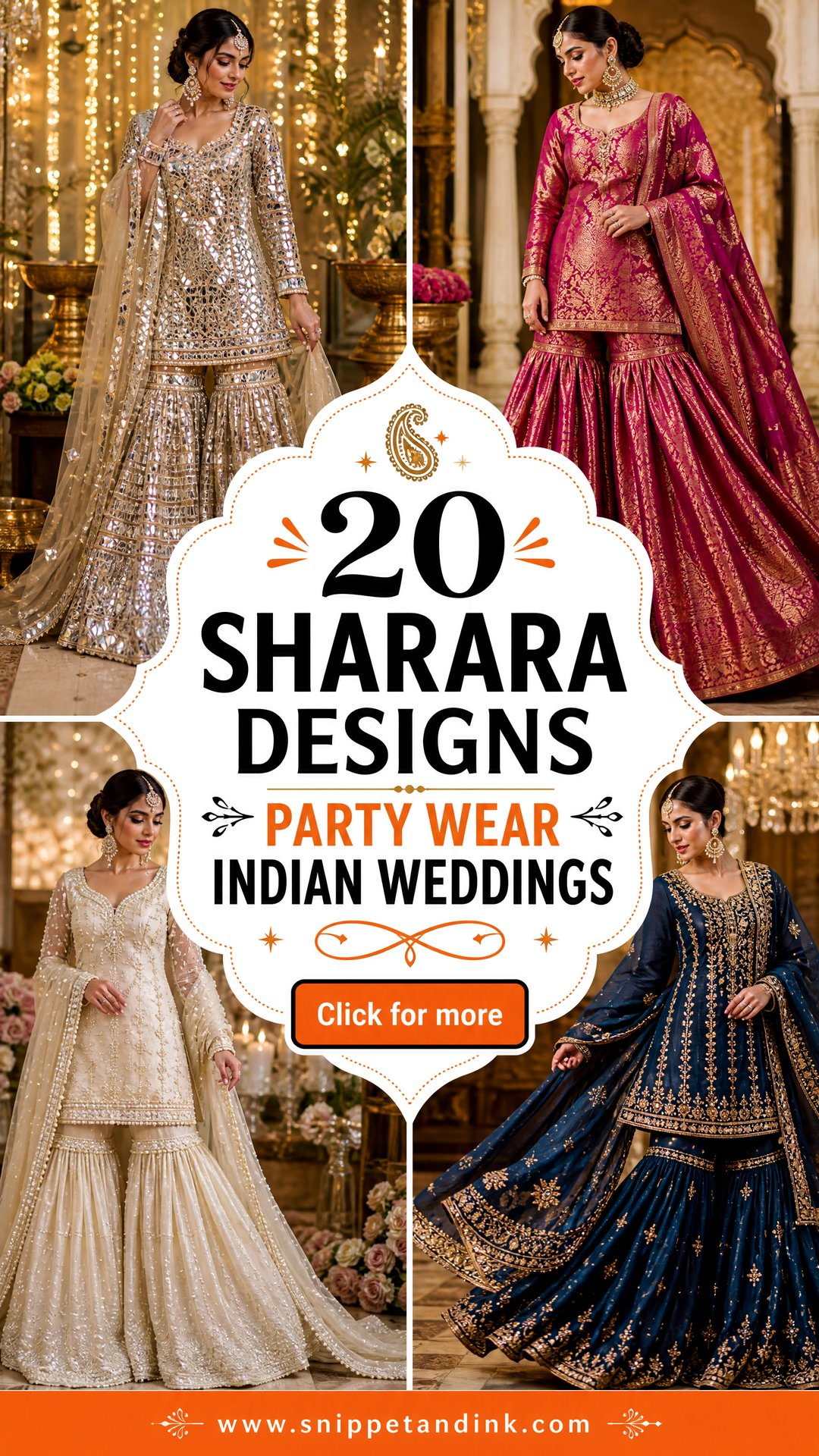
Which Sharara Goes to Which Function
Most Indian weddings run over several events, and the same sharara rarely suits all of them. When a guest brings me one outfit and asks if it will work for everything, I sort it by fabric and embellishment first, color second.
- Haldi: washable cotton, mulmul or gota on light georgette. Turmeric stains silk and zari, so wear something you won’t grieve over.
- Mehendi: bandhani, prints and chikankari in brighter colors. You’ll sit on the floor or on low cushions, so avoid heavy, stiff hems.
- Sangeet: mirror work, sequins and crop tops. Pick a set you can actually dance in and test the top by lifting your arms.
- Ceremony: silk, zari and fuller coverage. Carry a dupatta you can drape over your head if the venue is a temple or gurdwara.
- Reception: velvet in winter, sequins, capes and jackets. This is the event where fusion silhouettes look most at home.
If you can only buy one set, a jewel-toned georgette sharara with moderate embroidery stretches the furthest. Dress it up with zari jewelry for the ceremony and down with a plain dupatta and juttis for the mehendi.
1. Mirror Work Sharara Set
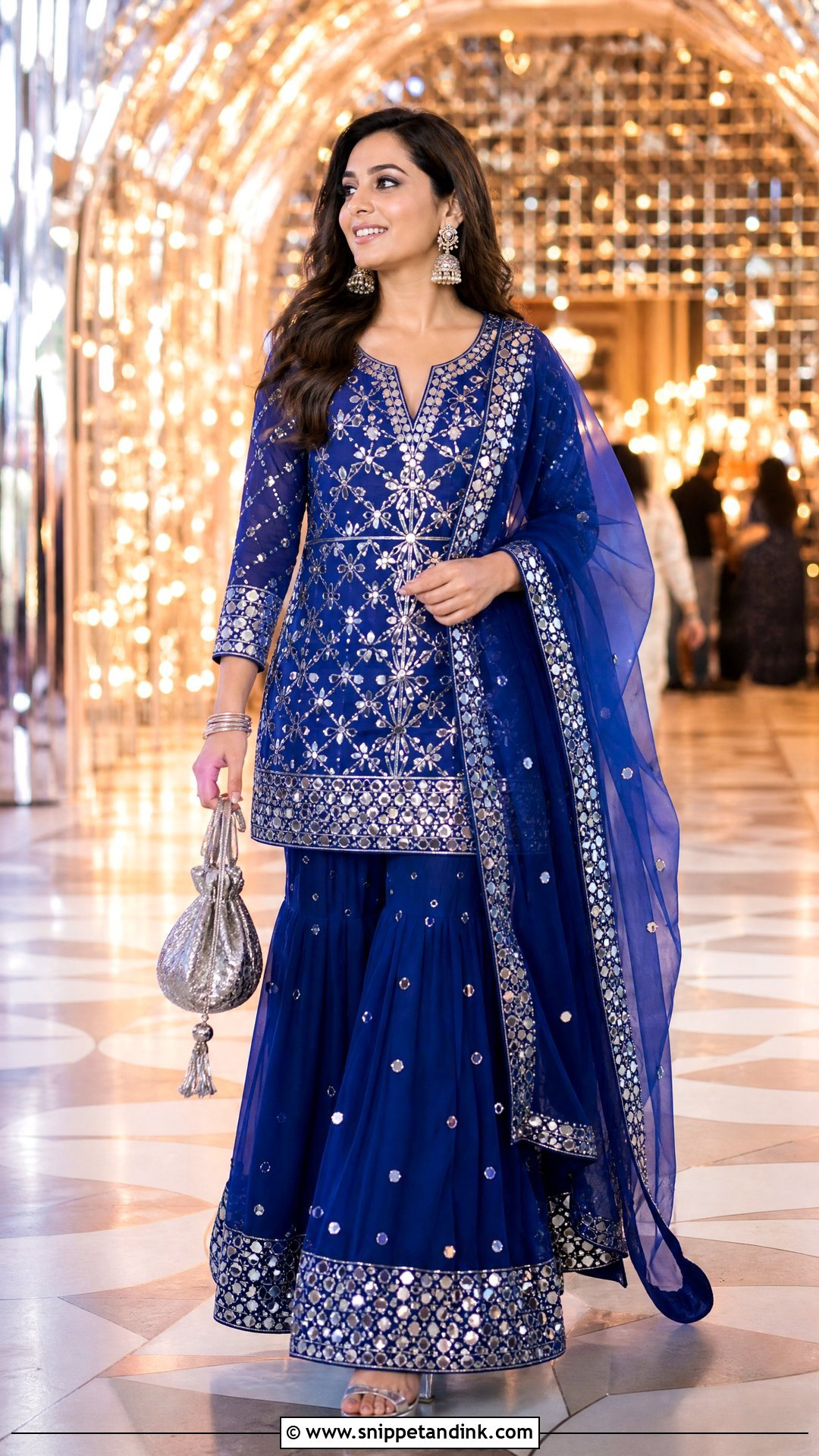
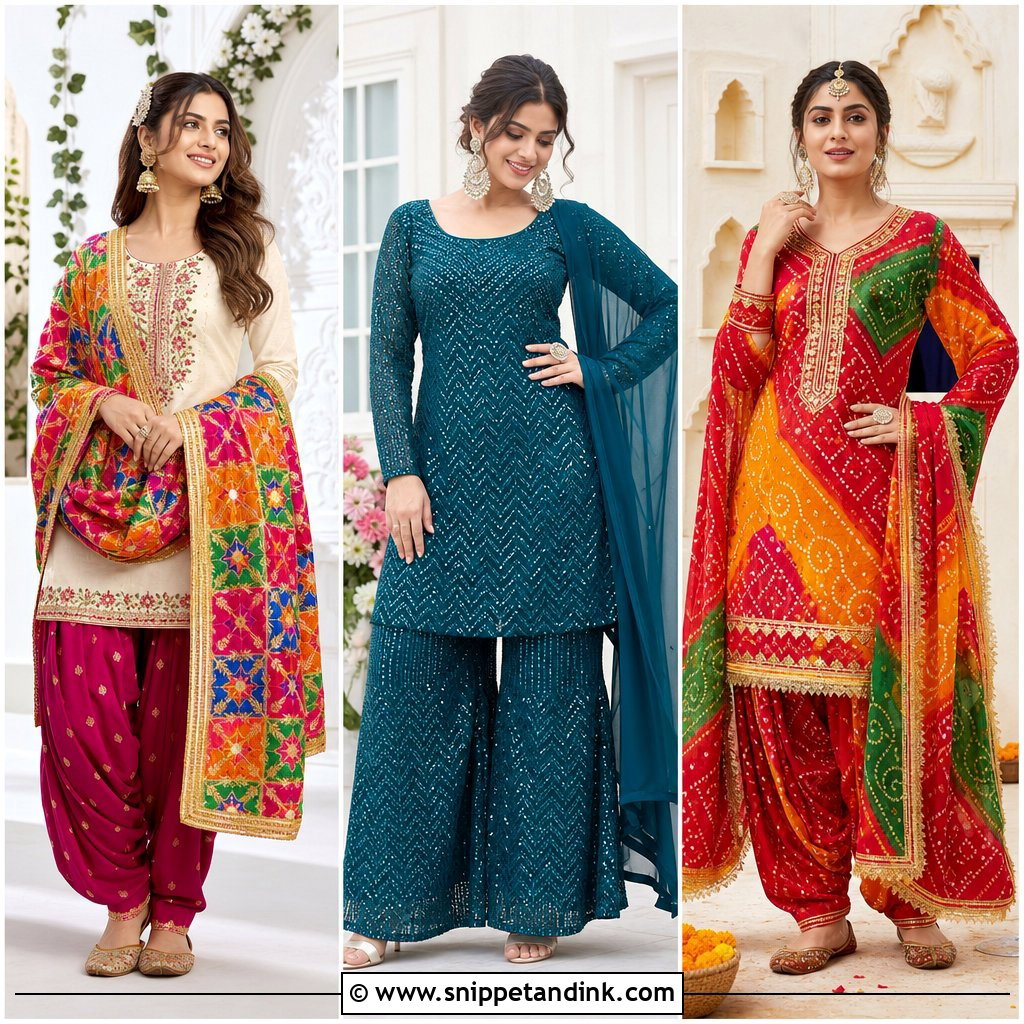
A mirror work sharara set belongs at a sangeet or an evening party, where stage lights catch every little glass disc. I look closely at how the mirrors are spaced on the kurti; evenly scattered work reads polished, while dense clusters can look heavy and snag a georgette dupatta every time you lift your arm. Pair it with a georgette sharara in the same shade and a dupatta with only a narrow mirror edge. Royal blue, magenta and emerald hold their color under warm event lighting. Because the neckline is already busy, I skip the necklace and let jhumkas, metallic block heels and a small potli do the work.
2. Pastel Organza Sharara Set
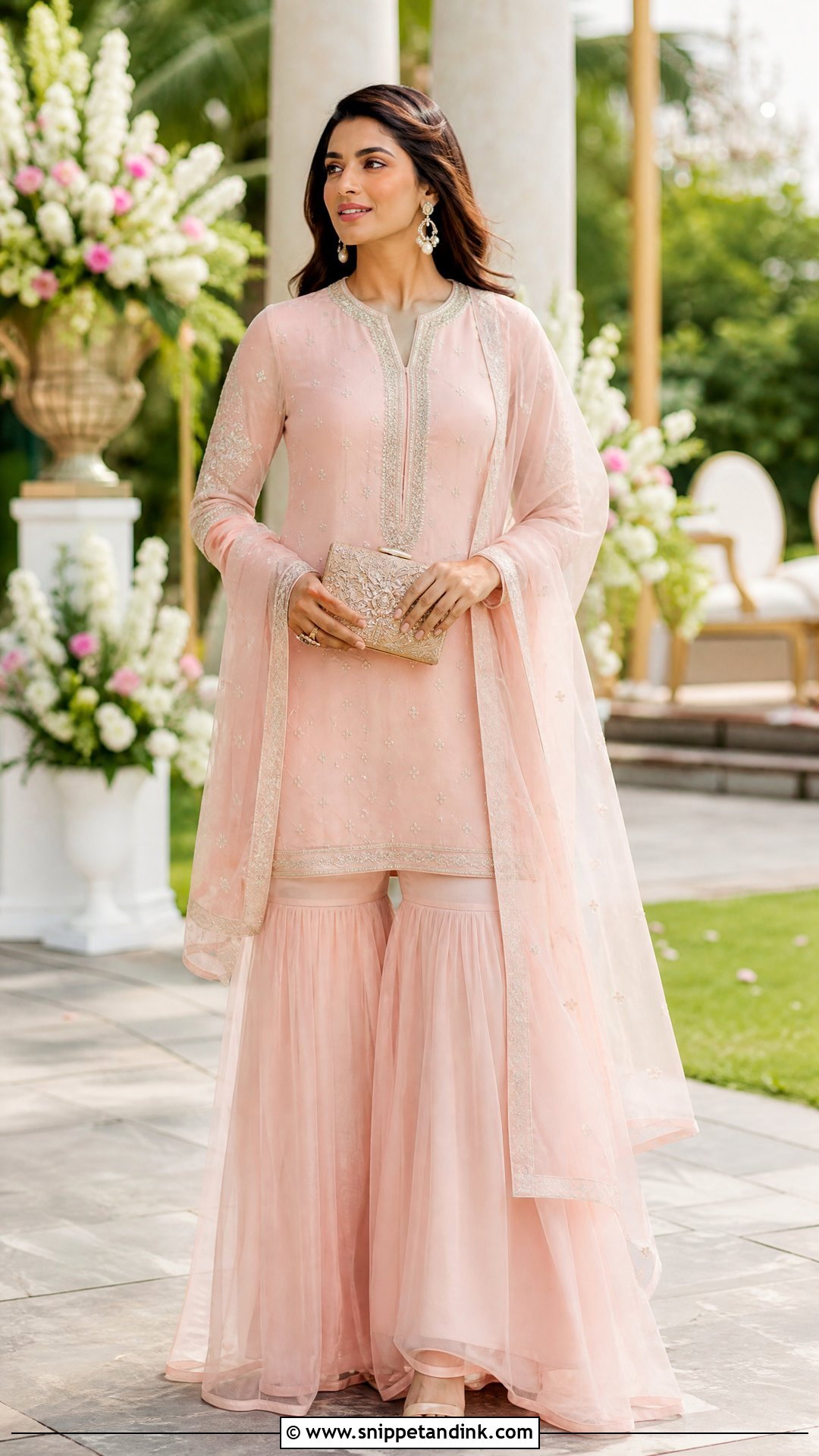
Organza is my first suggestion for a daytime wedding in the heat, because it gives the sharara volume without weight. Blush, mint, powder blue and lavender all look fresh in natural light. The thing to check is the inner lining: organza is sheer, and a cheap lining that clings or crackles will show through in sunlit photos. Fine threadwork or tiny pearls on the neckline and sleeves are enough. Pearl drops, a slim bracelet, nude or silver heels and a low bun with a few loose strands keep the palette gentle, with rosy cheeks and a satin pink lip.
3. Velvet Sharara Set
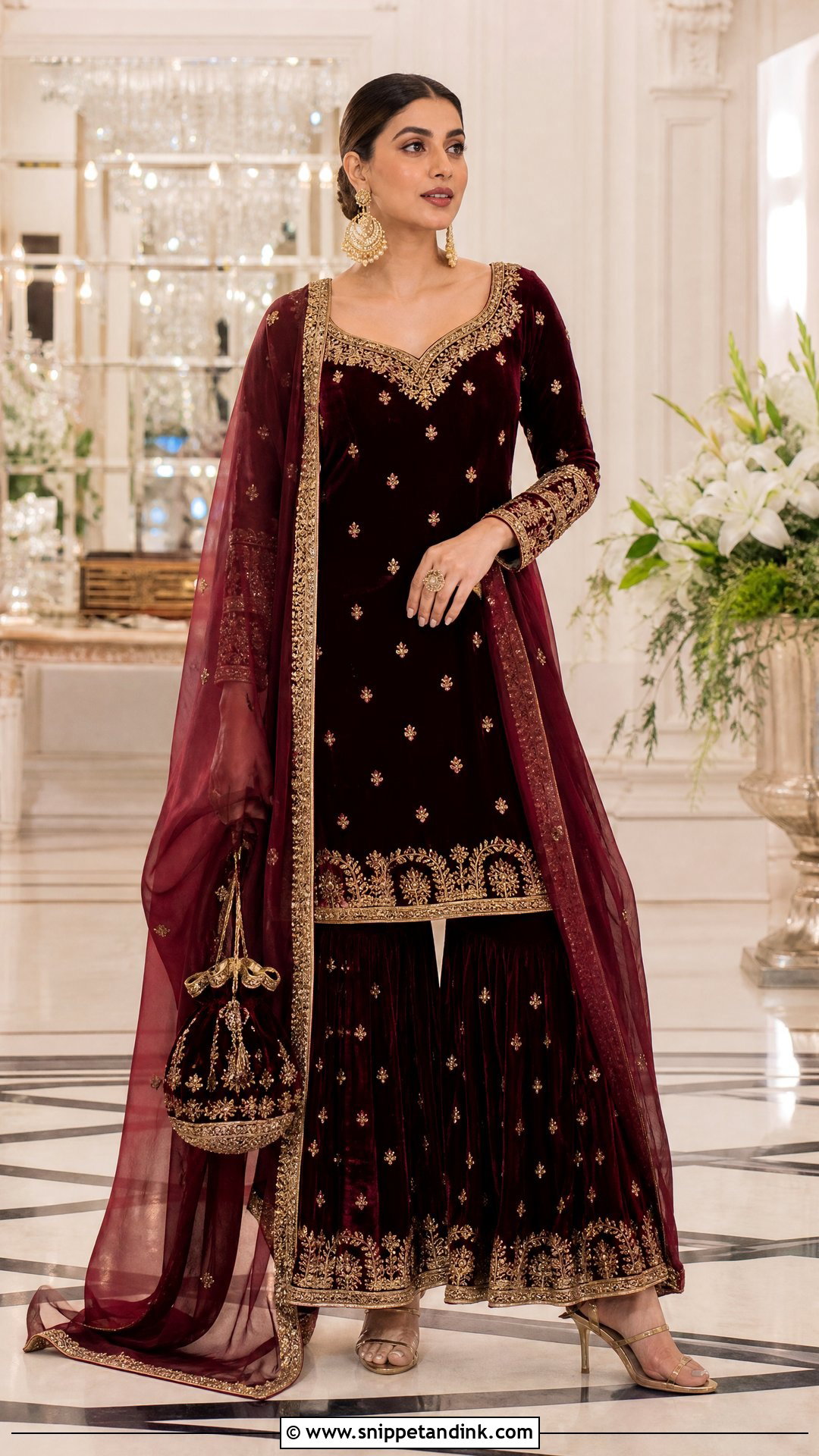
Velvet is for cool evenings only, since it traps heat fast once a crowded hall warms up. Deep maroon, bottle green, navy and plum carry antique gold embroidery at the neckline, cuffs and hem very well. Keep the velvet to the kurta and choose a georgette or silk-blend sharara, otherwise the pants get stiff and bulky at the hip. A slightly longer kurta balances that weight. Swap a velvet dupatta for a lighter one with a zari border, then add chandbalis, a structured potli, gold heels, a smooth bun and a deep rose lip.
4. Peplum Kurti Sharara Set
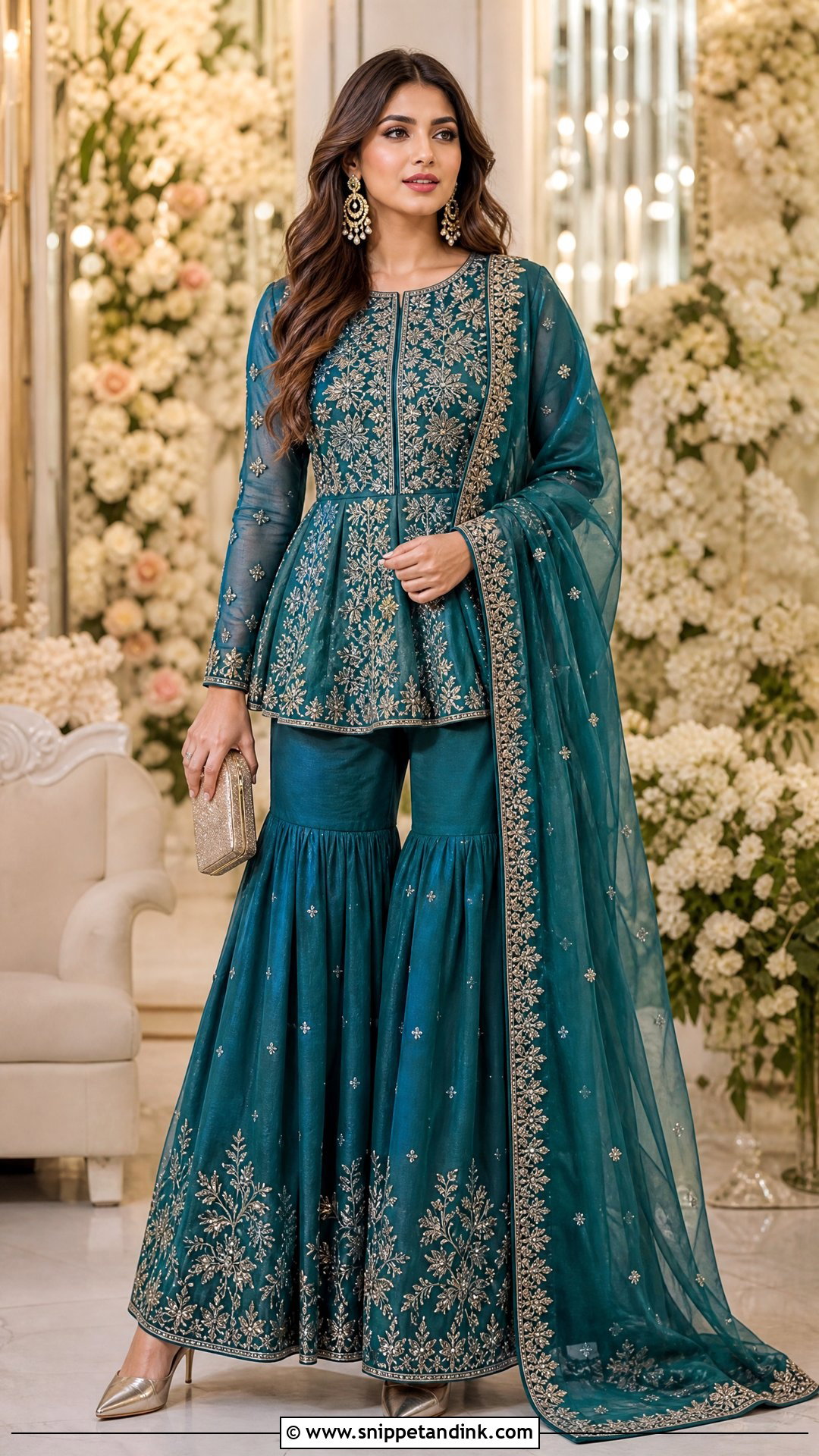
A peplum kurti gives the sharara a defined waist, which helps anyone who feels lost in all that flare. The peplum needs to start right at your natural waist; if it sits even an inch low, it cuts the body in an odd place and the pants look shorter. Silk, brocade or embroidered georgette suit an engagement party or sangeet. Monochrome coral, teal, lilac or mustard looks most cohesive. With a heavily worked peplum, I keep the sharara plain and the net dupatta simple, then add statement earrings, pointed metallic heels, a box clutch and a sleek ponytail.
5. Long Jacket Sharara Set
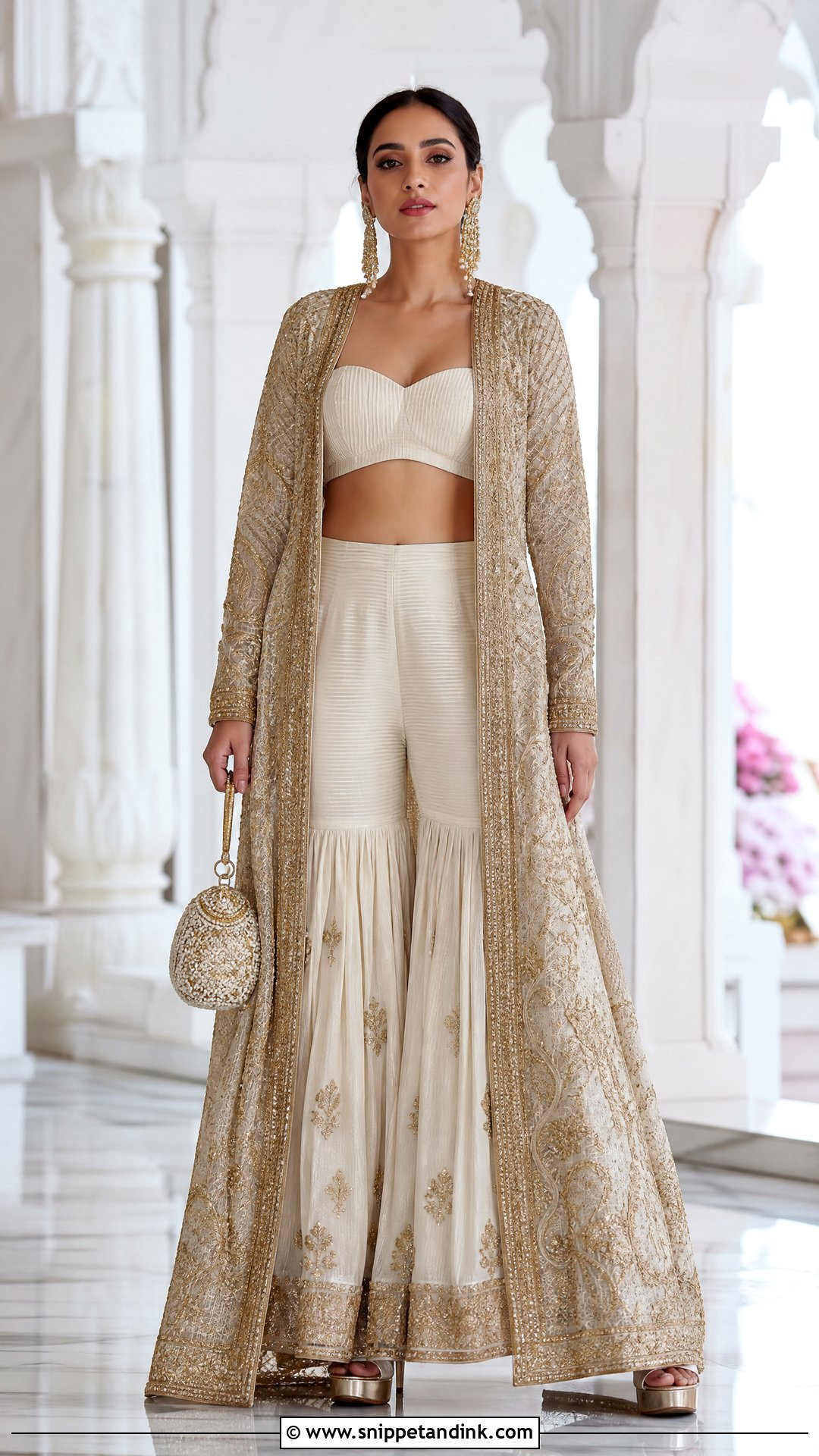
Adding a long jacket over a simple sharara is the easiest way to make a modest set reception-worthy. Underneath, wear a fitted sleeveless blouse or short kurti and a matching flared sharara. The floor-length jacket can be embroidered net, organza or light silk, worn open so it draws long vertical lines. One fitting note: a jacket that reaches the floor will catch under your heel on stairs, so I ask the tailor to finish it about an inch shorter than the sharara. Ivory with gold, teal with navy and rose with burgundy all work. You can drop the dupatta entirely here.
6. Cape Top Sharara Set
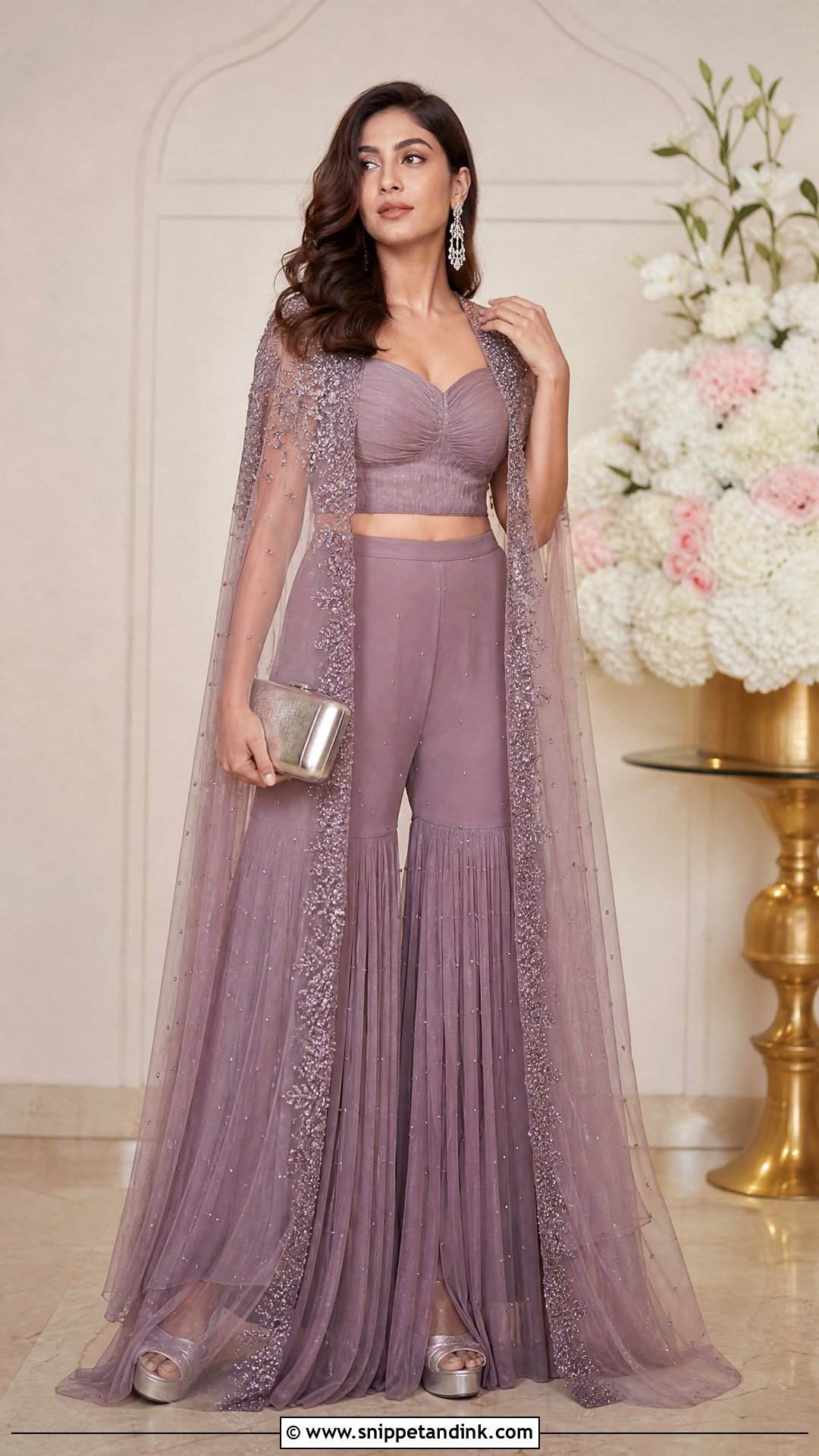
Guests who hate managing a dupatta usually love the cape top. A sheer cape falls from the shoulders over a fitted inner blouse, and it covers the arms just enough for most family functions. I check how the cape is attached before buying: if it’s only tacked at the neckline, it slides back all evening. Sequins or tonal threadwork make it reception-ready in midnight blue, smoky mauve, emerald or champagne. A high-waisted sharara with controlled volume, slim drops, a metallic clutch, platform sandals and hair swept back keep the face clear.
7. Crop Top Sharara Set
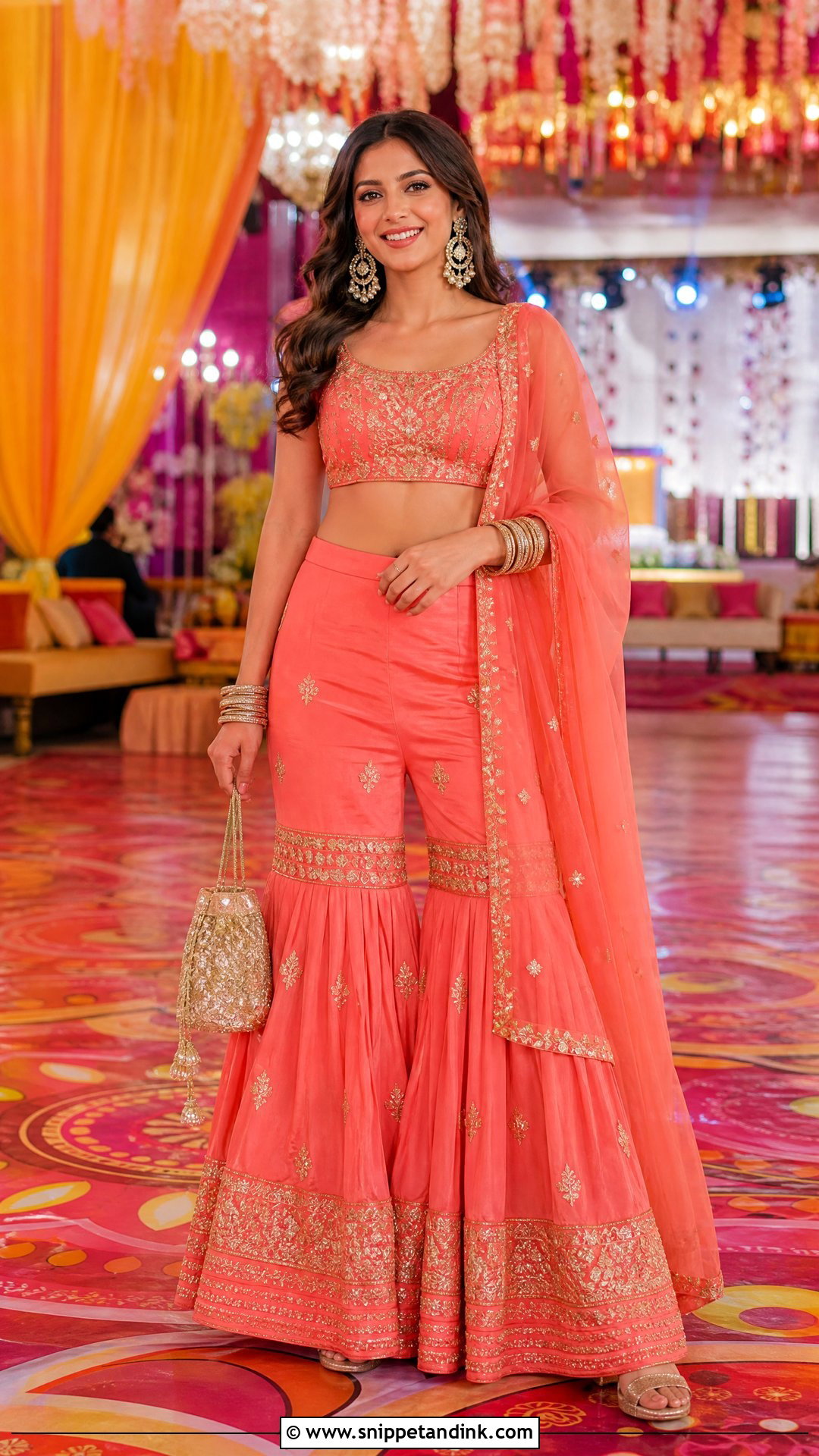
The crop top set is what younger guests want for a sangeet, and it’s the one that needs the most careful fitting. The top should be structured and stay put at the natural waist when you raise your arms; I always ask clients to do a few dance moves in the trial room. A high-rise sharara then leaves only a sliver of midriff. Embroidered silk, sequined georgette and brocade read formal enough. Throw a light dupatta over one shoulder, add big earrings, stacked bangles and block heels, and go for a braided ponytail or loose curls.
8. Asymmetrical Kurta Sharara Set
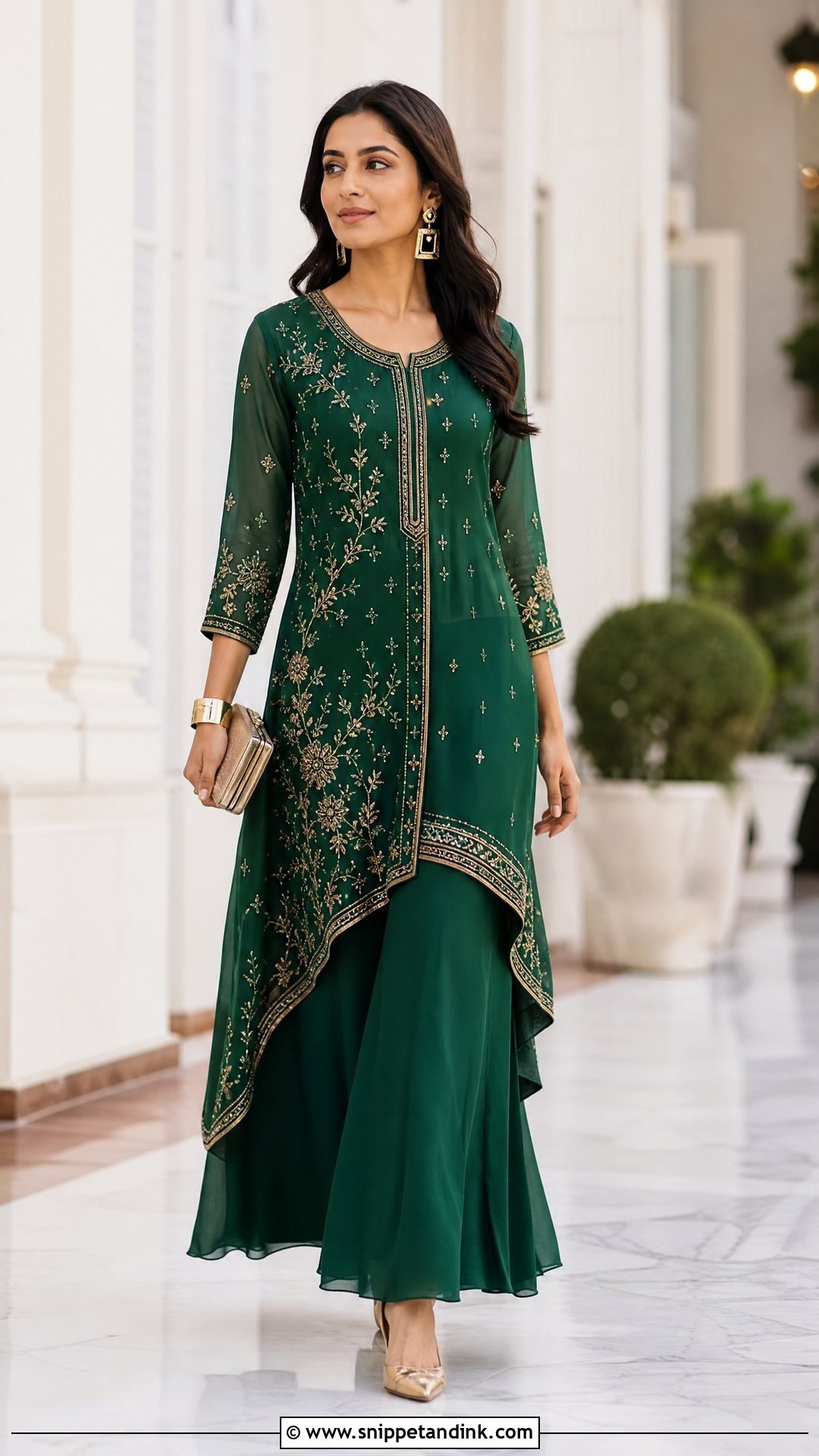
I like an asymmetrical kurta on guests who want something sharper than the usual short kurti. A high-low hem, diagonal cut or draped side panel lets the sharara show on one side, so the pants stay part of the look. Keep the sharara solid and let the kurta carry the embroidery. Jewel-toned crepe or silk suits evening functions; lighter shades work in daylight. A diagonal hem already adds movement, so a dupatta is optional. Geometric earrings, a cuff, pointed heels, a structured clutch and straight hair or a low ponytail finish it cleanly.
9. Anarkali Kurta Sharara Set
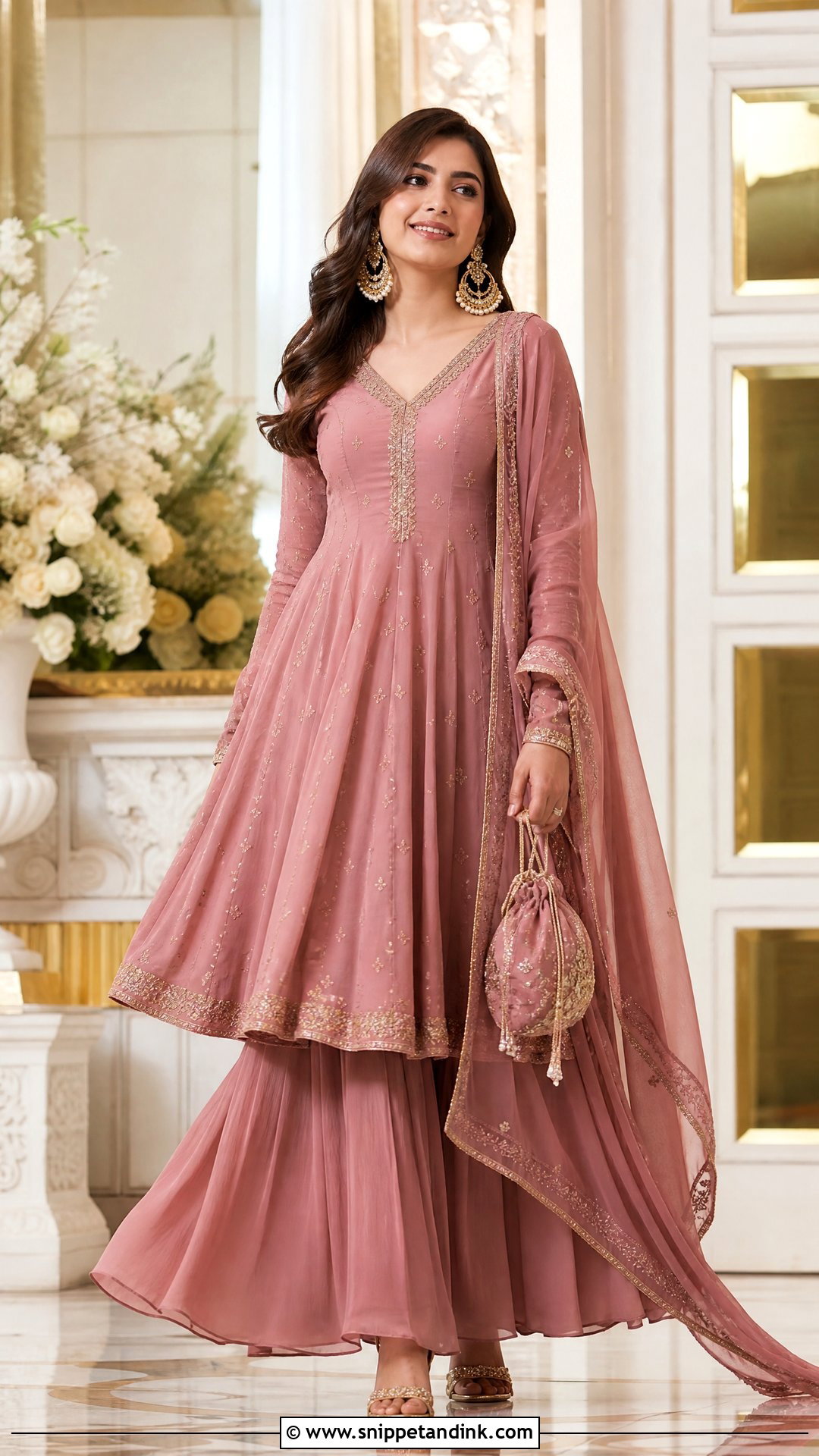
Can two flared shapes really work together? Yes, if the Anarkali stops at the knee and fits closely through the bust and upper waist. Any longer and the two flares blur into one big triangle. The sharara should widen below it without adding bulk at the hip, which is why I insist on georgette or chiffon for both layers. Dusty rose, pistachio, sapphire and wine with delicate zari look graceful. Drape a narrow dupatta over one shoulder so the tiers stay visible, then add chandbalis, embroidered heels, a compact potli and a classic bun.
10. Yellow Gota Patti Sharara Set
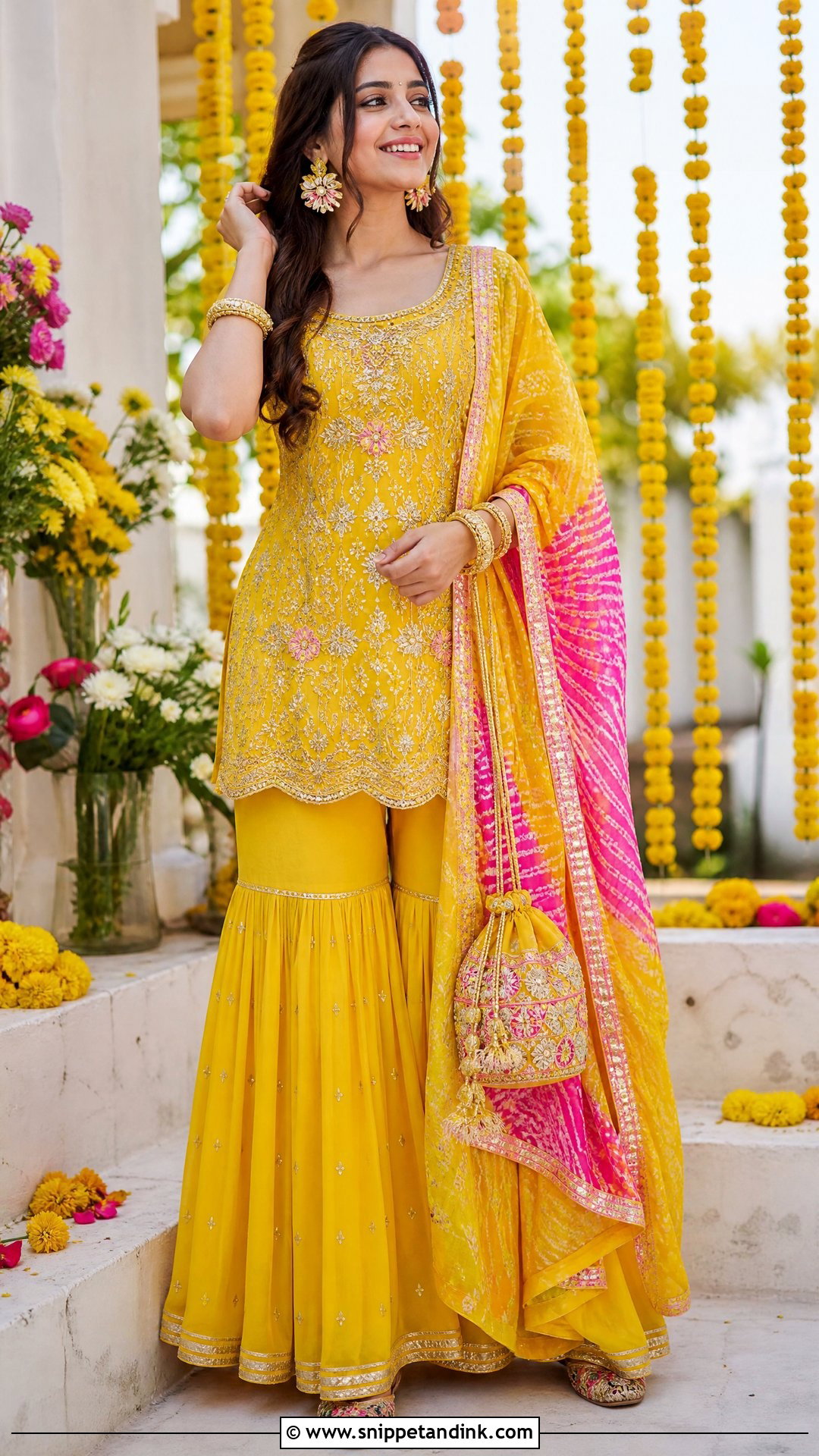
Yellow with gota patti is my default haldi suggestion, partly because gota is metallic ribbon work and turmeric paste wipes off it more easily than off dense thread embroidery. Pick a short kurti with gota at the neckline, sleeves and hem, and a light sharara with narrow borders. A bandhani or organza dupatta in pink or orange adds color. For lawns and long rituals I tell everyone to wear embroidered juttis, not heels, because heels sink into grass. A braid with small flowers, peach blush and waterproof eye products handle the heat and the splashes.
11. Chikankari Sharara Set
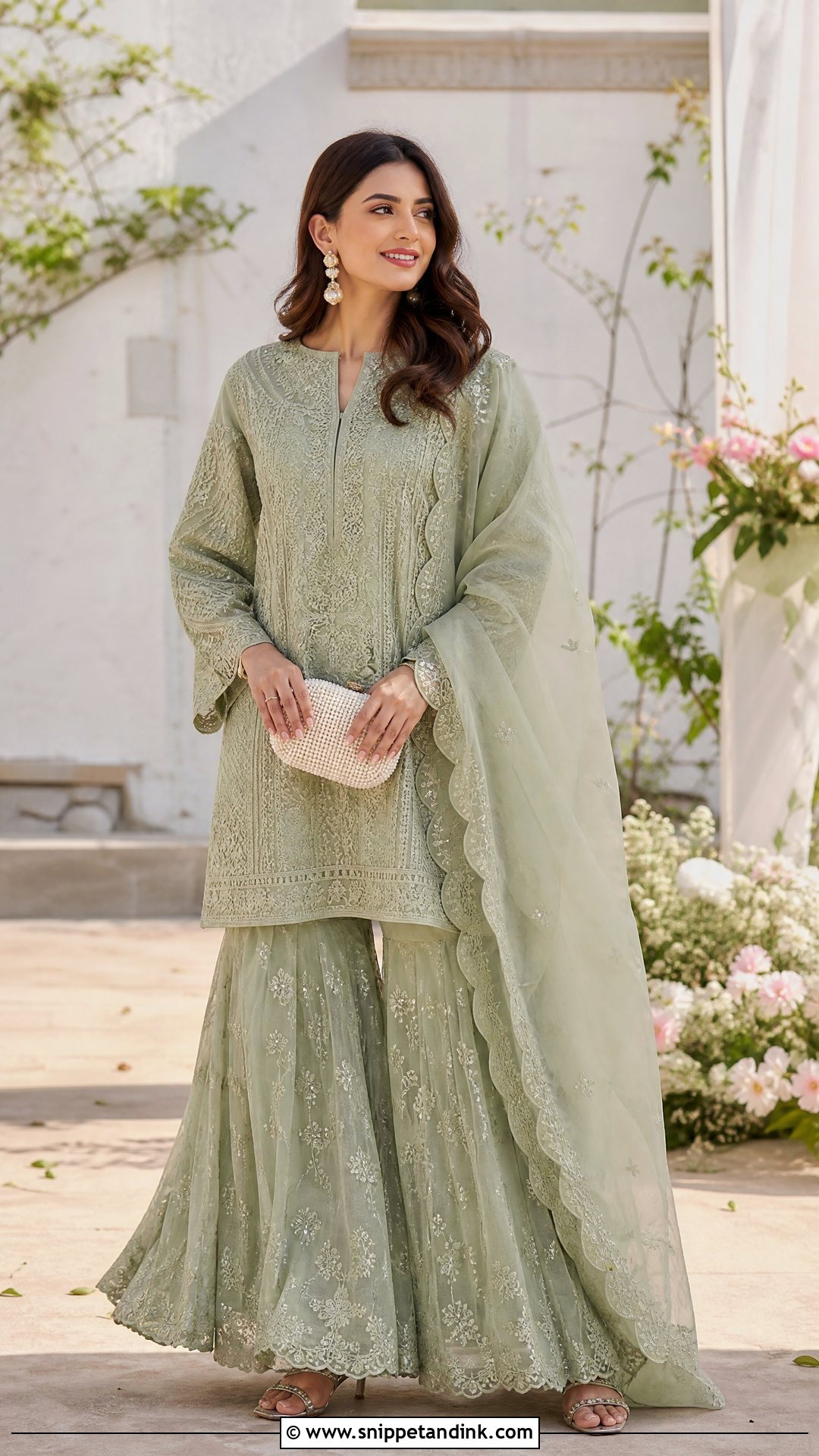
Chikankari is quiet embroidery, so it suits morning and afternoon events where heavy zari would feel like too much. Fine tonal stitching on cotton-silk, georgette or modal, with a few subtle sequins, is all you need. Choose a sharara with embroidered lower panels so the handwork shows when you walk. Peach, sage, lilac, ivory and sky blue fit the mood. A word of warning: genuine hand chikankari on fine fabric should be dry cleaned or very gently hand washed, so don’t plan to toss it in the machine afterwards. Pearl earrings, low metallic heels and soft waves complete it.
12. Bandhani Sharara Set
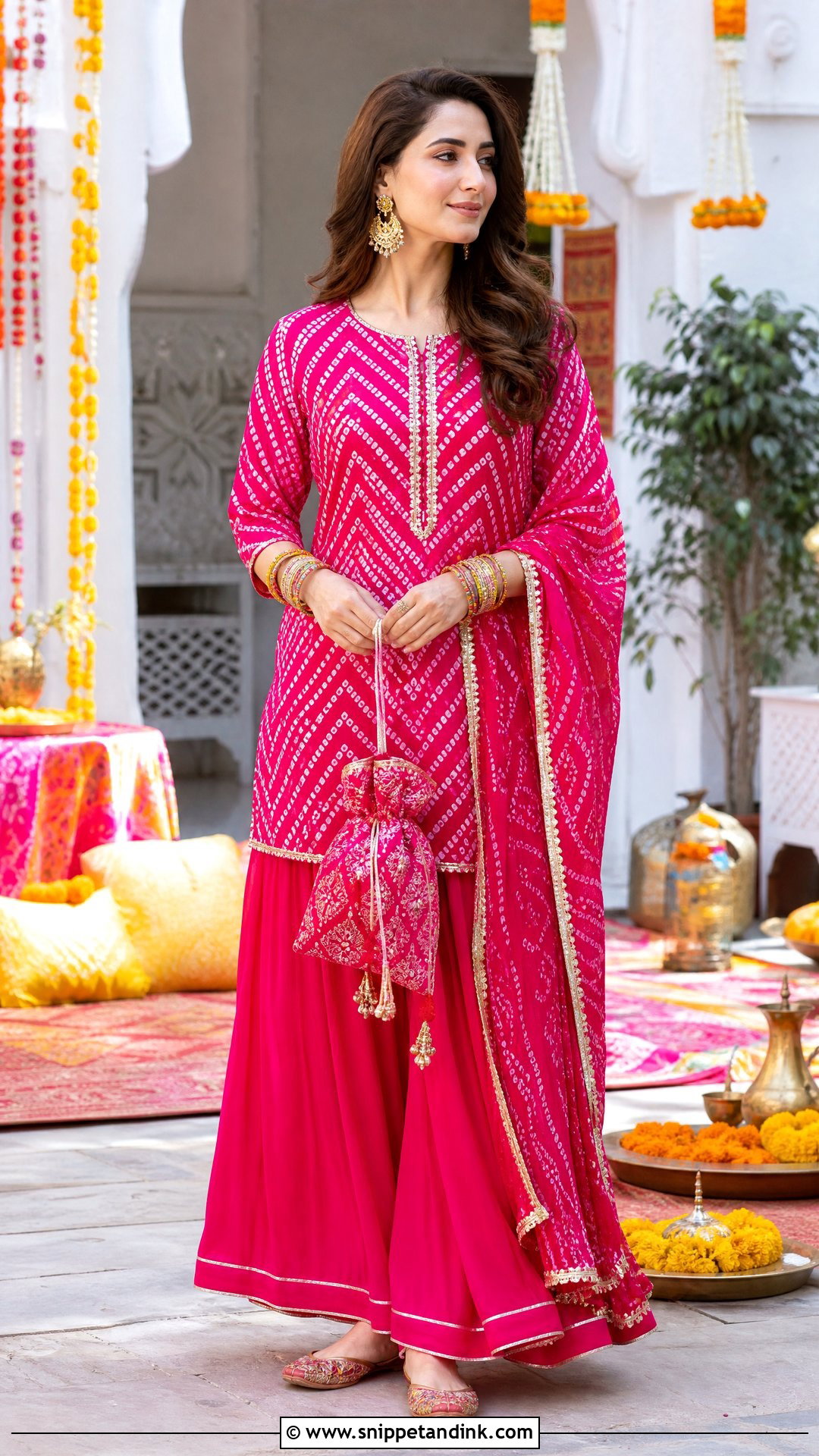
Bandhani carries a lot of pattern, so I let only one piece be printed. Either wear a tie-dyed kurta in red, rani pink, green or mustard with a solid sharara, or flip it with a plain kurti over a bandhani sharara and matching dupatta. Gota edging, tassels and small mirrors add festivity without hiding the dots. Real bandhani can bleed color the first time it gets damp, which matters at a mehendi where hands and fabric meet. Oxidized gold earrings, colorful bangles, embellished juttis, a textured bun and kohl-lined eyes suit its handmade character.
13. Silk Zari Sharara Set
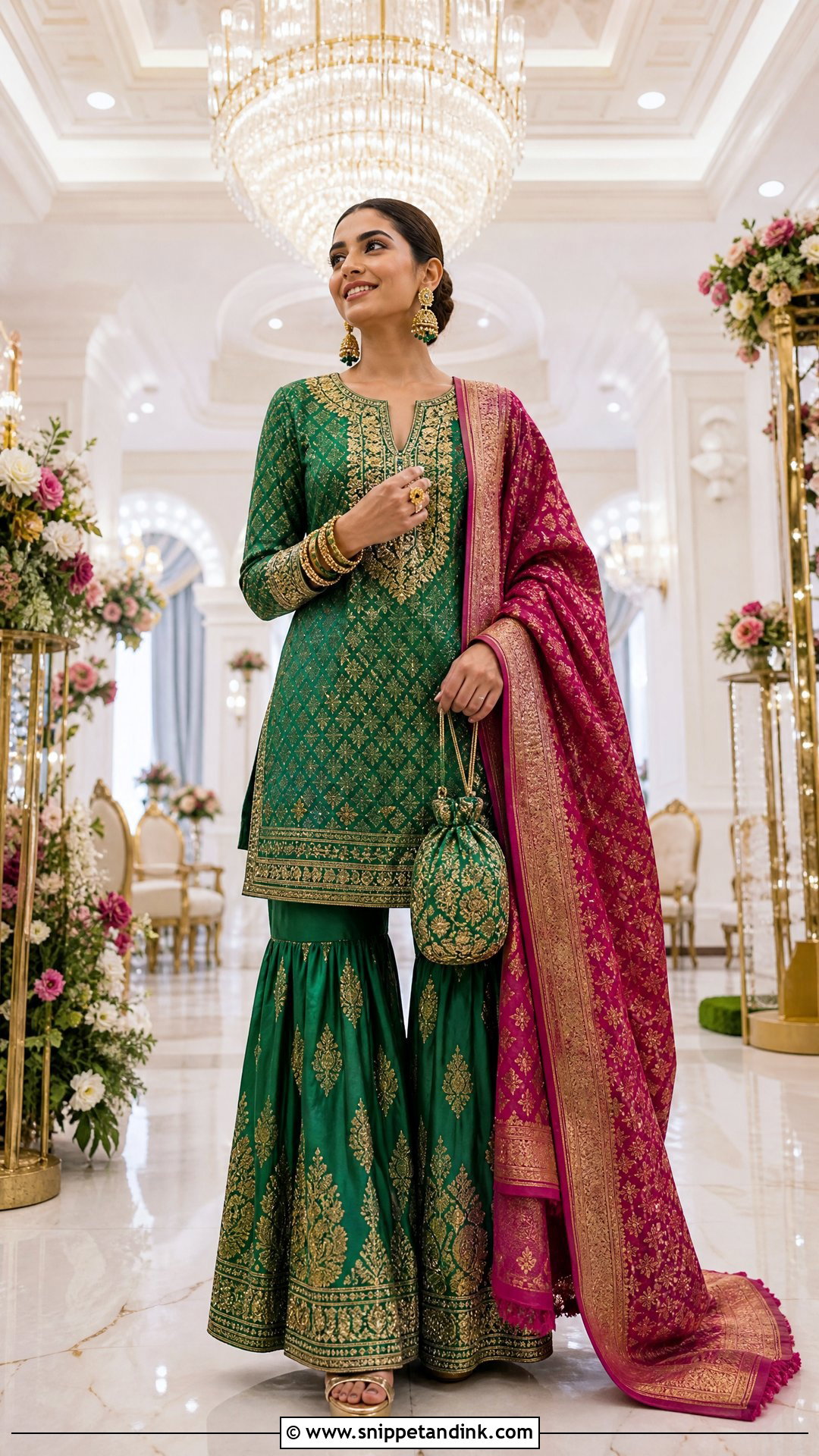
For the ceremony itself, I steer guests toward silk with zari because it has the weight and formality the rituals call for. Look for woven gold motifs or zari borders on a structured kurta, and a matching sharara with enough flare to move but enough body to hold its shape. A contrast dupatta adds depth: emerald with antique gold, magenta with orange, deep purple with rose. Silk sharara hems are heavy, so platform heels help you walk without treading on them. Traditional jhumkas, bangles, a brocade potli, a smooth bun and defined liner are plenty.
14. Floral Print Sharara Set
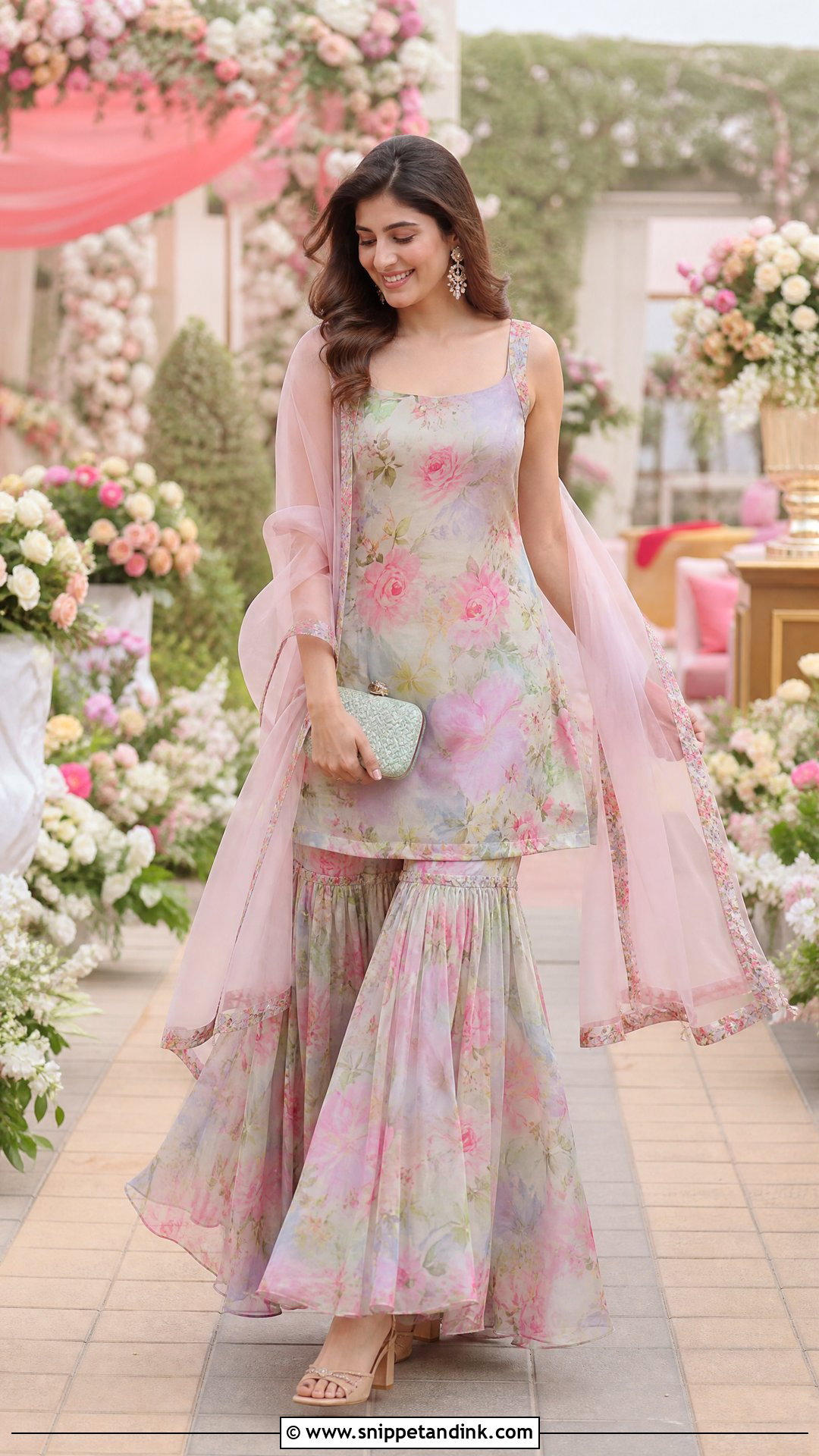
Floral print is the most relaxed option here, and I save it for garden weddings and daytime pre-wedding functions. Print scale changes the whole effect: small flowers look subtle and suit petite frames, while big watercolor blooms make the outfit the loudest thing in the room. A fitted short kurti lets the wide sharara carry the print. Never add a second busy pattern; a plain organza dupatta with a floral border is enough. Low block heels, a pastel clutch and a few fresh flowers in a bun echo the print without matching it too literally.
15. Navy Sequin Sharara Set
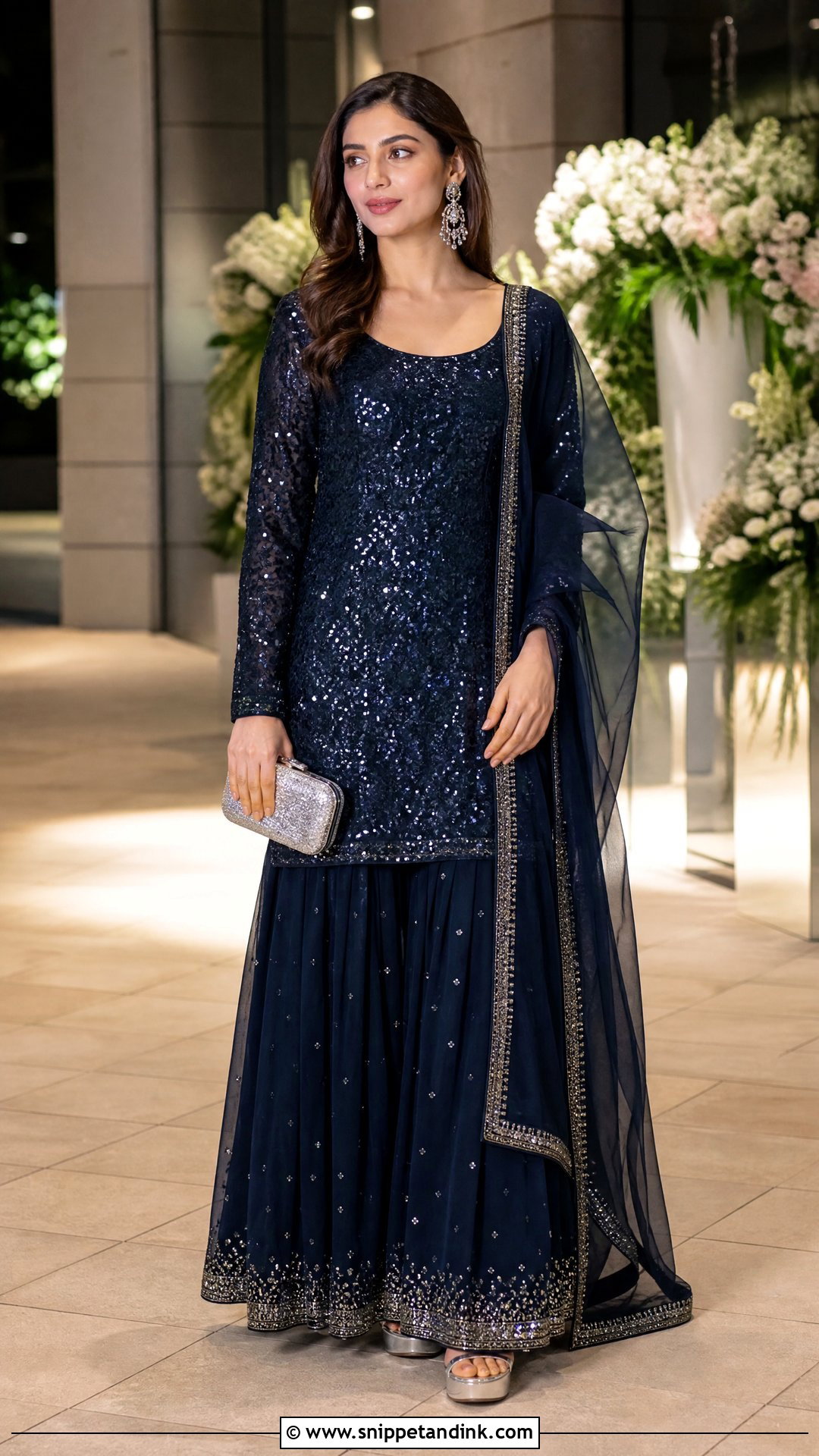
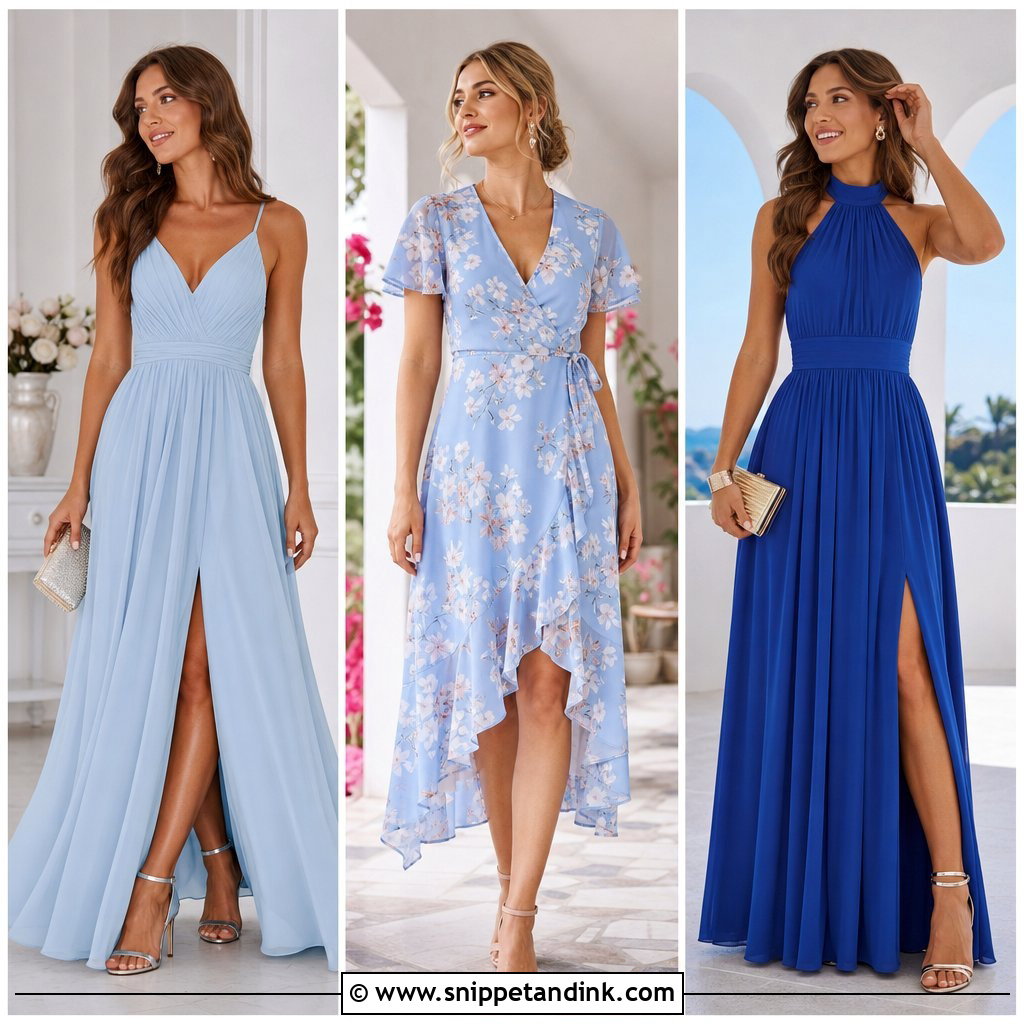
Navy sequins give you evening sparkle while staying softer than all-black, which some families still avoid at weddings. Keep the sequins concentrated on a fitted kurta with a clean neckline and let the flowing navy sharara carry lighter work. Sequins scratch the inner arm over a long night, so I check that the underarm and side seams are lined. A sheer dupatta with a narrow sequin edge, silver or gunmetal earrings, a crystal clutch and metallic platforms suit receptions. Skip the large necklace; a sleek ponytail and a berry lip are enough.
16. Ivory Pearl Sharara Set
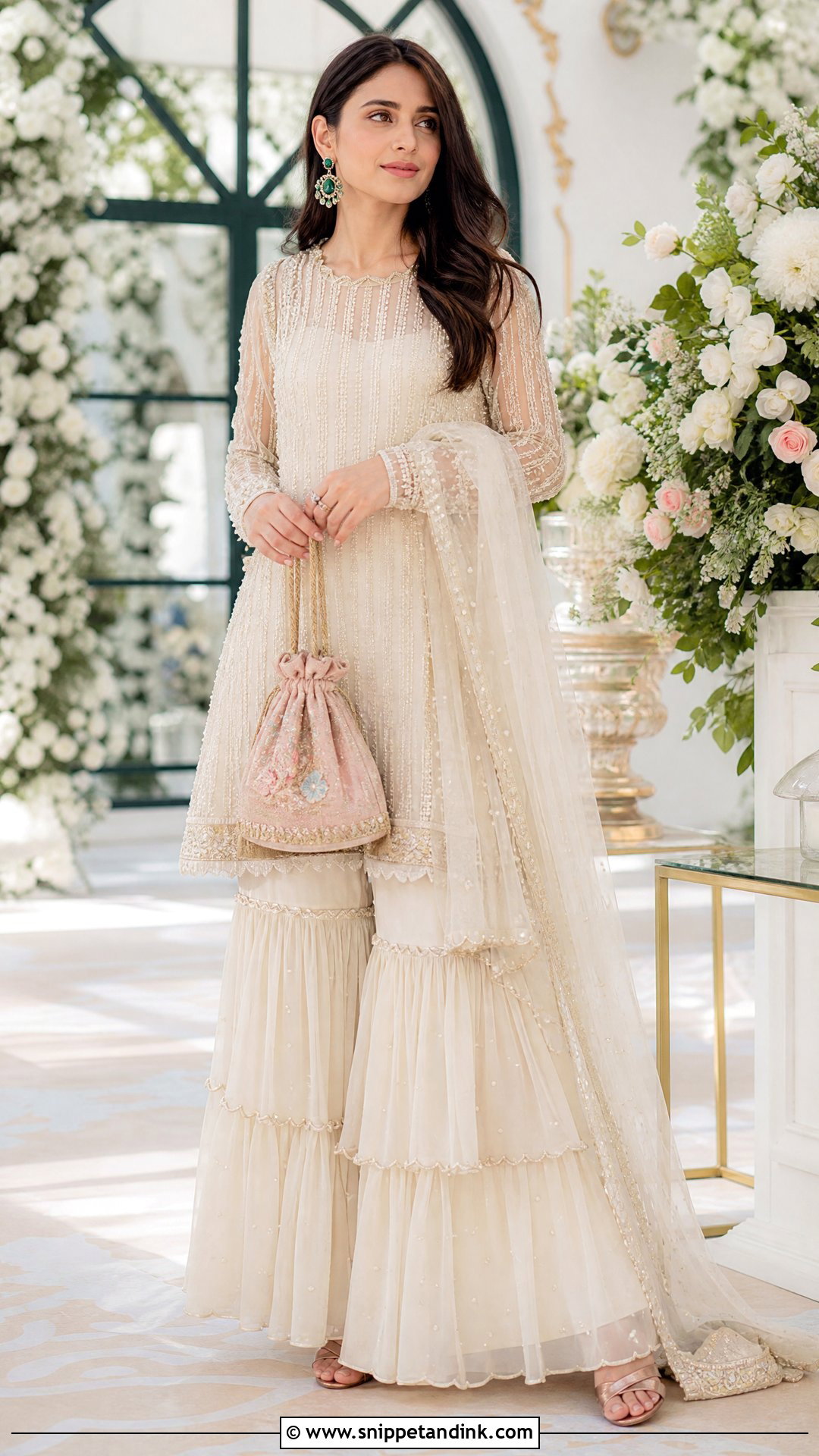
Ivory with pearls looks refined, but before I style a guest in it, I ask her to check with the hosts. In some families white and ivory are kept for the bride or carry associations with mourning, and it’s an easy mistake to avoid. If the dress code welcomes light shades, look for a short kurta with pearl clusters or fine silver threadwork, a layered chiffon sharara and a sheer dupatta. All-ivory goes flat in photos, so add contrast with emerald earrings, a pastel potli or rose-gold heels. Finish with a low bun, pearl pins and luminous skin.
17. Maroon Embroidered Sharara Set
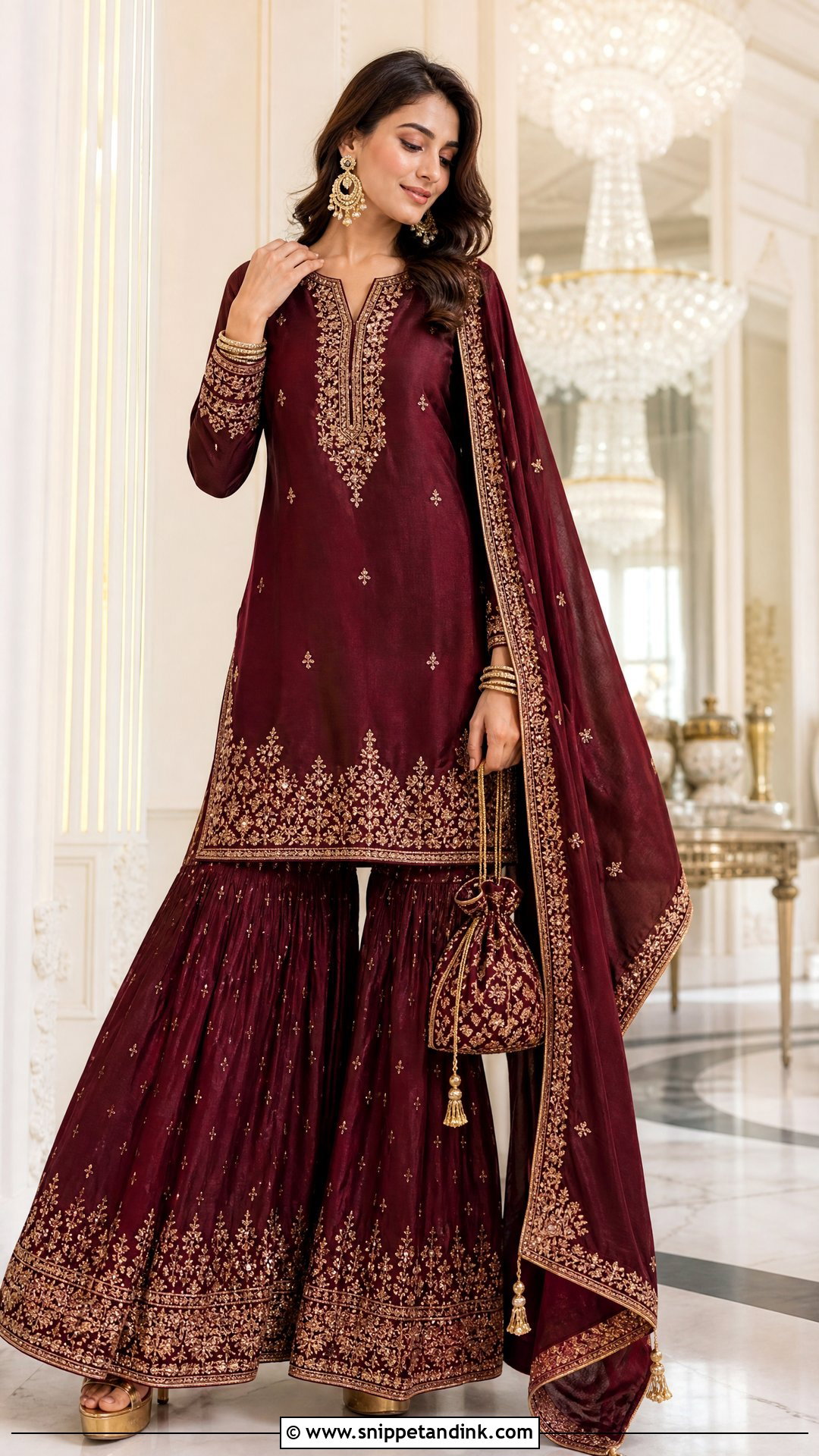
Maroon reads regal at winter ceremonies and evening receptions without the formality of bridal red. A velvet, raw silk or heavy georgette kurta with antique gold embroidery, a fitted bodice and a short hem balances the wide sharara. I prefer embroidery placed at the neckline, cuffs and lower pant panels rather than all over; it keeps the set comfortable enough for greeting, dining and dancing. A matching dupatta, gold chandbalis, a heritage potli, stacked bangles and platform heels complete it, with a polished bun and a muted berry lip.
18. Emerald Green Sharara Set
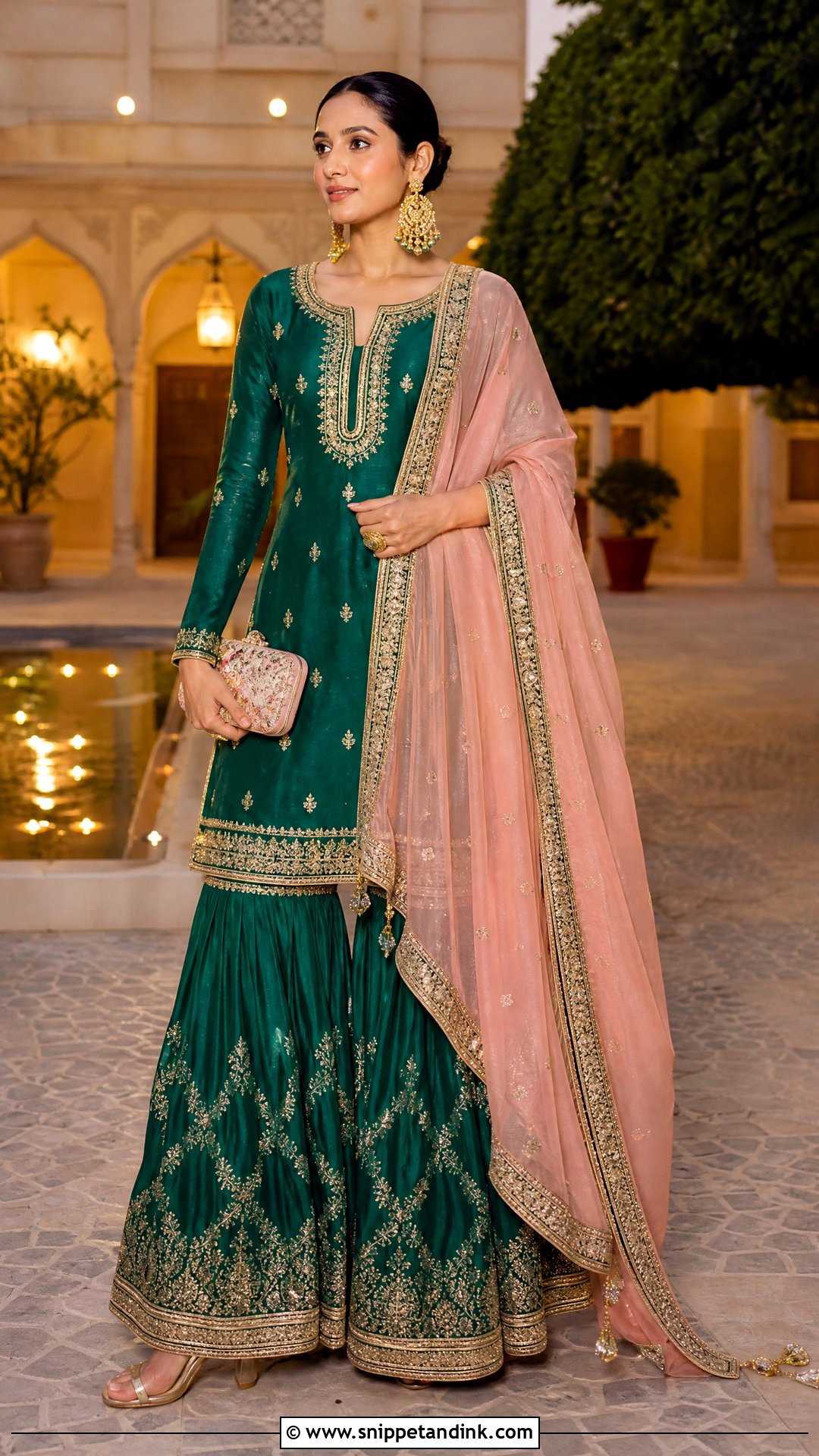
Emerald holds its depth under low evening light better than most colors, so it’s my pick when a guest wants to stand out at a night function. A silk or georgette kurta with gold threadwork and a matching sharara give a classic base. For dimension, try a dupatta in a slightly lighter green or in blush. Gold earrings, a jeweled ring and an embroidered clutch tie in the gold work. Choose block heels or platforms for stability under the wide pants, and pick soft waves or a sleek bun depending on how formal the event is. Bronze eyes and a warm nude lip keep the face balanced.
19. Farshi Sharara Set
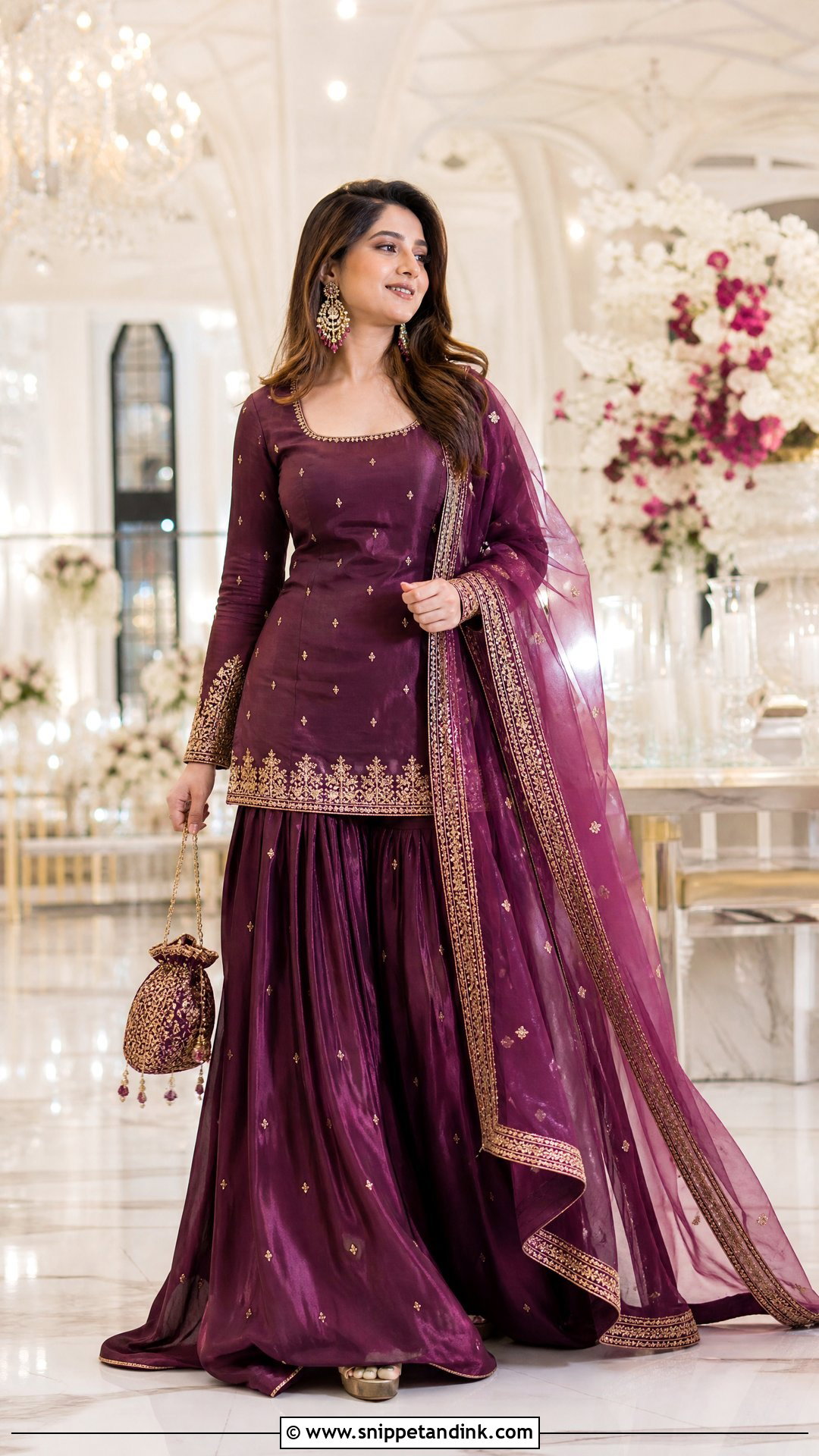
A farshi sharara has extra fabric that pools and spreads at the feet, which is exactly why it needs a short, fitted kurta on top rather than anything long or flared. Silk, satin and crepe drape smoothly into that pool. Plum, teal, rust and deep pink look rich in monochrome with embroidered borders. Farshi is the hardest sharara here to move in: you lift the front panels slightly with your hands to walk, and stairs need care. Keep the dupatta light, wear sturdy platforms hidden under the hem, and practice walking at home before the event.
20. Dhoti Sharara Fusion Set
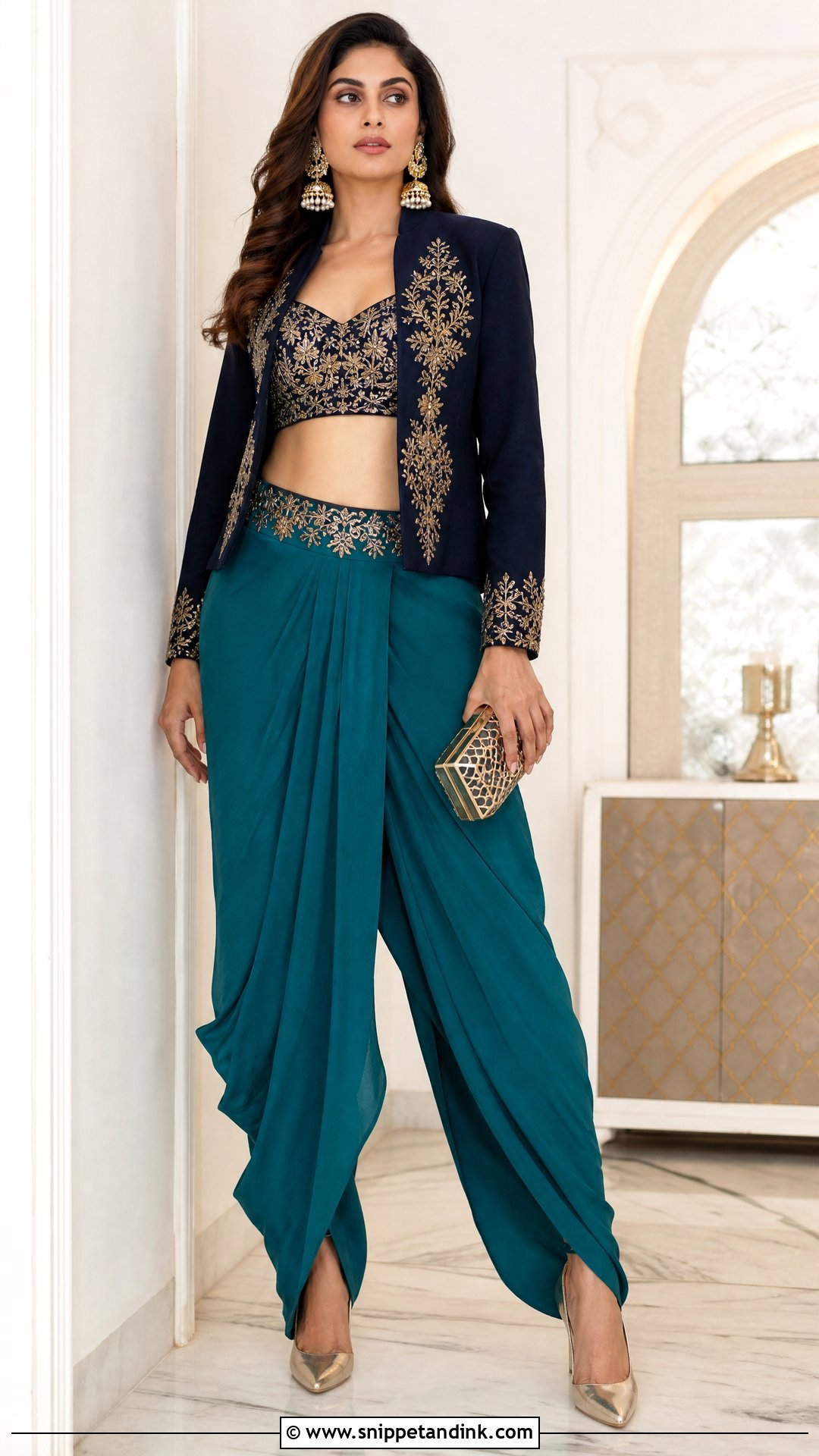
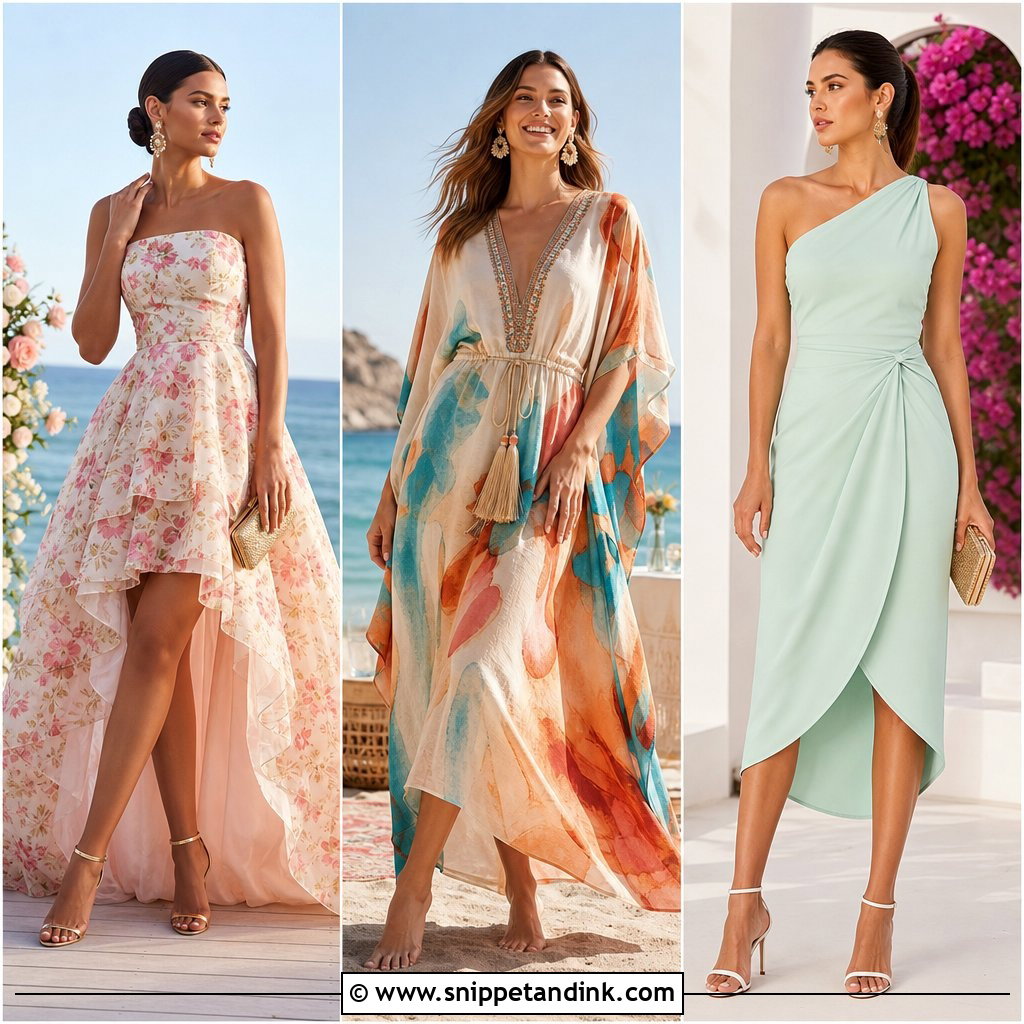
The dhoti sharara fusion set gathers fabric at the waist and then flares through the legs, so it reads modern without losing the sharara’s movement. Satin, crepe and silk blends hold those folds; cotton collapses into wrinkles within an hour. A structured blouse, short peplum or fitted embroidered jacket keeps the top crisp. Wear one bold color or a two-tone pairing like coral with pink or teal with navy. Since the drape is already the feature, I skip the dupatta when the top has a cape or jacket, and keep hair sleek.
Hemming a Sharara to the Shoes You’ll Actually Wear
Almost every sharara problem I fix on the day comes back to length. Ready-made sets are cut long on purpose, and the flare means an extra inch turns into fabric under your heel. Take your event shoes to the tailor, not a similar pair. A standard sharara should just graze the top of the shoe and show the toe when you step forward. A farshi is meant to pool, but only at the back and sides; the front still needs to clear your toes.
Ask the tailor to check the waistband too. Sharara pants are heavy at the knee and below, and a loose elastic waist slowly drops through the evening, which lengthens the hem as it goes. A drawstring or hook closure sitting at the natural waist holds the length steady.
Dancing, Stairs and Floor Seating in All That Flare
Shararas are easier to move in than lehengas, but they still behave differently from trousers. On stairs, gather a little fabric from each leg at mid-thigh and lift it as you climb. When you sit on the floor at a mehendi, sweep the flare to one side first so you’re not pinning it under your knees and creasing silk for the rest of the night.
- Pin the dupatta at the shoulder with a small safety pin behind the fabric so it stays put while you dance.
- Spray a little fabric anti-static on georgette and chiffon before you leave, especially in dry winter air.
- Pack a mini sewing kit: hems on heavily embroidered shararas can drop when a heel catches them.
- Keep flats in your bag. Block heels survive a sangeet, but your feet will thank you by the baraat.
The Sharara Rule I Never Break
Every set above follows the same balance: wide flare below, something fitted or neatly cropped above. Match the fabric and embellishment to the function, wear shoes you can stand in for hours, and let jewelry frame the neckline instead of covering it. If you do only one thing before the wedding, get the sharara hemmed to the exact shoes you will wear. A correct length is what makes even a simple set look expensive, and it’s what keeps you from tripping on the dance floor.
You'll Like These Ideas:



Leave a Reply