
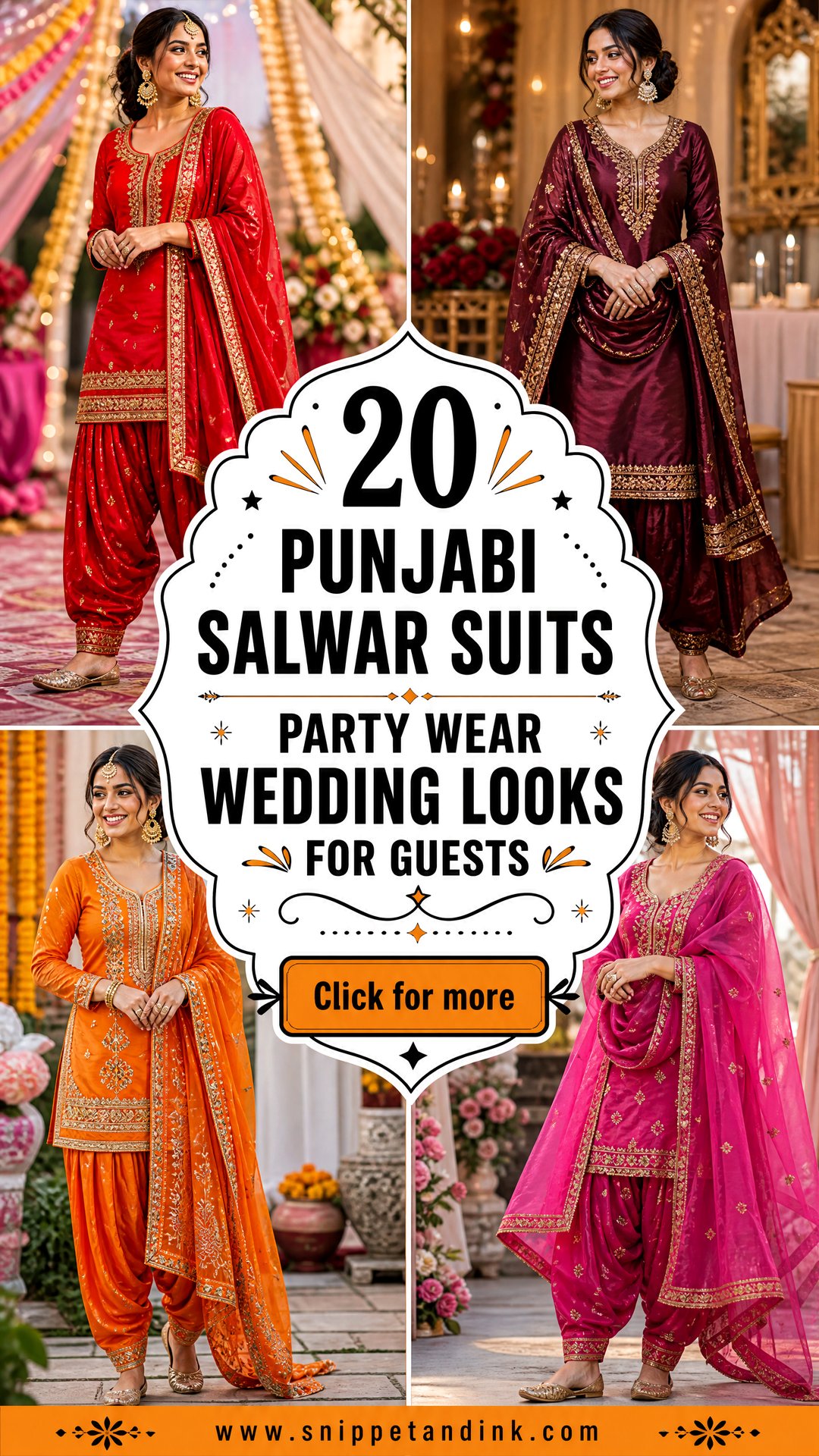
A Punjabi wedding runs over several days, and a guest usually needs a different suit for each one: something bright and easy for the mehndi, something you can dance in at the sangeet, and something more formal for the reception. When I put guest outfits together, I start with the function, then the silhouette, then the color. You have far more shapes to work with than the classic Patiala now, including sharara, churidar, palazzo, gharara, Anarkali and straight cuts. Silk and velvet carry an evening event, while georgette, organza and lighter blends breathe better in daytime heat. Jewelry, comfortable footwear and a dupatta that stays where you put it finish each look. Here are twenty complete outfits, with the fitting and fabric notes I’d give a client for each.
Reading the Wedding Itinerary Before You Shop
When a client brings me the invitation, I map one outfit per event before we look at a single color. Each function asks something different of the clothes.
- Mehndi: bright, light and washable. You’ll sit low, eat with your hands and maybe get henna yourself, so cotton blends and georgette beat silk.
- Sangeet and jaago: this is the dancing night. Patialas, shararas and ghararas move well; a tight churidar and a heavy dupatta do not.
- Anand Karaj at the gurdwara: heads are covered, shoes come off at the door and guests sit on the floor. A loose salwar or Patiala makes sitting cross-legged comfortable, and the dupatta must be long enough to cover your hair.
- Reception: the most formal evening, where velvet, silk, sequins and Anarkalis come out.
Once the functions are mapped, I spread the colors across them so you’re not in three shades of pink, and I plan which jewelry repeats. One good set of jhumkas can carry two events if the suits are different enough.
1. Red Patiala Punjabi Salwar Suit
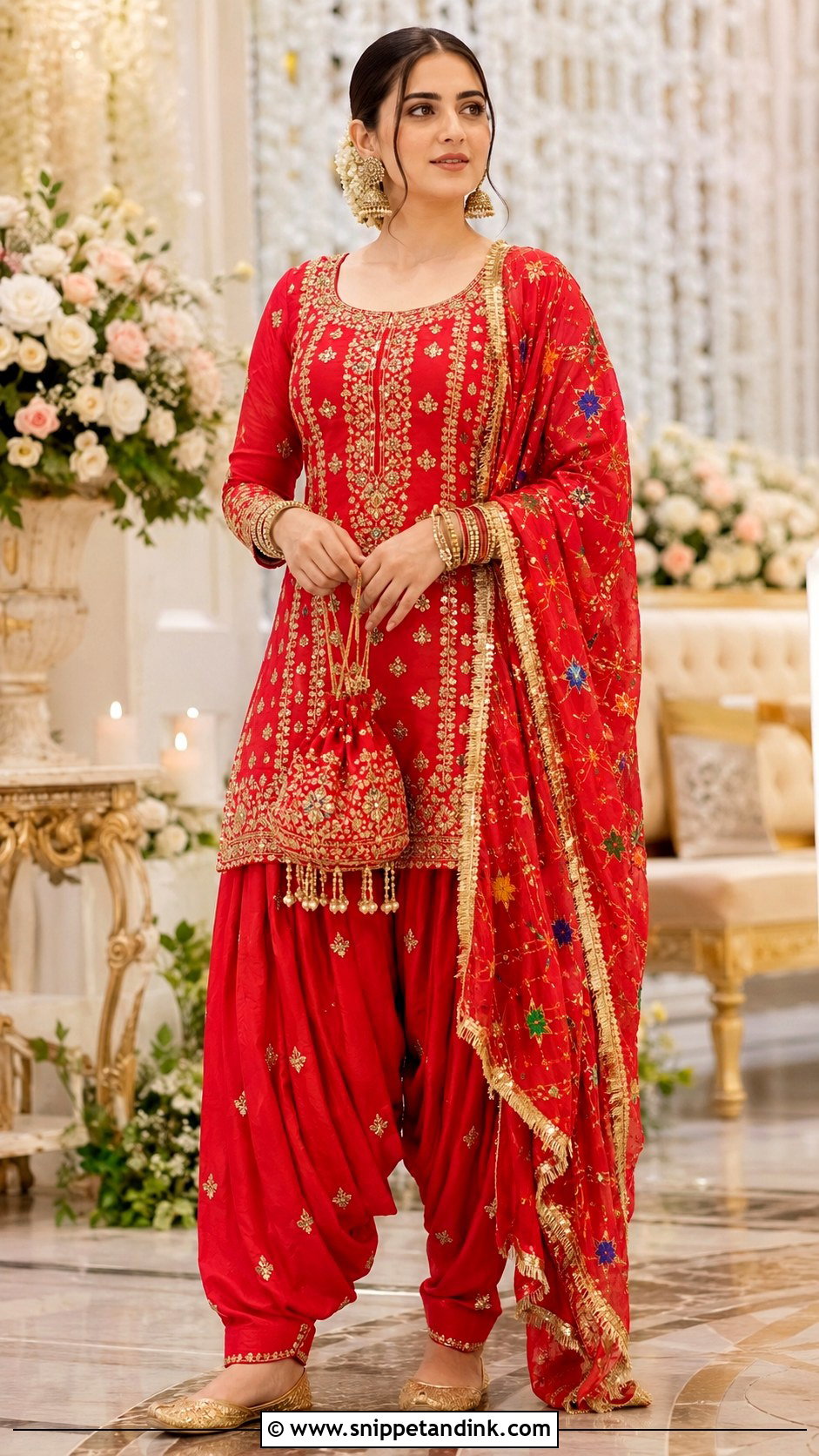
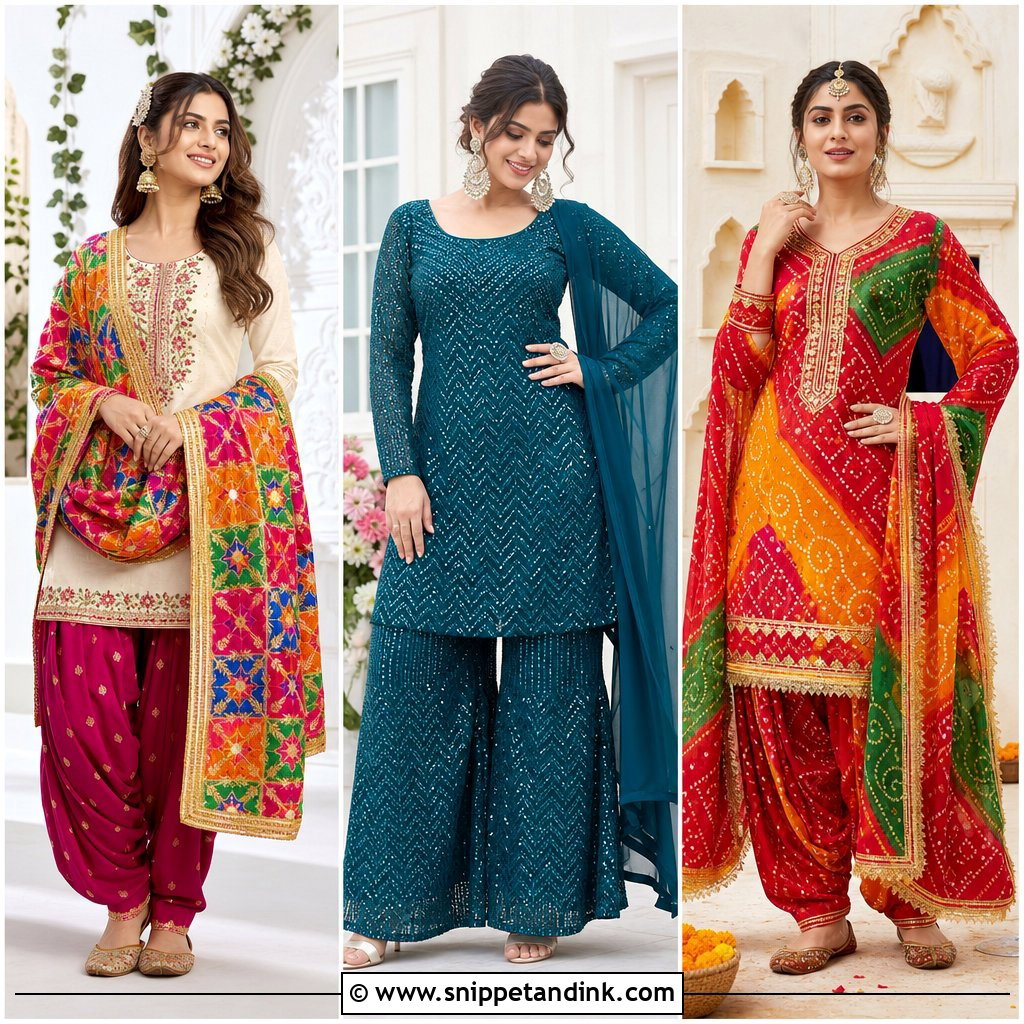
Red is the color most people picture at a Punjabi wedding, and a red Patiala suit earns its place at the sangeet or a close family function. Go for a short fitted kameez with gold zari at the neckline, sleeves and hem over a generously pleated Patiala salwar, which swings when you dance. A gold-edged phulkari dupatta brings in traditional color without another layer. Gold jhumkas, stacked bangles, an embroidered potli and gold juttis complete it. As a guest, I’d keep the red bright and festive rather than deep bridal maroon with heavy zardozi, so nobody mistakes you for family of the bride in photos. Ask your tailor to shape the kameez slightly at the waist.
2. Emerald Velvet Punjabi Salwar Suit
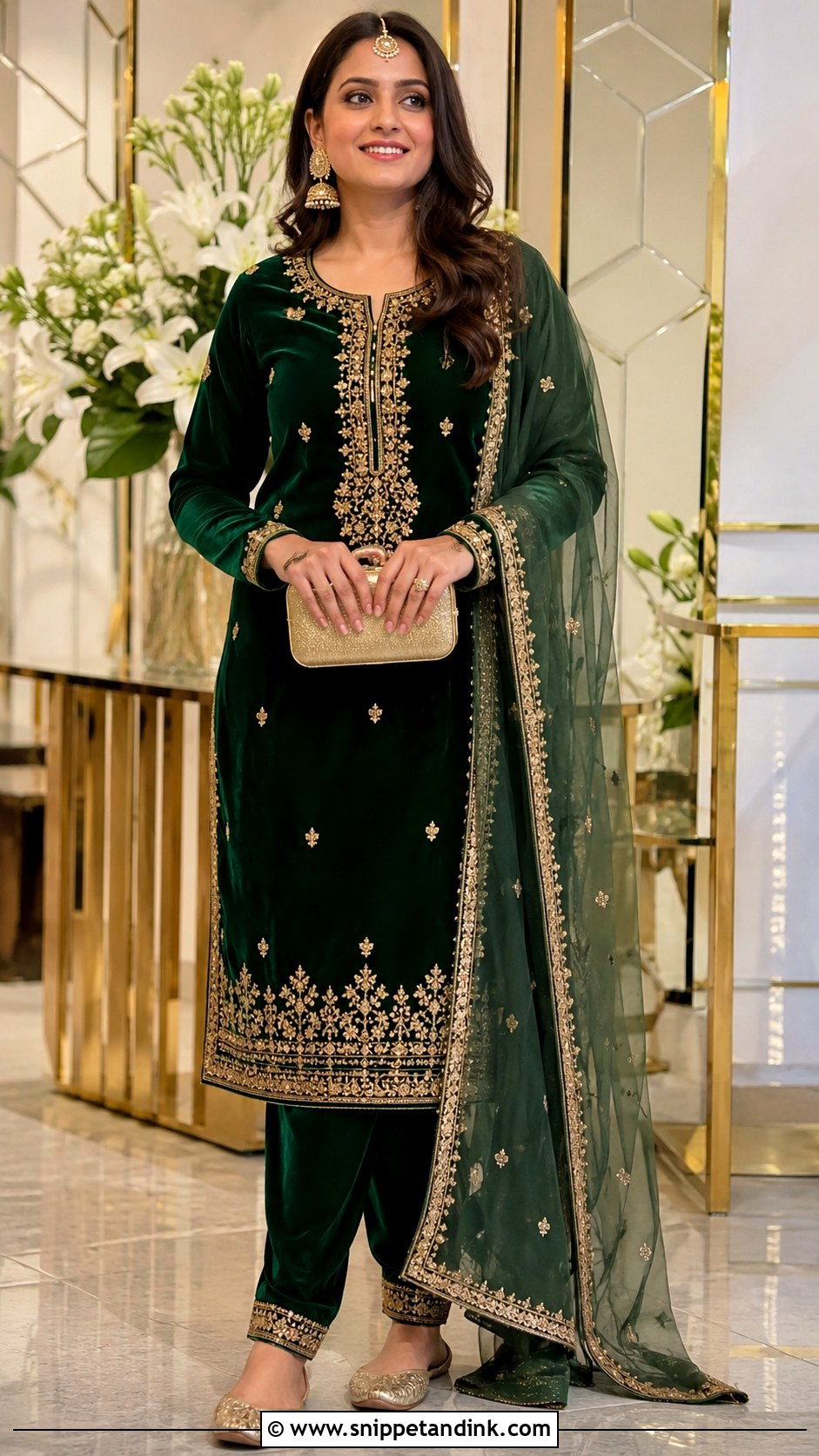
Velvet is the fabric I reach for when an evening function is held somewhere cold. A knee-length straight kameez in emerald with antique gold embroidery looks formal and is easy to move in. Pair it with tapered salwar pants or a lightly pleated salwar in the same green, and keep the dupatta to sheer net with a narrow border, since a velvet dupatta on top would be far too heavy. Antique gold earrings, a small maang tikka, a structured clutch and low metallic juttis finish it. Velvet adds visible bulk, so I look for embroidery that runs vertically down the front; it pulls the eye up and down instead of across. Velvet also crushes where you sit, so steam it on the hanger and avoid pressing the pile flat with an iron.
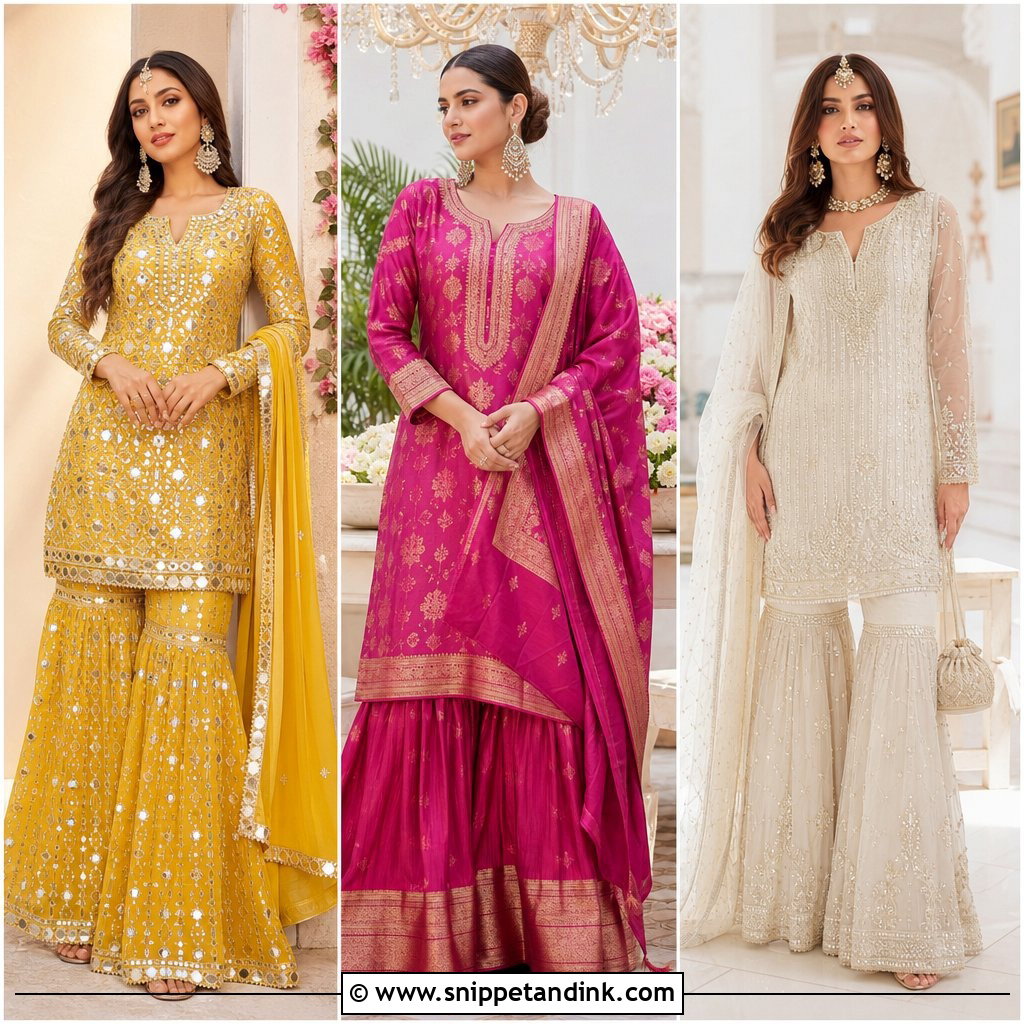
3. Blush Pink Sharara Punjabi Salwar Suit
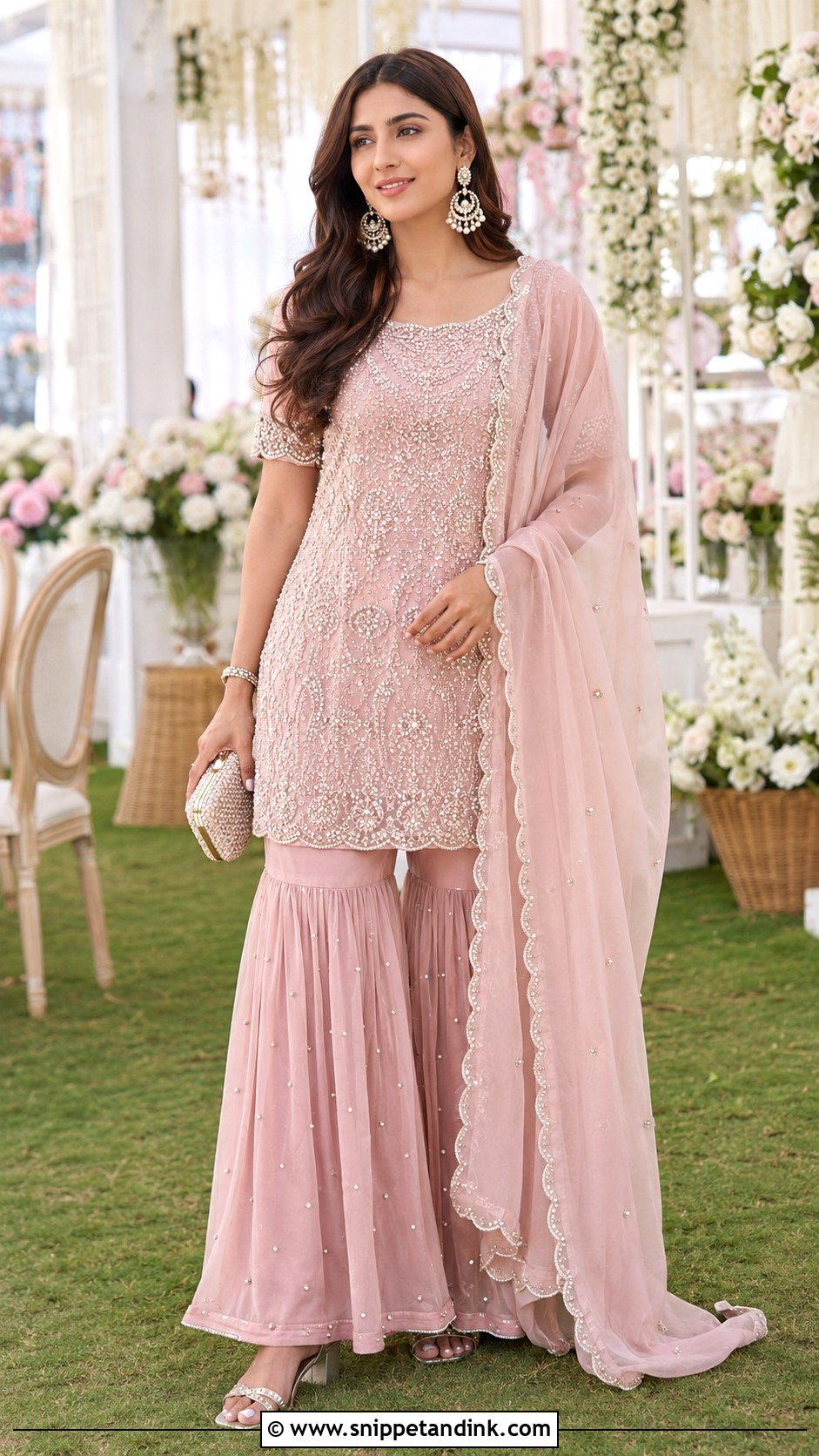
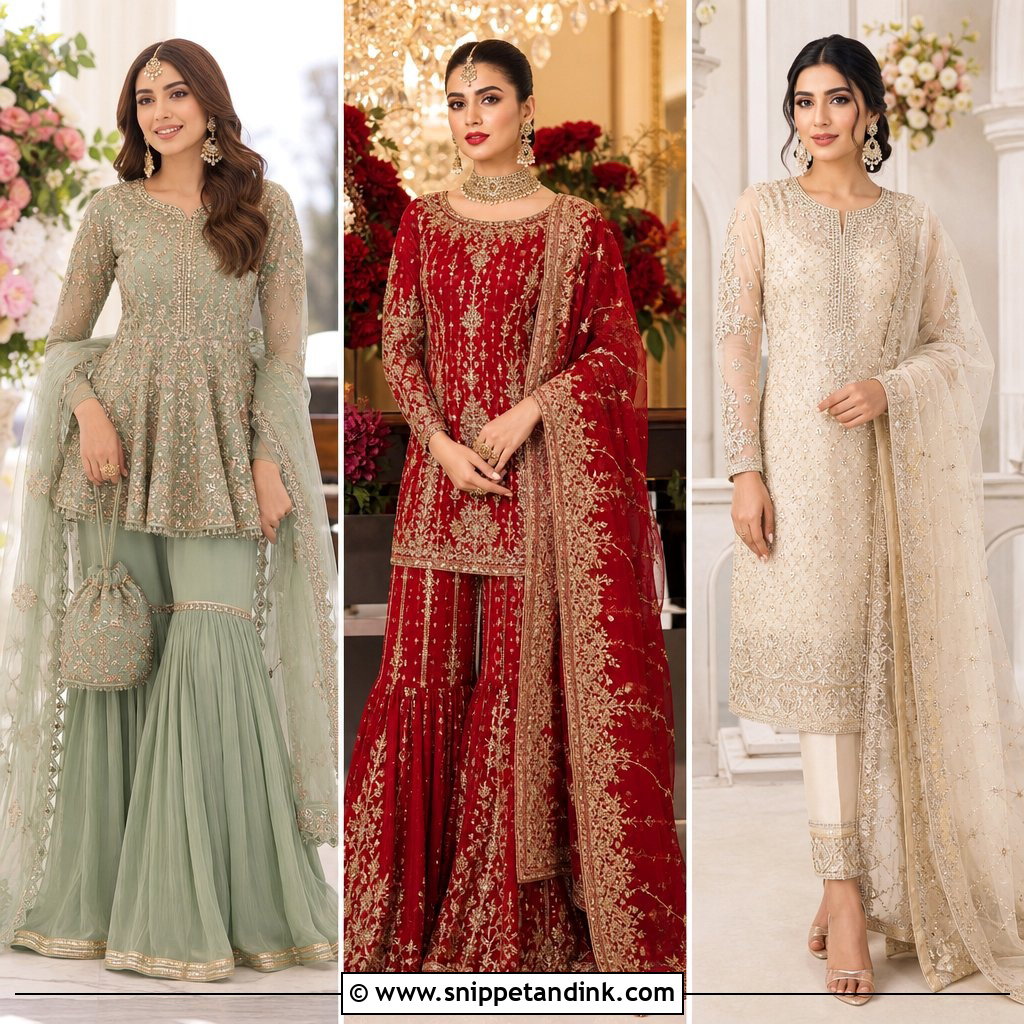
Pastel pink is a considerate guest choice: it’s festive, yet nobody will confuse it with the bride’s outfit. Start with a short embroidered kurti in pearl, sequin or thread work and add a sharara whose volume begins at the knee, so the top half stays neat. A light chiffon dupatta can go over one shoulder or loosely across both arms. Pearl chandbalis, a fine bracelet and a silver or blush clutch keep it delicate. Shararas are long, and the hem gets stepped on all evening. I hem them to just touch the top of the shoe with the heel you’ll actually wear, and block heels are steadier than stilettos on carpet and grass. It sits well at a daytime reception or engagement party.
4. Royal Blue Palazzo Punjabi Salwar Suit
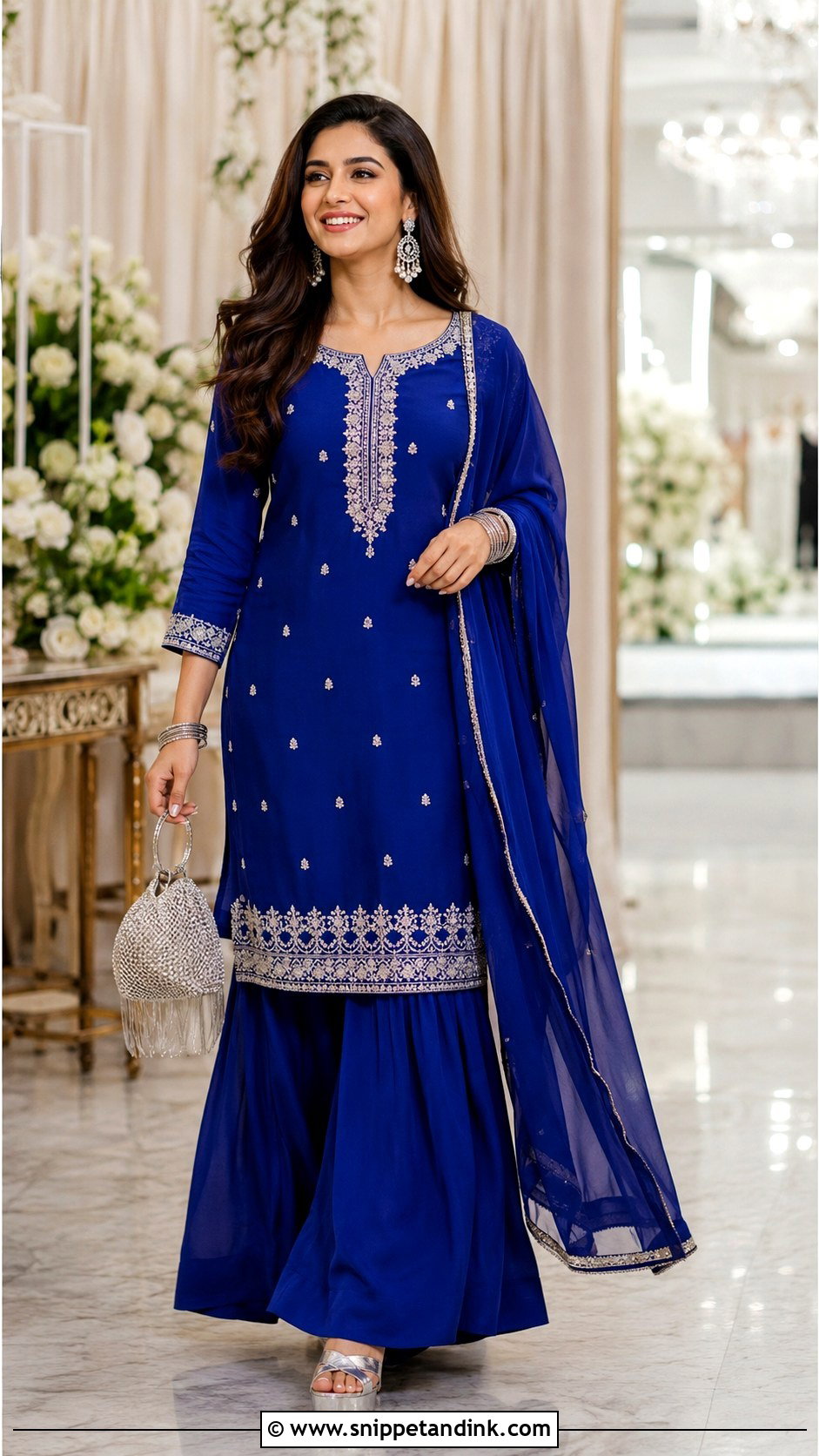
Royal blue holds its color under bright party lighting where paler shades wash out. Wear a straight-cut kameez with silver threadwork, sequins or small crystals over wide palazzo pants that fall from the waist. A matching georgette dupatta edged in silver ties the pieces together. Crystal drops, silver bangles and a metallic bag keep the palette cool; pick silver platforms or embellished flats depending on how much walking the venue involves. The one proportion rule I hold to with palazzos: the kameez hem should stop above the widest part of the trouser leg. If the two widths meet at the same point, the outfit looks like a block. This works for receptions and evening parties.
5. Mustard Peplum Patiala Punjabi Salwar Suit
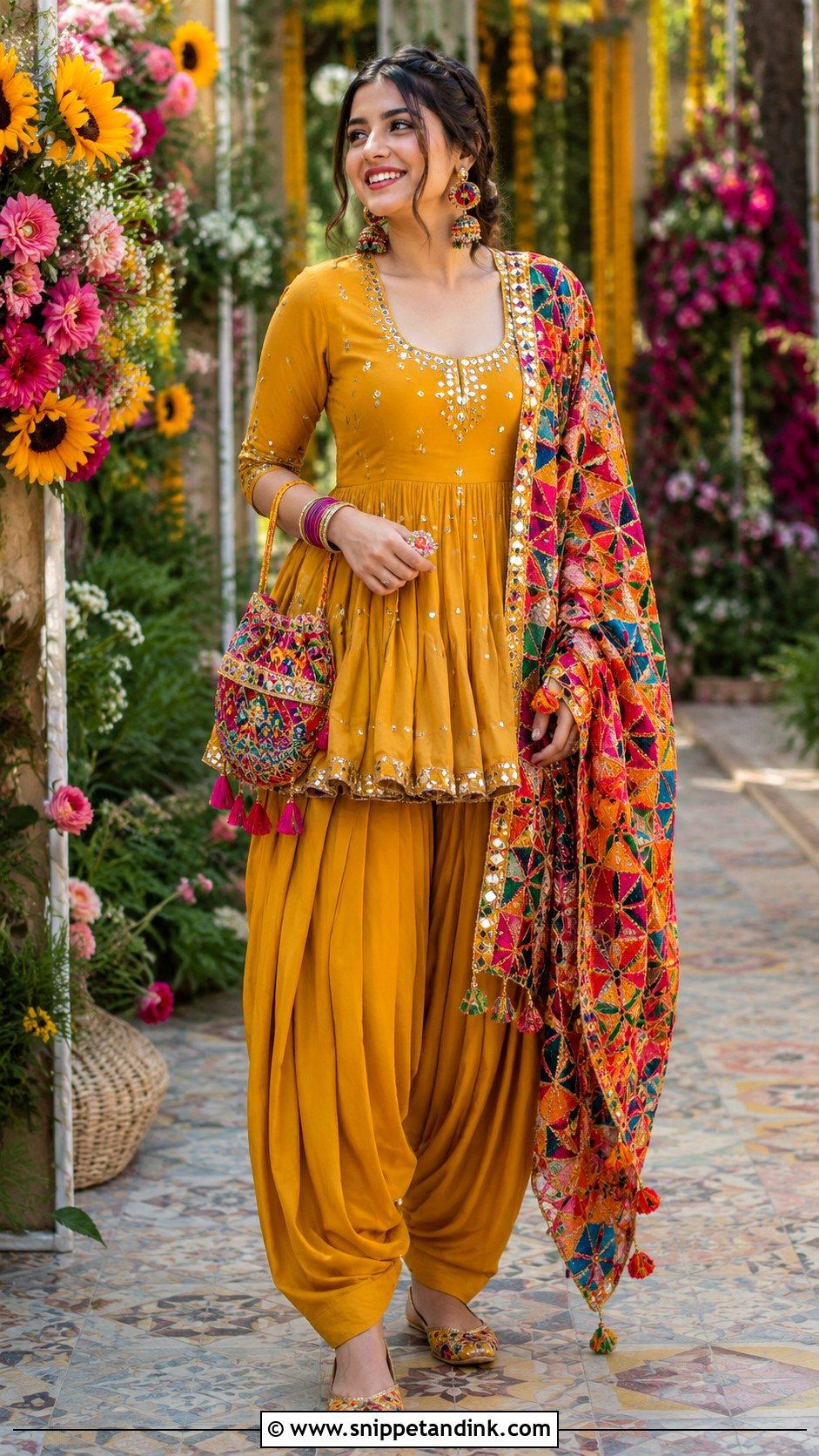
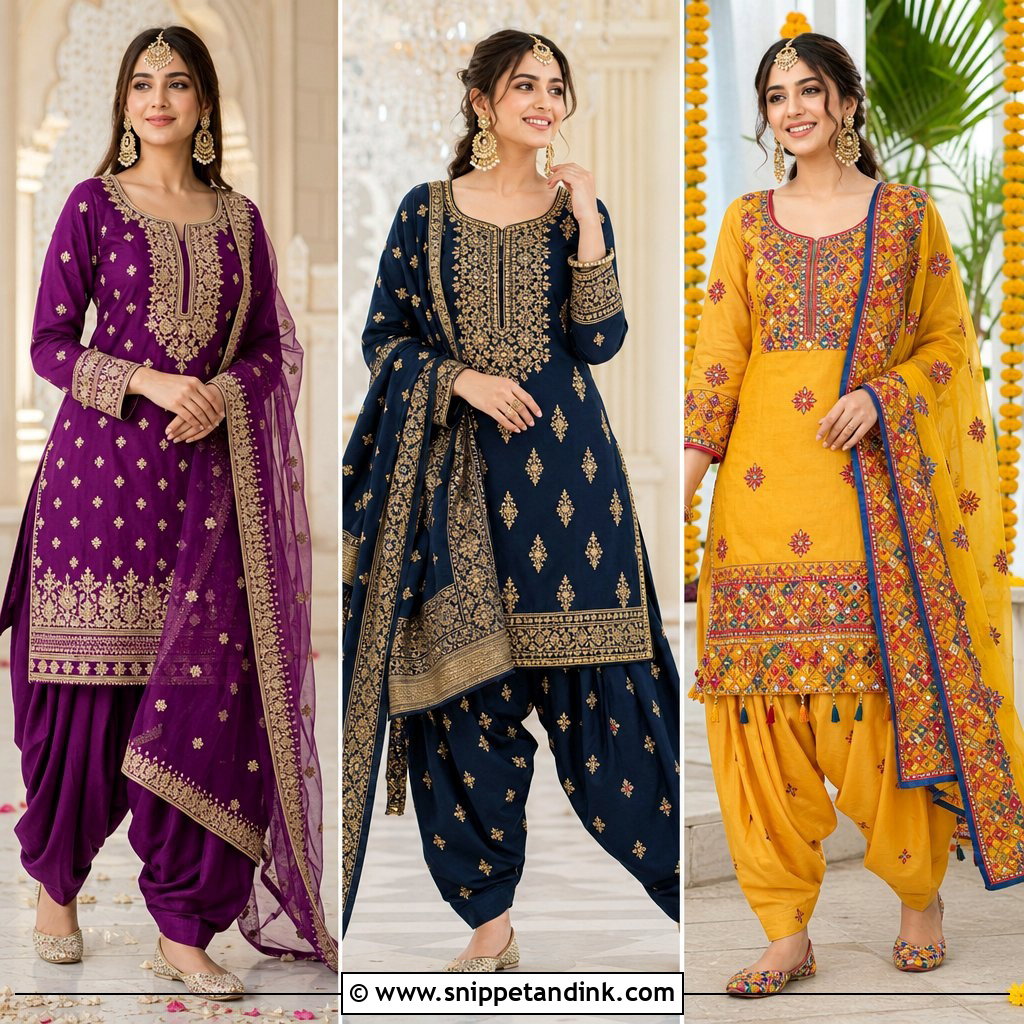
Mustard yellow belongs at a Punjabi pre-wedding celebration, especially the mehndi, where yellow and green fill the room. A peplum kameez cinches the waist and flares out over a full Patiala salwar. Mirror work, gota trim or multicolored thread embroidery suits the mood, with a light phulkari dupatta carrying pink, green and orange. Colorful jhumkas, bangles, embroidered juttis and a small potli keep essentials close. Where the peplum ends matters more than its fabric. It should stop around the upper hip so the salwar pleats show; too long and the Patiala disappears under it. Mehndi stains dark, so keep the dupatta away from your palms until they’re dry.
6. Ivory Anarkali Punjabi Salwar Suit
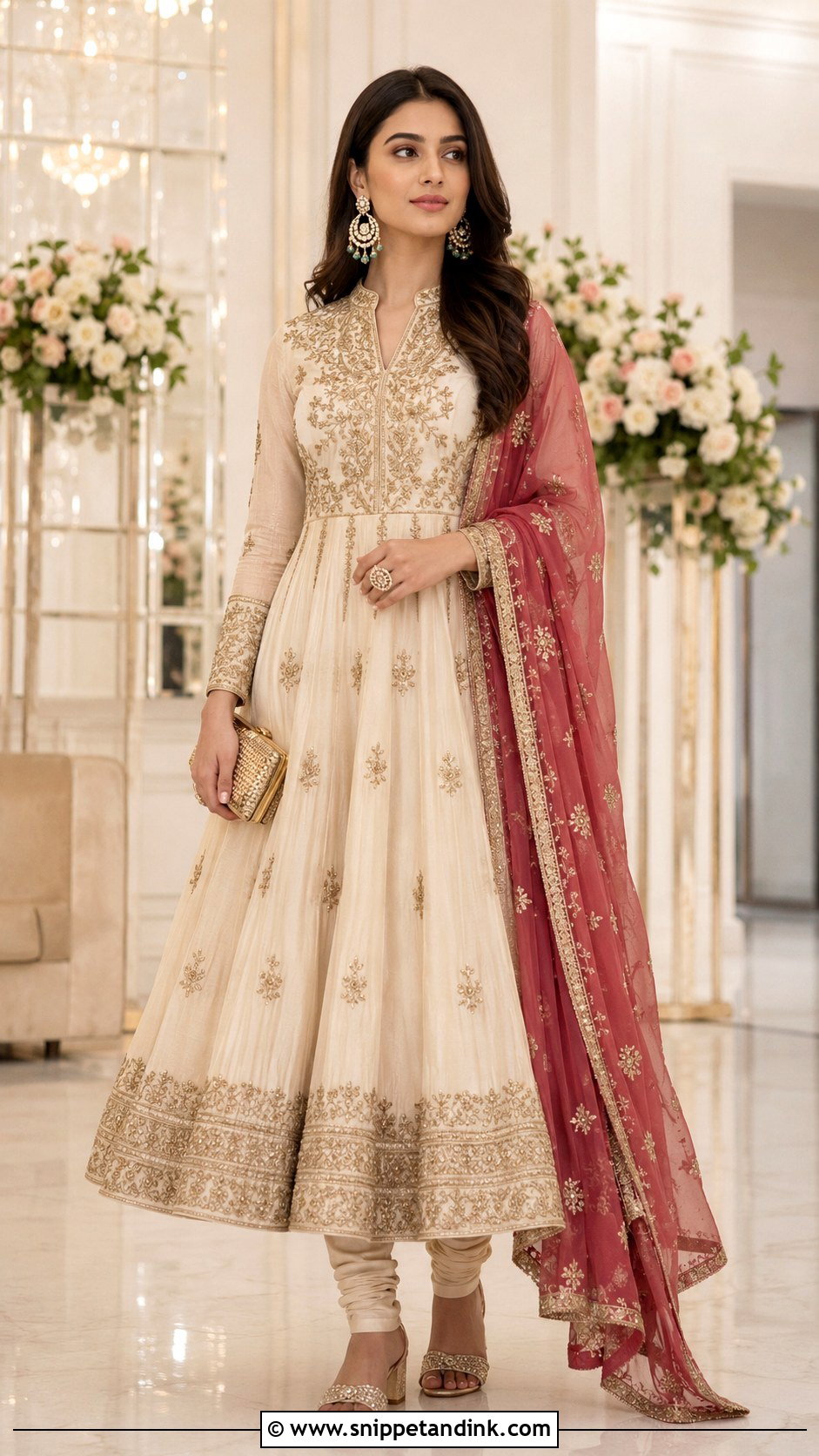
Ivory sits quietly at a formal reception, though I’d never send a guest out in an all-ivory look. Choose a calf-length or floor-skimming Anarkali with gold embroidery on the bodice and border, worn over fitted churidar so the flare stays the focus. A rose, emerald or deep red dupatta adds color and keeps it from reading as bridal. Kundan earrings, a ring, a gold clutch and low block heels finish it. For evening, silk and brocade read more formal because the weave has body. A raised waist seam lengthens the legs, while controlled gathers give movement without bulk. Ivory shows every mark, so carry a stain pen and keep the dupatta well clear of the buffet.
7. Black Mirror Work Patiala Punjabi Salwar Suit
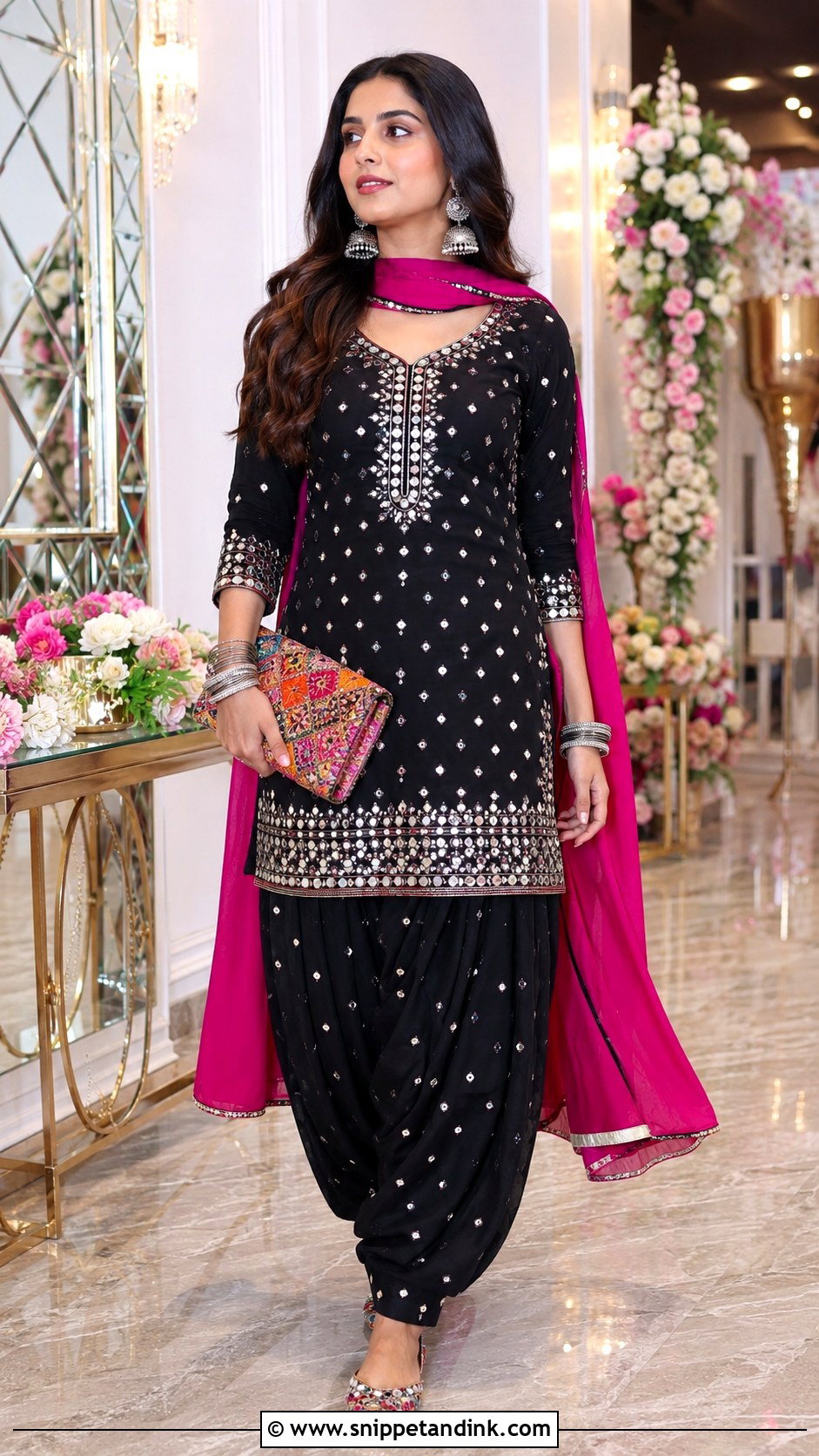
Mirror work is what makes black wedding-appropriate. Choose a fitted black kameez with bright thread embroidery at the neckline, cuffs and hem, and pair it with a pleated black Patiala salwar so the decoration does the talking. A magenta, turquoise or multicolored dupatta lifts the dark base. Oxidized silver earrings, stacked bangles, an embroidered clutch and mirror-work juttis complete it, and luminous makeup suits an evening venue. Skip a big necklace, because the mirrors already catch every light. Some older relatives still feel black is unlucky at a wedding, so check how traditional the family is before wearing it to a ceremony rather than the sangeet.
8. Maroon Silk Punjabi Salwar Suit
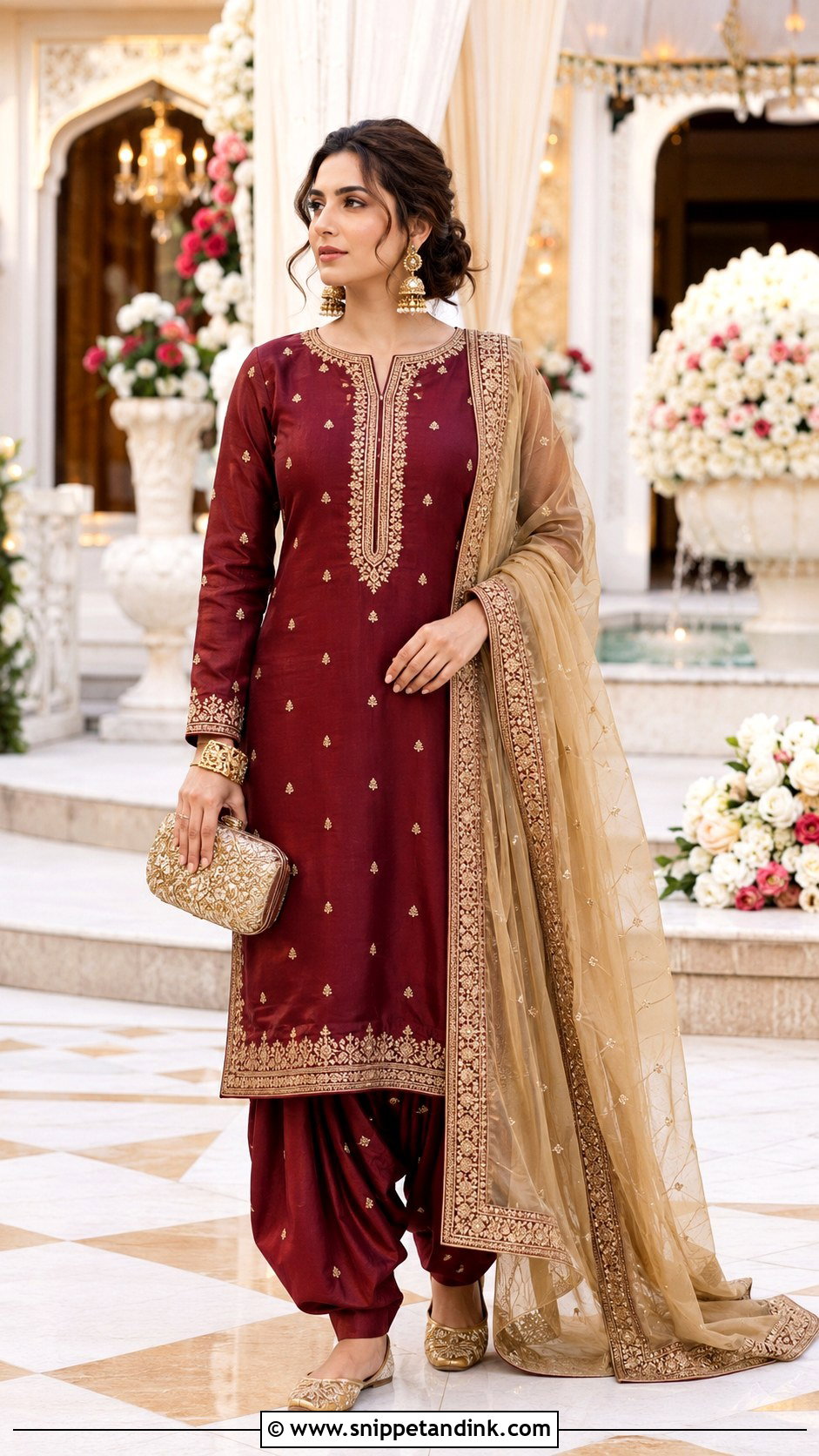
Maroon silk is my safe answer for the ceremony itself, when a guest wants rich color without competing. A straight kameez with restrained gold embroidery at the neckline, slits and cuffs works over a softly pleated salwar, not an extremely wide one. A beige-gold or matching maroon dupatta with a border gives you ceremony coverage. Antique gold jhumkas, one statement bangle, a brocade clutch and pointed juttis suit it, along with a side-parted bun or smooth braid. If the silk has a high shine, choose matte gold jewelry so the outfit doesn’t glare under flash. Sleeve length and neckline adjust easily, which is why this one dresses well across age groups.
9. Lavender Churidar Punjabi Salwar Suit
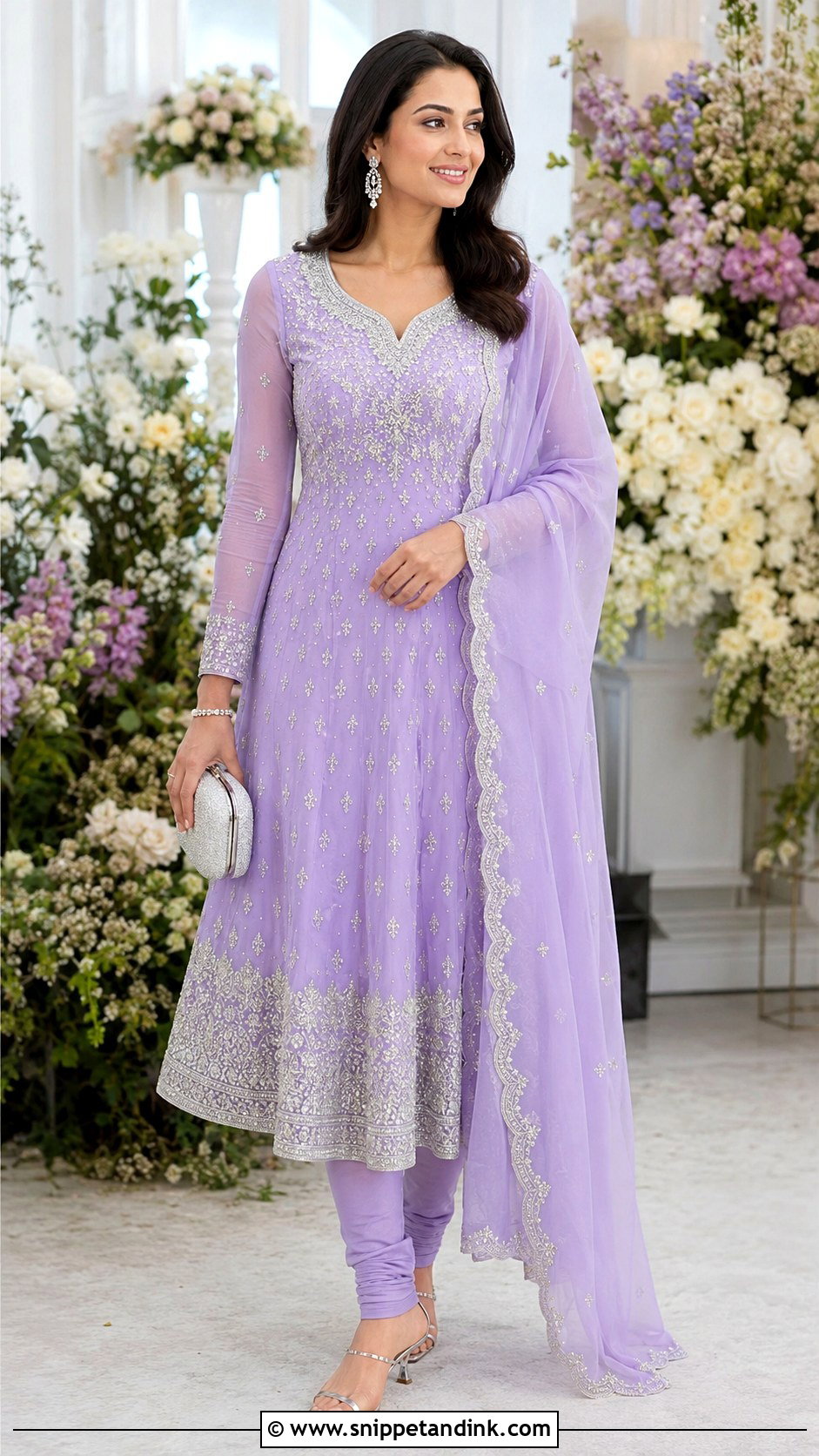
Lavender is a fresh change from the wall of pinks and reds at most functions. A lightly flared georgette kameez with tonal embroidery and fine silver sequins over fitted churidar gives a long, narrow line. Add a sheer lavender dupatta with scalloped edges. Crystal earrings, a slim bracelet and a silver minaudière keep it light, with silver kitten heels or padded flats. Churidar needs extra length to bunch at the ankle, and that’s the part people get wrong with ready-made sets. Check that the ruching sits above the ankle bone, not over the shoe. A V or soft round neck opens the shoulders, and three-quarter sleeves balance it. It suits an engagement or afternoon reception.
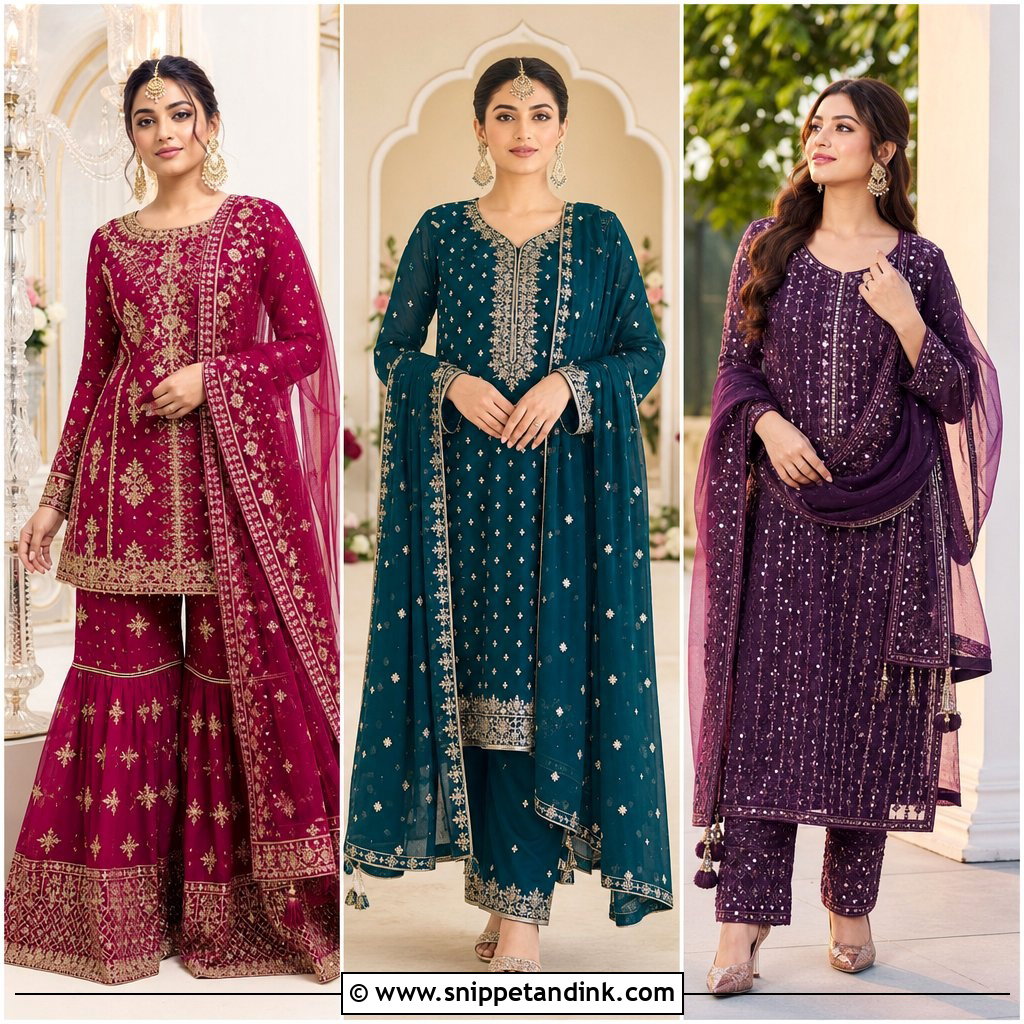
10. Teal Gharara Punjabi Salwar Suit
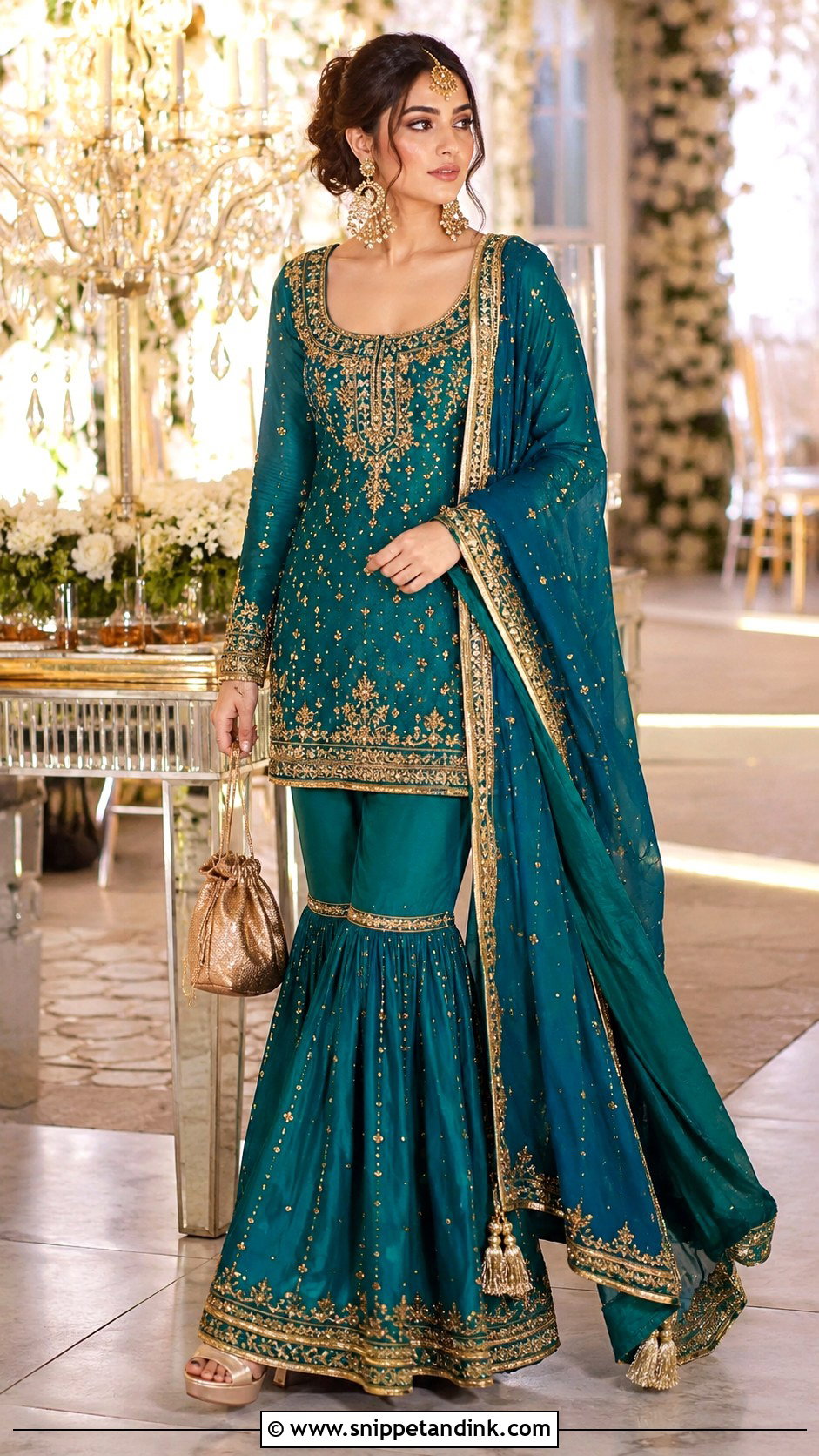
A gharara is fitted to the knee and then flares out from an embellished band, and that construction should be obvious. Wear a short kameez with gold or copper embroidery that ends above the knee band, so the joint stays visible. A light matching dupatta with scattered motifs and a clear border is enough. Gold chandbalis, a slim maang tikka and a copper potli complete it. I fit the knee band slightly above the actual knee; set any lower and it cuts into the leg every time you sit. Platform heels add height and stay steady under the wide hem. If the gharara is heavily worked, keep the kameez plain. Teal suits an evening reception or sangeet.
11. Orange Embroidered Punjabi Salwar Suit
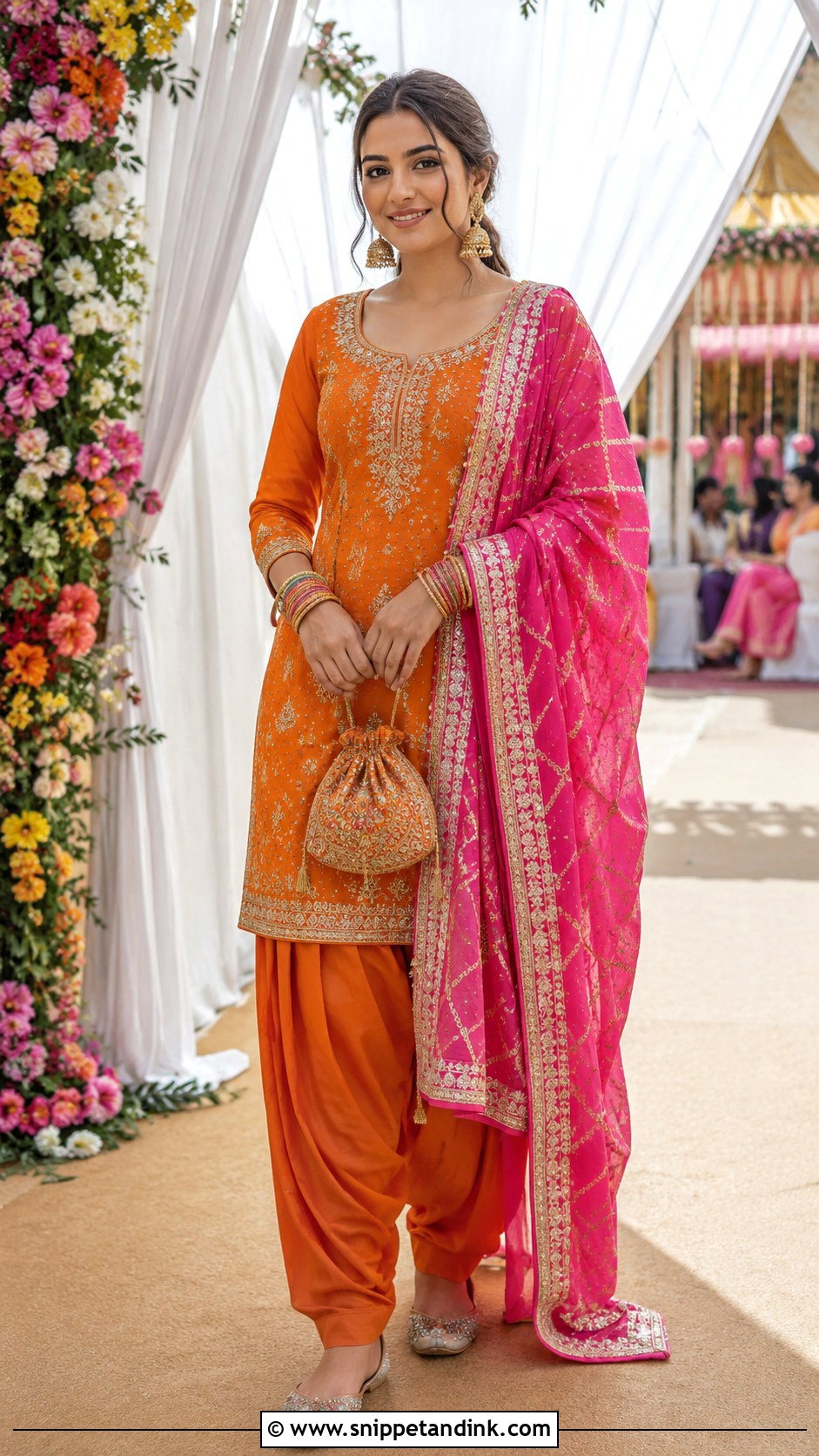
Orange looks right at a daytime function, especially outdoors. Go for a knee-length kameez in georgette or a soft silk blend with gold thread and small florals, over a pleated salwar in the same orange or a deeper rust. A pink dupatta with gota edging adds the contrast Punjabi dressing loves. Gold dome earrings, pink and orange bangles and an embroidered potli suit it, while plain gold juttis keep the accessories from crowding each other. I’d cut this kameez to skim rather than cling. Mehndi afternoons involve sitting on cushions and floor seating, and a tight georgette kurta rides up and pulls at the side seams.
12. Fuchsia Organza Punjabi Salwar Suit
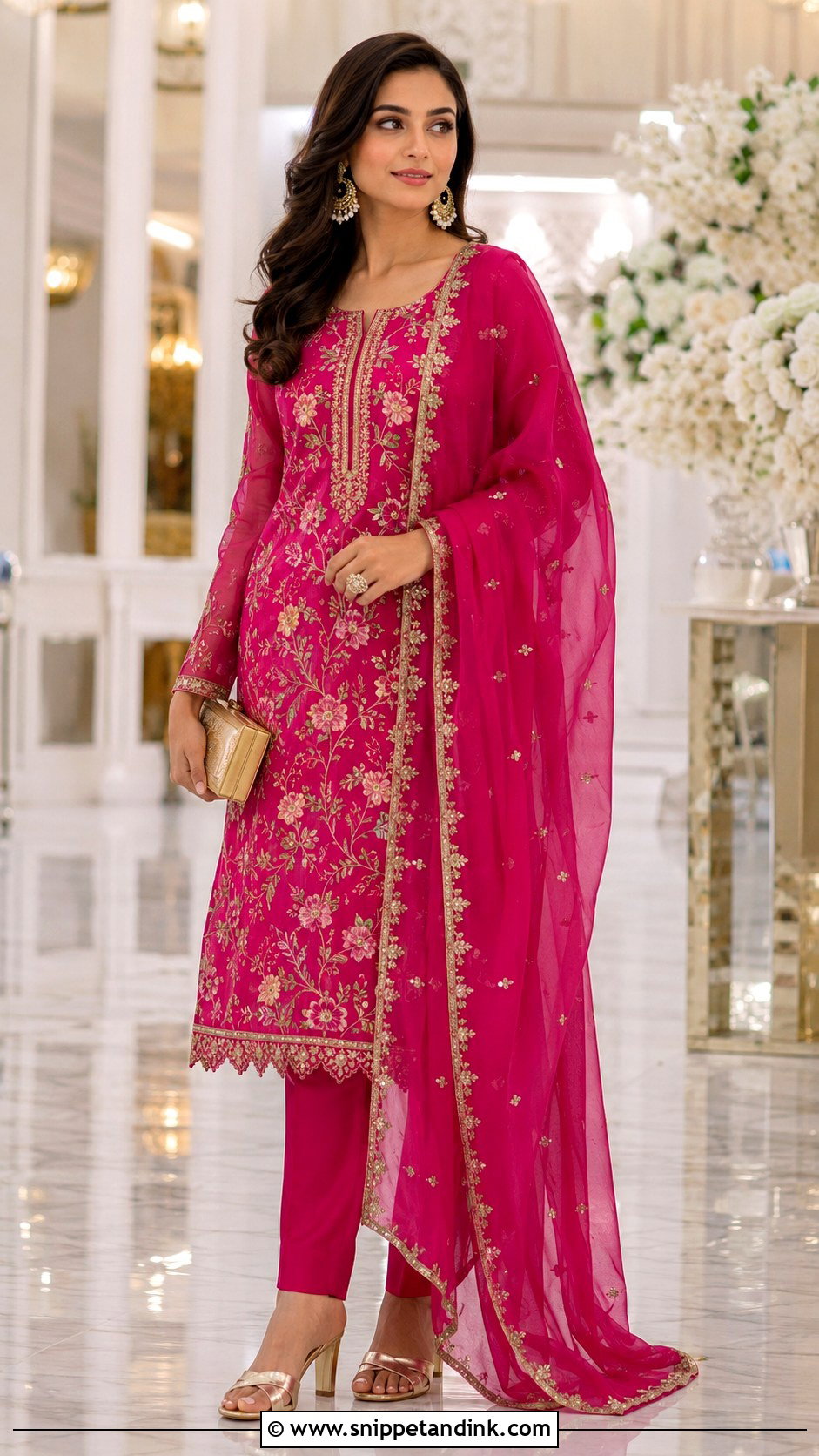
Organza is crisp, holds a shape and catches light, which suits fuchsia. Choose a structured kameez with floral threadwork, small beads or hand embroidery at the neckline and lower border, paired with straight salwar pants or narrow trousers to balance the stiffness. A sheer matching dupatta with scattered embellishment keeps the color intact. Kundan earrings, a statement ring, a gold box clutch and metallic block heels are plenty; fuchsia already draws the eye. Insist on a full lining. Organza is see-through and slightly scratchy against skin, and an unlined kameez shows every seam of what’s underneath under camera flash. It belongs at an engagement or formal indoor reception.
13. Pista Green Palazzo Punjabi Salwar Suit
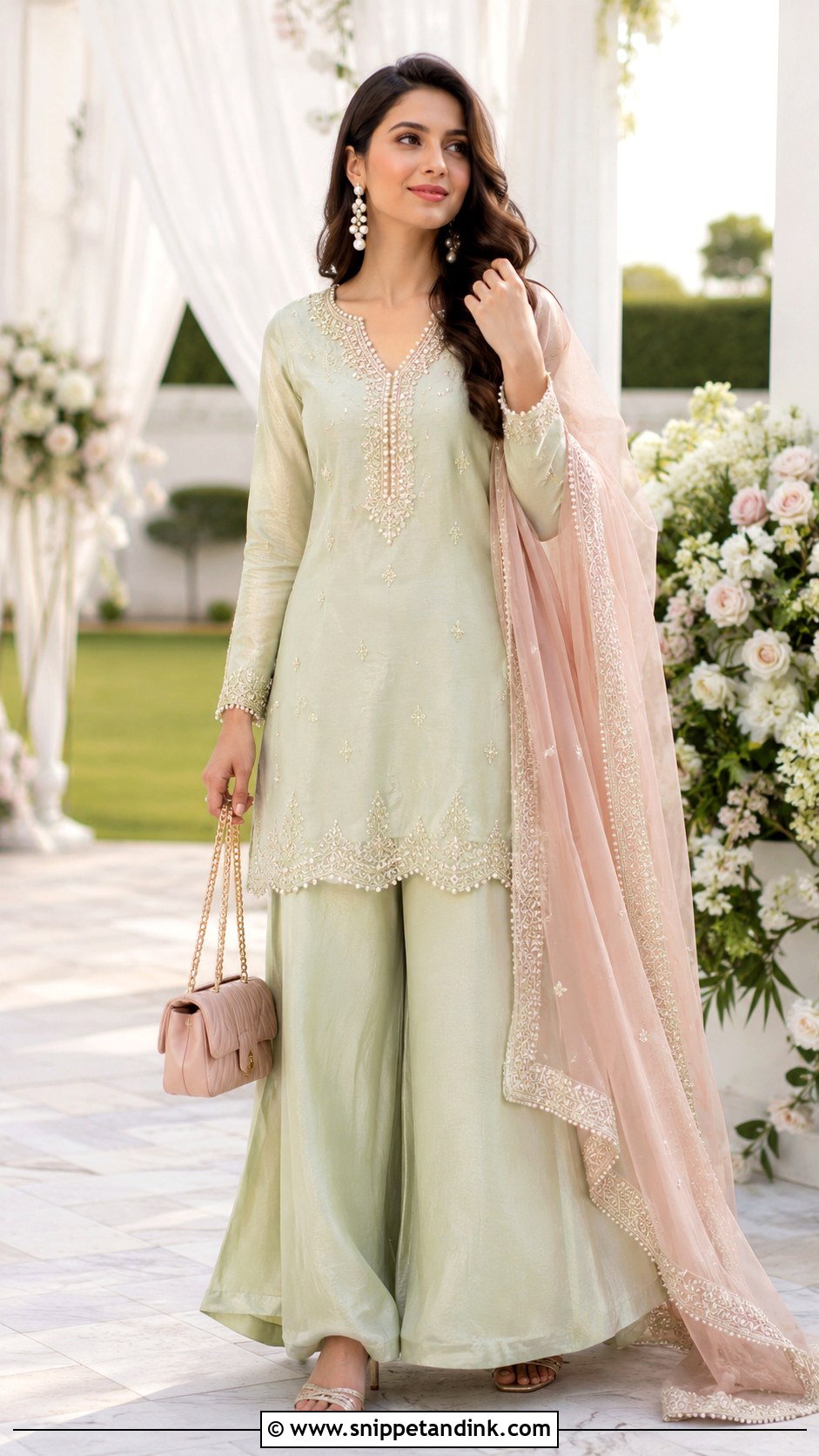
Pista green is a daytime color, soft enough for outdoor light. Choose a silk-blend kameez with pearl work, tonal embroidery or fine gold detail, and fluid palazzos that fall straight rather than spreading wide. A soft pink or matching green dupatta adds gentle contrast. Pearl drops, a blush bag and champagne sandals keep the pastel palette. Keep the kameez at about knee length so the palazzo shape still shows, and give it a defined shoulder with a gently shaped waist. Without that structure up top, loose palazzos below make the whole outfit look shapeless in photos. Outdoor receptions and engagement ceremonies suit it.
14. Navy Sequin Punjabi Salwar Suit
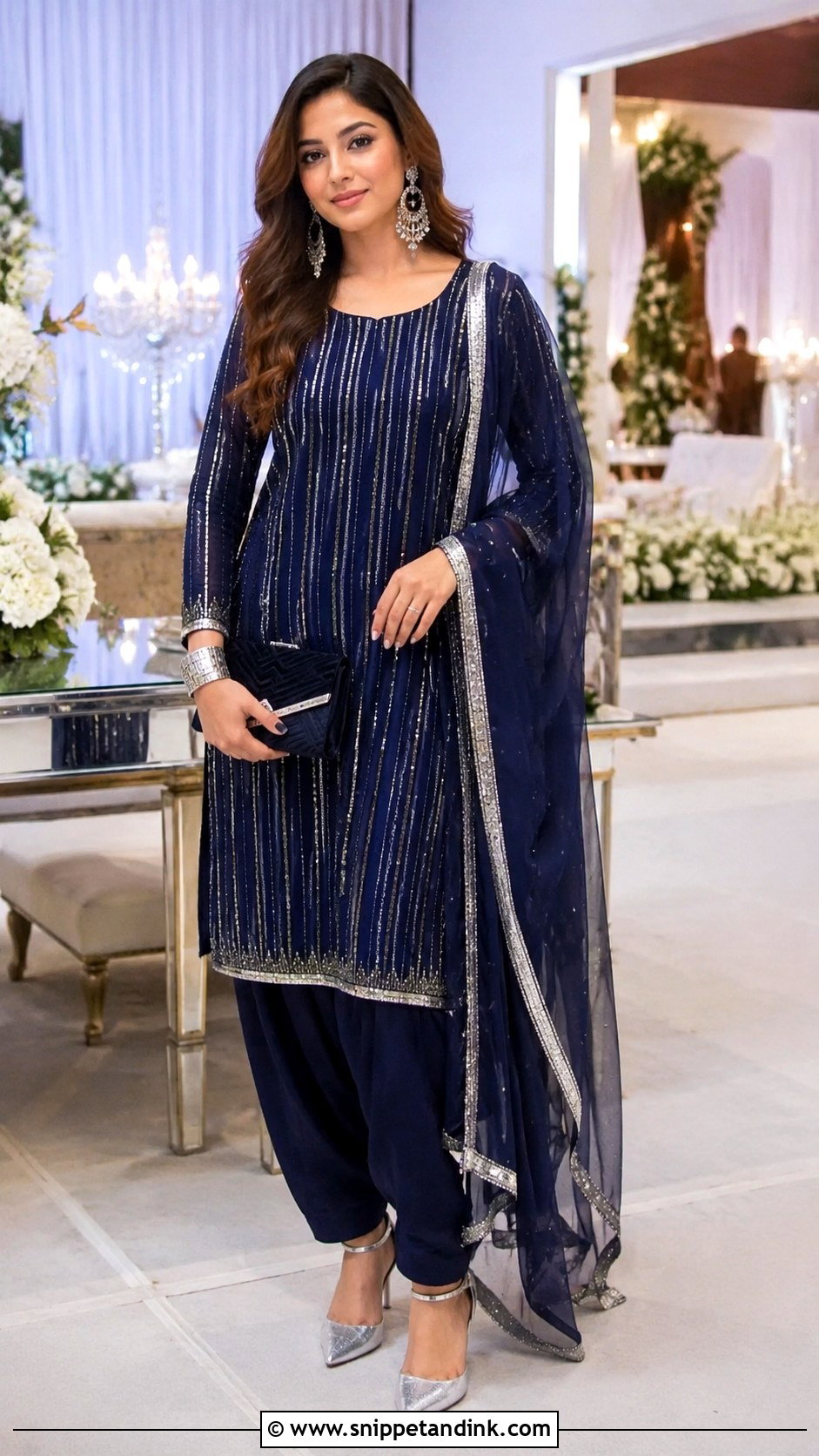
Navy has the formality of black without the debate. I prefer sequins placed with intent: vertical lines, an embellished neckline and detailed cuffs, not sparkle on every inch, which adds bulk. Match the kameez with tapered navy salwar pants and a sheer silver-edged dupatta. Crystal chandeliers, a silver cuff, a structured navy clutch and metallic pointed flats or heels finish it. Wearing one color from shoulder to ankle lengthens the figure, and the silver shows clearly under evening lights. This Punjabi salwar suit suits a reception or night event. Ask for a soft lining under sequined panels, because the backs of sequins scratch the skin after a few hours.
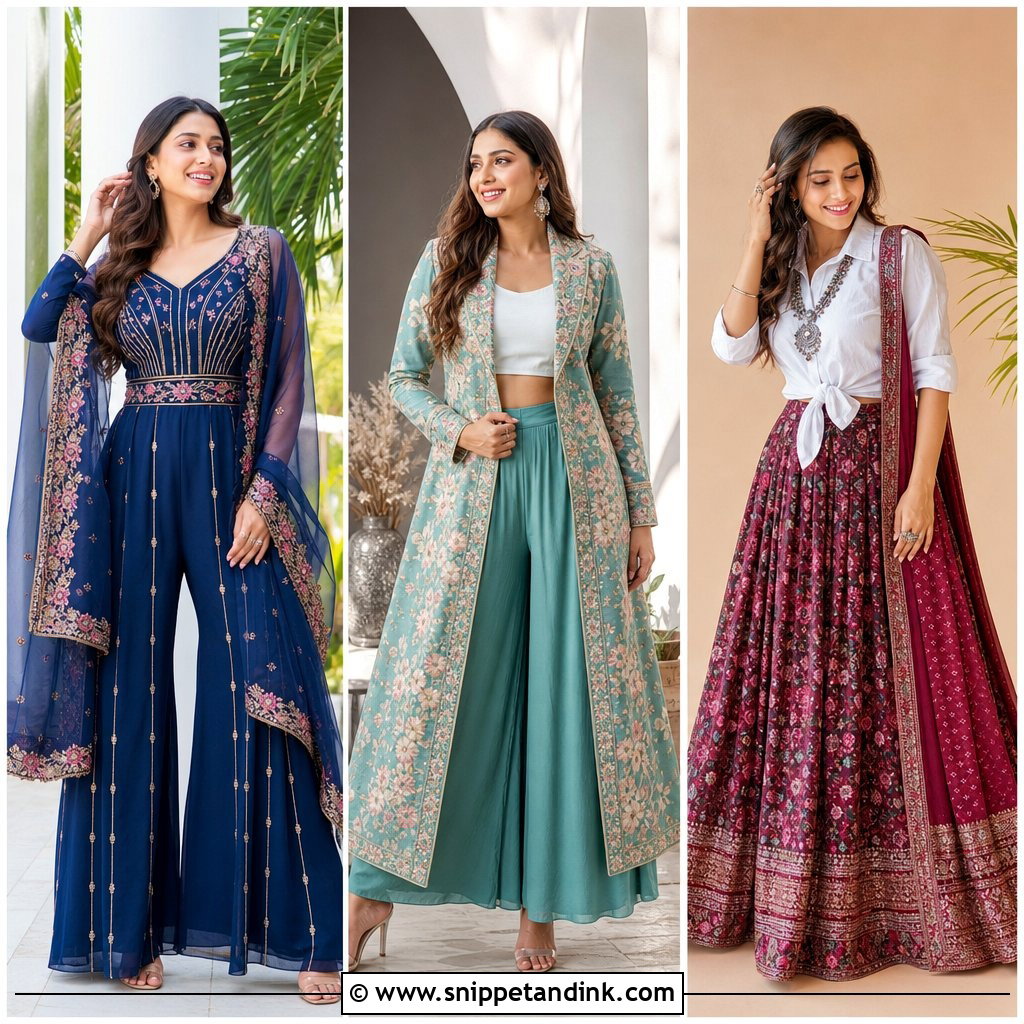

15. Peach Floral Punjabi Salwar Suit
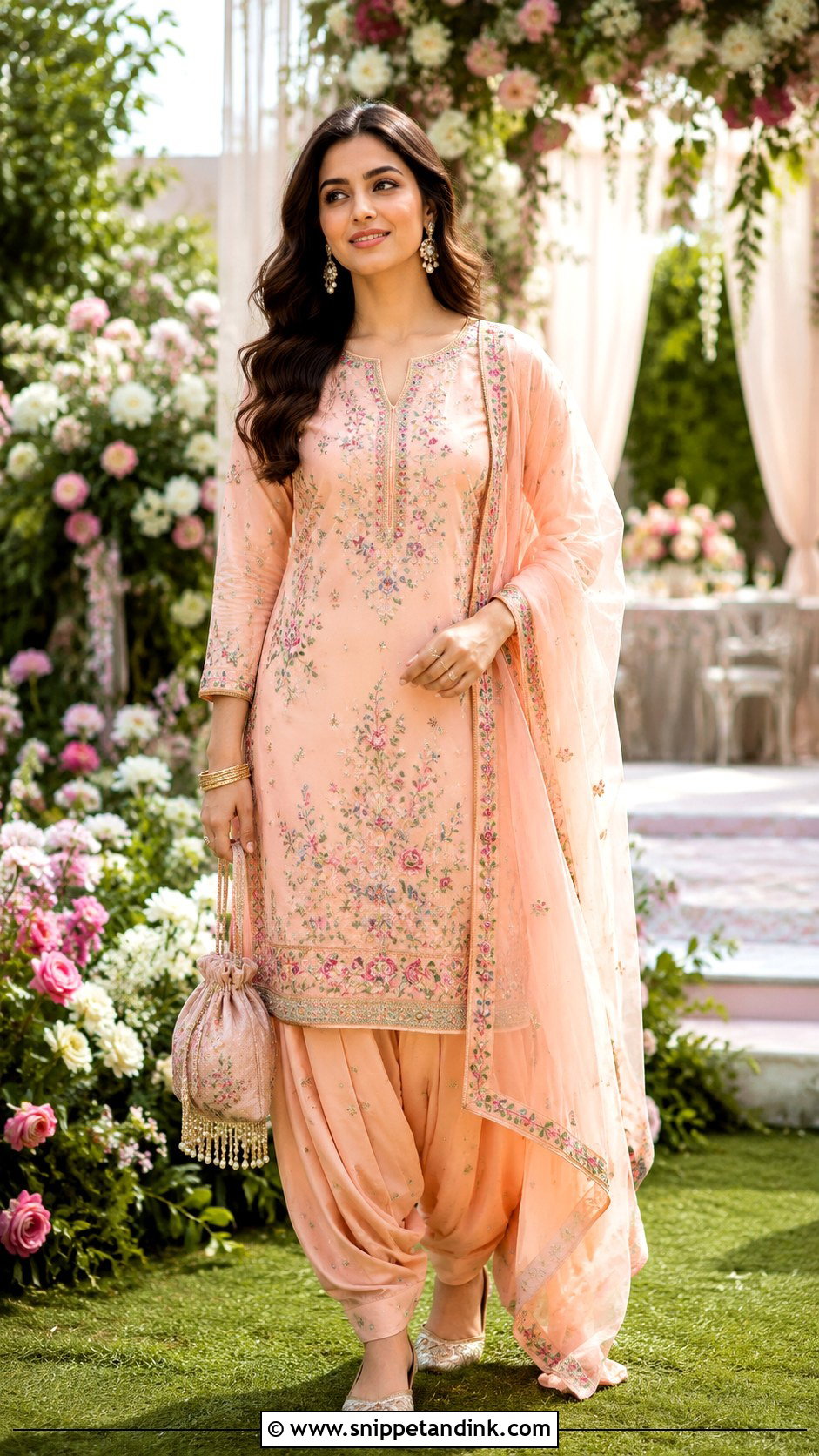
Small floral embroidery in pink, ivory, green and gold gives peach a garden-party feel. Choose a softly tailored kameez over a classic salwar with moderate pleating and a clean waistband, and a light chiffon dupatta with floral edging. Pearl earrings, thin gold bangles, a blush potli and nude or champagne juttis keep it fresh, with soft peach makeup and a low ponytail. Motif scale is the thing I pay attention to here. Large flowers land wherever they land on the body, so if there’s an area you’d rather not draw attention to, choose smaller, evenly spread embroidery. It works for a bridal shower, an engagement lunch or a daytime ceremony outside.
16. White And Red Punjabi Salwar Suit
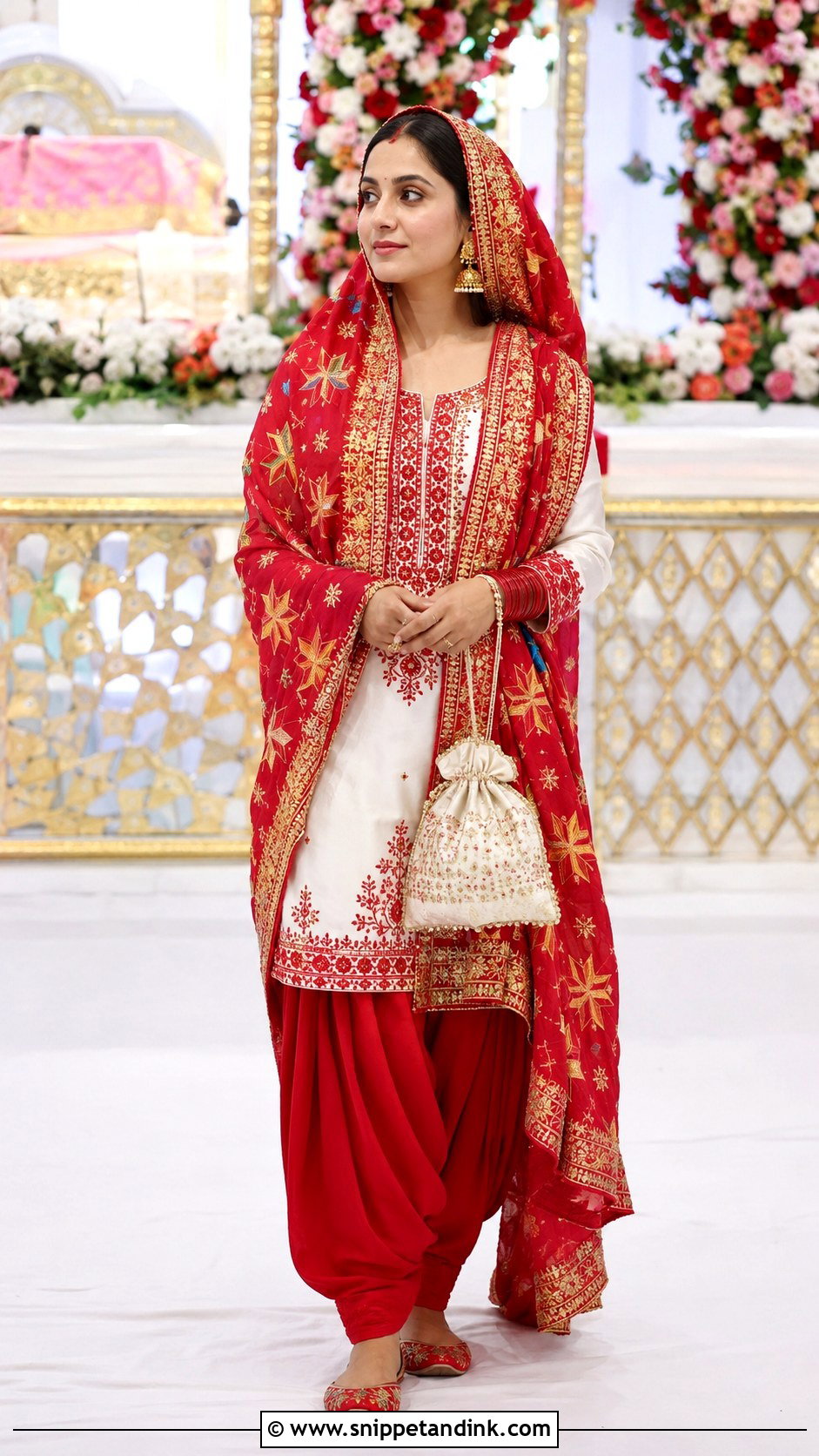
White with red embroidery is crisp and traditional. Wear a white straight kameez with red thread at the neckline, sleeves and hem over a red pleated salwar, and add a red phulkari or embroidered dupatta. Gold jhumkas, red bangles, a white potli and red juttis coordinate it. At a gurdwara ceremony, the dupatta doubles as your head covering, so choose one long enough to drape over the head and still sit on both shoulders. White fabric needs to be opaque and properly lined. Hold it up to a window before buying; thin white georgette turns sheer in daylight and flash. It suits daytime ceremonies and family events.
17. Purple Velvet Anarkali Punjabi Salwar Suit
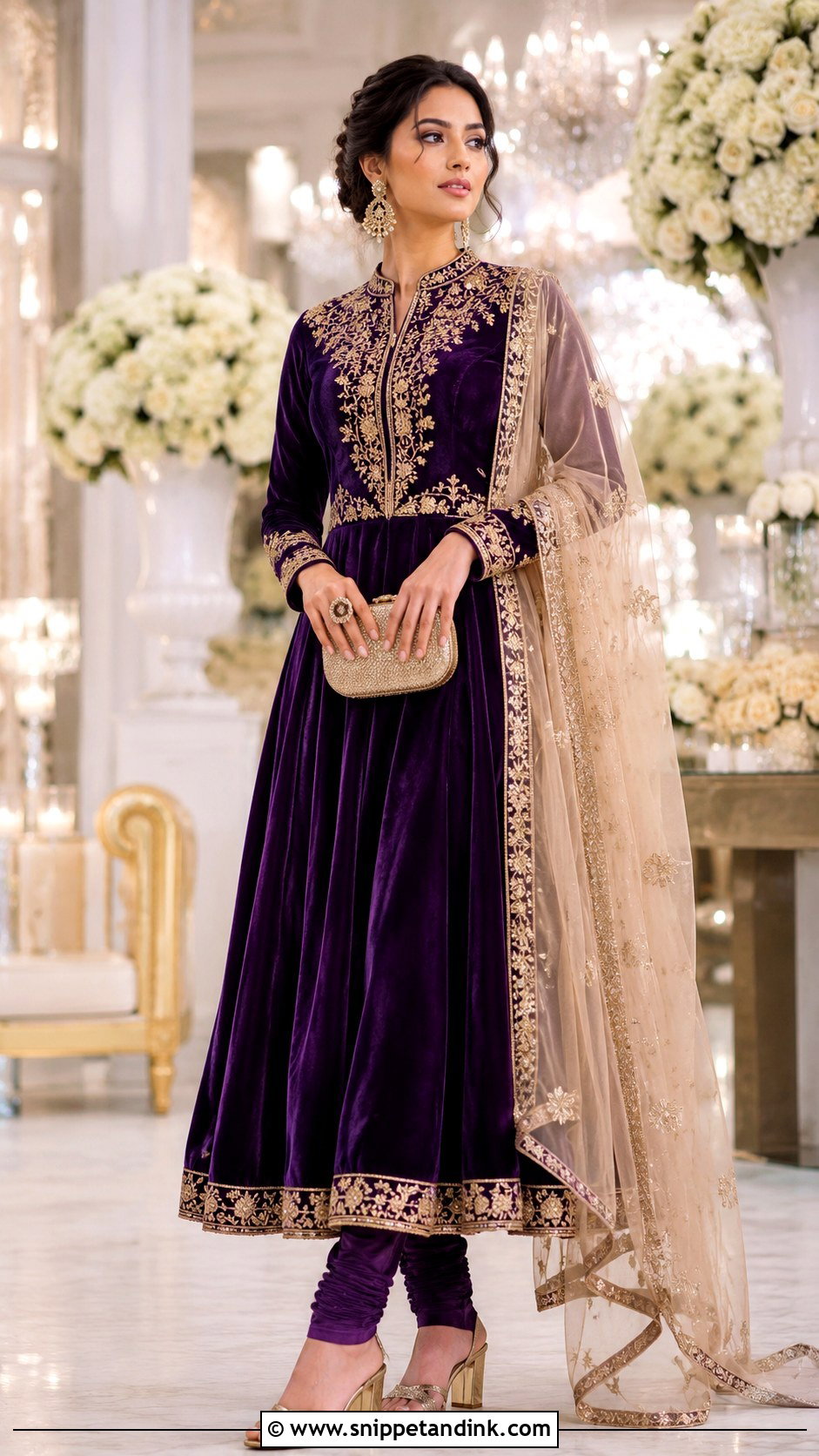
Purple velvet brings warmth to a winter evening. Choose an Anarkali with a fitted bodice and a moderate flare, finished in antique gold embroidery, over matching churidar, with a sheer purple or muted gold dupatta. Antique earrings, a statement ring, a structured clutch and gold block heels complete it. Velvet is heavy, so I avoid deep gathers in it; too much fabric at the waist seam makes the skirt stand away from the body. A defined waist seam holds the shape, and three-quarter sleeves give seasonal coverage while keeping the proportions balanced. It fits a winter engagement or nighttime reception.
18. Turquoise Gota Patti Patiala Punjabi Salwar Suit
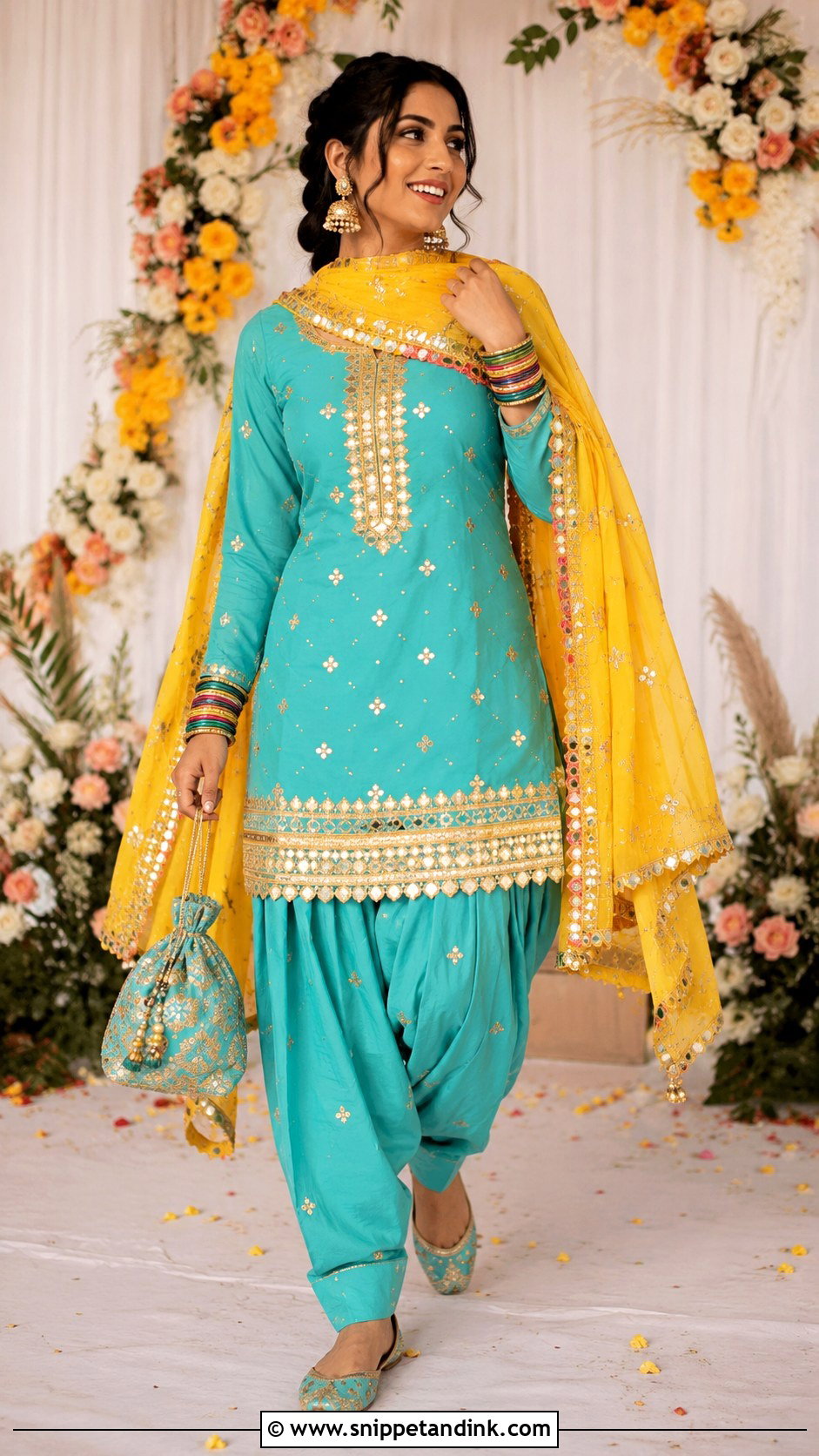
Turquoise looks even brighter with reflective gota patti detailing. Gota is metallic ribbon appliquéd onto fabric, and it catches light every time you move. Go for a short kameez with gota around the neckline, sleeves and hem over a full Patiala salwar whose pleats stay visible. A yellow or pink dupatta gives the multicolored finish. Gold jhumkas, bright bangles, a decorated potli and padded turquoise juttis complete it. If the gota is dense, keep the neckline simple. Real gota tarnishes with moisture, so store the suit wrapped in muslin rather than plastic. Built for the mehndi, sangeet and dancing.
19. Rust Brocade Punjabi Salwar Suit
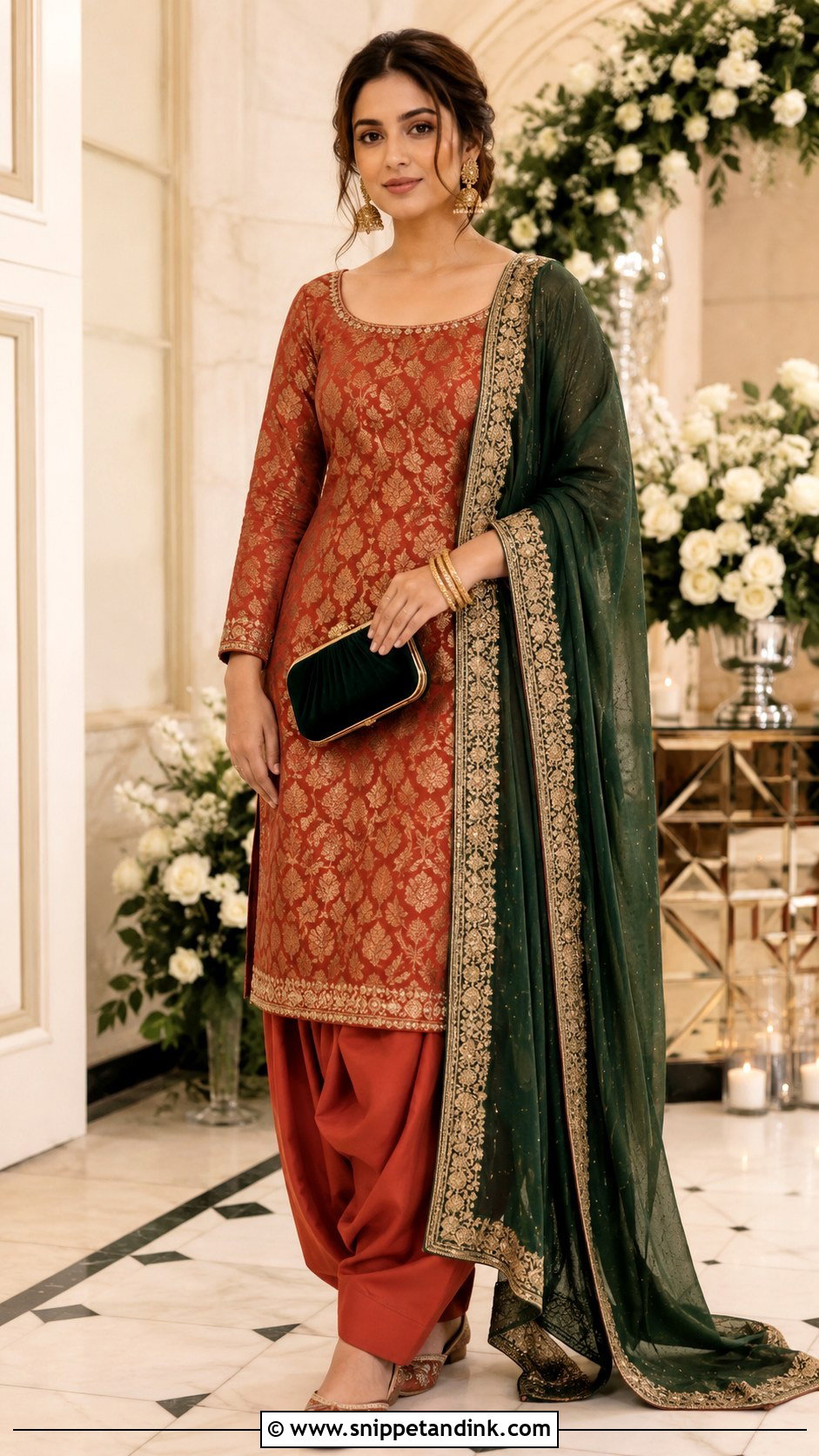
Brocade has a woven pattern and enough body to hold a tailored line, which is why rust brocade works in fall and winter. Choose a kameez woven with muted gold motifs and pair it with a plain rust salwar, so the outfit isn’t overloaded with pattern. A deep green or antique gold dupatta adds contrast. Traditional gold earrings, a slim bangle set, a green velvet clutch and brocade juttis complete it. Brocade has almost no give. It must fit smoothly across the shoulders and bust, and side slits are essential so you can walk and sit. It suits ceremonies, dinners and receptions across generations.
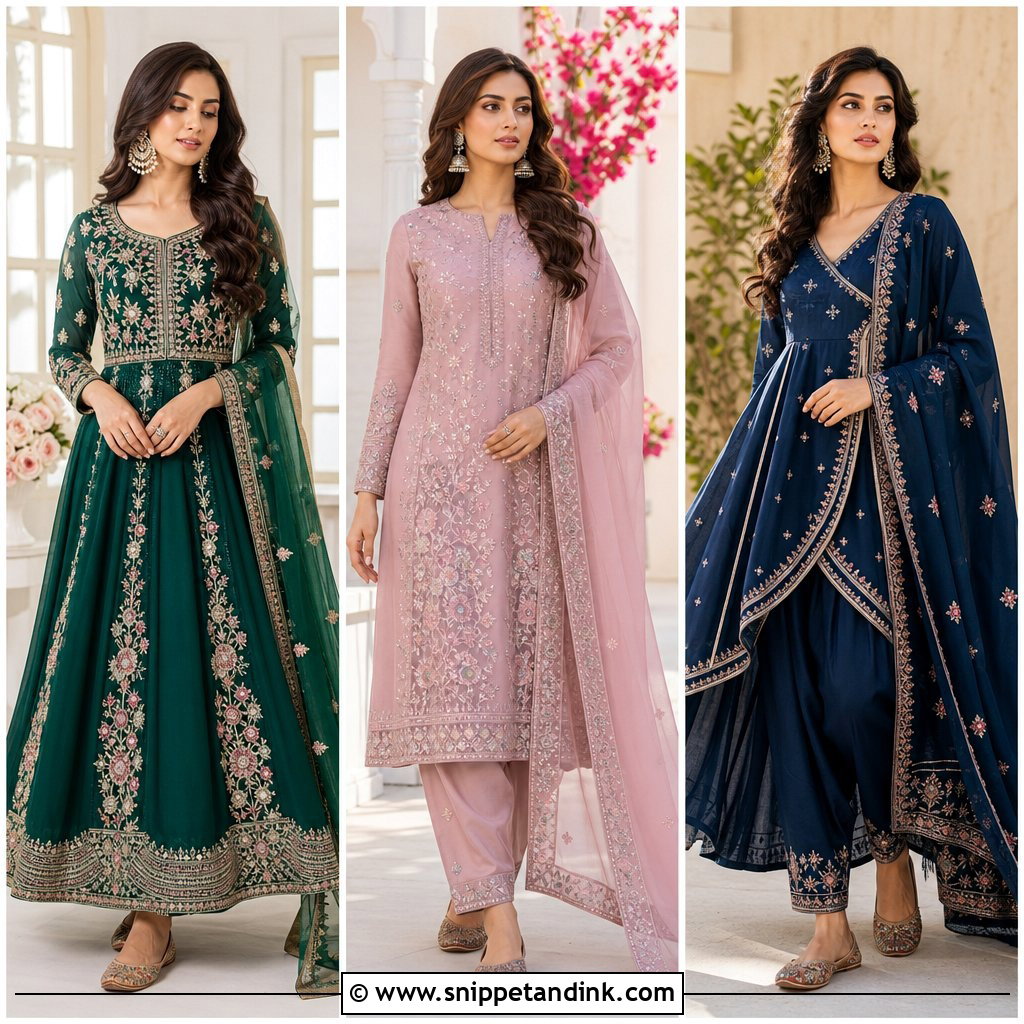
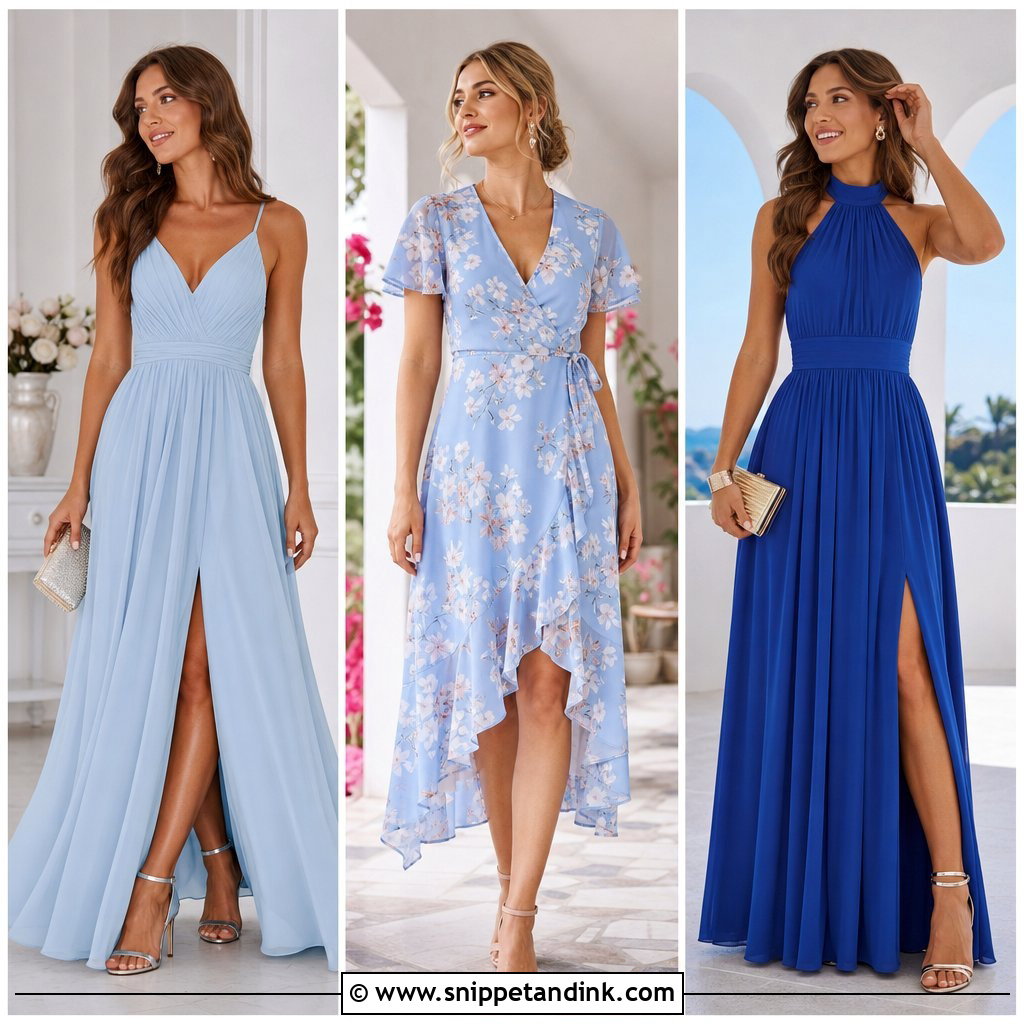
20. Powder Blue Jacket Punjabi Salwar Suit
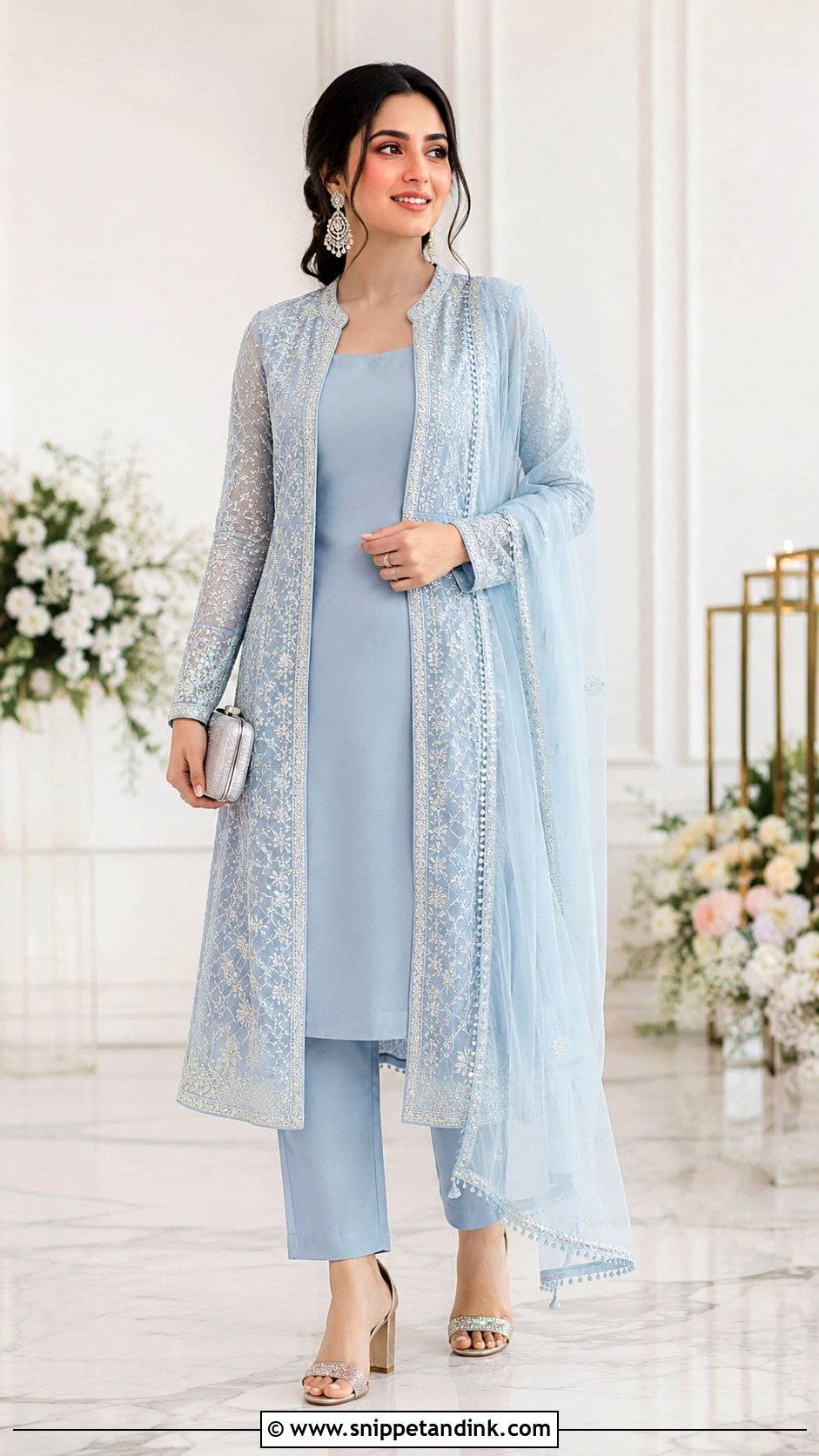
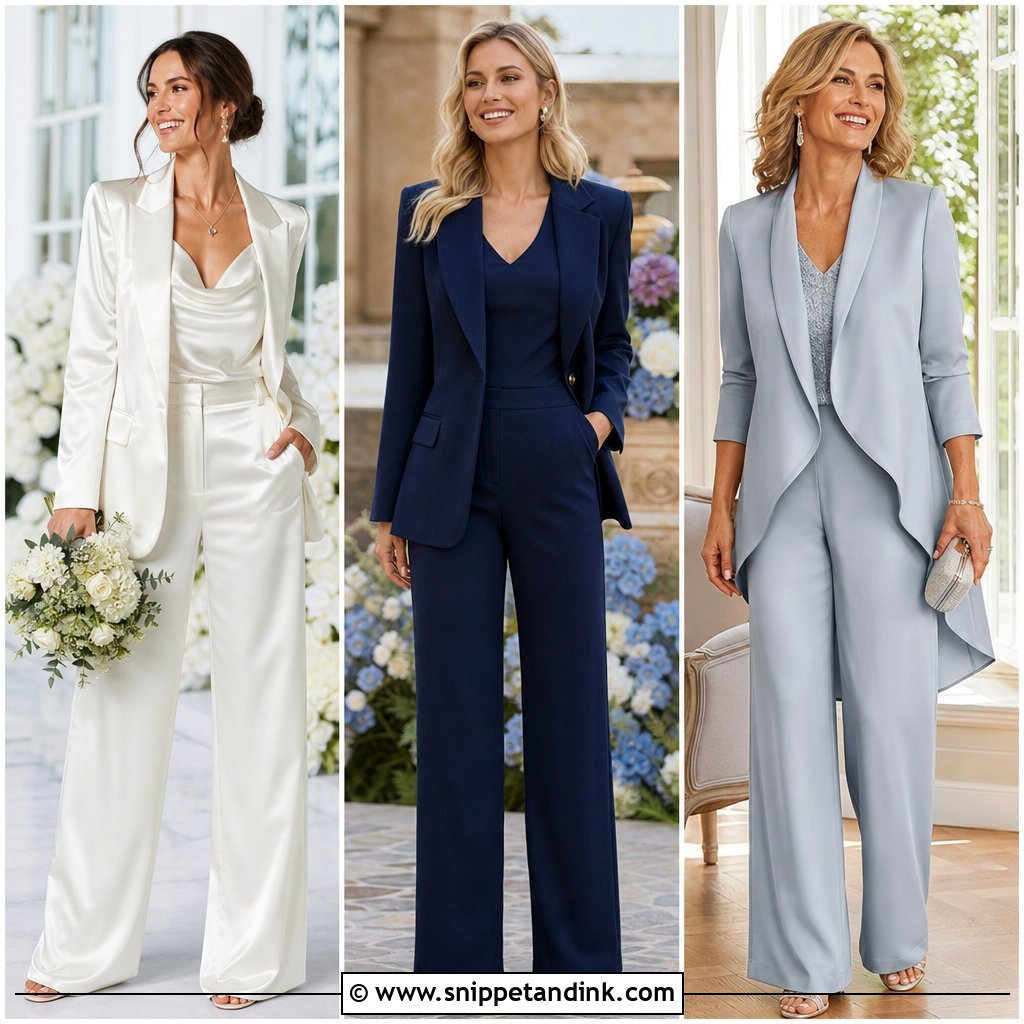
The jacket suit gives a familiar salwar a sharper, current outline. Start with a plain sleeveless or short-sleeved kameez and straight matching salwar, then layer an embroidered knee-length jacket worn open to keep strong vertical lines. A dupatta is optional; if the event calls for one, keep the drape narrow so it doesn’t fight the jacket. Crystal earrings, a silver clutch and matching block-heeled sandals finish it. For older guests who want arm coverage without a full-sleeved kameez in summer, the jacket is the easiest fix, and it comes off when the dancing starts. It suits a reception or a modern engagement.
Stitched, Semi-Stitched or Unstitched, and When to Start
Most party suits come in one of three forms, and the choice decides how early you need to shop. A ready-stitched suit only needs small adjustments. Semi-stitched suits come with the embroidered panels done and seams left open, so a tailor fits them to you. Unstitched suits arrive as fabric lengths and need full tailoring.
Tailors get very busy in wedding season, so I tell clients to hand over unstitched fabric at least four to six weeks before the first function and to book a trial fitting with time left for a second. Bring the shoes you’ll wear, because salwar, churidar and sharara hems all depend on heel height.
Small things to settle at the fitting
- Ask for side pockets in the kameez seams. Most tailors can add them, and you’ll use them all night.
- Have a drawstring salwar fitted with an elastic section at the back so it stays comfortable after a big meal.
- Get the dupatta edges finished and add small loops on the shoulder for safety pins, so it doesn’t slide off while you dance.
- Try sitting cross-legged on the floor in the finished suit if a gurdwara ceremony is on the schedule.
Fit Before Fabric, at Every Function
A wedding suit has to look festive and still let you move, sit and eat across a long day. This list covers Patiala sets, flowing shararas, formal Anarkalis, polished palazzo suits and jacket combinations. Match the silhouette to the function, the venue, the season and how formal the family is. Then finish with supportive shoes, jewelry in proportion and a dupatta pinned so it stays put. Tailoring decides more than the fabric does: a clean shoulder, a comfortable waistband and the right hem length change the whole outfit. Pick colors that feel festive to you and respectful of the occasion.
You'll Like These Ideas:


Leave a Reply