
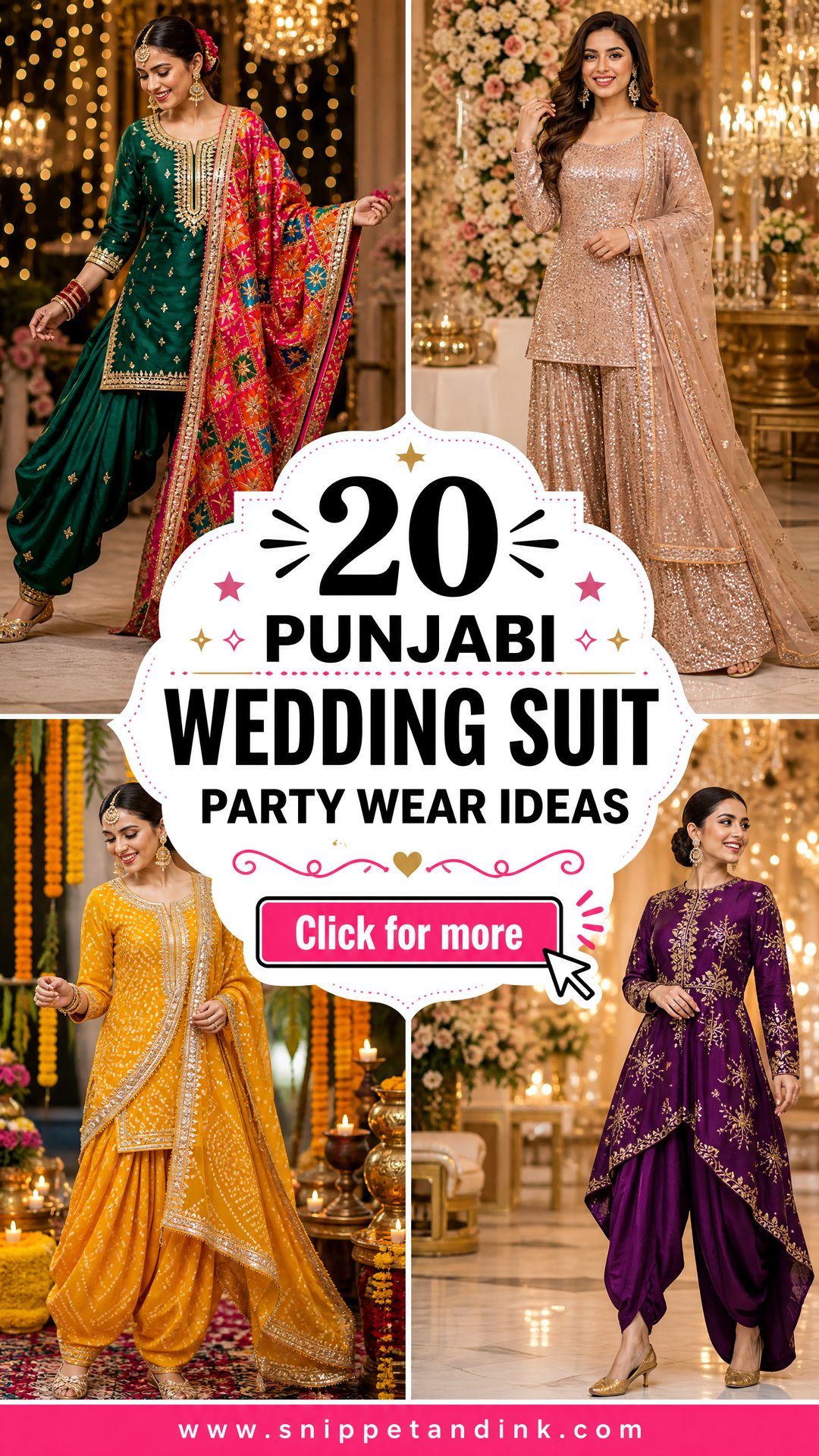
Most guests at a Punjabi wedding need three or four outfits, and a suit is the easiest way to cover them without running out of steam or budget. Here are twenty, from Patiala sets and long Anarkalis to shararas, capes and quiet straight cuts, sorted loosely from festive to formal. They cover the mehndi, sangeet, Anand Karaj and reception, with notes on dupattas, shoes and jewelry for each. A few are dressed up for sisters and close family; most are sized for guests who want to look polished without competing with the bride. My rule of thumb as a stylist: pick the silhouette for the function first, the color second and the embroidery last.
Guest, Sister or Mother of the Bride: How Much Is Too Much?
The right amount of embroidery depends on how close you are to the couple. Sisters, mothers and aunts can wear heavier, more formal suits, often coordinated with the family. Friends and colleagues usually look best one step down: rich fabric, moderate work, nothing that could be mistaken for a bridal outfit. Red with dense gold and ivory with heavy zari are the two combinations I tell guests to check with the family first.
Inside the Gurdwara
If the Anand Karaj is held in a gurdwara, everyone covers their head and removes their shoes before entering, and guests sit on the floor. That changes how I dress clients for it:
- Bring a dupatta long enough to cover your head comfortably, even if your outfit does not need one otherwise.
- Choose juttis or flats you can slip off and on quickly at the shoe area.
- Pick a kameez with slits or flare that lets you sit cross-legged without pulling.
- Save sleeveless tops, deep necklines and sheer backs for the reception.
1. Punjabi Patiala Suit With Phulkari Dupatta
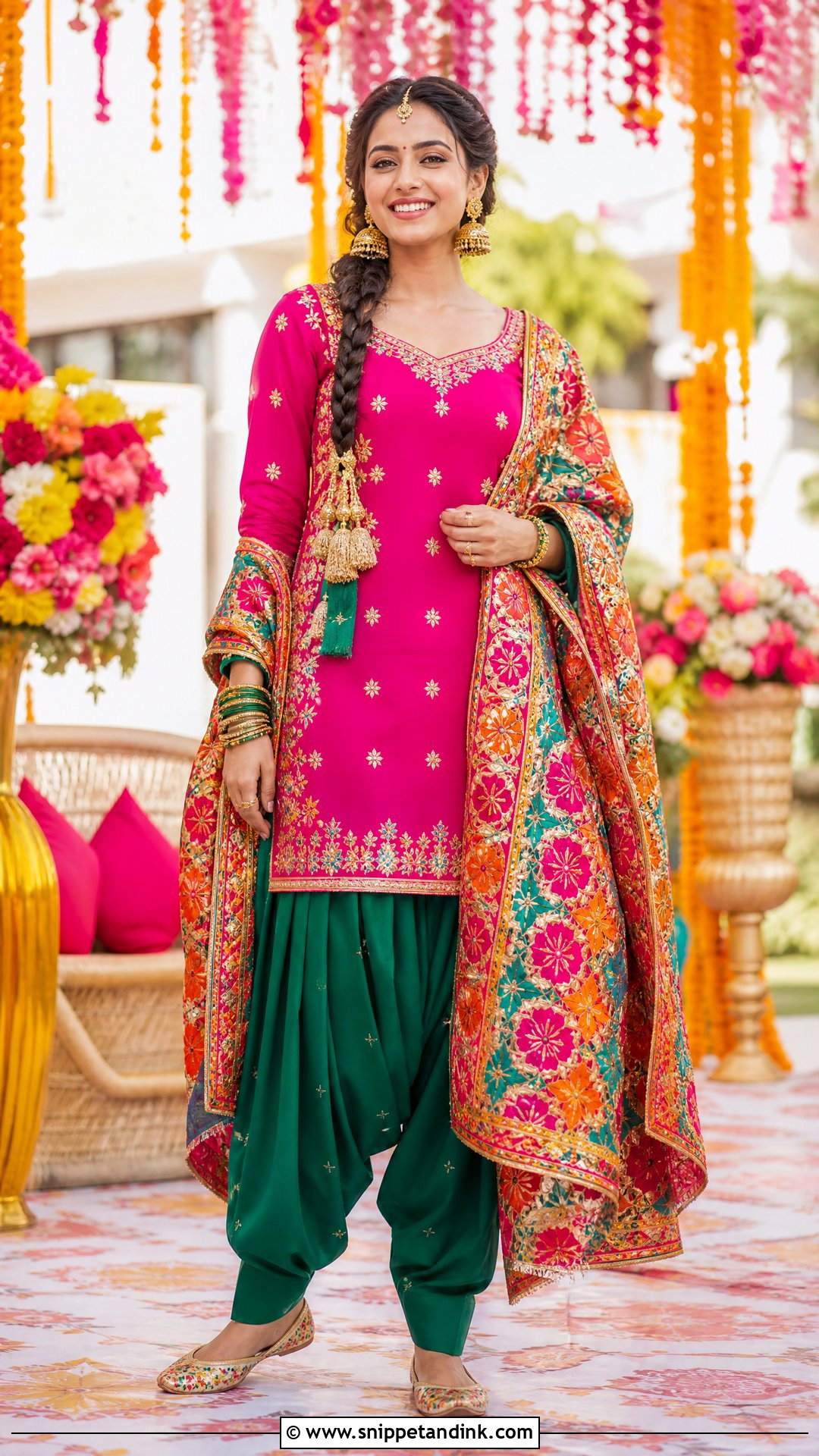
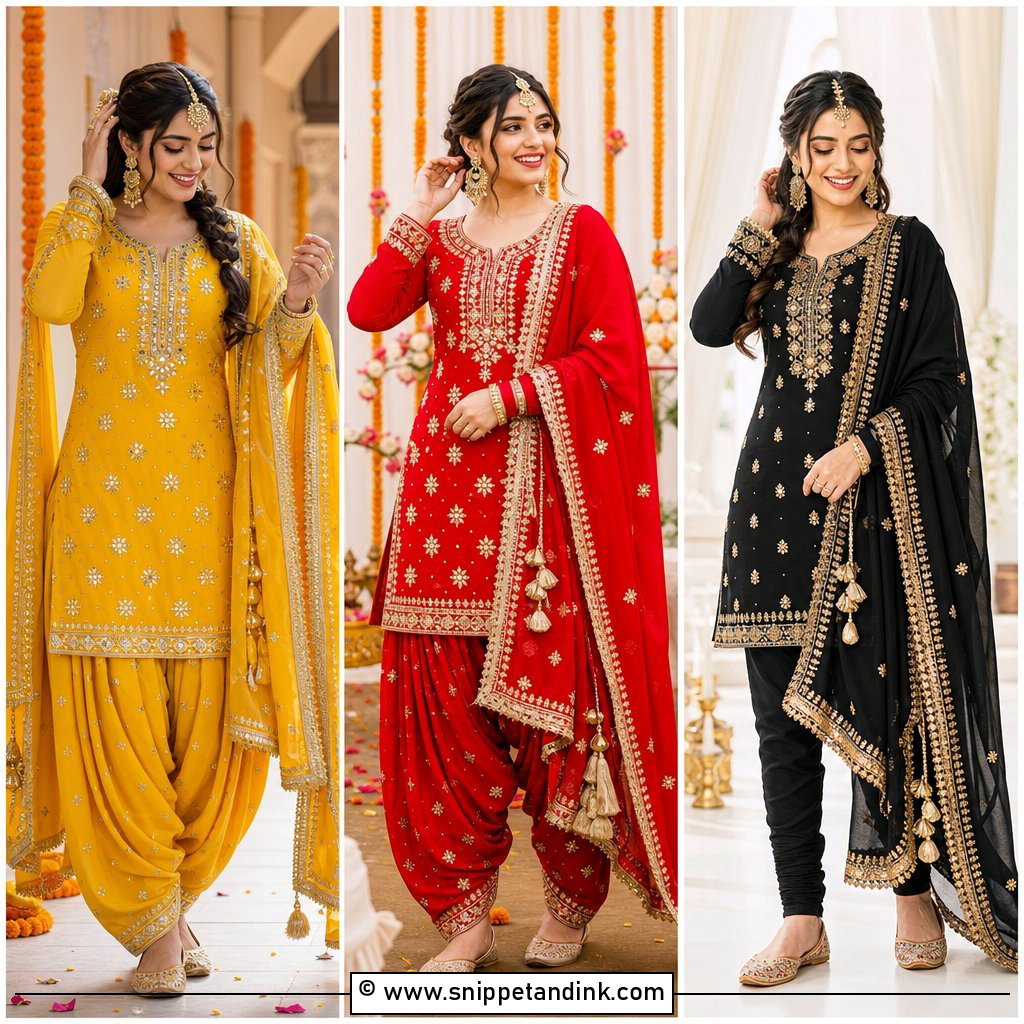
If you only own one Punjabi suit, make it this. A short embroidered kameez over a deeply pleated Patiala salwar, in magenta, emerald, mustard or royal blue, carries any daytime function. The phulkari dupatta is the star, so keep the neckline light. Gold jhumkas, glass bangles and embroidered juttis do the rest, and A paranda braid finishes it for a mehndi. Patiala salwars take a surprising amount of fabric, often several meters gathered into pleats, which is why the silk blend or georgette you choose matters: heavy fabric pulls the pleats flat by evening.
2. Straight Cut Punjabi Suit With Organza Dupatta
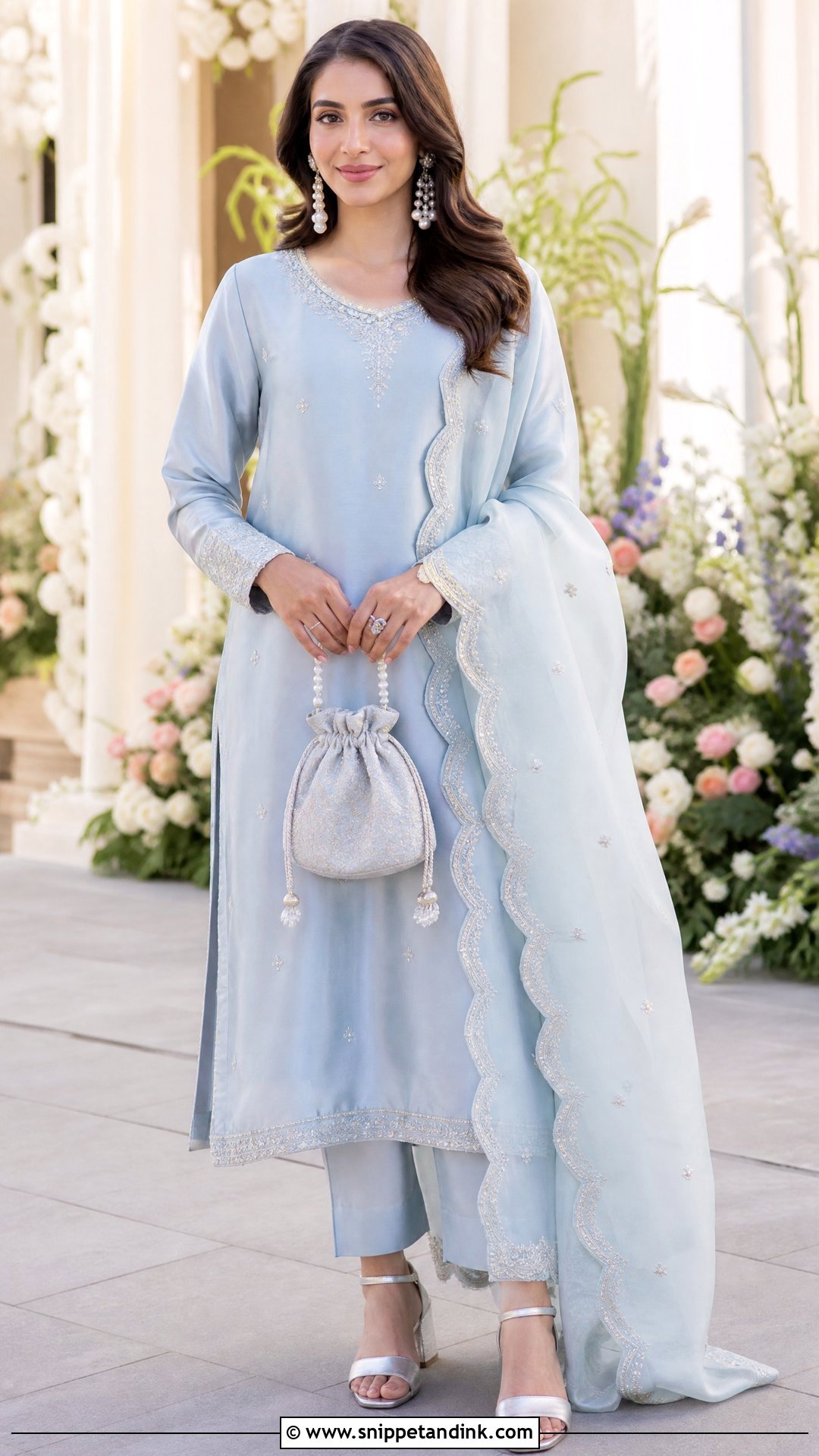
Straight cuts are the quiet workhorse of a guest wardrobe. A knee-length silk or crepe kameez with fine embroidery only at the neckline, cuffs and hem looks finished without trying. Narrow pants keep the line long. The softness comes from a sheer organza dupatta with scalloped edges; organza is crisp, so it stands away from the body rather than clinging. Pastel blue, lilac, sage, peach and dusty rose all read well in daylight. Pearl drops, metallic block heels and a small potli finish it, with a low bun so the dupatta does not crowd the neck. You will rewear this one more than anything else on the list.
3. Floor Length Punjabi Anarkali Suit
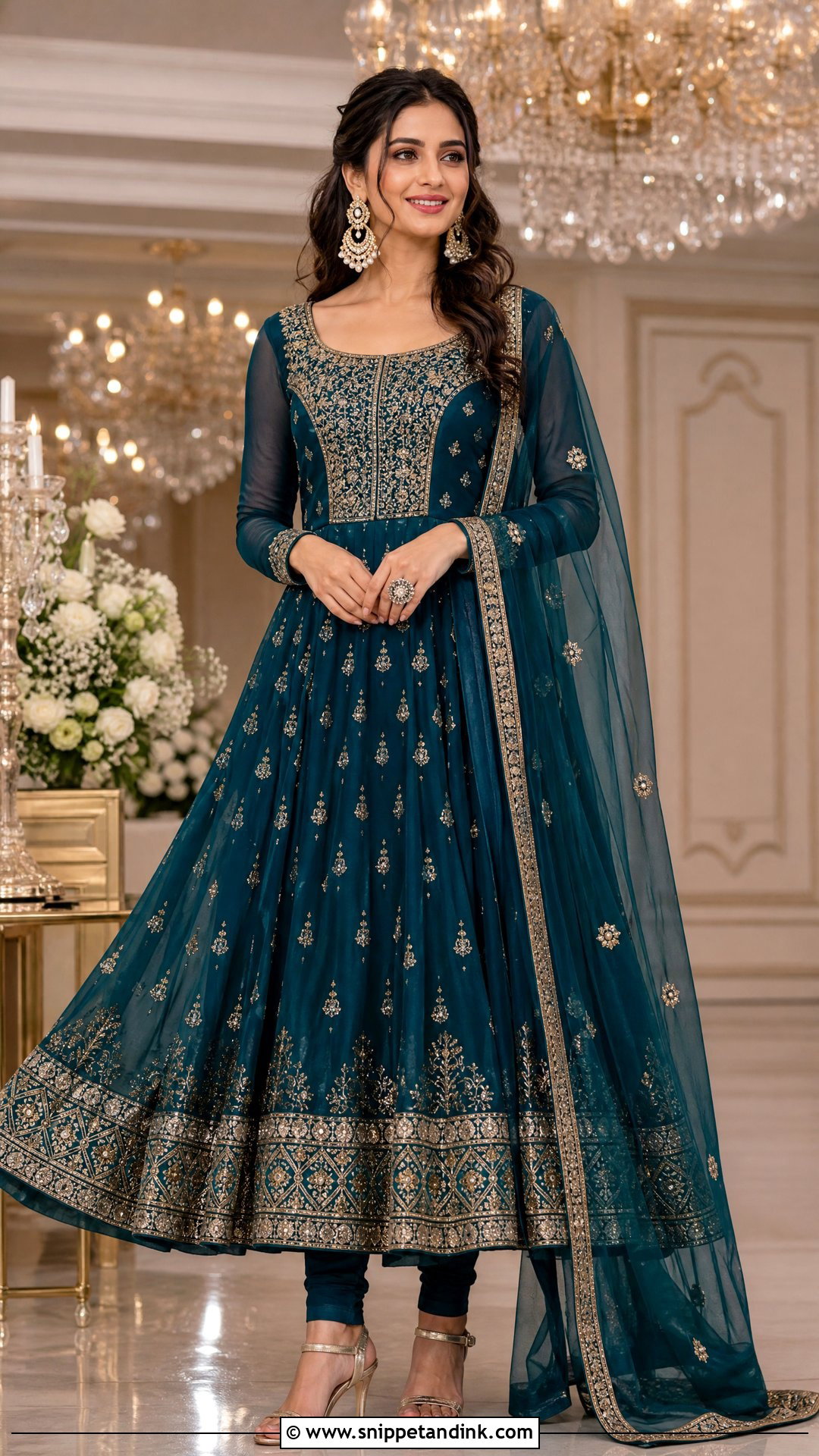
A floor-length Anarkali suit gives you the most movement of any silhouette here, and the waist seam is where it succeeds or fails. It should sit at your natural waist, snug, with the panels starting from that point; bulk gathered there adds width you do not want. Wine, navy, teal and plum suit evening receptions, with zari, sequins or threadwork at the neckline and panels. Wear churidar underneath and a light net dupatta over one shoulder. Chandbalis and a statement ring are enough; skip the necklace if the bodice is heavily worked. Hem it in the shoes you will wear, because a floor-length front gets stepped on.
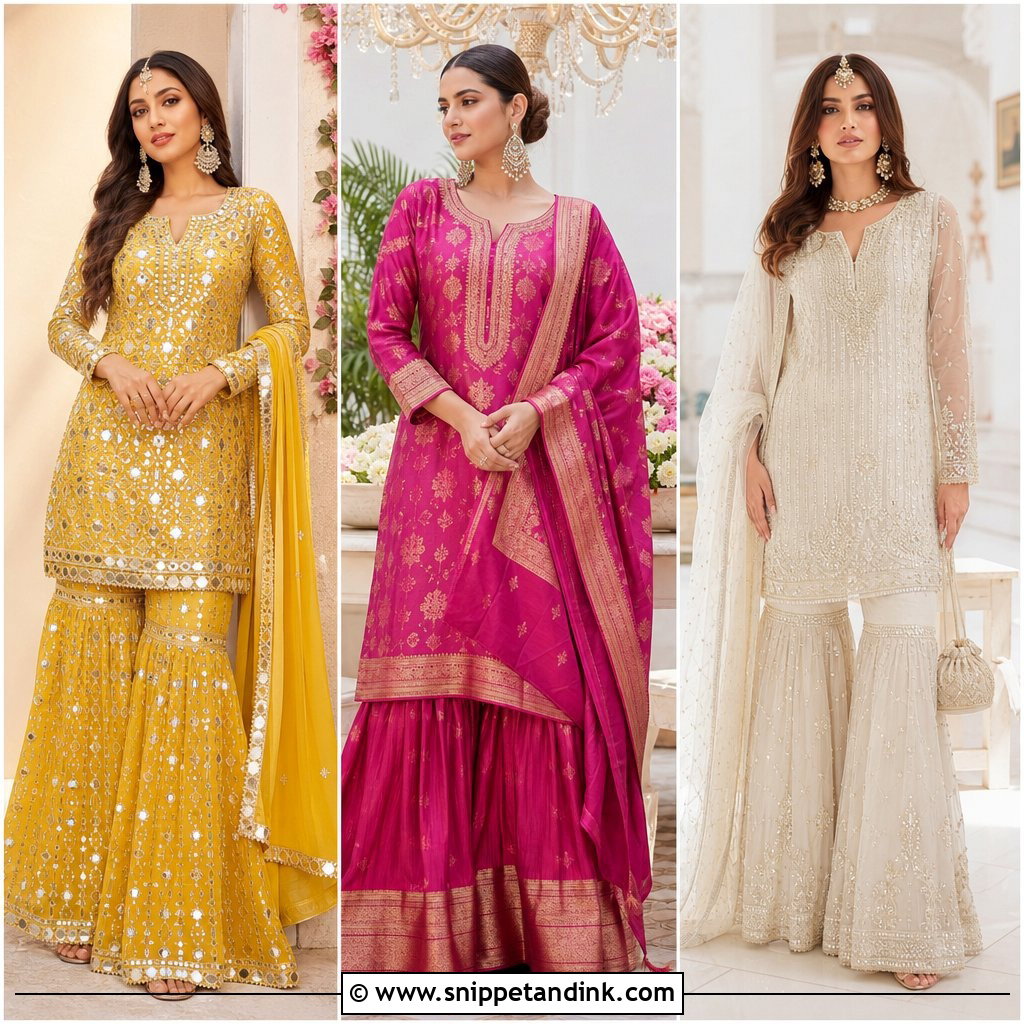
4. Punjabi Sharara Suit With Short Kurti
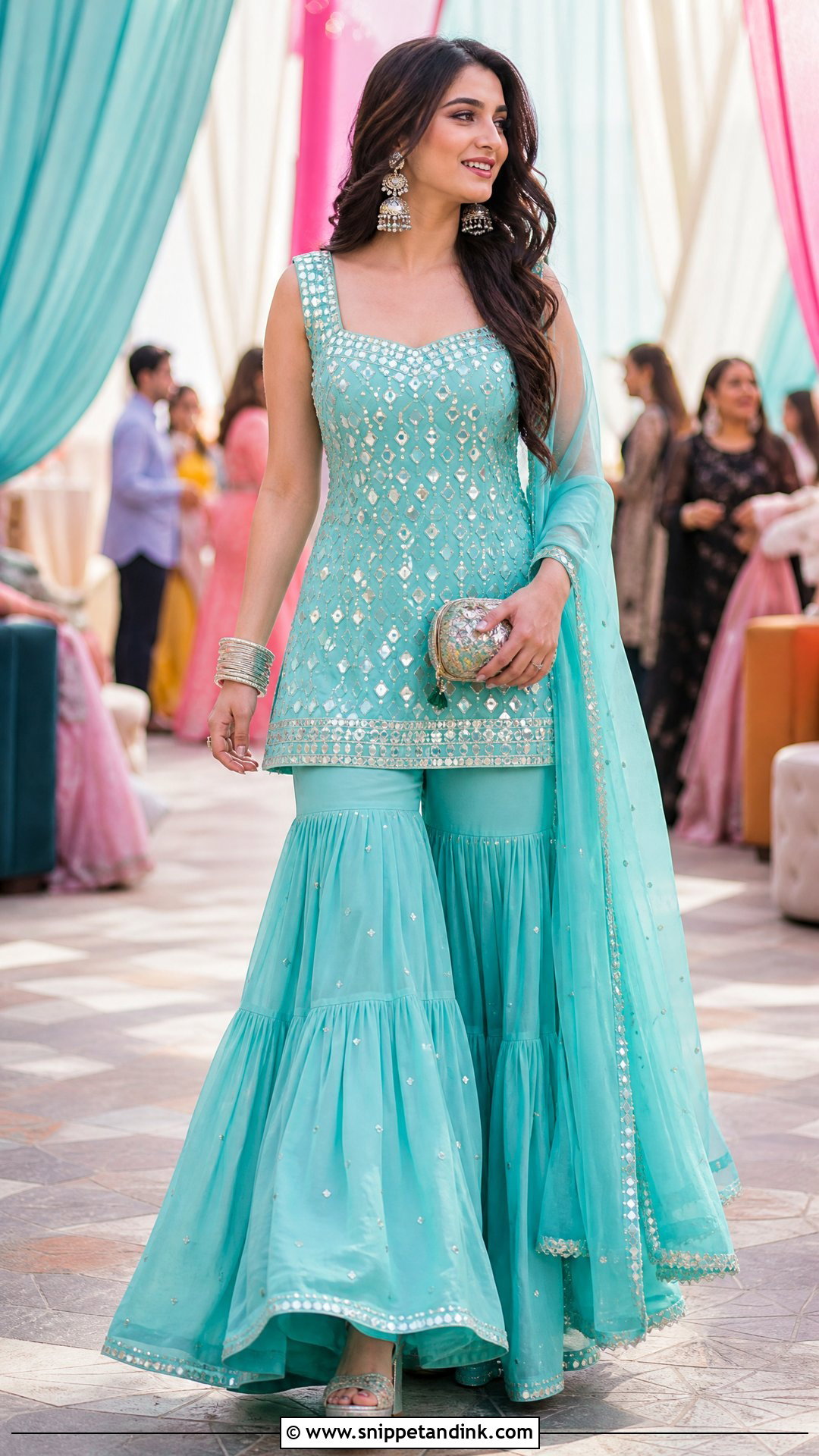
Shararas are for dancing. A fitted short kurti ending near the upper thigh leaves the flared pants on show, and embroidered bands at the knees mark the shape. For a sangeet I like turquoise, fuchsia, coral or emerald with mirror work and small sequins. A slim dupatta worn diagonally or pinned at one shoulder keeps the top tidy. Platforms are steadier than stilettos under all that fabric. Statement earrings, stacked bangles and a decorative clutch finish it. The test I give clients is simple: sit down in it. If the kurti rides up and pulls across the hips, it needs letting out.
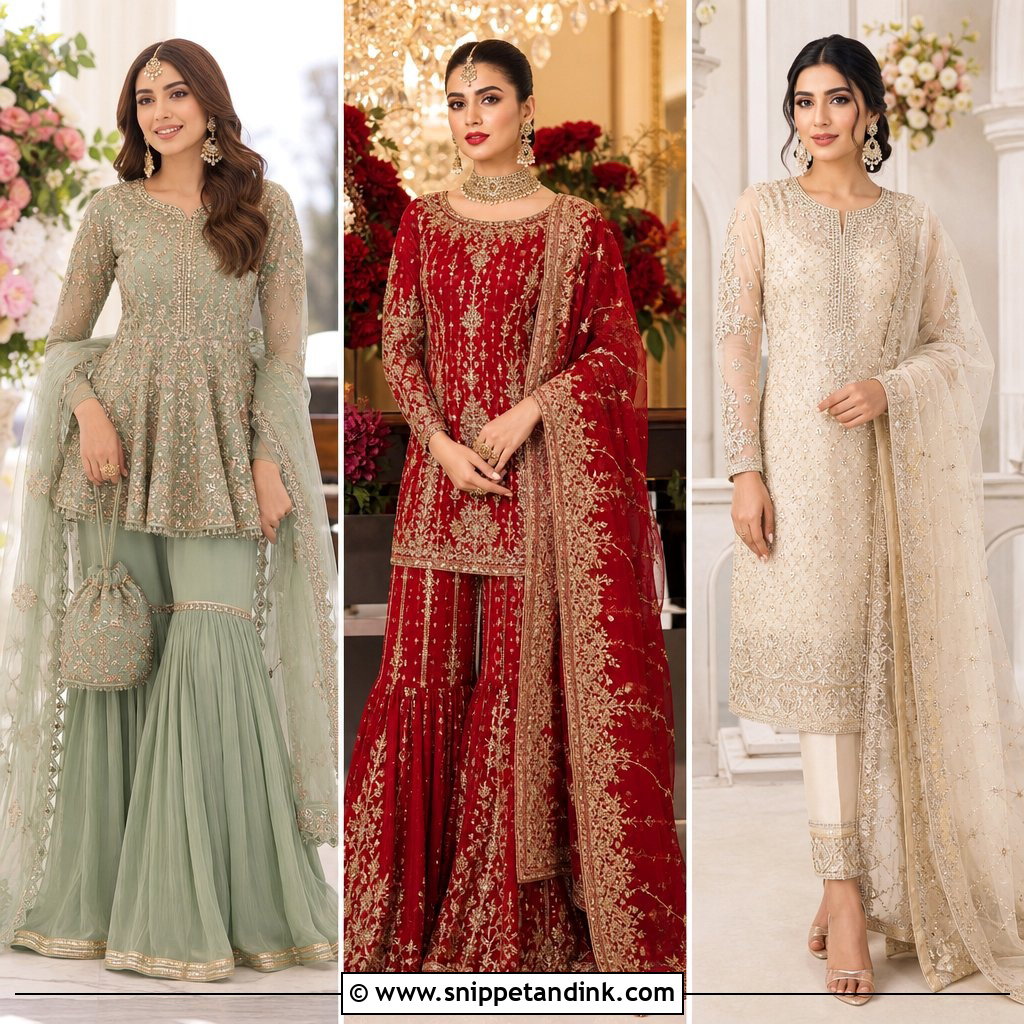
5. Punjabi Gharara Suit With Peplum Kurti
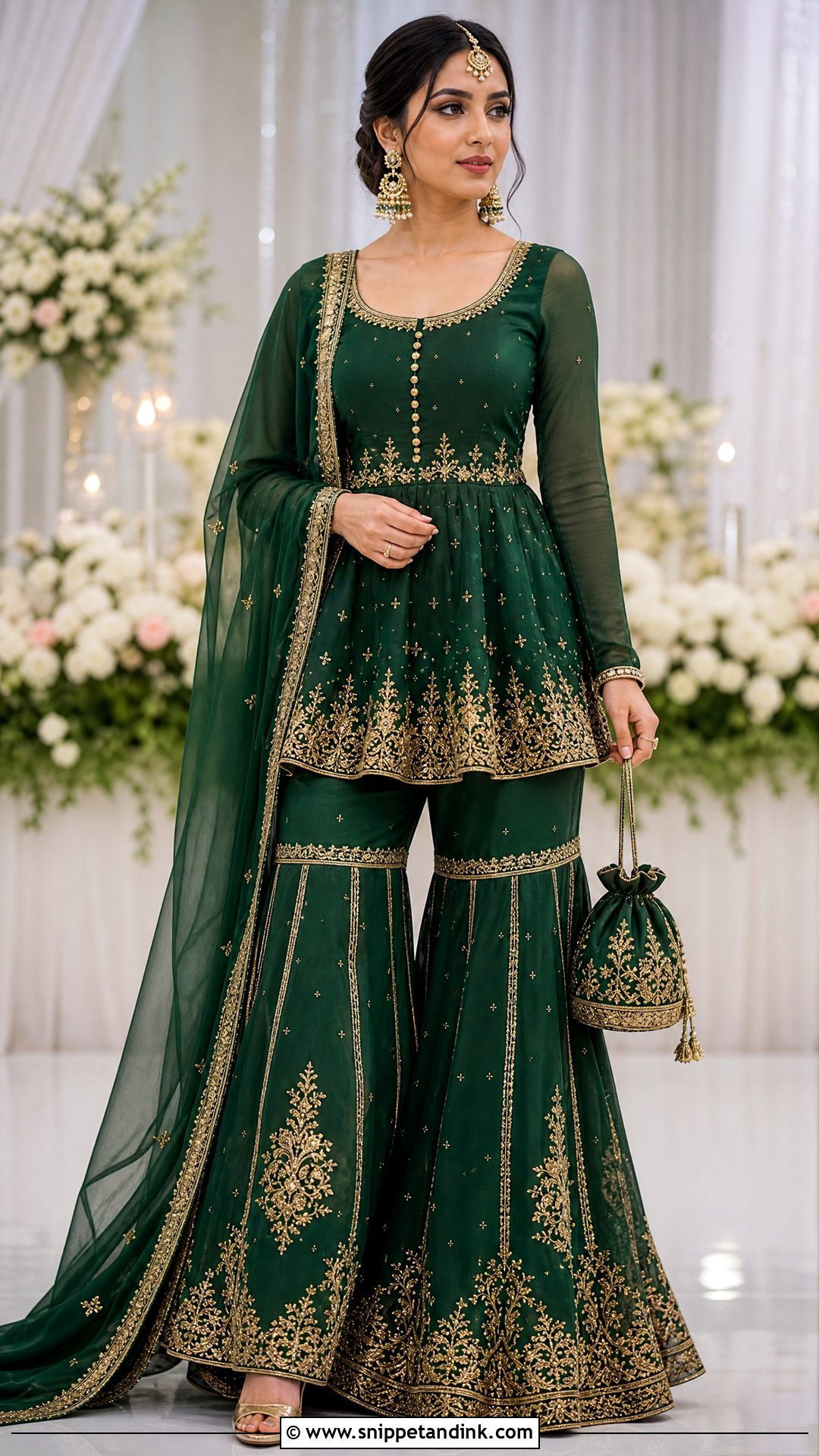
Pairing a peplum with a gharara gives you a definite waist above a dramatic lower half. Ghararas stay fitted through the thigh and flare from a band at the knee; the peplum should end just above that band so the two shapes read as one outfit. Antique gold work suits bottle green, maroon, navy and rust. Add a chiffon dupatta with a decorated border over both arms or at one shoulder, plus jhumkas, a fine maang tikka and metallic heels. If you are petite, keep the peplum short and narrow; a deep flare at the waist can overpower the gharara below. Wear it to a reception or formal family dinner.
6. Sequin Punjabi Palazzo Suit
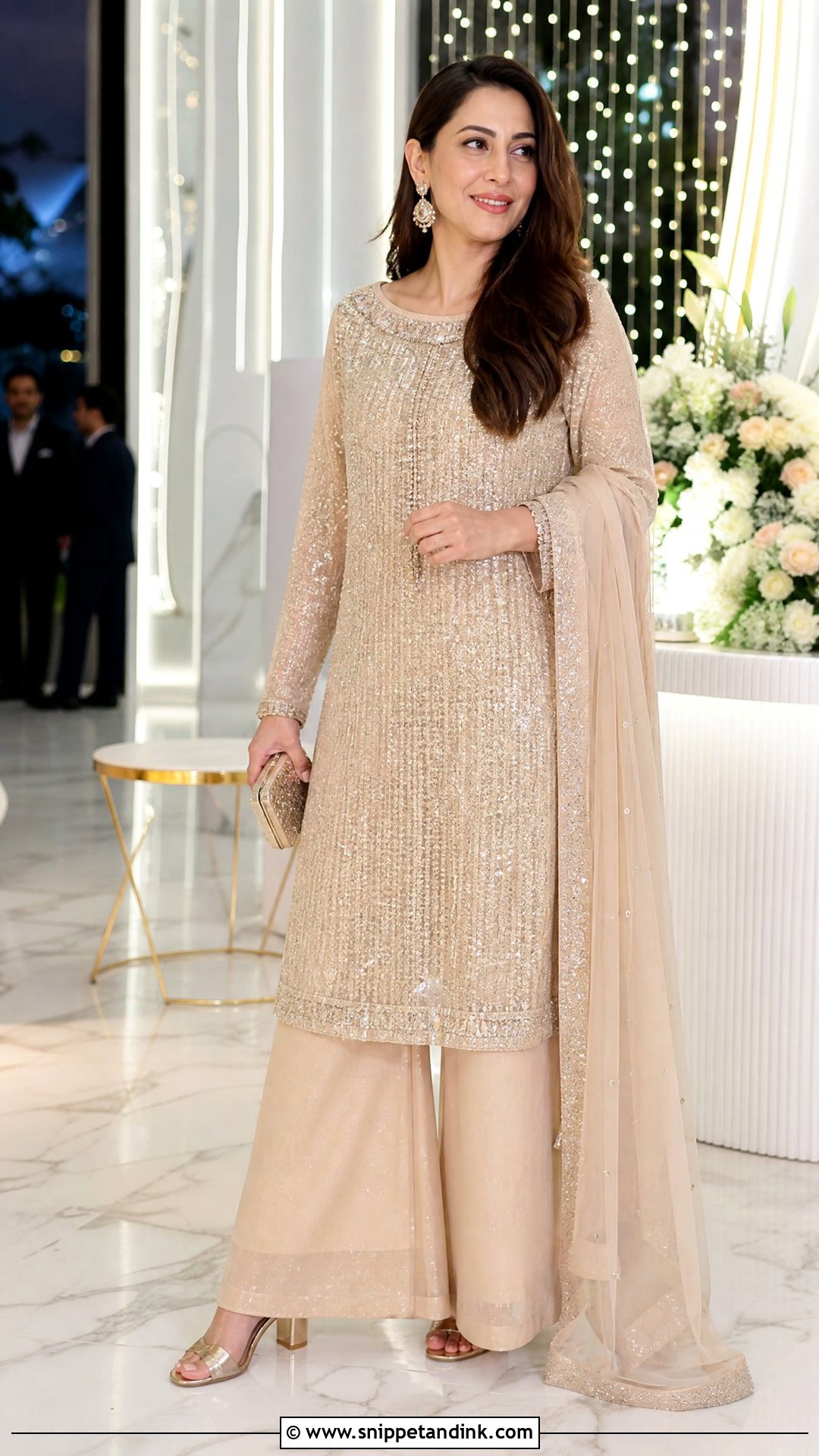
Sequins on a palazzo suit give evening sparkle without layers. Placement is what I look at first: along the neckline, sleeves and side panels is flattering, but sequins across the seat of a kameez scratch chairs and catch on everything. Wide palazzos should fall smoothly and nearly cover your shoes. Champagne, mauve, midnight blue and soft silver make a good reception palette. Keep the dupatta plain chiffon with a slim edge so you are not reflective head to toe. Crystal earrings, a structured clutch and block heels are all it needs, with makeup focused on either eyes or lips.
7. Long Punjabi Kameez With Cigarette Pants
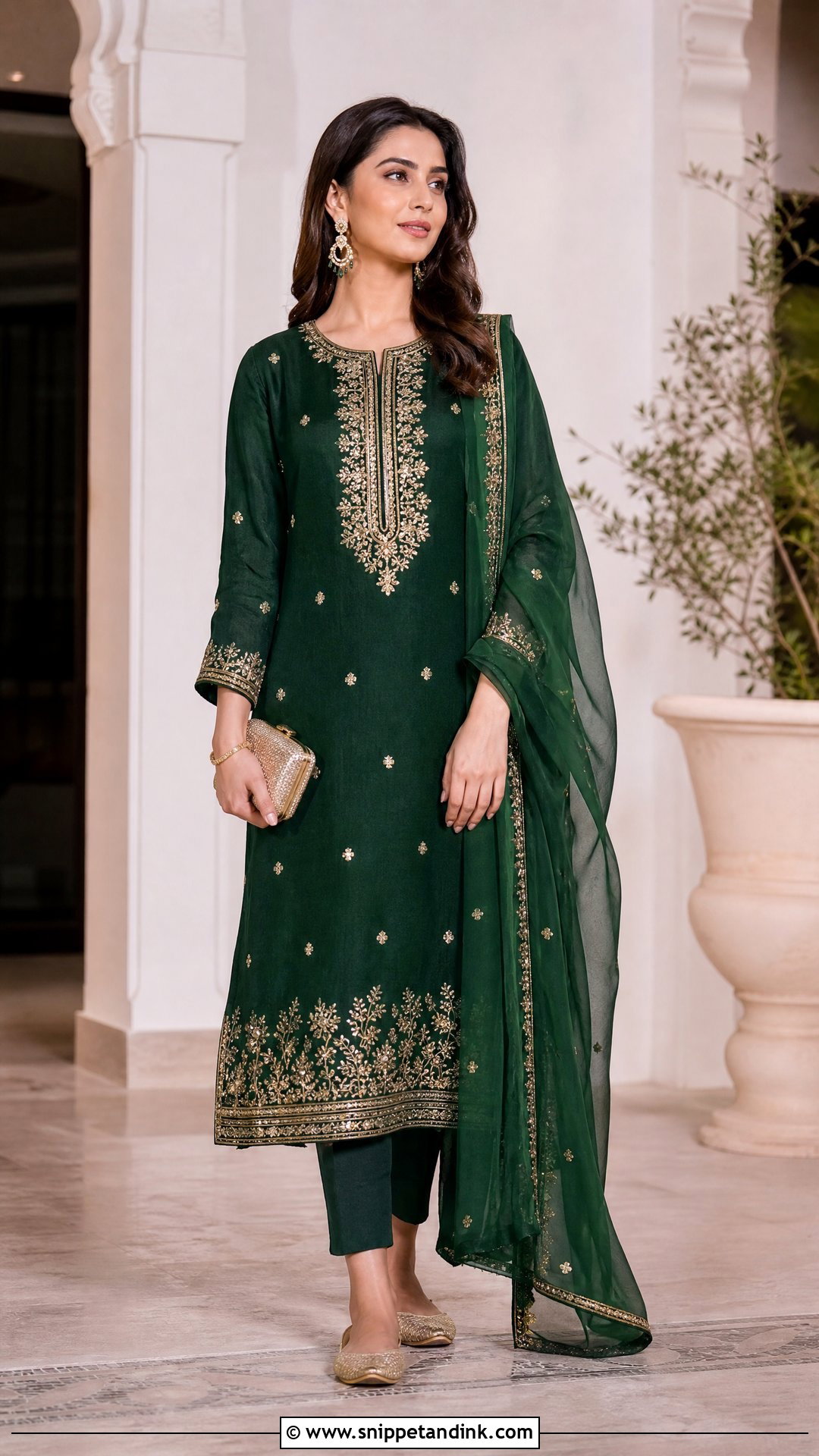
Calf-length kameez with cigarette pants is the most elongating outfit here. Side slits, a clean neckline and embroidery running vertically down the front pull the eye down and make you look taller. The pants should stop at the ankle to show embellished slingbacks or pointed juttis. Forest green, burgundy, sapphire and muted gold suit evening functions. A soft chiffon or tissue dupatta over one shoulder falls naturally. Earrings, a slim bracelet and a small box clutch finish it. One fit note: the slits need to start high enough that you can sit cross-legged at a gurdwara without the kameez pulling tight.
8. Velvet Punjabi Suit With Embroidered Dupatta
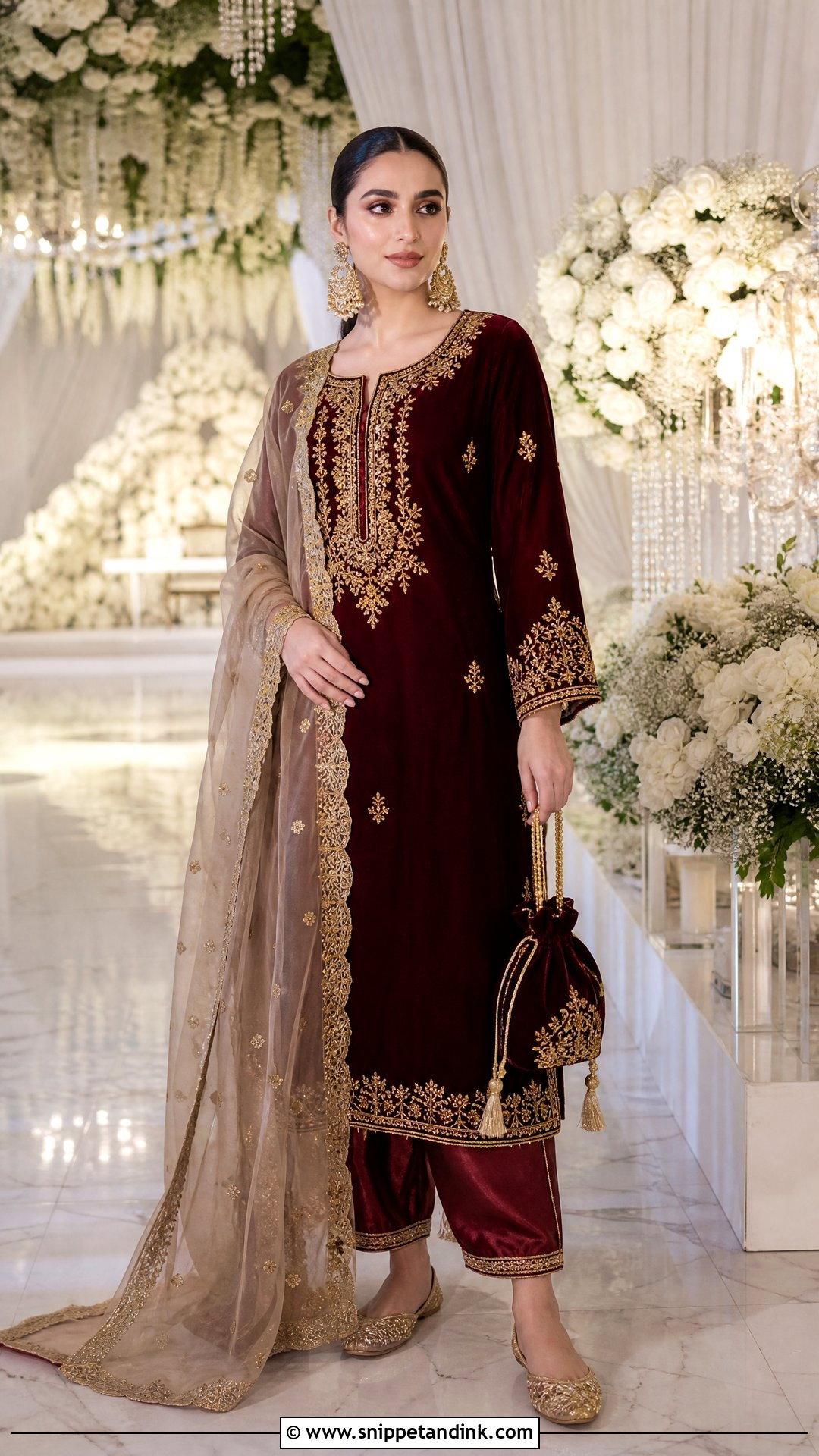
Velvet is a winter fabric, full stop; in a warm hall it gets uncomfortable quickly. Choose a straight or lightly flared velvet kameez in maroon, black cherry, emerald or midnight blue with gold work at the neckline and cuffs. Silk straight pants or a lightly pleated salwar give a contrast in texture. An embroidered organza dupatta keeps it from being too much velvet in one look. Antique gold earrings, a matching potli and closed juttis suit it. Velvet pile marks easily, so hang it rather than folding, and steam from the inside, never pressing an iron straight onto the pile.
9. Pastel Punjabi Chikankari Suit
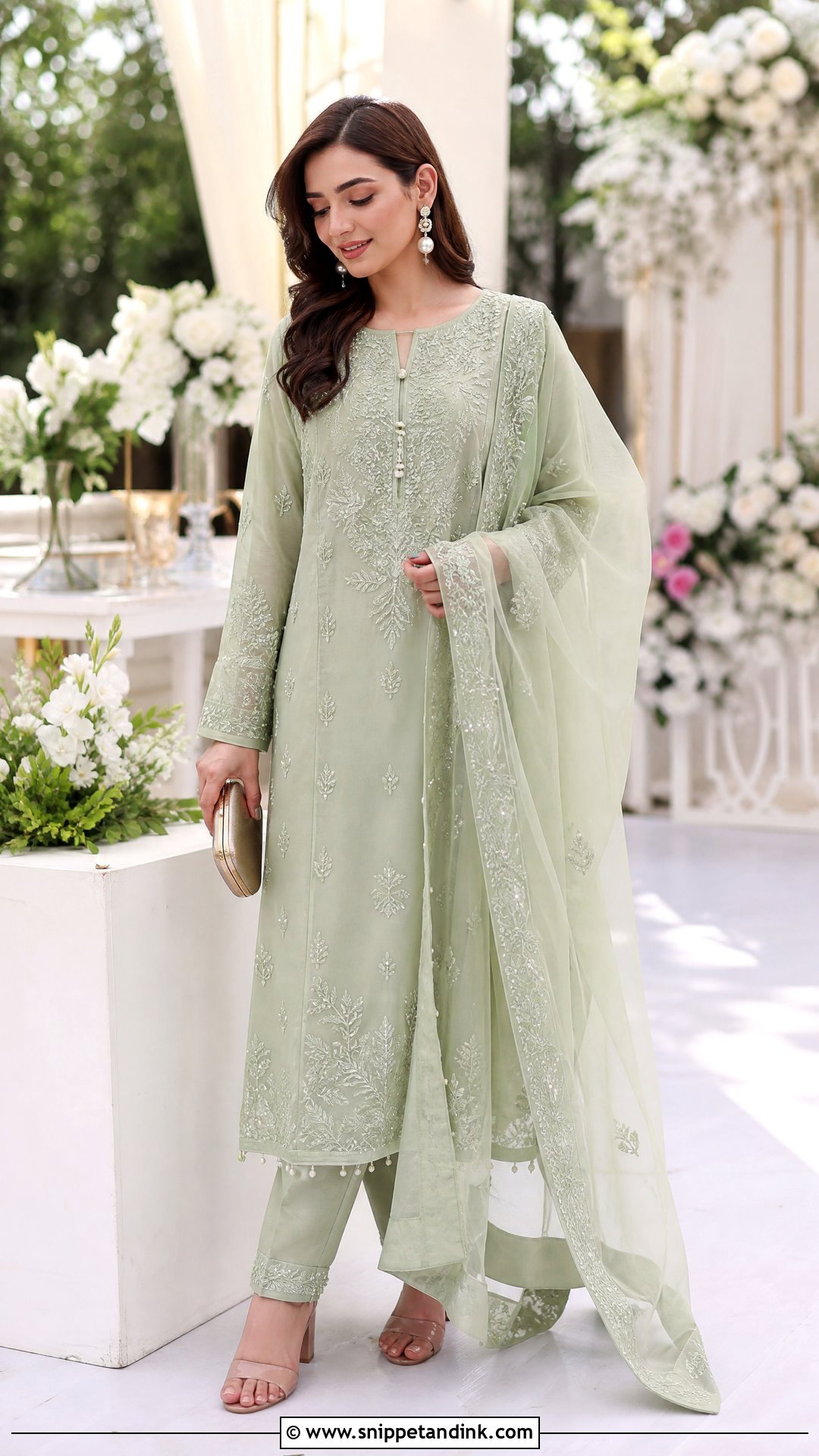
Chikankari is hand embroidery from Lucknow, traditionally white thread on fine cotton, and it is one of the coolest things you can wear to a summer daytime wedding. Choose a pastel kameez in powder blue, blush, pistachio, lemon or lavender in a light flare with straight pants. Tonal threadwork, pearls or subtle sequins catch daylight. Add a sheer organza dupatta with embroidered corners. Pearl earrings, a soft metallic clutch and neutral block heels keep the palette airy. Real chikankari on cotton is often semi-sheer, so ask for a smooth, breathable lining. It suits a morning ceremony or garden party.
10. Mirror Work Punjabi Suit With Flared Pants
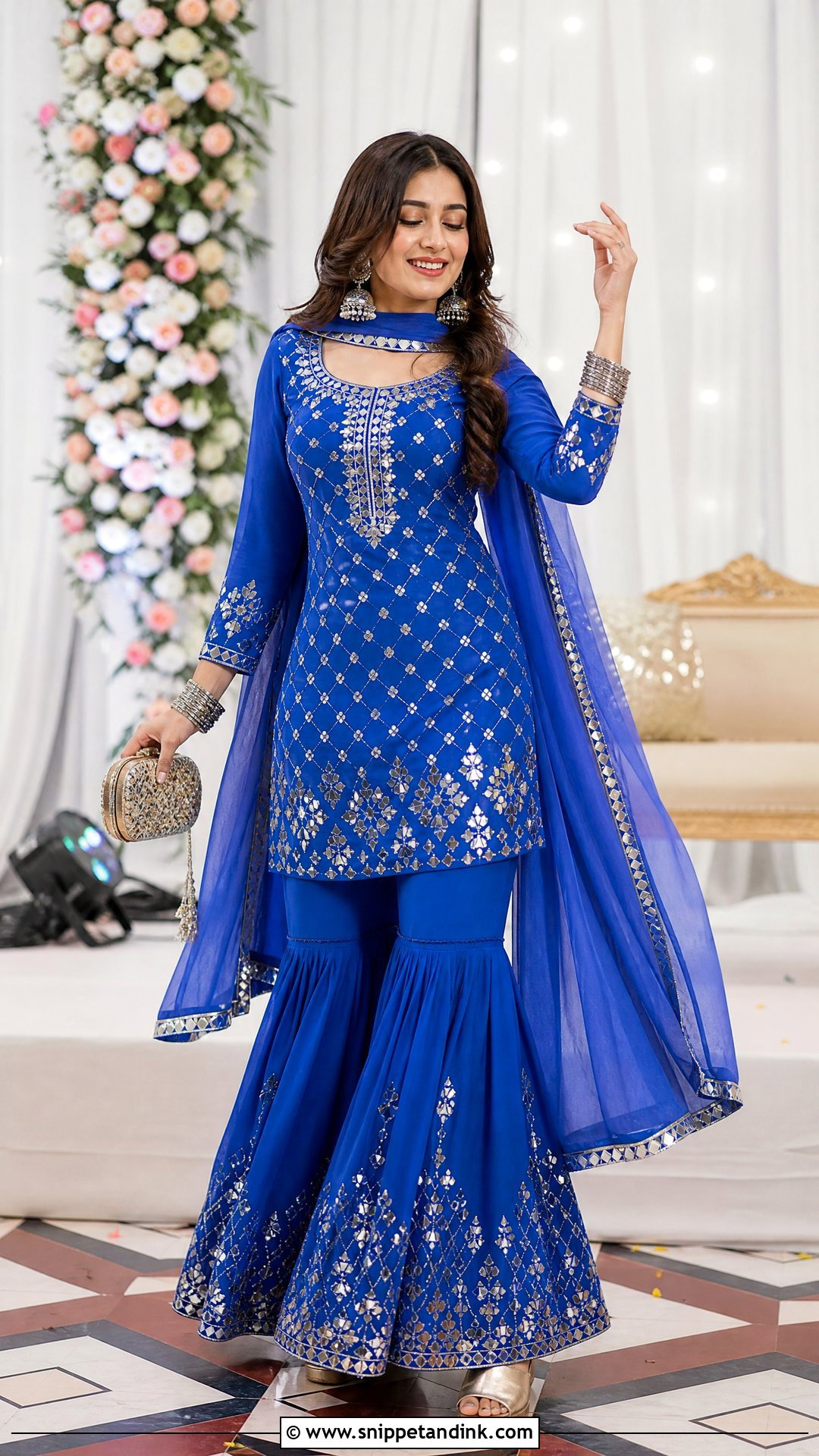
Mirror work is made for the sangeet or jaggo, where the lighting is bright and everyone is moving. A fitted kameez in hot pink, cobalt, orange or green over fluid flared pants gives you room to dance. Check the mirrors before you buy: each should be stitched down firmly all the way round, because loose ones snag hair and scratch skin. Keep them to the neckline, cuffs and hem. A light dupatta with mirror accents ties it together. Silver jhumkas, stacked bangles and wedges suit it, and a base of georgette or crepe keeps the weight down. Pull your hair off your shoulders.
11. Bandhani Punjabi Suit With Gota Work
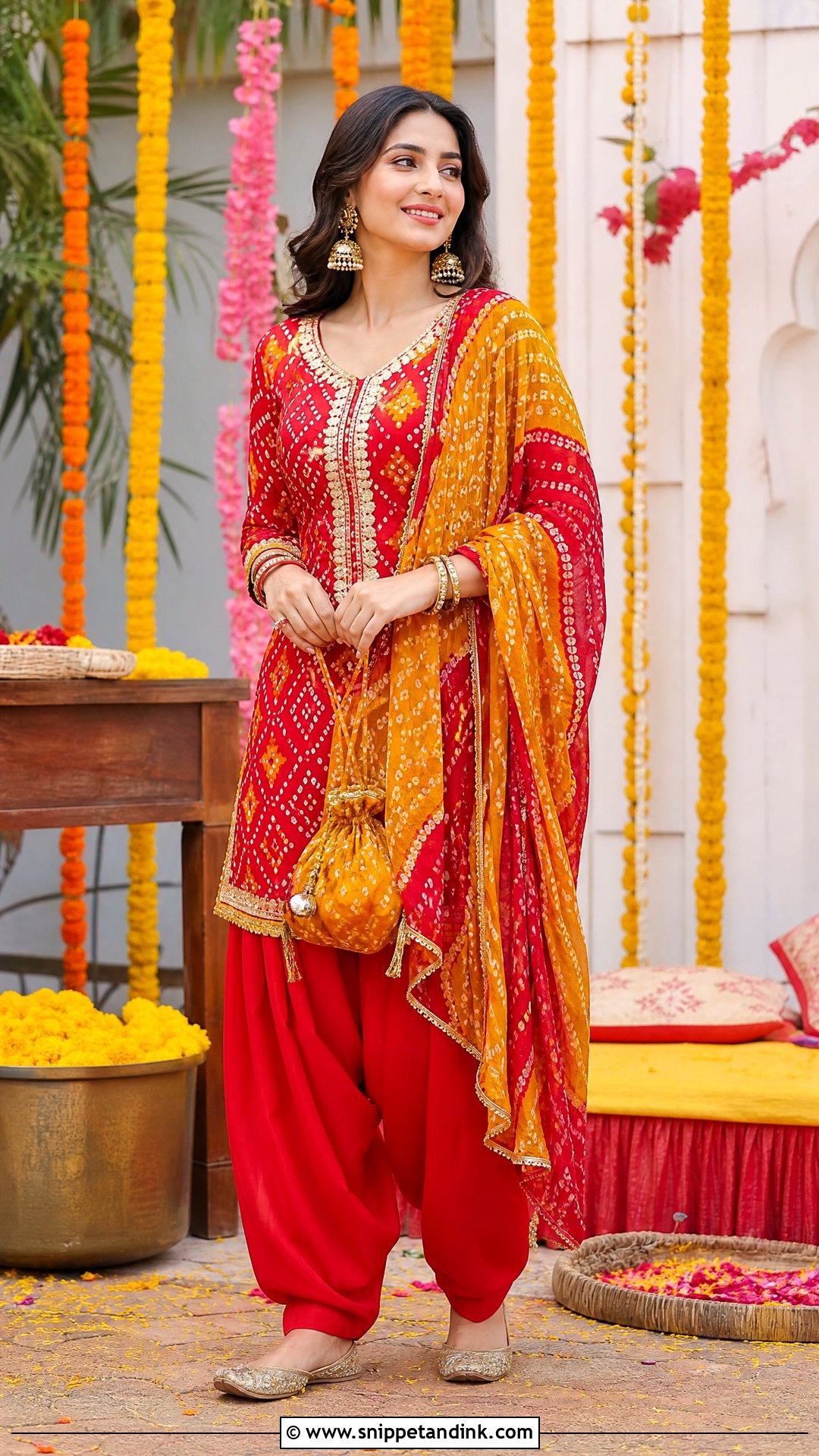
Bandhani and gota is a combination that has been worn at Punjabi and Rajasthani celebrations for generations. Choose a bandhani kameez in red, pink, yellow or green, and keep the salwar or pants plain so the print can breathe. Gold gota at the neckline, cuffs and dupatta makes it wedding-ready. A contrasting bandhani dupatta adds depth, but when you mix several colors, rein the jewelry in. Gold hoops or jhumkas, slim bangles and juttis suit it, with a potli in one of the secondary colors. It sits well at a mehndi, haldi, or daytime family function. Wash it alone in cold water the first time; bandhani dyes can run.
12. Punjabi Jacket Suit With Straight Pants
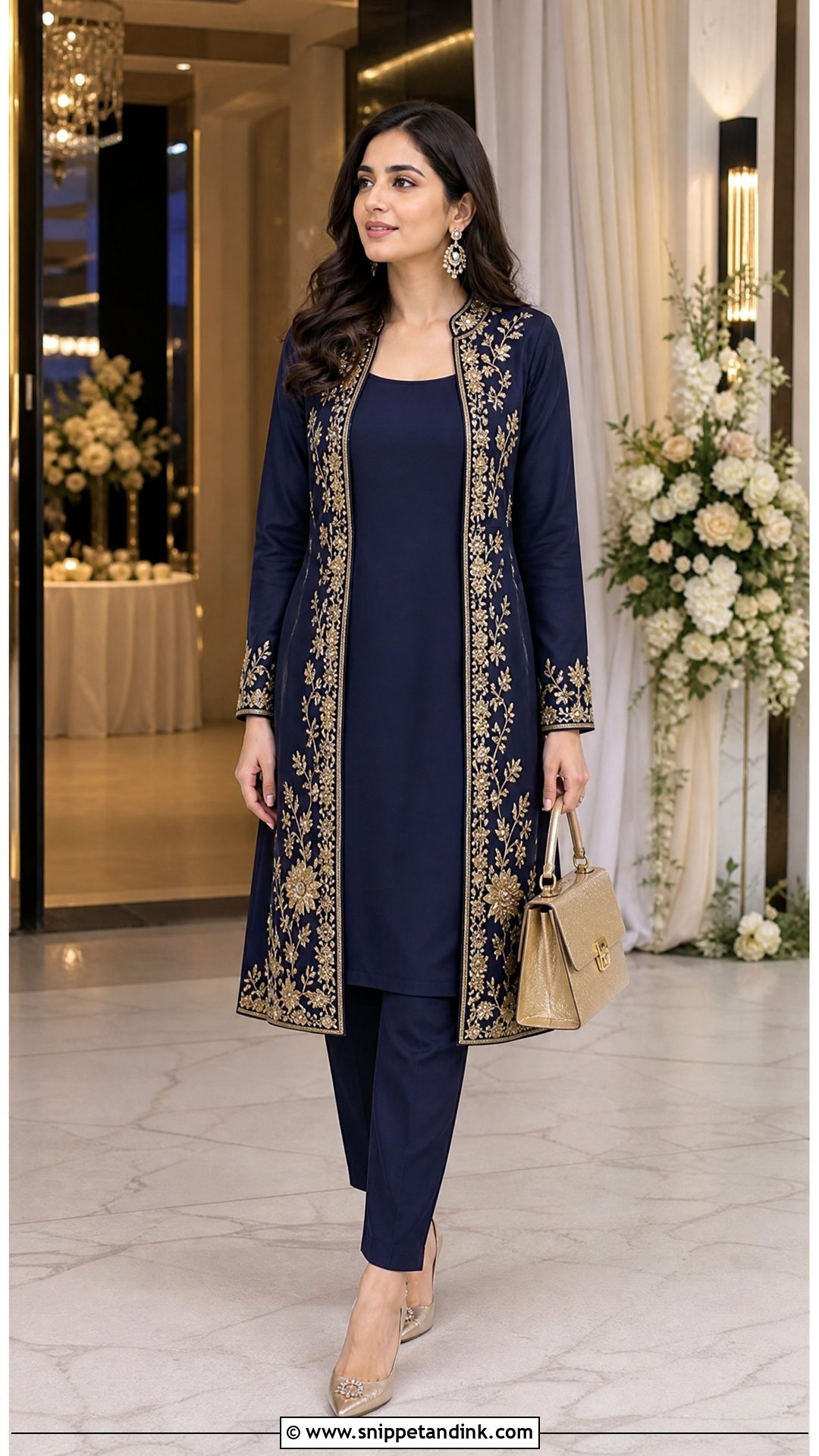
An embroidered jacket turns a plain suit into something with real structure. Start with a sleeveless or short-sleeved inner kurta and straight pants in a solid neutral or jewel tone, then layer a knee-length open jacket with floral threadwork, sequins or metallic embroidery. With a heavily worked jacket, skip the dupatta or carry a very light one over the forearms. Pointed heels, drop earrings and a structured bag finish it. The open front creates long vertical lines, which flatter most heights. My one fit check: lift your arms. If the jacket hikes up at the back, the armholes are cut too low.
13. Punjabi Cape Suit With Slim Pants
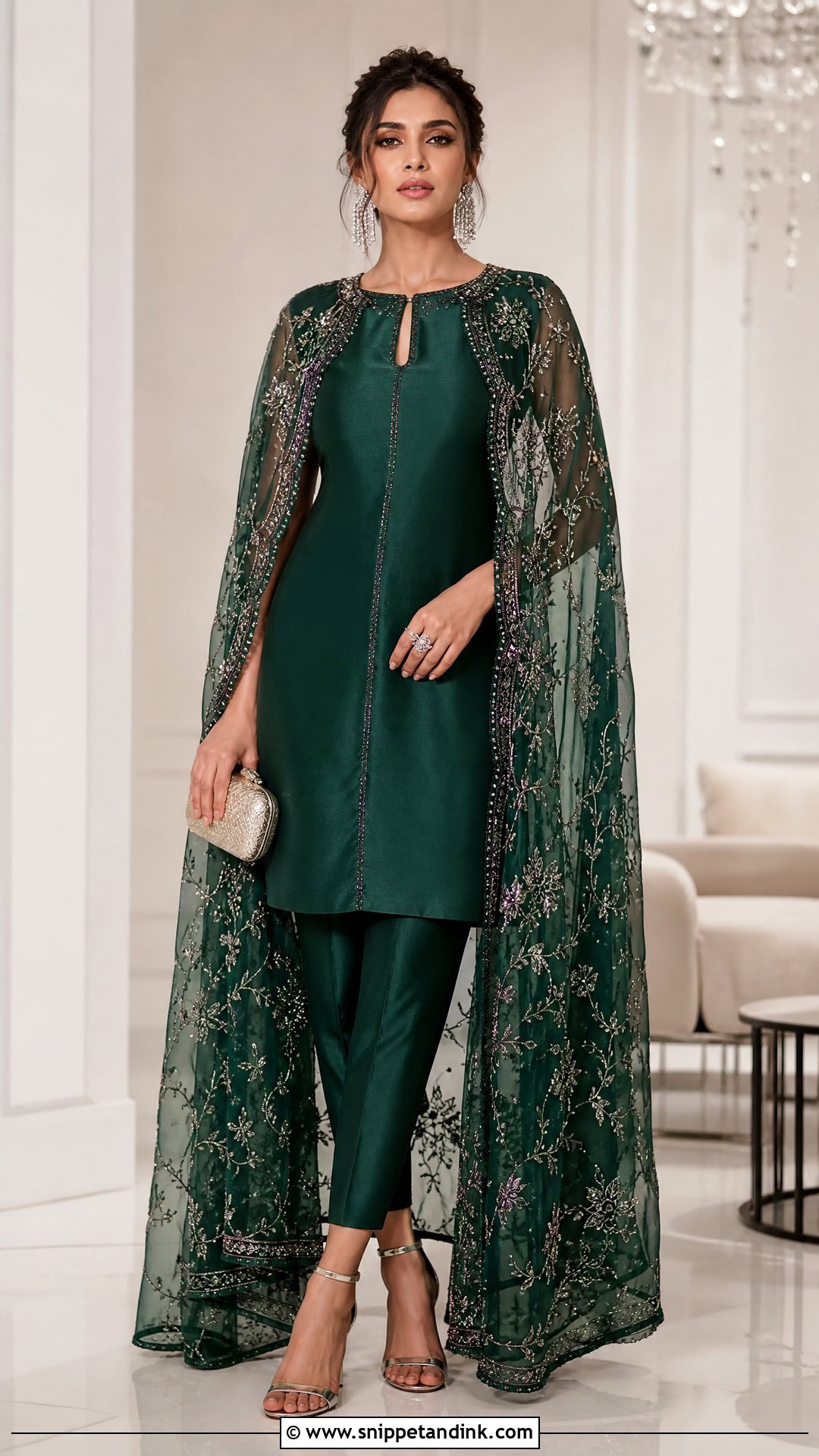
A cape replaces the dupatta and frees your hands, which is the whole reason I recommend it. A fitted inner kurta and slim ankle pants sit beneath a sheer cape falling from the shoulders or neckline, with embroidery along its edges. Soft grey, rose gold, navy, lavender and emerald look polished at night. Since the cape provides the drama, keep jewelry to long earrings and one ring. Metallic heels and a compact clutch finish it. The cape length matters: ending at the hip or knee works; ending mid-thigh cuts the body awkwardly and hides the shape of the suit.
14. Punjabi Dhoti Suit With Asymmetrical Kurti
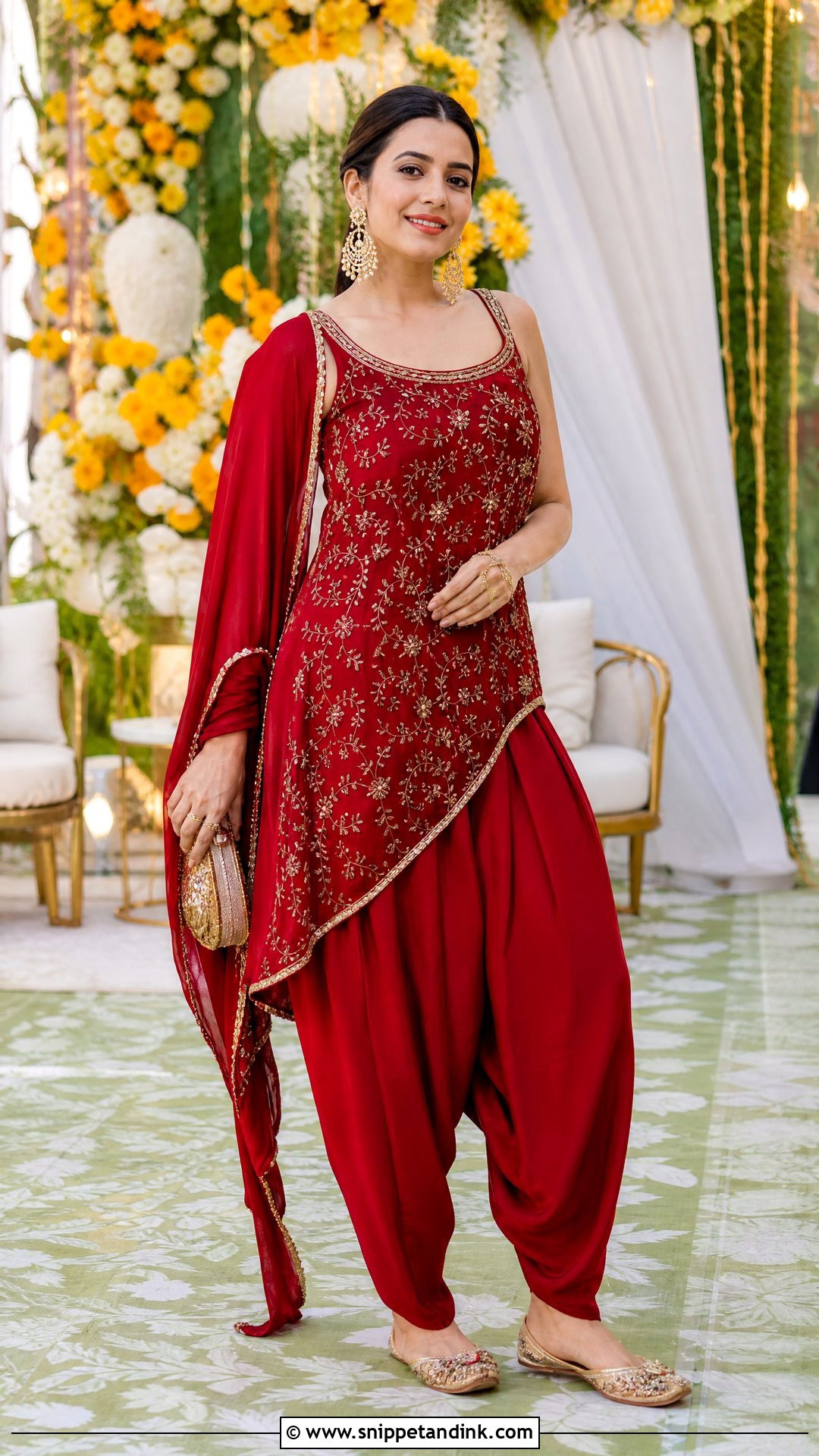
Dhoti suits are young and bold, and they need careful tailoring. Pair structured dhoti pants with an asymmetric kurti, shorter at the front, longer at the back, fitted through the body and opening at the hips so the pleated bottoms show. A solid jewel tone or a two-color combination with subtle metallic work suits it. A narrow dupatta over one shoulder adds formality if needed. Embellished juttis, sculptural earrings and a small wristlet keep it modern; a big bag fights the silhouette. Have the pleats stitched flat at the waistband, or they bunch at the stomach.
15. Floral Punjabi Suit With Organza Dupatta
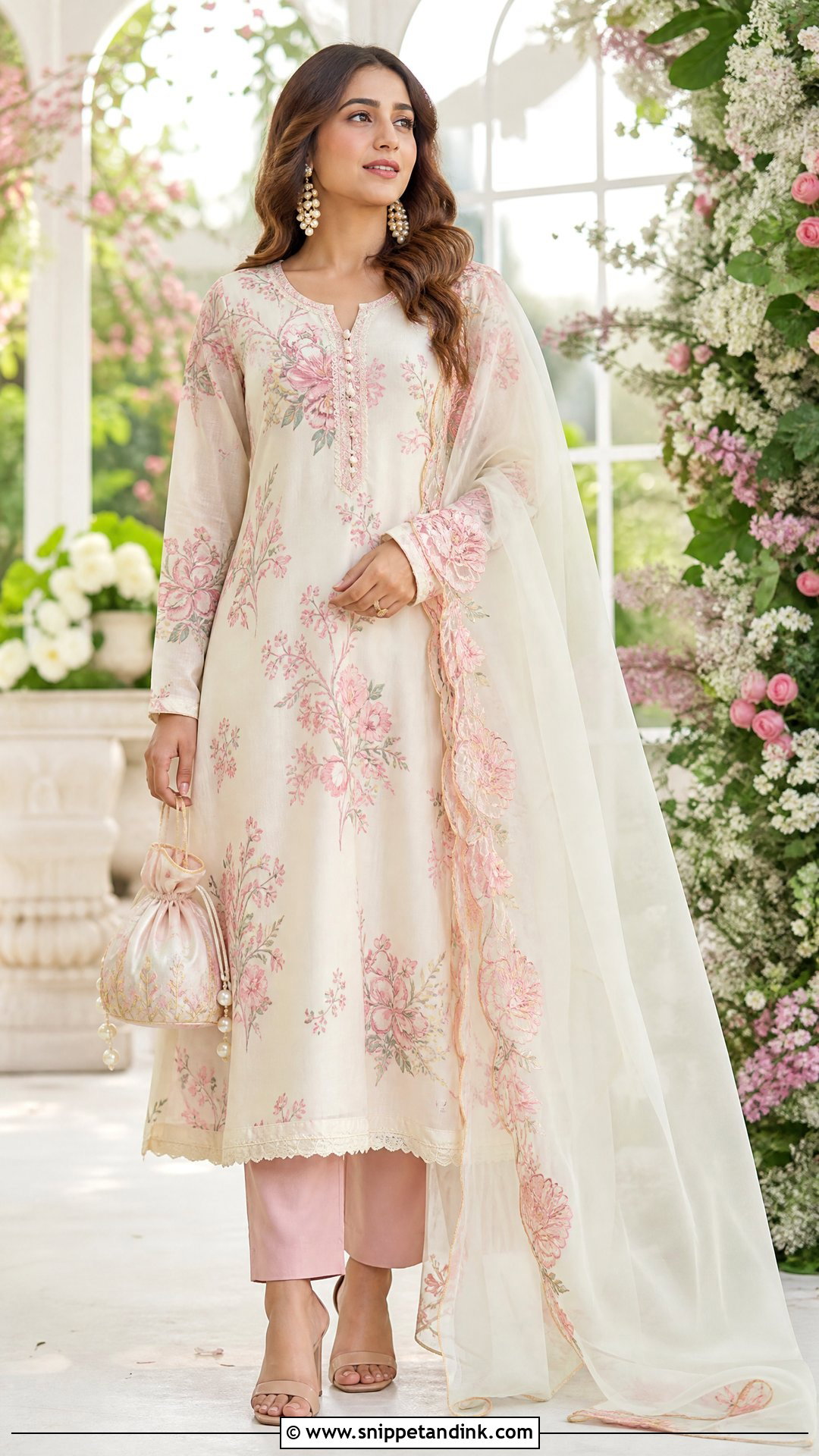
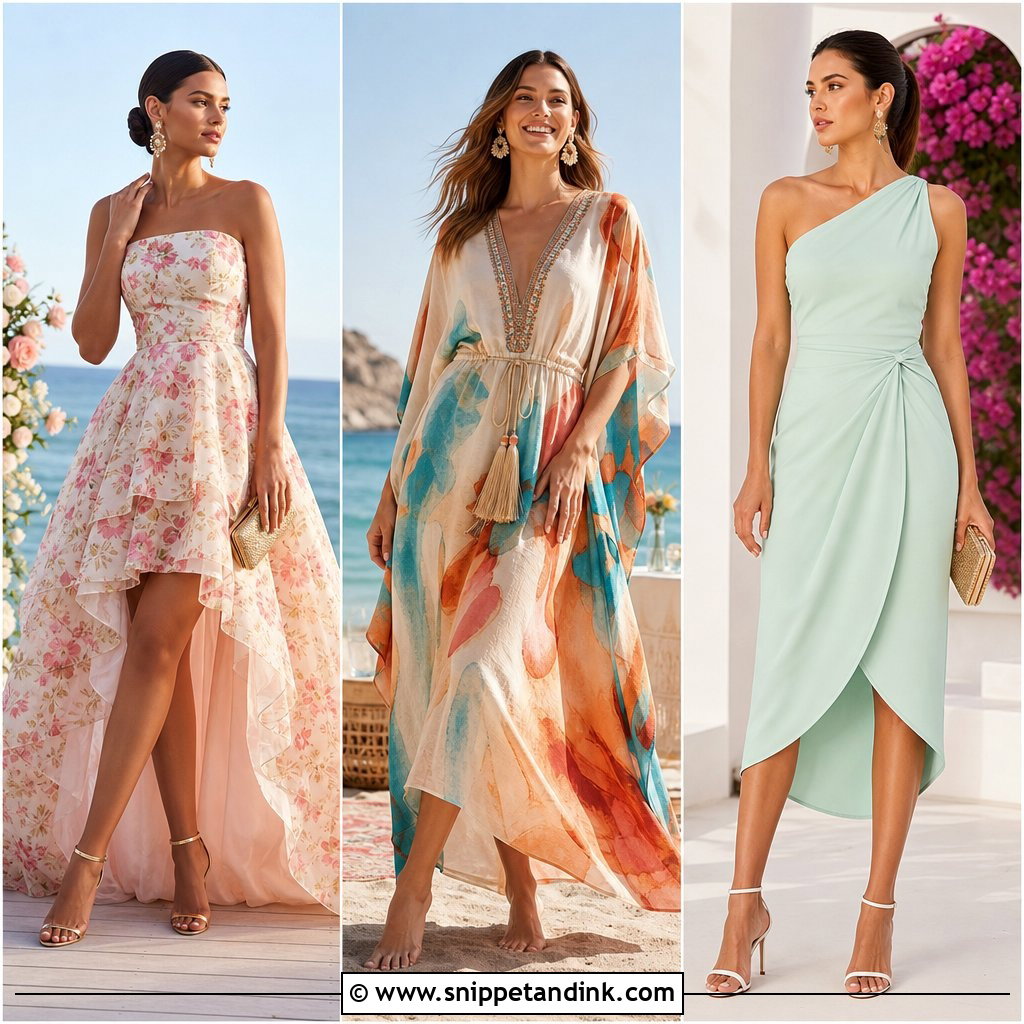
Floral prints are for spring and summer guests, and they solve the problem of looking festive without competing with the bride. Choose a straight or A-line kameez in watercolor florals or small botanical motifs, with solid straight pants in a color pulled from the print. A transparent organza dupatta with floral edging finishes it. Blush, mint, sky blue, ivory and peach suit outdoor ceremonies; navy or emerald grounds are better for evening. Pearl earrings, a pastel potli and nude or metallic block heels complete it. Digital prints on georgette can look flat in photos, so look for some embroidery on top.
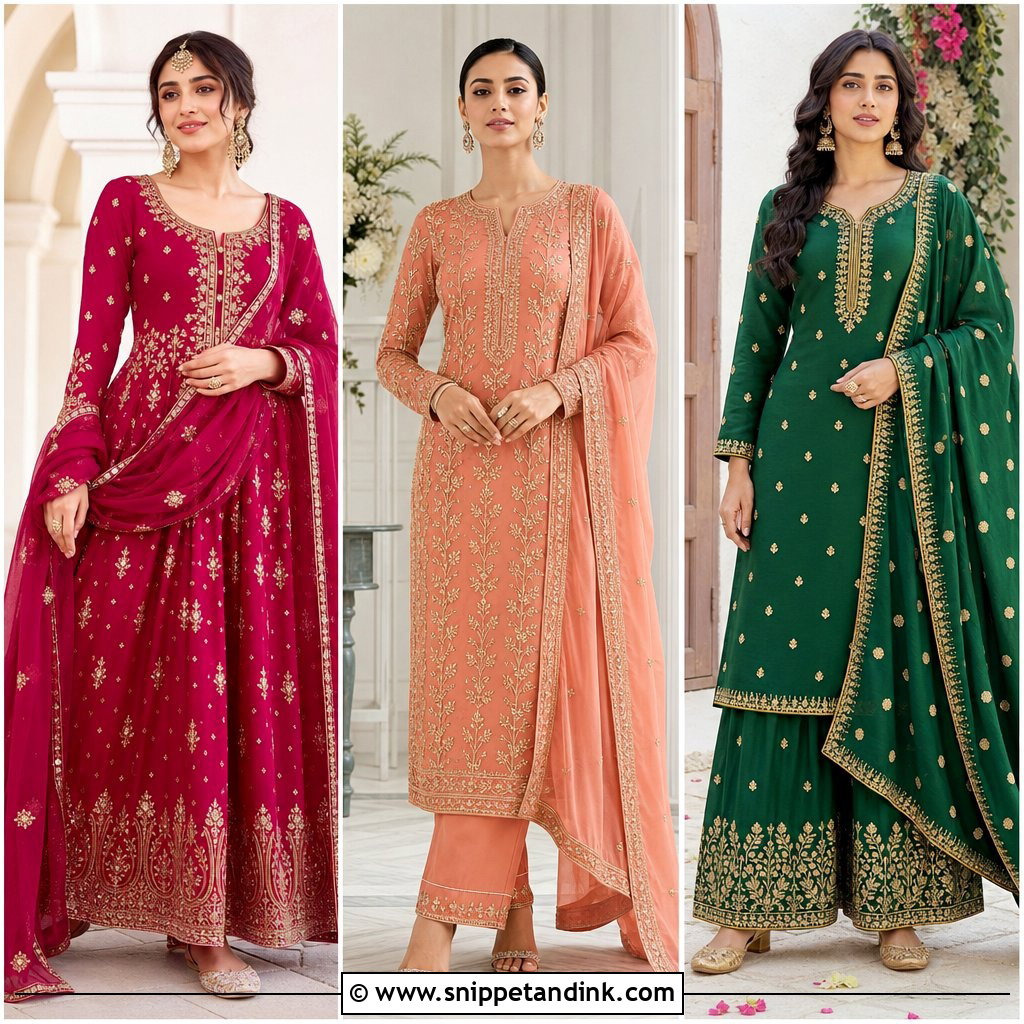
16. Monochrome Punjabi Suit With Heavy Dupatta
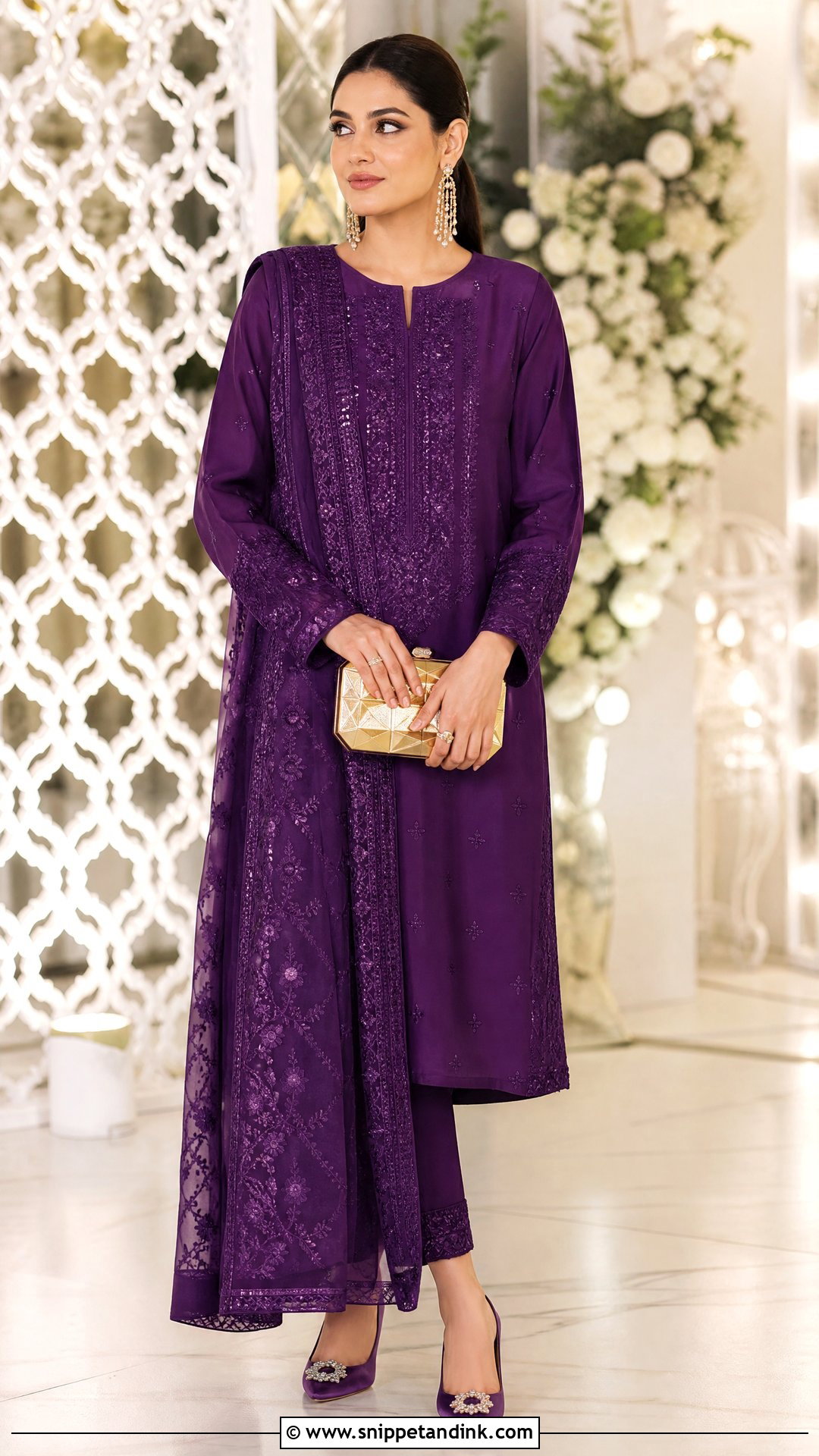
One color from head to toe looks confident and is the easiest outfit to coordinate. Choose a straight kameez and pants in the same shade, then bring in texture with embroidery and a heavy dupatta. Deep purple, ruby, teal, cobalt and chocolate brown suit evening; coral, mint and powder blue suit daytime. A dupatta with tonal threadwork, small sequins or an ornate border carries the detail. Keep shoes close to the outfit color. Mixing matte and shiny fabric in the same shade keeps the look from going flat; a crepe kameez with a satin-silk dupatta is a reliable pairing.
17. Ivory Punjabi Suit With Gold Embroidery
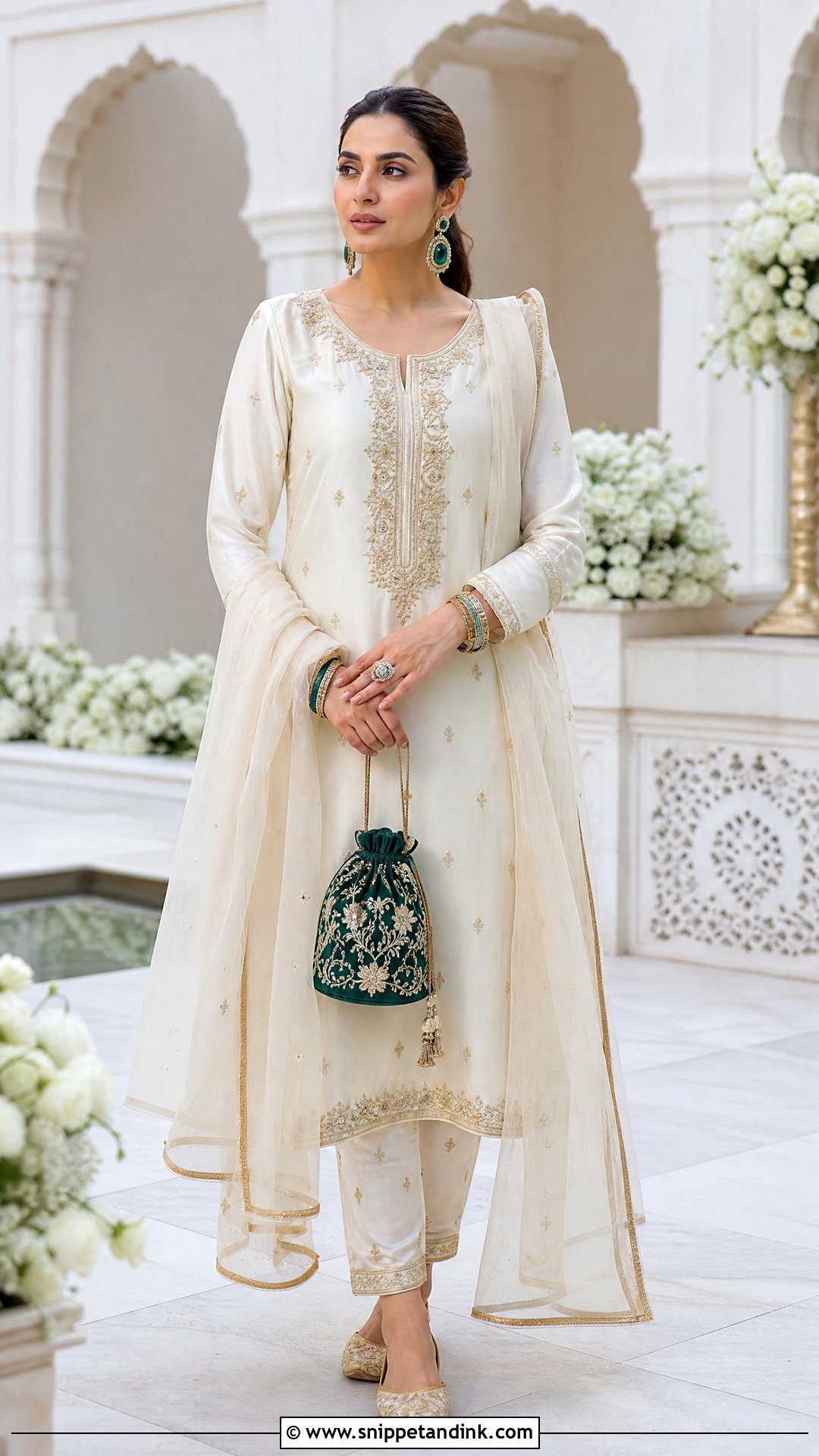
Ivory and gold glow at a reception, but they come with an etiquette question. In many families, ivory with heavy gold reads as bridal, so check what the couple and the bride are wearing before you commit to something elaborate. Choose an ivory silk or crepe kameez with gold zari at the neckline, cuffs and lower border, with straight pants, churidar or a soft salwar. Add an ivory organza dupatta with a gold edge, and bring in color with emerald earrings, ruby-toned bangles or a jewel potli. Gold heels or juttis keep it cohesive. Pale fabric shows through, so a good lining is not optional.
18. Magenta Punjabi Suit With Gold Juttis
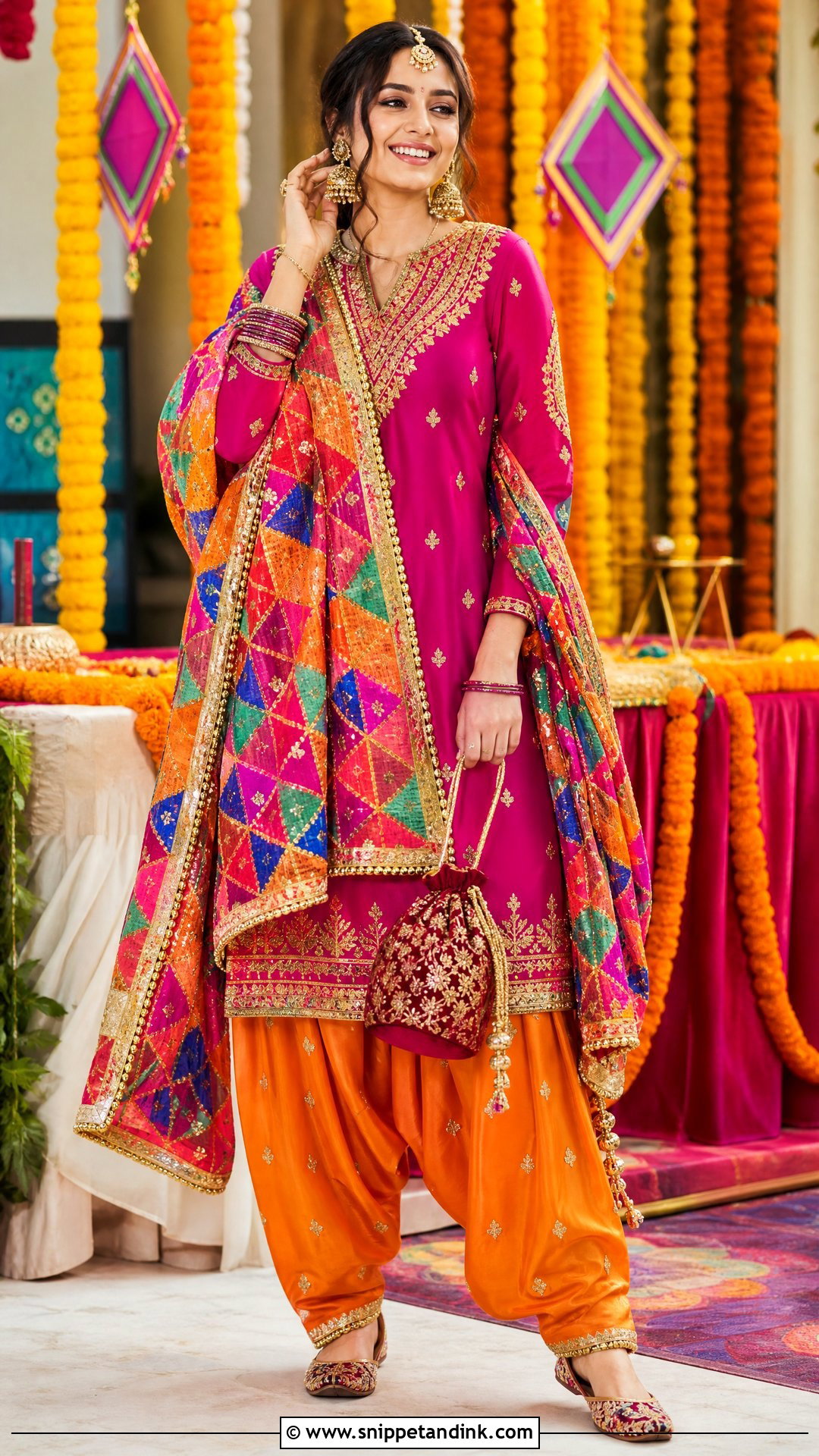
Magenta is the color of a Punjabi party. Choose a silk kameez in an A-line or straight cut with matching salwar, or a contrasting orange Patiala. Gold work at the neckline gives the saturated shade a formal edge. Then pick a magenta, orange, or red phulkari dupatta depending on how loud you want to go. Gold juttis, jhumkas and stacked bangles keep it traditional; carry a small potli, not a shoulder bag. Pair a defined eye with a neutral lip. Strong magenta can cast pink onto the face in photos, so a slightly warmer foundation balances it. Wear it to the jaggo, mehndi or sangeet.
19. Plus Size Punjabi A-Line Suit
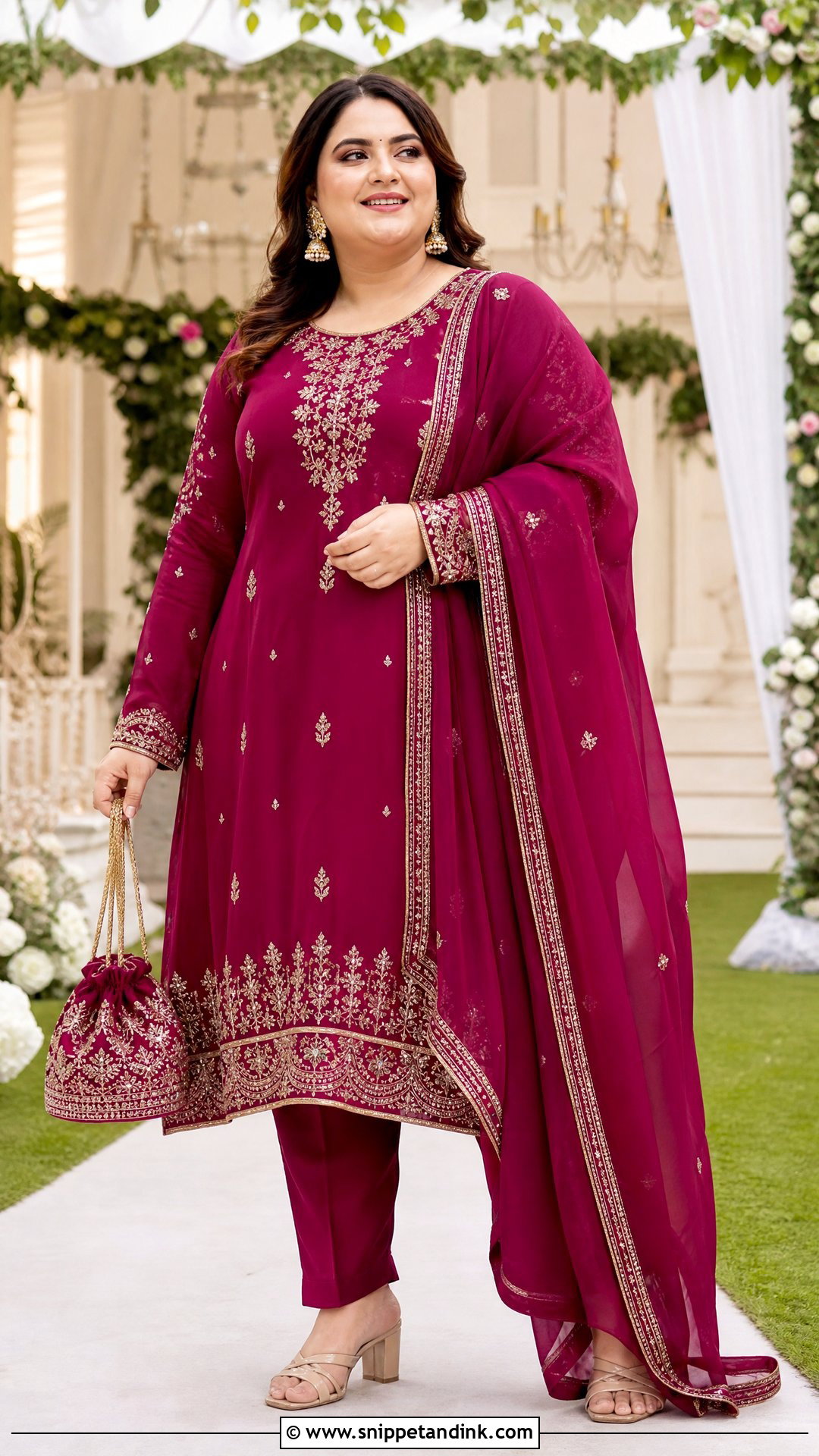
A-line suits are where I start for plus-size clients, because the shape follows the shoulders and bust and then releases gently toward the hem. Vertical embroidery, an open neckline and three-quarter sleeves keep the line clean. Pair with straight pants or a soft salwar that skims rather than clings. Navy, berry, emerald and plum suit evening; brighter pastels suit daytime. Drape the dupatta over one shoulder instead of wrapping it across the body. Block heels or cushioned juttis, statement earrings and a medium potli finish it. The shoulder seam, armhole and bust are what make or break the fit, far more than the size on the label.
20. Brocade Punjabi Suit With Straight Pants
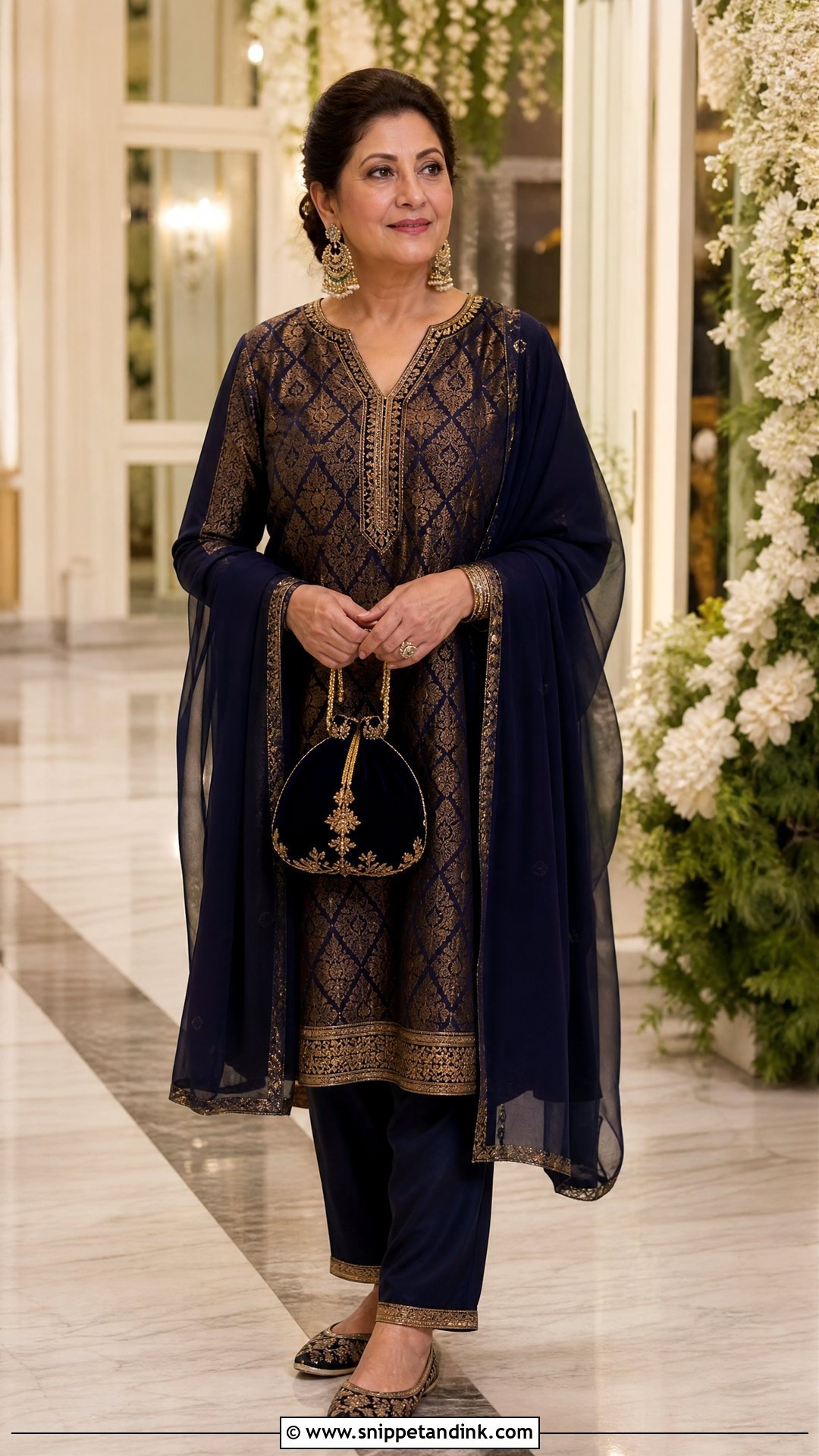
Brocade has its pattern woven into the cloth rather than embroidered on top, which gives it weight and a heritage feel. Choose a knee-length brocade kameez in navy and gold, maroon and bronze, or green and antique gold, and pair it with plain silk pants. A light chiffon dupatta in a solid color softens the stiff fabric. Antique earrings, a classic potli and closed juttis or low heels suit it. Brocade does not give, so the armholes and neckline must be cut generously enough to sit and lift your arms comfortably. Skip the necklace if the pattern covers the bodice. It is a dignified choice for mothers and aunts.
One Suit Can Cover Two Functions If You Plan the Swaps
Punjabi weddings stretch over several days, and few people want a new outfit for each one. The trick is to buy a suit with a plain enough base that the accessories can change its personality. A solid straight kameez with fine embroidery is the most flexible piece you can own.
For a daytime mehndi, wear it with a phulkari dupatta, glass bangles, flat juttis and a paranda braid. For the reception, swap in a sheer organza or net dupatta with a gold border, chandbalis, heels and a smooth bun. Changing the bottoms helps too: the same kameez over a Patiala salwar looks festive, while over slim cigarette pants it looks sleek. Change the dupatta and the earrings and most people will not realize it is the same suit.
- Dupatta: phulkari or bandhani for day, organza or net for night.
- Bottoms: Patiala or sharara to dance, straight pants or churidar to dine.
- Shoes: juttis for the gurdwara and mehndi, heels for the reception.
- Hair: braid with paranda versus a sleek low bun.
Good Tailoring Beats Heavy Embroidery Every Time
A wedding outfit should feel festive and comfortable at the same time. Start with a silhouette that fits you well, then choose fabric and embroidery to suit the venue, the weather and your role in the family. Patiala and mirror work for dancing nights, straight cuts and chikankari for daytime, velvet and brocade for winter receptions. Finish with a dupatta you can manage, shoes you can stand in and a small bag. You do not need the heaviest embroidery to look well dressed. Color, tailoring and balanced accessories almost always do more, and they leave you free to enjoy every function.
You'll Like These Ideas:



Leave a Reply