
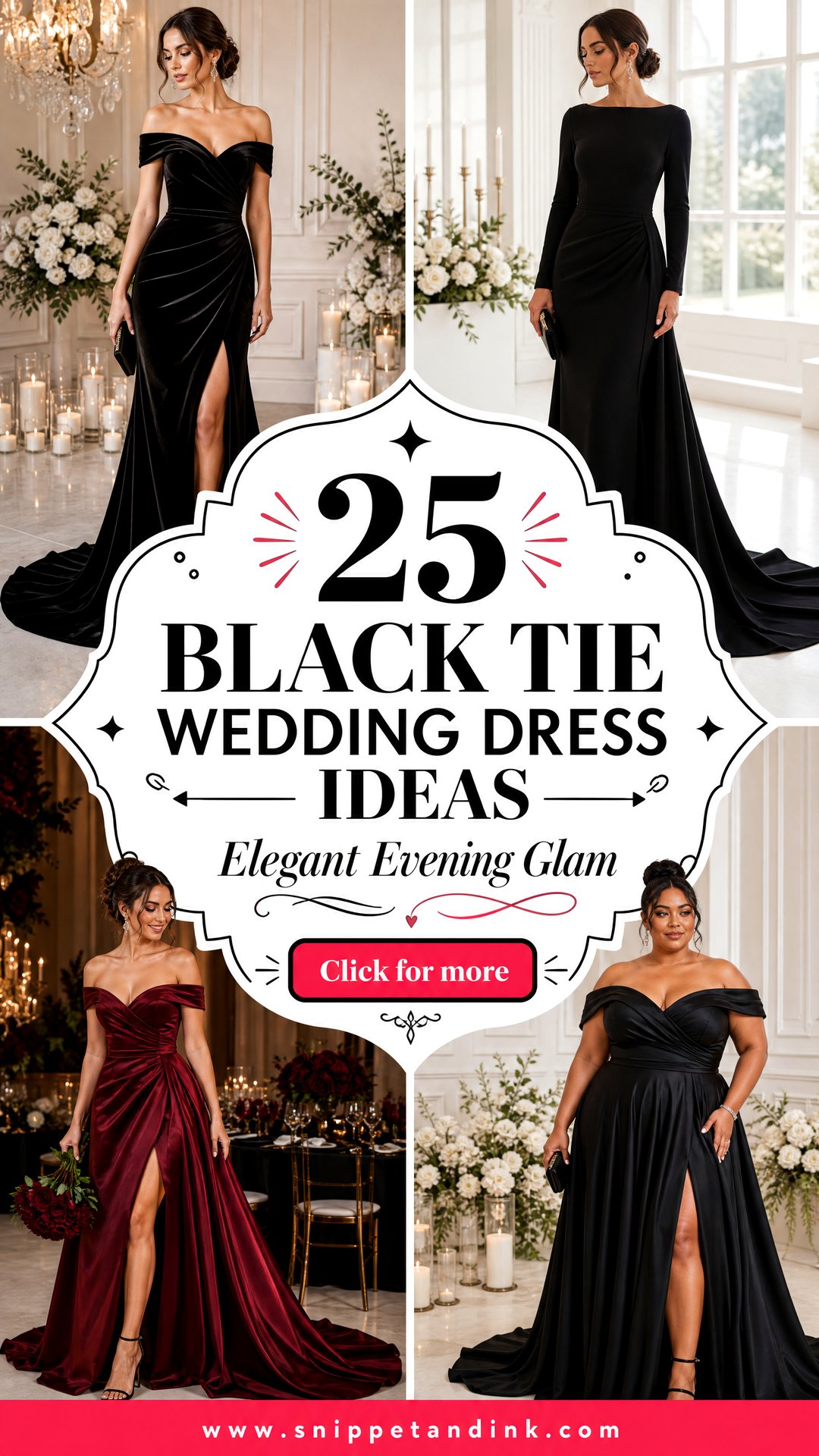
A black tie invitation is the one dress code that leaves very little room for guessing. It means evening formal: a floor-length gown is the default, and anything shorter has to work hard to earn its place. The couple should still be the focus, so the aim is polish rather than a show. Satin, crepe, chiffon, velvet and organza all suit the setting, and they hold up under the warm, low lighting most evening receptions use. There’s still room for personality, from a sleek column to a floral print, a jumpsuit or tailored separates. I tell everyone the same rule at a fitting: pick one strong feature and keep the rest quiet. The looks below are built that way.
Floor Length, Cocktail Length and Where the Line Sits
Black tie and black tie optional are not the same invitation. Black tie means a floor-length gown is expected, and a very dressy cocktail or tea-length dress is the furthest you should go. Black tie optional gives you more room: an elegant midi, a formal jumpsuit or a dressy cocktail dress is fine. If the card says formal or evening attire, I treat it like black tie optional.
When the wording is vague, look at the venue and the start time. An evening ballroom reception is black tie in all but name. A late-afternoon ceremony at a vineyard can be dressier in spirit and lighter in fabric. If you’re still unsure, ask someone in the wedding party. It’s a common question, and nobody minds it.
1. Black Tie Satin Gown
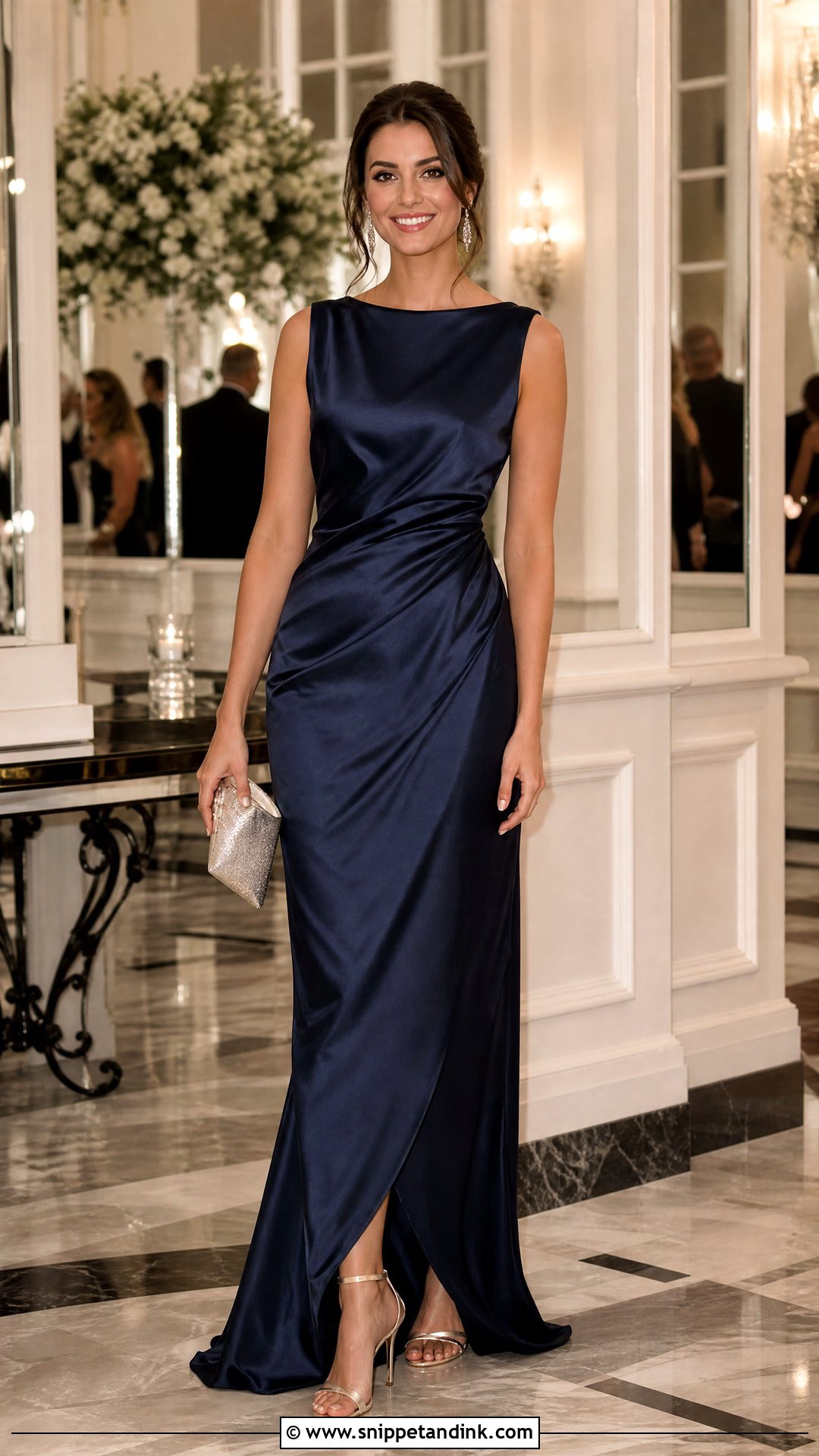
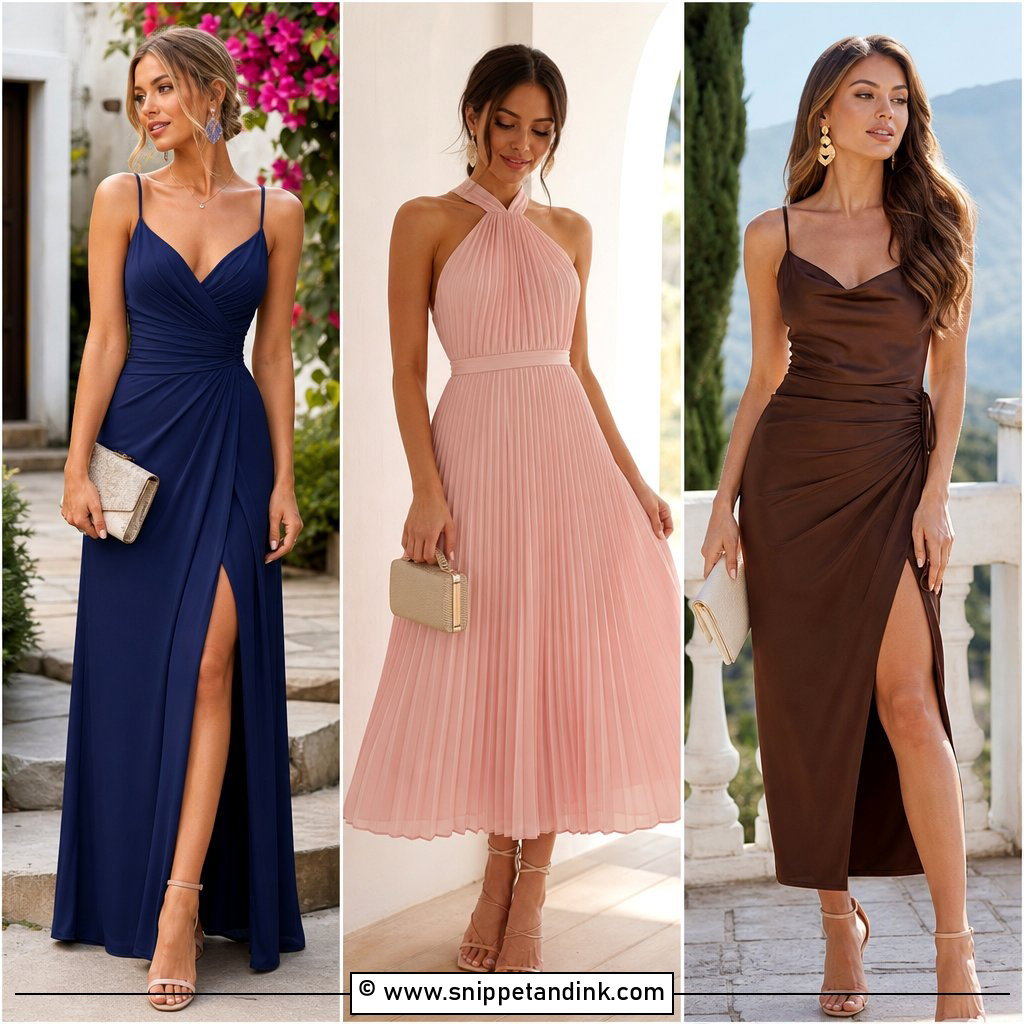
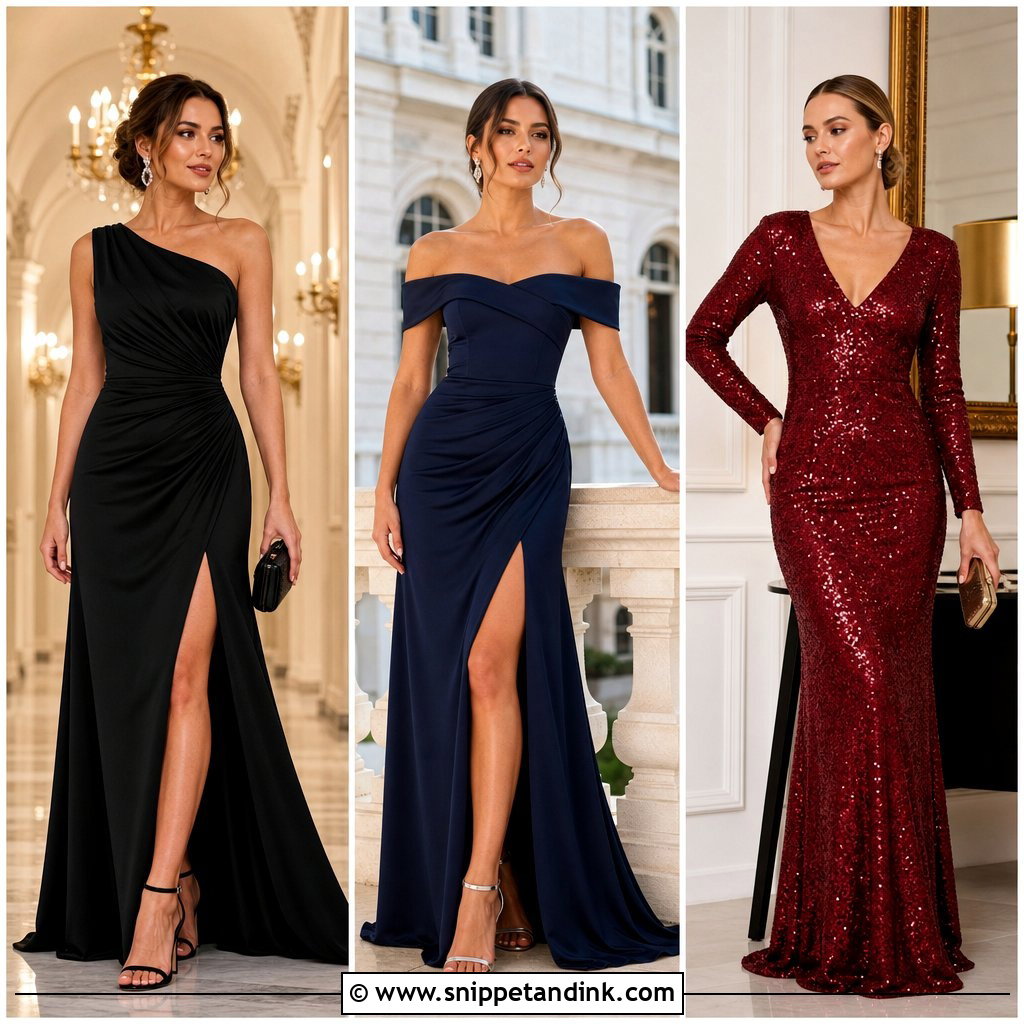
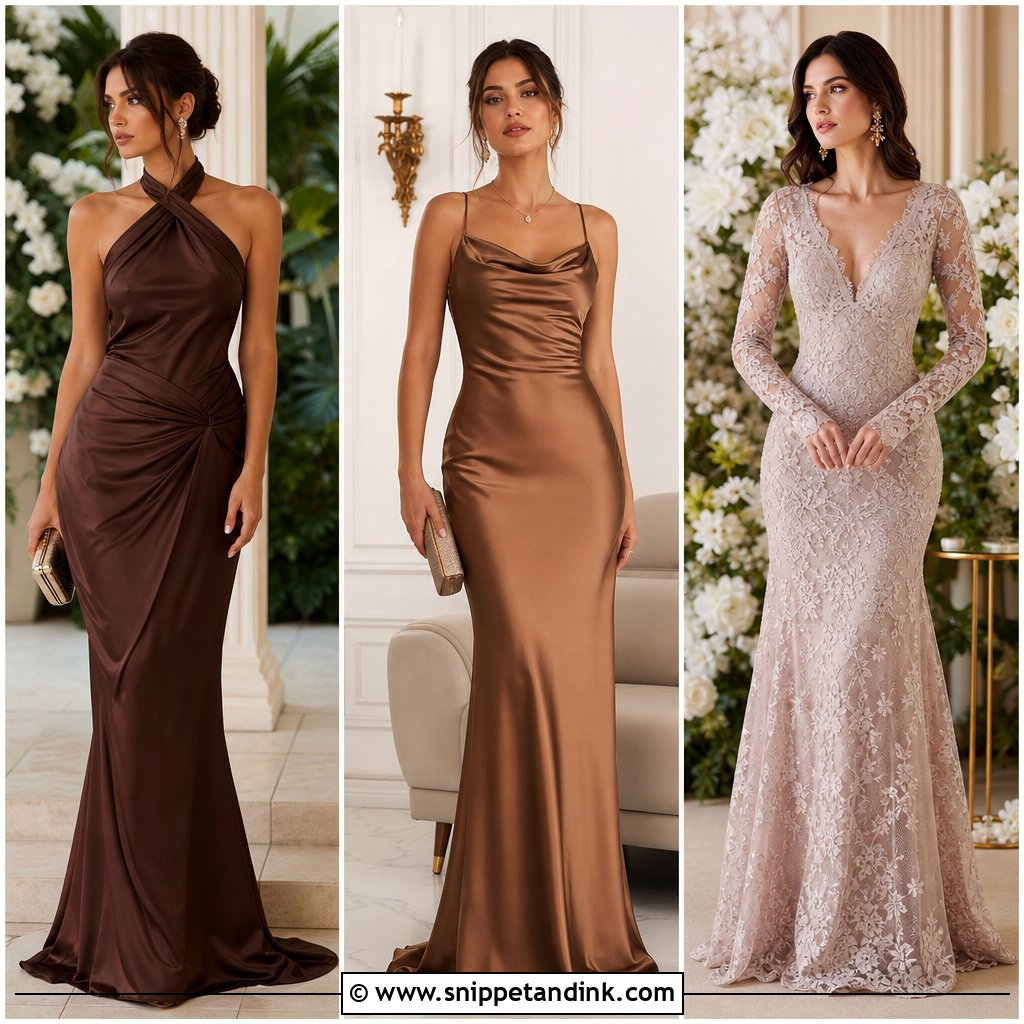
Satin is where I start most black tie fittings, because it reads formal from across a ballroom before anyone sees the details. It also shows everything underneath, so the first thing I check is the lining and the undergarments: a visible seam line will ruin it. Navy, emerald, burgundy, champagne and black all work at night. A softly draped neckline keeps it current. If the fabric has a high shine, leave the jewellery small and let the satin do the work.
2. Black Tie Velvet Gown
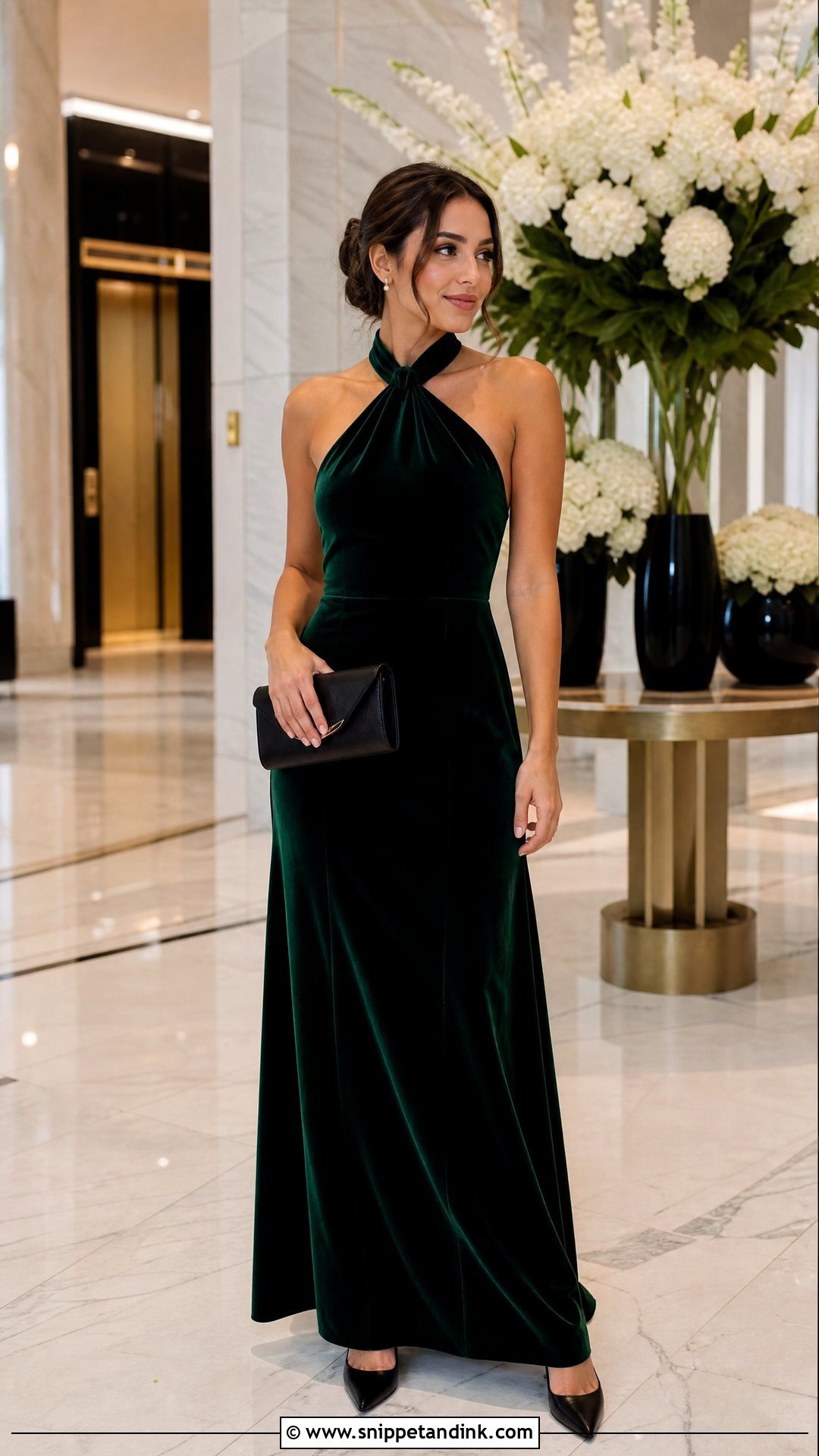
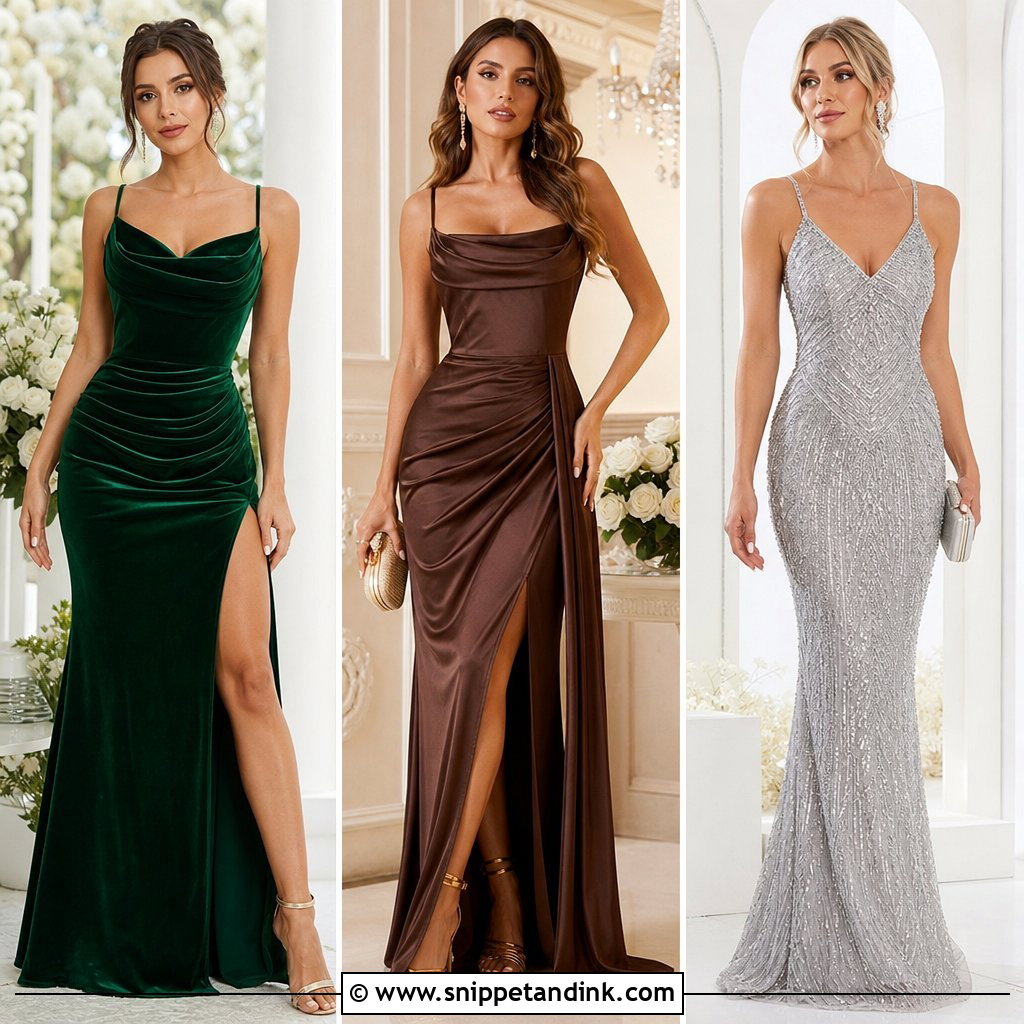
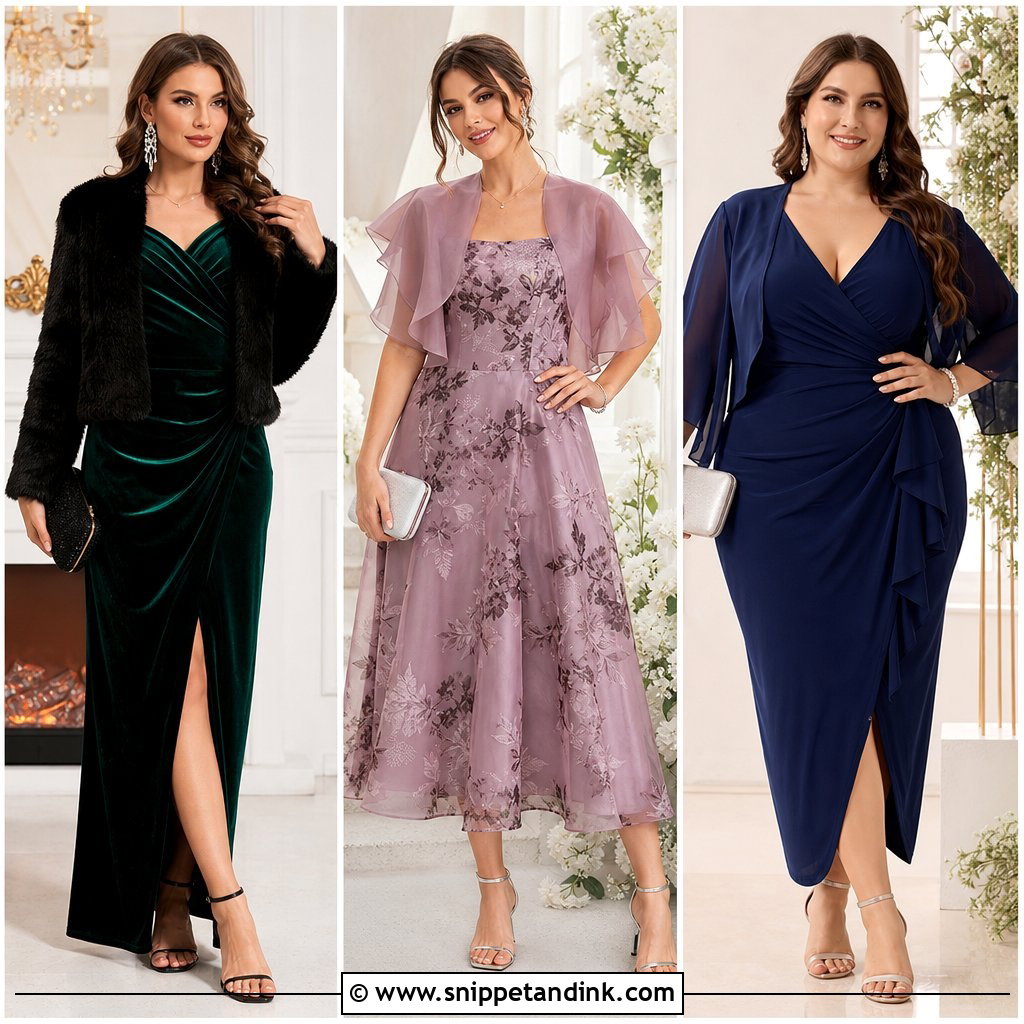
Velvet absorbs light instead of reflecting it, which is why it looks so deep in midnight blue, plum or forest green. It’s a fabric for autumn, winter and properly cooled rooms; at a summer reception it gets heavy fast. Velvet also marks easily where the pile gets crushed, so I hang it in a steamy bathroom rather than pressing it with an iron. A wrap shape or column cut both suit it. Keep jewellery to pearl studs or a slim bracelet.
3. Black Tie Chiffon Gown
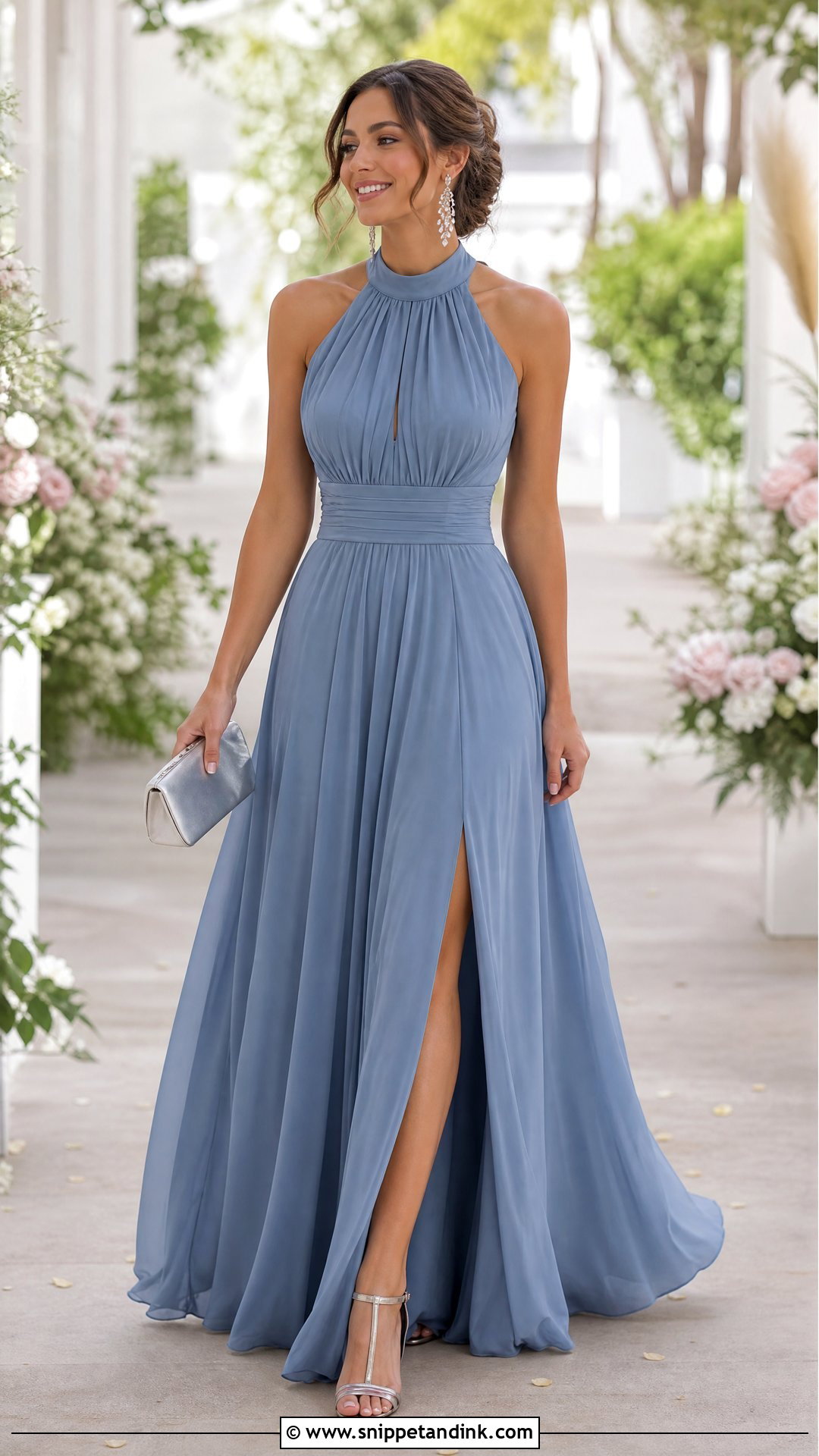
Chiffon moves when you walk, and that softness is why it suits spring and summer black tie events where satin would feel too hot. The risk is that it reads casual if the cut is loose and the print is busy. Look for a defined waist, several layers so it isn’t sheer, and a refined neckline. Dusty blue, mauve, sage and deep berry carry colour without shouting. Strappy heels and a satin clutch keep it formal.
4. Black Tie One Shoulder Gown
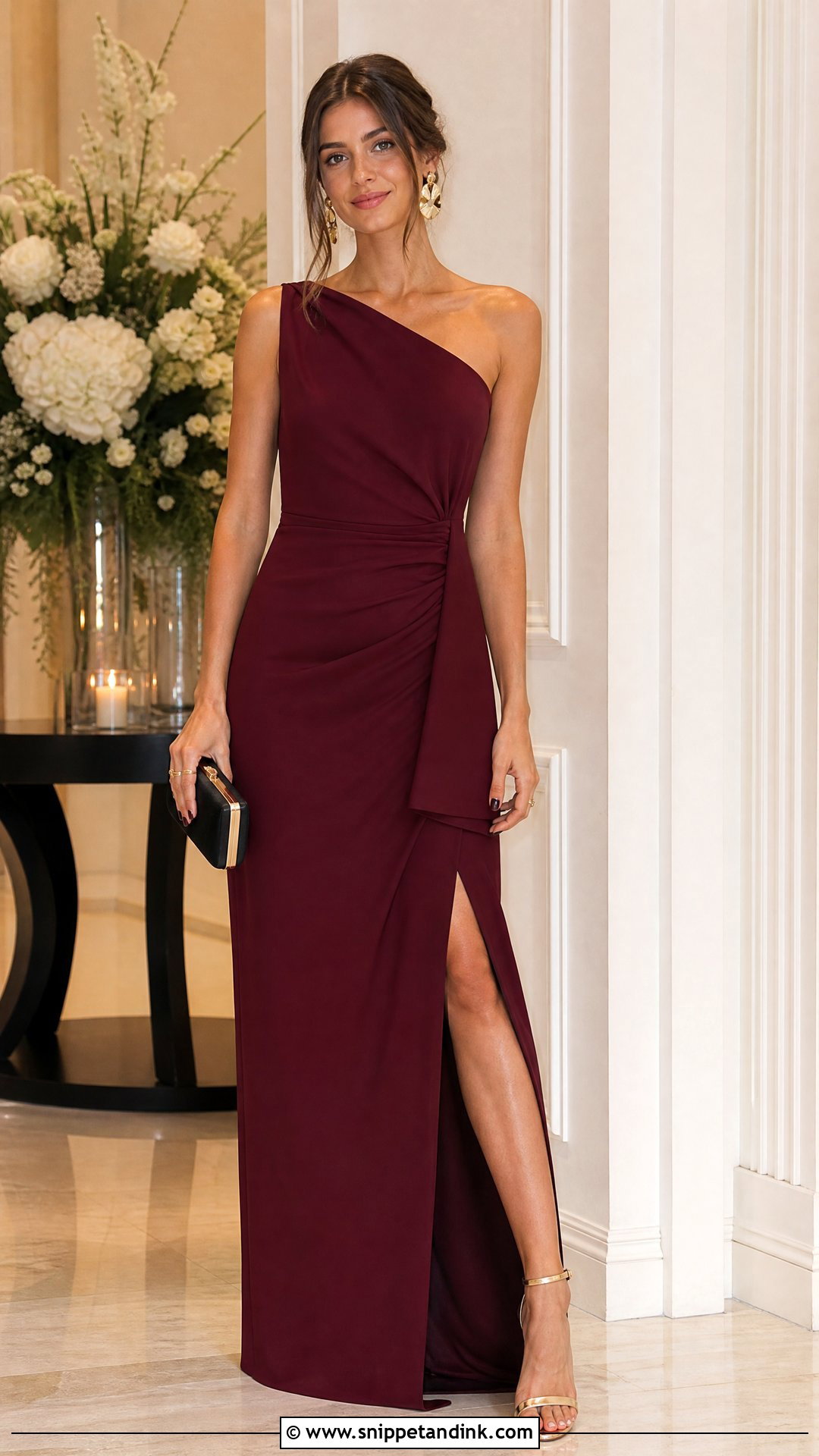
An asymmetric neckline gives a one shoulder gown its interest, so you can skip big accessories. The fit is what I watch: the single strap carries the whole bodice, and if it’s even slightly loose the gown will slide toward the bare side all night. Crepe and stretch jersey grip better than slippery satin here. A subtle side drape or a short cape detail adds drama. Sweep the hair back or tuck it behind one ear so the line stays clean.
5. Black Tie Off Shoulder Gown
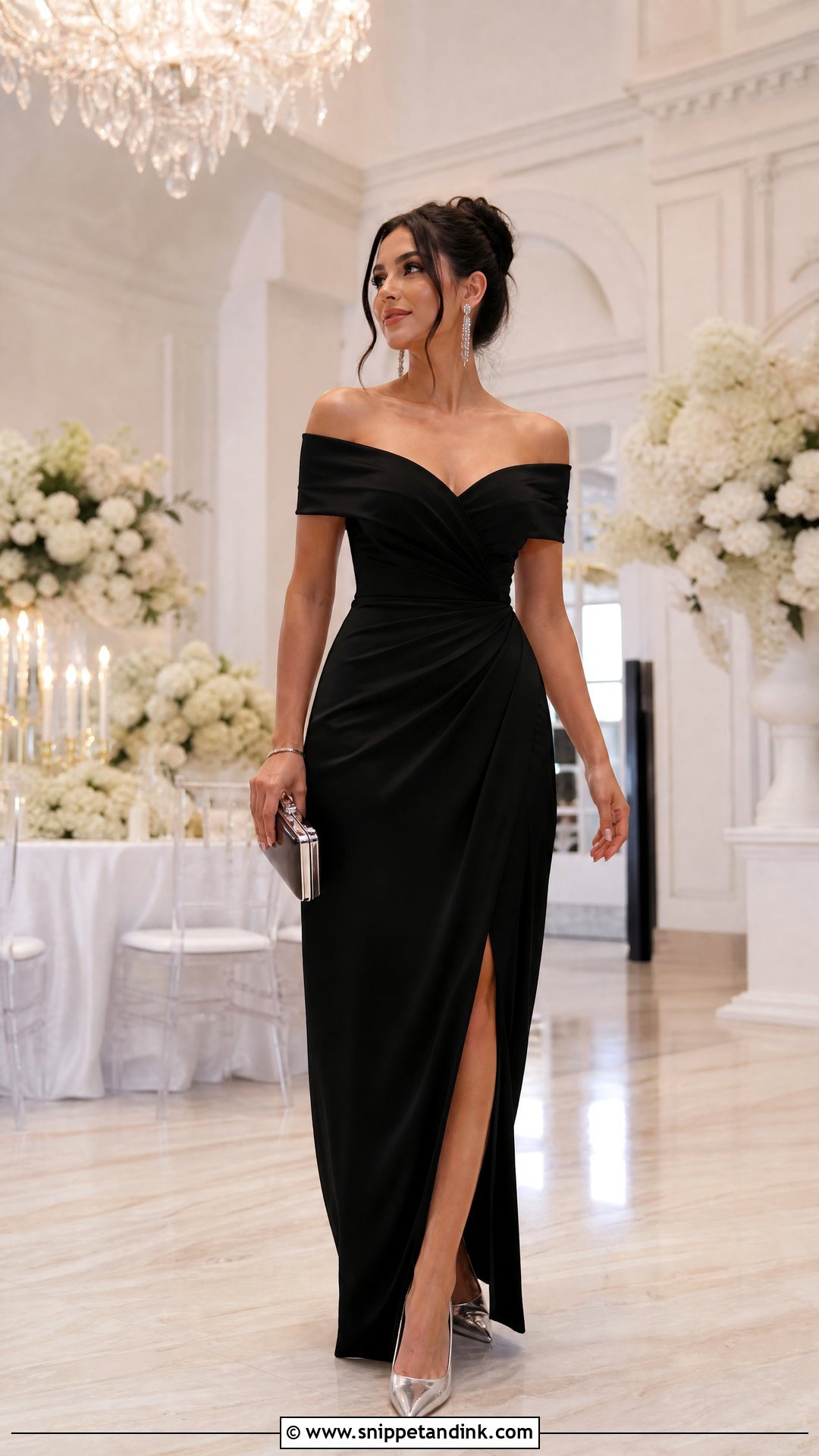
Off shoulder necklines frame the collarbones and the top of the arms, and a long skirt keeps the overall look refined. They do limit how far you can raise your arms, which matters if you plan to dance. Structured fabrics like mikado and heavy crepe hold the neckline in place far better than soft ones. Navy and jewel tones are dependable; slate blue and deep rose feel softer. Choose earrings that sit close to the face and skip the necklace entirely.
6. Black Tie Strapless Gown
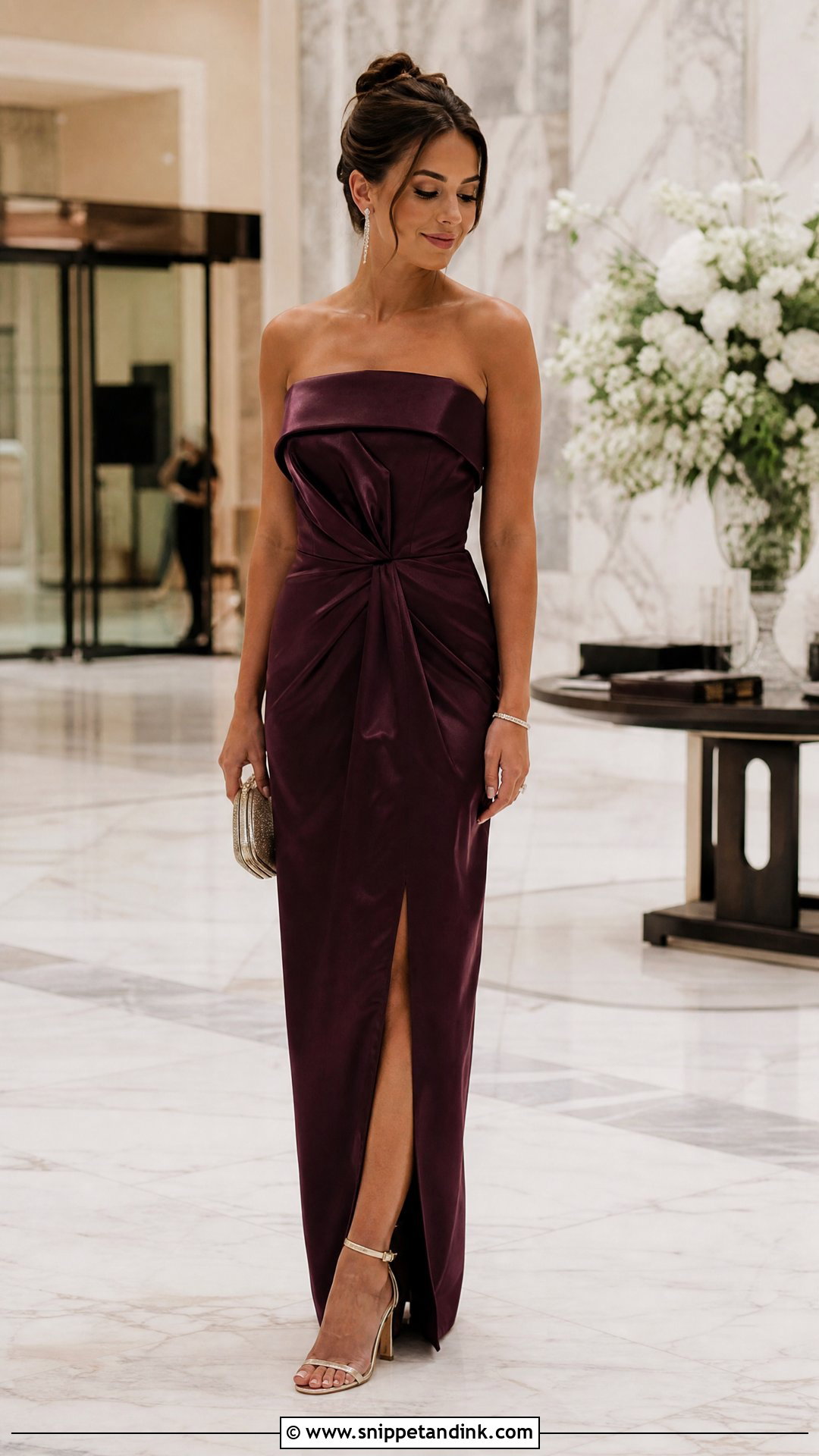
Strapless gowns depend on the bodice doing all the work, so fit beats embellishment every time. I check that a client can sit, reach for a glass and hug someone without tugging the top up. If she can’t, it needs boning or a waist stay added inside. Satin, crepe and taffeta hold shape well. For a conservative venue or a cool evening, bring a tailored wrap or a cropped evening jacket for the ceremony.
7. Black Tie Long Sleeve Gown
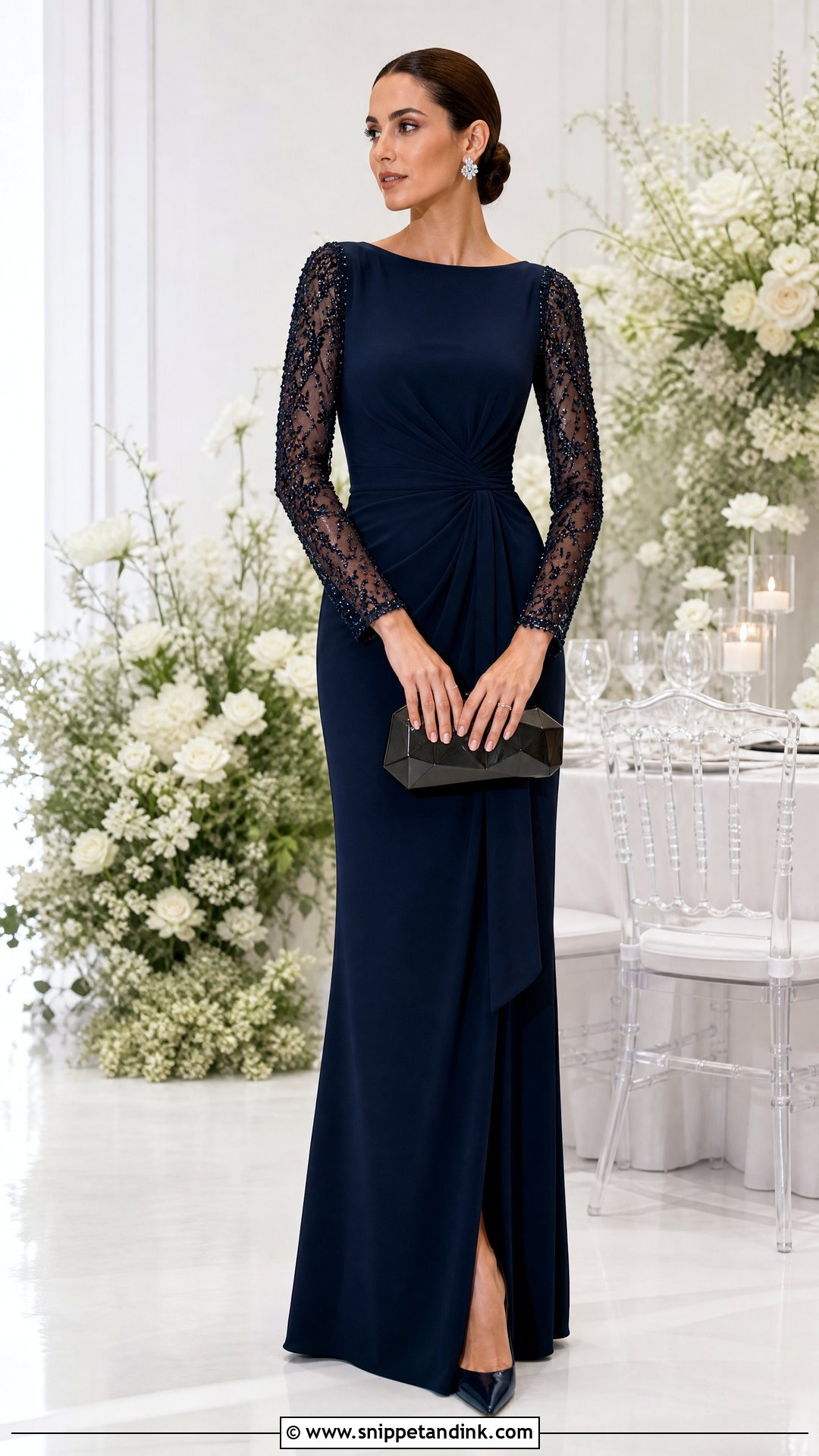
Coverage plus formality is the reason a long sleeve gown is such a safe choice for winter, religious ceremonies and traditional venues. Sleeves change how a dress moves, so check the armhole at the fitting: a high, close armhole lets you lift your arms without the whole gown rising. Sheer beaded sleeves feel lighter than fitted crepe ones. Navy, forest green, burgundy and black all suit it. Since the sleeves add detail, small earrings are enough, and you won’t need a shawl all evening.
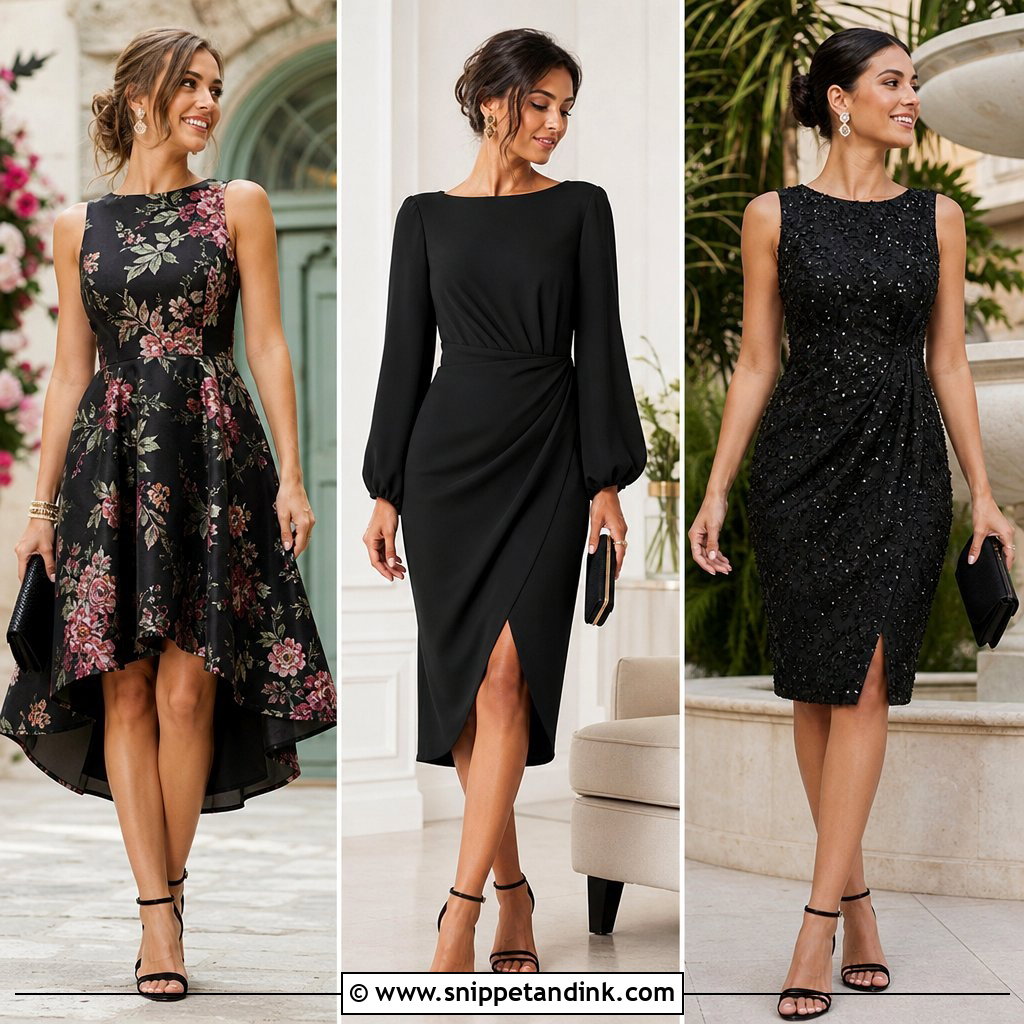
8. Black Tie Floral Gown
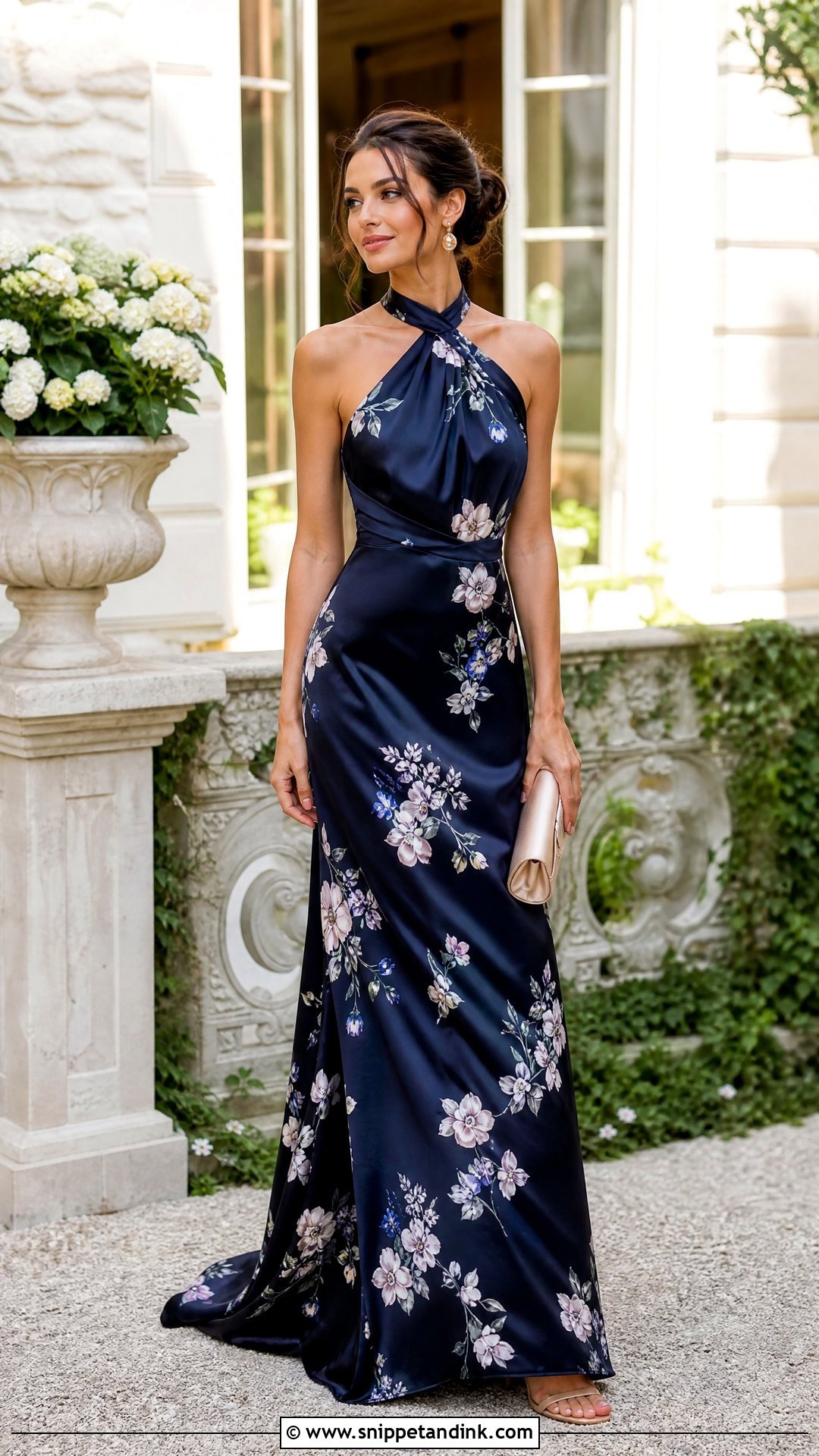
Prints are where black tie gets tricky, and a floral gown only works when it looks like evening wear. Darker grounds, painterly flowers and a little metallic thread do that; small daytime prints on cotton don’t. Pull one shade out of the print for the shoes. Keep jewellery small so the pattern isn’t fighting with it. This is the dress I’d pick for an estate or garden venue with a formal dress code.
9. Black Tie Sequin Gown
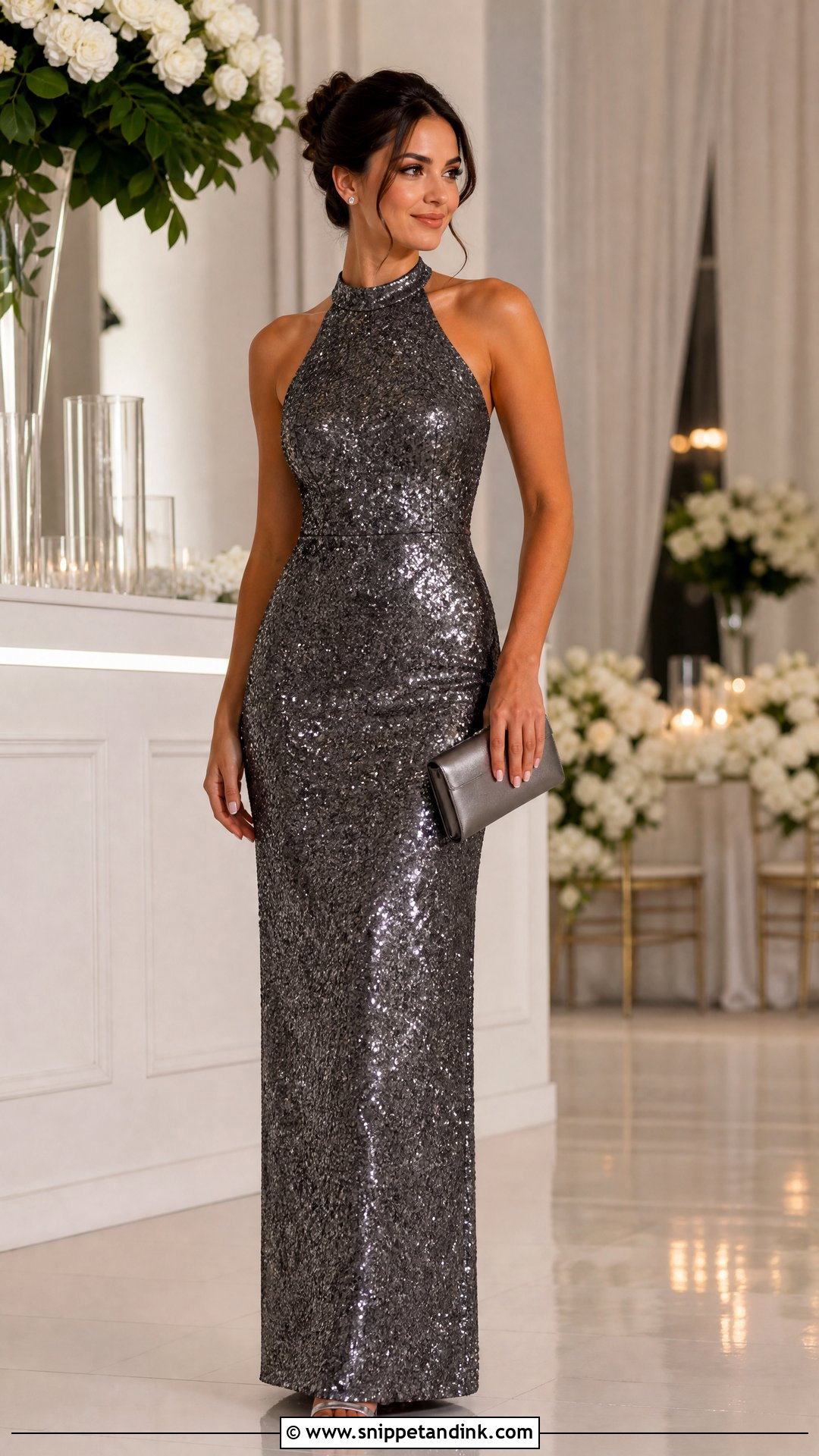
A sequin gown can tip into costume if the cut is also loud, so pair the sparkle with a quiet shape: a column, a long sleeve or a soft drape. Champagne, pewter, navy and bronze sequins look richer than bright silver or gold. Sequins also scratch whoever you hug and can snag fine fabrics, which I always mention to anyone in the wedding party. Skip the necklace if the dress is fully embellished, and let the gown carry the evening.
10. Black Tie Beaded Gown
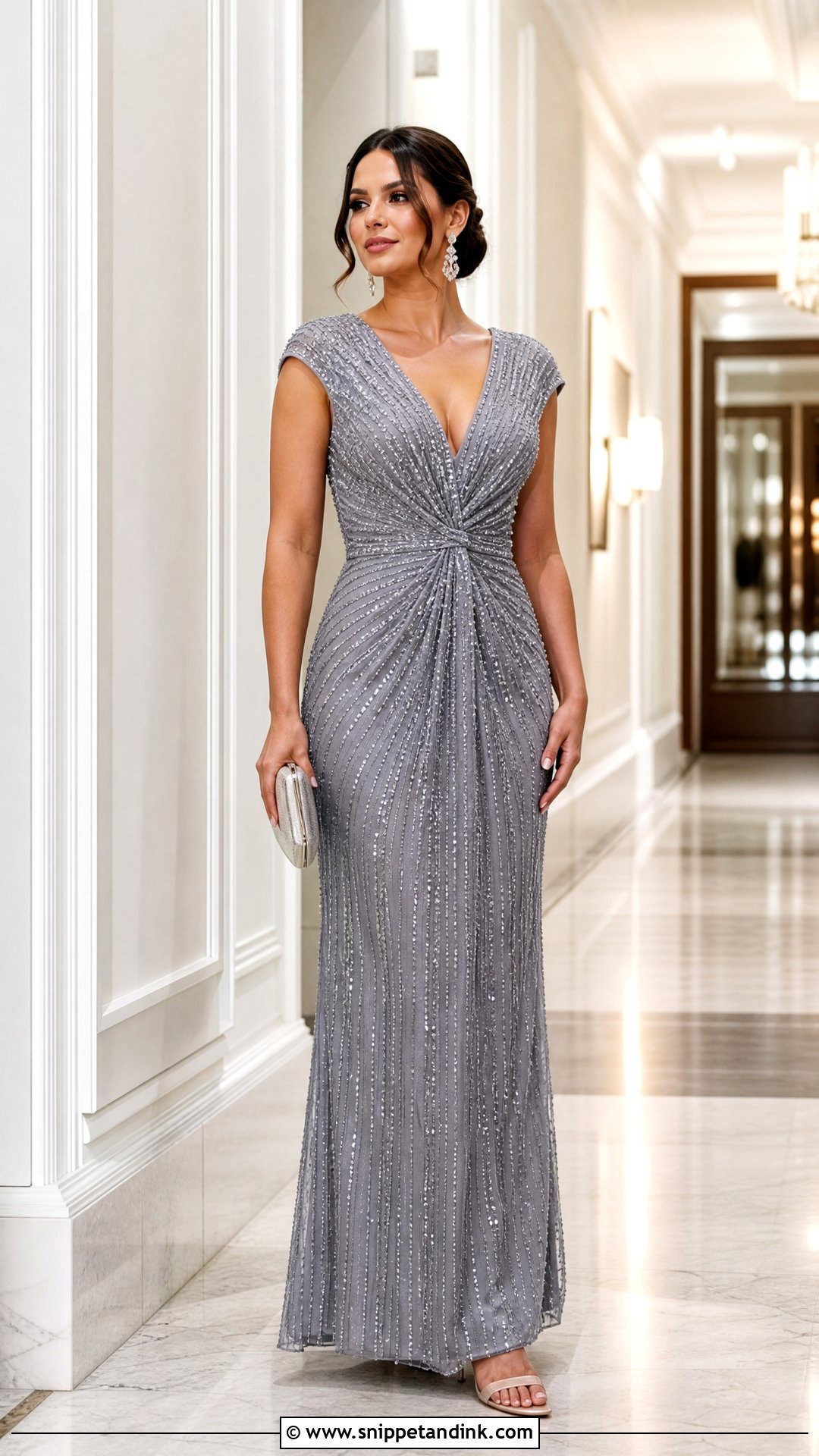
Beading adds weight, and that weight is the first thing I test. A heavily beaded skirt can pull on the shoulders and the seams, so the straps and bodice must be strong enough to hold it. Delicate or tonal beadwork in grey, blush, navy or black is more tasteful than full coverage. Sit down in it at the fitting, because beads on the back of a skirt can dig in during a long dinner. Satin heels and simple earrings finish it.
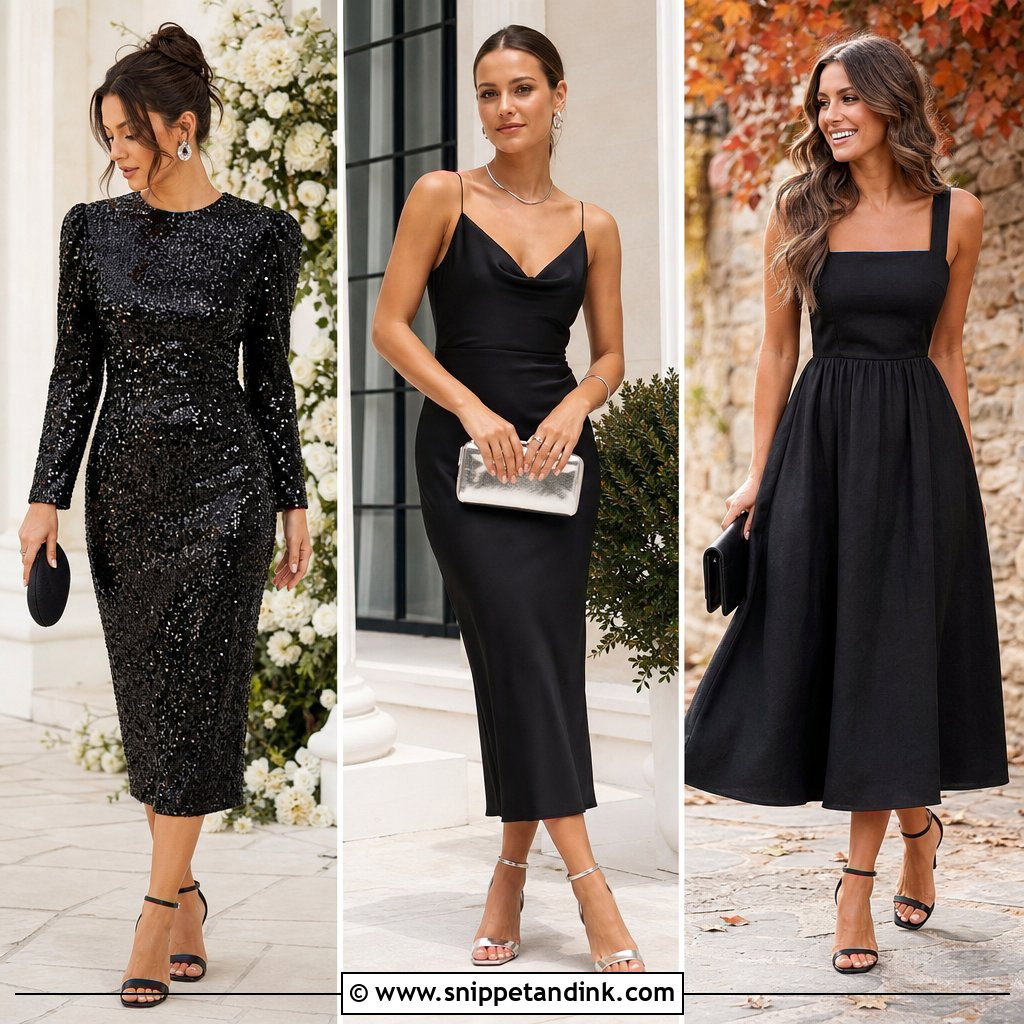
11. Black Tie Black Gown
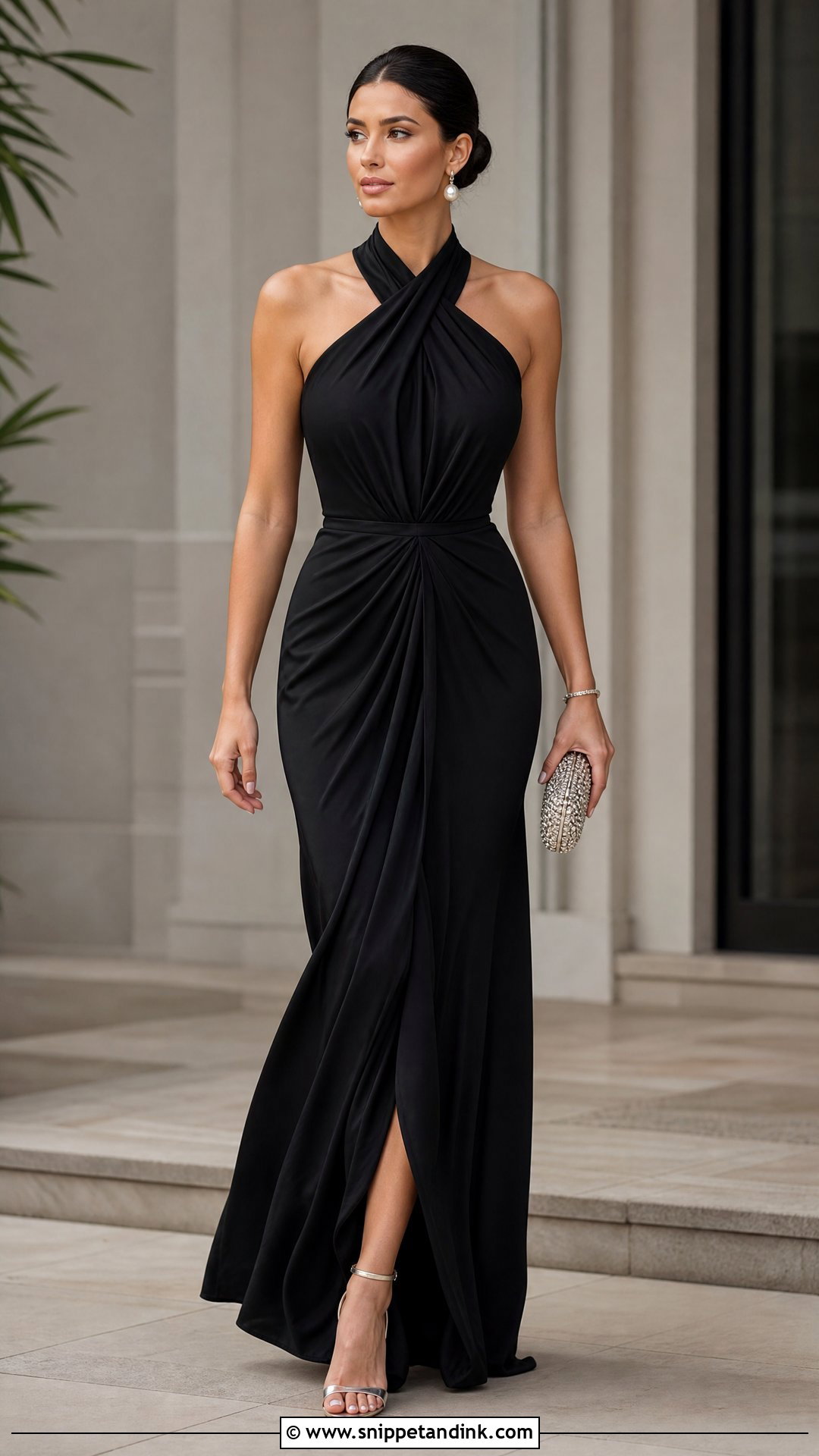
A black gown is the easiest thing to rewear for galas and dinners, which is a big part of its appeal. Plain black can look severe, so it needs one interesting feature: draping, a square neckline, a one shoulder cut or a softly flared hem. Add light with metallic heels, pearl earrings or a crystal clutch. Before you settle on black, check that the couple or the culture don’t see it as mourning wear. In most places it’s fine; in some families it isn’t.
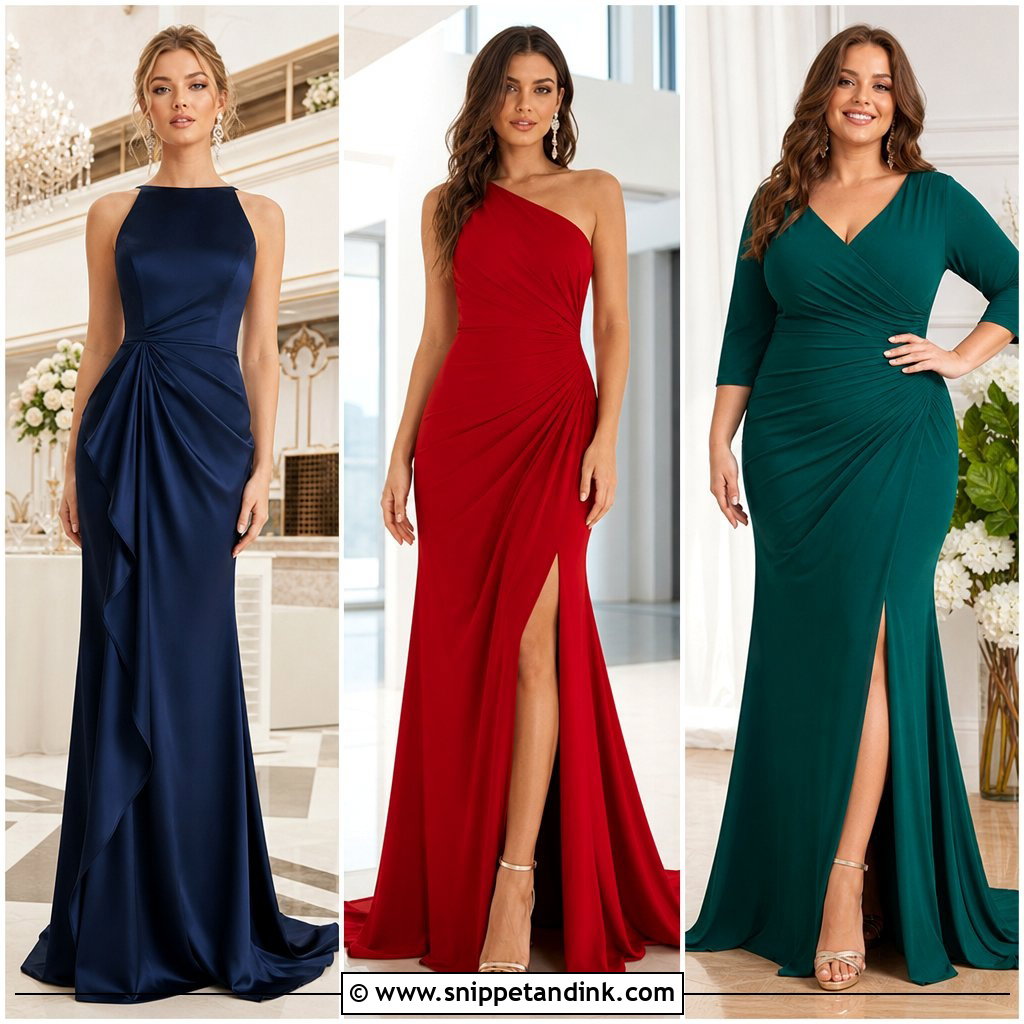
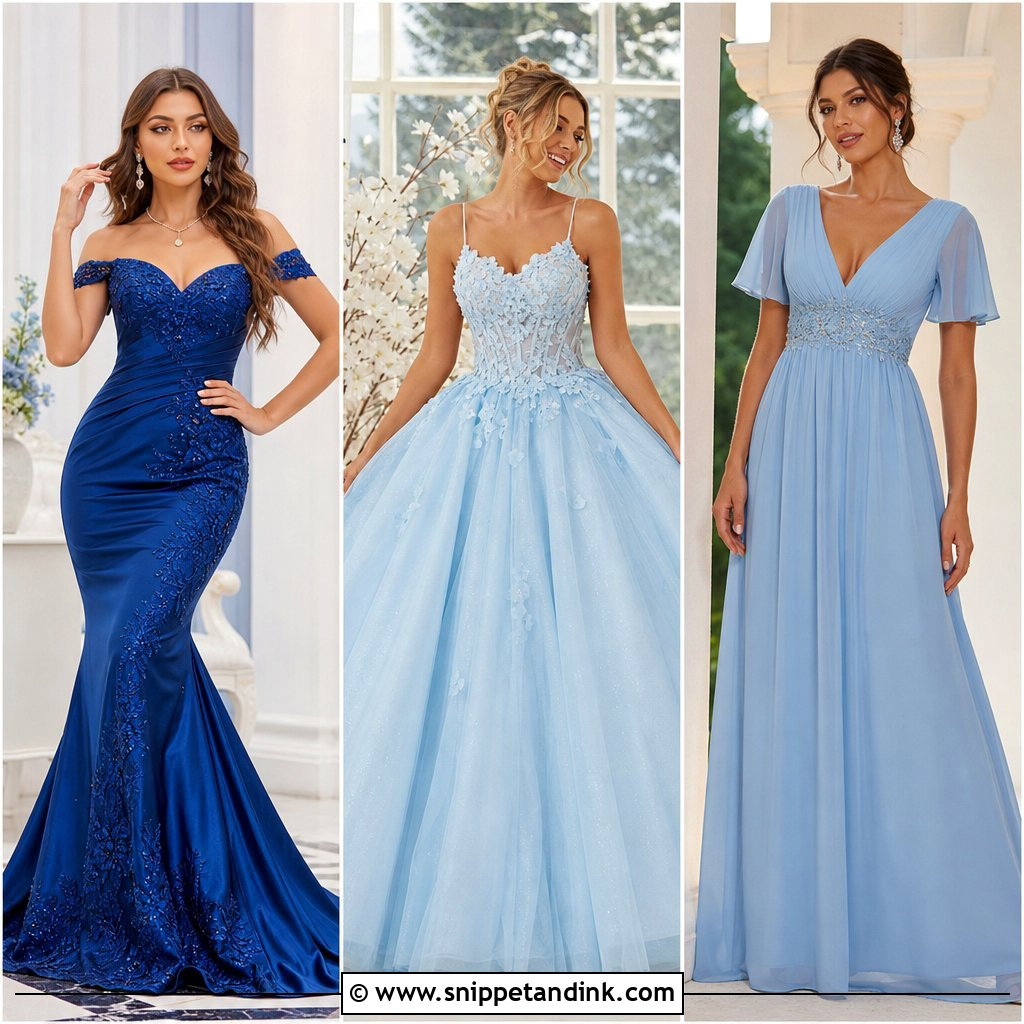
12. Black Tie Navy Gown
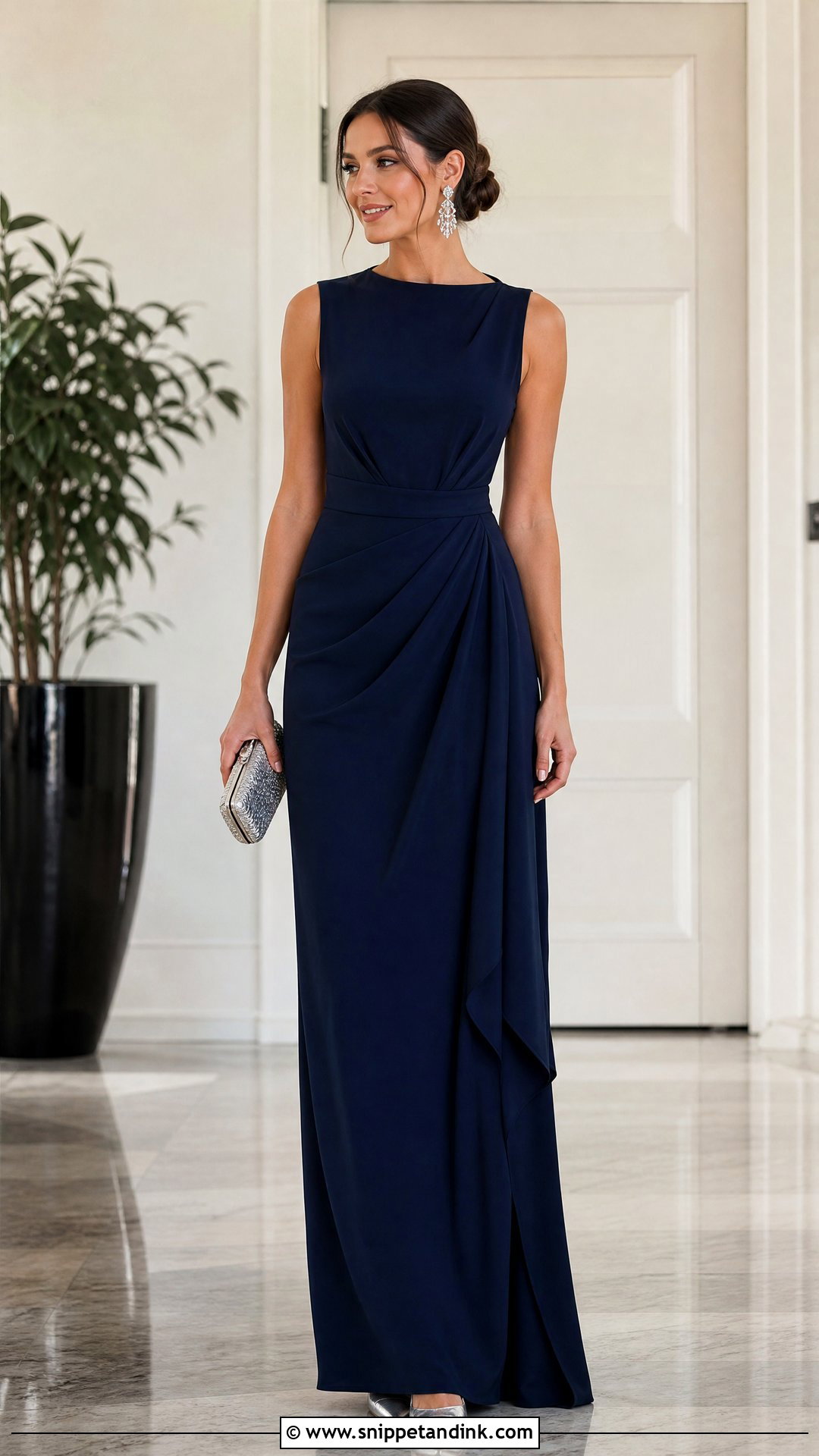
Navy is my usual suggestion for anyone who wants the safety of black with a softer finish. It doesn’t flatten in dim light the way black can. Satin, crepe and chiffon all suit it. A tasteful slit adds movement without becoming too much. Silver, pearl and crystal accessories pair well, and navy holds its colour in both indoor and outdoor photos without turning muddy.
13. Black Tie Emerald Gown
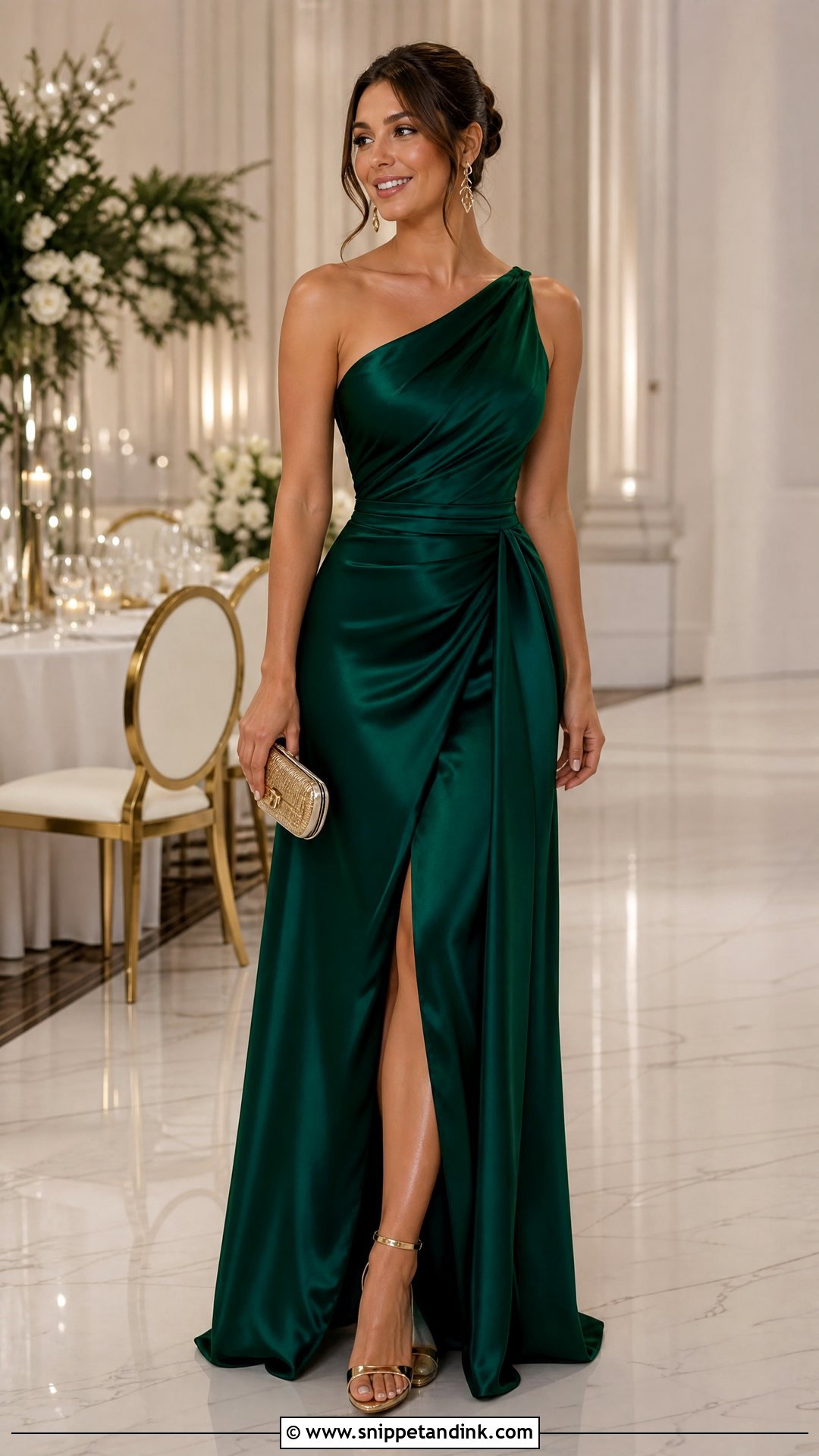
Emerald is one of the few strong colours that never feels too loud at a formal wedding, because it reads deep rather than bright. It needs a fabric with some depth to look right: satin, velvet or crepe. Gold accessories warm it up; silver cools it down. Choose one depending on your skin tone. A simple neckline is enough, since the colour does most of the talking. Keep hair and makeup polished but understated.
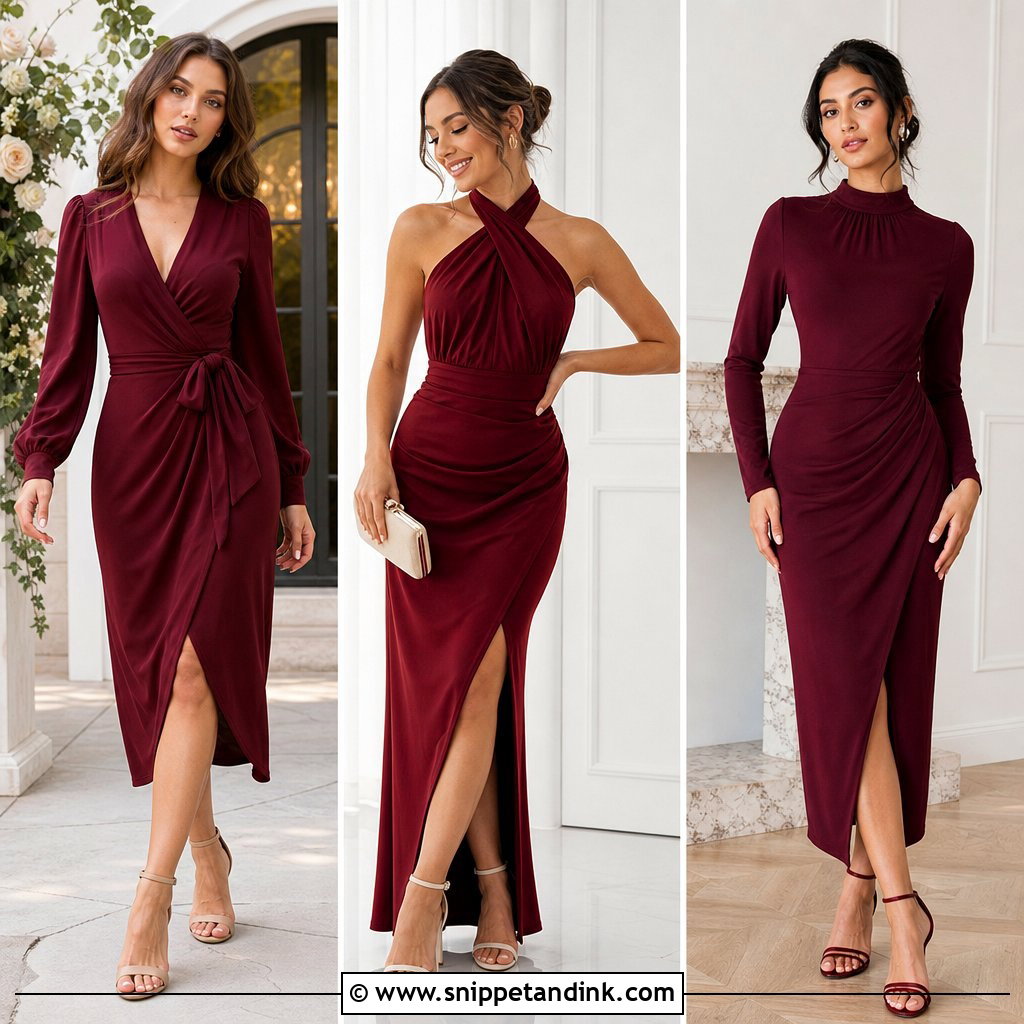
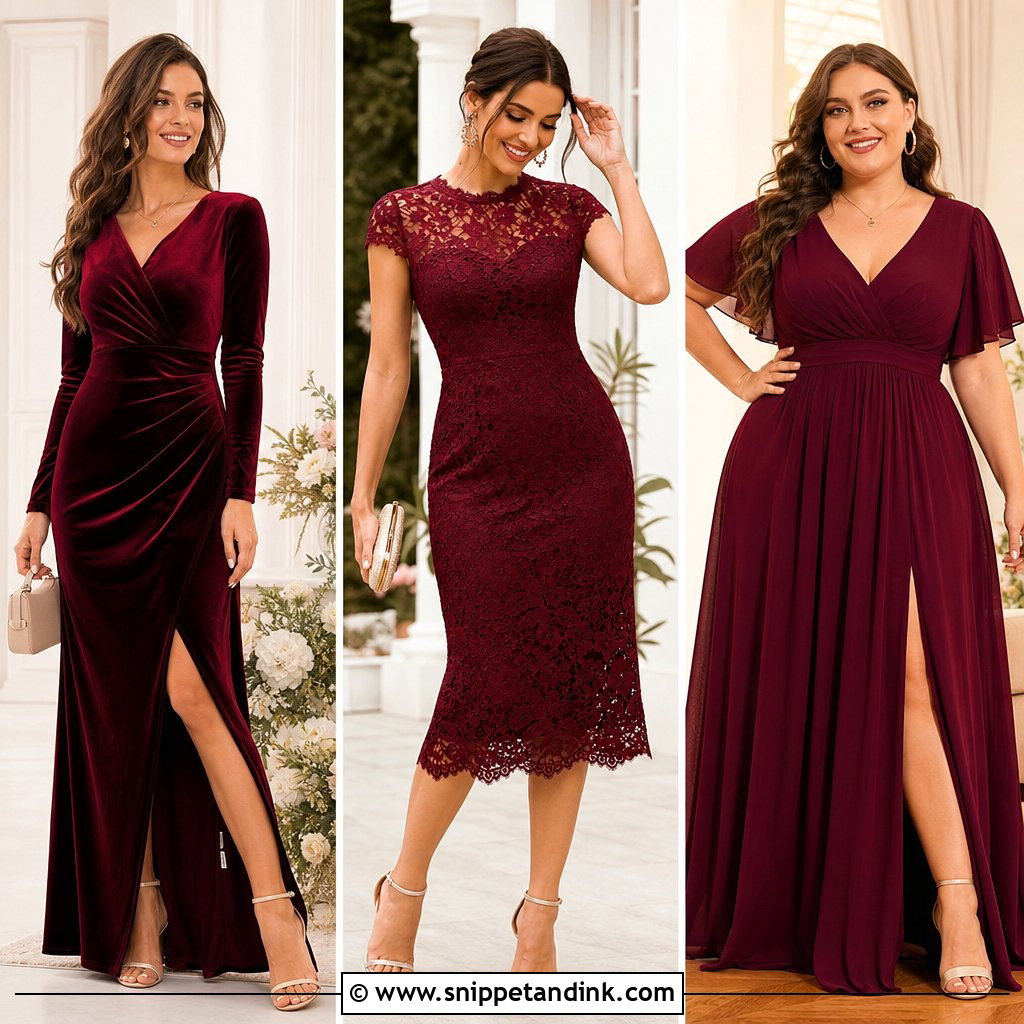
14. Black Tie Burgundy Gown
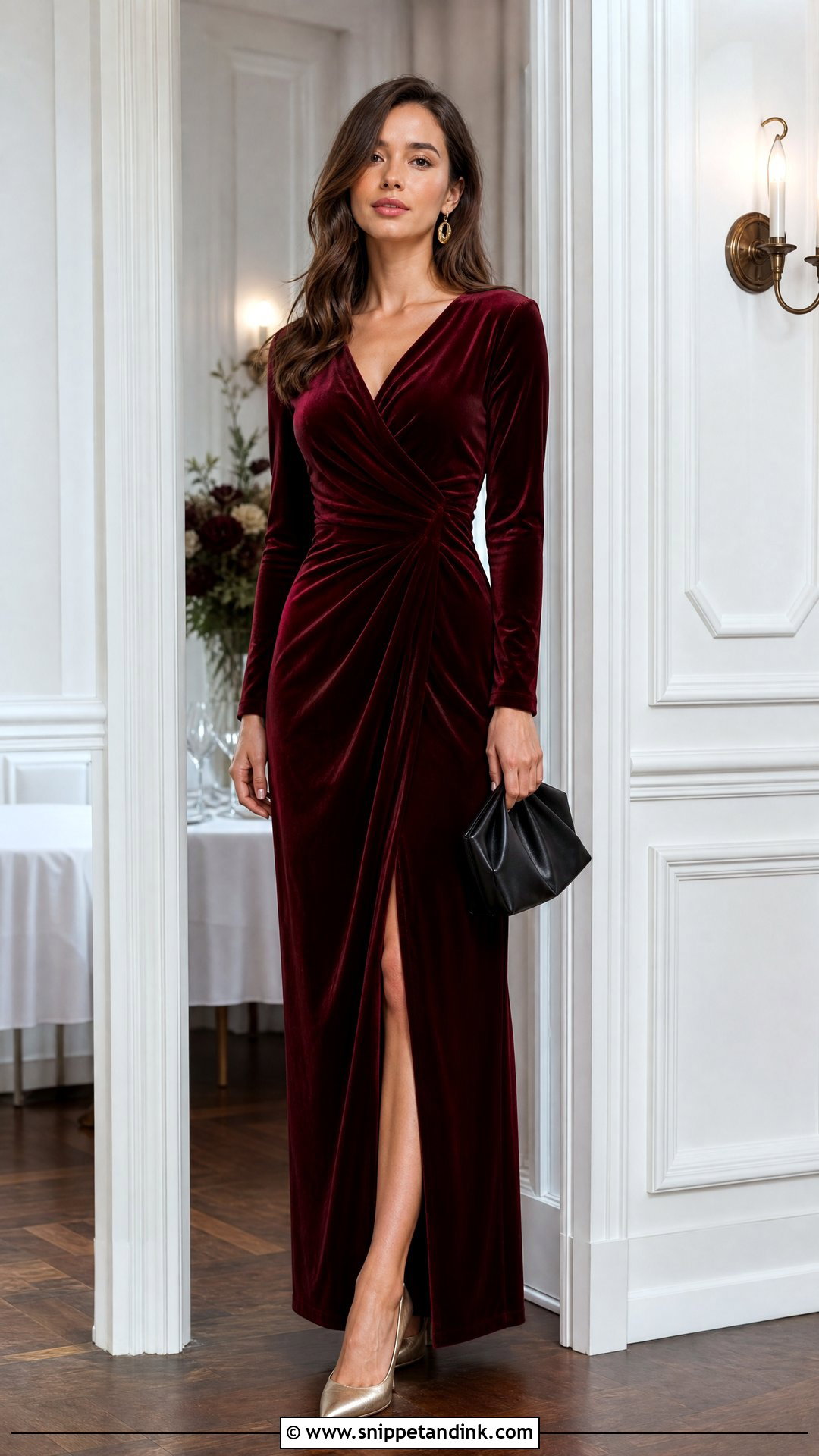
Burgundy suits autumn and winter, but in a light crepe or satin slip it works in any season. It also flatters a wide range of skin tones, which makes it easy to recommend without a colour test. Nude, gold and black heels all work, depending on how dark you want the look. A velvet wrap version feels warmer and dressier; a crepe column feels sharper and more modern.

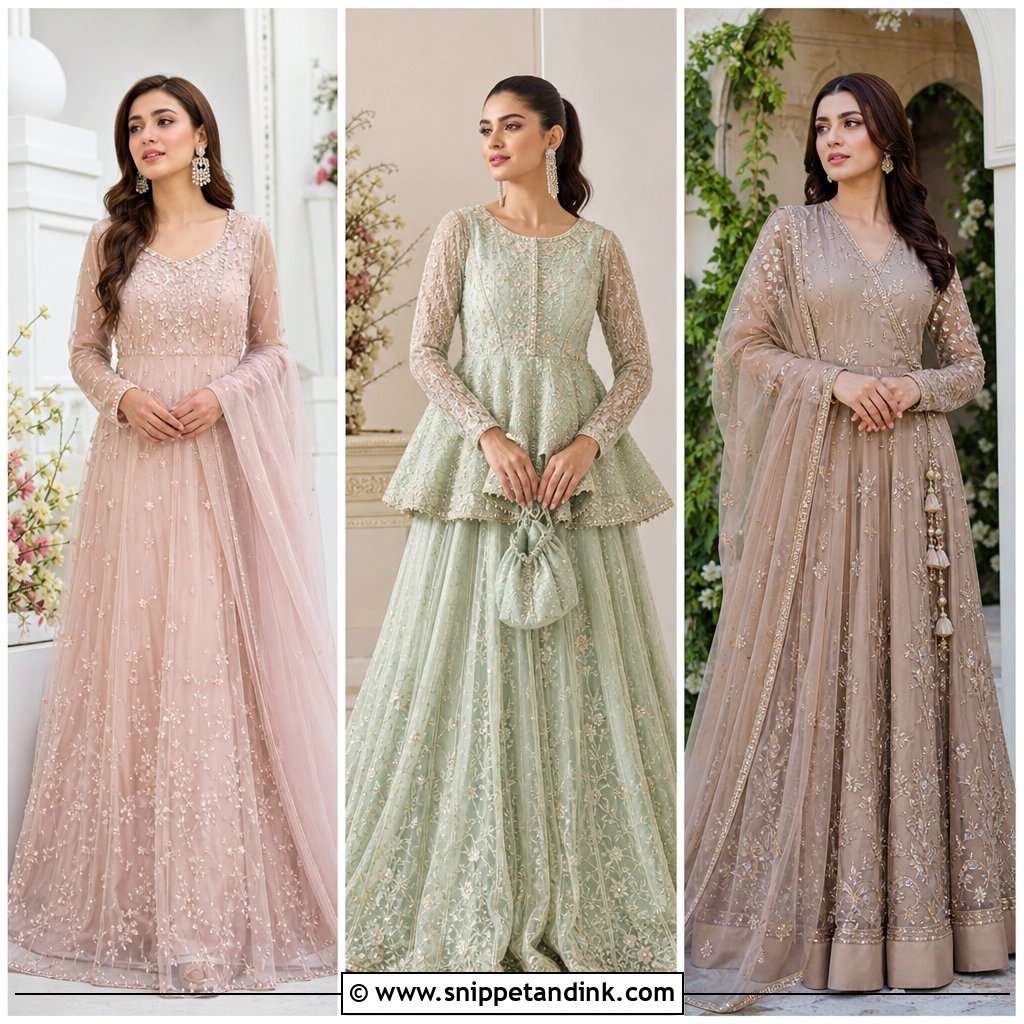
15. Black Tie Champagne Gown
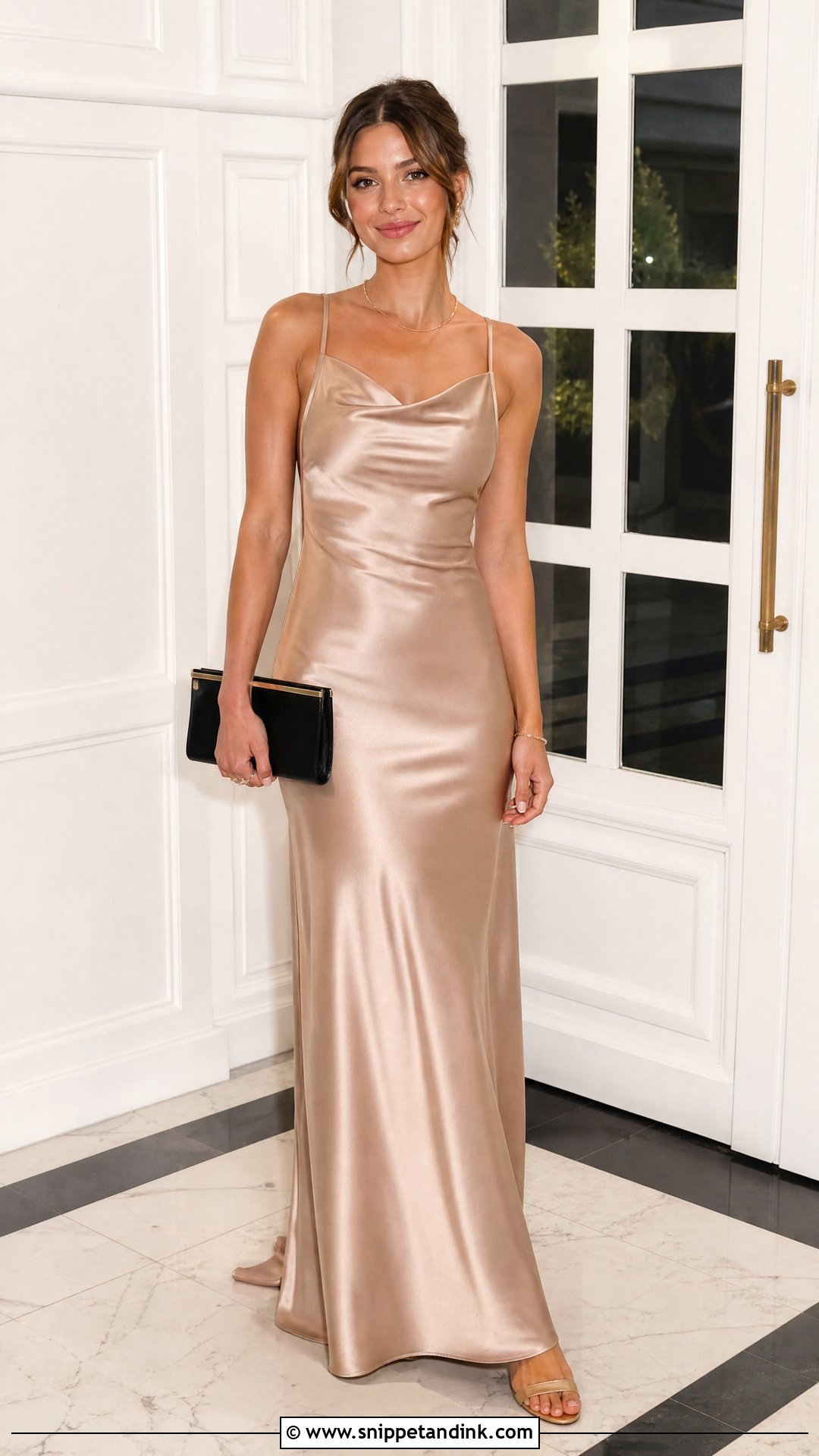
Champagne needs care because pale versions look bridal under warm reception lighting. I hold the fabric next to an ivory swatch before agreeing to it. If they look alike, it’s too close. Deeper champagne, taupe, bronze and soft gold are safer. Satin or light beading gives the shade a glow. Add contrast with bronze, pewter or black accessories, so nobody mistakes you for the bride in a photo.
16. Black Tie Column Gown
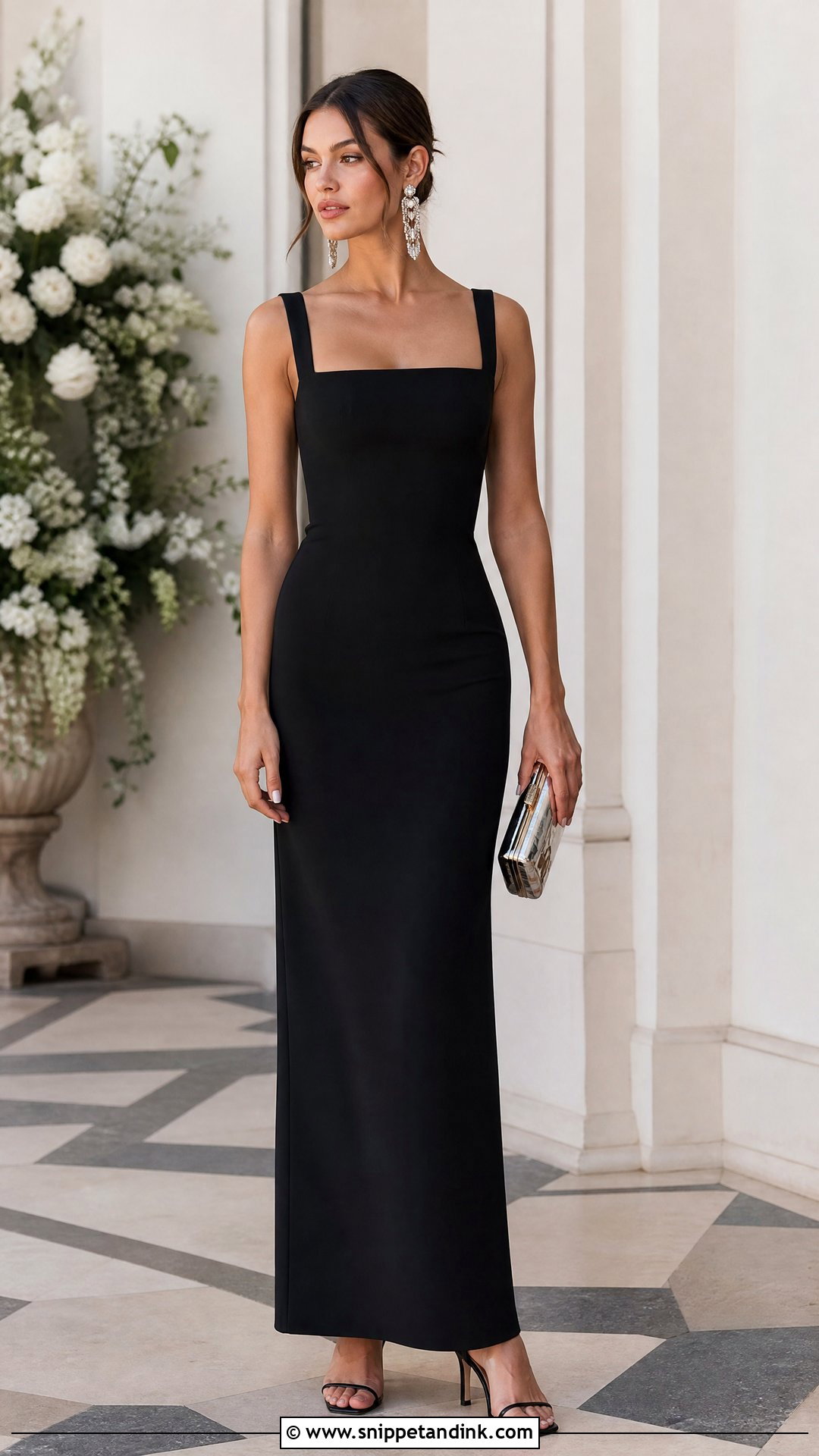
A column gown is simply a straight line from shoulder to floor, and that simplicity means the fit must be exact. Any pulling across the hips shows immediately. Crepe and stretch jersey are kinder than stiff satin for this cut. Choose a neckline that does the talking: halter, square, bateau or one shoulder. Statement earrings and a metallic clutch add personality. It rewears easily, especially for city and museum venues.
17. Black Tie A Line Gown
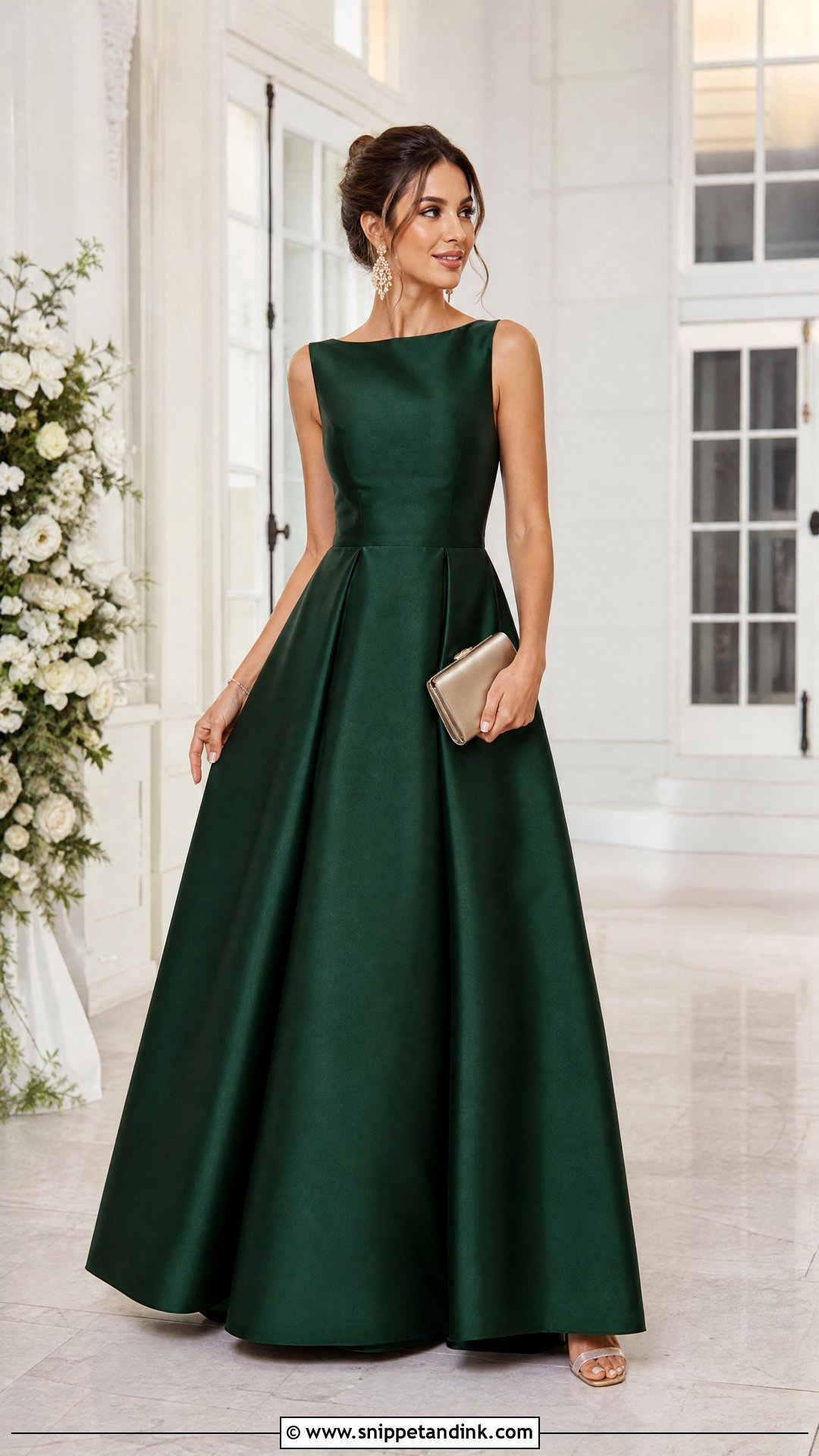
An A line gown fits close at the top and widens gently toward the hem, so it flatters most body types and leaves room to move. For black tie, keep it floor length in satin, chiffon, tulle or mikado. A deep jewel tone or a soft floral print both look formal in this shape. Hem it to the exact heels you’ll wear, because a full skirt shows an uneven length more than a slim one does.
18. Black Tie Wrap Gown
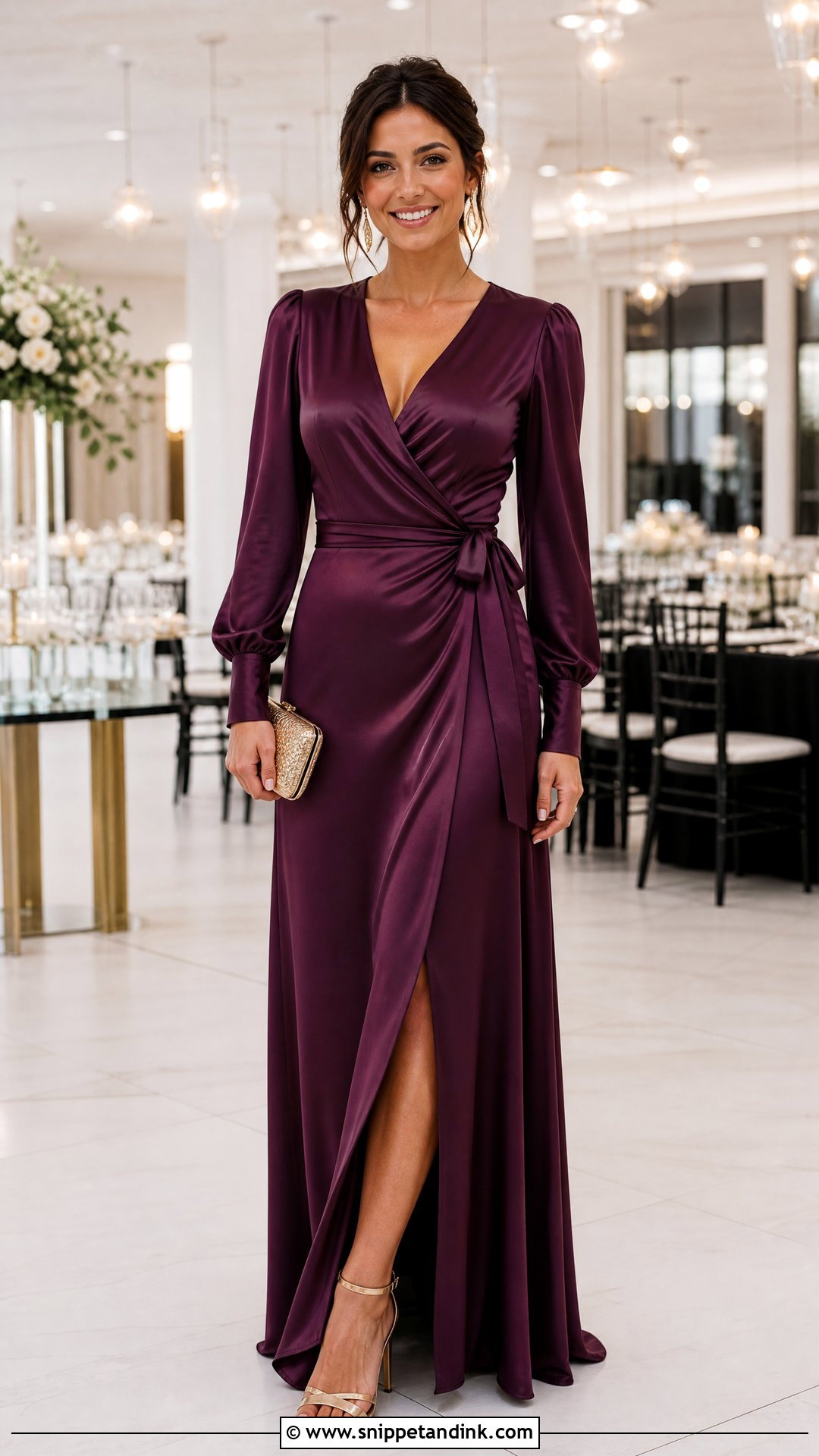
Wrap gowns adjust to your body, which is why they’re forgiving if your size changes between buying and the wedding. That same adjustability is the weakness: the neckline can gape and the skirt can open when you sit. I add a hidden snap at the cross point and use fashion tape at the neckline. Plum, navy, emerald and chocolate look polished in satin, velvet or chiffon.
19. Black Tie Halter Gown
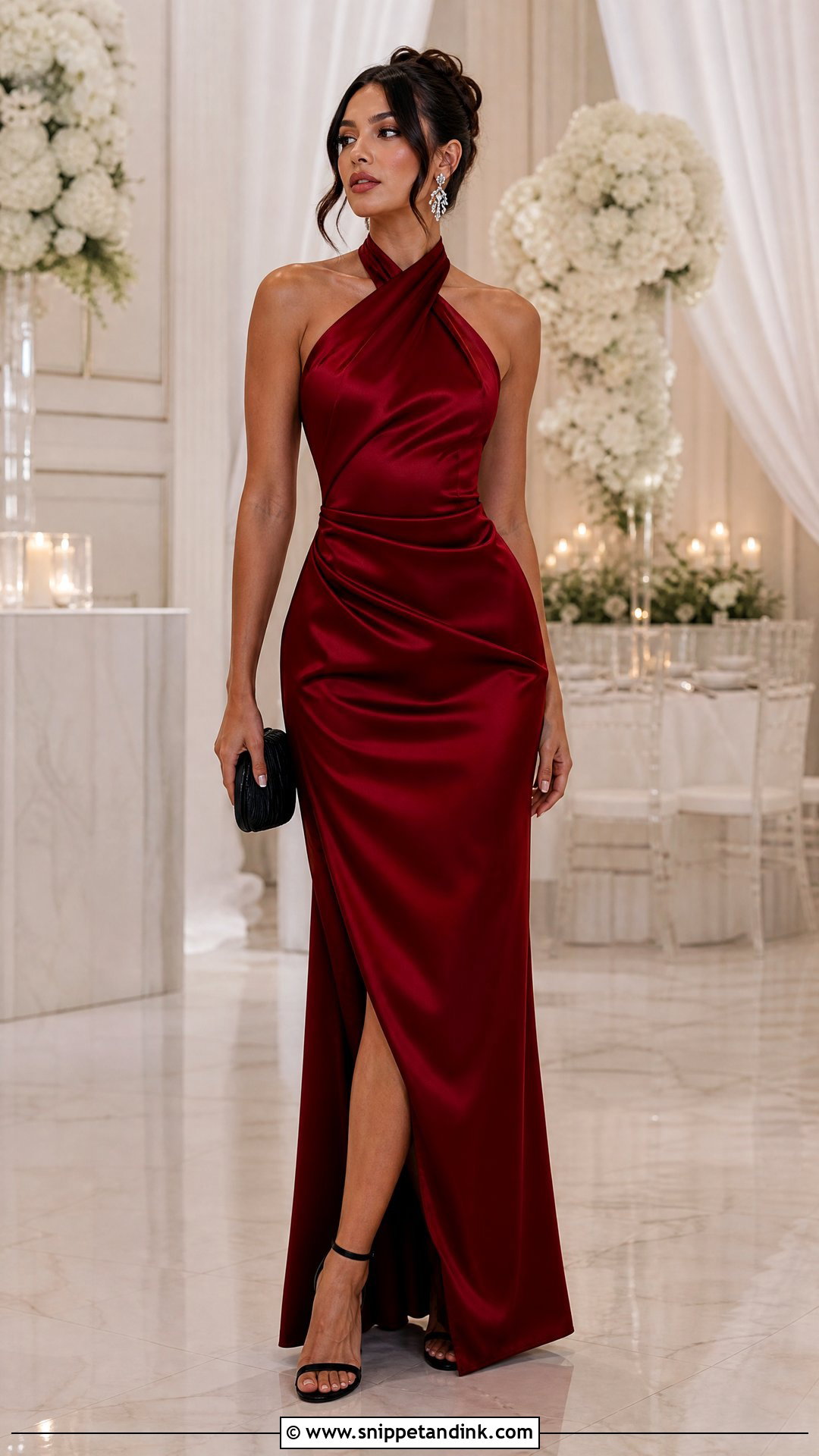
Halter necklines draw the eye up to the face and shoulders, and they suit people with strong shoulders especially well. Because the strap ties or fastens at the neck, the weight of the dress sits there. Heavier fabrics can make it ache after a few hours. Satin, crepe and chiffon are fine. Wear the hair up or tucked away from the neckline, skip any necklace, and add statement earrings instead.
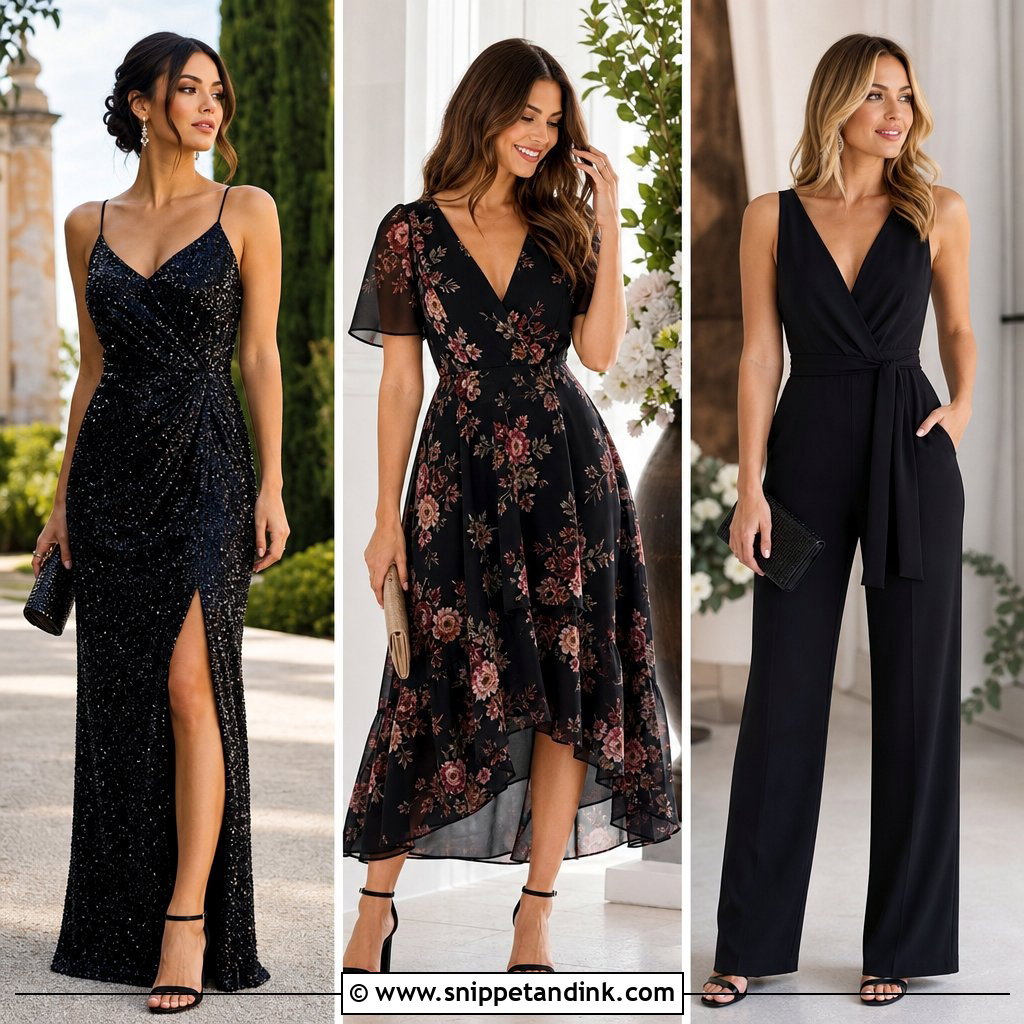

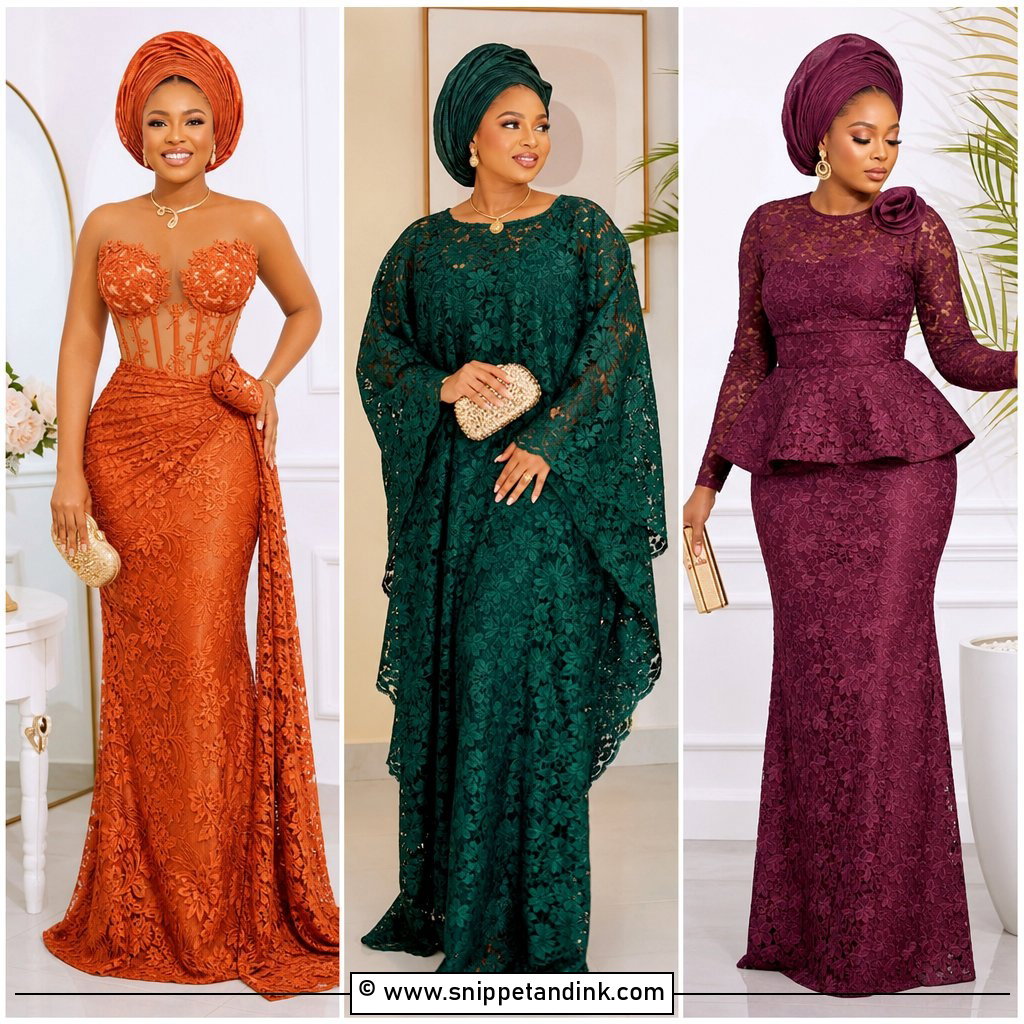
20. Black Tie Cape Gown
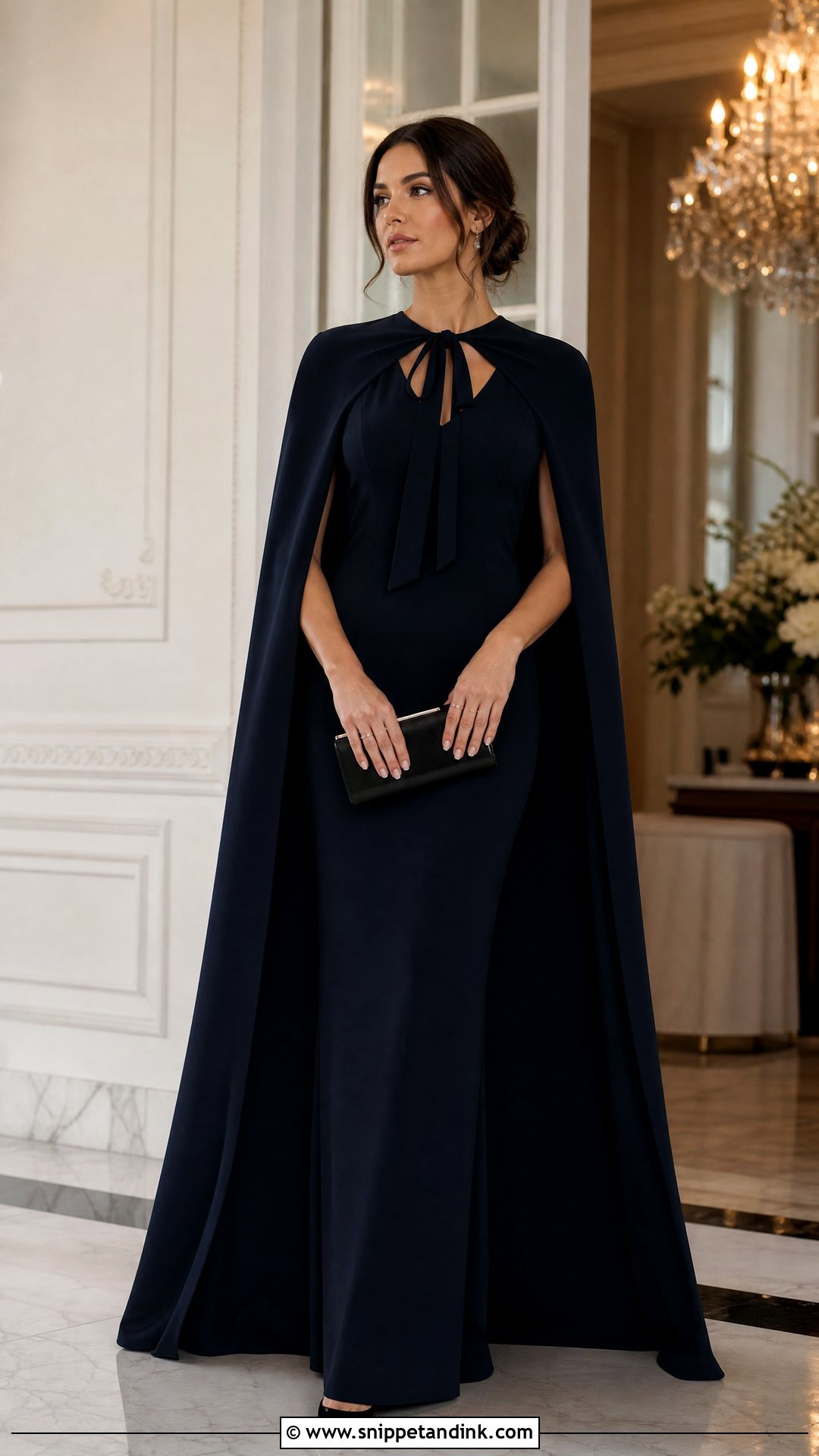
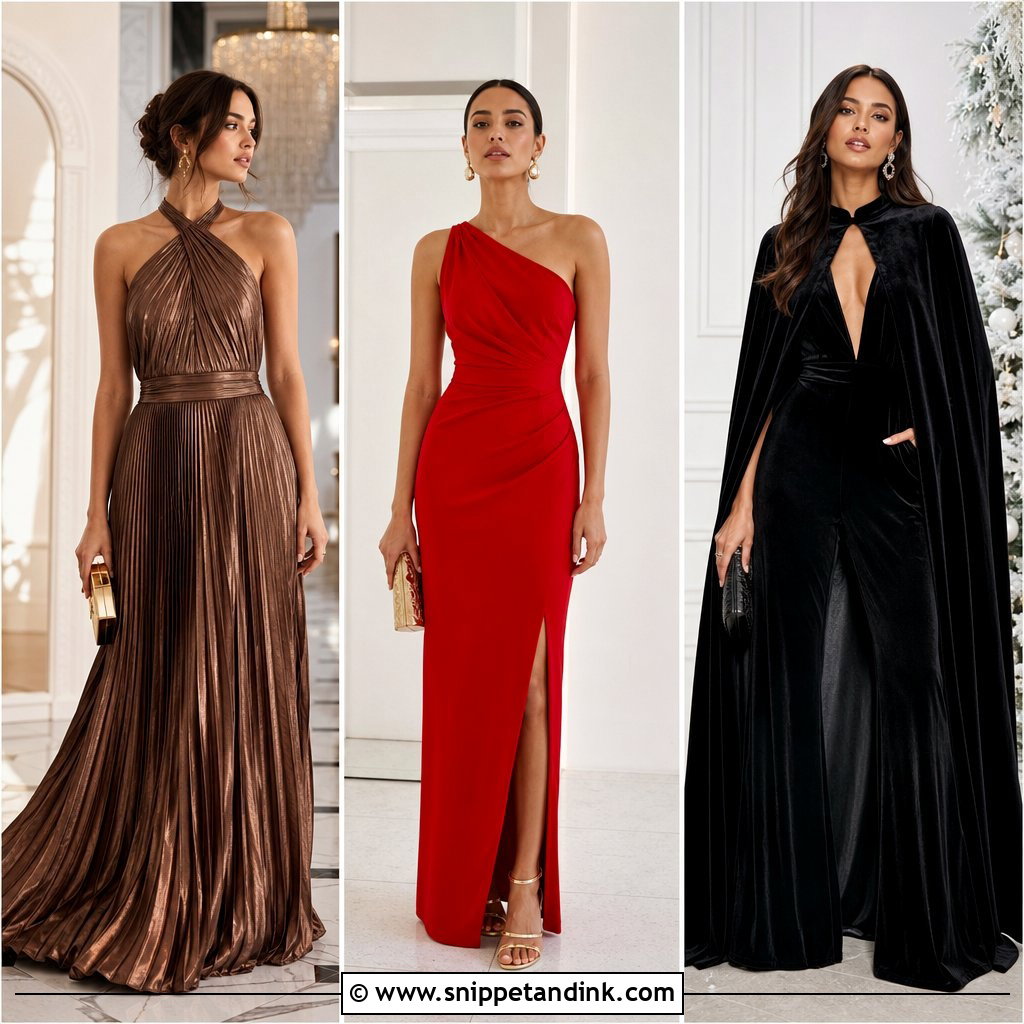
A cape gives drama without sparkle, which is why I suggest it to guests who want impact but dislike sequins. It can be a full overlay, sleeves or a detachable panel. The detachable kind is worth it if you plan to dance, as a long cape catches on chair backs and gets stepped on. Crepe, chiffon and satin all drape well. Keep the colour classic, such as navy, black, plum or deep green, and the jewellery minimal.
21. Black Tie Tulle Gown
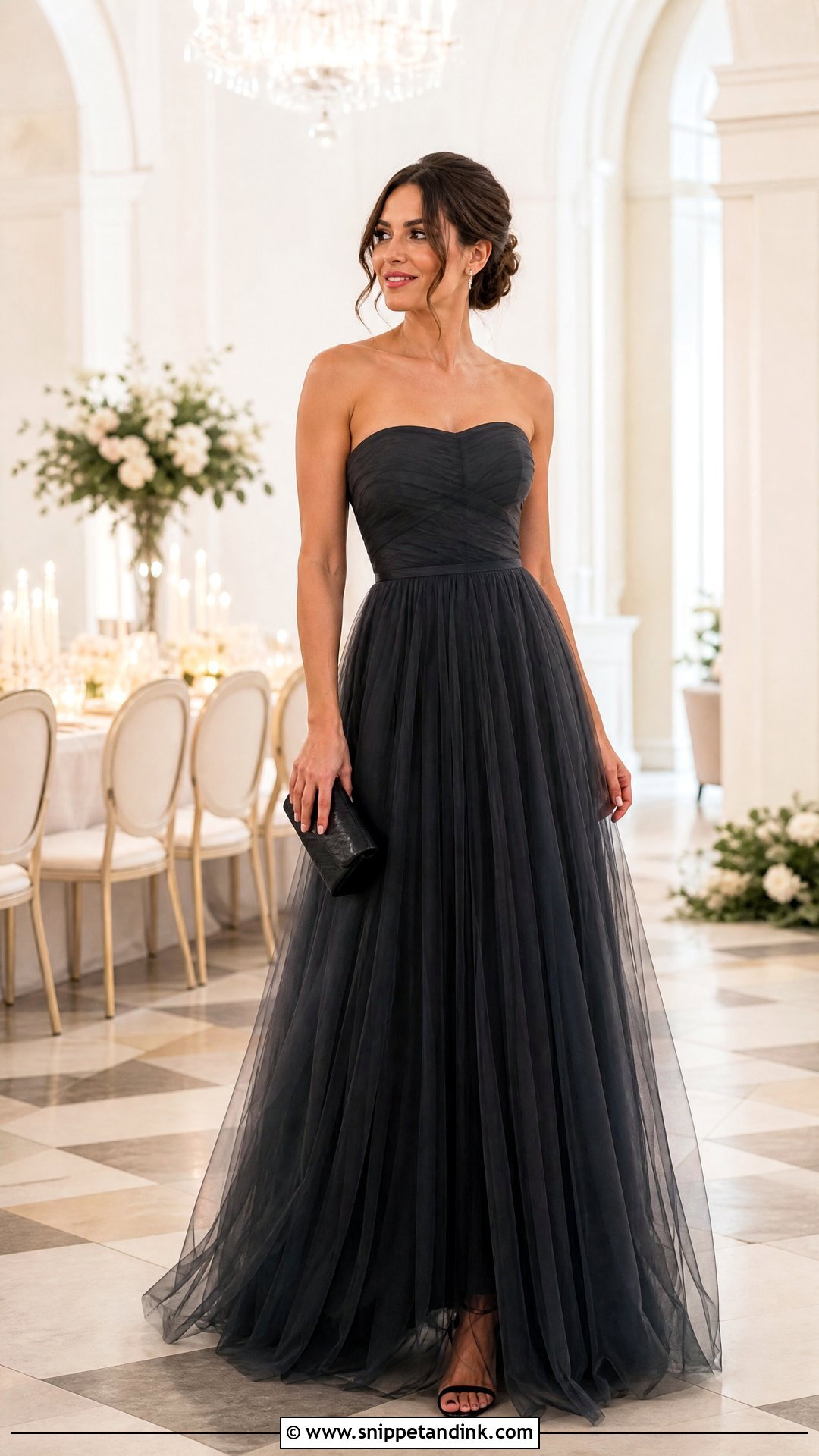
Tulle reads bridal in pale shades, so for a guest gown I steer toward navy, charcoal, black or berry. A structured bodice keeps it grown-up. Full princess skirts and heavy sparkle push it toward costume. Look for a subtle overlay, a dotted texture or muted embroidery instead. Tulle crushes in a car or a suitcase, so steam it at the venue if you’re travelling, and pack it in tissue.
22. Black Tie Formal Jumpsuit
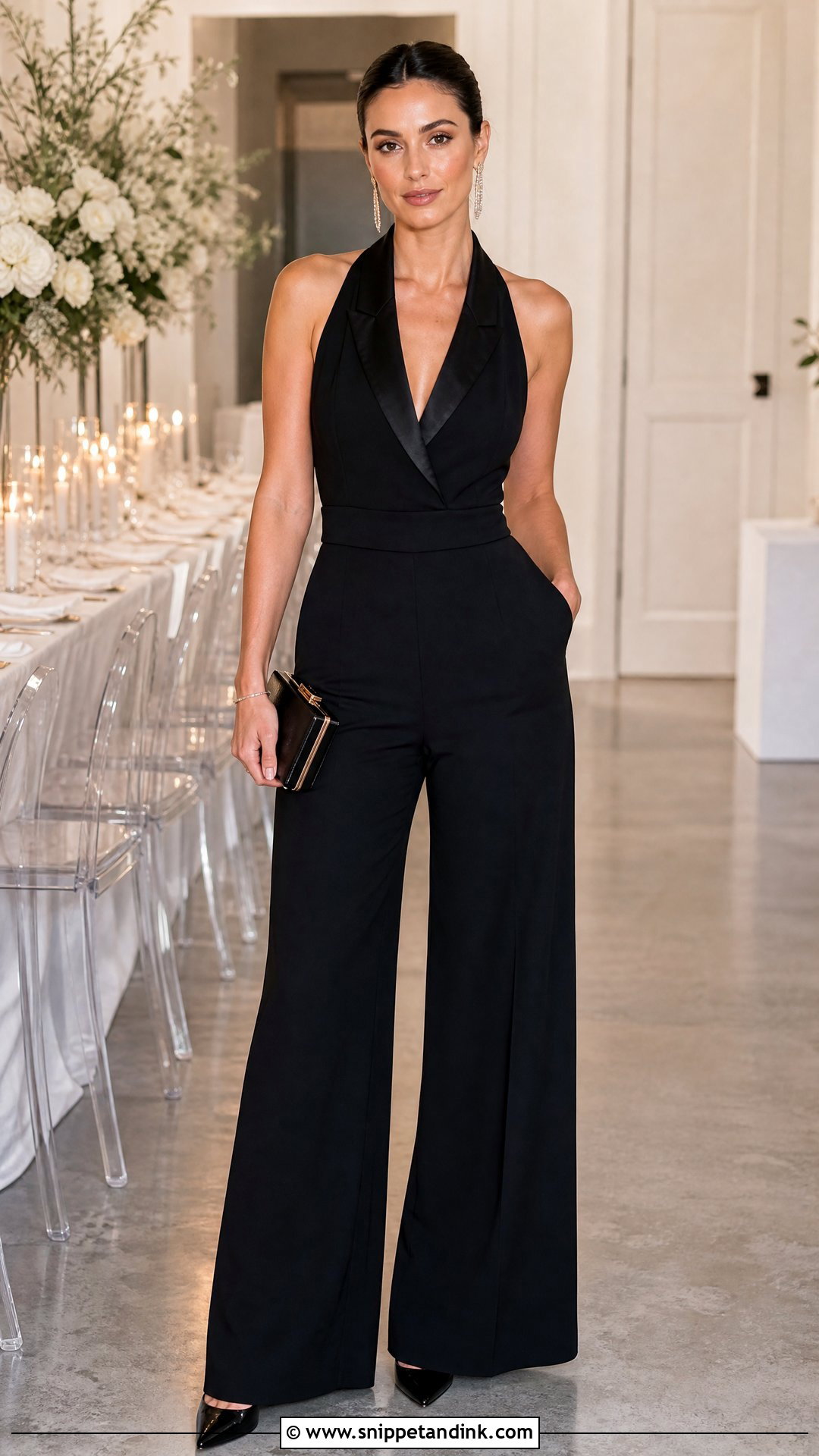
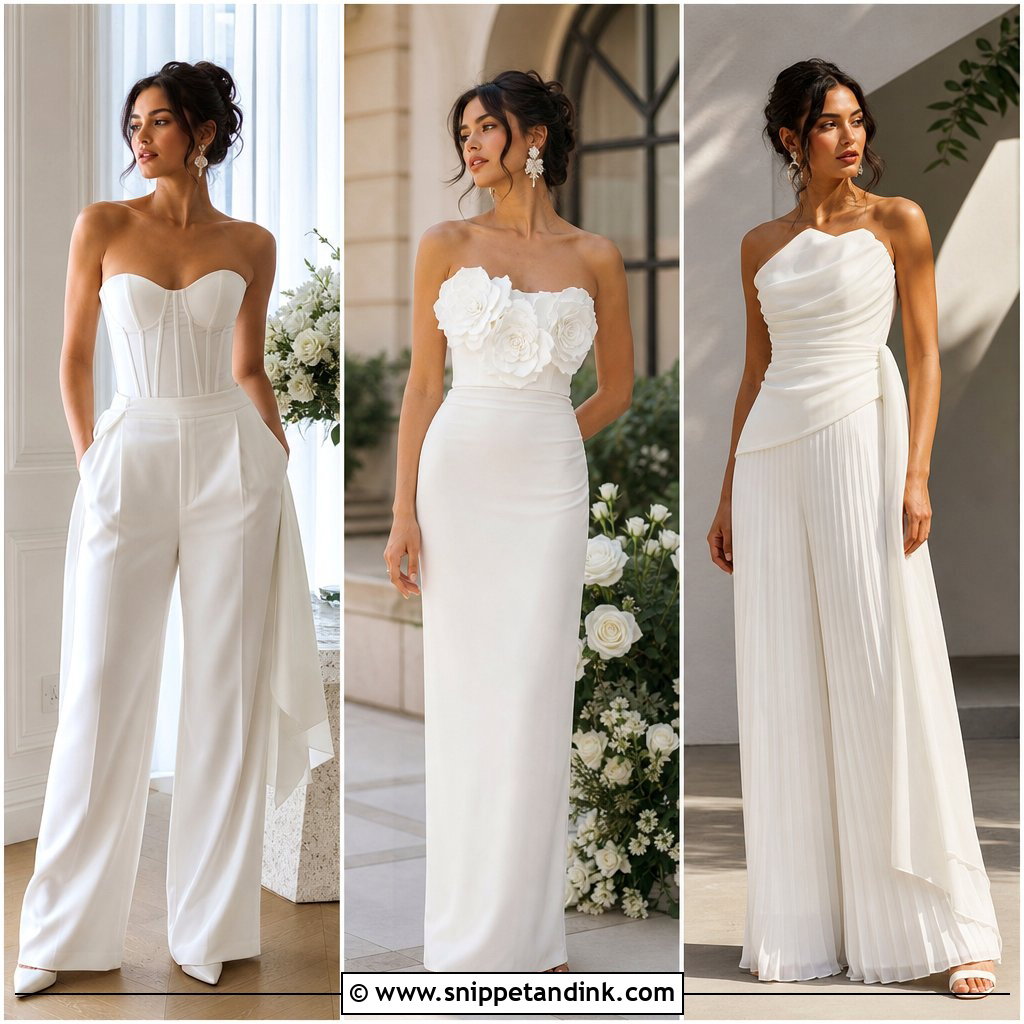
A formal jumpsuit passes for black tie when the fabric and tailoring are as good as a gown’s. Choose a wide leg in crepe, satin or velvet with a fitted bodice, and hem it to just skim the floor in your heels so it reads long. A tuxedo-style version with satin lapels looks sharp. Check how you’ll use the bathroom in it before you commit. A back zip you can’t reach alone is a real problem at a long reception.
23. Black Tie Tuxedo Dress
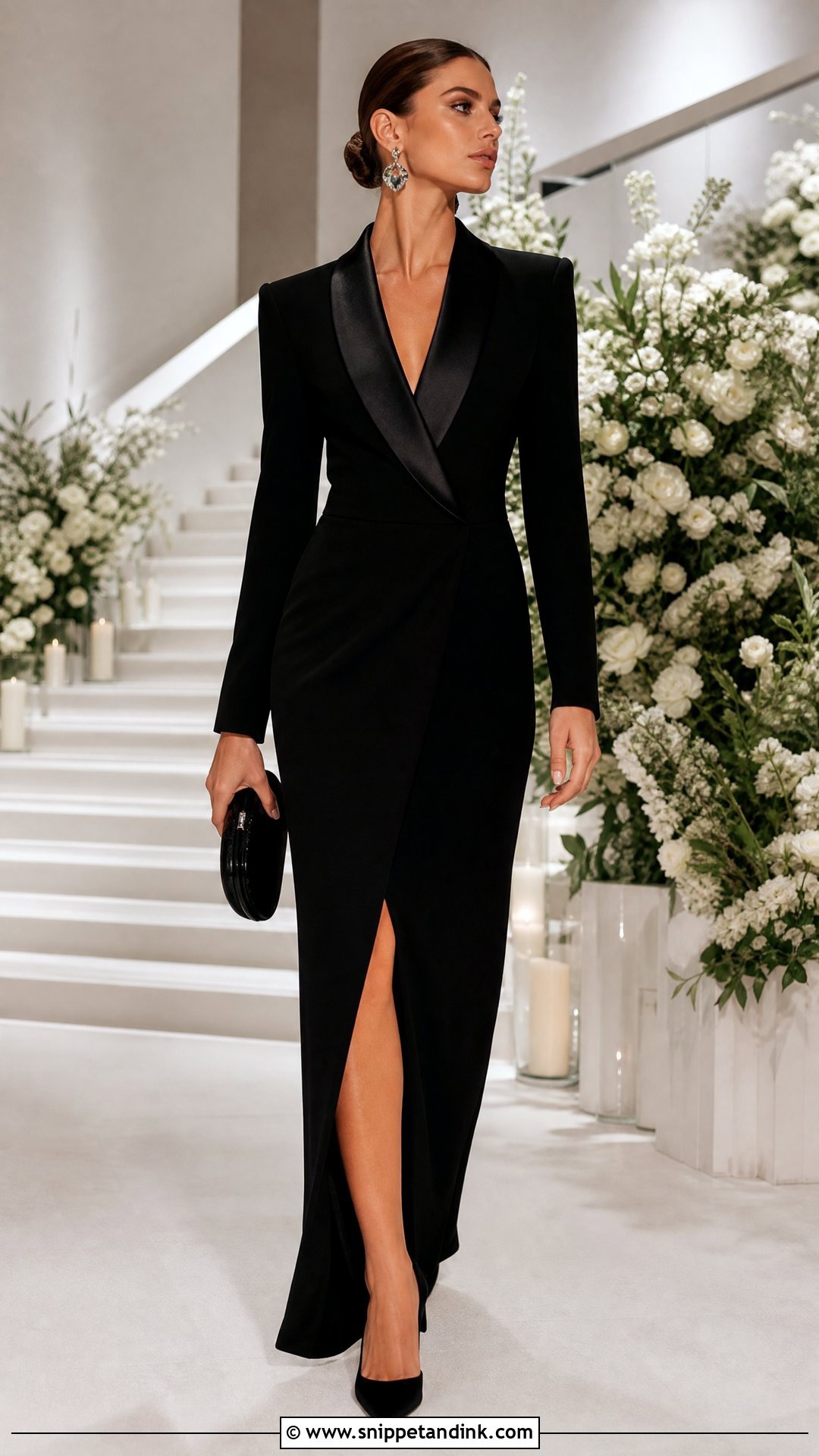
A tuxedo dress suits guests who prefer tailoring over romance. For black tie, it needs either real length or strong structure: a midi-to-floor version, a tailored blazer dress with a formal hem, or a long tuxedo-style gown with lapels. Black crepe with satin trim is the classic. Sheer tights are fine in cooler months if the rest stays dressy. Pointed heels and sculptural earrings finish it.
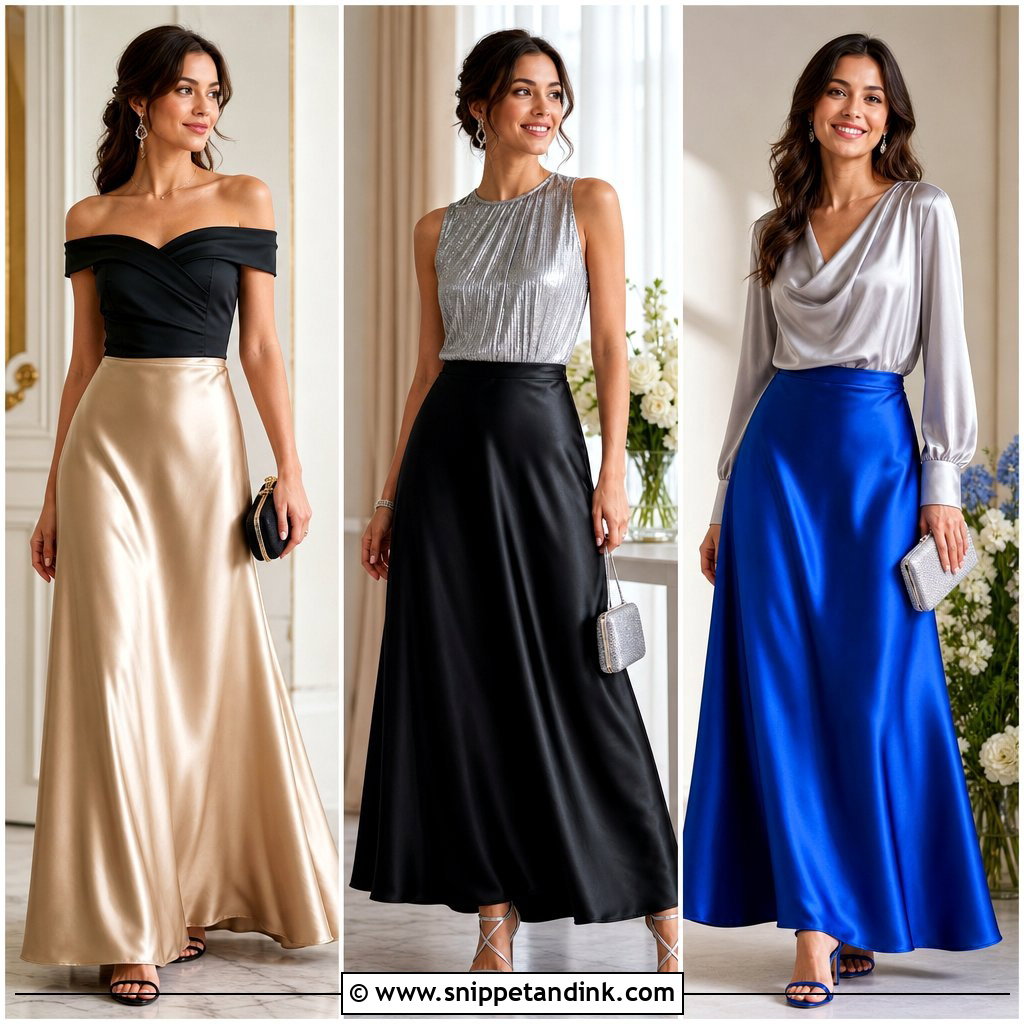
24. Black Tie Skirt And Top
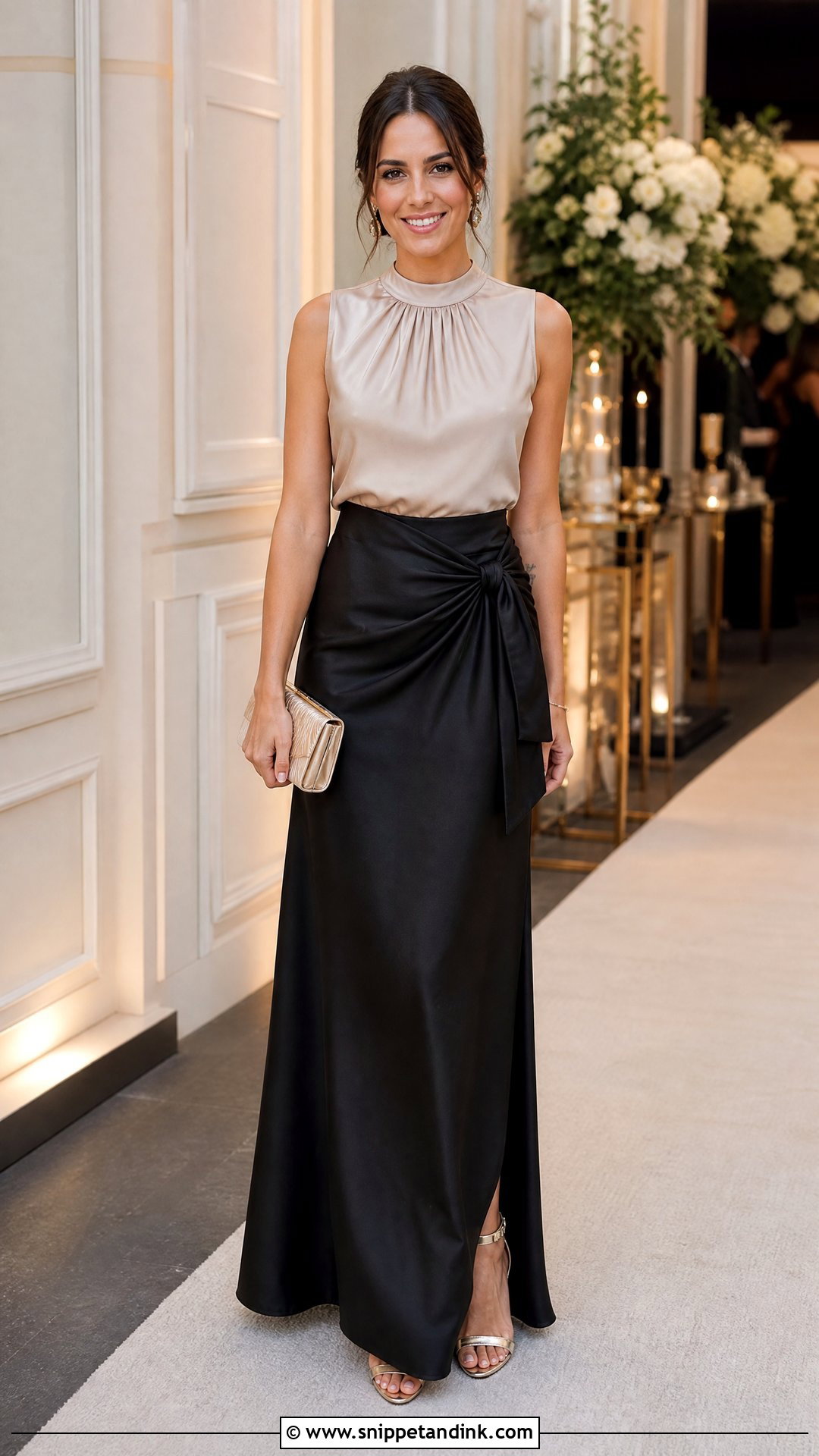
Separates make sense if your top and bottom are different sizes, and a formal skirt and top can look as polished as a gown when both pieces are dressy enough. Use a floor-length satin or taffeta skirt with a refined blouse, a fitted bodysuit or an embellished top. Bodysuits stop the top from untucking every time you sit. Keep colours paired and simple: black and champagne, navy and silver, emerald and black.
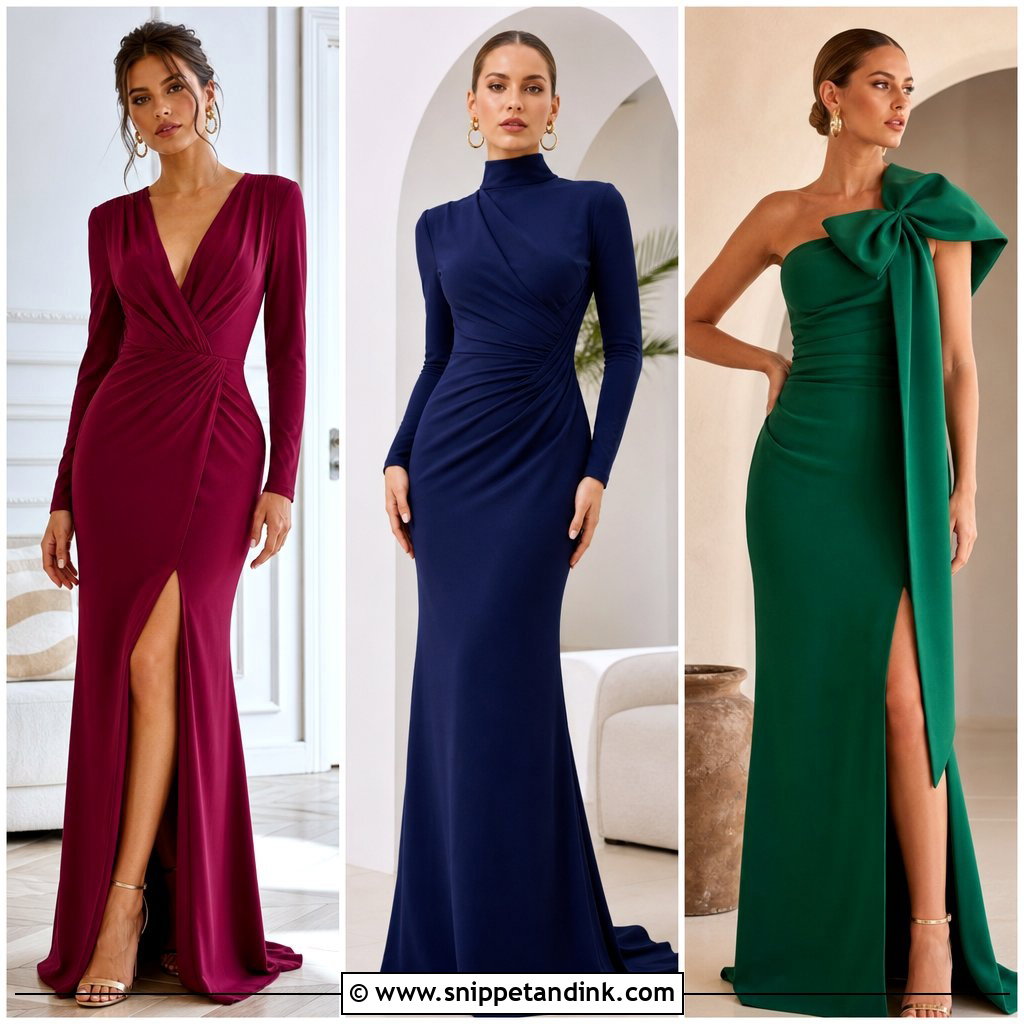
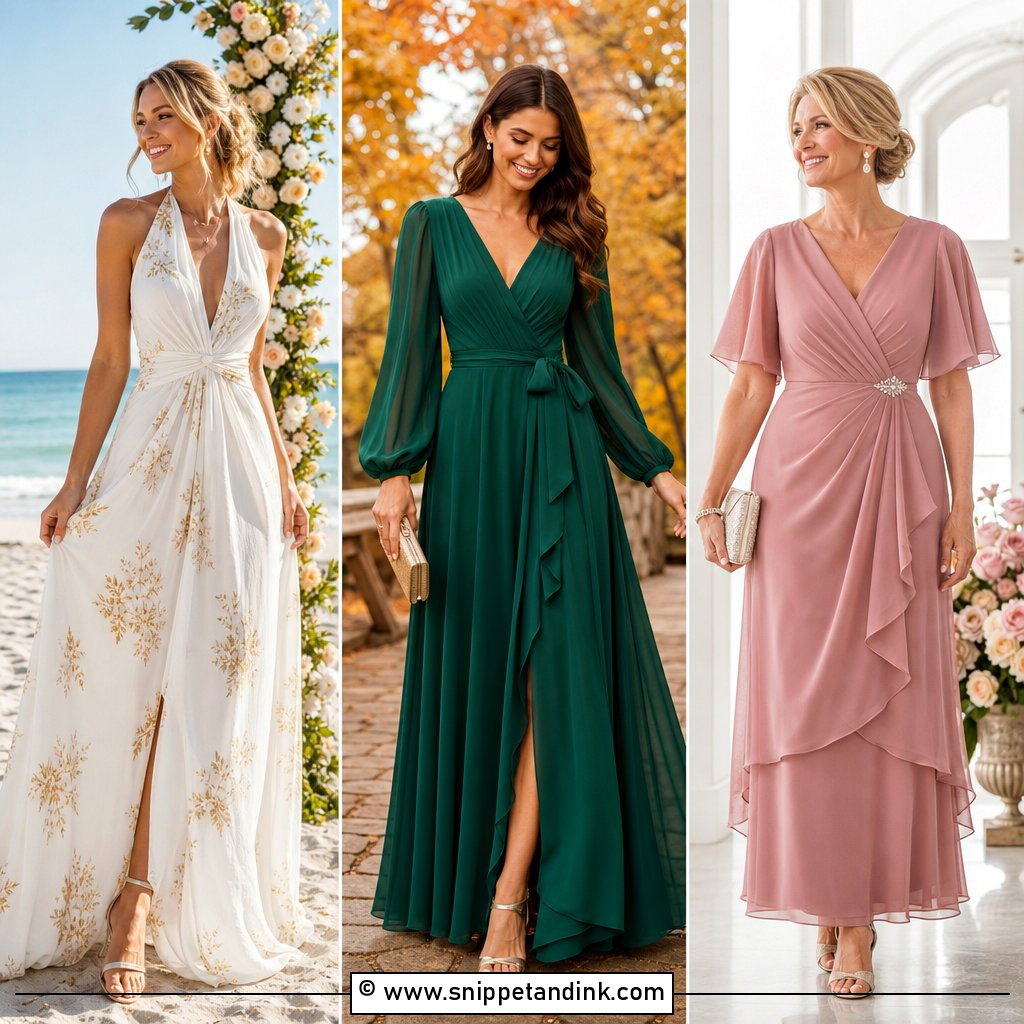
25. Black Tie Plus Size Gown
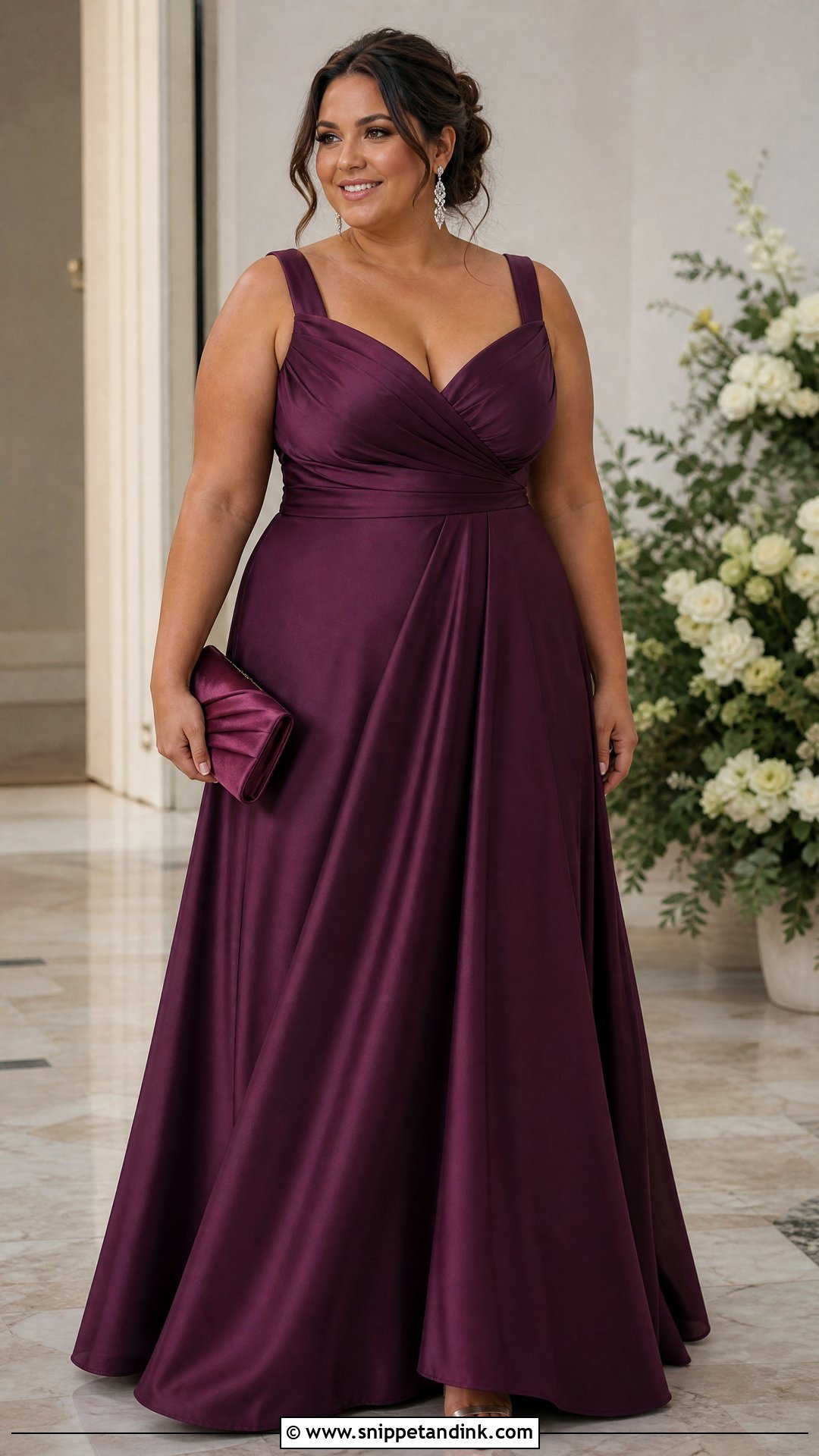
A plus size black tie gown should support you through dinner, toasts and dancing, not just look good standing still. I look for secure straps, stretch lining, a defined waist and draping that sits smoothly. Wrap, A line, one shoulder and column shapes can all look striking depending on where you want the eye to go. Floor-length satin, crepe, chiffon and velvet all work. Above all, test it sitting and walking: a gown that looks fine on the hanger can still pinch at hour three.
Alterations Take Longer Than the Gown Takes to Arrive
Almost every formal gown needs some tailoring, and the delay usually comes from the alterations, not the shipping. For a ready-to-wear gown, I’d have it in hand six to eight weeks before the wedding. That leaves time for one main fitting and a final check. Busy wedding-season months can stretch a tailor’s queue further, so book early.
What to bring to the first fitting
- The exact shoes you’ll wear, because the hem is measured to them.
- The bra or shapewear you plan to use. Changing it later changes the fit.
- Any jewellery or wrap that sits near the neckline, to check how it lies.
- A clear idea of how much you’ll dance, so the tailor can leave ease where you need it.
Which Fabrics Survive Six Hours of Sitting and Hugging
By the end of the evening, fabric shows how much sitting it has done. Crepe and stretch jersey bounce back best; you can stand up after dinner and they look the same. Satin and taffeta crease across the lap, so if photos are planned late in the night, stand for drinks rather than sit. Velvet crushes where it’s pressed, then recovers with a little steam. Chiffon and tulle hide creases, but they catch on bracelets and sequinned sleeves. A small travel steamer in the car fixes most of this between the ceremony and the reception.
Fit and Fabric Do the Formal Work
Every gown here works because the fabric is formal and the fit is right, not because of the sparkle. A floor-length dress is still the safest answer to a black tie invitation, though a jumpsuit, tuxedo dress or separates can hold their own when they’re tailored and made in good fabric. Jewel tones, satin, velvet and clean shapes are the most reliable picks. Keep your accessories in support, wear shoes you can stand in, and you’ll look right for the room all night.
You'll Like These Ideas:


Leave a Reply