
Flowers in the hair loosen up a bridal look in a way no jeweled pin can. I reach for them most at garden ceremonies, barns, beaches and backyard receptions, where a stiff, glossy style can look out of place. There are lots of ways in: tiny blooms tucked into waves, a braid wrapped in baby’s breath, daisies pinned around a bun, or a full floral crown with a veil. All of them can be adapted to short, long, fine or coily hair, provided the flowers are sized and anchored for that hair. I’d start by pulling two or three flowers from your bouquet into the plan so your hair, dress and flowers read as one look.
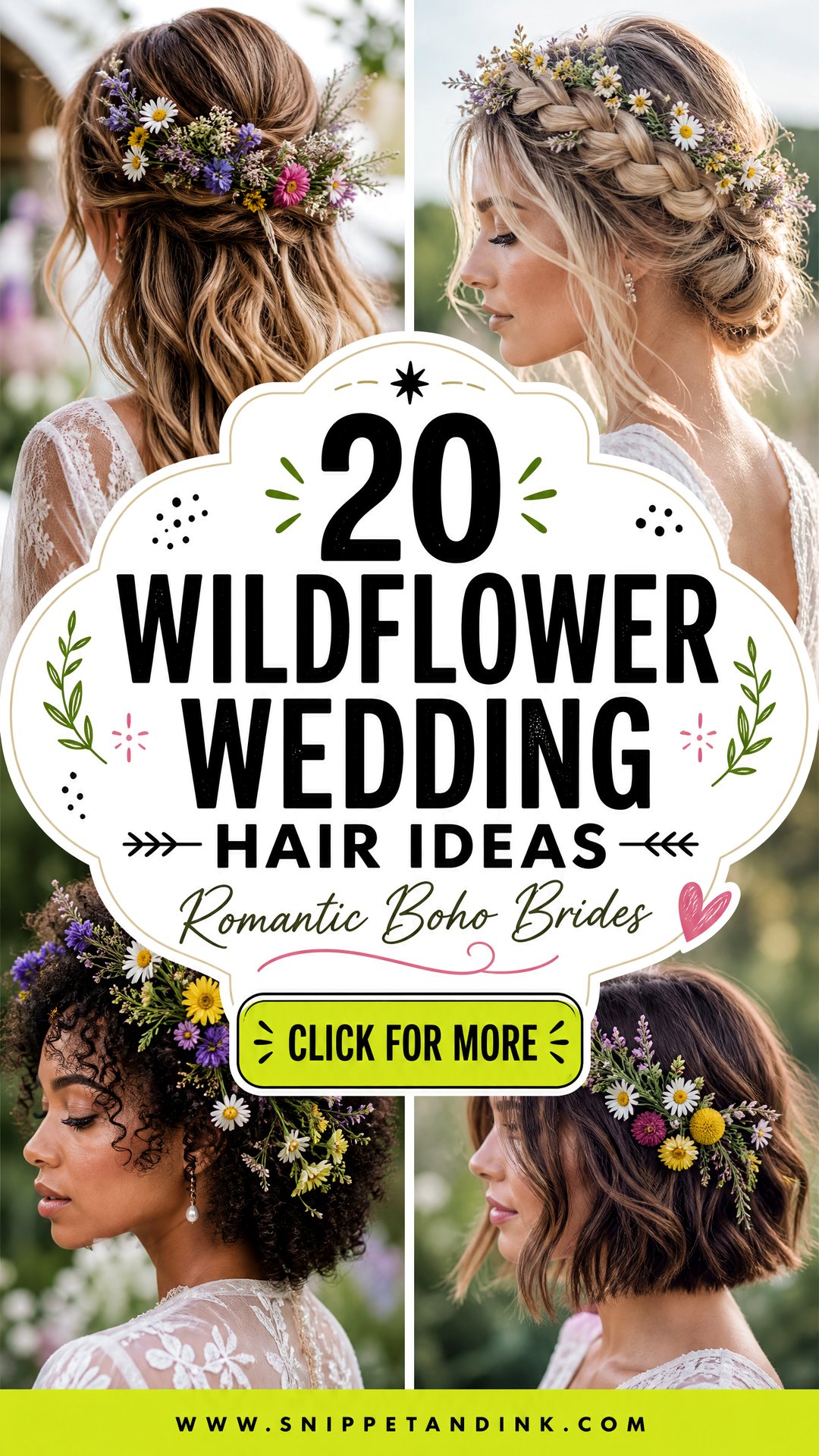
Stems That Wilt by Noon and Stems That Last Past Midnight
Hair is a harsh place for a flower. It’s warm, there’s no water, and it’s handled all day. The delicate field flowers that look best in photos are often the first to droop, so I talk to the bride and florist about stem choice before we talk about style.
- Hardy in hair: waxflower, statice, baby’s breath, lavender, spray roses, small chrysanthemum daisies, rosemary and eucalyptus all hold their shape for many hours out of water.
- Short-lived: cosmos, poppies, cornflowers, sweet peas and fresh chamomile go limp quickly in heat. I use them for portraits early on, or swap them for dried versions.
- Dried, preserved or silk: they don’t wilt at all, weigh less and can be placed the night before. The best silk wildflowers are hard to spot in photos.
Whatever you choose, ask your florist to condition the stems in water overnight, cut them short and deliver them in a cool box on the morning. Keep them in the fridge, away from fruit, until I’m ready to place them. Order a few extra sprigs for touch-ups, because one or two always get crushed during dressing.
1. Wildflower Wedding Hair With Loose Waves
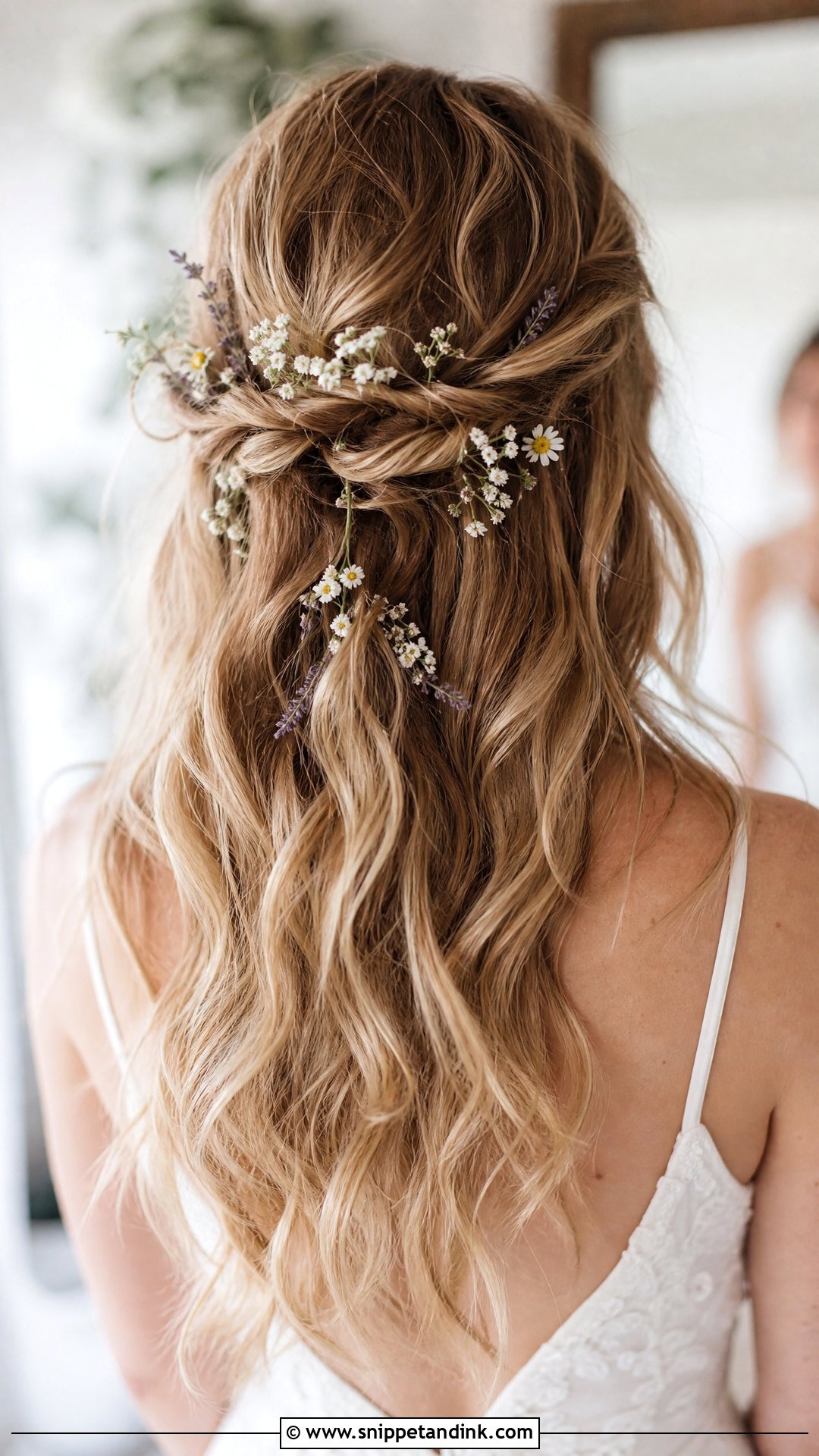
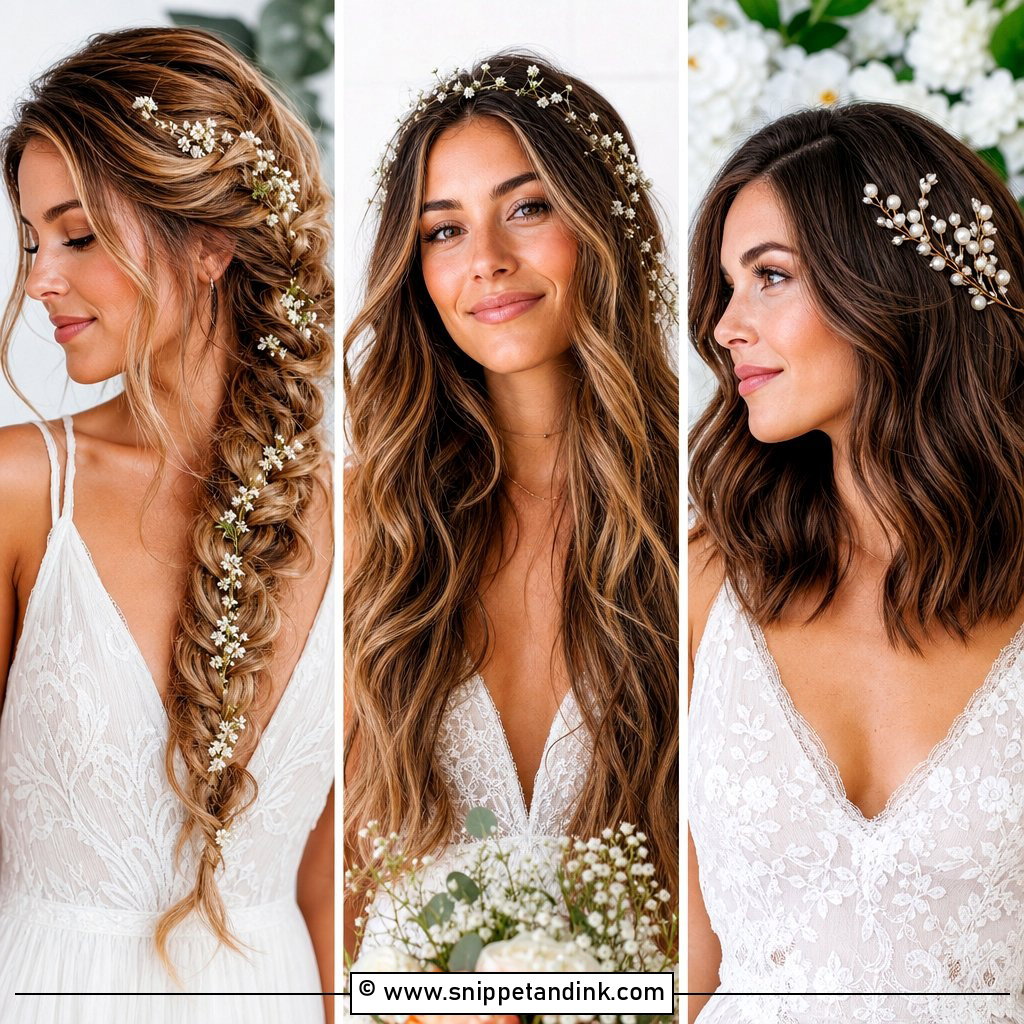
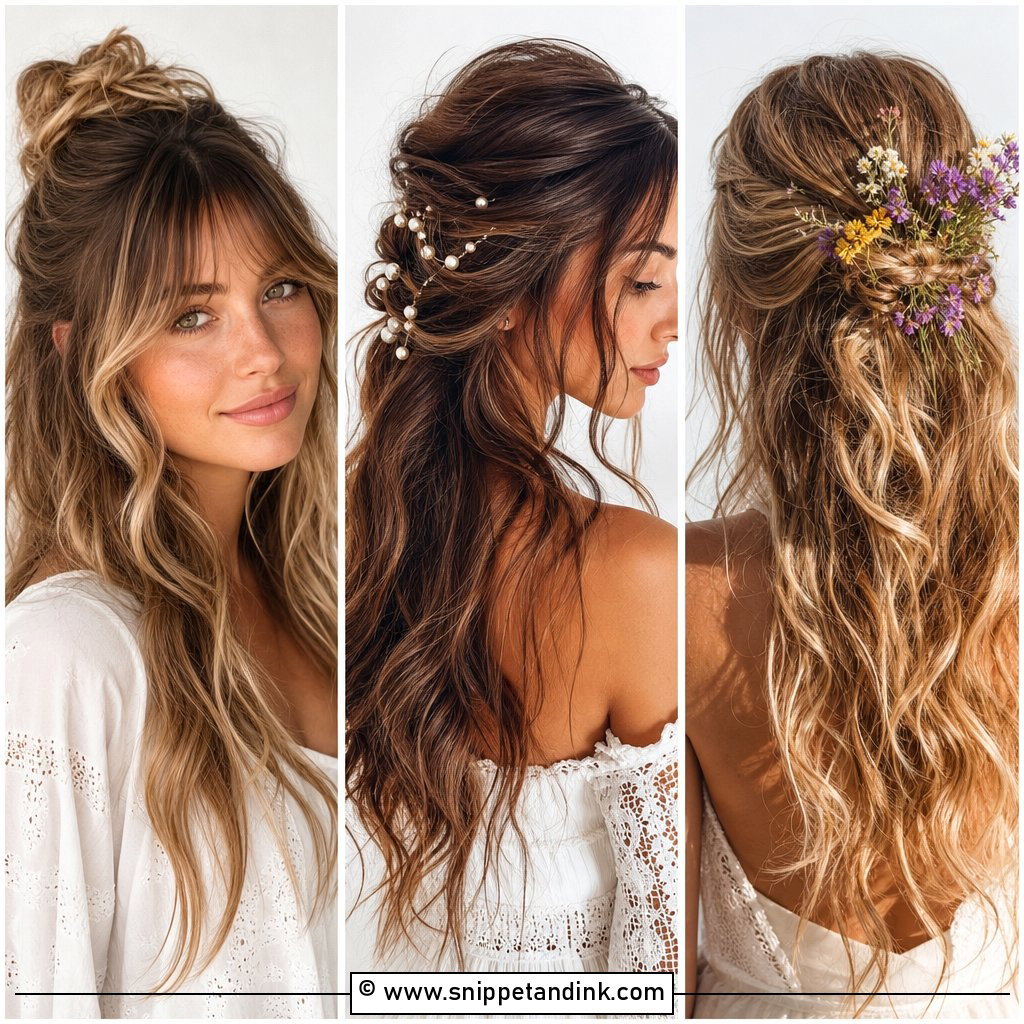
Brushed-out waves are what I’d use here, not tight ringlets. The waves give movement while the small flowers add color without taking over. Medium to long hair gives room to scatter Tiny daisies, lavender sprigs, chamomile and baby’s breath through the sides and back. Flowers won’t stay in freshly curled, silky hair on their own, so I hide a small pinned twist or anchor braid under the top layer and attach the stems to that. Place them unevenly, as if tucked in during a walk through a meadow.
2. Wildflower Wedding Hair With Half Up Half Down
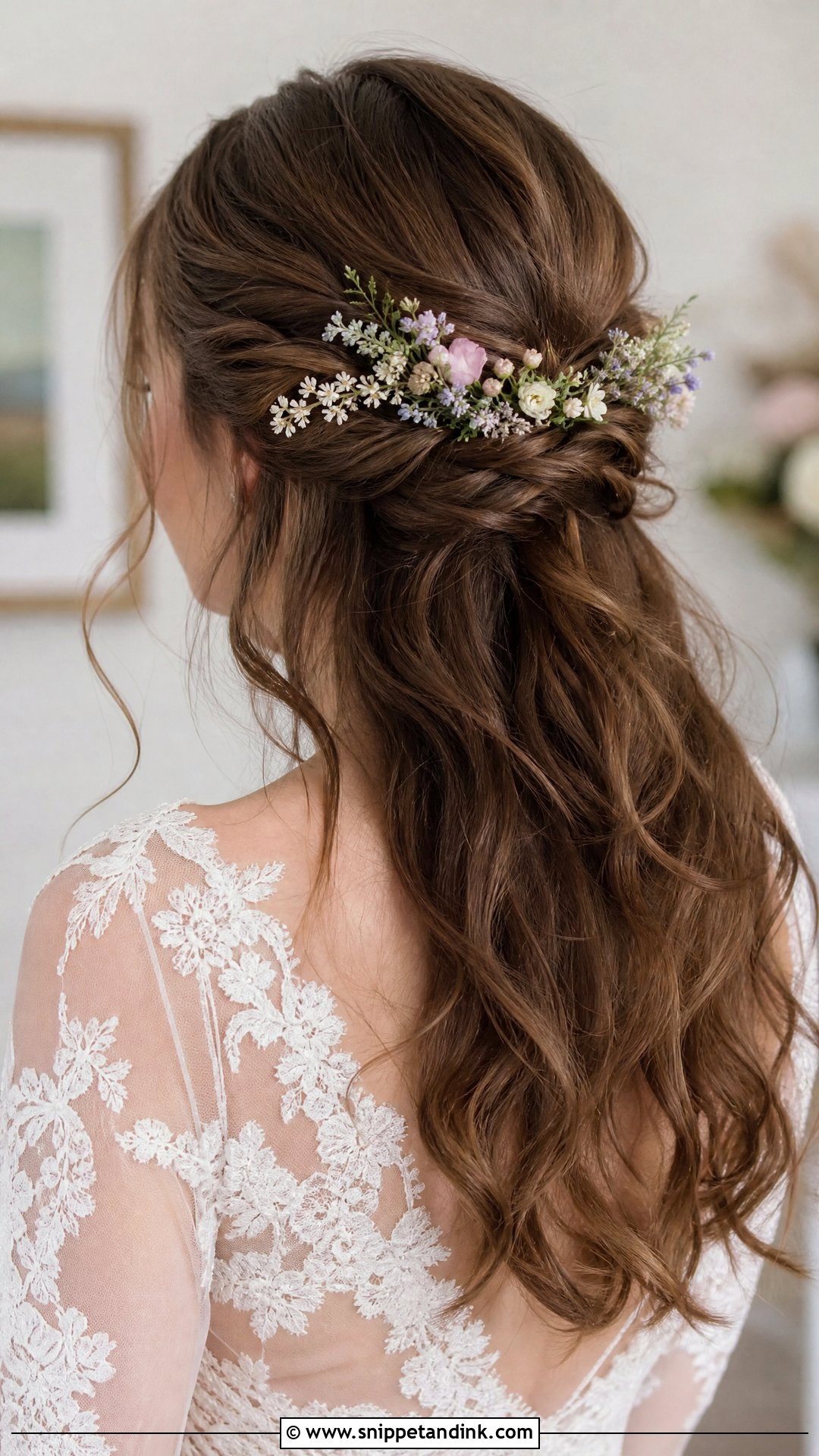
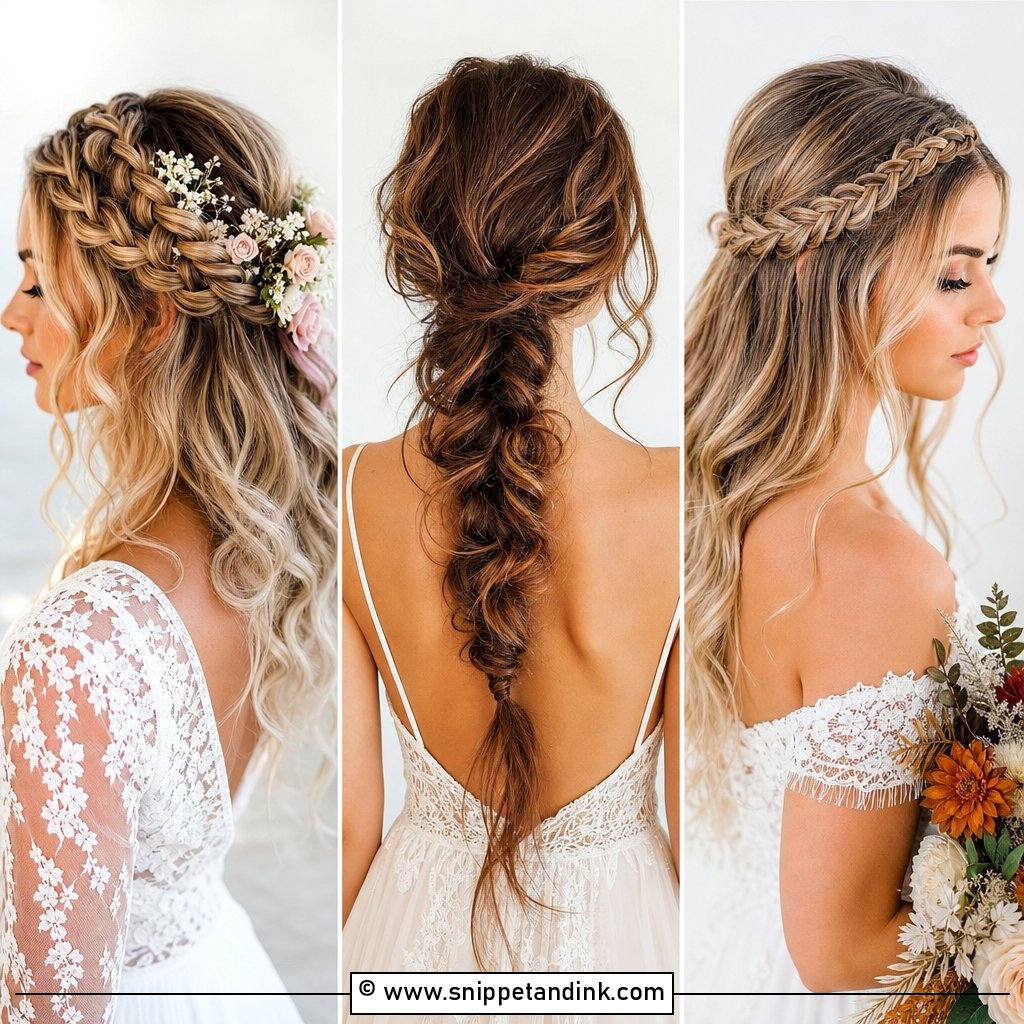
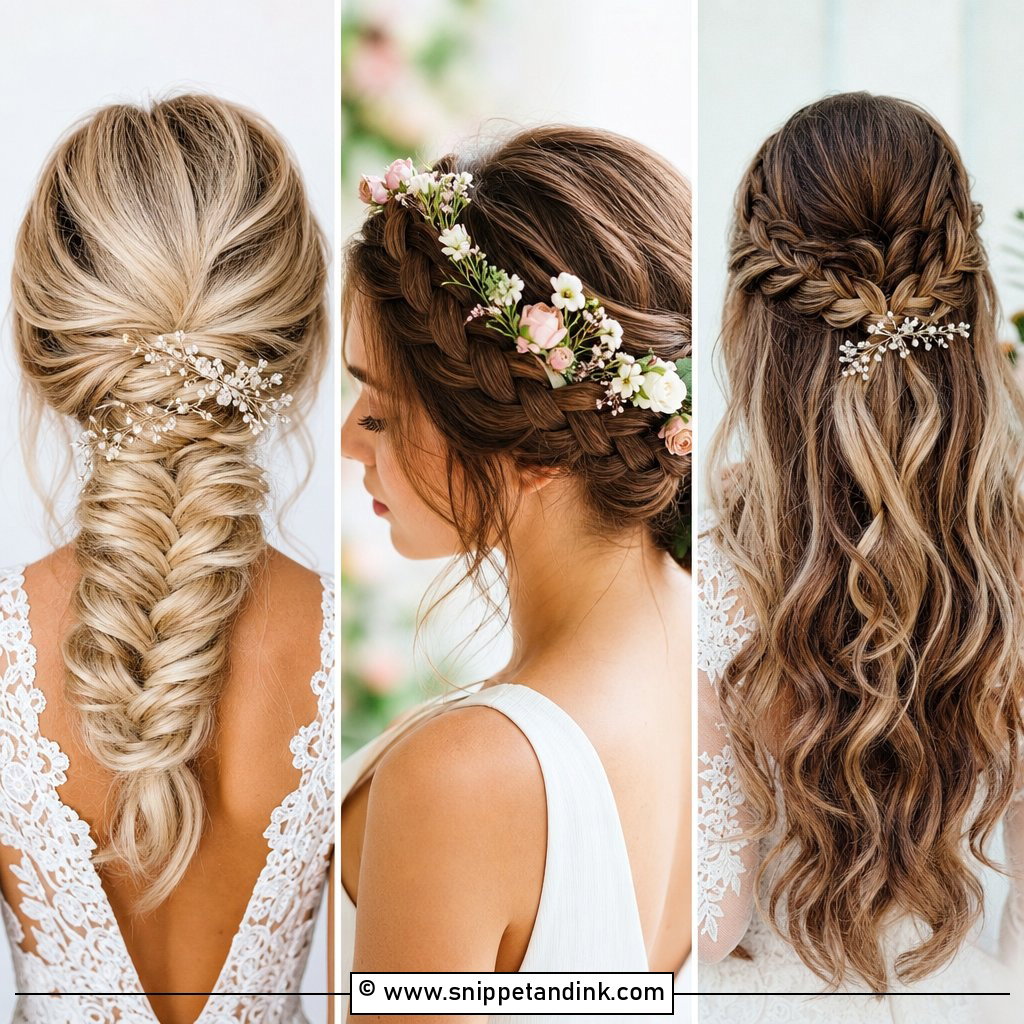
Half up keeps hair off your face while still showing length, and it’s my first suggestion when someone wants both a veil and their hair down. The lifted section at the crown gives the veil comb something solid to grip, which loose hair never does. Flowers can be pinned across the twist, braid or gathered section at the back. With lace or detailed sleeves, I’d keep the blooms small. Bigger ones can work, but only grouped on one side.
3. Wildflower Wedding Hair With Braided Crown
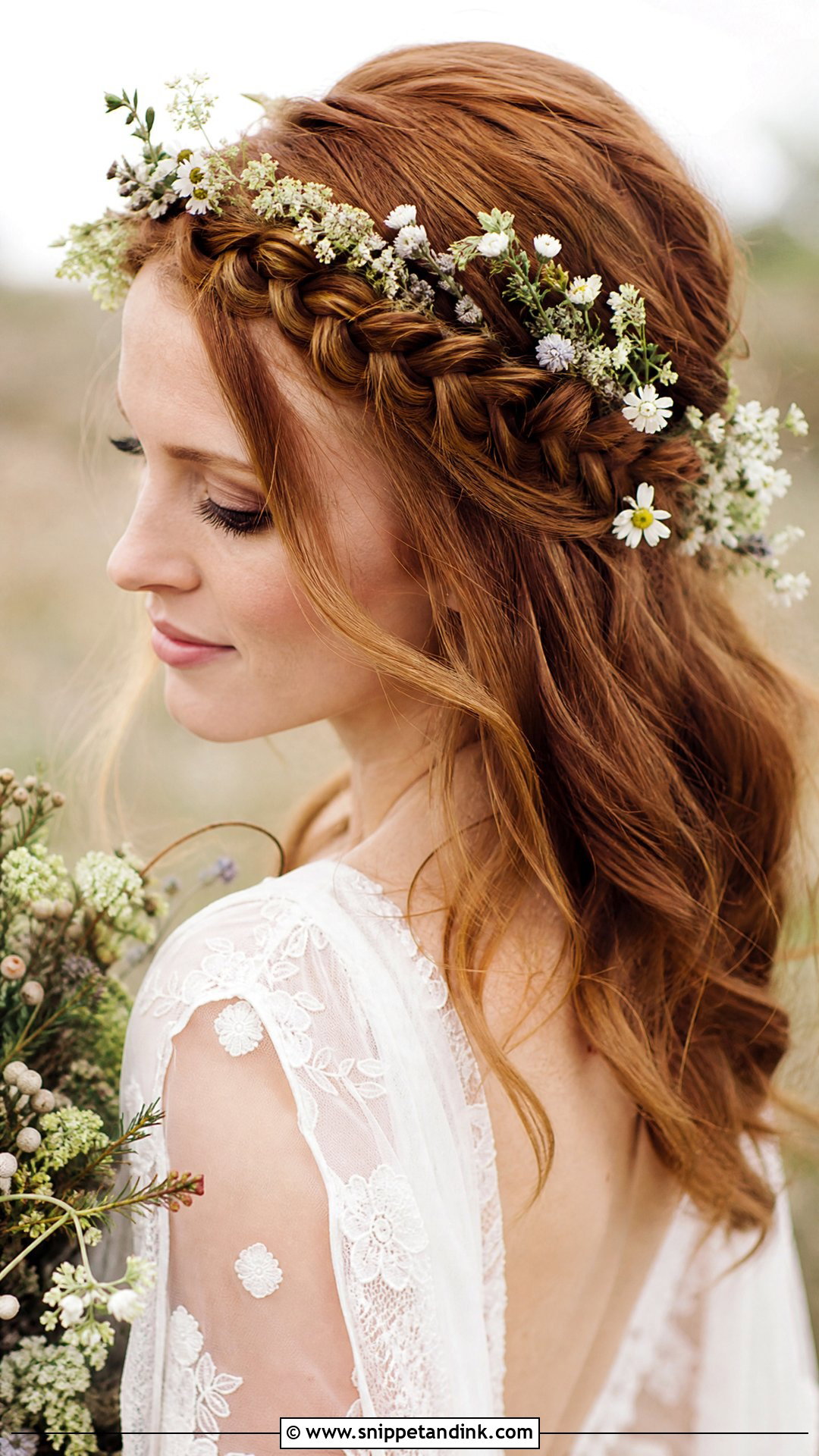
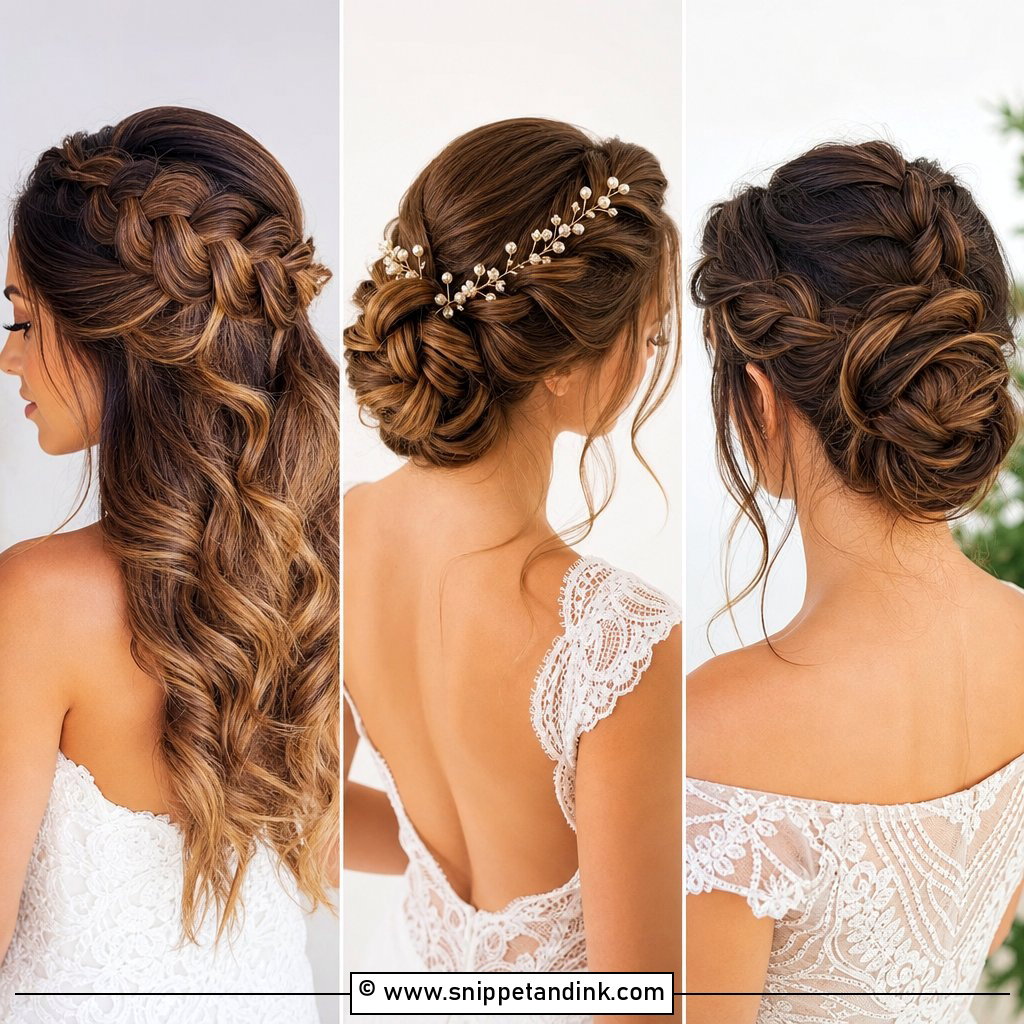
For an outdoor wedding where you’ll be hugged a hundred times, a braided crown is the most secure place flowers can live. The braid wraps the head like a halo, and each stem slides into the weave where it’s held on three sides. Textured and wavy hair braids best; very smooth, freshly washed hair slips, so I prep it with a texture spray or curl it first for grip. I leave a few face-framing pieces out so it doesn’t look severe. Simple earrings and a flowing veil keep the focus on the braid.
4. Wildflower Wedding Hair With Low Bun
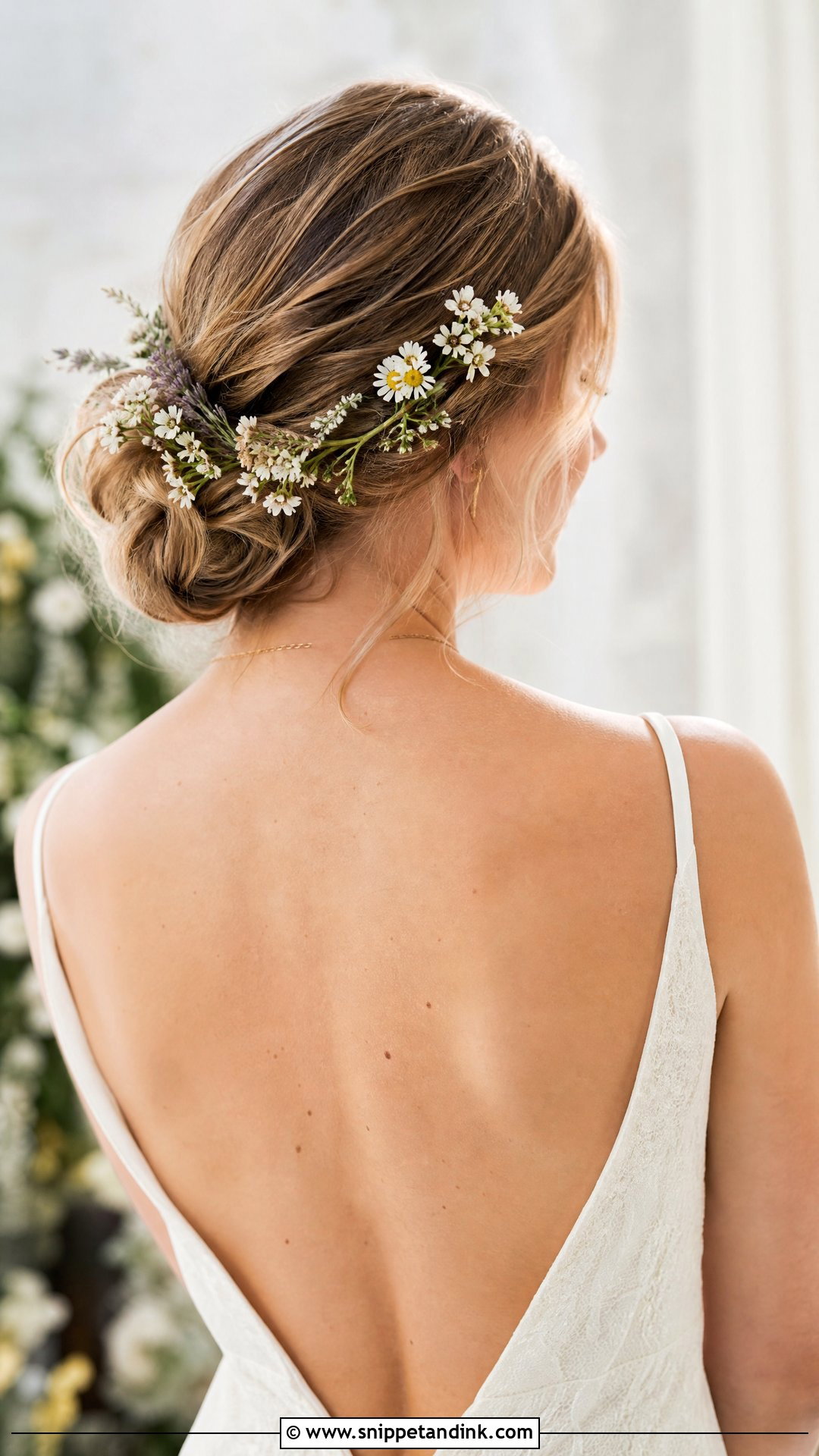
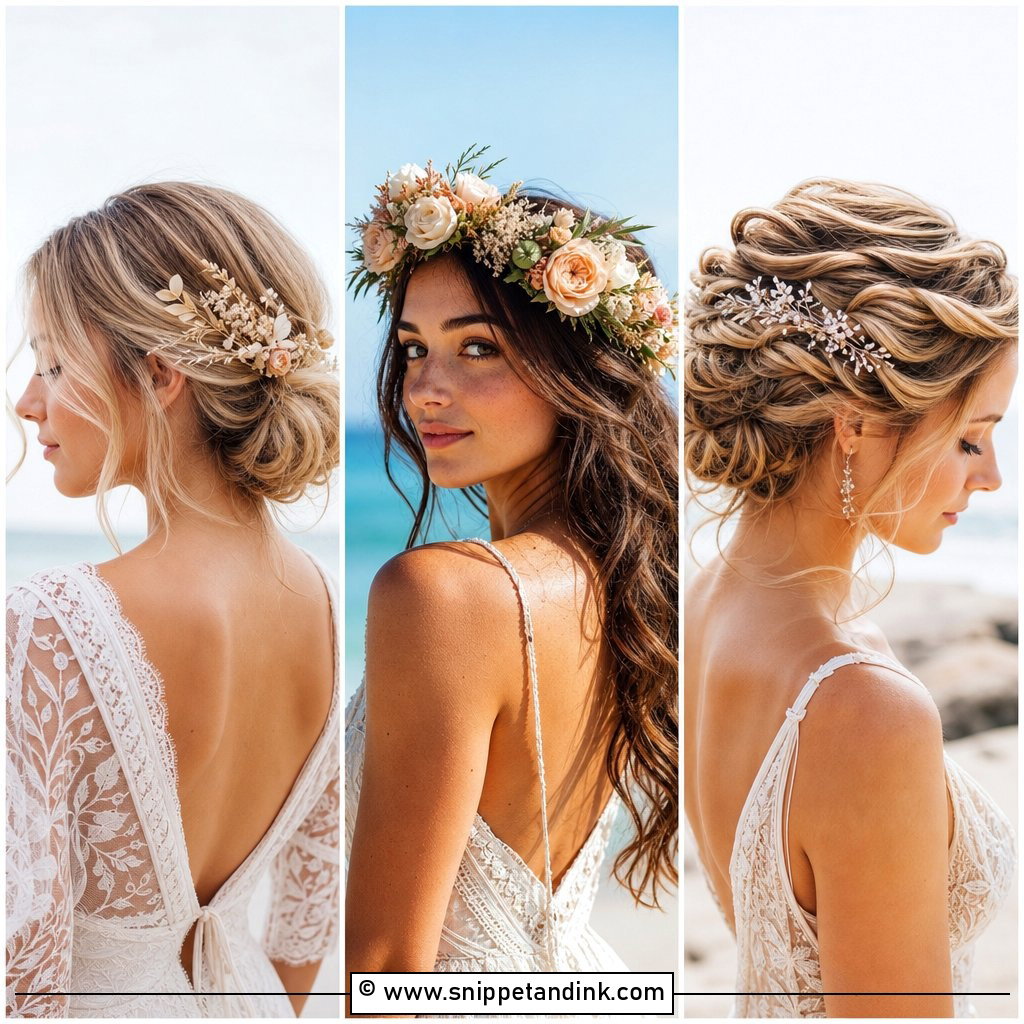
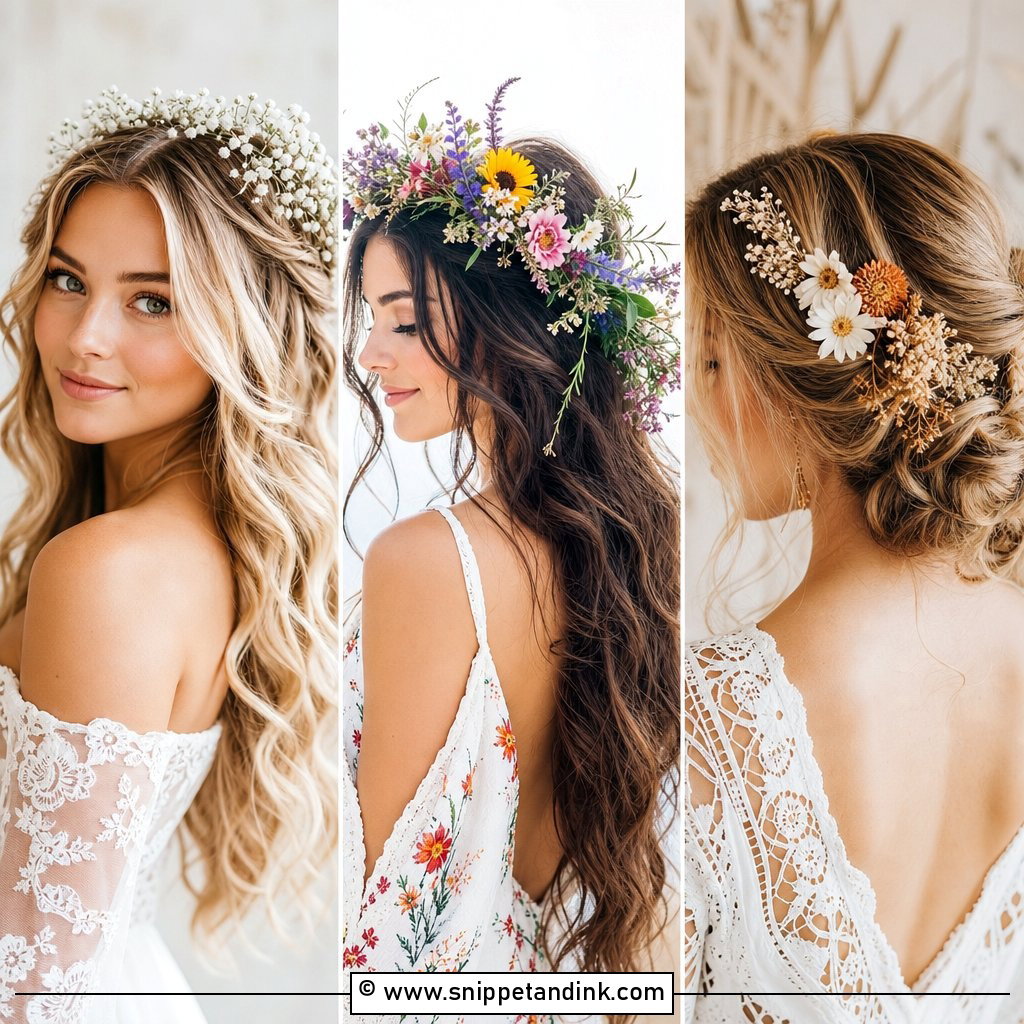
Sitting at the nape, a low bun looks right from every angle and leaves room for a veil, comb or pins above it. Wildflowers can wrap one side of the bun, tuck underneath, or rest lightly across the top. Ask for a soft, textured bun if you want a natural look; a tight polished one makes flowers look stuck on. I like it with open-back gowns, where the back view matters. It’s also one of the most comfortable styles to wear for ten hours.
5. Wildflower Wedding Hair With Messy Bun
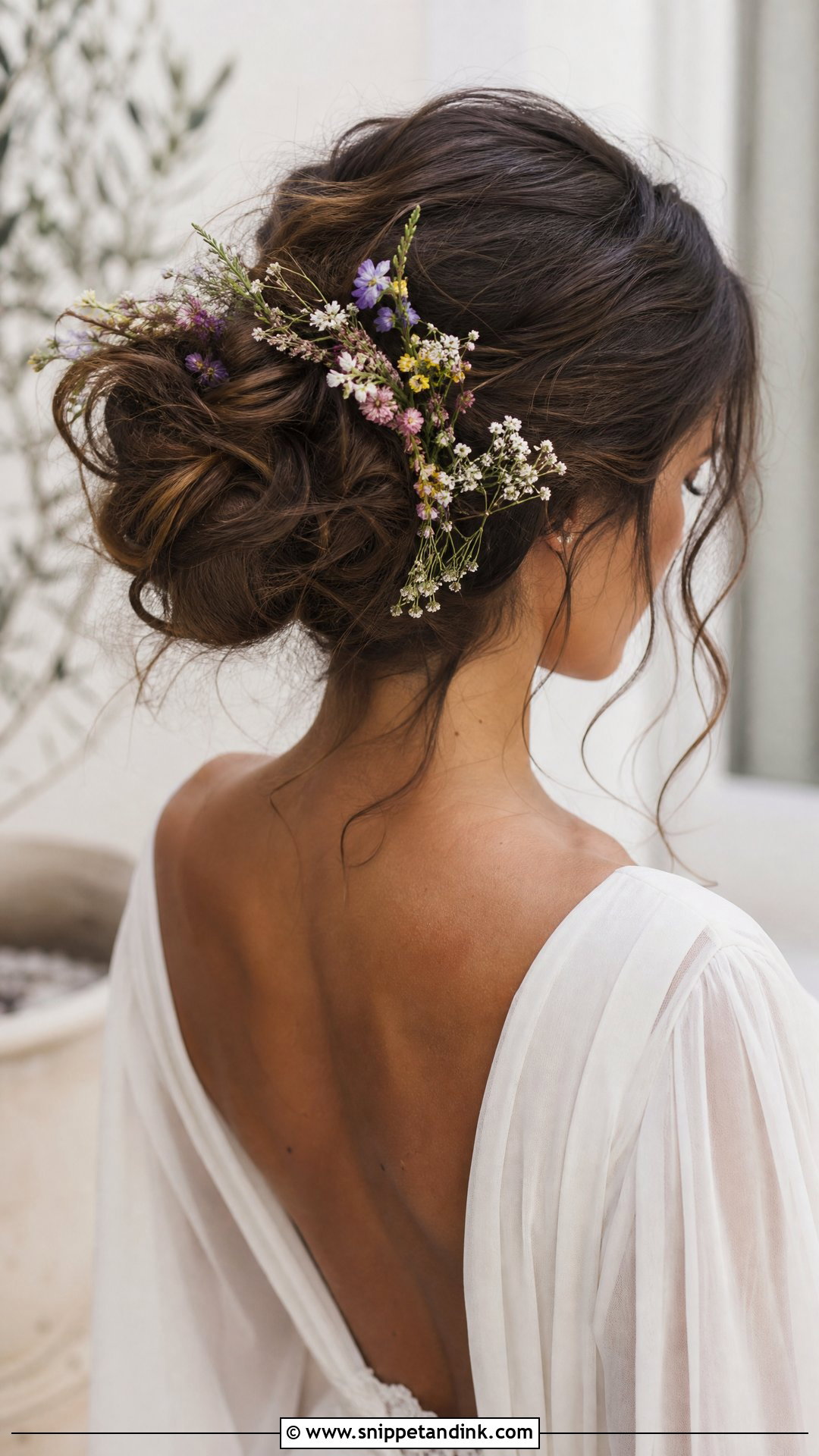
Messy has to be built, or it simply collapses by the speeches. I set the hair, then pin the bun in sections and pull pieces loose by hand so it looks airy but has structure underneath. Small flowers tucked around it add softness without weight, and a few wisps at the cheeks and neck soften the face. It suits boho weddings and brides who hate the feeling of every strand locked down. Flowy dresses and light makeup match its mood.
6. Wildflower Wedding Hair With Side Braid
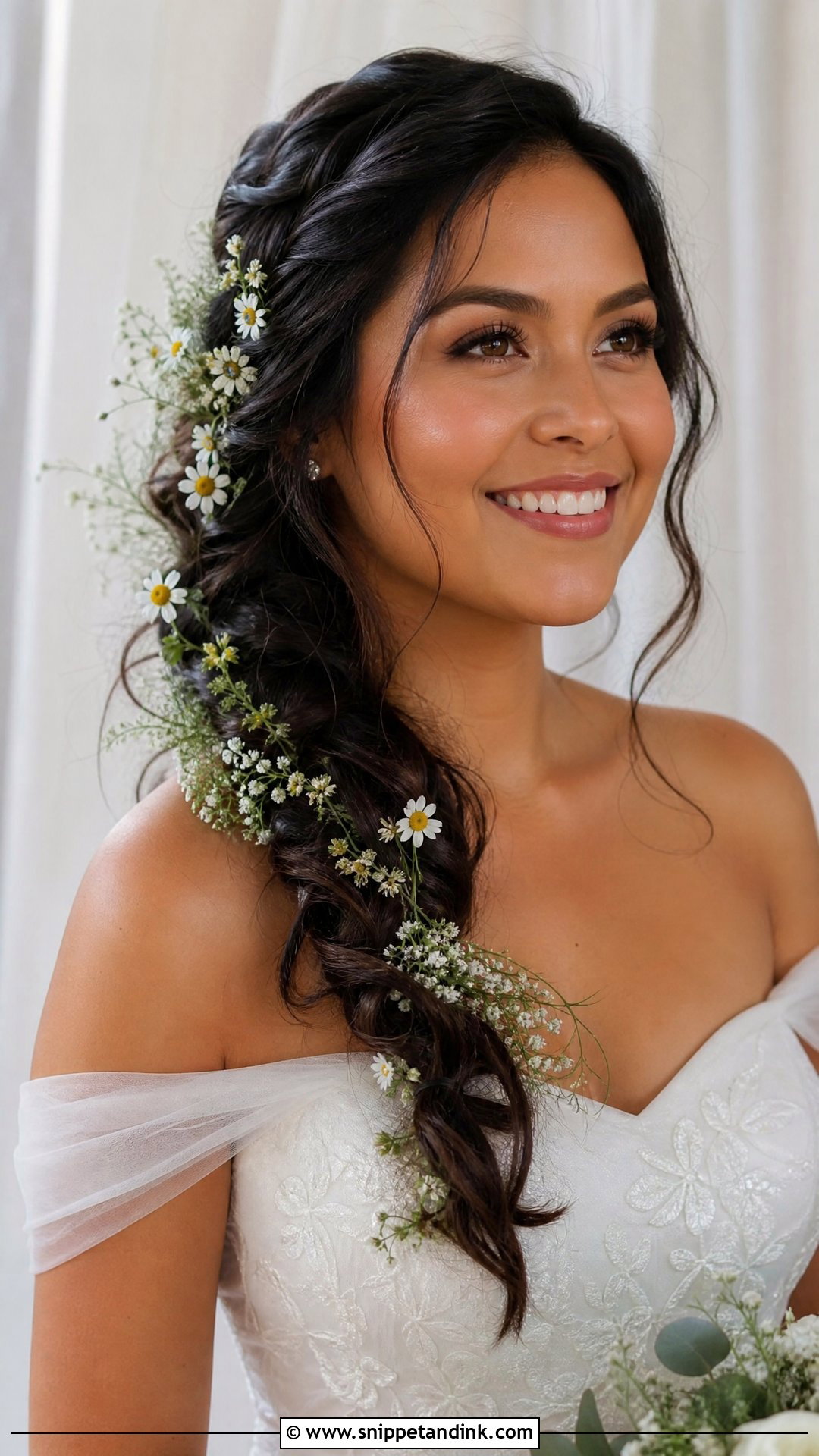
Draped over one shoulder, a side braid puts the flowers right where the camera sees them in portraits and ceremony shots. Long hair, thick hair and extensions all give enough body for blooms and greenery. Fishtail, a loose three-strand or a soft Dutch braid all work; I pick based on the neckline, since a Dutch braid sits flatter against a strapless bodice. I pancake the braid slightly for fullness and add flowers in small clusters rather than one straight line. Be aware the braid will rub on the shoulder all day, so delicate petals on that side bruise first.
7. Wildflower Wedding Hair With Flower Crown
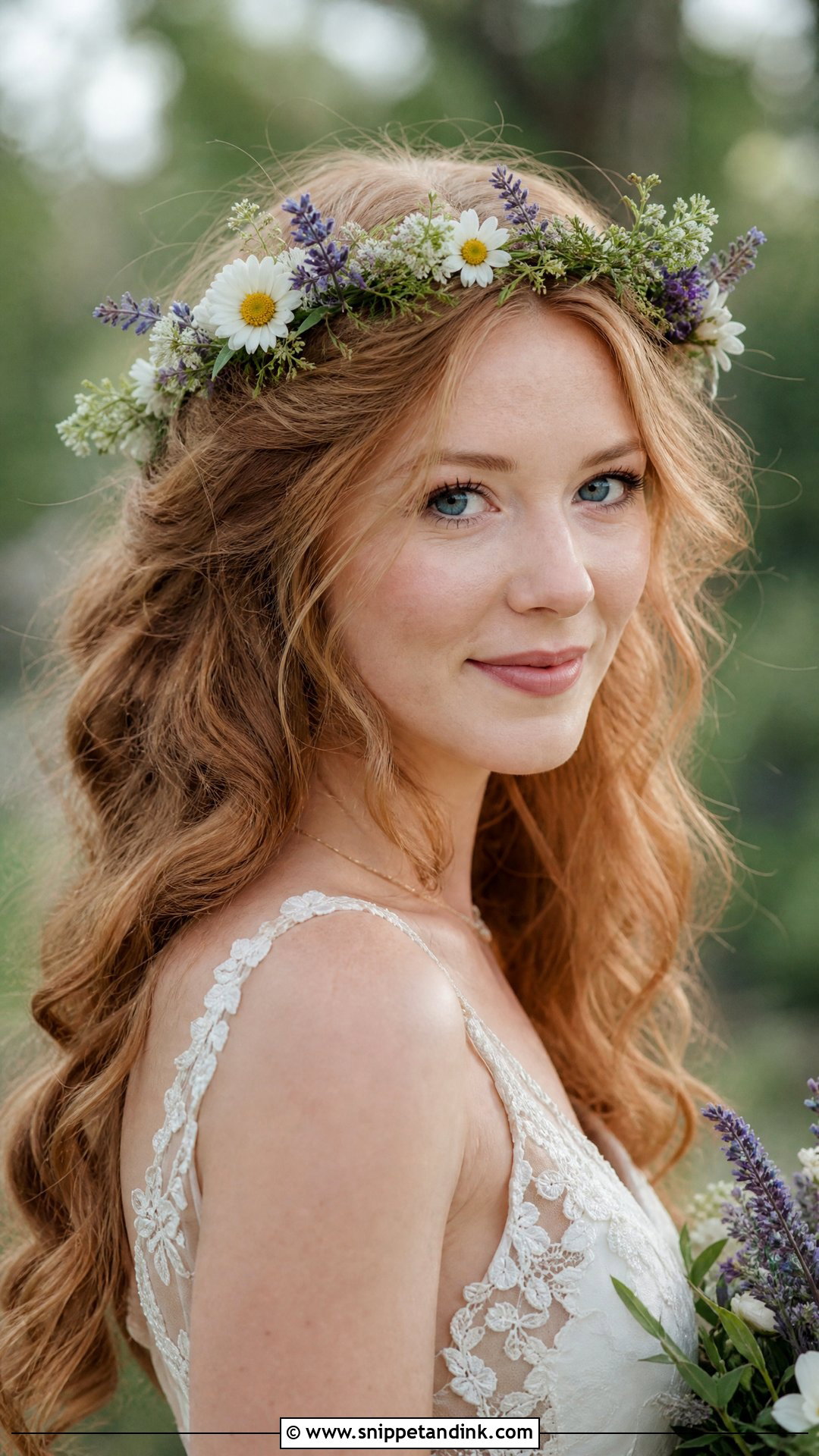
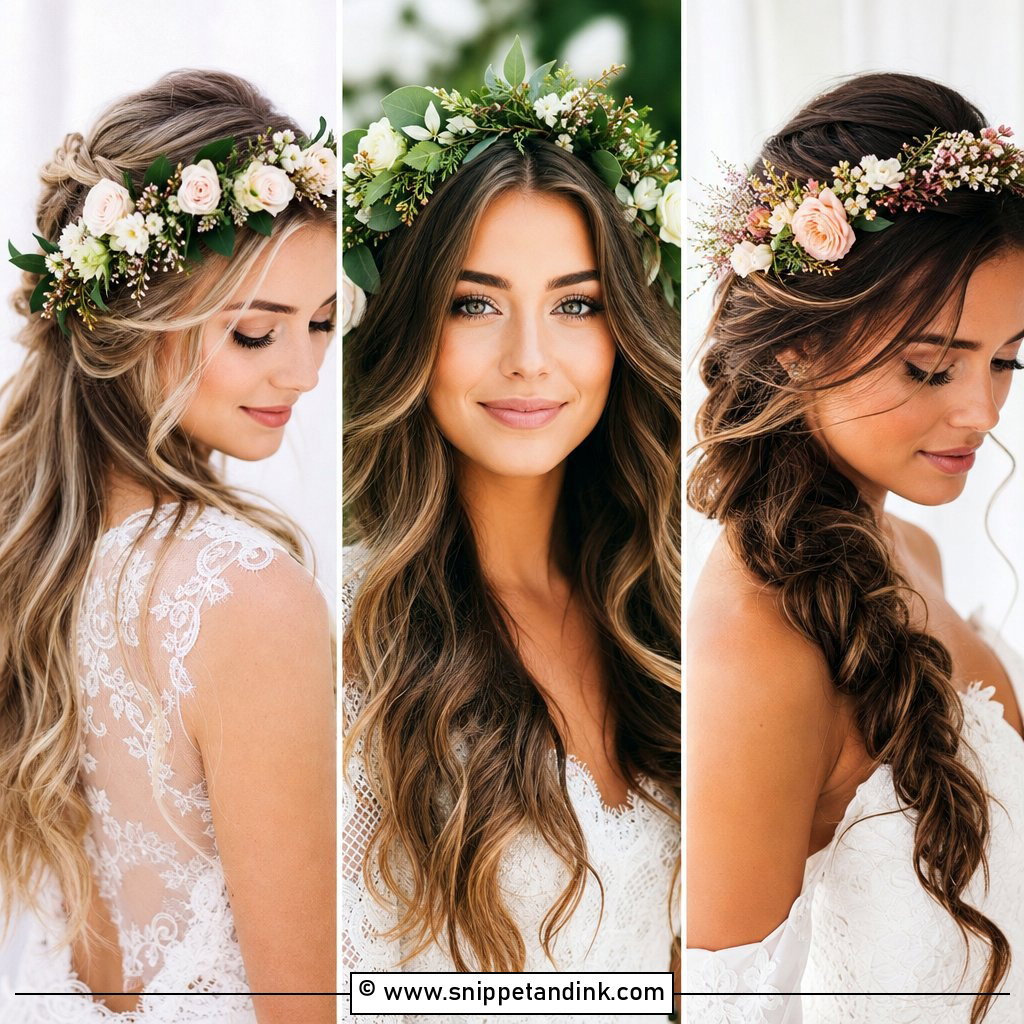
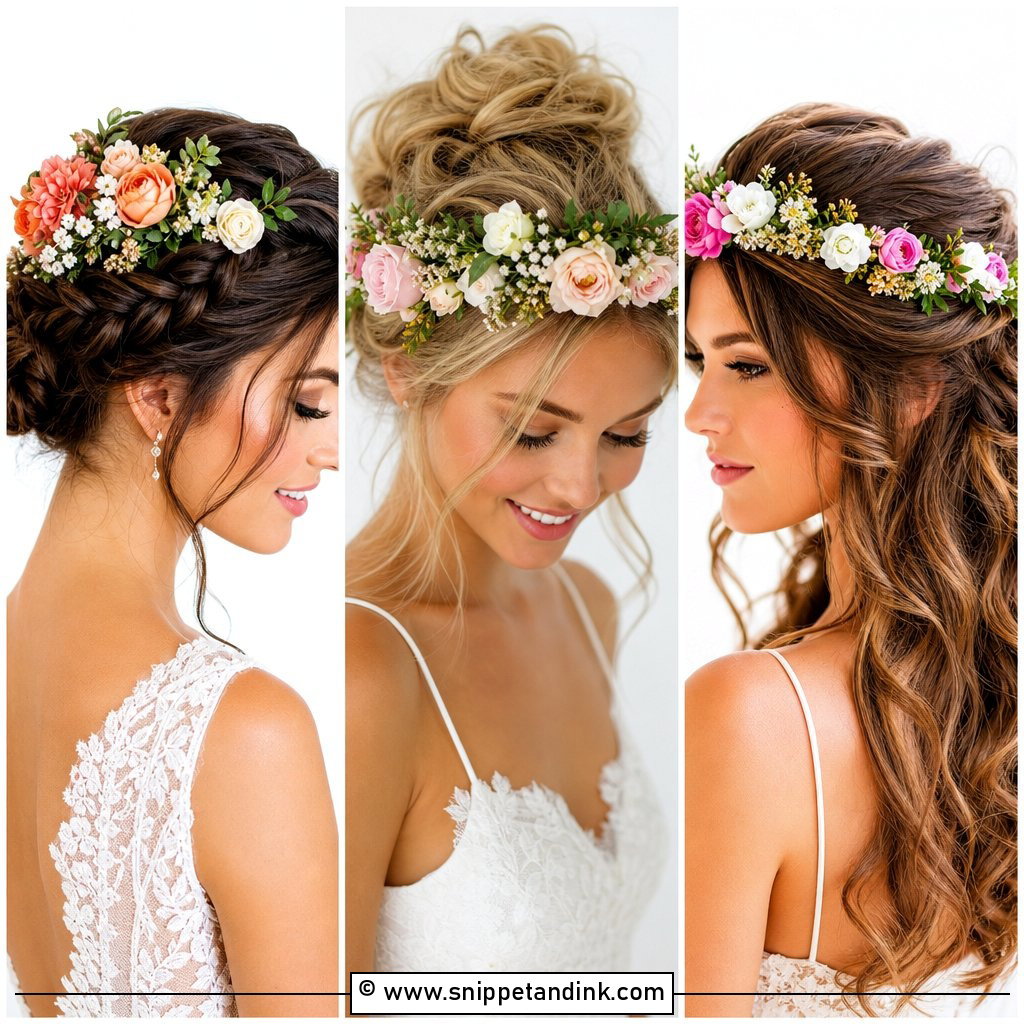
A crown is the most recognisable way to wear wildflowers, and it works over waves, curls, braids or a simple bun. A delicate crown of small blooms and thin greenery is softer; brighter, fuller flowers at the front and sides make it bolder. Fit is everything. It should sit snugly without pressing on the temples, which gives you a headache by mid-afternoon. I secure crowns with bobby pins crossed through the wire at four points, and I always ask to try it on at the trial.
8. Wildflower Wedding Hair With Veil
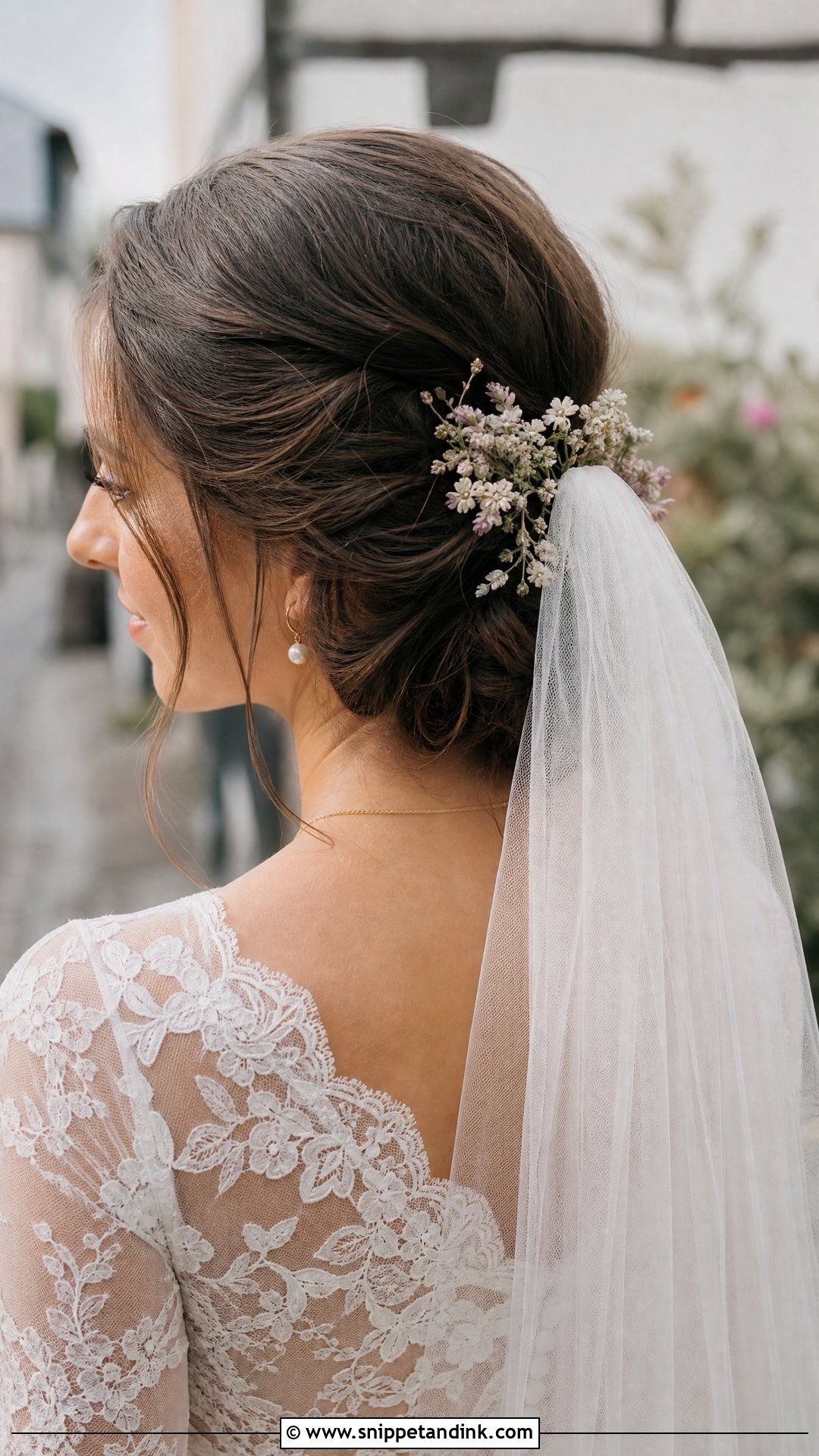
With a veil in the mix, the flowers should support it, not compete with it. A low bun, half-up twist or soft waves can all carry a veil depending on its length and fabric. On lace veils I use delicate flowers like baby’s breath, waxflower or tiny daisies; a plain veil can take more color. I cluster the blooms around the comb or just to one side, and I insert the comb first, then the flowers, so removing the veil after the ceremony doesn’t pull them out.
9. Wildflower Wedding Hair With Short Hair
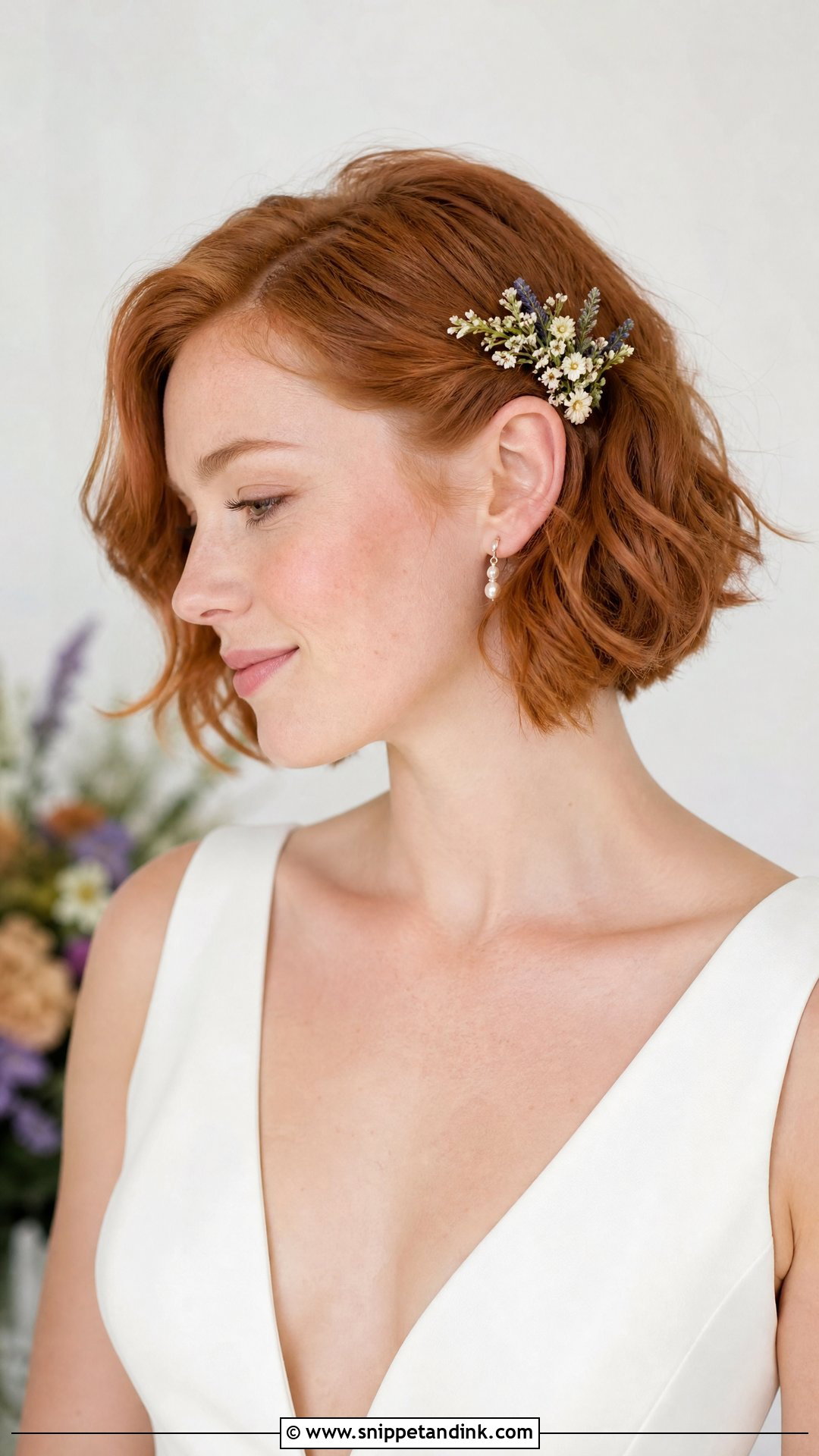
Short hair shows off flowers well, precisely because there’s less of it. A bob, pixie, or short wavy cut can carry a small floral comb, a mini crown or a few blooms near one ear. Scale matters most: a large bloom on a pixie looks like it might tip over, while petite wildflowers look deliberate. I add texture first with bends or a light cream so the flowers have something to sit in, and on very short cuts I use mini pins and a wired cluster.
10. Wildflower Wedding Hair With Long Hair
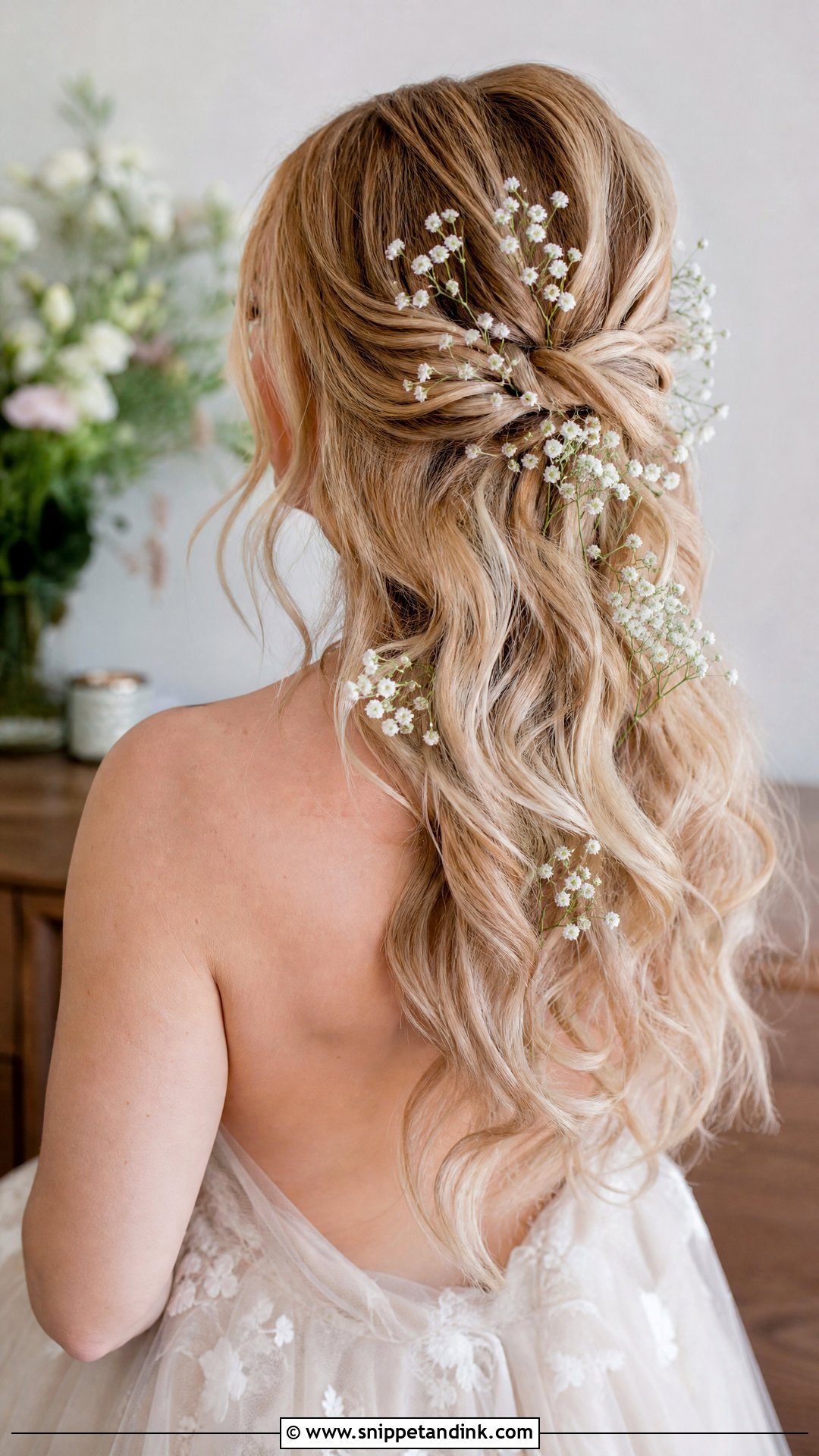
Long hair has room for everything: waves worn down, a braid through the back, a side sweep or a long half-up style. Tiny blooms can be scattered through the length, and greenery can lead the eye down. Hair that’s long and heavy also loses curl fastest, so I set it well, let it cool fully before brushing, and avoid piling on large flowers that add weight. A mix of small wildflowers, soft curls and face-framing pieces keeps it from looking overdone.
11. Wildflower Wedding Hair With Curly Hair
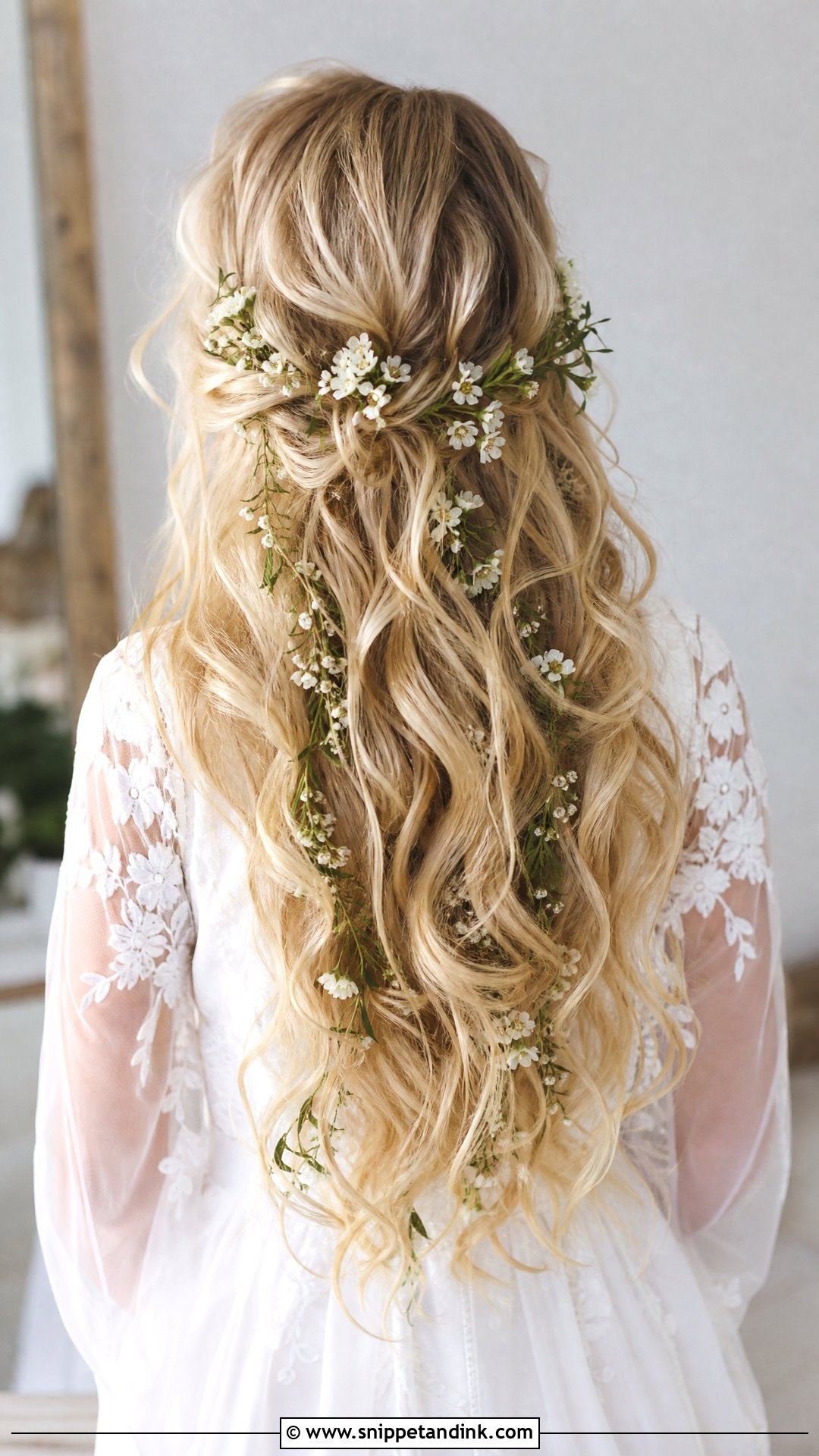
Curls hold flowers almost by themselves, which makes curly hair one of the easiest textures I work with. The blooms sit between curls, around the crown or down one side. I hydrate and define the curls first and add flowers last, slipping each stem in along the direction of the curl instead of across it, so the pattern isn’t flattened. Baby’s breath, small daisies and tiny colored blooms show up well against curls. A half-up style, loose updo or full down look all stay comfortable through the day.
12. Wildflower Wedding Hair With Natural Hair
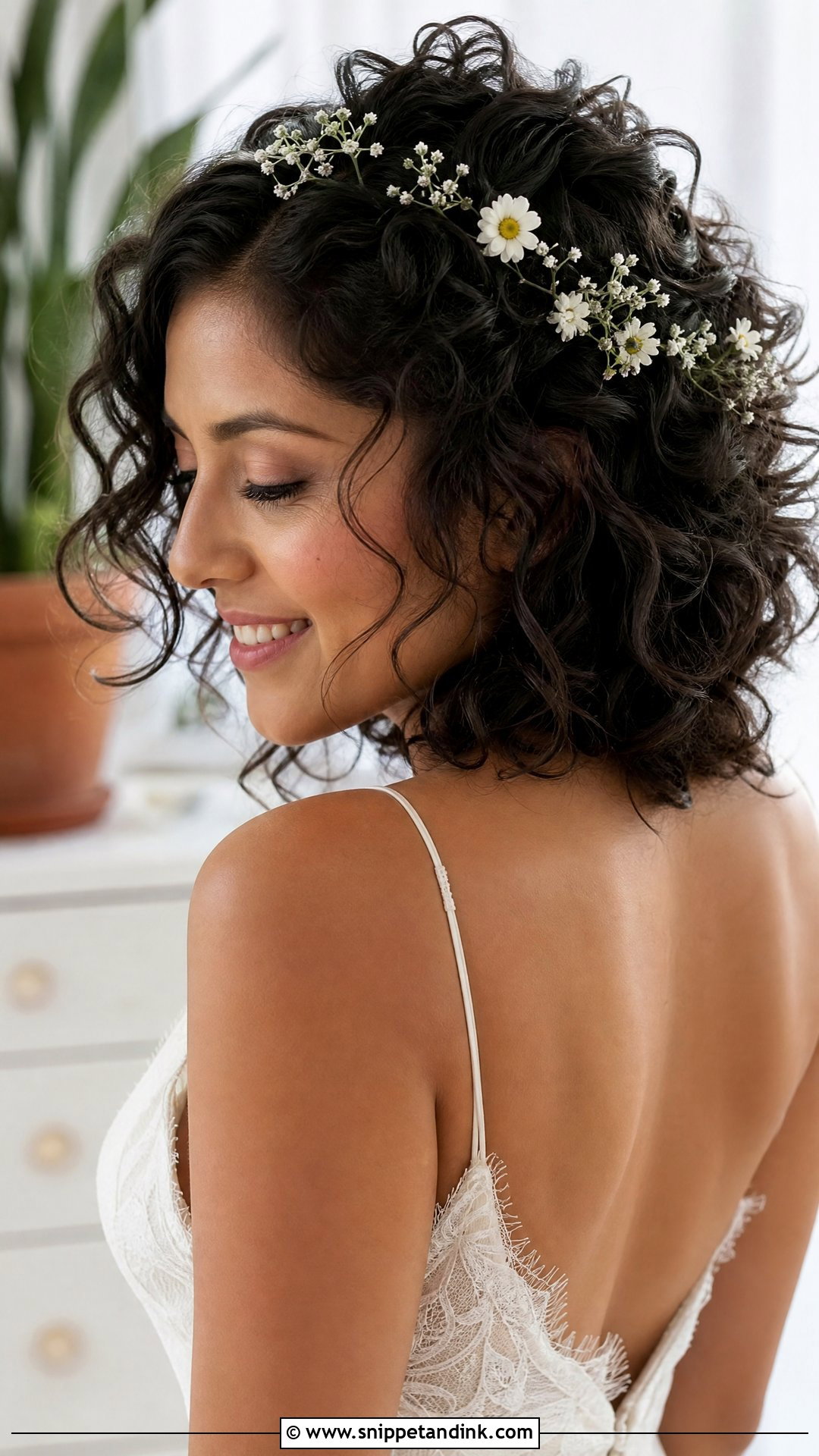
On natural hair, the shape of the style is the main event, and flowers should frame it. A textured updo, twist-out, braided crown, puff or sculpted low bun can all have blooms tucked around the edges. I secure them with U-pins and soft elastic rather than tight bobby pins, so there’s no tension on the edges or hairline. Small blossoms and greenery highlight the hair instead of hiding it. Depending on the shape, the result can look regal, earthy or quite modern.
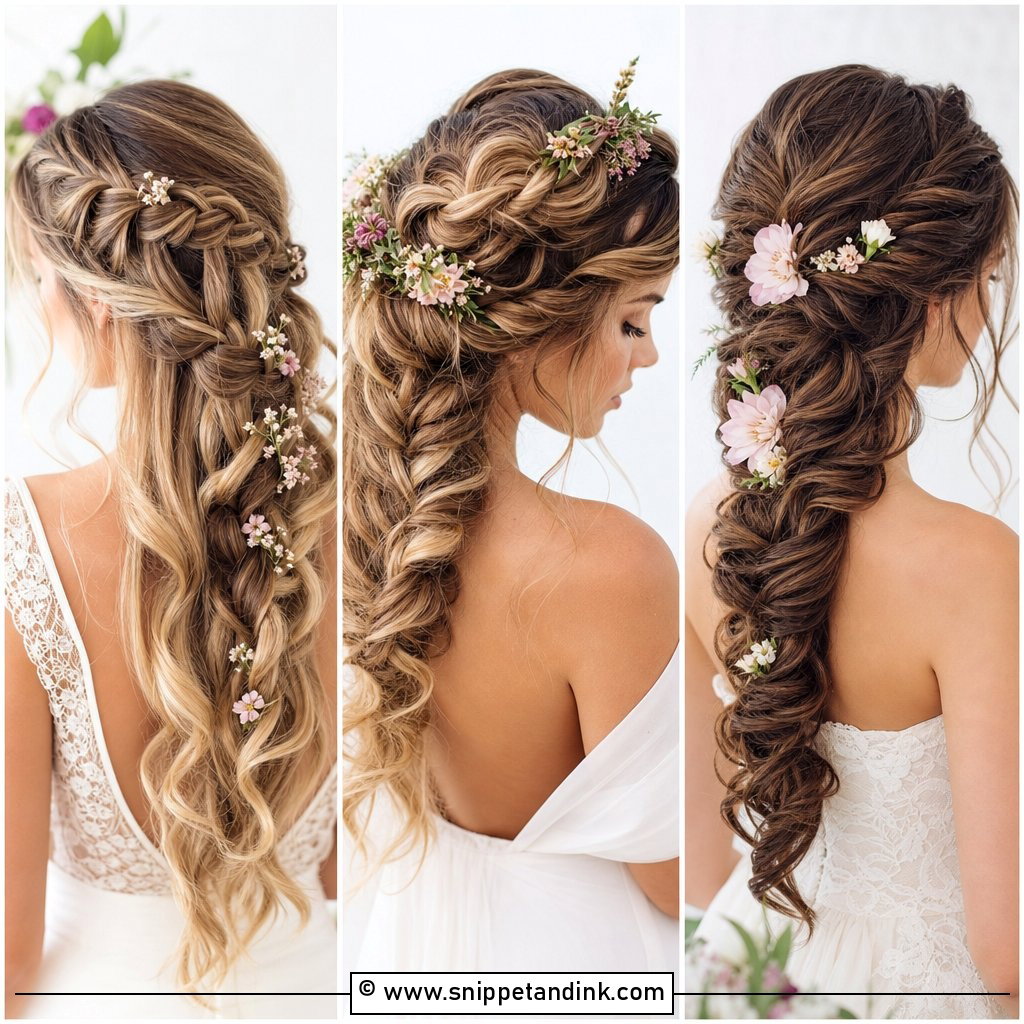
13. Wildflower Wedding Hair With Boho Braid
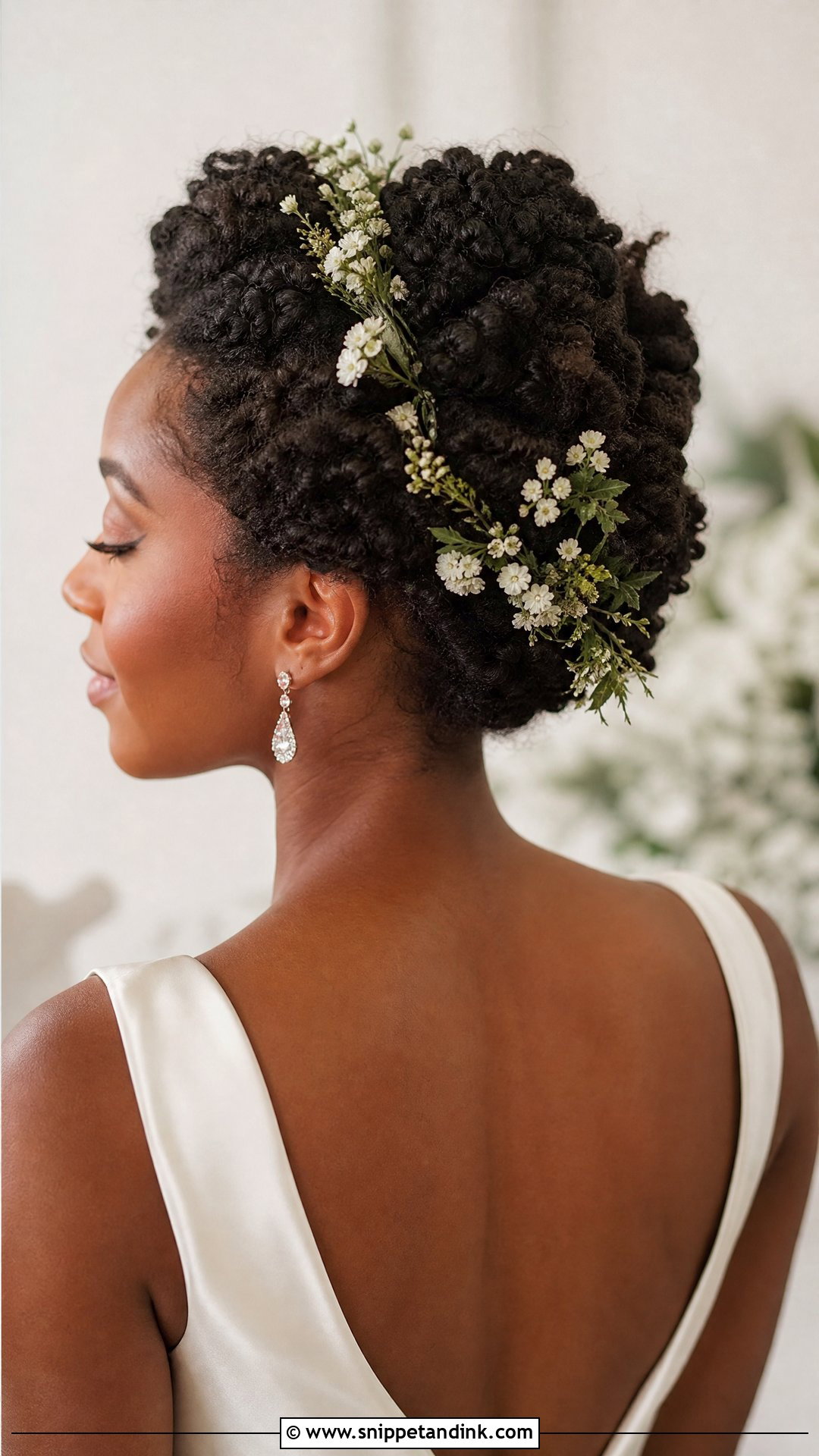
Boho braids usually start as waves and blend into one loose, wide plait. Flowers go in from top to bottom, with a little extra greenery near the crown so the top isn’t bare. It looks right with backless dresses, lace gowns and outdoor settings. Keep shine products away: a glossy, tight braid makes the flowers look like decorations sitting on top. A slightly undone finish lets them read as part of the style.
14. Wildflower Wedding Hair With Twisted Updo
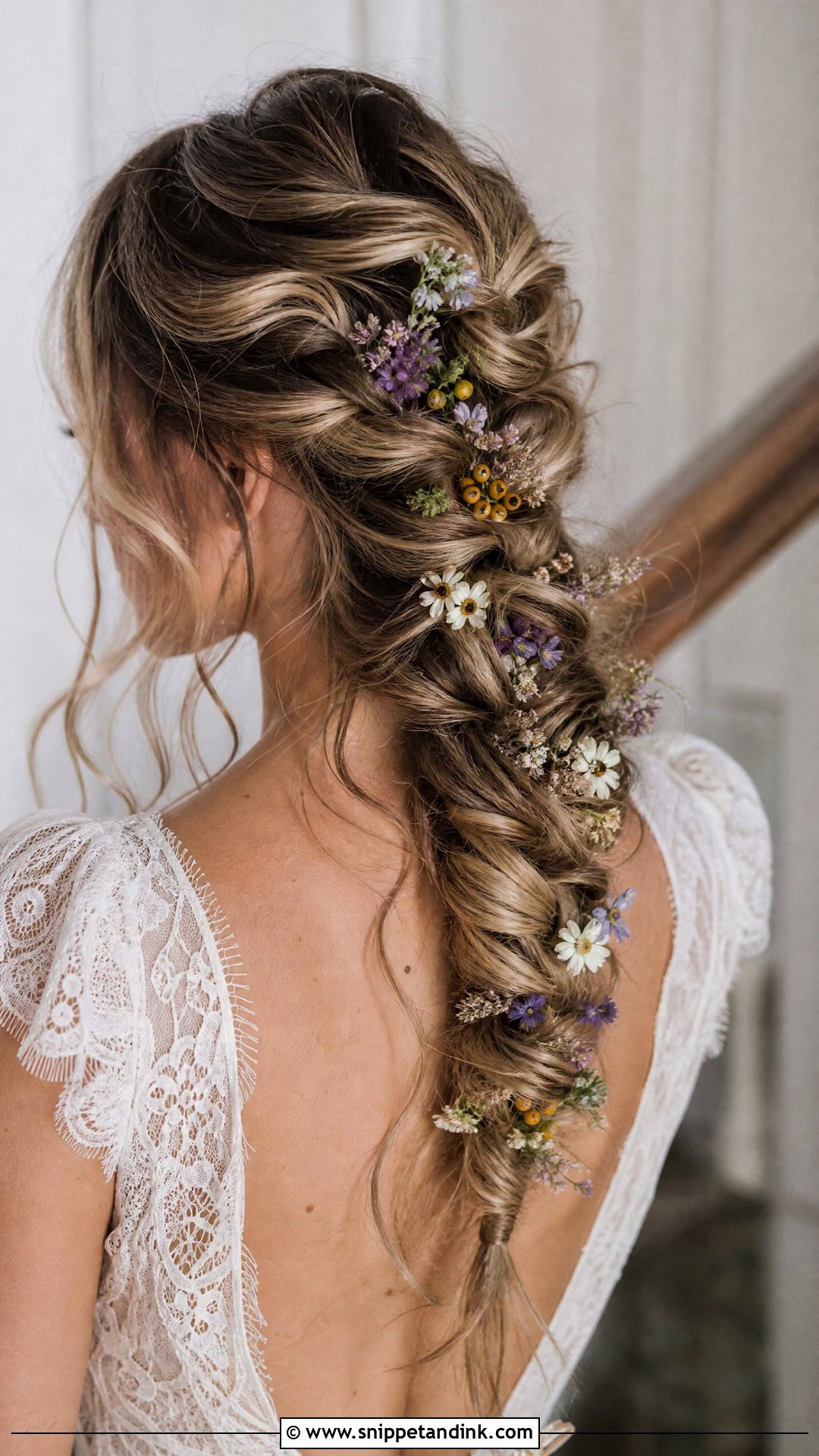
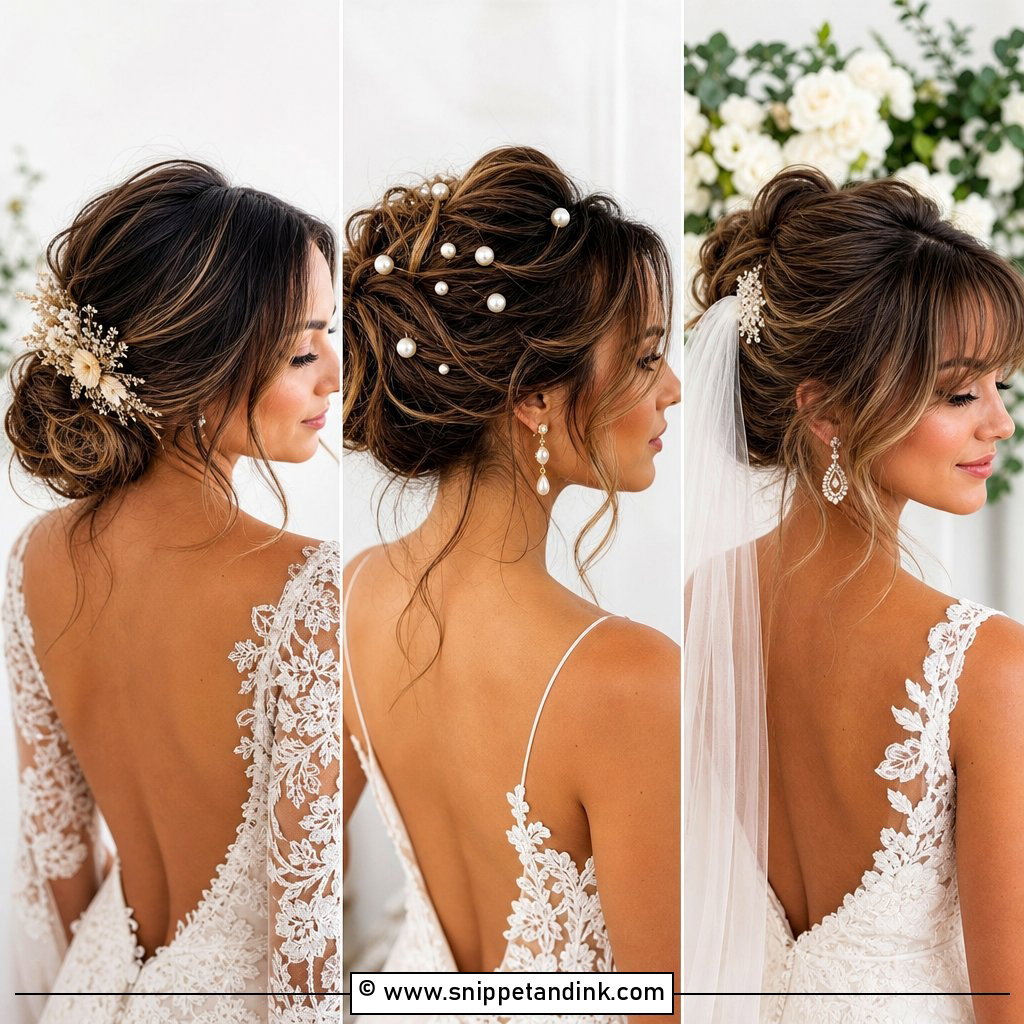
Twisted updos give you hair up without the formality of a smooth bun. The hair is twisted in sections and pinned into a low or mid-height shape, and every twist creates a pocket where a stem can sit securely. Small blooms go along the twists, around one side or near the back center. It works with veils, floral combs and delicate earrings, and it looks particularly good from behind, which is the view guests have during the ceremony.

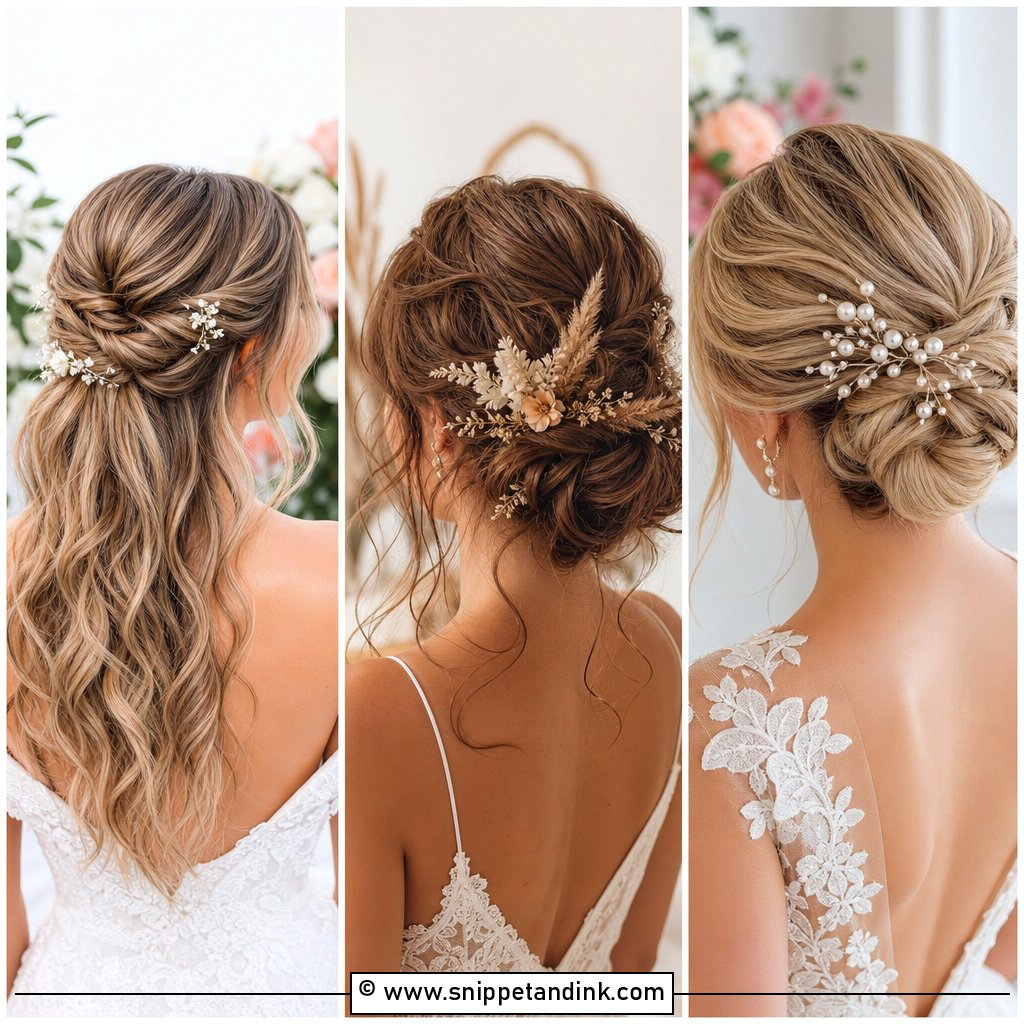
15. Wildflower Wedding Hair With Ponytail
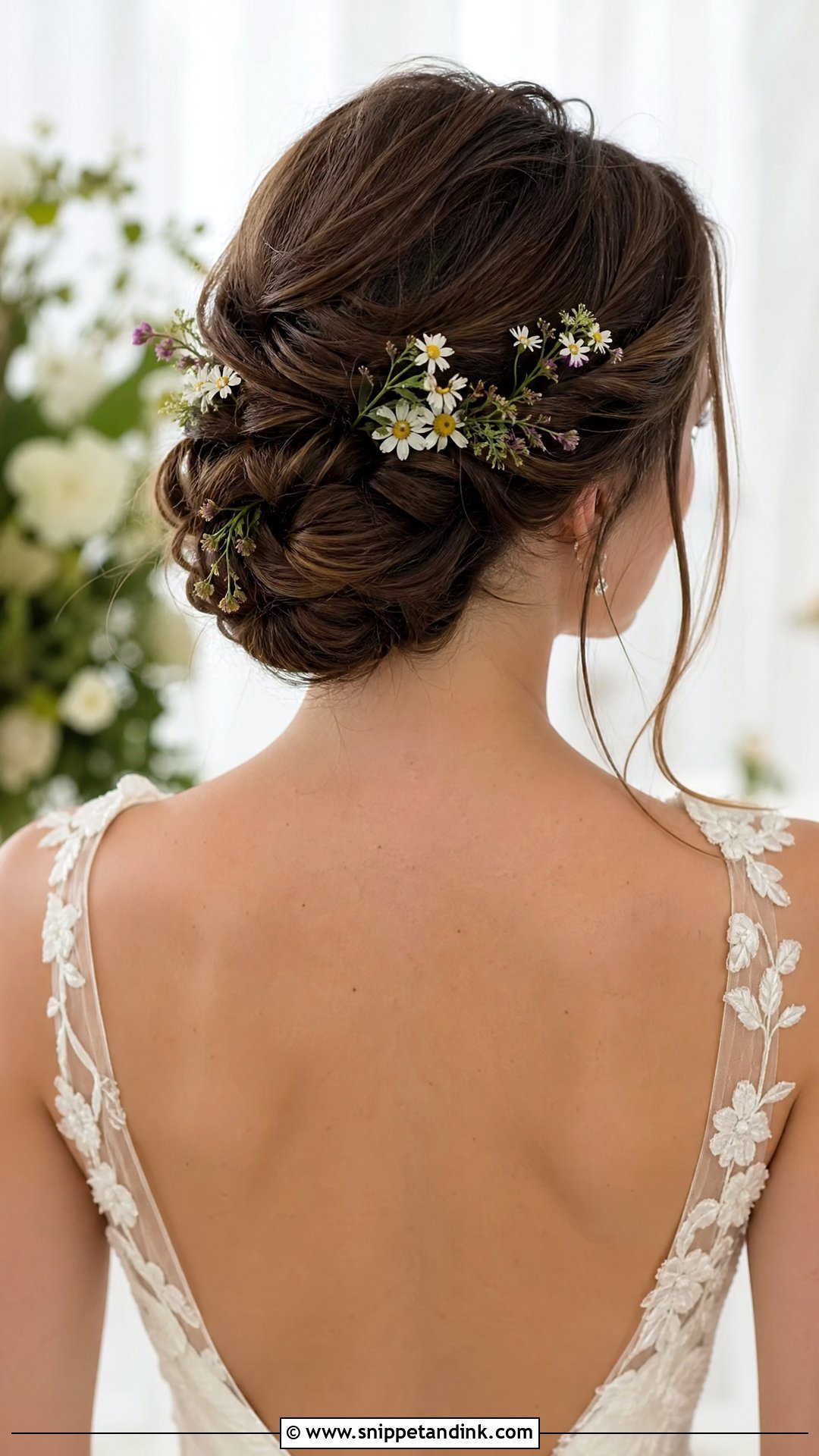
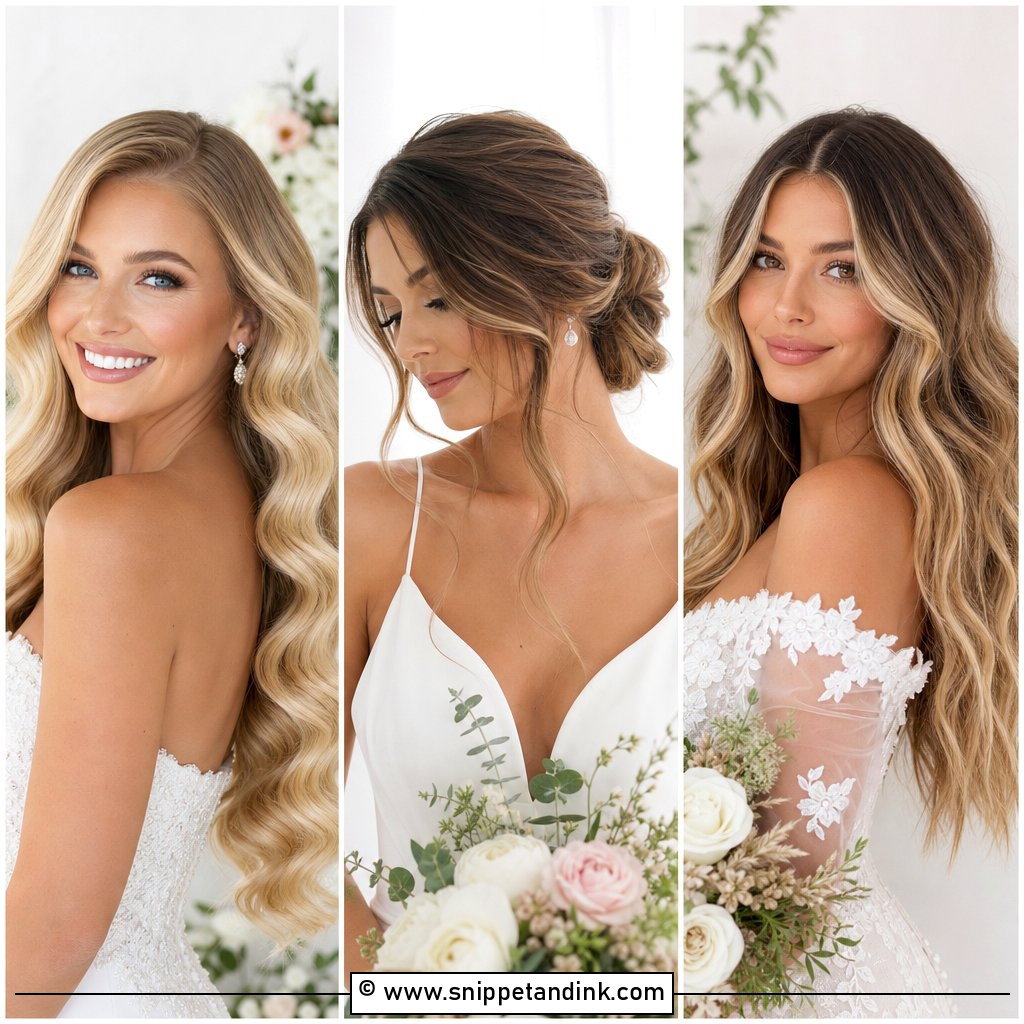
A ponytail can be low and soft, high and bouncy, or mid-height with waves through the length. I wrap wildflowers around the base or tuck them into a braided section of the tail. It keeps hair off your neck, which is a relief at a summer wedding. Volume at the crown and a few face-framing pieces stop it looking like a gym ponytail. A high pony adds weight to a small area, so I anchor it with two elastics and a hidden pin to stop it drooping by the evening.
16. Wildflower Wedding Hair With Fishtail Braid
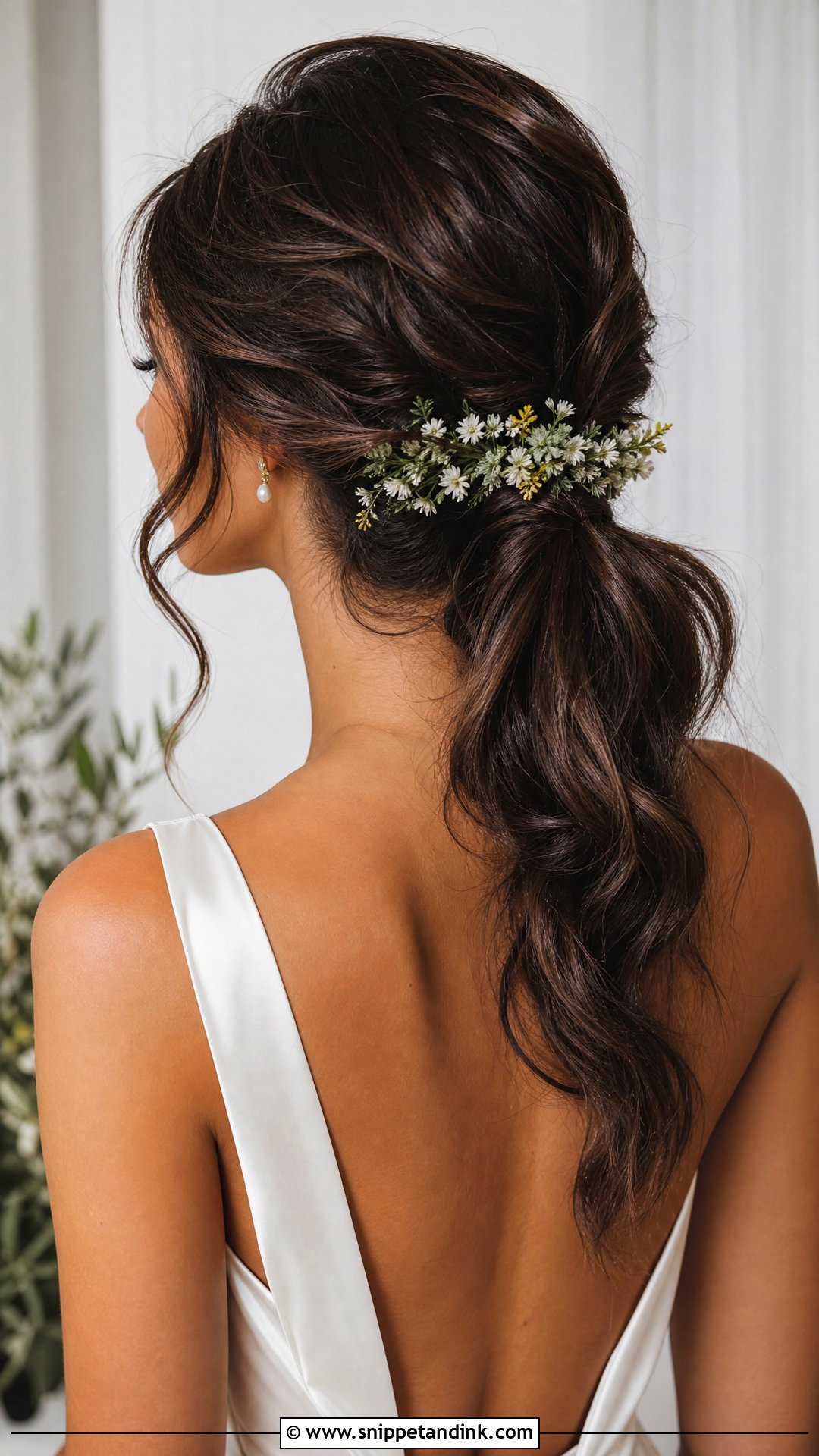
A fishtail’s woven texture is ideal for tiny flowers, especially once I’ve loosened the braid for fullness. It can hang down the back or over one shoulder, depending on the neckline. The pattern needs length to show clearly, so it suits longer hair or extensions. I slide stems under the crossed sections, where they’re held tight, and group them in small sets rather than spacing them evenly. A few loose strands near the face keep it relaxed.
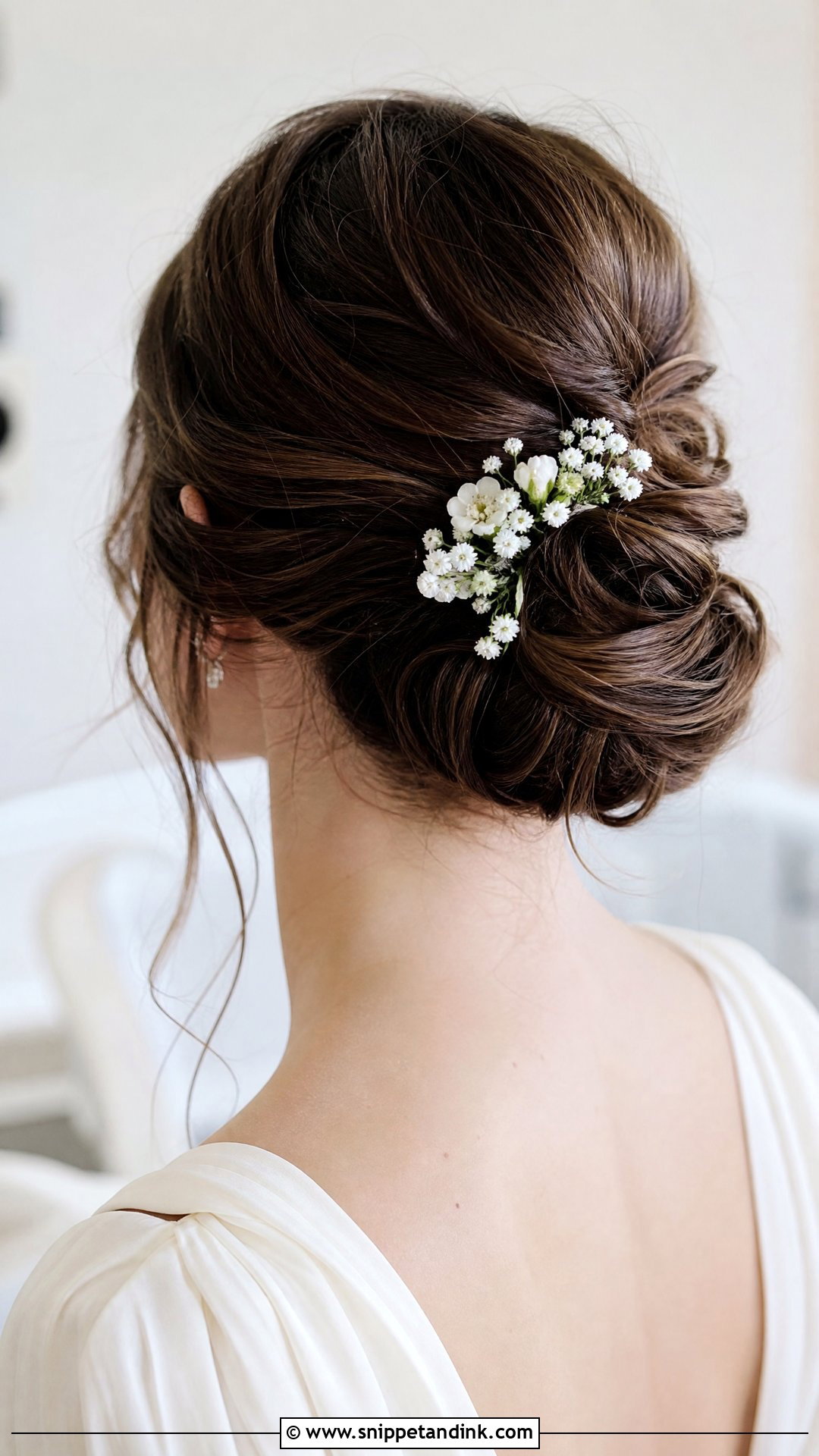
17. Wildflower Wedding Hair With Chignon
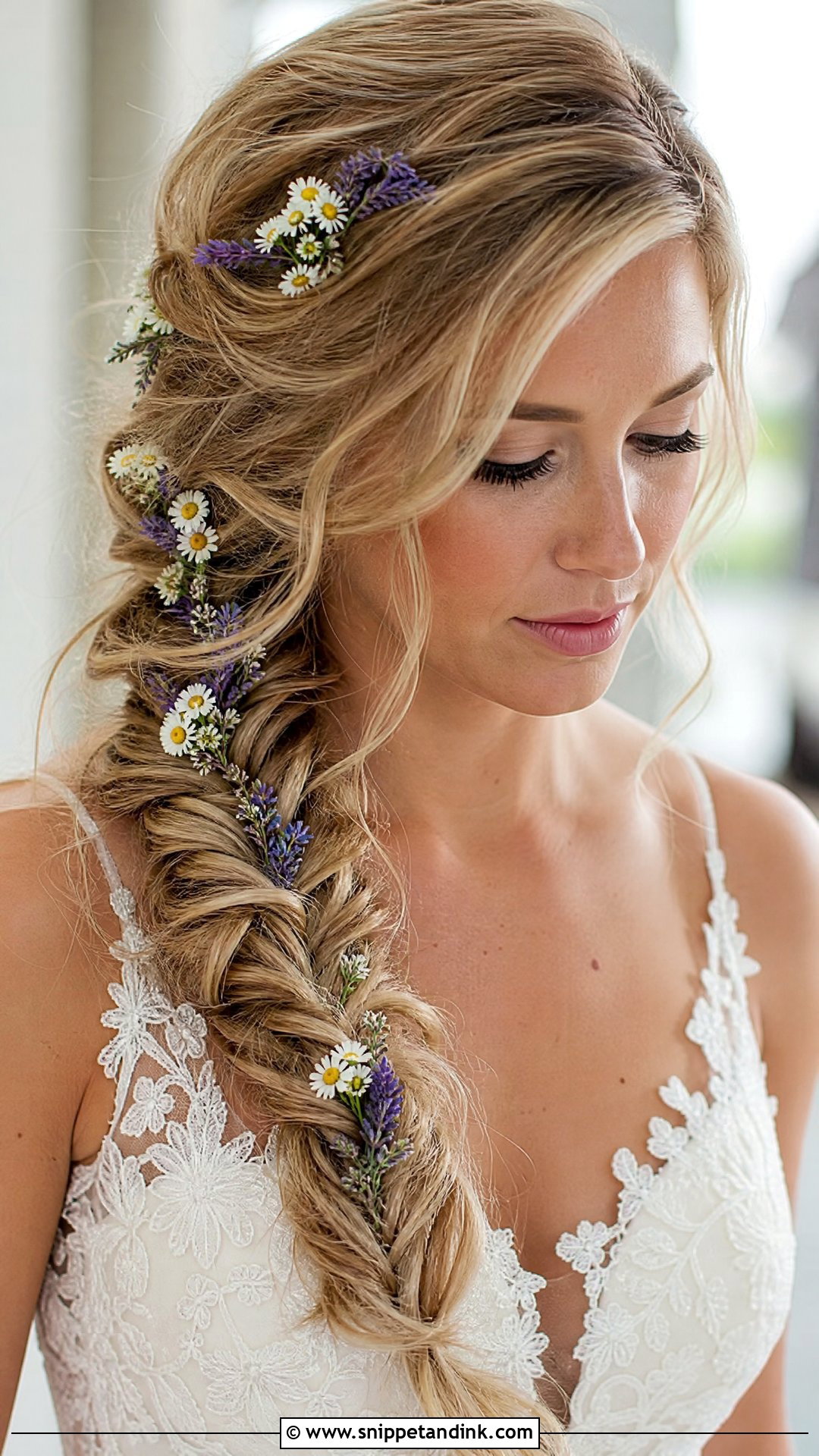
A chignon is low, neat and refined, yet it can still have softness at the face and crown. Wildflowers can line the top edge, tuck underneath or sit on one side as a small accent. It’s the style I suggest for formal outdoor weddings, where you want polish but a natural detail. Keep the flowers small if you want it to stay classic. Pearl earrings, a simple veil and a structured gown sit well with it.
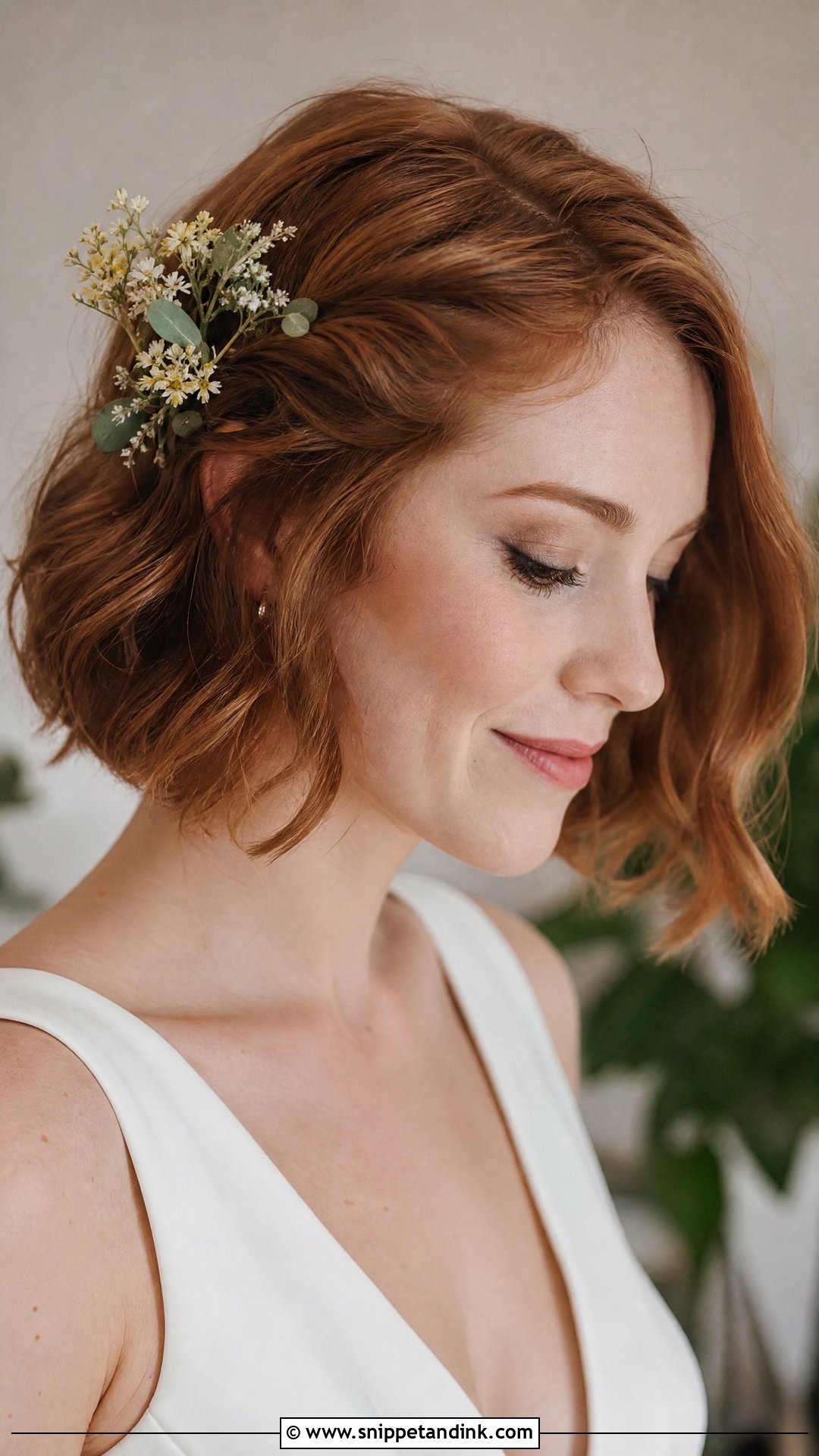
18. Wildflower Wedding Hair With Bob
Soft waves give flowers something to settle into on a bob, while a sleek bob looks sharp with a floral barrette or side comb. Bob-length hair doesn’t have room for large accessories, so smaller wildflowers are the safer pick. I place them near one temple, behind the ear, or along a small twist at the side, because that’s where there’s enough hair underneath to pin into. Minimalist dresses suit this look well.
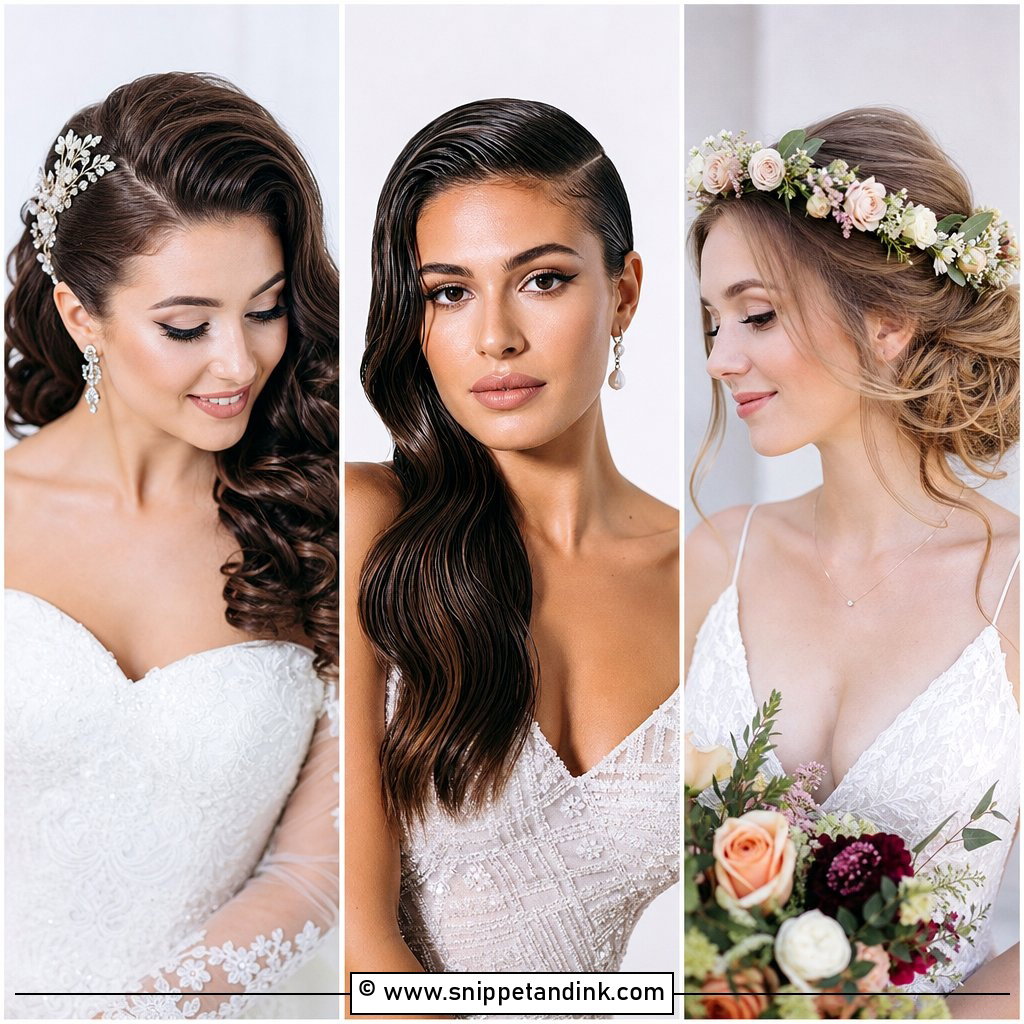
19. Wildflower Wedding Hair With Baby’s Breath
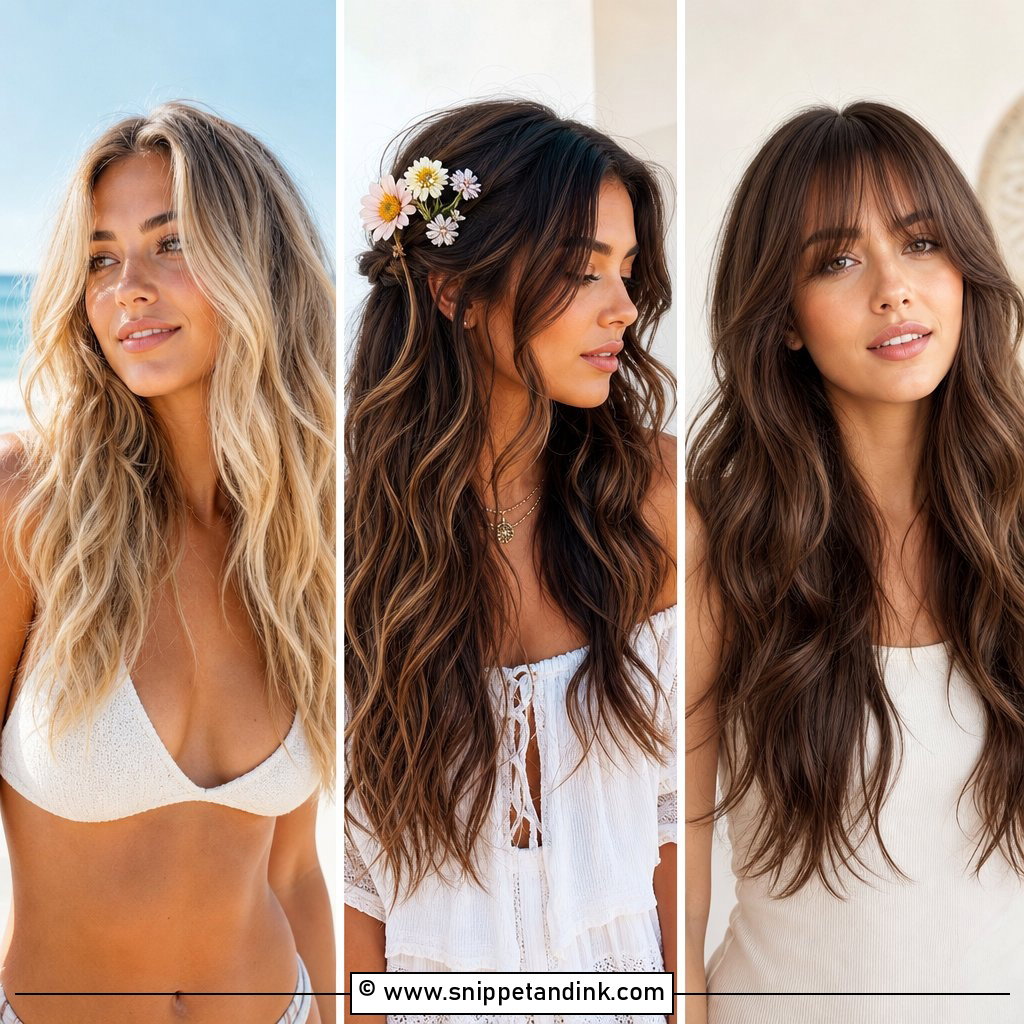
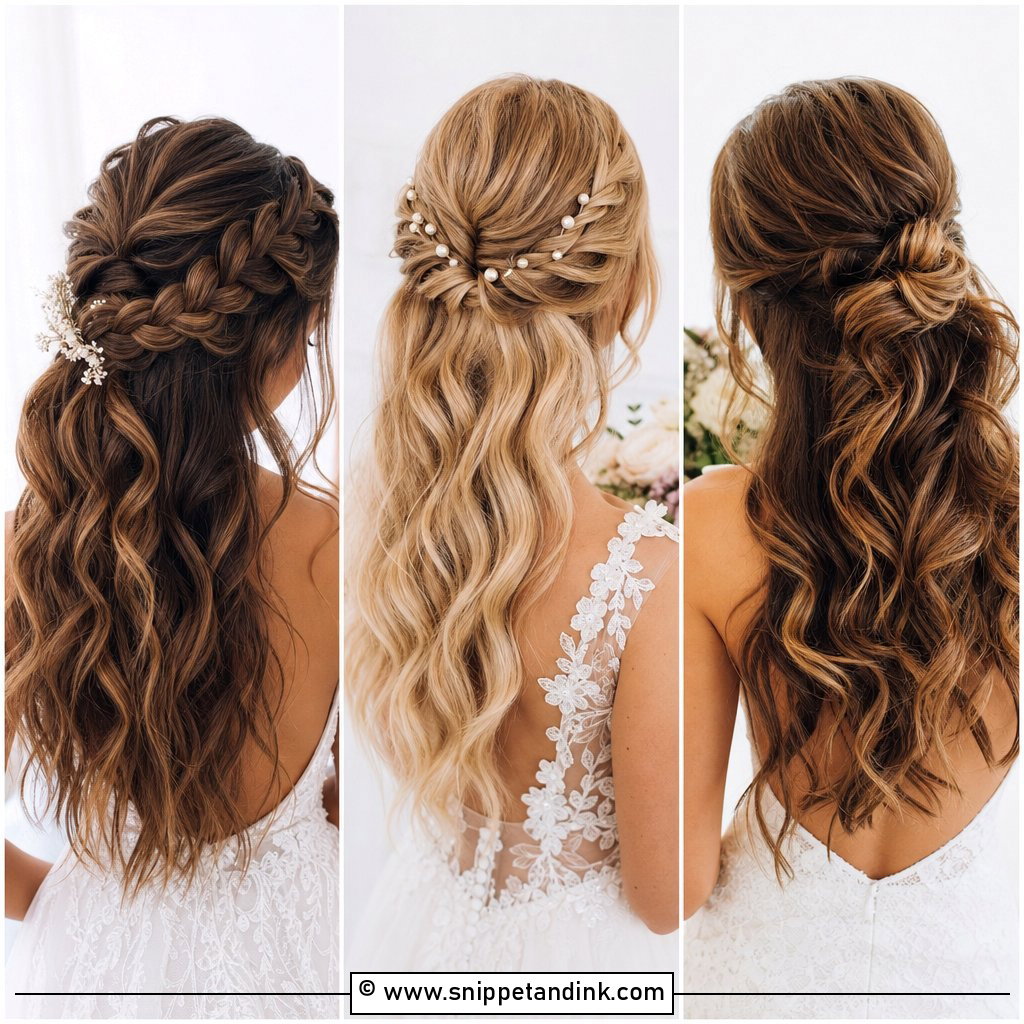
Baby’s breath is light, cheap and easy to place, and it fits nearly every style, from waves to buns, braids and ponytails. The tiny white flowers add texture without adding color. Use small sprigs rather than thick bunches; packed tight, it looks like a cotton ball. Baby’s breath also pairs with daisies, lavender and greenery for depth. One thing to know: fresh gypsophila has a sharp smell some brides dislike up close, so smell a bunch before you commit.
20. Wildflower Wedding Hair With Daisies
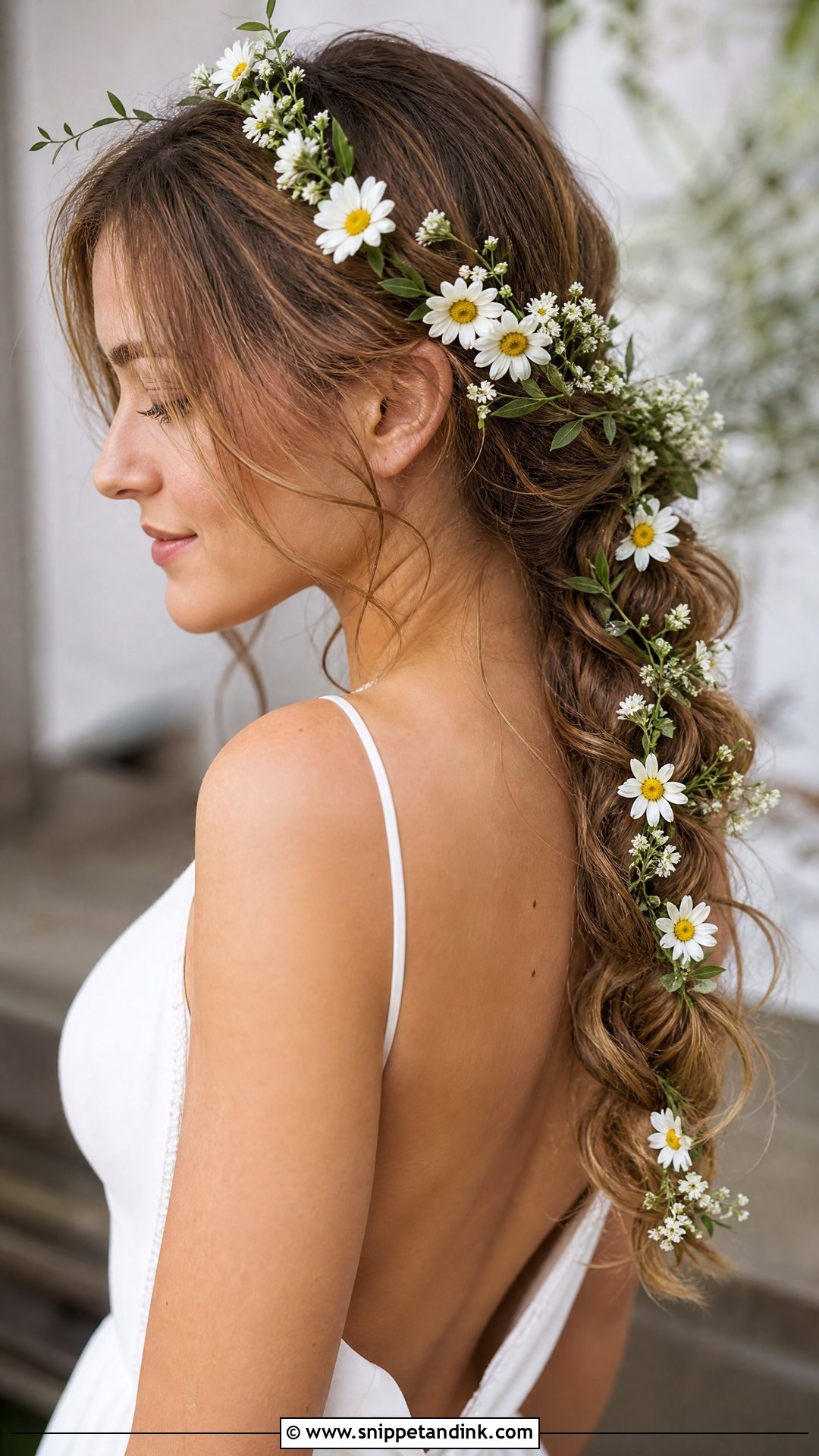
Daisies are cheerful and instantly recognisable, which also means they need placing with care. Their round, flat faces look busy when scattered everywhere. A few blooms around a braid, low bun or half-up twist are enough. Smaller daisies suit delicate styles, and larger ones suit fuller waves or thick braids. Greenery or baby’s breath around them softens the outline. They’re a natural fit for spring and summer weddings outdoors.
Wiring and Pinning So Nothing Drops on the Dance Floor
Flowers pushed straight into a style look fine at the mirror and fall out by the first hug. A few habits from the salon chair keep them in place.
Give each stem a handle
Floppy stems are wired with thin florist wire and wrapped in green tape, then cut to about an inch. That short, firm stem slides into a braid or twist like a pin. Small clusters can be pre-made on wire by the florist, which saves time in the chair.
Pin into structure, never into loose hair
Every flower needs something to grip: a braid, a twist, a pinned section or the base of a bun. I cross two bobby pins over the wire in an X so it can’t rotate. In fine hair I build a small hidden anchor braid first. In heavy hair I go lighter on the flowers so the pins aren’t fighting the weight.
Flowers go in last
I finish the hair, set it with spray, then add flowers at the very end and keep hairspray off the petals, since it can spot and brown them. If there’s a gap between getting ready and the ceremony, a bridesmaid can hold the spare sprigs and two bobby pins for a quick fix before the reception.
Treat Your Trial as a Flower Test Too
Wildflower hair is a balancing act: the style has to stay secure and flattering, and the flowers have to look like part of it rather than something stuck on. From loose waves to a braided crown, a ponytail or a short bob, the right blooms make the look personal. Bring photos and a few sample stems to your trial, talk through flower size with your stylist and wear the style for a few hours afterward to see how it holds. Good faux flowers are a sensible backup, and sometimes the better choice in heat.
You'll Like These Ideas:


Leave a Reply