
A flower crown is the one piece of wedding floristry that has to survive being worn. It sits on warm skin for hours, with no water, while the bride hugs people and dances. That’s why I build crowns differently from bouquets, and why some flowers that look perfect in a vase are a poor choice on a head. Garden ceremony, festival field or a classic indoor venue, a crown of fresh or dried blooms softens whatever hairstyle sits under it. Below are twenty pairings, from baby’s breath on loose waves to peonies on an updo, with what I’d tell you about each from the workbench side.
Measure Your Head Before the Florist Builds Anything
A crown is built on a wire frame, sized to your head, with each flower wired and taped onto it. If the size is wrong, it slides down to your eyebrows or perches like a hat. Take a soft tape measure and measure around your head exactly where the crown will sit, with your hair already in roughly the style you’ll wear. An updo adds bulk; loose hair adds less.
- Ribbon tie at the back: adjustable, comfortable and forgiving if your hair changes on the day. This is what I recommend for most brides.
- Closed loop: neater from behind, but it must fit exactly.
- Half crown or comb: flowers only across the front or side, clipped in. Lightest of all.
Send your florist a photo of your hairstyle from the trial, and tell them where the crown should sit: forehead, hairline, or further back like a halo. That position changes the size, and which blooms face forward.
Weight is the other thing to settle early. Every wired flower adds a little, and a crown that feels fine for five minutes in my studio can press on your temples by the speeches. If you get headaches easily, ask for a half crown, or fewer, smaller blooms with more greenery between them.
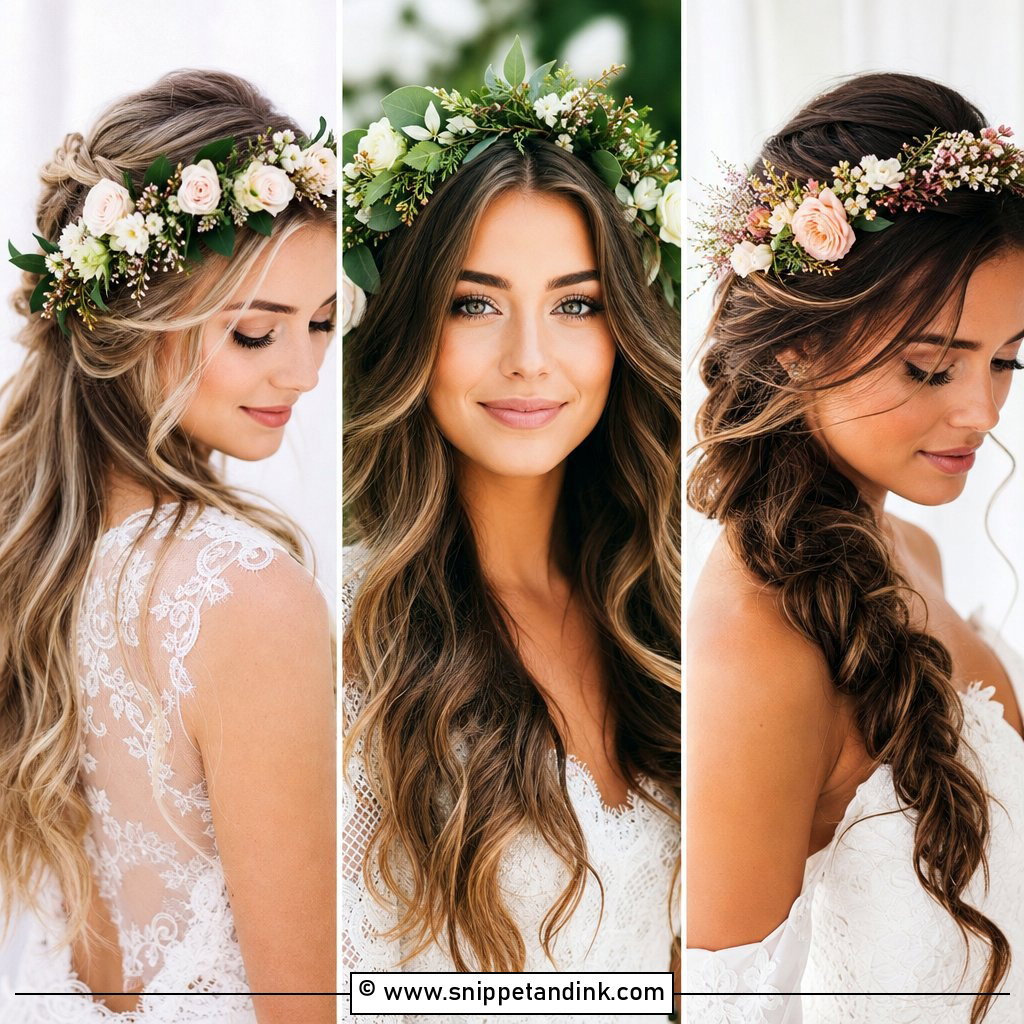
1. Half Up Half Down With Flower Crown
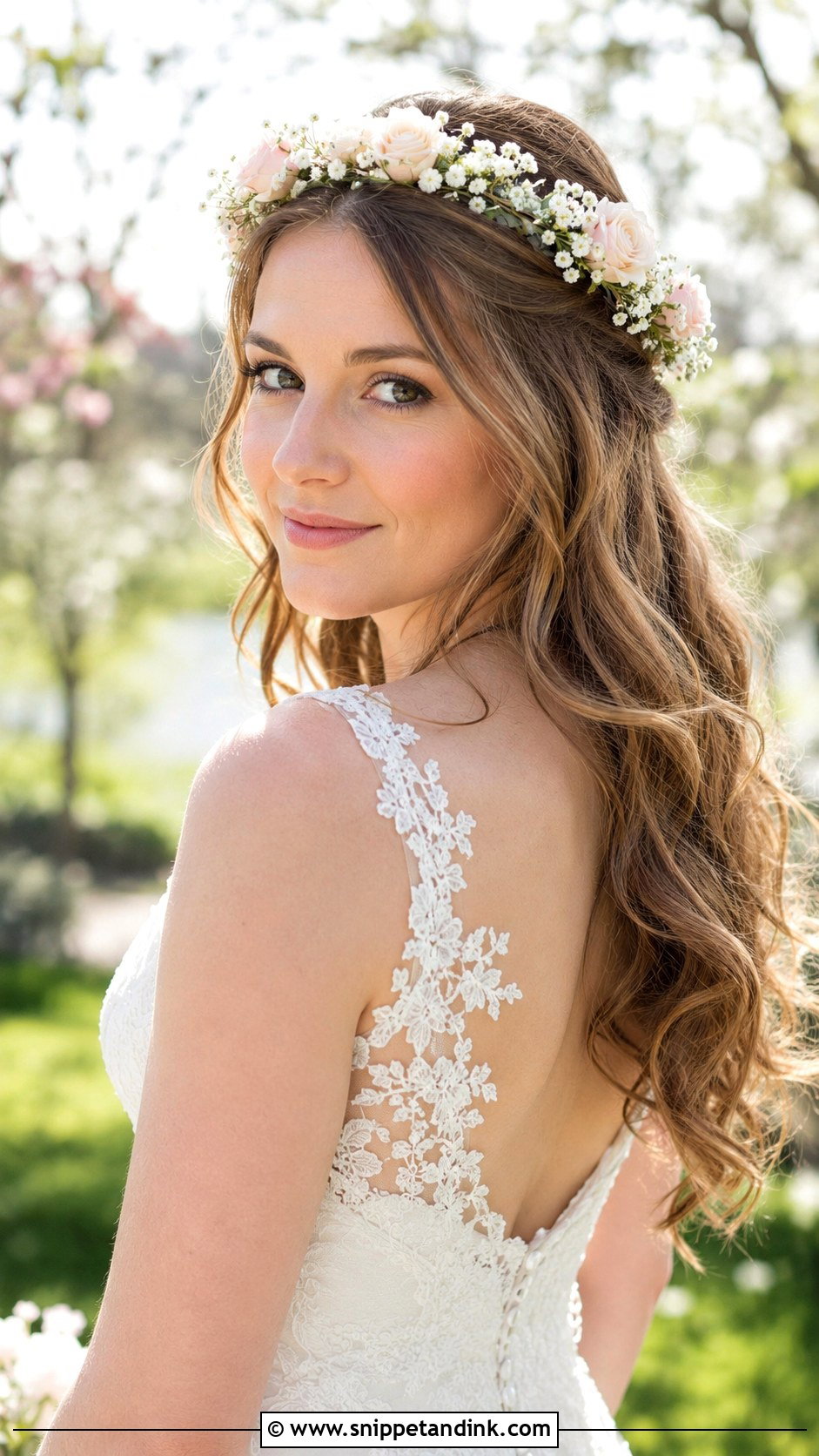
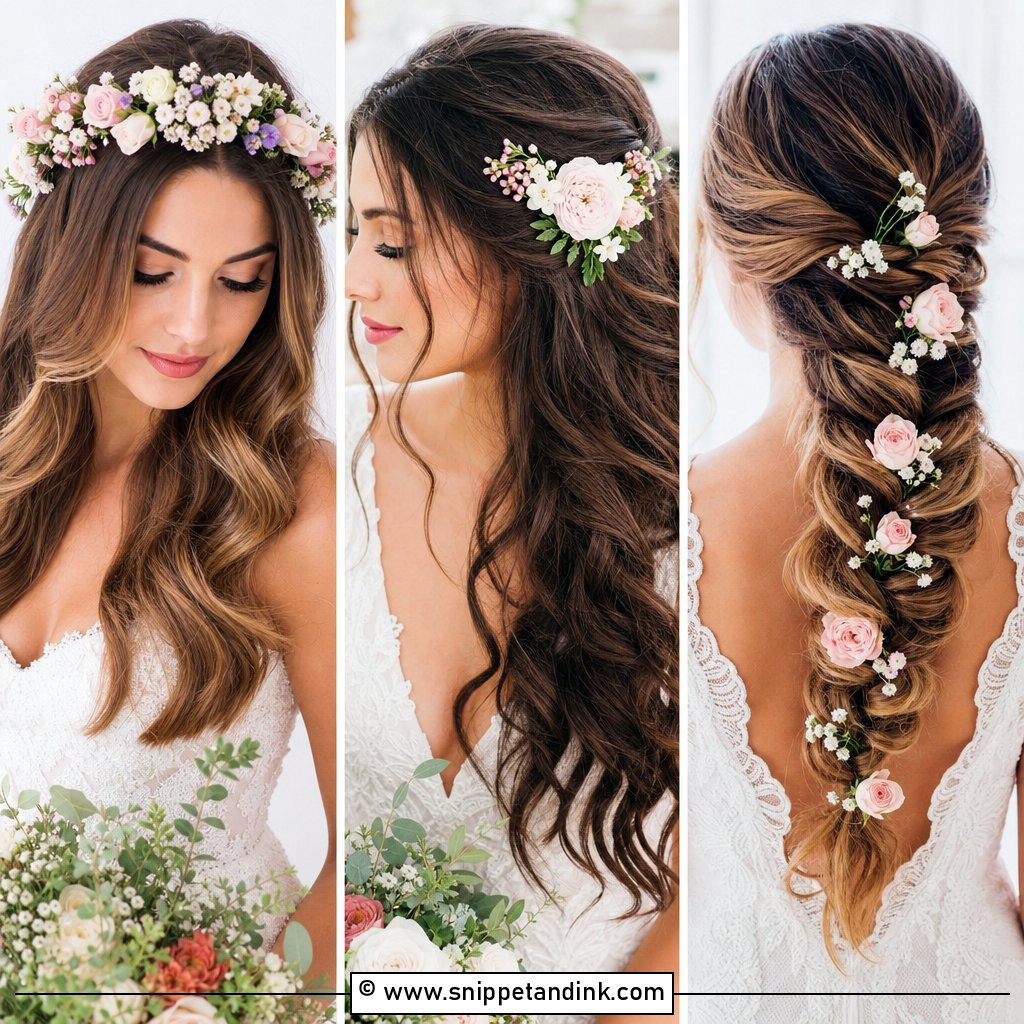
Half up hair gives a crown the best possible footing. The pulled-back top section is something solid for the stylist to pin the crown’s base into, while the rest of the hair falls loose. Medium to long hair suits it, and curls or waves underneath keep it soft. For this one I’d keep the crown slim, with small roses or baby’s breath, because a bulky crown on half up hair hides the twist that makes the style.
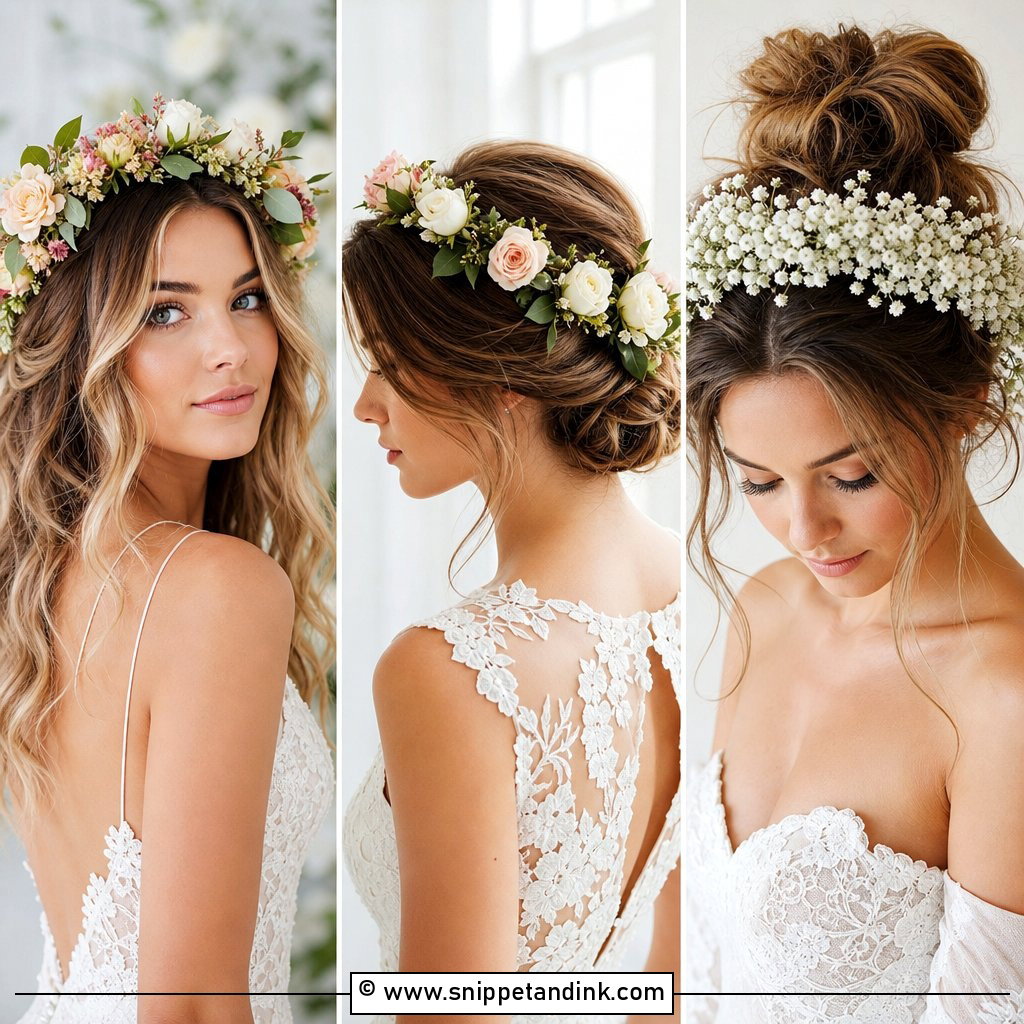
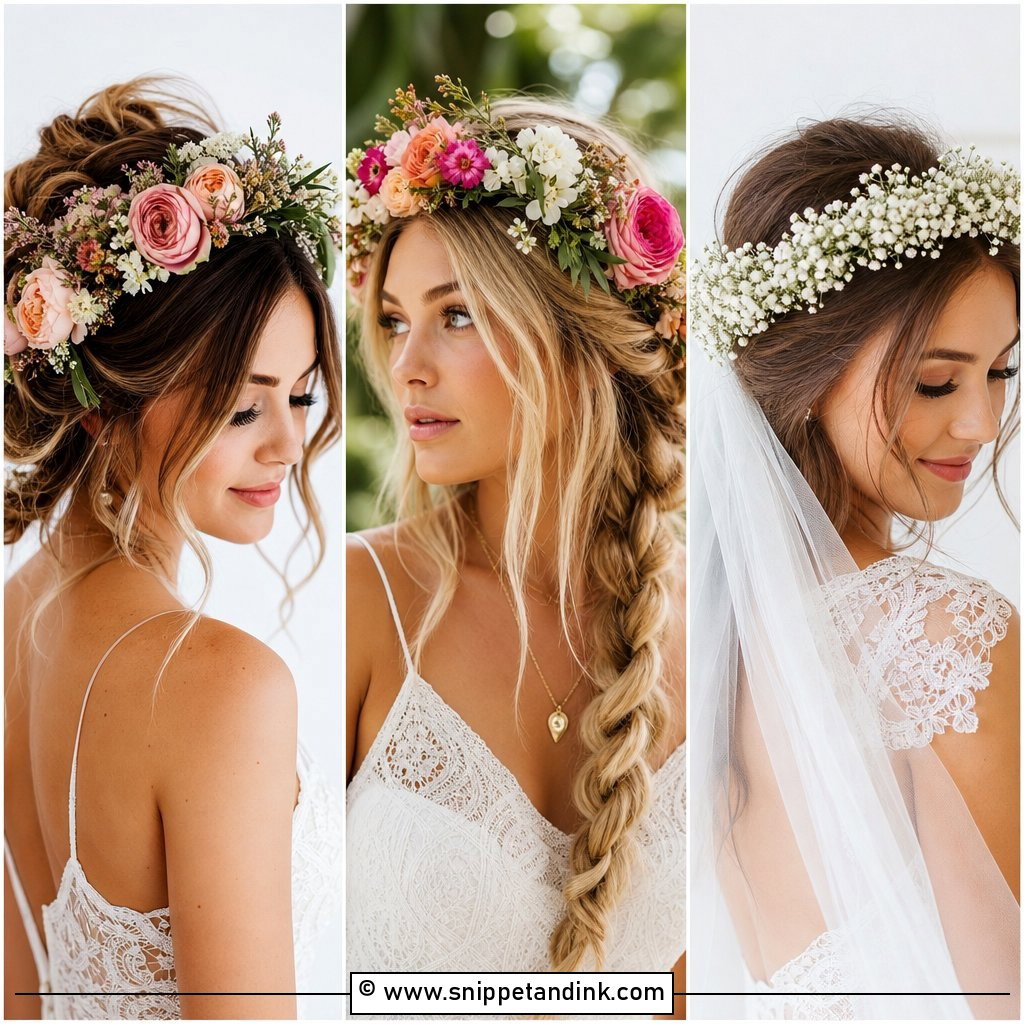
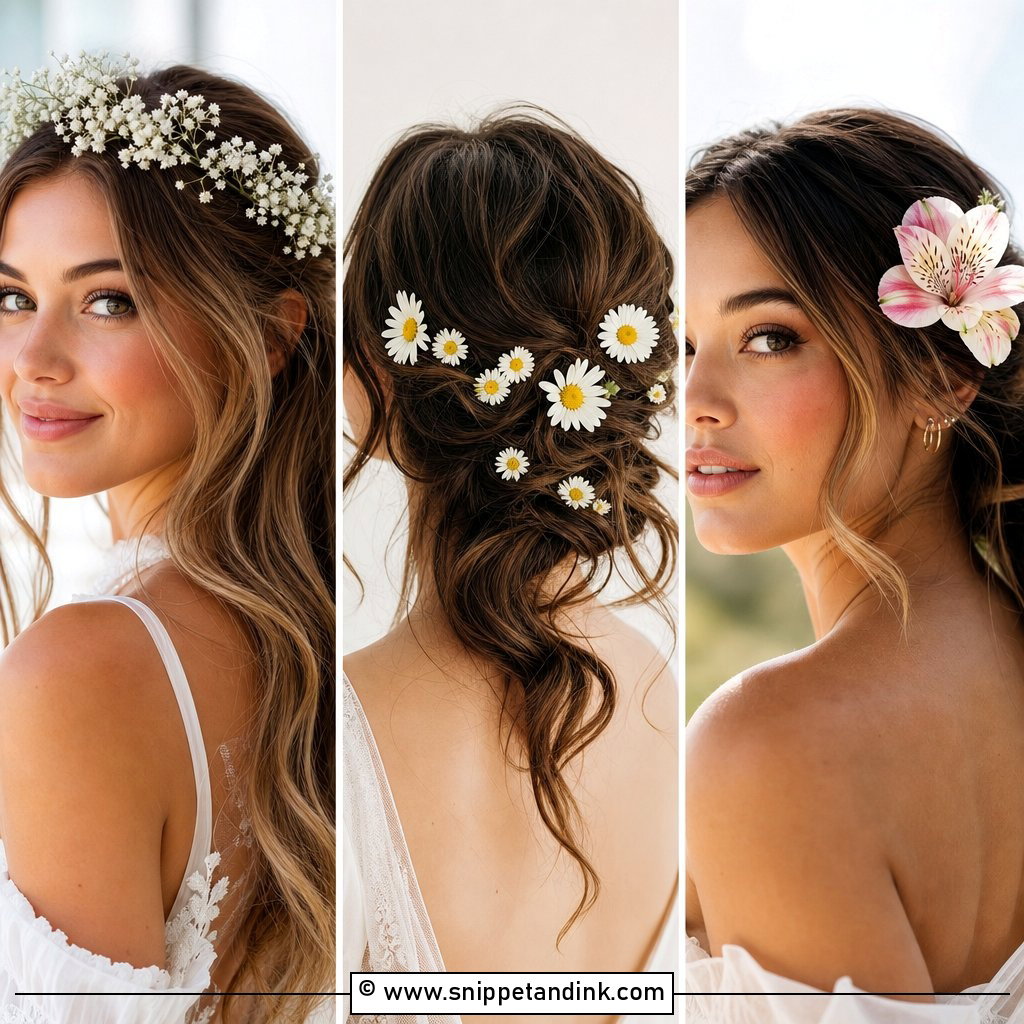
2. Loose Waves With Baby’s Breath Crown
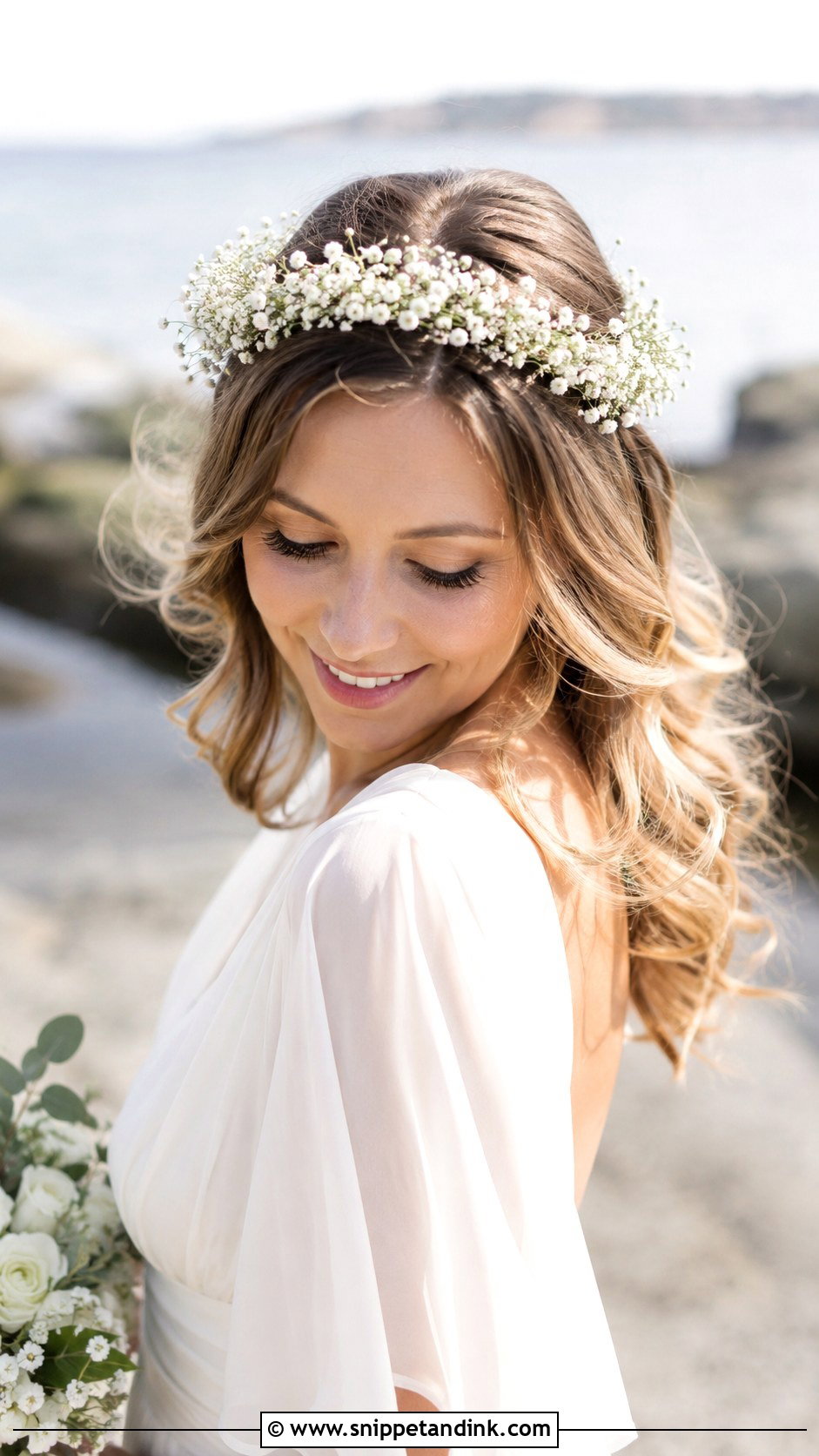
Baby’s breath is one of the toughest flowers I work with, which is why it’s such a common crown flower. It’s already semi-dry by nature, so it doesn’t wilt the way softer petals do, and it can look much the same at the last dance as at the ceremony. Paired with loose beachy waves it reads light and airy. One honest warning: some people find its scent unpleasant up close, so smell a stem before you commit to wearing it by your face all day.
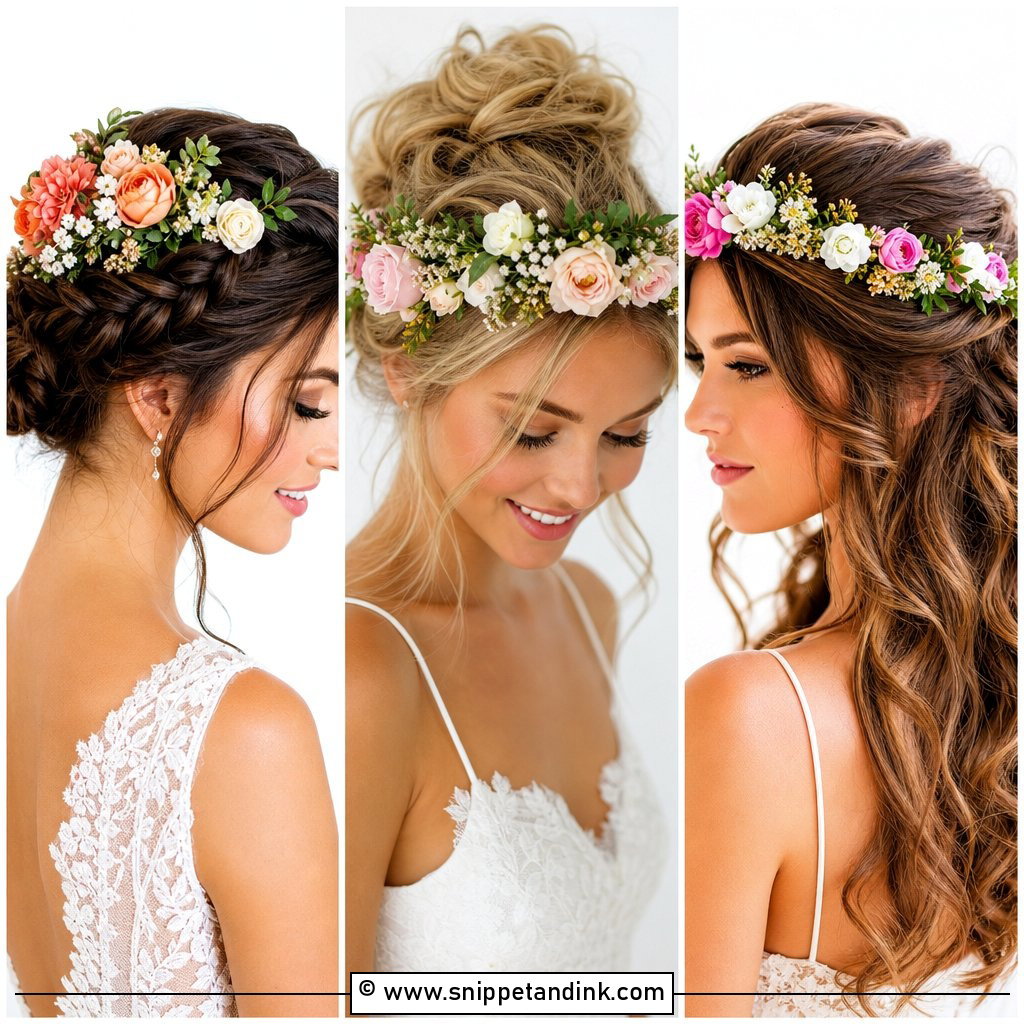
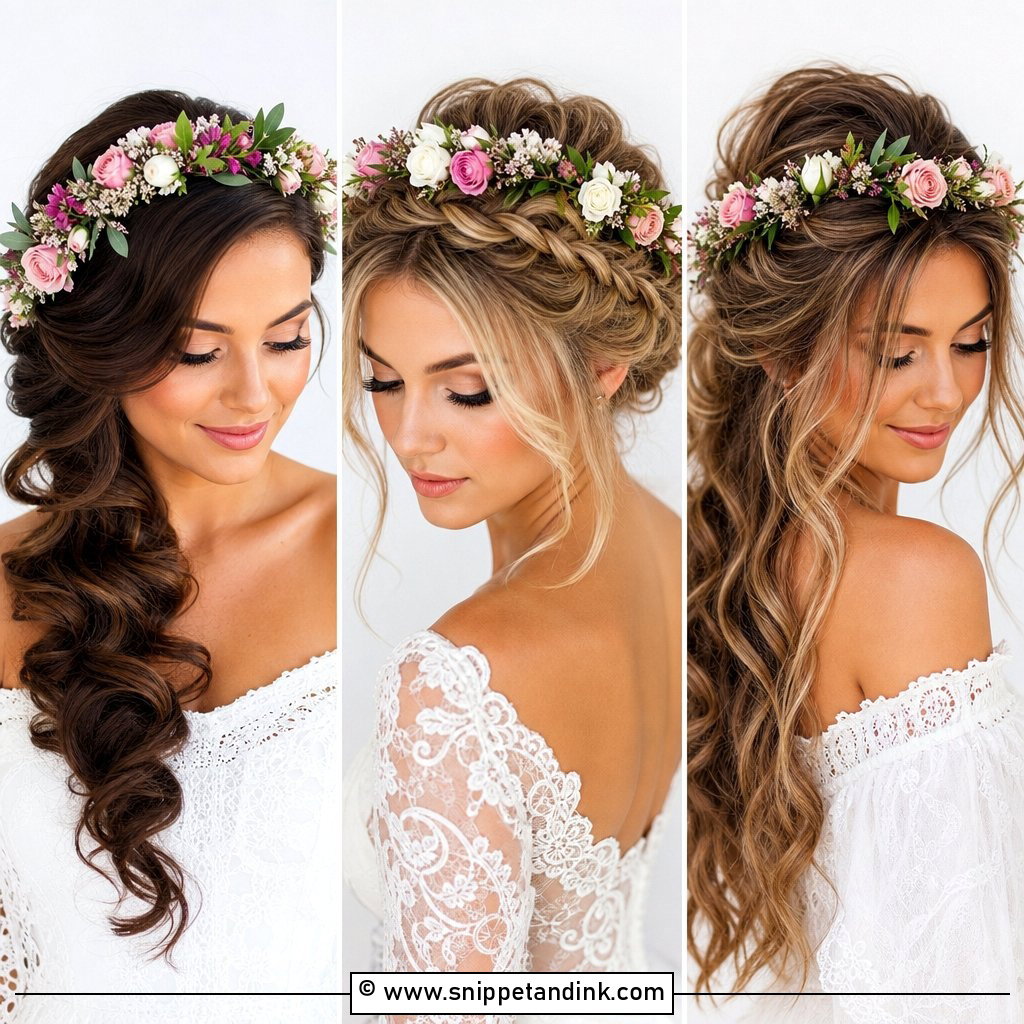
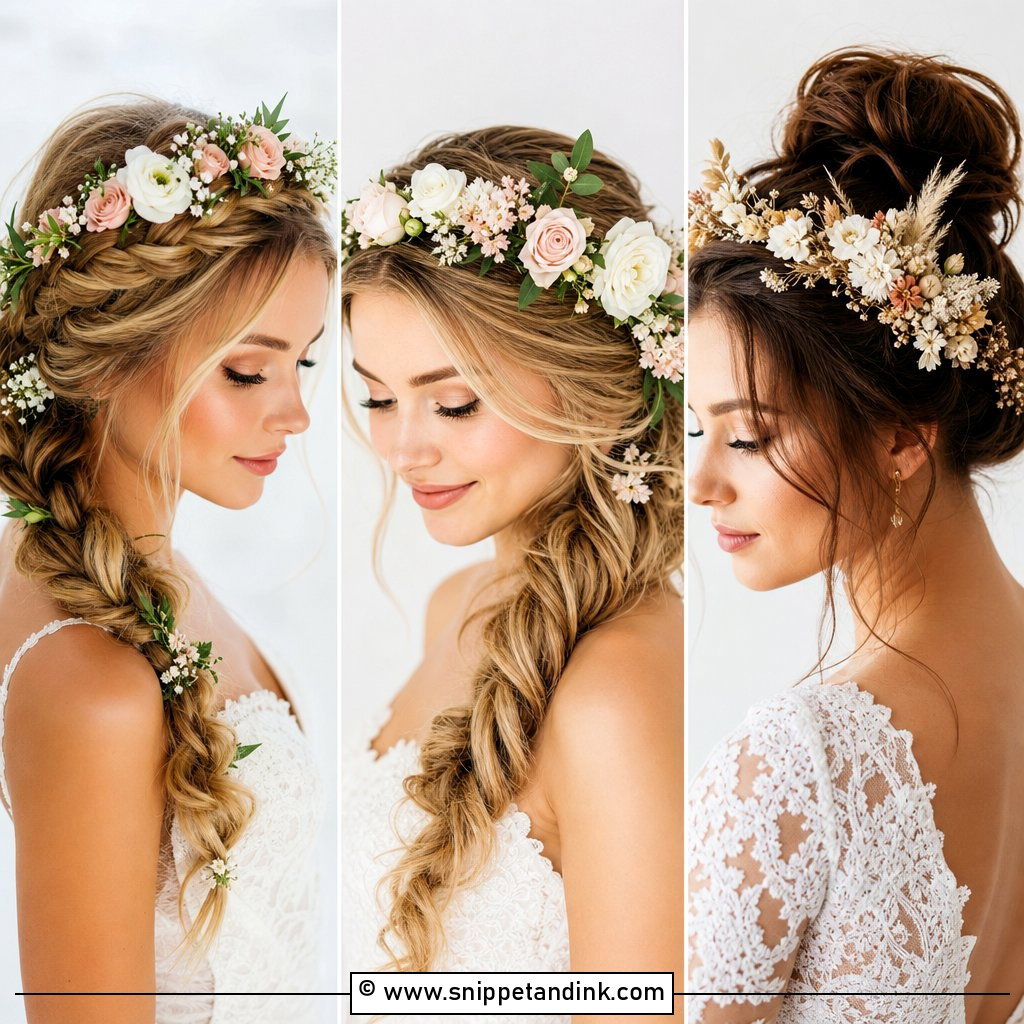
3. Braided Crown With Fresh Flowers
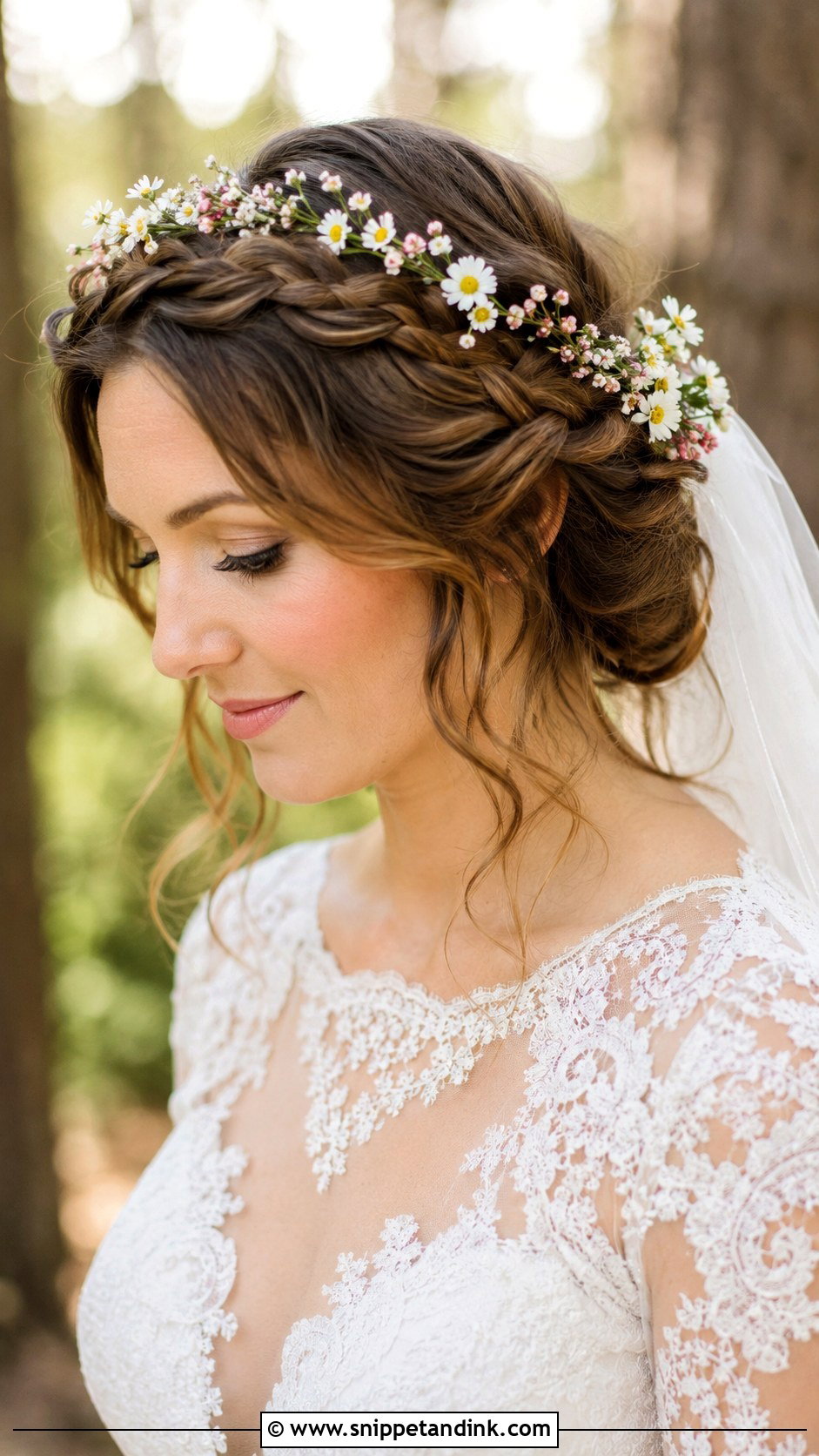
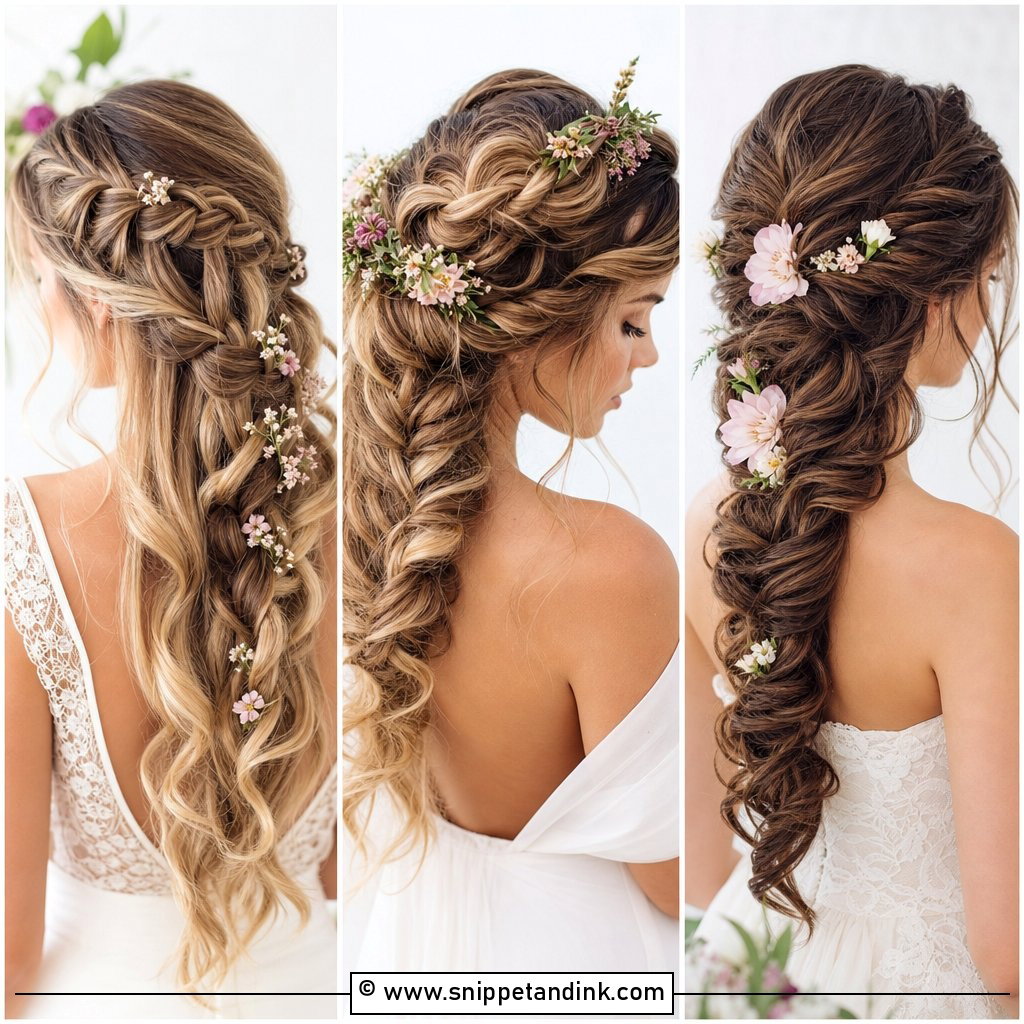
A braided crown is a ready-made frame for flowers. The halo-style braid circles the head with boho-goddess vibes, and small blooms slide straight into the stitches. For this I send short, wired stems rather than a built crown: waxflower, small daisies and spray roses all tuck in neatly. The braid does the holding, so there’s no separate base pressing on the head. It needs longer hair, and it stays put through hugs and breezes.
4. Low Bun With Floral Crown
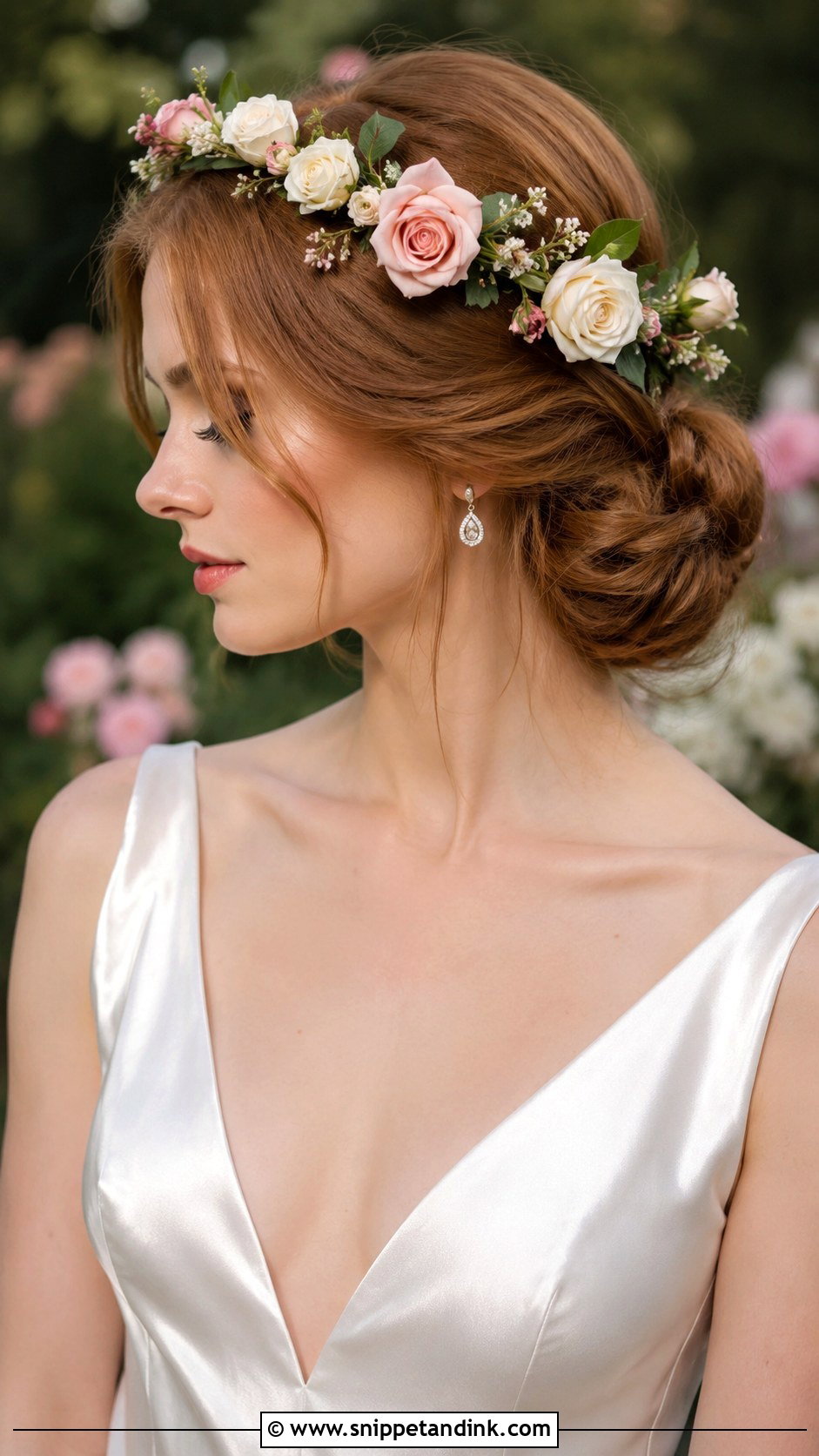
With a low bun, the crown rests above a polished base rather than on loose hair, which makes it sit level all day. The bun gathers softly at the nape, a few strands are left loose at the face, and the crown goes on top. Roses or ranunculus that repeat the bouquet tie the two together. Ranunculus petals are thin and can bruise if handled, so I wire them carefully and ask for them to be the last thing pinned in.
5. Boho Flower Crown With Waves
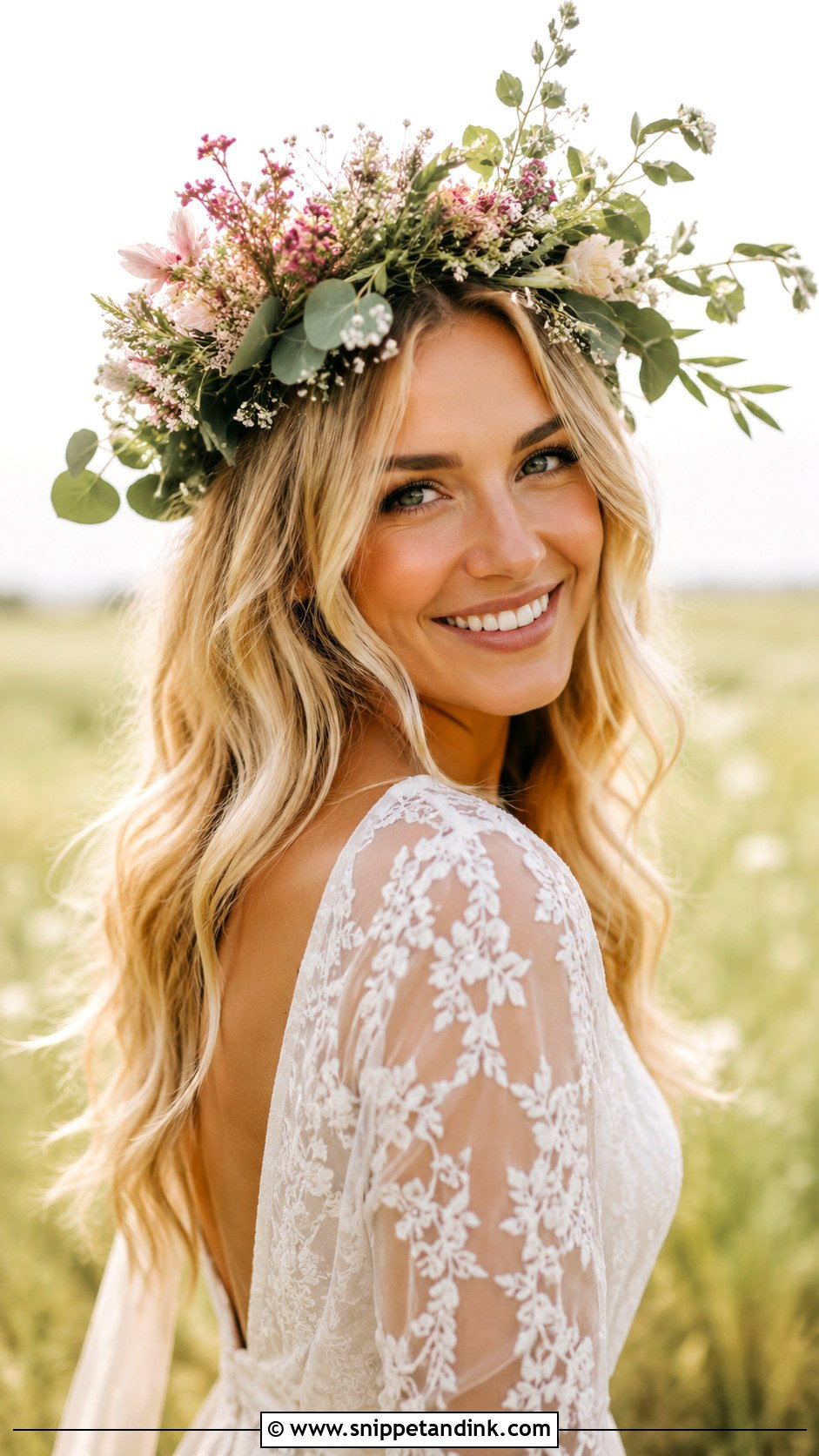
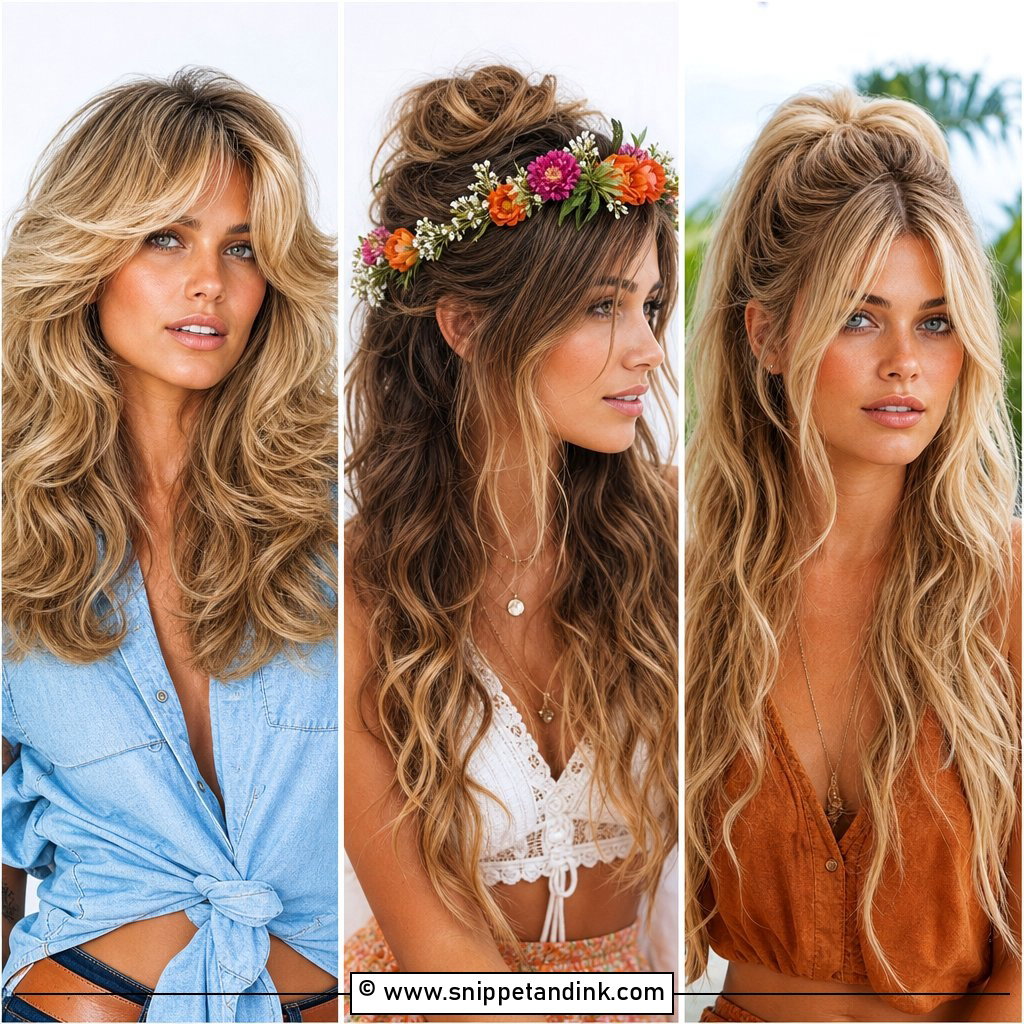
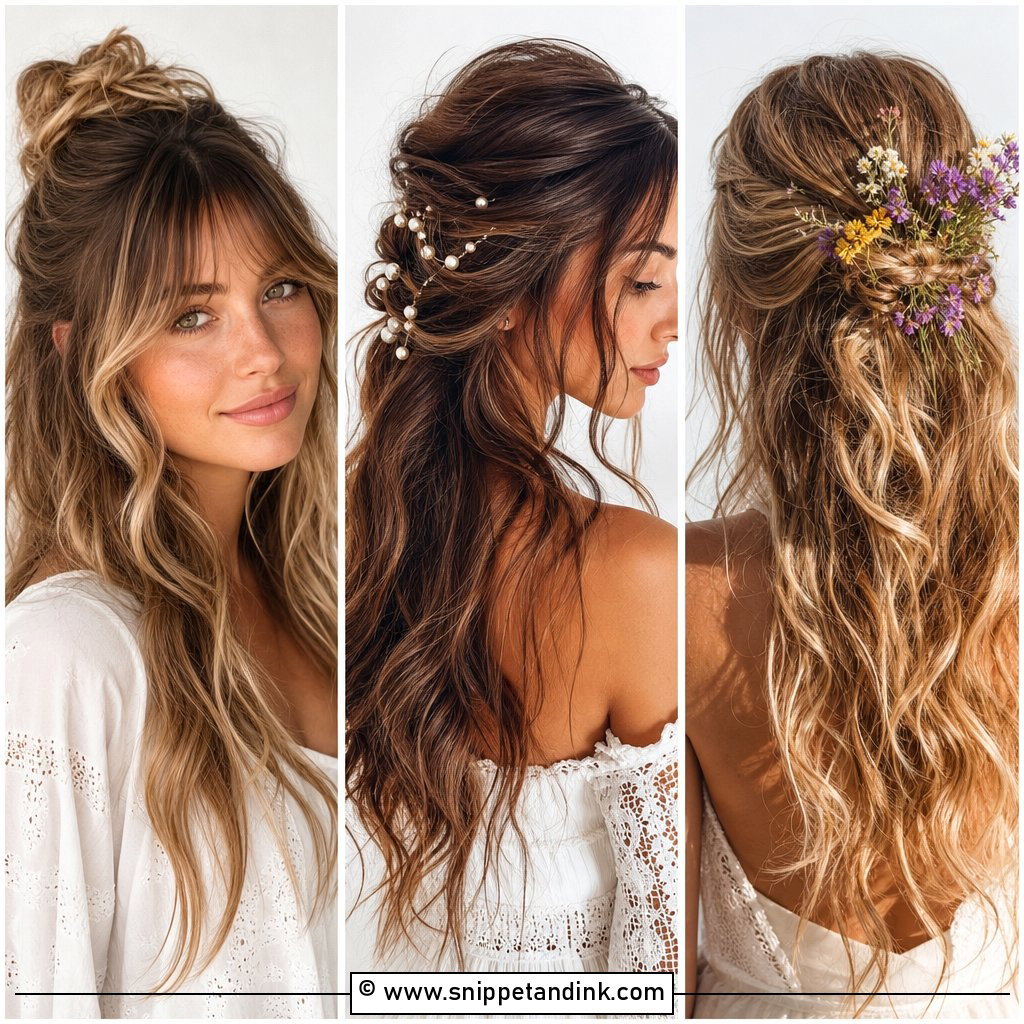
A full boho crown is the most fun to make and the heaviest to wear. Mixed wildflowers, greenery and layered blooms go on top of tousled, undone waves. The weight builds quickly, so I keep the base light and put the biggest flowers just off-centre, not all the way round. Eucalyptus or fern adds texture with very little weight. Festival-style and outdoor weddings suit it, as long as you’re happy with a crown you’ll notice.
6. Crown Braid With Baby’s Breath
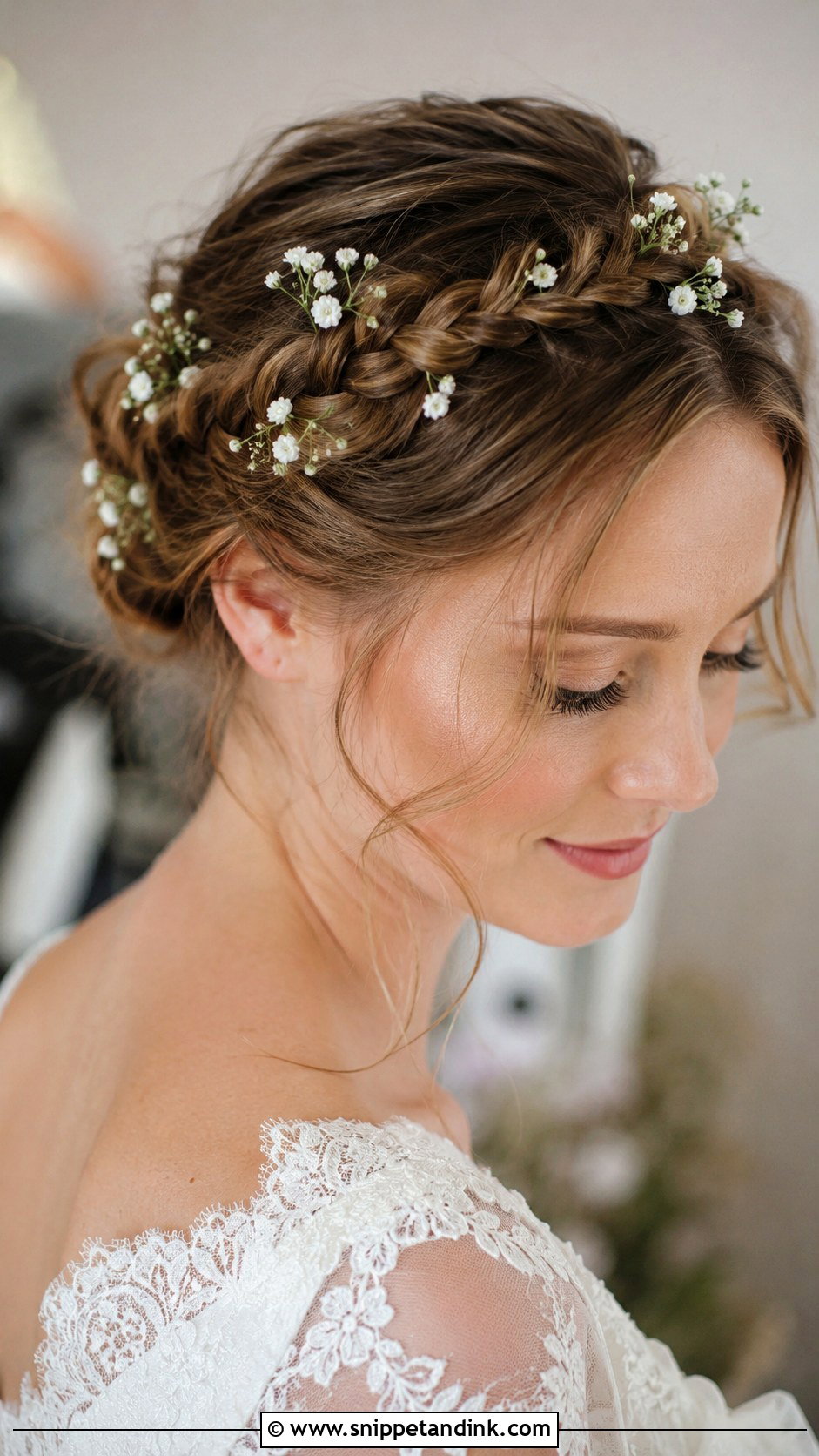
Baby’s breath and a crown braid are a natural match: the braid wraps the head, and tiny white sprigs peek through the woven strands. Thick or long hair holds the braid best. Because baby’s breath stems are thin and branching, I break them into small clusters, wire each one, and send them loose for the stylist to tuck in. It keeps everything neat for an active day and looks good by candlelight as well as daylight.
7. Flowing Hair With Rose Crown
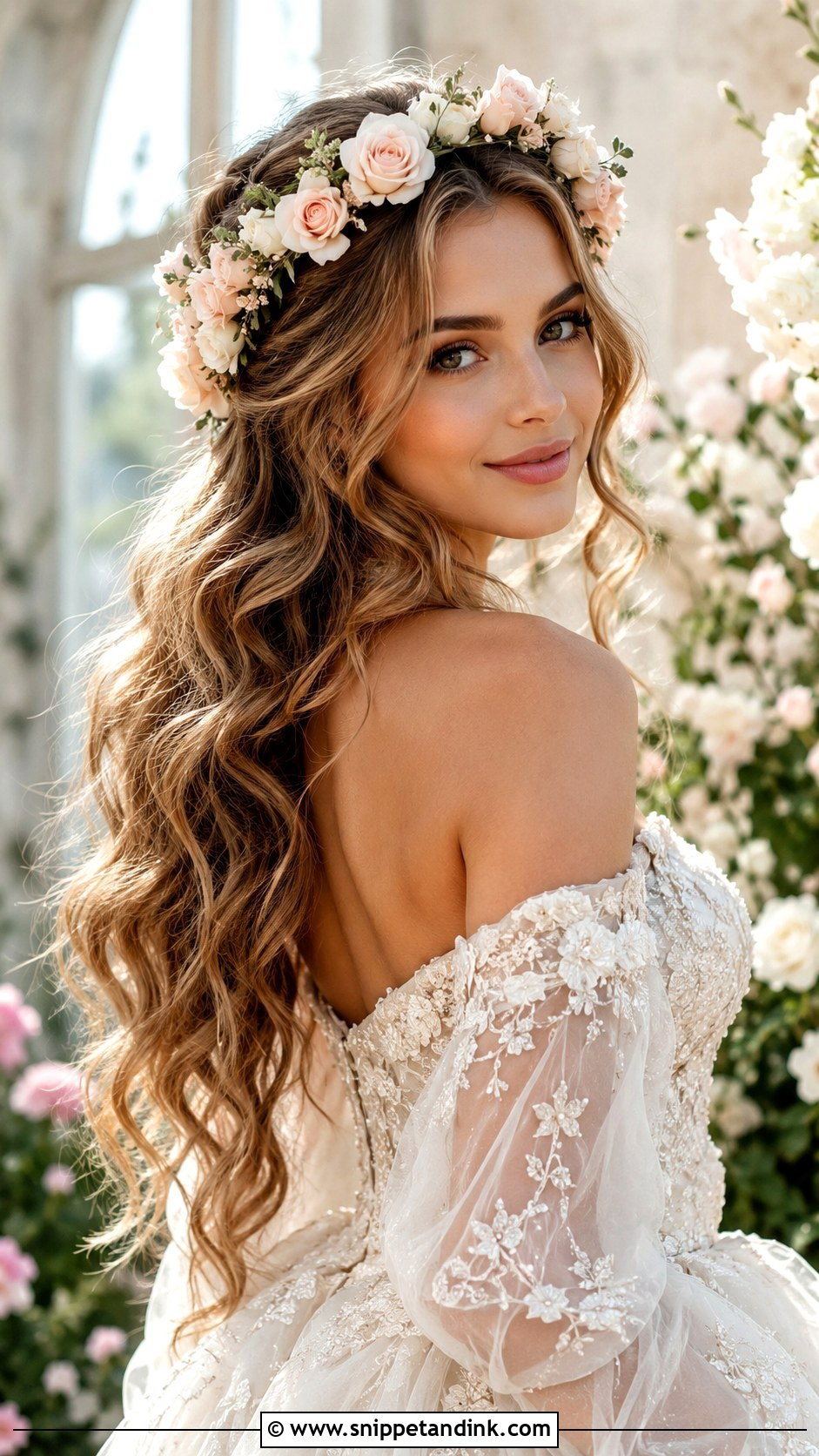
Roses are the flower brides ask for most, and garden and spray roses suit a crown better than large florist roses, which are heavy and open fast in warm air. Blush, ivory or pale pink reads classic. The crown sits along the hairline over long, loose hair. Waves or sleek straight hair both work underneath. I’d ask your florist to use slightly closed buds, since they’ll open further over the day on your head.
8. Messy Updo With Flower Crown
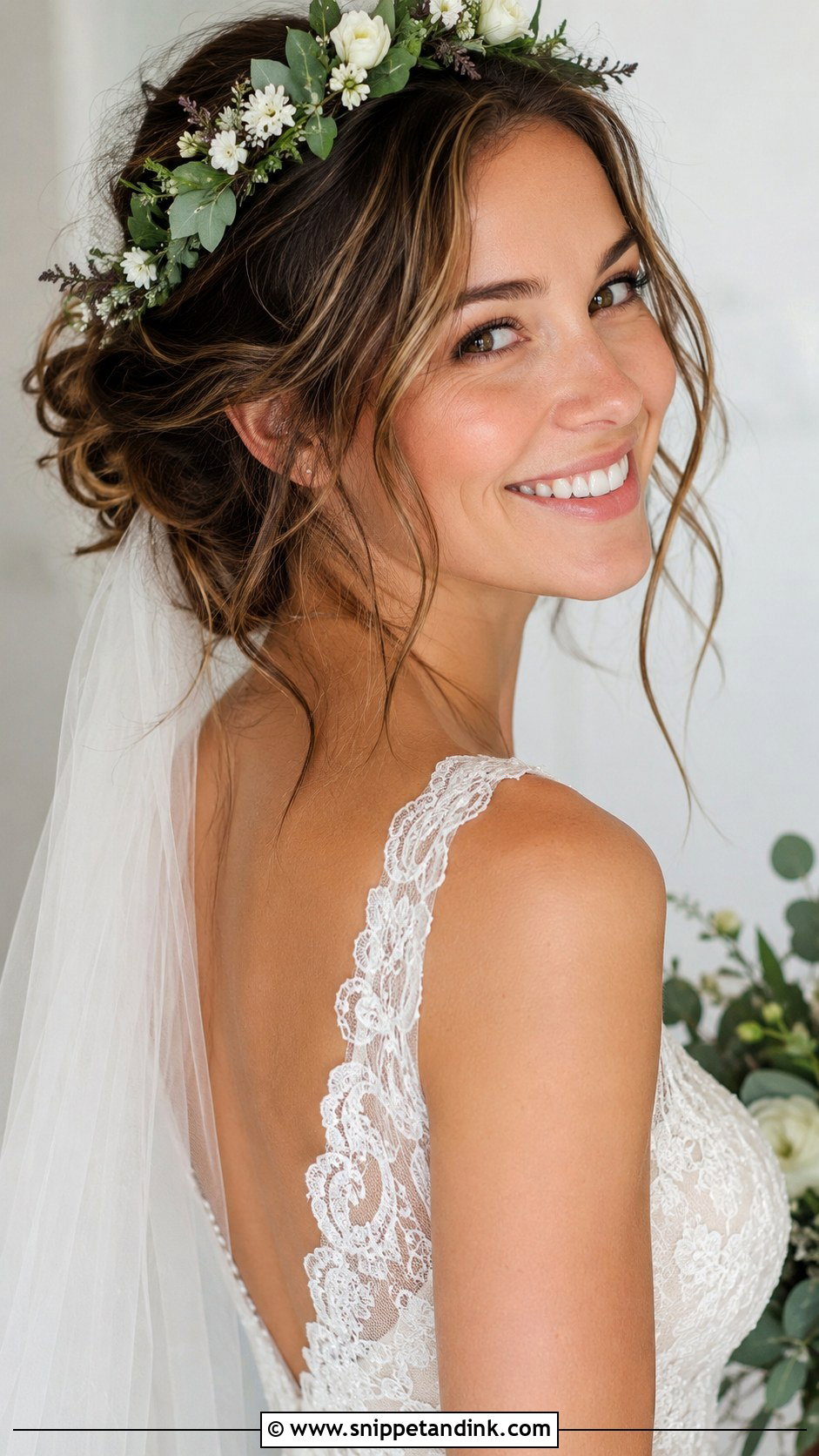
A messy updo looks relaxed, but under a crown it still needs to be firm. Hair is gathered into a loose, textured updo with some pieces left undone and wisps around the face, and the crown sits just above. If you’re also wearing a veil, the veil goes in first, behind the crown. I’d keep the crown narrow on this style so the texture of the updo still shows from the side.
9. Side Braid With Flowers
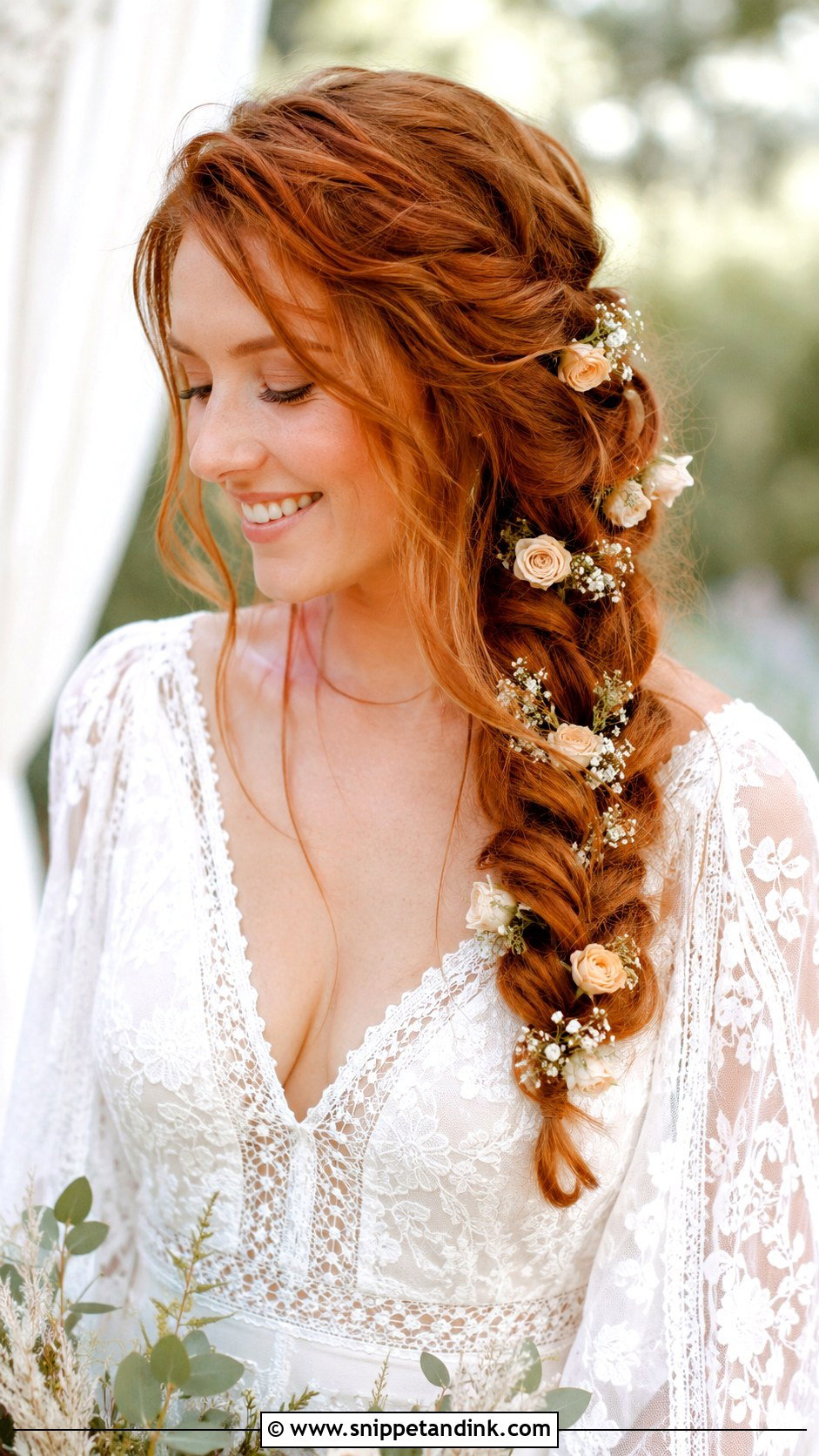
A side braid over one shoulder gives flowers a long line to follow. Small blooms are tucked along the braid, and a soft crown sits at the top. Long, thick hair suits it best. Wildflowers, baby’s breath or tiny roses all work in the braid; I’d avoid anything with pollen-heavy centres, as it can mark a white or ivory gown where the braid rests on the shoulder.
10. Greenery Crown With Loose Curls
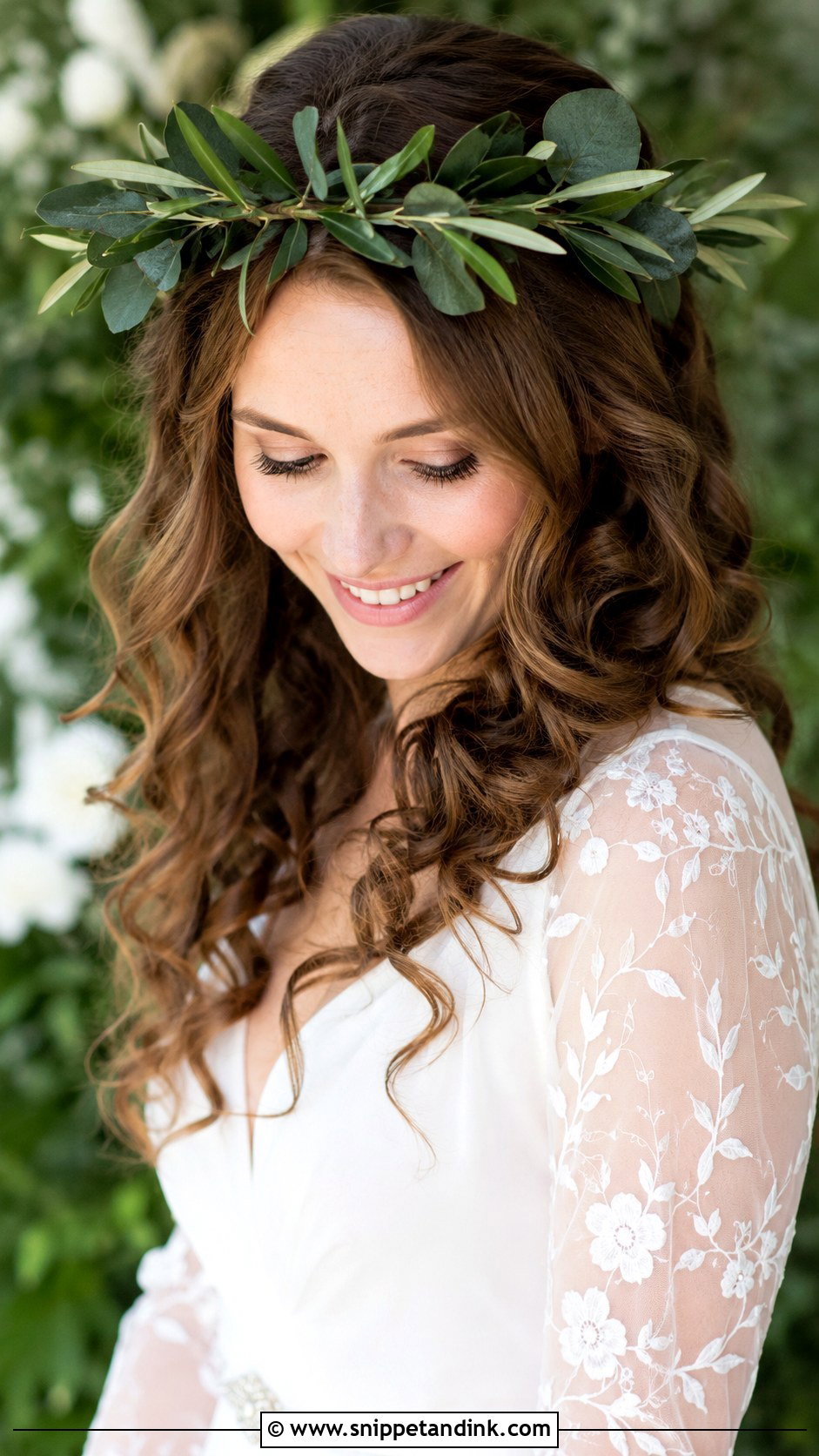
Greenery crowns suit brides who don’t want a bloom-heavy look. delicate eucalyptus, ferns or olive leaves give texture and a soft green against the hair. Eucalyptus is one of the longest-lasting things I can put in a crown, and it smells fresh; olive is lighter but curls slightly as it dries. Pair it with loose curls, and add one or two small flowers if you want a little colour.
11. Romantic Updo With Peonies
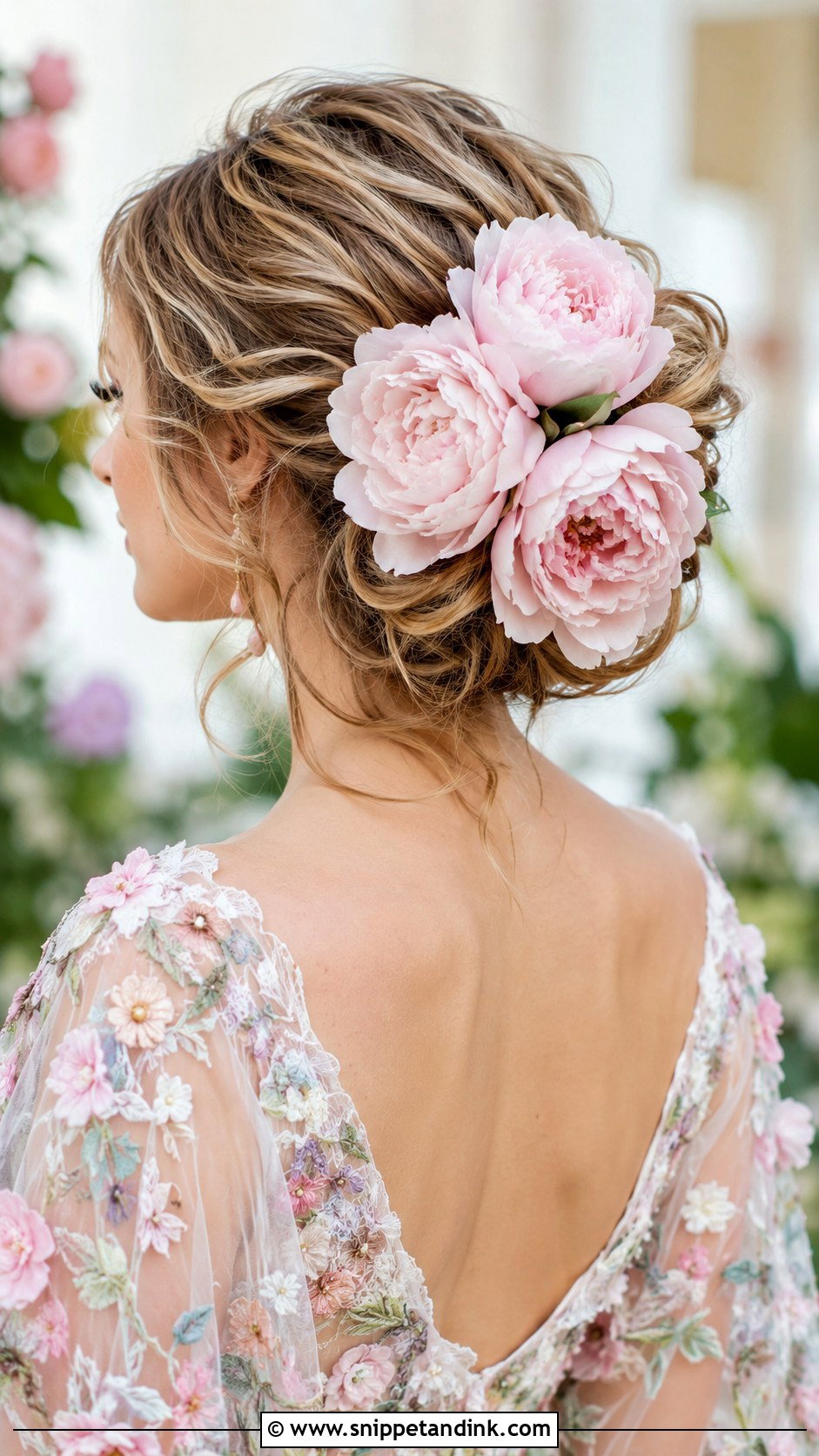
Peonies are spectacular, and they’re also the flower I’m most cautious about in hair. A single open peony is heavy and full of water, and it can drop petals once it’s been out of water for a while. On an updo I’d use one or two as oversized peony blooms clustered to one side, wired into the bun rather than ringed round the head. Blush, ivory or coral peonies are at their best in late spring and early summer, which is when this look makes sense.
12. Long Waves With Wildflower Crown
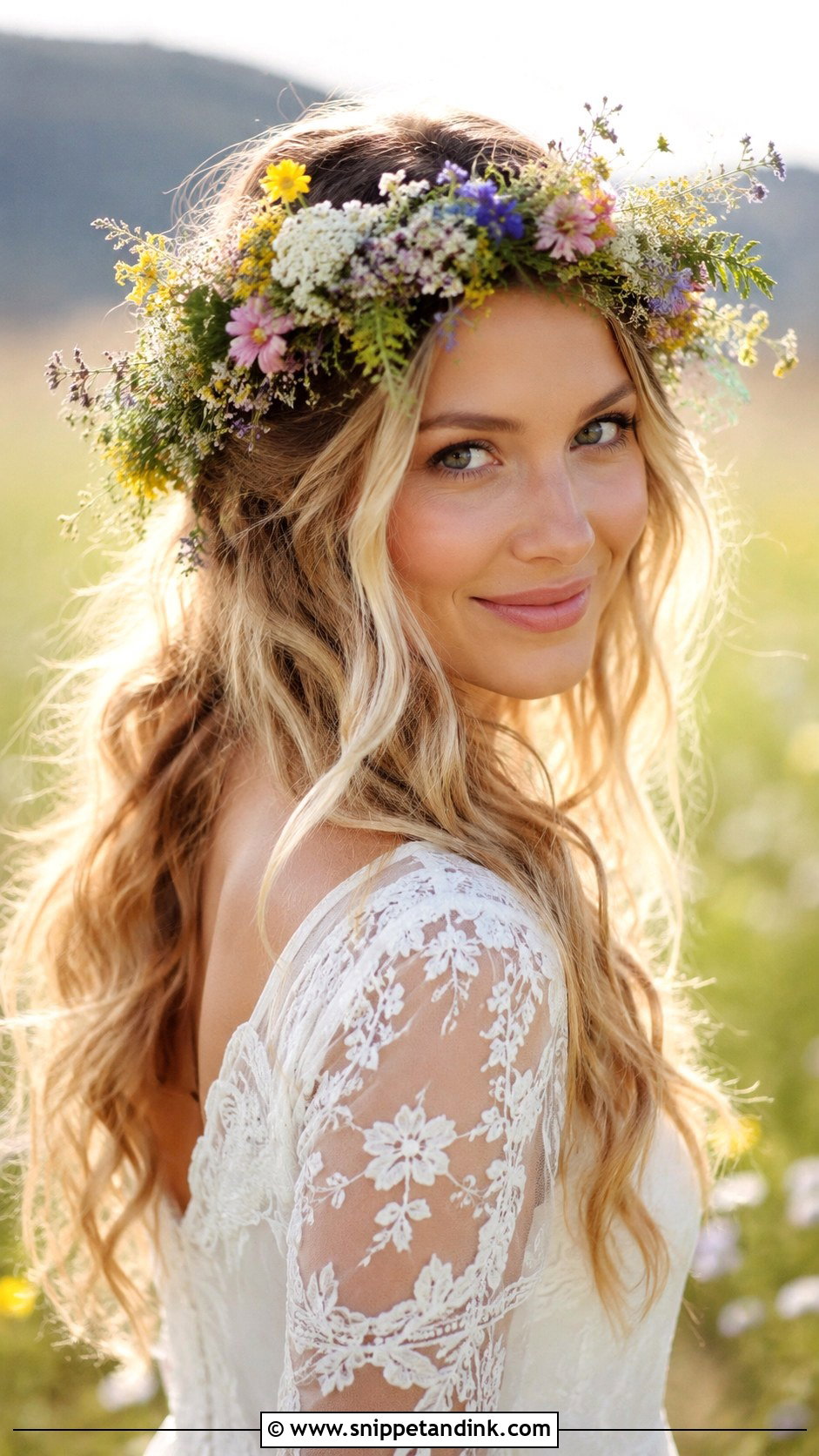
Wildflower crowns look gathered from a meadow, but true field flowers are the least reliable choices I can make, because many wilt within an hour of cutting. I build the look from hardier lookalikes: waxflower, statice, small chamomile-style daisies, tiny buds and greenery, all in muted, mixed tones. Long, loose waves underneath keep it relaxed. It’s a joyful look outdoors.
13. Sleek Low Ponytail With Flowers
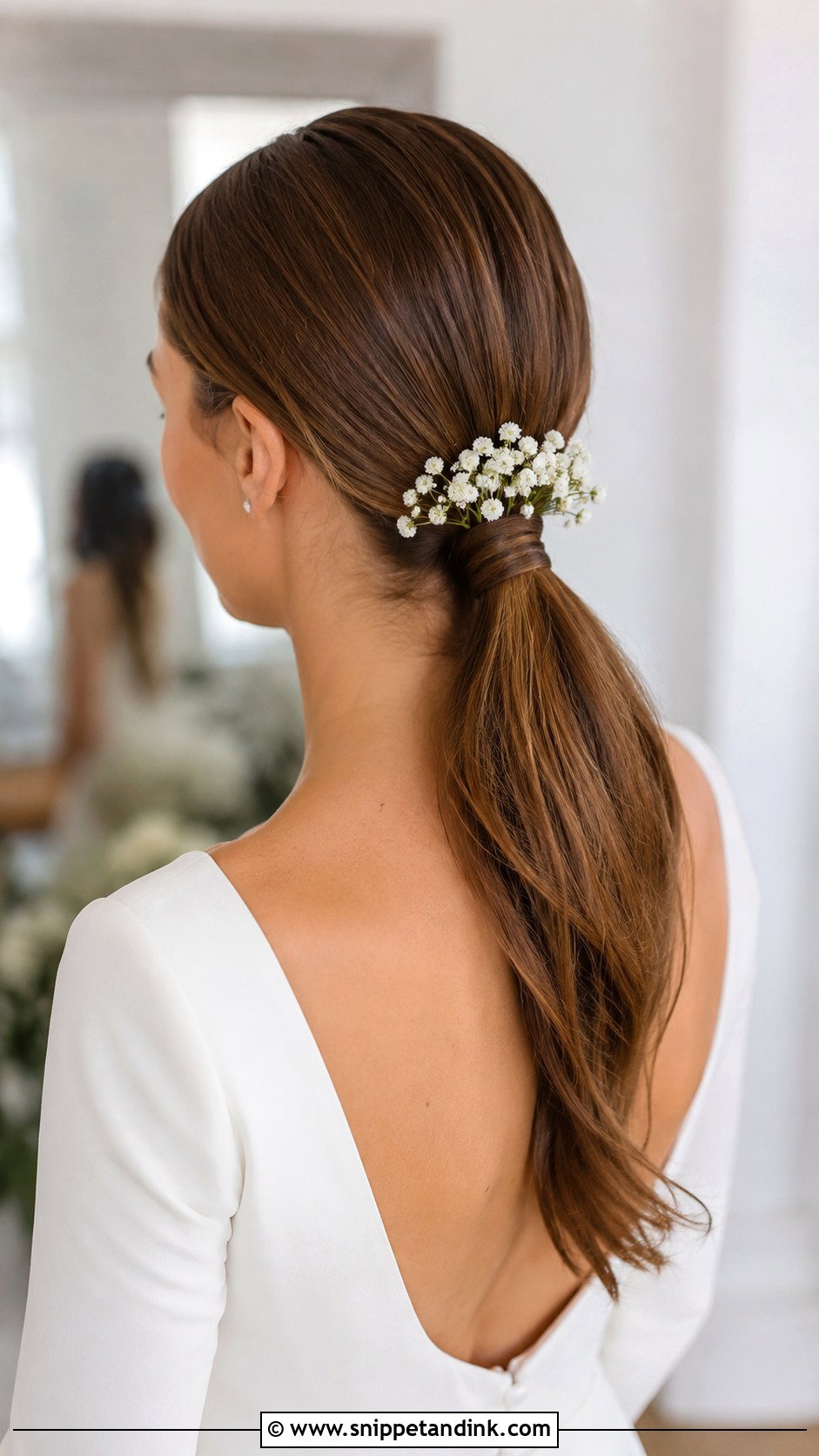
A sleek low ponytail with flowers is the modern option. Hair is smoothed into a low tail at the nape, and blooms go where the ponytail begins, or a delicate crown wraps the head. The smooth surface gives little grip, so I glue small flowers onto a slim comb or clip that the stylist can slide into the elastic. Baby’s breath or small roses keep it refined, and it suits indoor and minimalist weddings.
14. Twisted Updo With Dried Blooms
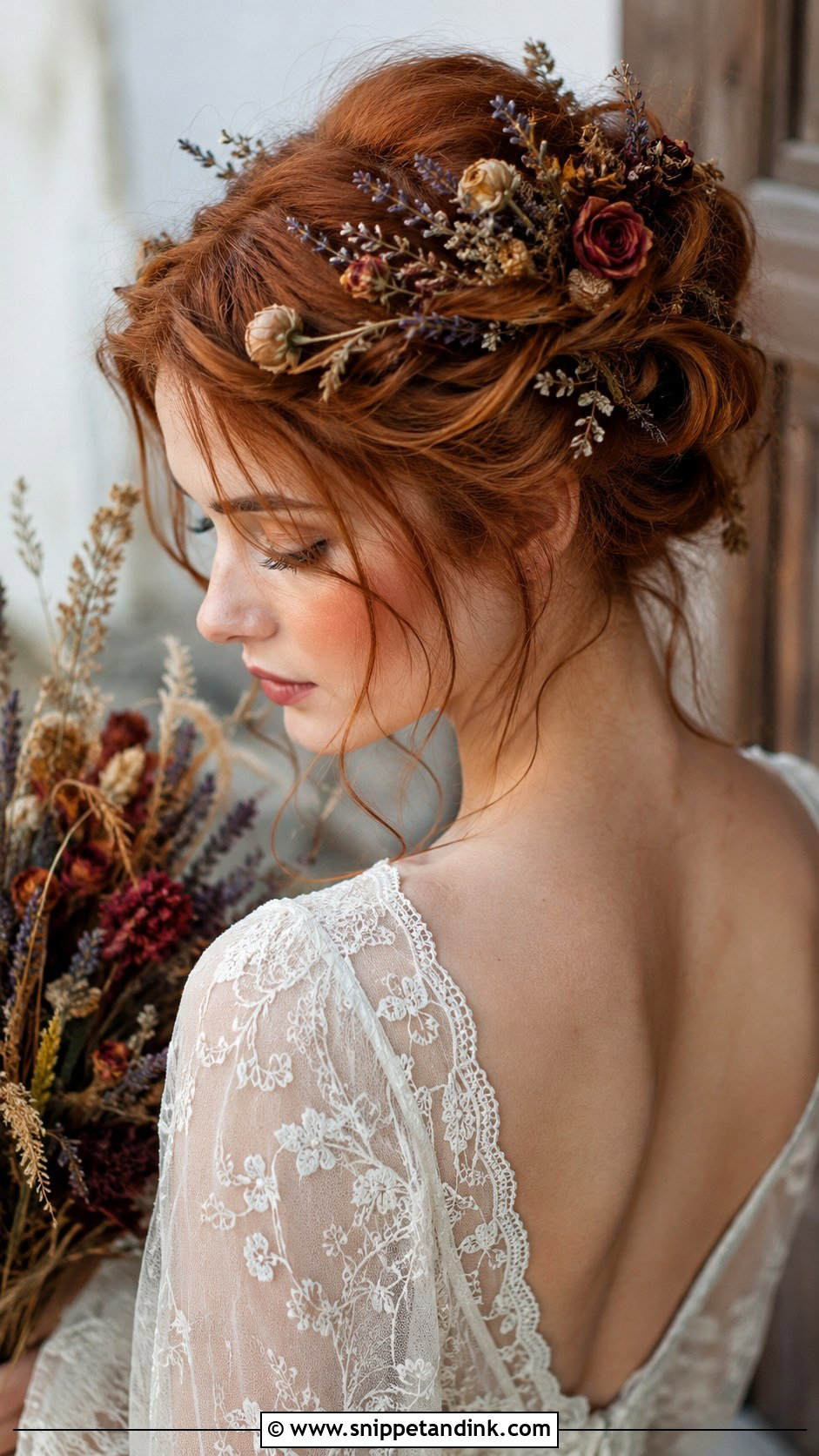
Dried flowers can be made weeks ahead and kept as a keepsake, and they won’t wilt on a hot day. Dried roses, lavender or pampas grass in warm, muted tones go on top of a soft twisted updo. The trade-off is fragility: dried stems are brittle and lavender sheds tiny buds, so the crown needs careful handling and a gentle placement. It suits autumn and winter weddings and a vintage or boho mood.
15. Half Up Crown With Rose Buds
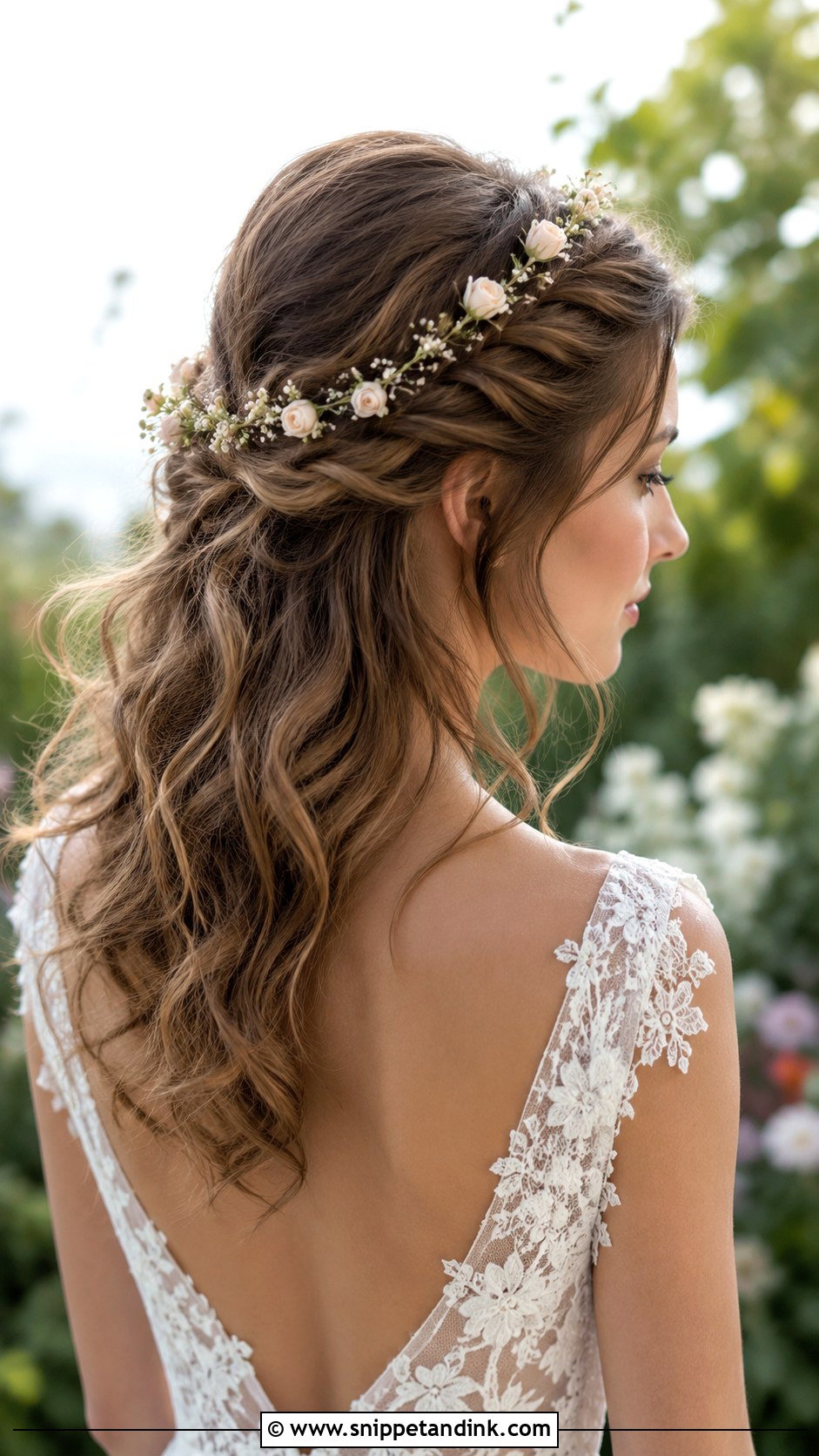
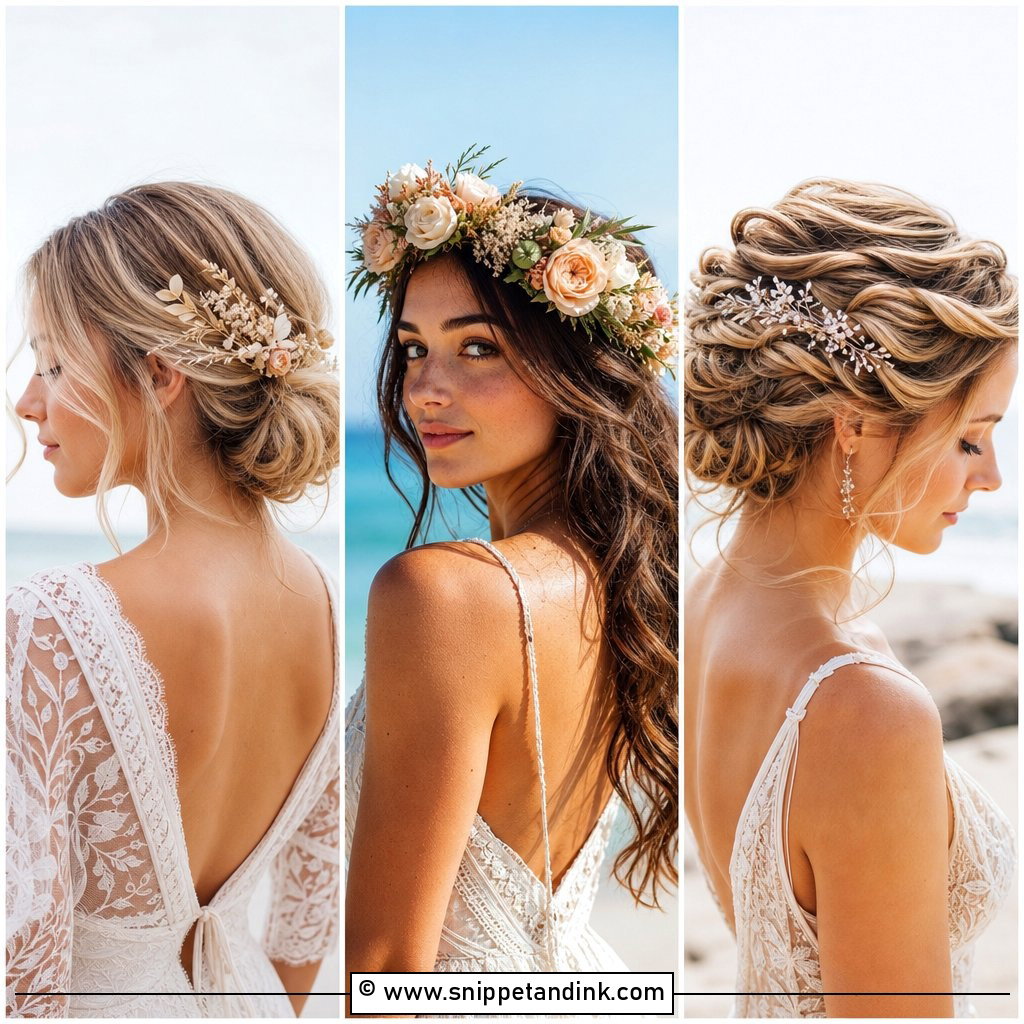
Small rose buds along a half up crown give a sweet, youthful look. The top section is pulled back gently, the rest flows below, and the buds sit along the crown line. Medium to long hair suits it, with soft curls in the loose portion. Buds are tighter and lighter than open roses and hold their shape longer, which is why I like them here. Blush or ivory keeps it classic; deeper reds add drama.
16. Bohemian Braids With Flower Crown
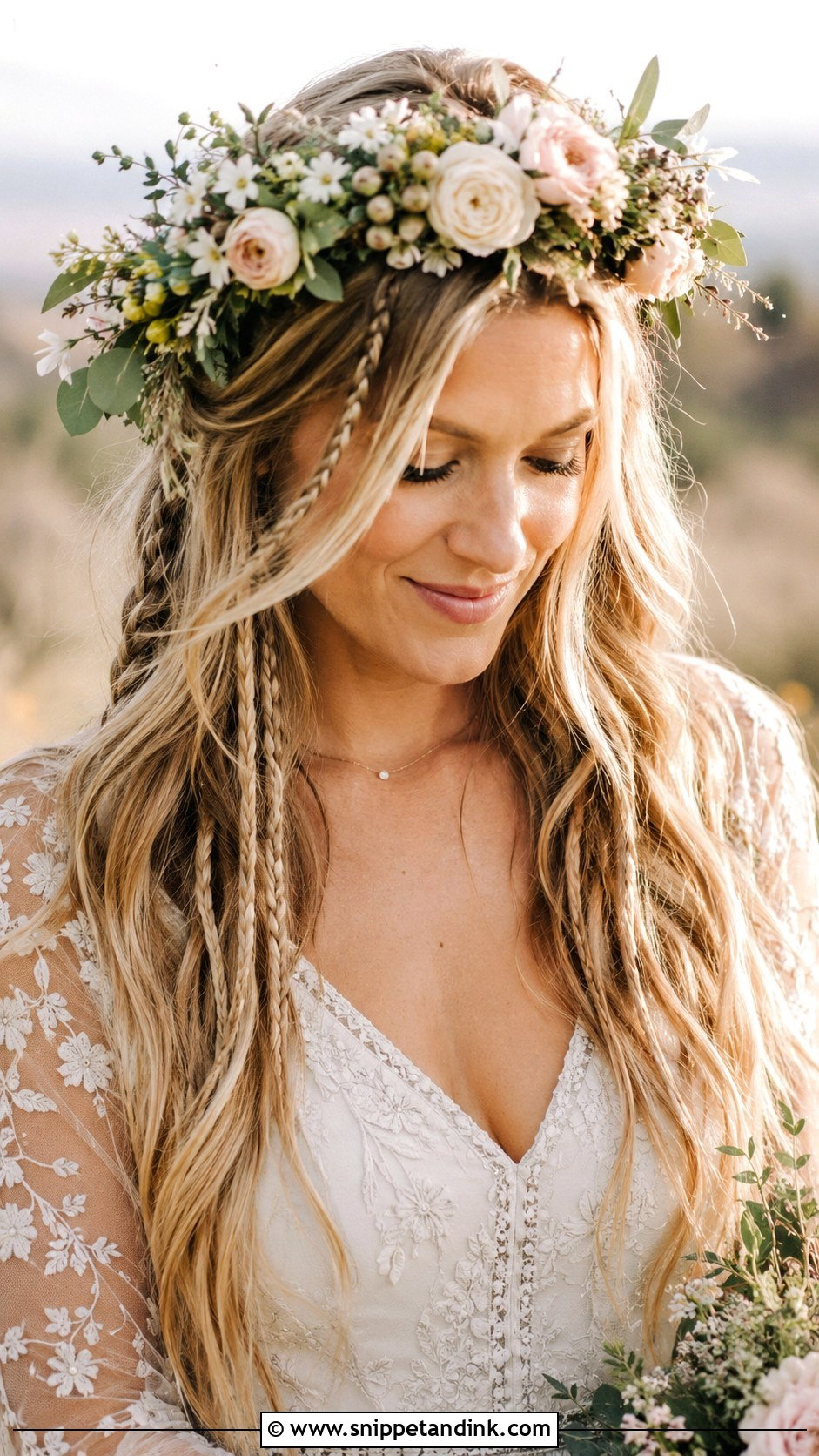
Several small braids woven through loose, textured hair give a full flower crown something to lock into. The braids keep stray pieces in place, and the crown ties the look together. I mix flowers and greenery for a wild, gathered effect. With this much going on, I’d keep the colour palette tight, two or three shades at most. Festival-style and outdoor weddings are where it shines.
17. Vintage Updo With Floral Accents
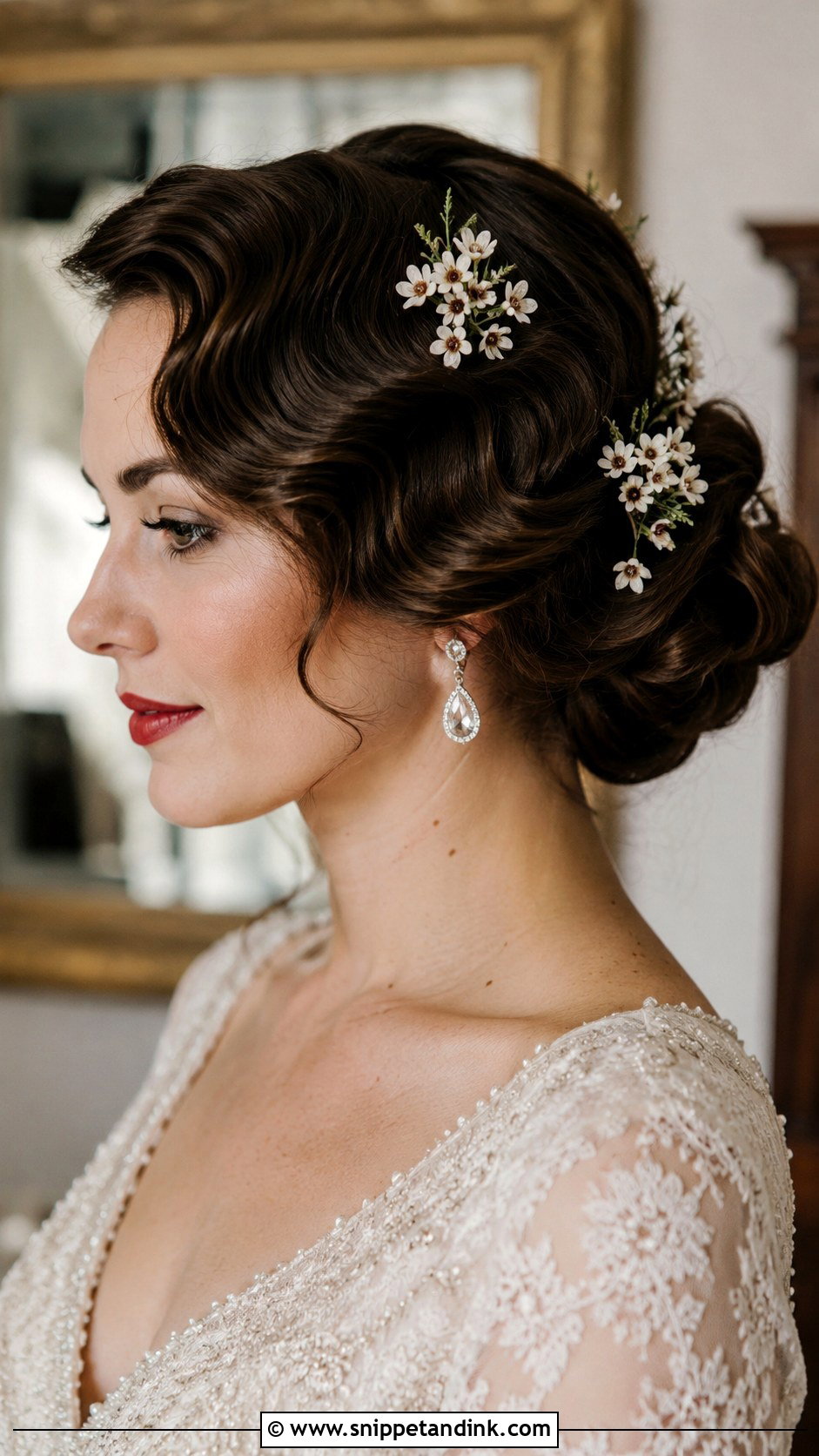
A vintage updo uses soft pin curls or finger waves gathered into an elegant shape, with small flowers tucked through rather than a full crown. Waxflower and tiny roses suit the period feel, and I’d wire them as individual picks so the stylist can place each one between curls. It pairs well with antique-style venues and classic gowns. The flowers should look scattered, not lined up.
18. Loose Curls With Greenery And Flowers
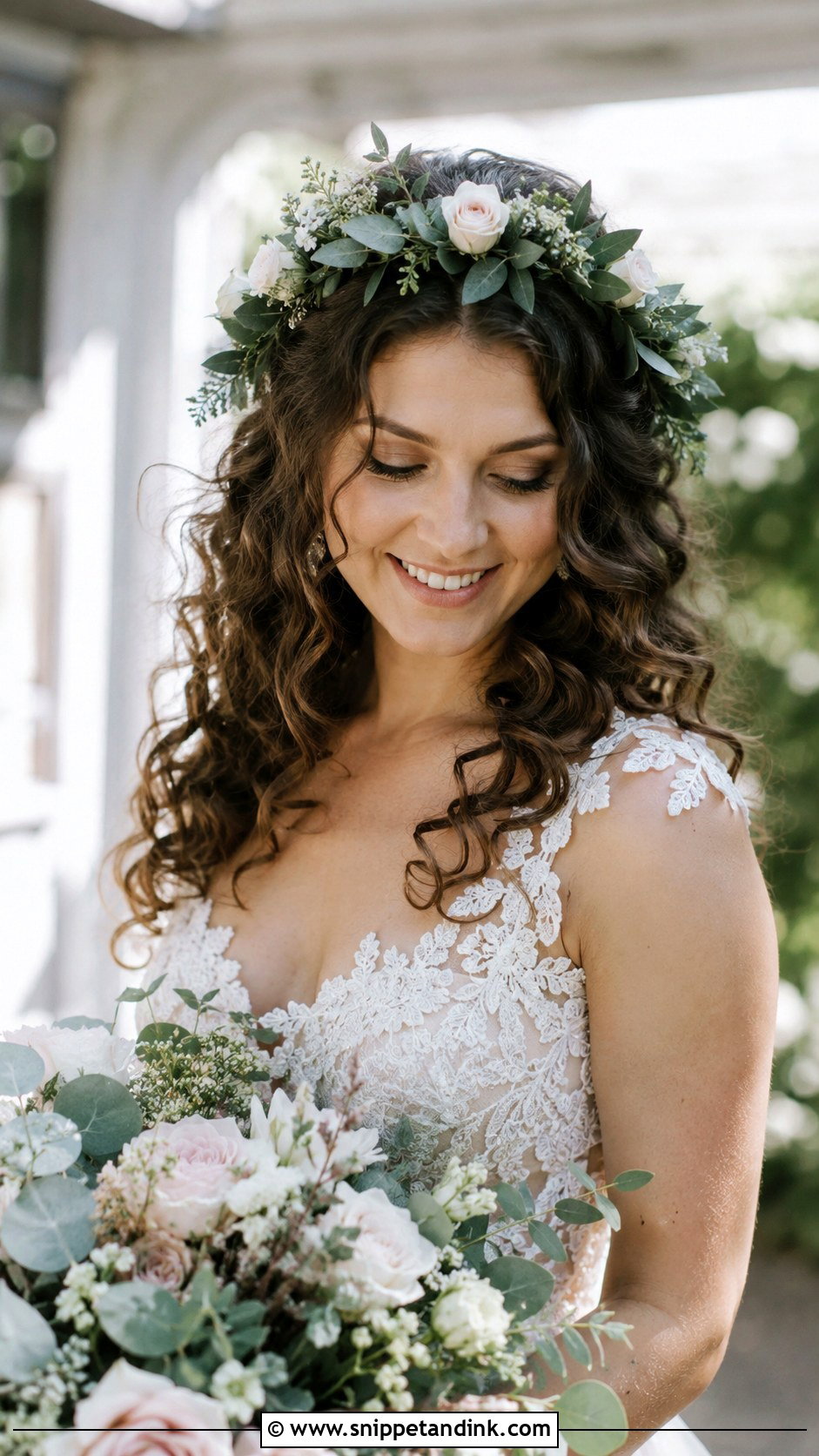
Mixing flowers and greenery gives a crown balance: the greenery adds texture, the flowers bring colour. Over loose curls it looks lush and full. Eucalyptus with roses or ranunculus is a combination I make often, because the eucalyptus holds structure while the flowers soften it. It suits outdoor, woodland and garden weddings, and makes a nature-loving choice for any season.
19. Top Knot With Delicate Flowers
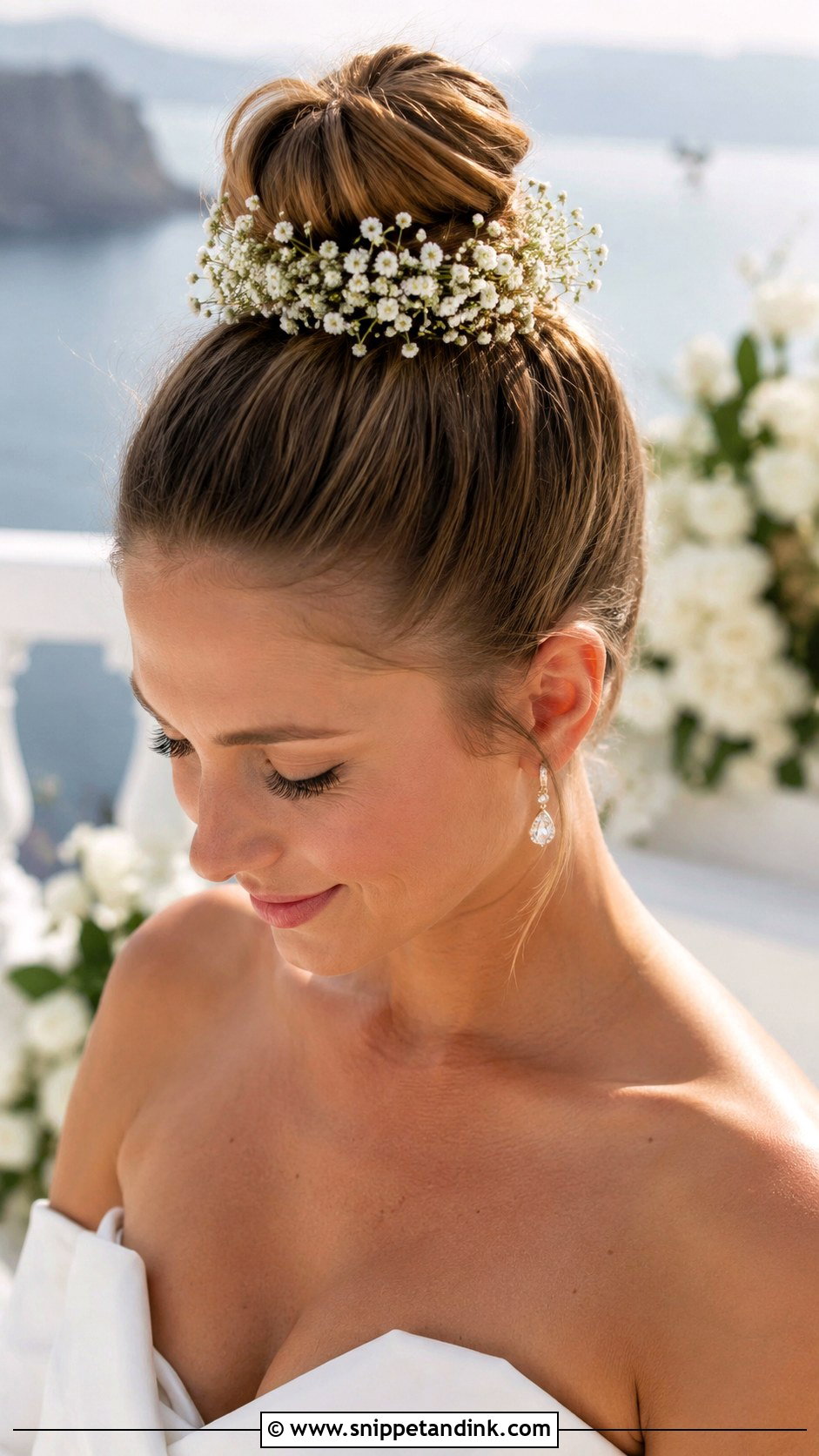
A top knot sits high and polished at the crown of the head, which leaves the neck and shoulders bare for warm weather and destination weddings. Small blooms go around its base, or I make a mini crown that circles the knot instead of the head. Keep the flowers petite, baby’s breath or tiny roses, so they don’t overwhelm the knot. It suits a clean, modern aesthetic.
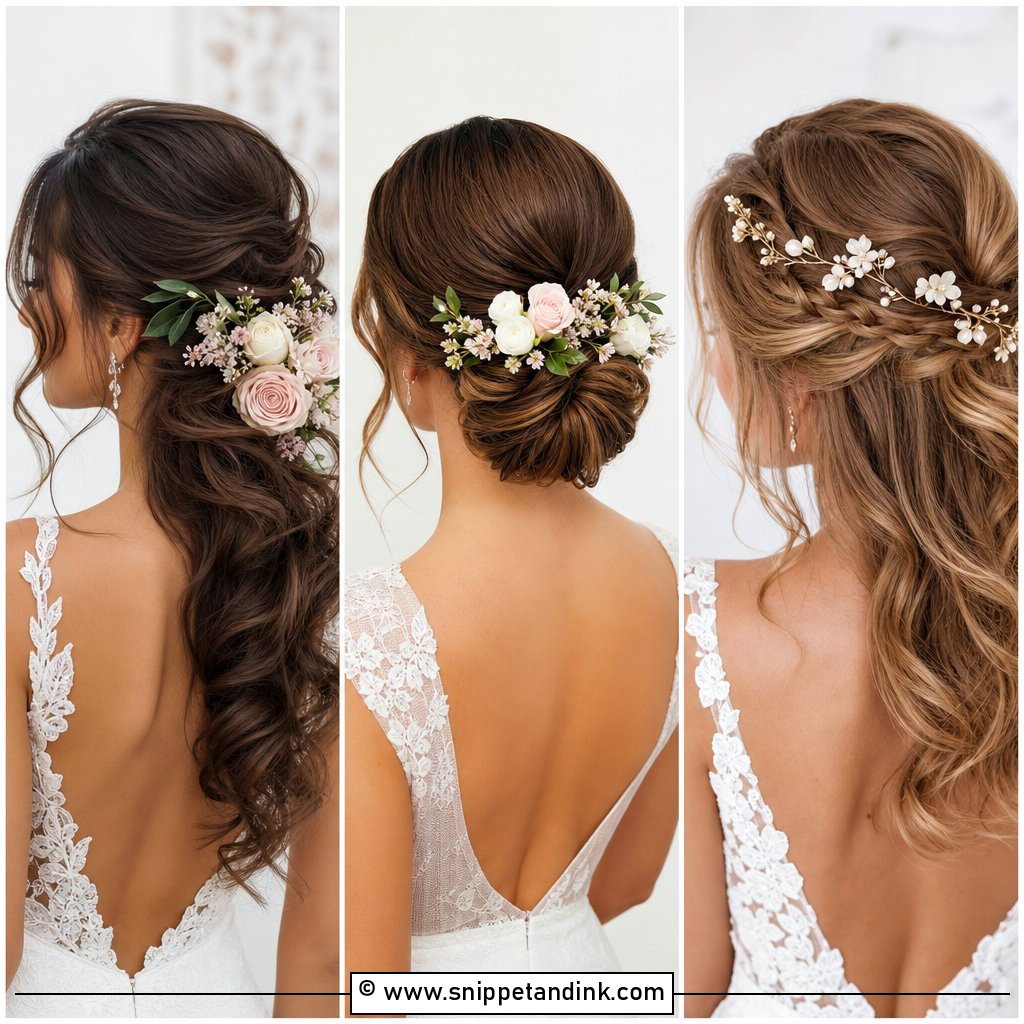
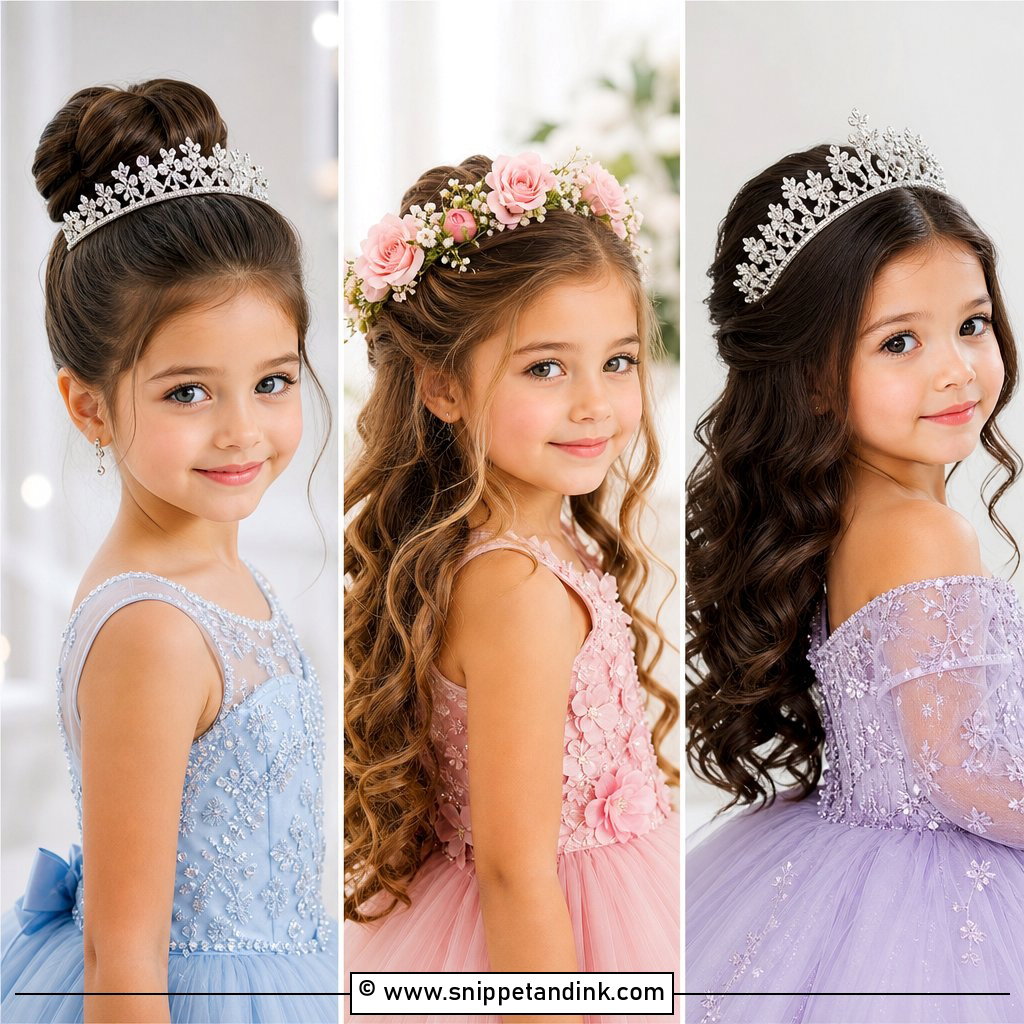
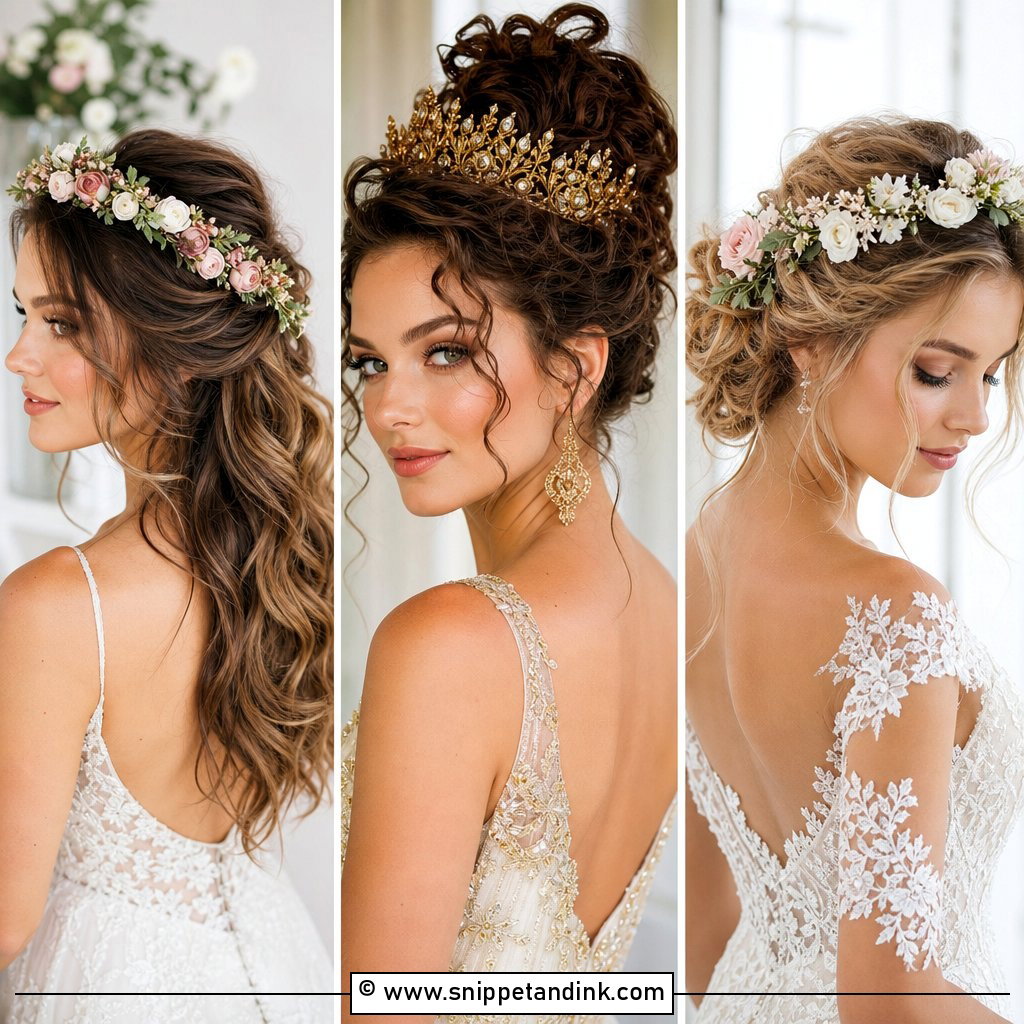
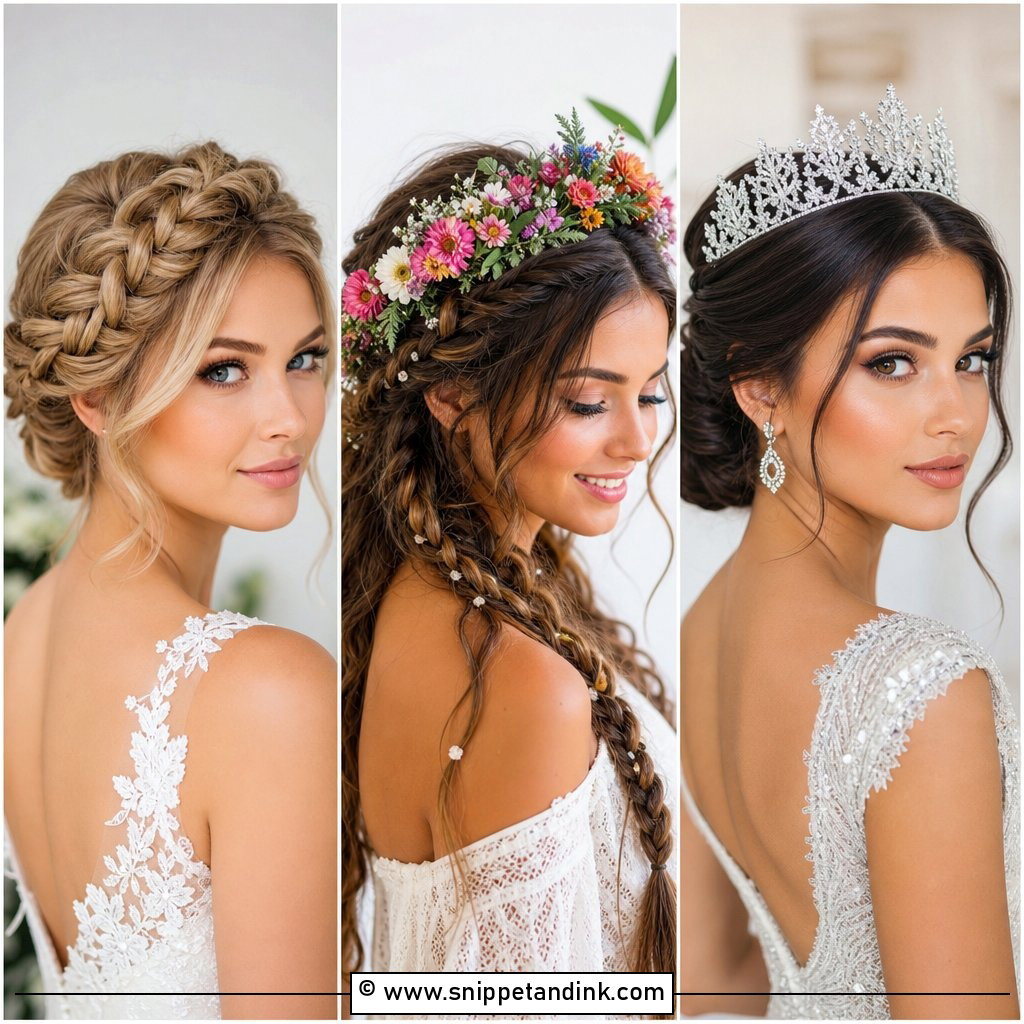
20. Flowing Hair With Mixed Floral Crown
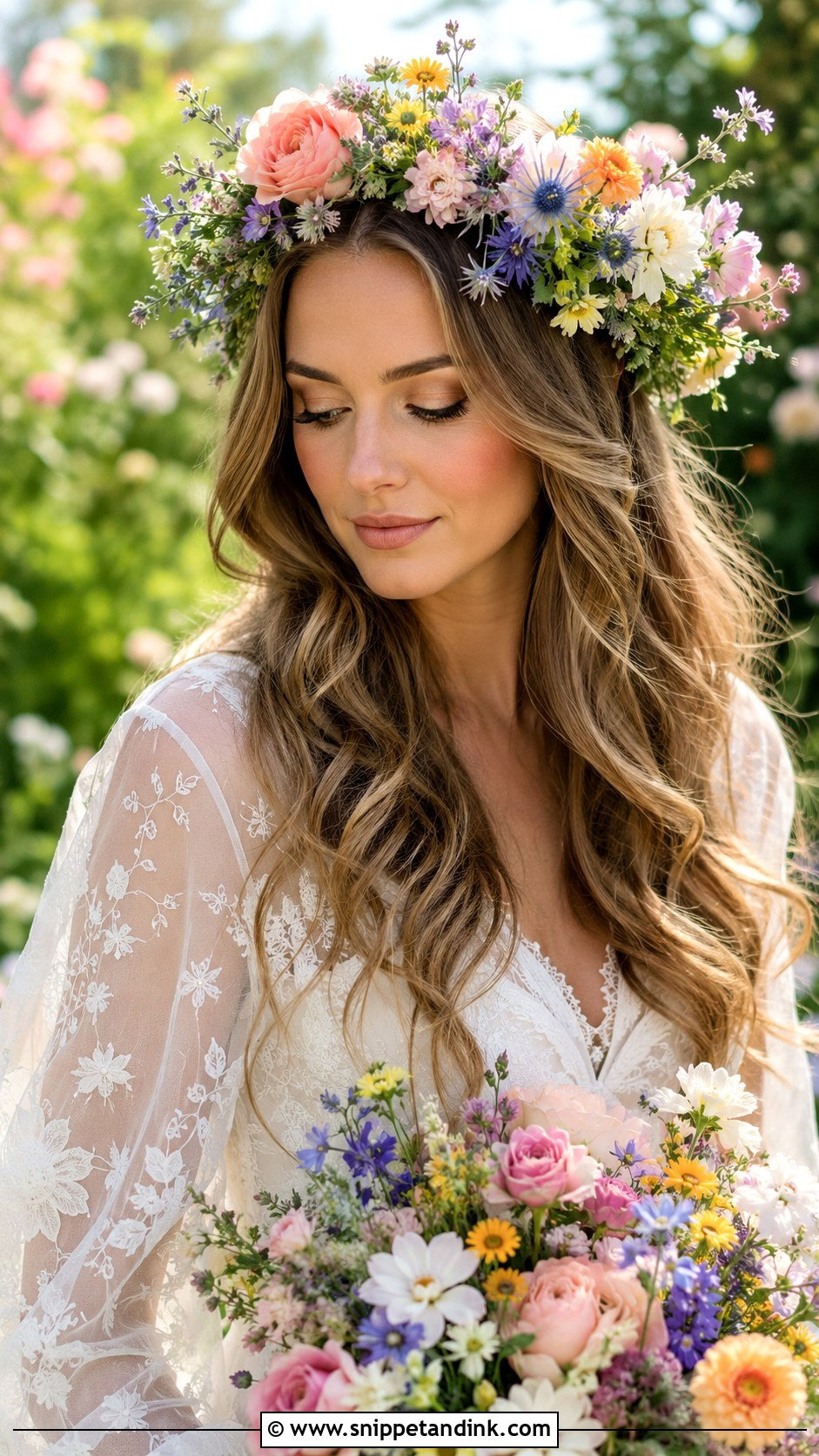
A full mixed crown over long, flowing hair is the boldest floral statement here. Roses, ranunculus, wildflowers, buds and greenery combine into one lush crown, and the hair falls in waves or natural texture below. It’s the heaviest crown on the list, so I build it on a light wire base, put the larger blooms at the front, and taper toward the back where the ribbon ties. Bohemian, garden and outdoor weddings carry it best.
Petals That Last All Day Out of Water
Not every flower survives on a head. These are the groups I sort them into when a bride brings me a wish list:
- Reliable: baby’s breath, waxflower, statice, spray roses, rose buds, eucalyptus, ruscus, most dried flowers.
- Workable with care: ranunculus, garden roses, lisianthus, small orchids. Wired well and placed last, they’ll hold.
- Risky: peonies, hydrangea, gardenia, poppies, most true field flowers. They wilt, bruise or drop petals quickly.
Fresh crowns are made the day before or the morning of, misted, and stored boxed in a cool place, never in a household freezer and never beside fruit, which speeds up wilting. Keep the box out of the car’s sun on the way to the venue.
Keeping it afterward
If you want to keep the crown, hang it upside down somewhere dark and dry for a couple of weeks. Roses, baby’s breath and statice dry well; petal-heavy blooms shrivel. It won’t look fresh, but it will look like the one you wore.
Let the Bouquet and the Crown Share a Few Stems
The right flower crown depends on your hair, your season and how much you want to feel the flowers on your head. Bohemian waves, an elegant updo and romantic braids all carry blooms well. Fresh roses and baby’s breath offer classic charm, while dried flowers and greenery last longer and suit hot days. Think about your venue, season and gown. Ask your florist to repeat two or three stems from the bouquet in the crown, so the two look like they came from the same garden.
You'll Like These Ideas:


Leave a Reply