
An updo is the style I trust most on a long wedding day. Once it’s pinned properly it doesn’t care about wind, hugs or a sticky dance floor, and it keeps your neck, shoulders and the back of the dress on show. Romantic doesn’t have to mean messy, either. It can be a smooth chignon, a braid or a low bun with loose tendrils left around the face. Below are twenty updos I’d put on a bride, from boho twists to a sculpted French twist, with what each one needs from your hair and where it tends to go wrong.
How Heavy Your Hair Is Changes Which Updo Holds
The first thing I do at a trial is pick up the hair and feel its weight. Updos are engineering as much as styling: pins hold weight against gravity, and the more hair there is, the more support the base needs.
- Fine or thin hair: I add texture first and sometimes a small padding piece inside the bun, so the shape doesn’t look sparse in photos.
- Thick, long hair: I split it into two or three sections and pin each separately, so no single pin carries everything. This is what stops a heavy updo from aching by the evening.
- Shoulder-length hair: low buns, twists and French twists all work. A very full chignon may need a few clip-in pieces.
- Layered hair: short layers escape first, so I pin them inside the shape or plan for them as soft tendrils.
If an updo gives you a headache at the trial, say so. It’s usually a fixable pin placement or weight problem, not a style you have to put up with.
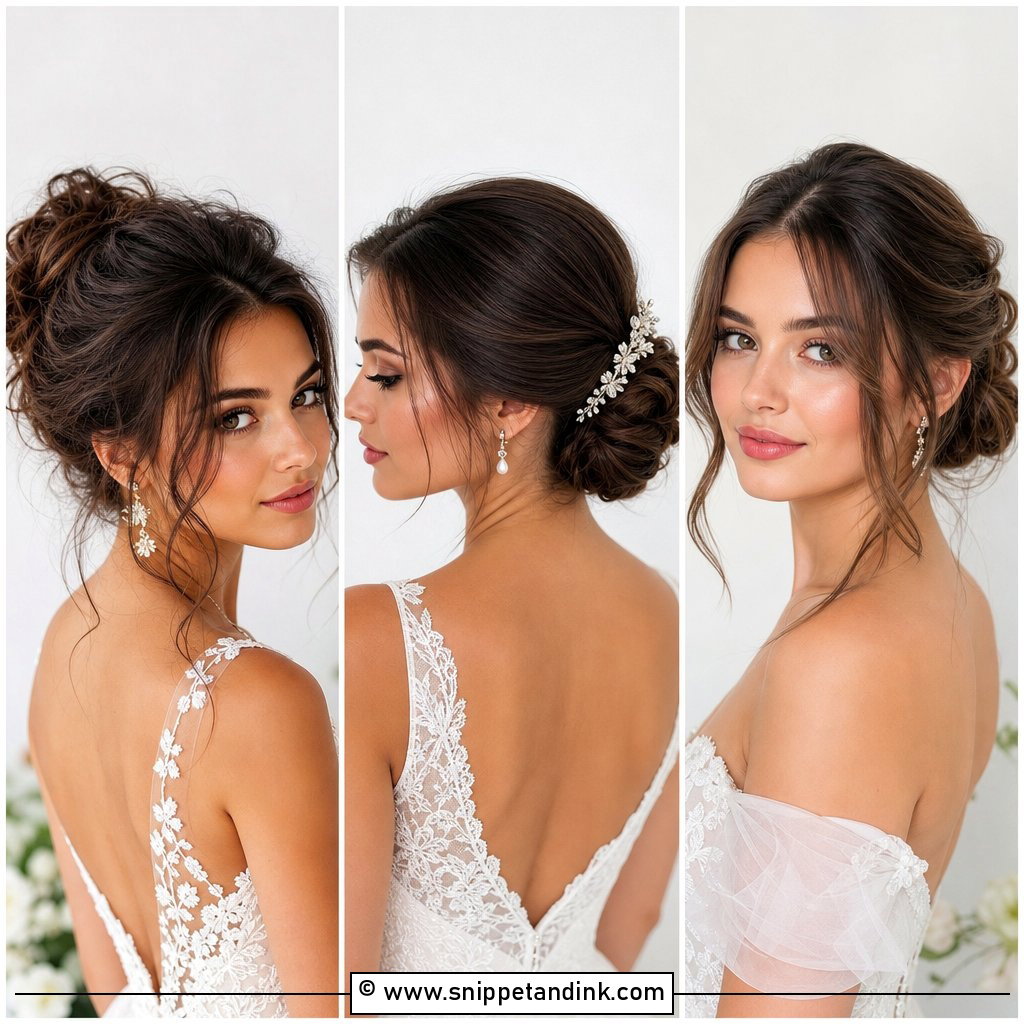
1. Low Bun Wedding Updo
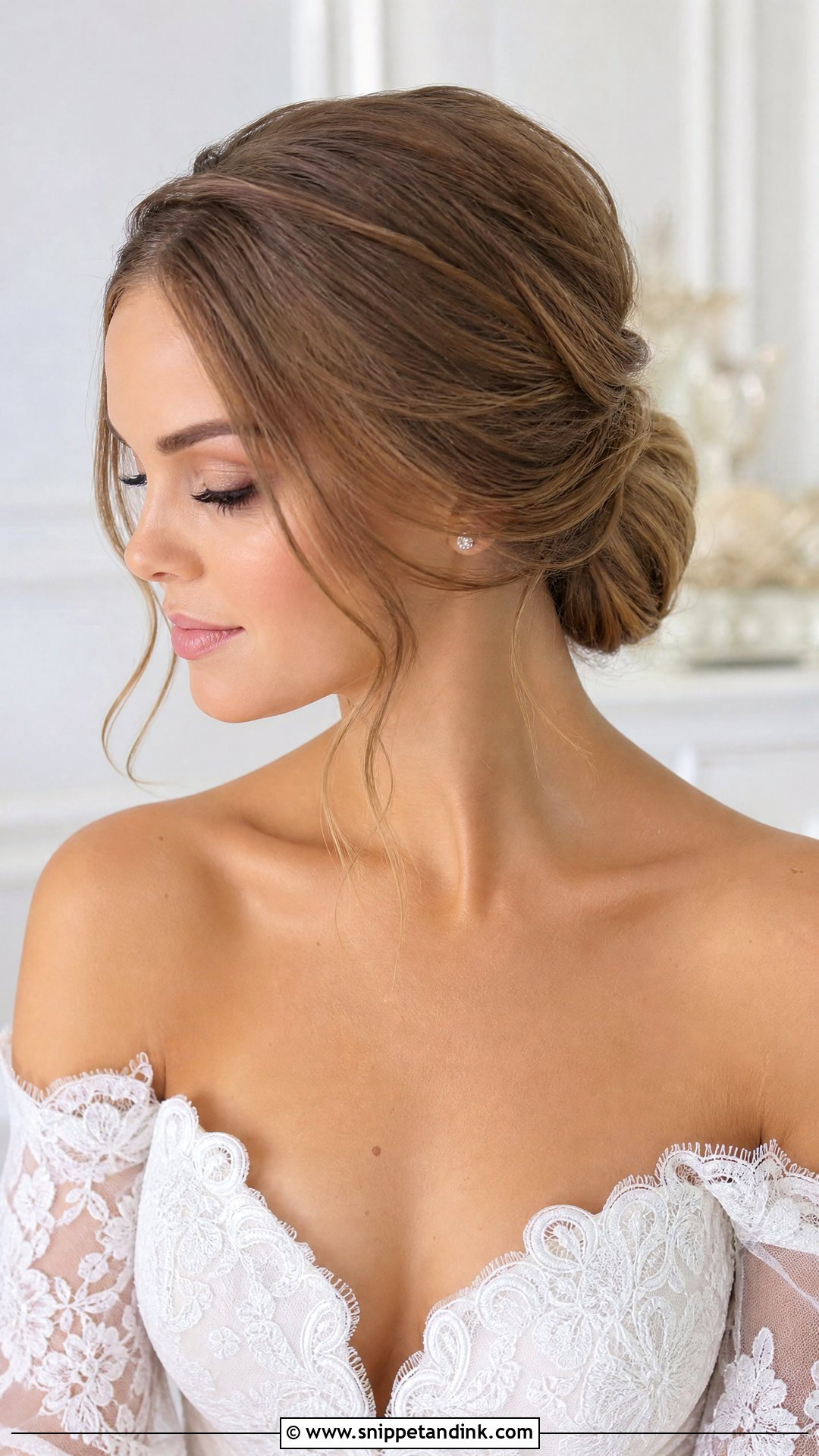
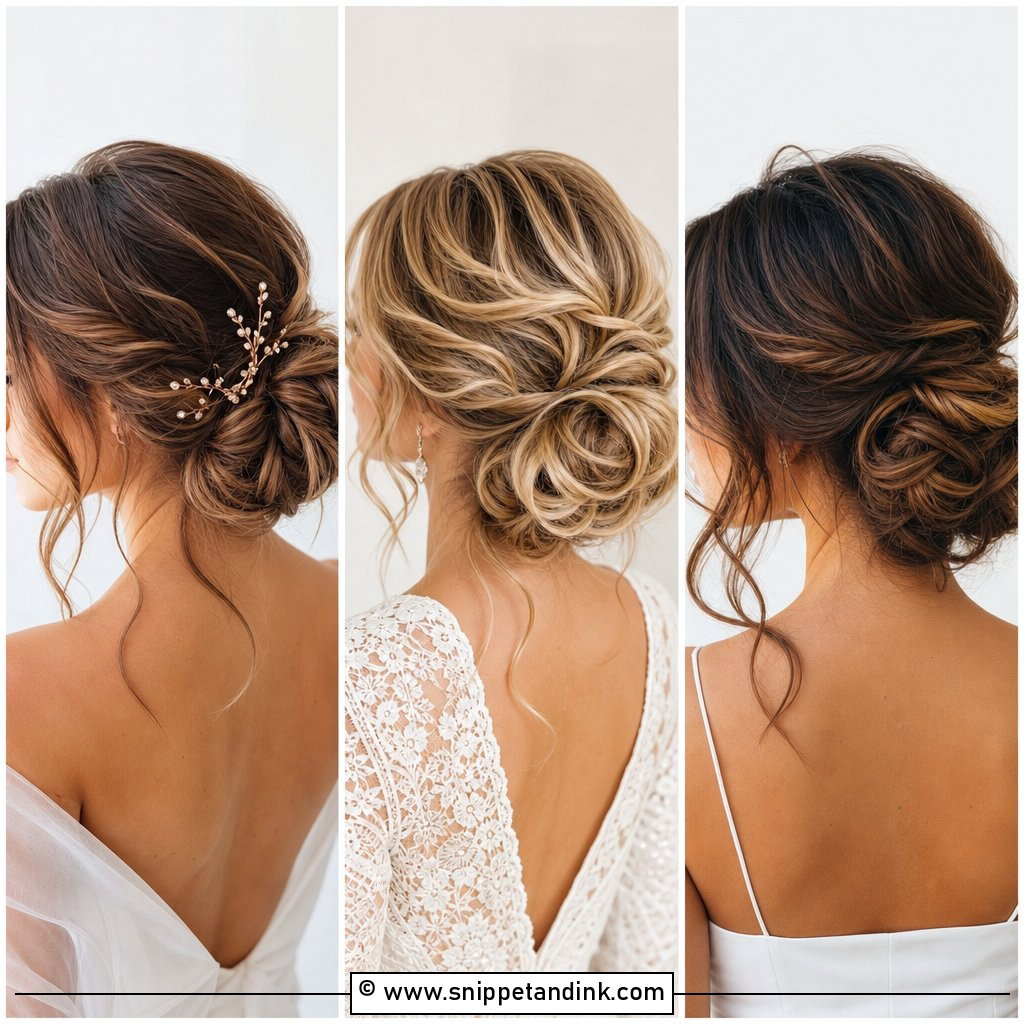
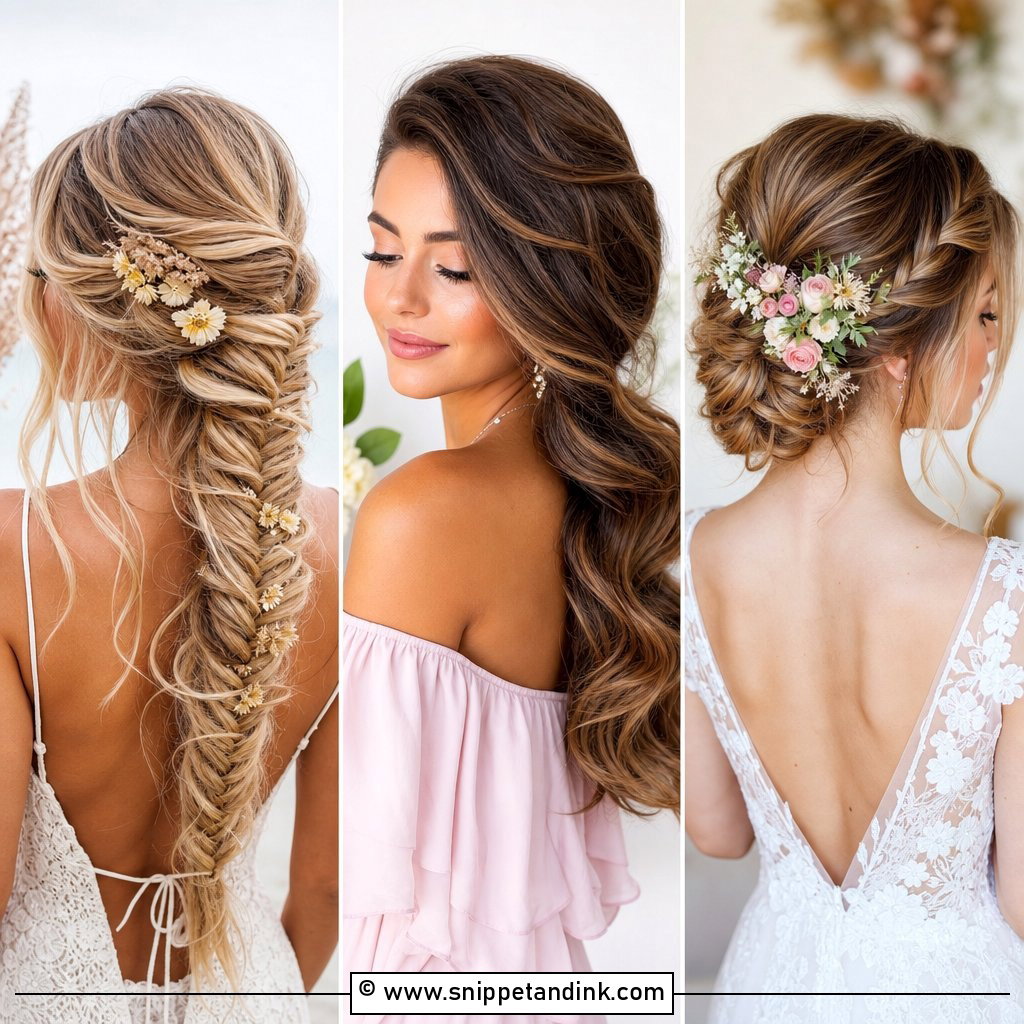
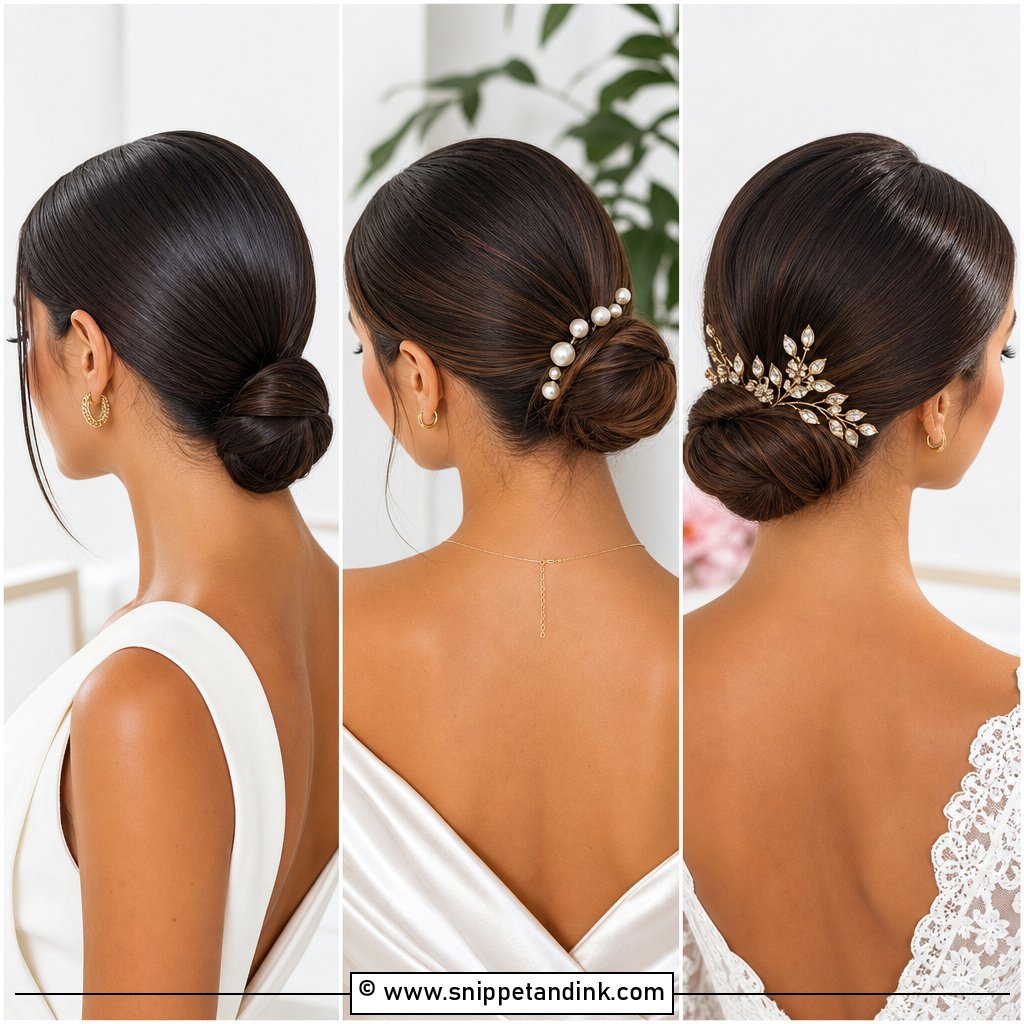
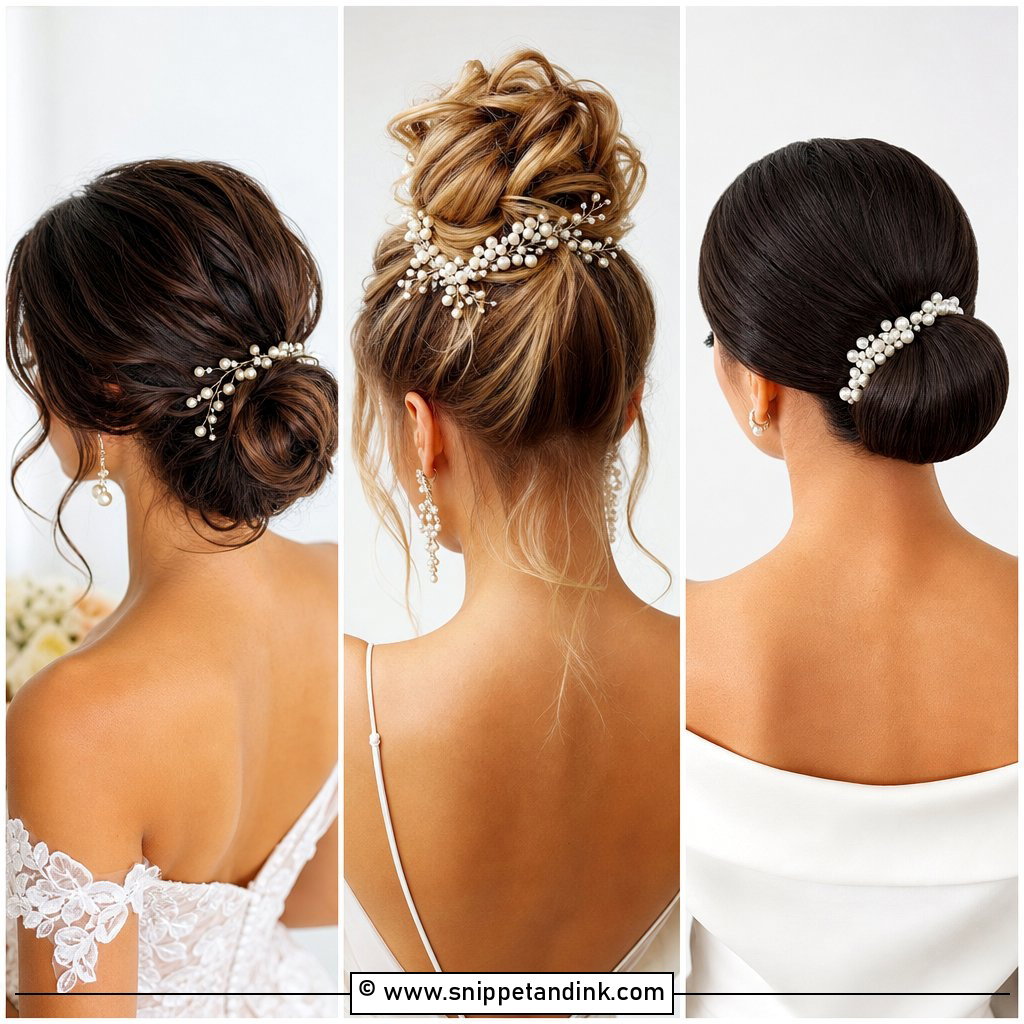
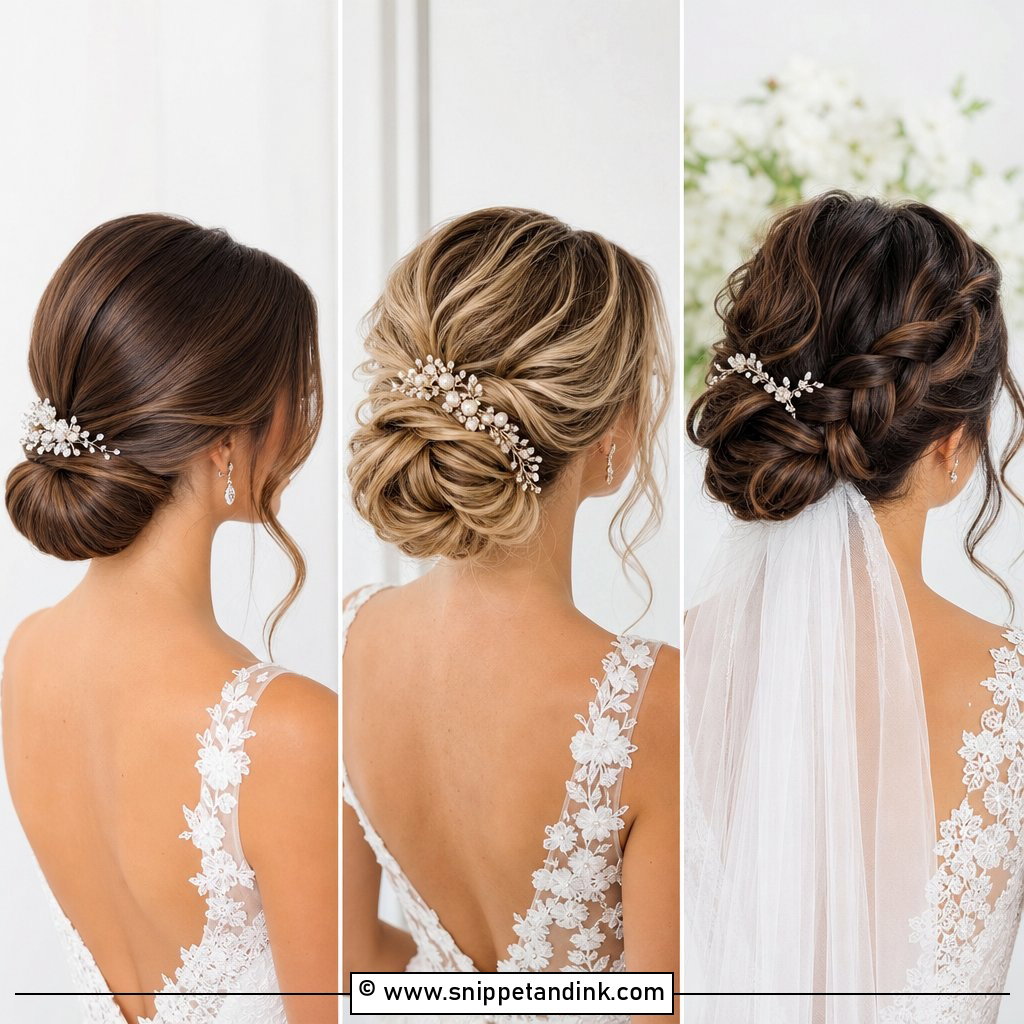
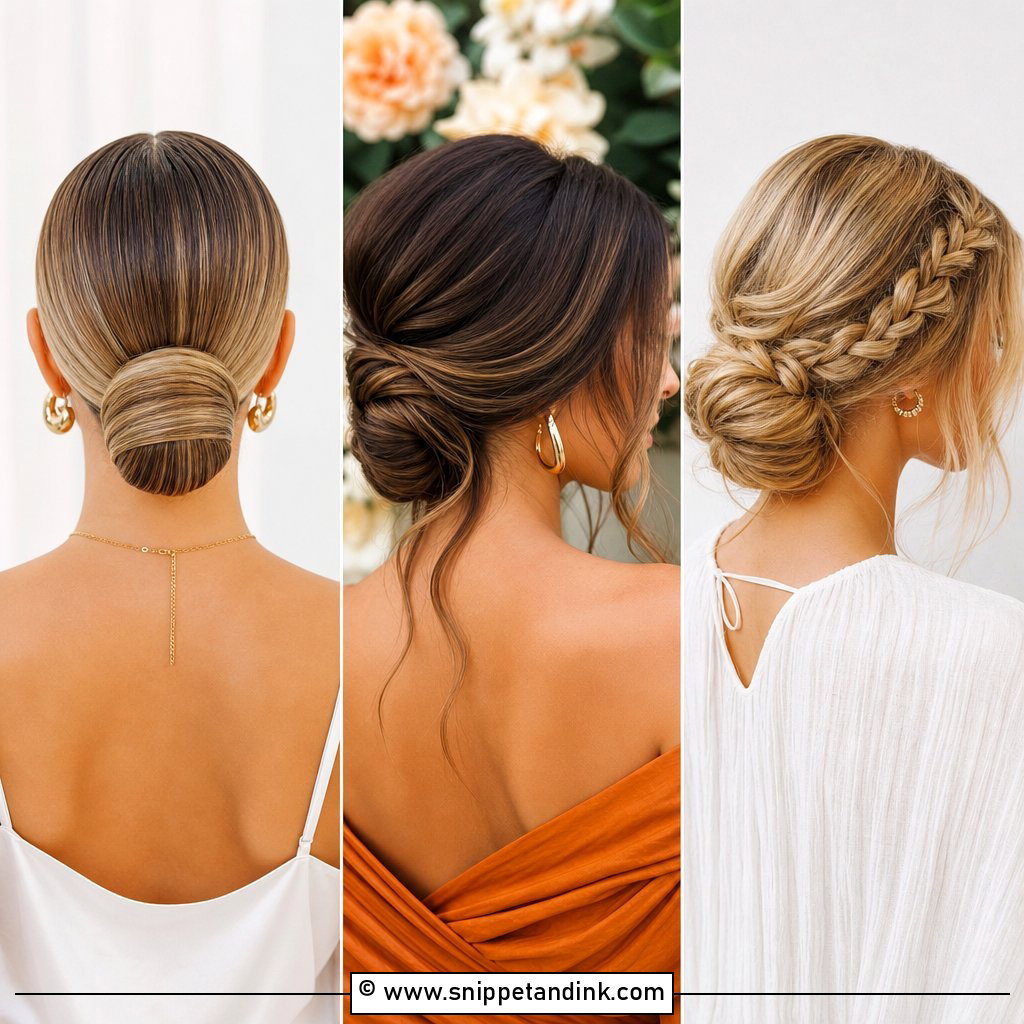
A low bun at the nape is the updo I do most, and it suits nearly every neckline, from off-the-shoulder to a high lace collar. The weight sits low, so it’s comfortable for hours and doesn’t pull at the hairline the way a high bun can. I usually pin it around a small hidden ponytail, which gives every pin something solid to grip. Sleek reads modern; a bit of texture reads softer. A veil comb slides in neatly just above it, and a few tendrils keep the front from looking severe.
2. Messy Bun Wedding Updo
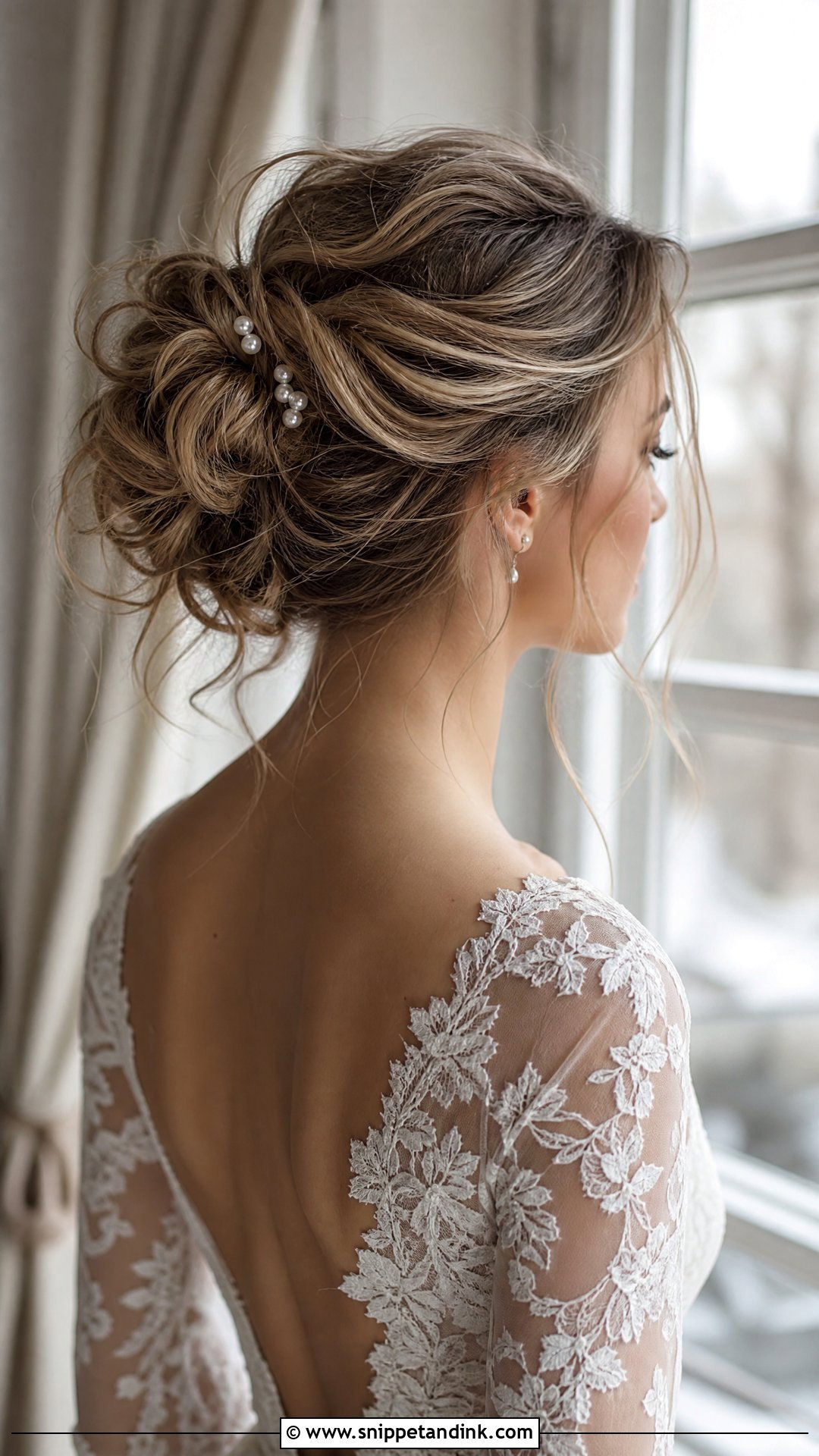
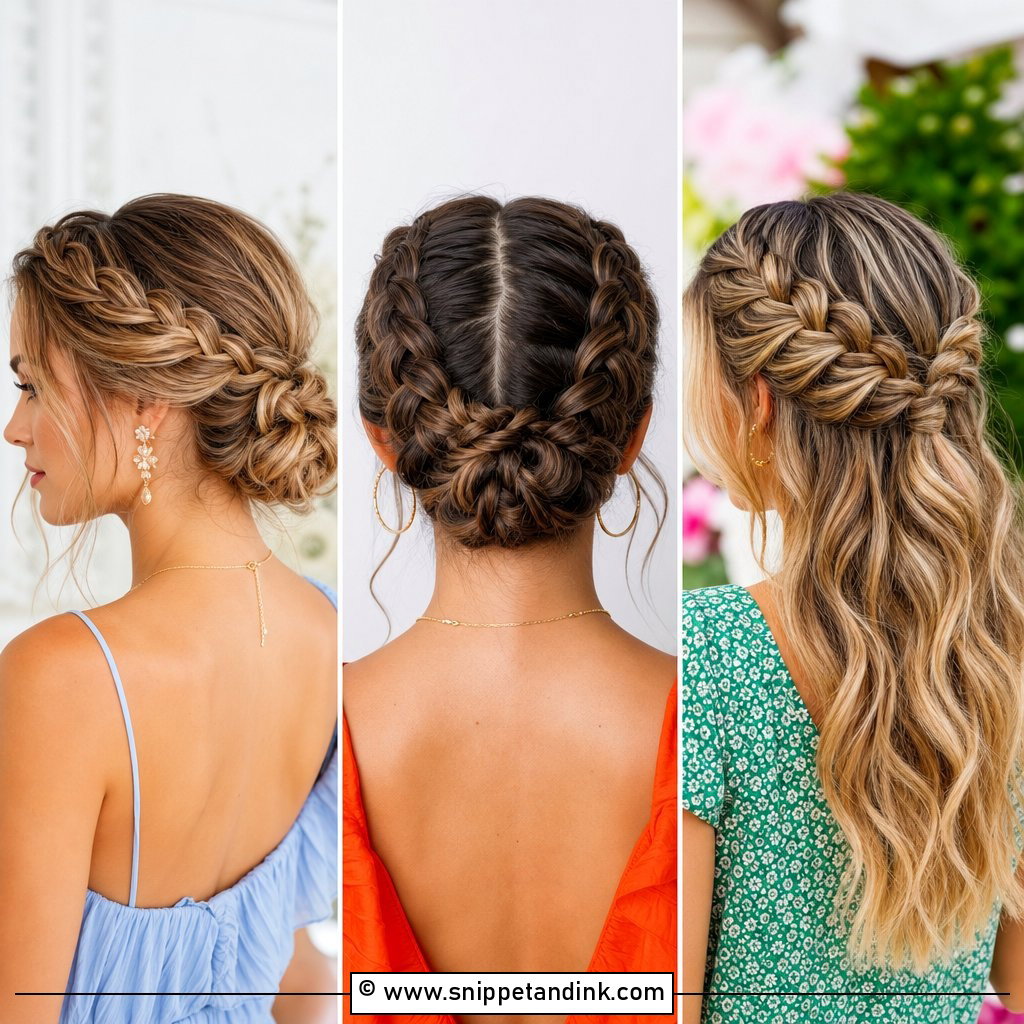
A messy bun only looks thrown together. To make it hold all day, I curl the hair first, pin the bun in loose loops, and then pull out pieces by hand, so the mess is placed rather than accidental. Relaxed outdoor and boho weddings suit it, with lace, flowing veils and a few flowers tucked into the loops. On very fine, silky hair it can slip into looking unfinished, so I add a texture powder at the roots before I start.
3. Braided Wedding Updo
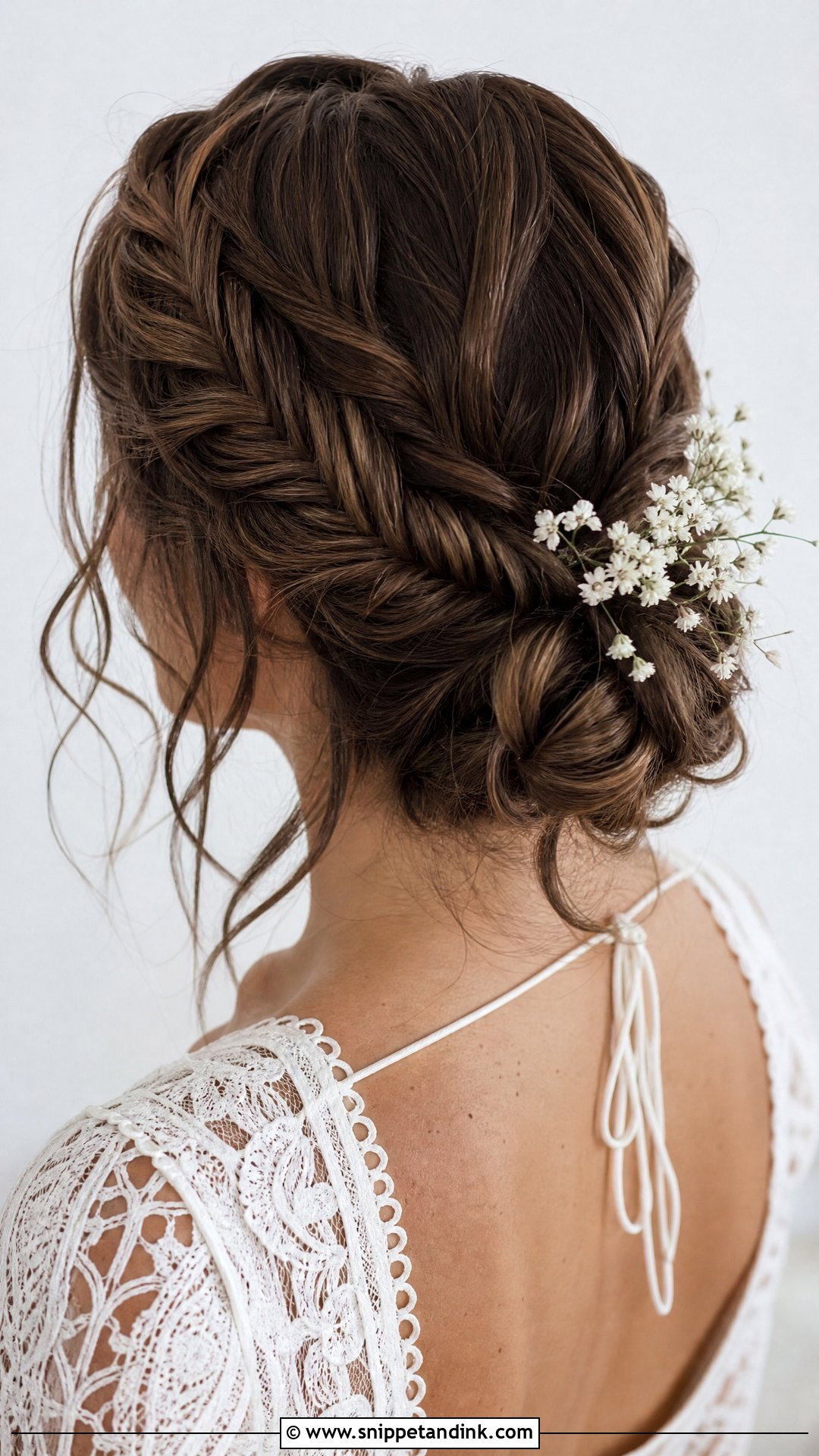
Braids give an updo detail and structure at once. I can work fishtails, French braids or thin plaits into a bun, and the braids lock the hair in place, which is why they hold up so well through dancing. They suit boho and garden weddings, and small flowers or pearl pins tuck into the plaits more securely than into smooth hair. Very short or heavily layered hair is the exception: short layers poke out of braids, so I’d add clip-in pieces or choose a twisted style instead.
4. Chignon Wedding Updo
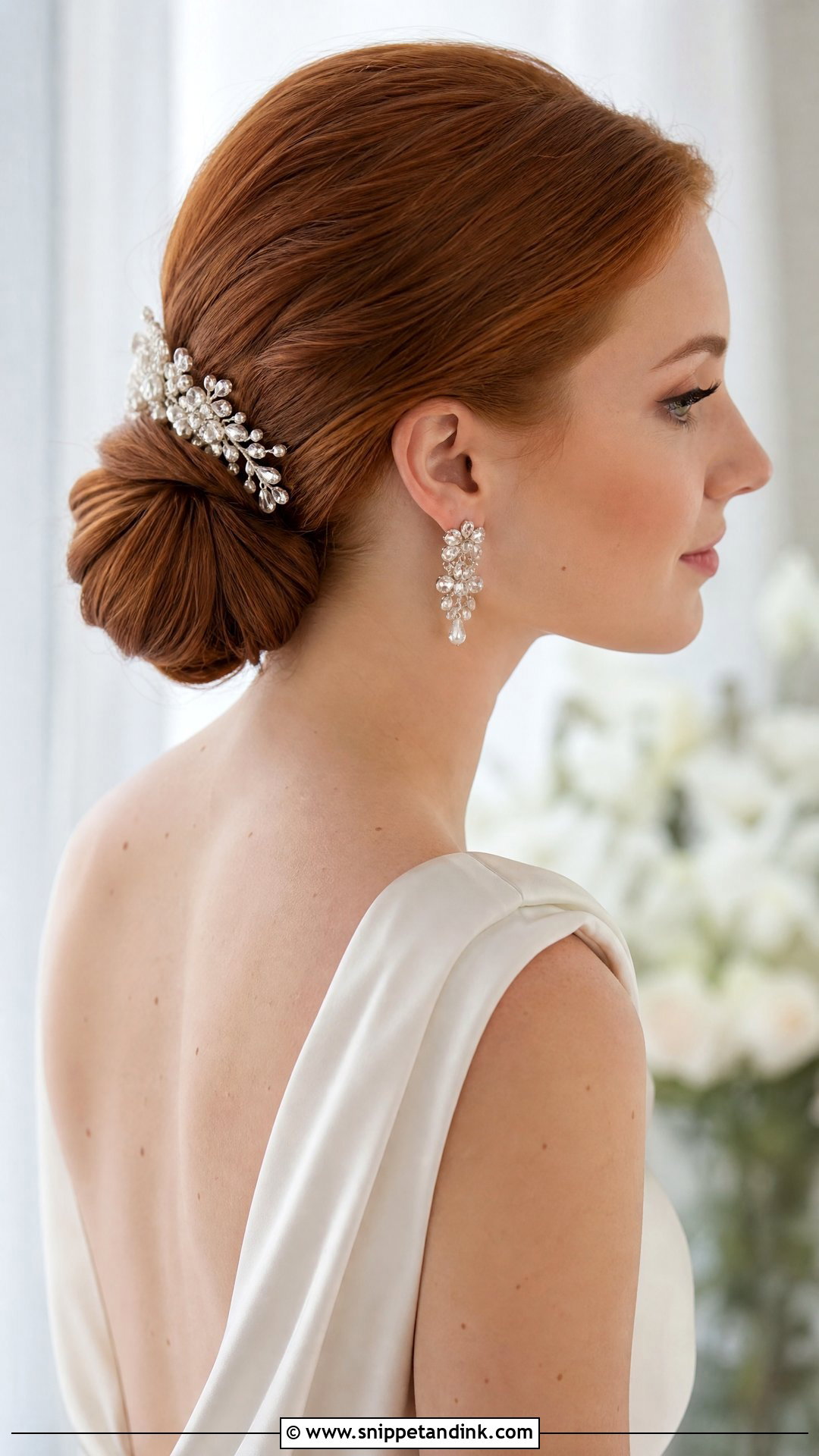
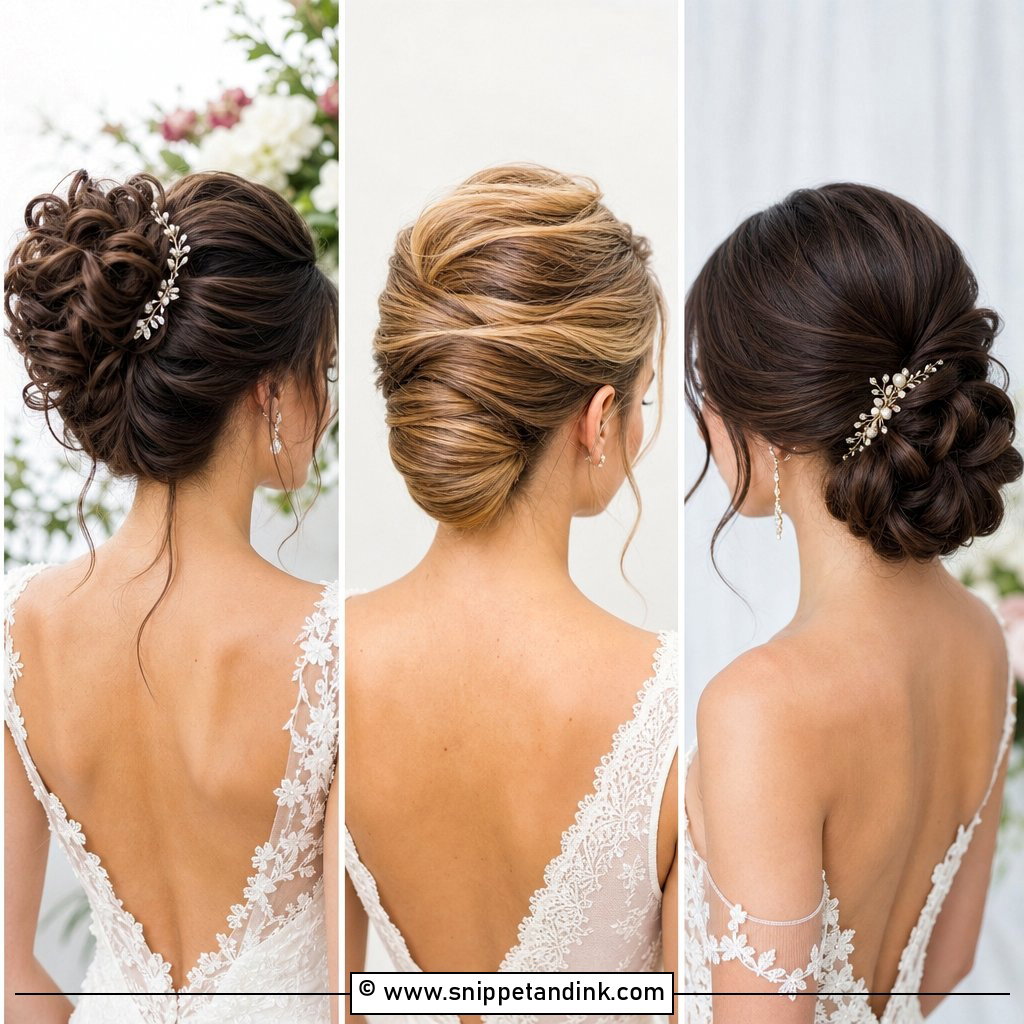
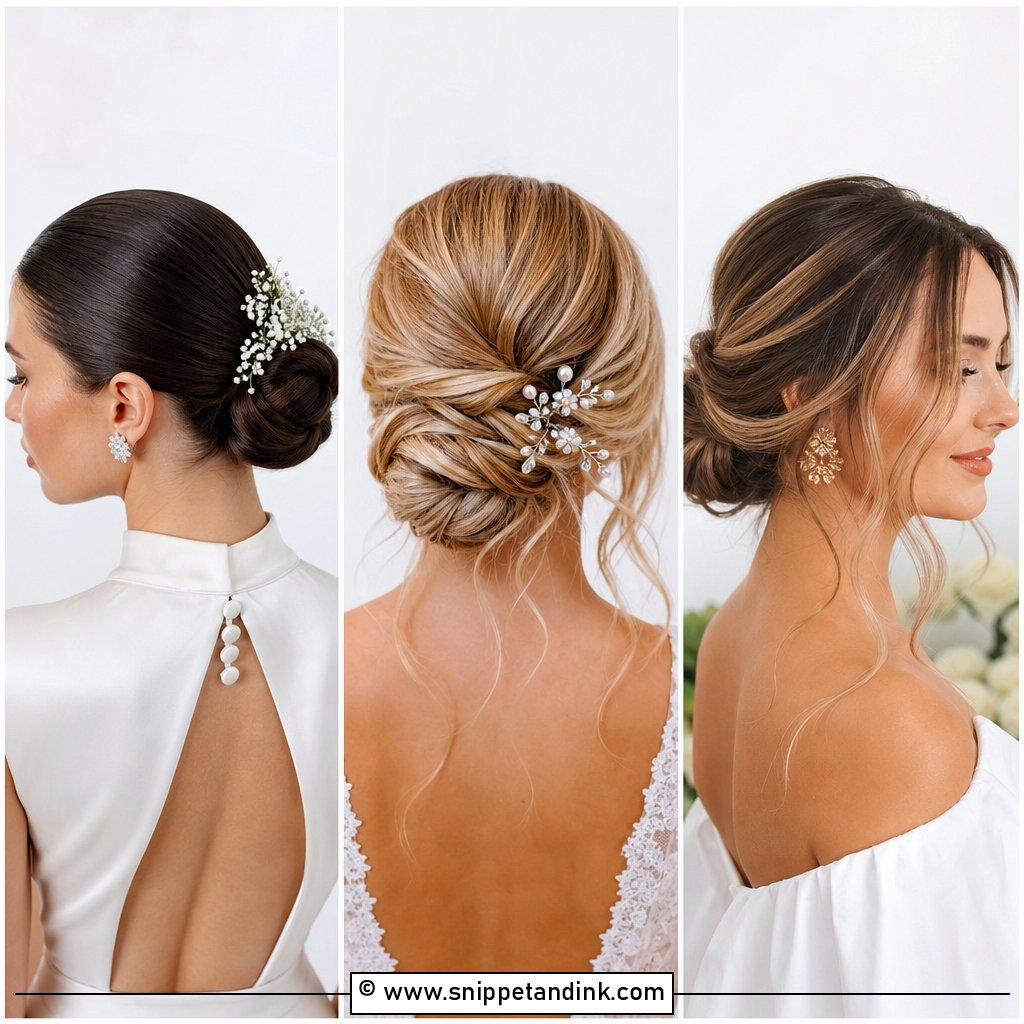
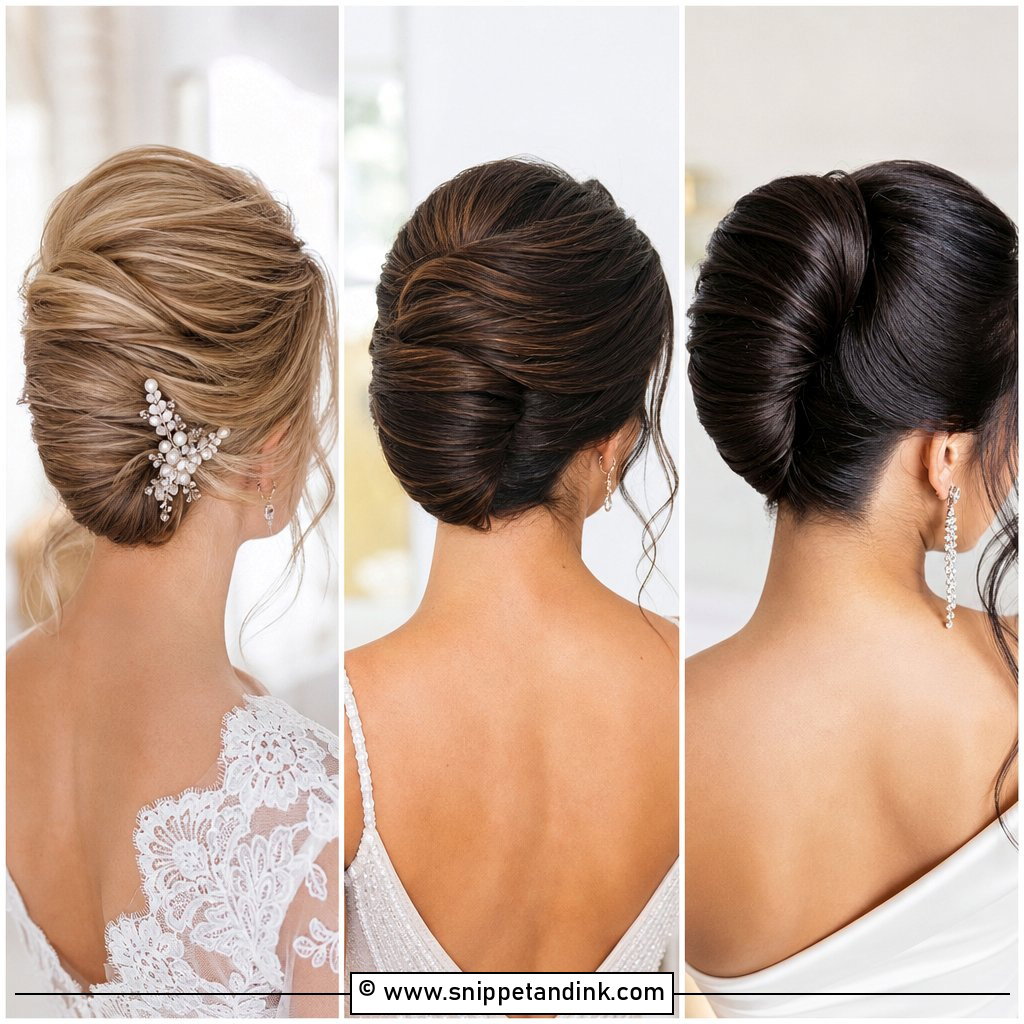
A chignon is a low knot at the back of the head, and the reason it looks so polished is its shape: smooth sides leading into a neat roll or coil. It works in a ballroom and at a small ceremony alike, with statement earrings, a cathedral veil or vintage lace. I can keep it sleek or soften it with loosened sides. Thick hair makes a full chignon easily; on fine hair, I place a small padding piece inside so the knot doesn’t look thin. A jeweled comb or a few fresh flowers at one side add detail.
5. Half-Up Half-Down Wedding Updo
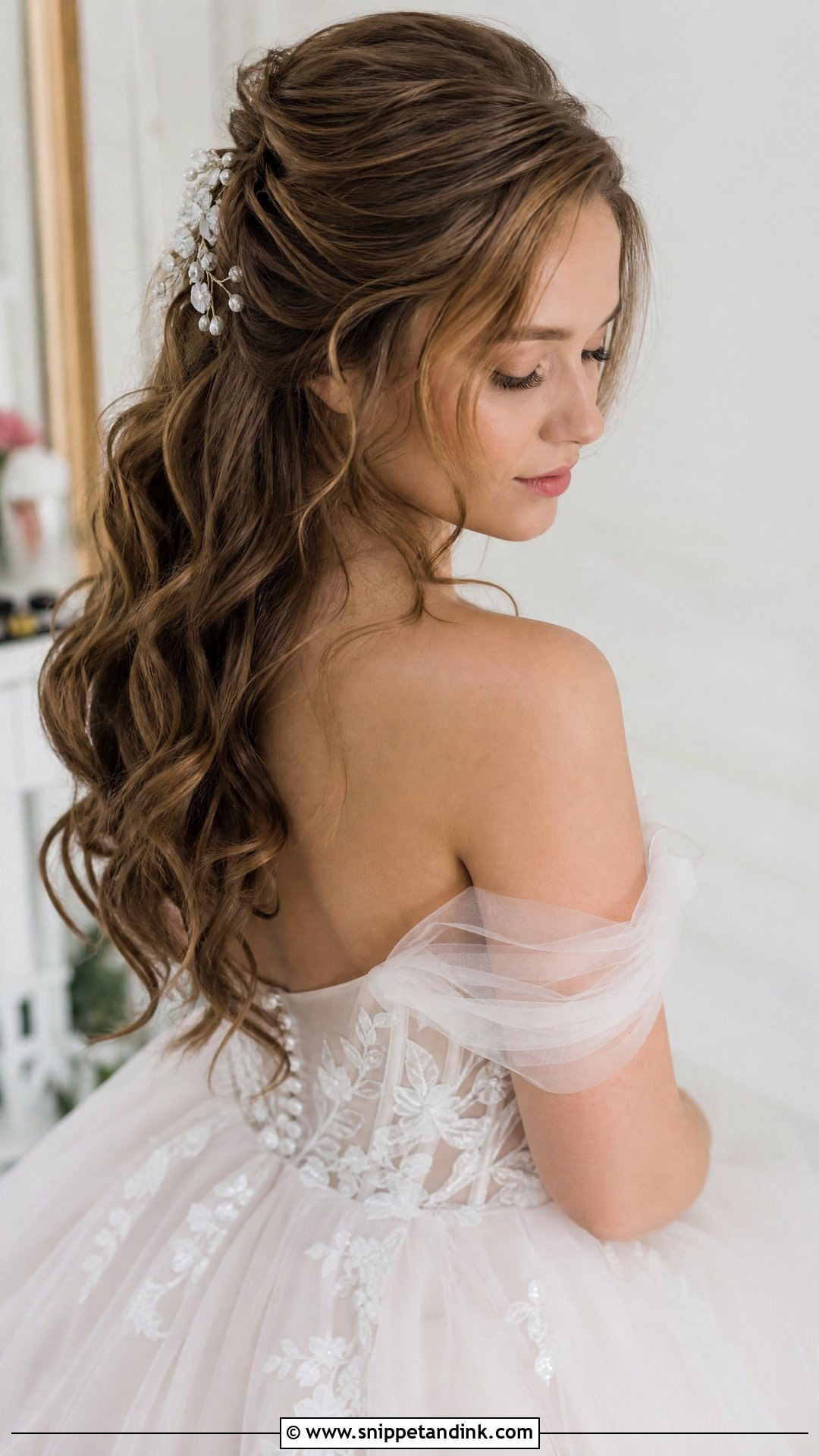
Half-up is for the bride who can’t choose between up and down. The top is pinned back and the rest falls in soft waves, so your face is clear and the length still shows. A veil comb goes in just below the pinned section, where it has something to anchor into. I’ll be honest about its limits: on a very hot, humid day the loose part drops faster than any full updo, so I curl tighter than the final look to allow for it.
6. French Twist Wedding Updo
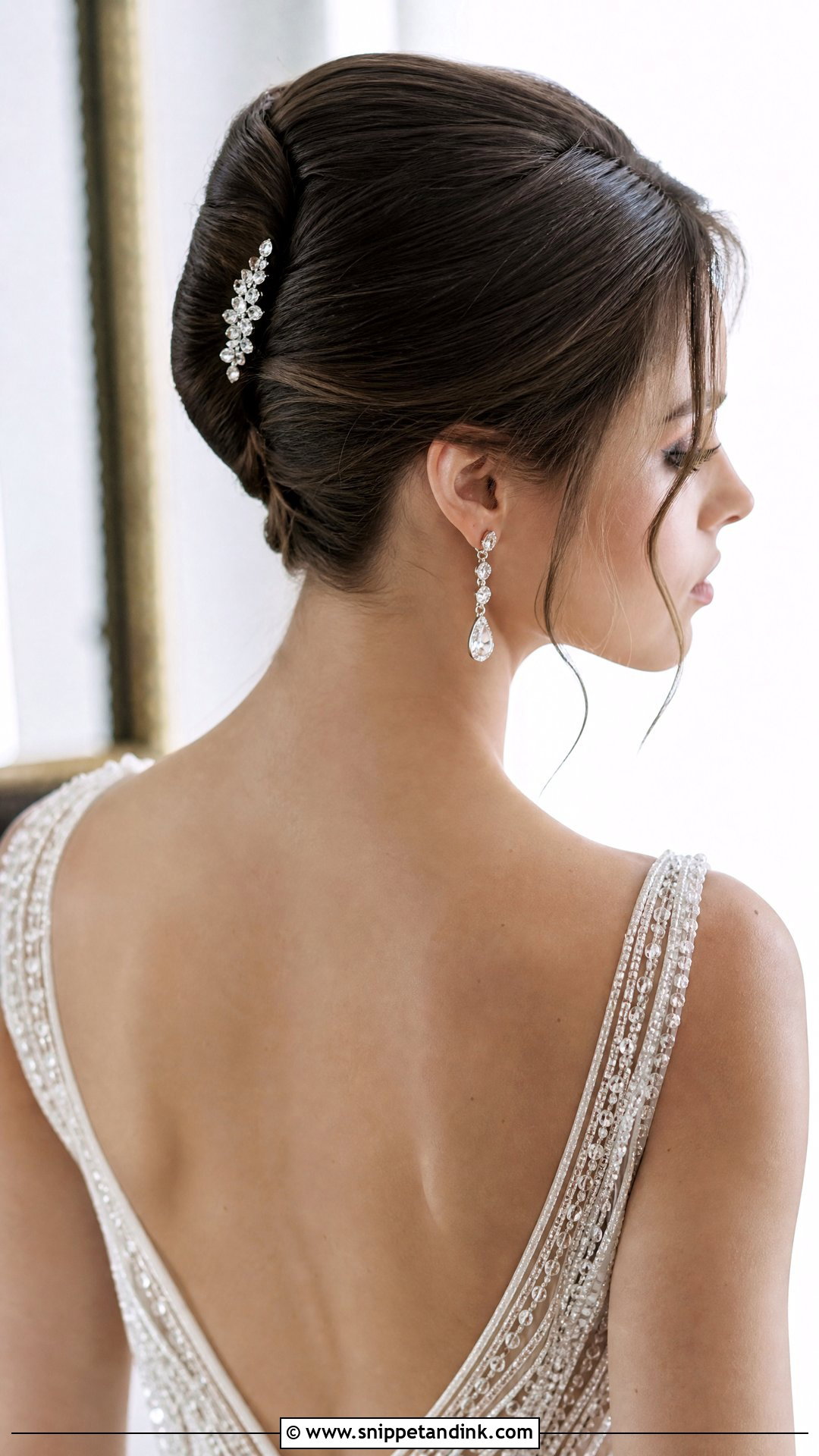
A French twist sweeps the hair up into a vertical roll at the back, the shape of old Hollywood glamour. It’s one of the most secure updos I do, because the roll is pinned along its whole seam with pins hidden inside the fold. Ballroom and black-tie weddings suit it, with statement jewelry and structured gowns. Smooth works for formal; a few tendrils soften it. It needs at least shoulder-length hair to roll properly, and it does show every bump, so I prep with smoothing cream.
7. Boho Wedding Updo
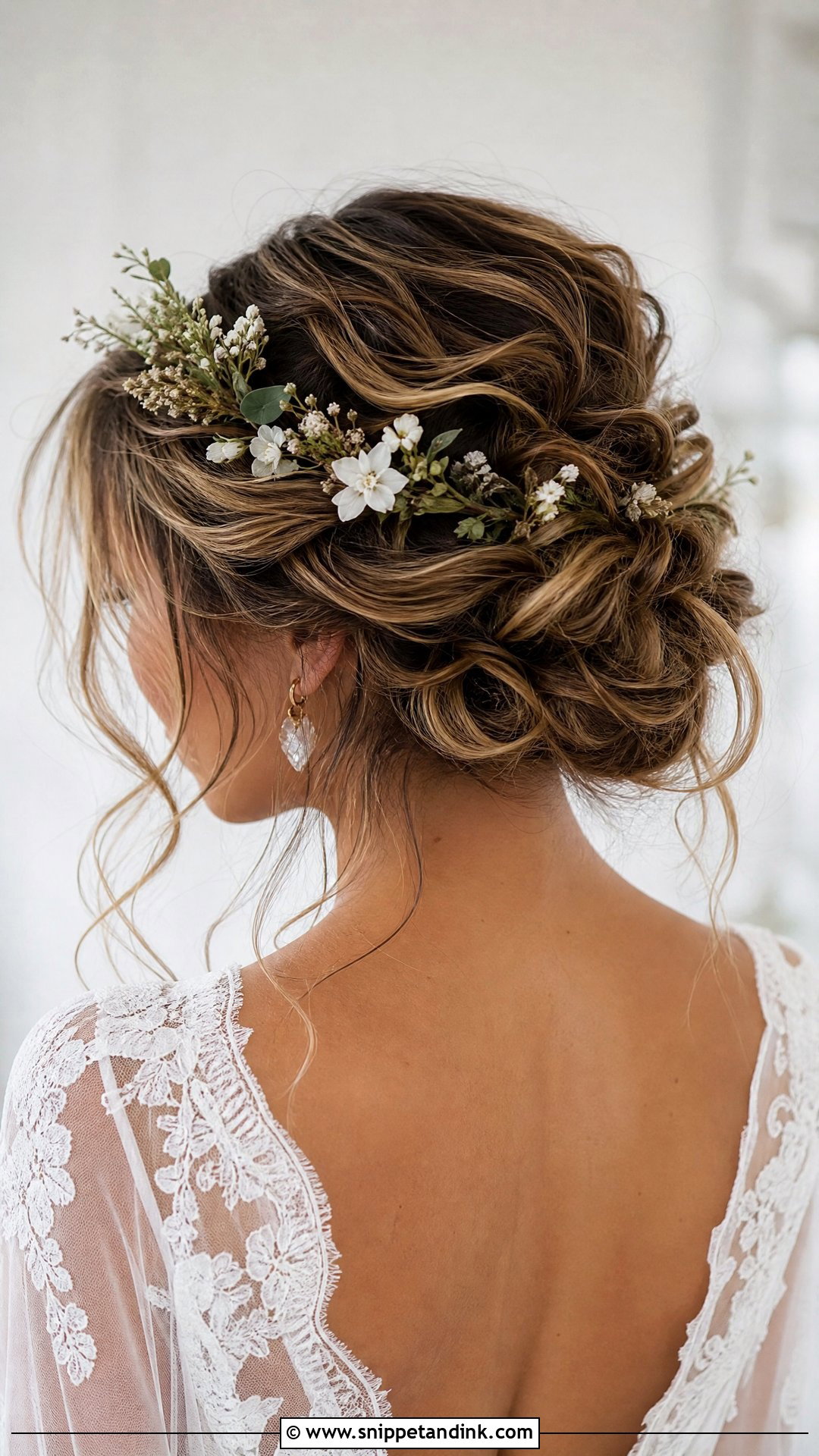
A boho updo is loose, twisted sections with plenty of soft texture and wispy pieces framing the face. I build it on second-day hair, or add texture spray, because clean, silky hair won’t hold twists that loose. Flower crowns and blooms worked through the twists sit well in it, and it pairs with flowing, lace-detailed gowns outdoors. The boho updo is comfortable all day since nothing is pulled tight. Expect a few more pieces to escape by the evening; that’s part of the look.
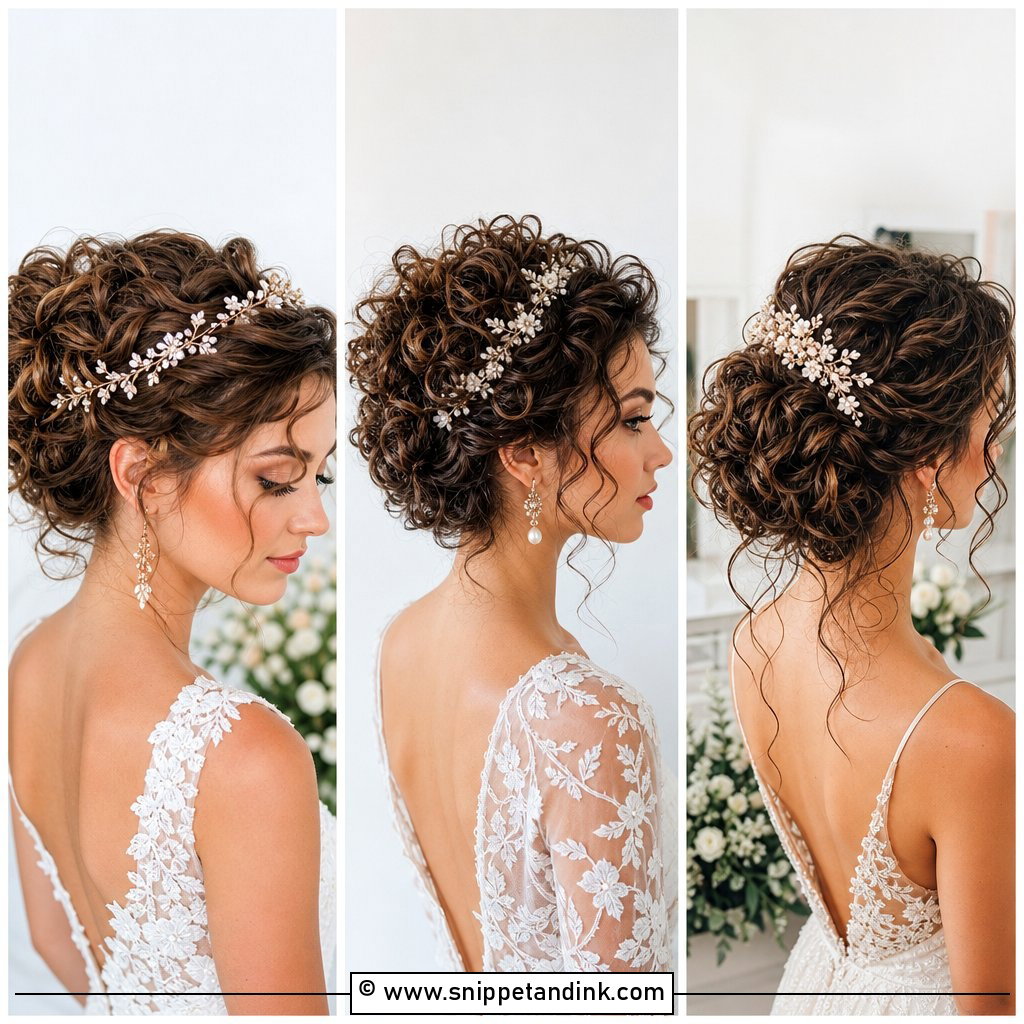
8. Curly Wedding Updo
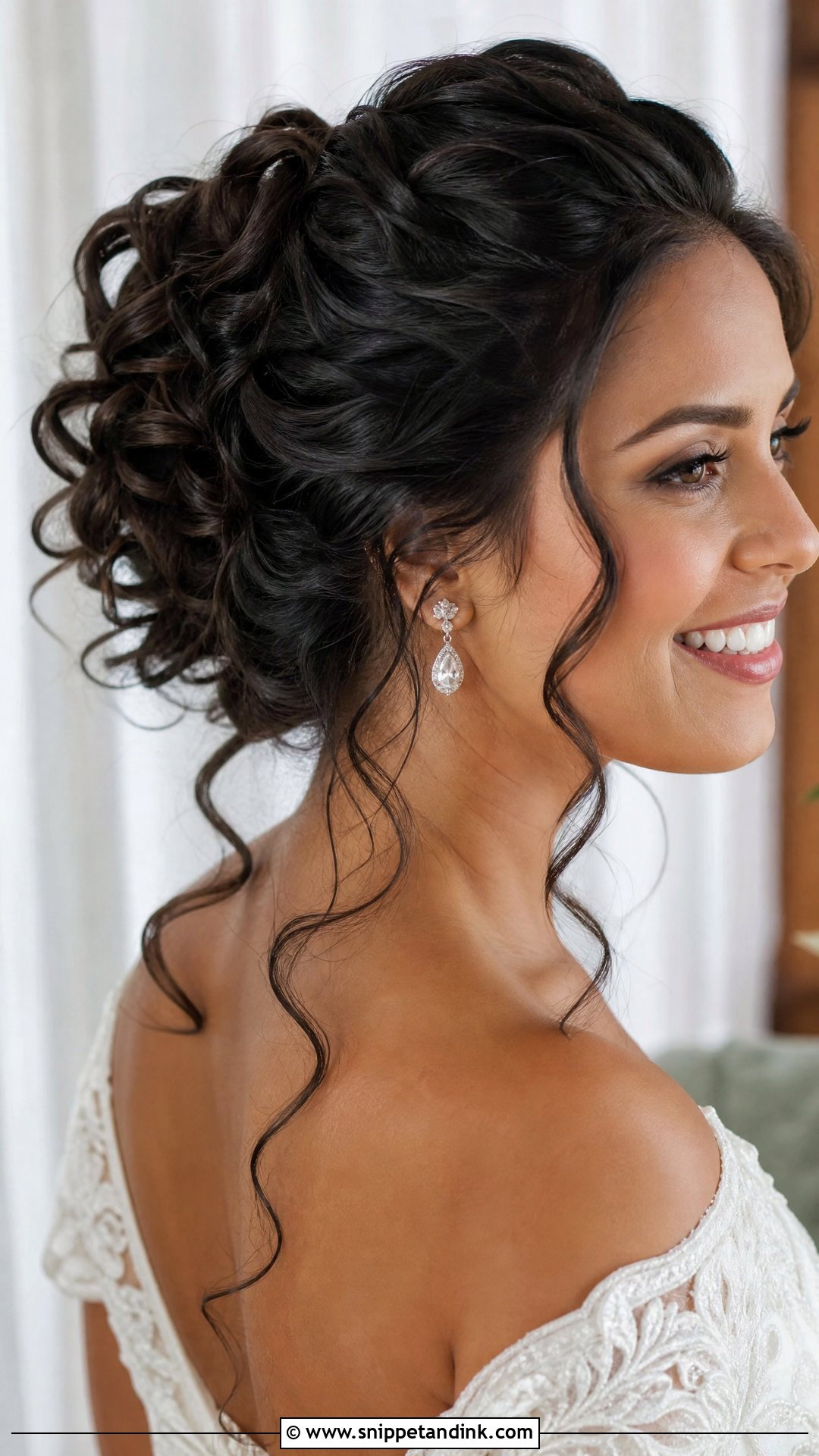
Curly hair makes some of the best updos, because curls give volume and natural grip that straight hair doesn’t have. I gather the curls into a full, soft shape without brushing them out, which would turn them into frizz. If you have natural curls, I’d keep your own pattern rather than reshaping it with heat; it’ll look like you and hold better. Curls hide pins easily, so flowers and accessories sit securely.
9. High Bun Wedding Updo
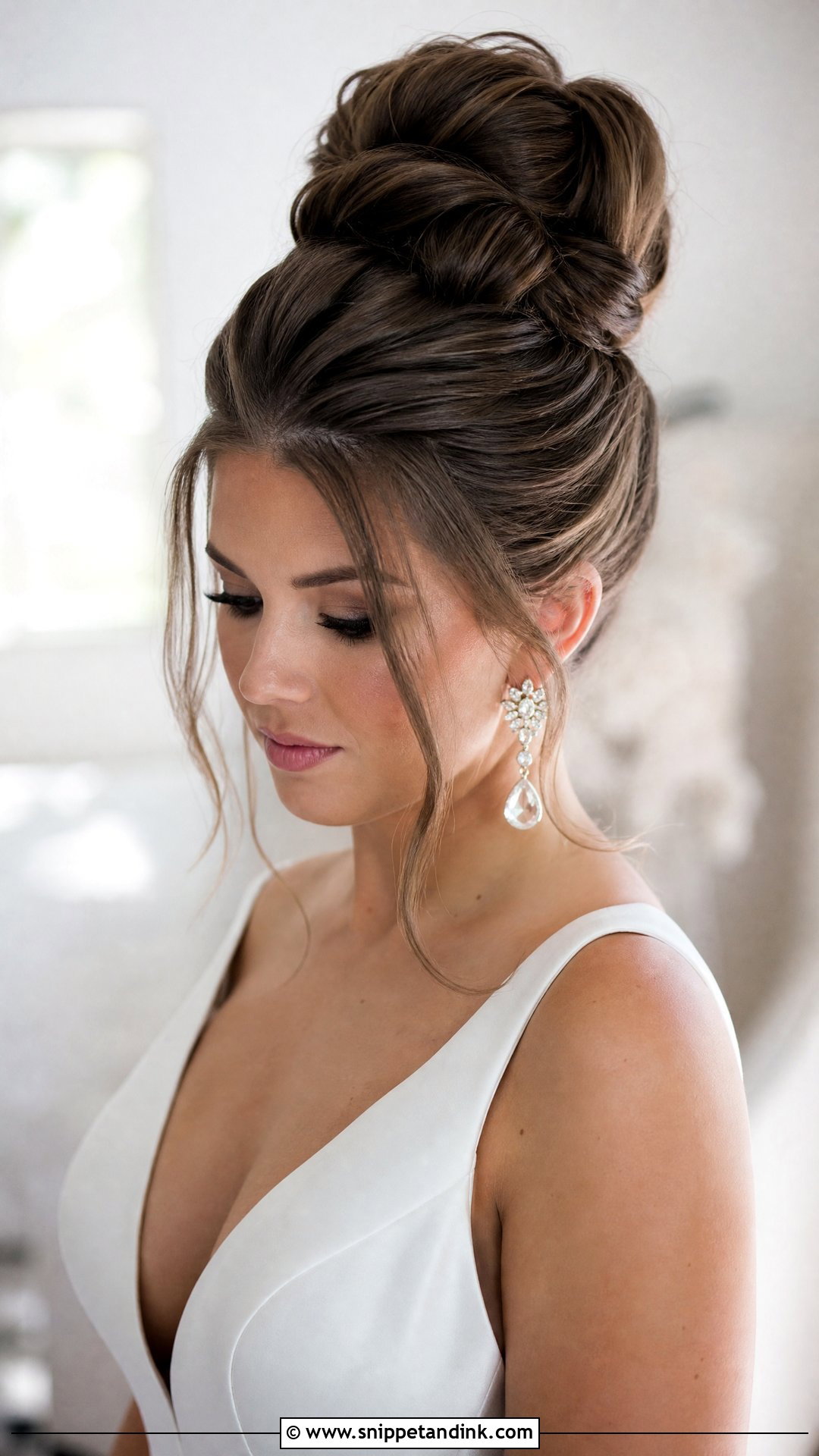
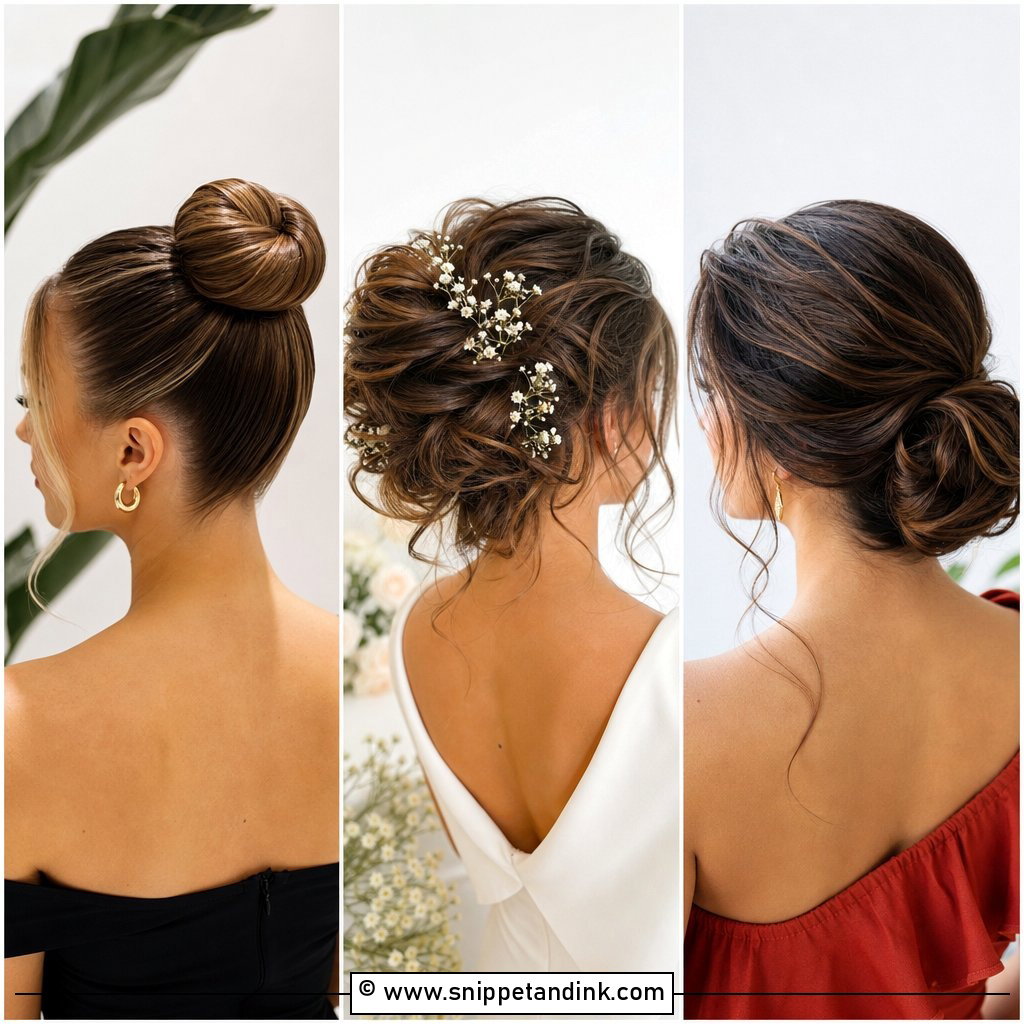
A high bun lengthens the neck and shows off earrings and an interesting neckline. It sits at the crown, so it feels modern and sharp. The trade-off is weight: on long, thick hair a high bun can start to pull and give a headache by the reception. If that’s your hair, I’d split the hair into two smaller sections to spread the load, or go a little lower. A veil works underneath it. Sleek is polished; a bit of volume softens it.
10. Twisted Wedding Updo
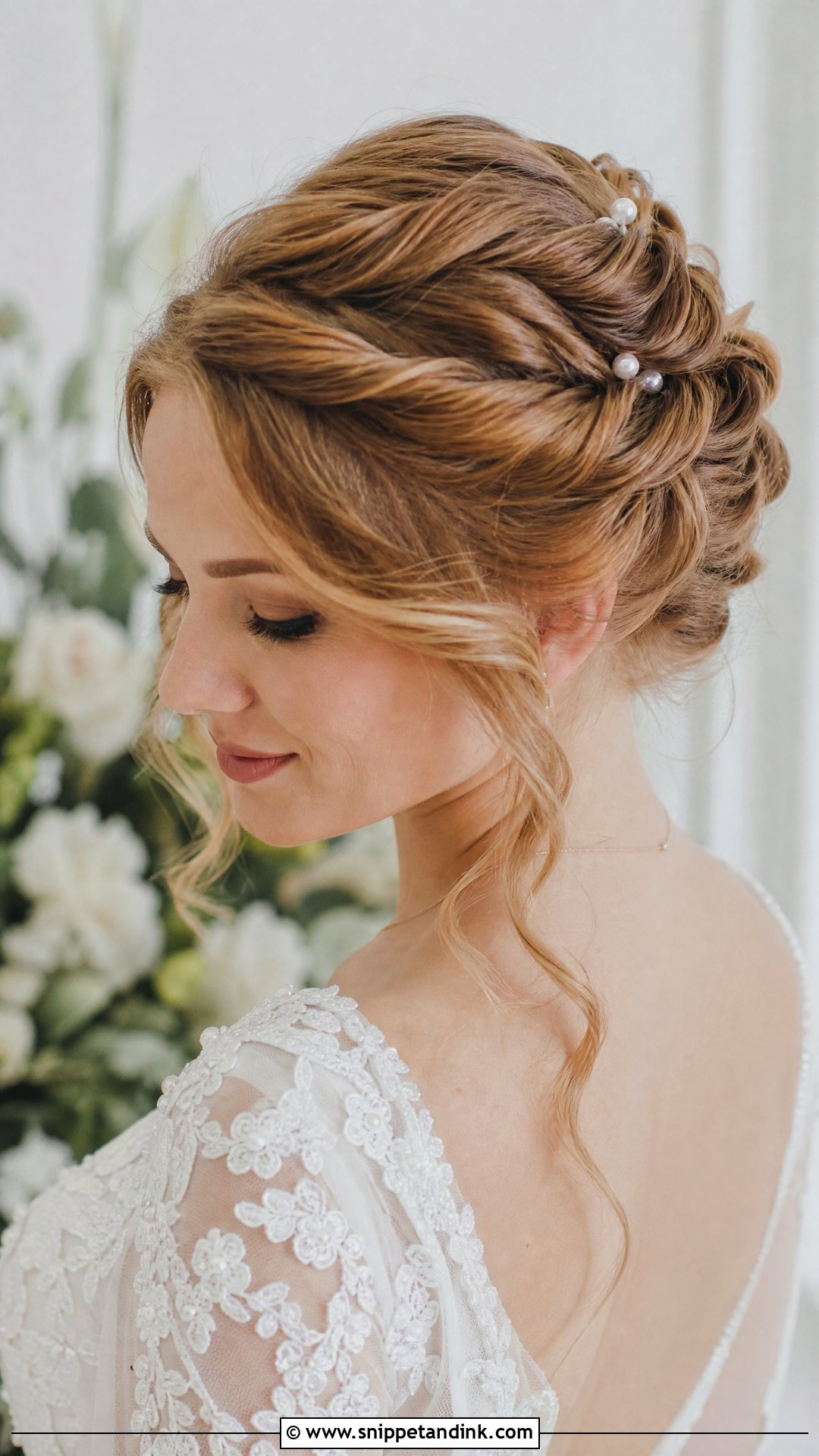
Twisted updos give texture without the time a braid takes. I twist small sections and pin them into place, building the shape section by section, and the ridges of each twist catch the light. Loose twists feel airy; tighter ones give more structure. Pearl pins and fresh flowers fit neatly into the twists. They work on most lengths, as long as the hair reaches the pinning point without stretching.
11. Vintage Wedding Updo
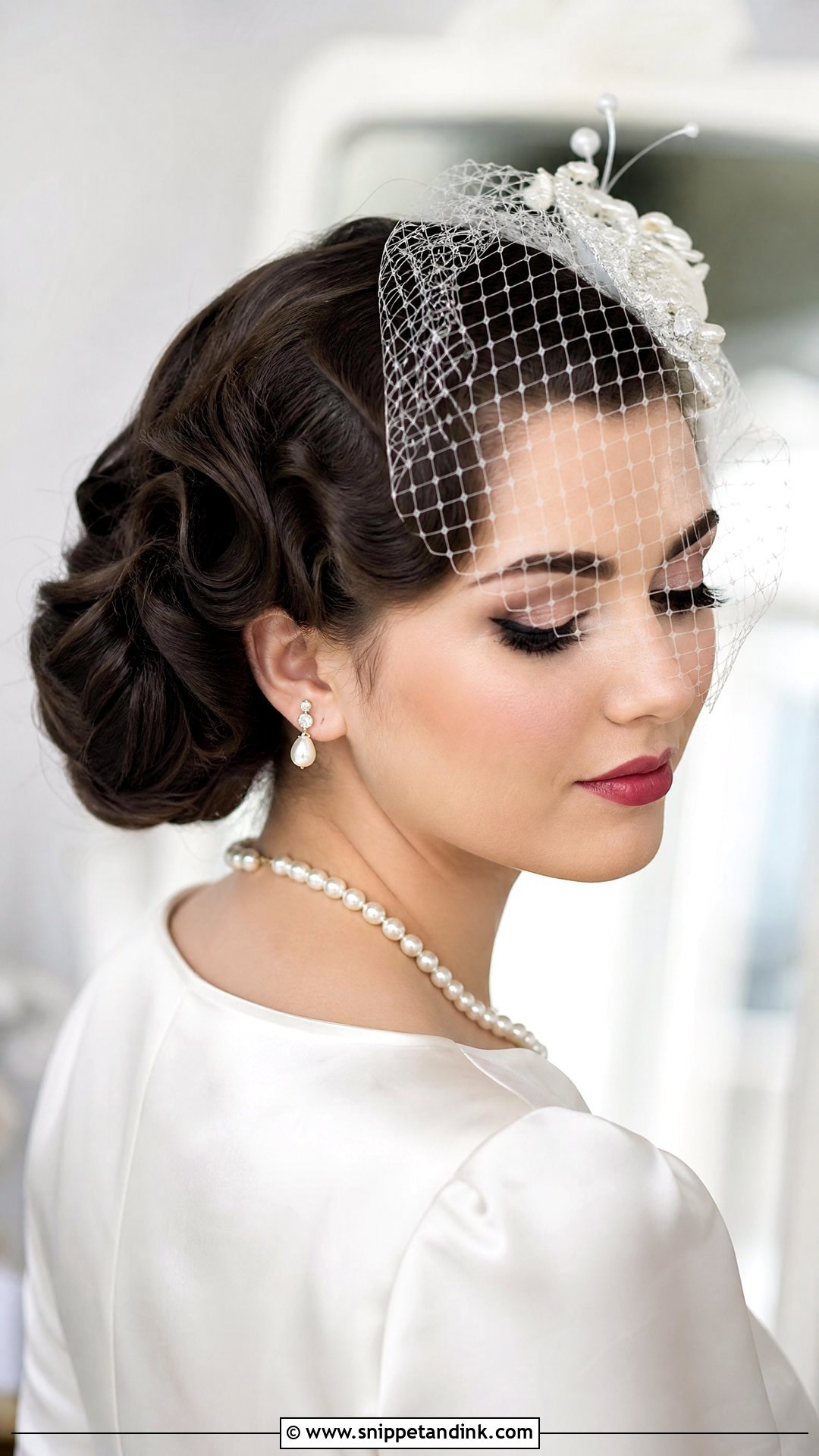
A vintage updo draws on classic eras with soft finger waves, sculpted pin curls or smooth rolls. Finger waves need a setting lotion and patience; I set them with clips and let them dry fully before removing anything, or they lose their ridges. Pearl accessories or a birdcage veil make sense with it, and lace or satin gowns suit the era. A jeweled comb at the side is a fitting touch.
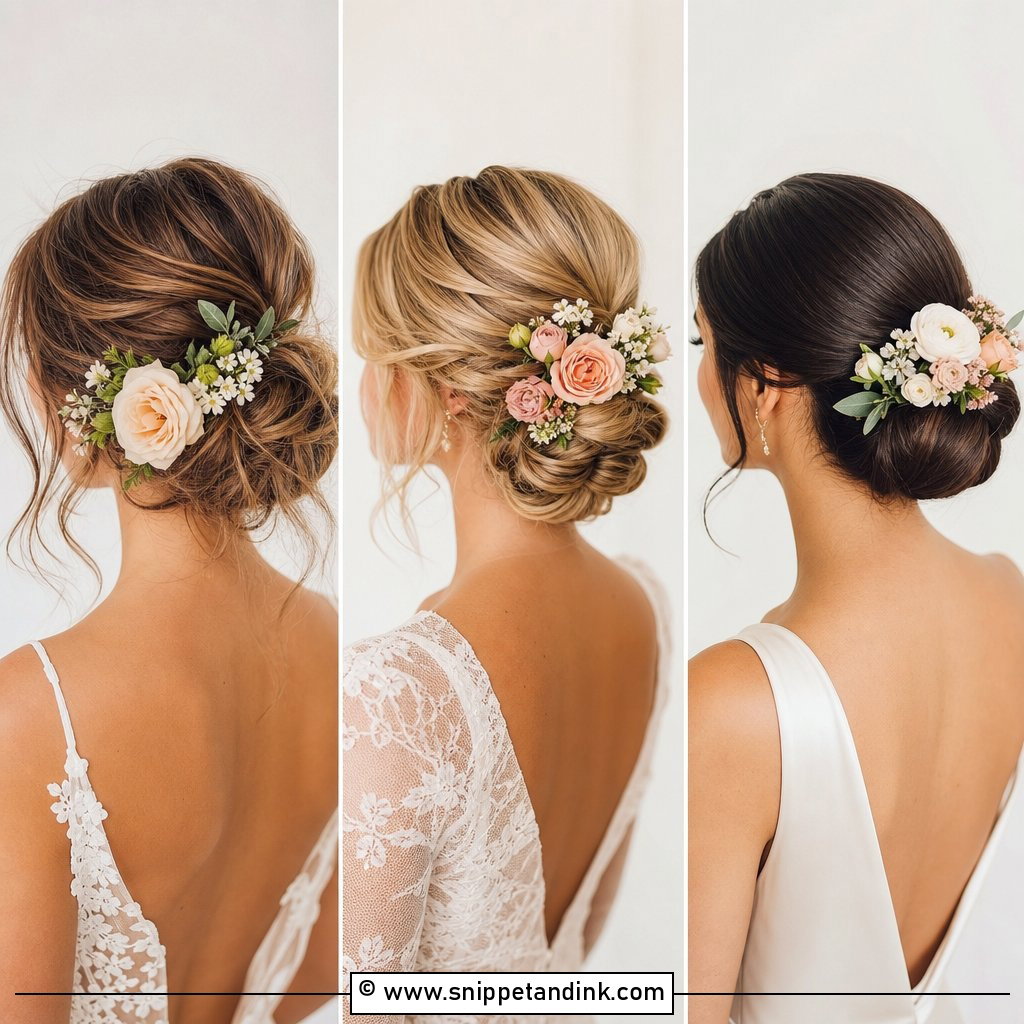
12. Floral Wedding Updo
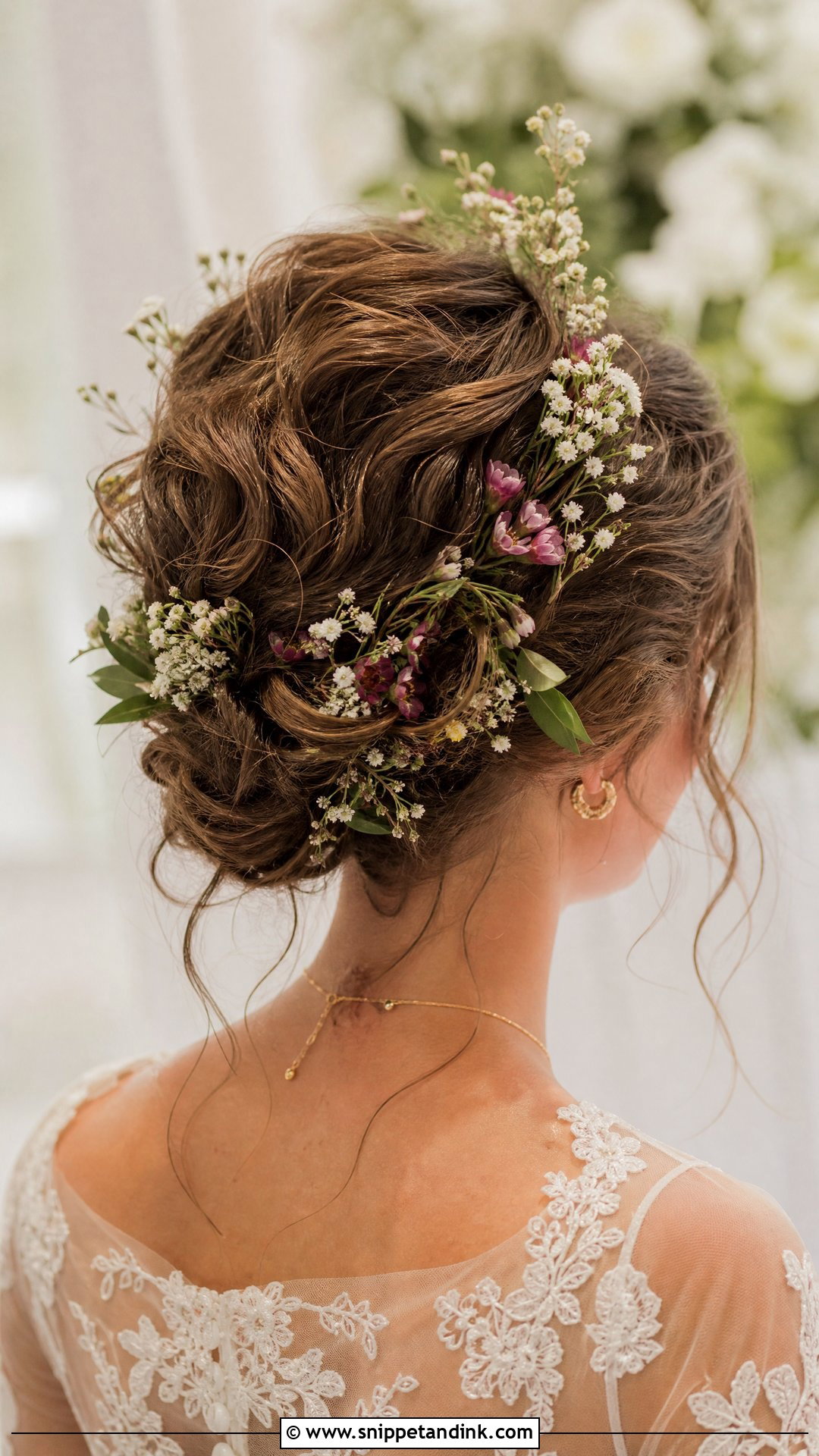
Fresh flowers turn an updo into something you can’t get any other day. I wire the blooms or ask your florist to, then pin them into the shape after it’s built, never before, so they don’t get crushed. Small buds, baby’s breath or one larger bloom at the side all work, ideally echoing your bouquet. Avoid delicate petals that bruise, like gardenia, if your ceremony is in the heat. Garden, spring and boho weddings suit it most.
13. Sleek Wedding Updo
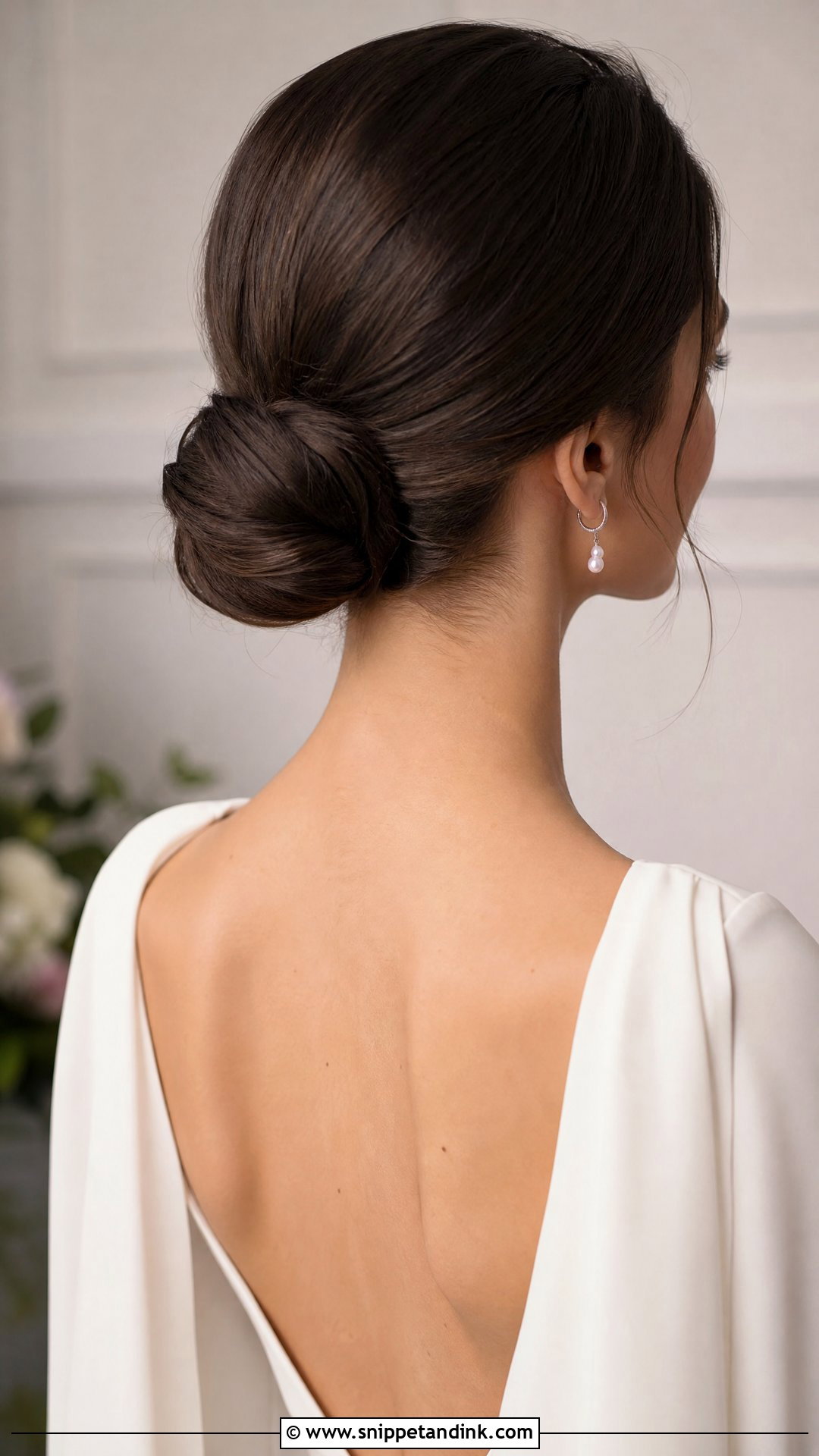
A sleek updo is all about smoothness: glossy hair gathered into a clean shape. It can be a low bun, a high bun or a chignon. It shows off your features and jewelry and suits modern gowns and city weddings. It’s also the least forgiving style here. Flyaways, uneven sections and a crooked part all show, so I use a fine-tooth comb, a smoothing balm and a firm-hold spray on a comb rather than straight onto the hair. A slim hairpin is enough decoration.
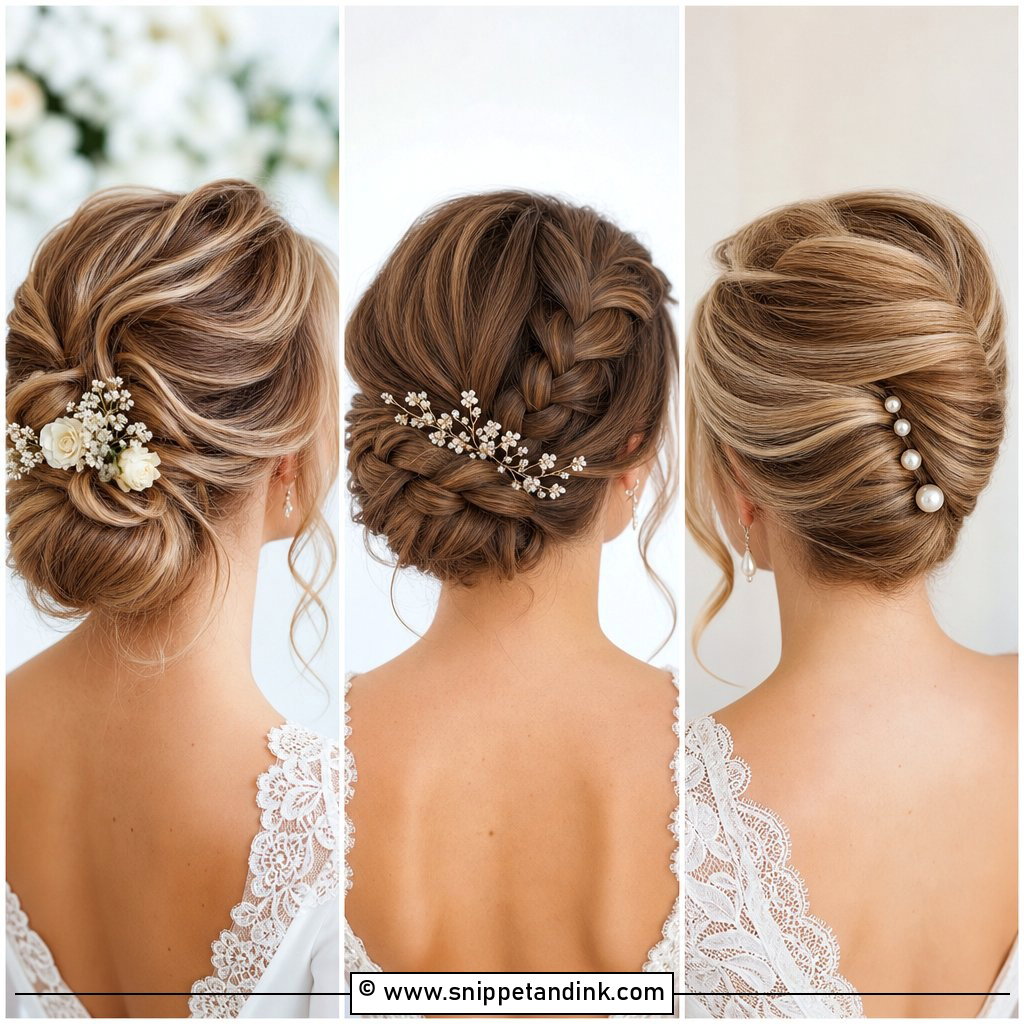
14. Pearl Accented Wedding Updo
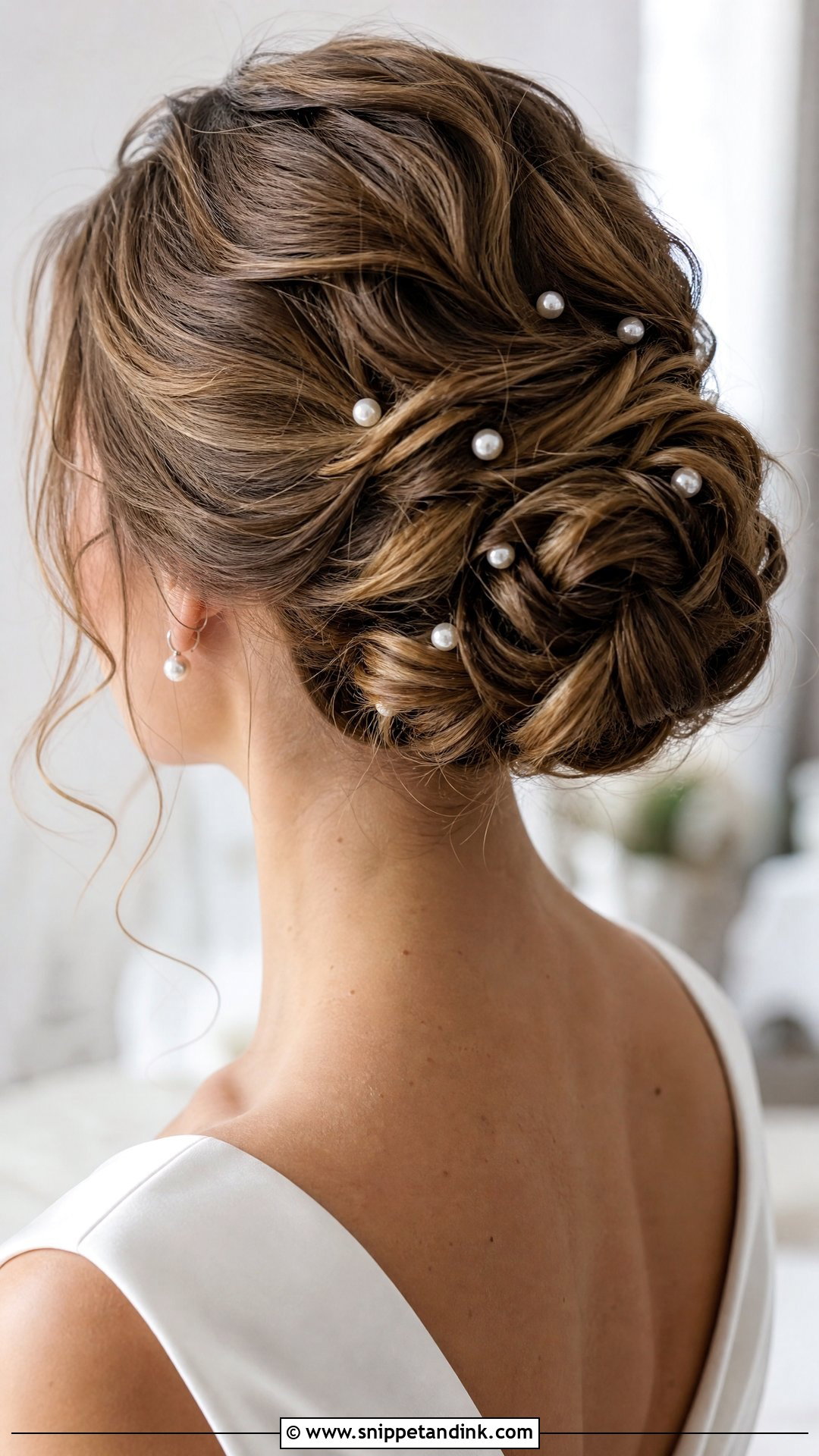
Pearls add a classic finish to an updo. I scatter pearl pins across a bun or line them along twists and braids, and they catch soft light without glittering. I place them only where the hair is twisted or braided, because they slide out of smooth sections. They go with both classic and modern gowns. Matching pearl earrings tie it together, but check that the pearl tone matches your dress so nothing looks off-white beside it.
15. Crown Braid Wedding Updo
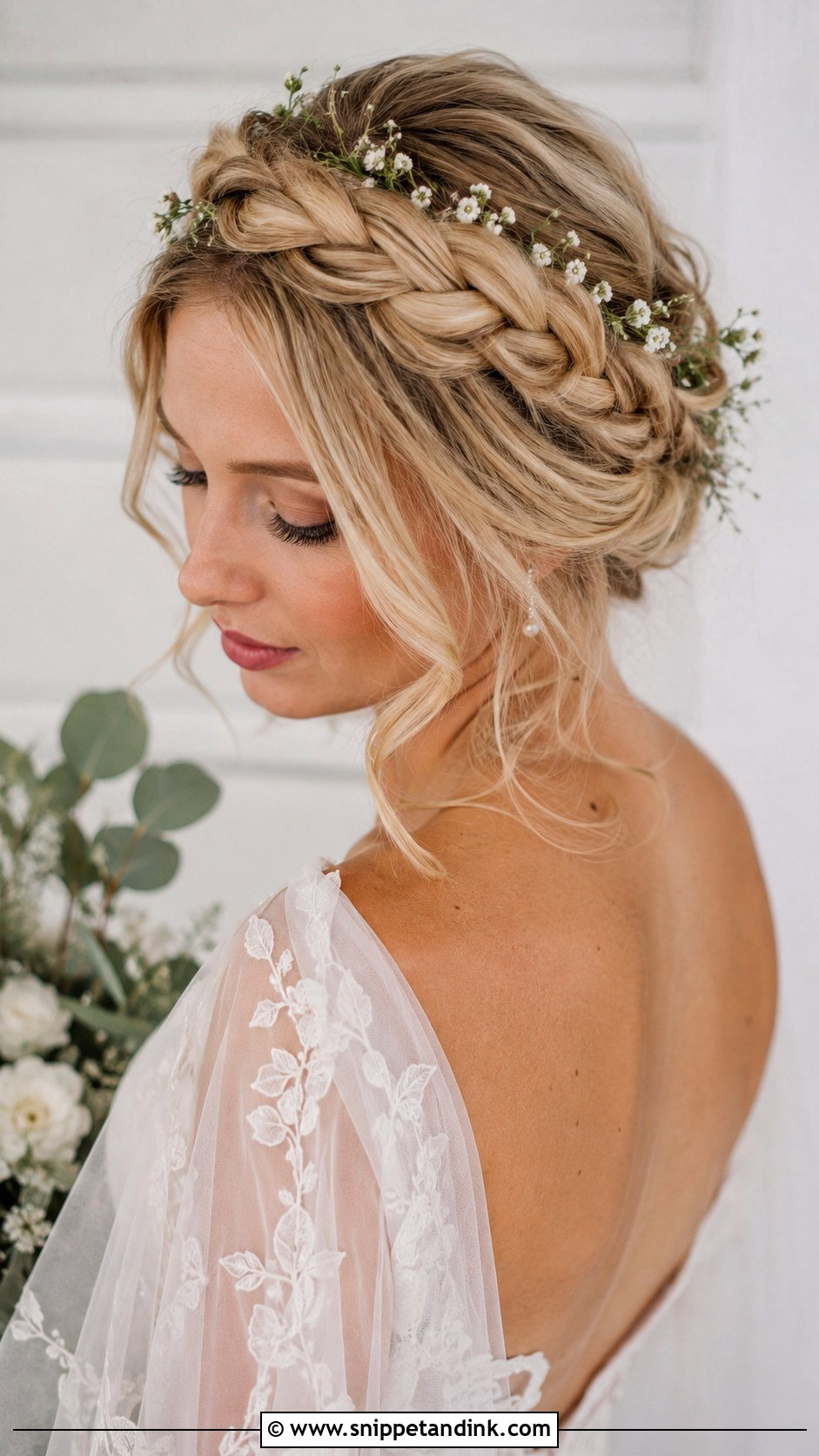
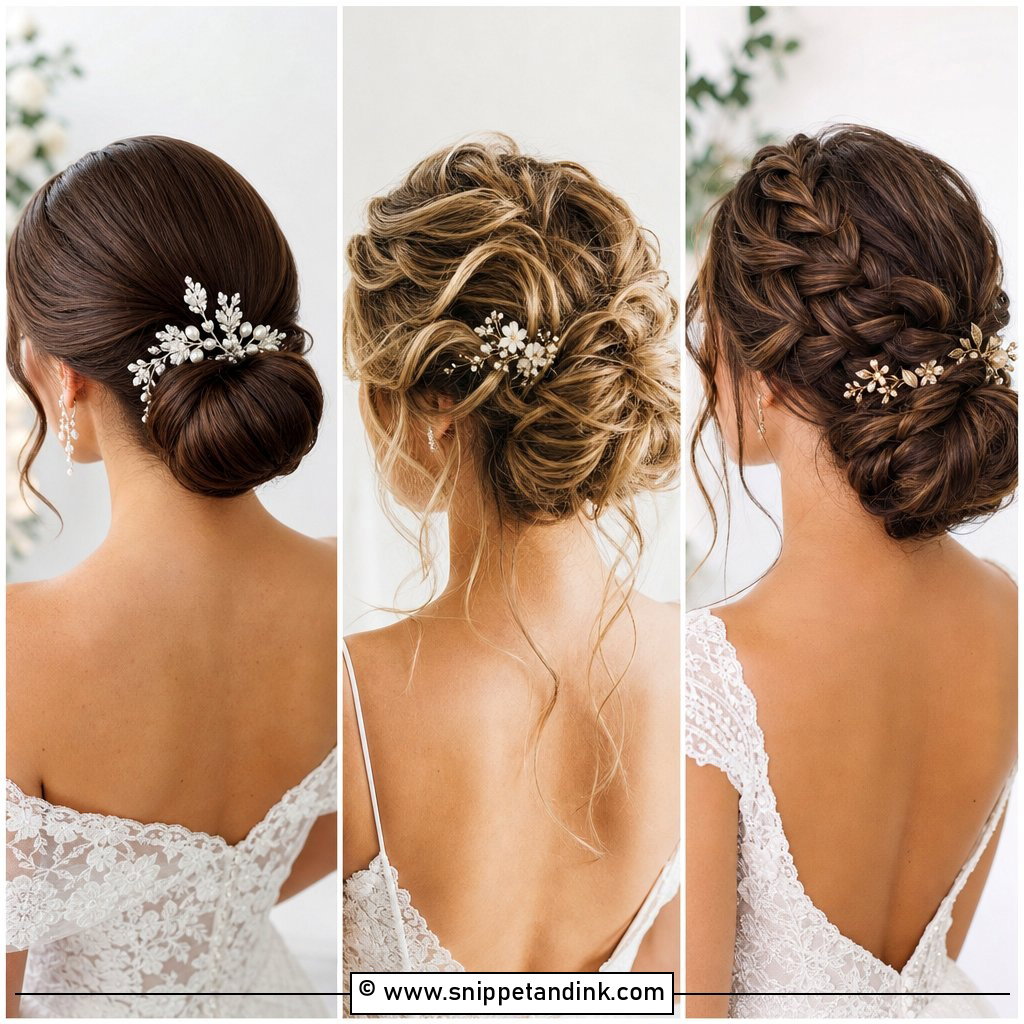
A crown braid wraps all the way around the head like a natural halo, framing the face much as a tiara would. Garden, boho and fairytale weddings suit it. It needs length to travel around the head, so on shorter hair I fake it with two braids pinned to meet. Loosen the braid for softness or keep it tight for structure. Small flowers or pearl pins tuck neatly into the plaits.
16. Side Swept Wedding Updo
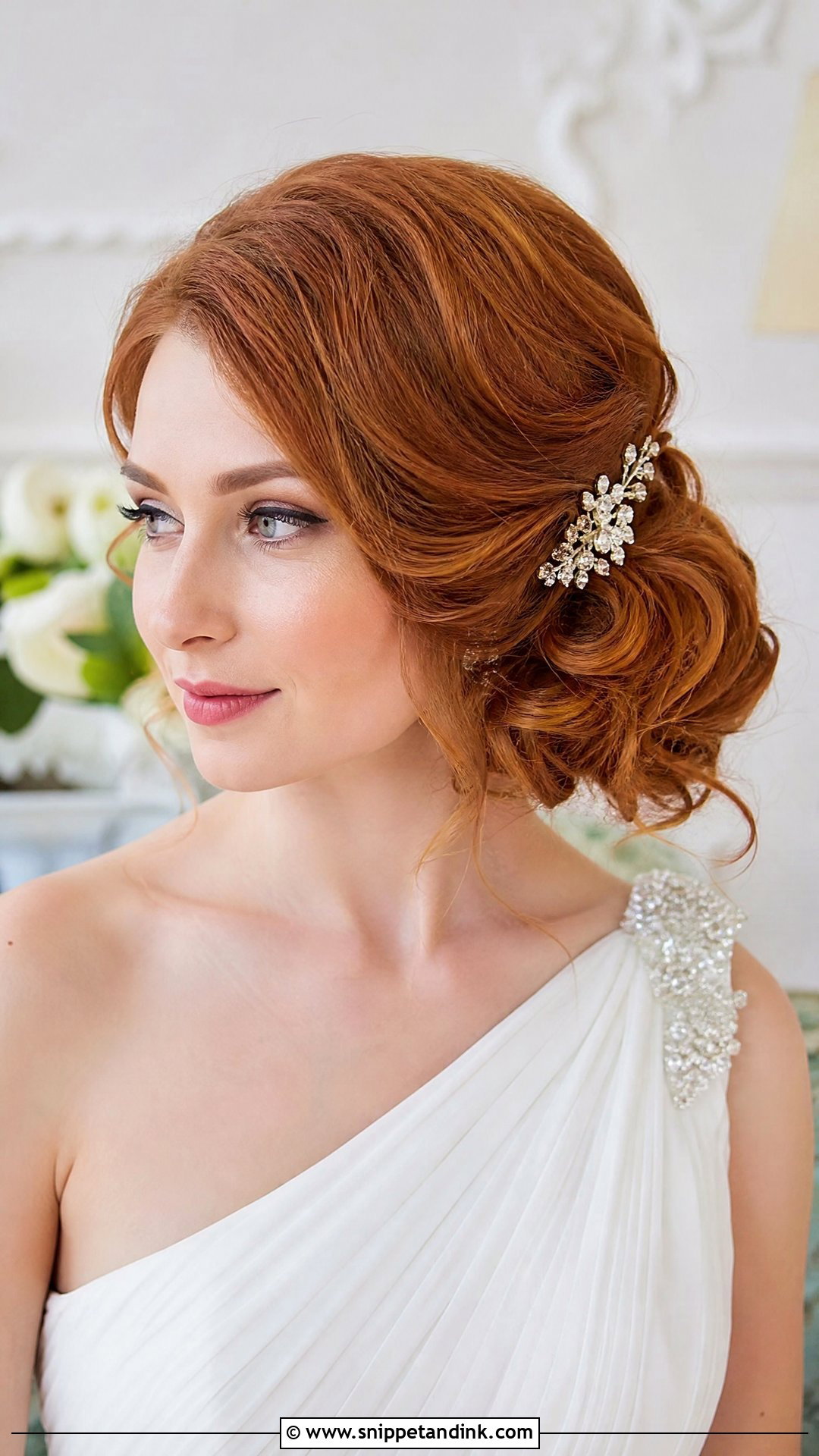
A side-swept updo gathers the hair to one side, creating a soft, uneven silhouette that leaves one ear and earring fully visible. It works especially well with off-shoulder and one-shoulder gowns. Pin the weight securely behind the ear on the gathered side, because asymmetric styles are prone to sliding toward the heavier side. Loose curls or a sleek finish both work. Flowers or jeweled pins at the gathered point complete it.
17. Textured Wedding Updo
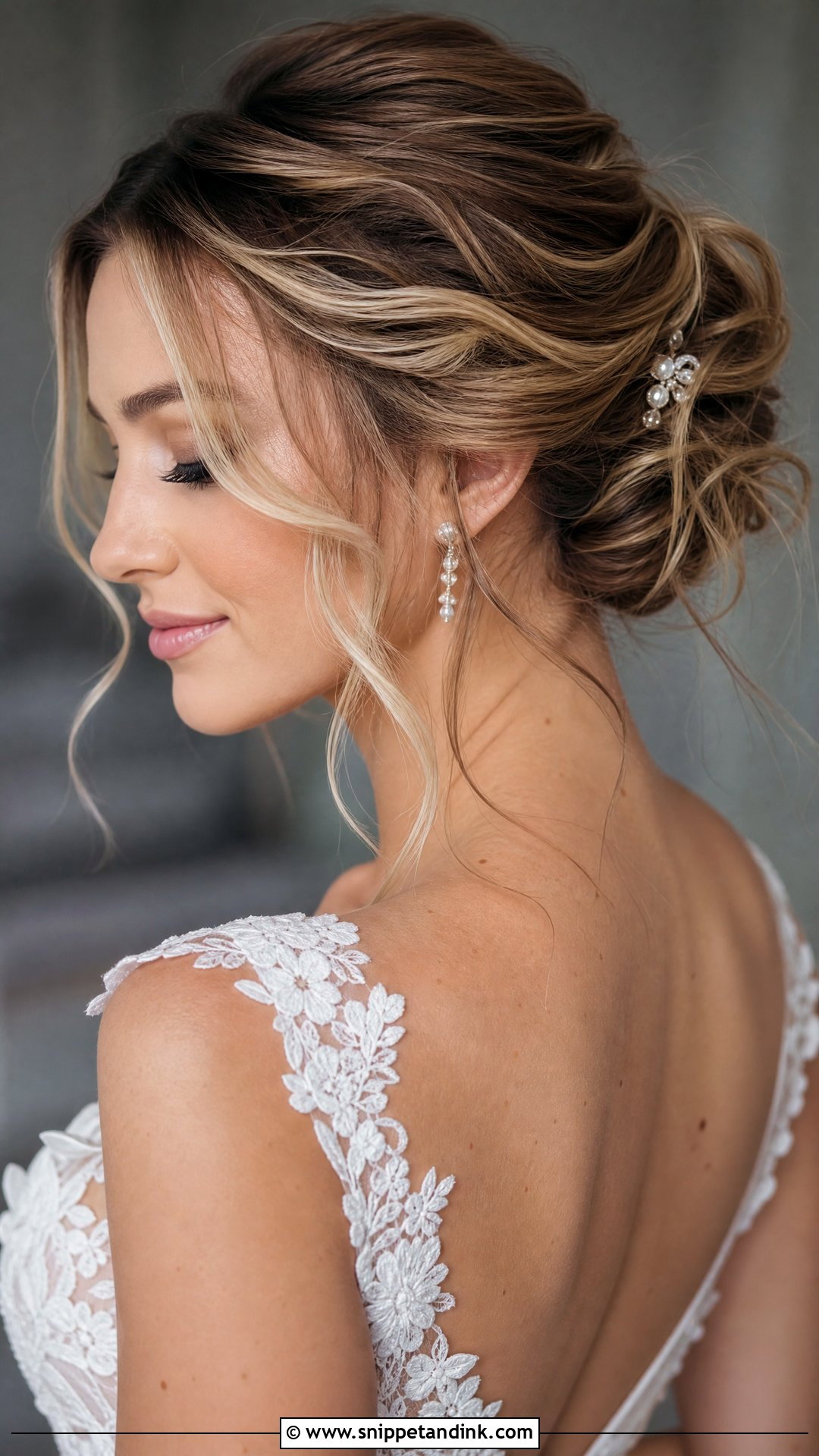
A textured updo uses loosened sections and soft waves for a lived-in look. I curl first, pin it up, then loosen pieces with my fingers. It suits boho, garden and contemporary weddings. The texture shows up nicely in natural light. Face-framing tendrils soften it. It holds well because the curls lock together under the pins.
18. Low Ponytail Wedding Updo
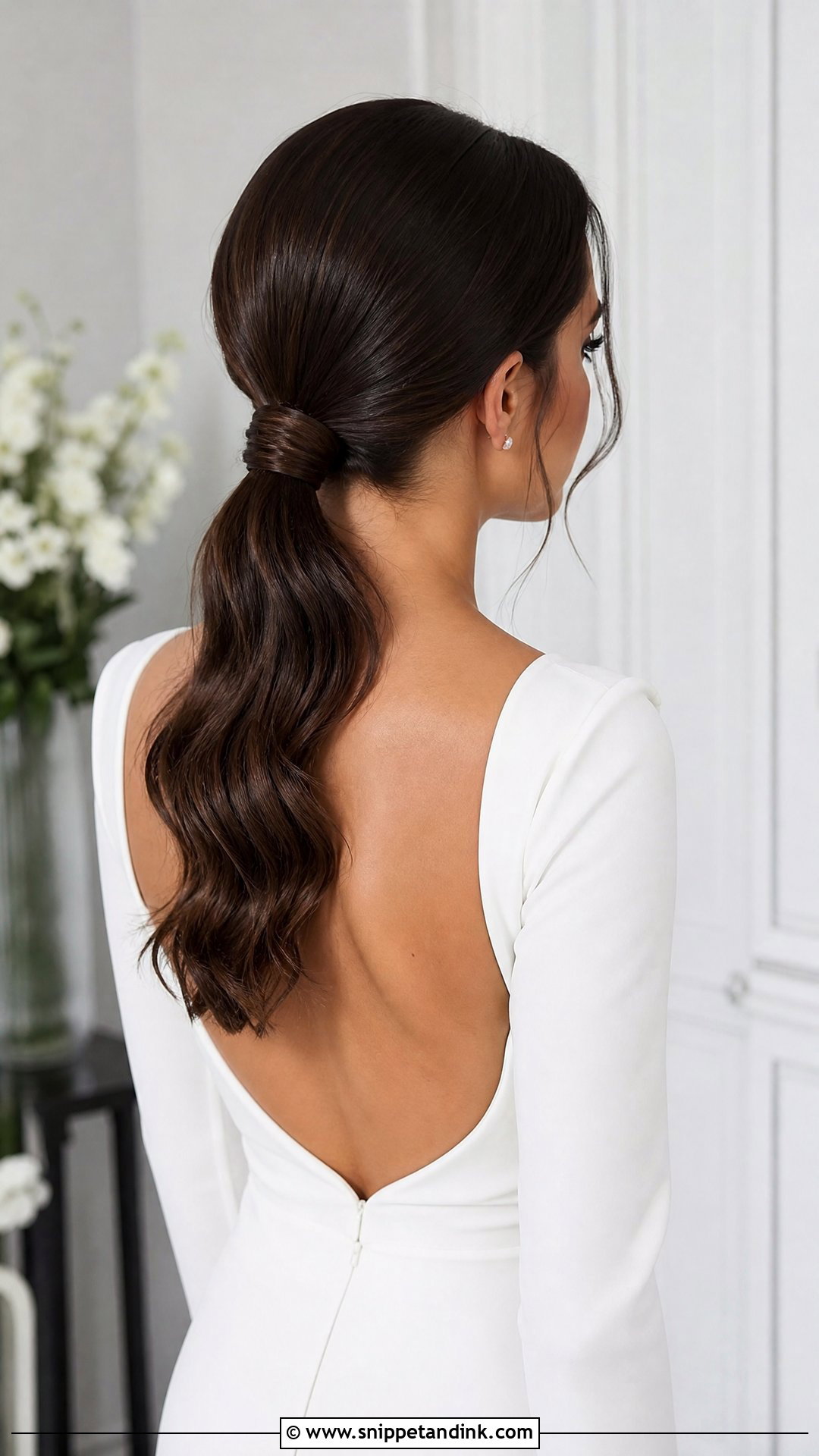
A low ponytail is the simplest updo here and one of the most modern. I gather the hair smoothly at the nape, secure it with an elastic and wrap a section around the base to hide the band. Sleek reads sharp; soft waves add romance. Statement earrings and modern gowns suit it, and it shows off the length from behind. Check the hold of the elastic under a veil: a low ponytail and a veil comb compete for the same space, so I put the comb above the tie.
19. Rose Gold Accessory Wedding Updo
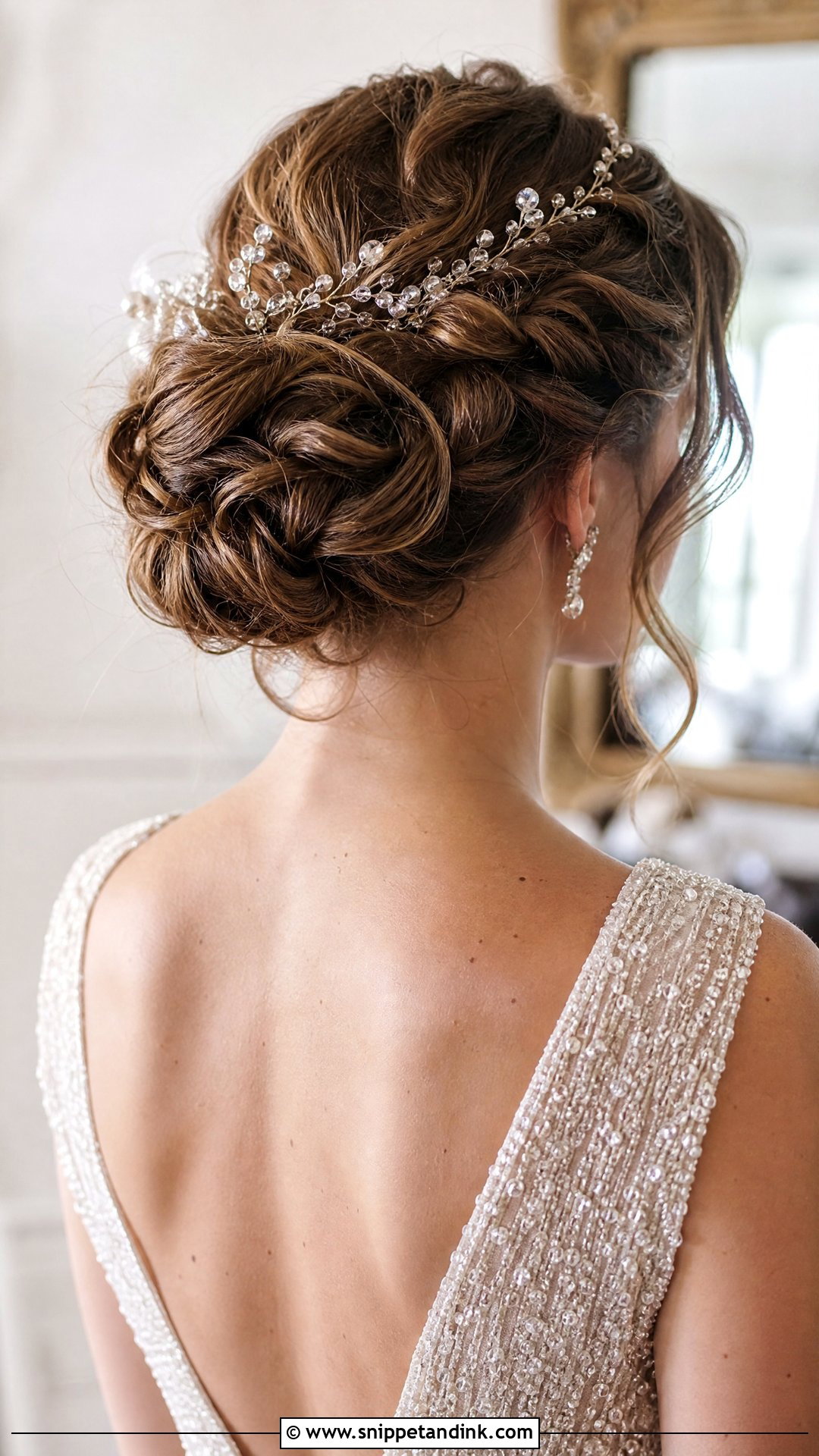
Sparkling accessories turn a simple updo into something special. Delicate combs, vines and jeweled pins add shimmer and tie in with your jewelry; rose gold warms up blonde and light brown hair. I place a comb at the base of a bun or weave a vine through twists, pinning through the wire every few inches so it doesn’t sag. If your accessory is heavy, tell your stylist, so the base can be built to carry it.
20. Bouffant Wedding Updo
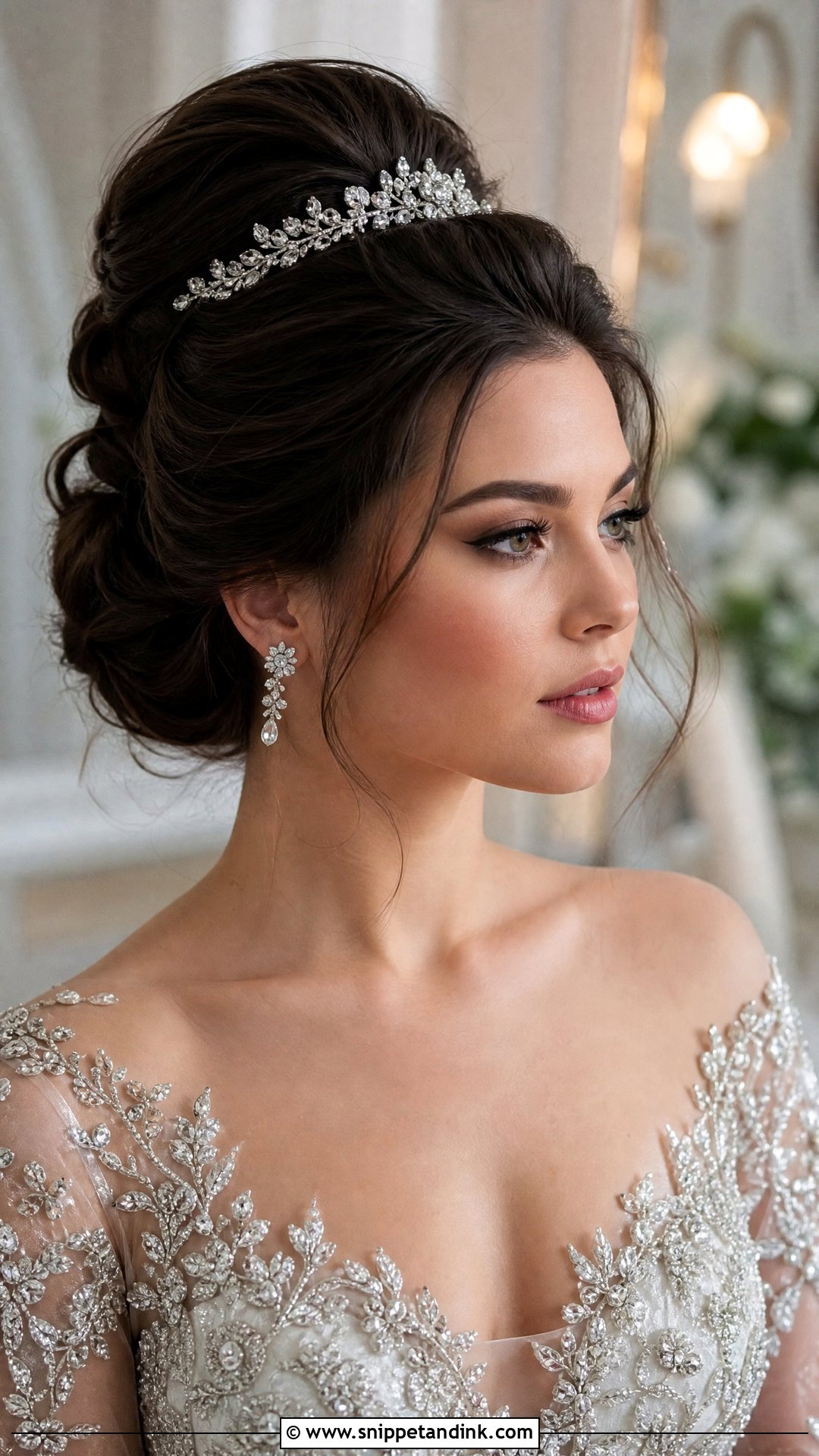
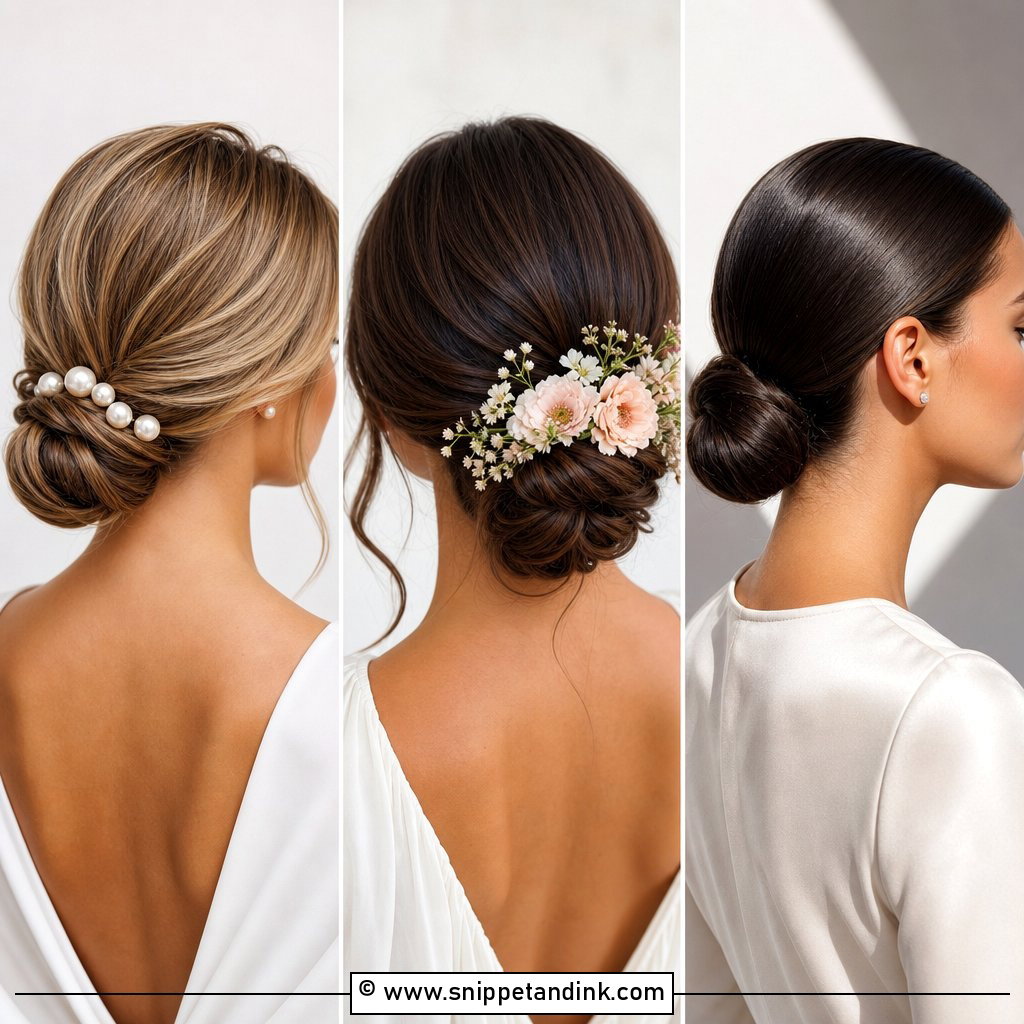
A bouffant adds height and fullness at the crown. I tease the crown in small sections close to the root, smooth a clean layer over the top and finish into a low bun, chignon or twist. It sits well under tiaras and statement veils, and it suits formal and fairytale weddings. Keep the height in proportion to your face, and soften it with a few face-framing tendrils. Teasing can tangle, so after the wedding, work it out gently with conditioner rather than dragging a brush through.
The Veil Goes Where the Bun Lets It
Your veil and your updo share the back of your head, so I plan them together. A low bun takes the veil comb just above it; a high bun takes it underneath, angled down. If you want to take the veil off for the reception, I set the comb so it slides out without disturbing the pins around it. Bring the veil to your trial, not a photo of it. Its weight changes how much support the updo needs.
Long veils pull constantly, especially cathedral lengths dragging on the aisle or caught by the wind. For those I cross two extra bobby pins over the comb’s teeth, which keeps the veil from tipping the bun backward during the ceremony.
Taking an Updo Down Without Losing Half Your Hair
After a day of hairspray and pins, your hair will be stiff and knotted. Don’t brush it out dry. Take out every pin first; I tell brides roughly how many I used so they know when they’ve found them all. Then work conditioner through and comb from the ends up with a wide-tooth comb, in the shower if you can. Teased crowns and tight braids come apart much more easily once they’re wet and slippery.
Let the Weight of Your Hair Have the Final Say
A good wedding updo suits your hair first and your inspiration photo second. Sleek chignons, boho braids, French twists and floral buns all hold well when they match your hair’s length and thickness. Add your own details, flowers, pins or pearls, but schedule a trial with your stylist and wear the style for a few hours afterward. If it’s still comfortable and in place when you take it out, you’ve found your updo.
You'll Like These Ideas:


Leave a Reply