
Braids are the most hard-working wedding hairstyle I do. A braid is already a lock: every section holds the next one, so a braided style keeps its shape through hugs, wind and a long dance floor in a way loose curls never will. They also hide a lot, from uneven layers to second-day hair. Below are 25 braided looks, from fishtails and crowns to half-up plaits and braided buns, each with what I actually do to make it hold and who I think it suits.
Braids on Layered, Fine or Shoulder-Length Hair
Most braid photos are of very long, thick hair. That’s not most brides. Here’s how I adapt braided styles for the hair I actually see.
Layered hair
Short layers poke out of a braid along its length, especially toward the ends. I use a light texturising paste on each section before braiding so the short pieces stick, and I choose styles that pin the ends away, like braided buns and chignons, rather than braids that end at the tips.
Fine hair
Fine hair braids thin and can look sparse when pulled apart. Dry shampoo or texture spray before braiding gives it grip and bulk, and I pancake the edges only gently. Clip-in extensions matched to your colour fill out a crown or side braid without anyone being able to tell.
Shoulder-length hair
Full crown and milkmaid braids may not reach, but half crowns, accent braids and Dutch braids into a low bun all work. Ask your hairstylist which looks your length can do before you fall in love with a photo.
Curly and coily hair
Braids suit textured hair very well, and many can be done on stretched hair while keeping curl definition in the loose sections. Talk to your stylist about whether to braid on stretched or natural texture, and allow extra time for sectioning.
1. Fishtail Braid Wedding Updo
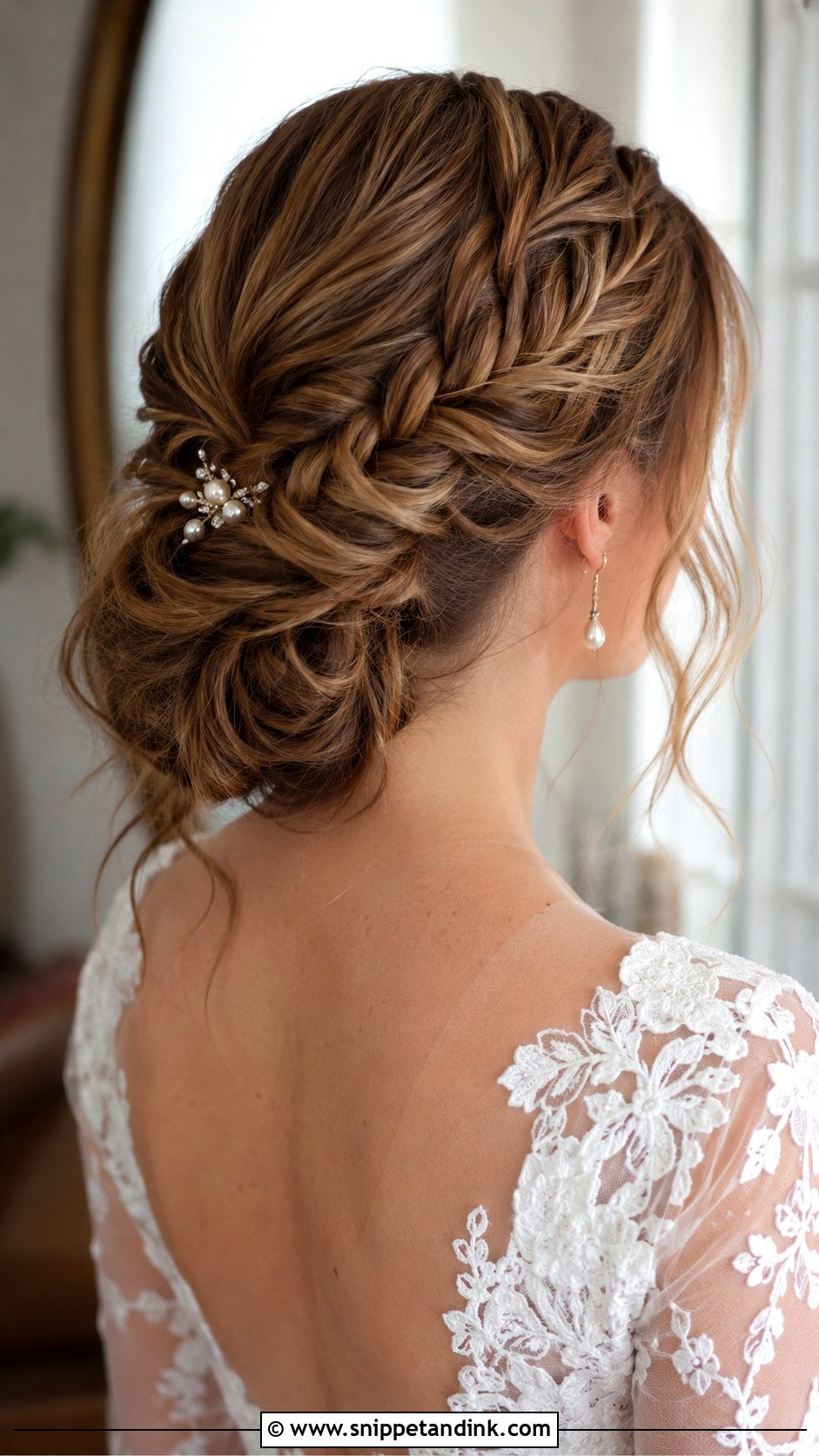
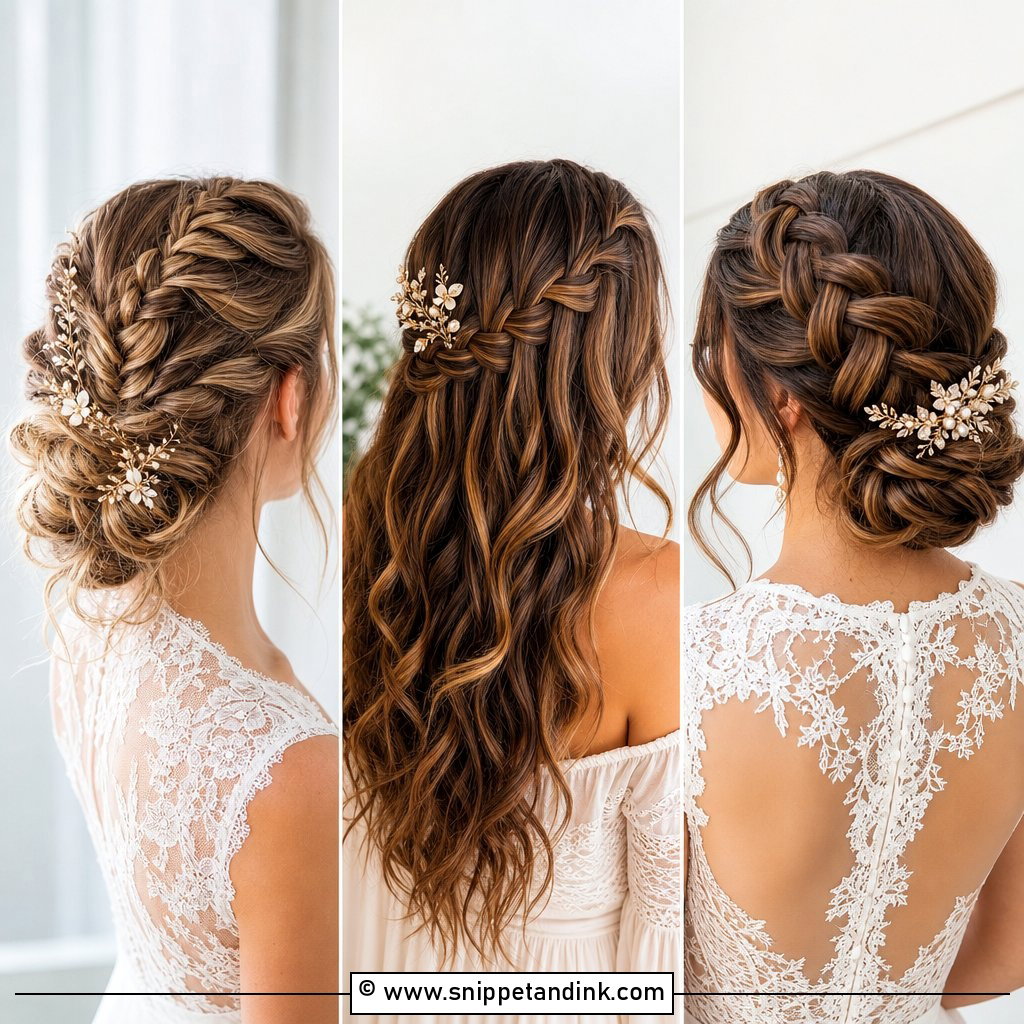
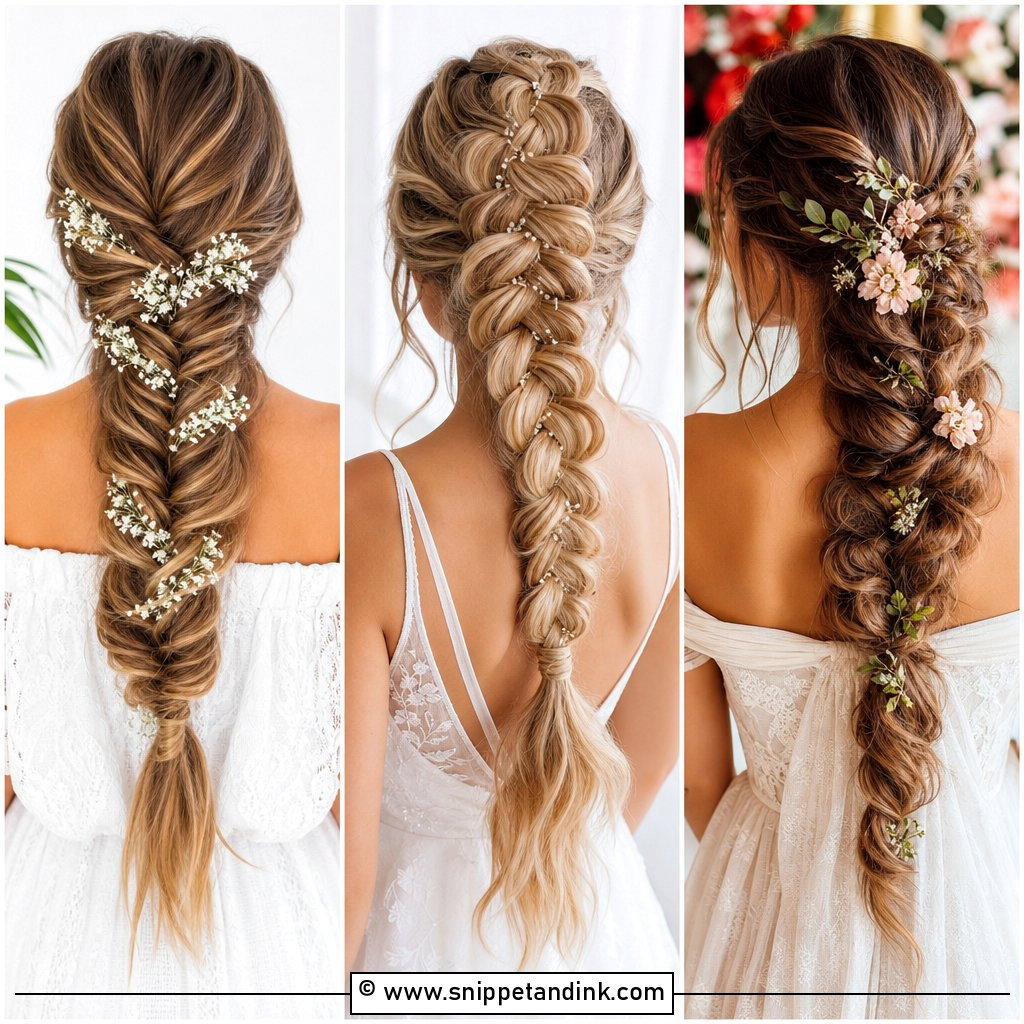
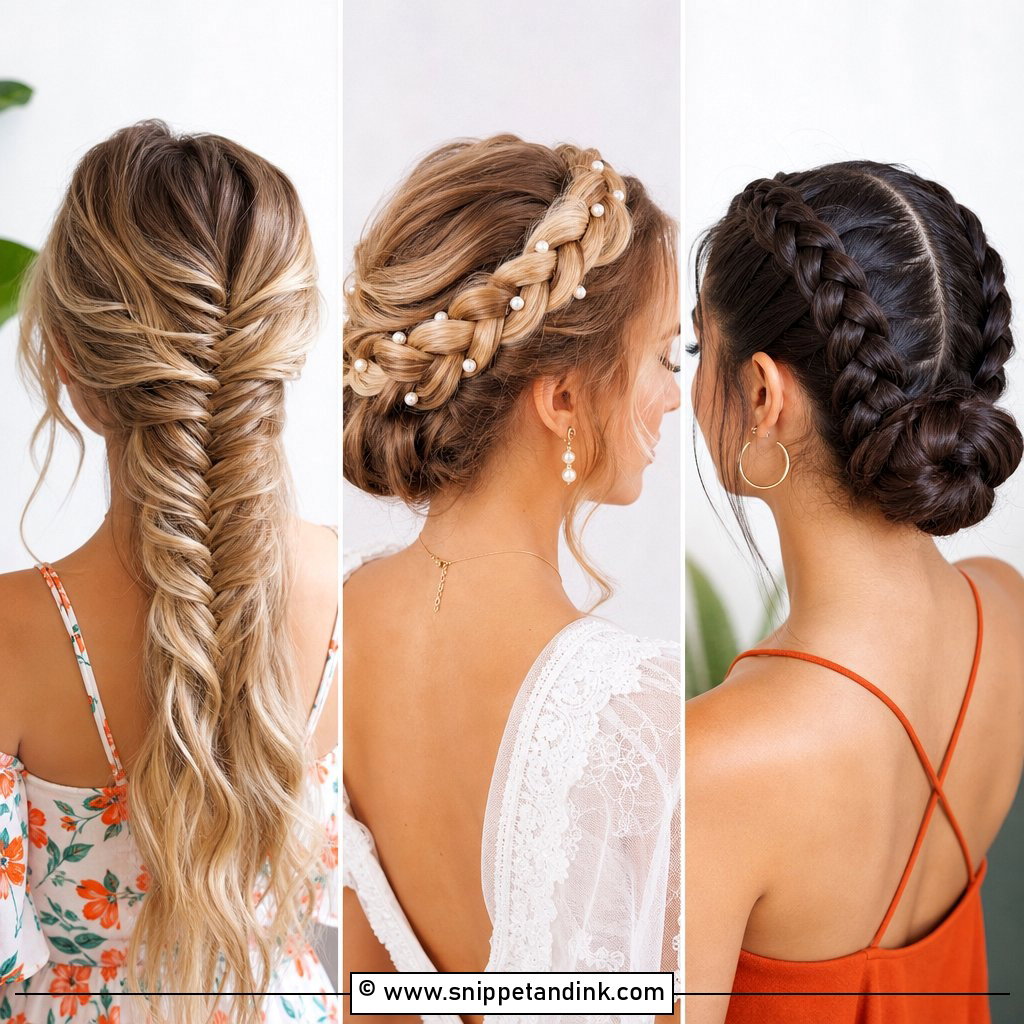
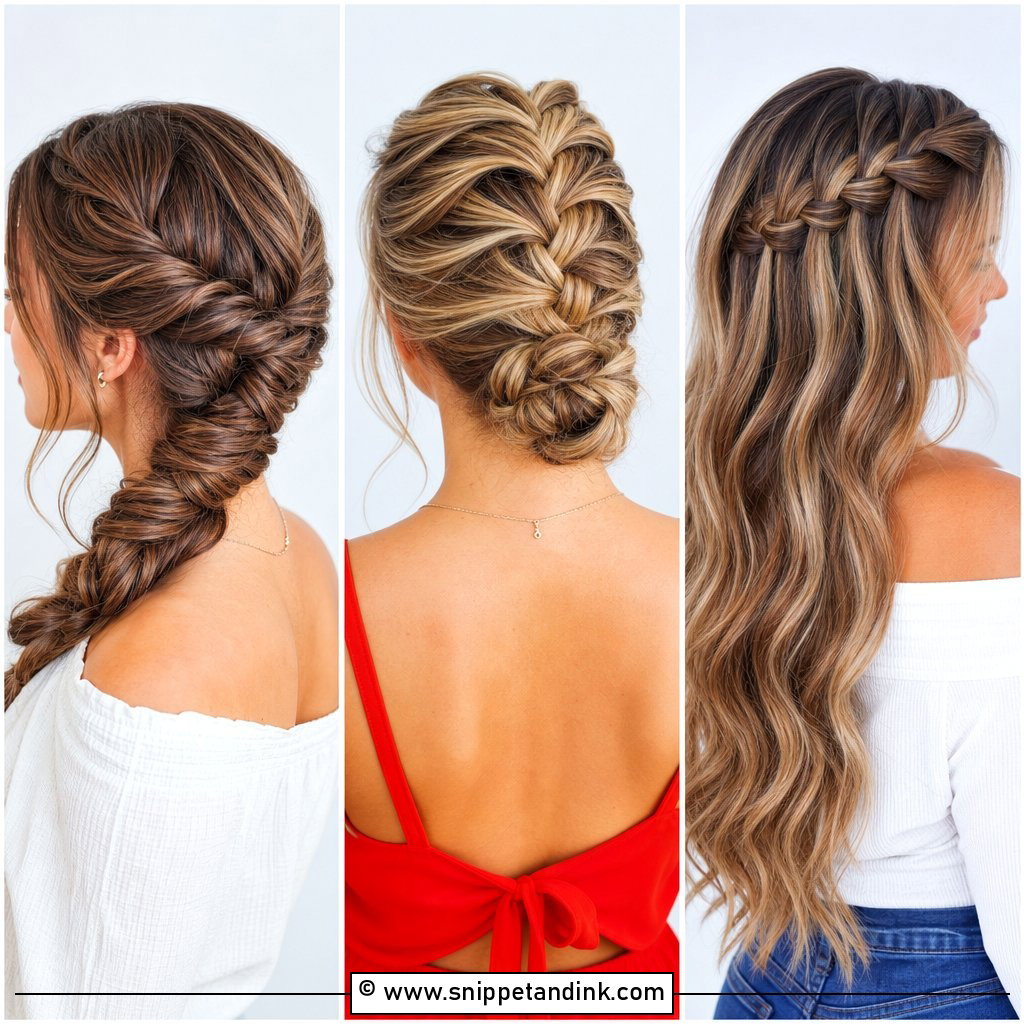
A fishtail looks complicated, but it’s just two sections with thin pieces crossed from the outside of one into the other. The thinner those pieces, the finer the pattern, and the longer it takes; on long hair I budget extra time for it at a trial. Pinned into a low updo it’s very secure, because the braid gives the pins something to grip. I leave a few strands loose at the face and finish with one pearl pin or a small flower.
2. Dutch Braid Crown
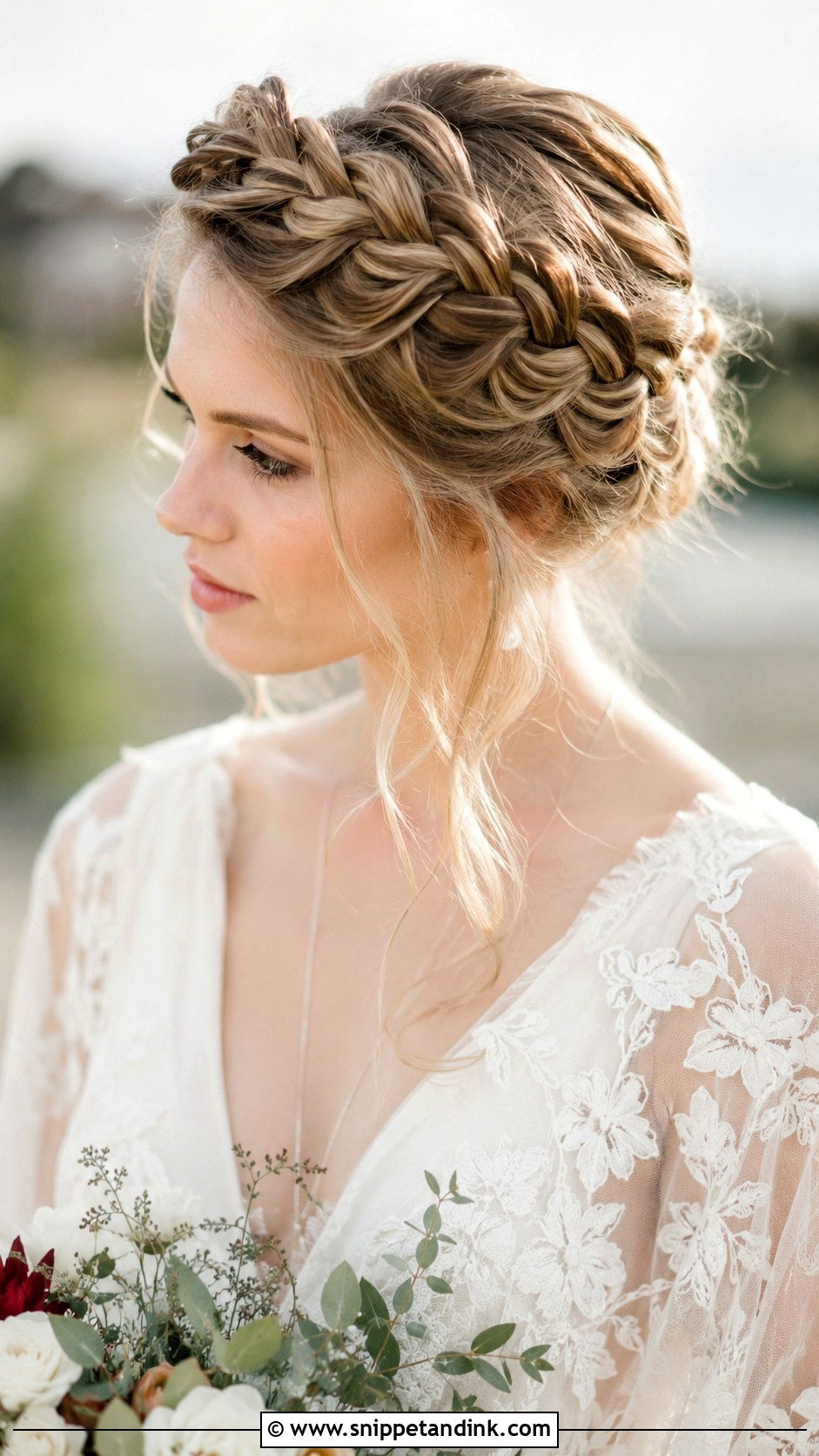
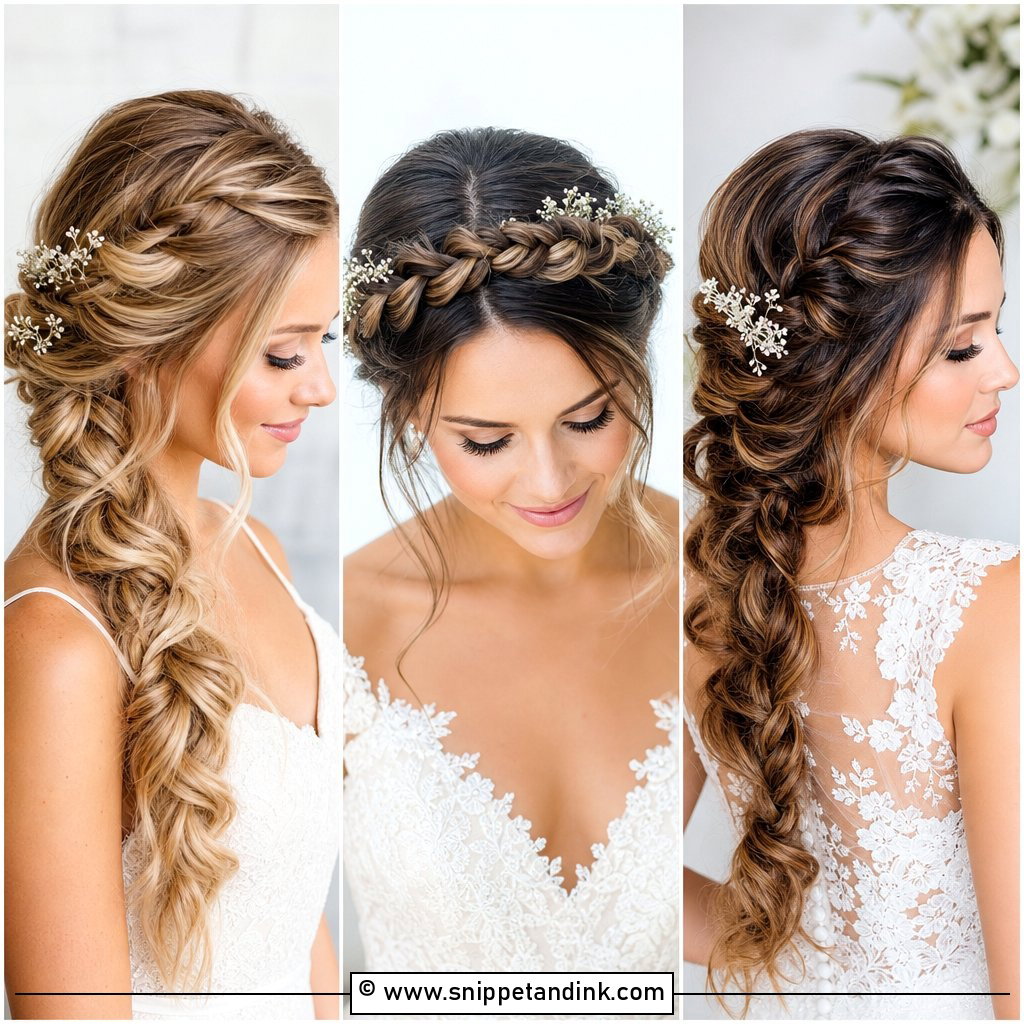
A Dutch braid crown is braided under rather than over, which is why it sits raised on the head instead of flat. That raised edge catches light, and it’s the reason I choose Dutch over French for crowns: you see the braid from the front, not just from above. On shorter hair I braid two Dutch braids and join them at the back. Wear the rest down or tuck it into a low bun; the crown holds either way.
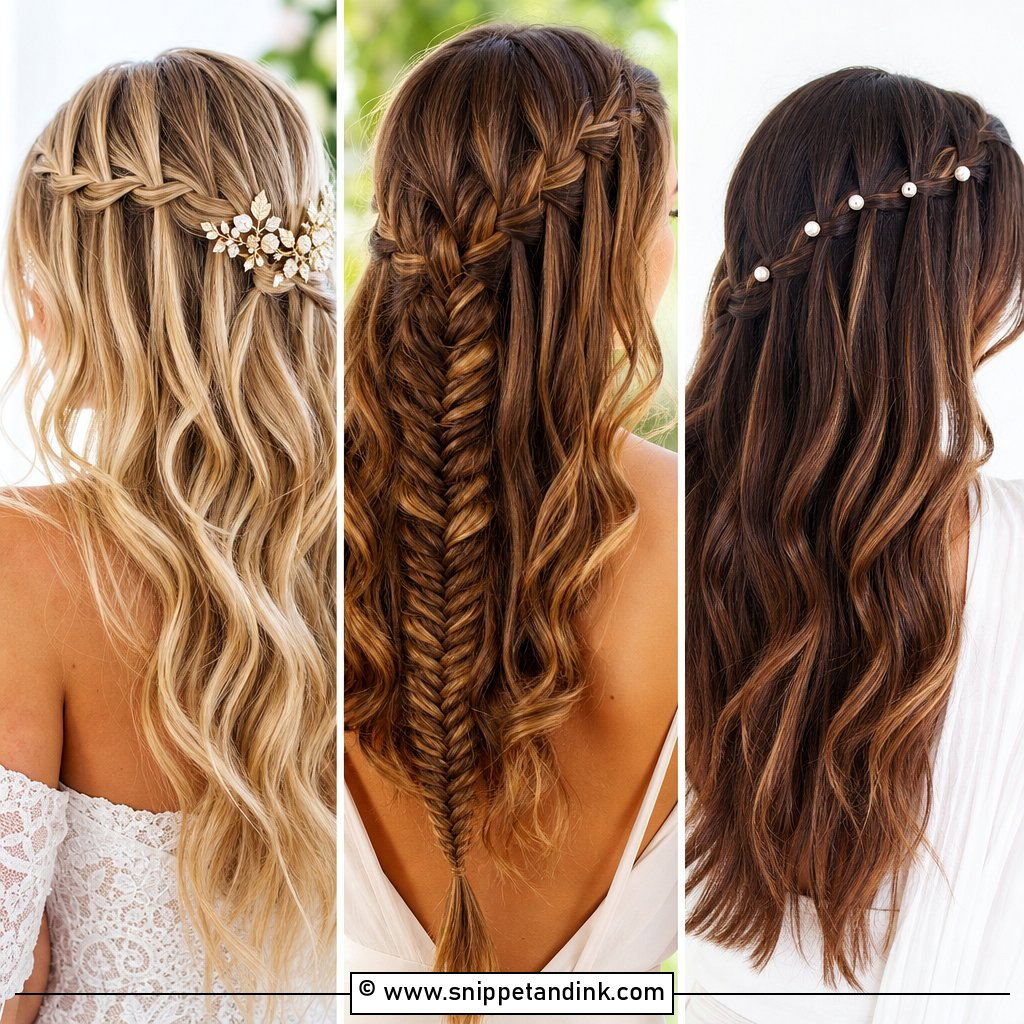
3. Waterfall Braid With Loose Waves
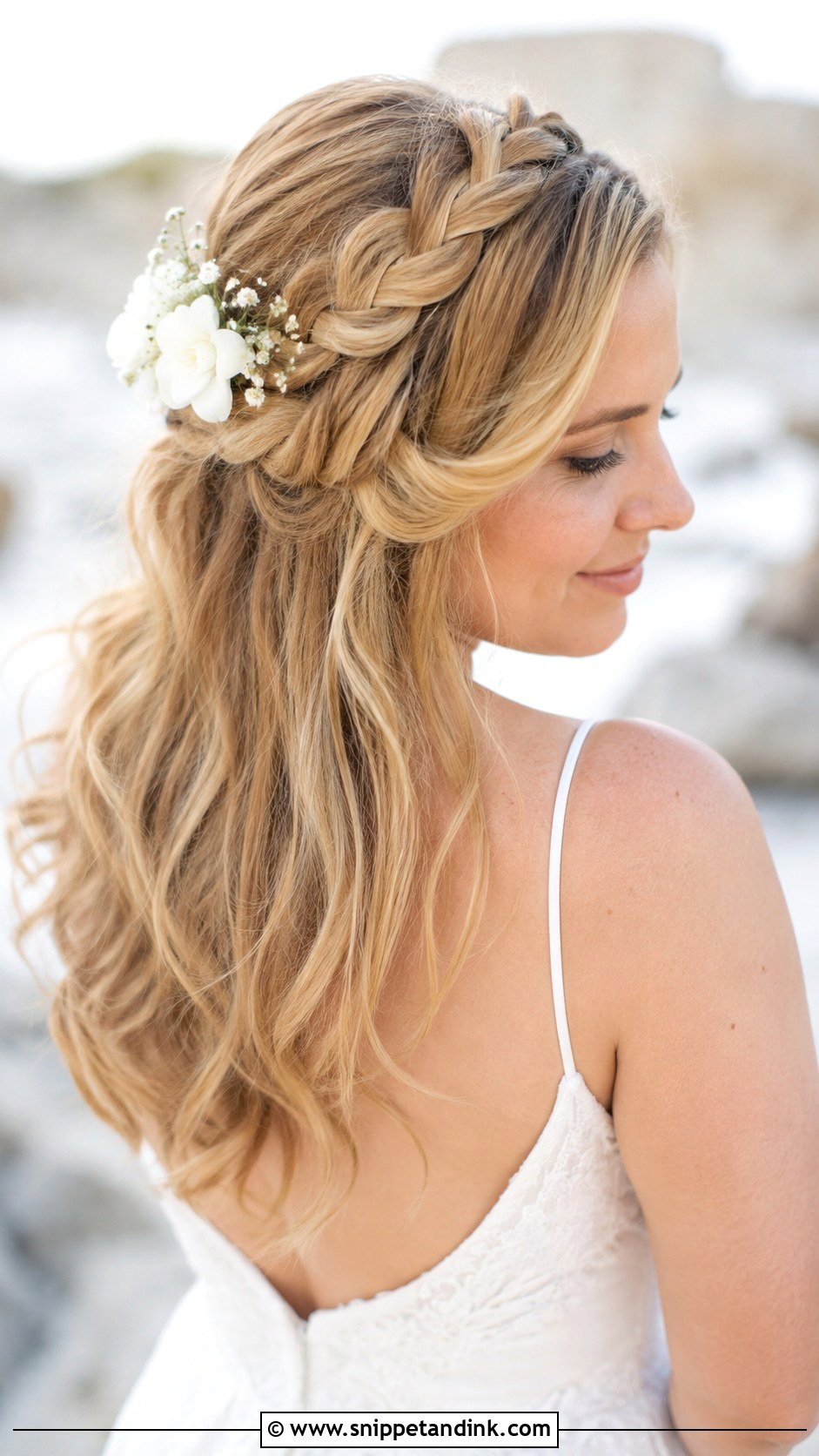
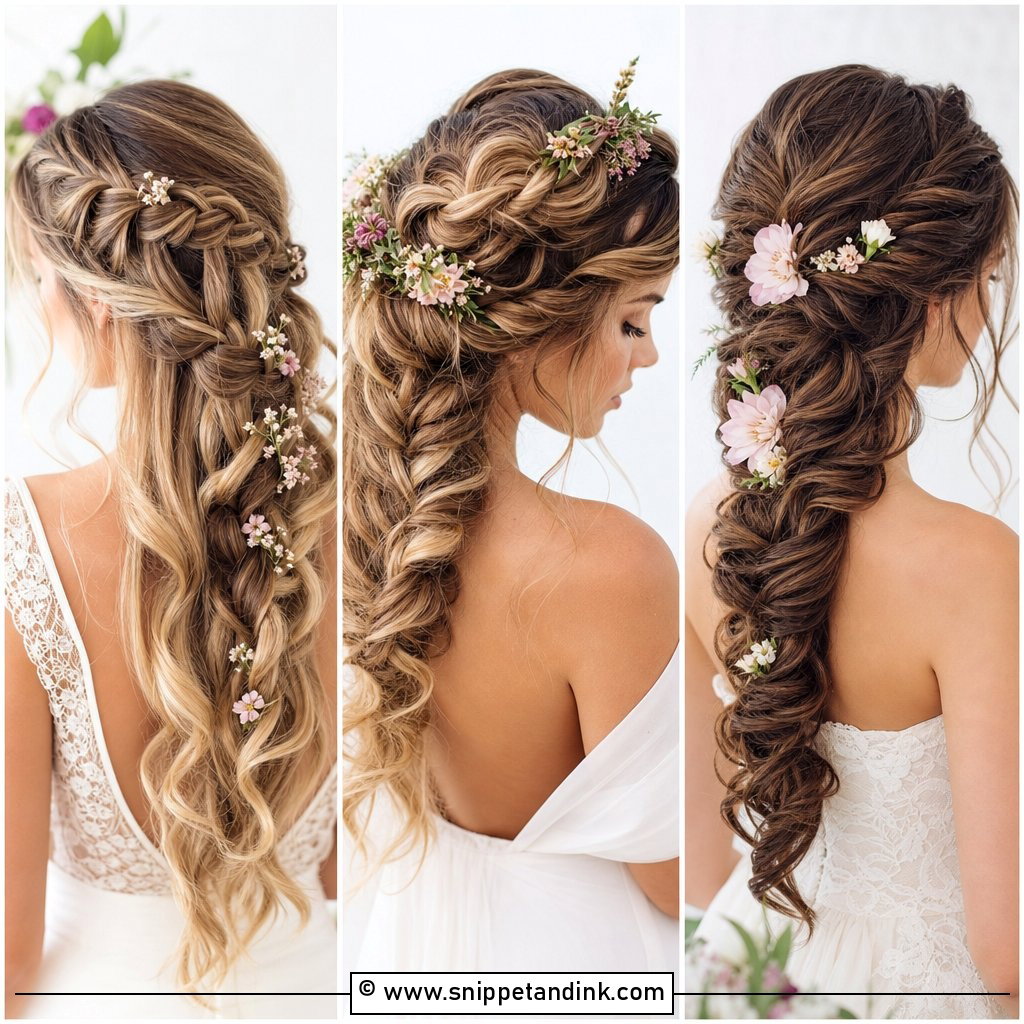
A waterfall braid drops one strand out of the braid at each crossing and picks up a new one, so the hair falls through it in a curtain. It’s pretty and fragile. Those dropped strands are loose waves, and in wind or humidity they lose their curl first, so I set the waves with a strong but brushable spray and keep the braid itself tight. Small blooms tucked in at intervals look fresh for a beach or garden ceremony, as long as they’re light.
4. Boho Side Braid
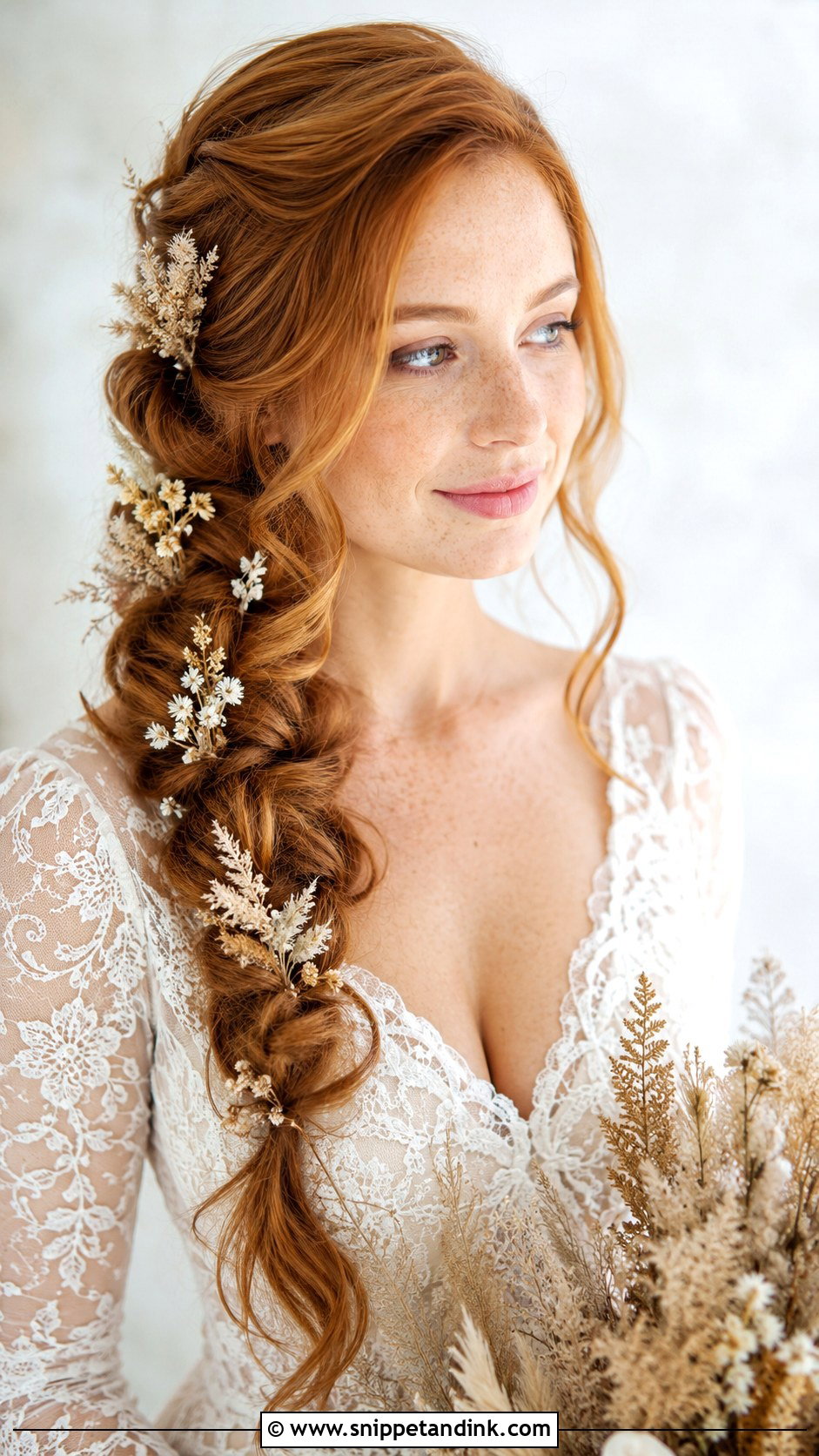
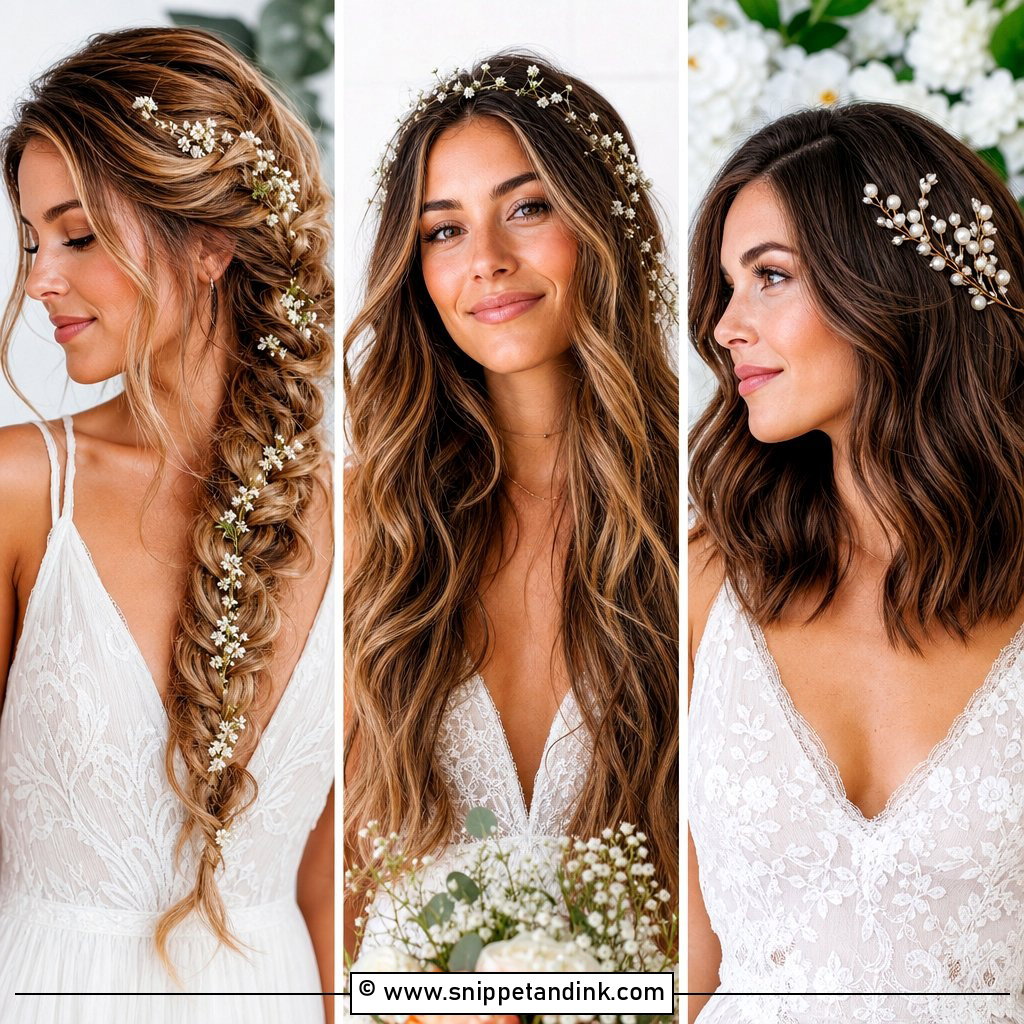
A loose side braid over the shoulder is the most relaxed style here, and I love it for barn and garden weddings. The trick is to start it low behind the ear, not at the top of the head, so it falls naturally forward and doesn’t pull across the back of your neck. Pull the edges out gently for volume once it’s tied. Dried flowers or small pins work along the braid. Just know a side braid gets pressed against your shoulder in every hug, so it’ll be flatter by evening than it started.
5. Braided Low Bun
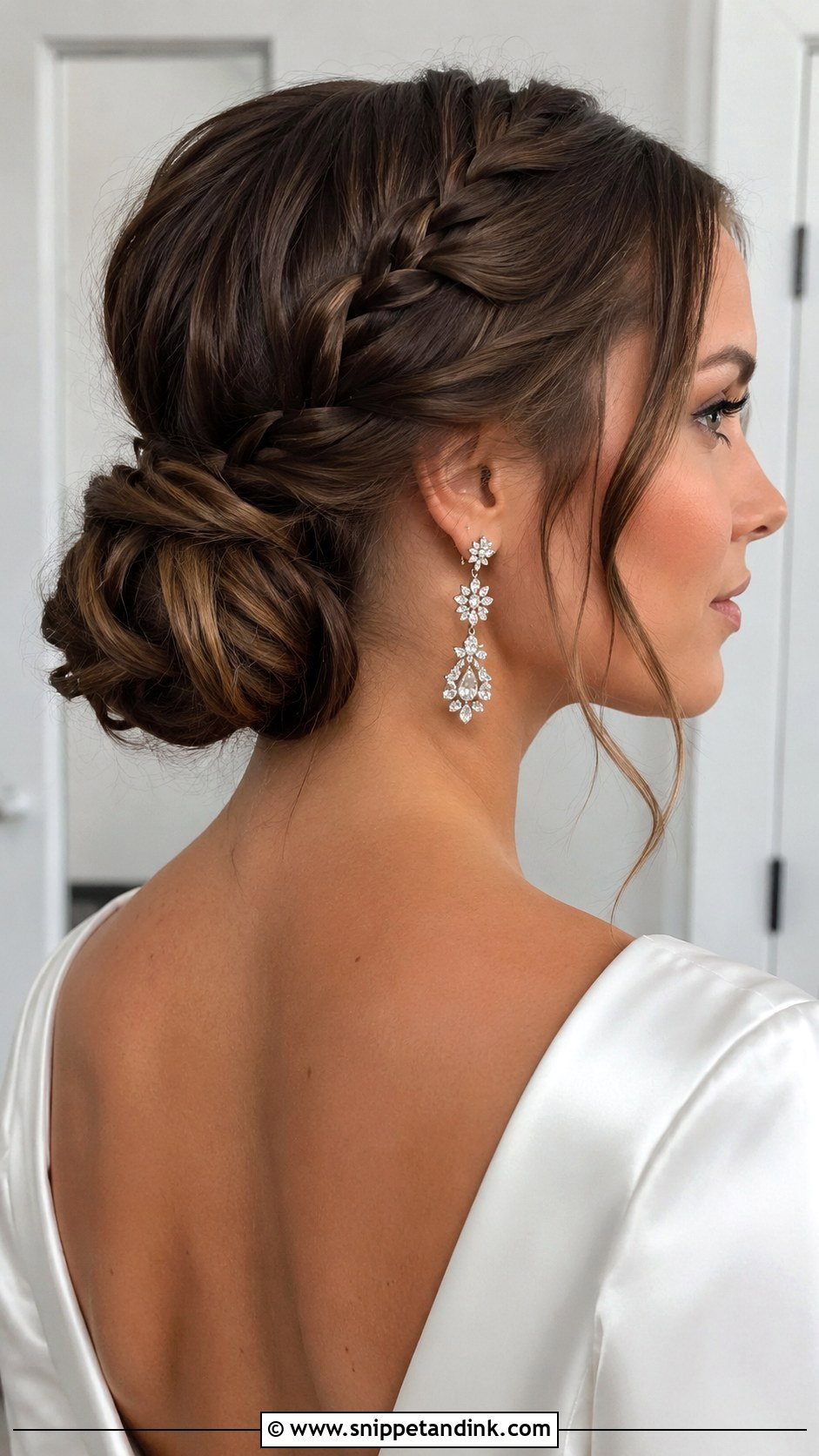
Low buns are where braids add the most for the least effort. I braid the lengths into two or three plaits, then wrap and pin them at the nape, which gives the bun texture without it looking like a costume. This is one of my favourites for warm weddings, as it keeps hair off the neck all evening. It holds a veil comb well above the bun and sits comfortably with statement earrings.
6. Crown Braid With Flowers
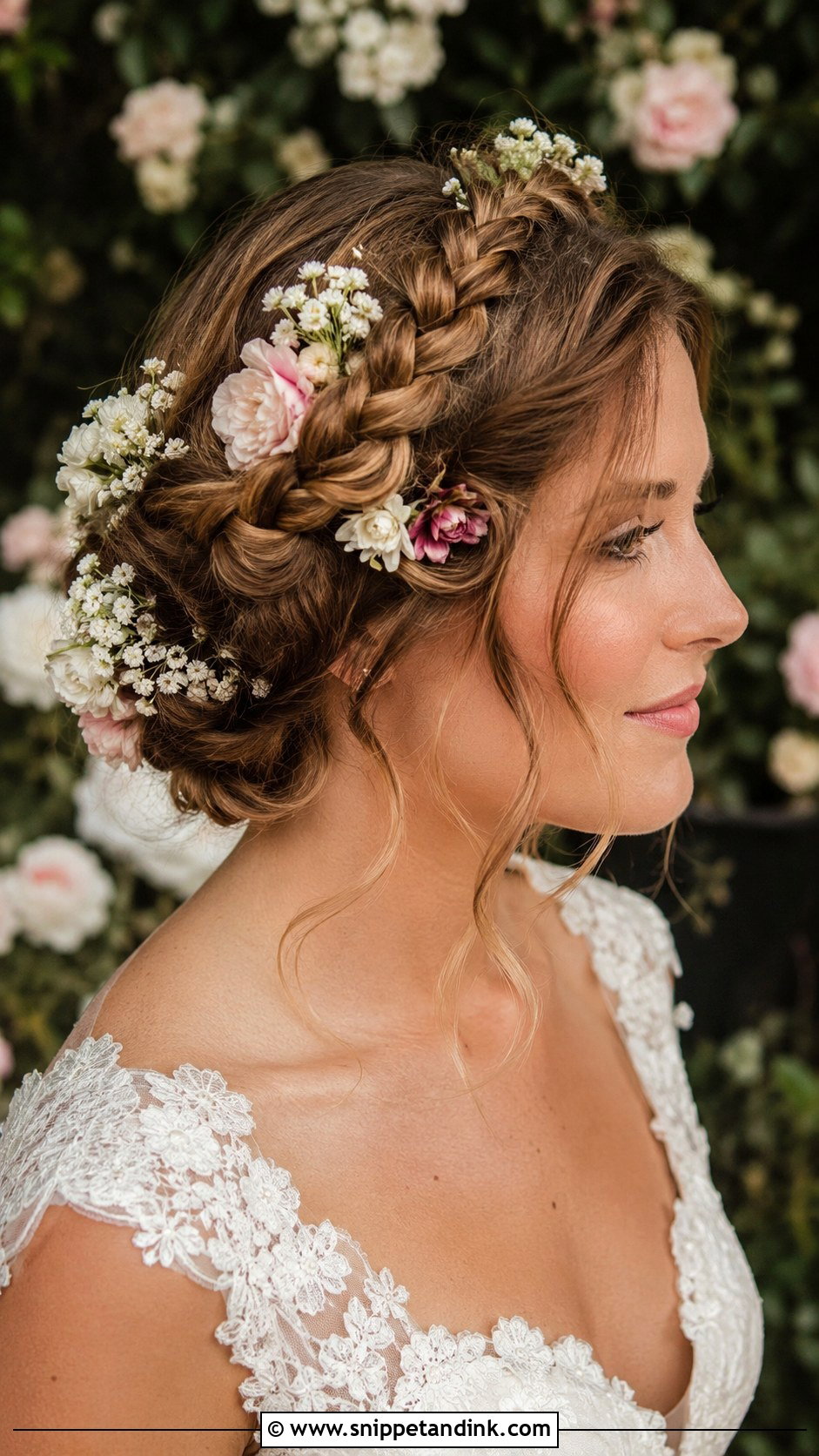
Fresh flowers in a crown braid need to be tough. I ask the florist for blooms that cope for hours out of water, such as spray roses, waxflower, small chrysanthemums or baby’s breath, and I tuck them in last, just before the photos. Delicate flowers like gardenia brown quickly in heat. The braid acts like a holder, with stems wired or pinned into the woven sections. It suits spring and summer outdoor weddings, and the scale of the blooms sets the mood: tiny ones look dainty, bigger blooms look bolder.
7. Half-Up Braided Style
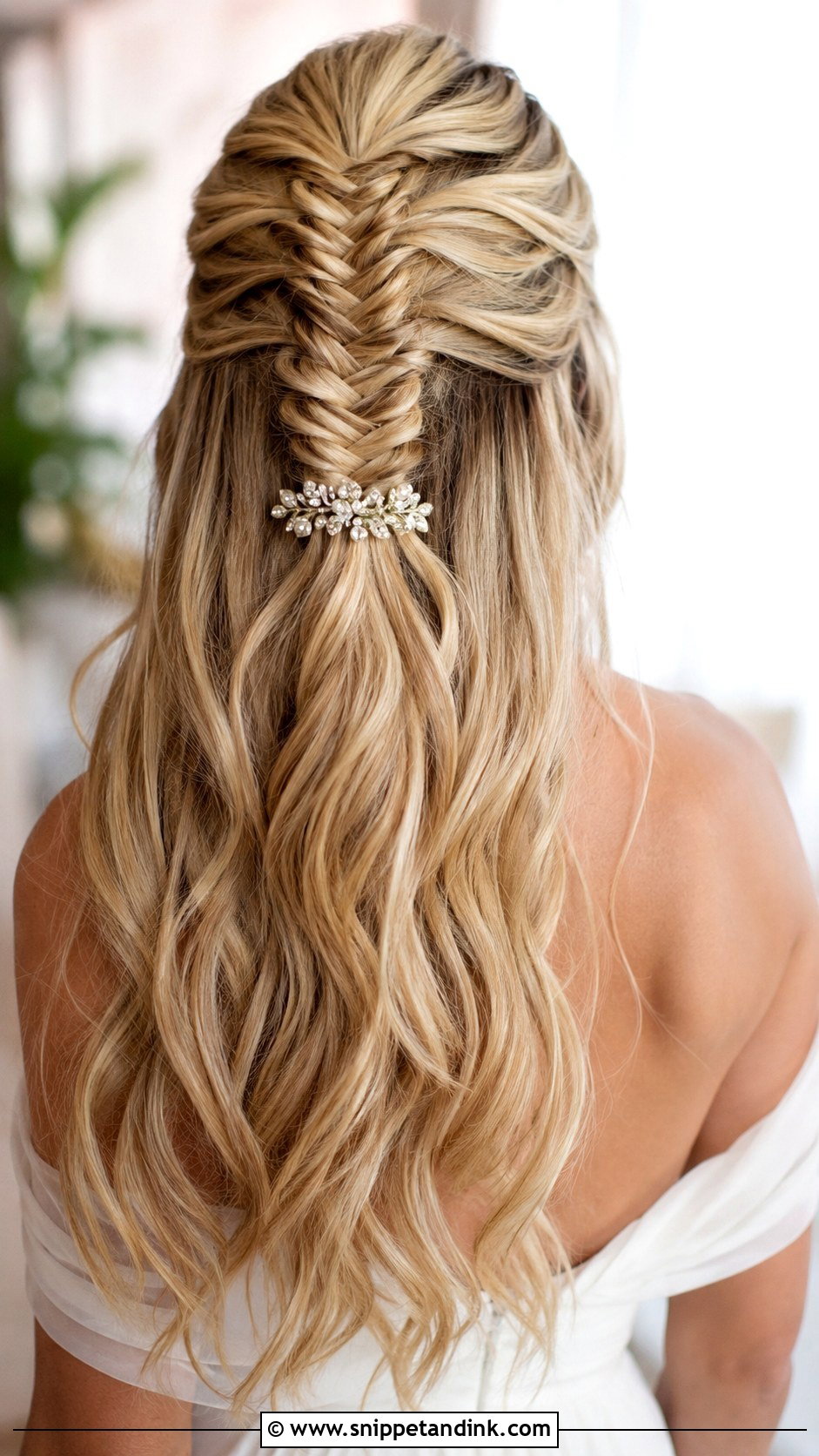
Can’t decide between up and down? A half-up braid gives you both, and it’s the style I recommend most to brides who want to show length without the hair falling into their face. The braid can be a simple three-strand, a fishtail or a twisted rope style. I secure the top section with a small elastic before braiding, so the braid isn’t carrying the weight of the lengths below. A clip or a few flowers can cover where braid meets loose hair.
8. French Braid Updo
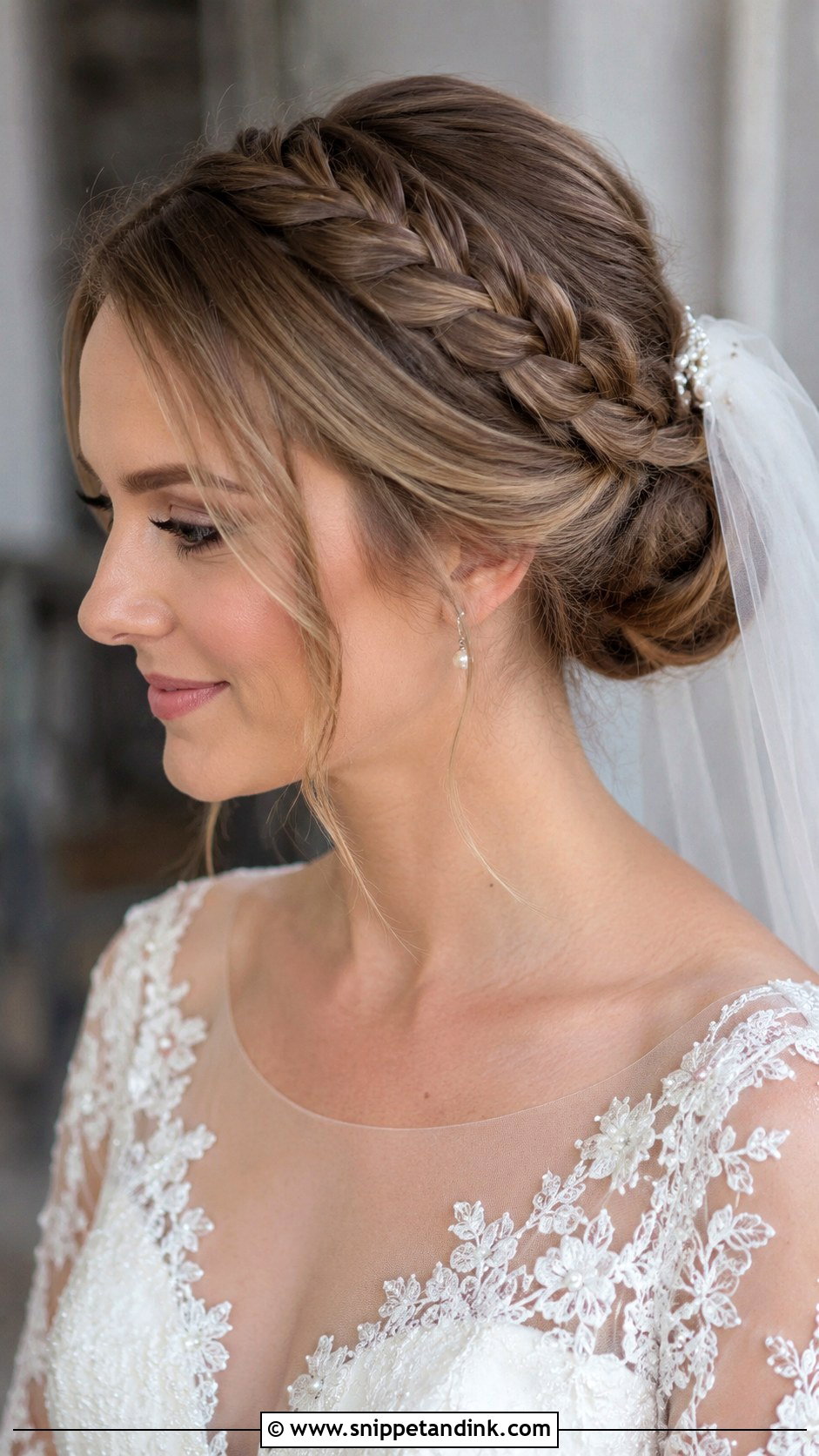
French braiding weaves hair over and close to the scalp, so the braid lies flat and neat. Flowing into a low twist or bun, it gives a clean, traditional look and holds a veil well. I loosen only the front few inches if a bride wants softness, because pulling apart the whole braid makes it lose its line. Formal venues and traditional ceremonies suit it.
9. Braided Ponytail
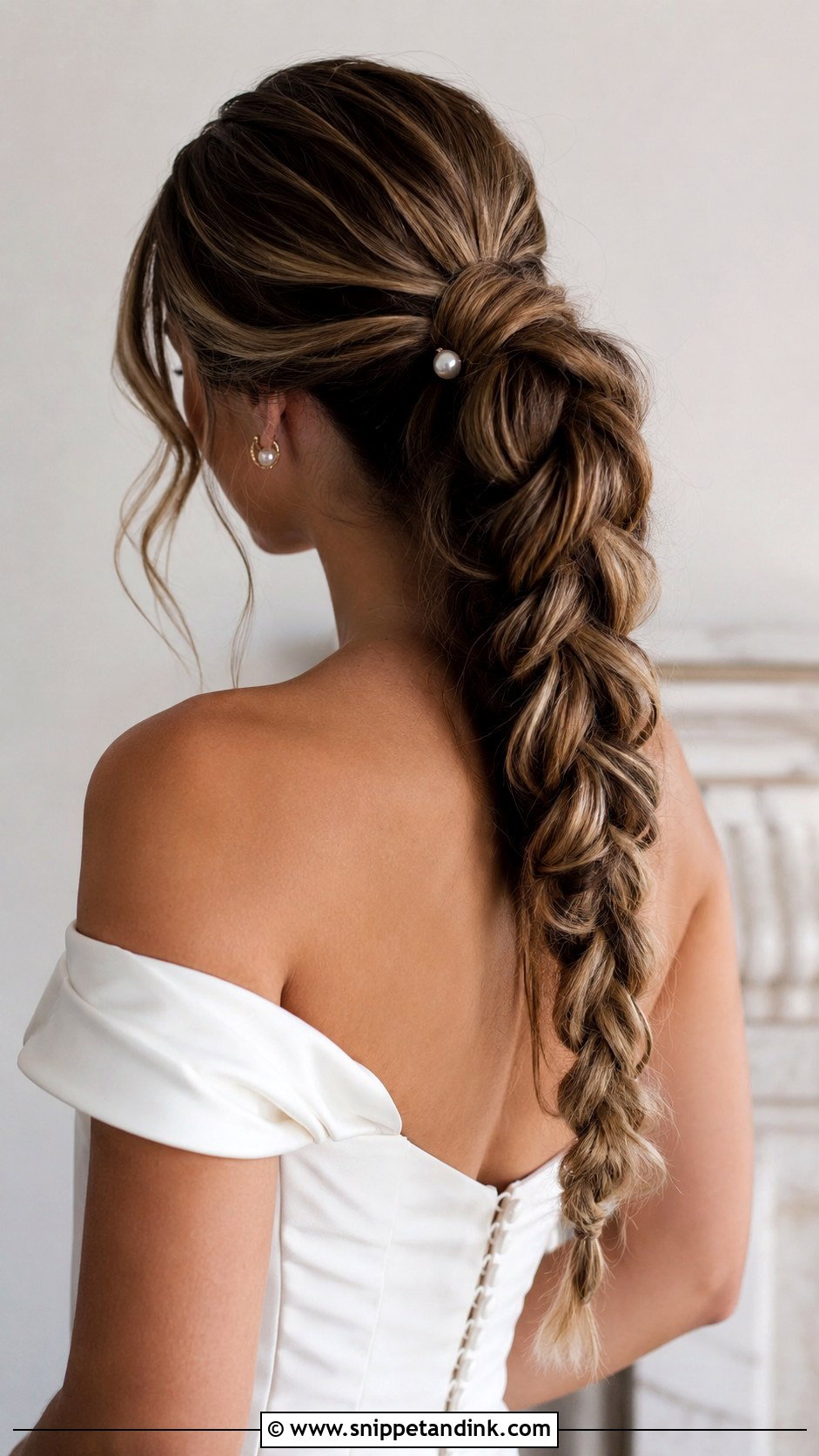
A braided ponytail is more secure than a plain one because the braid keeps the lengths from tangling. I tie it with a strong elastic first, braid it, then wrap a strand of hair around the base and pin it underneath to hide the band. Fine hair can look thin in a ponytail braid, so I usually pancake it a little to make it wider. A ribbon or pearl pin at the base is enough decoration for an outdoor or modern wedding.
10. Milkmaid Braid
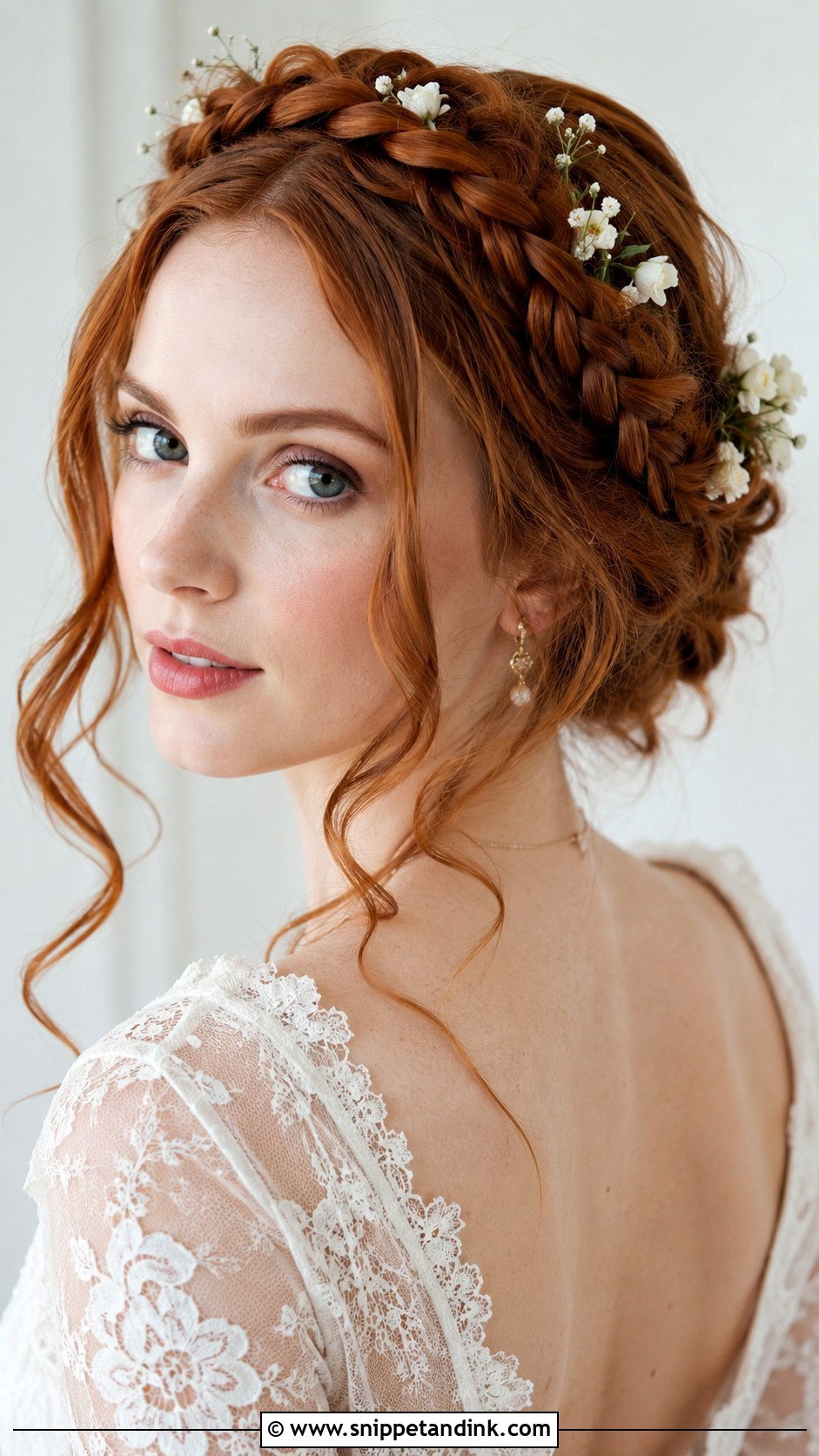
Two braids crossed over the top of the head, pinned at each end: that’s a milkmaid braid, and it’s one of the easiest crown styles if your hair is long enough to reach across. If it isn’t, I add clip-in hair to the braids. It keeps the face and neck completely clear, which makes sense for summer heat. Pull a few pieces loose for a softer version, and tuck in small flowers or greenery for a garden ceremony.
11. Rope Braid Half-Up
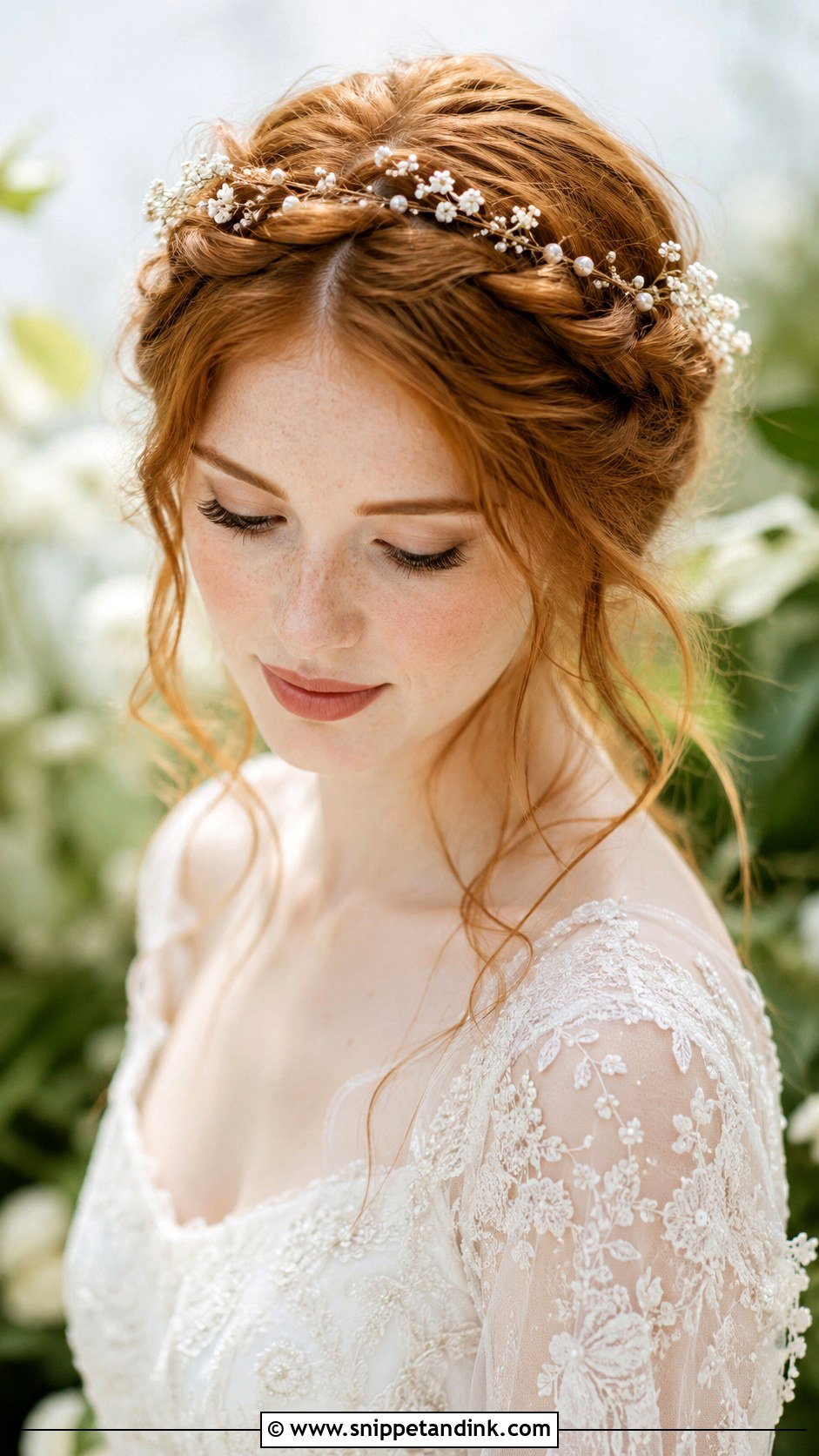
Rope braids are twists, not braids: two strands twisted the same way, then twisted around each other in the opposite direction. That opposing twist is what stops it unravelling. As a half-up style, the top section is held while the lengths stay down in soft waves. I spray each twist lightly as I go, because a rope twist on silky hair can loosen within hours. A sparkly pin where the braid ends hides the elastic.
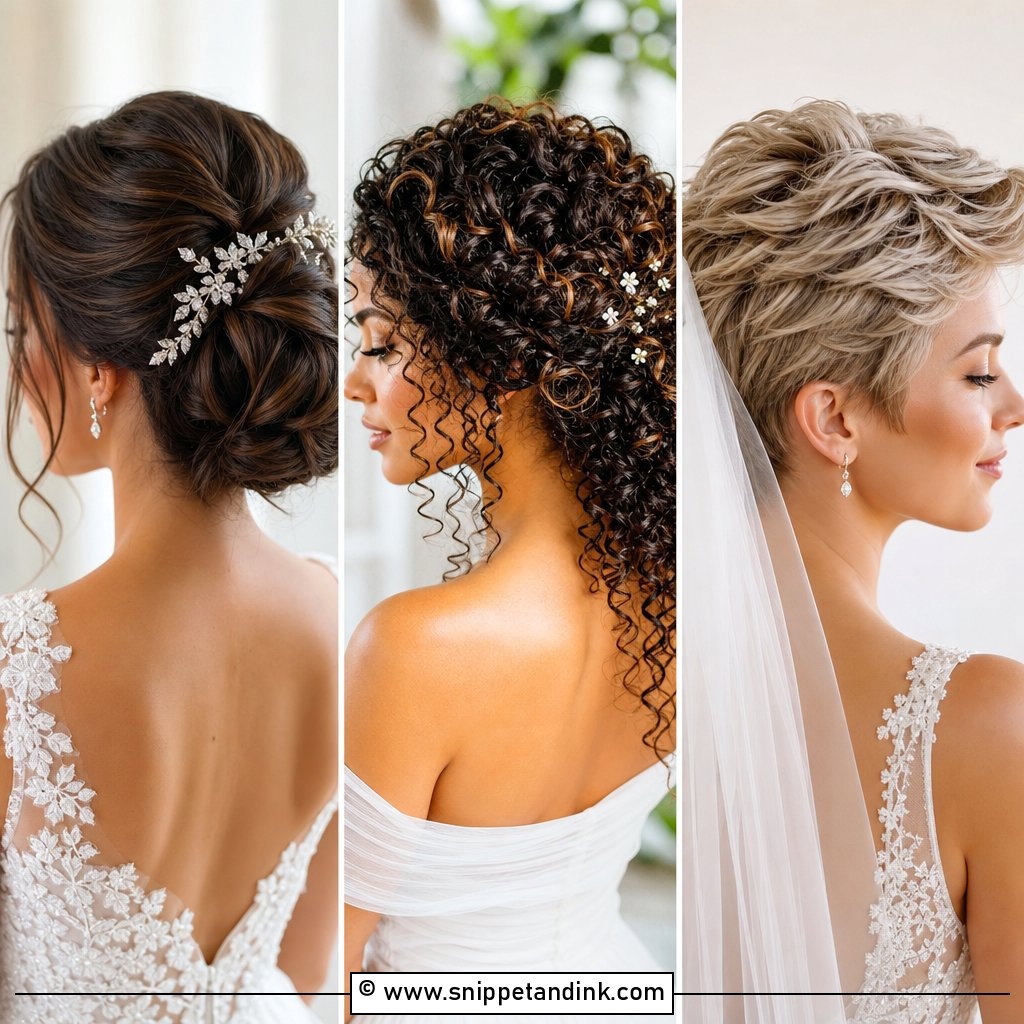
12. Braided Chignon
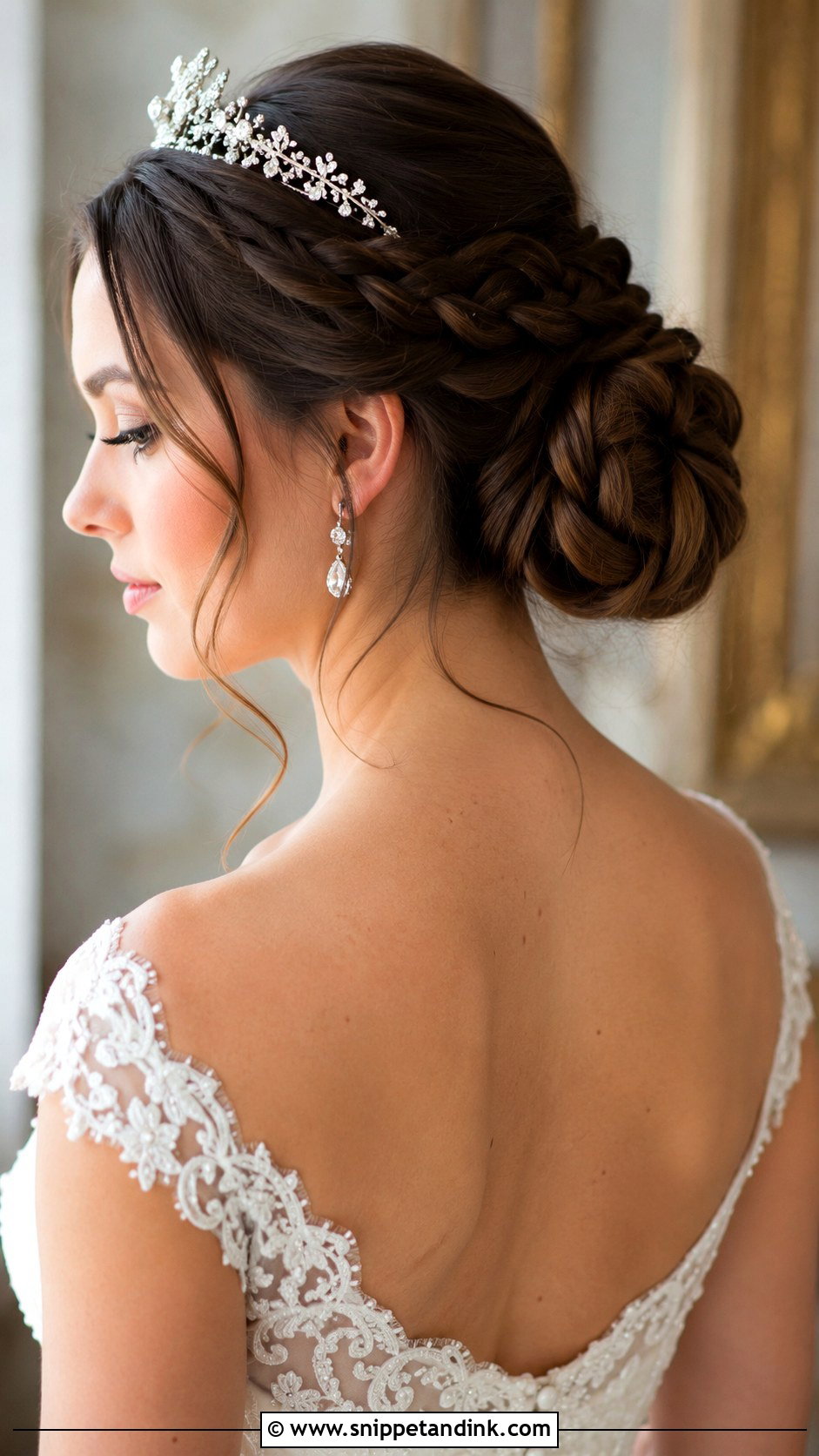
A braided chignon coils the braid into a low, elegant knot at the nape, and coiling a braid gives a chignon more grip than coiling plain hair. I pin around the outside of the coil, catching the braid at several points, so it won’t sag under a veil. A few tendrils loose at the face keep it soft. It handles veils, tiaras and heavy jewellery well, and it’s one of the safest choices for a long day with lots of dancing.
13. Side Swept Braid With Curls
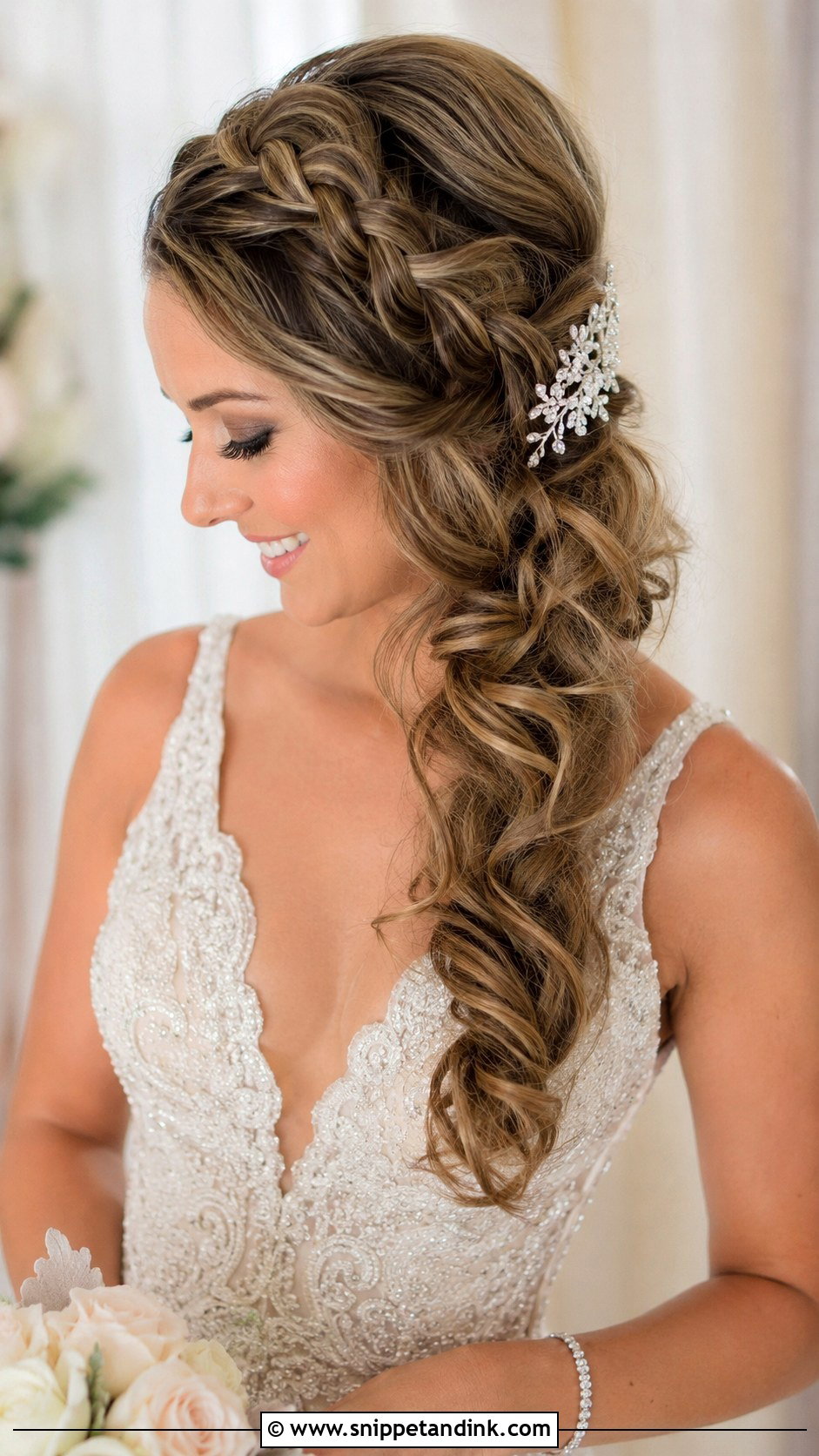
Here the braid goes over one shoulder and the curls cascade after it. I curl the hair first, let the curls cool fully, and only then braid loosely, otherwise the braid straightens the curls. Loosen it slightly for a softer look. It suits evening receptions and formal weddings, and a jeweled comb or a few small flowers near the top of the braid finish it.
14. Boho Braided Crown With Loose Hair
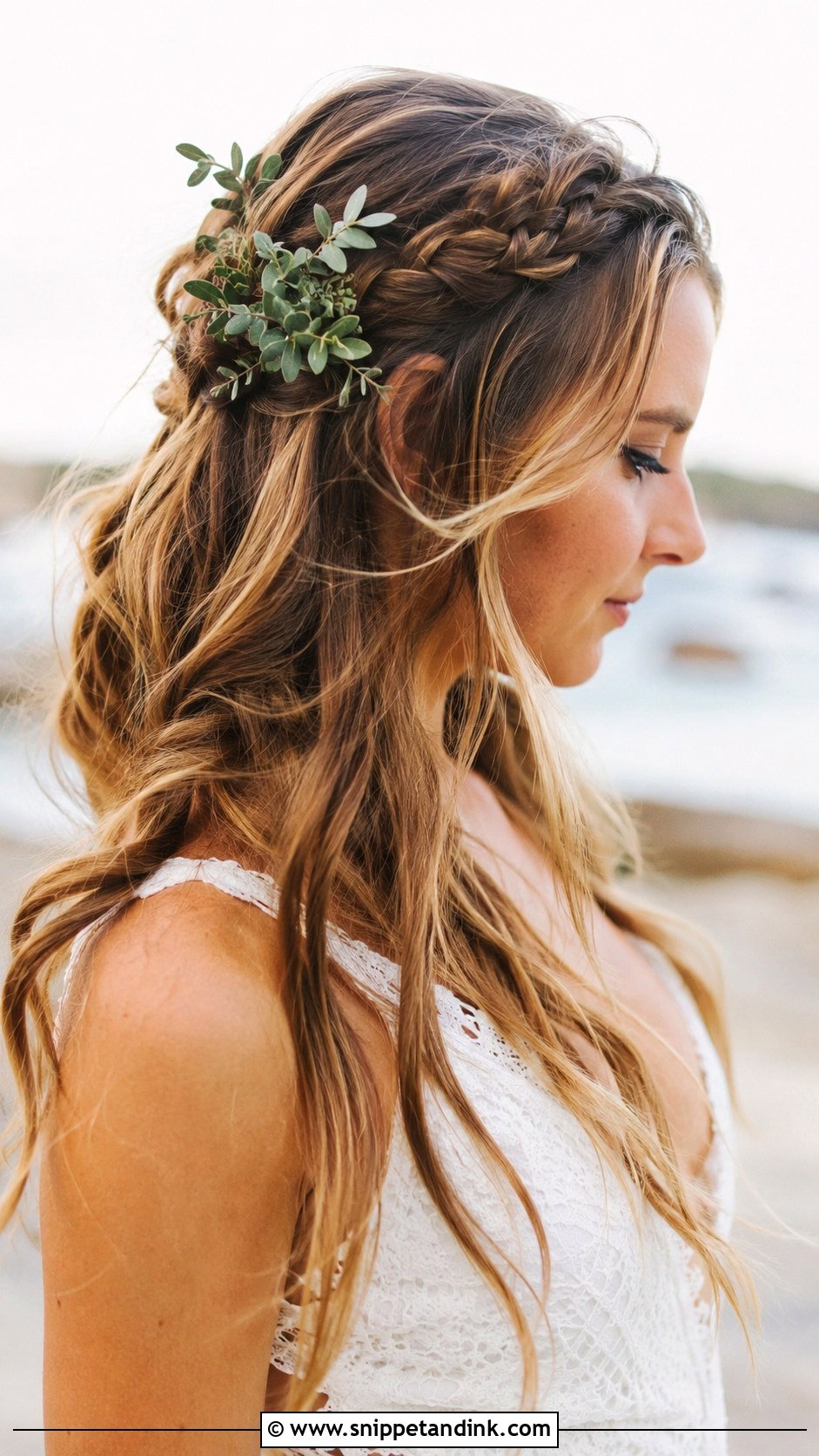
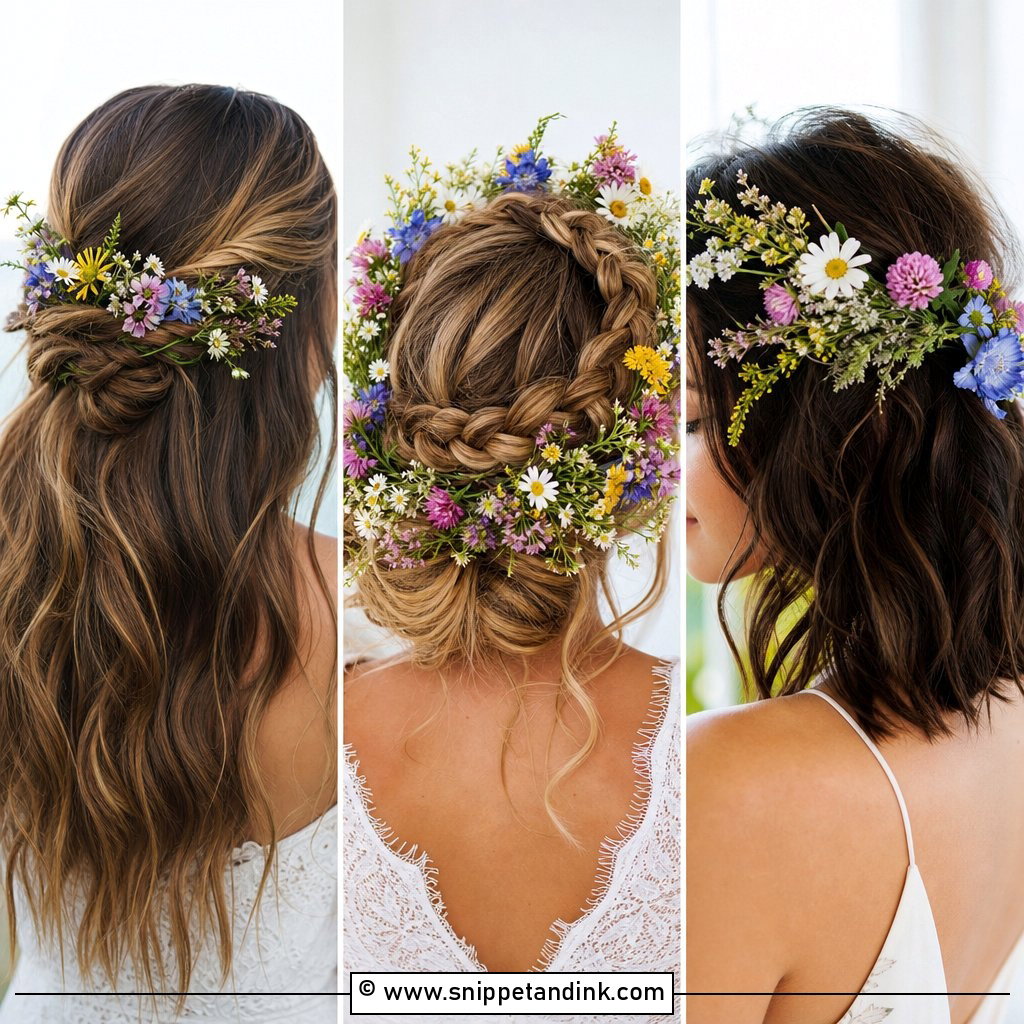
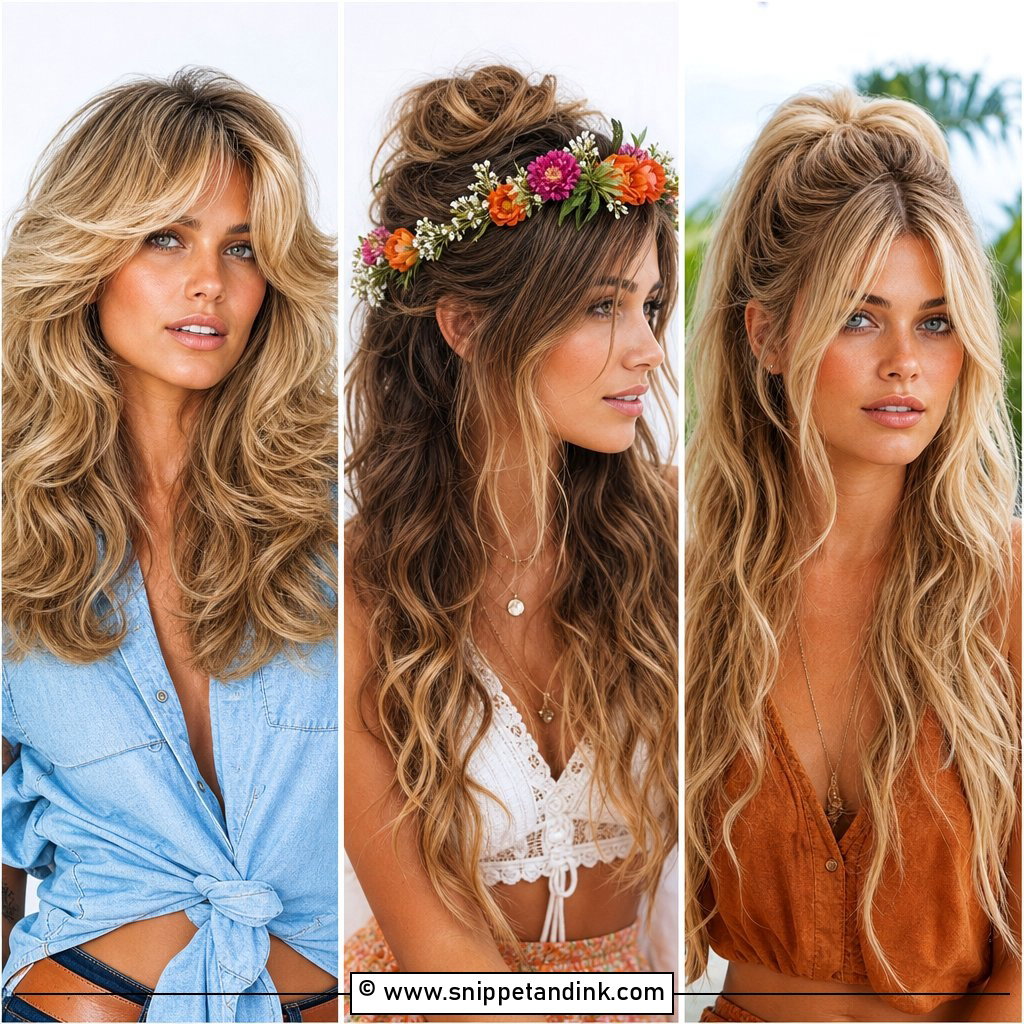
A thin braid around the crown with the rest loose is a lighter take on a crown braid, and it’s very forgiving: the braid keeps hair off your face and the loose lengths can be waved or left more natural. I braid it a little behind the hairline so it reads as a band rather than a headband. Small flowers or greenery tucked in suit beach and boho weddings. Soft waves underneath are what make it look romantic rather than practical.
15. Braided Updo With Veil
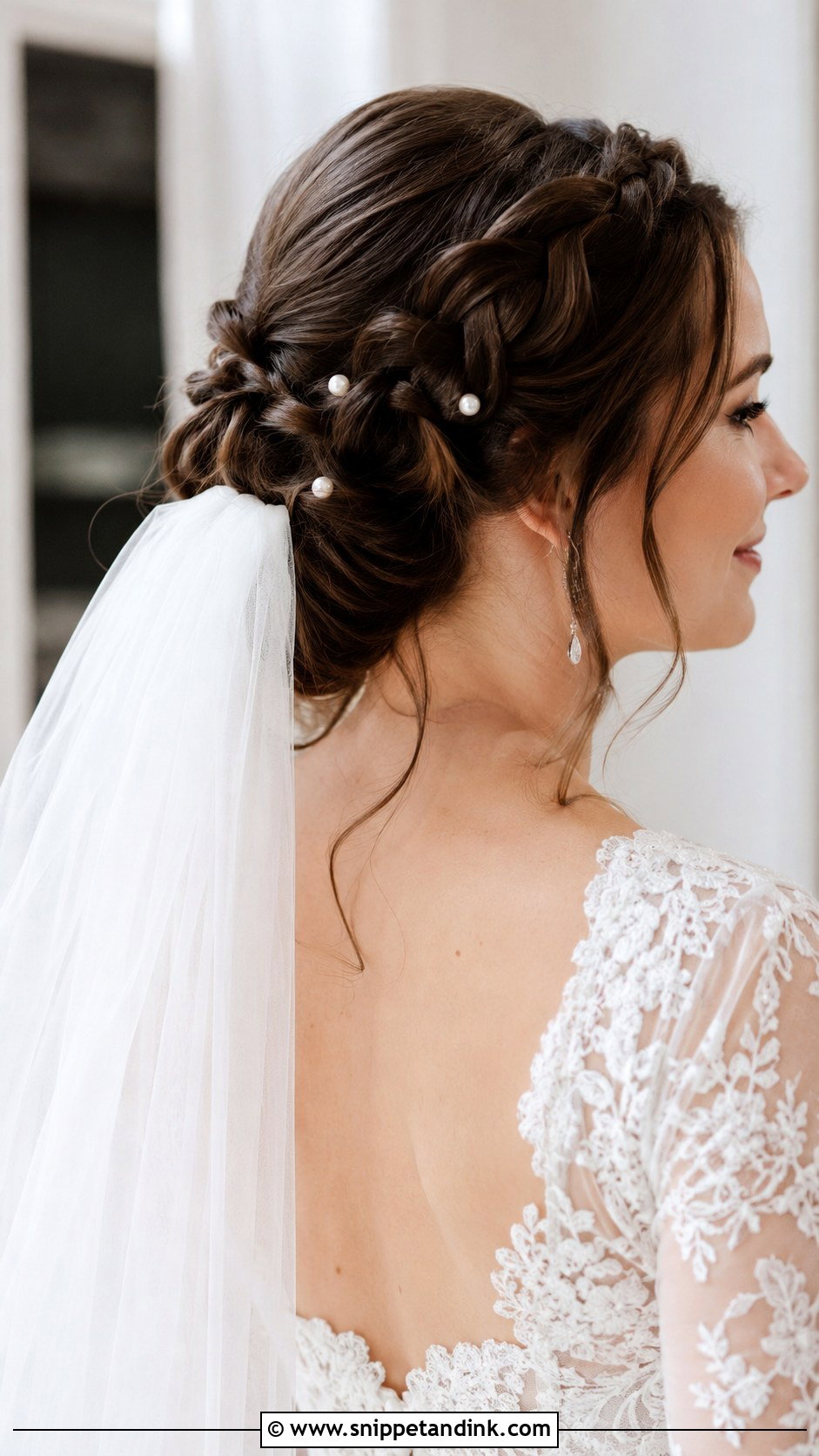
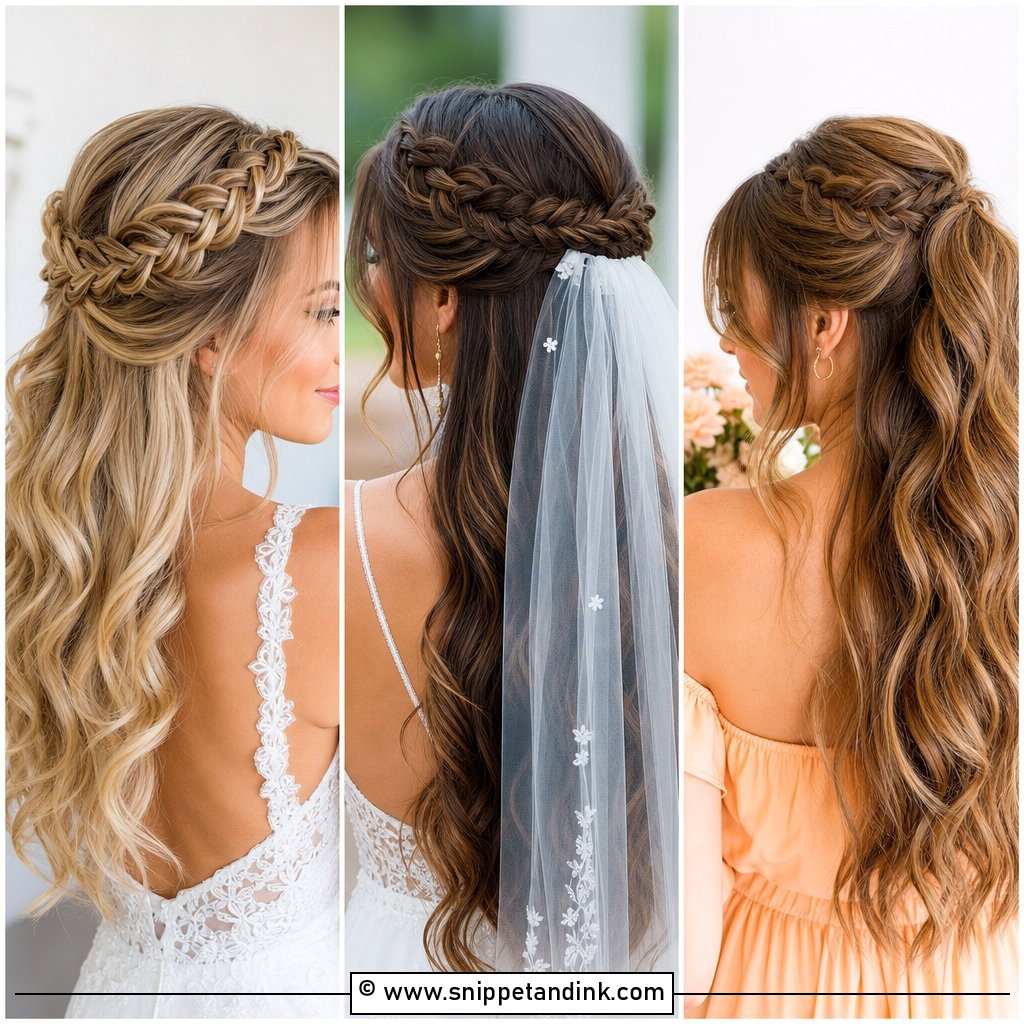
A braided updo is one of the best bases for a veil, because the comb slides between braided sections and has something solid to grip. I plan the veil position at the trial so the braid placement leaves room for it. When the veil comes off for the reception, the braided updo still looks finished, since nothing had to be built around the comb. Pearl pins or a delicate comb add sparkle for a traditional or formal wedding.
16. Fishtail Side Braid
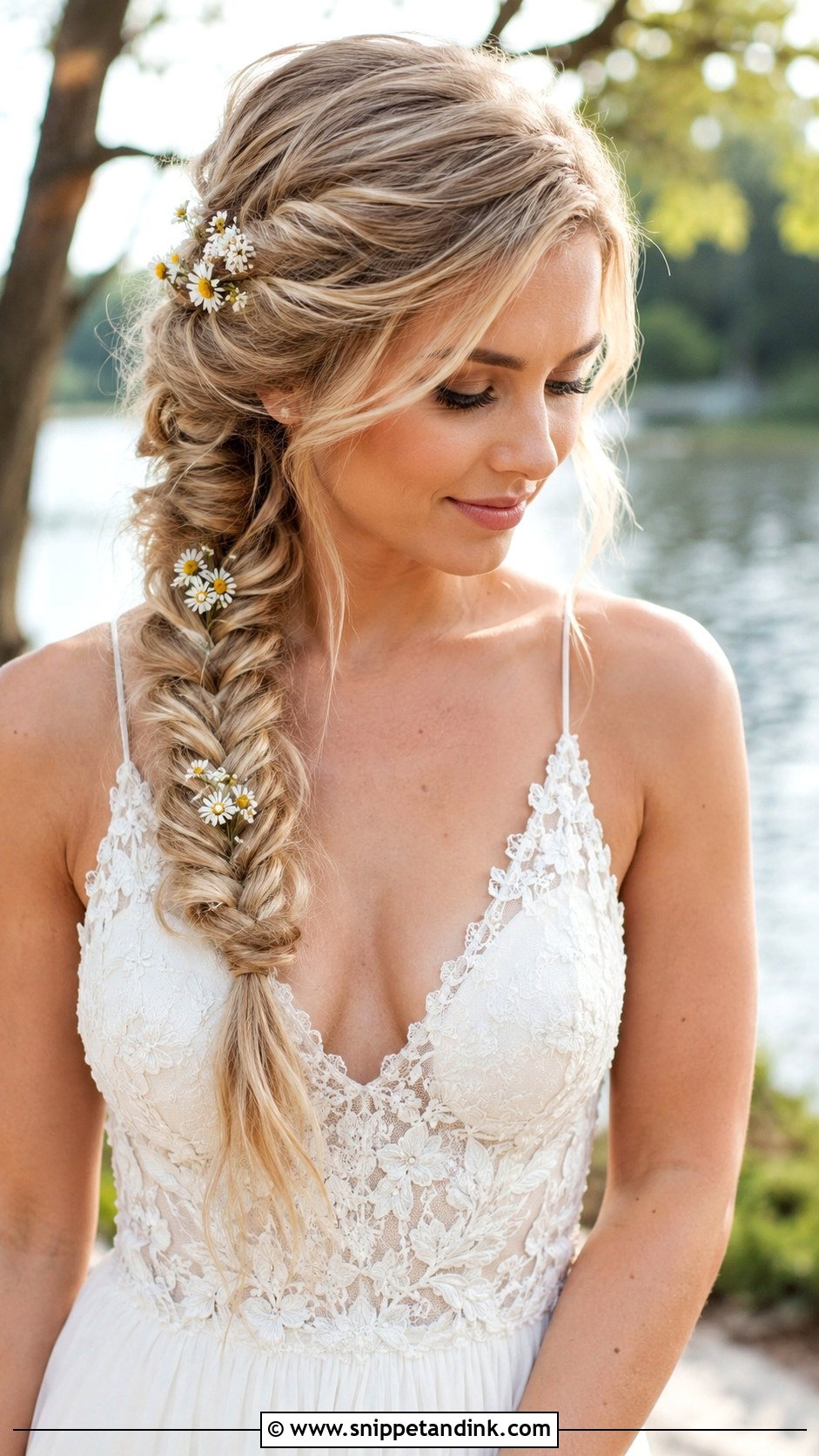
This is the fishtail’s relaxed side. I braid it loosely, sweep it over one shoulder, and pull the edges apart gently for volume and texture. Pancaking a fishtail spreads the pattern wider, so it works better on thick hair; fine hair gets thin pieces of scalp showing near the top if I pull too much. Small flowers or pins along its length look good in an outdoor setting.
17. Twisted Halo Braid
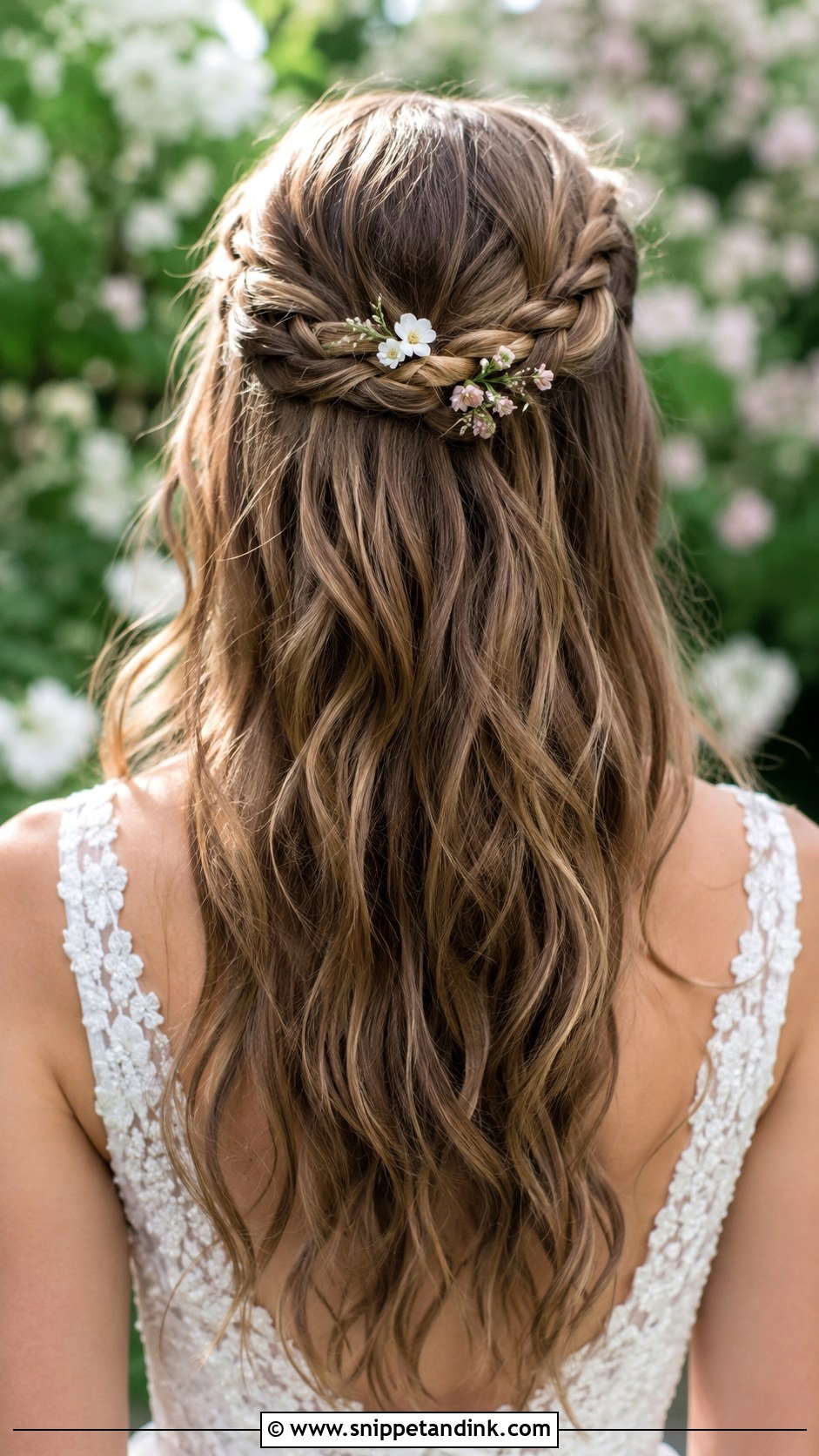
The twisted halo braid wraps twisted sections around the head in a full ring. Twists are softer than a three-strand braid, so the halo looks lighter. The weak point is the join at the back, where the two ends meet; I overlap them and pin firmly so there’s no gap. Keeping hair completely off the face makes it practical in heat, and tiny flowers or pearls along the twist suit a garden or beach wedding.
18. Braided Bun With Loose Strands
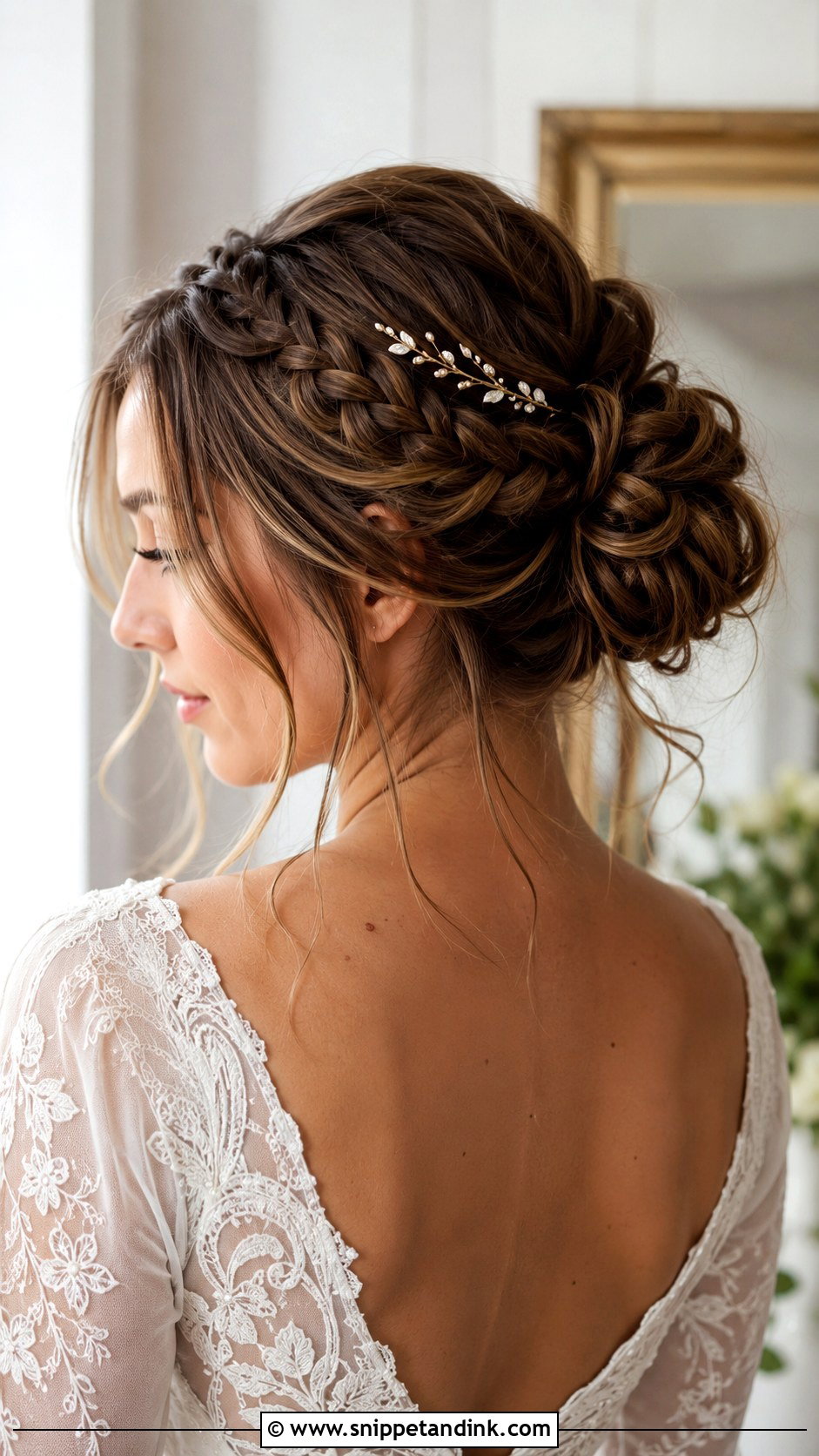
Braided buns hold better than smooth ones, because each braid gives the pins more to grip. I braid two or three sections, wrap them into a bun and leave a few strands free at the face. The braided texture makes the bun look intentional even when it’s loose. It’s comfortable and secure, and a hairpin or small flowers can sit near the braid.
19. Double Dutch Braids Into Bun
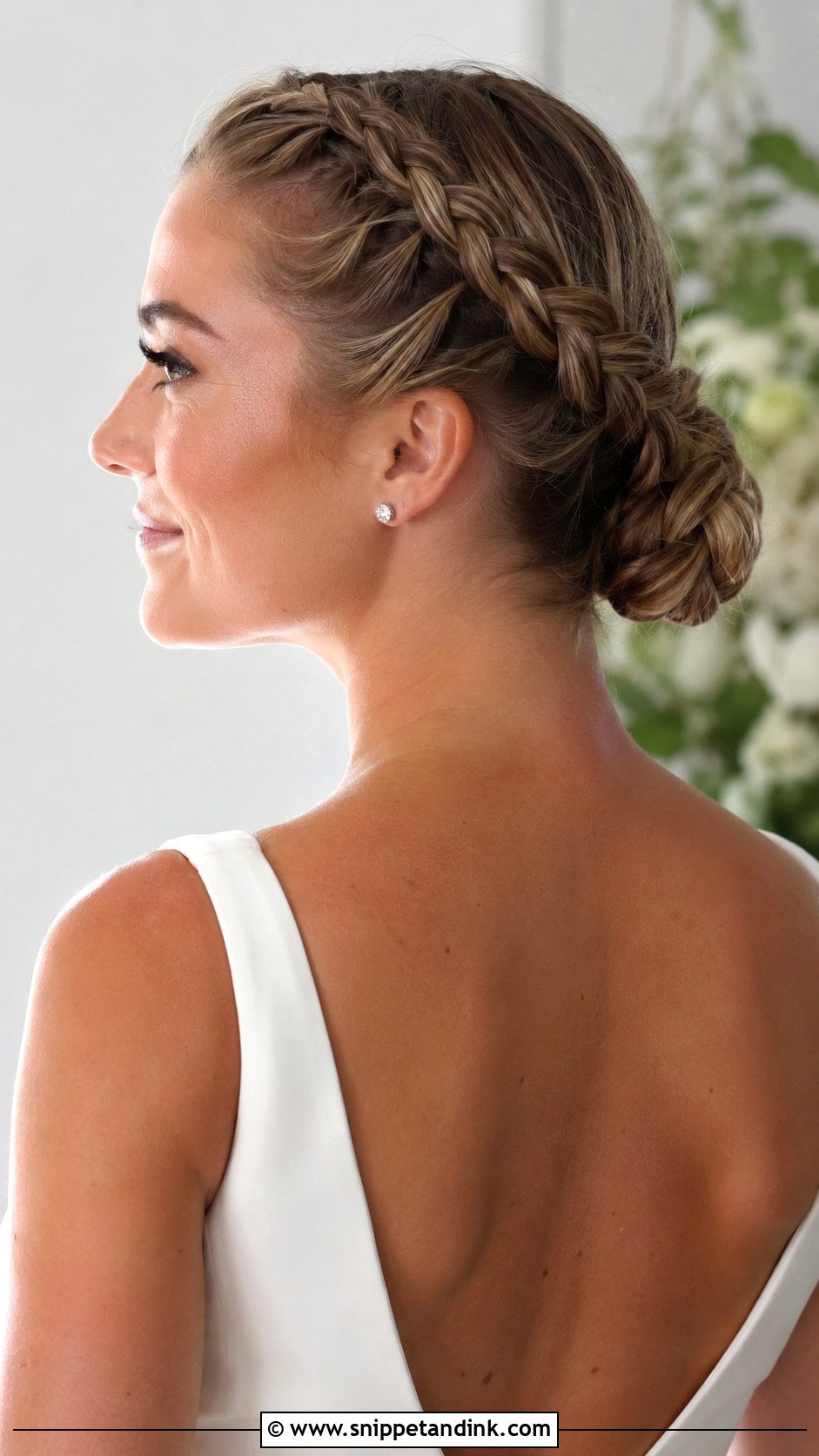
Two Dutch braids into a single bun are what I suggest to brides who know they’ll dance hard. The braids lock hair close to the scalp on both sides, and the bun ties everything together at the back, so very little can move. If you want it softer, I pull the braids out slightly. It suits active and outdoor weddings, and a few pins or flowers can mark where the braids meet the bun.
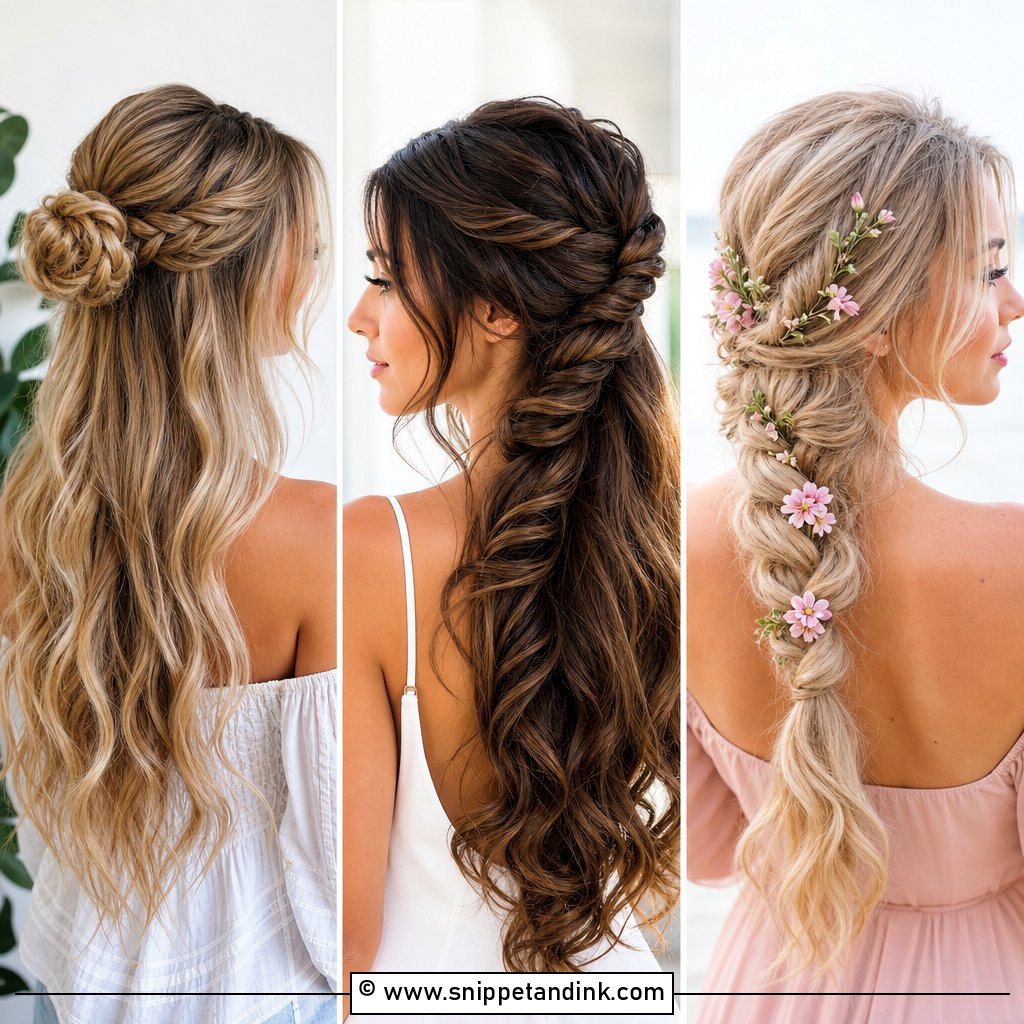
20. Braided Half Crown
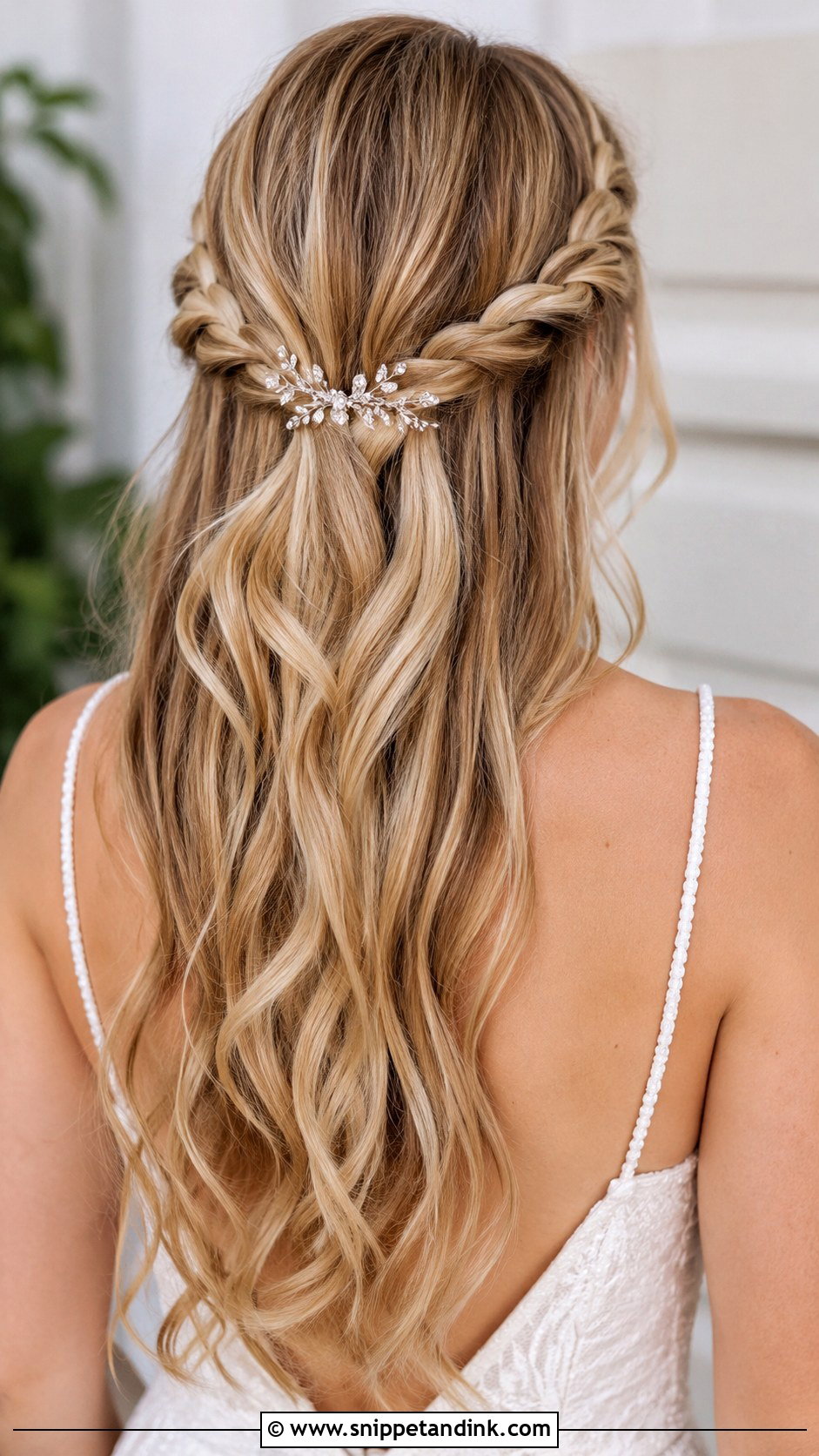
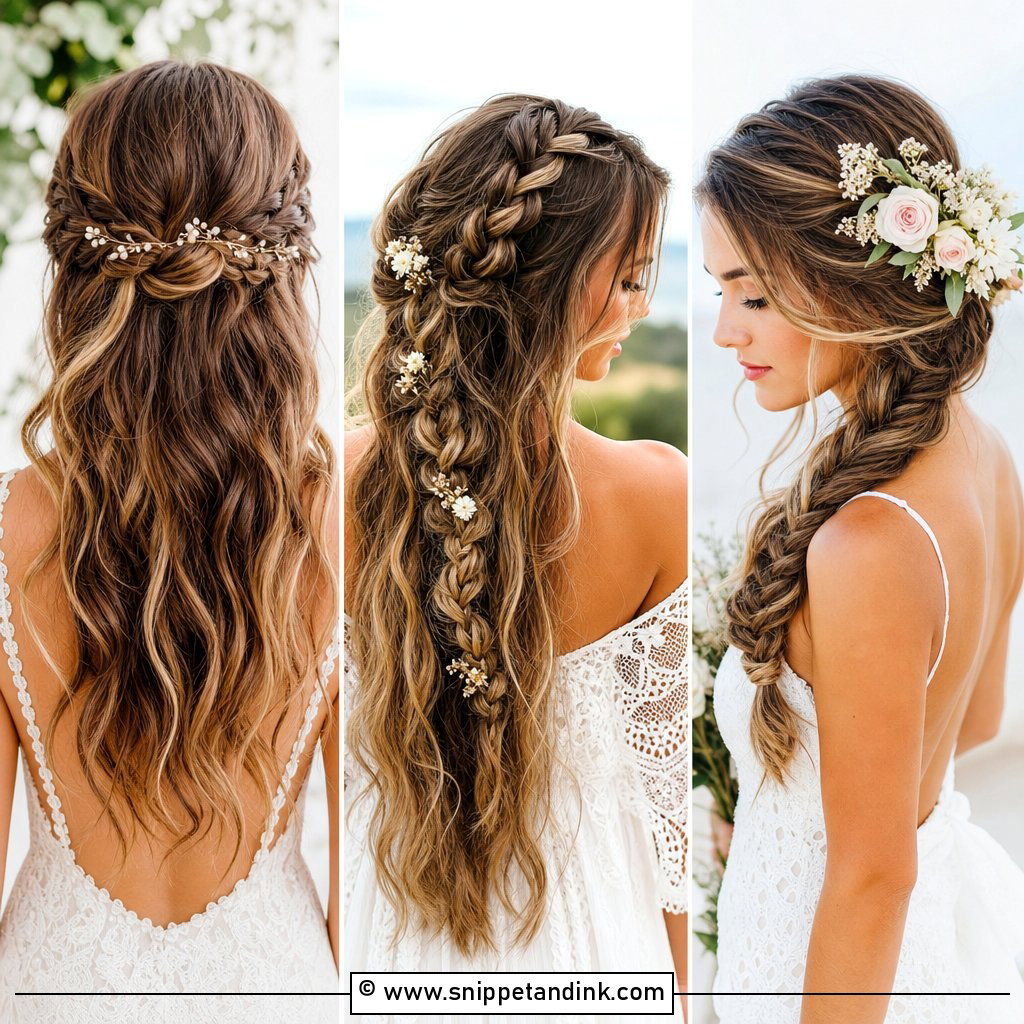
A braided half crown braids back from each temple and joins at the back of the head, leaving the rest loose. It’s the most flexible style here: it works with a veil or without, and the braids keep the face clear while the lengths move. I braid it slightly loose and pin each braid under the other at the join to hide the elastics. Waves below and small flowers along the braid suit boho, garden and beach weddings.
21. Loose Braid With Pearls
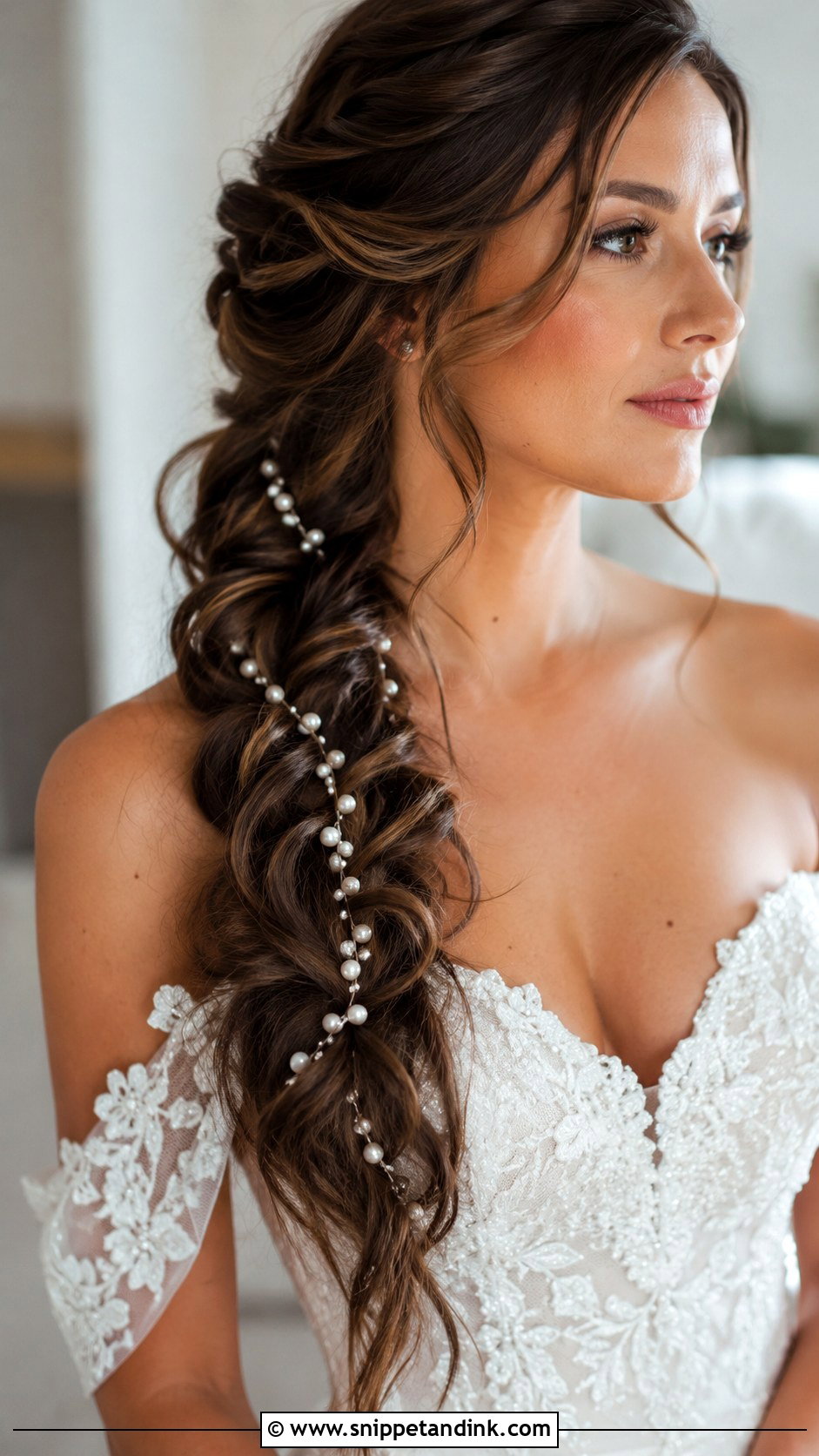
Pearls in a braid usually come one of two ways: as pearl pins tucked into the braid after it’s done, or as a pearl strand braided into the hair. I prefer pins, because a pearl strand can pull and tangle when it’s removed. Pull the braid apart gently for texture before the pins go in. Pearls sit equally well in a braid over one shoulder or in a soft updo, and they suit formal and modern weddings.
22. Braided Faux Hawk
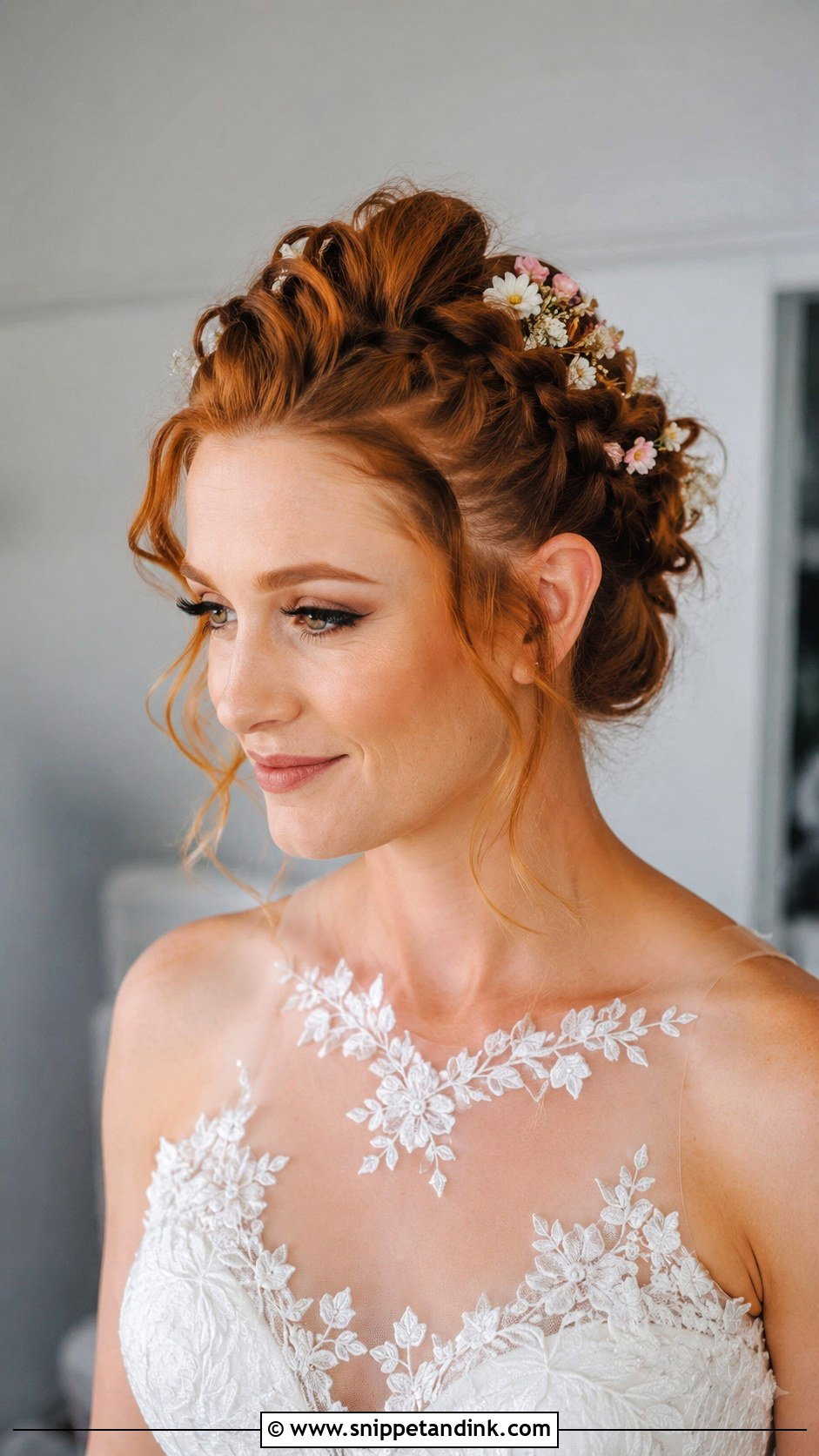
A braided faux hawk braids hair tightly along both sides of the head and pushes volume to the centre, and it looks bold or soft depending on how loose the centre section is. I backcomb that centre for height and leave the braids neat at the sides. It suits a bride who wants something unusual and is comfortable with attention on her hair. A few small flowers or pins soften it for a creative or contemporary wedding.
23. Braided Updo With Greenery
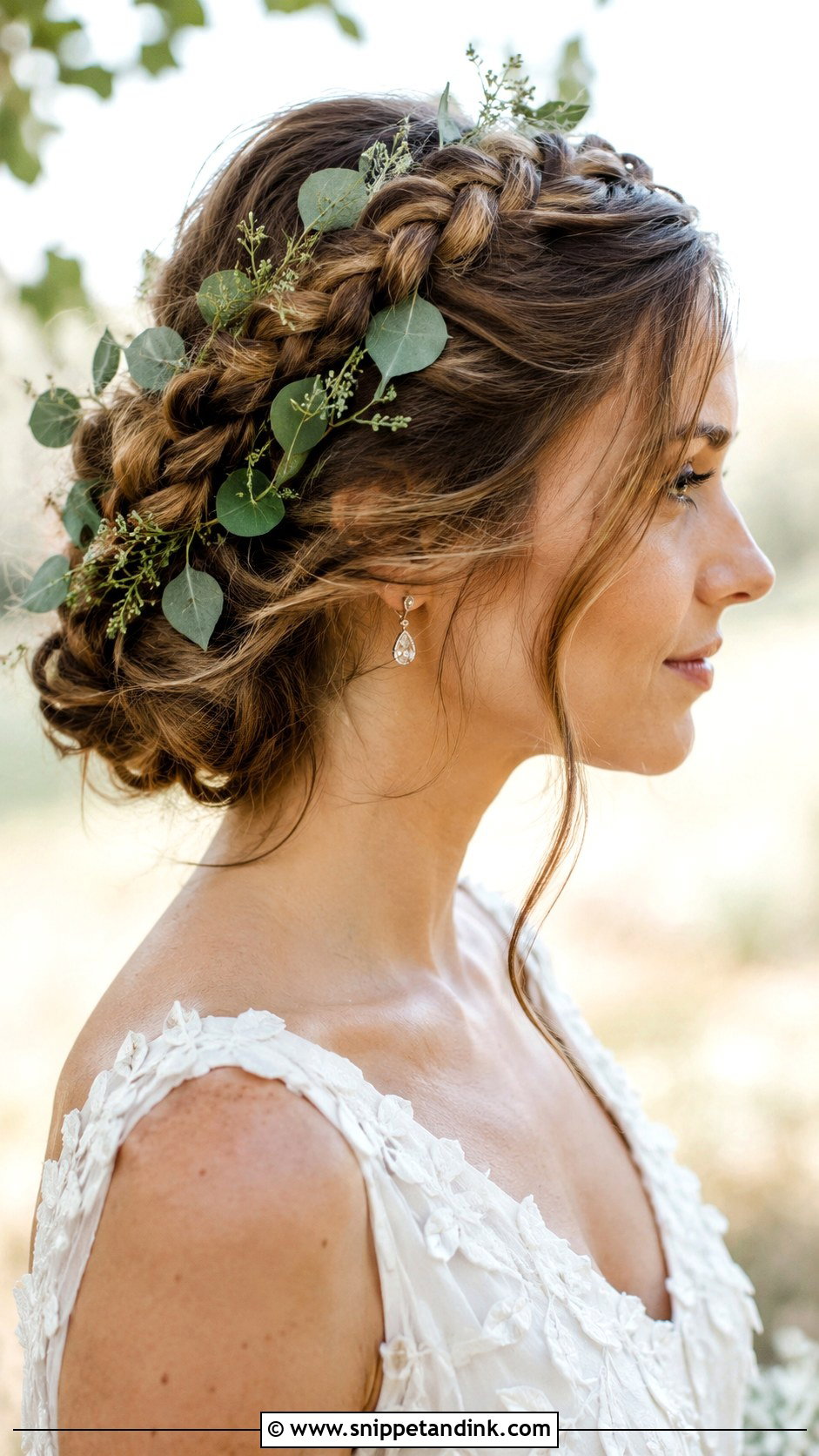
Greenery in a braided updo should be light and sturdy. Eucalyptus and ruscus hold up well out of water; delicate ferns and herbs wilt in heat. I ask for short stems that can be tucked into the braid without long stalks poking out. Leave a few strands loose at the face. With a handful of small flowers among the green, it suits boho, rustic and outdoor weddings.
24. Accent Braid With Down Hair
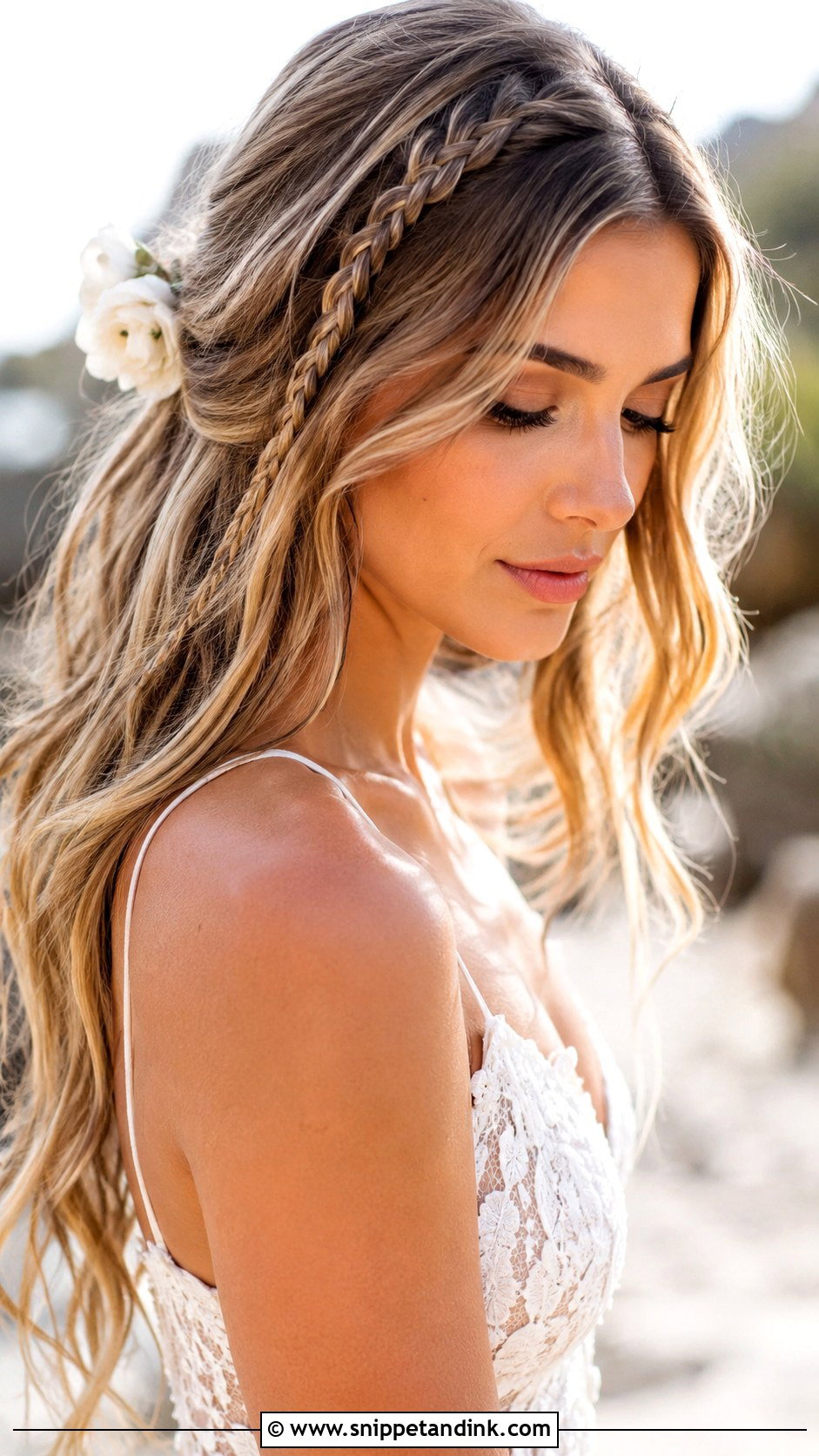
One or two thin braids in otherwise loose hair is the subtlest option here, and the least risky. The accent braid can frame your face from the temple or run around the back like a band. Because the rest is down, I set waves with pins while they cool so they last longer. A small flower or pin on the braid is enough. It suits beach, boho and garden weddings, and it’s easy to wear all day.
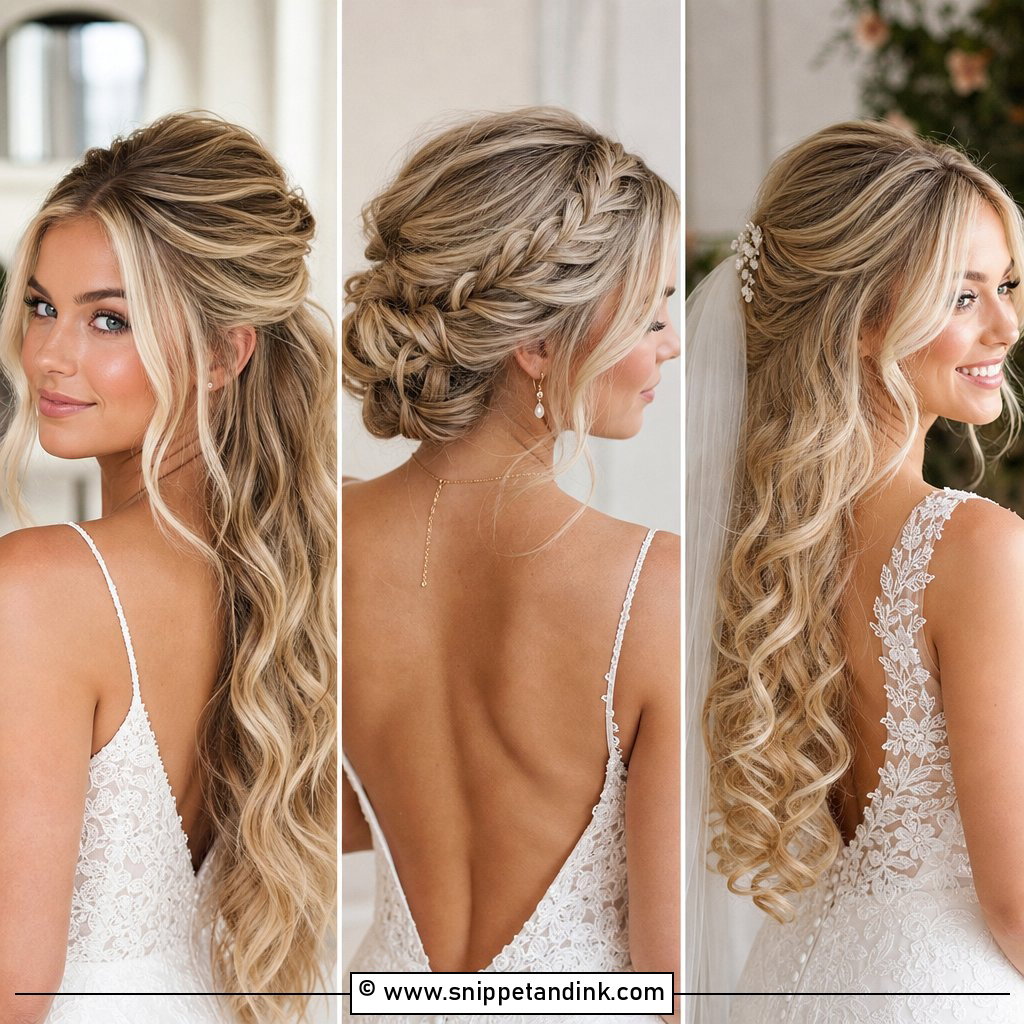
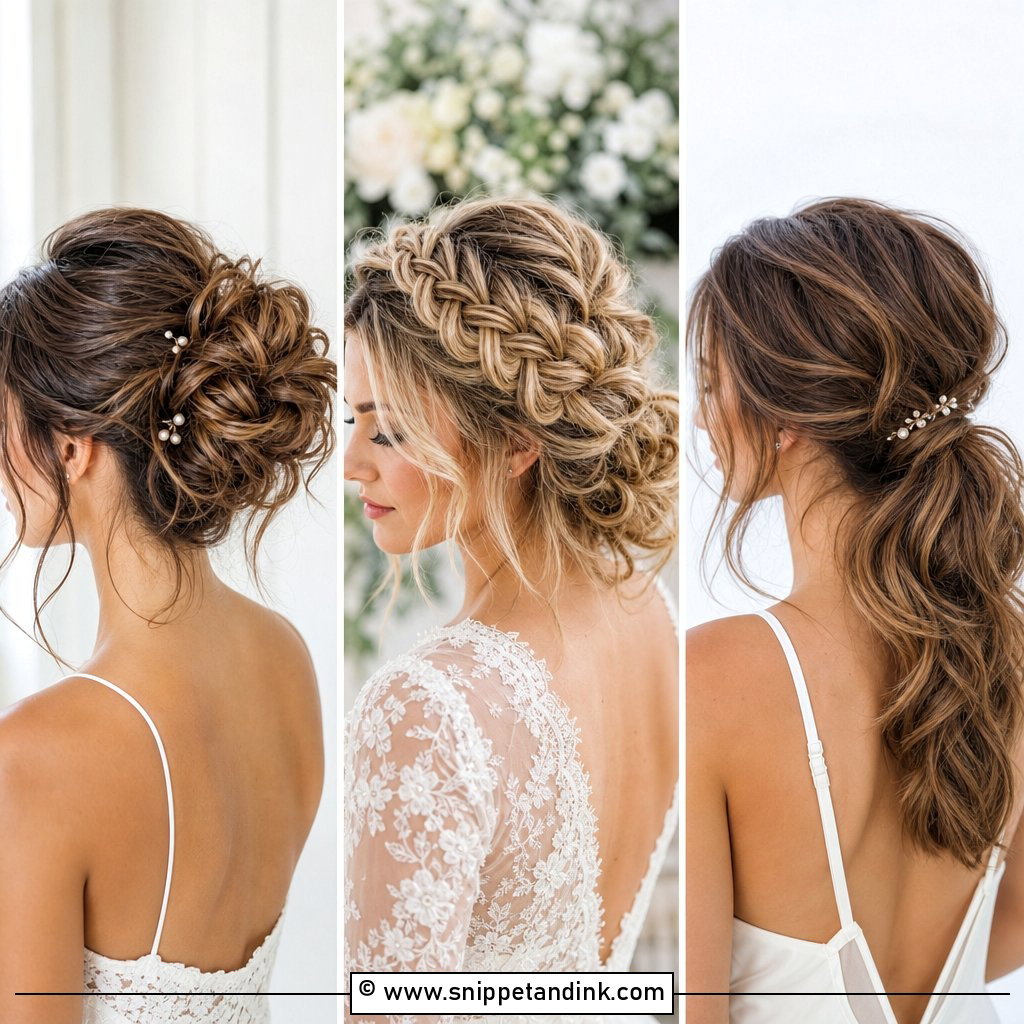
25. Braided Updo With Tiara
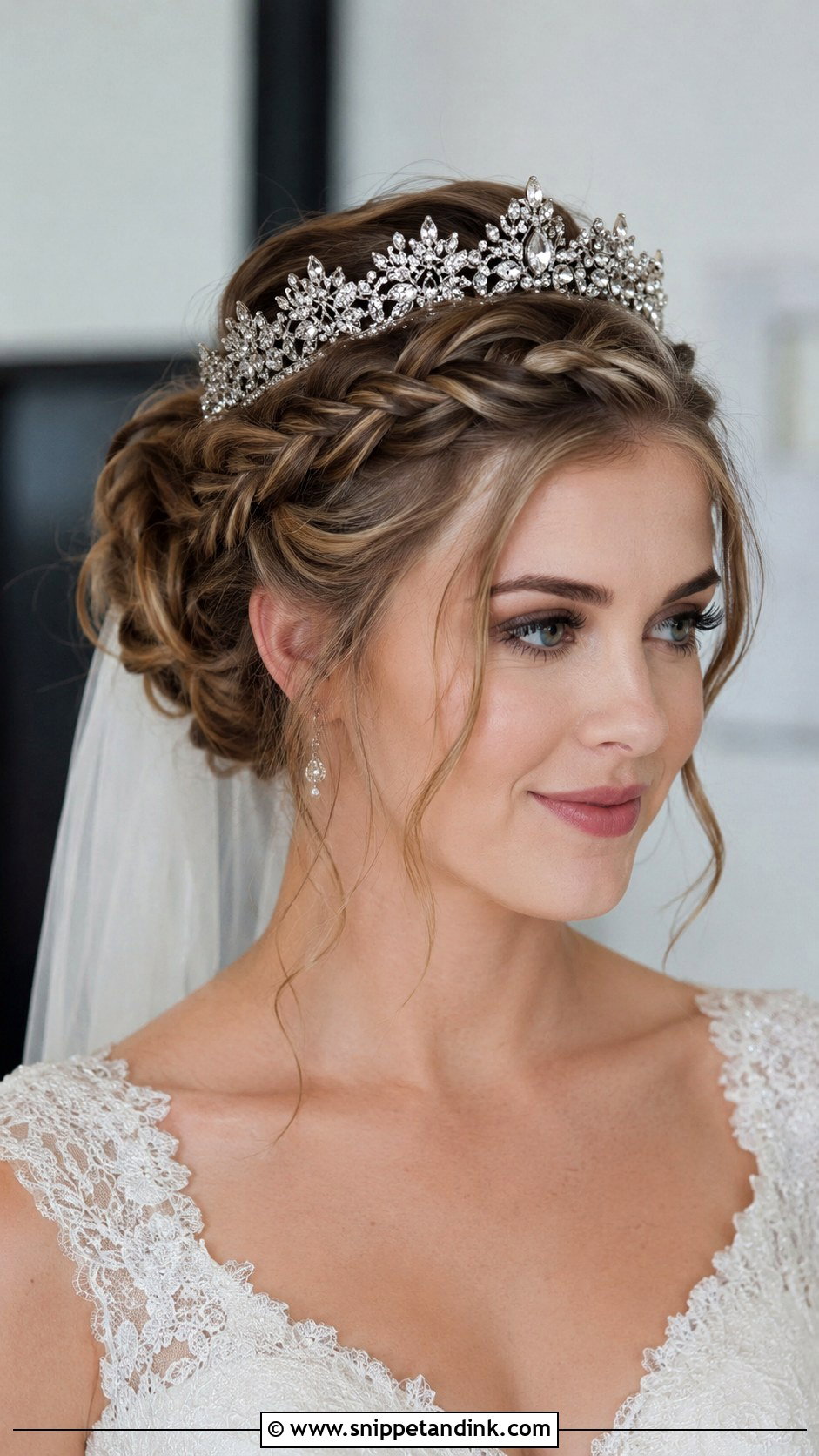
A braided updo with a tiara is about stability. A tiara needs a firm base, and a braid gives it one: I secure the tiara’s combs or loops with bobby pins threaded through the braided sections. Leave a few soft strands near the face. It suits formal weddings and a flowing gown, with any other jewellery kept small so the tiara stays the focus.
Pulling Braids Apart Without Losing the Pattern
That soft, wide look in most braid photos comes from pancaking: gently pulling the outer loops of a braid outward after it’s tied. It makes braids look fuller and more romantic, and it’s also where many DIY braids go wrong.
- Spray the braid with a light hold or texture spray first. It gives the loops grip, so they stay where you pull them.
- Pull from the edges only, a little at a time, working from the top down. Pulling from the middle breaks the pattern.
- Hold the braid firmly near the section you’re pulling so you don’t loosen the whole thing.
- Stop before you see scalp. On fine hair that point comes quickly.
- Finish with a flexible spray, not a stiff one, so the braid moves without cracking.
I always do this before the braid is pinned into place. Once it’s coiled into a bun or wrapped into a crown, pulling at it loosens the pins.
Which Braid Holds Up to Your Day?
The braid that will look best is the one your hair’s length and texture can actually support for the whole day. Crown and halo braids need length; fishtails show best on thick hair; accent braids suit almost anyone. Consider your veil and the weather too: humidity and wind are hard on loose waves but easy on a tight braid. Bring two or three photos to your trial, and plan where any flowers, pearls or a tiara will go before the braids are done.
You'll Like These Ideas:



Leave a Reply