
WONA Concept gowns are built rather than draped, and that changes how you shop for one. The label is known for sculpted corsets, crisp Mikado, dimensional lace, sheer panels and silhouettes with real architecture, so the gown does most of the talking and leans closer to couture drama than to a soft, forgiving bridal dress. When I style a bride in one of these, my first job is restraint: the veil, earrings, shoes and bouquet have to stay out of the structure’s way. The twenty looks below run from a plain sheath to a full princess skirt, and for each one I’ve noted what I would check at the fitting and where it tends to go wrong.
How a Built Corset Gown Should Feel at the Fitting
A WONA bodice is engineered with boning, cups and often an internal waist stay, so it fits differently from a stretchy sample in a high street shop. The sample you try on will be clipped to your body, which means you are judging shape, not comfort. I always tell brides to look past the clips and pay attention to three things: where the waist sits, how the neckline behaves when you breathe in, and whether you can raise your arms without the top moving.
Bring the shoes you plan to wear, or at least a pair with the same heel height, to every fitting after the first. The hem is set to that height, and switching heights later means another appointment. Wear smooth nude underwear and skip a bra unless the gown is built for one; most structured corsets have their own cups.
Timing the order
Couture gowns are made to order, and production plus shipping can take many months, followed by two or three fittings. Lead times vary by boutique and season, so ask for the latest realistic delivery date when you order, and plan your final fitting about two to four weeks before the wedding so your measurements are close to what they will be on the day.
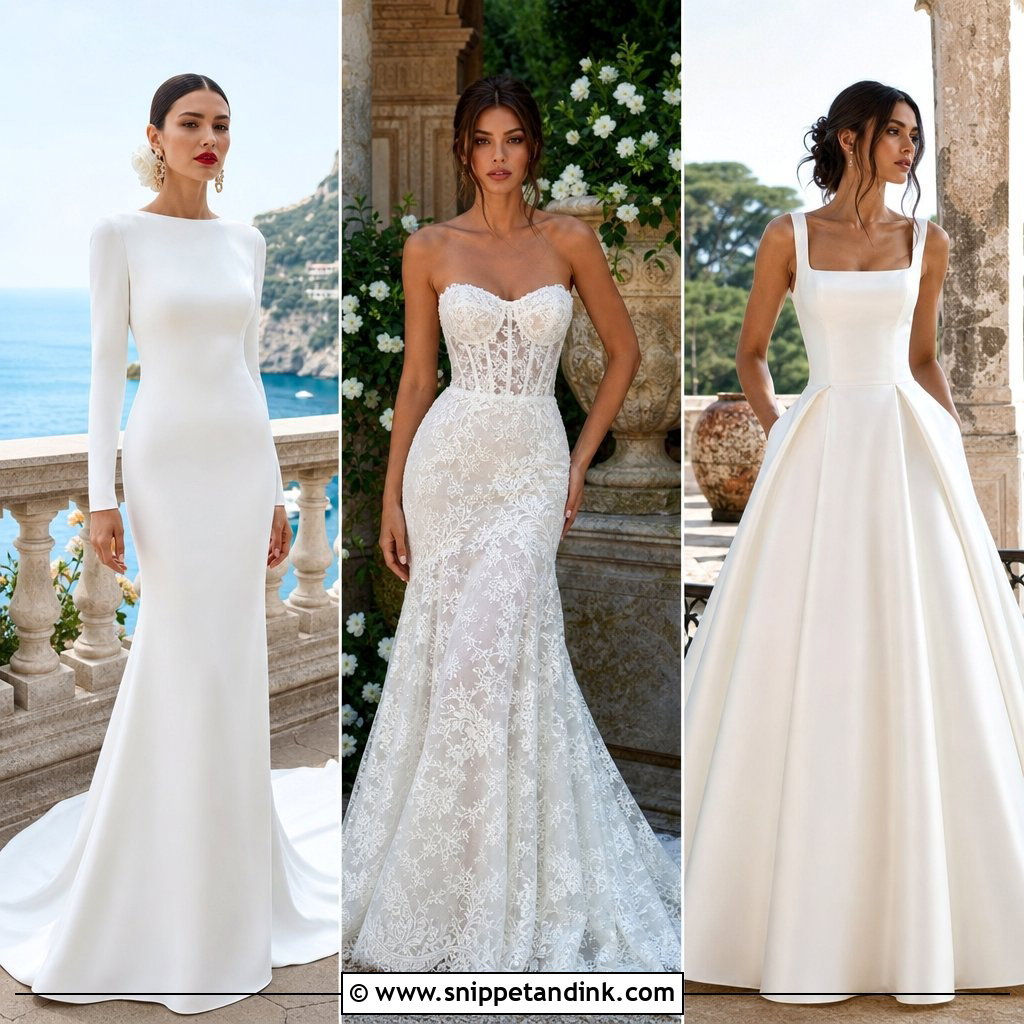
1. Sculptural Mikado Sheath Wedding Dress
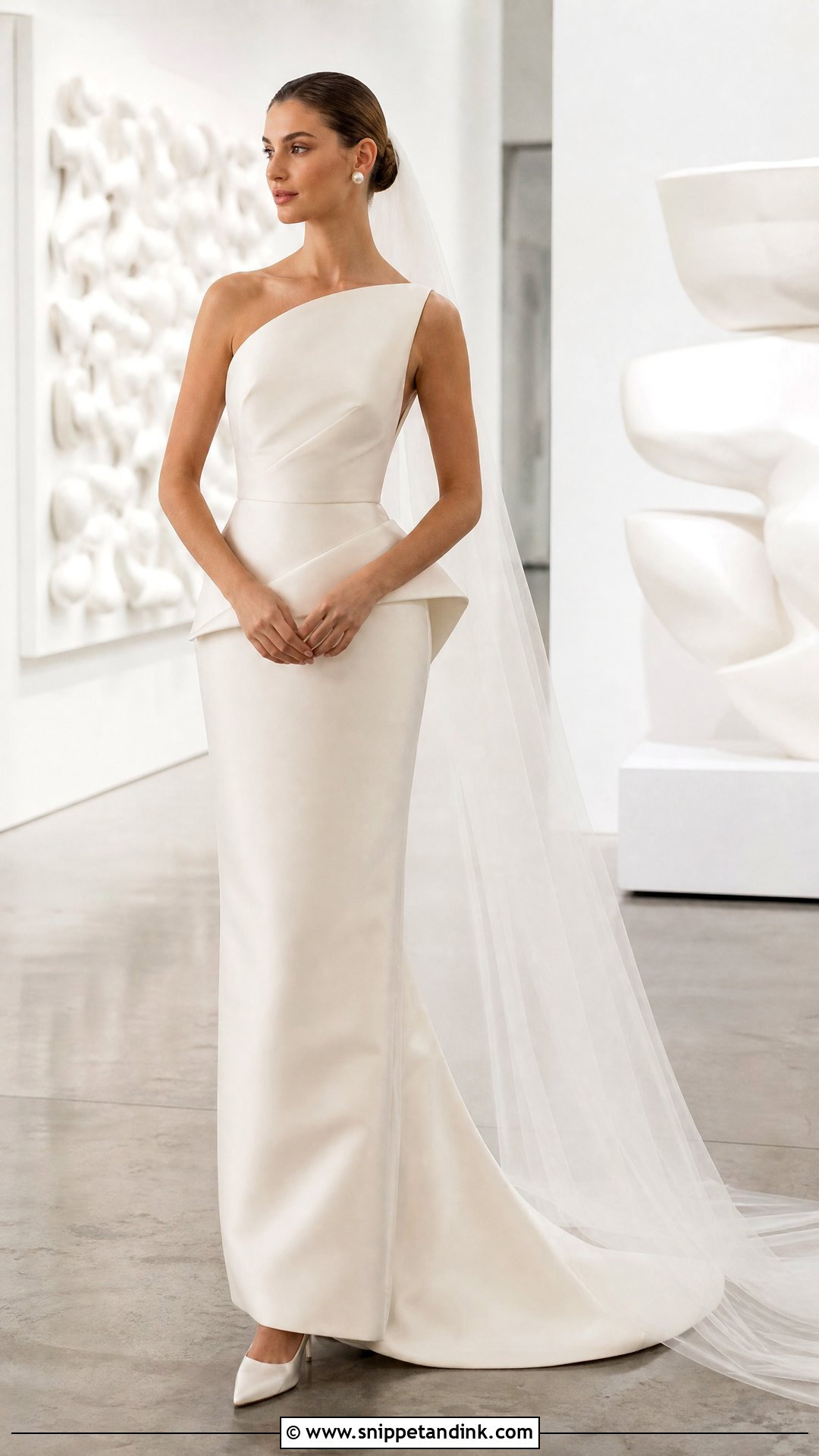
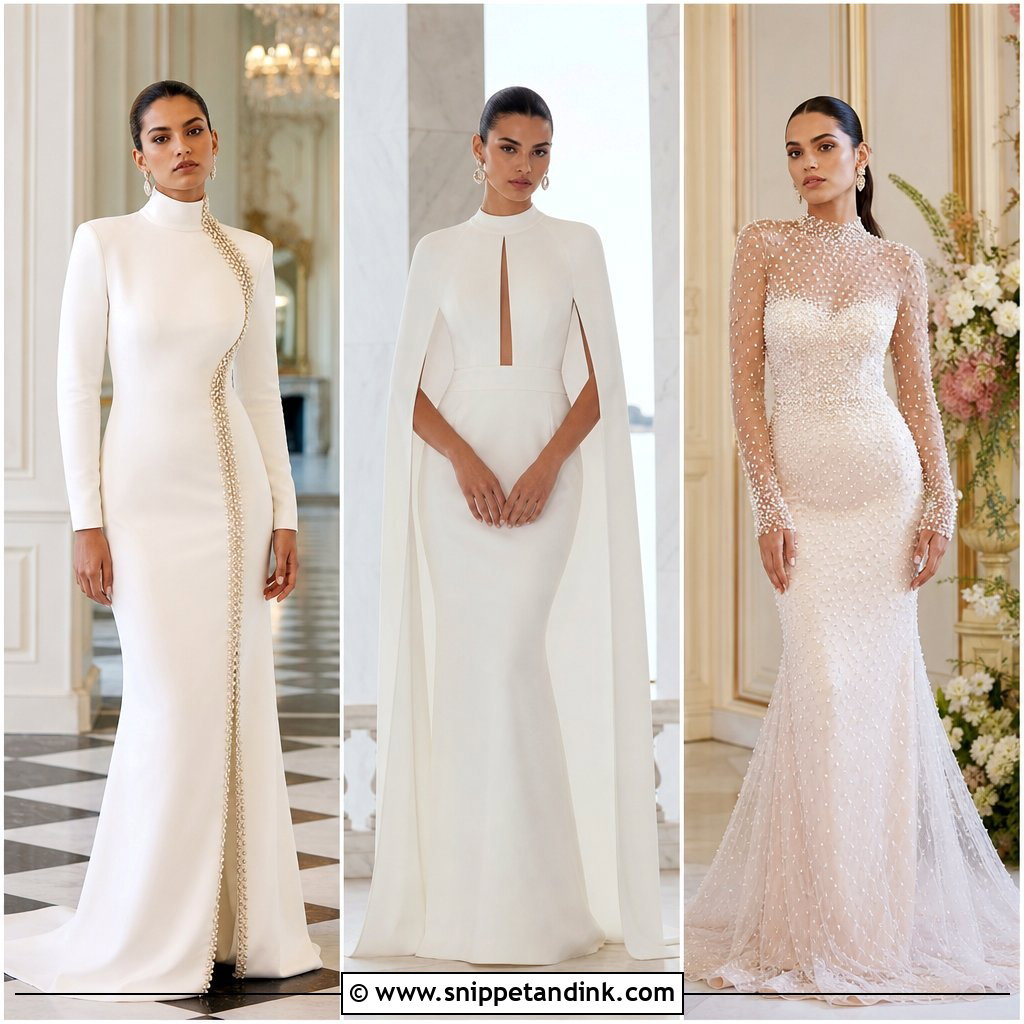
Mikado is a heavy, slightly stiff silk blend, which is why a sculptural Mikado sheath gown can carry a whole look with no beading at all. The fabric holds a line, so the clean neckline and long uninterrupted skirt read sharply in a hotel, gallery or courthouse. The catch is that Mikado shows every wrinkle at the hip once you sit, so I keep a handheld steamer in the getting-ready room for this one. Pointed ivory pumps, pearl studs, a compact white bouquet and a sleek low bun are all it needs. Want more coverage? Ask for wider straps or a detachable cape rather than adding a jacket that hides the seams.
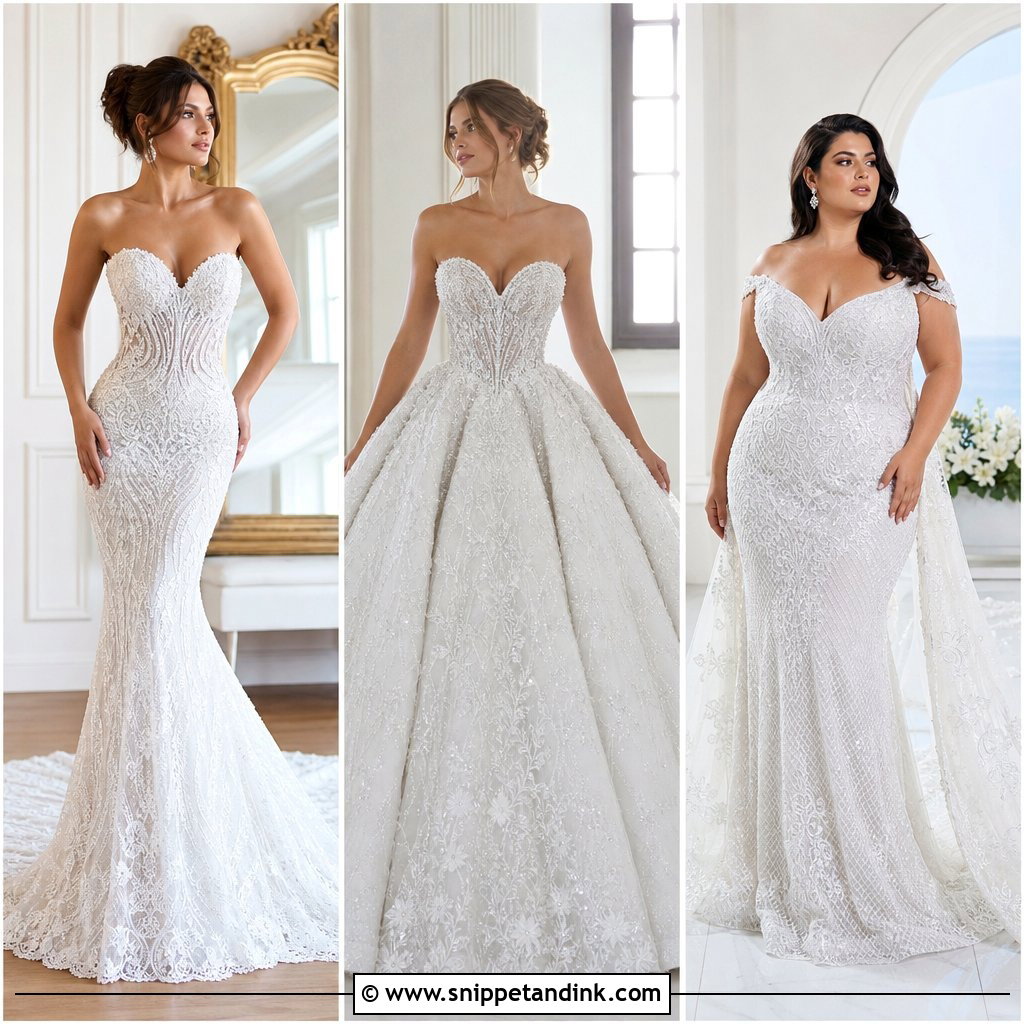
2. Strapless Ball Gown Wedding Dress
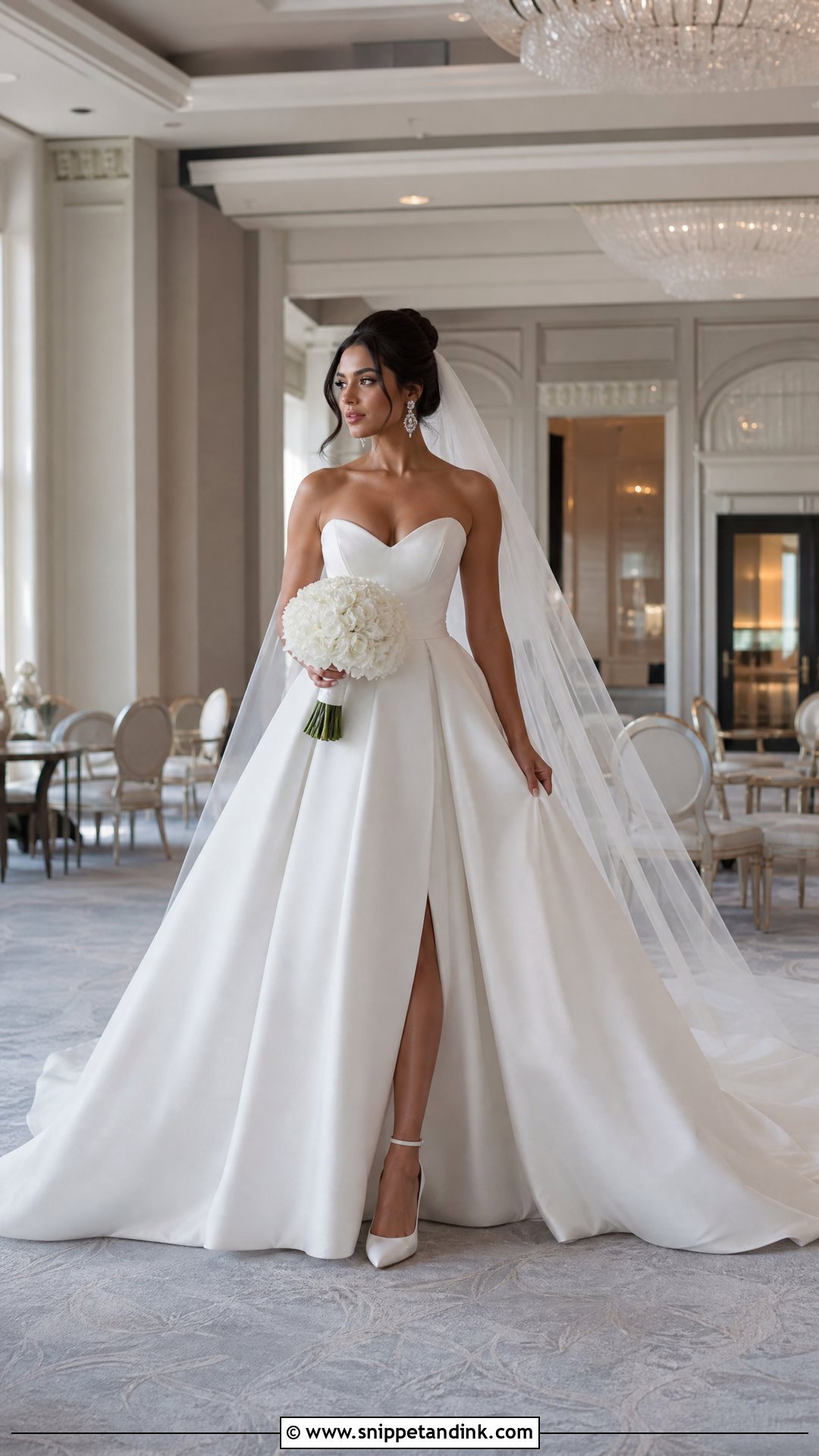
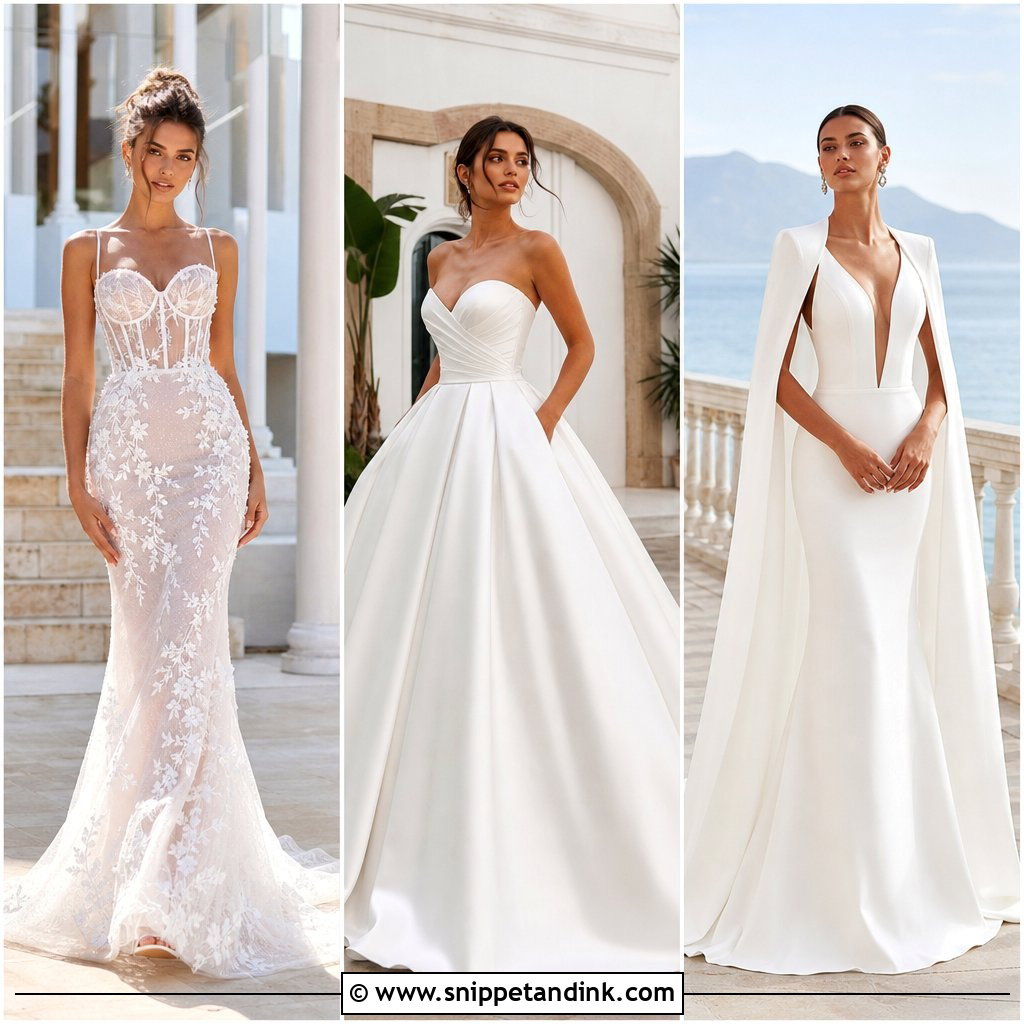
A strapless ball gown lives or dies on the corset. In satin or Mikado with a softly curved neckline, the bodice has to grip your ribcage firmly enough that you never hitch it up during the vows, and I test that by having the bride raise both arms in the fitting room. The skirt already brings the volume, so pair it with a cathedral veil, crystal drops and ankle-strap satin heels, and carry a tidy round bouquet instead of a cascade. Ask about pockets and the bustle at the first appointment, not the last. A big skirt with a fiddly bustle is the most common reason a bride spends half her reception holding fabric.
3. Draped Deep V Wedding Dress
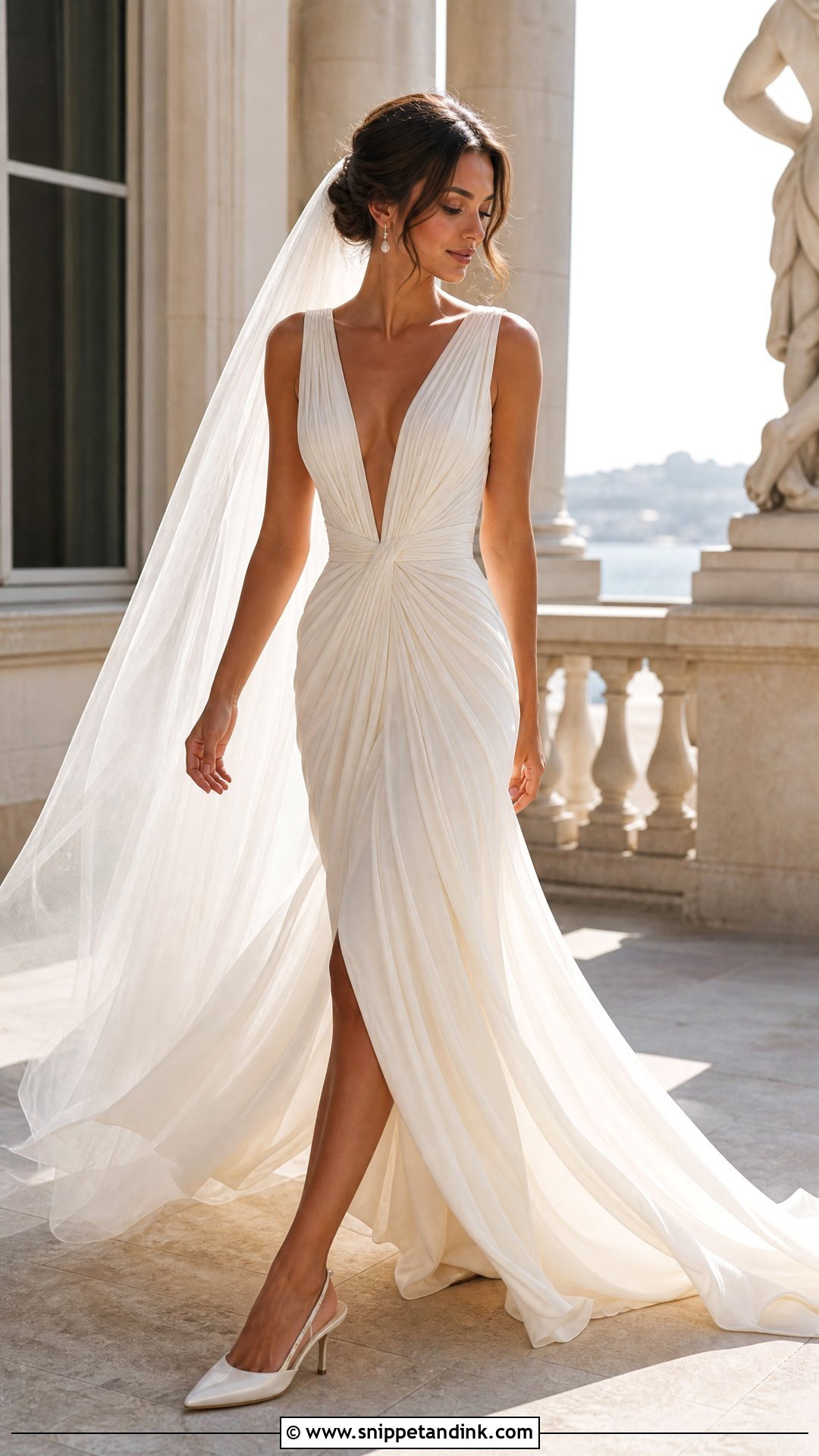
Draping across a deep V is controlled pleating, and the internal structure underneath matters more than the pleats you can see. I always ask the seamstress to show me the stay tape and cups before we talk styling, because a plunge that shifts when you hug people becomes a distraction. Keep jewelry to small diamond studs or a fine pendant, add pointed slingbacks and a fingertip veil, and soften the hair into a low updo with loose face-framing pieces. Illusion mesh across the gap is a good fix if you know you will be nervous all day. It suits an outdoor or destination ceremony where the fabric can move a little in the breeze.
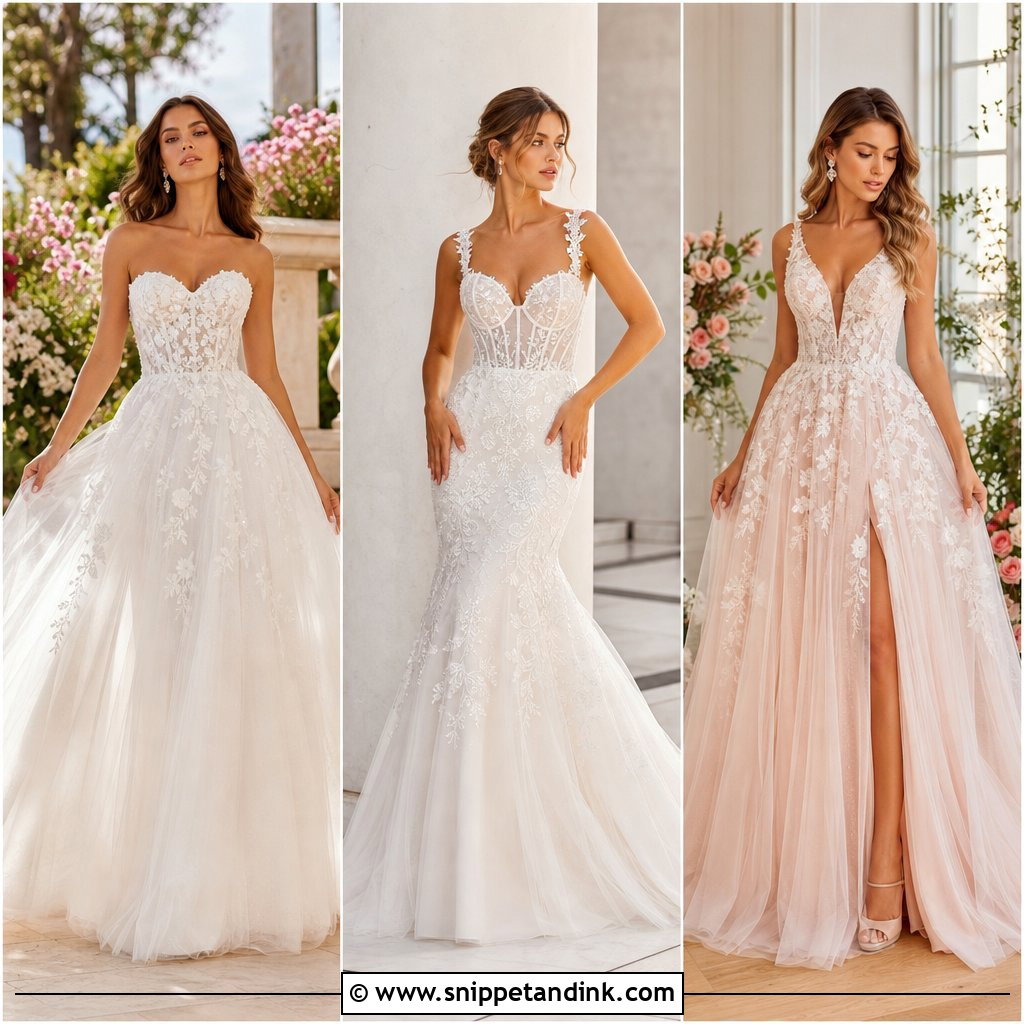
4. Corset Wedding Dress With Sheer Sleeves
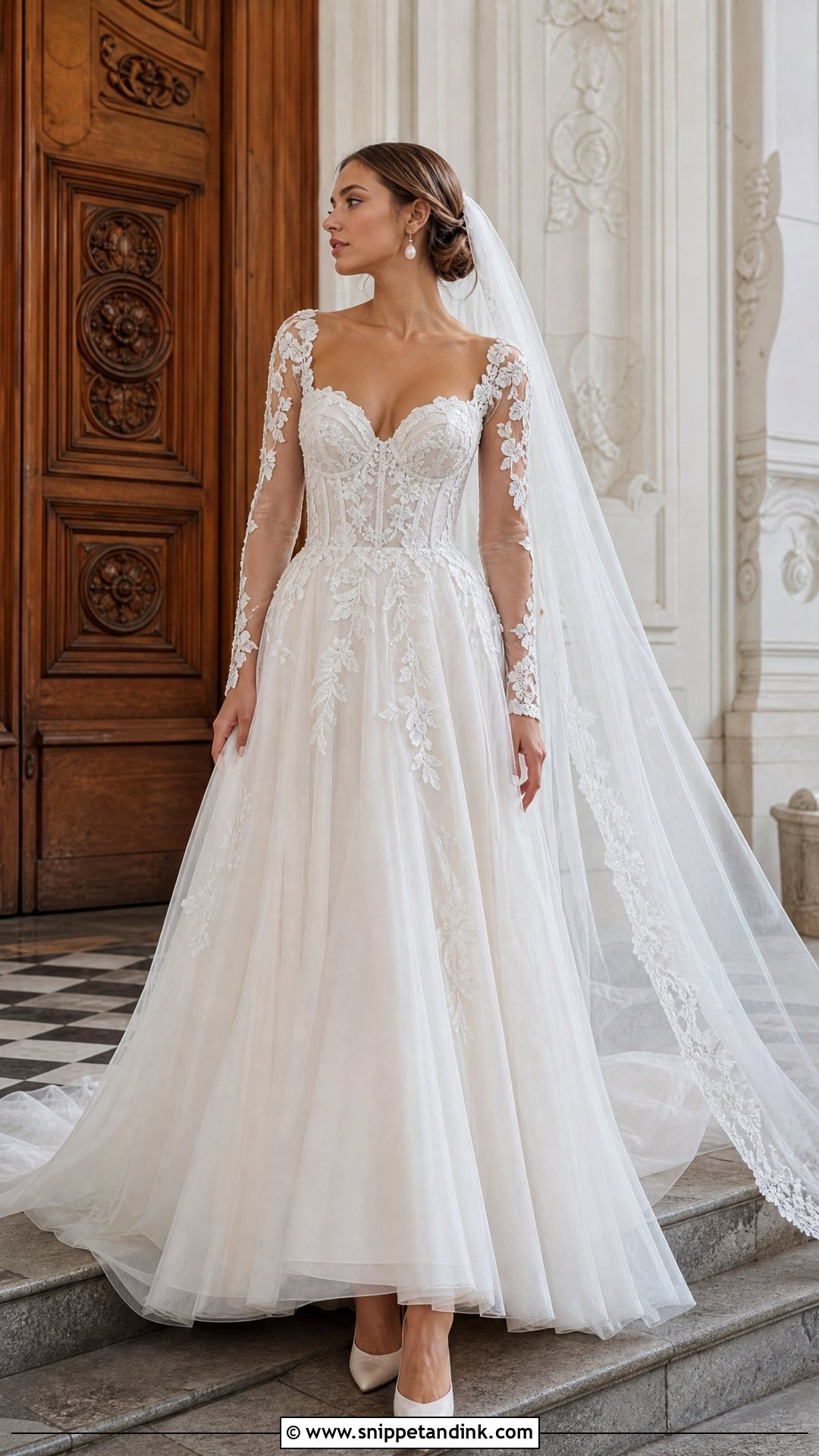
Visible boning and illusion sleeves look delicate, but this gown carries a lot of support. My worry with sheer sleeves is always the cuff: if it is fitted tight at the wrist, it pulls every time you lift a glass. Ask for a little ease there and at the back of the shoulder. An A-line skirt balances the structured top, and closed-toe ivory heels, pearl drops and a lace-edged veil that repeats the appliqué tie it together. Keep the hair in a low twisted bun so the sleeves stay visible. I like it most for fall and winter, or for an indoor ceremony where a little coverage feels right.
5. Beaded Minimalist Wedding Dress
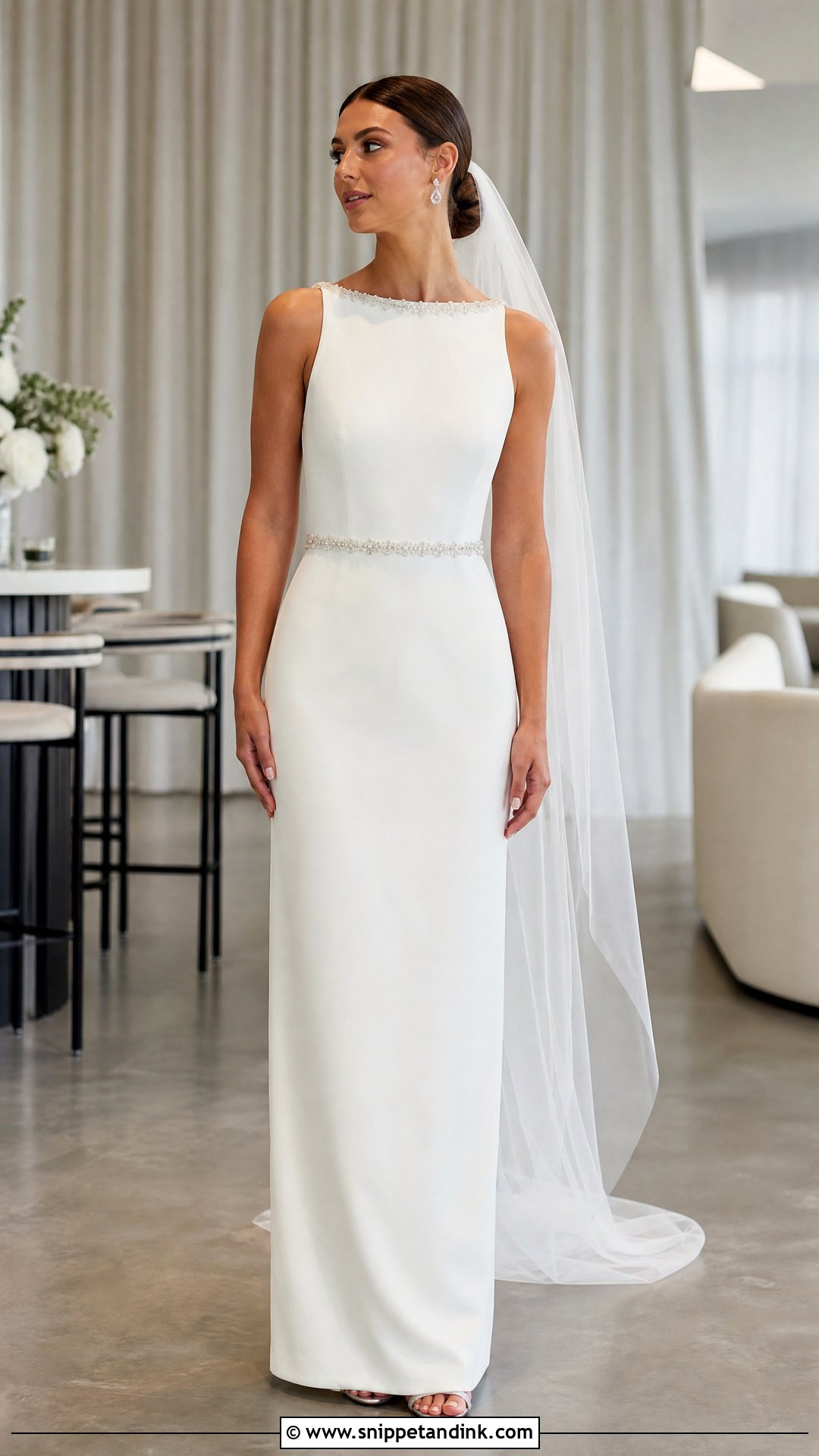
Minimal does not have to mean bare. On a column or sheath, I prefer beading that sits in one zone, the neckline, waist or the back, rather than a scattered all-over spray that flattens the silhouette in photos. Beads add real weight, and that weight pulls a lightweight skirt down over a long day, so walk and sit in it before the final hem is set. Metallic silver sandals, small crystal studs, a sheer chapel veil and a sleek ponytail keep it modern. It reads as quiet luxury at the ceremony, then picks up a soft sparkle once the reception lights go down.
6. Sheer Panel A-Line Wedding Dress
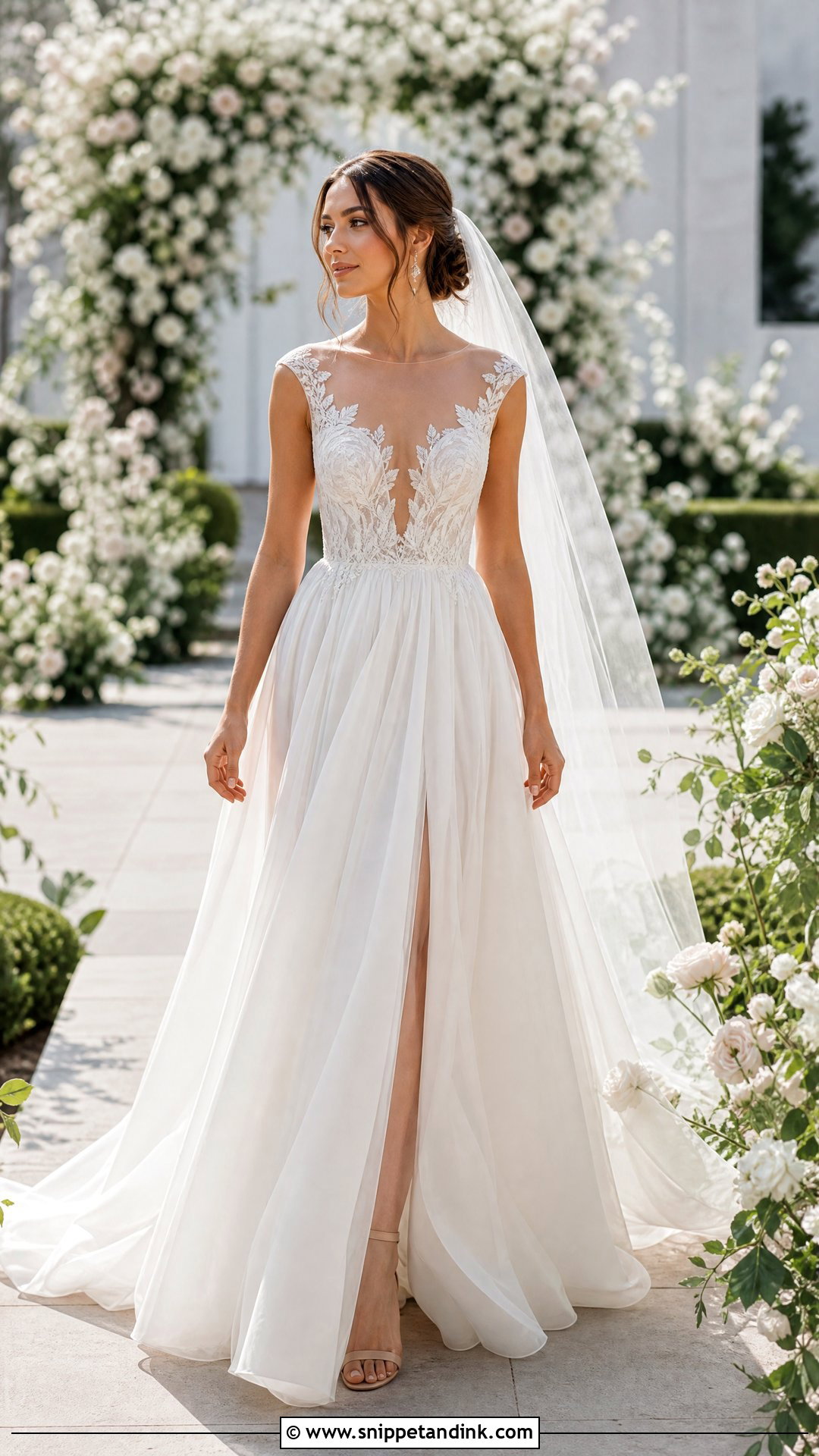
Sheer panels only work when the lining underneath matches your skin, and this is where I see the most disappointment. A panel that looks invisible under boutique lighting can show a pale stripe in flash photos if the underlay is a shade too light, so I take the bride outside to check it in daylight. The rest of the A-line should skim the hips and open gently. Nude-lined ivory heels, fine earrings and a light veil with no heavy border keep the eye on the cutouts. A loose low bun softens what can otherwise look a little sharp, and the gown suits gardens and bright, modern rooms.
7. Textured Tulle Wedding Dress
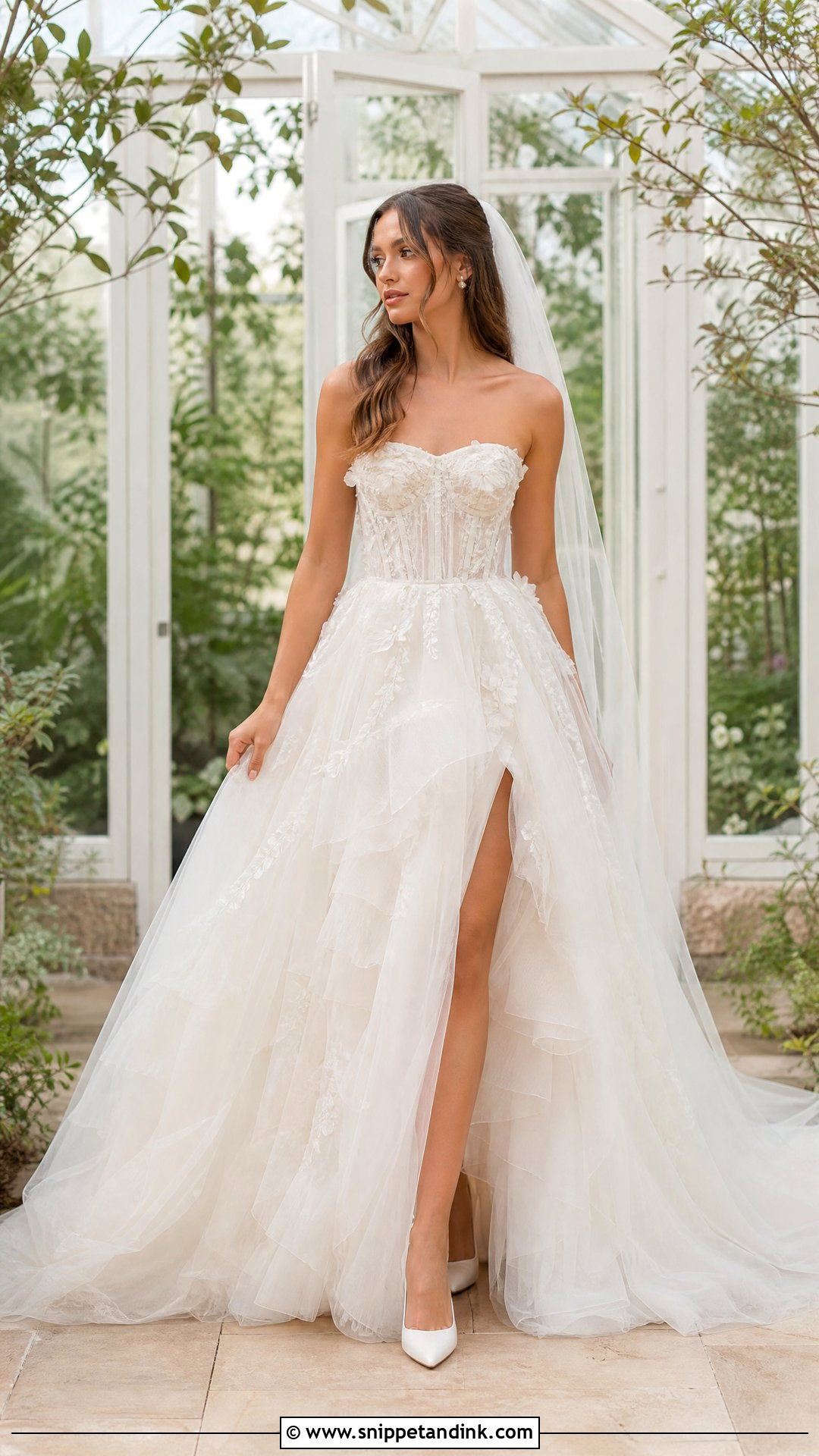
Textured tulle moves more than you expect. Gathered layers, pleats and three-dimensional flowers catch the air with every step, which is lovely in motion and a little chaotic in a breeze. I make sure the texture is concentrated in a few deliberate areas so it still shows your shape under the corset. Rub the tulle against the inside of your arm in the fitting room; cheaper or stiffer nets scratch after a few hours of dancing. Simple satin pumps, small pearl studs, a plain veil, a half-up style and a compact tonal bouquet in white or pale blush finish it without competing.
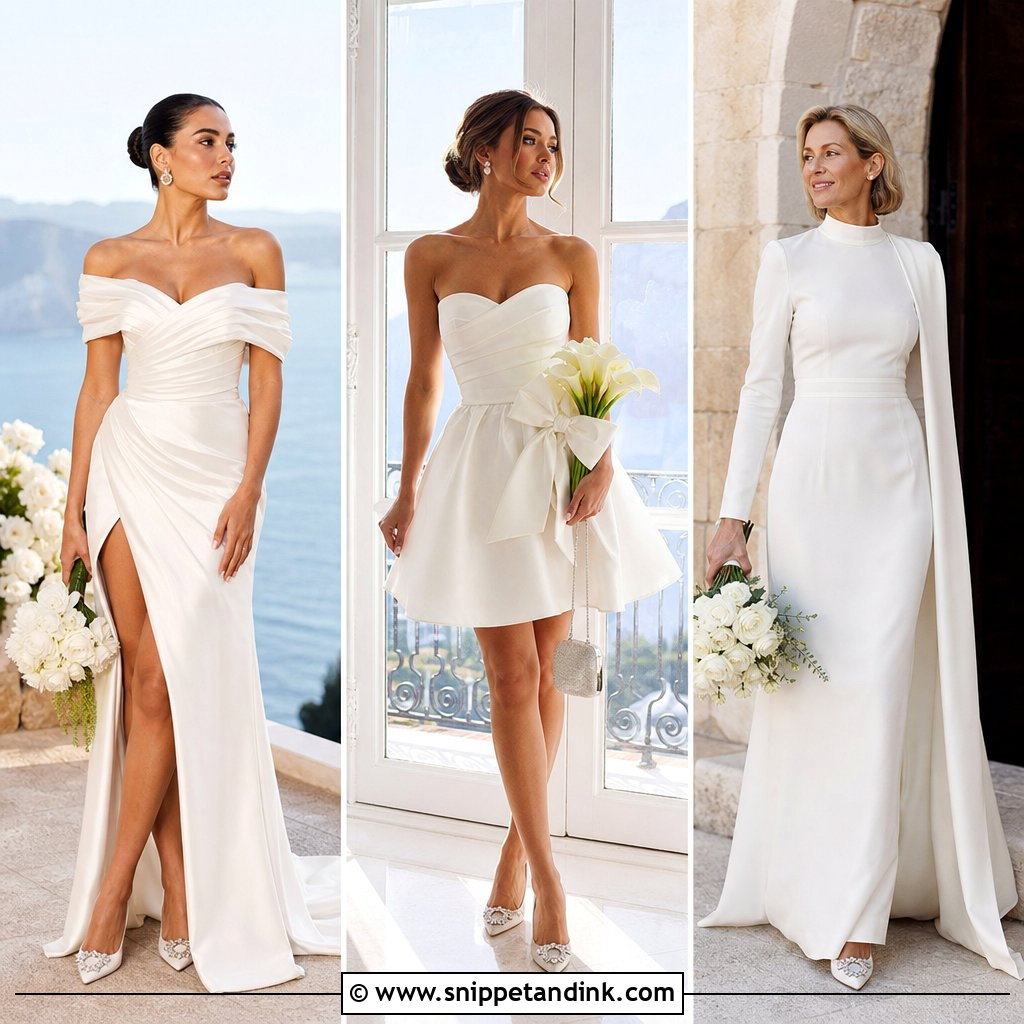
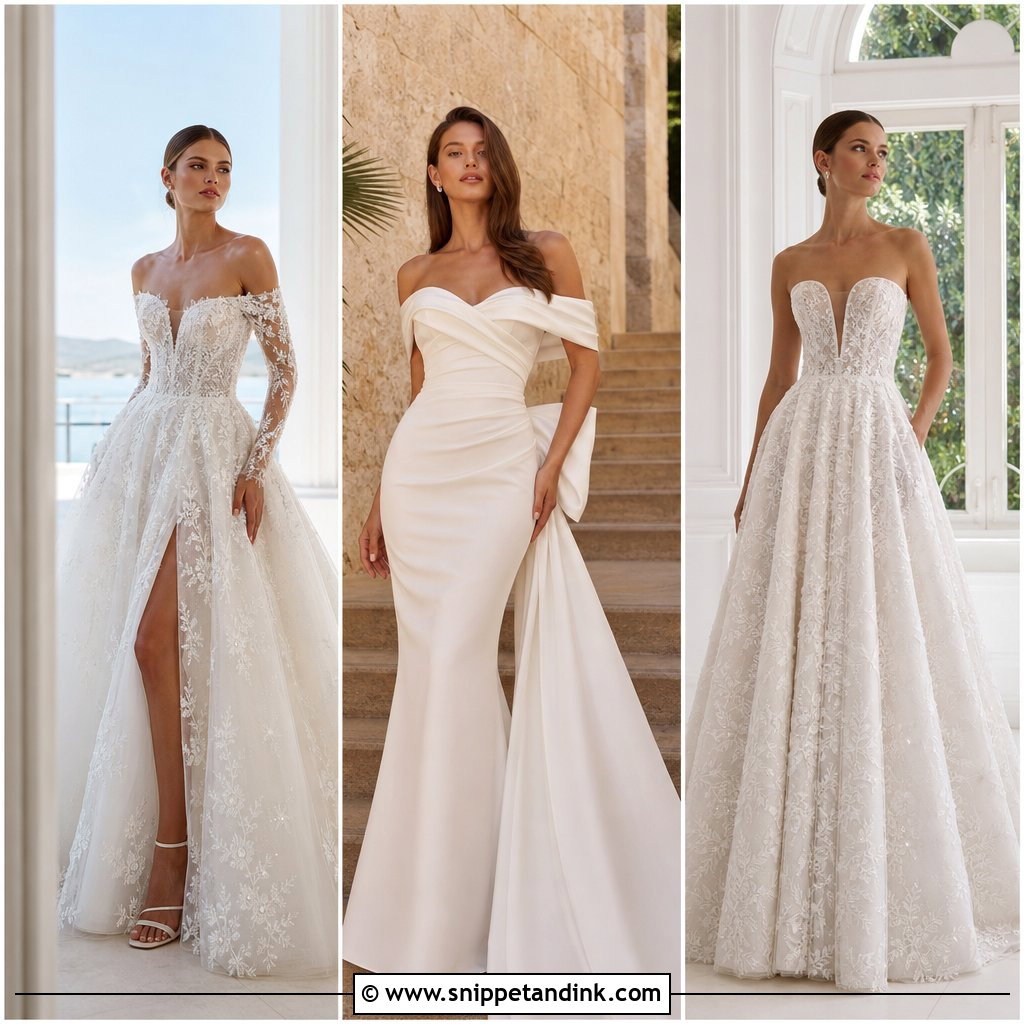
8. Off The Shoulder Satin Wedding Dress
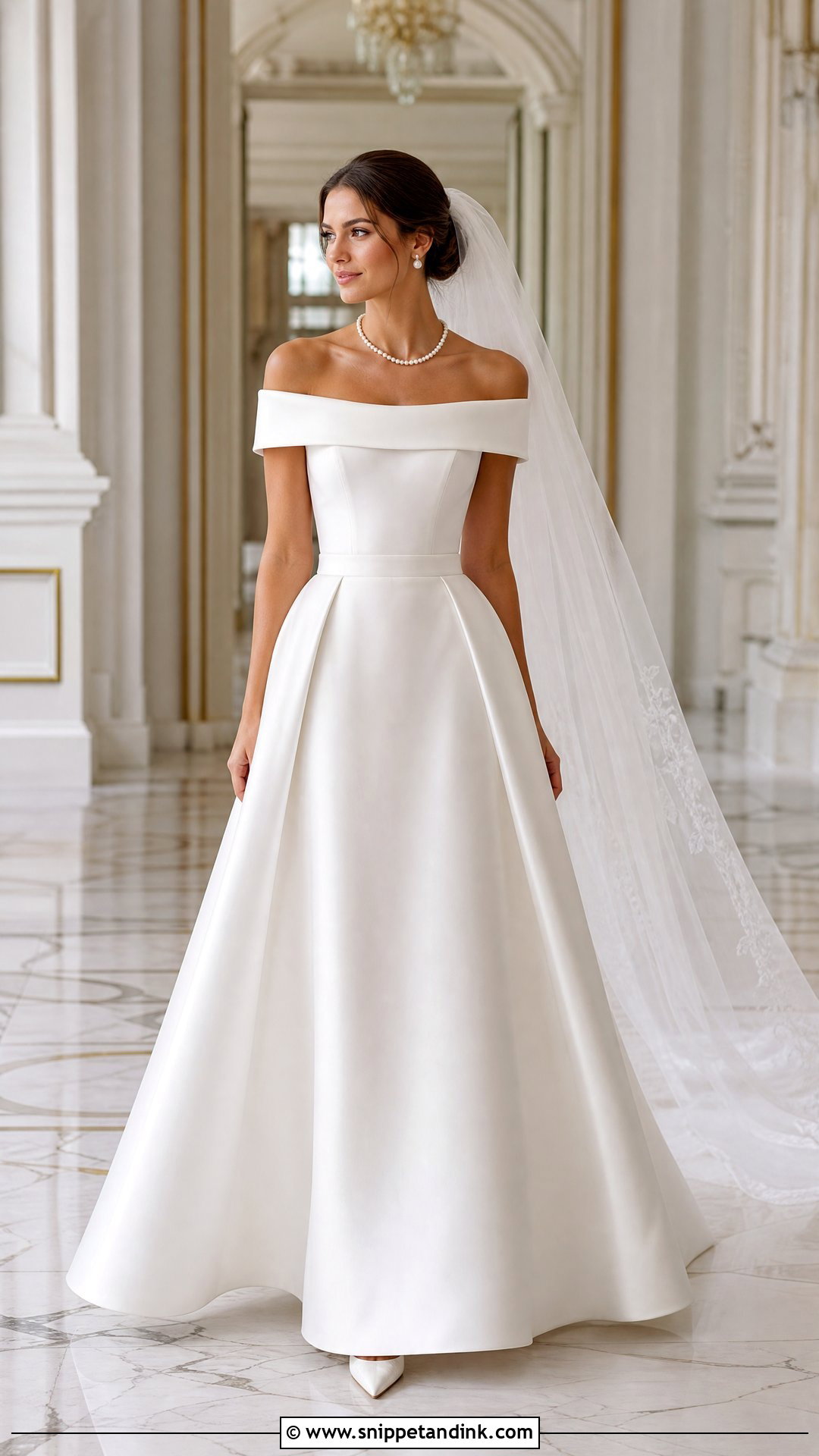
Satin folded off the shoulder is all about the internal band that holds it up. Without one, the neckline slides down the arm by the first dance, so I ask to see how it anchors before anything else. Choose a fitted waist with either an A-line or gently flared skirt, then add a short pearl necklace, matching earrings and pointed satin pumps. A cathedral veil gives the ceremony scale, and taking it off later reveals the collarbones again. I’d steer you toward a side-swept wave or a polished updo, since long loose hair covers exactly the part that makes this dress special. Ballrooms and historic venues suit it well.
9. Lace Mermaid Wedding Dress
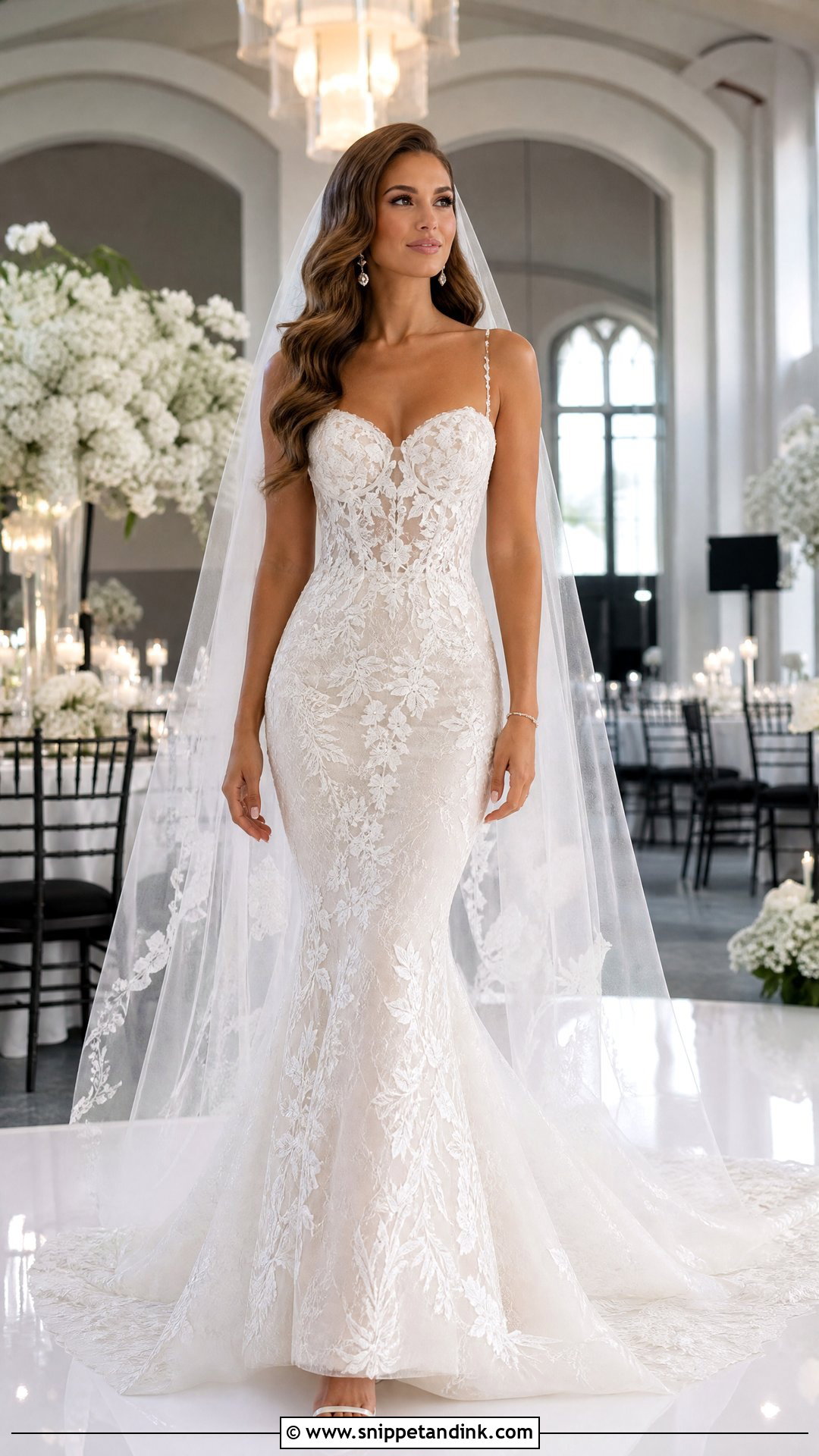
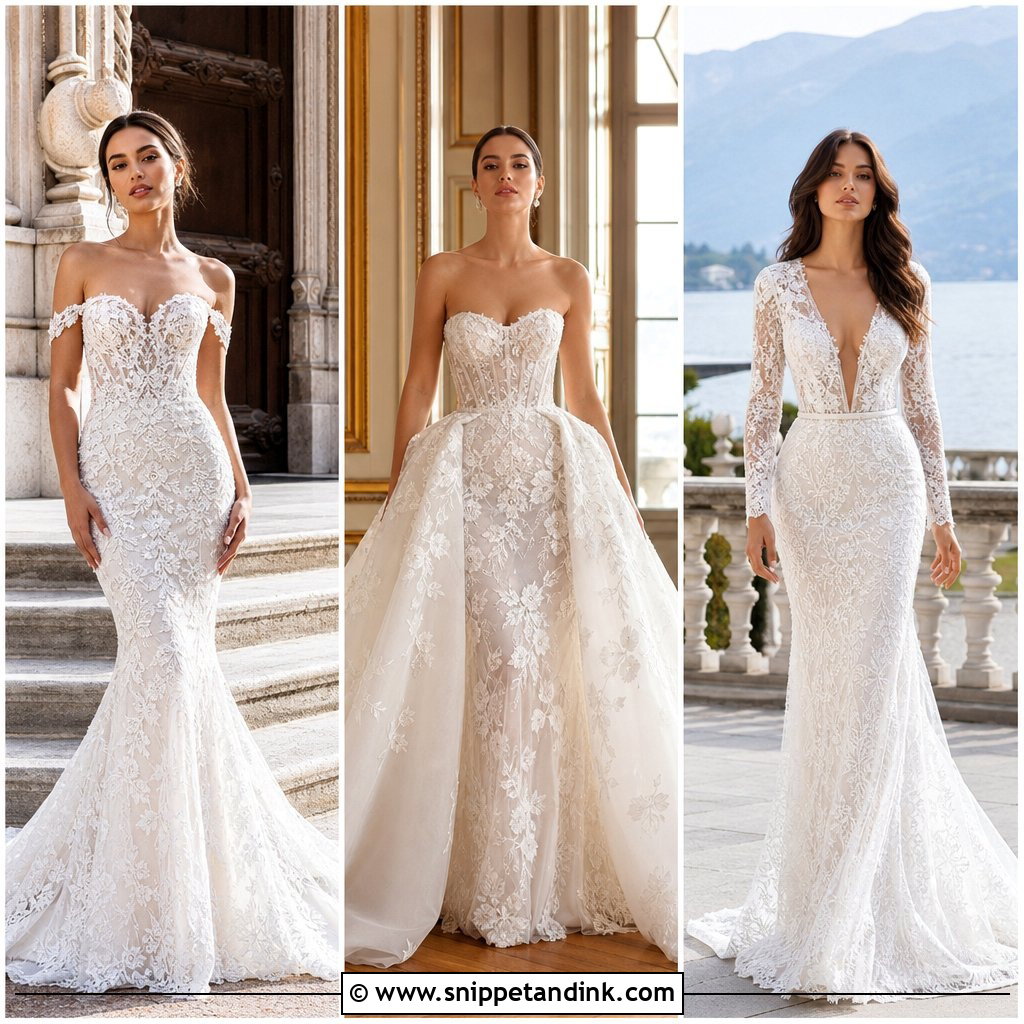
Lace on a mermaid works hardest when the motifs run vertically, because a column of pattern draws the eye upward instead of across the hips. A sweetheart or soft scoop neckline over a corset gives it support. The real fitting question is where the flare starts: too high and you walk like a model on a runway, too low and you cannot climb stairs without hitching the skirt. Practice sitting and stepping before alterations finish. Pair narrow-strap ivory heels, a fine bracelet and medium drops with a long veil that has a plain edge, since detailed lace and a lace-trimmed veil fight each other.
10. Basque Waist Ball Gown Wedding Dress
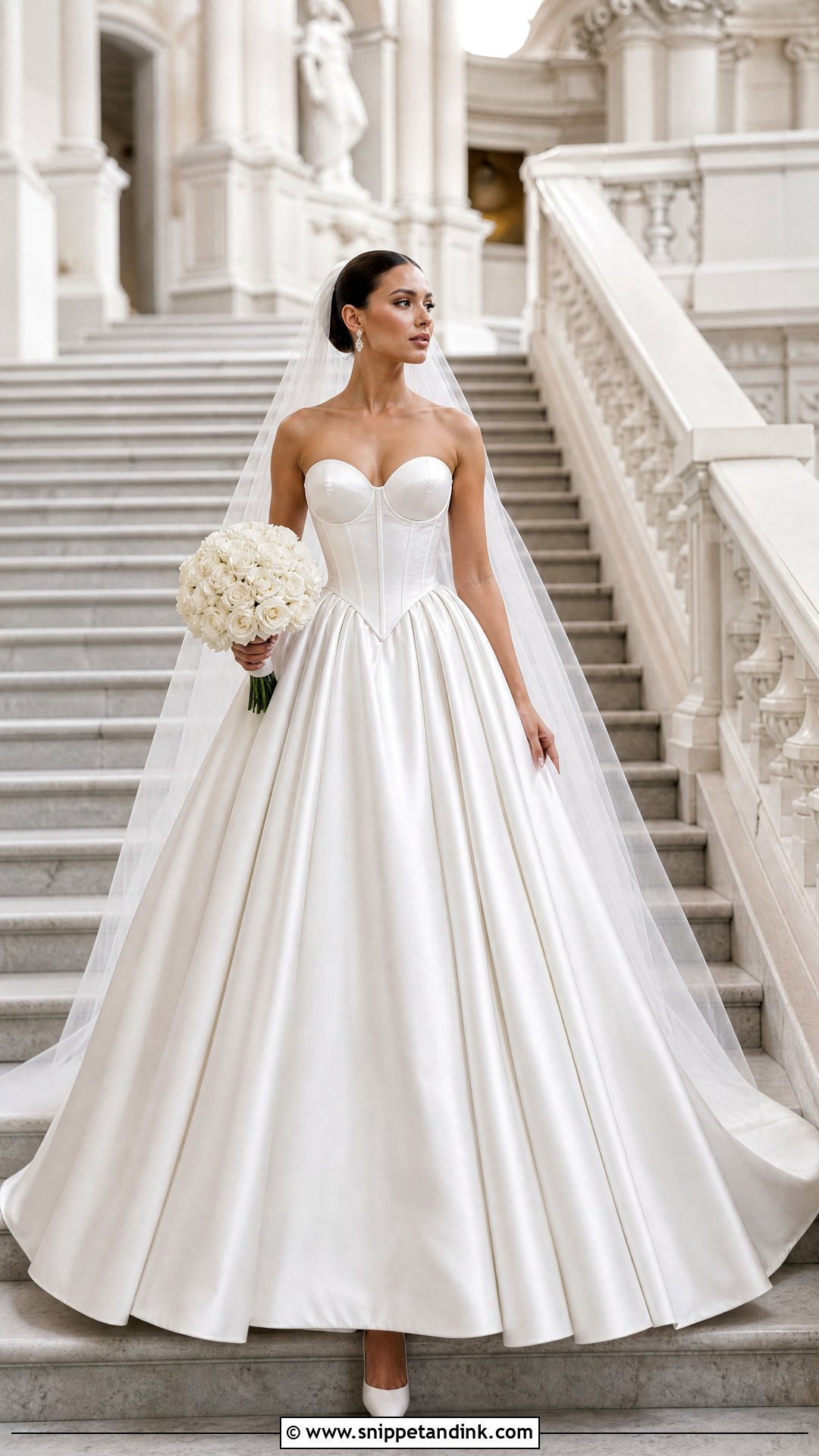
A basque waist dips into a point at the front, and that small V lengthens the whole torso. I always mark exactly where the point lands on the bride, because a centimetre too low can make the bodice look like it is slipping. Keep the waistline uninterrupted: no belt, no sash. A corseted bodice over a full satin or tulle skirt, pearl-and-crystal earrings, closed pumps, and a long veil tucked beneath a polished bun let the shape lead. A structured bouquet of white roses suits the formality. It is regal without the frills that make some ball gowns look dated.
11. Detachable Overskirt Wedding Dress
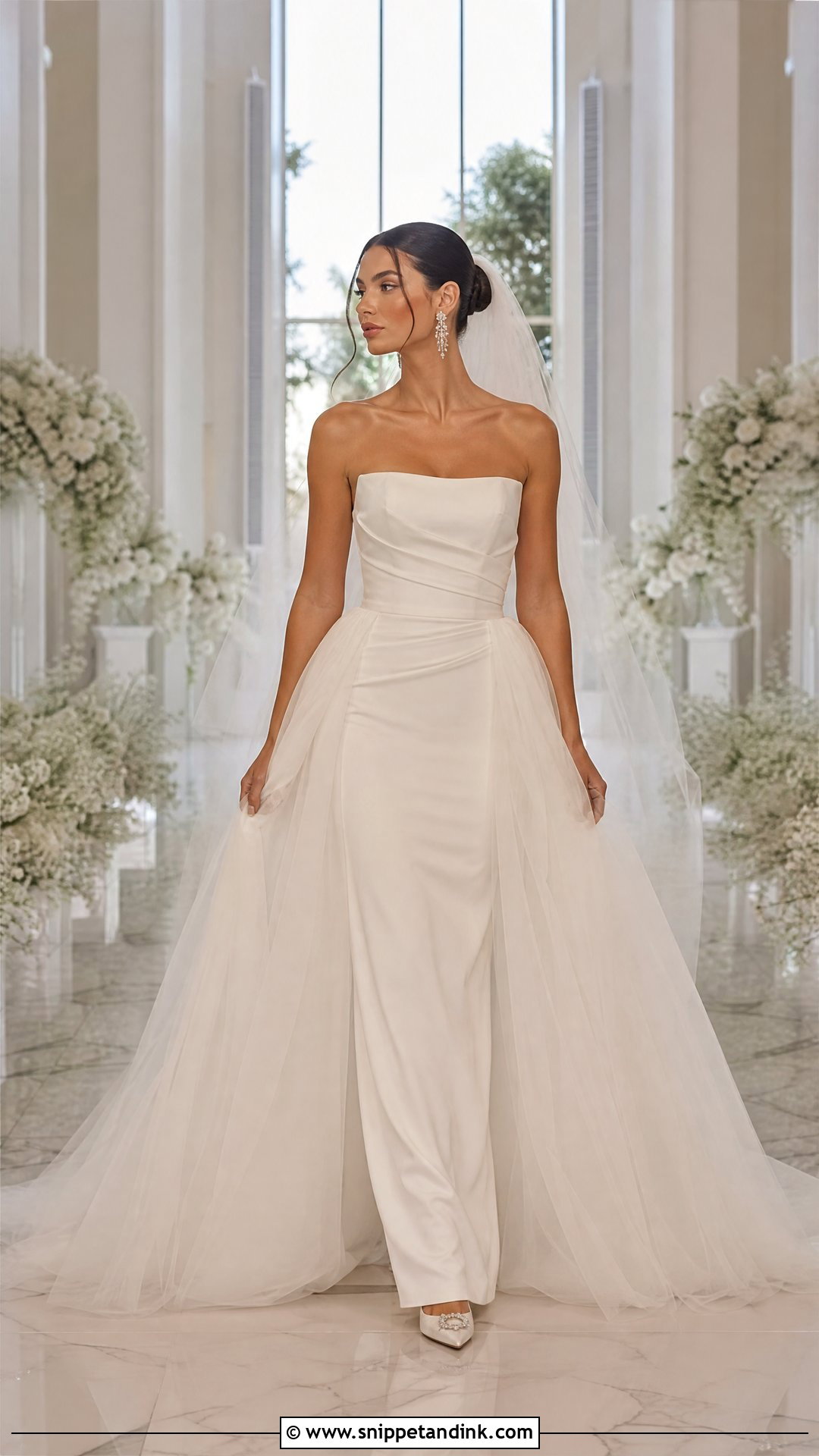
Two looks from one dress is the honest appeal of a detachable overskirt, but the transition is where it fails if nobody rehearses it. Underneath sits a fitted sheath or mermaid; over it, a full satin, tulle or lace skirt for the ceremony and portraits. I teach one bridesmaid how the hooks or snaps release during the final fitting, because a waistband that needs two people and ten minutes eats into the reception. The waistband should sit flat with no visible bulk. Keep accessories that suit both versions, crystal earrings and a sleek updo, and the switch looks planned.
12. High Neck Lace Wedding Dress
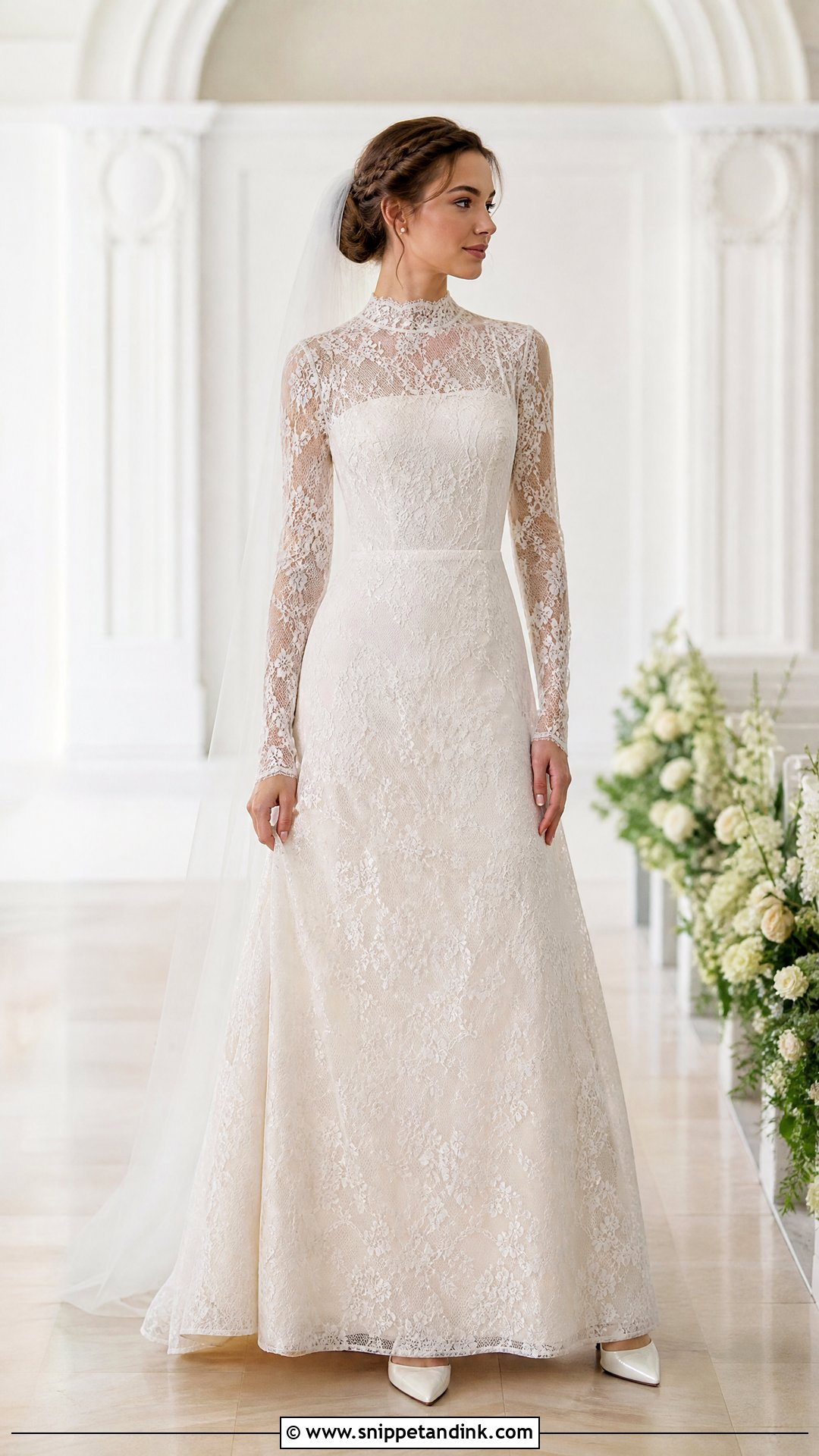
A high lace collar frames the face, so the face and hair have to carry the look. Fine, lightweight lace over a lined bodice keeps it from feeling heavy, with fitted sleeves for winter or a sleeveless cut in warmer months. Skip the necklace entirely. Pearl studs or slim drops, pointed ivory shoes and a plain chapel veil are enough. During fittings I ask the bride to turn her head fully left and right; a collar with too little ease rubs the neck raw by the evening. A low bun, braided chignon or sleek ponytail keeps the neckline clear for formal ceremonies.
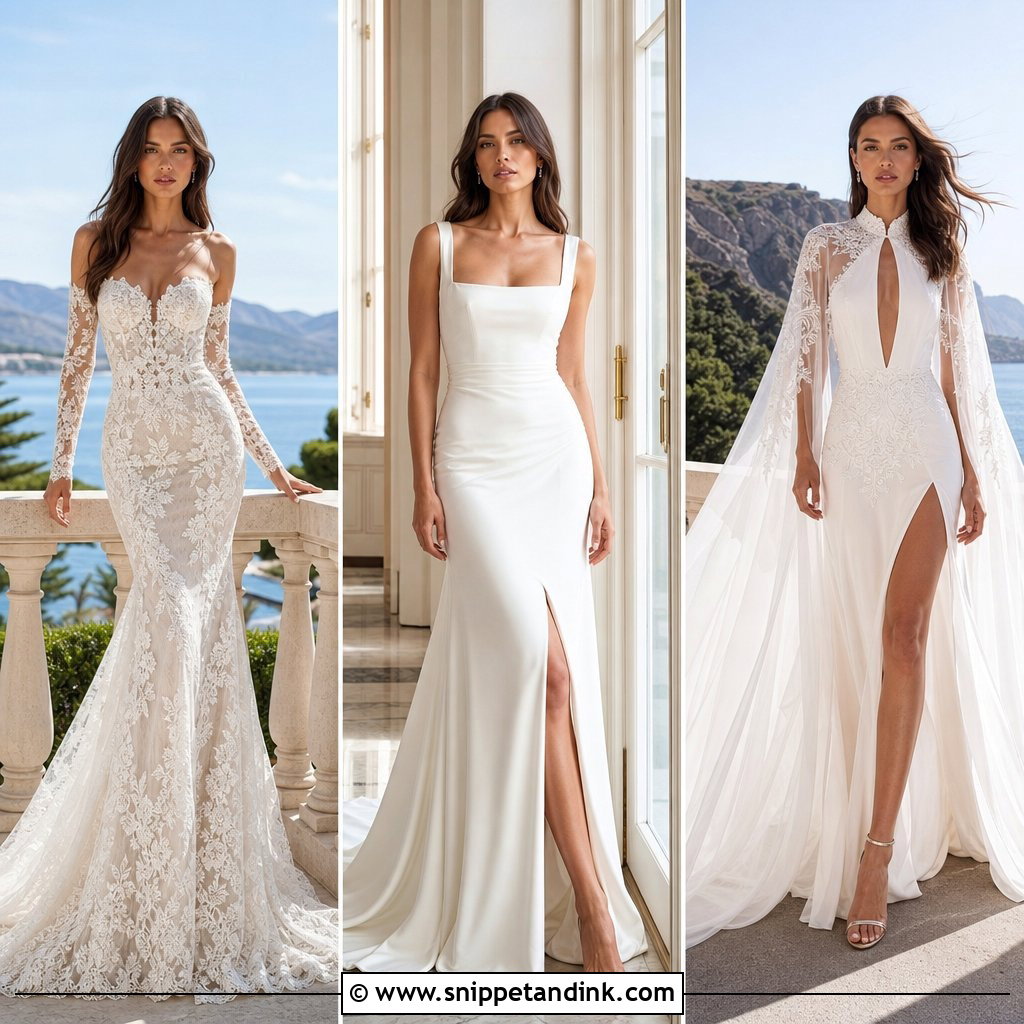
13. Wedding Dress With Detachable Cape
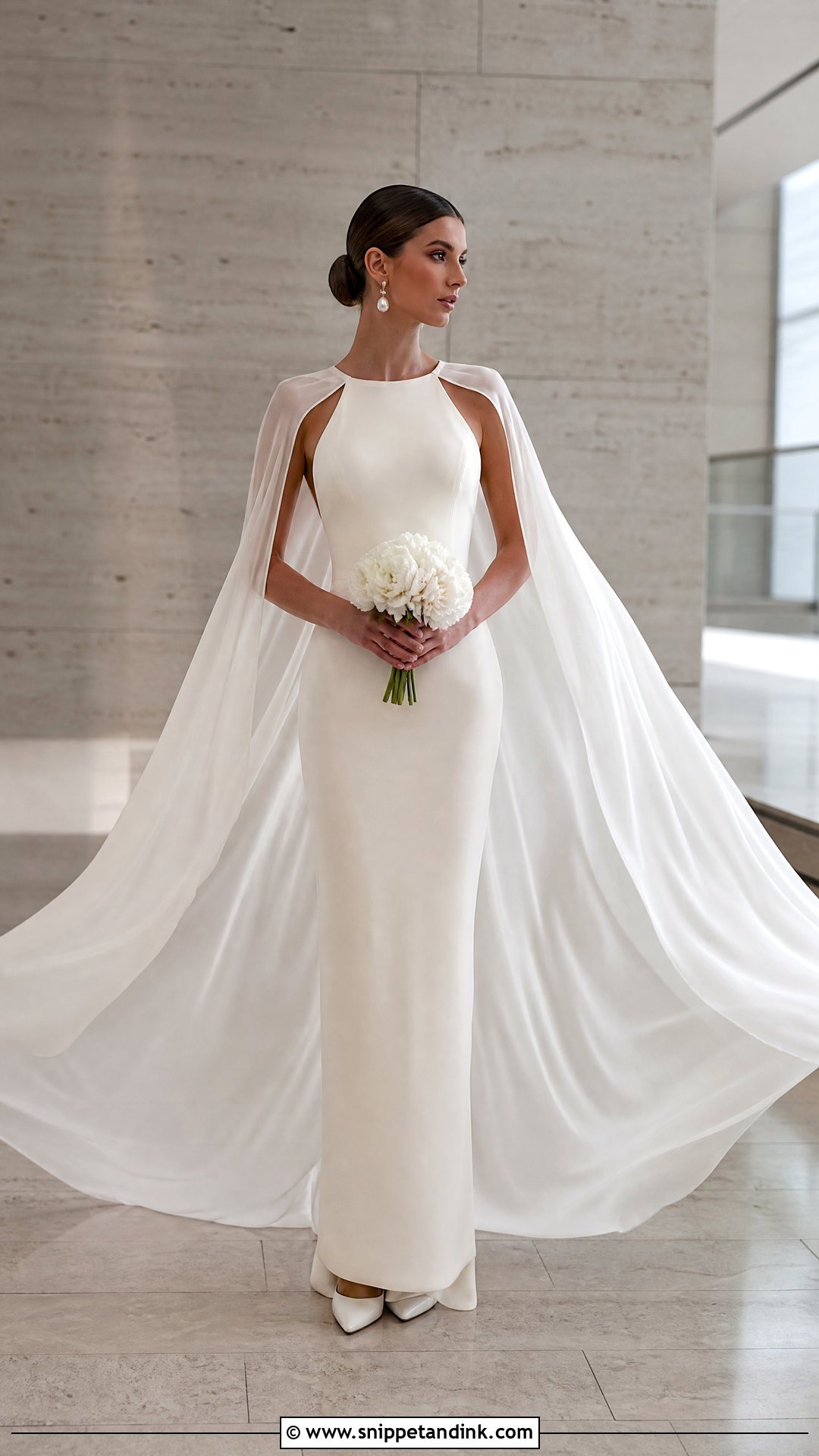
A cape is often a better choice than a veil when the gown has a strong back, because it falls cleanly instead of sitting over the hair. It can attach at the shoulders, neckline or back, and the attachment point decides how it behaves: shoulder-hung capes pull forward when you hold a bouquet, so I keep the flowers compact and away from the fabric. Pair it with a fitted strapless, square-neck or sleeveless gown, modern pearl earrings and pointed pumps. Check the cape length against the train so the two do not tangle on the aisle. Take it off after the ceremony and the gown reads completely differently.
14. Short Wedding Dress With Long Veil
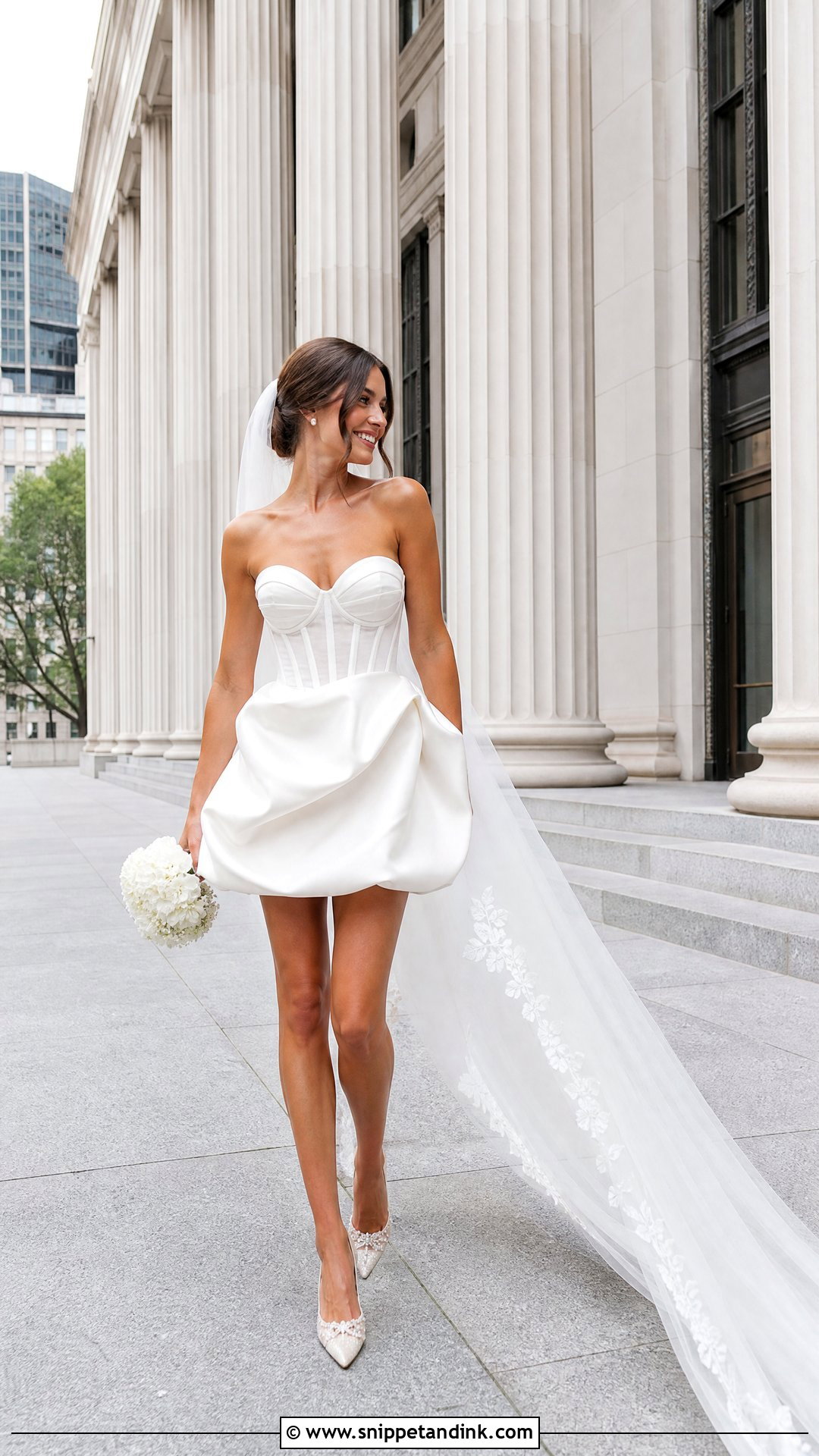
A short dress puts your shoes on full display, so I treat them as the second most important piece. Embellished slingbacks or pointed pumps work, but they need to be broken in. A structured mini or knee-length cut with a corset and sculpted skirt can feel ceremony-ready once a cathedral veil adds length and movement behind you. Pearl earrings and a small bouquet keep it bridal. Sit down in the fitting room and check how far the hem rides up. For the reception, swap the veil for a tailored jacket or gloves. It suits a courthouse wedding, a city ceremony or a second outfit.
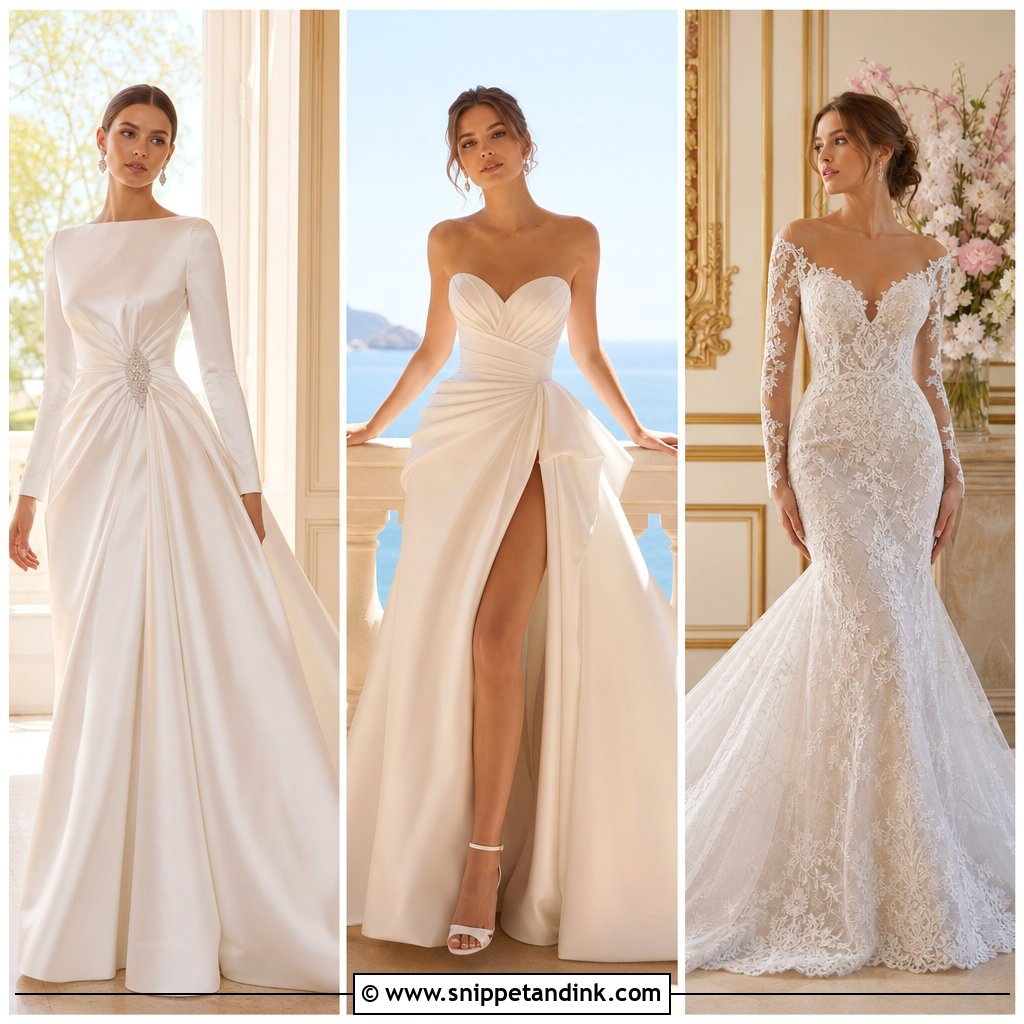
15. Square Neck Satin Wedding Dress
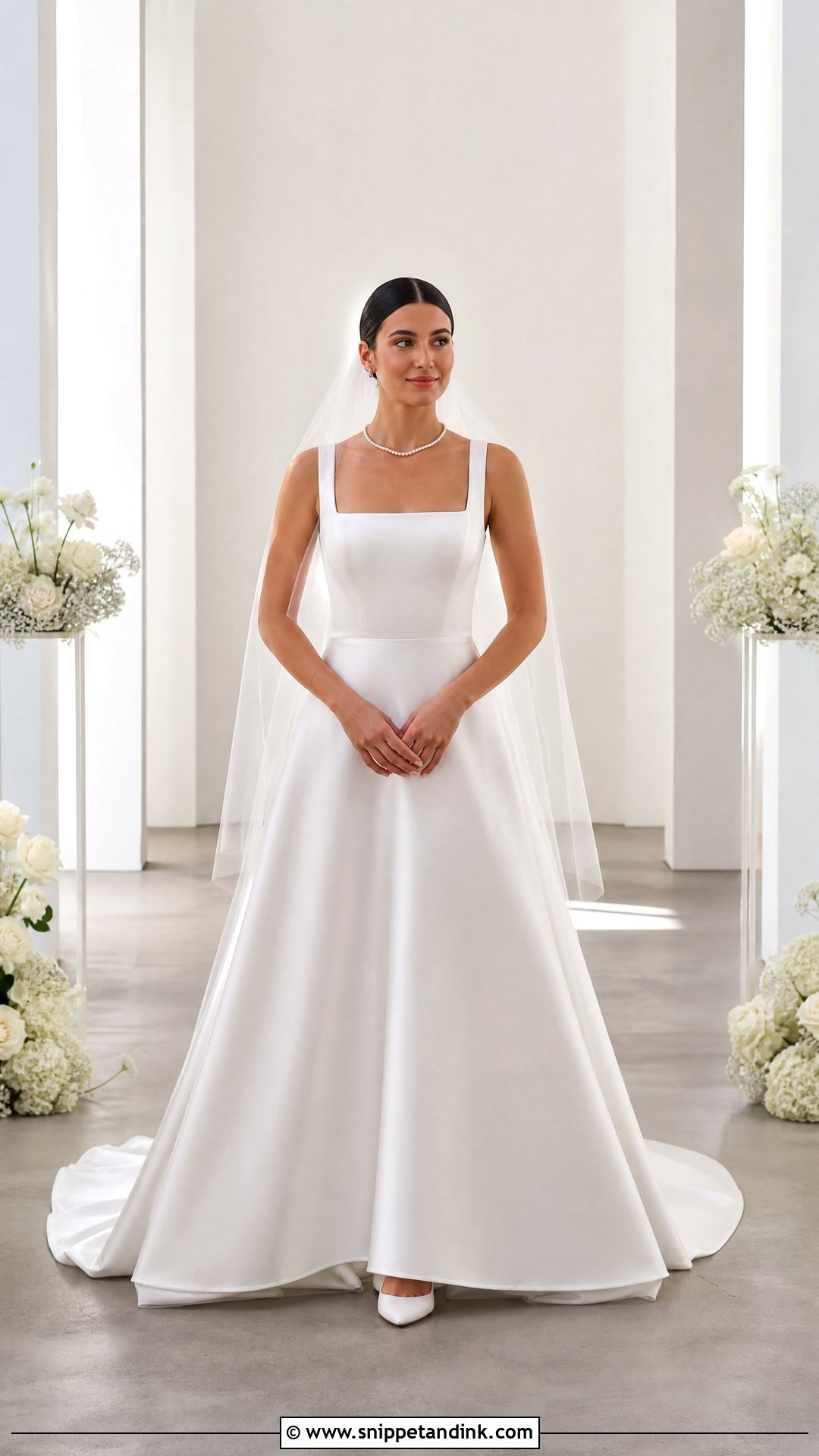
Square necklines are underrated for brides who find sweetheart cuts too fussy. The straight line needs wide, supportive straps and a bodice that stays flat across the chest when you lean forward, which I check by having the bride pick something up off the floor. Underneath, a soft A-line or column skirt in satin. Wear a short pearl strand or nothing at all, pointed ivory heels and a light veil that falls behind the shoulders. Covered buttons down the back or train add detail without clutter. A centre-parted low bun leans minimalist, while soft waves make the same gown more romantic.
16. Sweetheart Corset Wedding Dress
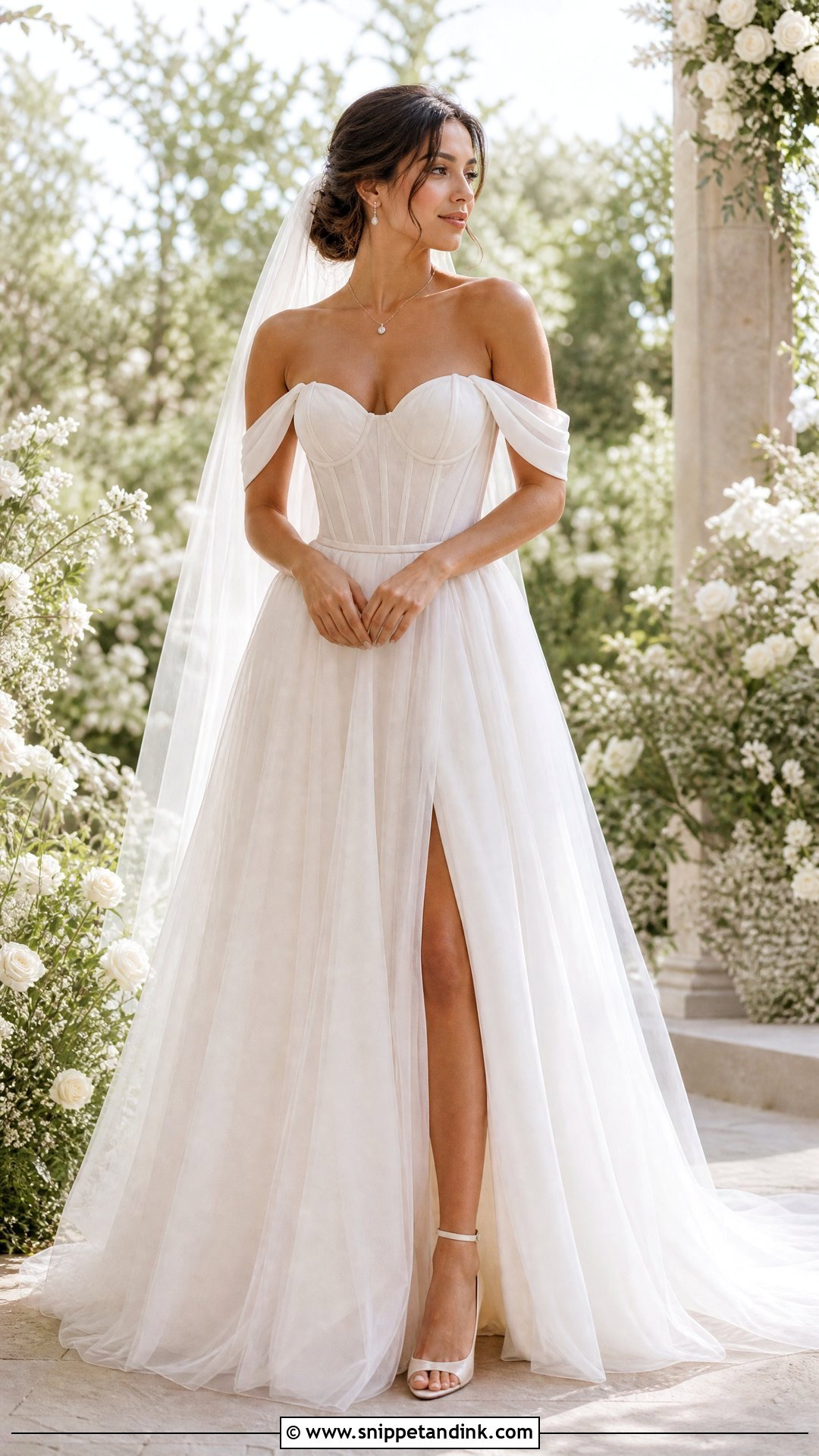
A sweetheart corset gets its shape from the cups and boning, and those have to match your body, not the sample. Cups that sit too high push up uncomfortably; too low and they gape when you turn. I ask the bride to bend, sit and dance a few steps before I judge the fit. Removable draped sleeves give you a second look from the same gown. Style it with a fine pendant, pearl earrings, ankle-strap satin heels, a soft tulle veil and a low textured bun. Because the shape is so familiar, it adapts to a ballroom or a garden without looking out of place.
17. Long Sleeve Floral Wedding Dress
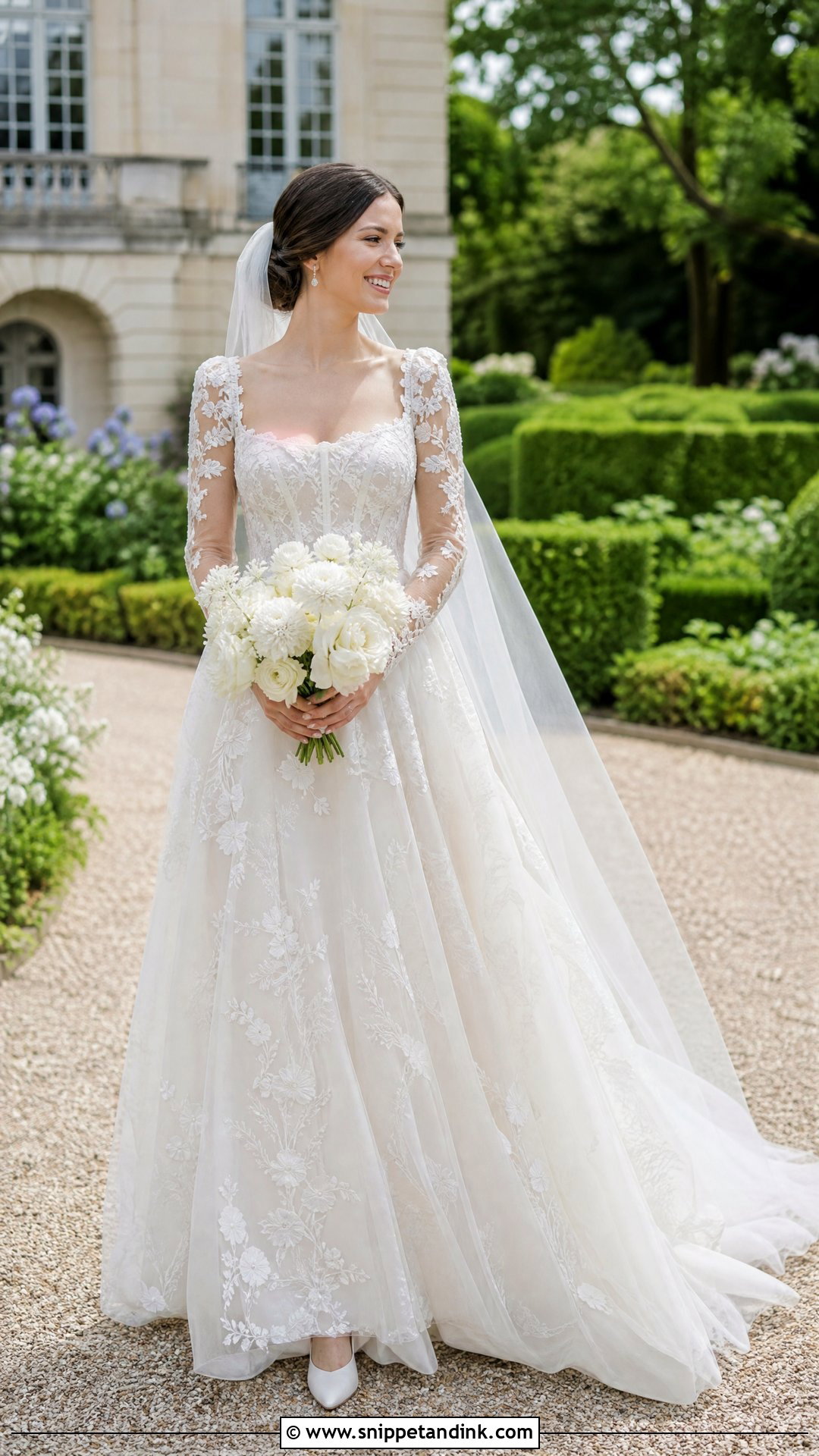
Floral appliqué sleeves carry the whole dress, so let them set the rules for everything else. Embroidered vines or dimensional flowers on illusion tulle look delicate, but the fabric has no stretch, and I always ask brides to bend their elbows and lift their arms right to shoulder height before alterations are signed off. Simple earrings, closed-toe ivory pumps and a plain veil keep the detail readable. A loose chignon shows off the shoulders. For flowers, I’d echo the shapes in the appliqué without trying to match them exactly. Estate venues, gardens and autumn ceremonies are where this gown looks most at home.
18. One Shoulder Wedding Dress
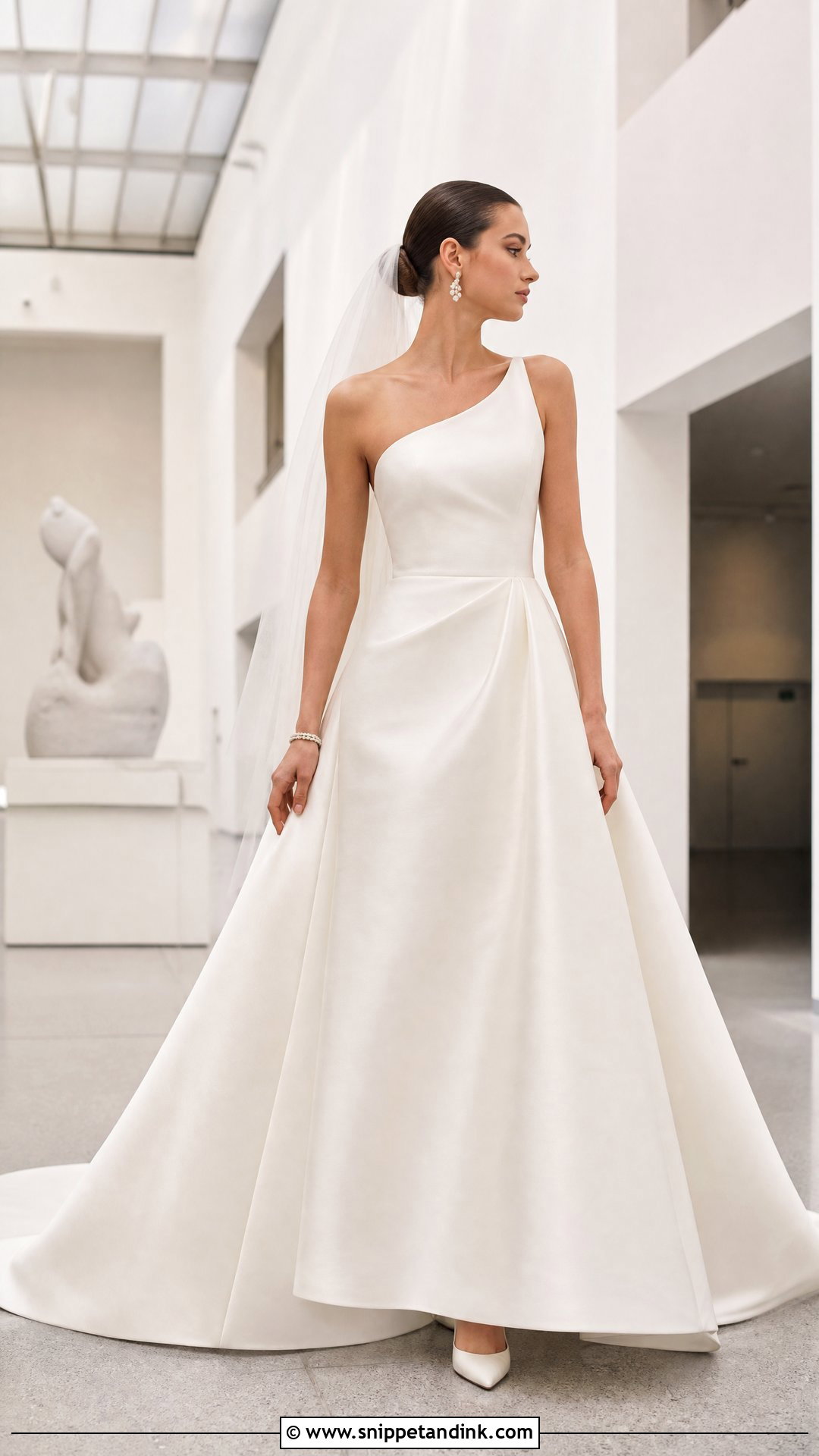
One bare shoulder creates a striking asymmetrical look on its own, so the styling job is mostly about what to leave off. Keep that shoulder free of a necklace, wear sculptural earrings, and add a slim bracelet on the opposite wrist for balance. Smooth crepe, satin or Mikado with good internal support works best. The strap carries the whole bodice, so I test it by having the bride reach across a table; if it slips, it needs a stay or a hidden grip. A low-placed veil, pointed pumps and a sleek bun or side-parted ponytail suit contemporary and gallery venues.
19. Open Back Wedding Dress
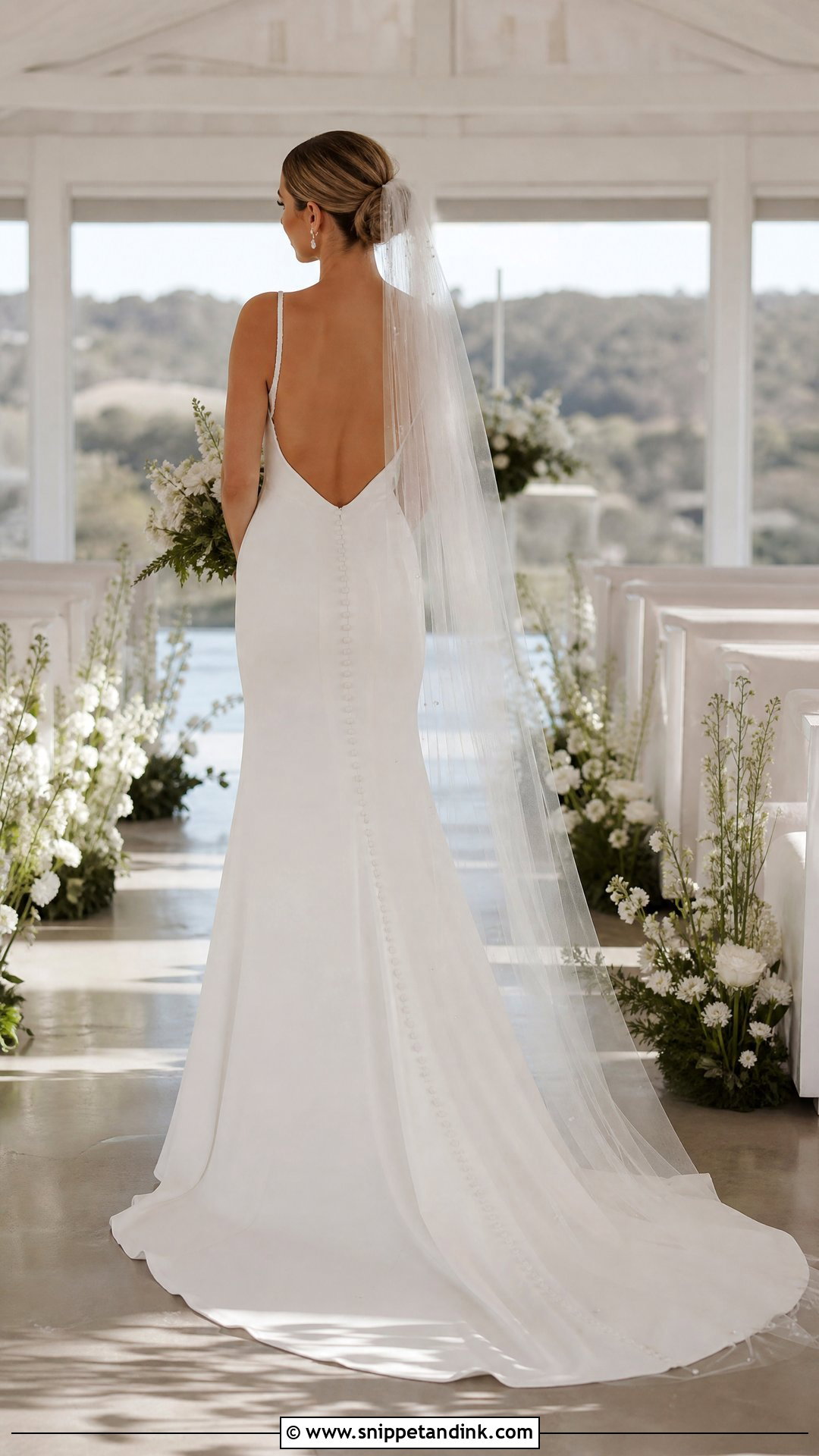
Guests see your back for the entire ceremony, which is why an open back is worth the extra fitting time. The weak spot is the side seams: without enough structure there, the back gapes when you lean forward or raise your arms. Talk through undergarments and skin-tone illusion panels at the first appointment rather than the last. A row of buttons, a lace edge or a drape can frame the open space without closing it. Wear your hair up or swept to one side, add delicate earrings and comfortable ivory heels, and choose a sheer veil you can take off after the ceremony.
20. Floral Appliqué Princess Wedding Dress
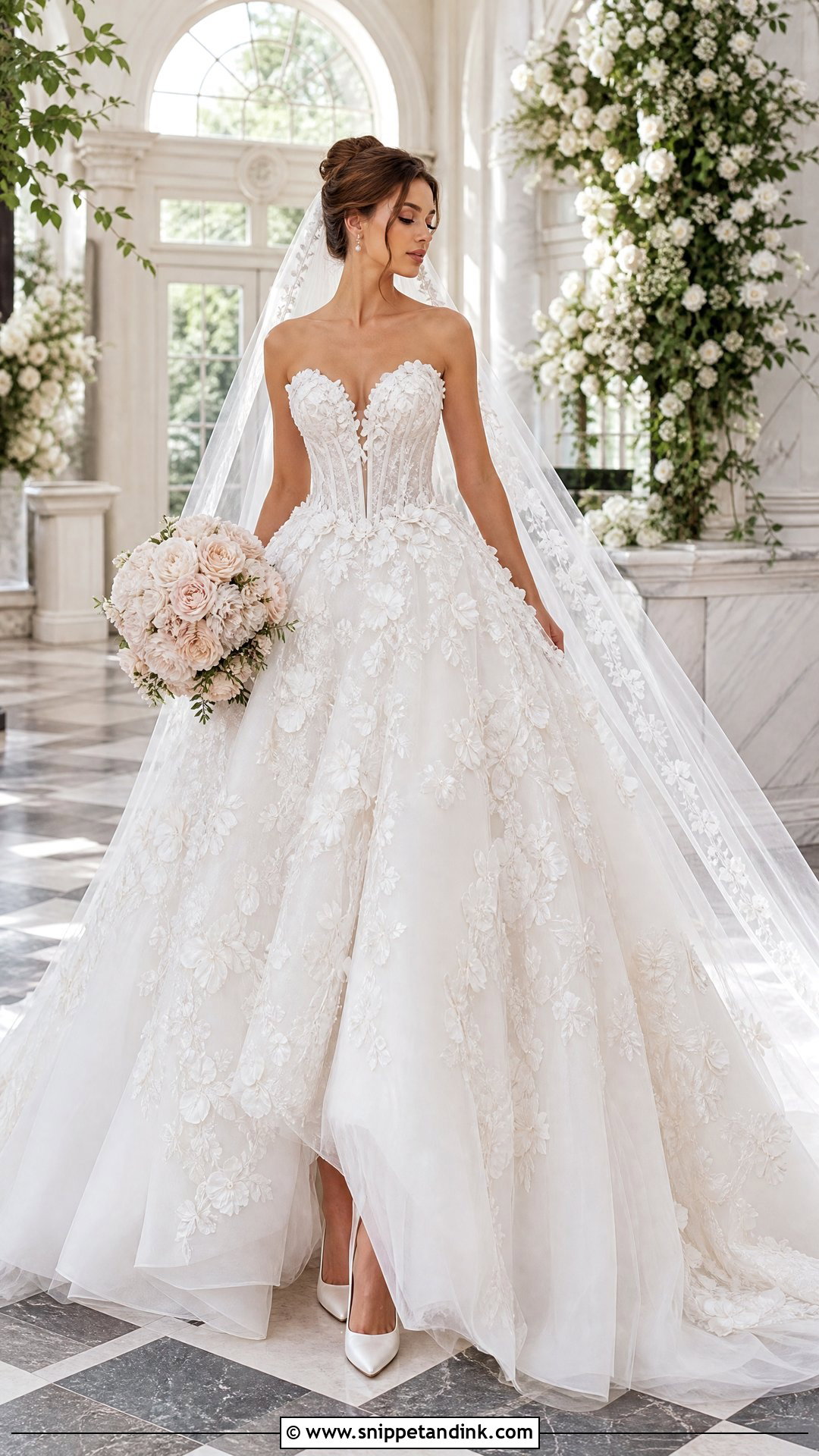
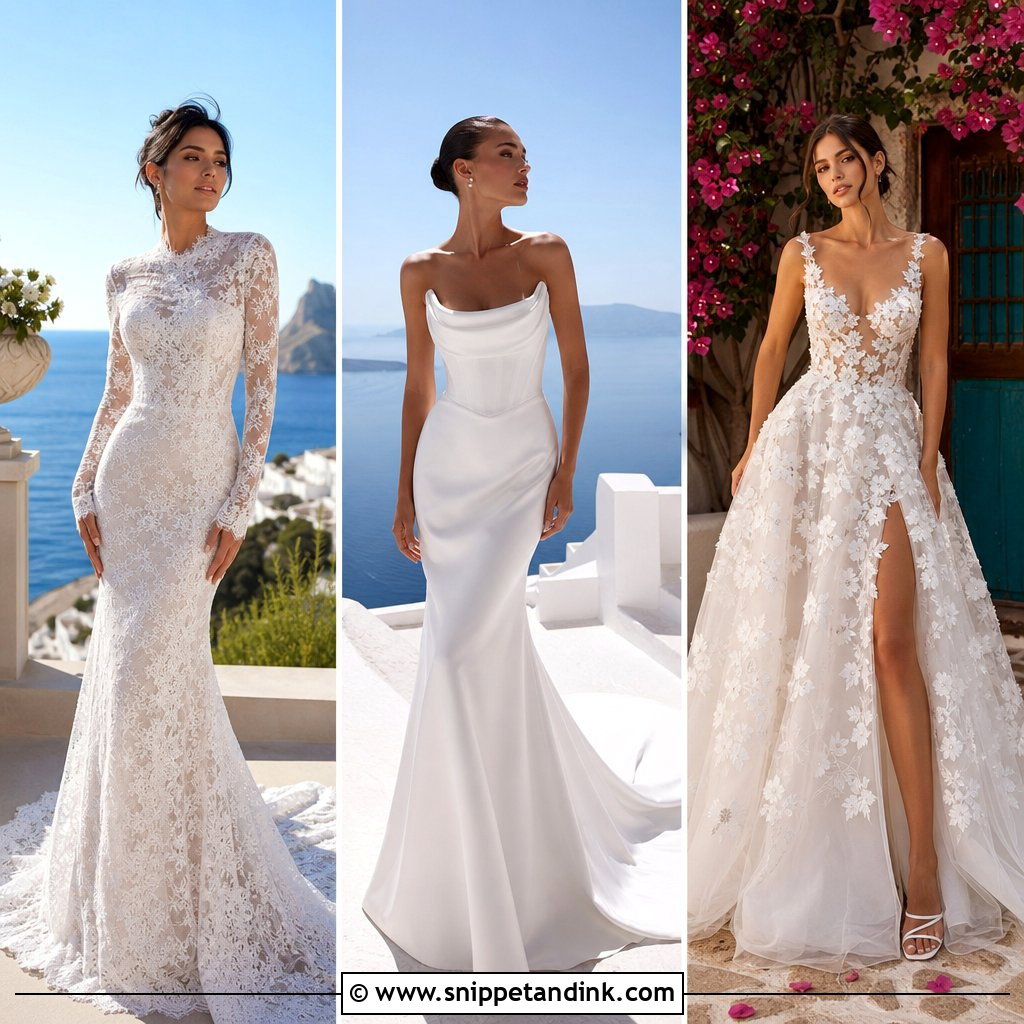
Appliqués that thin out toward the hem are the mark of a well-made princess gown covered with floral appliqués, because the lighter hem lets the layered skirt move instead of sitting stiff. Over a structured corset, the flowers should feel balanced from every angle, and a good seamstress can lift and reposition individual motifs during alterations, which is worth asking about. Pearl drops, satin pumps and a sheer cathedral veil with a simple edge keep it from tipping into costume. A soft updo with a few loose pieces works with the texture. Keep the bouquet restrained in white, ivory or pale blush.
Mikado, Satin, Lace and Tulle by the Last Dance
Each fabric in this list ages differently over a long day, and knowing that helps you pick one that suits your schedule.
- Mikado holds its shape the best, but creases where you sit. A quick steam before portraits fixes it.
- Satin reflects light, so every crease and water drop shows. Keep drinks and wet hands away from the skirt.
- Lace hides small marks and wrinkles, and it is the most forgiving fabric for outdoor venues.
- Tulle catches on stone steps, rough wood and bouquet wire. Ask your florist to wrap every stem fully.
Bustles on a long train
A French bustle tucks the train under itself and suits full satin skirts. An over bustle lifts it up onto hooks and shows off lace or appliqué. I have a bridesmaid practice the bustle at the final fitting, with the seamstress watching, because colour-coded ribbons are much easier to follow in good light than in a dim corridor after dinner.
Comfort Decides Which WONA Look Is Yours
Start with the silhouette you feel most confident in, then let fabric, neckline, train and embellishment narrow it down. With a WONA Concept gown, the structure is already doing the talking, so the veil, jewelry, shoes, hair and bouquet should support it quietly. In every fitting, walk, sit and lift your arms as you would at the reception. Ask about corset support, sleeve movement, bustle style and anything removable before you sign off. I’d rather a bride wear the simplest sheath with total comfort than a dramatic ball gown she spends the night adjusting.
You'll Like These Ideas:


Leave a Reply