
A couture gown is built on your body rather than altered onto it, and that changes how you should shop for one. The intricate lace, sculpted corsets, capes, removable layers and dimensional florals in current bridal collections all behave differently once a seamstress has fitted them to your measurements. When I style a bride in couture, I treat the neckline, fabric weight, train, veil, shoes, jewelry and bouquet as one outfit, because a heavy duchess satin and a cathedral veil end up pulling on the same pair of shoulders. The gown also has to suit the venue and stay comfortable from the ceremony through the last dance. The designs below run from classic to unconventional, and for each one I’ve noted what to check before you commit.
Toile Fittings and the Calendar Behind a Couture Gown
True couture starts with a toile, a mock-up of your gown cut in plain cotton and pinned on your body before the real fabric is touched. That’s where the waist point, neckline height and train length get settled, and it’s the reason a couture order needs far more lead time than a sample-size gown altered off the rack.
A realistic schedule
- Order roughly eight to twelve months out. Ateliers vary, so ask for their production window in writing before paying a deposit.
- Expect at least three fittings: the toile, a fitting in the real fabric, and a final check with your shoes and undergarments.
- Hold the final fitting two to four weeks before the wedding, when small changes are still easy to make.
- Bring the actual wedding shoes to every fitting. A one-inch change in heel height alters the hem of every gown on this list.
I also ask brides to bring whoever will dress them on the day to that last appointment. Couture gowns often close with hooks, lacing or a long row of covered buttons, and a helper who has done it once is far quicker than one reading instructions in a hotel room.
1. Lace Couture Bridal Ball Gown
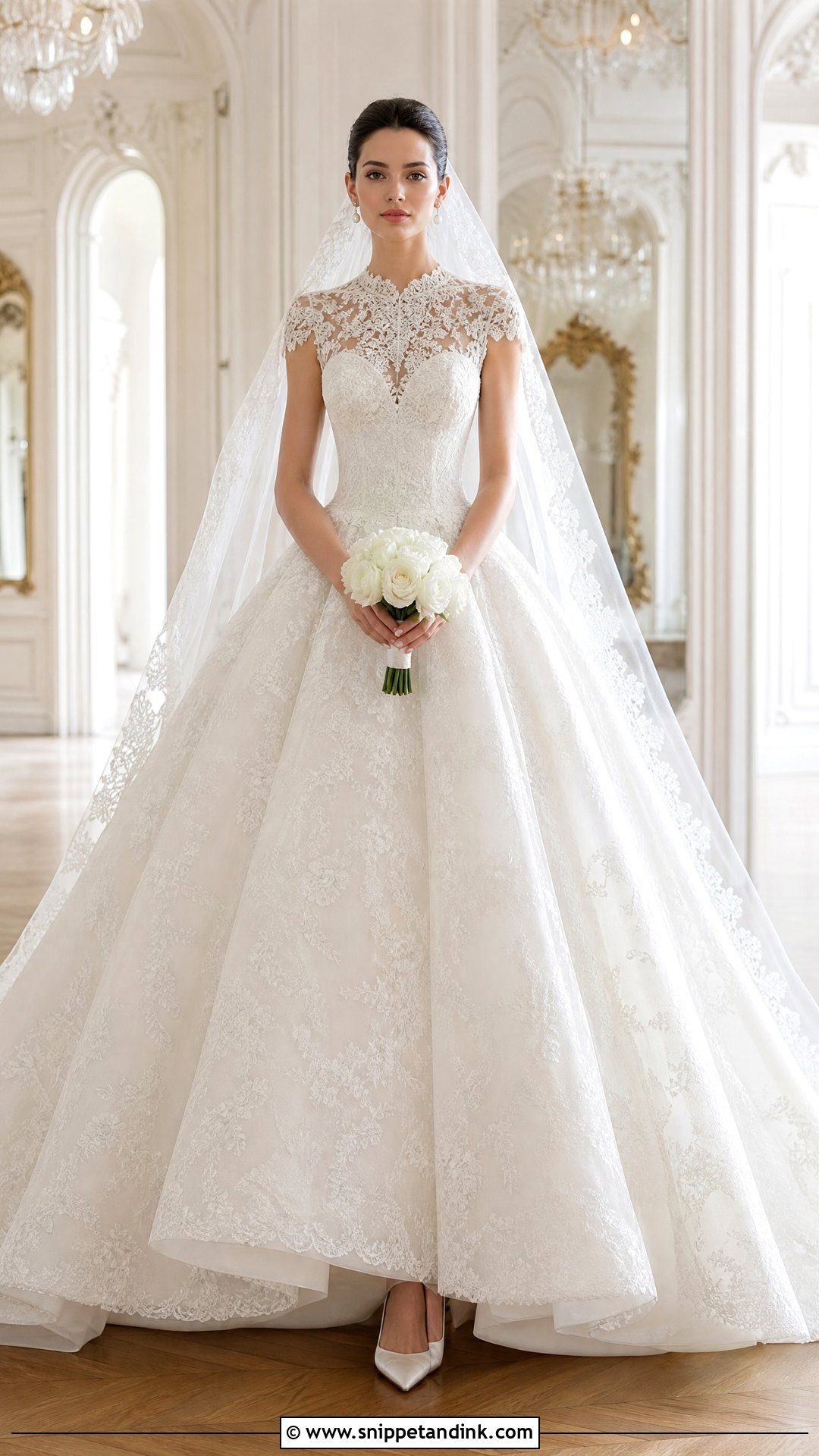
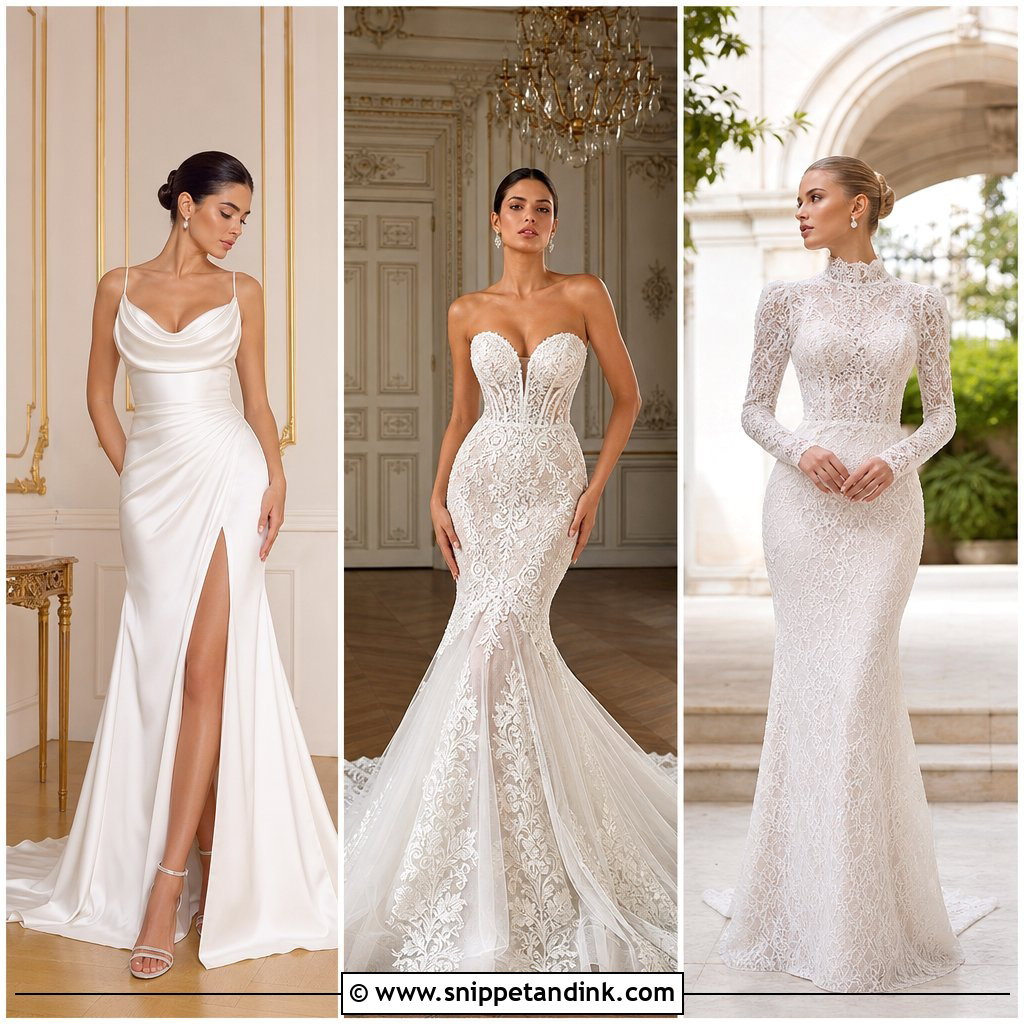
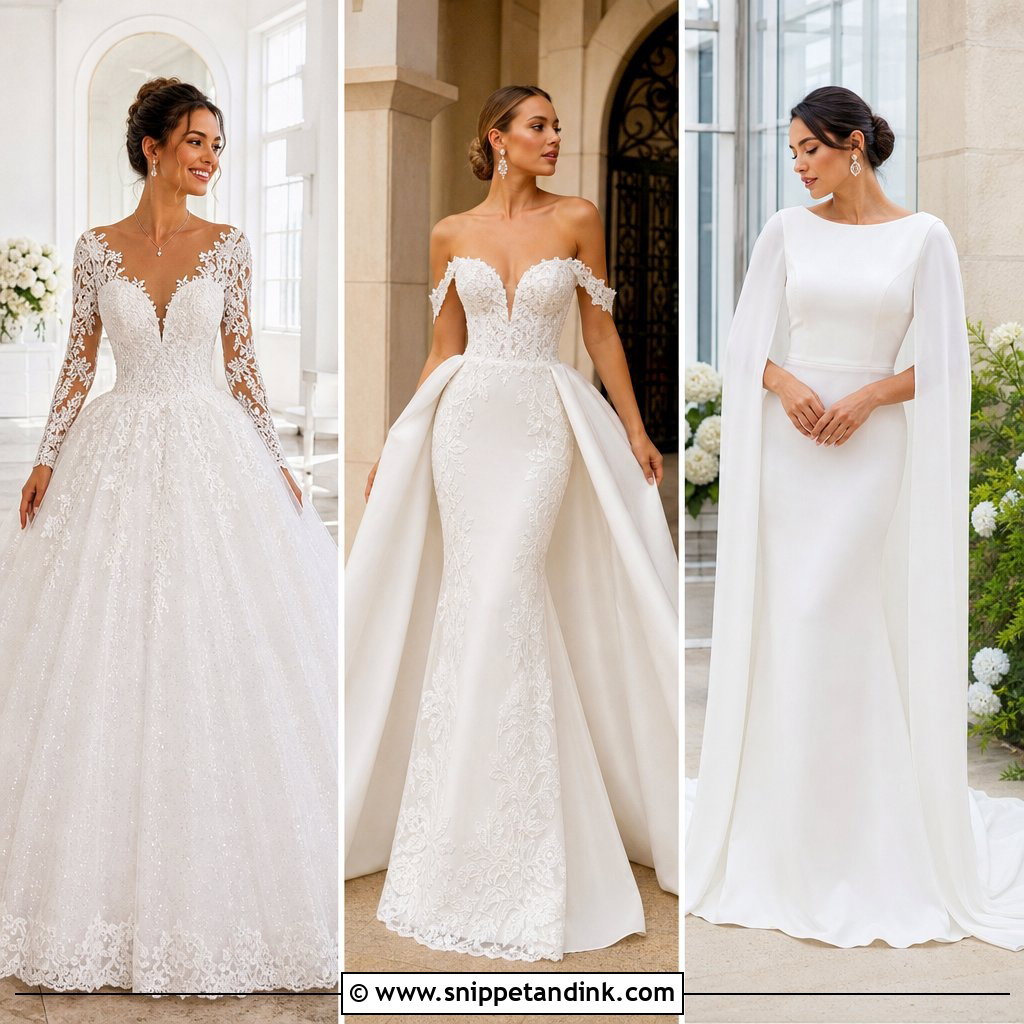
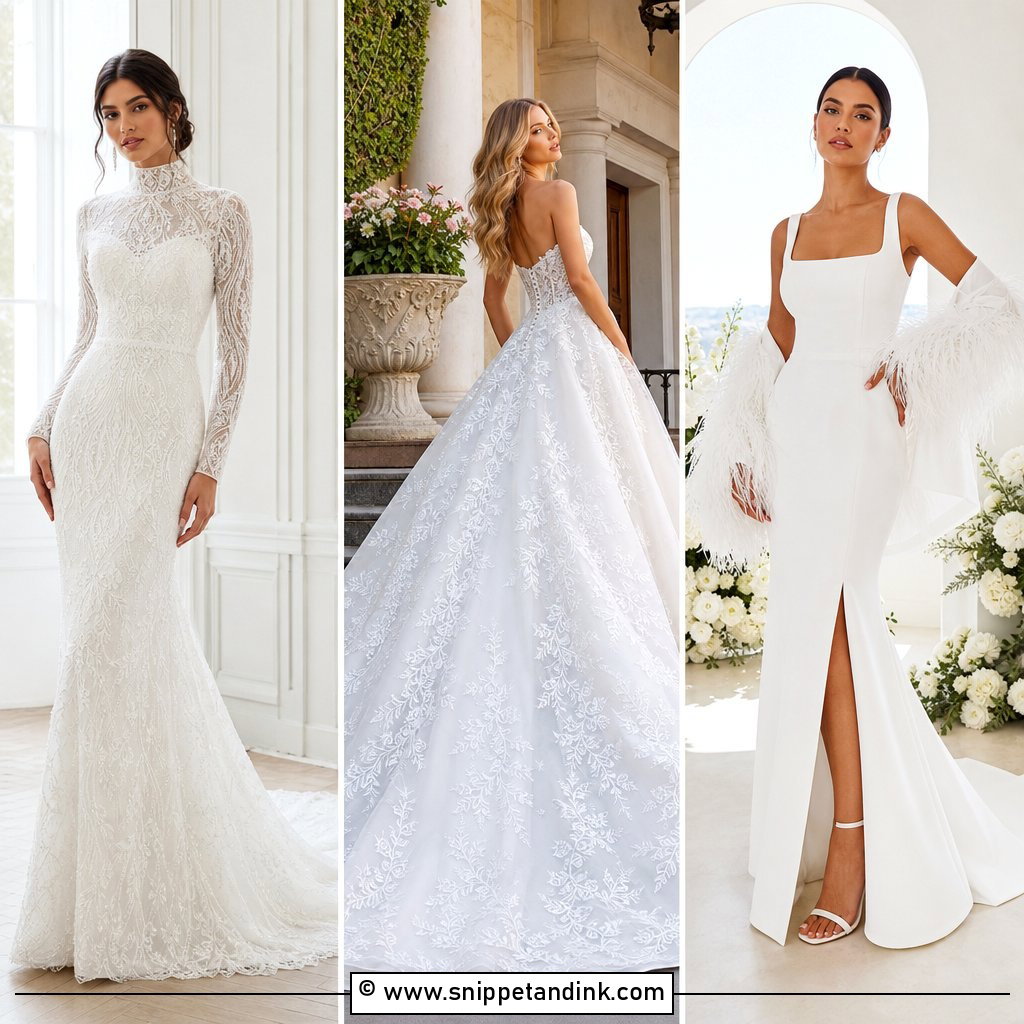
Lace over volume is the classic couture pairing, and the lining decides how it reads. Over ivory, the floral pattern sits flat and traditional; over a nude lining, each motif lifts away from the skirt and registers far better in photos. A structured bodice with visible corsetry or soft internal support carries the weight of a full lace skirt. I always ask how many petticoat layers are underneath, because petite brides usually look better with a couple fewer, while taller brides can carry a wider hem. Finish with a cathedral veil edged in matching lace, pearl drops, pointed satin pumps and a small white bouquet, and keep the hair polished so nobody’s eye leaves the lace.
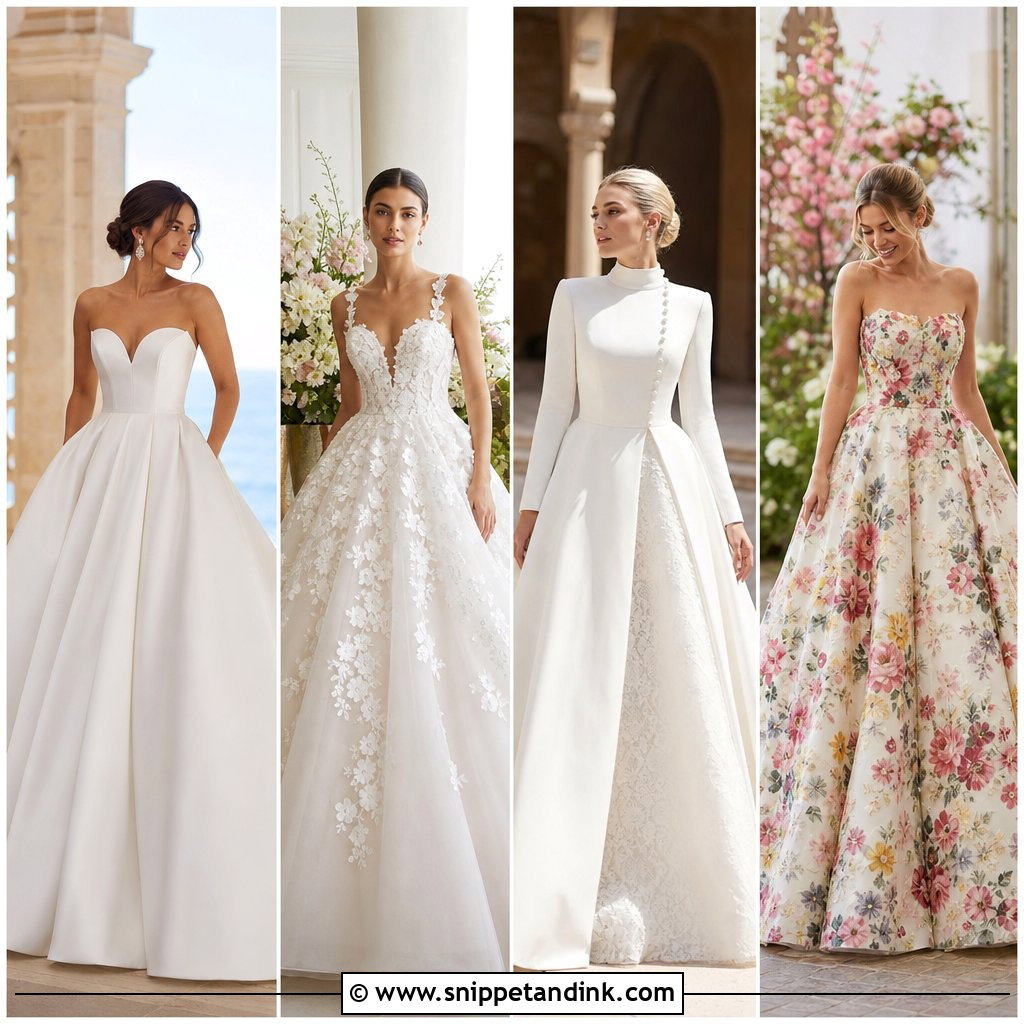
2. Satin Corset Couture Bridal Gown
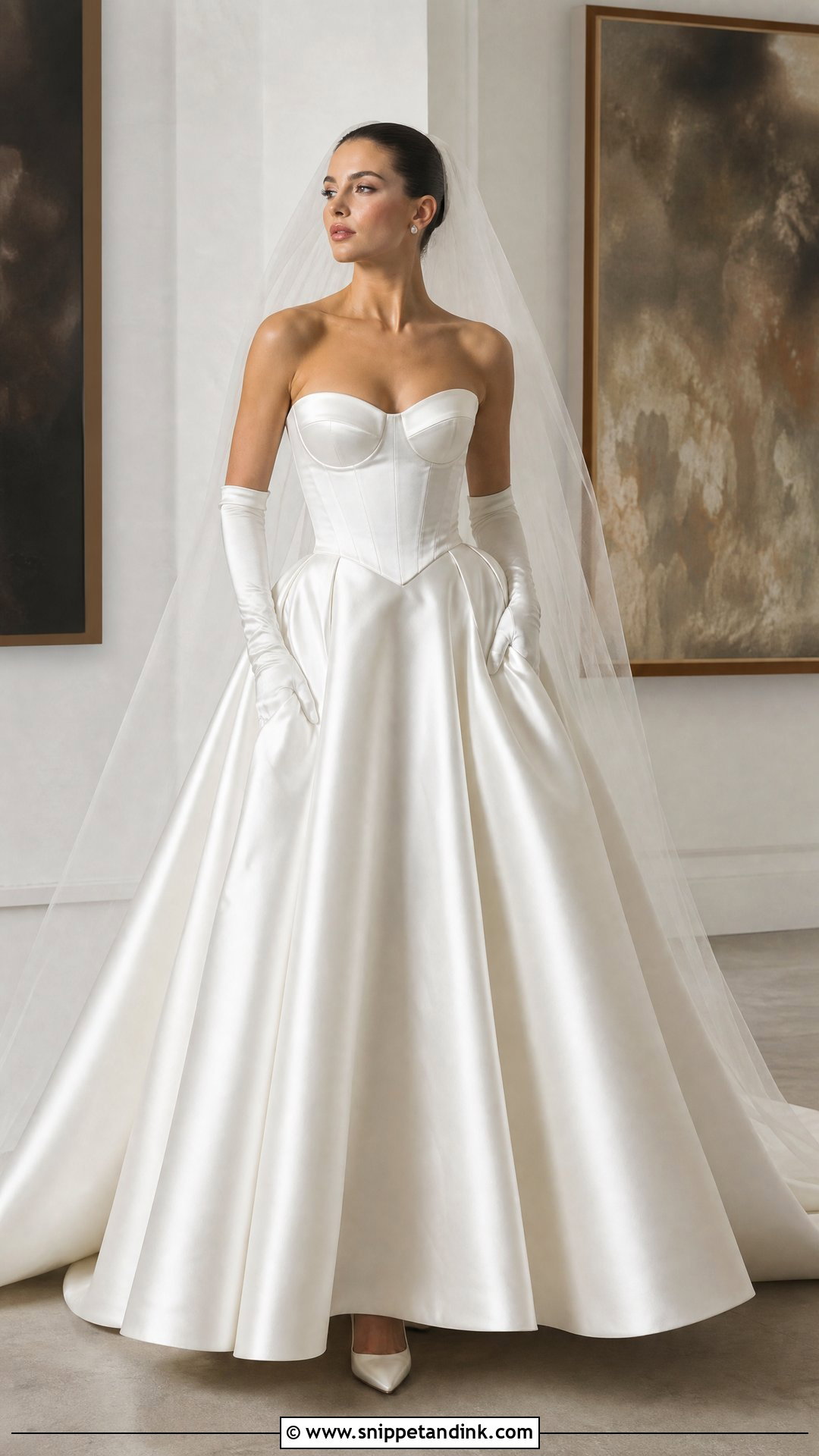
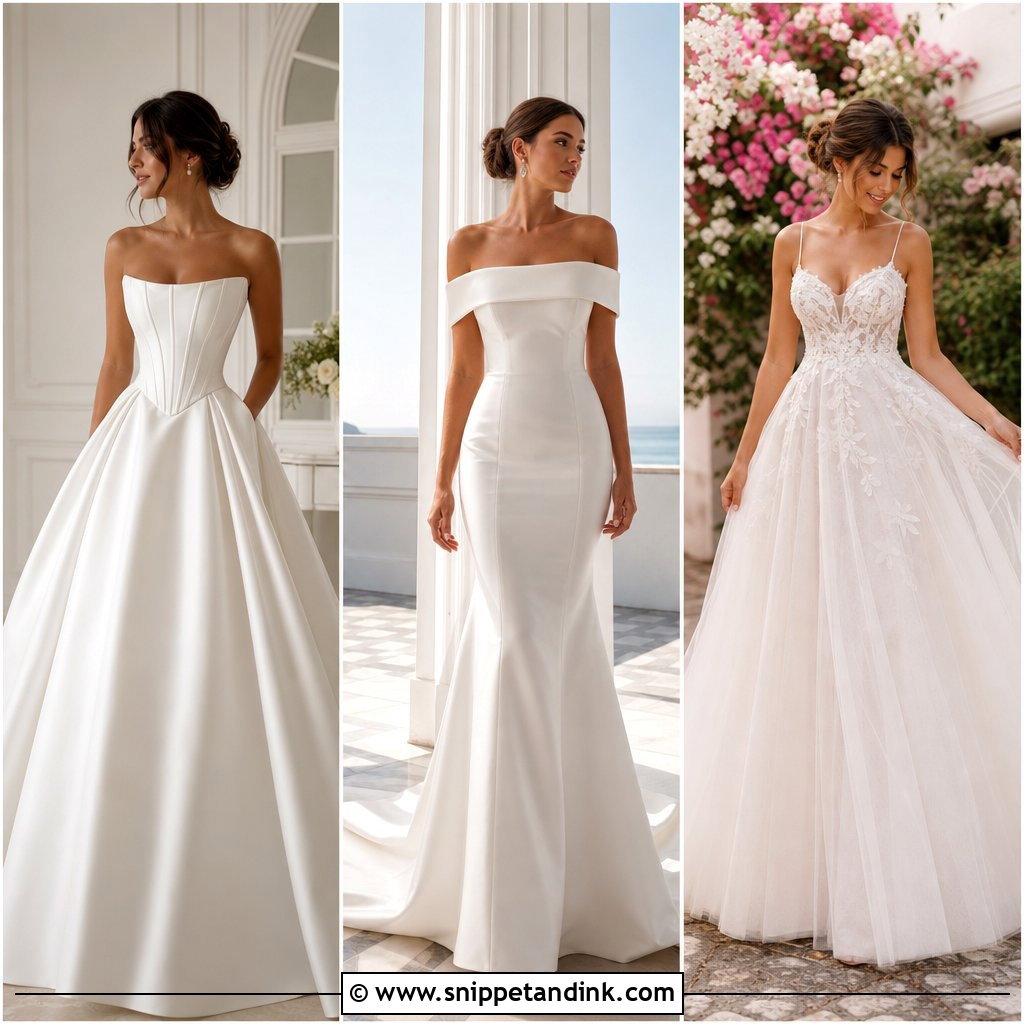
Satin shows every seam and every wrinkle, so this gown is only as good as its tailoring. Silk satin drapes and moves; Mikado holds an architectural line and creases less when you sit. Look for carefully placed bodice seams, a softly curved neckline and a defined waist flowing into a full or gently gathered skirt. I style it with elbow-length gloves, crystal studs, a sleek low bun, pointed ivory heels and a long plain veil that leaves the corsetry visible. Ask for a firm inner foundation and a bustle that spreads the train’s weight evenly. A satin train hooked to a single point drags the back seam down by the end of the night.
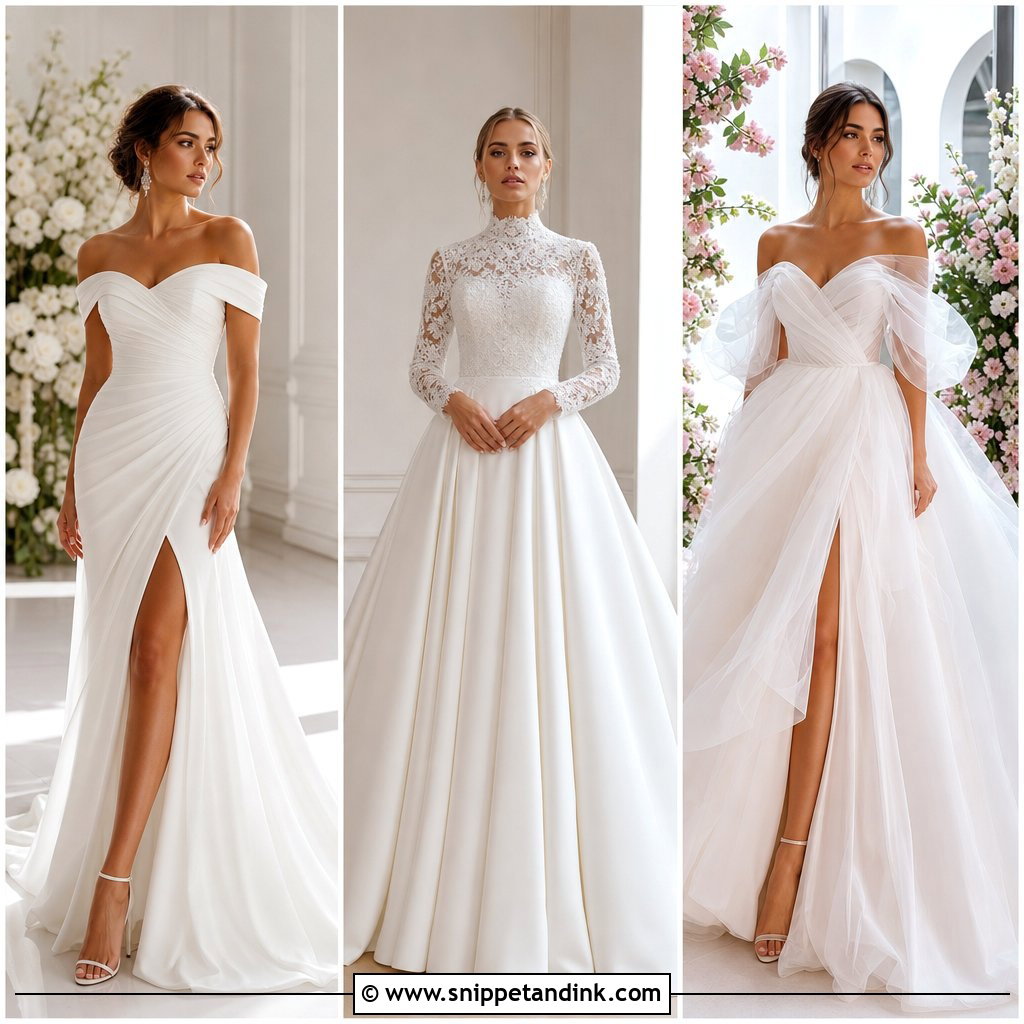
3. Long Sleeve Lace Couture Bridal Gown
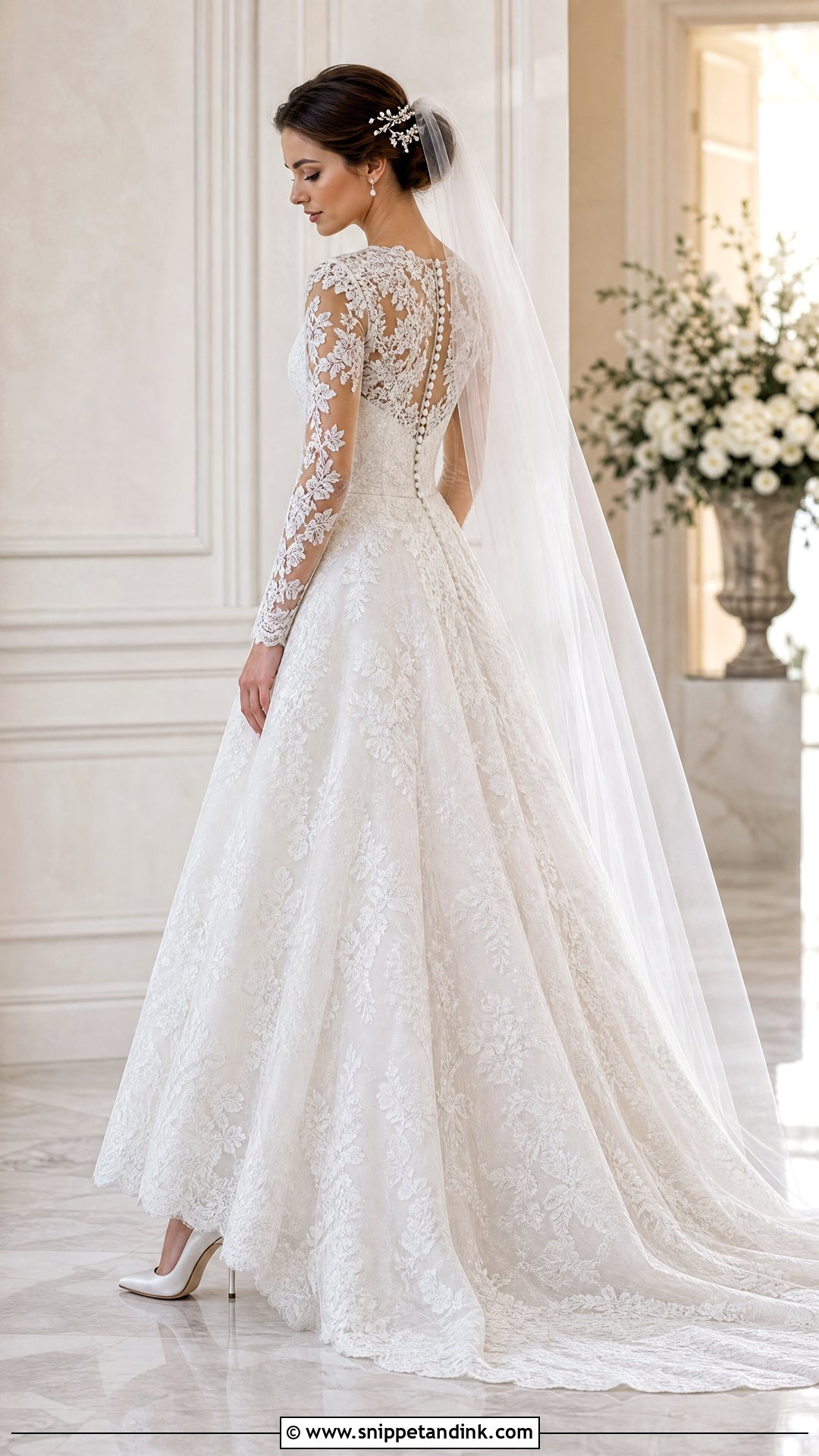
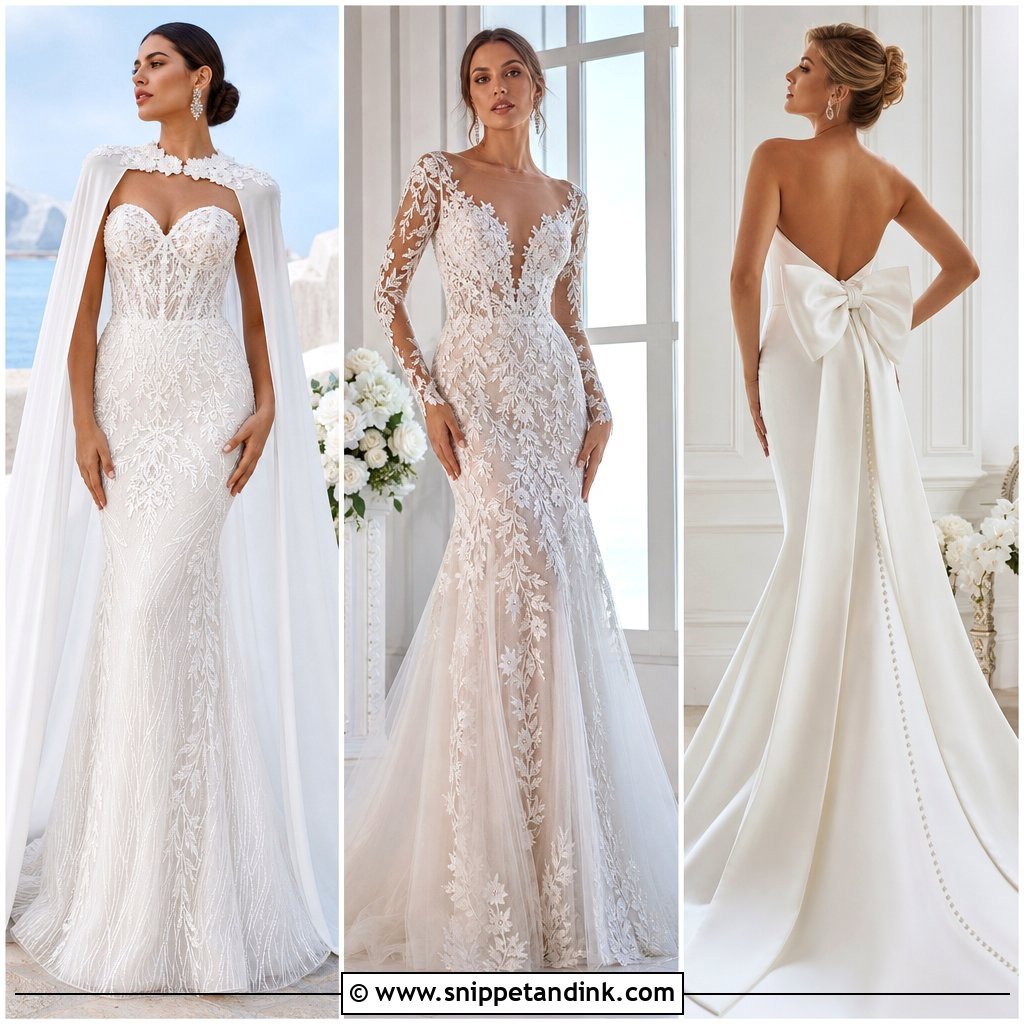
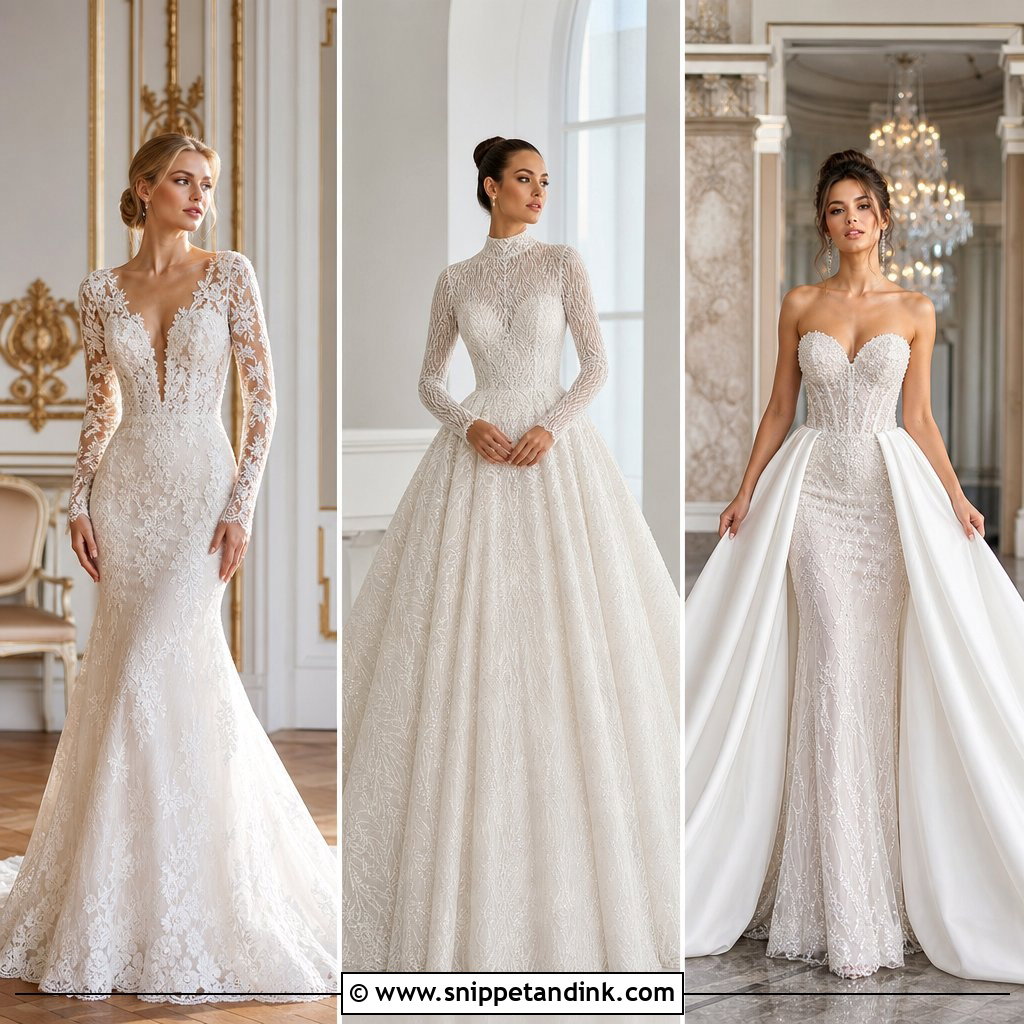
Coverage done well is harder than it looks, and a long sleeve lace couture bridal gown is where I hear the most fitting complaints, almost always about the armpit. Illusion-lined sleeves keep the lace delicate while the fitted bodice does the supporting. An A-line skirt walks easily; a fitted one gives more definition. Tiny covered buttons down the back are the traditional finish, but allow extra time and a helper to close them. Pair it with a simple tulle veil, pearl hairpins, closed-toe satin pumps and a soft chignon that shows off the neckline. At every fitting, raise your arms as if hugging someone taller than you. Stretch lining or a small underarm gusset fixes most of the pull, and a light silk wrap covers you for cool outdoor portraits.
4. Off Shoulder Mikado Couture Bridal Gown
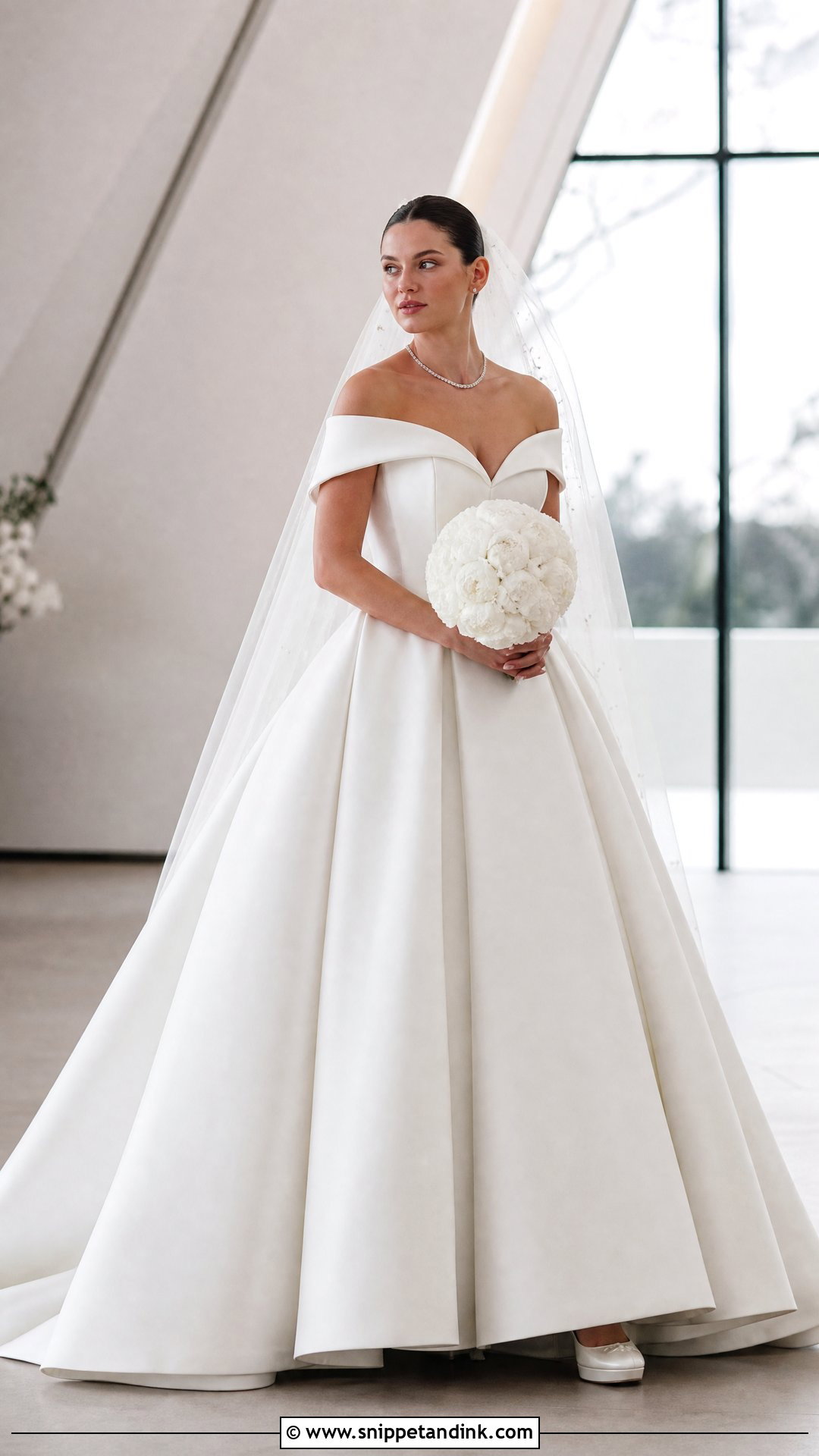
Mikado is stiff enough to hold a fold exactly where it’s pressed, which is why it suits an off-shoulder cuff so well. The catch is that an off-shoulder neckline limits how high you can lift your arms, so I ask brides to mime a bouquet toss in the fitting room. A cuffed or draped neckline frames the collarbones with more security than narrow straps, and a concealed waist stay stops the bodice from creeping down as the evening goes on. Add a delicate diamond necklace, small earrings and a smooth fingertip veil. Ivory platform pumps give hidden height and better balance under a substantial skirt, and a compact bouquet of rounded flowers echoes the gown’s controlled shape.
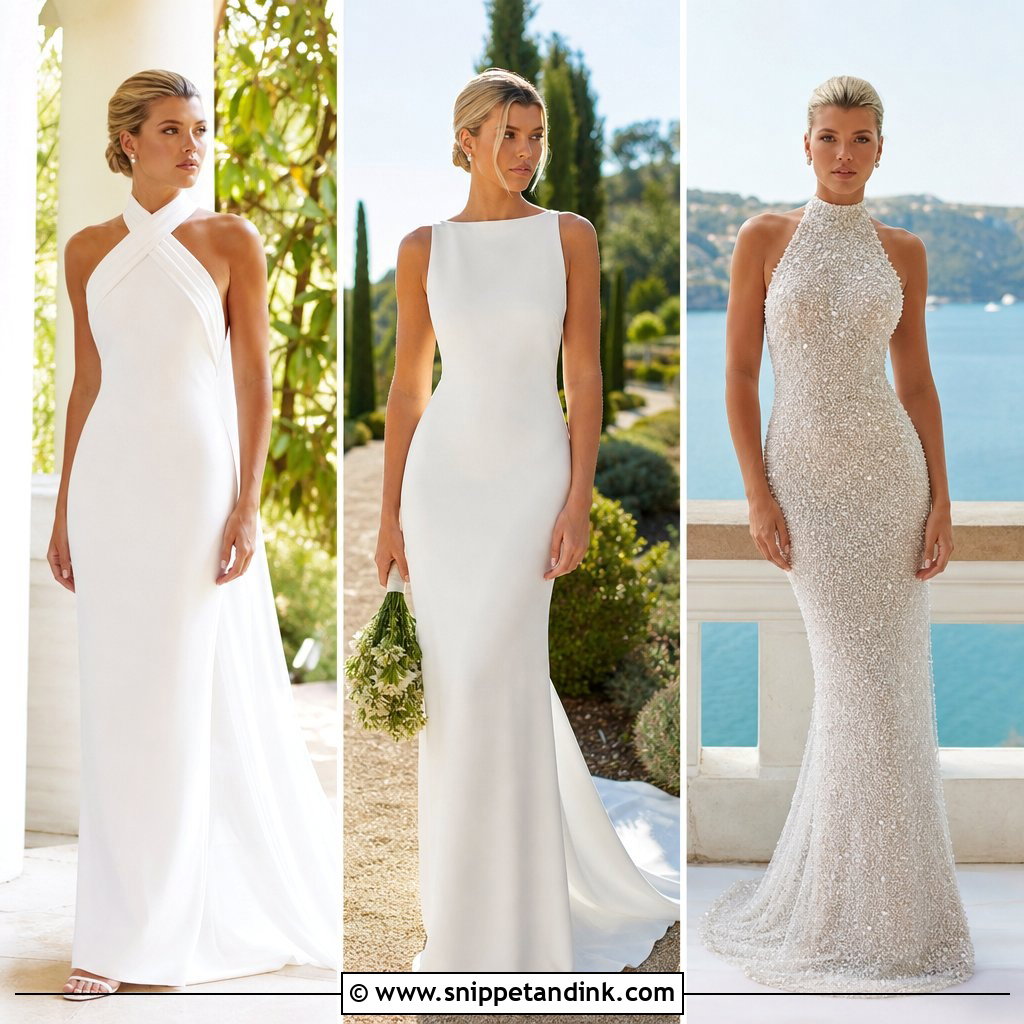
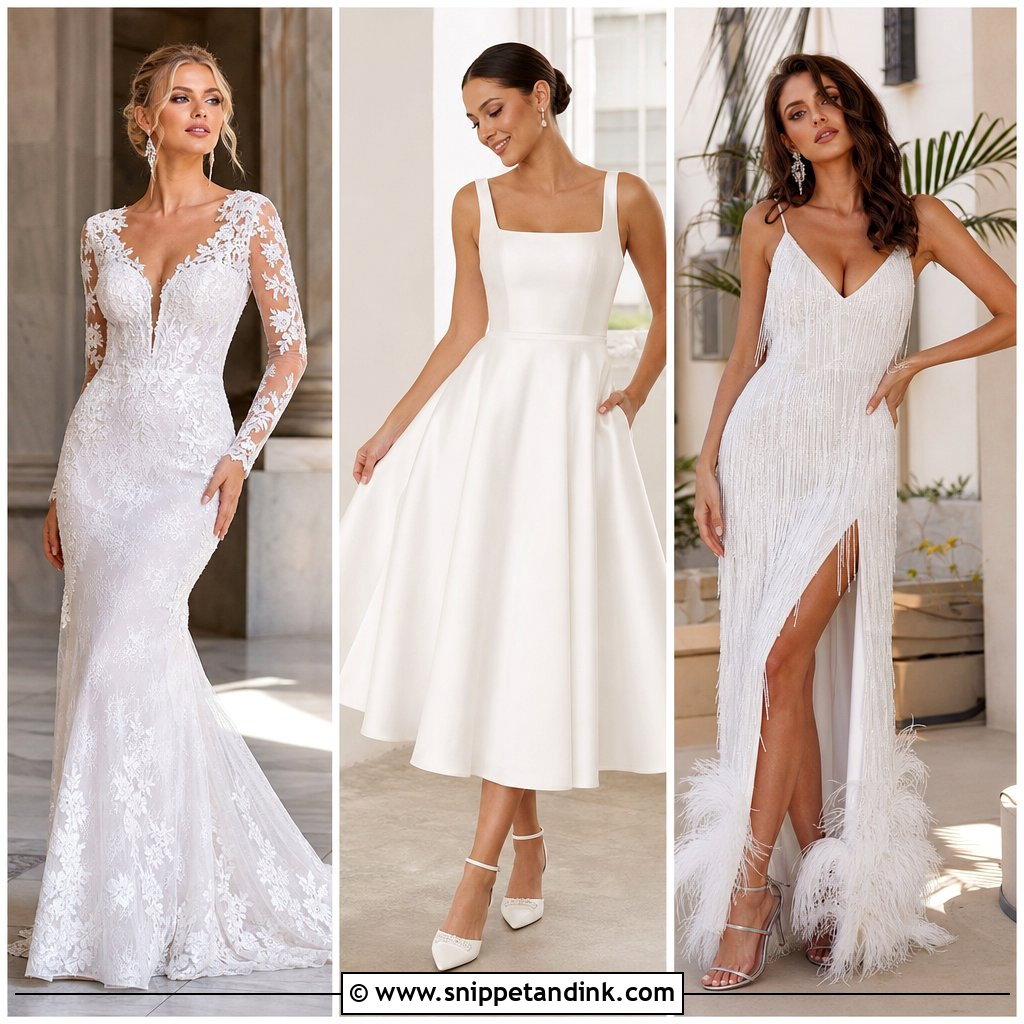
5. Pearl Beaded Couture Bridal Gown
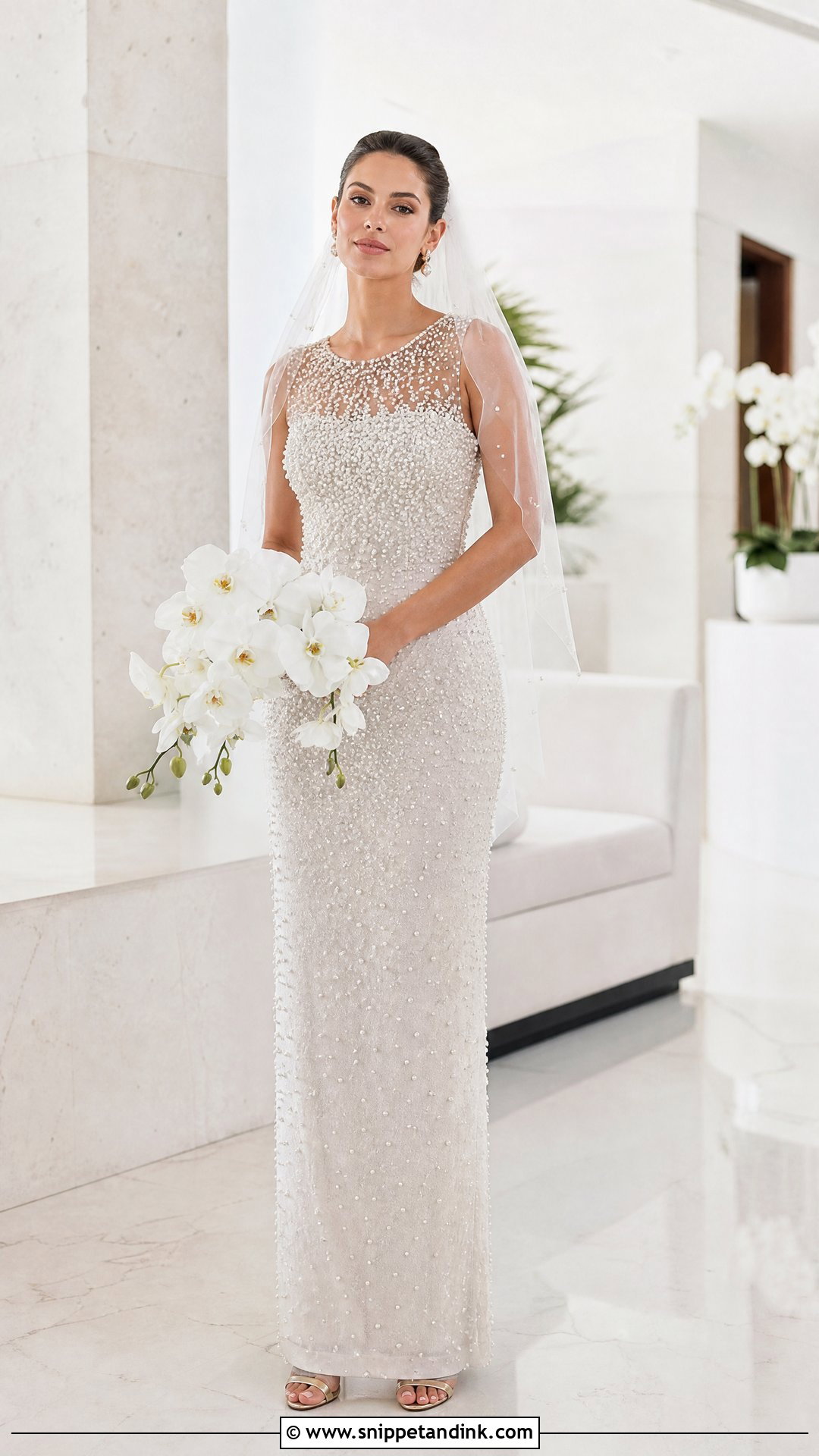
Pearls add weight fast. Before you fall for an all-over beaded bodice, sit in the sample for a few minutes, because heavy embellishment drags at the shoulders and presses into the backs of your thighs when you’re seated. Graduated beading, dense at the bodice and thinning toward the hem, gives definition without that load, and a column or gentle fit-and-flare lets it read clearly. I keep the accessories quiet: pearl earrings, a sheer shoulder-length veil, metallic ivory sandals with a supportive strap, and a low knot or polished waves tucked behind the ears. A white orchid bouquet suits it. Check that interior seams are covered so beads can’t scratch, and ask for a wrist loop or discreet bustle if the train is beaded.
6. Floral Applique Couture Bridal Gown
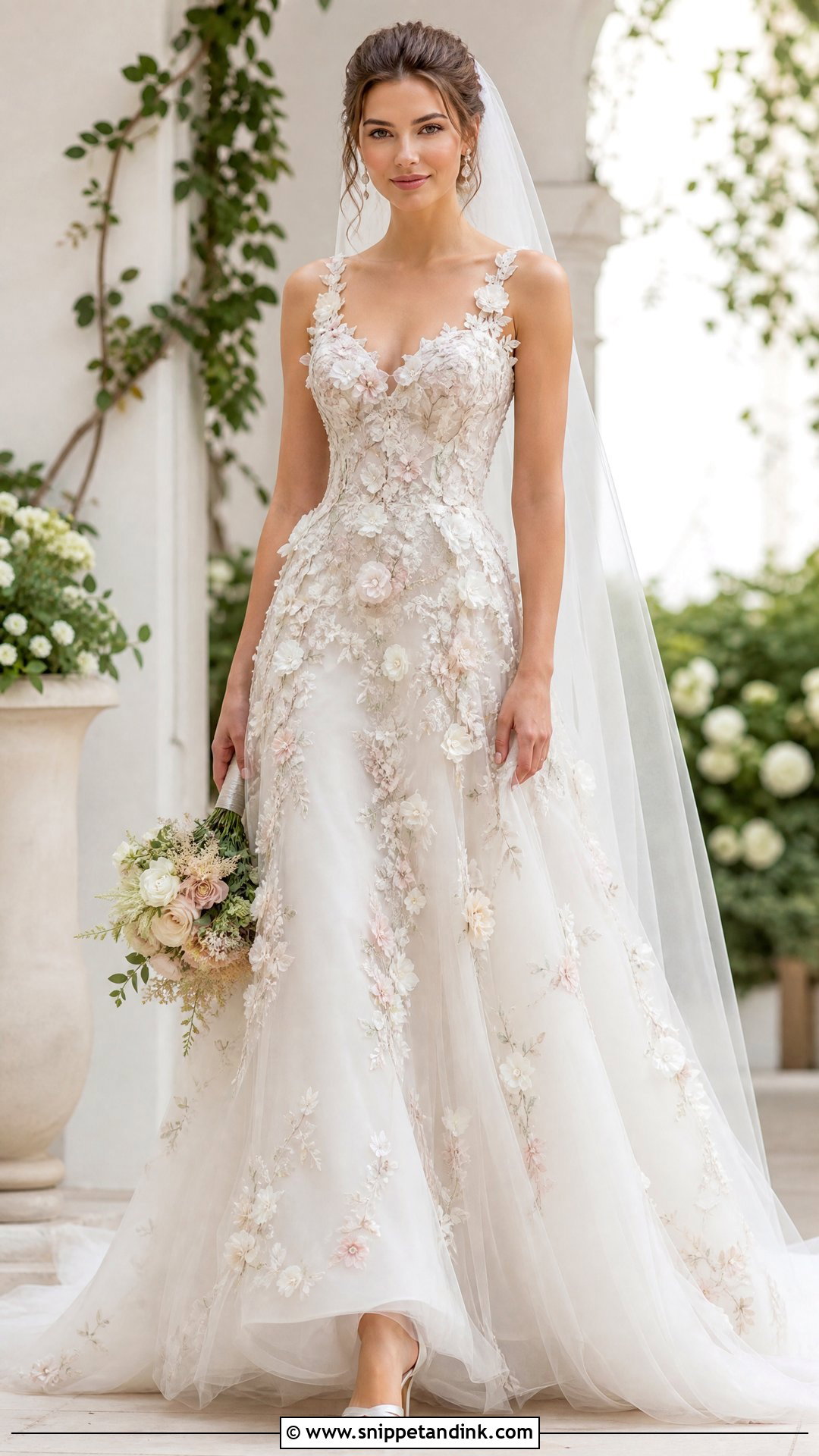
Placement is everything with appliqué. I prefer flowers that cluster on the bodice and drift down an airy A-line skirt, thinning as they go, so the shape of the gown still reads from across the room. All-over appliqué tends to flatten into plain texture in photographs. If you want a hint of color, pale blush, soft blue or muted green embroidery works. Keep the rest simple: a plain tulle veil, small floral earrings, matching ivory satin heels, a loose low bun and natural makeup, with only one or two flower varieties in the bouquet. Run your fingers over the raised petals at the fitting. Anything loose will snag on a veil or a bracelet by the reception.
7. Drop Waist Couture Bridal Gown
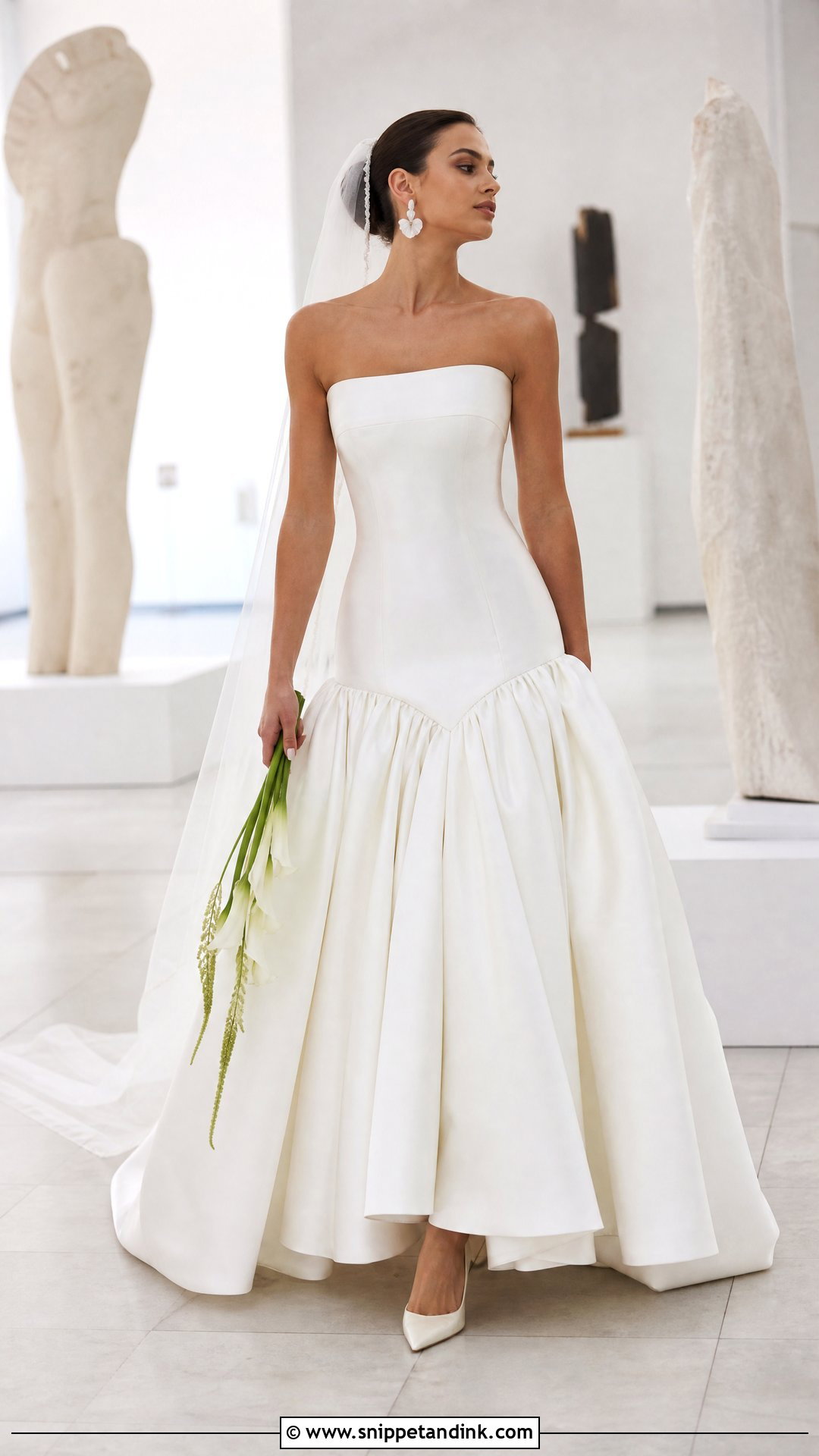
A drop waist lengthens the torso, but the drop has to suit yours. On a shorter torso a deep V can make the legs look cut off, so I’d ask for a shallower curve; a bride with a long body can take the full drop toward the upper hip. Satin, faille and structured taffeta hold the line crisply. If you want stronger definition, a basque-shaped waist supported by internal corsetry looks cleaner than tight outer seams. Style it with a narrow cathedral veil, sculptural earrings, pointed pumps and a sleek bun or smooth ponytail, plus a long, minimal bouquet. Sit down during every alteration appointment, since the lower bodice is exactly where a drop waist digs in.
8. Cape Sleeve Couture Bridal Gown
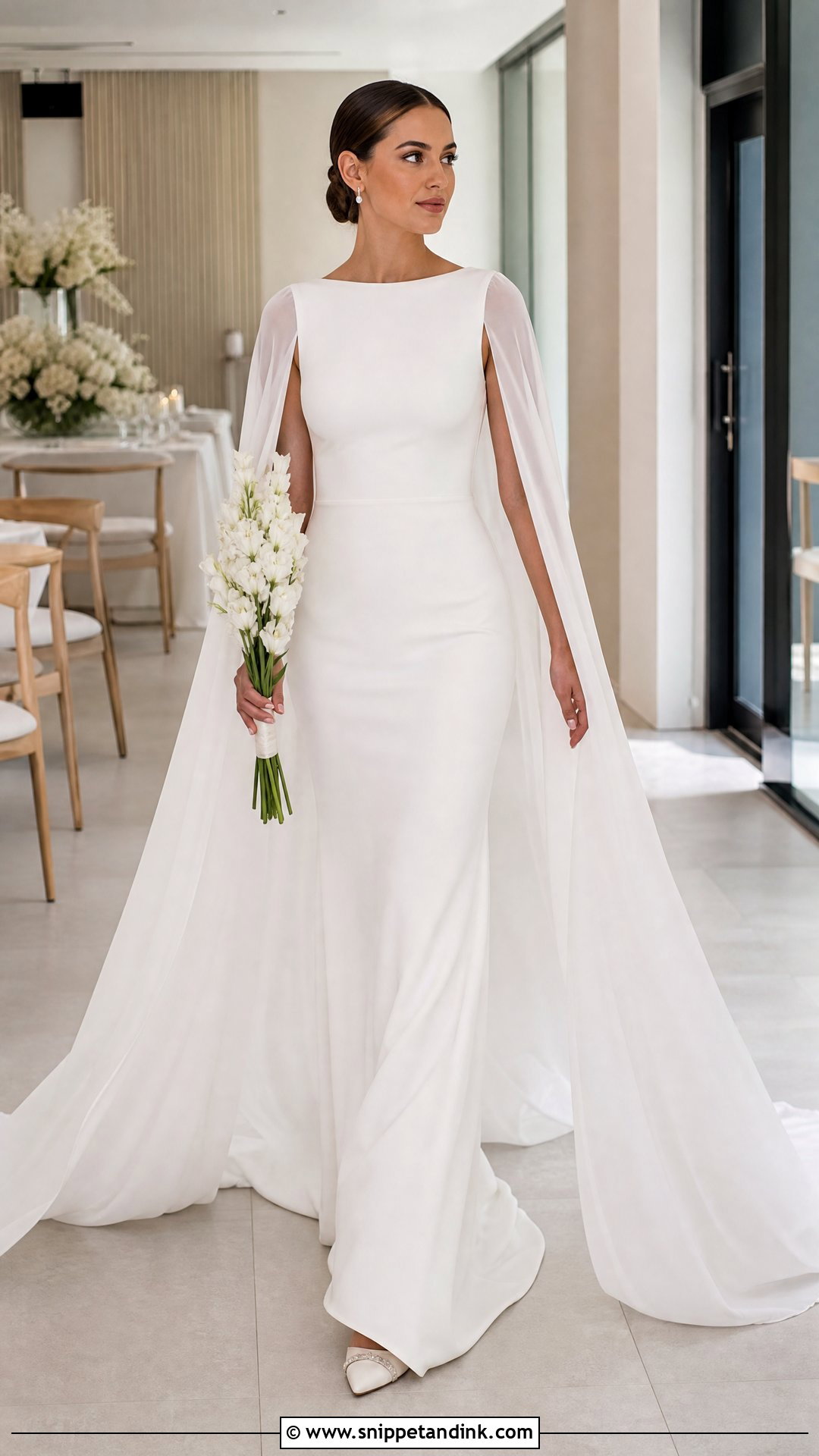
A cape can stand in for a veil, and I usually recommend that it does. Wearing both behind you means two layers of sheer fabric tangling every time you turn. Attached at the shoulders, a chiffon, lace or tulle cape floats softly; attached at the neckline, it makes a bigger entrance but tugs backward as you walk, so ask for small hidden fastenings placed where the weight actually falls. Underneath, a fitted crepe or satin gown keeps the line clean. Add understated earrings, a low bun, closed-toe heels in the gown’s shade and a narrow bouquet. Practice taking the cape off before the wedding, and make sure whoever helps you at the reception knows which hooks release first.
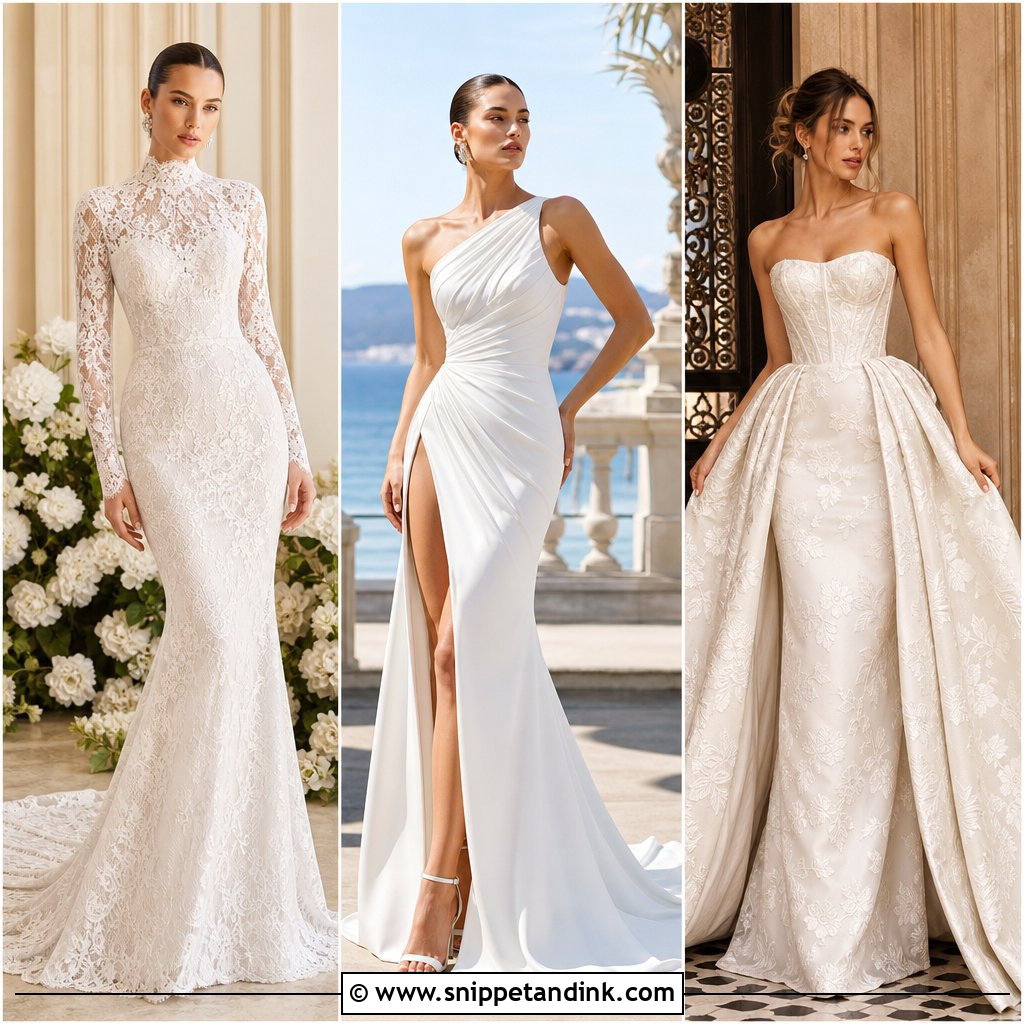
9. Detachable Overskirt Couture Bridal Gown
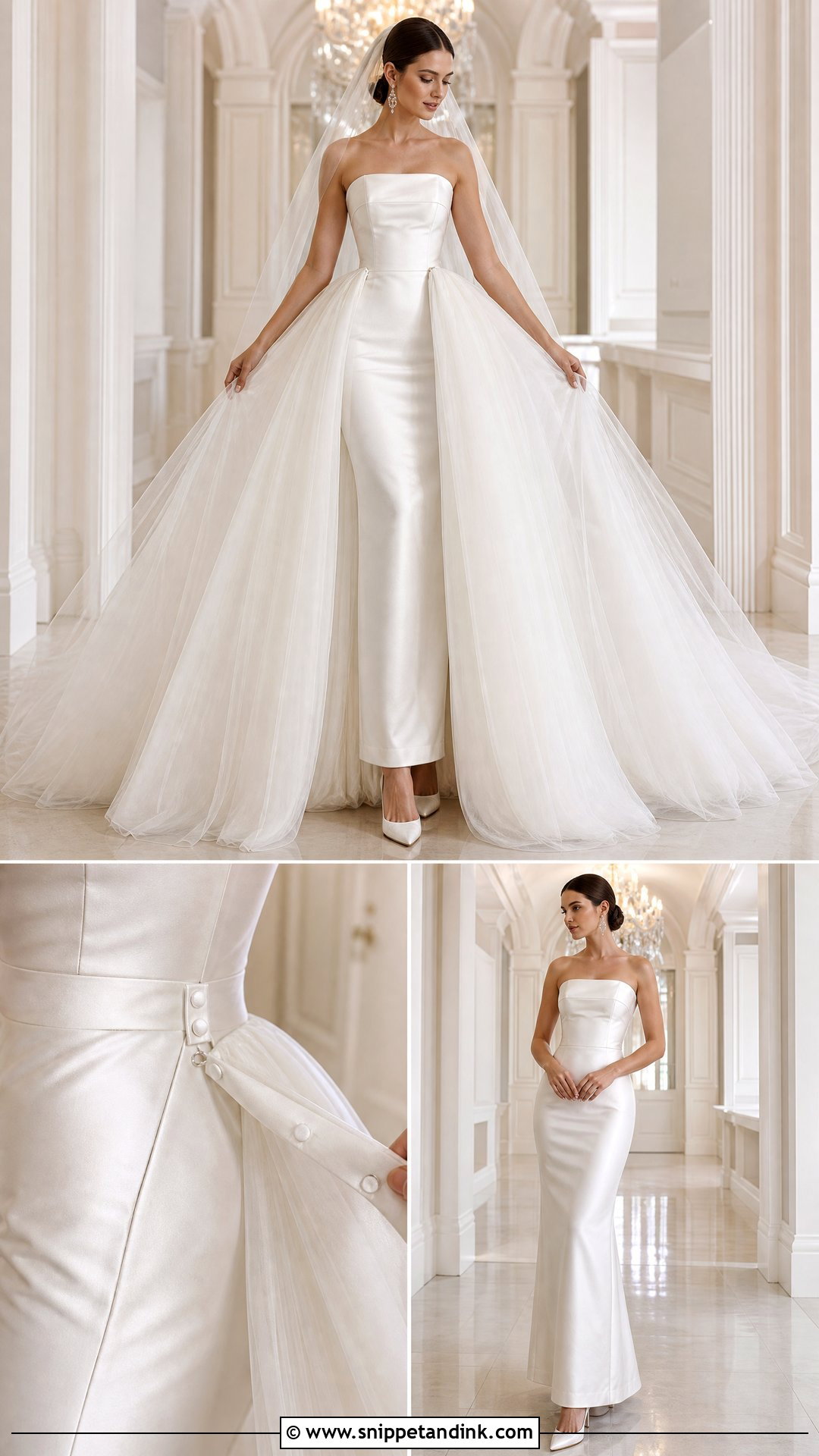
Two looks from one gown is the appeal of a detachable overskirt couture bridal gown, and the change only works if the join is invisible. Ask how the overskirt attaches at the natural waist; flat hooks or snaps hidden under a band sit far smoother than buttons. The base can be a fitted column, trumpet or mini-lined gown, with a full tulle or satin overskirt on top. For the ceremony, wear a long veil, crystal earrings and classic ivory pumps; after the switch, change to statement earrings or a shorter veil so the transformation is obvious. Keep the same shoes unless the hem rises. I have the tailor demonstrate removal at the final fitting with the person who will help on the day, and I pack a labeled garment bag so the overskirt never ends up crumpled on a chair.
10. High Neck Crepe Couture Bridal Gown
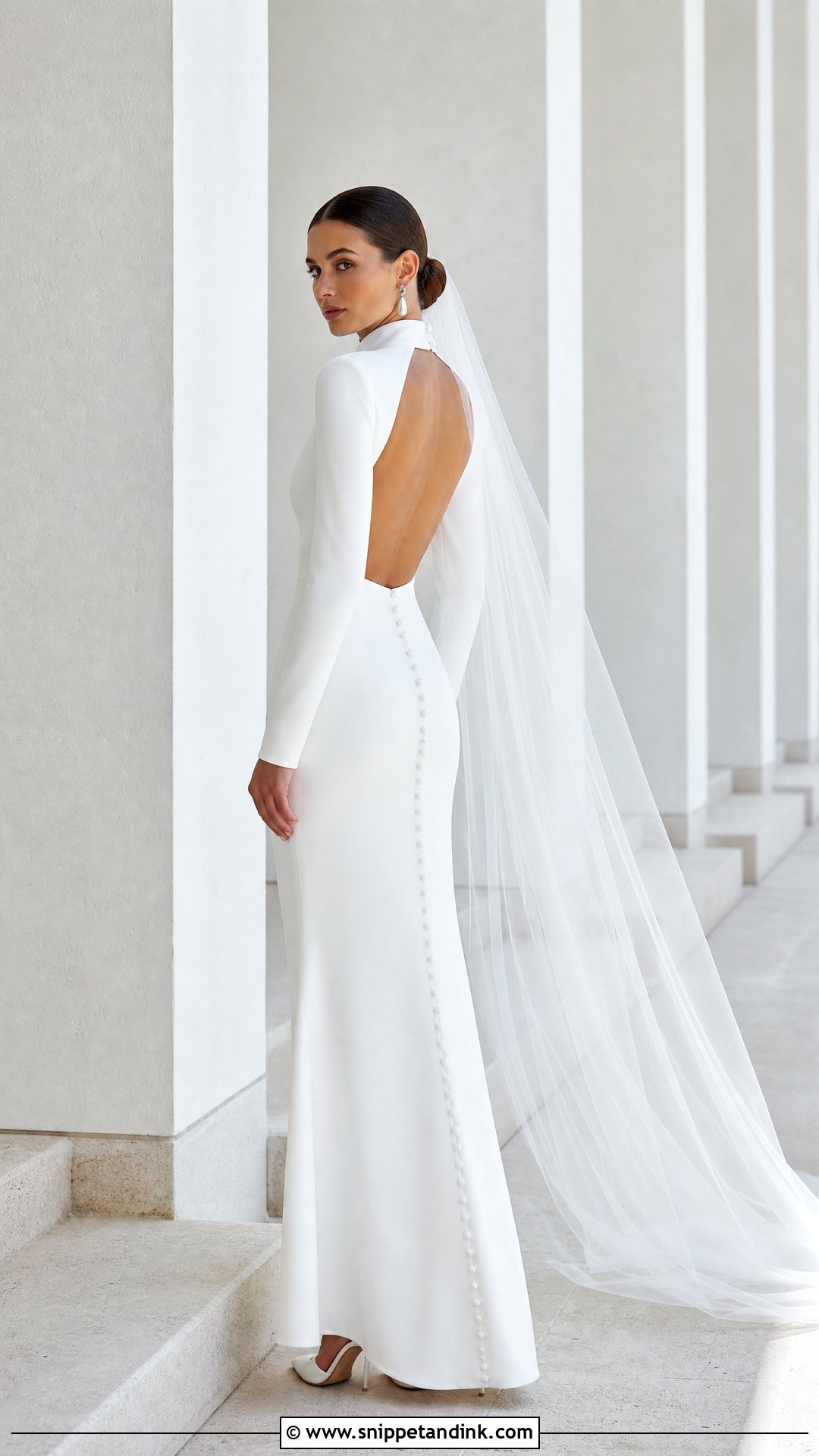
Crepe hides nothing. It follows the body closely, so a thin lining or a seam cut a fraction too tight shows as pulling across the hips the minute you walk, which is why I’d only put a bride in this gown with a seamstress she trusts. Precise seaming, a fitted waist and a narrow column or gentle flare suit the matte fabric, and an open back balances the covered neck. Wear sleek drop earrings, a low twisted bun and pointed satin heels, and attach the veil below the bun so it doesn’t interrupt the neckline. A structured bouquet with minimal greenery keeps it modern. In fittings, climb a few steps as well as walking and sitting.
11. Square Neck Satin Couture Bridal Gown
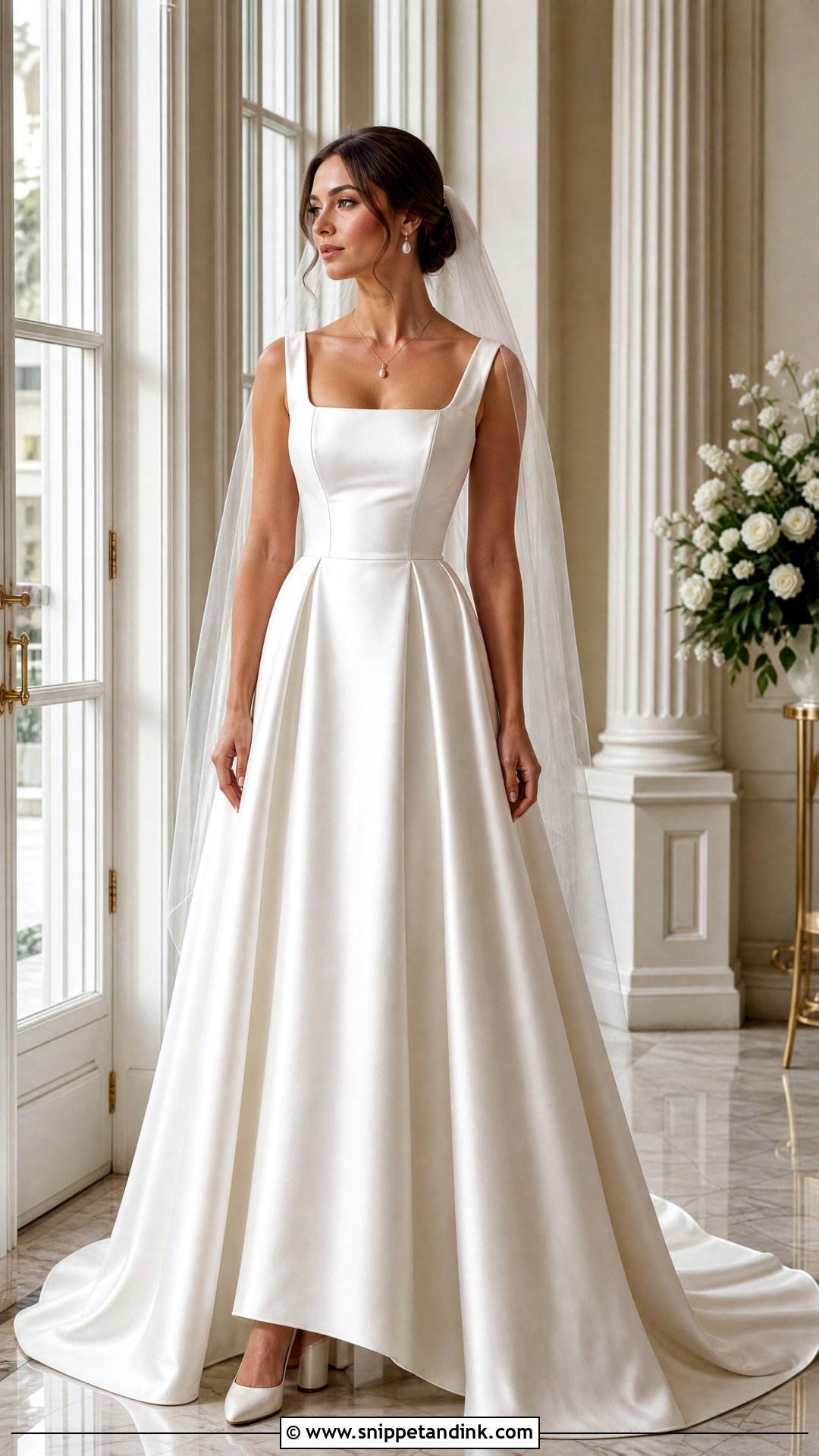
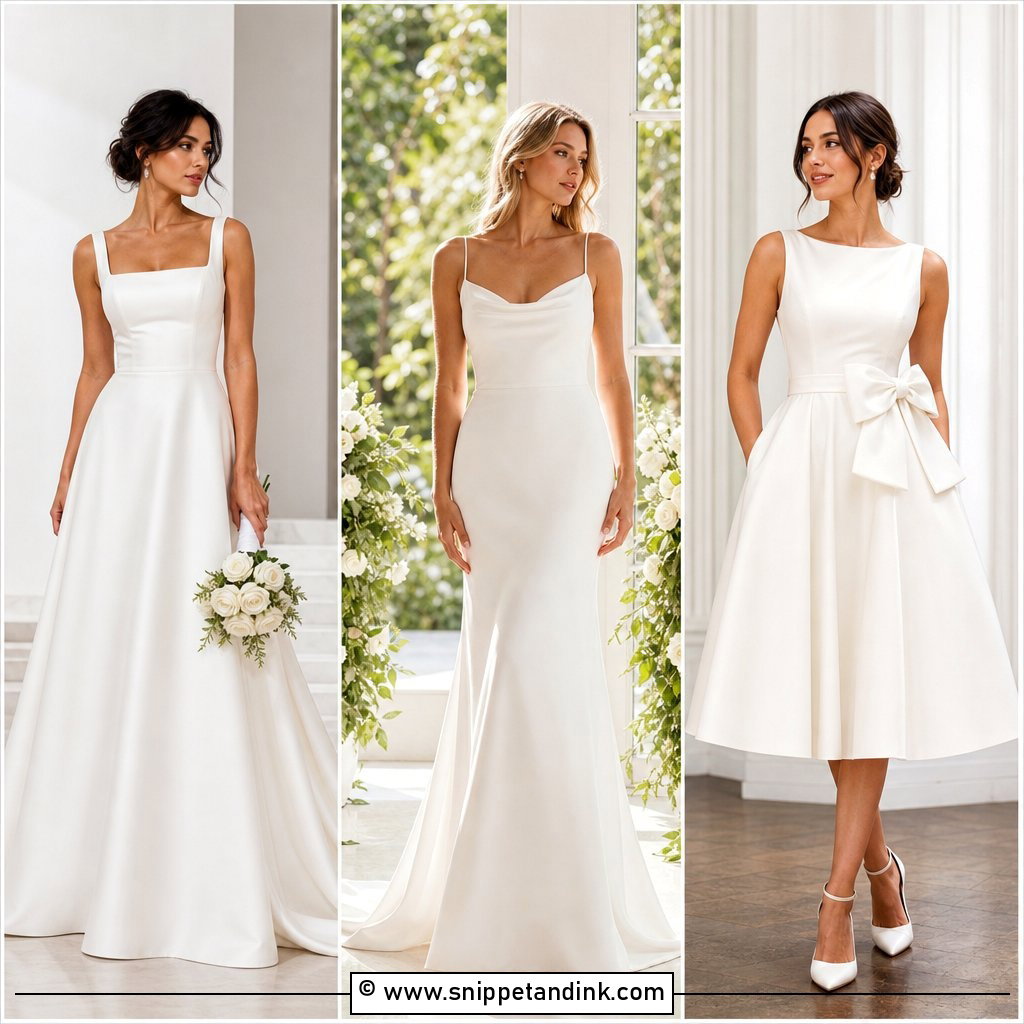
A square neckline frames the face and collarbones with crisp corners, and those corners are the thing to watch. When the bodice is even slightly loose, they gape forward as you lean, which you’ll spot quickly in a side mirror. Wide straps and a closely fitted bodice keep them flat, with an A-line or softly pleated skirt below. Silk satin moves well, while heavier duchess satin gives a more formal structure. I add a fine pendant, small pearl earrings and a fingertip veil, with block-heel satin shoes for stability. A smooth half-up style softens the geometry without covering it. For extra support, request built-in cups and an internal waist stay, and keep the bouquet to plain white blooms.
12. One Shoulder Couture Bridal Gown
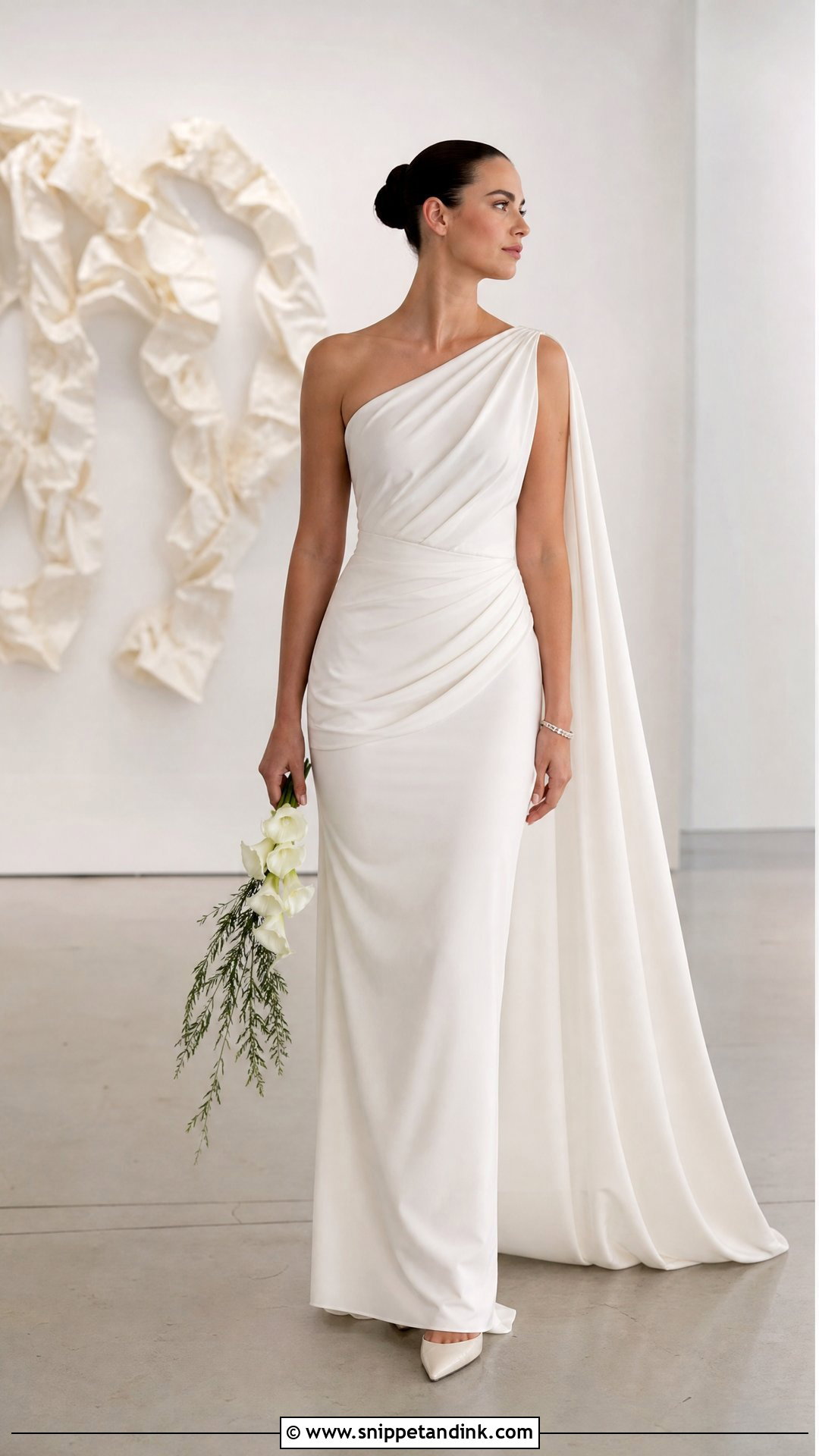
The asymmetry does most of the styling, so this is the gown where I take accessories away. Draped silk gives fluidity; structured satin or light crepe gives a sharper line. A fitted waist and column skirt keep it sleek, and a fuller skirt adds drama. Wear one statement earring on the bare side or small matching studs, with a sleek updo, a delicate bracelet and pointed ivory heels. A cape panel or fabric train falling from the shoulder can replace a veil entirely. Hold the bouquet on the opposite side so the neckline stays visible. The usual fit problem is a bodice that tilts when you lift the covered arm, so test that and twist your upper body before the final fitting.
13. Mermaid Lace Couture Bridal Gown
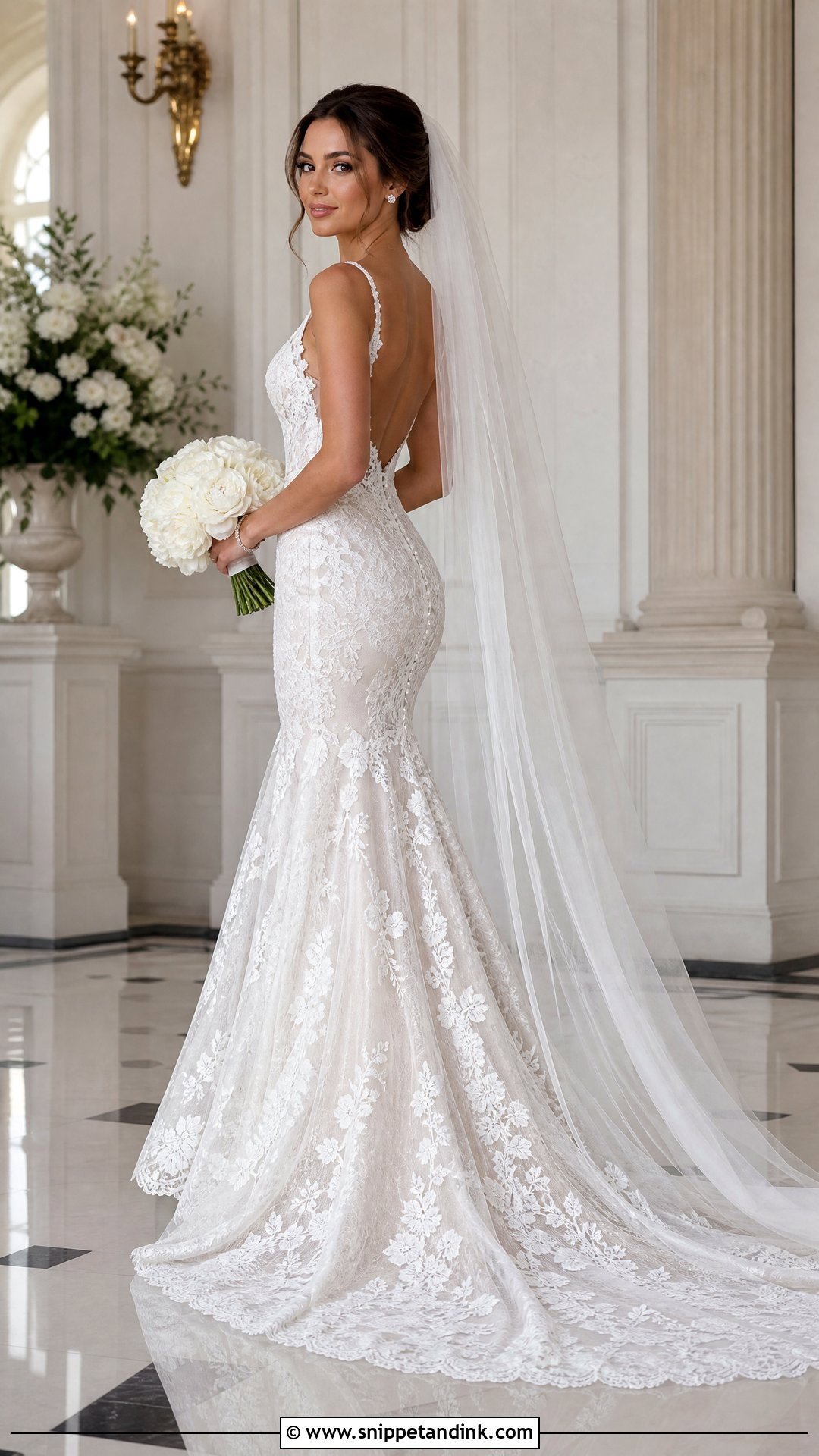
Where the flare starts decides whether you can walk. At or just above the knee, a mermaid moves with you; much lower and you’ll be taking half steps all day, with stairs becoming a negotiation. Choose lace whose motifs run vertically and define the waist. I pair it with a plain cathedral veil, sparkling studs, supportive platform heels and soft waves or a polished side part, and keep the bouquet compact so the shape shows in photos. Sit, walk and practice stairs at every fitting; stretch lining and hidden support panels help. The bustle has to lift the whole train evenly, or the fabric bunches behind the knees and the silhouette disappears.
14. Minimalist Silk Couture Bridal Gown
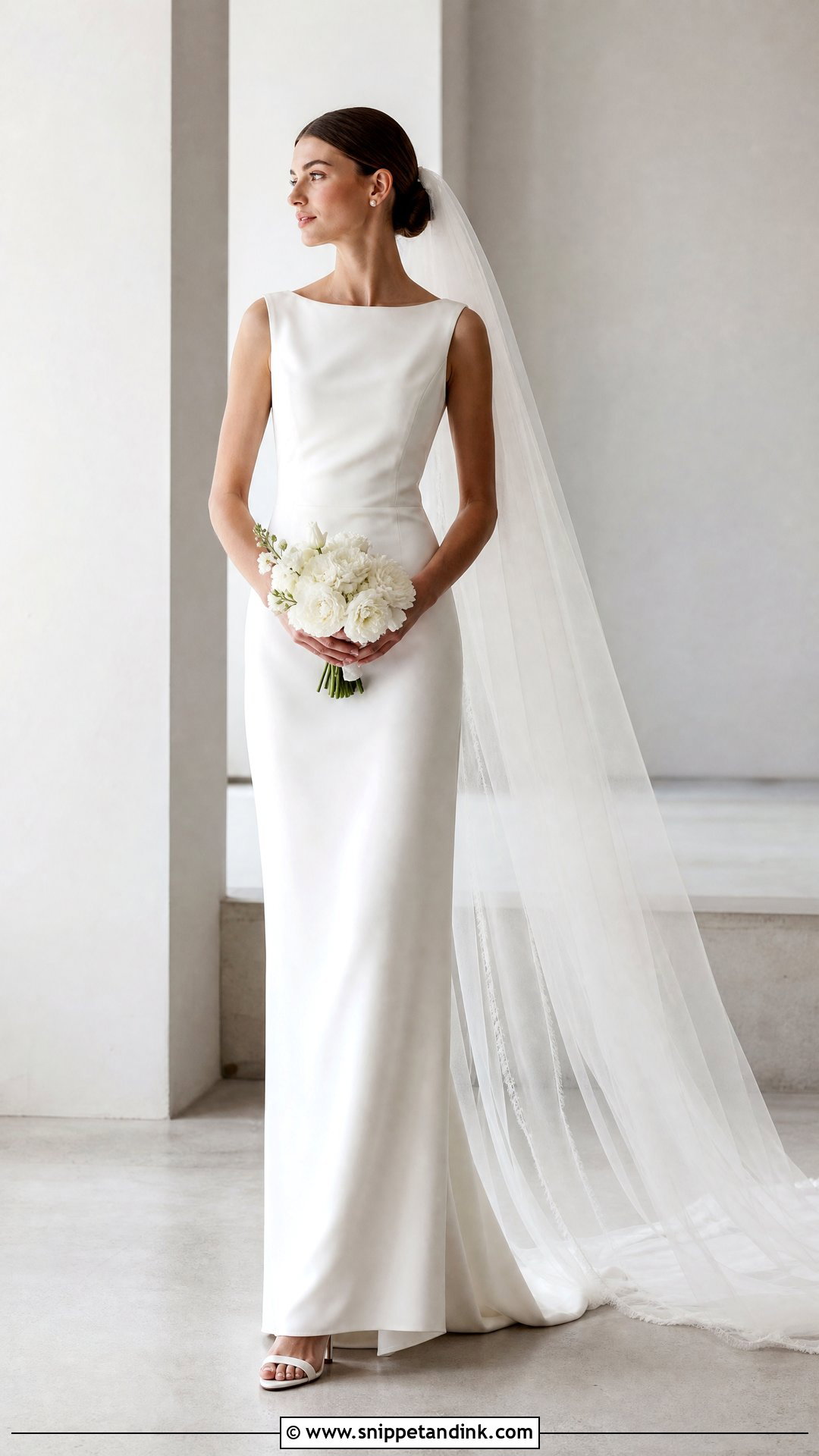
Simple gowns are the hardest to make well. With no embellishment to distract the eye, every uneven hem and pulled seam shows, so pattern cutting and tailoring matter more here than anywhere else on this list. Silk faille gives structure, silk satin gives shine, and silk crepe gives a soft matte finish. A bateau, scoop or strapless neckline sits well over a smooth column or controlled A-line. I keep the styling sparse: pearl studs, a long raw-edge veil, slingback heels, a sleek bun and a small bouquet with clean stems. Stand by a window at your alteration appointments. Daylight shows the flaws in silk far more honestly than fitting-room bulbs, and a well-cut slip or built-in lining gives the fabric a smooth base to move over.

15. Bow Back Couture Bridal Gown
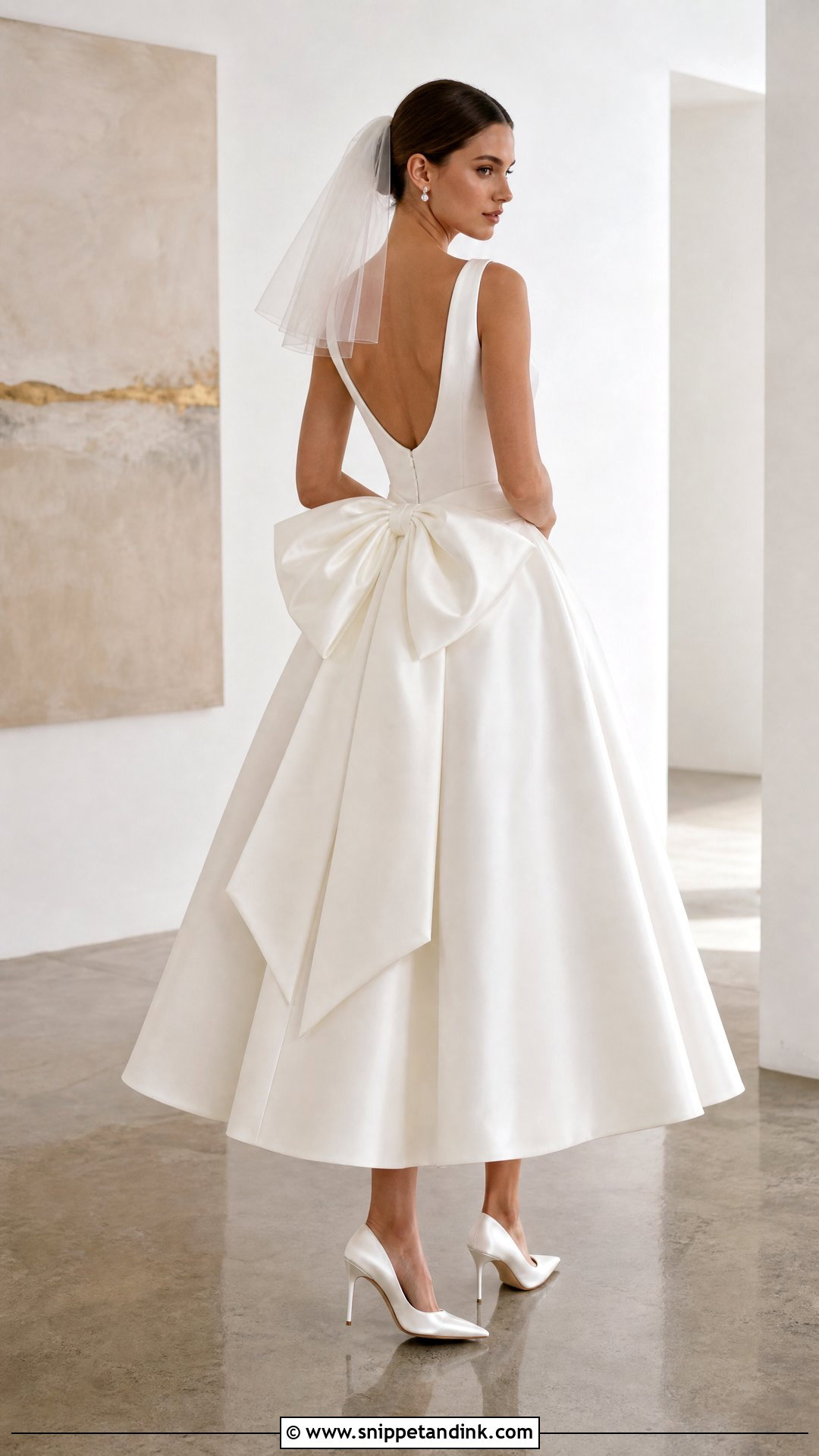
A bow at the back gives you an exit moment and leaves the front of the gown clean. Crisp satin and taffeta hold sculptural loops, while organza makes a lighter, airier bow. Position changes the mood: at the waist it reads playful, at the upper back more formal, at the top of the train most dramatic. Pair it with a clean strapless or square-neck bodice and a short plain veil that ends above the bow, or a long one you remove after the ceremony. Simple earrings, a smooth bun and pointed satin pumps are enough. If the bow detaches, ask for sturdy hidden fastenings, and I check that the tails don’t catch under your heels when you sit or when the gown is bustled.
16. Sheer Corset Tulle Couture Bridal Gown
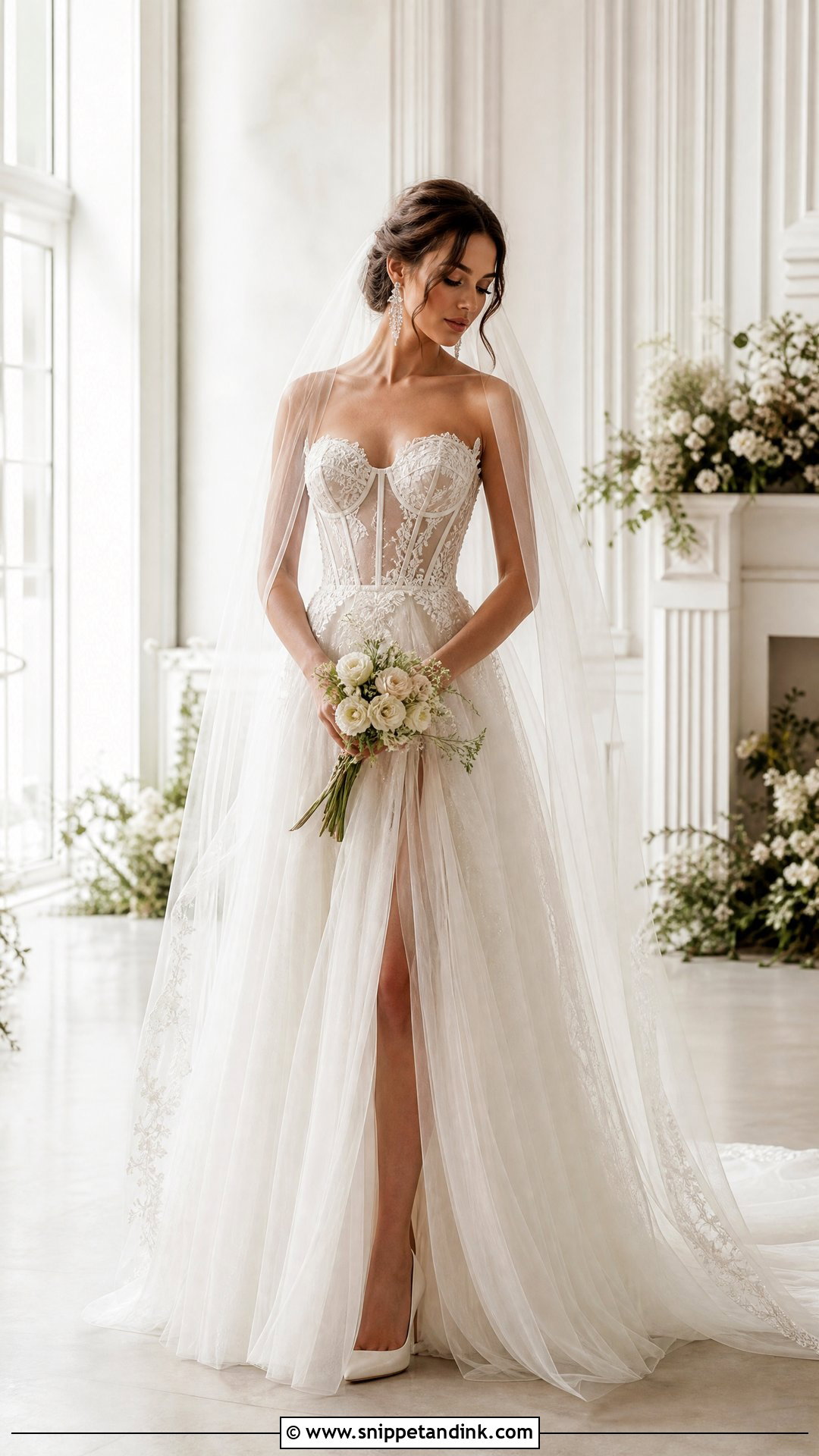
Visible boning only looks good when it’s placed well, so I study the corset before anything else: the channels should run straight and evenly spaced, and the cups should feel secure rather than decorative. The lining decides your coverage, and matching illusion lining across the bodice gives a more modest version. A softly gathered tulle skirt balances the structured top half. Accessories stay light, with a fine cathedral veil, crystal drop earrings, closed-toe ivory heels, a neat low bun and a bouquet of delicate stems. Sit and bend in the fitting. Boning that shifts or a waistline that digs in will only feel worse after dinner.
17. 3D Floral Couture Bridal Gown
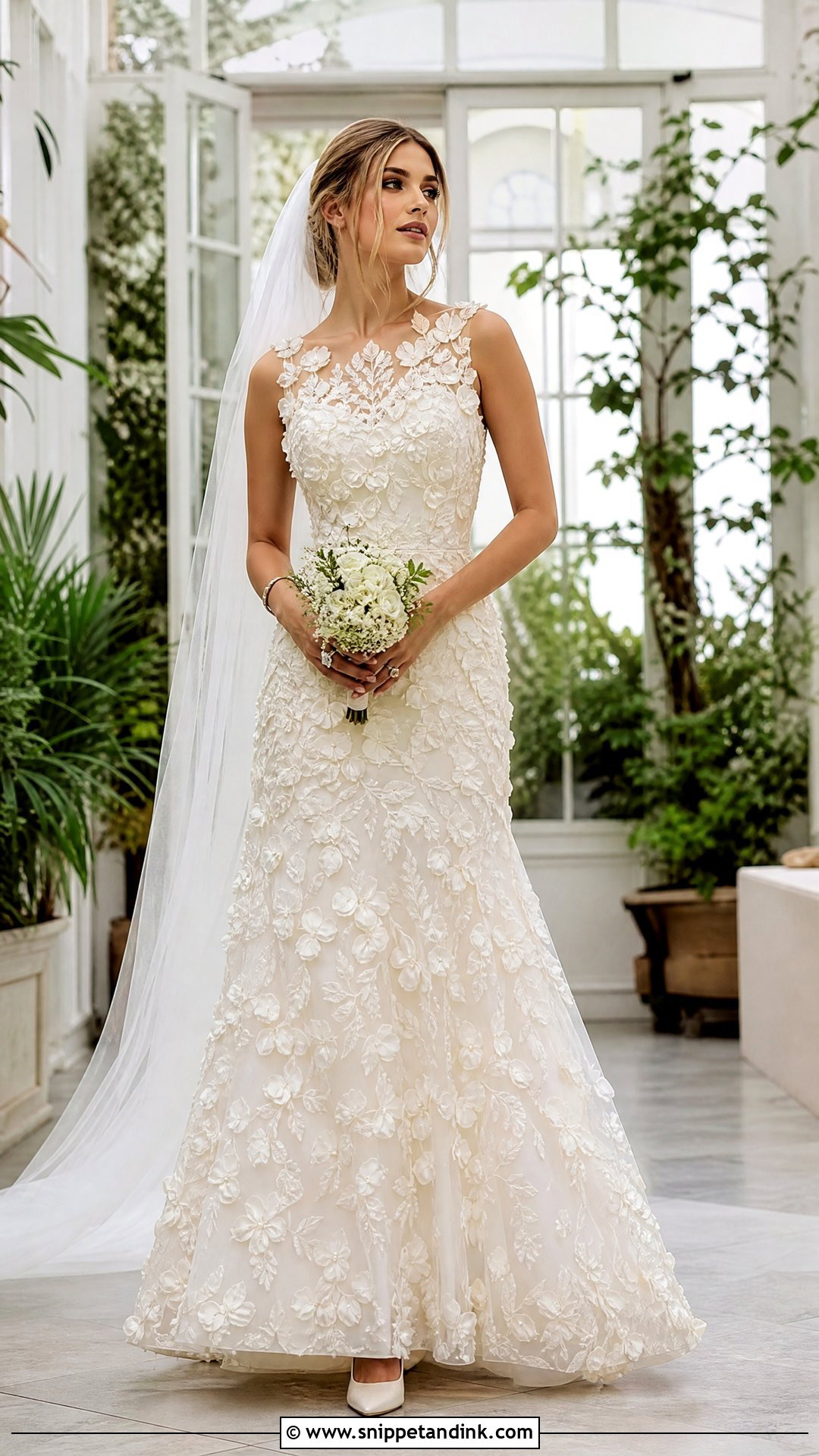
Raised petals and embroidered leaves give real depth, and they’re also the most fragile thing on any gown. Ask how each flower is attached and whether the atelier keeps spares in case alterations or the day itself damage one. For balance, put larger blooms around the bodice or hem with smaller motifs through the middle, and choose a fitted A-line so they have room. Style it with a plain veil, floral-inspired studs, simple satin pumps and a low textured bun, and match the bouquet to the appliqué colors instead of adding new ones. I’d leave bracelets with prong settings at home, since they catch petals every time you adjust the skirt, and I have delicate pieces wrapped separately for transport.
18. Cathedral Train Couture Bridal Gown
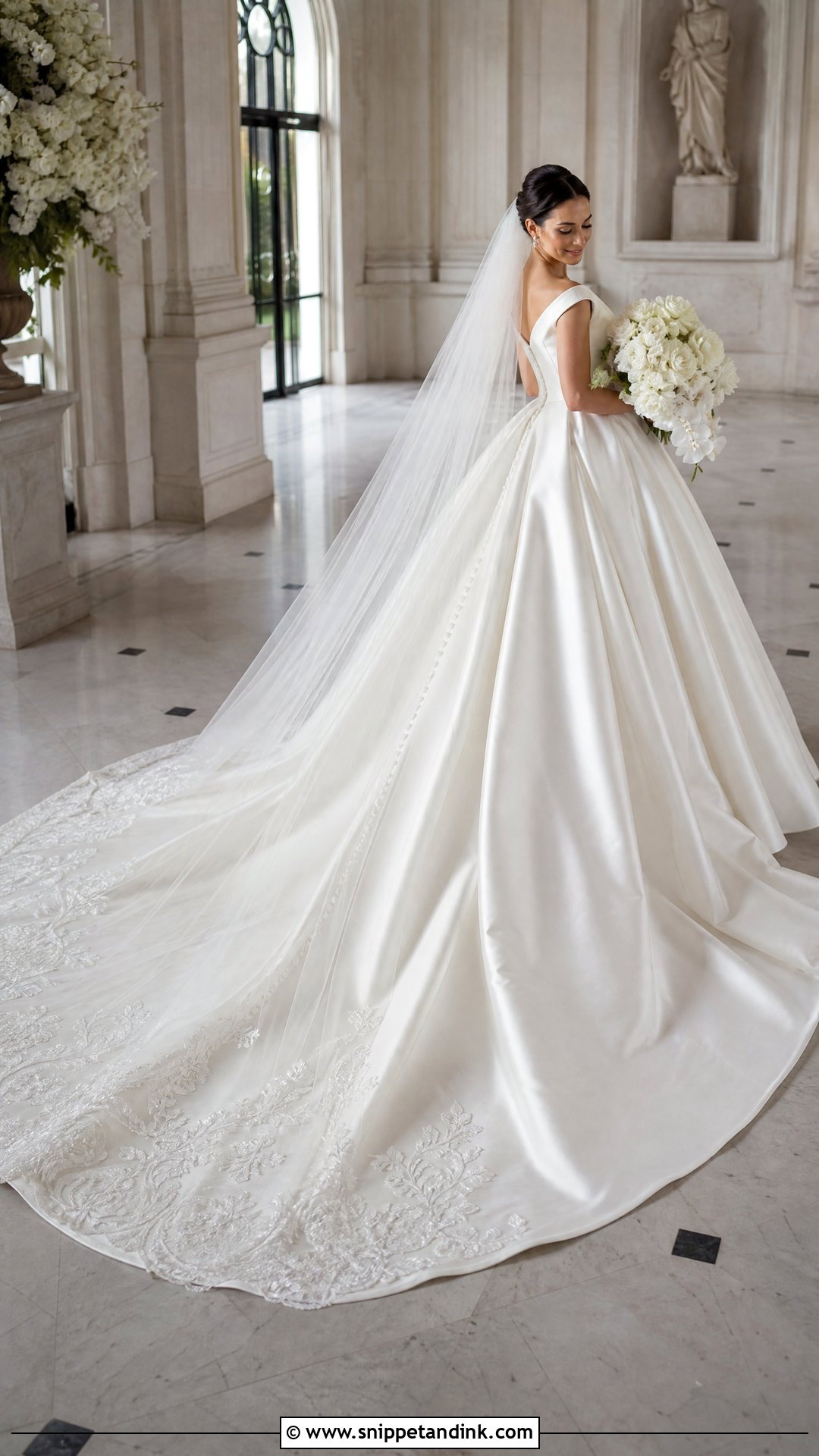
A cathedral train belongs in a big room. In a small chapel or along a narrow aisle it piles up behind you and guests step on it, so measure the aisle before you fall for the length. The train can extend from a satin ball gown, fitted lace or a minimalist crepe column, and a cathedral veil ending slightly past it layers neatly. Keep jewelry small, wear comfortable block heels and a polished updo, and carry a bouquet substantial enough to hold its own without hiding the bodice. Practice turning slowly at home. For the reception you’ll need a multi-point bustle; a single hook carrying that much fabric is the attachment I see tear most often.
19. Tea Length Couture Bridal Gown
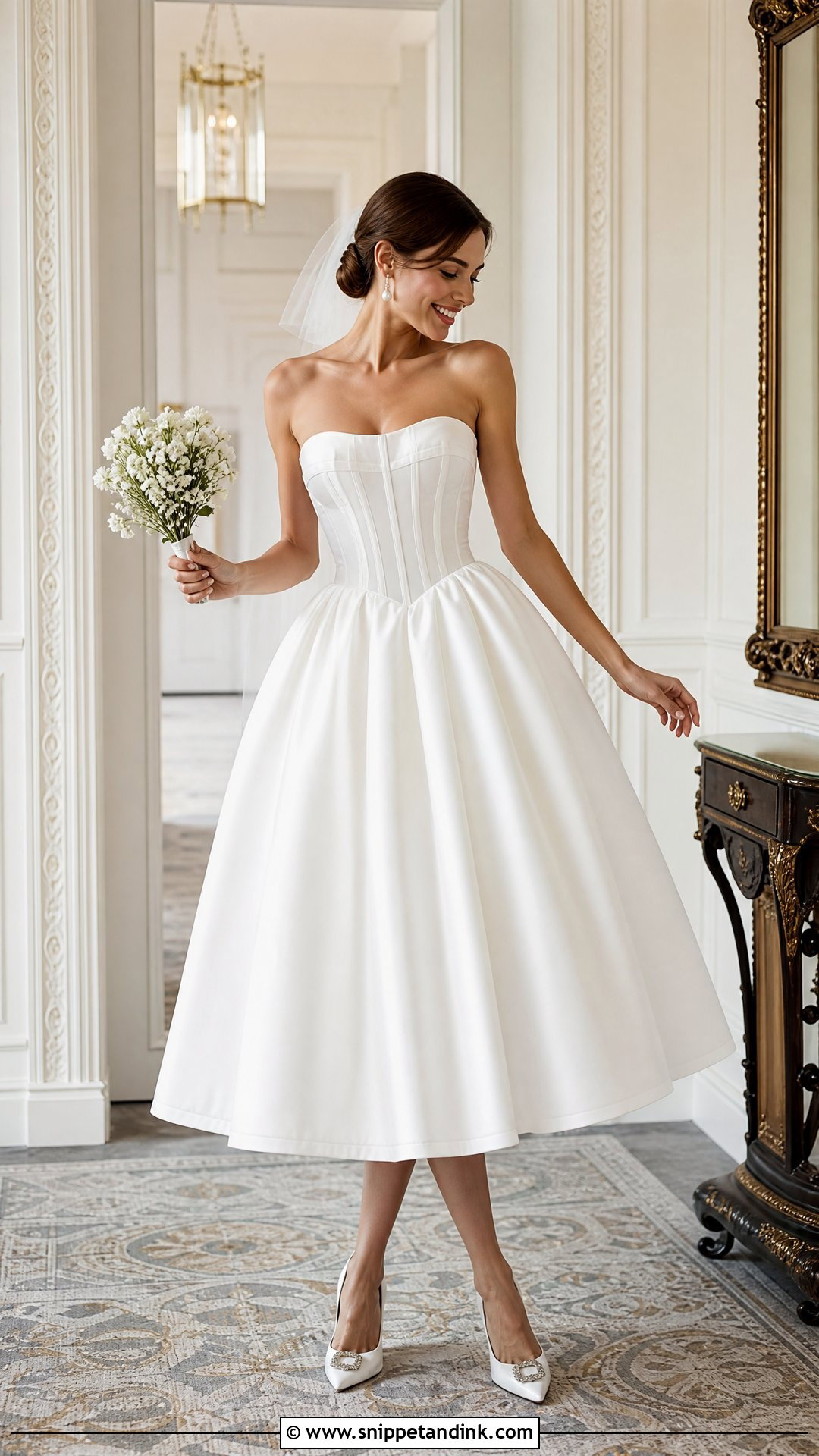
I think tea length is underrated, especially for daytime and garden weddings. The skirt ends between the knee and ankle, shows your shoes and lets you dance without any bustle at all. A fitted corset bodice with a full skirt in silk faille, lace or structured organza holds the shape. Because the shoes are part of the look, give them some thought: satin-covered heels, a bow or a crystal buckle. Add pearl earrings, a short veil or small netted headpiece, a polished updo and a compact bouquet. Petite brides should hem at the narrowest point of the lower leg, and a light petticoat with hidden pockets adds comfort without stiffening the skirt.



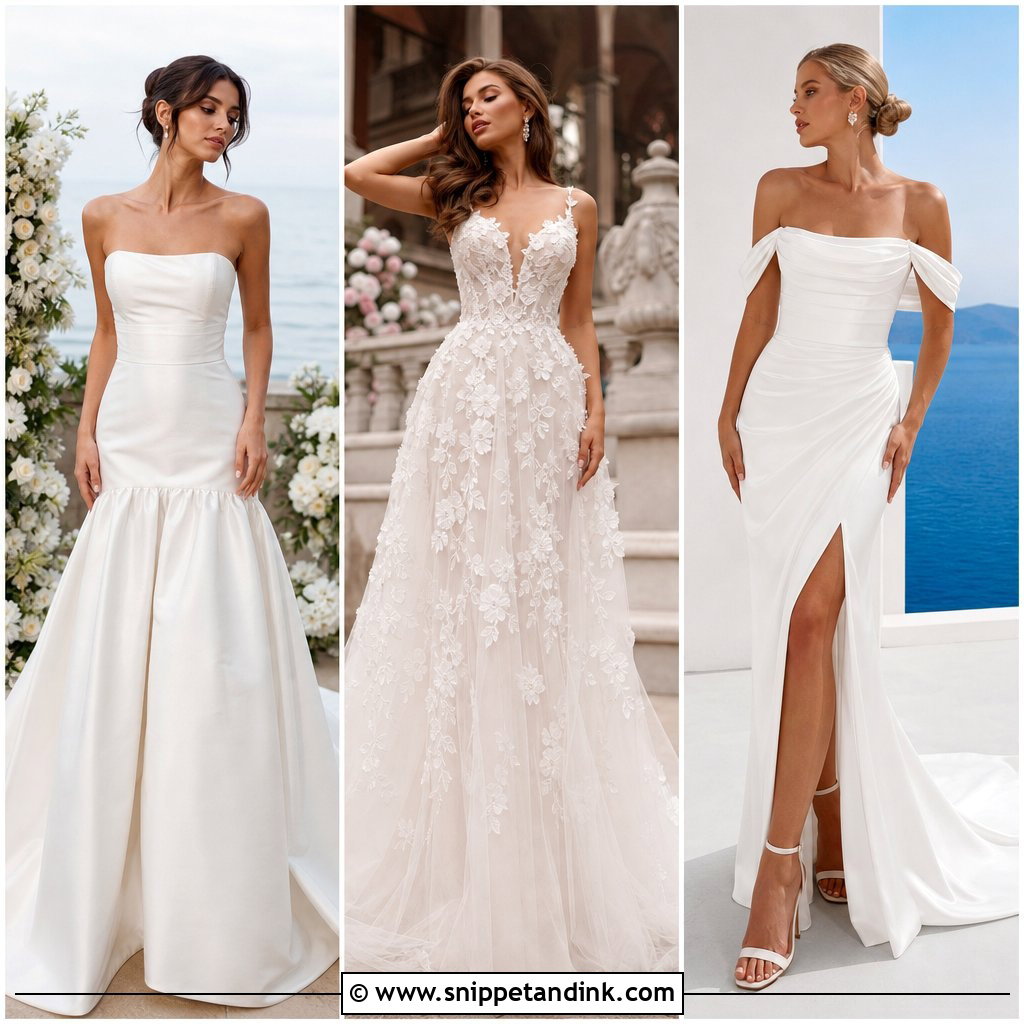

20. Blush Couture Bridal Gown
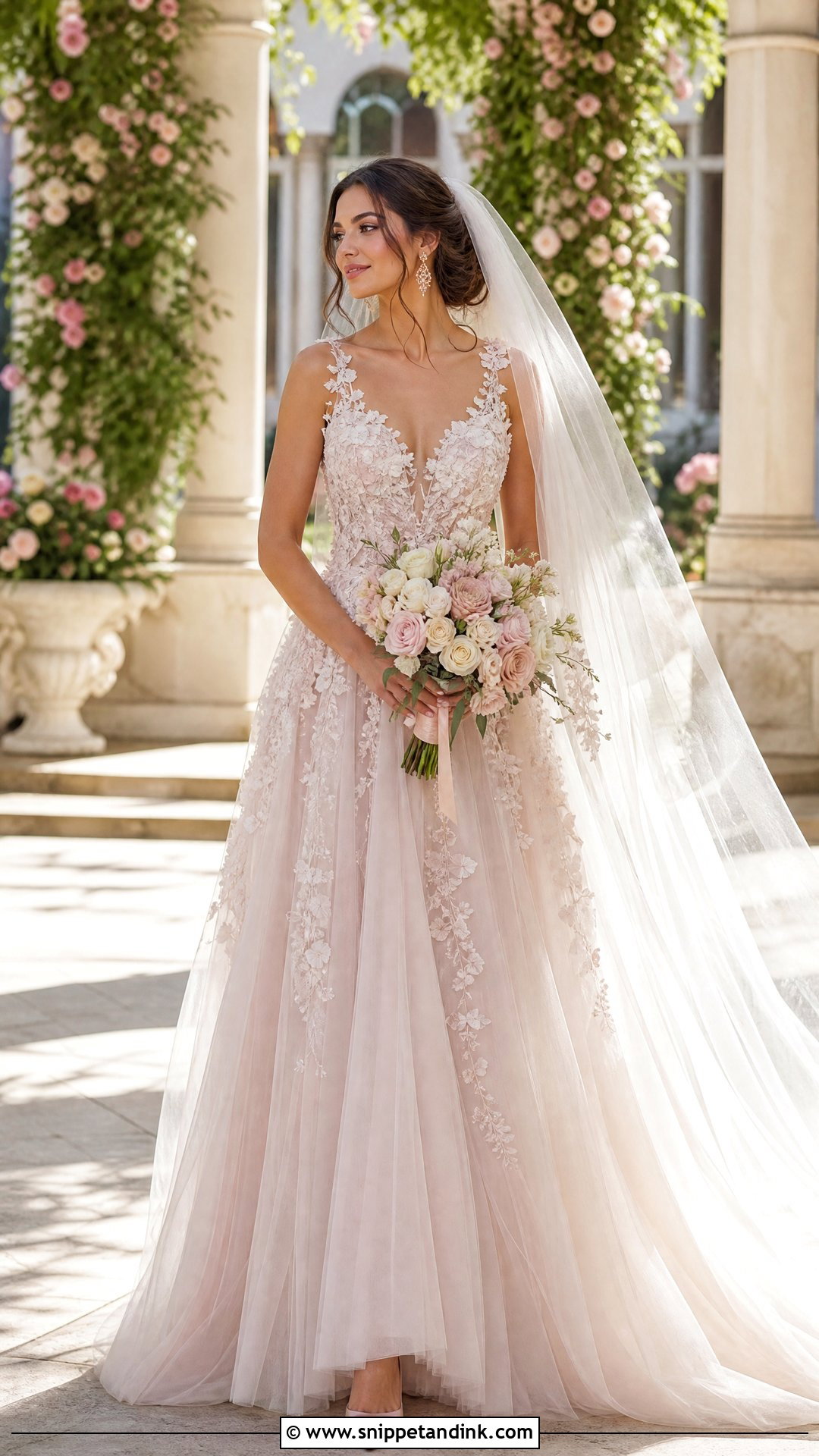
Blush shifts under different light, so never approve the shade from a showroom swatch alone. Take the fabric to a window, then look at it again under warm indoor bulbs; a pale rose can turn peachy or flat depending on what’s lighting it. Layers of pale rose, champagne or shell-pink tulle over a neutral lining make lace, beading and appliqué stand out. Cool undertones usually suit pinker hues, while warm undertones look better in peach or champagne. The shade should complement your skin rather than match it, or the gown reads as nude in photos. Style it with rose-gold earrings, ivory or blush pumps, a sheer veil in a coordinating tone and a light bouquet of cream, pale pink and muted greenery.
21. Gold Embroidered Couture Bridal Gown
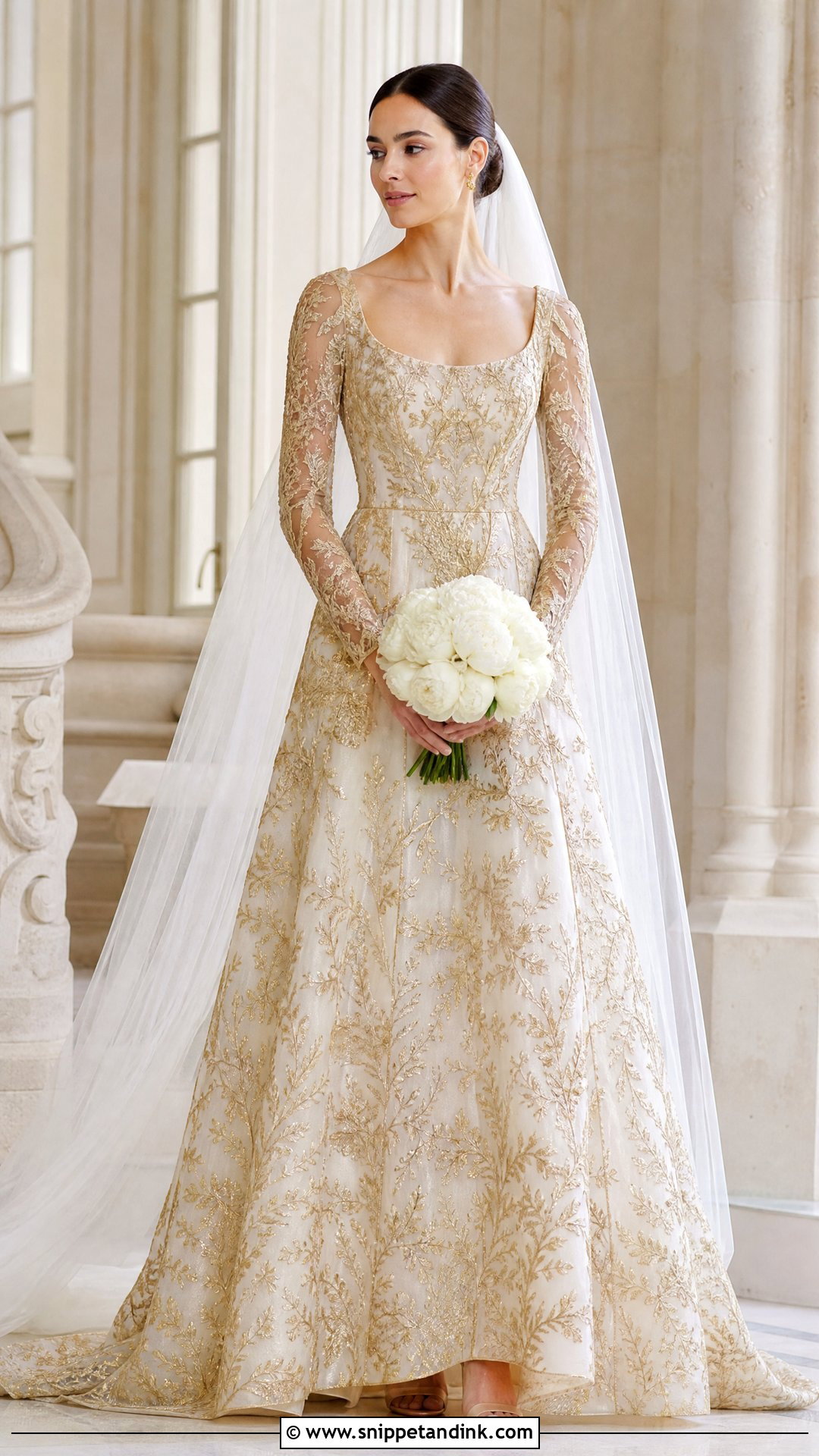
Gold thread on an ivory or champagne base gives richness without a fully metallic dress. Fine gold work, subtle sequins or hand-beaded botanical motifs read best on a fitted bodice above a flowing A-line skirt, where the embroidery stays visible from every side. The back of dense embroidery can be scratchy, so ask for soft lining beneath the heavily stitched areas. I hold the metals to one statement: small gold earrings, neutral satin heels, a plain ivory veil and a sleek bun, with white flowers to steady the palette. Photograph the fabric sample beside your jewelry under light like your venue’s, because a warm yellow gold and a cooler thread can clash in pictures even when they look fine in person.
22. Plus Size Corset Couture Bridal Gown
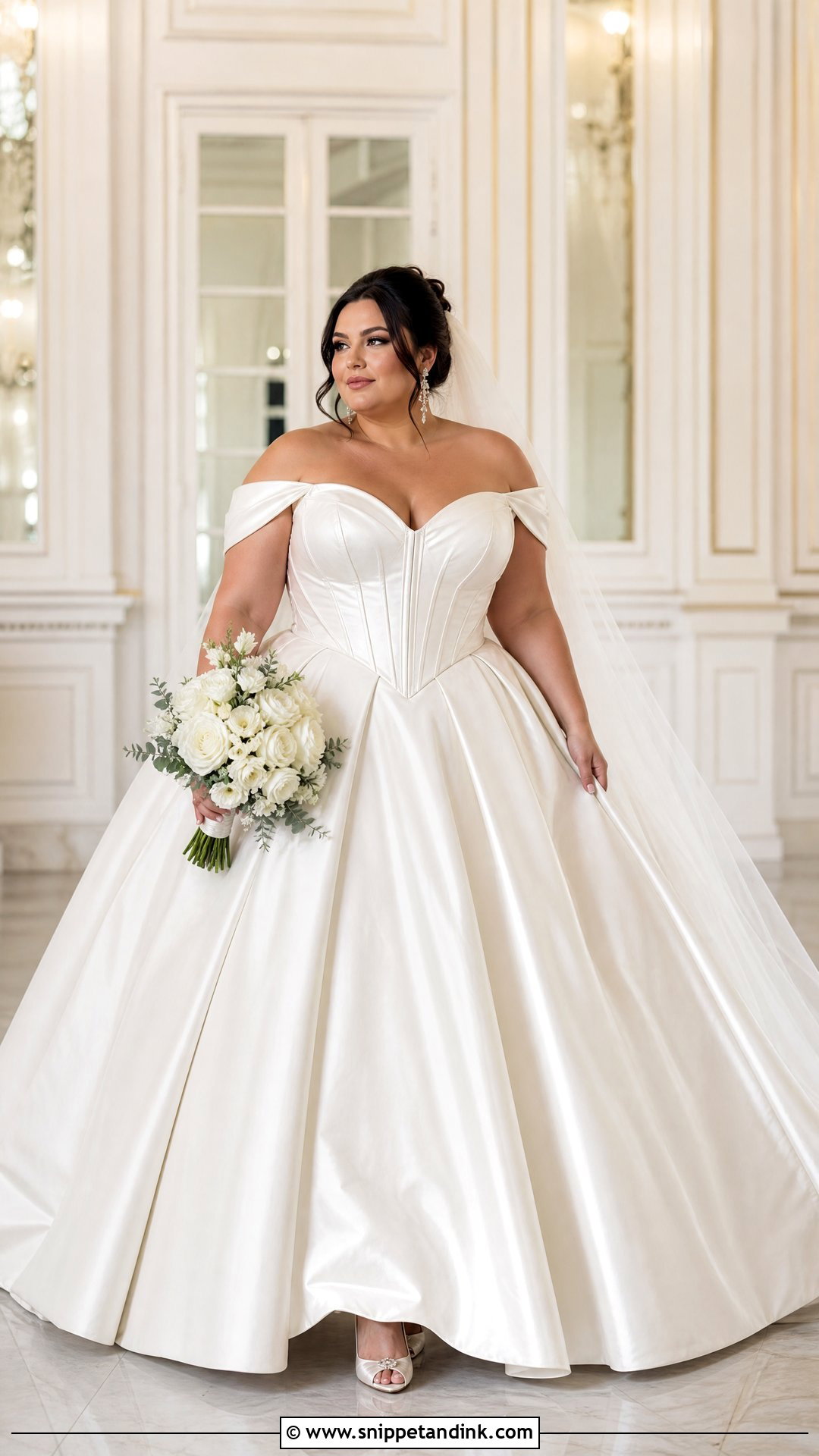
Support should come from the construction, not from pulling the laces tighter. A well-made plus size corset couture bridal gown uses strong internal boning, a waist stay that carries much of the load and cups made to your measurements instead of generic padding. A basque or natural waist can lead into an A-line, ball gown or fitted skirt. I’d add a long veil, balanced drop earrings and heels with cushioned soles. Wider straps, detachable sleeves or an off-shoulder cuff give you more options. Move during fittings instead of standing still for pins: sit, hug, walk and raise your arms. If the bodice only feels secure when it’s squeezing you, ask for the support to be redistributed.
23. Petite A-Line Couture Bridal Gown
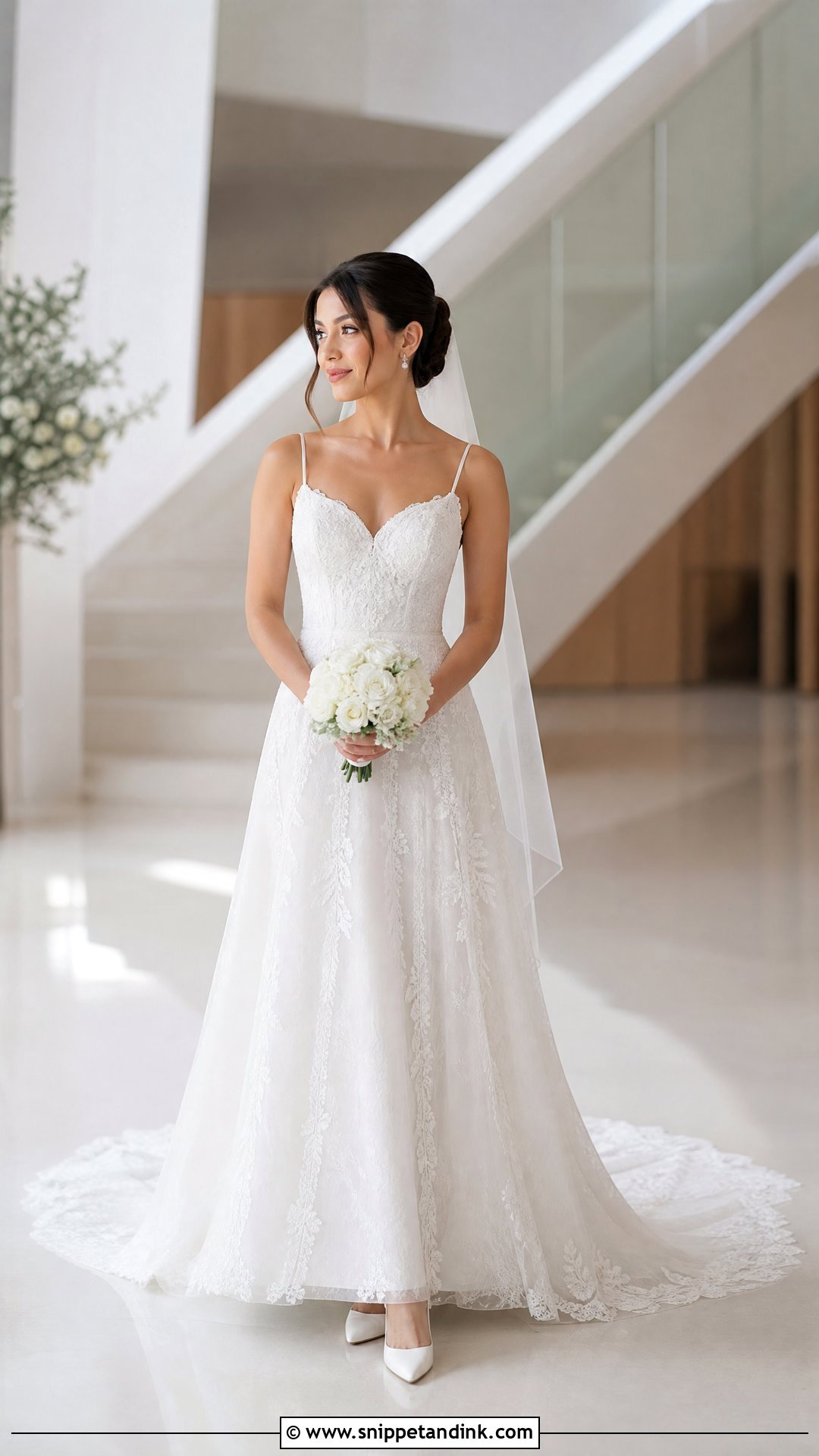
On a smaller frame, bodice length matters as much as hem length, and it’s the alteration petite brides most often skip. Once the waist and bust points sit where your body actually is, the whole gown looks proportioned. Choose a fitted bodice, a clearly defined natural waist and a skirt that widens gradually. Vertical seams, fine lace motifs and controlled pleating lengthen the line, while a wide belt or dense decoration cuts you in half. If you want a train, keep it a narrow chapel or a light cathedral that bustles easily. Pointed heels, small earrings, a narrow veil placed to suit your hairstyle and a compact bouquet finish it.
24. Modest Couture Bridal Gown
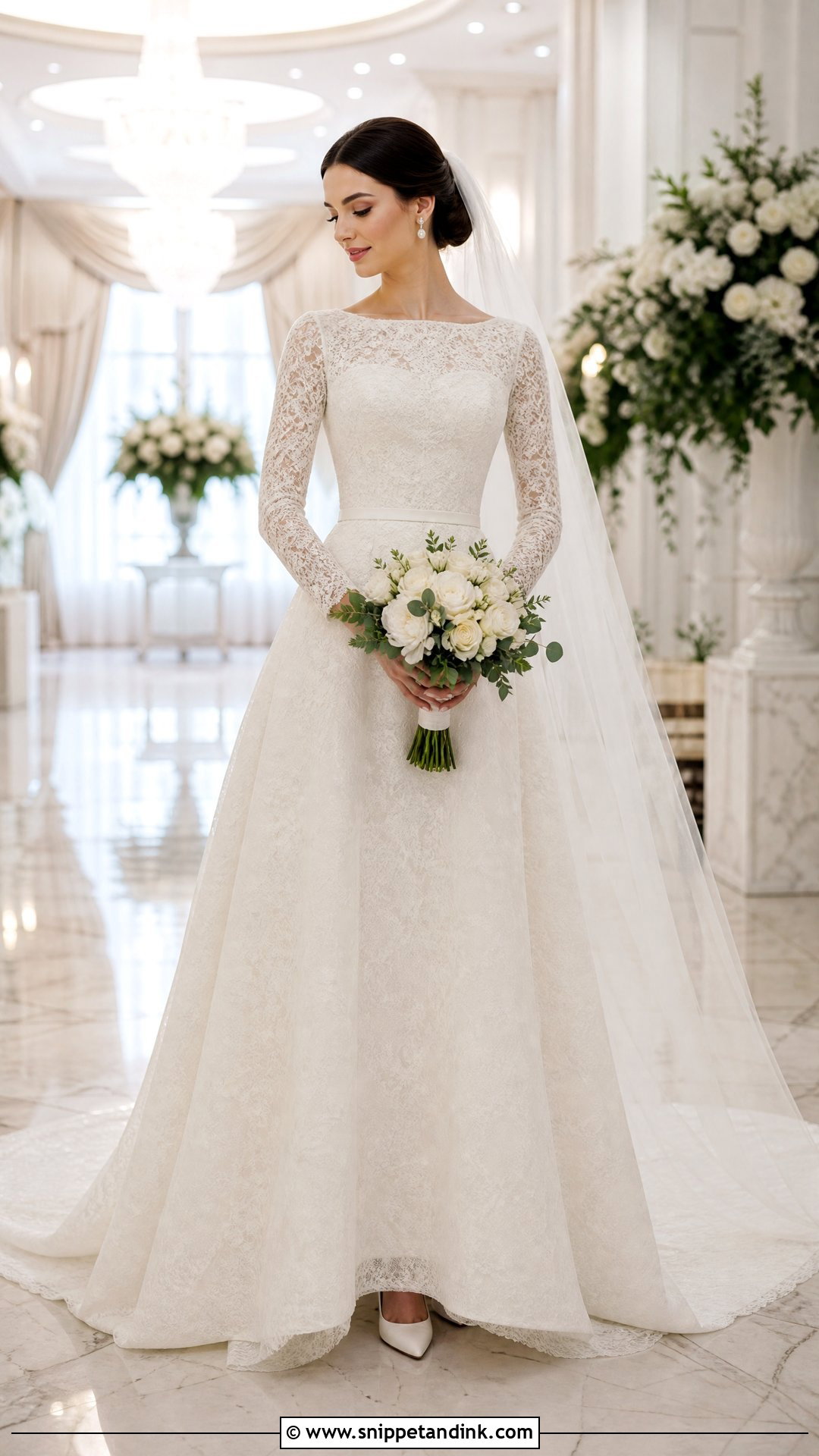
Modest gowns get hot. Long sleeves and a high neckline in heavy fabric are hard work through a summer reception, so I start with breathable lining and lightweight sleeve fabric before looking at decoration. A high bateau neckline, fitted sleeves and a softly defined waist into an A-line skirt create coverage through cut, with lace overlays, covered buttons and fine embroidery adding detail. Illusion panels can be lined as fully as you like. Pair it with a sheer veil, pearl earrings, closed-toe pumps, a polished low bun and a gently structured bouquet. In fittings, reach forward and sit down: the sleeves should let you move, and the neckline should stay flat while you’re seated.


25. Vintage Inspired Couture Bridal Gown
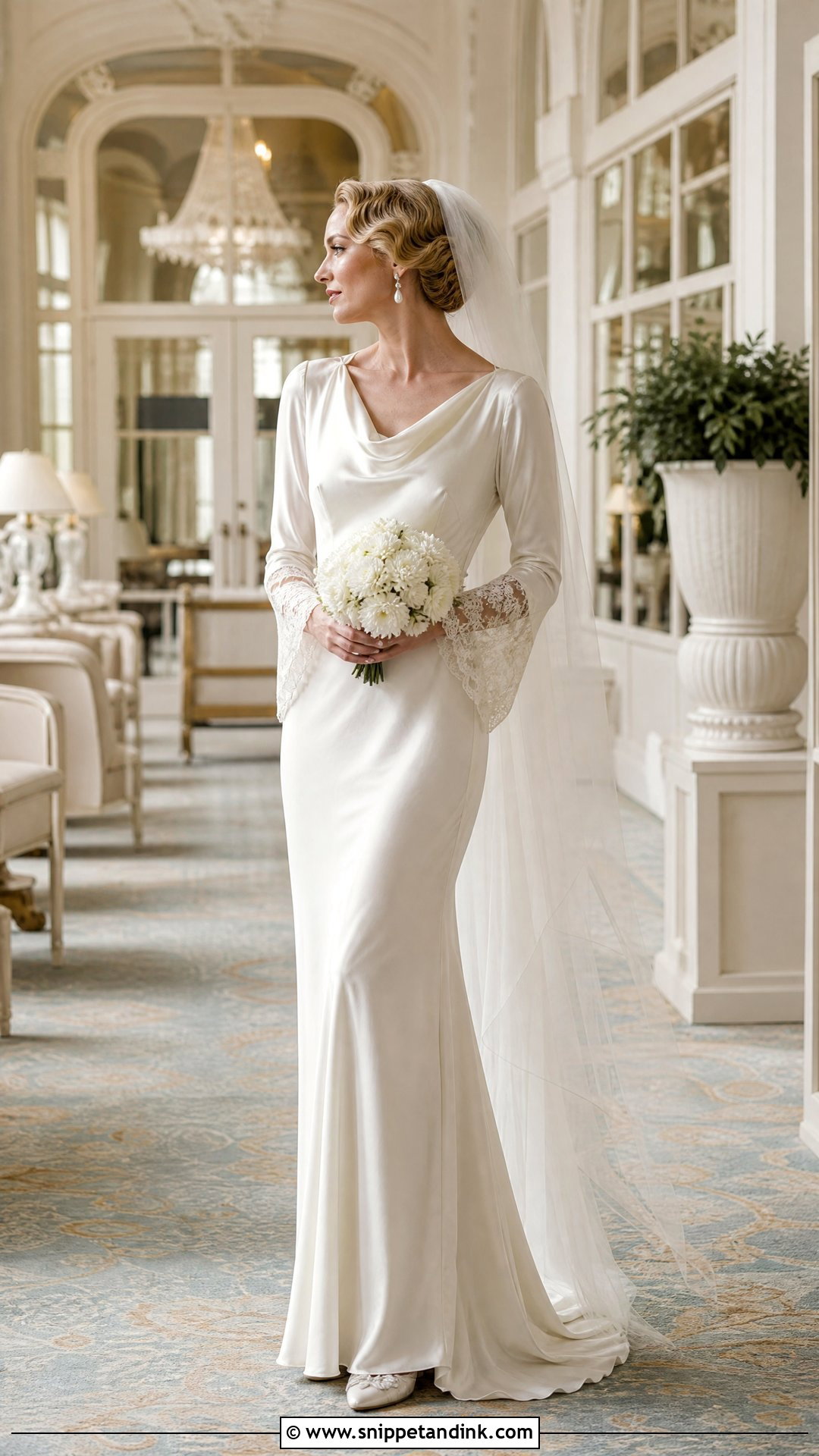
Pick one era and commit to it. A 1930s silk bias cut is fluid, a 1950s tea-length skirt is playful, and Victorian-inspired lace sleeves or an Edwardian high neckline lean romantic; mixing them usually tips into costume. Modern undergarments and concealed corsetry improve the fit without changing the period character. Style it with pearl earrings, satin pumps, a neat updo and a veil or headpiece true to your chosen decade. If you’re working with antique lace or heirloom fabric, have a textile specialist check its strength before anyone cuts into it. Old silk can split under tension, so I often suggest reproduction fabric for the main gown and saving the original for a veil, cuff, belt or covered buttons.
Undergarments, Bustles and Sitting Down for Dinner
Most couture bodices carry their own boning and cups, so a separate strapless bra often fights the structure instead of helping it. I ask the atelier what the gown needs underneath before anyone buys shapewear, then bring those exact pieces to every fitting so the gown is cut around them.
Bustles come in a few forms. An over bustle hooks the train up onto the back of the skirt, an under or French bustle tucks it beneath with ribbon ties, and a ballroom bustle uses several points so the hem looks almost floor length again. Heavier trains need more points. Ask the seamstress to color-code the ties and teach your helper well before the wedding, not during cocktail hour.
Rehearse the bathroom trip as well. Sitting backward on the seat, facing the tank, lets a full skirt gather in front of you instead of fighting you, and it’s much easier with one person holding the layers.
Sending a Couture Gown for Cleaning After the Wedding
Get the gown to a specialist cleaner within a few weeks. Champagne, sugary drinks and perspiration can be invisible on the night and then oxidize into brown marks months later, and they set harder the longer they sit.
- Point out every spill, grass mark and grubby hem to the cleaner, since they treat what they know about.
- Ask for acid-free tissue and an acid-free box, or a breathable cotton bag. Plastic traps moisture and can yellow silk.
- Avoid leaving a heavy gown hanging by its shoulders for years; the weight stretches the bodice, so fold it with tissue for long-term storage.
- Keep it somewhere dark, cool and dry, never an attic or a damp basement.
A Gown That Fits the Way You Move
Fall for the silhouette first, then test everything else against your venue and the way you’ll move in it. Fabric, neckline and support decide how a couture gown feels late in the evening, and the veil, shoes, jewelry, hair and bouquet should frame the craftsmanship rather than compete with it. Leave room in the calendar for several fittings, and practice walking, sitting, turning and working the bustle before the wedding. Trends are useful for ideas, but your own taste should make the final call, whether it leads you to sculptural satin, romantic lace or hand-finished embroidery.
You'll Like These Ideas:




Leave a Reply