
Couture gowns are built, not just sewn: boned bodices, layered skirts, hand-placed beadwork. That construction is what makes them feel grand, and it’s also what makes styling them a balancing act. Allure Couture collections lean on sculpted basque waists, dense beading, dimensional lace and big ball gown skirts. Below are twenty complete looks in that spirit, each with the veil, jewelry, shoes and flowers I’d put with it. Use them as a base and adjust coverage, proportion and accessories for your body, season and how formal the day is.
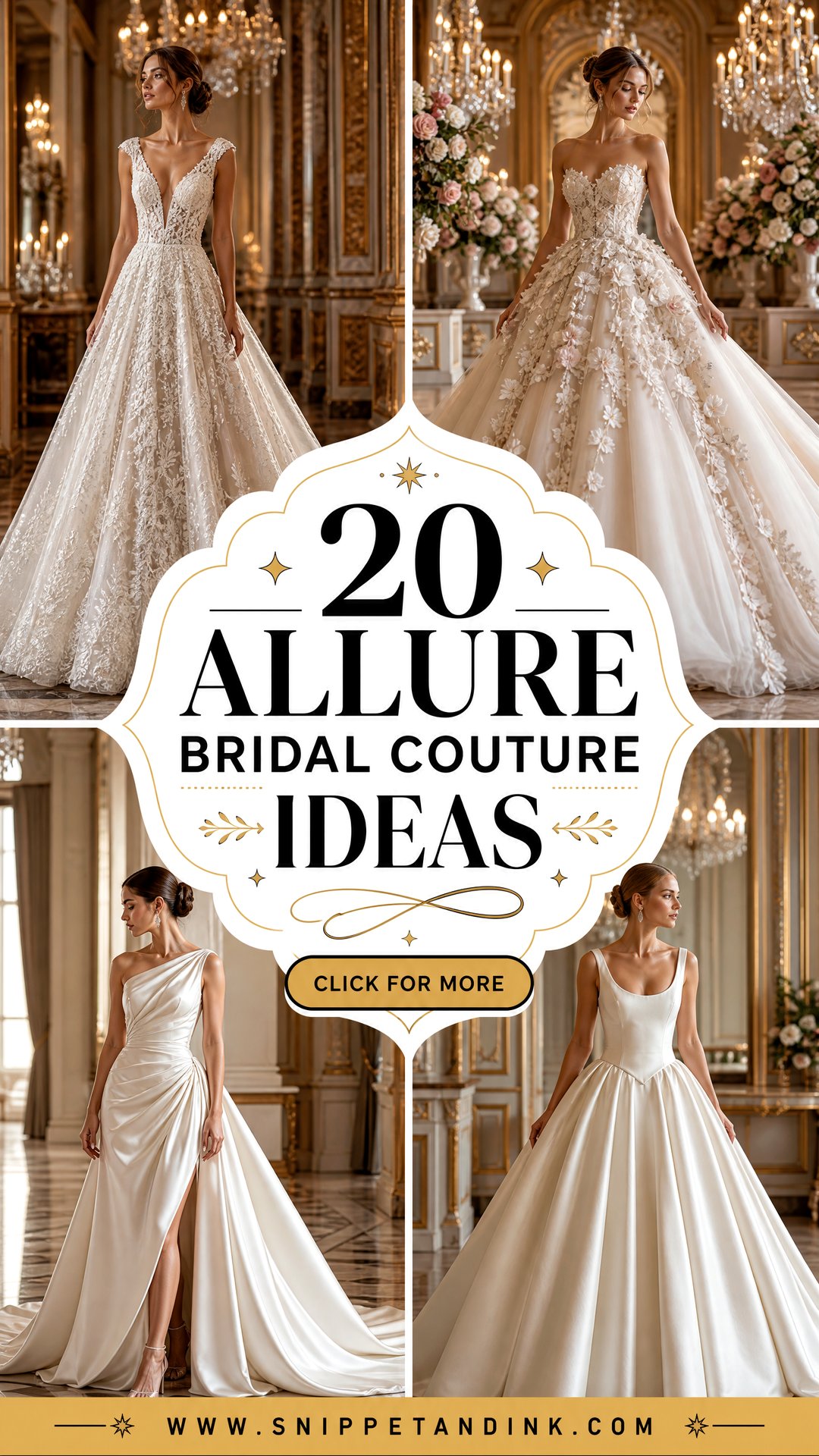
Lacing, Buttoning and Bustling: Rehearse It First
Couture gowns rarely have a simple zip. Corset backs, rows of covered buttons and multi-point bustles all need a second pair of hands, and the wedding morning is the wrong time to learn them. I ask brides to bring the person who will dress them to the final fitting.
- Film the seamstress lacing the corset and fastening the bustle on that person’s phone. Bustle points are often color-coded with tiny ribbons; ask what each one matches.
- Practice corset lacing gradually from the center outwards, tightening a little at a time, rather than pulling one end hard.
- Buy a small crochet hook or button hook for the loops. It makes twenty covered buttons a five-minute job instead of fifteen.
- Get dressed after hair and makeup, and step into the gown rather than pulling it over your head.
- Have the bustle tested again on the day before the reception starts, in good light, with time to fix a snapped loop.
1. Strapless Satin Basque Waist Ball Gown
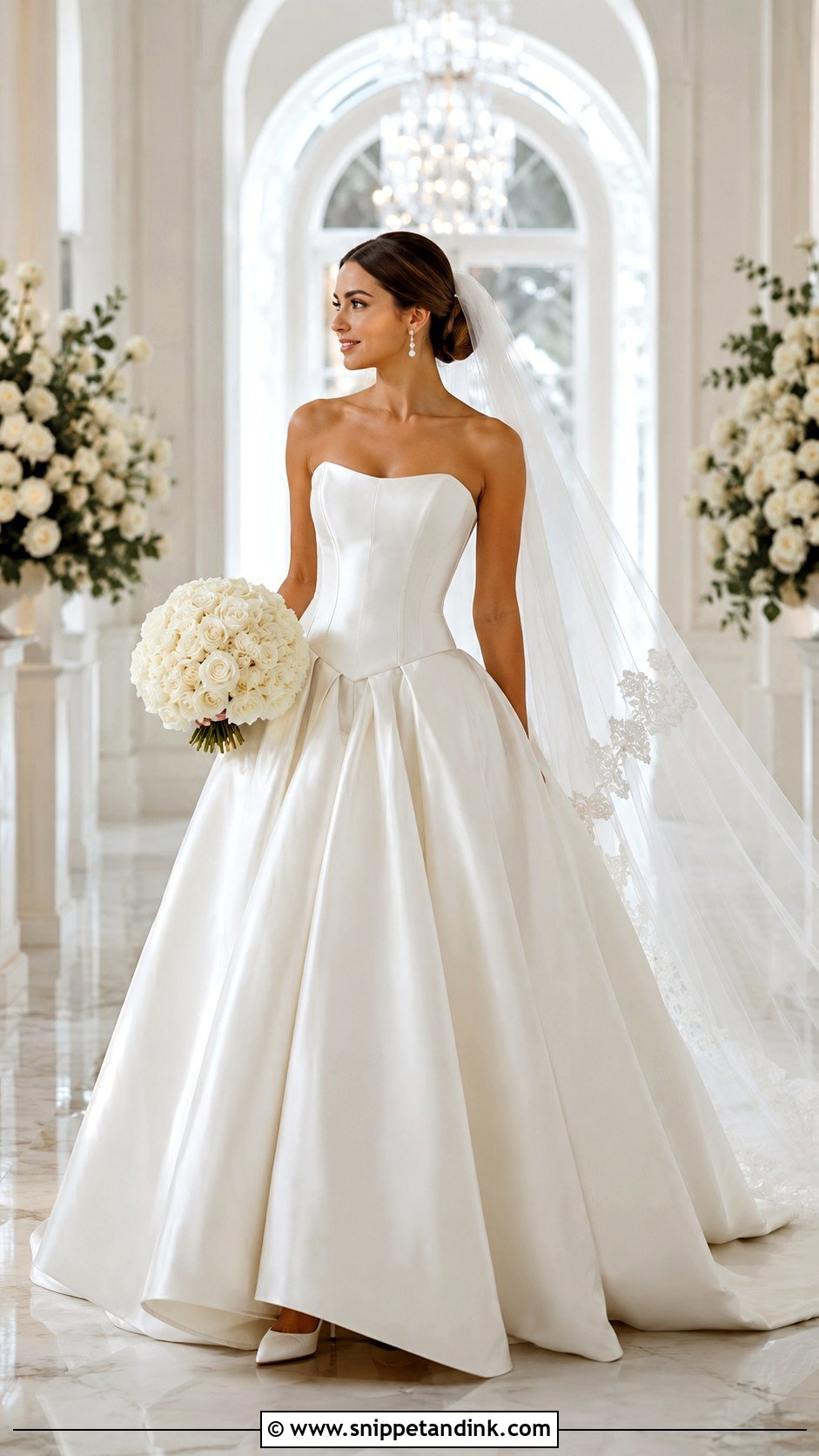
The basque point draws a V at the center of the body, and a full satin skirt below it gives the classic princess outline. Internal support is what I check first on a strapless version: a waist stay inside the bodice anchors it, so the neckline isn’t relying on your bust to stay up. Pearl drops, a smooth cathedral veil and pointed ivory pumps finish it, with a low chignon. Carry a rounded bouquet of white roses and ranunculus. Petite brides can ask for less skirt volume; taller brides can carry a longer train well.
2. Off Shoulder Lace Sheath Wedding Dress
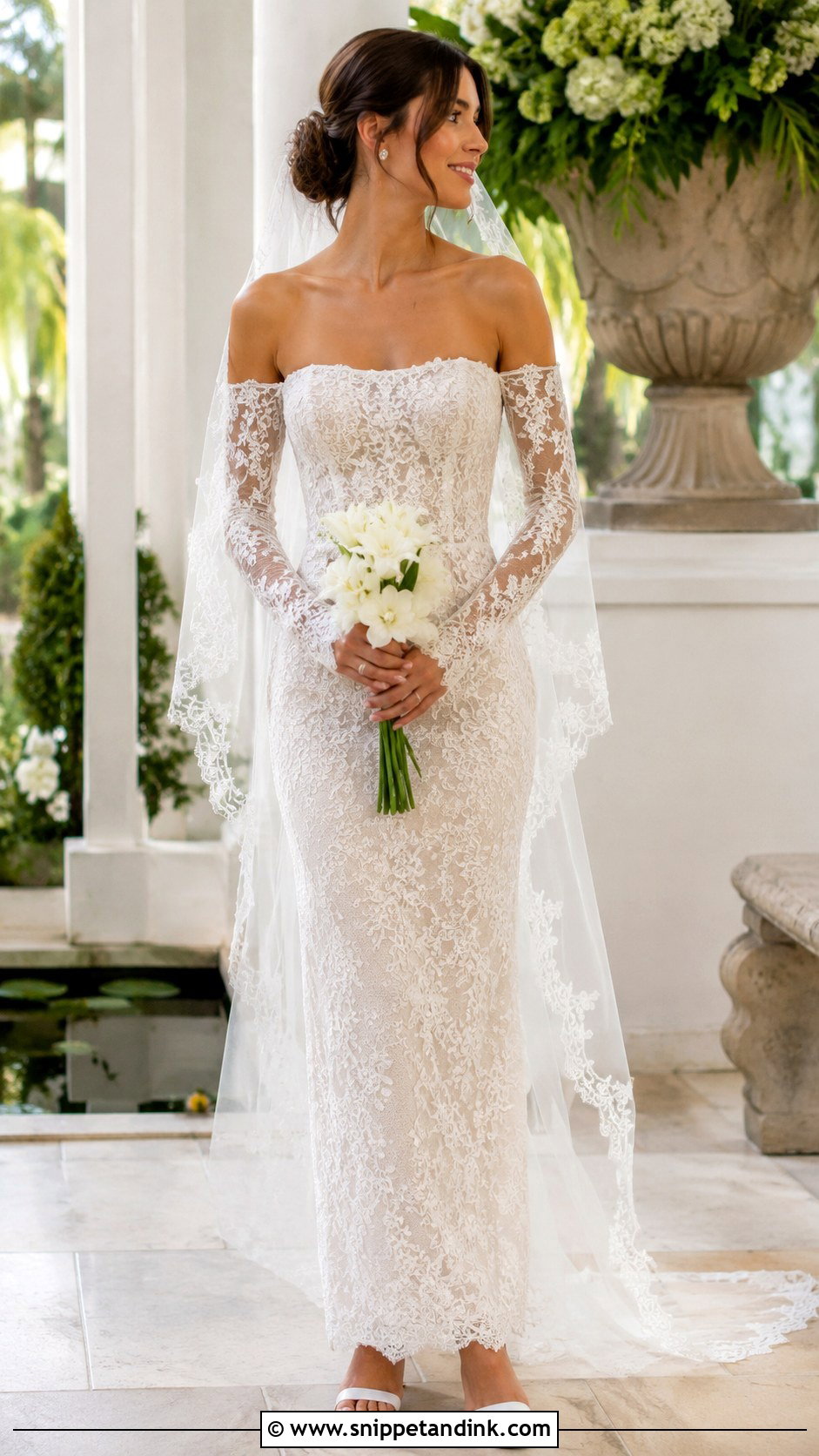
A sheath follows the body all the way down, so every alteration shows. With lace and an off-shoulder neckline it takes on a romantic couture finish, as long as there’s supportive lining and light boning inside. I look at how the appliqués are placed around the waist; well-placed motifs make a waist without a seam. Detachable sleeves give you a second look later. A lace-edged fingertip veil, crystal studs and sleek ivory heels suit it, plus a loose low bun or polished waves. Sit and take a long stride at every fitting; sheaths can be cut too narrow at the knee.
3. Beaded Lace A Line Wedding Dress
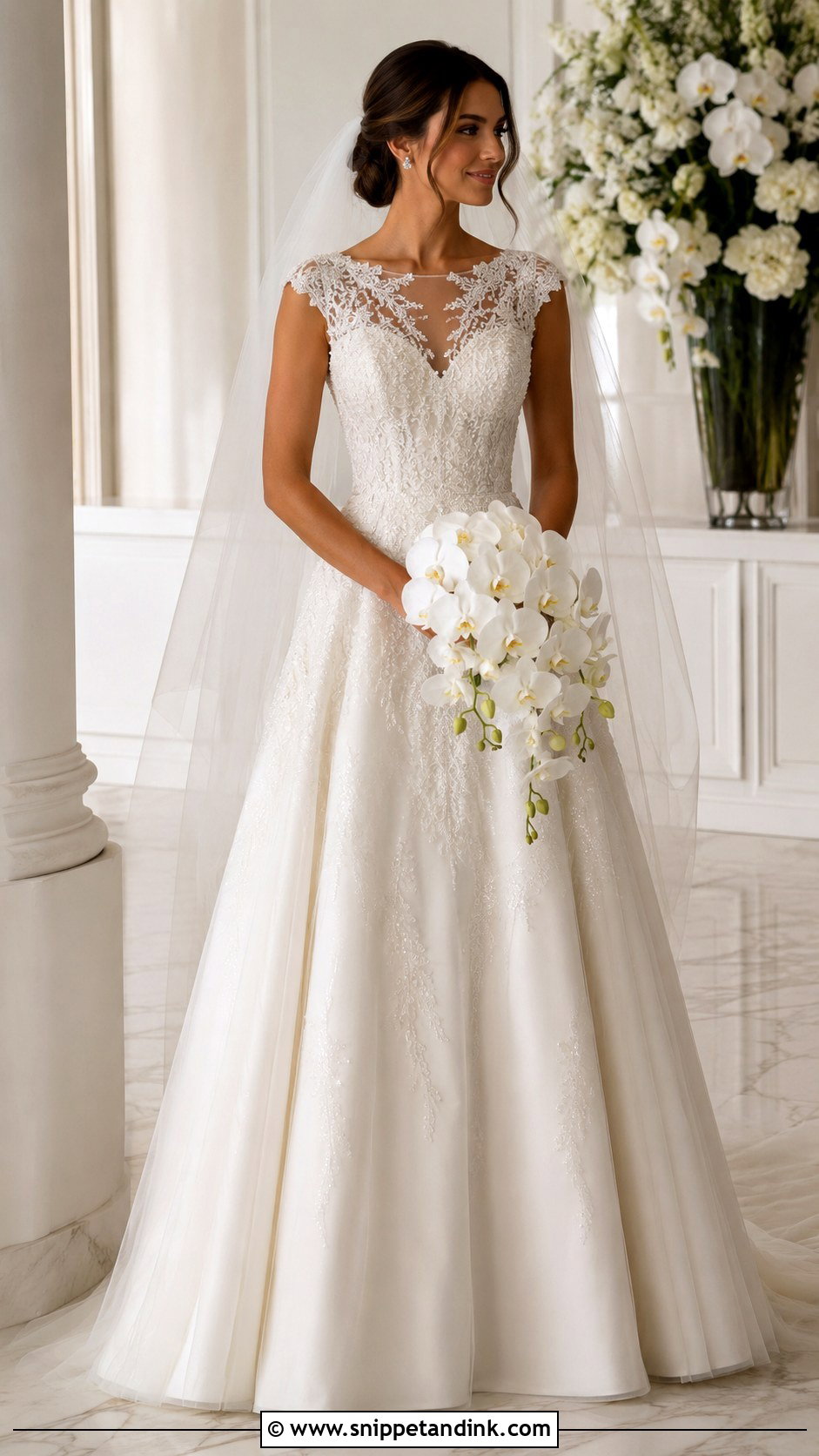
Beading on an A-line gives sparkle without the width of a ball gown. The best versions concentrate the beads on the bodice and let them thin toward the hem, so the eye goes to your face. Look at the gown under daylight and then under warm evening light before choosing jewelry; strongly reflective beading often needs nothing more than small studs. A narrow crystal belt only if the waist needs it. A plain tulle veil, closed-toe ivory shoes and a curled updo, which stops loose hair catching in the beads, finish it, with a structured bouquet of white orchids or roses.
4. Long Sleeve Lace Ball Gown
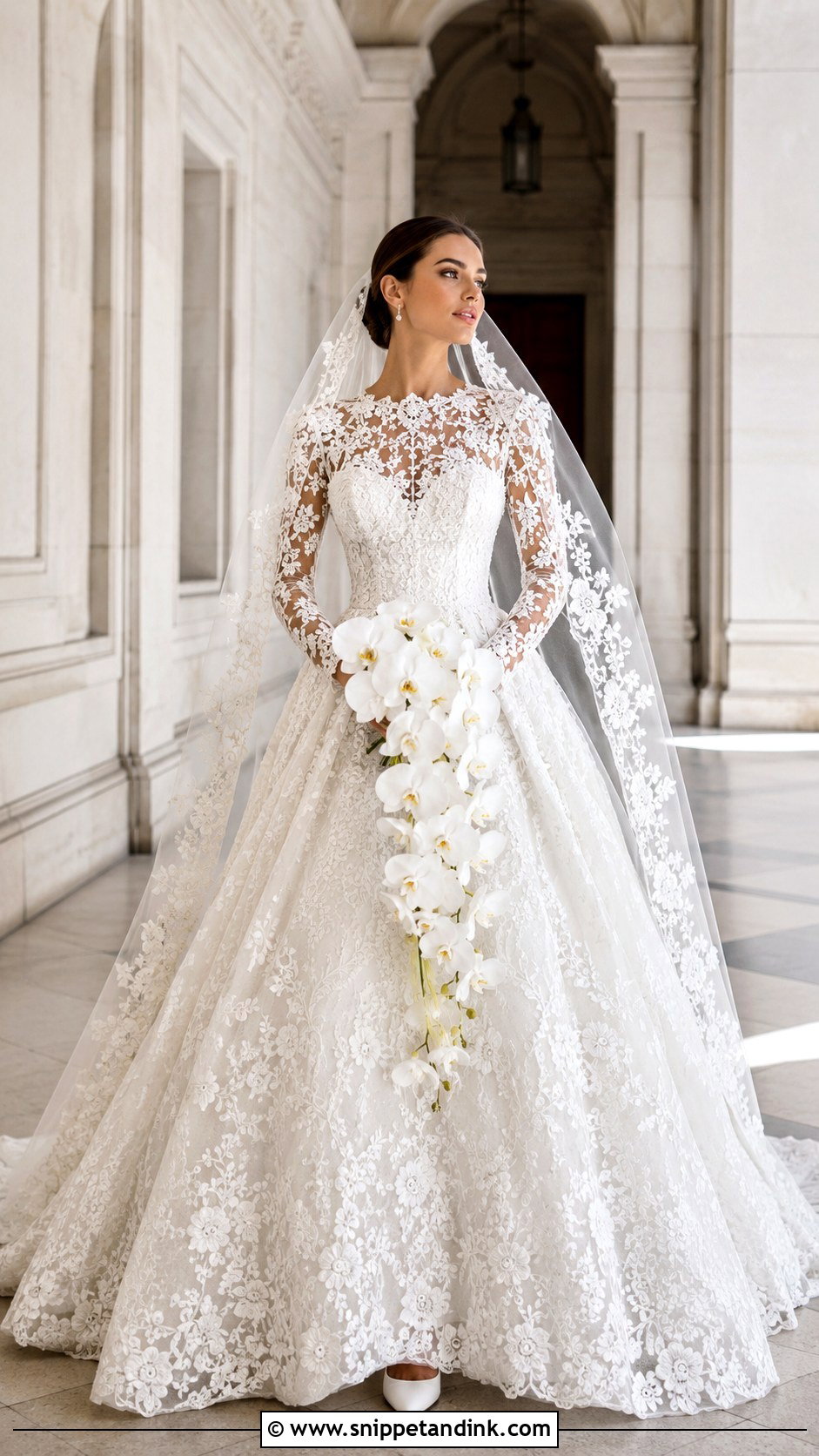
Long lace sleeves on a ball gown bring coverage and ceremony together. The detail I fuss over is the elbow. Lace that’s too tight there stops you lifting a glass or hugging, so ask for sheer or lightly lined sleeves with some give. A defined waist and controlled skirt volume keep a smaller frame from disappearing. For the veil, choose lace from the same family as the gown rather than an identical heavy pattern, which doubles the busyness. Pearl earrings, satin pumps and a center-parted bun complete it, with a soft ivory wrap for winter photos outdoors.
5. Sweetheart Mermaid Wedding Dress With Detachable Train
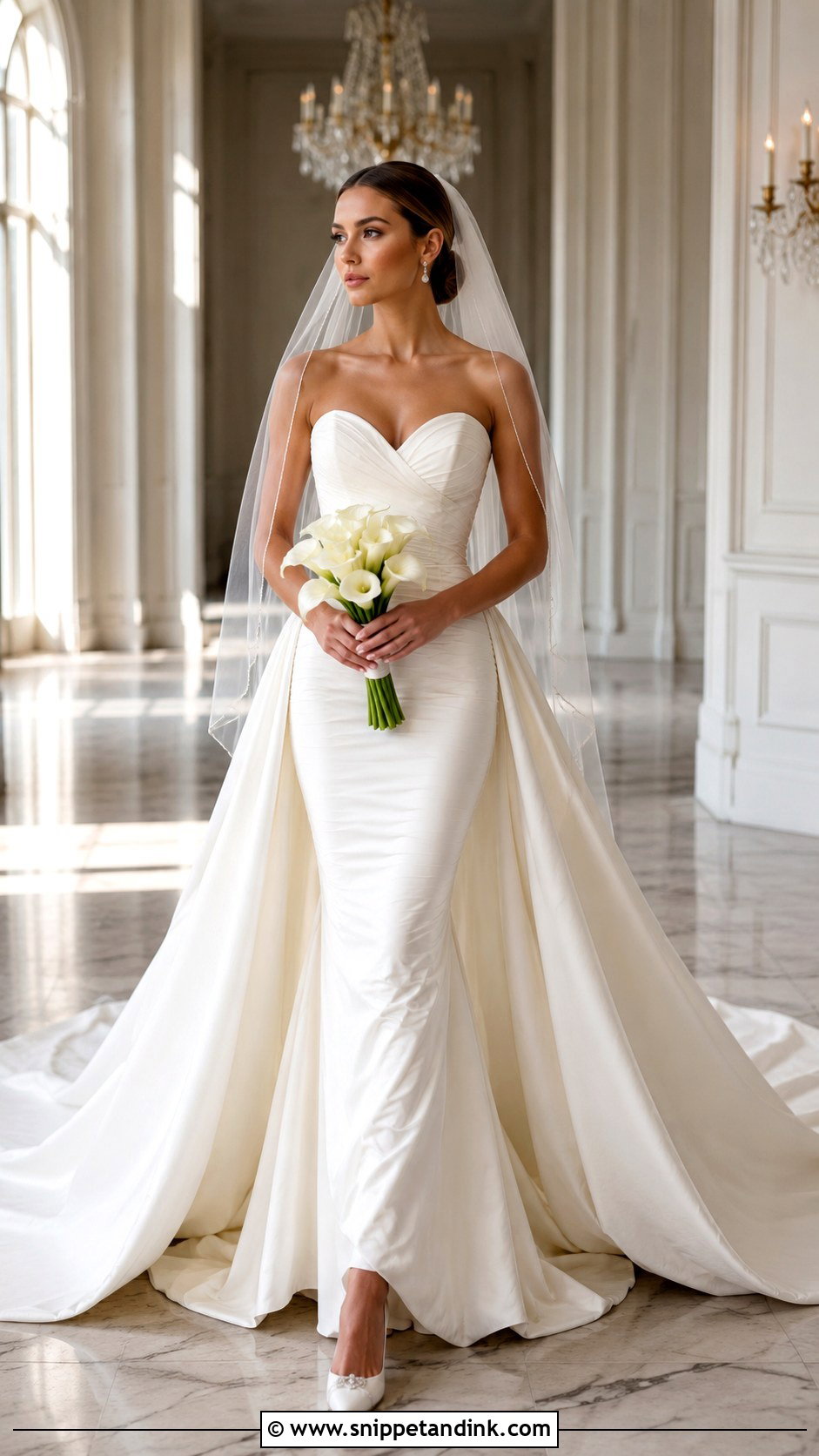
A mermaid with a detachable train gives you a long entrance and an easy reception. The fit runs close through the hips and opens below the knee. The attachment point is everything: the train should hook on at the waist so neatly it looks like one dress, and I ask the alterations team to reinforce every hook because a train carries a lot of weight when it’s pulled. A sheer chapel veil, drop earrings and pointed pumps suit the sweetheart line, with a side-parted wave or low ponytail. Take off train and veil after the ceremony.
6. Square Neck Satin A Line Wedding Dress
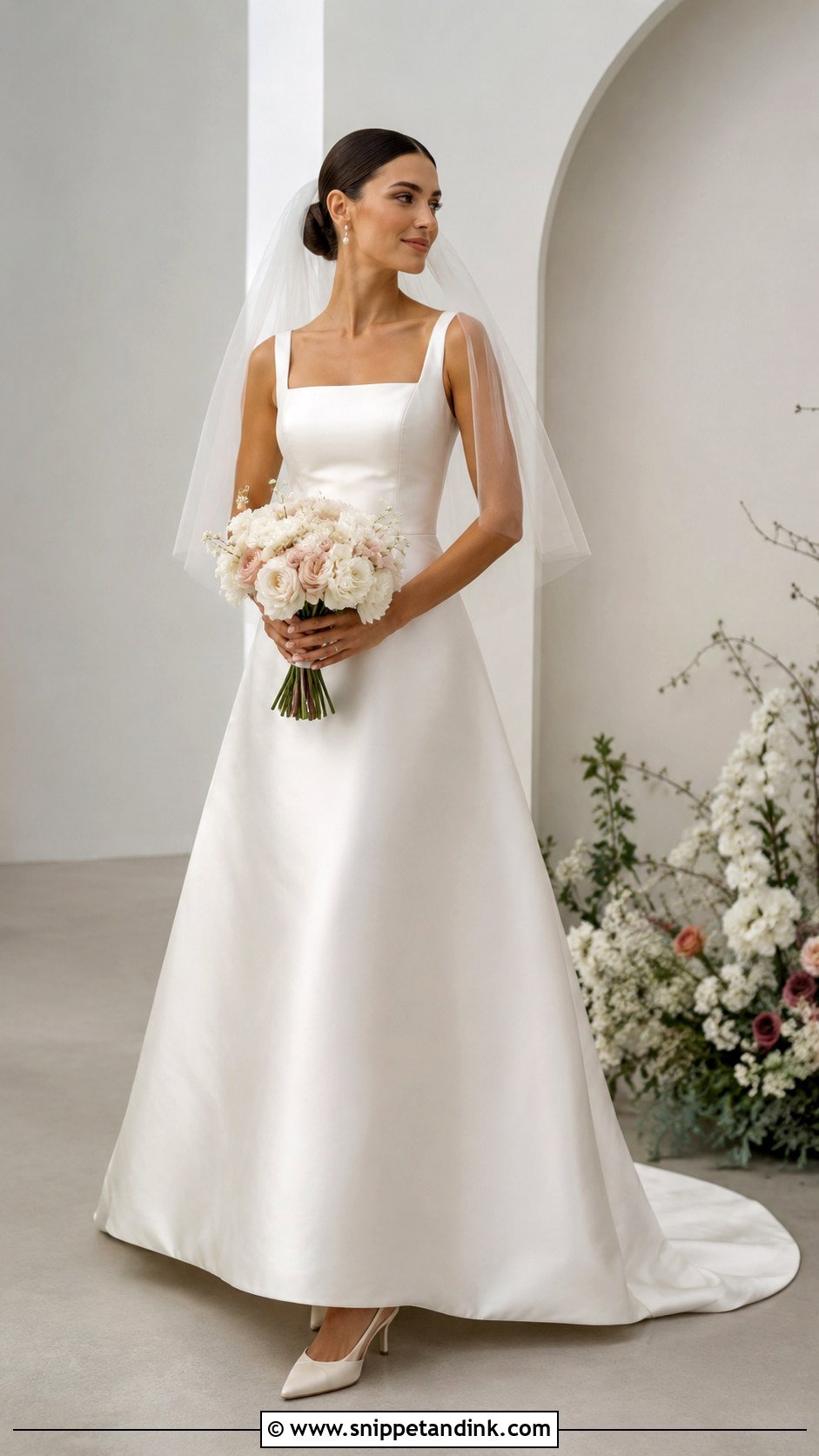
Satin is honest. It shows every seam and every slight misfit, so a square-neck satin A-line needs careful tailoring at the waist and bust. The square neckline frames the collarbone; wide straps or short structured sleeves add support. If you’d like more coverage, the square can be raised slightly without losing its shape. A shoulder-length veil, pearl button earrings and ivory slingbacks suit it, with a sleek bun. White flowers with a little pale blush add color, and a small satin clutch carries your essentials.
7. Floral Applique Tulle Ball Gown
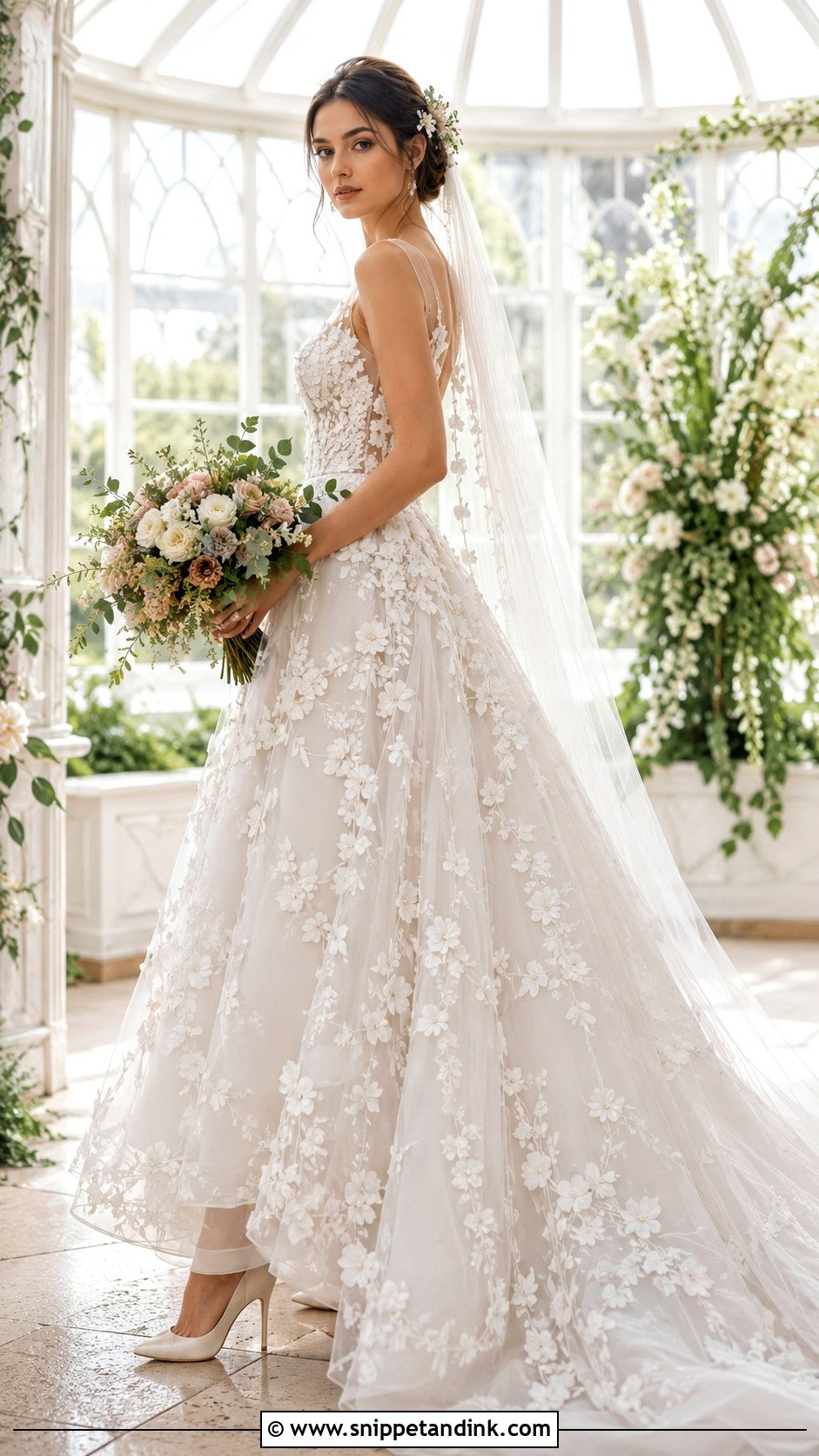
Three-dimensional flowers on tulle need to travel. When they climb from the bodice down into the skirt, the gown flows; when they stop dead at the waist, it looks cut in half. Check where the biggest appliqués land on your bust and hips; a large flower in the wrong spot widens the area under it. A lightly visible corset structure underneath adds definition. Pick one floral accessory only: floral hairpins, not those plus a flower crown and floral earrings. A barely edged veil, ivory sandals or pumps, a loose updo and a garden-style bouquet complete it.
8. Pearl Beaded Fit And Flare Wedding Dress
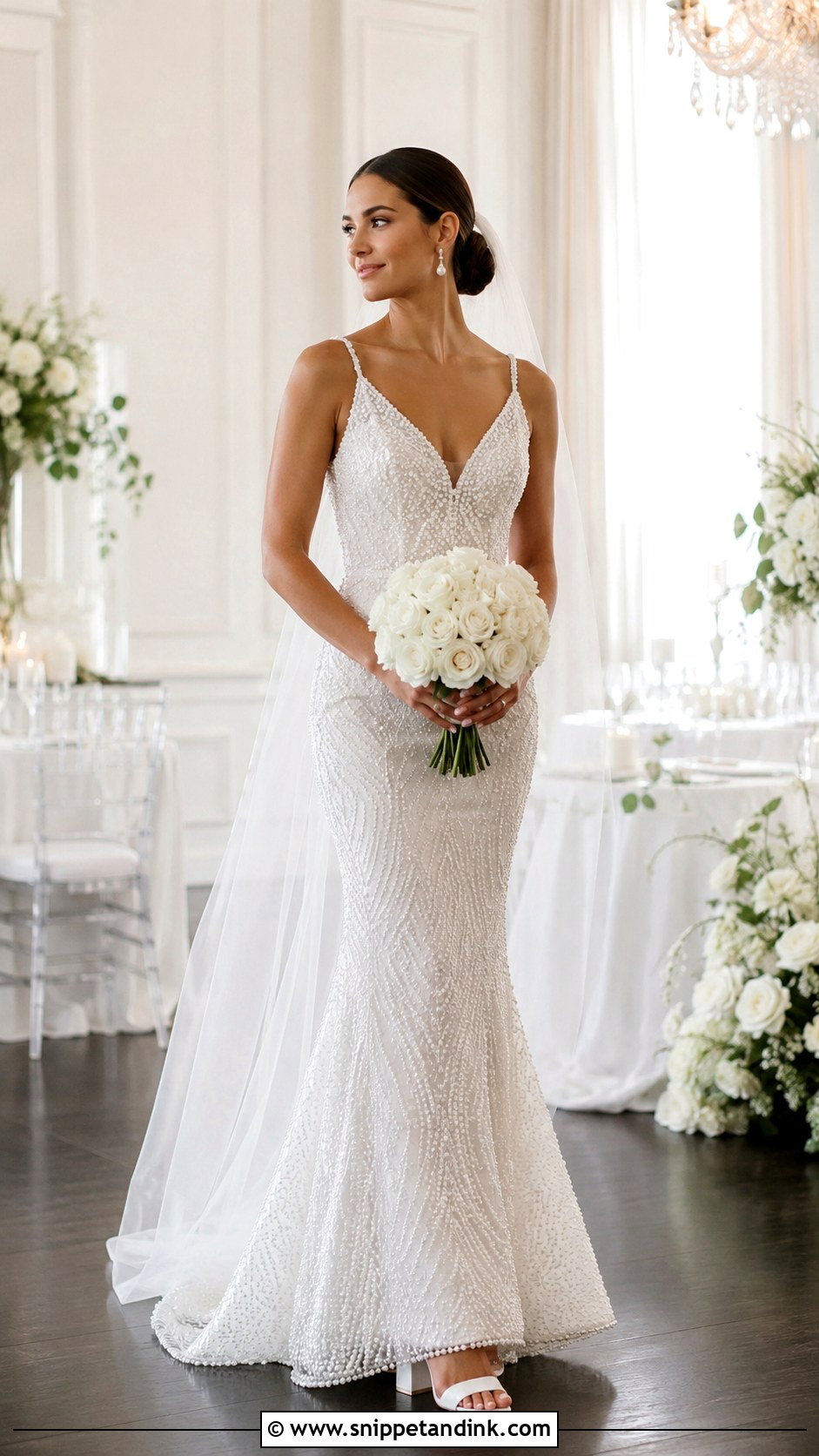
Pearls on a fit-and-flare give a soft glow rather than sparkle. Before you buy, run a hand along the inside: smooth lining over the bead backs matters for a long day against bare skin. The flare should start where you can still take a normal step. I always check the underarm and bustle on beaded gowns, because those points rub and catch, and beads there may need extra stitching. Pearl drops, a plain fingertip veil and satin block heels suit it, with a clean low bun so strands don’t snag. Skip a necklace if the bodice beading rises near the neckline.
9. Mikado Ball Gown With Statement Bow
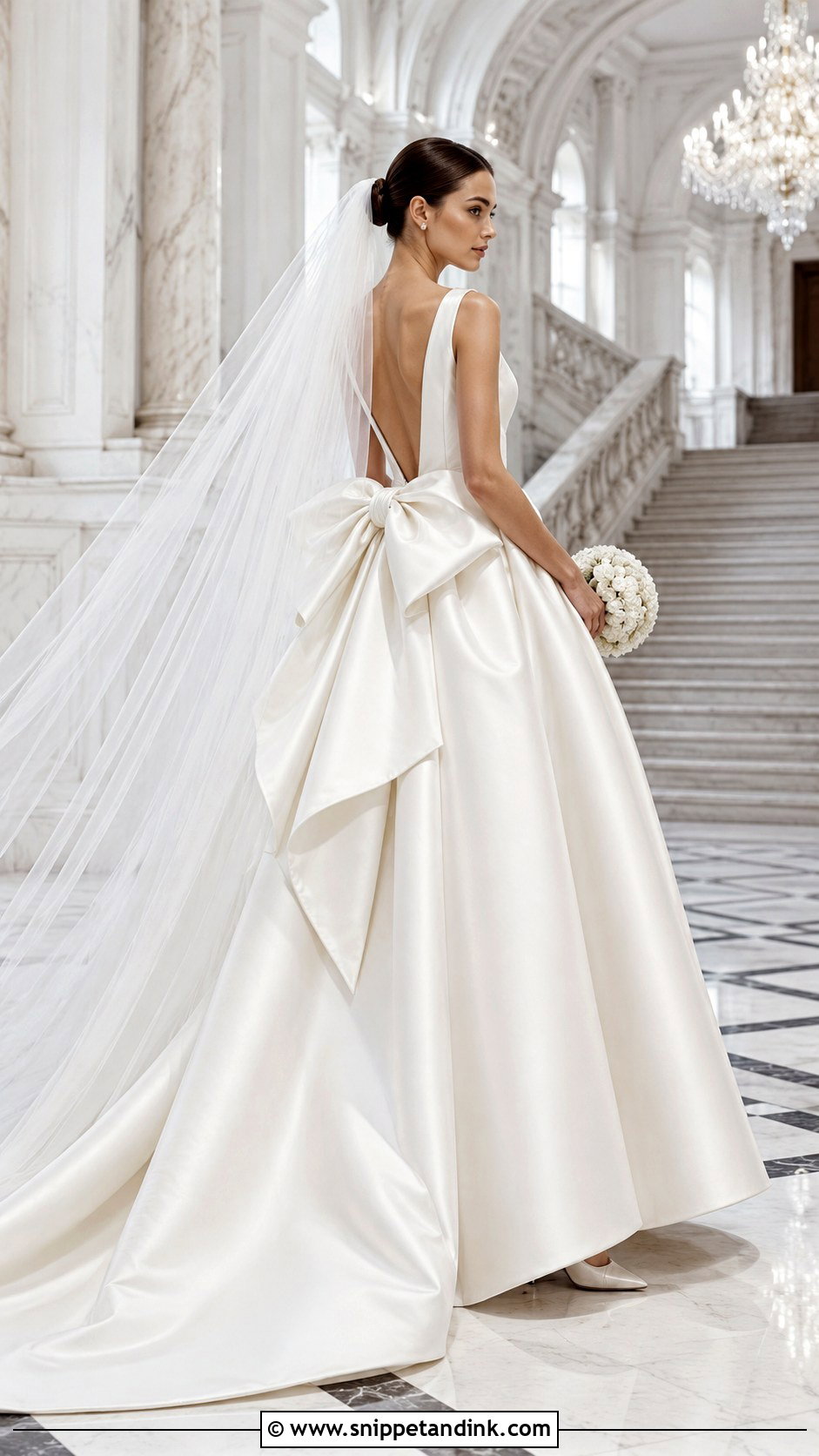
Mikado is a heavy, crisp silk-blend weave that holds a shape by itself, which is why a Mikado ball gown needs little decoration. A clean bodice, defined waist and sweeping skirt carry it, and a statement bow at the back waist or slightly off-center gives the detail. It is also warm and heavy to wear, so think about a summer venue without air conditioning before choosing it. A plain cathedral veil that clears the bow, crystal studs, pointed heels, a compact bouquet and a smooth updo keep the back on show. Get the bustle right; it’ll carry a lot of weight.
10. Corset Tulle Wedding Dress With Sparkle
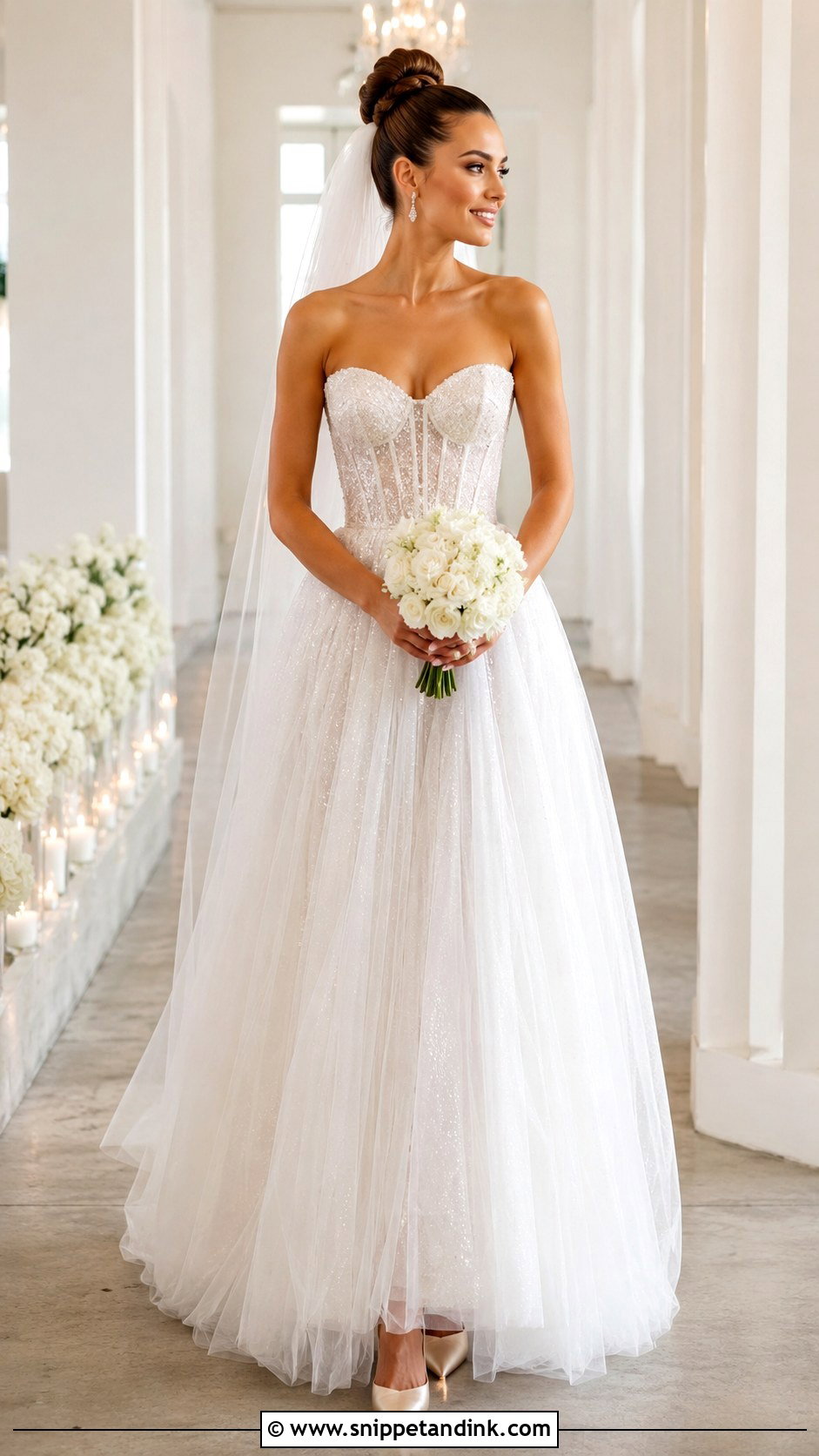
Corset and tulle together give structure on top and air below. A proper corset supports the bust and lies flat at the waist without biting; if it hurts at the fitting, it’ll hurt more by evening. Glitter tulle or scattered crystals catch light quietly. If the corset is sheer, ask for lining close to your skin tone. Pick one jeweled accessory, not a belt, necklace and tiara all at once. A single-layer veil, crystal earrings, metallic ivory pumps, a small structured bouquet and a high polished bun finish it.
11. High Neck Lace Sheath Wedding Dress
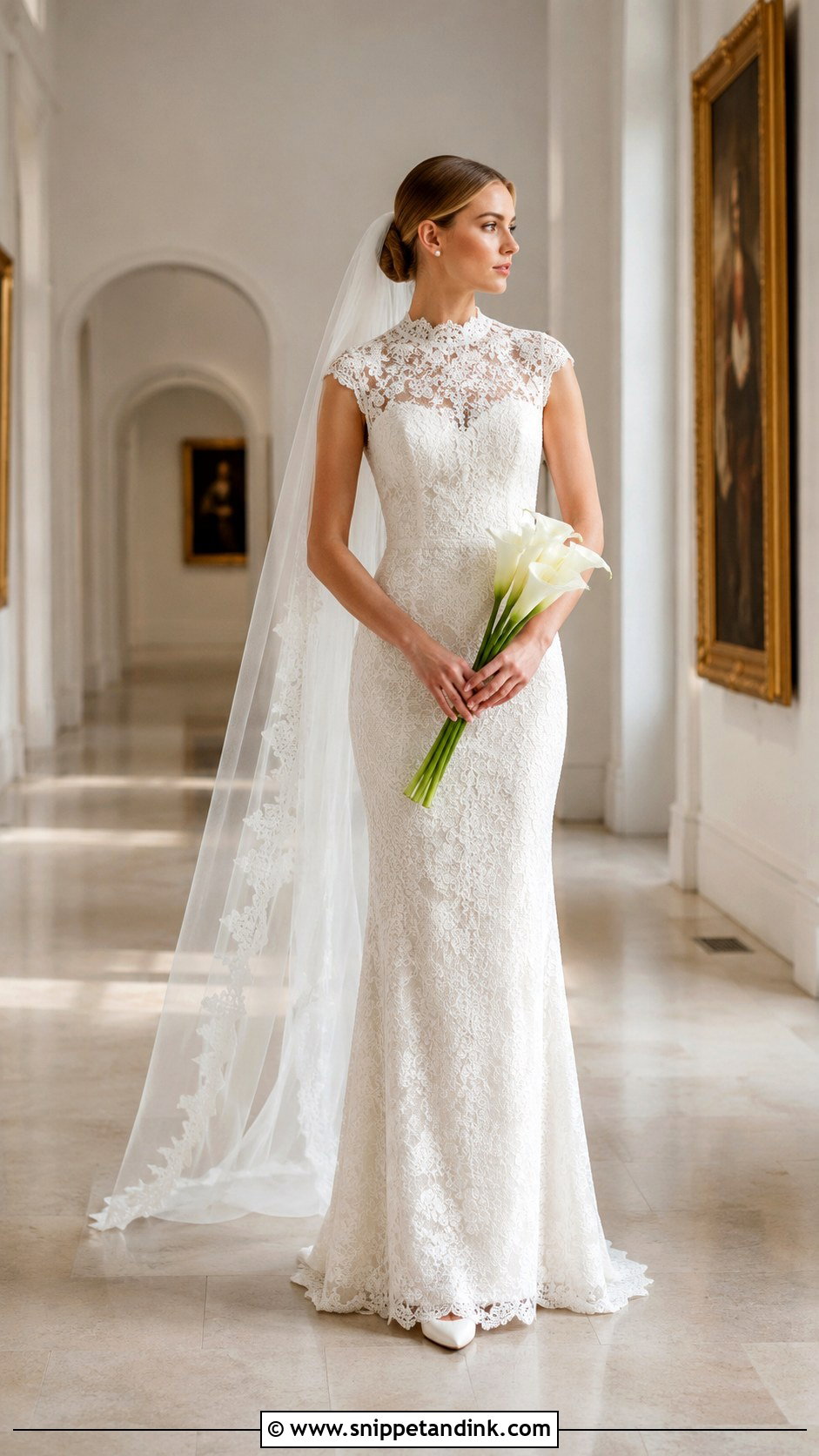
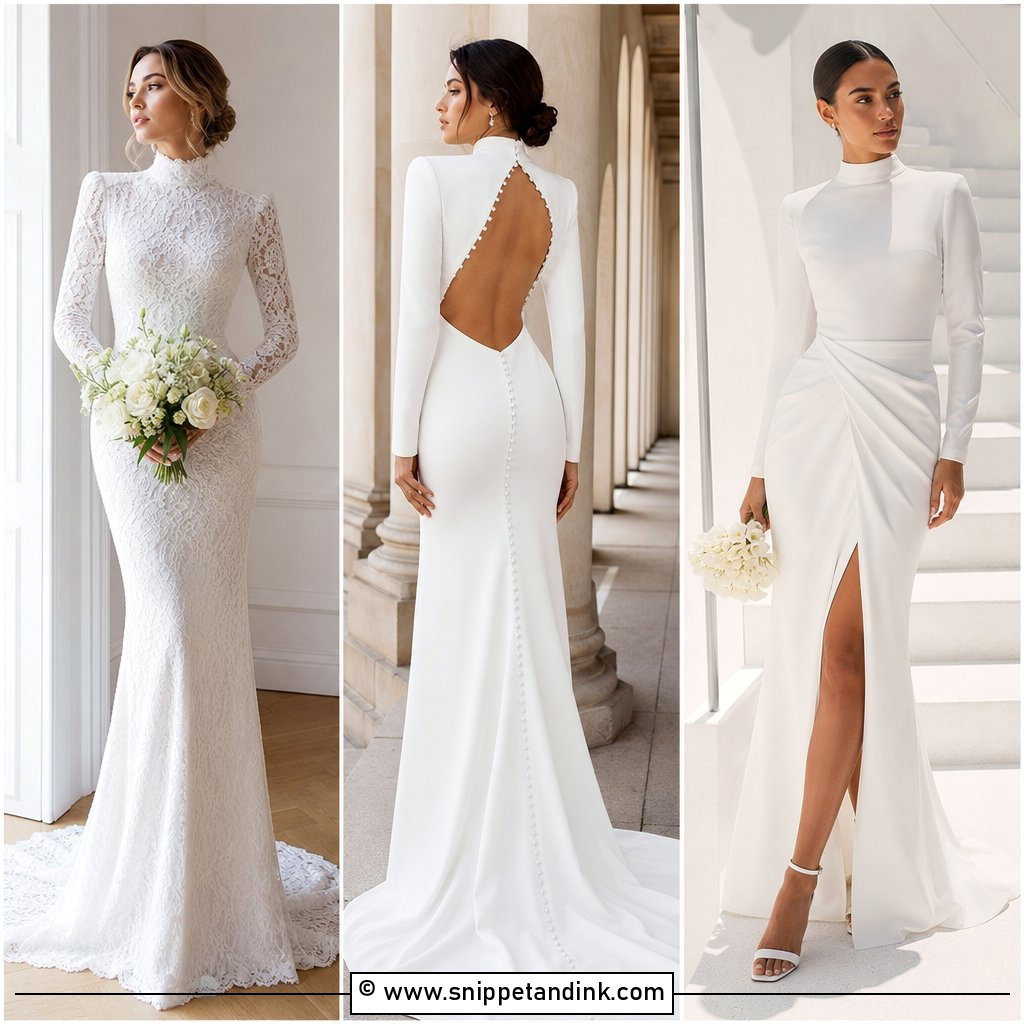
A high-neck lace sheath covers you up while still showing your shape. The lace at the throat must be soft; scratchy lace against the jaw is a real distraction during vows, so rub it against your neck at the shop. An illusion yoke keeps it feeling open. A low bun, small pearl studs, a narrow chapel veil beneath the hair and closed-toe ivory pumps suit formal rooms. Carry a slim bouquet of callas or orchids and skip the necklace; the neckline already frames you.
12. One Shoulder Draped Satin Wedding Dress
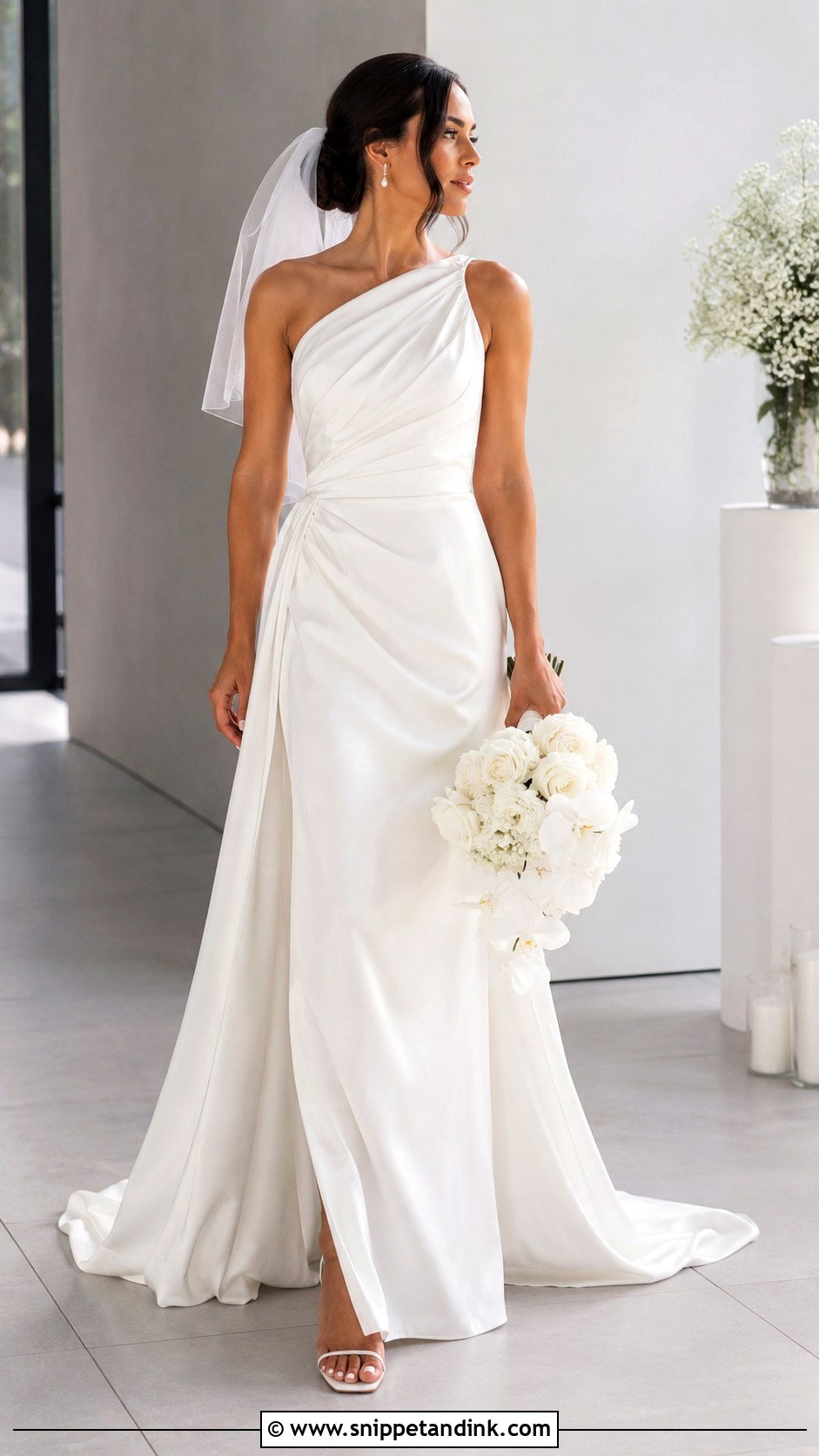
One shoulder is modern by nature, and soft satin draping across the bodice adds shape without embellishment. The single strap does a lot of work, so I look for hidden boning, a fitted waist and sometimes a small interior strap to keep it from sliding. Choose an A-line or column skirt depending on how much movement you want. One statement earring, or a pair of slim drops, replaces a necklace. A short plain veil, ivory sandals and a side-swept bun carry the asymmetry, and hold the bouquet on the opposite side from the shoulder.
13. Scoop Neck Drop Waist Ball Gown
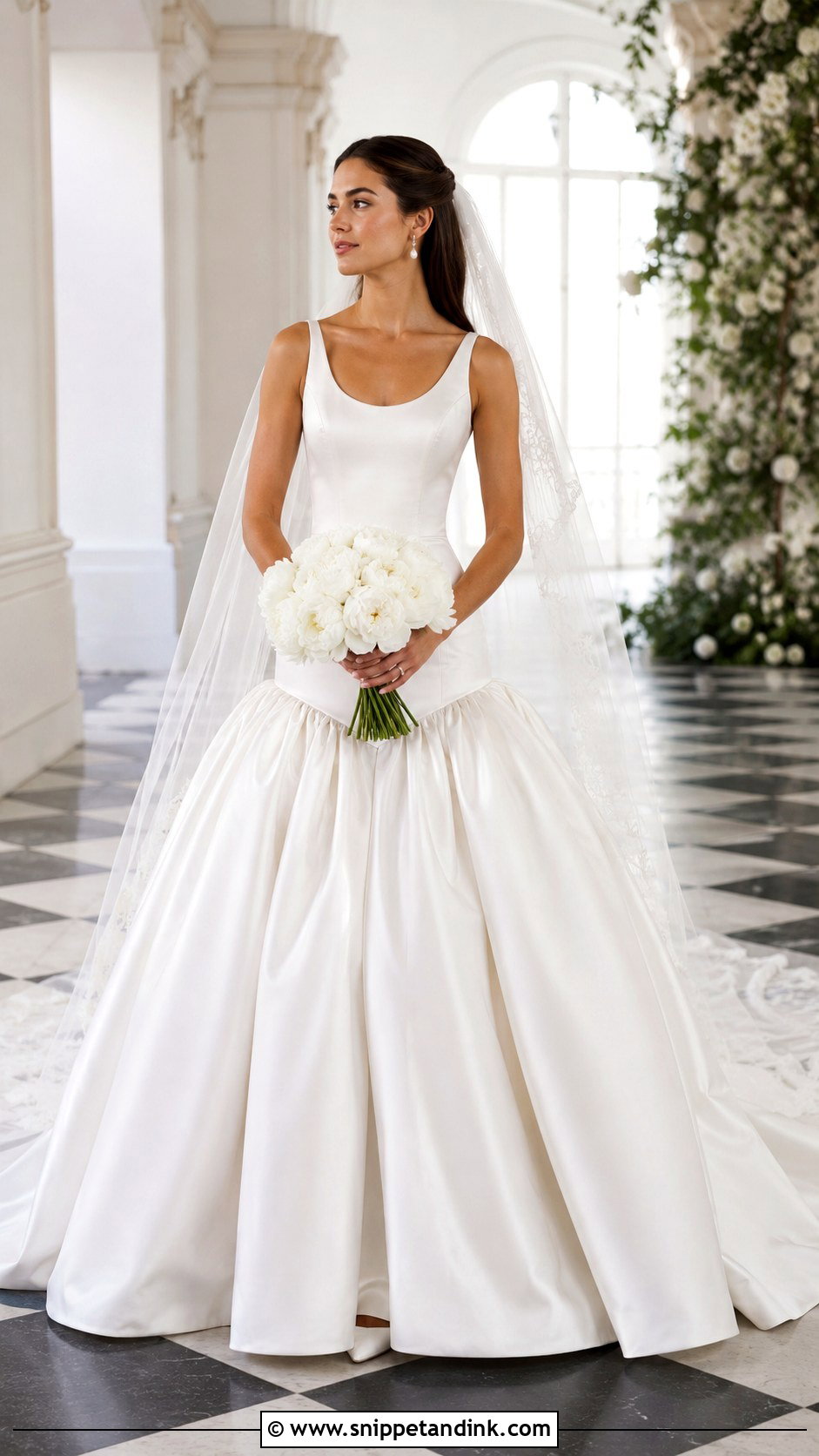
A dropped waist extends the bodice toward the hips before a full skirt opens, giving a long, sculpted torso. The construction should follow your actual proportions; a waist forced too low on a short torso looks like it’s slipping. Petite brides, try several depths. A subtle drop often looks better than an extreme one. A cathedral veil, a delicate tennis bracelet, pearl earrings and pointed satin shoes suit it, with a half-up style. Carry white peonies or roses with little greenery, and get the hem and bustle right so the skirt stays manageable all night.
14. Illusion Sleeve Sparkle Wedding Dress
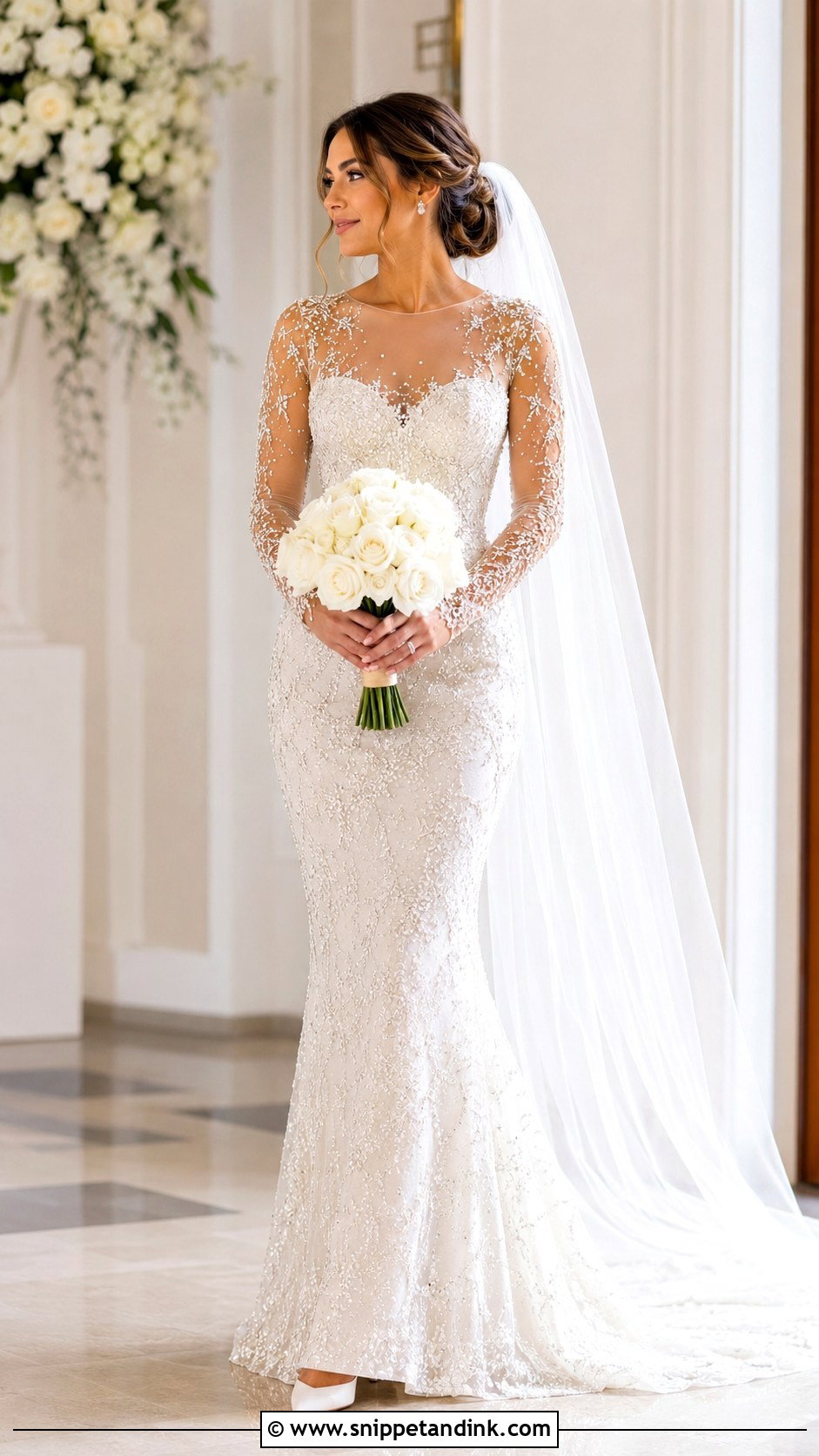
Illusion sleeves work when the mesh disappears and the beads appear to sit on the skin. That only happens if the mesh tone suits you, so ask to see alternatives. A fitted bodice and softly flared skirt balance dense sleeve beading. During fittings I check that beadwork lines up across the sleeve seams and that the elbows bend freely. If the gown is very reflective, avoid glitter in the veil or shoes. A plain chapel veil, crystal studs, stable satin pumps and waves pinned behind the ears suit it, with a white rose bouquet in a narrow satin wrap.
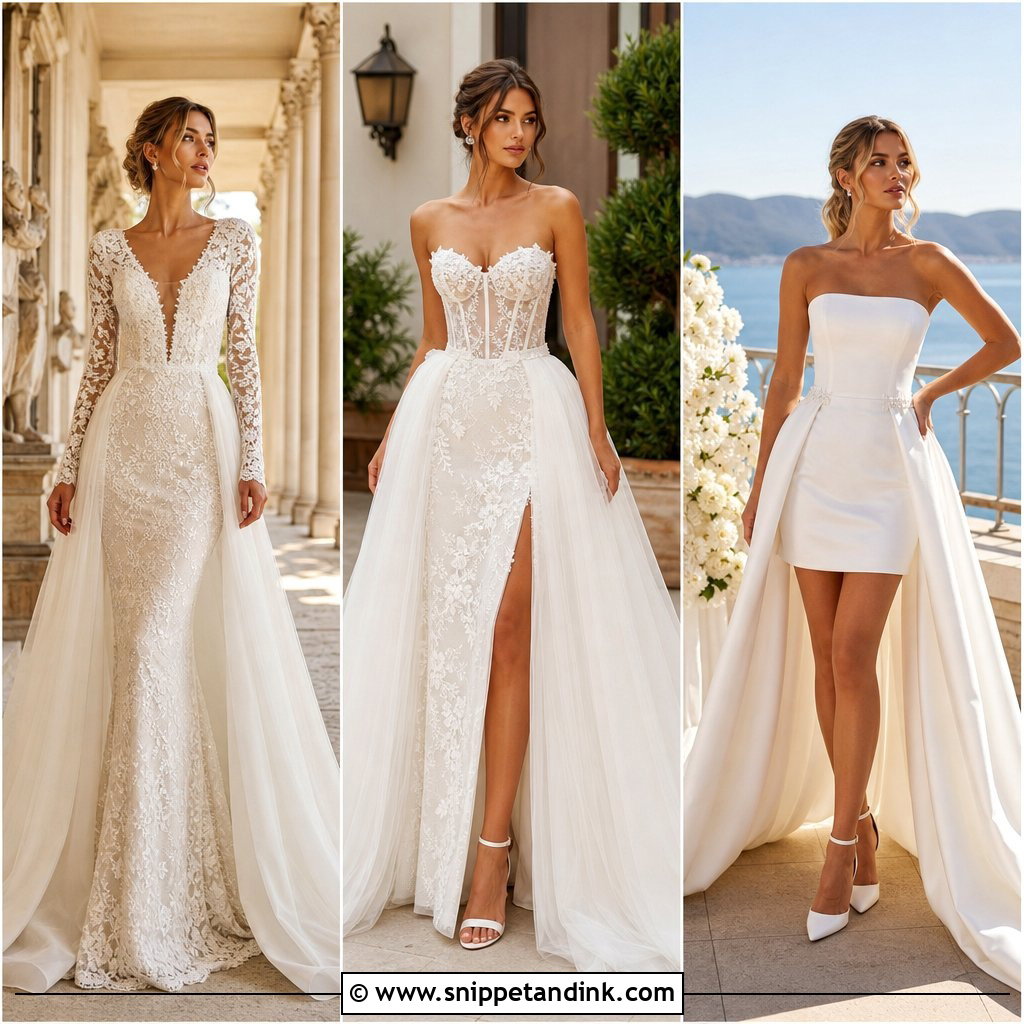

15. Plunging V Neck Lace A Line Wedding Dress
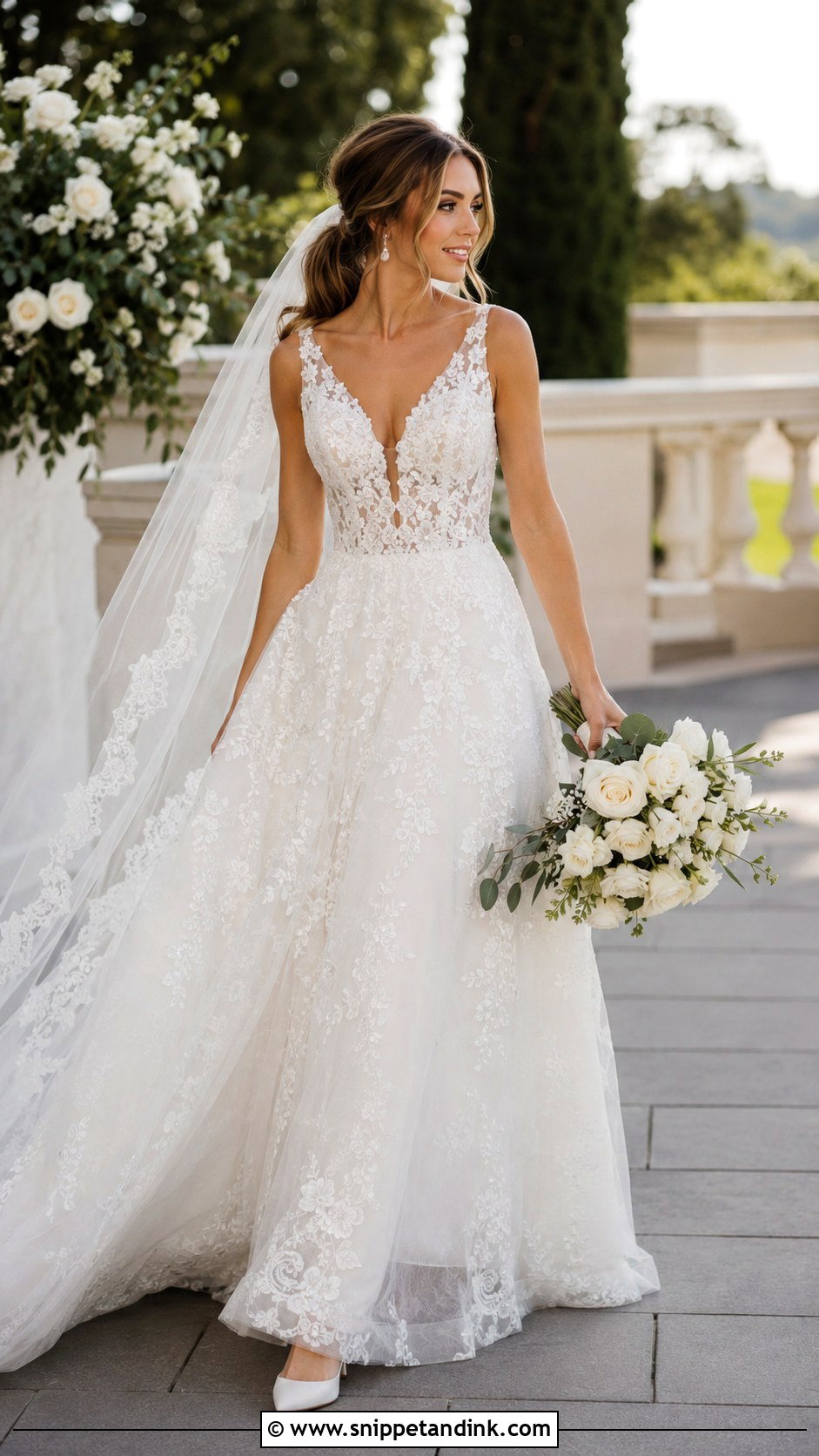
A deep V on an A-line skirt balances drama with easy movement. Illusion mesh and internal support make or break the neckline; if you’d prefer more coverage, the plunge can be raised or lined while keeping its long shape. Altering lace bodices is skilled work, because motifs have to be lifted and re-laid so they still look intentional after the seams move. Ask how they’ll handle it. A lace-trimmed veil, small drops and ivory pumps with ankle support suit it, plus a low ponytail or brushed waves and a loose bouquet of roses and lisianthus.
16. Cap Sleeve Lace Ball Gown
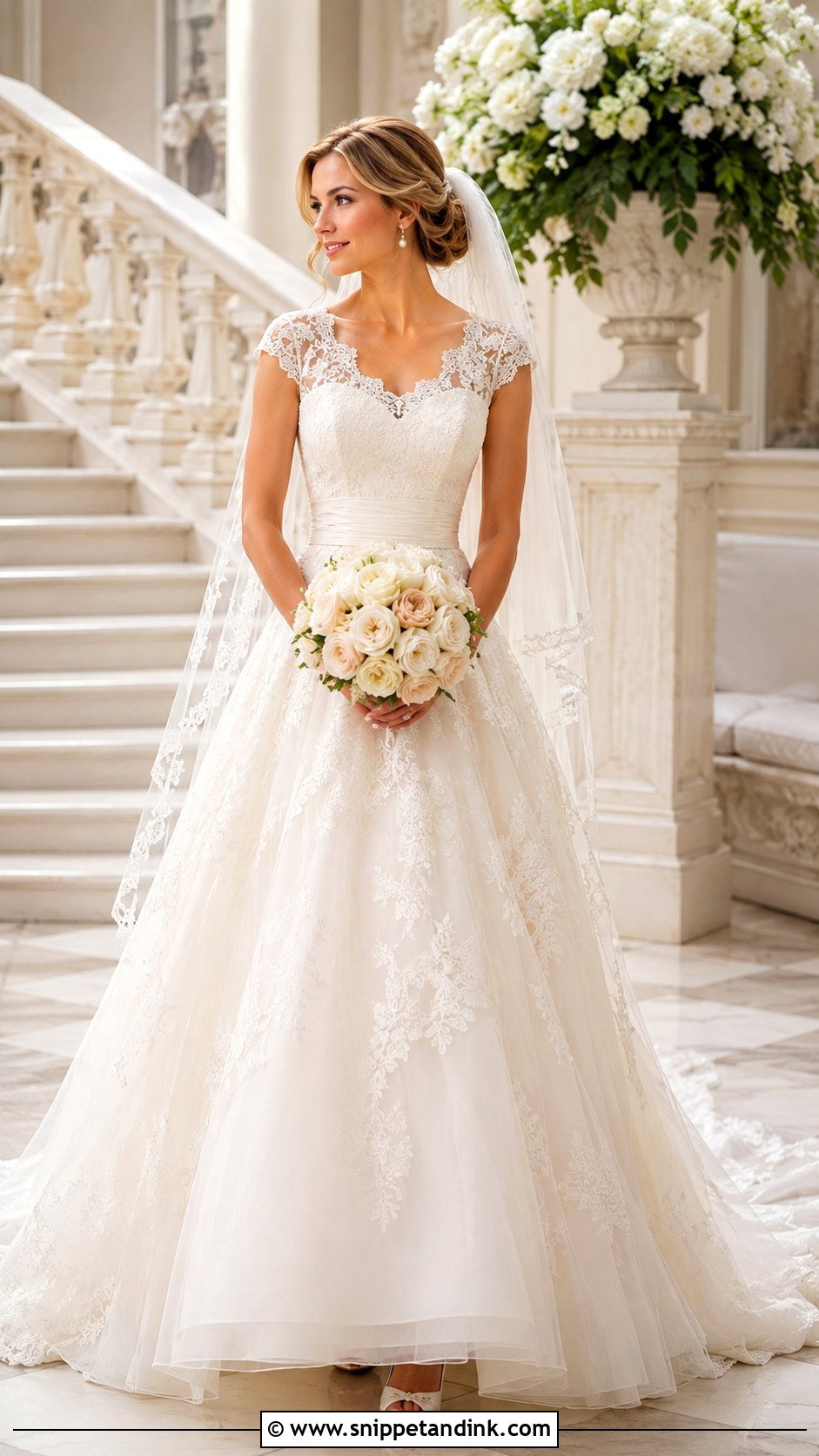
Cap sleeves cover just the top of the shoulder, which suits brides who want a little coverage without full sleeves. The common problem is the arm opening: raise your arms at the fitting, and if the bodice lifts with them, the sleeve needs adjusting. A natural waist and layered skirt give classic proportions, with lace appliqués across the top. A fingertip veil, pearl earrings, low ivory heels and a rounded bouquet of garden roses suit it, with a curled chignon. Skip a wide necklace and wear a slim bracelet; the bodice is already busy.
17. Champagne Embroidered Wedding Dress
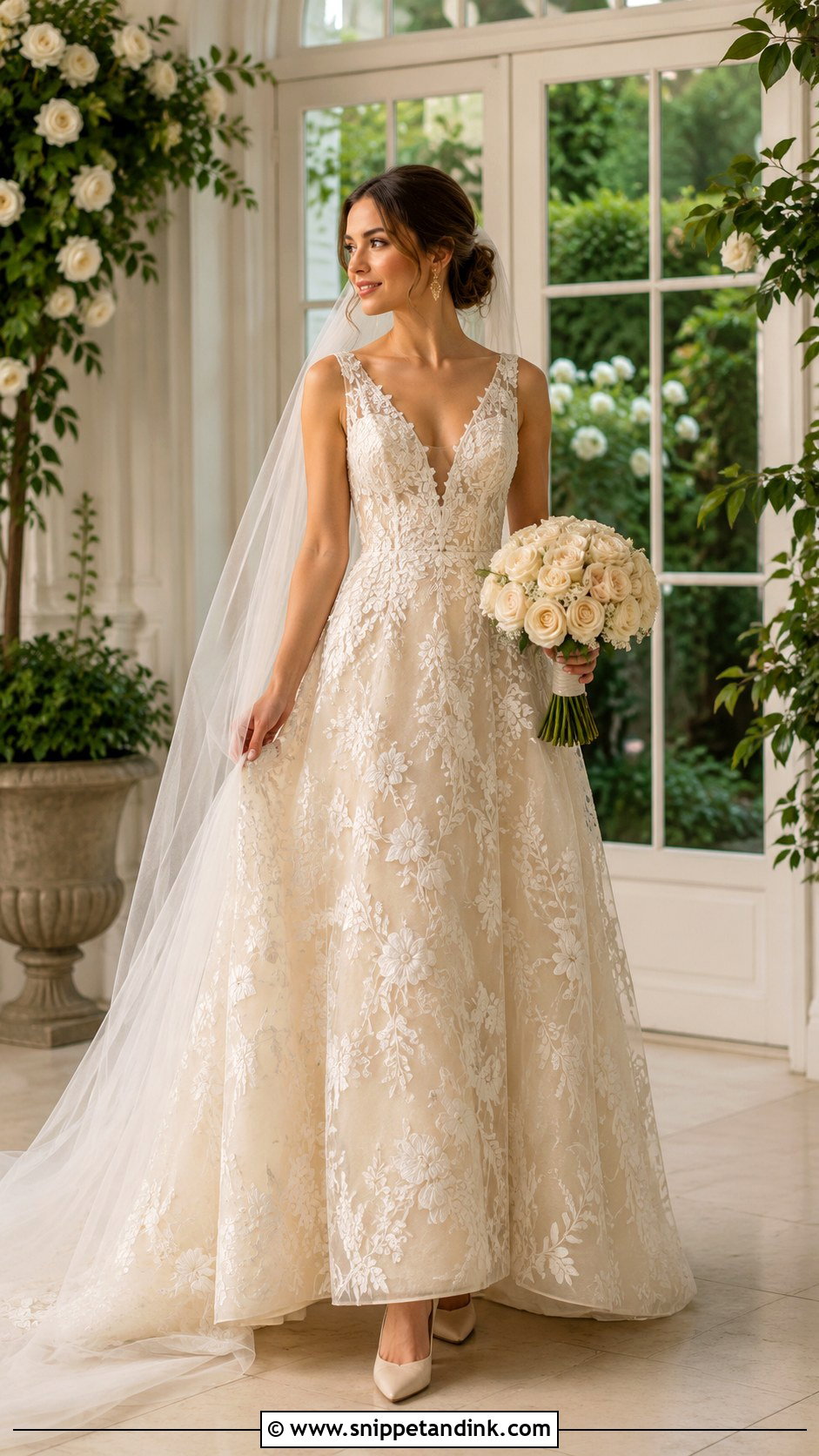
Champagne linings under ivory lace make the pattern stand out more, because the warm base shows through the gaps. It still reads bridal. An A-line or ball gown gives the embroidery a wide skirt to spread across. Metals are the tricky choice here: hold gold, silver and pearl against the exact lining in daylight and indoor light, as warm linings can make silver look grey. A soft ivory veil, gold-toned earrings, nude or champagne pumps, cream roses and a loose low bun complete it. Keep everything else restrained.
18. Minimalist Strapless Column Gown With Overskirt
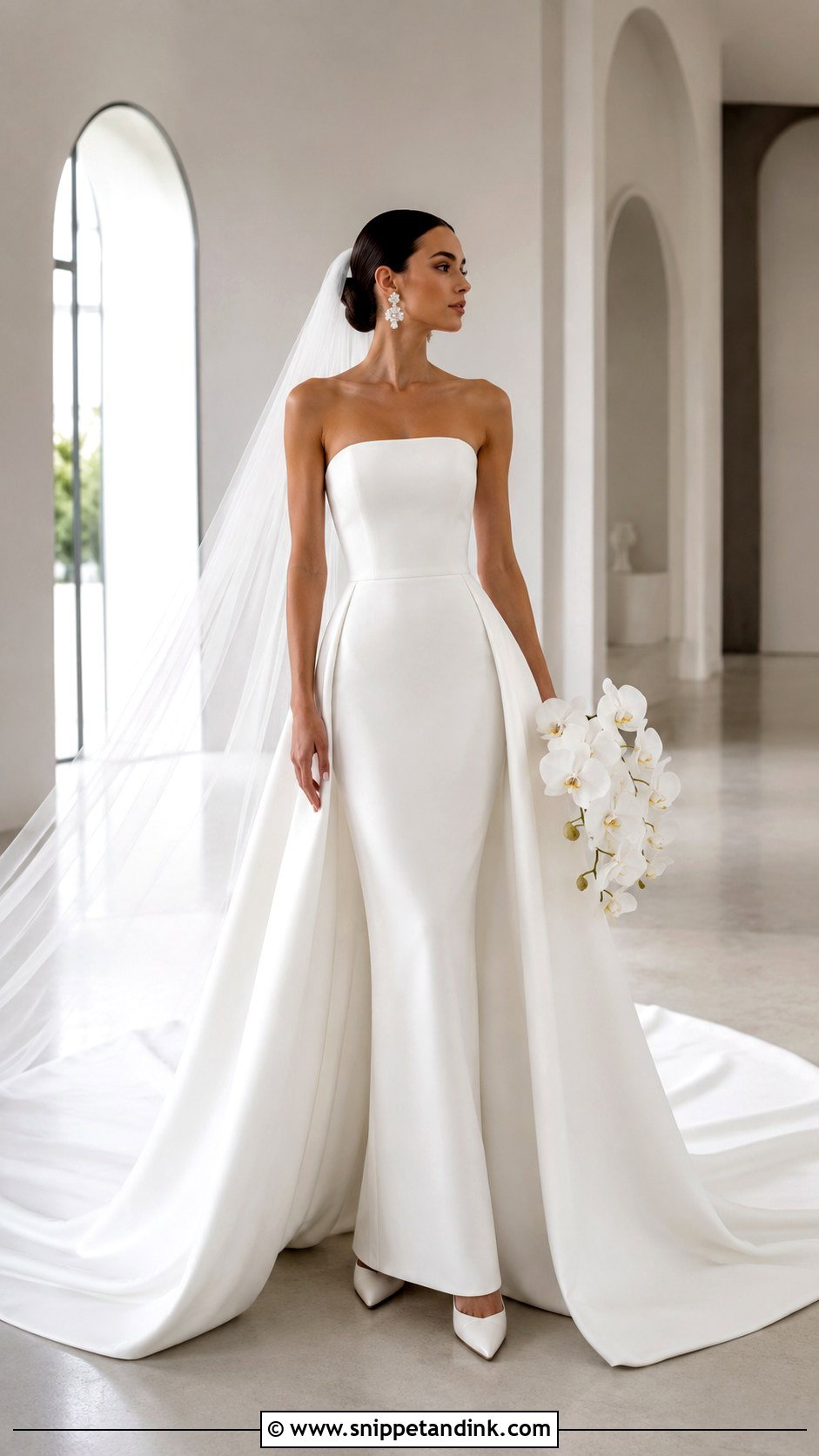
A slim column with a removable full overskirt gives two outfits: a sweeping entrance, then a sleek reception look. Matching fabric and a concealed waistband make both layers look planned. Column dresses can be narrow, so test your stride and the stairs at alterations. The overskirt needs its own bustle if you’ll keep it on for photos. For the ceremony, add a long plain veil, sculptural earrings, pointed pumps and white orchids. Then remove overskirt and veil, and a sleek bun or tucked straight hair keeps the minimal mood.
19. Off Shoulder Satin Mermaid Wedding Dress
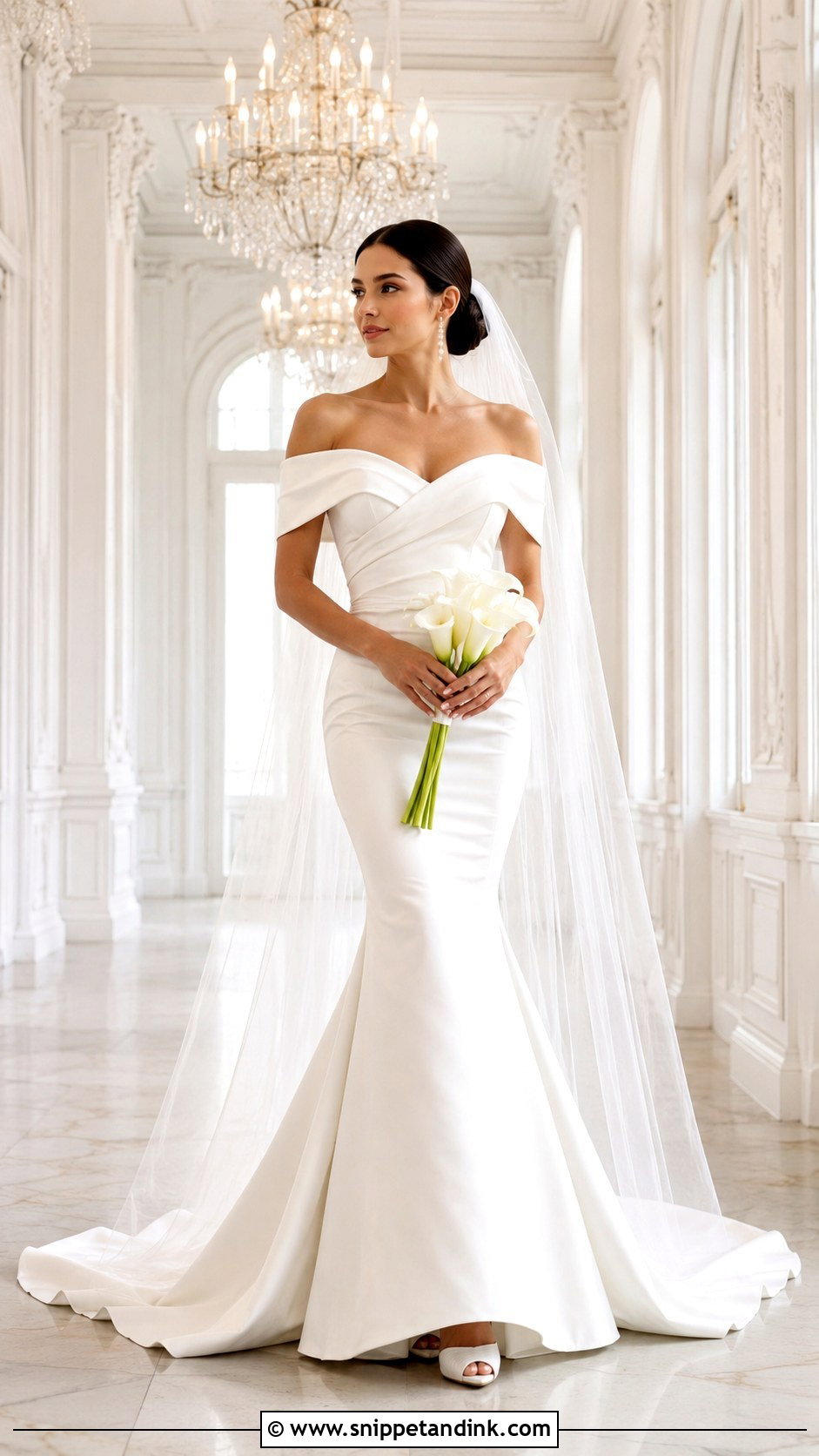
Satin mermaids are sculptural and very revealing of fit. The off-shoulder neckline shows the collarbone, and the skirt opens below the hip. Flexible arm bands or detachable straps let you move without dragging the bodice down. Smooth satin shows every undergarment line, so plan those with the seamstress. A plain chapel veil, pearl drops, ivory heels with cushioned insoles and a center-parted low bun suit it, with a narrow bouquet of roses or callas. Sit, walk and dance in it before you approve the final fitting.


20. Beaded Sweetheart Ball Gown With Bridal Cape
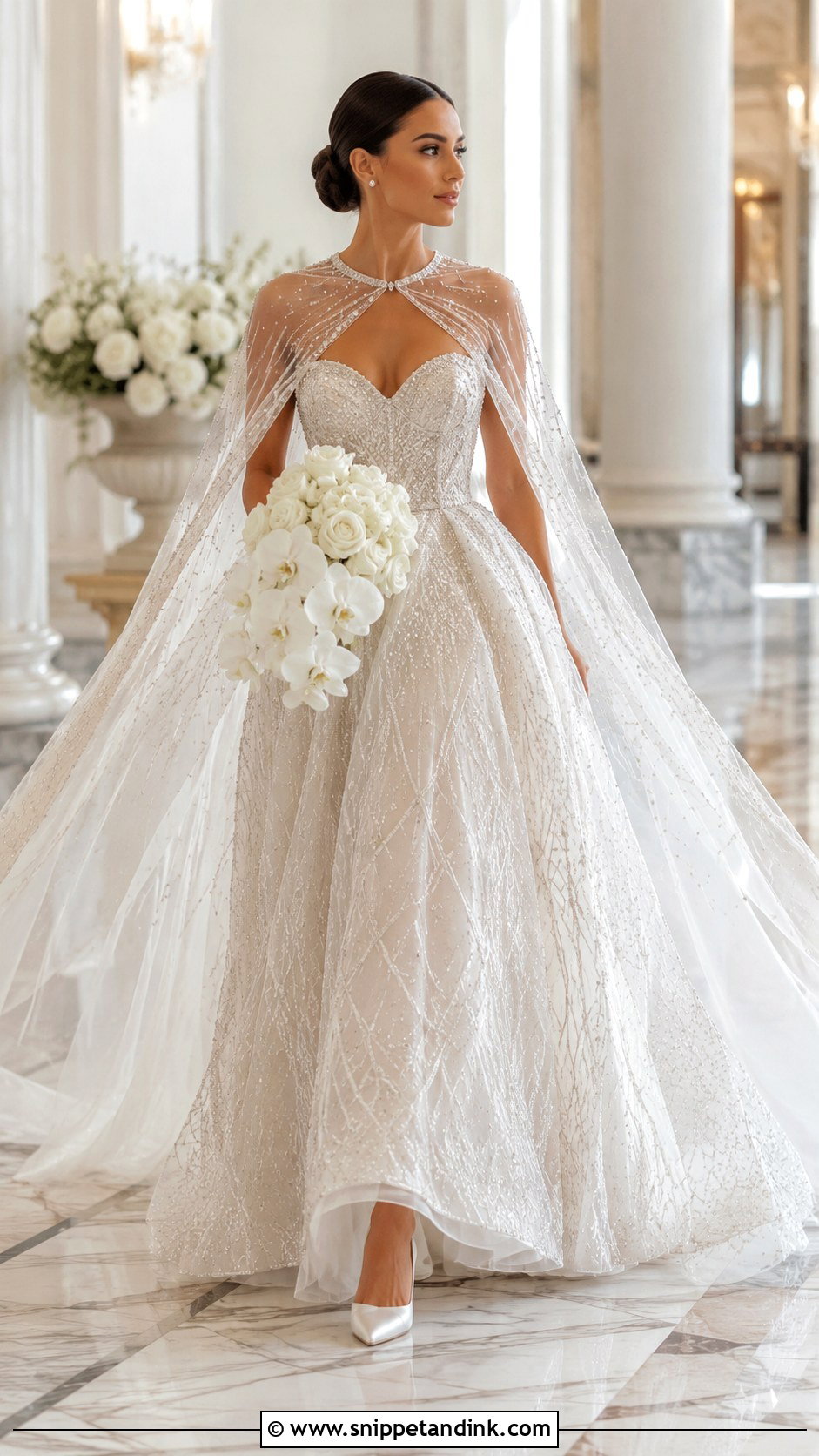
A cape replaces the veil on a beaded sweetheart ball gown and gives a long, light layer behind you. It should attach discreetly near the shoulders and fall past the train without hiding the beaded bodice. Fine edging or a few appliqués can tie it to the dress. Wearing both a veil and a cape usually bunches at the back of the head, so choose one, or take the veil off before the cape goes on. Simple studs, satin pumps, a low bun and a structured bouquet of roses and orchids finish it. Walk and turn to check nothing tangles.
Hour Eight in a Beaded Ball Gown
A full couture gown with layered tulle and beading can be heavy, and the weight that feels fine in a twenty-minute fitting is a different matter after a long day. I plan for it the way an athlete plans for a long event.
The practical side nobody photographs
- Bathroom trips: face the toilet and sit facing the tank, gathering the skirt in front of you. It is far easier than trying to lift a ball gown from behind, and one helper is plenty.
- Seating: ask for a chair without arms at the head table. Big skirts wedge in armchairs, and a corset is more comfortable on a straight back.
- Heat: tulle layers trap warmth. If the reception room is warm, a small fan and cold water nearby make a real difference.
- Shoes: wear them around the house for several evenings before. Fitting appointments are short; receptions are not.
- Dancing: bustle before the first dance. A loose train under your partner’s foot can tear lace or pull beading.
None of this means a big gown is a mistake. It just means the brides who enjoy them most are the ones who rehearsed the logistics as carefully as they chose the dress.
Start With the Silhouette, Then Add Only What Helps
Gown, accessories, hair and the practical details should all point the same way. These looks run from clean satin ball gowns to lace sheaths, sparkling corsets and convertible designs. Begin with the silhouette you feel comfortable in. Then weigh up the venue, season, train length, fabric weight and the support you need. Let accessories back up the gown’s character instead of competing with it. And book professional fittings early, then practice moving in every layer, so the dress feels like yours from the first step to the last dance.
You'll Like These Ideas:







Leave a Reply