
Brides who come to me asking for Martina Liana usually want the same thing: a gown with a couture feeling that still fits like it was built around them. The label leans on structured bodices, placed lace and details such as basque waists, pearl work and removable sleeves, and those choices change how a dress sits, moves and needs to be altered. So before you fall for a photo, think about your venue, how long you’ll be on your feet and how much structure you like around your ribs. The ideas below cover ballgowns to sleek crepe, with my notes on fit and styling for each.
Ordering a Designer Gown Means Working Backward From the Date
Designer gowns like these are usually ordered through a bridal salon and made to your size, not taken off a rail. That changes your timeline. Production times vary by designer and season, but I tell brides to expect several months from order to delivery and then allow more time for alterations on top.
- Start trying on around nine to twelve months out if you can. It gives room to compare silhouettes and still order without paying for a rush.
- Order once you’ve decided, and ask the salon for the expected ship date in writing.
- Plan alterations to begin roughly two to three months before the wedding, with two or three fittings.
- Book the final fitting a couple of weeks out, and bring your shoes, undergarments and whoever will bustle the train.
Size charts for made-to-order gowns are based on your largest measurement, so many brides order a size that seems too big. That is normal. Taking a gown in is far easier than letting it out, especially with lace or boning.
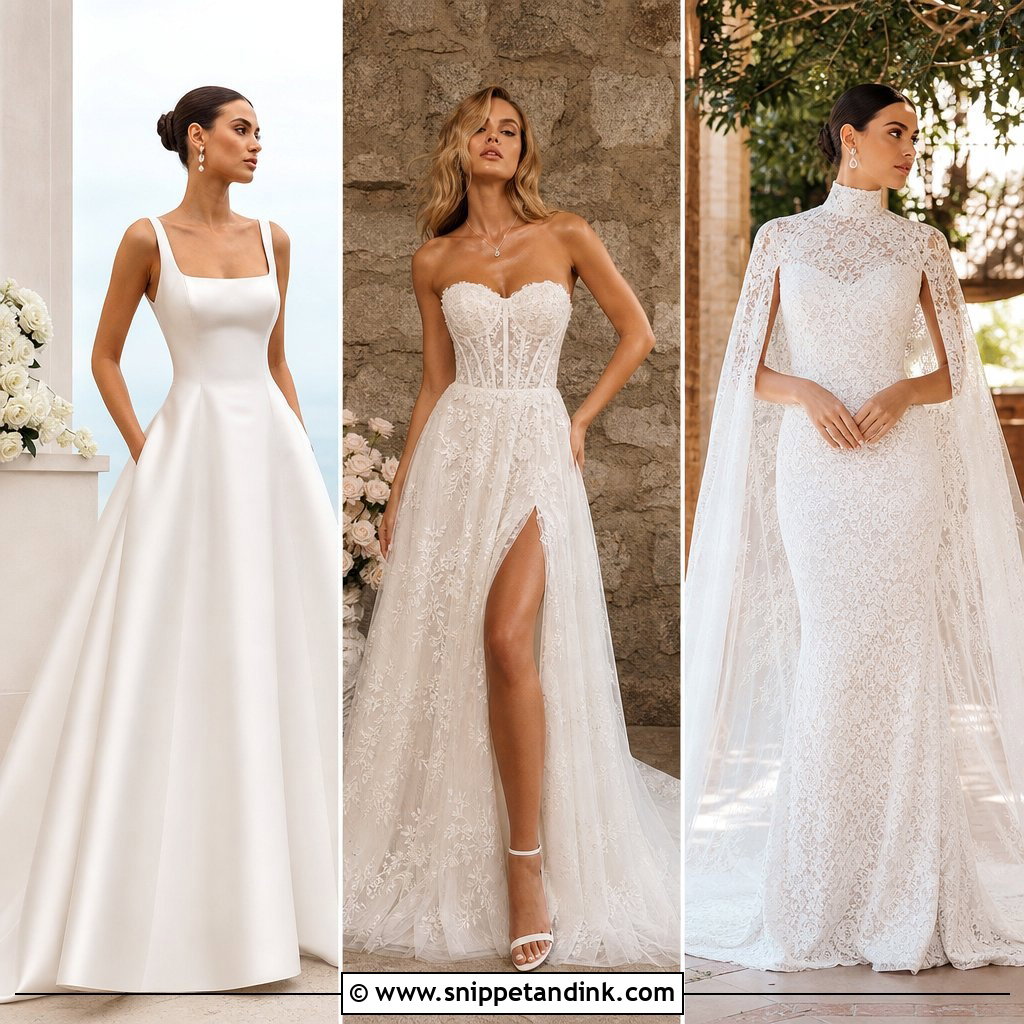
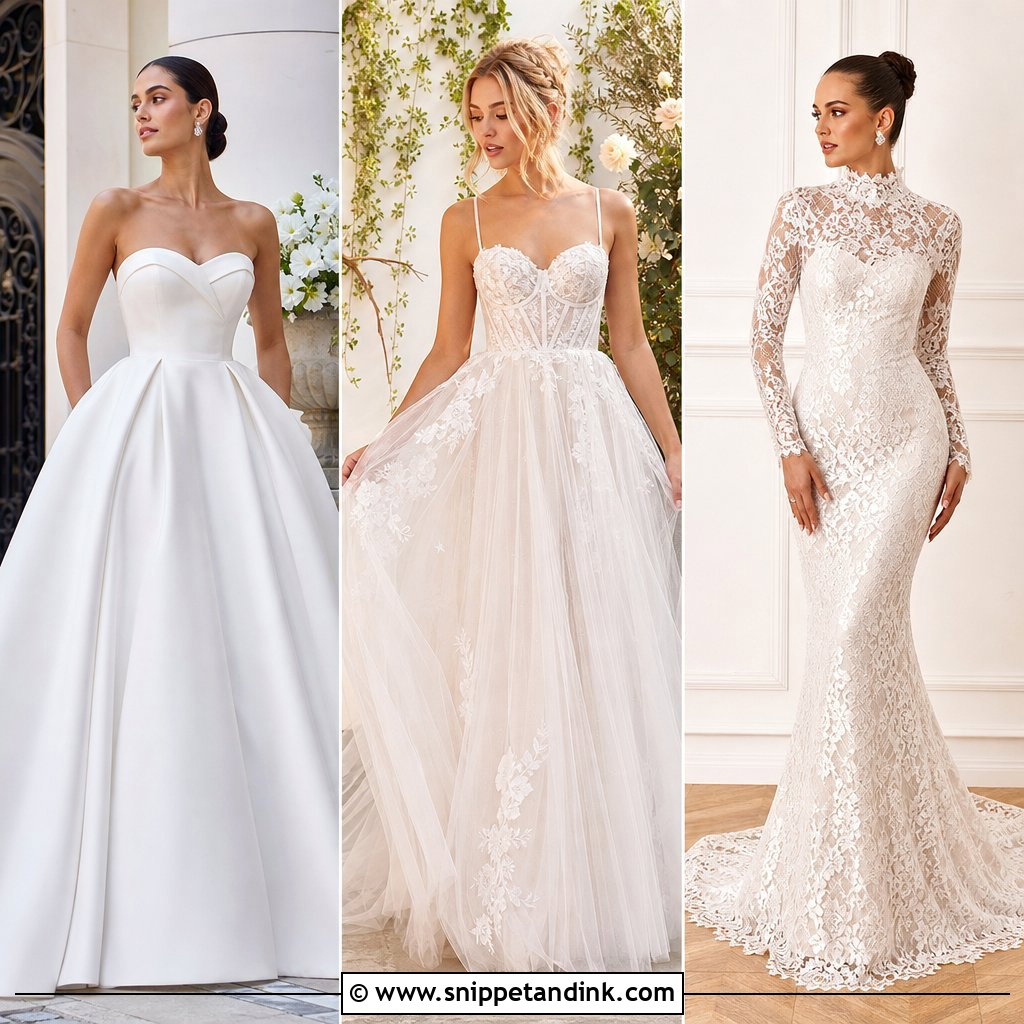
1. Martina Liana Lace Ballgown Wedding Dress
Full lace skirts carry real drama, and a lace ballgown from this label tends to pair layered lace with a sculpted bodice, so the volume starts cleanly at the waist. What I check first is weight: a full lace skirt over several tulle layers gets heavy by the third hour, and a well-built waistband spreads that load so it doesn’t drag on your hips. A cathedral veil, pearl drops and pointed ivory heels suit it. Keep the bouquet rounded and soft; a spiky arrangement fights with all that lace in photographs.
2. Martina Liana Strapless Satin Wedding Dress
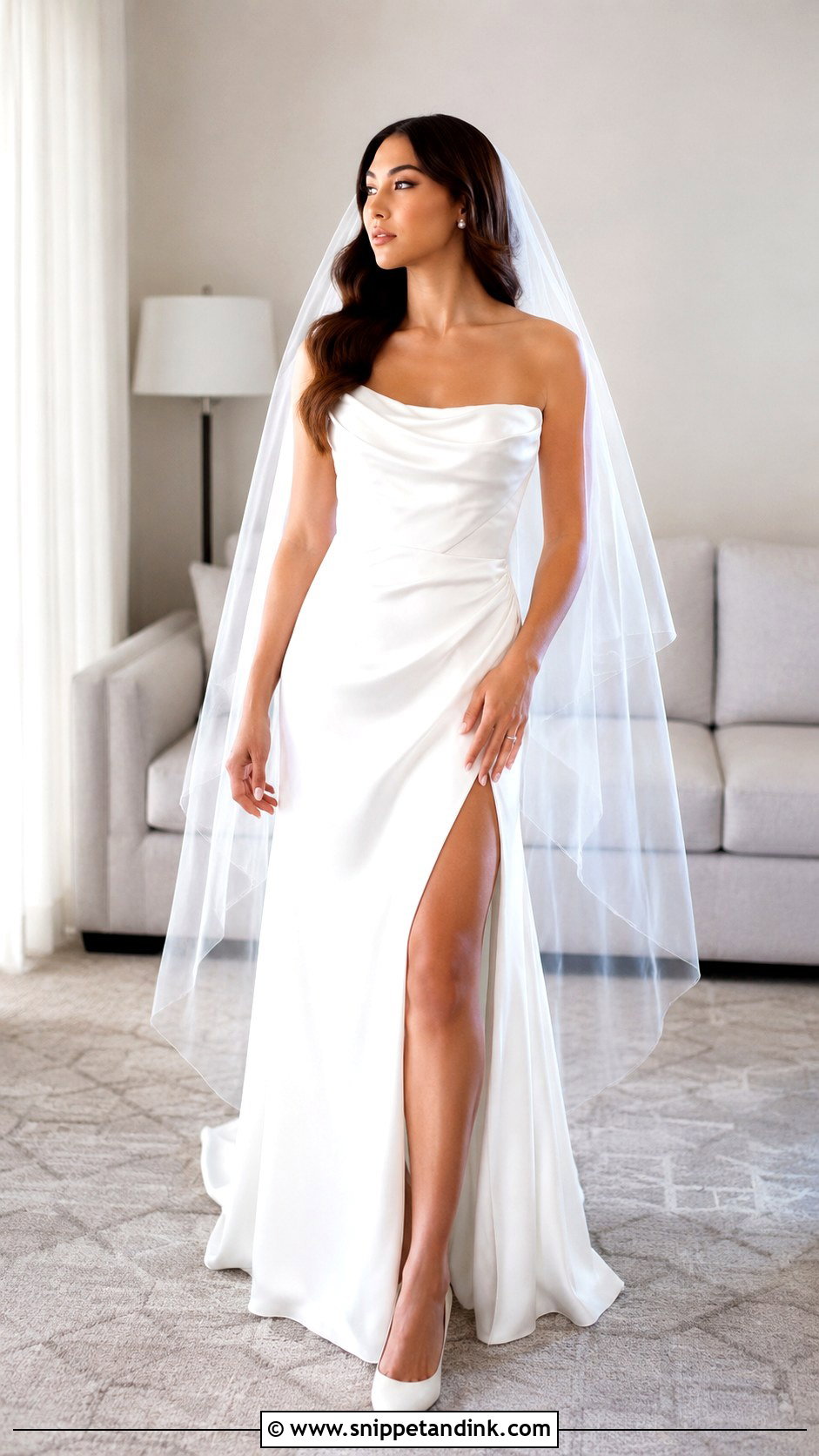
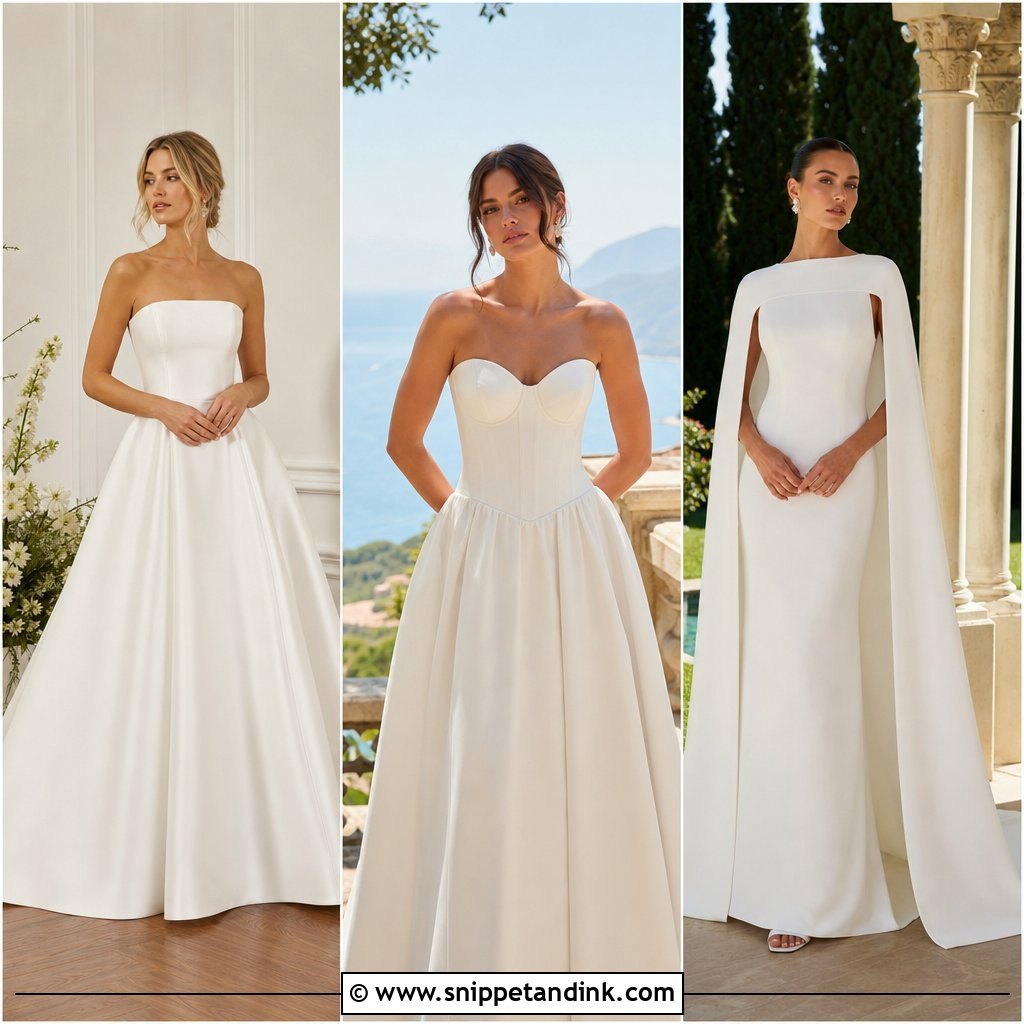
Satin hides nothing, which is exactly why a strapless satin gown looks so clean when the fit is right. The boned bodice in these designs supports the bust on its own, but I still insist on the final fitting being done in your actual bra or with cups sewn in, because a millimeter of gap at the top edge shows in every side photo. Sleek waves, pearl studs and satin pumps let the fabric lead. Satin also creases where you sit, so ask your salon about steaming it on the morning rather than the day before.
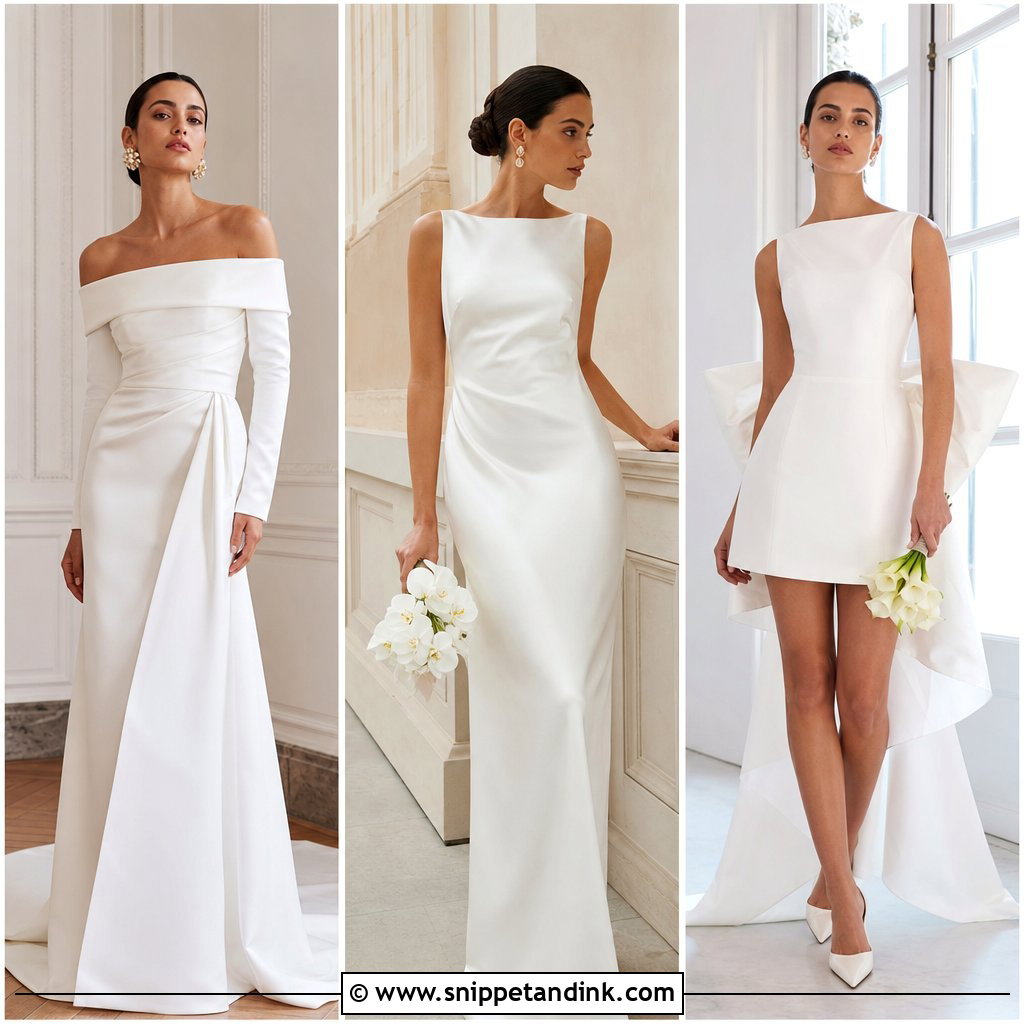
3. Martina Liana Off Shoulder Wedding Dress
Off-shoulder necklines frame the collarbones and suit a wide range of shoulder shapes. The practical problem is arm movement: an off-shoulder band that is too tight stops you lifting your arms to hug anyone, and one that is too loose slides down. I have brides raise their arms above their heads at every fitting. Lace looks soft here, satin cleaner. A low bun keeps the neckline open, and for a cool-season wedding, detachable straps or a matching wrap help.
4. Martina Liana Long Sleeve Lace Wedding Dress
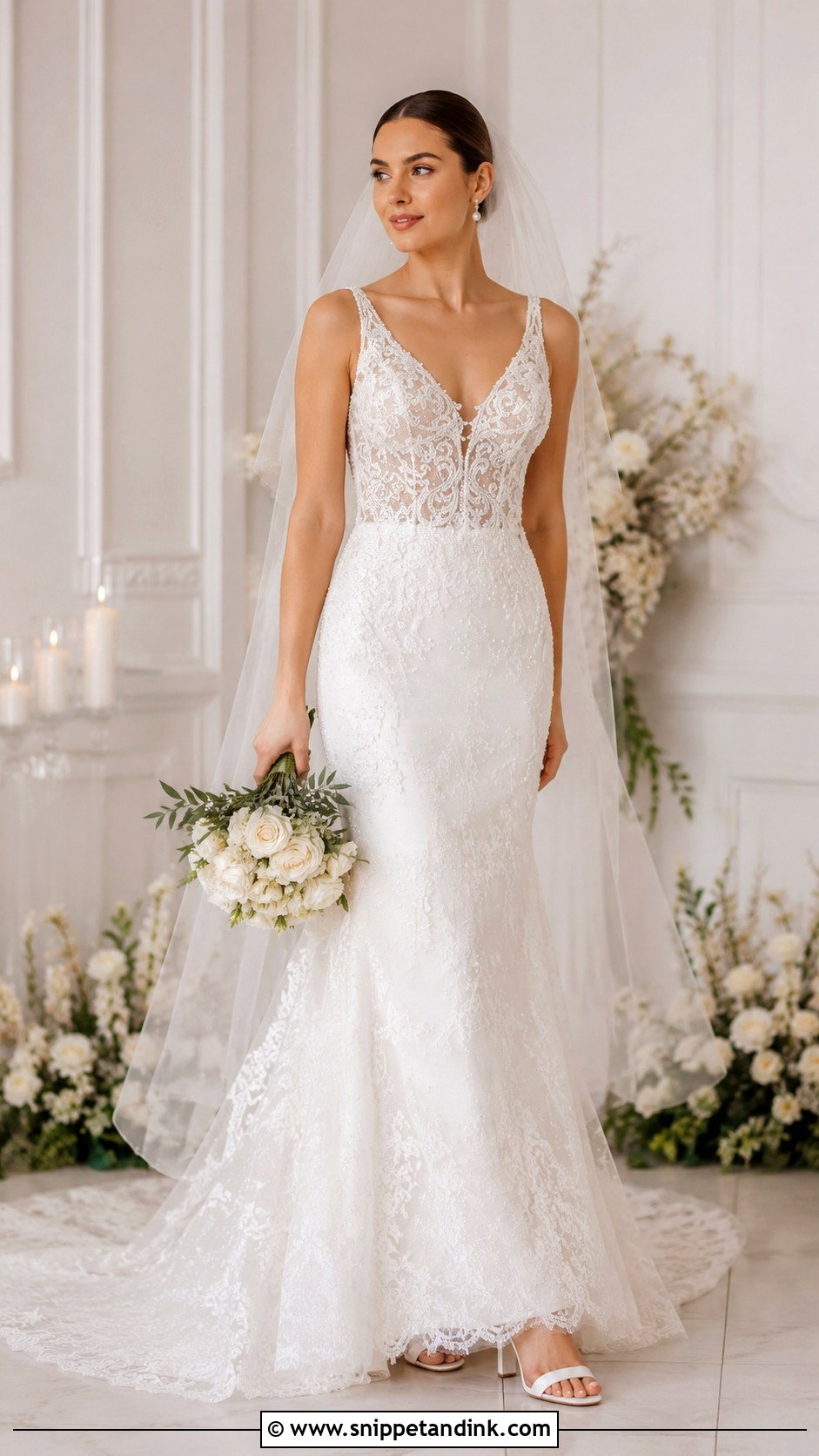
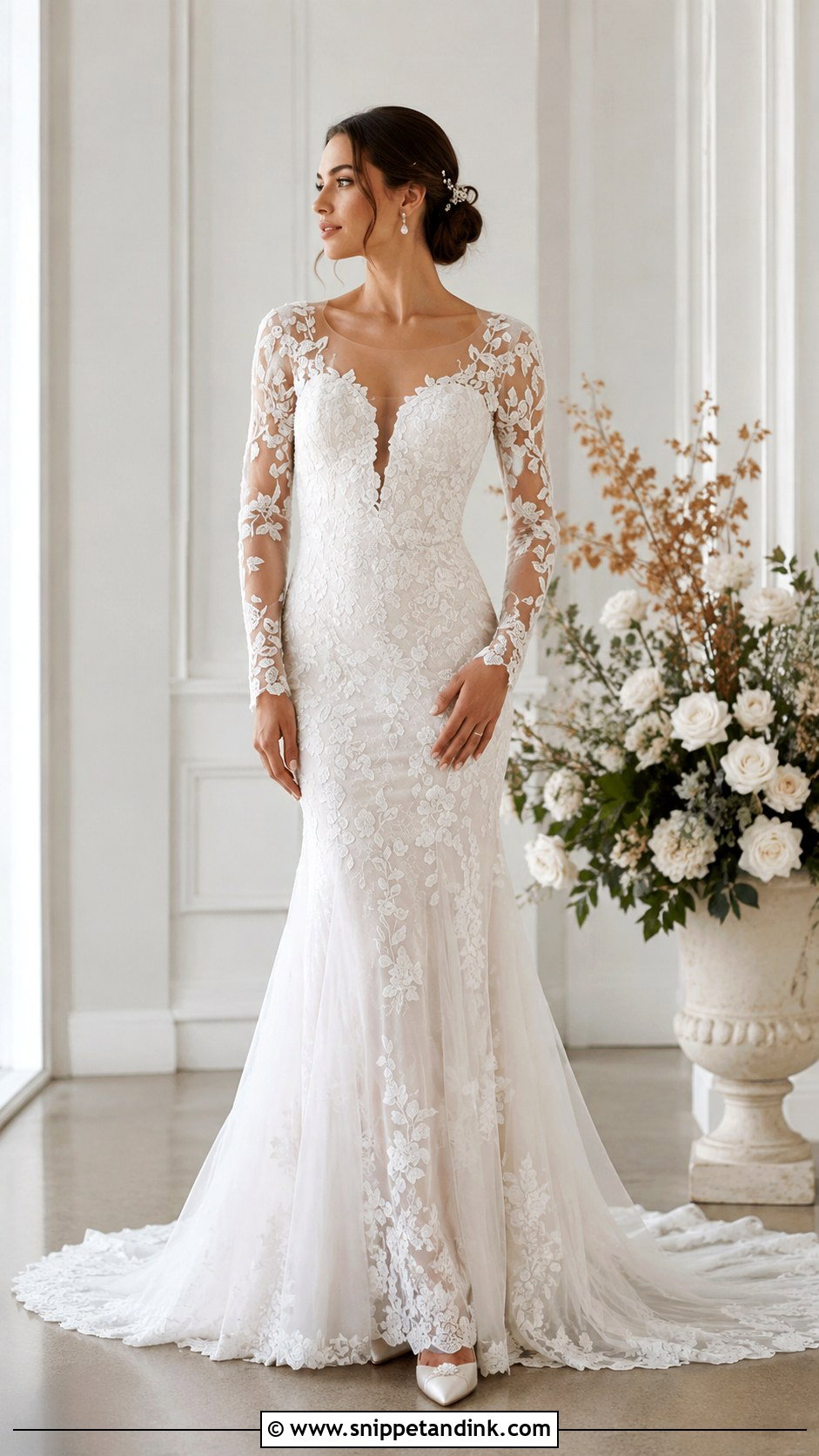
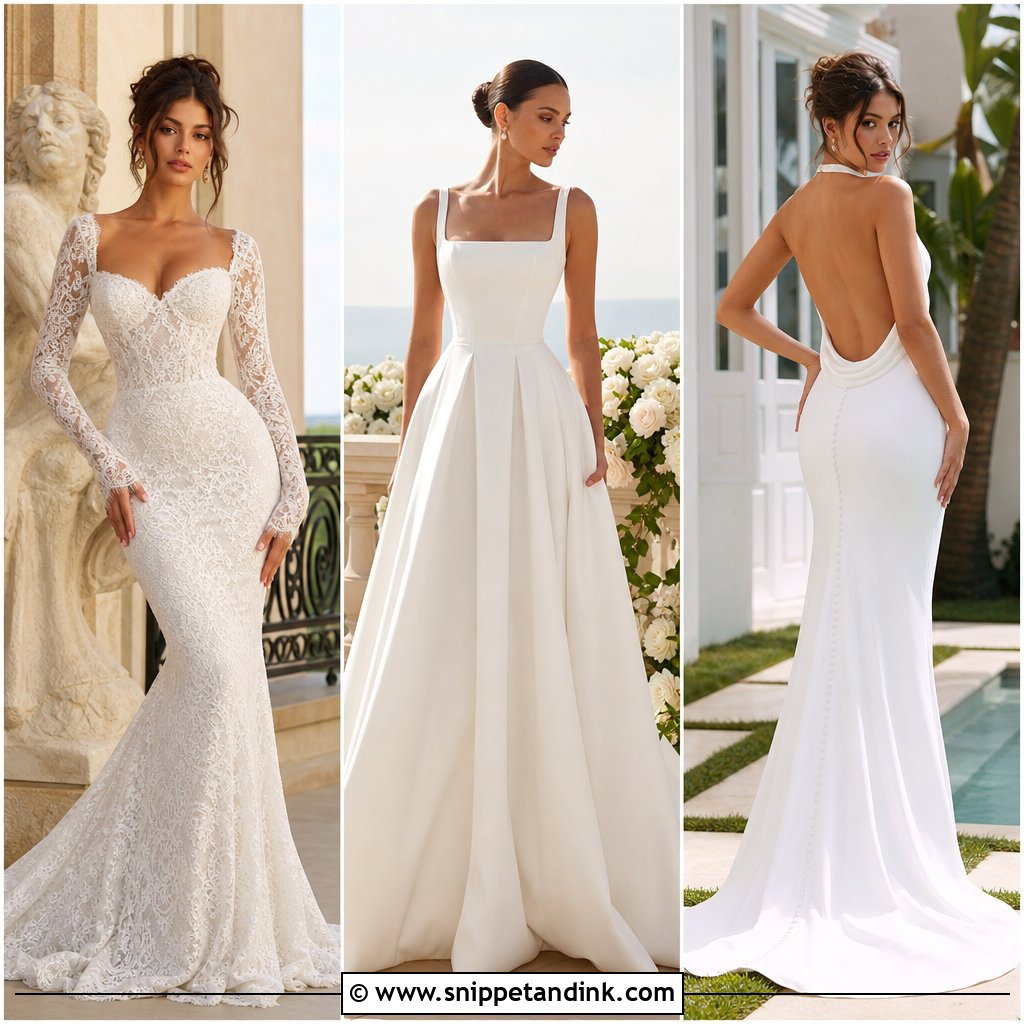
Long lace sleeves give coverage and texture without the stiffness of a high collar. On these gowns the sleeves are usually fine lace over illusion mesh, while the bodice stays structured underneath. My fitting note: bend your elbows and reach forward as if you were cutting the cake, because a sleeve cut too slim pulls the shoulder seam out of place. Fall, winter and formal evening weddings suit it best, though illusion sleeves work in spring. Choose a sheer veil so the lace stays visible and keep jewelry minimal.
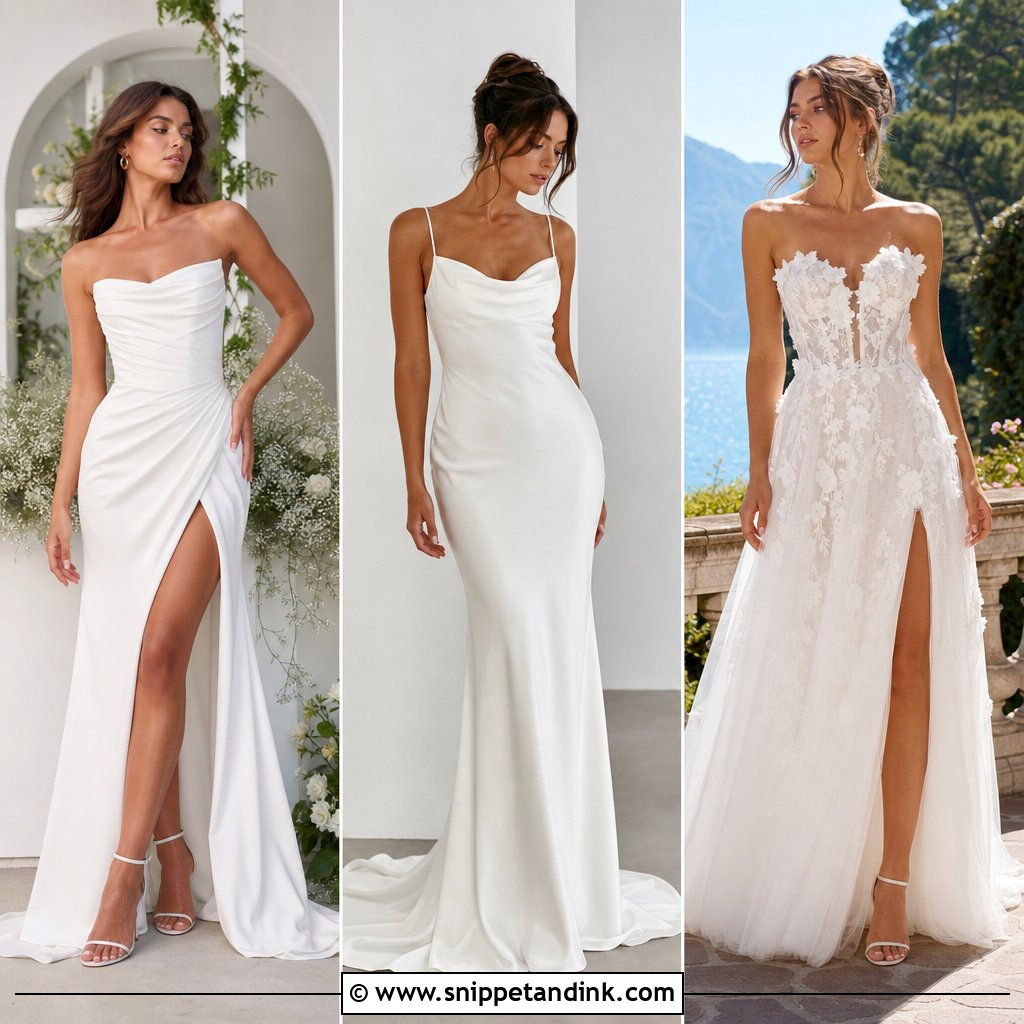
5. Martina Liana Fit And Flare Wedding Dress
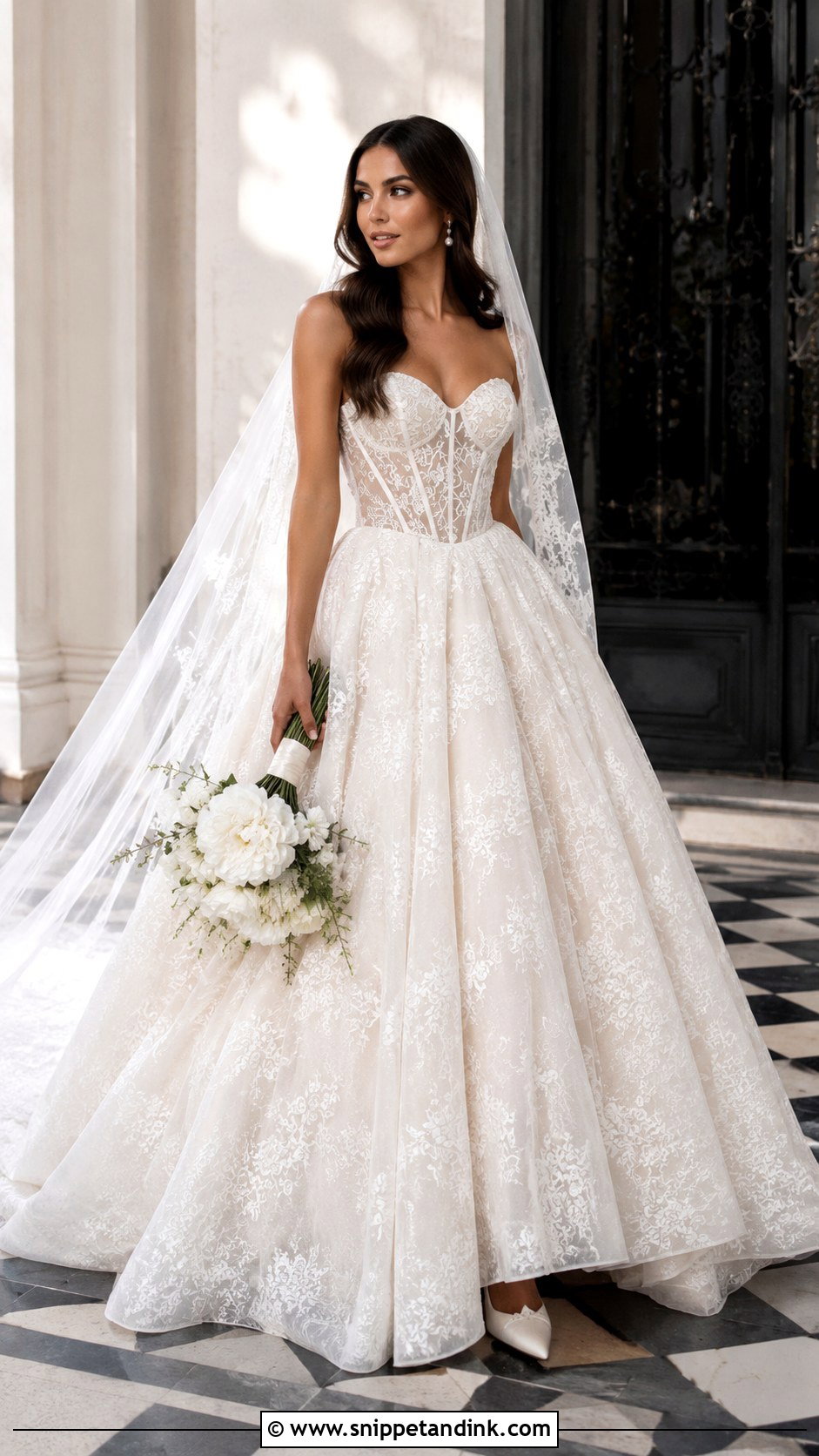
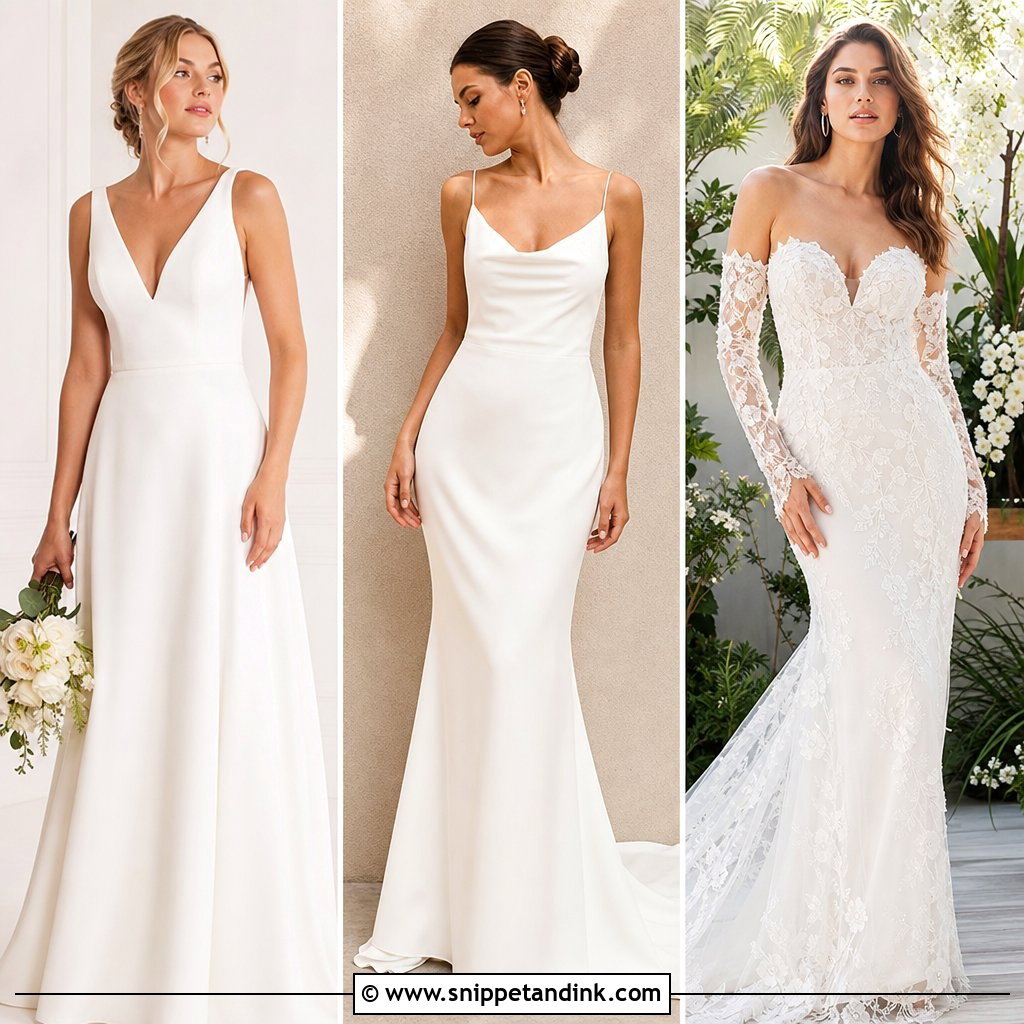
Fit and flare follows the body through the hips and opens around mid-thigh, which is a little more forgiving than a full mermaid. Fabric changes its mood more than people expect: lace reads romantic, crepe reads modern, and beading pushes it toward evening. I always talk about the bustle at the first fitting with this shape, because a fitted skirt with a long train needs enough bustle points to lift cleanly for dancing. Ankle-strap heels help you walk in it, and statement earrings suit a simple neckline.
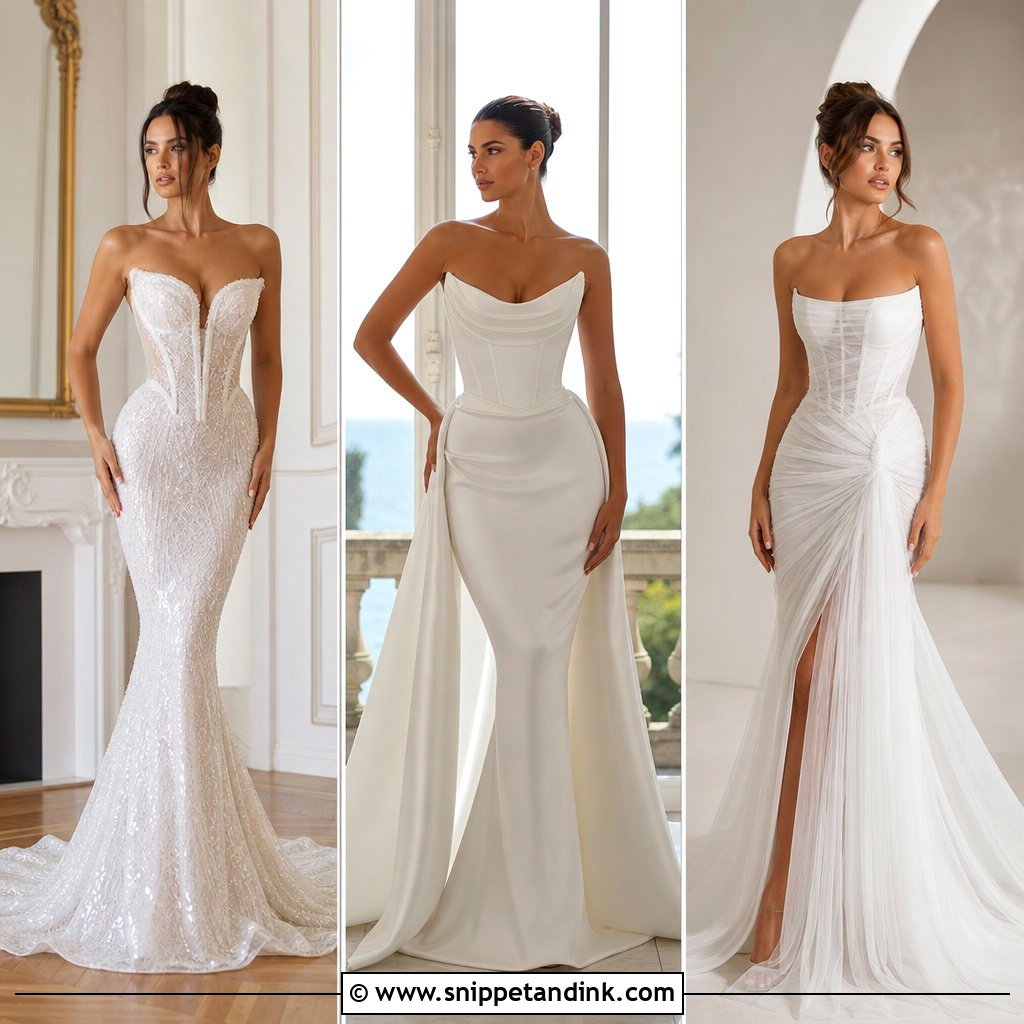
6. Martina Liana Mermaid Wedding Dress
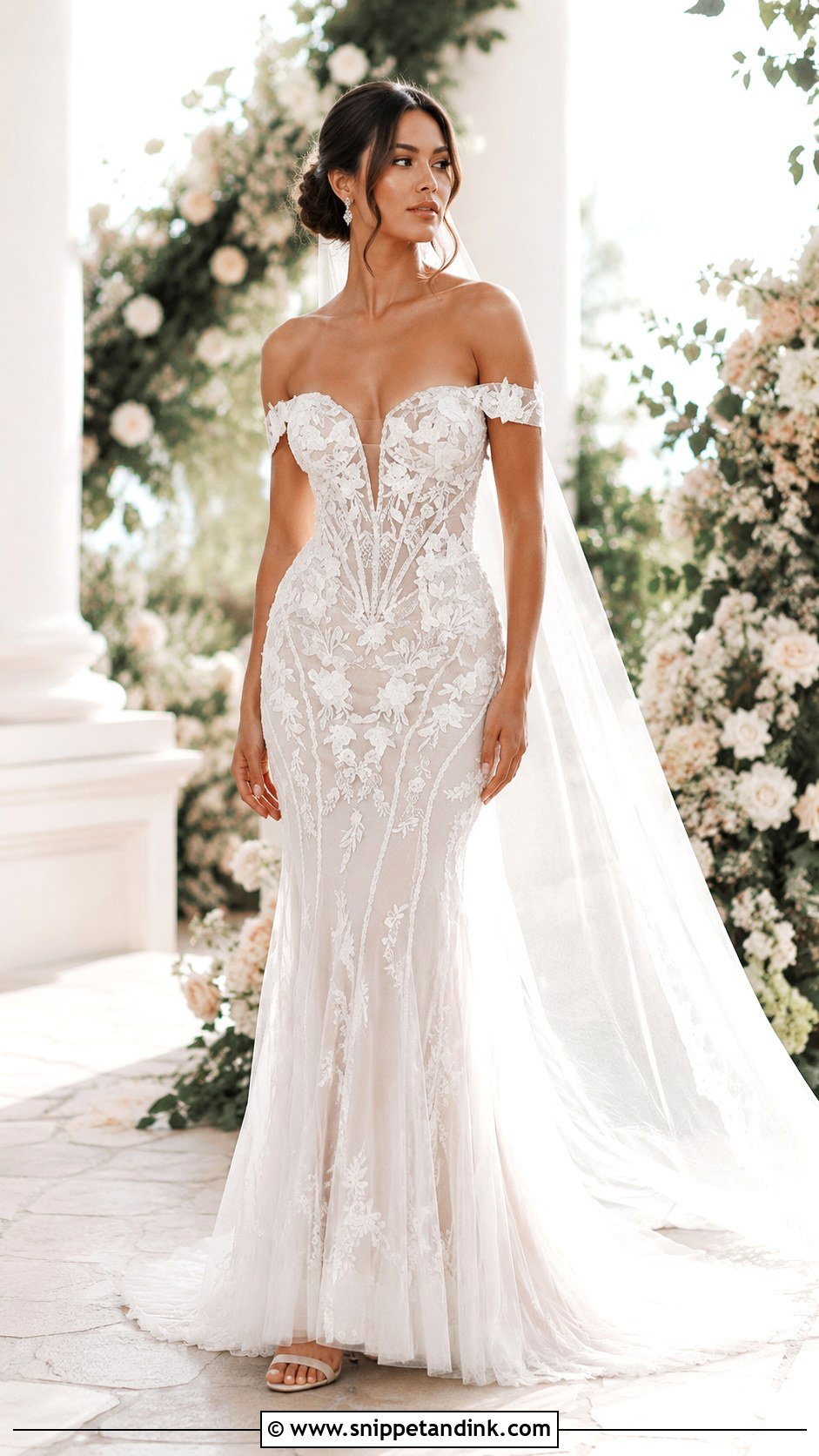
Mermaid gowns flare at or just below the knee, so they give the most dramatic shape and the least leg room. That makes the try-on test essential. Sit, climb a step, turn quickly, and walk the length of the salon; if you shuffle, the flare needs to come up. Alterations matter more on a mermaid than any other silhouette in this list because the knee point has to sit exactly at your knee. A smooth updo, crystal earrings and a long veil balance the fitted line.
7. Martina Liana A Line Wedding Dress
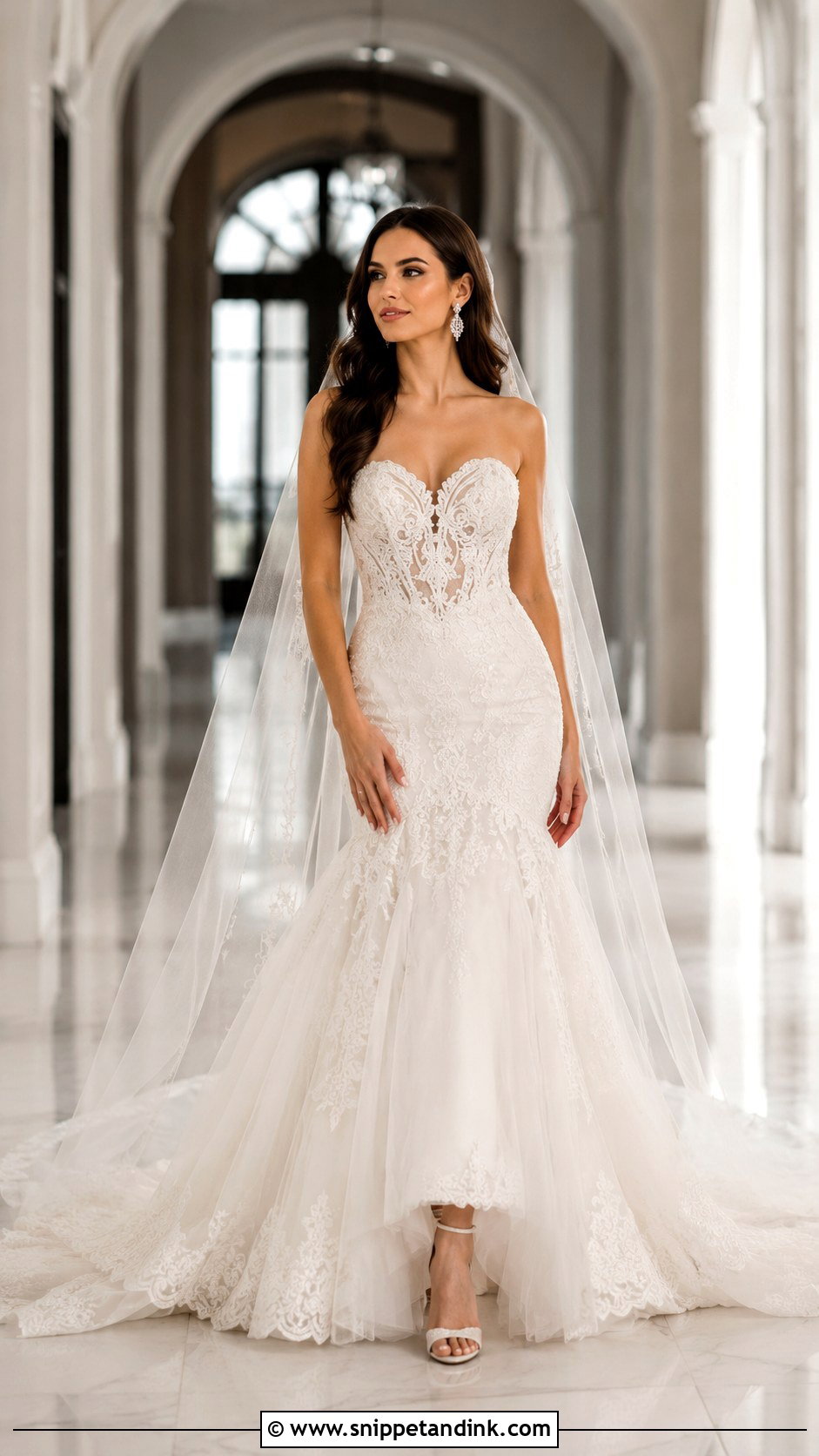
I suggest A-line more often than any other shape, simply because it suits so many bodies and settings. It defines the waist and then falls away, leaving room to sit, dance and climb into a car. Floral lace makes it soft; mikado gives a crisp, architectural skirt; tulle floats. Block heels and a medium-length veil keep it practical for gardens, ballrooms and family estates. The only thing to watch is fabric weight on a beach, where a heavy mikado A-line collects sand at the hem.
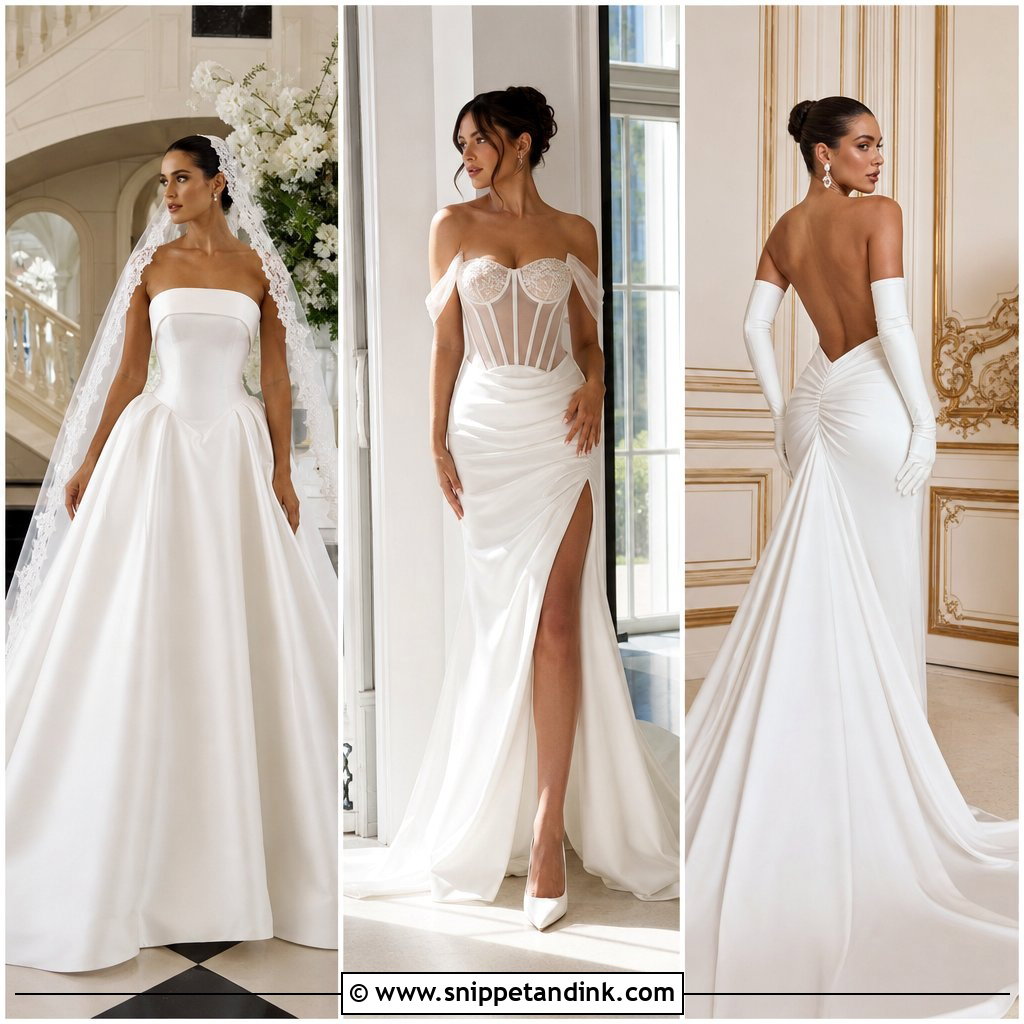
8. Martina Liana Basque Waist Wedding Dress
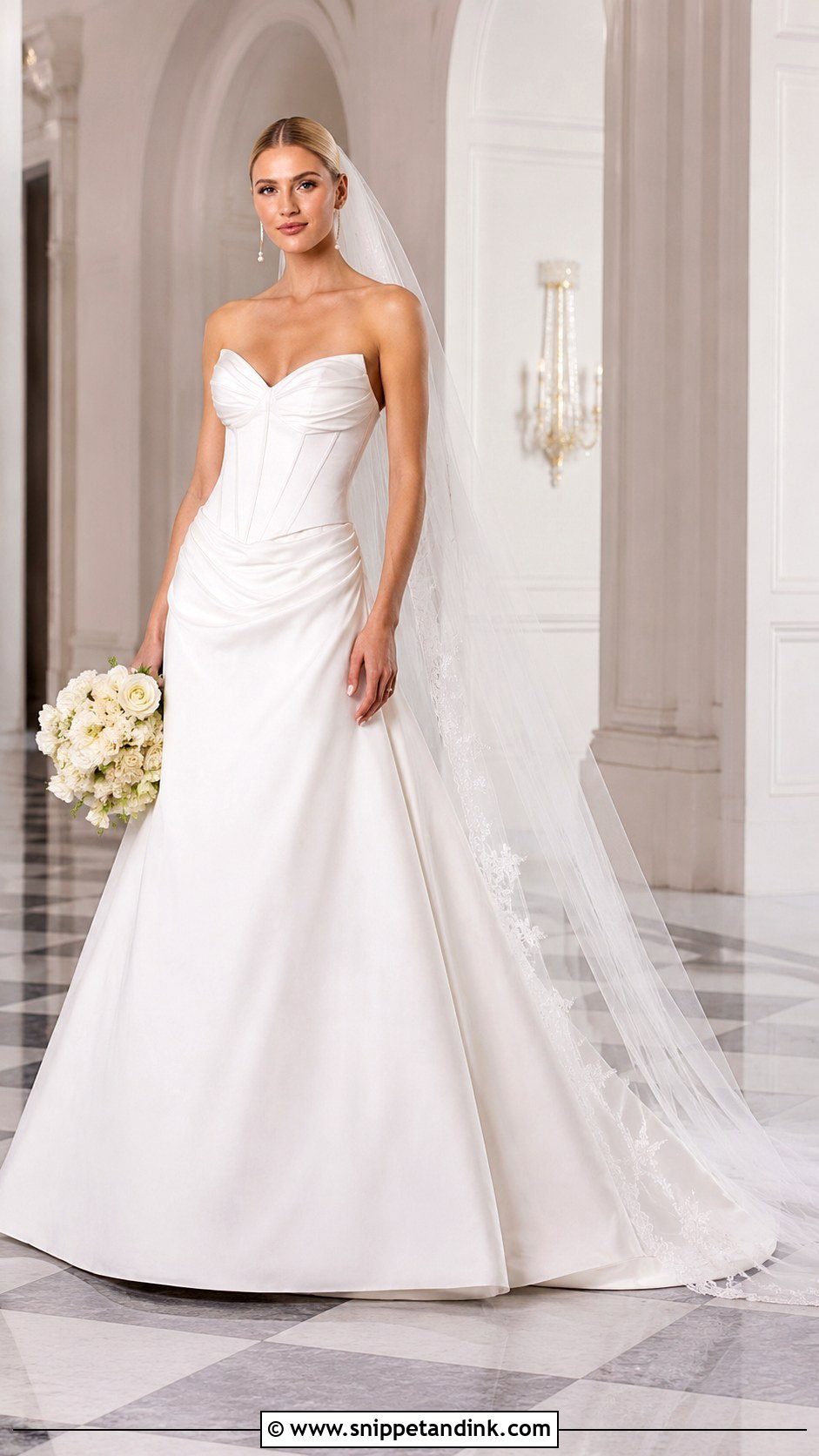
A basque waist dips into a V or U below the natural waistline, so it lengthens the torso and gives the skirt a dramatic starting point. It flatters brides with a shorter torso particularly well. The point of the V must sit centered, and I check it from the front with a mirror at fittings, since even a slight shift reads as crooked in photos. Satin and jacquard hold the line crisply. Pair it with a cathedral veil and a clean hairstyle so the bodice stays the focus; this shape gives a vintage feel in a fresh way.
9. Martina Liana Drop Waist Wedding Dress
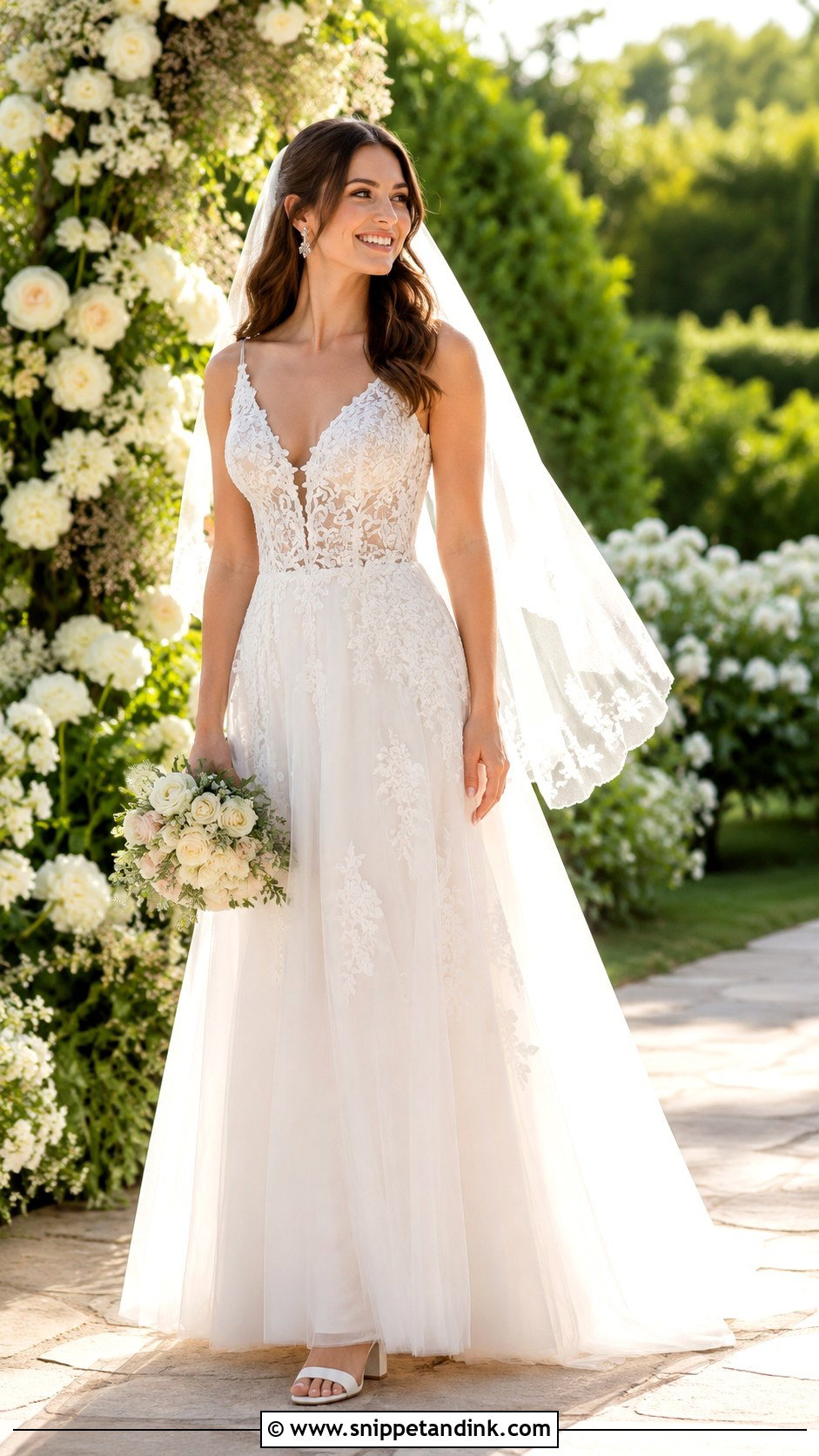
A drop waist sits lower than a basque, often around the hip, and it gives a long, editorial line through the torso. It is less forgiving if you are short-waisted, because it can make your legs look shorter, so I’d steer petite brides toward a basque instead. Try it on before ruling it in or out. A sleek veil, pointed heels and a soft updo suit it; with lace or beading on the bodice, keep the jewelry simple. It works best in formal venues, galleries and grand reception rooms.
10. Martina Liana Pearl Beaded Wedding Dress
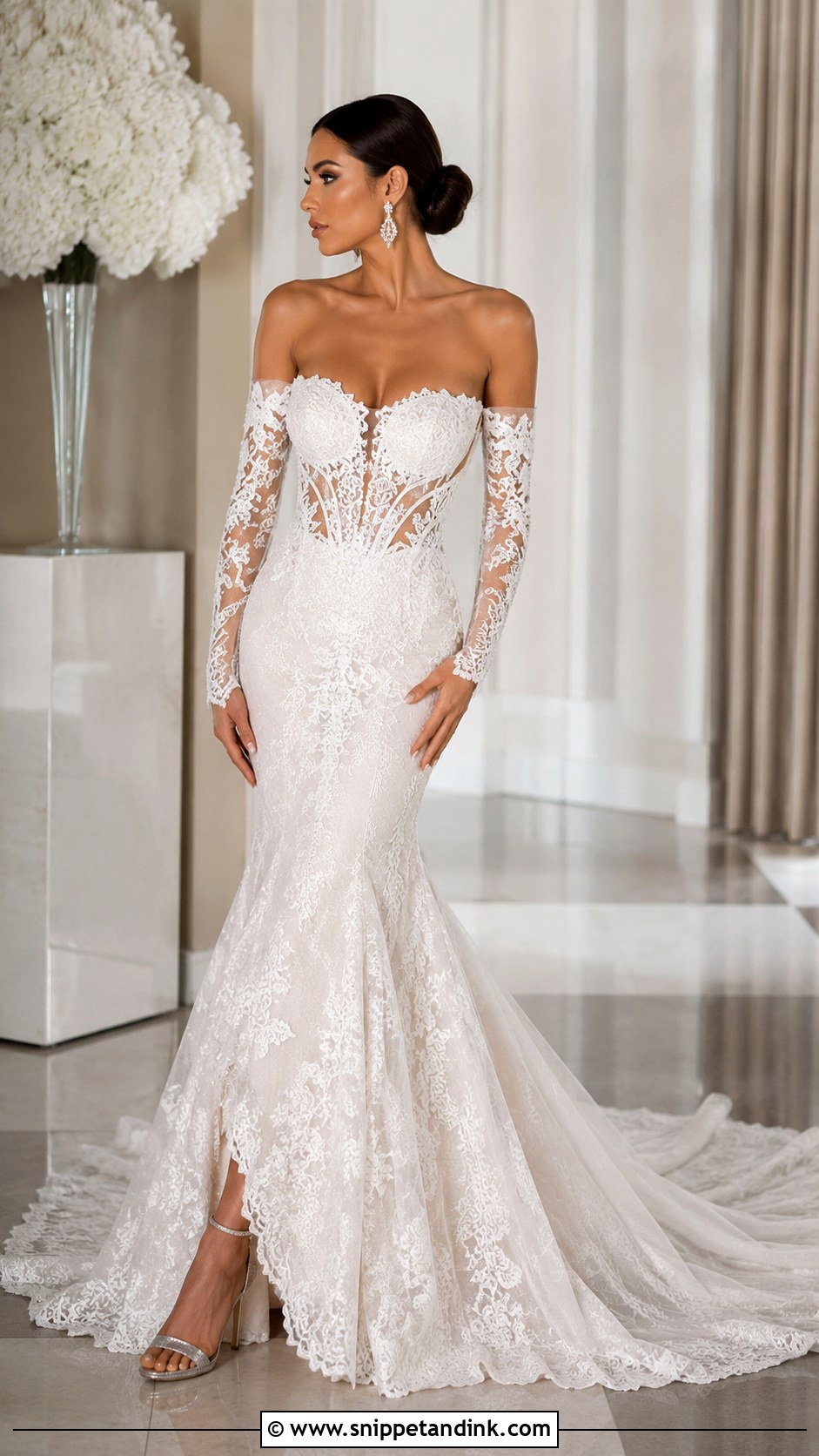
Pearls give a soft sheen rather than the hard flash of crystals, so a pearl-beaded gown feels detailed without looking overly glittery. The styling mistake I see most often is piling on more pearls: pearl earrings, a pearl necklace, pearl hairpins. With a beaded bodice, choose one pearl piece and leave the rest. Hand-sewn pearl beading also needs gentle handling during alterations, so ask your seamstress how she’ll reattach any beads removed when taking in seams.
11. Martina Liana Floral Lace Wedding Dress
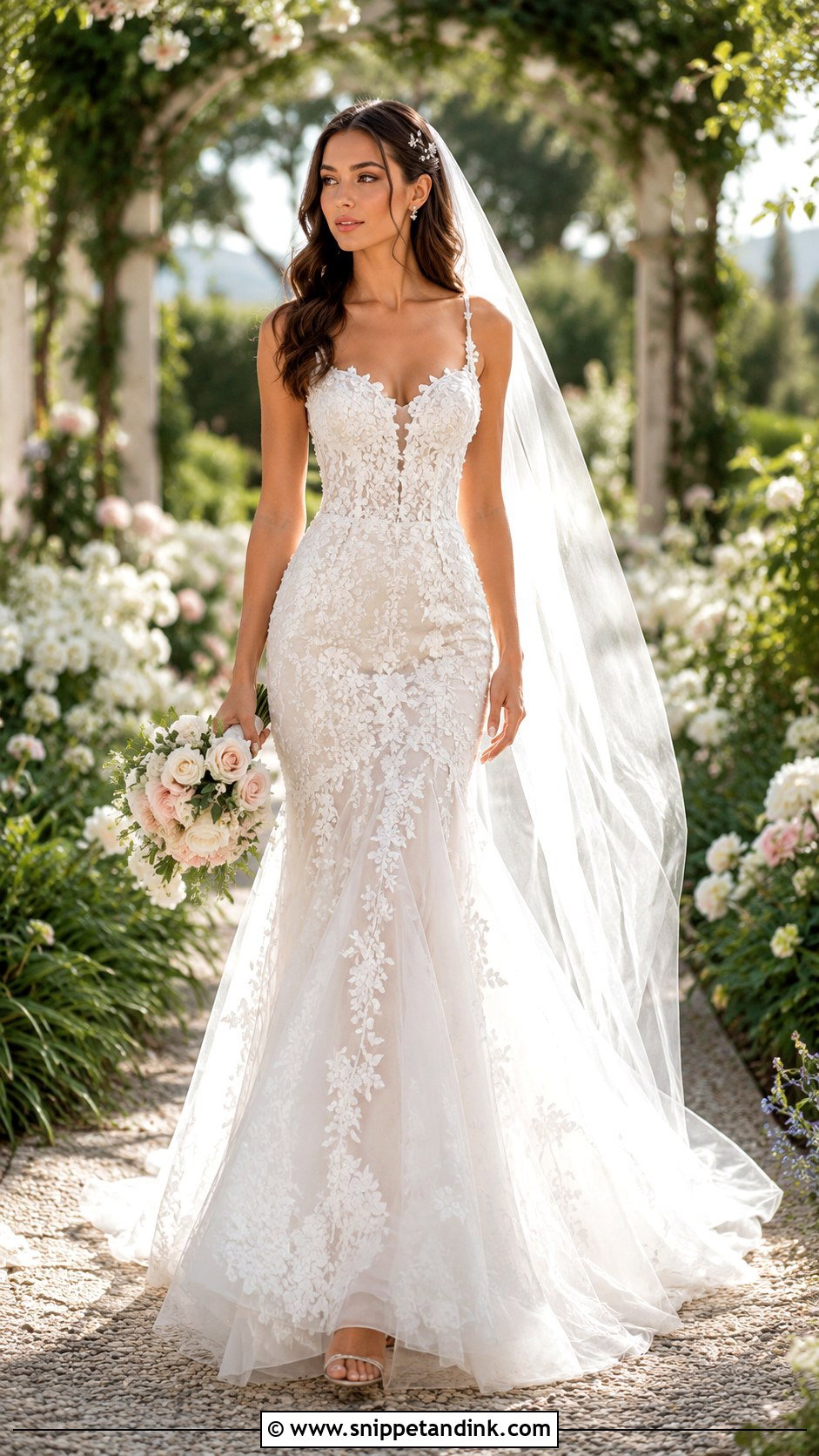
Floral lace on these gowns is often appliquéd by hand and placed to shape the bodice, so the motifs curve with your figure rather than sitting flat. That placement is why I’m careful with alterations: taking in a side seam can cut through an appliqué, and a skilled seamstress will lift and reset it instead. Loose waves, floral hair pins and a soft tulle veil keep the look light. If the lace is bold, a bouquet of one or two flower types stops the whole outfit from feeling crowded.
12. Martina Liana Sheath Wedding Dress
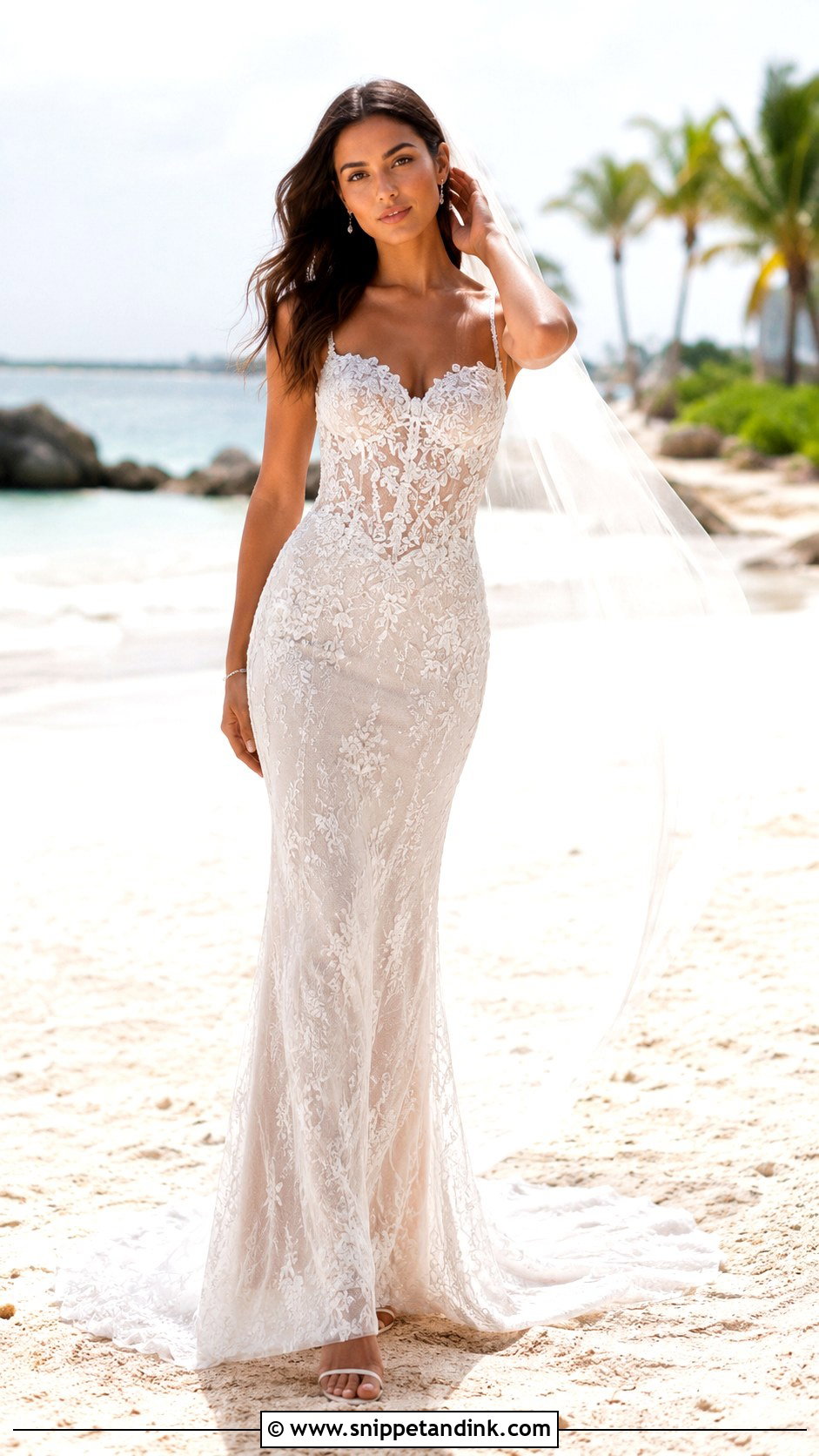
Sheath gowns skim the body with almost no volume, which makes them easy to travel with and comfortable in heat. Narrow cuts need a walking test though: if the skirt has no slit or kick pleat, your stride gets short. Lace softens a sheath, crepe makes it clean, and beading takes it into evening. I recommend this shape for beach weddings, rooftops and destination ceremonies, and I’d skip it for a grand ballroom where it can look underdressed beside the setting.
13. Martina Liana High Neck Wedding Dress
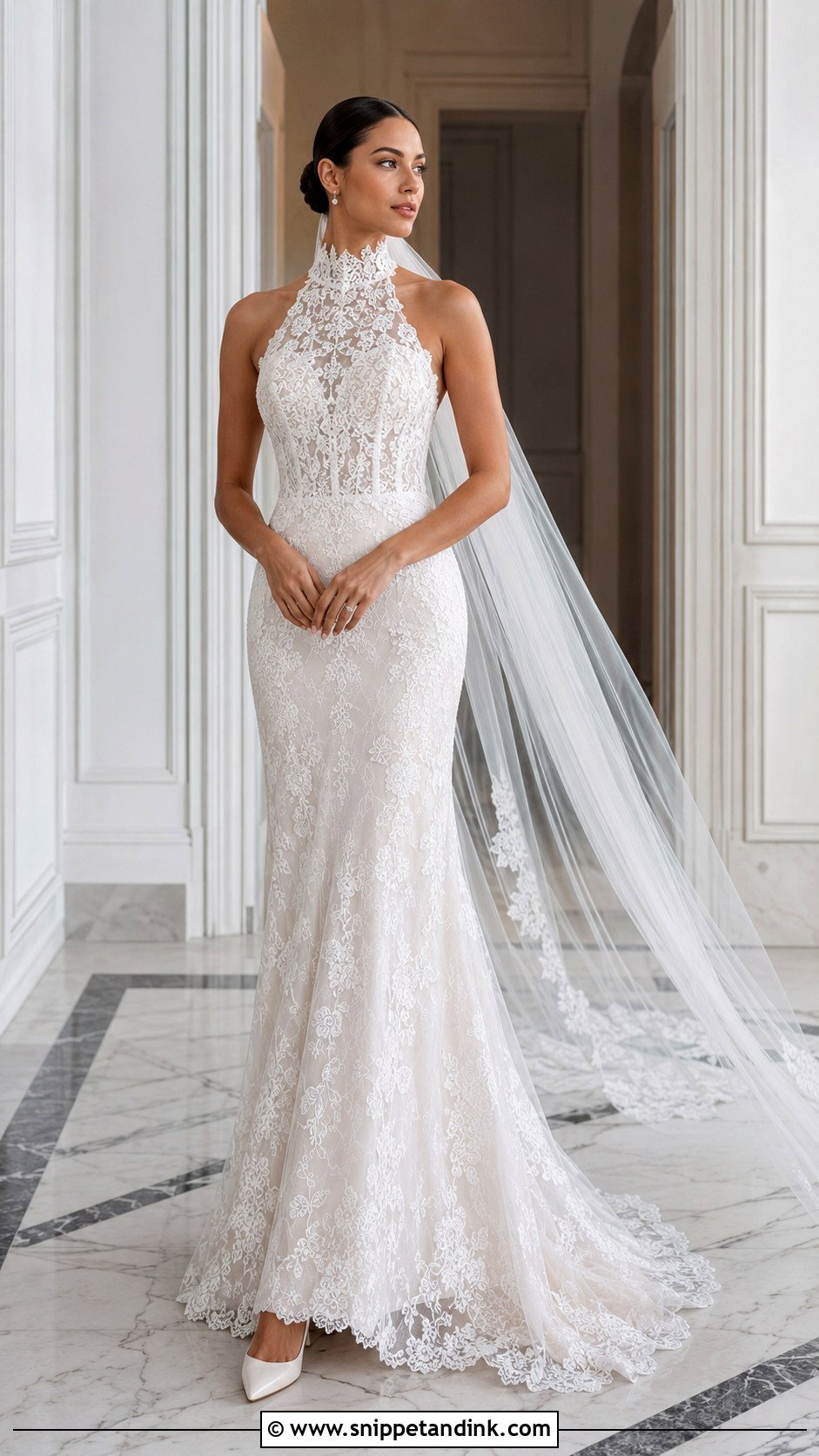
A high neck draws the eye upward and makes a long, unbroken line from chin to hem. Lace versions feel romantic, crepe and satin more contemporary. Since the neckline is already the statement, skip the necklace and set the veil low at the back of the head so it doesn’t fight the collar. One thing to test: turn your head side to side in it, because a collar cut too close rubs the neck over a long day. Formal indoor venues and evening weddings suit it well.
14. Martina Liana Square Neck Wedding Dress
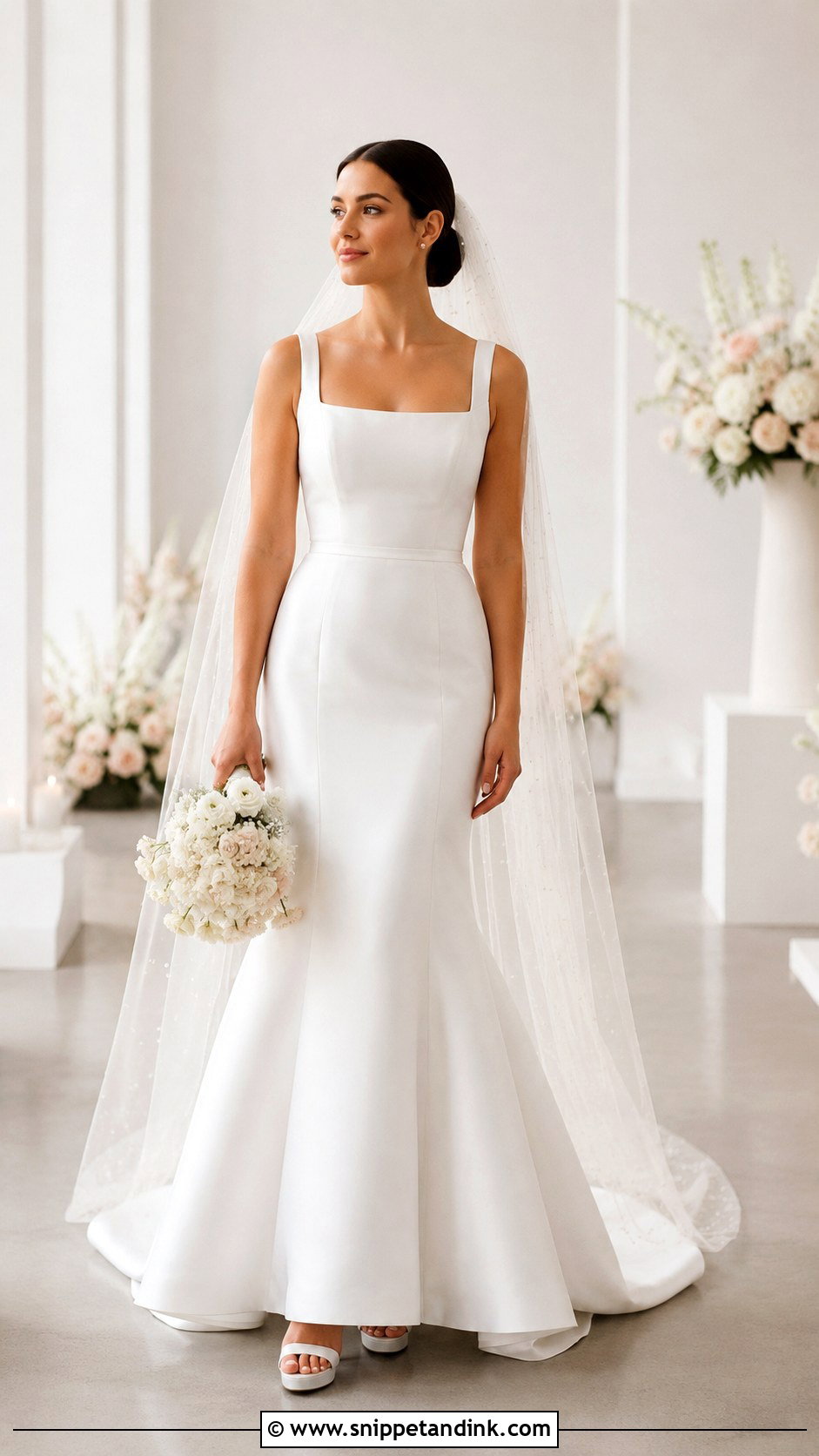
Square necklines suit almost every bust size because the straight line frames the chest without plunging. They feel classic in lace and sharp in crepe or satin. I like a fingertip or chapel veil with this cut, since it adds softness without covering the neckline. Watch the strap width at fittings; narrow straps on a square neck can slip outward if the bodice isn’t tight enough. Soft waves, pearl studs and block heels finish it, and it layers neatly with simple gloves or a removable overskirt.
15. Martina Liana Plunging Neckline Wedding Dress
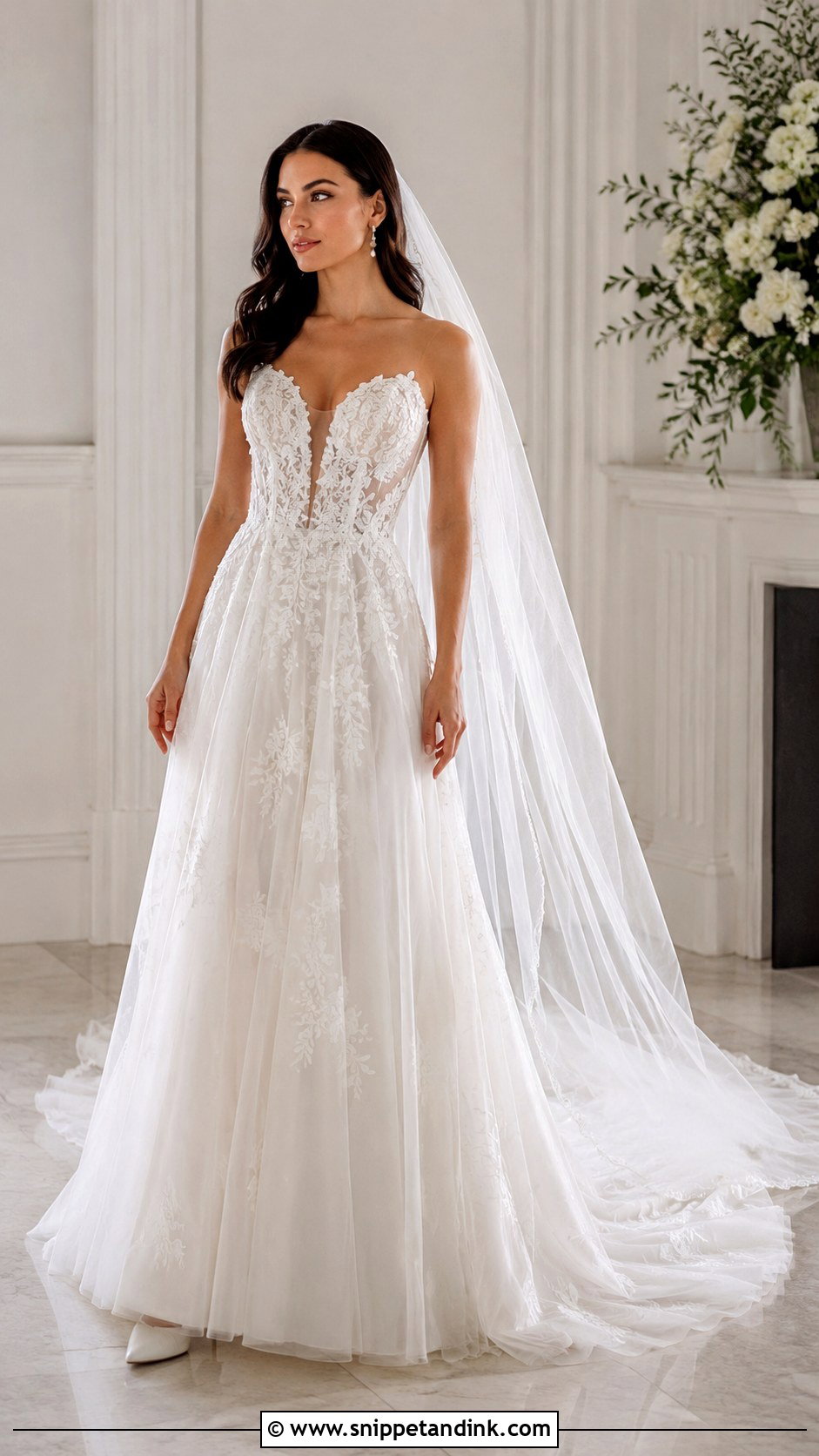
Plunging necklines feel bold and work when the bodice is built to hold them. These designs balance depth with structured cups, lace placement or illusion panels, so the neckline stays put. Fashion tape is not a strategy for a twelve-hour day; I’d rather have the seamstress adjust the cups so the fit holds while you bend and hug. Skip the necklace, keep the hair controlled, and wear a long veil. Warm-weather venues and modern spaces suit it best.
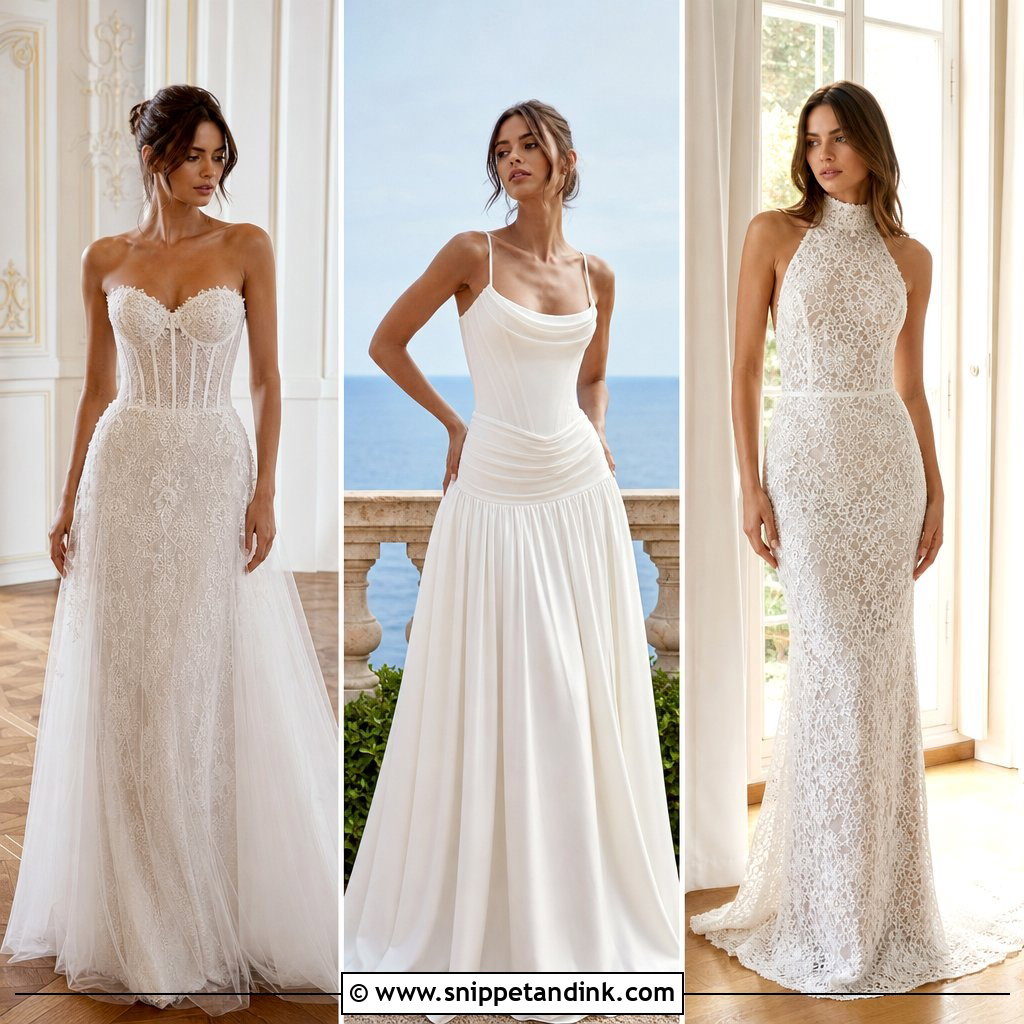
16. Martina Liana Corset Bodice Wedding Dress
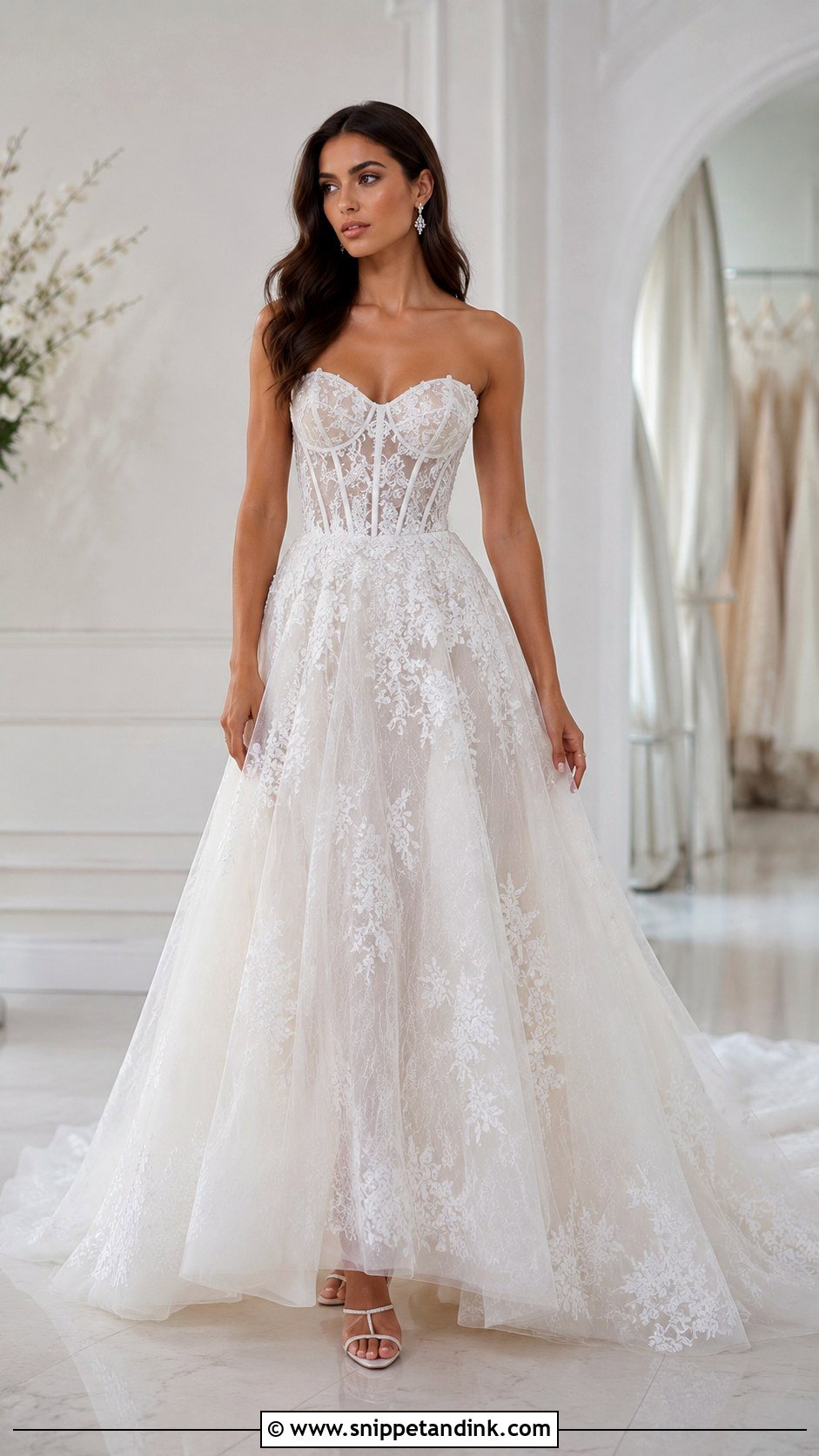
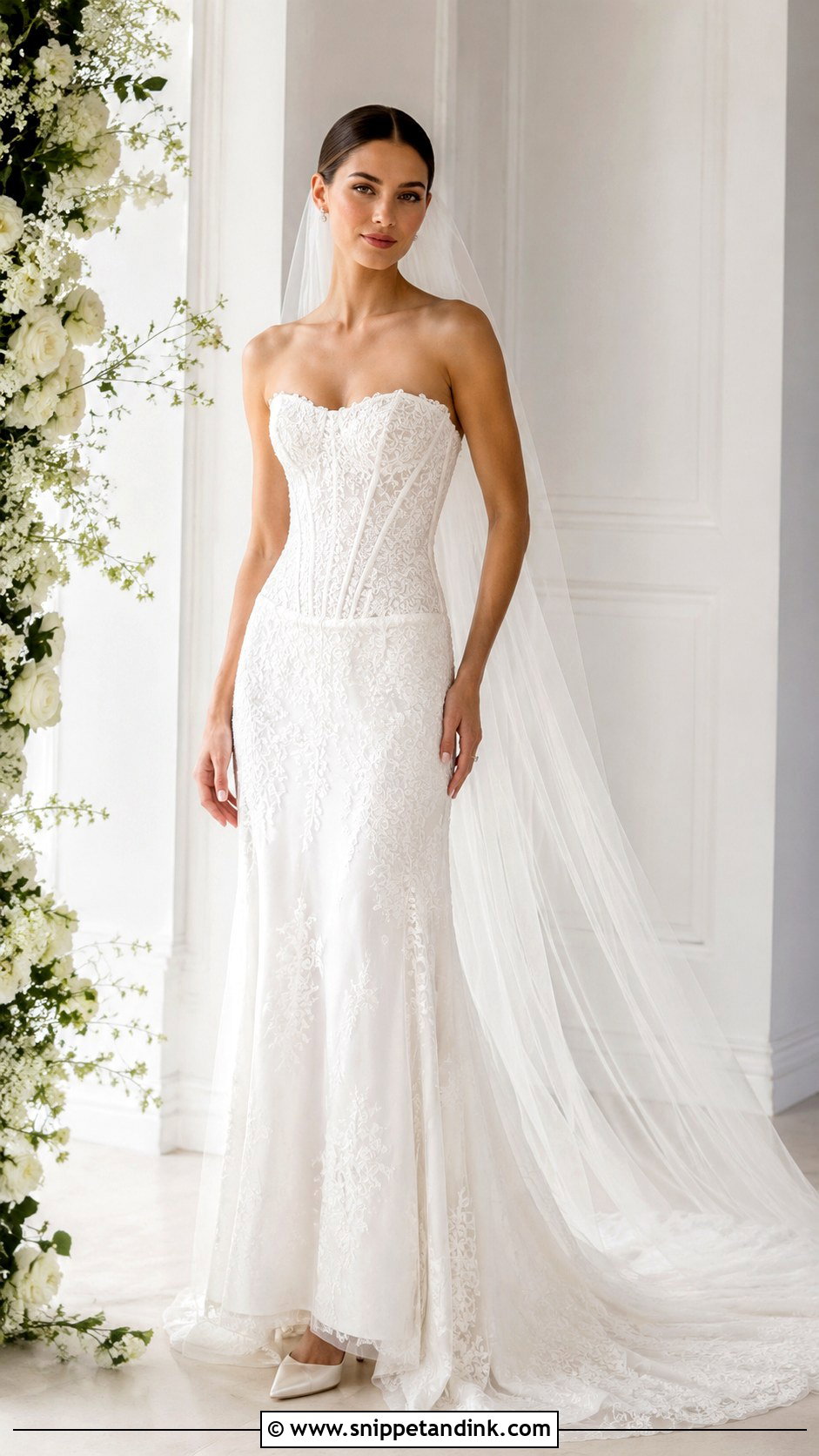
A corset bodice is built with boning that shapes and supports, which means you can often go without a separate bra. The catch: it must be fitted to you, not just tightened. A corset that is too small digs into the ribs when you sit to eat, while one too large buckles at the waist. Visible boning with lace, tulle or beading gives a strong, couture look. With so much texture on top, keep the bouquet and jewelry simple. It pairs naturally with strapless, off-shoulder and basque waist cuts.
17. Martina Liana Detachable Sleeve Wedding Dress
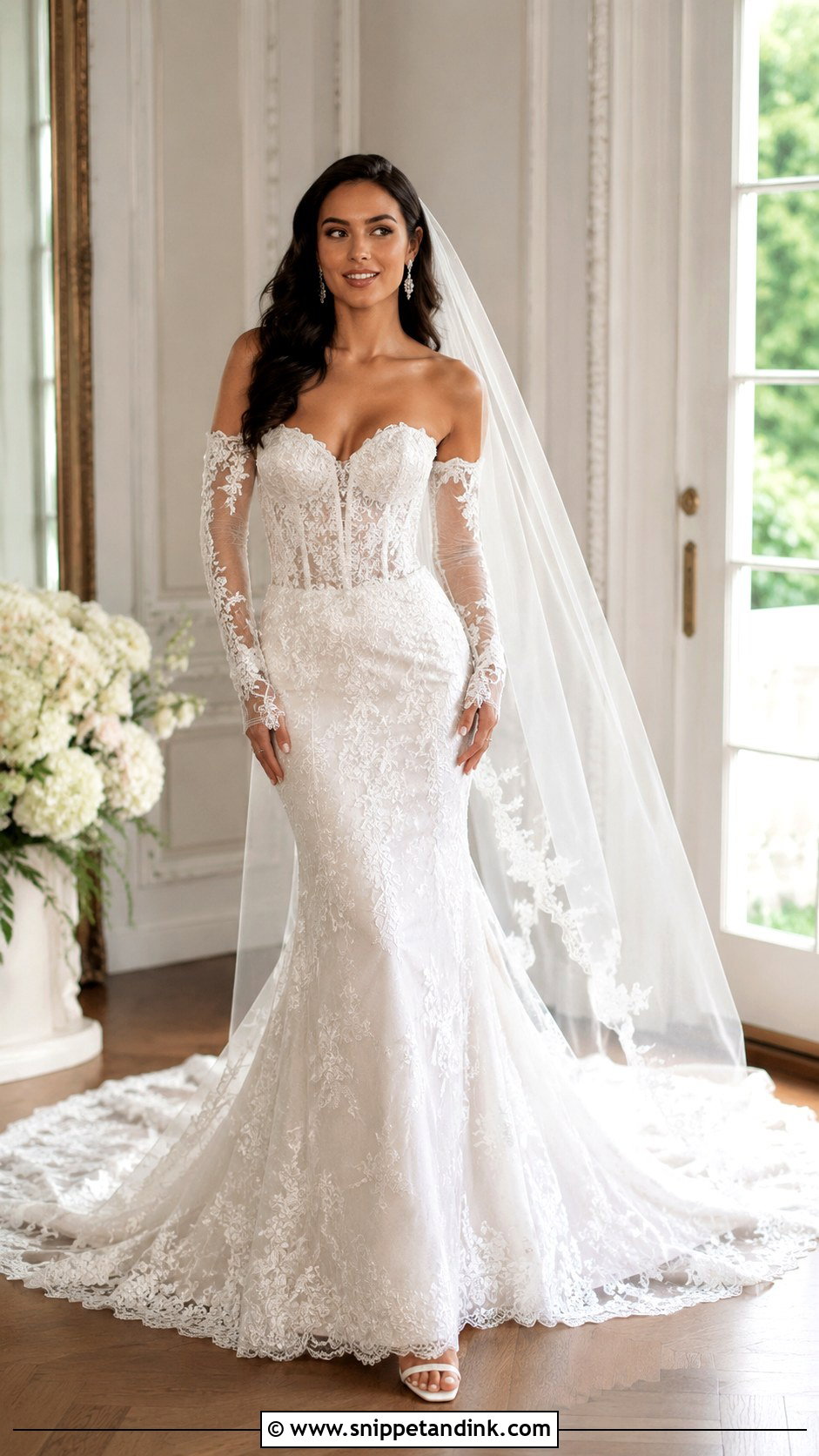
Removable sleeves give you two looks from one gown: covered for the ceremony, lighter for the reception. I’d confirm how they attach before ordering. Snap or hook attachments come off quickly, while sleeves stitched in for the ceremony need someone with scissors and steady hands. Lace sleeves feel soft, puff sleeves dramatic, sheer sleeves delicate. Keep accessories the same for both versions so the change looks planned, and it gives your photographer two distinct sets of pictures.
18. Martina Liana Wedding Dress With Bow
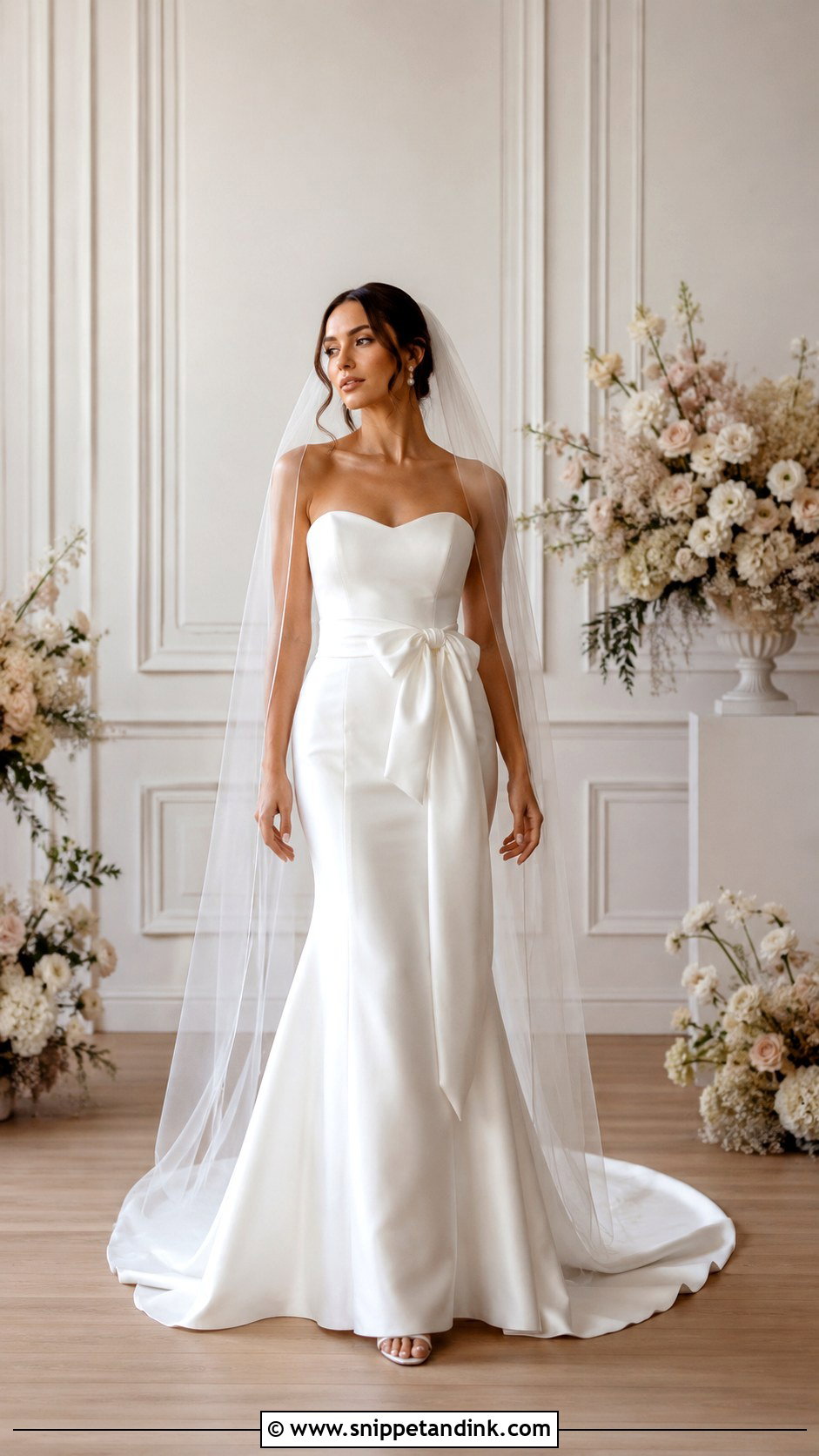
Bows can sit at the waist, the back, the shoulder or on a detachable belt, and where they sit changes the effect. A waist bow defines your shape; a back bow is all about the exit and the aisle photo. Satin and mikado hold a bow’s loops crisply, while organza bows collapse in humidity. Let it be the only focal detail by pairing it with simple heels, pearl earrings and a clean veil. It gives a sweet note without heavy sparkle.
19. Martina Liana Wedding Dress With Overskirt
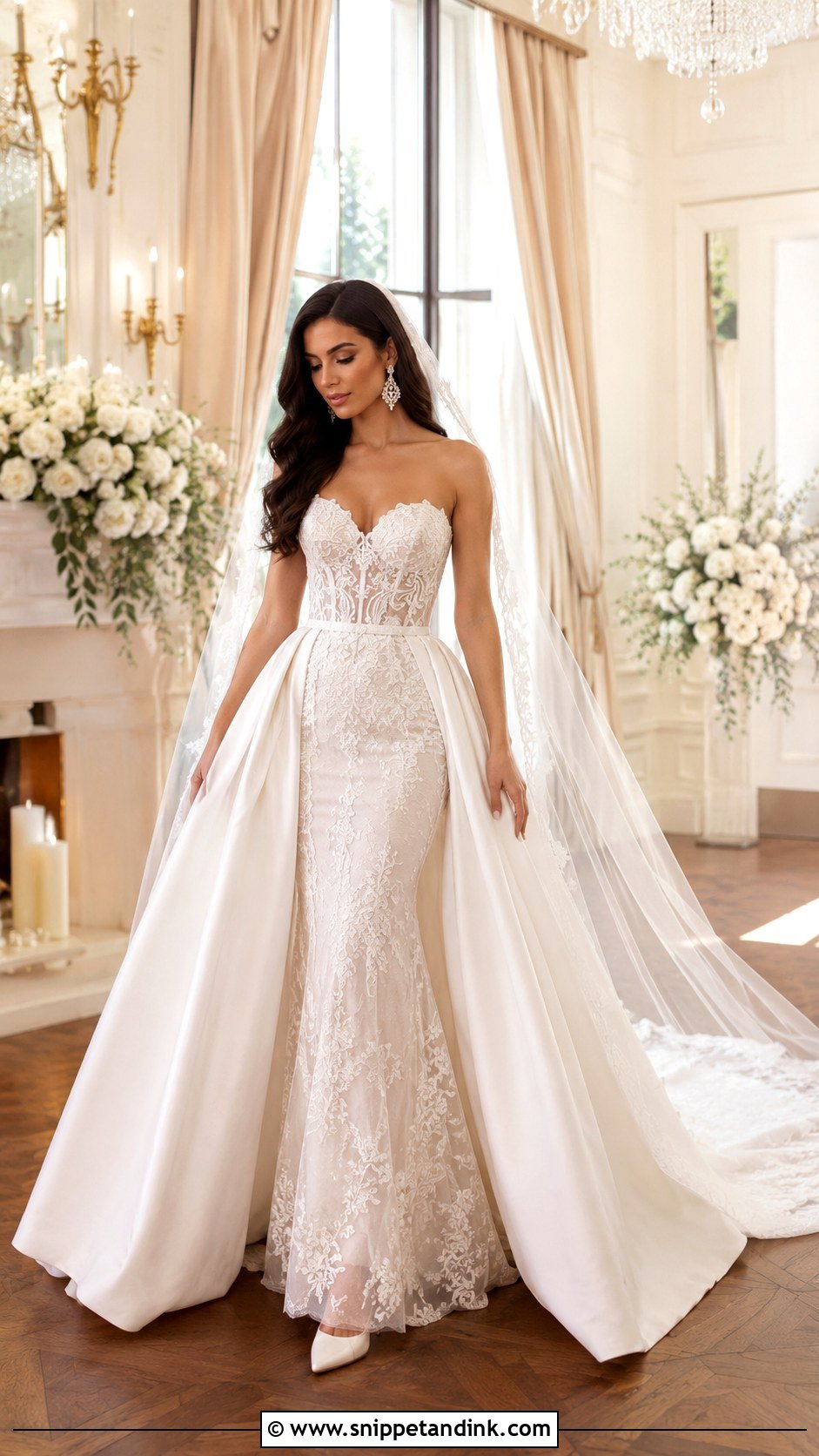
An overskirt lets you have a ballgown entrance and a fitted reception gown without a full outfit change. A slim Martina Liana gown with a detachable overskirt is ideal for brides torn between the two shapes. I always practice the removal at the last fitting with whoever will help on the day, because hooks hidden in a waistband are fiddly in a crowded restroom. Check that the attachment sits flat at the waist, so no ridge shows through once the skirt comes off.
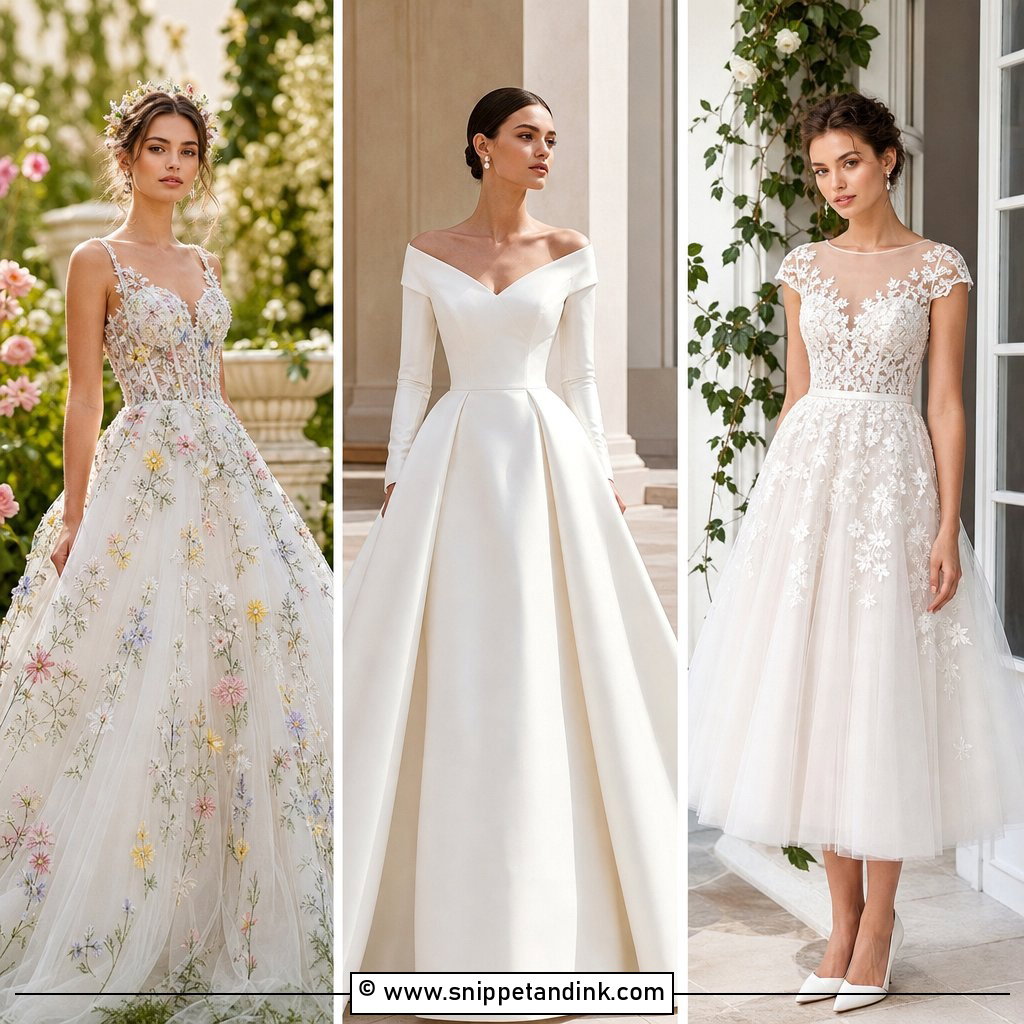
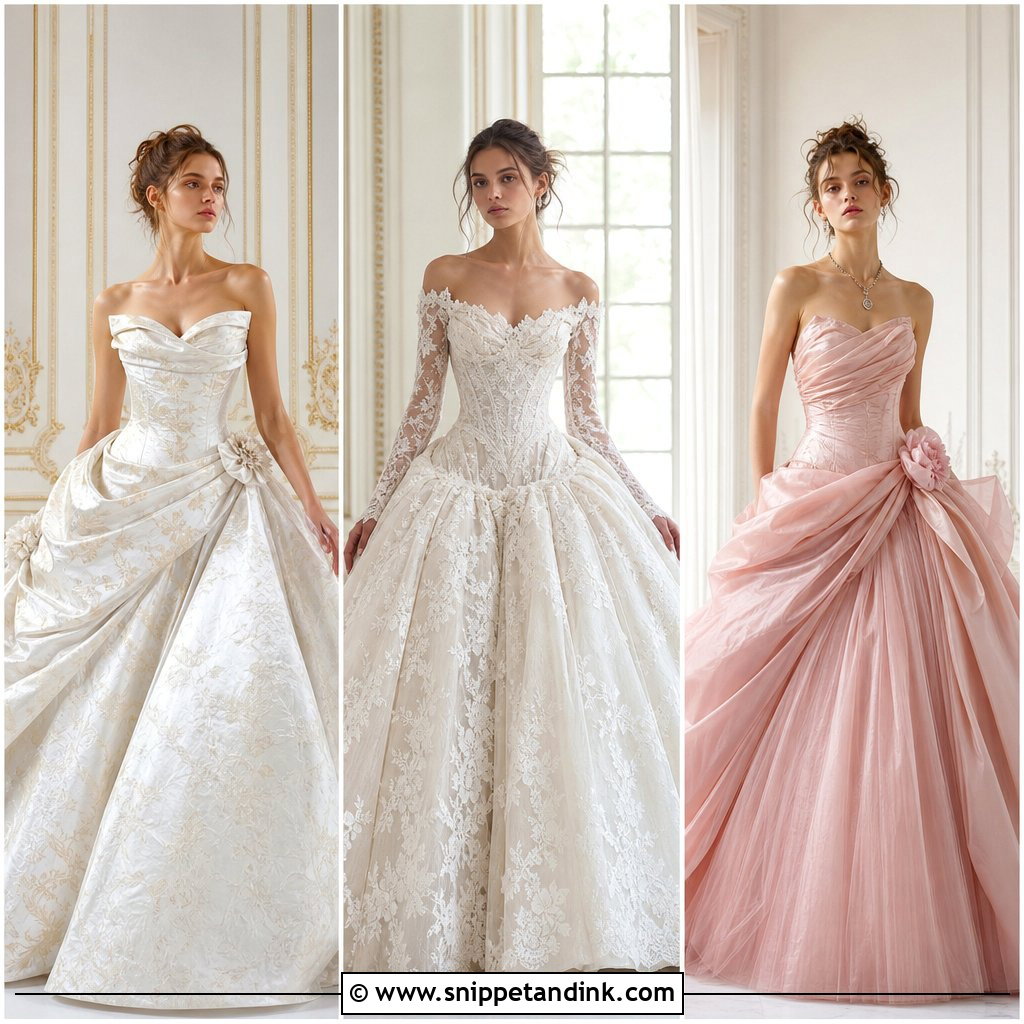
20. Martina Liana Simple Crepe Wedding Dress
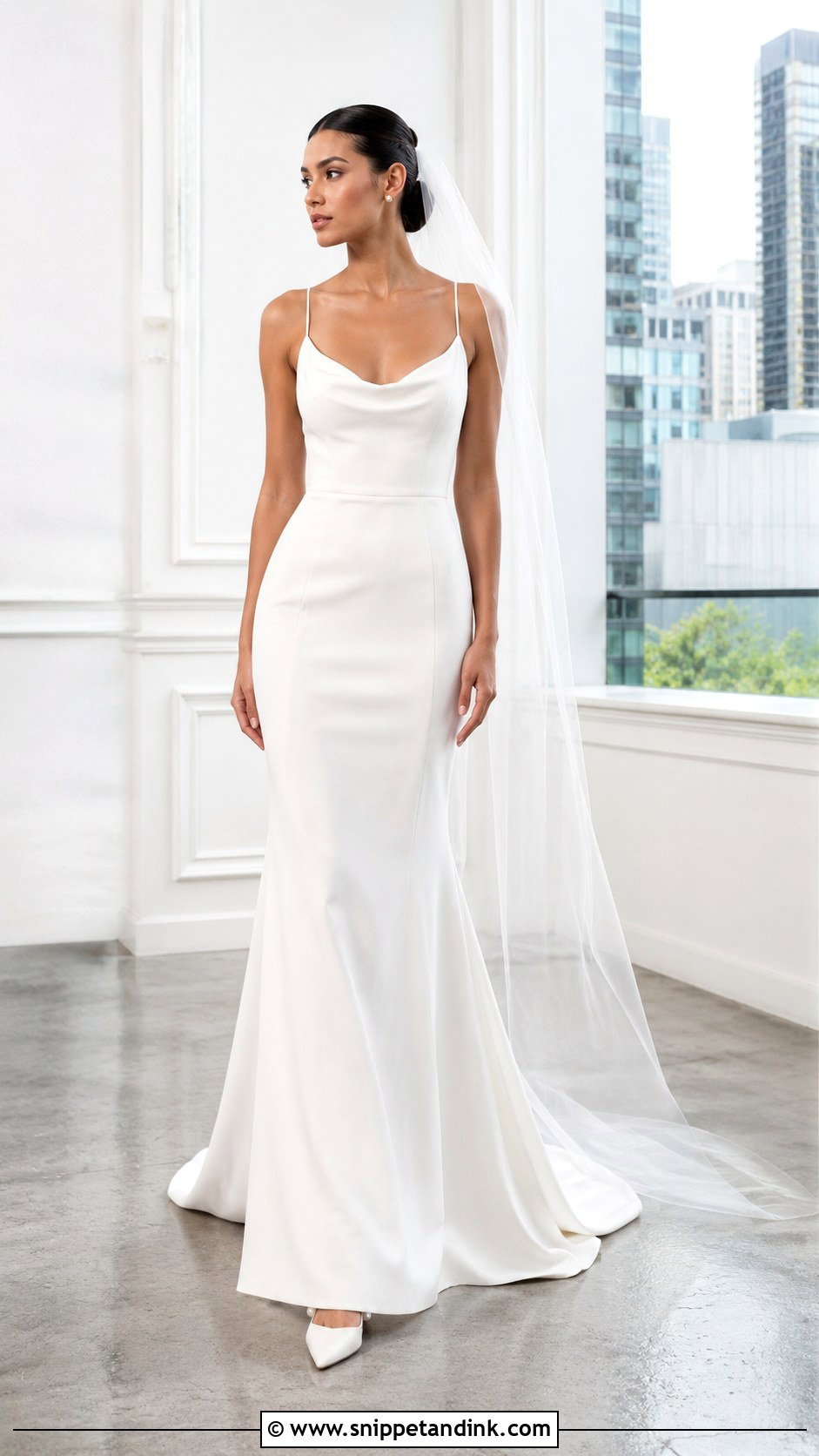
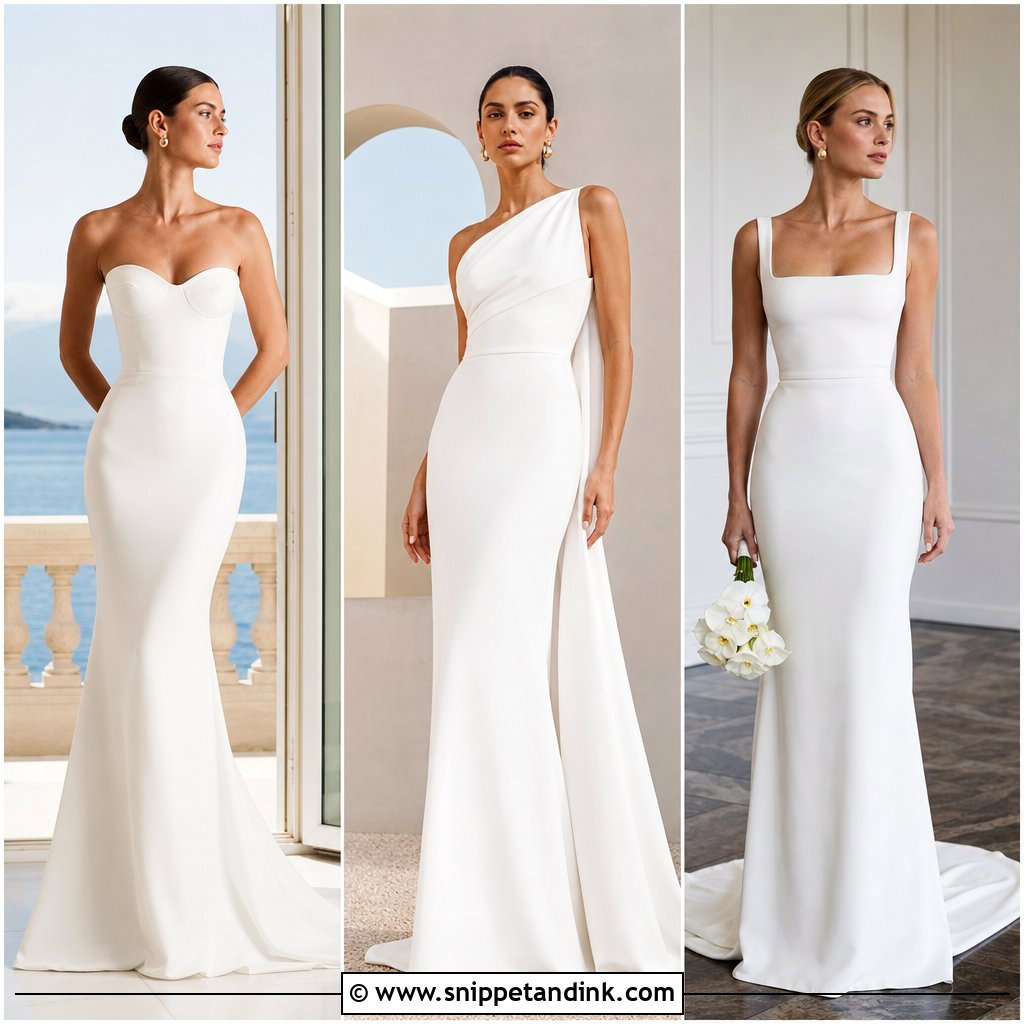
Crepe is honest fabric: it shows every seam and every wrinkle, so it rewards excellent tailoring and punishes poor fitting. Gowns in it focus on line, with small details such as buttons, seams or a sculpted train. A sleek bun, pearl studs and pointed heels match its minimalism. City venues, modern hotels and pared-back ceremony rooms suit it, and it makes a clean backdrop for bold flowers. Choose the silhouette that matches your natural shape rather than the trend of the season.
21. Martina Liana Tulle Wedding Dress
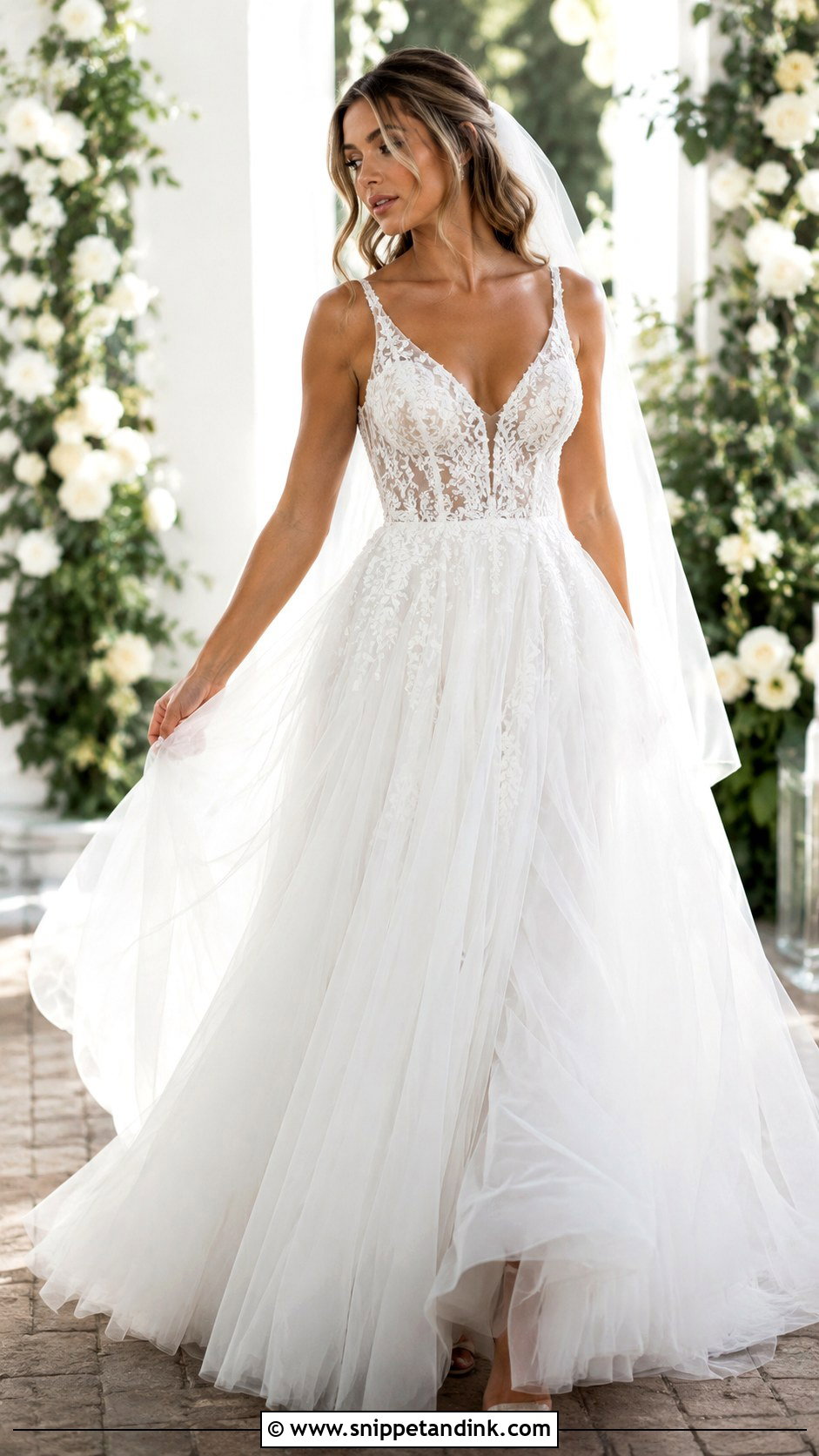
Tulle gives volume without weight, so a tulle gown floats instead of swinging. The downside nobody mentions until the day is snagging: tulle catches on rough wood, stone walls, bracelets and even Velcro on a groomsman’s boutonniere box. I suggest smooth jewelry and a careful look at the venue’s surfaces. An A-line or ballgown shape suits it, with soft curls and a veil that blends into the layers. Garden ceremonies and warm-season weddings are its natural home.
22. Martina Liana Sparkle Wedding Dress
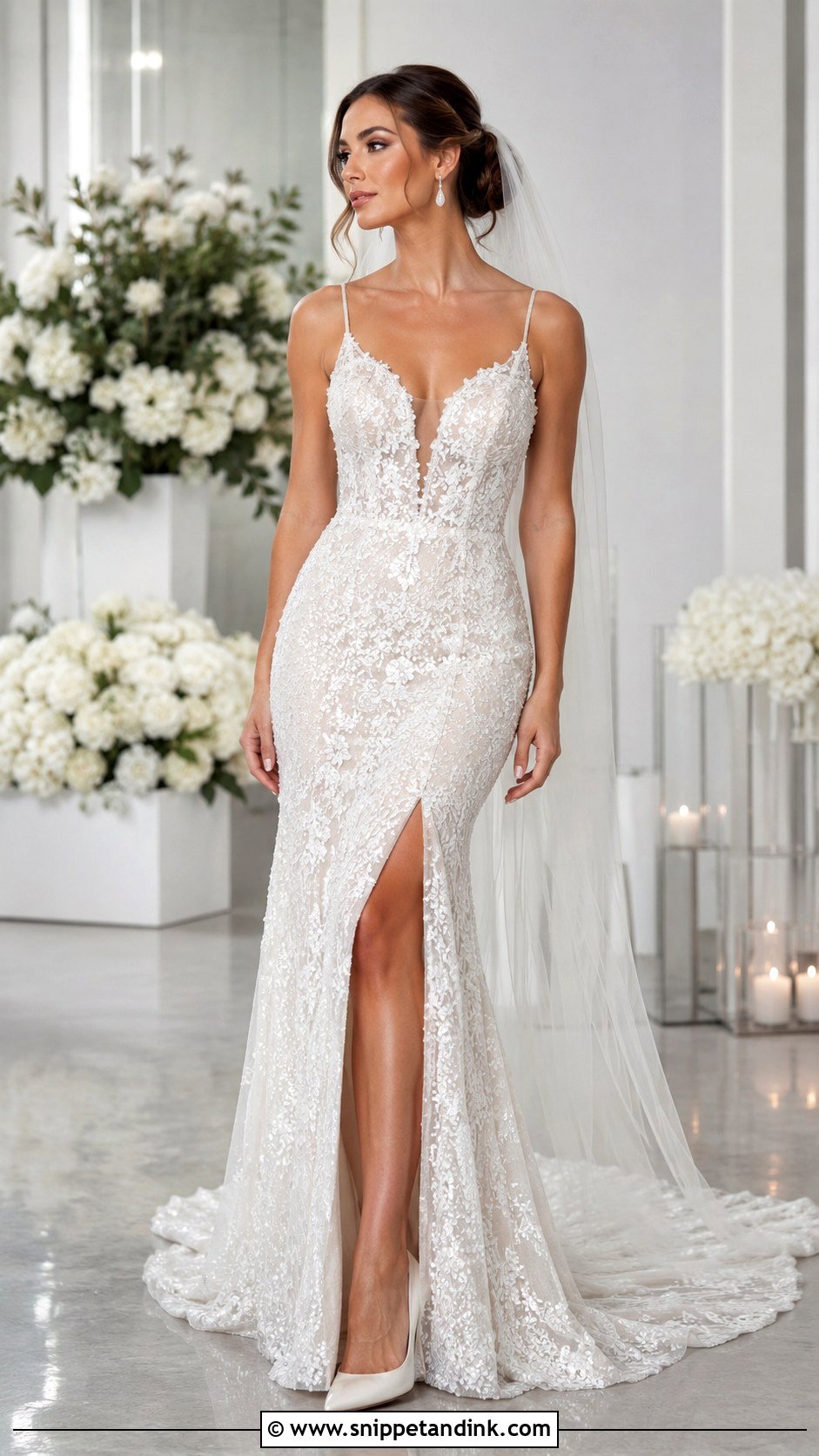
Sparkle reads differently depending on light. Soft shimmer tulle glows outdoors, while heavier beading or crystal detail comes alive under evening lighting and a camera flash. I match the level of sparkle to the hour of the ceremony first, and to taste second. Simple earrings and smooth heels keep the gown in charge. Avoid shiny accessories competing with it, and keep the veil plain so the beading isn’t hidden under a second layer of detail.
23. Martina Liana Beach Wedding Dress
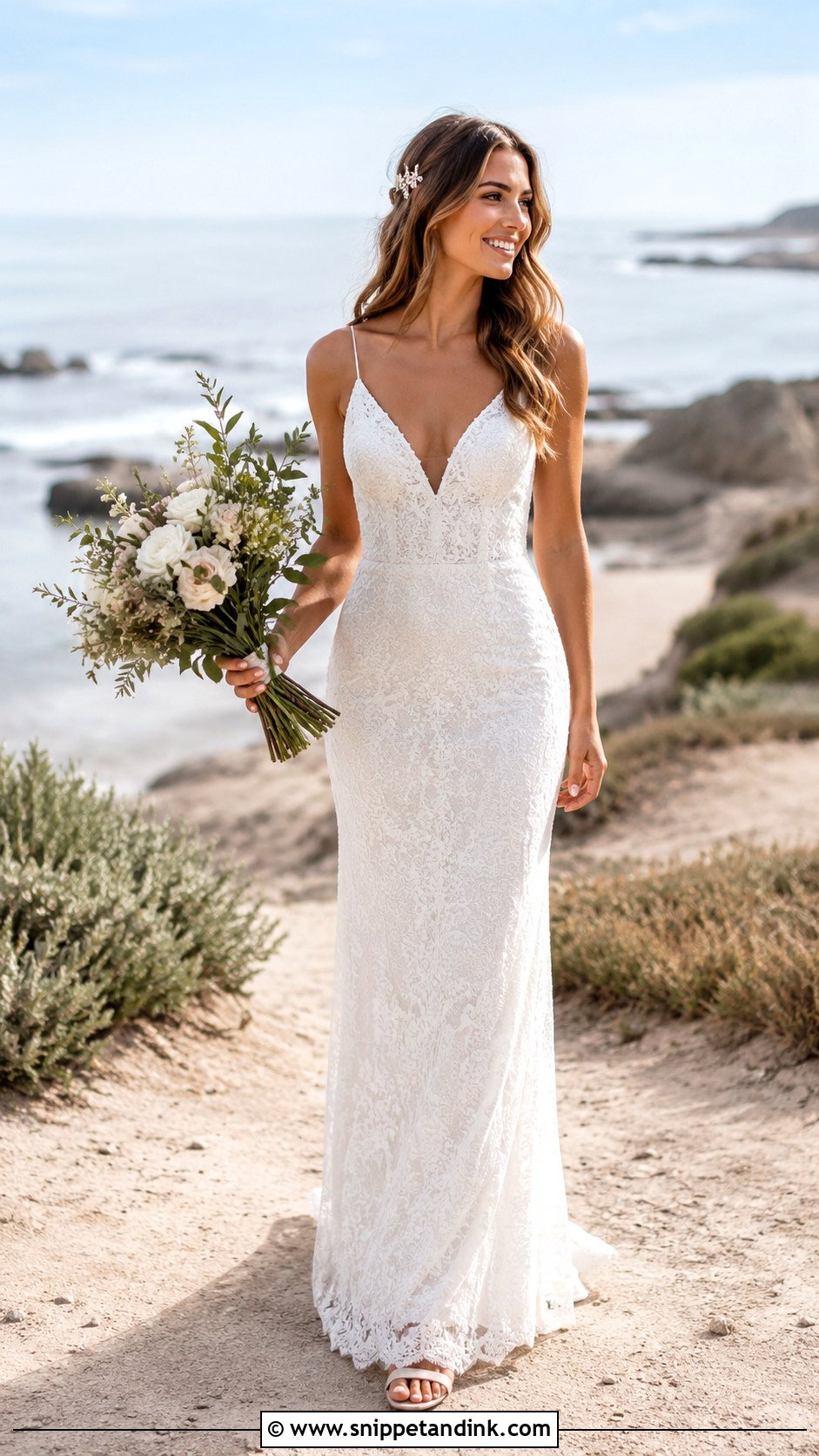
Sand, wind and heat all work against a heavy gown. For a coast wedding, I point brides to sheath, light A-line or lace silhouettes with a short or bustled train, since a long train drags sand along the aisle. Breathable lining matters as much as the outer fabric. Flat sandals or a low block heel, loose waves and a short veil or hair piece cope with the breeze far better than a cathedral veil. Keep the bouquet relaxed and natural to match the setting.
24. Martina Liana Plus Size Wedding Dress
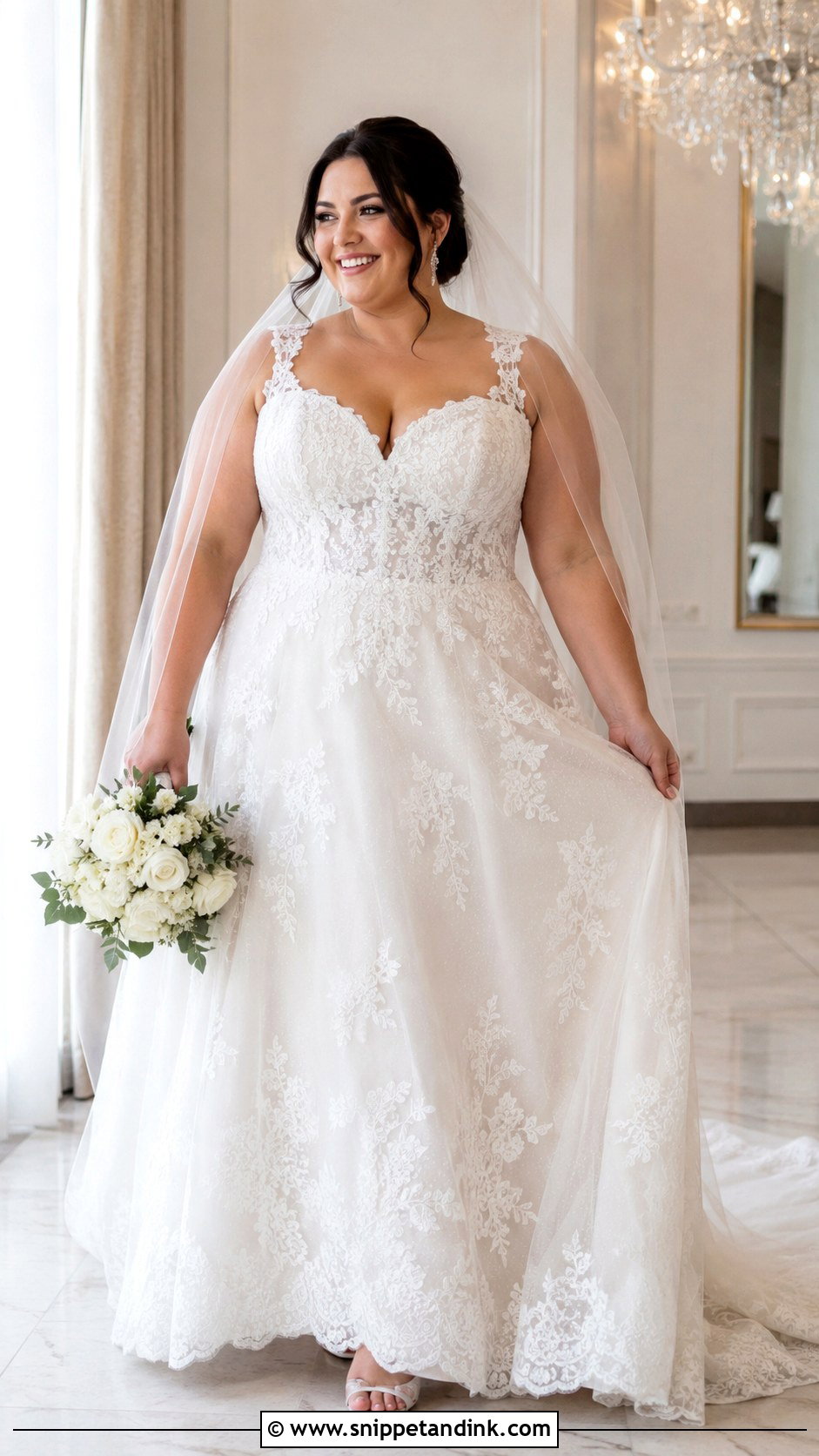
Support and construction matter most here, and this label’s structured bodices help a lot. A-line, fit and flare, ballgown and corset styles can all look wonderful when properly tailored. I tell brides to stop thinking about hiding areas and start thinking about what they want to show: a waist, shoulders, a back. Bring the bridal shapewear you’ll actually wear to every fitting, since it changes measurements. The right gown lets you stand naturally and forget about it.
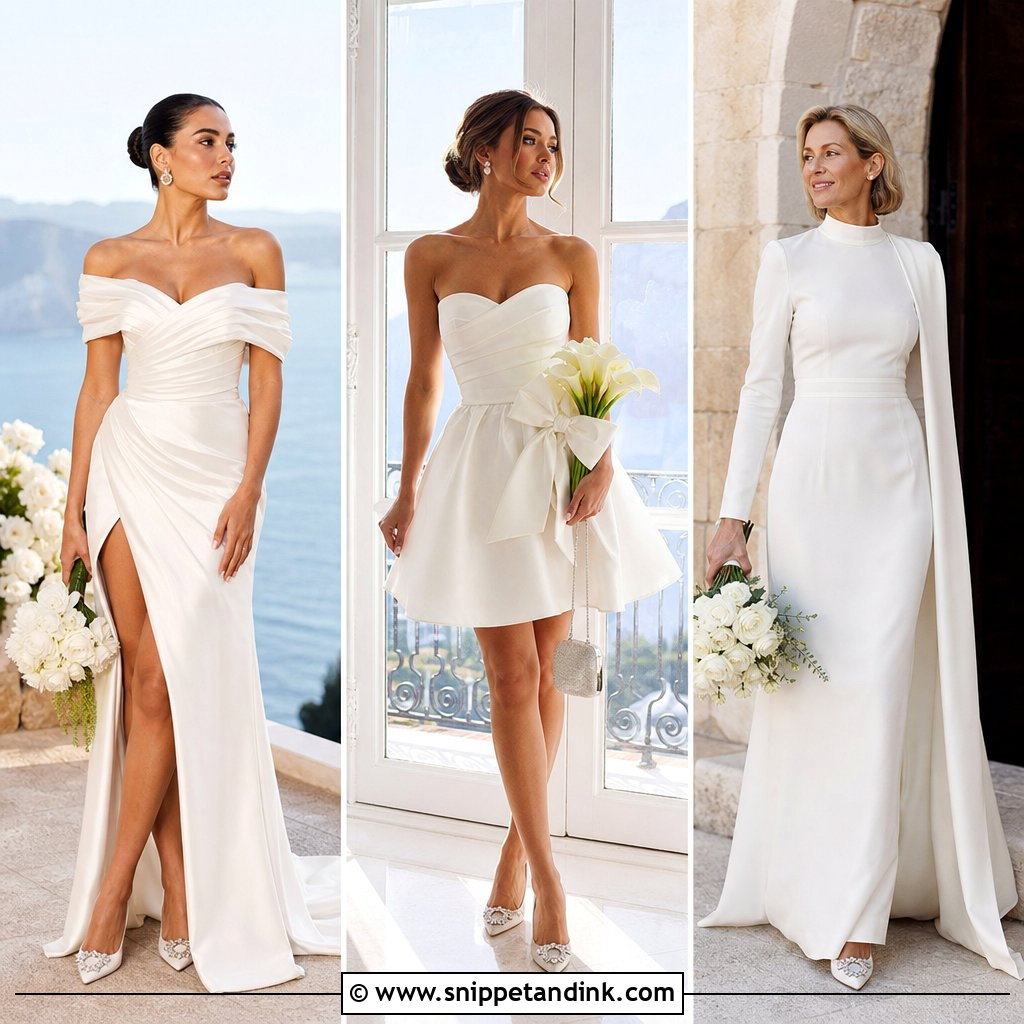
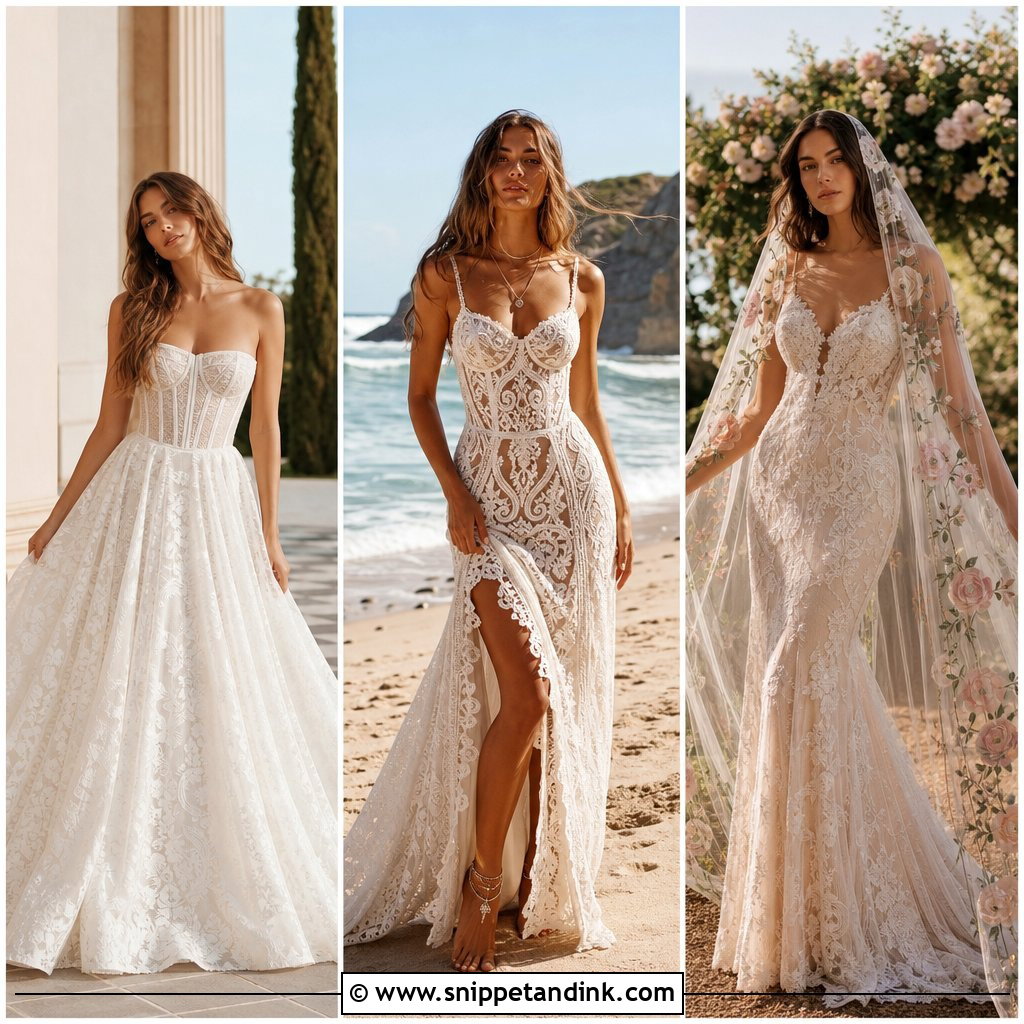
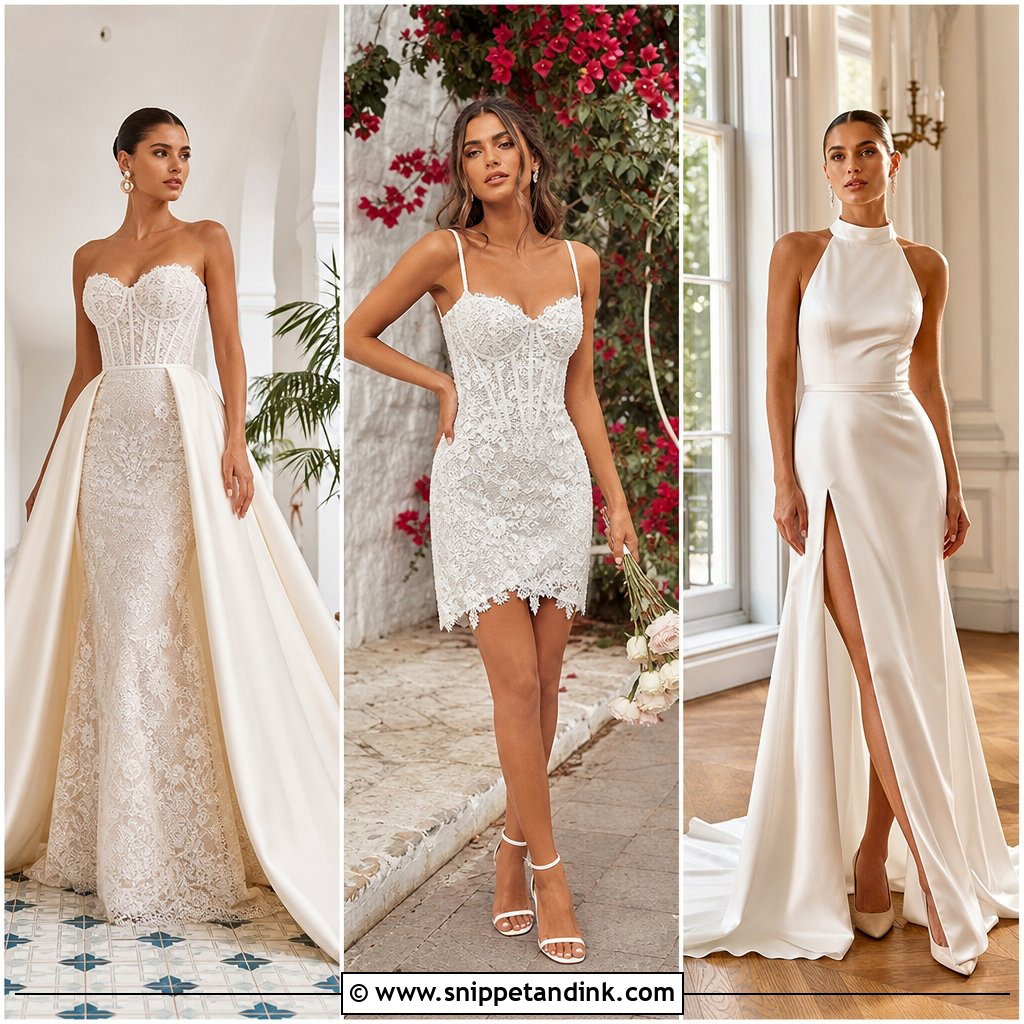
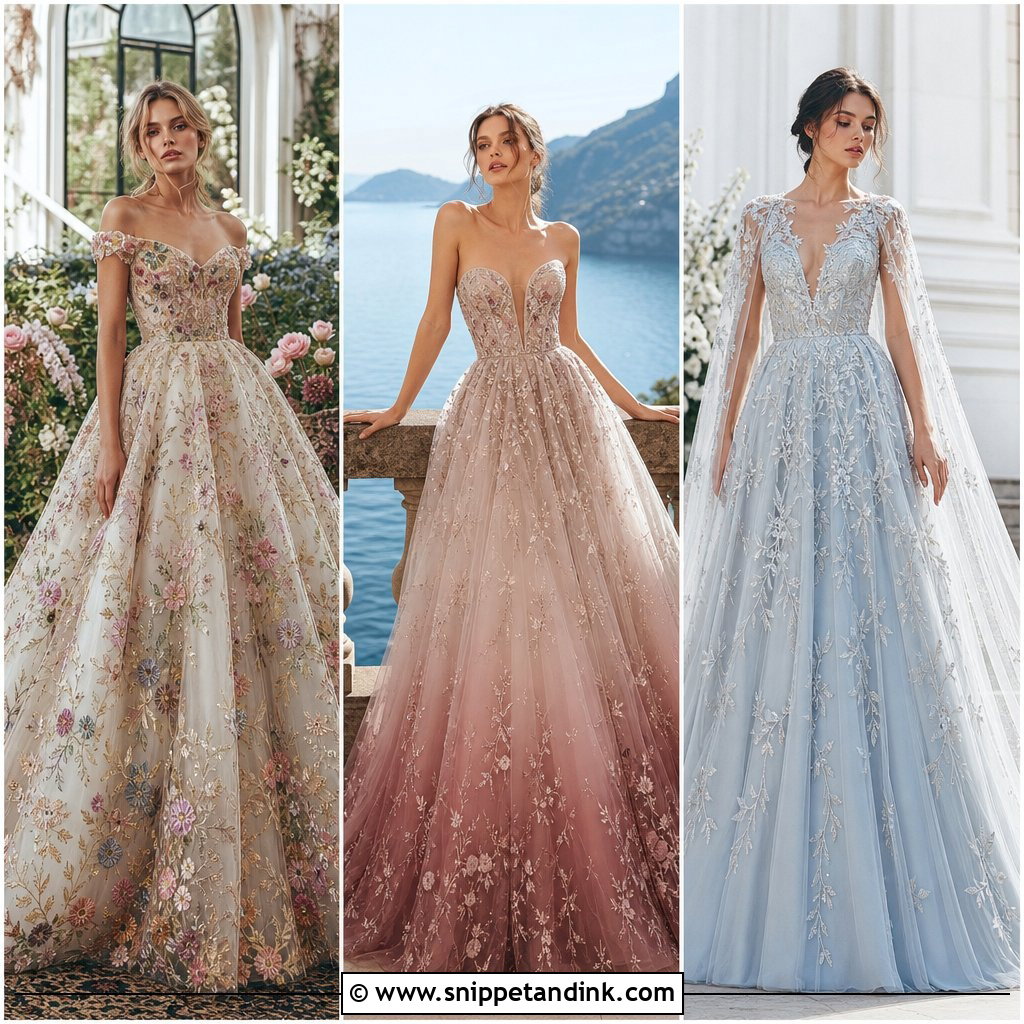
25. Martina Liana Reception Wedding Dress
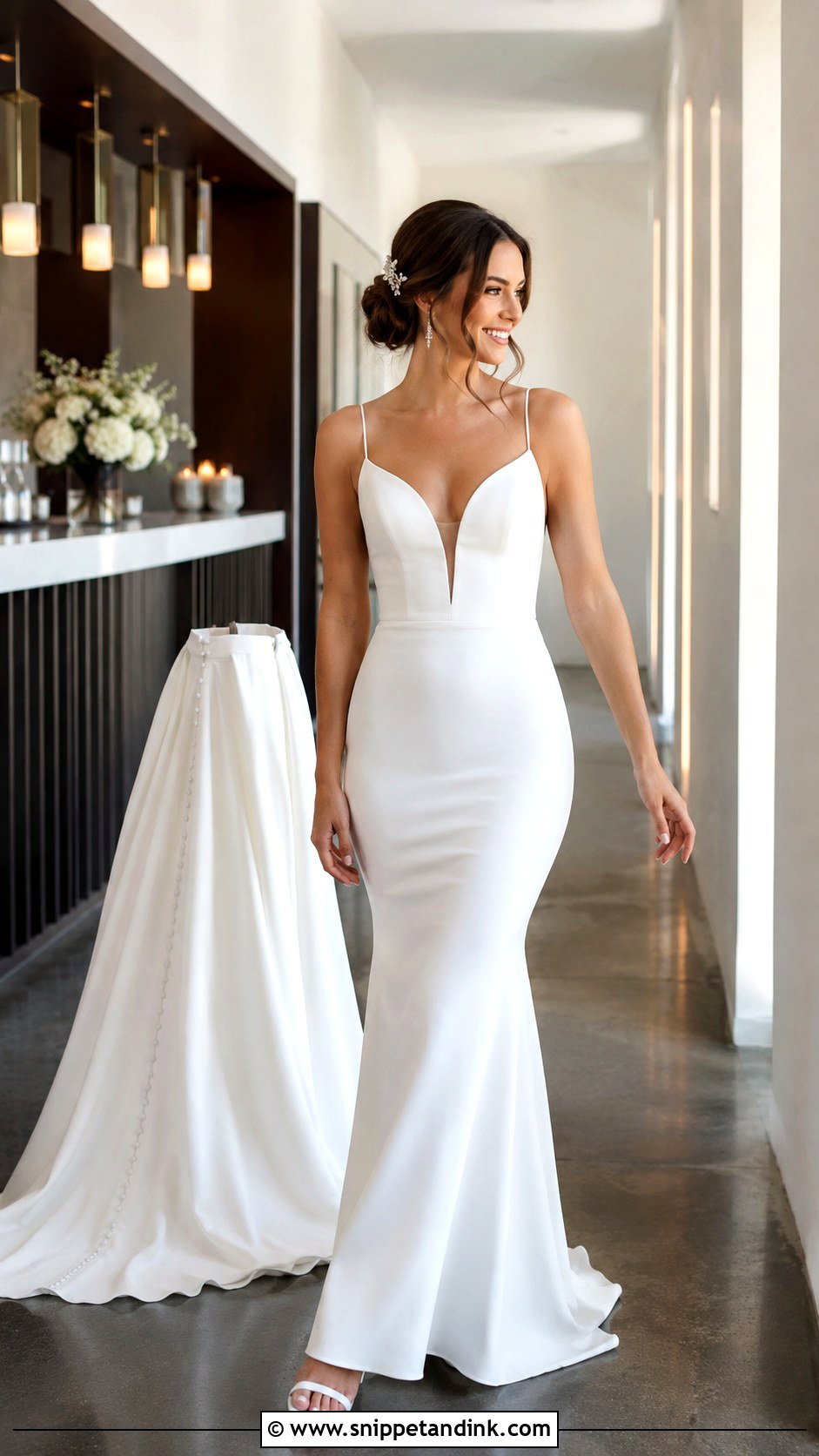
Your reception look should let you move, greet guests and dance. That could be a fitted crepe gown, a sheath dress, a gown after its overskirt comes off, or a strapless look once the sleeves are removed. Check the bustle and hem length with your reception shoes before the day, since many brides switch to a lower heel later. Swap to a smaller hair accessory and choose jewelry that won’t catch on lace or tulle.
What Happens to the Dress on Monday Morning
Most gowns come home with grass at the hem, makeup at the neckline and a spill or two somewhere on the skirt. I’d get it to a specialist cleaner within a few weeks. Champagne and sugary drinks dry clear but oxidize into yellow-brown marks over months, and by then they are much harder to remove.
Storing Lace, Satin and Tulle
- Skip the plastic bag. It traps moisture and can yellow fabric over time; a breathable cotton garment bag or acid-free box is safer.
- Heavy beaded or lace ballgowns are better folded in acid-free tissue in a box than hung, because the weight stretches shoulder seams and bodice lace.
- Pad every fold with tissue so satin doesn’t set permanent creases.
- Keep the box somewhere cool, dark and dry, never in an attic or basement where temperature and humidity swing.
If you plan to pass it on or have it remade, take photos of the beadwork and lace placement before storage. A seamstress can work far more confidently from a clear record.
Try the Gown You Think You Won’t Like
Brides often walk into a salon sure about one silhouette and leave with another. Picture the whole outfit with the dress: veil, shoes, hair, flowers, venue and season. This designer covers lace ballgowns, clean satin, removable sleeves, pearl work, corset bodices and sleek crepe, so there is room to experiment. Try at least one shape you don’t expect to love. The gown that feels best when you sit, walk and turn is usually the one you’ll be happiest wearing all day.
You'll Like These Ideas:


Leave a Reply