
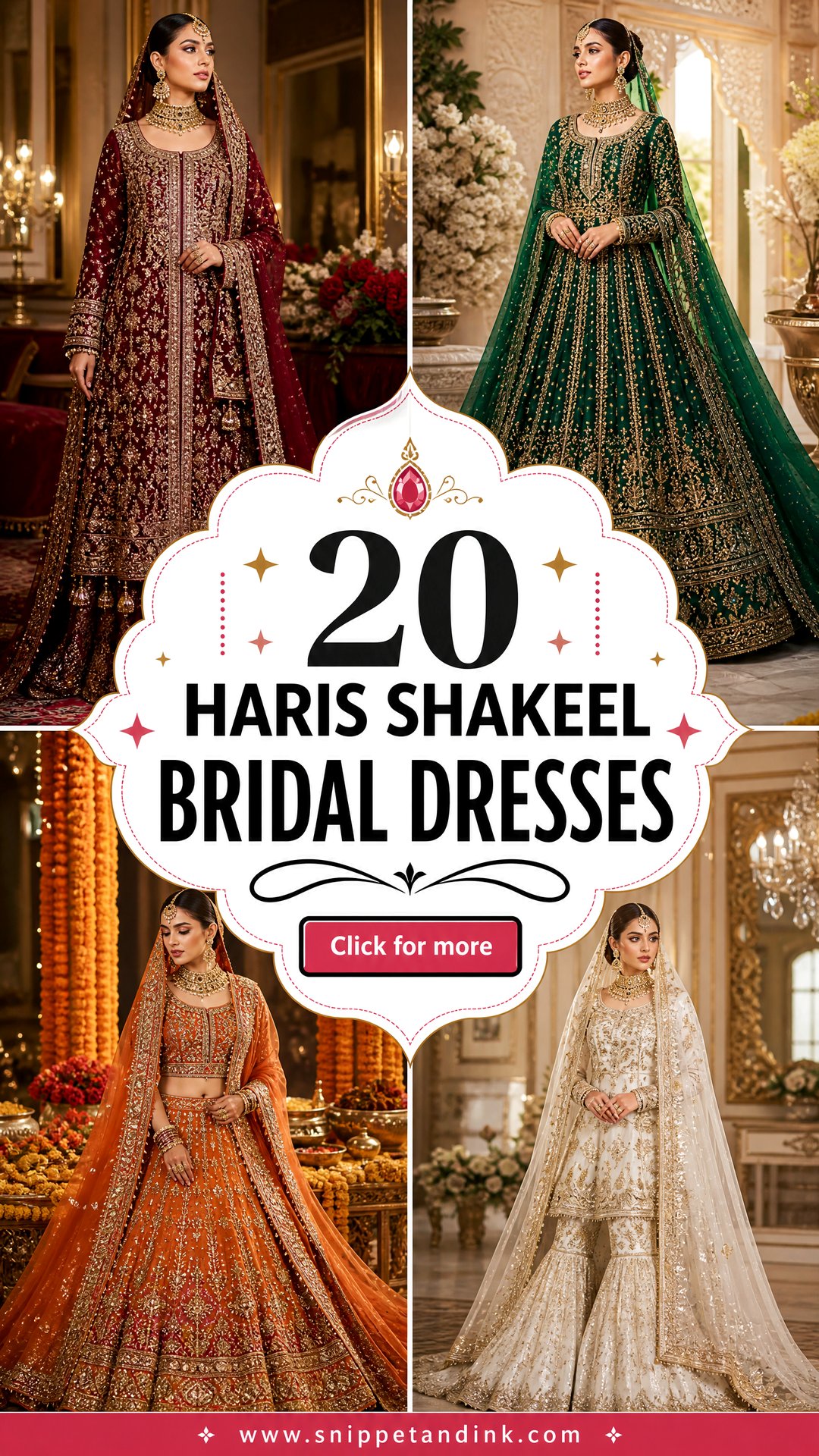
Embroidery photographs well on a hanger, but a bride is a whole picture: shirt, lower, dupatta, jewelry, shoes and face. That’s how I like to compare Pakistani bridal outfits, and it’s how the looks below are built. They follow the Haris Shakeel mood across a full wedding wardrobe, from red farshi lehengas and ghararas to flowing pishwas, pastel reception gowns and bright mehndi ensembles, each with notes on jewelry, footwear, dupatta placement and makeup. Rich colors carry grandeur; ivory and pastels feel softer. Before falling for any one of them, think about which event it is for, the venue, how much embellishment you can comfortably carry and how long you’ll be wearing it.
Farshi, Gharara or Pishwas on Stage Steps
These three shapes look similar in a flat photo and behave very differently once you’re wearing them. I walk every bride through how each one moves before she commits.
Farshi
The trail is the whole point and also the challenge. You can’t step backwards in it, someone needs to lift it on stairs, and sitting means arranging fabric around you first. It suits a bride who will mostly stand and walk forward, and it rewards height.
Gharara
The knee band divides the leg and the volume lives below it, so walking is easier than in a farshi. The band itself is often stiff and heavily worked. Sit cross-legged at your fitting; if the band presses on the back of your knee, have it softened or lowered.
Pishwas
A pishwas is a long, panelled frock with the flare built into the dress, so it moves the most freely of the three. It needs generous panels to hang well and a well-fitted bodice, because there is no separate waistband to adjust on the day.
1. Red Farshi Lehenga Haris Shakeel Bridal Dress
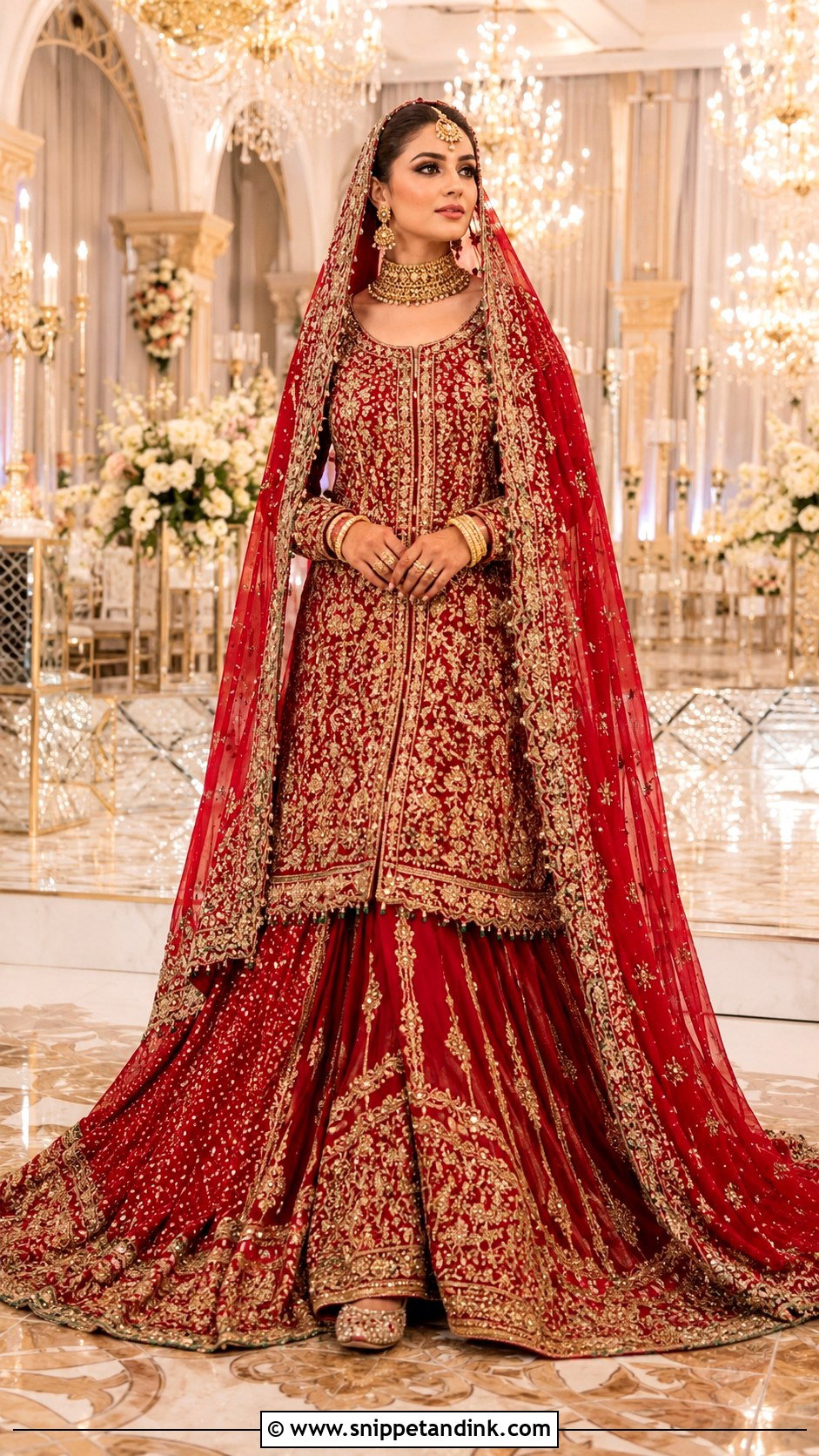
For the baraat, a red farshi lehenga is still the outfit most families picture. The long shirt carries dense gold embroidery with borders at the neck, sleeves and hem, and the lehenga spreads into a trailing farshi behind you. The heavily bordered red dupatta goes over the head; a lighter second dupatta on one shoulder is optional, and I’d skip it if the first is already heavy. Antique gold jewelry, a statement choker, jhumkas and a centered tikka sit naturally with it. Padded gold khussas underneath are the shoes I’d choose, because no one sees your feet under a farshi and you’ll be standing for photos for a long time. Defined eyes, a soft red lip and a sleek center-parted bun finish it.
2. Maroon Long Shirt Haris Shakeel Bridal Dress
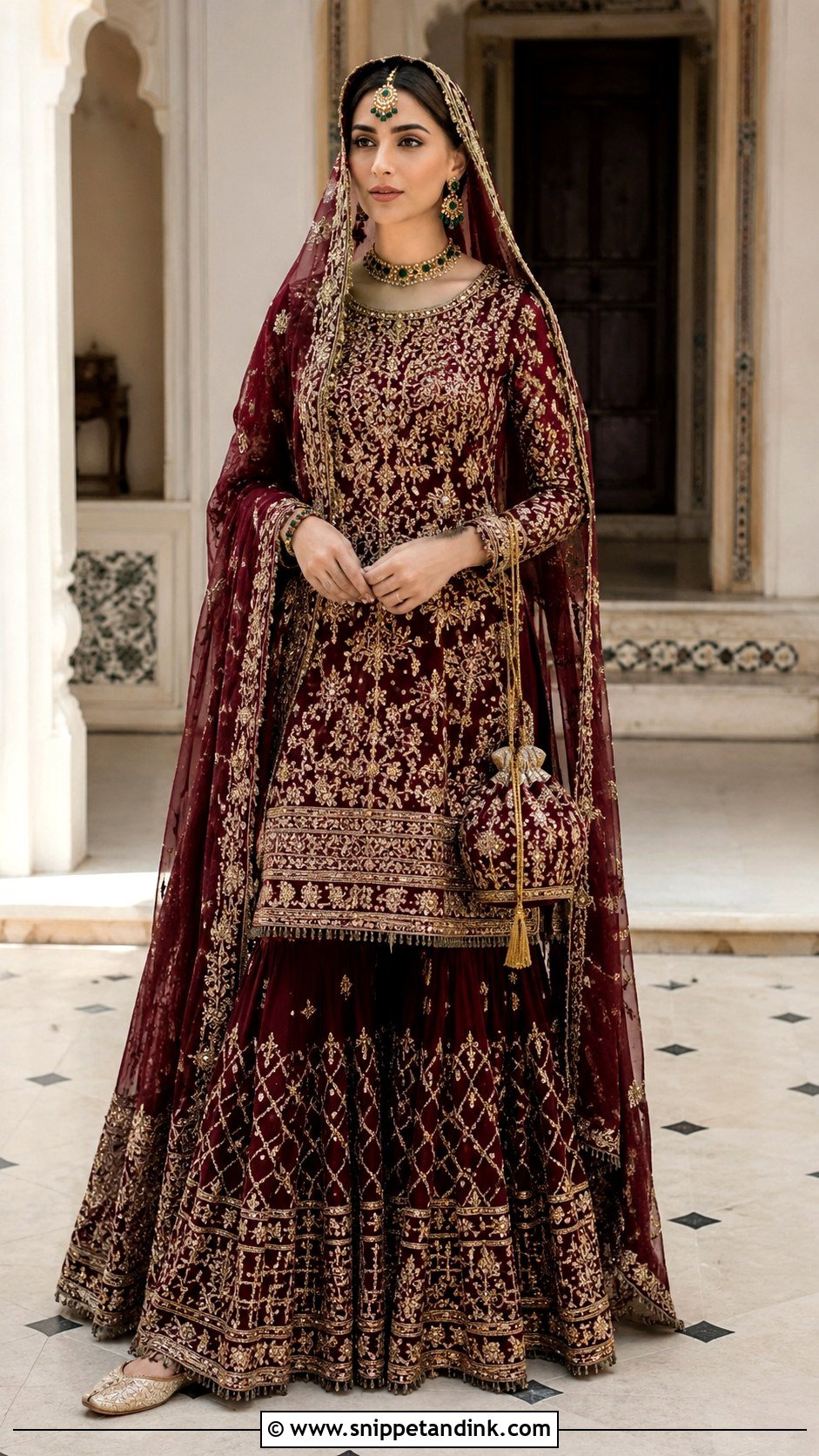
Maroon reads as bridal red’s moodier sister. An ankle-length straight shirt in tonal threadwork with dabka-style details and antique gold accents goes over a structured farshi gharara, which puts the volume below the knee so a petite bride isn’t swallowed. A maroon organza dupatta with a broad embellished border pulls it together. Emerald jewelry gives contrast; antique gold keeps it traditional. Pointed embroidered khussas and a compact potli complete it. Maroon darkens a lot under warm indoor lights, so I keep makeup a touch brighter than usual: softly smoked eyes, a berry lip and a low bun with fresh white flowers.
3. Ivory Nikah Pishwas Haris Shakeel Bridal Dress
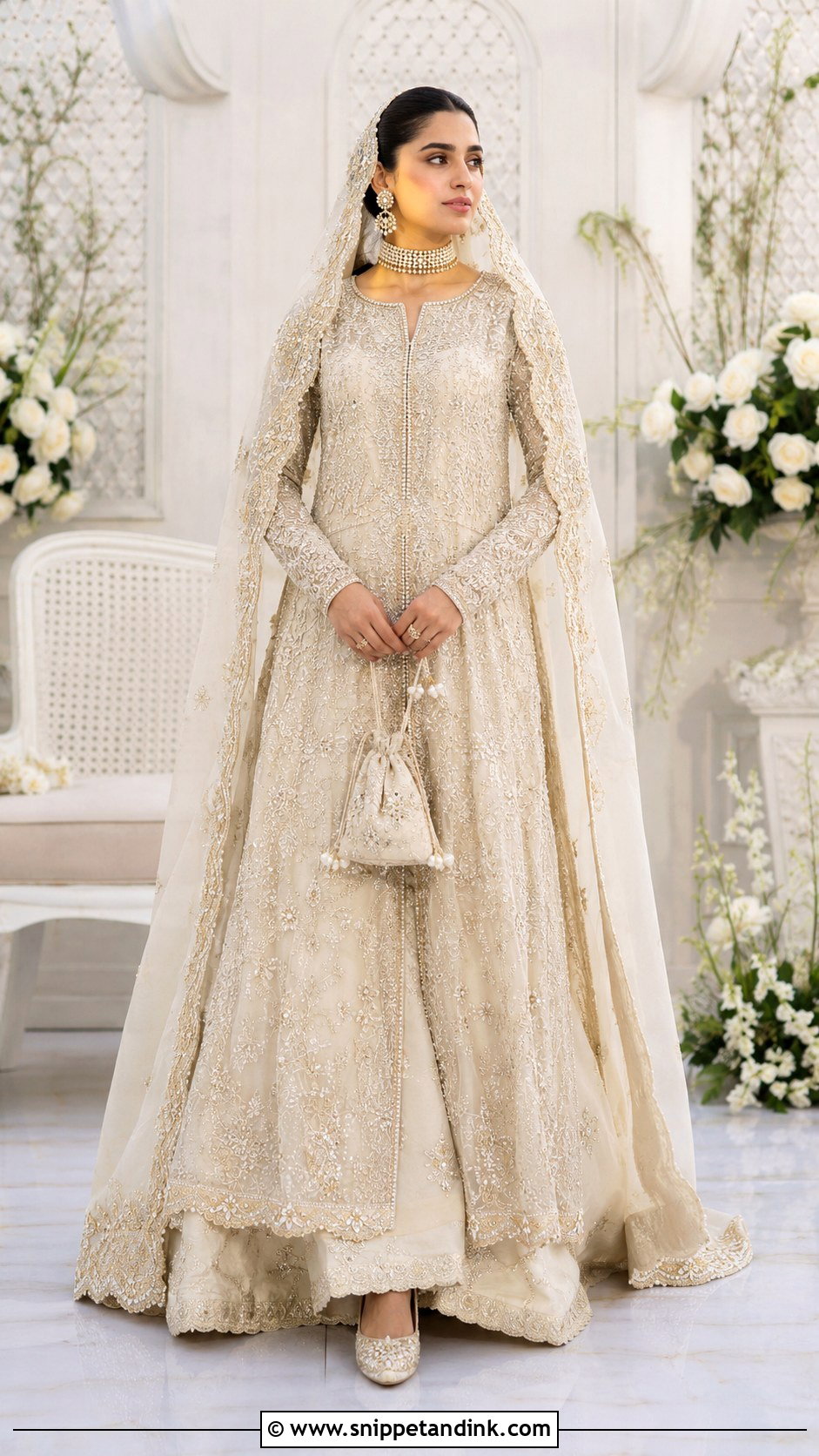
Ivory suits a nikah because it feels ceremonial without competing with the baraat red. A floor-length pishwas with a fitted bodice, full sleeves and a big flare does the work, with gold, pearl and silver-toned embellishment kept light. Straight pants or a light lehenga underneath give coverage when you sit on the floor for the ceremony. The scalloped ivory dupatta looks lovely over the head and loose around the arms. Pearl earrings, a delicate choker, ivory heels and a small pouch finish it. Pishwas panels need to be cut generously; if the flare is skimped, it clings at the hips when you sit. Fresh makeup, rosy lips and a neat low bun suit daylight.
4. Gold Gharara Haris Shakeel Bridal Dress
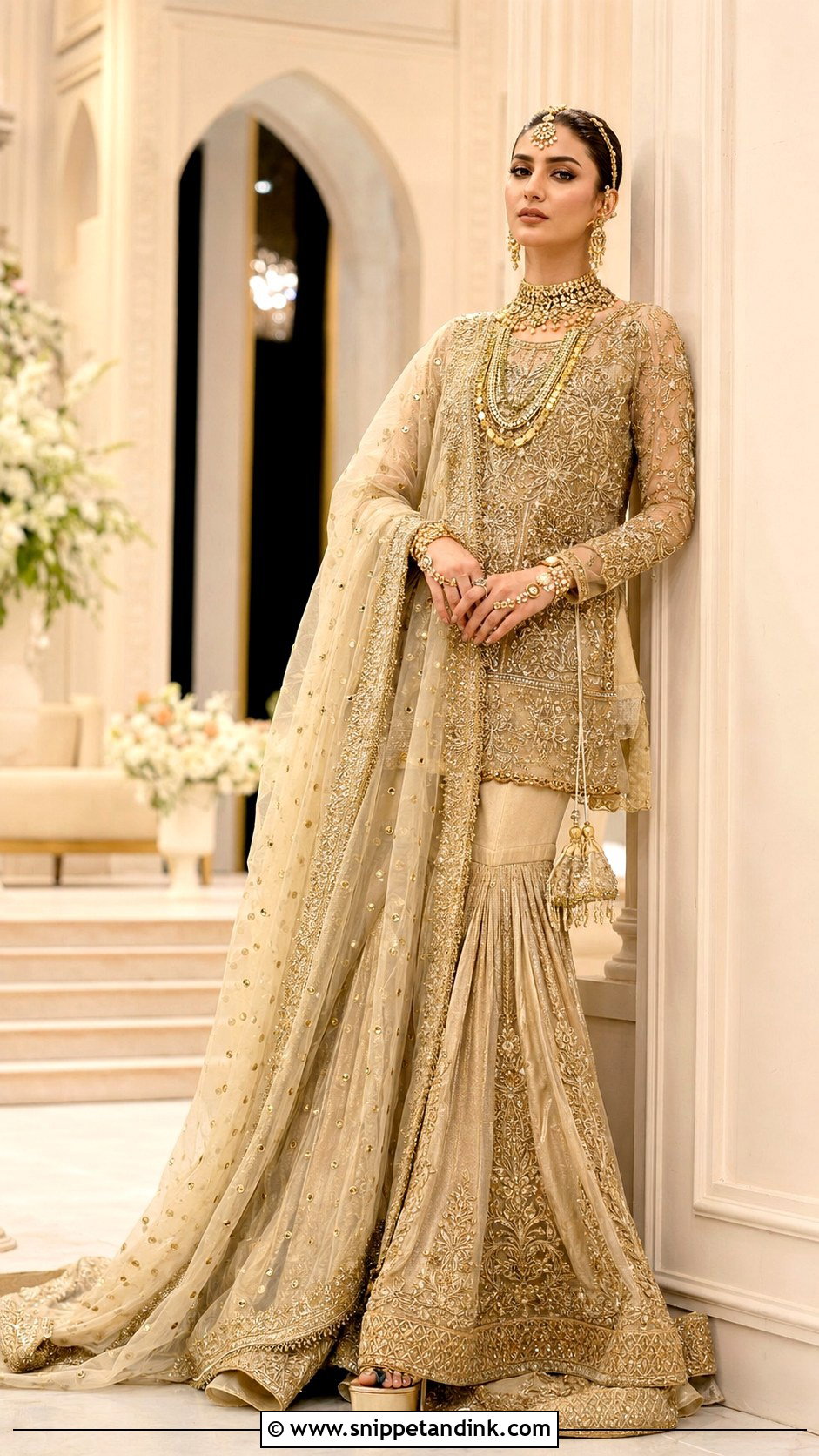
Gold gharara, indoor reception, old-world glamour. Start with a fitted short kurti in metallic embroidery with a scalloped hem, then a gharara with defined knee bands and dramatic lower panels. The trick I always use with all-gold outfits is mixing champagne, antique gold and muted bronze so the fabric has depth instead of reading as one flat sheet under the flash. A sheer gold dupatta with scattered motifs and a heavier frame adds movement. A layered choker, matching earrings and a small tikka in antique gold or uncut stones, plus metallic platform heels for hidden height, complete it. Bronze lids, a muted rose lip and soft waves pinned back keep the face open.
5. Blush Pink Lehenga Haris Shakeel Bridal Dress
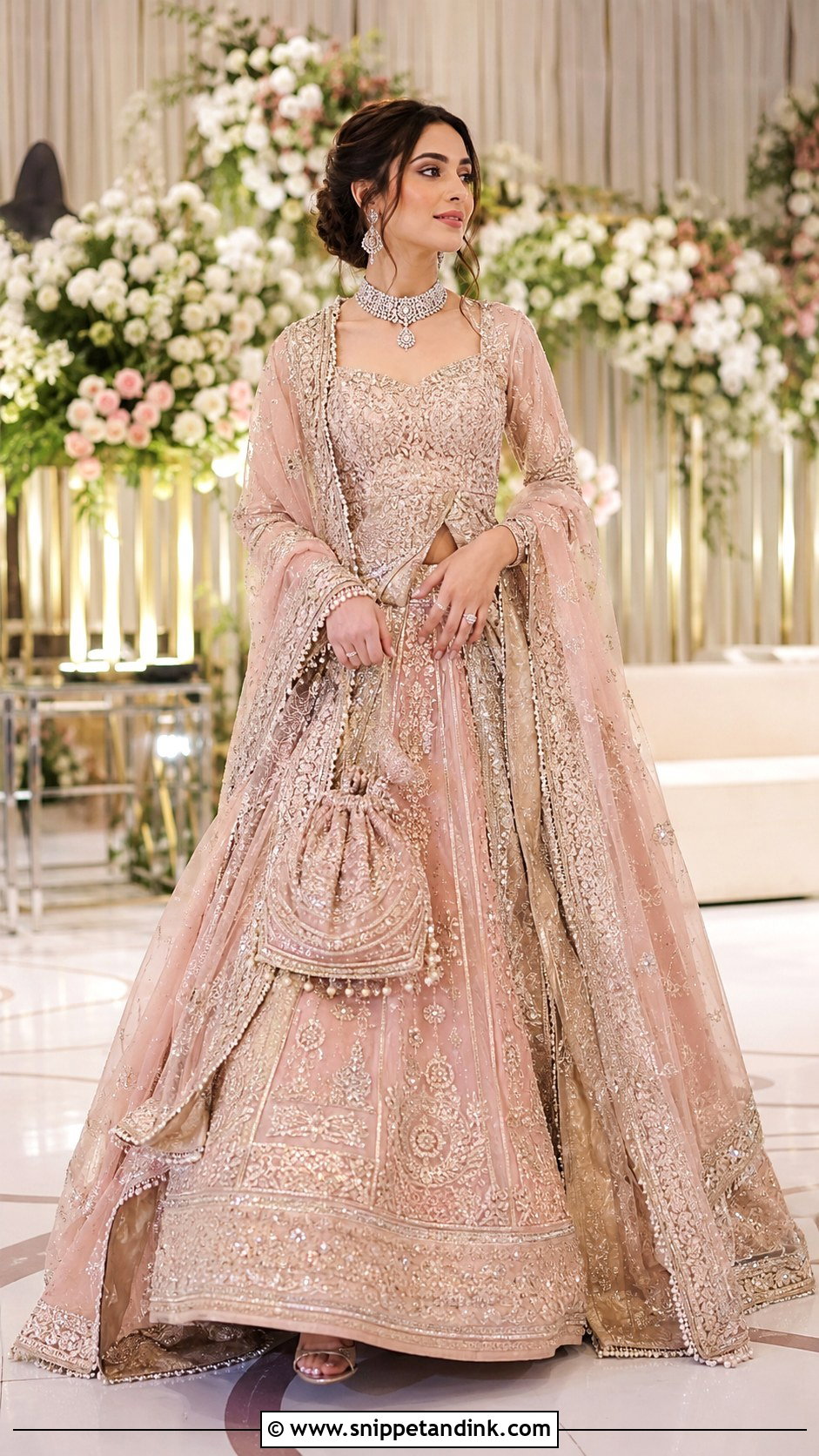
Blush pink belongs under soft reception lighting. A fitted blouse with a modest neckline and elbow-length sleeves keeps it balanced, over a full lehenga with silver embroidery, crystals and small florals. Pin the long dupatta over one shoulder and let it fall behind you like a veil; I anchor it at the shoulder seam with two pins crossed, since one pin lets a long dupatta swing round to the front. Diamond-style jewelry, pearl drops and a slim bracelet suit it better than heavy traditional sets. Silver heels and a blush potli keep the color story, with luminous skin, a pink-nude lip and a relaxed bun with a few loose strands.
6. Emerald Green Kalidar Haris Shakeel Bridal Dress
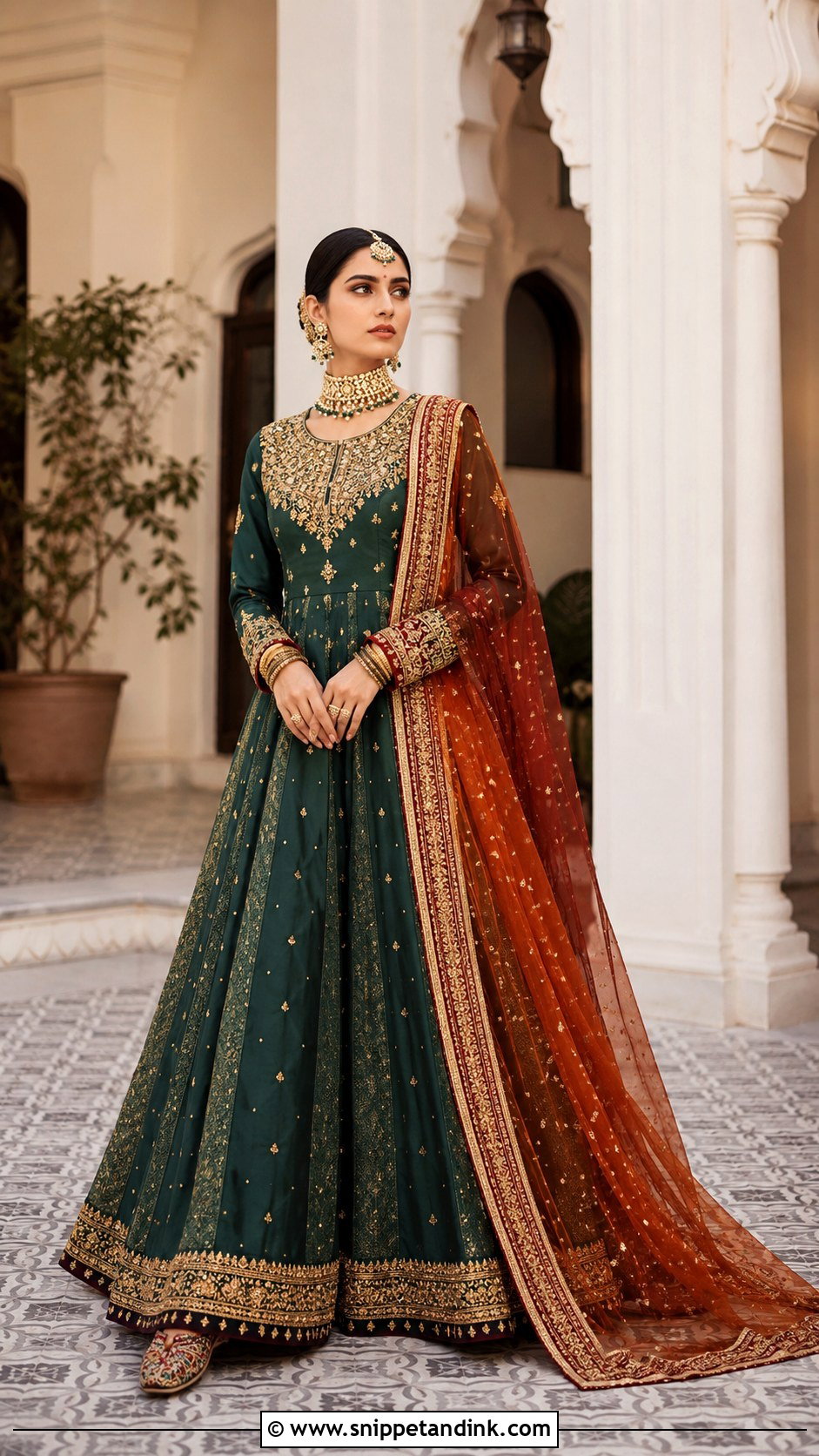
Emerald gives you rich color outside the usual red. A long kalidar, fitted at the top with flared panels from the waist, moves well and suits a tall bride particularly. Gold embroidery at the bodice, cuffs and hem defines the dark fabric. A coordinating dupatta with a rust, plum or gold border makes it more distinctive. Kundan jewelry, a jhoomar and stacked mixed-metal bangles suit it. A jhoomar needs a firm side section of hair to pin into, so tell your hairstylist in advance. Block heels or khussas, warm neutral makeup, softly smoked eyes and a braided low bun complete the look for a reception, a formal mehndi or a small wedding.
7. Fuchsia Pink Lehenga Haris Shakeel Bridal Dress
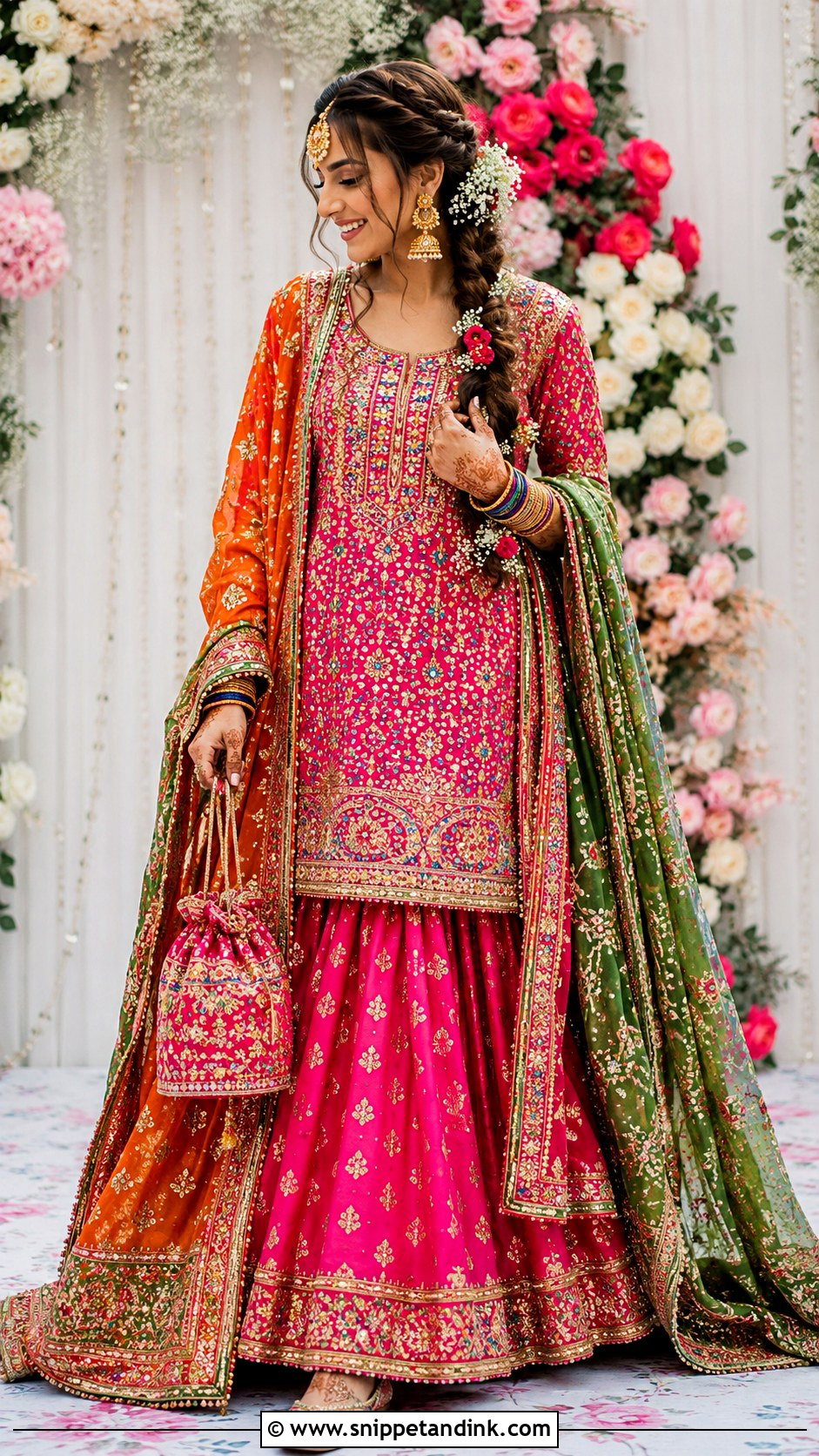
Fuchsia is joyful, and mehndi is its natural stage. A long embroidered shirt with side slits shows the lehenga as you walk. The flared fuchsia skirt carries gold borders, florals and a little mirror work. For contrast, an orange, lime or deep purple dupatta works, as long as the metallic embroidery repeats so the two pieces feel related. Gold jhumkas, colorful bangles and a small maang tikka finish it. Wear khussas, not narrow heels: mehndi floors are covered in rugs and cushions, and you’ll be dancing. Coral lips, softly lined eyes and a loose braid with small flowers suit the mood.
8. Peach Pink Flared Lehenga Haris Shakeel Bridal Dress
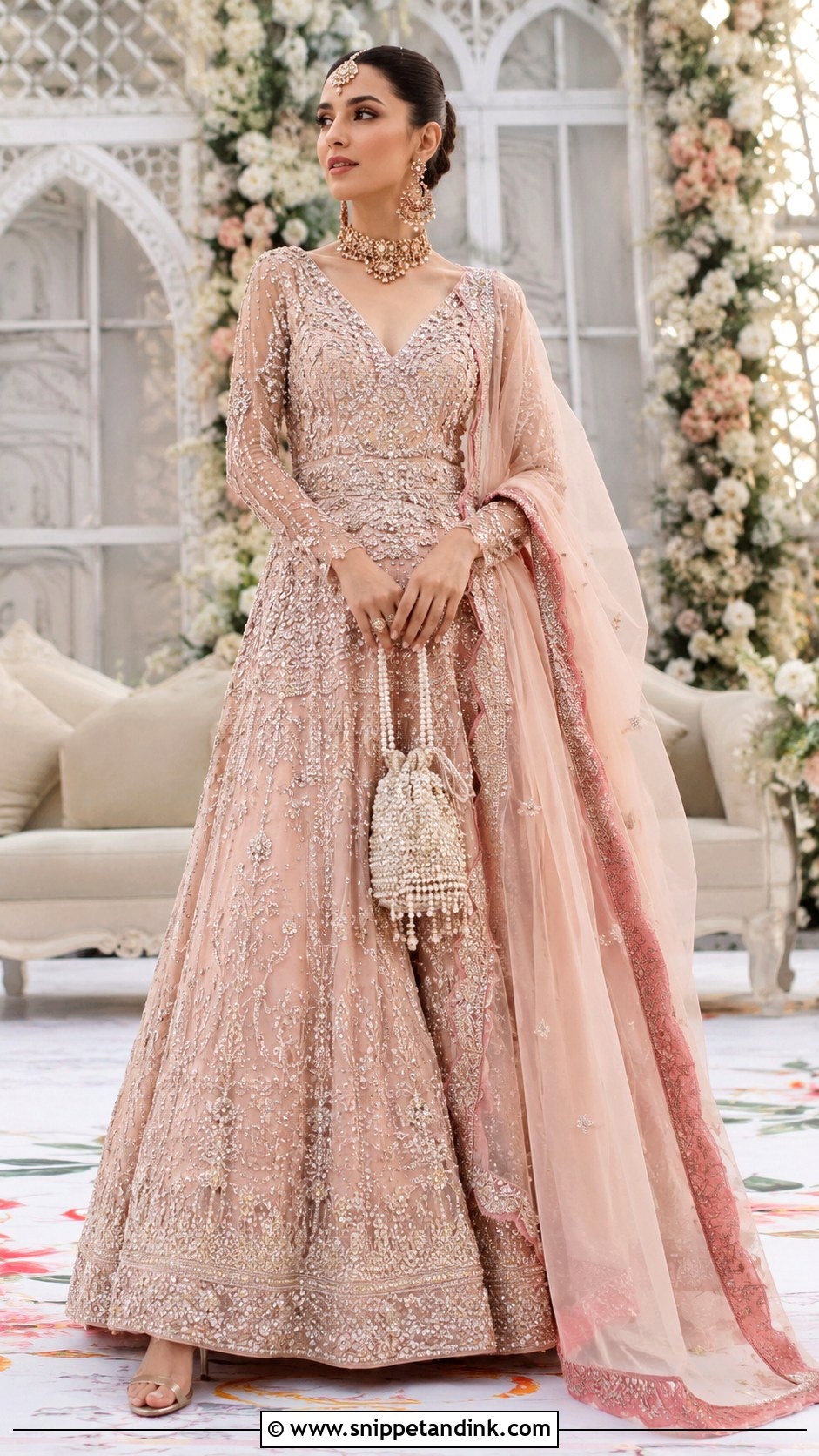
Peach pink is light and fresh, and it’s kind to warm and olive skin. A fitted blouse or hip-length shirt with fine gold embroidery and pearls sits over a broadly flared lehenga. A peach organza dupatta with a deeper pink border adds gentle contrast. Champagne heels, a pearl potli and rose-gold jewelry keep it soft. When the neckline is busy, I’d choose medium earrings and no necklace; layering both makes the face look crowded. Peach blush, highlighted skin, neutral eyes and a low textured bun suit a daytime reception or nikah.
9. Deep Red Farshi Gharara Haris Shakeel Bridal Dress
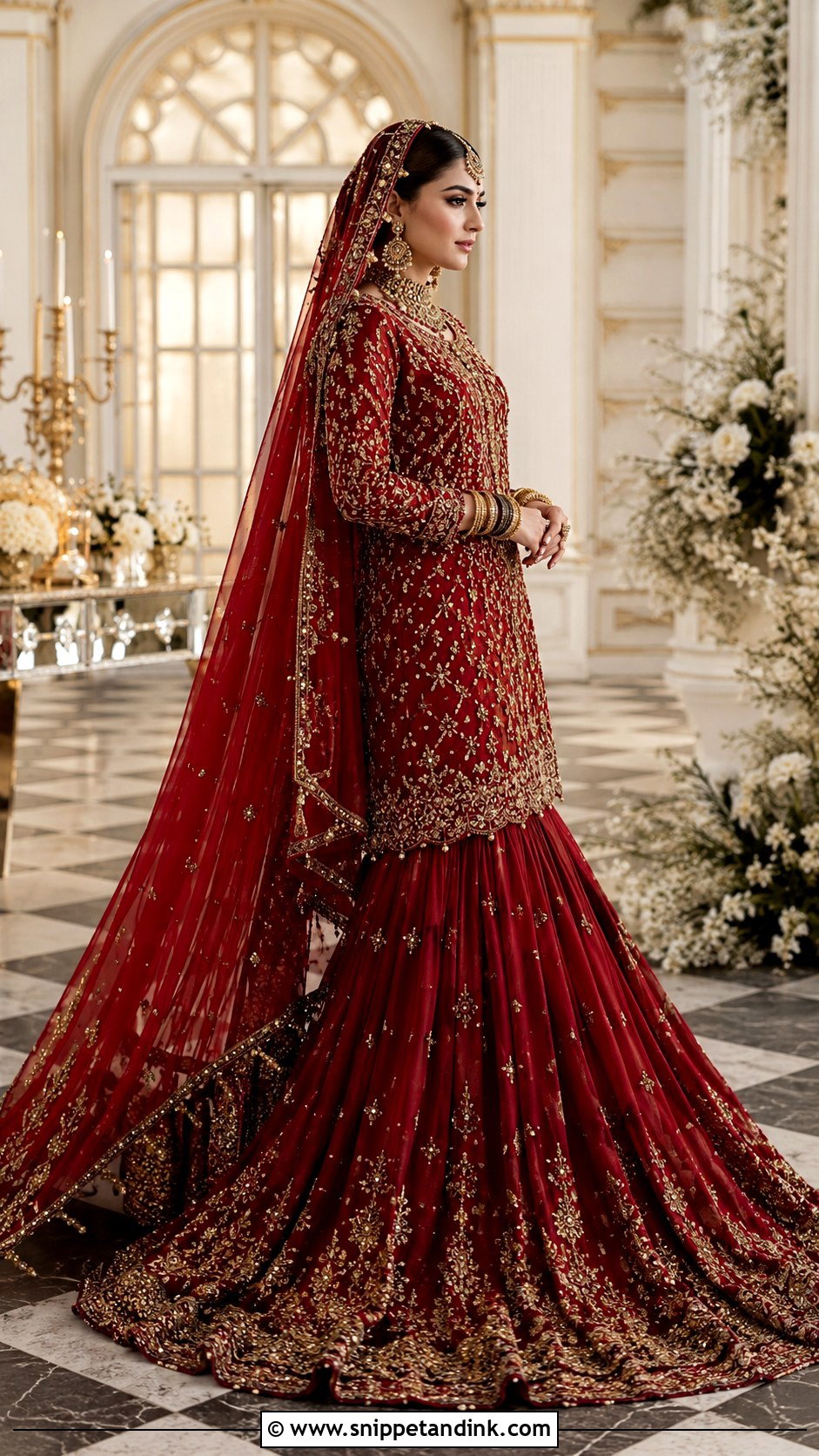
Few silhouettes feel as grand as a deep red farshi gharara with a long shirt. The shirt should end around the knee, with intricate embroidery across the front, sleeves and side panels, and the gharara opens into sweeping sections behind you. A matching red dupatta with an antique gold border keeps it formal. Add a second veil only if the weight stays comfortable, and be honest with yourself about that at the fitting, not on the day. A broad choker, oversized earrings, a jhoomar and red bangles complete it, with hidden platforms to keep the long hem off the floor in front. Kohl-lined eyes, soft contour, a classic red lip and a sleek bun finish the face.
10. Powder Blue Reception Gown Haris Shakeel Bridal Dress
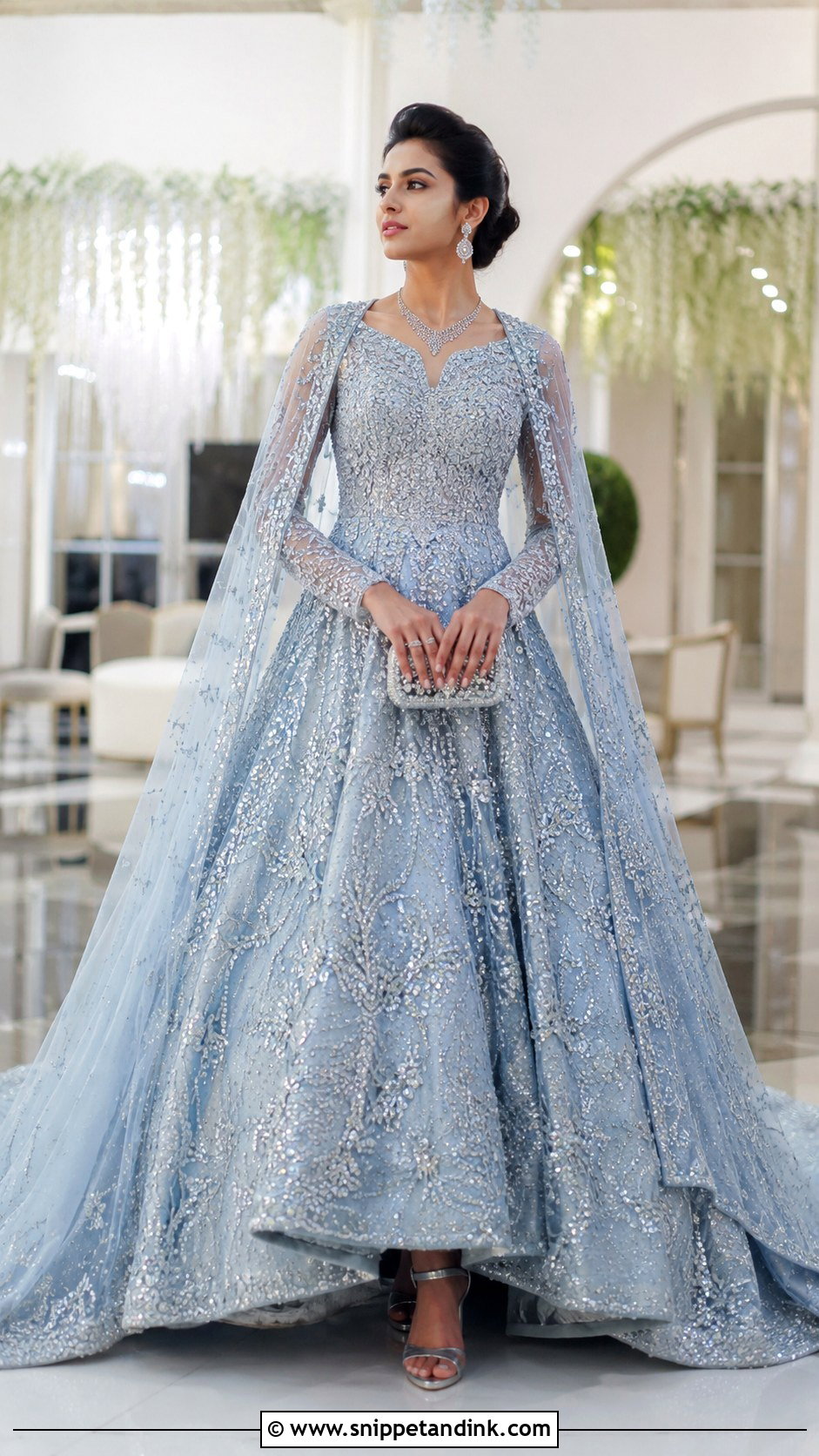
Powder blue is a cool, dreamy alternative for an evening reception. A floor-length gown with a defined waist, fitted bodice and gently spreading skirt suits it, with silver embroidery, crystals and pale blue threadwork for depth. Full or three-quarter sleeves balance a voluminous skirt. A sheer blue dupatta or cape-style layer should fall from the shoulders without hiding the bodice. Diamond-style earrings, a delicate necklace, silver heels and a crystal clutch finish it. Powder blue can turn slightly grey in very warm light, so a pink lip and cool-toned eyes keep the face from looking flat; a polished half-up style completes it.
11. Rust Orange Mehndi Lehenga Haris Shakeel Bridal Dress
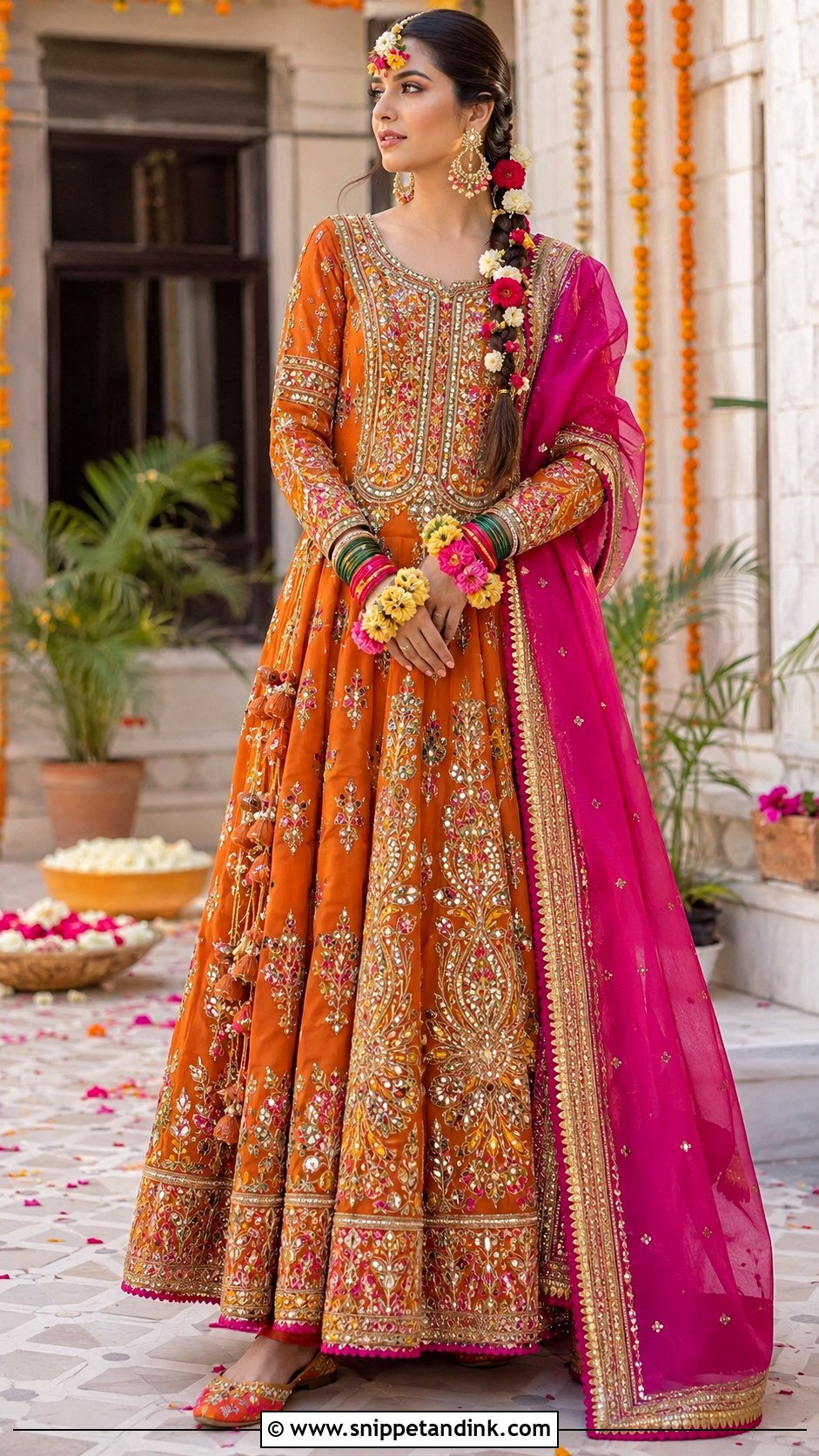
Rust orange gives a mehndi warmth with more depth than yellow, and it hides stray henna marks better than pale fabrics. A short embroidered blouse or kurti pairs with a wide lehenga featuring gold motifs, colorful threadwork and a defined border. A magenta or bottle-green dupatta adds energy. Floral jewelry mixes easily with small gold earrings and stacked bangles. If you’ll dance, choose embroidered khussas in orange and pink. Bronze lids, peach lips and a long braid with fresh or fabric flowers finish it. Fresh jasmine and gajra flowers wilt within a few hours in heat, so fabric flowers are the safer choice for a long night.
12. Olive Green Jacket Lehenga Haris Shakeel Bridal Dress
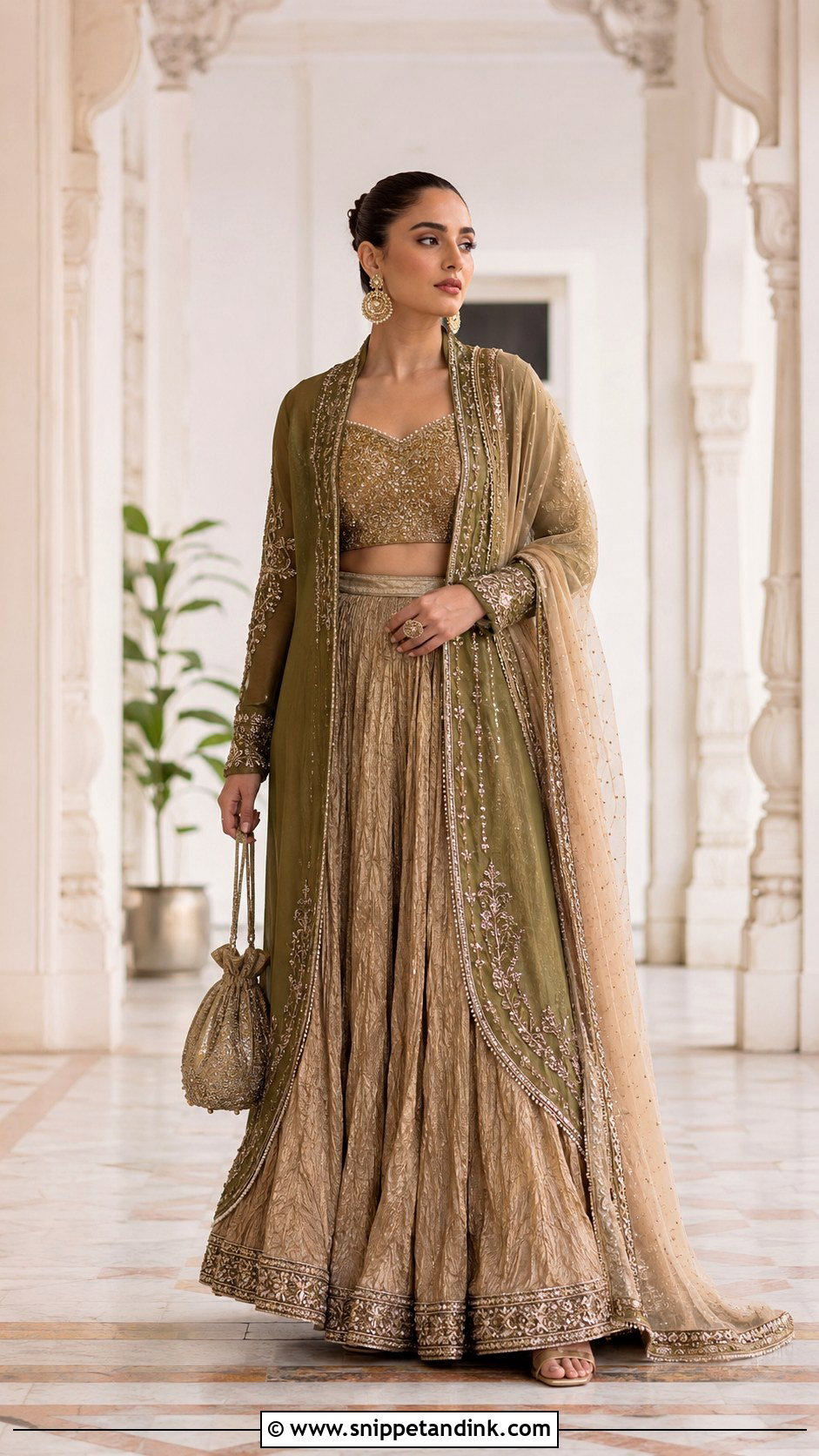
Could a bridal jacket feel both traditional and modern? This olive outfit says yes. A long raw silk jacket over a fitted embroidered blouse and a crushed gold lehenga, worn open so the textures and waist show. Gold edging at the cuffs, neck and hem links the layers without dense embroidery everywhere. A light olive or champagne dupatta over one shoulder, antique gold earrings, a statement ring, a structured potli and metallic block heels complete it. Olive is unforgiving next to sallow skin, so I’d always test the fabric at the face first. Warm brown eyes, a muted rose lip and a neat low ponytail give it a clean finish.
13. Champagne Gold Pishwas Haris Shakeel Bridal Dress
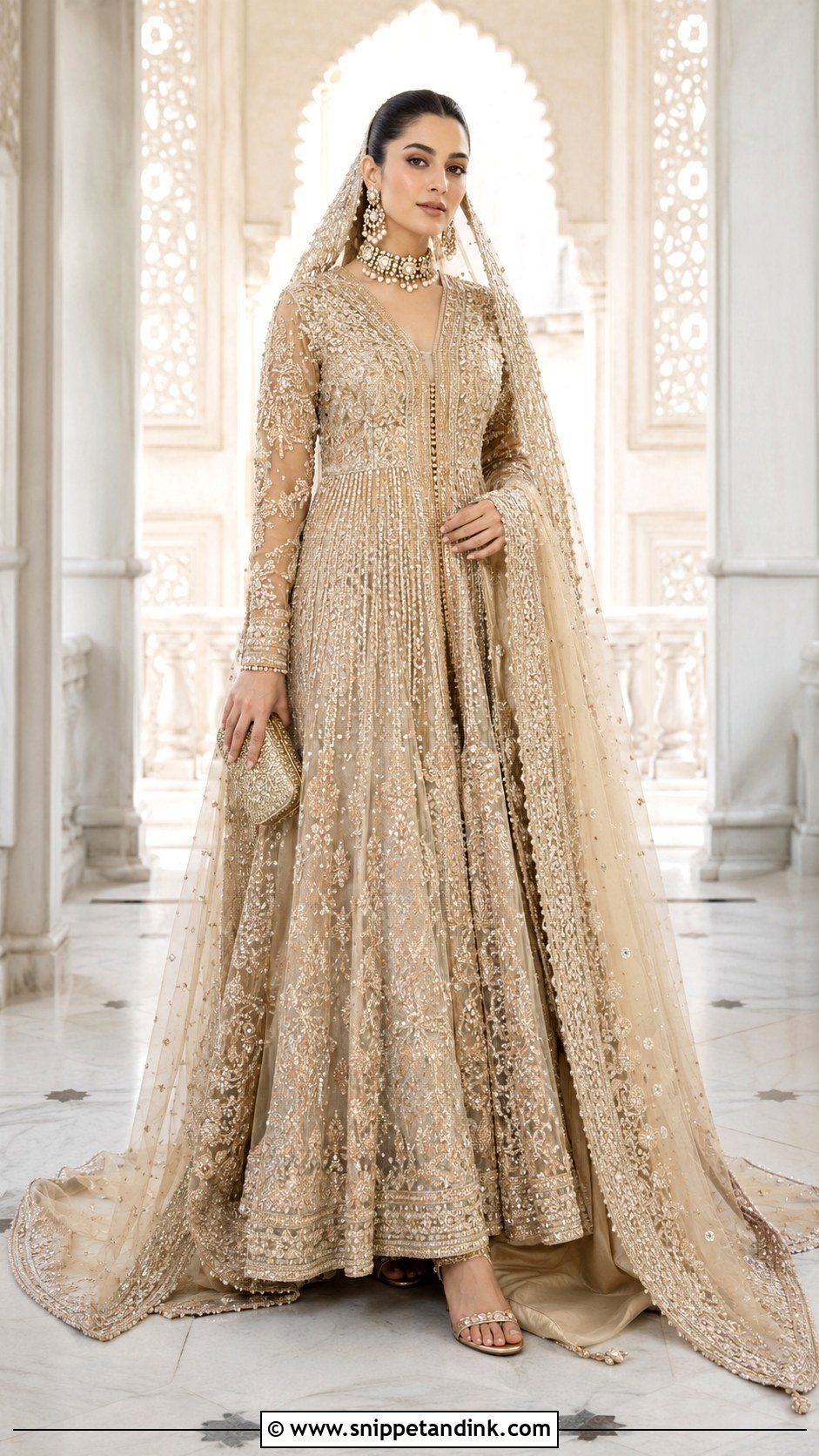
Champagne gold is softer than bright metallics and less likely to wash a bride out. A flowing pishwas with a shaped bodice, modest neckline and many panels holds tonal embroidery, pearls and muted gold well. Wear a matching lehenga under it for volume or straight trousers for a slimmer line. A sheer dupatta with a heavy border goes over the head for the ceremony and moves to one shoulder later; ask the tailor for small loops at the shoulder so that move takes seconds. Uncut stone jewelry, pearl drops, champagne heels and a compact bag finish it, with soft brown eyes, a nude-pink lip and a smooth center-parted bun.
14. Plum Velvet Lehenga Haris Shakeel Bridal Dress
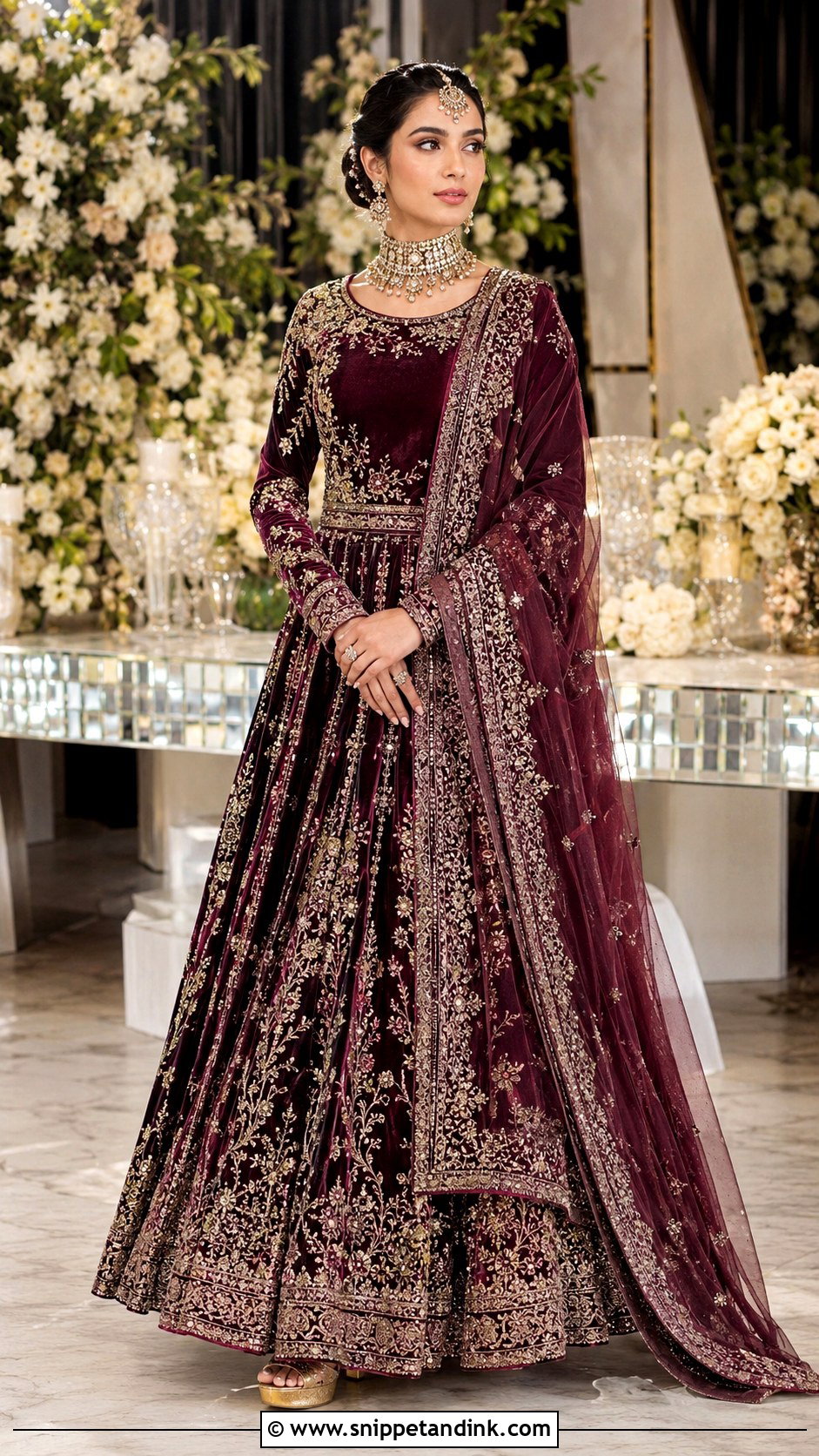
Plum velvet is a cold-season fabric through and through. Use it for a fitted long shirt or blouse, then decide whether the lehenga should be velvet too or something lighter; a full velvet skirt is heavy and warm, and I usually suggest raw silk or tissue below. Antique gold embroidery stands out on the dark base, especially at the neck, cuffs and hem. A plum net dupatta with small motifs keeps it from feeling weighed down. Polki jewelry, a statement choker, earrings and a tikka suit it, with gold platform heels. Smoked plum-brown eyes, a berry lip and a low bun with subtle gold pins complete it.
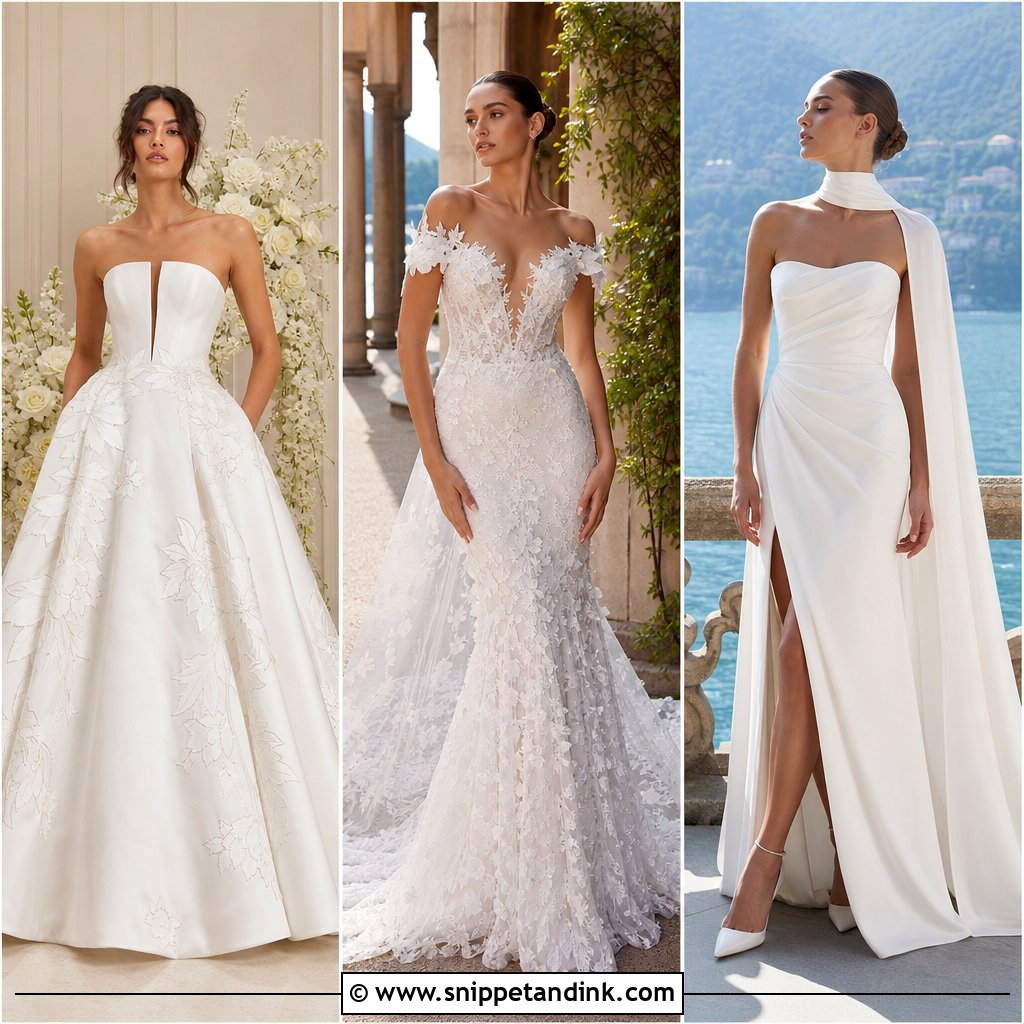
15. White And Gold Gharara Haris Shakeel Bridal Dress
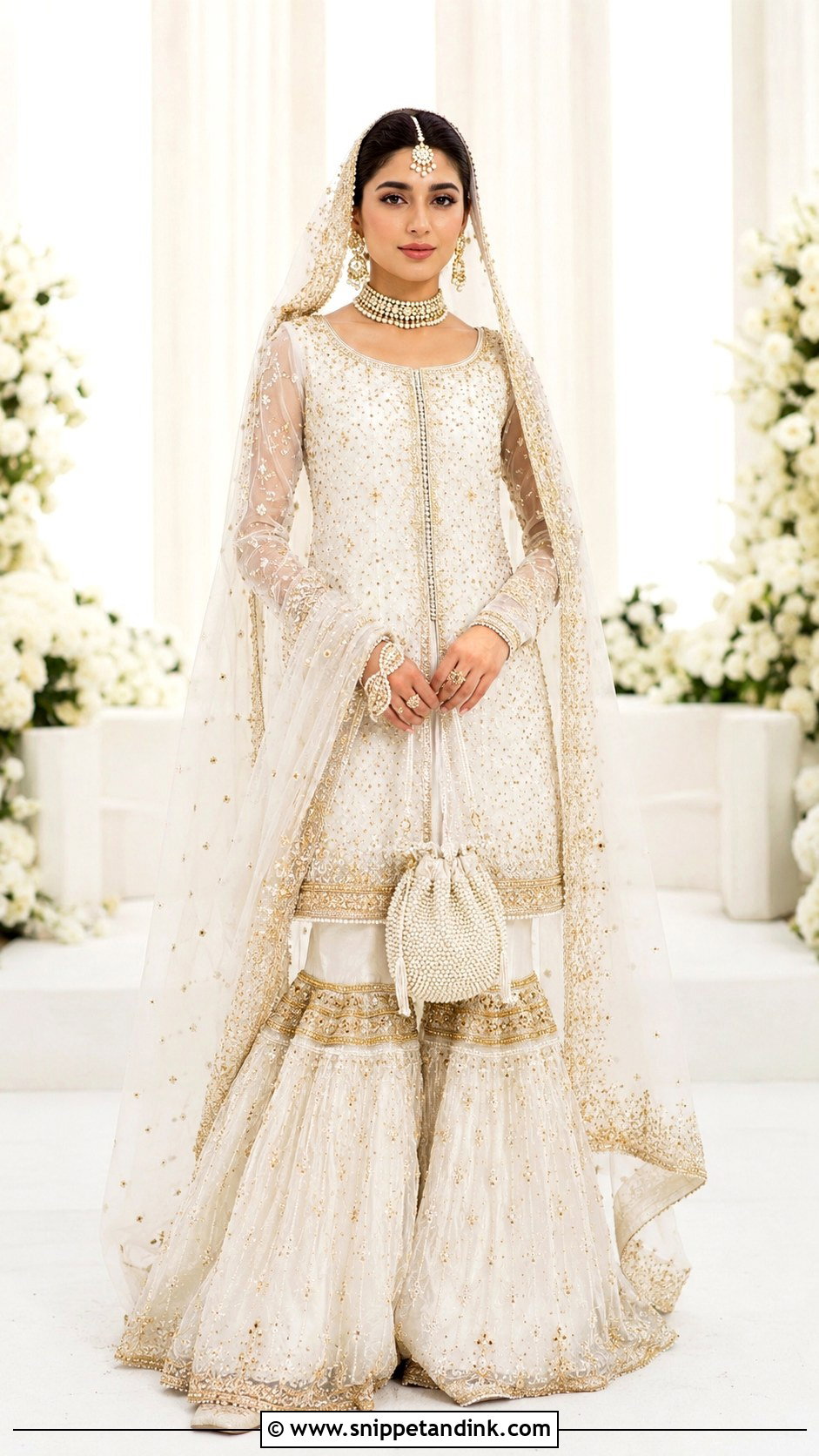
White and gold make a clean nikah outfit. A straight white kurti just below the hips, with fine gold embroidery at the neck, sleeves and hem, goes over a structured white gharara with gold knee bands and scalloped borders. A light organza dupatta gives ceremonial coverage while showing the work underneath. Pearl and gold jewelry, ivory-gold khussas and a pearl potli keep it coordinated. White gharara hems pick up dirt at every step, so plan a clean route from car to stage if you can. Luminous skin, soft brown liner, pink lips and a tidy bun framed with white flowers finish it.
16. Teal Bridal Lehenga Haris Shakeel Bridal Dress
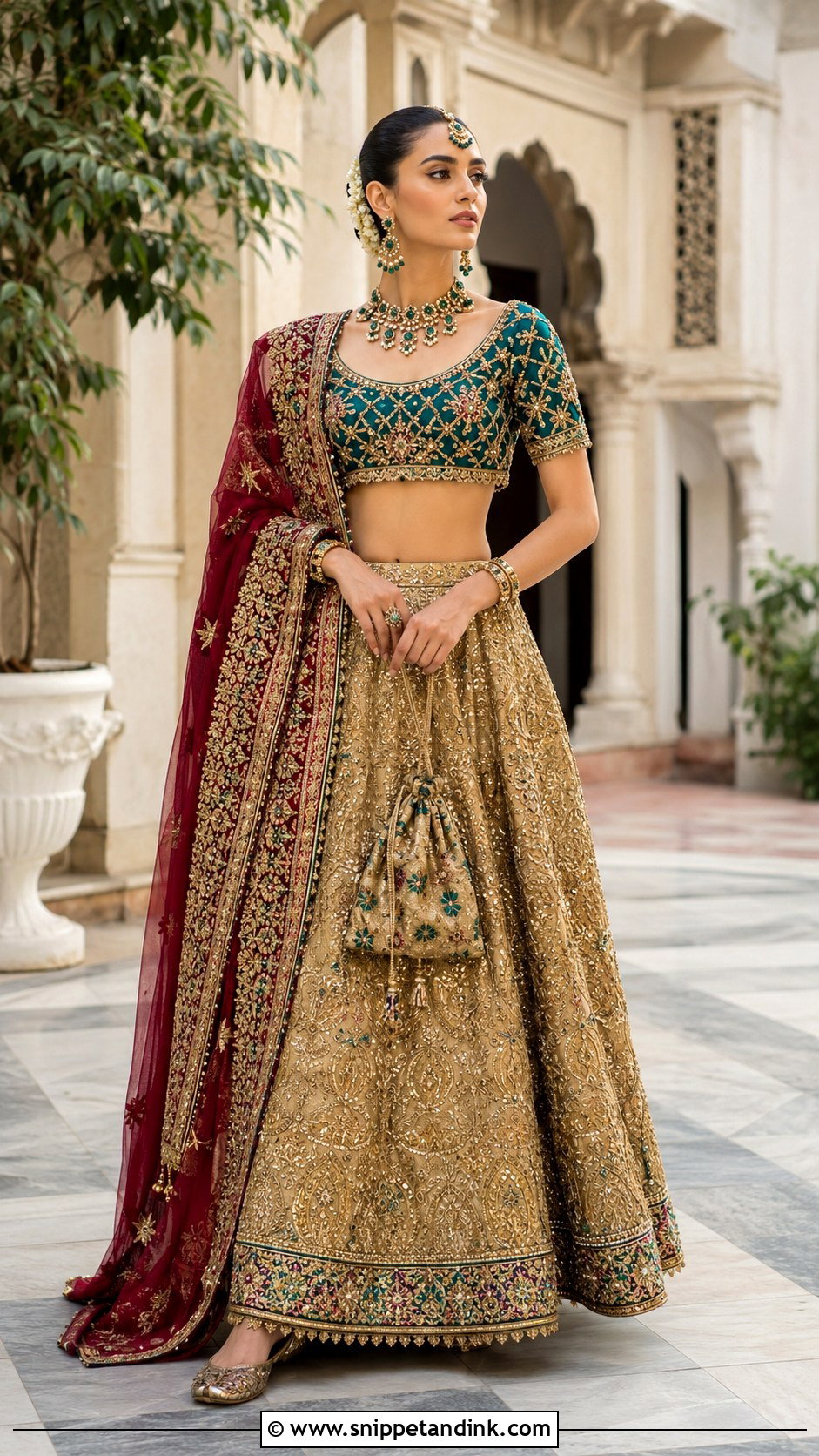
Teal suits a bride who wants a jewel tone that isn’t emerald or maroon. A fitted teal blouse sits over a high-waisted lehenga with antique gold embroidery and touches of deep blue. A longer blouse adds coverage without losing the waist. A dupatta with a maroon or rust border gives a richer traditional finish. Gold jewelry with green stones, embroidered khussas and a structured potli complete it. Teal is already strong, so I stop at two accent colors. Softly bronzed skin, defined eyes, neutral lips and a center-parted low bun suit a wedding or reception.
17. Lilac Bridal Pishwas Haris Shakeel Bridal Dress
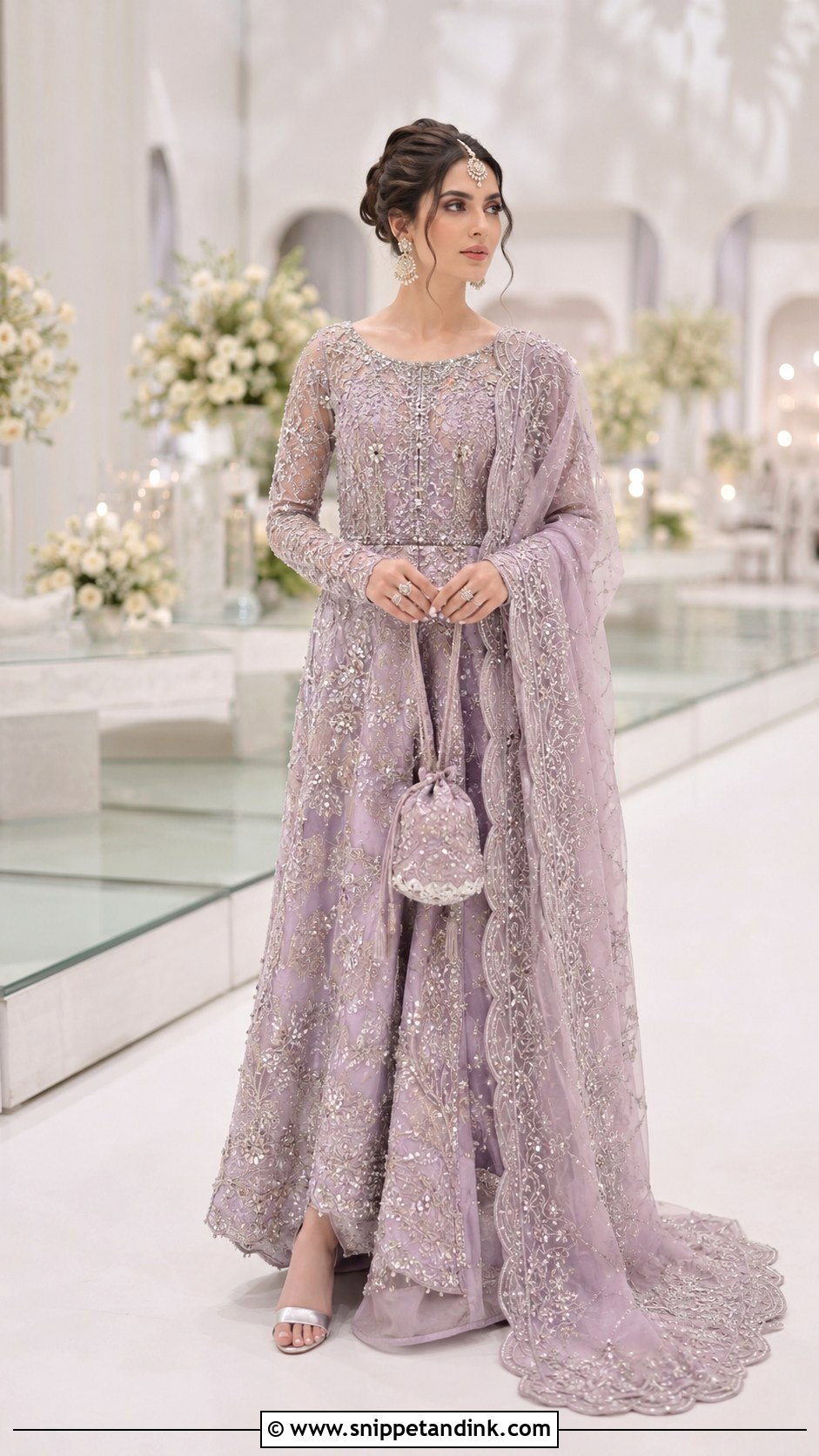
Lilac is more distinctive than blush and still soft on camera. A floor-length pishwas with a fitted bodice and sweeping skirt is the right base for it, with silver threadwork, pearls and crystals tracing the neckline and running lightly over the panels. A matching sheer dupatta with a narrow scalloped frame, silver heels, pearl earrings, a small crystal tikka and a lilac pouch keep the palette gentle. With heavy work at the neckline, leave the necklace off. Lilac picks up a blue cast in shade and a pink one in sun, so I’d look at swatches outdoors and in. Lavender-grey eyes, rosy lips and soft half-up waves complete it.
18. Mustard Yellow Mehndi Pishwas Haris Shakeel Bridal Dress
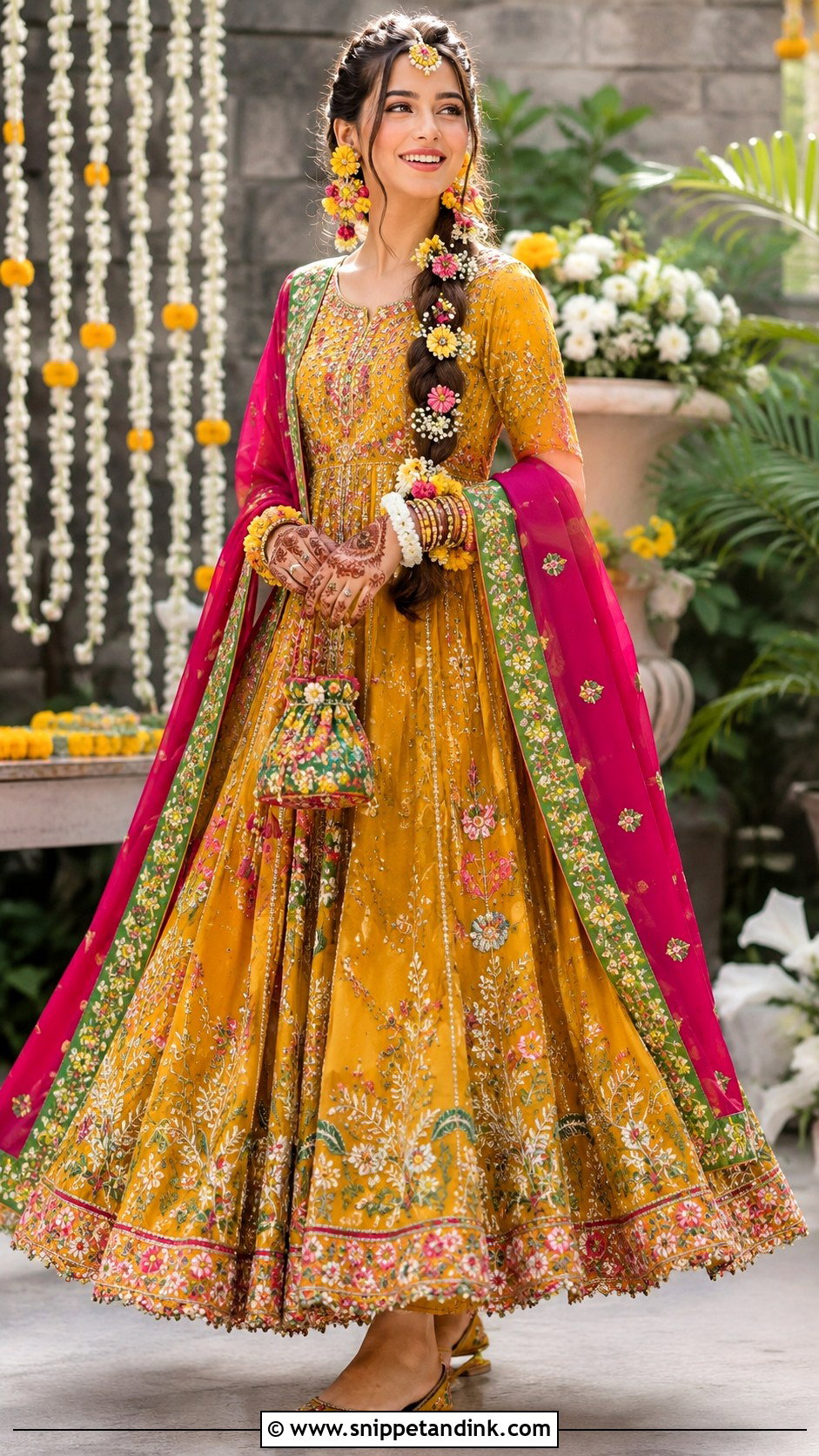
Mustard is bright without tipping into neon, and it hides turmeric if your mehndi and haldi overlap. A flared pishwas with a fitted top, comfortable sleeves and colorful floral embroidery at the bodice and hem pairs with a magenta dupatta featuring green edging for dimension. Floral earrings, stacked bangles, a delicate tikka and embroidered khussas keep it festive and wearable, and a green or pink potli repeats an accent. Check the skirt clears the floor in your chosen shoes, because mehndi means dancing. Glowing makeup, peach lips, softly defined eyes and a floral braid finish it.
19. Silver Gray Bridal Gown Haris Shakeel Bridal Dress
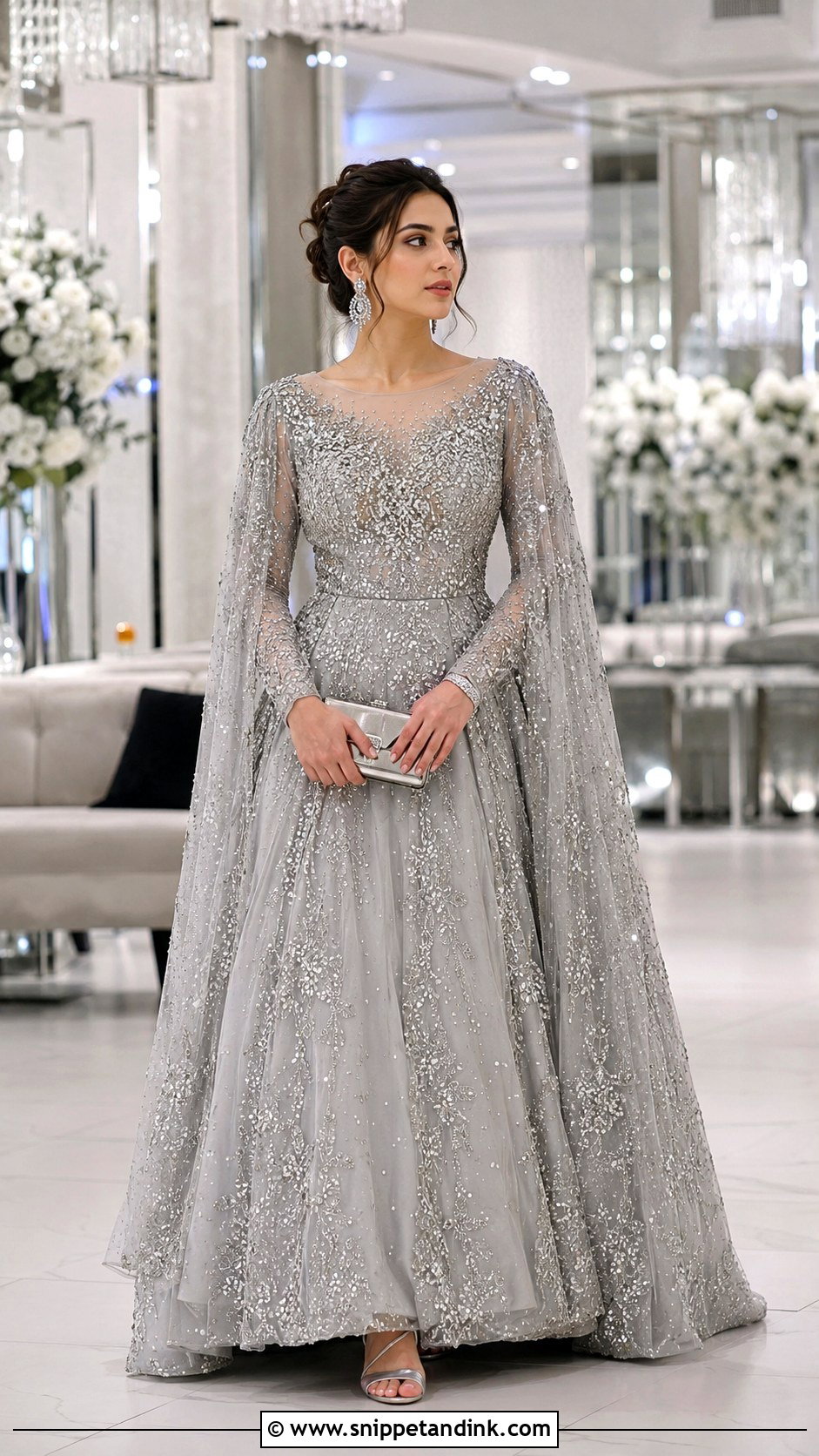
Silver grey is a sleek walima or formal reception look. A structured gown with a fitted bodice, full sleeves and a wide skirt carries layered silver embroidery and crystals, with tonal grey details so it doesn’t glare under lights. A removable sheer cape or light dupatta adds movement. Crystal earrings, a slim bracelet, silver heels and a small metallic clutch are plenty; reflective embroidery and big jewelry together scatter the eye. A structured gown needs its own underpinnings, so bring your shapewear to every fitting. Cool neutral eyes, soft pink lips and a smooth low bun finish it.
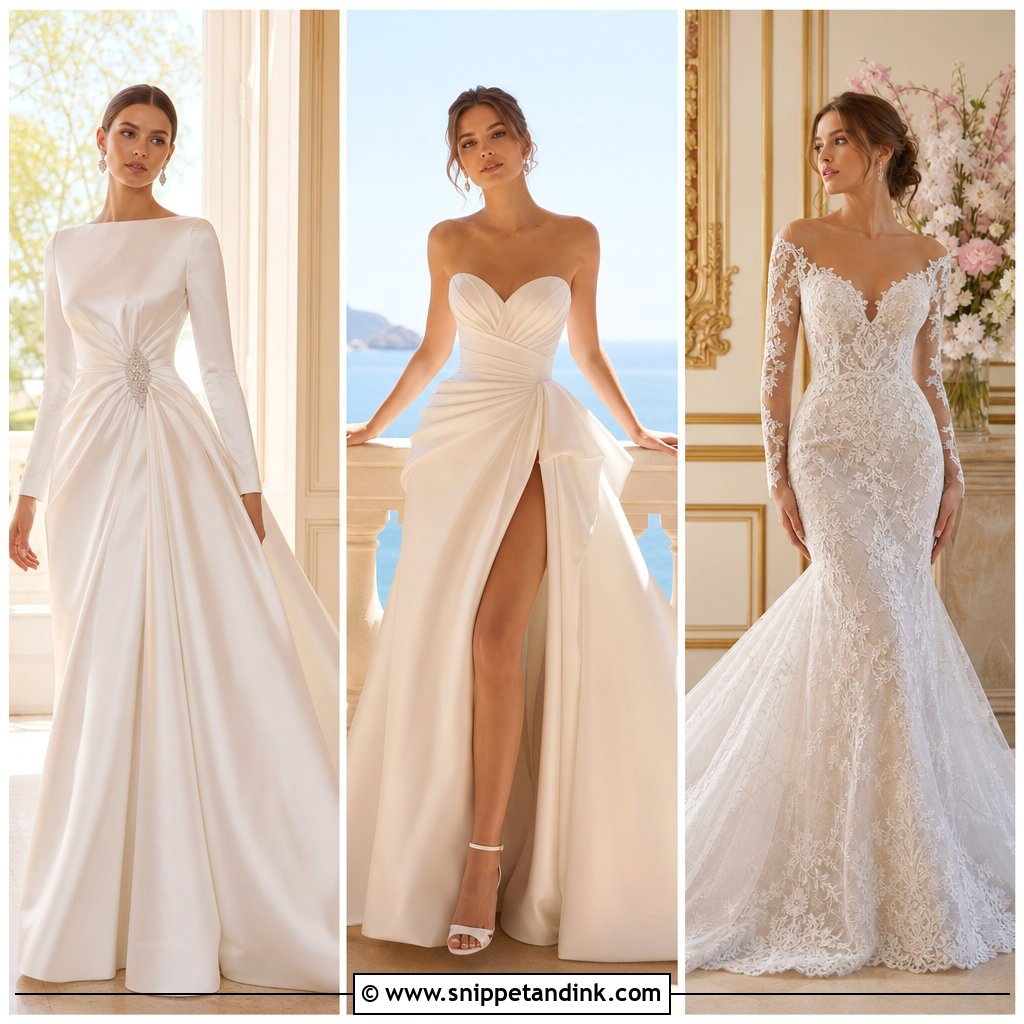
20. Black And Gold Bridal Lehenga Haris Shakeel Bridal Dress
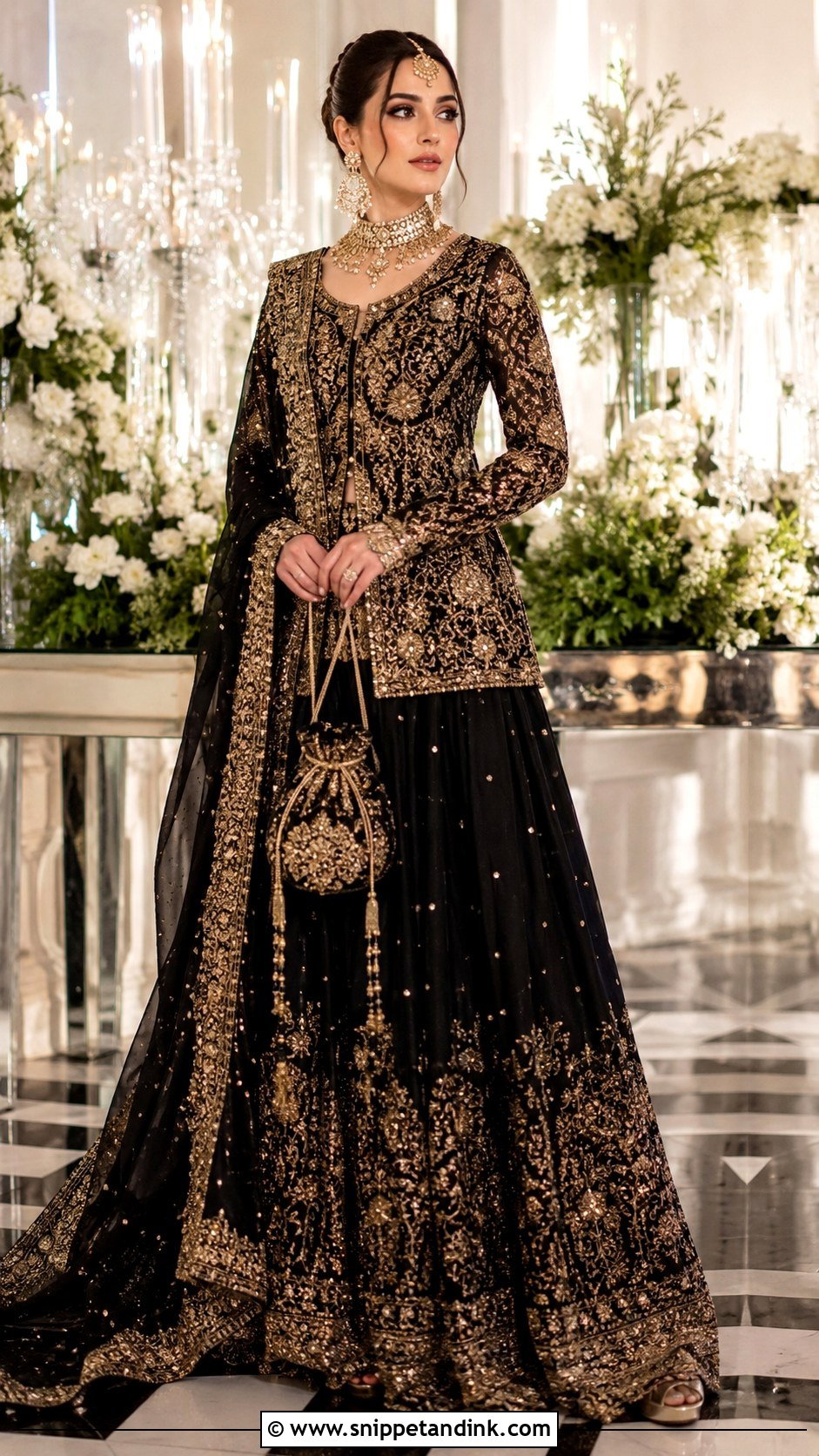
Black and gold is the dramatic choice, and I’d raise it with your family before ordering, since some elders still see black as unlucky for a bride. A fitted long-sleeved blouse or knee-length shirt in antique gold embroidery, over a full black lehenga with spaced motifs and a broad border, makes a striking reception outfit. A sheer black dupatta keeps it coordinated; ask for a muted gold underside so the fabric near your face isn’t heavy and dark. Antique gold jewelry, a layered choker, drop earrings, a small tikka, black-and-gold platforms and a structured potli complete it. Bronze eyes, soft contour, a muted berry lip and a sleek bun suit it.
Ordering From Abroad on Measurements Alone
Many brides buy Pakistani designer wear from another country and never stand in the atelier. That can work well, but the measurements have to be right, because altering heavy embroidery after it’s finished is slow and sometimes impossible.
- Have someone else measure you, wearing the bra you’ll wear on the day, and measure twice.
- Ask the designer for their own measurement chart rather than sending sizes from a western label.
- Confirm finished lengths with your shoes in mind, especially for farshi and pishwas hems.
- Ask for photos of the piece on a form before it ships, including the back and the dupatta border.
- Allow for shipping, customs and a local tailor’s final fitting, so the outfit lands weeks ahead, not days.
Keep a local tailor in mind who has worked on embroidered bridal pieces. Small fixes like taking in a side seam, moving hooks or shortening a sleeve are usually possible; reshaping an embroidered bodice is not, which is why the first set of measurements matters most.
A Bridal Outfit Is Judged Over Hours, Not One Photo
Every outfit here relies on color, cut, embroidery and accessories working as one picture. A farshi lehenga gives traditional grandeur, a pishwas softer movement, a gharara heritage character, and a gown a modern reception option. Before you order, confirm the fabric, finished measurements, embellishment weight, customization, delivery date and exactly where the dupatta will be pinned. Ask for daylight photos or real swatches, because screens shift color. And choose the one you can sit, walk and celebrate in, since you’ll wear it far longer than the photographs suggest.
You'll Like These Ideas:


Leave a Reply