
An easy wedding dress isn’t a plain one. In my fitting room it means a dress you can get into without three helpers, sit in through dinner, dance in without holding it up, and forget about once the photos are done. The shapes that do that best are still the clean A-line and sheath shapes, though corset bodices, Basque waists, bows and detachable second-look pieces have joined them. What makes a dress easy for you depends on your day: a garden walk, a city hall ceremony and a ballroom first dance all ask different things of the fabric and hem. For each of the twenty dresses below I’ve added the shoes, jewelry, veil and flowers I’d use, and the one fitting check that keeps it comfortable.
Off the Rack, Sample or Made to Order: How Much Time You Really Have
Easy also applies to buying the dress. Most bridal gowns are made to order after you choose them, and the wait for delivery is often several months, with alterations taking another couple of months on top. Timelines vary a lot between designers, so ask the shop for the current estimate in writing before you pay a deposit.
If your wedding is soon
Off-the-rack dresses and sample sales are the fastest route, since you take the gown home the same day. Samples have been tried on many times, so I check underarms, hems and zips for wear and makeup marks and ask the shop to clean it. Simple shapes in crepe or satin adapt best to alteration; heavily beaded or boned gowns are harder to take in or let out quickly.
- Ask whether rush delivery is offered and what it costs before falling for a made-to-order style.
- Size for your measurements on the shop’s chart, not your usual clothing size; bridal sizing often runs small.
- Book alterations as soon as the dress arrives, and plan on two or three fittings.
- Bring your shoes and undergarments from the very first fitting.
1. Simple Satin A-Line Wedding Dress
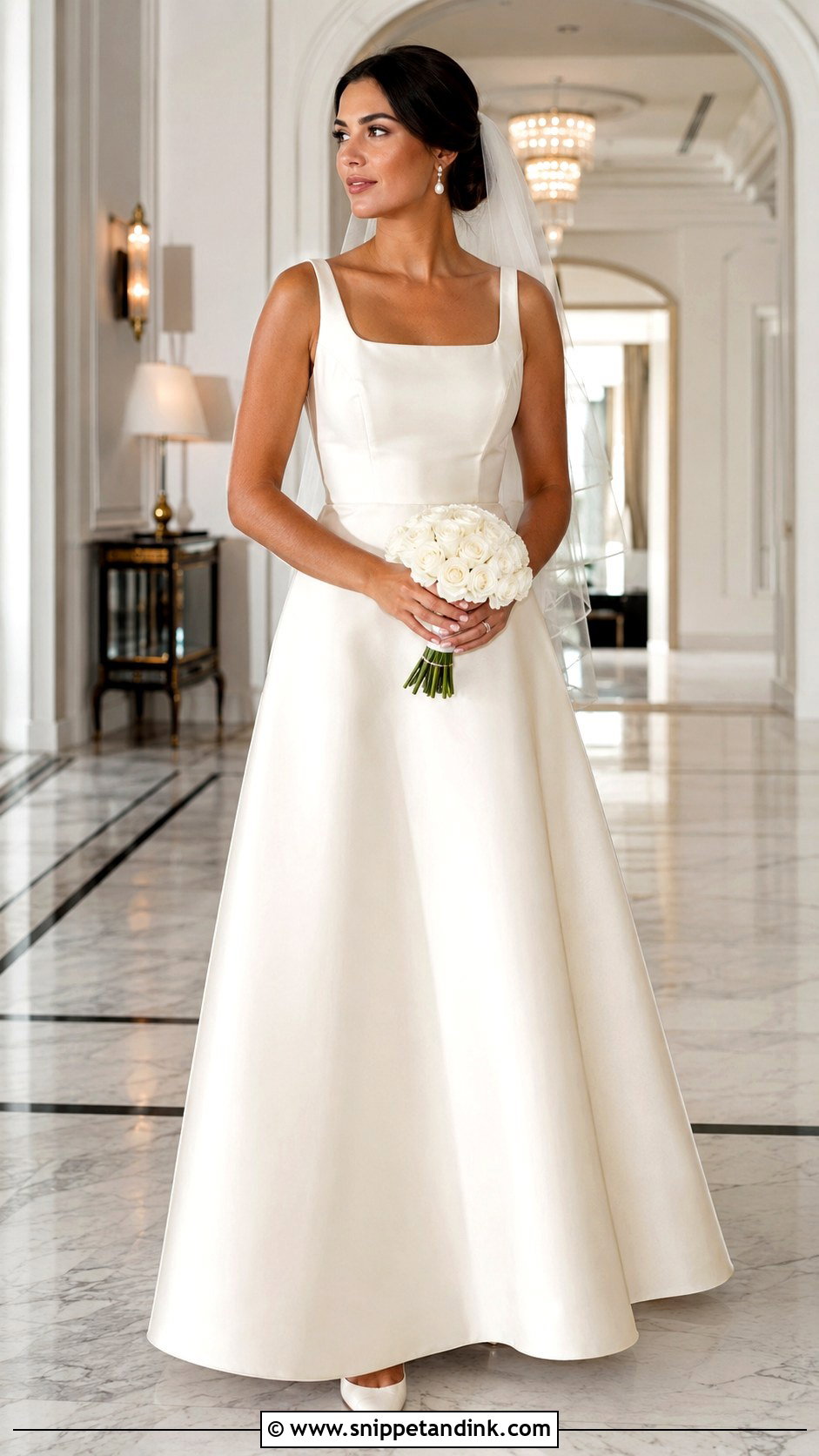
Satin A-lines are the dress I reach for when a bride says she wants something classic and can’t decide. A softly structured bodice with wide straps or a gentle V, then a skirt falling cleanly from the natural waist, suits most figures. Ivory satin has a rich, low sheen without needing decoration. Pearl drops, a fingertip veil and pointed ivory pumps complete it, with a compact bouquet of white roses or seasonal greenery. Satin does show every crease from sitting in the car, so steam it at the venue, not at home. Ask for a hidden bustle so the train lifts before dancing.
2. Square Neck Crepe Wedding Dress
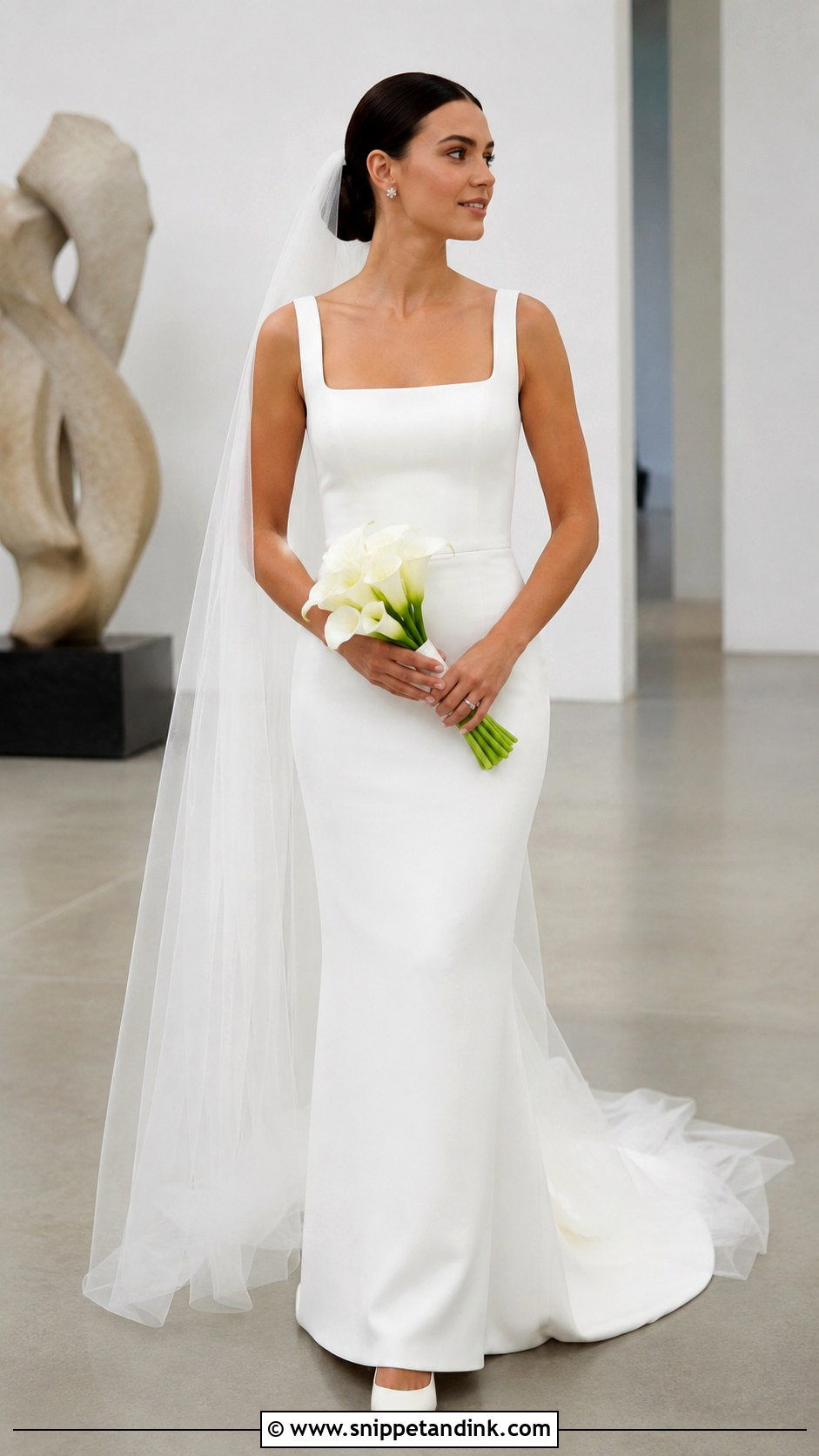
Medium-weight stretch crepe is the most forgiving fabric I fit. It holds its line, barely creases and moves with you. On a square neck sheath or soft fit-and-flare, the neckline frames the collarbone and thicker straps give real support, which spaghetti straps can’t. Low block-heel pumps, small diamond or crystal studs and a sleek center-parted bun keep it modern. A plain cathedral veil gives ceremony drama; a short tulle veil is more relaxed. Carry calla lilies or a compact one-color bouquet. Galleries, lofts and restaurants suit its understated lines.
3. Lace Sleeve A-Line Wedding Dress
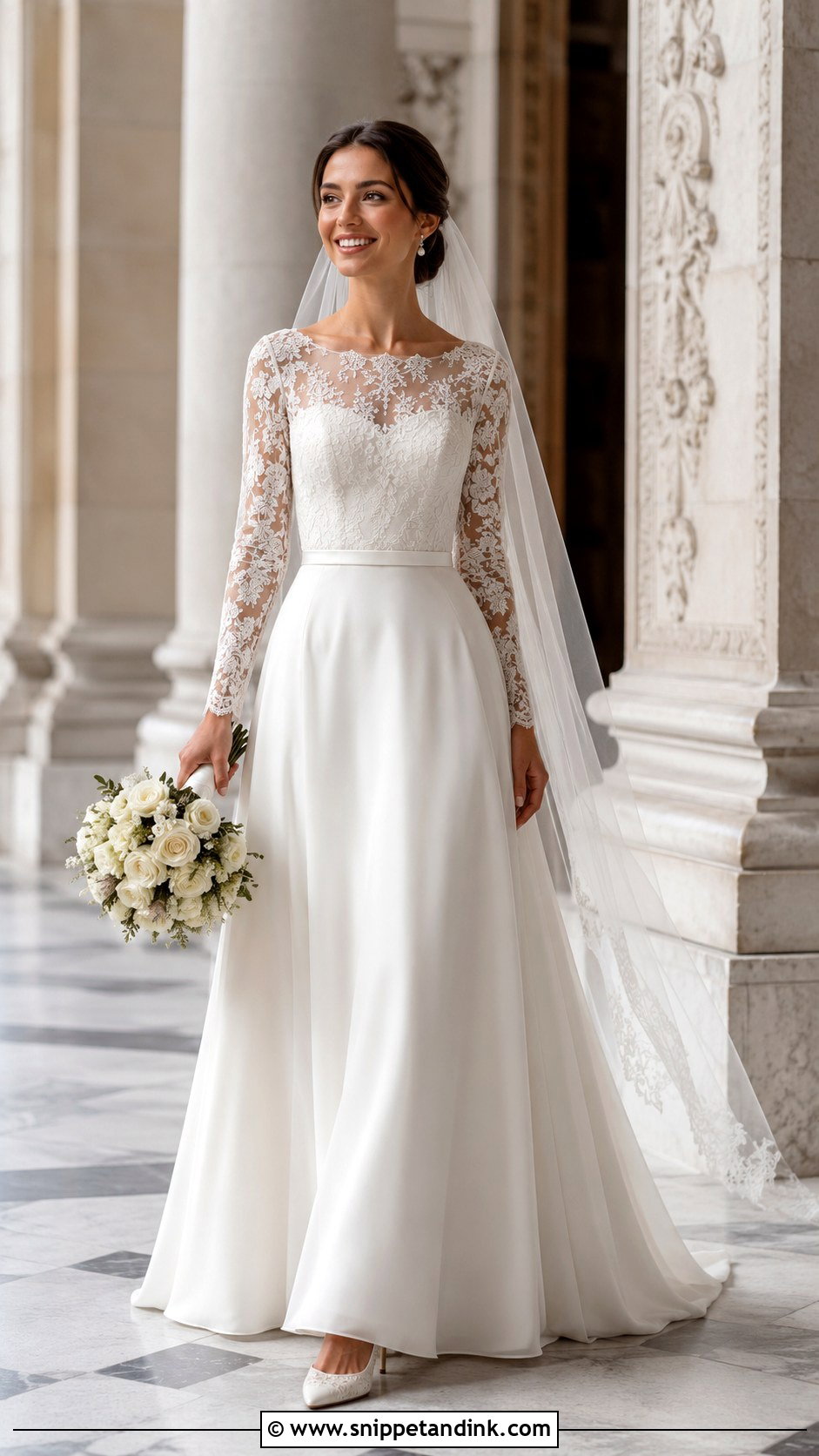
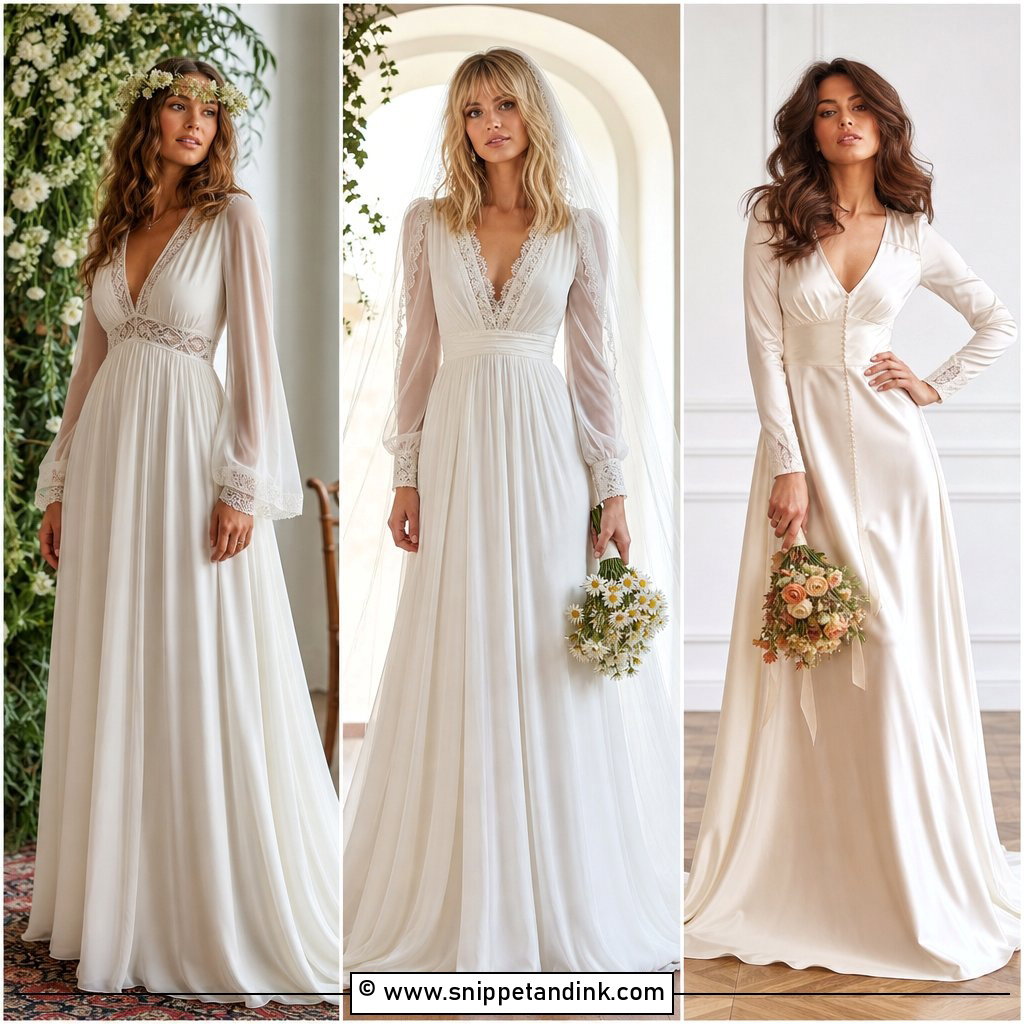
Lace sleeves give arm coverage without the heat of a full lace gown. Choose a lined bodice with an illusion lace neckline or a plain V, depending on how covered you want to feel, and a lightly gathered chiffon or tulle skirt to balance the detail on top. My test for lace sleeves: reach both arms forward as if hugging someone. Lace has little stretch, and sleeves cut too close will pull at the shoulder seam. Closed-toe kitten heels, pearl earrings and a low textured bun finish it. Skip a belt if the lace already ends at a clear waistline, and keep the veil edge plain so two patterns don’t compete. Fall ceremonies and historic venues suit it.
4. Chiffon Empire Waist Wedding Dress
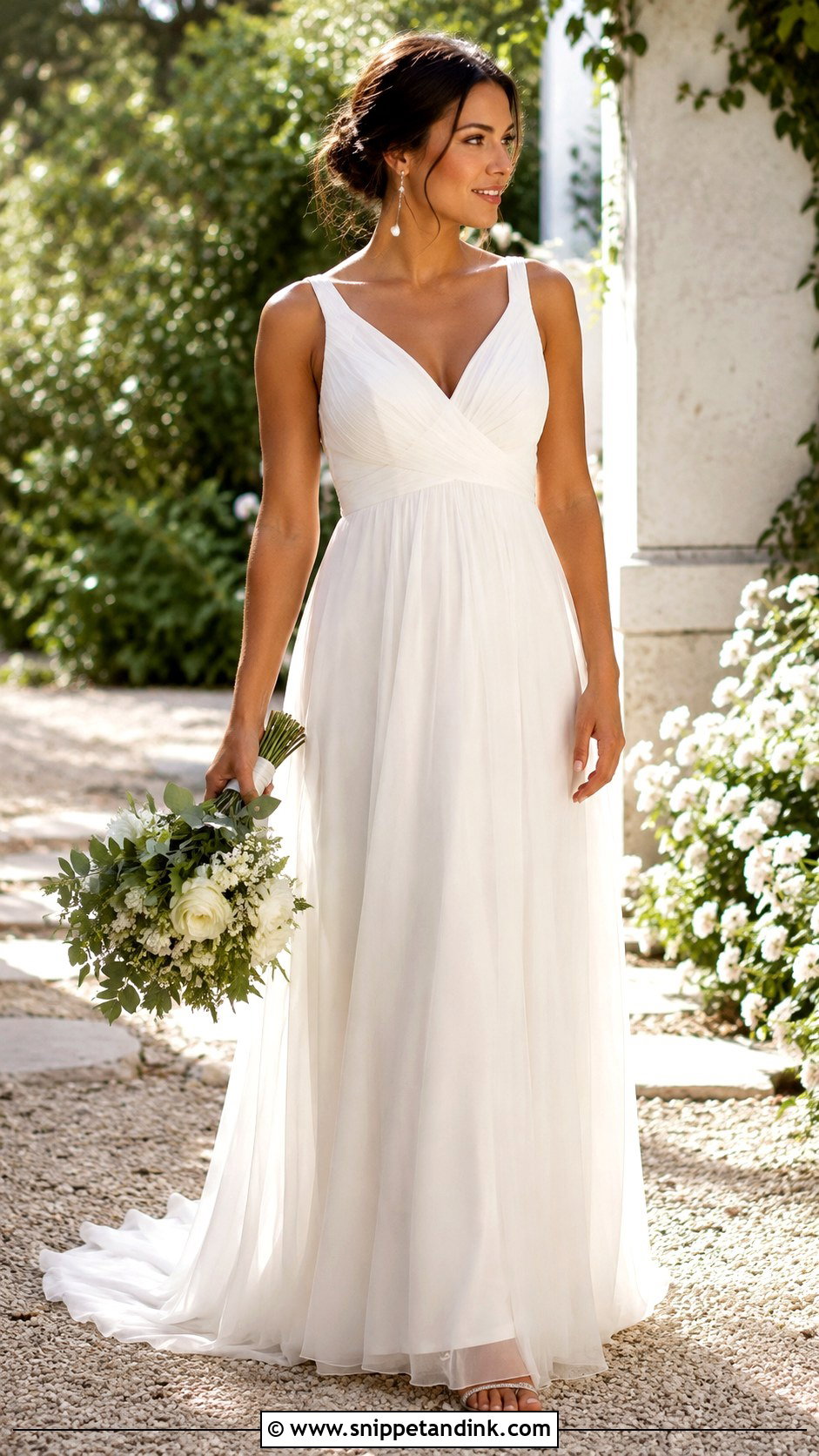
Honestly, the empire waist is the most comfortable silhouette on this list. The seam sits just below the bust and the chiffon skims past the waist and hips, so there’s nothing pressing on you after a meal. Choose a supportive bodice with wide straps, flutter sleeves or a soft wrap neckline; chiffon over a weak bodice sags by evening. Low embellished sandals or stable block heels handle outdoor ground. Delicate earrings, a thin bracelet and loosely pinned waves keep it light, along with a flowing bouquet and a short veil. Warm-weather and destination weddings are where it shines.
5. Tea Length Wedding Dress
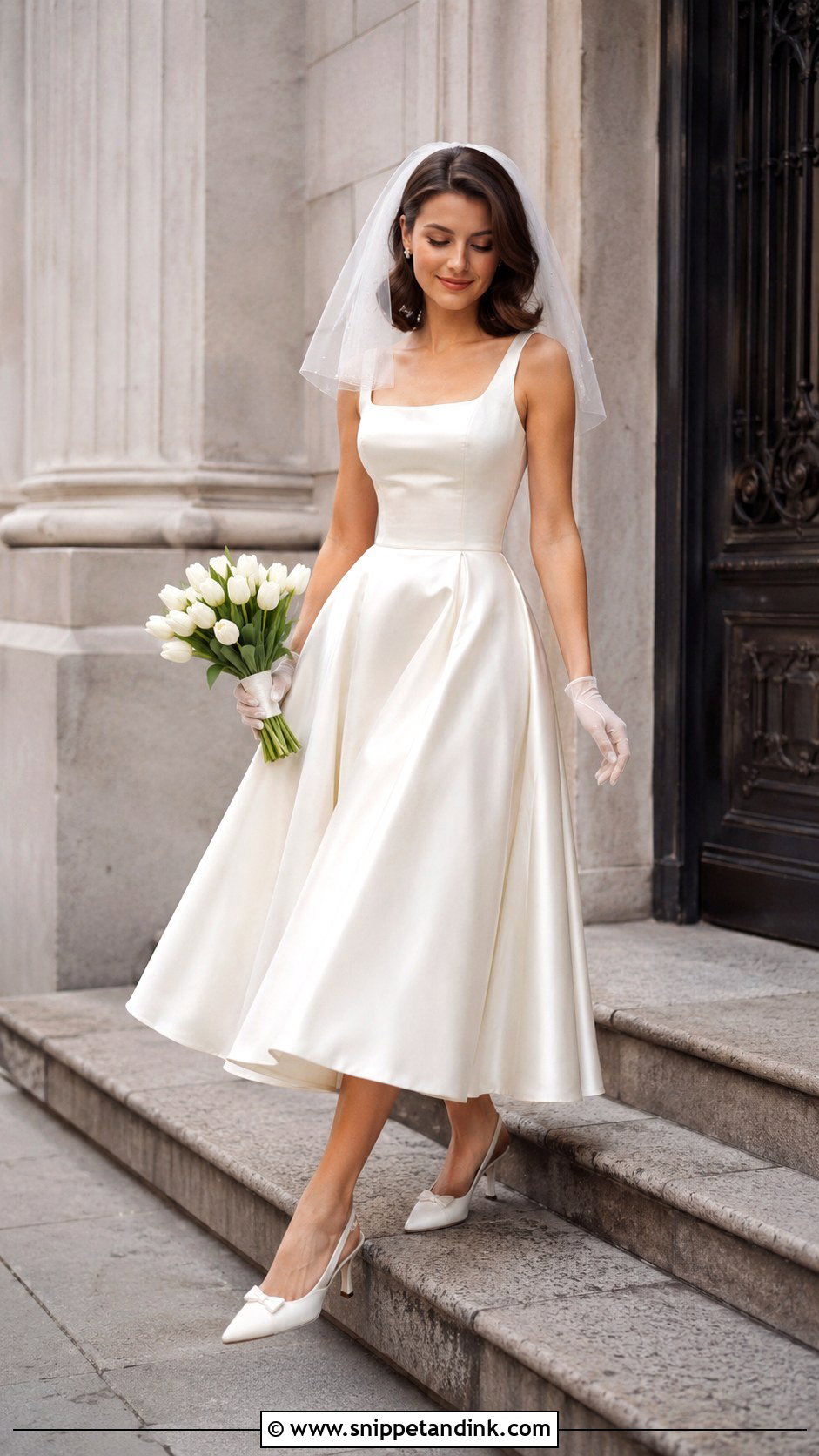
Tea length ends between the knee and ankle, and that hem position is everything. Get it wrong and it cuts the calf at its widest point. I always pin the hem with the bride in her actual shoes, because a two-inch heel changes where it should fall. A fitted bodice and softly flared skirt in satin, mikado, lace or structured crepe hold the shape. With shoes on show, choose them carefully: pointed pumps, slingbacks or polished bridal flats. Pearl studs, short gloves and a birdcage or shoulder-length veil give a retro finish, with a small bouquet of tulips or roses. It’s lighter to dance in than any floor-length skirt.
6. Silk Slip Wedding Dress
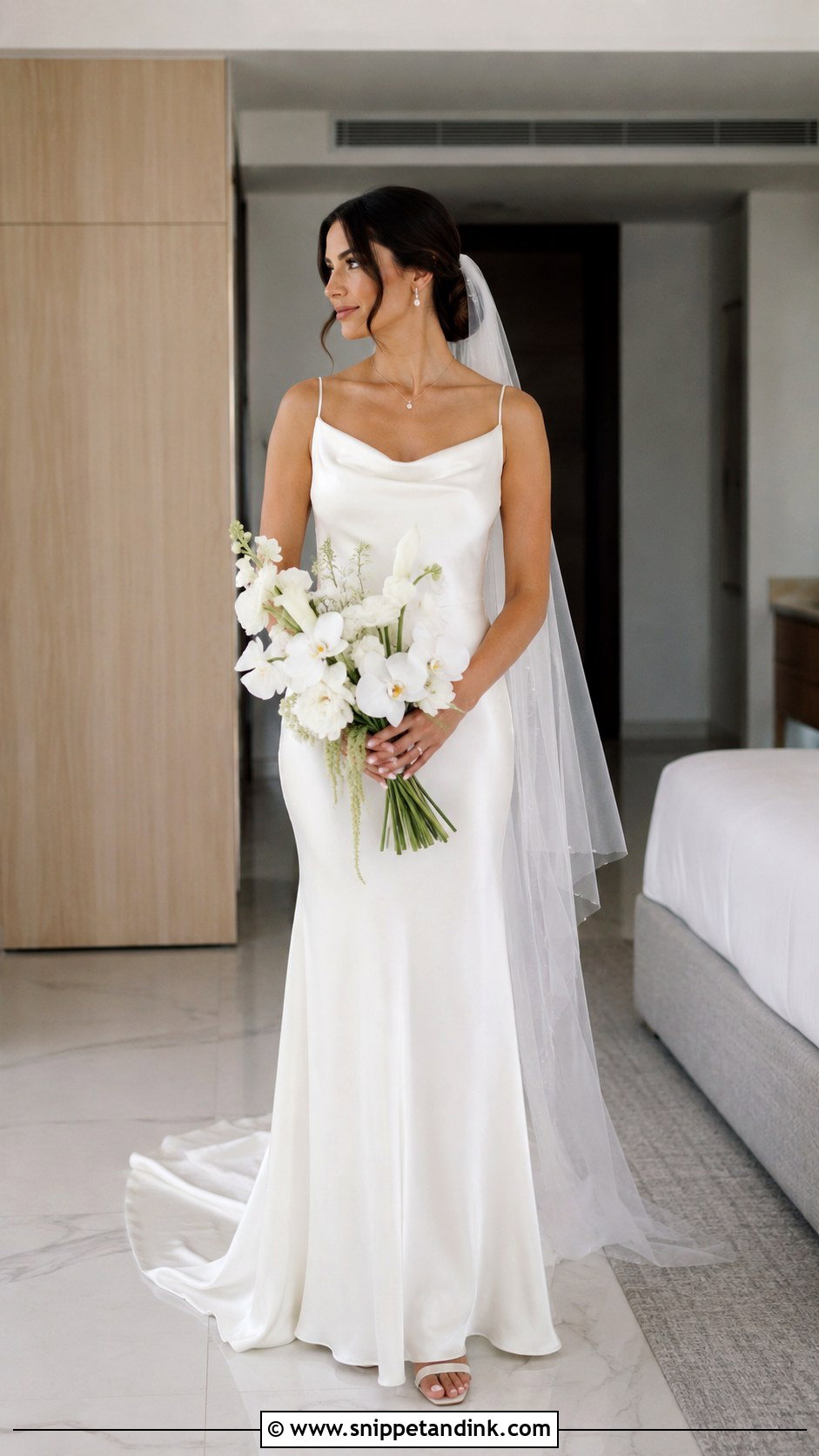
A slip dress is simple to wear and quite demanding to fit. The bias-cut gown should skim, not cling, and silk reveals every line underneath, so bring the exact underwear you’ll wear to each fitting and test smooth, laser-cut pieces. A cowl neckline softens the front; a straight neckline looks more minimal. Barely there ivory sandals, a fine pendant and small drops are plenty, with a low bun or brushed-out waves. A long sheer veil or a silk scarf veil adds movement for the ceremony. Long-stemmed white flowers repeat the gown’s long line. Beaches, intimate dinners and modern hotels all suit it.
7. Off The Shoulder Wedding Dress
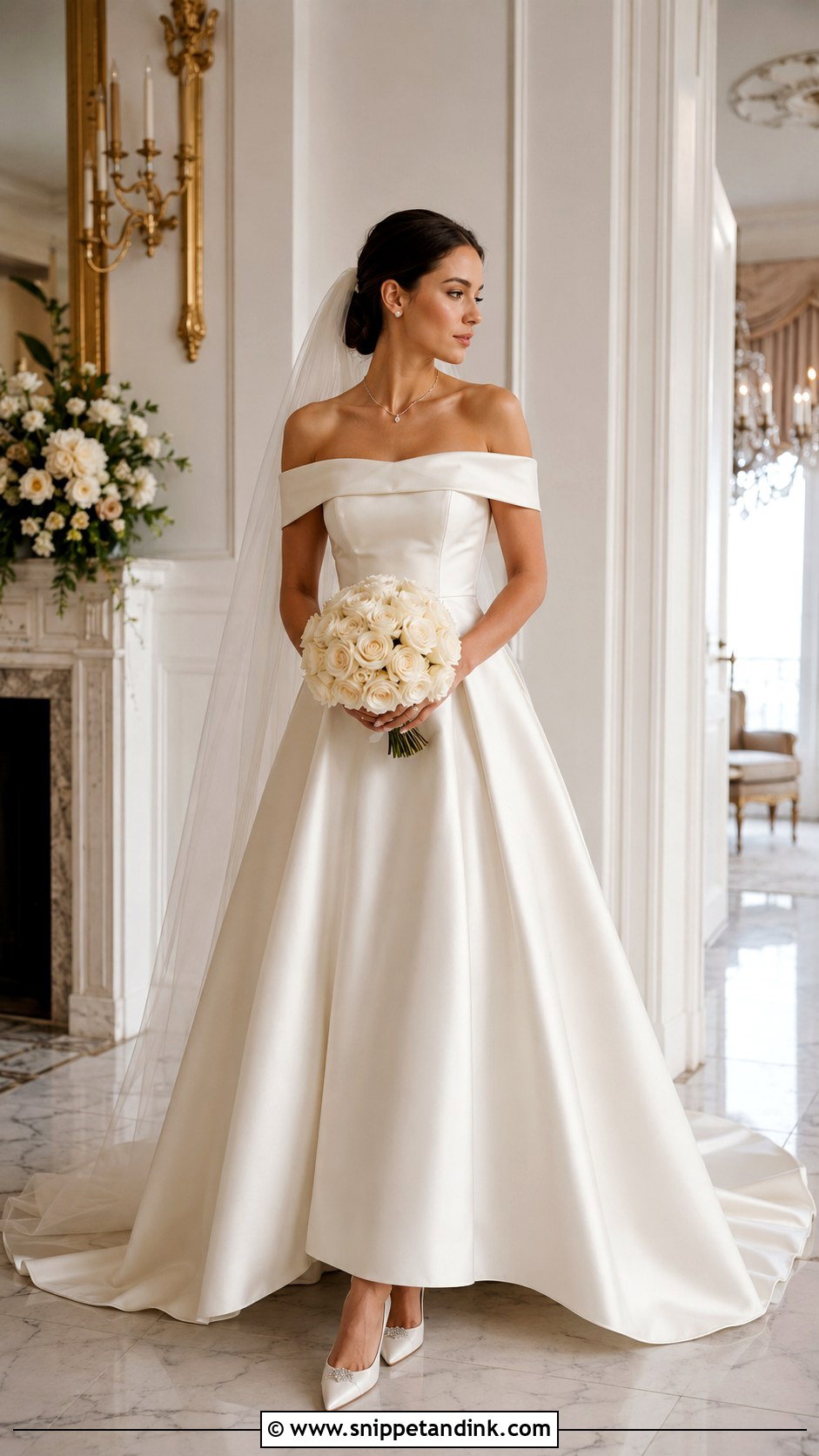
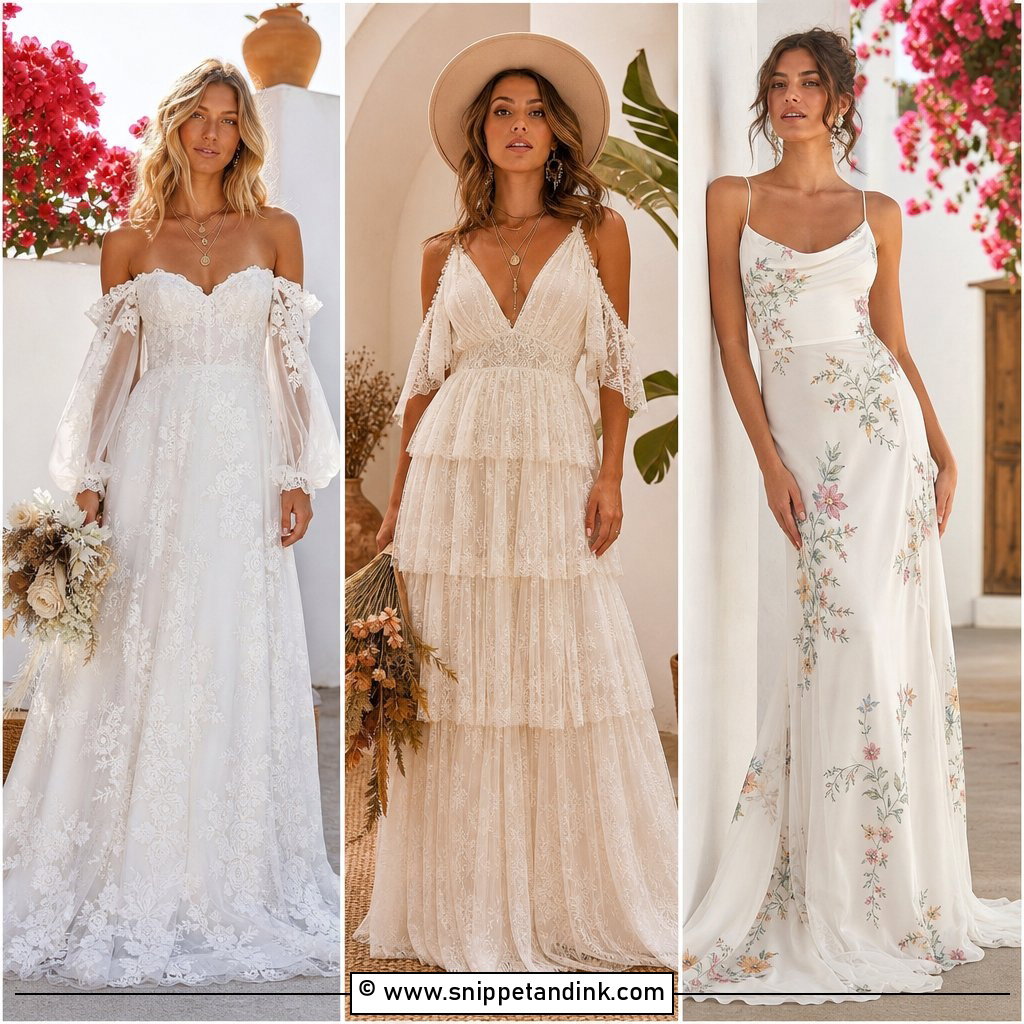
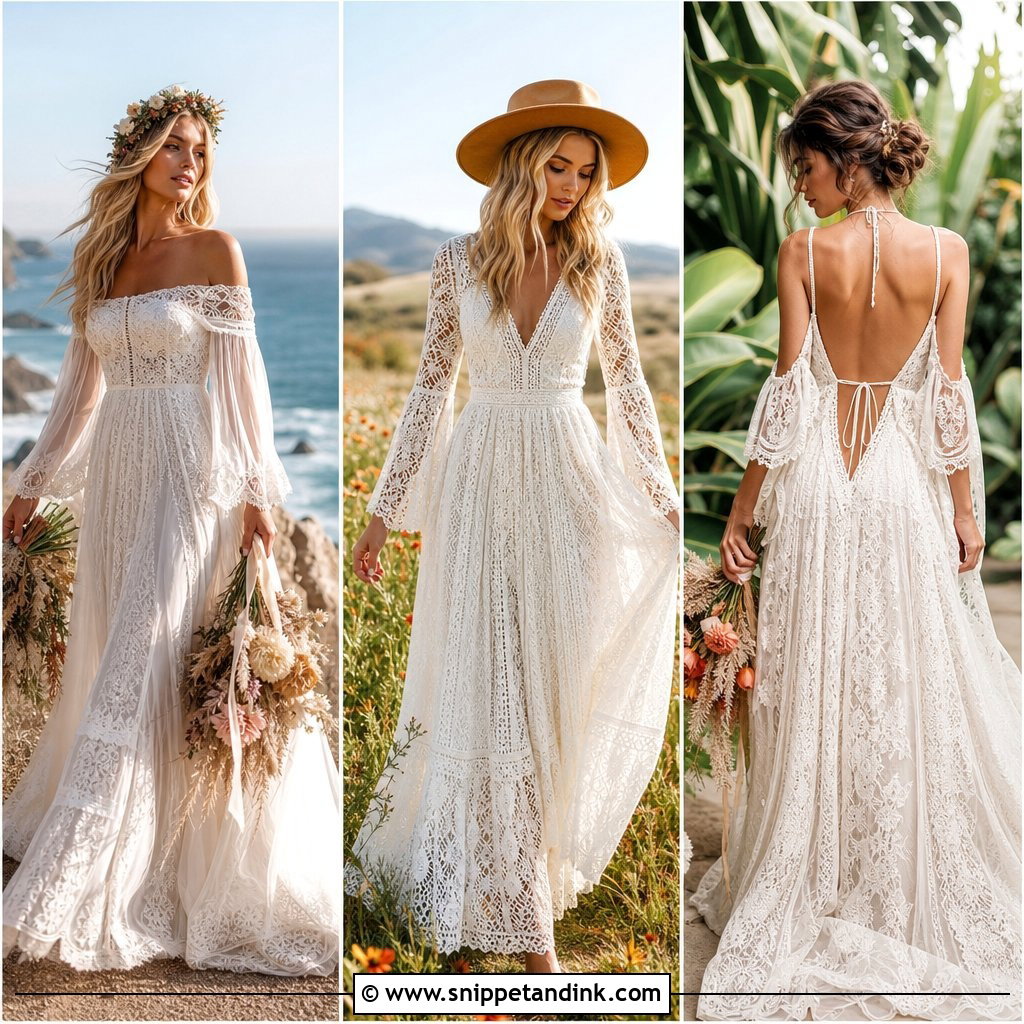
Off-the-shoulder necklines need a test most brides skip: lift your arms, hug someone, reach for a glass. If the band rides up or slides down, it needs more internal support. A folded satin band is the structured option; soft tulle sleeves are lighter. Balance the bare shoulders with an A-line or gently fitted skirt, and wear a strapless foundation garment if the gown has no built-in corsetry. A collarbone-length necklace, studs and a low chignon keep the neckline visible. Pointed heels, a medium-length veil and a rounded bouquet in white, cream or pale blush complete the look.
8. Long Sleeve Crepe Wedding Dress
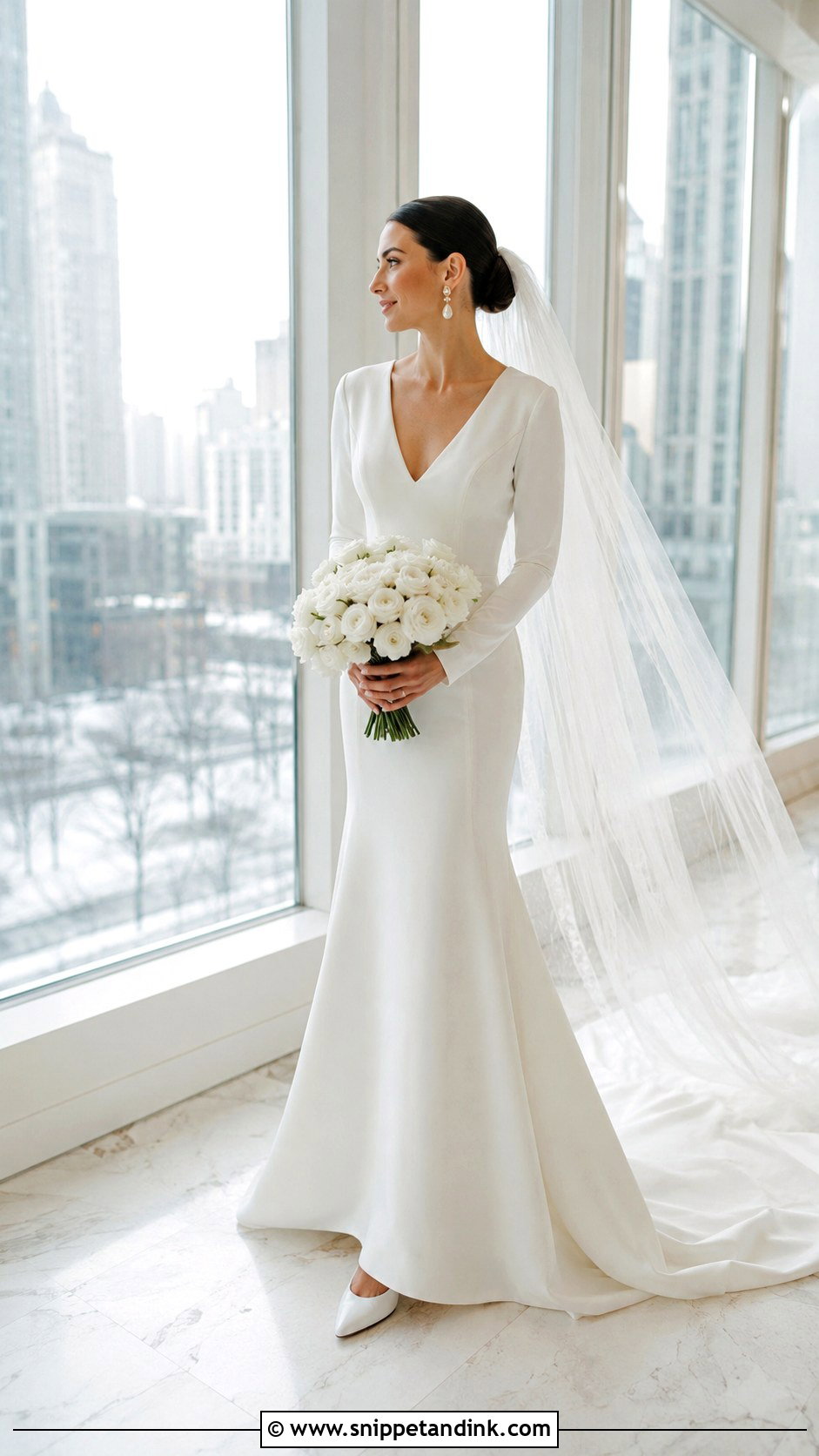
Cool weather and long sleeves go together, but bulk doesn’t have to come with them. Fitted stretch-crepe sleeves, a bateau or V-neck and a softly shaped waist look refined, and a lined bodice keeps the surface smooth. Keep the skirt streamlined: sheath, column or a modest fit-and-flare. Pointed ivory pumps, sculptural earrings and a sleek low bun suit it. A cathedral veil gives the ceremony impact and comes off for the reception. White blooms with deep green foliage make a quiet seasonal bouquet. Before the final alteration, bend your elbows and lift a fork; tight sleeves are the first thing brides complain about at dinner.
9. Halter Neck Wedding Dress
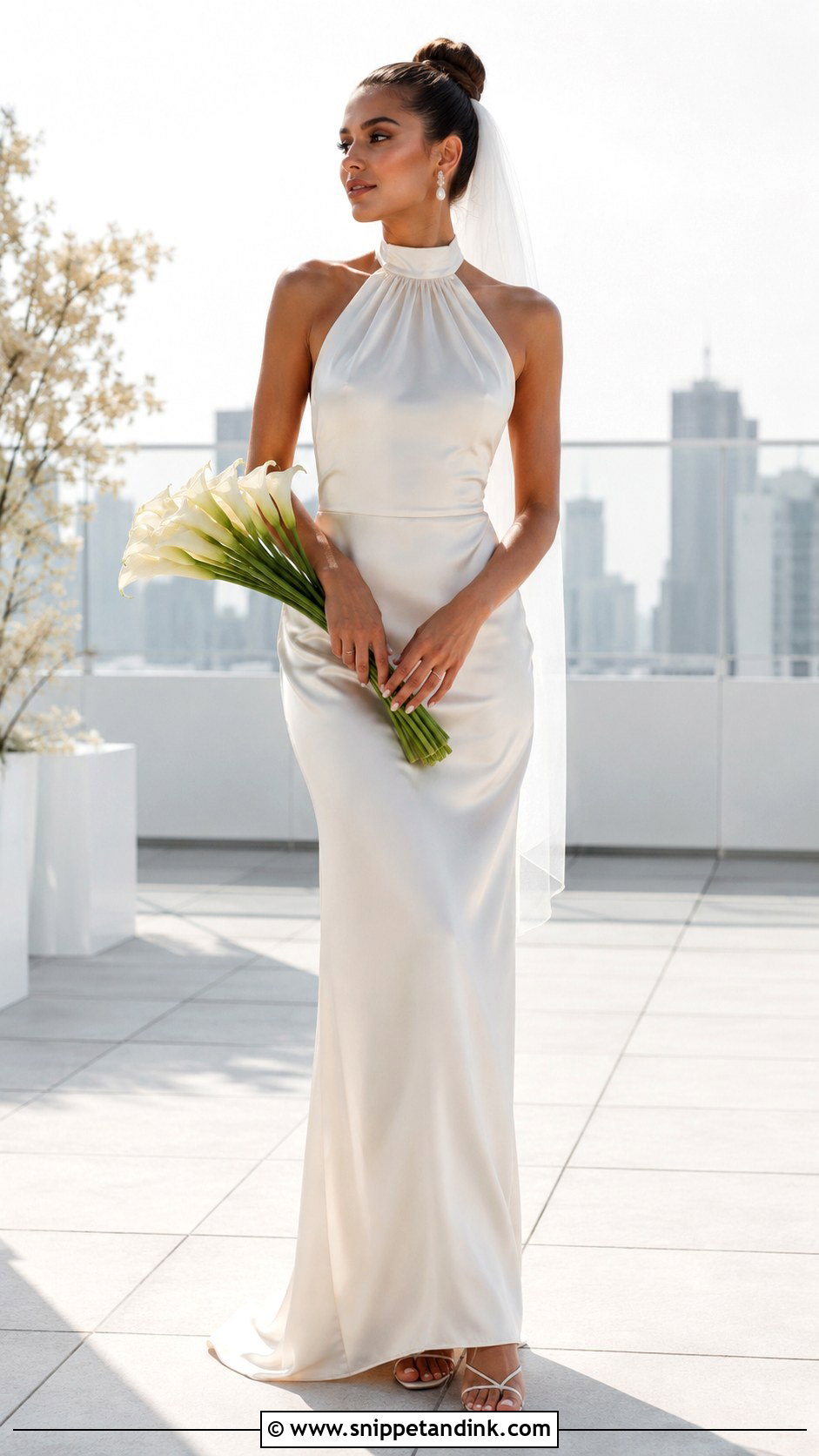
Halters show off the shoulders and back, and the decision is between a soft gathered neck and a sharp banded collar. Satin, crepe and lightweight chiffon all work, chosen by venue and season. Balance it with a straight skirt, gentle A-line or low open back. Skip the necklace, which fights the neckline, and wear statement earrings. Strappy heels, a smooth updo and a simple veil attached beneath the bun complete it. The halter strap carries the bodice weight from the neck, so for a fuller bust I’d ask for internal support or a hidden back band. Rooftops, resorts and warm-weather ceremonies suit it.
10. Corset Bodice Wedding Dress
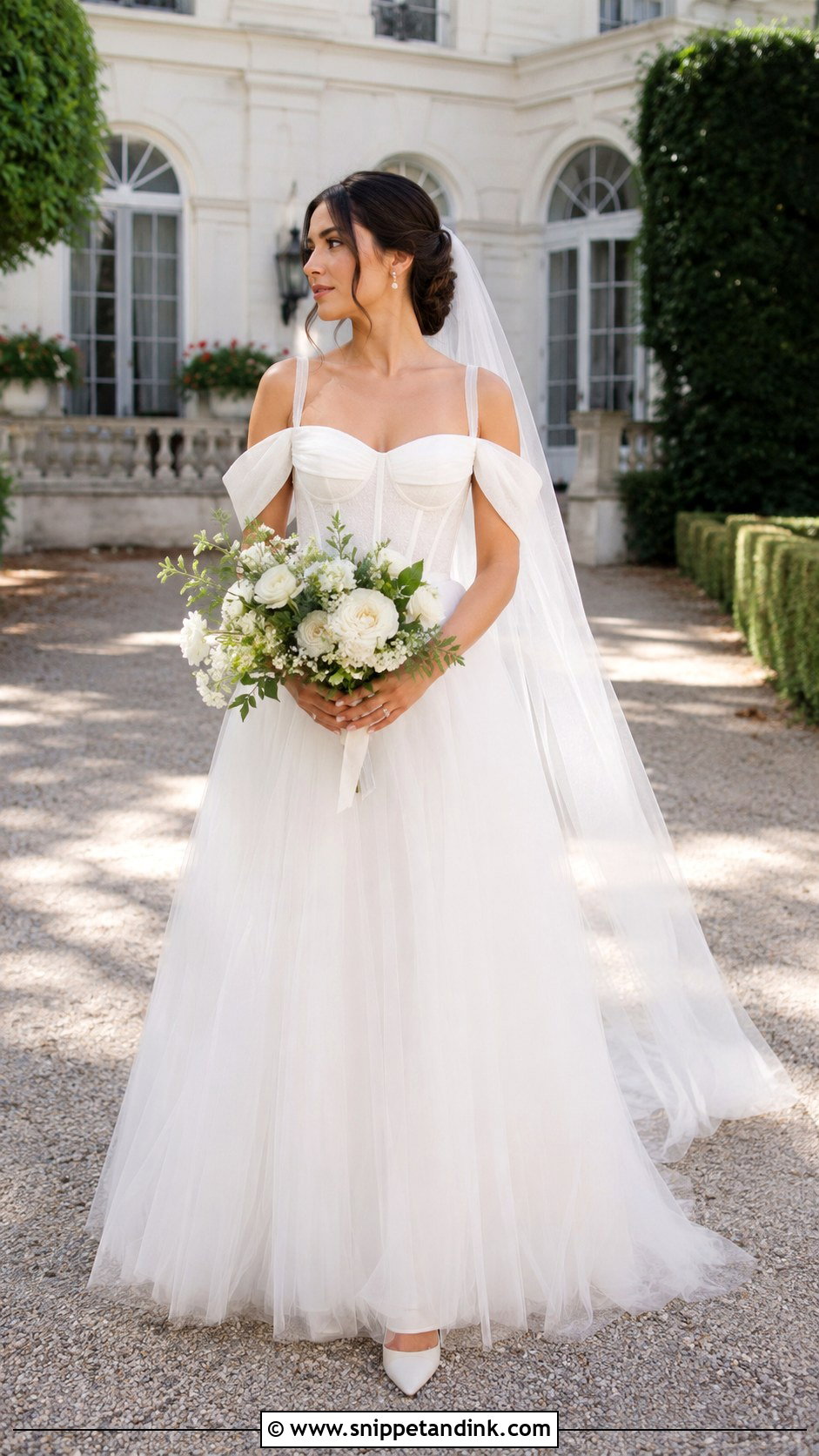
A well-built corset bodice is supportive, not punishing. Look for secure boning, a lined front and straps or detachable off-the-shoulder sleeves. Pair it with a simple A-line skirt so the gown doesn’t tip into ornate, in satin for clean lines or layered tulle for volume. Pearl drops, closed-toe pumps and a minimal fingertip veil go with it, plus a loose low bun and small garden bouquet. At fittings, I ask brides to sit, walk and take a deep breath. If any boning digs at the hip or underarm, that’s an alteration, not something to tolerate. A correct fit matters far more than the tightest one.
11. Basque Waist Wedding Dress
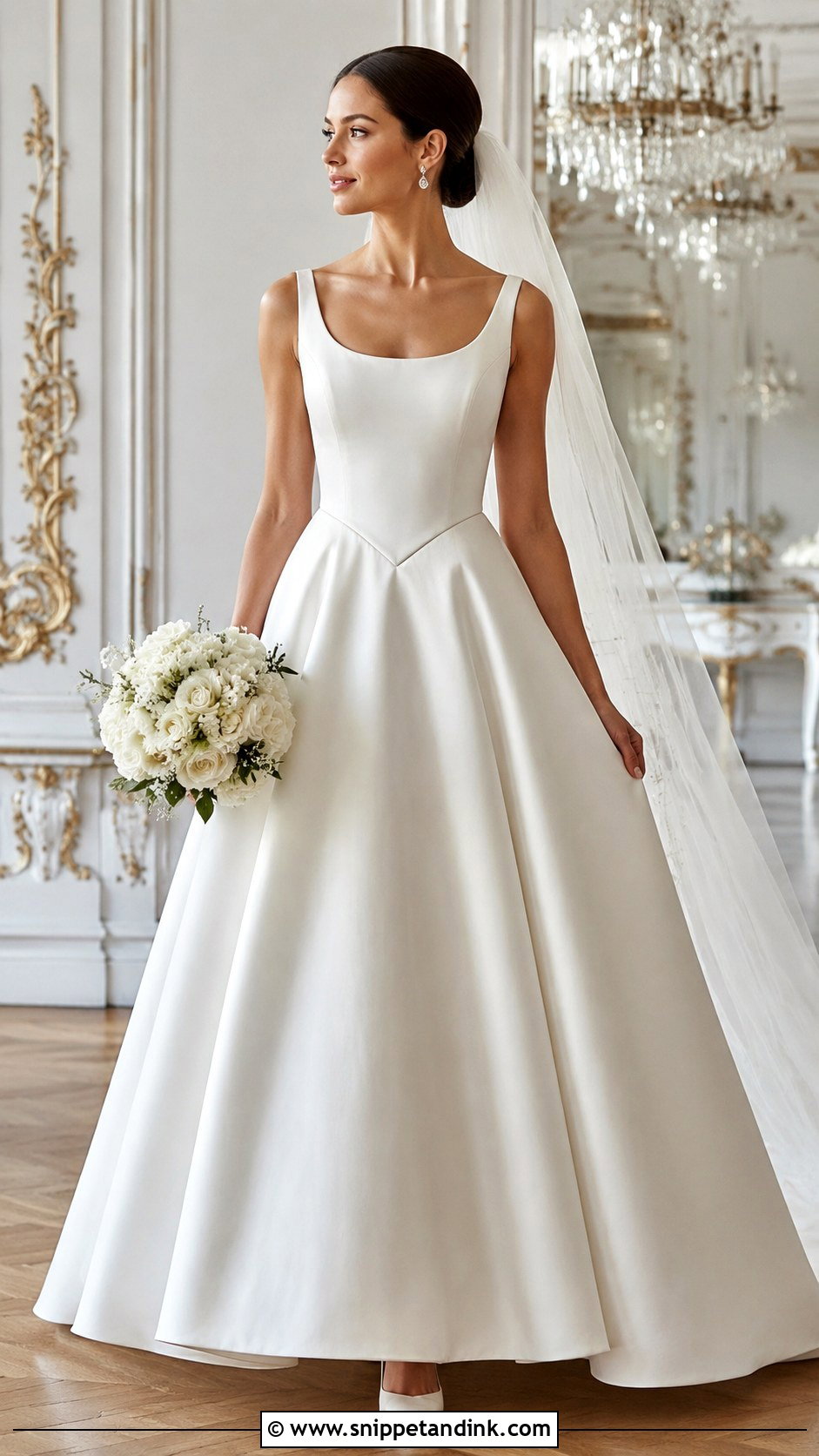
The V-shaped dip of a Basque waist wedding dress lengthens the torso, and it only works if that point sits exactly at center front. Even a slight shift makes the whole bodice look twisted. A smooth satin or mikado gown with little embellishment keeps it manageable, with a scoop, square or strapless neckline and an A-line or ball gown skirt. Classic pumps, teardrop earrings and a plain long veil complete it, with a neat bun. Carry a medium bouquet rather than a cascade that hides the waistline. Test it seated; the point can press into the stomach if cut too low.
12. Floral Appliqué Wedding Dress
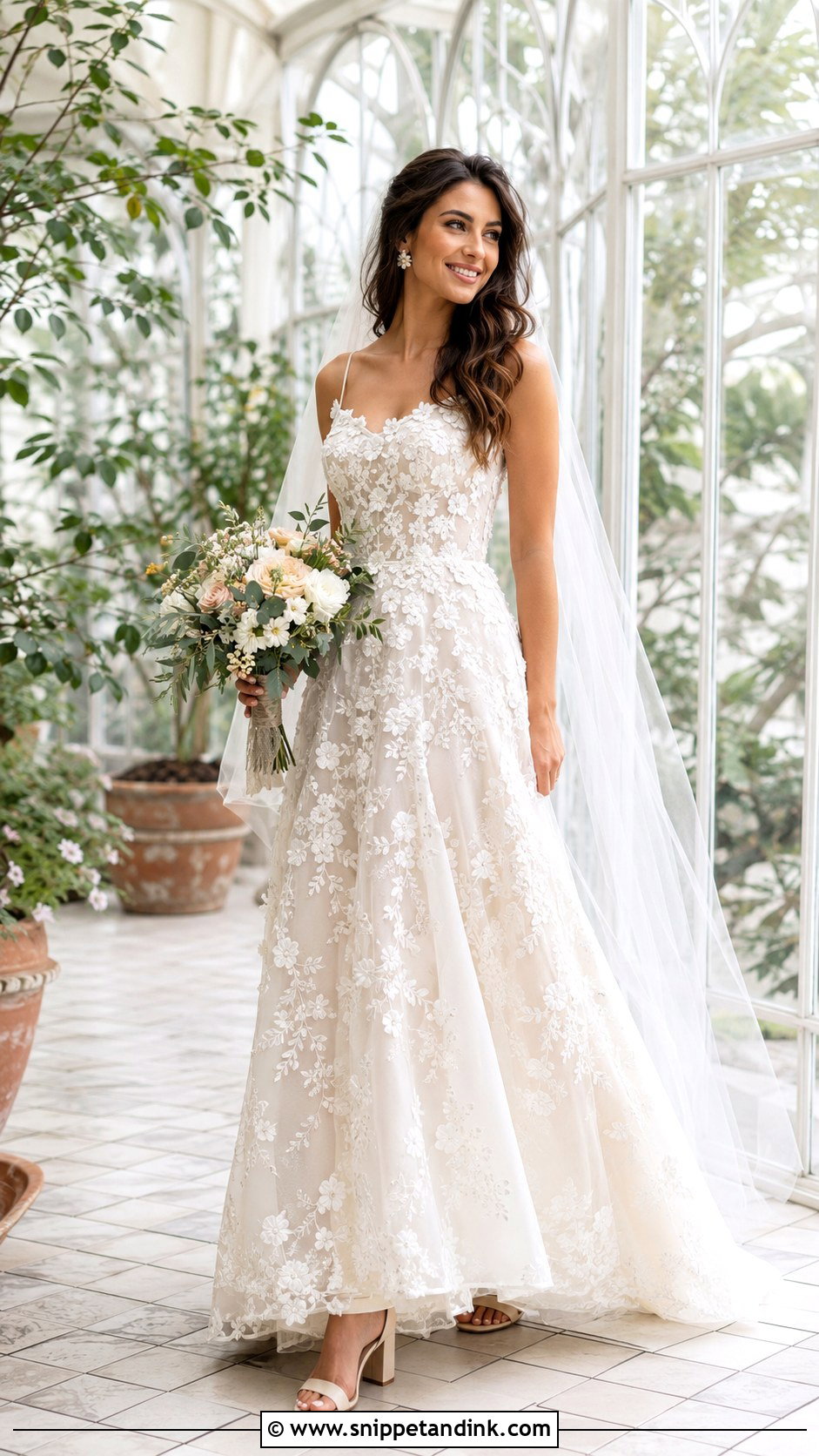
Appliqués help you more than you’d think: they hide small marks and wrinkles that would show on plain satin. The best layouts cluster on the bodice and scatter lightly down the skirt. A neutral lining keeps the gown bridal, and blush or blue flowers add personality. Simple ivory block heels, tiny floral earrings and a plain-edged sheer veil keep accessories quiet, with loose waves or a soft bun. Choose a bouquet that complements the flowers on the dress without copying them, and resist adding floral hair pieces too. Gardens, vineyards and greenhouses suit it in spring and summer.
13. High Neck Lace Wedding Dress
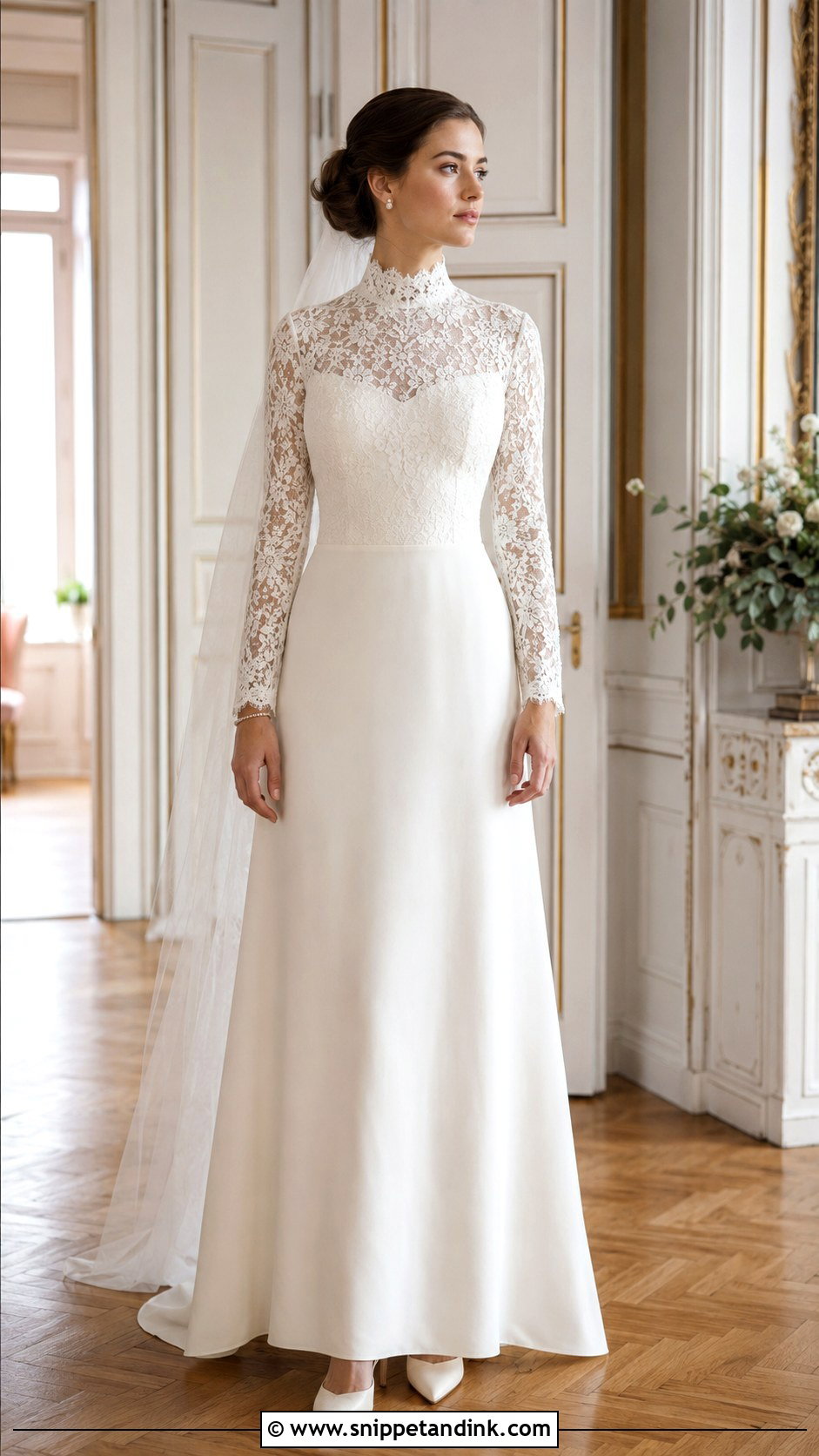
High necks need one detail checked before anything else: the collar. If it rubs, you’ll feel it all day, so turn your head side to side during the fitting. Lightweight lace over a comfortable lining, with long sleeves for formality or sleeveless for warmer months, keeps it from feeling heavy. Keep the skirt simple. Pearl studs, an understated bracelet and low pointed heels are enough, and a low bun keeps the neckline visible. Attach the veil below the bun so fabric doesn’t crowd the collar. A neat bouquet of white roses and greenery finishes it for historic buildings or fall ceremonies.
14. Wrap Wedding Dress
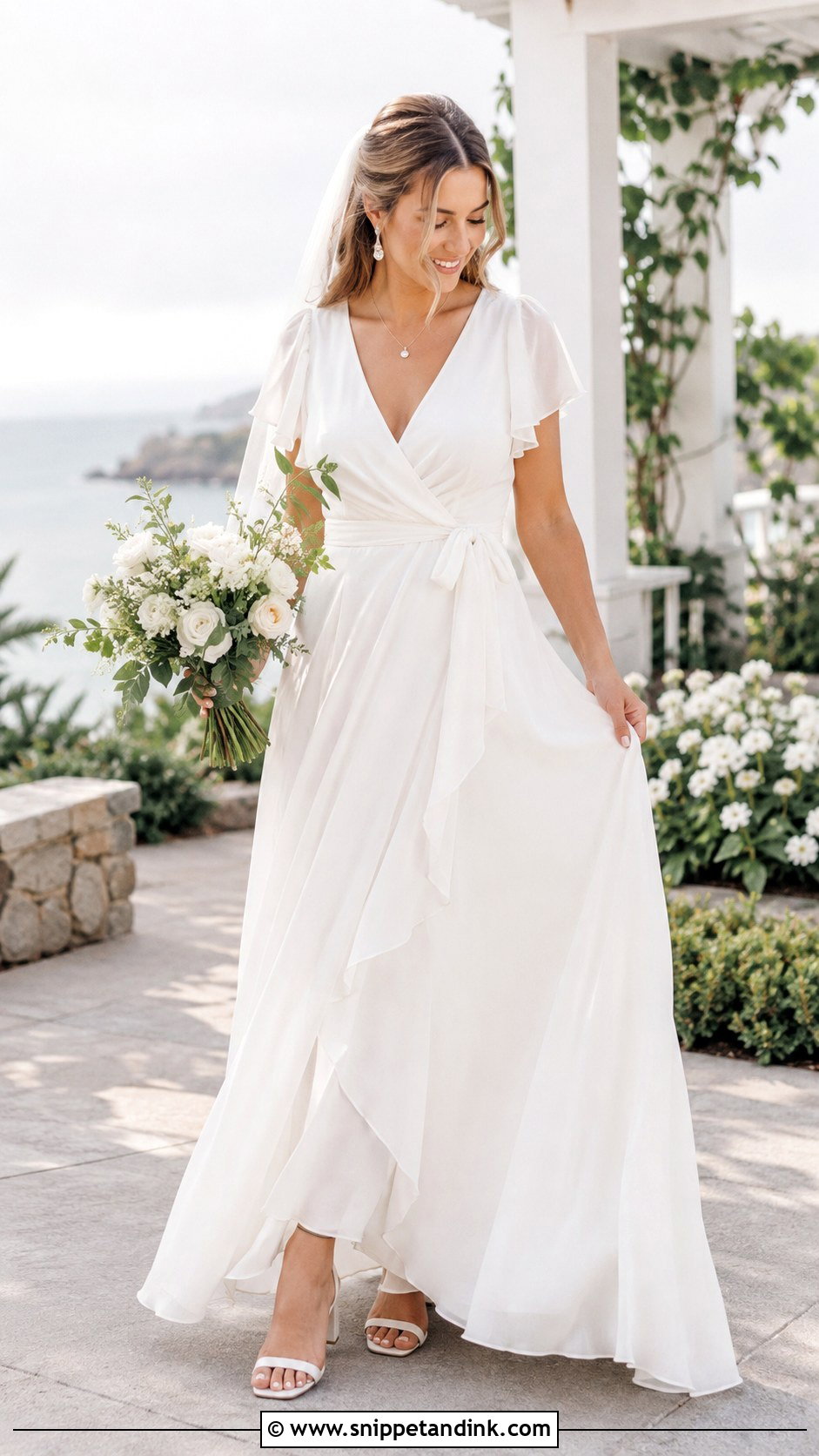
A true tie wrap can loosen as you move, so I’d only send a bride down the aisle in a constructed faux-wrap. It looks adjustable but is stitched to stay put. A V-neck, defined waist and flowing chiffon or crepe skirt create the shape, with flutter sleeves for summer or longer sleeves for cooler months. Low block heels, a delicate pendant and small drops finish it, with a half-up style and a light fingertip veil. Carry a loose bouquet of greenery and white blooms. A couple of hidden snaps at the neckline give reliable coverage when you bend to hug guests. Backyards, small venues and coastal ceremonies suit it.
15. Puff Sleeve Wedding Dress
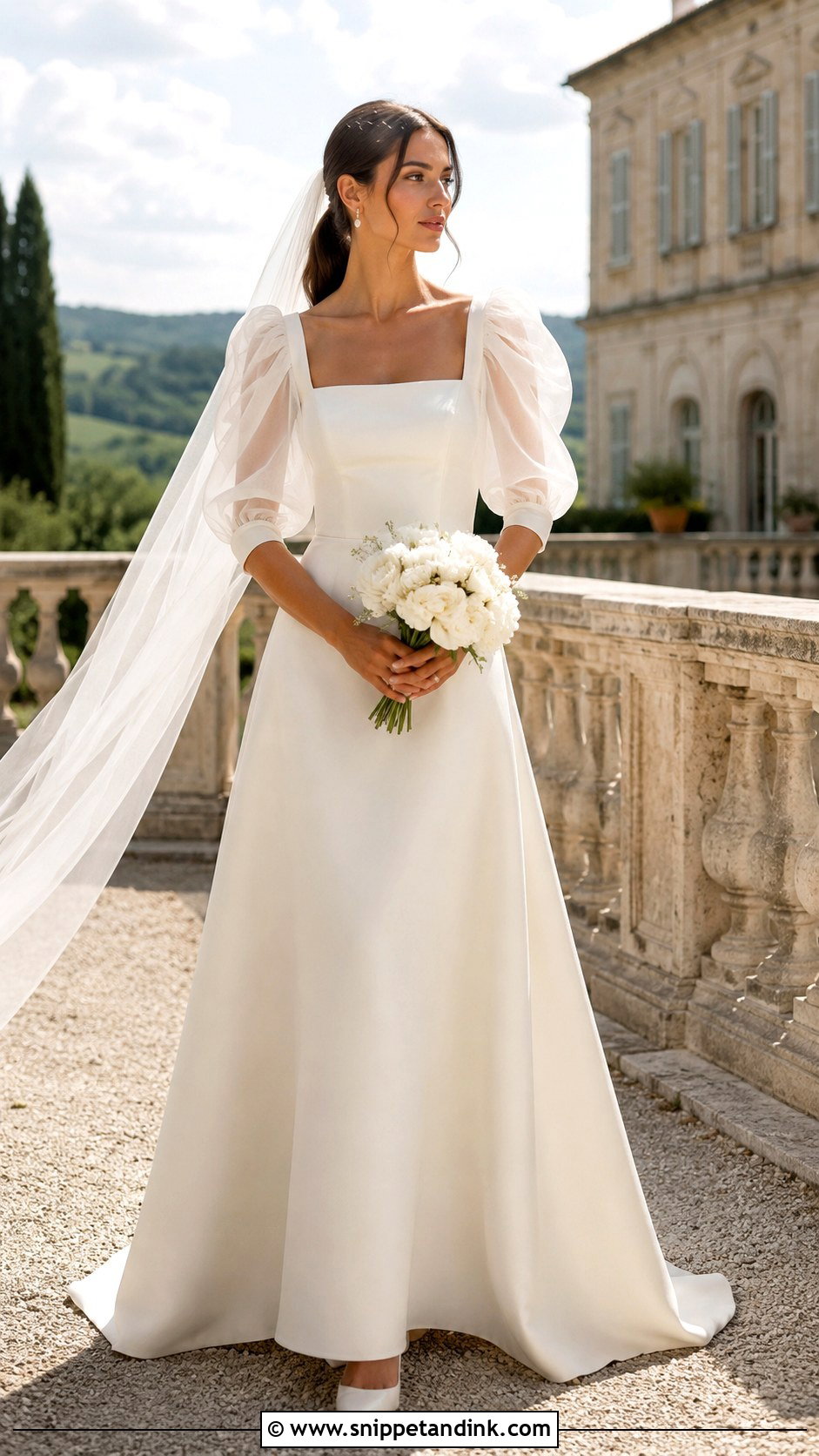
Sheer organza puffs are airy; satin puffs are more structured and hold their shape longer through the day. Either way, keep the bodice fitted and the skirt clean so the proportions balance, ideally with a square or sweetheart neckline. Sleek pumps, delicate earrings and a low ponytail or bun keep attention on the shoulders. Choose a veil without lace trim and a compact bouquet. Detachable sleeves give you a lighter reception look. Elastic at the sleeve edge should hold without leaving red marks; I check it after twenty minutes of wear, not just at first try-on.
16. Courthouse Midi Wedding Dress
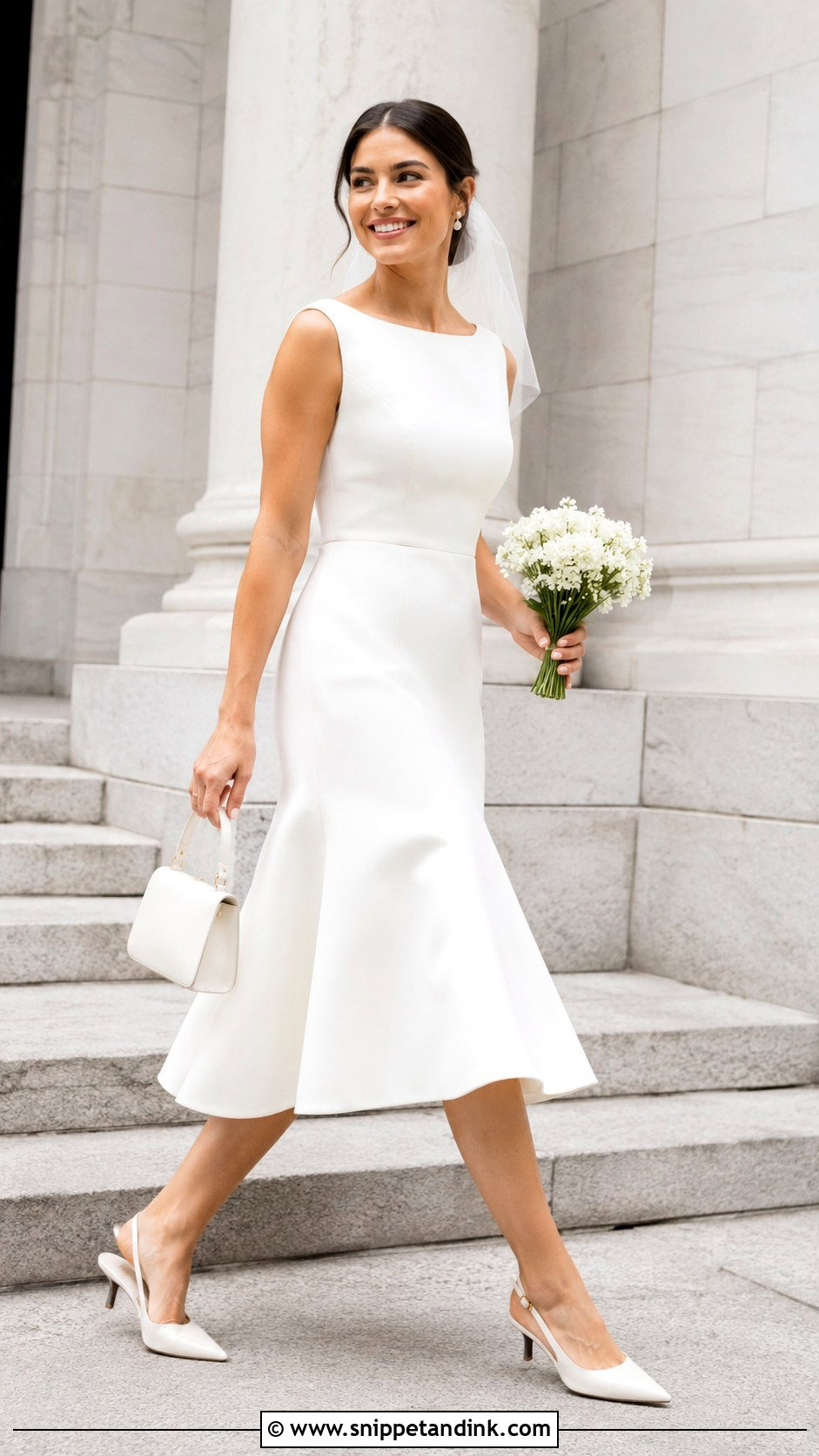
Courthouse dresses get judged in hallways, on steps and on city sidewalks, so a courthouse midi wedding dress has to feel special and still let you walk briskly. A fitted sheath, flared A-line or tailored wrap below the knee works, in crepe, satin or textured jacquard. Slingback pumps or pointed flats, pearl earrings and a structured mini bag finish it, and a short veil, bow headband or comb marks you as the bride. Carry a compact bouquet you can hold while signing papers. In cooler weather, add a cropped jacket or ivory coat. It moves straight from ceremony to portraits to a restaurant table.
17. Beach Chiffon Wedding Dress
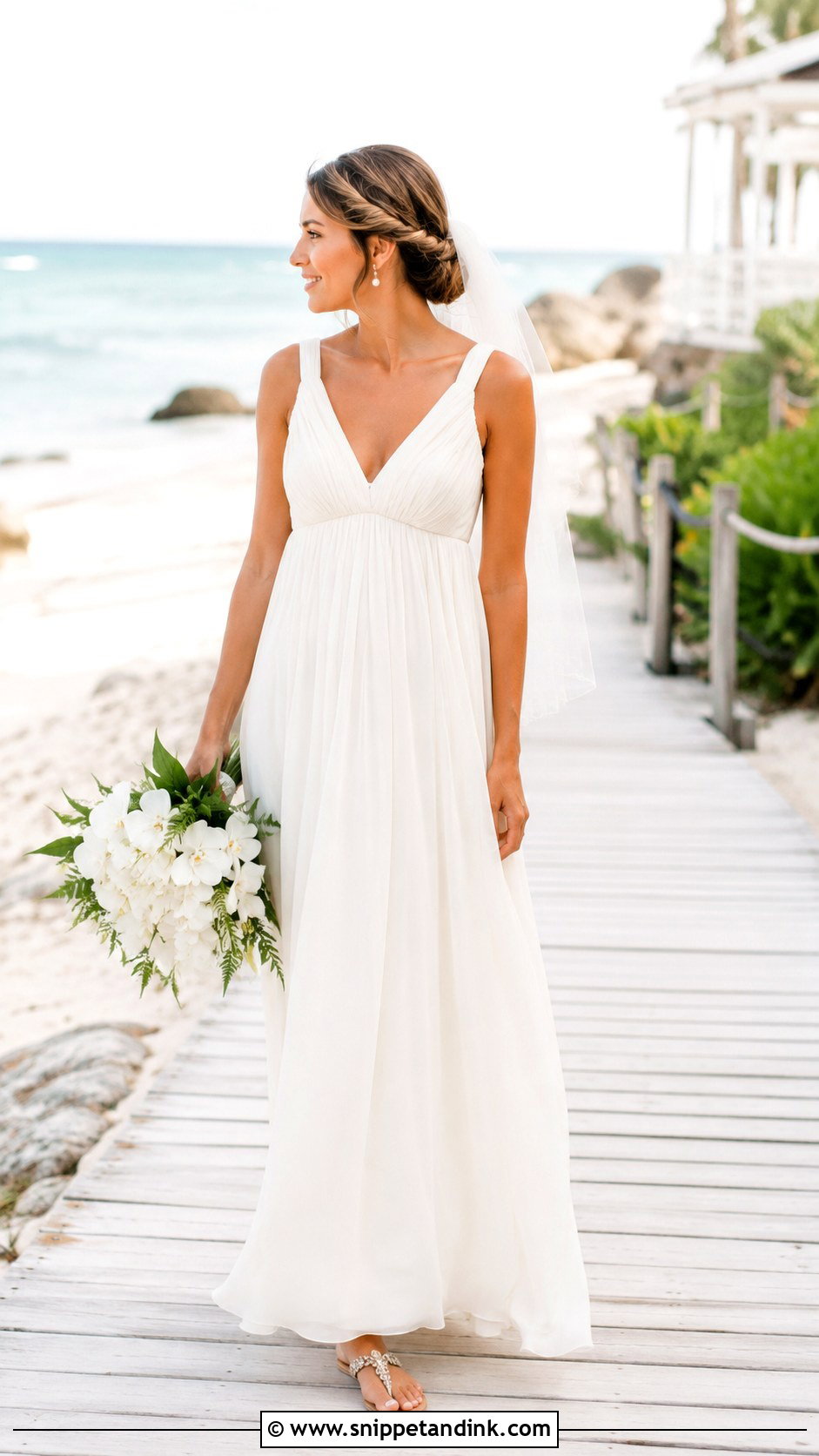
Sand is the enemy of trains. On a beach I’d keep the chiffon hem just off the ground in a flowing A-line or empire waist with secure straps, because a train collects sand and gets heavy when damp. Flat embellished sandals, pearl studs and a loose braided bun suit it. Wind lifts veils sideways over faces in photos, so on an exposed shore I’d choose a short tulle veil, a floral comb or a ribbon instead. Carry sturdy flowers that won’t wilt in the sun. A breathable lining and fewer skirt layers keep you comfortable in humidity across sand and boardwalks.
18. Garden Embroidered Wedding Dress
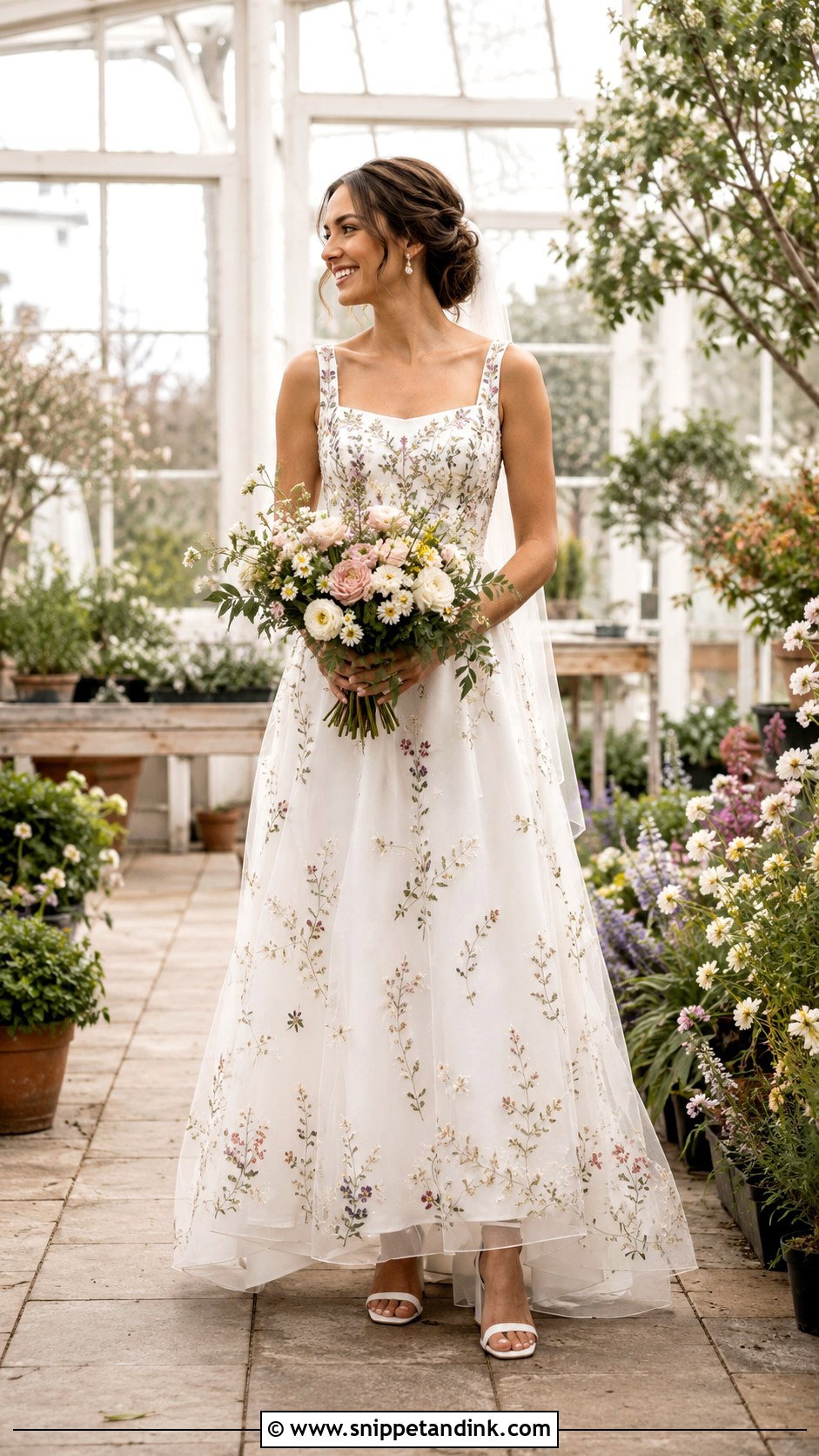
Botanical embroidery on a lightly lined A-line belongs in a garden. Ivory thread is subtle; pale floral colors are more expressive. Supportive straps or short sleeves keep it comfortable. Block-heel sandals or bridal flats won’t sink into the lawn. Small gemstone earrings, a loosely pinned updo and a plain veil let the stitching show. Choose bouquet shades that coordinate without matching exactly, and keep other accessories minimal. Embroidery is fragile where it rubs against a bouquet or arm, so check for loose threads before the day and trim nothing yourself. A light wrap covers you once evening cools.
19. Ruched A-Line Wedding Dress
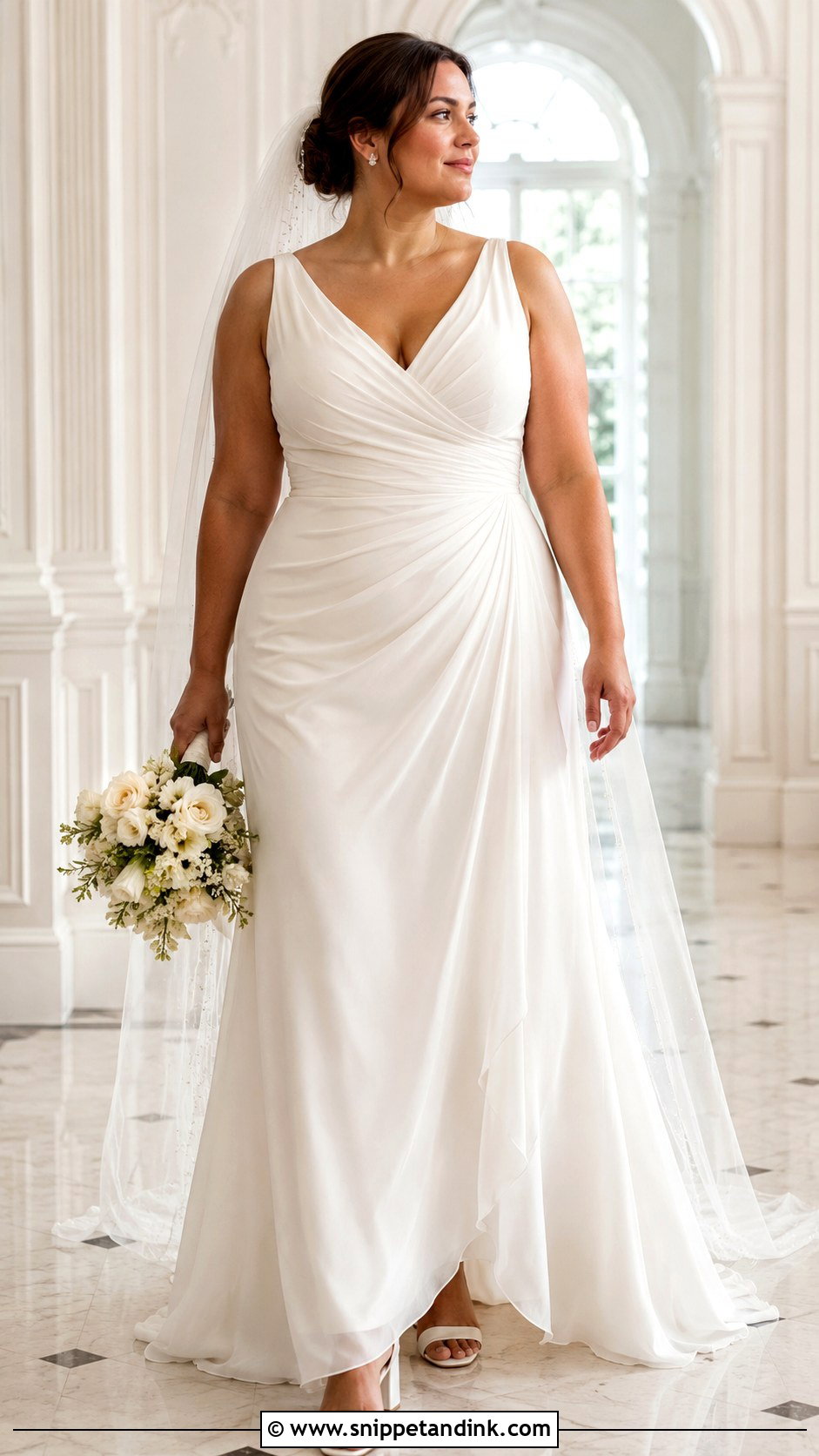
Ruching hides more than it shows, which is why I suggest it to brides who worry about their middle after dinner. Diagonal gathers across the waist or bodice look better than ruching over the whole gown. A V-neck, wide straps and built-in structure give a secure fit for most bust sizes, and soft chiffon or stretch crepe allows movement. Stable block heels, crystal studs and a low side bun go with it, plus a fingertip veil and a medium bouquet. The gathers can be adjusted during alterations, so wear your planned underwear to every fitting or they’ll be tailored around the wrong shape.
20. Convertible Overskirt Wedding Dress
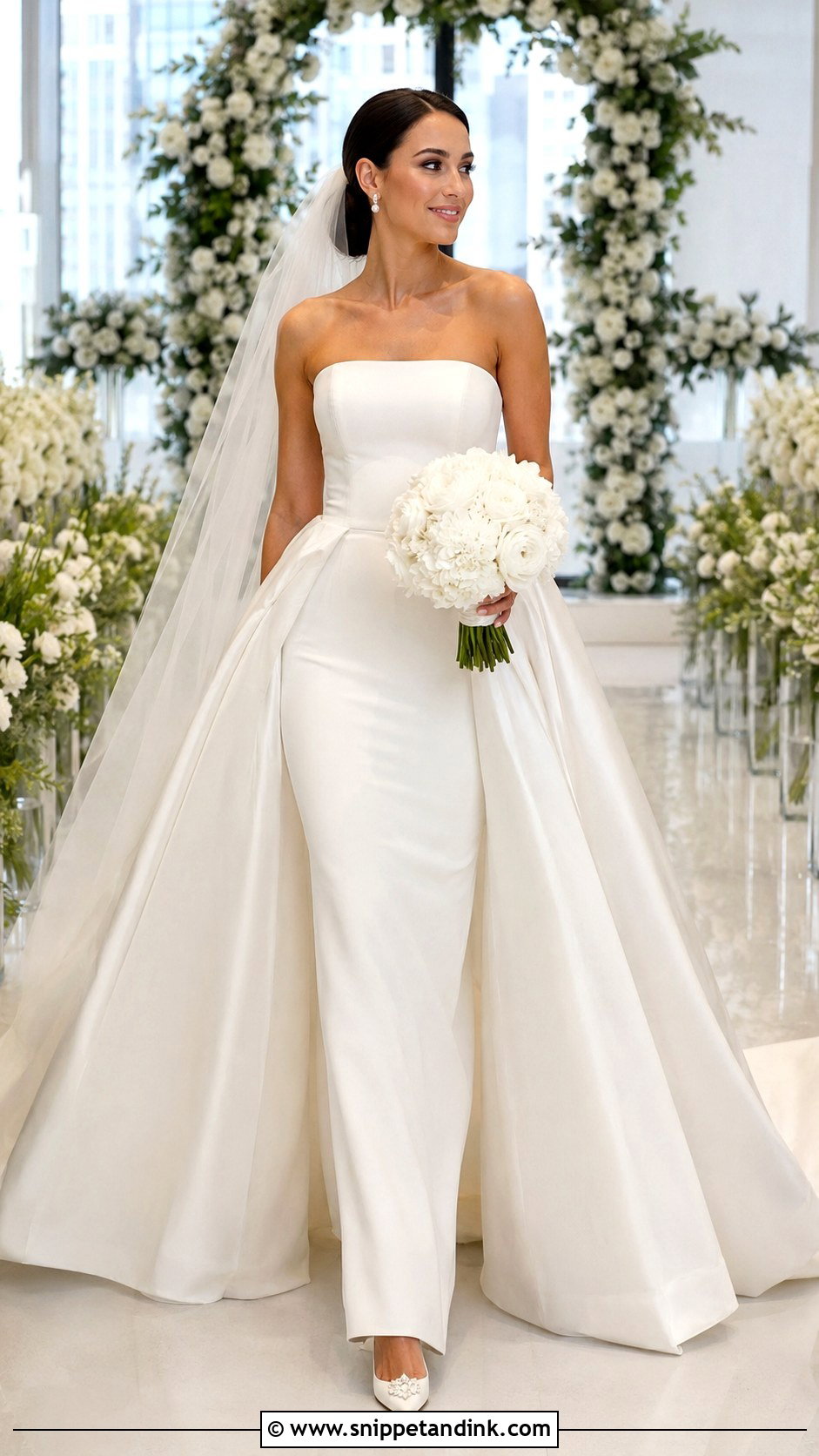
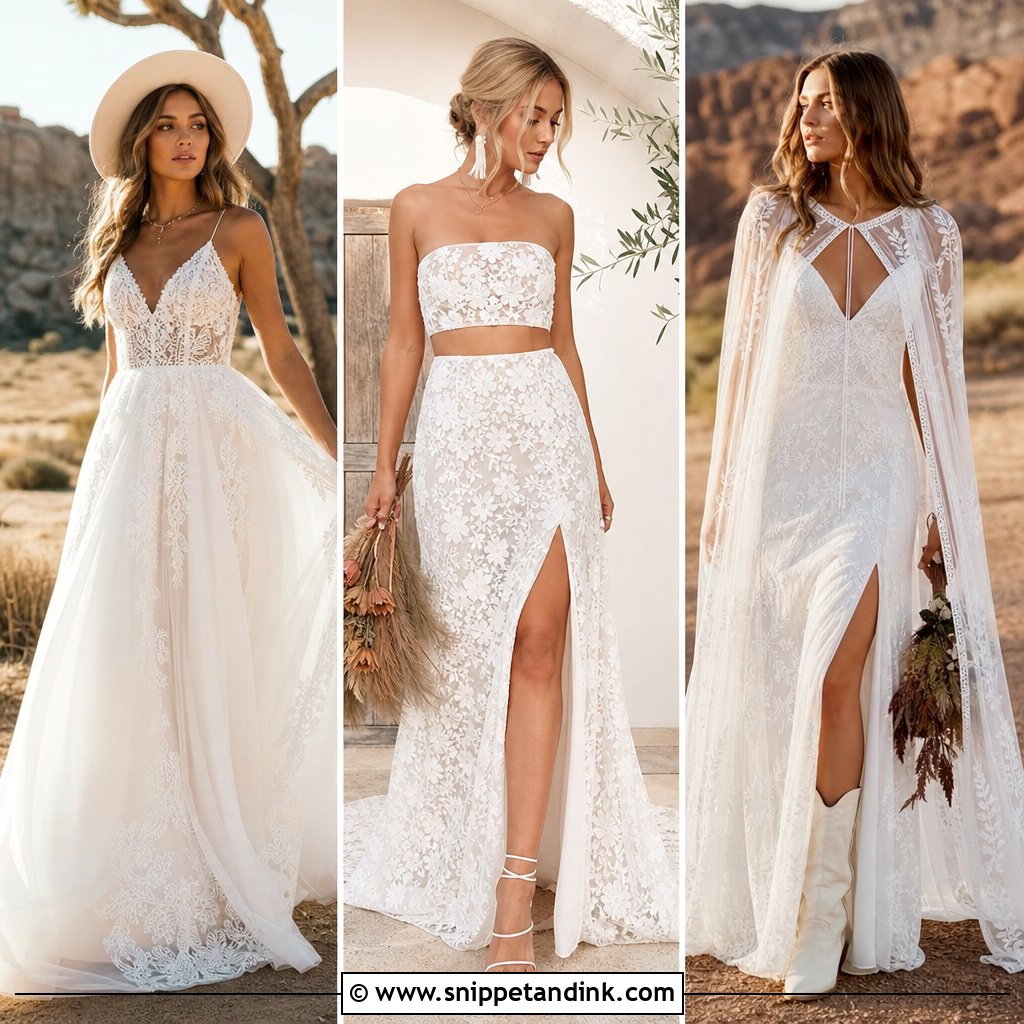
Two looks, one dress. A convertible overskirt wedding dress starts with a fitted crepe, satin or lace sheath you’re happy to wear all night, with a detachable A-line overskirt for the ceremony. The waistband join should be nearly invisible, and I check it from the back, where it tends to show. Pair the formal version with a long veil, pearl earrings and pointed pumps. Afterward, remove the overskirt and veil and add statement earrings or a hair bow. Keep the same shoes or switch to bridal flats. Have one trusted person practice unhooking the overskirt and folding it into a bag before the day.
Bras, Slips and Shapewear Under Simple Fabrics
The plainer the dress, the more the underwear matters. Satin, crepe and silk show bra bands, knicker lines and shapewear edges that lace or embroidery would hide. I’d rather a bride buy her underwear before the first fitting than spend money altering a dress around the wrong bra.
- Low backs: ask the seamstress to sew bra cups into the bodice instead of relying on adhesive bras for twelve hours.
- Bias-cut and slip dresses: smooth laser-cut briefs in a shade close to your skin show less than white.
- Shapewear: choose a piece that stops above the knee and doesn’t roll at the waist when you sit down.
- Sheer skirts: a half slip in a warm nude can fix see-through panels without relining the dress.
Getting Into the Dress on the Morning Itself
Getting into the dress takes longer than most brides budget for, especially with loops and buttons. Do makeup before the dress, and step into the gown rather than pulling it over your head if possible, so nothing smudges on the fabric. A crochet hook makes button loops much faster. Shoes go on before the final check, because they change the hem. Practice the bustle once with whoever will do it on the day, and photograph the hooks so they can find them again at the reception.
Simple Gown, Careful Fitting
The easiest dress is rarely the most elaborate one. It’s the one that fits, lets you move and suits the venue from the vows to the last song. Satin A-lines, lace sleeves, practical midis, chiffon for the beach and convertible gowns all qualify. Compare the necklines, fabrics, skirt shapes and accessories of the ones you like, then try them on and test them properly: walk, sit, raise your arms and photograph each one from the side and back. Good tailoring transforms even a very plain gown. Go with the dress that still feels like you after an hour in it, not the one that only looks right in a mirror.
You'll Like These Ideas:


Leave a Reply