
Ruffles do something sparkle can’t: they move. A gown with frills at the hem swings when you walk and keeps shifting in photos, and that motion is most of the appeal. The fabric decides the personality. Tulle ruffles float, organza ones stand up on their own, chiffon flutters, and satin folds into heavier, glossier curves. In fittings I treat ruffles as a proportion tool as much as a decoration, since they add volume exactly where they are placed. From a full princess gown to a fitted mermaid or a short dress for the party, here are twenty-five ruffled styles and how I would style each one.
Where a Ruffle Sits Changes Your Shape
Every ruffle adds width at the line where it is sewn. That sounds obvious, but it is the most useful thing I can tell a bride before she starts trying on. Used deliberately, it balances a figure; used carelessly, it adds bulk exactly where you least want it.
- At the neckline or shoulder: widens the top half, which balances fuller hips and draws attention to the face.
- At the hip: adds width there, so I avoid it for pear-shaped brides and suggest it for straighter figures who want curves.
- At the hem only: keeps the waist narrow and adds movement at the floor, the safest placement for almost everyone.
- Running vertically: adds height, which helps petite brides more than any horizontal tier.
Fabric changes the strength of the effect. Organza ruffles stand out and add visible width; chiffon ruffles lie close and barely change the silhouette. If you are unsure, try the same style in two fabrics and look at yourself side-on in the mirror.
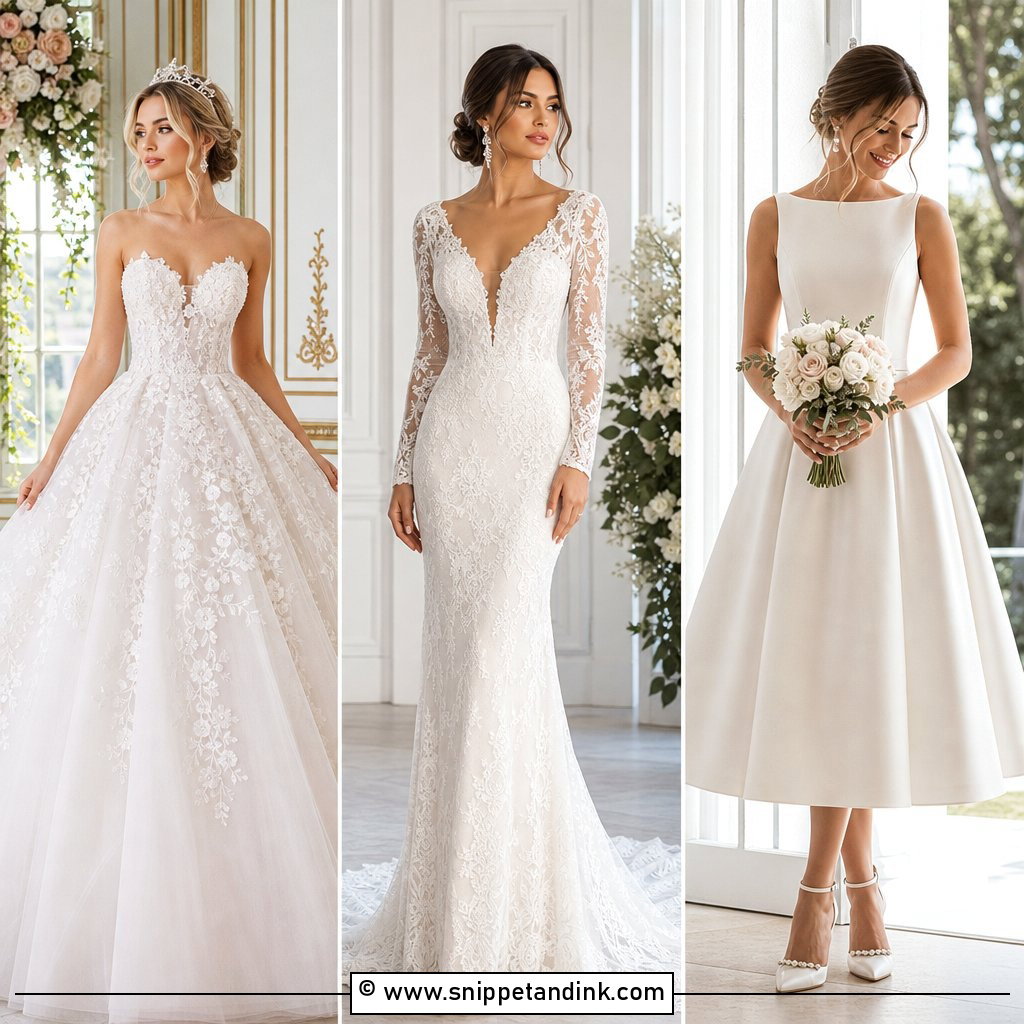
1. Ruffle Ball Gown Wedding Dress
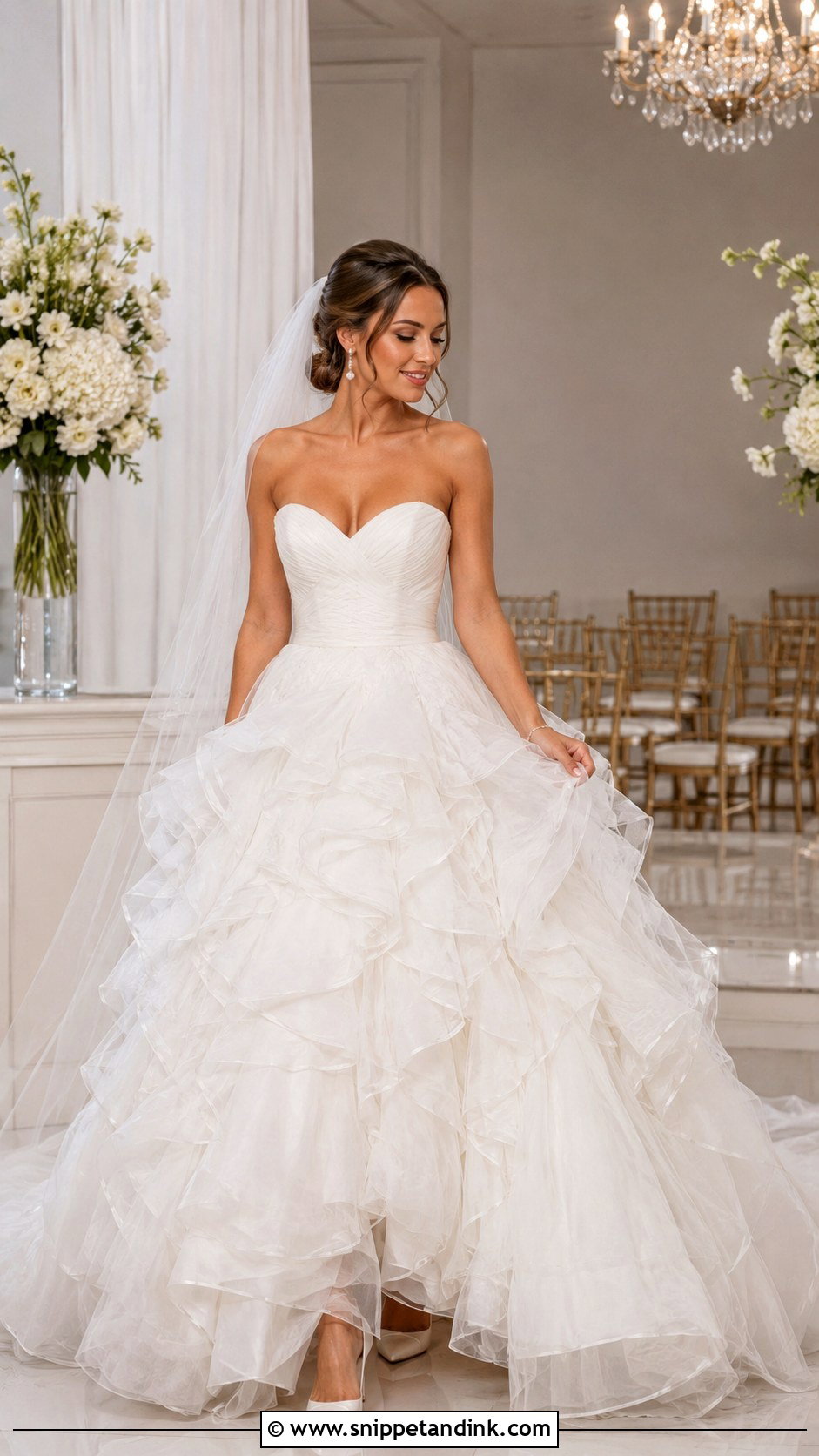
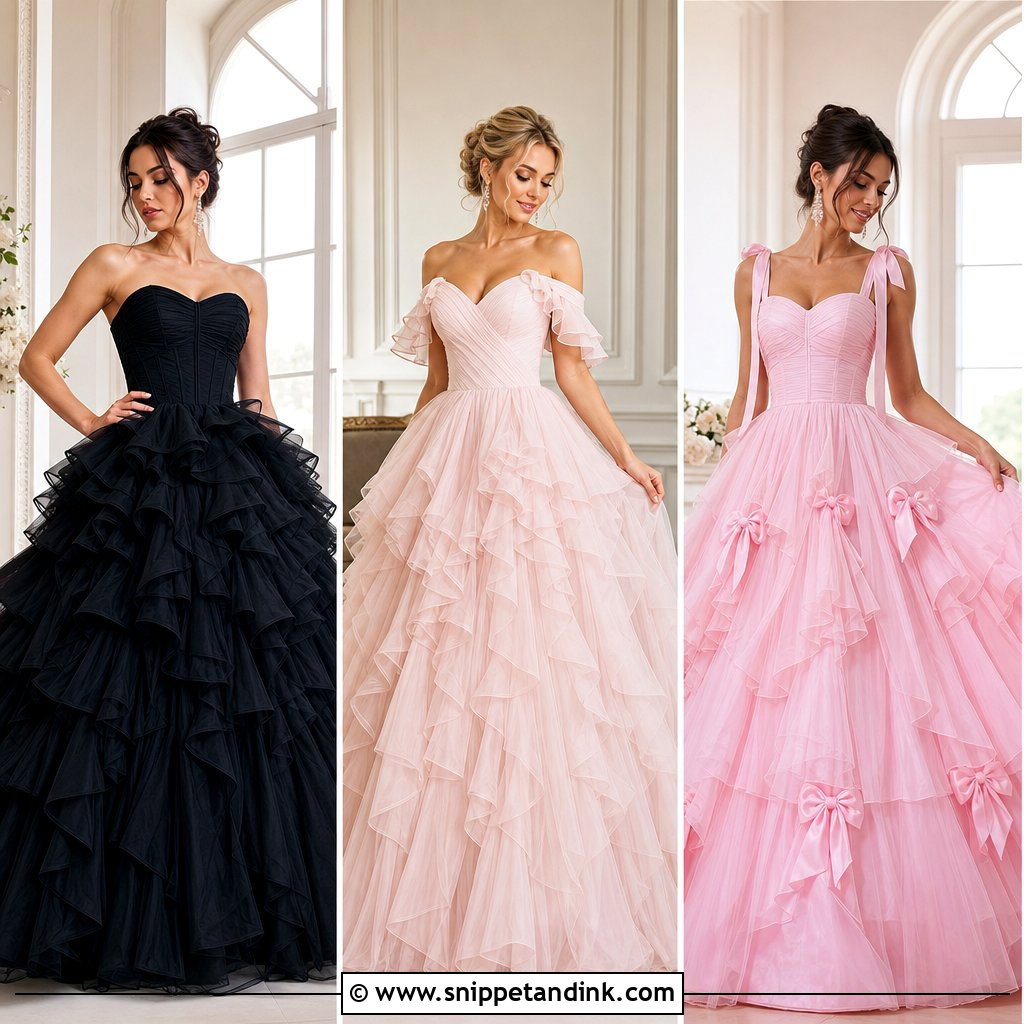
The ruffled ball gown is the maximum version: a fitted bodice up top and tiers of volume below. Soft tulle gives a cloud; organza ruffles hold a more sculpted edge. With that much going on at the skirt, I keep the neckline strapless or sweetheart and the accessories plain: a simple veil, pearl earrings, pointed heels. Ask the shop how many layers of petticoat sit underneath, because a full ruffled skirt can be wider than a standard doorway and heavier than it looks on the hanger. Formal hotels and ballrooms give it the room it needs.
2. Ruffle Mermaid Wedding Dress
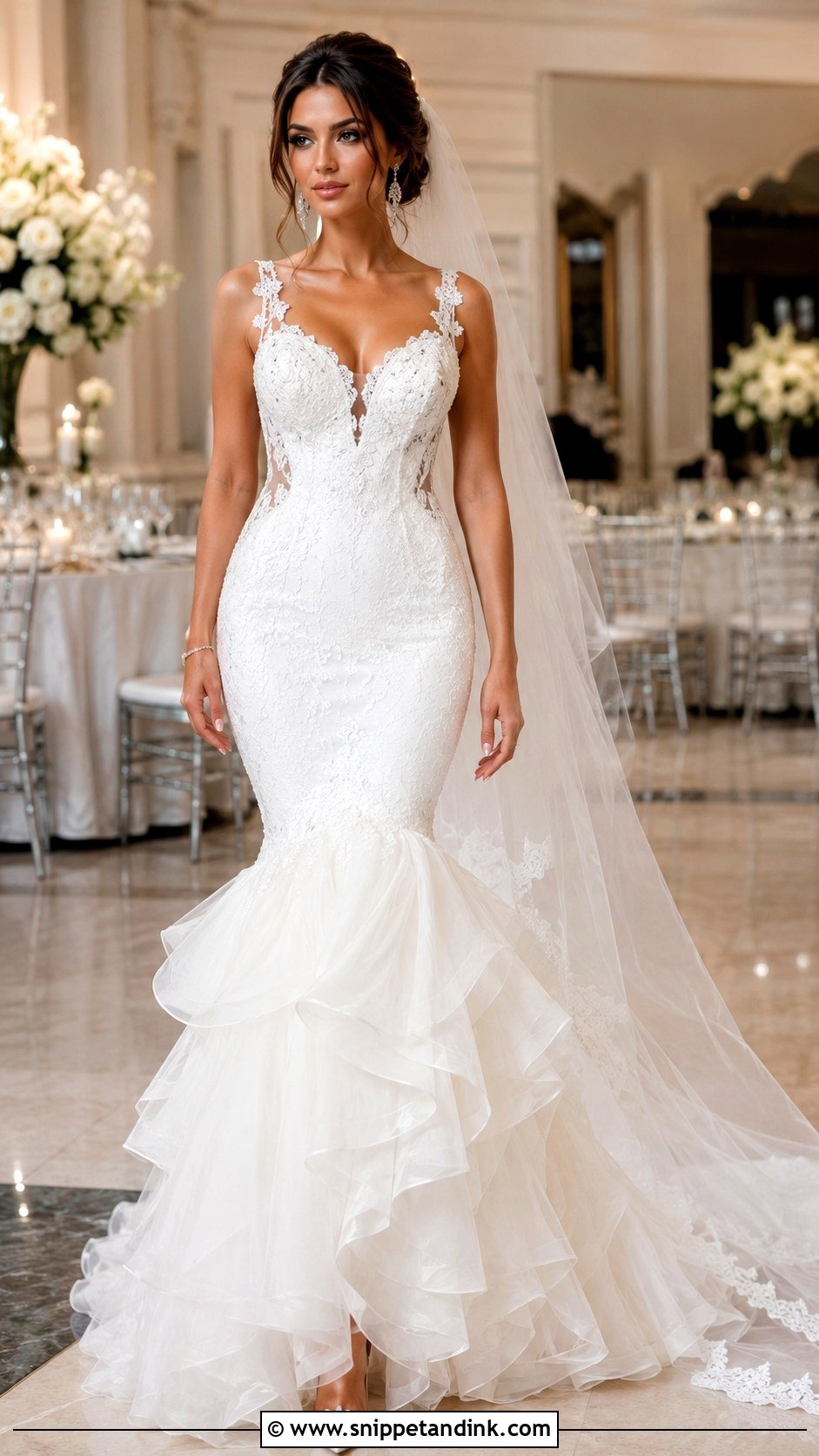
Sleek through the hips, then a burst of ruffles at the knee. That contrast is the whole point of the ruffled mermaid, and it only works if the flare starts at the right height for your legs. Too low and you will shuffle; I usually want it just above the knee for brides who plan to dance. A lace bodice softens the look, plain crepe sharpens it. Drop earrings, a smooth updo and slim heels keep the top half clean, and a chapel-length veil traces the shape without hiding the frills. Ballrooms and evening receptions suit it.
3. Off Shoulder Ruffle Wedding Dress
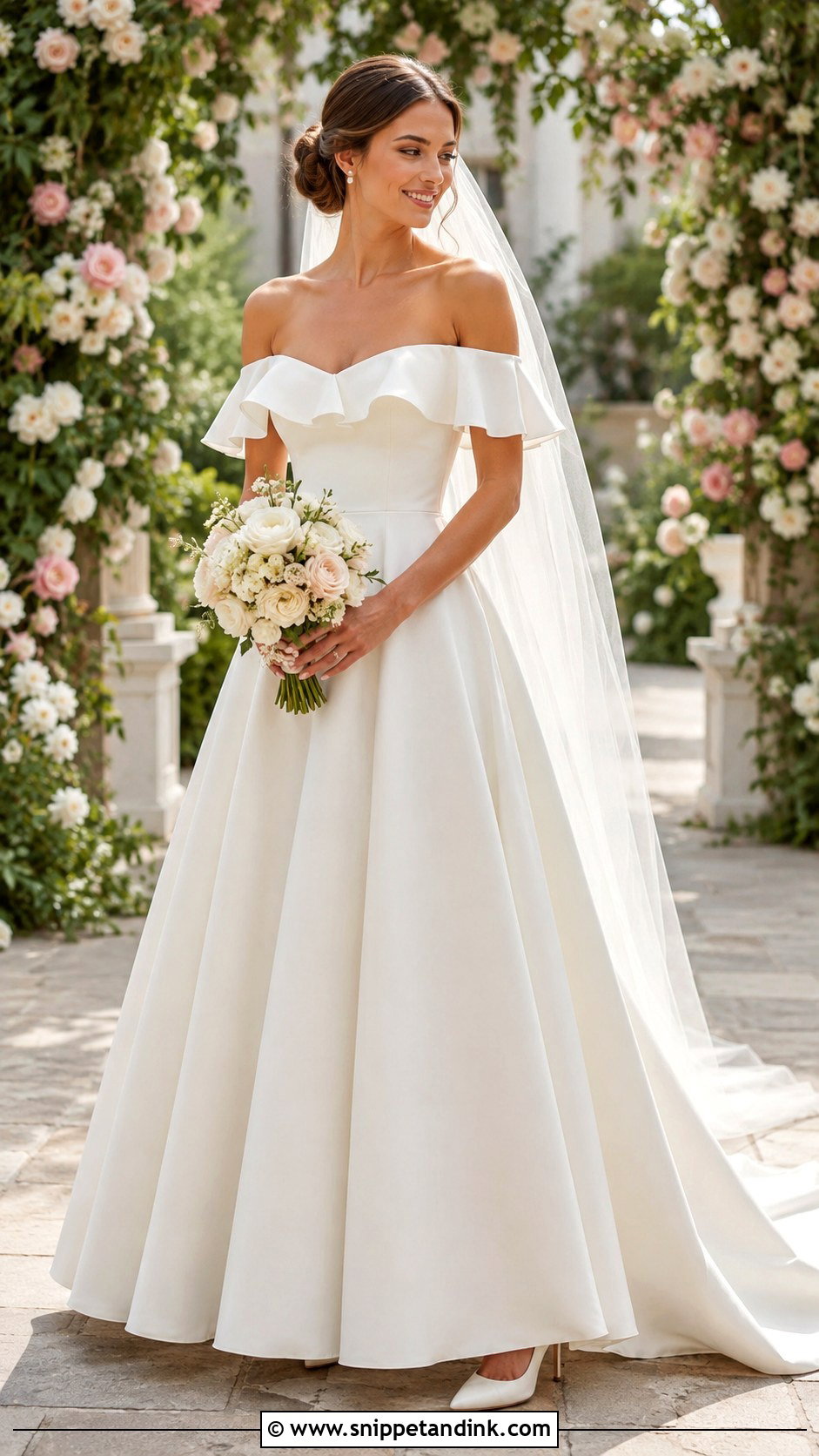
An off-shoulder ruffle frames the collarbone with soft volume right where the camera looks most. Sheer tulle or chiffon keeps it delicate; organza gives it more shape and drama. The practical check is arm movement: a ruffled band across the upper arm adds bulk, so I ask brides to lift their arms and hug at the fitting to see if it rides up. Skip the necklace entirely here. A low bun, small pearl studs and a fingertip veil are enough. It suits garden and estate weddings with a classic feel.
4. Strapless Ruffle Wedding Dress
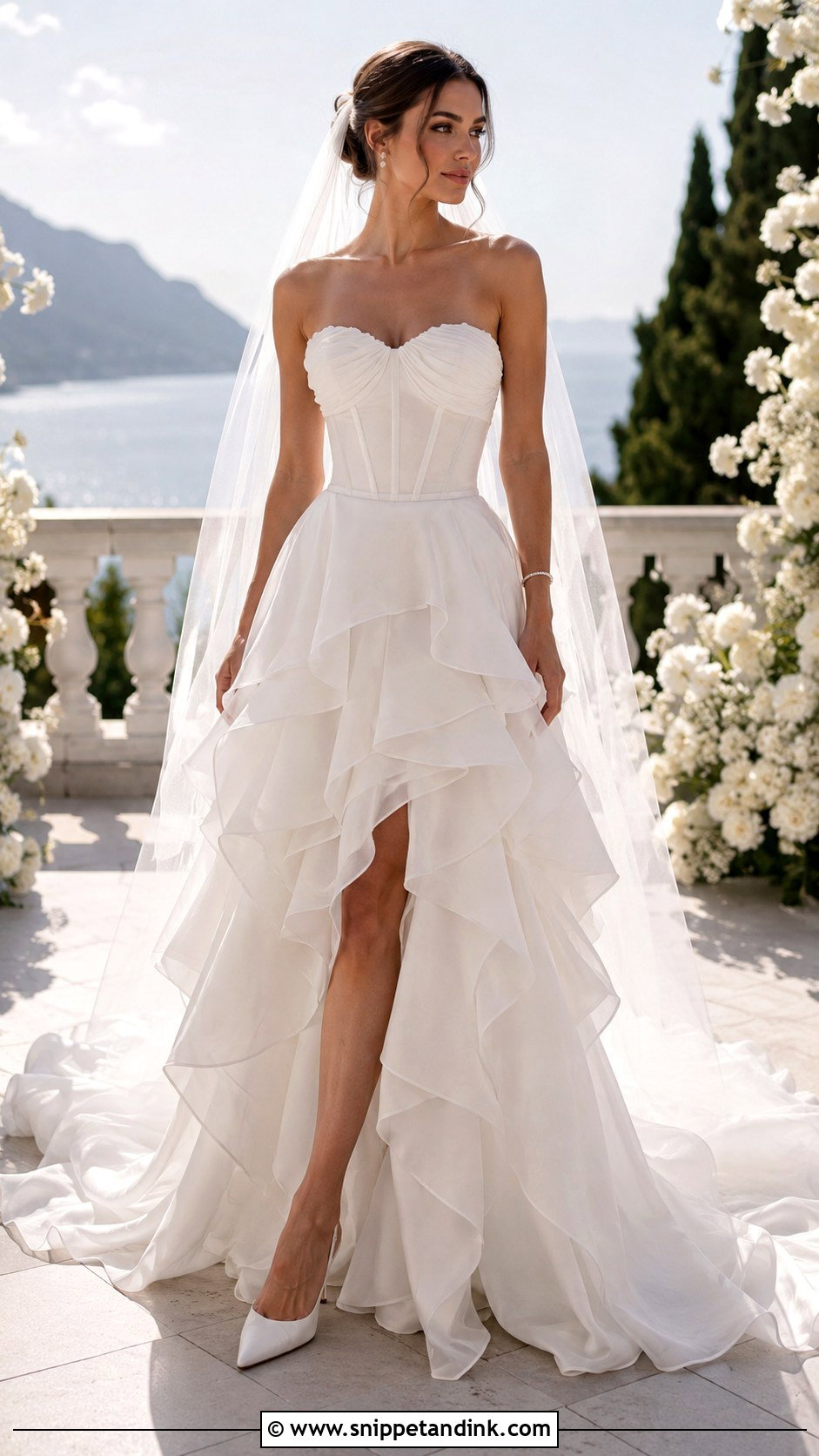
Going strapless gives the ruffles nowhere to hide, which is good if the skirt has tiers, cascades or a slight high-low hem. Support matters most. A corset bodice or inner boning with a secure waist stay keeps it in place, and that is the first thing I test before anyone falls for the skirt. A straight neckline reads cleaner than a sweetheart. Finish with a sheer veil, a slim bracelet, satin heels and sleek hair so the top stays calm. It travels well from a formal ballroom to an outdoor terrace.
5. Tulle Ruffle Wedding Dress
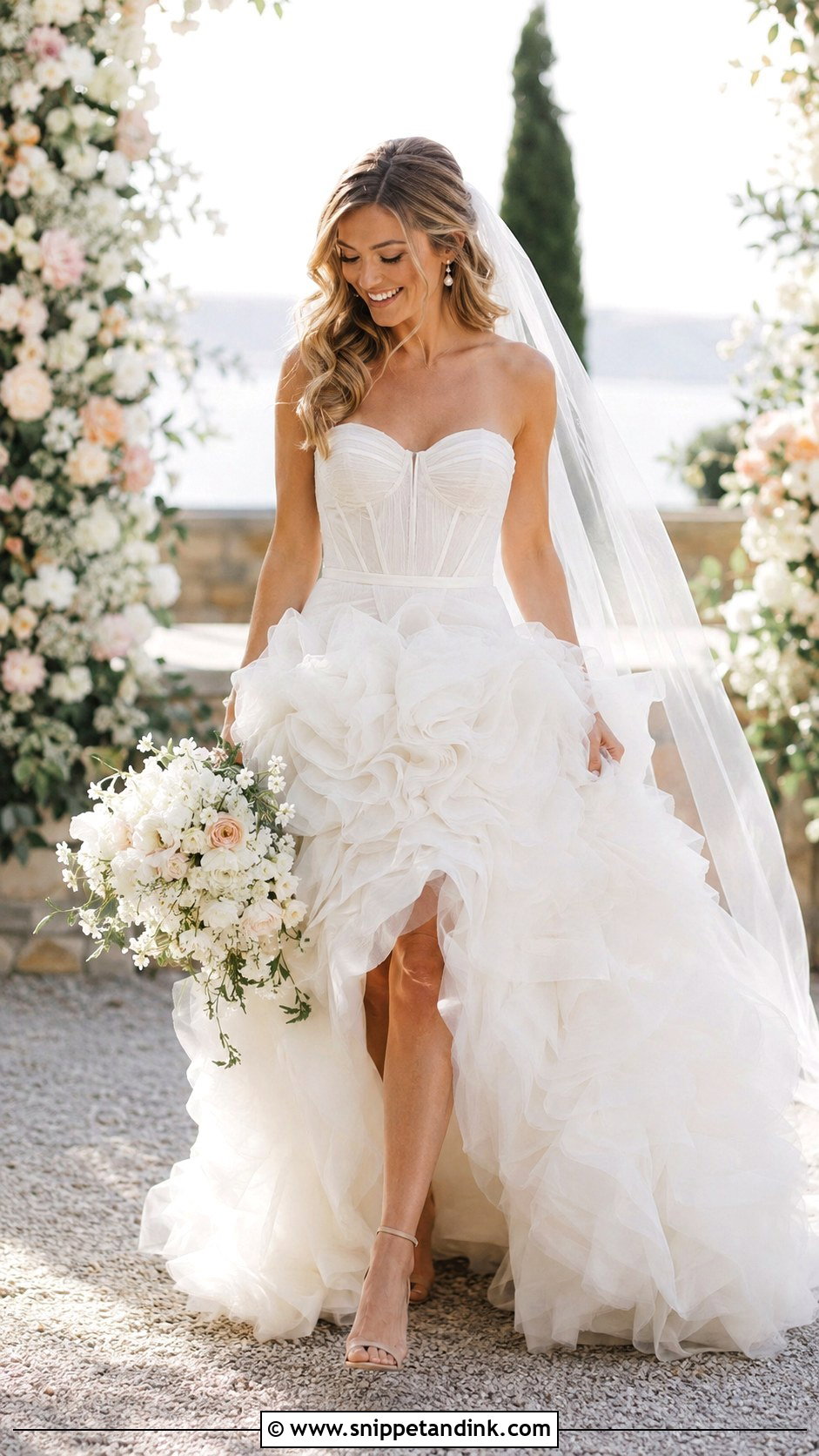
Tulle is the lightest way to wear ruffles, and the most forgiving to dance in. Layered tulle frills can build a cloud-like skirt, a soft train or just a moving hem, without much weight. The trade-off is that tulle snags: rough stone, velcro on a groom’s cufflink box, a bracelet clasp. I tell brides to stick to smooth jewelry and keep an eye on the hem outdoors. A fitted bodice keeps the shape balanced, with a thin veil, soft curls and barely-there heels. Spring gardens are its home.
6. Organza Ruffle Wedding Dress
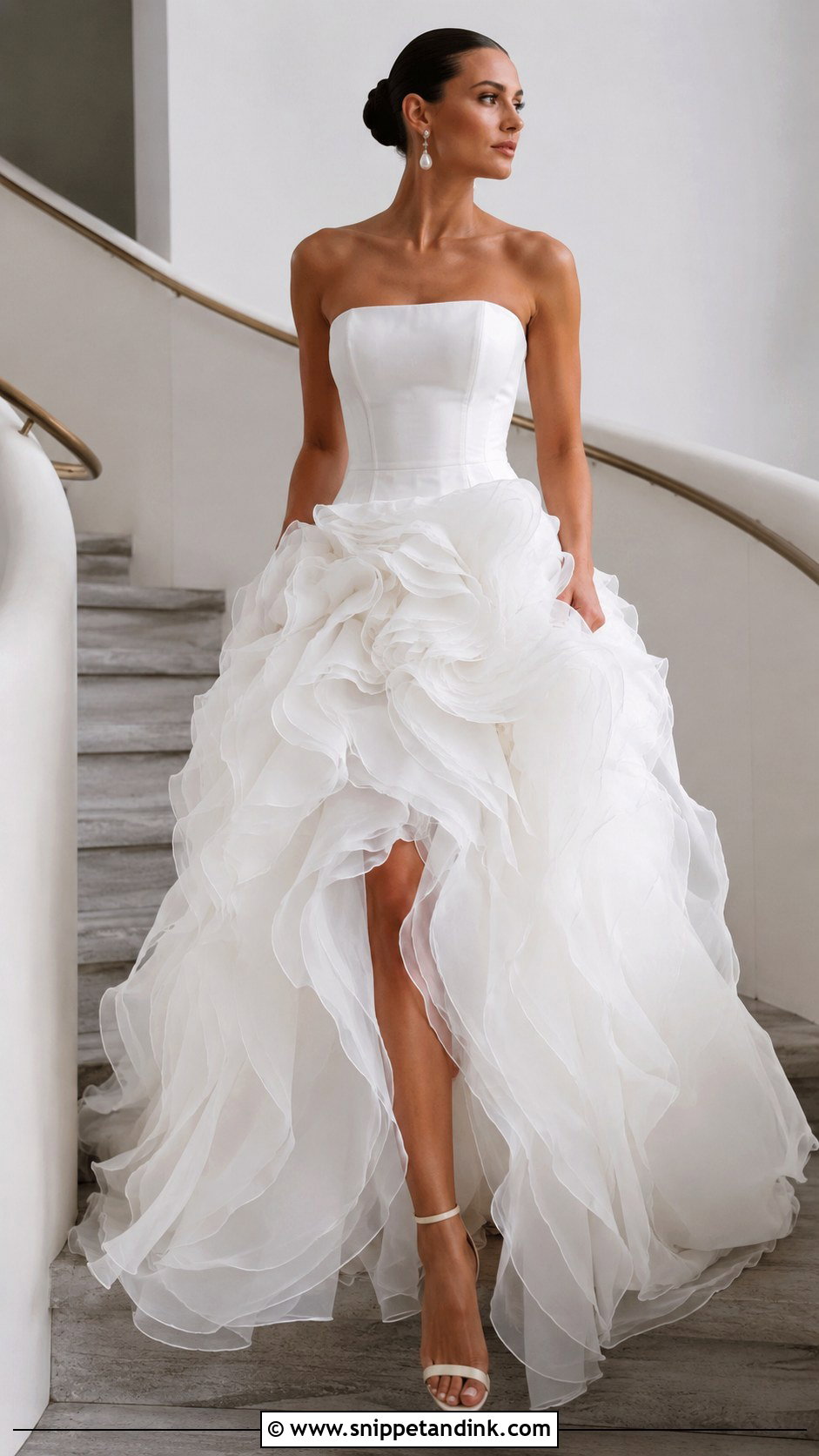
Organza holds its form better than almost any bridal fabric, so organza ruffles look sculpted rather than soft. This is the fashion-led choice. A plain fitted bodice over an organza ruffle skirt creates a crisp contrast. Keep everything else very restrained: sleek hair, pearl drops, simple heels. One honest drawback is that organza creases sharply if it is crushed in a car, and those creases do not fall out on their own, so it needs steaming on the morning. Art galleries and modern city venues show it off.
7. Chiffon Ruffle Wedding Dress
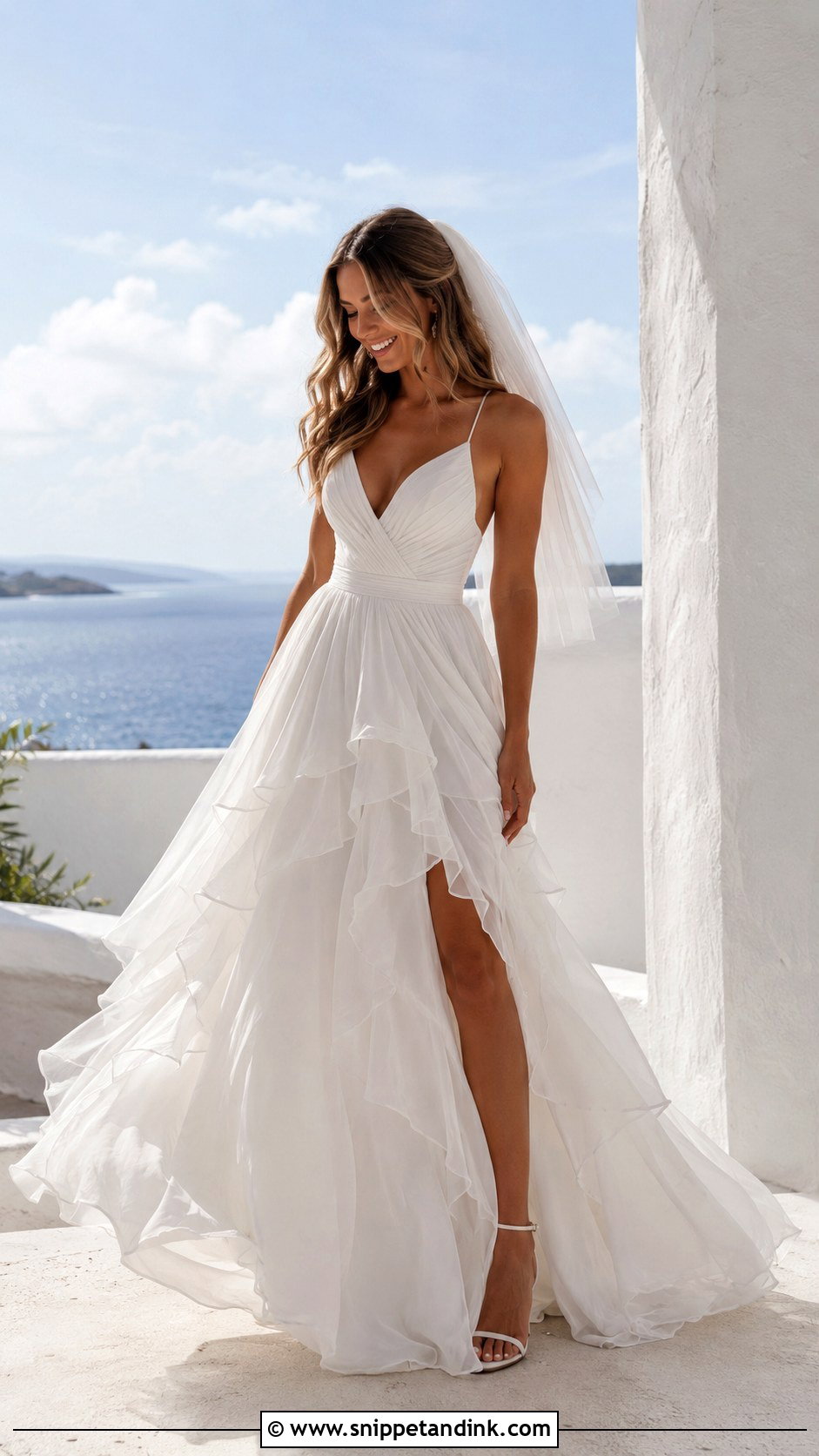
Chiffon ruffles are soft and fluid, and they catch even a light breeze outdoors. You get romance without bulk. A chiffon A-line with fluttering layers looks relaxed yet still bridal. Because chiffon is so light, it can look limp if the ruffles are cut too narrow, so I look for generous, full frills. Pair it with strappy heels, a soft veil and loose waves or a half-up style. Beach weddings, gardens and destination ceremonies where heat is a factor are where chiffon earns its place.
8. Lace Ruffle Wedding Dress
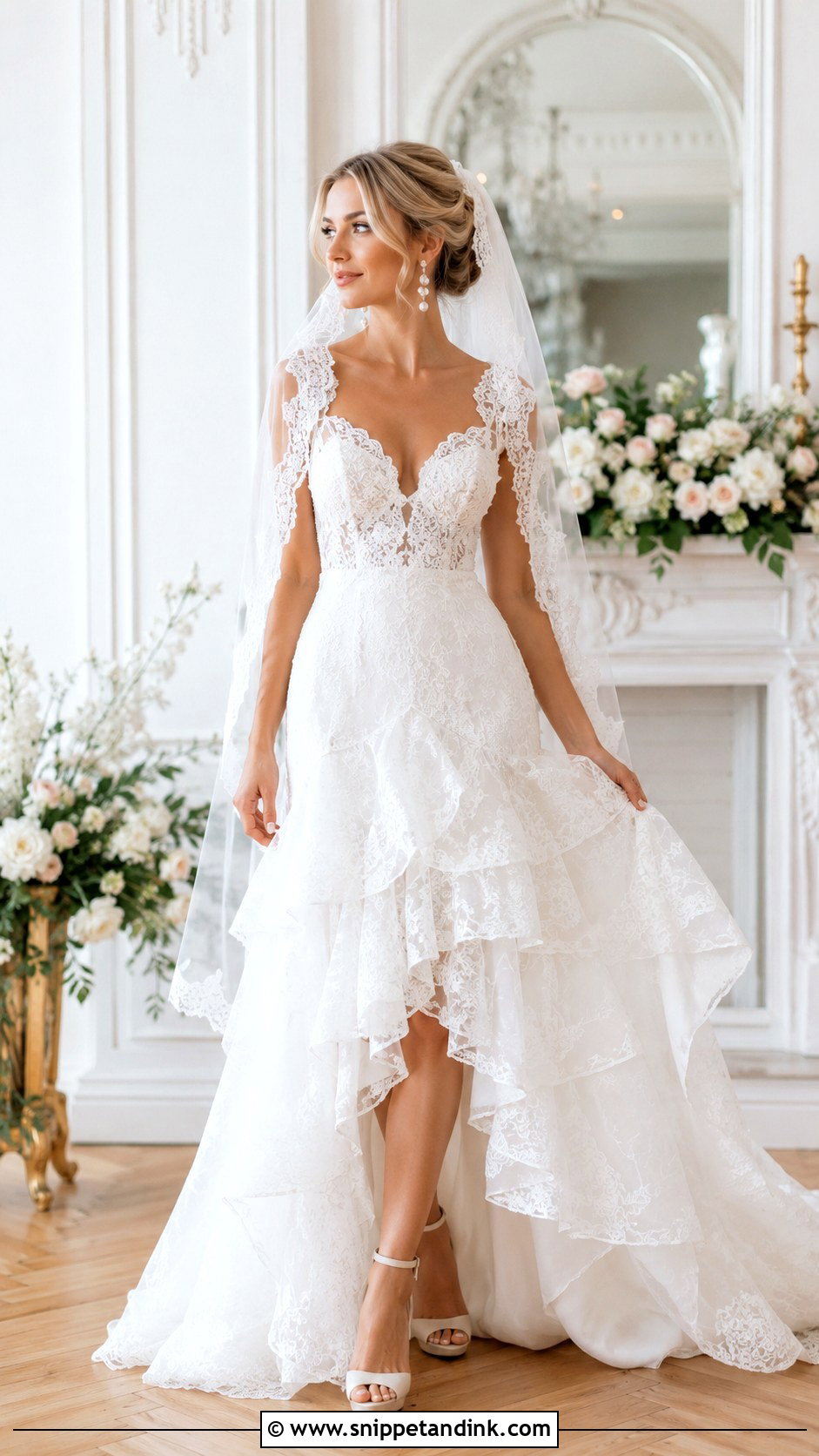
Lace and ruffles together give pattern plus depth. The best versions put the lace on the bodice and the ruffles below, or scatter lace appliqués across ruffle layers so the motifs seem to float. I look closely at where lace meets ruffle, because a bulky seam at the hip can add width you didn’t ask for. A sweetheart or V-neck keeps it feminine. Style it with a lace-edged veil, pearl earrings and neutral heels, and keep jewelry minimal so the dress doesn’t look busy.
9. Long Sleeve Ruffle Wedding Dress
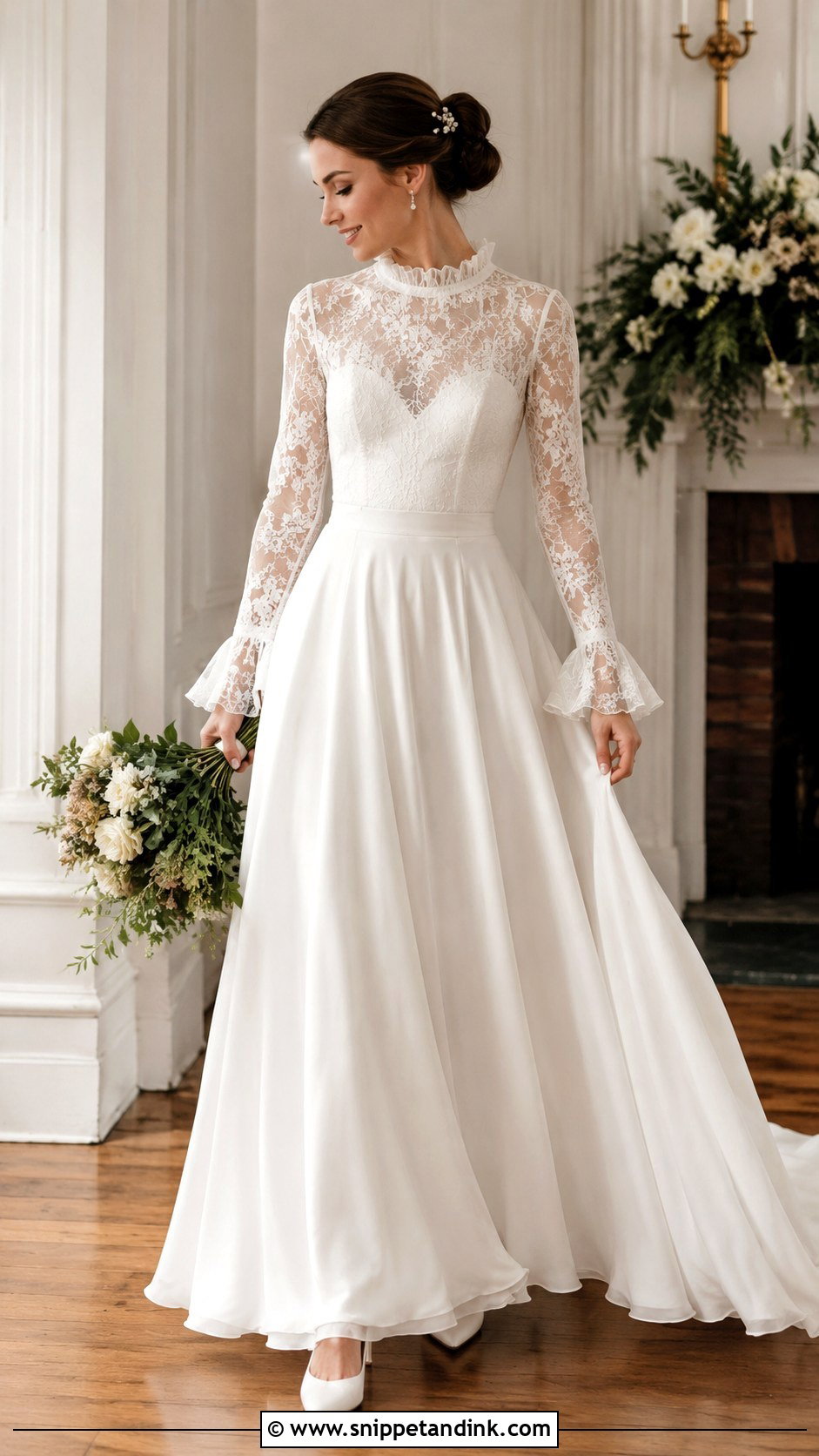
Sleeves and ruffles need a budget: if one is detailed, the other should be quiet. Sheer sleeves with small ruffle cuffs feel delicate; big ruffled shoulders are more fashion. With a heavily ruffled skirt, I’d keep sleeves sheer and light. Watch the cuff when you hold the bouquet, because ruffles at the wrist can snag on stems and get crushed against the handle wrap. A smooth bun, pearl pins and closed-toe heels suit it, with a plain veil or none. Autumn and winter weddings in historic venues are the natural fit.
10. Short Ruffle Wedding Dress
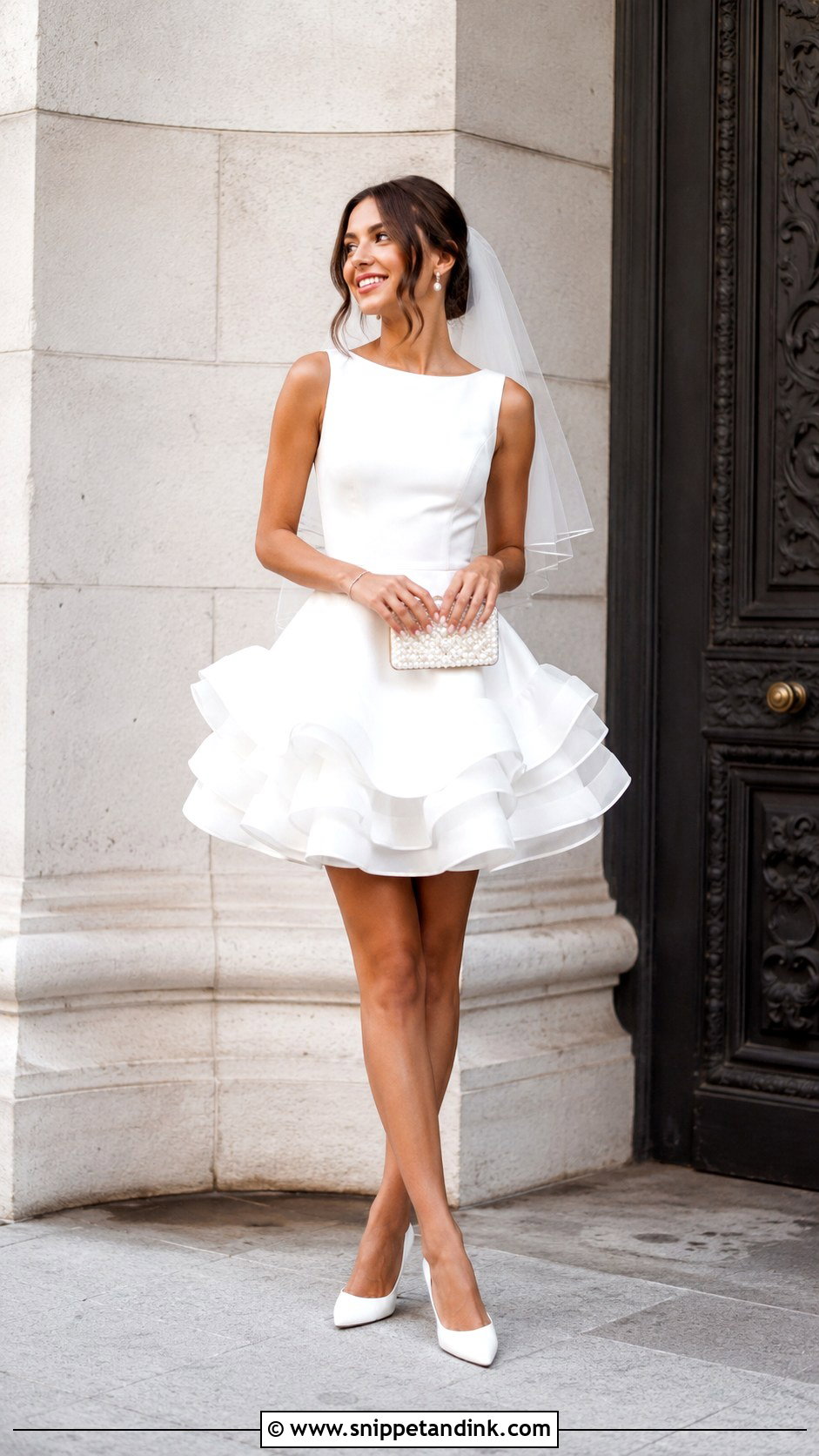
A short ruffled dress is the least formal option here and probably the most fun. Mini or knee-length with frilled layers still reads bridal in white, ivory or pale blush. If the hem is dramatic, keep the neckline plain. Pointed pumps, pearl earrings and a structured clutch make it look polished rather than like a party dress. I check the hem while seated, because a ruffled mini rides up more than a straight one. Civil ceremonies, welcome parties and second looks are all good uses.
11. High Low Ruffle Wedding Dress
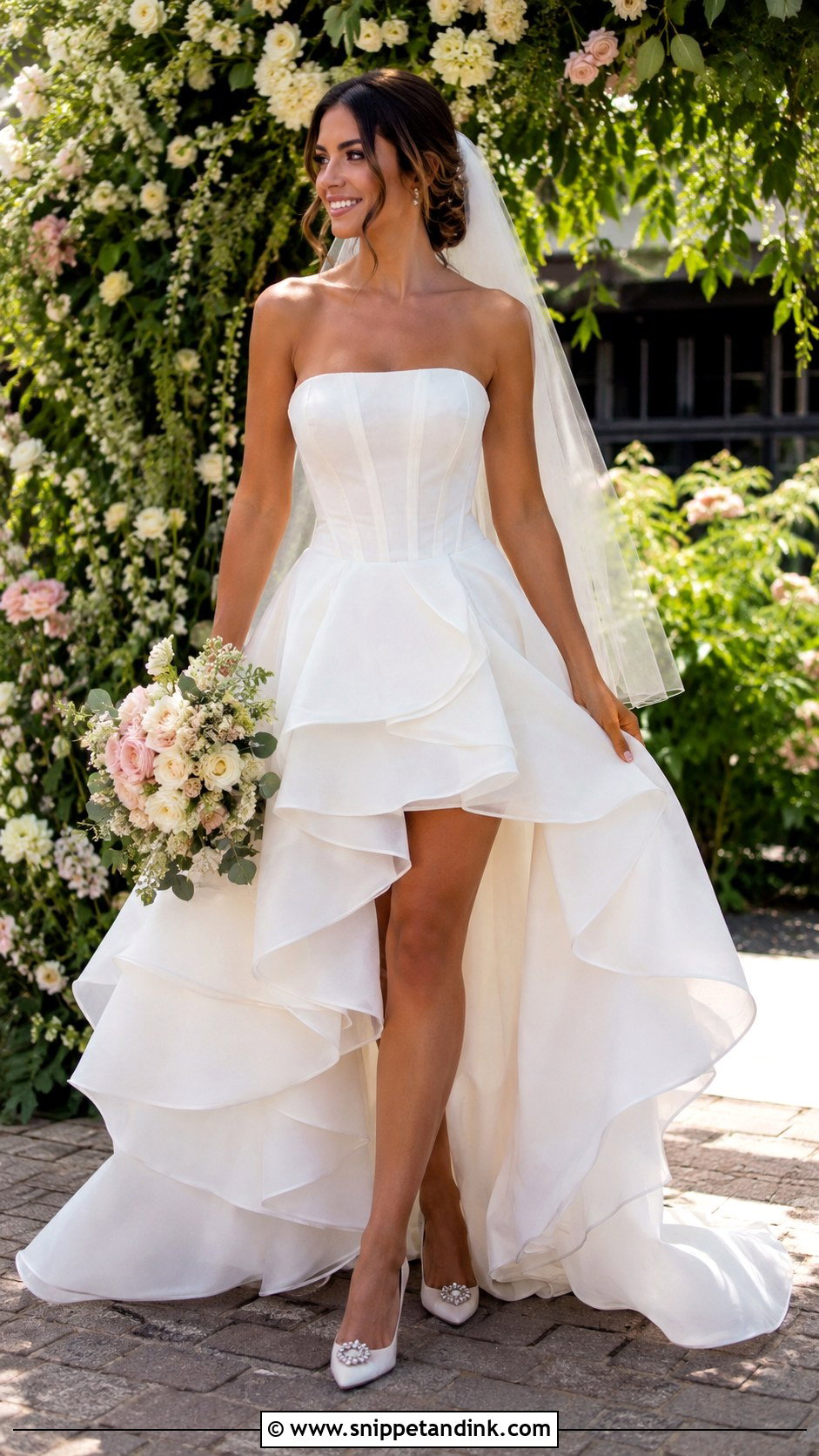
The high-low ruffle gives you a short front for movement and a long back for drama. The ruffles turn the uneven hem into something deliberate. It is very practical outdoors and on the dance floor, and it shows off your shoes, so choose them with care. Tulle softens the edge; organza sharpens it. Pay attention to how the ruffles meet at the side seams, because an awkward join is the first thing I see in profile photos. Embellished pumps, a simple veil and small earrings finish it.
12. A Line Ruffle Wedding Dress
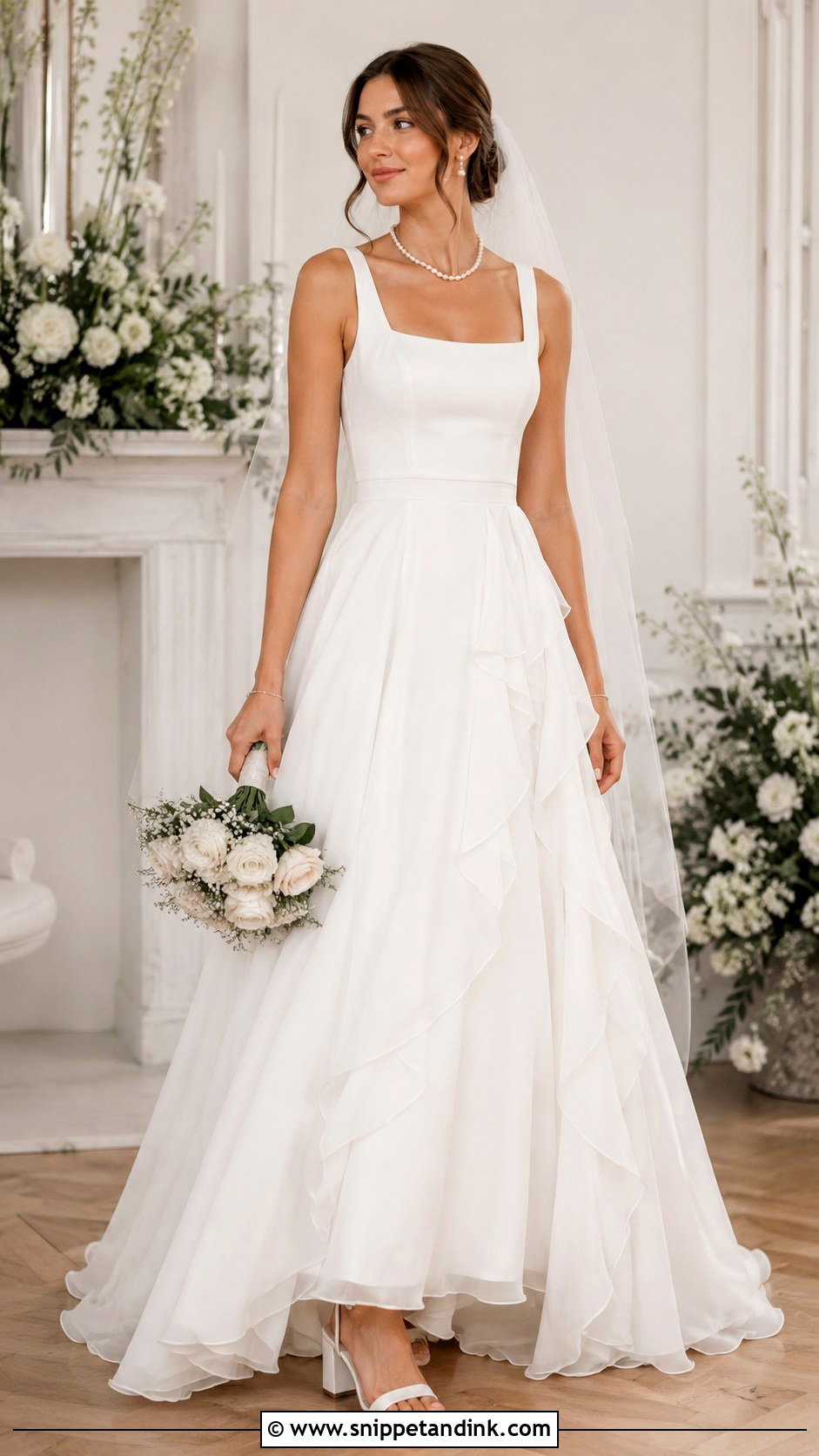
For everyday wearability, the ruffled A-line is hard to beat. The bodice defines the waist and the skirt falls away gradually, so you get movement without the weight of a ball gown. Ruffles can sit in tiers, along the hem or cascade down one side, and placement changes the effect: hem ruffles keep the waist looking narrow, while ruffles high on the hip add width there. Block heels, a soft veil and classic pearls suit it. A clean bodice keeps it from dating.
13. Tiered Ruffle Wedding Dress
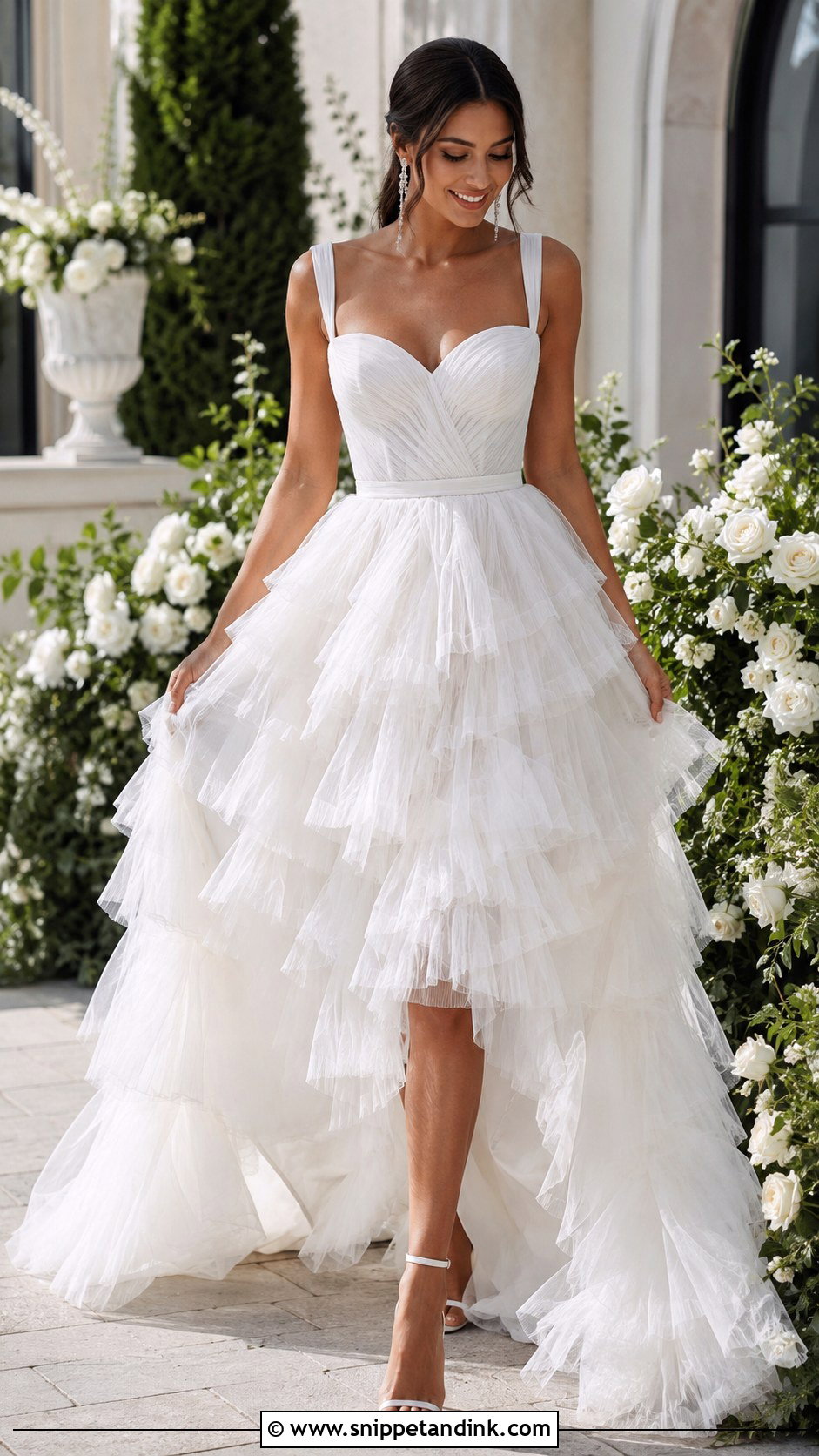
Tiers stack movement one row at a time, so the dress shifts with every step. Tulle tiers look light, chiffon relaxed, organza structured. The more tiers, the more volume, which can overwhelm a petite frame unless the bodice is fitted and the tiers start low. I also check the weight of the bottom tier, since it carries the most fabric and can drag on the floor if the hem isn’t set with your shoes. Simple earrings, smooth hair and elegant heels balance it. It fits formal weddings, outdoor ceremonies and whimsical bridal aesthetics alike.
14. Cascading Ruffle Wedding Dress
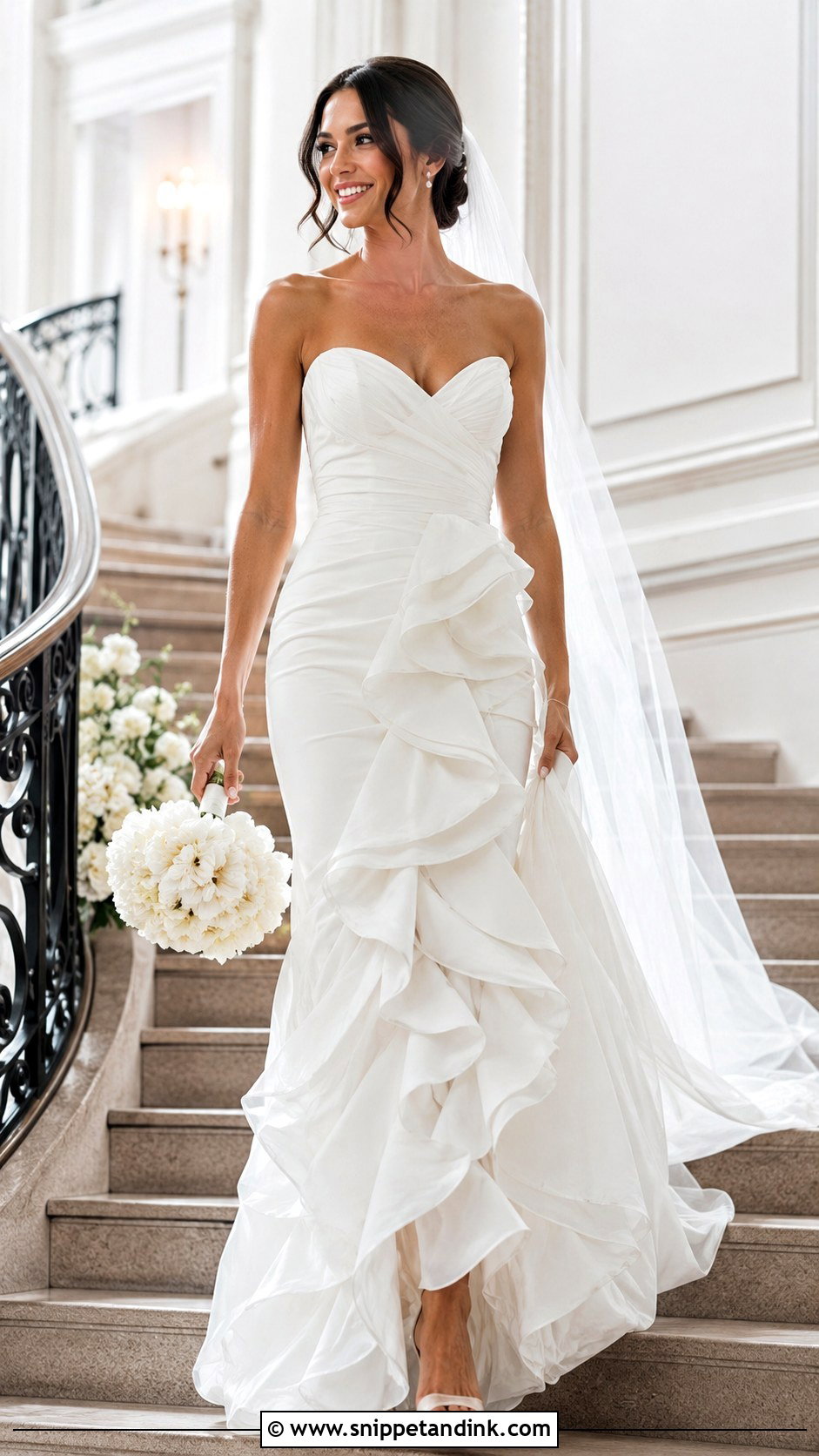
Cascading ruffles fall vertically down the dress, which draws the eye up and down and makes you look taller. You get drama without a full skirt. They can run down one side, across the skirt or from the waist into the train. Since the ruffle line is the focus, I check it while walking, not just standing, because cascades can twist toward the back as you move. A fitted bodice, slim heels, a sheer veil and minimal jewelry let it lead. Staircase shots suit this style better than any other here.
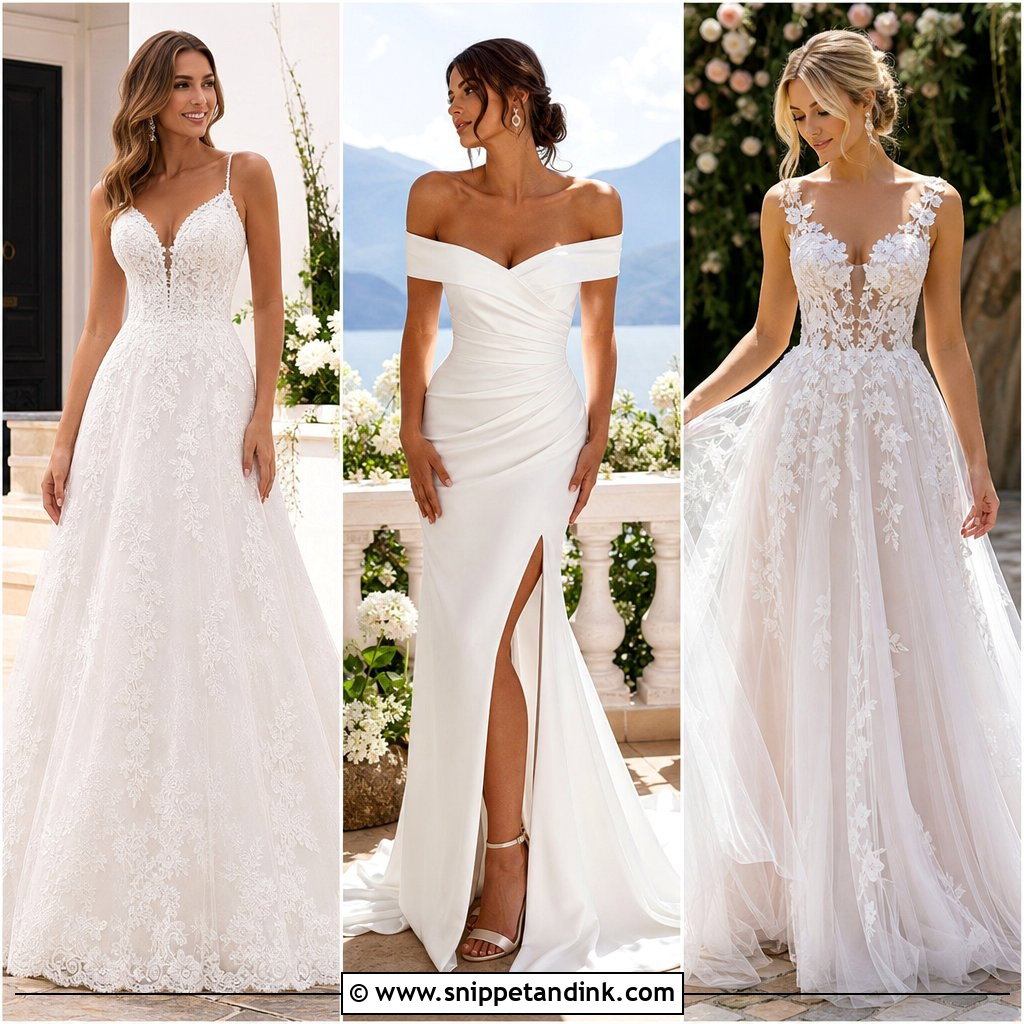
15. Ruffle Train Wedding Dress
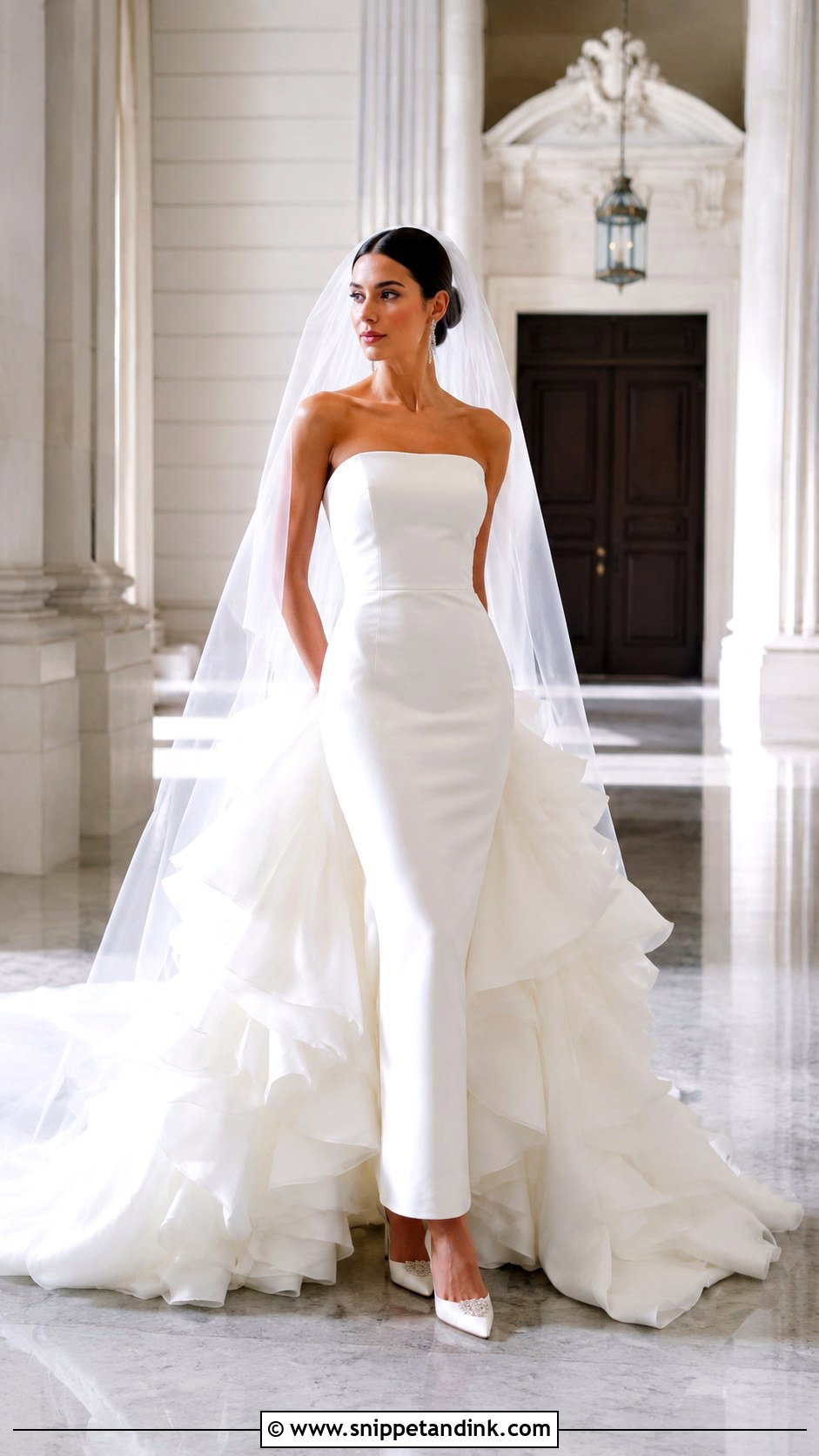
With a ruffled train, the front stays sleek and the back carries all the drama, which gives you impact in ceremony photos without wearing a huge skirt all day. A detachable train is worth asking about; it comes off for dancing in a minute. If it isn’t detachable, a ruffled train needs a careful bustle, because ruffles bunch when lifted and the points must be hidden between layers. Pair with a fitted bodice, clean earrings and a long veil that merges with the train. Formal ceremonies, grand entrances and large indoor venues give it space.
16. Ruffle Sleeve Wedding Dress
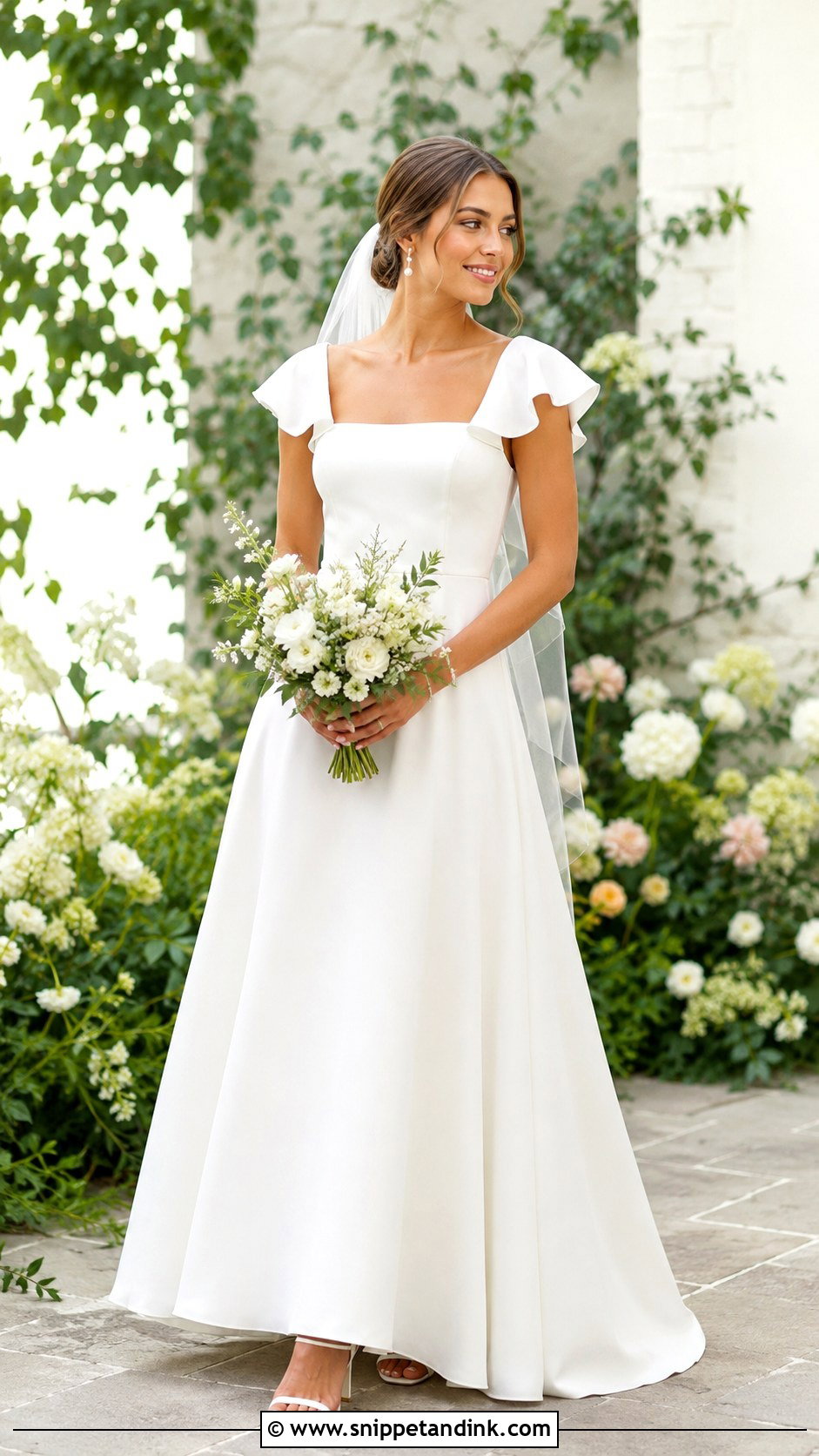
Ruffled sleeves bring detail near the face without needing a big skirt. Flutter sleeves are soft and delicate; larger ruffles are a statement. They suit simple A-line, sheath and column dresses best. For arm coverage, choose sheer sleeves with a light frill at the edge. I’d avoid big ruffled sleeves if you plan to wear a long veil down, since the two tangle at the shoulder. A low bun, small earrings and clean heels are plenty, and no necklace. Spring and outdoor ceremonies suit it.
17. Ruffle Neckline Wedding Dress
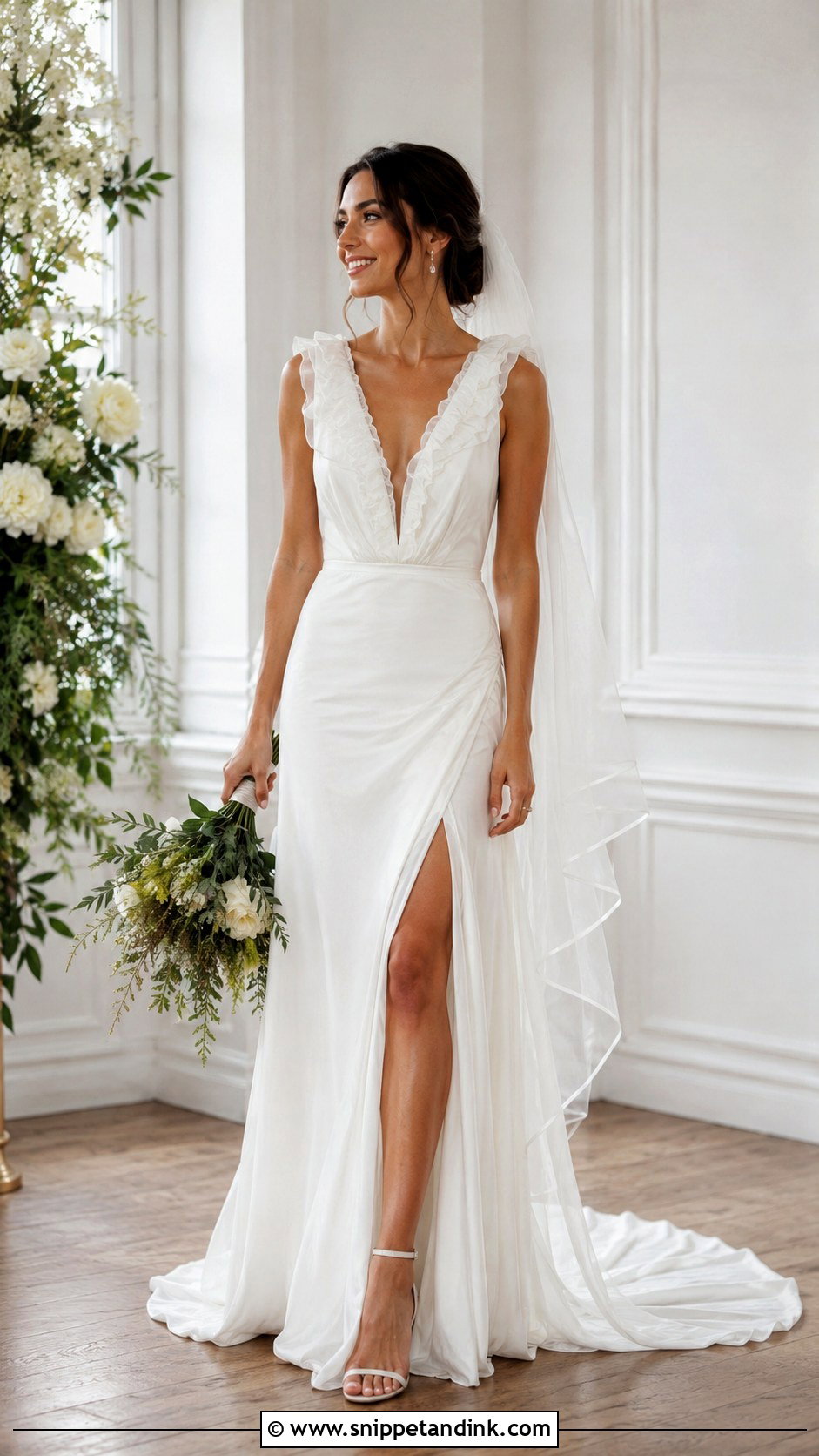
A ruffle at the neckline pulls attention upward and frames the face. It can trim a V-neck, a square neck, a halter or an off-shoulder line; a small frill is sweet, a larger one bold. Keep the skirt calmer if the neck has volume. One thing I watch for is the ruffle brushing foundation off the jaw or collarbone, so I mention it to the makeup artist and set the area well. Pulled-back hair, delicate earrings, simple heels and a light veil keep the focus where it belongs.
18. Ruffle Skirt Wedding Dress
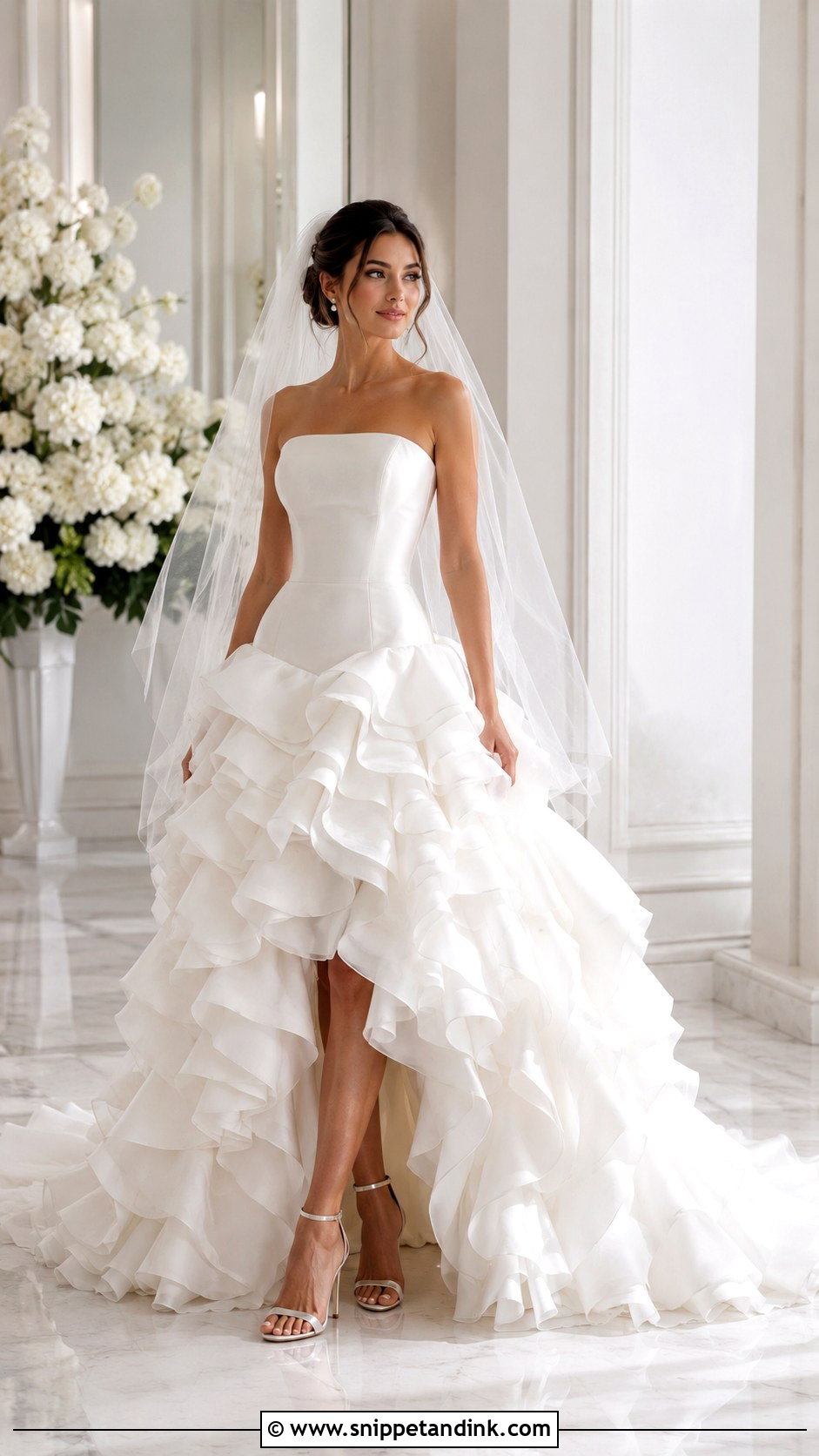
Plain on top, ruffled below. A satin or crepe bodice over a textured ruffle skirt keeps the gown modern and stops it from looking busy. The skirt can be full, fitted, tiered or asymmetric. If there is a lot of volume, plan a bustle for the reception and practise it with your maid of honour before the day, since ruffled skirts are fiddlier to bustle than smooth ones. A clean veil, small pearls and elegant heels finish it, and the texture reads well from every angle.
19. Minimal Ruffle Wedding Dress
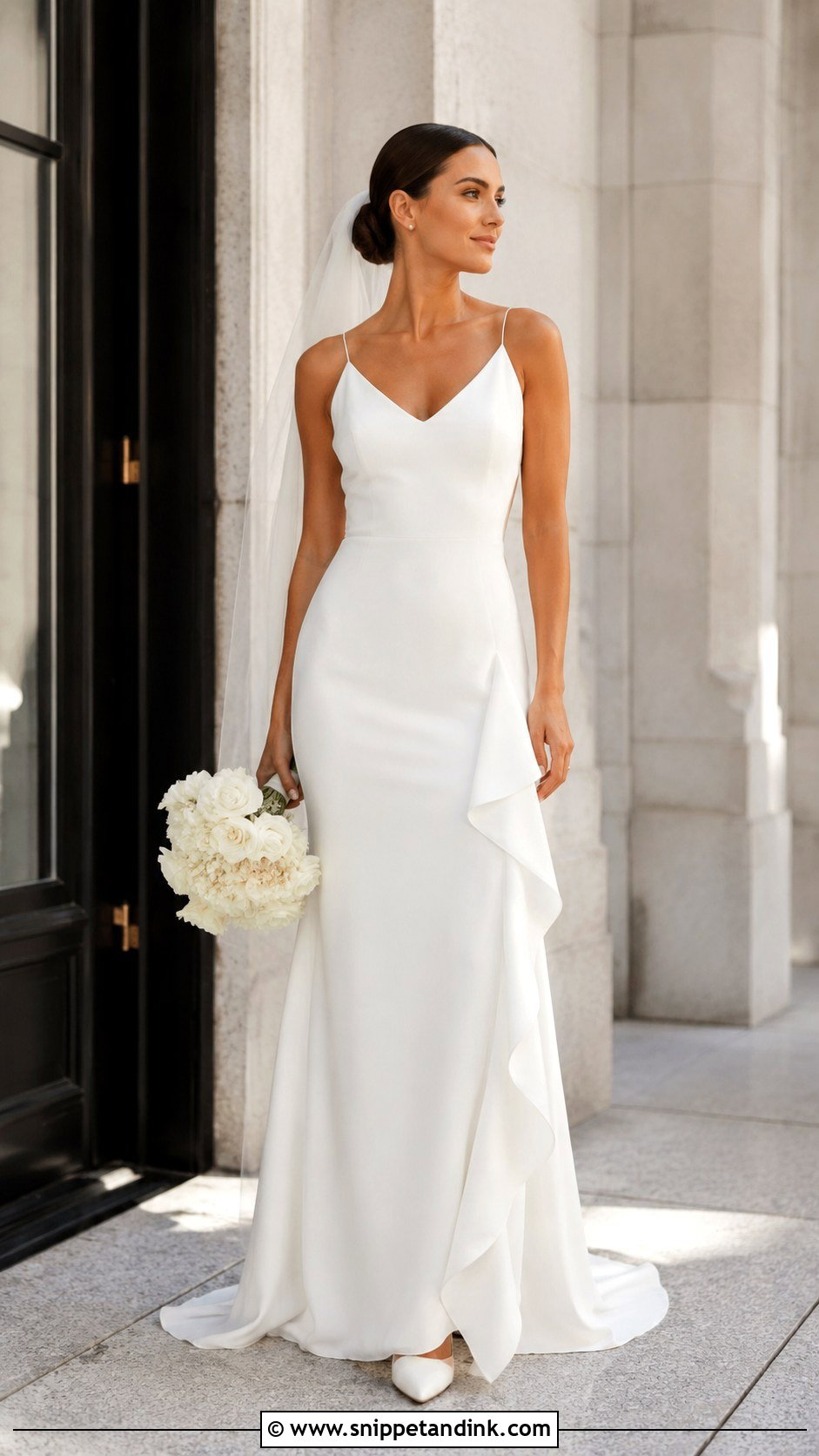
One ruffle can be enough. A minimal gown might put a single frill on the neckline, the hem, a sleeve or a side slit, and that restraint is the point. Choose smooth crepe, satin or mikado, fabrics with enough body that the lone ruffle holds its shape instead of flopping. Sleek heels, a low bun, pearl or diamond-style studs and a plain veil finish it. City weddings, courthouse ceremonies and modern venues suit this quiet look.

20. Boho Ruffle Wedding Dress
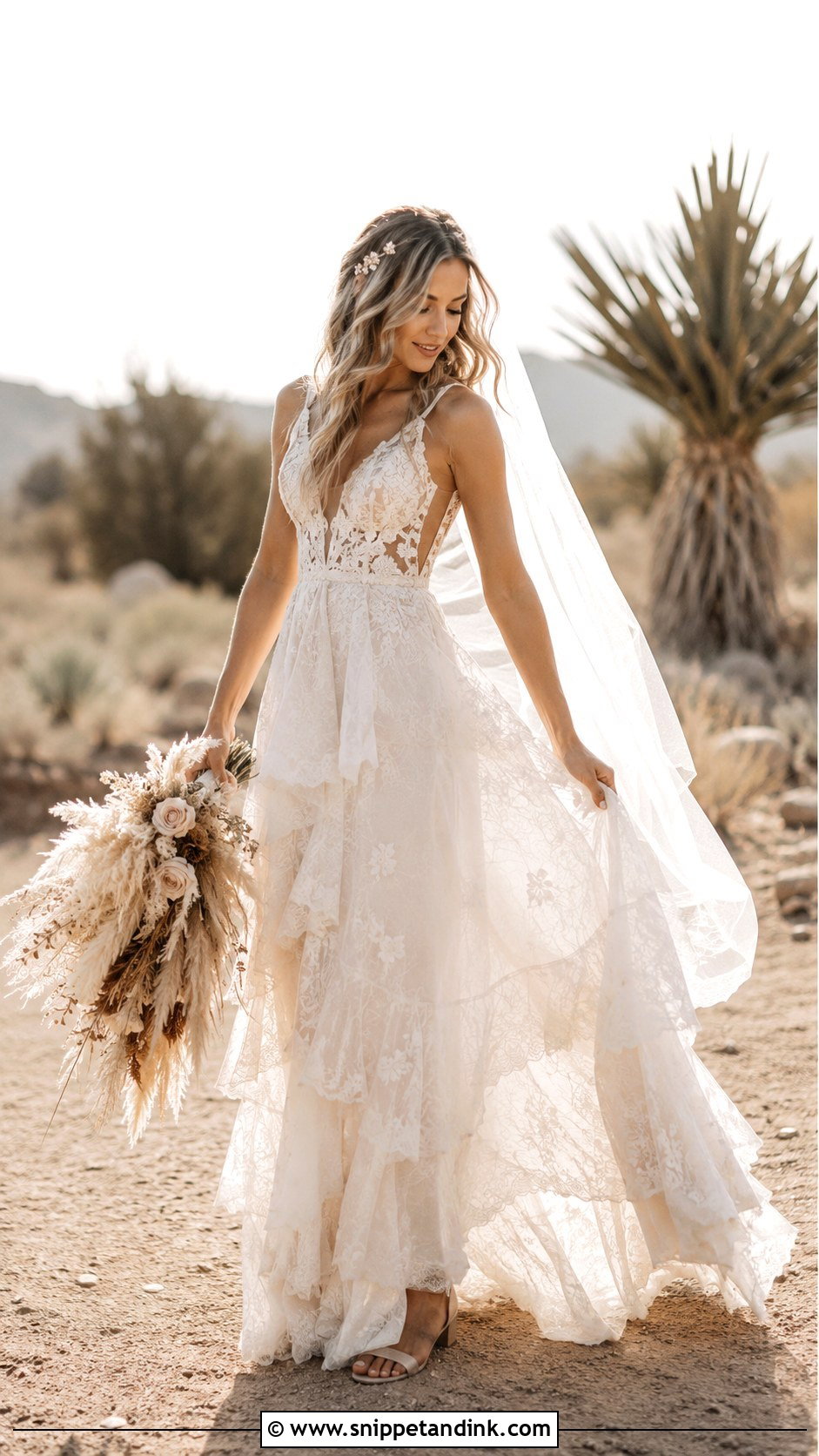
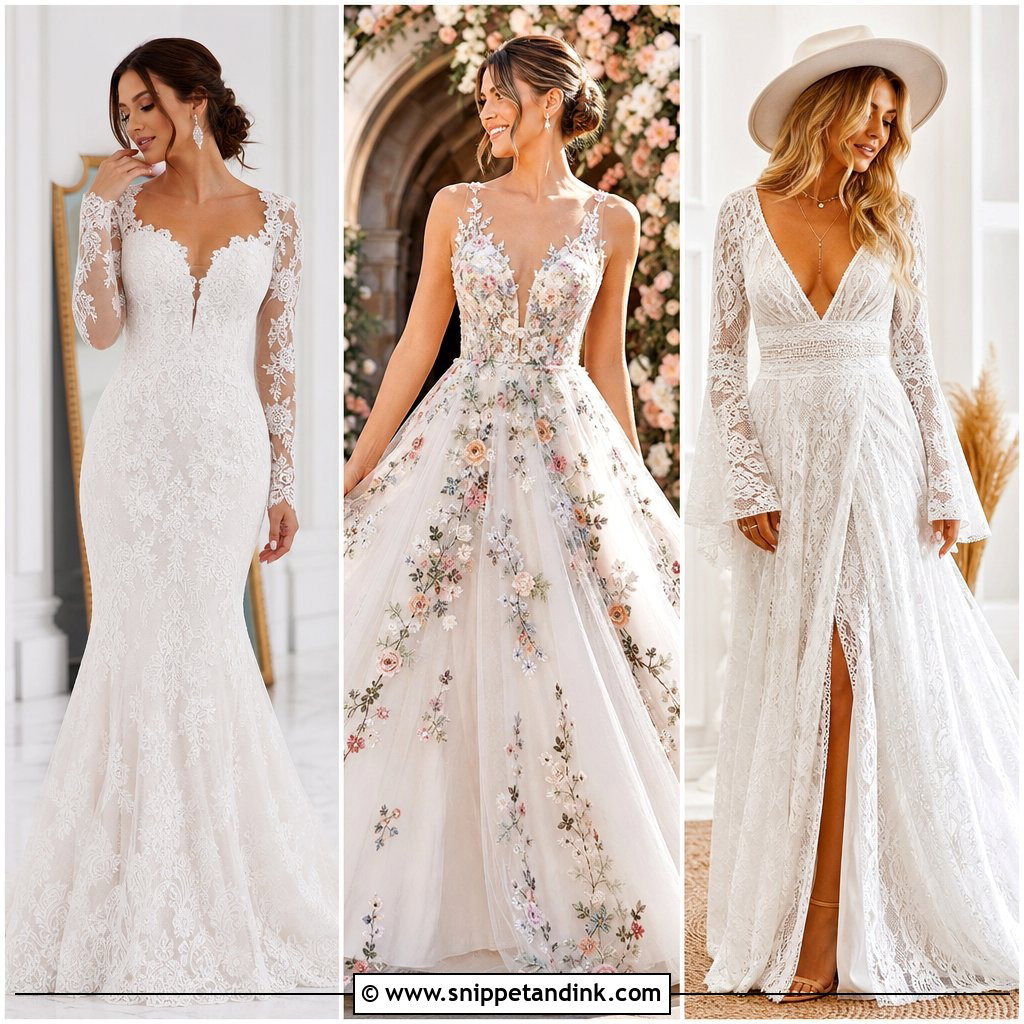
Boho ruffles should never feel stiff. Look for soft fabrics, flowing sleeves, light lace and loose frills, plus a deep V, open back or empire waist. Comfort is the whole idea, so I make sure the lining is as soft as the outer layer; a scratchy lining defeats the purpose in a desert or beach setting. Loose waves, a few pins, block heels or bridal sandals and a soft veil or floral accessory keep it relaxed. Outdoor and laid-back weddings are where it belongs.
21. Vintage Ruffle Wedding Dress
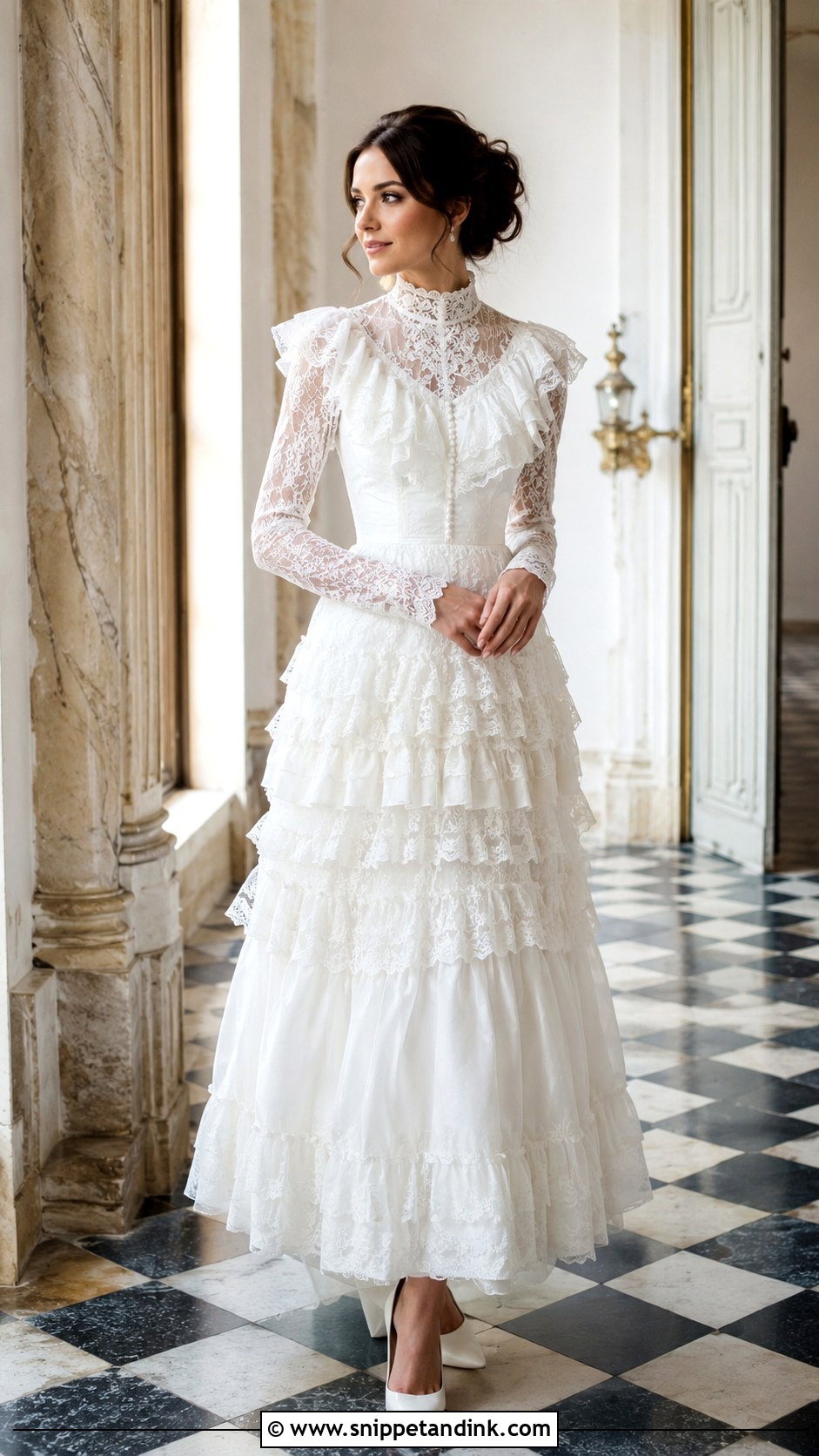
Vintage ruffles mean high necklines, lace sleeves, soft tiers, covered buttons and delicate trims. The line between inspired and costume is the fit: if the dress is cut cleanly to your body and the accessories are simple, it looks romantic, not borrowed. Covered buttons down the back are slow to fasten, so allow ten minutes and a patient helper. Pearl earrings, satin pumps and a soft updo work, with a lace or birdcage veil if it matches the era. Historic venues and small weddings suit it.
22. Blush Ruffle Wedding Dress
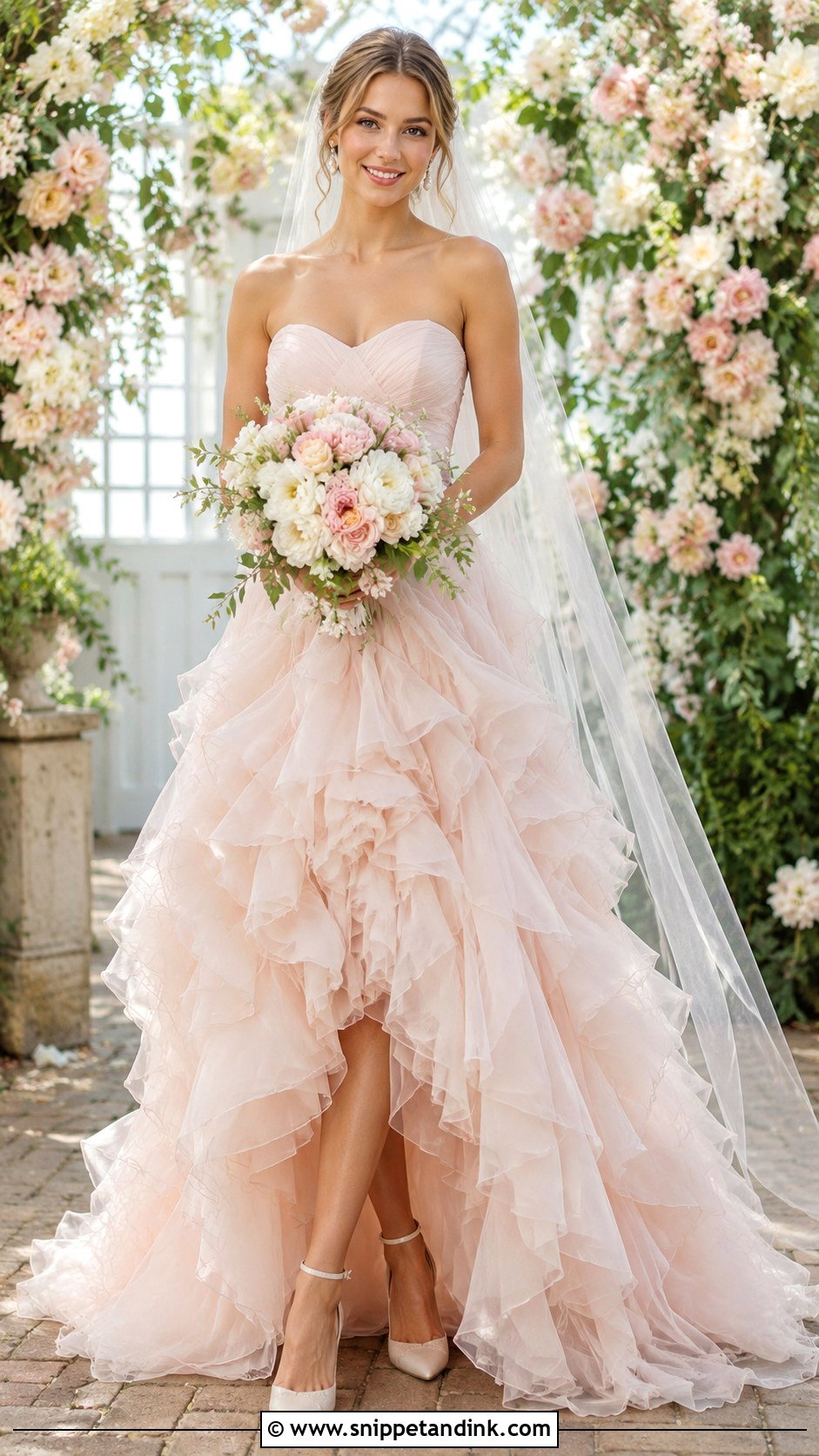
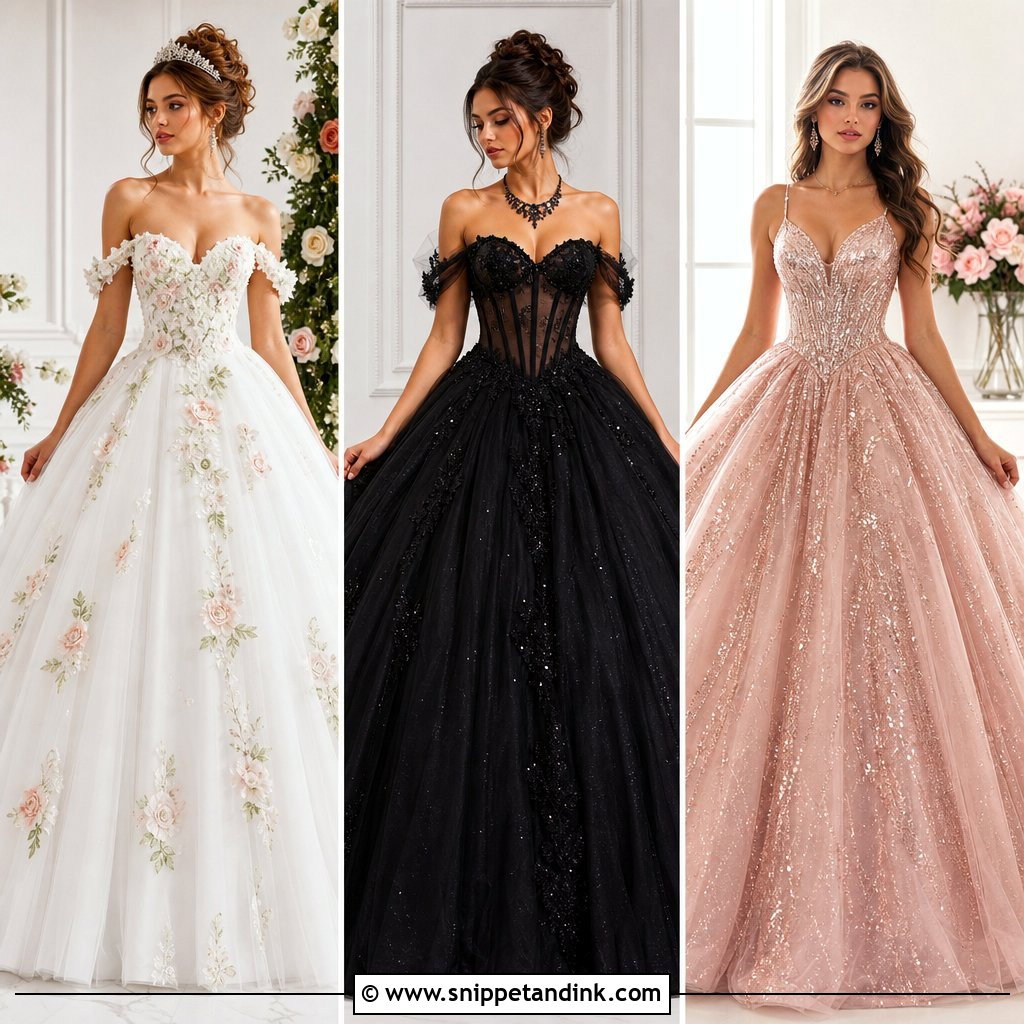
Blush with ruffles gives colour without leaving bridal territory. The pink warms tulle, organza and lace, and ruffles add depth since each layer catches light differently, so the shade varies across the skirt. If the blush is strong, I keep the makeup neutral and let the dress carry the colour. Ivory heels, pearl earrings and a simple veil finish it. Check the veil against the dress, since a stark white veil over blush can look grey. Spring gardens are its natural setting.
23. Floral Ruffle Wedding Dress
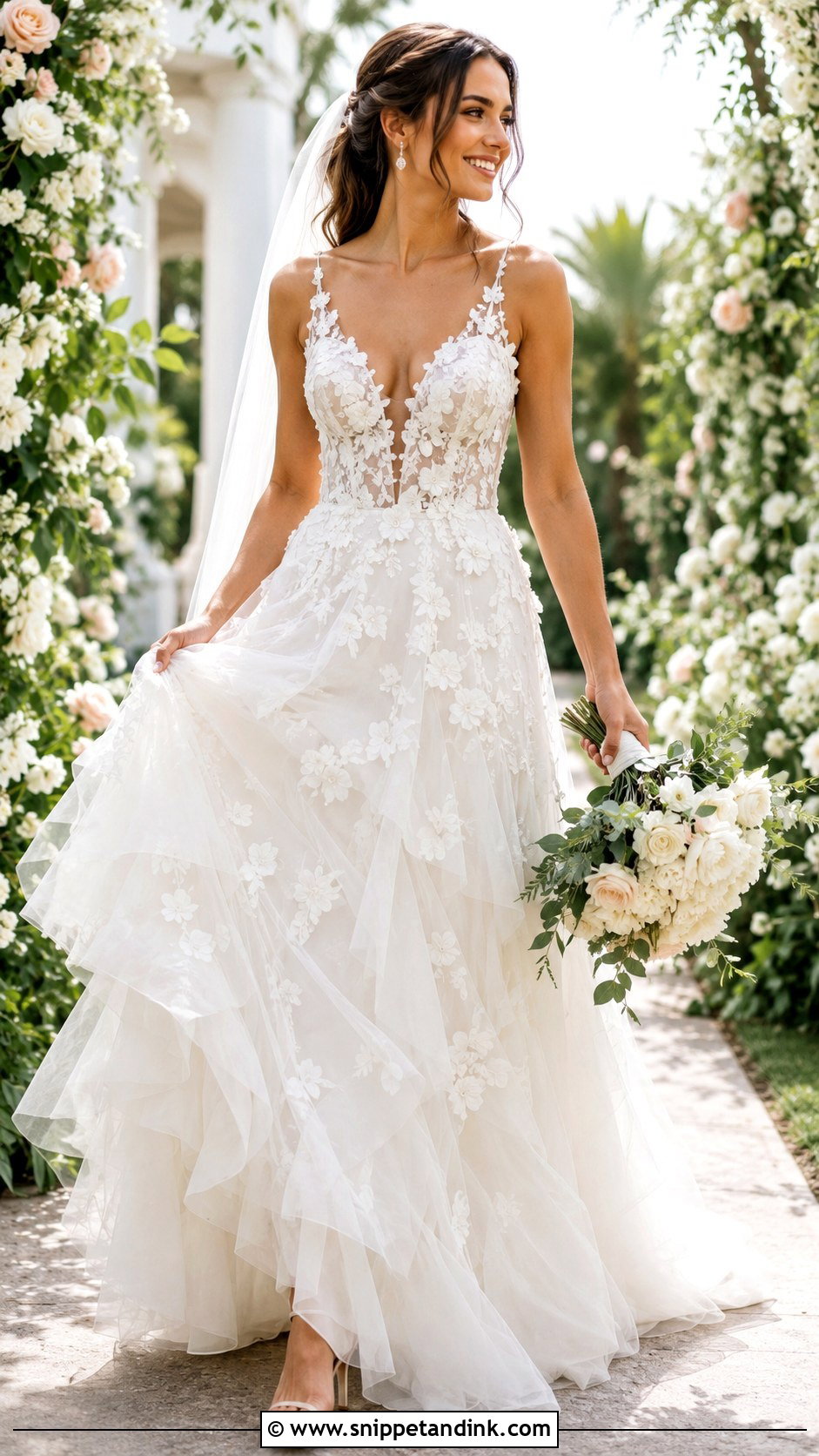
Flowers plus ruffles is a lot of romance, and it only works with restraint. The floral element might be lace appliqués, embroidered blooms, 3D flowers or a soft print; ruffles make them look more dimensional. Keep the two in balance, for example florals on the bodice and plain ruffles on the skirt, or the dress looks crowded. Raised 3D flowers also crush under a seatbelt or a long hug, so I check how firmly they are stitched. Simple earrings, soft heels and a plain veil complete it.
24. Beach Ruffle Wedding Dress
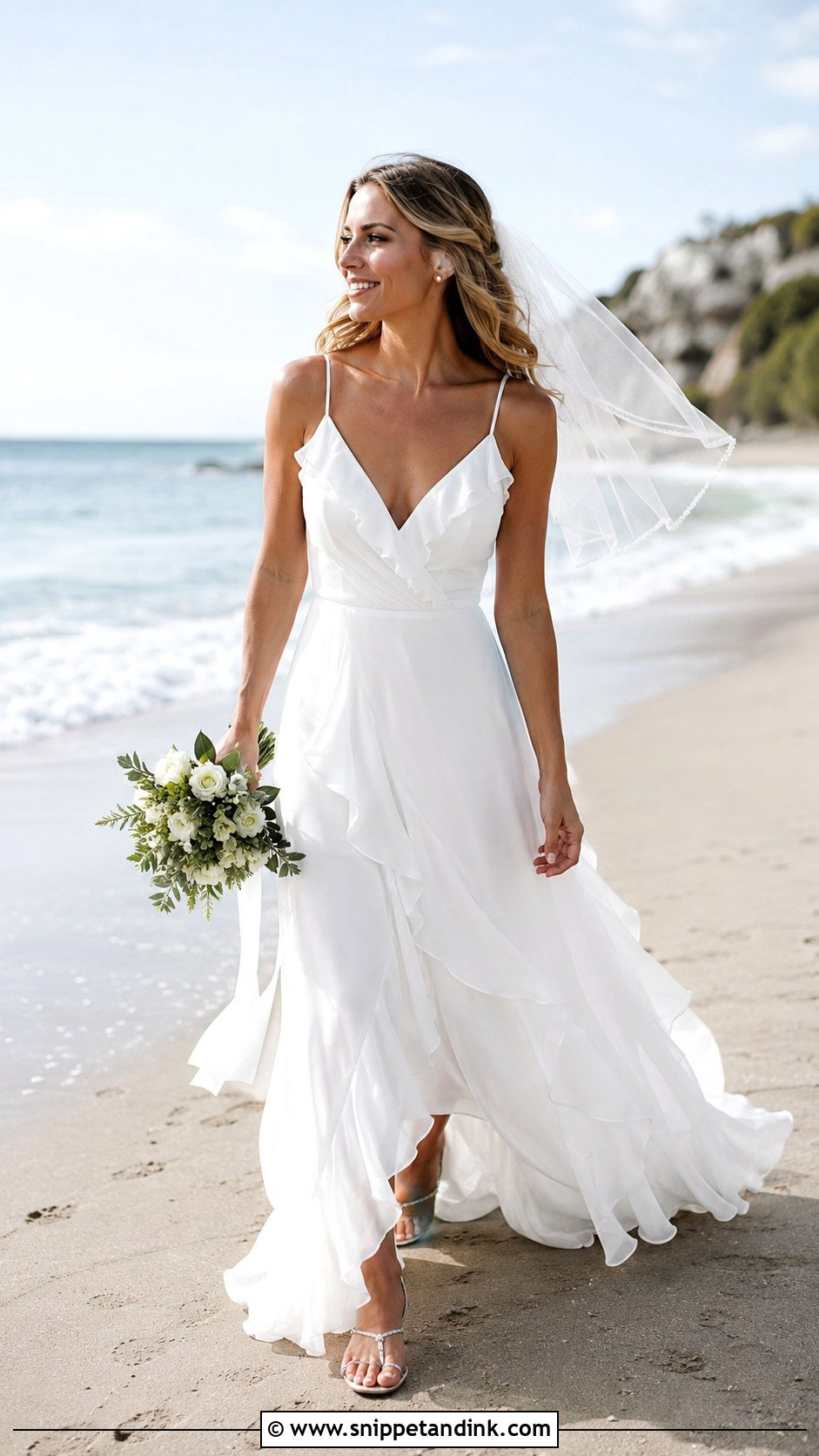
Heavy layers are the wrong choice on sand. Chiffon, lightweight tulle or airy organza breathe and move; a ruffled hem, flutter sleeve or relaxed tiered skirt gives motion without weight. A simple bodice keeps the dress at ease in a coastal setting. Wind is the issue I plan for: a long veil will wrap your face, so I’d go short or skip it. Flat bridal sandals, pearl studs and loose waves finish it, and lift the hem slightly so ruffles don’t drag wet sand.

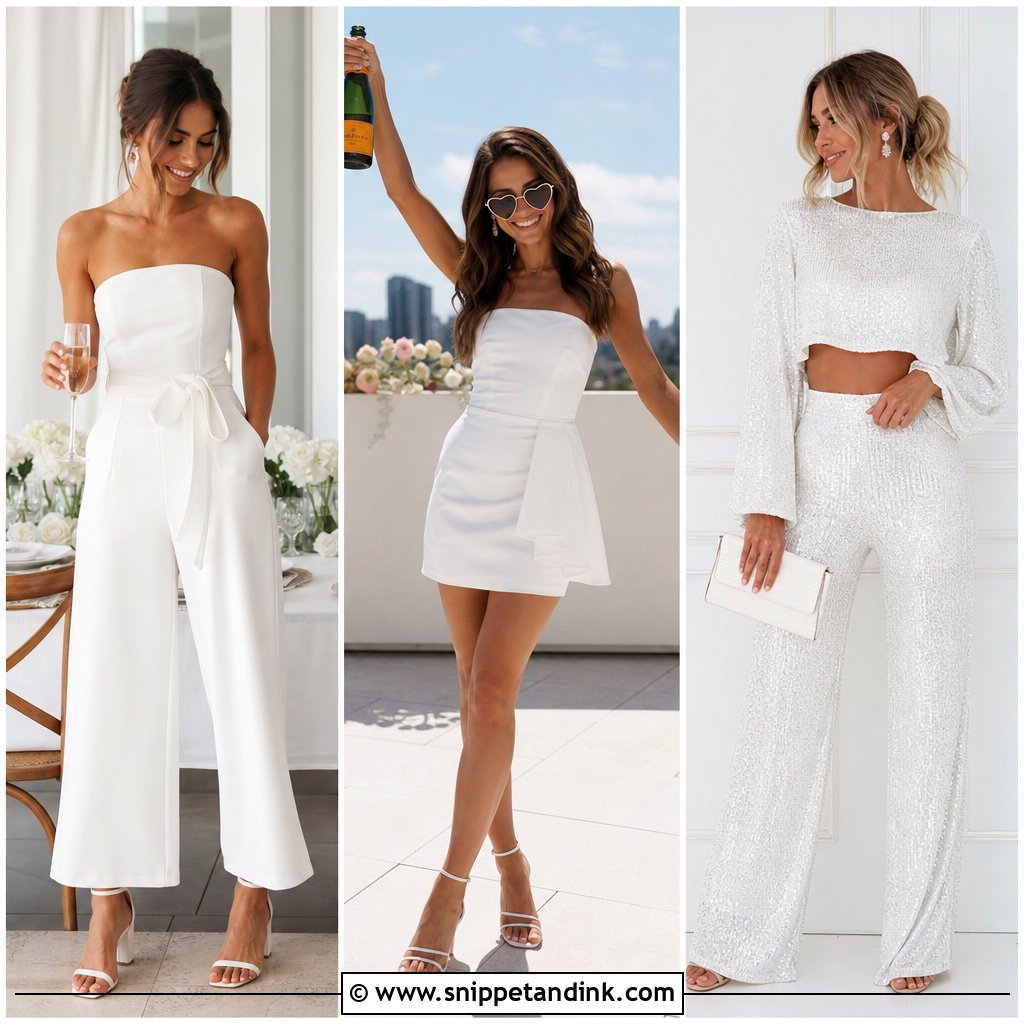

25. Reception Ruffle Wedding Dress
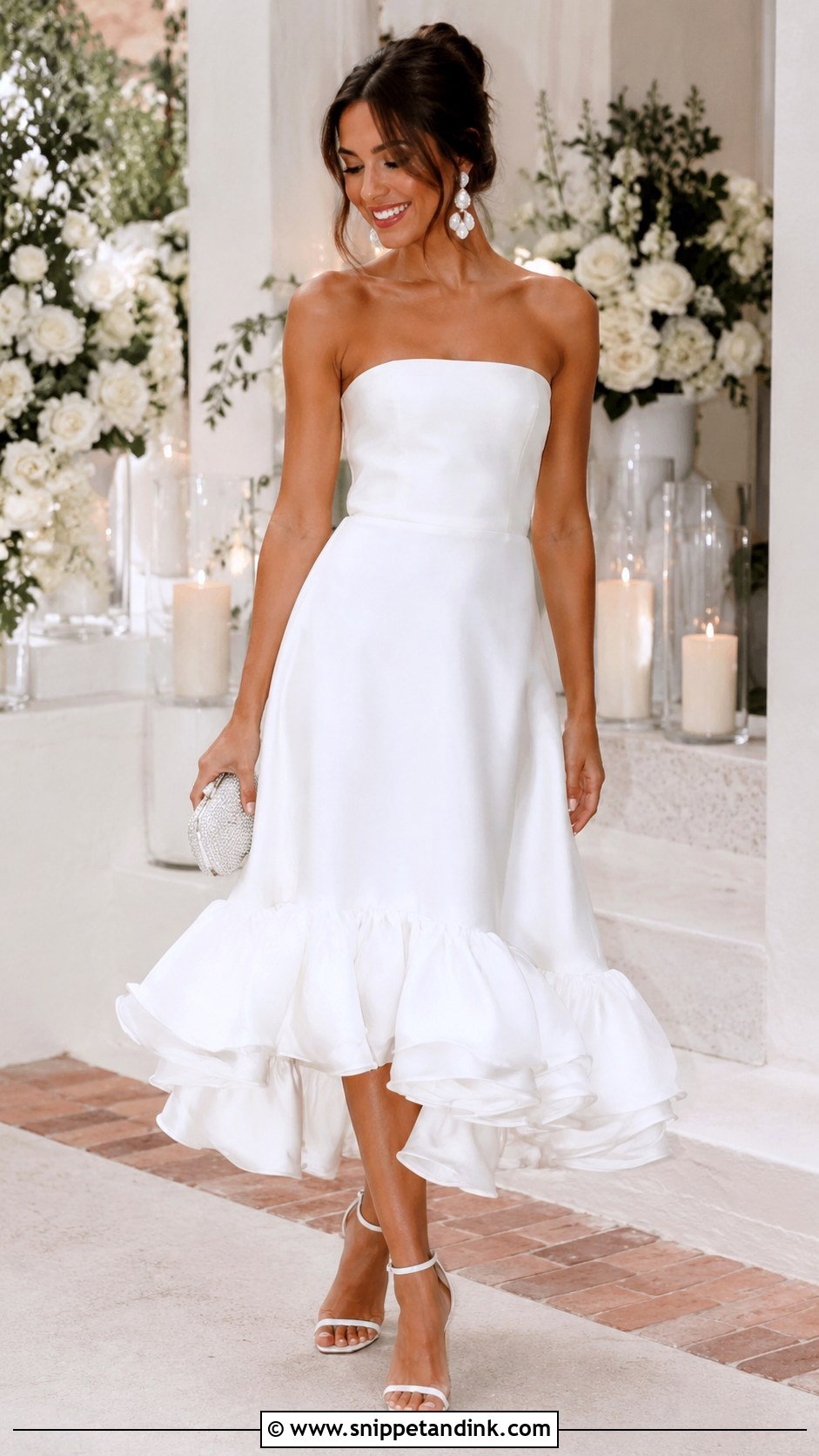
Your reception ruffle dress is for dancing. Short ruffled dresses, tea-length gowns and light high-low designs all move well after the ceremony. Choose a playful mini with a frilled hem or a sleek midi with one dramatic ruffle. If the ceremony gown was formal, this can be more relaxed. Plan the change: I usually allow fifteen to twenty minutes and have the second dress steamed and hanging in the room before the ceremony starts. Comfortable heels, statement earrings and a small clutch finish it.
Ruffles Crush in Transit, So Plan the Steaming
Layers of frills pack down badly. A ruffled skirt folded into a garment bag for a car ride or flight arrives flattened, and organza in particular holds sharp creases. I build a pressing step into the morning schedule for every ruffled gown.
- Hang the dress the day before, inside out if possible, so the ruffles relax under their own weight.
- Steam each tier from underneath, keeping the head moving and not too close, since a hot steamer can water-spot silk and pucker synthetic organza.
- Never iron ruffles flat. If a crease will not move, a low steam and a gentle hand-shape between your fingers works better.
- Let the fabric cool and dry fully before anyone puts it on, or the ruffles crush again the moment you sit.
If you are flying with the dress
Ask the shop to pack the ruffles with tissue between the layers, carry it on rather than checking it, and book a steaming service at the destination if your venue does not have one. Ruffled hems also pick up dirt quickly, so a quick check of the bottom tier after outdoor photos saves surprises later.
Fabric First, Ruffle Count Second
Ruffles cover a huge range, from a single frill on a crepe sheath to a tiered ball gown. What decides whether a ruffled dress works is the fabric and where the volume sits. Tulle floats, chiffon flutters, organza holds an edge, lace adds pattern. Put the ruffles where you want width, keep them away from where you don’t, and test the dress sitting, walking and lifting your arms. Then the frills do their job: they move with you, rather than you managing them all night.
You'll Like These Ideas:







Leave a Reply