
The 1970s bridal look was the decade when wedding dresses stopped being architecture and started moving with the body. Empire waists, bishop sleeves, high lace collars and prairie ruffles all came from the same idea: fabric that floats instead of fabric that holds you up. When I dress a bride in this era, the work is mostly editing, because the gowns carry so much detail that a heavy veil or a busy necklace tips them into costume. Below are 30 dresses from the decade, with what I’d look at on each one in a fitting room.
Real 1970s or Made Last Year? What I Check on a Vintage Gown
Plenty of brides fall for an original from the decade, and plenty of new dresses copy the look. Both are fine choices. If you are buying true vintage, these are the checks I run before I’d let anyone pay for it.
The size label will mislead you
Sizing from that era runs noticeably smaller than today’s labels, so ignore the number and measure. I want bust, waist, hips and, for sleeved gowns, the upper arm and wrist. Then compare against the dress laid flat. Most mass-produced dresses from the period have narrow seam allowances, which means there is very little to let out. Taking a gown in is easy. Letting it out often isn’t possible at all.
Hold it up to a window
- Underarms and neckline: yellowing or brown marks from old perspiration are hard to lift and can weaken the fibre.
- Lining: old acetate linings can split along the grain. A new lining is a reasonable alteration; budget for it.
- Zip: original metal zips are often fine, but a stiff one should be replaced before the day, not on it.
- Lace edges and ribbon channels: small tears grow when the dress is put on and off several times.
Smell is a clue too. A musty smell usually cleans out; a sharp, vinegary one from old synthetic linings often doesn’t. If you’re unsure, a specialist cleaner who handles vintage textiles can tell you before you commit.
1. 1970s Lace Bell Sleeve Wedding Dress
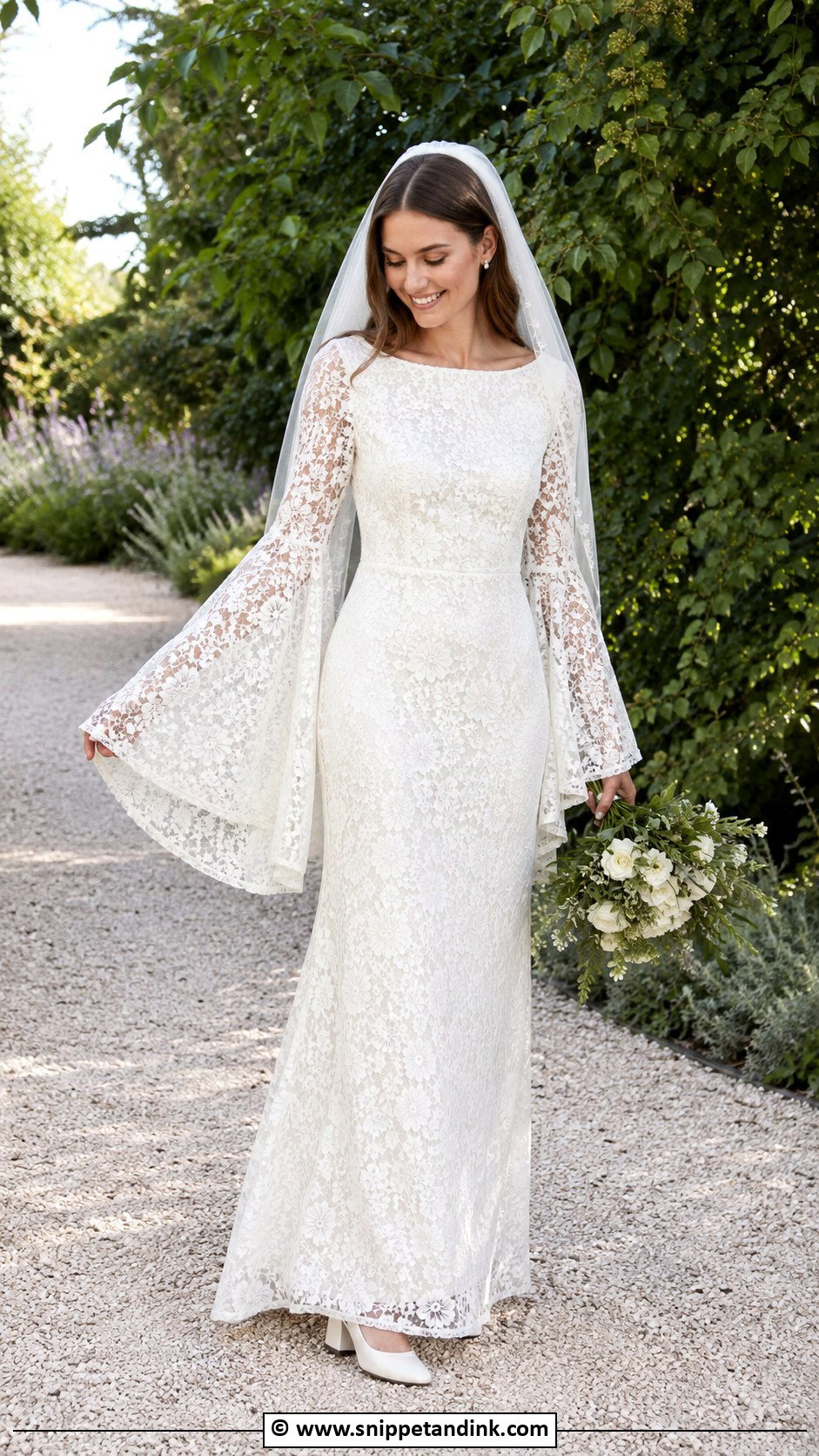
Bell sleeves are the shape people picture first when they think of the decade. The flare starts at the elbow, so the sleeve swings as you walk and catches light in outdoor portraits. I check one thing before anything else: can the bride lift a bouquet and sign the register without the cuff dragging through something? A slim A-line or empire body keeps the gown light, and with a lace that busy I’d pair a plain fingertip veil or just a small floral comb.
2. 1970s High Neck Lace Wedding Dress
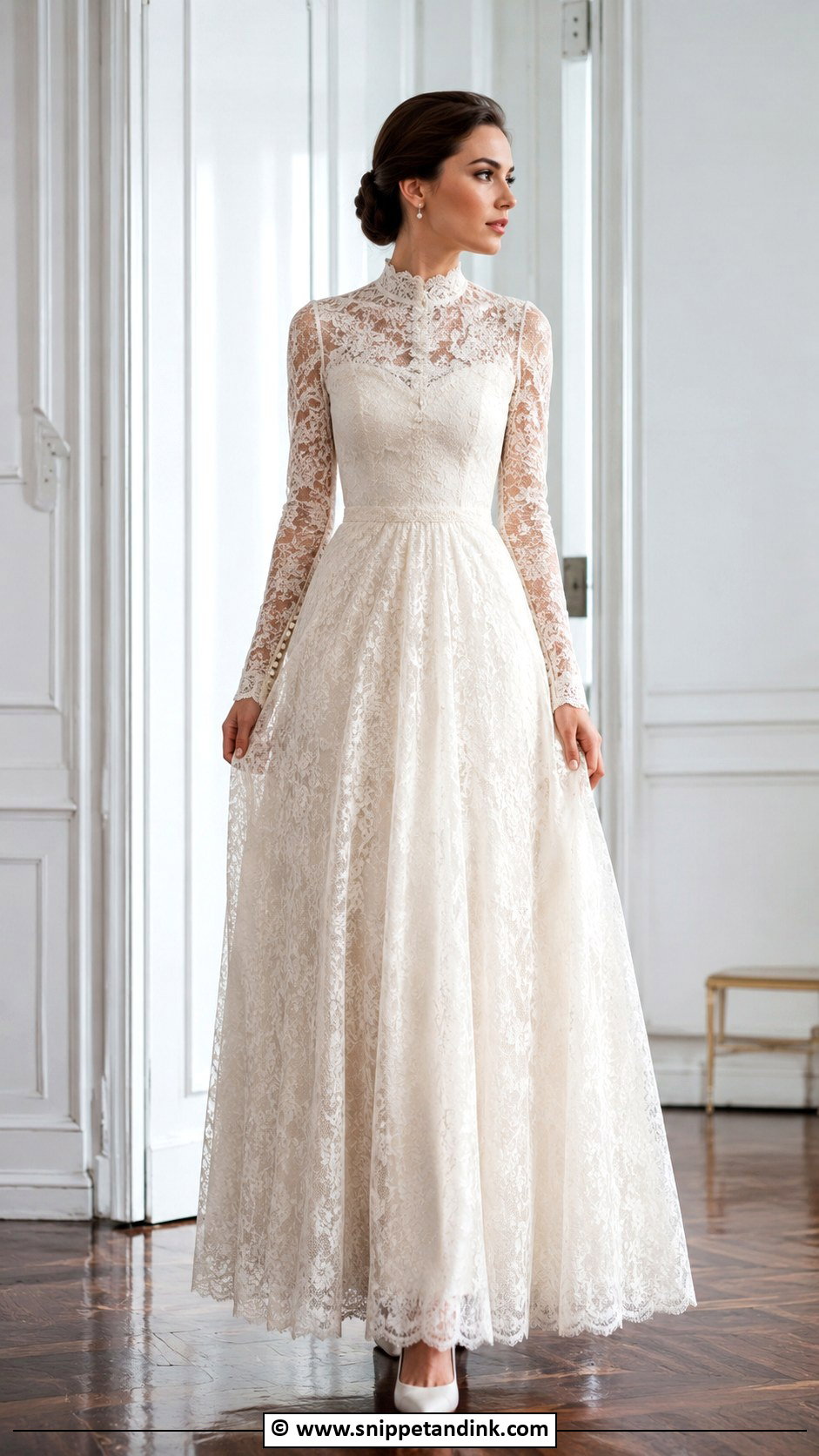
A high lace collar does the framing that a necklace would do on any other gown, so I leave the neck bare and let it work. The fit around the throat matters more than people expect. If the collar sits even slightly tight, you’ll feel it by the speeches, so I ask for a finger’s width of ease when it’s fitted. Keep the waist softly shaped and the skirt fluid, then finish with a smooth low bun so nothing fights the neckline. It’s a sensible pick for autumn and winter, and for venues where shoulders stay covered.
3. 1970s Empire Waist Wedding Dress
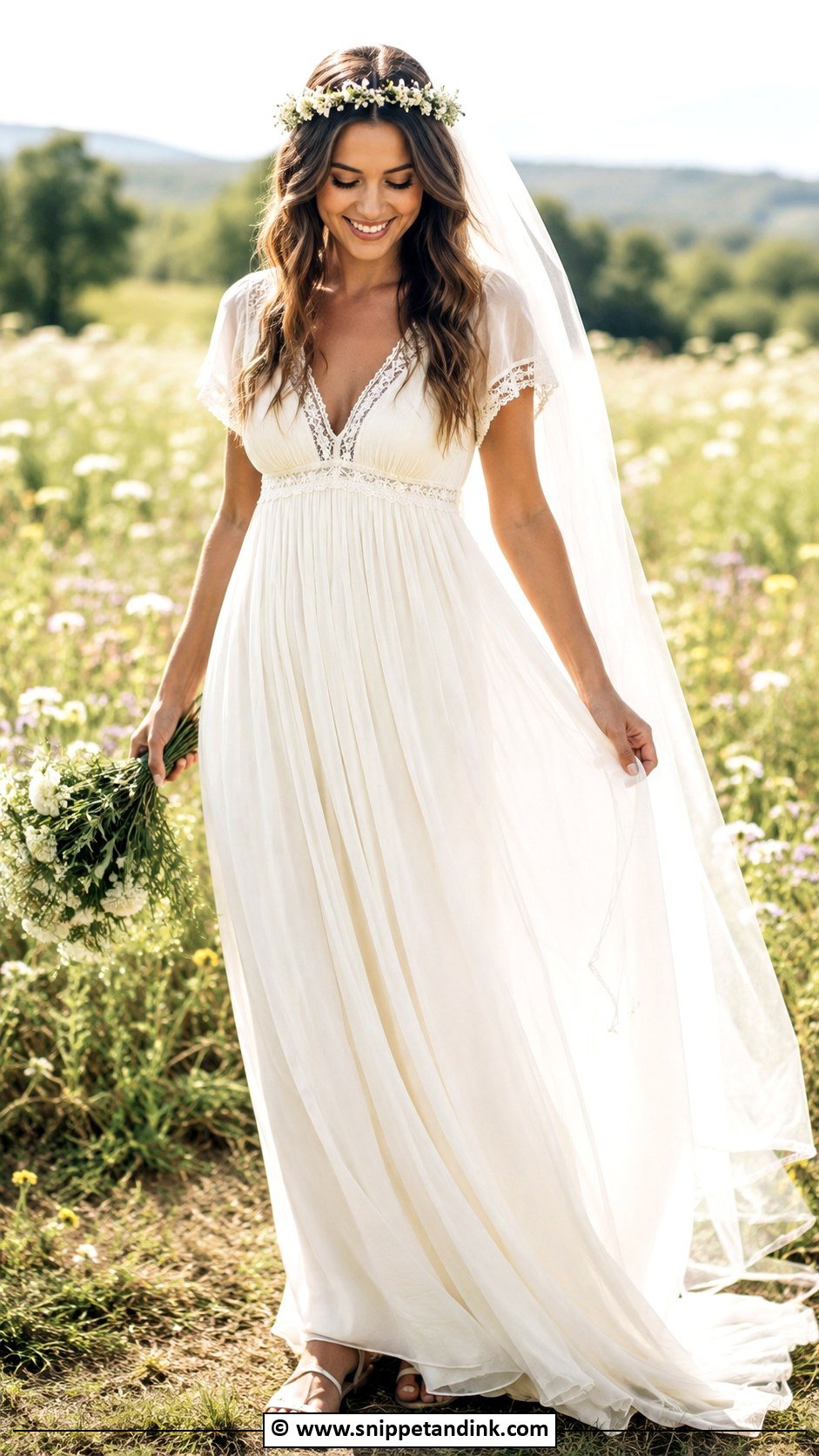
The seam just under the bust is what makes an empire gown so forgiving. Everything below it hangs free, which is why I reach for this shape for petite brides, for pregnant brides and for anyone who wants to sit through a long dinner comfortably. Chiffon, cotton voile and crepe give the most period-true drape. The catch: on a full bust, that high seam can ride up, so I always have the bride raise her arms and hug someone during the fitting before anything is pinned.
4. 1970s Prairie Wedding Dress
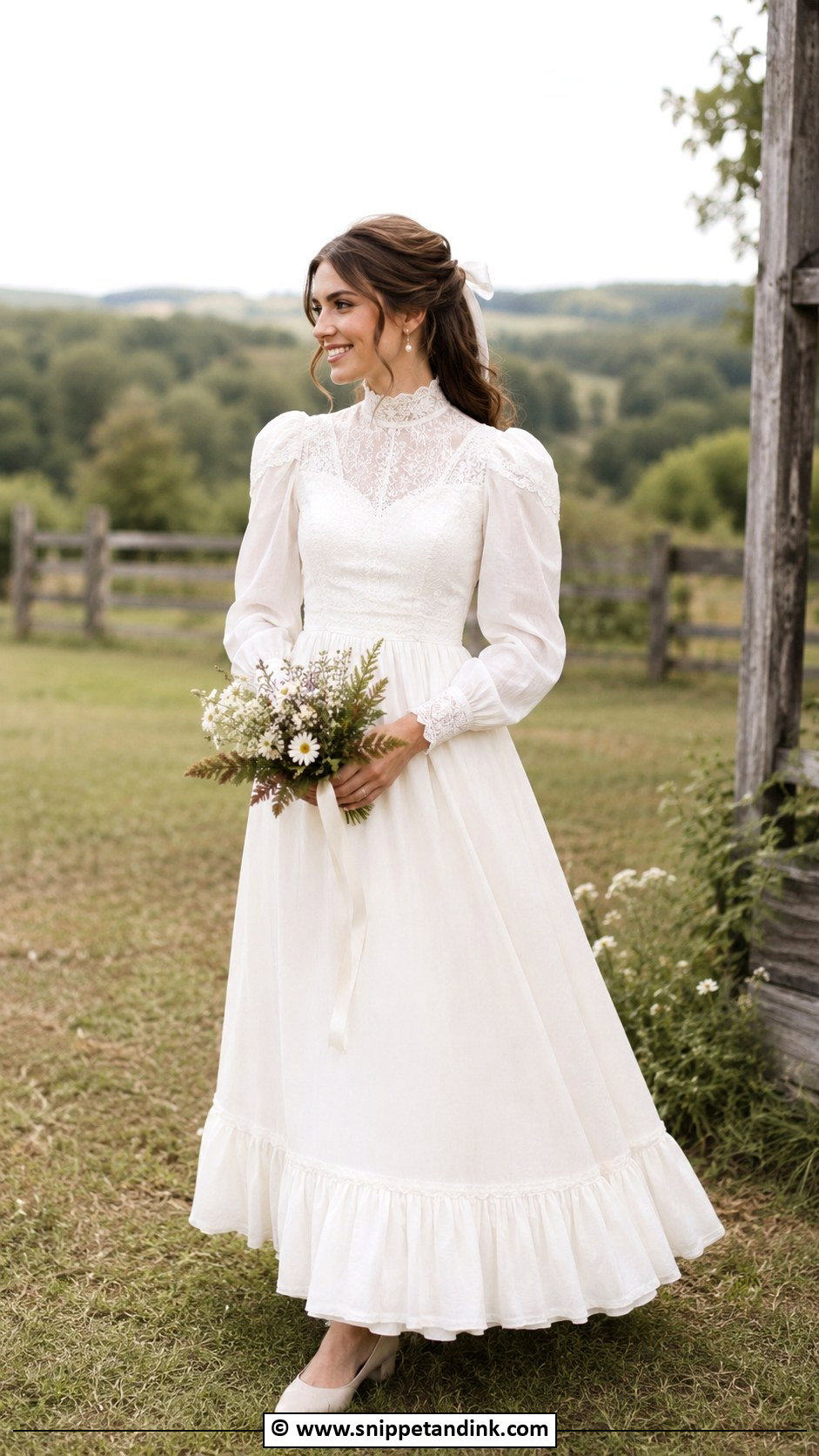
High collars, lace trim, puffed shoulders and ruffled hems: the prairie dress has a lot going on, and the difference between bridal and fancy dress is in the finishing. I keep it to ivory or soft white and add one polished element, usually pearl earrings or a structured bouquet, to signal that this is a wedding gown. Barns, meadows and small backyard ceremonies suit it. If the hem is heavily ruffled, skip the veil and tie the hair back with a ribbon instead.
5. 1970s Boho Chiffon Wedding Dress
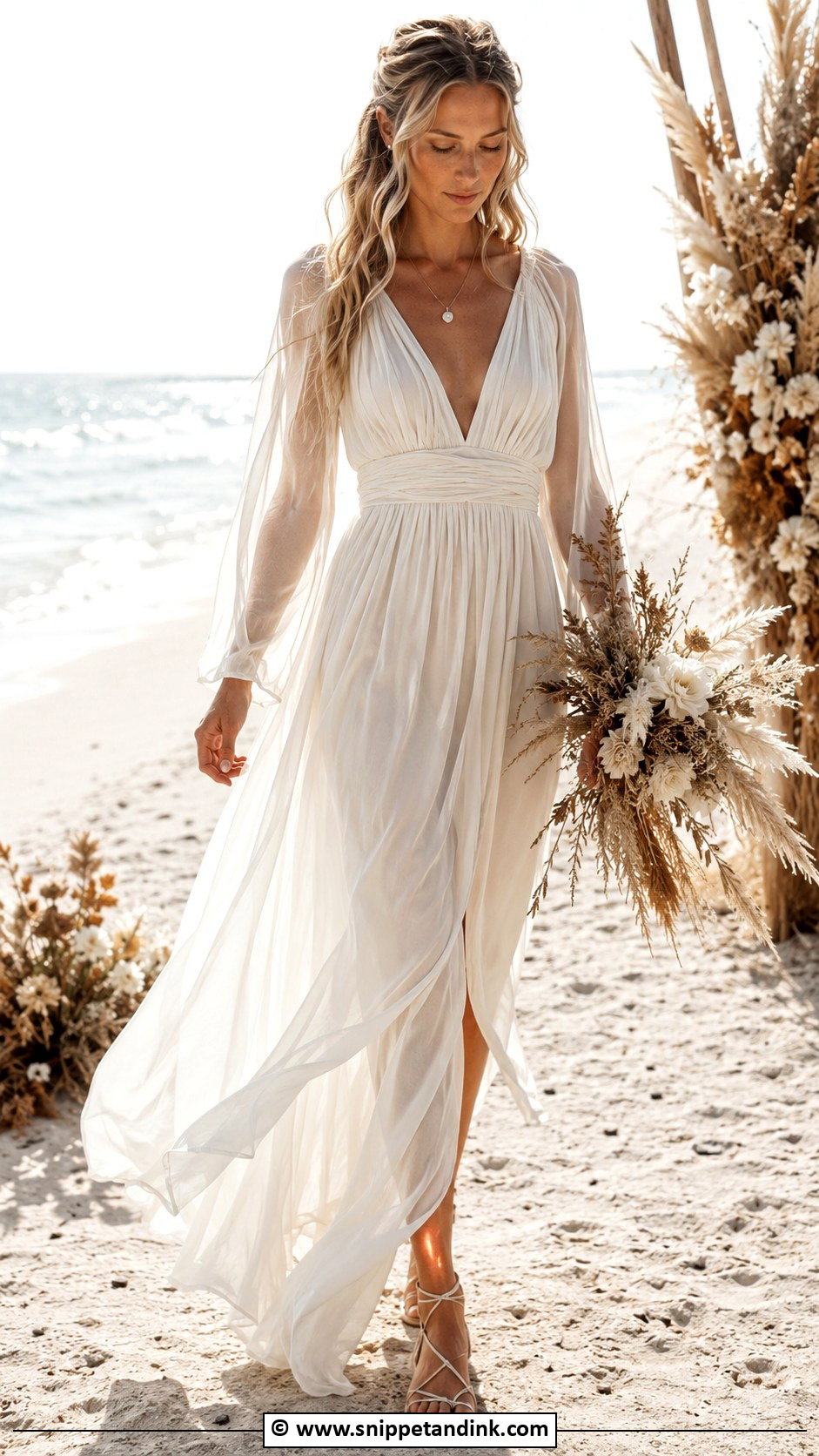
Chiffon is the fabric most brides mean when they say they want to float. It’s also the fabric that shows every pull line from a bodice that’s too snug, so I fit a boho chiffon gown with a little more ease than a satin one. Flat sandals or low strappy heels, natural waves and a single thin pendant are plenty. Heavy jewellery drags chiffon down at the neckline, and you’ll notice it the moment you start dancing on a beach or a lawn.
6. 1970s Crochet Wedding Dress
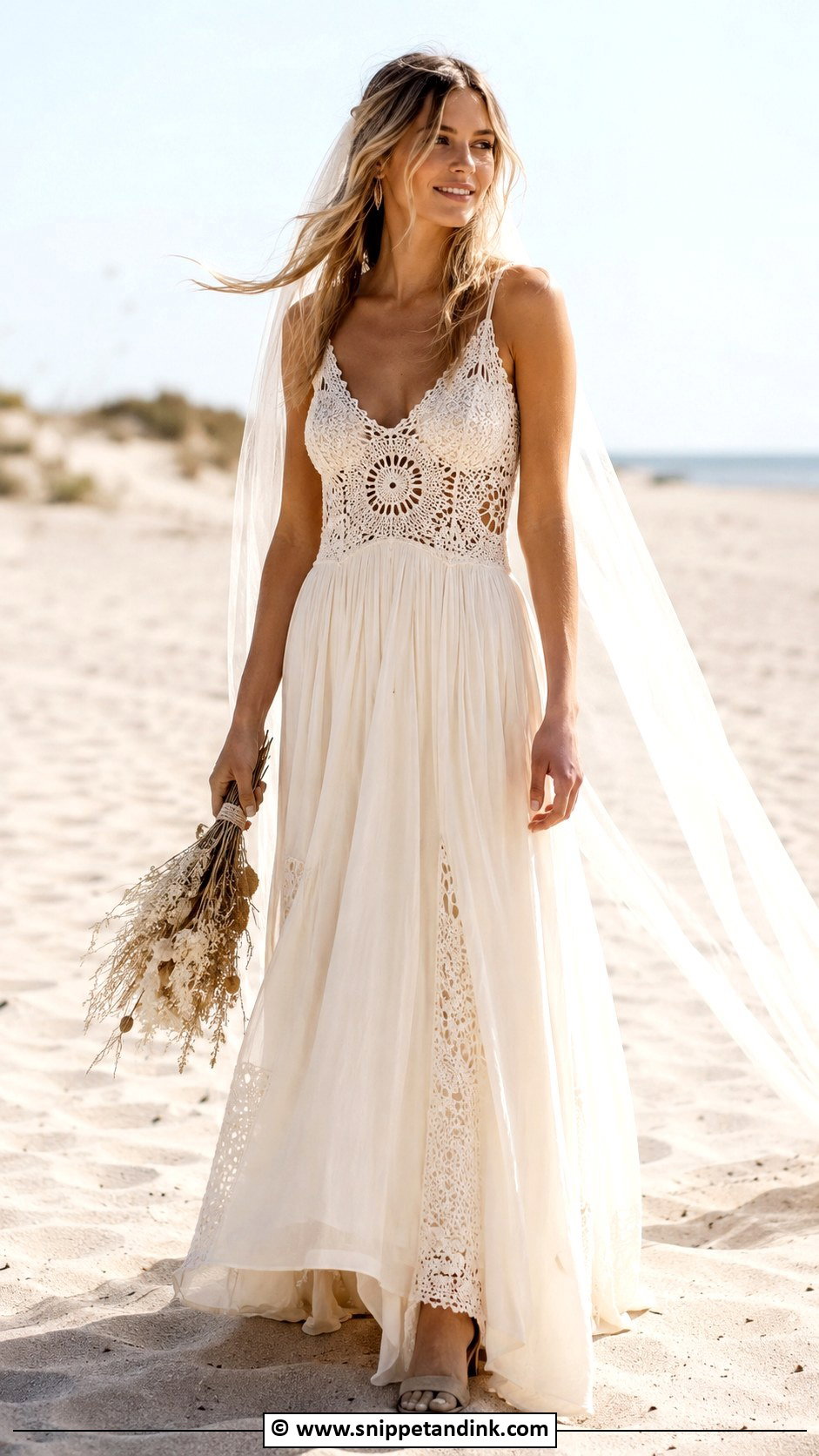
Crochet reads differently depending on the cut: an all-over crochet gown is a strong, artistic look, while a crochet bodice over a flowing skirt feels gentler. The holes in the stitch are the practical issue. I always check the gown against a phone flash and daylight, because an unlined crochet dress can go sheer in photos, and an ivory or champagne slip fixes that. With texture this busy, accessories should be plain: nude sandals, simple hoops, a smooth veil.
7. 1970s Bishop Sleeve Wedding Dress
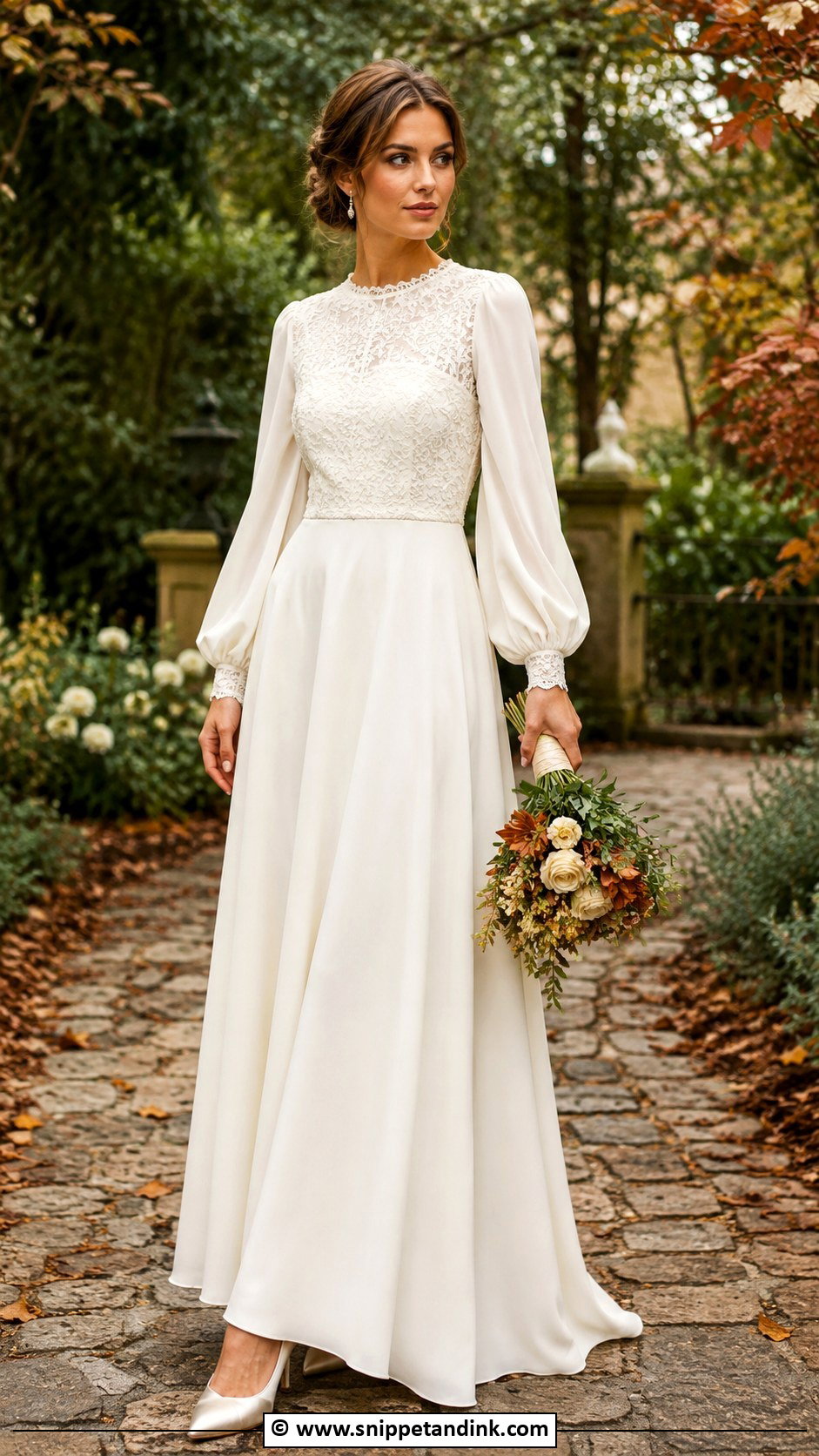
A bishop sleeve wedding dress is full through the forearm and gathered into a cuff, which gives the vintage outline with less drama than a bell. Because the volume collects at the wrist, I keep bracelets off and choose drop earrings instead. The cuff should close snugly, but test it with a raised arm, since a tight cuff pulls the whole sleeve up when you hold a bouquet. Pair it with an empire waist or a plain crepe skirt for a fall or winter wedding.
8. 1970s Angel Sleeve Wedding Dress
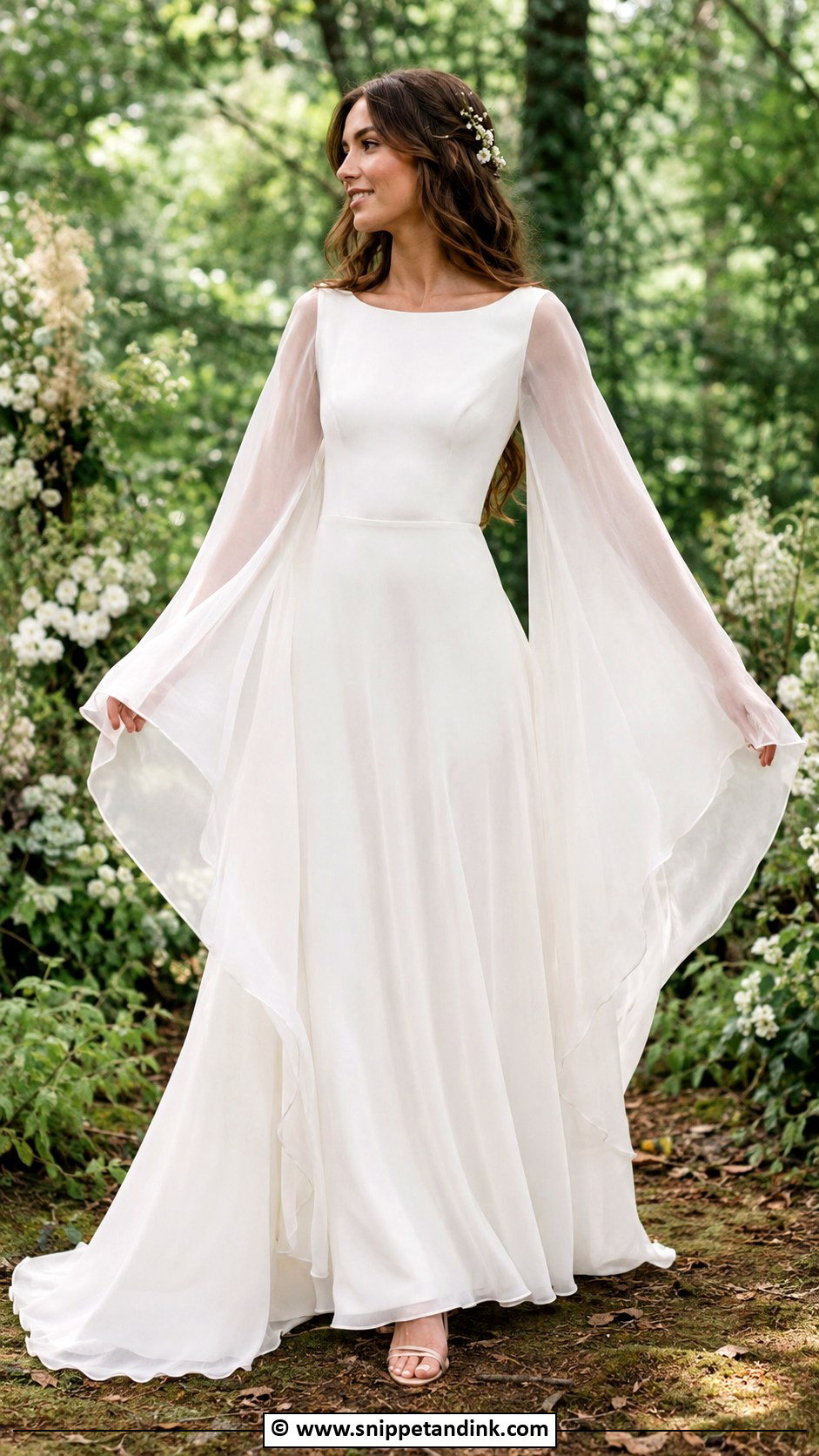
Angel sleeves are open, wide panels that fall from the shoulder rather than wrapping the arm. They need a quiet bodice to look intentional, so I’d avoid them on a gown that already has a busy lace front. In wind they lift and flutter, which is half the charm at a beach or woodland ceremony and a nuisance at a buffet. Loose curls, a couple of small floral pins and a natural bouquet of greenery and cream flowers keep the mood consistent.
9. 1970s Gunne Sax Wedding Dress
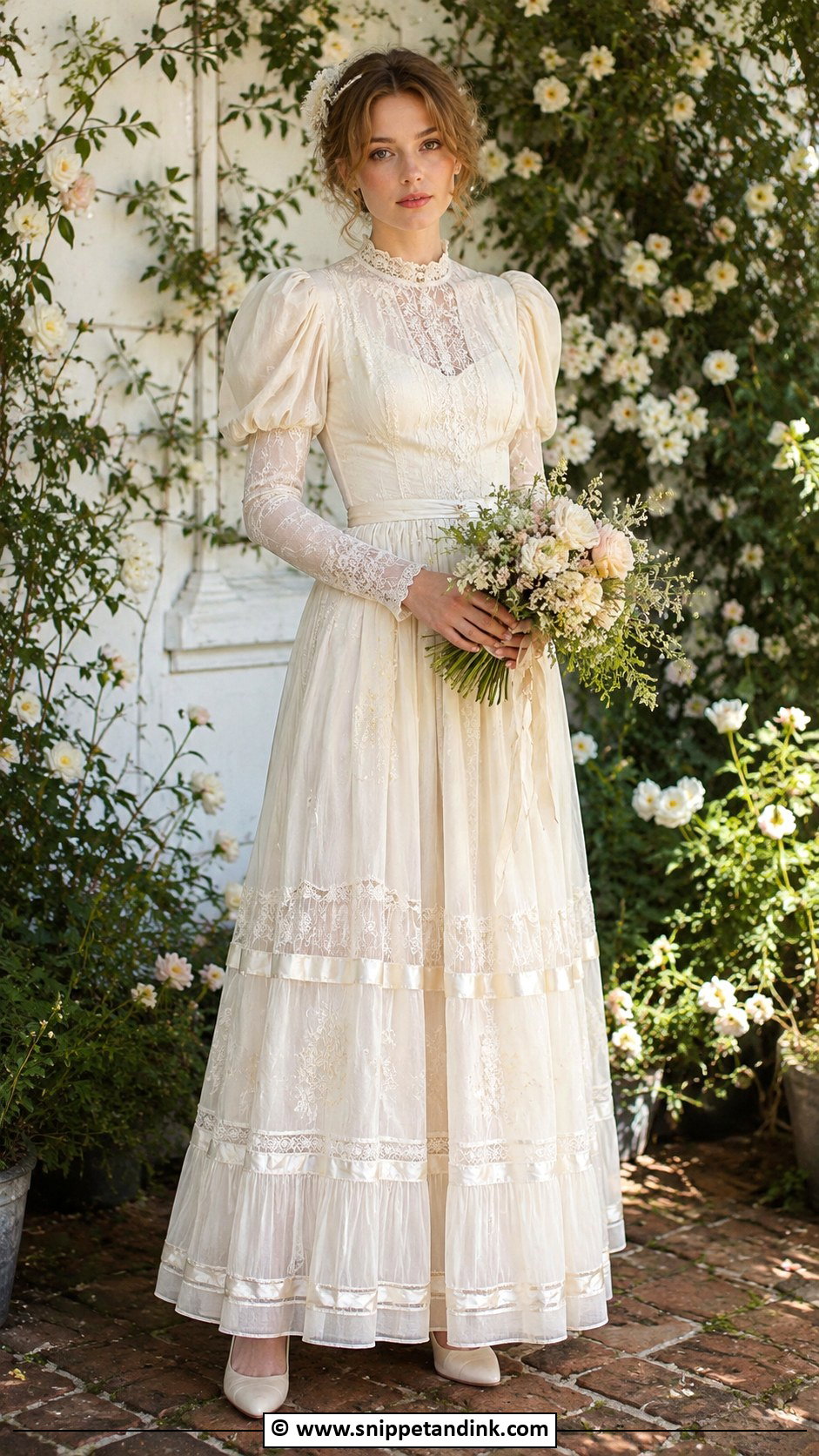
A Gunne Sax wedding dress is the collector’s version of prairie romance, with lace inserts, ribbon trim, puff sleeves and a fitted bodice over a long skirt. Originals are often polyester blends that have held up well, but the cotton lace panels can be fragile. Before any alterations, I check the seams at the underarm, the ribbon channels and the back zip, because those are where fifty years of wear show first. Keep the shoes simple and the makeup fresh so the dress does the talking.
10. 1970s Cotton Lace Wedding Dress
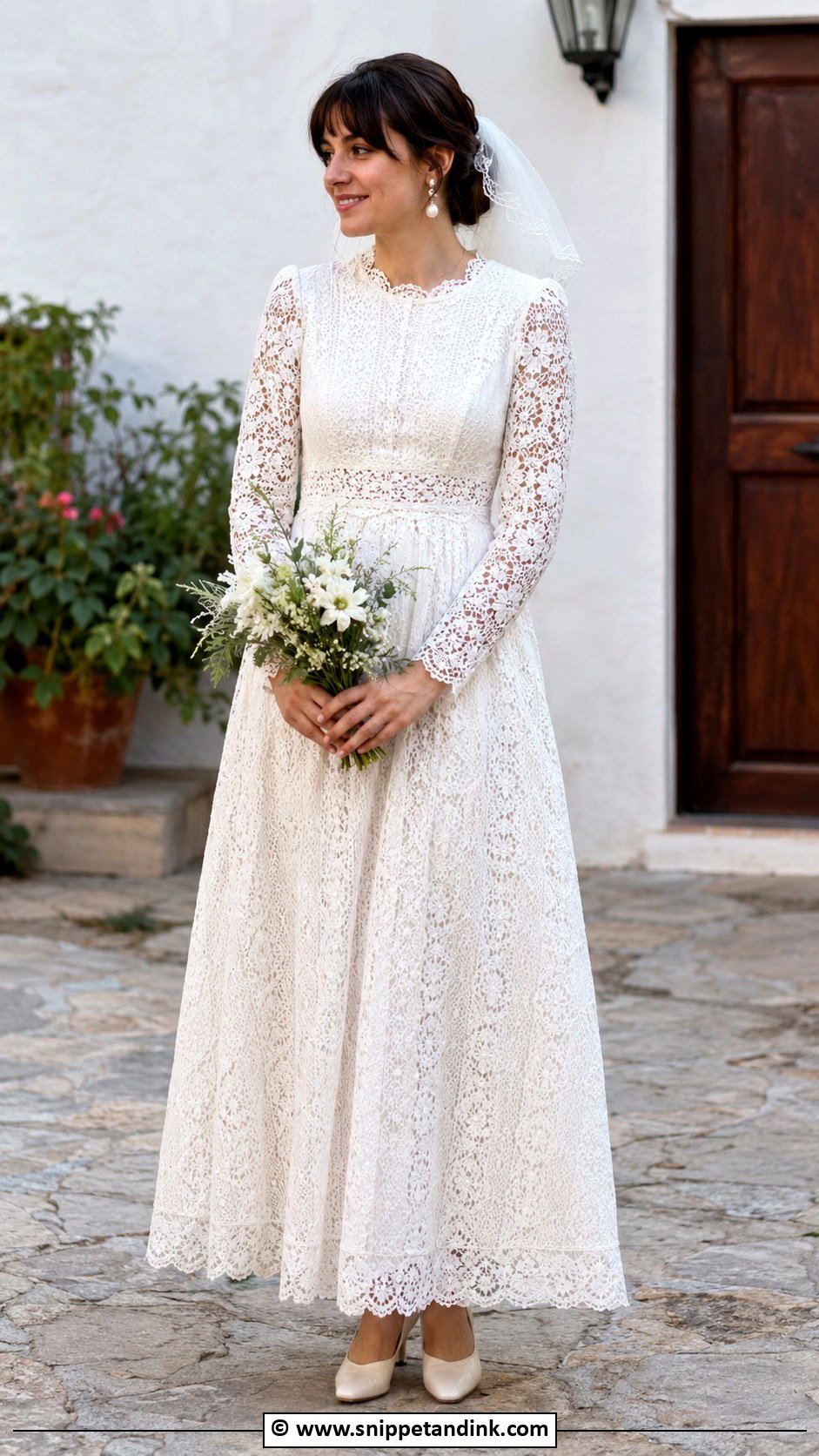
Cotton lace has a matte, slightly dry handle that suits daylight in a way satin never quite does. It breathes, which matters in July, but it also creases when you sit. I tell brides to expect soft wrinkles across the lap after the ceremony and not to fight them, since they look natural on cotton. An A-line with long sleeves or a high neck gives the strongest period feel, finished with low ivory heels and simple pearls.
11. 1970s Ruffle Hem Wedding Dress
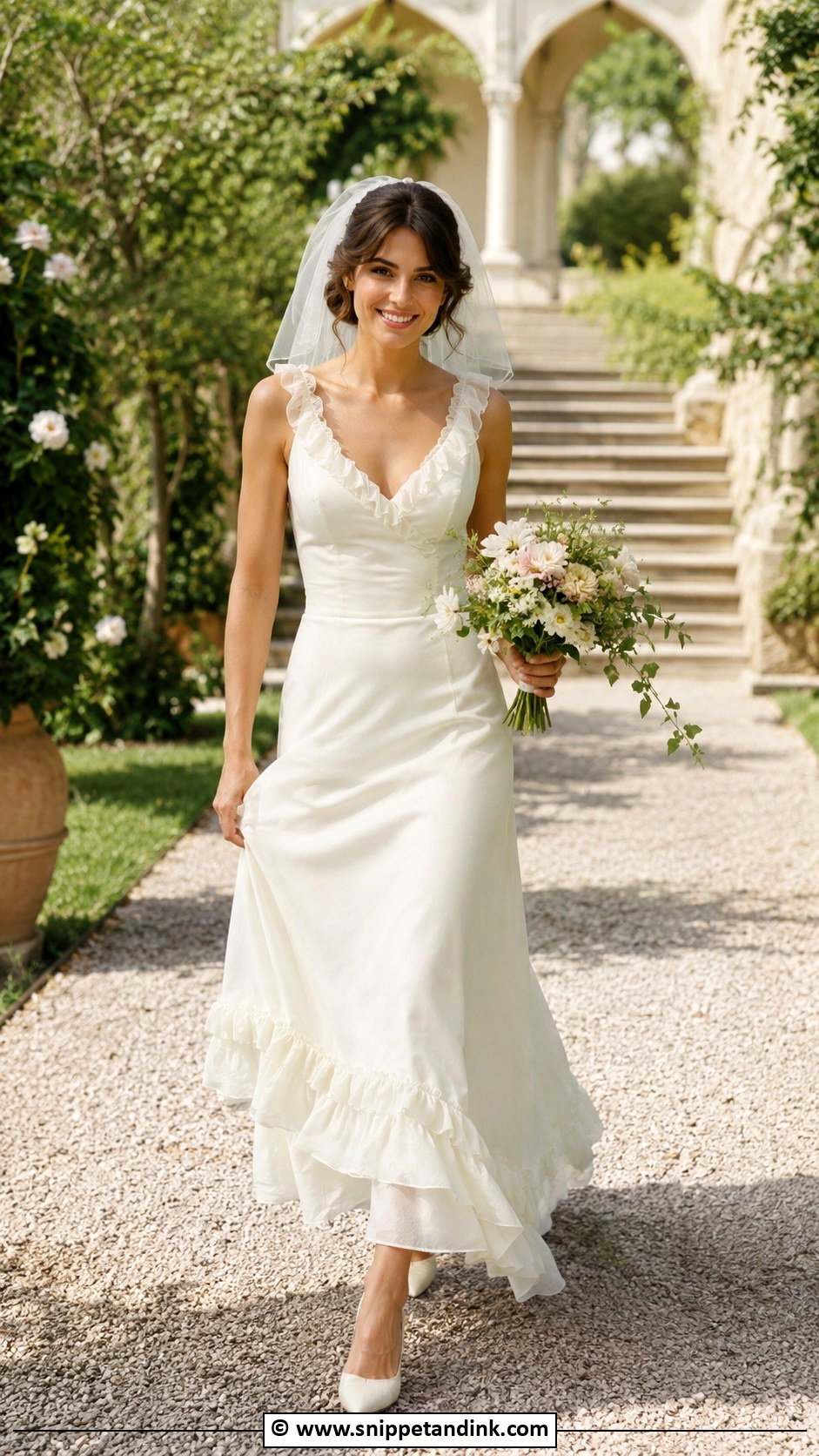
One ruffle, placed well, is enough. Whether it sits at the hem, the sleeve or the neckline, I ask brides to pick a single ruffle zone and keep the rest of the dress plain. A hem ruffle is the hardest place to alter, because shortening from the bottom cuts the ruffle off, so length has to be taken from the waist instead. Plan for that cost early. On walking shots, a hem ruffle gives soft motion around the feet.
12. 1970s Floral Lace Wedding Dress
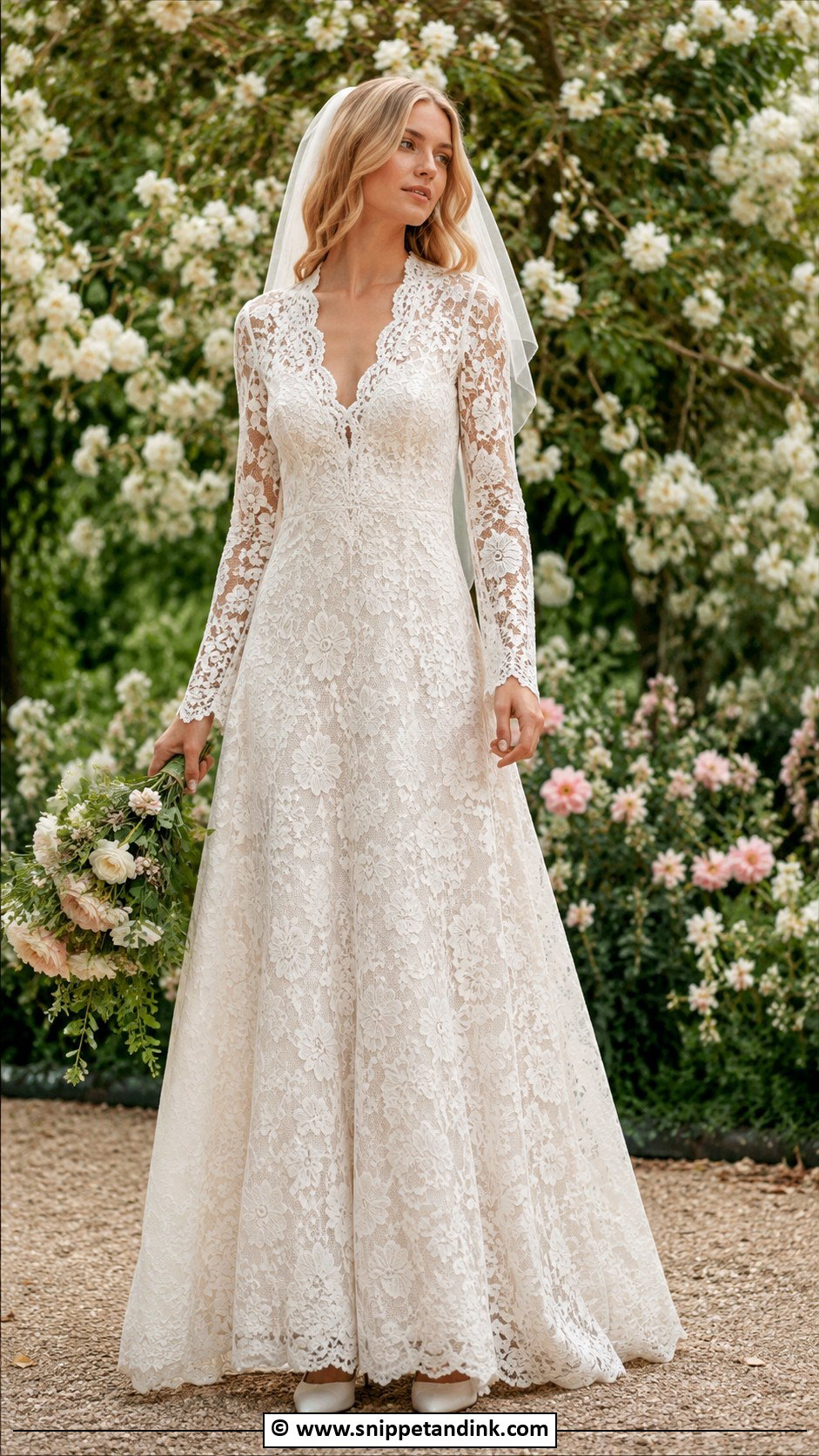
The scale of the lace motif changes the whole character of the gown. Large flowers lean bohemian, small ones read classic, and I hold both against a bride’s face in natural light before she decides, because big motifs can overpower a small frame. With a long lace sleeve I skip bracelets entirely; they catch on the scalloped edges. Plain heels and a simple veil let the lace carry the look, indoors or in a garden.
13. 1970s Sheer Sleeve Wedding Dress
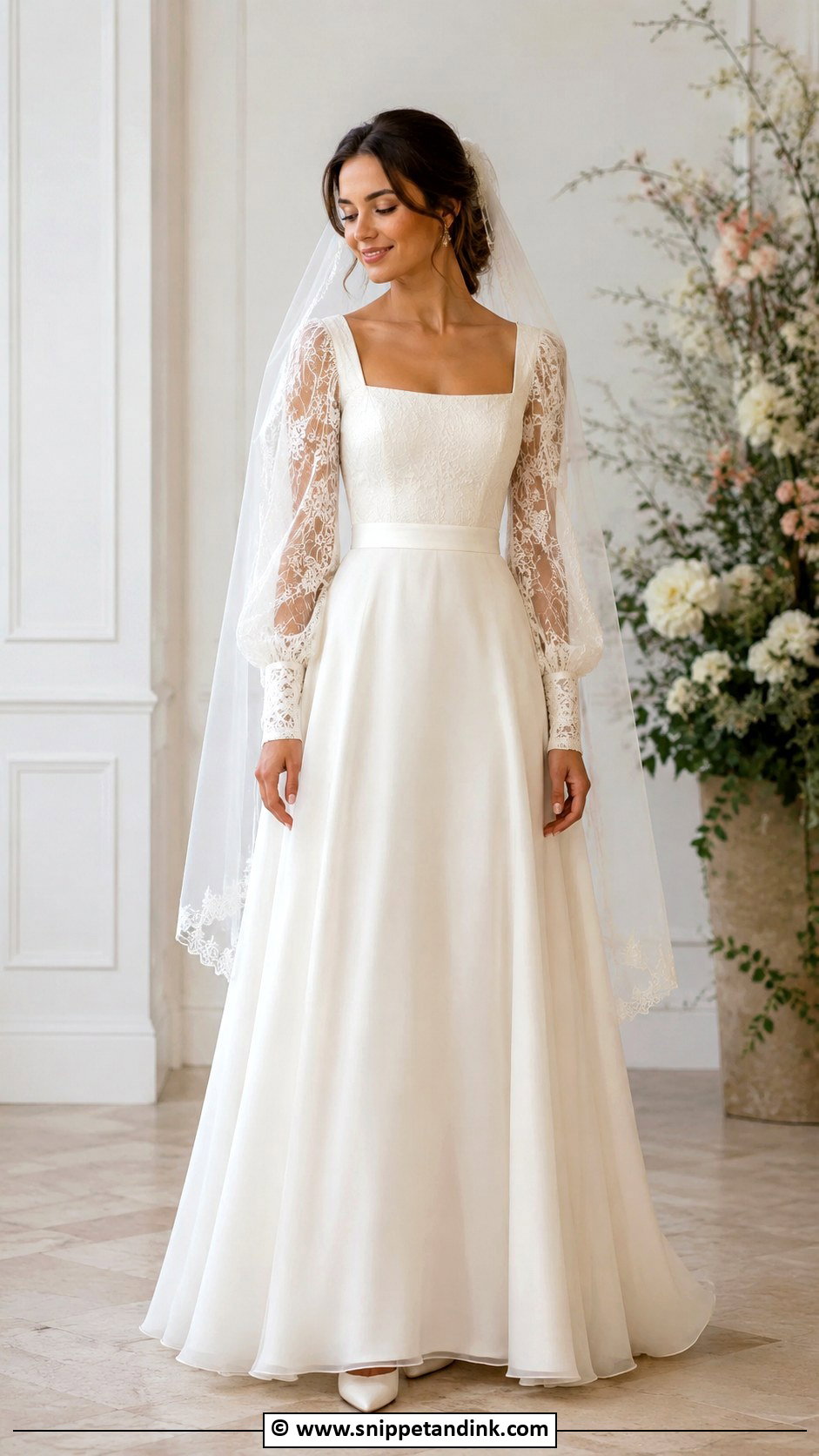
Sheer sleeves solve the in-between season, when strapless feels too bare and heavy sleeves feel too warm. Lace or chiffon on the arm gives coverage without weight, and it sits comfortably with a high neck, a square neck or an empire waist. Watches and bold cuffs break the line of the sheer fabric, so I take them off for the ceremony. Simple pointed heels and a soft veil finish it.
14. 1970s Drop Waist Wedding Dress
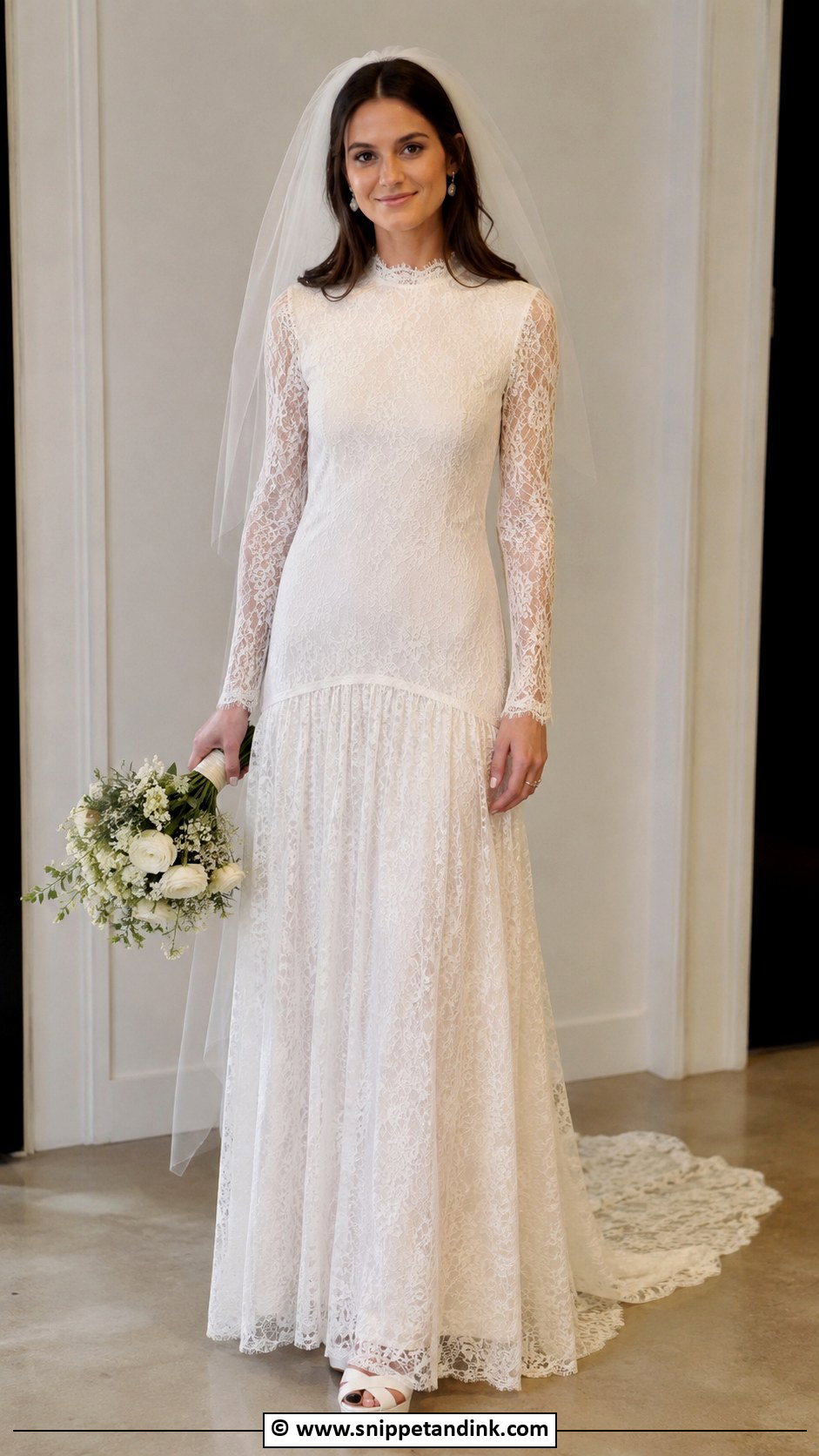
A drop waist wedding dress moves the seam down to the hip, so the torso looks longer before the skirt opens out. That lower seam is unforgiving if it lands in the wrong place, which is why I insist on tailoring through the bodice and hips. On a short torso, a dropped waist can make the legs look shorter, so I’d steer petite brides toward the empire shape instead. Soft lace or chiffon keeps it from looking stiff; platform-style bridal heels nod to the decade.
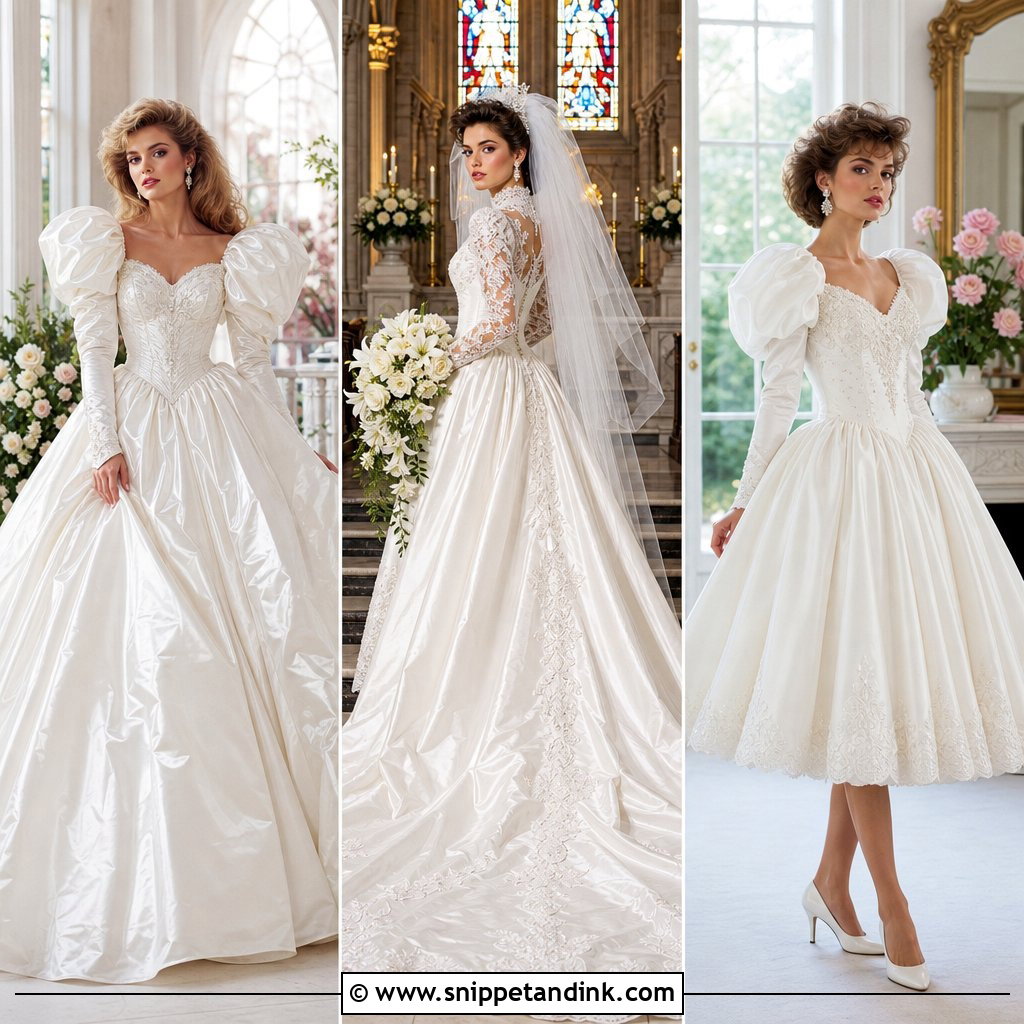

15. 1970s Peasant Sleeve Wedding Dress
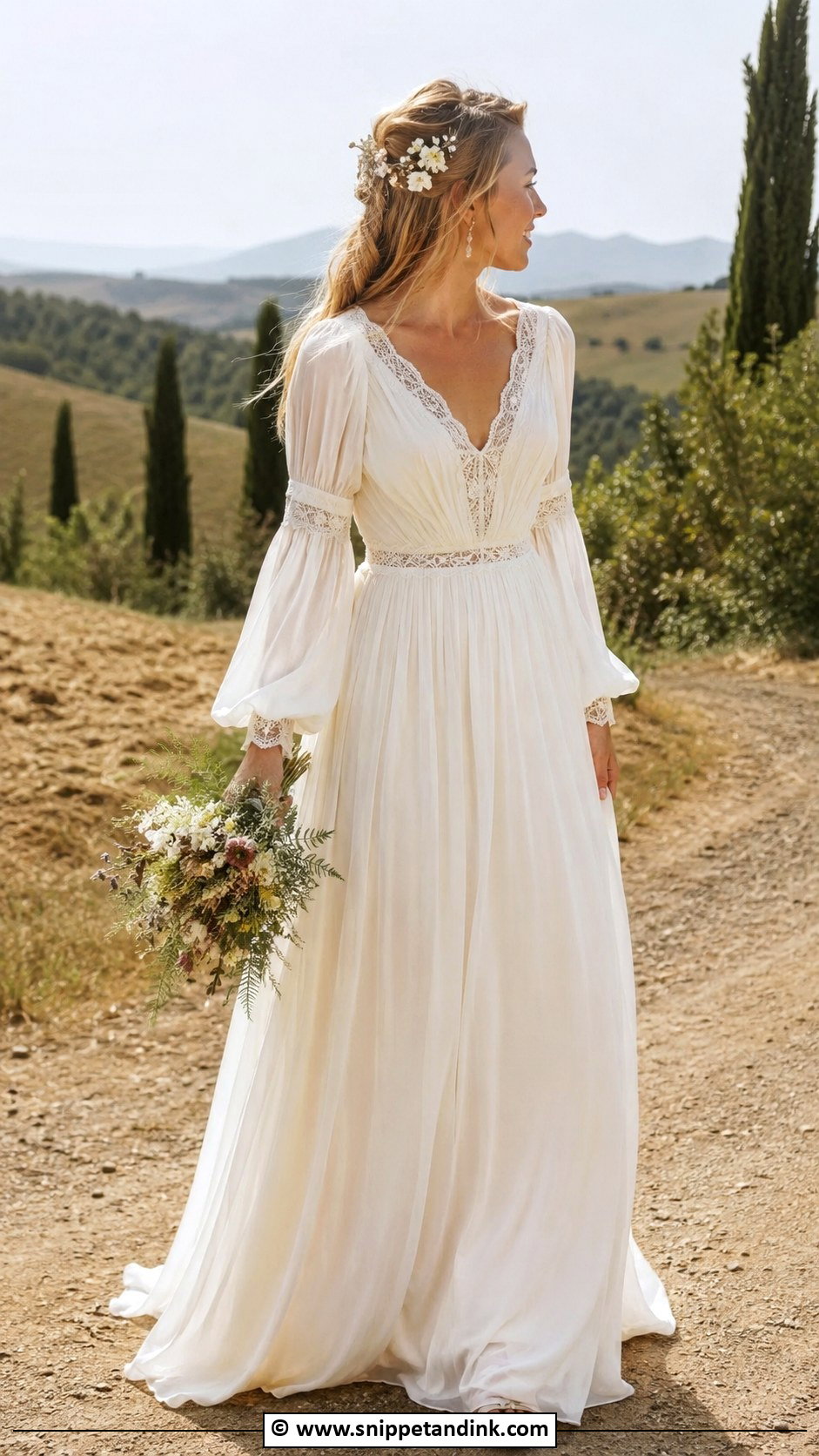
Peasant sleeves are loose and gathered, usually on an elastic or drawstring neckline, which makes this the comfiest dress in the list. Comfort is also its risk. A cheap elastic neckline can creep down during the reception, so I look for a gown with a clear elastic or a stay stitched inside. Ivory sandals, a flower comb and a loose bouquet suit ranches and summer ceremonies. Choose bridal-weight fabric, or it starts to look like a sundress.
16. 1970s Mexican Wedding Dress
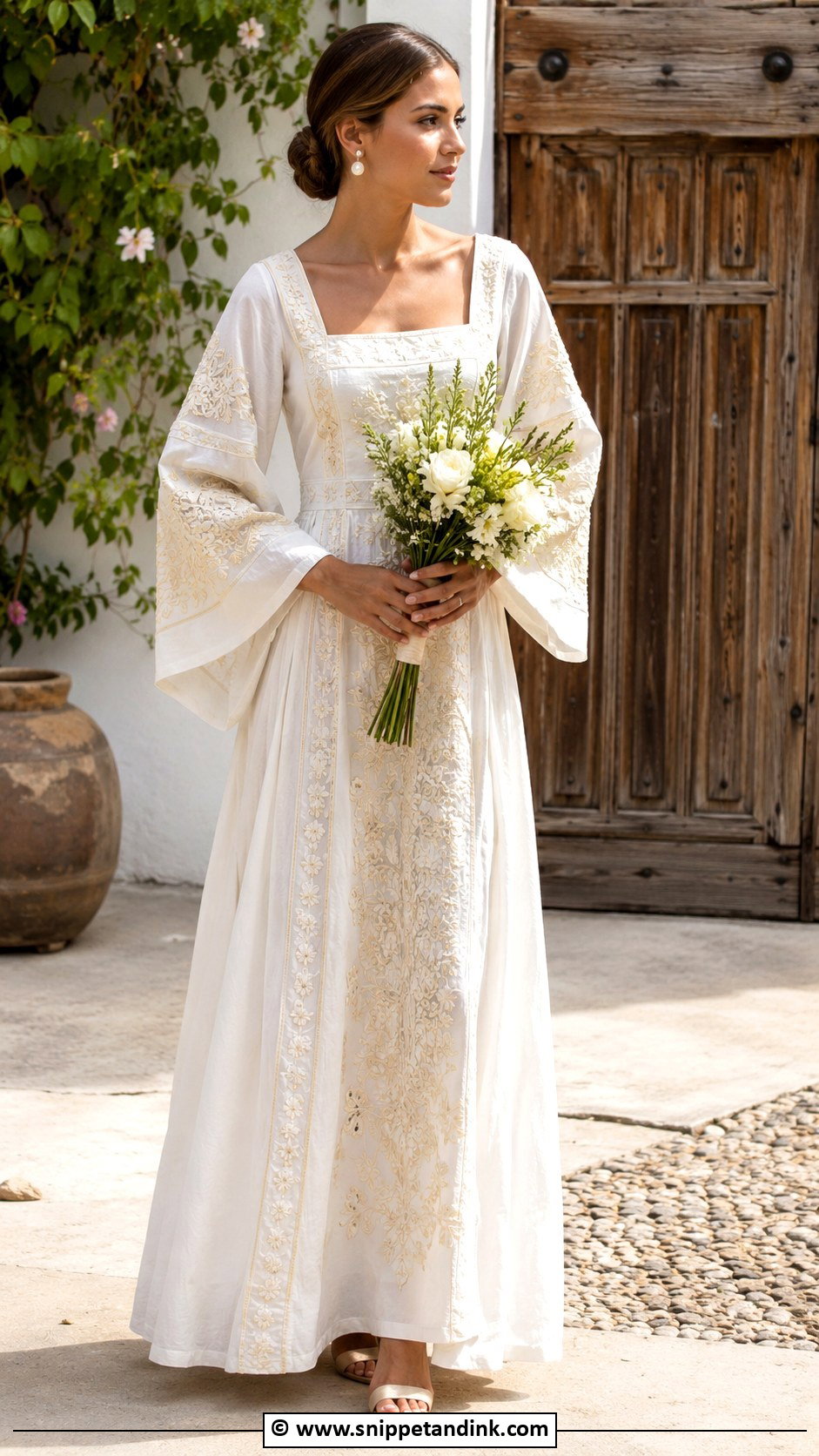
Embroidered cotton dresses in this tradition are made by hand in many regions of Mexico, and the stitching style varies from place to place, so I encourage brides to learn where a piece comes from before they buy it. The fabric is airy and cool, with loose sleeves and square or gathered necklines. White-on-white or ivory embroidery keeps it bridal. I add polish with pearl earrings and a smooth low bun, and I check fabric weight carefully, because a thin cotton can look oversized and shapeless once it’s on.
17. 1970s Hooded Wedding Dress
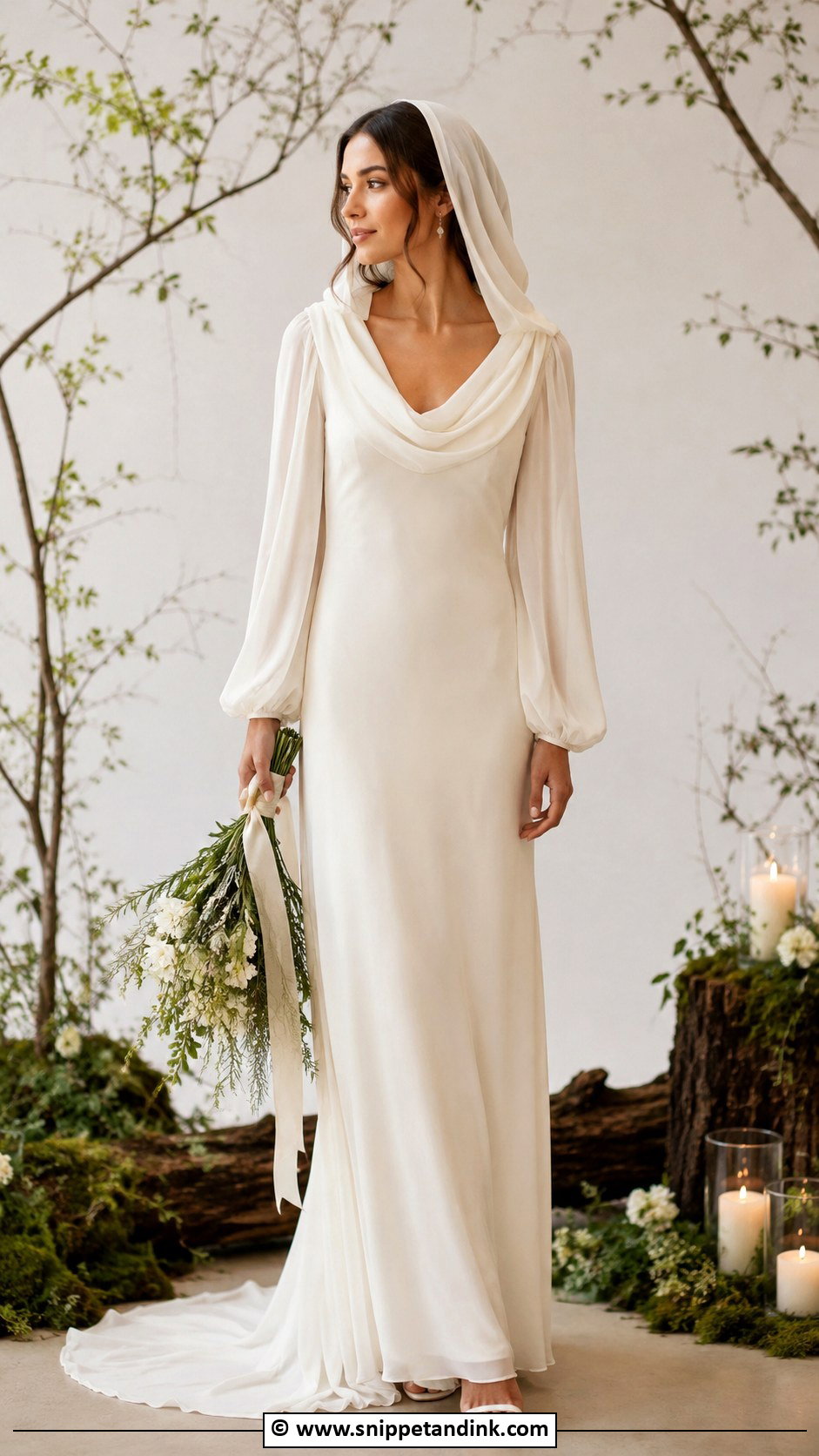
A hood takes the place of a veil and gives a quiet, almost medieval mood to a sheath or A-line. The fabric decides whether it works. Chiffon and soft crepe drape into folds around the face; anything stiff stands up like a tent. I always pin the hood in place with a couple of hidden clips at the crown, because it will slide back the first time the bride turns her head. Woodland venues and winter ceremonies suit it best.
18. 1970s Cape Sleeve Wedding Dress
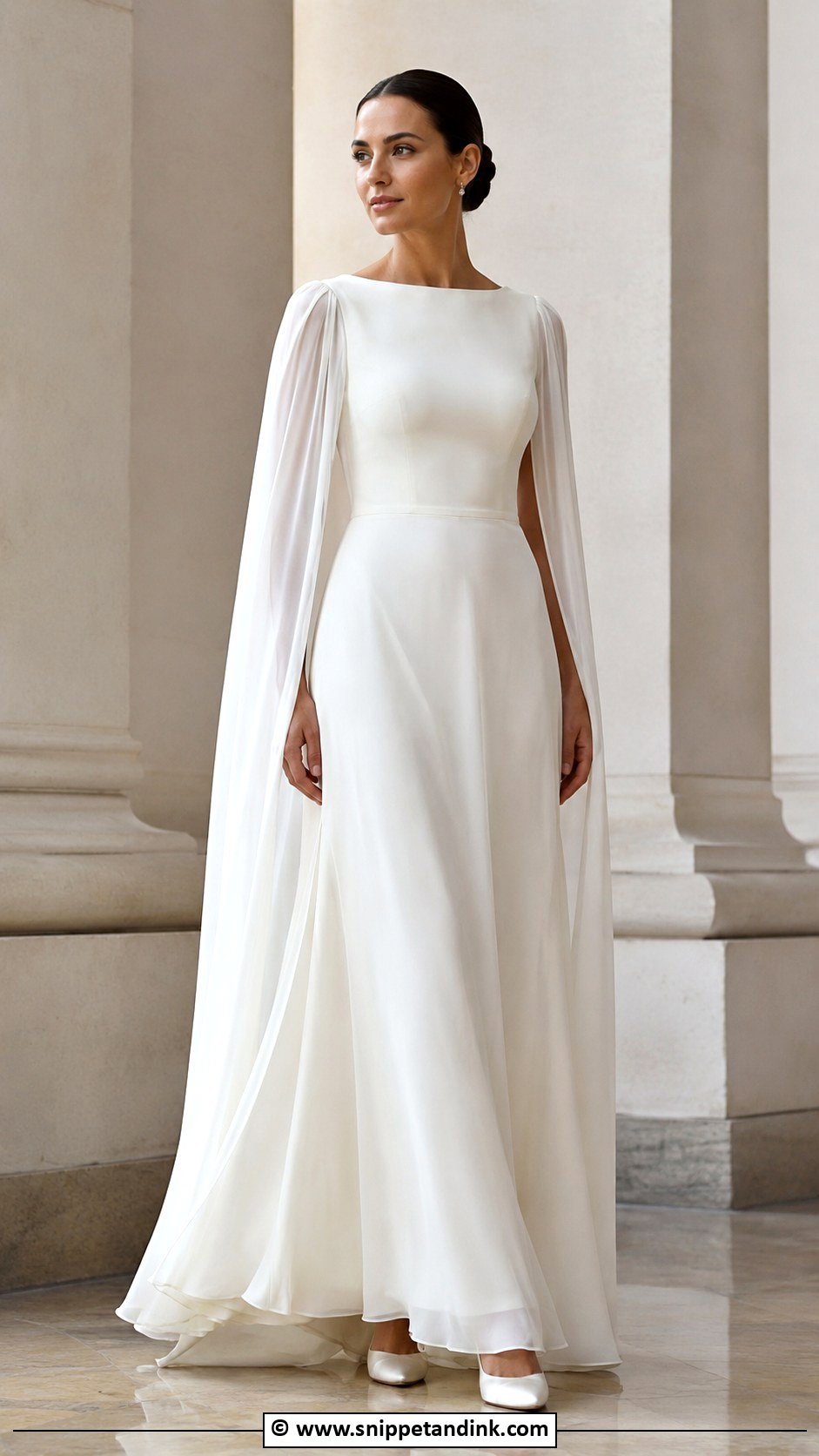
Cape sleeves fall from the shoulder and trail behind the arm, so they give movement and coverage without the weight of a full cape. With that much happening at the shoulder line, small earrings and a sleek hairstyle are enough. I check one thing in the fitting: the bride hugging someone. Cape sleeves can pull the bodice sideways if they are anchored too tightly at the seam, and a good seamstress can loosen that.
19. 1970s Tiered Skirt Wedding Dress
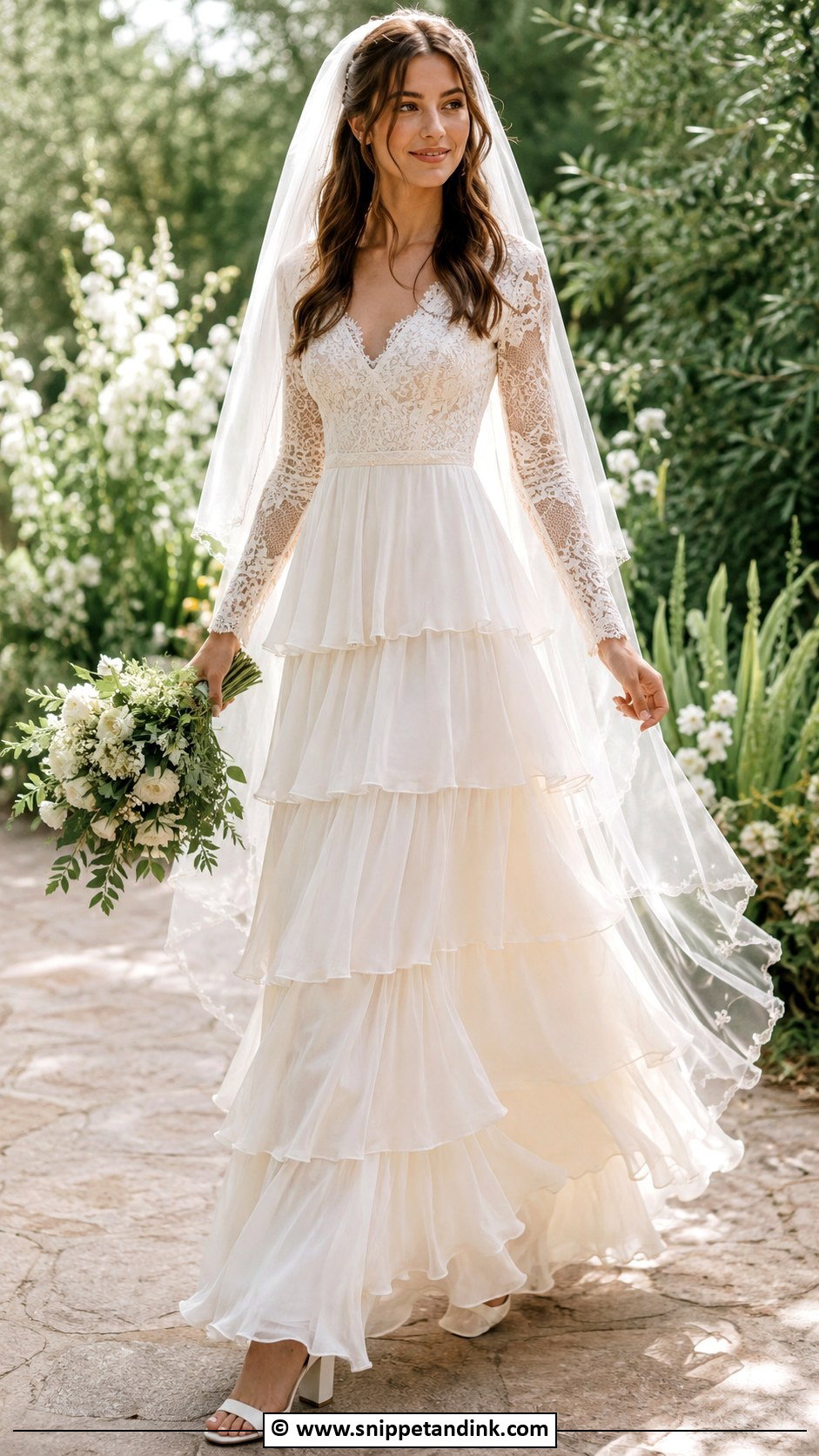
Tiers build volume through layers rather than petticoats, so the skirt moves freely instead of sitting stiffly like a ball gown. The proportion of each tier matters. On a petite bride, I look for narrower tiers, because three deep ones can swallow a small frame. Lace tiers lean boho and chiffon tiers feel airy. Simple block heels are wise here, since a stiletto can catch the lowest tier on stairs.

20. 1970s Peasant Neckline Wedding Dress
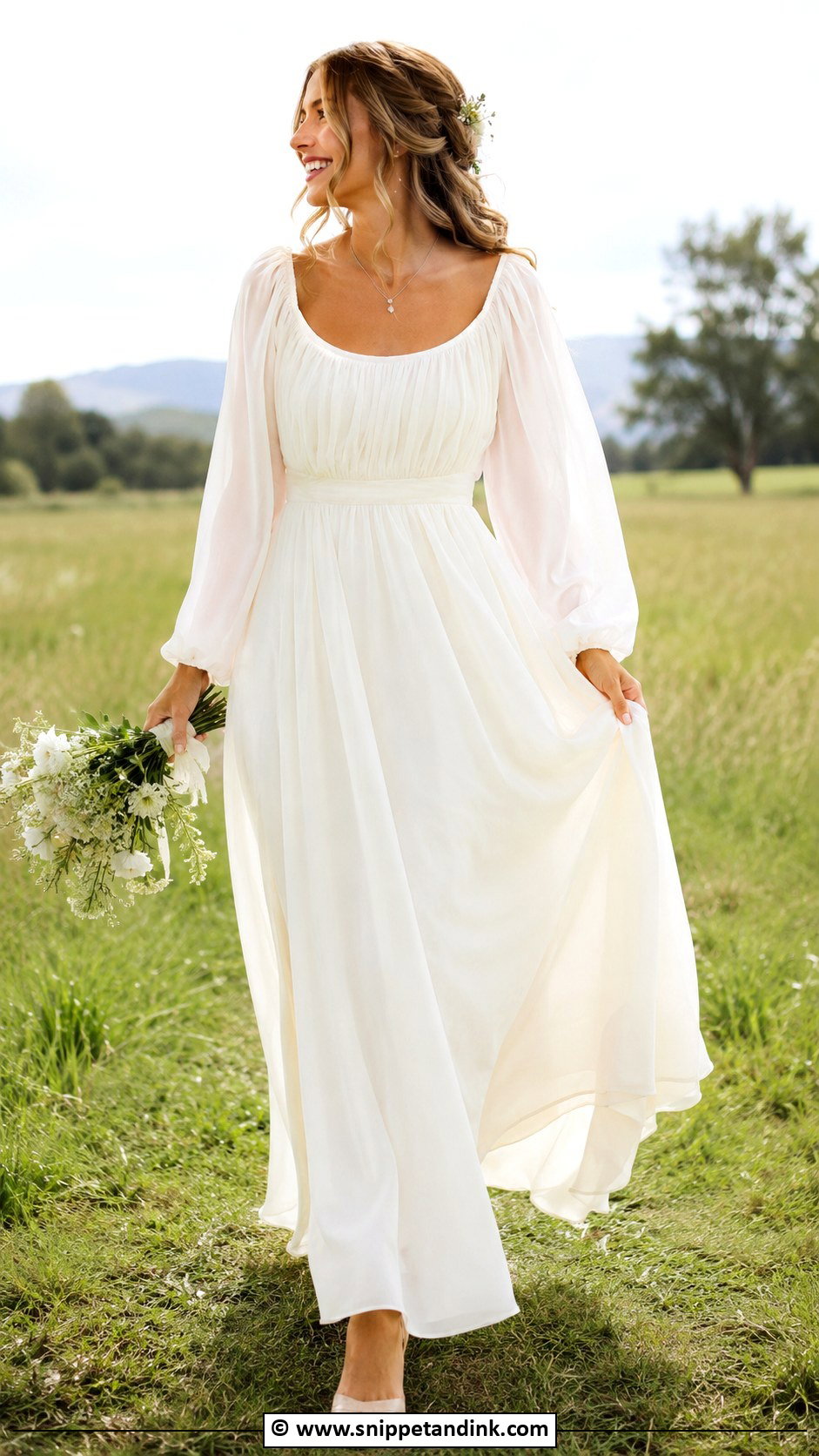
A peasant neckline gathers softly around the collarbone or sits just off the shoulder. The problem is keeping it there. Without hidden structure, it slides by the second hour, so I look for a bodice with boning or a silicone strip inside the neckline. A dainty necklace and soft curls are enough jewellery. It’s a warm-weather dress, and it needs bridal-grade fabric to stay out of casual territory.
21. 1970s Mod Mini Wedding Dress
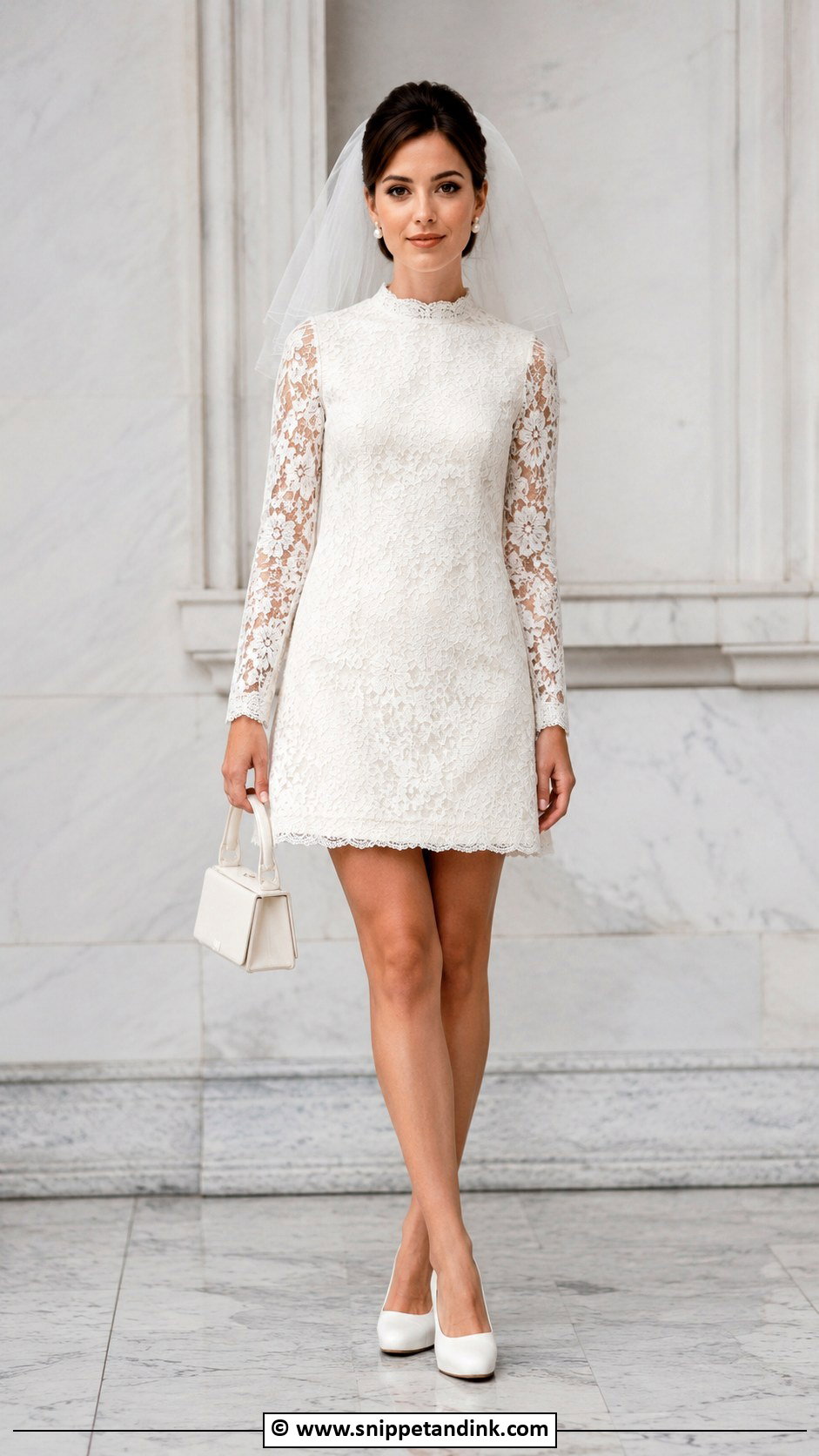
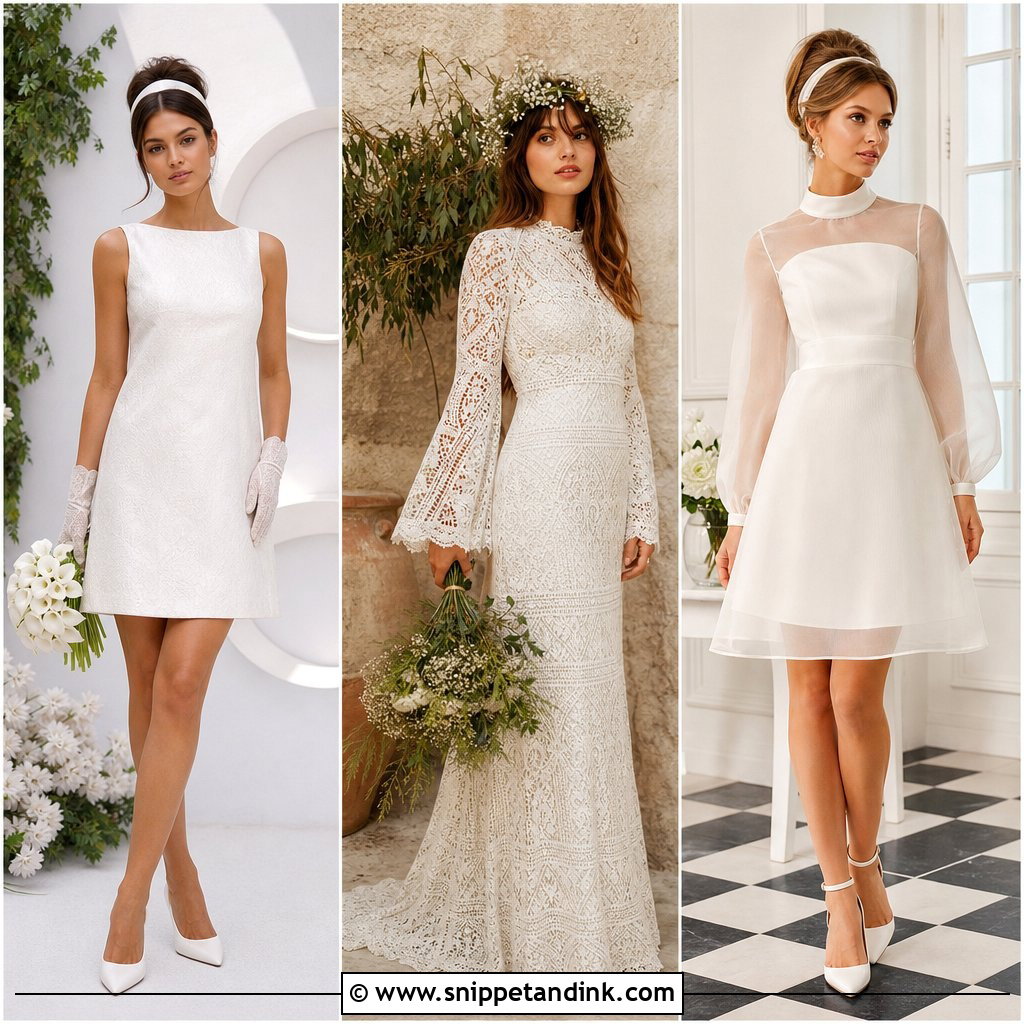
Mod minis belong to the earlier end of the decade, and they are my favourite pick for a courthouse ceremony or a reception change. Long sleeves, lace or a high neck keep the period clear. A mini depends entirely on fit, so I’d budget for tailoring through the shoulders and hem, where a centimetre either way changes the whole look. White platforms, a short veil and pearl earrings finish it, and you can dance without lifting a skirt.
22. 1970s Satin Slip Wedding Dress
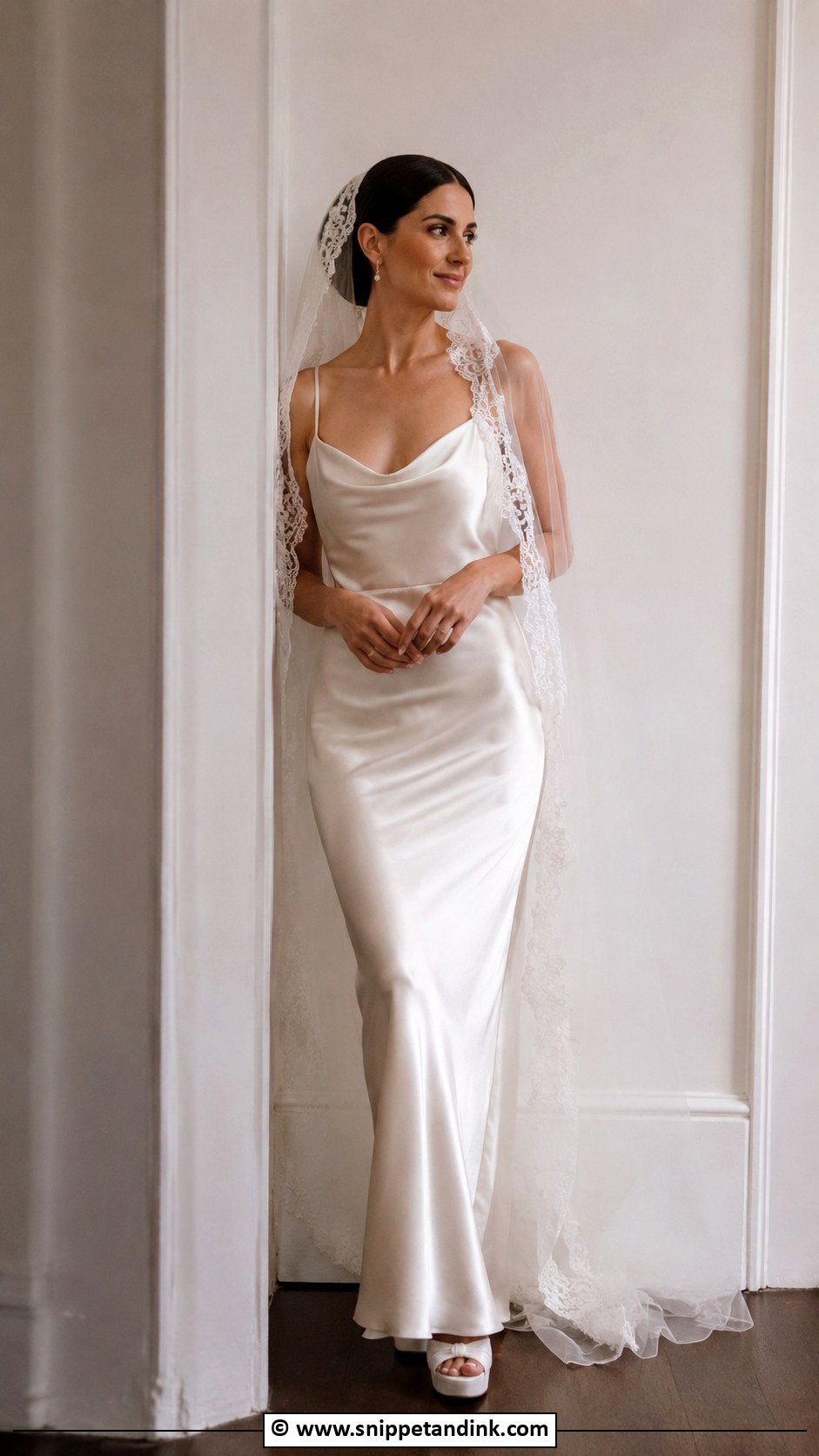
The decade loved fluid fabric as much as lace, and a satin slip shows that quieter side. Bias-cut satin is honest about everything underneath, so no-line underwear and a clean fit are non-negotiable. I want it to skim the body, never cling. Ivory, cream or champagne warms it toward the period, and a lace veil or crochet shawl adds the retro note. Evening weddings and small ceremonies suit it.
23. 1970s Halter Wedding Dress
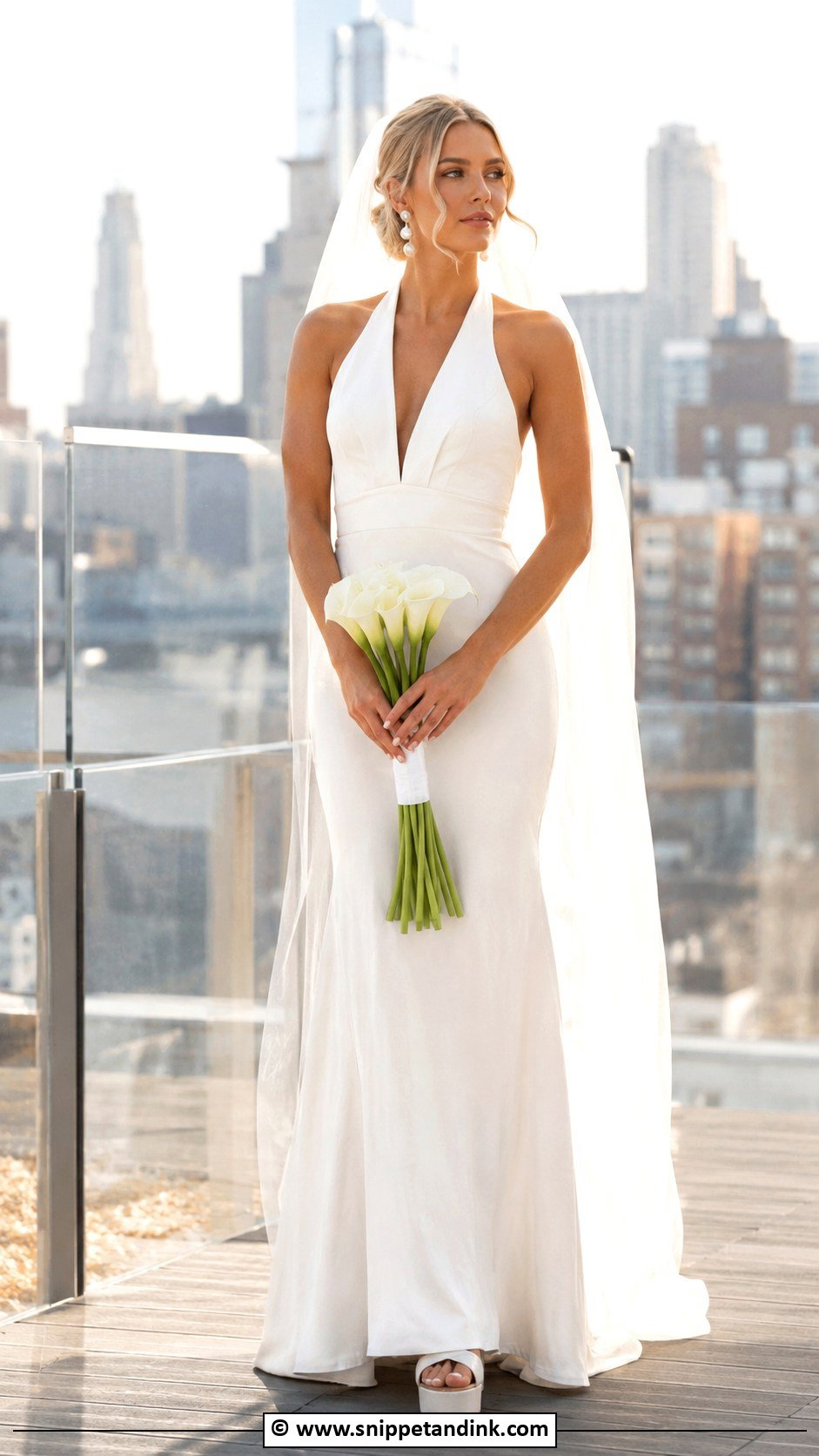
A halter puts the attention on the shoulders and the upper back, and it can go boho, sleek or disco depending on the fabric. Crepe, lace and chiffon all work; very shiny satin tends to look like a costume party. The halter strap carries real weight around the neck, so I make sure it is adjustable or has a hook closure that can be tightened during the day. Platform sandals and gold or pearl earrings suit beaches and rooftops, with a sheer wrap for a covered ceremony.
24. 1970s Off Shoulder Lace Wedding Dress
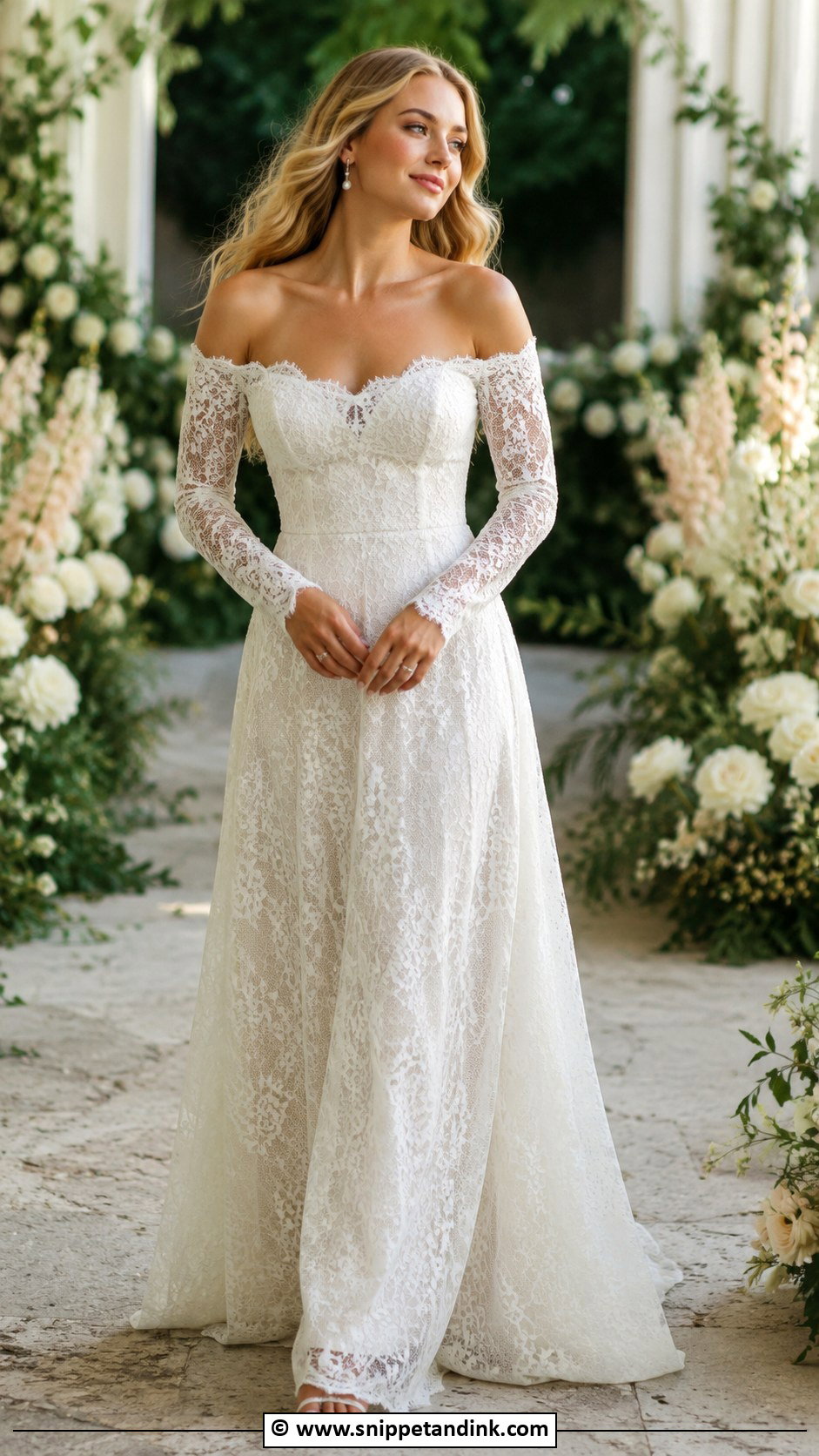
Off-the-shoulder lace shows a little skin while the long sleeves keep it romantic. This neckline restricts arm movement, which surprises brides at the first dance. I have them raise both arms high during the fitting. If they can’t, the sleeve is set too low and needs adjustment. Drop earrings and loose waves suit it; a heavy necklace crowds the neckline.


25. 1970s Long Train Wedding Dress
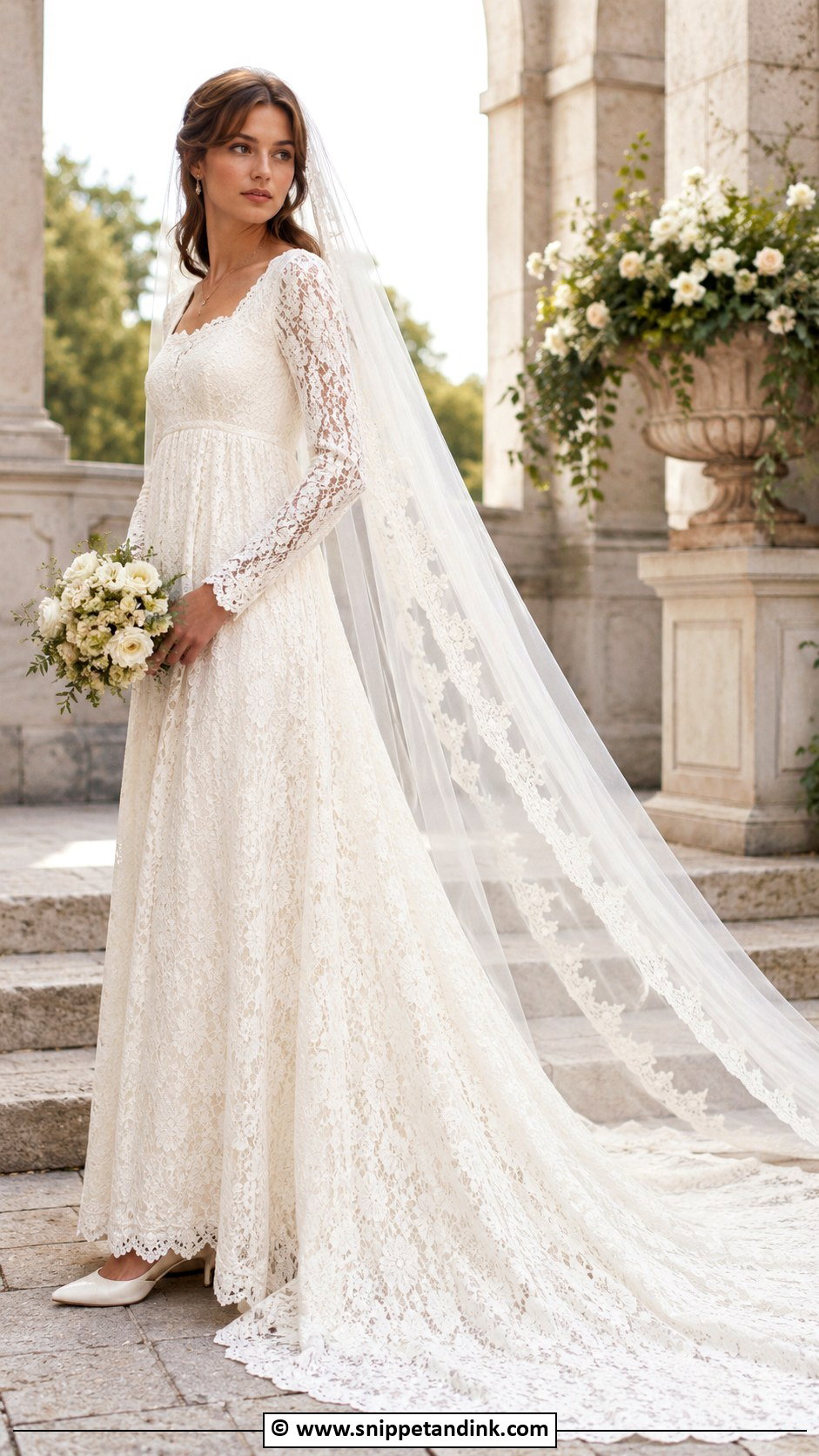
A long train in lace, chiffon or lightweight satin gives a formal entrance while the sleeves, high neck or empire waist keep it in the decade. The real question is what happens after the aisle. I always ask for a bustle and test it with the bride walking, because a lightweight train can slip off a single hook. For outdoor venues, keep the train manageable, since grass and gravel will mark the hem.
26. 1970s Lace Overlay Wedding Dress
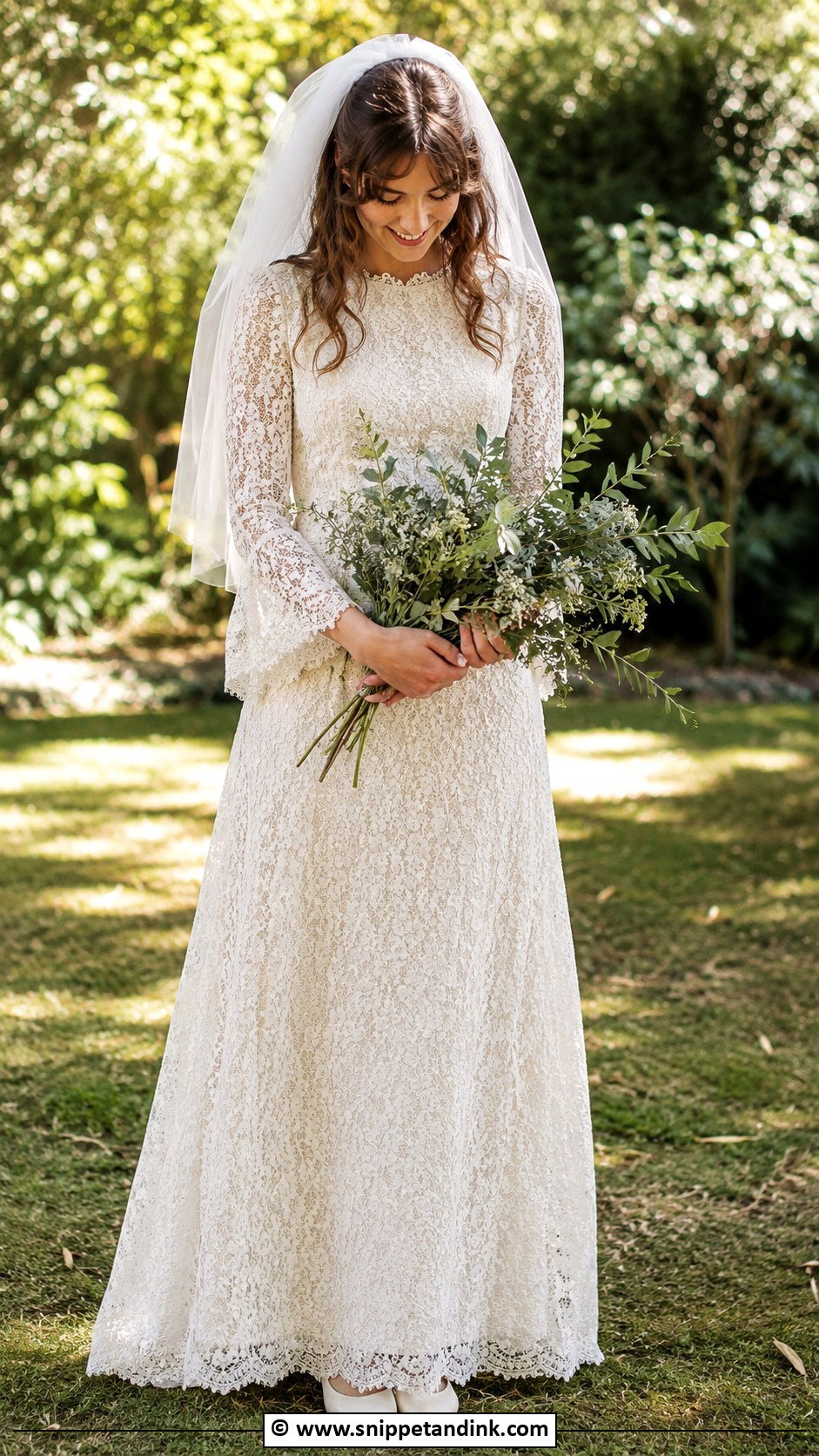
Lace laid over a plain lining gives depth without beads, and it’s lighter to wear than it looks. A sheath overlay feels sleek and an A-line feels romantic. My fitting check is the scalloped hem, which should sit evenly across the front. If it rides up on one side, the lining is pulling, and that’s a quick fix for a seamstress. Plain ivory shoes and a greenery bouquet let the lace stay quiet.
27. 1970s Two Piece Wedding Dress
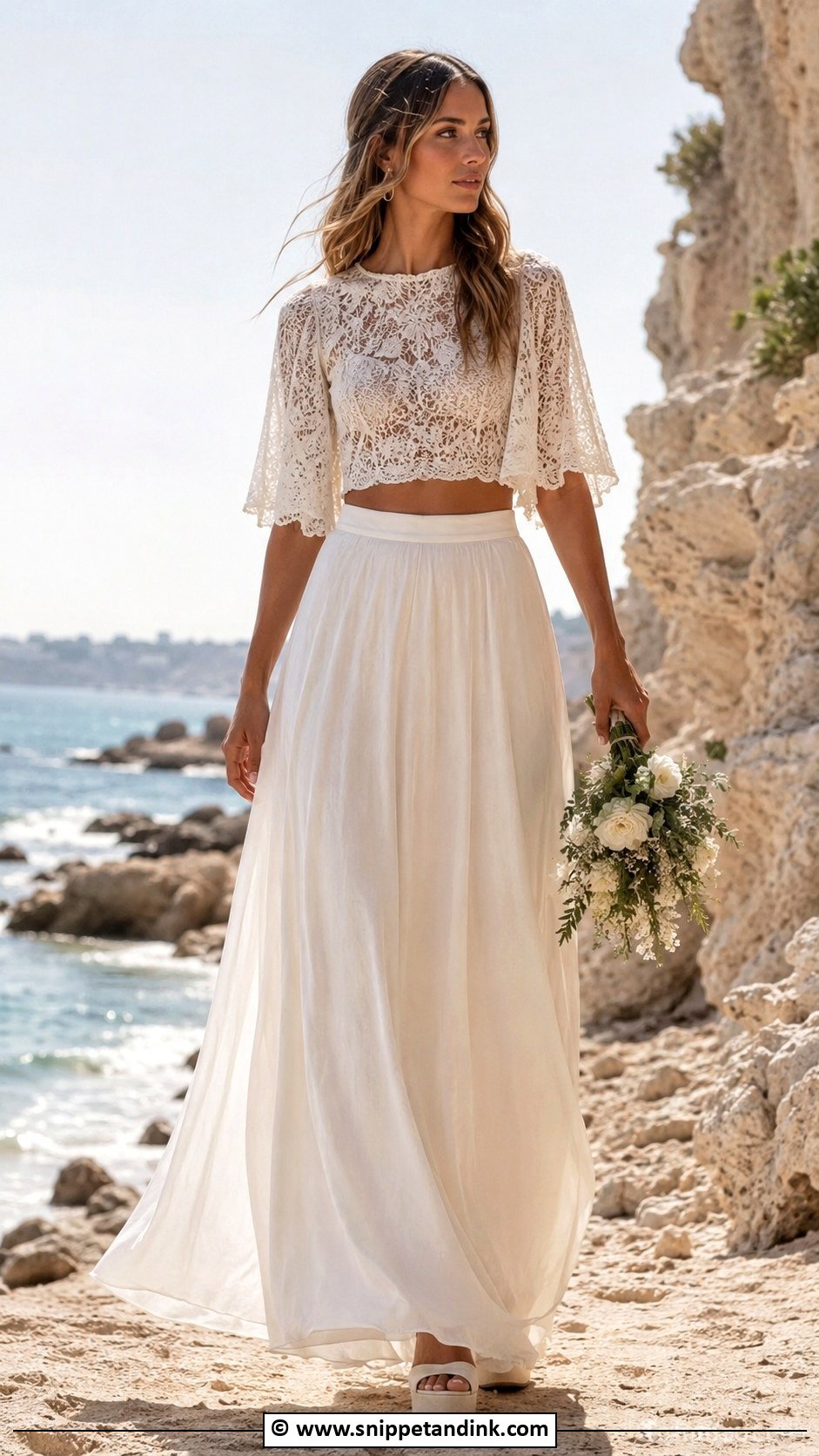
Separates were a real part of the decade’s alternative bridal dressing: a lace top with a high-waisted skirt, or a blouse with a flowing maxi. I like them because each piece can be fitted separately, which helps brides who are a different size top and bottom. The gap between the pieces is what I watch. Sit down in it before buying, because a crop top can ride up when you lean forward to sign the register.
28. 1970s Pleated Chiffon Wedding Dress
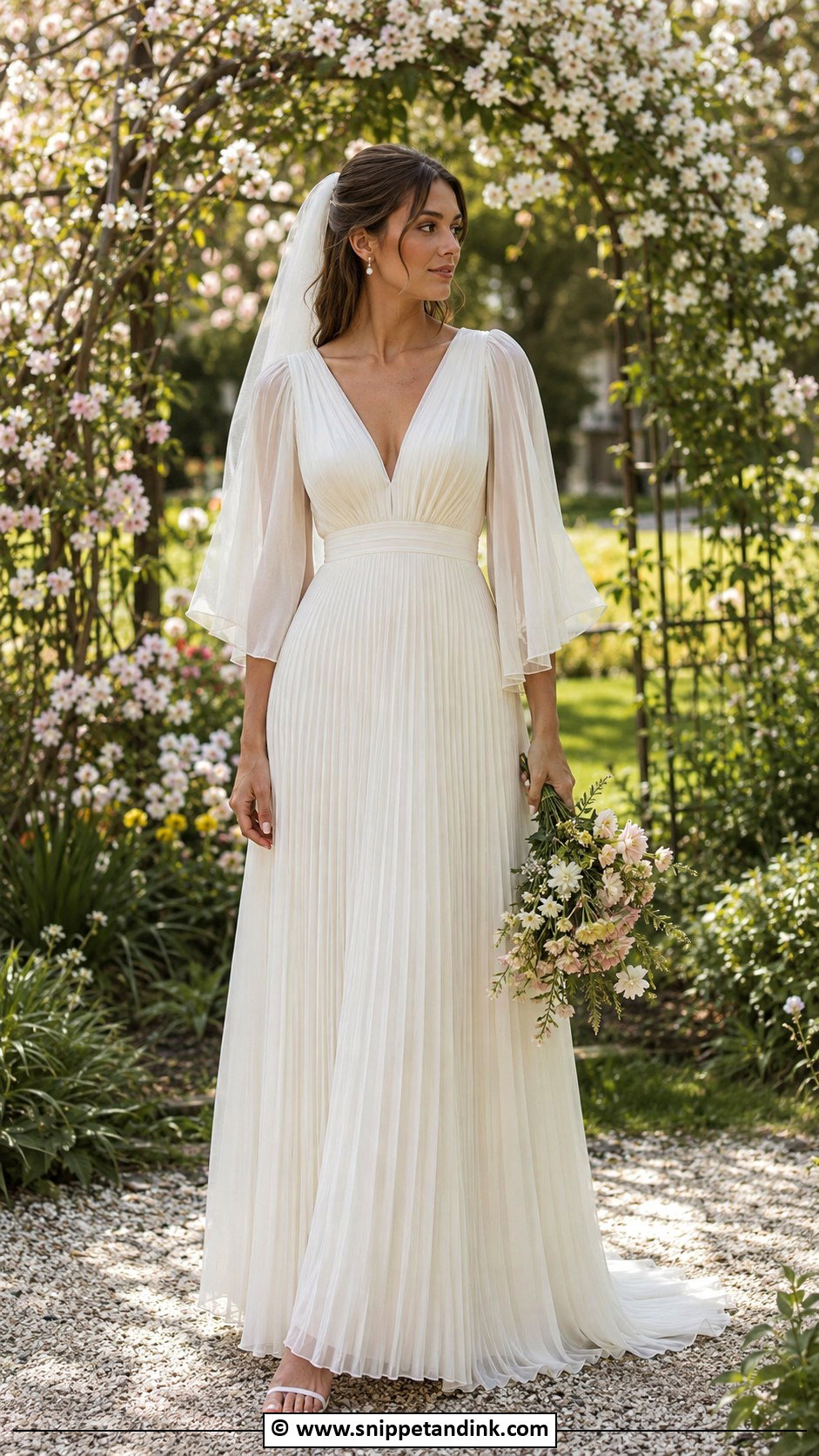
Pleated chiffon holds a line while still swinging, which makes it one of the best fabrics for walking photos. Vertical pleats lengthen the body; avoid sitting on them for too long, as they can flatten across the lap. I pair this with angel or bishop sleeves and keep the jewellery to pearl studs. Slim sandals and a soft veil suit beach, spring and garden ceremonies.
29. 1970s Square Neck Wedding Dress
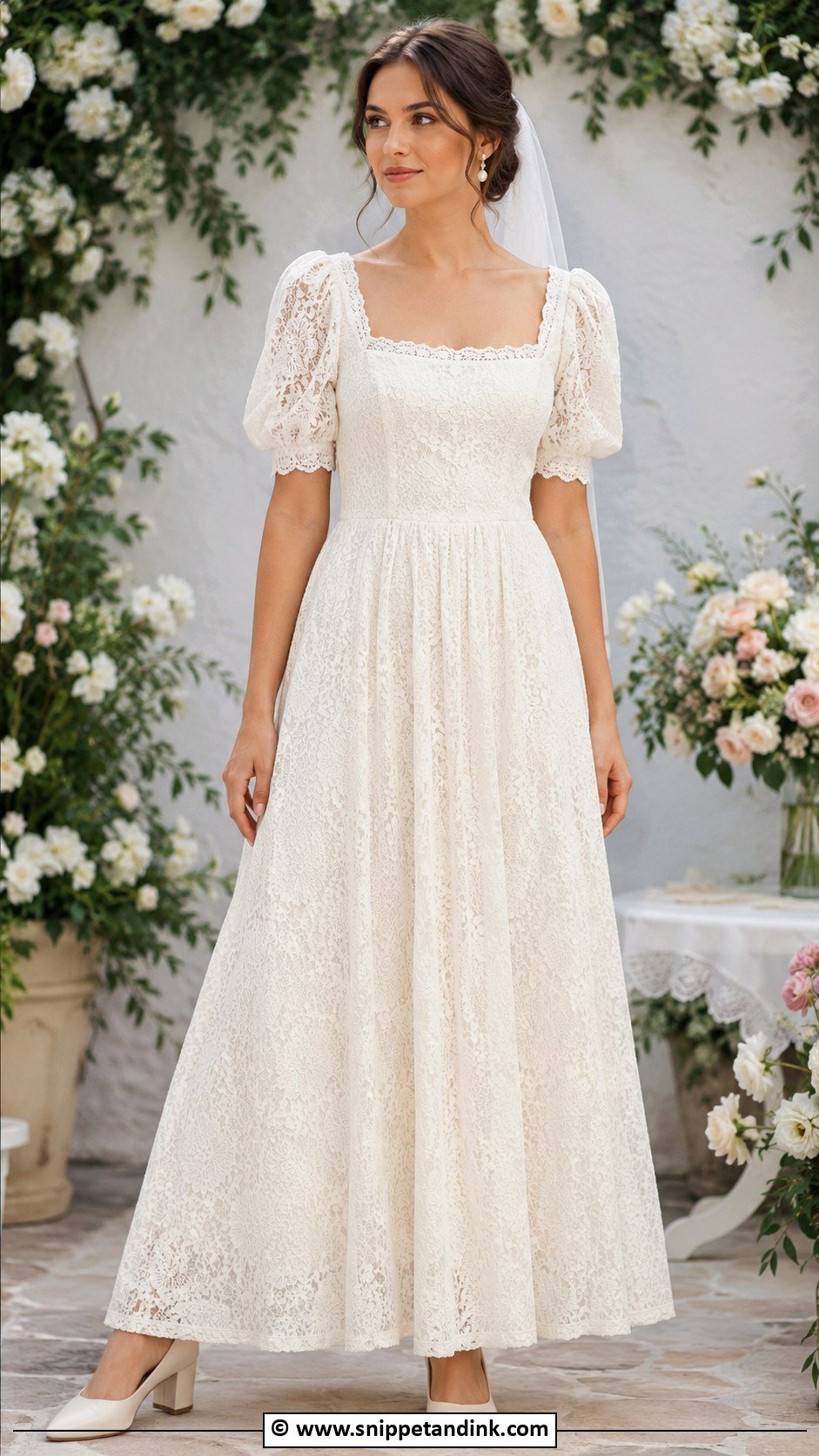
A square neck frames the collarbone and modernises easily, which is why I use it when a bride wants the decade without the full prairie look. It works with puff sleeves, lace sleeves or none at all. The corners of the neckline should sit flat. If they gape when you breathe out, the bodice needs taking in at the side seams, not the neckline. A small pendant and pearl earrings suit garden or courthouse ceremonies.
30. 1970s Floral Embroidered Wedding Dress
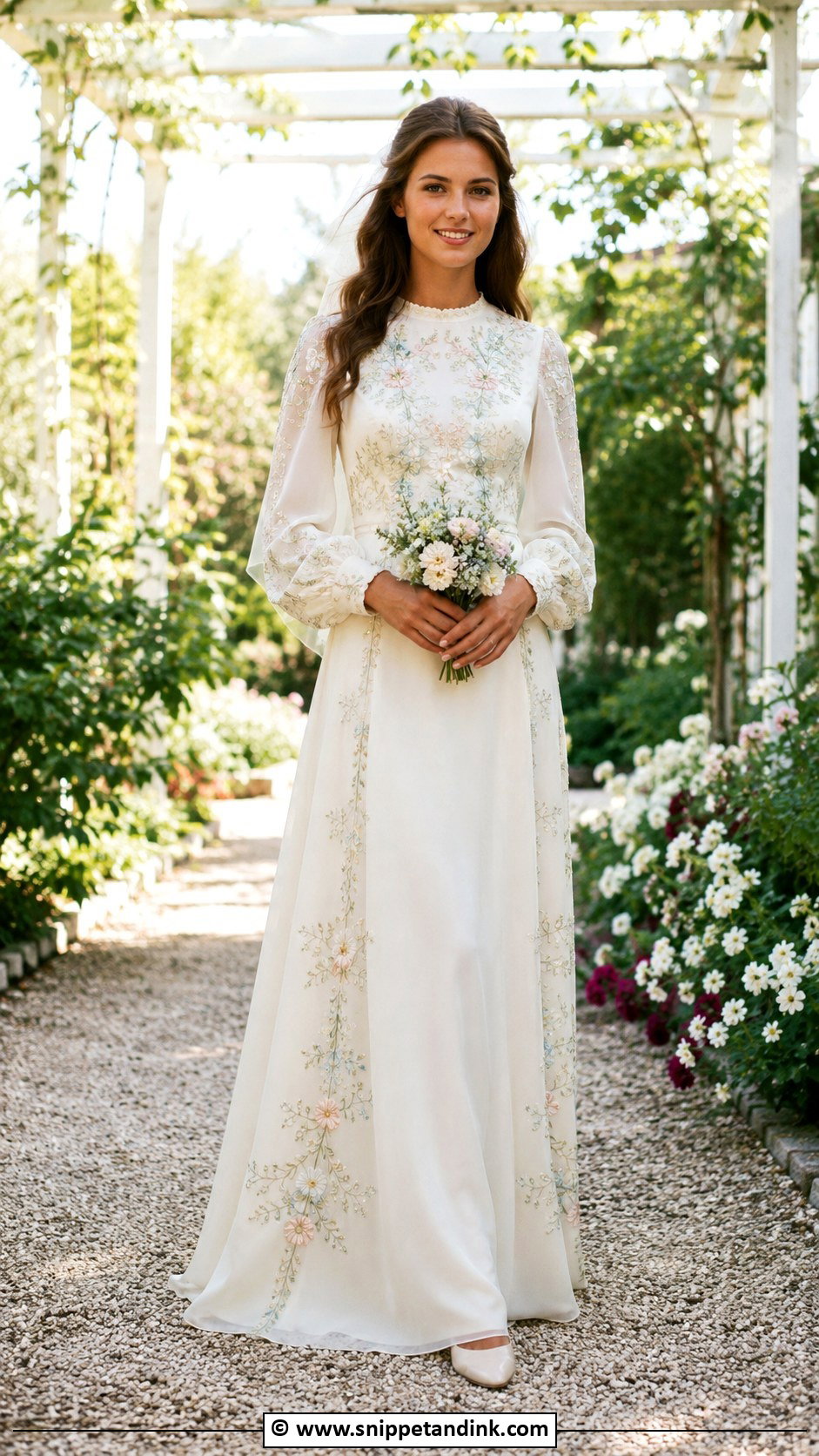
Embroidery can be white-on-white for a subtle effect or soft pastel for a more bohemian feel. I’d keep the silhouette simple so the stitching stays the focus. One thing I like doing is pulling a single thread colour out of the embroidery for the bouquet, so the flowers look connected to the dress. Long sleeves, a flowing skirt and natural makeup carry it, in spring especially.
Alterations a Fifty-Year-Old Dress Will and Won’t Tolerate
Older gowns can be altered, but they have limits that new ones don’t. I bring a vintage dress to a seamstress who has worked with old fabrics before, and I ask for a first fitting at least three months out, because fragile lace takes longer to handle.
- Easy: taking in side seams, moving buttons, adding a bustle, replacing a lining.
- Possible with care: shortening from the waist when the hem has a ruffle or scalloped edge, patching lace with pieces cut from the train or an inner seam.
- Risky: letting out a bodice, recolouring yellowed fabric at home, steaming old polyester lace at high heat, which can melt or shine it.
After the wedding, the dress needs the same thought. I tell brides to have it cleaned within a few weeks, before any spills set. Then store it folded with acid-free tissue in a breathable cotton bag or archival box, away from light. Plastic garment bags trap moisture, and hanging a heavy gown by the shoulders for years stretches the seams. If you plan to pass it on, the next bride will be grateful for that care.
Letting the Decade Show Without Wearing a Costume
The 1970s gave brides more than one idea of a wedding dress: soft boho lace, a modest high neck gown, a prairie dress, a floating chiffon shape or a bold mini for the courthouse. In every case, I’d spend your energy on fabric, fit and movement, then keep the shoes, hair and jewellery plain. That restraint is what stops a vintage gown from looking like fancy dress. Real vintage or a new gown cut in the same spirit, it should feel like yours, not like a museum piece.
You'll Like These Ideas:








Leave a Reply