
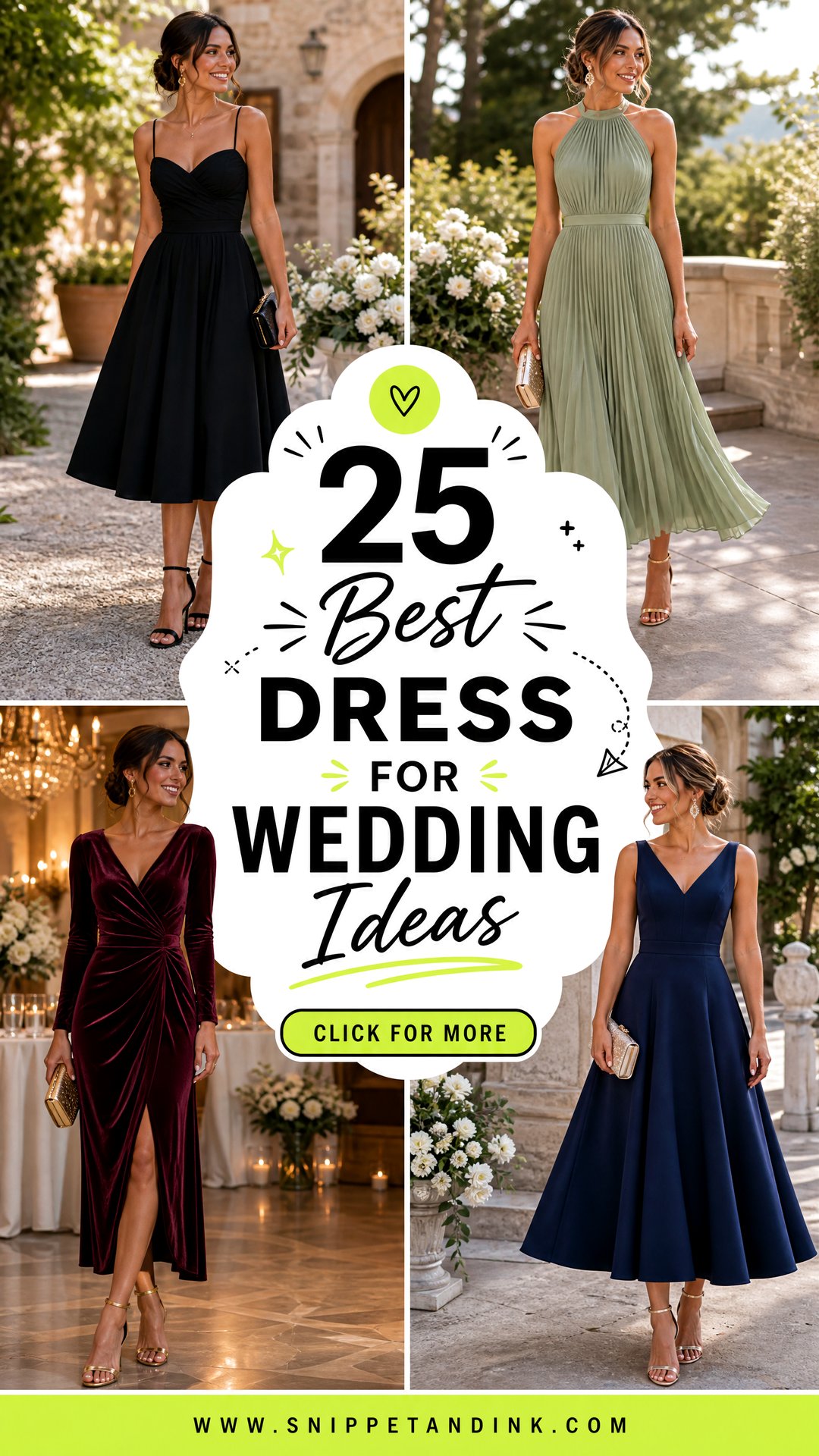
Most guest-outfit mistakes I see aren’t about the dress at all. They’re about a satin that creased flat by the speeches, heels that sank into a lawn, or a pale shade that turned white under the photographer’s flash. So I dress guests in complete looks and start from the dress code, the venue and the season. Midi lengths, draped satin, jewel tones and structured shapes are all current and easy to wear again. The list below covers 25 of them, with what each one does well and where it lets people down.
Five Minutes in the Fitting Room That Save a Guest Dress
Before I let anyone take a guest dress home, I put it through a short routine. It catches nearly every problem that otherwise shows up at the reception.
- Sit on a hard chair for a full minute, then stand. Look at the lap and the back of the skirt. Satin and linen blends show creases immediately; crepe and good polyester bounce back.
- Raise both arms as if hugging someone taller. If the hem lifts more than a few centimetres or the bodice rides up, the dress will do it all day.
- Take a phone photo with the flash on. Pale shades that look pink or blue in the mirror can flatten to near-white on camera.
- Read the fabric label. Heavy polyester traps heat at an outdoor summer ceremony; a lined natural fibre breathes far better.
- Walk in the shoes you plan to wear. The hem length only makes sense at that heel height.
If a dress fails two of these, I’d keep looking. Alterations can fix a hem or a strap, but they rarely fix a fabric that creases or a colour that reads as white.
1. Floral Midi Dress for Wedding
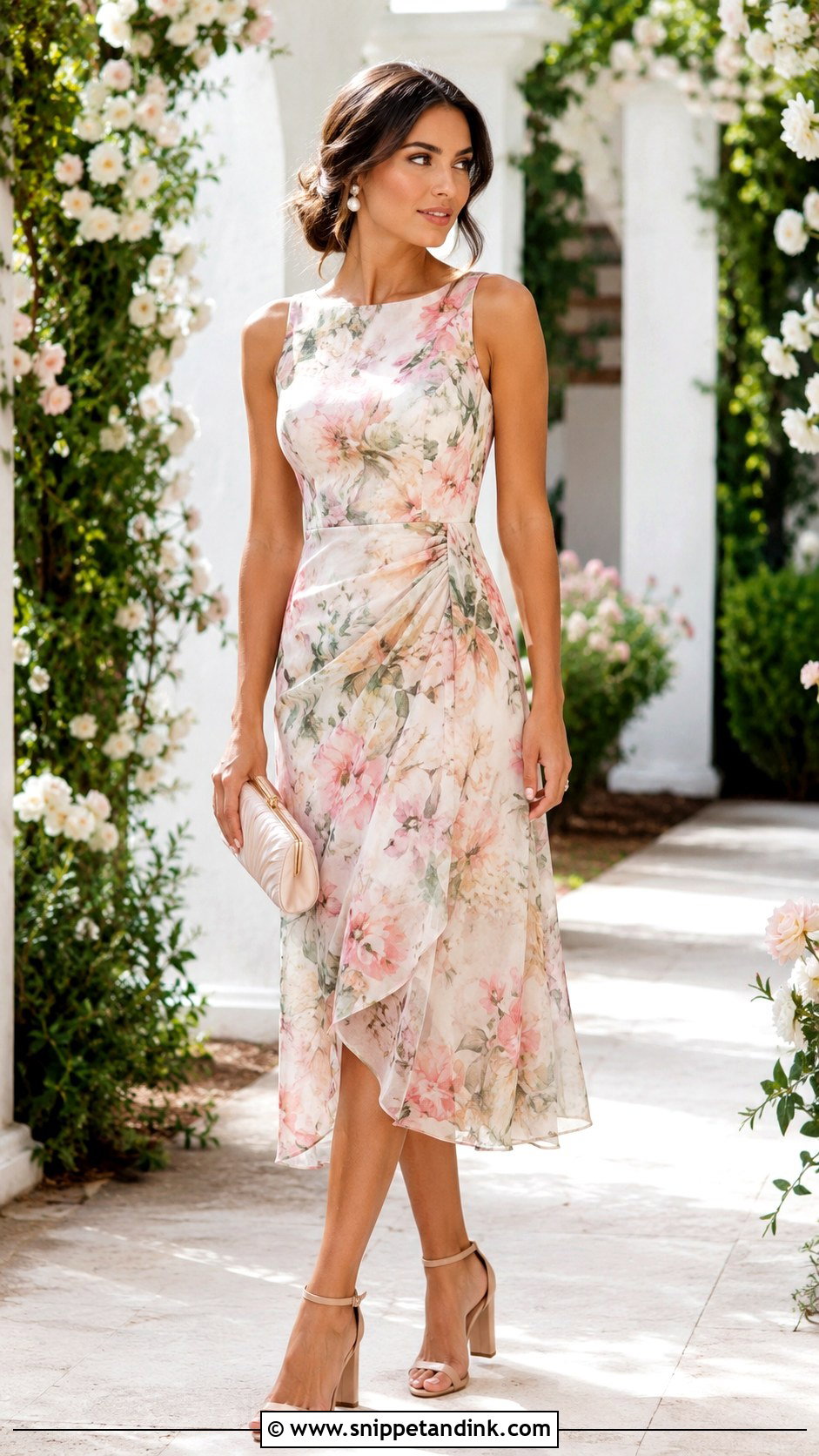
Floral midis are my default suggestion for daytime and garden weddings because the print hides the creases and small marks a long day leaves behind. Choose a print with some space between the blooms; dense, tiny florals can strobe on camera. Nude block heels and pearl or fine gold jewellery keep it light. If the print is busy, the bag and shoes should be plain. A cropped blazer covers you for the cooler evening.
2. Satin Slip Dress for Wedding
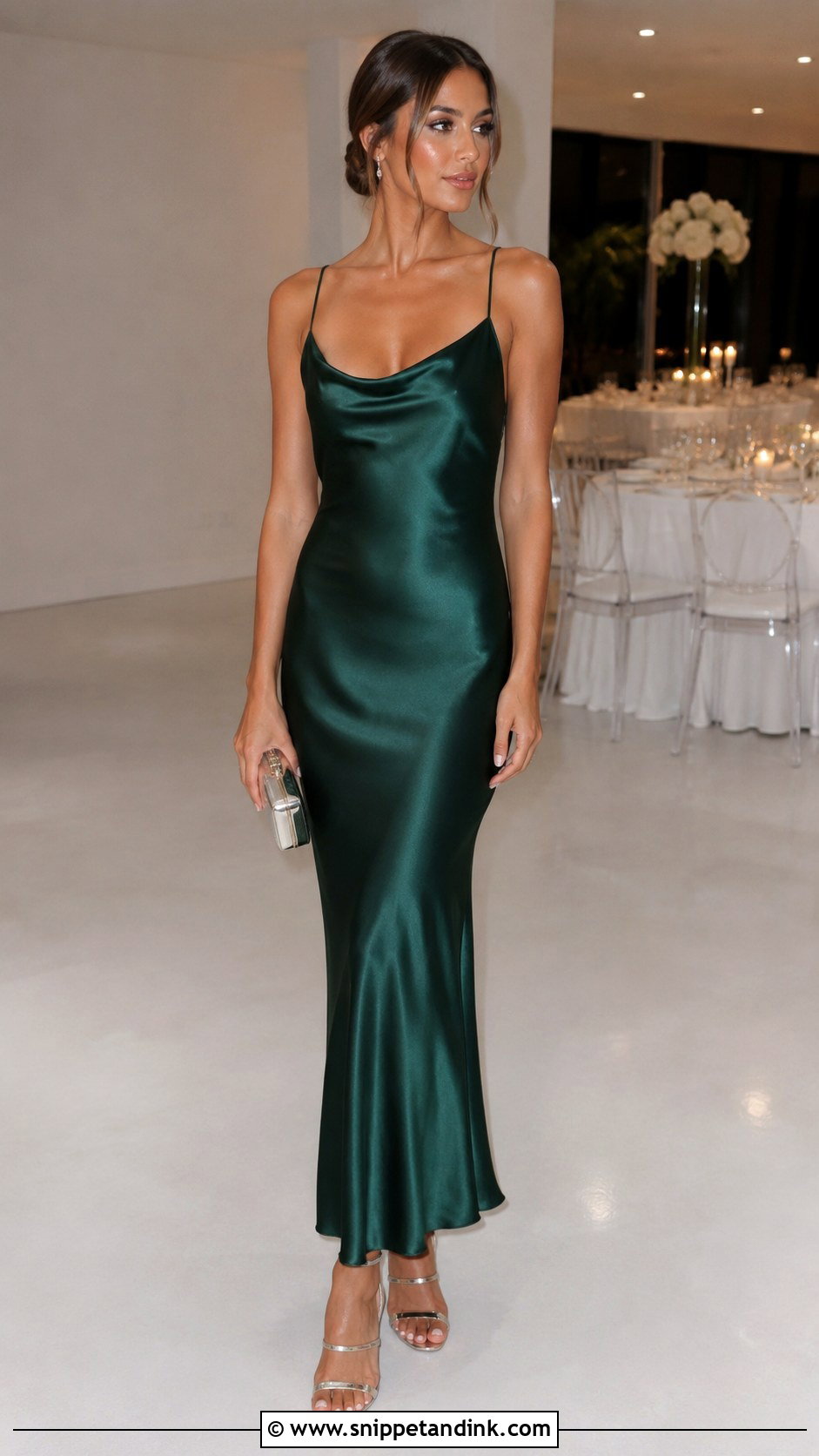
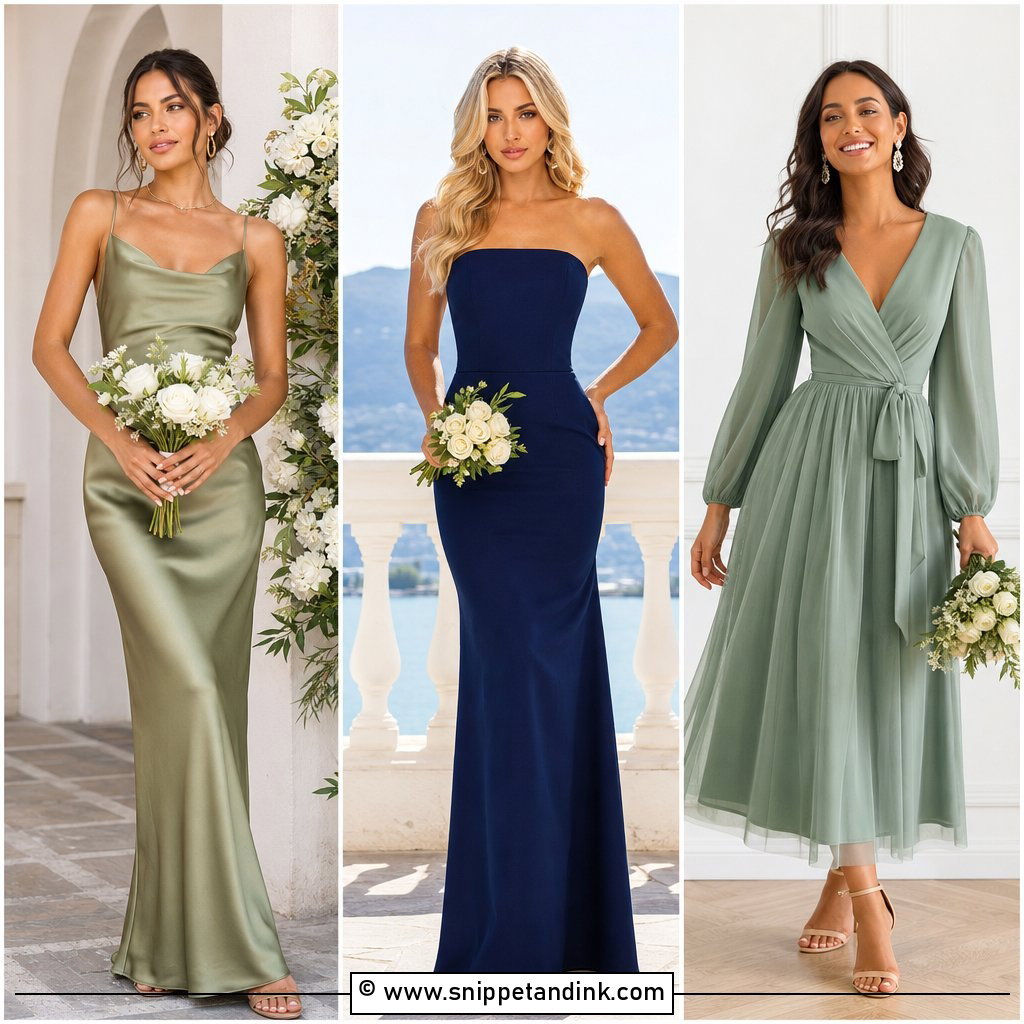
A bias-cut slip moves with the body, which is exactly why fit decides whether it works. I size up if the fabric pulls across the hip when you sit, because satin shows every strain line. Emerald, navy, rose and chocolate are good evening choices; anything near ivory is not. Strappy heels, a structured mini bag and small drop earrings finish it. Bring a tailored blazer or sheer wrap if the church is cold or modest dress is expected.
3. Black Midi Dress for Wedding
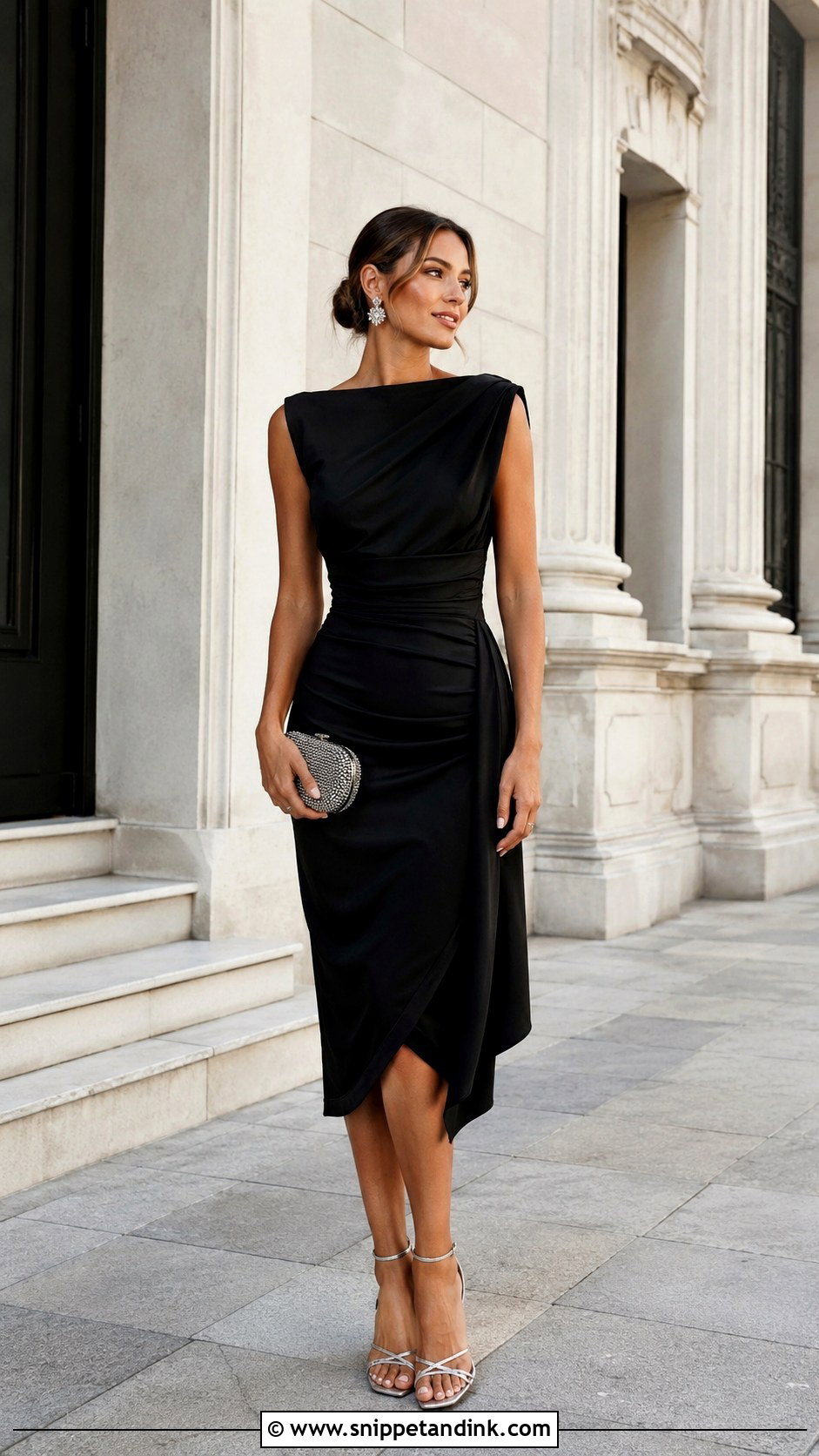
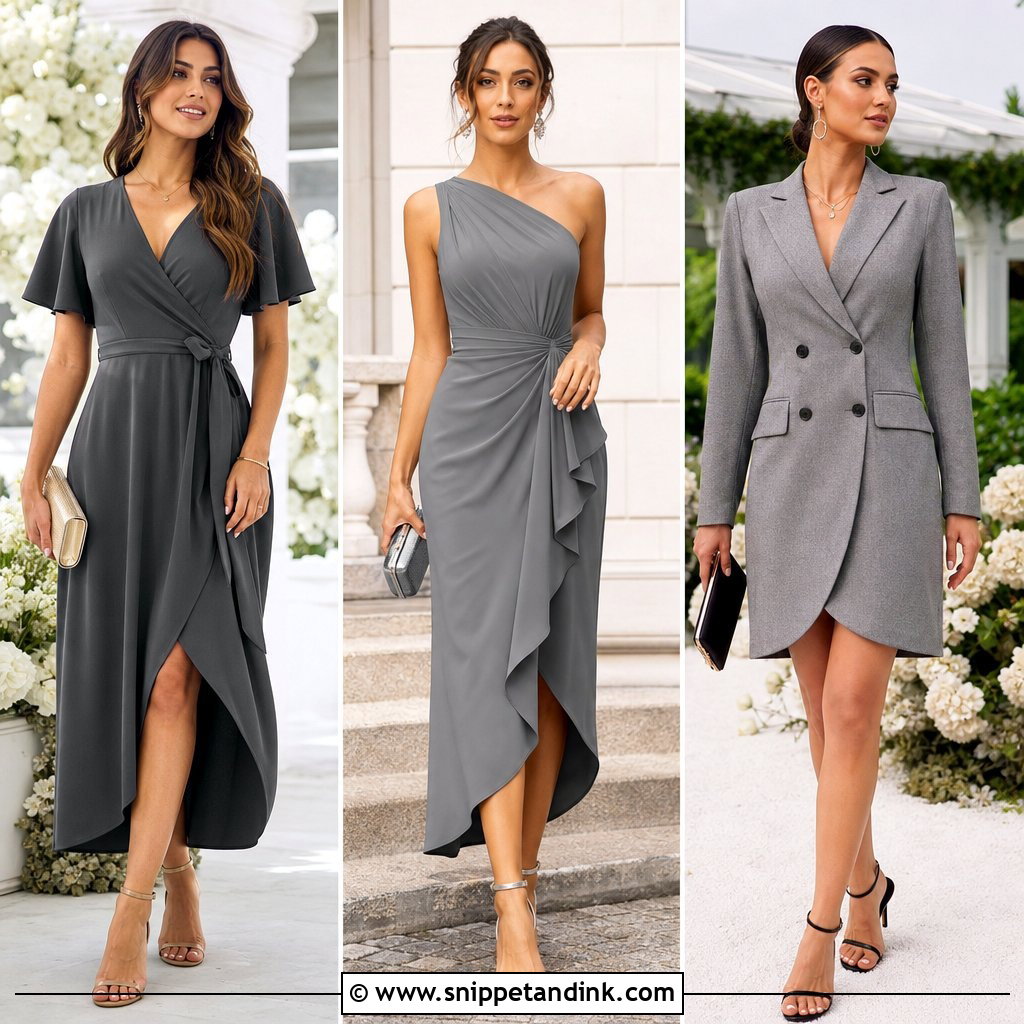
Black is acceptable at almost every wedding now, but a plain black shift still reads like an office dinner. What makes it festive is the detail: a one-shoulder neckline, ruching at the waist, a pleated skirt or a satin face. Then the accessories carry the occasion. Metallic heels and statement earrings work at night; for a daytime ceremony I’d add a coloured bag or nude shoes. It’s the piece on this list you’ll get the most wear from afterward.
4. Emerald Green Dress for Wedding
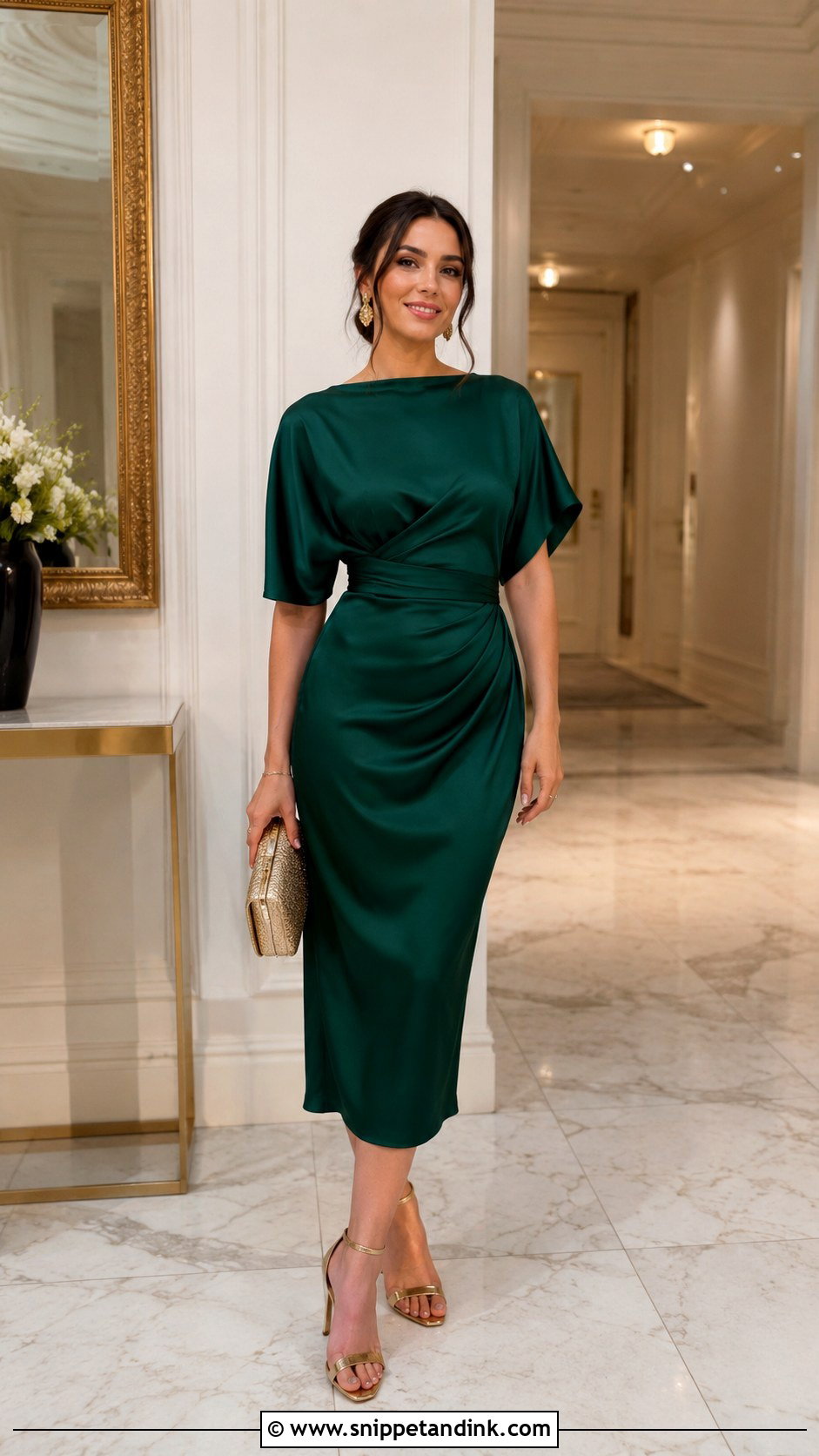
Emerald flatters a wide range of skin tones and photographs richly at evening receptions. In satin and velvet it deepens almost to bottle green under warm light; in chiffon it stays brighter. Gold heels and a metallic clutch sit well with it. My jewellery rule: high neckline means earrings only, a V or wrap neckline can take a fine pendant. Heavy accessories fight the colour, so keep them sparse.
5. Navy Blue Dress for Wedding
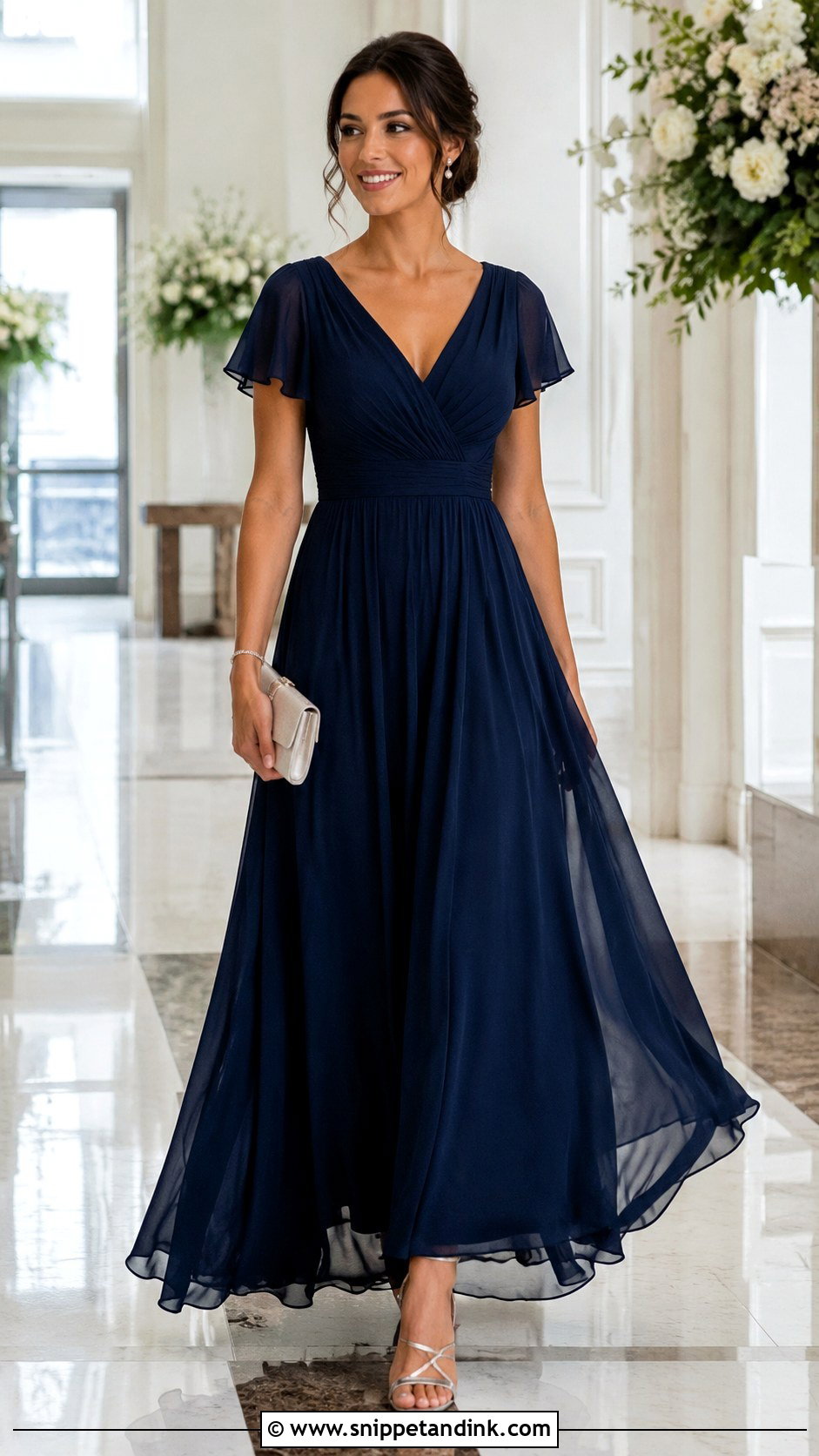
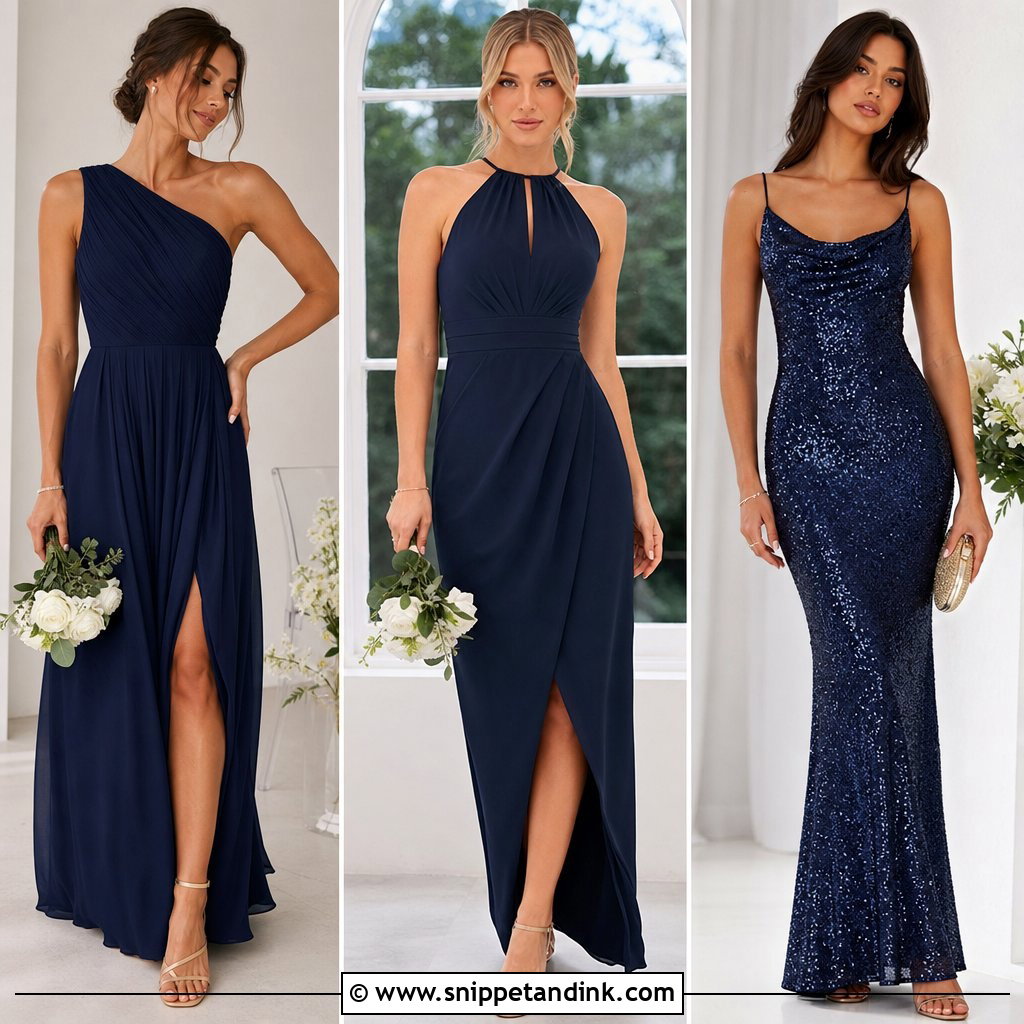
Navy is my answer when the invitation’s dress code is vague. It rarely looks too casual or too dramatic, and it’s kinder to fair skin than black under bright daylight. A chiffon maxi, satin midi or fitted crepe all work. Silver heels and pearl earrings give a crisp finish; nude heels lengthen the leg. Look for movement or a defined waist, since a flat navy sheath can disappear in group photos.
6. Burgundy Dress for Wedding
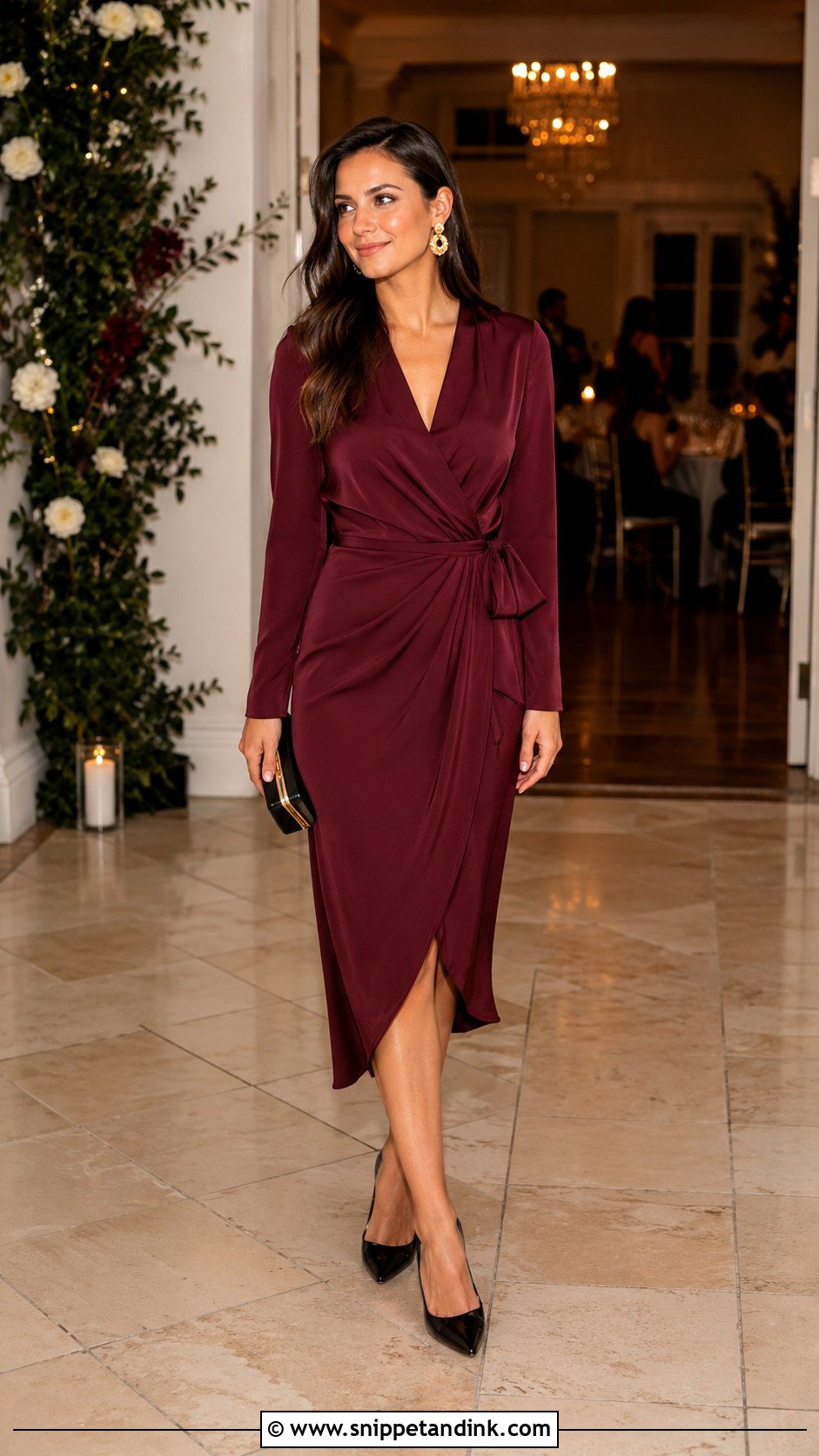
Burgundy brings warmth without brightness, which is why it suits autumn and winter evenings. Velvet and satin make it look richer; thin polyester crepe can turn it slightly purple on camera, so check the shade in daylight before buying. Gold jewellery warms it up, black accessories make it moodier. Keep makeup clean, since a deep lip plus deep dress can feel heavy.
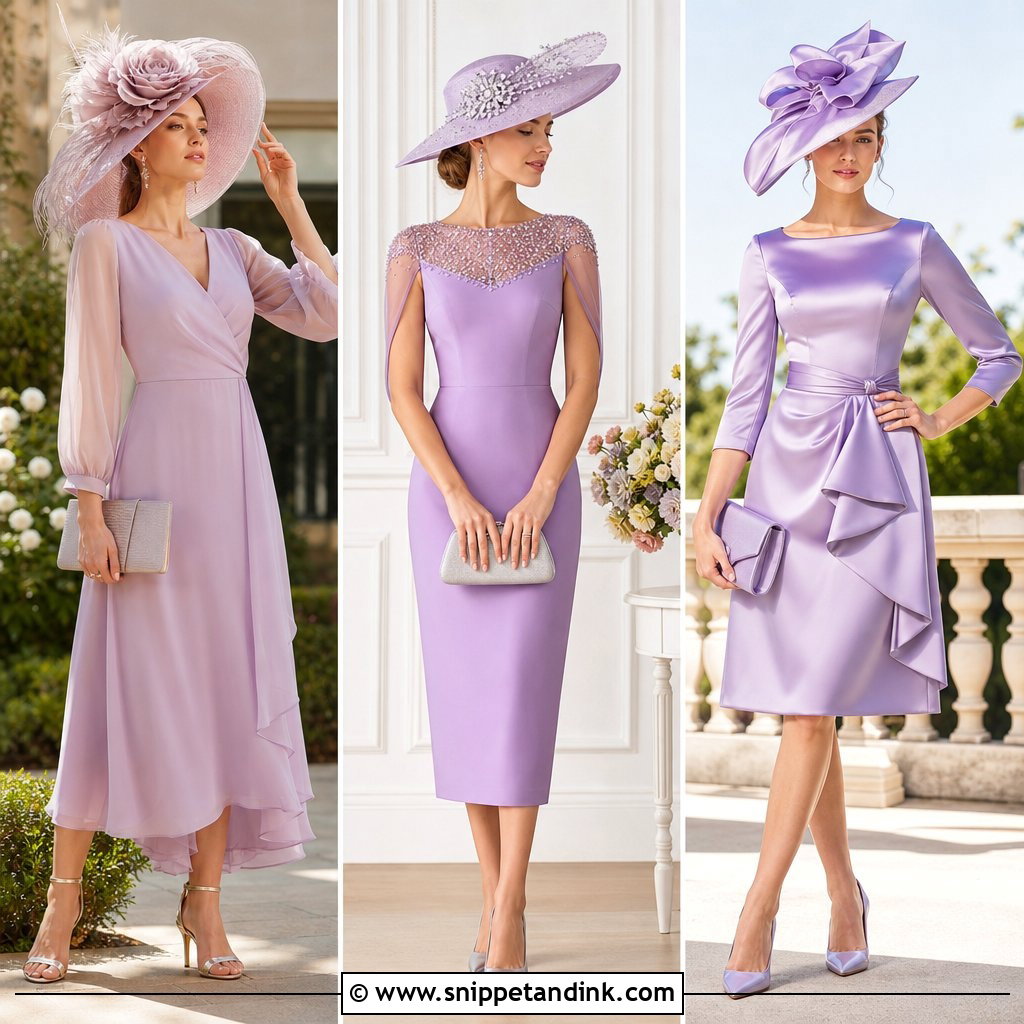
7. Pastel Maxi Dress for Wedding
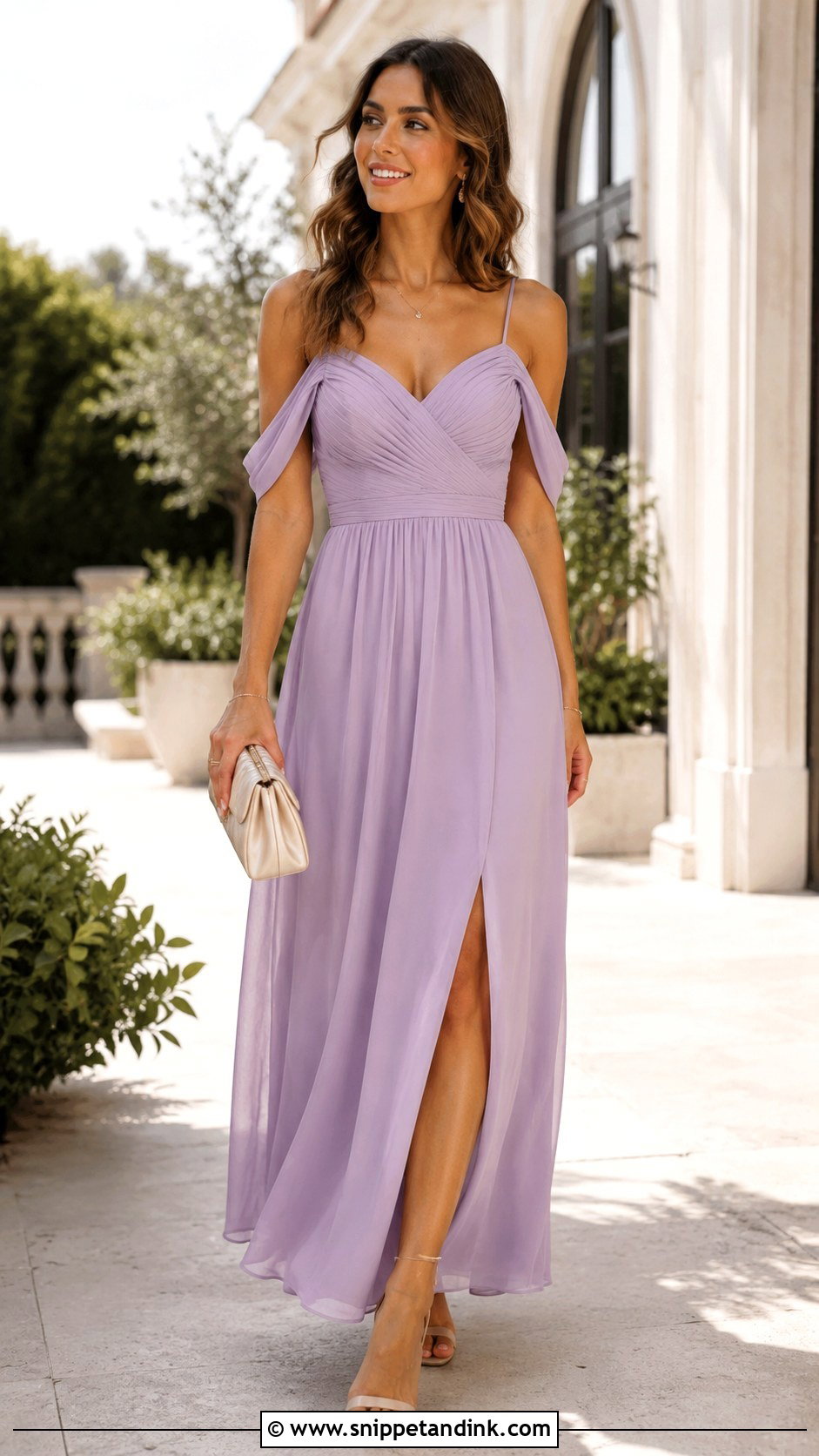
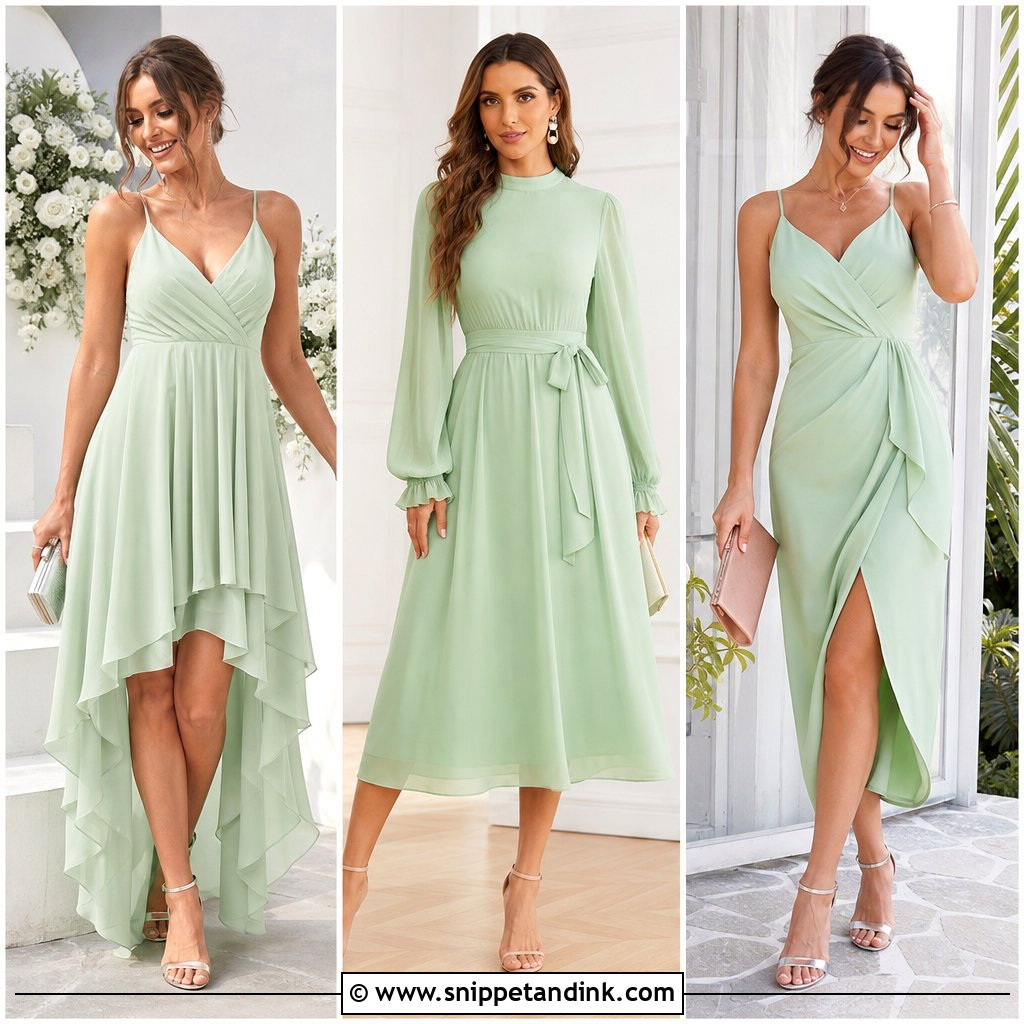
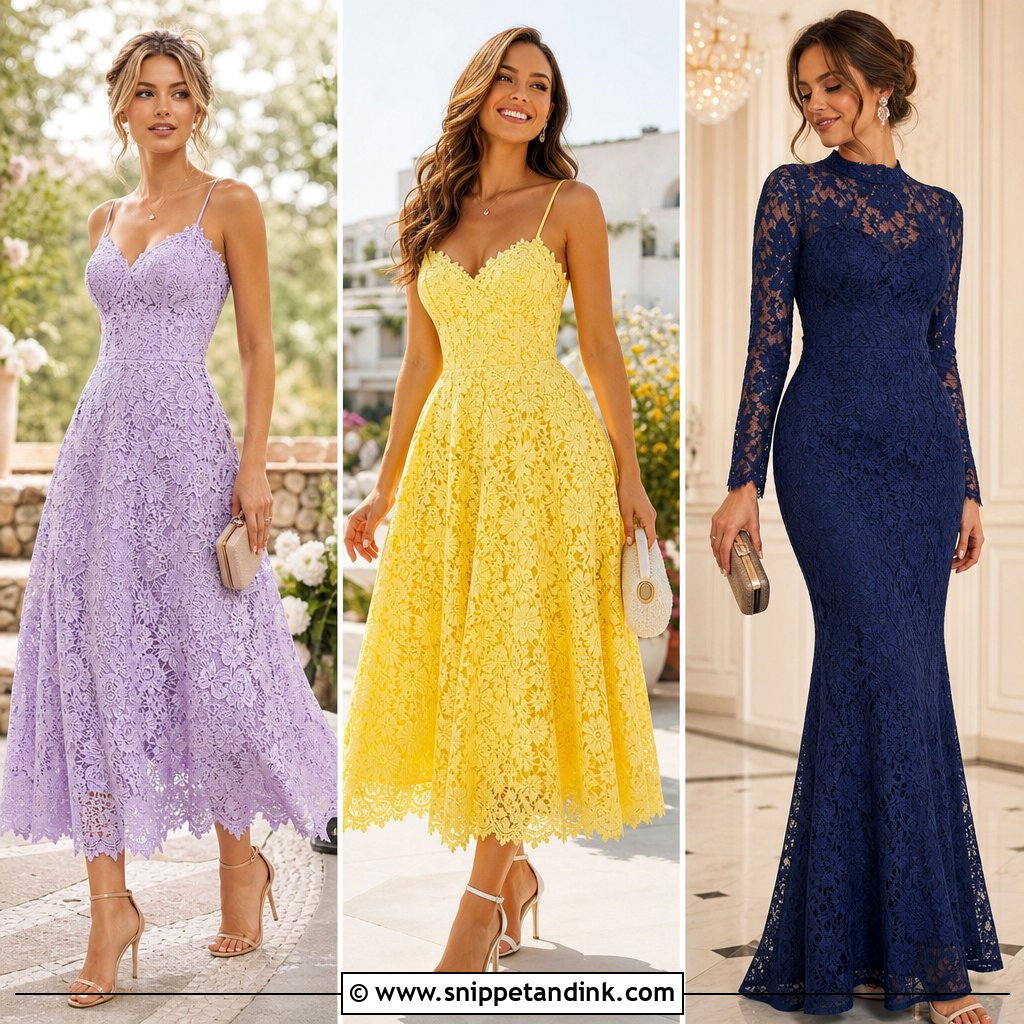
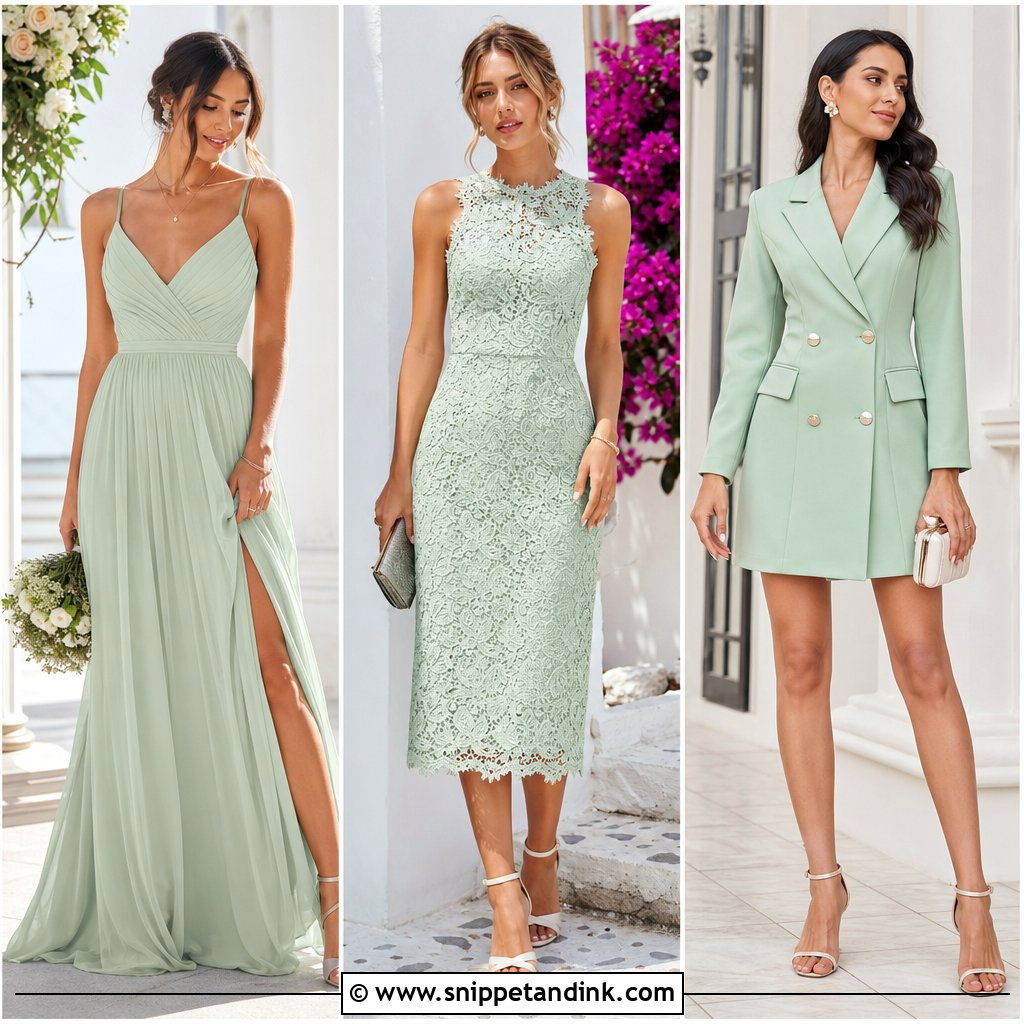
Pastel maxis belong to warm daytime weddings: garden, beach, vineyard. Blush, lavender, powder blue and sage all qualify, provided the shade doesn’t wash out to off-white in photos. I always test pale pastels with a phone flash photo, because that’s the closest preview of what a photographer’s flash will do. Choose block heels or wedges for grass. A clean silhouette keeps it grown-up; stacked ruffles and bows push it toward a bridesmaid’s dress.
8. One Shoulder Dress for Wedding
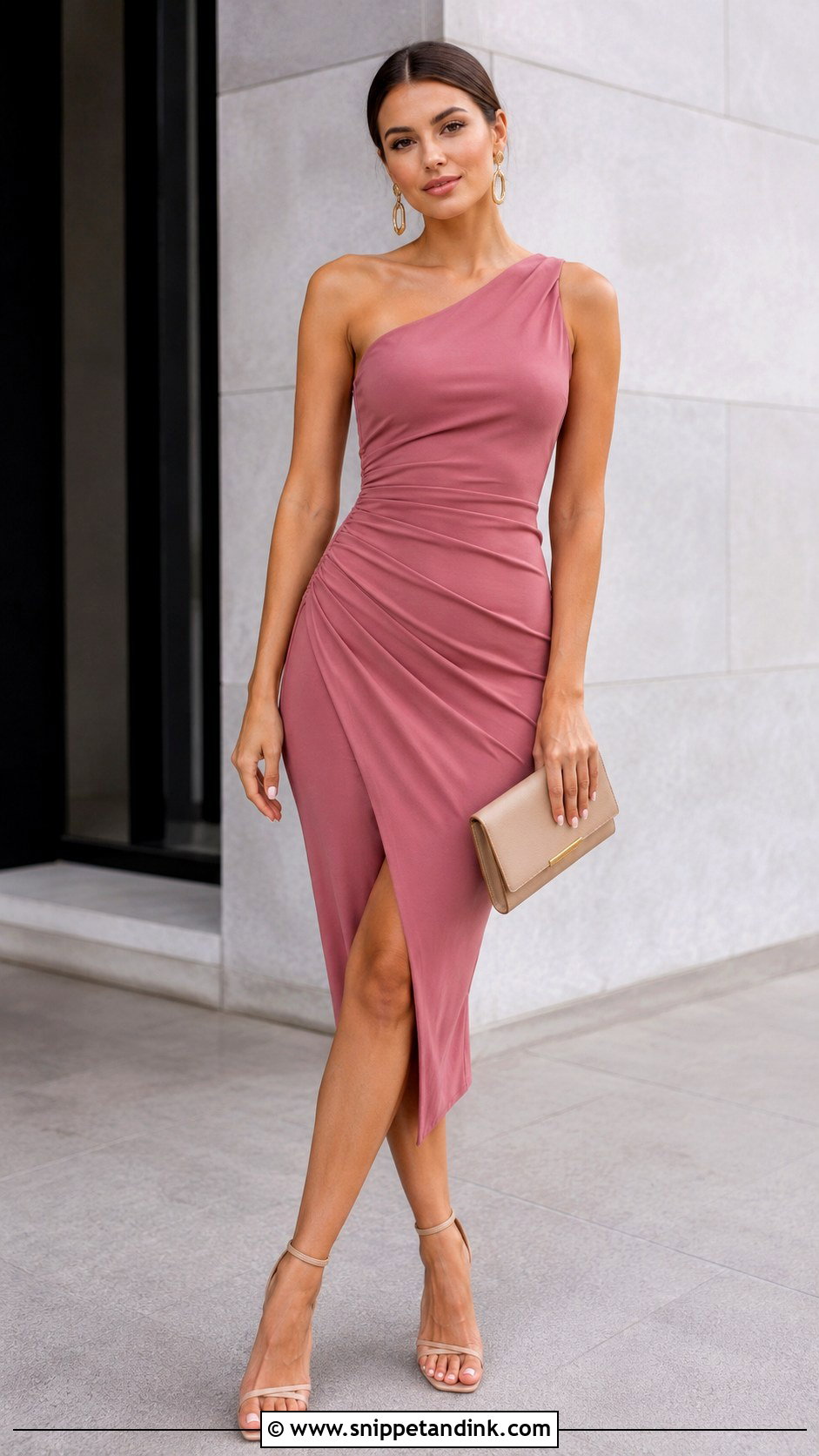
With a one-shoulder neckline, the shoulder line itself is the jewellery, so I skip the necklace and use earrings or a cuff. Solid colours such as rust, navy, rose or emerald suit it better than prints, which break up the diagonal. It’s a natural fit for cocktail, formal, or evening weddings. What I check at the fitting is whether the strap side stays put when you raise your arm for a toast. If it slides, it needs a stay or silicone grip tape.
9. Long Sleeve Dress for Wedding
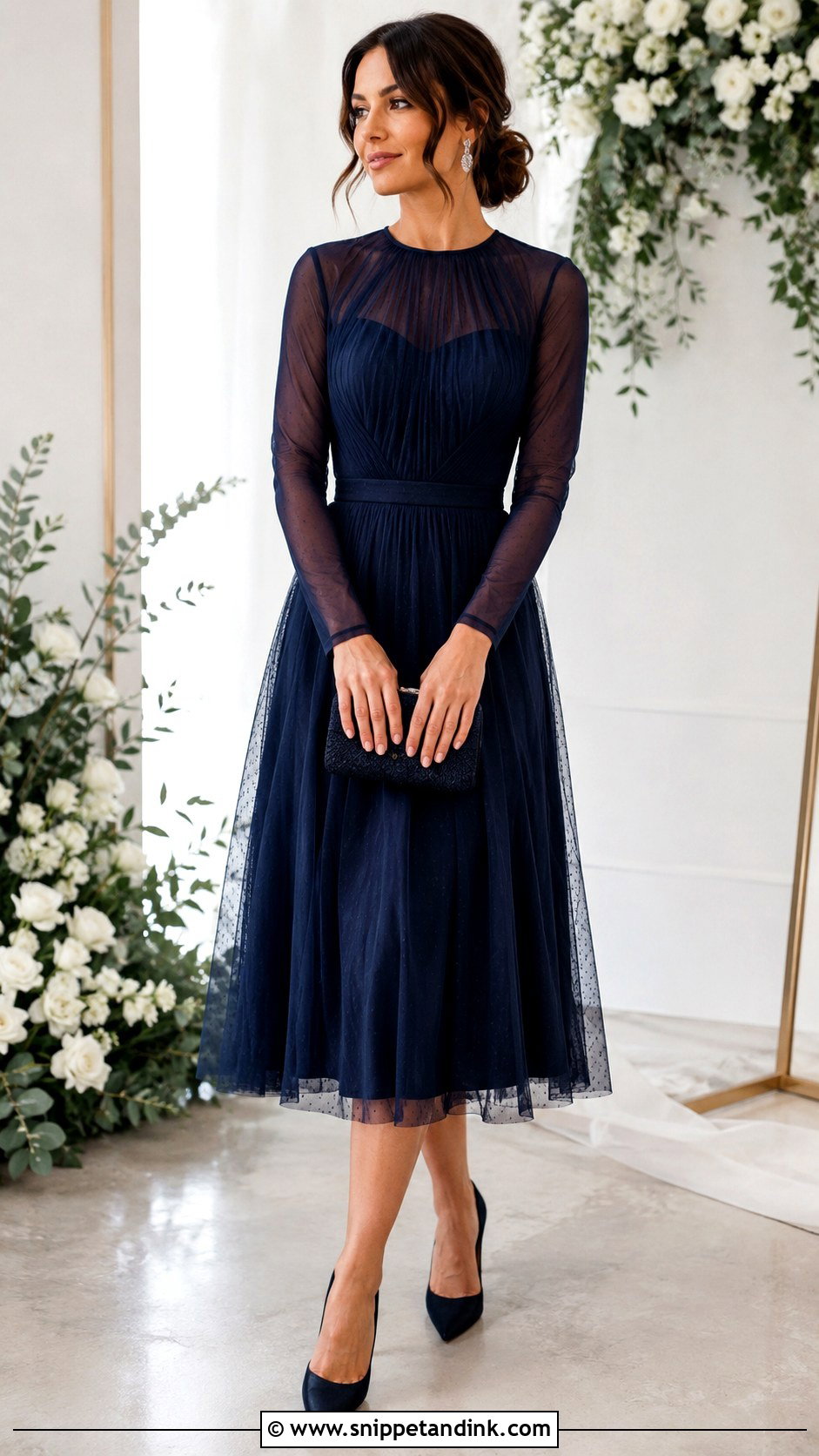
Long sleeves suit cooler venues, religious ceremonies and anyone who simply prefers coverage. Sheer, mesh or chiffon sleeves keep the dress from feeling heavy, and a defined waist stops the overall shape going boxy. Raise your arms when trying it on; a tight sleeve head restricts hugging and dancing more than you’d expect. Jewel tones, forest green and deep rose look right through autumn and winter.
10. Wrap Dress for Wedding
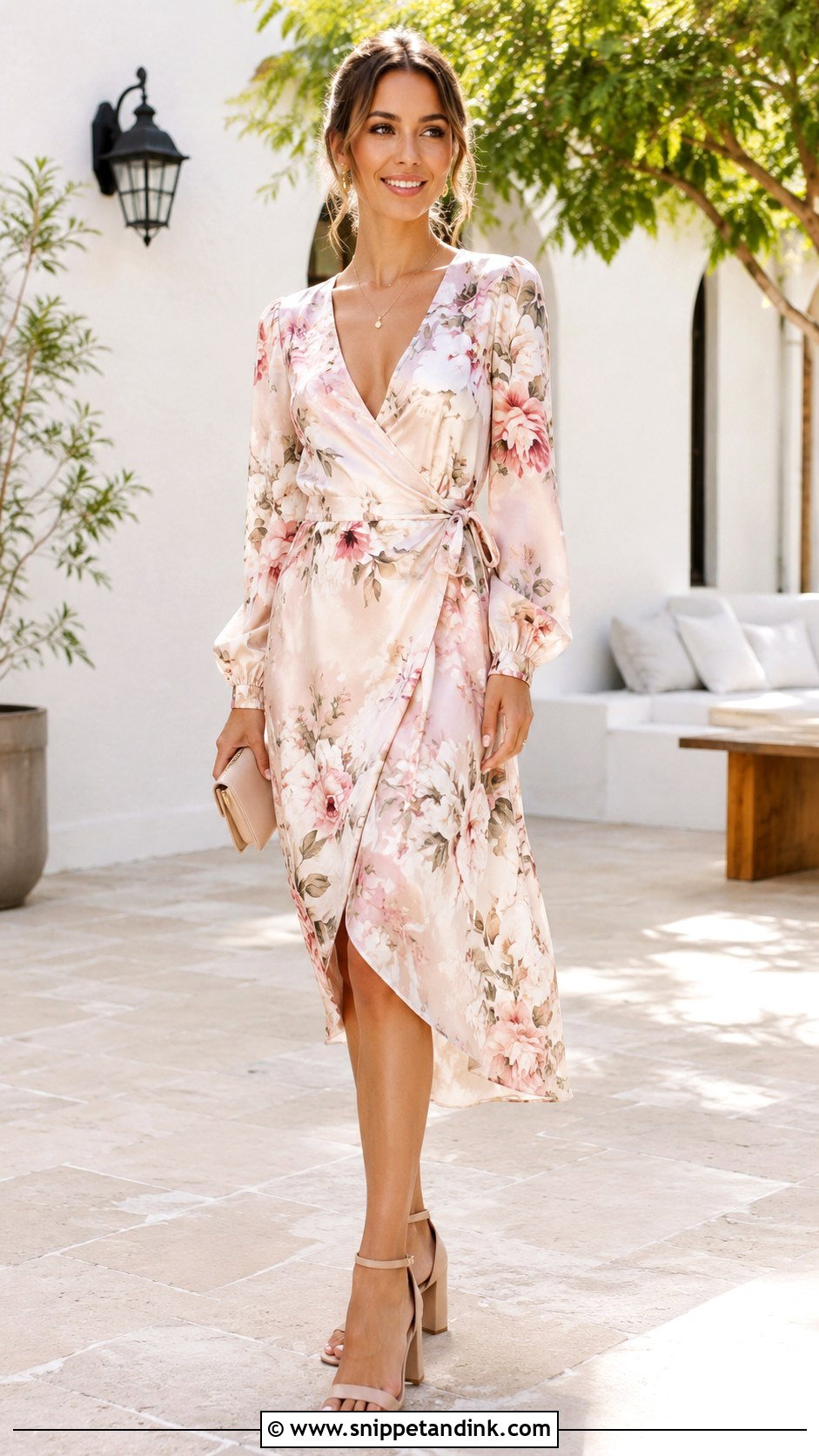
Wrap dresses adjust to your shape, so they’re forgiving if your size changes between buying and the wedding. For a wedding I’d pick satin, chiffon, crepe or a polished floral, not cotton jersey, which reads as daywear. The weak spot is the neckline: sit down and lean forward in the mirror before you buy. If it gapes, fashion tape or a matching camisole fixes it.
11. Pleated Midi Dress for Wedding
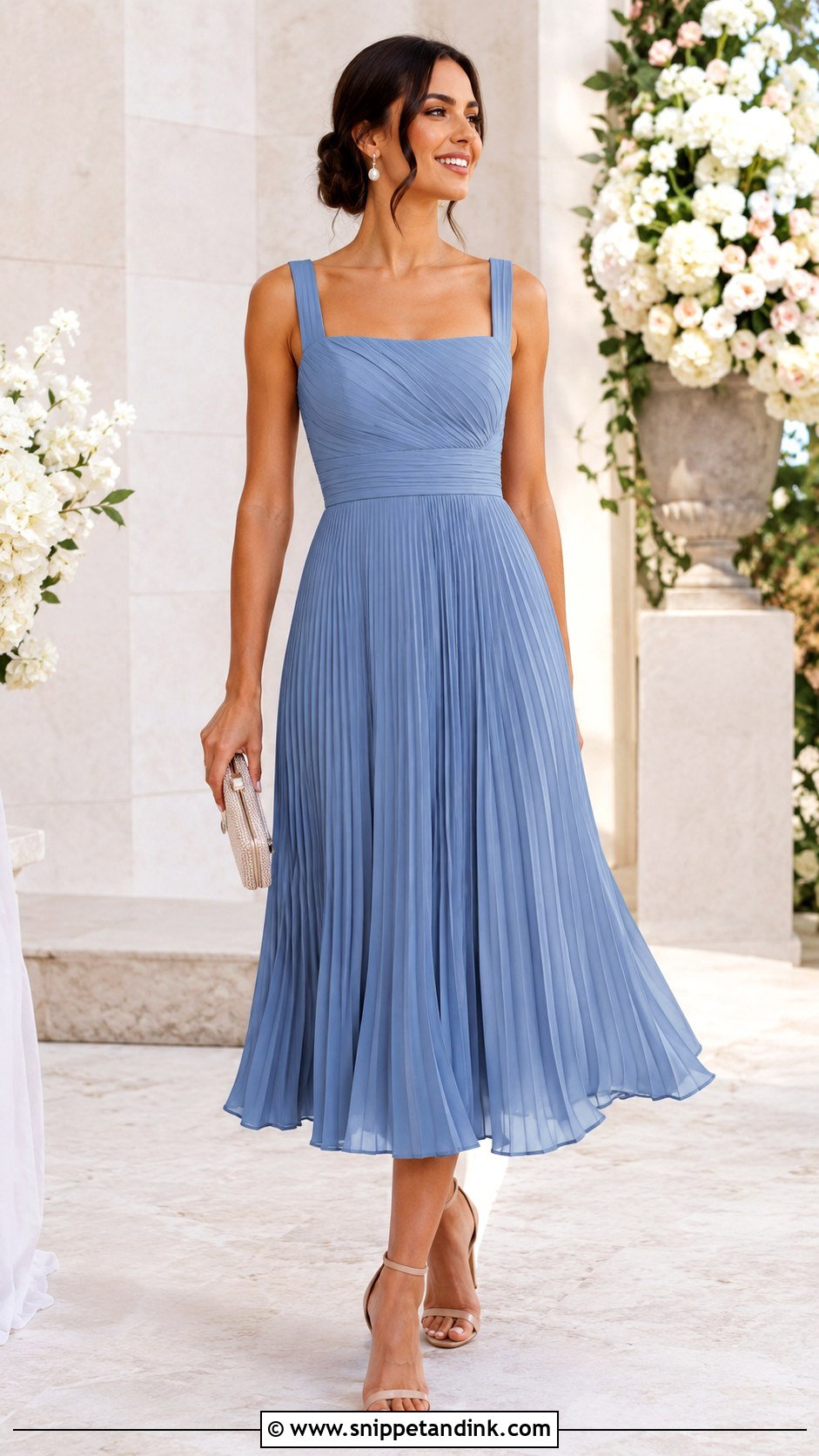
Pleats move when you walk and catch shadow, so a plain colour still has texture in photos. Balance the volume with a fitted bodice or belt. Dusty blue, mauve, sage and navy are safe colours. One practical note: knife pleats in polyester hold their shape through a whole day of sitting, but silk pleats drop out quickly once they’ve been creased. With metallic threading, keep jewellery minimal.
12. Chiffon Maxi Dress for Wedding
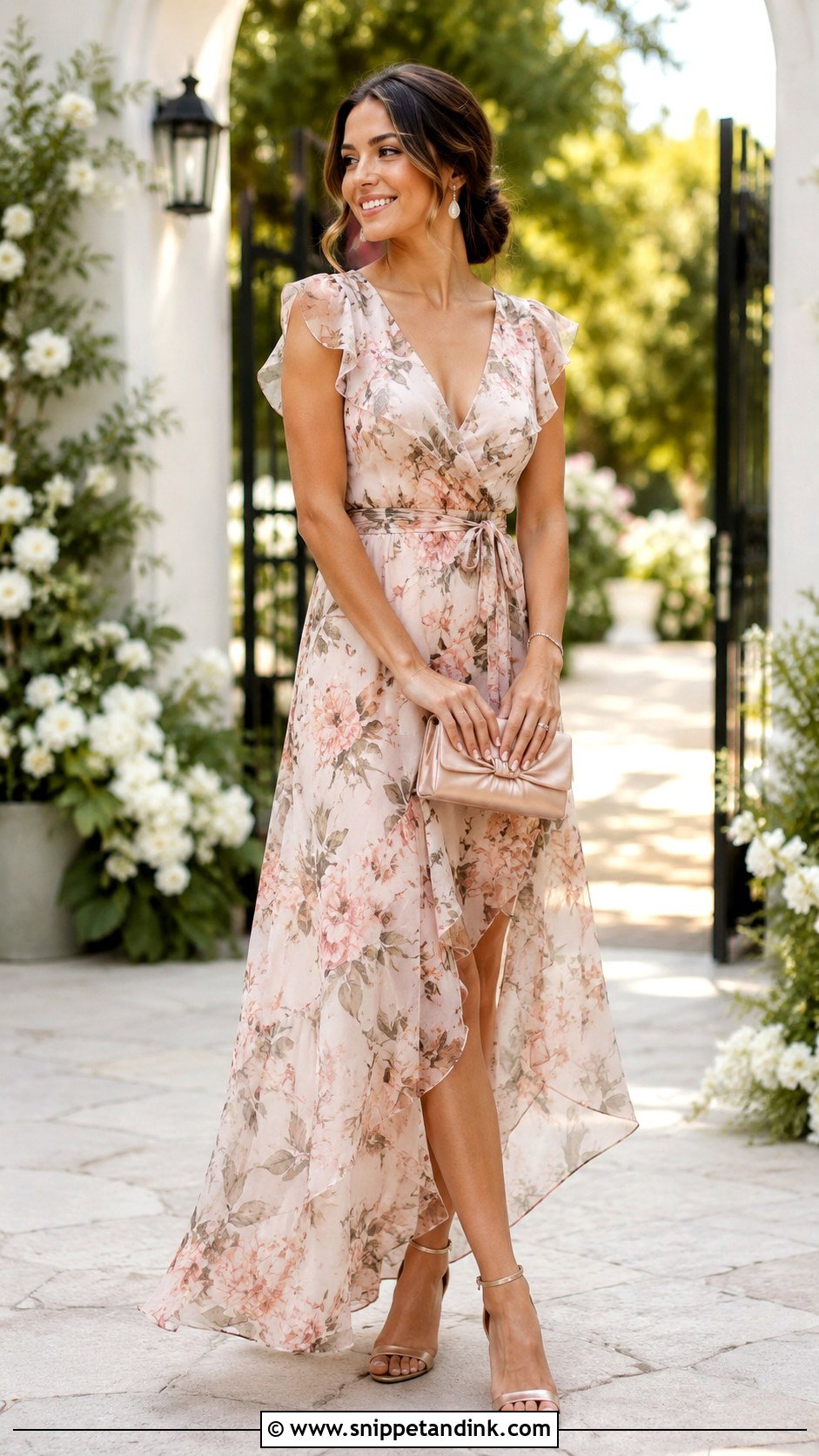
Chiffon floats and breathes, which is ideal outdoors in summer and less ideal in a sea breeze. I look for a lined bodice and some structure at the waist so it doesn’t read as beachwear. Very high slits and loose layers become hard to manage in wind, so skip them for cliff-top or coastal venues. Block heels and a satin clutch complete the look.
13. Velvet Dress for Wedding
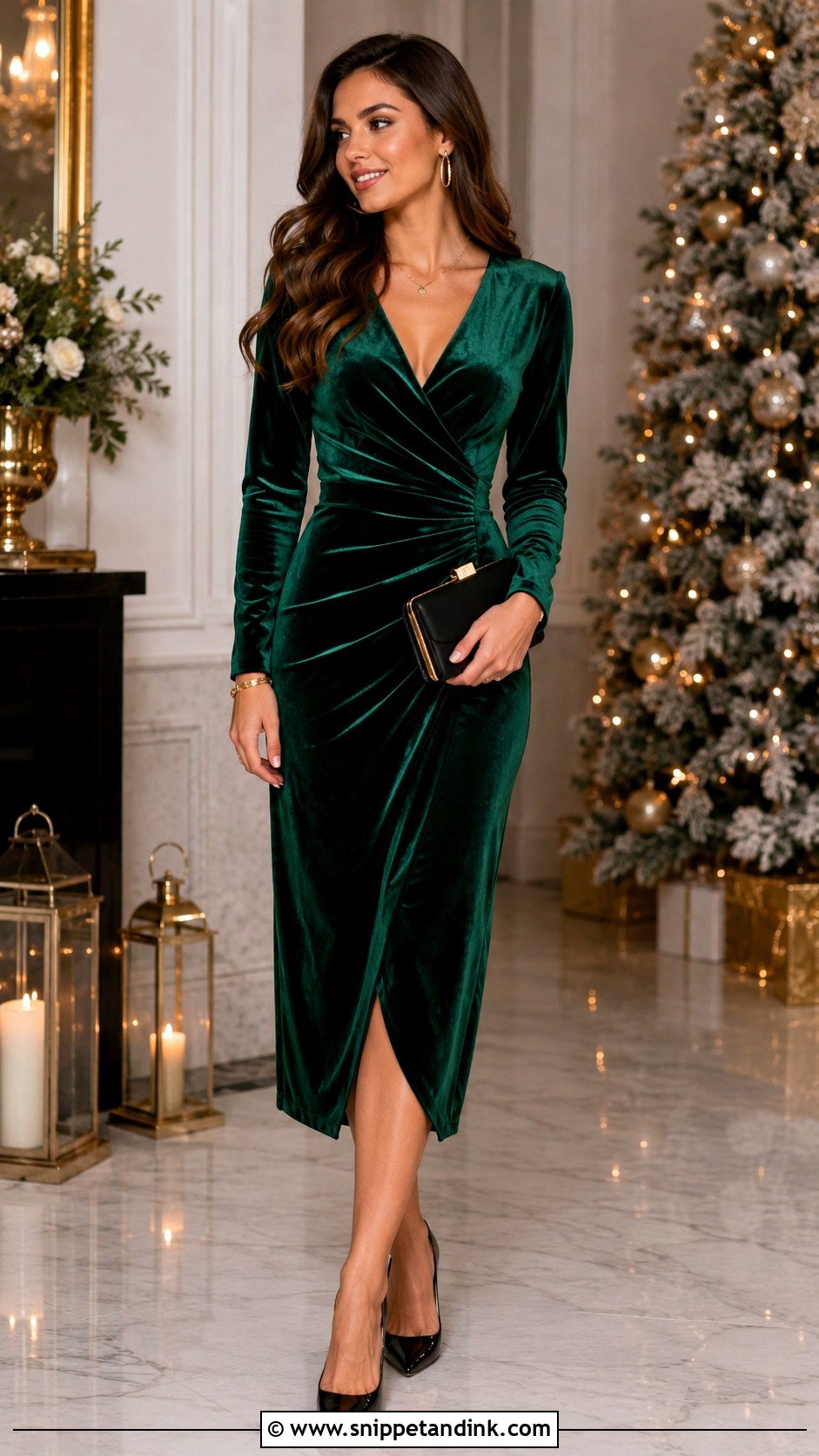
Velvet is the warmest dress fabric you can wear to a winter wedding while still looking formal. A clean shape (a wrap, a column, a long-sleeve midi) keeps the texture from looking costume-like. Velvet already reflects light, so I keep metallics to one piece, usually the shoes or earrings. Hang it in a steamy bathroom the night before rather than ironing, since direct heat crushes the pile.
14. Ruched Midi Dress for Wedding
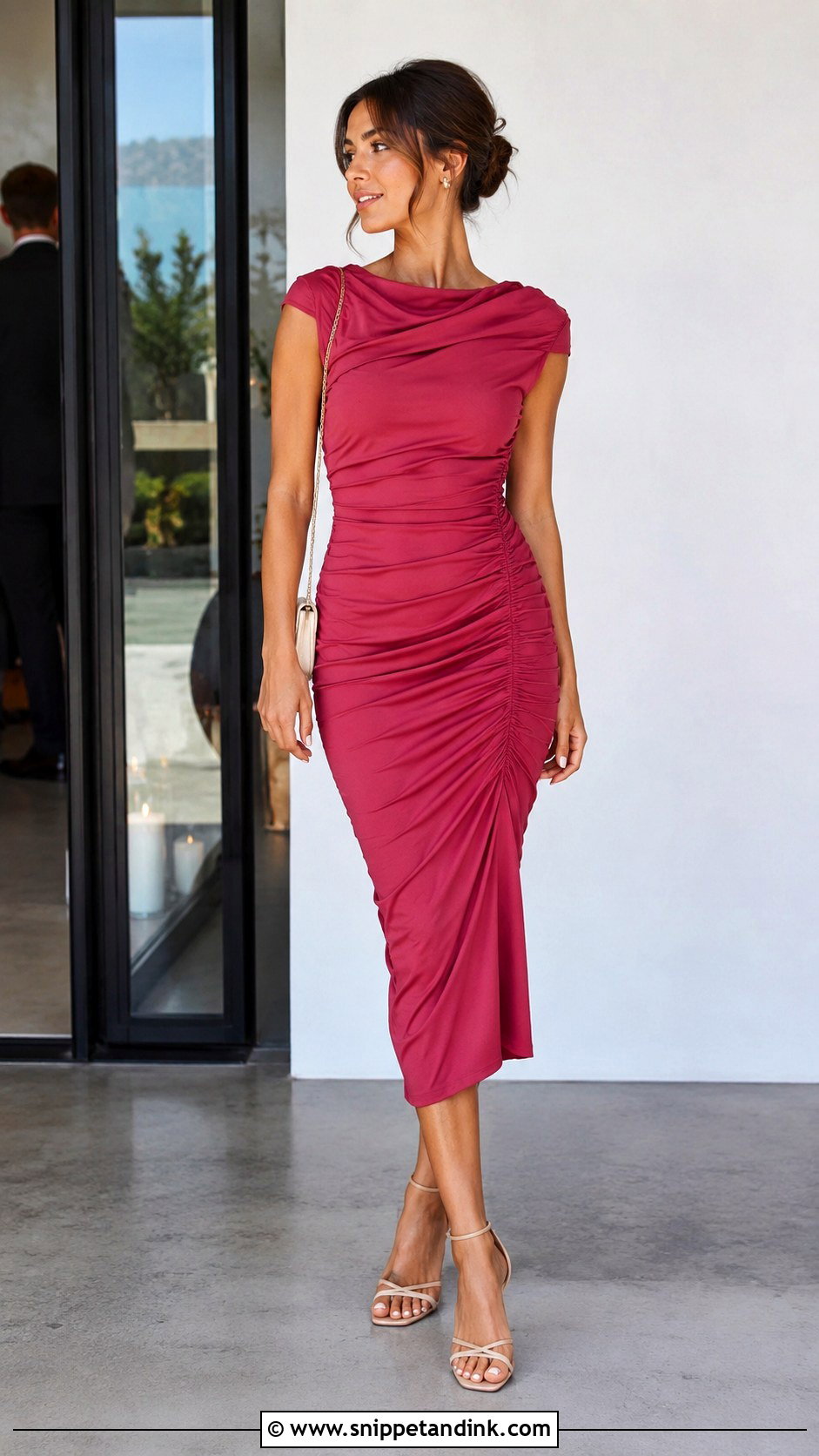
Ruching smooths the body and hides the small bumps a fitted dress would show. A ruched midi dress in crepe, satin or a structured stretch fabric suits cocktail weddings and city venues. Rose, espresso, olive and burgundy look current. Because it’s close-fitting, I balance it with a longer hemline and a modest neckline. Sit in it before you buy; cheap stretch ruching rides up when seated and stays there.
15. Off Shoulder Dress for Wedding
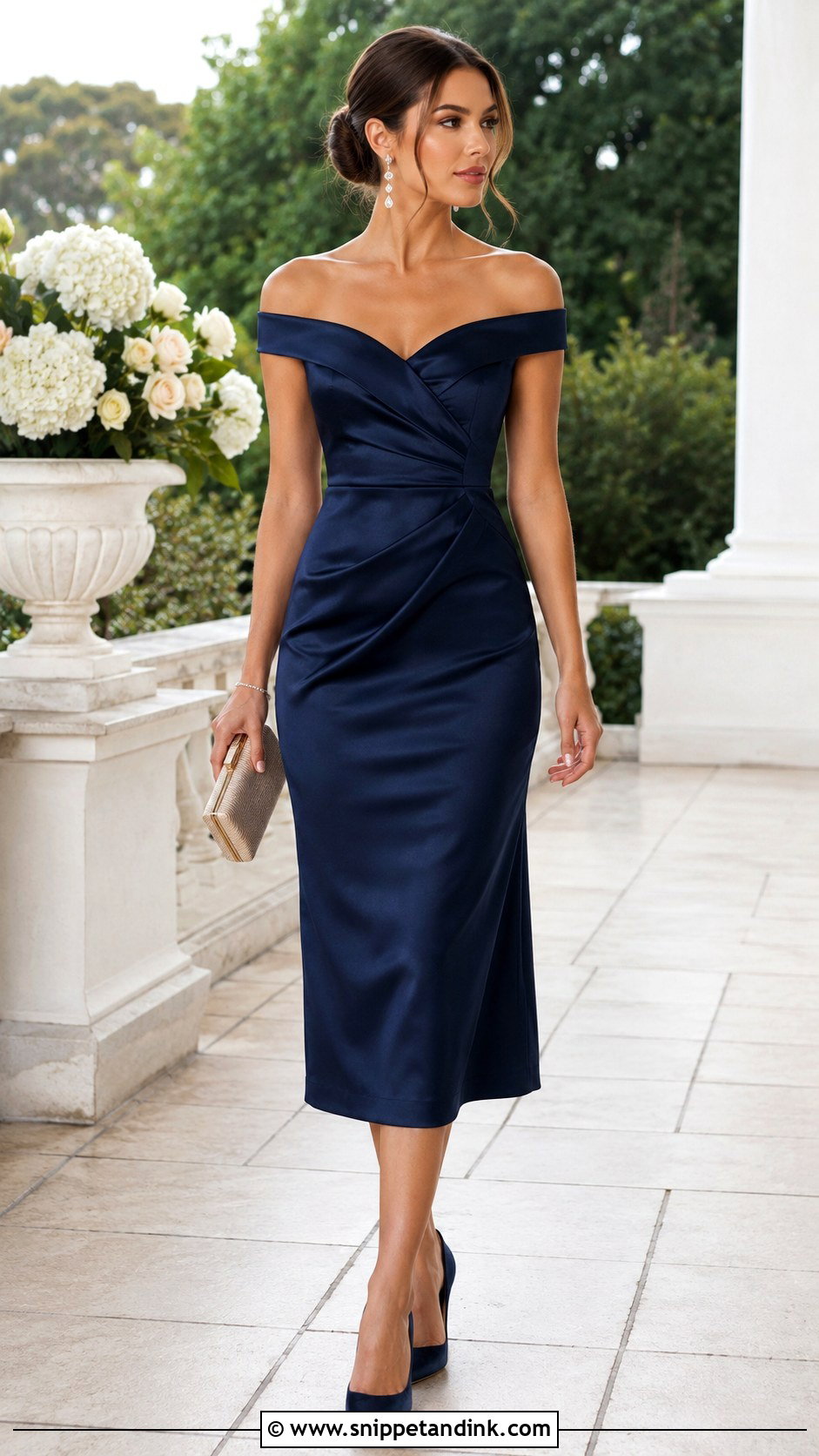
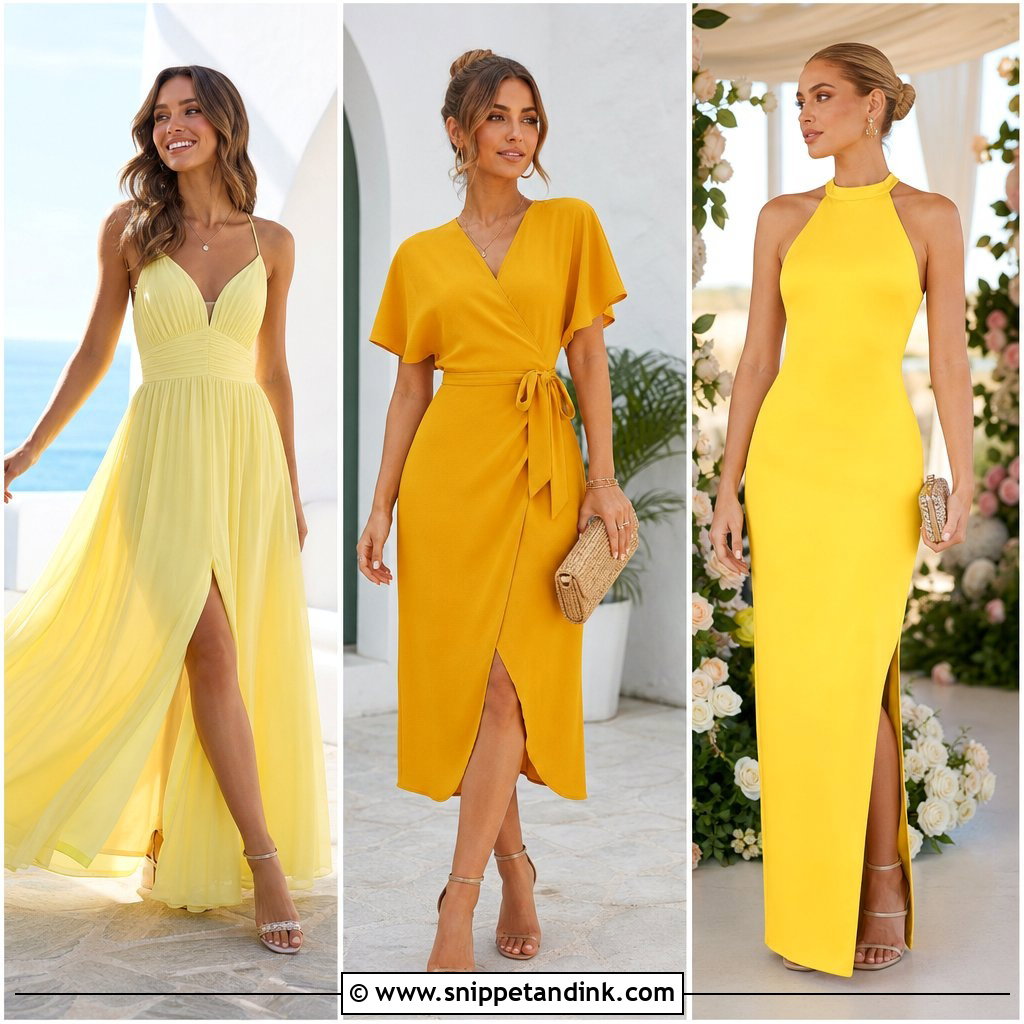
Off-shoulder necklines are the ones guests most often spend the day hitching up. Before anything else, I check whether the neckline has an elastic or boned band that holds without you holding it. Structured satin and crepe manage this better than chiffon. An updo and drop earrings show off the shoulders; a mini length tips it toward a party look, so stay midi or longer.
16. Halter Neck Dress for Wedding
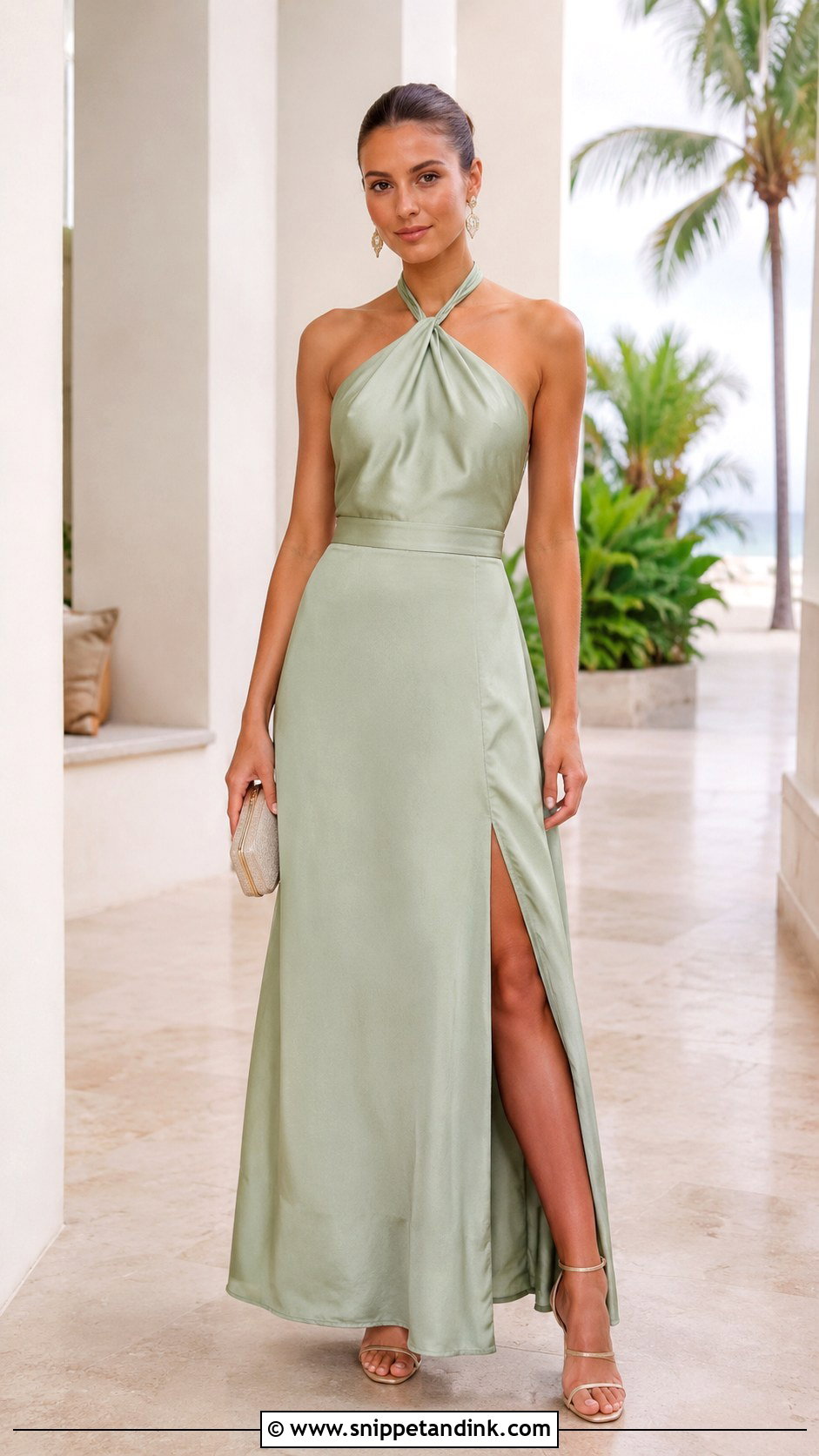
Halters frame the shoulders and suit summer, destination and modern receptions. Satin, chiffon and crepe all hold the shape cleanly. Wear earrings rather than a necklace, with a low bun or soft waves so the neckline shows. The fit issue I watch is the armhole: if it gapes at the side when you move, it’ll show your bra or more in dance-floor photos. Strapless or adhesive bras usually solve it.
17. A Line Dress for Wedding
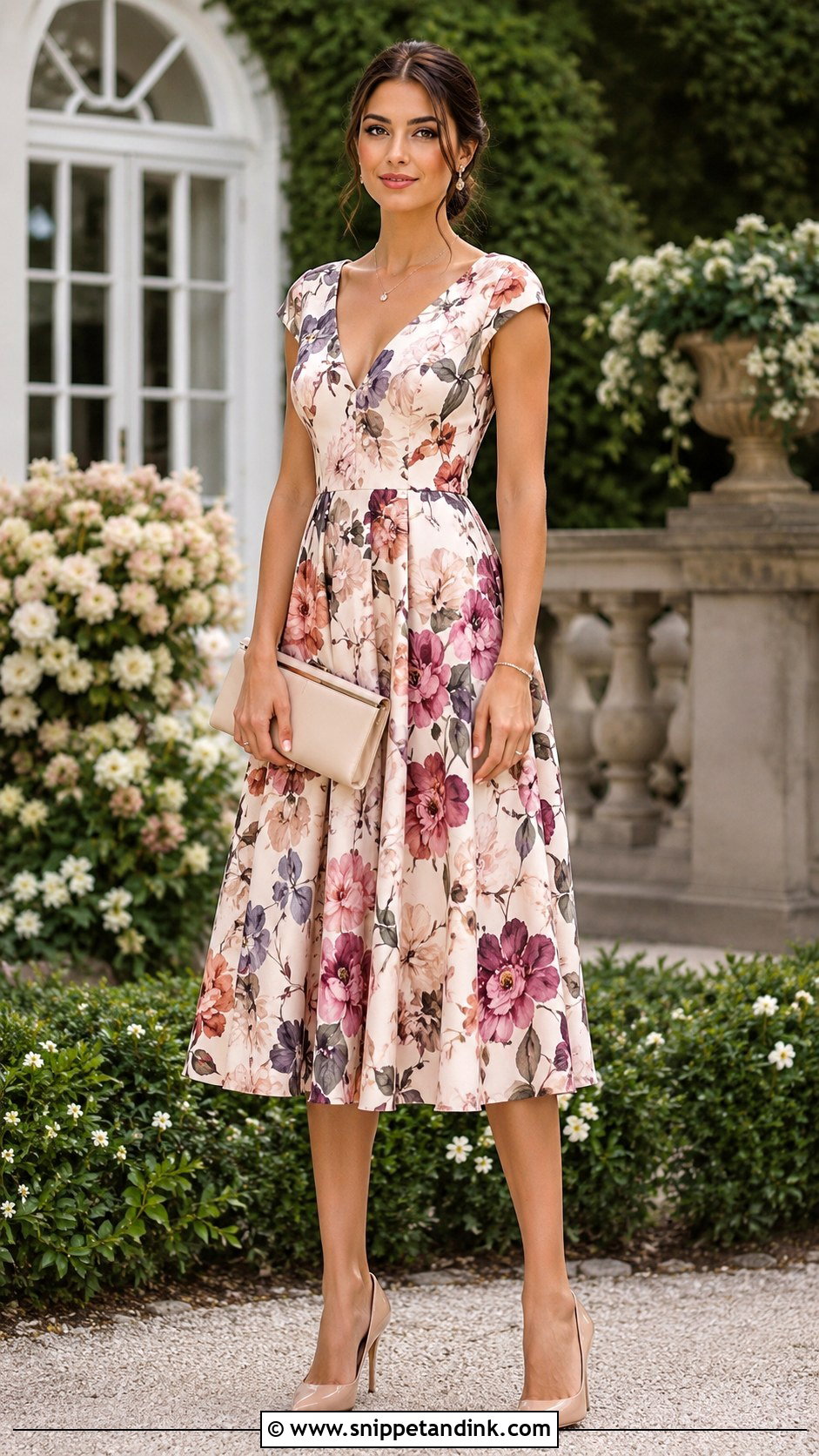
A-line is the silhouette I recommend when someone isn’t sure what suits them. It fits through the bodice and widens gradually, which balances most figures and leaves room to eat. Choose a midi length in satin, jacquard or structured crepe and it’s formal enough for nearly any wedding. Florals, jewel tones and soft prints all work on it.
18. Tiered Maxi Dress for Wedding
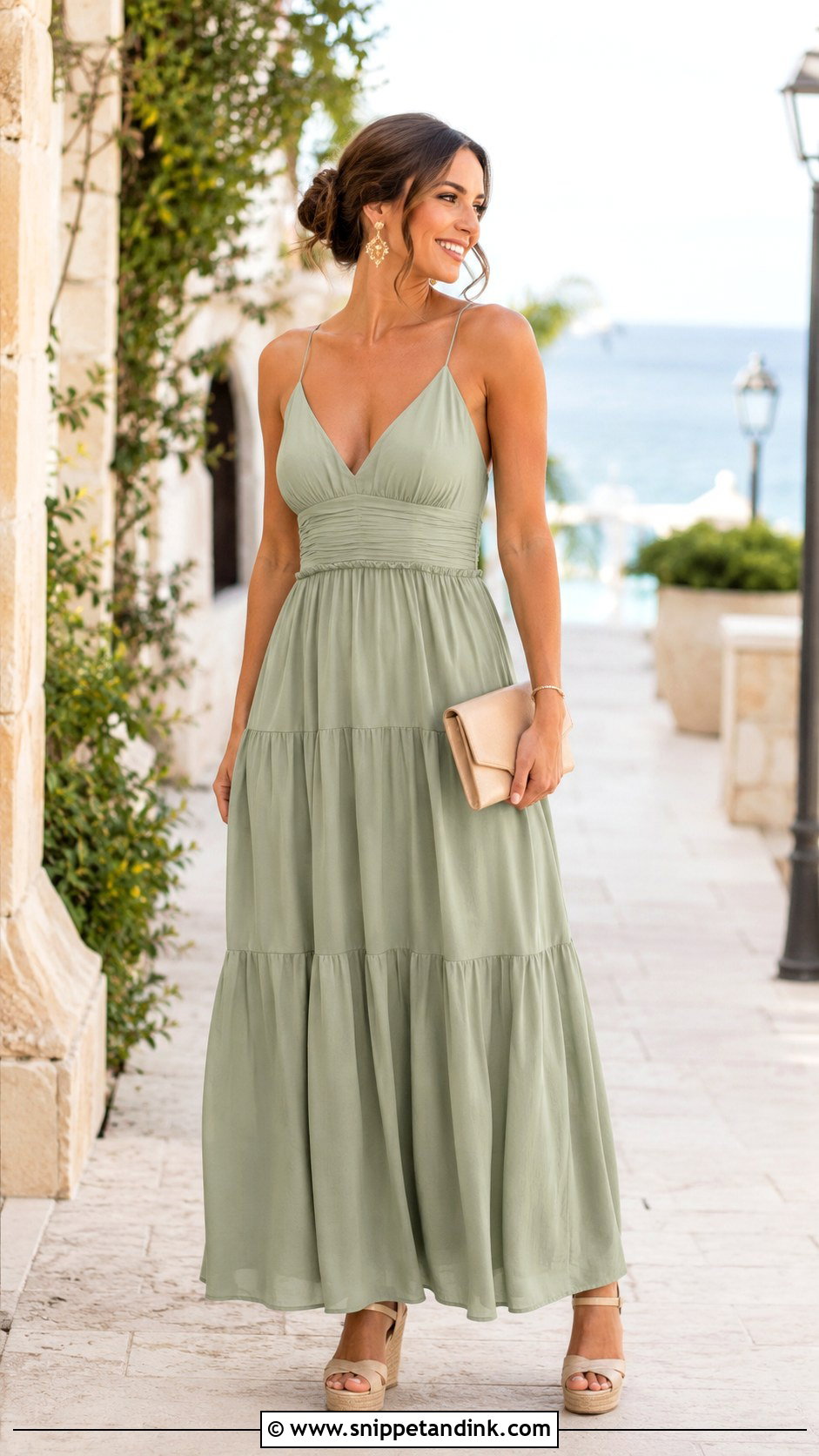
Tiers give volume without structure, so the risk is looking casual. A tiered maxi dress stays wedding-appropriate when the tiers are controlled (two or three, not five) and the waist is defined. It’s my go-to for coastal and outdoor summer weddings. Keep accessories sleek because the dress already has plenty going on. Wedges help on sand or grass.
19. Sequin Midi Dress for Wedding
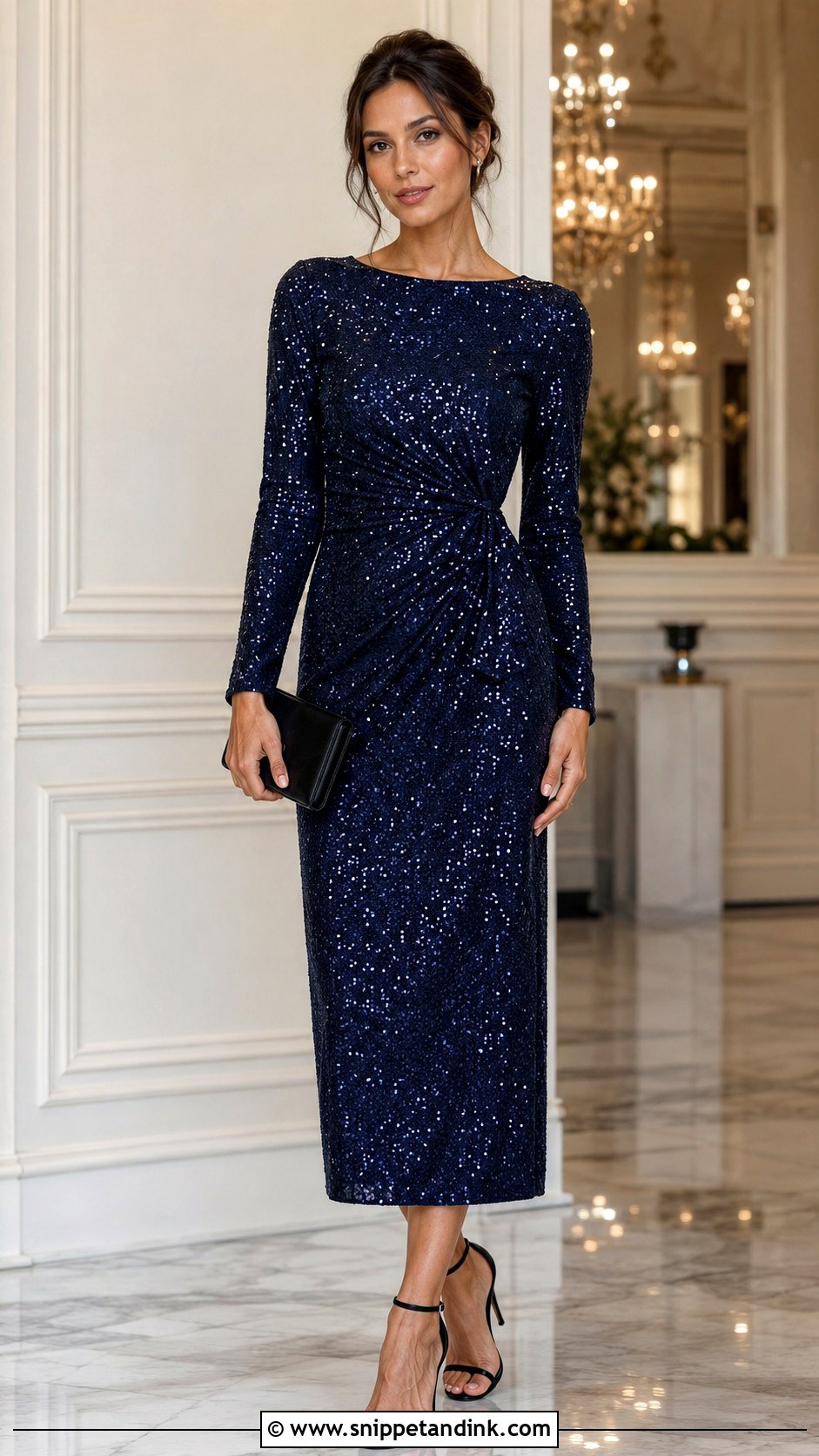
Sequins belong at formal evening weddings, never a casual daytime one. Navy, bronze, black or deep green sequins look more grown-up than bright silver. Keep the shape simple and the neckline clean, and treat the dress as the jewellery: small earrings, a plain clutch. Check the inside seams before buying; sequin backing can scratch underarms raw over a long reception.
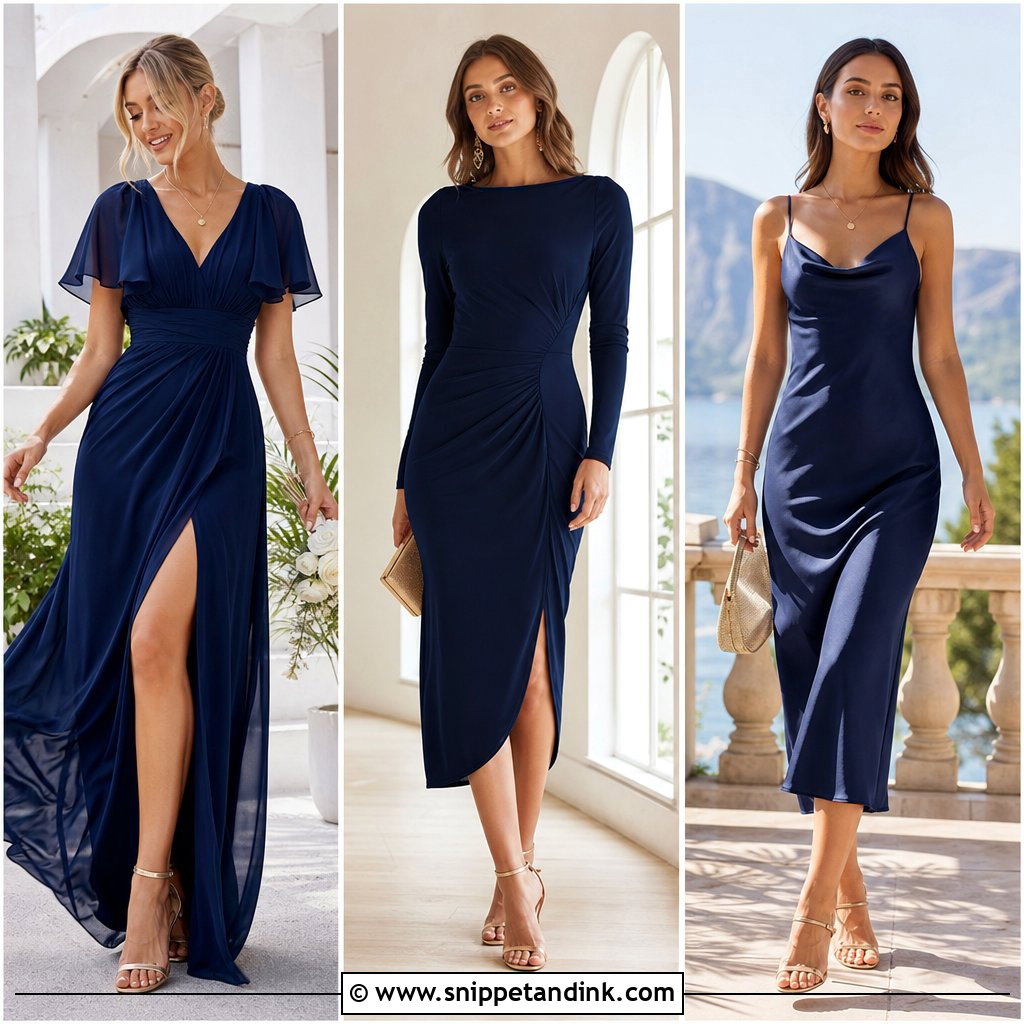
20. Blue Floral Dress for Wedding
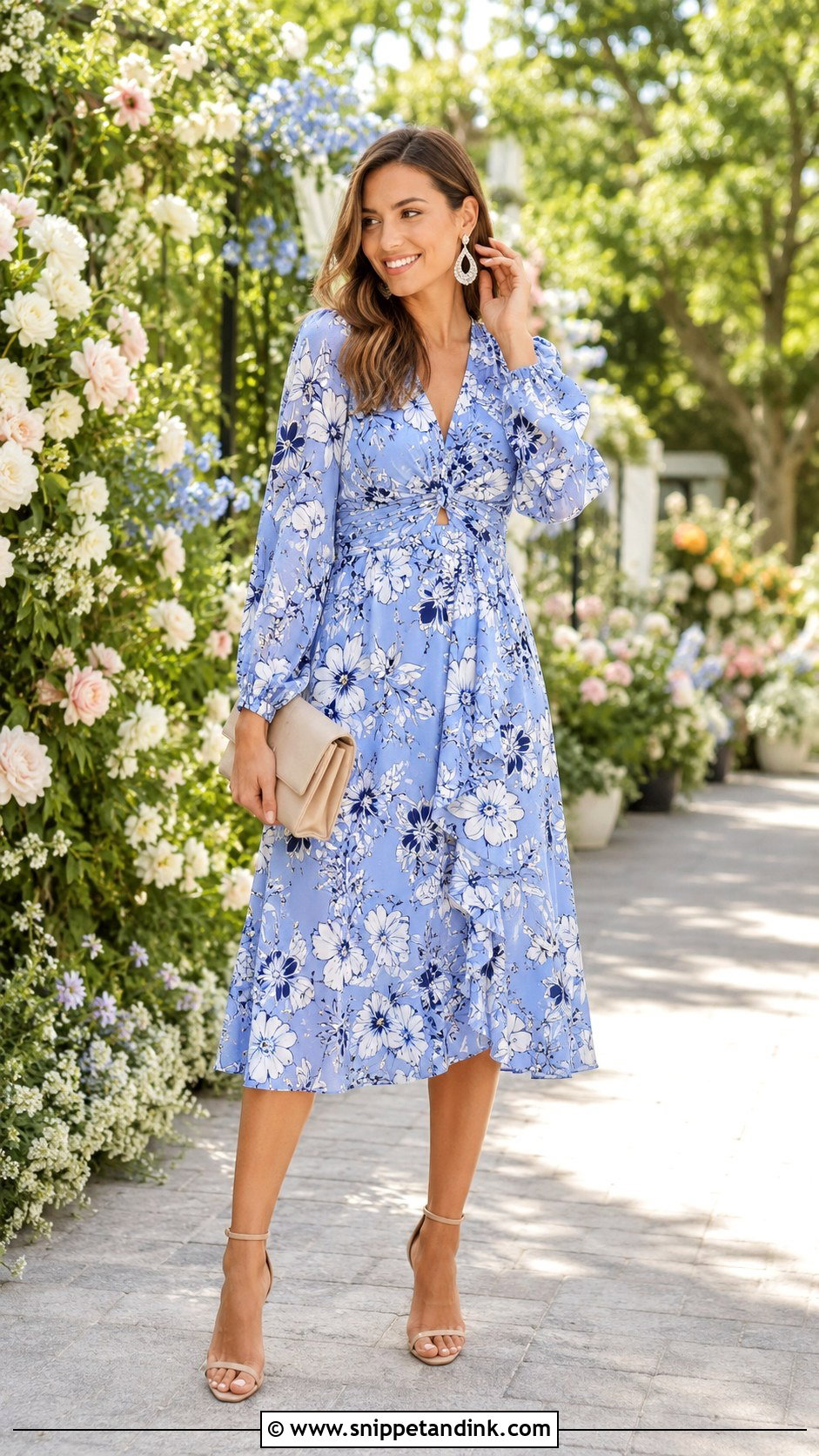
Blue florals change mood with the base colour. Light blue suits spring and summer daytime events; a navy ground carries into autumn and evening. Silver jewellery and nude heels keep it fresh. With a bold print, choose quiet shoes and bag. A delicate print can take a slightly stronger earring.
21. Champagne Satin Dress for Wedding
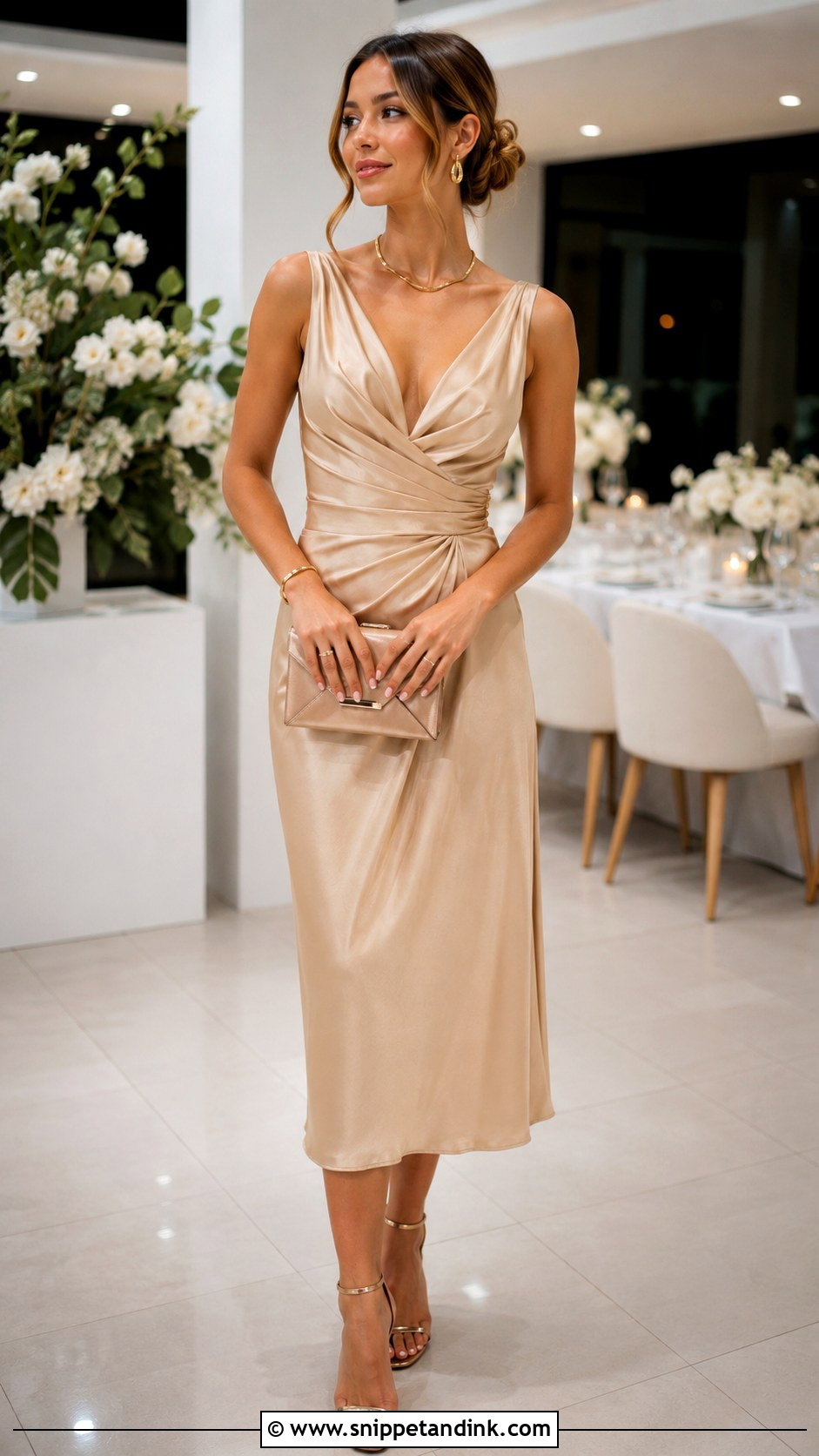
Champagne is the one colour on this list I’d hesitate over. Under a flash, pale champagne satin can read as ivory, and nobody wants that conversation with the bride’s mother. If you love it, go deeper: taupe, bronze or beige-gold, and add contrast with black or bronze accessories. When in doubt, pick another colour. It’s reserved for evening and formal receptions where satin makes sense.
22. Green Floral Dress for Wedding
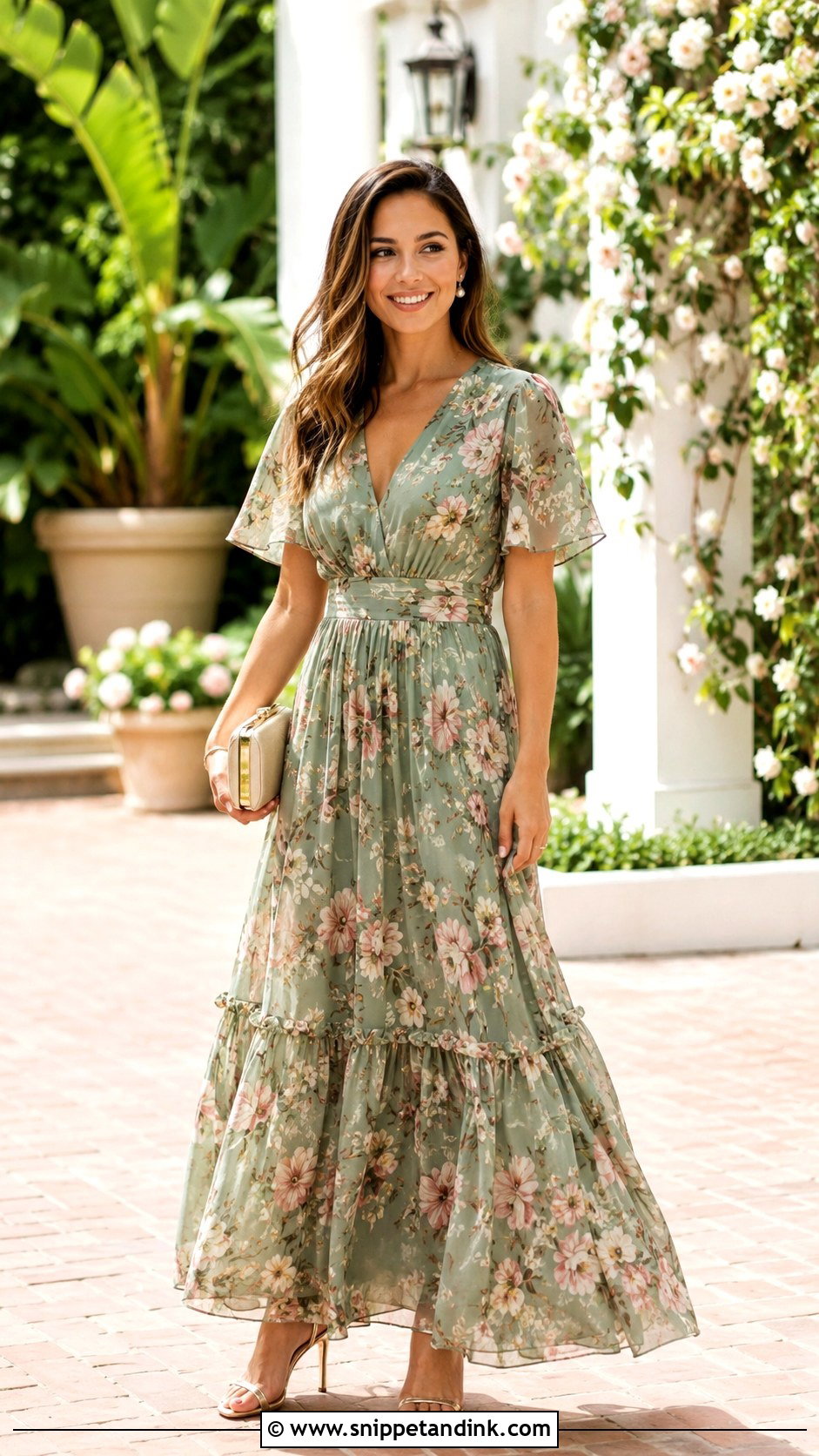
Sage, olive or deep green grounds feel less expected than the usual pastel florals and sit naturally in garden settings. Gold jewellery warms the green; pearls soften it. For a formal evening, choose a darker green print in satin or chiffon instead of cotton. It’s one of the easier prints for guests who like colour but not loud colour.
23. Brown Satin Dress for Wedding
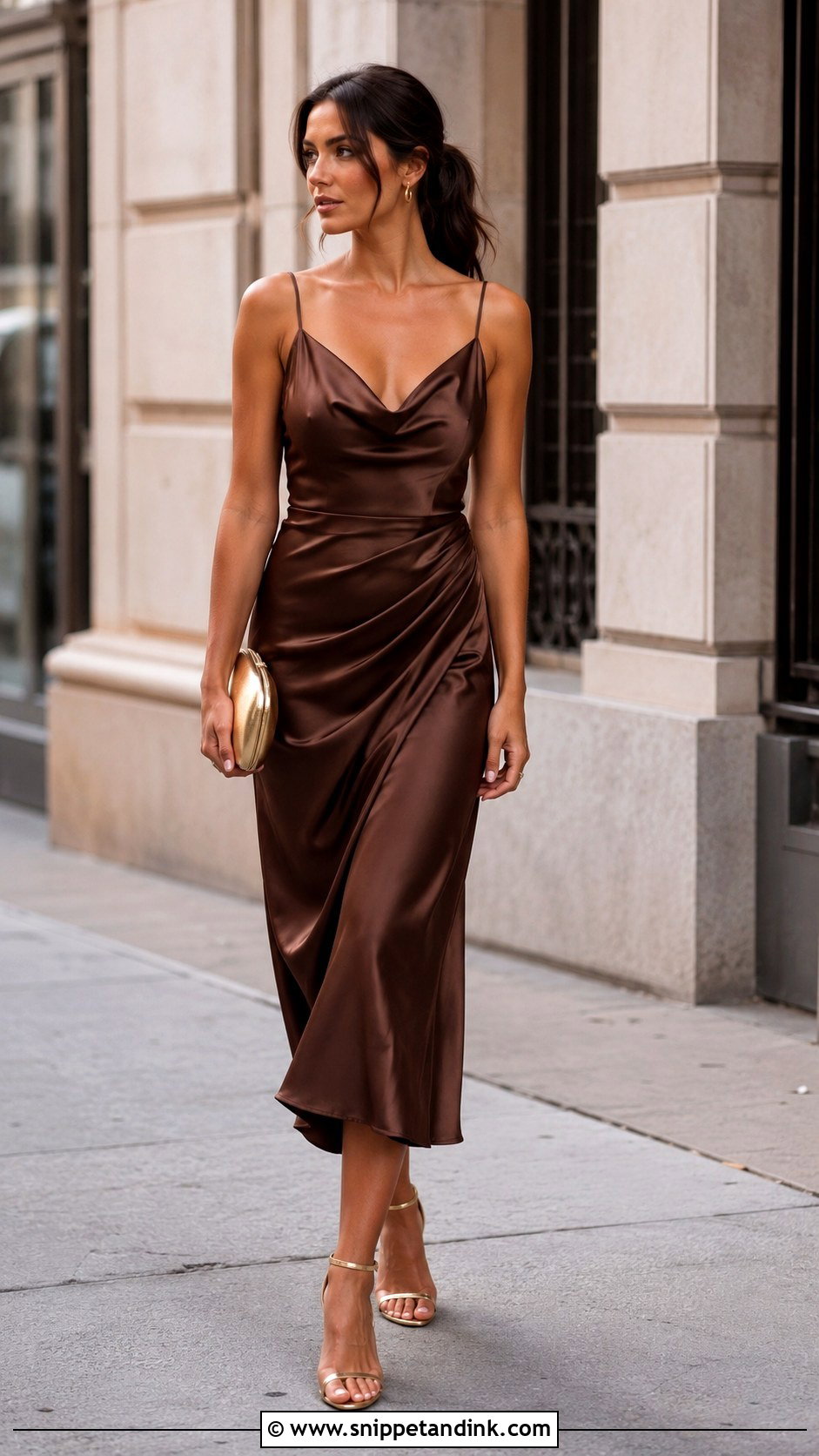
Brown has become a real evening option, and a brown satin dress in chocolate, espresso or mocha looks rich without being flashy. Look for satin with some weight to it. Thin satin shows every seam and sweat mark, especially in deep shades. Gold heels and drop earrings suit it; cream accessories are fine as long as nothing in the outfit tips toward bridal.
24. Pink Midi Dress for Wedding
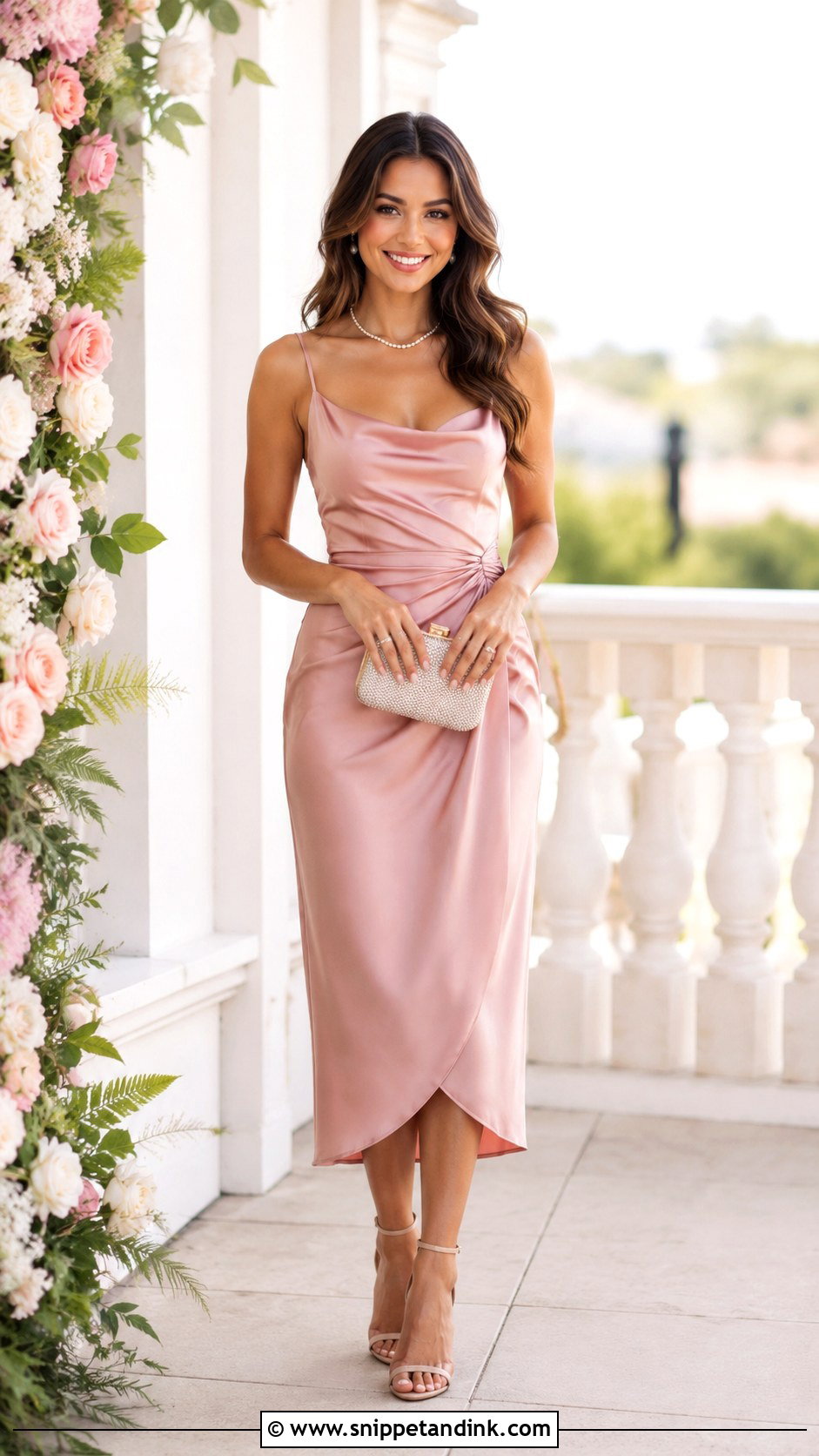
Pink shifts from sweet to bold with the shade. Dusty rose suits a spring ceremony; raspberry holds its own at an evening party. Soft pink pairs with nude heels and pearls; a stronger pink handles metallic heels. Very pale blush is the same trap as champagne, so run the flash test. Keep the cut clean and let the colour carry the look.
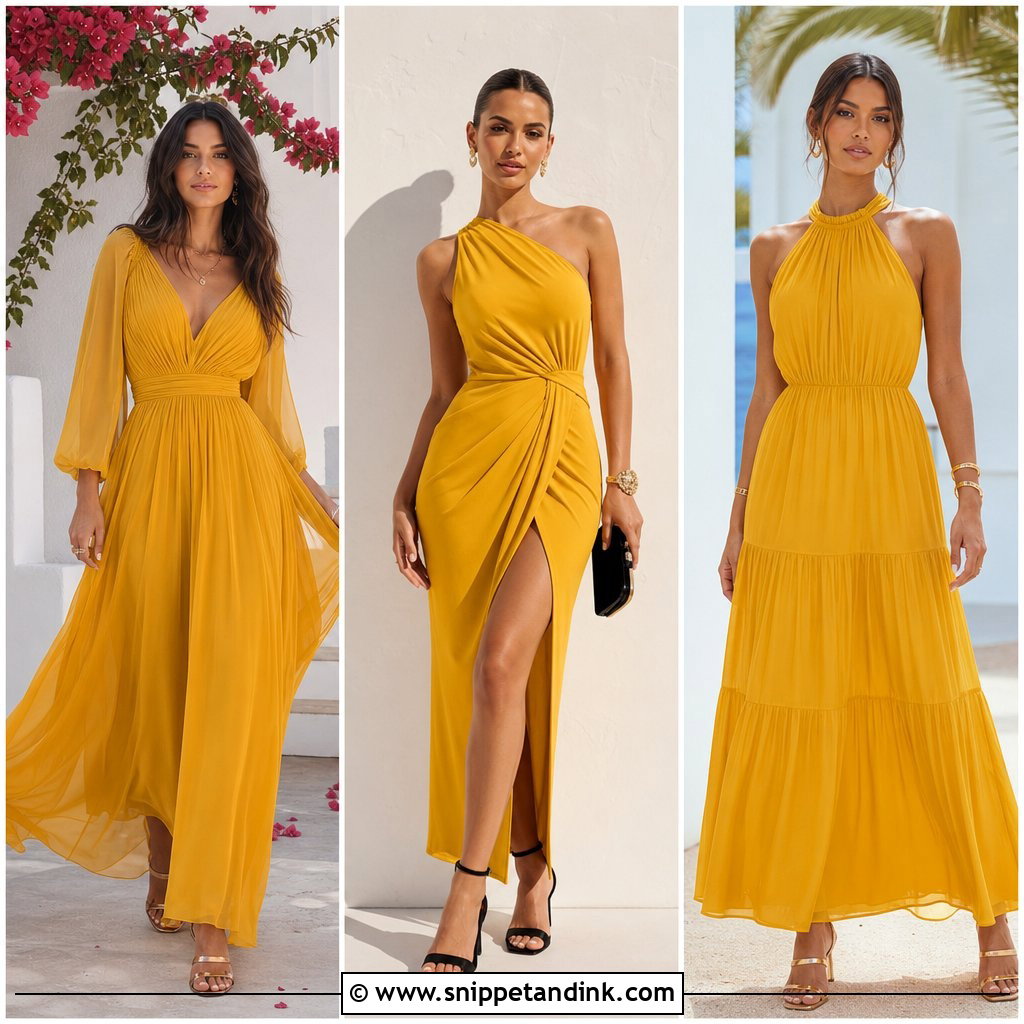
25. Formal Maxi Dress for Wedding
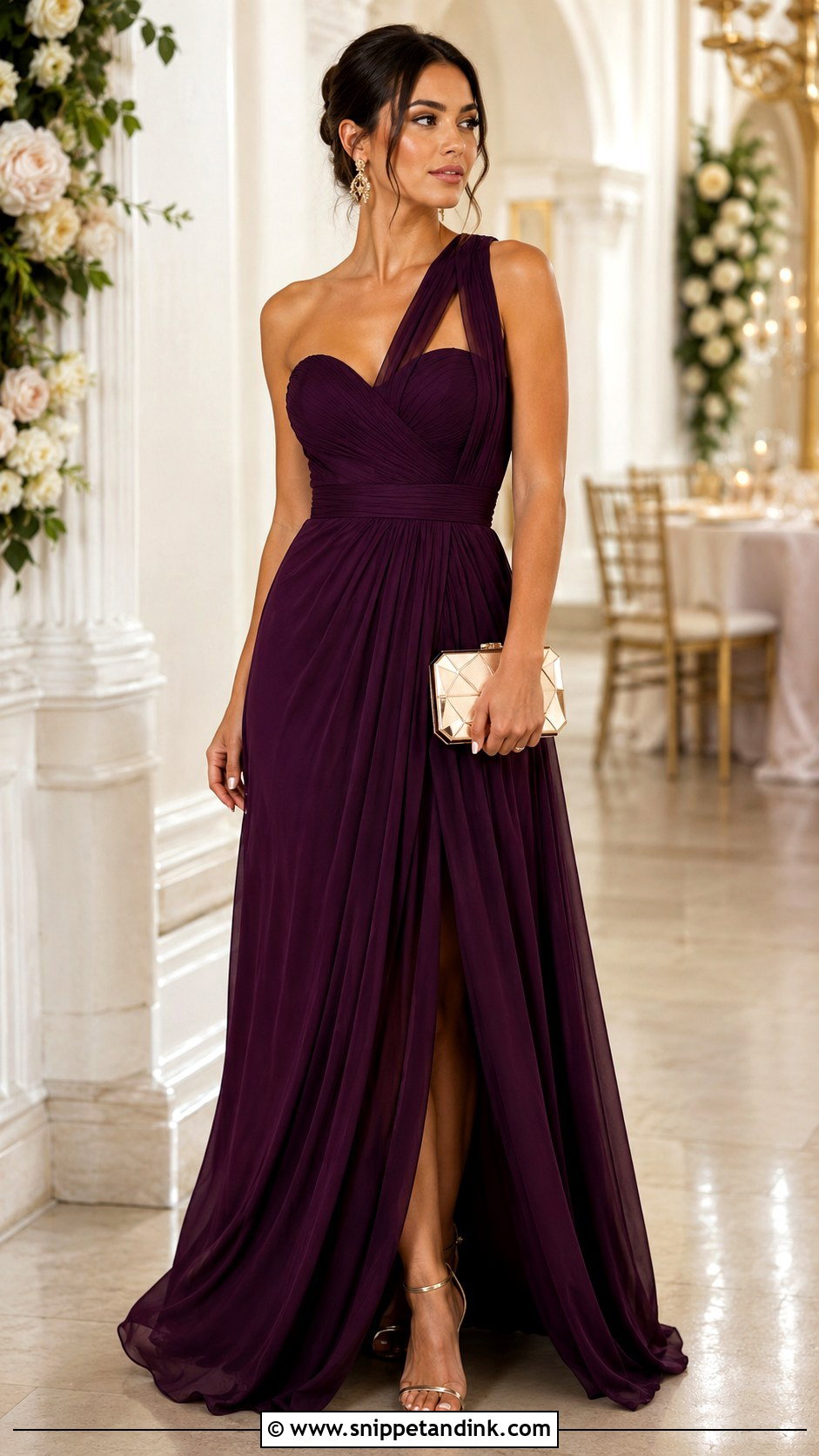
When the invitation says black tie or formal evening, floor length is the safe answer. Look for weight in the fabric: heavy satin, crepe, chiffon over a full lining, velvet or subtle beading. Navy, emerald, plum and black all fit. Balance the neckline and the jewellery; a strong neckline wants plain earrings, a minimal column can take a bolder piece. Hem it to the exact heel height you’ll wear, so you’re not stepping on it all night.
How Satin, Chiffon and Velvet Hold Up From Ceremony to Last Dance
The same dress looks different at nine at night than it did at two in the afternoon. Fabric decides most of that, so here’s what I’d expect from the main ones on this list.
Satin
It shows seated creases across the lap and sweat marks at the underarm, especially in dark colours. A heavier satin hides both better. Pack a small travel steamer if you’re staying at the venue, and avoid perfume sprayed directly on it, which can leave a spot.
Chiffon
Chiffon hardly creases and stays cool, but it snags on bracelets, bag chains and rough chair backs. I’d skip chunky textured jewellery with it.
Velvet and crepe
Velvet keeps you warm but gets hot on a packed dance floor, so a sleeveless cut is easier than long sleeves for a big party. Crepe is the steadiest of all: it barely creases, drapes evenly and looks nearly the same at midnight as it did at the ceremony.
When the Invitation Leaves You Guessing
If the dress code is unclear, a midi in a solid jewel tone or navy, with heels you can stand in, covers more weddings than anything else on this list. Avoid white and anything that could pass for it under flash, and let the venue decide the fabric weight. Then build the full look at once, shoes and bag and outer layer included, so nothing gets improvised on the morning. Comfort counts as much as colour: you’ll enjoy the day more in a dress you can sit, eat and dance in.
You'll Like These Ideas:


Leave a Reply