
Dhoti pants are one of the most comfortable ways to dress for an Indian wedding: the drape looks festive, and you can dance, sit on the floor and climb stage steps without a heavy lehenga dragging behind you. I style them for brides at their smaller functions, for bridesmaids, for sisters of the couple and for guests at the mehndi, haldi, sangeet, ceremony and reception. The trick is matching the outfit to the function. Light prints and cottons suit daytime, while silk, sequins, zari and structured layers belong in the evening. Below are twenty complete looks, from cape sets to jumpsuits, with notes on proportion, fit and who each one suits.
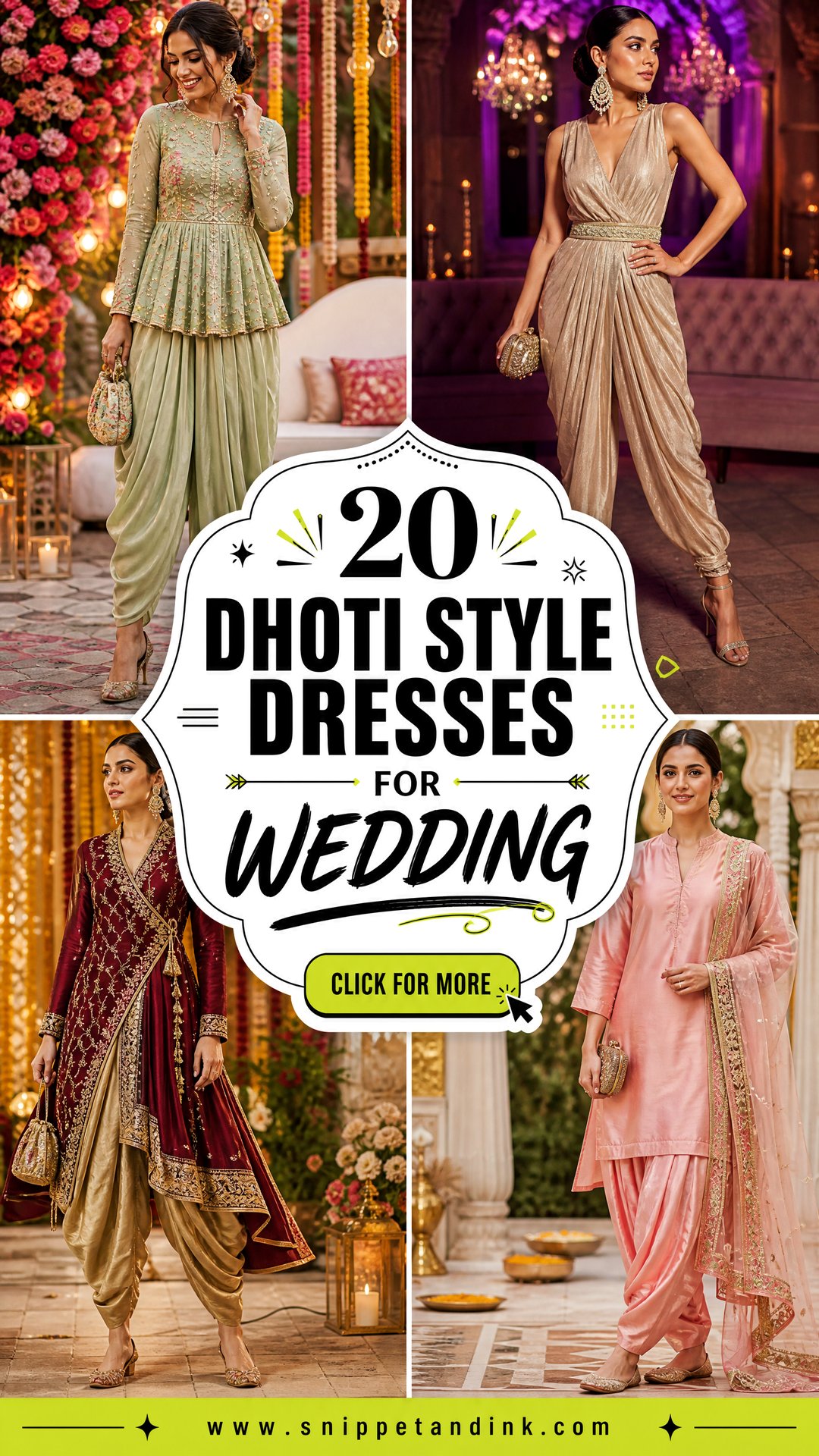
Drop Crotch, Ankle Cuff and the Shoes You’ll Wear
Dhoti pants look easy, but they’re less forgiving than straight trousers. The drape sits low between the legs and gathers into a fitted band at the ankle or calf, and both of those points decide whether the outfit looks deliberate or sloppy. I check three things at every fitting.
How low the drape falls
A deep drop looks dramatic when you stand still, but it can restrict your stride and pull when you sit cross-legged. Mid-depth drapes are the practical choice for anyone dancing at a sangeet. Petite women usually look better in a shallower drape, which keeps the legs from looking shortened.
Where the cuff lands
The fitted cuff should sit just above the ankle bone so your shoes show. Too long and the fabric pools over the shoe; too short and it reads as cropped trousers. If the cuff has an elastic band, make sure it isn’t tight enough to leave marks over a long evening.
Shoes decide the hem
Bring the exact shoes to the fitting. Flat juttis and block heels need different hem lengths, and a hem set for flats will look short in heels. If you plan to switch shoes partway through, set the hem for the pair you’ll wear longest.
1. Cape Top With Dhoti Pants
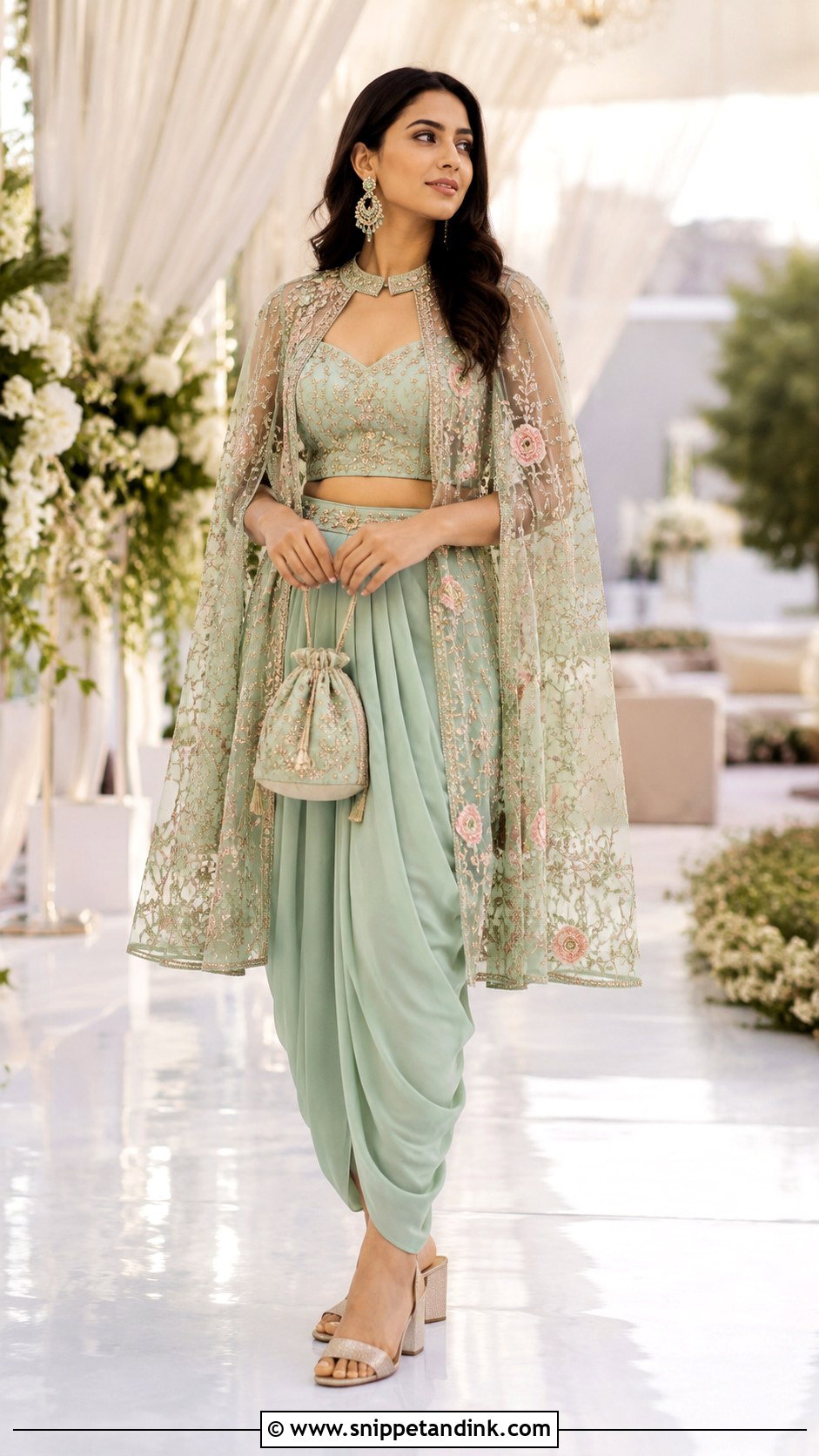
Fitted dhoti pants and a sheer cape are an easy pairing because the cape supplies all the movement. Keep the crop blouse or inner top the same colour as the pants so the cape reads as the only extra layer. Georgette floats; organza holds a crisper outline. Length is where I tailor this to the wearer. On petite women, a cape ending at the knee keeps the legs visible, while taller women can carry a floor-length one without looking swamped. Mint, coral, lilac or sunflower yellow work for a mehndi. A neat ponytail and block heels keep the shape tidy.
2. Peplum Kurta With Dhoti Pants
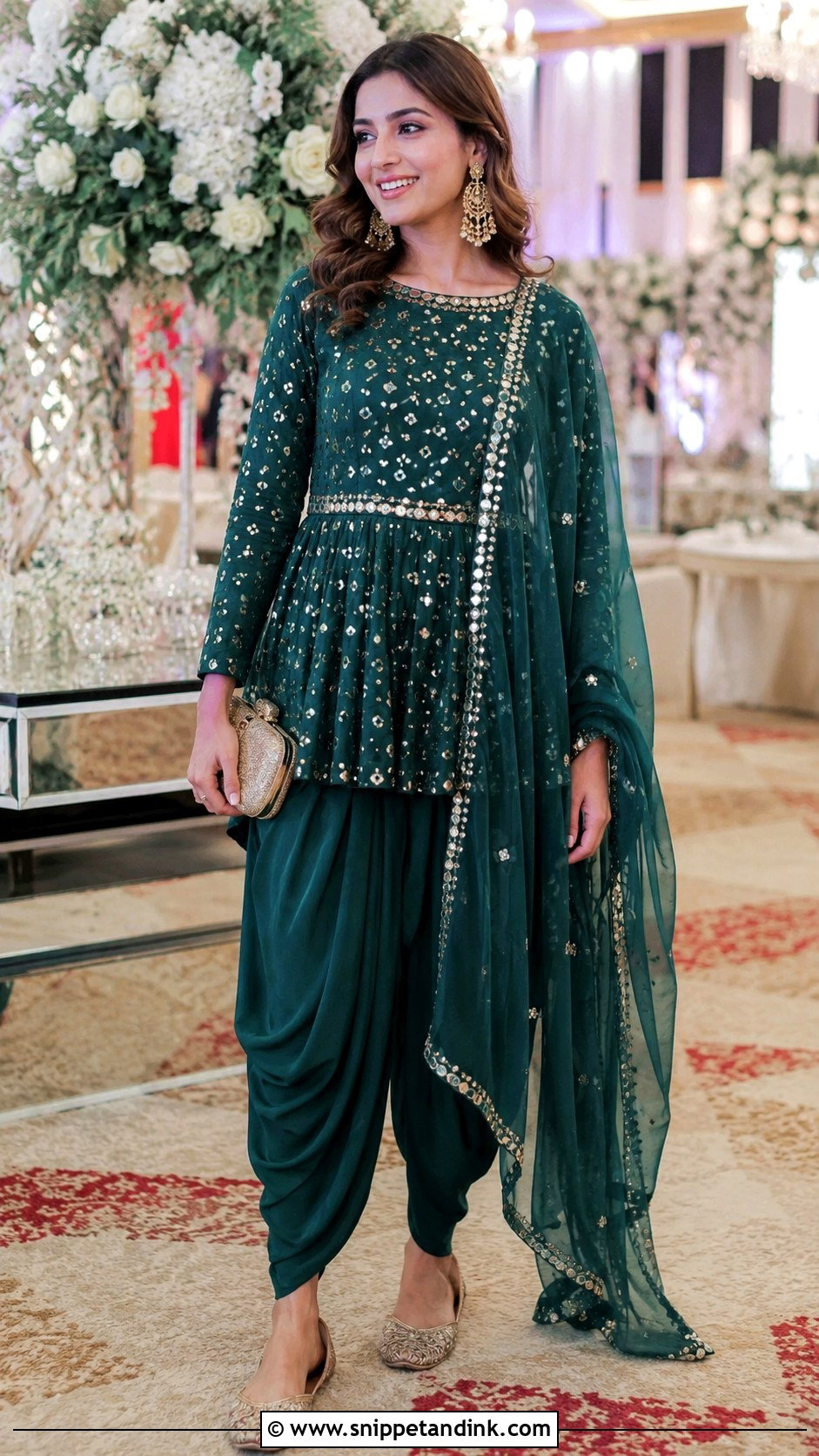
The peplum is the most forgiving top over dhoti pants, since it defines the waist and covers the gathered top of the pleats. A peplum kurta and dhoti pants with mirror work or thread embroidery suits a sangeet or a family ceremony. One fitting rule matters more than any other: the peplum must end above the widest part of the dhoti pleats. Let it fall onto them and the hips look doubled in width; stop it just above and the legs look longer. Jewel tones like emerald or royal blue are rich for evening. Metallic juttis and a dupatta pinned at one shoulder finish it.
3. Crop Top Jacket And Dhoti Pants
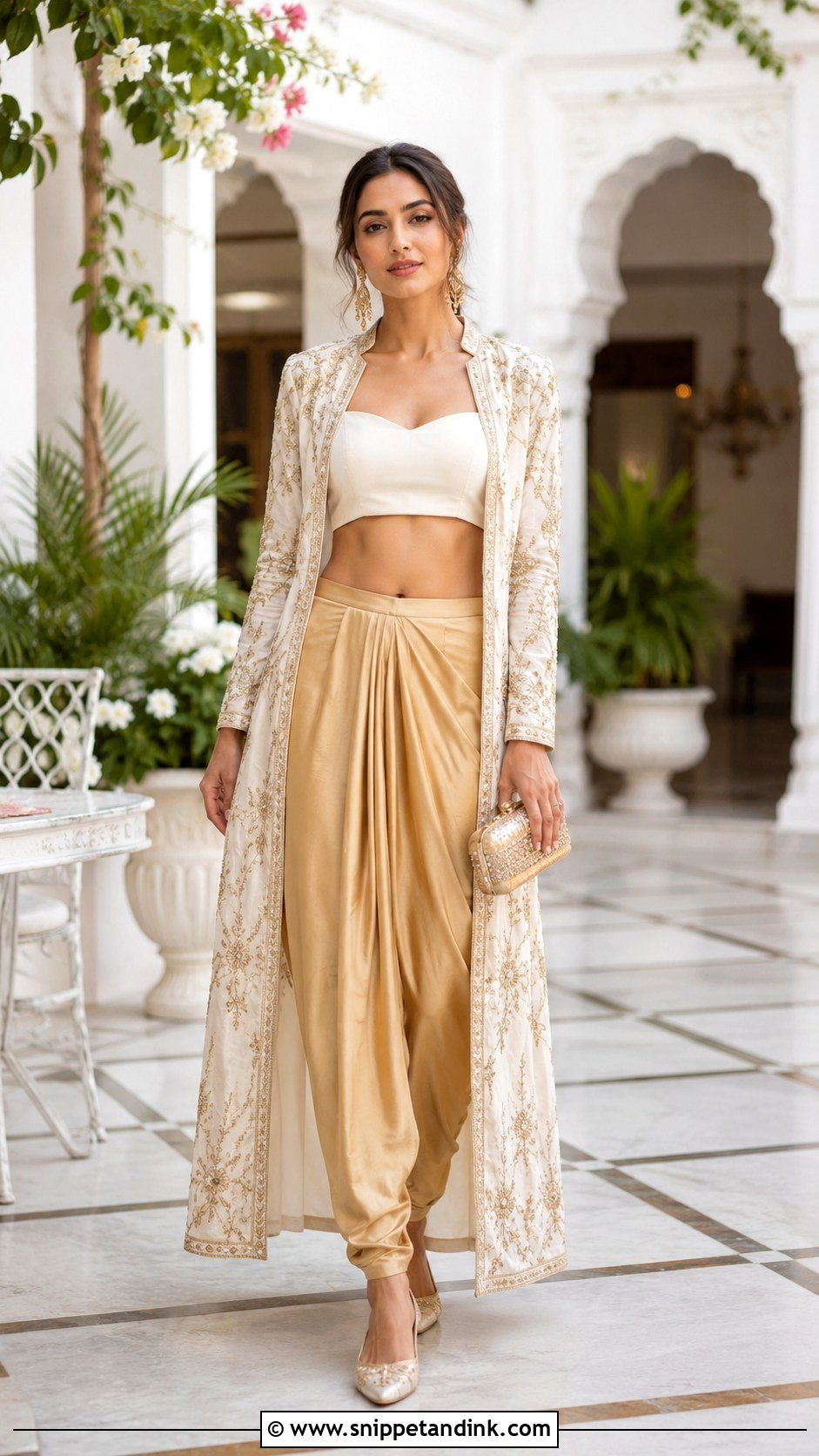
An embroidered open jacket carries this outfit, so the crop top and dhoti pants beneath can stay plain. Waist-length jackets look young and sharp; a long straight jacket adds coverage and formality for a cocktail or welcome event. Ivory with gold, navy with silver and wine with antique work are combinations I come back to. If you’d rather not show the midriff, choose a top long enough to meet the waistband; nobody will notice the difference under the jacket. Pointed embellished flats, a box clutch and slim drop earrings complete it.
4. Pre-Draped Dhoti Saree Dress
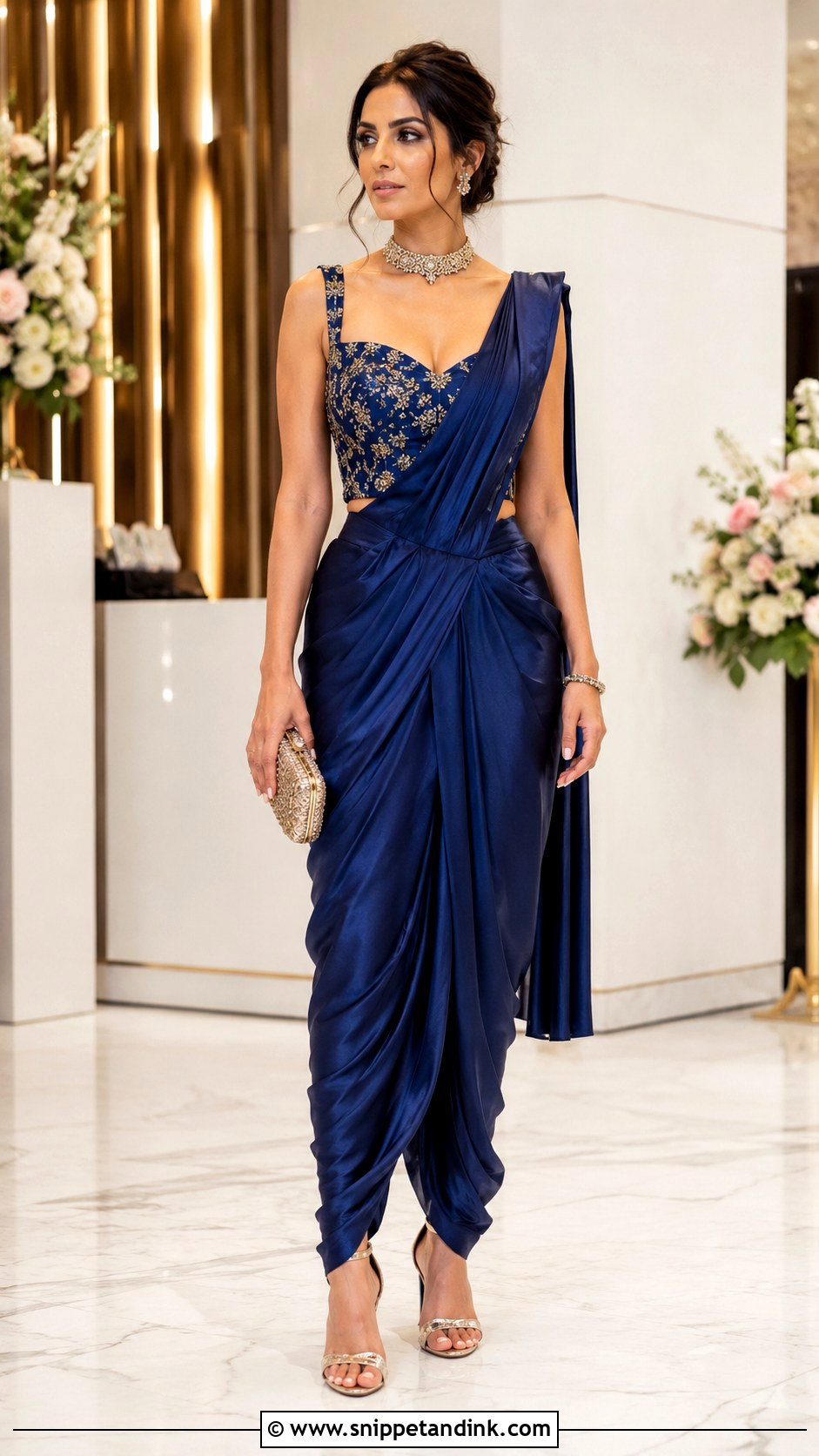
Pre-draped dhoti sarees give the look of a saree without anyone needing to pleat it for you at the venue. The lower half is stitched into controlled dhoti folds, and the pallu is either attached or separate. Satin, crepe and soft silk drape smoothly. Fit is where these go wrong. The crotch depth decides whether you can sit comfortably, and the hem must clear your shoes, so I always have clients sit, walk and climb a step in the outfit before the event. One strong jewellery piece, a choker or sculptural earrings, is plenty for a reception.
5. One Shoulder Top With Dhoti Pants
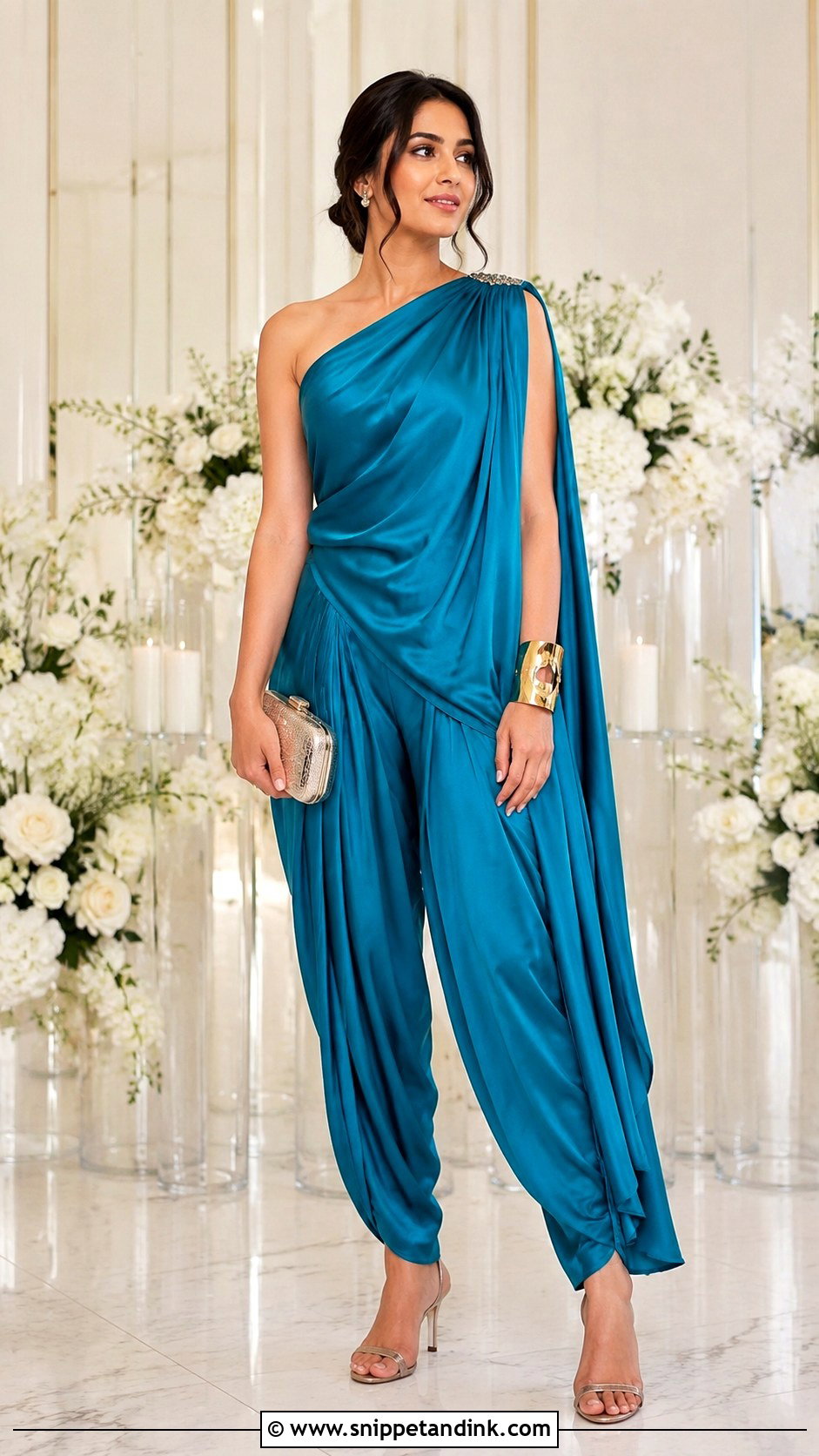
Asymmetric necklines look cleanest in one colour, so I build one-shoulder looks monochrome: teal, berry, bronze or midnight blue from top to ankle. Pick a top with an attached drape, a ruffled shoulder or a lightly embroidered panel that links to the pleats below. This outfit works well for a sangeet, a reception or a destination event. Skip the necklace and let a cuff and a tidy updo show off the bare shoulder. Ask for silicone grip tape or a hidden elastic inside the neckline, since one-shoulder tops slide when you dance.
6. Short Embroidered Kurta With Dhoti Pants
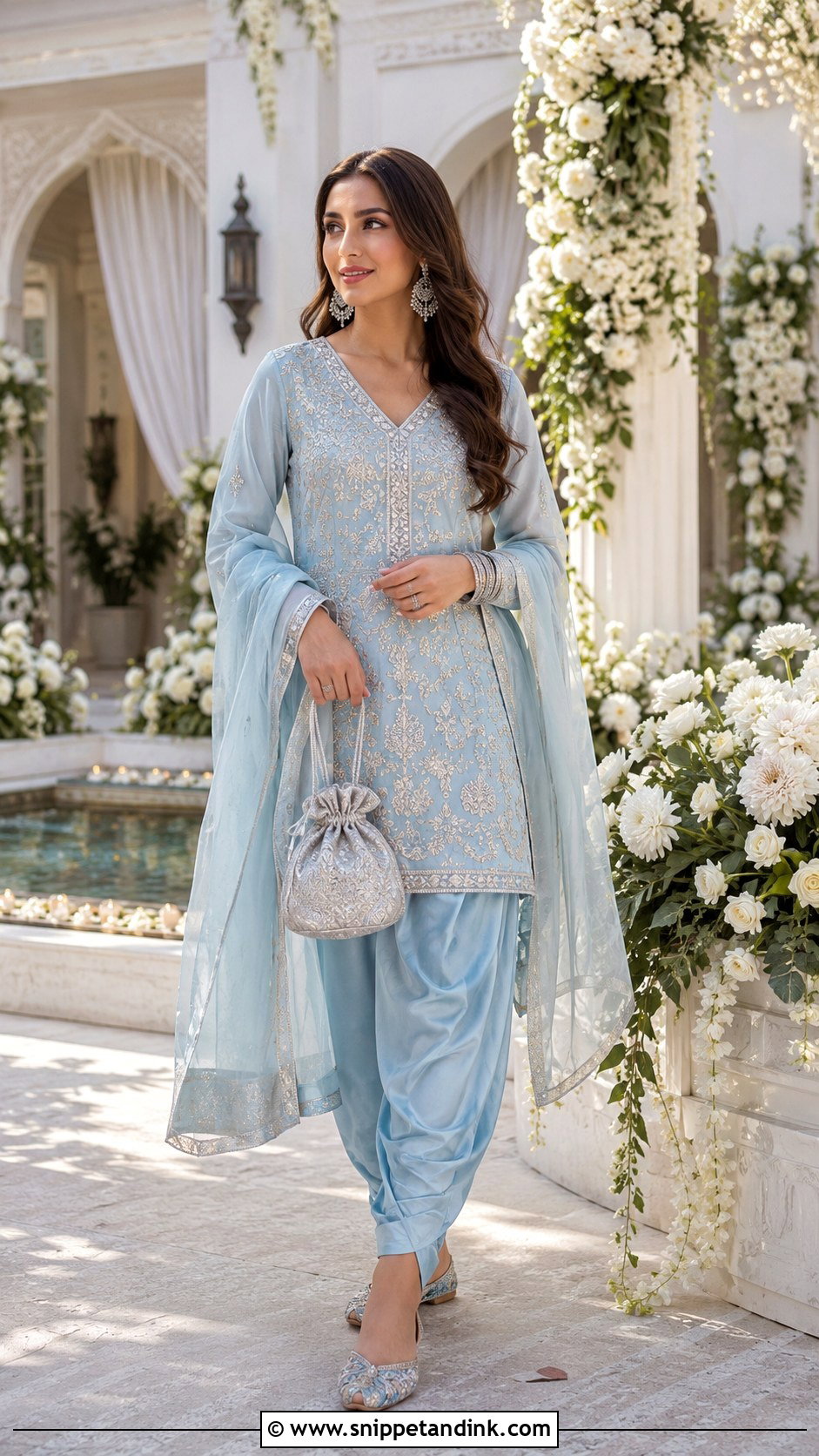
Ending a short kurta near the upper hip is what keeps the dhoti drape visible; longer than that and the pants disappear. Zari borders, gota, beadwork or floral thread add enough for a wedding function. Peach, powder blue, pistachio and soft yellow are pretty for daytime, and deeper shades move into the evening. Fit is everything with this style. An oversized kurta hides the dhoti’s shape and makes the whole outfit look shapeless, so I’d have it taken in close at the side seams. A V or gently rounded neckline balances the volume below.
7. Asymmetrical Kurta With Dhoti Pants
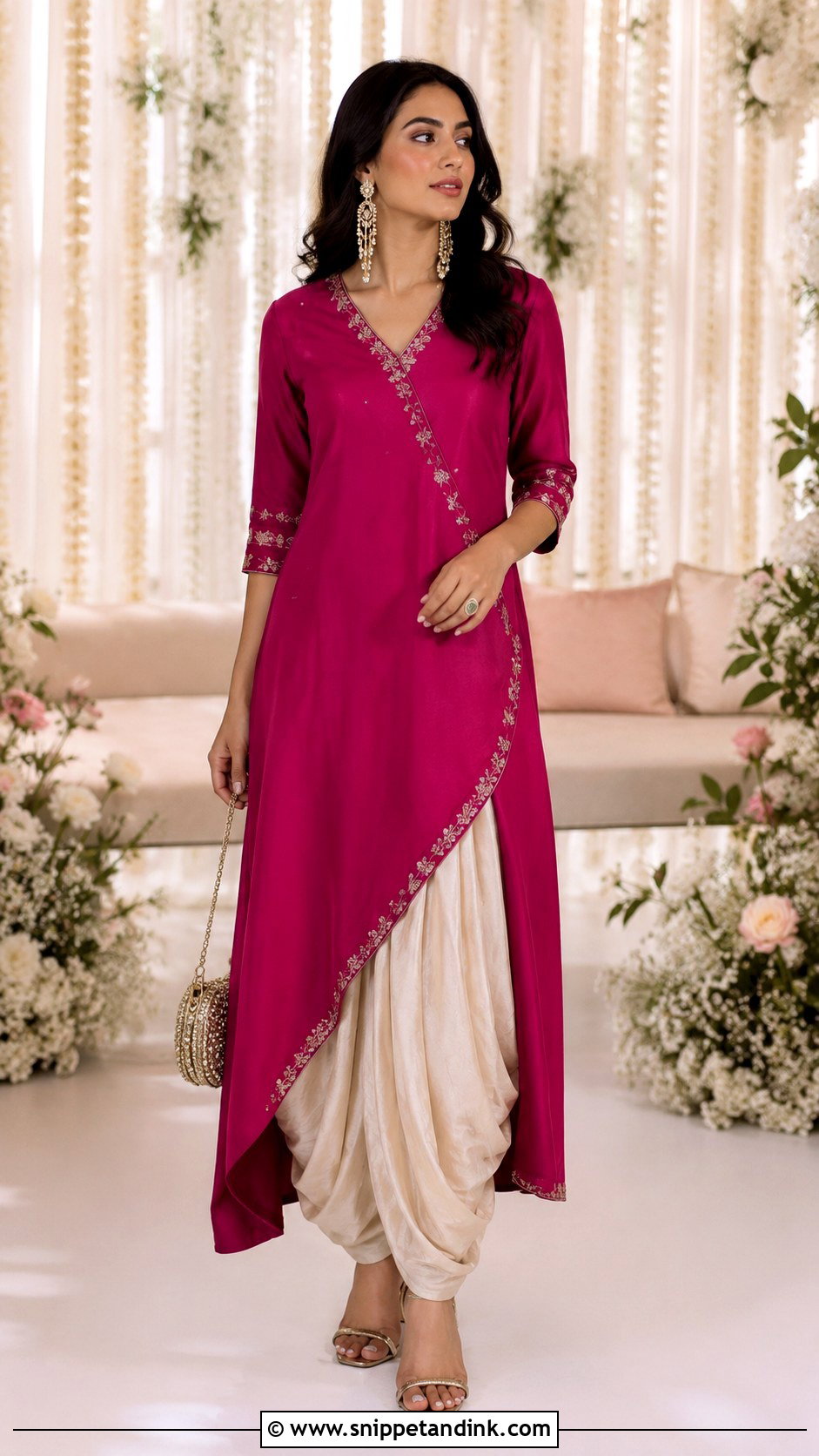
Uneven hems and the tapered, folded shape of dhoti pants naturally agree with each other. Choose a high-low hem, a diagonal front panel or a side drape, cut so enough of the pants still shows. It suits a wedding guest at a mehndi, sangeet or semi-formal ceremony. A solid kurta with embroidered cuffs looks more dressed-up than a print. I’d leave the dupatta out here; angled hems plus a draped dupatta give too many diagonals at once. Petite women should pick a shorter front hem for more visible leg.
8. Long Jacket With Dhoti Pants
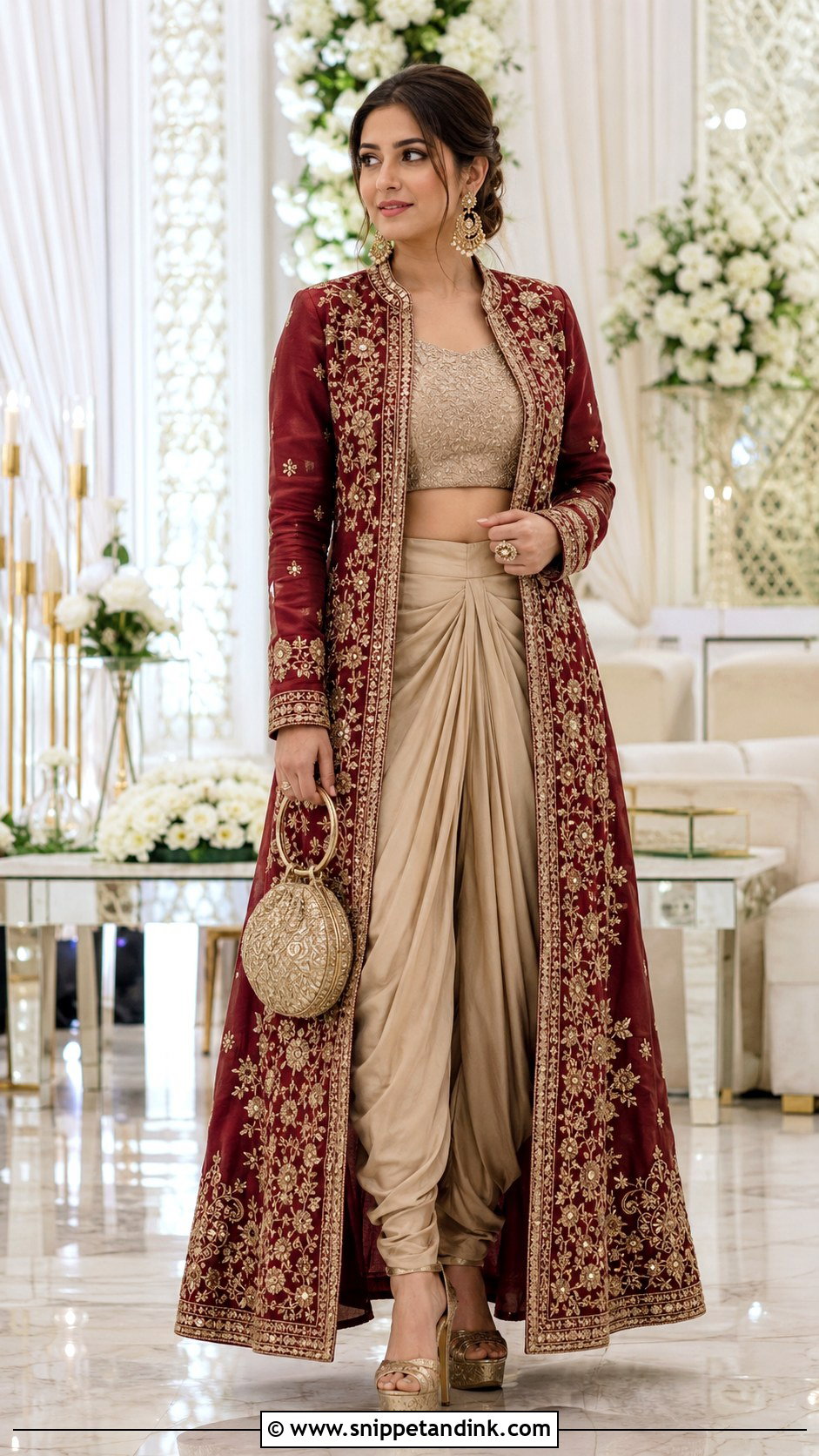
Formal celebrations suit a long jacket over a blouse and dhoti pants, with the jacket’s front opening showing the fitted top and the drape beneath. Brocade, velvet, silk or embroidered organza give it structure. I’d generally go calf-length over floor-length, since a floor-length jacket over dhoti pants gets trodden on during dancing. Shoulders are the make-or-break detail: if the jacket’s shoulder seam sits even slightly past yours, the whole layered outfit looks heavy. Black and gold or emerald and antique gold suit evening.
9. Dhoti Jumpsuit With Statement Earrings
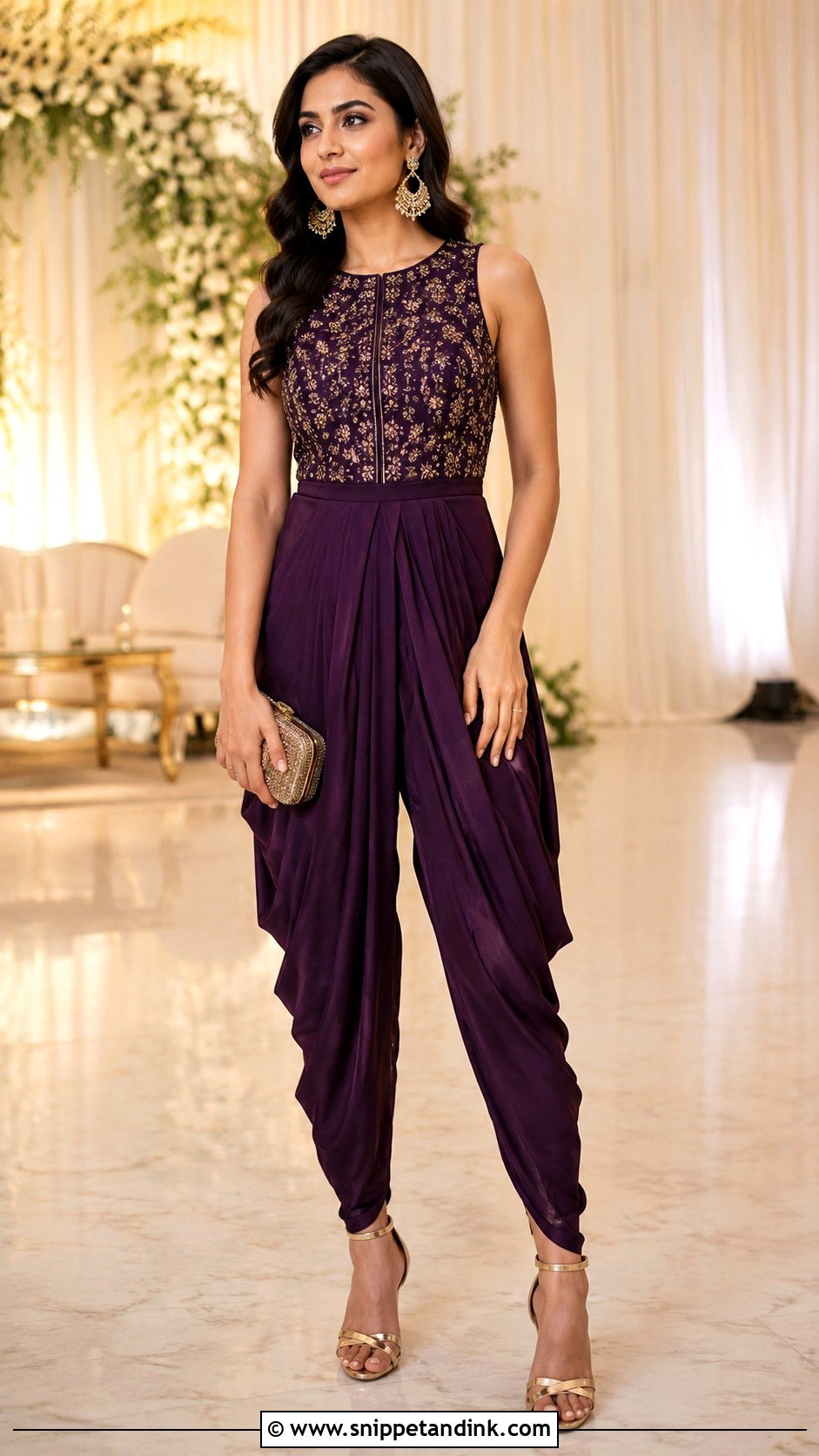
One piece, no layers, still the drama of dhoti pleats: that’s the case for a jumpsuit. Look for a fitted bodice, a defined waist and tapered draped legs. An embellished neckline or embroidered belt lifts it for a sangeet or reception. Practicalities matter more than with separates. Check for a zip you can reach yourself, enough room through the hips to sit, and how easily you can use the bathroom in it during a long event. Wrinkle-resistant crepe or georgette travels well. Statement earrings do the rest.
10. Dhoti Skirt With Embroidered Blouse
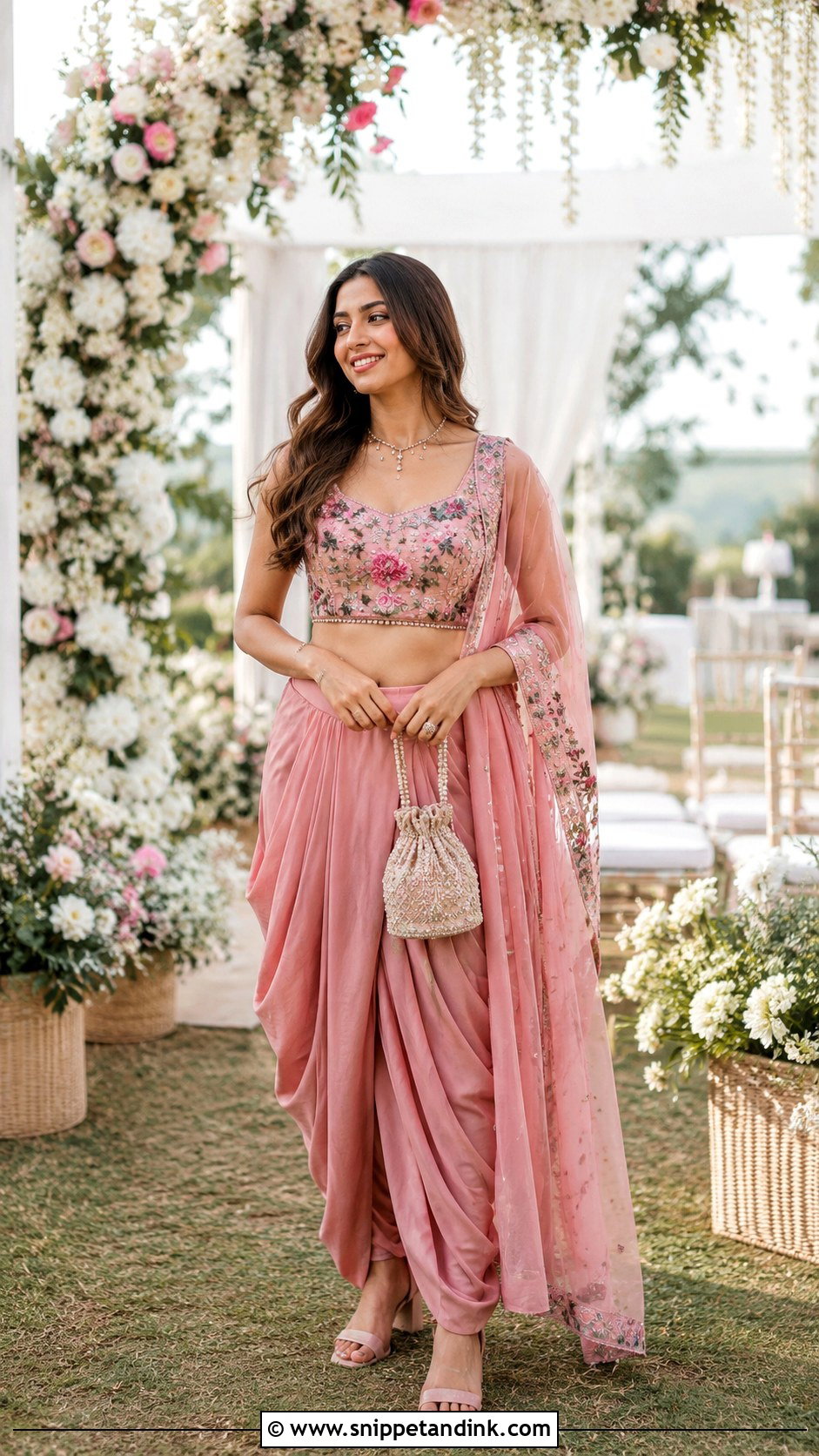
A dhoti skirt gives a lehenga’s flow with more sculpted front draping. Pair it with an embroidered blouse that ends at the natural waist so the front pleats stay visible, and drape a matching dupatta over one shoulder or loosely across the arms. Rose pink, aqua, lavender and ivory with coloured florals suit bridesmaids, sisters and formal daytime guests. I’d look closely at the waistband, which should be flat and secure rather than bunched, because gathered fabric at the waist adds bulk exactly where this style should look neat. A concealed side zip makes the long day easier.
11. Structured Blouse With Satin Dhoti Pants
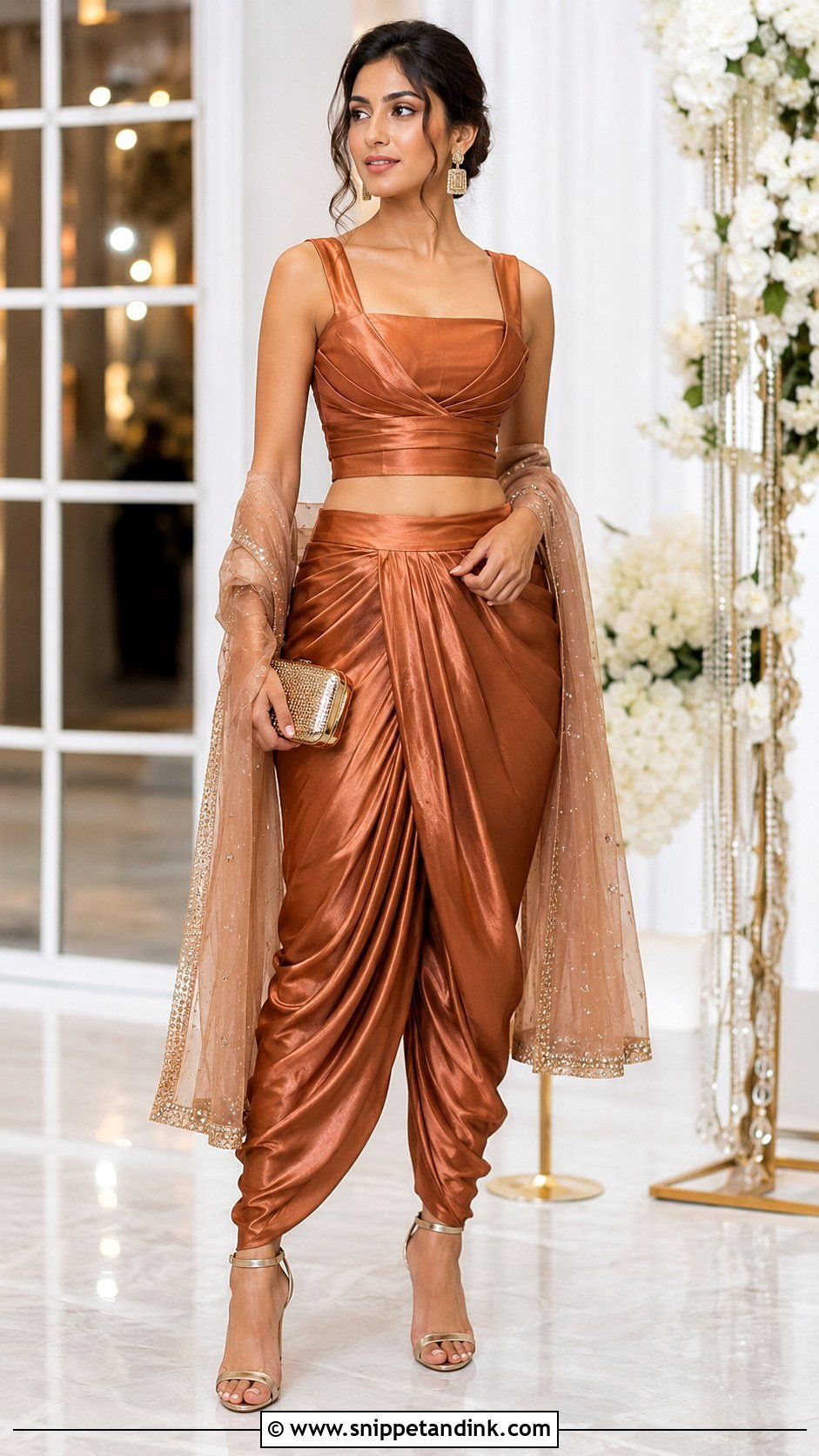
Satin dhoti pants are soft and fluid, so they need a blouse with real structure on top: square, sweetheart or a gentle curve, with internal support and a secure fit. Aubergine, sapphire, copper and forest green bring out satin’s sheen. Satin already reflects a lot of light, which is why I’d keep beadwork to the neckline or waist rather than everywhere. Covered in sparkle, the outfit flattens in photographs. A sheer stole adds optional coverage without hiding the waist.
12. Angrakha Kurta With Dhoti Pants
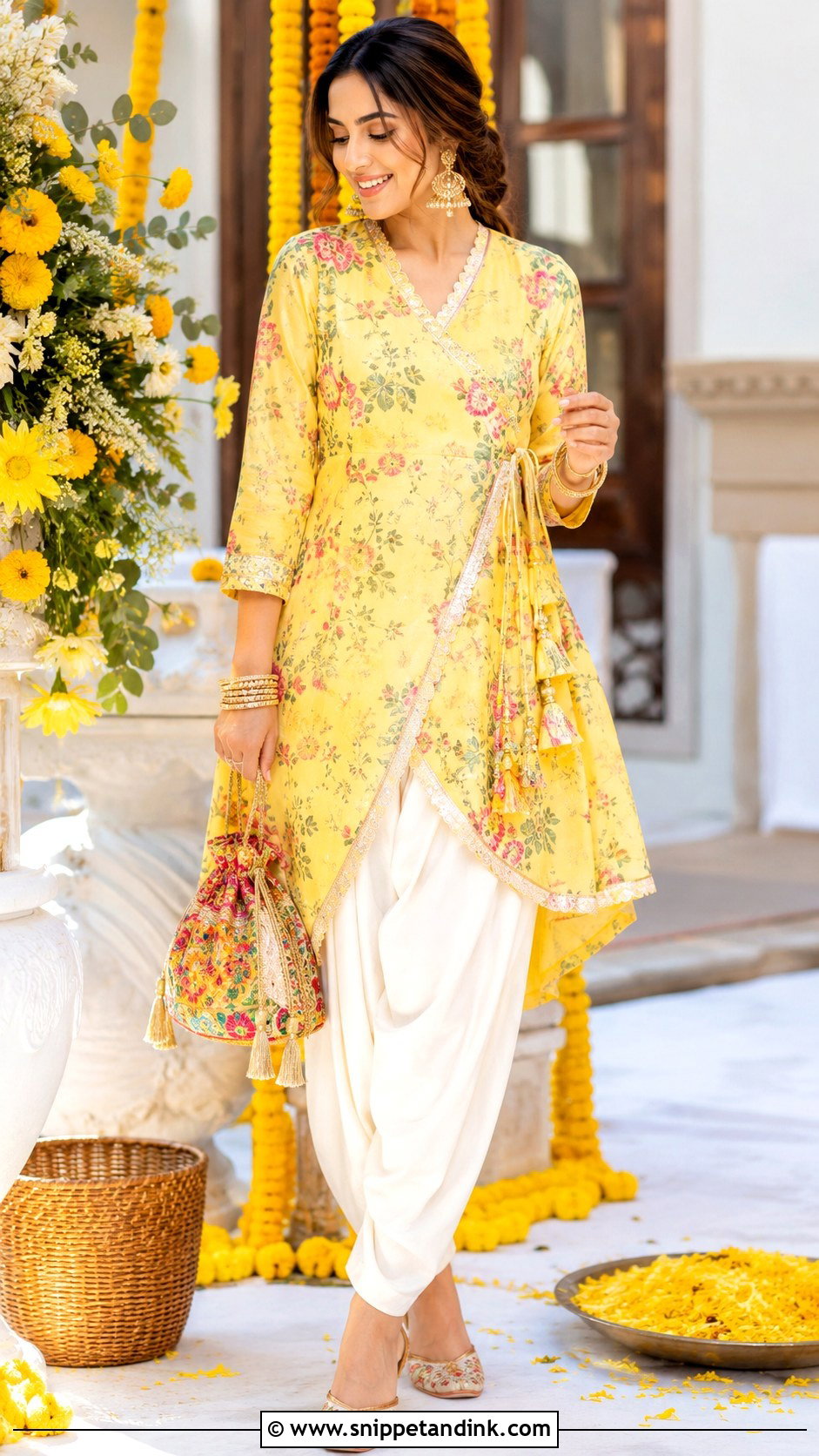
Crossover lines on an angrakha play nicely against the rounded volume of dhoti pants. The wrap defines the waist, and side ties or tassels add traditional detail. Keep the kurta short or mid-thigh so the pants still show. Floral prints and bandhani-style patterns suit haldi, mehndi or a daytime ceremony. Wrap tops depend on their inner fastening, and I always check it, because a single tie that loosens will let the neckline gape every time you bend. Juttis, oxidised or gold-tone earrings and a dupatta pinned at one shoulder keep your hands free.
13. Mirror Work Blouse With Dhoti Pants
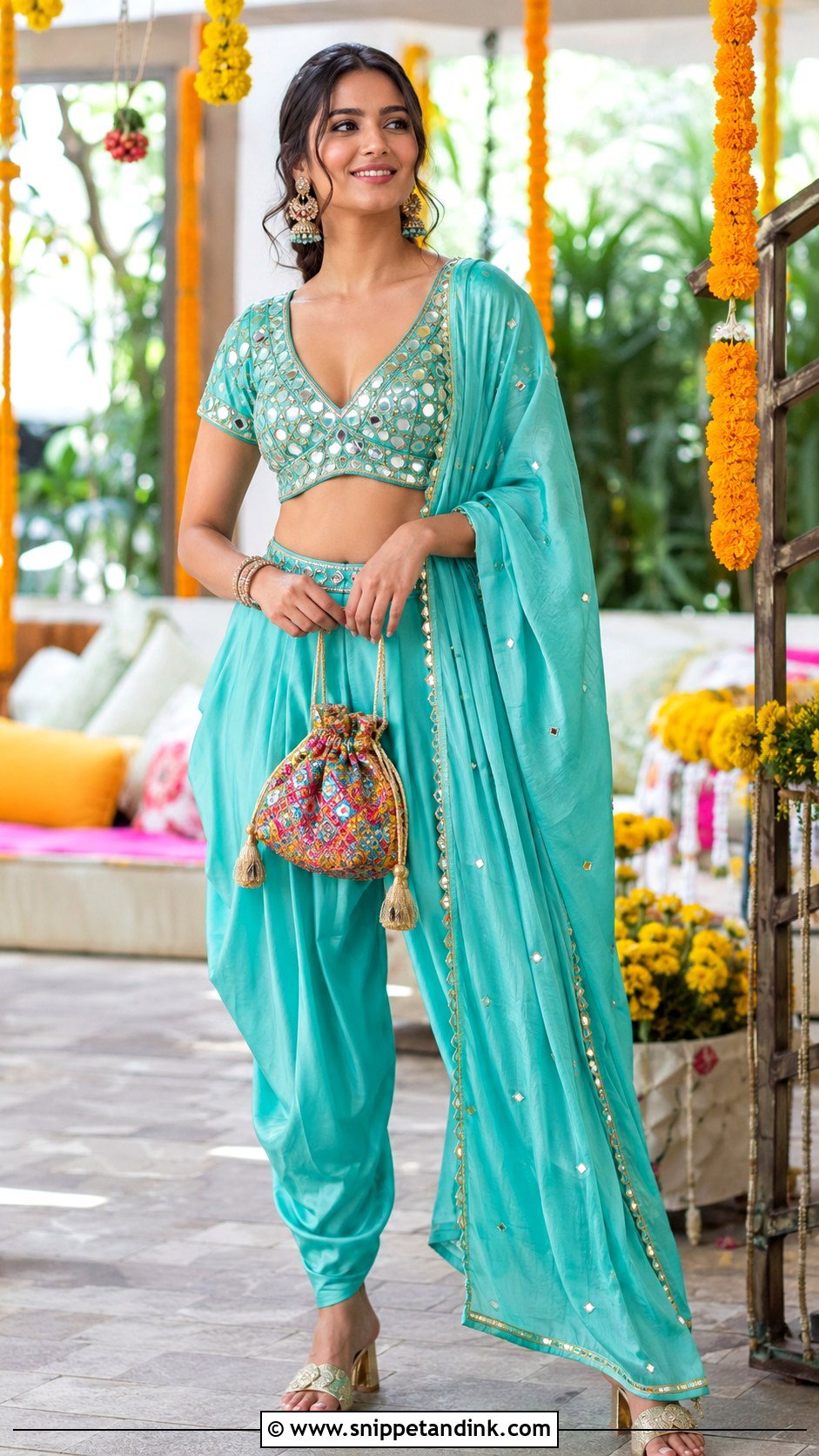
Mirror work brings sparkle, and solid dhoti pants in silk, crepe or georgette keep the blouse from overwhelming the outfit. Turquoise, fuchsia, orange and lime look cheerful for mehndi celebrations, while navy or burgundy suit the evening. A cropped jacket or light dupatta can go over it as long as the mirrors still show. Check the lining before the event. Mirror edges and their stitching can scratch the skin at the underarm and snag a fine dupatta, so a soft full lining is worth asking for. Small jhumkas and a braid keep it youthful.
14. Floral Cape With Dhoti Pants
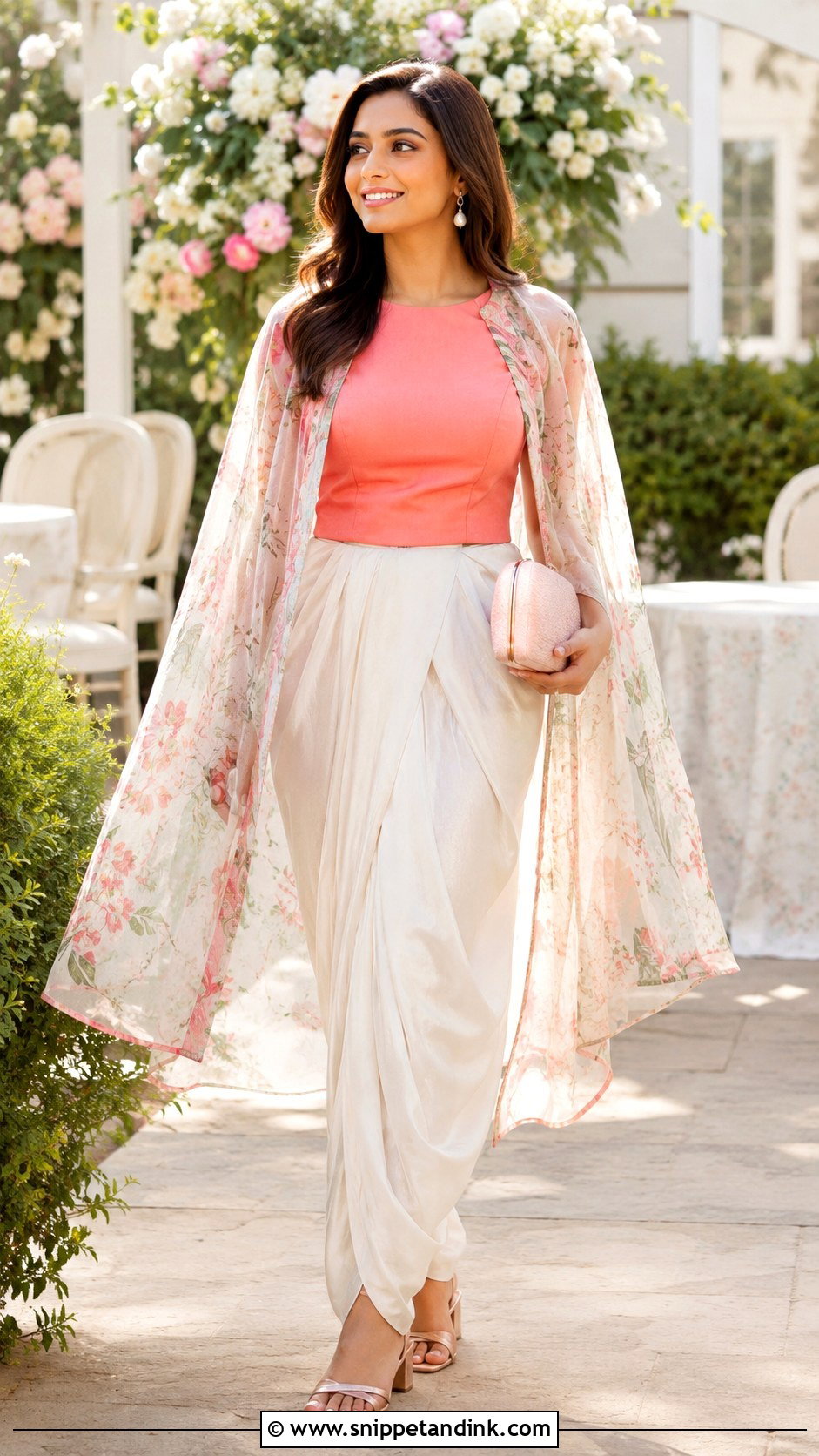
A sheer floral cape softens the strong lines of dhoti pants for an outdoor or daytime wedding. Start with solid pants and a fitted top, then add a cape that repeats one or two of their colours rather than matching print for print. Georgette, chiffon and organza all move easily. Scale of print guides the rest: a large print needs a simple neckline and little jewellery, while a small print can take a decorative border. I’d check cape length against stairs and dance floors, since a long cape catches under heels.
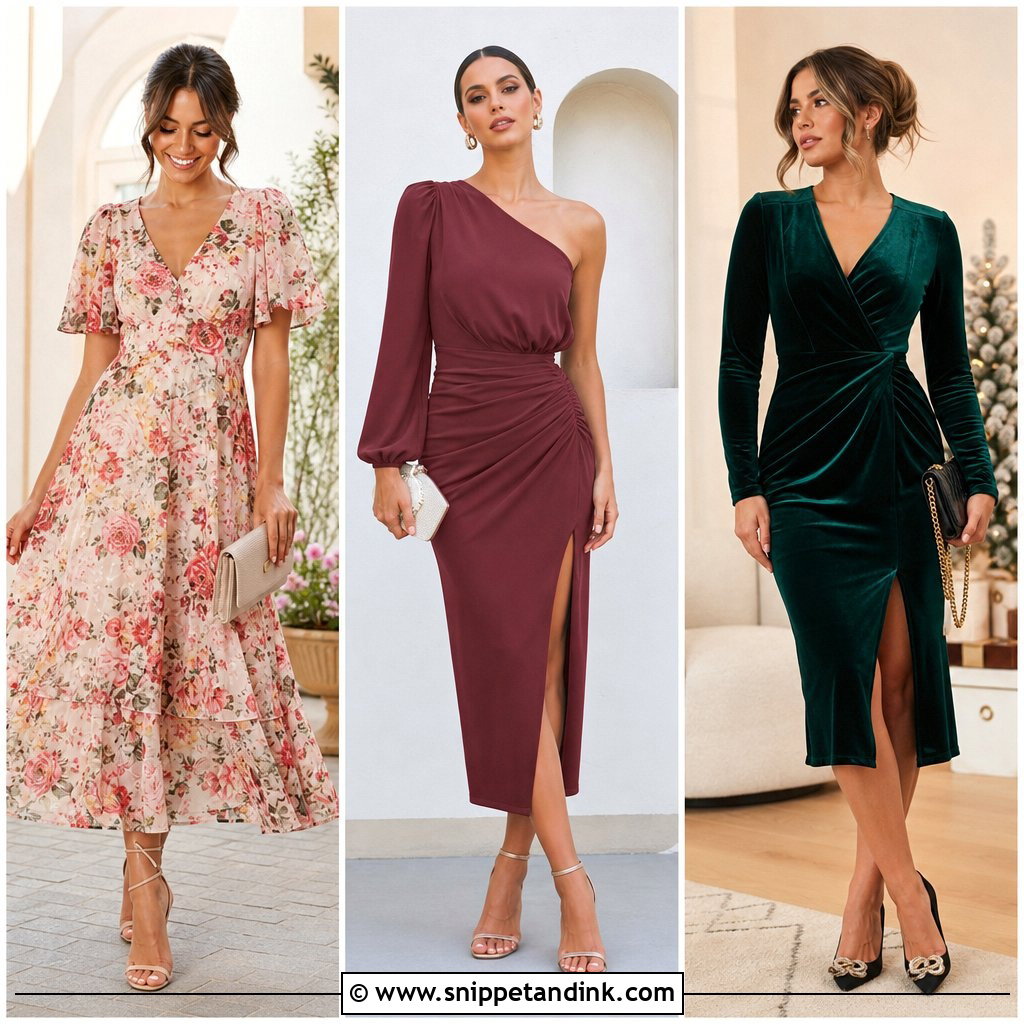
15. Velvet Jacket With Silk Dhoti Pants
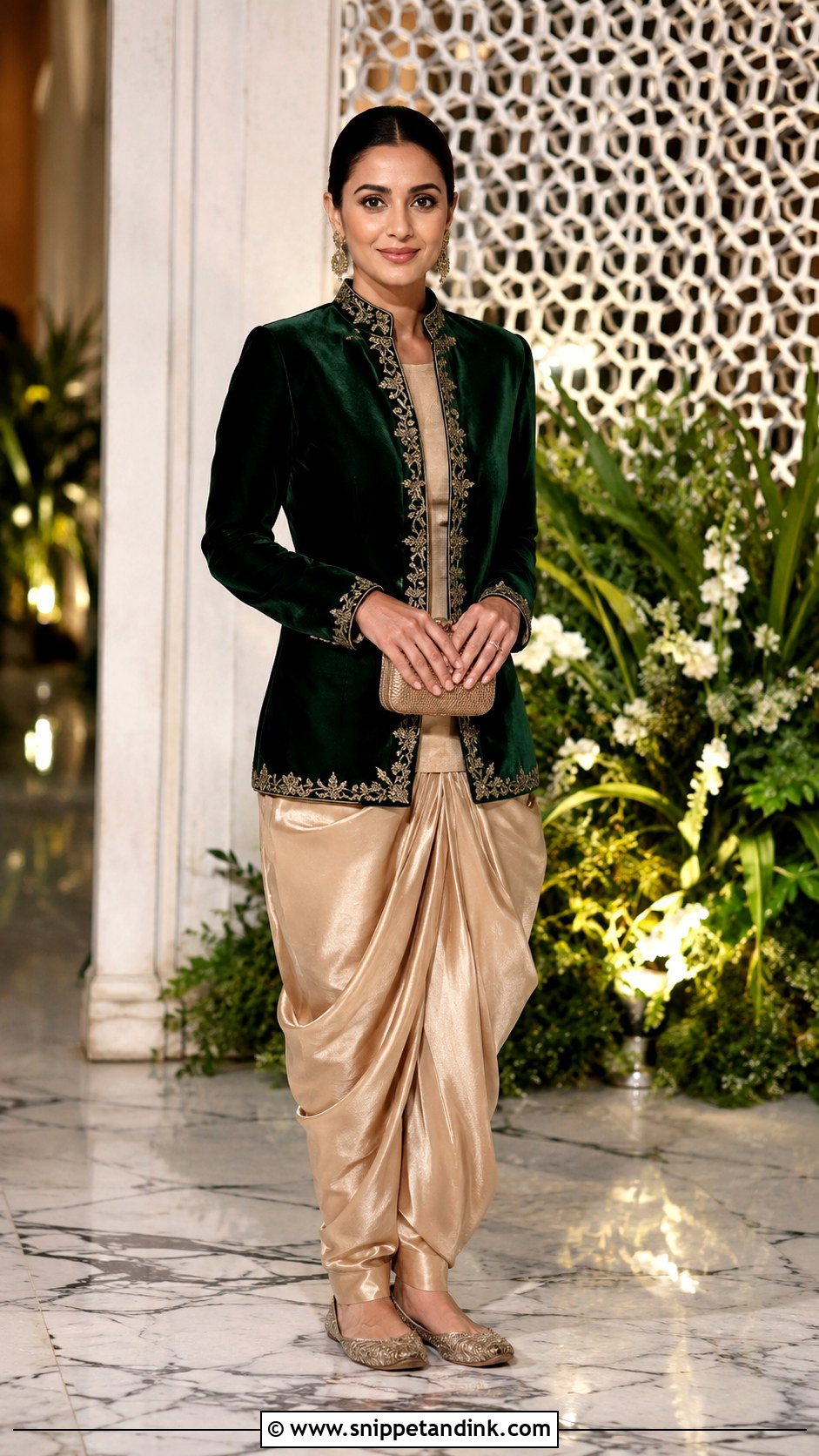
Winter weddings are where velvet earns its place. A fitted waist-length or tailored knee-length velvet jacket over fluid silk dhoti pants gives depth and warmth. Maroon, bottle green, navy and plum pair well with champagne, beige or matching silk. Keep the blouse underneath thin, since indoor venues heat up and velvet traps warmth. Thick velvet with heavy lining restricts the arms, so I choose lighter weights for anyone planning to dance. The shoulders, sleeves and front closure need to sit flat for a sharp finish.
16. Silk Kurta Dhoti And Dupatta Set
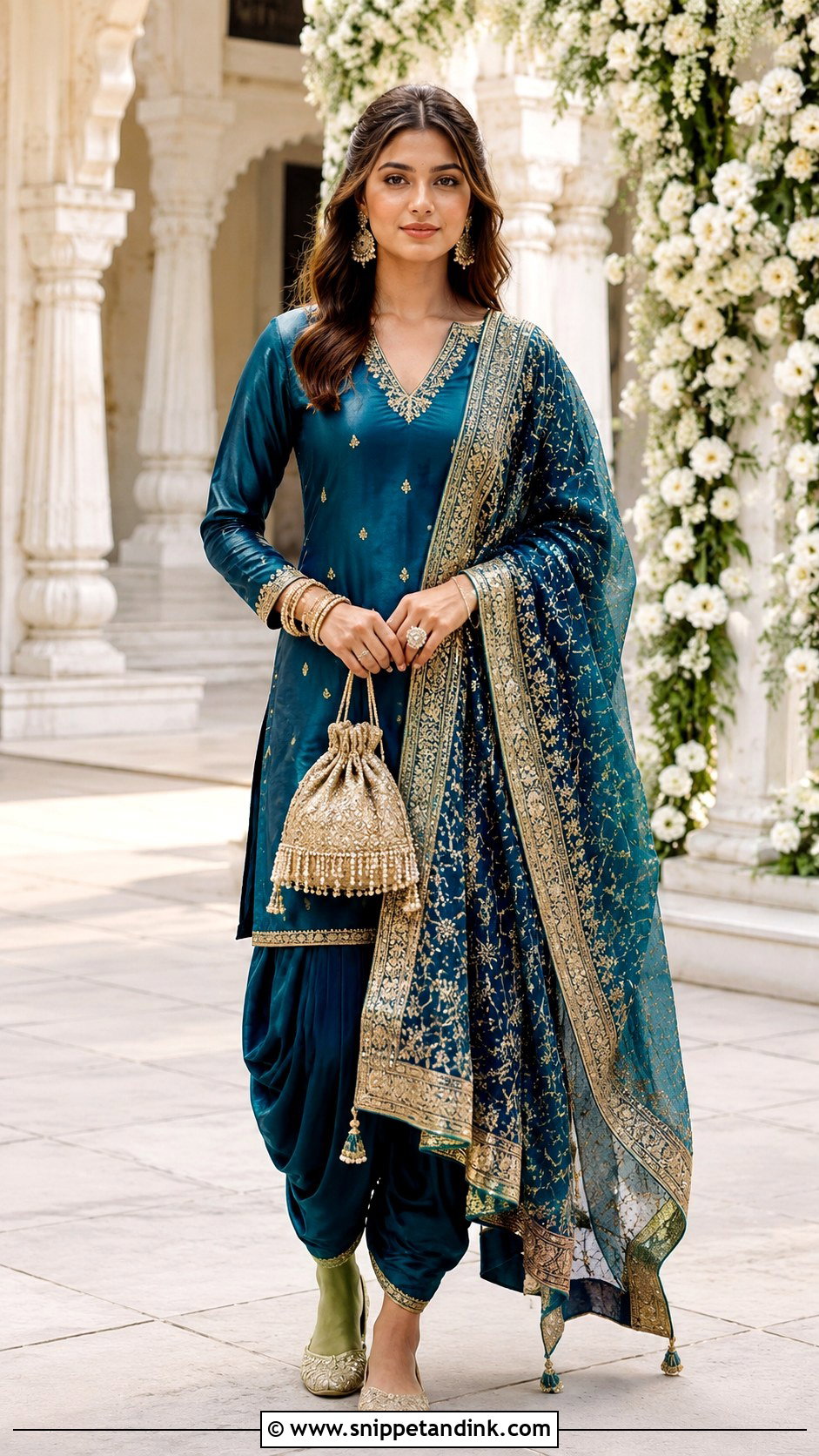
Silk kurta, dhoti and dupatta as a matched set suit a ceremony or a traditional family event. A short straight kurta with subtle zari, dhoti pants with a matching border and a dupatta carrying the richer weave or embroidery is a classic balance. Mustard, rust, rani pink, peacock blue and emerald all look rich. Raw silk holds structure; softer blends fold more gently. The thing I watch is finish: three silk pieces bought separately can each have a slightly different sheen, and side by side that reads as assembled. Pin the dupatta at one shoulder so the drape stays visible.
17. Sleeveless Tunic With Dhoti Pants
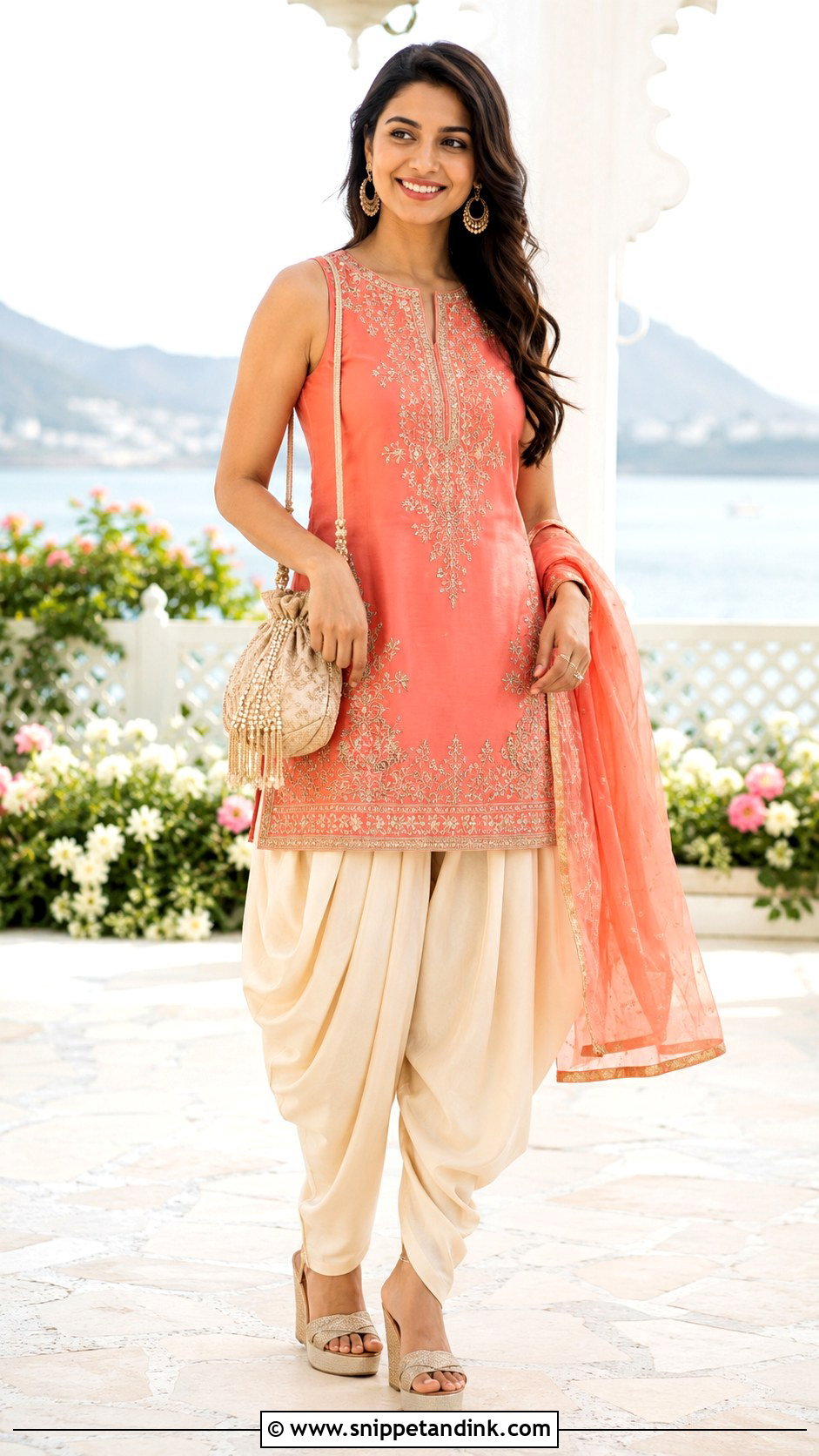
Warm-weather events suit a sleeveless tunic over dhoti pants. Choose one that follows the body without clinging and ends at the hip or upper thigh; side slits help movement and show more of the drape. Embroidery at the neckline, armholes or hem gives definition. Wearing one colour head to toe lengthens the body, while a bright tunic over neutral pants is more playful. Armholes are the detail I fuss over. Cut too low, they show the bra or underlayer every time you lift an arm, so I have them fitted close. A light stole helps in air-conditioned halls.
18. High Low Kurta With Dhoti Pants
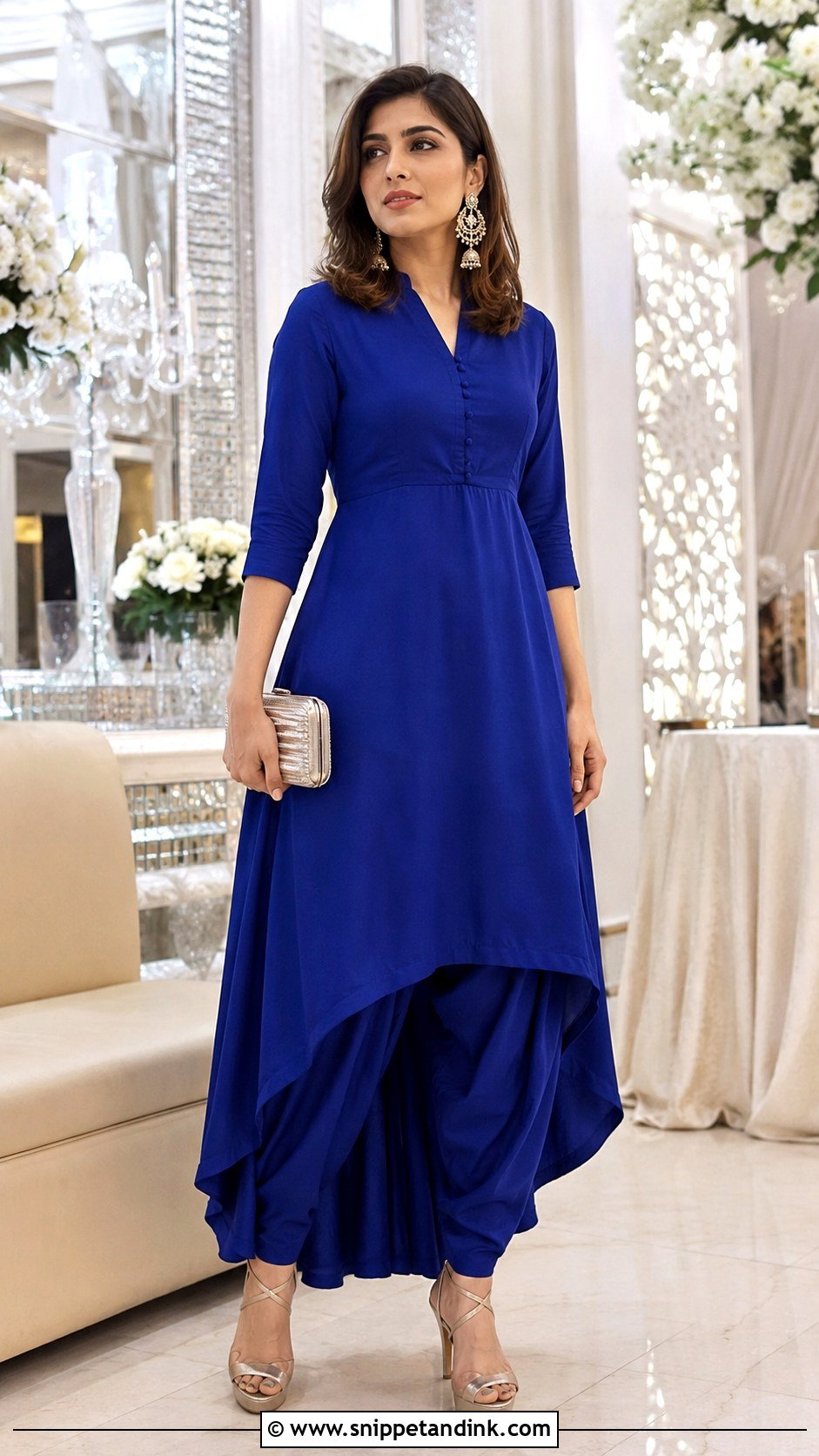
High-low kurtas show the dhoti pants at the front and cover more at the back, which suits anyone who wants flow without a full gown. Keep the upper body fitted and the flare moderate so it doesn’t compete with the pants. Embroidered necklines, sheer sleeves or a decorated back add wedding-level detail. Before wearing heels, check the back hem. It should hang just clear of the floor in your actual shoes, because high-low hems drag at the back first and catch on stairs. One colour throughout looks refined; contrasting pants are bolder.
19. Straight Kurta With Dhoti Pants
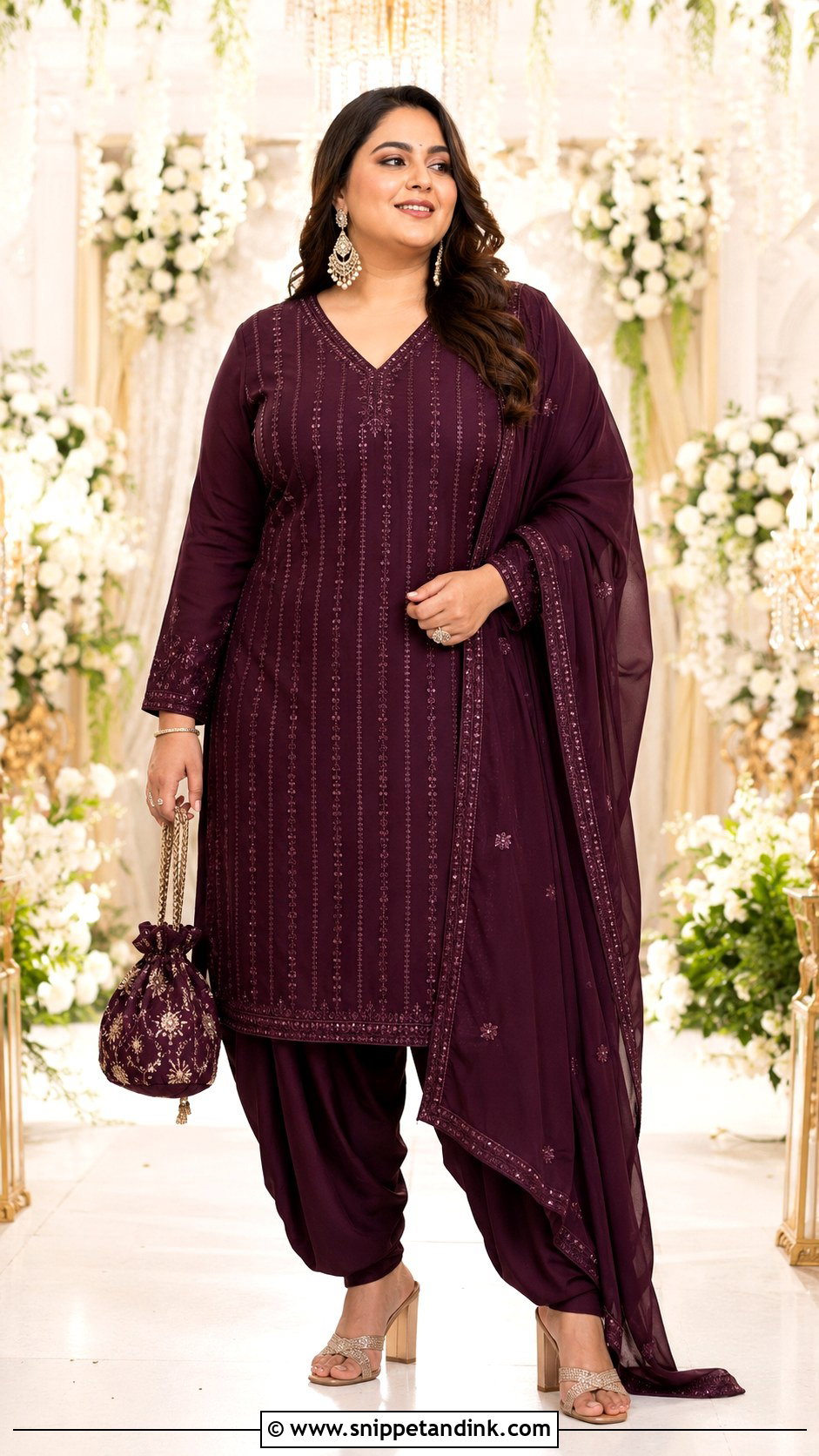
Straight kurtas suit more body types than people think, as long as the kurta skims the torso, has side slits and stops above the fullest part of the dhoti drape. A vertical embroidered panel or a V-neck lengthens the line. Pair it with pants that have soft, controlled pleats, since extra fabric around the hips is what makes this style look bulky. Deep solids with tonal embroidery are right for formal ceremonies; keep prints medium in scale. Accurate shoulder, bust and waistband measurements matter more here than with any looser style.
20. Draped Satin Dhoti Dress
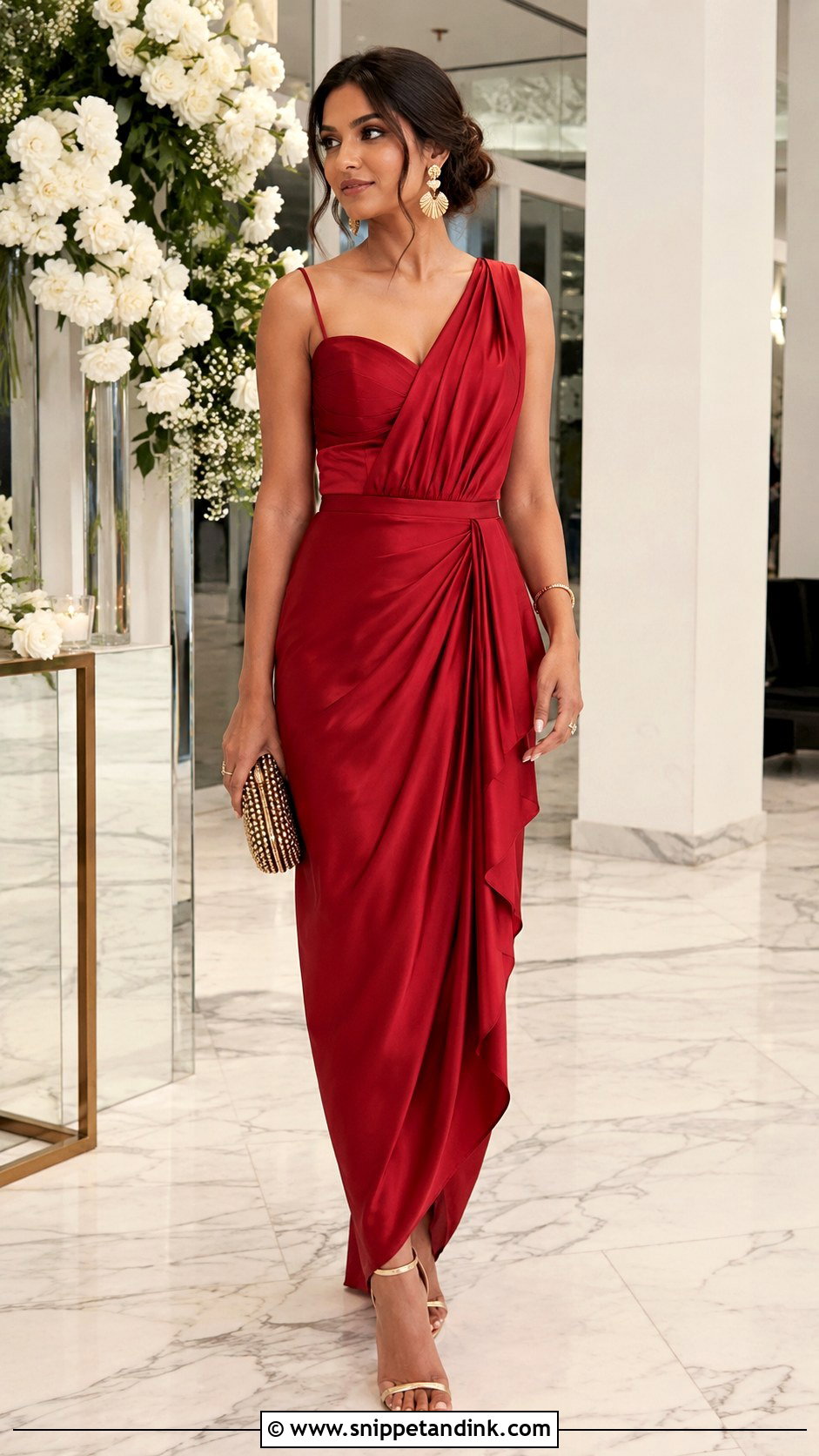
A one-piece draped satin dhoti dress joins a fitted bodice to the pleated lower half, which makes it the most streamlined option on this list for a cocktail or reception. Look for a defined waist, a secure bodice and an asymmetric drape that falls without bulk. Deep teal, ruby, bronze and plum suit evening light. Satin creases easily and shows every line underneath, so I’d steam it carefully just before wearing and choose smooth, seam-free underwear. With a simple neckline, a fine collar necklace works; otherwise, let the earrings lead.
Is a Dhoti Set Formal Enough for the Main Ceremony?
For most guests, yes, provided the fabric and embellishment match the occasion. A silk or brocade set with zari, a long jacket or a pre-draped saree sits comfortably alongside lehengas and sarees at a wedding ceremony. A printed cotton set or a casual tunic belongs at the haldi or mehndi. If the invitation or the family suggests traditional wear, I’d lean toward a dhoti set with a dupatta, which reads as traditional, rather than a jumpsuit.
Colours to think twice about as a guest
Many families see red as the bride’s colour for the main ceremony, so guests often avoid head-to-toe red that day. In some communities, all-white or all-black is associated with mourning and is best skipped at a wedding. Customs vary from family to family, so when in doubt, ask the couple or a relative before you buy.
If you’re in the bridal party
Bridesmaids and sisters often coordinate rather than match. Dhoti sets make that easy: everyone can wear the same colour family in different tops, so a peplum, a cape and a jacket can stand together without looking like uniforms. Agree the colour and the level of shine first, and let each person pick a silhouette that suits her.
Shorter Tops, Fitted Waists and Shoes You Can Dance In
Those three habits are behind every good dhoti look above. A printed cape set feels light enough for a daytime mehndi, while silk pants, structured blouses, long jackets and pre-draped saree styles make richer evening outfits. Short tops reveal the pleats, a fitted waist gives definition and the right shoes let you move all night. Let the jewellery support the fabric rather than compete with it. Get the tailoring done properly, pick breathable materials, and the drape will take care of the rest.
You'll Like These Ideas:


Leave a Reply