
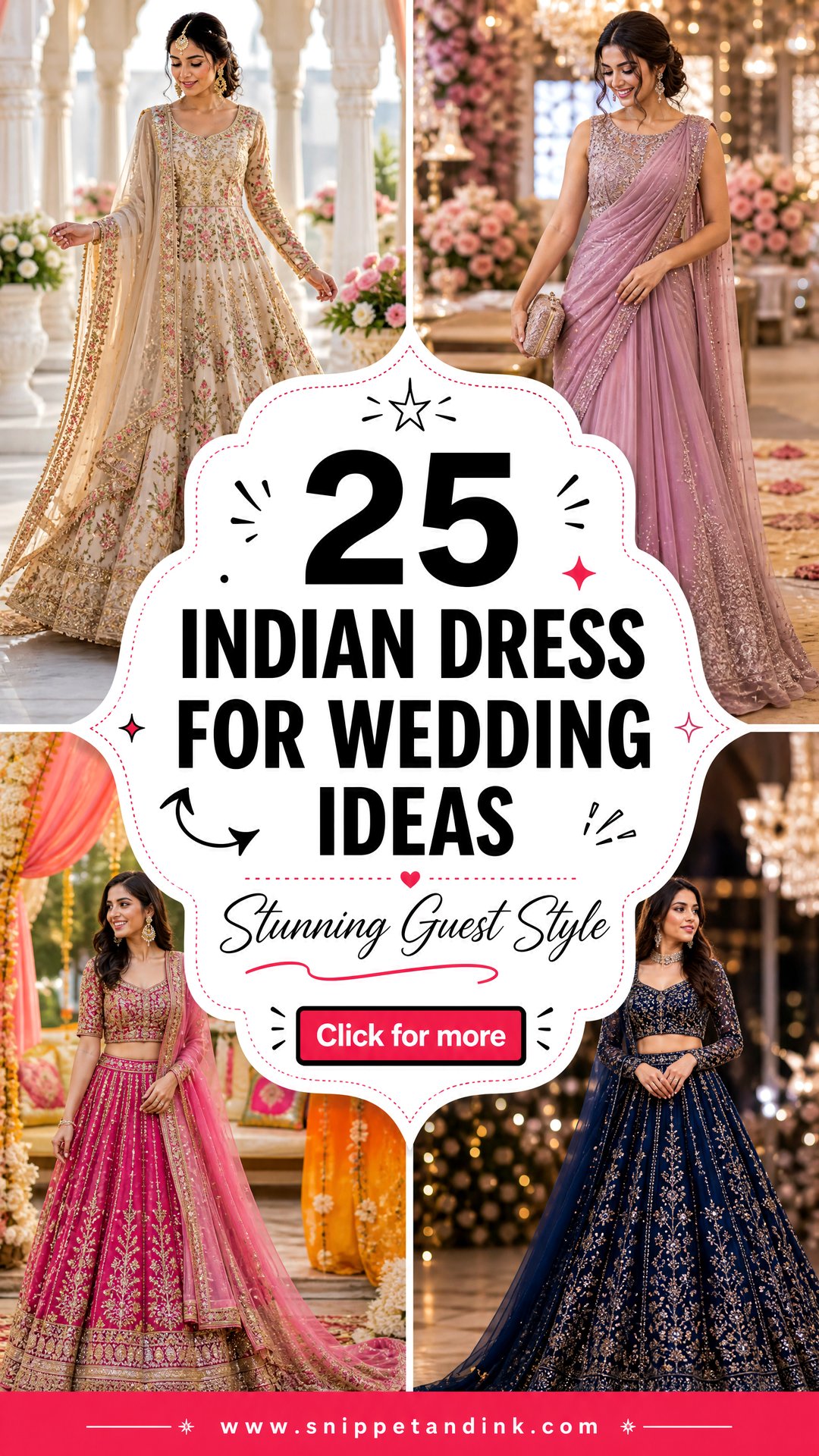
An Indian wedding is usually several events, not one, and each asks something different of your clothes: a morning ritual where you sit on the floor, a sangeet where you dance for hours, a reception under evening lights. Dressing guests and family for these, I start with how long you’ll wear the outfit and what you’ll be doing in it, and only then with colour. Below you’ll find sarees, lehengas, shararas, anarkalis, fusion sets and reception looks for guests, bridesmaids, sisters and cousins, each with the practical point I’d check before you buy.
Which Outfit Goes to Which Function
Guests often buy one heavy outfit and wear it to the wrong event. A rough map helps, though every family and community does things differently, so ask the hosts what each event involves.
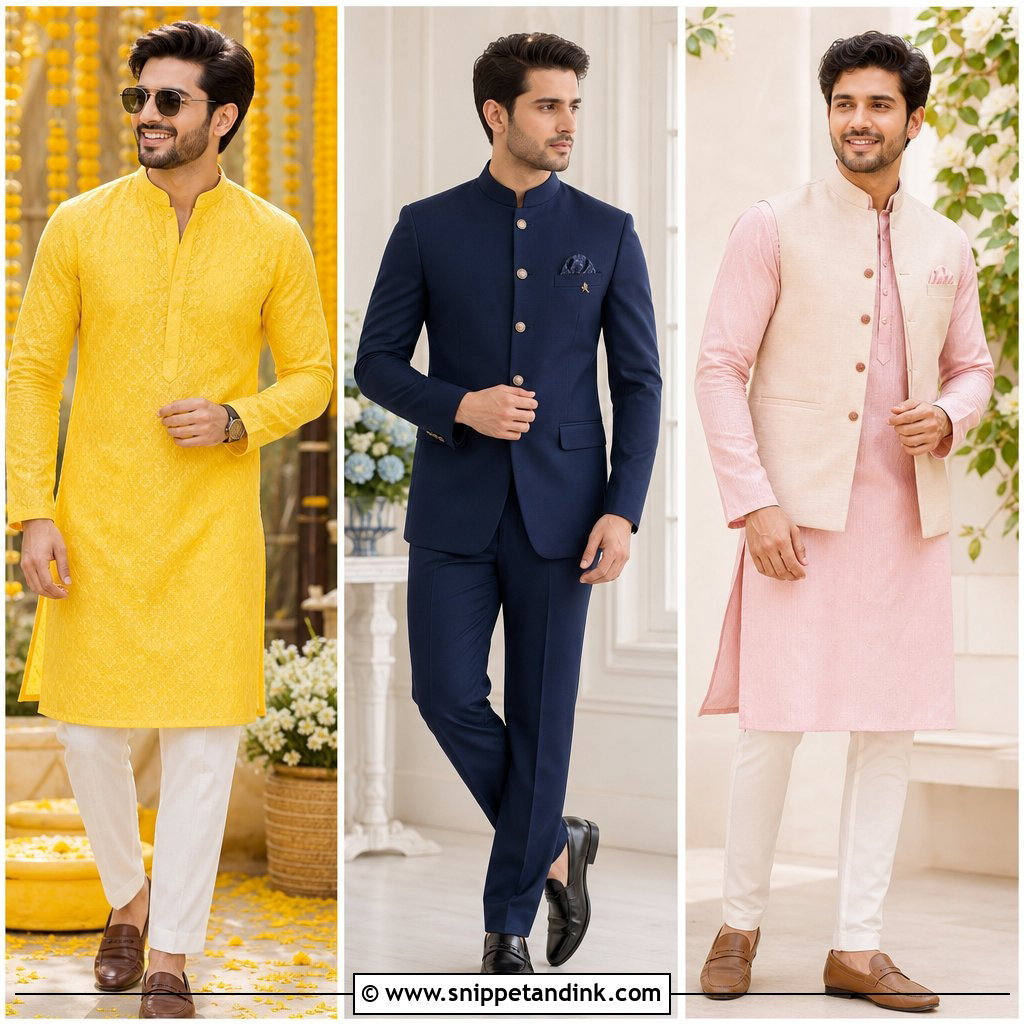
- Haldi: turmeric paste gets everywhere. Wear yellow or a cheap cotton print you don’t mind staining.
- Mehndi: often seated on cushions for hours. Bright colours, shararas, printed lehengas or kurta sets.
- Sangeet: you’ll dance. Lighter lehengas, shararas, dhoti sets or co-ords with secure blouses.
- Wedding ceremony: the most traditional event. Silk sarees, anarkalis or modest lehengas, often with covered shoulders.
- Reception: the dressiest and most modern. Sequins, velvet, saree gowns and Indo-western gowns.
If you can only bring two outfits, choose one traditional and one festive, then change the jewellery and dupatta to stretch them across the other events.
1. Pastel Lehenga For Wedding
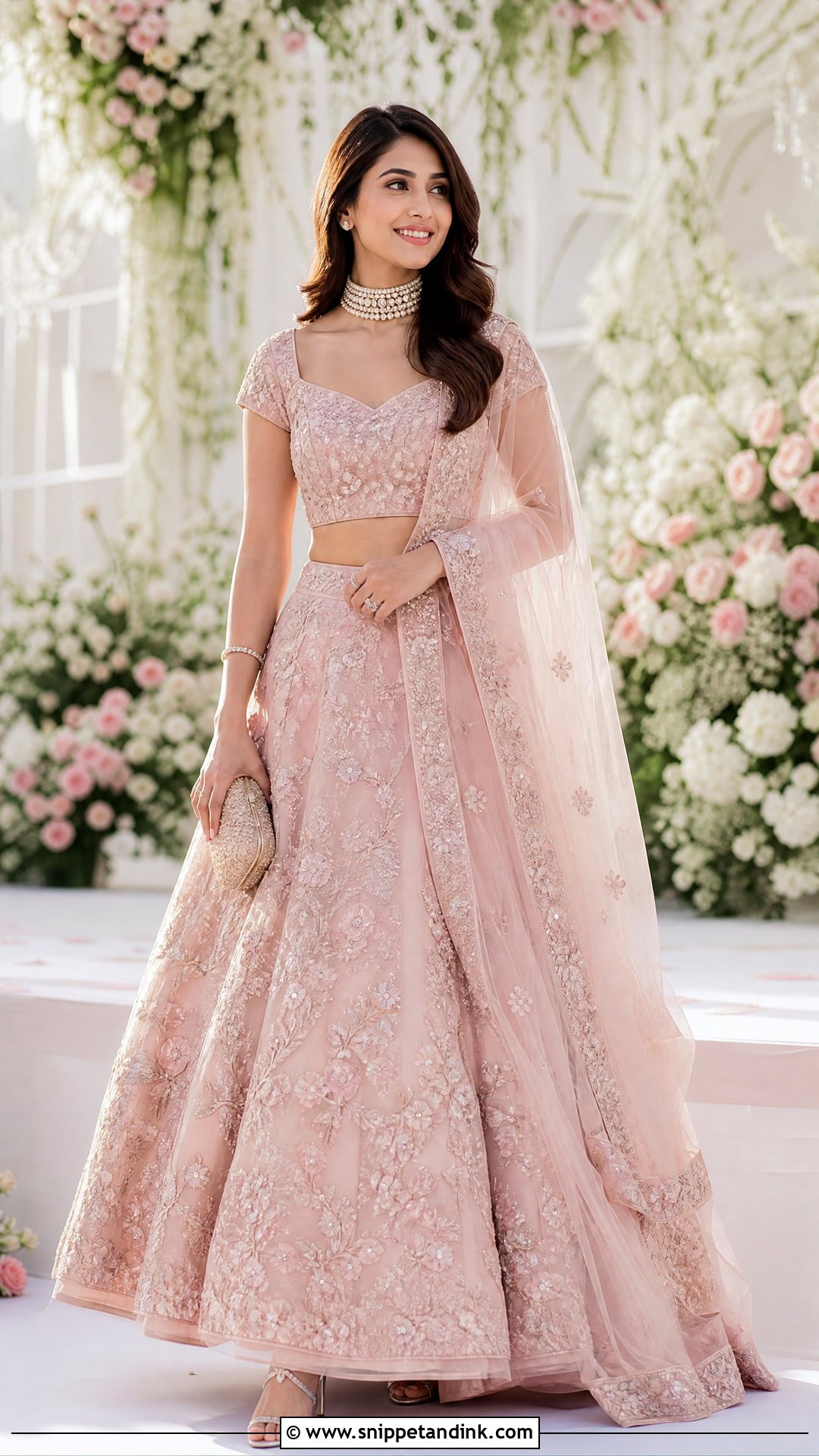
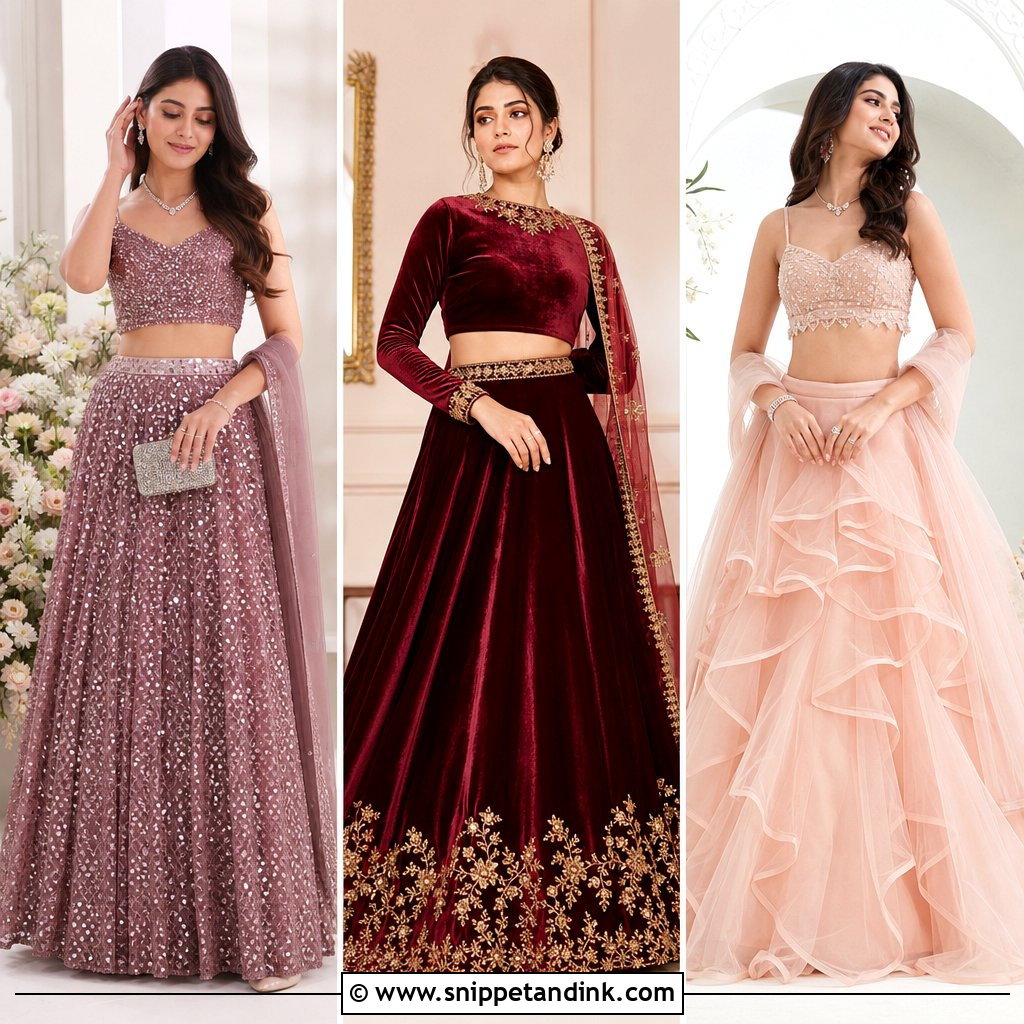
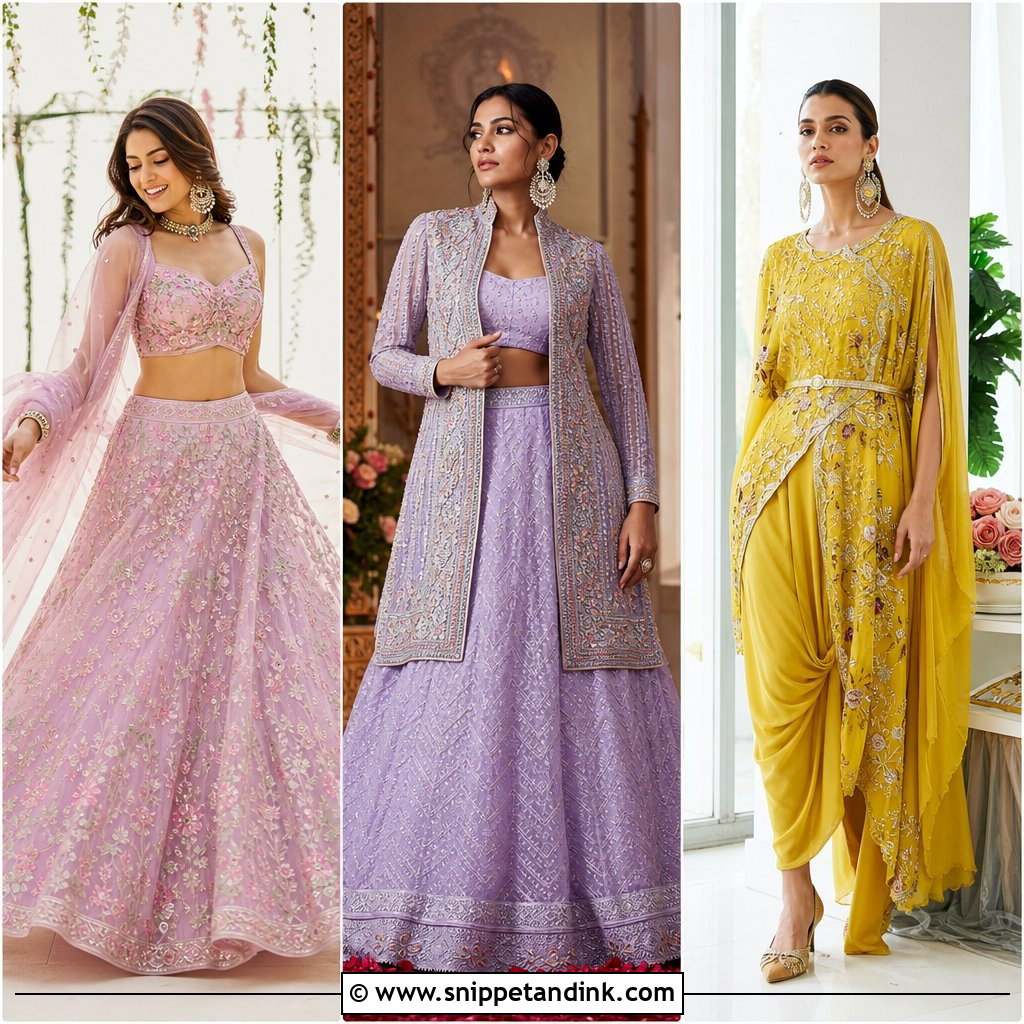
For a daytime ceremony, a pastel lehenga in blush, mint, powder blue, lavender or champagne reads fresh in sunlight. Go for a lightweight lehenga skirt with delicate embroidery, a fitted blouse and a net or organza dupatta. Weight is what I check first: a skirt with a heavy can-can layer gets tiring by the second hour outdoors. Pearl earrings or a small kundan choker, embellished juttis and soft curls suit spring and garden weddings.
2. Silk Saree For Wedding
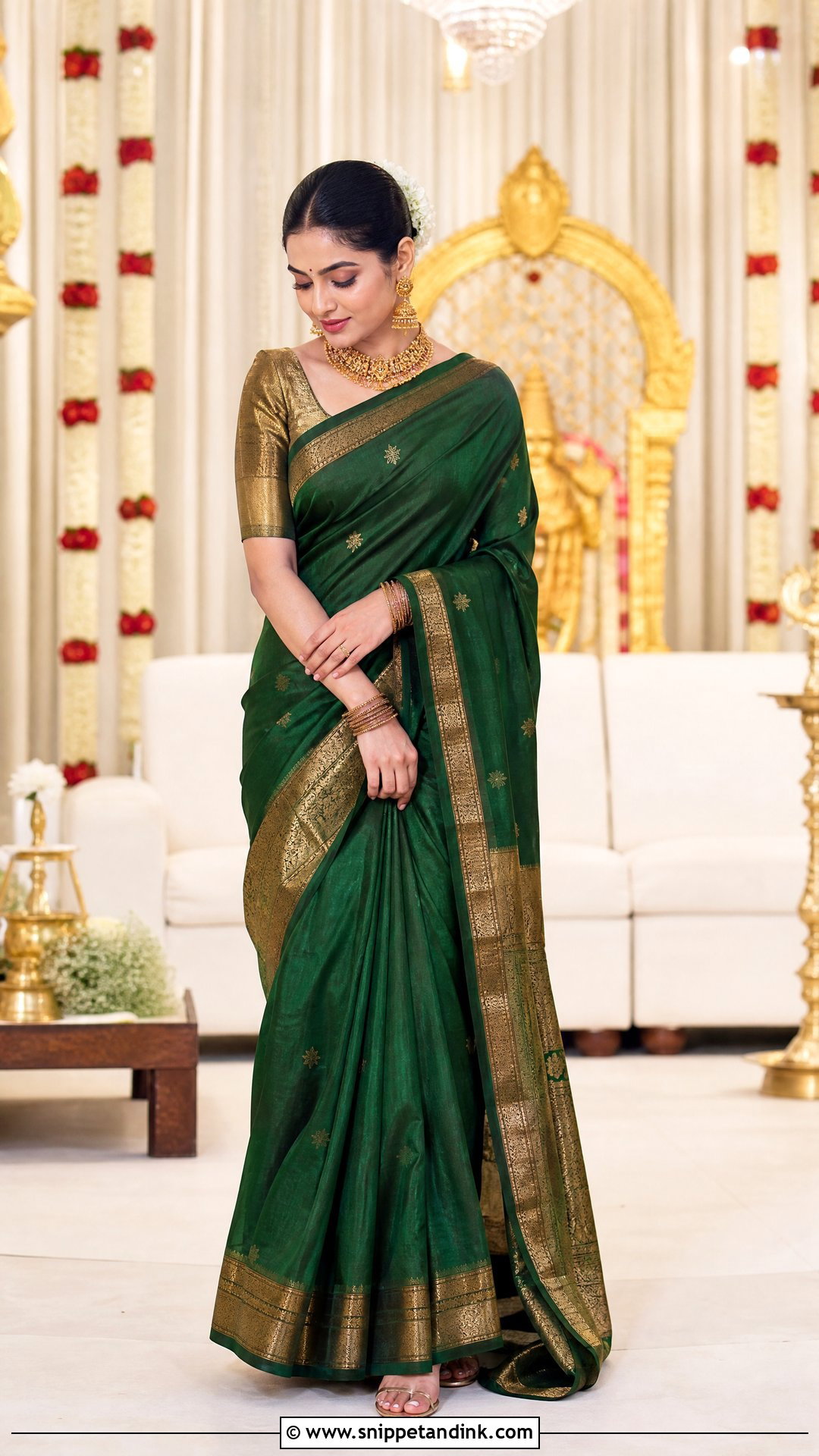
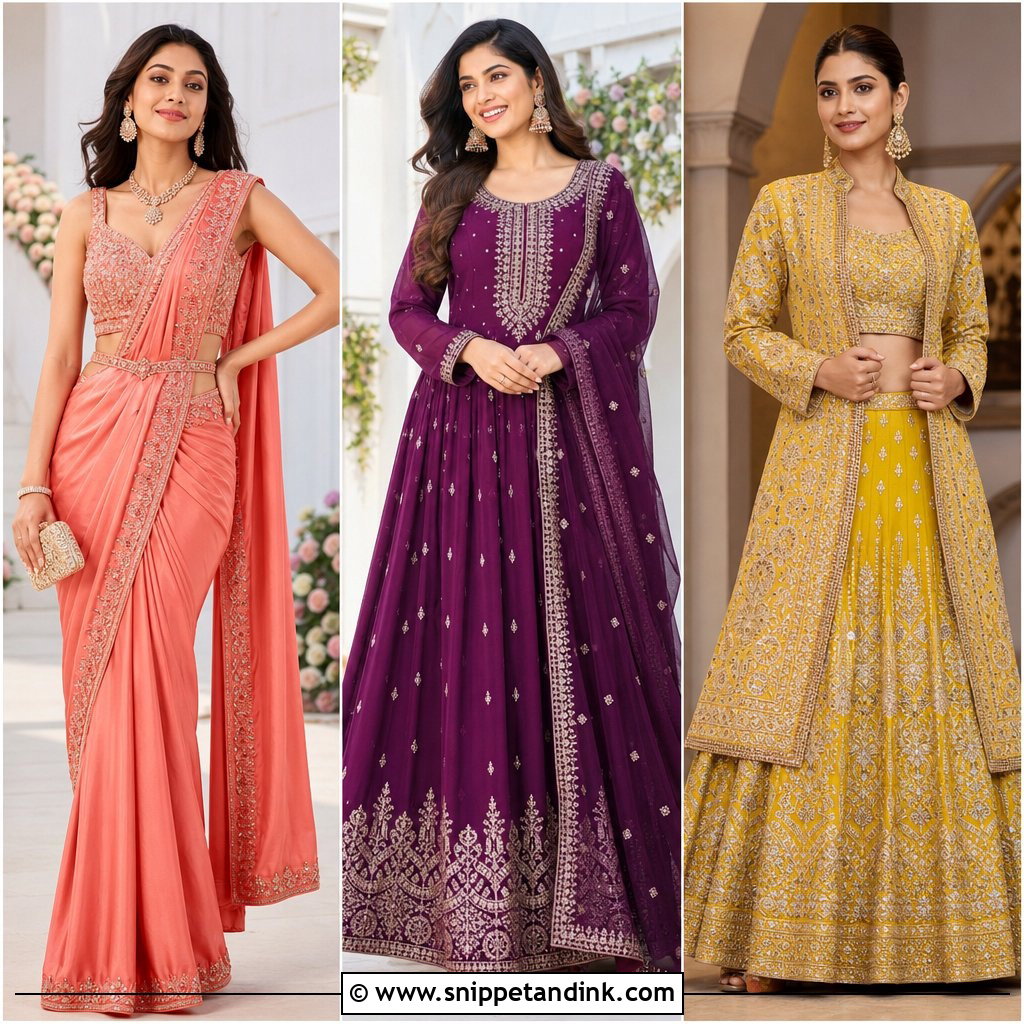
Silk sarees suit the main ceremony and formal rituals better than almost anything. Kanjivaram, Banarasi, Chanderi and Tussar each behave differently: Kanjivaram is heavy and holds pleats crisply, Chanderi is light and almost sheer, Tussar has a slightly rough, matte texture. Jewel tones like emerald, ruby, royal blue, mustard or deep purple feel festive. With a heavy border, keep the blouse and jewellery plainer. A sleek bun with fresh flowers suits it, and wedges are kinder than stilettos if you’ll stand for long.
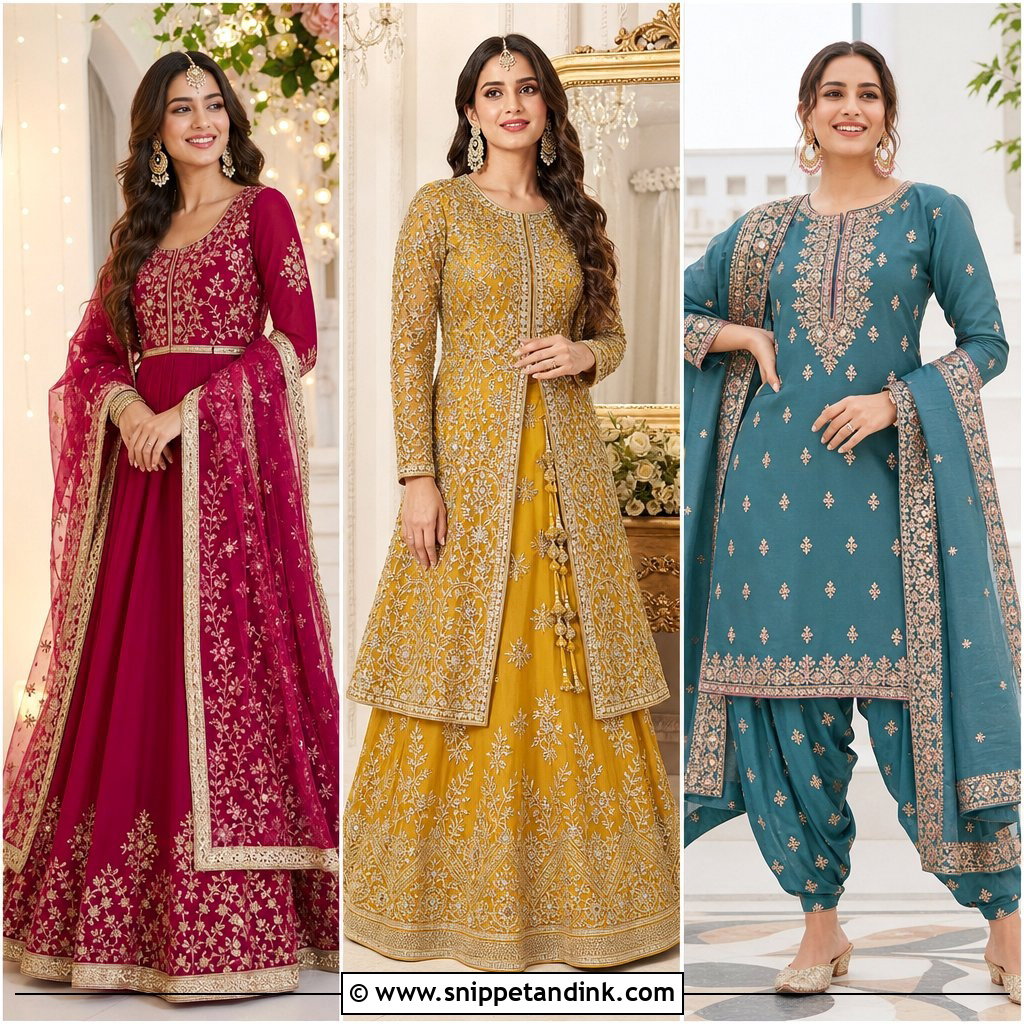
3. Anarkali Suit For Wedding
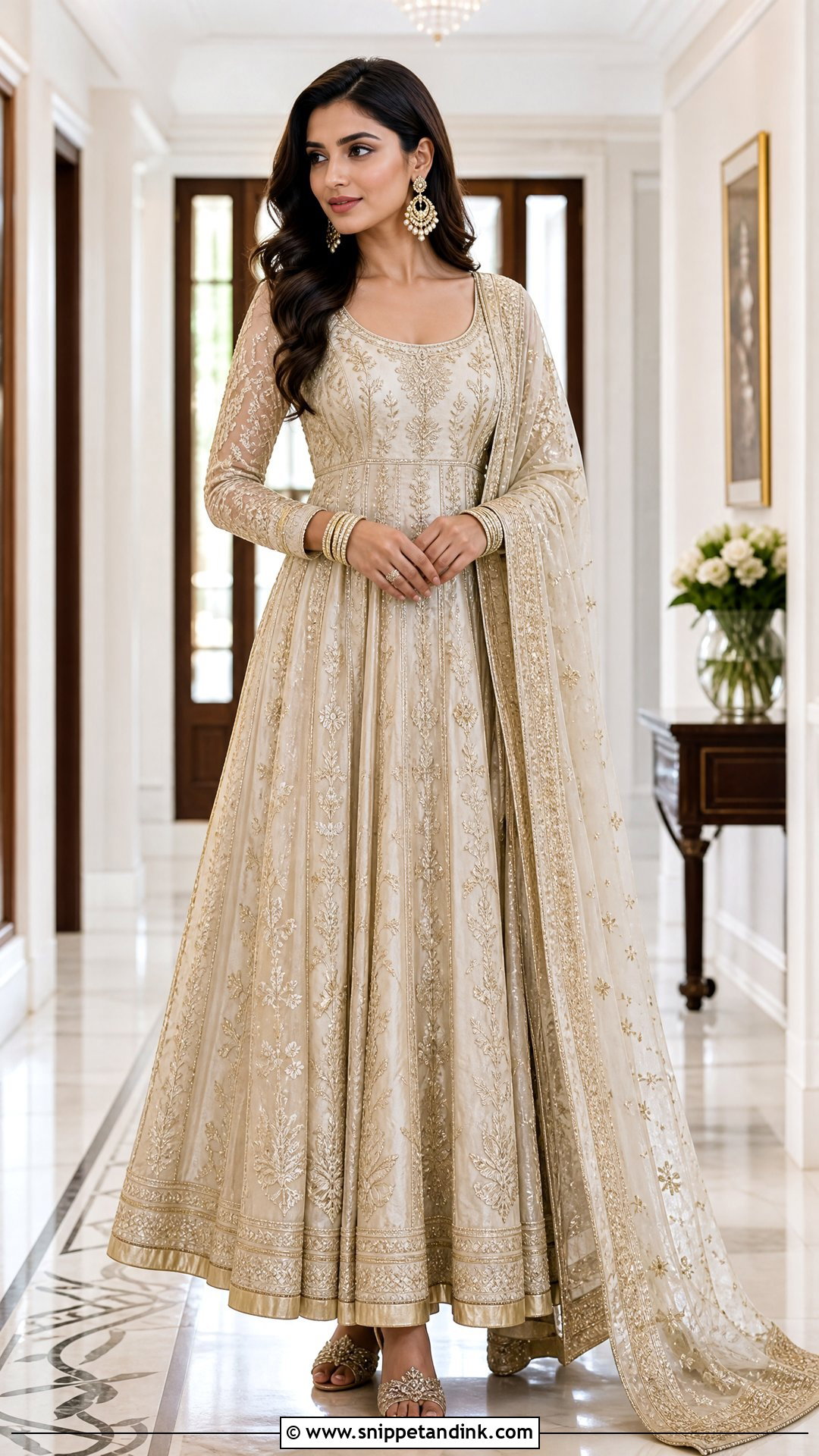
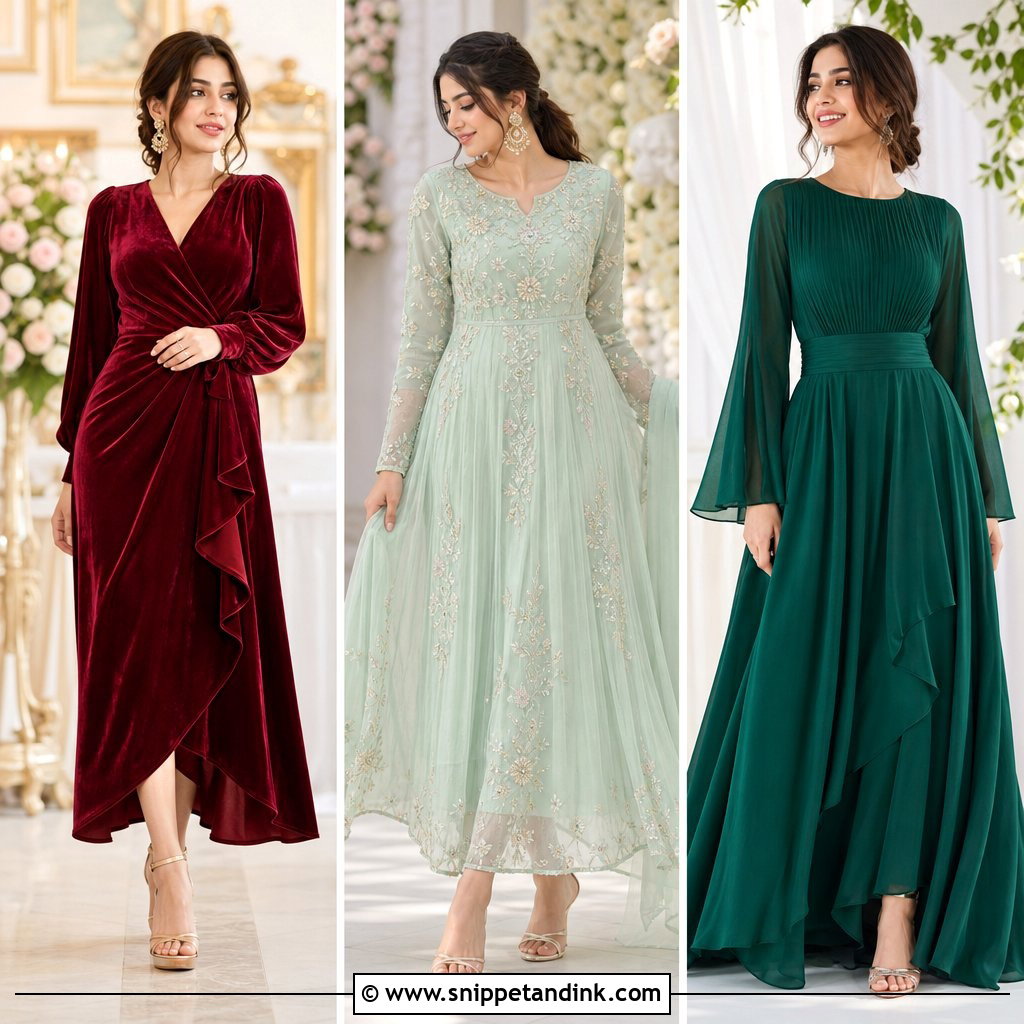
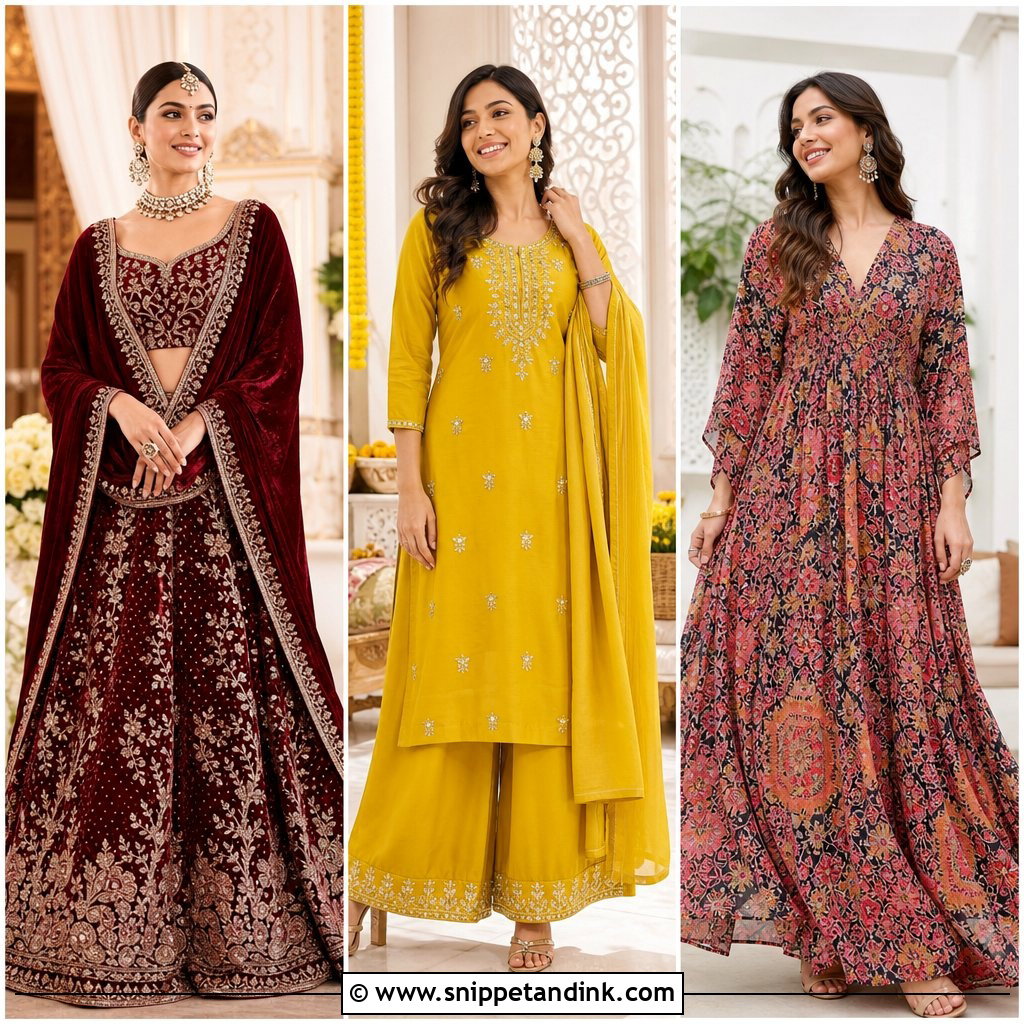
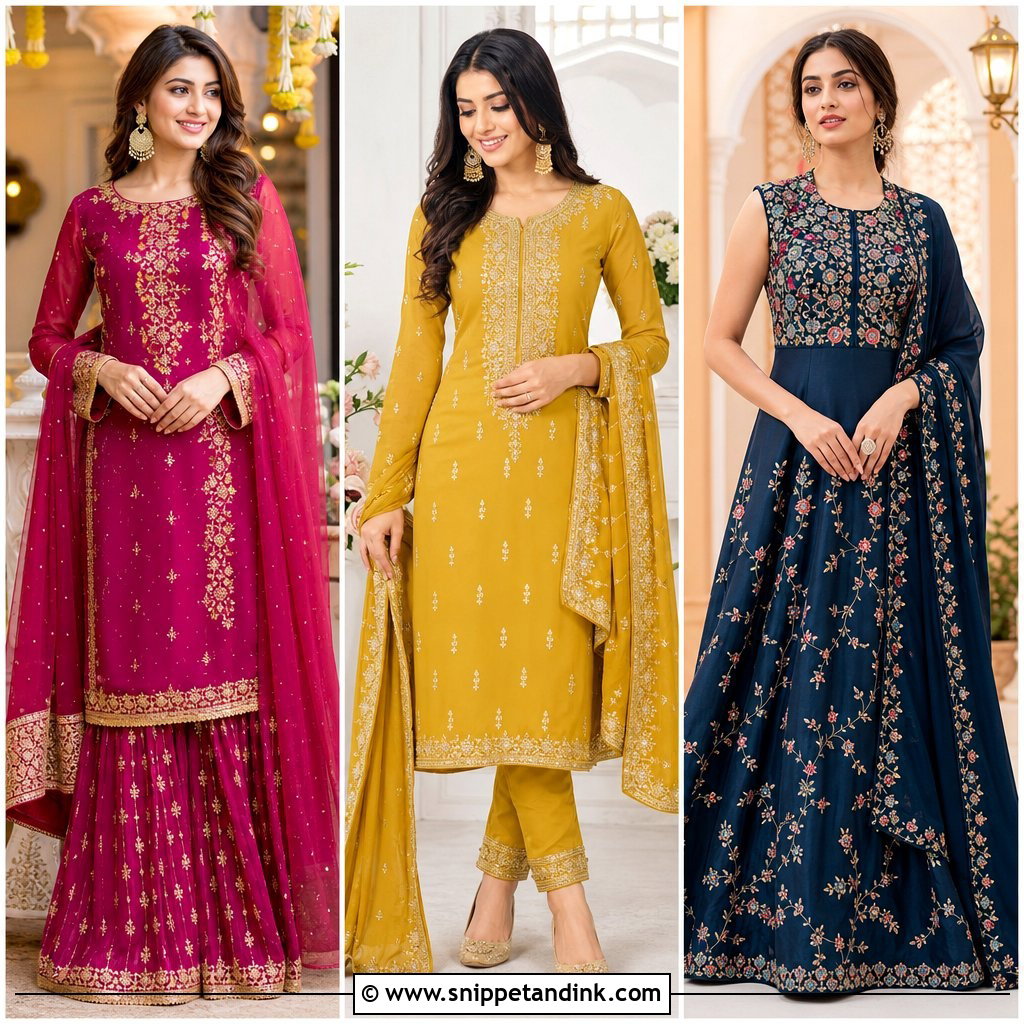
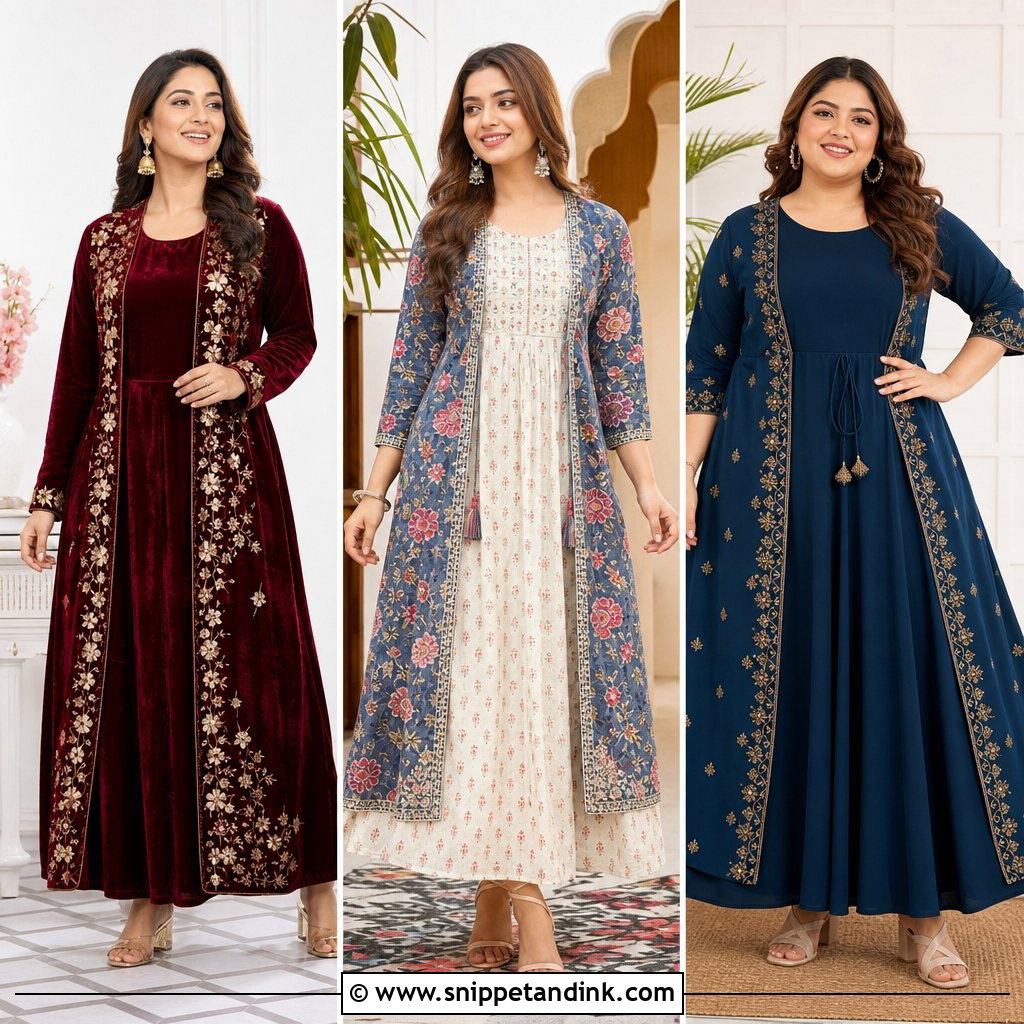
Anarkalis are what I suggest to guests who want to be comfortable sitting through long rituals. The fitted bodice and flared skirt give movement without managing a separate skirt and drape. Georgette, silk, chiffon or organza with embroidery, sequins, mirror work or zari all suit a wedding. A floor-length Anarkali reads dressier for evenings; calf-length works for smaller functions. Check the flare when you sit: very full anarkalis bunch on chairs. Statement earrings and a braid or loose waves finish it.
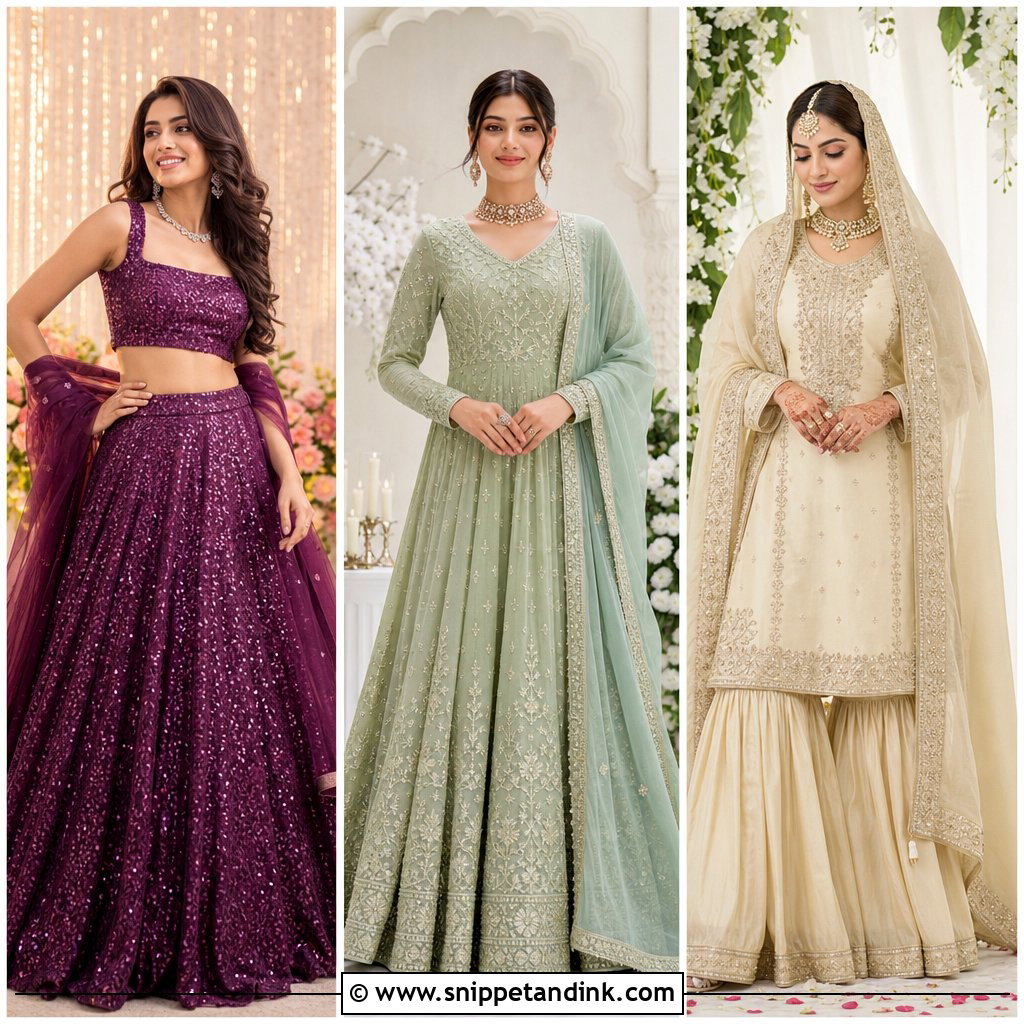
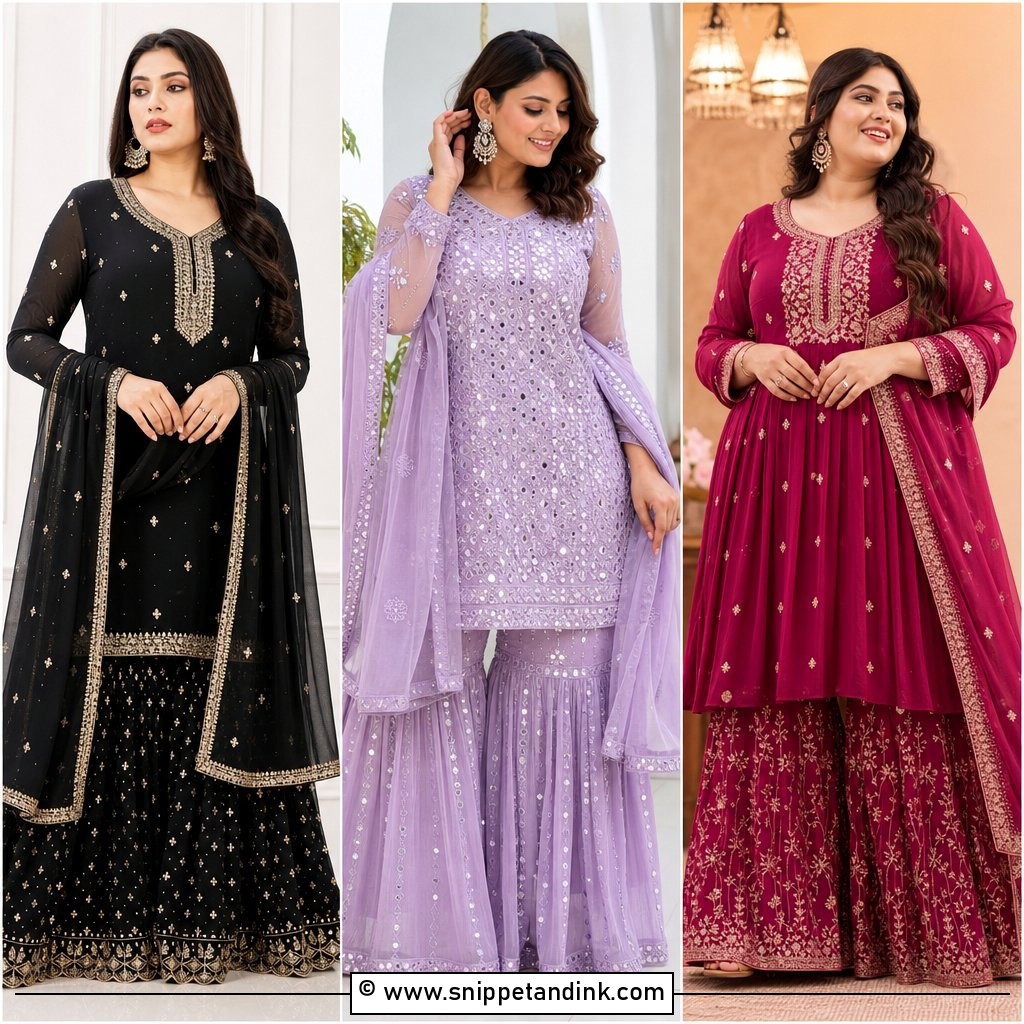
4. Sharara Suit For Wedding
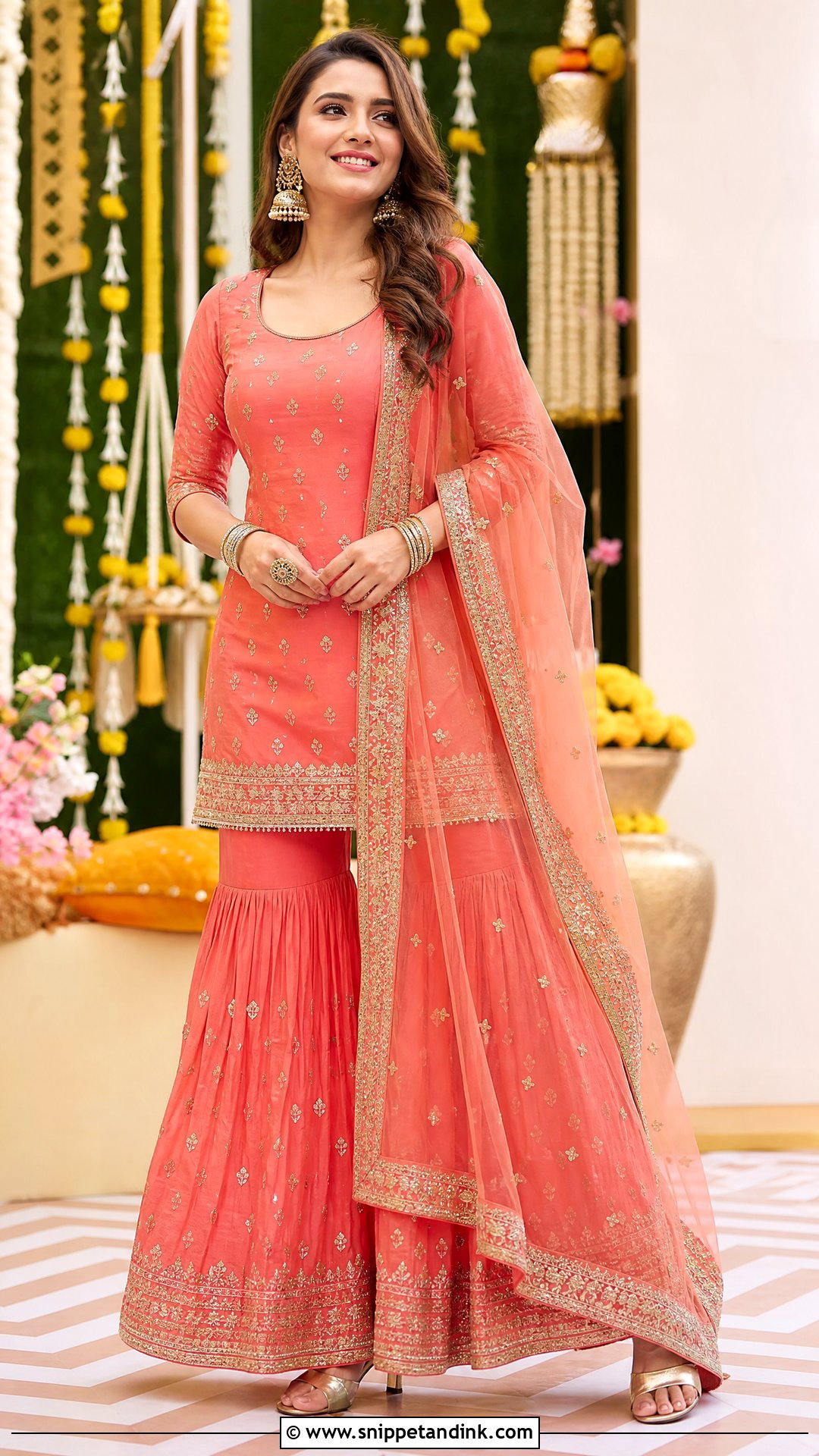
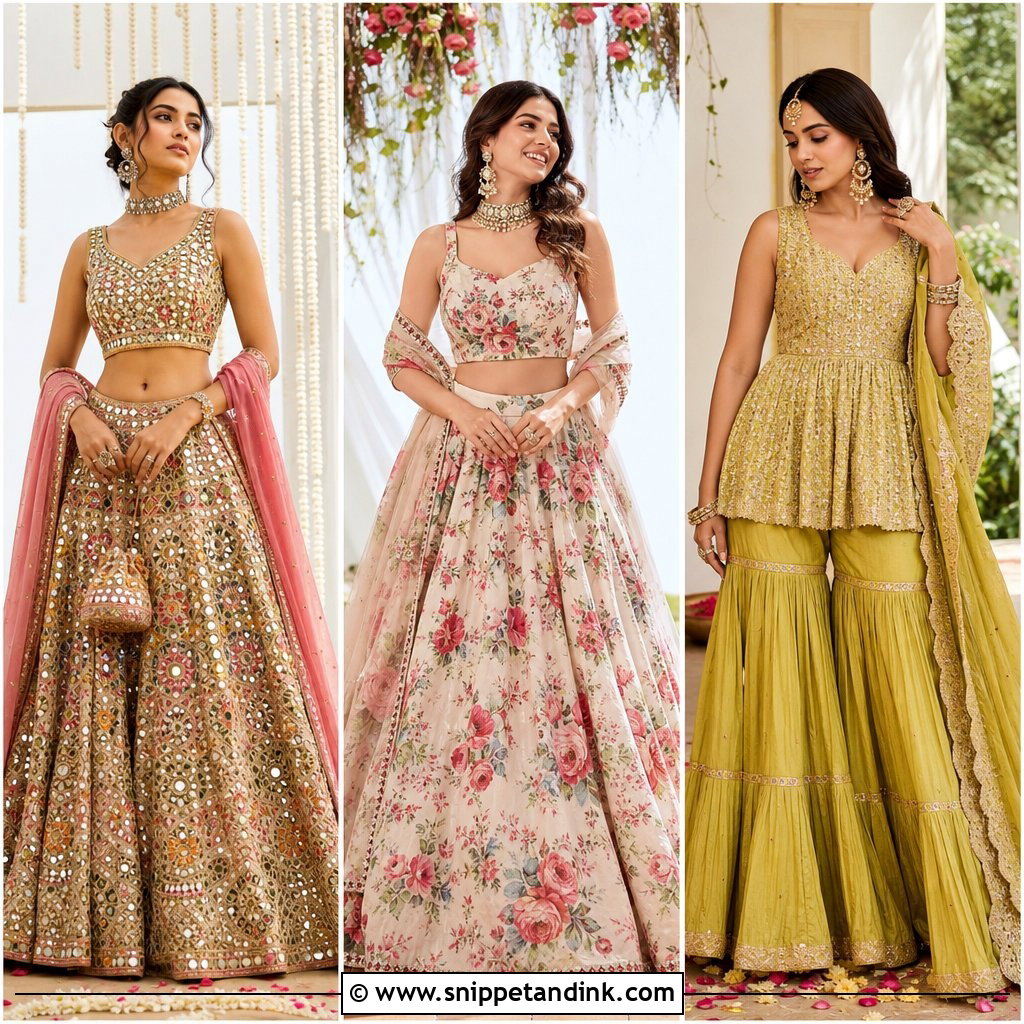
If you want festive volume without lehenga weight, a sharara gives it. The wide-legged pants flow when you walk and swing when you dance, with a short kurti and a detailed dupatta on top. Coral, yellow, green or rani pink suit mehndi and sangeet; softer metallics and deeper tones look more formal for the wedding. Have the hem set to your shoes, because sharara legs dragging an inch too long trip people on stairs. Jhumkas, stacked bangles and block heels balance the volume.
5. Gharara Suit For Wedding
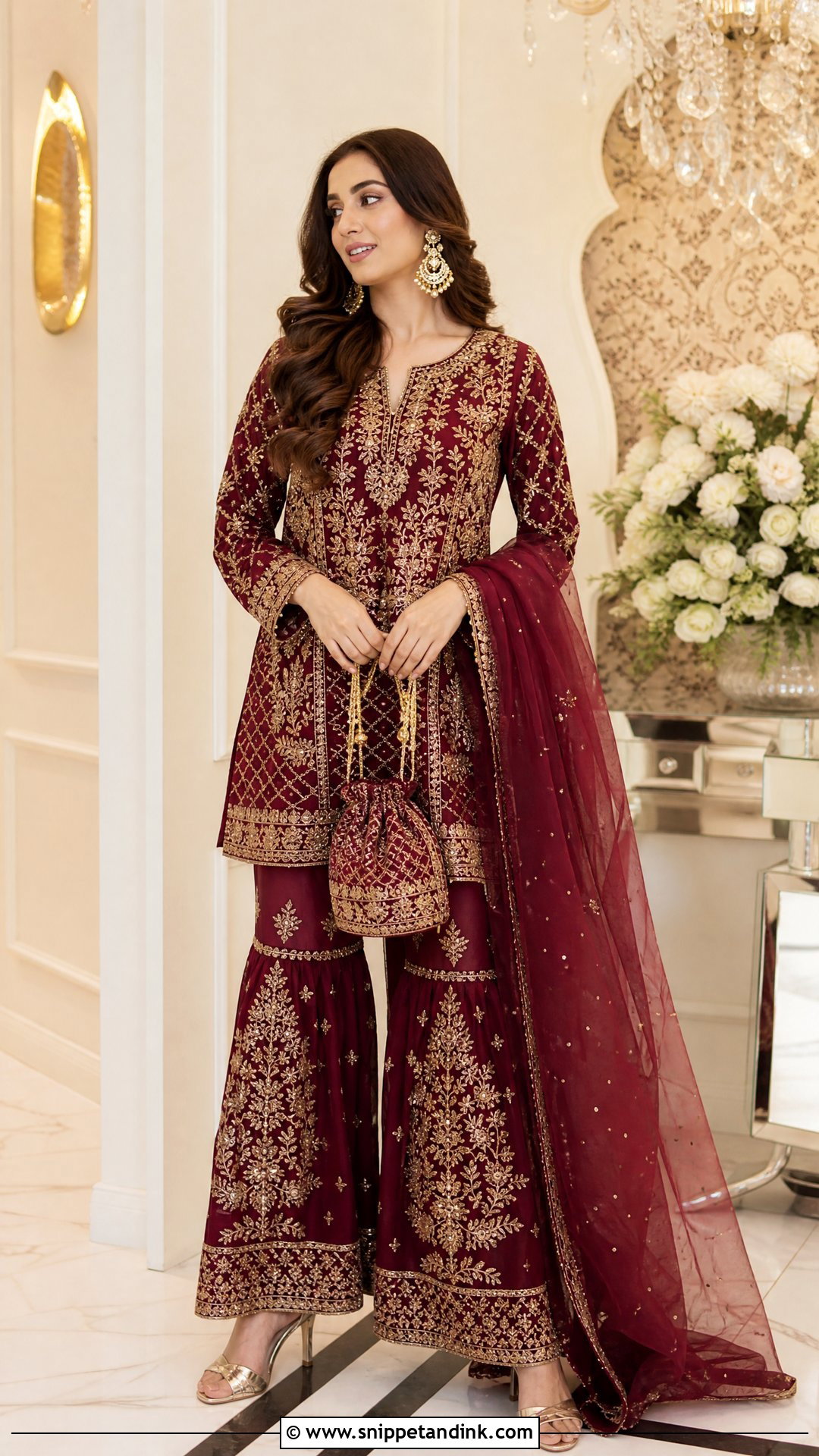
Gharara and sharara get confused, but the cut is different: a gharara fits through the upper leg and flares from the knee, usually with a lace, gota or embroidered band at the joint. That fitted thigh means you’ll want to sit in it at the fitting. Wine, teal, gold, ivory or dusty rose look refined with a short kurta, a sheer dupatta and statement jewellery. A slight heel lets the flare fall cleanly instead of pooling. A centre parting, bold earrings and a potli bag complete it.
6. Banarasi Saree For Wedding
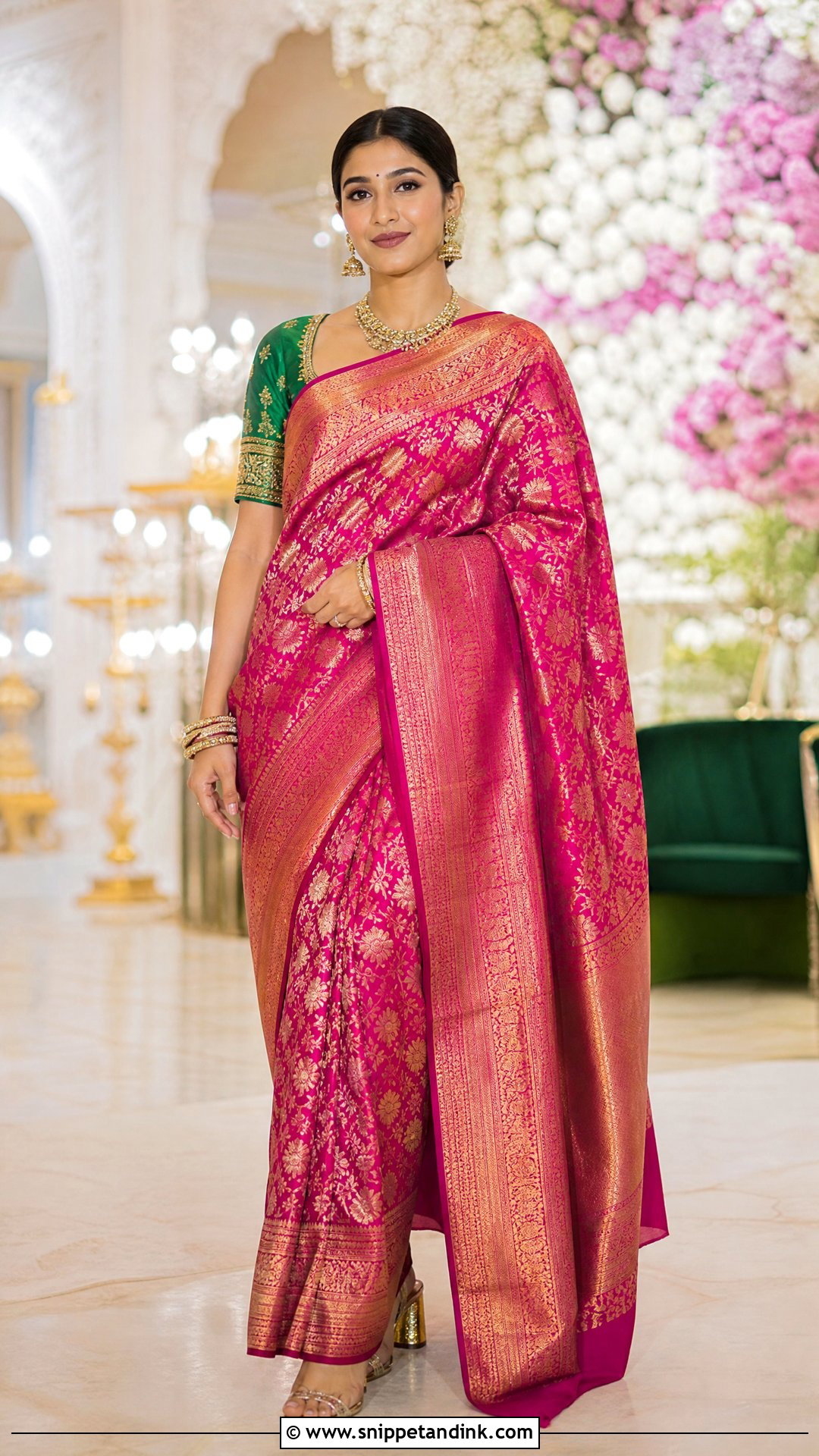
Banarasi sarees carry woven motifs and metallic zari, so the fabric is the decoration. Red, gold, green, magenta and navy are classic; pastel Banarasis feel more current. A contrasting blouse looks styled, a matching one more traditional. Gold jewellery, a neat bun and a small bindi are enough, with a plain bag and shoes. As a guest, check the colour: a red-and-gold Banarasi can look very close to what many brides wear, so I’d pick another shade unless the family says otherwise.
7. Organza Saree For Wedding
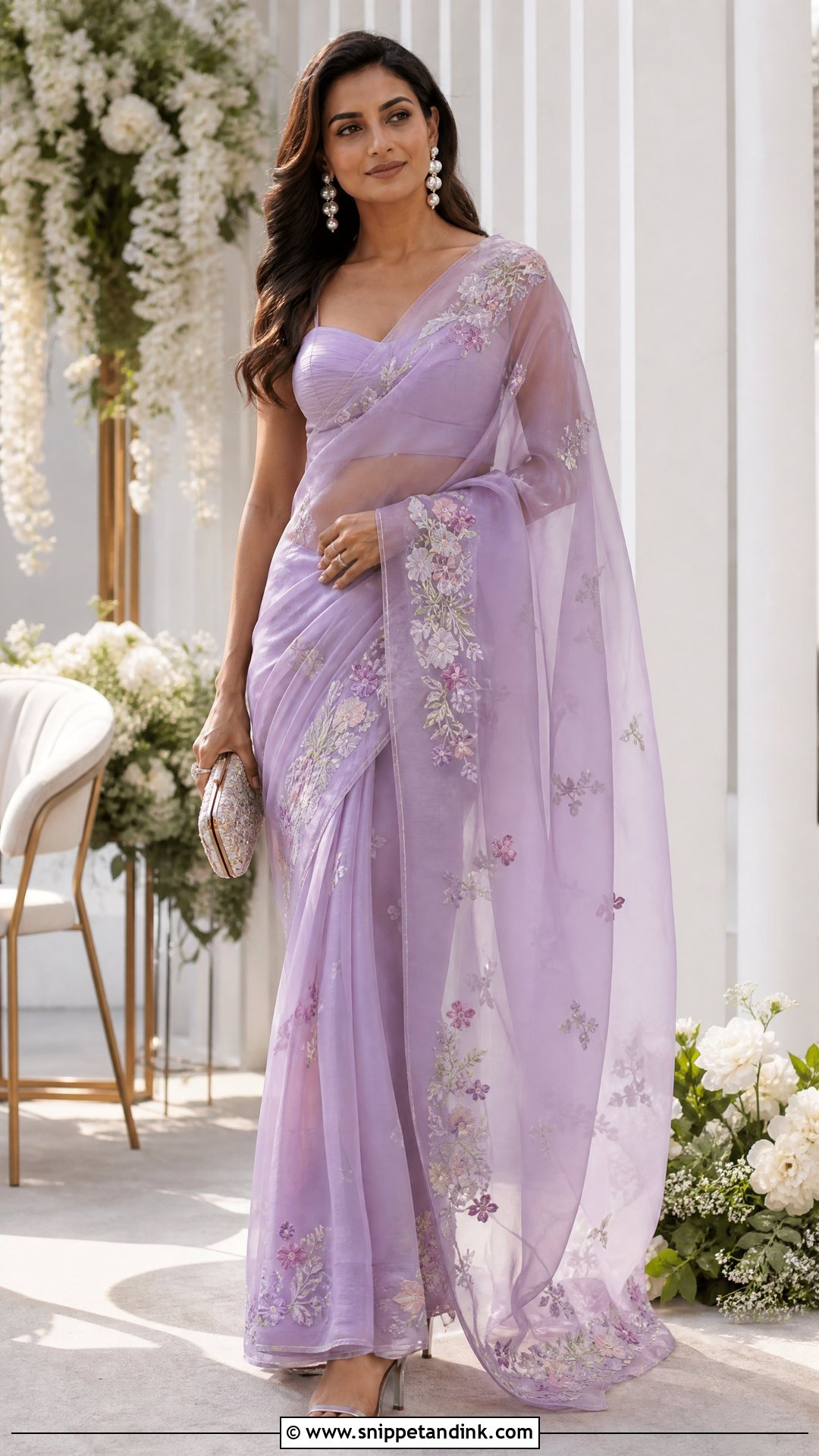
Organza is light and has a crisp, sheer body, which makes it ideal for daytime and engagement events. Floral embroidery, pearl work, sequins or a scalloped border add enough detail. The difficulty is that organza holds its shape rather than draping, so pleats can splay; pin them firmly at the waist and the shoulder. Ivory, peach, lavender and sage suit it. A structured blouse, dainty jewellery and strappy heels or embellished flats finish the look.
8. Chikankari Lehenga For Wedding
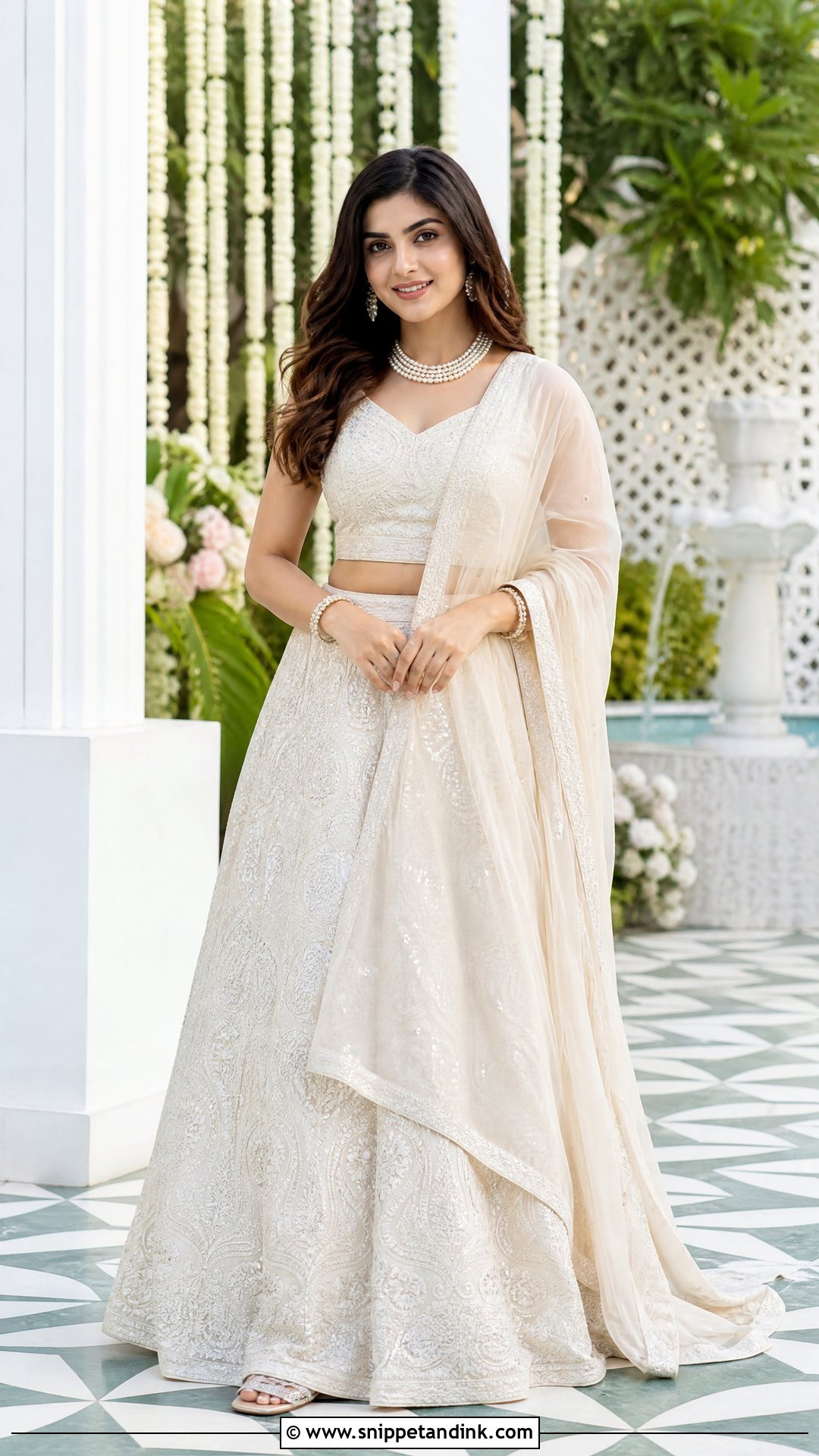
Chikankari is fine hand embroidery from Lucknow, done in white or tone-on-tone thread, and it reads as soft texture rather than shine. On its own it can look a little casual for a wedding, so I look for chikankari lehengas with a few sequins, pearls or mirrors added. Ivory, blush, mint, powder blue or soft yellow with a sheer dupatta suit summer and destination weddings. Pearl jewellery, kundan earrings or a delicate maang tikka match its quiet character.
9. Mirror Work Lehenga For Wedding
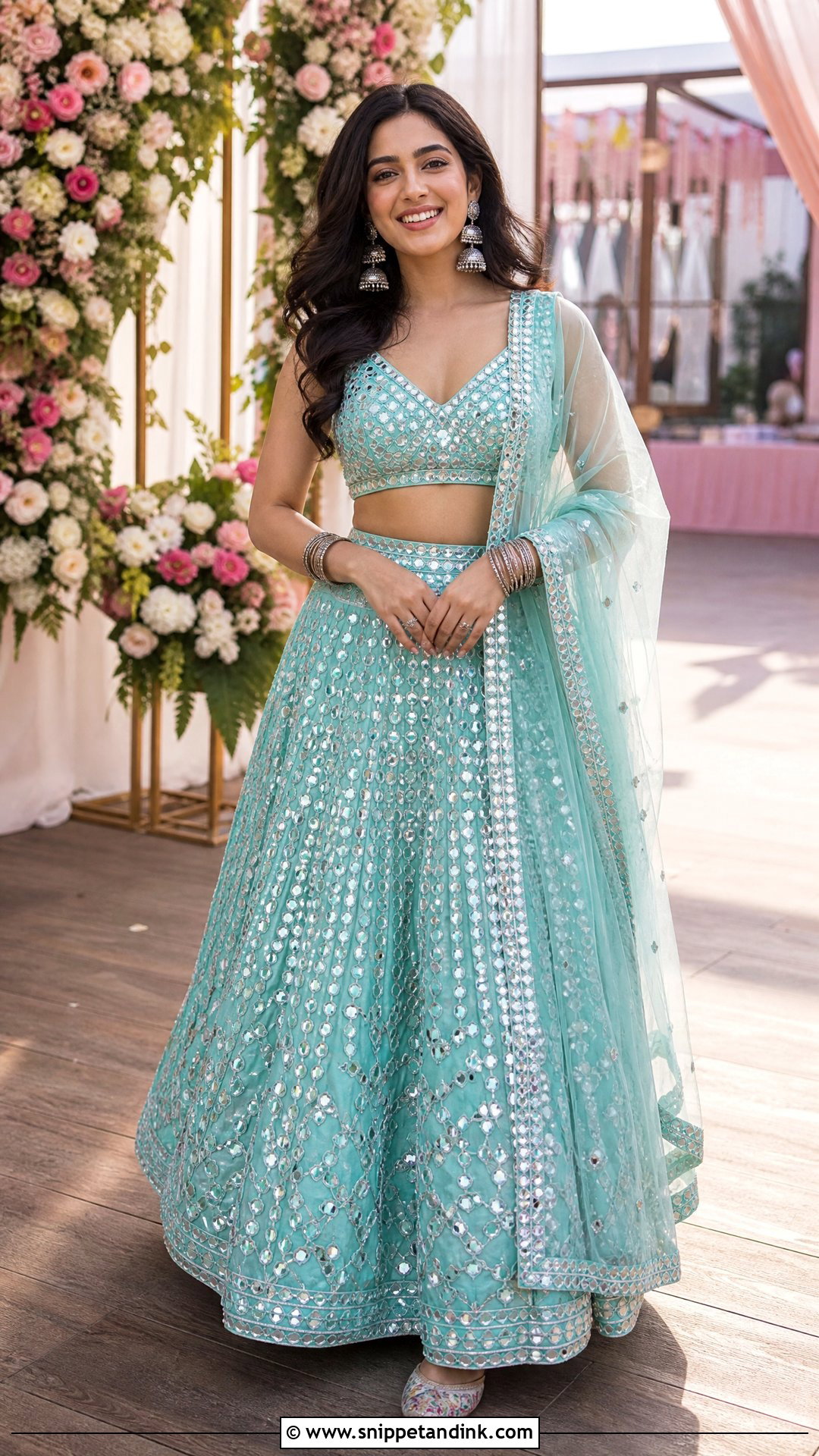
A mirror work lehenga belongs at the sangeet, mehndi and haldi, where it catches every light on the dance floor. Yellow, orange, turquoise, fuchsia or emerald suit its playful feel. A cropped blouse, flared skirt and light dupatta move well. Mirrors are heavy, so a skirt covered in them weighs more than it looks; lift it in the shop. Silver earrings, bangles, embroidered juttis and soft waves or a half-up style are plenty.
10. Sequin Saree For Wedding
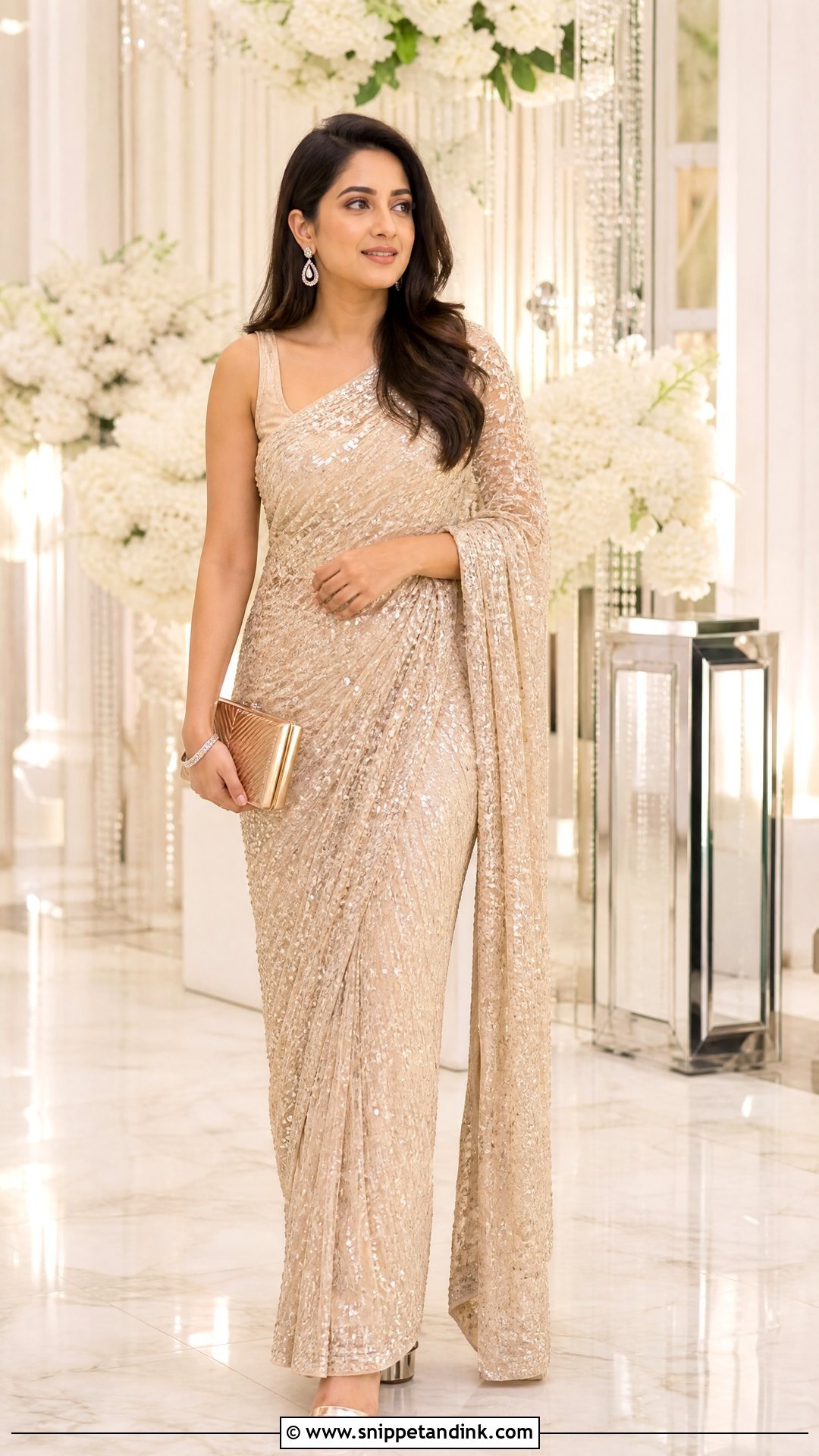
Sequin sarees belong at receptions and cocktail nights. Champagne, rose gold, silver, navy or emerald work, and black too if the family is relaxed about it. Since the saree already shines, a simple blouse is best, ideally lined with soft sleeve edges, because sequins scratch the inner arm over an evening. Sleek heels, a small clutch and just drop earrings or a bracelet. Glowing skin and defined eyes hold up well in flash photography.
11. Jacket Lehenga For Wedding
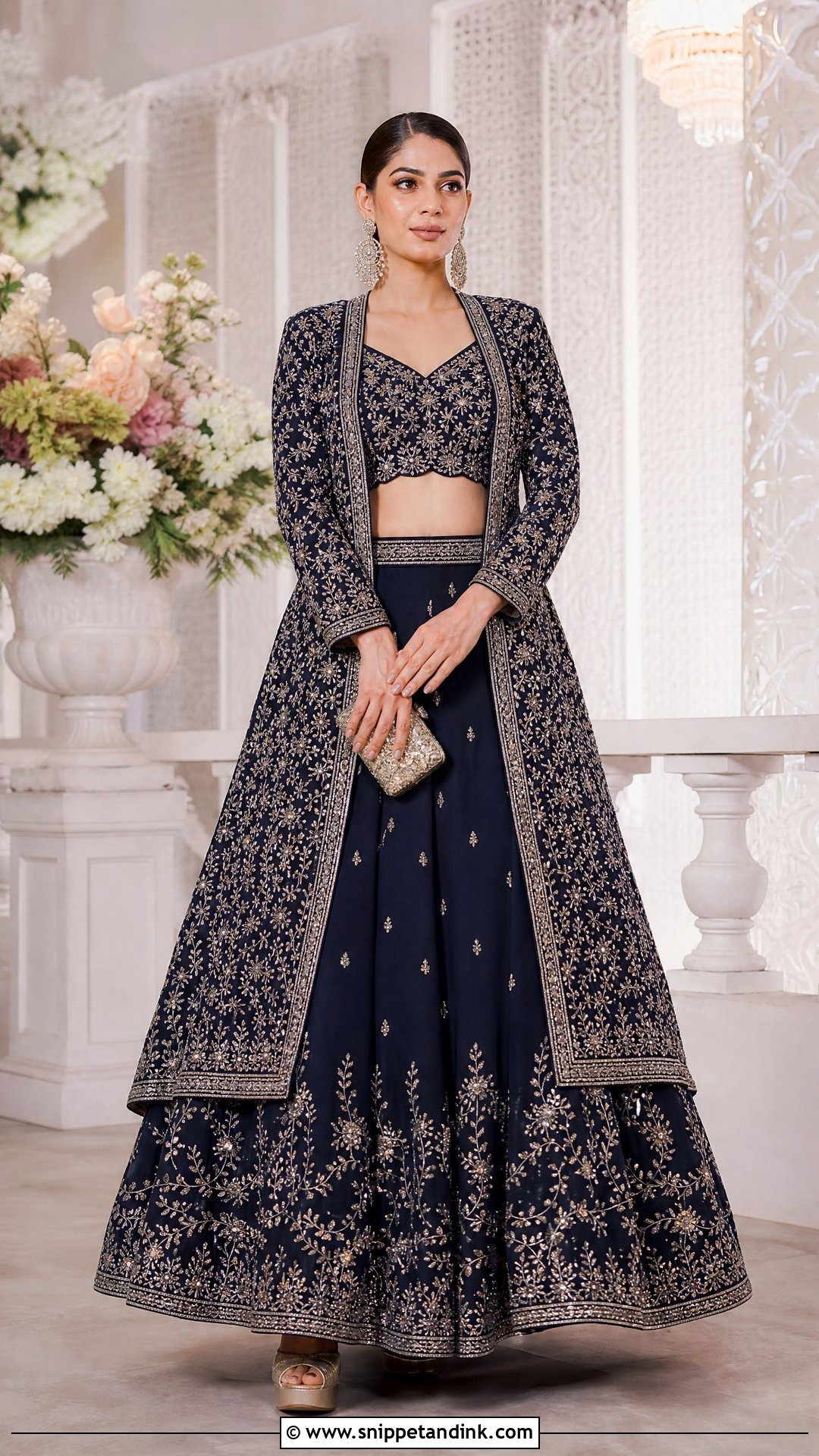
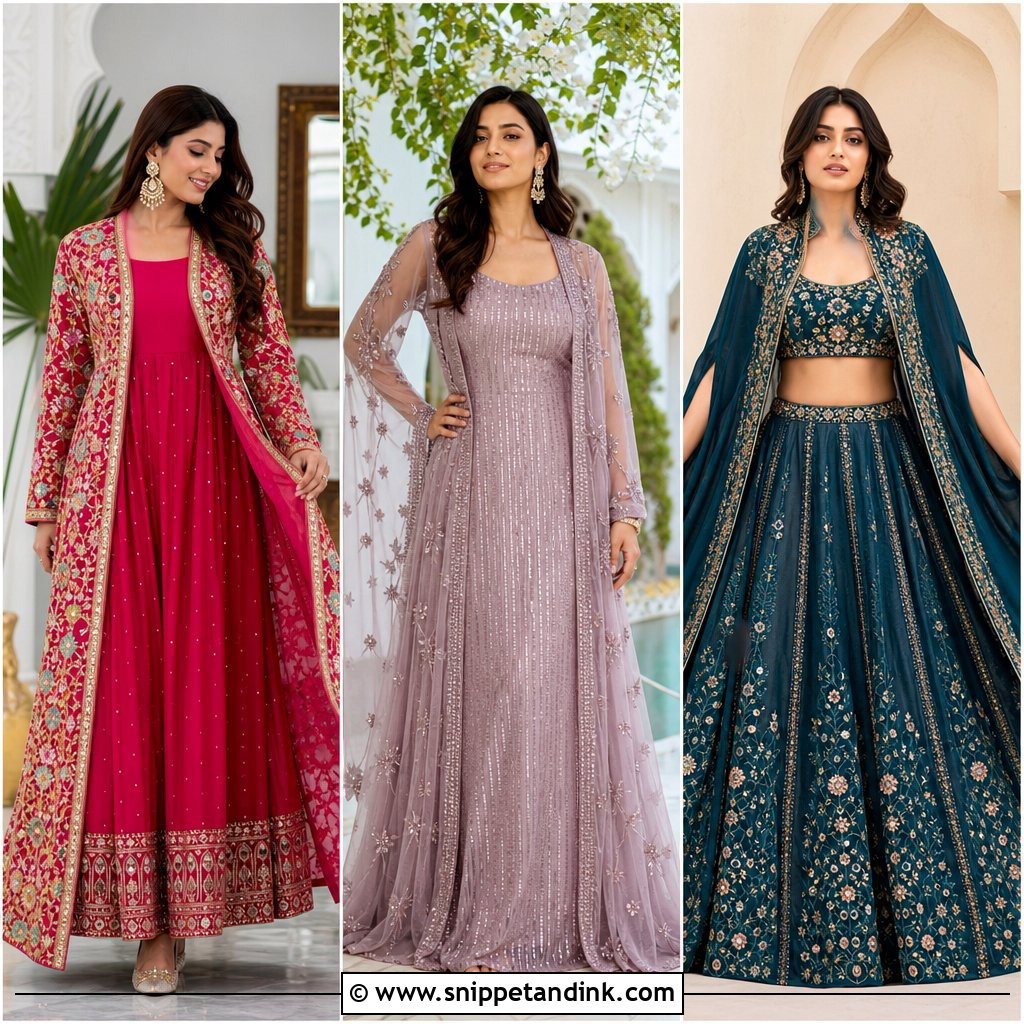
Long embroidered jackets add structure and coverage over a lehenga, and in cold weather they’re the most comfortable answer. Velvet, silk, brocade or georgette suit winter weddings and evening ceremonies. Wear the jacket over a blouse or crop top, with or without a dupatta. The jacket replaces a dupatta’s job, so there’s nothing to keep re-pinning while you greet relatives. Statement earrings and a slim clutch avoid adding bulk.
12. Cape Lehenga For Wedding
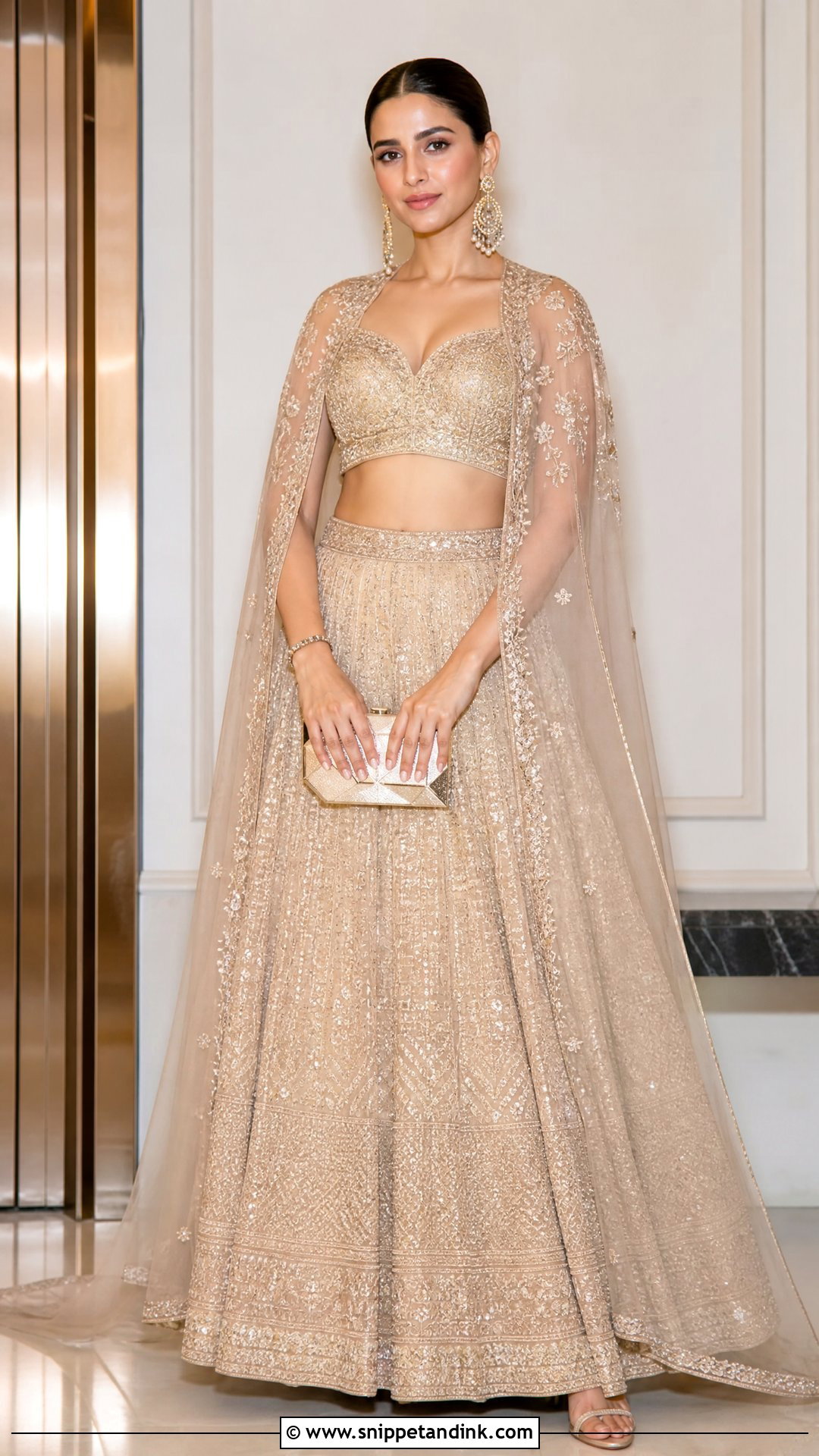
A cape replaces the dupatta and leaves your hands free, which helps if you’re carrying gifts, a plate or a child. Choose a fitted blouse with a sheer embroidered cape in net, organza or chiffon over the skirt, in soft metallics, pastels or jewel tones. Because the cape often covers the neckline, put the jewellery into earrings instead of a necklace. Heels and a slim clutch suit receptions, sangeet nights and destination weddings.
13. Printed Lehenga For Wedding
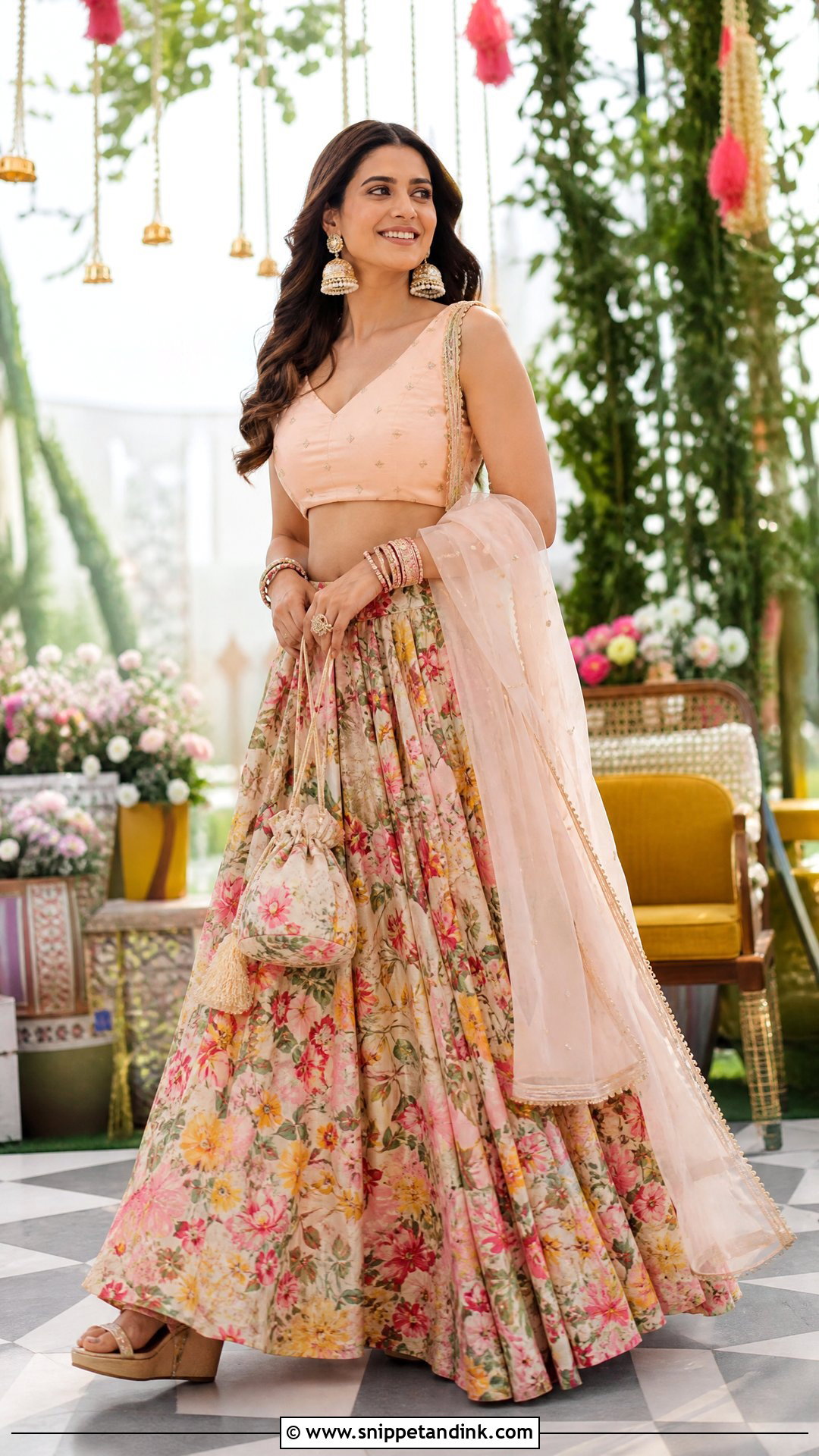
Printed lehengas give colour for daytime events without the weight of embroidery. Florals, block prints, bandhani, kalamkari and digital prints in cotton silk, georgette, crepe or organza breathe well outdoors. They suit mehndi, haldi, welcome lunches and garden functions. Haldi involves turmeric paste that stains, so I’d wear a print you won’t mind marking rather than your best silk. Jhumkas, bangles and wedges or juttis work on lawns.
14. Velvet Lehenga For Wedding
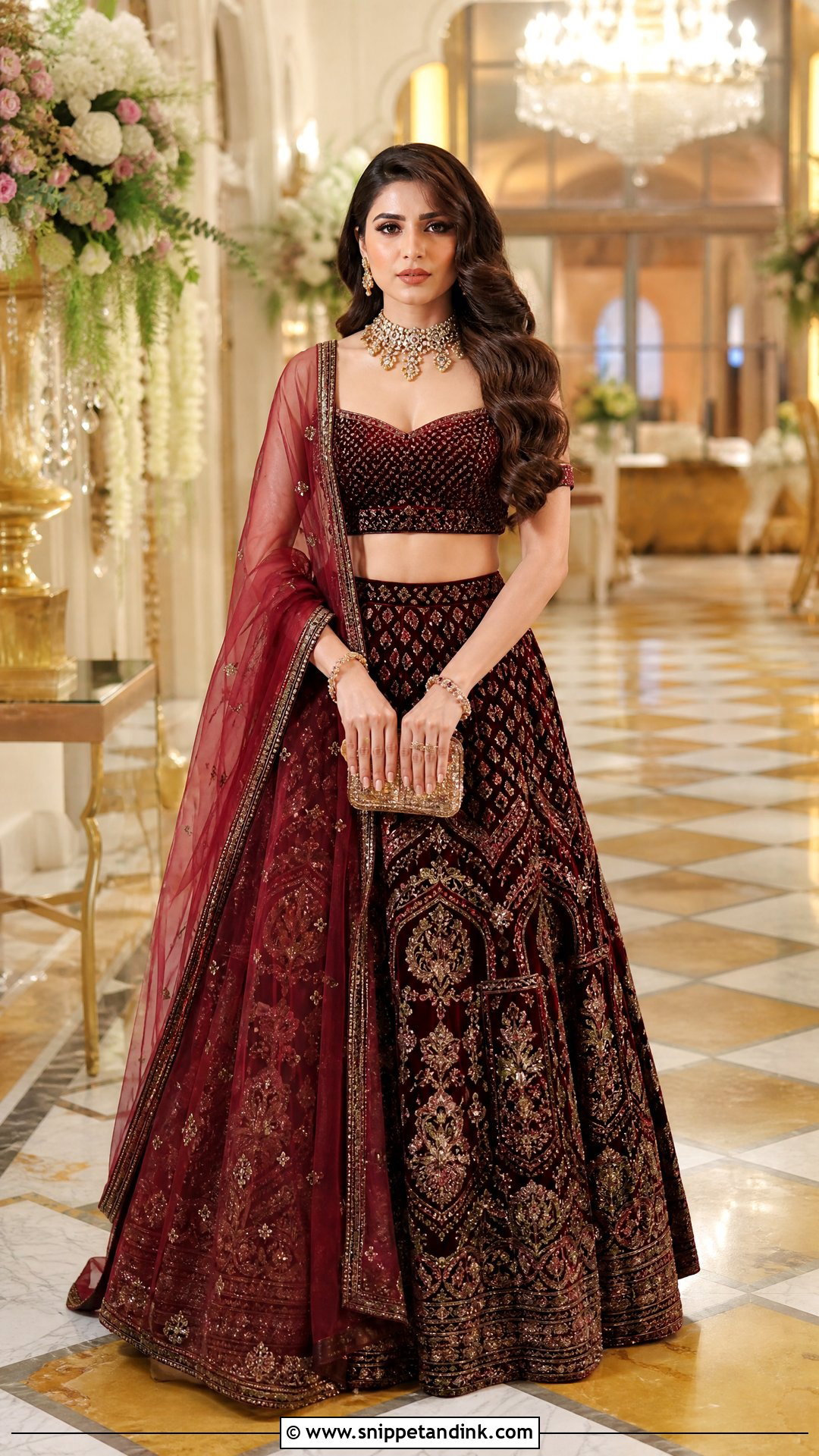
Velvet looks rich on its own, so a velvet lehenga needs little extra embellishment. Maroon, emerald, navy, plum and chocolate brown suit winter weddings and evening receptions. Balance the weight with a light net, tissue or organza dupatta, and pair polki, kundan or antique gold jewellery. Velvet is warm; in a heated, crowded hall it gets uncomfortable, so I’d only recommend it when the venue is cool. A sleek bun and a bold lip suit it.

15. Indo Western Gown For Wedding
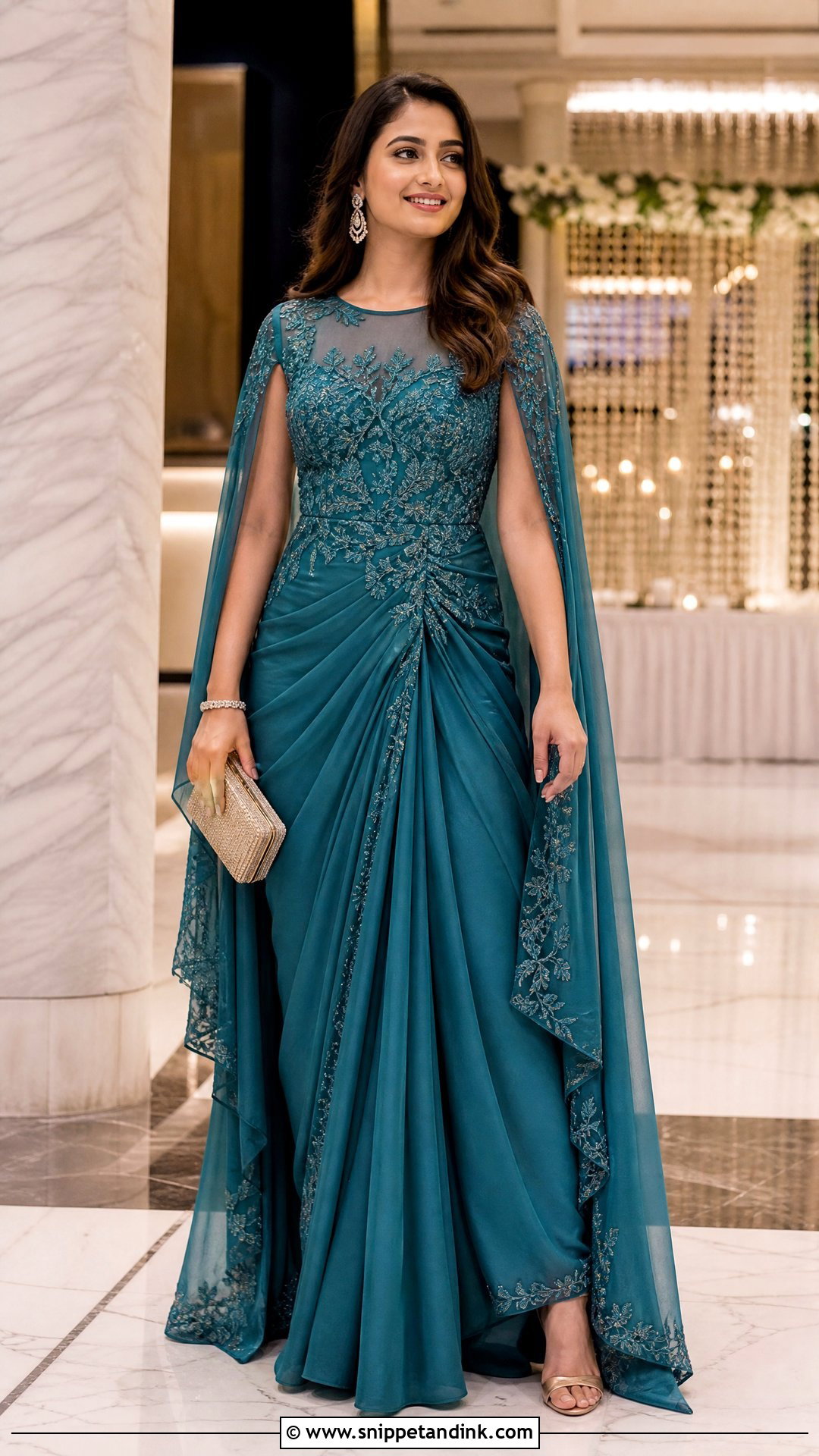
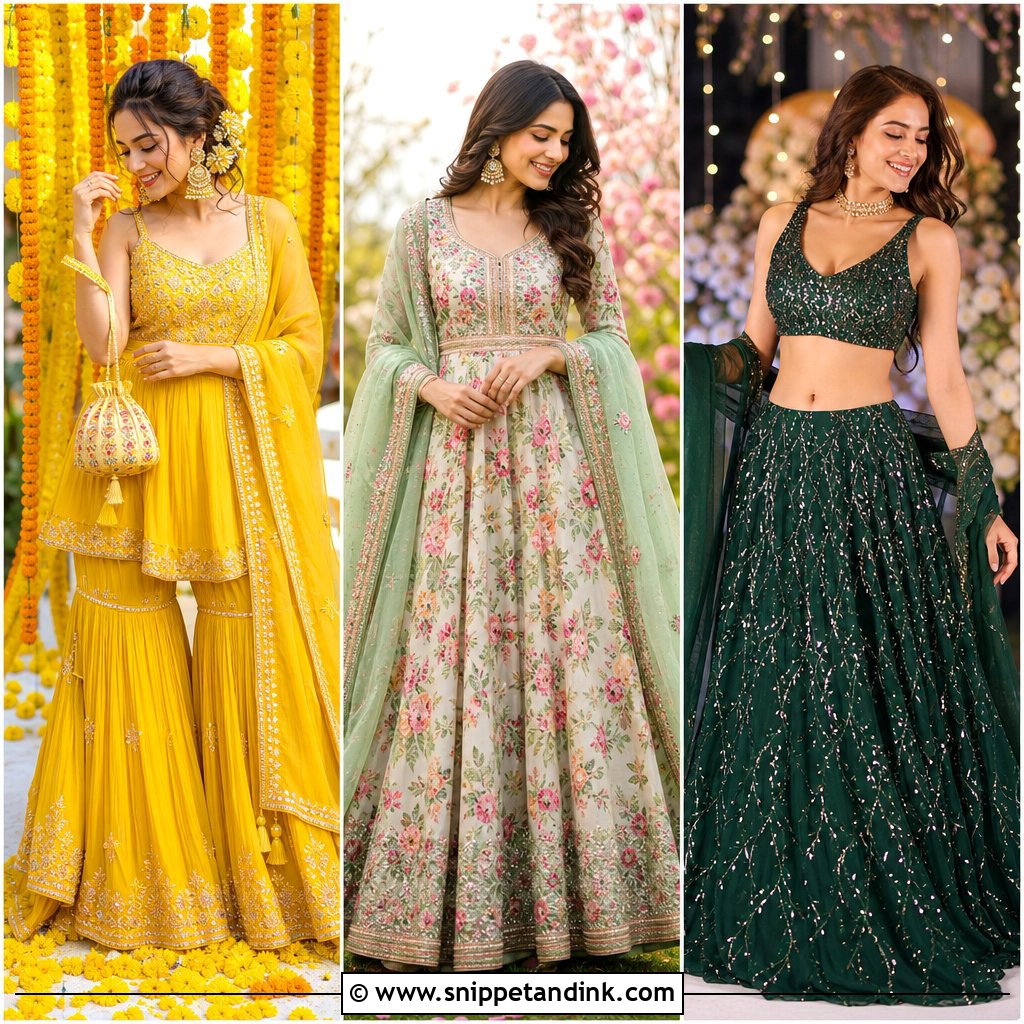
Indo-western gowns combine a gown’s ease with Indian details: a cape sleeve, an attached dupatta, zari work, mirror accents or a draped bodice. Champagne, mauve, teal, wine and midnight blue all feel dressed for receptions and engagement parties. Keep accessories to earrings, a bracelet and a clutch, since the gown leads. Heels help the hem fall correctly. This is also a sensible choice for a guest who has never worn a saree and doesn’t want to manage a drape.
16. Palazzo Suit For Wedding
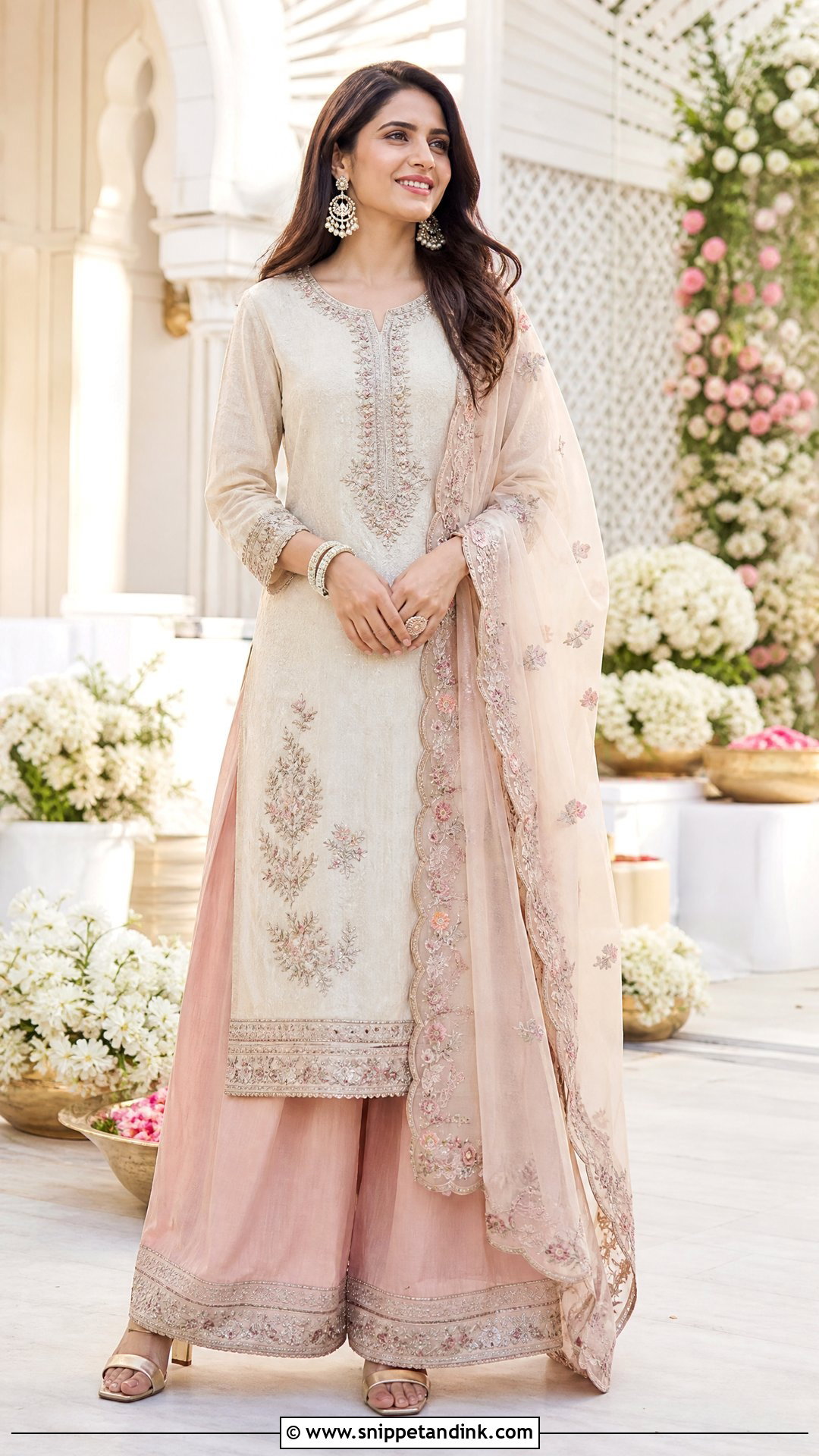
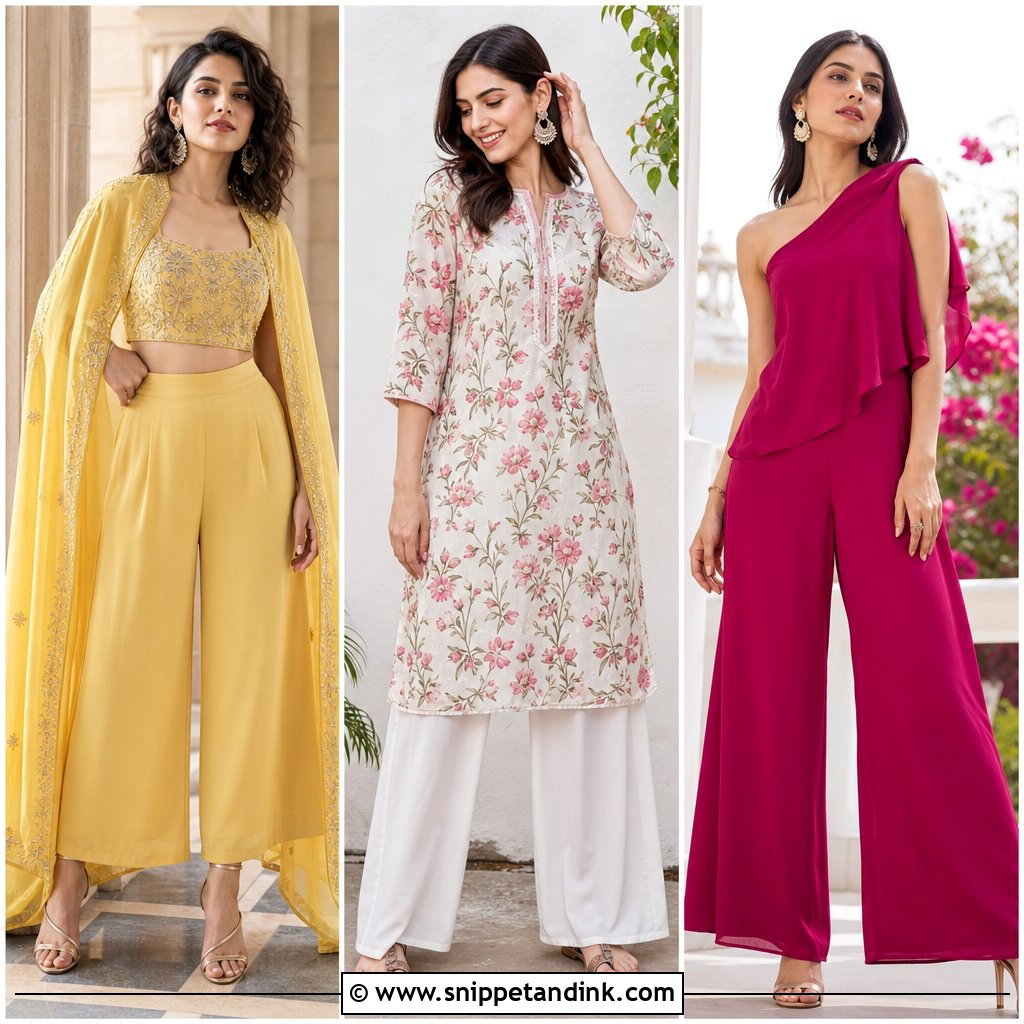
Palazzo suits are for guests who want relaxed silhouettes and a full day of comfort. Wide-leg pants in silk, georgette, brocade or crepe with an embroidered kurta and dupatta look dressed enough for a wedding. A long straight kurta gives a sleek line; a short kurti looks more playful. Silk palazzos crease at the knee when you sit for hours, so a crepe or georgette holds up better. Statement earrings, bangles and block heels finish it.
17. Kurta Skirt Set For Wedding
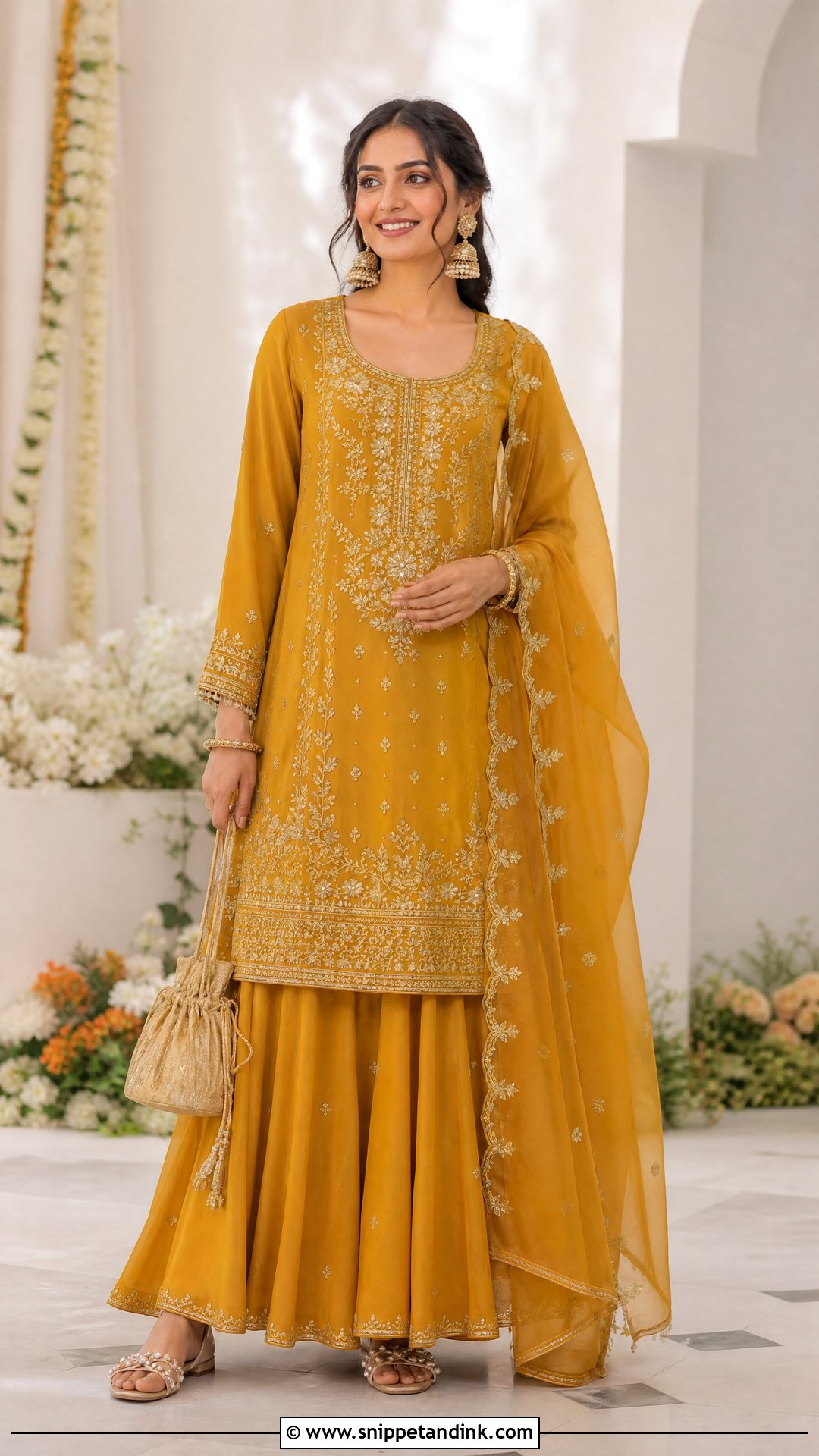
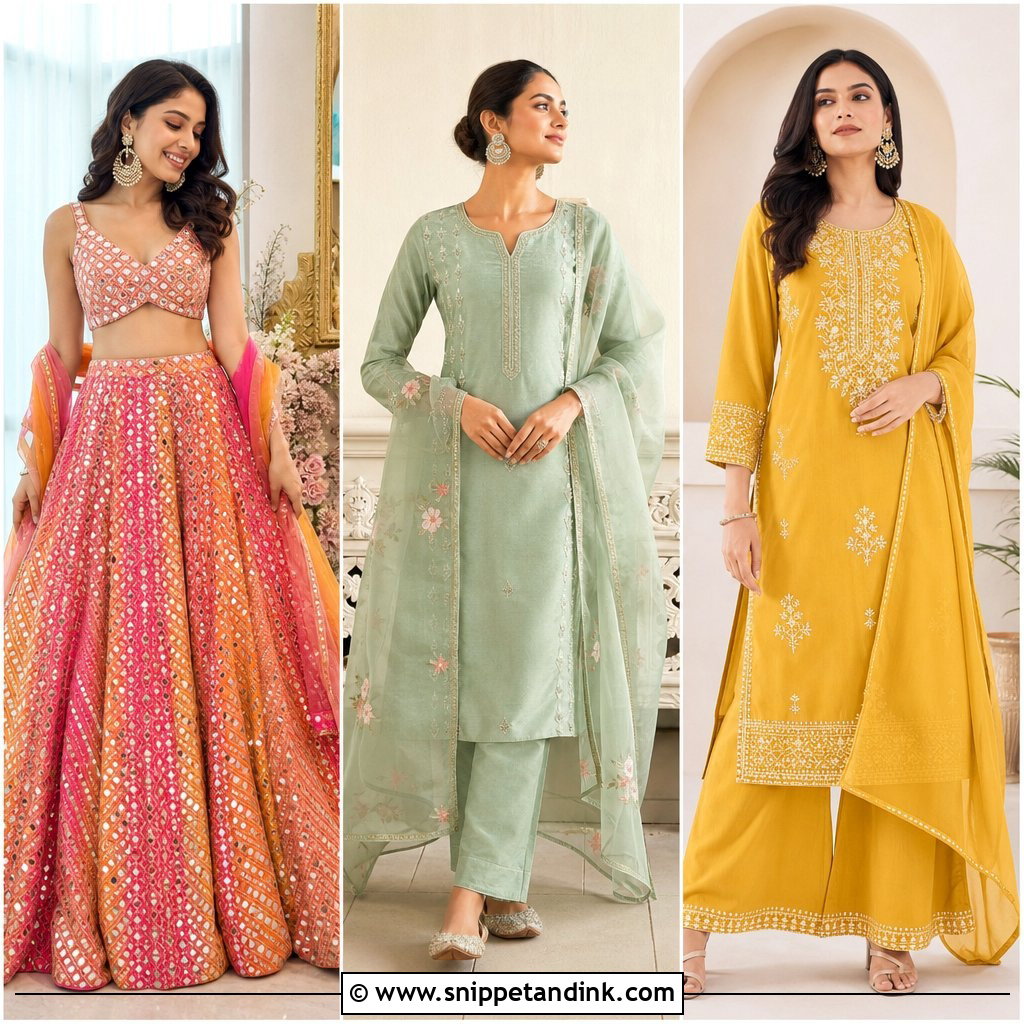
A kurta skirt set gives lehenga-style festivity with more coverage, since the kurta falls over the waistband. Embroidered silk, printed cotton silk, brocade or georgette all work; bright colours suit mehndi and haldi, deeper ones evening functions. It’s an easy choice for cousins and bridesmaids who need to help with errands all day. Jhumkas, a potli bag and embellished sandals, with a soft bun or loose waves, complete it.
18. Dhoti Set For Wedding
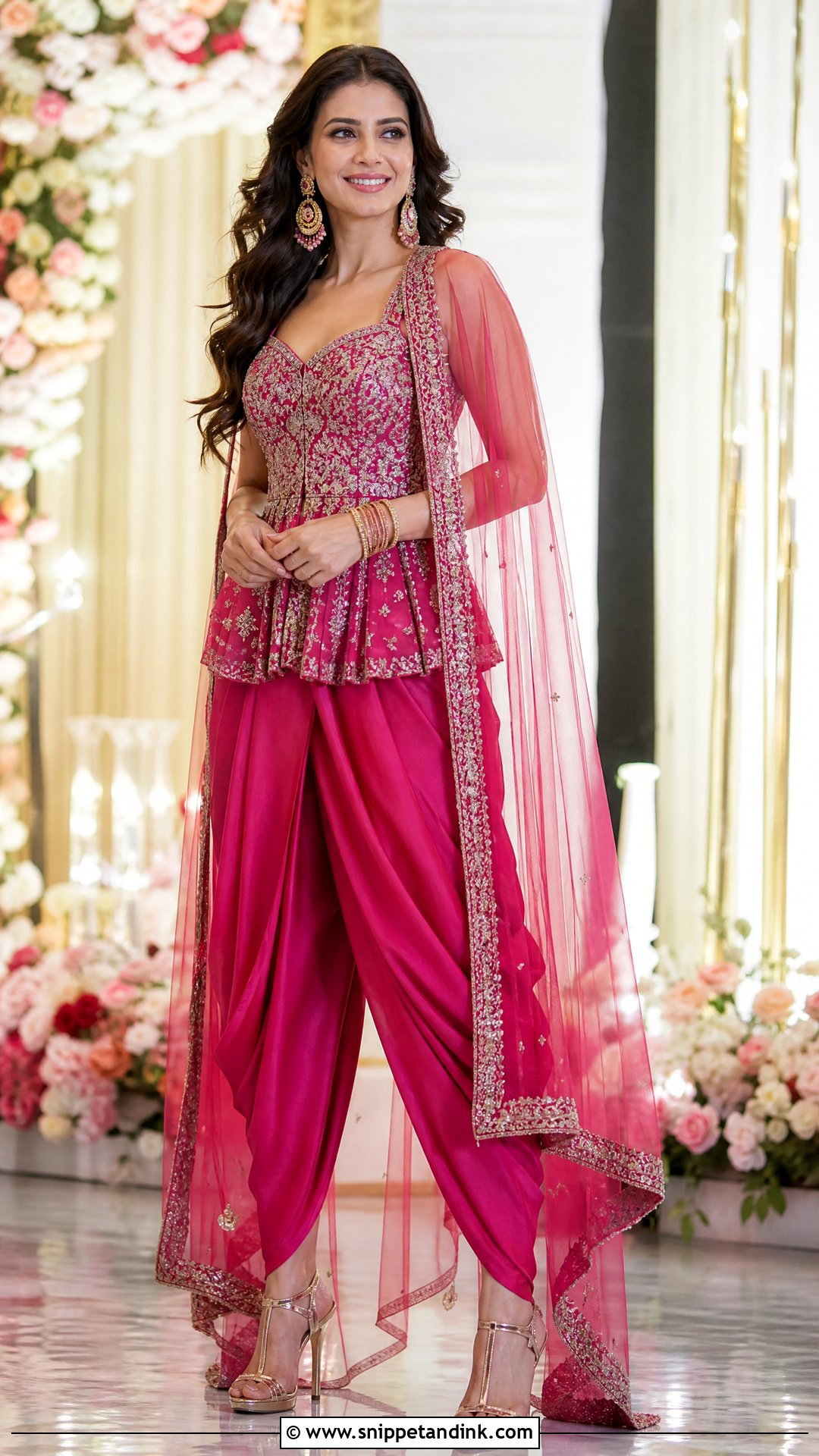
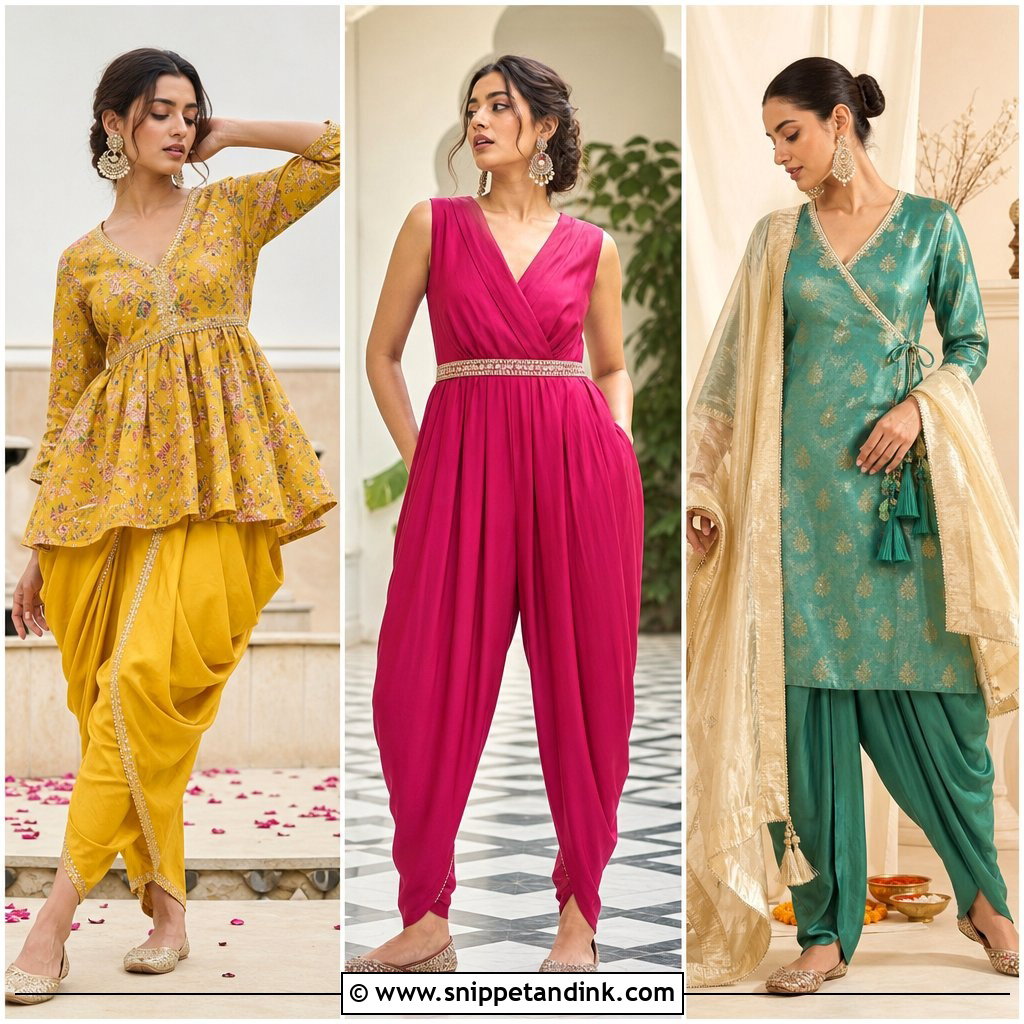
A dhoti set is a stylish fusion outfit for pre-wedding events, with a draped bottom and a kurta, peplum top or crop blouse on top. Many come with capes, jackets or dupattas. Mirror work, gota, thread embroidery or sequins make it feel festive. It’s one of the best outfits for dancing, since nothing wraps around your legs. Choose a pre-stitched dhoti rather than a hand-draped one unless someone experienced is tying it. Keep the hair sleek or tied back.
19. Saree Gown For Wedding
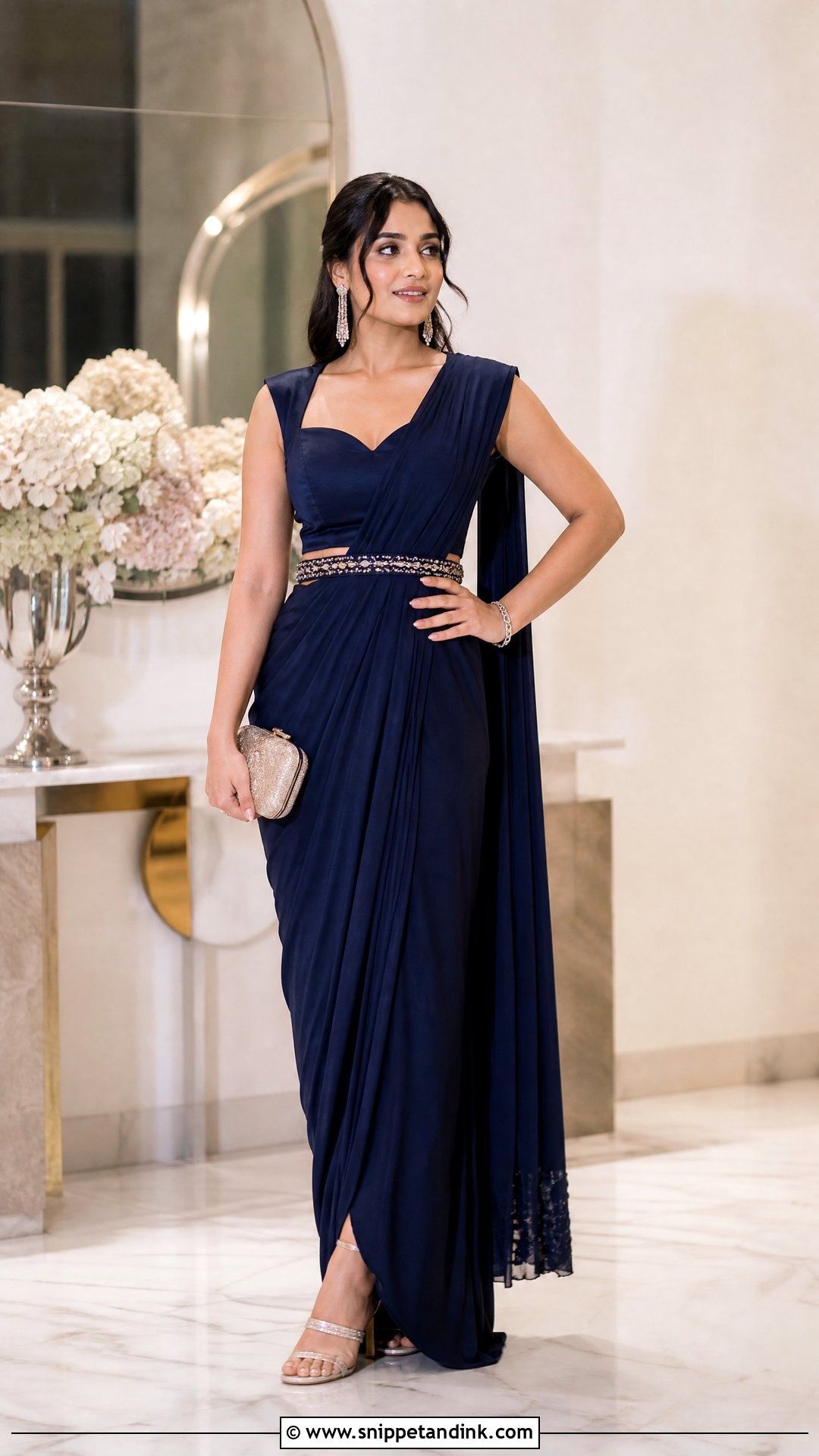
Saree gowns come pre-draped, so you get the line of a saree without managing pleats and pins all night. Satin, crepe, georgette or shimmer fabrics give a smooth finish for receptions and formal dinners. An embellished belt, structured blouse or draped pallu defines the shape. It’s the one I suggest to first-time saree wearers attending an evening event. Heels, drop earrings and a slim clutch are all it needs.
20. Ruffle Saree For Wedding
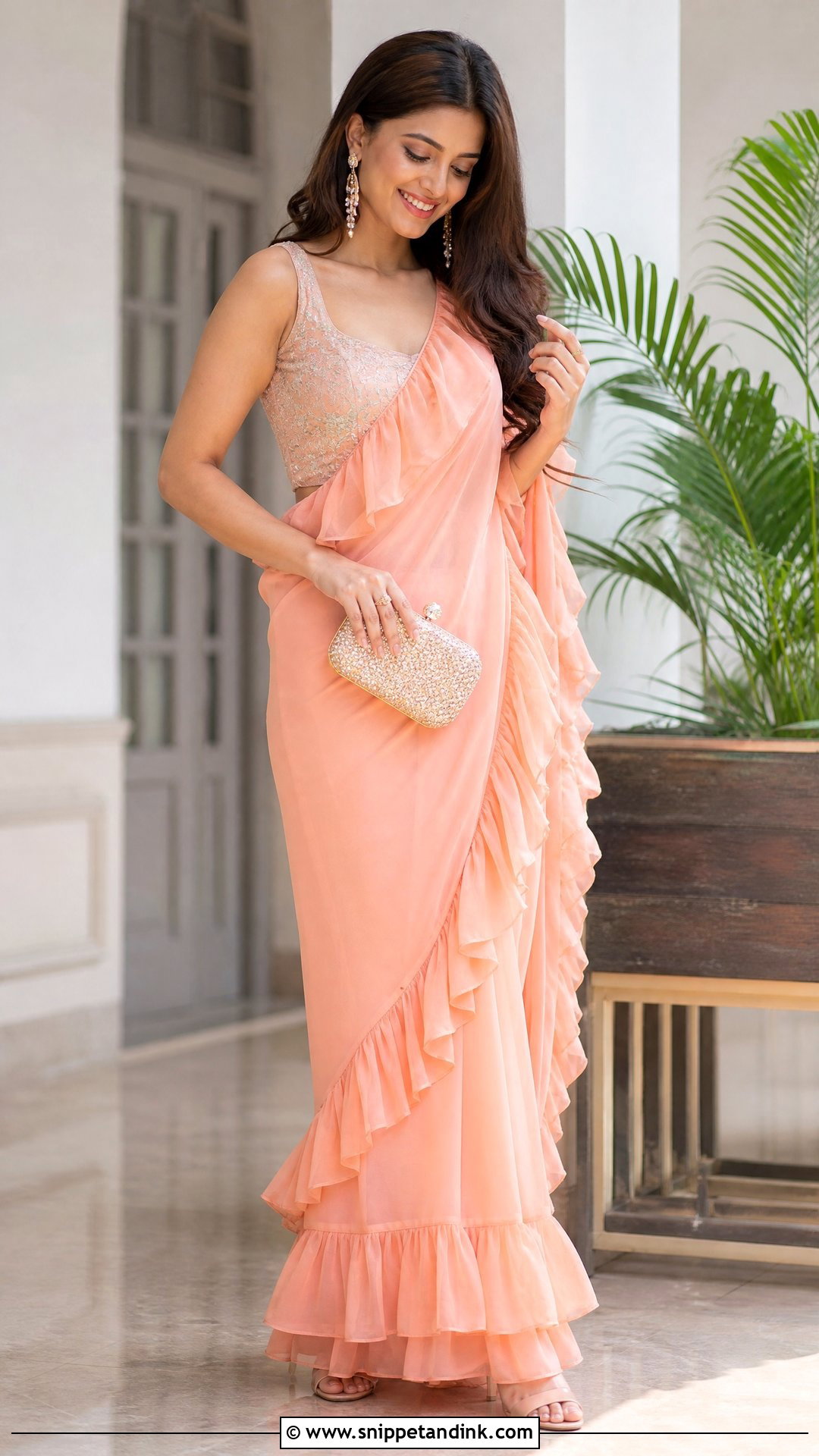
Ruffle sarees are young and playful, and they’re much easier to drape than a pleated saree. Georgette, chiffon or organza let the ruffles fall properly; stiffer fabrics stick out. They suit engagement parties, mehndi, sangeet and modern receptions. Choose the blouse with the dress code in mind: an off-shoulder style may be fine at a cocktail night but not at a temple ceremony. Heels help the ruffles flow. Keep accessories sleek.
21. Punjabi Suit For Wedding
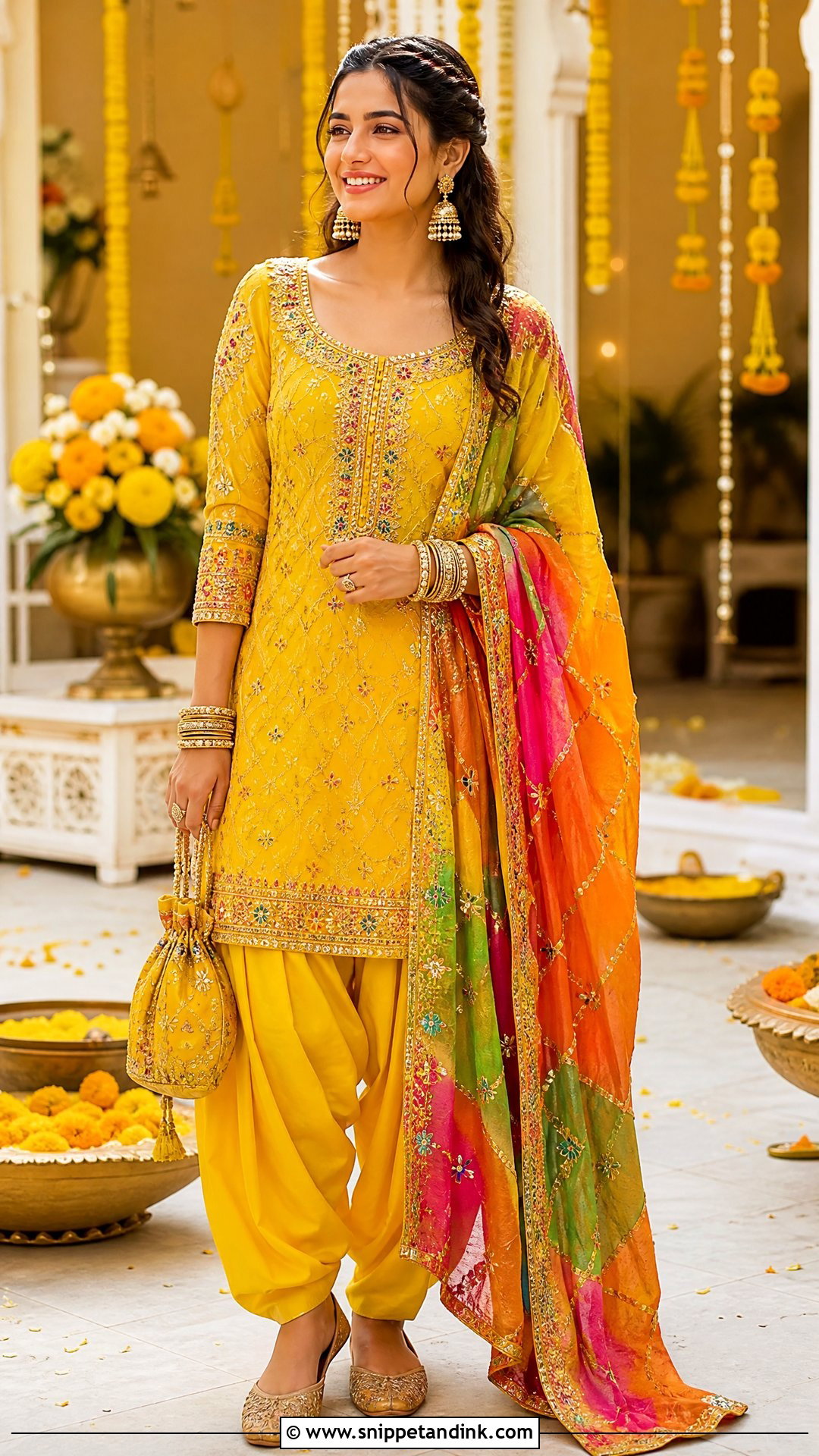
A Punjabi suit with a kameez, salwar or pants and a dupatta is about the most practical outfit for a long day of family events. Phulkari embroidery, gota patti, zari, sequins or bright prints make it festive. Yellow, pink, green, orange and royal blue suit daytime functions. If the ceremony is at a gurdwara, the dupatta doubles as the head covering, so pick one long enough to stay on. Juttis, jhumkas and bangles finish it.
22. Kanjivaram Saree For Wedding
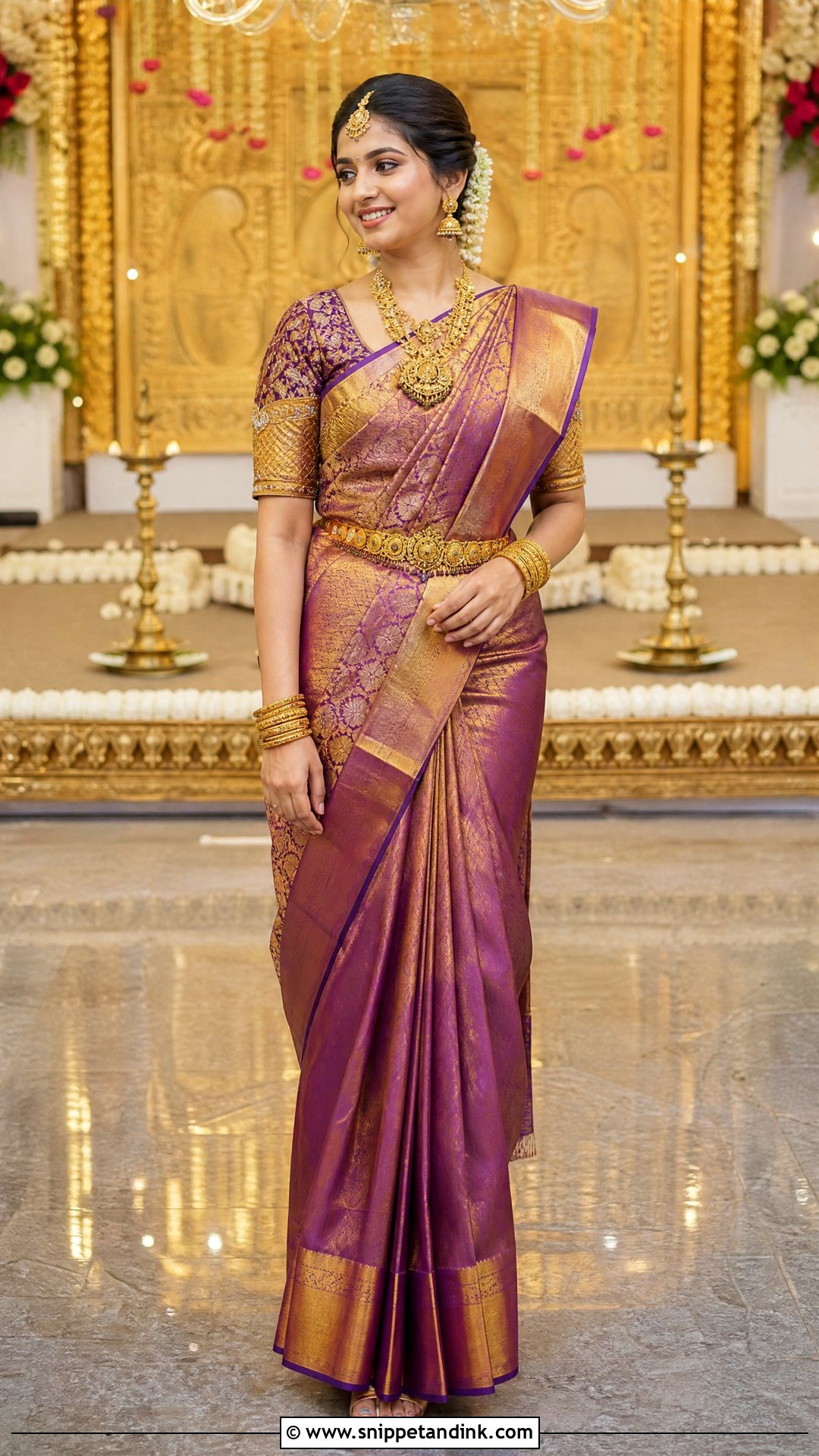
Kanjivaram silk is heavy and woven with bold contrast borders, and it’s the classic choice for South Indian and temple weddings. Red, gold, green, purple and orange feel festive. Temple jewellery, gold bangles and a neat bun with fresh flowers suit it. The weight means the drape has to be pinned well at the shoulder and waist; loose Kanjivaram pleats fan open. A structured blouse balances the richness, and a simple clutch is enough.
23. Co Ord Set For Wedding
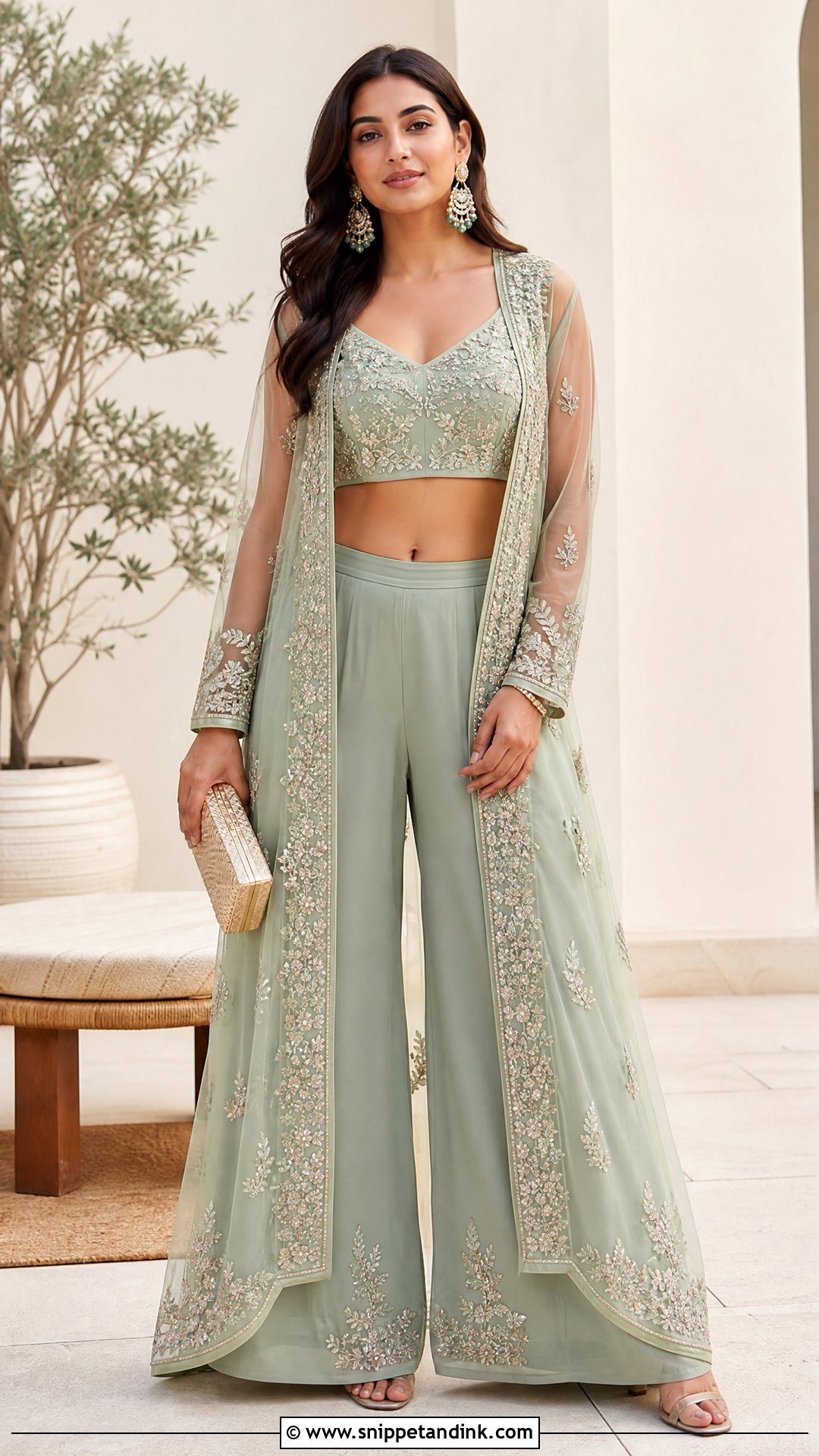
Festive co-ord sets are the easiest outfit to pack. Matching embroidered crop tops with wide-leg pants, skirts, capes or long jackets in silk, brocade, georgette or satin suit welcome parties, mehndi, casual receptions and destination weddings. They also restyle well afterwards as separates. Add statement earrings, a cuff and heeled sandals. Crop tops can show the midriff when you lift your arms to dance, so try that in the changing room if it bothers you.
24. Bridesmaid Lehenga For Wedding
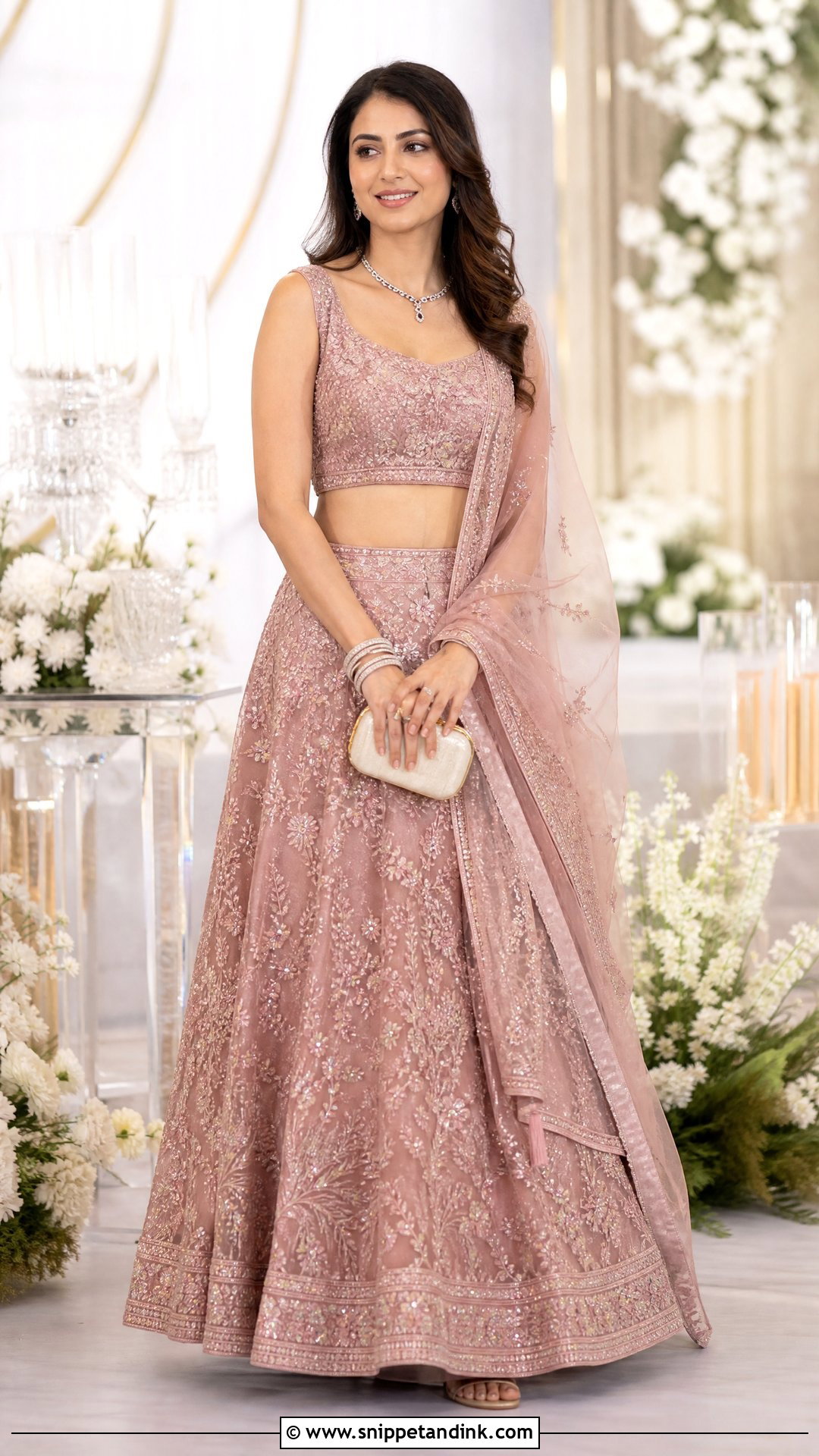
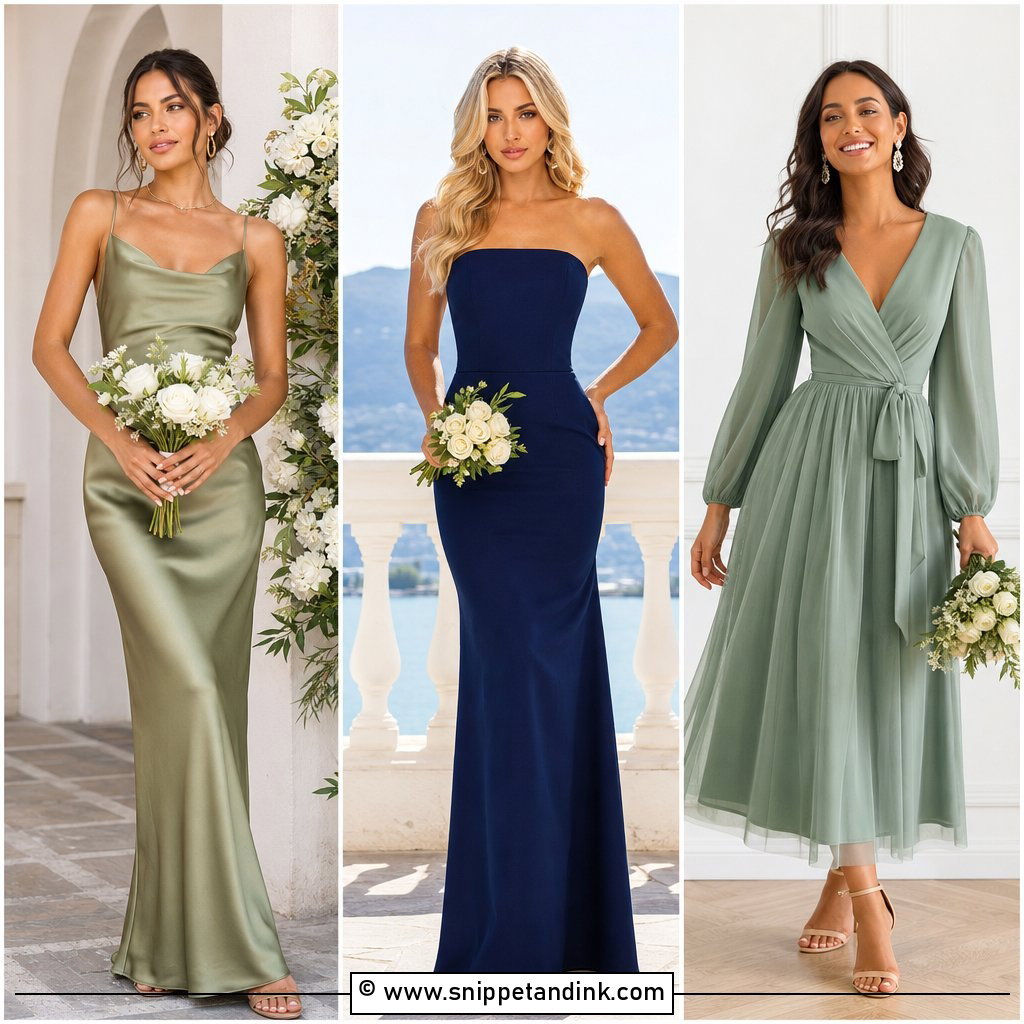
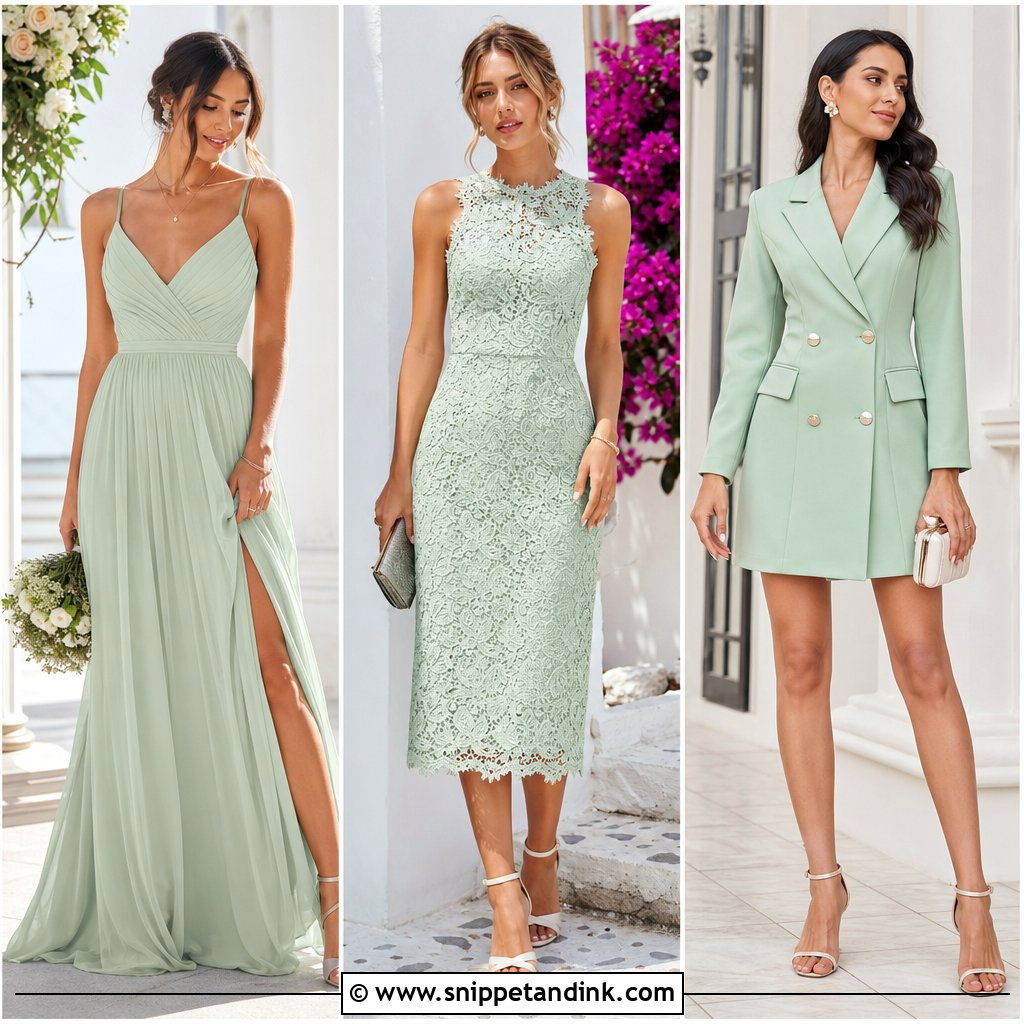
Bridesmaid lehengas should coordinate with the bride without competing. Soft pastels, jewel tones or a set palette work for the group, with light embroidery, sequins, mirror work or florals. The blouse needs to fit securely, and the dupatta should pin easily, because you’ll be helping with rituals, carrying things and fixing the bride’s train. Ask the bride whether she wants matching or mix-and-match; mix-and-match flatters more body types. Earrings, bangles and comfortable heels finish it.
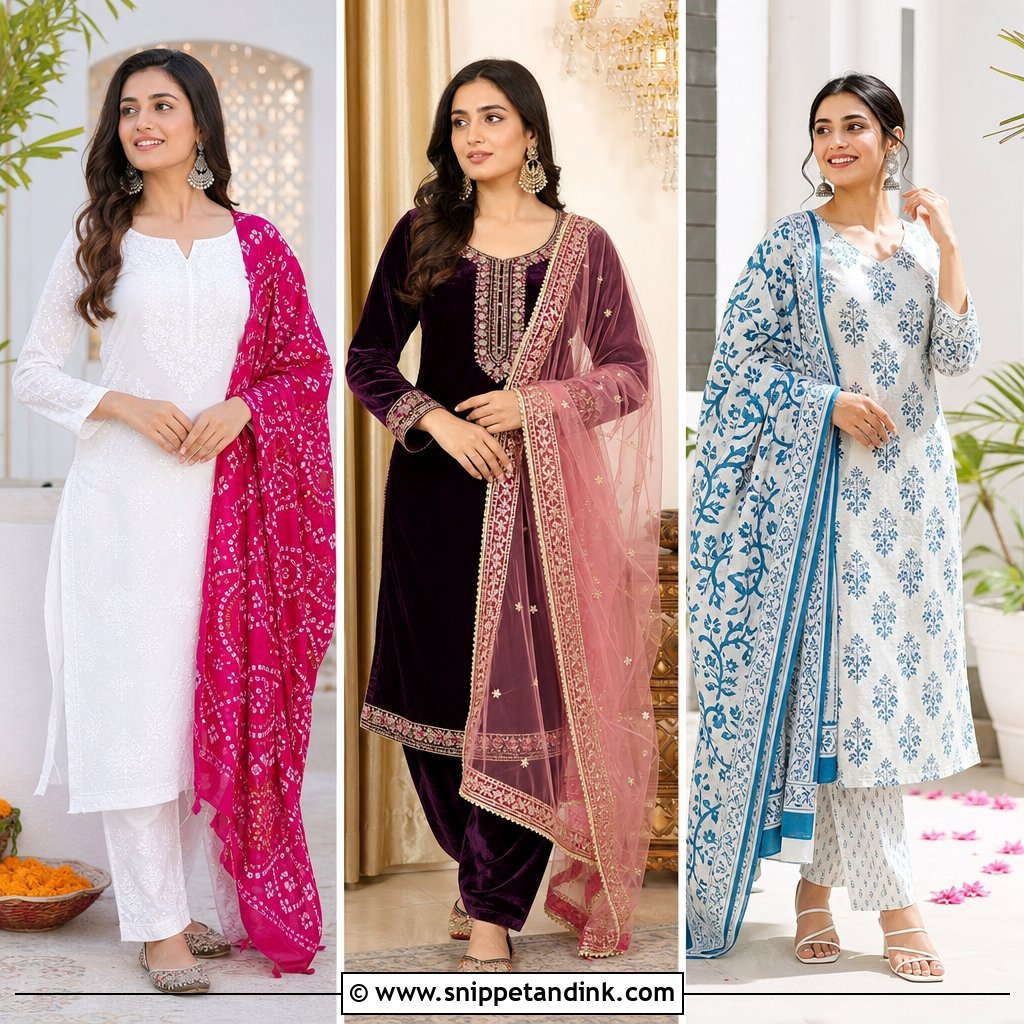
25. Reception Lehenga For Wedding
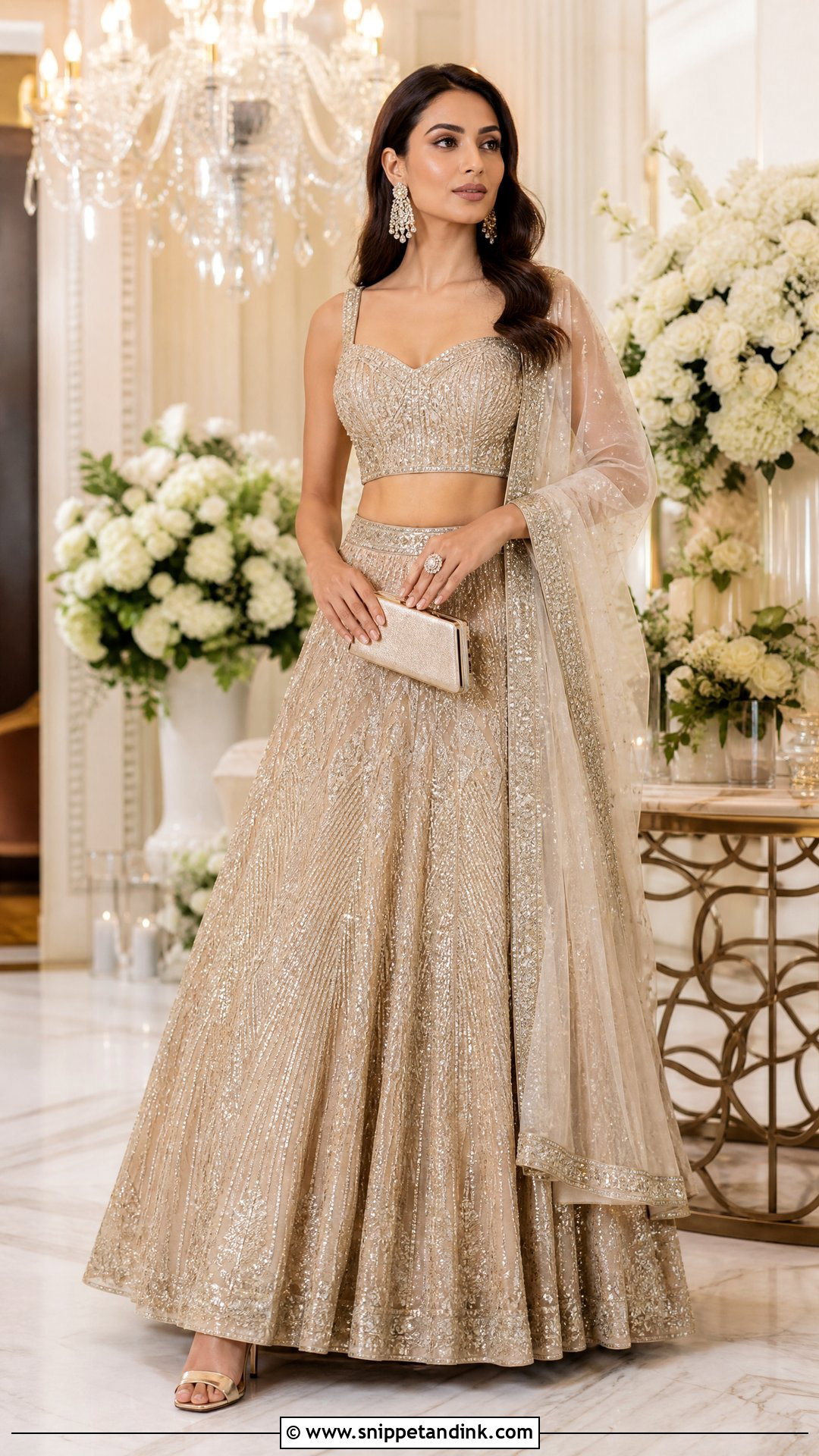
Reception lehengas can be the most dressed-up thing you wear all week. Shimmer, metallic embroidery, velvet, sequins or crystals in champagne, silver, navy, wine, emerald or rose gold all work under evening lights. A fitted blouse, structured skirt and light dupatta give a clean shape. Balance the jewellery to the neckline: chandelier earrings with a high neck, a slim necklace with an open one. A blowout, sleek bun or soft waves complete the look.
Guest Etiquette on Colour, Shoulders and Shoes
Indian weddings vary hugely by region and religion, so treat these as questions to ask rather than fixed rules.
- Red and heavy gold are often the bride’s colours. Unless the family says it’s fine, guests usually avoid full bridal red.
- White and black are worn freely by some families and avoided by others for auspicious events. Ask before you wear either.
- At a gurdwara, everyone covers their head and removes shoes; at many temples, shoes come off too. A dupatta or scarf and shoes that slip off easily save fuss.
- Religious ceremonies usually call for covered shoulders; save off-shoulder blouses for the reception.
First Saree? Get It Draped, Not Improvised
A saree that’s never been draped before is hard to get right alone, and a slipping pleat or pallu will occupy you all evening. Ask a relative or the bride’s team to drape you, or book a draper; many wedding makeup artists offer it. Use more safety pins than you think, at the pleats, at the waist and under the pallu at the shoulder, and wear a fitted petticoat in the right colour, because the pleats are tucked into it.
If you’re unsure, a pre-stitched saree or saree gown gives you the same look with a zip. Wear your heels during draping so the hem length is correct.
Dress for the Event, Then for the Photos
Plan each outfit around what you’ll be doing at that event: sitting for a ritual, dancing at the sangeet, standing in a receiving line. A saree for ceremonies, a lehenga or sharara for festivities and a fusion piece for the reception covers most weddings. Check the venue and weather, ask the family about colours, and try everything with your shoes before you leave home. Comfort is what shows in candid photos.
You'll Like These Ideas:


Leave a Reply