
A matched kurta set solves the guest-outfit problem in one purchase: top, bottoms and dupatta already agree with each other, so all you add is shoes, jewelry and a bag. The range runs from silk suits and flowing Anarkalis to shararas, ghararas, light destination sets, mirror work, chikankari, brocade and relaxed palazzo silhouettes. I style each set below as a complete look, with the jewelry, shoes, bag and dupatta I’d pair with it, plus the fit detail I’d check before the event. Adjust the colors and accessories to your shape, your taste and the couple’s dress code, from haldi to reception.
Ordering a Kurta Set Online Without a Fitting Room
Most guests now buy their sets online, and most of the disappointments I see come from three things: size charts, fabric names and delivery time.
Read whether the chart is body or garment size
Some sellers list your body measurements, others list the finished garment, which includes ease. Measure your bust, waist, hip and shoulder width, then compare against the right column. If a garment measures exactly your body size, it will be too tight to sit in. I look for two to four inches of ease at the bust on a fitted kurta.
Check what the fabric name really means
Words like chanderi, silk and organza are often used for the look of the fabric rather than the fiber. Art silk is usually viscose or polyester. Read the composition line in the listing. Polyester blends hold color well and resist creasing, but they trap heat, which matters at a summer daytime function.
Stitched, semi-stitched or unstitched
Unstitched sets are fabric only and need a tailor, and semi-stitched ones need finishing. Both take extra weeks. If the wedding is close, buy fully stitched and leave time for one alteration and a possible return.
1. Pastel Chanderi Kurta Set With Straight Pants
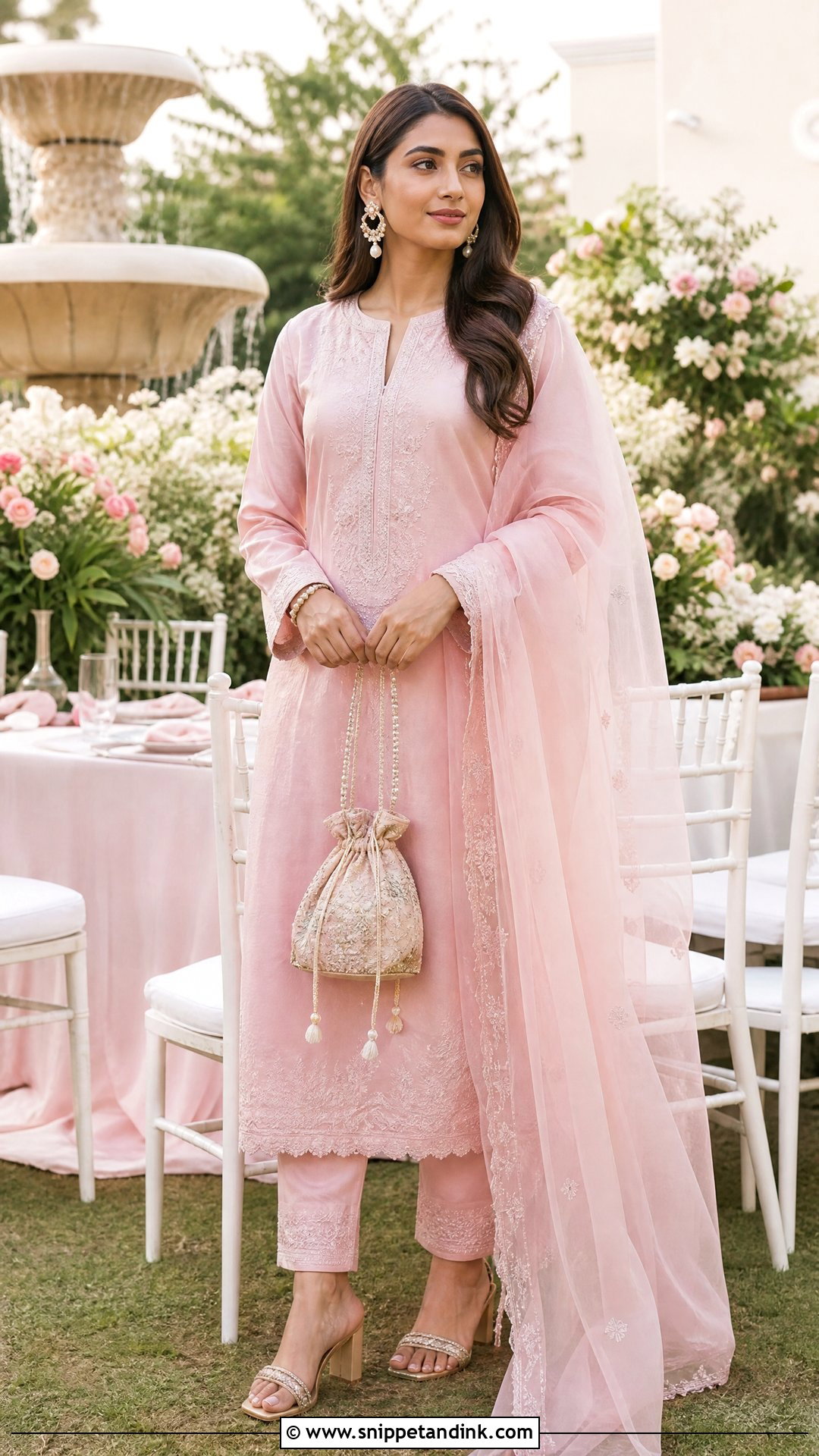
Chanderi is a fine handwoven fabric with a slight sheen, light enough for a hot daytime ceremony. A knee-length kurta in powder pink, mint, lavender or soft peach, with zari only at the neckline and cuffs, gives just enough shine. Straight pants keep it clean and a sheer organza dupatta adds volume. Pearl drops, metallic block heels and an embroidered potli finish it. Chanderi is semi-sheer, so I always ask whether the kurta comes lined; without one, the pants’ waistband shows through in sunlight.
2. Mirror Work Kurta Set With Palazzo Pants
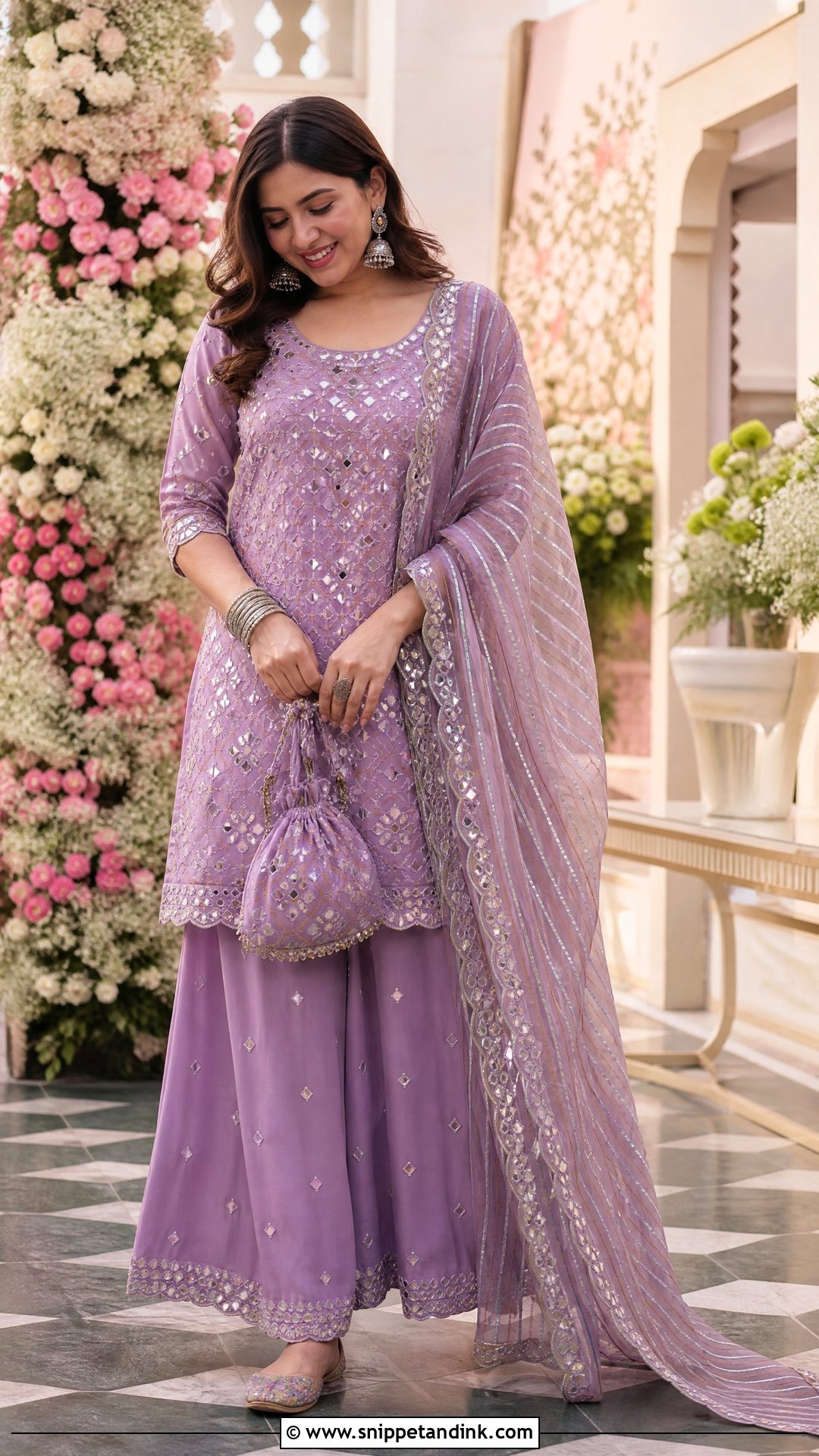
Small, evenly spaced mirrors catch light better than a few big ones, and they’re lighter too. Choose a jewel-toned or pastel kurta with fine mirror work and pair it with flowing palazzos so you can dance at the mehendi or sangeet. A light dupatta with a narrow mirror border ties it together. Silver jhumkas, stacked bangles and embellished juttis keep the festive theme, and a solid potli in one shade from the outfit stops it looking busy. I’d hem the palazzos to just graze the top of your shoes.
3. Yellow Gota Patti Kurta Set for Haldi
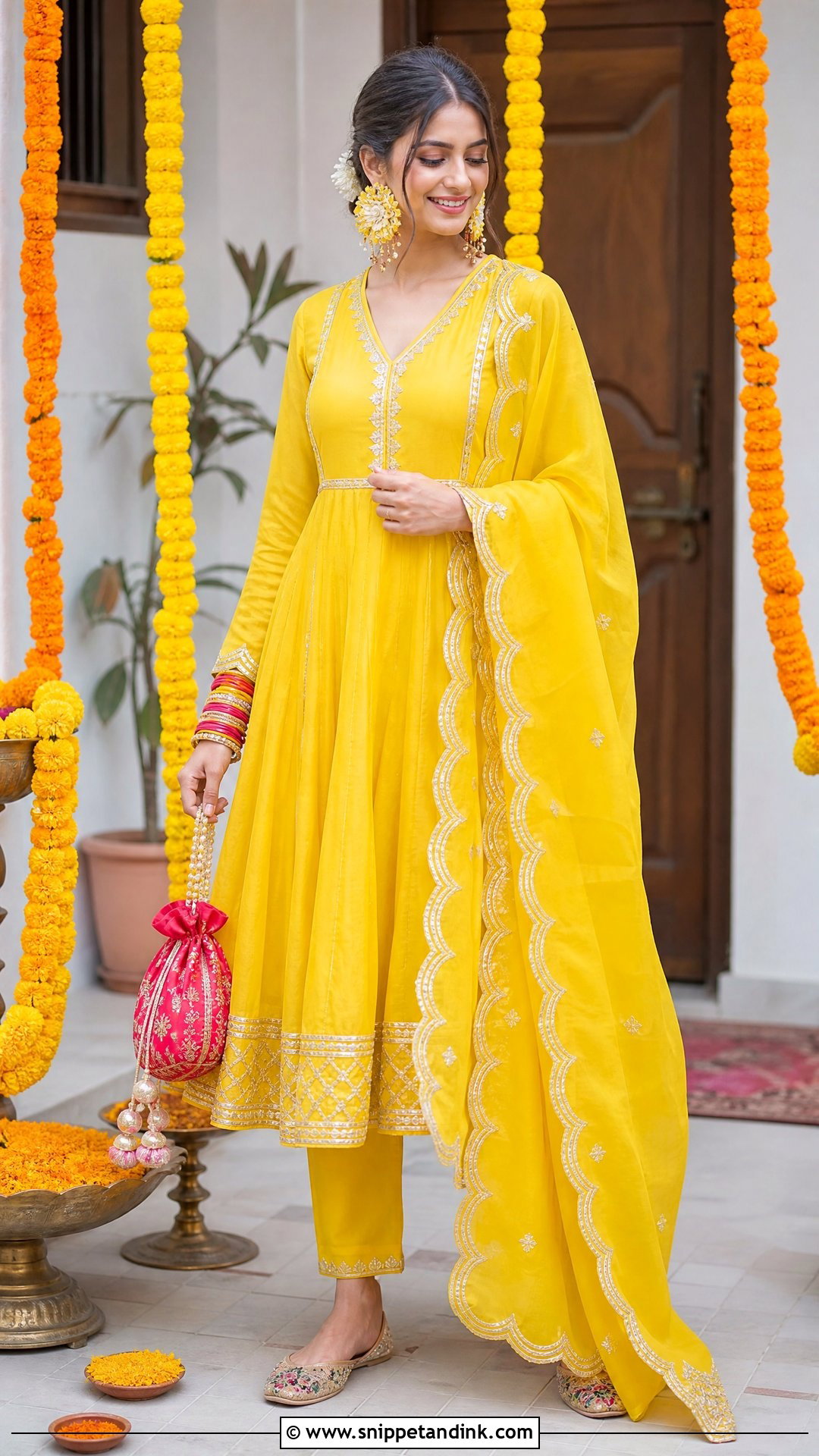
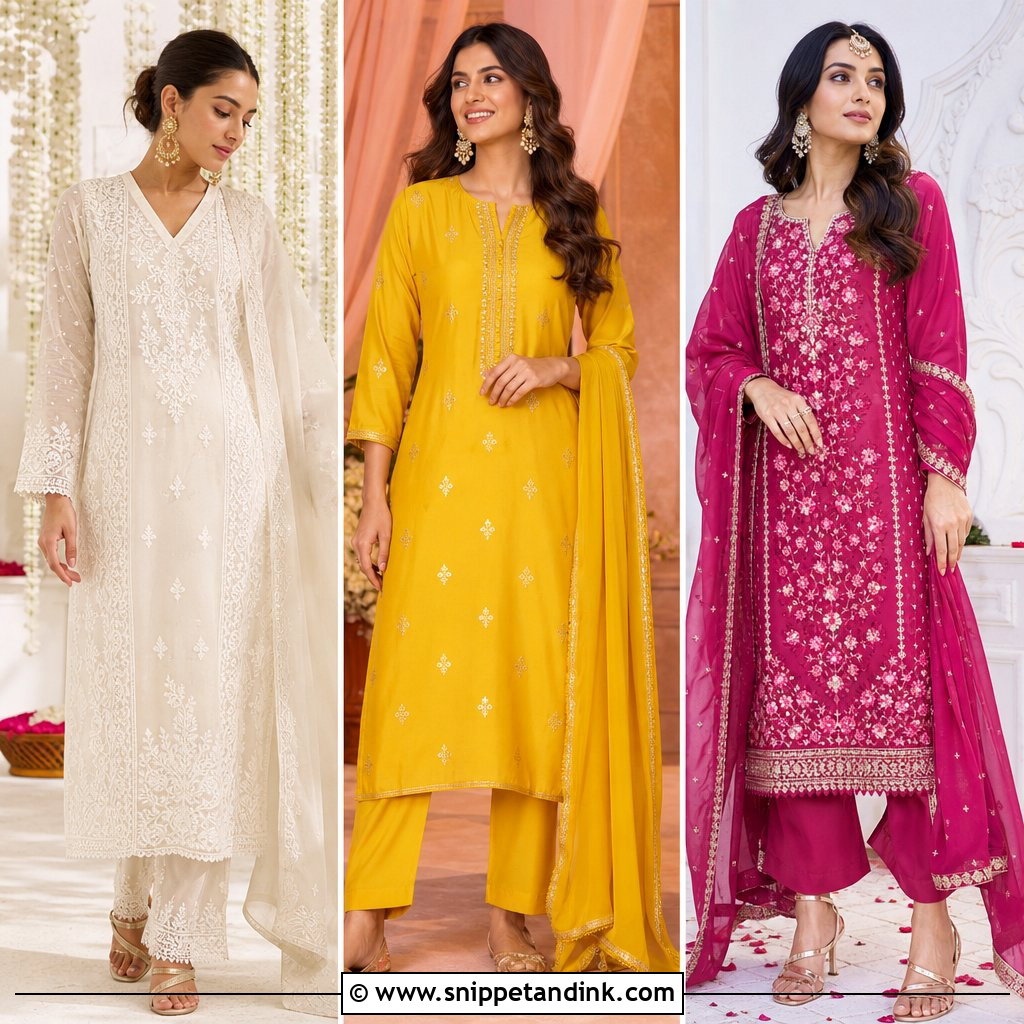
Yellow is the natural color for a cheerful haldi celebration, and it hides turmeric splashes better than anything else. A straight or gently flared kurta with gota patti borders, ankle-length pants and a light dupatta with a scalloped metallic edge is festive without fuss. Choose washable fabric; this function gets messy. Small gold jhumkas or floral earrings, juttis and a pink, green or orange potli add contrast. If the gota is heavy, skip the necklace and wear fewer bangles. A braid with a few flowers keeps hair off your face and out of the paste.
4. Green Bandhani Kurta Set for Mehendi
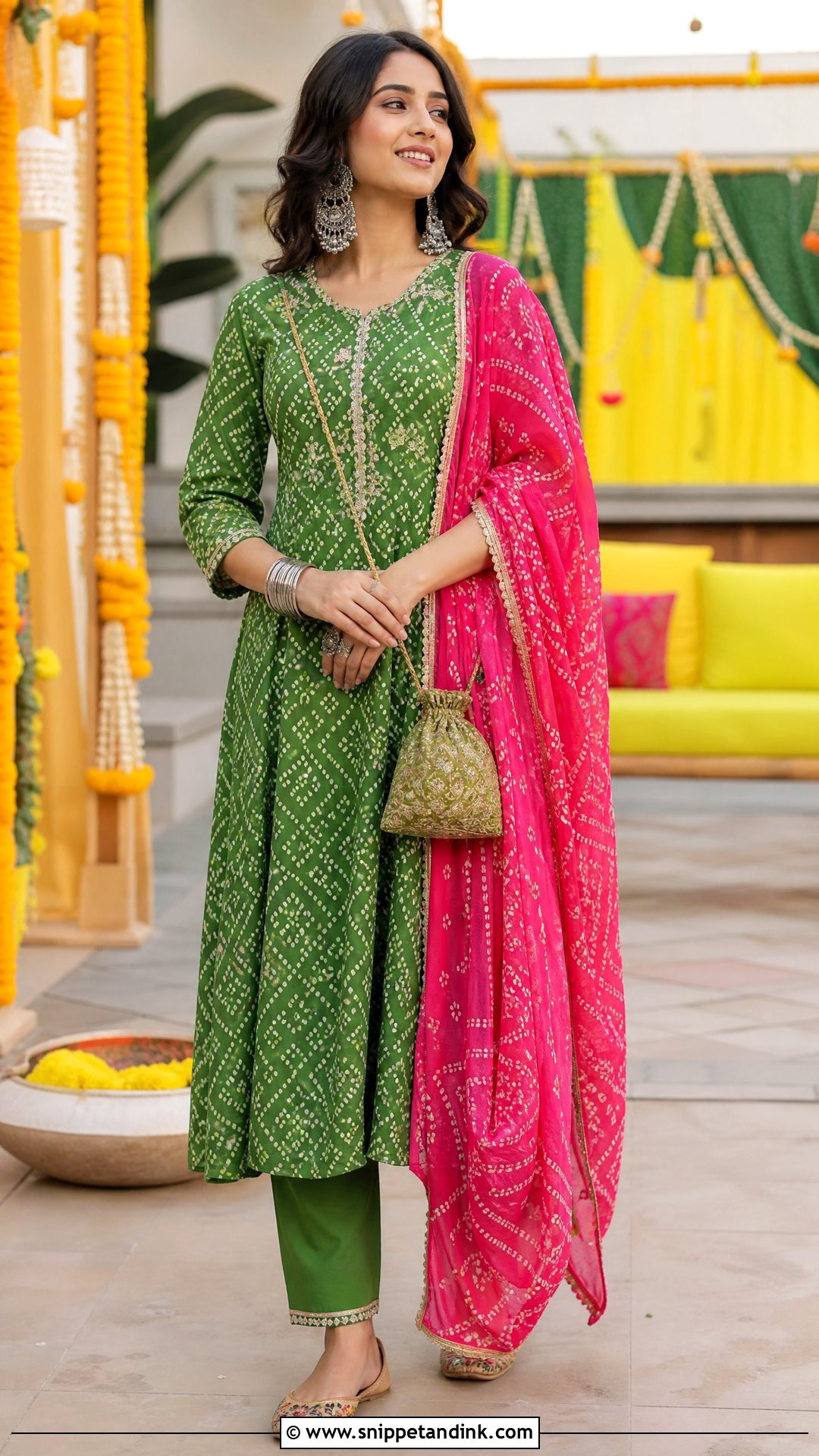
Bandhani’s tiny tie-dyed dots make green feel traditional without needing heavy embroidery. I like a long straight kurta with a mirror-trimmed neckline and three-quarter sleeves for mehendi, which keeps your cuffs clear of wet henna. Solid green trousers let the print lead, and a pink, yellow or red bandhani dupatta adds a second color that looks intentional. Oxidized silver earrings, slim bangles and flat juttis suit the relaxed mood. A crossbody potli leaves your hands free for henna. For a calmer look, stay in greens and let one accessory carry the contrast.
5. Ivory Chikankari Kurta Set With Dupatta
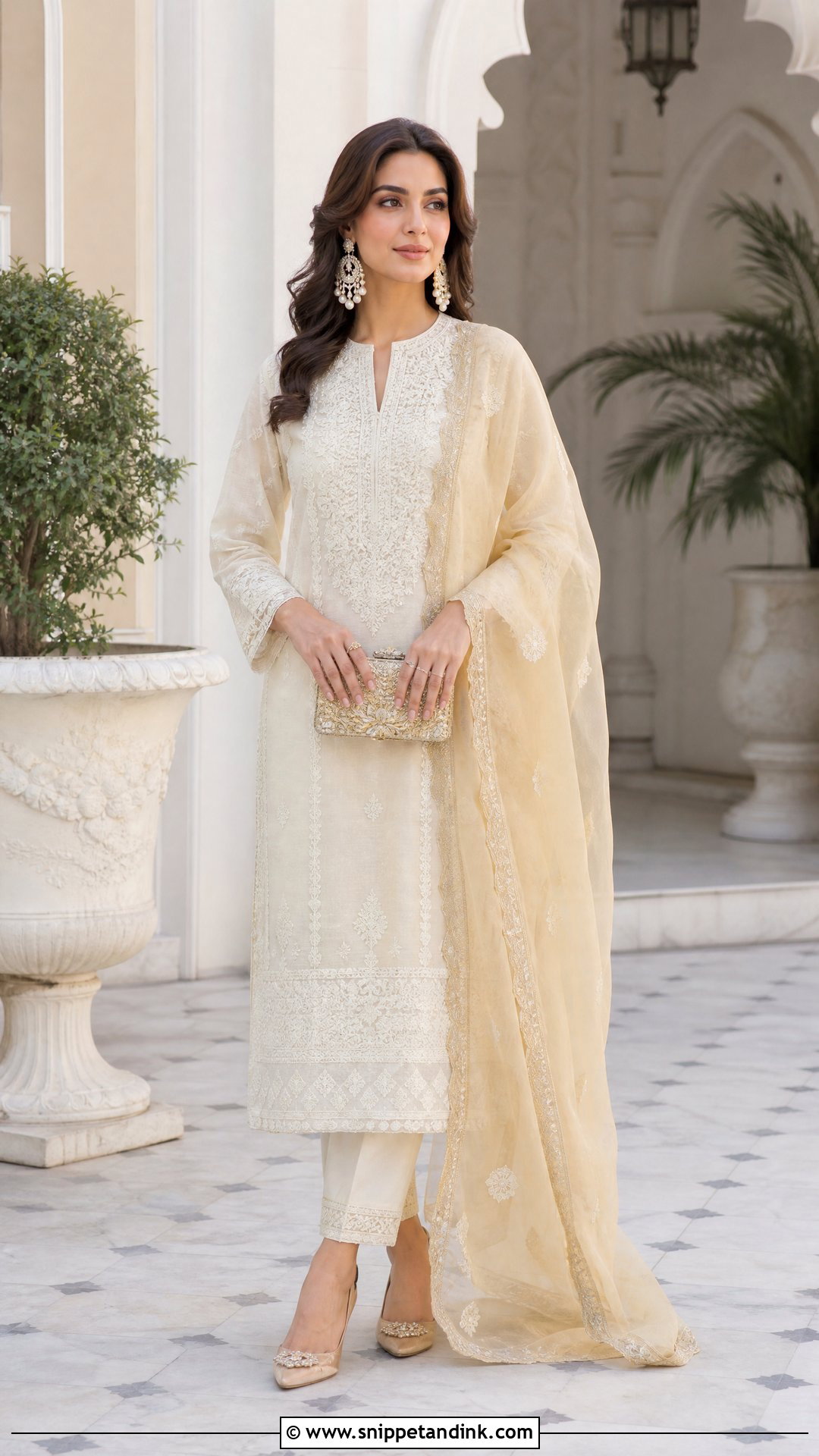
Plain ivory chikankari can read as everyday wear, so for a wedding I look for mukaish, sequins or pearls worked into the embroidery. That small amount of shine is what makes it formal. Straight pants keep the line clean, and a pale gold or pastel organza dupatta adds color and structure. Pearl chandbalis, a fine bracelet, champagne heels and an embellished clutch complete it. Ivory and white carry different meanings across families, so confirm the dress code first; pale beige or soft blush are safe alternatives. A sleek bun and a rosy lip suit daylight photos.
6. Jewel Tone Silk Kurta Set With Cigarette Pants
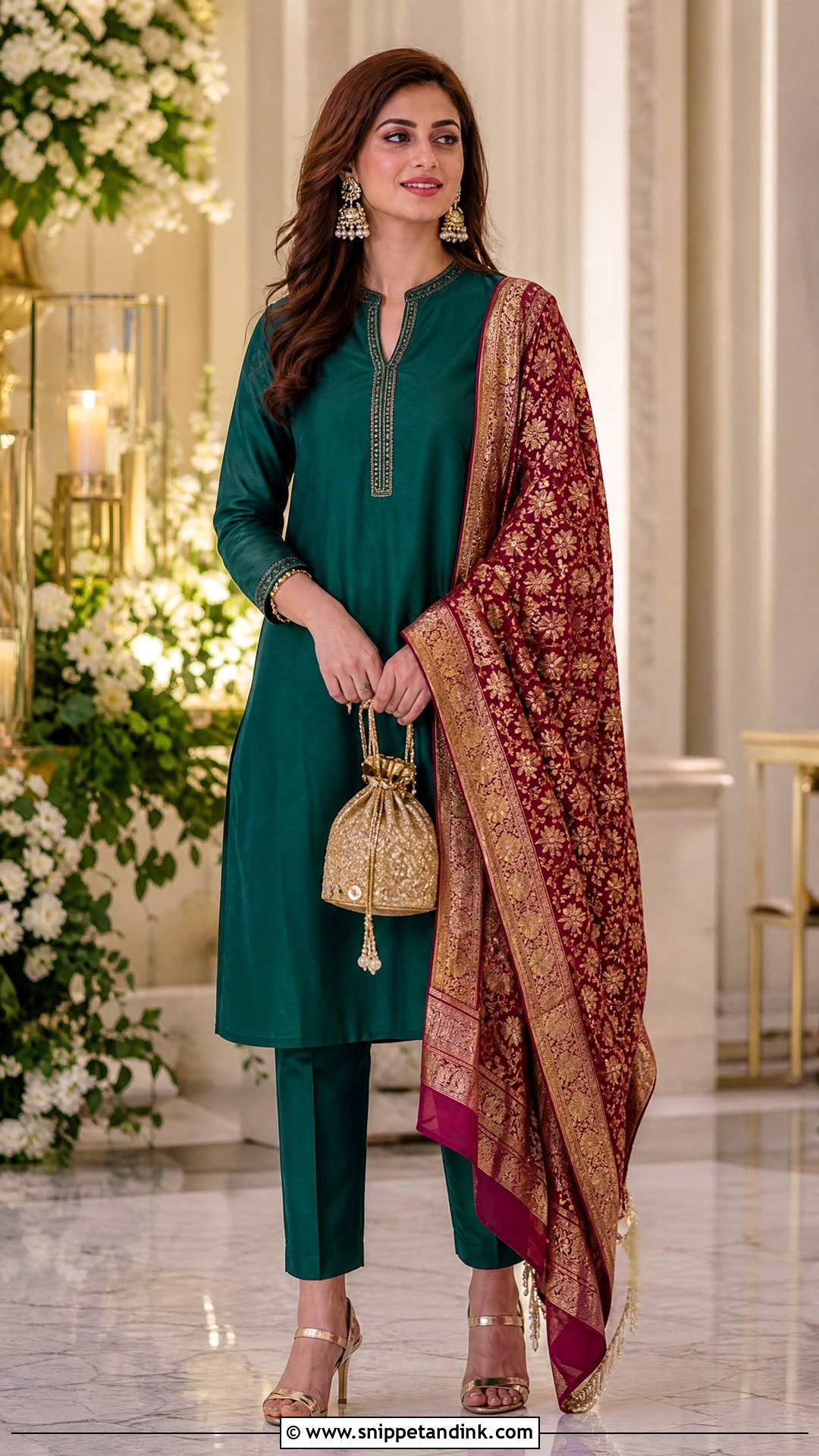
Emerald, sapphire, plum and ruby make silk look like evening wear immediately. Keep the zari to the neckline, sleeves and hem so the smooth silk still shows. Tailored cigarette pants sharpen the silhouette under a longer kurta, and a contrasting Banarasi or embroidered dupatta adds depth. Kundan earrings, a structured potli and metallic heels finish it. If the neckline is detailed, keep the jewelry at the ears. Jewel-tone silk shows sweat marks at the underarm faster than pastels do, so dress shields are worth tucking in for a long night.
7. Velvet Kurta Set for Winter Wedding
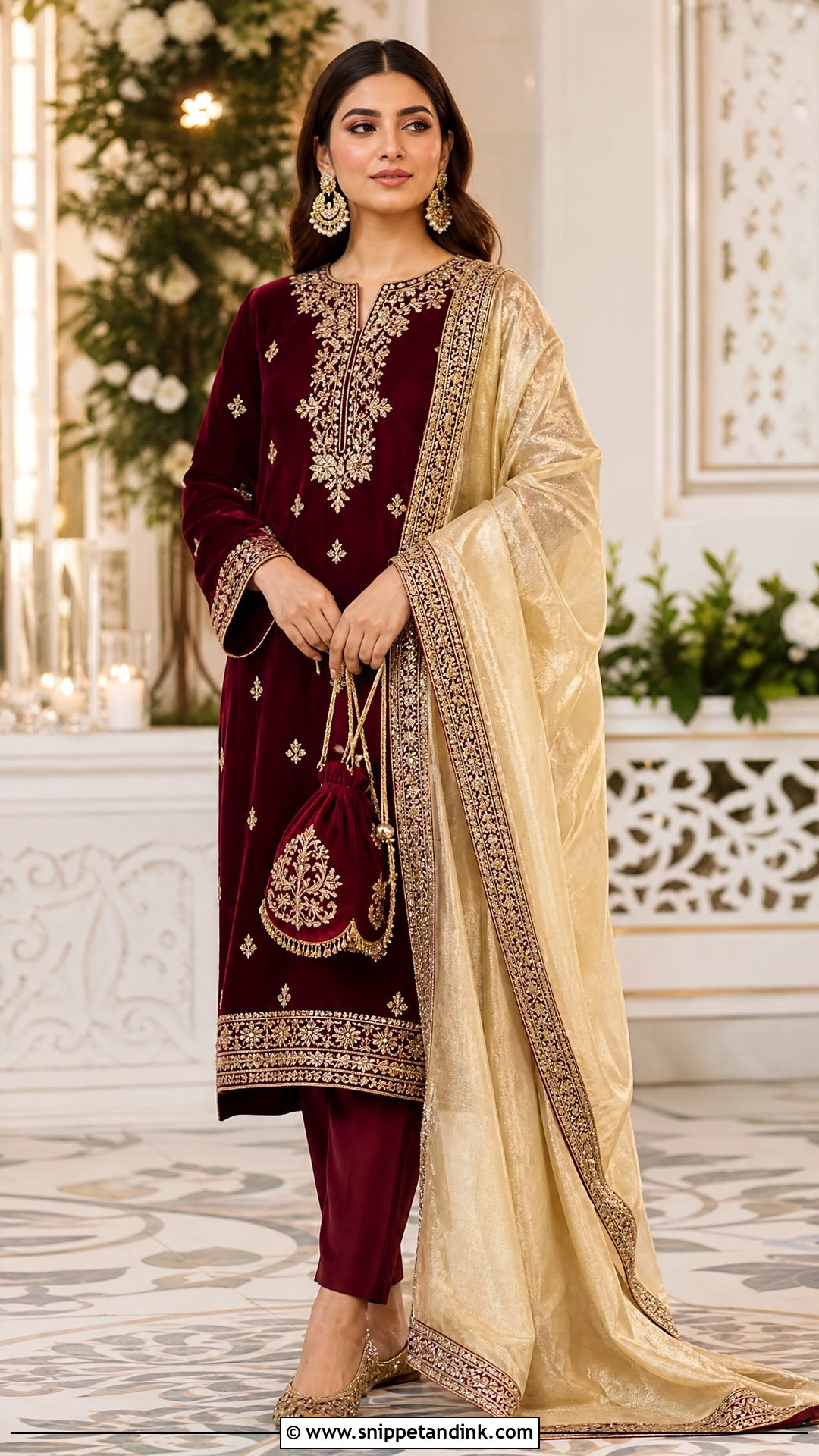
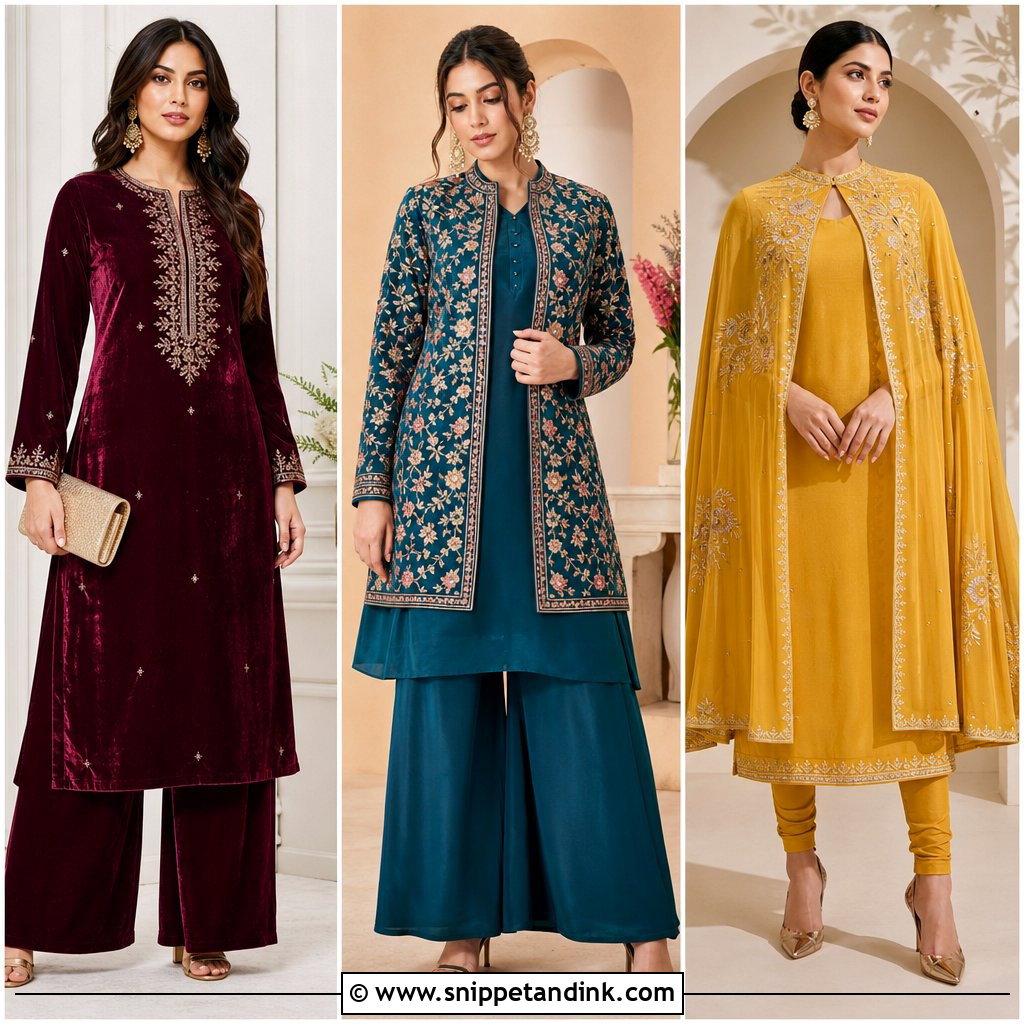
Velvet is the warmest fabric on this list and the heaviest, so the cut has to work harder. Burgundy, forest green, navy or deep purple velvet with embroidery only at the neckline and cuffs looks richer than all-over work. Tapered silk pants keep the outfit from getting bulky, and a tissue, organza or brocade dupatta adds contrast. Antique gold earrings, a statement ring and closed embroidered juttis suit winter. Velvet pile catches light differently depending on direction, so make sure the kurta and any velvet potli don’t look like two different shades in photos.
8. Anarkali Kurta Set With Churidar
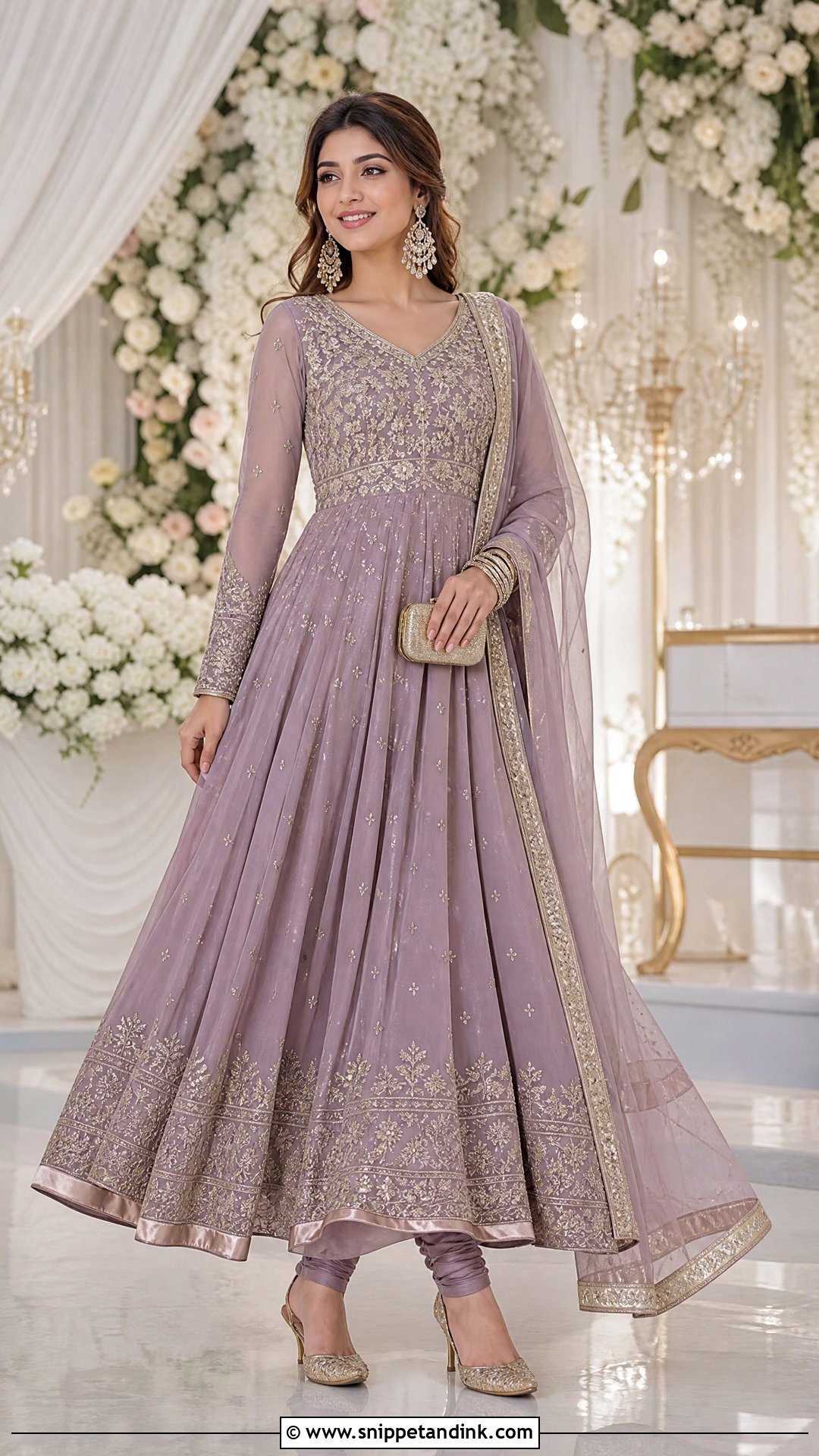
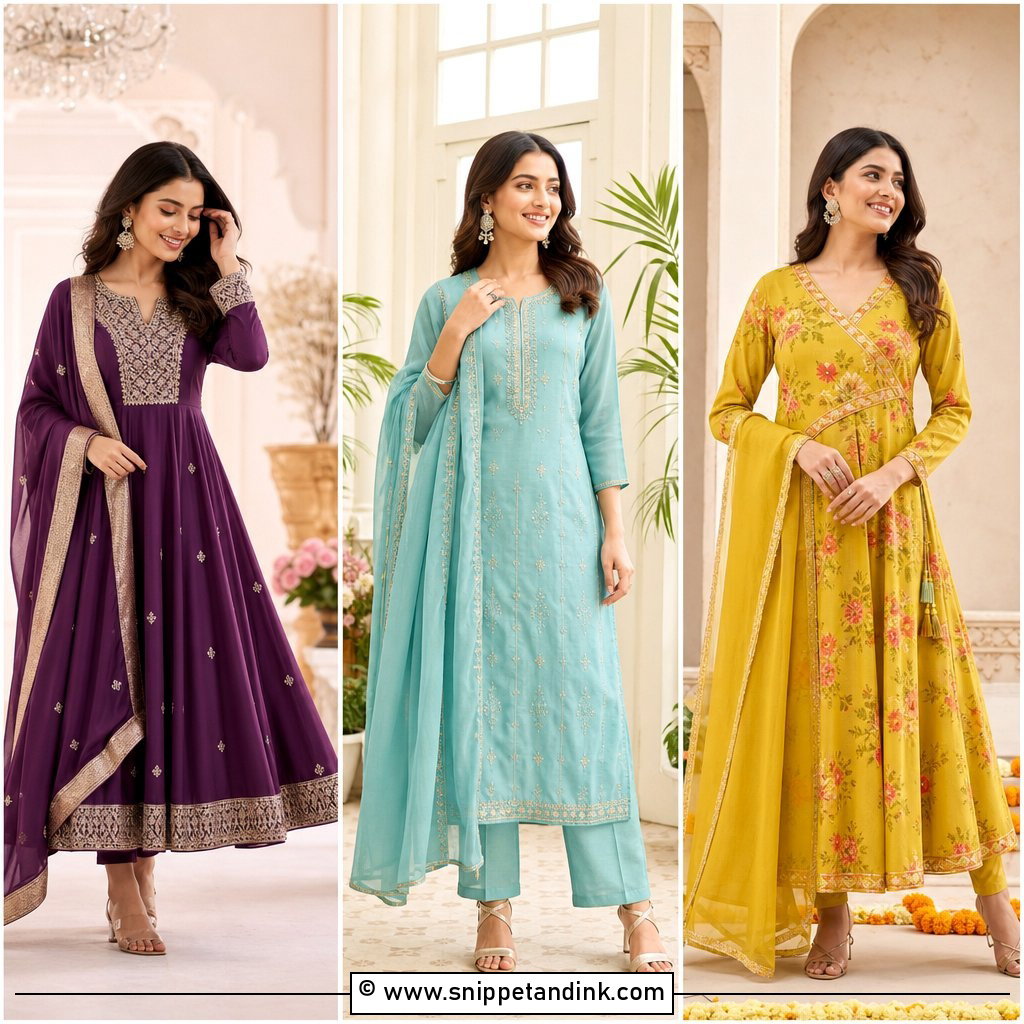
For the main ceremony or a formal sangeet, a flowing Anarkali kurta set with a churidar is hard to beat. Look for fitted shoulders, a defined upper bodice and enough flare to move. The churidar keeps the lower half neat, and a light dupatta over one shoulder leaves the flare visible. Long earrings, stacked bangles and heeled juttis finish it, with a small clutch. Petite women do well with moderate flare and vertical embroidery; taller women can carry wider panels. Churidar sleeves and legs are cut long so they ruche, so try them on rather than judging by the hanger.
9. Short Kurta Set With Sharara Pants
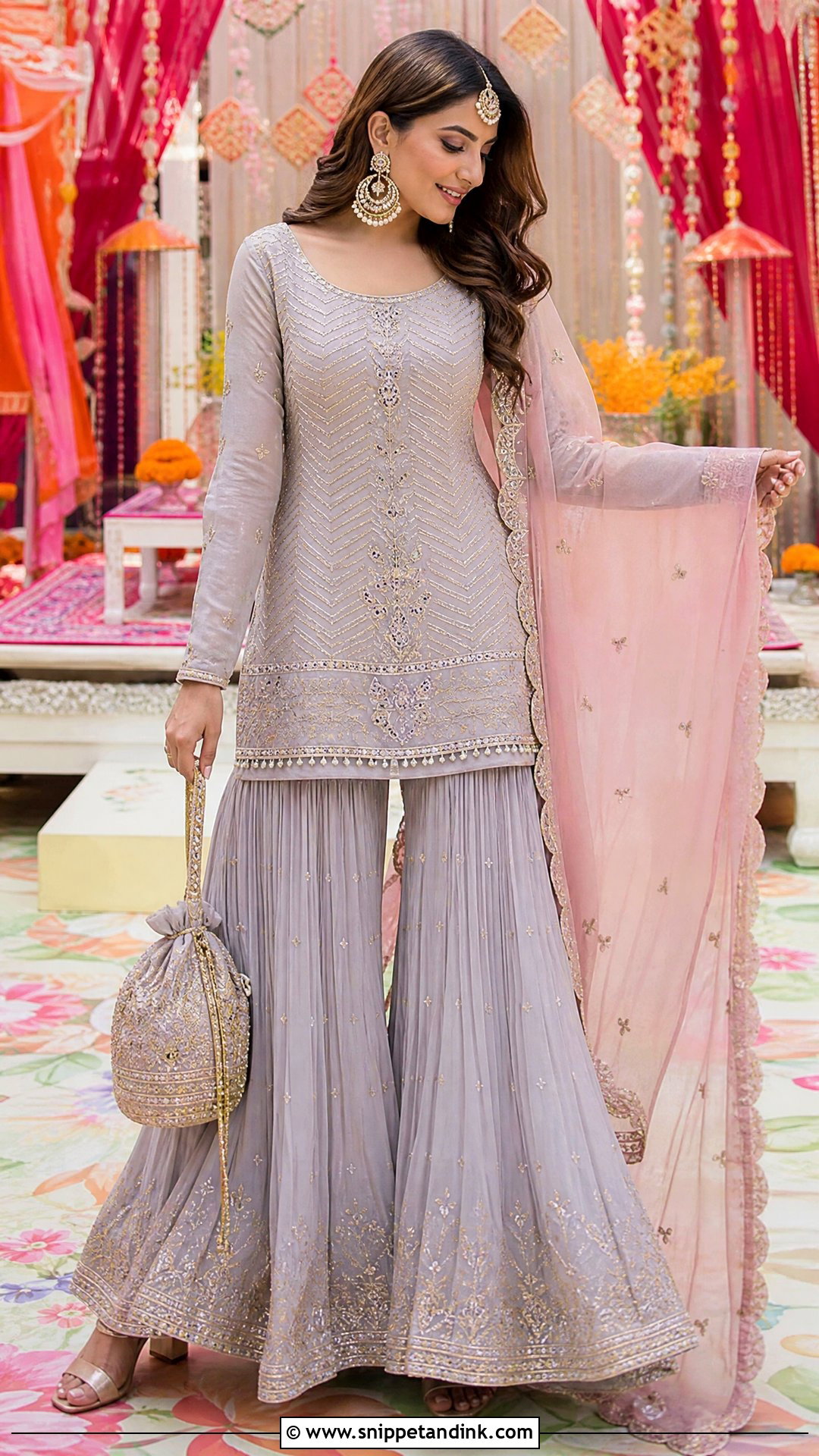
A short kurta with sharara pants gives you the swing of a lehenga at a fraction of the weight. The kurta should end near the upper thigh so the flare shows. Embroidery at the neckline and hem links the two pieces, and a sheer dupatta softens the look for sangeet, mehendi or a wedding lunch. Chandbalis, a maang tikka and block heels or decorated juttis complete it; a wristlet potli is easy to dance with. If the sharara is heavily worked, keep the kurta plain. One color head to toe adds height.
10. Peplum Kurta Set With Gharara Pants
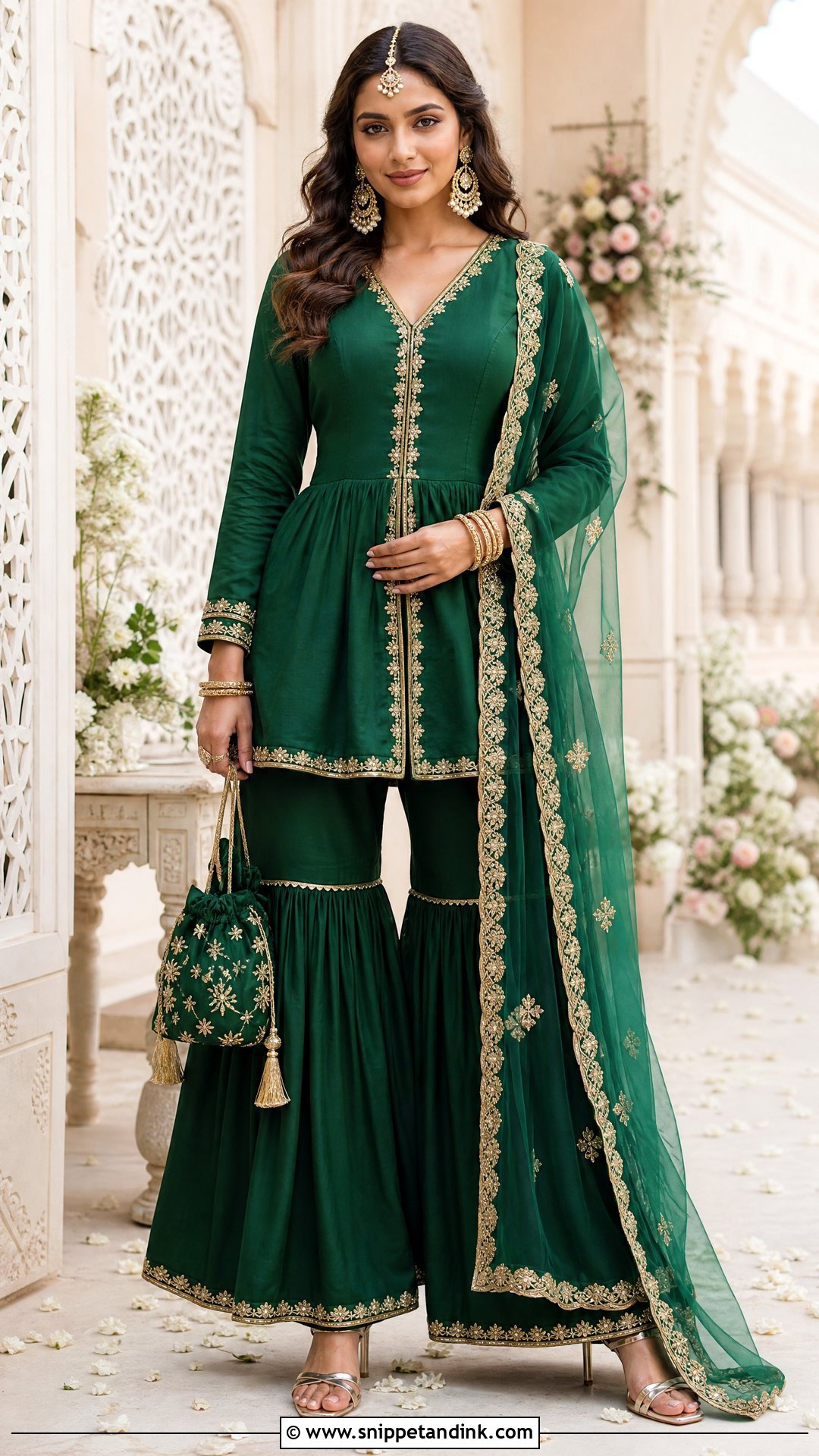
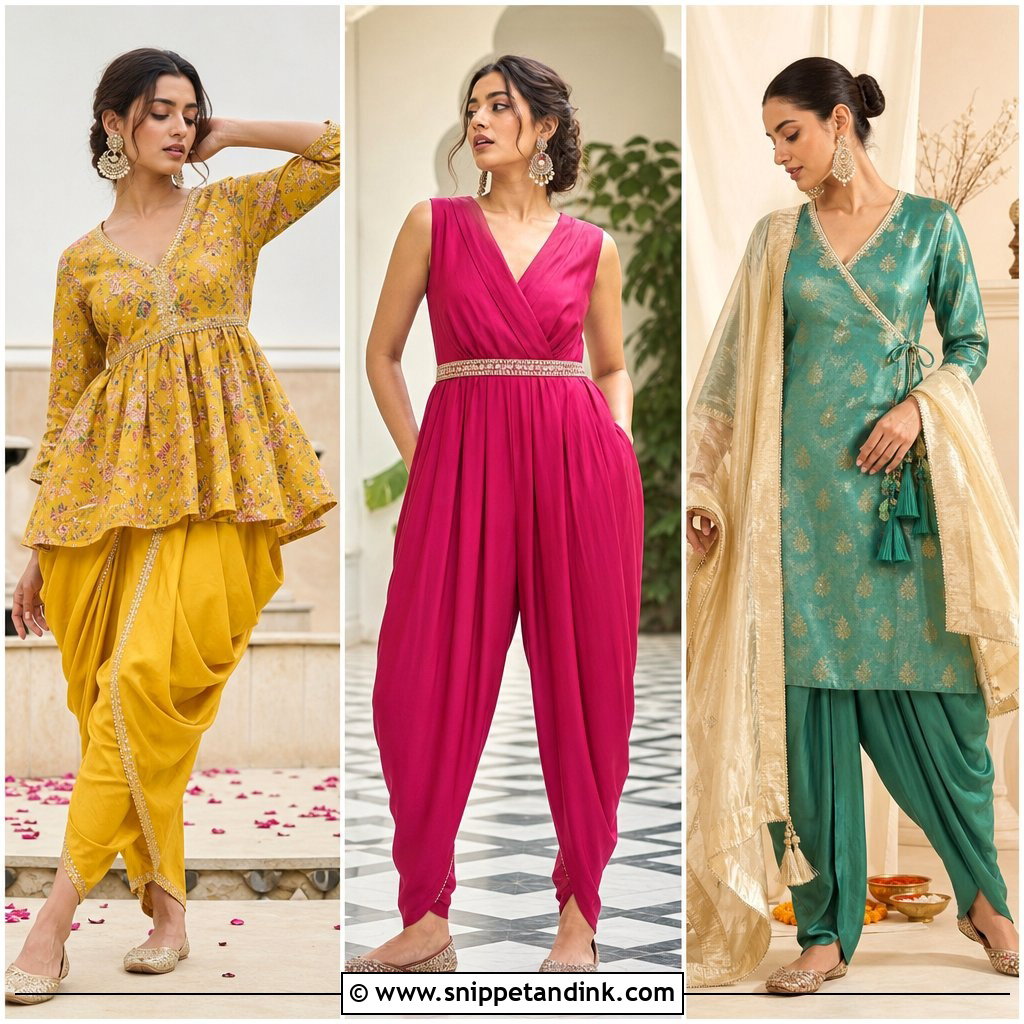
Ghararas are different from shararas: they’re fitted to the knee, where a seam (often covered with a decorative band) lets the flare begin. Paired with a peplum kurta that sits at the waist and then flares, the result is structured and very traditional. A net or organza dupatta keeps it from feeling dense. Emerald, magenta, teal or rust suit the volume. Statement earrings, a small tikka, stacked bangles and metallic heels finish it. I’d make sure the peplum ends above or below the widest part of the hip, never right on it.
11. Jacket Kurta Set With Tailored Trousers
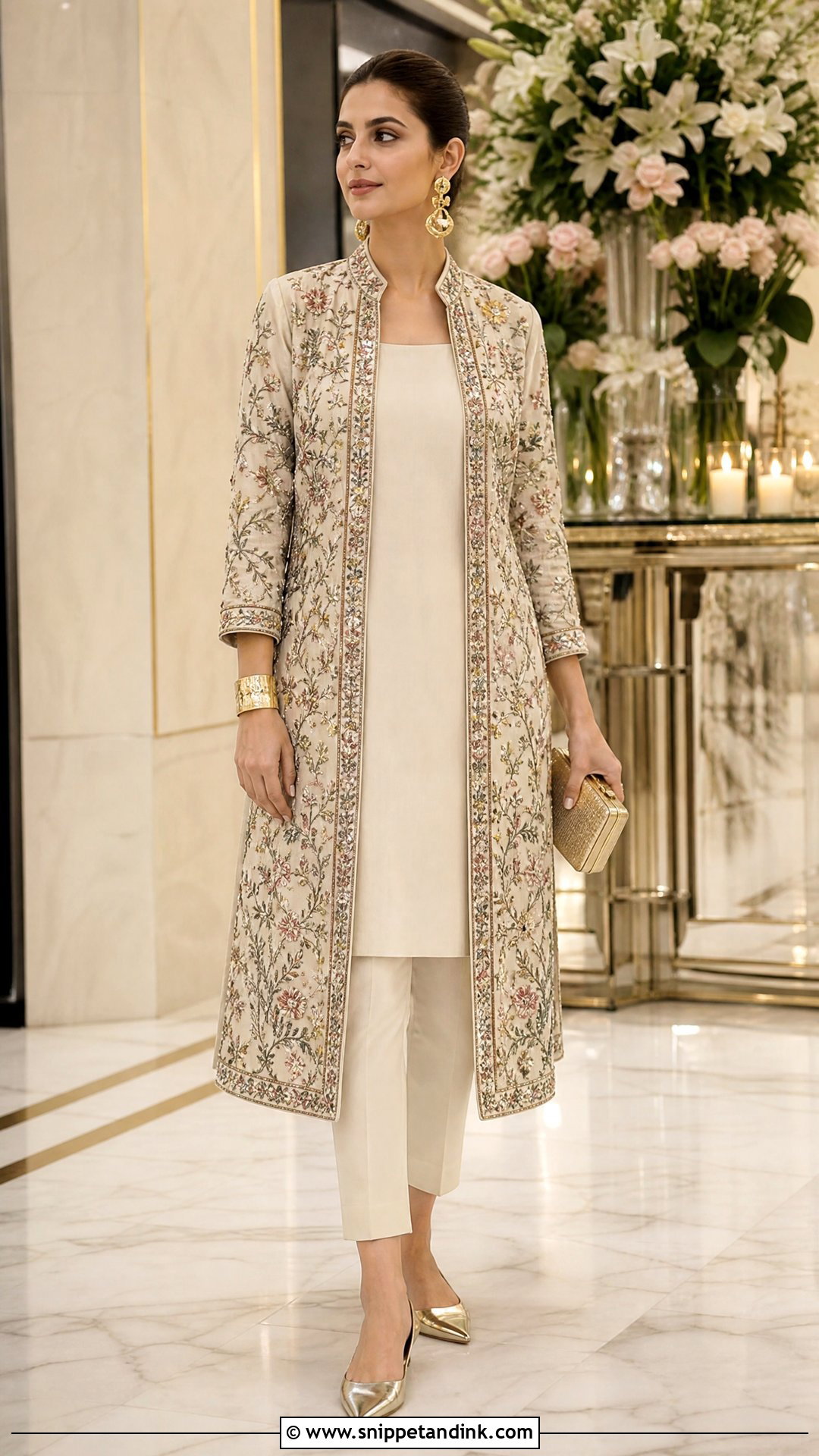
An embroidered jacket over a simple kurta and tailored trousers can replace the dupatta entirely, which is a relief at a long reception. Keep the inner kurta plain so the jacket’s embroidery or brocade is the focus. Straight trousers and pointed metallic flats are comfortable for hours. Sculptural earrings, a cuff and a box clutch keep it modern. Worn open, the jacket makes long vertical lines; fastened at the waist, it adds definition. Check the jacket in the sitting position, since a stiff brocade jacket can bunch at the stomach when you sit to eat.
12. Cape Kurta Set With Palazzo Pants
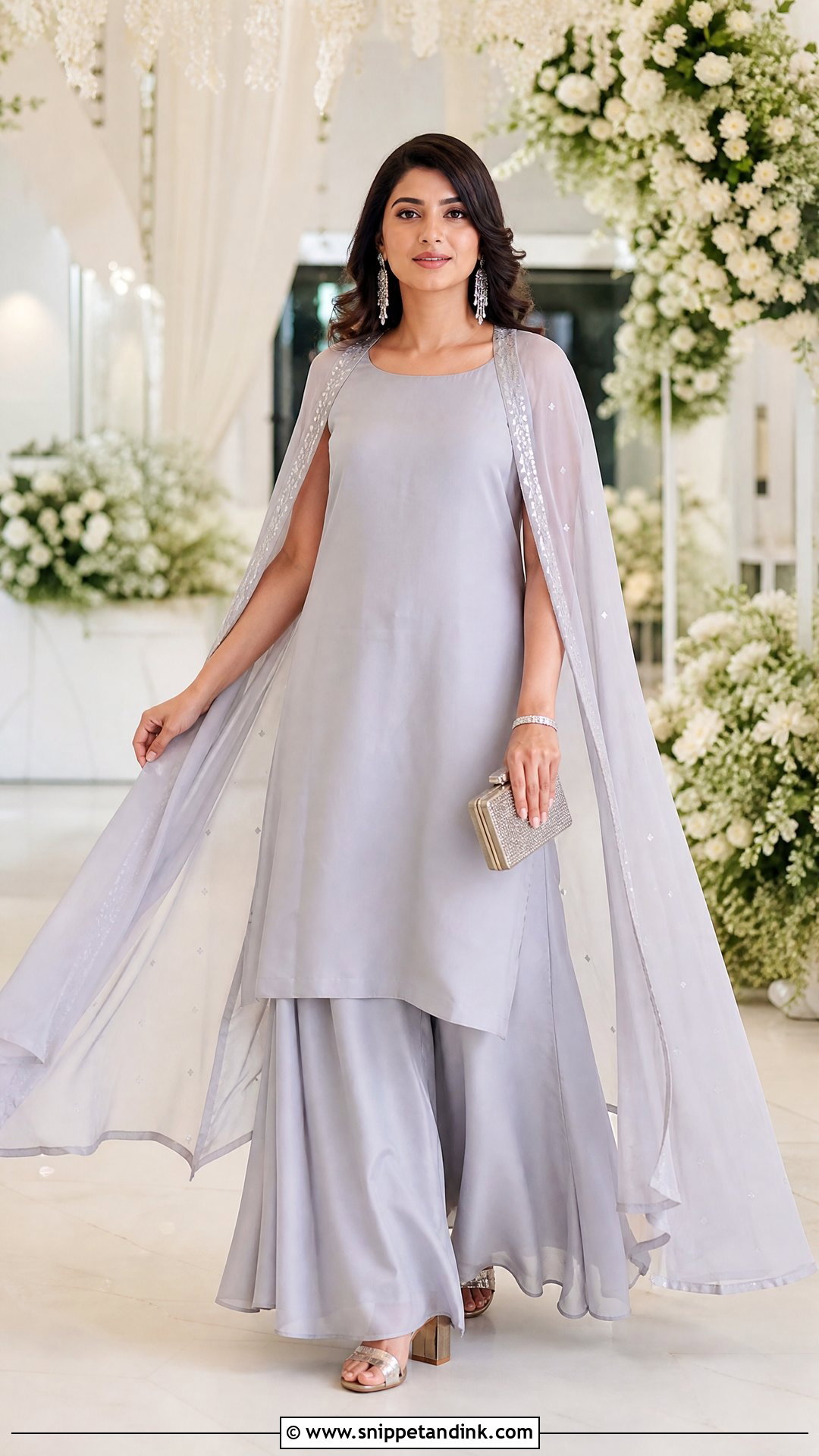
A sheer cape adds movement without the fuss of a draped dupatta. Start with a sleeveless or short-sleeved kurta and matching palazzos in silk, georgette or crepe, then add a cape with fine sequins, beads or an embroidered edge. It should fall cleanly from the shoulders and not swallow the outfit. Drop earrings, a slim bracelet, block heels and a structured clutch suit it. Ask how the cape is attached. If it’s sewn at the shoulder only, it can slide backward through the evening, so I’d add a small hidden snap at each side.
13. Asymmetrical Kurta Set With Dhoti Pants
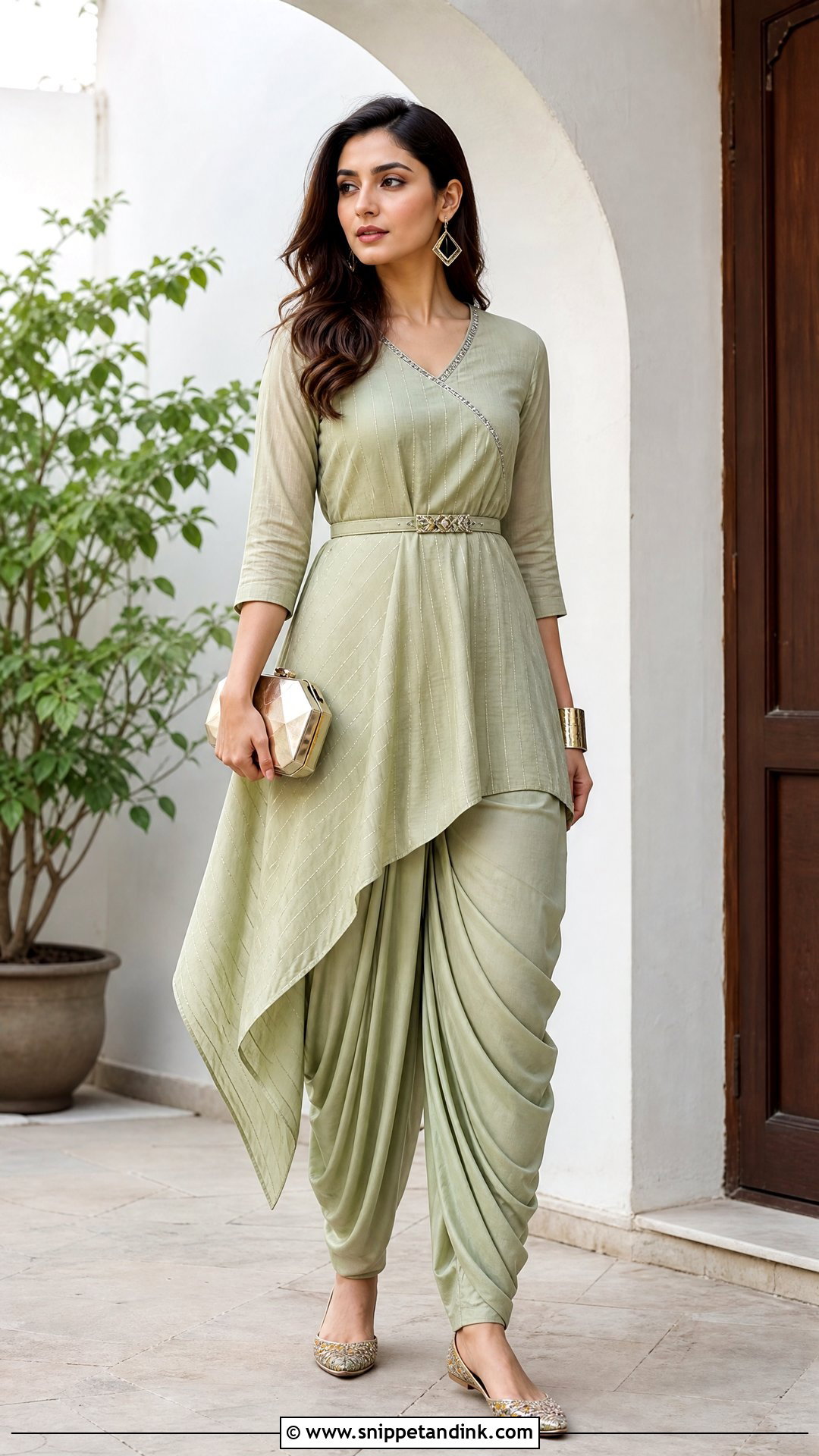
An asymmetrical kurta and dhoti pants is a confident fusion pick for a modern mehendi or sangeet. The high-low hem shows the pleated drape of the pants, and soft crepe or silk blend keeps both pieces smooth. A narrow belt defines a loose kurta. Geometric earrings, a cuff, embellished heels or pointed juttis and a small metallic clutch keep it streamlined. Skip the dupatta unless the dress code requires one. Dhoti pants usually come pre-stitched now, but check the drop crotch length; too low and it shortens your legs in photos.
14. Floral Organza Kurta Set With Straight Pants
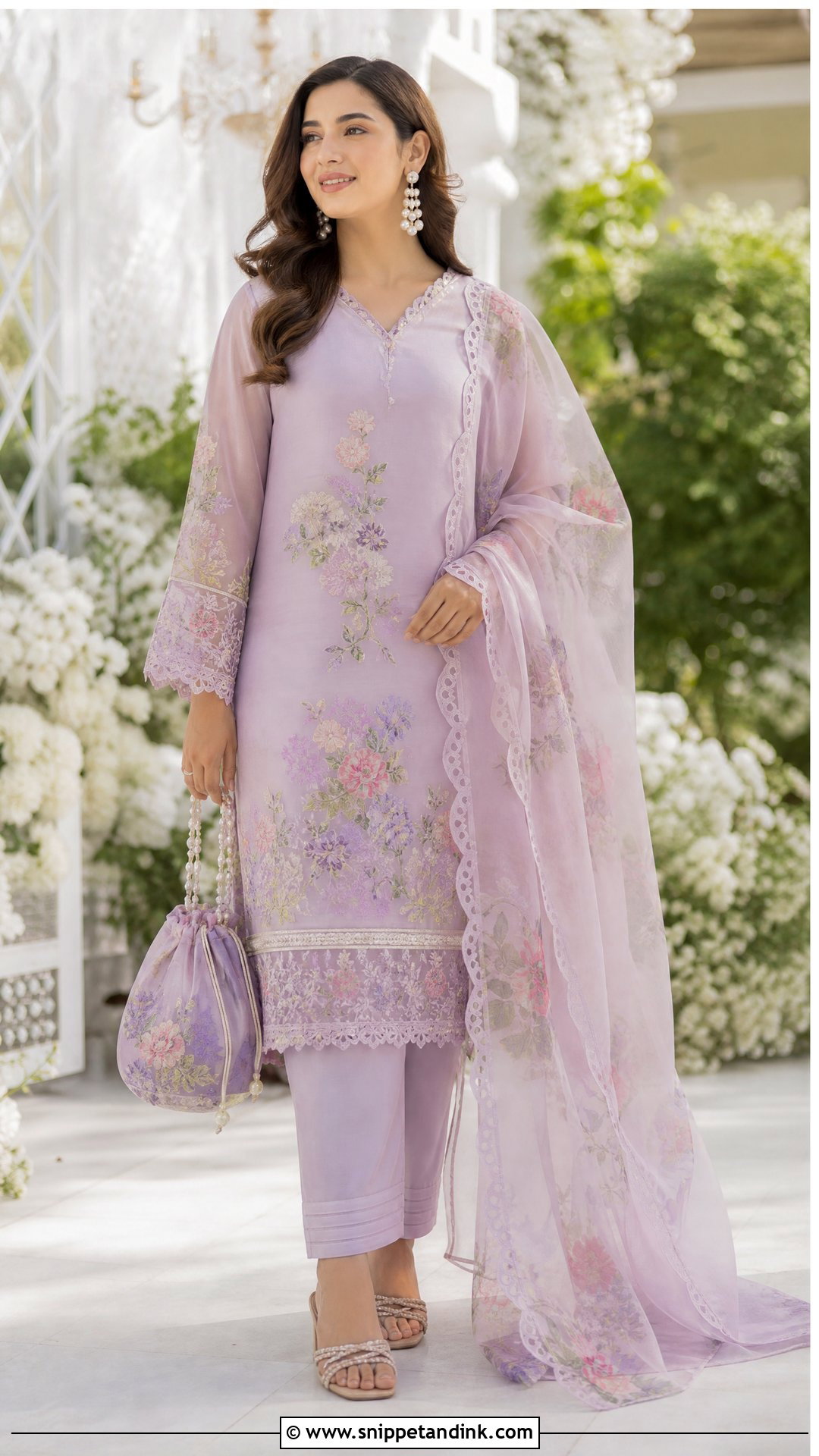
Floral embroidery on sheer organza suits a garden wedding or daytime reception. Choose a lined kurta with flowers at the neckline, sleeves and lower border, matching straight pants and a lightly embroidered organza dupatta. Pastel pink, sage, lilac and powder blue stay bright outdoors. Pearl earrings, a floral potli and block-heeled sandals complete it, with soft waves pinned back. Organza holds its shape, so avoid gathers at the waist. The lining matters as much as the outer fabric: a scratchy polyester lining under organza will itch by the second hour, so I’d look for a soft cotton one.

15. Banarasi Brocade Kurta Set With Silk Pants
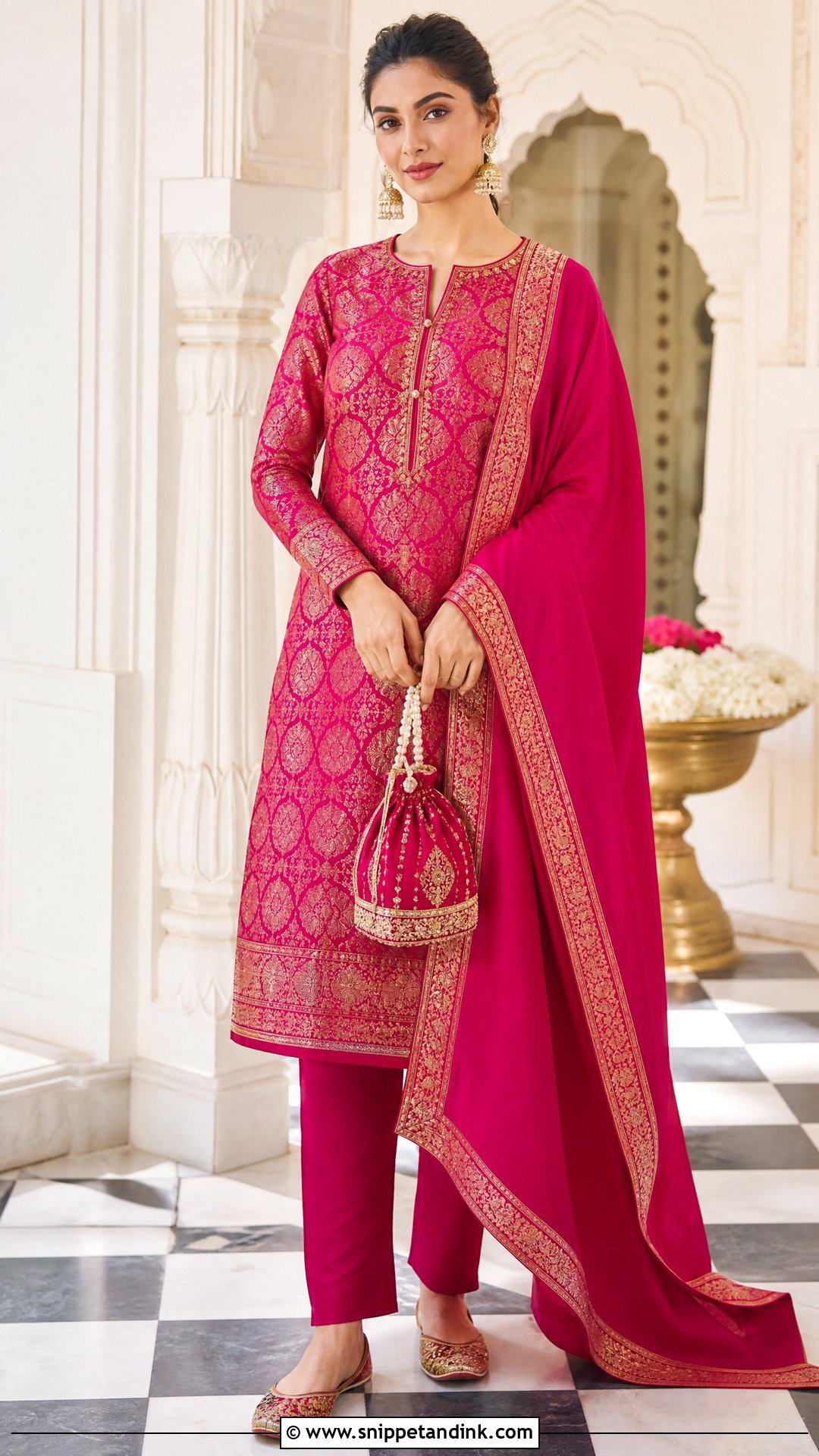
Brocade carries its pattern in the weave, so it needs very little added. A straight Banarasi kurta in fuchsia, emerald, royal blue or deep orange with plain silk pants is balanced, and a solid dupatta with a woven border stops the motifs from competing. Gold jhumkas, a few bangles and embroidered juttis keep it classic; pick the potli from one of the secondary colors in the weave. Brocade is stiff, so check that the shoulders and armholes let you raise your arms. Side slits make sitting and walking easier.
16. Navy Sequin Kurta Set for Reception
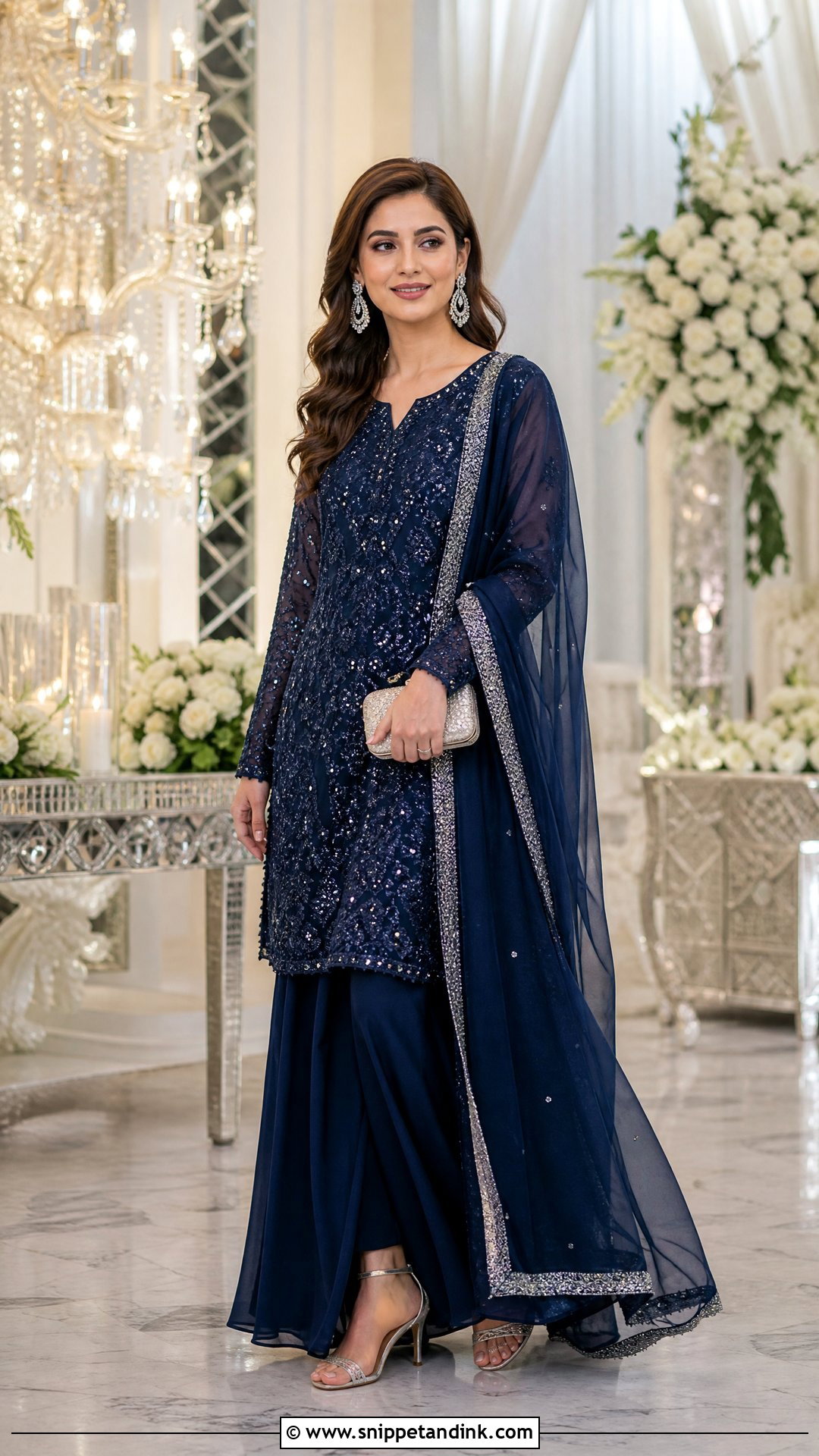
Navy is my favorite dark color for a reception because sequins still show against it, unlike black, which can swallow detail in photos. Choose a long kurta with scattered sequins or tonal beadwork rather than dense shine, and match it with straight pants or palazzos. A sheer navy dupatta with a narrow silver border keeps the line unbroken. Crystal earrings, silver heels and a metallic clutch finish it. With a high neckline, skip the necklace. Pick heels with a secure strap; you’ll be dancing in them.
17. Maroon Embroidered Kurta Set With Gold Dupatta
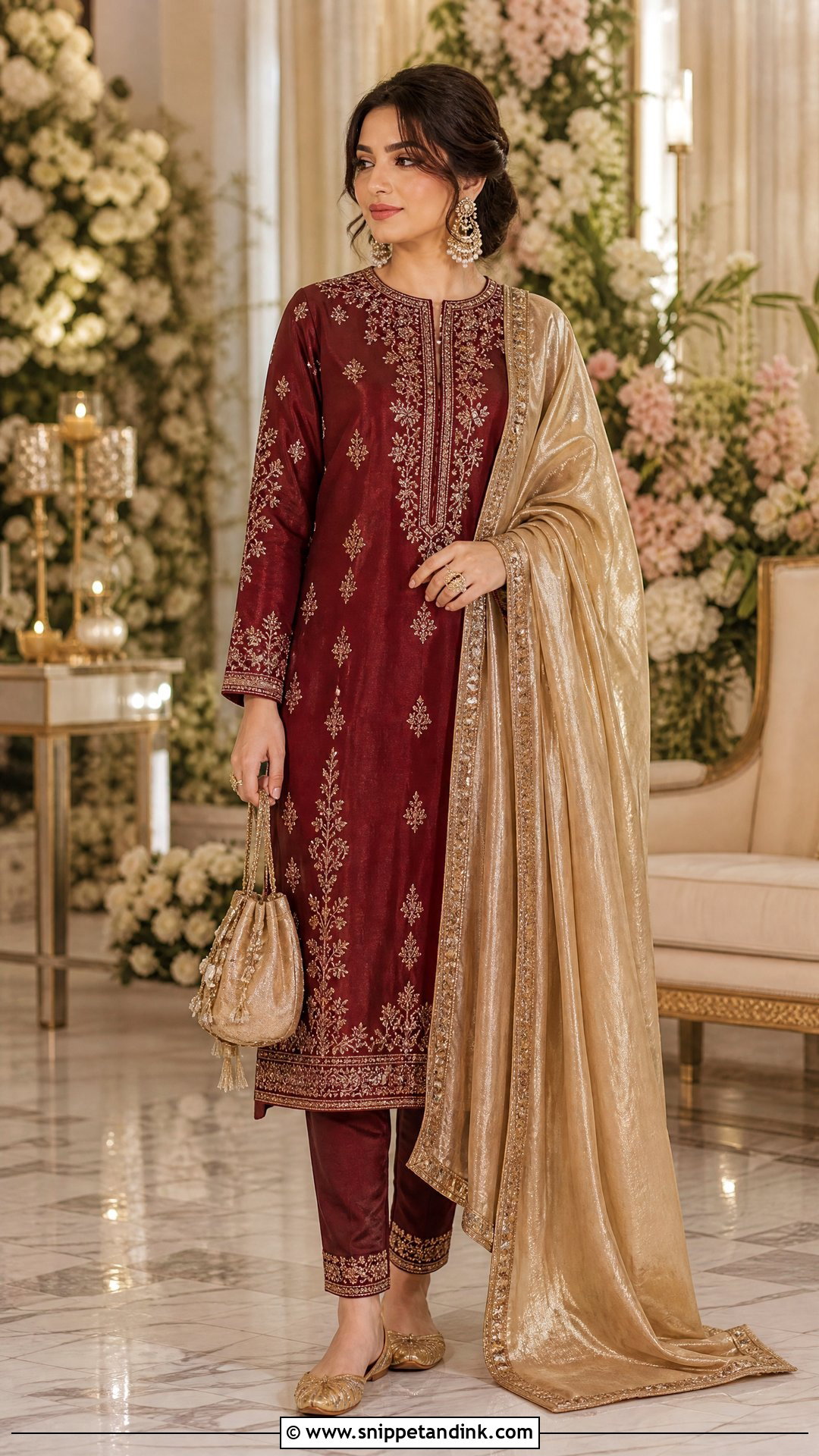
Maroon reads regal and a step softer than bridal red. A silk or velvet-trimmed kurta with antique gold embroidery and matching tapered pants, lifted by a gold tissue or brocade dupatta, is formal and traditional. Kundan earrings, a simple ring and gold juttis suit it, with a maroon potli in light embroidery. Check whether the bride or close family will be in similar shades, because maroon is common in bridal wear and you don’t want to match her. Defined eyes and a muted rose lip balance the deep color.
18. Powder Blue Kurta Set With Pearl Details
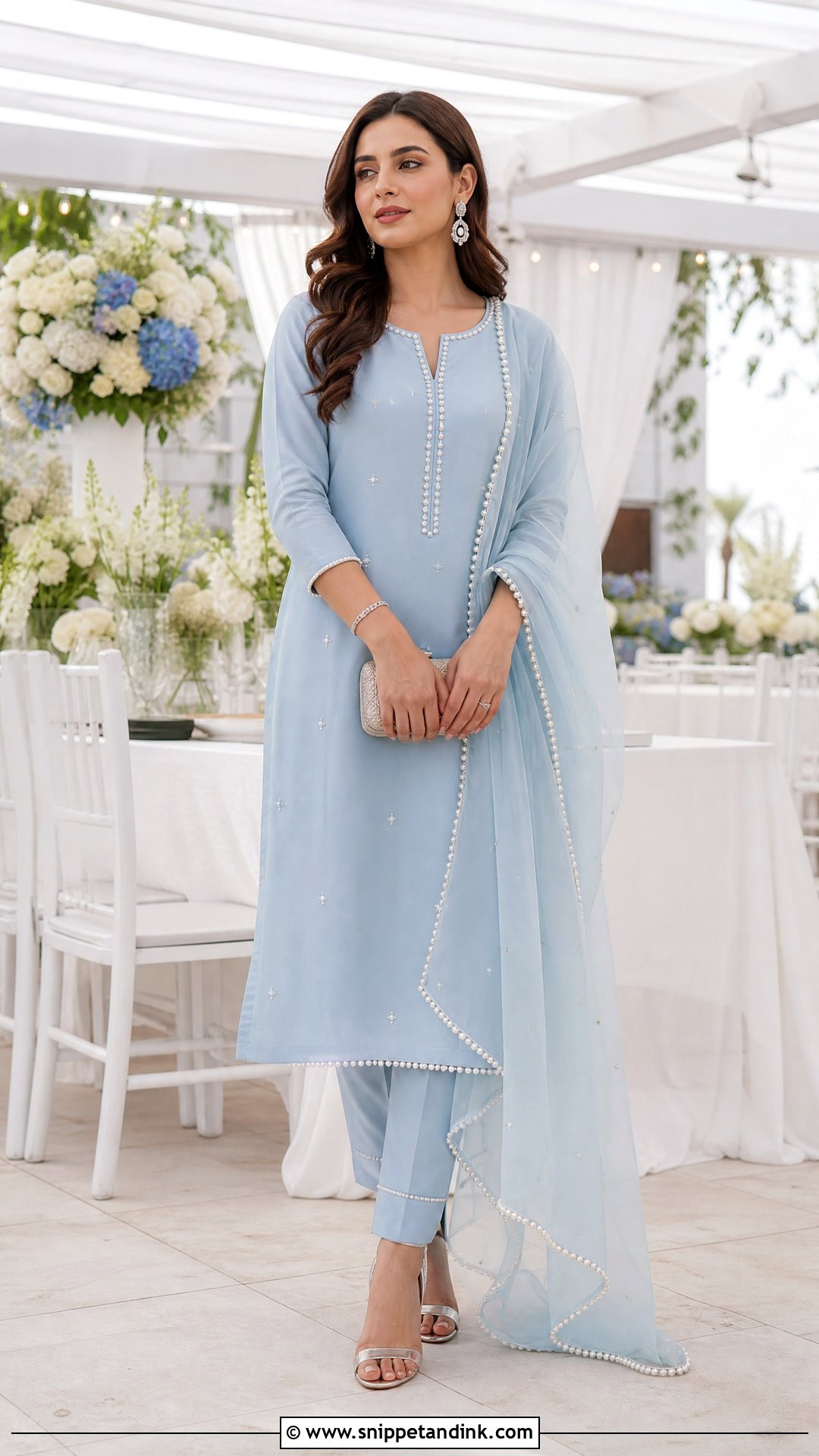
Powder blue is calm and cool, good for a brunch, daytime ceremony or summer reception. Choose a straight or A-line kurta with pearl accents, thread embroidery or subtle silver sequins, matching ankle pants and an organza dupatta with a pearl-trimmed border. Pearl drops, a silver bracelet, pale metallic block heels and a white or silver clutch keep the palette light. Run a finger over the pearls at the cuffs and side seams before the event. Those are the spots that rub against tables and bags, and loose ones fall off by midnight.
19. Pink Mukaish Kurta Set With Palazzo Pants
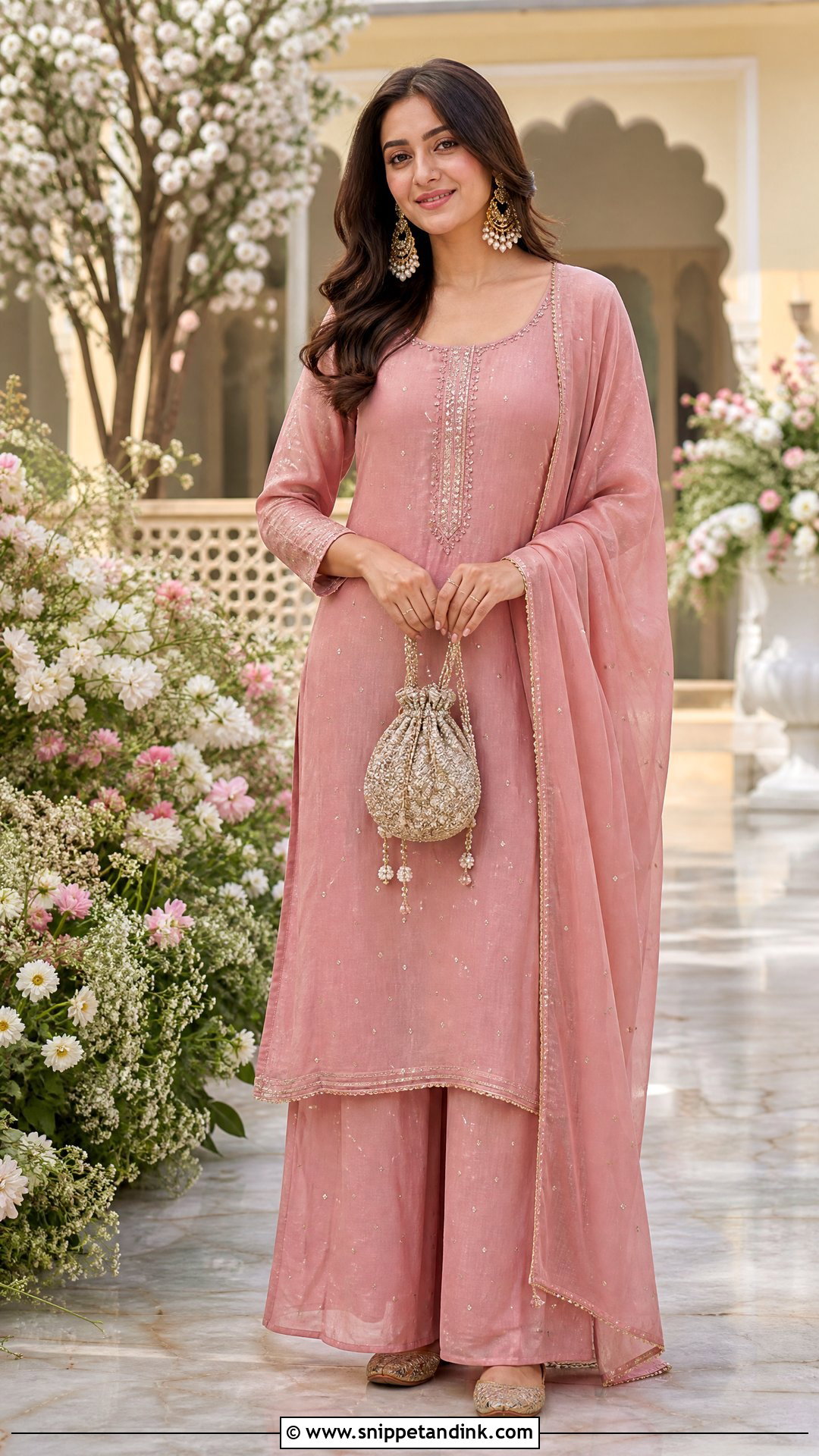
Mukaish is a technique of twisting tiny metal strips into the fabric, which gives a fine, scattered shimmer. On blush, rose or dusty pink it’s subtle but festive. A straight kurta with fluid palazzos balances shape and movement, and a light dupatta with metallic accents carries the shimmer through. Antique gold earrings, neutral juttis and a beaded potli complete it. Keep the necklace minimal. I’d avoid tight bangles here, since mukaish can snag on rough metal at the cuff. A half-up style keeps the earrings visible; deep green in the bag adds contrast if you want it.
20. Orange Leheriya Kurta Set With Matching Pants
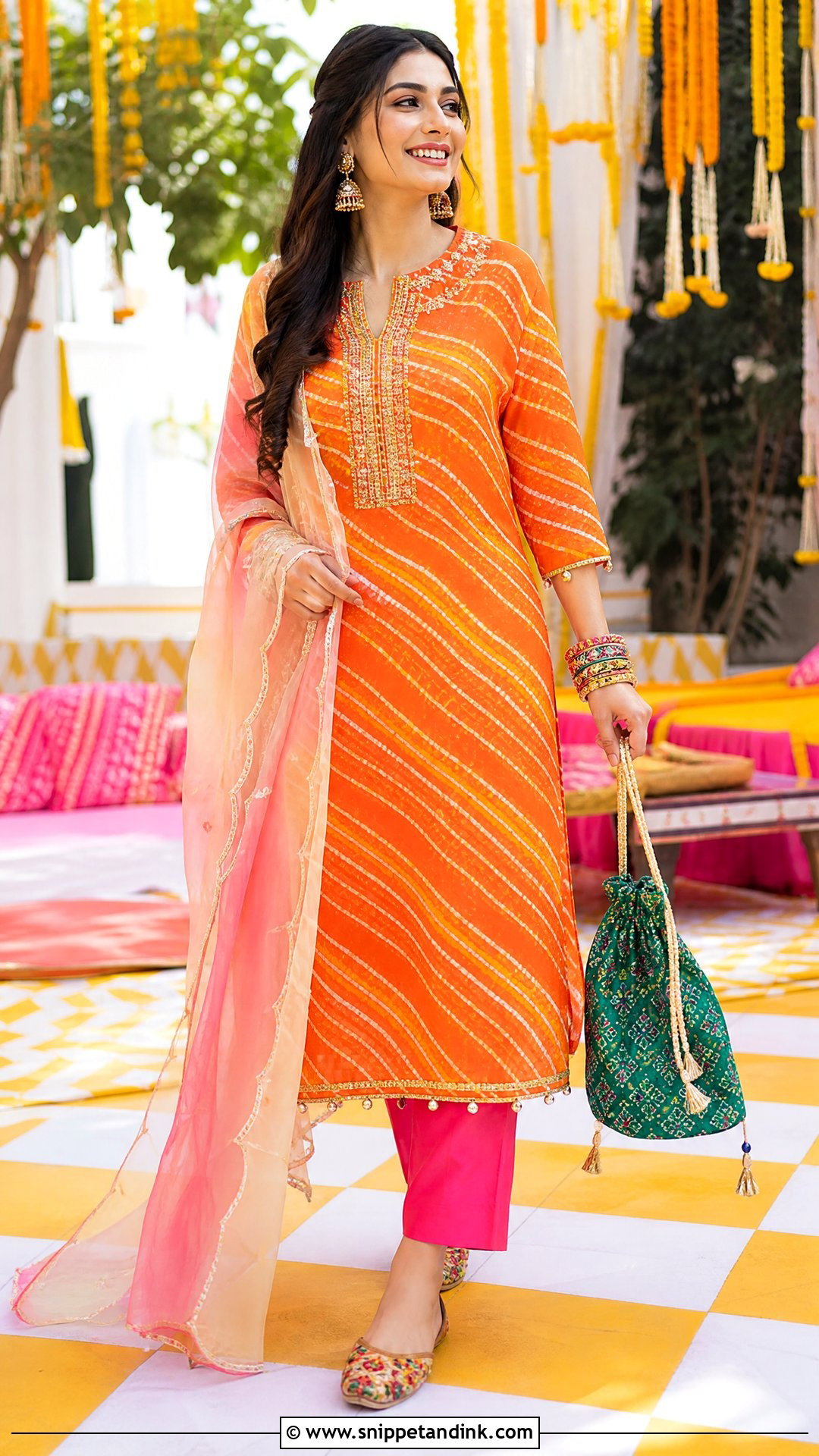
Leheriya is a Rajasthani resist-dye technique that creates diagonal wave-like stripes, and in orange it’s pure celebration. Choose a long kurta with a neat gota border and solid orange or pink straight pants. Add a contrasting Leheriya dupatta for bold color, or a plain organza one for a quieter finish. Gold jhumkas, colorful bangles and embroidered juttis fit the mood, with a green or magenta potli. A braided ponytail suits warm weather. Keep the shapes simple, because the stripes already create plenty of movement.
21. Ivory and Gold Kurta Set With Palazzo Pants
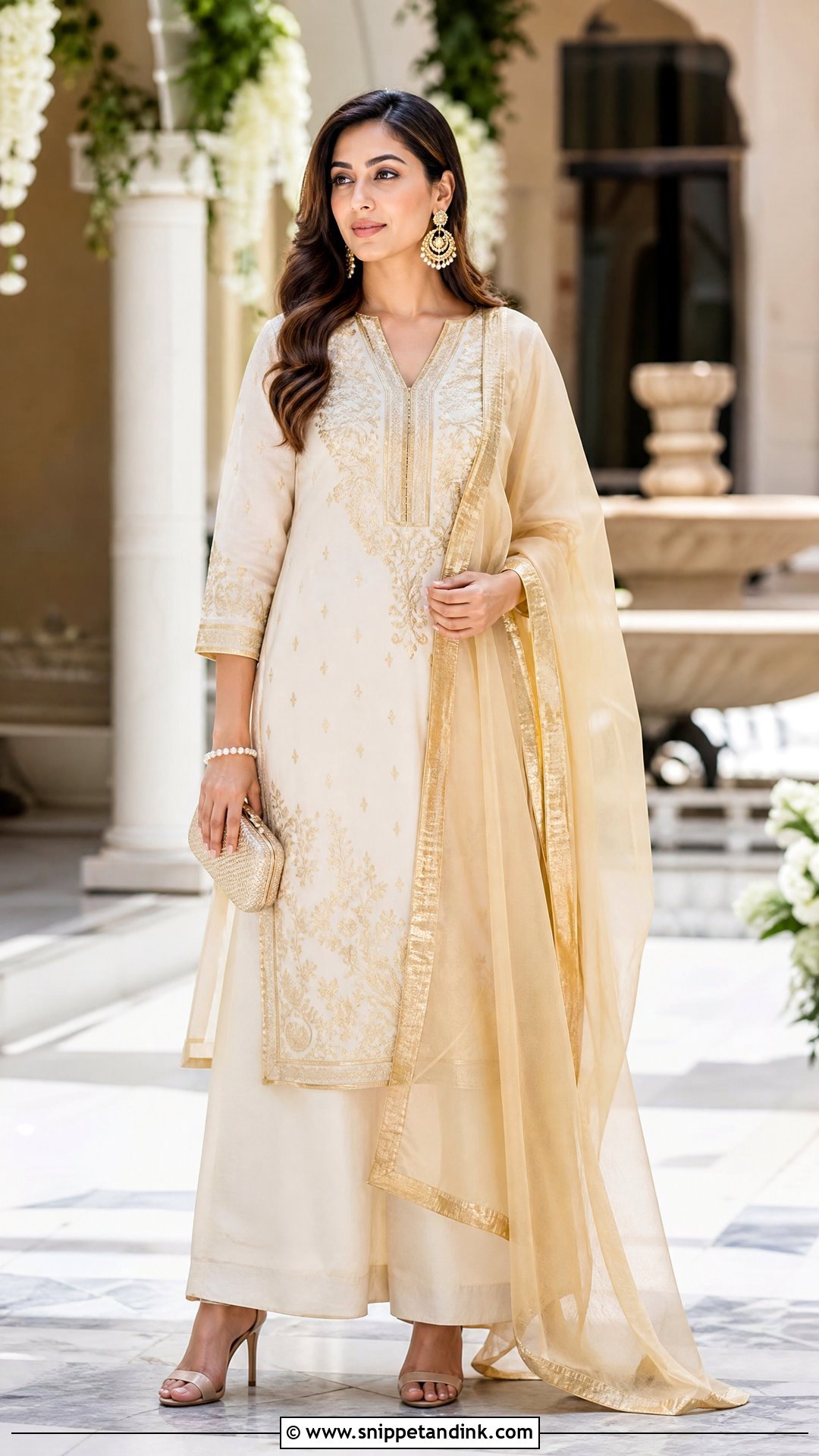
Ivory with gold threadwork, zari borders or small buta motifs looks luminous at a daytime wedding or formal lunch. Wide palazzos add movement, and a tissue or organza dupatta polishes it. Gold chandbalis, a pearl bracelet, champagne heels and a pale gold clutch keep it coordinated. Light shades carry different meanings for different families, so I’d confirm the dress code; beige, soft gold or pale peach give a similar effect. Bronzed makeup and a sleek bun add definition, and a colorful gemstone ring gives one point of contrast.
22. A-Line Kurta Set With Wide Palazzo Pants
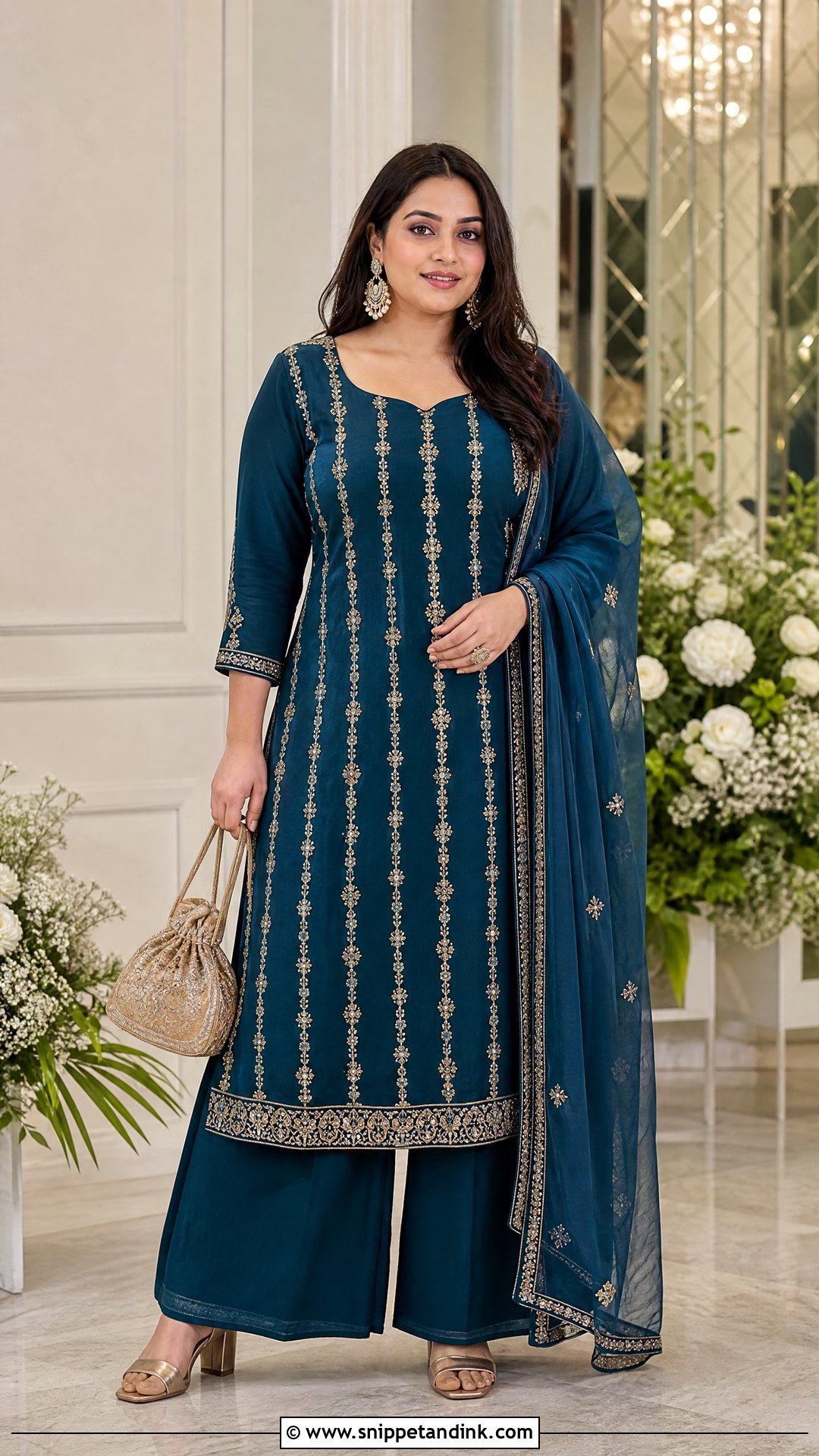
The A-line is the cut I reach for when a guest wants comfort above everything. It fits through the shoulders and widens gradually toward the hem, so it skims instead of clinging, and it suits a wide range of sizes. Vertical embroidery, an open neckline and side slits lengthen the line. Pair it with palazzos that skim, a light dupatta from one shoulder, medium earrings, stable block heels and a structured potli. Jewel tones and saturated pastels both work. Get the shoulder, bust and armhole measurements right; a relaxed fit looks more polished than a tight one.
23. Monochrome Kurta Set With Straight Pants
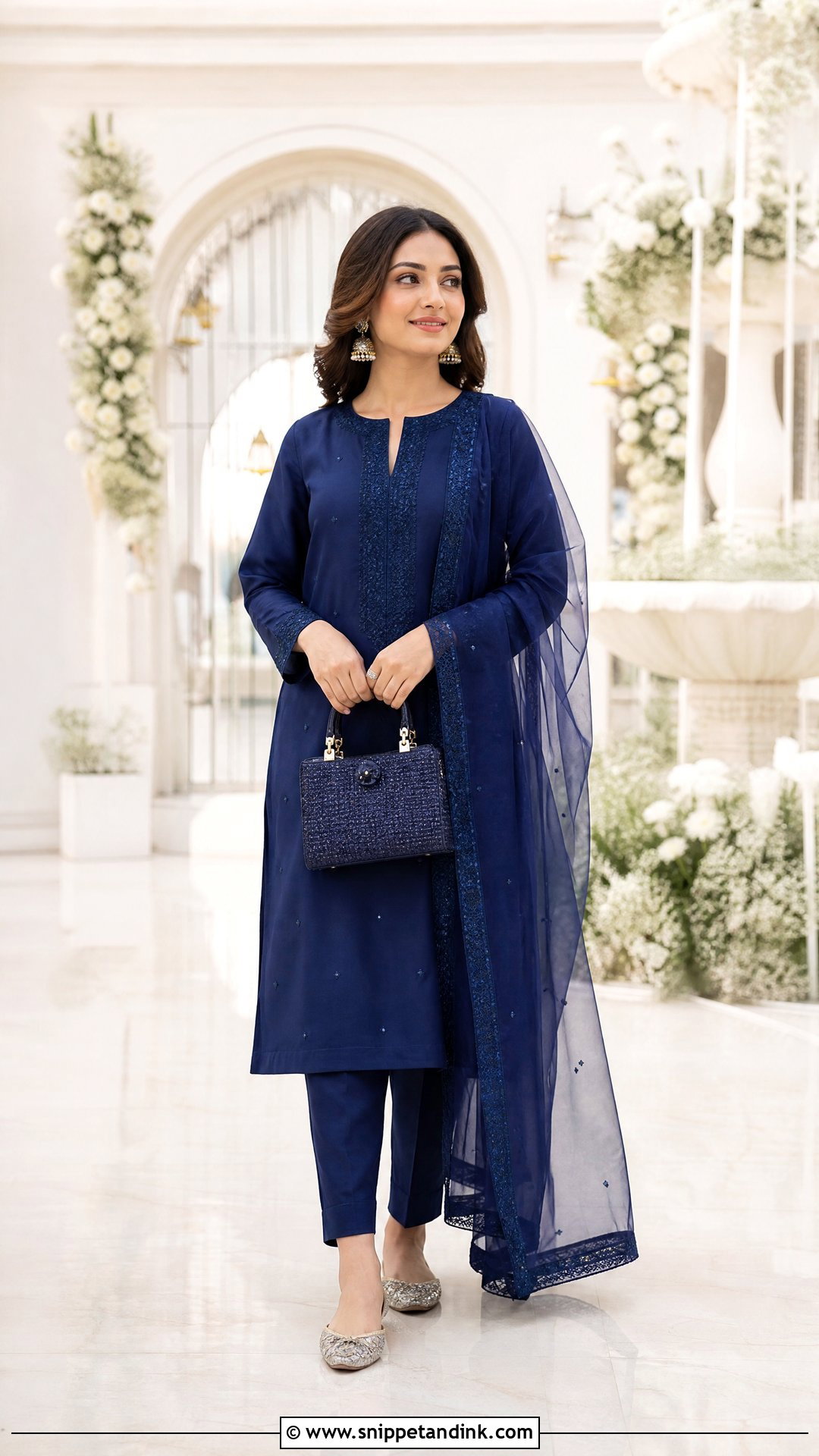
One unbroken color makes a petite guest look taller. Choose a knee-length straight kurta and narrow pants in emerald, raspberry, sapphire or plum, with tonal embroidery that adds depth without breaking the line. A sheer dupatta in the same color family keeps it light. Pointed juttis or modest block heels, medium earrings and a small bag finish it. Avoid wide borders, oversized motifs and a kurta hem near the ankle; each one cuts the line. A high ponytail or neat bun adds height.
24. Silk Kurta Set for Women Over 50
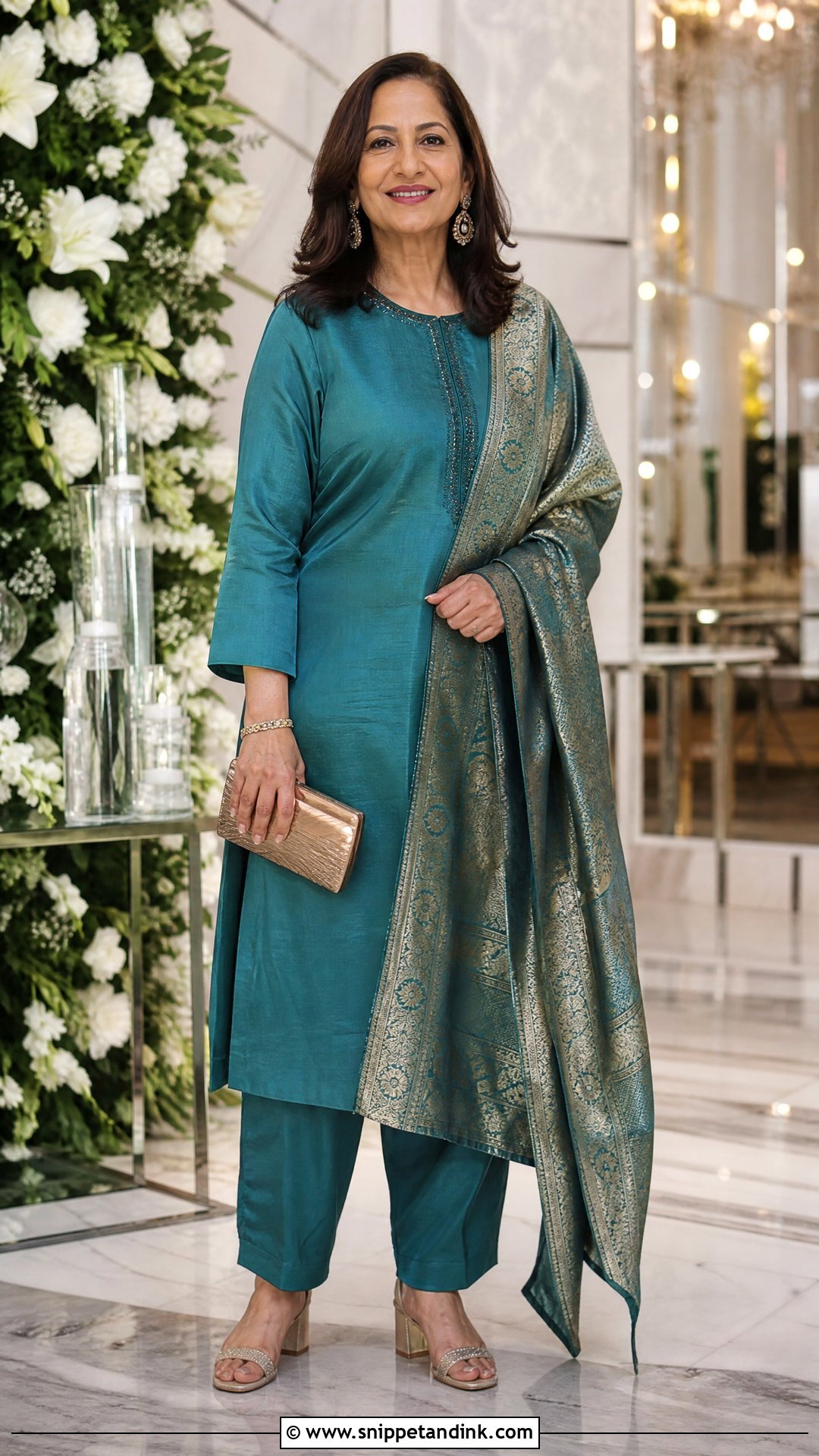
Good silk and good tailoring flatter at any age, and color doesn’t need to be toned down after 50. A straight or gently flared kurta in teal, wine, aubergine, navy or muted rose, with three-quarter sleeves and a softly open neckline, gives comfortable coverage with room for jewelry. Tailored pants and a light woven dupatta complete it. Add polished earrings, one bracelet, supportive block heels and a structured clutch. I’d put the budget into fit rather than embellishment, and bring in brighter color through the dupatta or gemstones if you like it.
25. Linen Silk Kurta Set for Destination Wedding
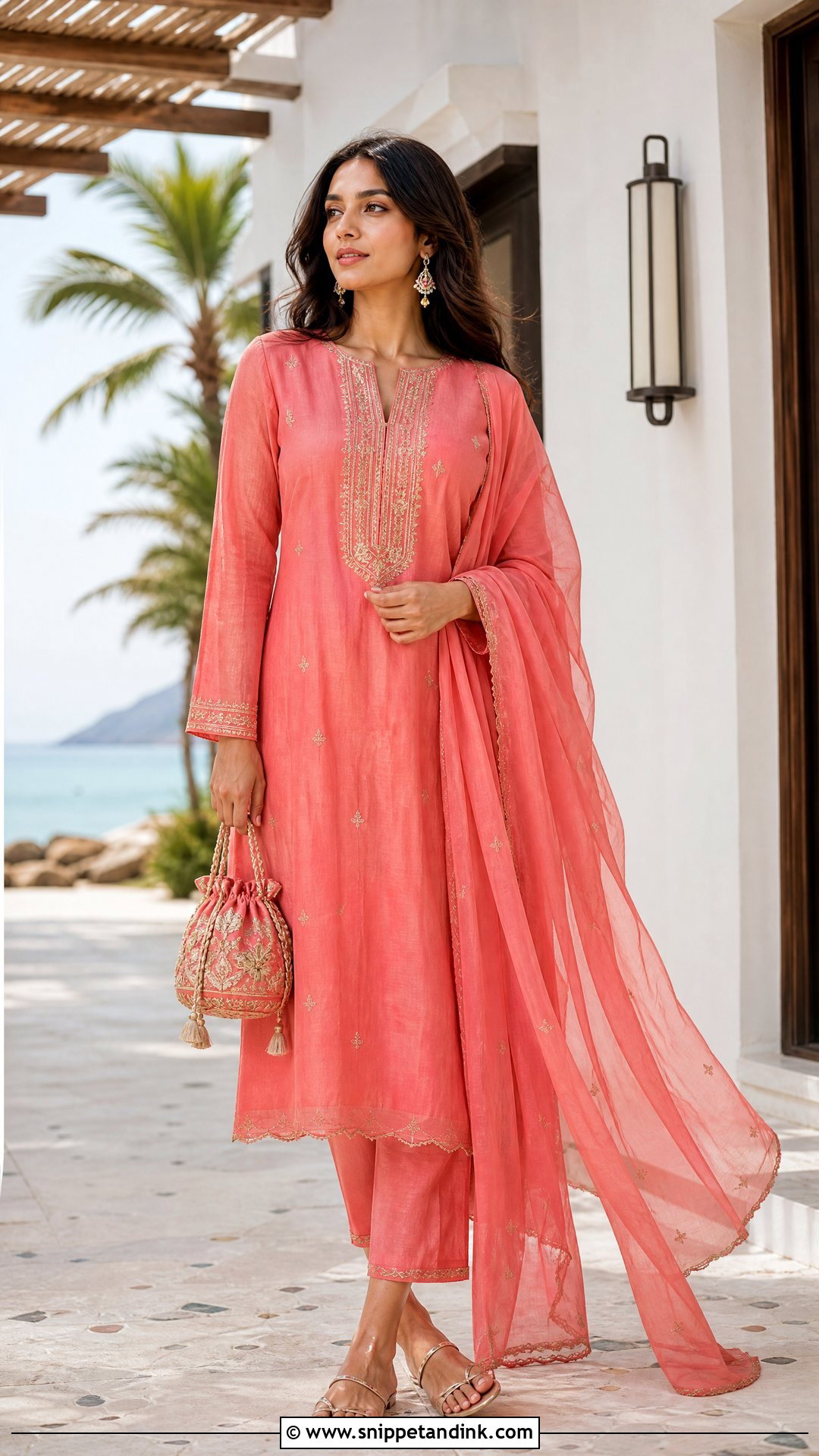
Linen-silk has enough body to look dressed and is light enough for heat. A relaxed straight kurta with delicate embroidery, matching ankle pants and an airy dupatta in coral, aqua, lime or soft turquoise suits a tropical or coastal wedding. Metallic sandals, light earrings and a small woven or embroidered bag complete it. Skip heavy beadwork in humidity. Linen creases the moment you sit, which is part of its character, so pack the set in a garment sleeve and steam it on arrival. A jewelry change takes it from day to evening.
Three Dupatta Drapes That Survive Dinner and Dancing
The dupatta is the piece guests fight with all night. These are the drapes I set for people, from least to most secure.
- One shoulder: the easiest drape and the best for showing off an Anarkali flare. Fold it lengthwise into neat pleats, lay it over the left shoulder and pin it from inside at the shoulder seam. It still slips when you hug people, so keep a spare pin.
- Both shoulders, open at the front: lay it across the back of the neck, let both ends fall in front and pin each side at the shoulder. It frames the neckline and suits heavy dupattas that pull off one shoulder.
- Across the body: drape it from one shoulder across to the opposite hip and tuck or pin it at the waist, or hold it there with a slim belt. This is the drape for dancing, because both arms stay free and nothing trails.
Use small gold or silver safety pins that match the zari, so a flash of metal doesn’t look like a mistake. On sheer organza and net, pin through a doubled fold or the border, since a single layer tears easily. And before you sit to eat, lift the trailing end onto your lap; dupattas are the first thing to land in the dal.
What Makes a Simple Kurta Set Look Wedding-Ready
A wedding outfit has to let you sit, walk, talk and dance for hours while still looking festive. Start with the venue, season, dress code and your role at the wedding, then pick a silhouette that fits through the shoulders and moves easily. Shoes, jewelry, a practical bag and a well-pinned dupatta finish the look. Heavy embellishment isn’t required. Good fabric, balanced proportions and accessories chosen on purpose make even a simple set look polished, whether it’s for a daytime ceremony, a pre-wedding function, a winter reception or a destination event.
You'll Like These Ideas:


Leave a Reply