
The hairstyle you pick has to work with three things you’ve probably already chosen: the dress, the veil or headpiece, and the venue. Get those right and almost any of the 35 styles below will hold up. Get them wrong and even a perfect trial can fall apart once the gown goes on. I’ve gone through each look the way I would in a consultation, with notes on how it’s built, how it lasts and who I’d talk out of it.
Start With the Neckline, Then Look at Hair
I ask about the dress before anything else at a consultation. The neckline decides where hair can sit without fighting the fabric, and a lot of styles that look perfect in photos clash with the gown in real life.
- Strapless and sweetheart: almost anything works. Loose hair can cover bare shoulders; an updo shows them off.
- High neck or halter: hair up. Loose hair bunches against a high collar and looks messy by the reception.
- Off-the-shoulder: a low bun or chignon keeps the shoulder line clean. Long loose hair hides the neckline you paid for.
- Low or open back: pull the hair up or to one side so the back detail stays visible.
- Lace or beaded shoulders: avoid long loose curls, which catch on the detailing every time you turn your head.
Bring a photo of the back of your dress as well as the front. The back is what guests see during the vows, and it’s where most of the hairstyle shows.
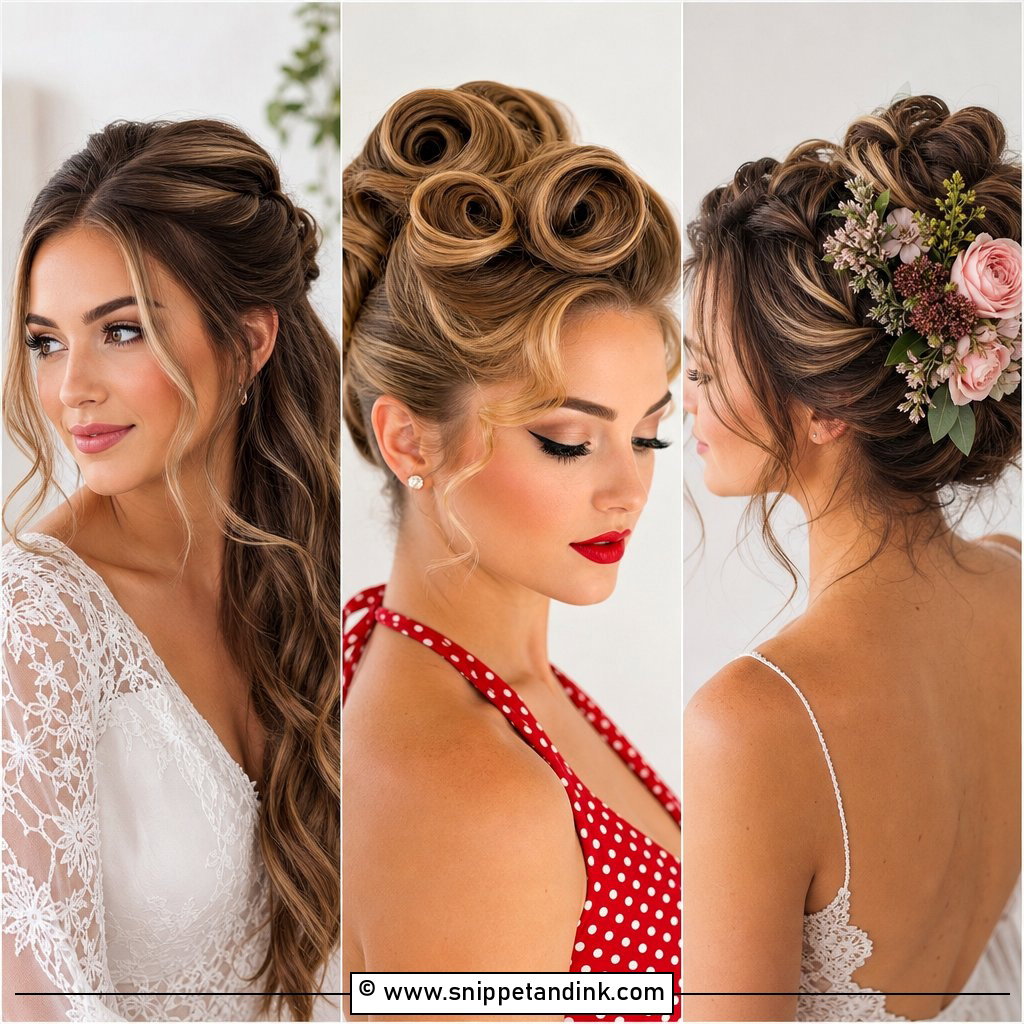
1. Half-Up Half-Down Wedding Hairstyle
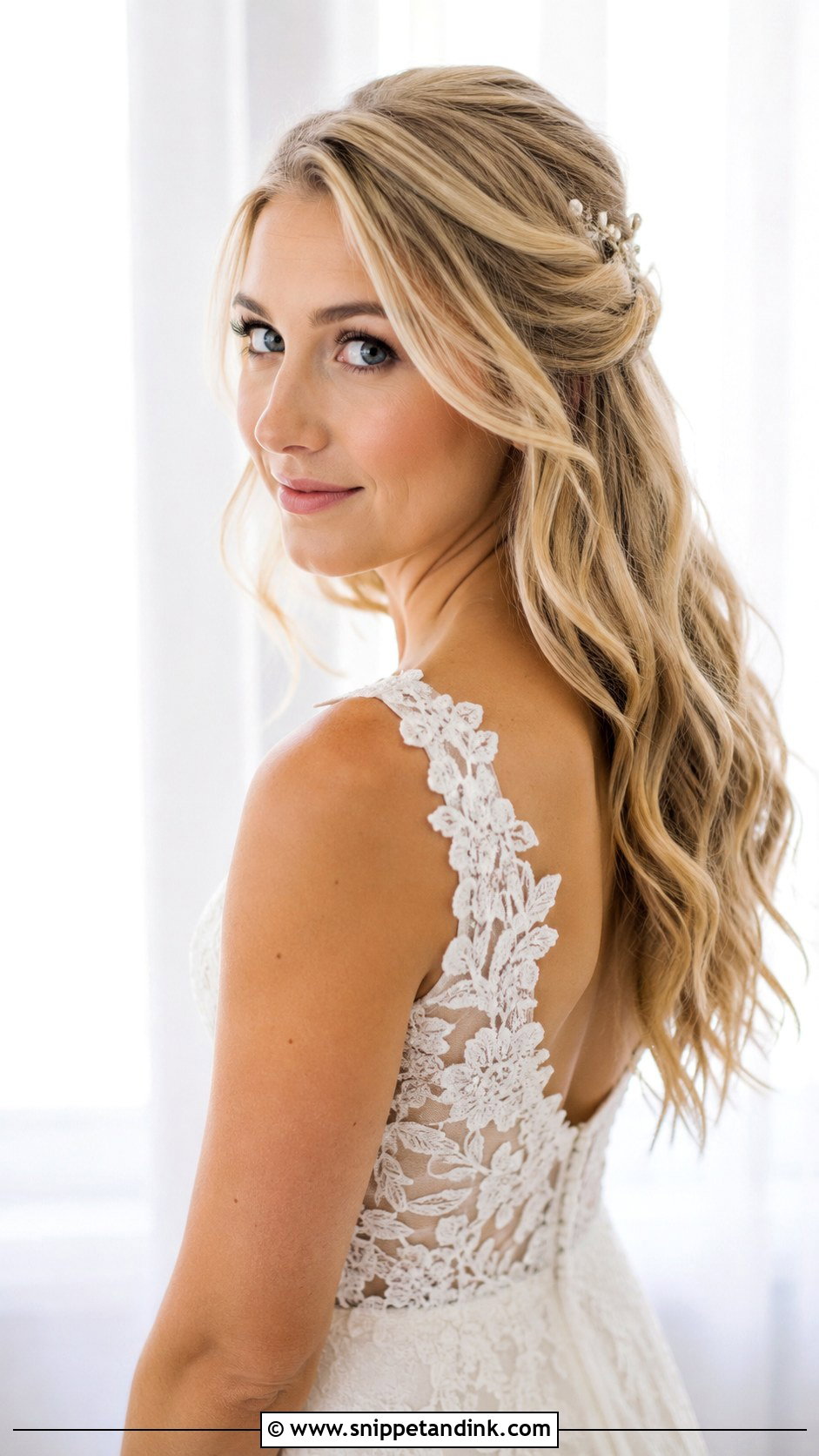
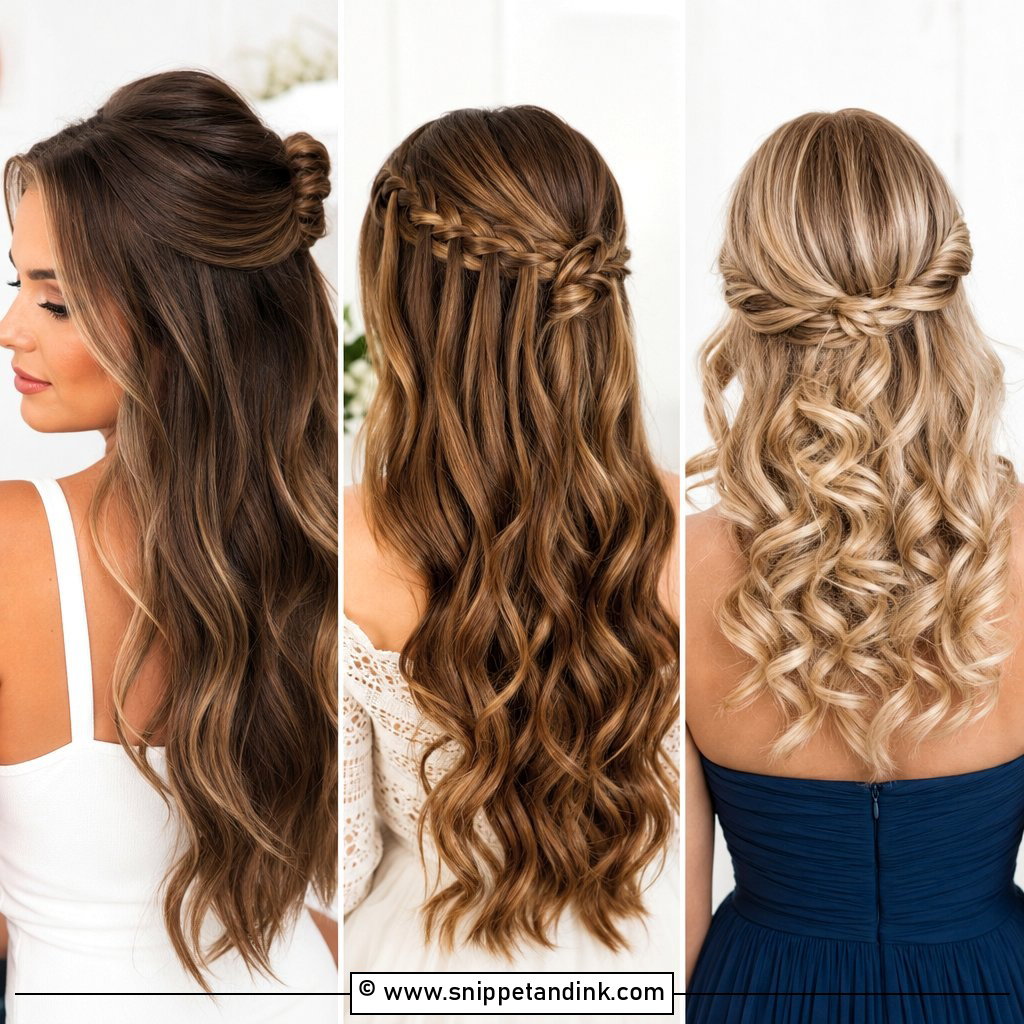
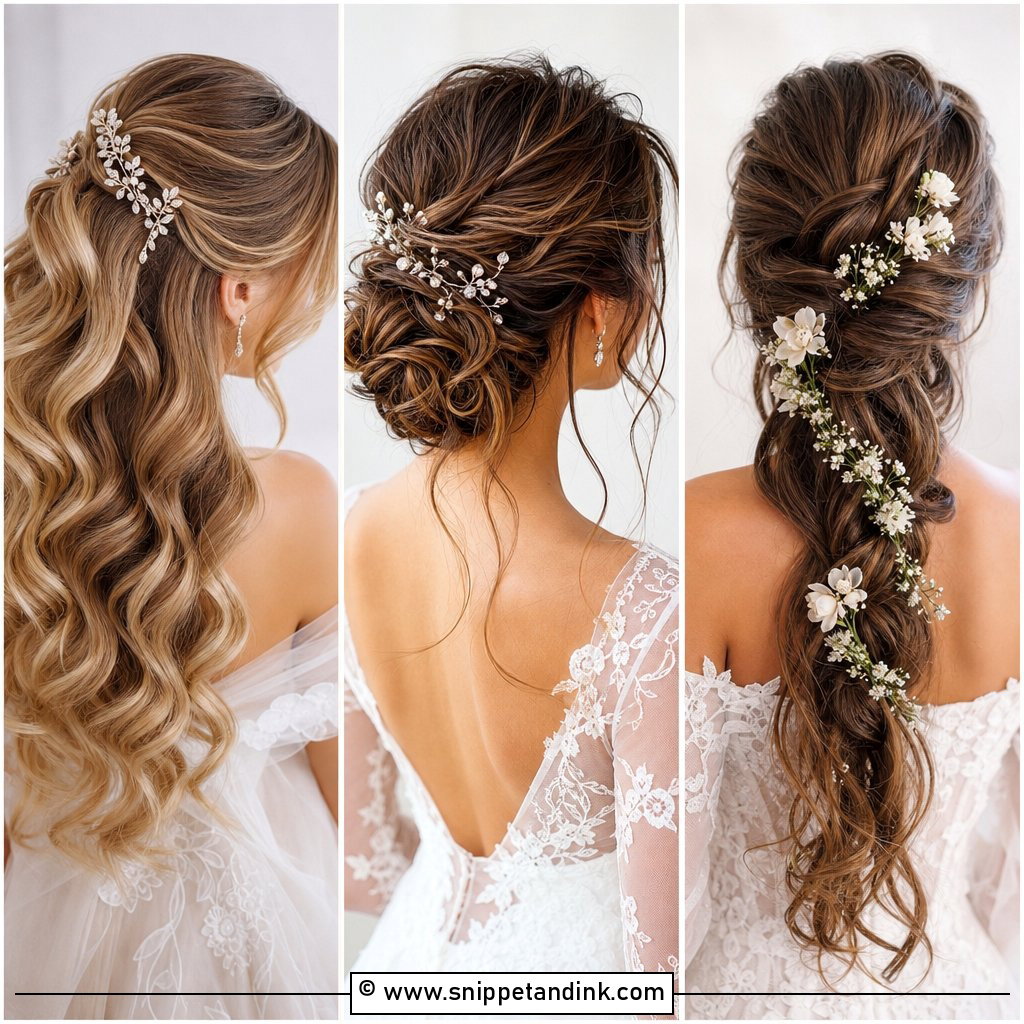
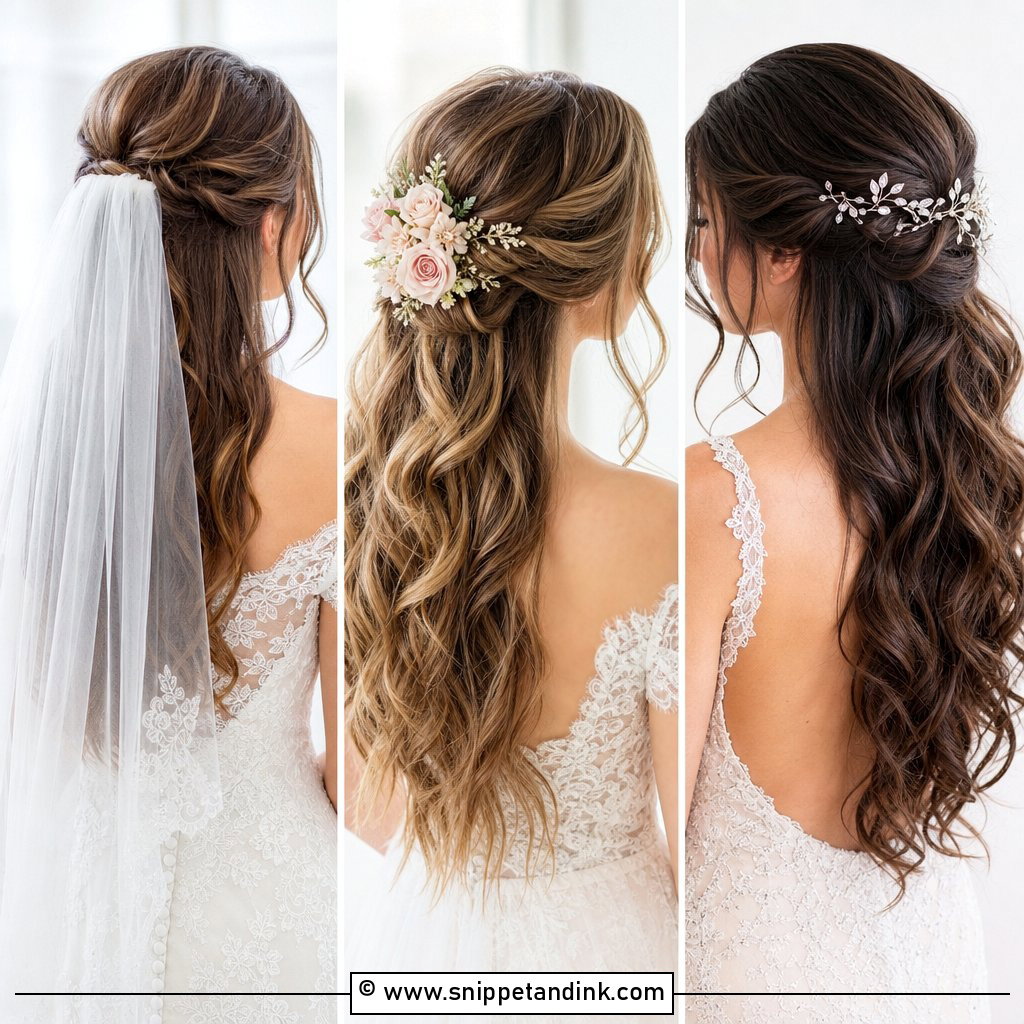
Half up, half down is my usual answer for a bride who can’t choose. The top section can be twisted, braided or knotted into a small bun, and the rest is left to fall. What makes it last is the base: I tease lightly under the crown and pin across it, so the top doesn’t flatten during the ceremony. It suits most necklines, though very open backs look better with more hair up.
2. Sleek Low Bun for Brides
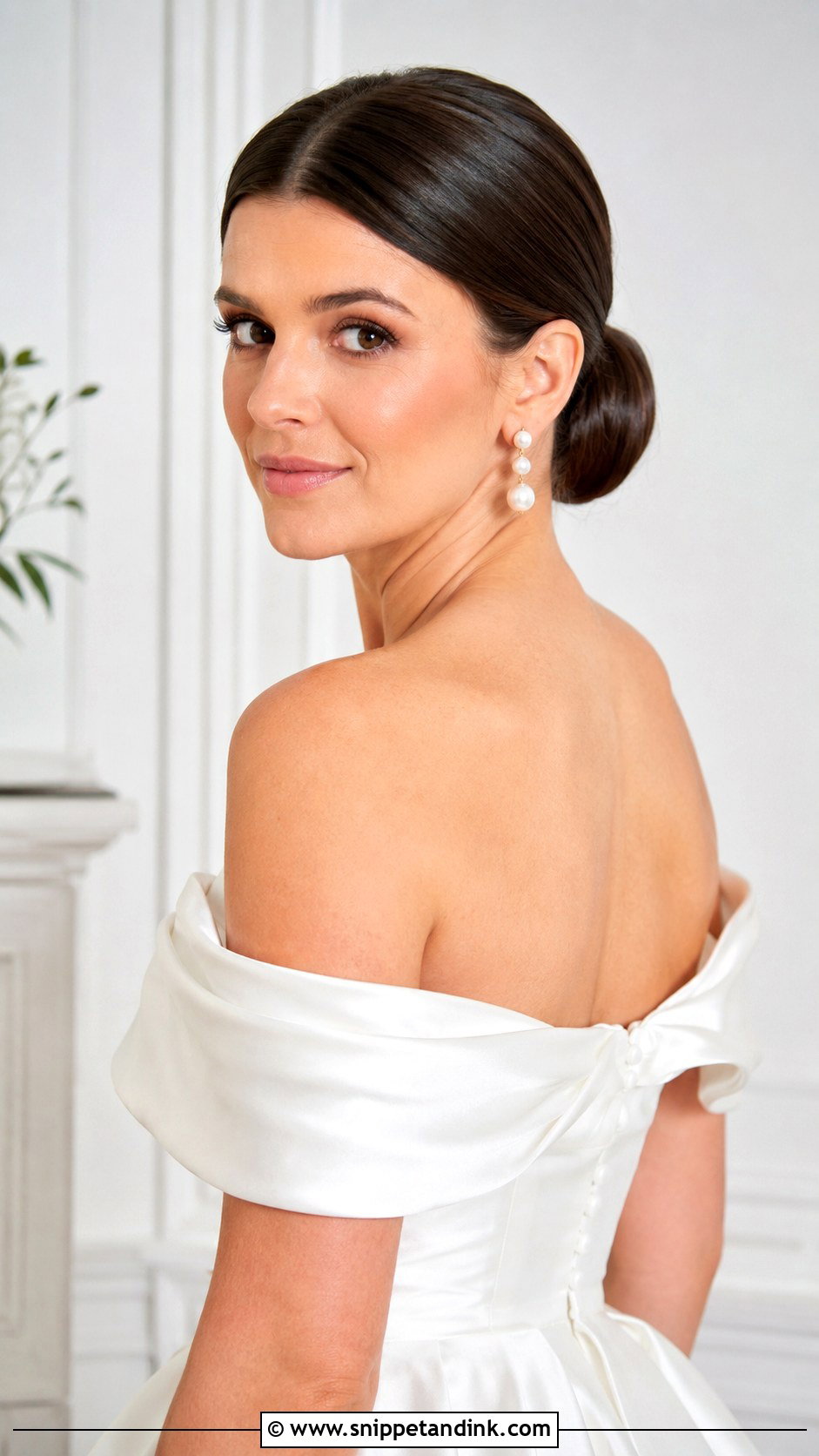
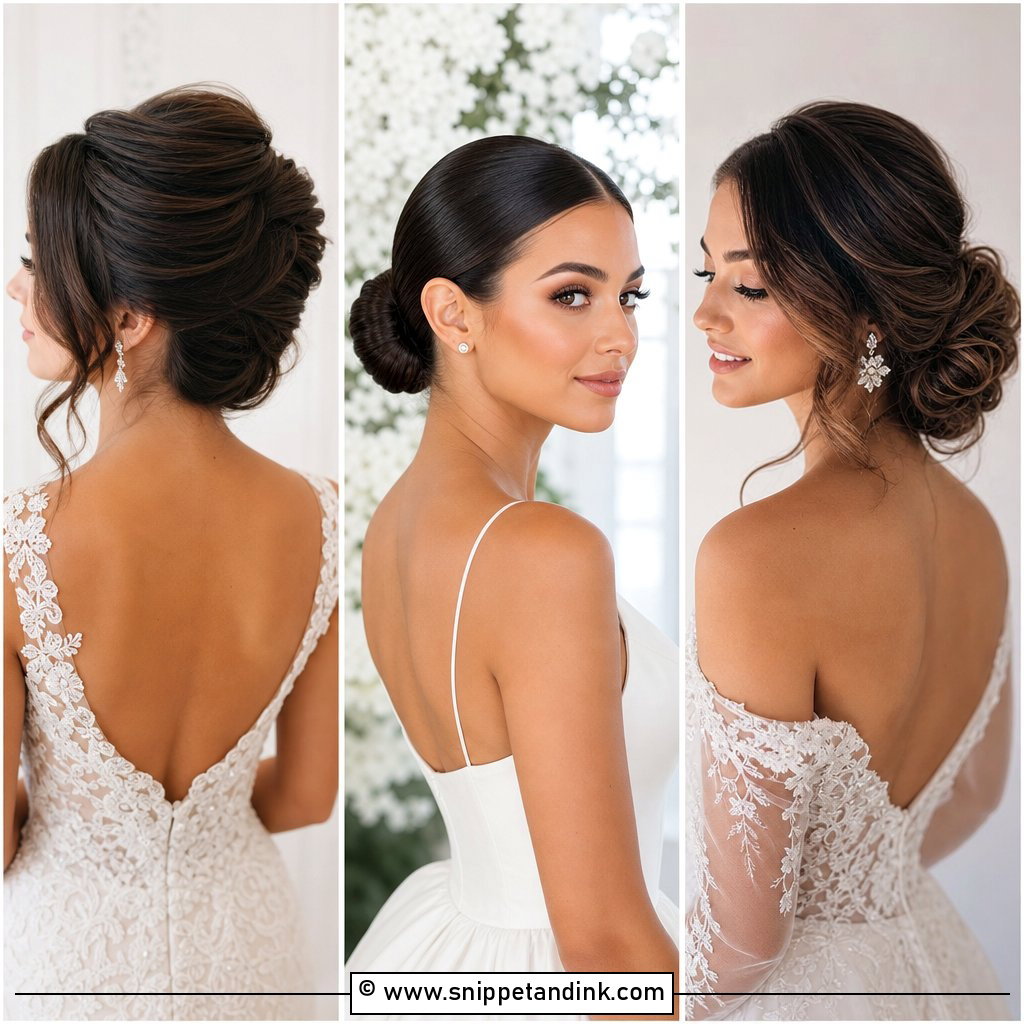
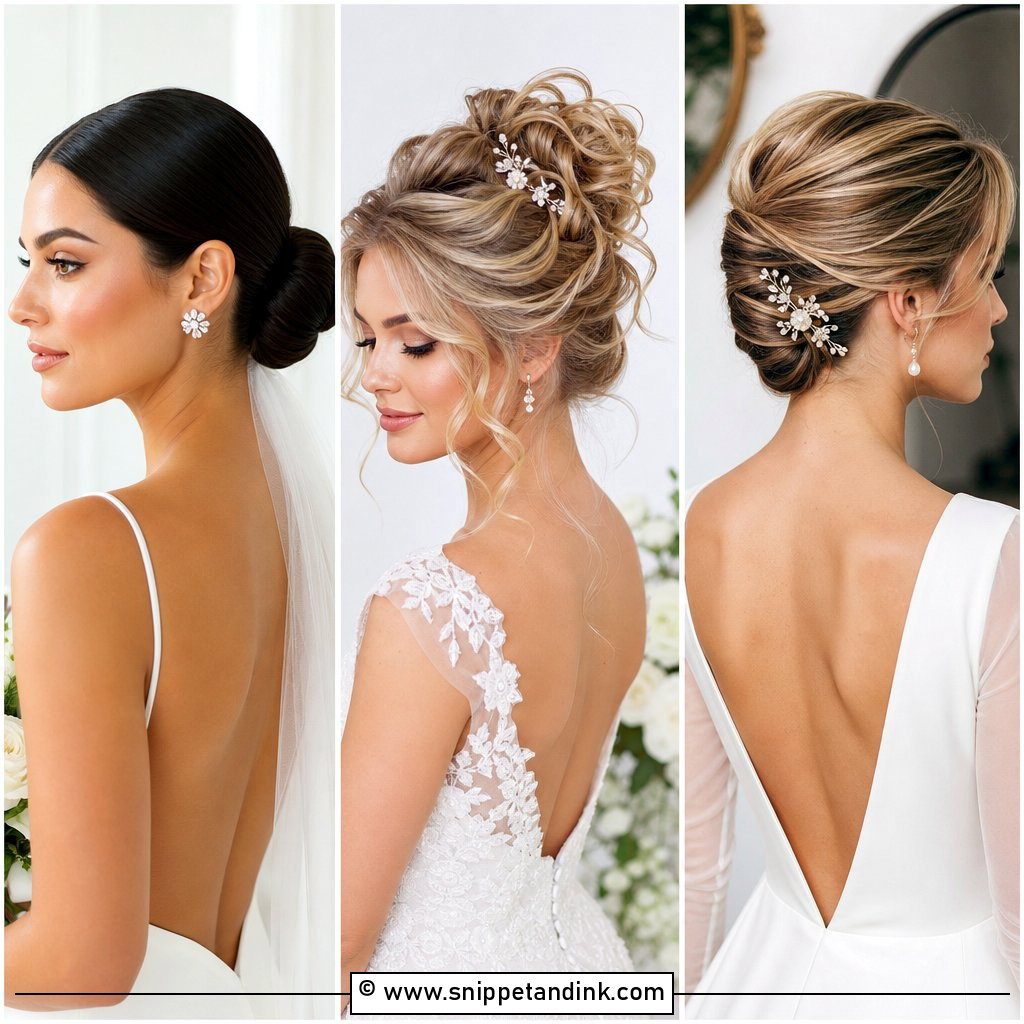
A sleek low bun lives or dies on prep. I blow-dry the hair completely smooth first, because any kink from sleeping on it shows through the gel. Then it’s brushed back, secured with an elastic and wrapped into a tight knot at the nape. High necks and off-the-shoulder gowns both suit it. It also wears well for twelve hours, since there’s nothing to drop.
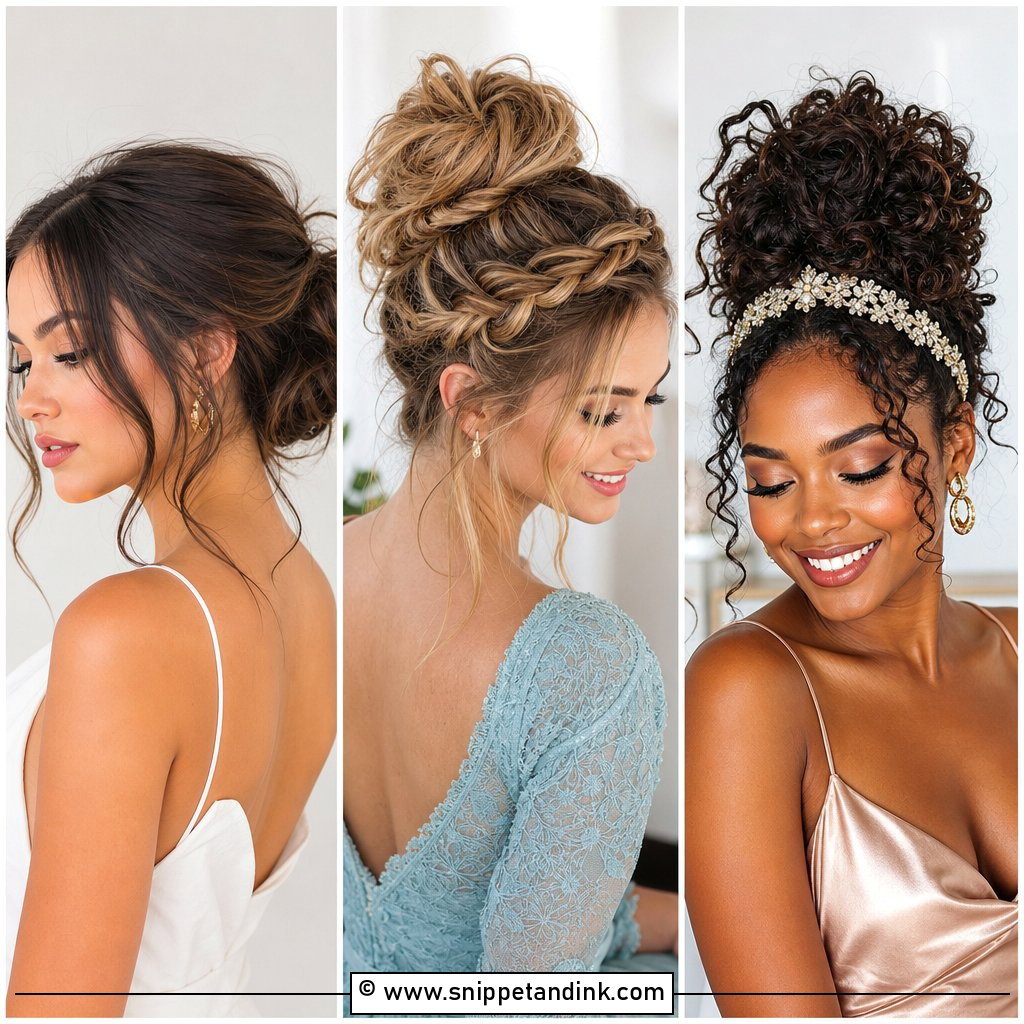
3. Messy High Bun Bridal Look
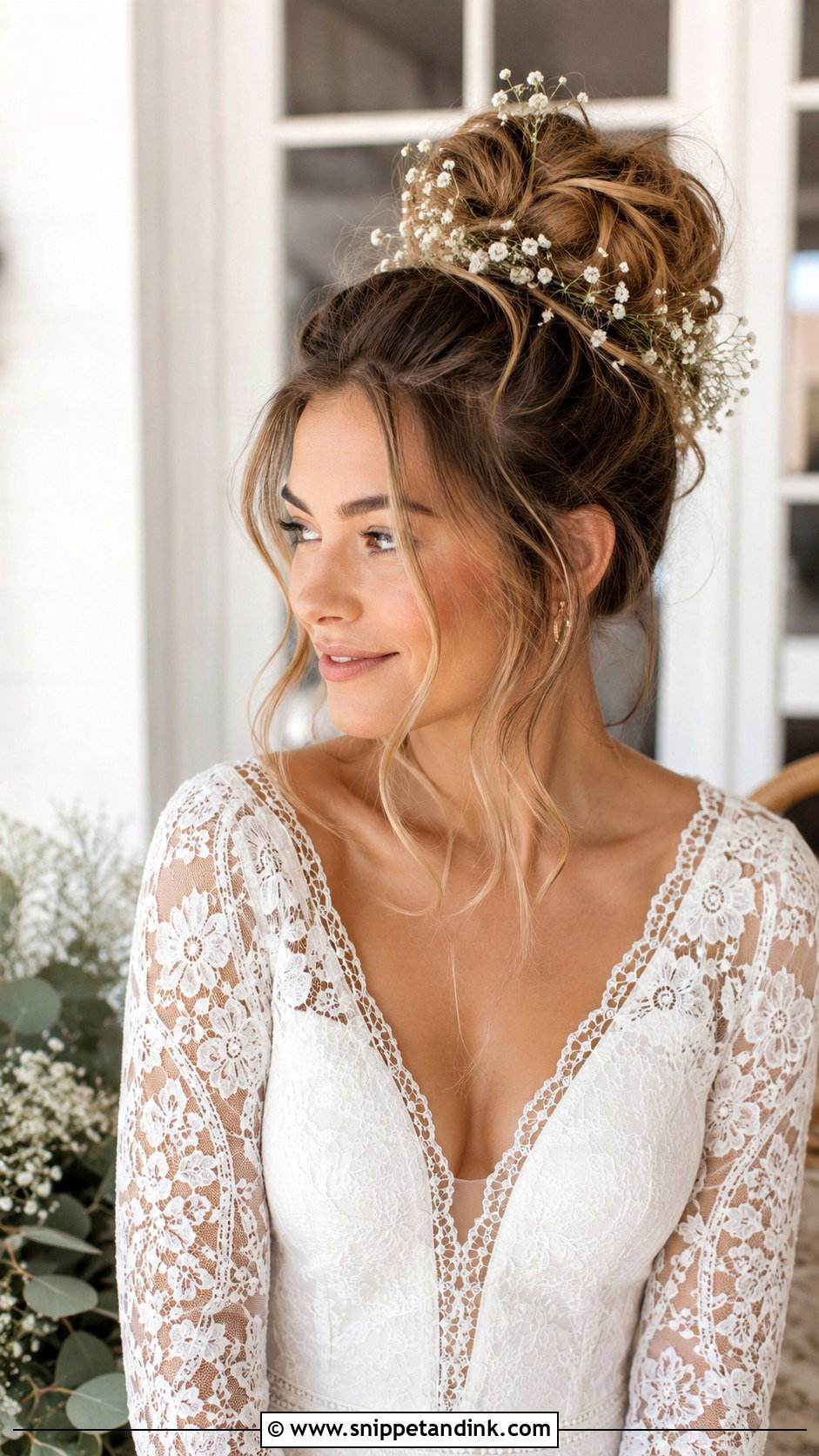
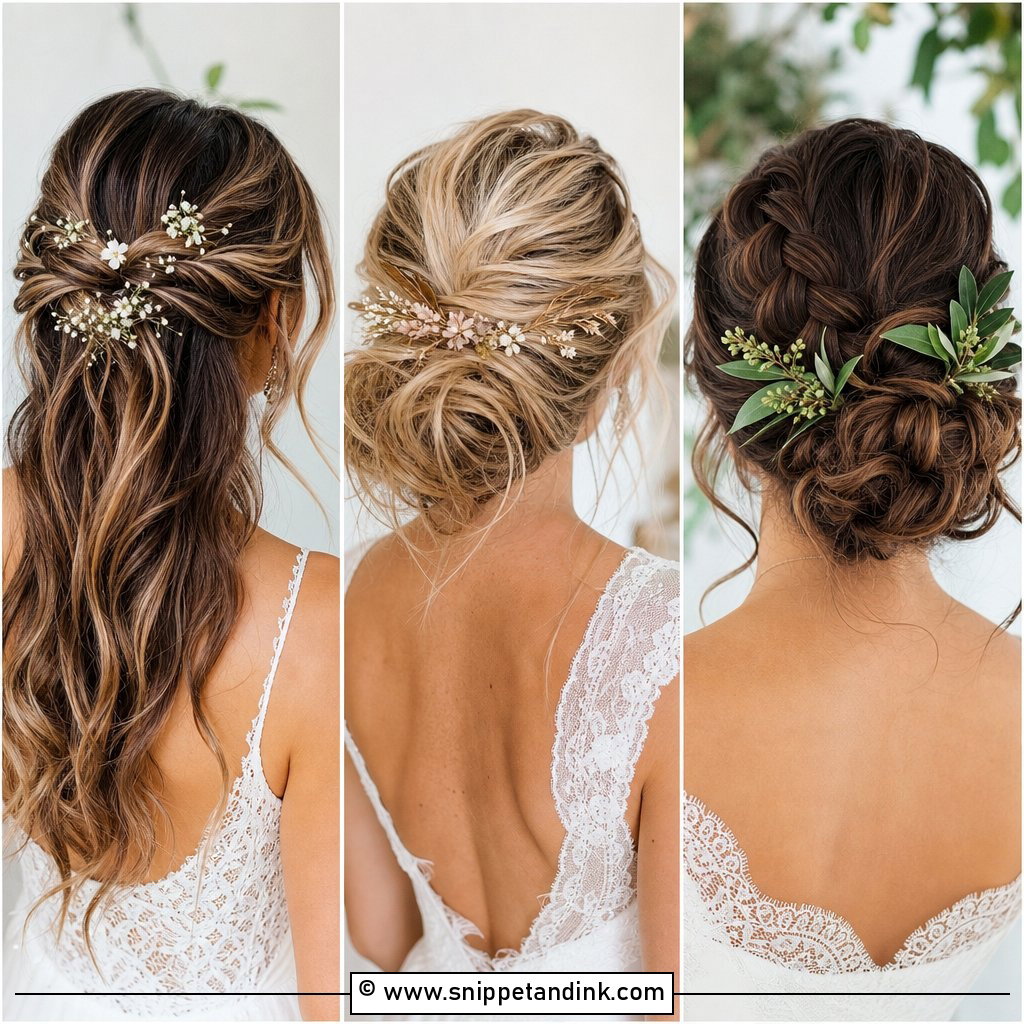
There’s a lot of structure inside a messy high bun. I add dry texture spray, rough the hair up with my fingers, and pin every loop so the soft, tousled texture stays in place rather than growing frizzier. The tendrils are cut from the hairline in thin sections. Baby’s breath tucks into the loops easily. A long veil sits awkwardly against a bun this high, so I’d pair it with a short veil, a comb or nothing at all.
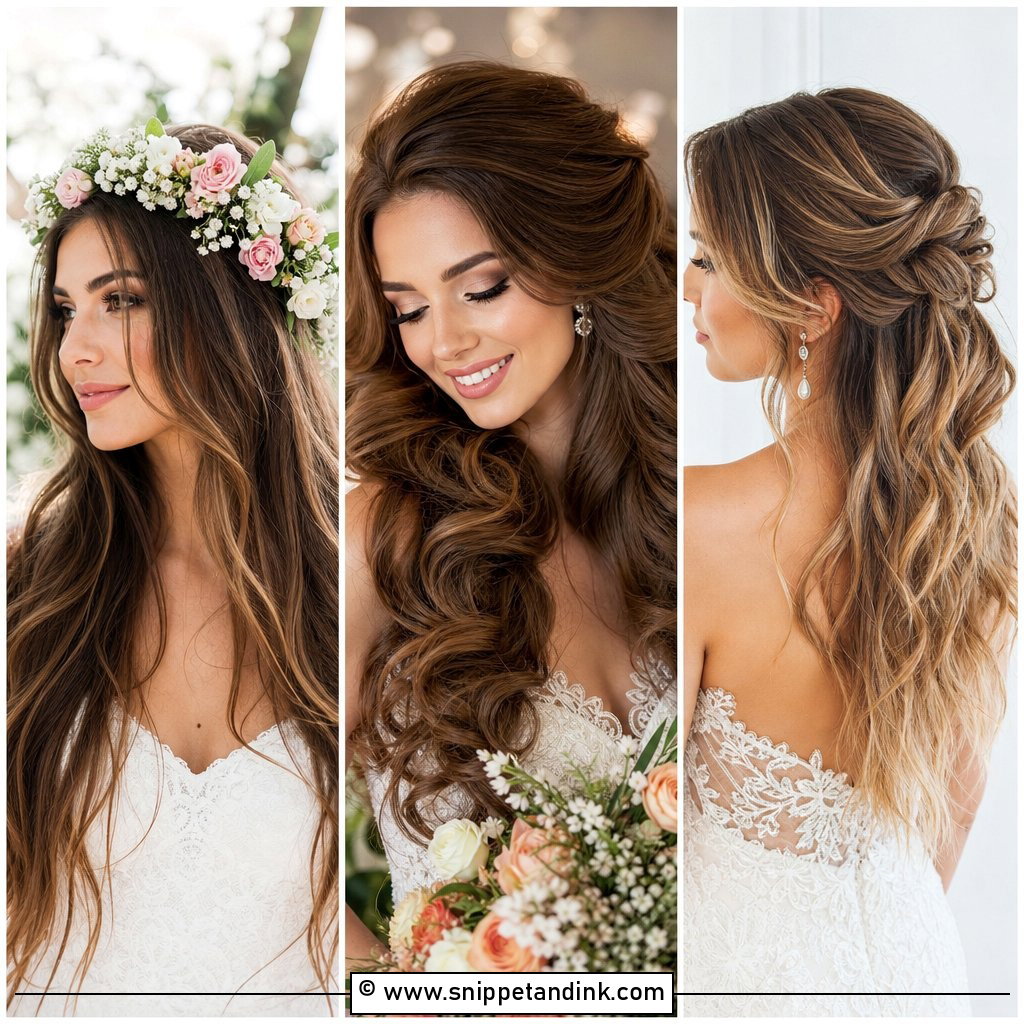
4. Soft Cascading Waves for Wedding
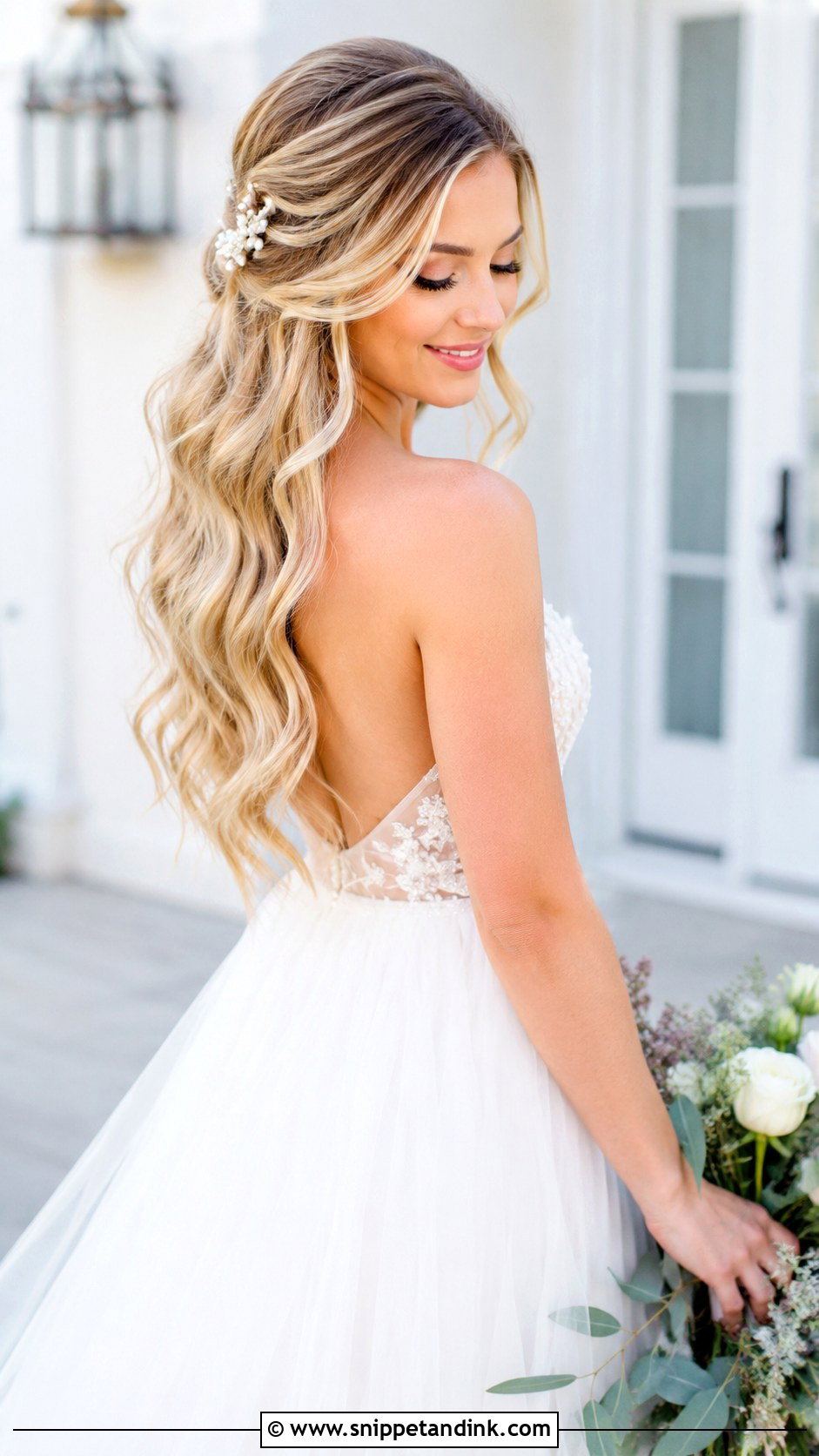
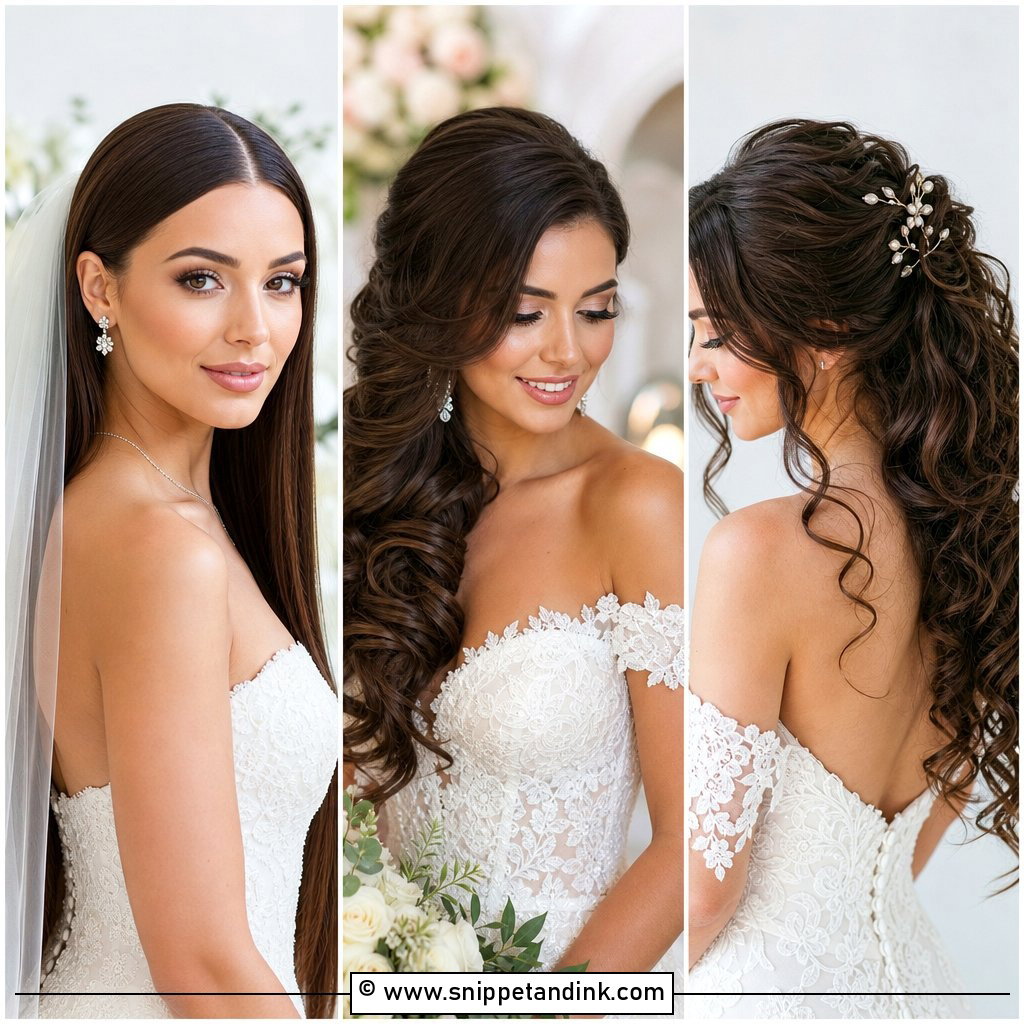
Cascading waves need setting, not just curling, or they’ll be straight by dinner. I curl each section, pin it in a coil to cool, then brush out once everything is cold. Medium and long hair handle this best; on fine hair I add a root mousse first. If you’re wearing it down at an outdoor wedding, pin one side back with pearl clips so the wind has less to grab.
5. Classic French Twist Wedding Hairstyle
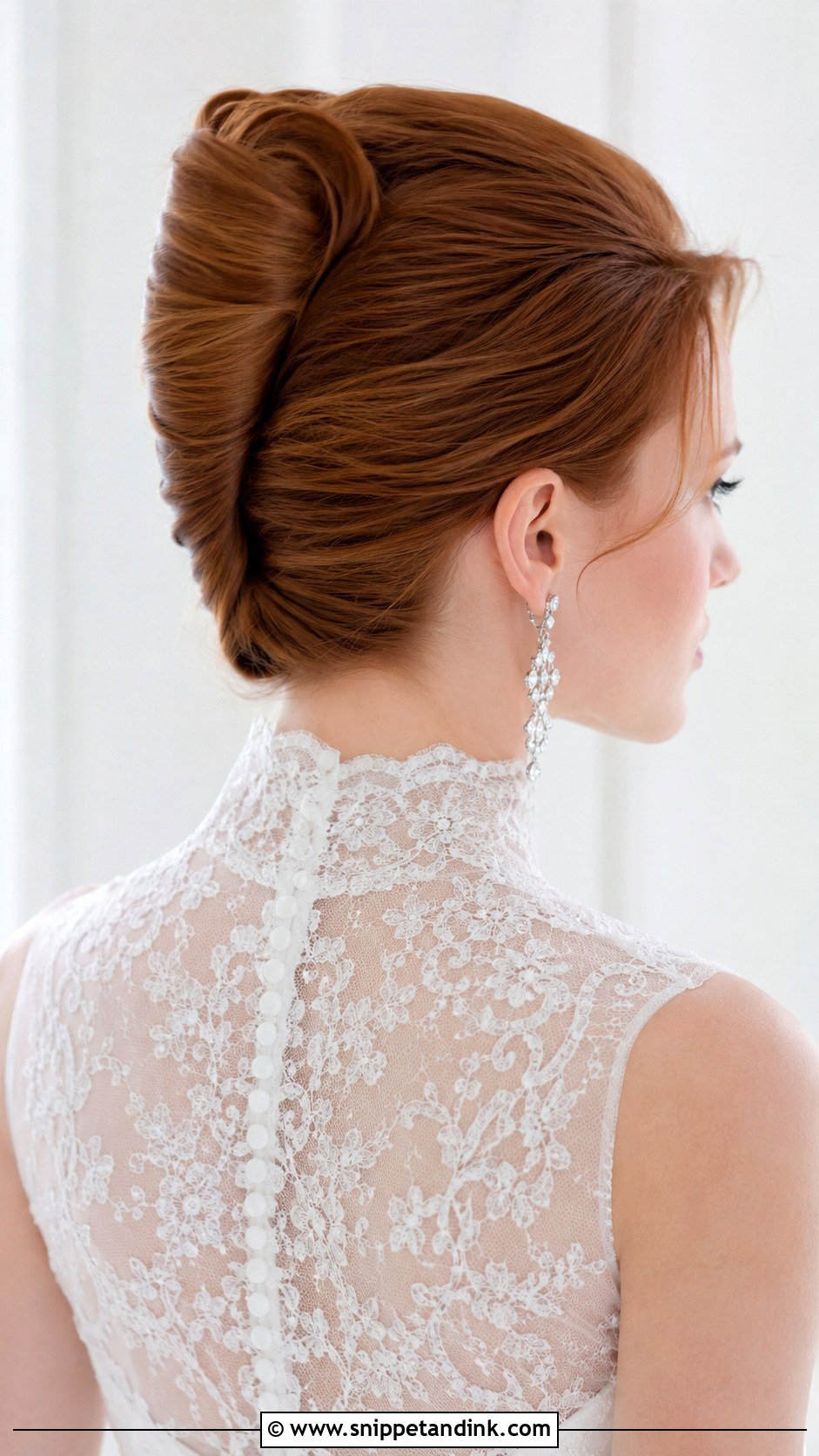
A French twist needs hair with grip. Wash it the day before, not the morning of, and let me add texture so the roll doesn’t slide. The twist runs vertically up the back of the head, pinned along the seam, and it holds through long ceremonies very well. High necklines and drop earrings are a natural match. Shoulder length is the shortest I’d attempt it on.
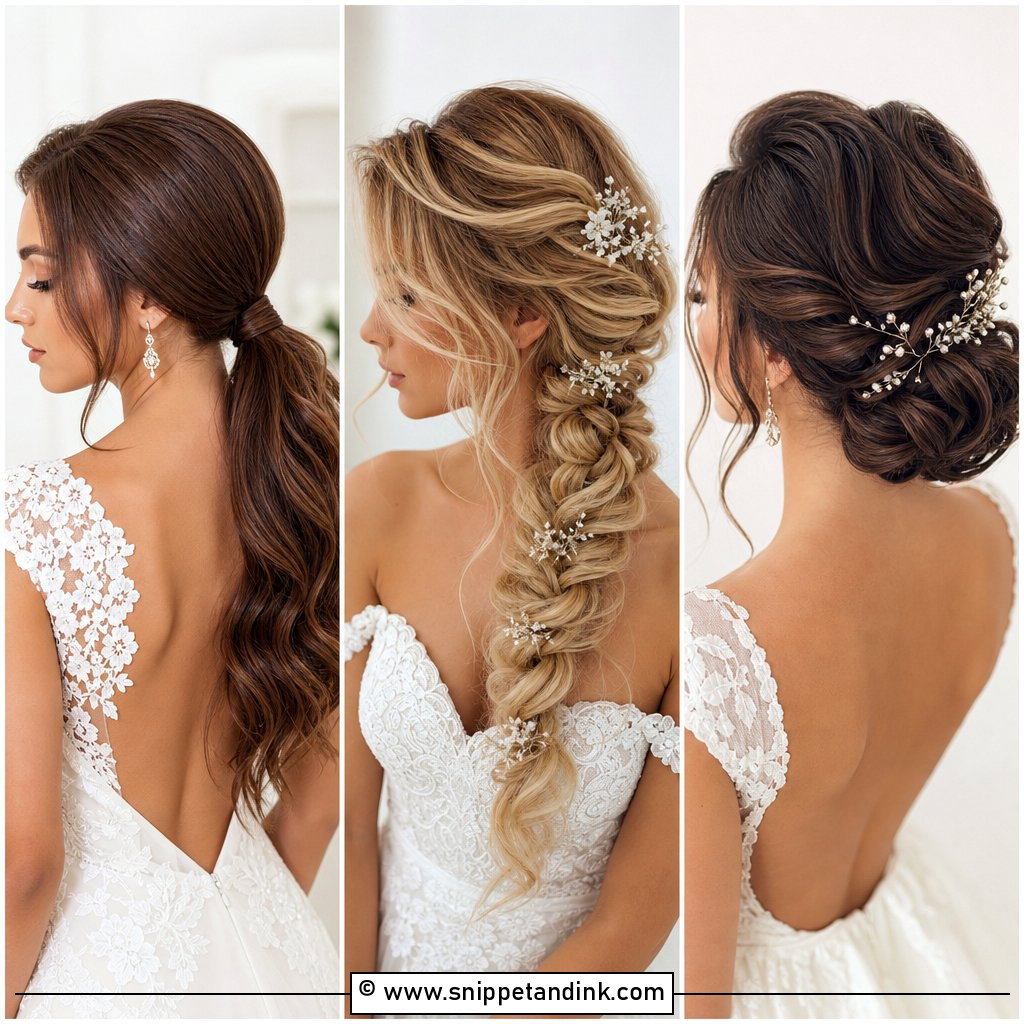
6. Bridal Ponytail with Soft Waves
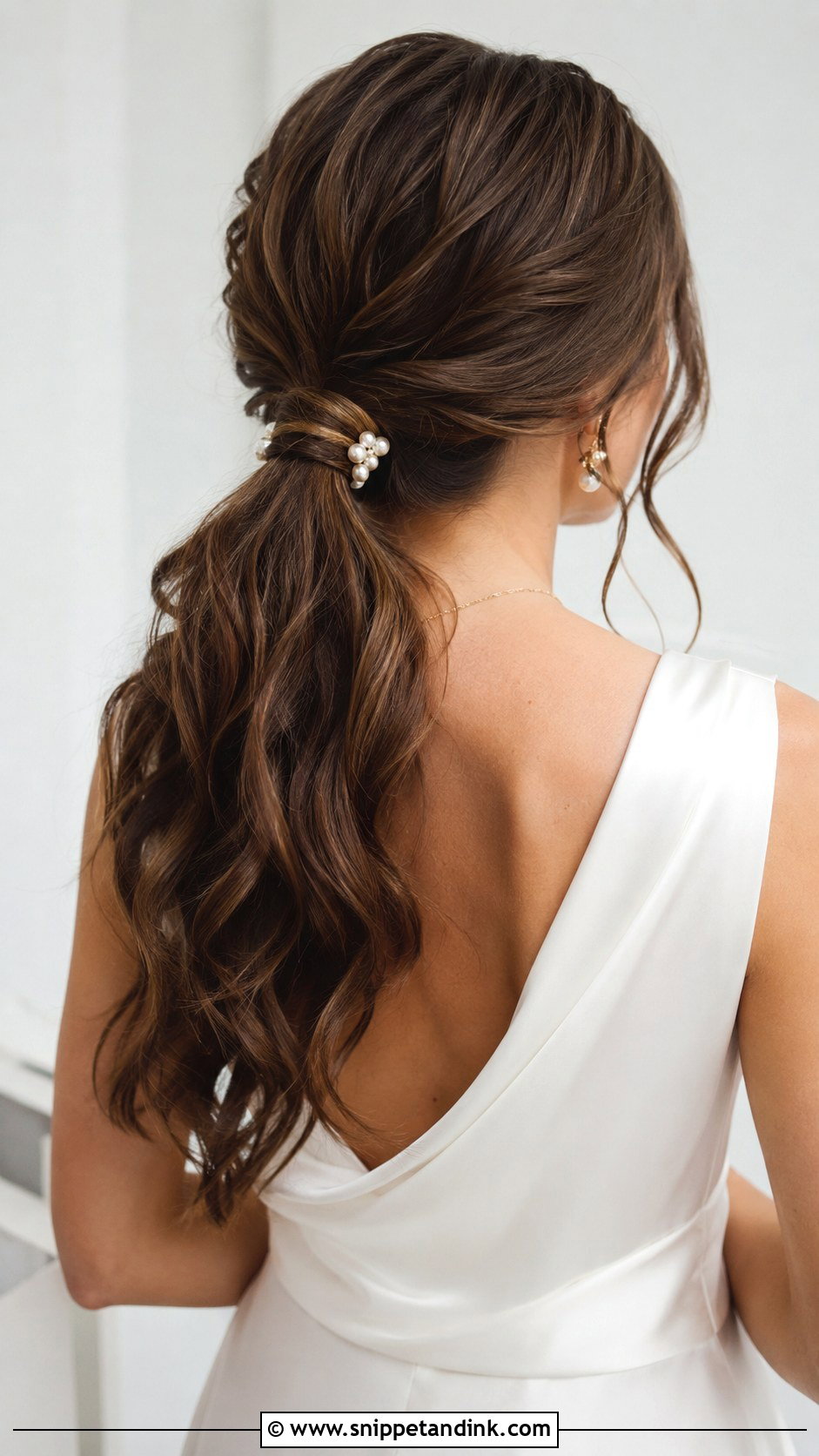
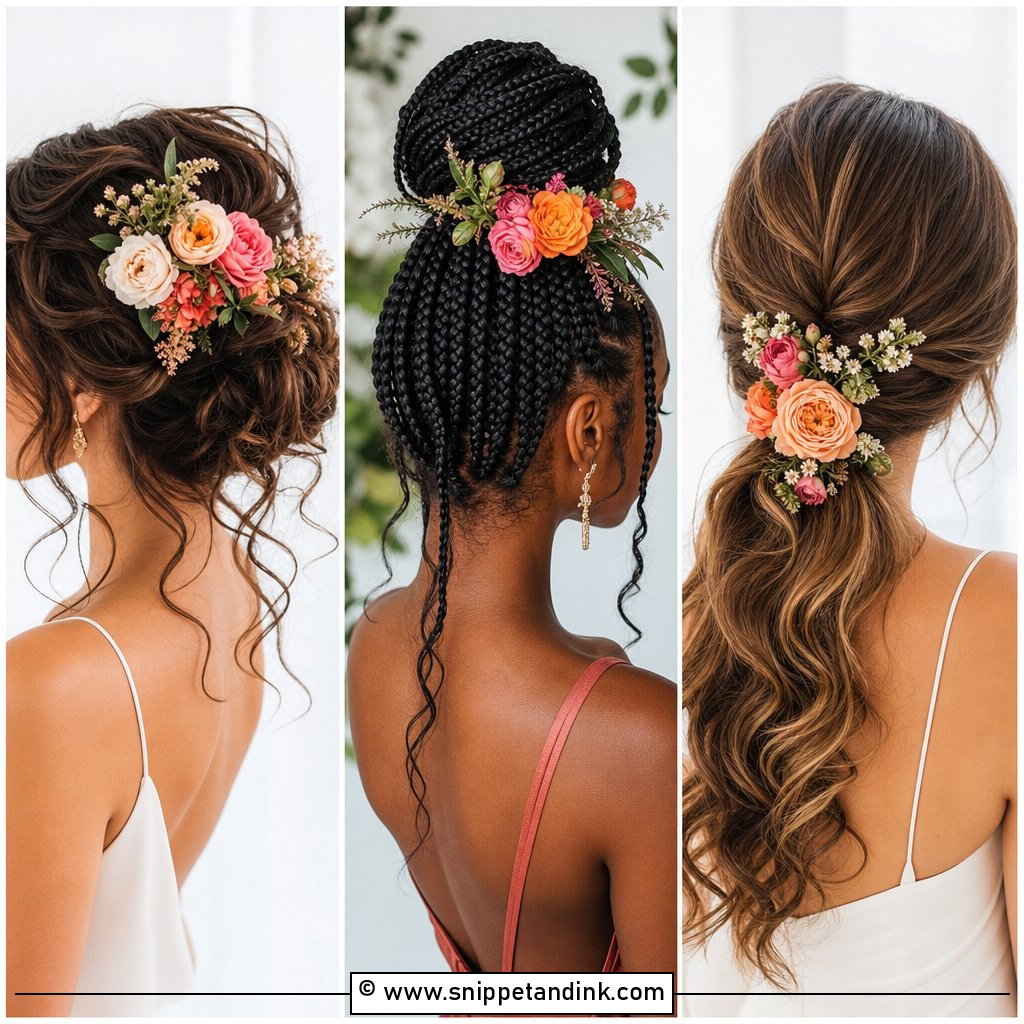
Who says a ponytail can’t be bridal? The key is volume at the crown and a polished base. I tease the crown slightly before gathering, wrap a strand of hair around the elastic, and pin it under. Soft waves in the length give movement in photos. A pearl hair tie looks pretty but will slip down unless I lock it with a pin through the elastic.
7. Boho Braided Wedding Hairstyle
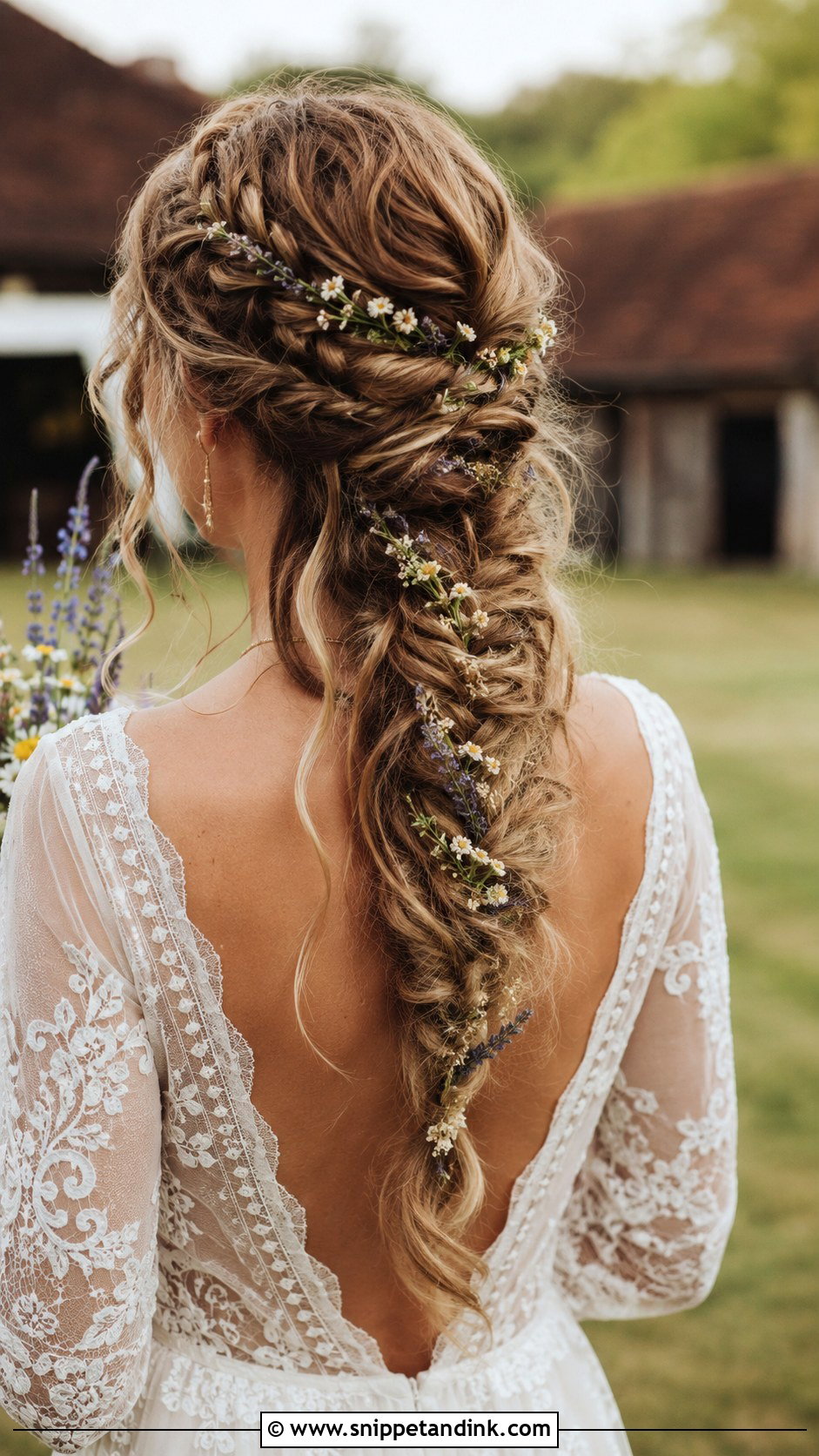
Boho braids work because they’re loose, but that also means they need more pins than people expect. I braid, then pancake the loops wider and pin along the braid’s length so it doesn’t sag. A braided crown adorned with wildflowers needs hardy flowers wired in, since soft petals brown fast against warm skin. Eucalyptus holds up well. Layered hair suits this, because braids pick up the short pieces.
8. Low Chignon Bridal Updo
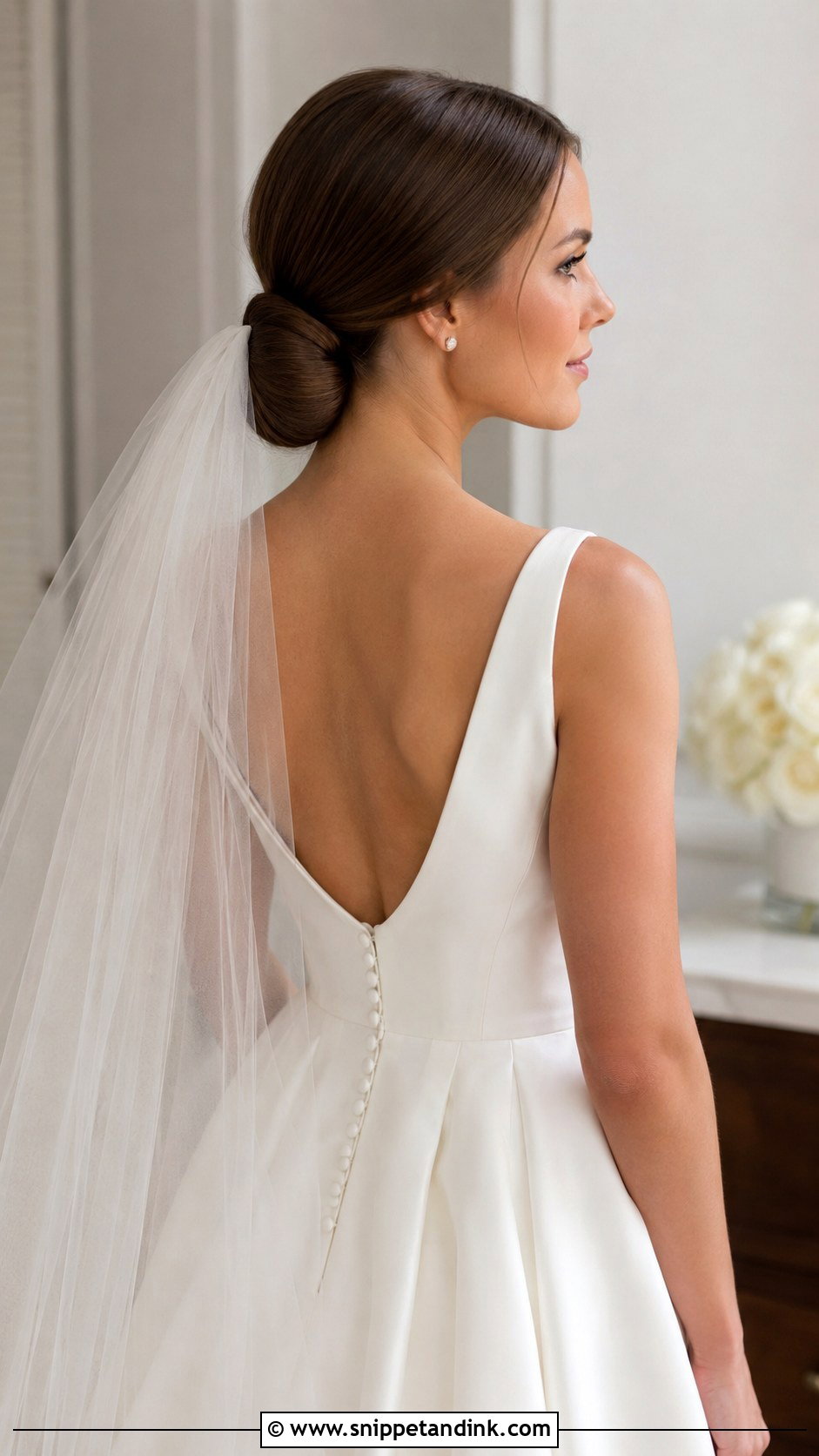
The low chignon is my default for a church or cathedral wedding with a full-length veil. It’s folded or rolled flat against the nape, so the veil comb sits directly above it without a bulge. I build it on a small ponytail and add a little padding inside when hair is fine. Keep a couple of pieces loose at the front if you want it softer.
9. Romantic Side-Swept Curls
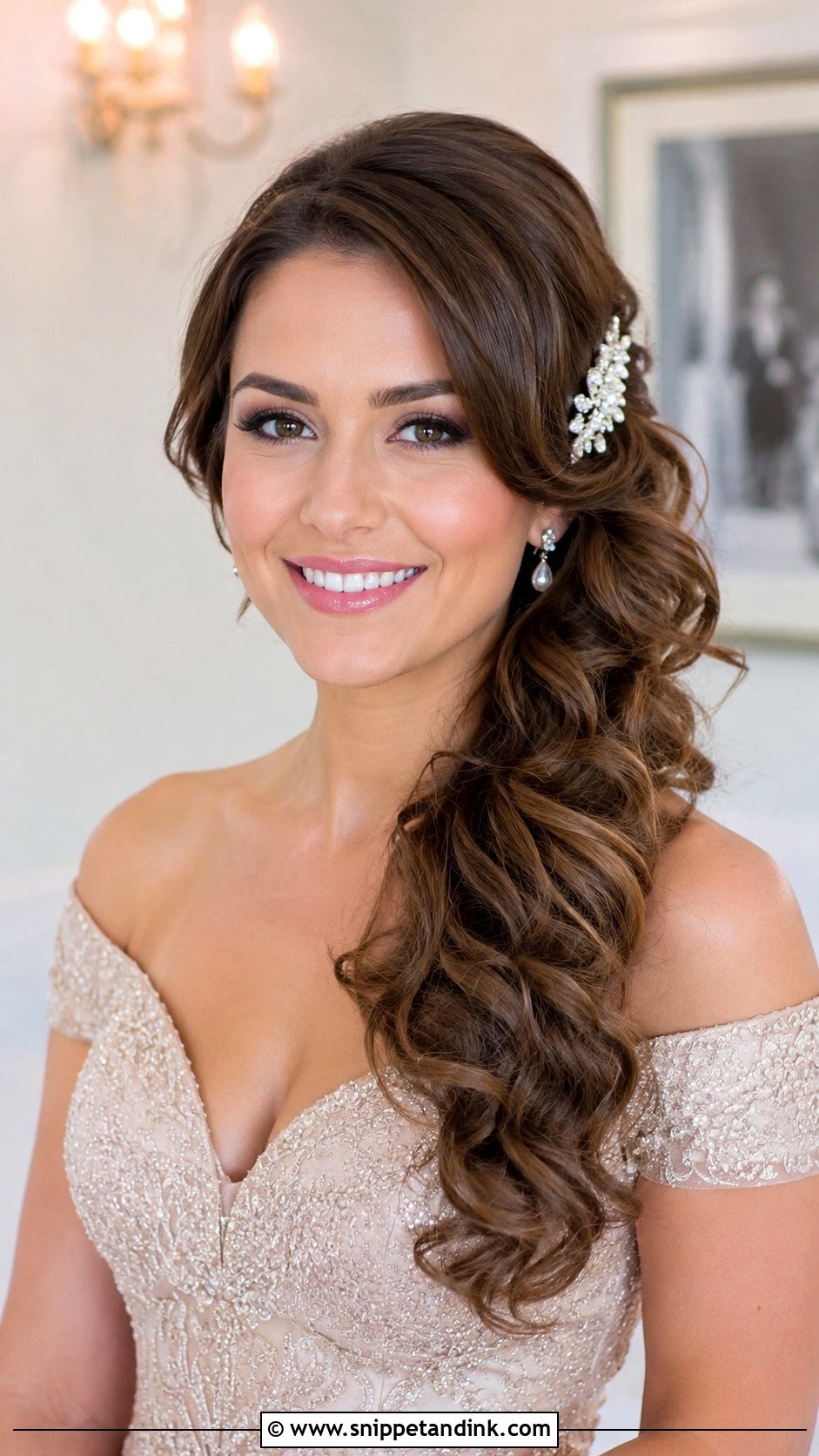
Side-swept curls need anchoring behind the ear on the opposite side, two crossed pins, or the whole lot slips back to center within an hour. I set the curls with clips, cool them and then brush them into one soft shape. Choose the side so your open ear faces the guests, and wear a drop earring there. A sparkly clip at the gathering point can also hide the pins.
10. Braided Updo for Brides
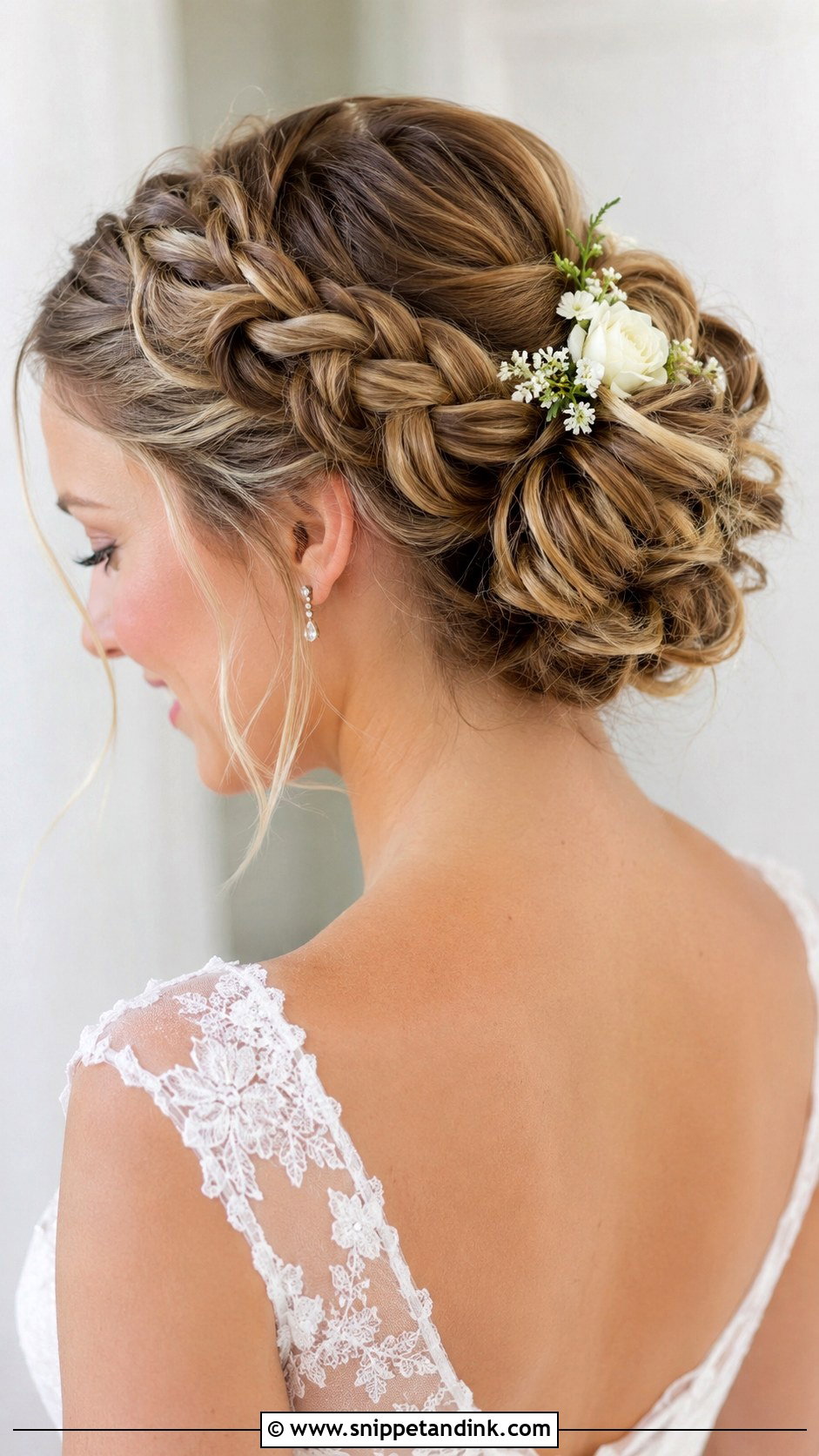
Braided updos are about as secure as bridal hair gets. Each braid acts as an anchor, and the pins go into the braid itself rather than loose hair. Dutch braids sit raised and show up in photos; French braids lie flatter. It works on most lengths from shoulder down. Small flowers or pearl pins sit tightly in the braid gaps, so I add them last.
11. Natural Curly Hair Wedding Style
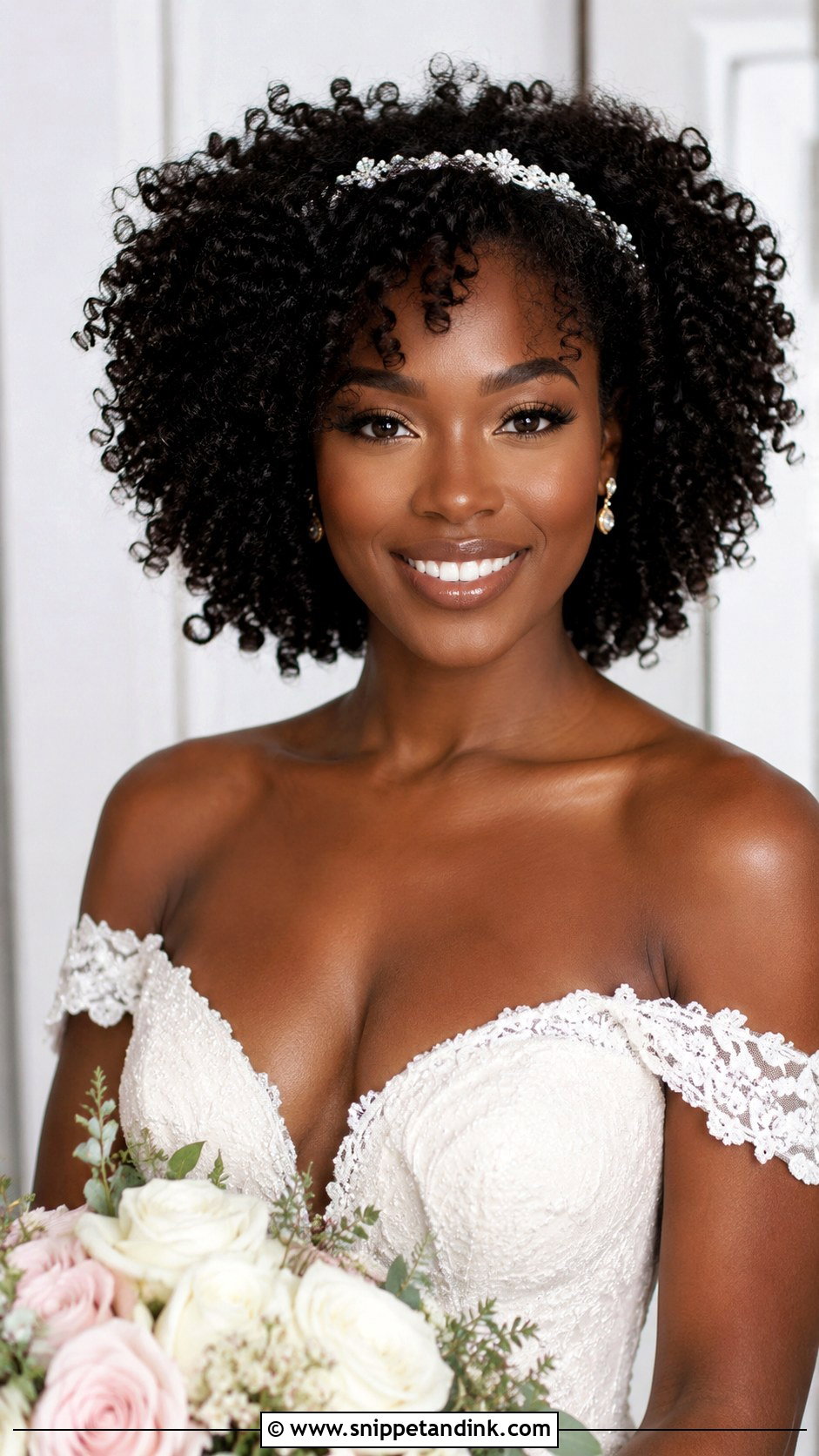
Natural curls hold their shape far better than heat-curled hair, so I always prefer working with them. Curl cream on wet hair the night before, then gentle defining on the day. Worn down, the curls need space; I avoid too much product on top so they don’t flatten. A headband or comb gives a veil something to grip. Bring your own products to the trial, since you know what your curls like.
12. Veil with Flowing Hair
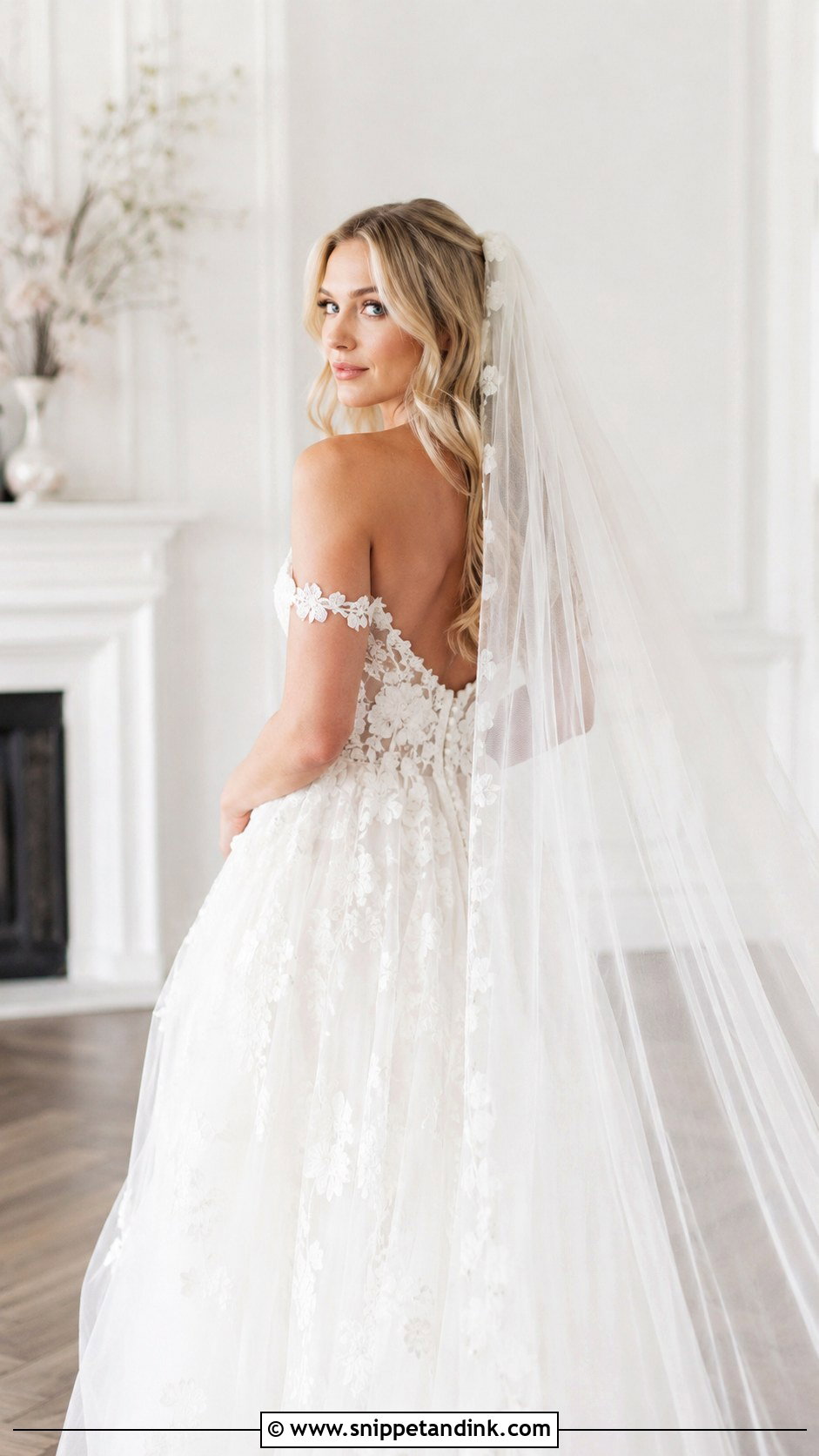
Hair worn down under a veil looks simple, and that’s why brides love it. The practical issue is weight. A veil comb has nothing to grip in loose hair, so I tease a small section at the crown and cross two pins there as a base. Position it high on the crown for a fuller, more traditional look, or lower at the back for something lighter.
13. Crown Braid Wedding Hairstyle
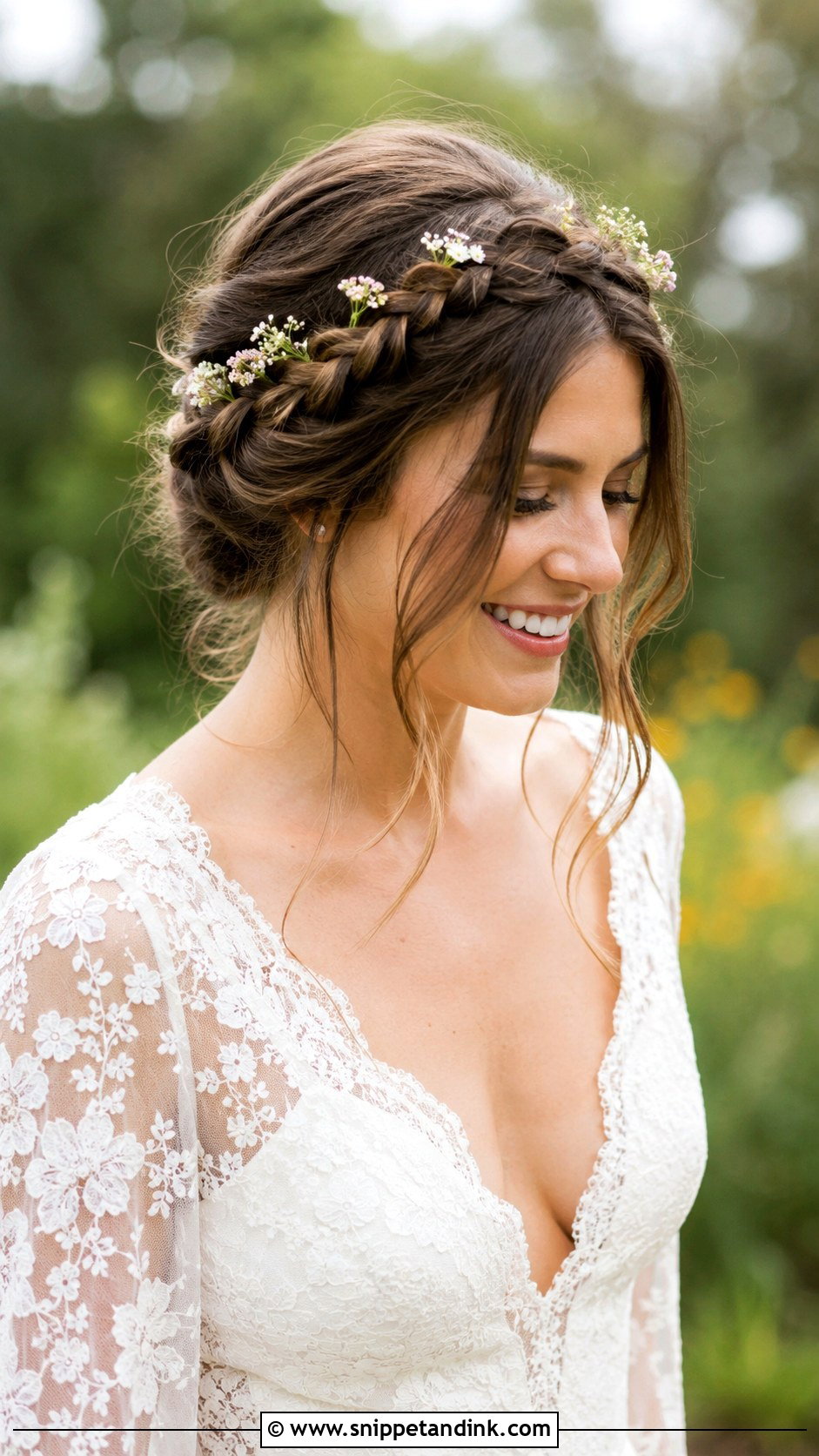
A crown braid needs long hair, usually past the shoulders, to wrap all the way around. I start behind one ear, braid around the head and pin it as I go. Keeping hair completely off the face, it’s a smart call for hot weather and outdoor ceremonies. If your hair isn’t long enough, a clip-in braid can close the circle without anyone knowing.
14. Sleek Straight Bridal Hair
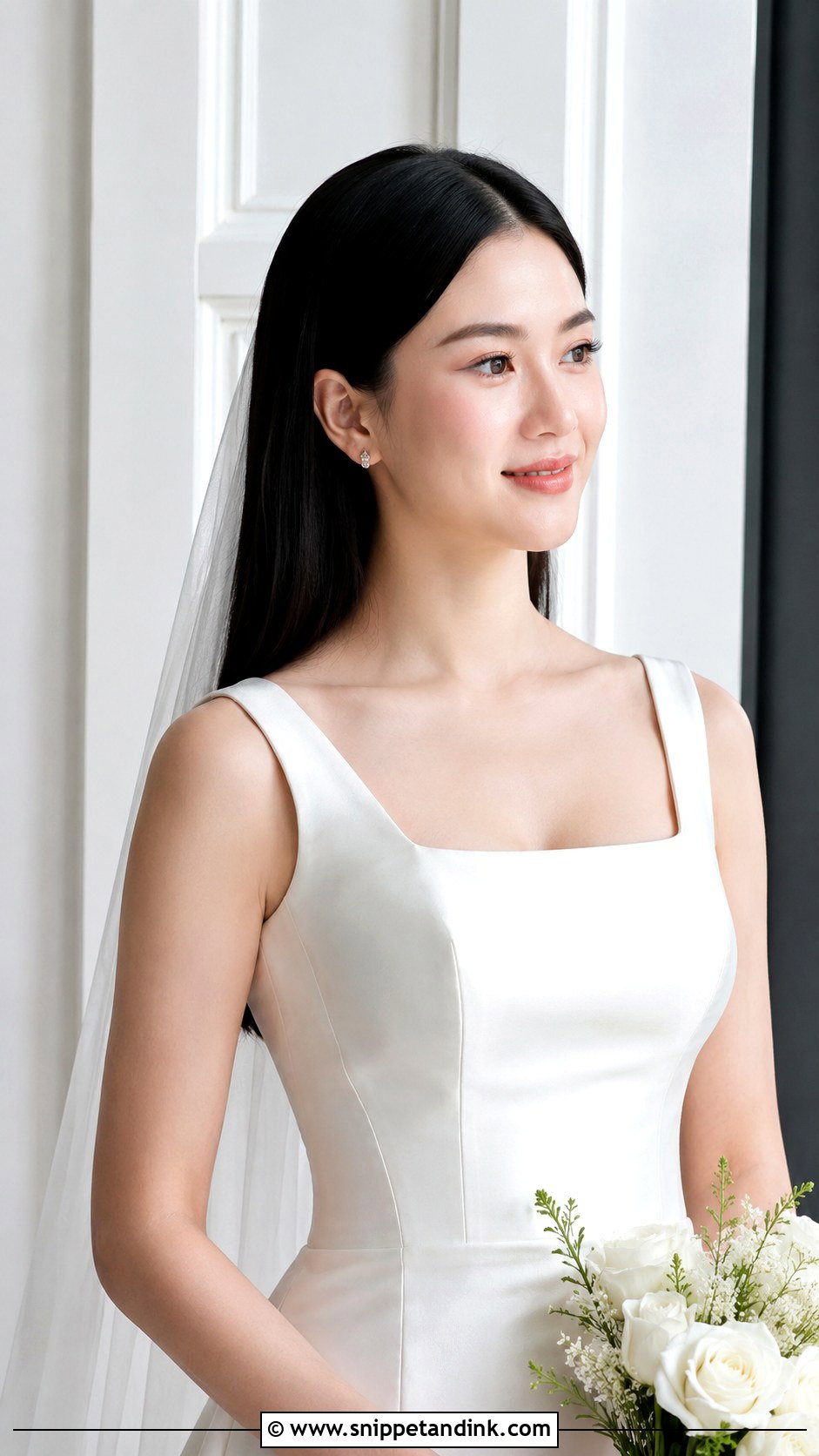
Worn down, sleek straight hair shows every bit of frizz, so the blow-dry is the real work. I dry it smooth with a round brush and finish with a flat iron, keeping the heat moderate so the hair doesn’t look fried in flash photos. Humidity is its enemy, so a smoothing serum and a humidity spray are non-negotiable outdoors. Naturally straight hair is far easier here than curly hair pressed for the day.
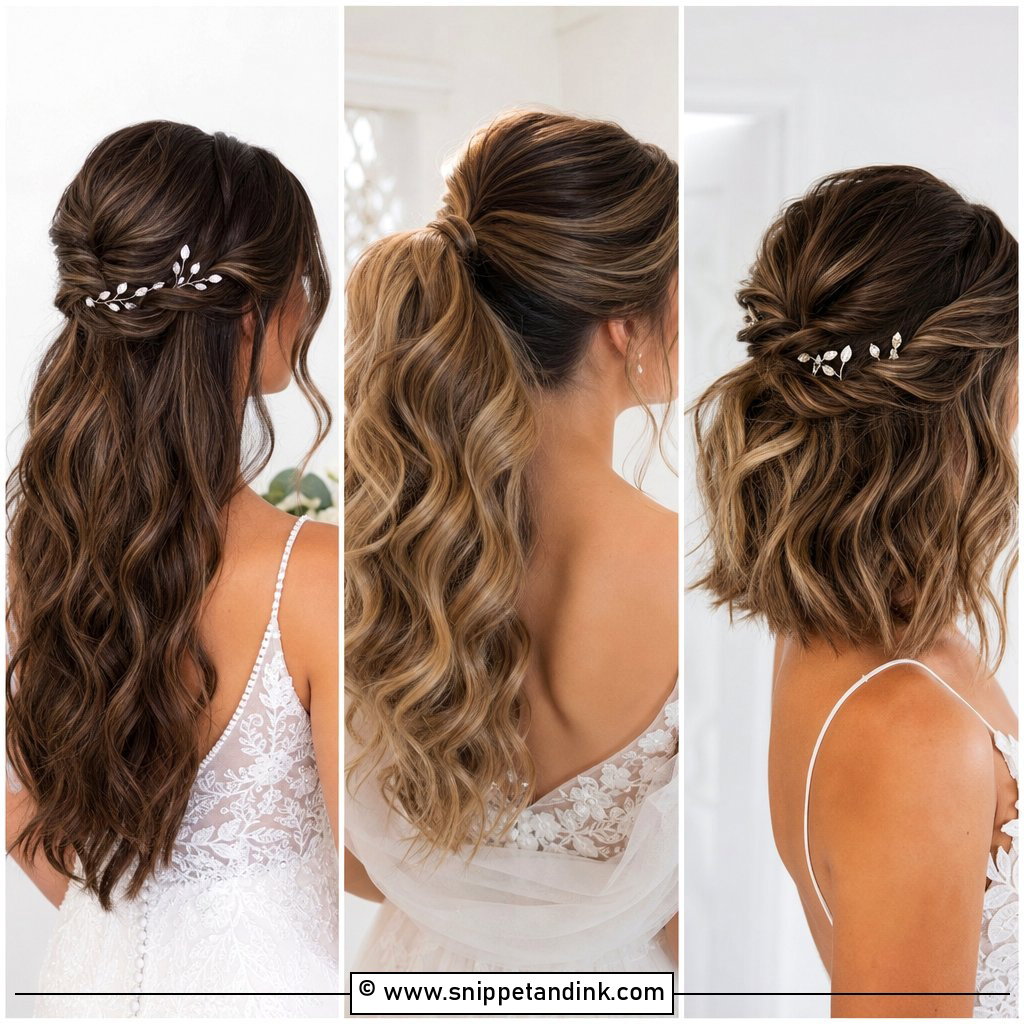
15. Floral Crown Hairstyle for Brides
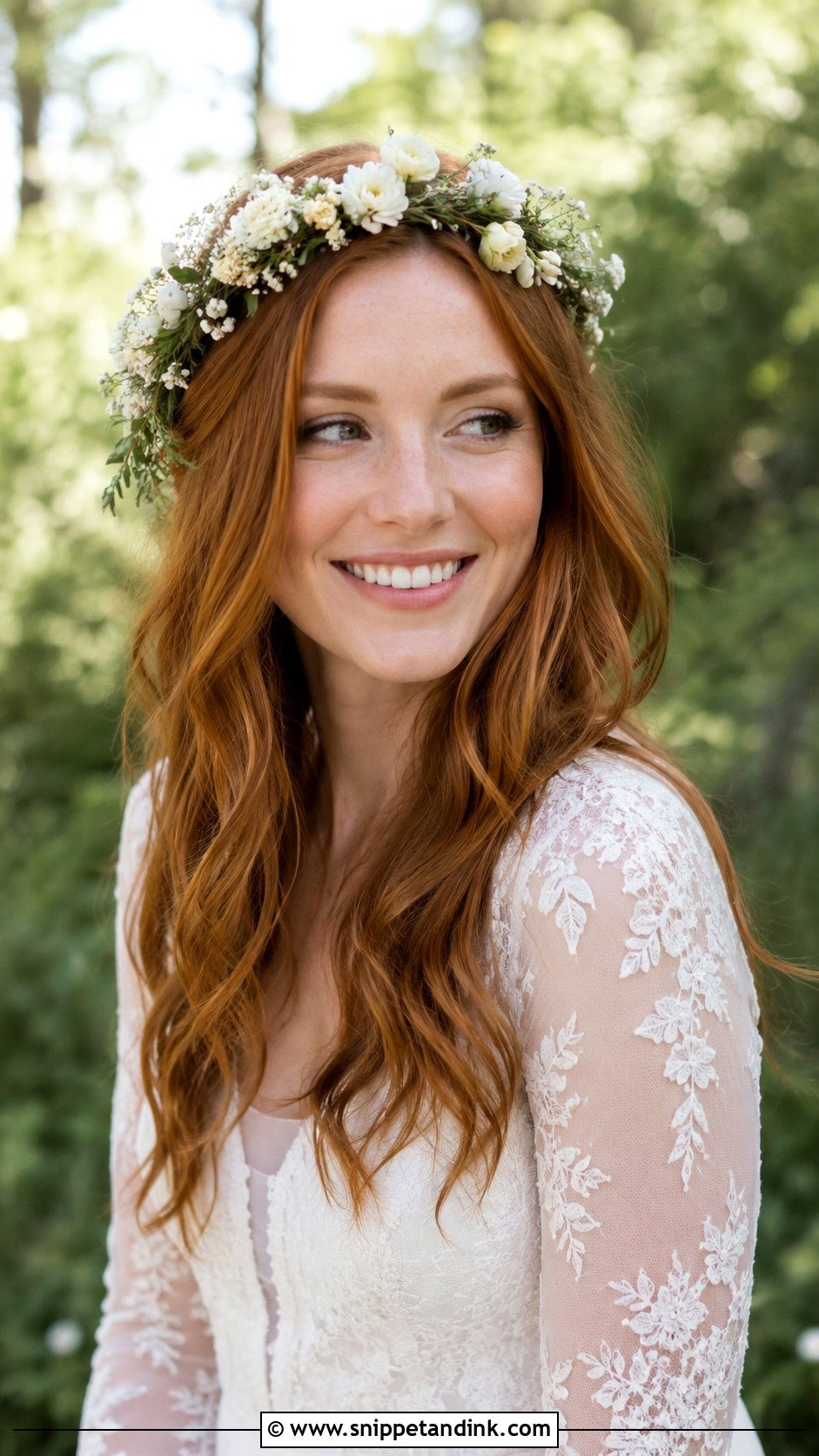
A floral crown sits on top of the hair, so it needs to be pinned through its base into the hair below. Ask your florist to build it on a wire frame light enough to bend. Fresh flowers for a crown should be the kind that hold without water: spray roses, wax flower, small orchids. Matching it to the bouquet works, but keep the crown smaller, or it overwhelms the face.
16. Vintage Finger Waves Bridal Look
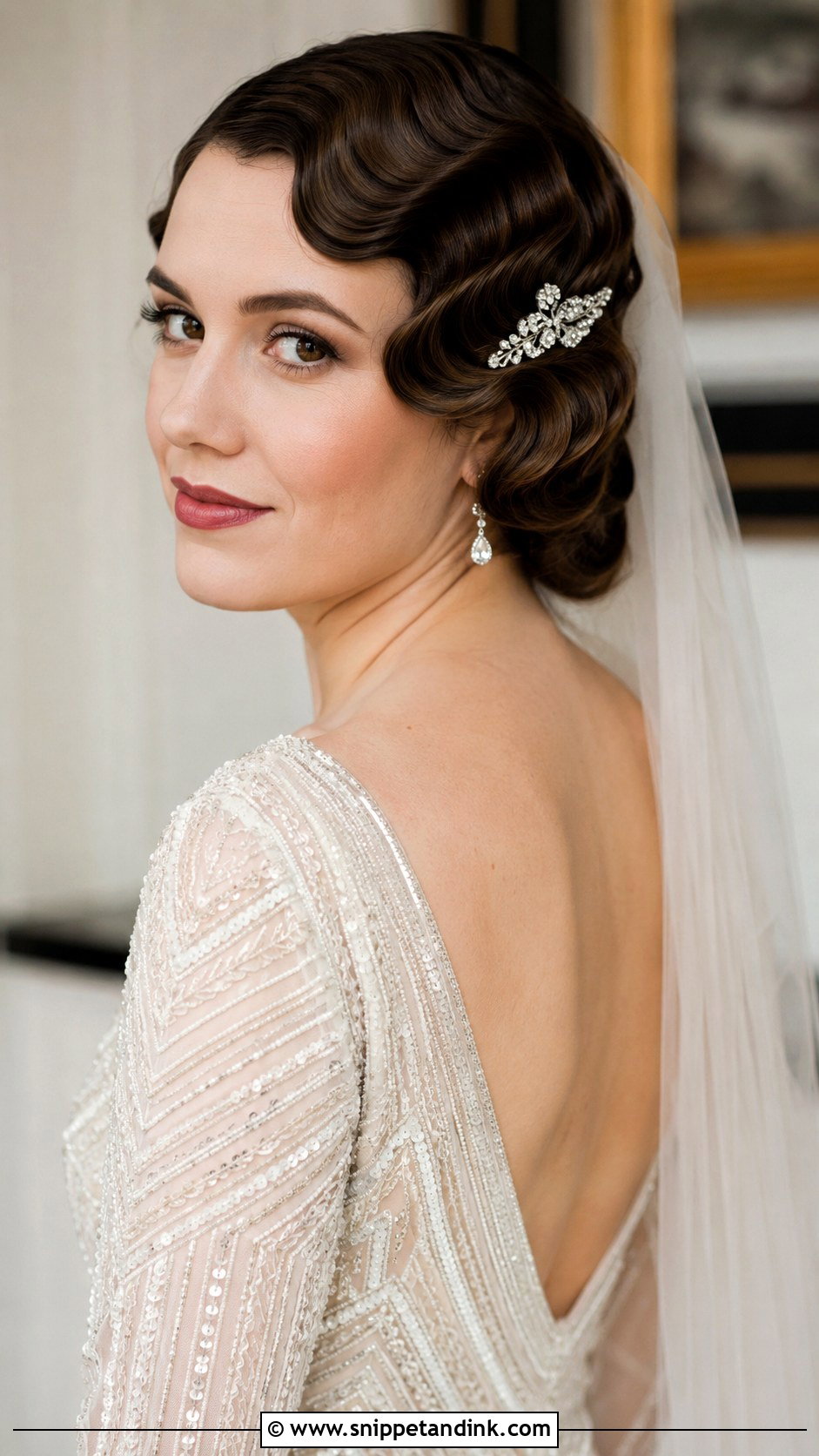
Finger waves are set wet. I comb the hair into S shapes with gel, pinch each ridge with clips and let it dry fully before removing them. That’s why glamorous vintage finger waves suit short and bob-length hair best; long hair is too heavy to stay in the pattern. Allow extra chair time for drying. A jeweled clip at the side suits an art deco gown.
17. Low Ponytail with Wrapped Hair
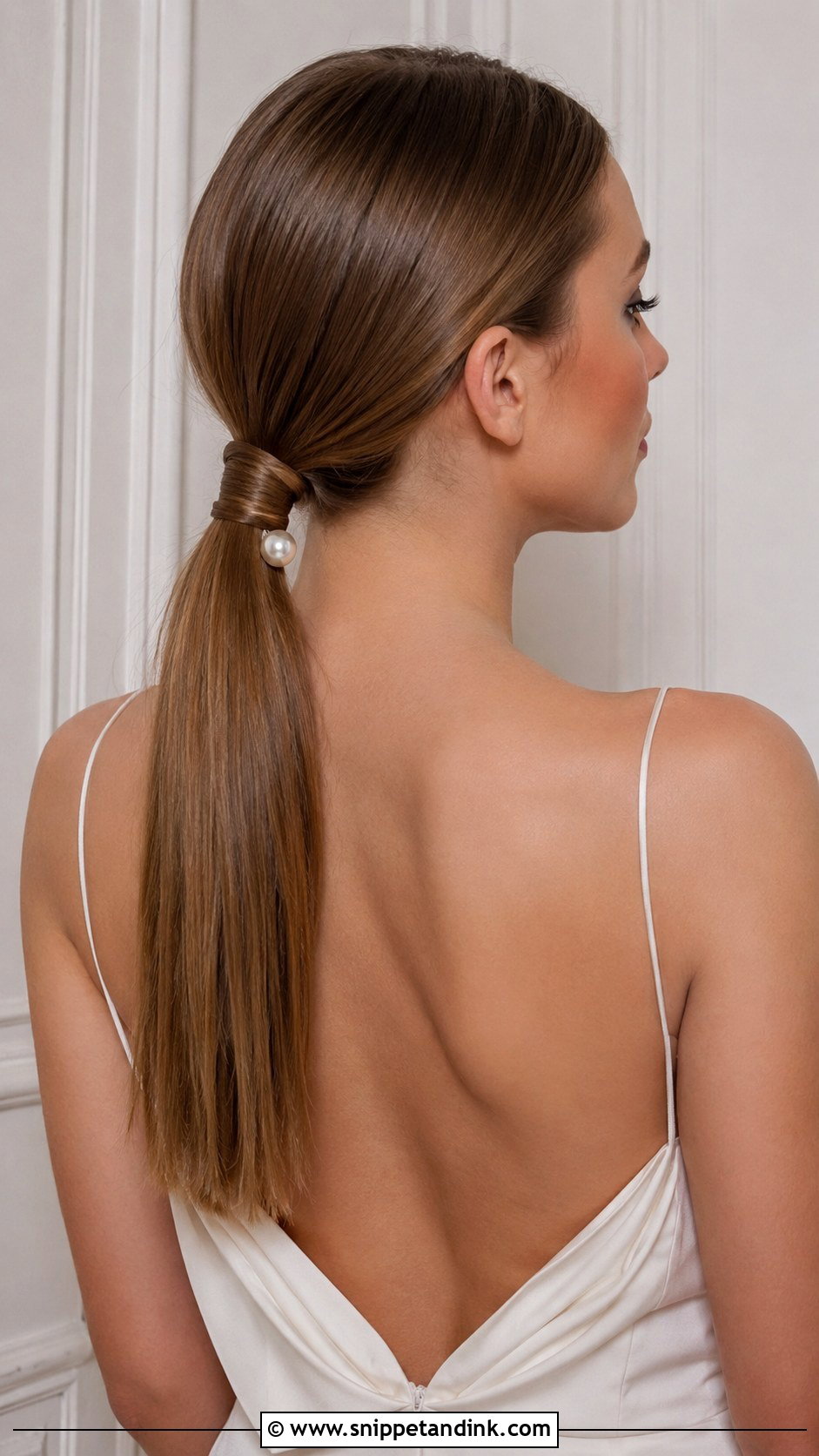
A wrapped low ponytail is about as practical as bridal hair gets. Nothing can fall out of it, and you can lean back in a chair all evening without crushing anything. I place the elastic a little above the nape so a high back doesn’t rub it. Thick hair can look bulky here, and a second small elastic further down the tail keeps it slim.
18. Twisted Updo for Wedding
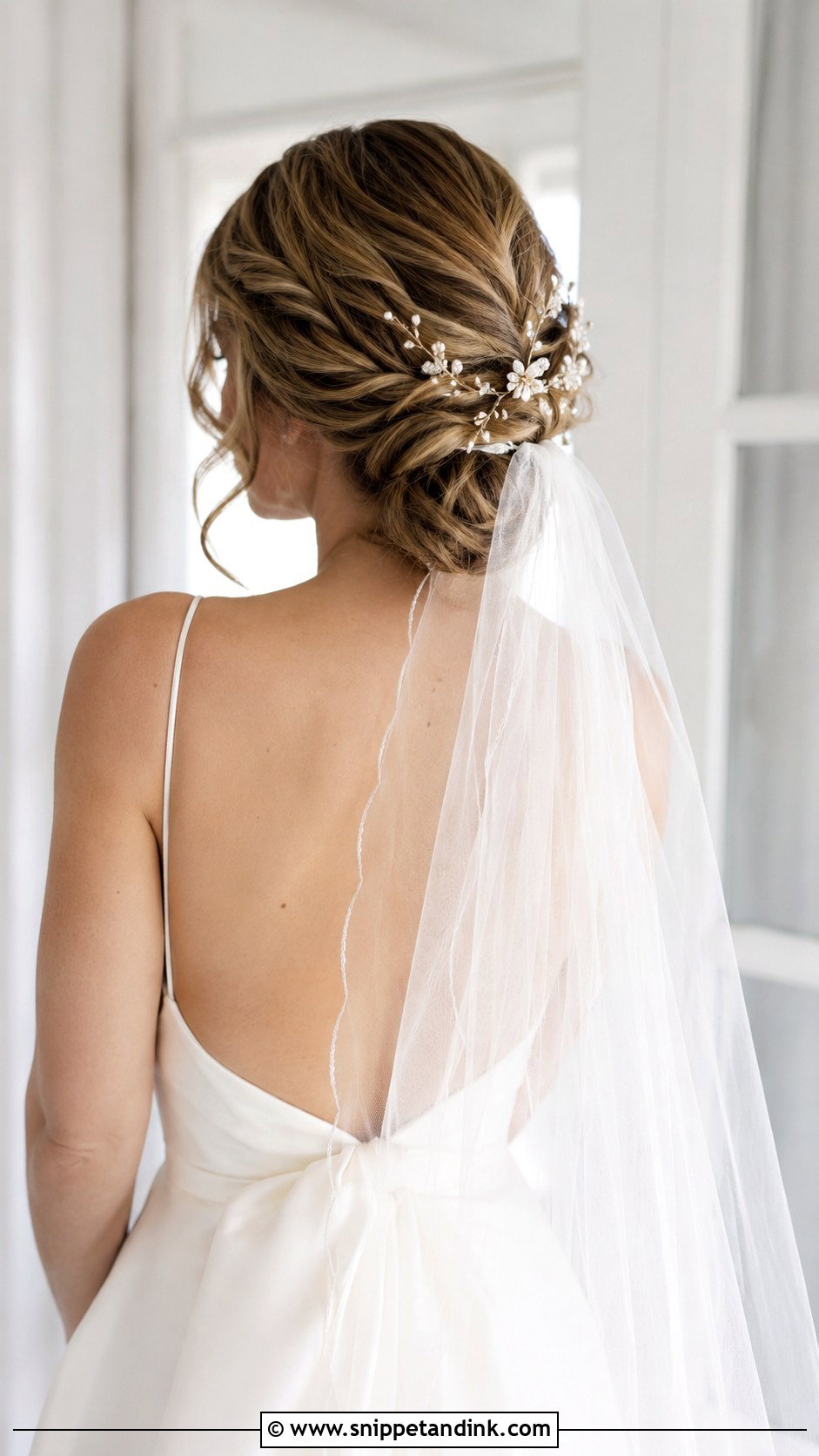
Twisted updos hide pins very well because each twist folds over the grip that holds it. I twist small sections toward the center of the head and stack them into the final shape. On medium hair it gives volume without needing extra pieces. Pulling a few strands loose at the end softens it, though that should be done carefully so the twist doesn’t open.
19. Beach Waves Wedding Hairstyle
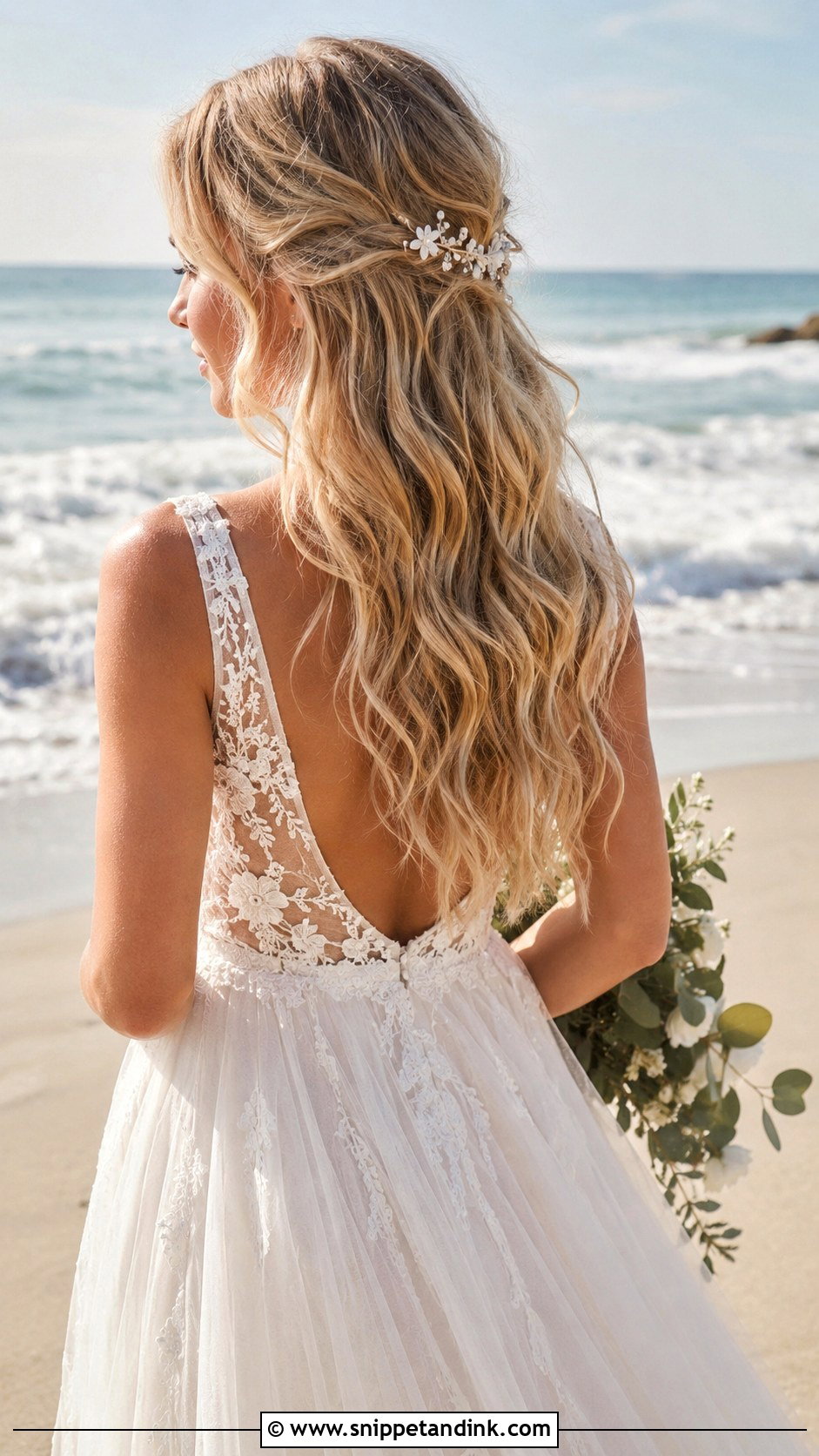
Beach waves are usually made with a flat iron, twisting and pulling, rather than a curling iron, which gives a looser bend. They suit a coastal wedding because they’re meant to look a bit windblown already. Salt spray can dry hair out, so I use a texture spray instead. Expect them to relax by the evening, especially in humid air.
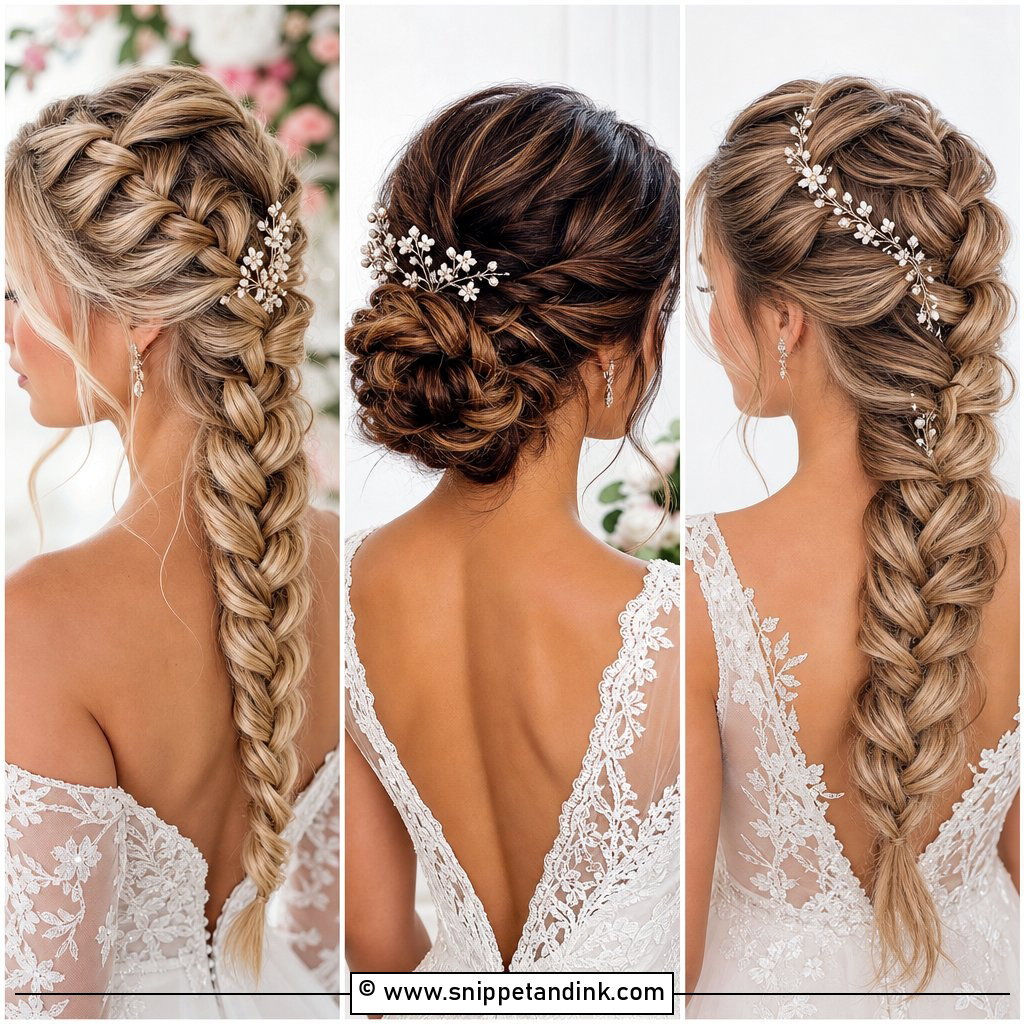
20. Bridal Bun with Tendrils
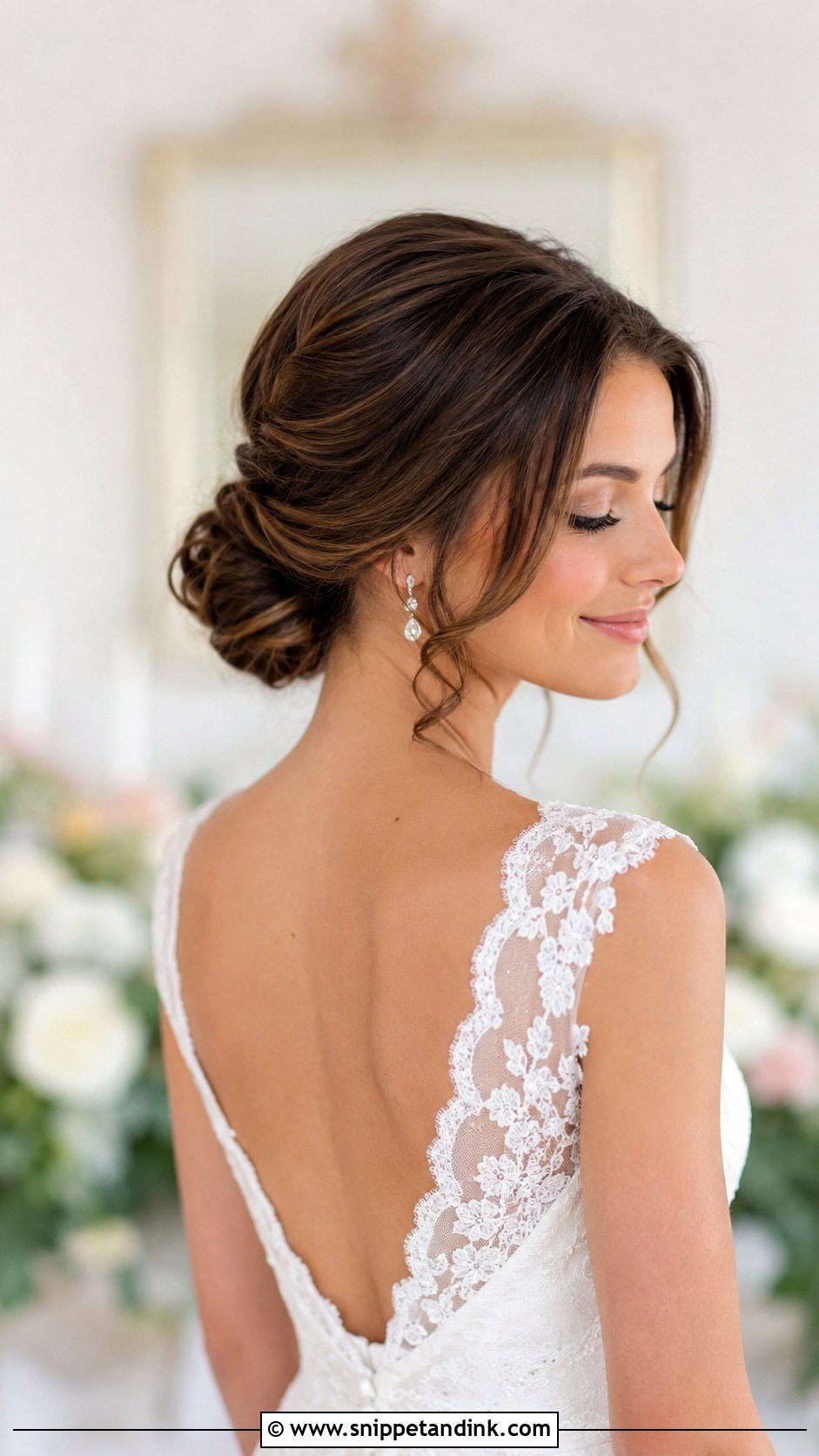
Tendrils are what makes a bun look soft rather than strict. I take them from just in front of the ear, keep them thin and curl them away from the face. Thick tendrils stick to lip gloss. Position the bun to suit the veil; a side placement works well if you’re not wearing one at all.
21. Short Hair Wedding Style
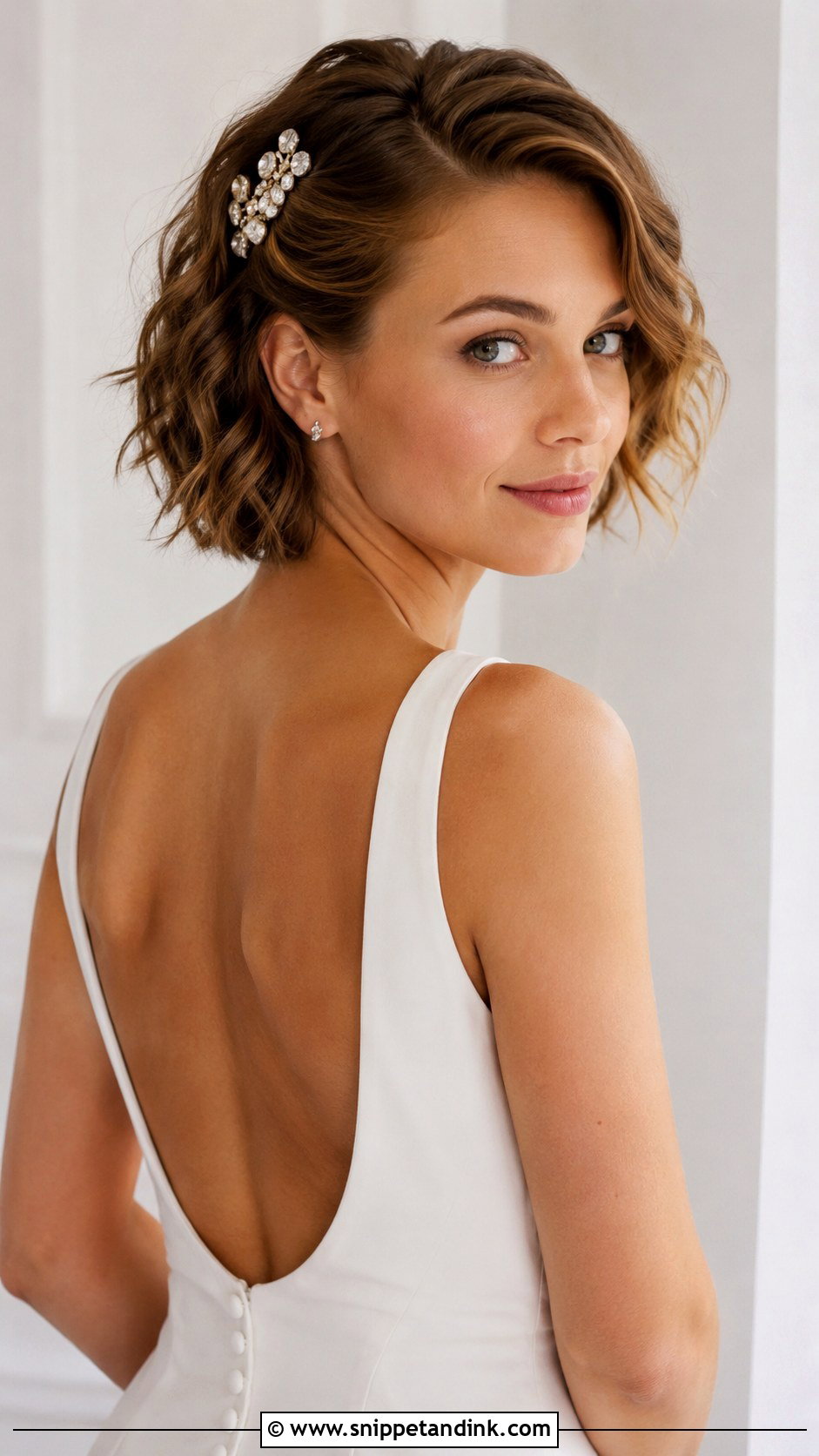
Short hair is easier to keep perfect all day than long hair. A chic pixie, textured bob or lob needs a trim about a week before, then texture paste or a light wave on the day. A jeweled clip or a headband shows well against short hair. The main limit is veils: a comb needs some hair to grip, so a short veil on a headband may be easier.
22. Fishtail Braid Wedding Hairstyle
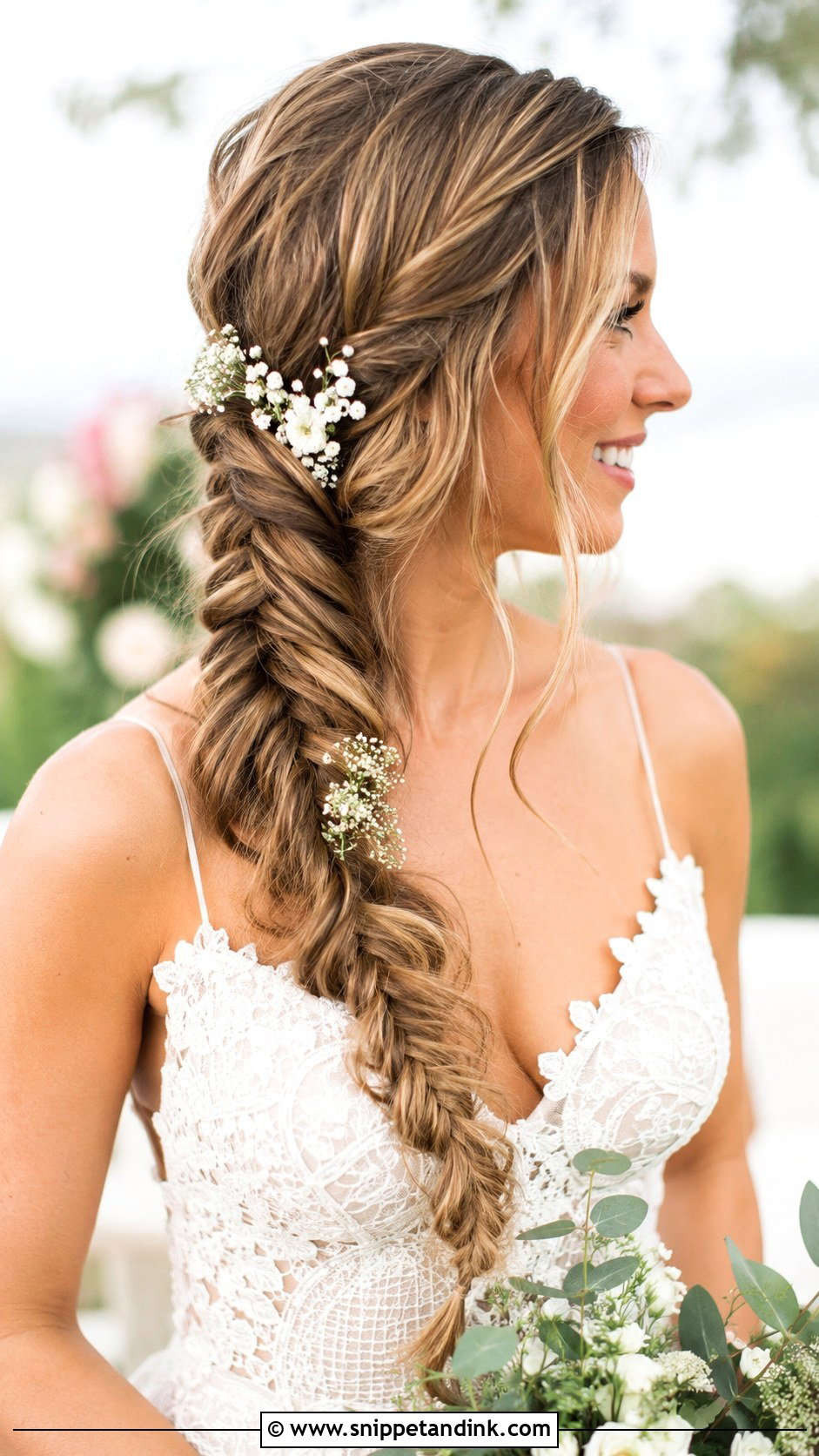
A fishtail is slower to braid than a standard three-strand braid but holds better, because each crossover uses only a small section. Worn over one shoulder, it drapes neatly; pulled into an updo it looks neater. Heavily layered hair struggles, since short pieces escape. I loosen the edges at the end so the braid looks fuller.
23. Glamorous Hollywood Waves
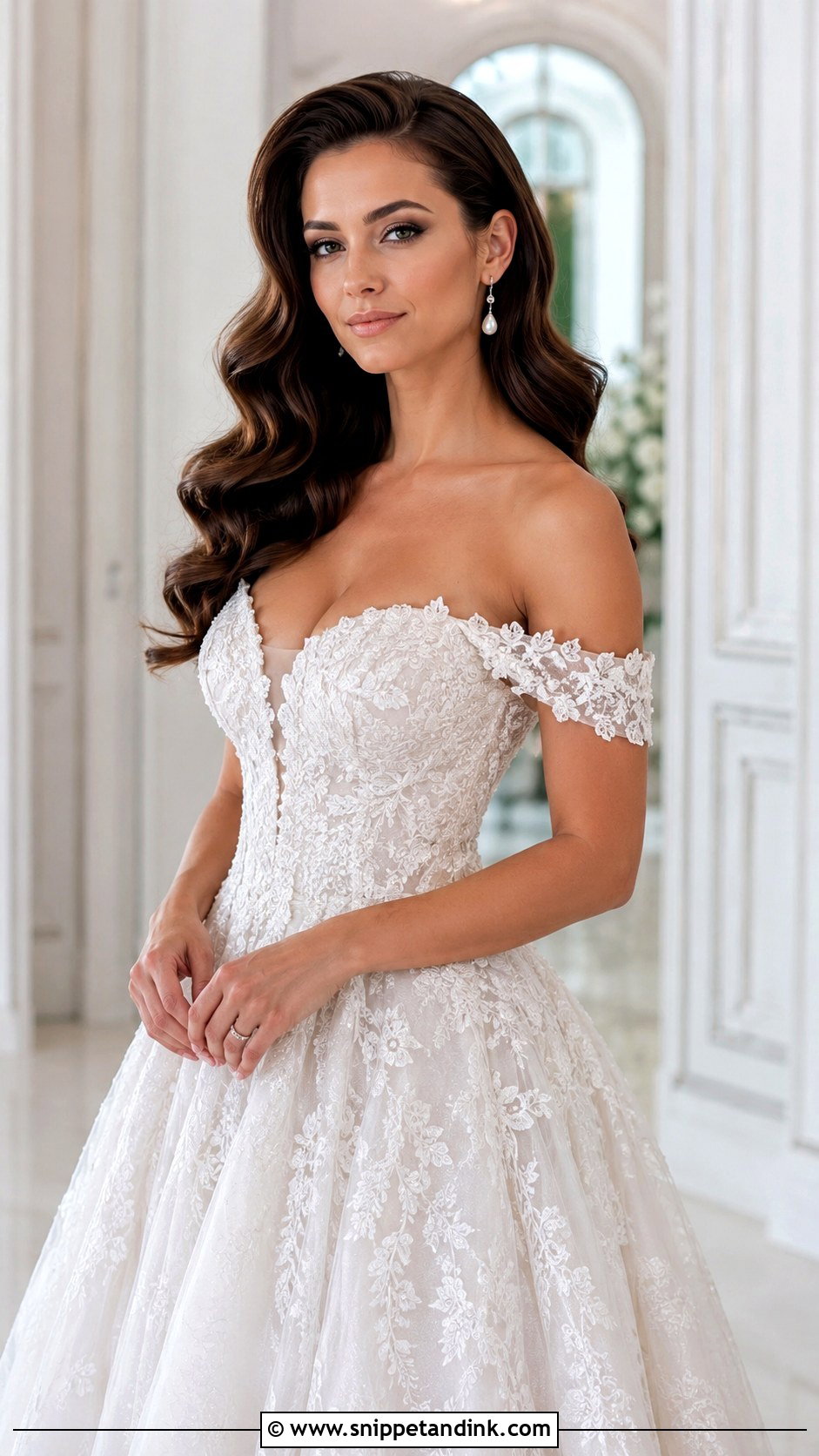
Hollywood waves start as a curl set: curls all wound in the same direction, pinned and cooled, then brushed until they merge into continuous waves. Clips at each dip set the ridges. Formal venues and structured gowns suit it; a boho dress makes it look out of place. Expect it to soften slightly by evening, which usually looks better anyway.
24. Updo with Loose Curls
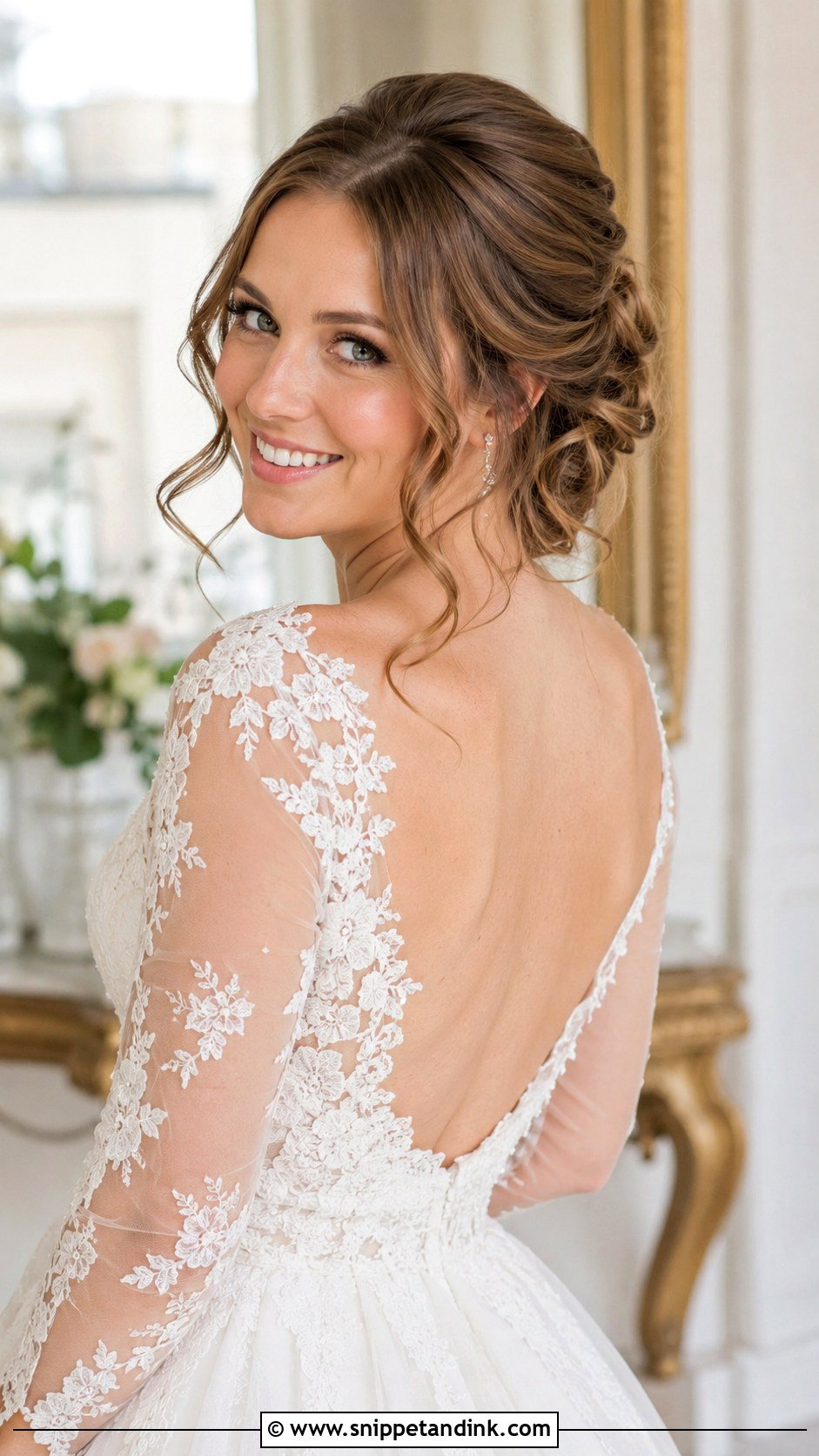
This style is an updo with deliberate loose curls, so the curls need to be set before the hair goes up. I curl everything first, then pin up the main sections and leave chosen pieces down. The loose curls tend to drop faster than the updo itself, so a light spray between sections helps. A veil comb sits above the gathered section.
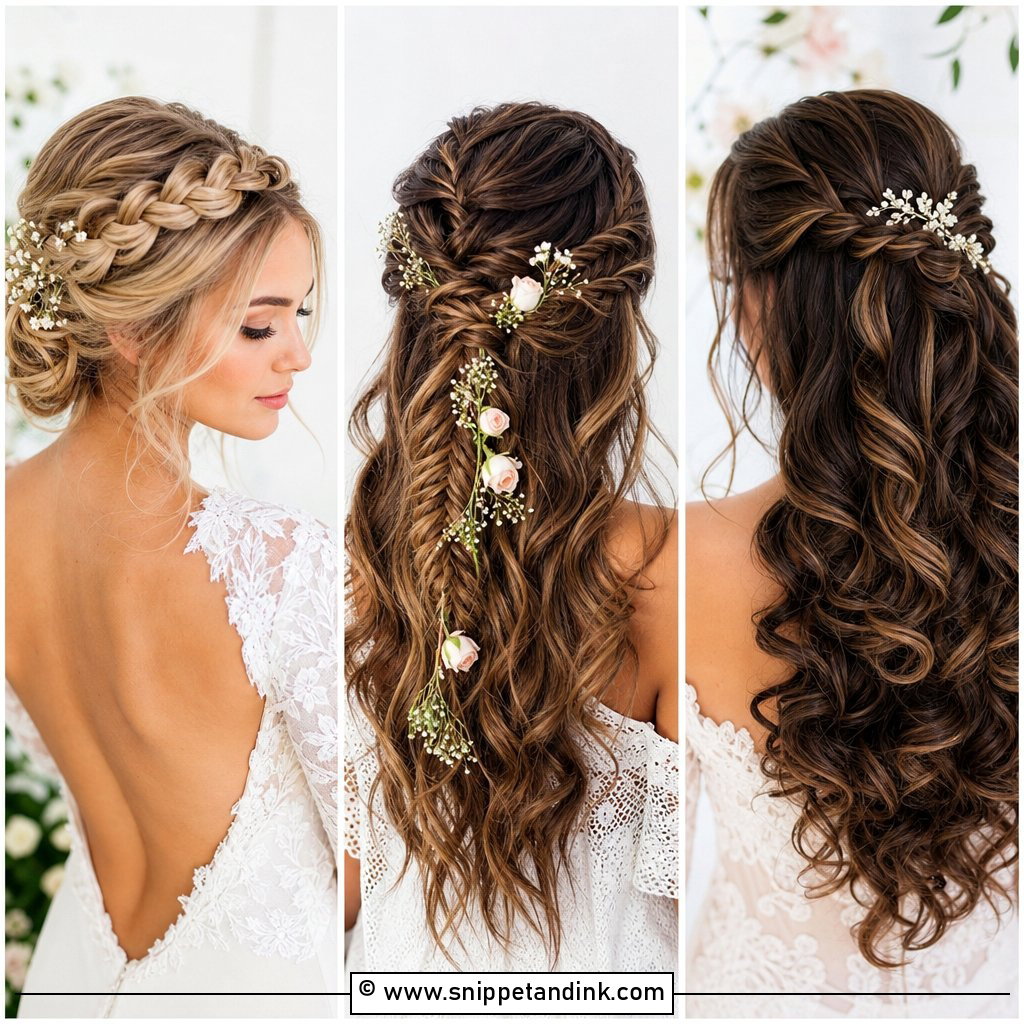
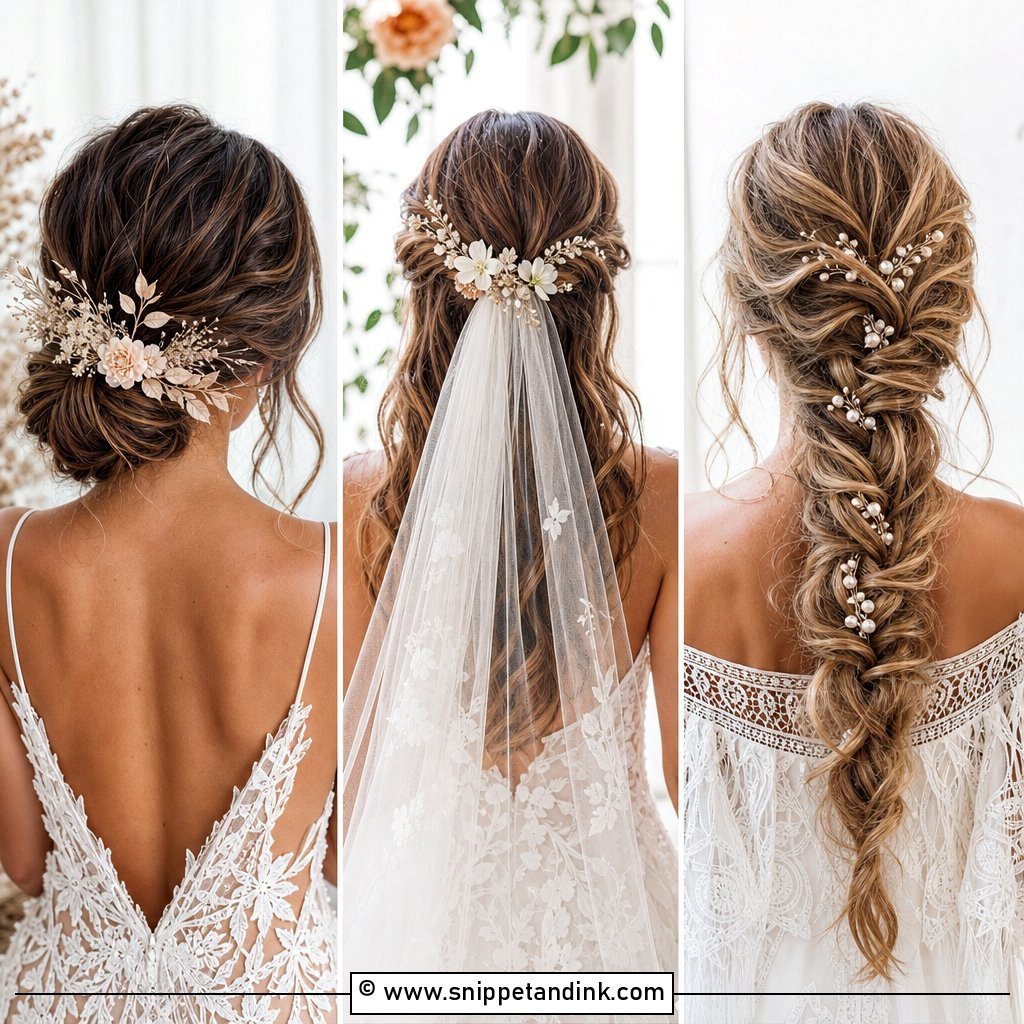
25. Pearl-Accented Bridal Hairstyle
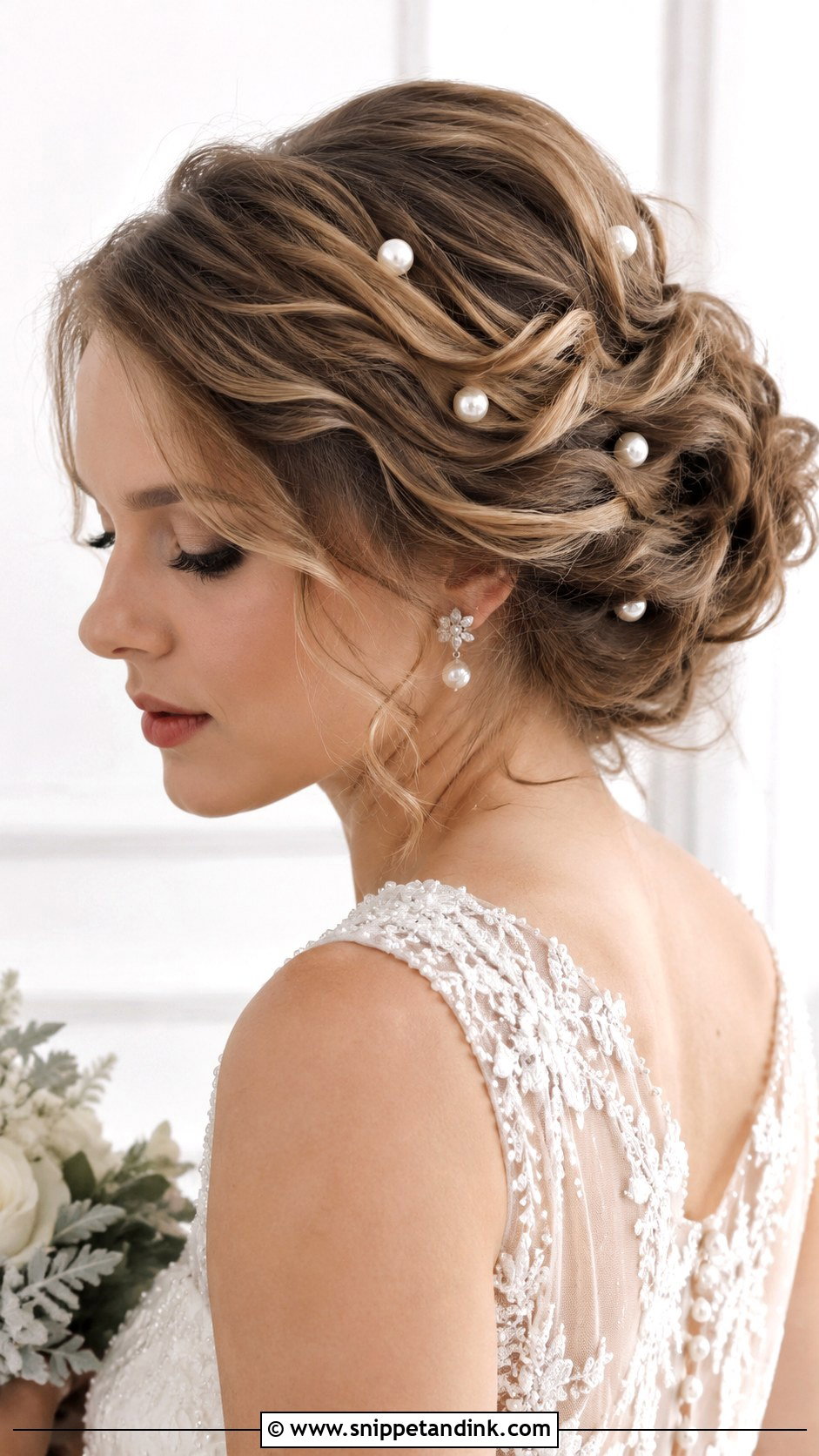
Pearls are one of the simplest ways to dress up hair. For pearl-accented bridal hair, I scatter pins in an uneven pattern so they catch light from different angles. Pearl pins have small, slippery heads and fall out of smooth hair easily. I always secure a bobby pin underneath first and slide the pearl pin across it.
26. Loose Low Bun Wedding Style
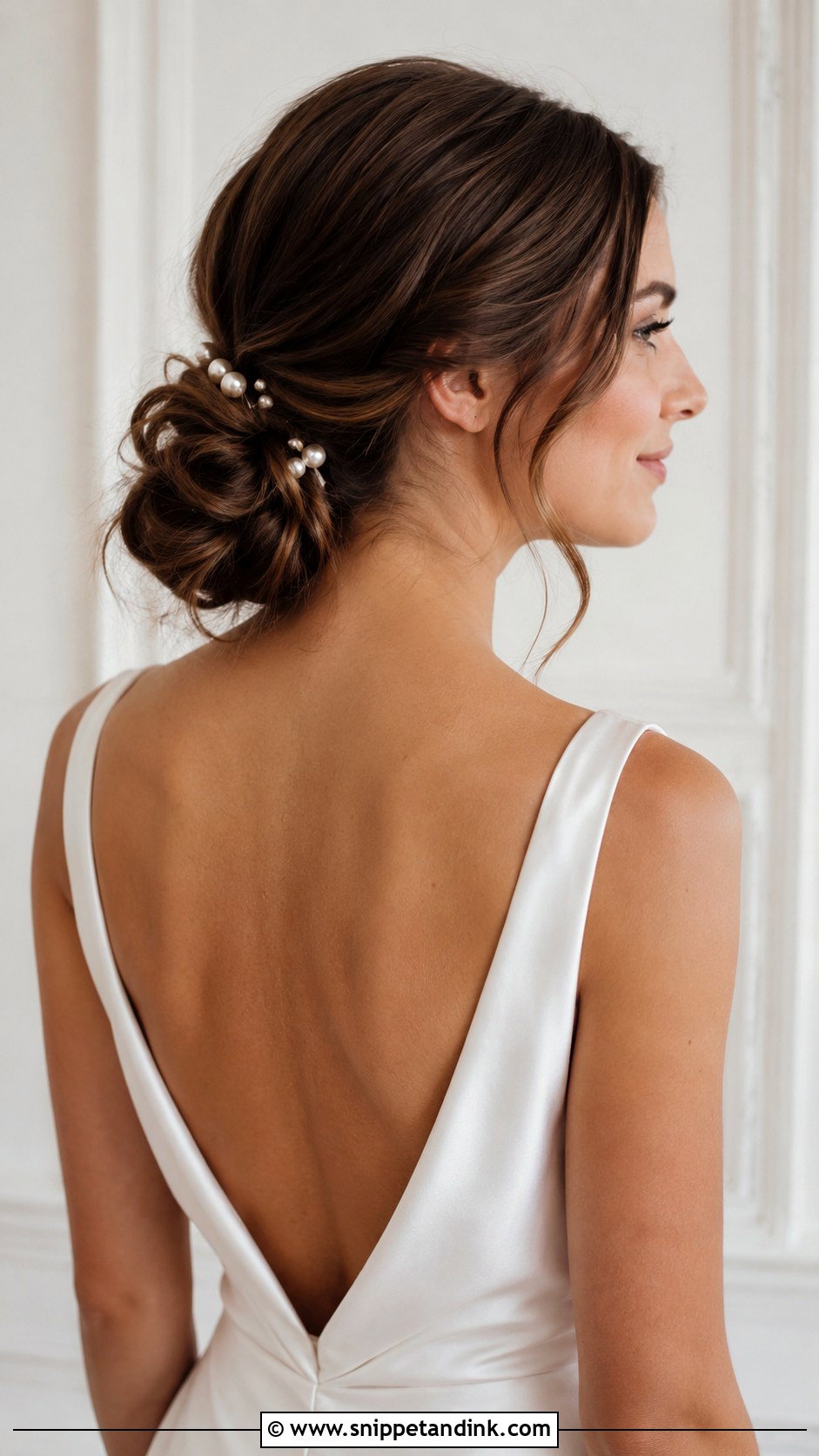
A loose low bun is relaxed by design, which also means it’s prone to coming apart if it’s not built right. I secure a ponytail first, then wrap and pin the bun loosely around it. Leave face-framing pieces out before the bun is made. It sits nicely under a veil and doesn’t crush when you lean back.
27. Curtain Bangs Bridal Hairstyle
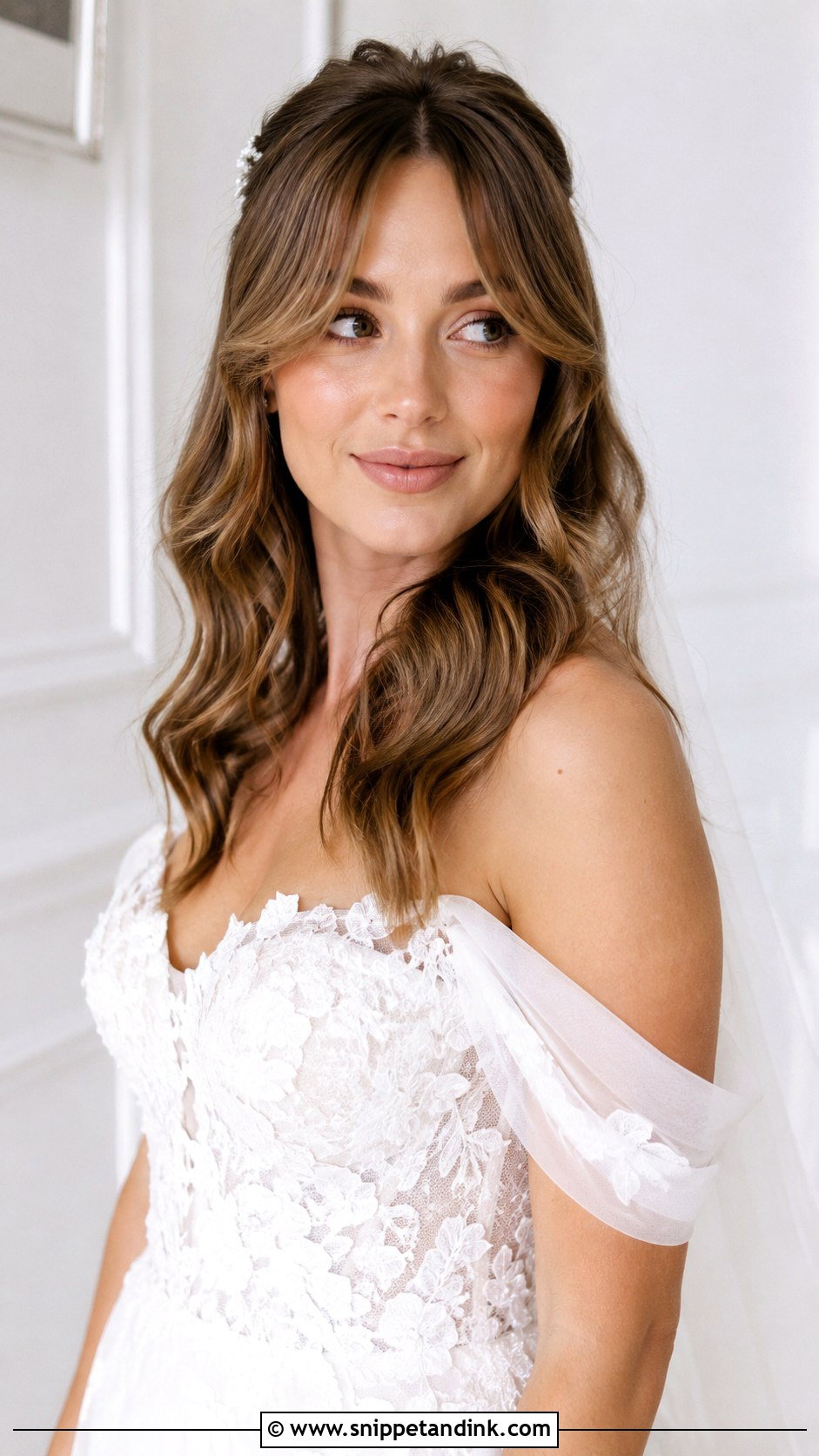
If you’re adding curtain bangs for the wedding, have them cut three to four weeks before, so they’ve settled. Freshly cut bangs sit stiffly. I style them with a round brush and pin them back slightly at the sides to blend with the updo. Oily skin can make bangs separate during the day, so a little dry shampoo at the root helps.
28. Braided Crown with Flowers
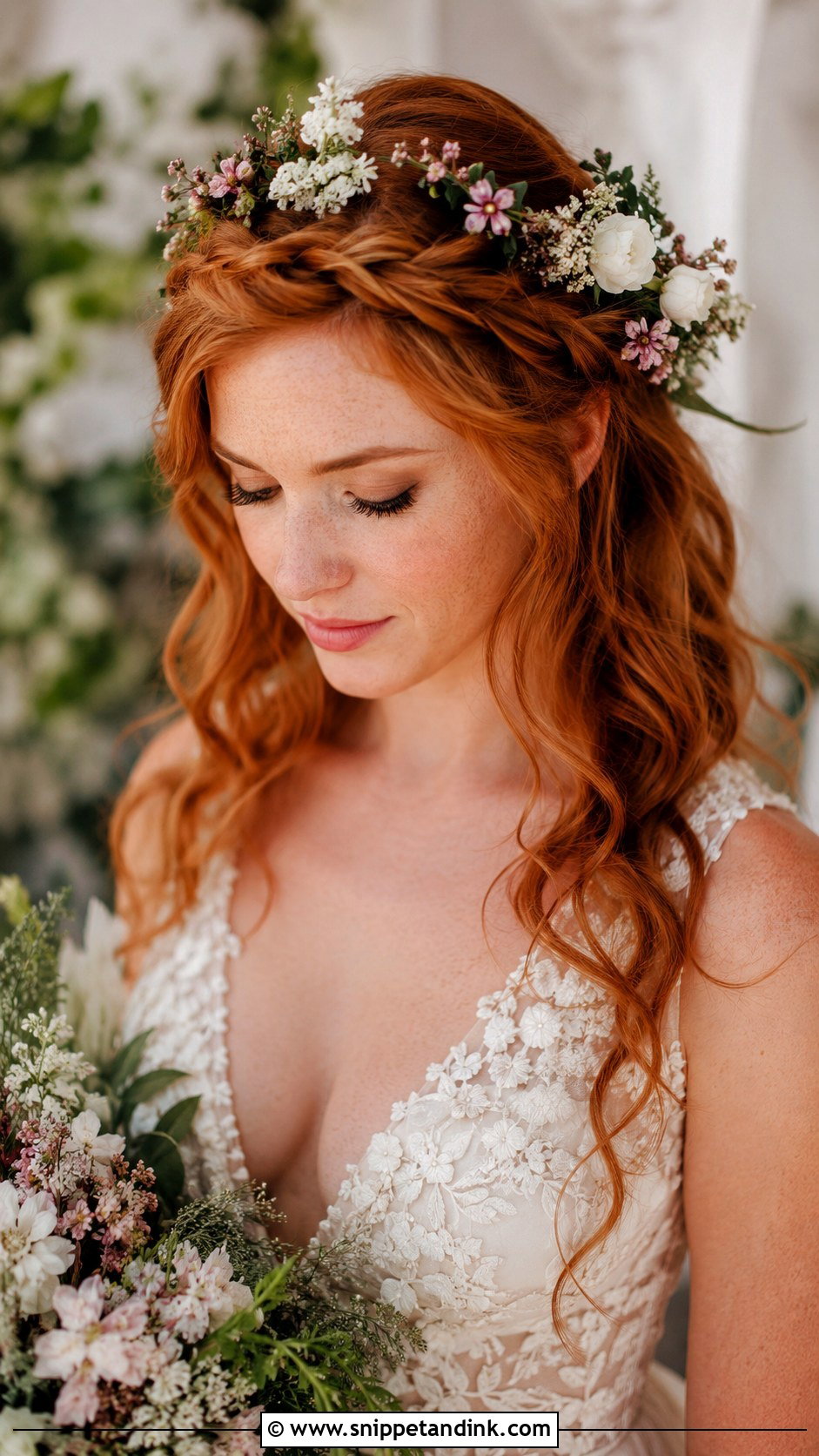
This combines two techniques: a crown braid as the base, and flowers wired into it. The braid holds the stems, so the flowers stay in place better than they would in loose hair. I choose small, sturdy blooms and put them in last, after all hairspray, since spray can mark petals. Keep spare flowers cool for touch-ups.
29. Side Bun Wedding Hairstyle
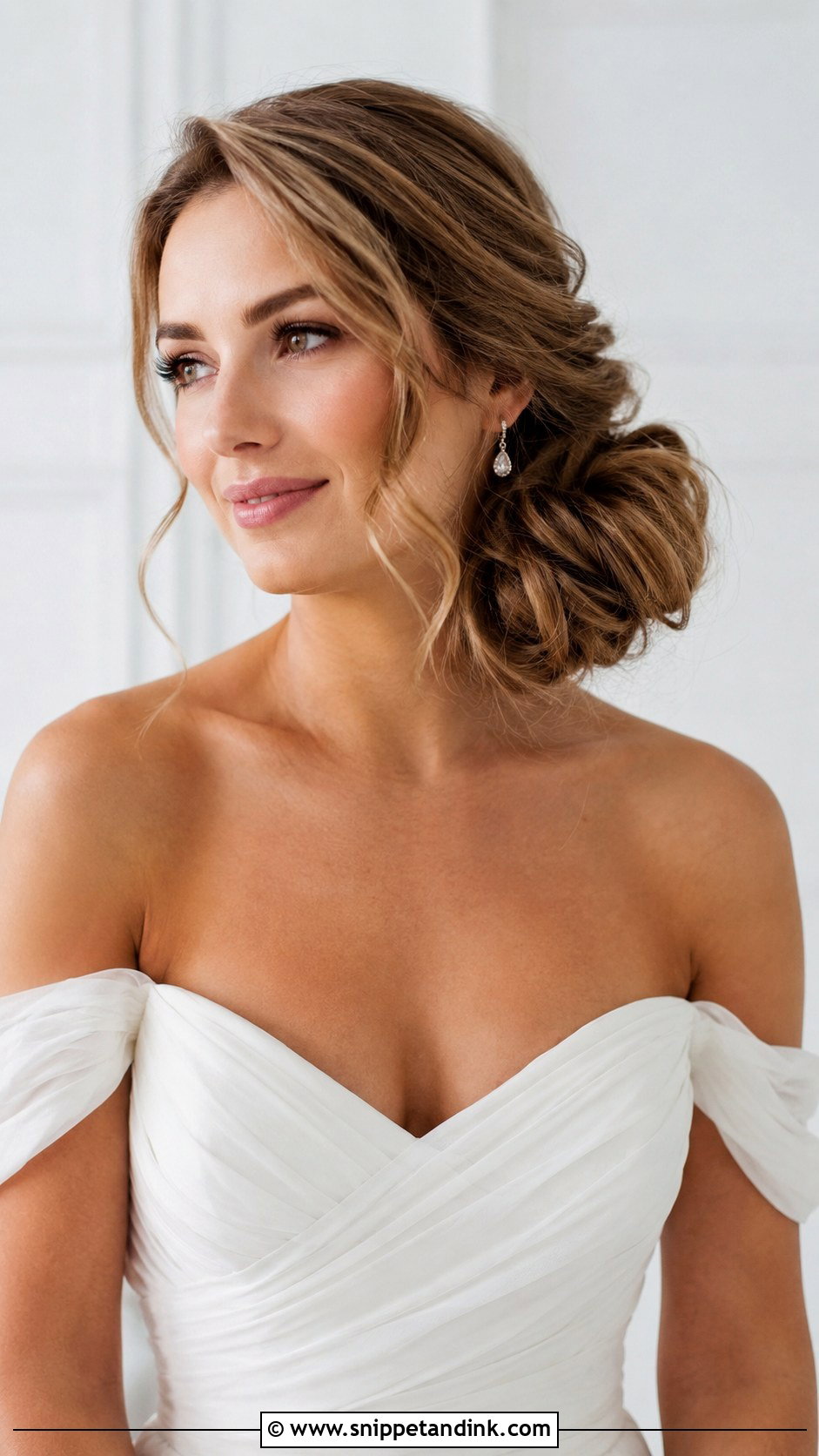
A side bun needs balancing: the bun sits behind one ear, so I keep the opposite side smooth and tight. Drop earrings look good on the open side. It works with a veil if the comb goes above the bun. Thick hair can make the bun heavy on one side, so I sometimes split it into two smaller sections.
30. Half-Up Braided Wedding Style
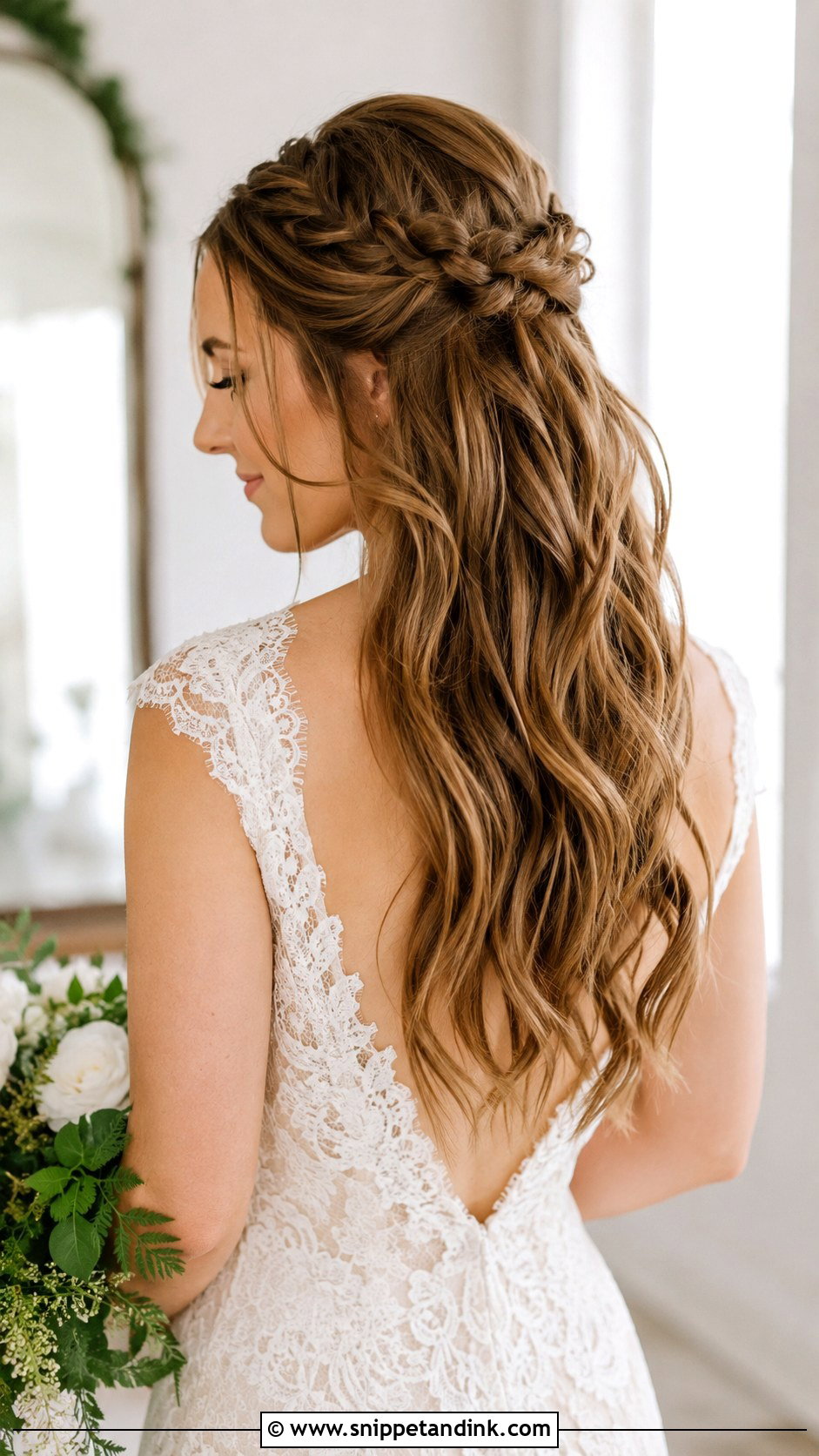
Braiding just the top keeps hair off your face while leaving the length free. Dutch braids at the temples meet at the back and get pinned together. On fine hair, a little texture spray before braiding gives grip. A veil comb tucks just under where the braids meet.
31. Bridal Hairstyle with Hair Vine
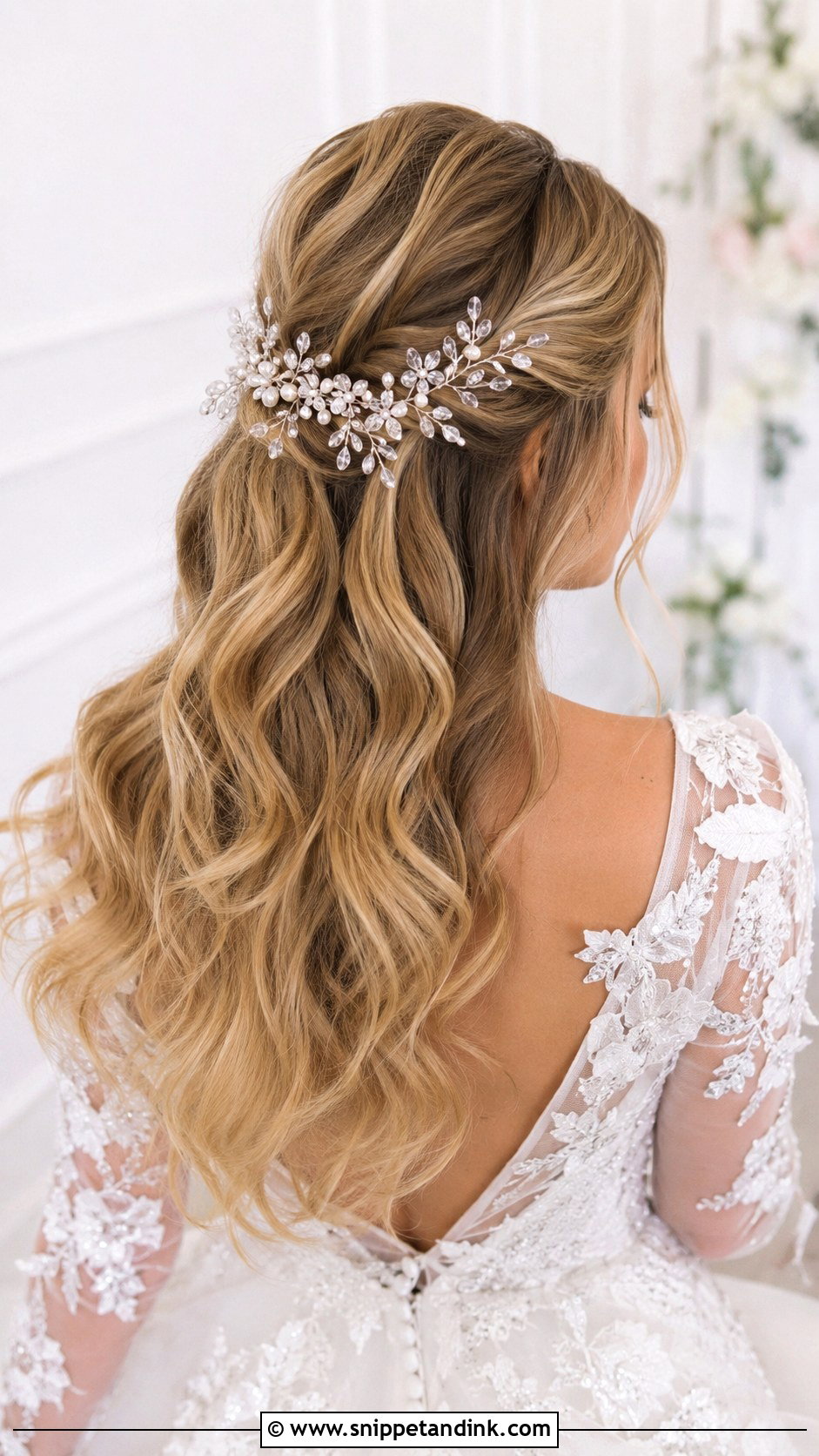
Hair vines are flexible wire, so they can be shaped to fit whatever style you have. I weave them in after the style is finished, securing each end with a small pin or clear elastic. Lightweight vines work with loose hair; heavier, beaded vines need an updo to support them. Check the weight before buying.
32. Voluminous Curls for Brides
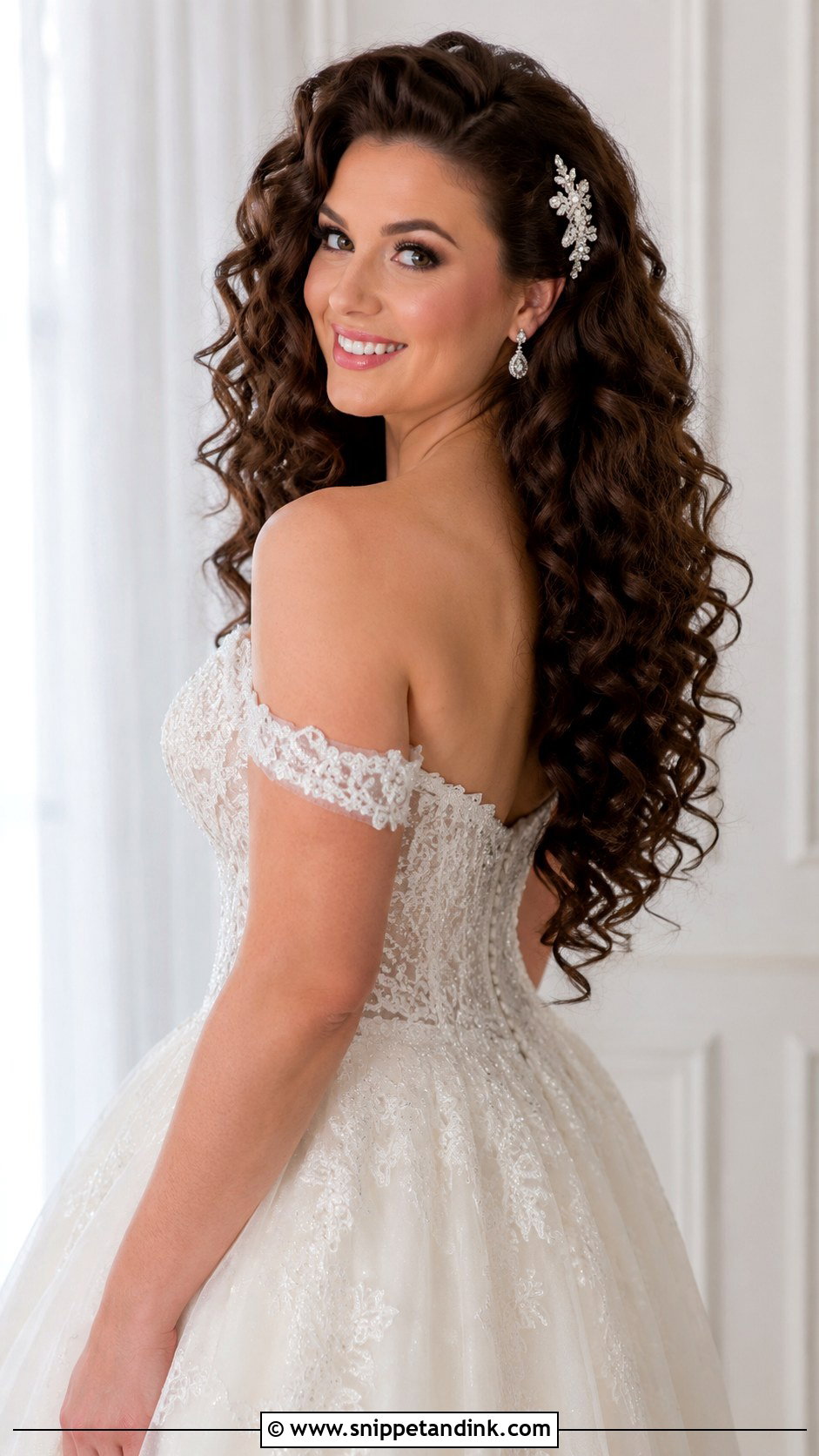
Volume curls need volume at the root, so I start with a root mousse and blow-dry upside down. Then large curls with a big barrel, pinned and cooled. They’ll relax over the day, especially if the hair is long and heavy. Wearing them half-up takes some weight off and helps them last.
33. Sleek Bun with Center Part
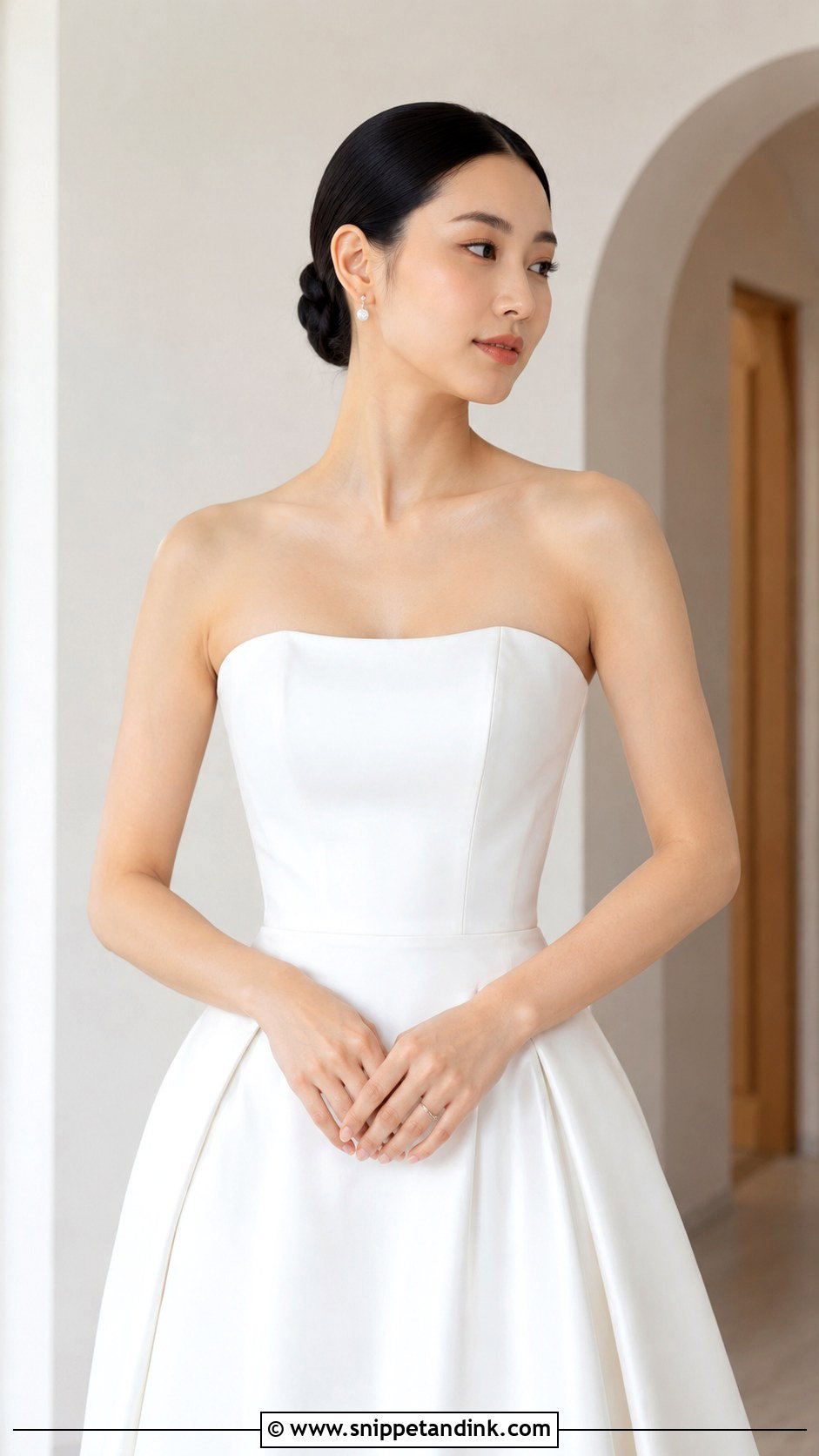
A sleek bun with a center part puts symmetry front and center, so I check the part at the trial. A slightly off-center part sometimes looks more balanced on an uneven face. Gel and a fine brush give the polished finish. A cowlick at the crown needs blow-drying flat first.
34. Tousled Updo Wedding Hairstyle
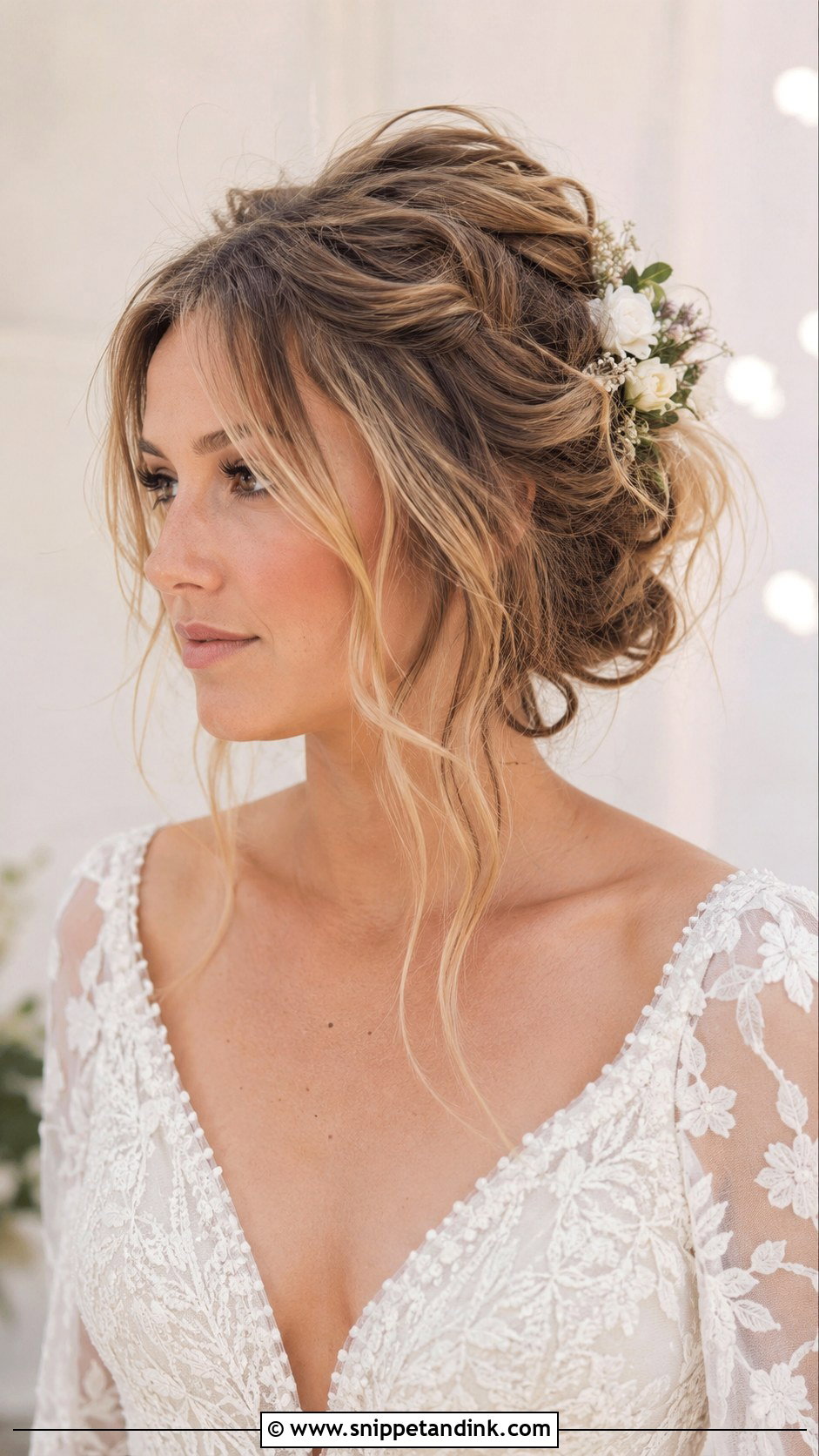
A tousled updo looks unplanned but actually needs careful pinning. I texture the hair, gather it loosely, and pin each section so it holds its shape. Face-framing pieces get cut from the hairline. Small flowers and pearl pins work well in the textured loops.
35. Bridal Hairstyle with Tiara
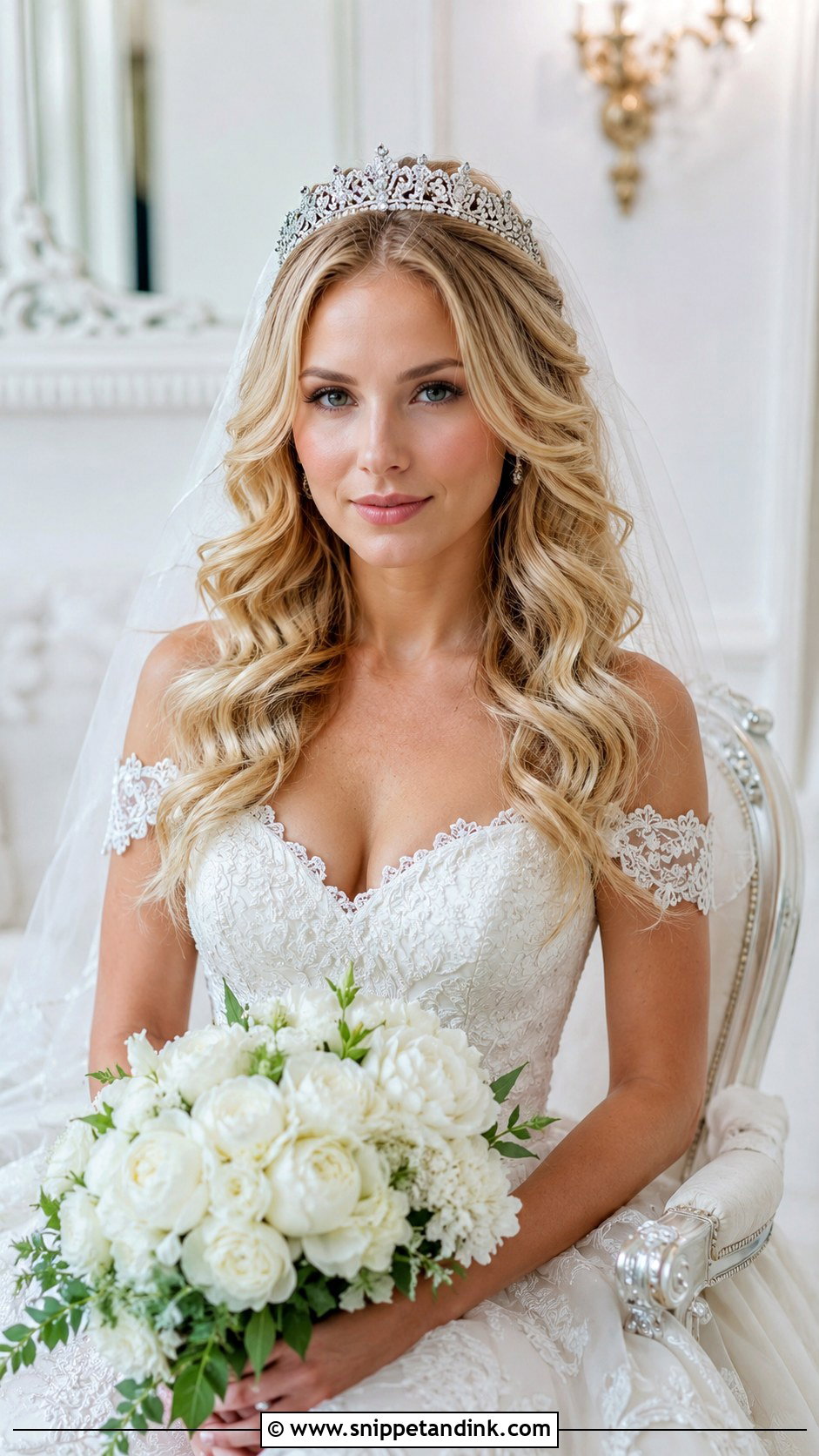
A tiara needs to sit on a backcombed base or it will slide forward. I tease a small section of hair where it sits, push the tiara’s ends into that base, and pin through the side loops. It’s much easier to secure with an updo or half-up than with loose hair. Try the tiara on at the trial, since the shape of your head changes where it sits best.
Tiaras, Vines, Veils and Fresh Flowers All Need Anchoring
Accessories go in last, and each needs its own anchor. Sliding something into finished hair without one is the main reason headpieces end up crooked in photos.
Veils
A comb needs teased hair or a few crossed pins to grip. Heavy or cathedral veils pull backward, so the anchor has to be strong. Plan for the veil to come out after the ceremony, and show a bridesmaid how to remove it without pulling the style.
Tiaras and headbands
Pearl pins, clips and vines
Decorative pins have small, smooth heads that slide out of silky hair. Every one of them gets a plain bobby pin underneath, crossed so the pearl pin rests against it. Vines are bent to shape first, held against the style, and only then fixed at each end, which stops them sitting flat or kinking in the middle.
These need a backcombed base and pins through their side loops. A headband pressing behind the ears can ache after a few hours, so wear yours around the house for an afternoon beforehand.
Fresh flowers
Ask the florist for sturdy blooms wired onto small pins, and put them in after the last of the hairspray. Keep spares in a cool place, since flowers against a warm scalp tire quickly.
Does Your Style Survive the First Dance?
Start with the dress and the headpiece, then pick the style that suits both rather than the other way round. Book a trial a couple of months out and bring the veil or tiara with you. Test how it feels after a few hours, not just how it looks in the mirror. The best choice is the style that stays put through hugs, dinner and dancing, and that you forget about once the ceremony starts.
You'll Like These Ideas:


Leave a Reply