
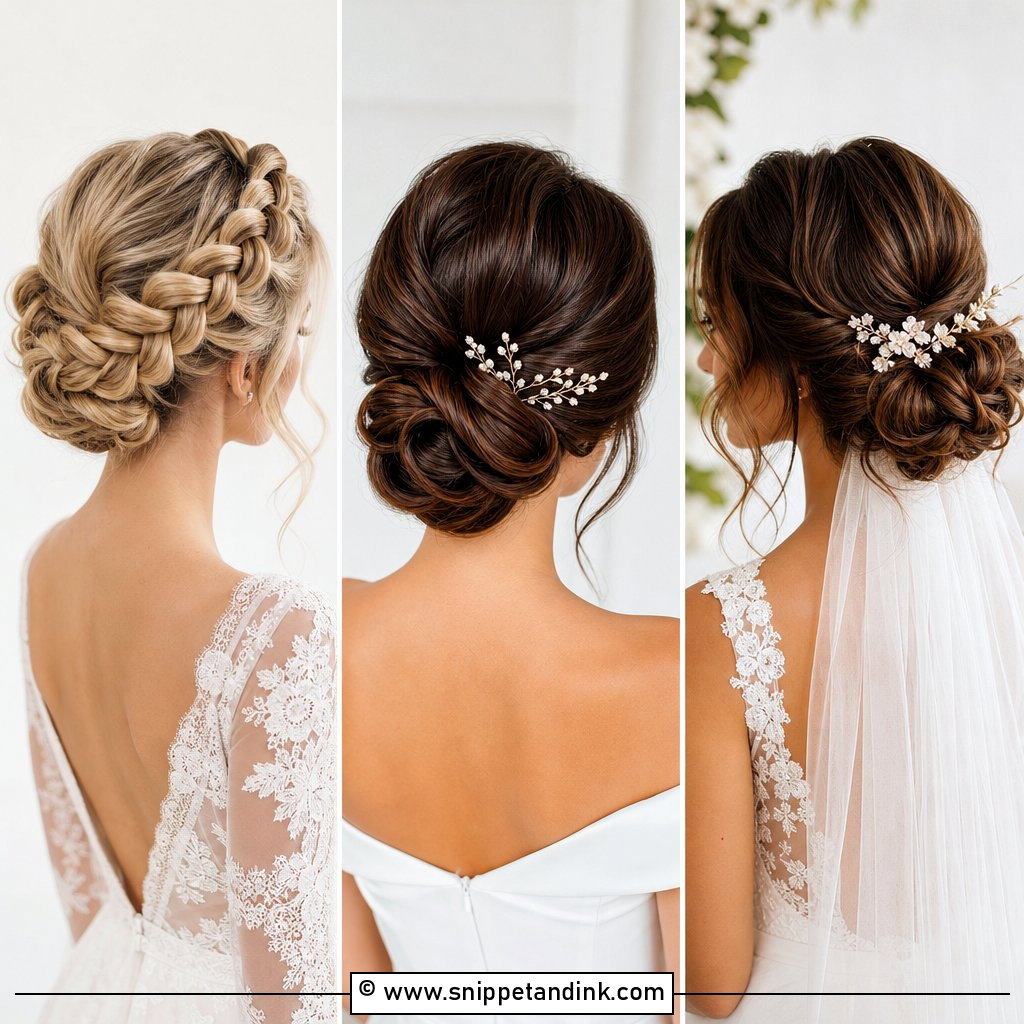
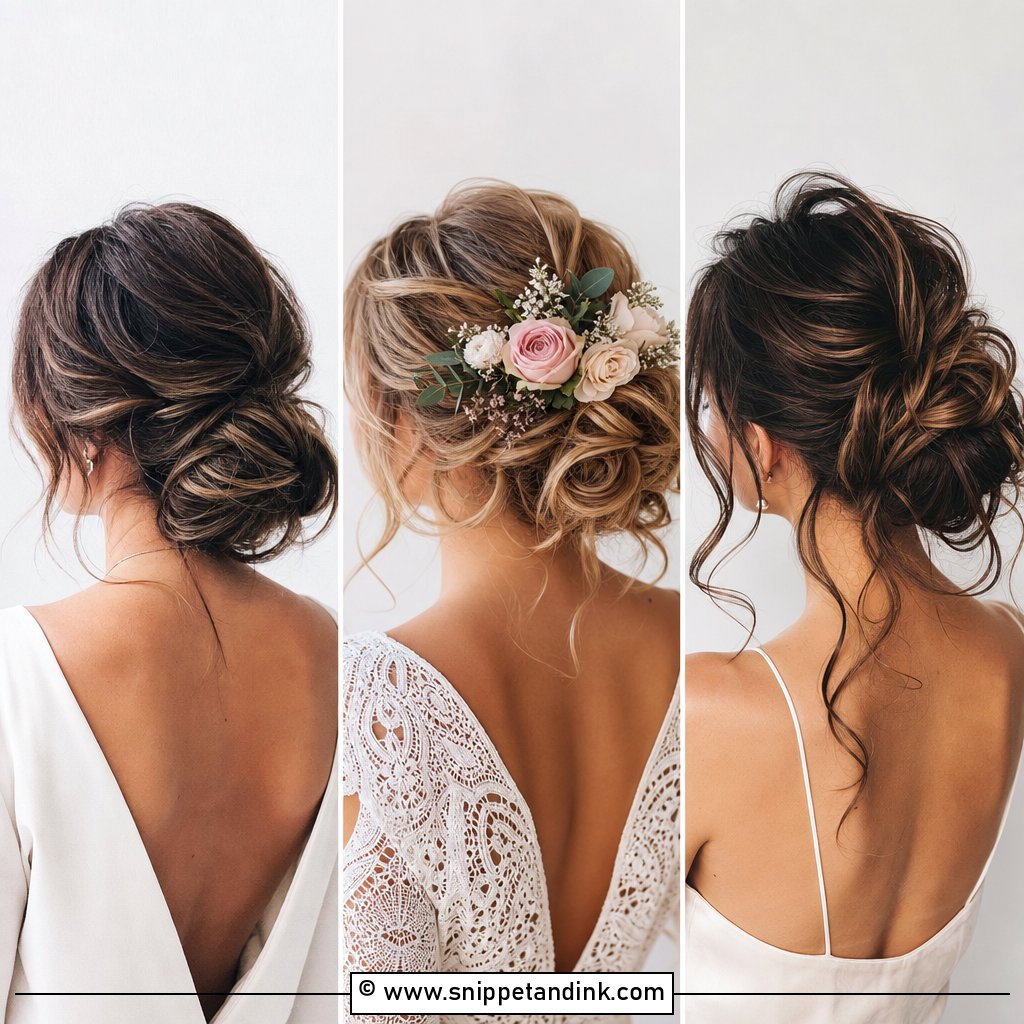
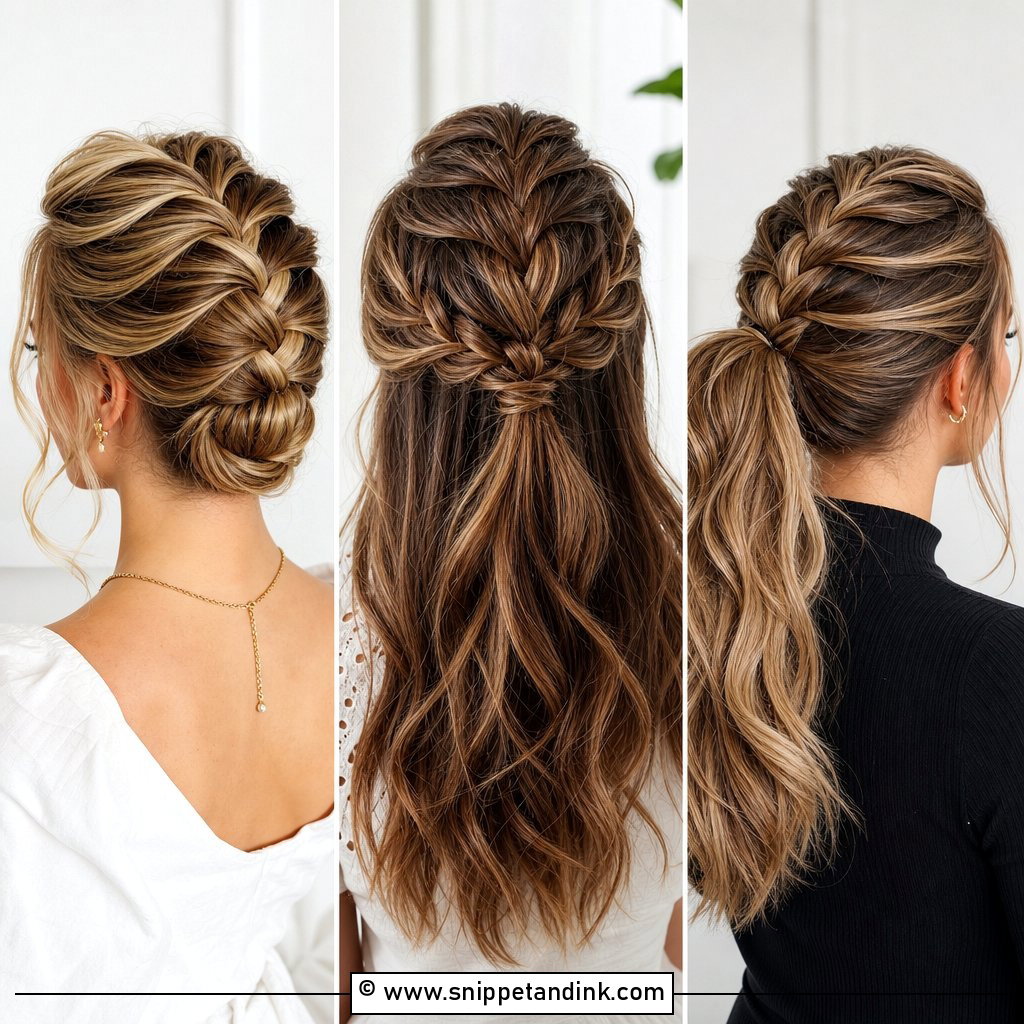
Braids are the bridal style I trust most for a long day, because a plait spreads the weight of the hair across many small sections instead of hanging it all on a few pins. A garden ceremony, a windy beach and a packed dance floor each test hair differently, and woven hair copes with all three better than loose curls do. The catch is that every braid behaves differently depending on your length, density and texture. For each of the 20 styles below I’ve noted what it needs from your hair and where it usually fails, so you can take the right ones to your trial.
Braids Eat Length, So Measure Yours First
Every pass of a braid folds hair back on itself, so a plait finishes noticeably shorter than the hair you started with. Hair that reaches the middle of your back loose might only reach your shoulder blades once it’s braided. That’s why styles that wrap the head, like the crown and milkmaid braids, are the first ones to rule out if your hair is shorter than you’d like.
Density matters as much as length. Fine hair makes a thin plait, and I widen it by pulling the outer loops after braiding, a step called pancaking. Thick hair makes a heavy plait that needs more pins and sits better low. Layers are the third factor: the shorter pieces escape the weave over the day, so a heavily layered cut suits a loose boho plait better than a tight crown.
- Above the shoulders: a small waterfall or Dutch accent braid, or clip-ins for anything fuller.
- Shoulder to collarbone: half-up braids, braided low buns, double braids pinned up.
- Below the shoulder blades: crown, milkmaid, halo, long side braids and full fishtails.
If you plan to use clip-in extensions, buy them before the trial and have them colour-matched, so we braid with exactly what you’ll wear on the day.
1. Crown Braid for Bride
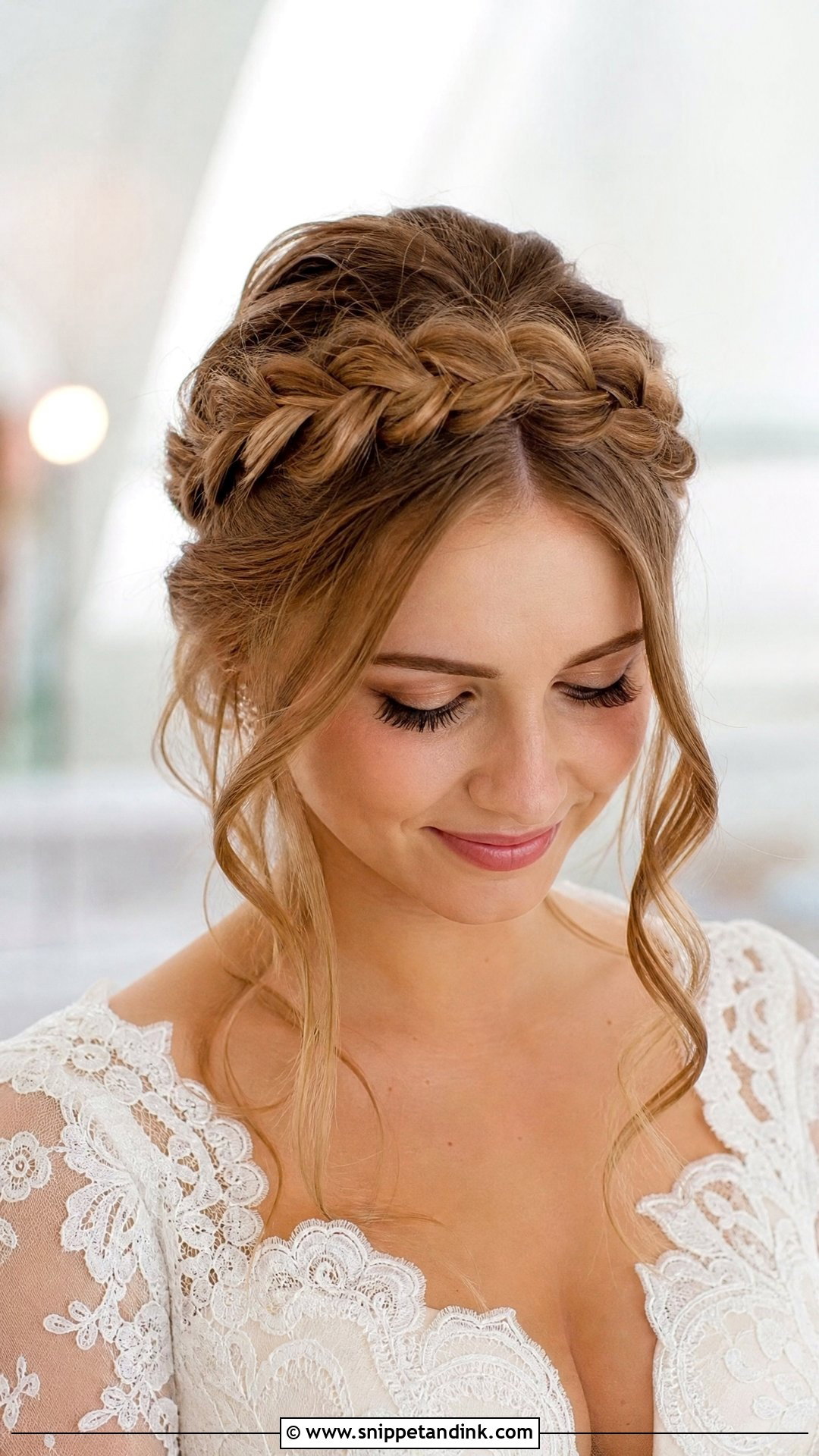
A crown braid circles the head like a royal halo, and it needs real length to close the loop. If your hair stops above the shoulder blades, the ends won’t meet at the back. I start it a little behind the hairline rather than right on it, which stops the band sitting too low on the forehead in photos. A tiara comb slides under the woven band and stays put. On fine hair I gently pull the edges wider, then pin every few centimetres along the underside so it can’t sag by evening.
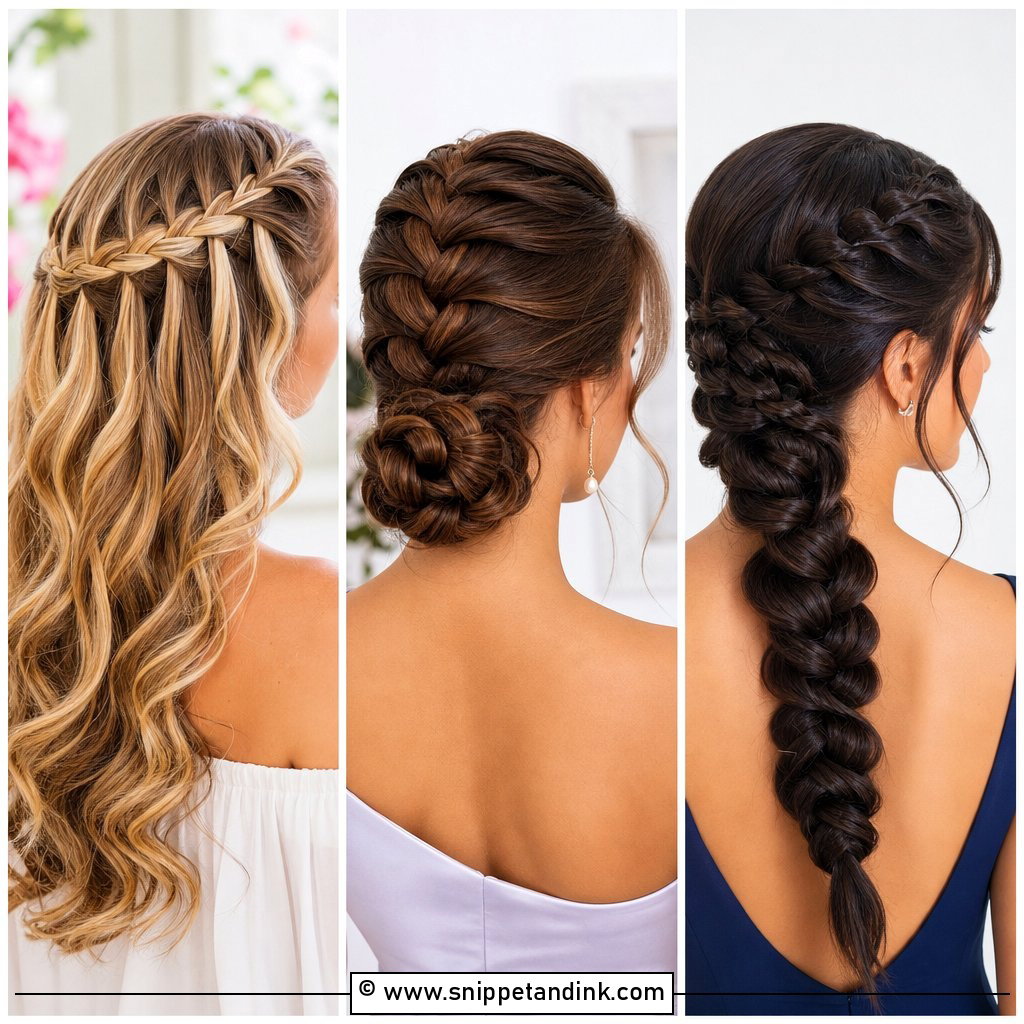
2. Fishtail Braid Wedding Updo
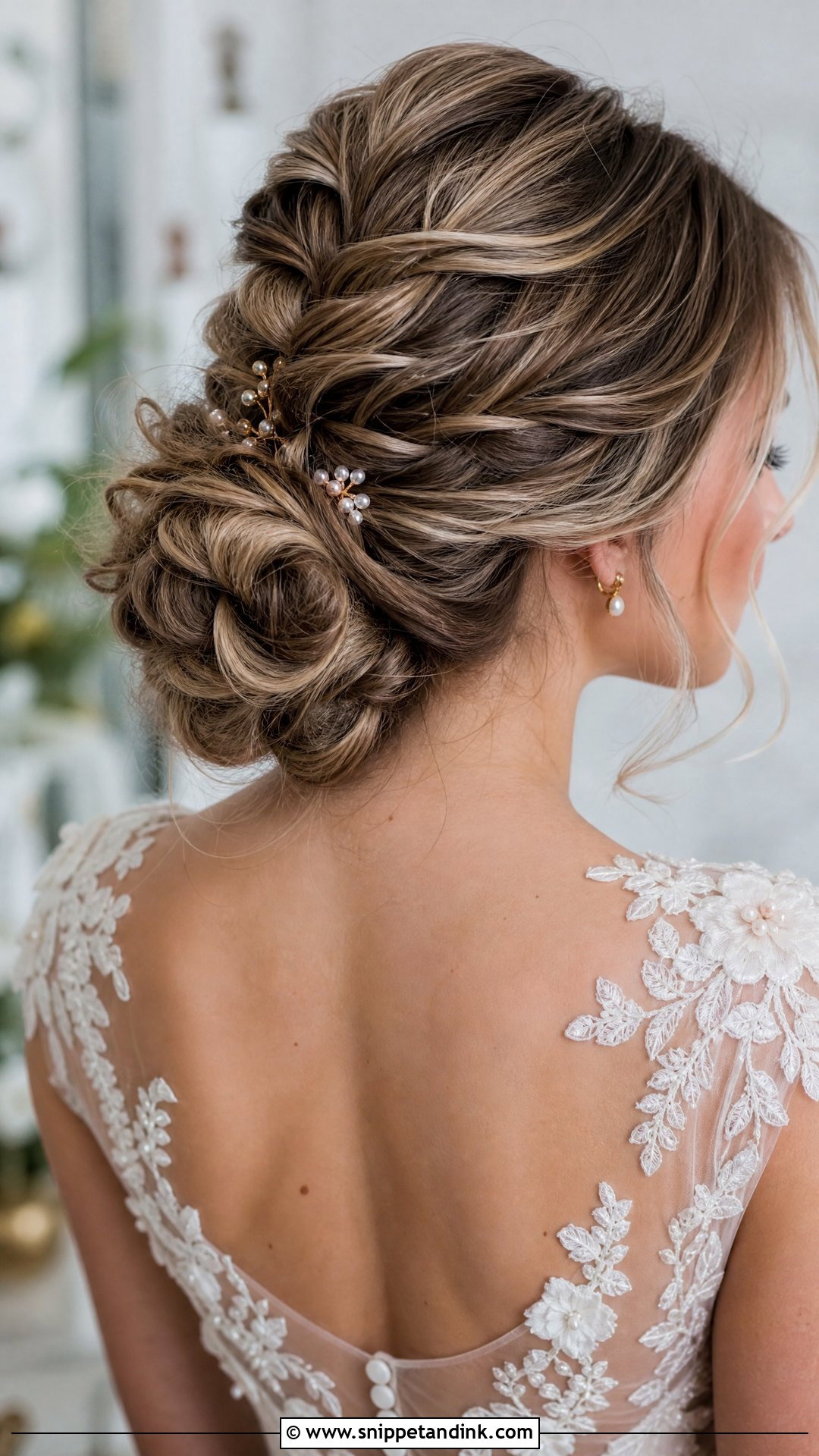
Fishtails look fiddly but follow a simple two-strand pattern, and gathered into a low updo they suit rustic and boho weddings. The tiny crossings show off colour, so balayage and highlights look richer in this weave than in a three-strand plait. I keep the fishtail slightly loose before pinning it at the nape; pulled tight, it reads as a school plait rather than an updo. Freshly washed, slippery hair unravels at the crossings, so I prep with a dry texture spray first. Small pearl pins sit neatly in the gaps without changing the shape.
3. French Braid Updo for Bride
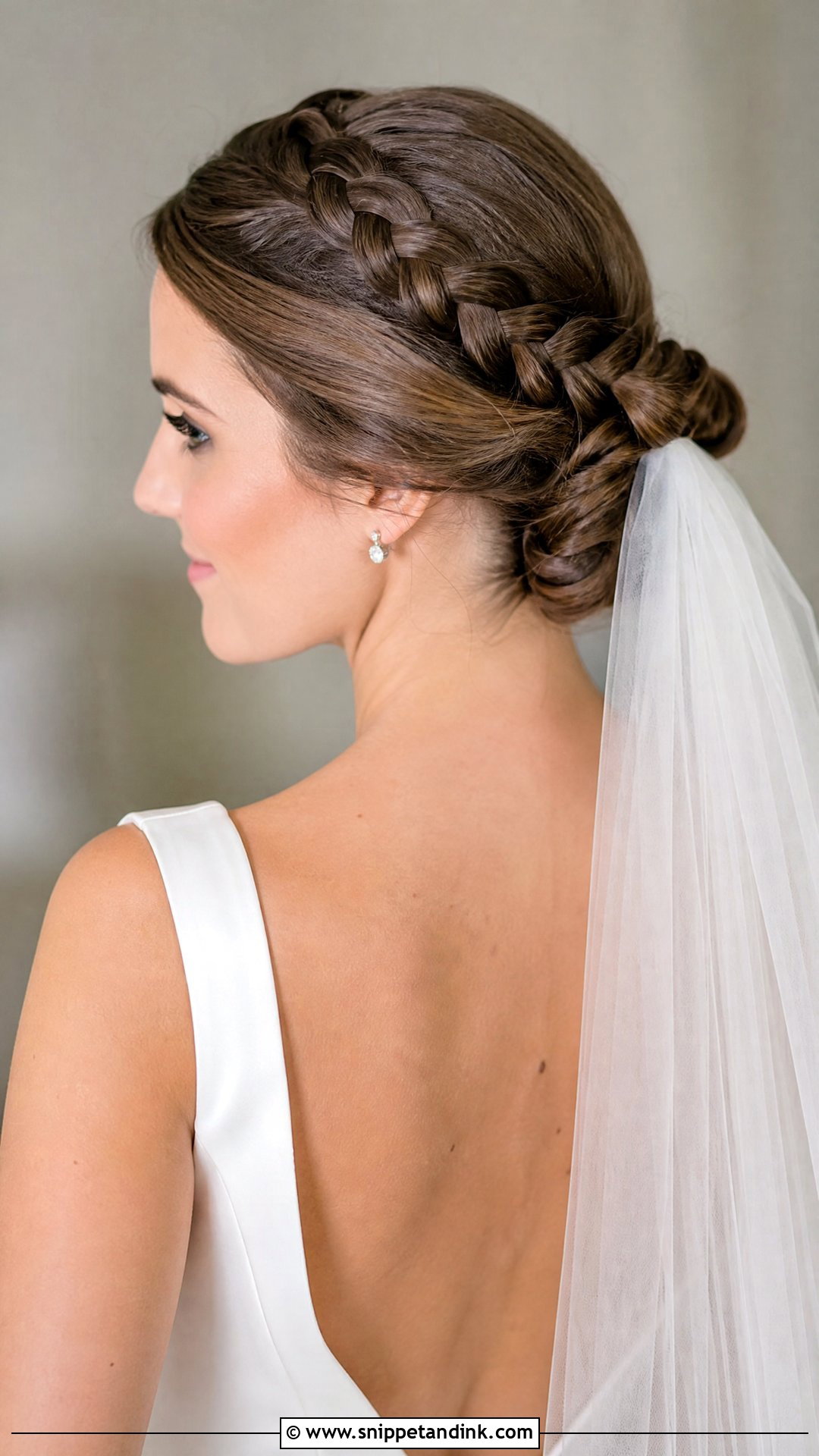
A French braid picks up hair close to the scalp, so it builds a firm base that a veil comb or headpiece can grip. That makes it a sensible formal choice next to a structured dress. For long, thick hair it’s also the easiest way to contain bulk, since the braid compresses the volume before it’s twisted into a bun at the back. Its weak spot is short layers around the crown, which work loose as the day goes on, so I smooth those with a little pomade as I braid. Leave two face-framing pieces out if a fully pulled-back finish feels severe on you.
4. Waterfall Braid for Bride
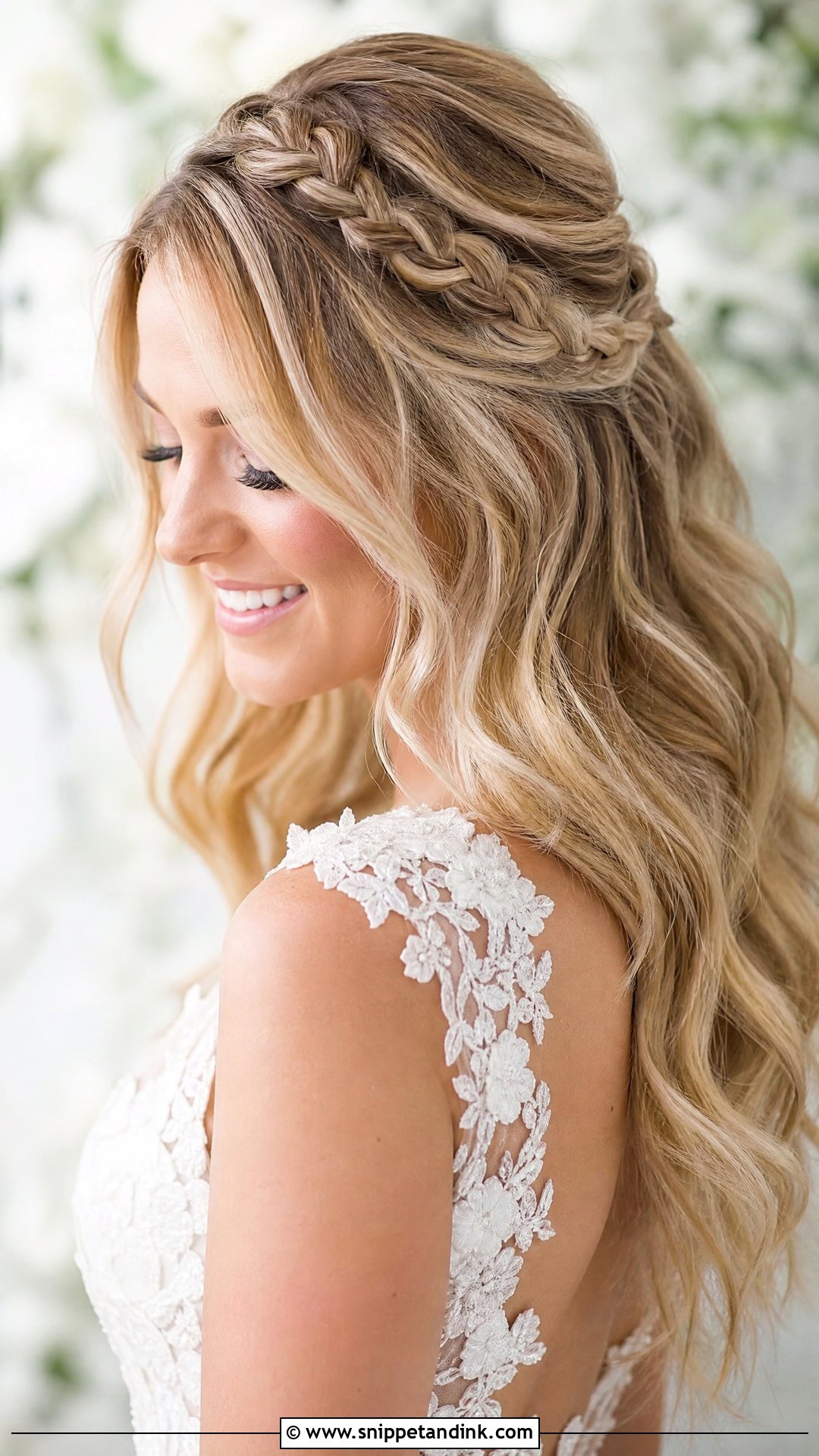
The waterfall braid drops one strand on each pass and picks up a new one, so the plait runs across the head like a band while the rest hangs loose underneath. That loose section is curled, and curls relax in heat and humidity. For a summer ceremony outdoors I set the curls with heat, let them cool fully in pin clips, and lock the end of the braid with a hidden elastic and two crossed pins behind the ear. Very fine or chin-length hair can’t show the dropped strands, so I’d suggest another style there.
5. Dutch Braid Updo for Bride
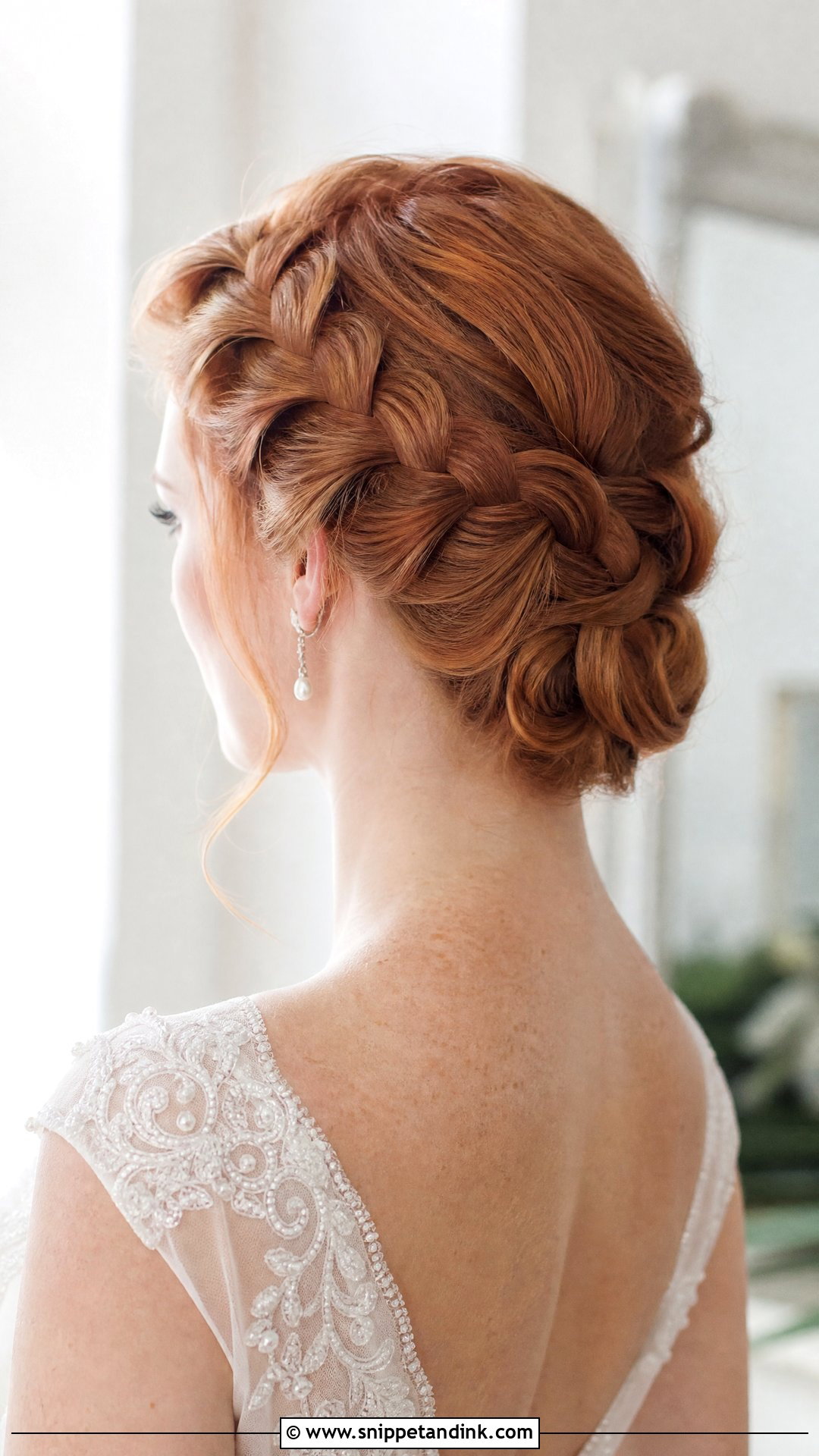
A Dutch braid is a French braid worked underhand, so the plait stands up off the scalp instead of sinking into it. That raised ridge looks more sculpted and modern. Pinned into a low bun or knot, it’s one of the most secure styles I do, because every section is locked against the head before it ever reaches the pins. I’d avoid it if your hair is sparse at the temples or along the parting, since the tension can show scalp under a flash. A couple of loose pieces at the face soften the structure.
6. Half-Up Half-Down Braid for Bride
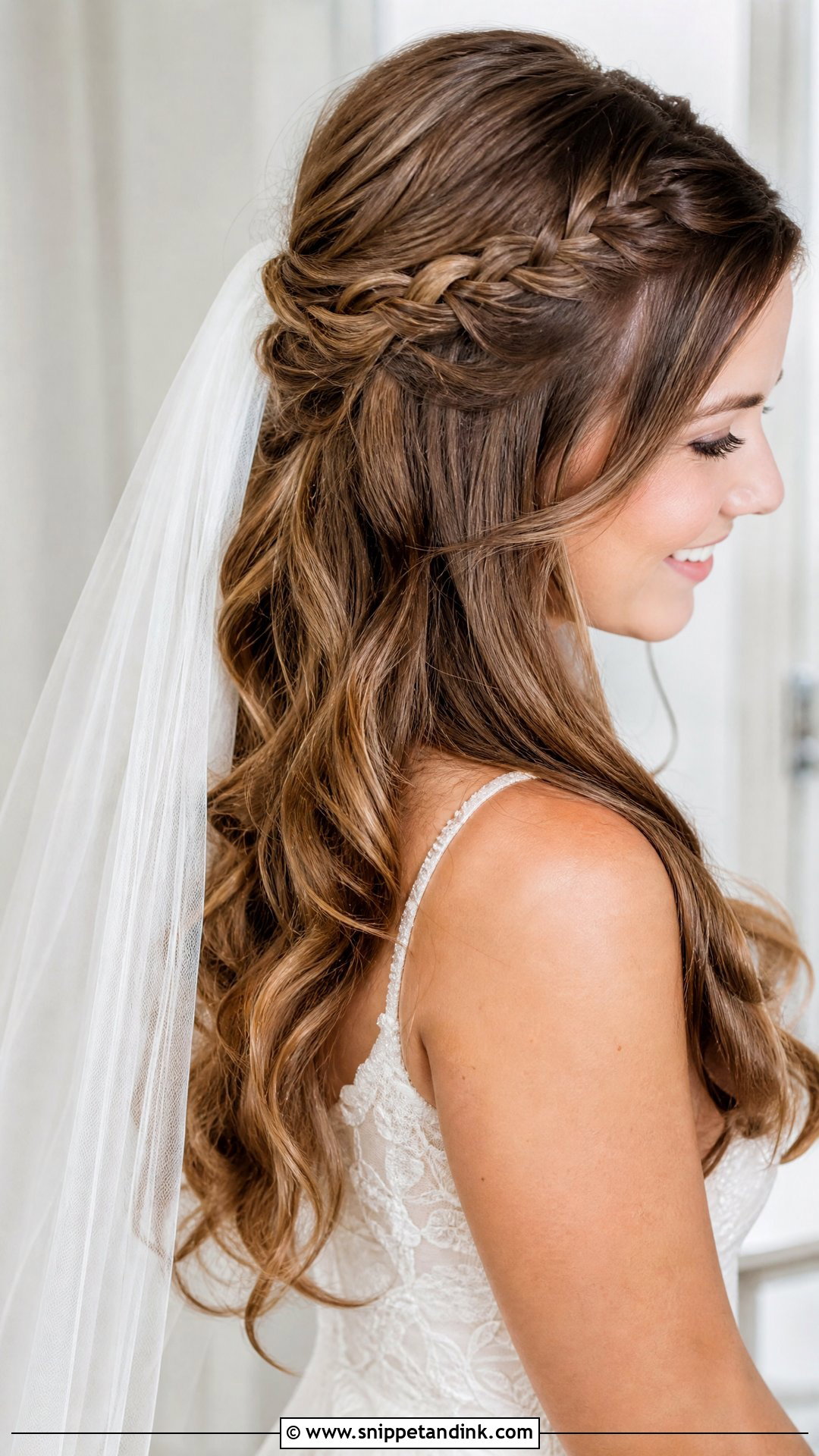
Half-up braids keep hair off your face while your length stays down, and it’s the style I’m asked for most at summer weddings. The braid usually crosses the crown, or two small plaits meet at the back, with waves below. Two things decide whether it lasts: how well the waves are set, and whether the braids are pinned to a hidden anchor rather than simply tied off. A veil comb slots in right where the plaits meet. On shoulder-length hair the down section can look thin once a third of it goes into the braid, so we check the balance at the trial.
7. Braided Chignon for Bride
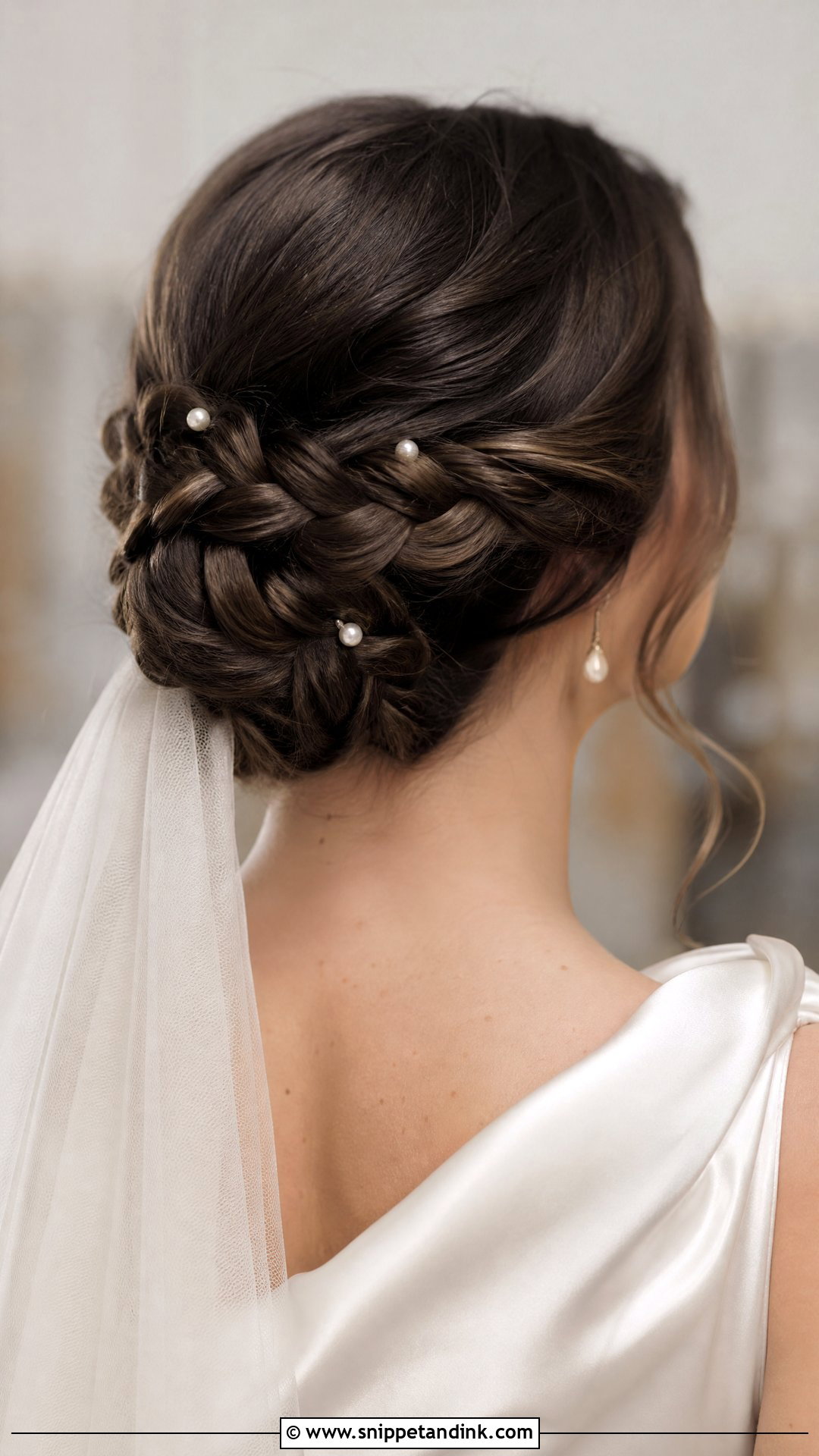
This low bun at the nape, with plaits worked through or around it, is the most veil-friendly style on the list. The comb slides in above the bun and stays steady because the braid gives it something firm to bite into. For brides with less hair I build the chignon over a small padded base so it doesn’t look flat in profile. It reads polished rather than romantic, so I pair it with structured satin or crepe more often than floaty chiffon. Pearl pins sit neatly along the seam where bun meets braid.
8. Boho Braid for Bride
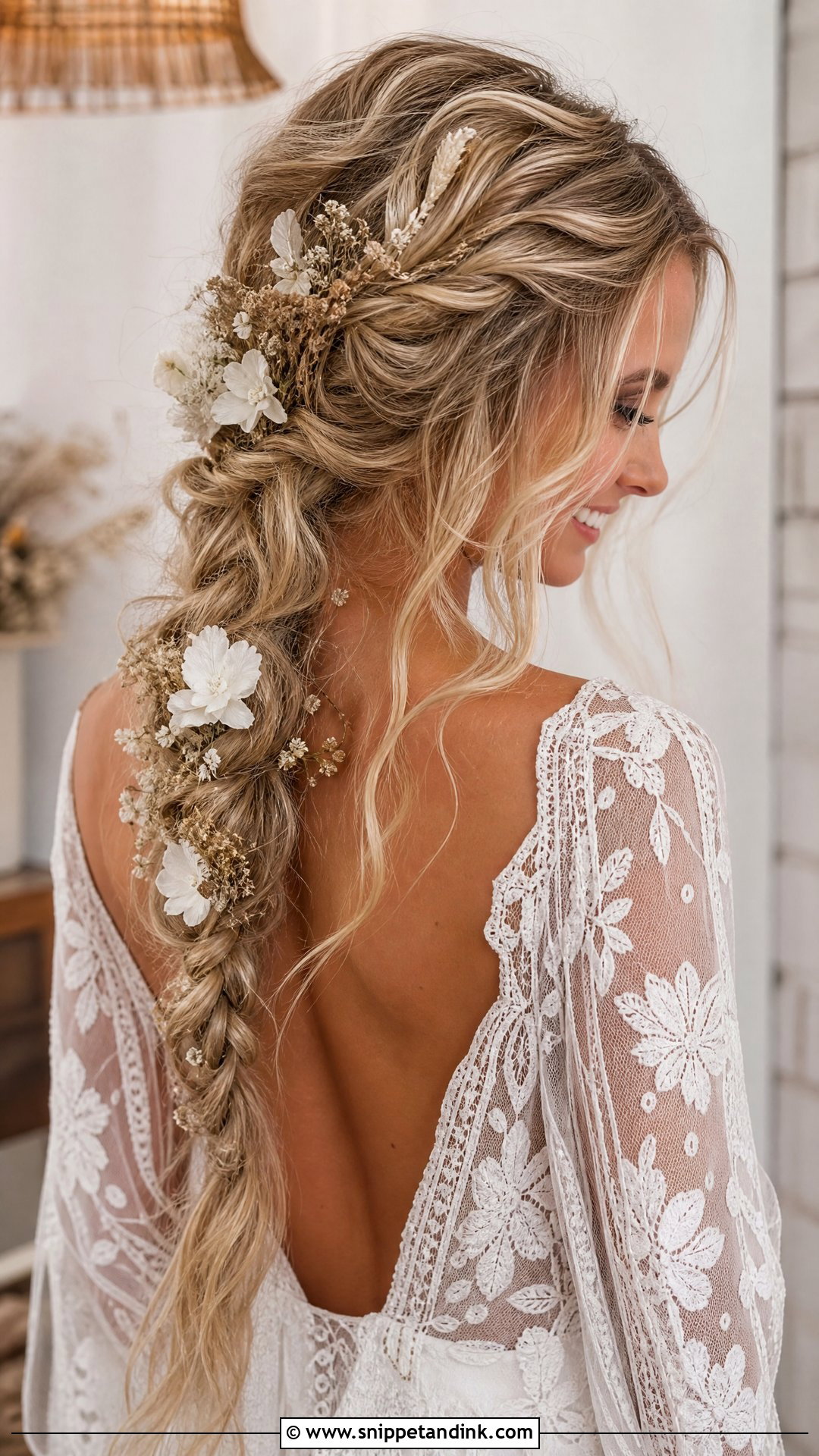
For free-spirited brides, the boho braid is a loose plait through tousled waves with pieces pulled out on purpose. An undone look still needs structure underneath. I braid firmly first, pin it, and only then pull pieces free, because a braid that’s loose at the root collapses within the hour. Dried flowers cope better than fresh ones in full sun. In a formal black-tie room I’d steer you elsewhere; next to a structured gown this style can look unfinished.
9. Side Braid for Bride
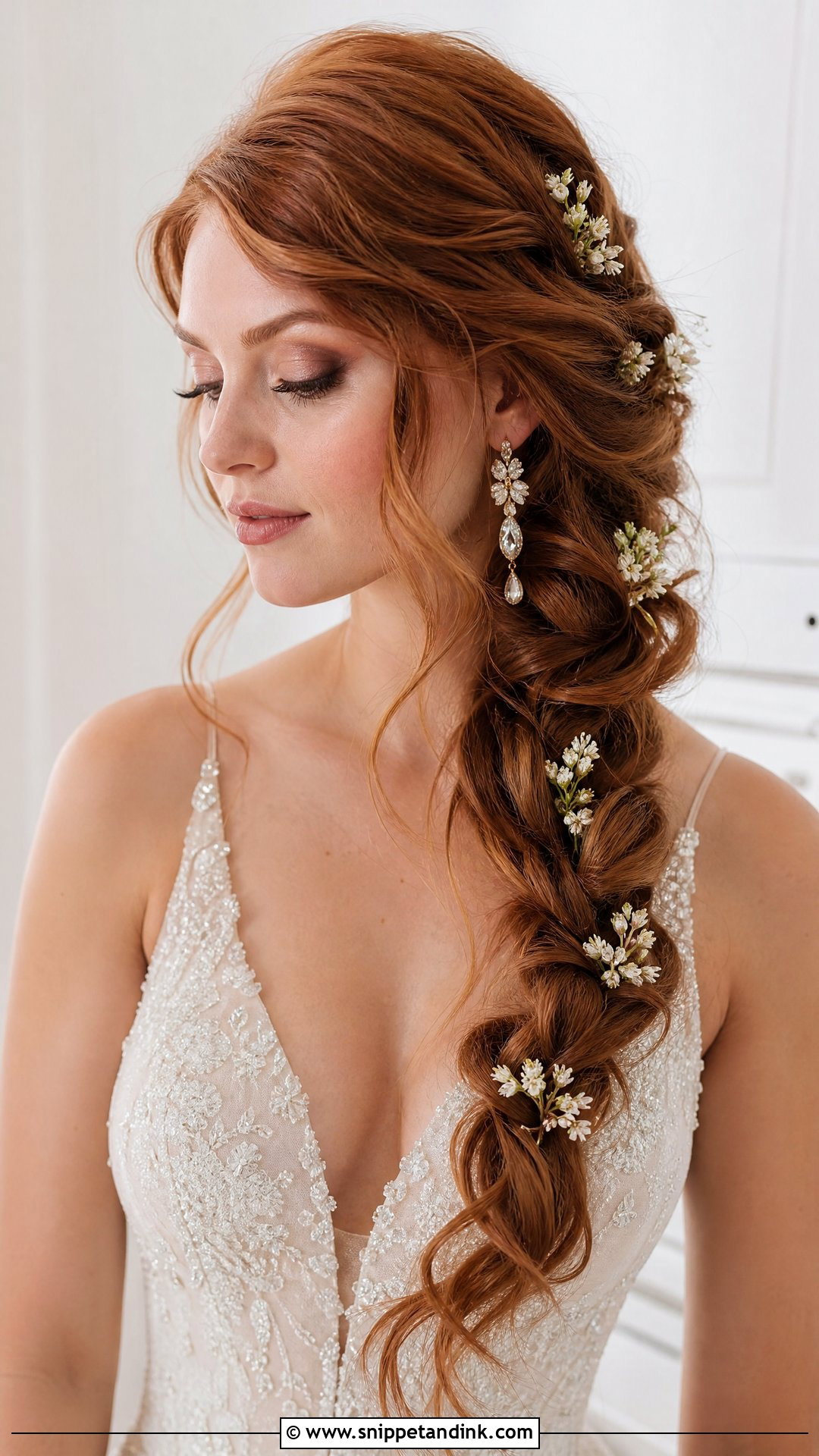
Draped over one shoulder, a side braid clears one side of the neck, which makes room for a statement earring or an asymmetric neckline. I tug the outer loops to make it look thicker, then spray it so they don’t flatten when you lean back in a chair. All the weight sits on one side, so the nape section gets pinned firmly underneath; otherwise the braid slides forward by the speeches. You need hair well below the collarbone for this. Tiny flowers or pearls pushed into the loops add detail without adding weight.
10. Braided Bun for Bride
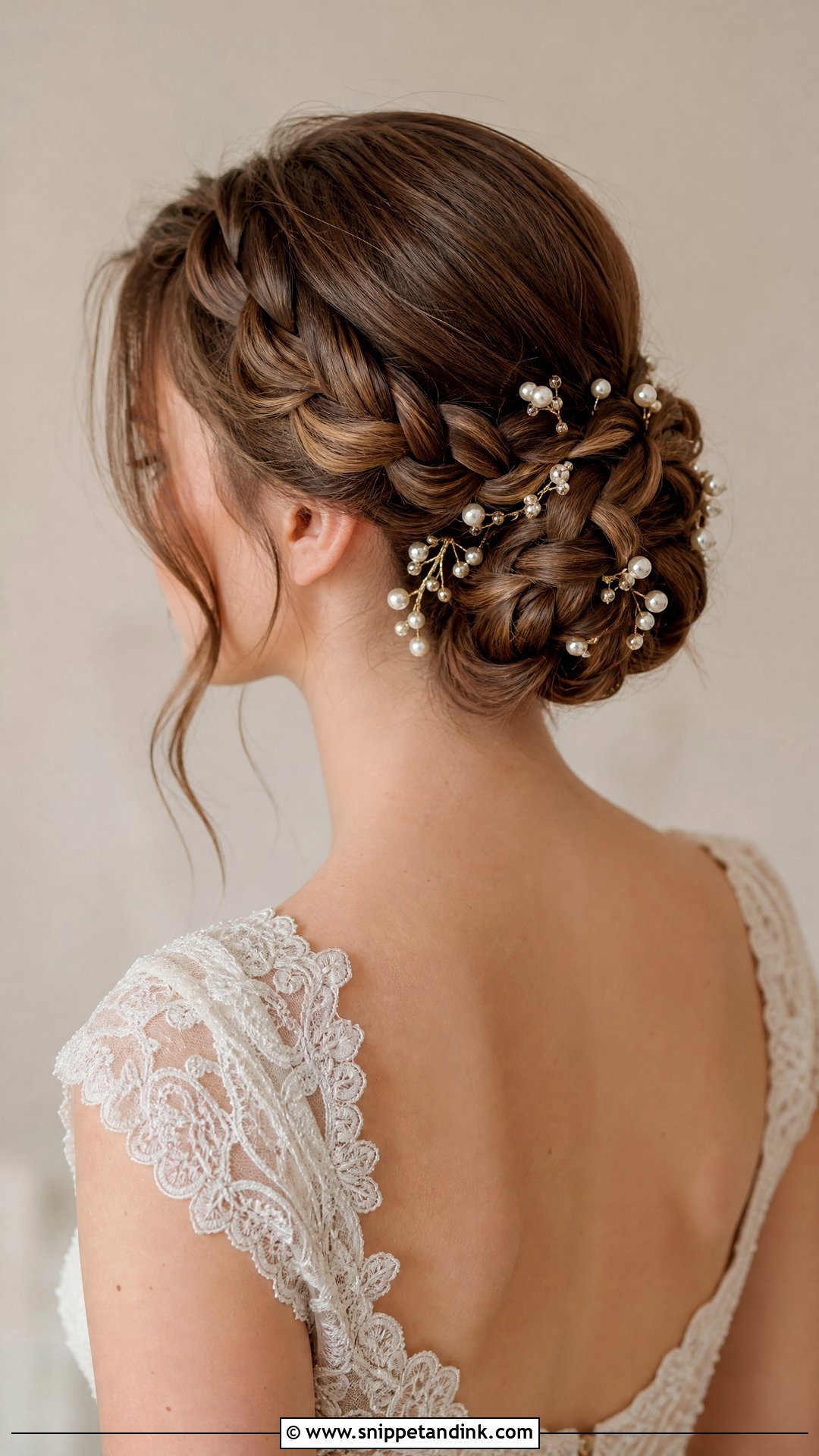
Coiling a braid into a round bun gives a lot of texture for relatively little work, which is why it looks more elaborate than it is. It can sit high like a ballet bun or low under a veil. I pin it from the outer edge inward, sliding each pin through the braid and into the base so nothing shows. A high braided bun on heavy hair starts to pull after six or seven hours, so with thick hair I usually suggest the low version. Pins or a few blooms can go straight into the coil.
11. Milkmaid Braid for Bride
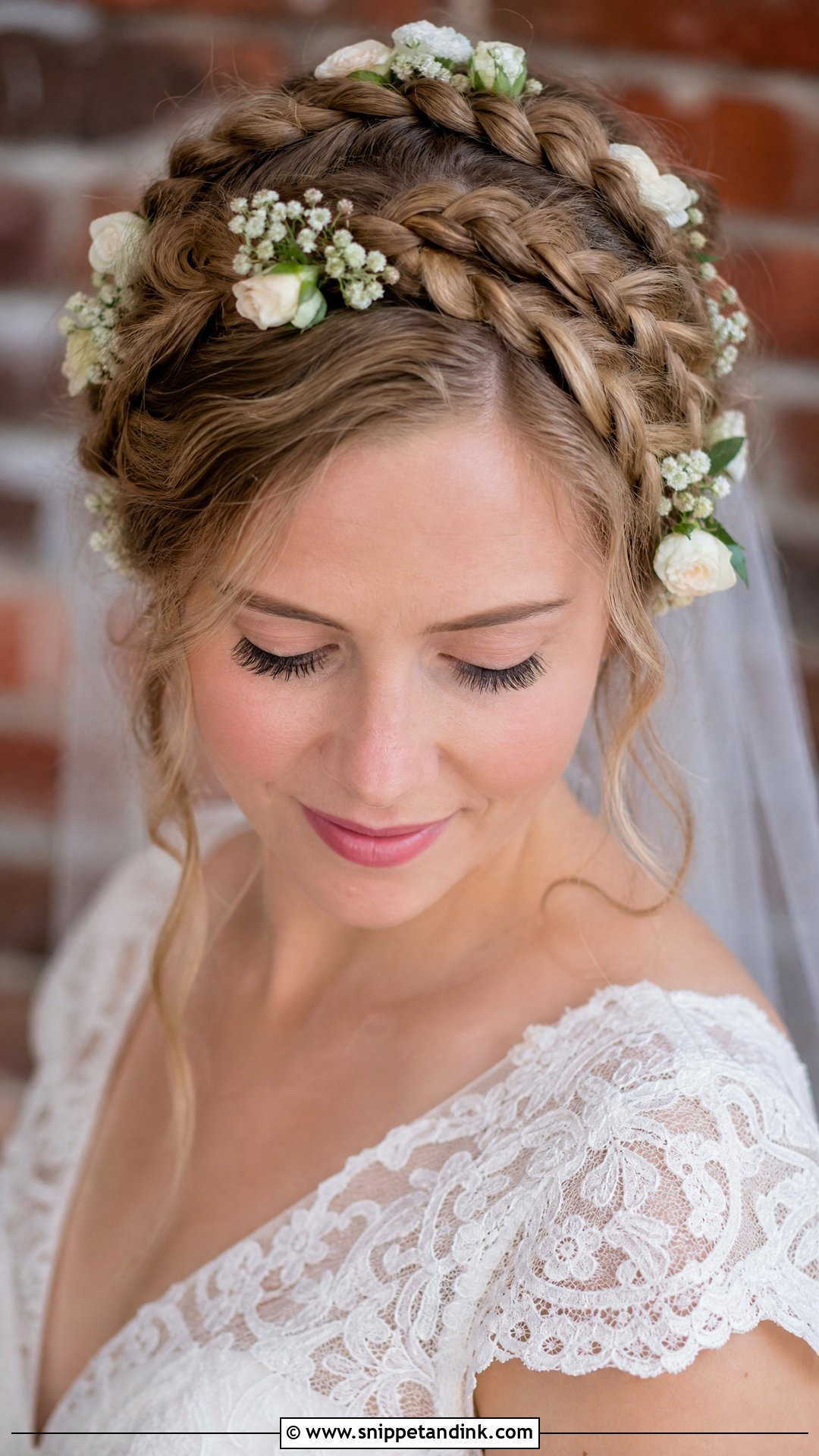
Two plaits run up from the nape and cross over the top of the head, giving that vintage, countryside feel. The milkmaid braid suits long hair of fairly even length, because both braids have to reach the opposite side to overlap. Layered hair can still work if I start the plaits lower. I tuck each end under the opposite braid and cross the pins in an X so everything lies flat. Fresh flowers along the seam suit a rustic or garden setting, and a few pieces left near the ears stop it looking too neat.
12. Braided Ponytail for Bride
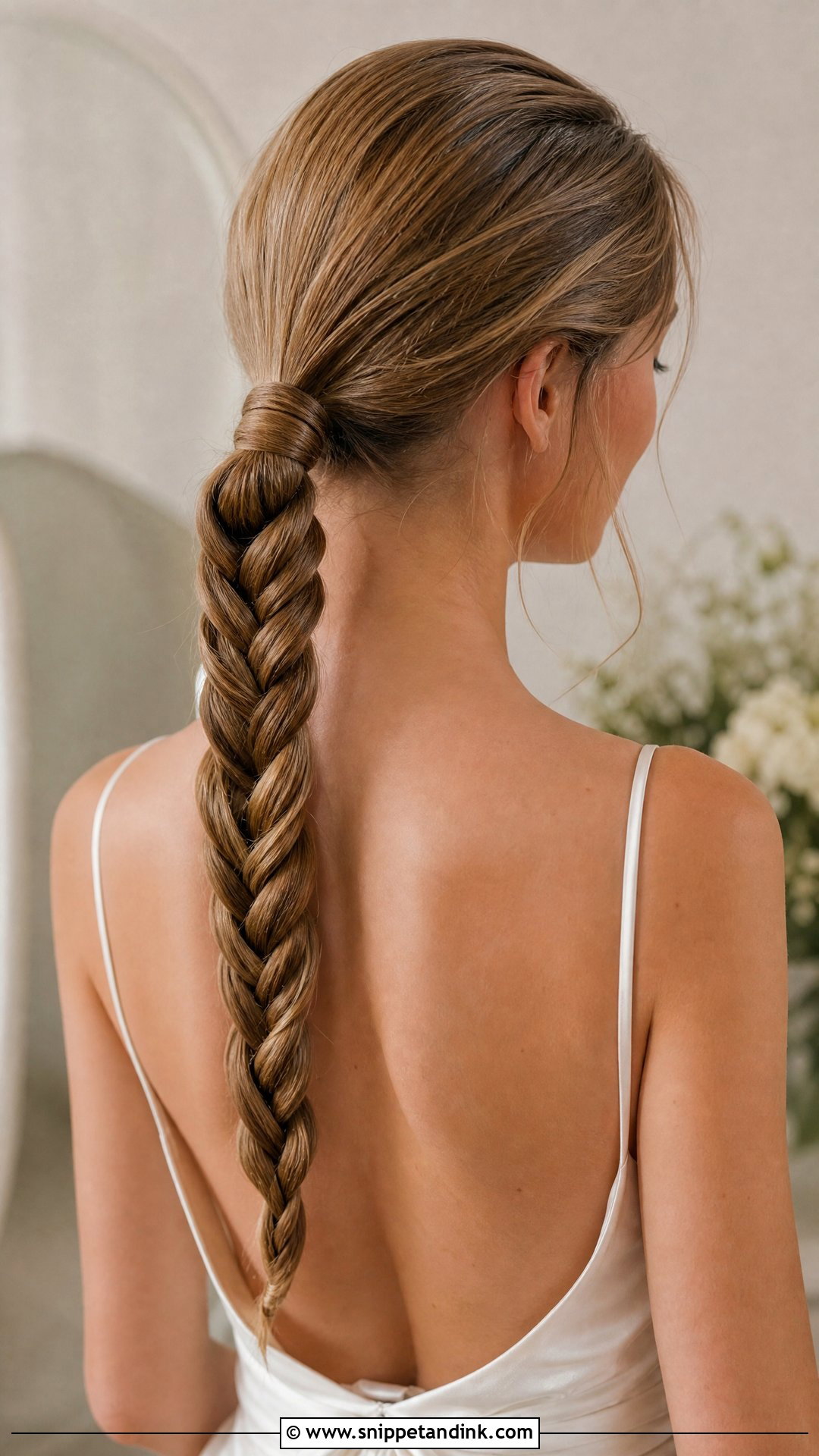
Of all twenty, the braided ponytail is the easiest to dance in, and it shows off the whole back of the dress. The base is the part that has to be engineered. I tie it with a strong elastic, add a second small one just beneath to lift it, then wrap a strand of hair around both to hide them. High reads glamorous, low reads quiet. On shorter hair, clip-in extensions at the base give the braid length and body, so decide on those before the trial rather than on the morning.
13. Pearl Braid for Bride
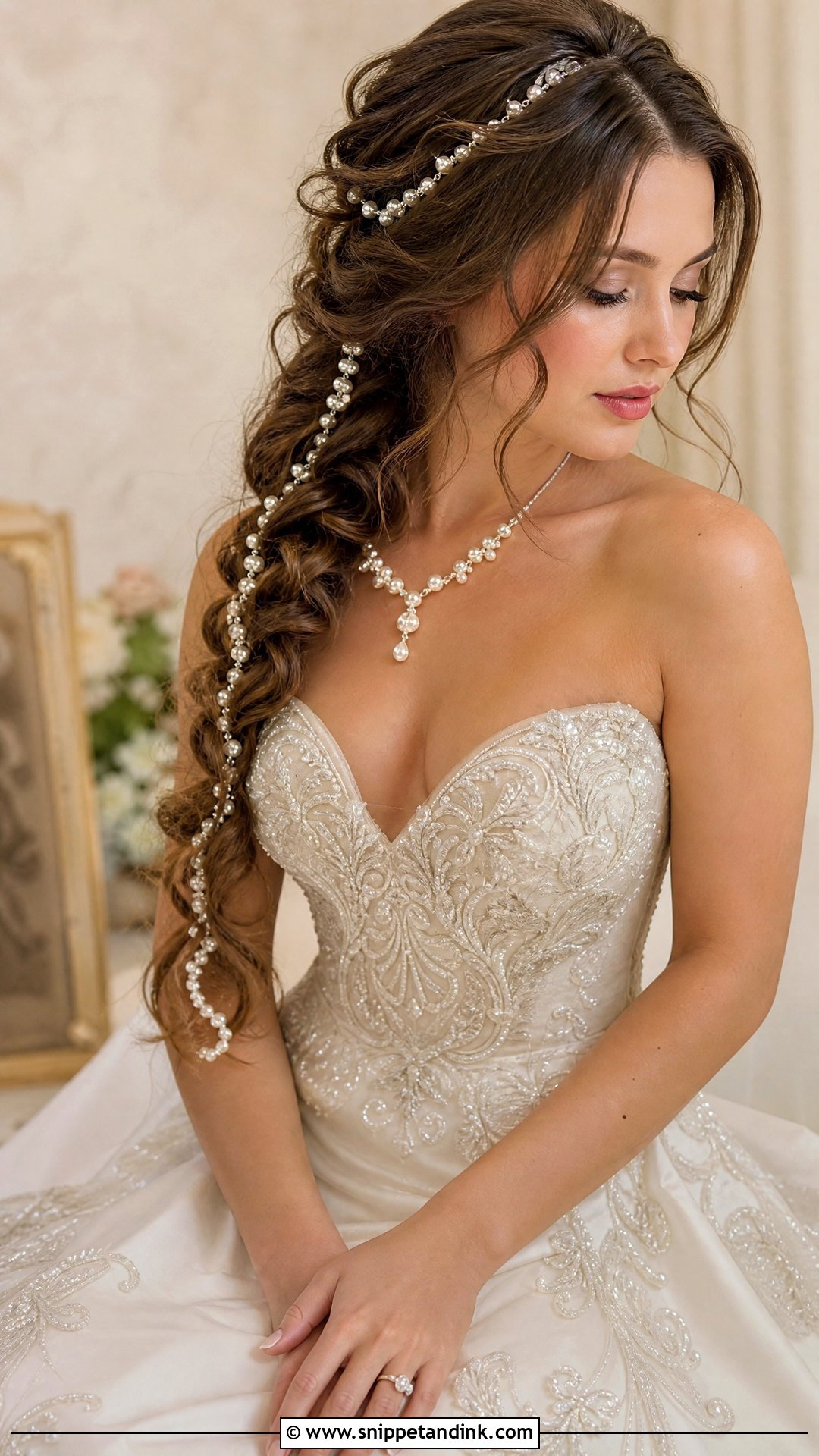
Pearls woven into a braid add shine without a separate headpiece. I use two methods: strands of pearls on fine wire pulled through as I plait, or single pearl pins pushed into the finished braid. Wire strands give a fuller line but add weight, so they suit thicker hair; pins work on any hair and can come out if they start to feel heavy. The base can be a fishtail, French or side braid. Match the pearl tone to your gown, because a bright white pearl next to ivory fabric looks grey in pictures.
14. Crown Braid With Flowers for Bride
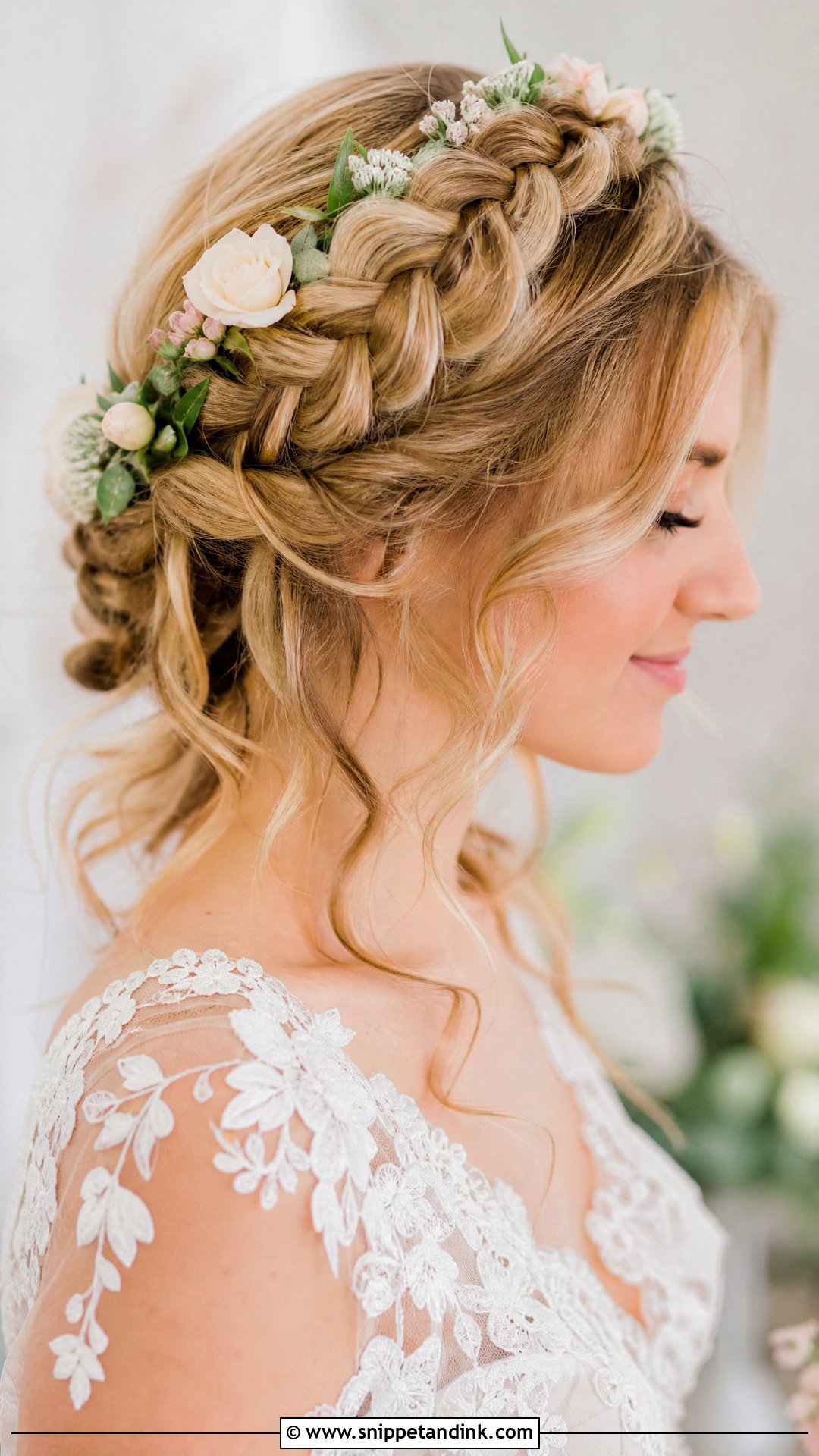
Fresh blooms in a crown braid need the most planning with your florist. Flowers wilt out of water, so I ask for hardy small heads such as spray roses, wax flower or gypsophila, kept chilled until styling and pinned in at the very end. Hydrangea and sweet pea droop within an hour on a warm day. Using the same flowers as your bouquet ties the whole look together. Every stem gets wired or pinned through the braid, never just tucked in, or it falls out at the first hug.
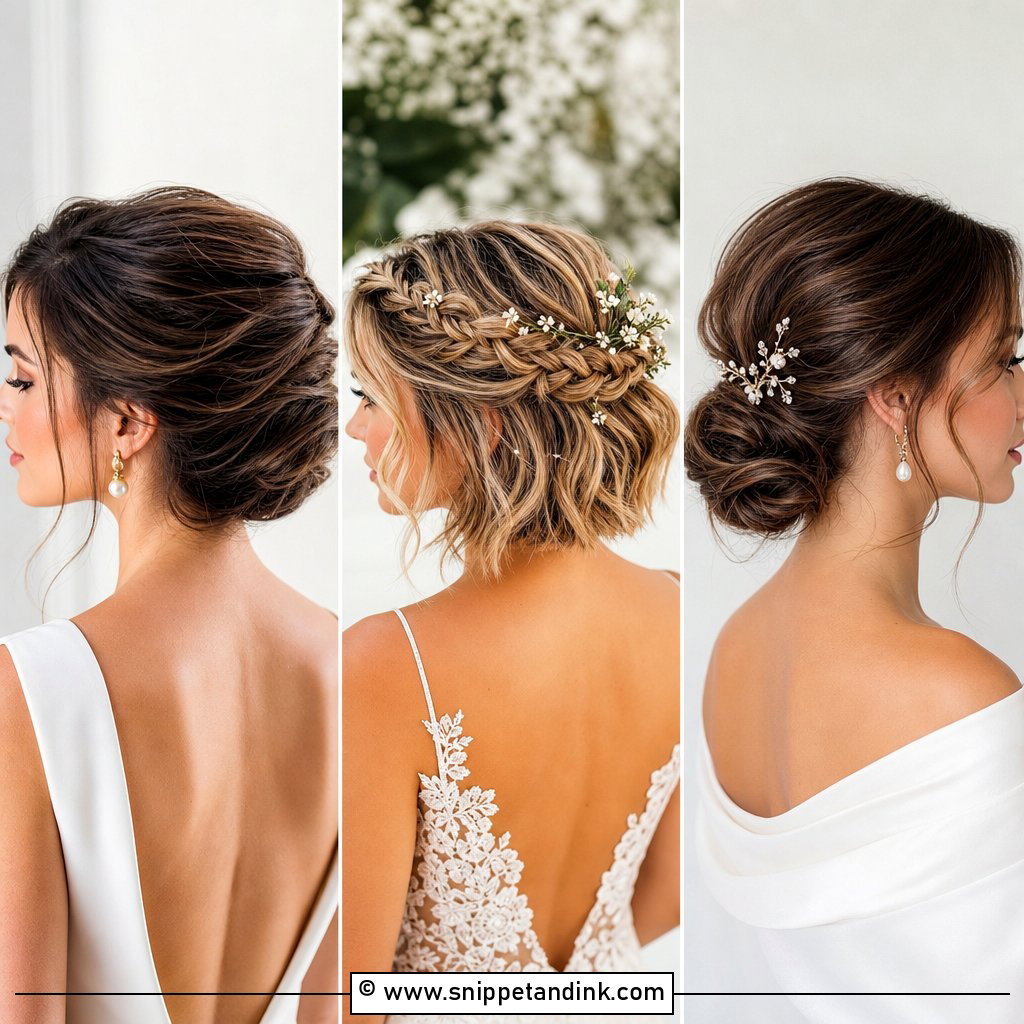
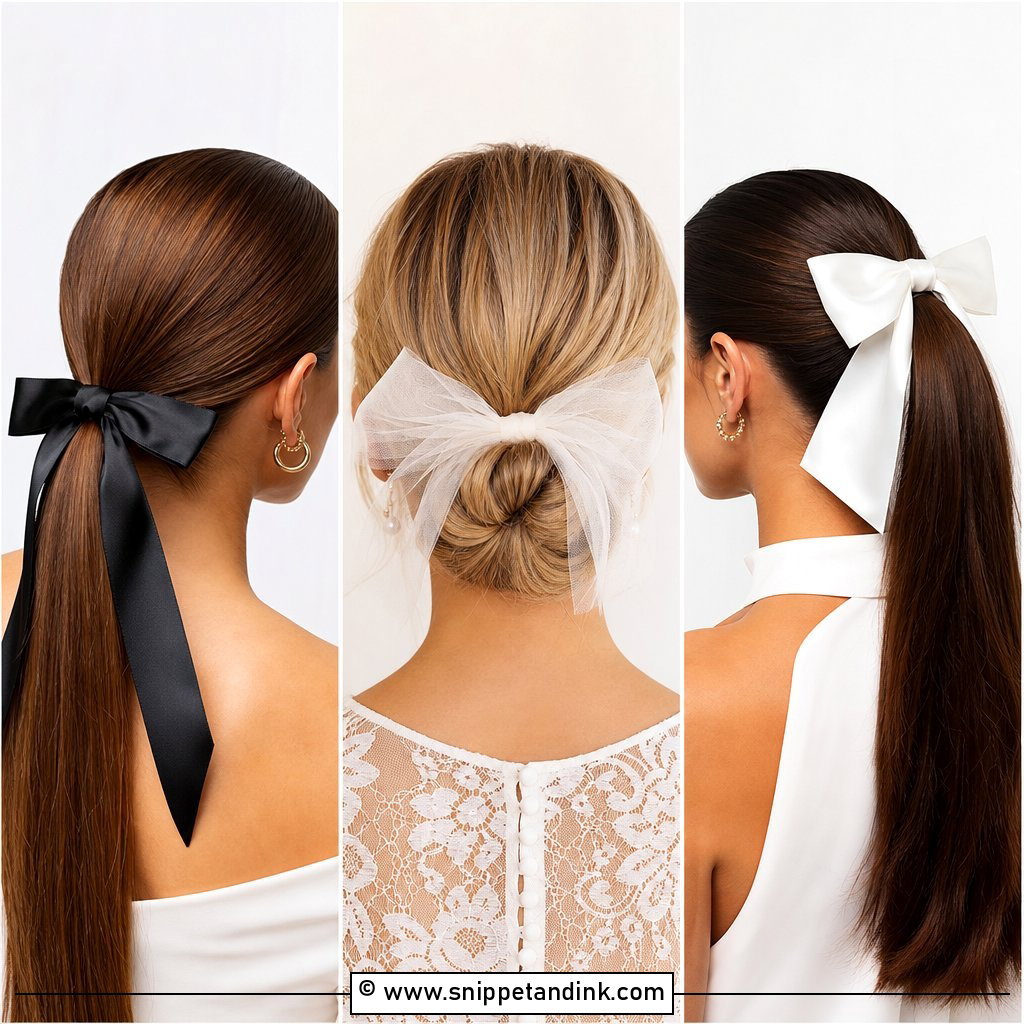
15. Double Braid for Bride
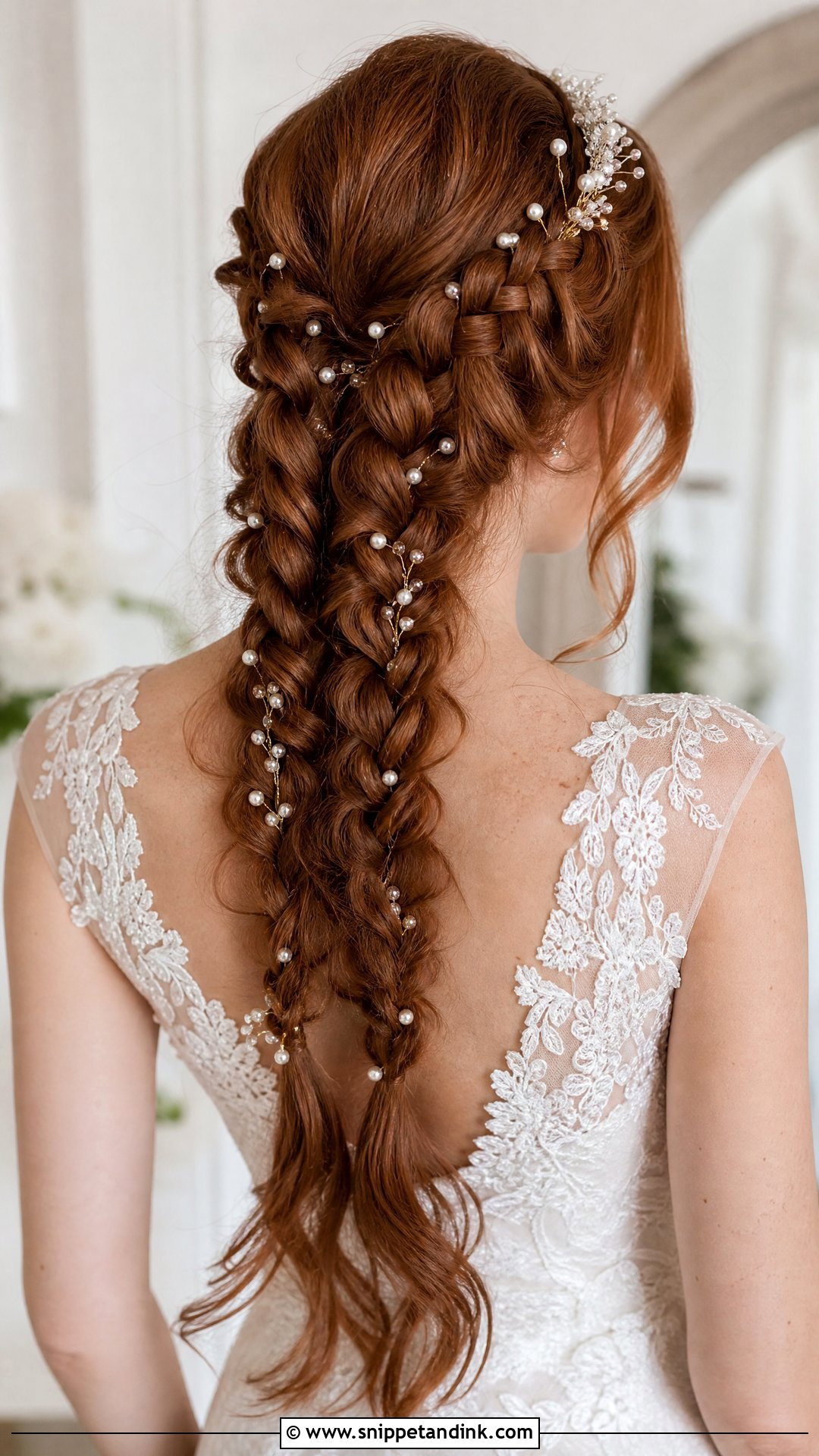
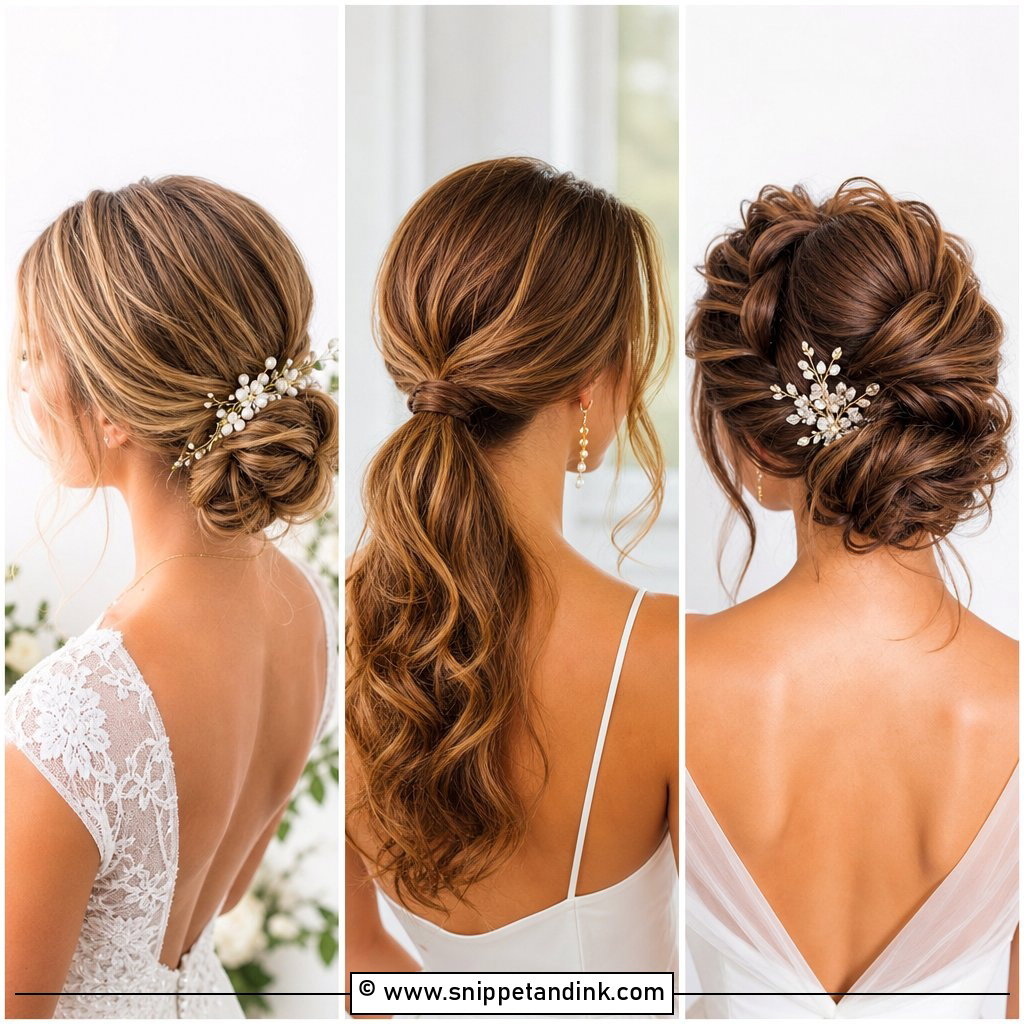
Two plaits side by side give more texture than one, and the double braid style can hang down the back or be pinned into an updo. Splitting the hair helps fine hair, because each braid can be pulled wider and together they look fuller than a single plait of the same hair. On thick hair it spreads the weight evenly. The centre parting has to be dead straight, as a wobbly line shows at the back in every aisle photo. Flowers or pearls can run down both braids.
16. Braided Halo for Bride
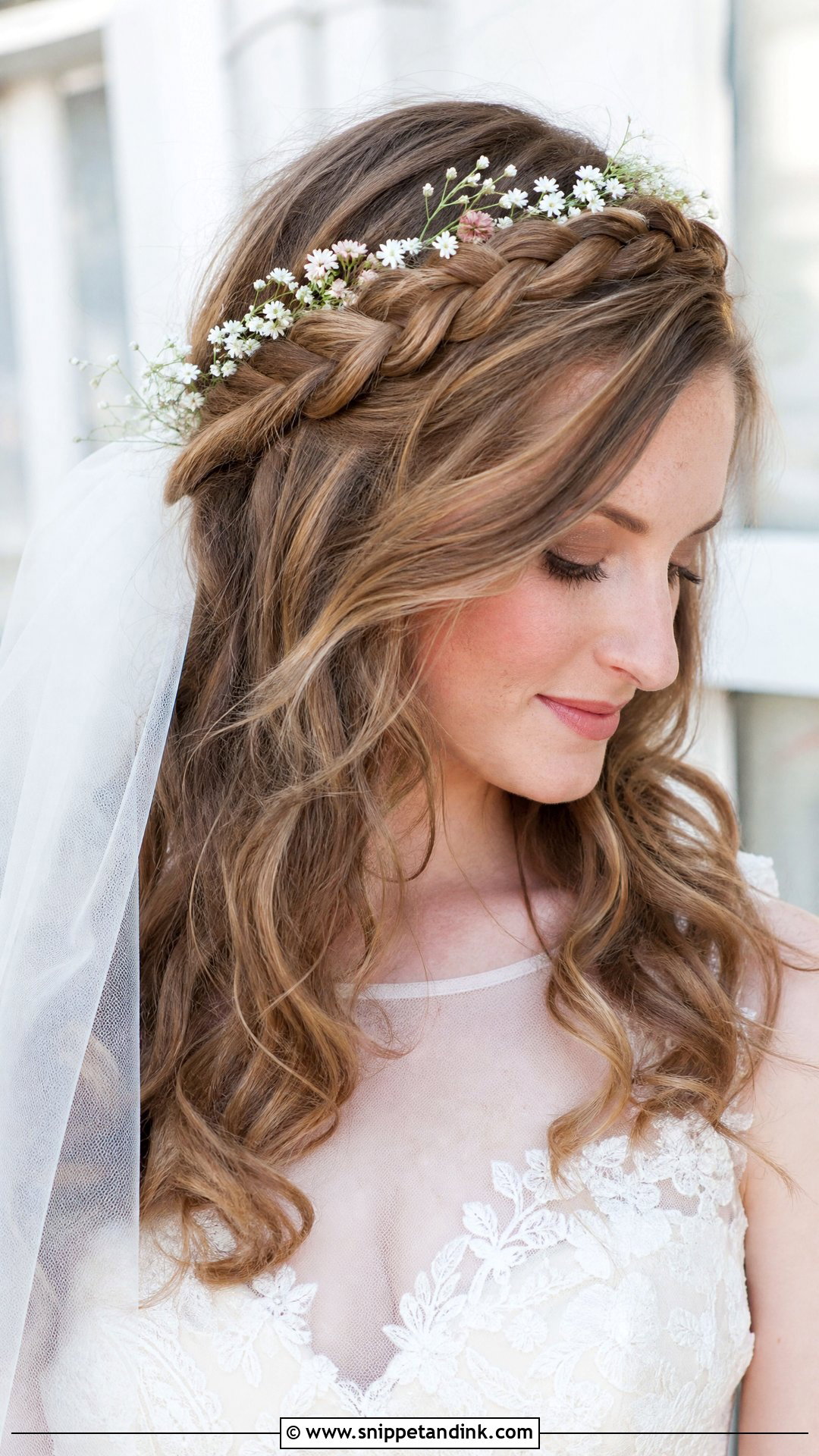
The halo is a single braid circling the head, softer and lower than a crown braid, often with the back left down. It keeps your face clear while your length still shows. The veil tucks under the halo at the back, which also hides the pins holding it. Getting it even all the way round is the tricky part, so I mark the line with the tail of a comb before I start. Very fine hair can look thin here, and I sometimes wrap a slim clip-in braid with the bride’s own hair to give it body.
17. Loose Braid With Curls for Bride
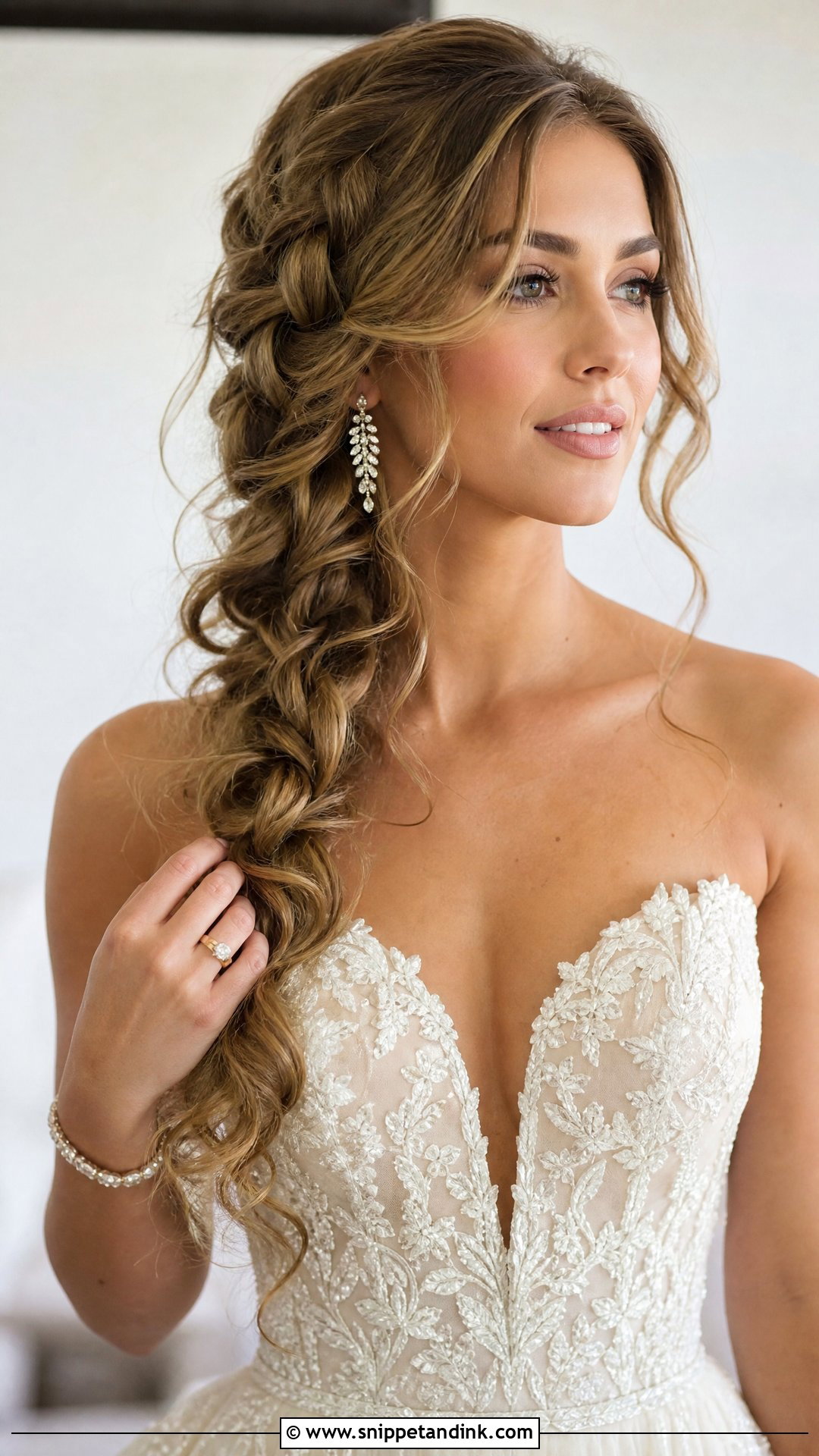
When you want softness and structure in one look, run a loose plait through set curls. The curls are done first and left to cool, then a soft braid runs through part of them, to the side or down the back. The usual problem is curls dropping while the braid holds, so the style turns uneven by evening. I give the curls a stronger set than I would for fully loose hair and pin the braid into the curl pattern instead of tying it off. Gently widening the braid makes it look fuller. This one really needs long hair.
18. Braided Updo With Veil for Bride
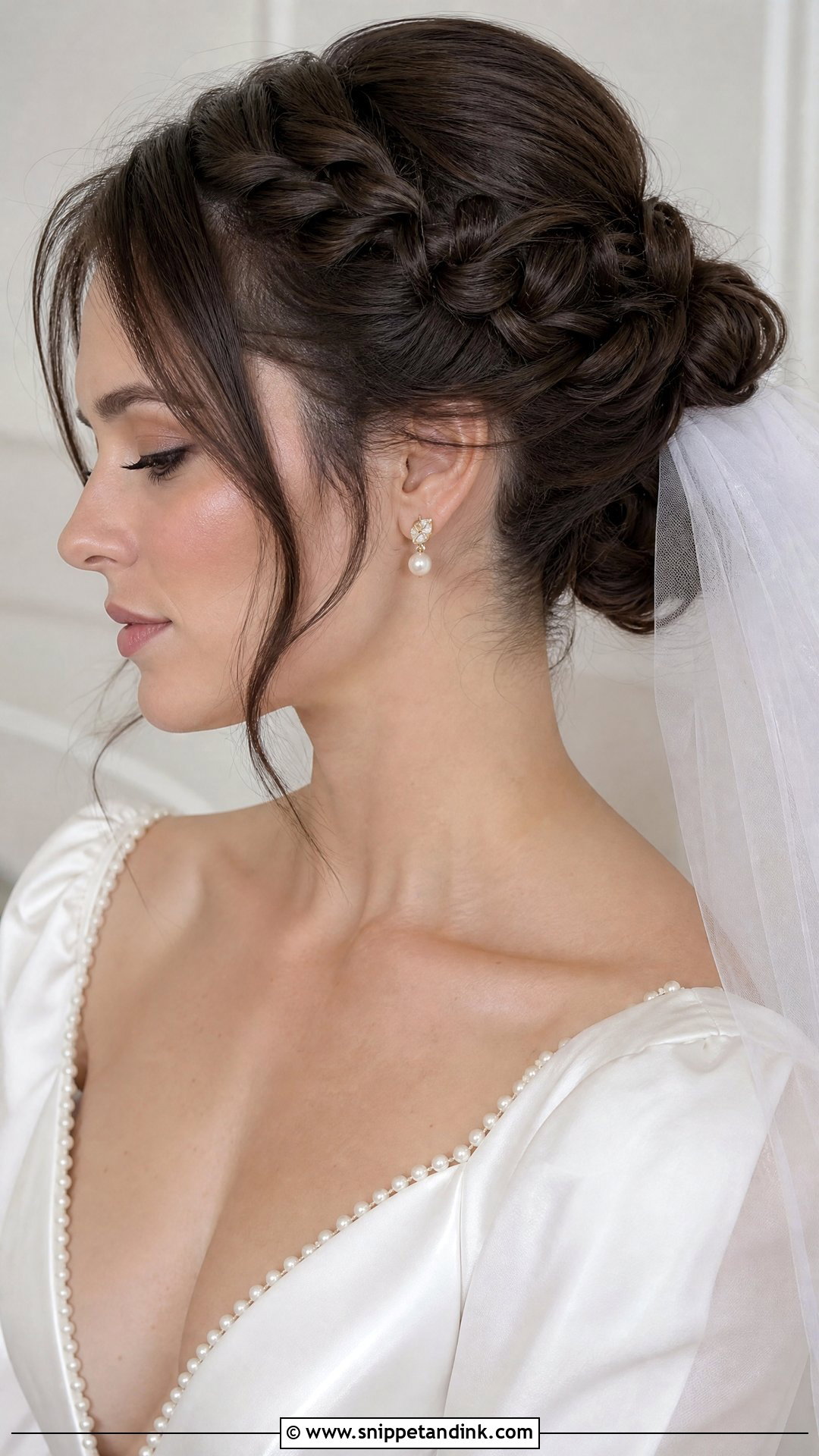
When the updo is built around the veil, the comb stays exactly where I set it from the aisle to the first dance. I plan the veil’s position before braiding, then make a firm braided anchor just above or below the bun so the comb has something to grip. Once the veil comes off, the braids are a finished style on their own and there’s no dent. Cathedral-length veils are heavy and need an anchor spread across more of the head, so tell your stylist the veil length before the trial. Pearls or flowers can go in after the veil comes off.
19. Rope Braid for Bride
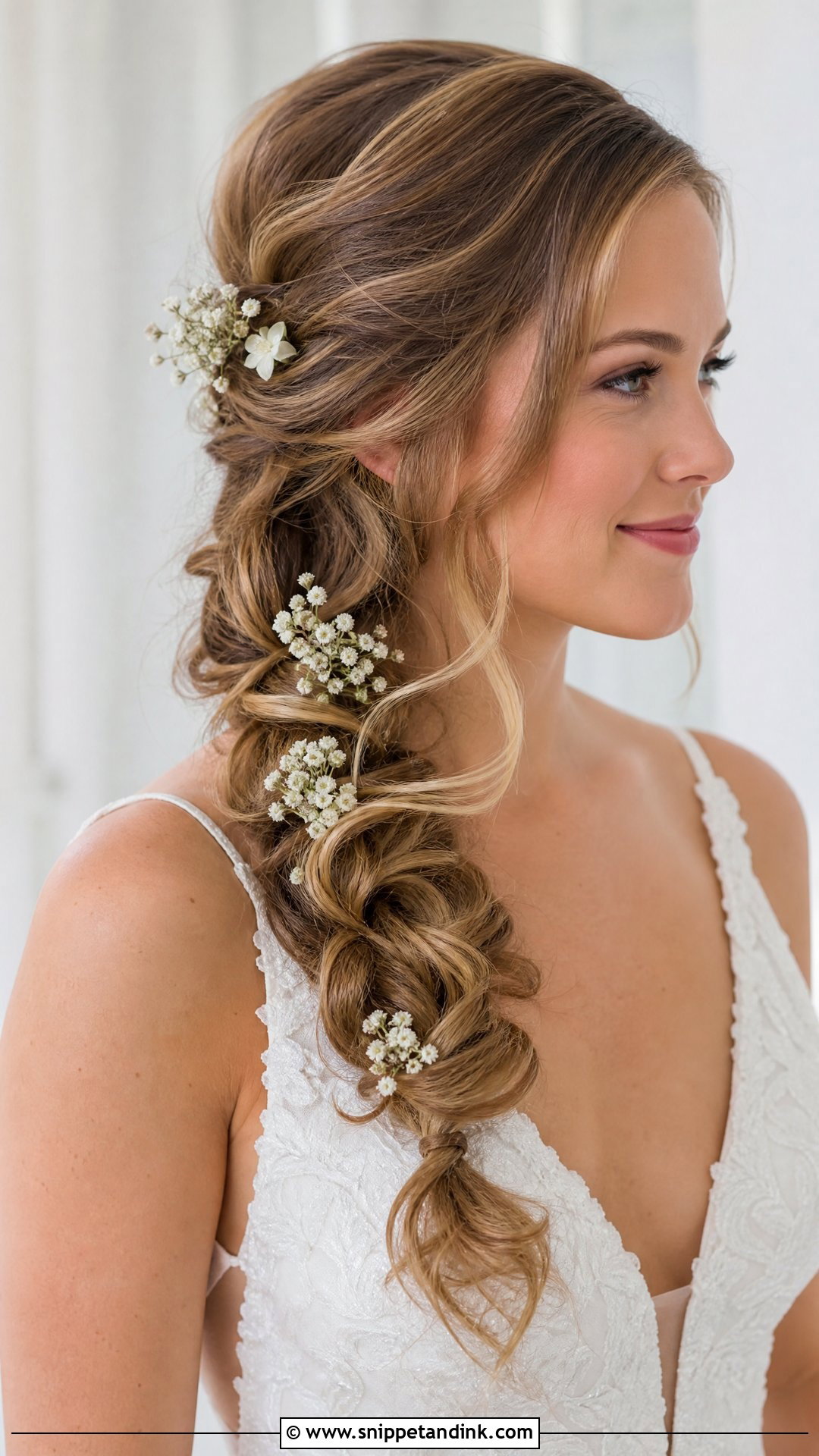
The rope braid offers a spiral texture made by twisting two sections one way and wrapping them around each other the other way. That opposing twist is what stops it unwinding, and getting the direction wrong is the most common reason a rope braid falls apart. It works as a side braid, as an accent through a bun or inside a bigger updo. On very dark, glossy hair the strands blur together on camera, so a light texture spray helps them separate. Loosen it slightly for volume.
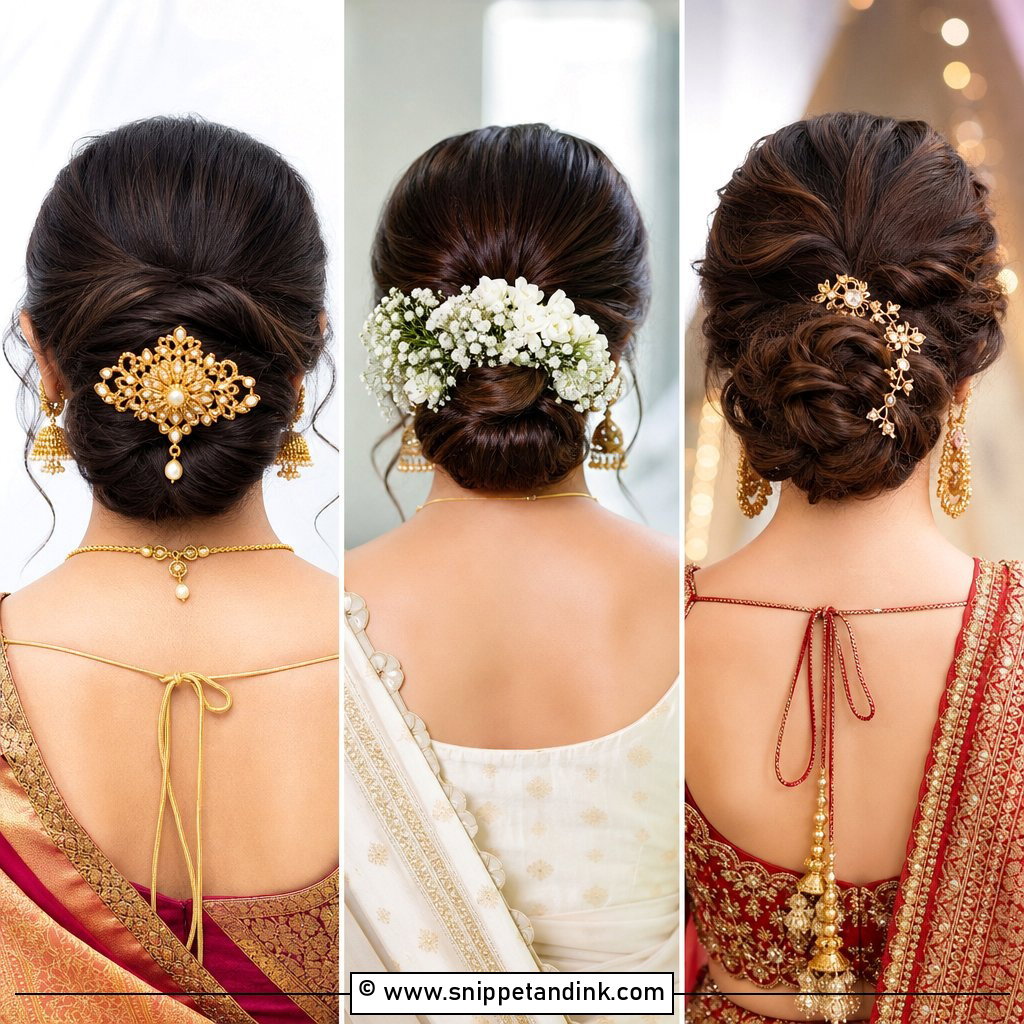
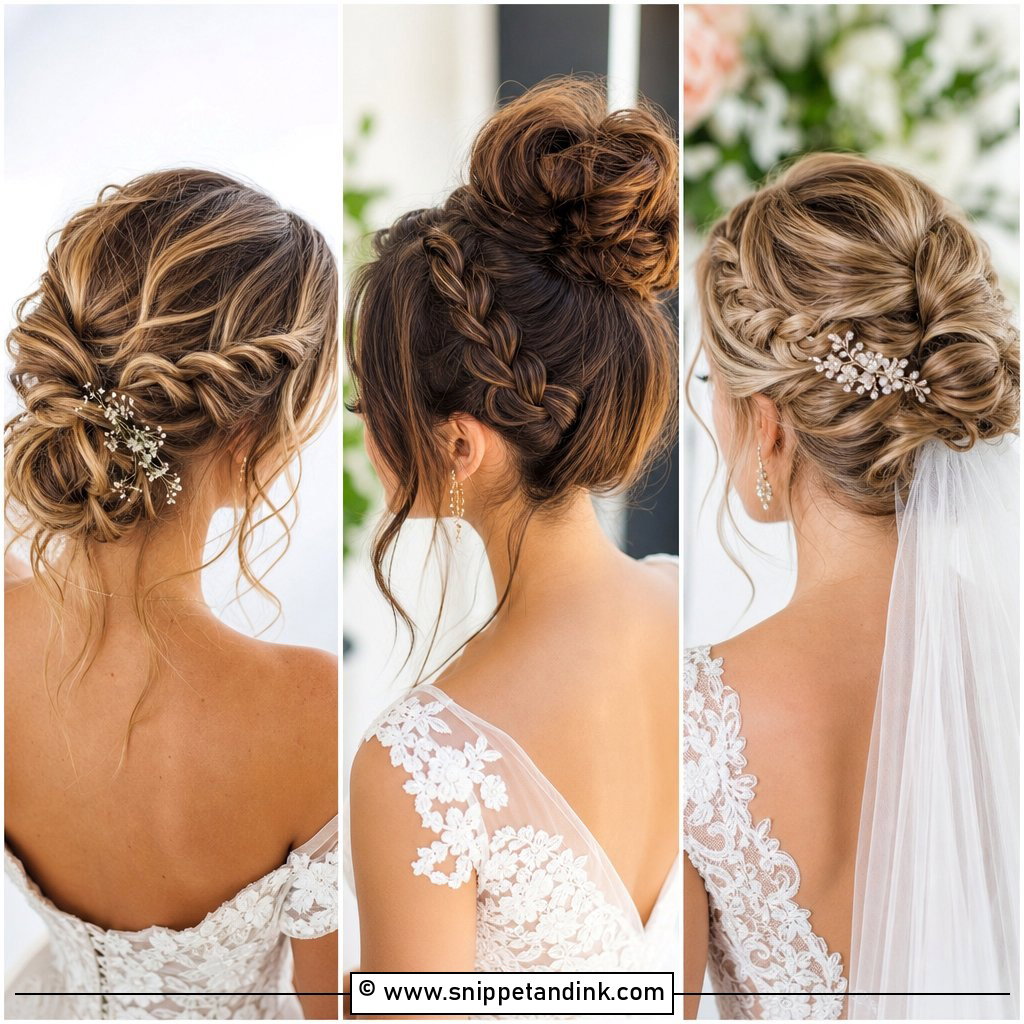
20. Braided Low Bun for Bride
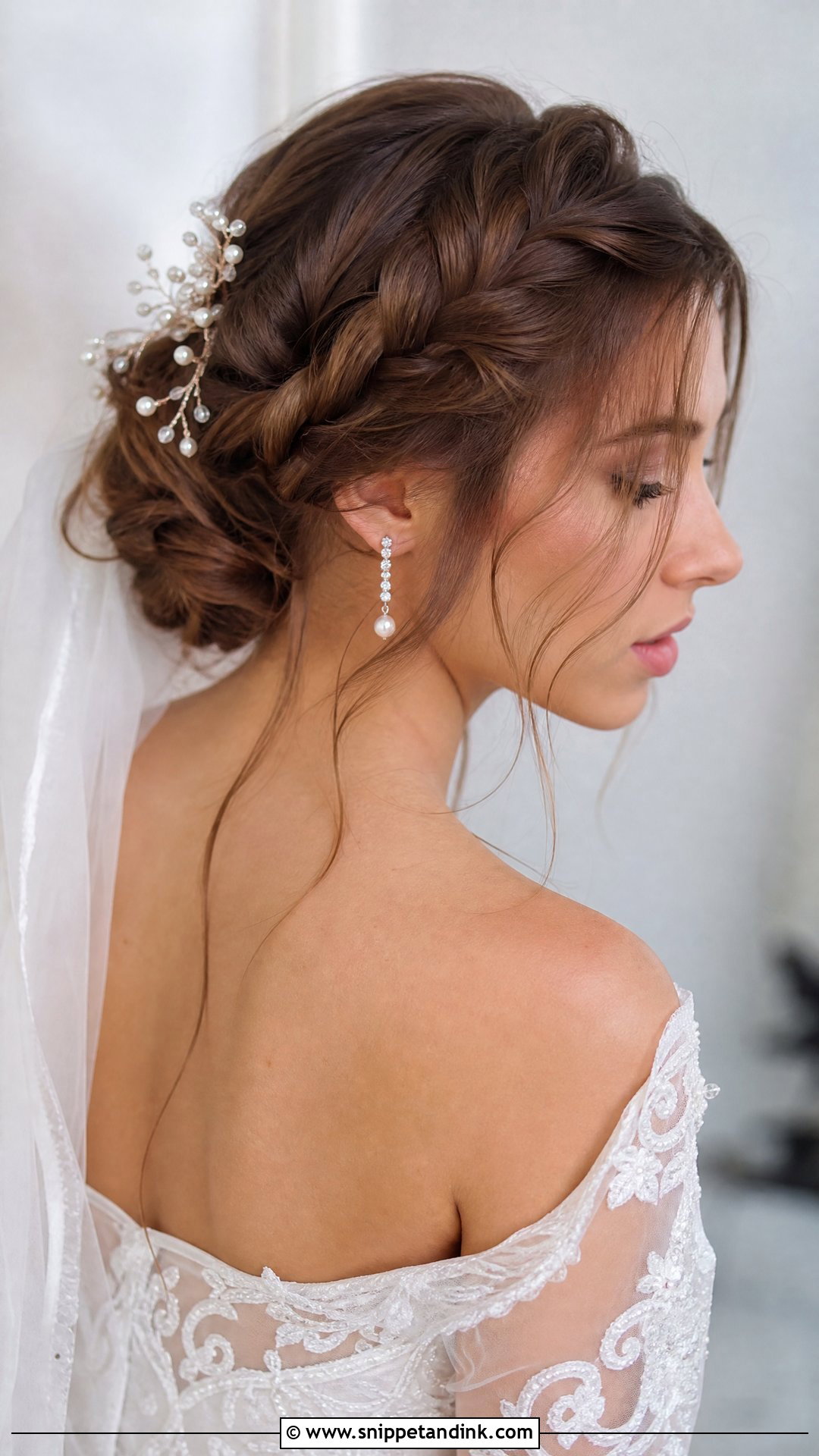
A braided low bun is the quiet option, and it pairs with almost any veil or headpiece. I braid sections from the crown down into the bun so it looks woven rather than simply wrapped. Sitting low, it takes weight off the scalp, which you’ll notice by the tenth hour. It suits most face shapes because it leaves the profile clean. Match pins or small flowers to your theme. If your hair is short, ask about clip-ins at the nape to give the bun more body.
Wash the Day Before, Not the Morning Of
Squeaky-clean hair is slippery, and braids rely on friction between strands to stay put. I ask brides to wash the day before, use their normal conditioner only on the ends, and skip heavy oils and serums. On the morning I add a dry texture spray or a little dry shampoo at the roots, and the plait grips far better than it would on just-washed hair.
Don’t book a fresh haircut the week of the wedding either. Blunt new ends poke out of a braid; two or three weeks of growth lets them settle.
Plaiting Curly and Coily Textures
Curly and coily hair holds a braid naturally, but it shrinks, so length on the day can look very different from length when stretched. I stretch the hair first with a blow-dry on low heat or a braid-out from the night before, then braid with a leave-in conditioner and a light hold gel so the plaits stay smooth. Edges are laid last with a soft brush. Humidity makes curly hair expand rather than drop, so a braided style actually tends to stay neater than loose curls at a summer wedding.
If a plait loosens during the reception
A braid rarely falls apart all at once; usually one end works free or a pin slips. Ask a bridesmaid to carry a small kit and fix it in the bathroom in two minutes:
- Six or eight bobby pins matched to your hair colour.
- Two clear elastics for re-tying a loose end.
- A travel hairspray to calm flyaways at the crown.
- A small mirror so she can see the back of your head.
Which Braid Will Hold on Your Hair?
Braids outlast most bridal styles because the weave spreads the weight and locks each section in place. Shortlist two or three of these that suit your length and density, save the photos, and bring them to your trial along with a picture of your dress and veil. Then we can test which one actually holds on your hair through a full day of hugs, heat and dancing.
You'll Like These Ideas:


Leave a Reply