
Cottagecore dresses borrow from country clothing of the past: flowing skirts, floral lace, puff sleeves, laced bodices and handwork you can see up close. They belong in gardens, orchards, meadows and barns. The difficulty is staying on the right side of the line between romantic and fancy dress. A gown in this style has to move easily outdoors, cope with grass and gravel, and still read as bridal. Some brides want long lace sleeves; others want a tea length hem, a floral print or pale blush tulle. Here are thirty directions, with my notes on fabric, fit and how each behaves outside.

How Many Period Details Can One Dress Carry?
The fastest way to tip this look into costume is to stack every historical detail on one dress: puff sleeves, a high collar, a laced bodice, a tiered skirt, a bonnet-style veil. I usually tell brides to choose two strong period details and keep everything else modern.
- If the sleeves are the statement, keep the neckline simple and the skirt plain.
- If the bodice is laced or boned, skip the tiers and ruffles below it.
- Modern hair and makeup ground the look. Soft, current makeup and loose hair stop a prairie collar looking like a reenactment.
- Let accessories carry the theme lightly: a ribbon, a pearl pin, a hand-tied bouquet. One vintage piece is enough.
1. Lace Cottagecore Wedding Dress
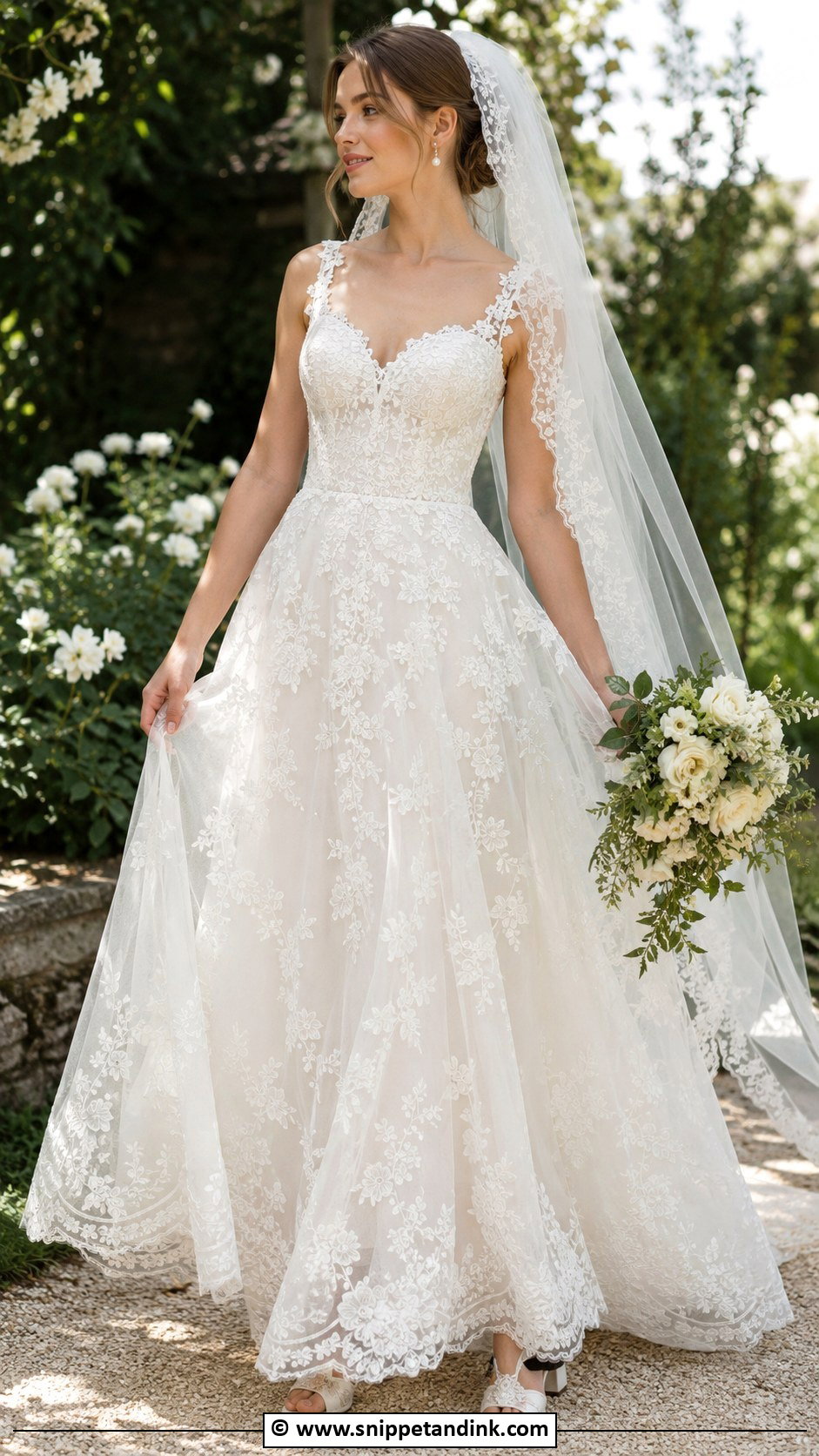
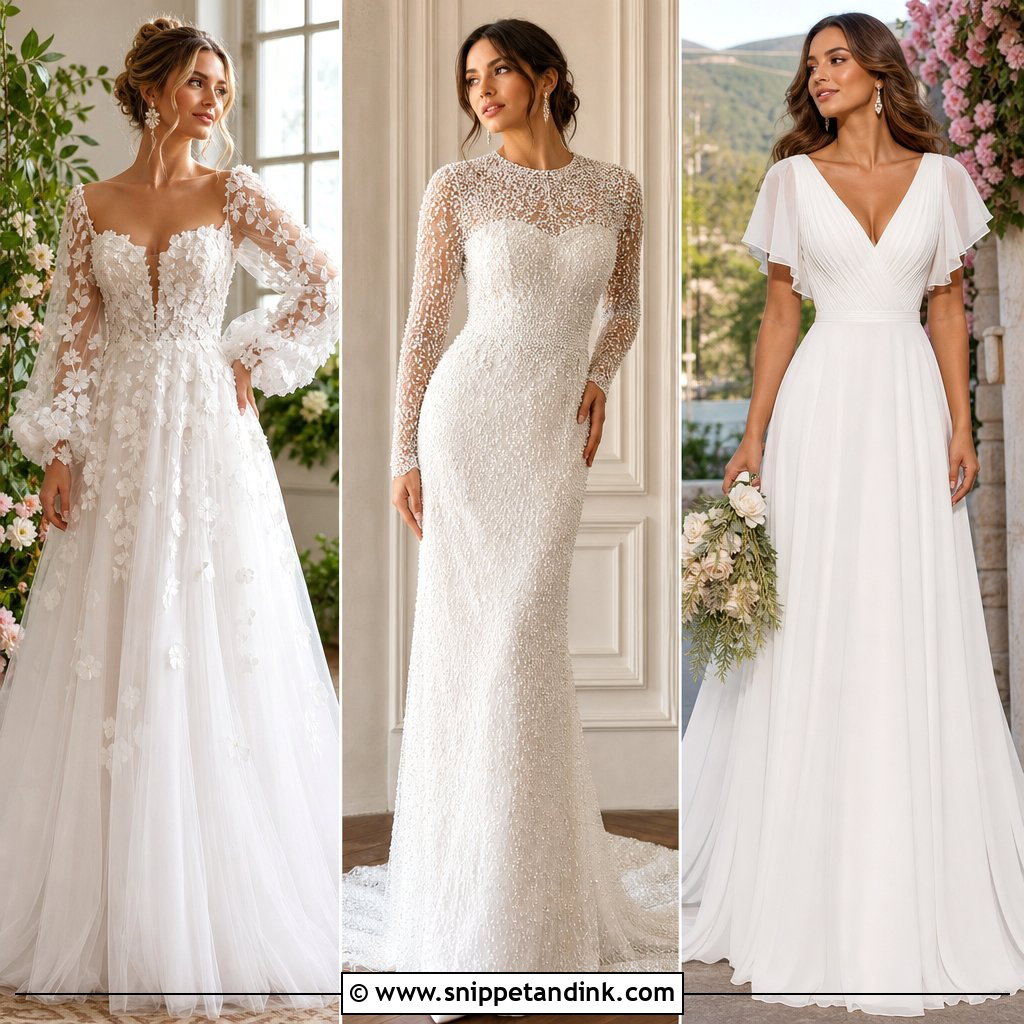
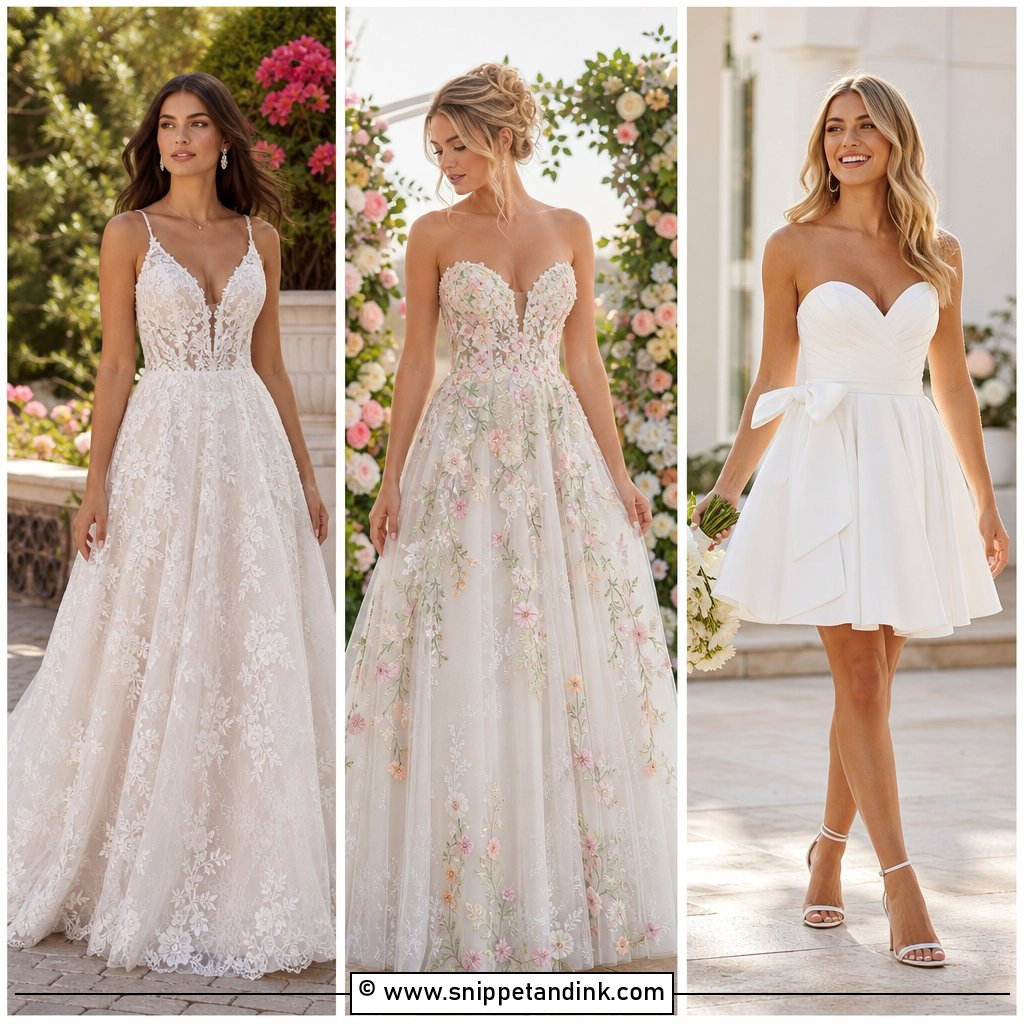
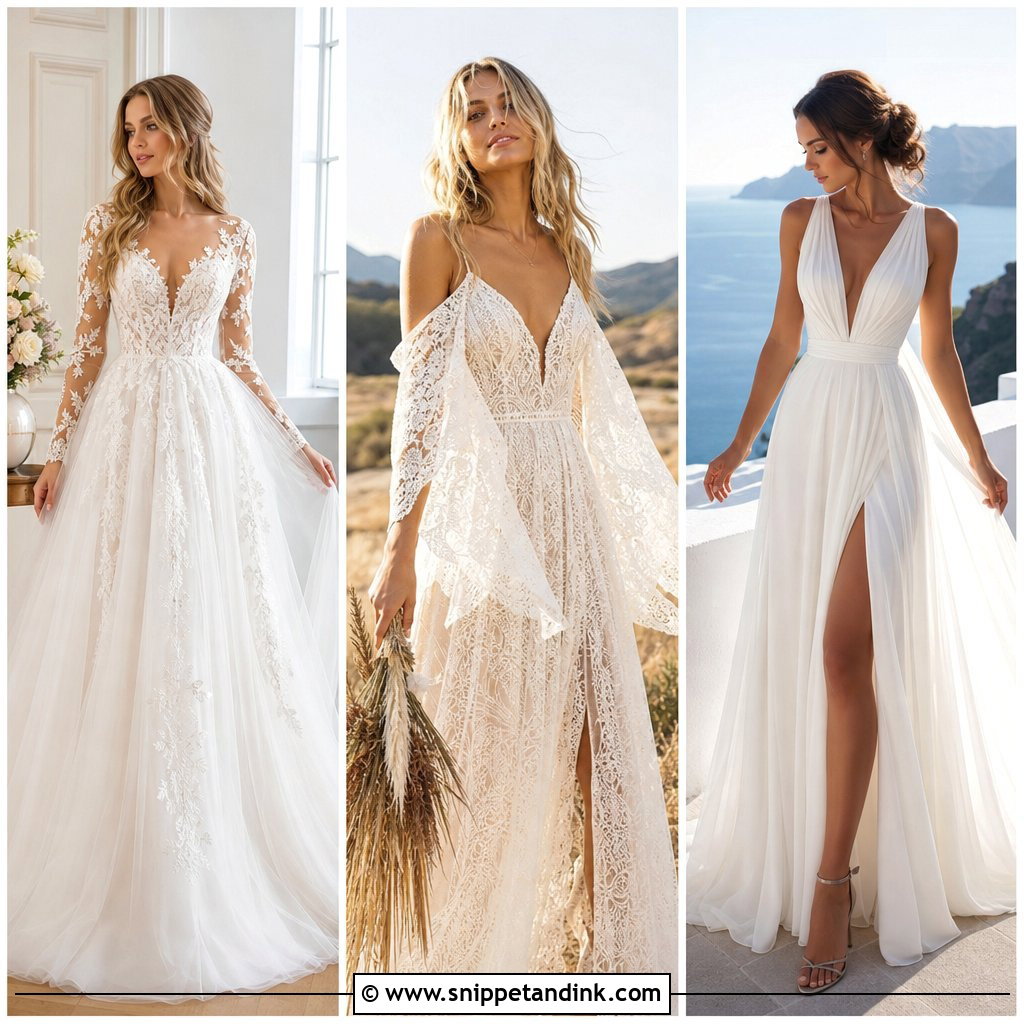
Lace is where most brides start with this look. I’d choose a soft floral lace over a stiff, glossy one; cotton and Chantilly-style laces look handmade, while heavily corded lace reads formal. A fitted bodice over a flowing skirt keeps it light. Ivory and cream feel warmer and older than bright white. A long veil trimmed in matching lace finishes it, with ivory block heels or ankle-strap sandals for grass, and pearl studs or a vintage comb. Gardens, backyard ceremonies and country venues suit it.
2. Puff Sleeve Cottagecore Wedding Dress
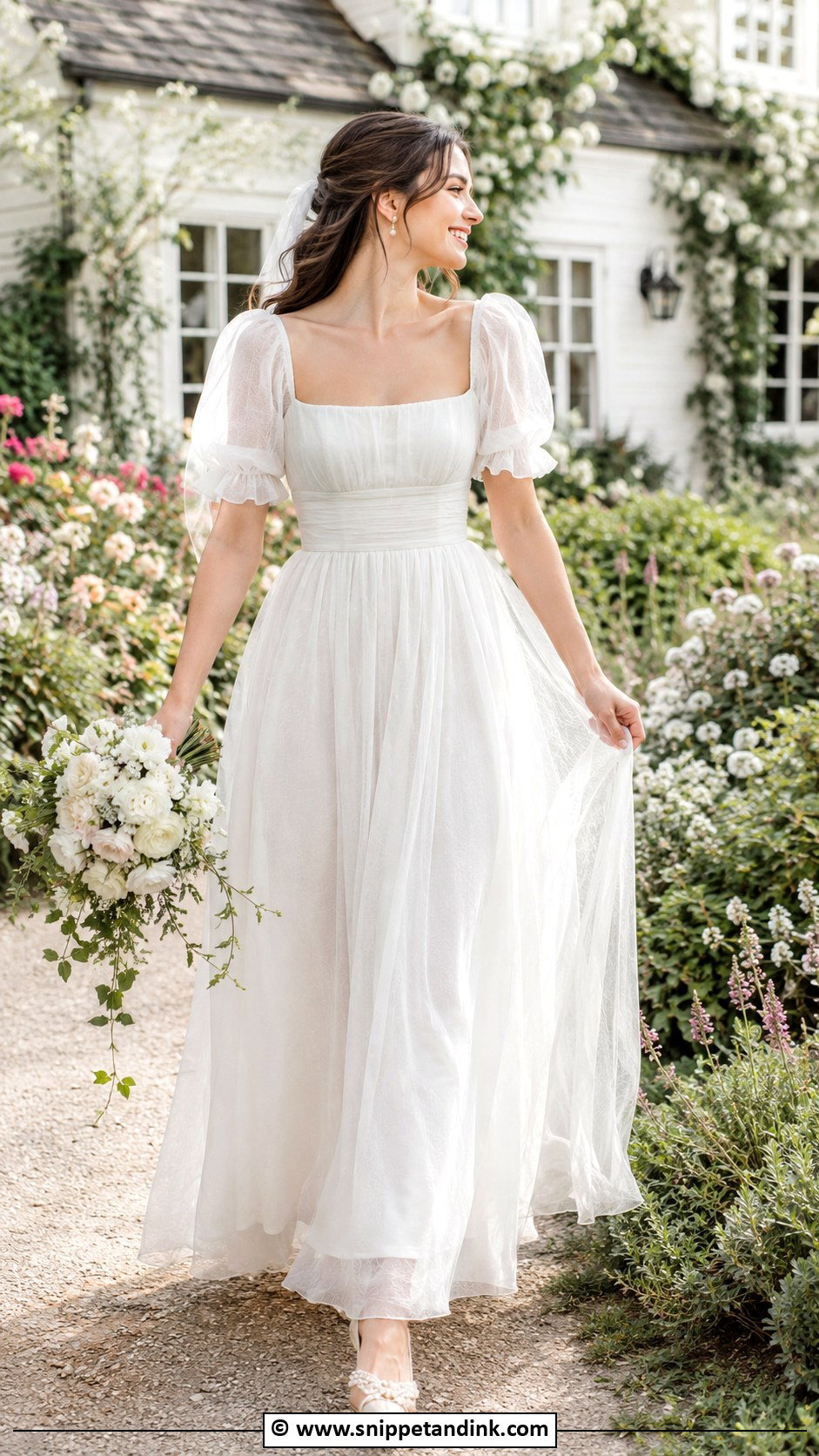
Puff sleeves give a storybook outline with almost no embellishment. Short puffs read young and sweet; long sheer ones look more dramatic and historical. Volume at the shoulder needs a fitted waist below, otherwise the whole dress looks boxy, so I pair big sleeves with a corset or a snug bodice. A square neckline adds structure. Check that the puff holds its shape: good ones have a tulle or organza lining inside, cheap ones collapse by midday. Wear a loose bun or ribbon-tied hair with small drop earrings.
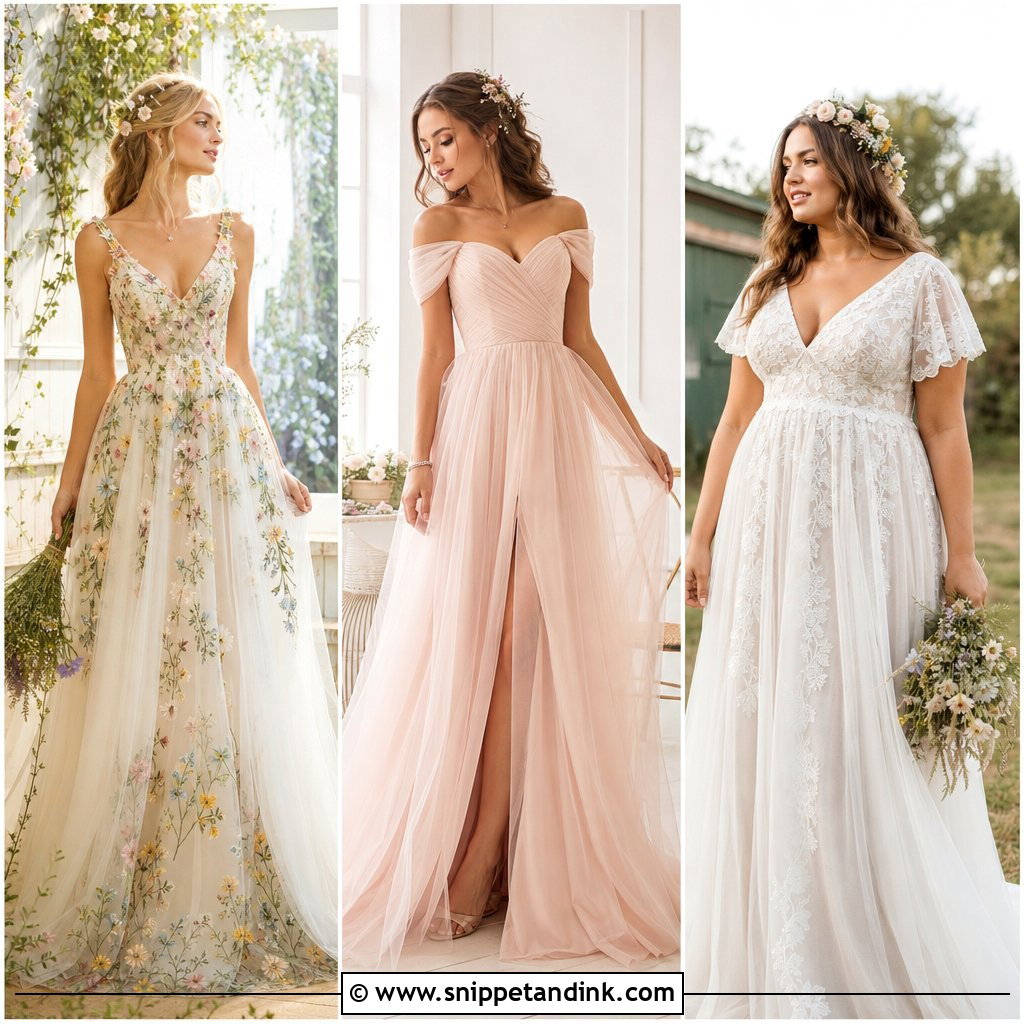
3. Floral Embroidered Cottagecore Wedding Dress

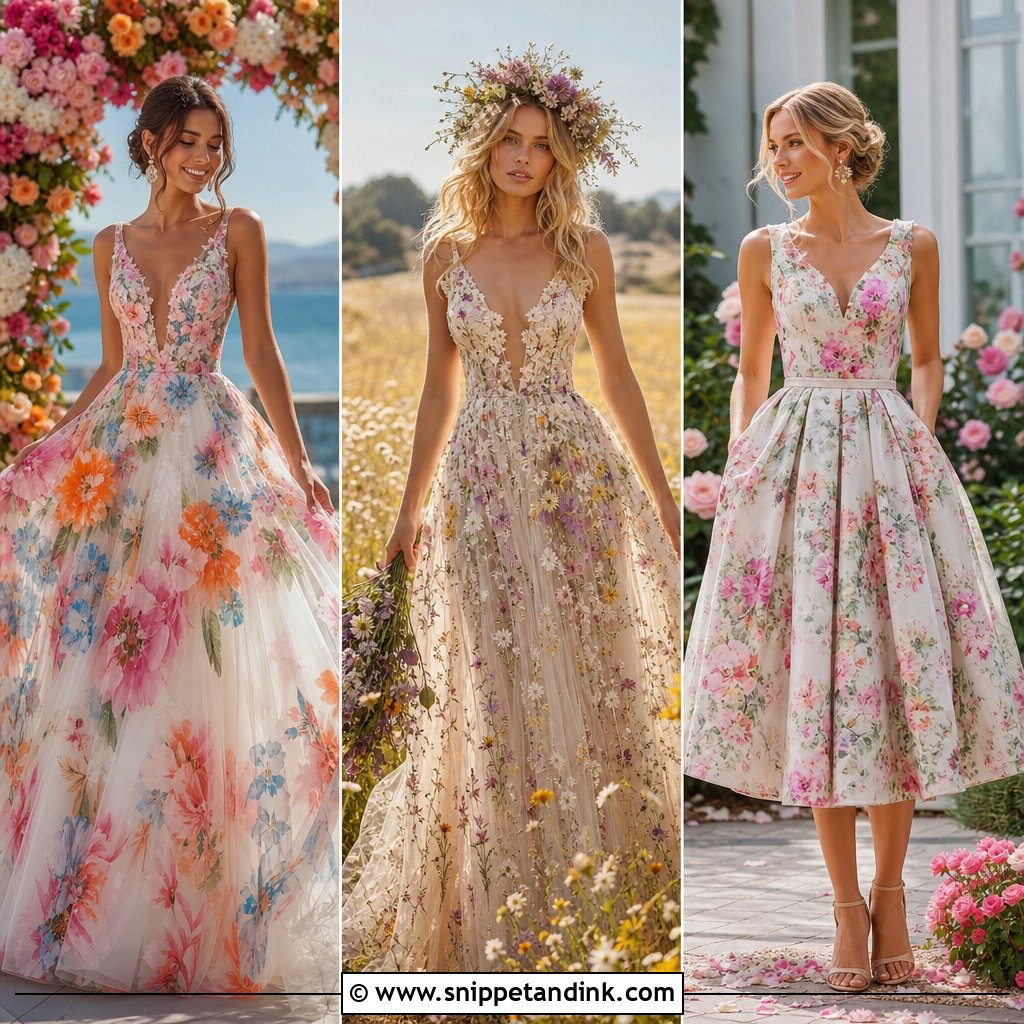
Embroidery gives a dress stitched flowers, vines and leaves across the bodice, sleeves or hem, and it’s the most personal option here. It works on tulle, organza, chiffon or soft net. White-on-white stays subtle; pastel thread is more whimsical. Look at the back of the embroidery, because loose threads catch on bracelets and rings. I’d echo one or two of the stitched flowers in the bouquet and keep the veil plain. The finished dress should feel like it grew out of the garden around it.
4. Corset Cottagecore Wedding Dress

A corset bodice gives cottagecore its waist. Visible boning, lacing or a sweetheart neckline all fit the mood, as long as the skirt stays light, so pair it with an A-line or soft tulle, never stiff satin. Covering the corset in lace or floral appliqué softens it further. I’d fit it firm but breathable, since outdoor ceremonies often mean standing in sun. Pearl earrings, a ribbon choker or a fine veil finish it. Historic estates and walled gardens are its natural home.
5. Square Neck Cottagecore Wedding Dress
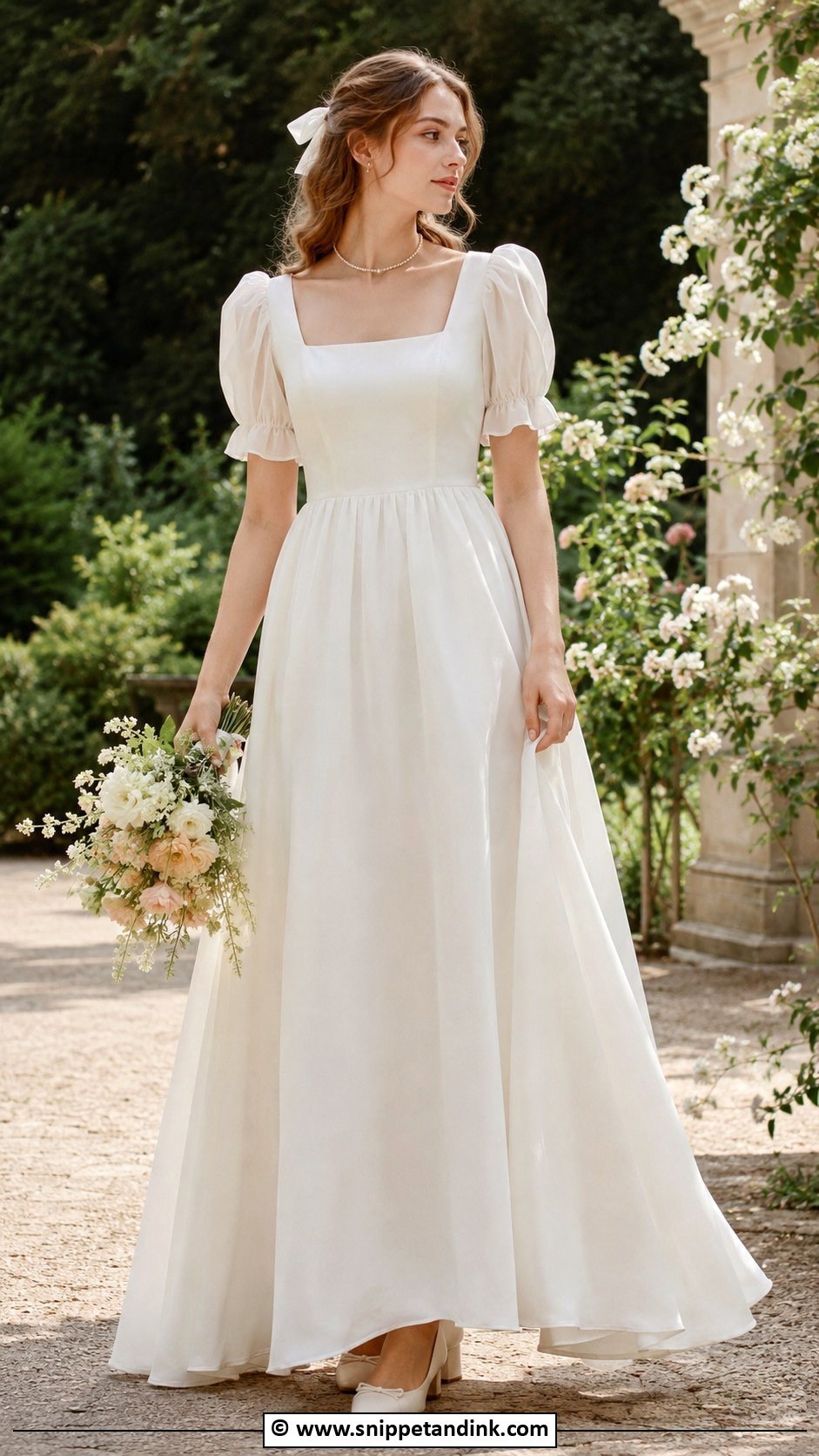
The square neckline is one of the most period-correct shapes in this style and one of the most flattering. It frames the collarbone, works with puff sleeves, lace sleeves or slim straps, and needs little or no necklace. An A-line skirt keeps it classic; a fitted bodice over a gathered skirt feels more relaxed and countrified. I check the neckline corners in particular; on a loose bodice they gape when you lean to hug a guest. Wear a low bun, loose waves or a ribbon bow at the back of your hair.
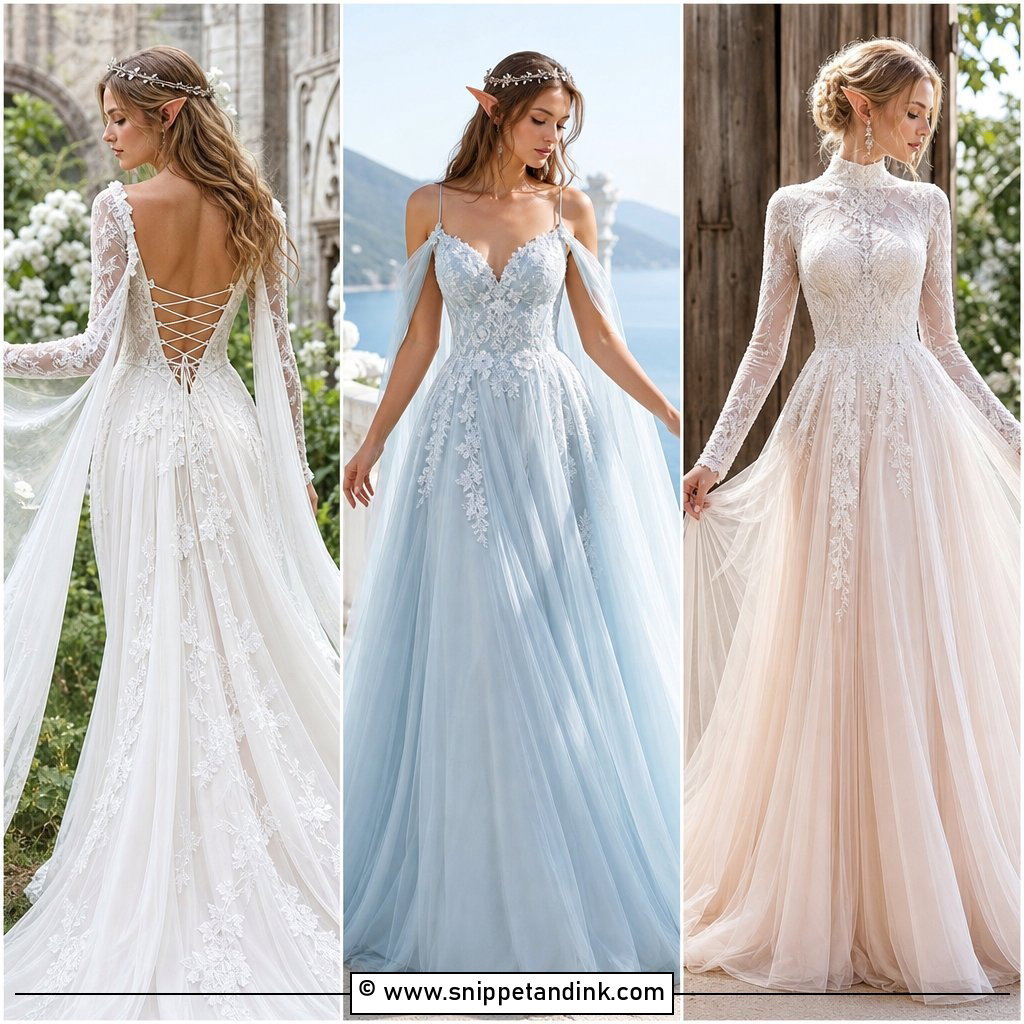
6. Long Sleeve Cottagecore Wedding Dress
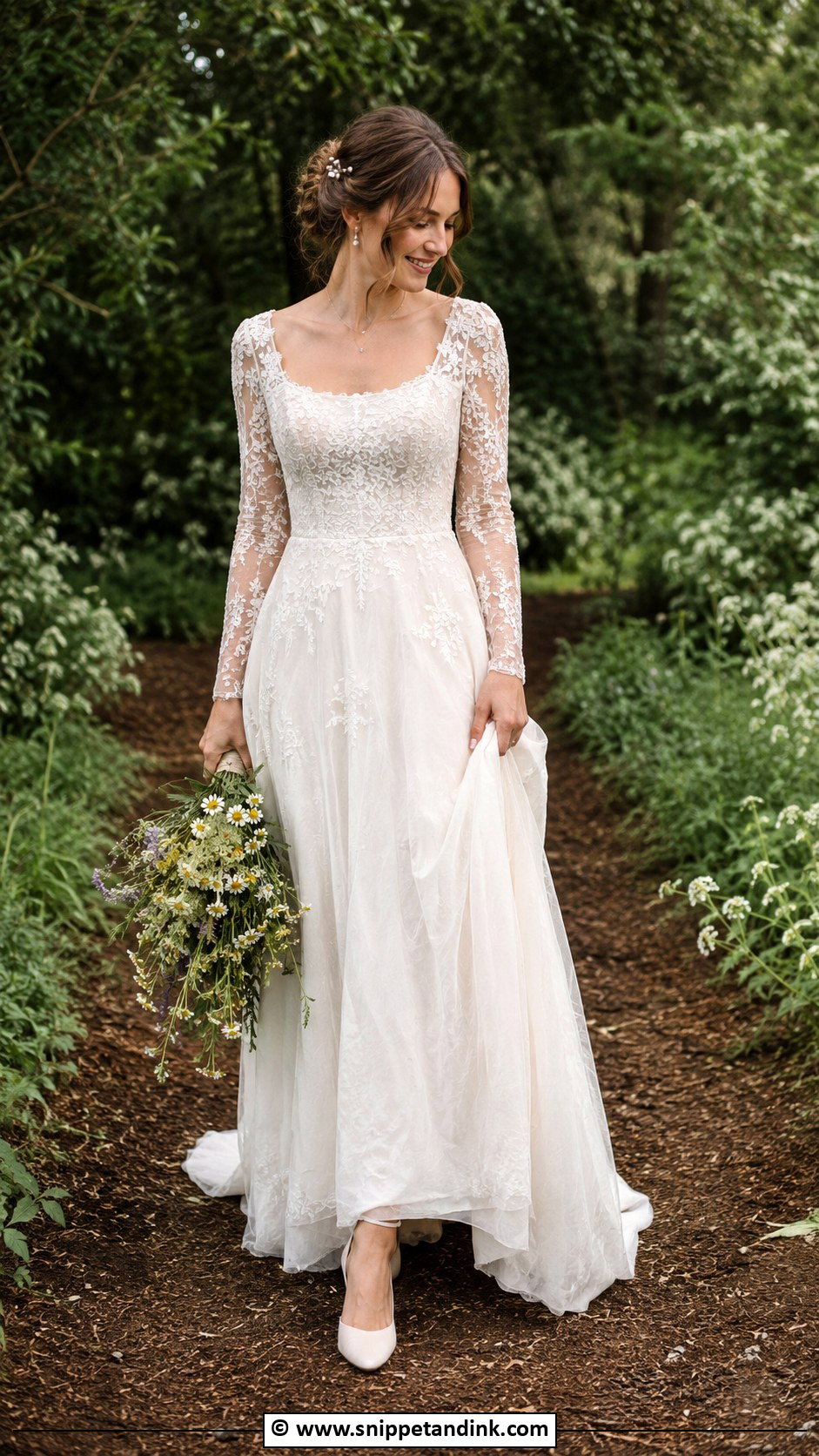
Long sleeves suit brides who want coverage, and in this look the sleeves often become the main feature. Lace, illusion, bishop and sheer embroidered sleeves all work over a simple body. Fabric weight should follow the season: heavier lace or lined sleeves for autumn, sheer tulle with floral appliqué for spring. Bishop sleeves gather at the wrist and can dip into food and candles, so ask for a snug cuff. Pearl pins, soft makeup and a bouquet of wildflowers or garden roses suit stone, wood and woodland settings.
7. Tea Length Cottagecore Wedding Dress
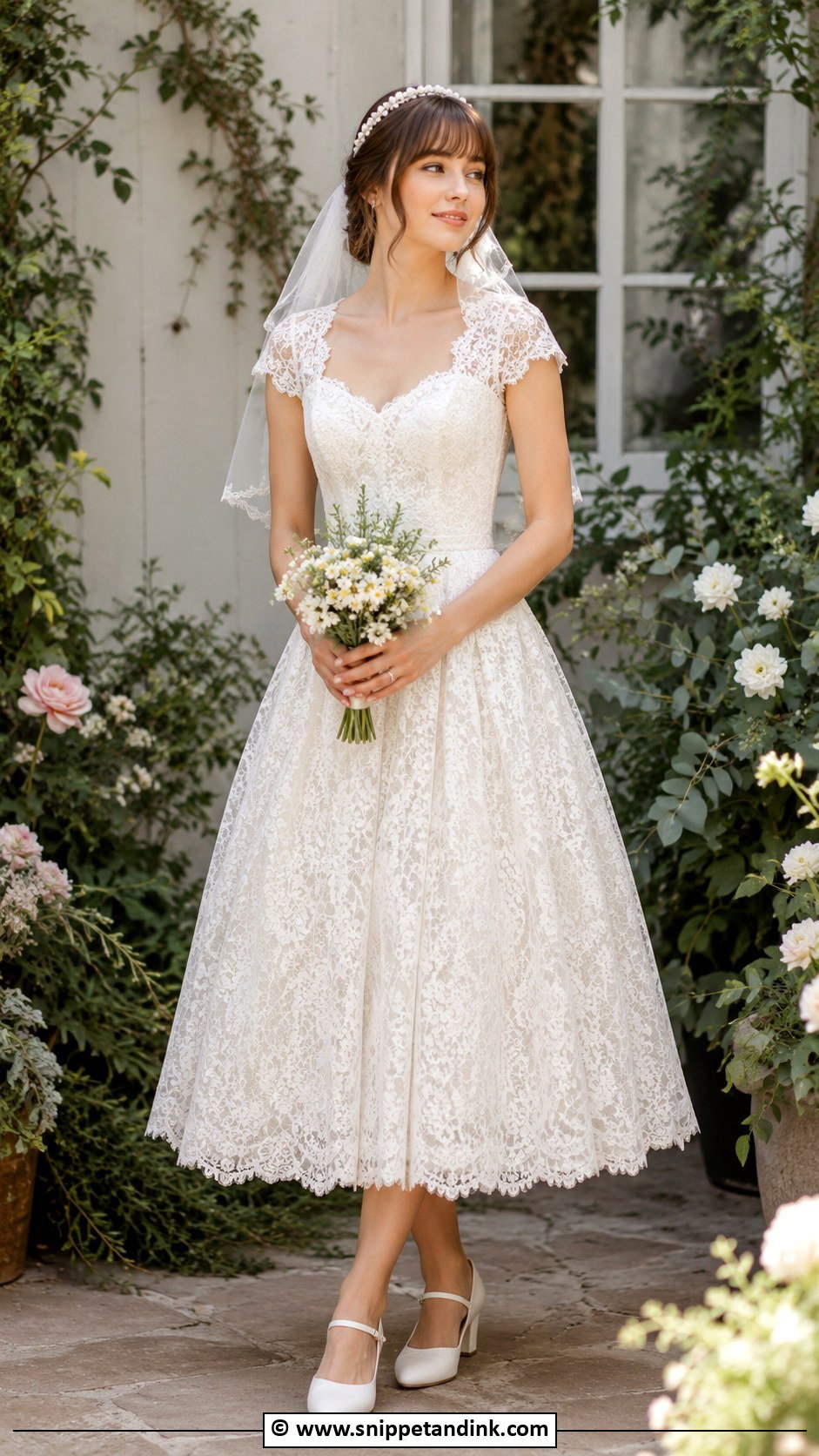
Tea length is the most practical hem for an outdoor wedding: it clears wet grass, gravel and garden steps, so you’re not lifting your skirt all day. It falls between knee and ankle and carries a lot of vintage character. Cotton lace, organza, tulle and embroidered fabrics all suit it. Shoes are fully on show, so Mary Jane heels, ballet flats or low block heels become part of the outfit. A short veil, bow or pearl headband completes it. It suits casual weddings, courthouse ceremonies and garden receptions, and it moves well in photos.
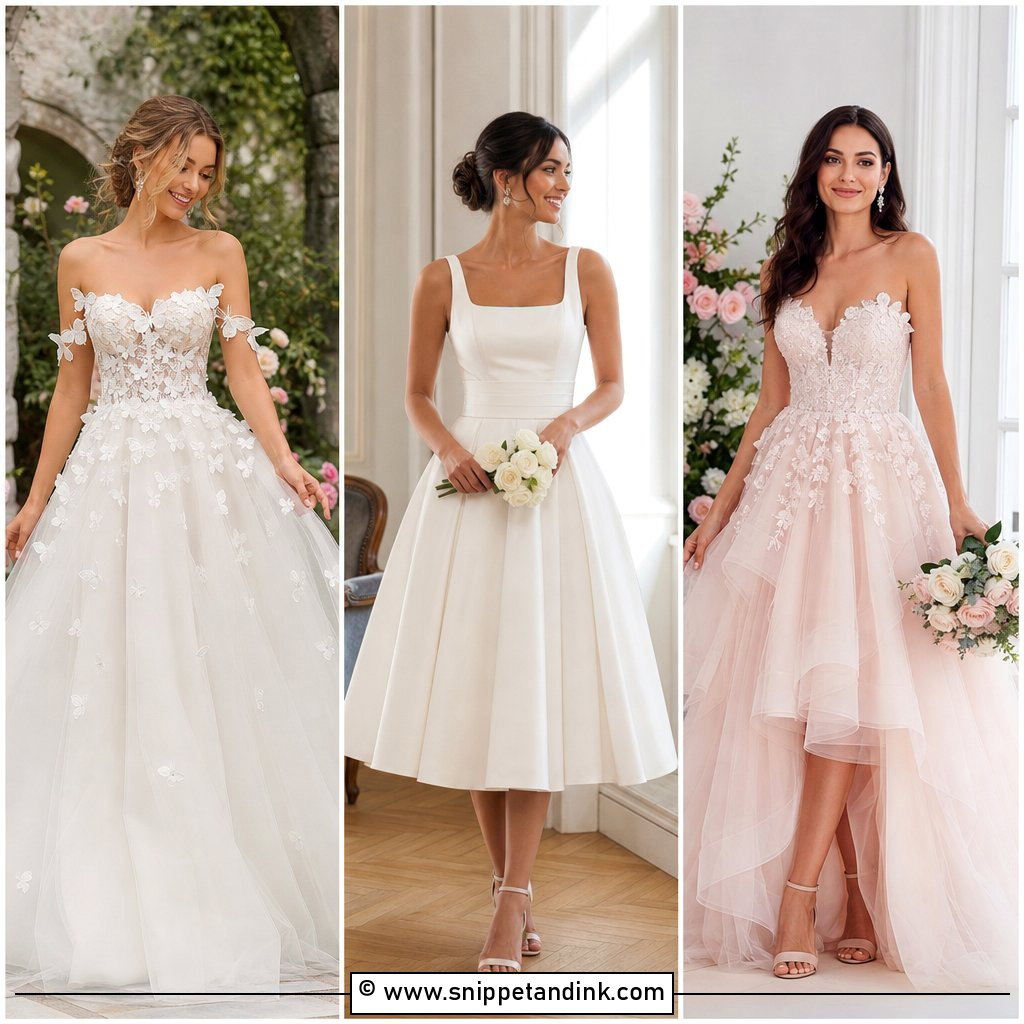
8. Tulle Cottagecore Wedding Dress
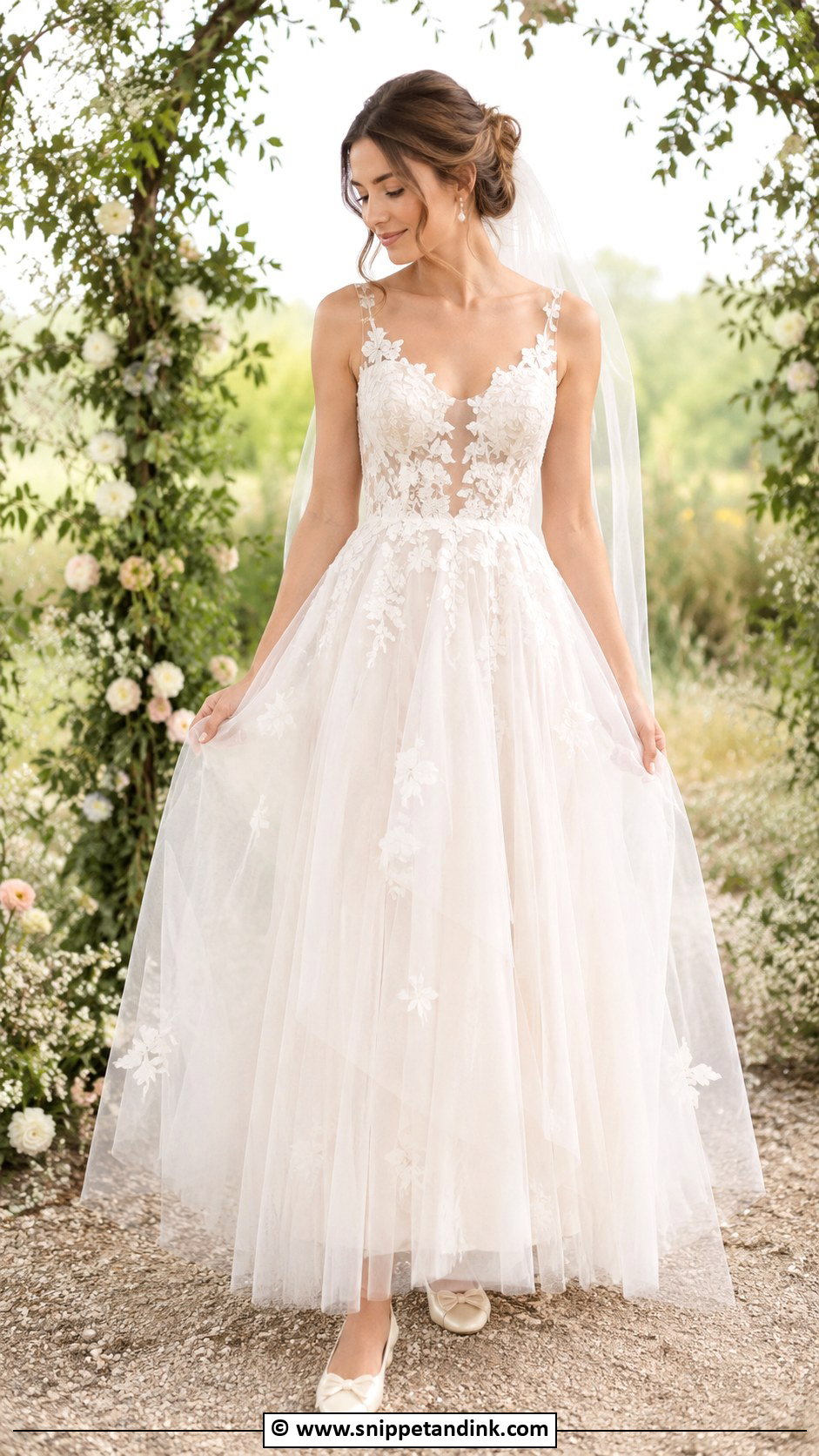
Tulle can be airy or it can be a meringue. For cottagecore I’d keep to several fine, soft layers rather than a stiff ball gown. Floral appliqués, small pearls or scattered embroidery add texture without weight. A fitted bodice over a floating skirt suits a meadow or garden. Tulle does pick up burrs, seeds and twigs, so walk the ceremony route before the day and have someone ready with a lint roller. Thin straps, soft sandals or ivory heels and a veil in matching tulle keep it cohesive.
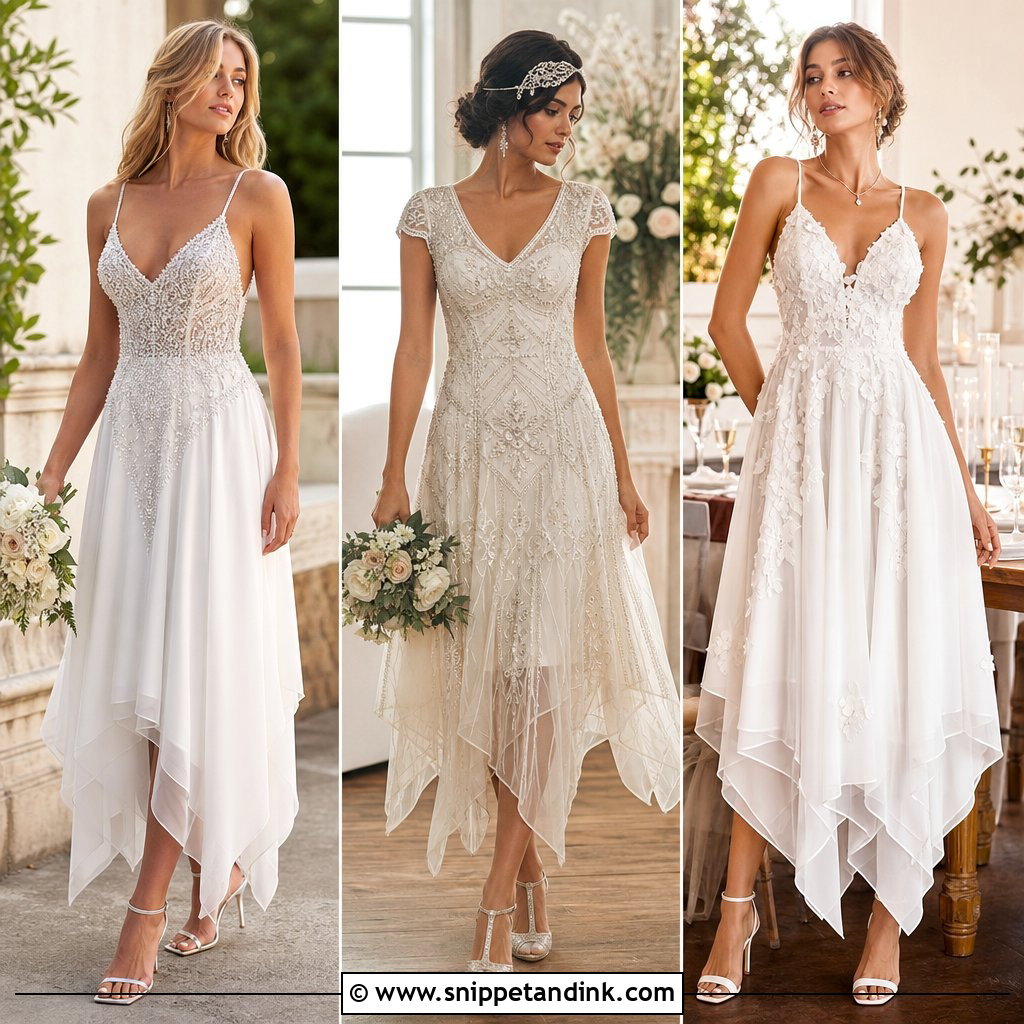
9. Chiffon Cottagecore Wedding Dress
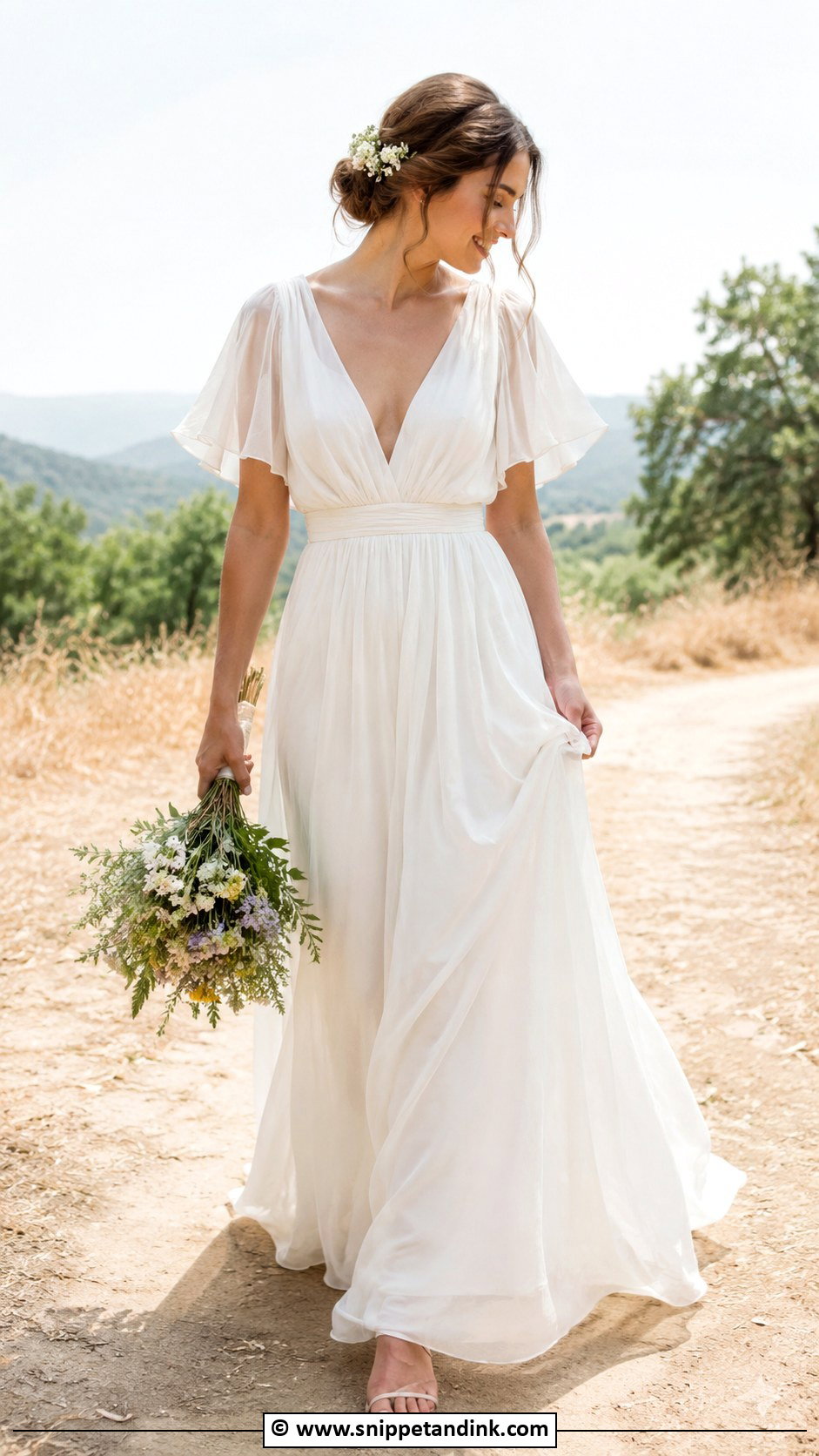
Chiffon is the coolest and lightest fabric on this list. Chiffon drapes beautifully, and outdoors a breeze moves it in a way no stiff fabric can. A V-neck, flutter sleeves, empire waist or gathered bodice gives it a relaxed shape. Lace trim or small appliqués add cottagecore detail without weight. The trade-off is fragility: chiffon snags and frays easily, so check the hem finish. Loose waves, a flower comb and barely-there sandals suit summer and country ceremonies.
10. Off Shoulder Cottagecore Wedding Dress
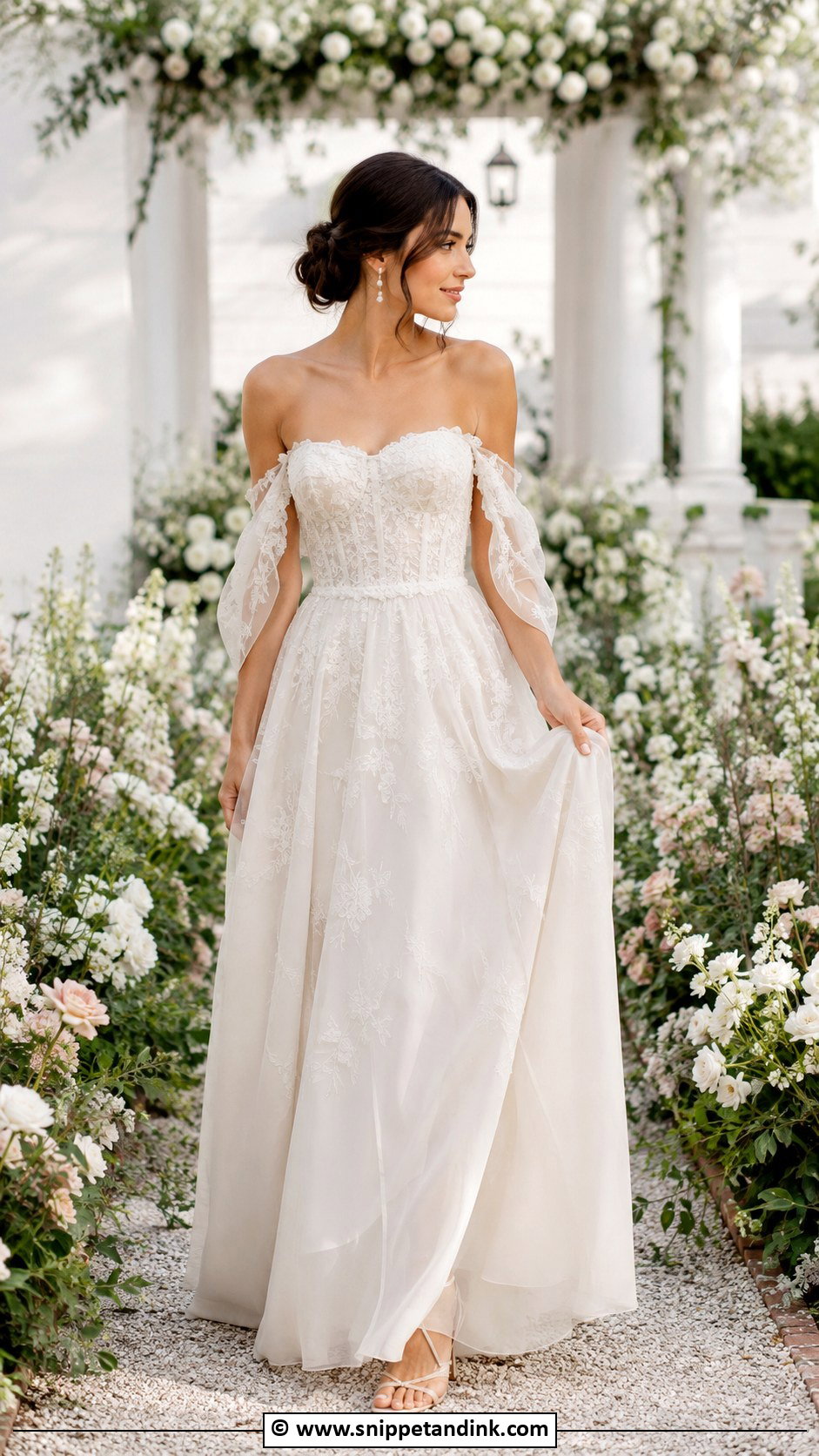
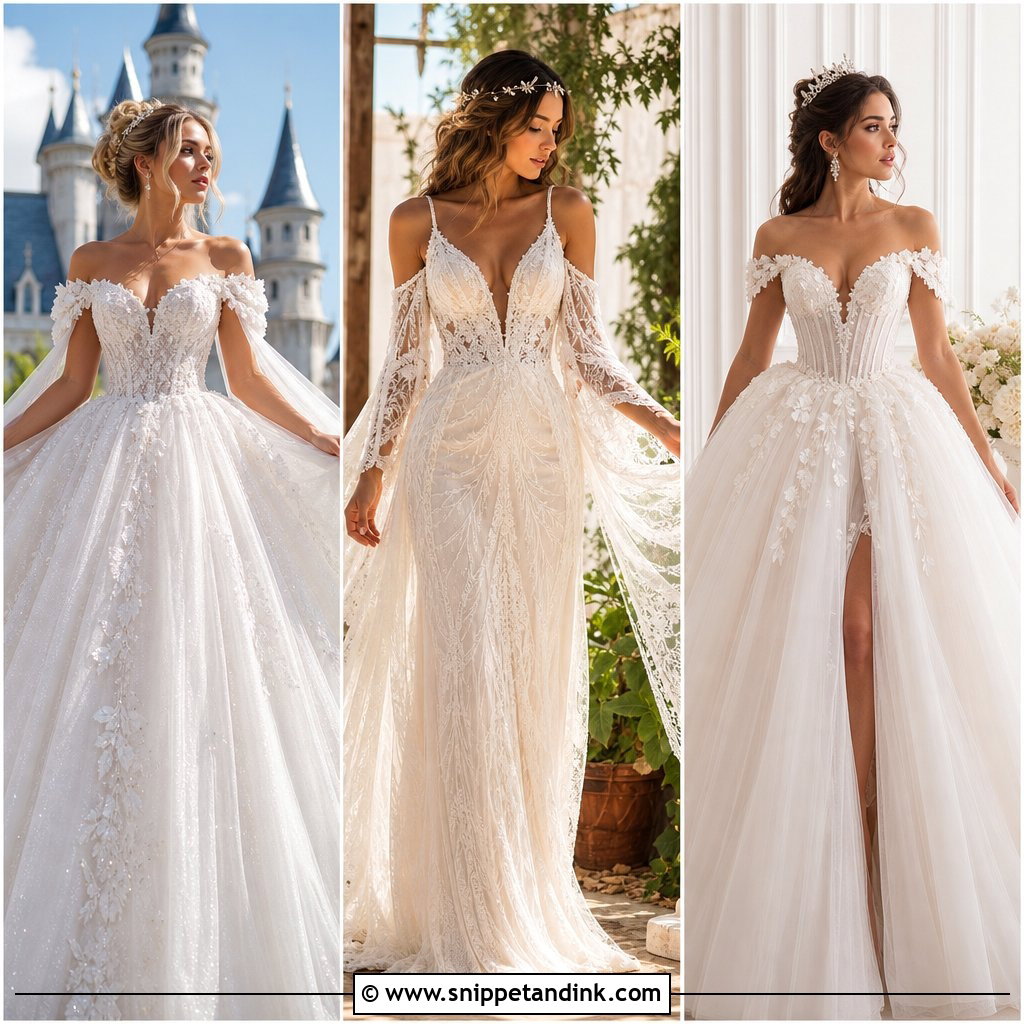
An off-shoulder neckline shows the shoulders while sleeves of lace, puffed fabric or draped tulle frame them. A fitted waist and flowing skirt balance the open top. Floral lace or a ruched bodice pushes it toward vintage. The sleeves sit on the upper arm, so I always test arm movement at a fitting; they restrict how high you can reach. Keep accessories soft: pearl drops, a low updo, a veil pinned behind the crown. It suits sunset gardens and rustic estates, and it’s a slightly dressier take on the style.
11. High Neck Cottagecore Wedding Dress
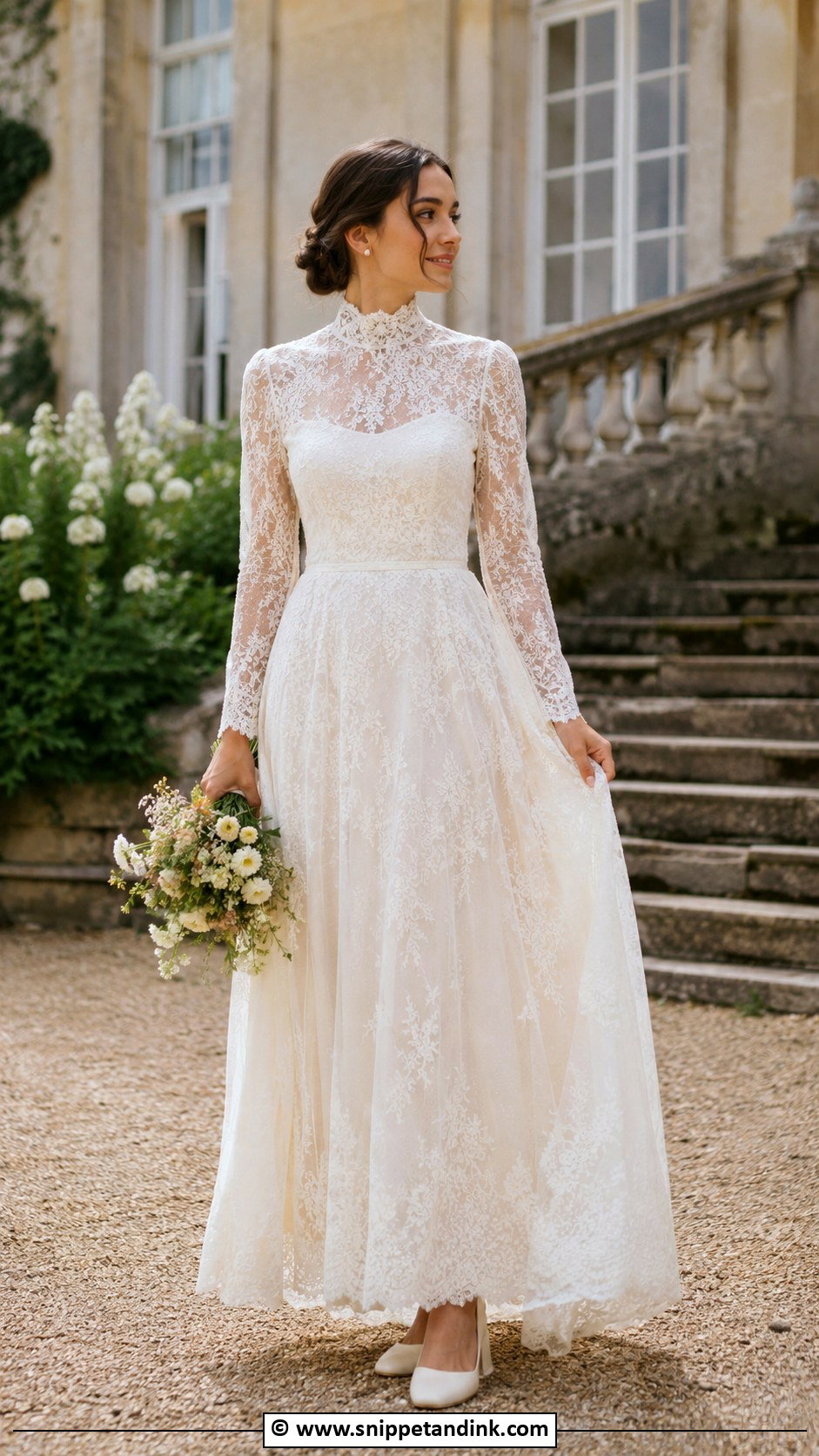
A high neck adds a refined, historical feel, and it stays soft when the neckline is lace, sheer mesh or embroidered tulle rather than solid satin. Long sleeves suit it, with a defined waist and a gently flowing skirt. Wear your hair up so the neckline shows, with pearl studs and a simple bouquet; skip big jewelry. Make sure the collar sits close without gripping, since you’ll turn your head constantly greeting people. Autumn weddings, historic houses and modest brides suit it.
12. Empire Waist Cottagecore Wedding Dress
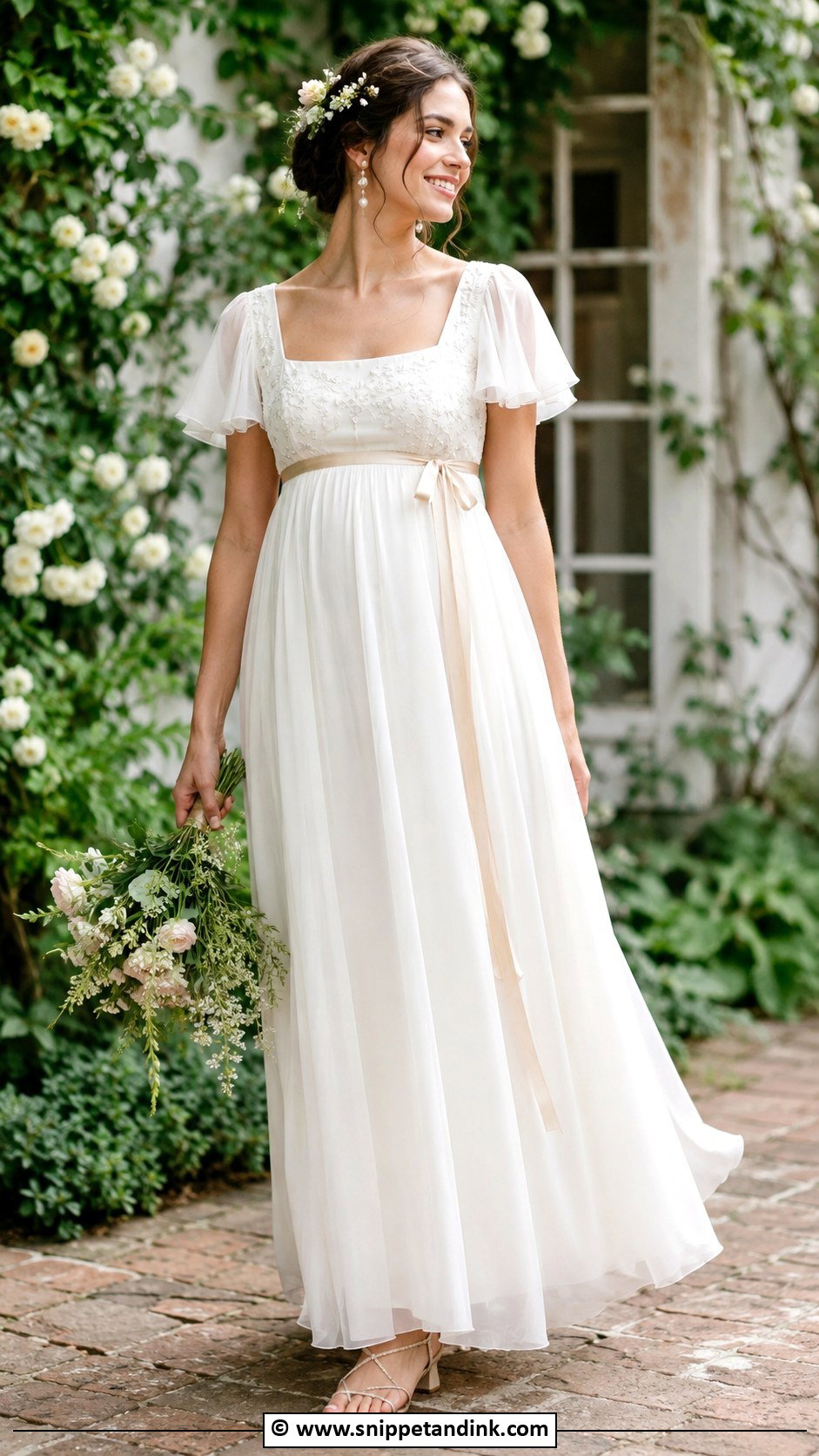
The empire waist cottagecore wedding dress takes its line from early nineteenth-century gowns: the waist sits under the bust and the skirt falls straight. It’s comfortable, with nothing tight at the middle, and suits chiffon, cotton muslin, silk and soft tulle. Puff sleeves, flutter sleeves or fine straps all work, and a ribbon sash adds definition. It’s my first suggestion for pregnant brides, and it also flatters petite frames. Finish with a small floral piece, soft curls and sandals or ballet flats.
13. Blush Cottagecore Wedding Dress
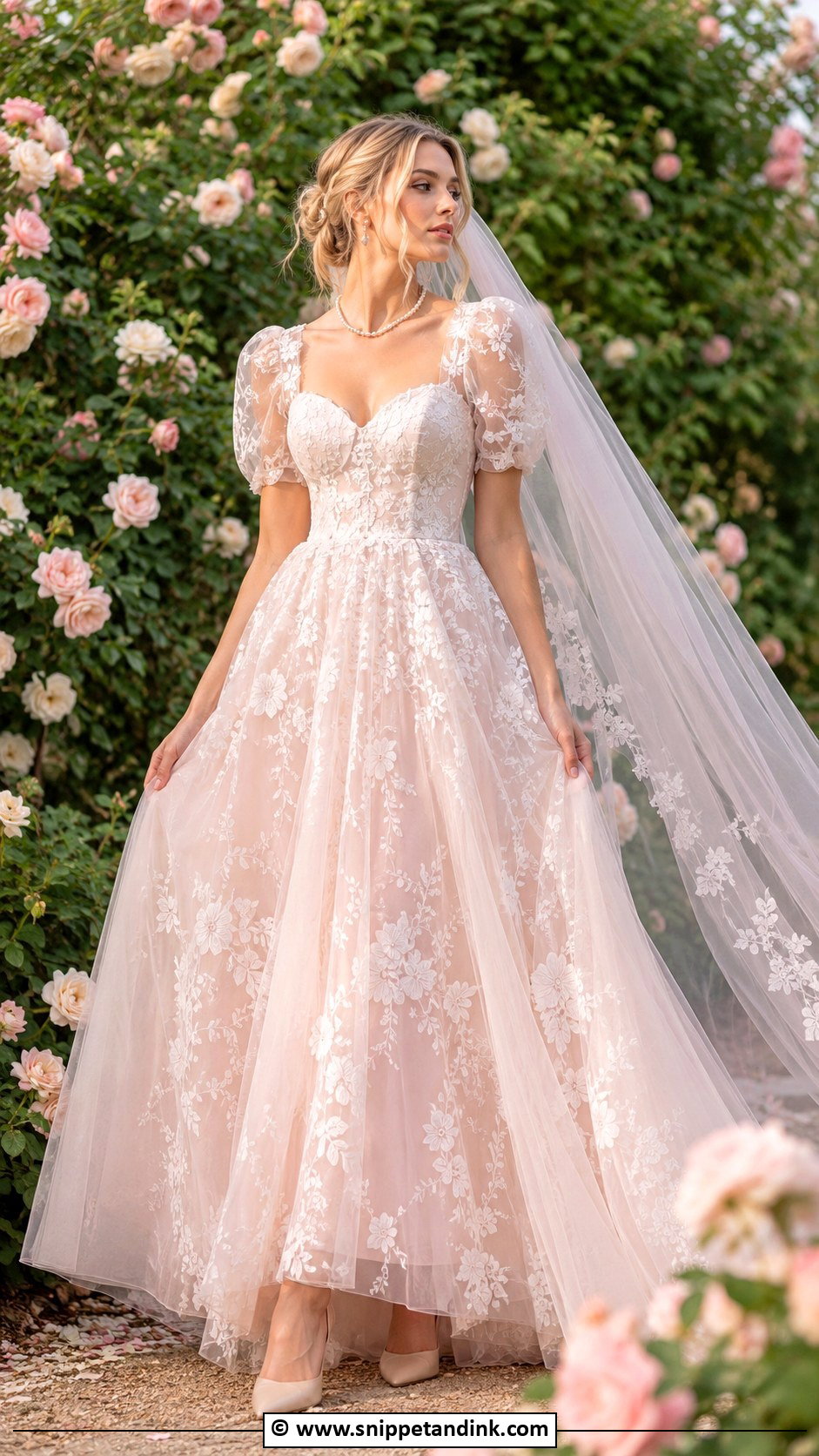
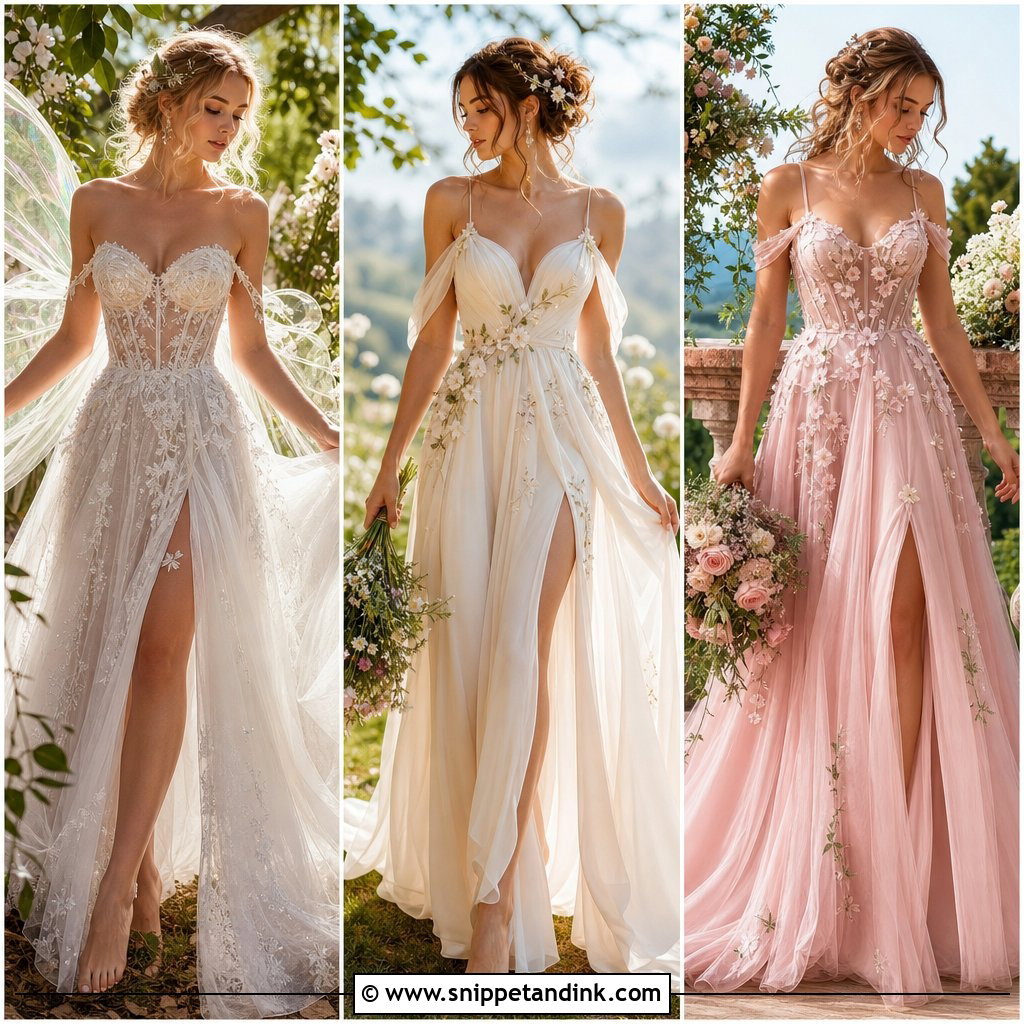
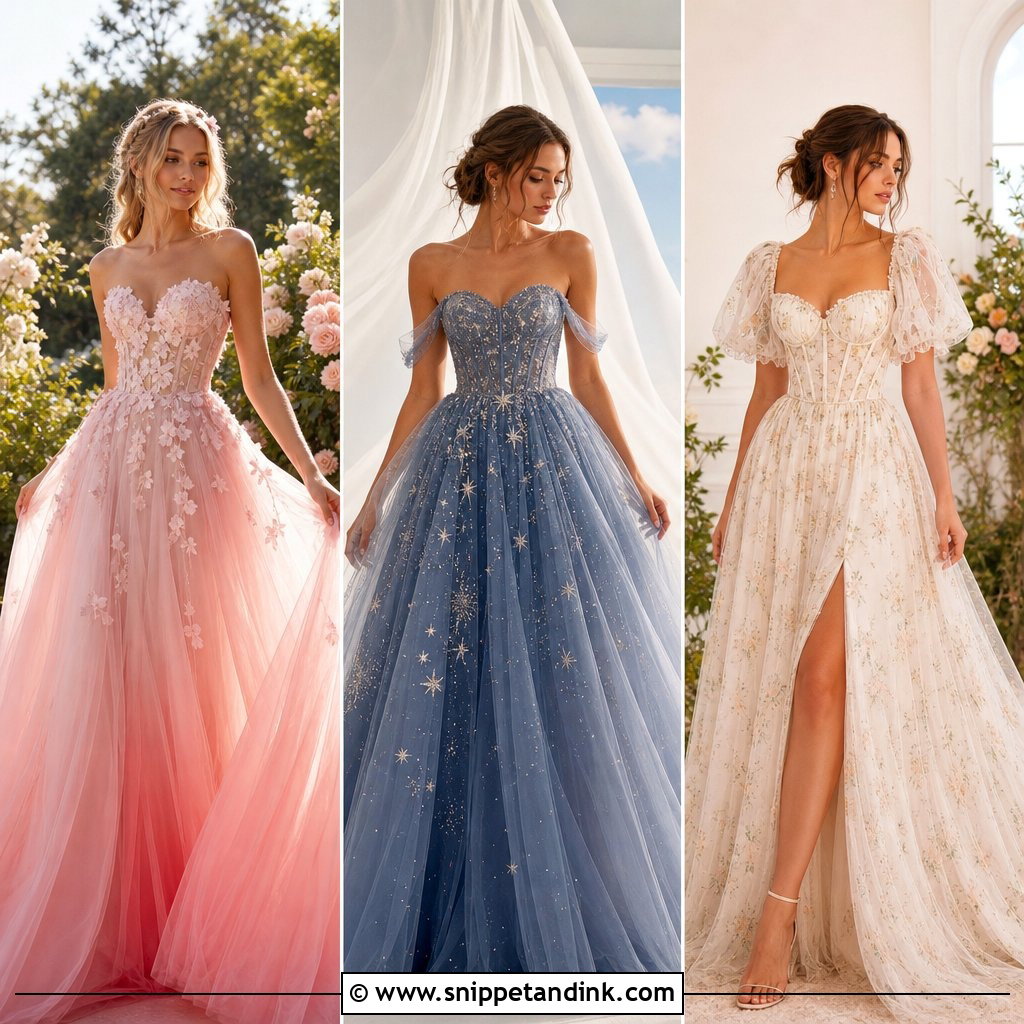
Blush is a soft step away from white, and it’s most flattering layered under ivory lace or tulle, where the pink shows through rather than dominating. Floral embroidery, puff sleeves or a fine corset bodice give it the cottagecore feel. Hold blush fabric near your face in daylight before you commit; on some skin tones it washes out. Neutral shoes, pearls and a pastel bouquet keep it cohesive, with an ivory or blush veil. Spring and rose gardens suit it.
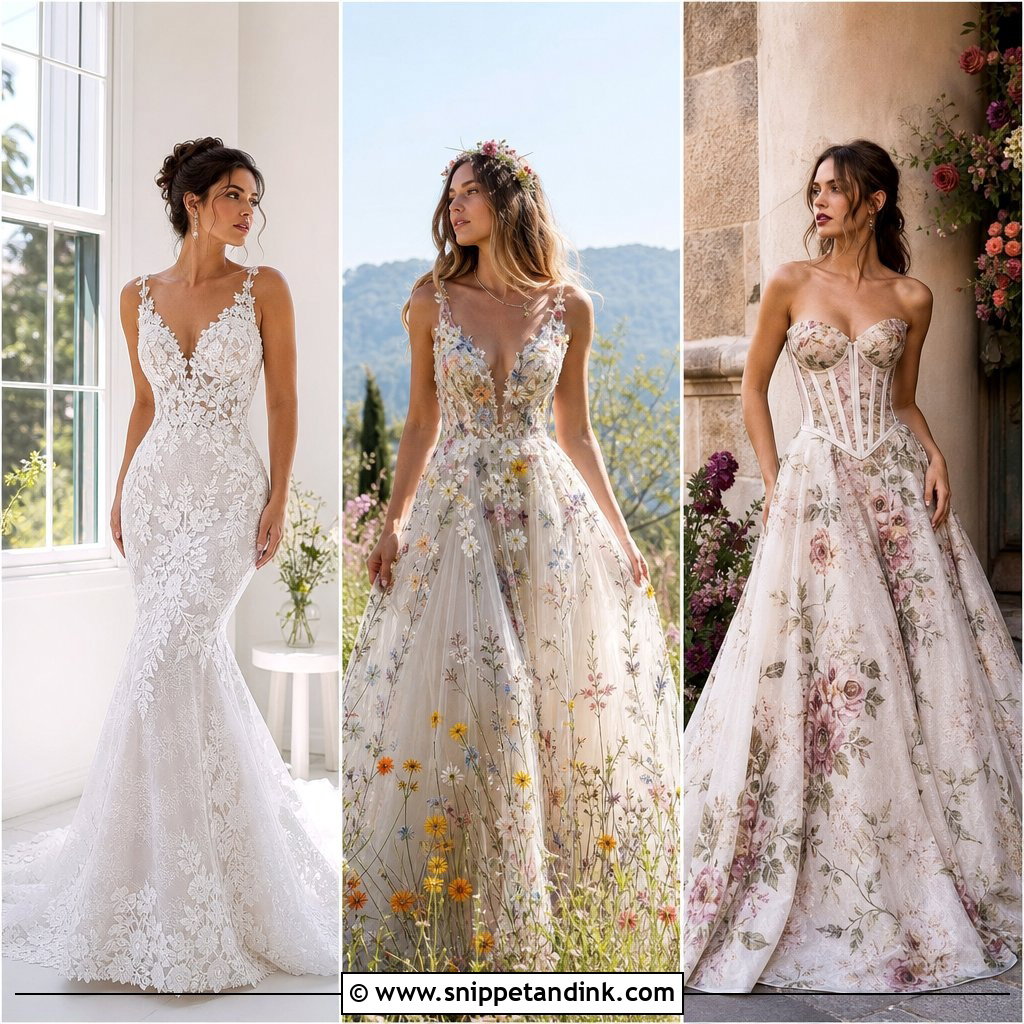
14. Floral Print Cottagecore Wedding Dress

A printed dress is a real departure from tradition, and it works when the print is delicate: watercolor florals, tiny meadow prints, faded botanicals. Loud prints look like a summer sundress. A simple A-line, wrap or tiered maxi lets the pattern carry the look. I’d pick out one or two colors from the print for the bouquet, keep shoes and jewelry neutral, and wear a plain veil or none. Elopements and outdoor weddings suit it best.

15. Tiered Cottagecore Wedding Dress
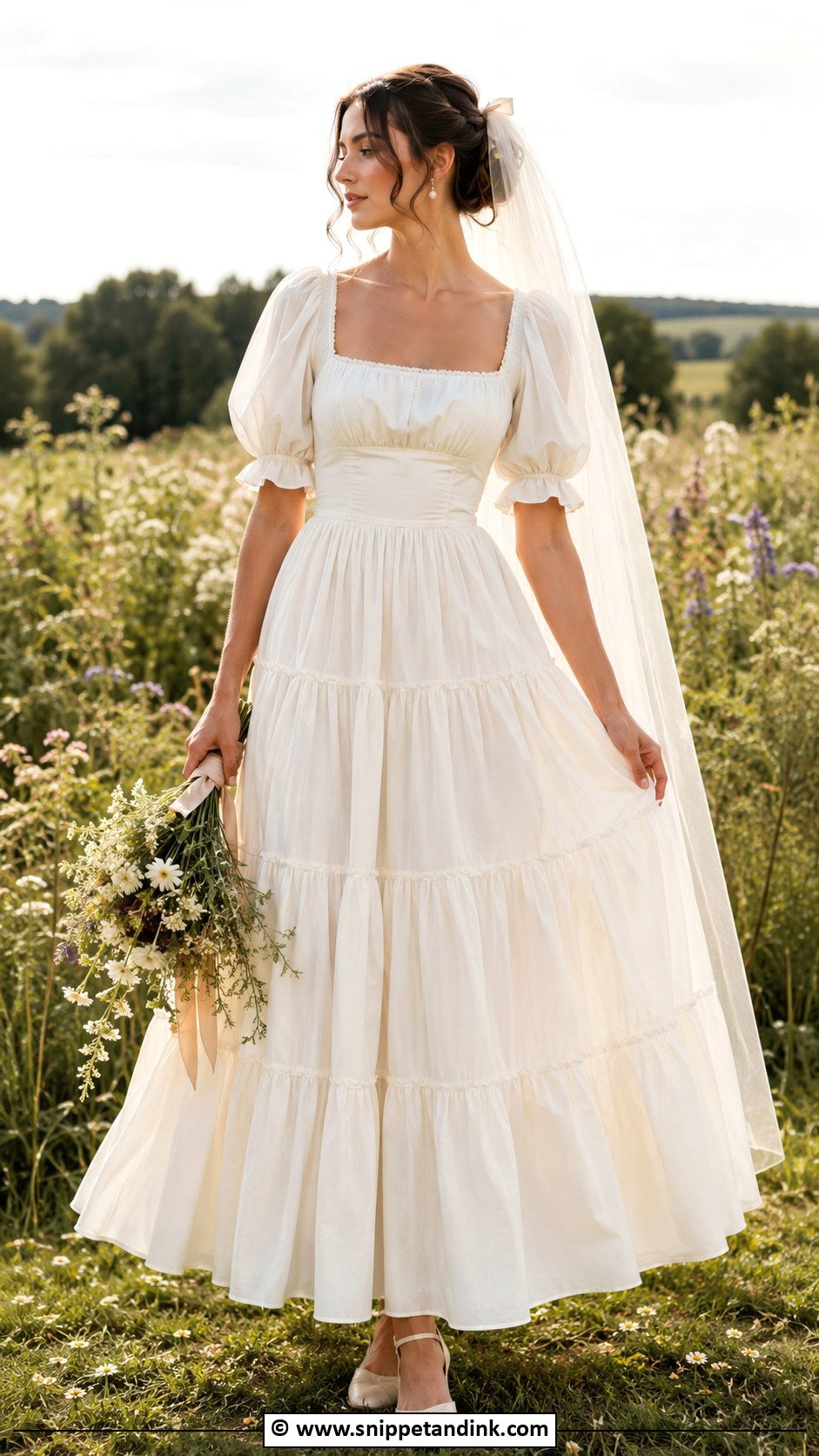
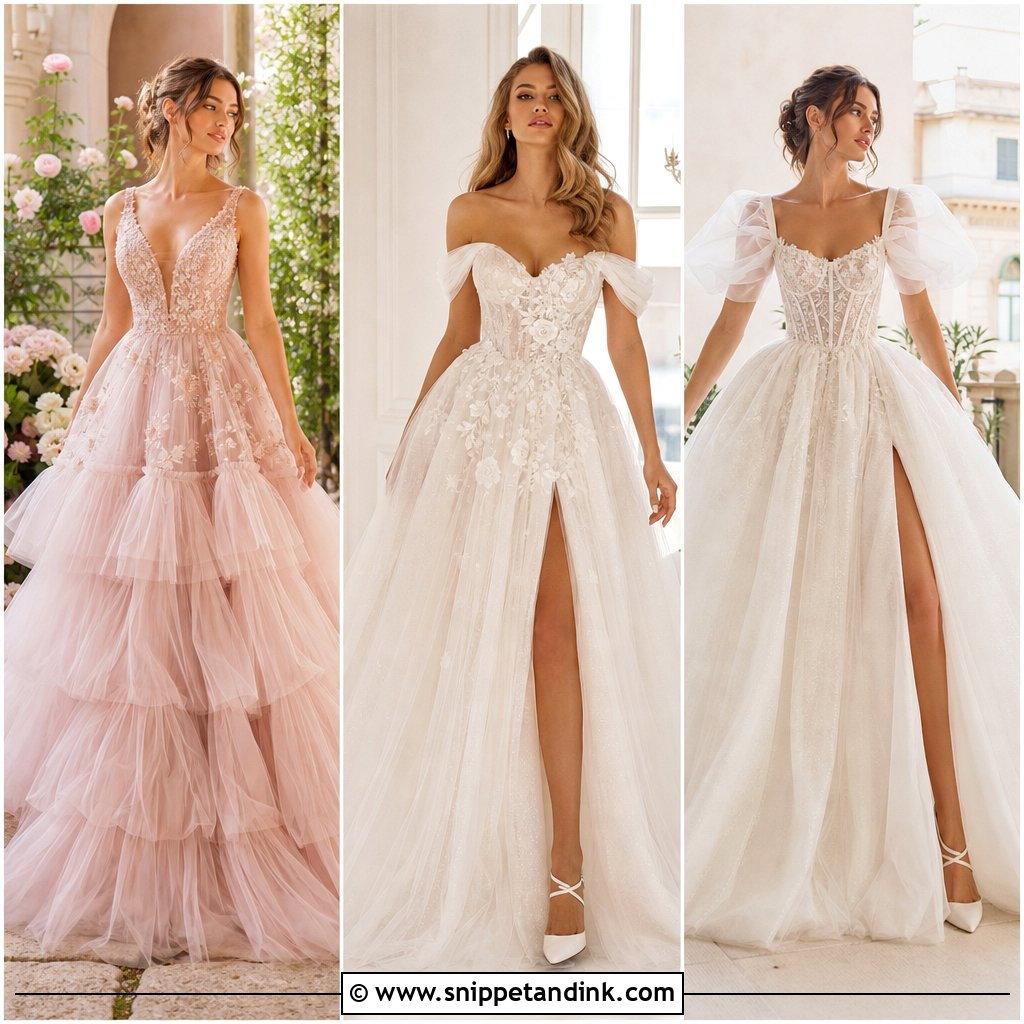
Tiers add movement and that handmade, gathered feel. They can be soft gathered layers, ruffled bands or lace-trimmed panels. Keep the fabric ivory, cream, blush or white and the bodice fitted, or the look leans toward a peasant skirt. Puff sleeves, square necklines and corset details all pair well. Gathered tiers add width at each seam, so on a short bride I’d choose fewer, longer tiers. A ribbon veil, small earrings and low heels for grass complete it. Meadows and barns are its setting.
16. Cotton Lace Cottagecore Wedding Dress
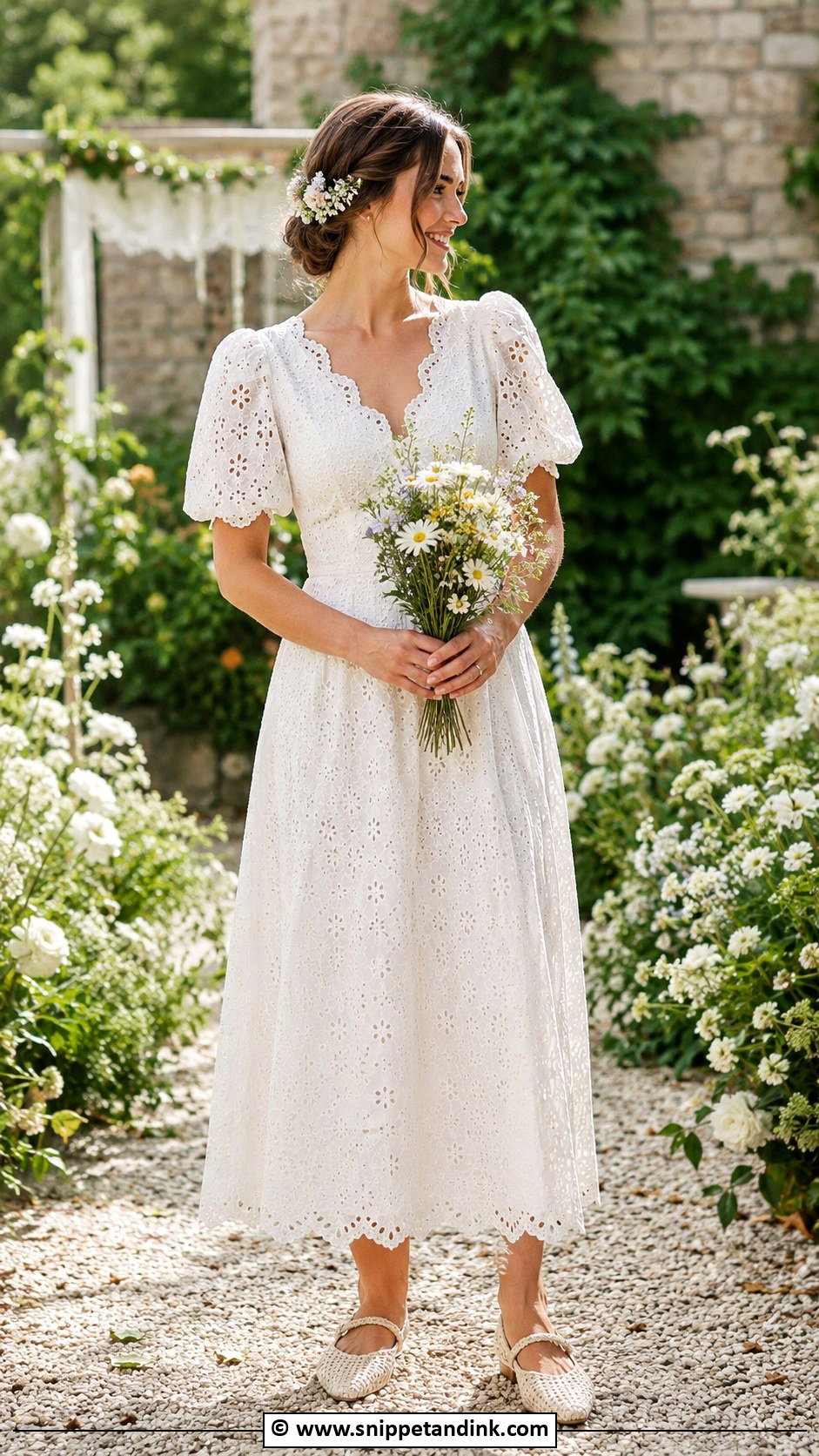
Cotton lace has none of the sheen of synthetic laces, which is exactly why it suits this style. It breathes in summer and looks handmade. Eyelet, floral panels, scalloped edges and lace-trimmed sleeves all fit. Keep the shape simple, an A-line or a midi. Cotton creases, so expect a relaxed finish rather than crisp lines. Woven flats, ivory block heels or soft leather sandals suit the venue, with a floral comb or ribbon bow in your hair. Intimate and summer weddings suit it best.
17. Simple Cottagecore Wedding Dress
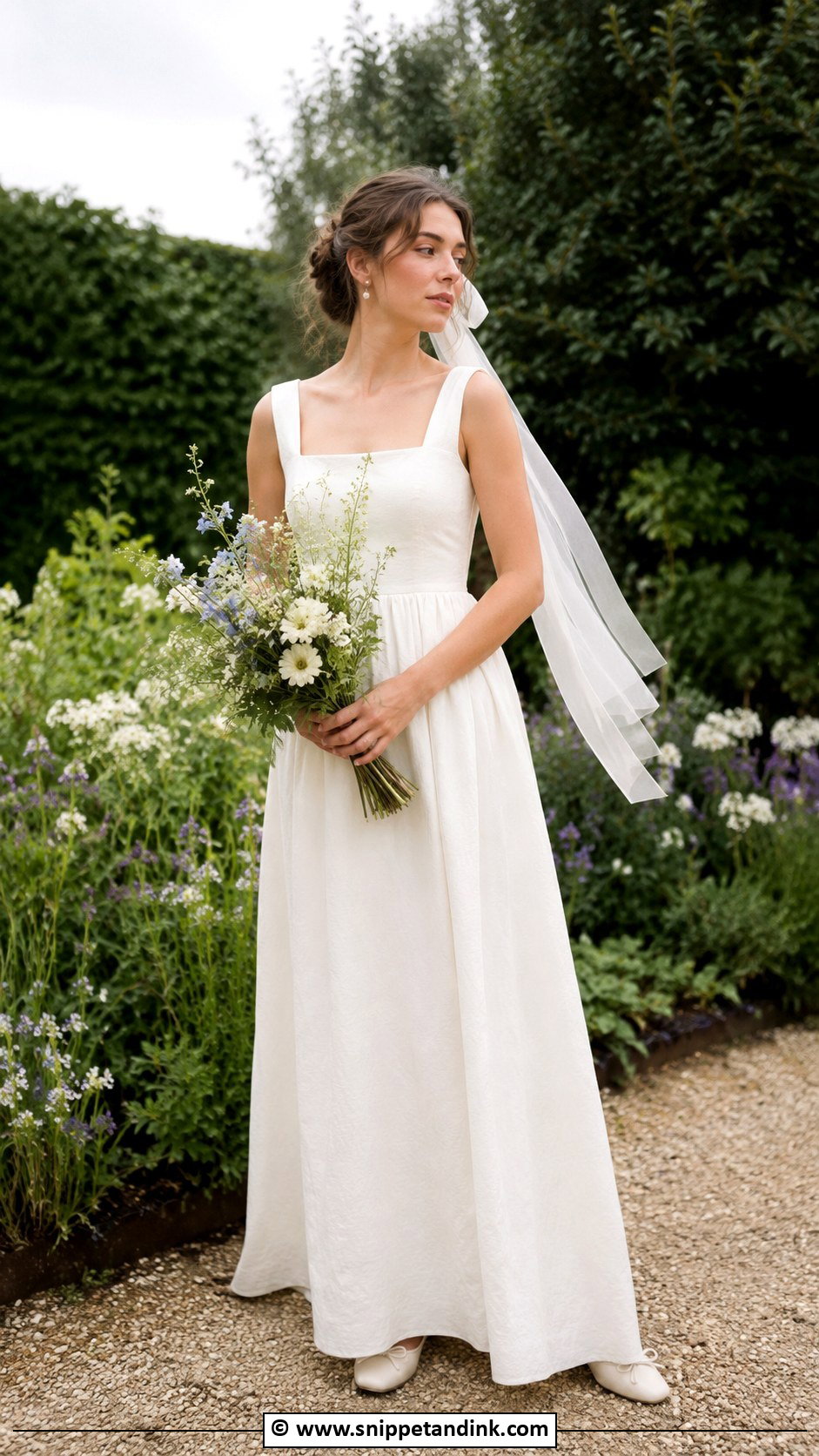
Plain is perfectly valid here. A simple ivory gown in linen, cotton, chiffon or silk with a soft, natural shape can carry the style through styling alone: a wildflower bouquet, pearl earrings, a ribbon veil, braided hair. Look for a square neckline, gathered waist, flutter sleeve or loose skirt. Linen wrinkles within minutes of sitting, and I’d tell any bride choosing it to enjoy the creases rather than fight them. It’s honest and comfortable for outdoor days.
18. Prairie Cottagecore Wedding Dress
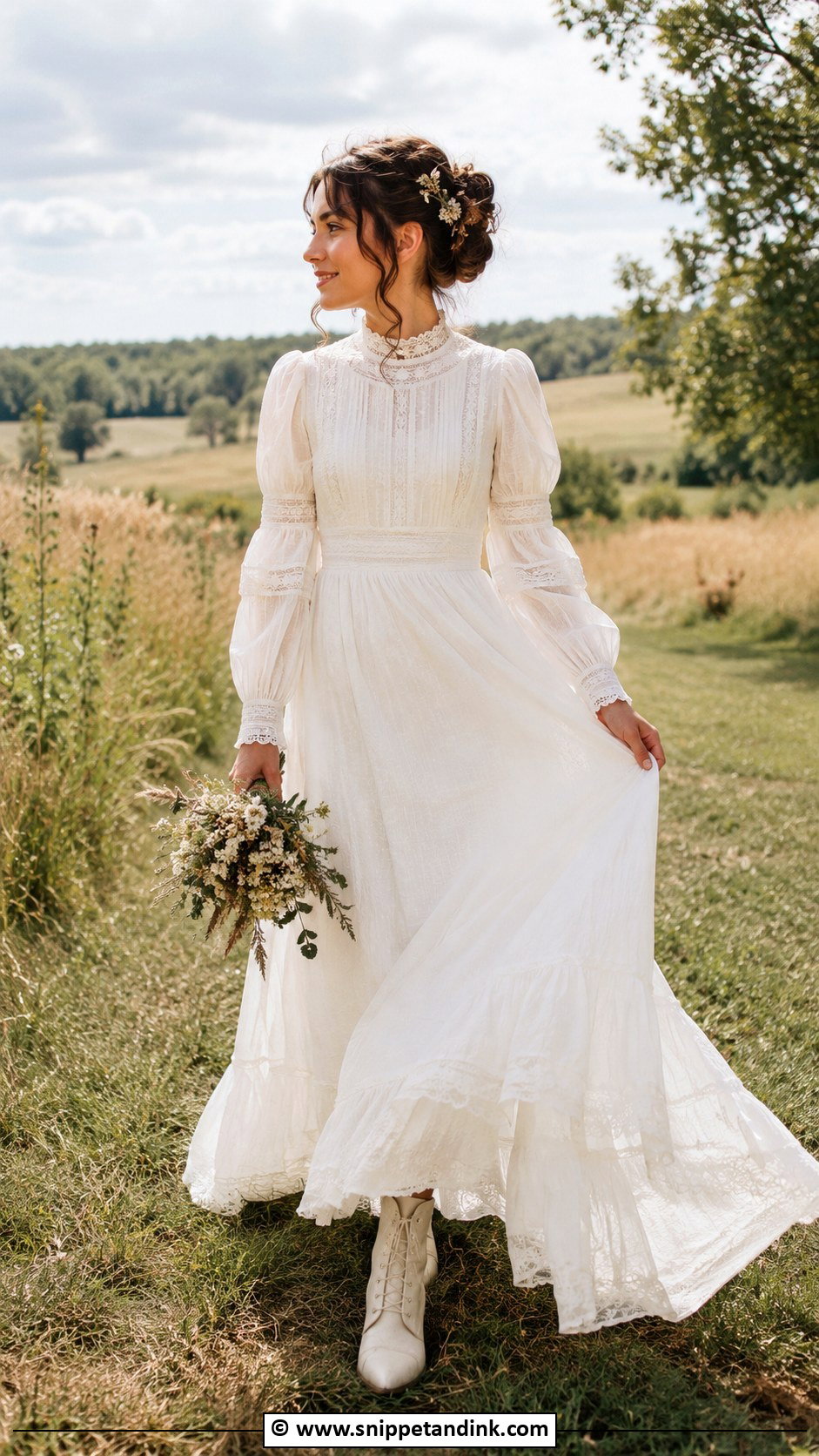
The prairie dress is high-necked, gathered at the sleeves, trimmed in lace and full in the skirt, and it’s the version most likely to look like costume. Ivory cotton, soft lace and fine embroidery keep it bridal. A fitted waist or subtle sash gives it shape. Vintage-style boots, low heels or lace-up flats suit barns and fields. A loose braid, floral pins and a small bouquet complete it. I’d keep the accessories modern so the dress doesn’t feel like a period reenactment.
19. Boho Cottagecore Wedding Dress
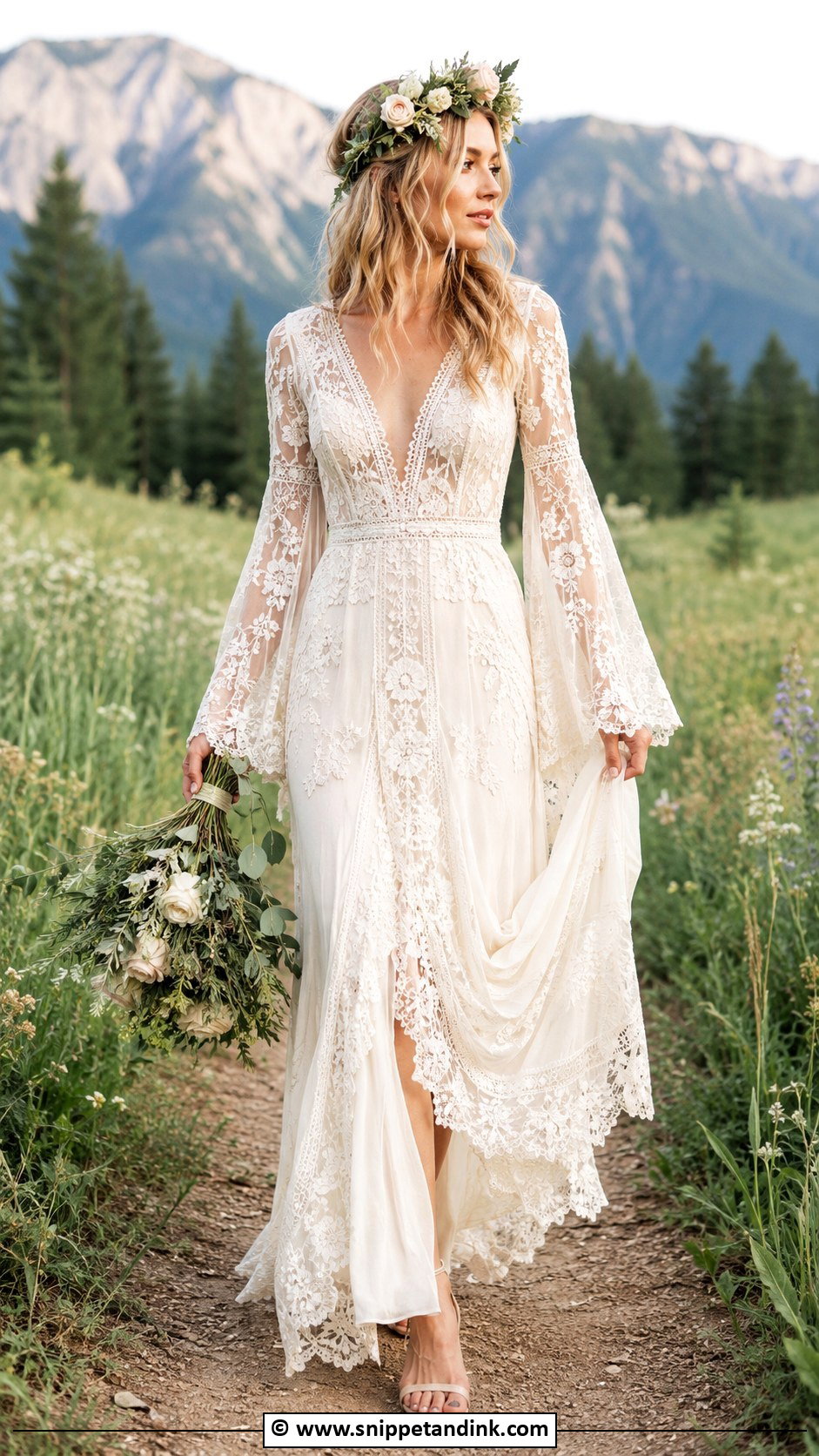
Boho and cottagecore share a love of lace and loose skirts, and the mix is relaxed. Lace panels, flowing sleeves, open backs, crochet-style details and a moving skirt all fit. Botanical lace, soft ivory and natural accessories keep the cottage side. Suede-look block heels, sandals or embroidered flats suit grass. Add a loose braid, a flower crown or a veil with small appliqués. It’s less polished than a classic gown, which is the point, so outdoor and meadow weddings suit it.
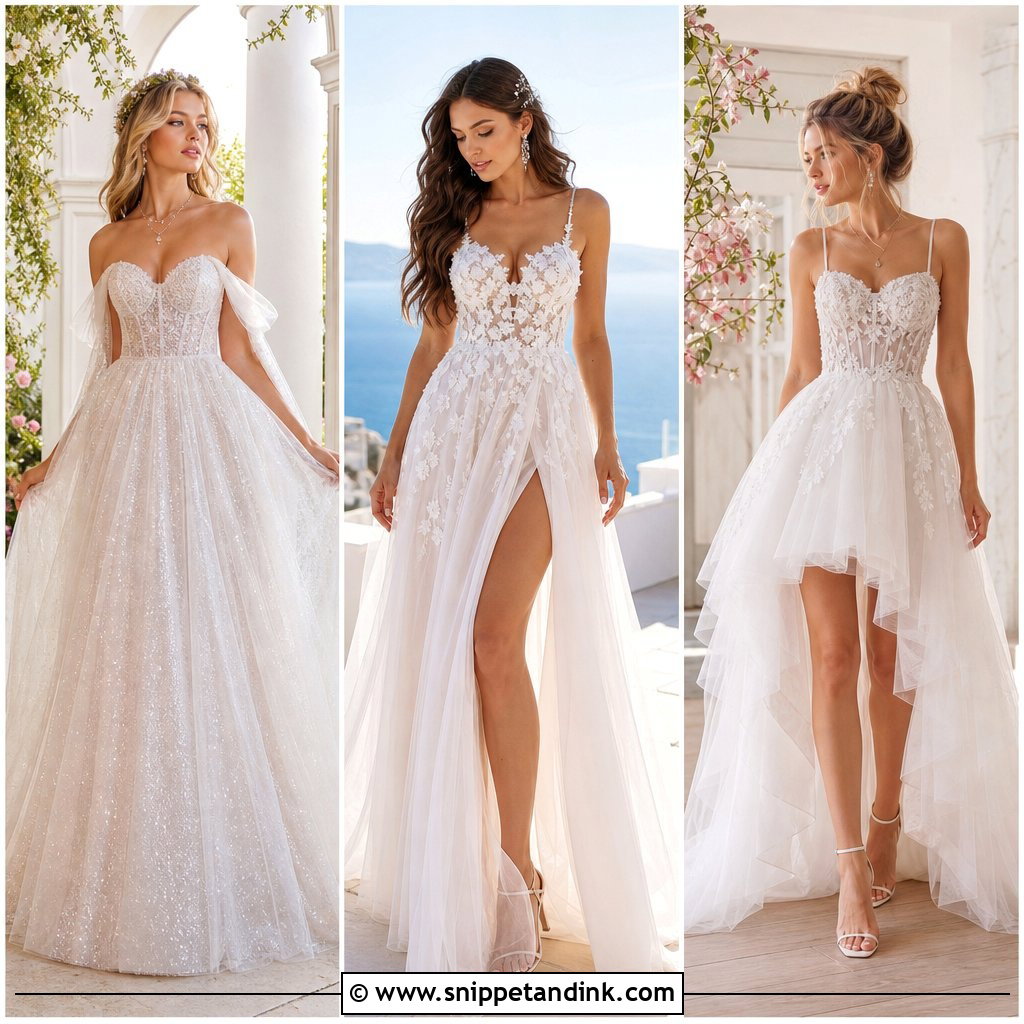
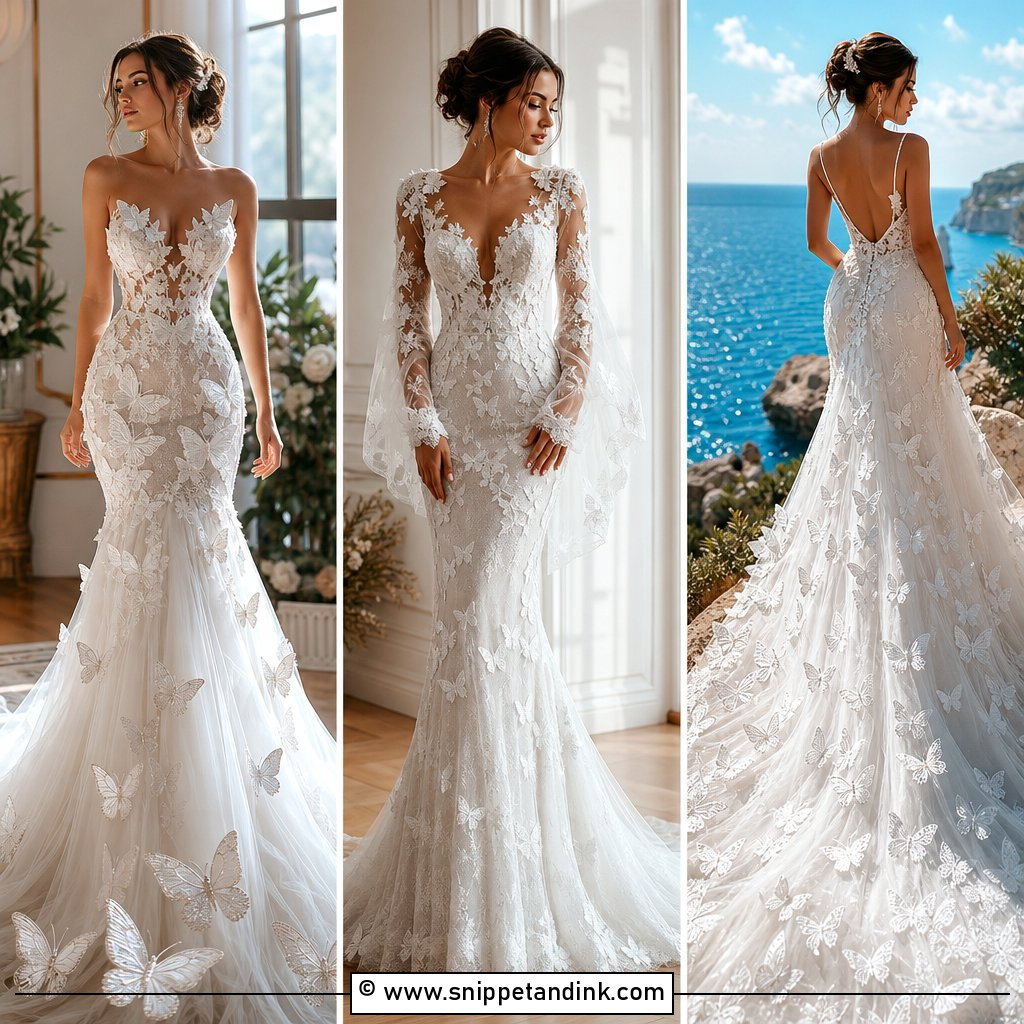
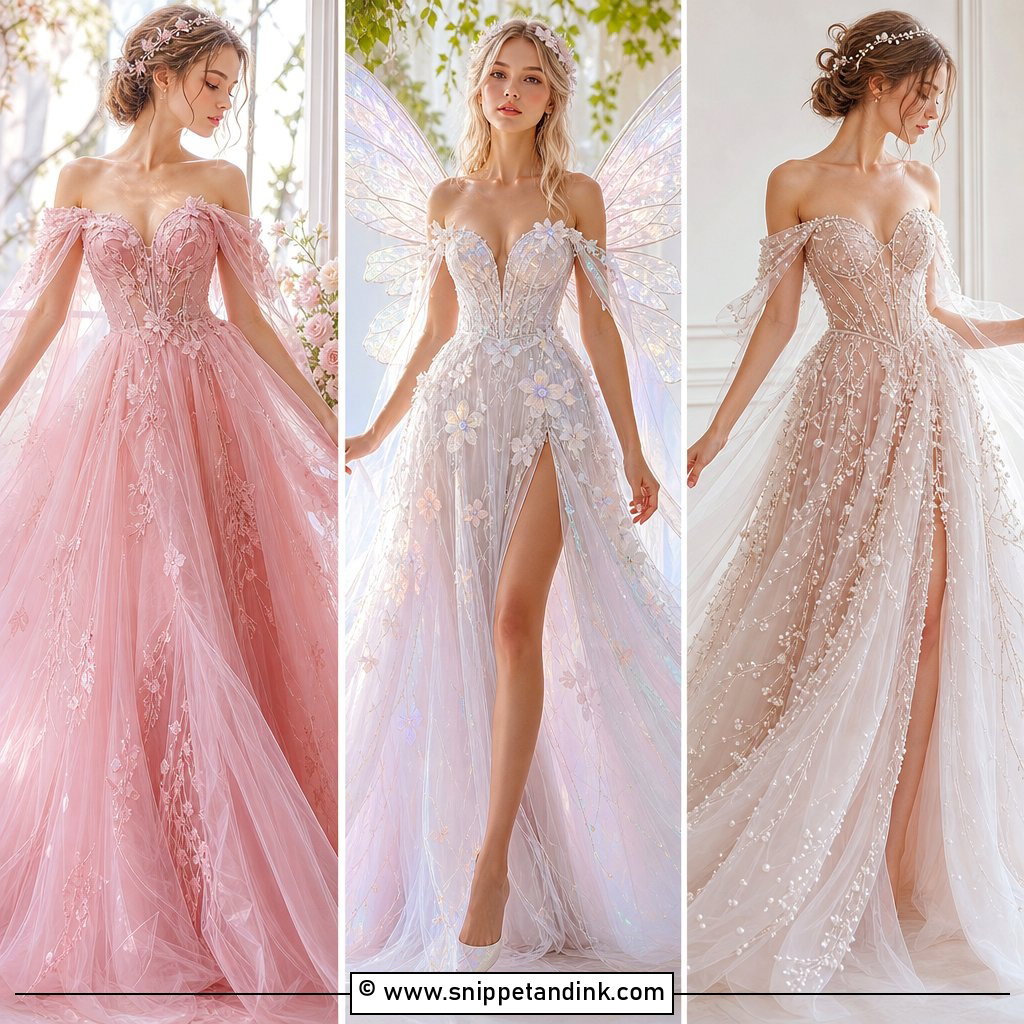
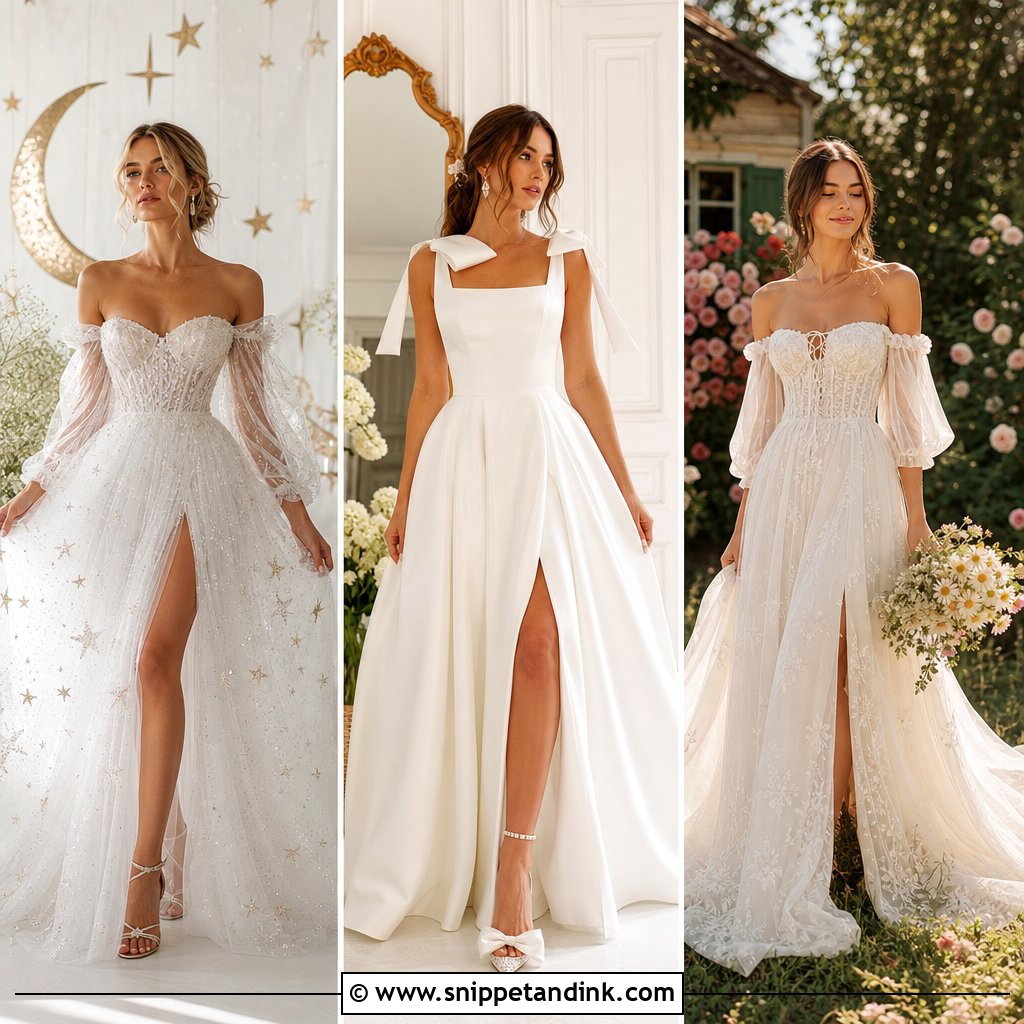
20. Vintage Cottagecore Wedding Dress
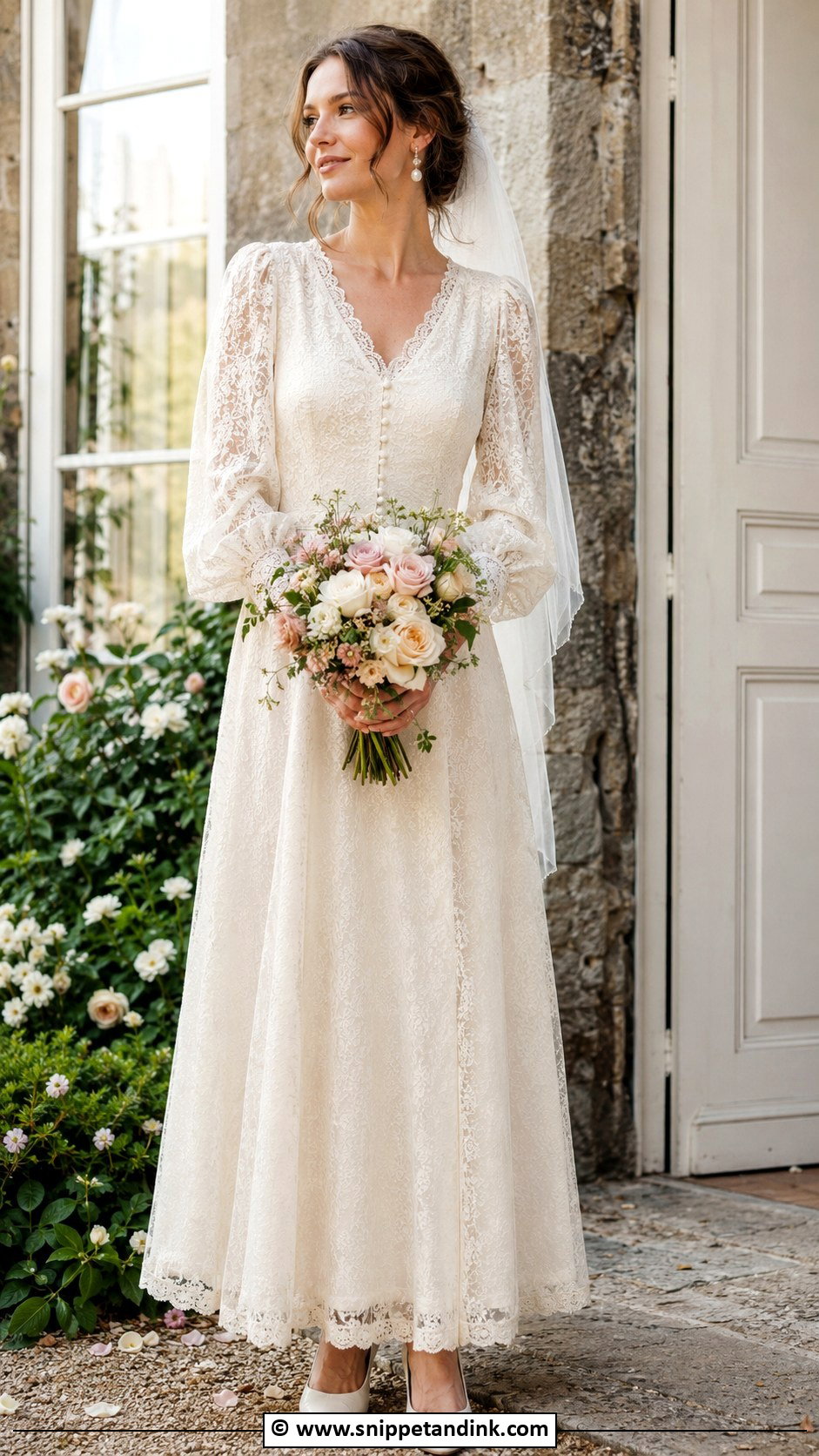
A vintage dress can be genuine or just borrow vintage details: lace collars, pearl buttons, bishop sleeves, satin sashes, scalloped hems, soft A-line shapes. Cream and ivory look more authentic than bright white. Genuine older gowns were cut for different underwear and posture, so plan on tailoring to make the fit comfortable today. Pearl earrings, a small veil and low heels suit it, with garden roses, daisies or seasonal wildflowers in the bouquet. It’s a dress with history rather than a trend.
21. Ruffle Cottagecore Wedding Dress
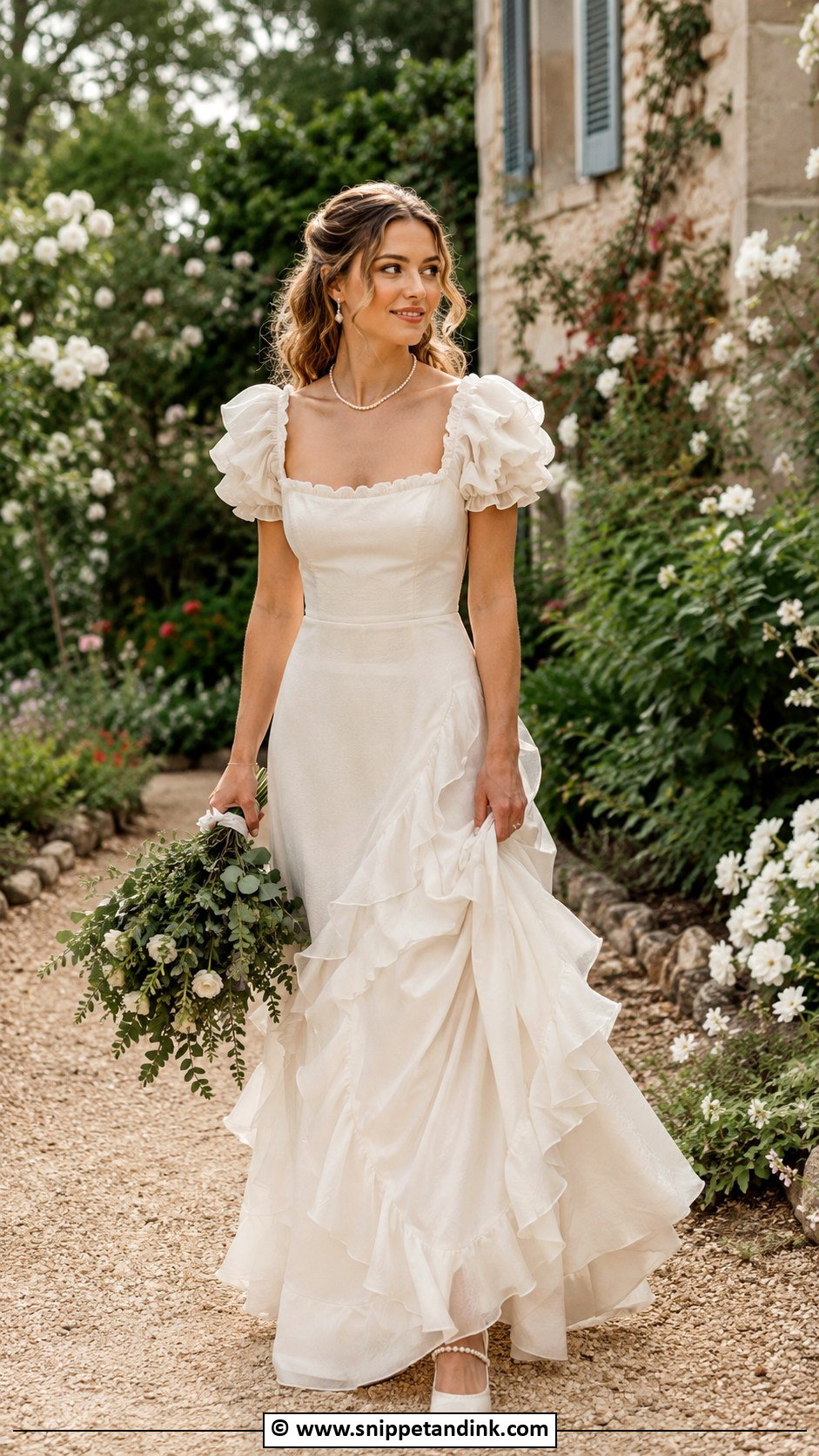
Ruffles should be soft and light here. Stiff layers fight the style. Ruffled sleeves, a cascading skirt or a flounced hem all work, but if there are many, keep the fabric light and the bodice simple. A fitted waist gives shape. Pearl jewelry, soft curls and a bouquet with loose greenery suit it, and the dress moves as you walk in gardens and orchards. I’d steam ruffles the morning of; they flatten in a garment bag.
22. Slip Cottagecore Wedding Dress
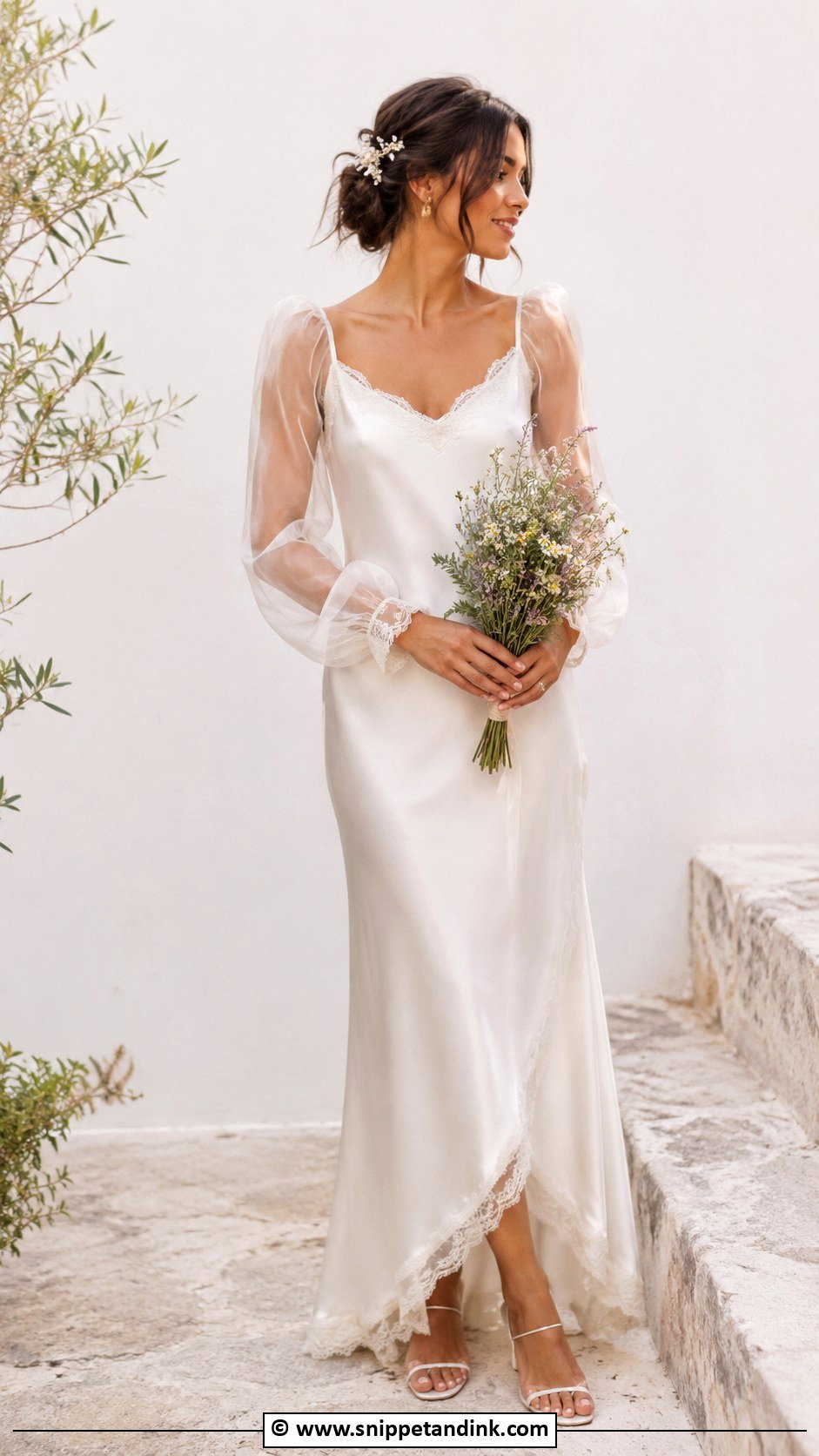
A slip dress is the modern route into cottagecore. Start with ivory satin, silk or crepe with lace trim, a cowl or fine straps, then add the cottage details: a sheer lace topper, puff-sleeve bolero, embroidered veil or floral comb. Satin slips show every line underneath, so smooth, line-free underwear matters. Simple sandals or low heels and a small wildflower bouquet keep it light. Elopements and intimate garden weddings suit it.
23. Two Piece Cottagecore Wedding Dress
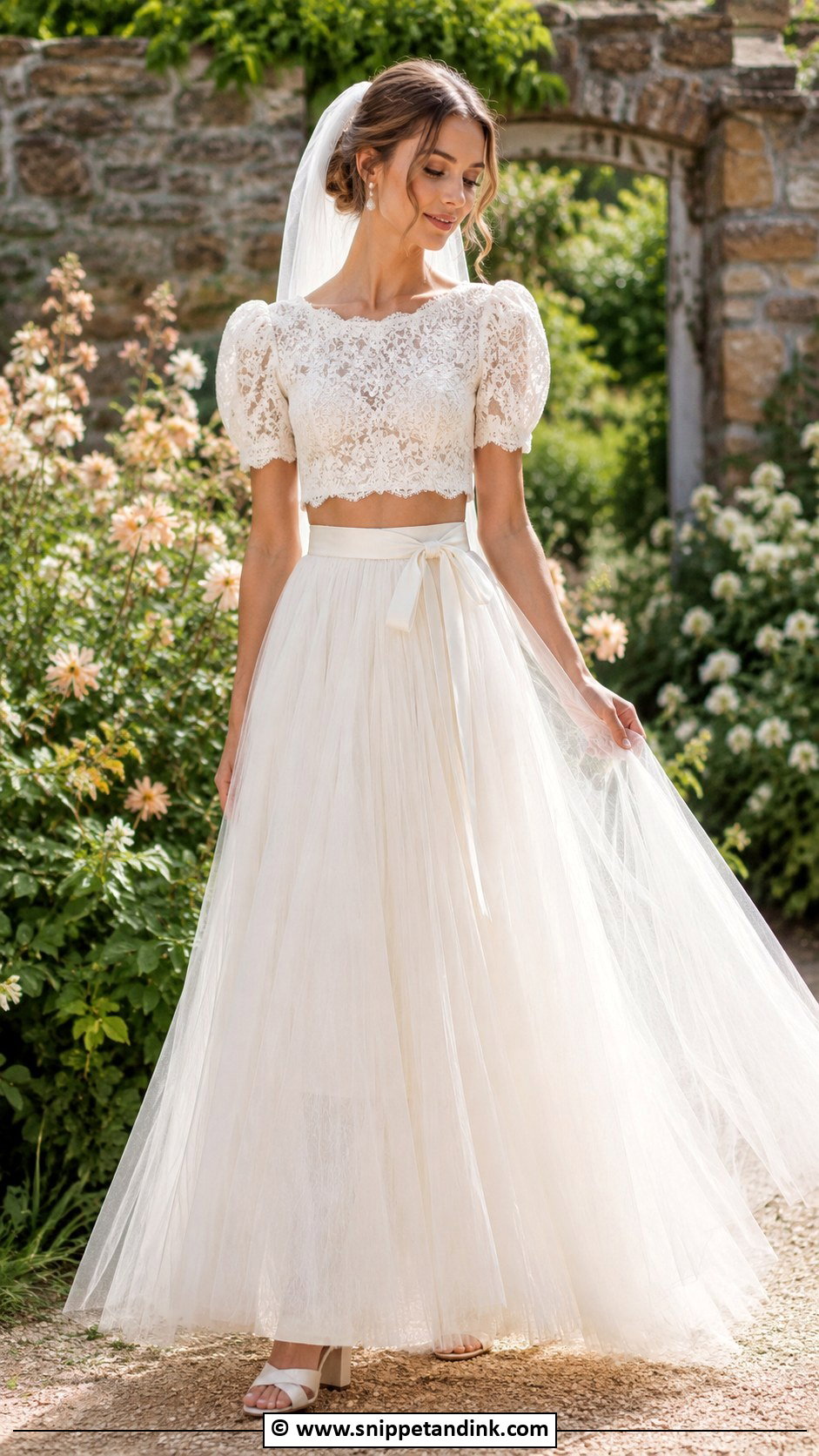
Two pieces give flexibility: a lace crop top over a flowing skirt, a corset top with tulle, or a puff-sleeve blouse with an ivory maxi. Keep both pieces in exactly the same shade, since two ivories rarely match in daylight. Add a ribbon sash, pearls or a veil to make it ceremonial. You can switch one piece for the reception. It suits creative brides and casual outdoor celebrations.
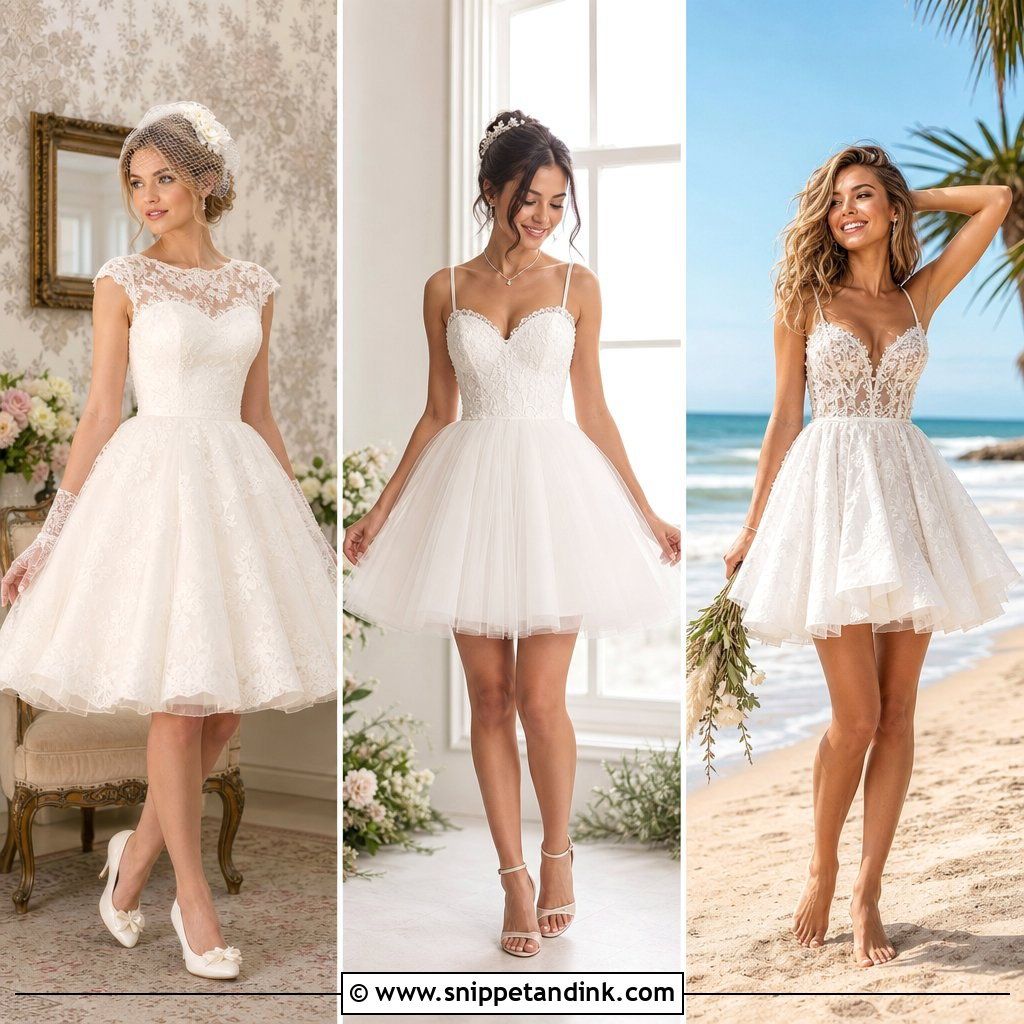
24. Short Cottagecore Wedding Dress
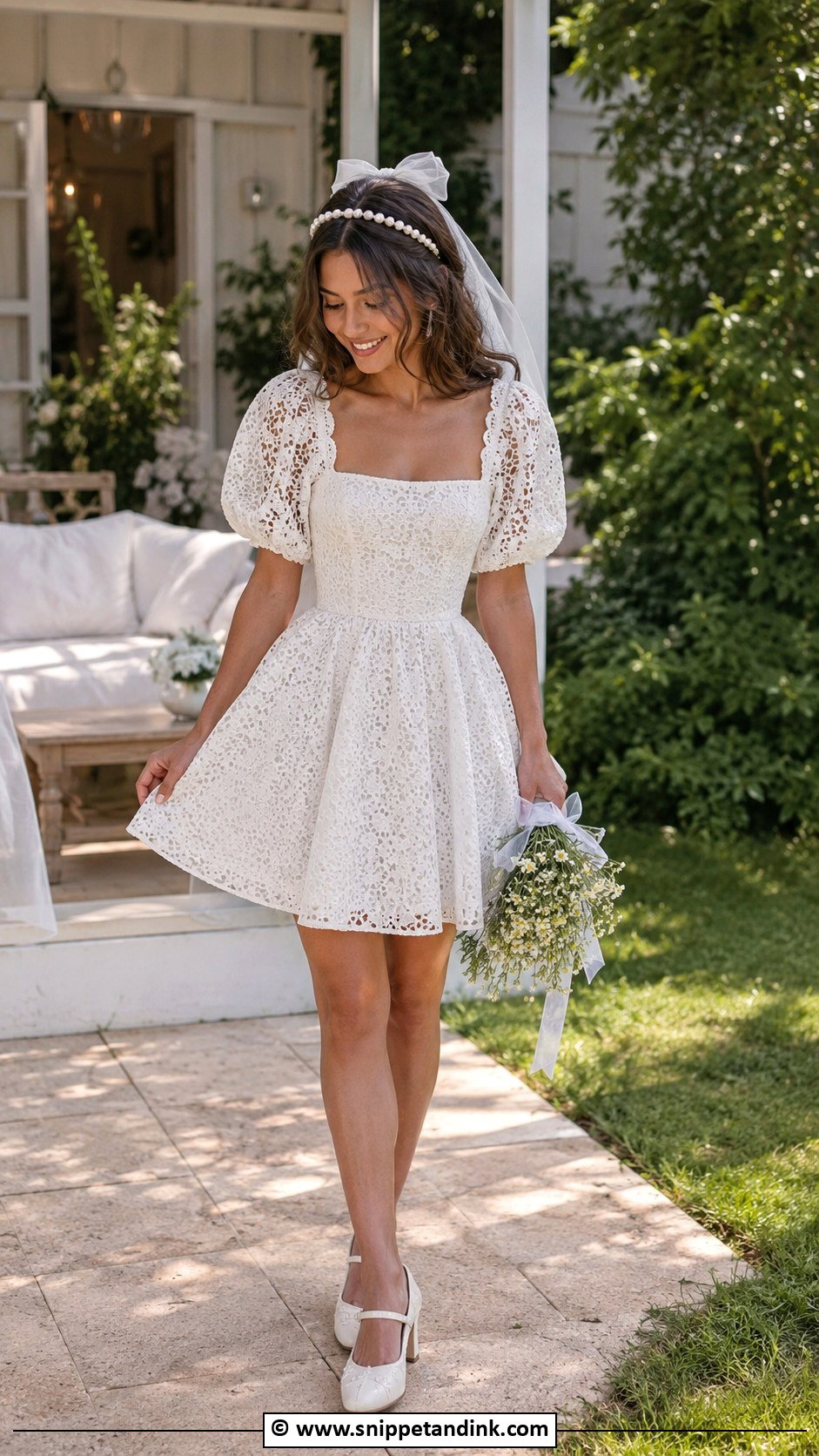
A short cottagecore wedding dress stays romantic through lace, puff sleeves, eyelet cotton, a square neckline or a full skirt. The shoes are on show, so ballet flats, Mary Janes or block heels are part of the outfit. A bow veil, pearl headband or floral crown makes it bridal. I’d check the hem when seated; full short skirts ride up more than you expect. Courthouse, backyard and summer weddings suit it, and it doubles as a reception change.
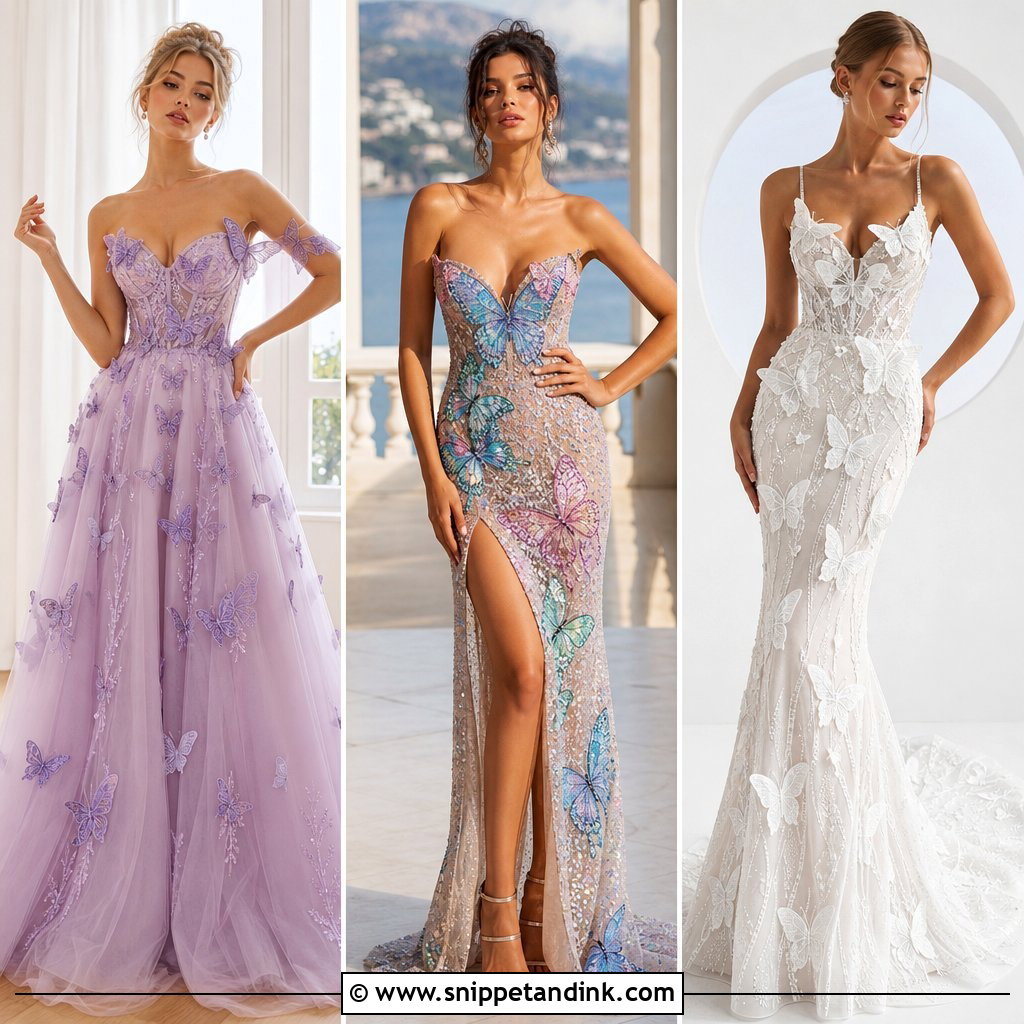

25. A Line Cottagecore Wedding Dress
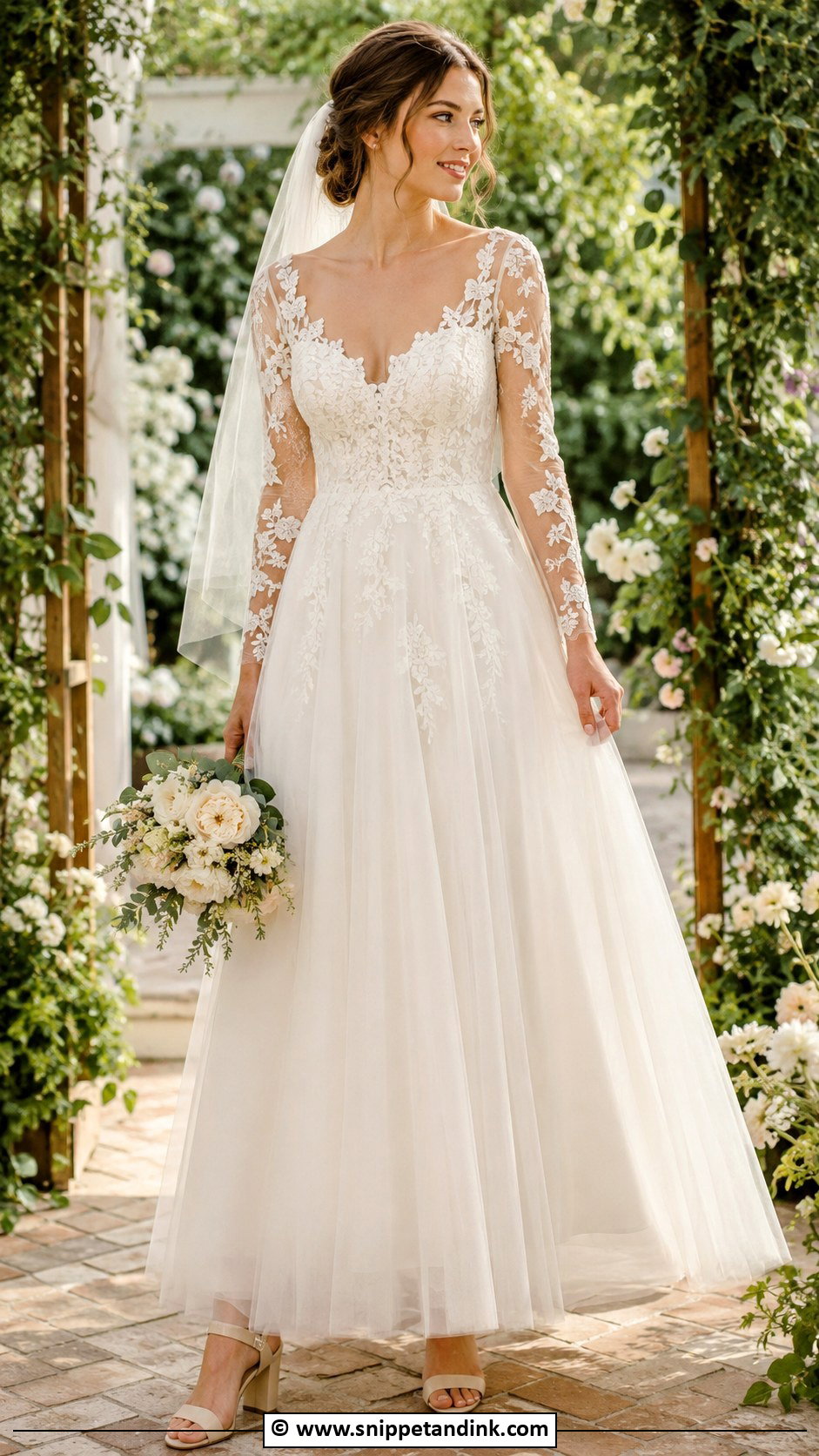
The A-line is the safest bet in this list for an outdoor venue. The fitted bodice and widening skirt suit most figures and let you walk freely over uneven ground. Lace sleeves, floral appliqué, a corset waist, ribbon ties or soft tulle add the cottage character. A simple veil, pearl earrings and garden flowers finish it, with block heels or flats outside. It’s romantic without asking too much of you on the day.
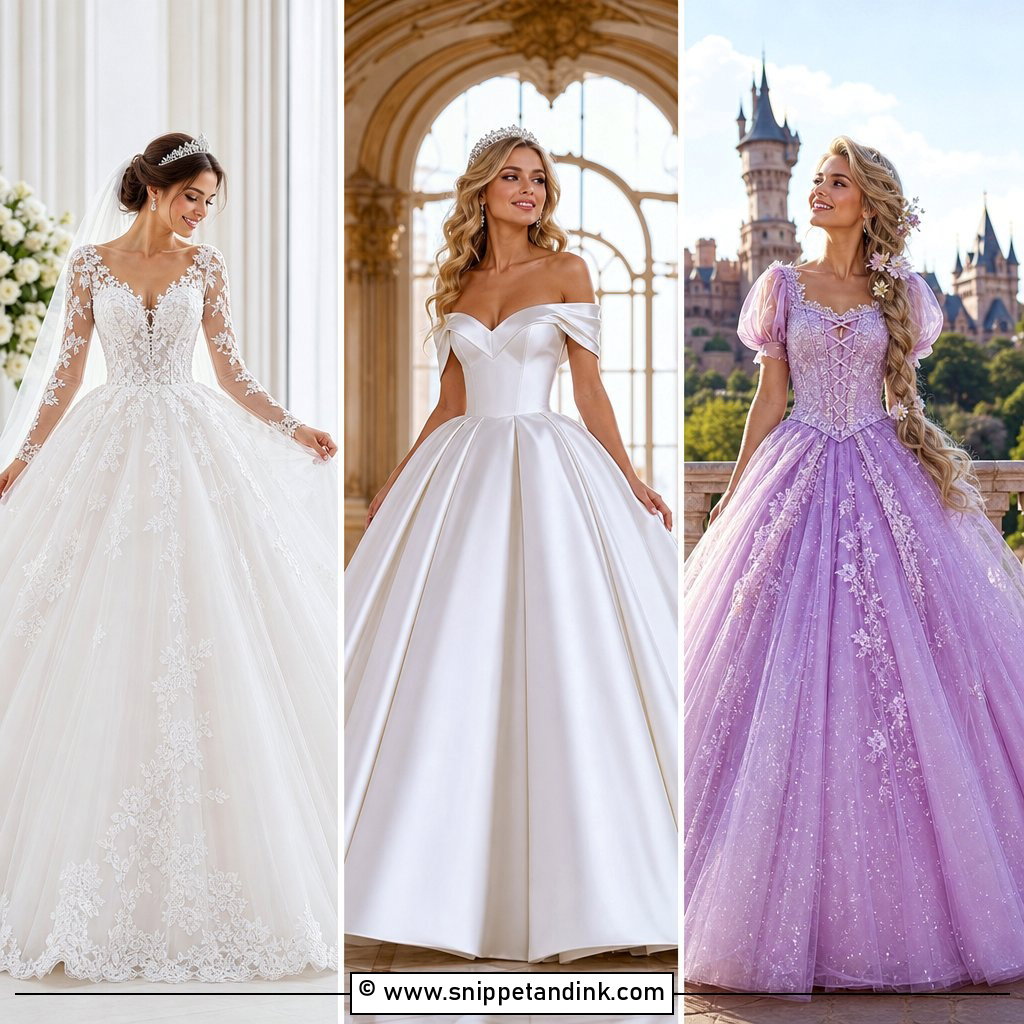
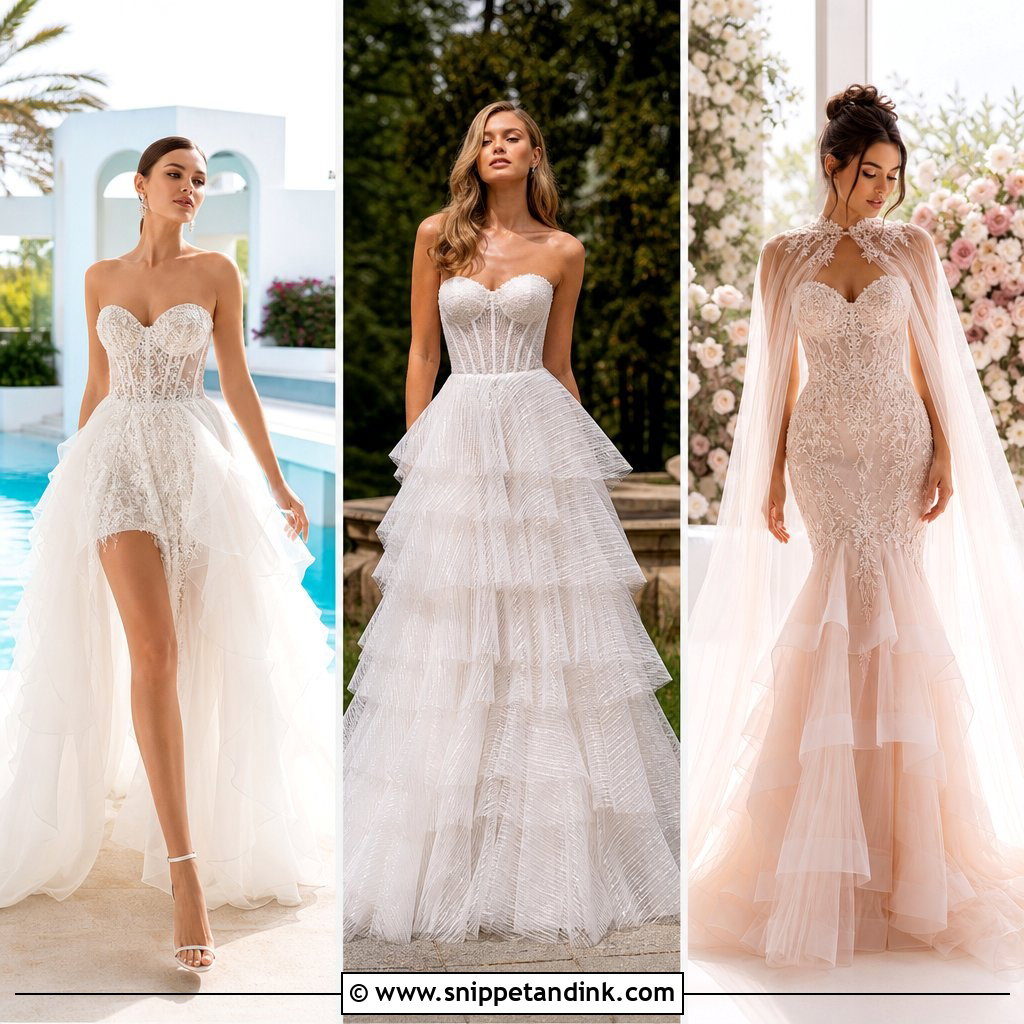
26. Ball Gown Cottagecore Wedding Dress
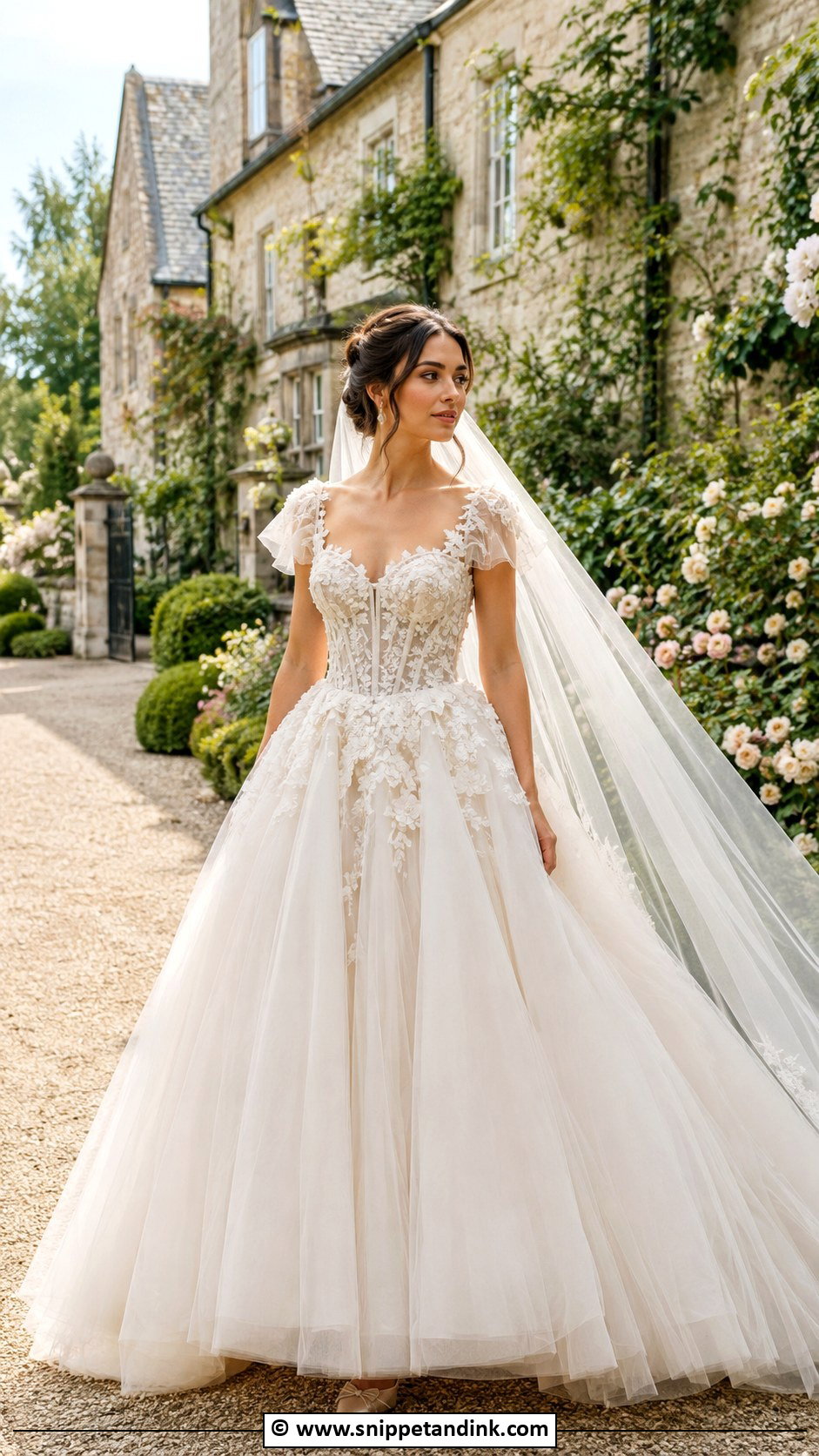
A cottagecore ball gown should feel soft, so choose layered tulle, organza or lace over heavy satin. A corset bodice, floral appliqué and soft sleeves keep it romantic. Volume outdoors needs planning: a wide skirt picks up leaves and grass, and getting in and out of a car takes help. A long veil, pearl earrings and a loose bouquet balance the fullness. It suits estate gardens and country houses where there’s space to spread out.
27. Open Back Cottagecore Wedding Dress
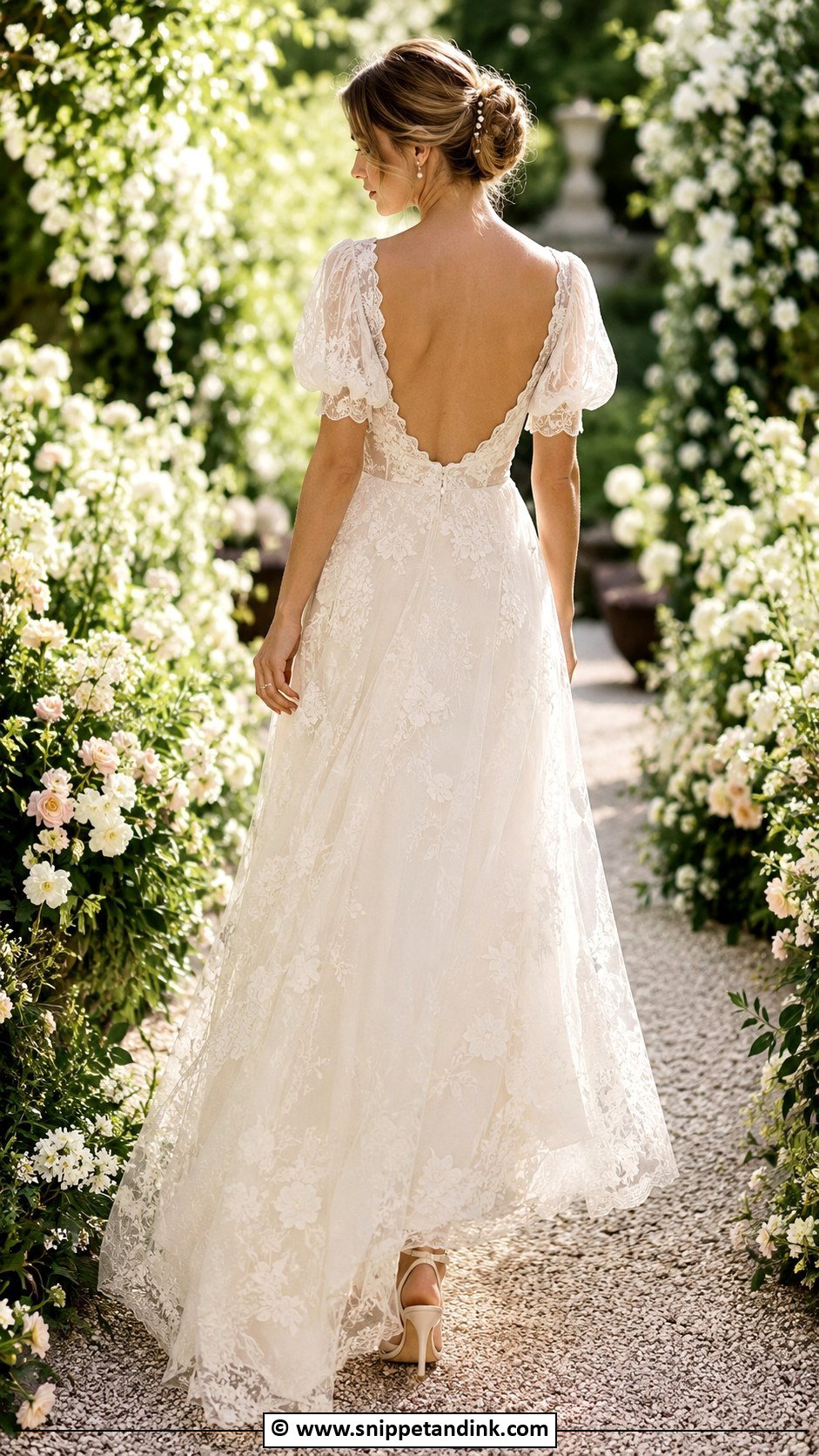
An open back gives a plain front a surprise. The back might be a low scoop, a tie or a lace-framed opening. I check how secure the bodice is at a fitting, because without a back to anchor it, the front can slip when you lean forward. Choose back jewelry only if the gown is very plain; otherwise let the shape stand alone. A low bun or half-up hair shows it off. Warm weather and garden venues suit it.
28. Midi Cottagecore Wedding Dress
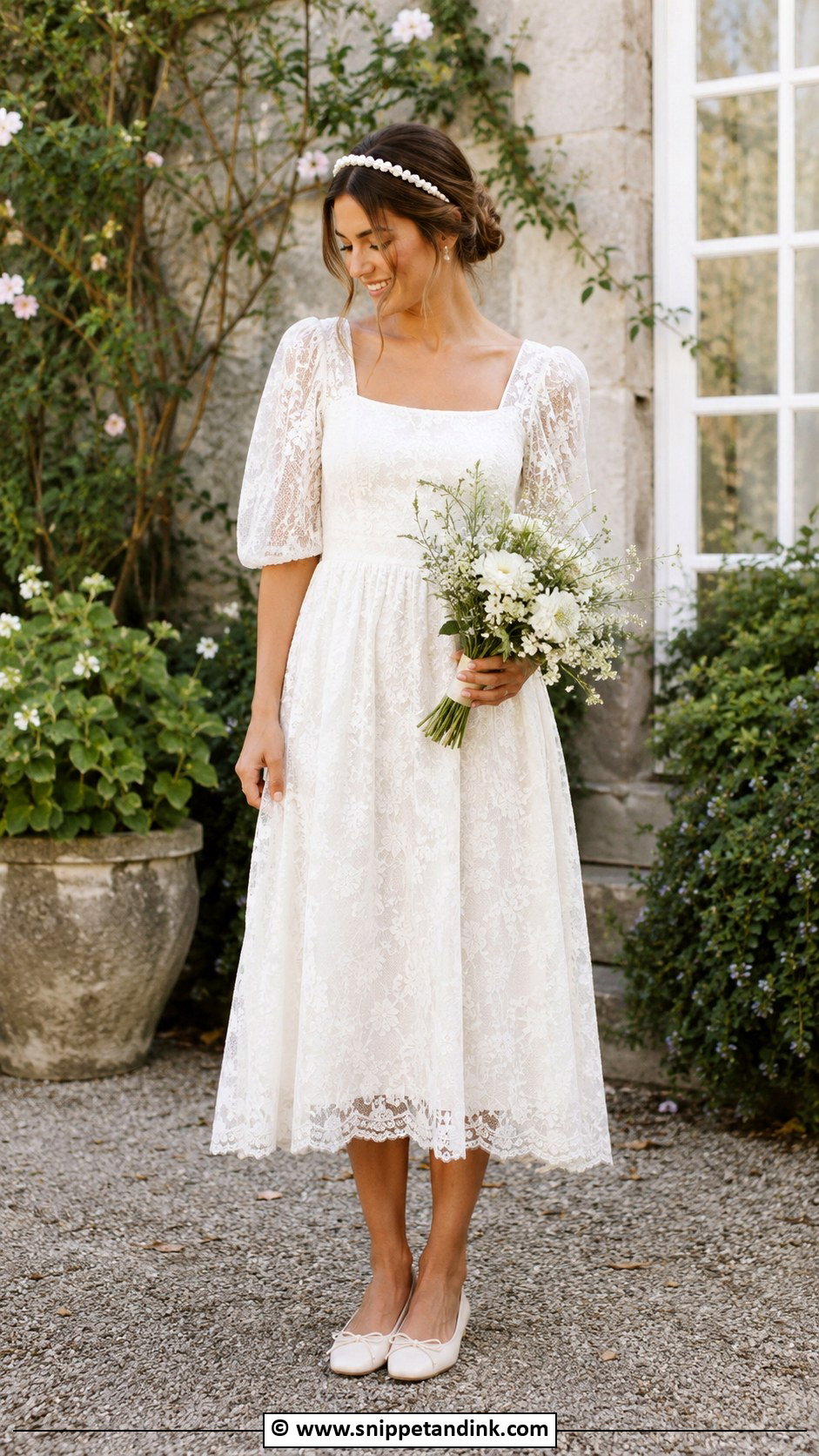
A midi falls around mid-calf, slightly longer than tea length, and feels polished but relaxed. Lace overlays, puff sleeves, gathered skirts and floral embroidery suit it. Ballet flats, block heels or vintage-style pumps work with this length, with a short veil, bow or pearl headband. Hem placement matters: just below the widest part of the calf is most flattering for most legs. It suits small weddings, garden parties and courthouse ceremonies.
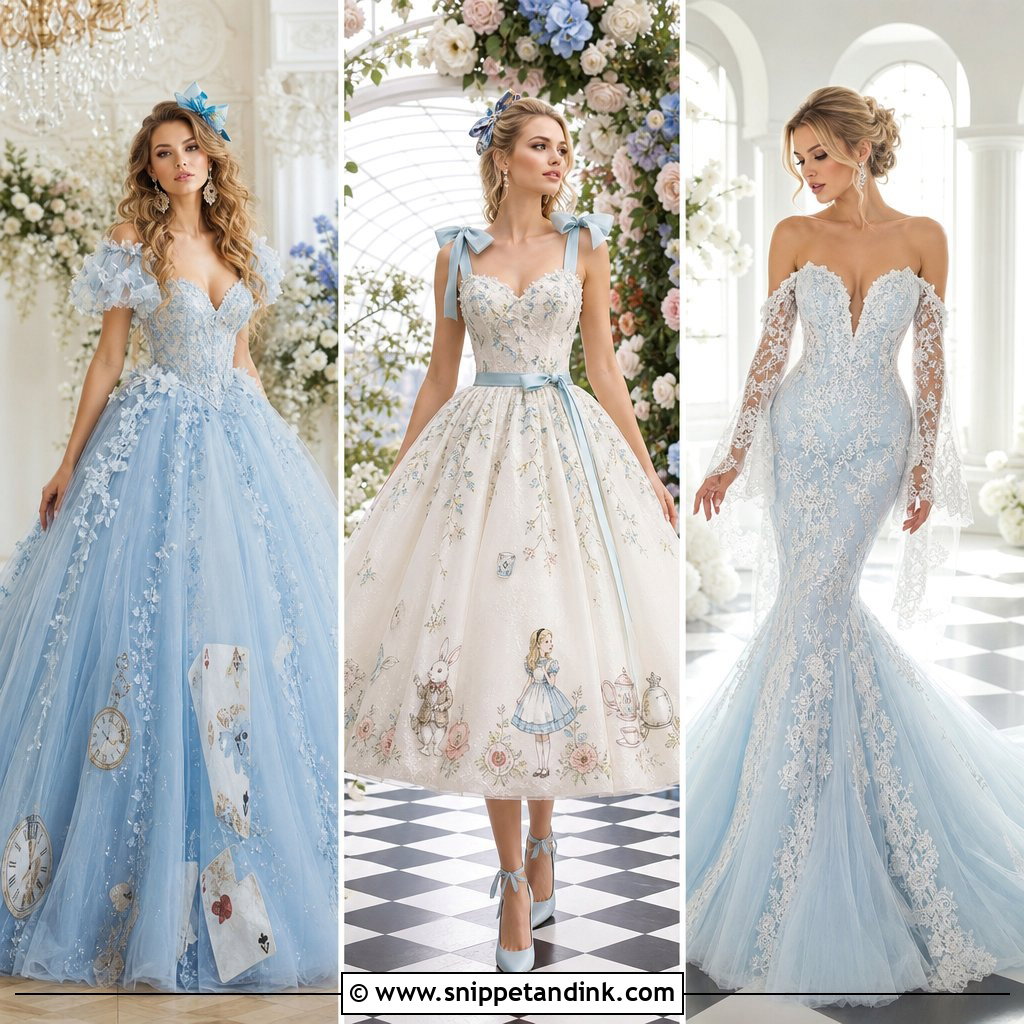
29. Colored Cottagecore Wedding Dress

Colored gowns fit cottagecore easily, because the palette is already soft: blush, champagne, buttercream, pale blue, sage, lavender, dusty rose. The best versions combine gentle color with lace, tulle, embroidery or appliqué. Keep accessories neutral and let the bouquet echo the shade. Test the color against your skin and in shade, since pale blue and sage can look grey in overcast light. Spring and garden weddings suit it, and it still reads as bridal when the shape is graceful.
30. Plus Size Cottagecore Wedding Dress
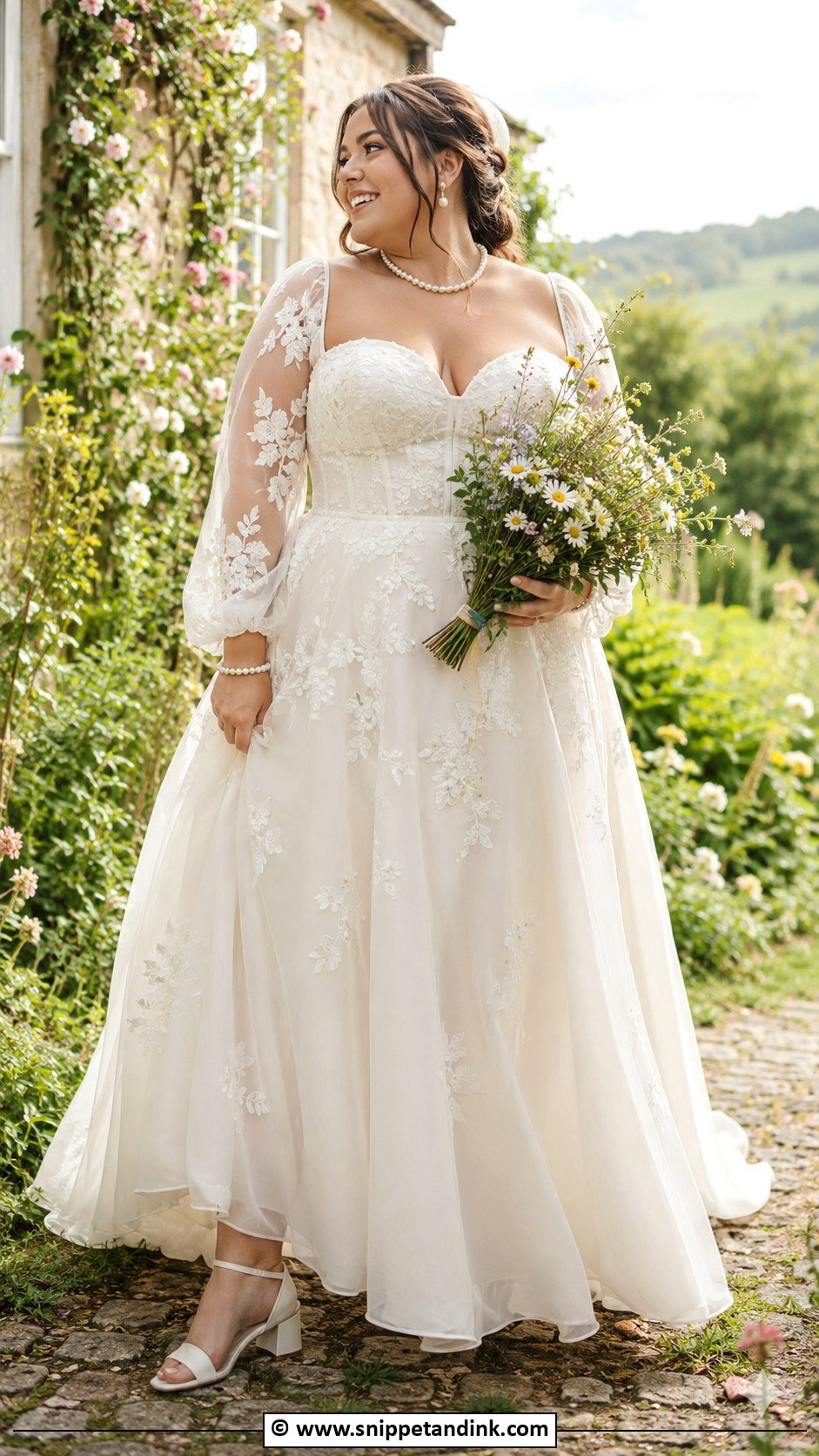
For a plus size bride, cottagecore needs real structure underneath: a corset bodice, wide straps, lined lace or an A-line skirt that moves freely. Puff sleeves, lace sleeves, square necklines and floral embroidery can all look striking with the right fit. I’d choose sleeves cut generously at the bicep, since gathered sleeves pull tight across the arm. Don’t buy a dress just because it fits the aesthetic; it has to feel secure from every angle. Comfortable block heels, pearl accessories and a bouquet that echoes the dress finish it.
Wet Grass, Gravel and Garden Steps
Most cottagecore weddings happen outside, and the dress meets the ground more than a ballroom gown ever does. A few things to sort out at your fittings:
- Hem length: for grass, ask for the hem to just brush the top of your shoe, not pool. A pooled hem soaks up dew and turns green at the edge within an hour.
- Shoes: stilettos sink into lawns. Block heels, flats or boots let you stand without wobbling, and the hem should be measured in the shoes you’ll actually wear.
- A bustle or wrist loop for any train, so you can lift it on gravel paths and stairs.
- A small kit for the day: a lint roller for seeds and burrs, baby wipes for grass marks, safety pins and a stain pen. Test the stain pen on the inside seam first.
Secondhand and True Vintage Gowns Need Different Checks
This style sends a lot of brides to vintage shops and resale sites. A pre-owned dress can be wonderful, but I’d look closely before paying. Hold the fabric up to daylight and check for yellowing along the folds and underarms, which rarely comes out fully. Look inside the seams to see how much fabric is left for letting out; older gowns often have very little. Old lace can be brittle, so press it gently between your fingers and look for small splits. Allow extra time for alterations and cleaning, since a specialist may need weeks to restore an older gown.
A Dress You Can Walk Through a Meadow In
This style feels personal because it’s tied to the outdoors and to handwork. Lace sleeves, embroidery, puff sleeves, tea length hems, corset bodices and flowing chiffon can each be right, depending on your venue and how you like to move. Think about setting, season and comfort before details. A garden ceremony suits lace and wildflowers; a country estate can carry a fuller tulle gown. Choose the dress that still feels good when you sit on a hay bale or walk across a wet lawn.
You'll Like These Ideas:


Leave a Reply