
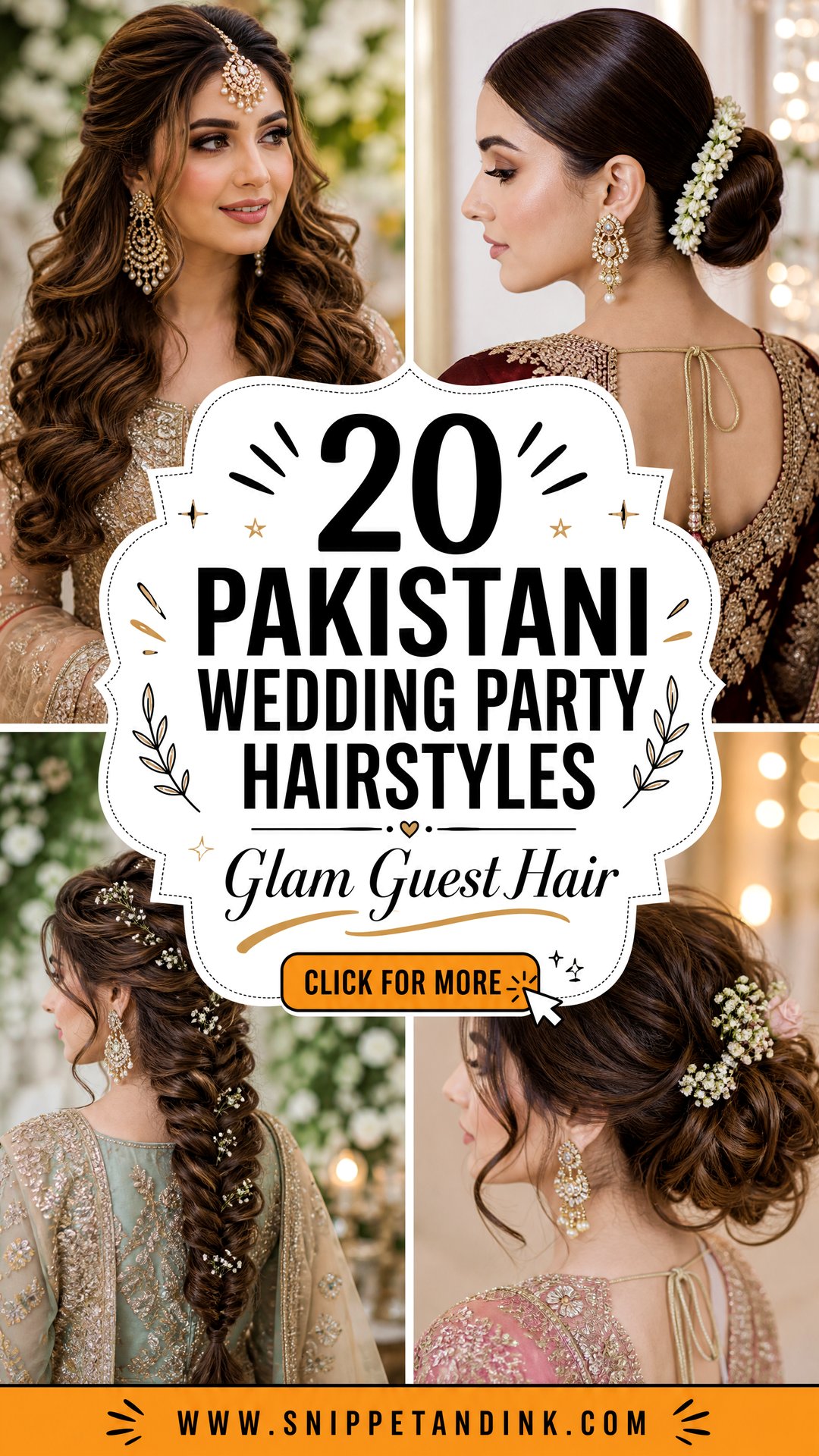
Hair at a Pakistani wedding party has a harder job than people expect. It sits under a dupatta that gets adjusted fifty times, holds a tikka in place, carries heavy jhumkas without tangling, and has to look the same at midnight as it did in the car. So when a guest sits in my chair, my first questions are about the event, the neckline and the jewellery, not the photo on her phone. Mehndi and dholki take braids and flowers; nikah and baraat need structure for pins; walima and receptions can go softer. Here are twenty styles I do for guests, with what makes each one hold.
Dupatta First, Hairstyle Second
Most problems I fix on wedding nights come from styling the hair before thinking about the dupatta. If yours is going over the head, it needs something to pin into, usually a bun or a firm braid at the crown or back. Open curls under a heavy dupatta flatten in minutes and the fabric slips back, so you spend the night tugging at it.
Tell your stylist three things: whether the dupatta goes over the head or on one shoulder, how heavy the embroidery is, and which forehead jewellery you’ll wear: tikka, matha patti or passa. A centre part suits a tikka. A side passa needs a part on the opposite side so the hair doesn’t cover it. Heavy jhumkas catch on loose curls, which is a good reason to choose a bun or pin the hair behind the ears.
Bring the dupatta and jewellery to the appointment. Draping it while I’m pinning lets me place each grip exactly where the weight will sit.
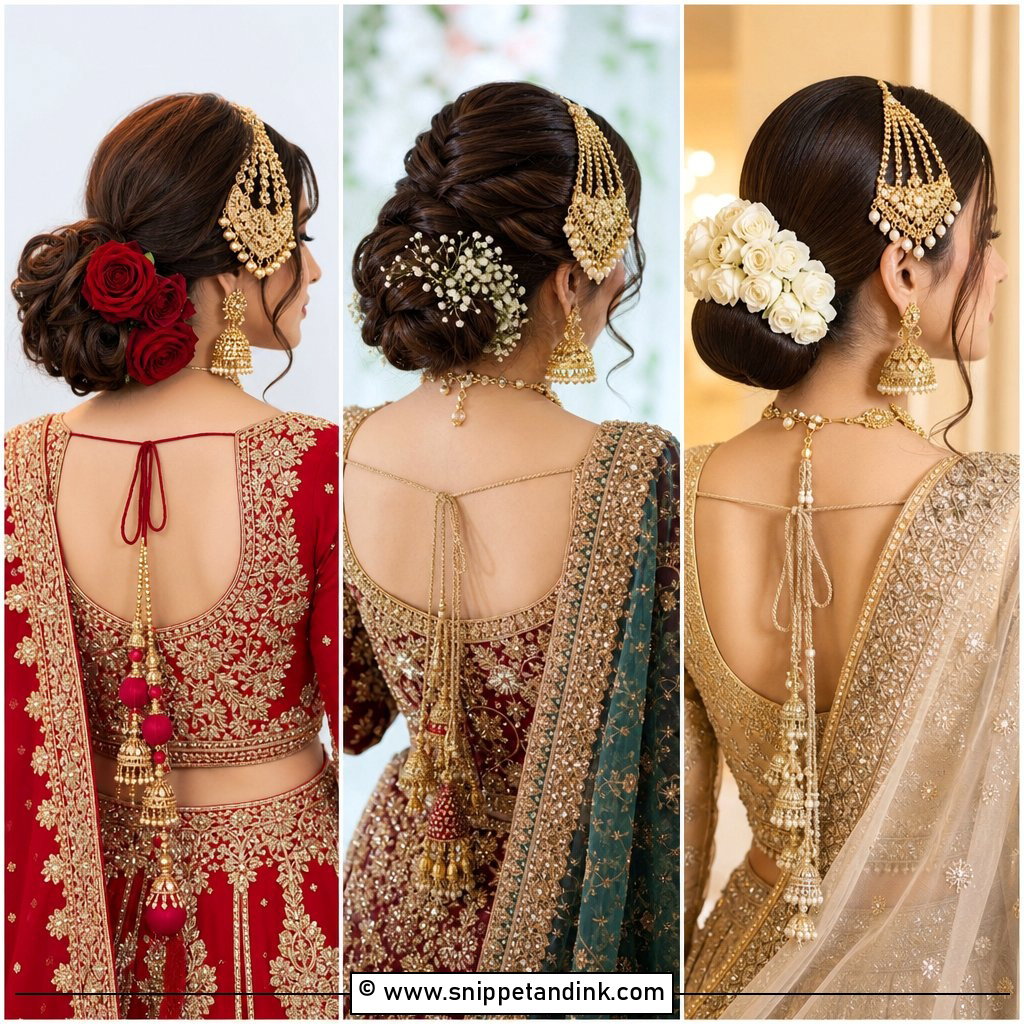
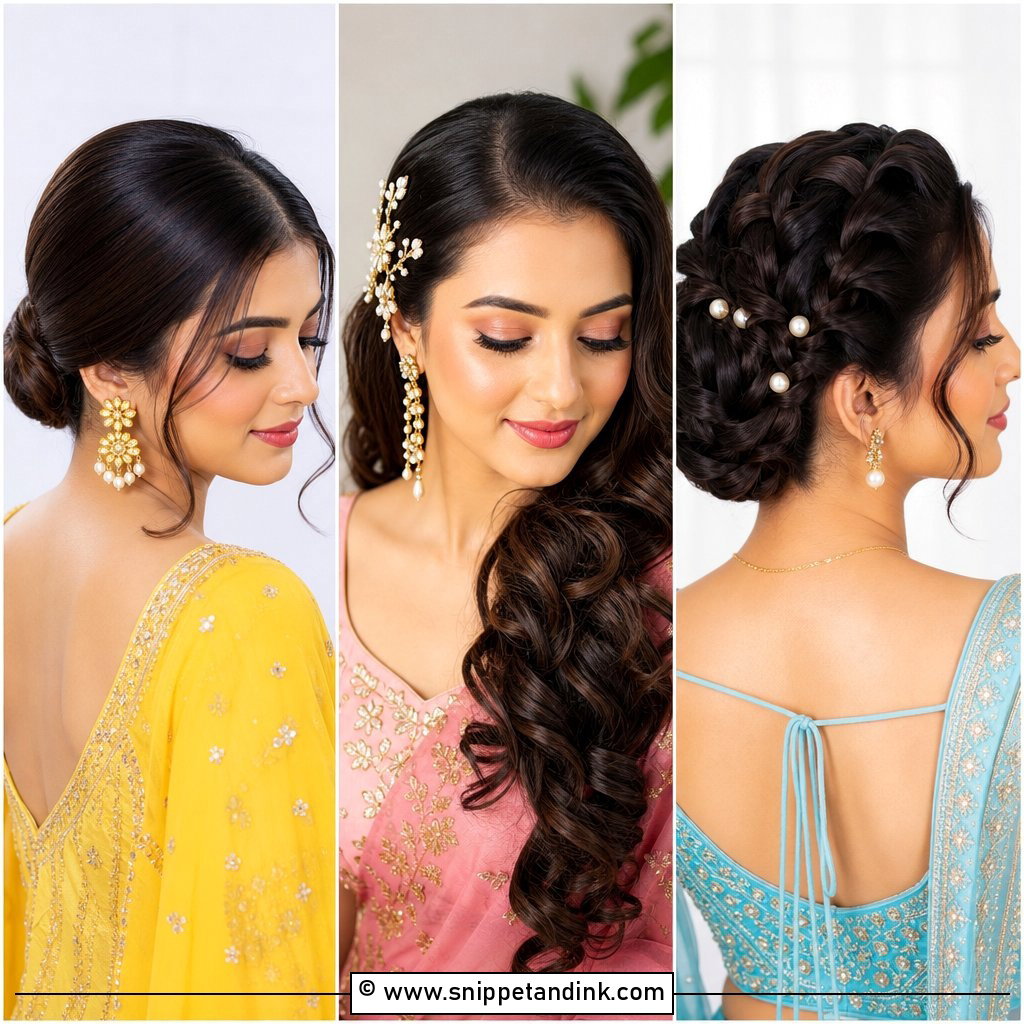
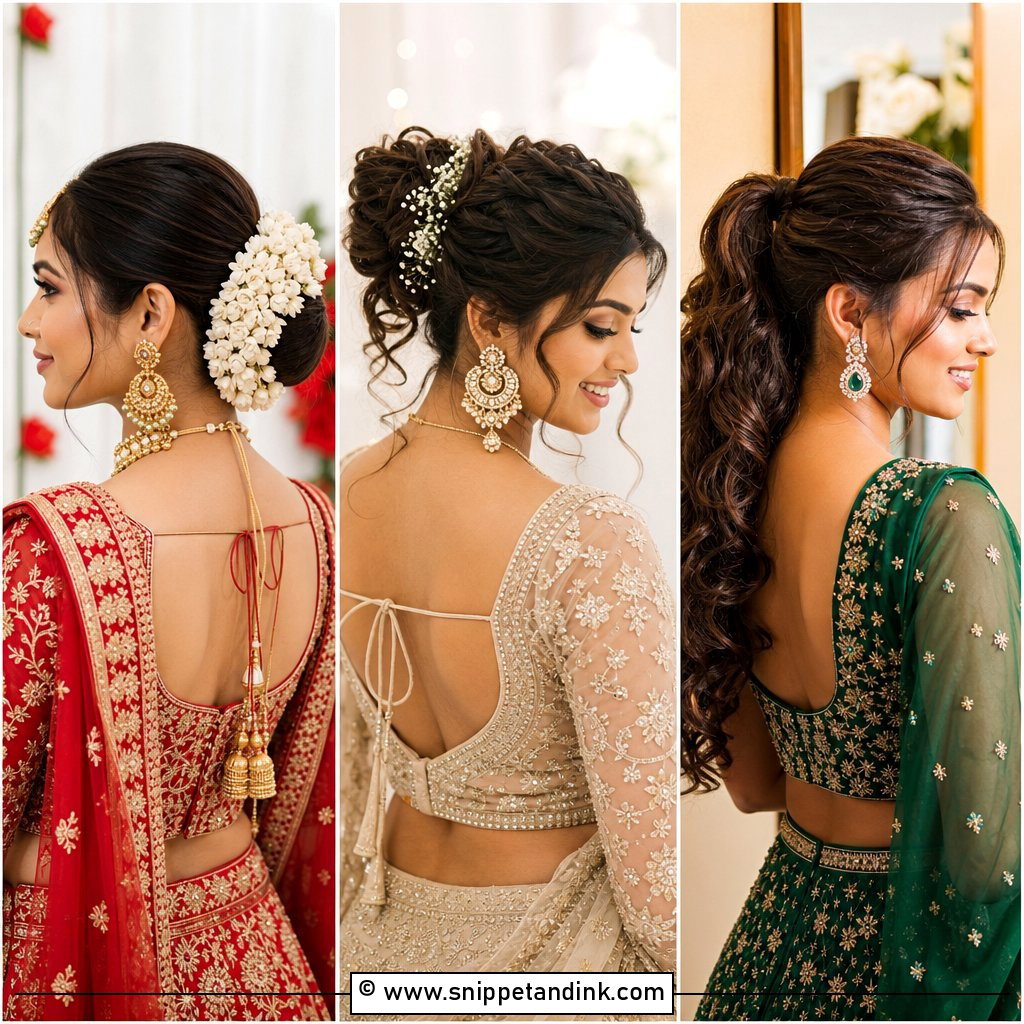
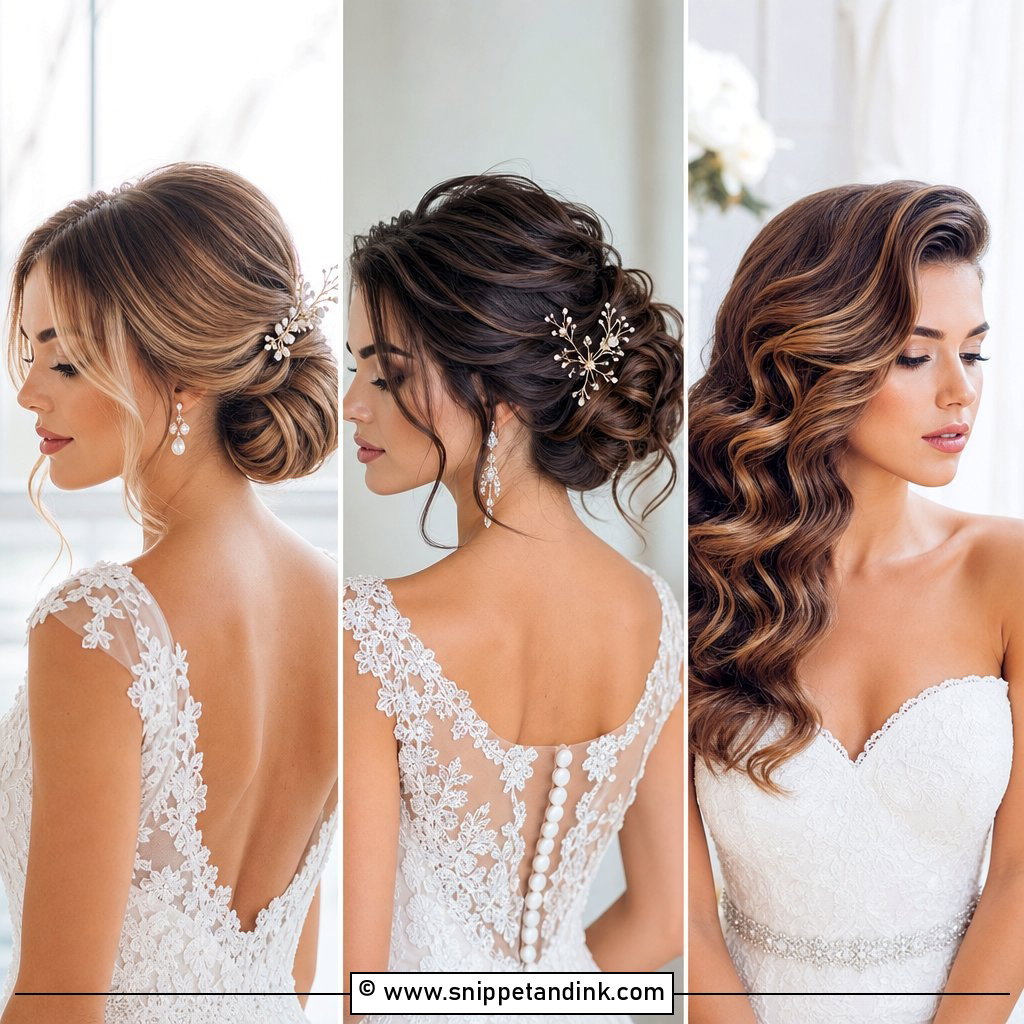
1. Pakistani Wedding Low Bun With Gajra
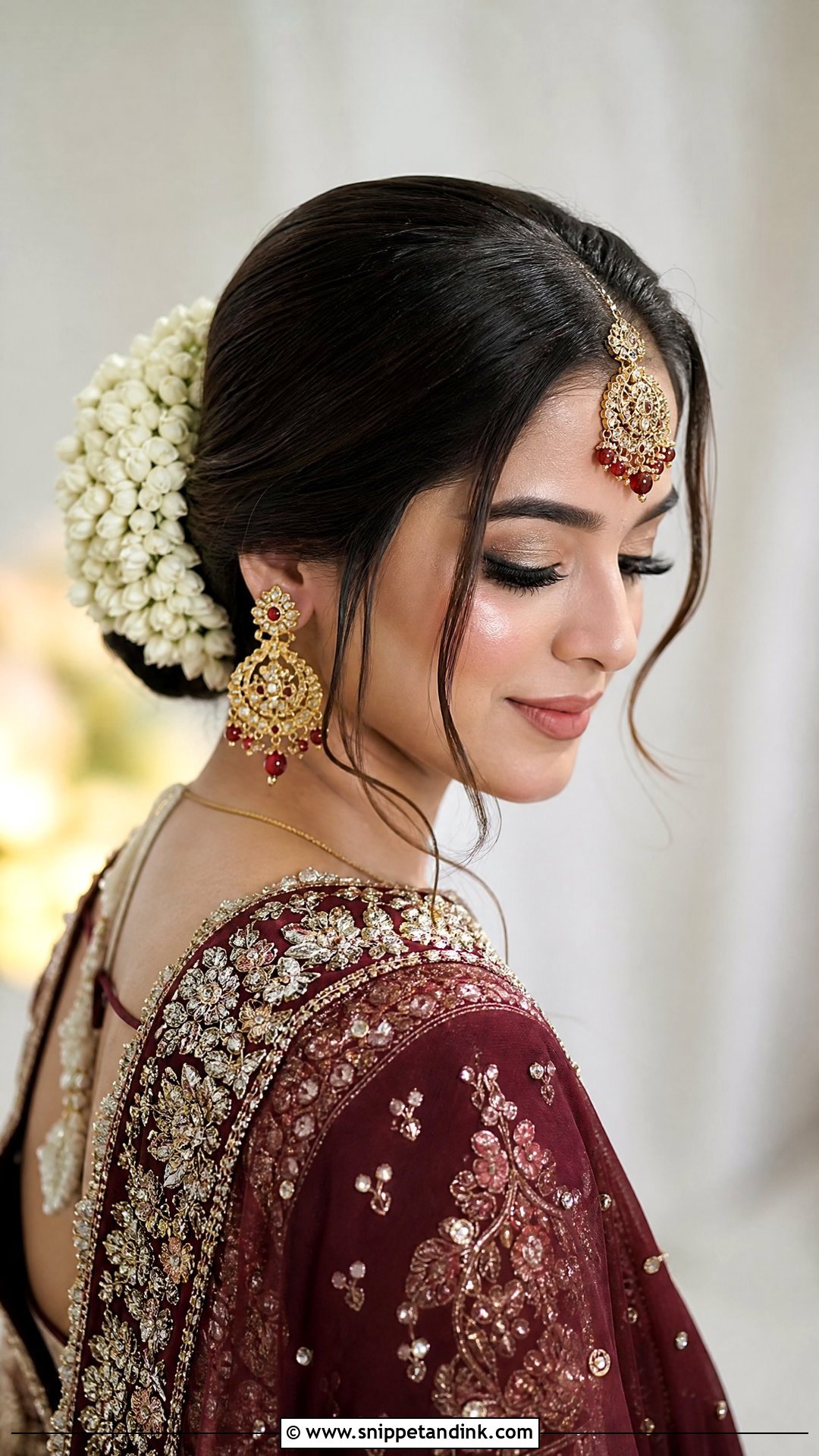
The low bun with gajra is the style I’m asked for most, and it earns that. Sitting at the nape, it leaves room for big earrings and a passa, and gives me somewhere solid to pin a dupatta lightly over the head. I wrap fresh jasmine around the bun last, after all the pins are in, because the buds bruise if they’re handled too much. If your neckline is heavy or your jewellery is large, ask for a little lift at the crown; a flat crown next to a heavy set makes the head look small in photos.
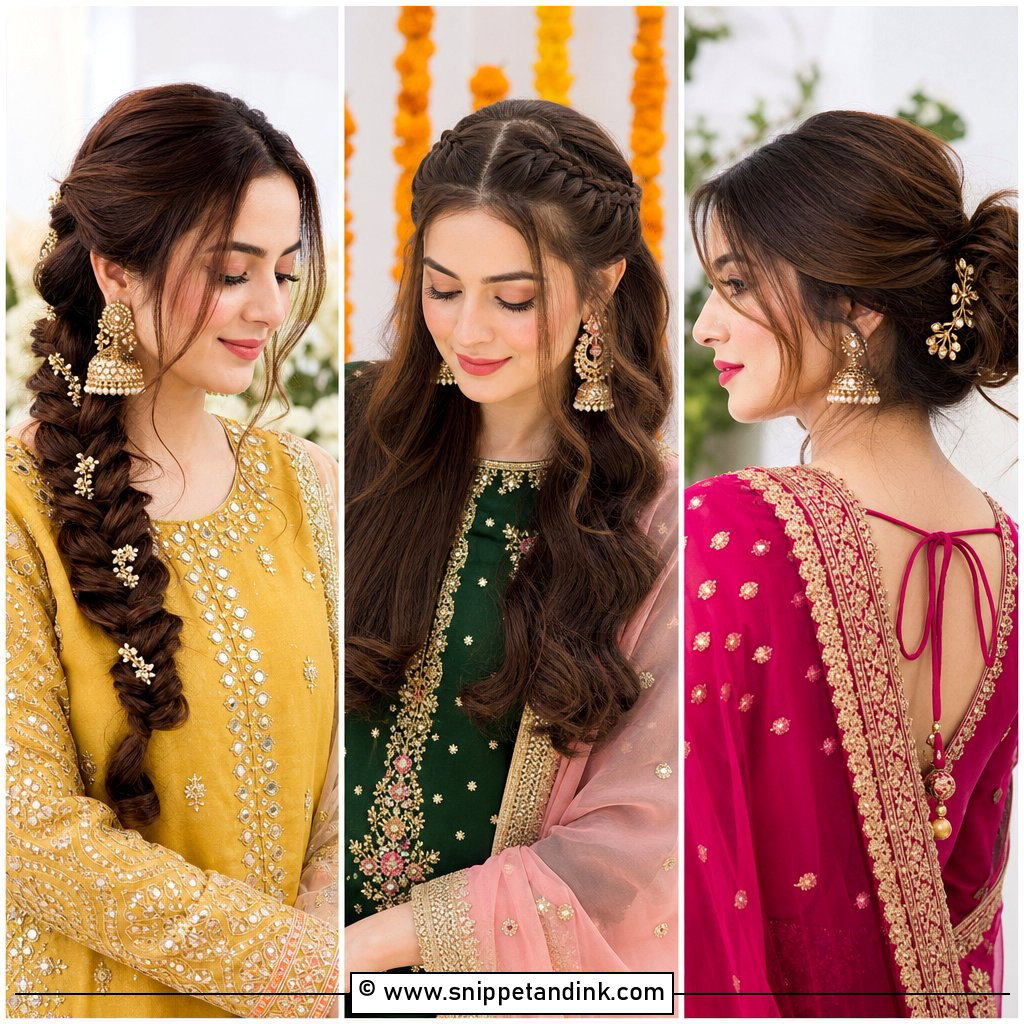
2. Pakistani Wedding Side Braid With Flowers
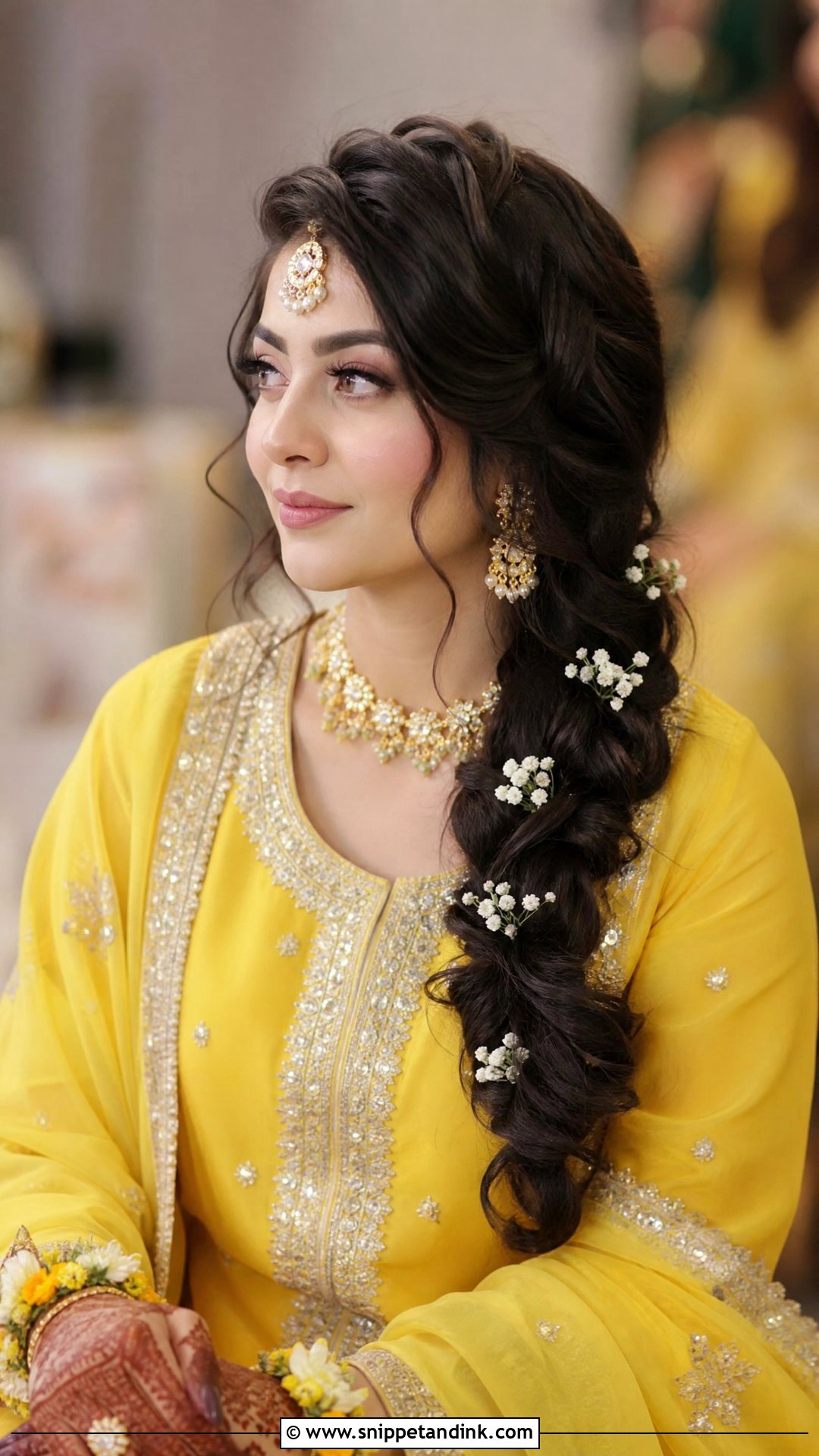
For mehndi, mayun and dholki, I like a side braid because it survives dancing and still looks relaxed. I curl the hair first so the braid has grip and fullness, then plait loosely over one shoulder and pull the loops out gently with my fingertips. Small flowers, pearls or coloured pins slot into the gaps. It also keeps the back clear, which matters if you’re wearing a heavily embroidered kameez or blouse that deserves to be seen. Leave a couple of face-framing pieces at the front.
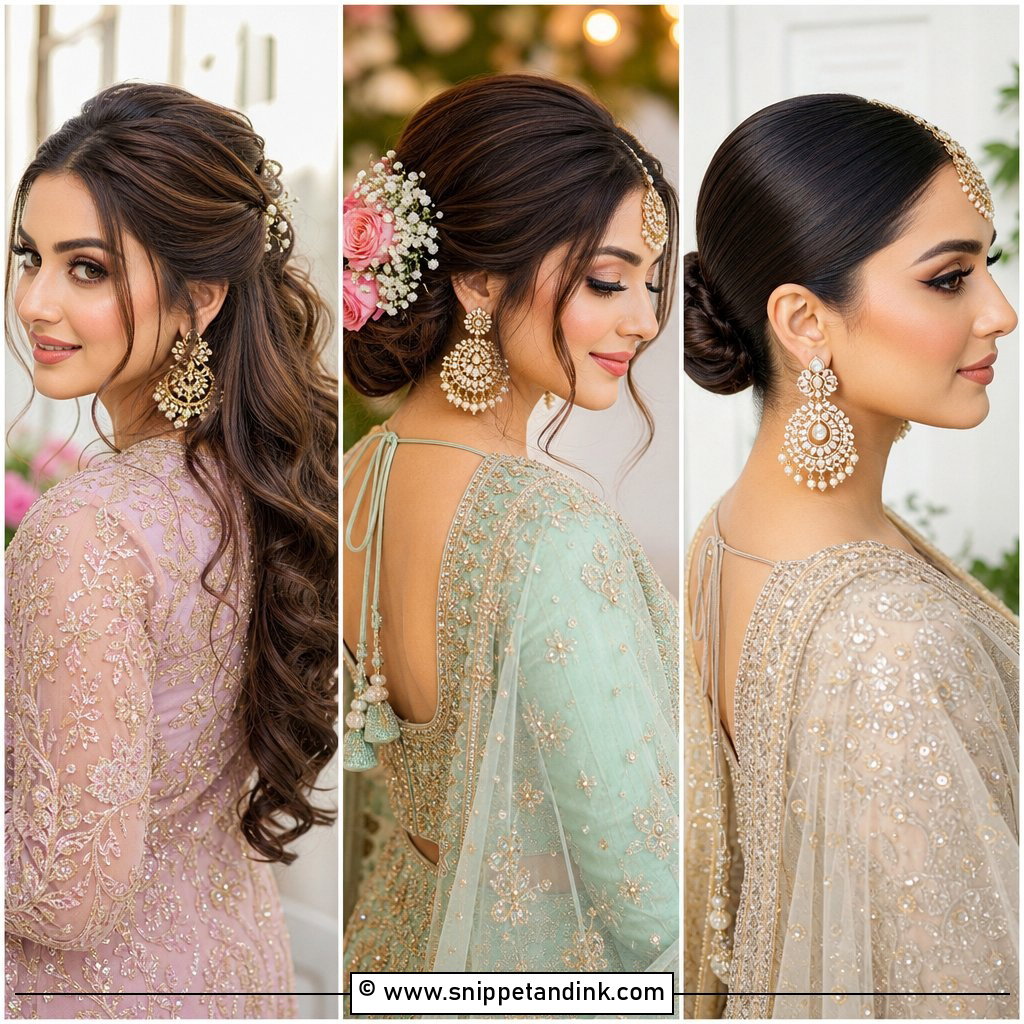
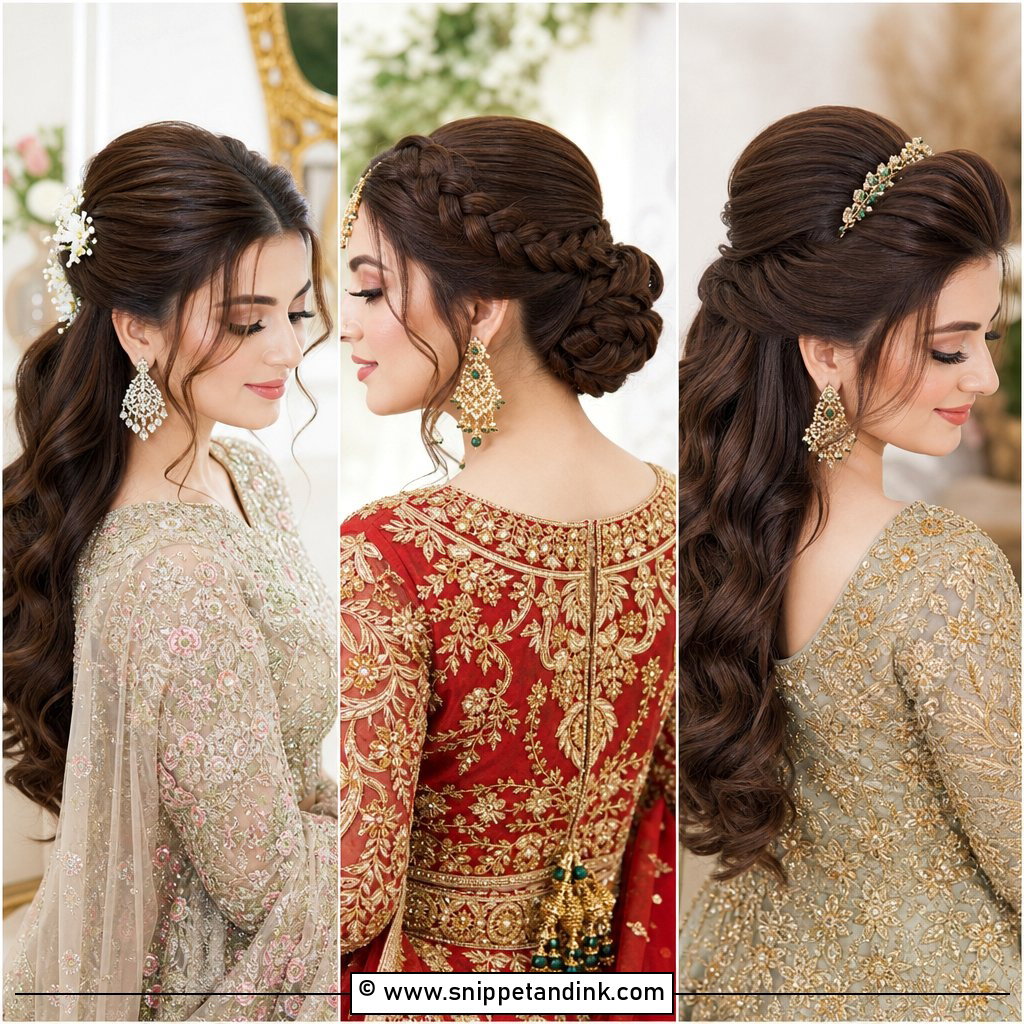
3. Pakistani Wedding Open Curls With Tikka
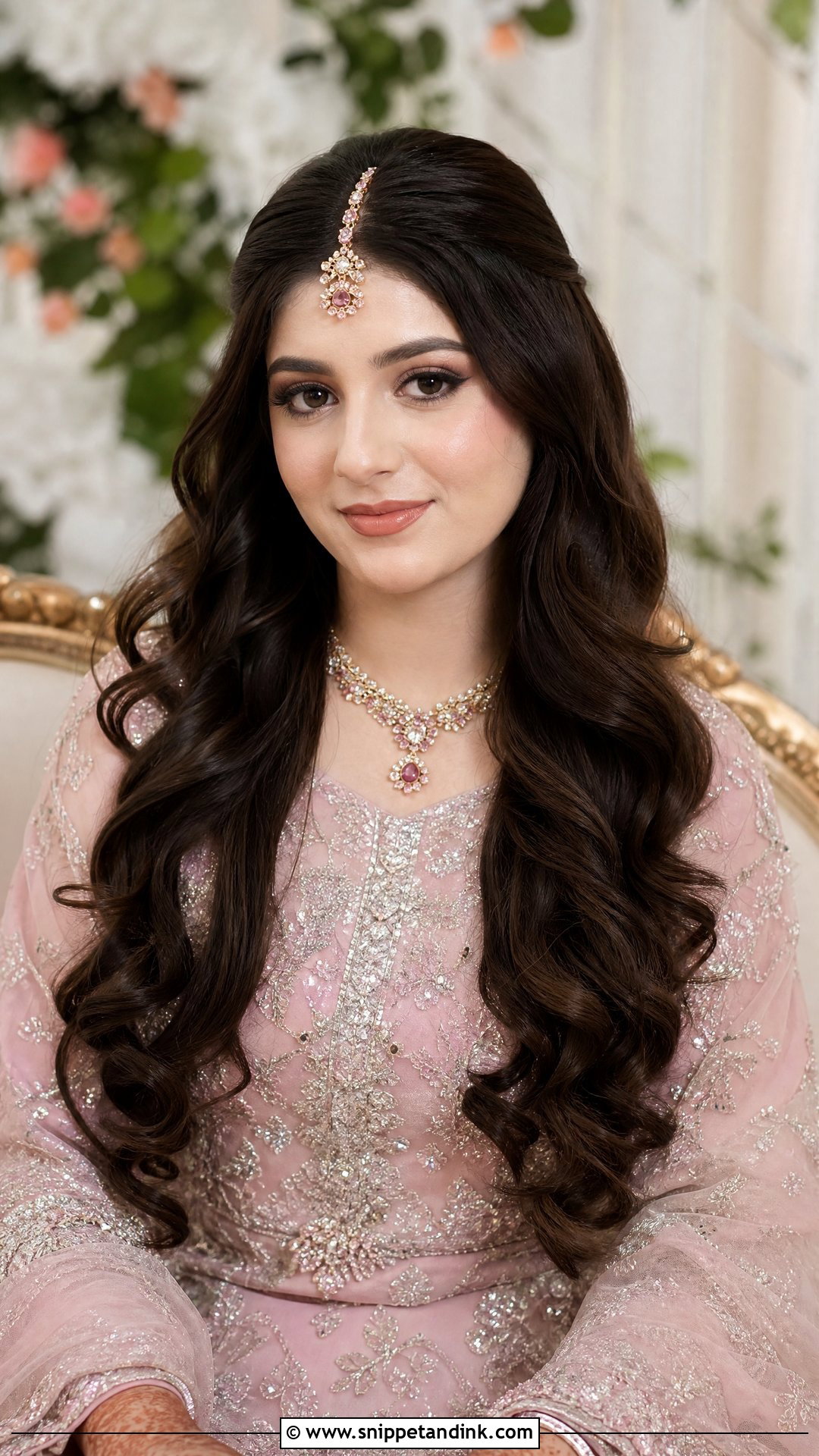
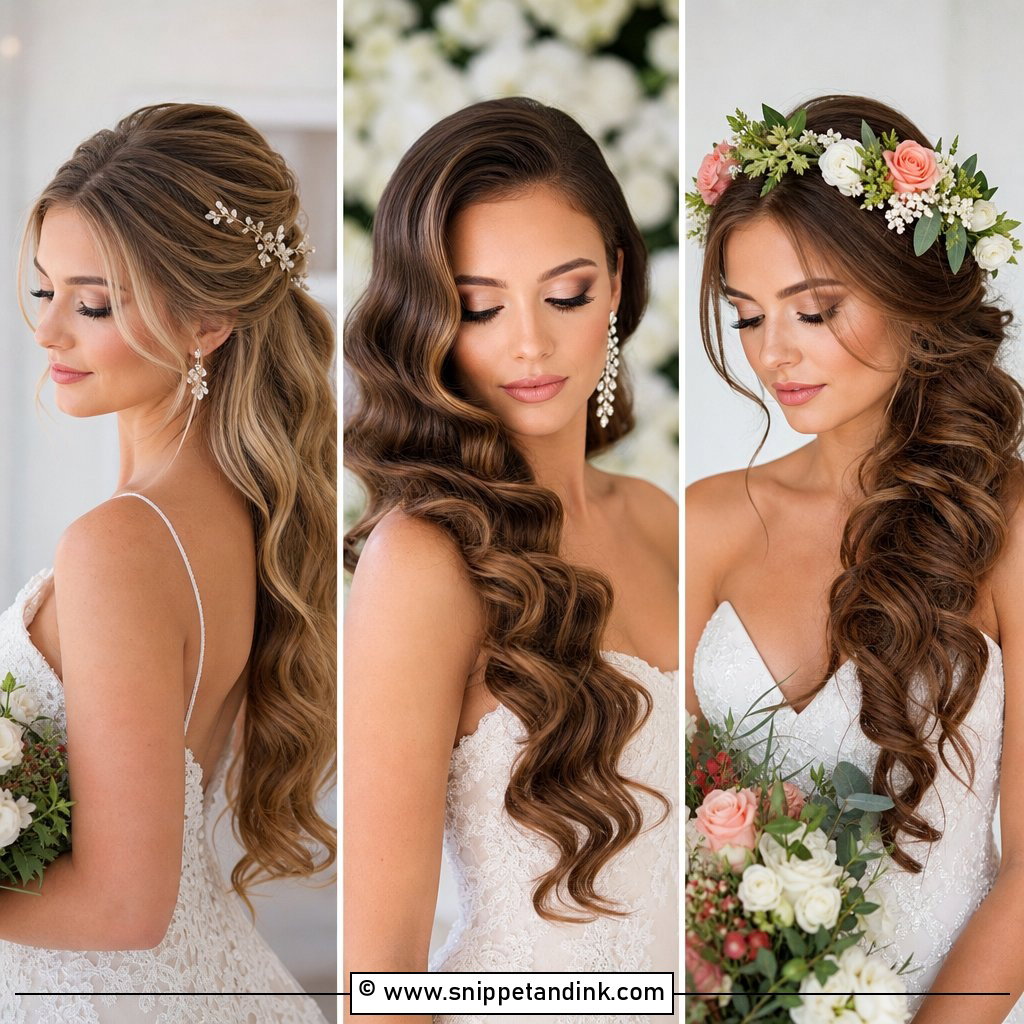
Open curls with a tikka give you hair down without losing the wedding feel. A clean centre part holds the tikka, and I always pin the tikka’s hook into a small hidden section at the crown rather than just hooking it on loose hair; otherwise it slides sideways the first time you turn your head. Soft waves age better through the evening than tight ringlets, which drop unevenly. It suits walima and receptions where the dupatta sits on the shoulder, especially with organza and pastel lehengas.
4. Pakistani Wedding Sleek Center Part Bun
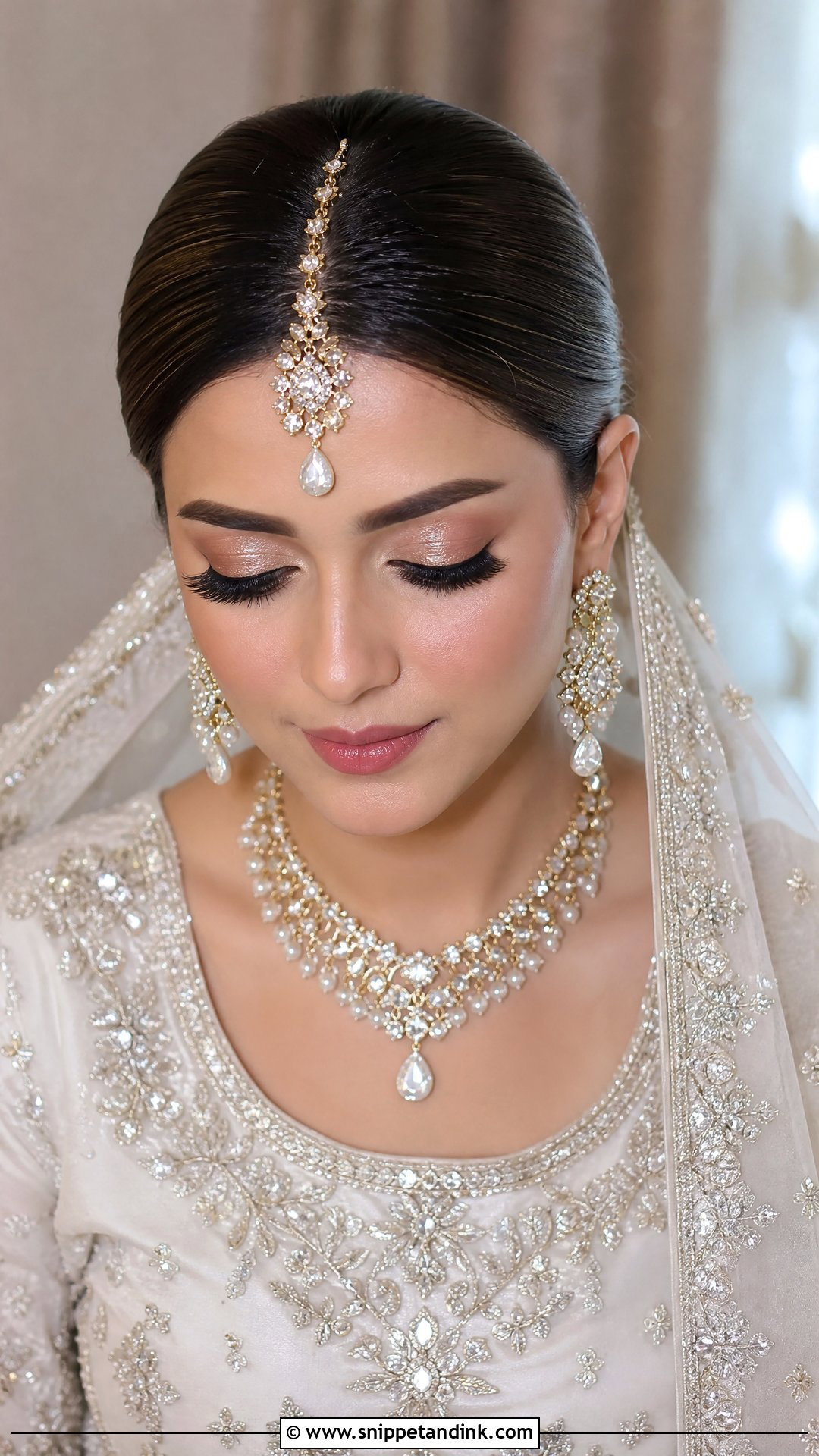
The sleek centre-part bun is my choice when jewellery is the hero. A straight part balances a maang tikka or matha patti, and with no hair around the face, heavy embroidery on the outfit gets to breathe. The shine at the crown comes from smoothing with a boar-bristle brush and a little serum before the elastic goes in, not from piling on spray. I sit the bun low or mid-height and pin it with U-pins from four directions so it doesn’t loosen when the dupatta is pinned over it.
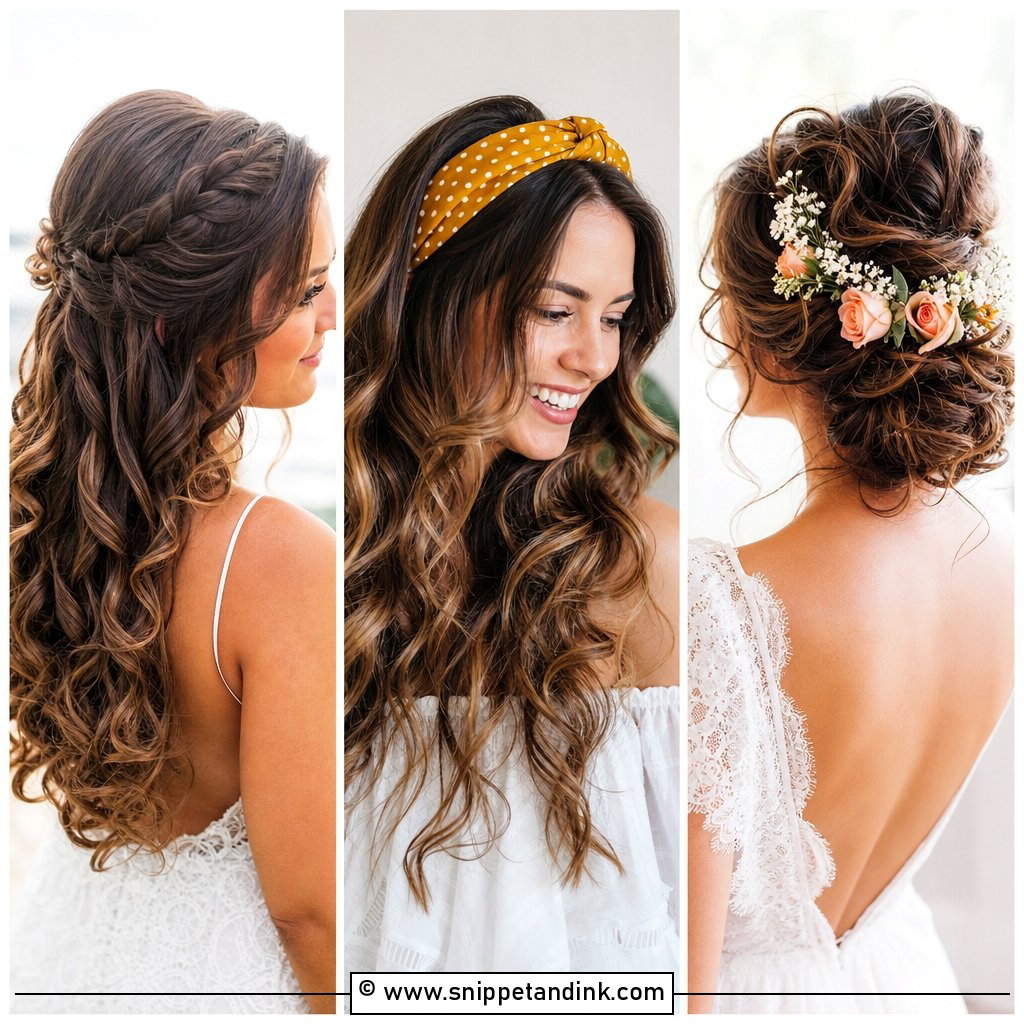
5. Pakistani Wedding Half Up Curls
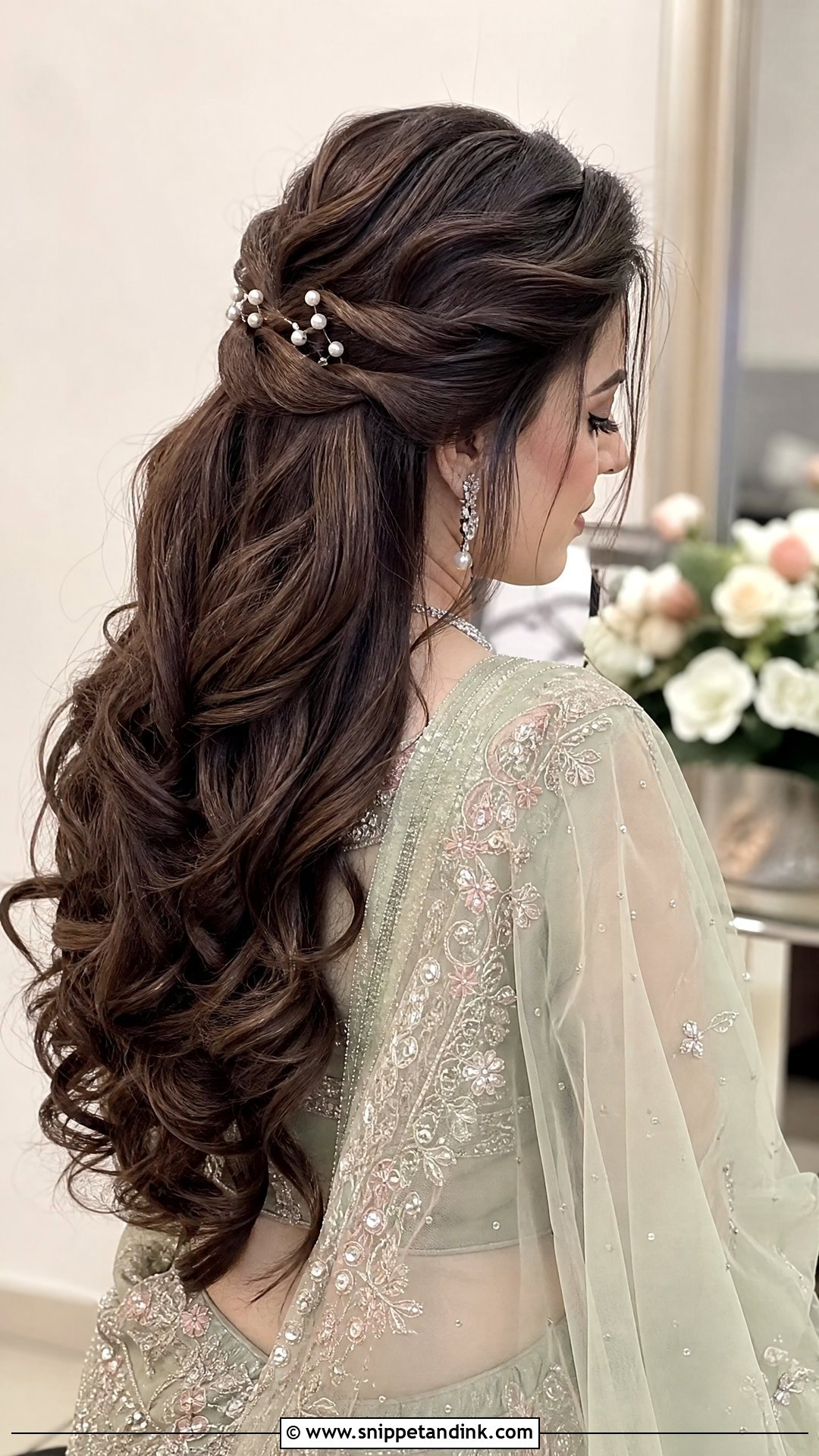
Half up curls are a compromise I like: open hair, but with the top section pinned back so the face stays clear for jewellery and makeup. The crown gets lift from a little backcombing underneath the pinned section. I set the curls in pin curls while they cool, which makes them last noticeably longer, especially on straight hair that drops easily. It sits well with lehengas, ghararas and anarkalis, and a guest can wear it without looking bridal. A delicate hair chain or tikka finishes it.
6. Pakistani Wedding Braided Bun
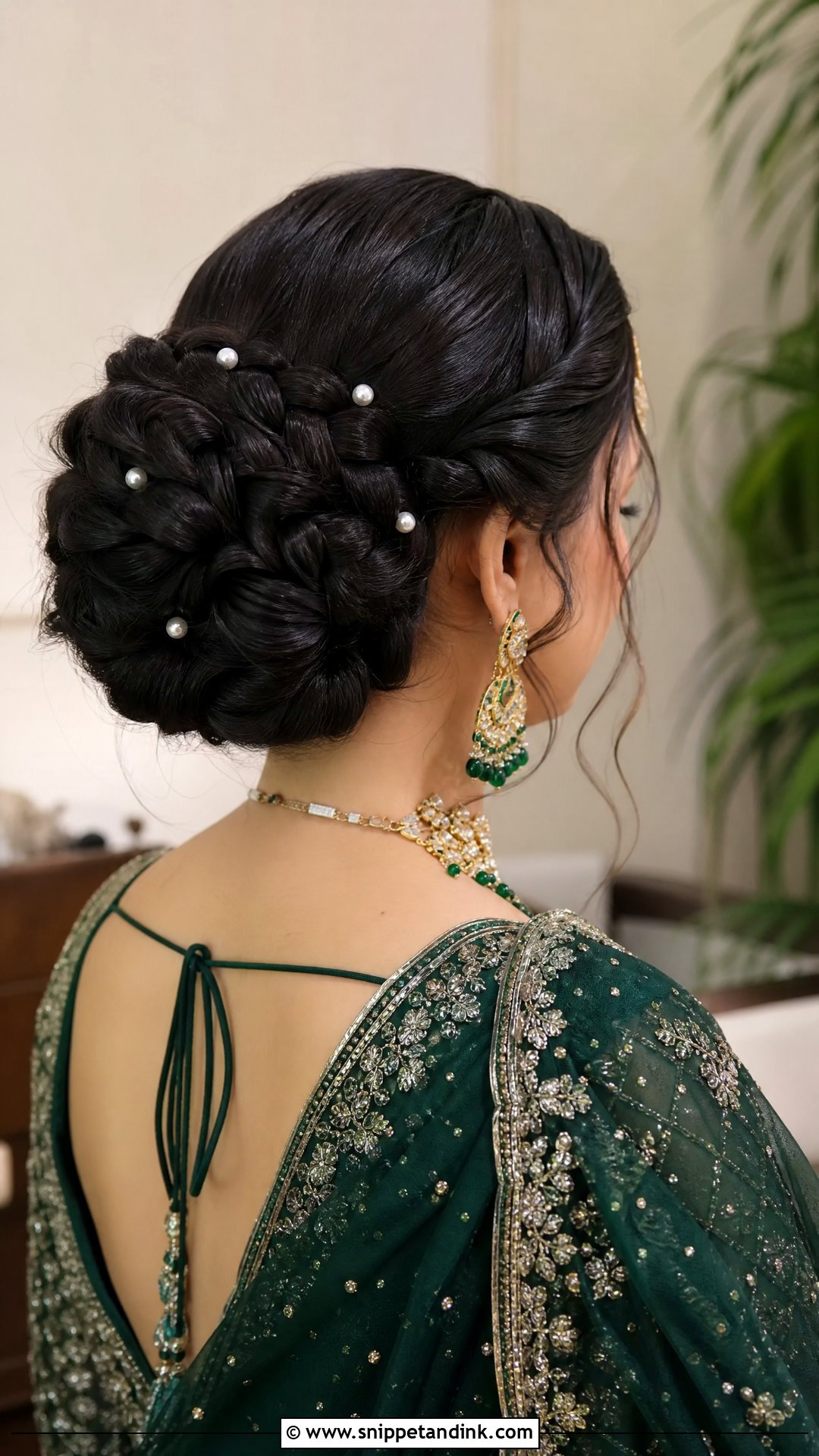
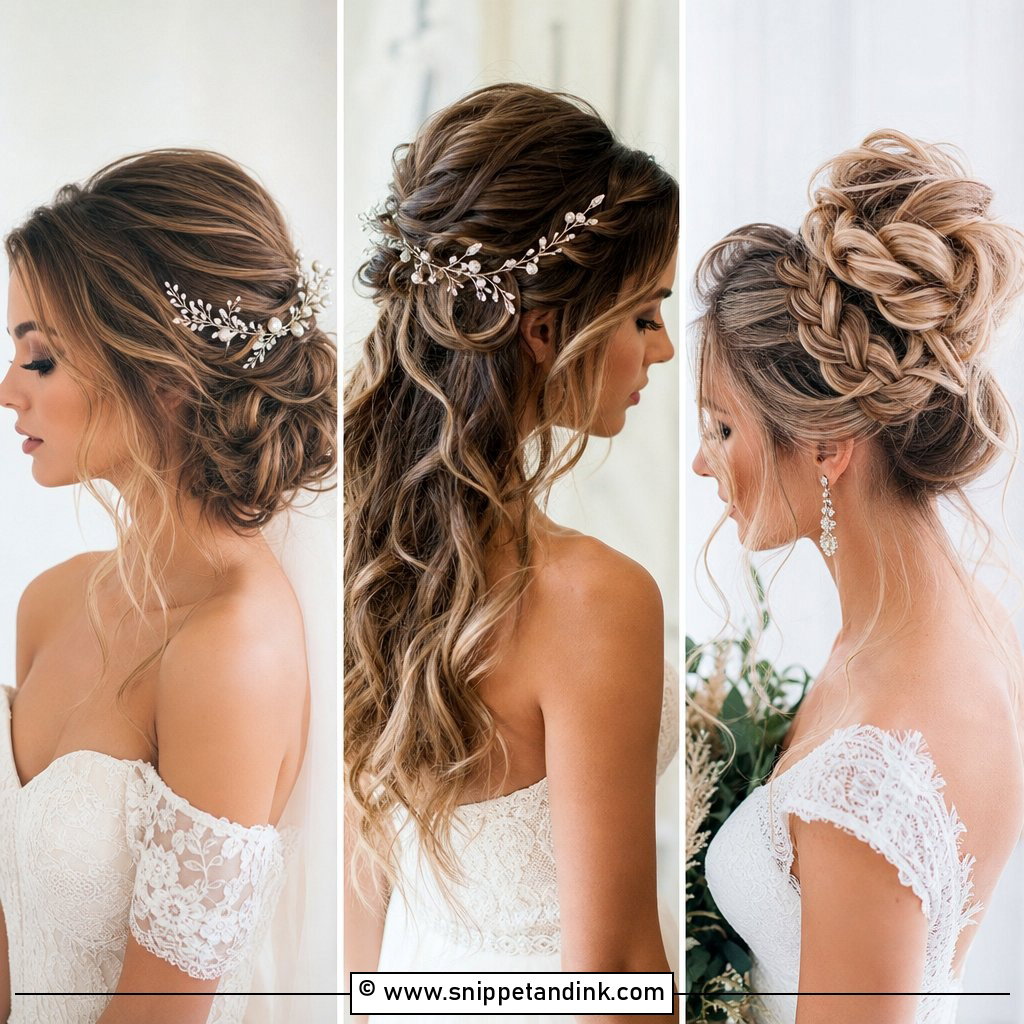
A braided bun takes longer than a plain one but gives texture from every angle, which is useful in a room where you’ll be photographed from all sides. I braid the lengths first, then wrap and pin the braid into a round shape. The braid itself acts like a frame for pins, so dupattas and floral pieces anchor into it very securely. It holds through hours of dancing. A sleek front looks formal; a few loose strands near the face soften it.
7. Pakistani Wedding Bubble Braid
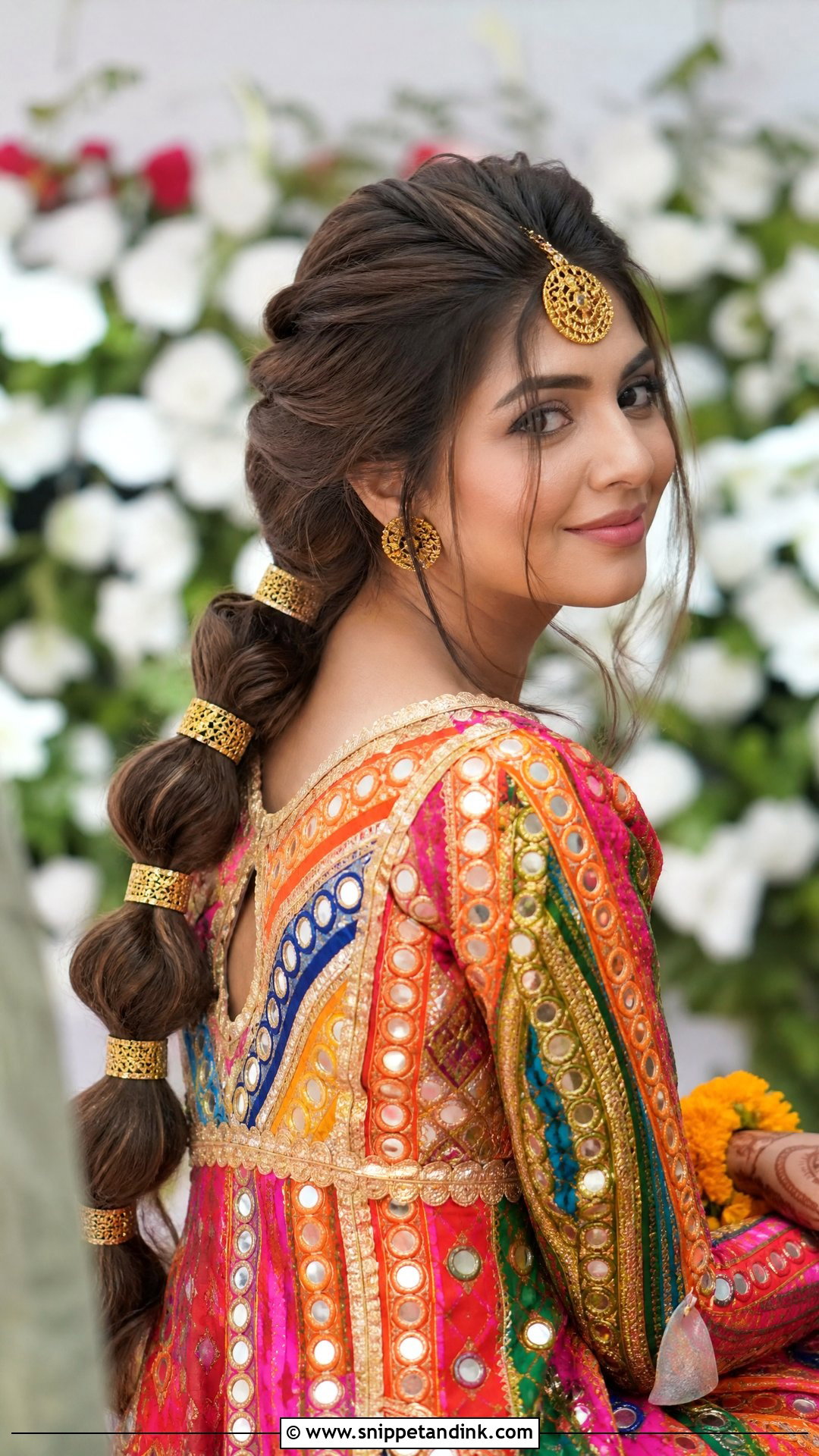
Bubble braids are quick, fun and very mehndi. I tie elastics every few inches down a ponytail and pull each section out into a rounded bubble. They need length and density, so with shoulder-length or fine hair I clip in extensions first and blend them in before tying. Parandas, mirror work and bright makeup all suit it. Pearls or small gold pins can go between the bubbles. Keep the front softly parted or with a small puff so it doesn’t look too casual from the front.
8. Pakistani Wedding Hollywood Waves
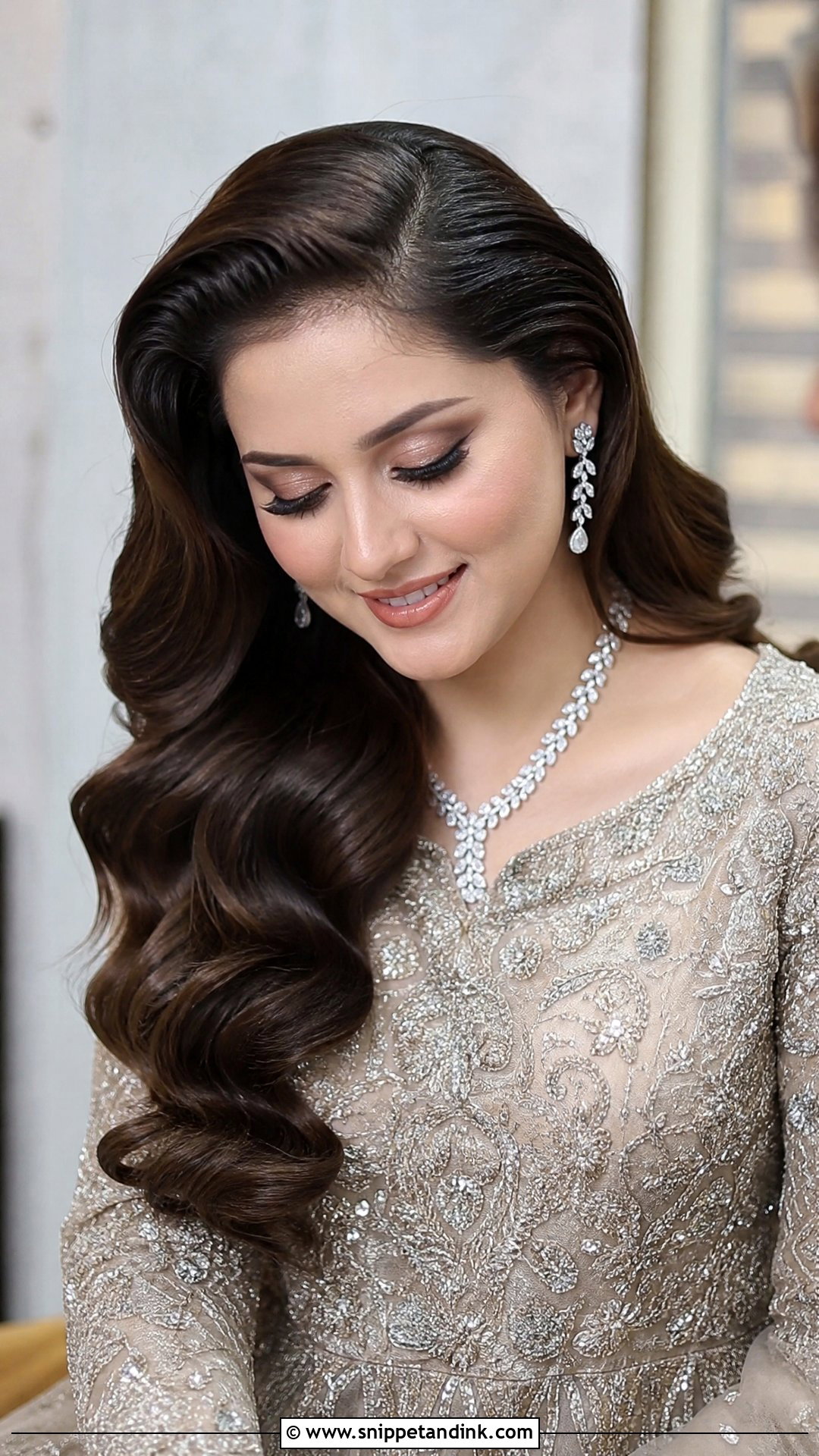
Hollywood waves bring old-glamour polish to Pakistani wedding outfits, especially satin, chiffon and pastel organza. The look depends on every curl going the same direction, so I curl each section away from the face, clip it to set, then brush the whole thing out with a paddle brush into one wave. A deep side part is the dramatic version; a centre part holds a tikka. Flexible hold spray, never stiff, or the waves crack as you move.
9. Pakistani Wedding High Bun With Dupatta
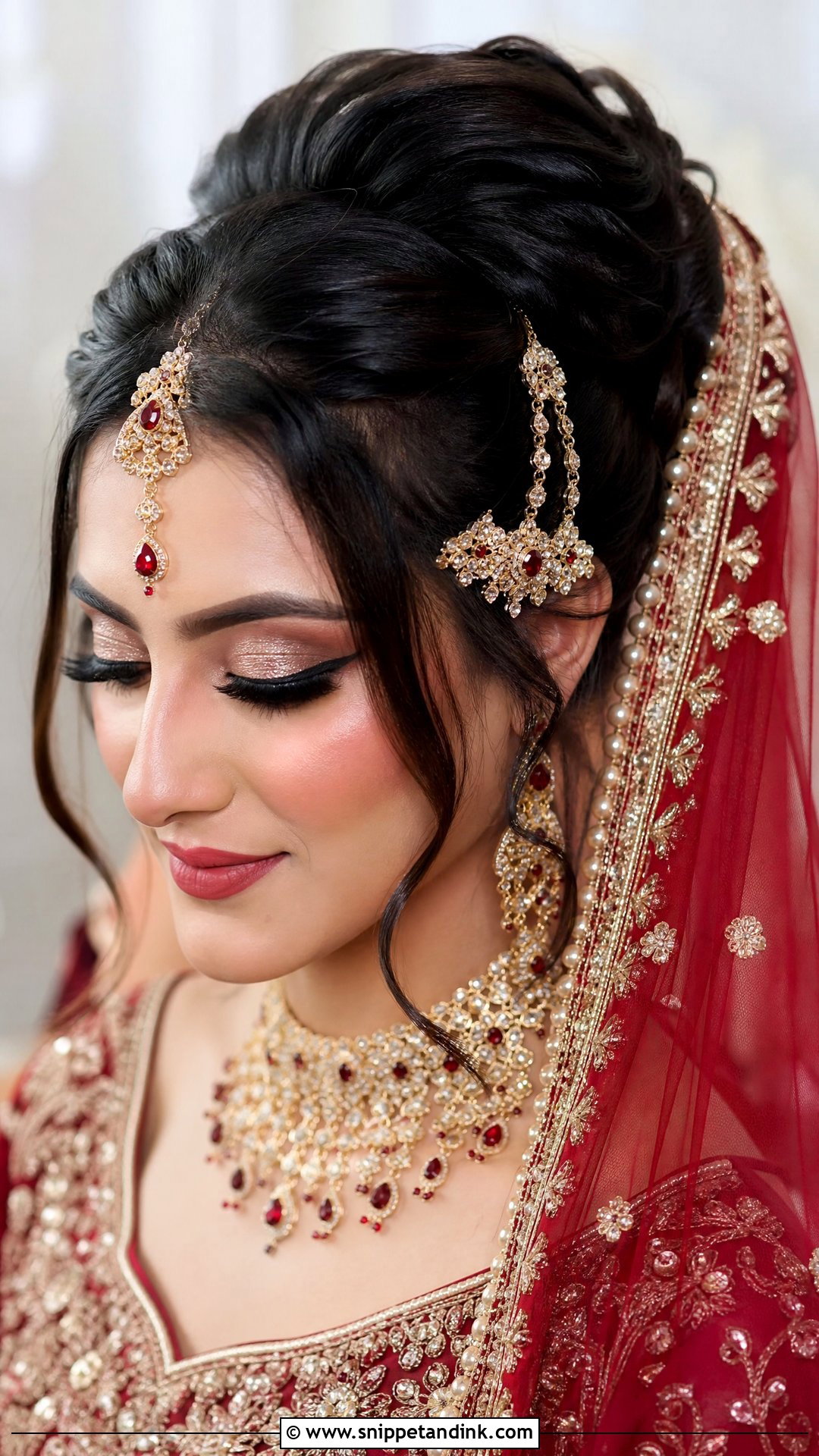
When a guest is wearing a heavy embroidered dupatta over her head, I build a high bun. It gives a solid base to pin into, so the weight sits on the bun rather than pulling at the hairline, which is what causes headaches by the third hour. I add a padded donut or hair filler if the hair is fine, because a thin bun won’t hold a heavy dupatta. Front can be sleek, puffed or centre parted to match the jewellery. It shows off long earrings and lengthens the neck.
10. Pakistani Wedding Loose Side Bun
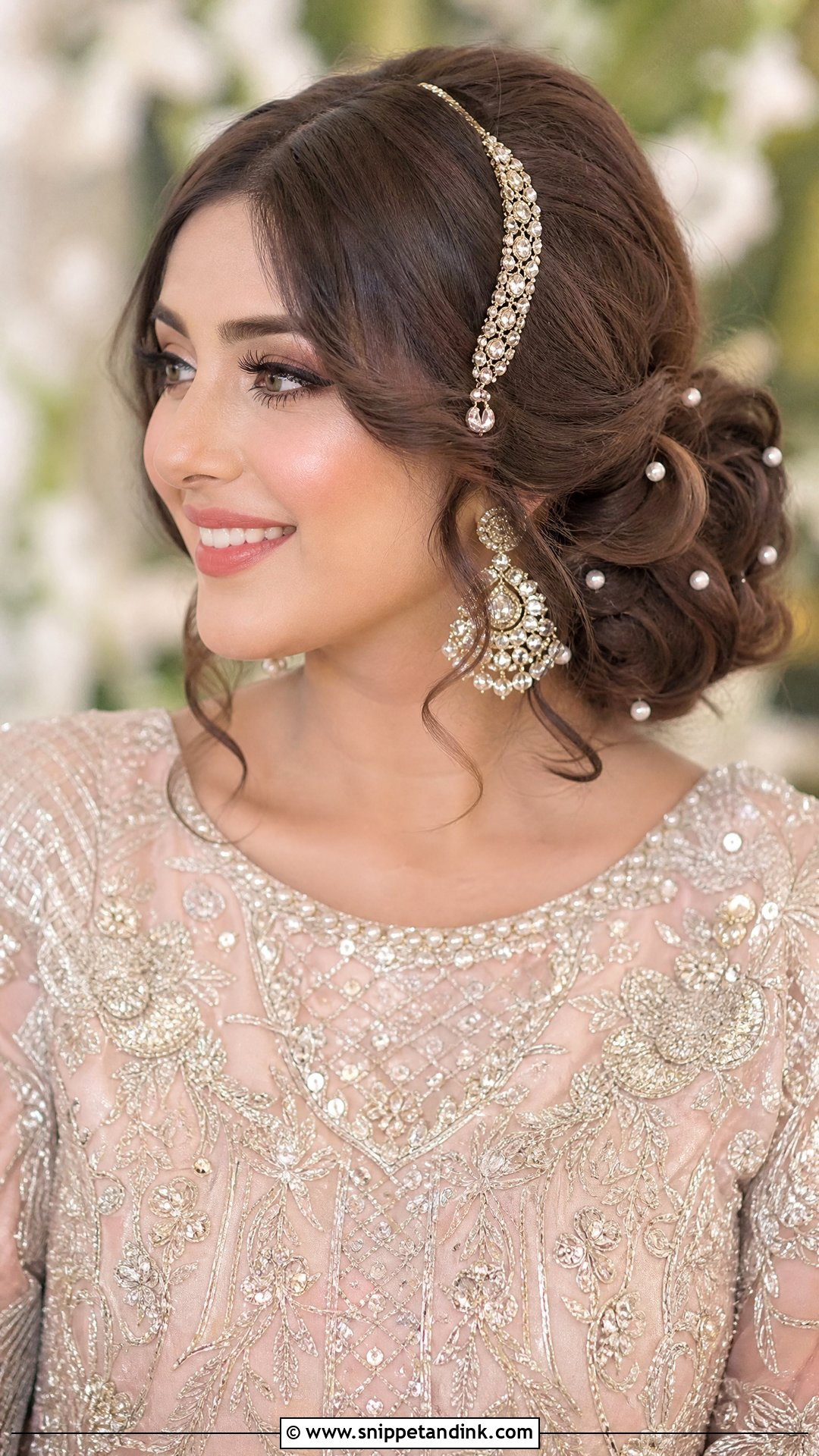
The loose side bun is softer and less formal than a tight bridal bun. I gather curled or twisted sections and pin them loosely toward one side of the nape, letting the texture show. Boat necks and detailed dupatta drapes suit it because the open side shows off the neckline. Gentle volume at the front and a few soft pieces near the cheeks keep it balanced. Thick hair works best here; very fine hair can look sparse in a loose bun unless I pad it.
11. Pakistani Wedding Fishtail Braid
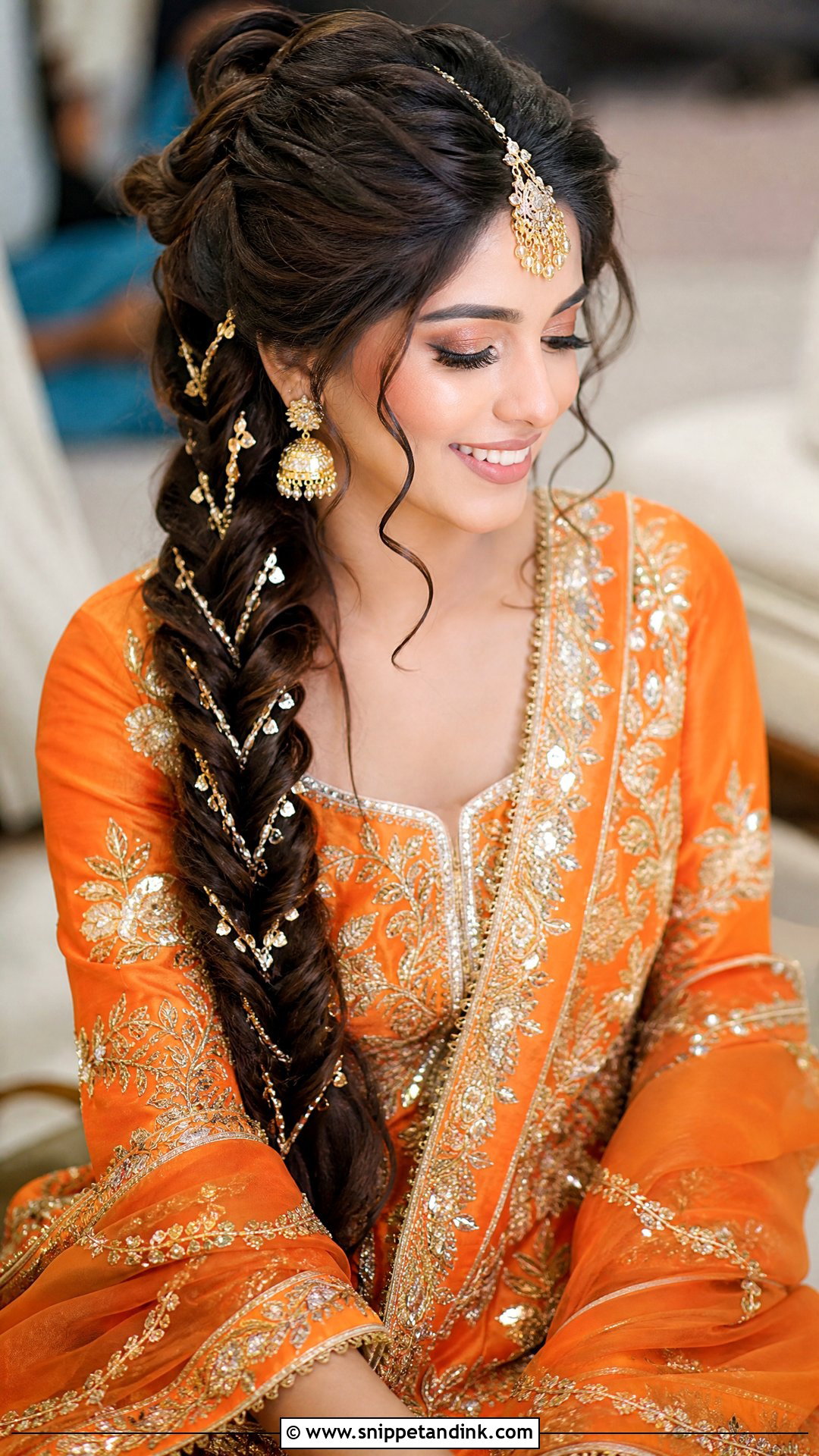
A fishtail braid shows its woven texture best on thick or lightly highlighted hair, and it pairs naturally with embroidered Pakistani outfits. It takes longer than a three-strand braid, so I start it on second-day hair that has some grip; freshly washed, silky hair slips and the pattern loses definition. Loosen the edges for a fuller look. Over one shoulder for photos, down the back for dancing. Gota pins or a paranda at the end tie it into bright mehndi outfits.
12. Pakistani Wedding Messy Bun
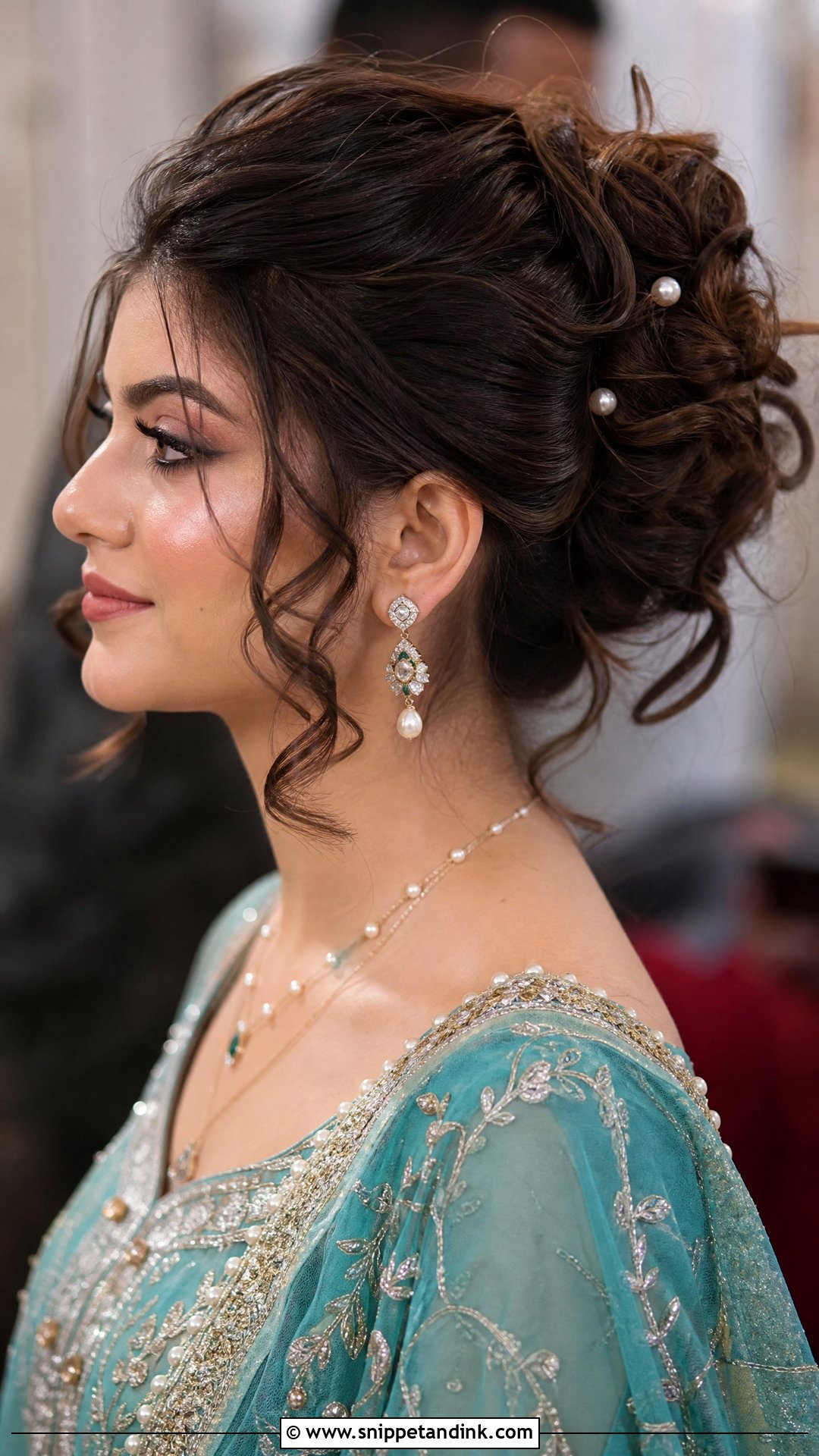
A messy bun at a wedding isn’t actually messy. It’s built from curled, pinned sections arranged to look relaxed, and it takes me nearly as long as a sleek one. That’s why it lasts: each section is pinned on its own. It’s my usual suggestion for the bride’s sisters and bridesmaids who’ll be running around all night. Shararas, sarees and fusion outfits all suit it. Keep the face-framing pieces deliberate, two or three, or it starts to look like it fell down.
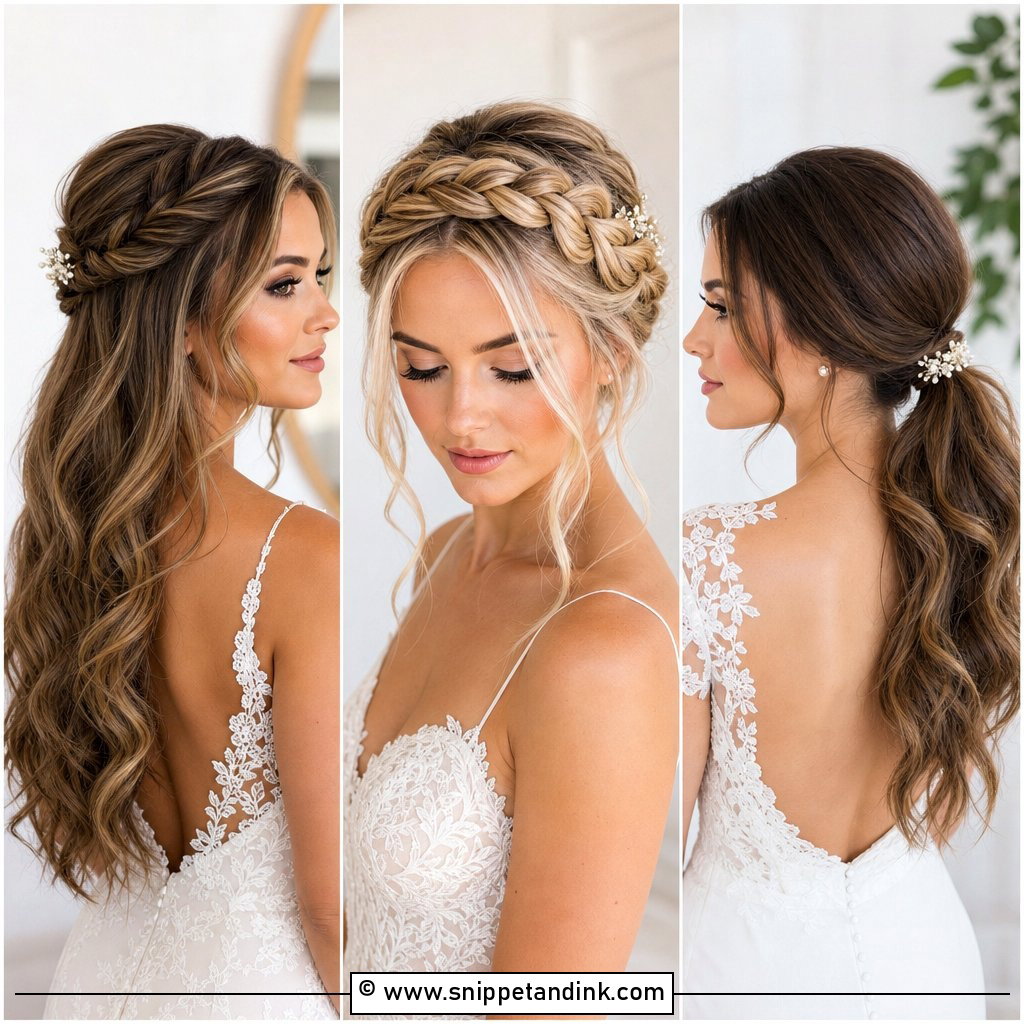
13. Pakistani Wedding Crown Braid Bun
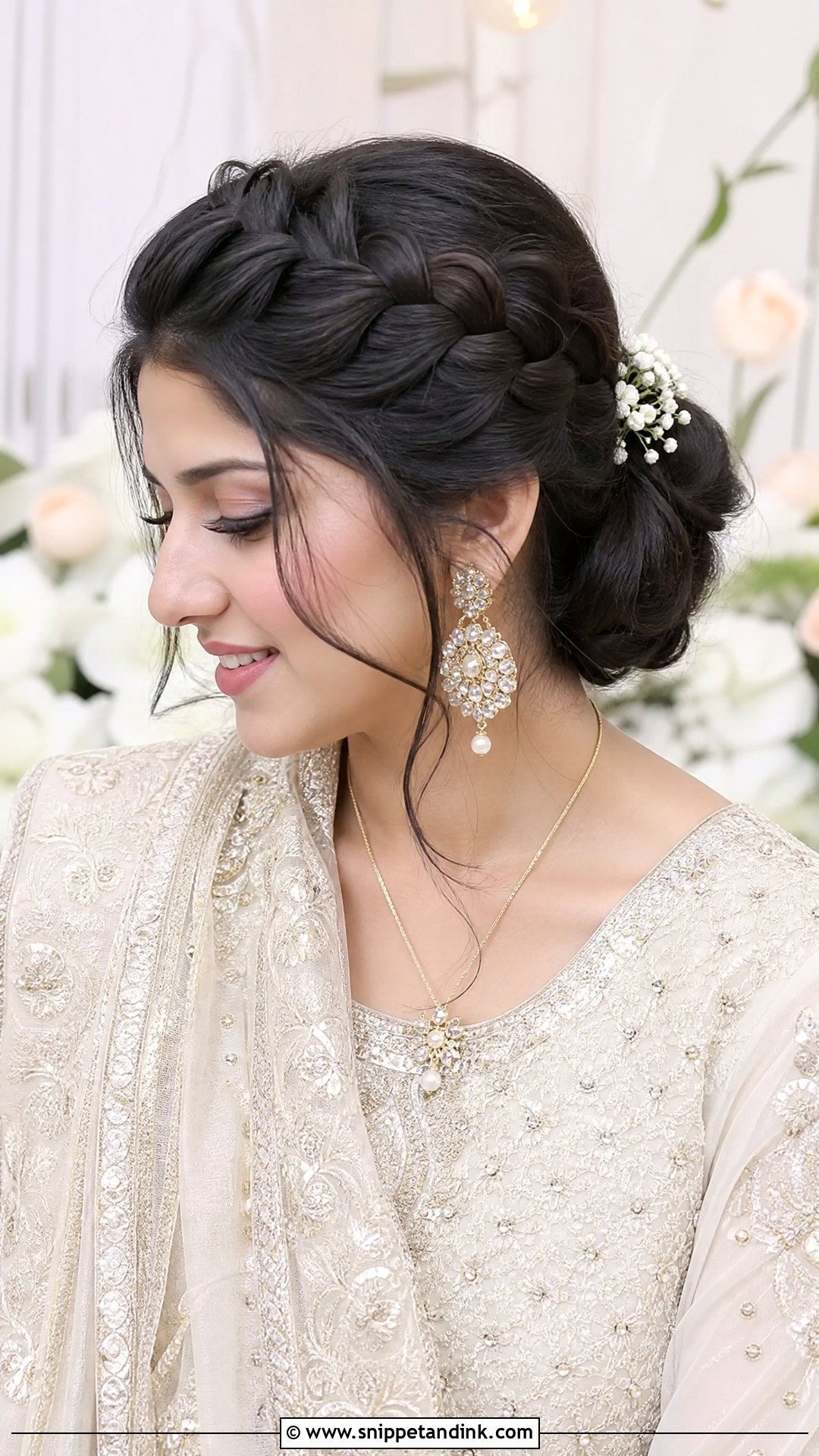
With a crown braid bun, the braid does the job a matha patti would. I braid along the hairline or across the top of the head, then tuck it into a bun at the back, so the face is framed without forehead jewellery. Neat but not tight, because a tight braid along the hairline pulls and gives a headache within a couple of hours. It suits nikah and intimate events with soft makeup, jhumkas and a light dupatta.
14. Pakistani Wedding Ponytail With Waves
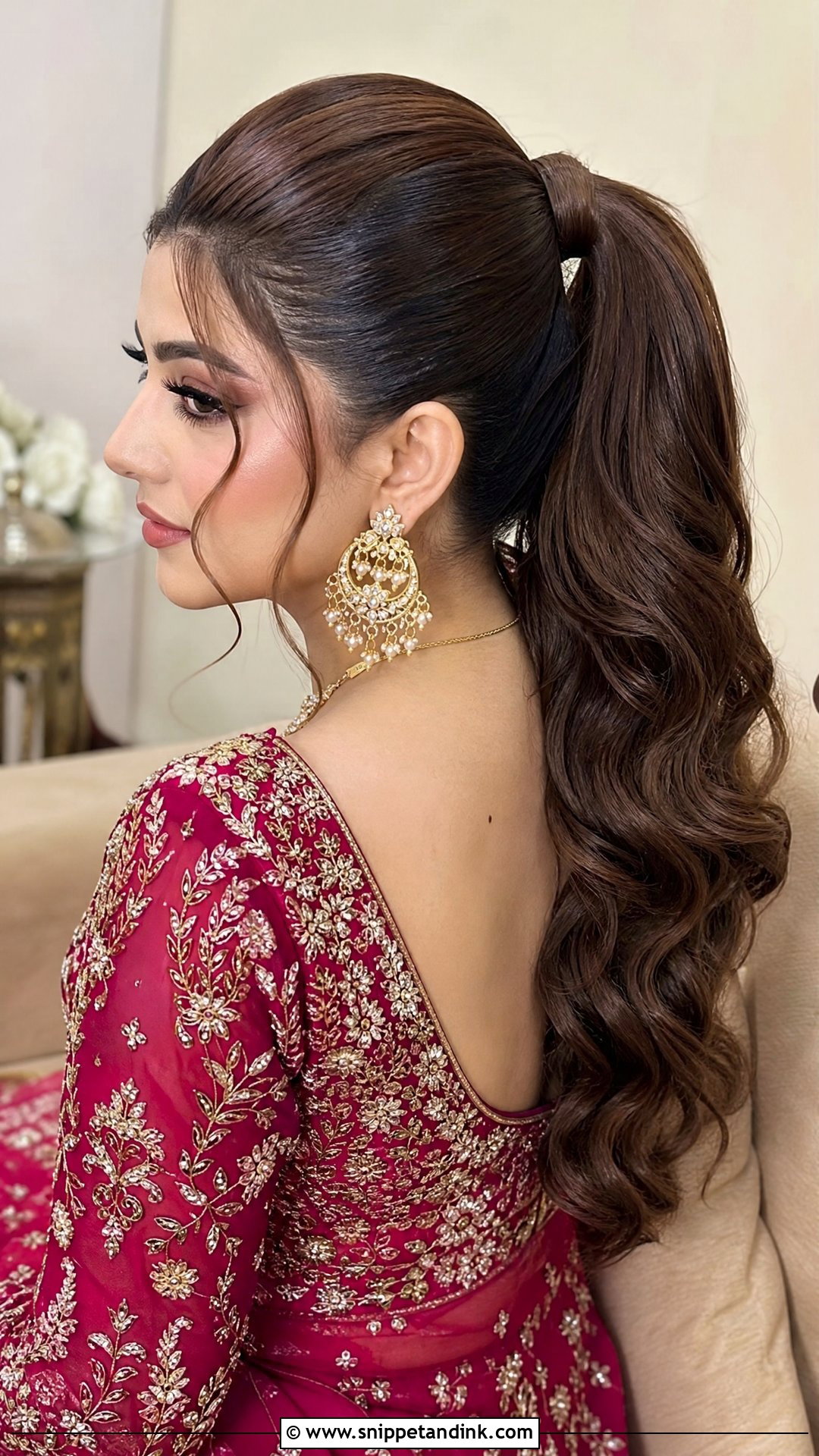
A wavy ponytail keeps hair off the face and neck for mehndi dancing, and shows off earrings and detailed necklines. I tie it medium or high, curl the lengths in loose waves, and wrap a small section around the elastic to hide it, pinning underneath. Heavy ponytails drift down by the end of the night, so I anchor the base with two crossed bobby pins under the elastic. Middle part, side part or soft puff depending on face shape.
15. Pakistani Wedding Paranda Braid
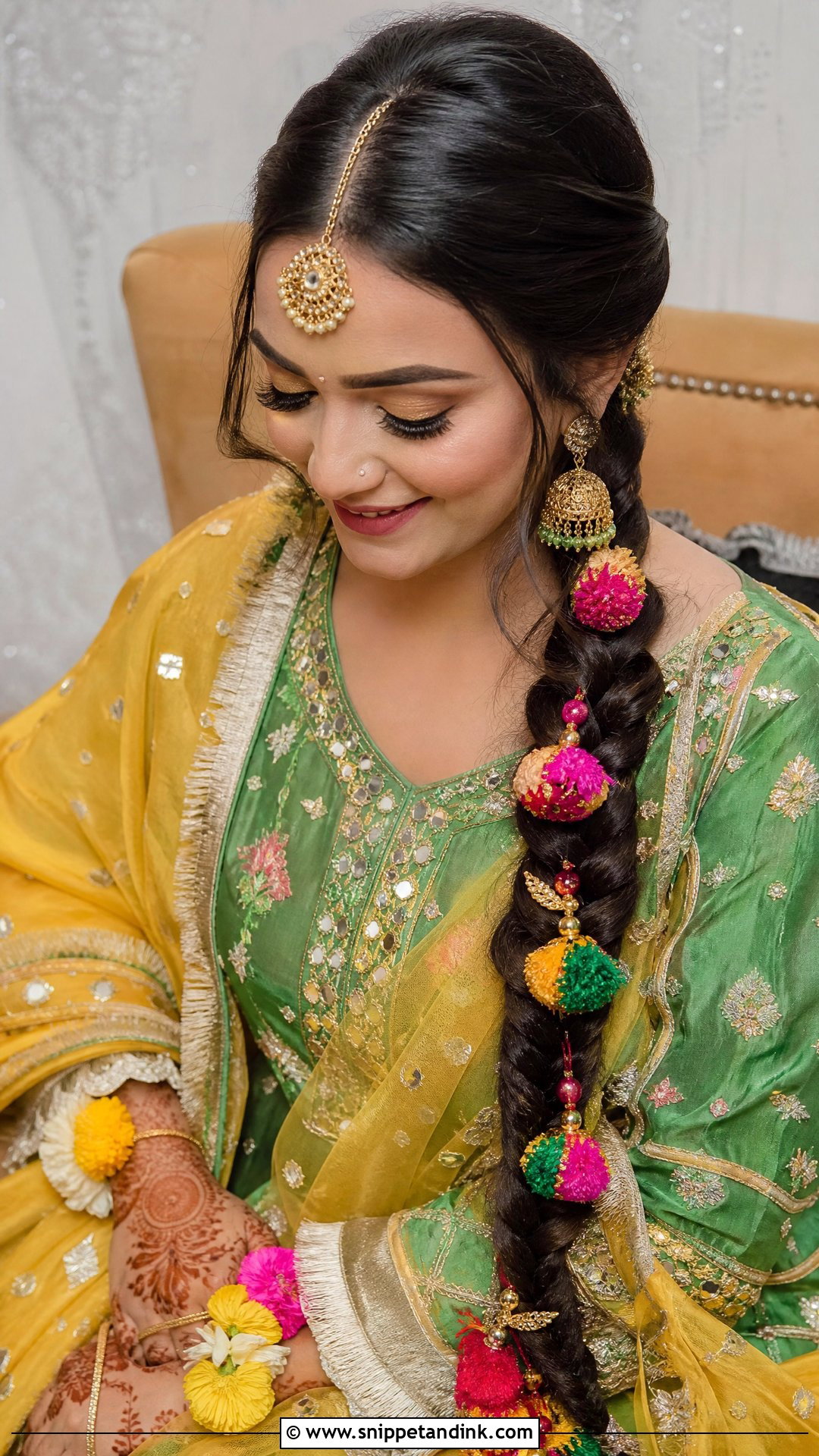
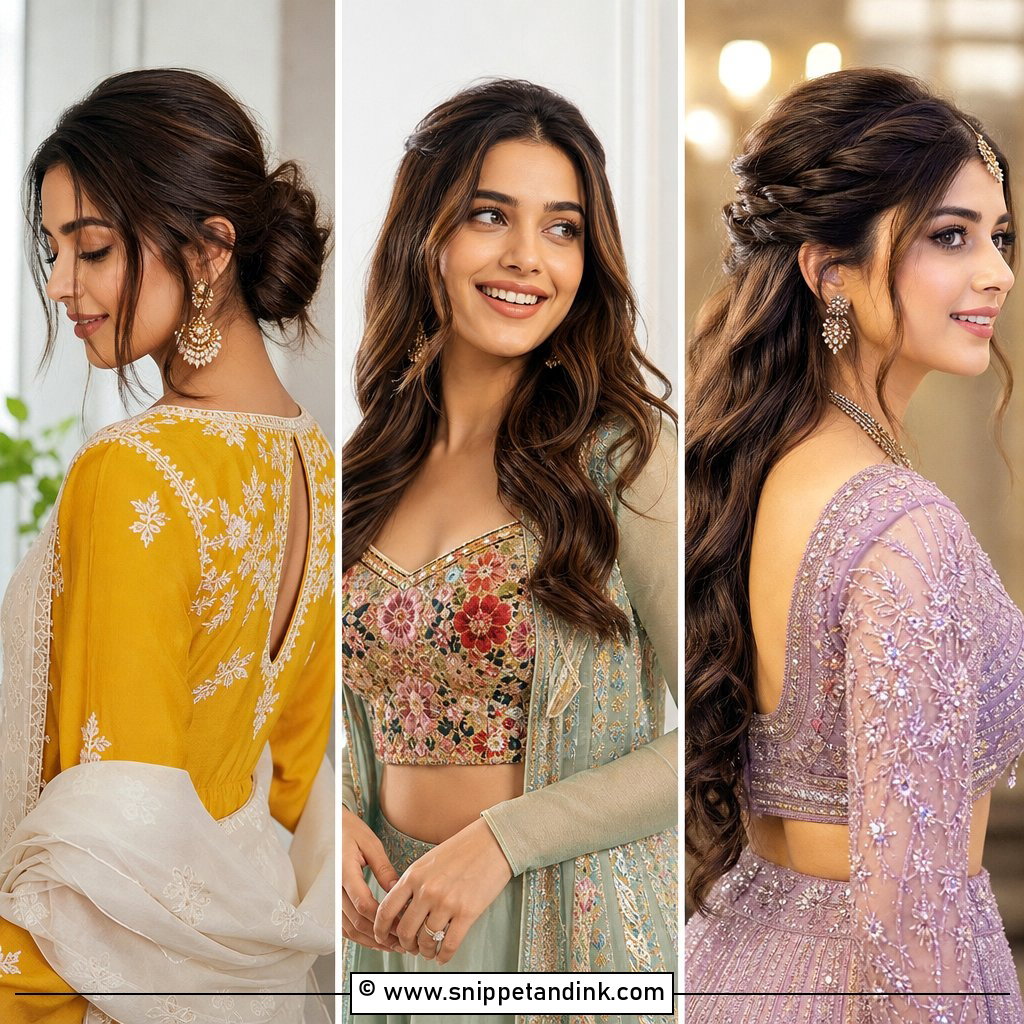
A paranda braid is pure mehndi and mayun joy, and the paranda does a lot of the work, adding length, colour and swing. I braid the paranda in from about a third of the way down so it’s secure rather than just tied at the end. Pick one in tassels, beads, gota or threadwork that picks up a colour from your gharara or sharara. Pull the braid apart a little for fullness. A centre part is the classic finish; a small puff adds height.
16. Pakistani Wedding Front Puff Bun
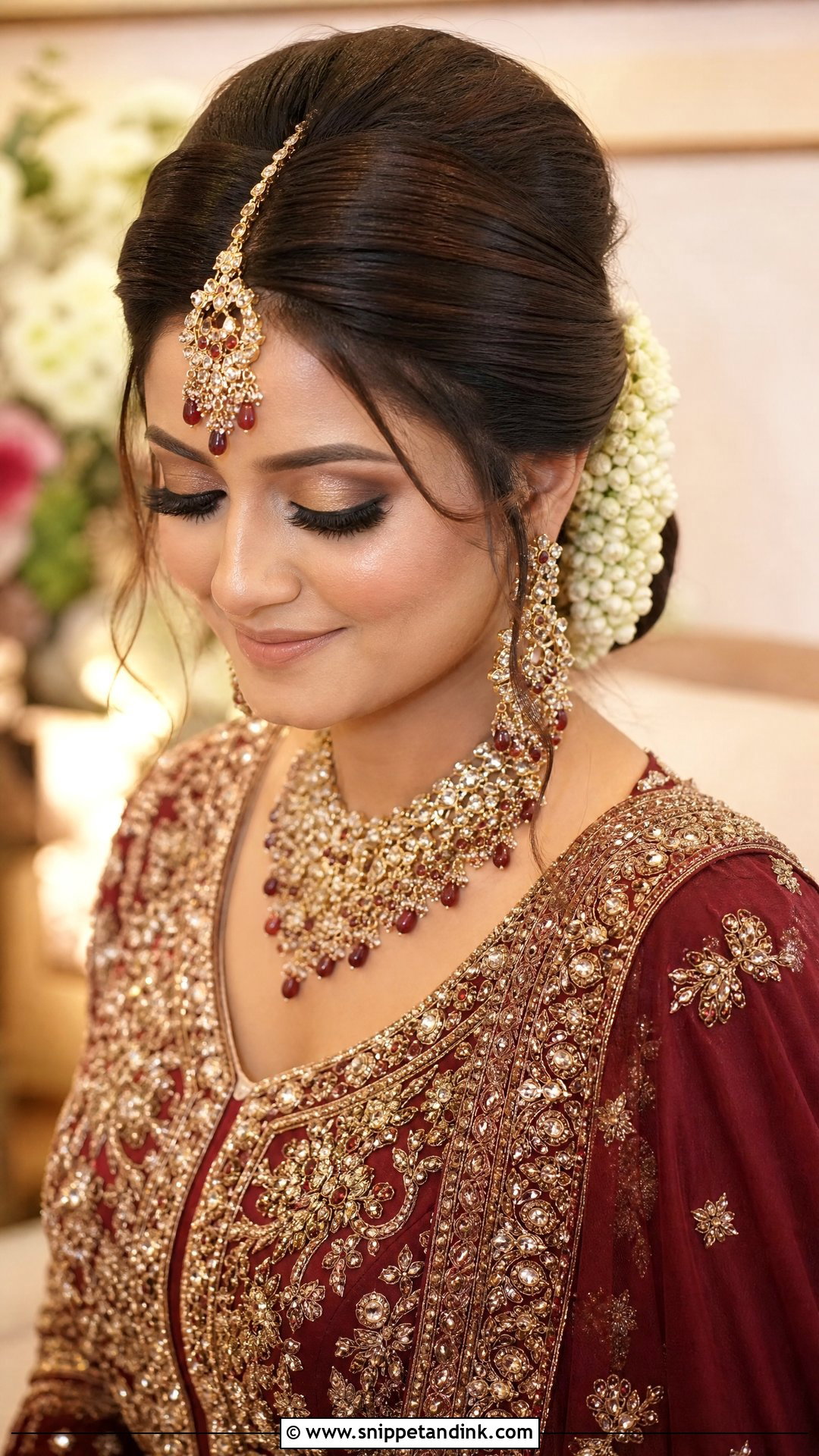
The front puff bun has been a Pakistani party staple for years for a reason: the puff adds height that balances heavy dupattas, matha pattis and large earrings. I backcomb the crown section at the roots only, smooth the top layer over it, and pin it from underneath so the surface stays clean. Too high, and it looks dated; aim for a gentle rise. Pair it with a low or mid bun and finish with gajra or a jewelled clip.
17. Pakistani Wedding Waterfall Braid Curls
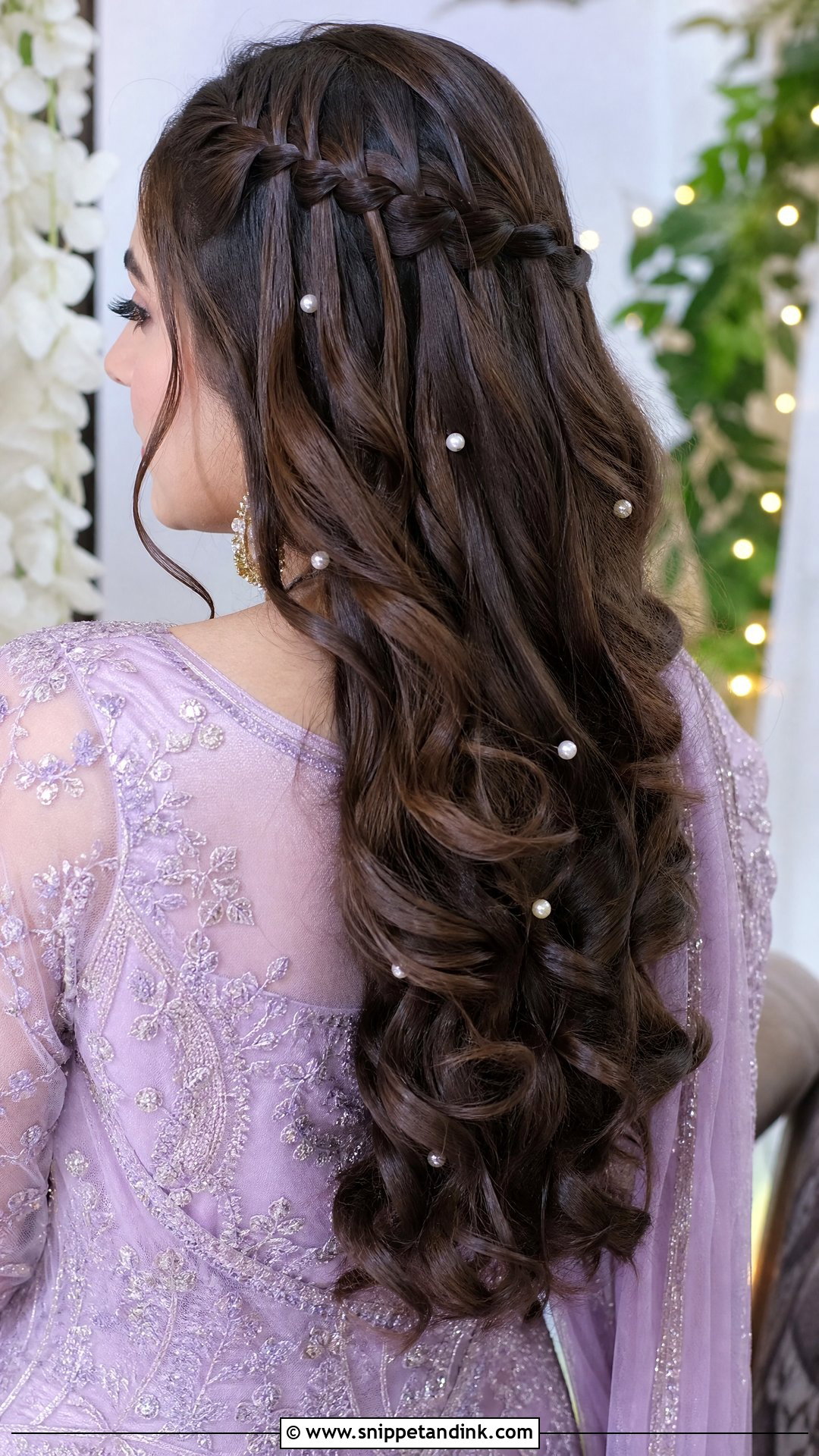
Waterfall braid curls suit younger guests and bridesmaids. The braid runs across the back or side of the head, dropping strands through as it goes, while the rest of the hair falls in loose curls. Soft, shiny curls look better here than tight ones. On very straight hair, I spray each section before curling so the curl holds through a daytime mehndi or engagement. Tiny flowers or pearl pins along the braid work with pastel or embroidered outfits.
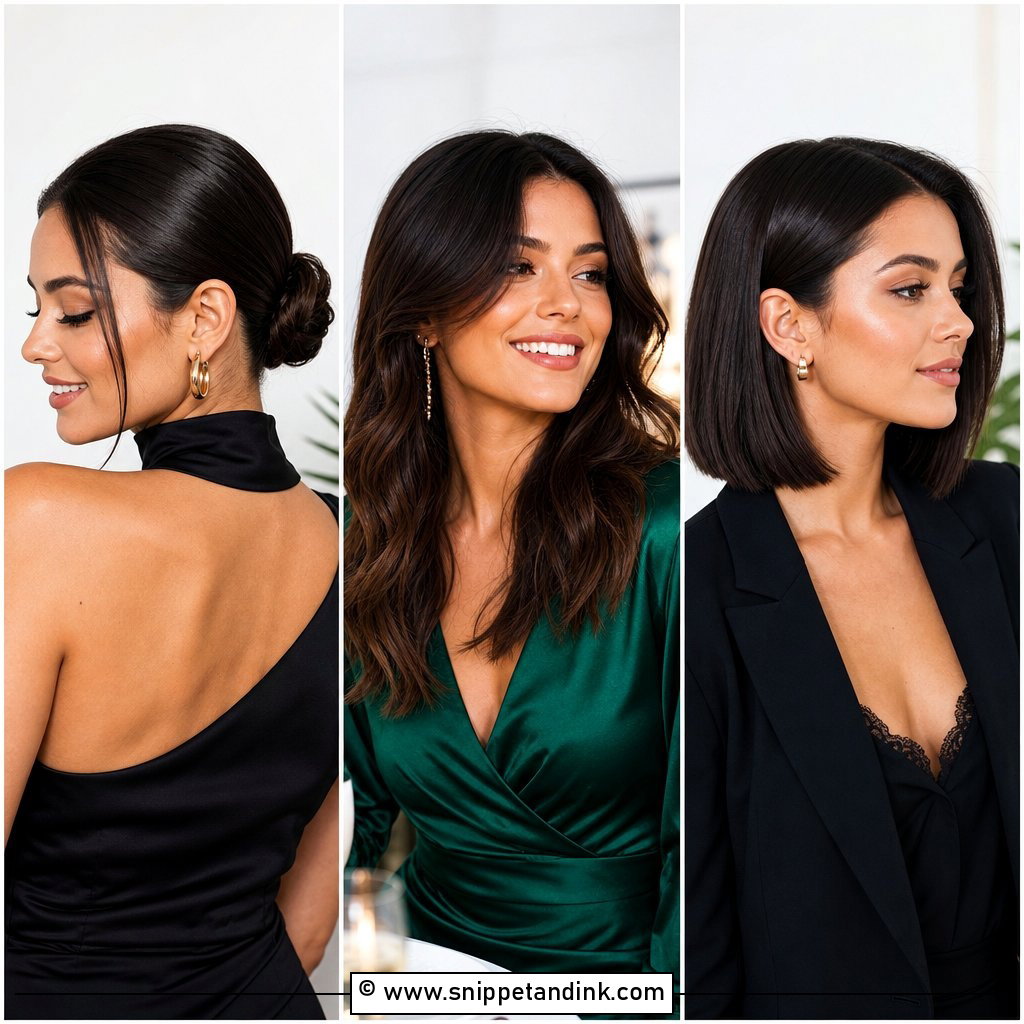
18. Pakistani Wedding Low Ponytail
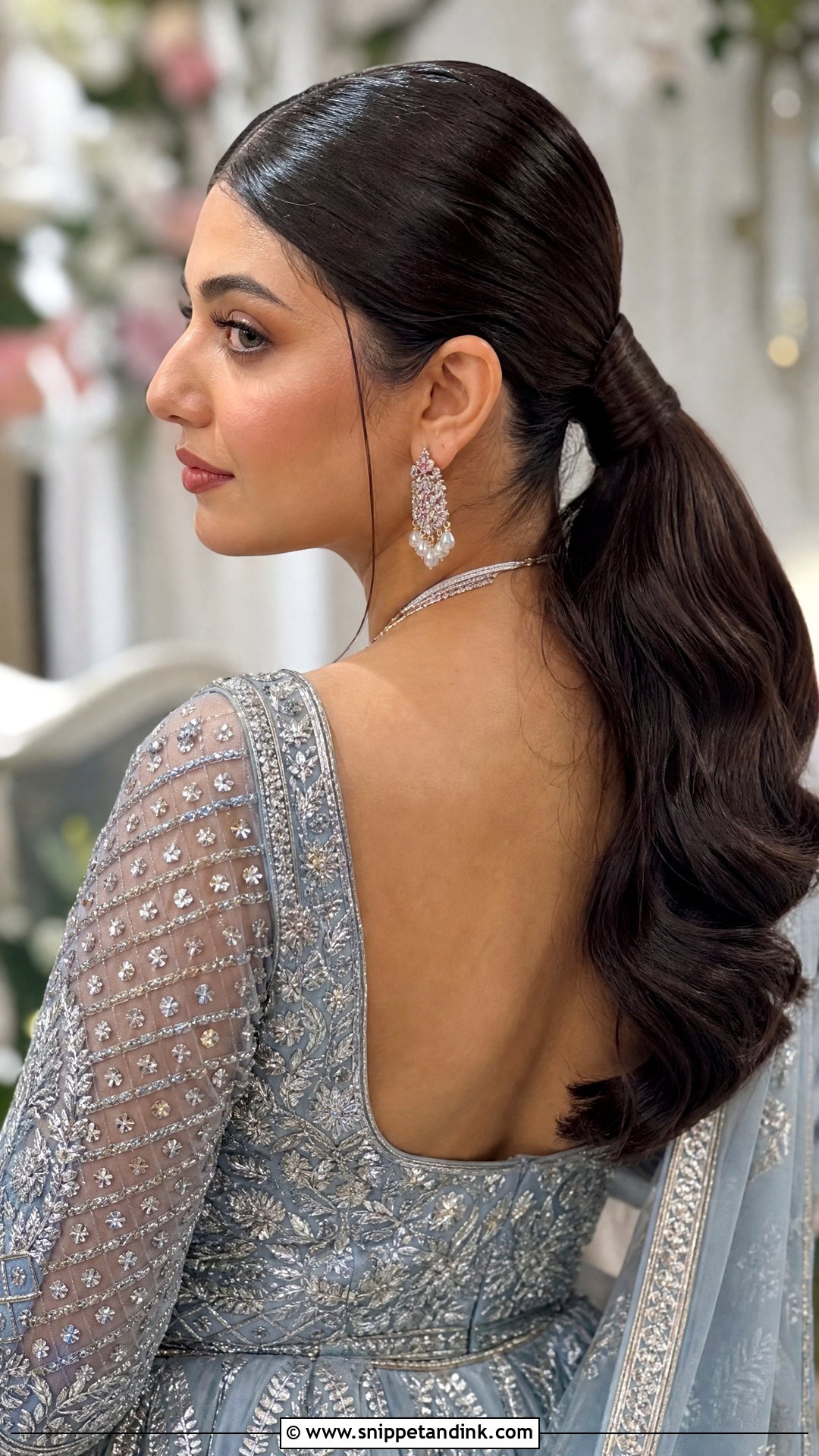
A low ponytail is the easiest style to wear for six hours, and it looks expensive when the roots are smooth. It sits at the nape, out of the way of a dupatta on the shoulder. I brush it back with a little cream to control flyaways, tie it, and wrap a section of hair around the elastic. Soft waves at the ends and a shine spray finish it. Centre part feels traditional; a deep side part makes it more glamorous for walima or a reception.
19. Pakistani Wedding Floral Bun
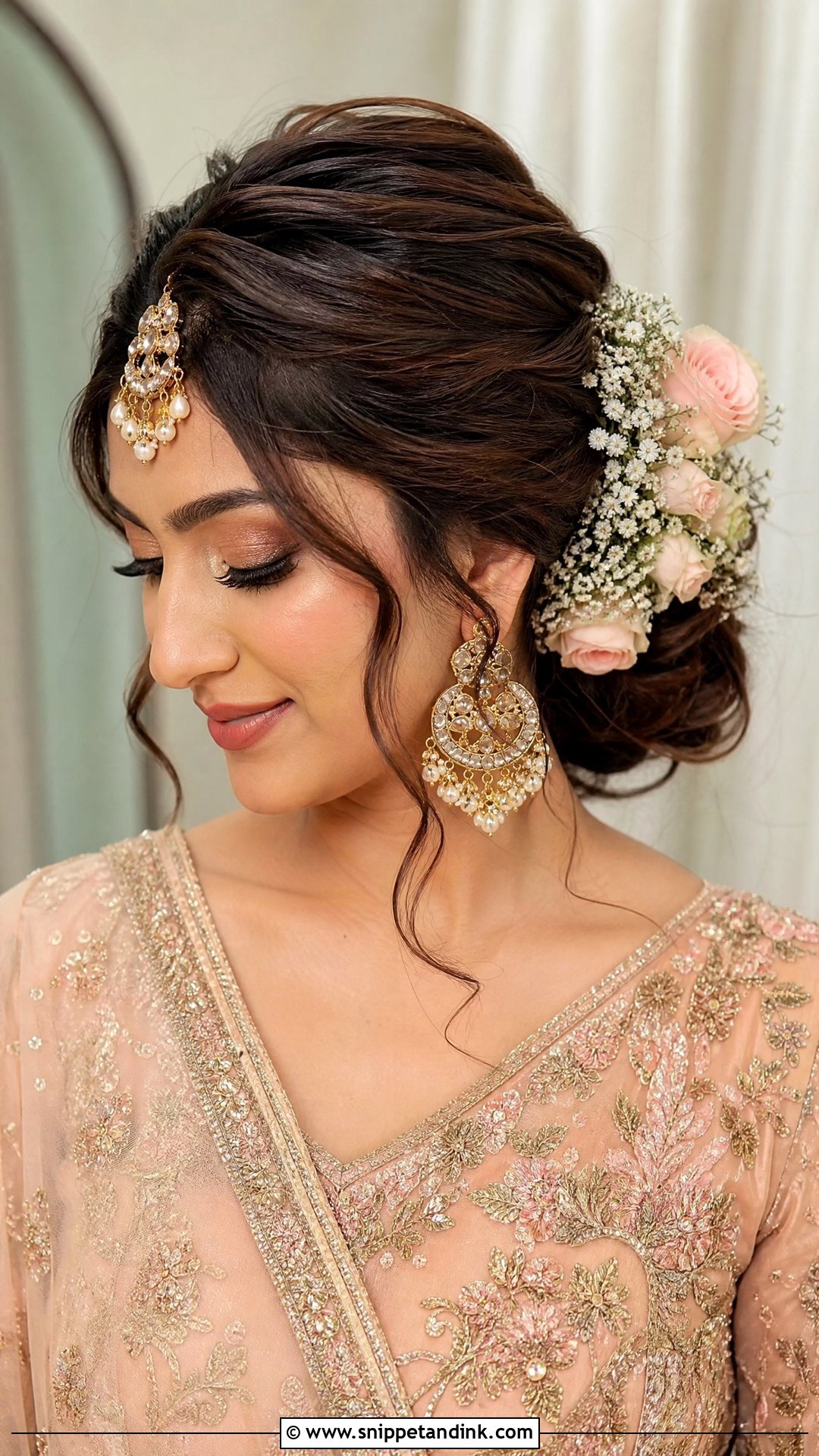
A floral bun goes beyond gajra: roses, baby’s breath, orchids or small seasonal flowers arranged around the bun. I wire or pin each stem individually and put the larger flowers to one side, so they don’t hide the shape of the bun completely. Choose sturdy blooms; delicate petals wilt fast in a hot hall. It suits nikah, mehndi and daytime parties with pastel or bright outfits, and looks fresh in close-up photos.
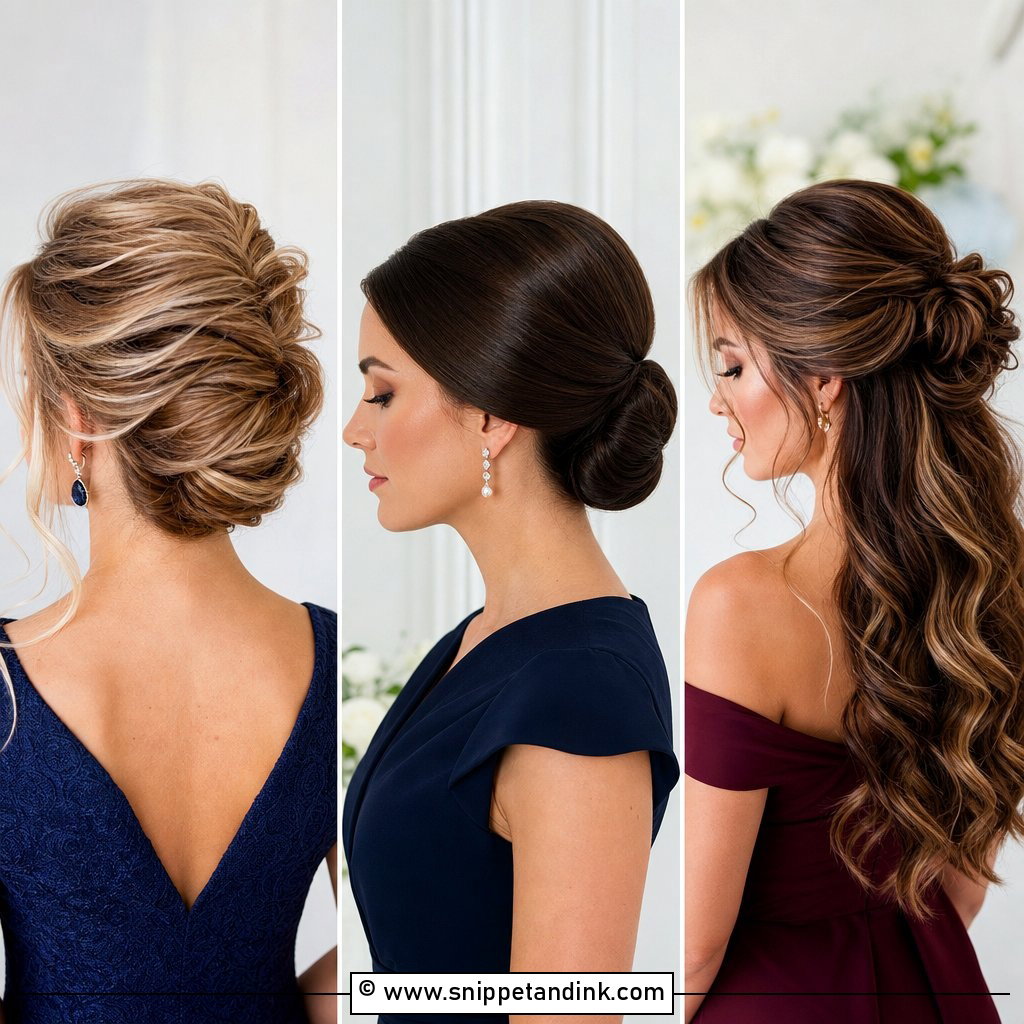
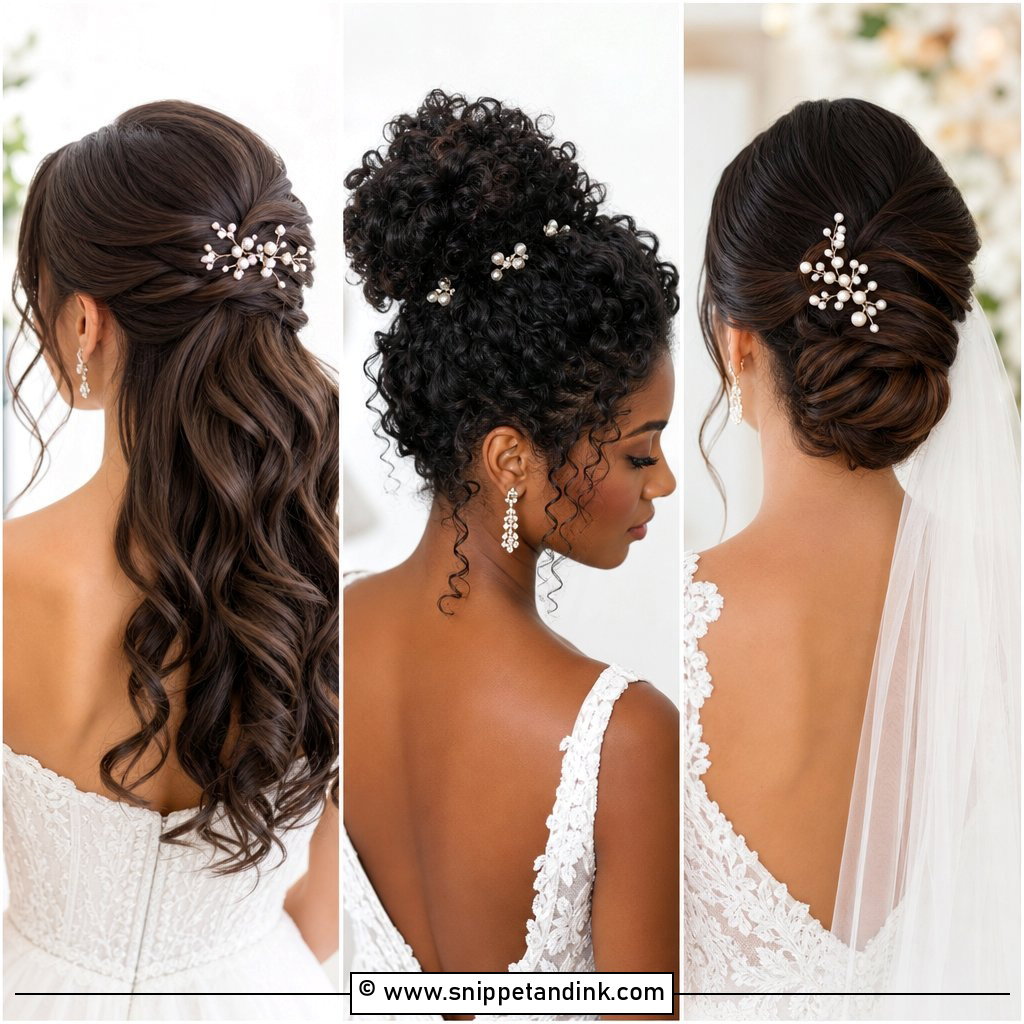
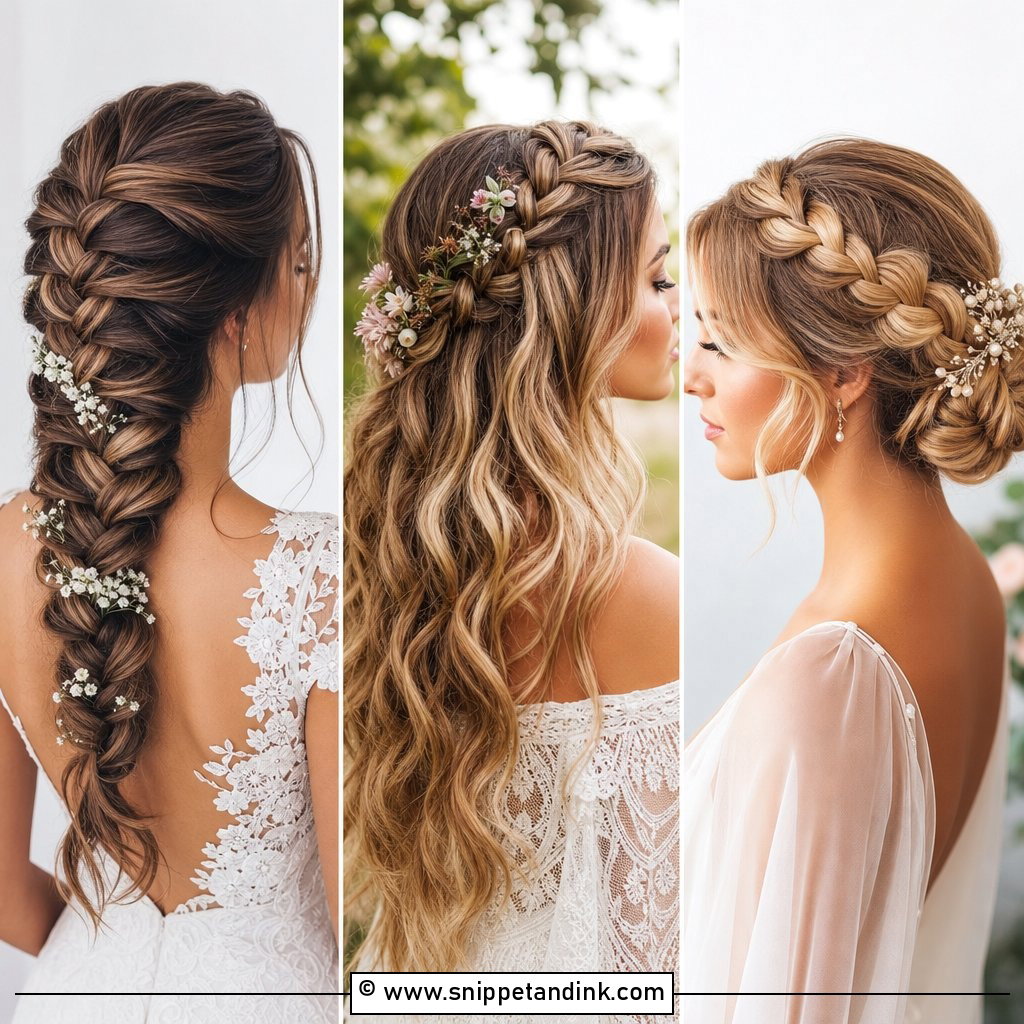
20. Pakistani Wedding Straight Hair With Matha Patti
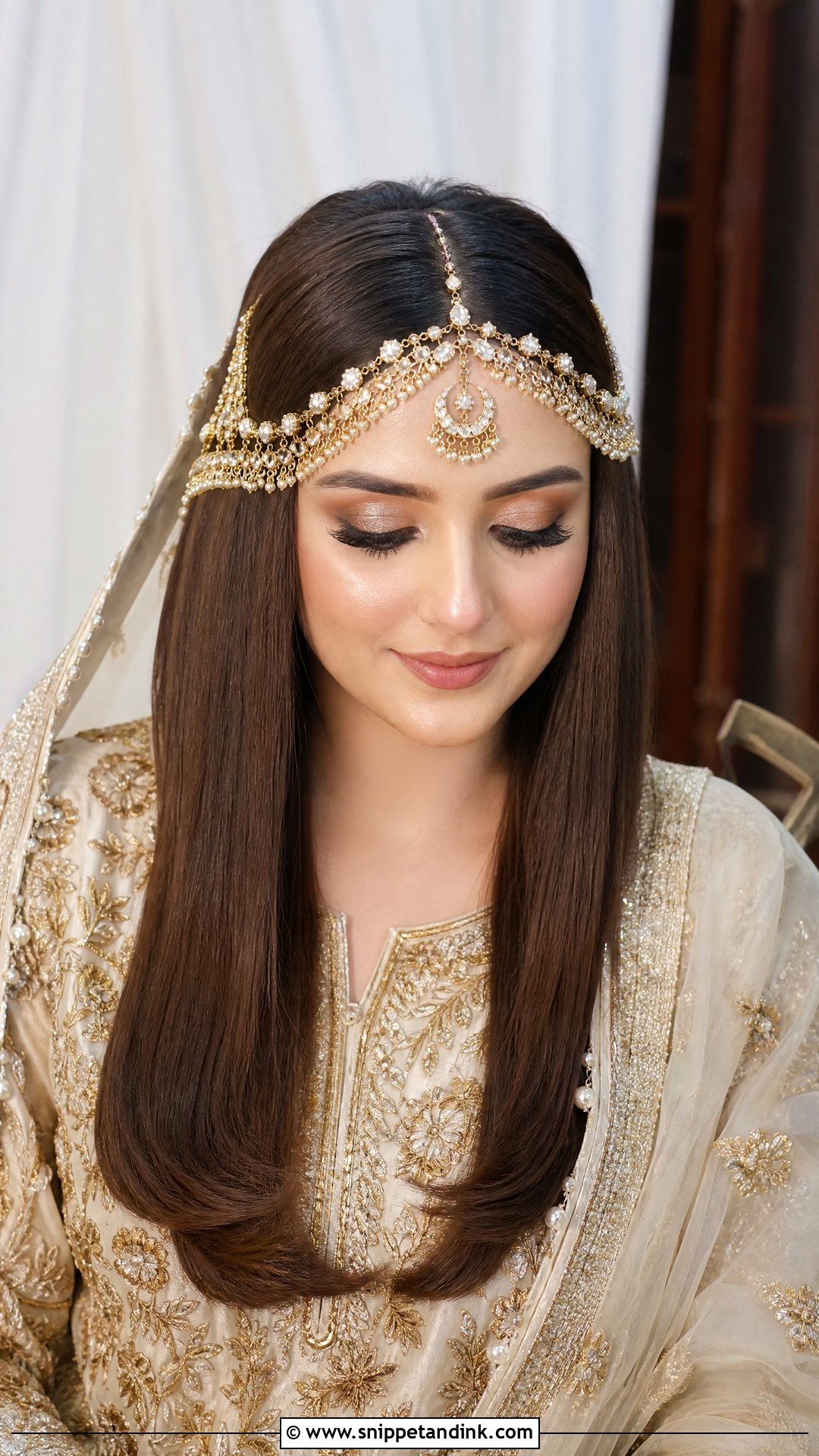
Straight hair with a matha patti puts all the attention on the jewellery. I part it dead centre, smooth it down and leave it open or pinned lightly behind the ears, so the patti frames the face. The part has to be perfectly straight because the jewellery sits right on it. A lightweight serum gives gloss without grease; too much makes hair separate and look oily under lights. I bevel the ends slightly with a round brush. It suits heavily embroidered nikah or walima outfits.
Fine, Thick or Frizz-Prone: Adjusting These Styles to Your Hair
Fine or thin hair
Fine hair slips out of pins and loses curl quickly, especially if it has just been washed. Wash it the day before, not the morning of, and let your stylist add texture spray or dry shampoo at the roots for grip. Buns need a filler or donut underneath. Clip-in extensions make braids and ponytails look full and are much lighter than people assume.
Very thick or long hair
Thick hair holds shape well but gets heavy, and a big bun can drag down by the end of the evening. I split the hair into two smaller sections and pin each one separately so the weight is spread out. Allow extra time, as curling dense hair can take twice as long.
Curly or frizz-prone hair
Summer halls packed with people get humid, and blow-dried straight hair can puff up within an hour. Sleek buns and braids stay put better than open straight styles. If you have natural curls, consider using them rather than fighting them: a defined curly half-up or a textured bun holds through dancing far better than a blowout.
Jasmine That Still Smells Fresh at the End of the Night
- Buy gajra on the day if possible, with most buds still closed. They open through the evening, which is when the fragrance is strongest.
- If you buy it earlier, wrap it in a damp cloth or paper towel, seal it loosely in a bag and keep it in the fridge, never the freezer.
- Pin it on last and handle it as little as you can, since buds turn brown where fingers press them.
- A light mist of water before you leave keeps the petals plump; don’t spray hairspray directly onto fresh flowers.
Matching Your Hair to the Function, the Neckline and the Jewellery
Every style here follows the event. Mehndi welcomes braids, parandas and flowers; nikah and baraat often need a bun to anchor a dupatta and jewellery; walima and receptions can soften into waves, half-up curls or a sleek ponytail. Neckline, dupatta drape, jewellery, length and how long you’ll be out all narrow it down. Save two or three looks, show them to your stylist along with photos of your outfit and jewellery, and book a trial if you can, so you know how the style feels after a few hours of wear.
You'll Like These Ideas:


Leave a Reply