
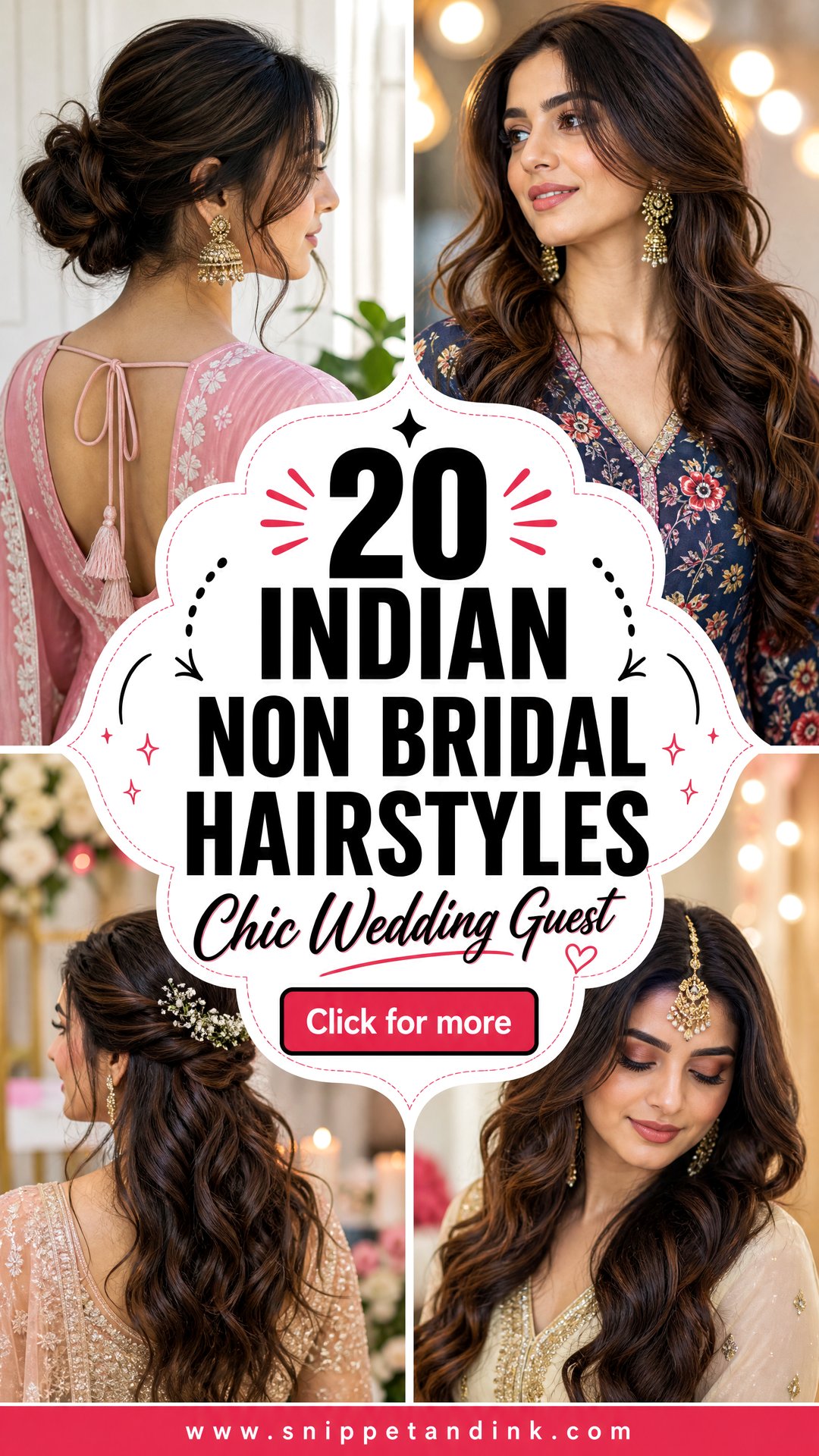
Most of my working weekends in wedding season involve the bride, but the requests that pile up in my messages come from her sisters, cousins and friends who need to look put together at five functions in four days without booking a stylist for each. A sangeet, a pooja, a mehendi afternoon or a saree day at the office all need something different from your hair. Most of the styles here are ones you can do yourself with a brush, pins, a few elastics and a curling tool. These Indian non-bridal hairstyles range from floral buns to fishtail braids and soft waves, and I’ve noted where each one suits sarees, lehengas, kurtas or Indo-western outfits, and where it tends to fail.
One Wedding, Five Functions: Planning a Hair Rotation
Guests at an Indian wedding rarely need just one hairstyle. You might have a haldi in the morning, mehendi in the afternoon, a sangeet at night and the wedding two days later. I suggest planning the hair alongside the outfits, before you pack, so you don’t arrive at the wedding having already worn your best style.
- Haldi: tie everything back. Turmeric stains light hair and gets into open styles, so a braid or a low bun you won’t mind washing out is best.
- Mehendi: choose a style you won’t need to touch for hours, done before the henna goes on. Side braids and messy buns are ideal.
- Sangeet and garba: dancing needs secure styles. Braids, crowns and bubble ponytails survive; big open curls usually don’t.
- Wedding and reception: this is where open waves, puffs and decorated buns make sense, since you’ll mostly be standing, eating and taking photos.
Wash day matters too. Most of these styles hold better on hair washed the day before, with a little natural grip. If you have to wash on the morning of a function, add a texture spray before you start pinning.
1. Gajra Bun for Saree
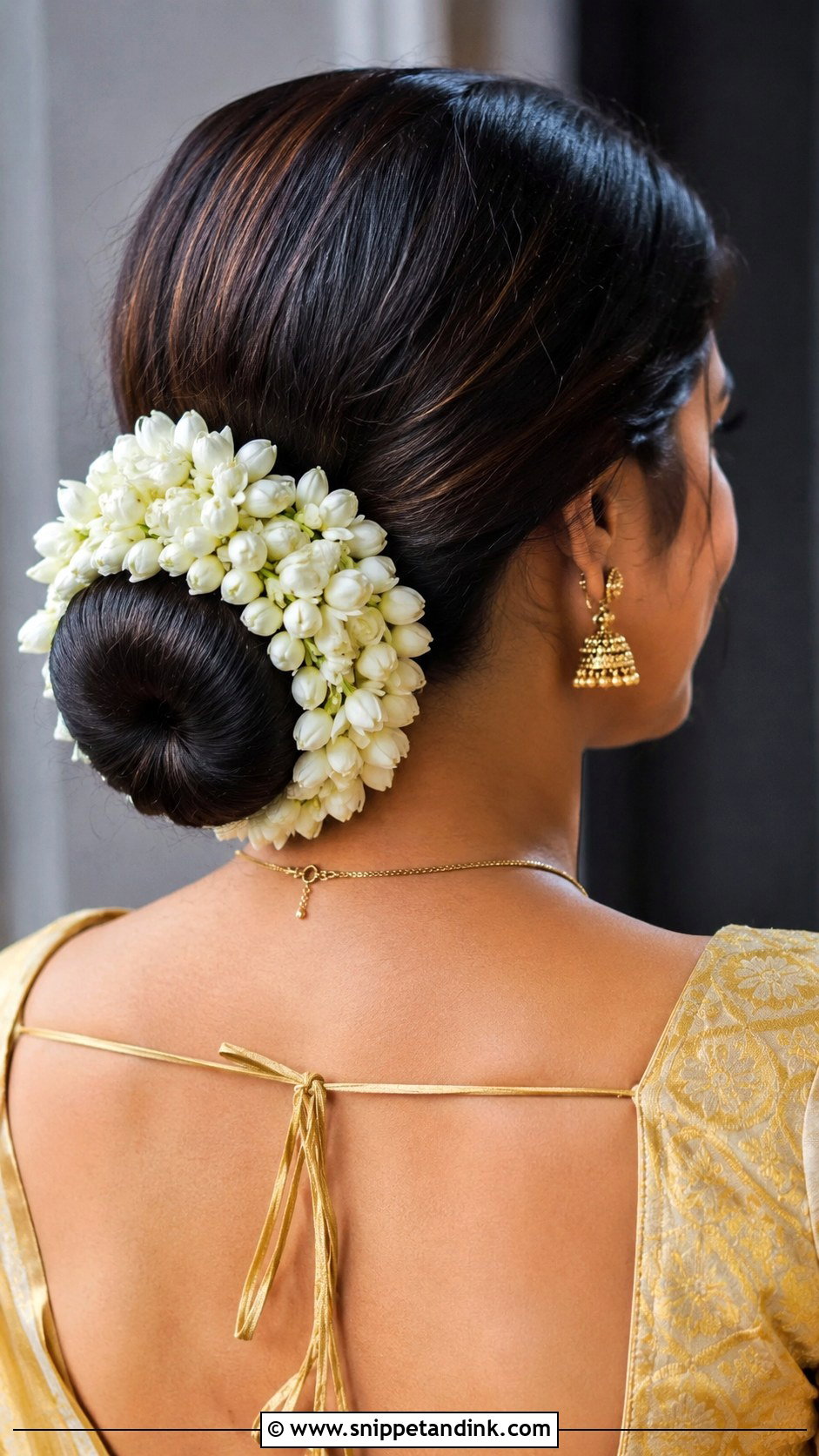
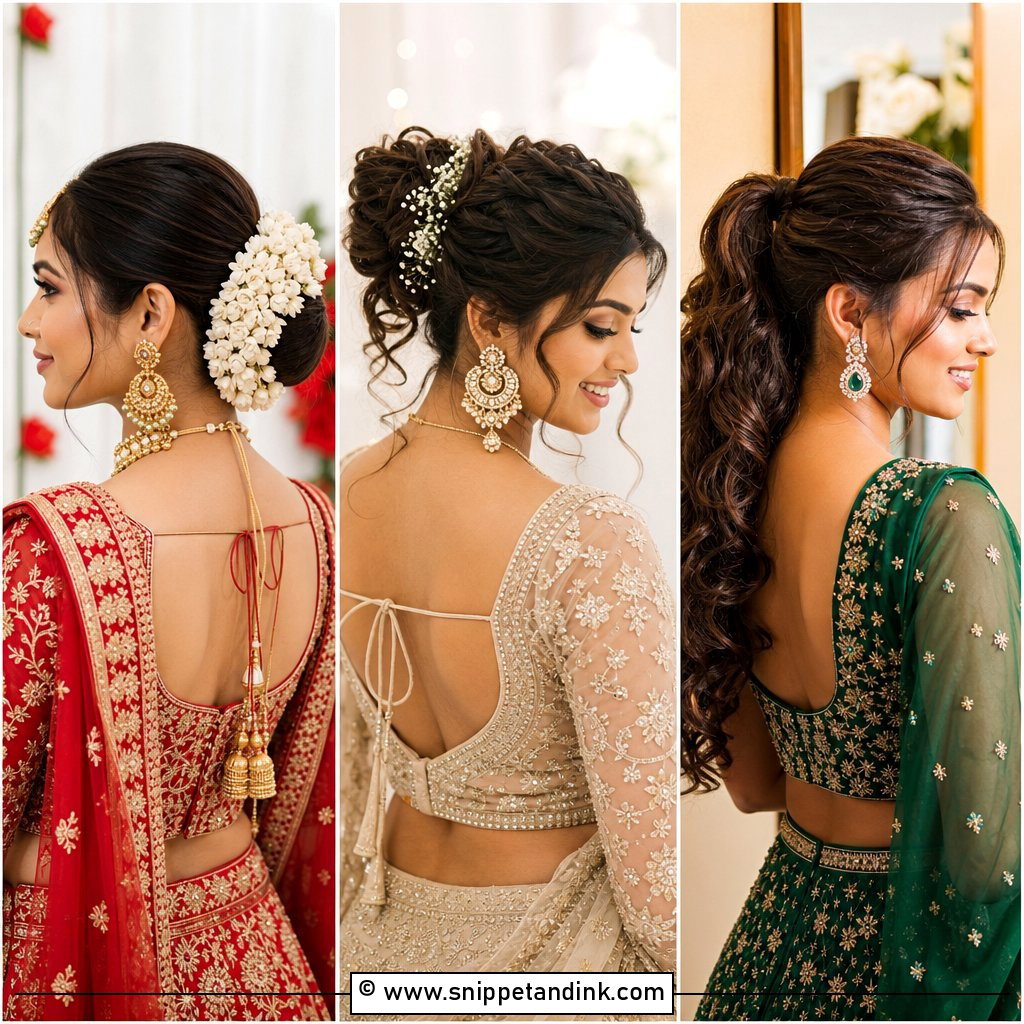
A gajra bun turns a plain silk saree into a festive outfit in about ten minutes. Gather a low or mid bun, secure it with crossed bobby pins, then wrap fresh jasmine around the base. The scent alone makes it feel like a function. Shorter hair works too: a small donut underneath gives the bun enough body to hold the flowers. I’d keep jewellery to jhumkas and a bindi, because the gajra already carries the look. It is one of the few styles that suits a pooja and a family dinner equally well.
2. Fishtail Braid for Lehenga
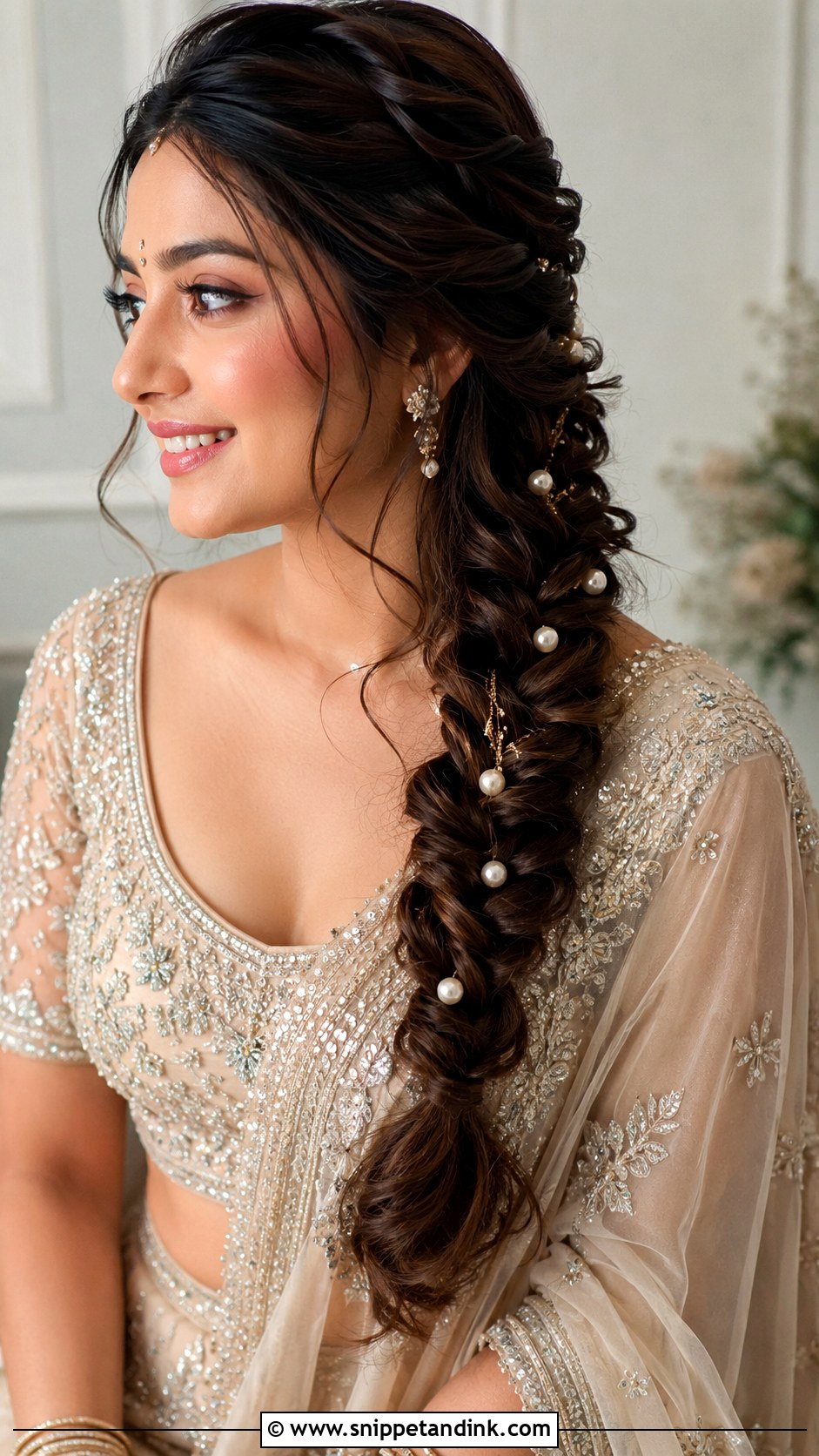
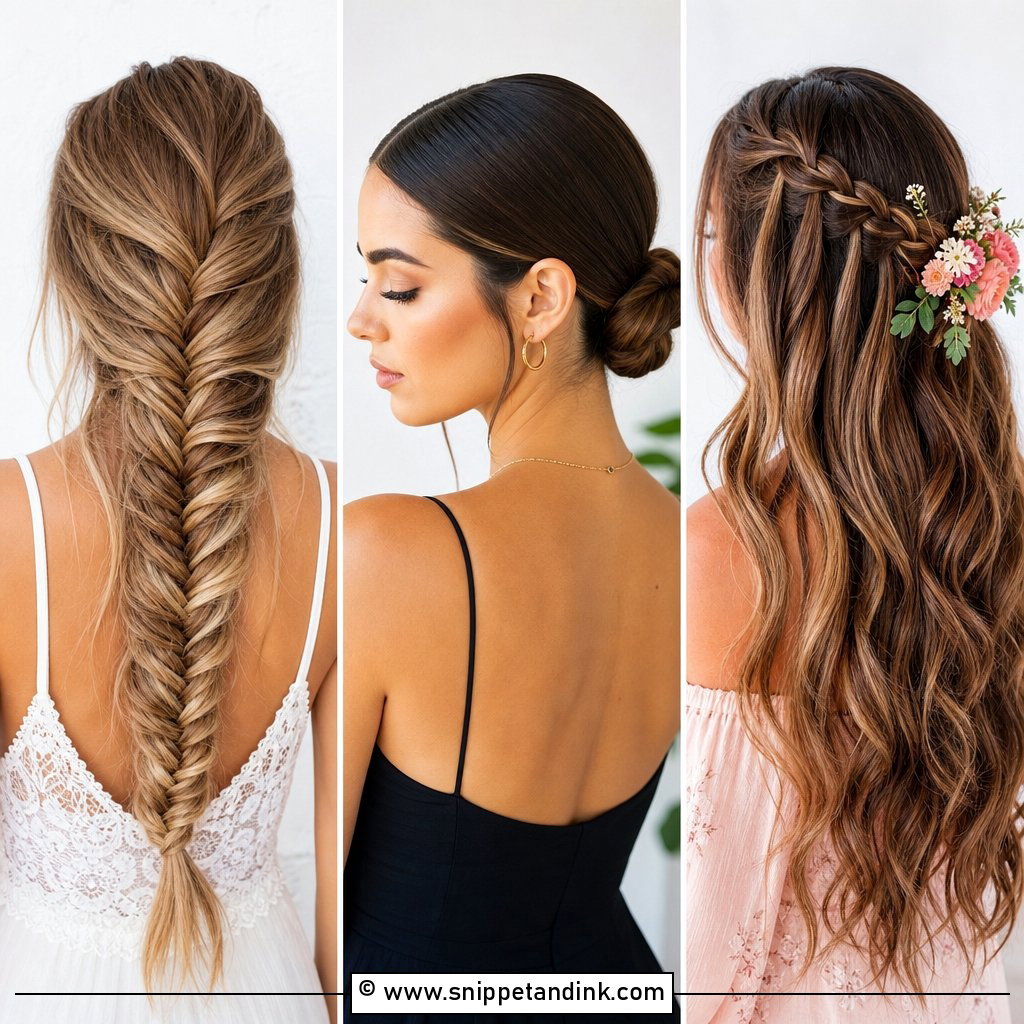
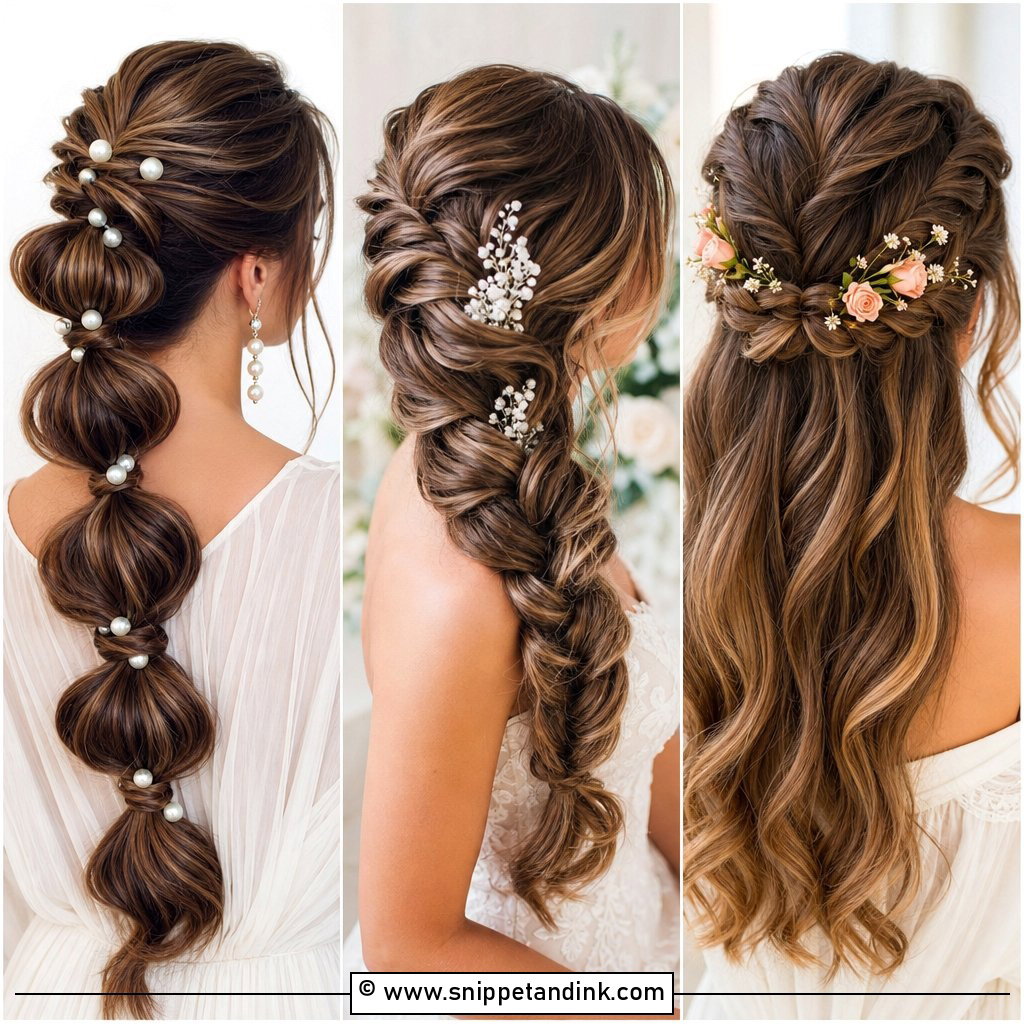
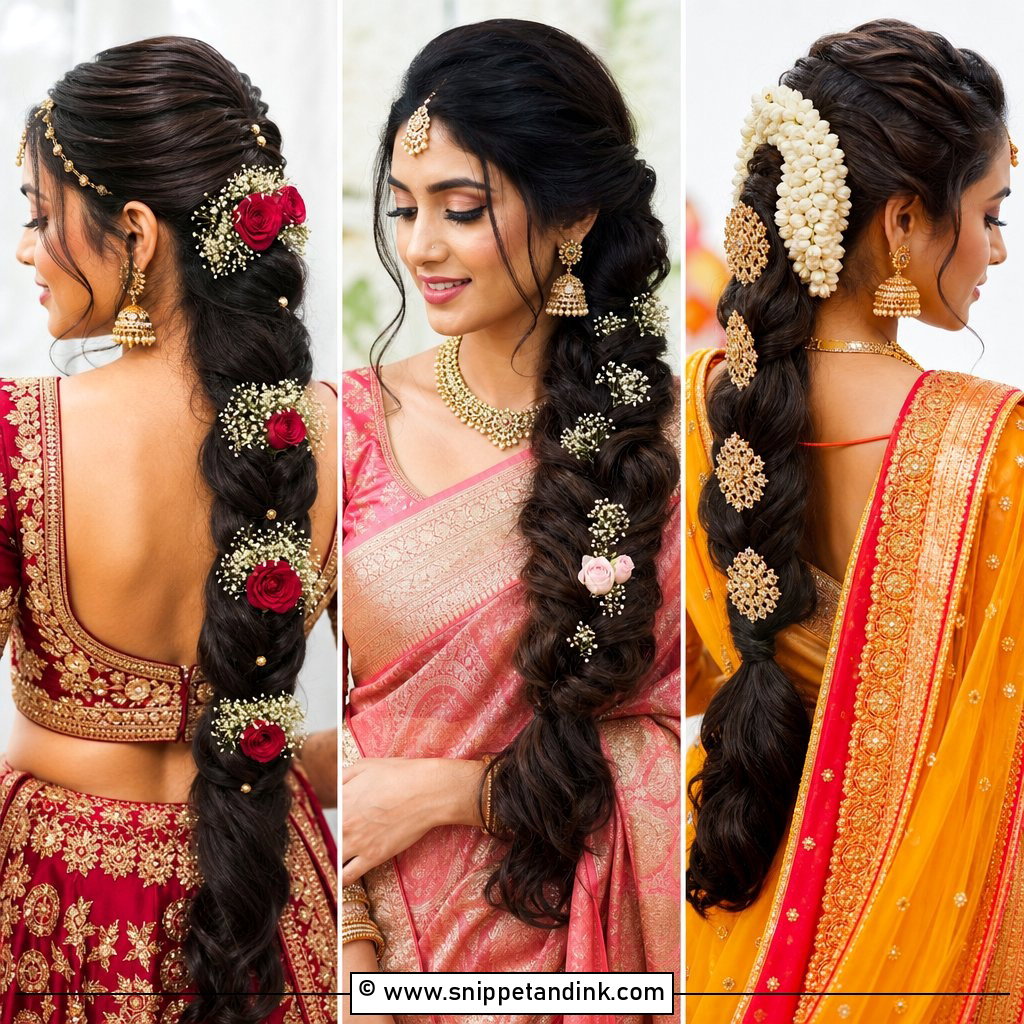
Fishtail braids look more intricate than they are; the technique is just two sections and a thin strand crossed over again and again. Start with slightly roughed-up, second-day hair, because freshly washed hair slips and the braid looks thin. Laid over one shoulder, it sits nicely with a flowing lehenga or an Indo-western gown. I leave a couple of face-framing strands out and slide in small pearl pins or flowers. It holds well through mehendi and sangeet dancing. Medium to long hair is needed; below the shoulders, the pattern doesn’t have room to show.
3. Messy Low Bun for Kurta
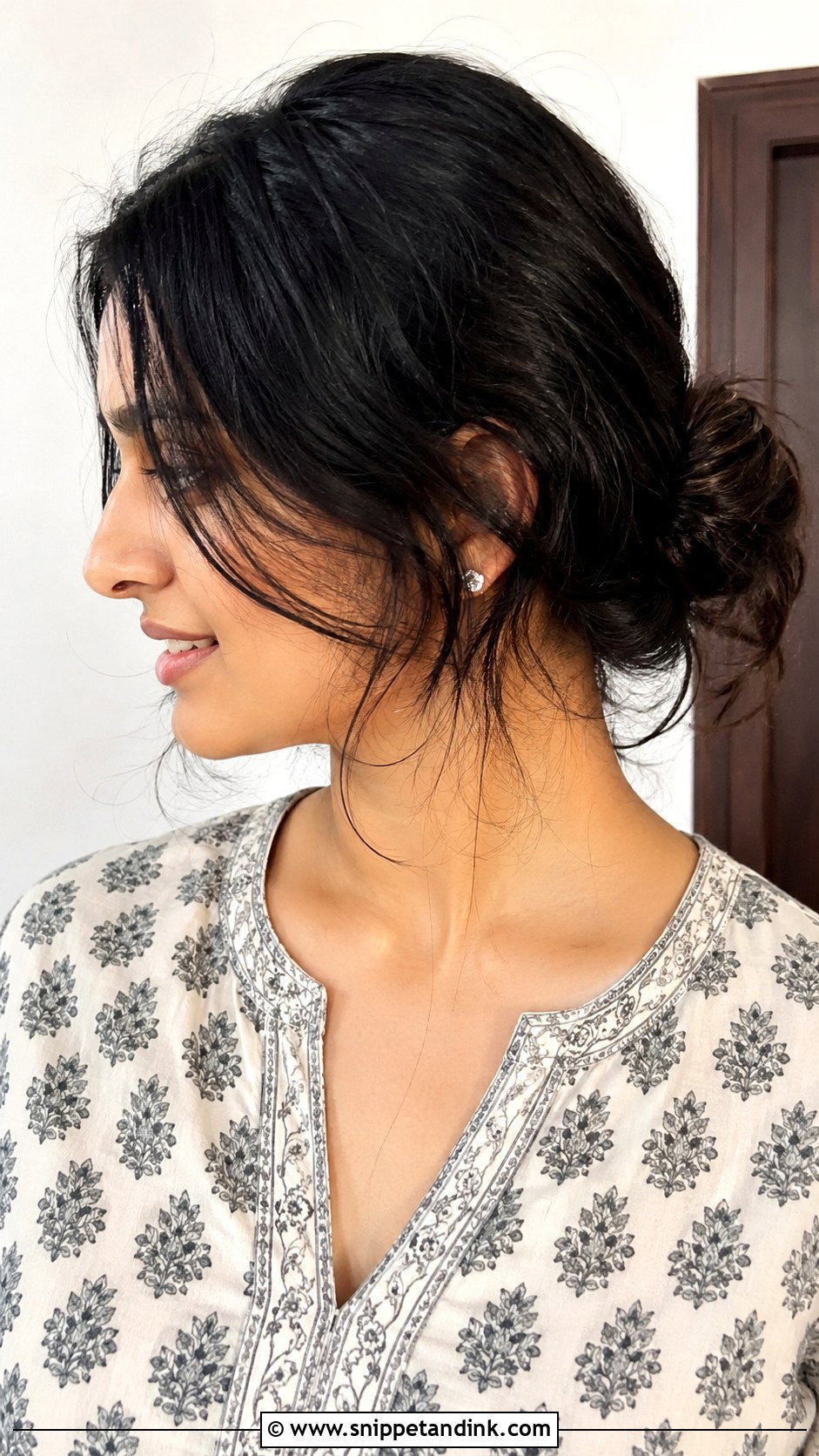
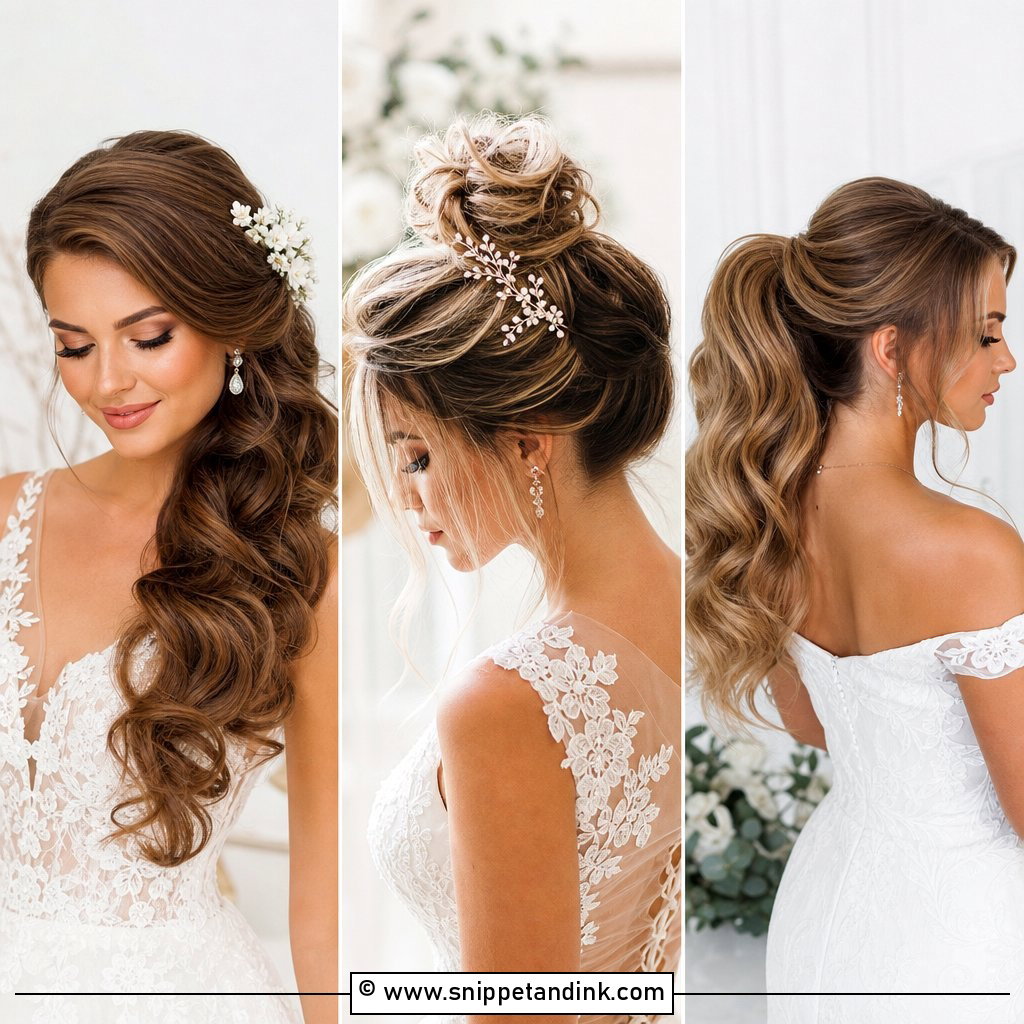
The point of a messy low bun is that it doesn’t have to be neat, which makes it ideal for a cotton kurta at a daytime function. Twist the hair into a loose knot at the nape, pin it, then pull a few strands loose around the face. Straight, wavy and curly hair all work, though very silky hair will need a little texture spray first or the bun slides down within an hour. A single flower or a small clip is enough decoration. In hot weather, nothing keeps your neck cooler.
4. Front Puff With Loose Curls
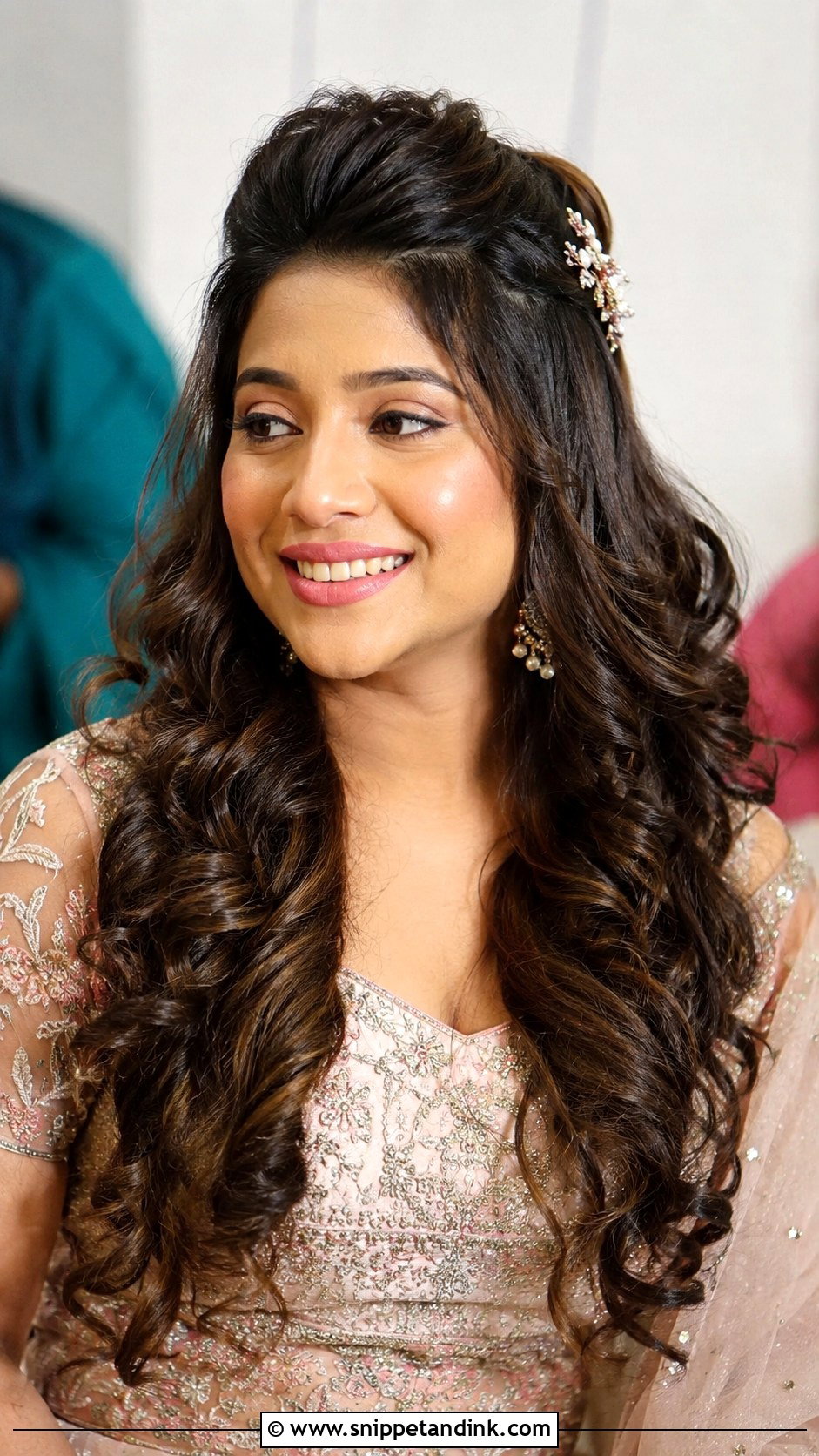
The front puff is still the style I’m asked for most at receptions. Backcomb a section at the crown gently at the root, smooth the top layer over it, and pin it from behind so the pins don’t show. Loose curls below balance the height. Round and oval faces both suit it, since the lift adds length. Where it goes wrong is a puff that’s too tall, which looks dated quickly; a few centimetres of lift is plenty. A couple of decorative clips near the puff add sparkle for cocktail evenings and lehenga parties.
5. Half-Up Half-Down for Sangeet
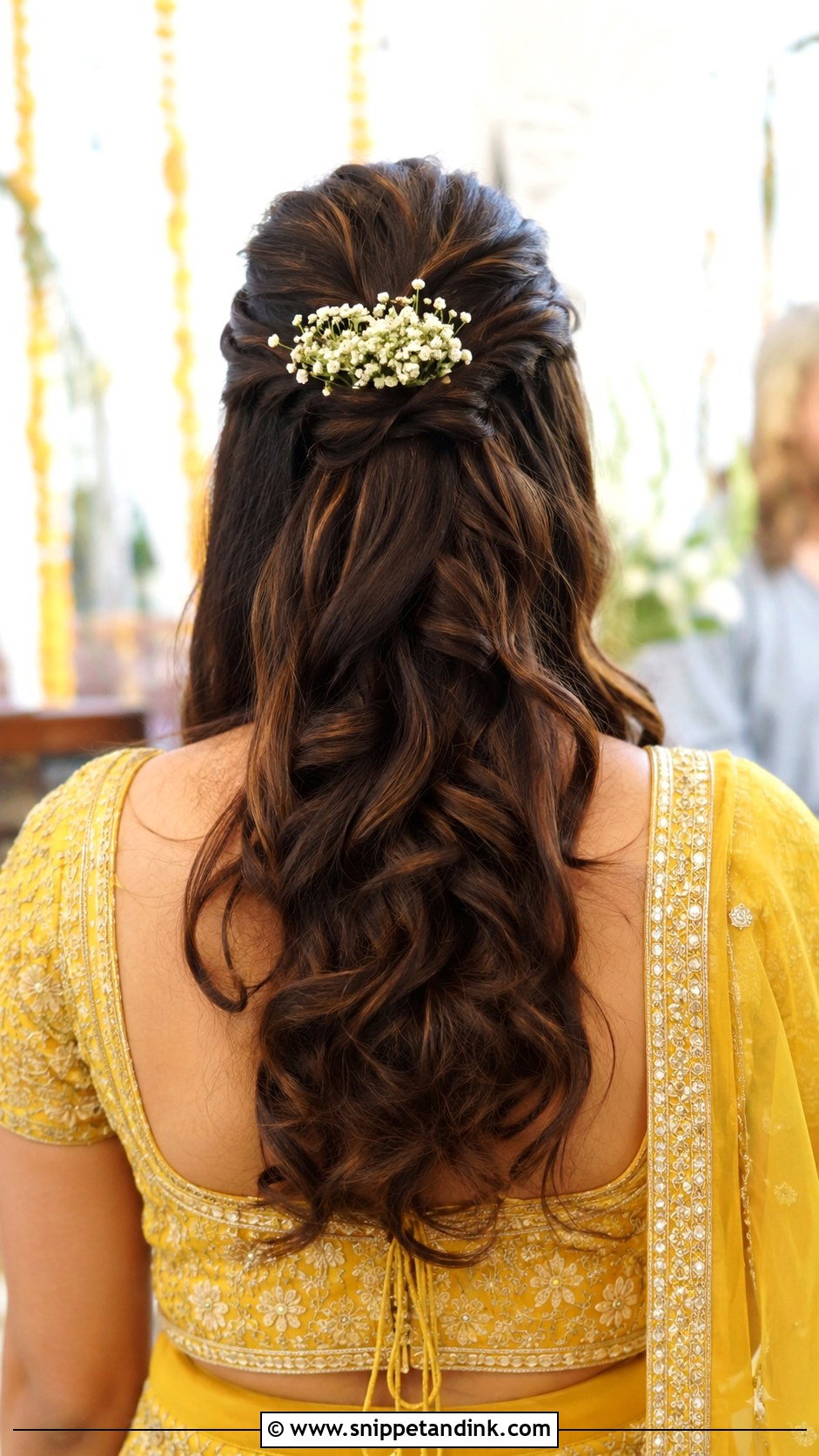
Half up, half down is the compromise style for anyone who can’t choose between an updo and open hair. Pull the top section back, secure it, and let the rest fall. It keeps hair off your face for dancing at haldi, mehendi, and sangeet ceremonies while still showing length. Add soft waves to the lengths for movement, and a small jewelled clip or a few flowers where the top section is pinned. If your hair is very fine, tease the crown lightly first, or the pinned section looks flat by evening.
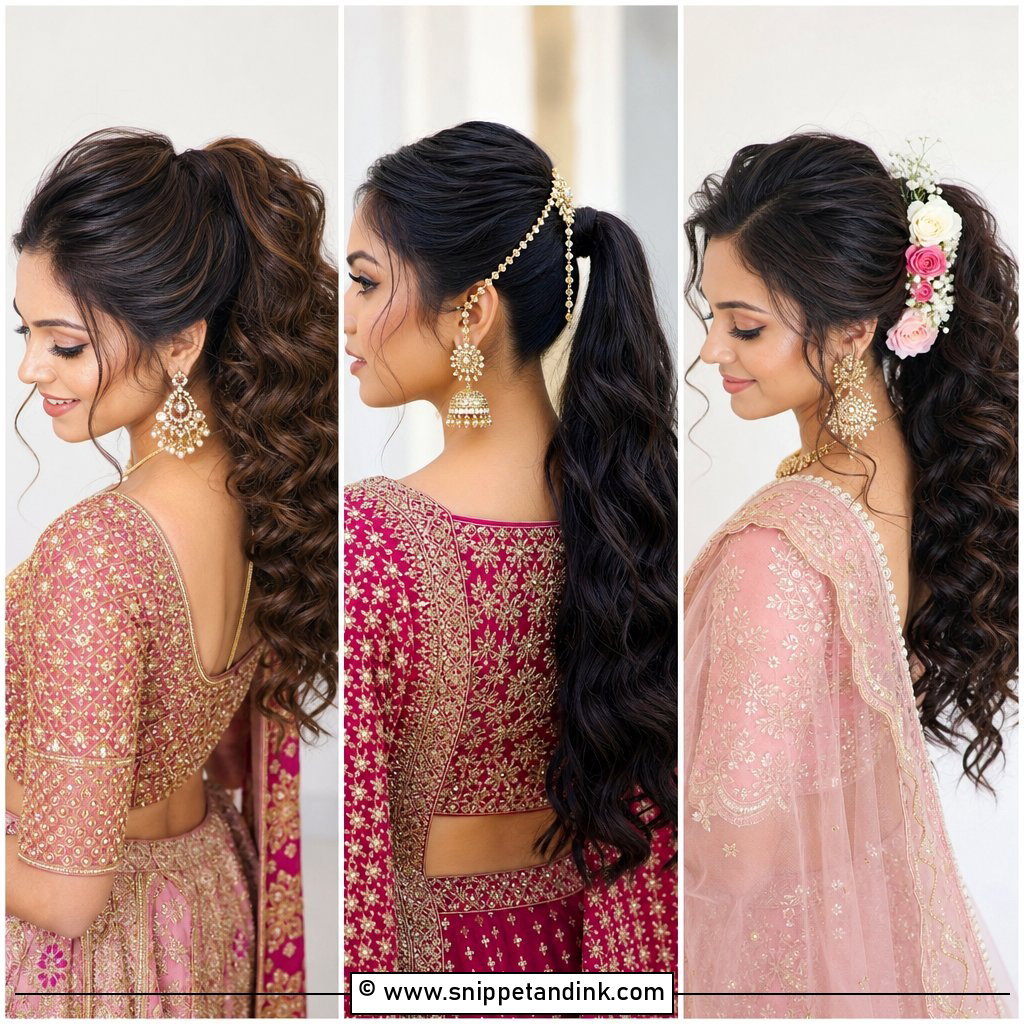
6. Flower Adorned Ponytail
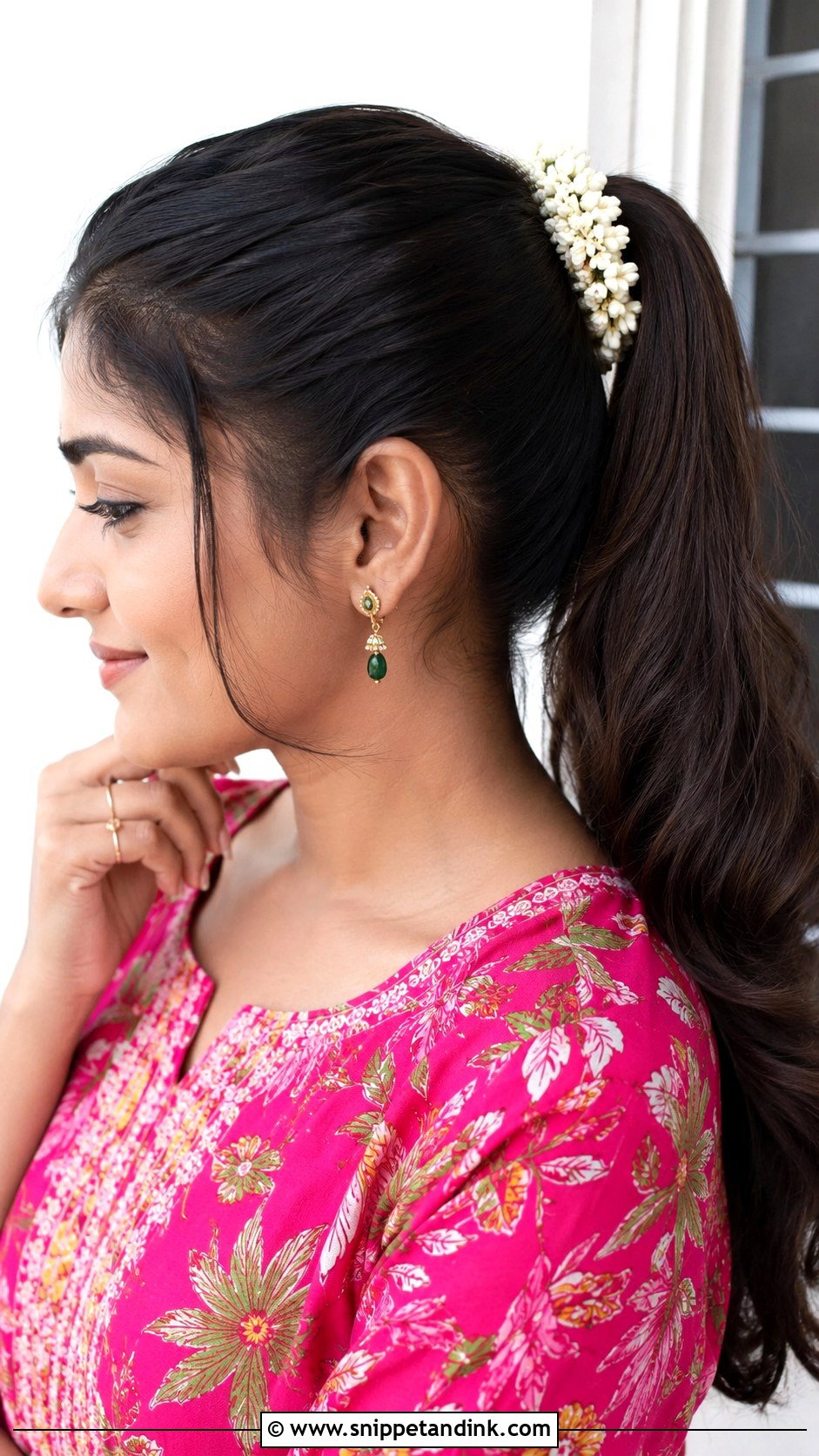
A ponytail with a gajra or a floral string wrapped around the base looks festive with almost no effort. I brush the hair into a high or mid ponytail, wrap a small strand of hair around the elastic to hide it, then add the flowers. Smooth on top looks polished; a bit of lift at the crown looks fuller. In heat, it keeps hair off the neck. It goes well with a bright kurta or a light saree for daytime gatherings.
7. Classic Long Braid With Parandi
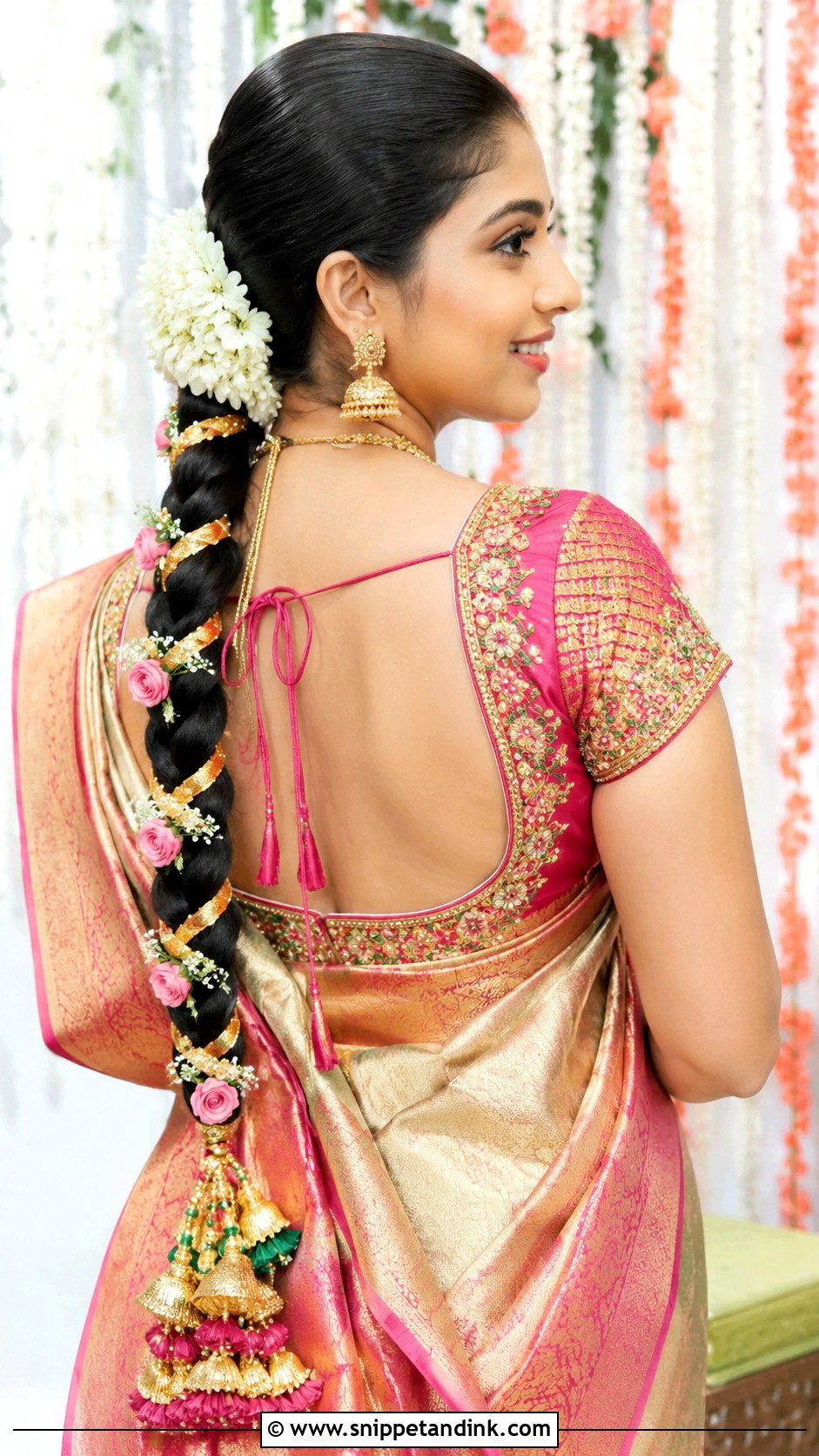
The single long plait has deep roots in Indian dressing, and a parandi makes it festive in seconds. Braid all the hair down the back, then work the parandi into the last third of the braid so its tassels hang below the end. Gota ribbons or floral pins are alternatives. It’s especially common in South Indian styling with silk sarees and gold jewellery. Thick, long hair suits it best; thinner hair can be braided with a hair extension woven in for fullness.
8. Sleek Low Bun for Office Saree
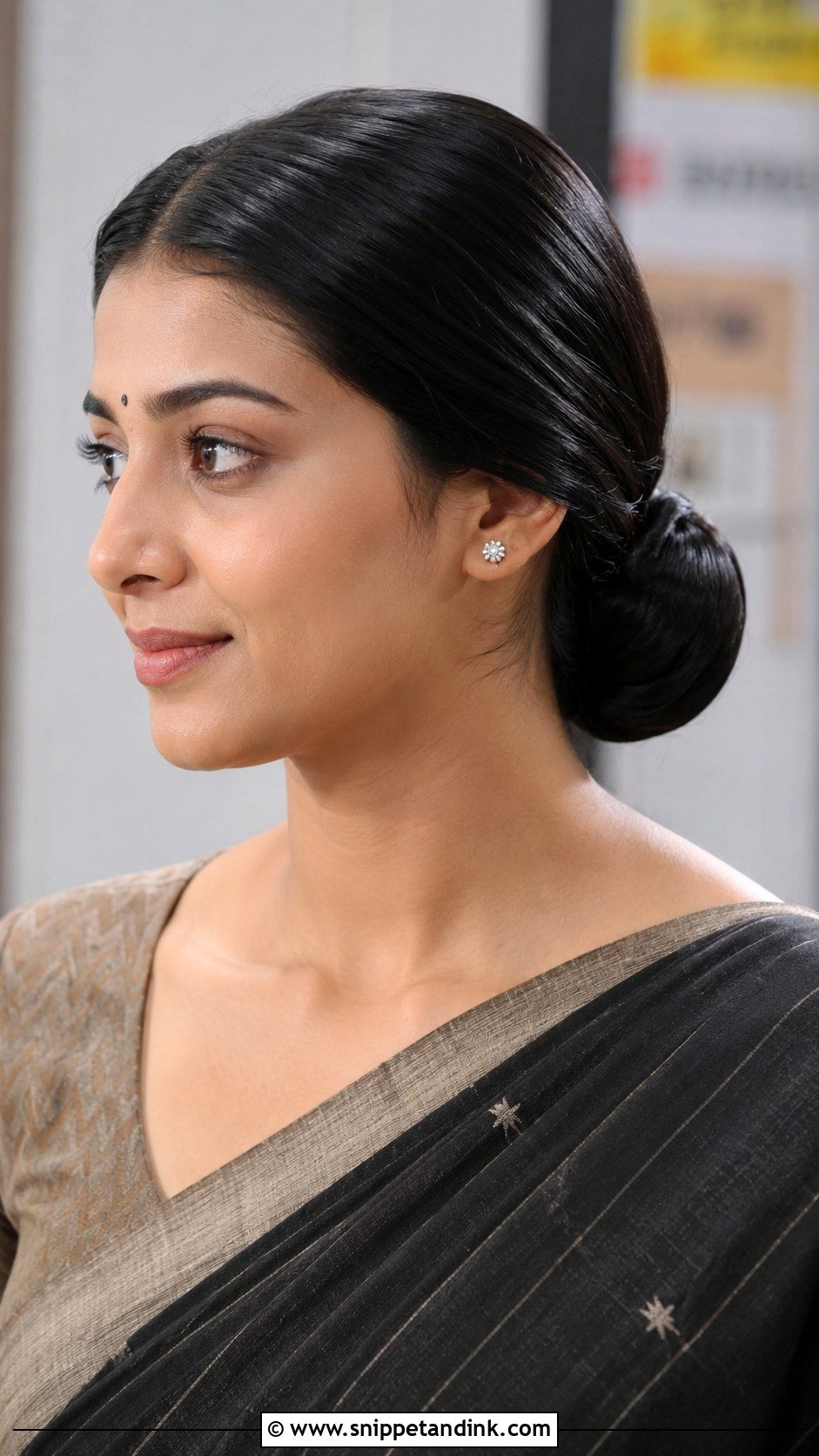
For an office saree or a formal daytime event, the sleek low bun is my default. Brush the hair back with a little serum, tie a tight ponytail at the nape, then twist and pin it into a neat knot. The clean shape draws attention to earrings and the face. Flyaways are the main enemy, so finish with a fine-tooth comb and a light mist of spray on the comb rather than the hair. Small studs and a subtle bindi are all it needs.
9. Loose Waves for Indo-Western Look
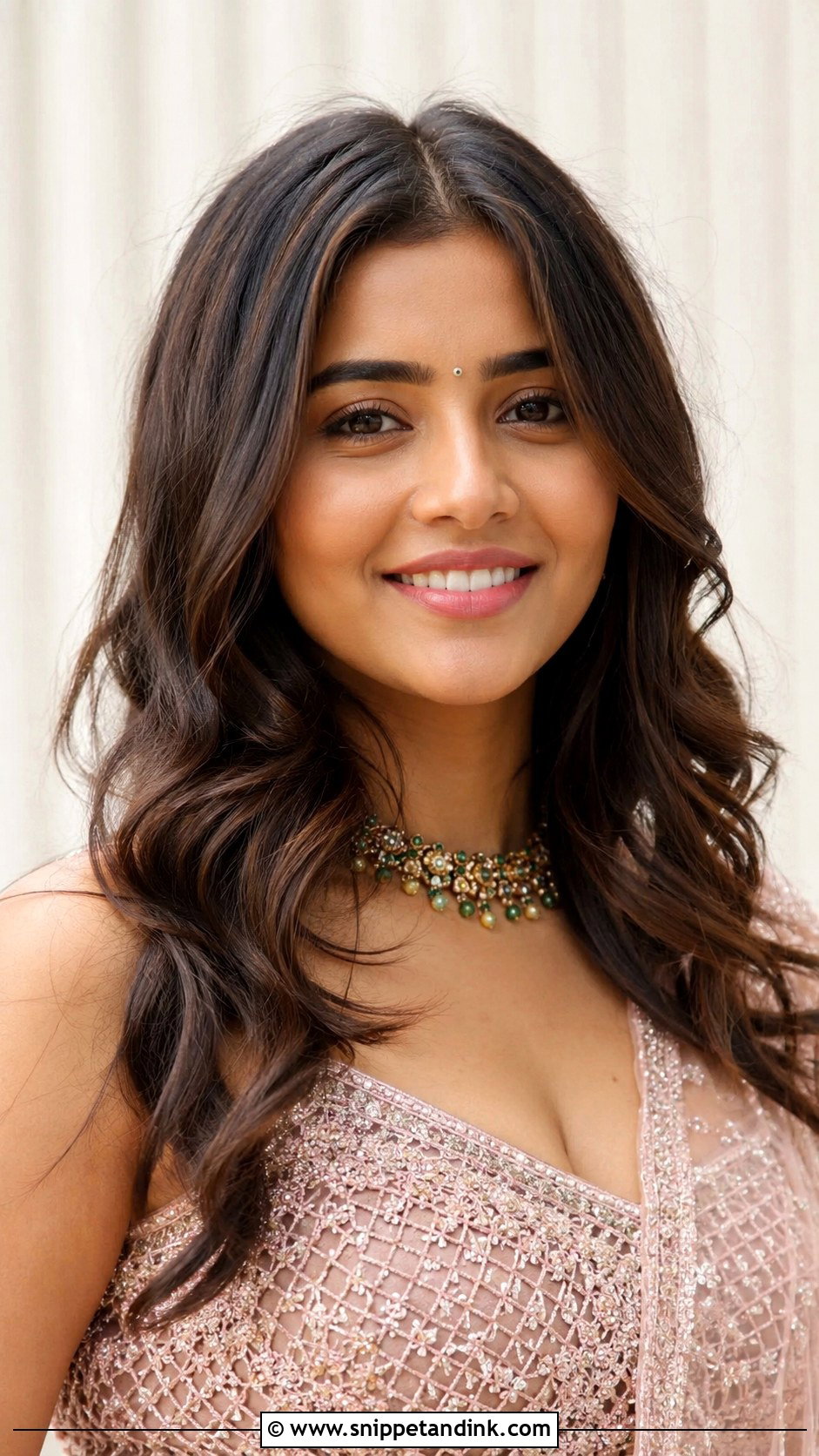
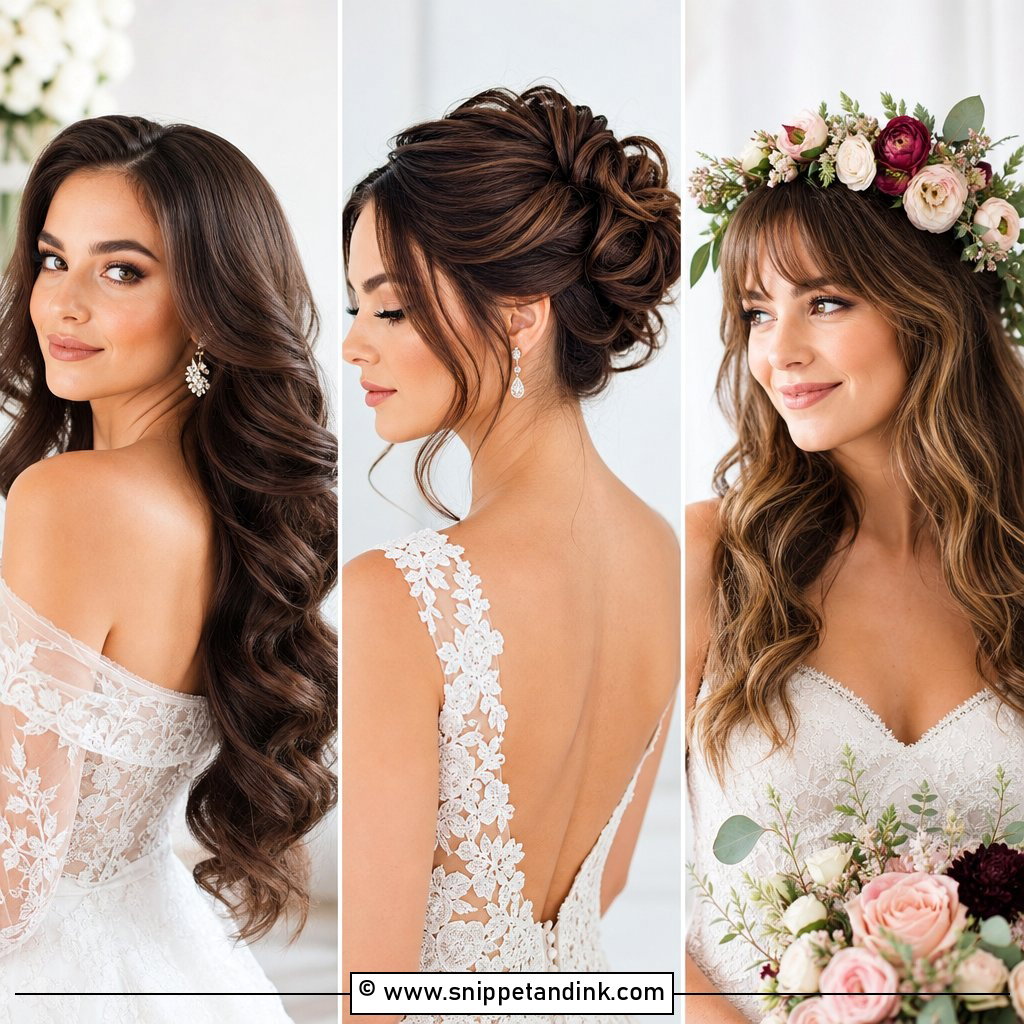
Loose waves are the easiest way to make an Indo-western outfit feel modern. Curl medium sections with a wand, alternating direction, let them cool completely, then break them up with your fingers. Brushing while the curls are still warm is what makes them drop. This suits gowns, palazzo sets and fusion sarees at cocktail evenings. A side clip or a centre part changes the feel without much extra work, and you won’t need many accessories.
10. Side Swept Braid for Mehendi
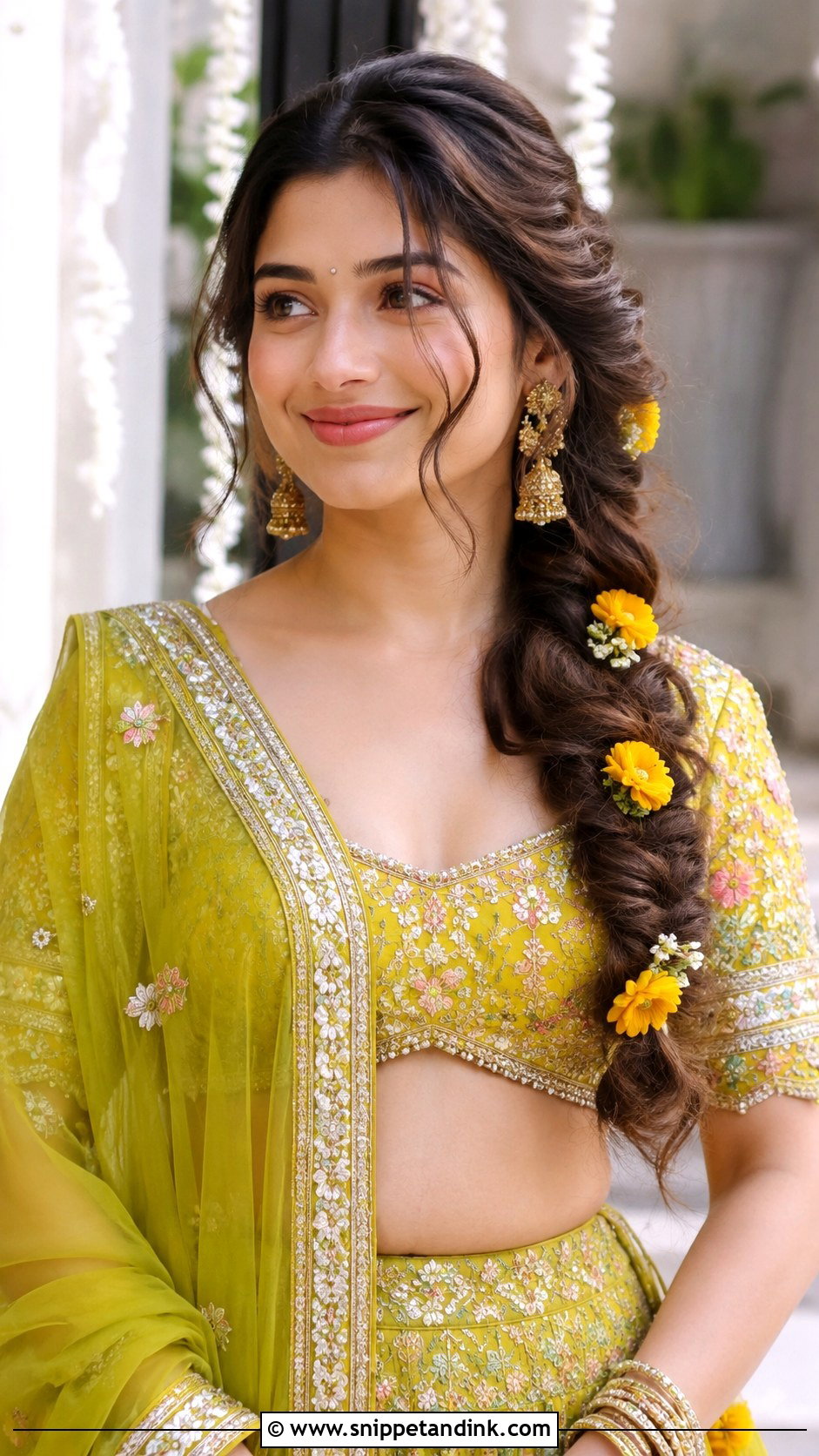
Mehendi mornings mean sitting still for a long time with your hands out of action, so a style that needs no touching up matters. A loose side braid does the job. Sweep everything to one side, braid loosely, and leave soft pieces around the face before your henna goes on. Marigolds or rosebuds tucked into the braid suit bright lehengas and floral jewellery. It’s comfortable for hours, and it works for medium to long hair.
11. Big Bouncy Curls for Party
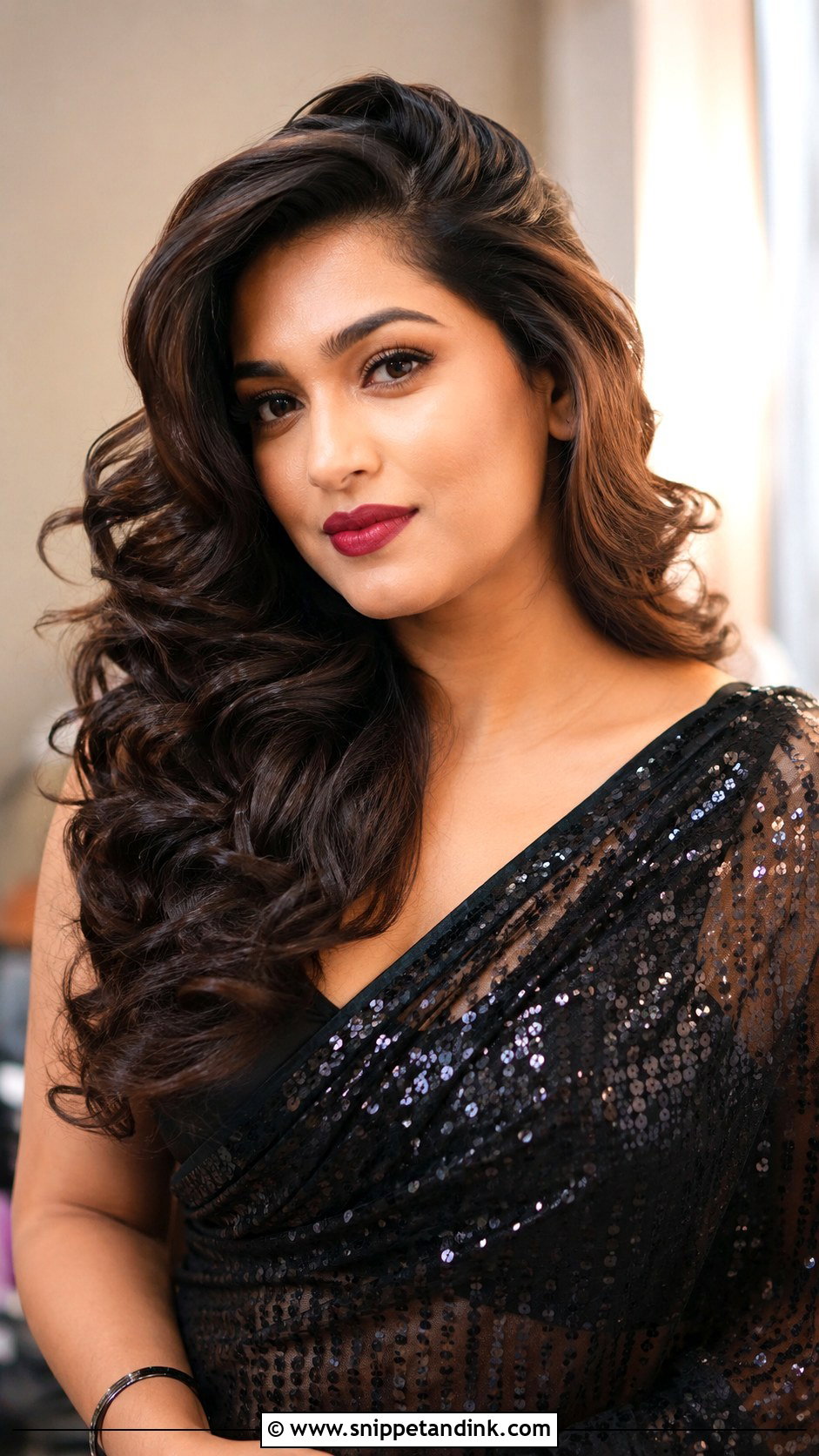
Big curls need big sections and a large barrel, and they need hold. Curl two-inch sections, pin each curl up while it cools, then release and loosen them before you leave. Sequined sarees, party gowns and Indo-western outfits all work with this volume. In humid weather, straight or fine hair will lose these curls faster than you expect, so set them with a little mousse first. Keep accessories minimal and let the volume do the work at evening events.
12. Bun With Hair Accessories
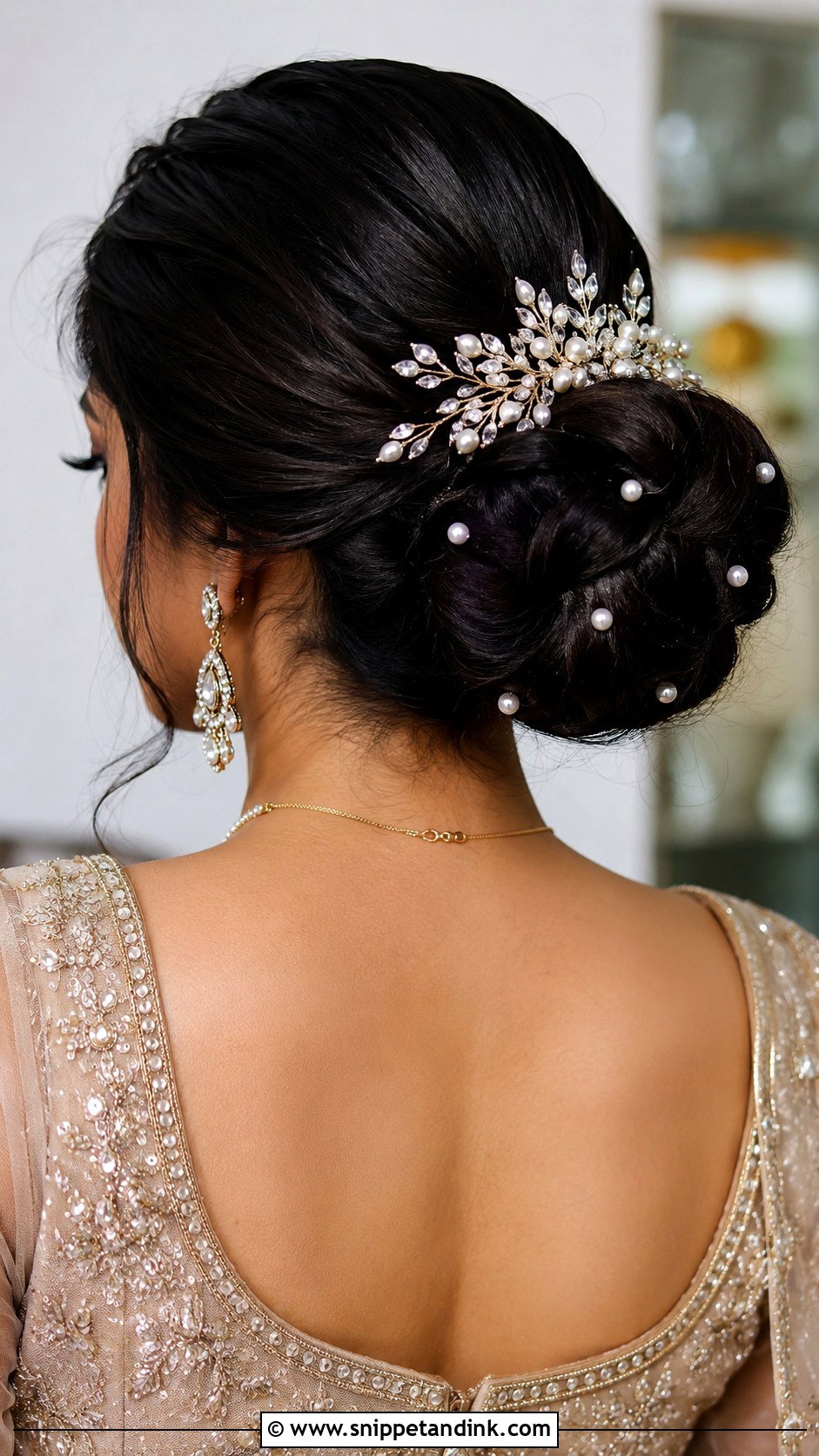
A plain bun becomes the accessory holder: jewelled pins, pearl pins, a juda comb or a maang tikka worn with it. Make the bun firm first, because decorations need something solid to grip. I pin accessories at an angle into the bun, never just into the surface hair, or they work loose while you dance. Position the bun high or low depending on the neckline. Shorter or finer hair needs some padding underneath. It’s a quick way to dress up an ethnic outfit for an engagement or a cocktail night.
13. Soft Updo With Wavy Fringes
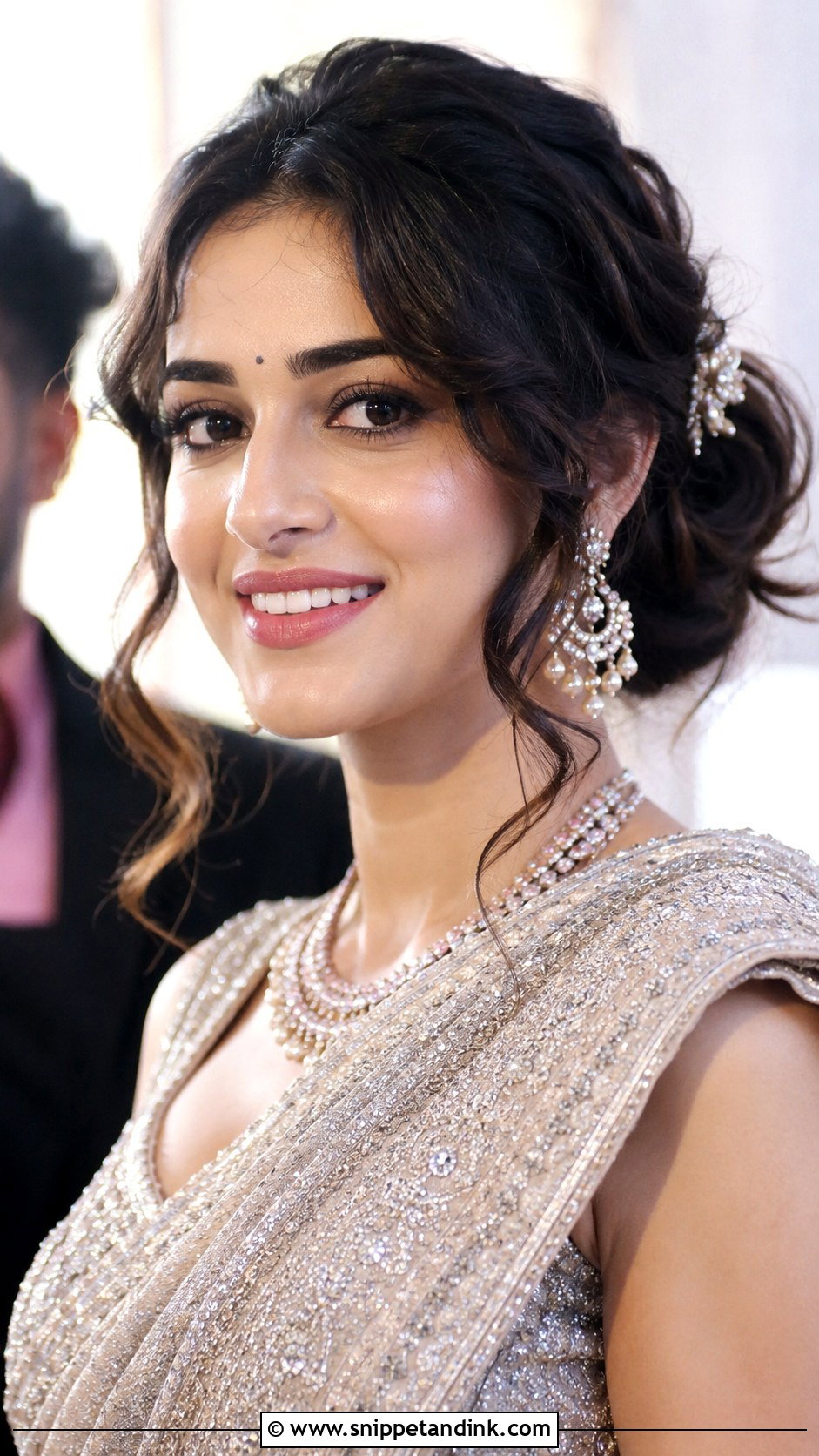
A soft updo with wavy face-framing pieces is gentler than a tight bun and still keeps the neck clear for statement earrings. Curl the whole head first, then gather most of it loosely into an updo, leaving a few tendrils at the front. Curl those tendrils separately so they don’t hang straight. A small jewelled pin adds a bit of sparkle. It suits receptions and festive dinners where a stiff, formal look would feel overdone.
14. High Bun for Anarkali
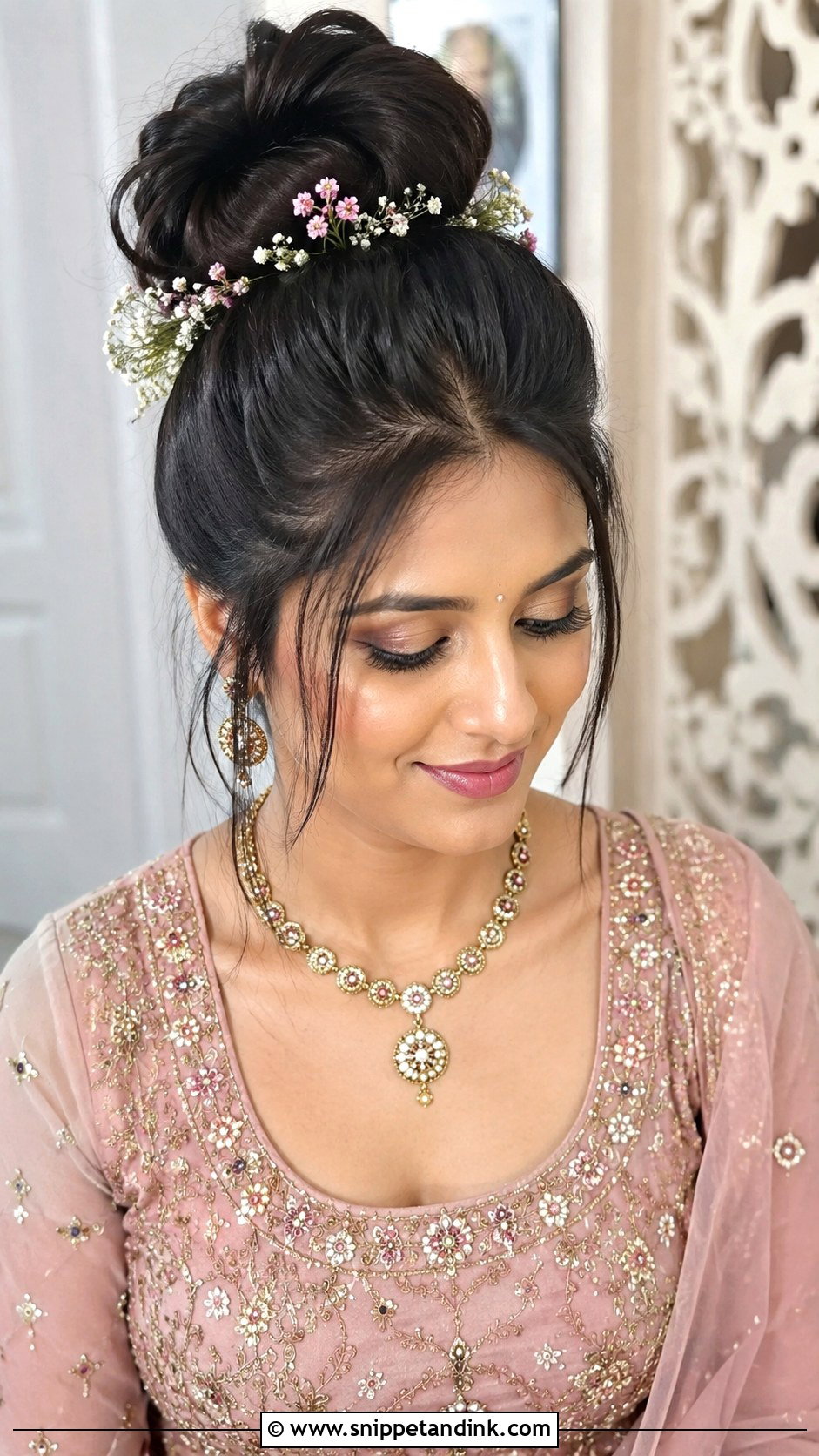
An Anarkali’s high neckline and full skirt need hair that adds height, and a high bun does that. Gather the hair at the crown, twist it into a full knot and pin it securely. It lengthens the neck and shows off ornate necklines and jewellery. I usually pad it slightly for medium-length hair so the bun has volume. Small flowers or a jewelled pin add detail for formal functions. With heavy hair, use more pins than you think you need, because a high bun carries its weight further from the head.
15. Dutch Braid Crown for Festival
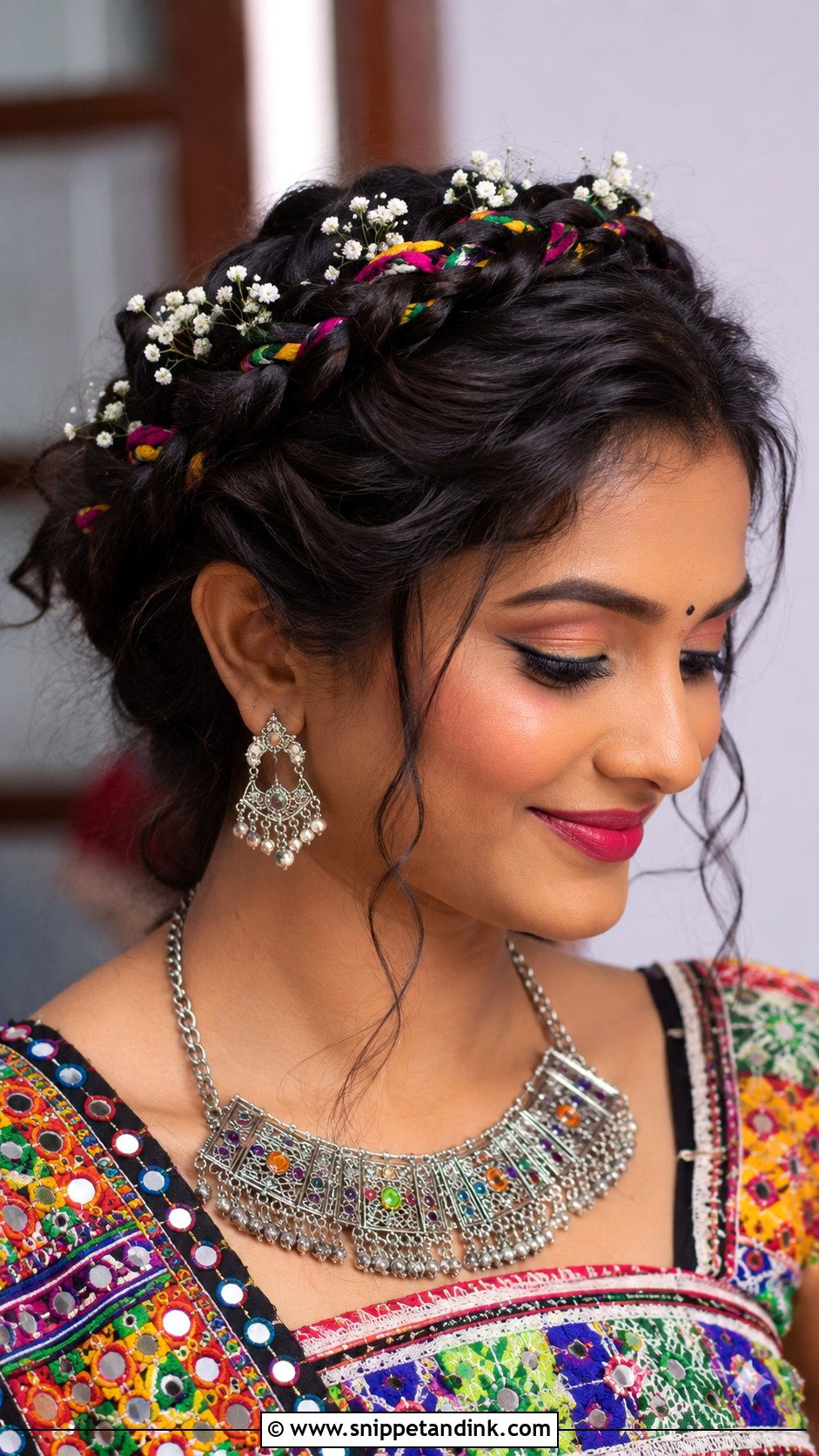
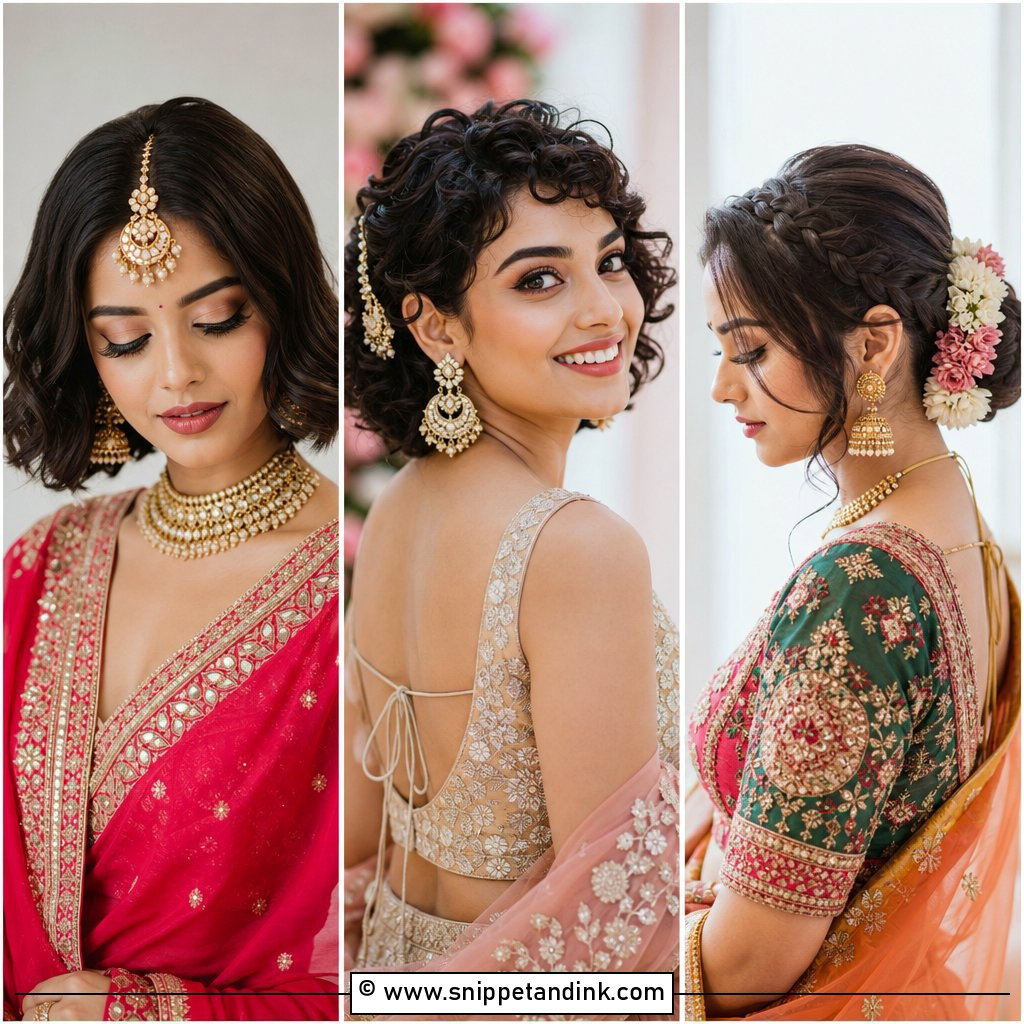
For garba and Navratri, a Dutch braid crown is one of the most secure choices. The raised braid wraps around the head and keeps all the hair pinned, so spinning doesn’t loosen it. Braid from one temple around the back and pin the end under the start. Tiny flowers or coloured threads woven in add festivity. Medium to long hair is needed to go all the way round. If your hair is layered, expect a few short ends to escape; a little gel on the fingers while braiding keeps them in.
16. Twisted Half Updo for Reception
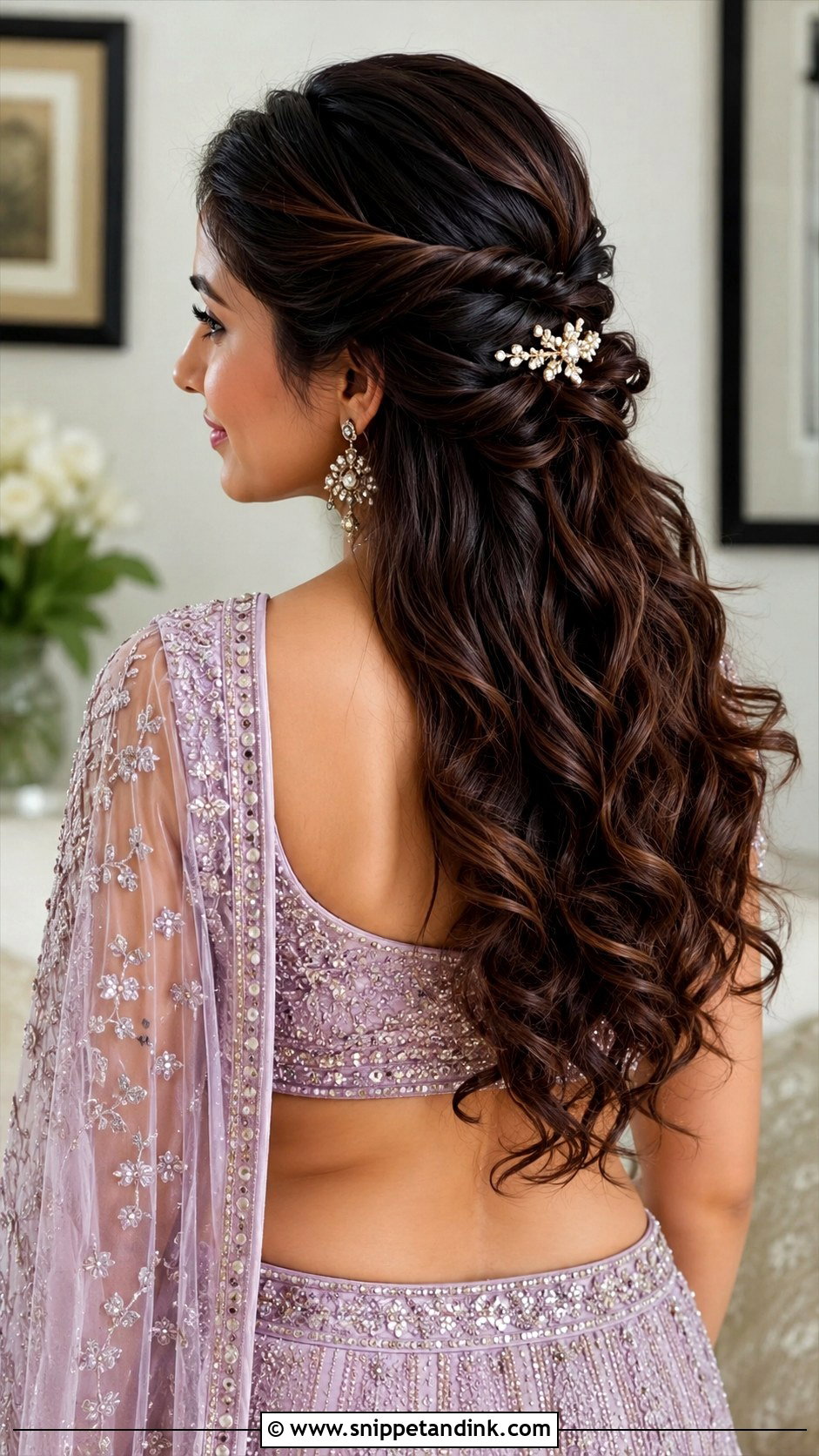
A twisted half updo gives the look of braiding without needing to braid. Take a section from each side, twist each back, and pin them together at the centre of the back of the head. The rest falls in soft waves. A decorative pin where the twists meet adds a finishing detail for receptions and dinners. Twist towards the back, not downwards, or the twists sag. It works for medium to long hair.
17. Wavy Open Hair With Maang Tikka
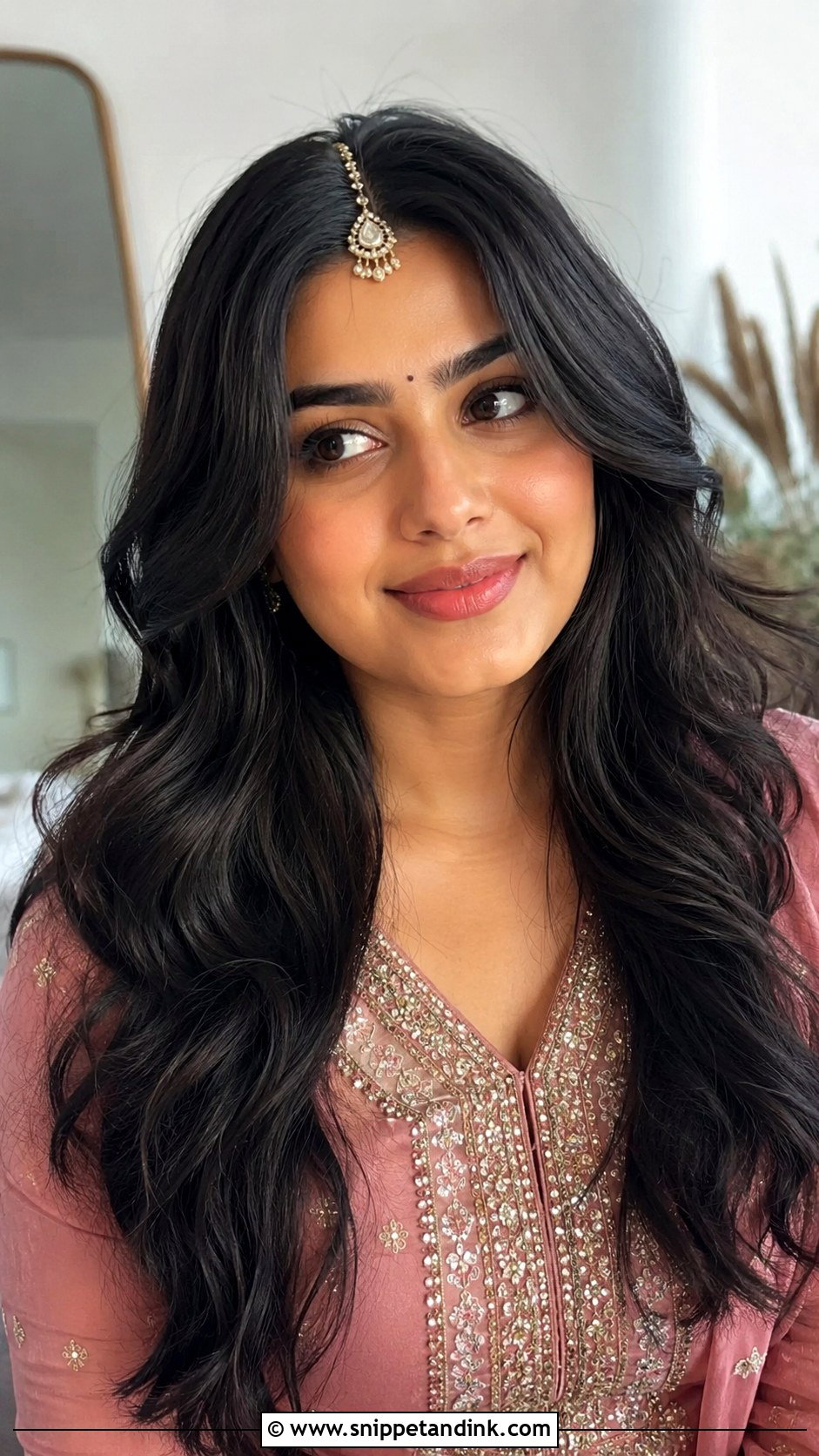
Open hair with a tikka is one of the simplest ways to look traditional. Add soft waves through loose hair, centre-part it, and lay a delicate maang tikka along the part. To stop the tikka sliding, I pin its hook into a small section of backcombed hair at the crown, then cover the pin with the top layer. It suits festivals and family functions with a kurta, lehenga or light saree. Keep other jewellery minimal so the tikka stands out.
18. Low Side Bun With Flowers
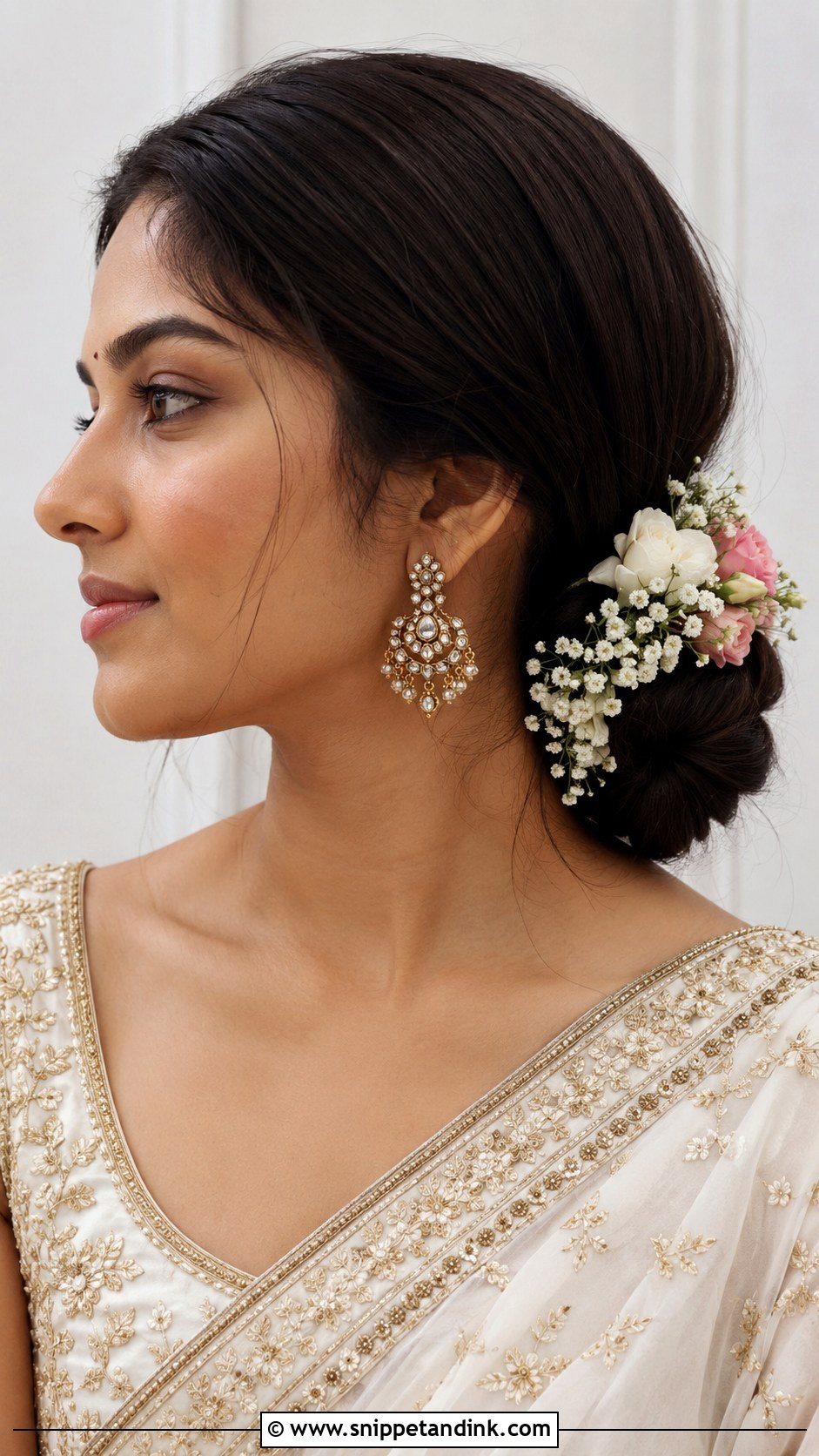
A low side bun sits near one ear and gives a softer line than a centre bun. Gather the hair low to one side, twist it into a knot and pin it. Fresh flowers or a small gajra finish it. I’d wear earrings on the opposite side so the balance looks deliberate. It suits sarees and lehengas at poojas and daytime gatherings, and it’s comfortable over long events. Pin it well into the base, because a side bun takes more weight on one side and can drift.
19. Bubble Ponytail for Garba
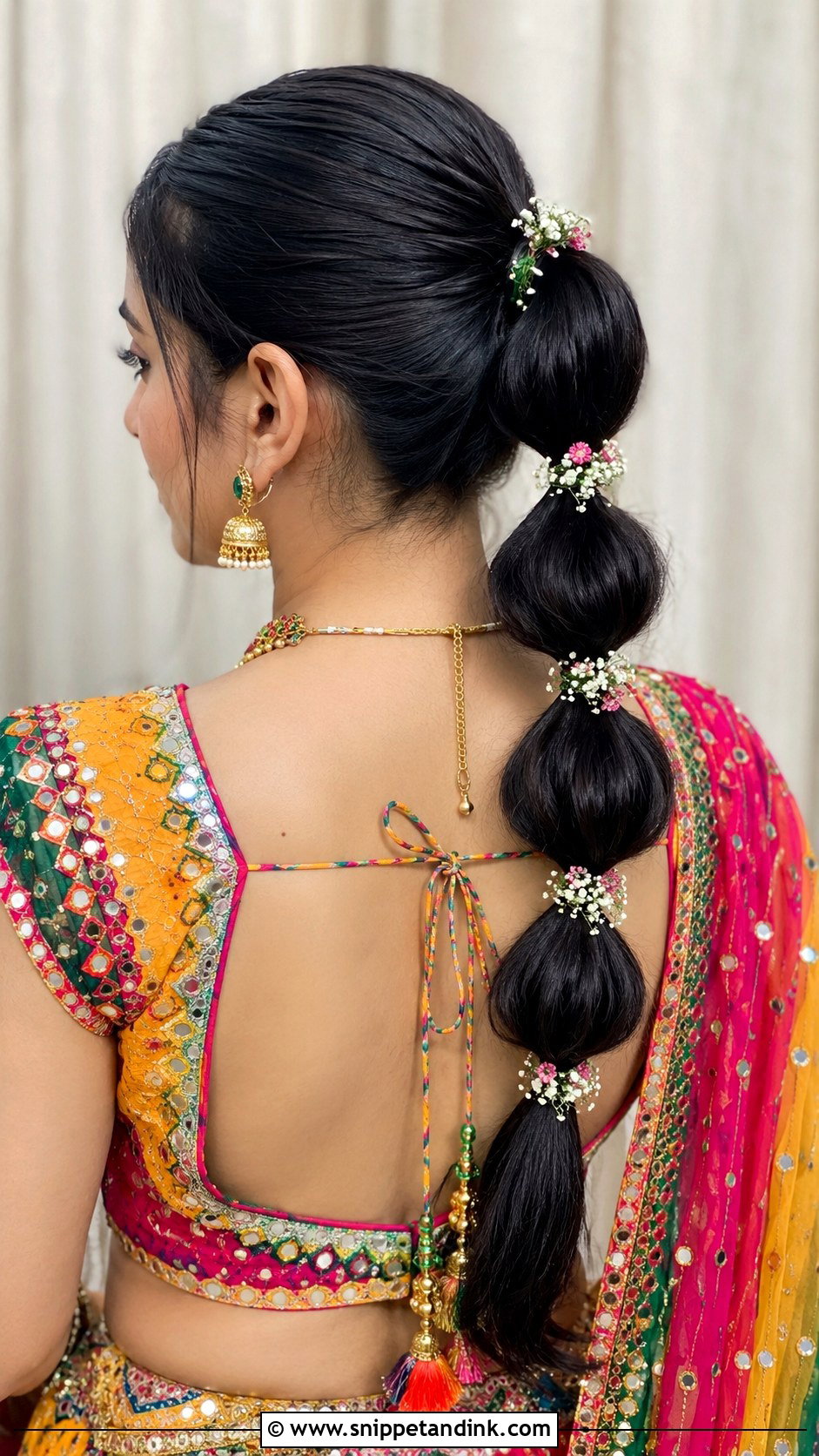
Bubble ponytails are made for garba: they look fun, and the elastics hold everything firmly through hours of dancing. Tie a high ponytail, add clear elastics every few centimetres down the length, then gently pull each section wider to make the bubbles. Small flowers or bright threads between the bubbles suit chaniya cholis and colourful lehengas. You need at least shoulder-length hair for three or four bubbles. It’s quick to do, and easy to spot in a crowd.
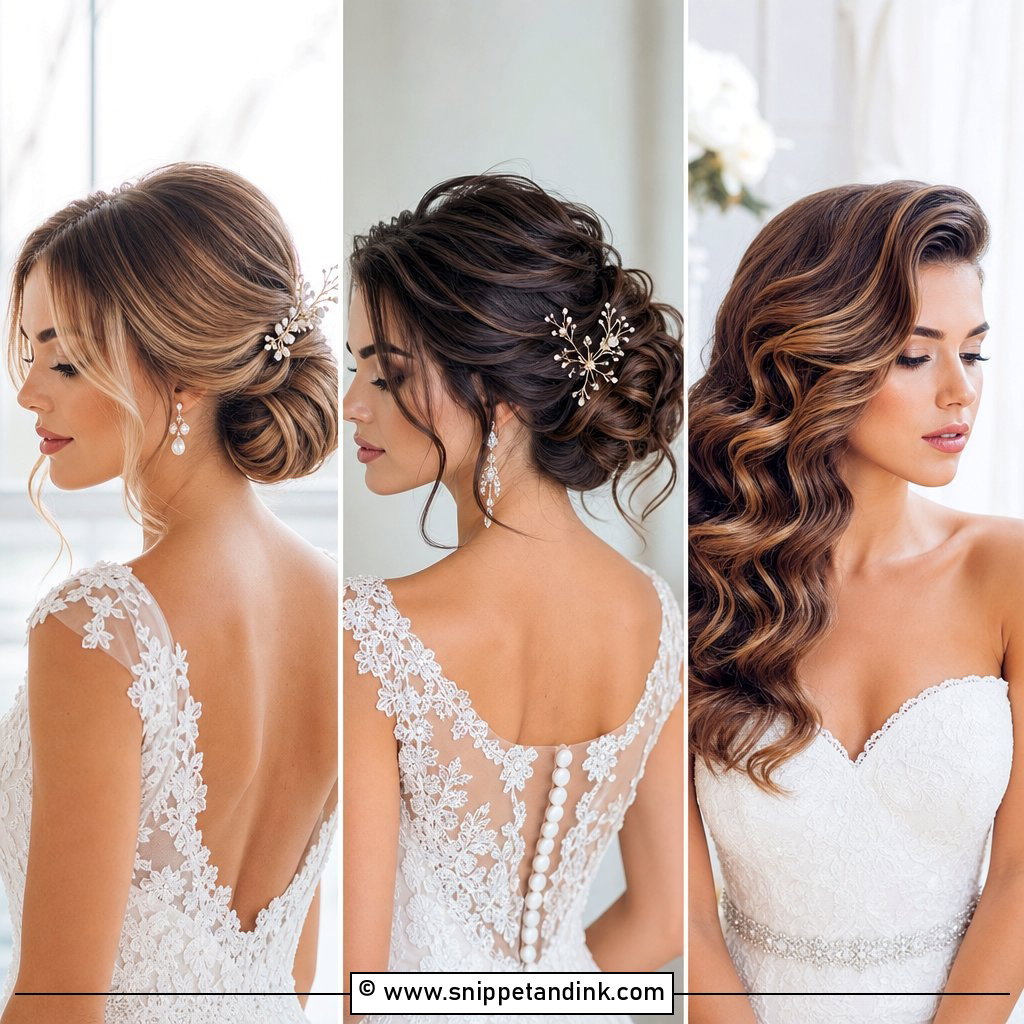
20. Sleek Center Part Bun for Silk Saree
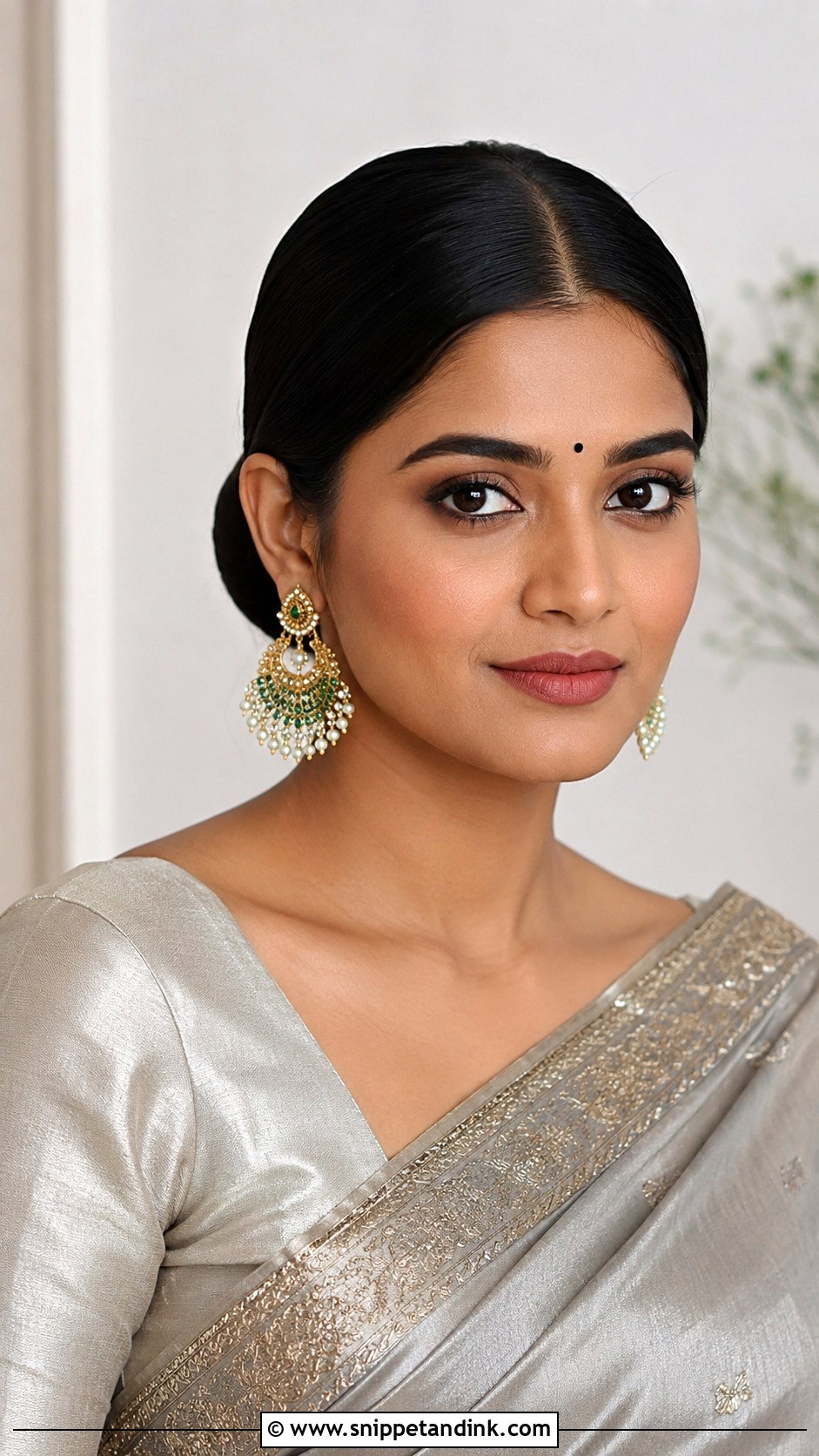
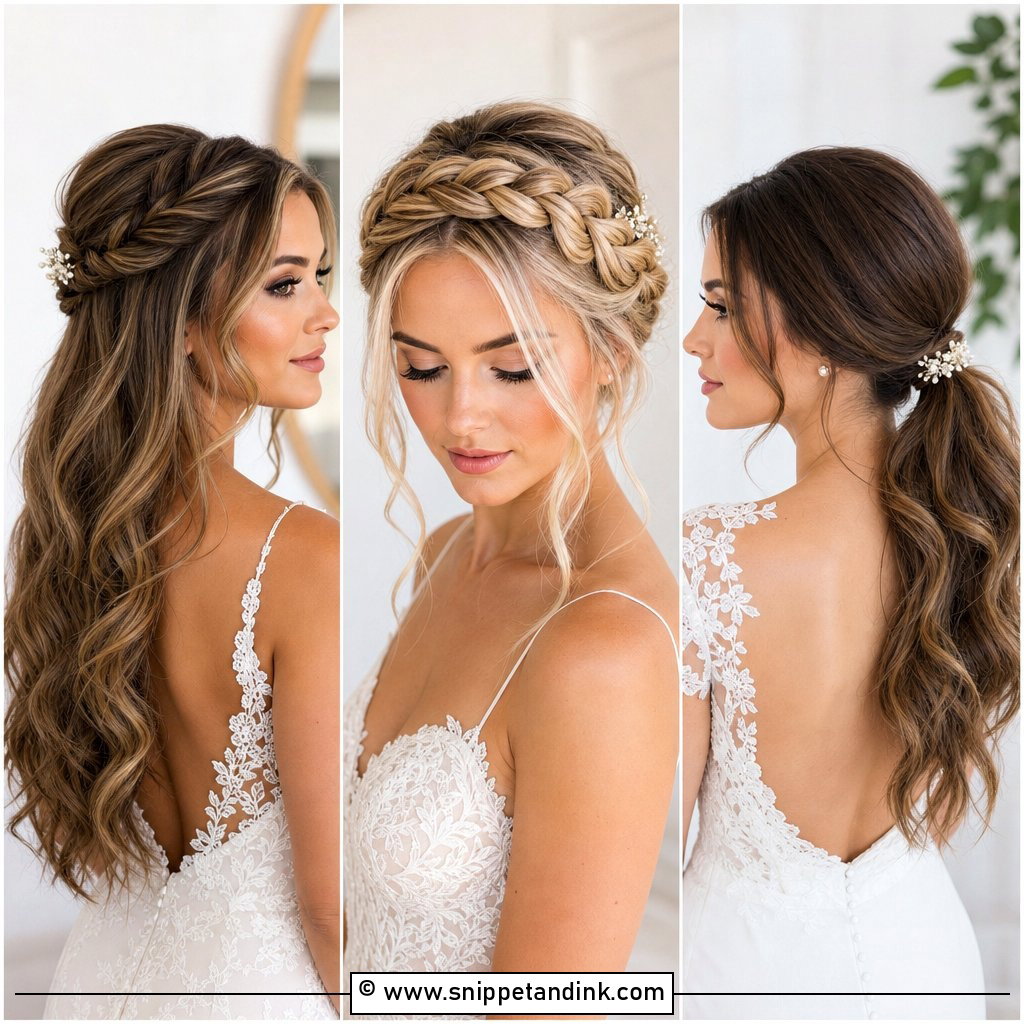
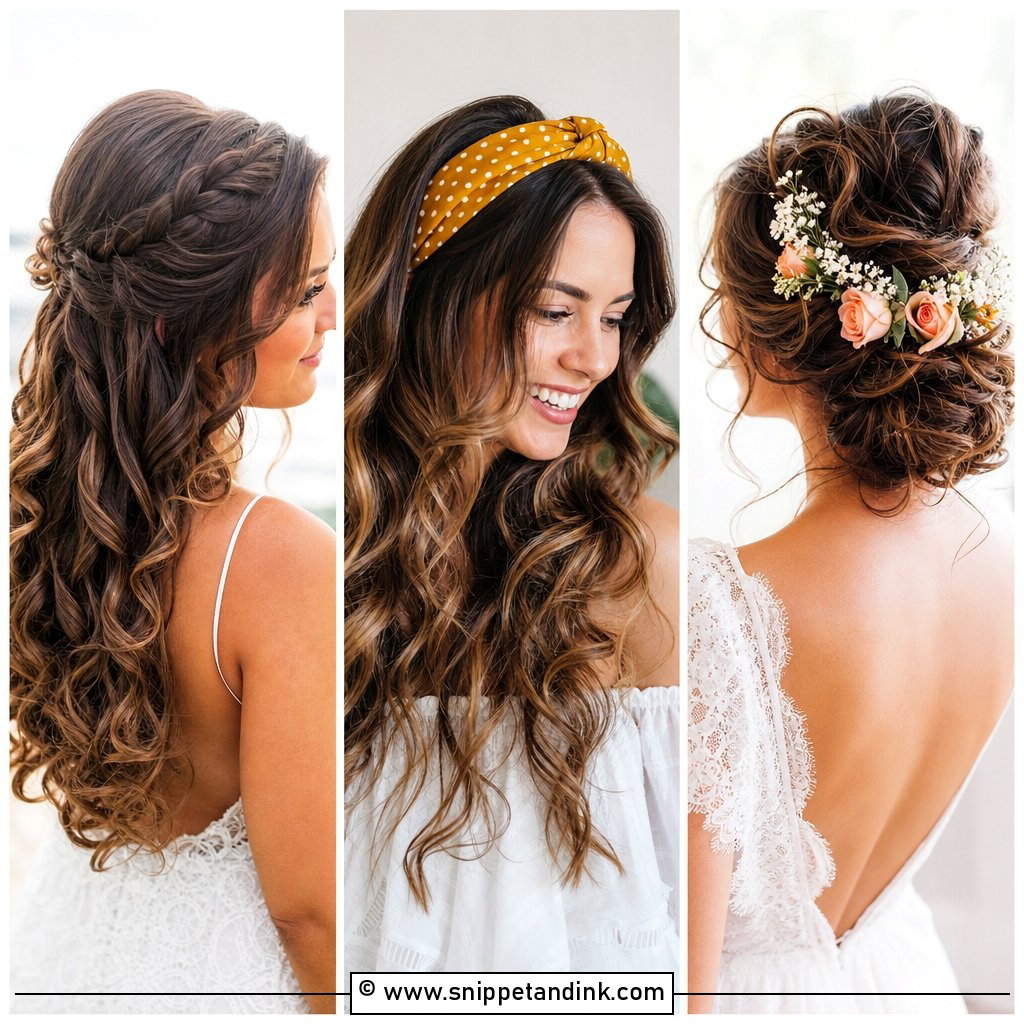
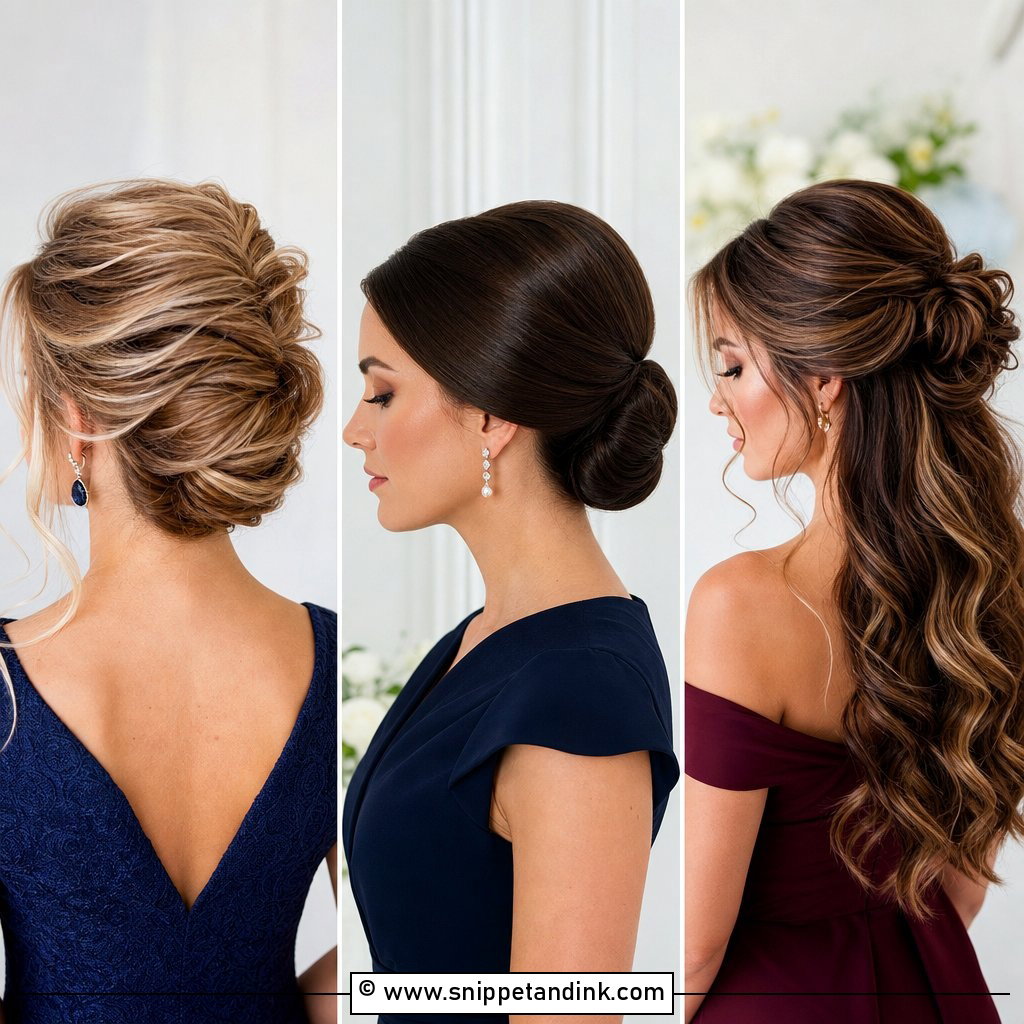
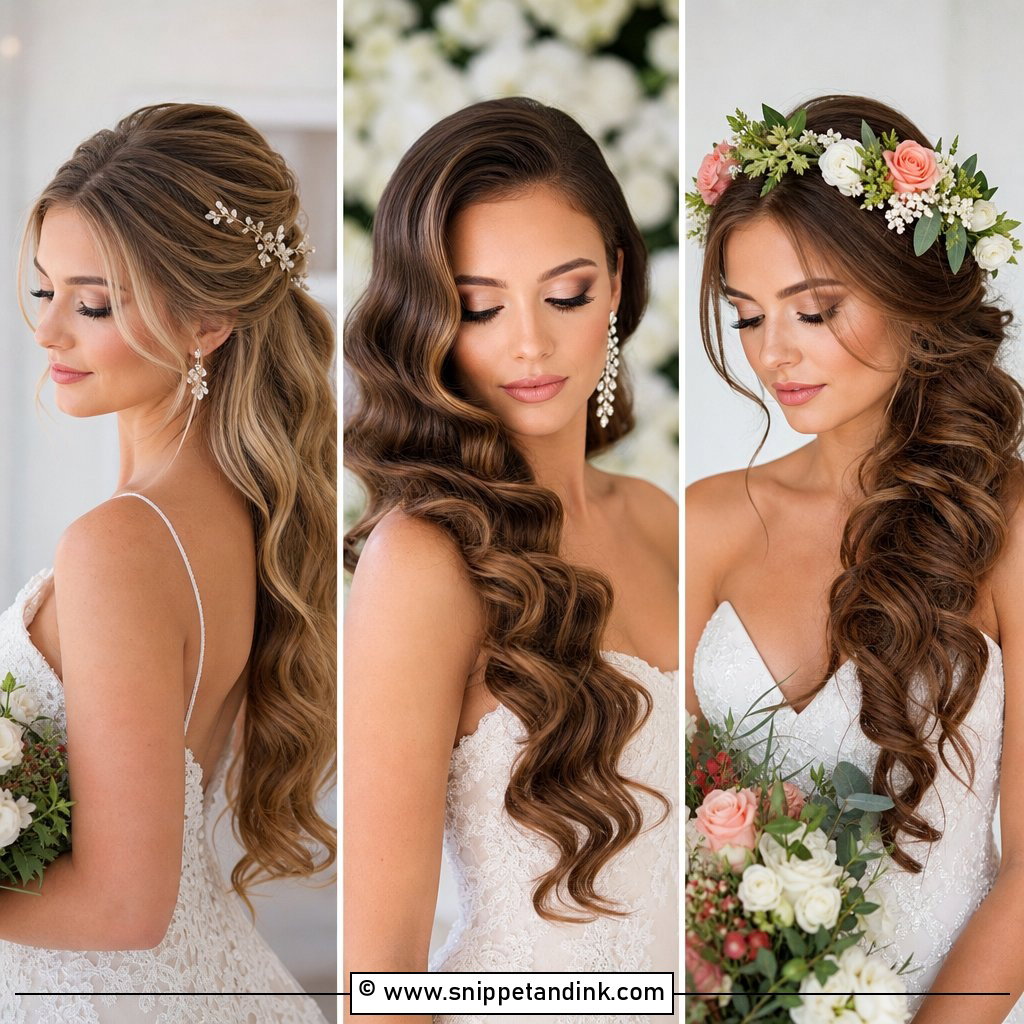
A precise centre part and a sleek low bun suit silk sarees and traditional jewellery better than almost anything. Make the part with the tail of a comb, smooth both sides back with a little serum, and twist everything into a neat bun. The clean frame shows off statement earrings. It suits weddings you attend as a guest, formal poojas and dignified gatherings. If your part shows a lot of scalp, a light dusting of matching root powder fills it in. A simple bindi finishes it.
Pinning Fresh Gajra So It Lasts the Evening
Jasmine looks wonderful at seven in the evening and tired by eleven if it isn’t handled well. Buy the strand on the day, and if you have a few hours before you dress, keep it wrapped in a damp cloth in a closed box in the fridge. The buds open as they warm up, so taking it out just before you pin it means it reaches its fullest at the party, not before.
Getting it to stay where you put it
The thread in a gajra is what you pin, never the flowers. I slide U-pins or bobby pins through the thread every few centimetres and push them into the bun’s base at an angle. On a ponytail, wrap it tightly around the elastic and tuck the end under itself. Heavy, long gajras on a fine-haired bun will pull it down, so pad the bun if you want a big strand.
Try not to touch the flowers once they’re on; jasmine bruises and browns where it’s handled. If you are sensitive to strong scents, or the event is in a small, warm room, a shorter strand or a few loose buds is kinder to you and the people sitting near you.
Neckline, Dupatta and Dance Floor Come First
Not every function needs a wedding-day style, and repeating the same bun over five days can feel flat. From floral gajra buns to bubble ponytails, there’s a style here for most outfits and hair types. When you choose, think about three things: what the neckline needs, where the dupatta will sit, and how much dancing is planned. Flowers, pins or a tikka can make a simple style feel festive. Try your favourite once at home before the function, so you know how long it takes and where your pins need to go.
You'll Like These Ideas:


Leave a Reply