
Norse-inspired hair is mostly about braids, and braids are honest: they show every uneven section and every rushed pin. That’s why I love doing them for weddings. The ideas below run from crown braids and loose waves to shield maiden plaits, beads and a full braided mohawk. For each one I’ve noted what hair it needs, how long it takes in the chair, and the trick that keeps it looking crisp after the speeches.
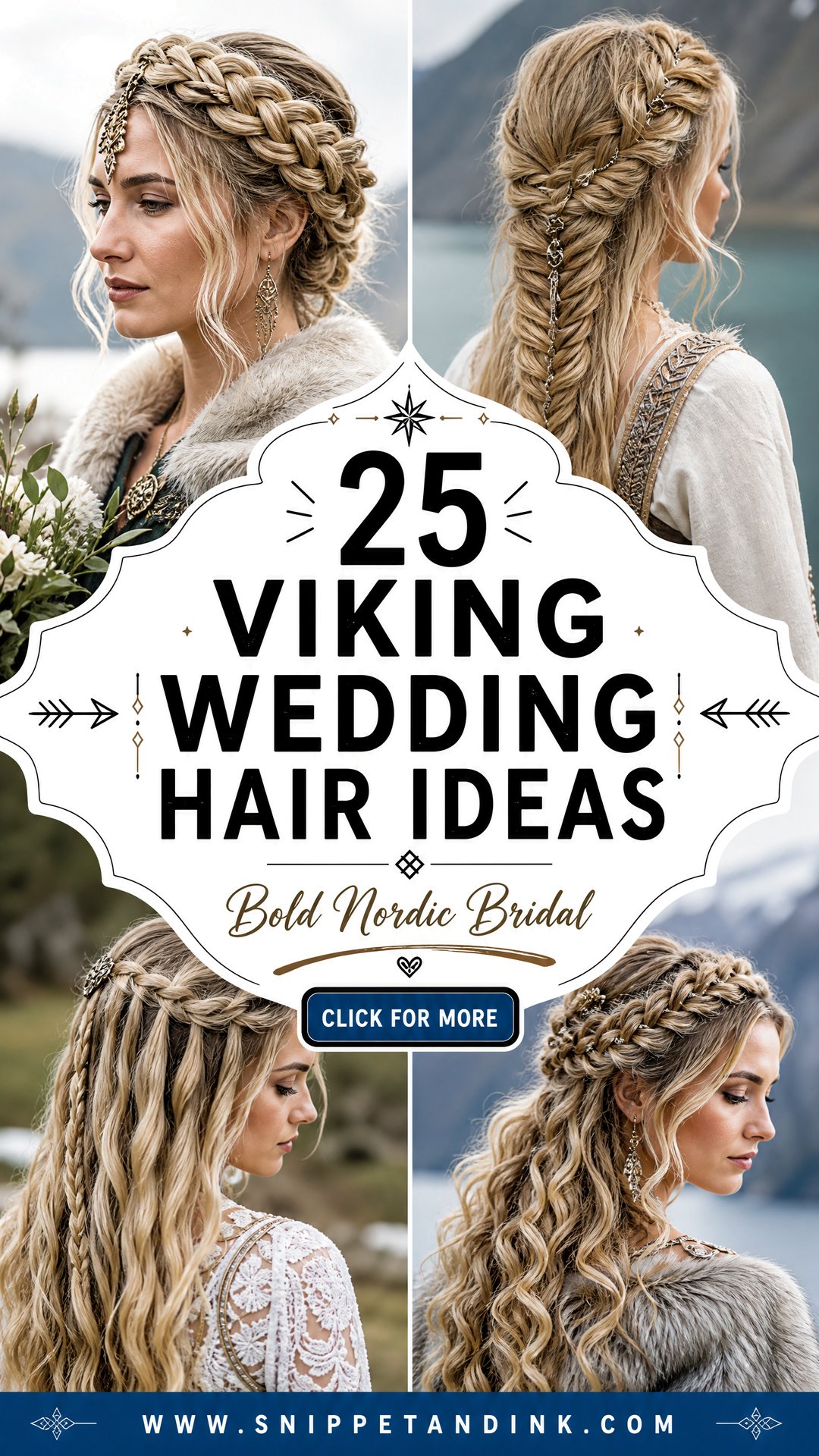
Can You Wear Norse Braids With a Bob, Fine Strands or Coily Texture?
Yes, but the braid has to fit the hair rather than the picture. Many of the photos you’ll see use long, thick hair, often with extensions. Here’s how I adapt the looks for real heads.
Fine or very straight hair
Fine hair braids beautifully but looks thin once pulled apart. I prep with a texture spray, braid firmly, and loosen less than I would on thick hair. Clip-in wefts placed under a braid add width without anyone seeing them.
Bobs and shoulder-length cuts
Short hair won’t make a full halo or a long side braid, but it handles temple braids, small Dutch braids along the part and a braided half-up style. Layered bobs need small elastics at the ends of each braid, which I hide under a bead or cuff.
Curly and coily hair
Textured hair holds braids and knots better than any other type. Cornrows, goddess braids and scalp braids are best installed by a specialist braider a day or two ahead, so the morning is just styling and accessories. Make sure your morning stylist and your braider talk beforehand.
1. Viking Braided Crown for Brides
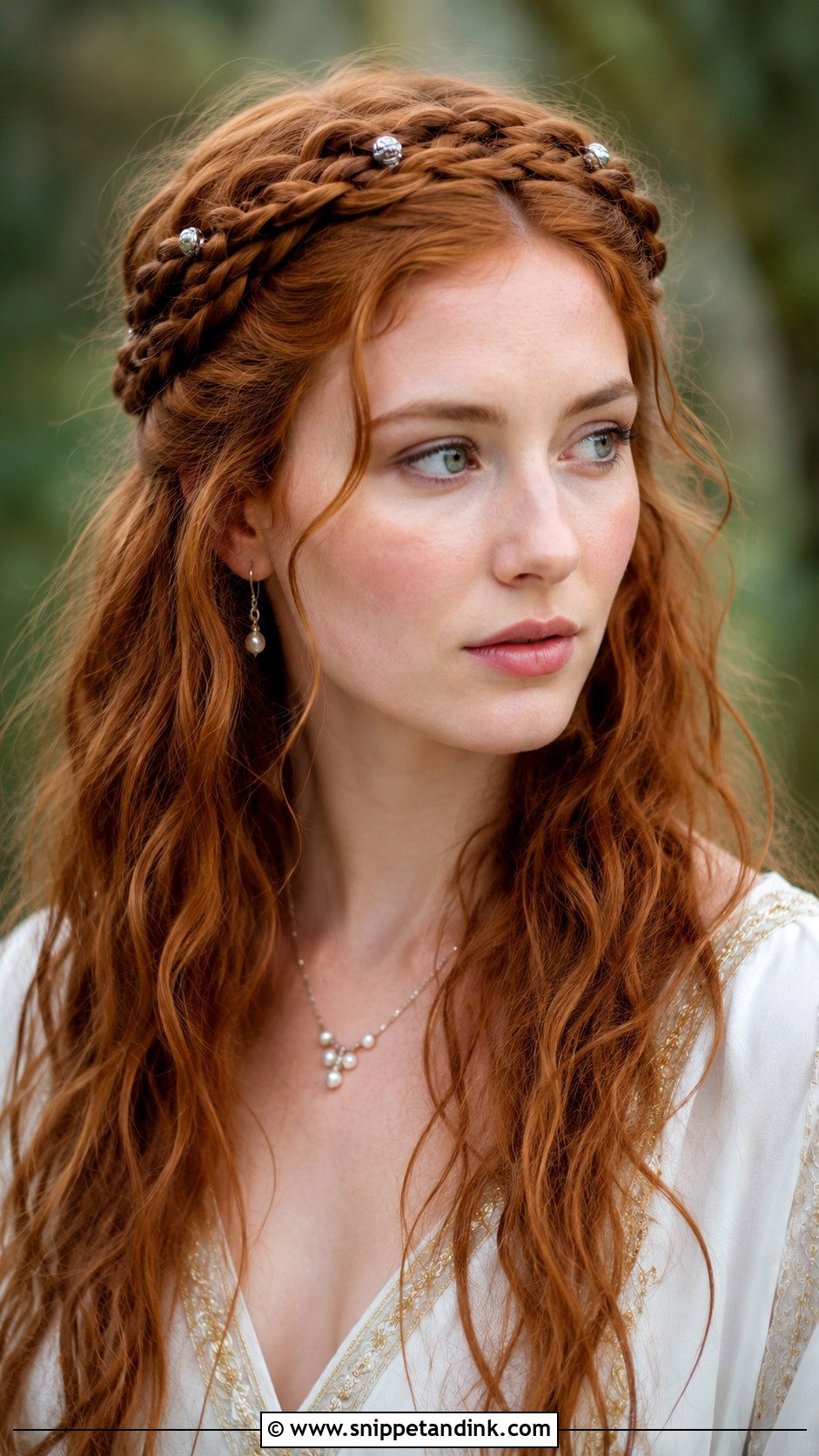
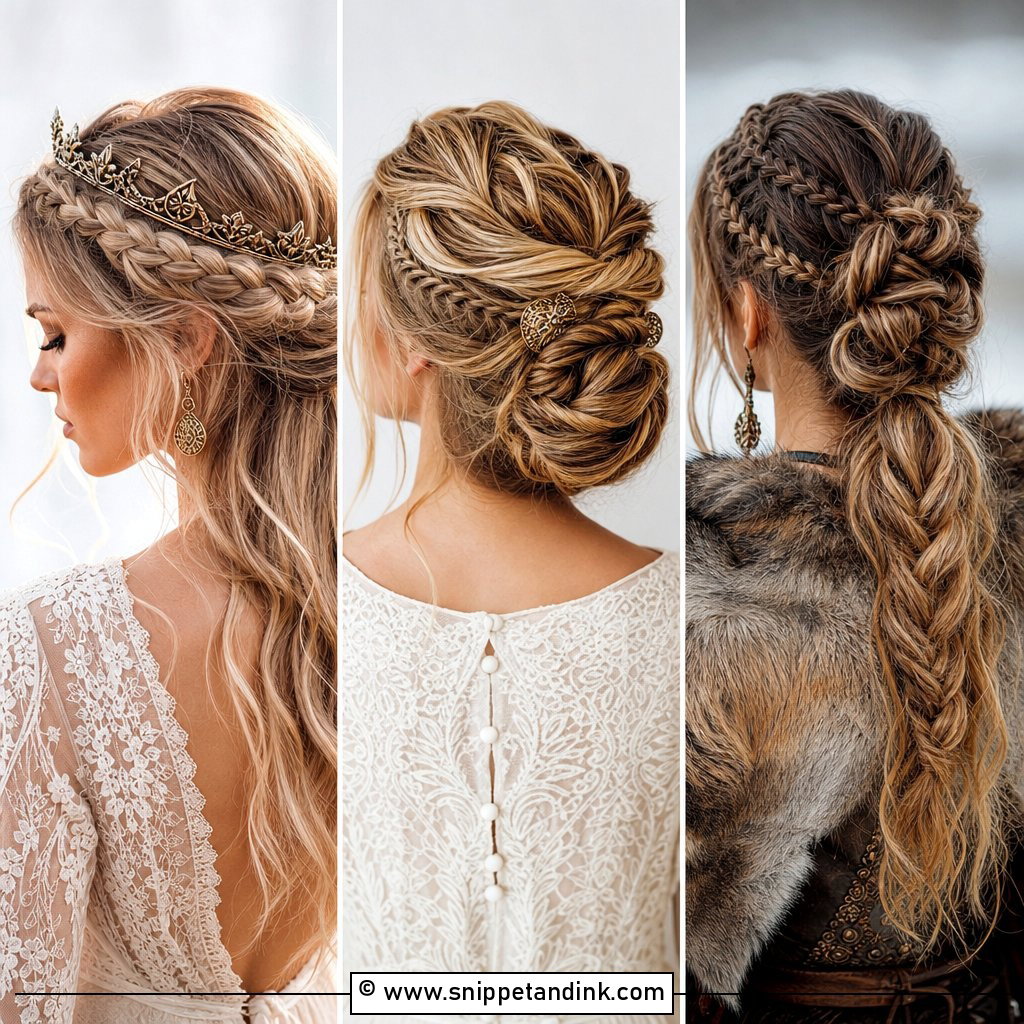
Several thin braids laid around the head make this halo, and the face sits inside it like a frame. I start them low behind the ears so the band dips slightly at the back; a crown that sits too high looks like a headband. Medium to long hair wraps fully. Pins go in along the inside edge of each braid where they disappear. Tiny flowers or a few silver beads are all it needs, and it stays neat through a full evening of dancing.
2. Half-Up Viking Braids With Loose Curls
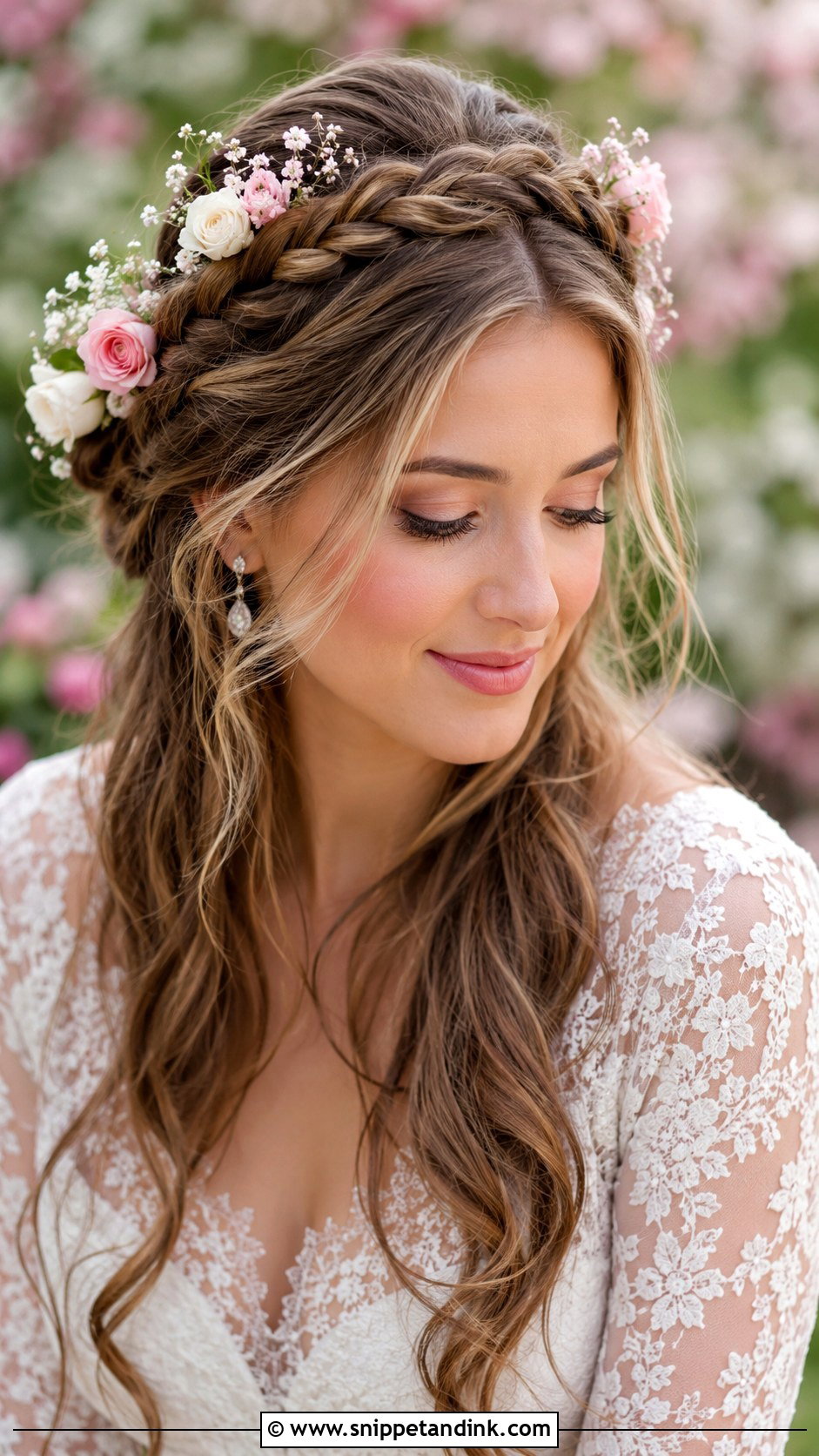
Half-up with curls is the most requested style I do for themed weddings, mostly because it still feels like your own hair. The top sections are braided back to the crown, and everything below is curled loose. The braids carry the detail; the curls carry movement. On very fine hair I add a small weft under the braids so the half-up section doesn’t look thin from behind. Small beads or a narrow cuff where the braids meet finish it.
3. Fishtail Braid Viking Wedding Look
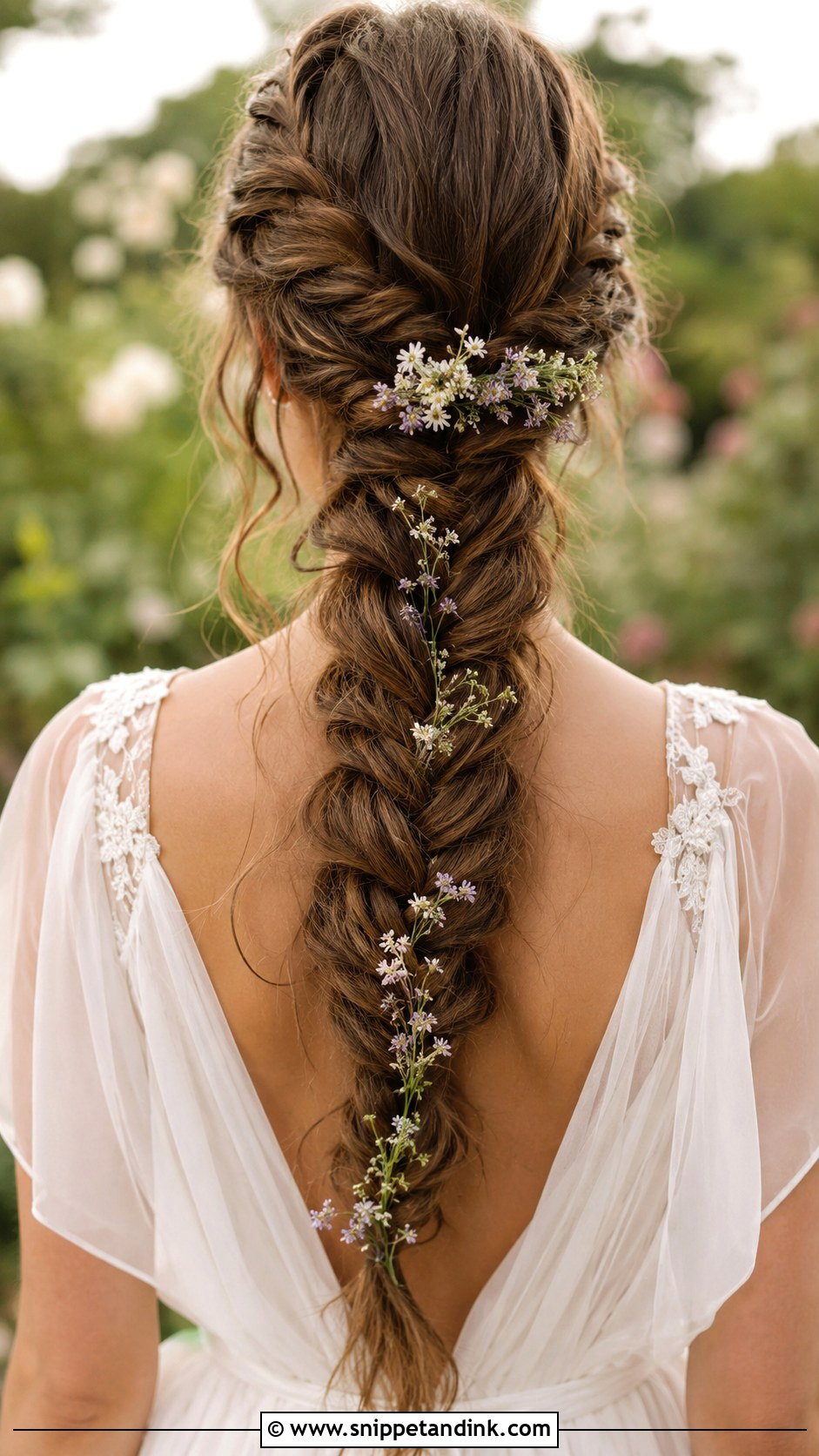
Fishtail looks far more complicated than it is, which makes it a good choice if a friend is doing your hair. Only two sections are involved, crossing tiny pieces from the outside of each. Wear a single fishtail down the back or several smaller ones joined at the nape. I loosen it gently from the bottom up so the top stays tidy. Silver charms or tiny wildflowers slip into the woven edges easily. Layered cuts are the weak spot: short layers poke out of a fishtail, so a bit of light wax on the fingers helps.
4. Shield Maiden Braids for Your Wedding
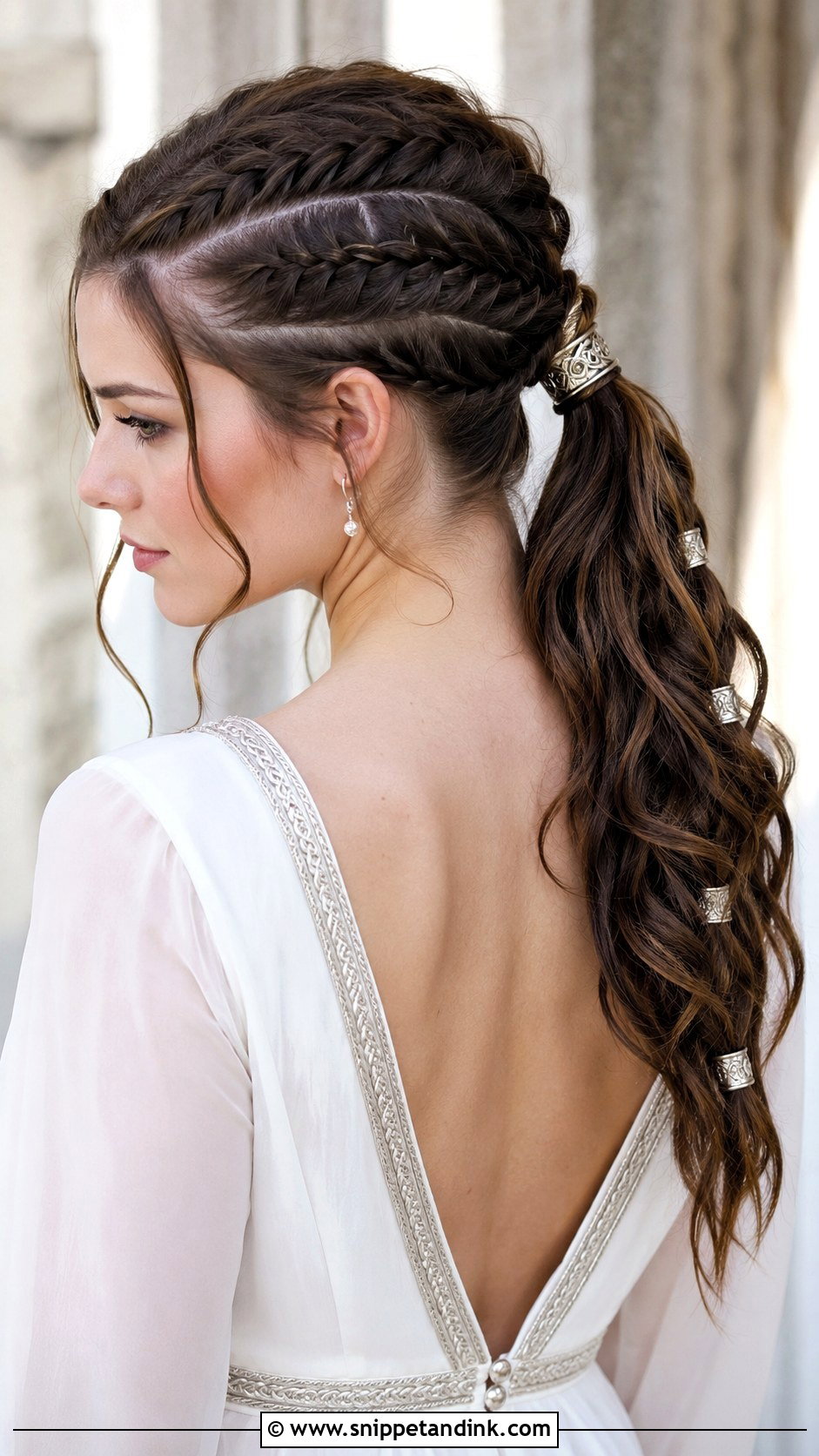
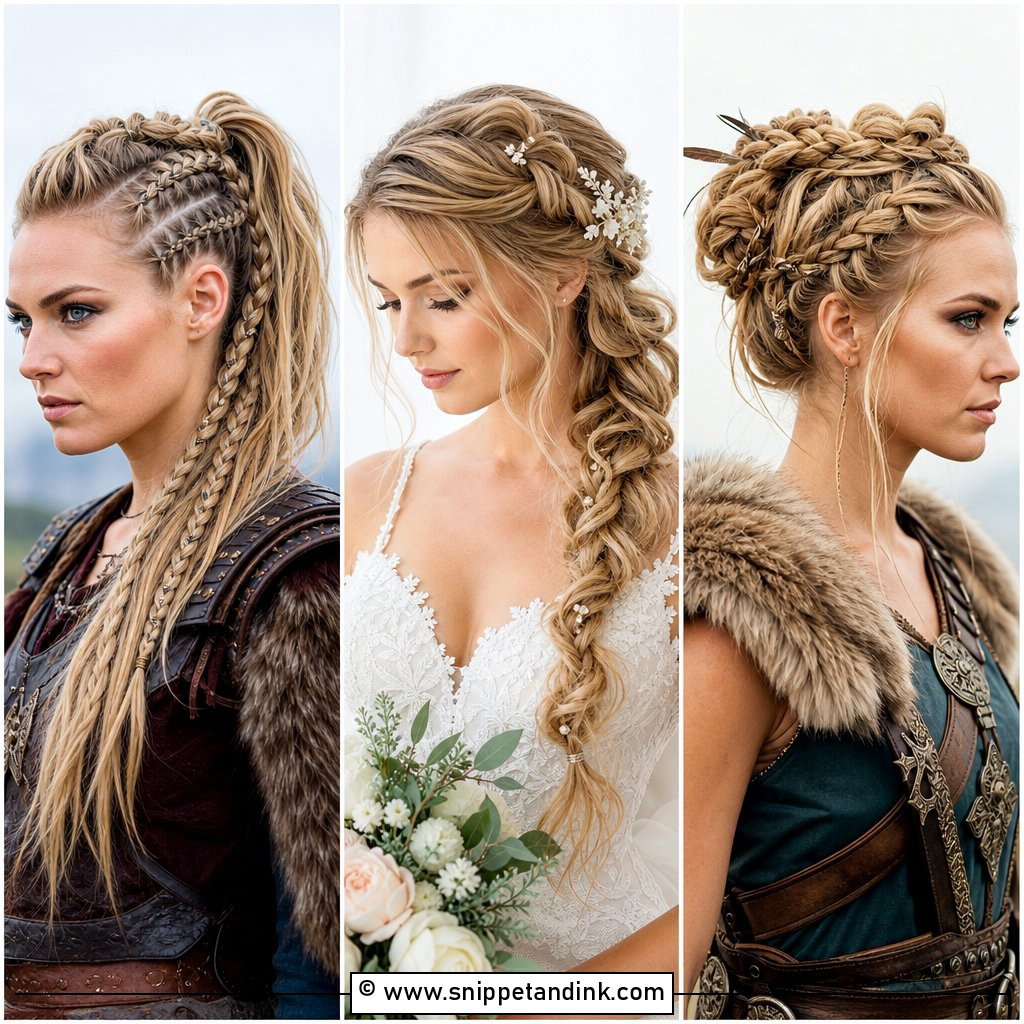
Tight braids along the sides and top, gathered back into a ponytail or bun, give the shield maiden look its structure. They hold hair firmly and look neat from every angle. The tension matters: I braid snugly at the sides but never pull at the hairline, especially on brides with fine edges. A metal cuff at the point where the braids meet is a nice finish. Natural makeup and flowing fabric keep it bridal rather than battle-ready.
5. Dutch Braid Viking Bridal Style
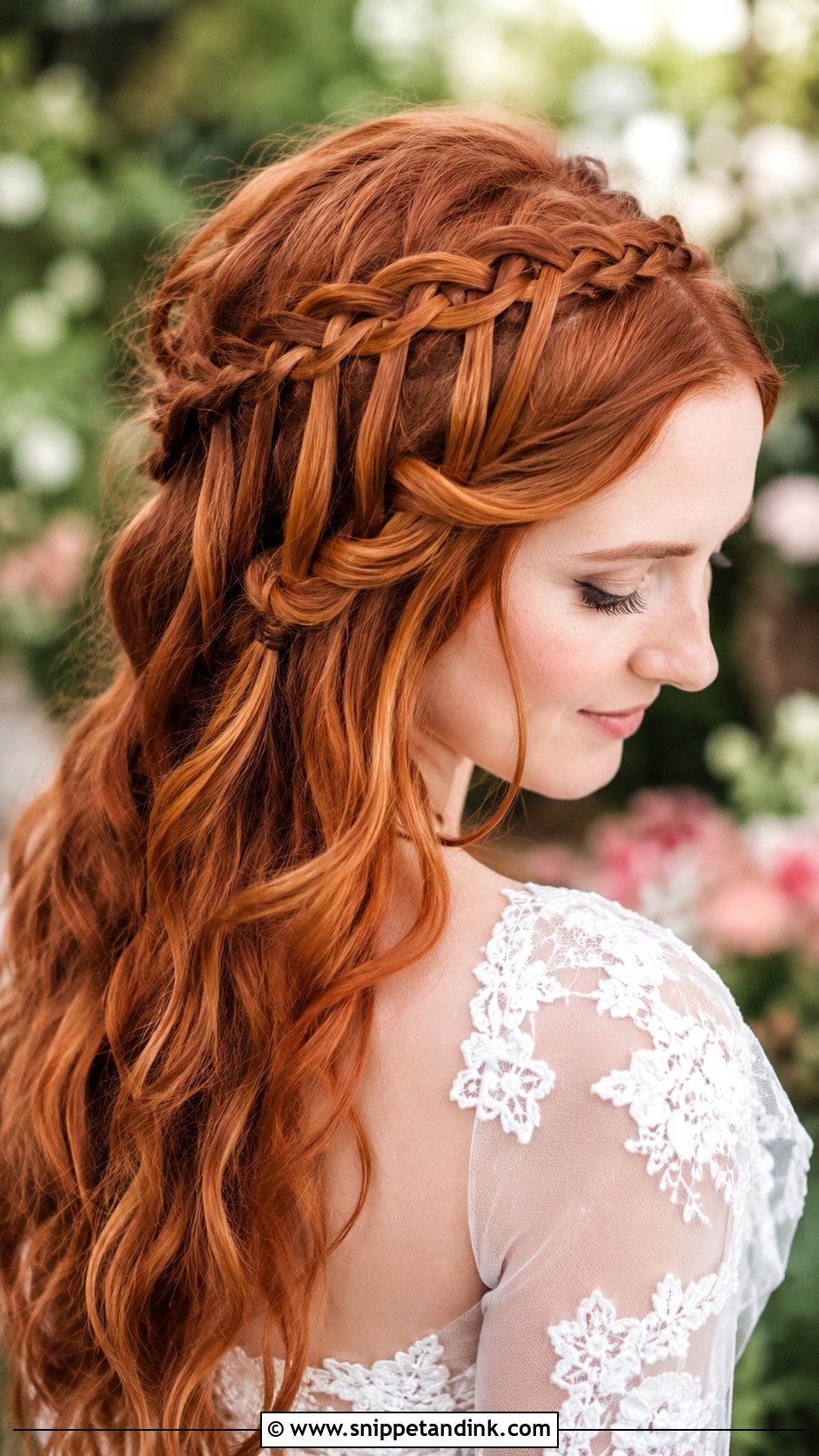
Braiding under instead of over is what lifts a Dutch braid off the scalp and gives it that raised ridge. You can wear double Dutch braids along the scalp or a single thick one down the centre. I always check the part with a mirror from behind; a wobbly line shows more on raised braids than on flat ones. Small flowers or beads fit in the gaps between stitches. Dutch braids are among the most secure styles I do for outdoor days.
6. Viking Braided Updo for Brides
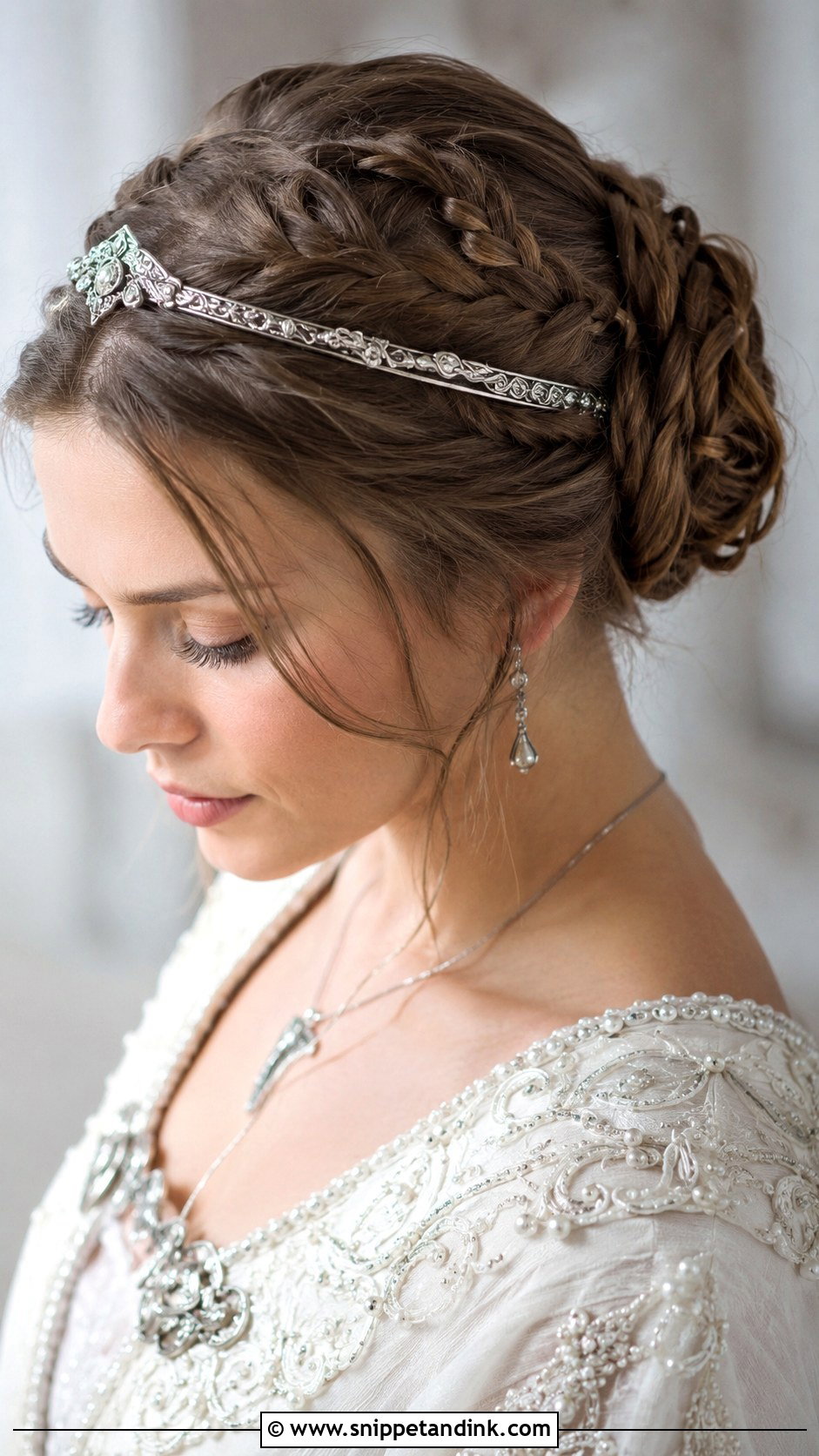
This updo gathers several braids, twists them together and pins them into a shape at the back of the head, lifting all the hair off the neck. On a hot day that matters more than anything. I build it on a small base ponytail so the weight sits on a firm anchor instead of pins alone. A silver circlet or crystal pins add finish. Long, thick hair suits it best; with very heavy hair, I keep the shape low to avoid a headache by evening.
7. Long Flowing Hair With Small Viking Braids
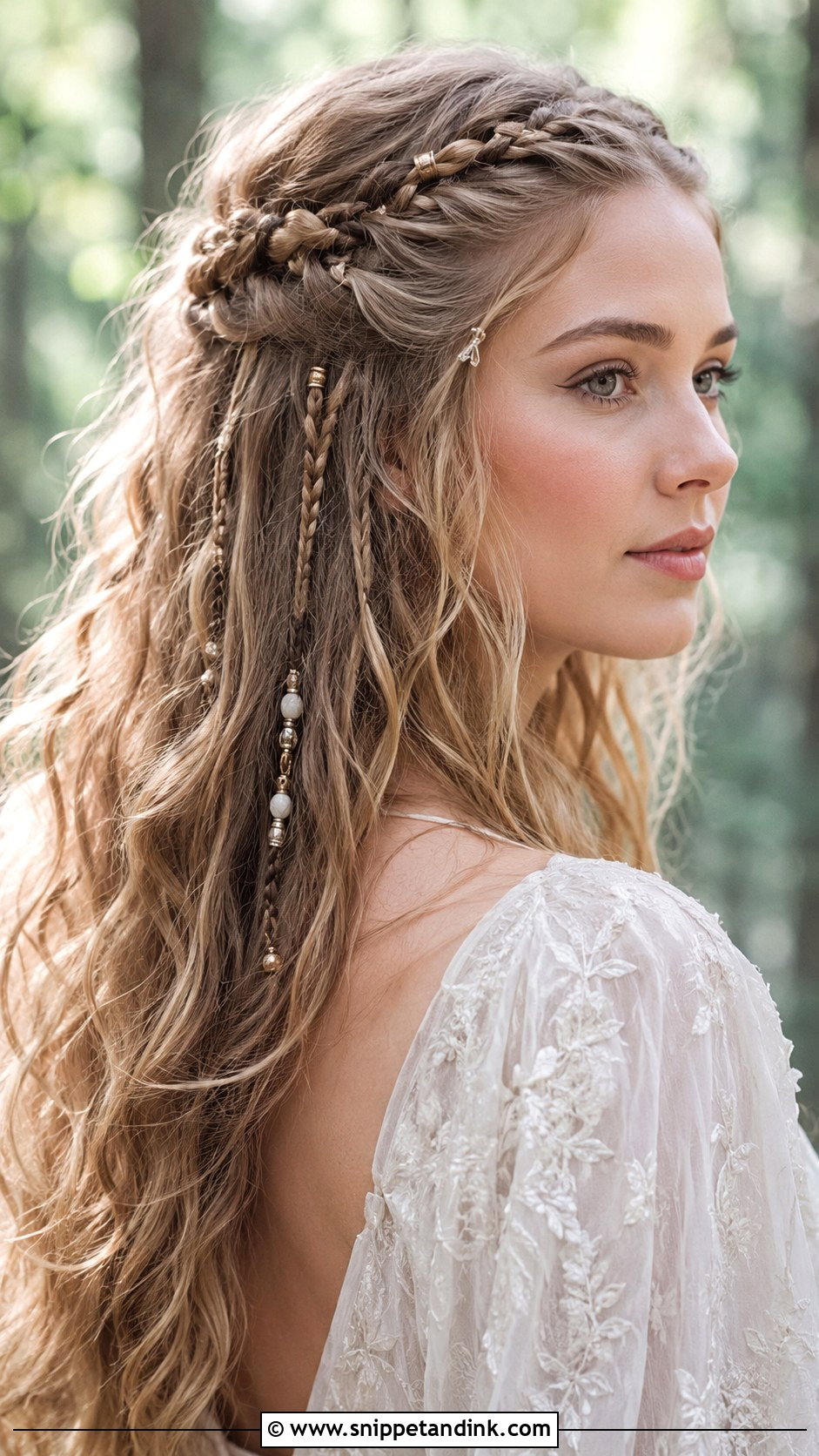
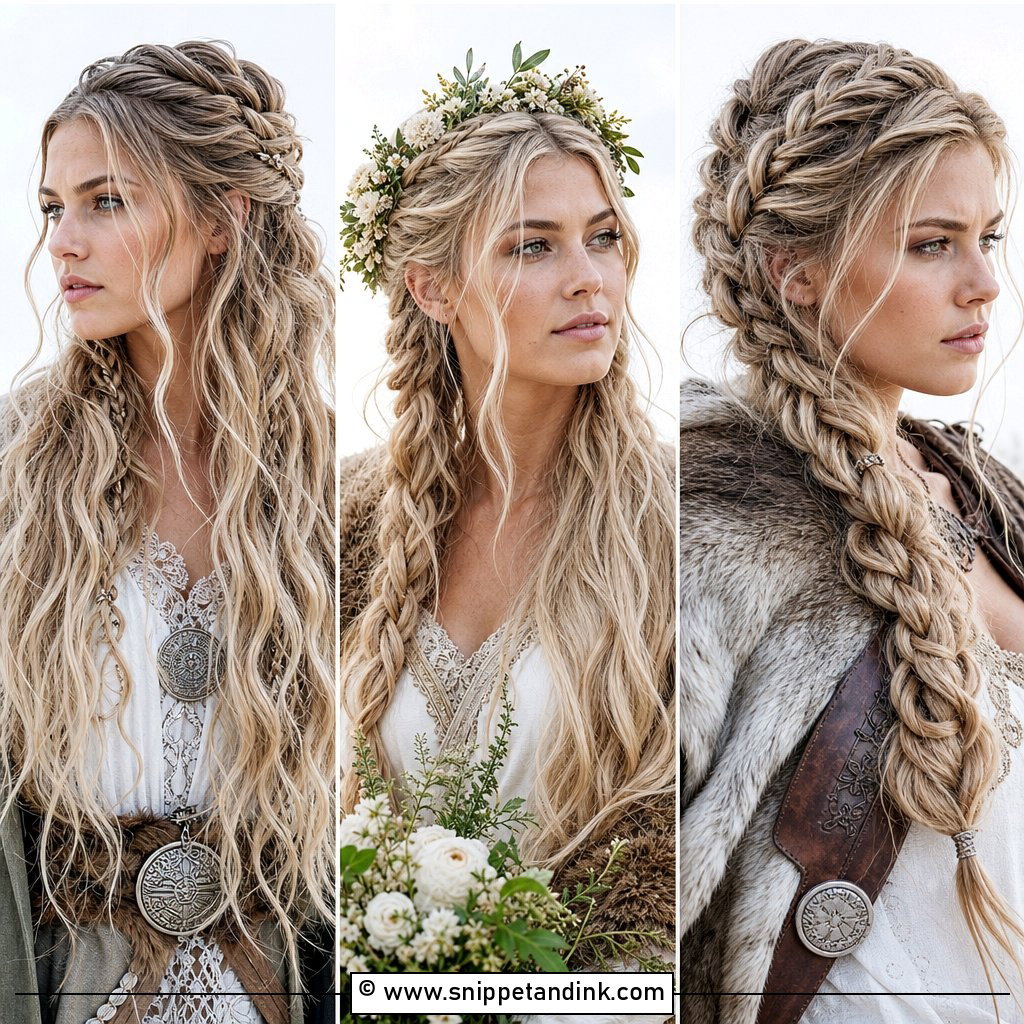
Mostly loose hair with a few small braids at the temples is the lightest Norse look here. It relies on healthy, long hair to look intentional, and it’s the style most affected by weather. Loose lengths frizz in humidity and drop in heat, so I set the waves with a heated tool and a light spray, then brush them out once they’ve fully cooled. Beads or tiny flowers on the braids help the theme read in photos. It suits a forest or beach ceremony well.
8. Viking Crown Braid With Flowers
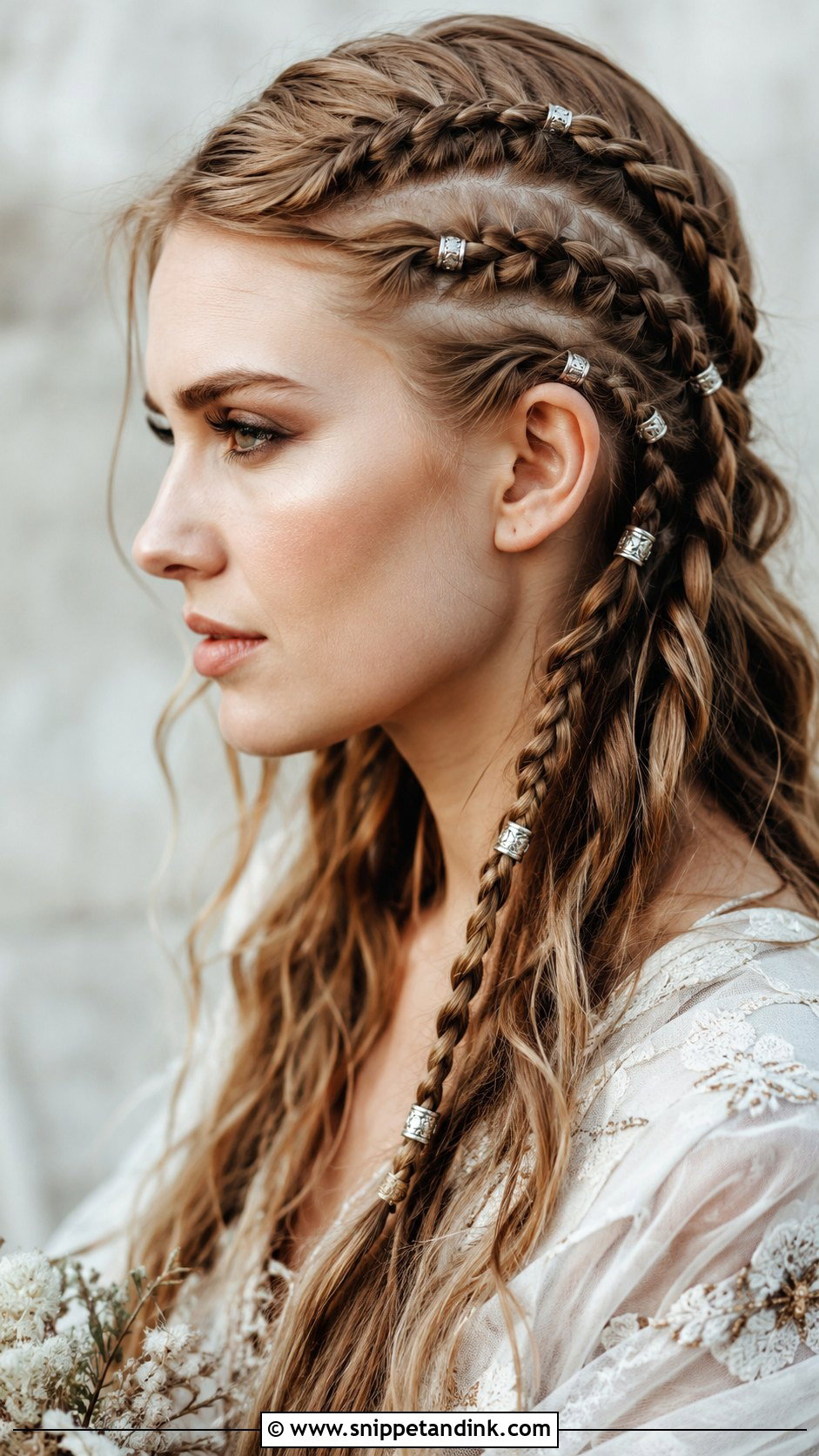
Pairing the crown braid with real flowers turns it into the most romantic option in this set. I weave the braids around the head first, then add wildflowers, baby’s breath or small roses with short pins pushed into the braid itself. Ask your florist for sturdy, small-headed flowers that hold out of water; large roses droop after a few hours and look tired. Match the flowers to your bouquet. For a fairytale feel, keep the colours soft and the stems tiny.
9. Braided Ponytail Viking Wedding Style
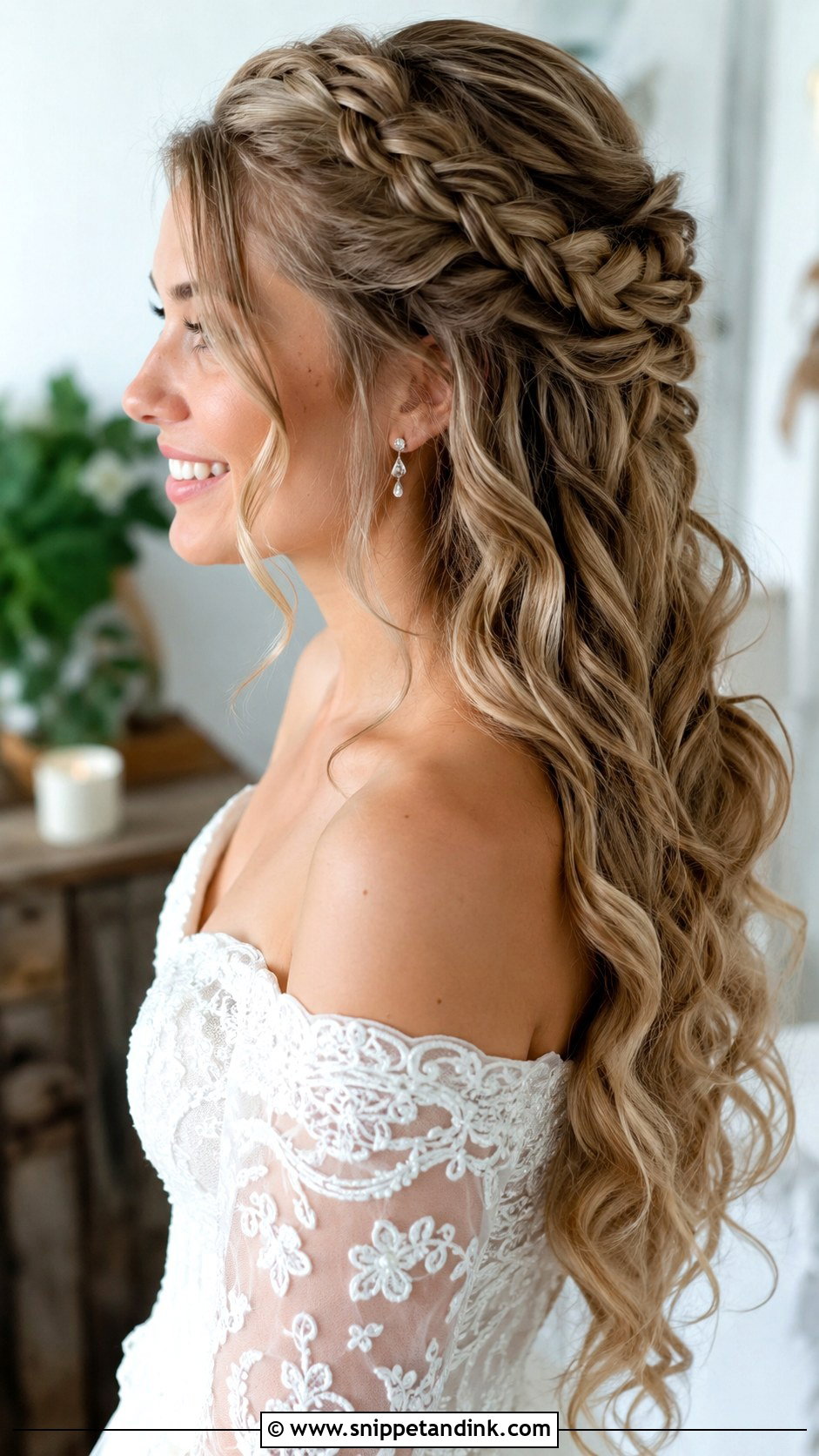
Braids along the scalp meet in a ponytail at the back here. The ponytail can stay loose or be braided all the way down. I hide the elastic with a small braid wrapped around the base, then a cuff on top. Ponytails drop as the day goes on, especially with long, heavy hair, so I add two crossed pins under the base to lift it. It’s my pick for a bride who plans to dance hard all night.
10. Waterfall Braid Viking Bridal Look
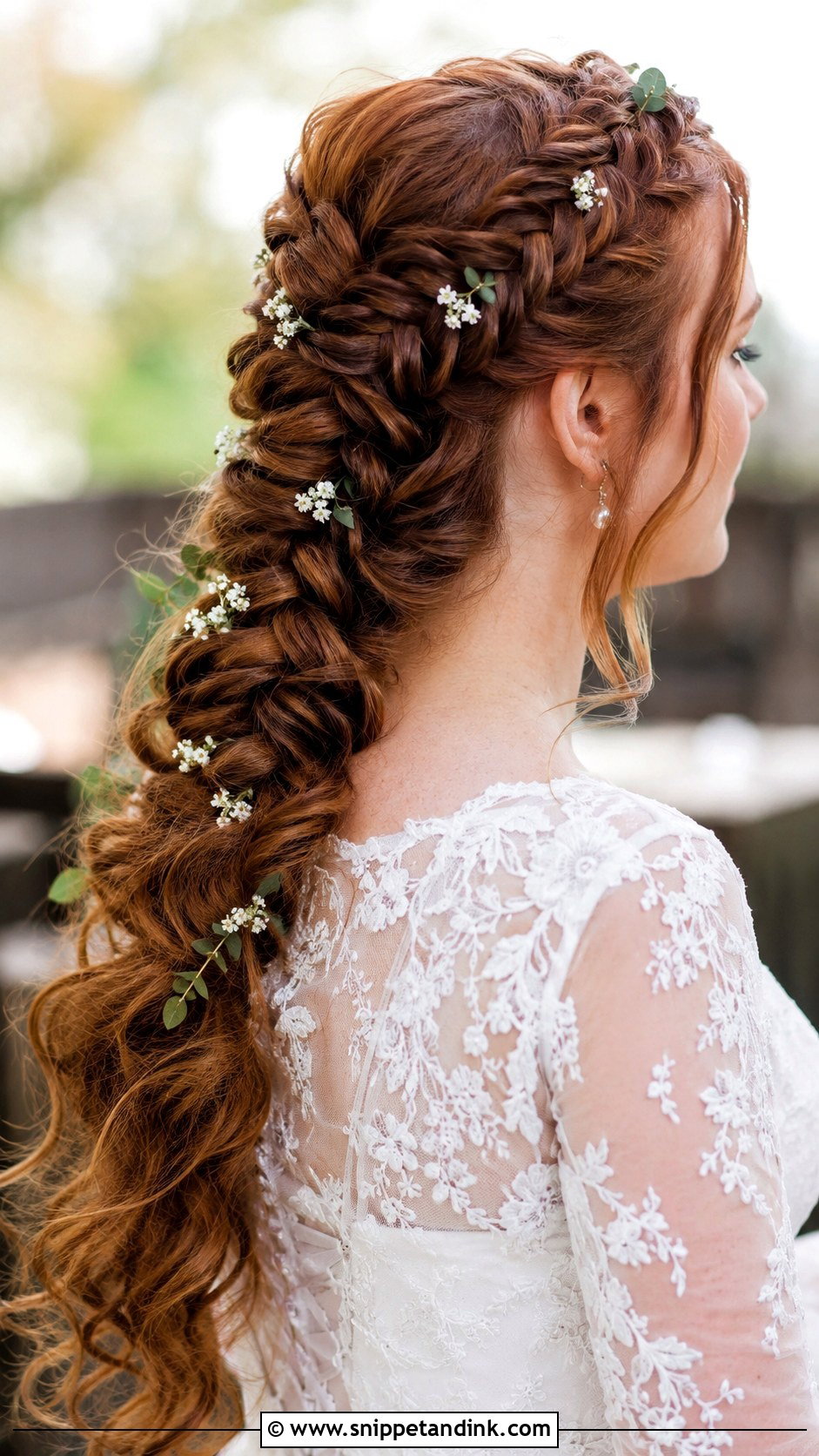
A waterfall braid runs across the head and drops a piece of hair at each stitch, so the loose strands fall like water through the braid. The dropped pieces need to be curled, otherwise they hang limp and the effect is lost. It’s a fine, delicate braid that doesn’t hold heavy accessories well, so I limit decoration to a few small flowers or beads along the line. Medium to long hair works best. It can loosen on very slippery hair, which is why I use a texture spray before I start.
11. Double Braided Viking Wedding Style
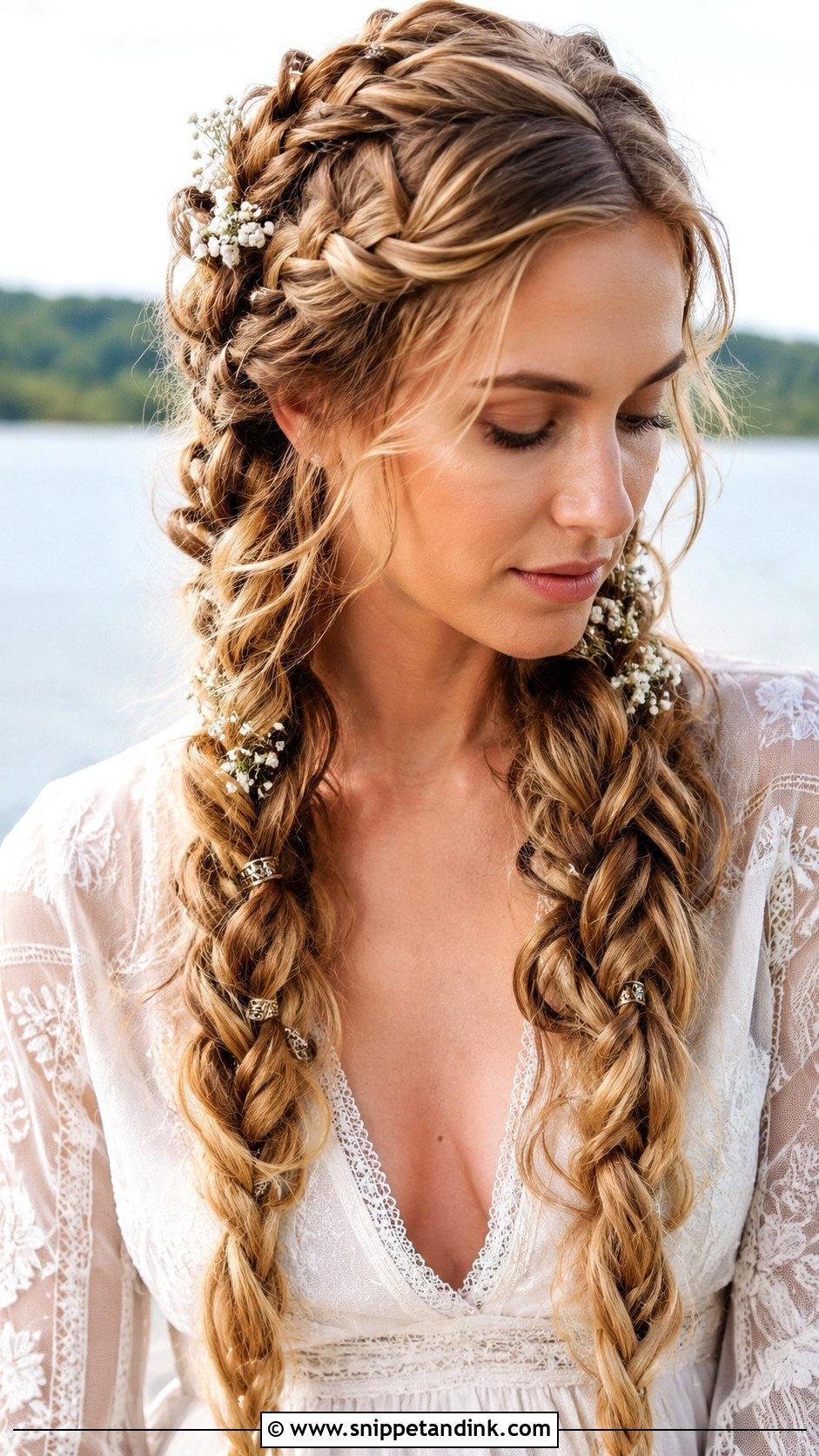
Two braids, one on each side, make a symmetrical look that’s tidy and practical. Wear them loose and soft or tight and structured. I braid both sides in the same direction and at the same tension; mismatched braids are the first thing anyone notices in a front-on photo. Decorate them with beads, cuffs or small flowers. Double braids work for many lengths, and they’re the easiest Norse look to keep tidy at a casual outdoor wedding.
12. Viking Halo Braid With Curls
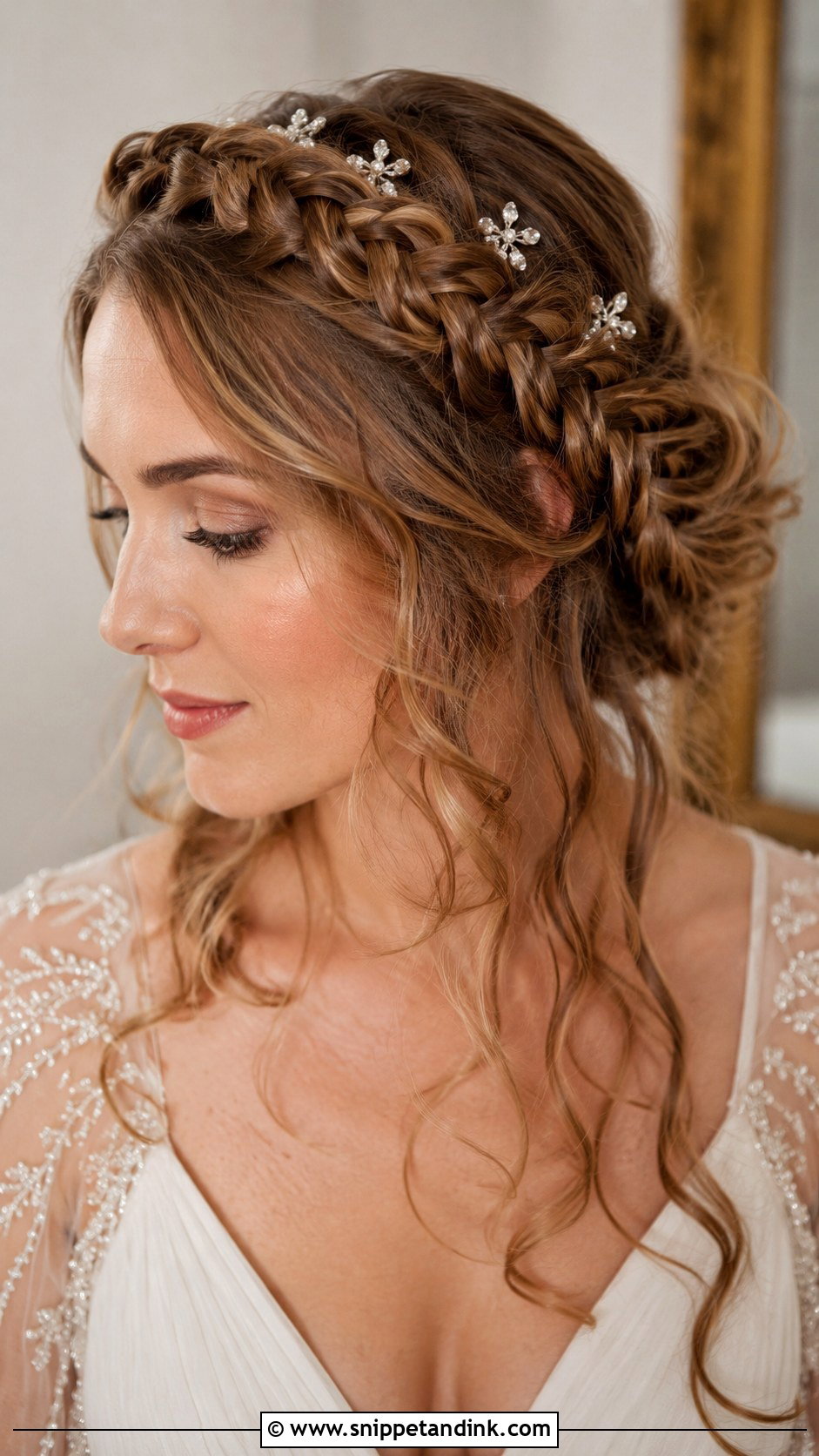
A halo braid around the head with curls tumbling below gives structure on top and softness underneath. The braid keeps the face clear; the curls add volume. I curl before braiding so the heat doesn’t loosen the braid, then pin the halo once the curls have cooled. Silver pins or small crystals add sparkle. It needs long, thick hair or a weft, as the halo uses a lot of length.
13. Messy Viking Braids for a Boho Bride
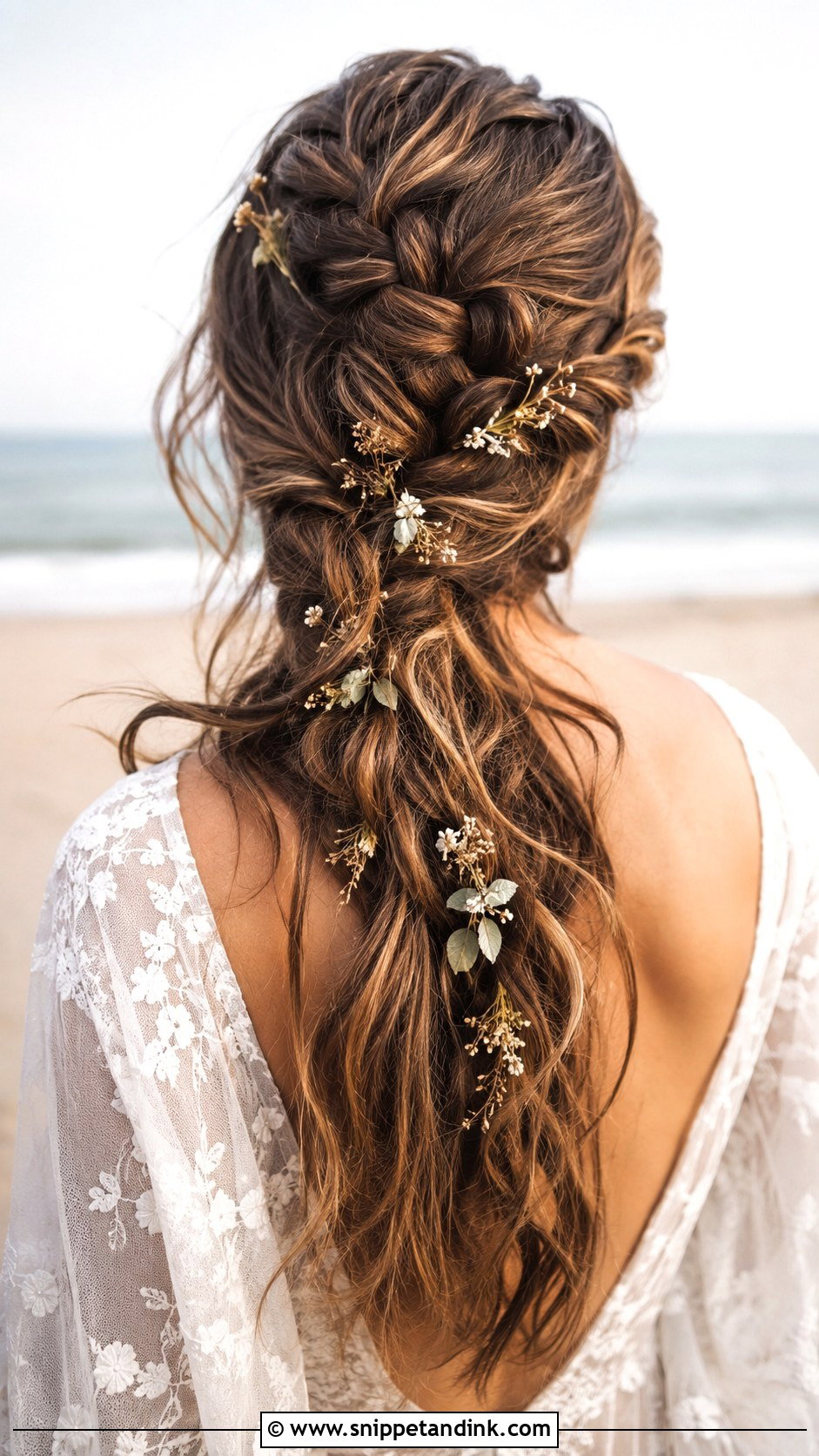
Messy braids look easy, but they’re the ones I take most care over. The braid is built firmly, then pulled apart with fingertips so it looks undone without actually being loose. Wavy or textured hair gives the best result; poker-straight hair needs a texture spray to hold the effect. Dried flowers, beads or tiny leaves suit the boho mood. A forest or beach wedding is where this style shines.
14. Viking Braided Bun for Brides
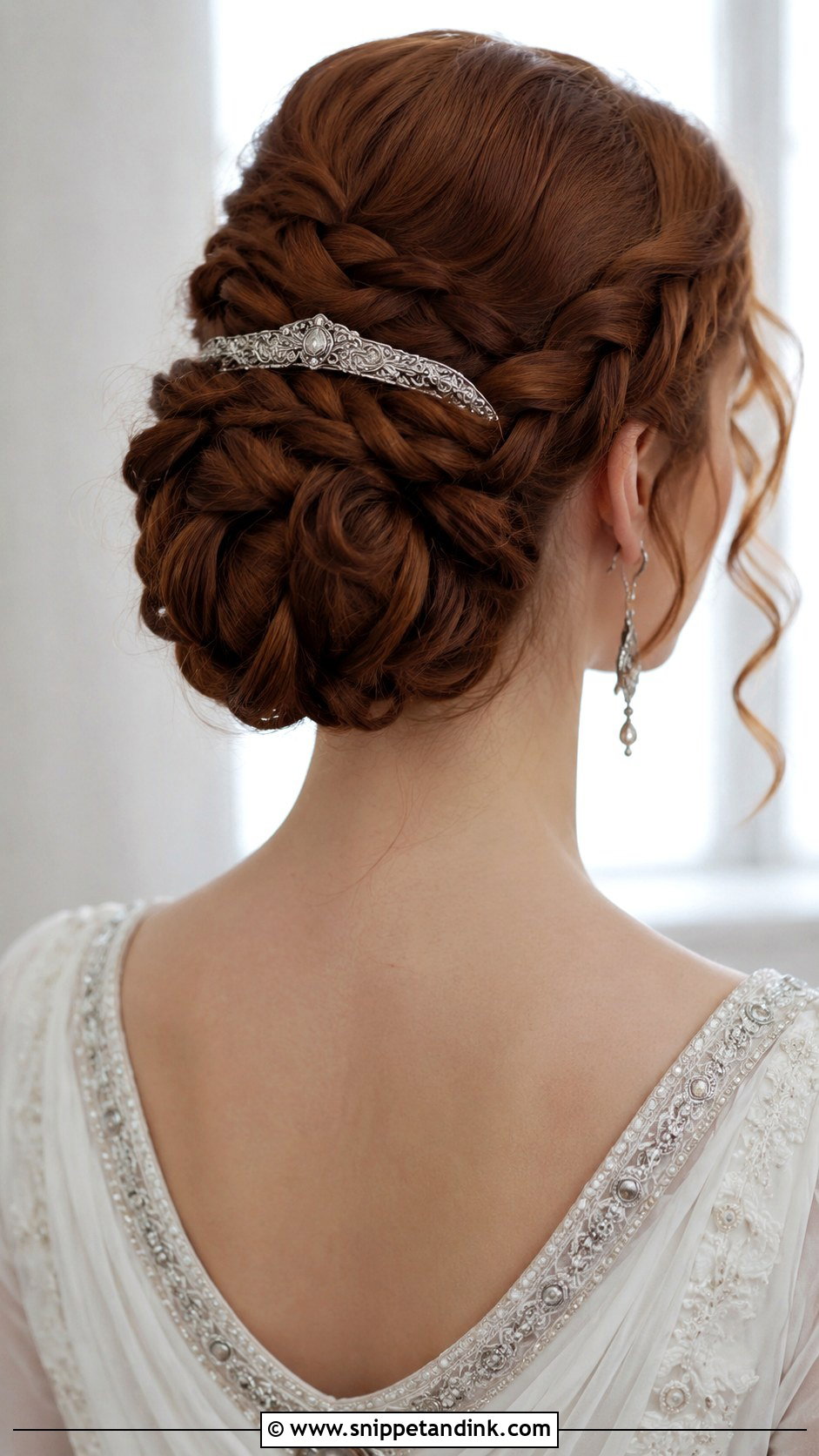
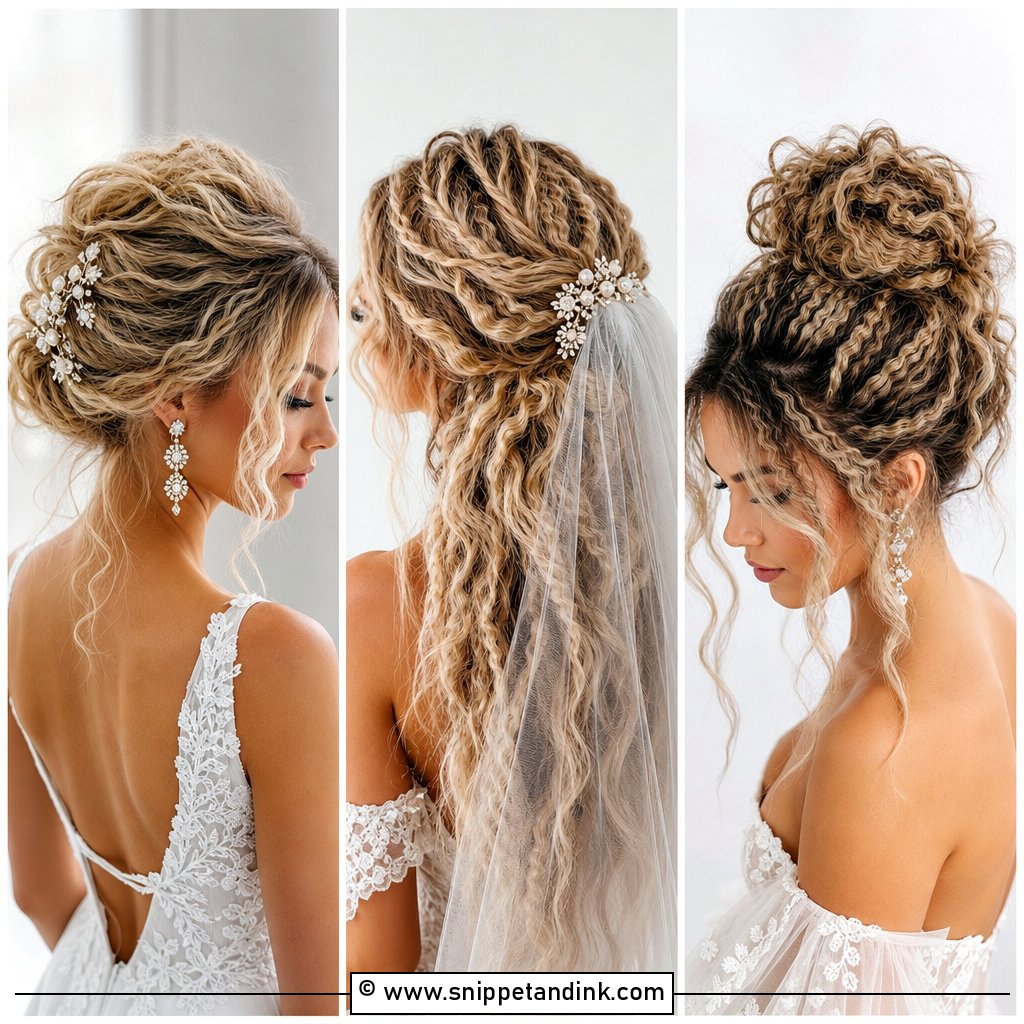
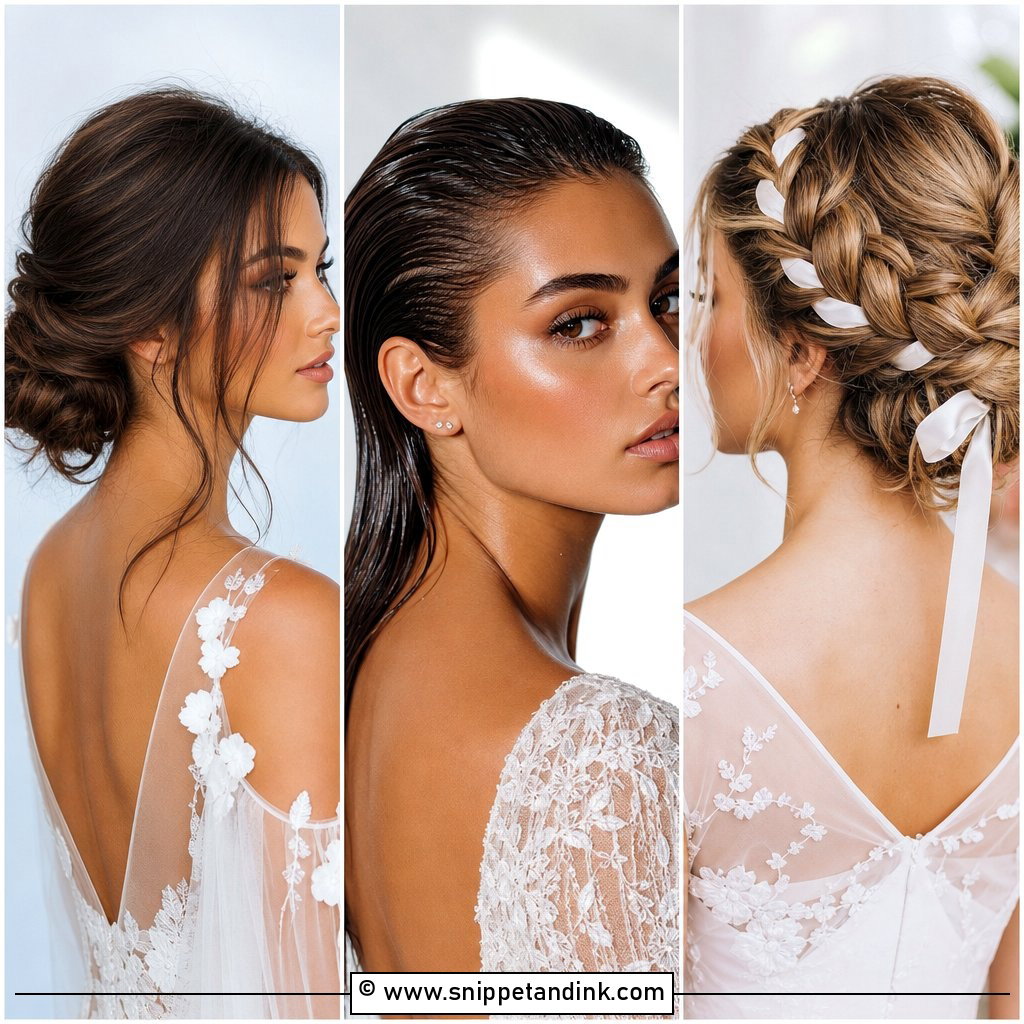
Braided buns are the most practical updo for a long day. Plaits are gathered and pinned into a neat shape at the back, high for drama or low for something quieter. A high bun suits brides who want height in photos; a low one sits nicely under a veil comb. I pin through the braids rather than around them so the pins vanish. A silver circlet adds a regal touch. Long, thick hair suits it best.
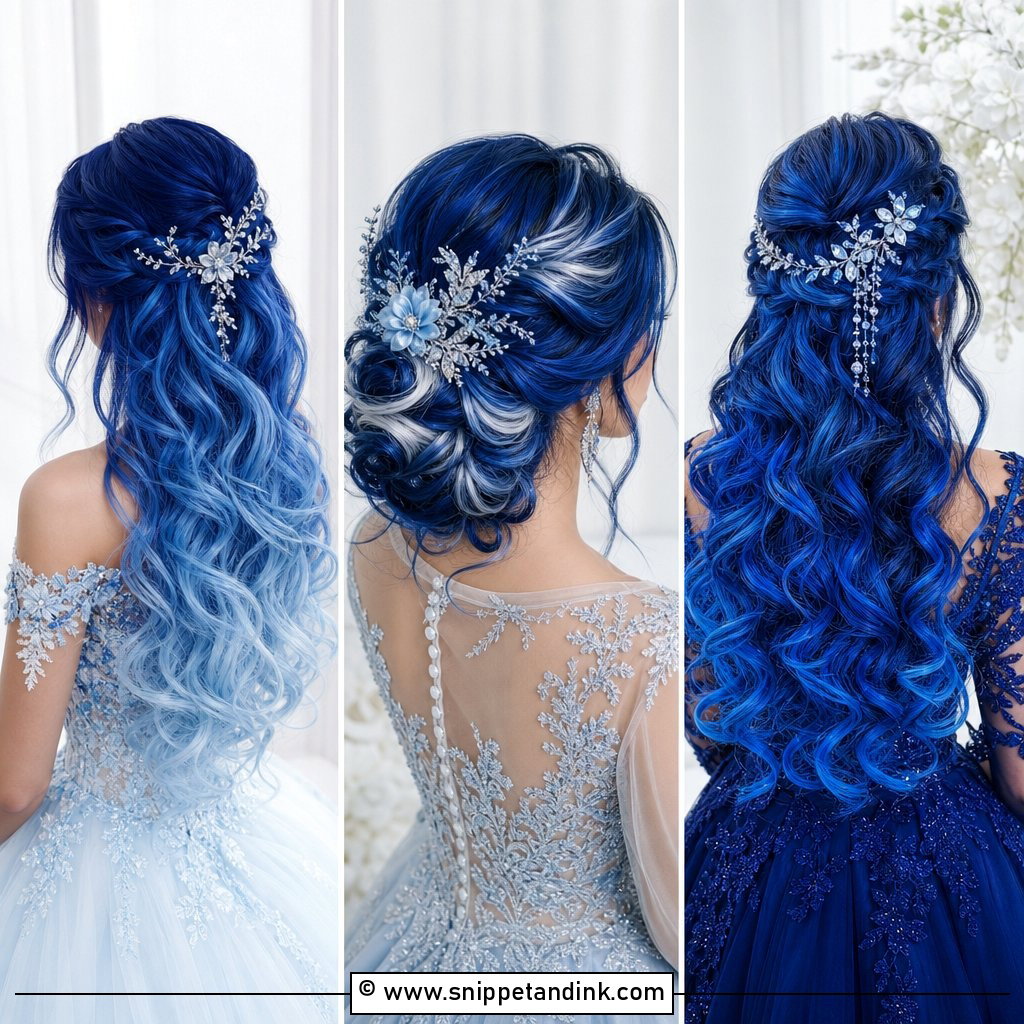
15. Knotted Viking Wedding Hairstyle
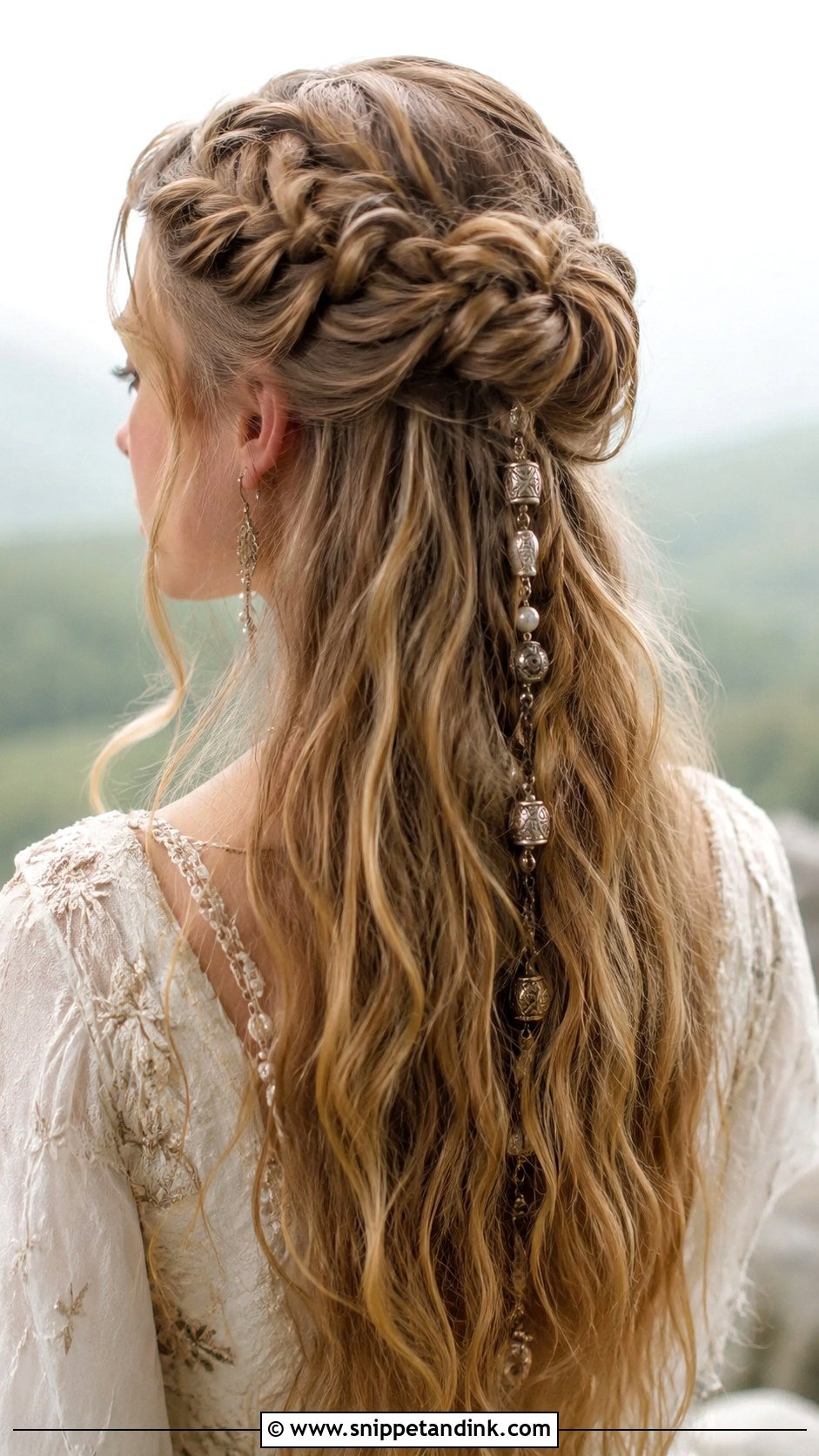
Knots are simple and distinctive. Sections of hair are tied into small knots along the back or crown, sometimes alternated with braids or loose waves. I use a little grip spray before knotting, since clean hair untangles itself quickly. Small beads or flowers between knots add charm. Medium to long hair is needed, and the style works best on textured or slightly coarse hair, where knots hold their shape.
16. Viking Braids With Beads and Cuffs
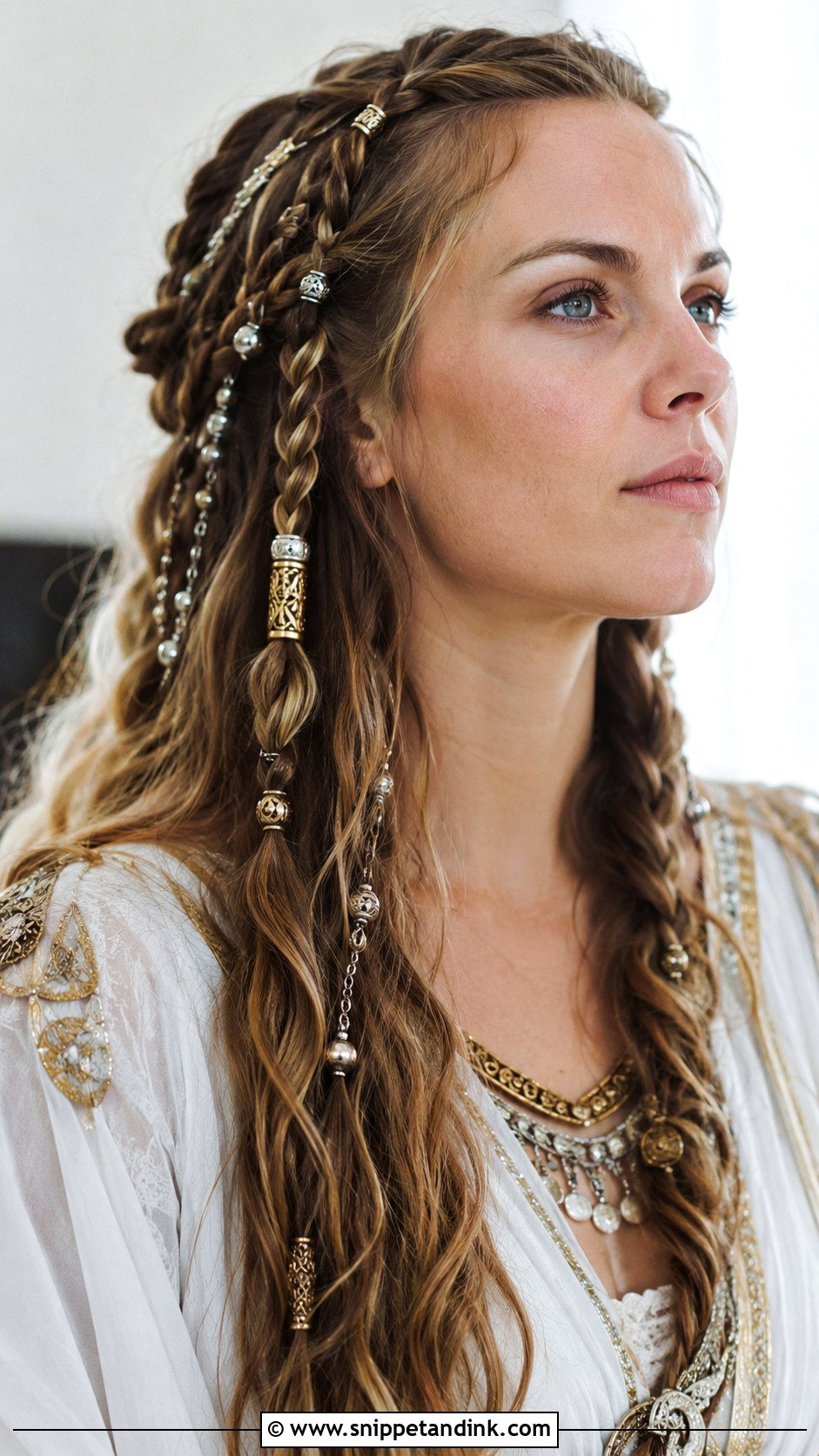
Beads and metal cuffs are the most recognisably Norse detail you can add. Silver or gold accents on one or several braids catch the light every time you move. I thread beads with a loop tool and slide cuffs over the braid before it’s tied off, so they don’t slip down. Solid metal is heavy; I’d keep heavier pieces to the lower lengths. This works on every hair length and texture, and it’s the easiest way to add the theme to a simple style.
17. French Braid Viking Wedding Look
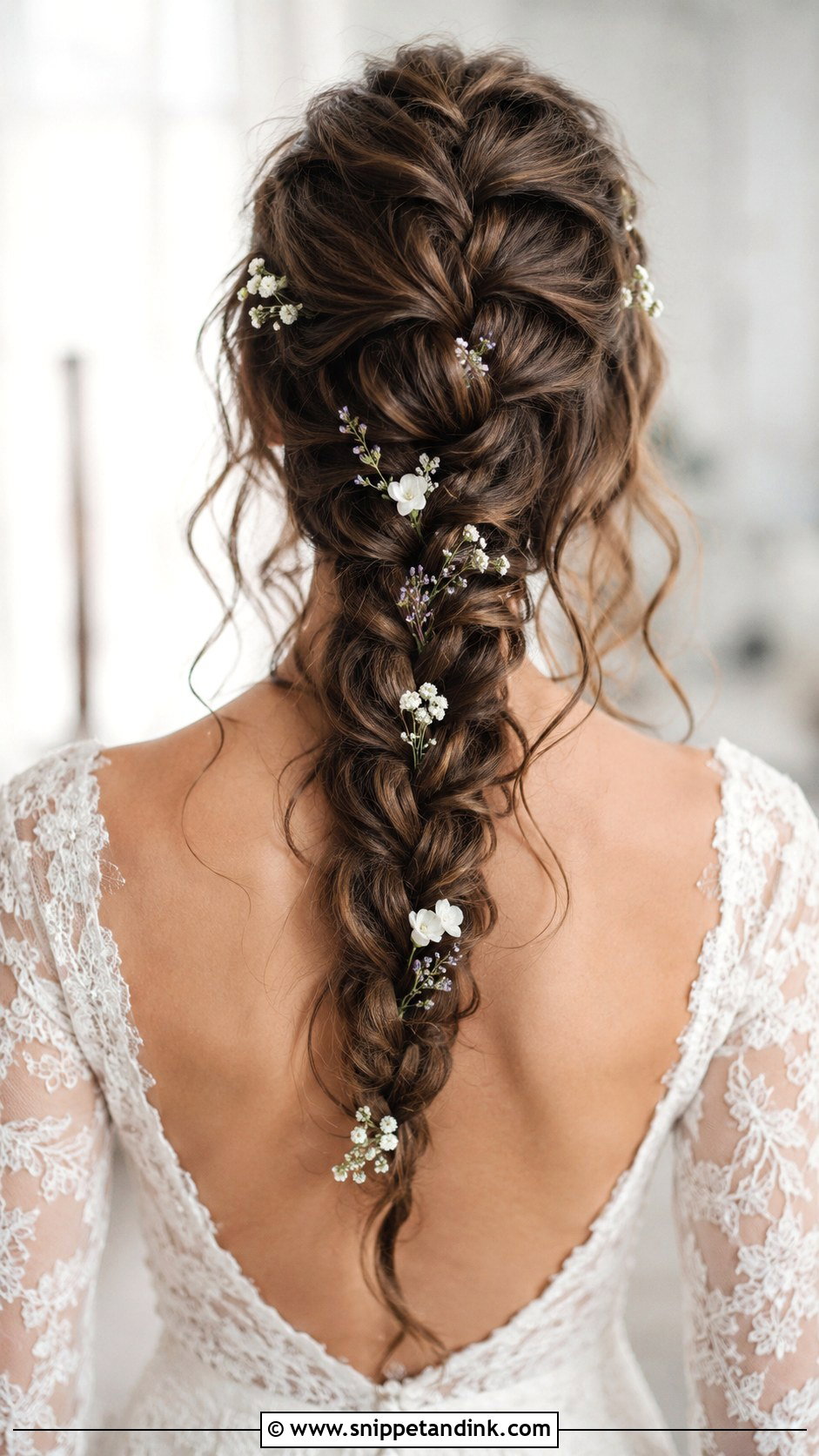
A French braid lies flat against the scalp because each piece crosses over rather than under. It’s the simplest, neatest braid on this list. Wear one down the centre or several small ones along the sides. It gives a polished look with only a hint of Norse texture. Loosen it slightly for softness, and add beads or flowers. It works on most lengths and textures, and it’s quick, which helps on a busy morning.
18. Viking Braided Half Crown With Veil
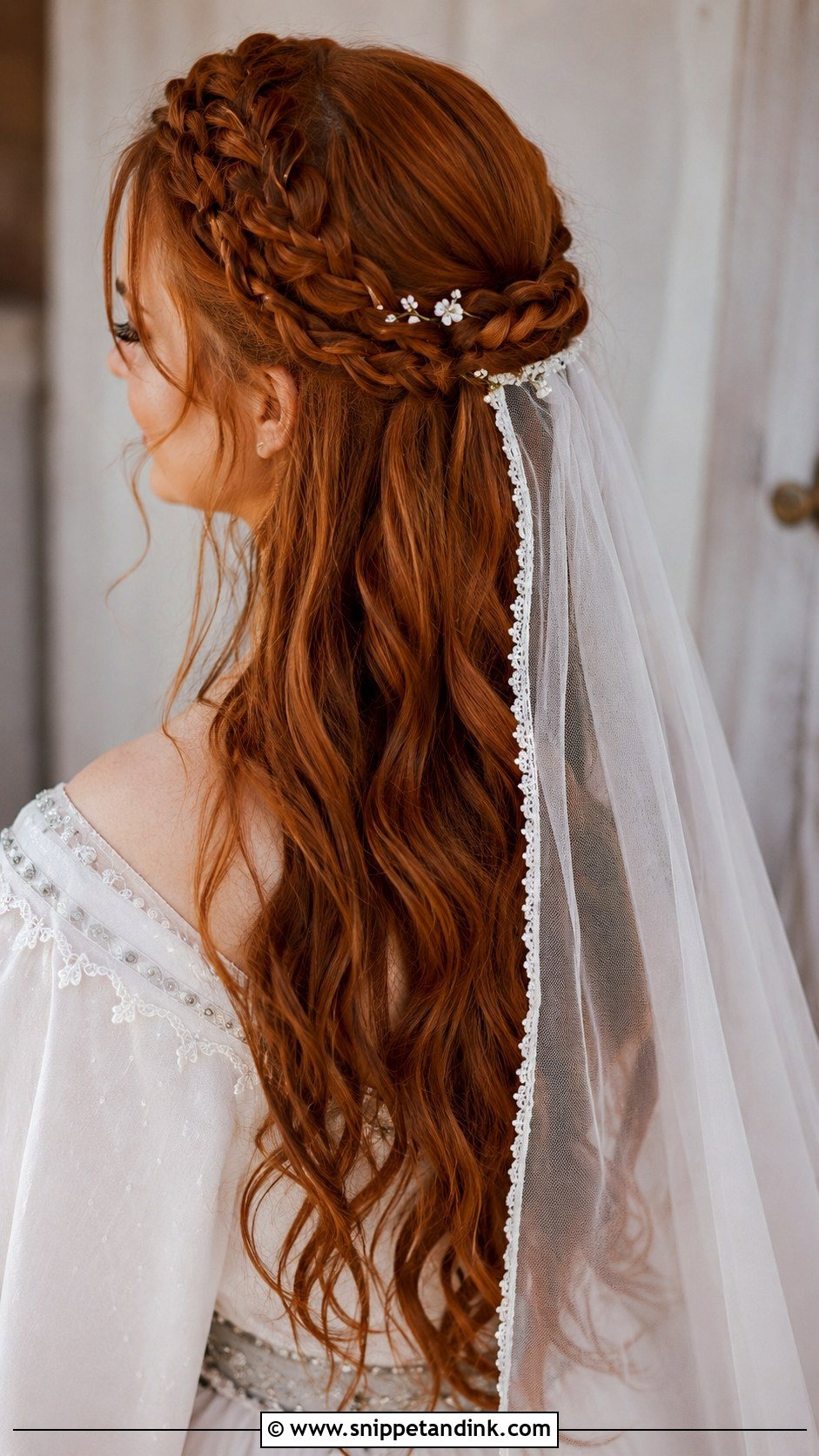
A half crown of braids with a veil is the style I suggest when a bride wants both tradition and theme. The top sections are braided into a crown; the rest stays loose to fall under the veil. I slide the veil comb in just below the braid, angled upward, so the braid holds it and the comb doesn’t drag loose hair. Medium to long hair works best. Try it with your actual veil at the trial, since heavier veils need a firmer anchor.
19. Twisted Viking Wedding Hairstyle
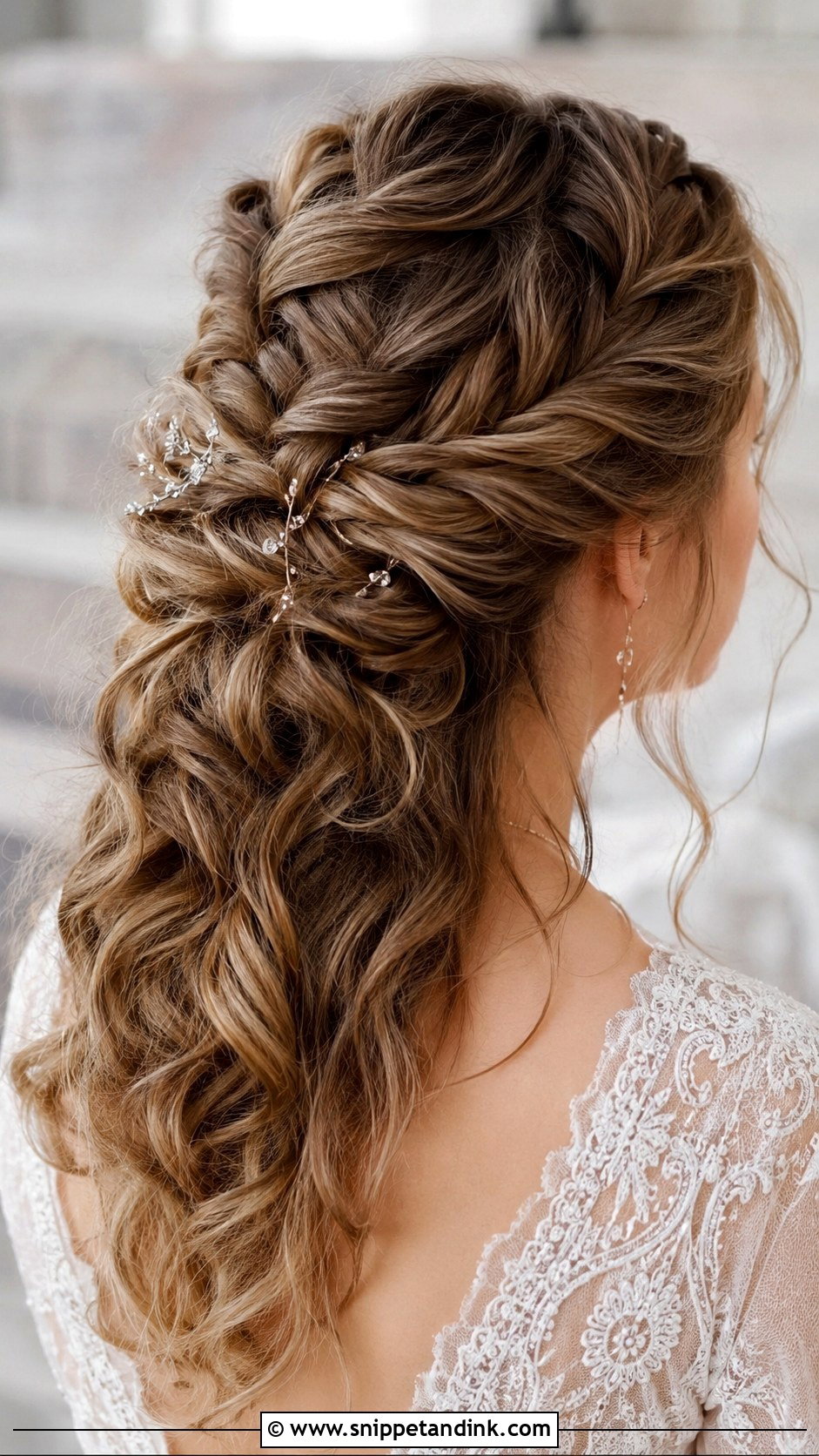
Twists are softer than braids and quicker to create. Sections along the crown or sides are twisted, then pinned or gathered into a shape. Twists can unwind, especially on fine hair, so I twist both sides in the same direction and finish each with a light mist of spray. Combine them with loose curls or a low bun. Small flowers or pins add charm. It’s the gentlest of the Norse styles for brides who don’t like the feel of tight braids.
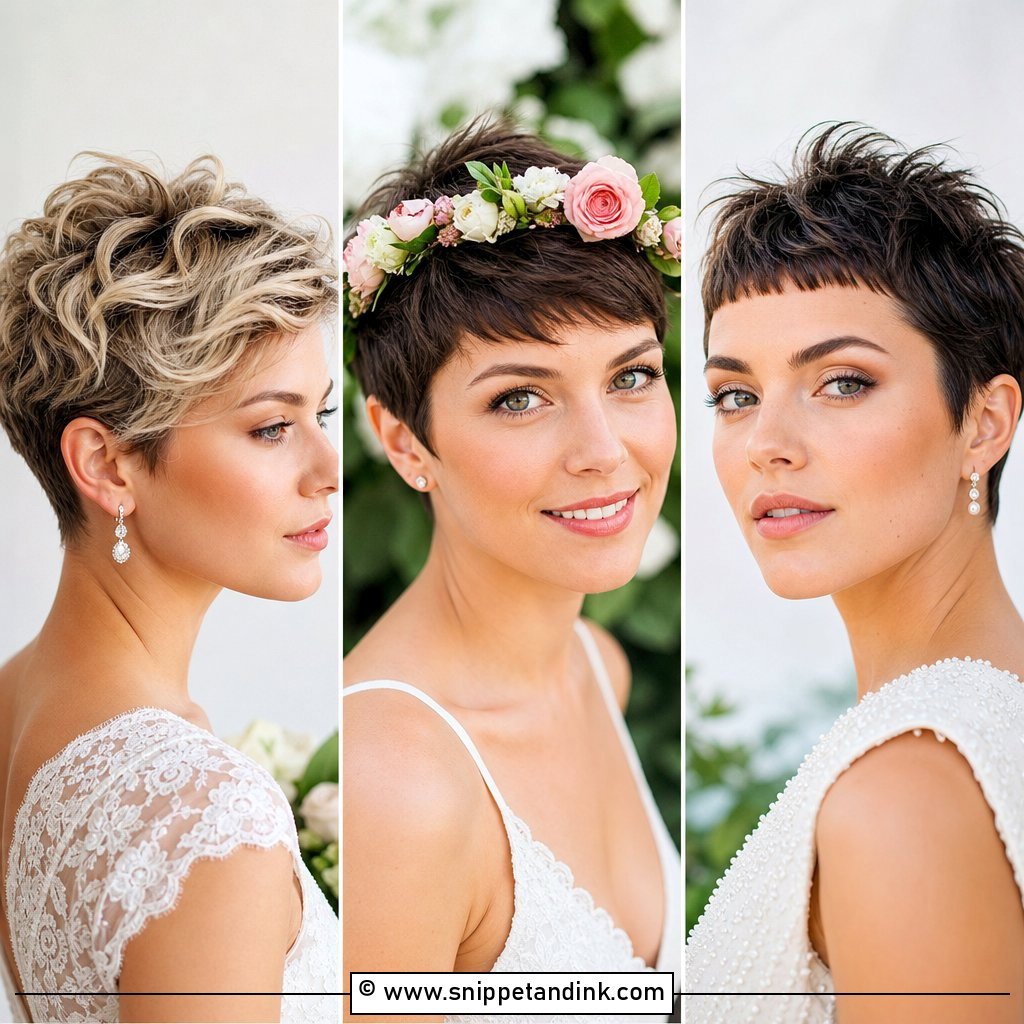
20. Viking Goddess Braids for Brides
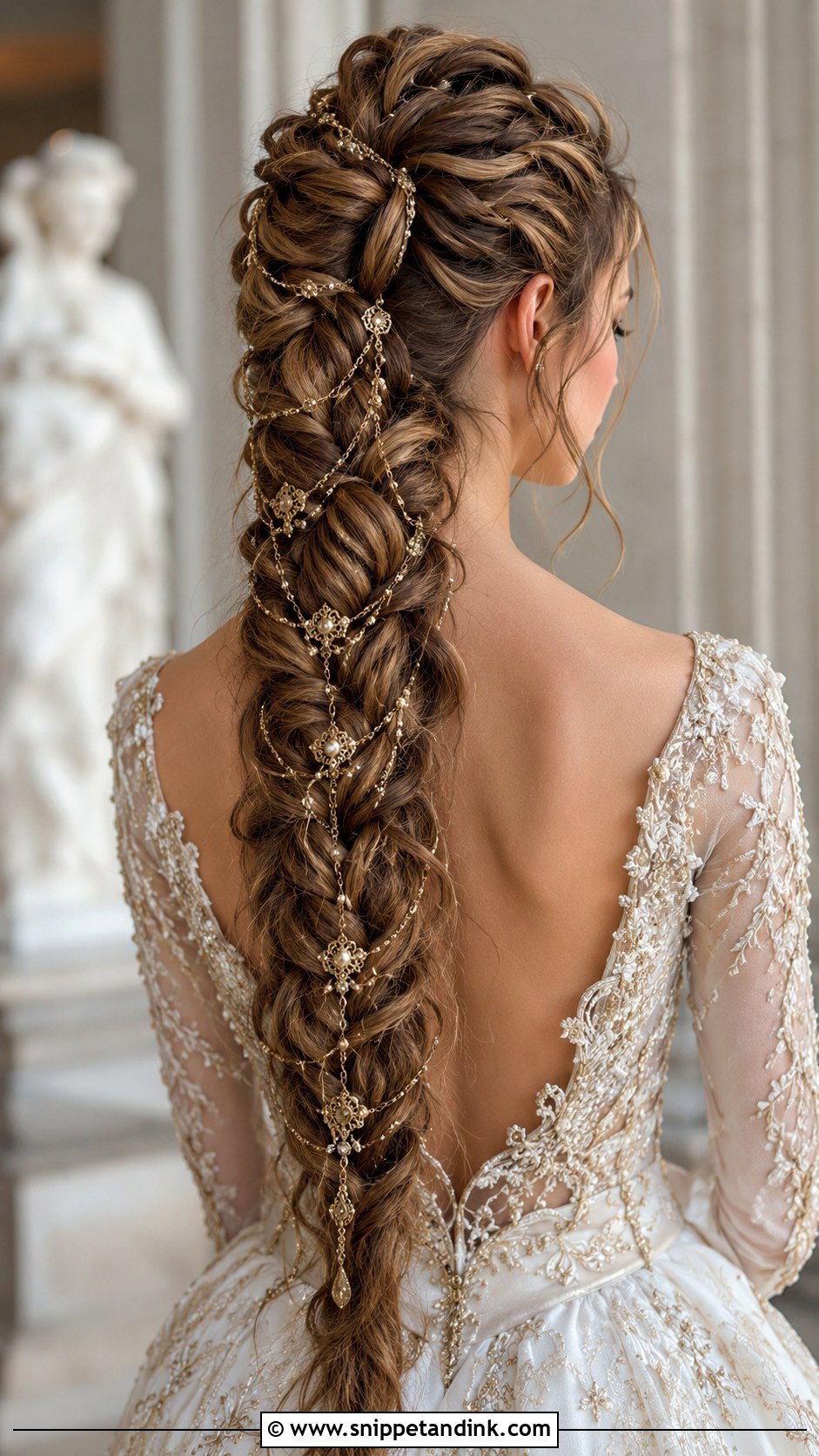
Long goddess braids that flow down the back have real presence, worn as one big braid or several. On textured and coily hair they’re usually installed by a braider with added braiding hair, a day or two before the wedding, so the morning is just finishing touches. Flowers, beads or fine chains look good threaded through. Ask your braider to keep the edges loose; tight braids at the hairline are uncomfortable for a full day and can stress the edges.
21. Side Swept Viking Braid Style
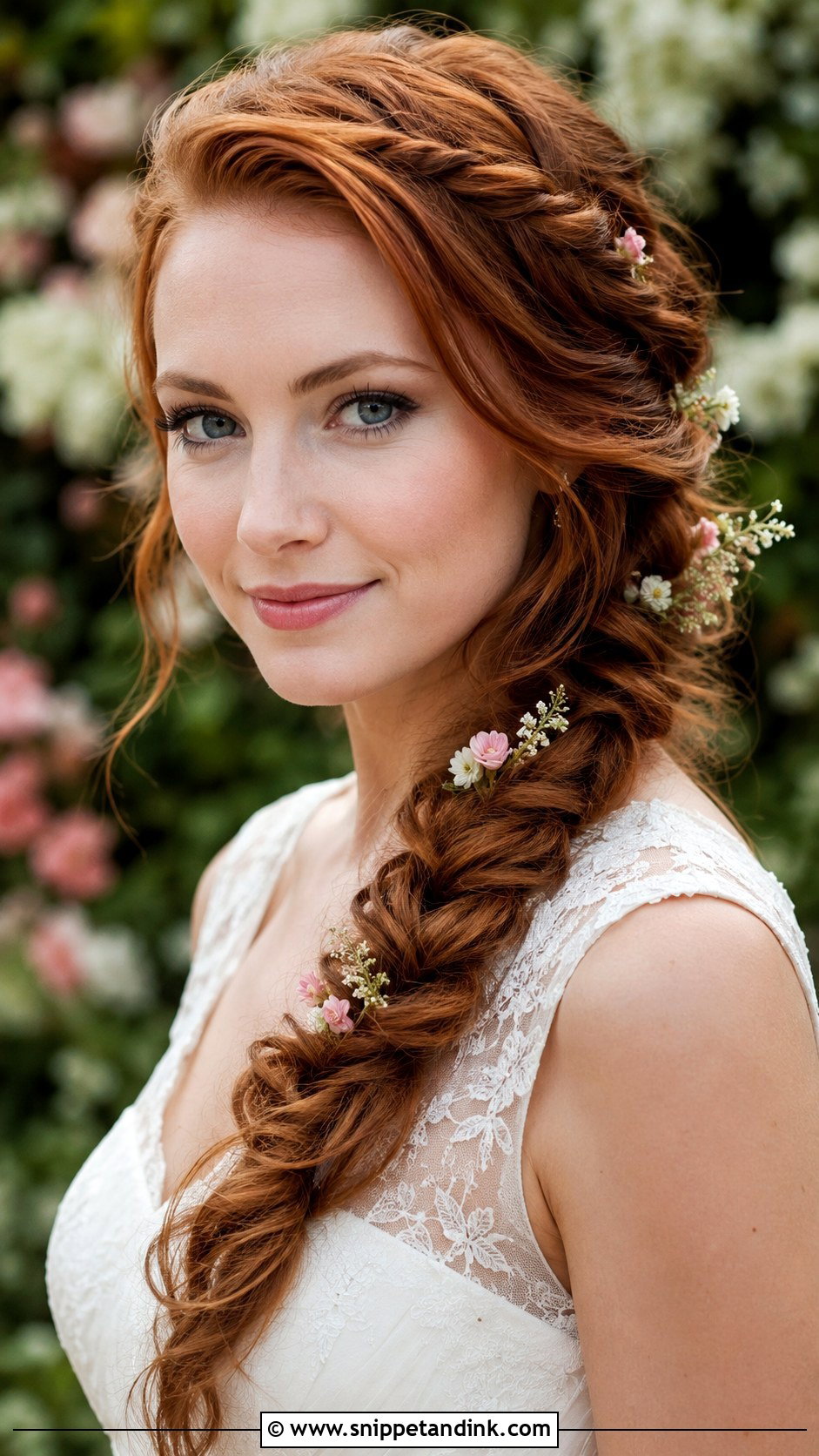
One braid swept over a shoulder gives a soft asymmetry and frames one side of the neck. I pin the back securely before braiding so the hair doesn’t gap behind the ear. Loosen it for a boho look or keep it firm for polish, then add flowers or beads. It suits medium to long hair. Skip it with a high neckline, because the braid fights the collar and slips back over your shoulder every time you move.
22. Viking Mohawk Braid for Bold Brides
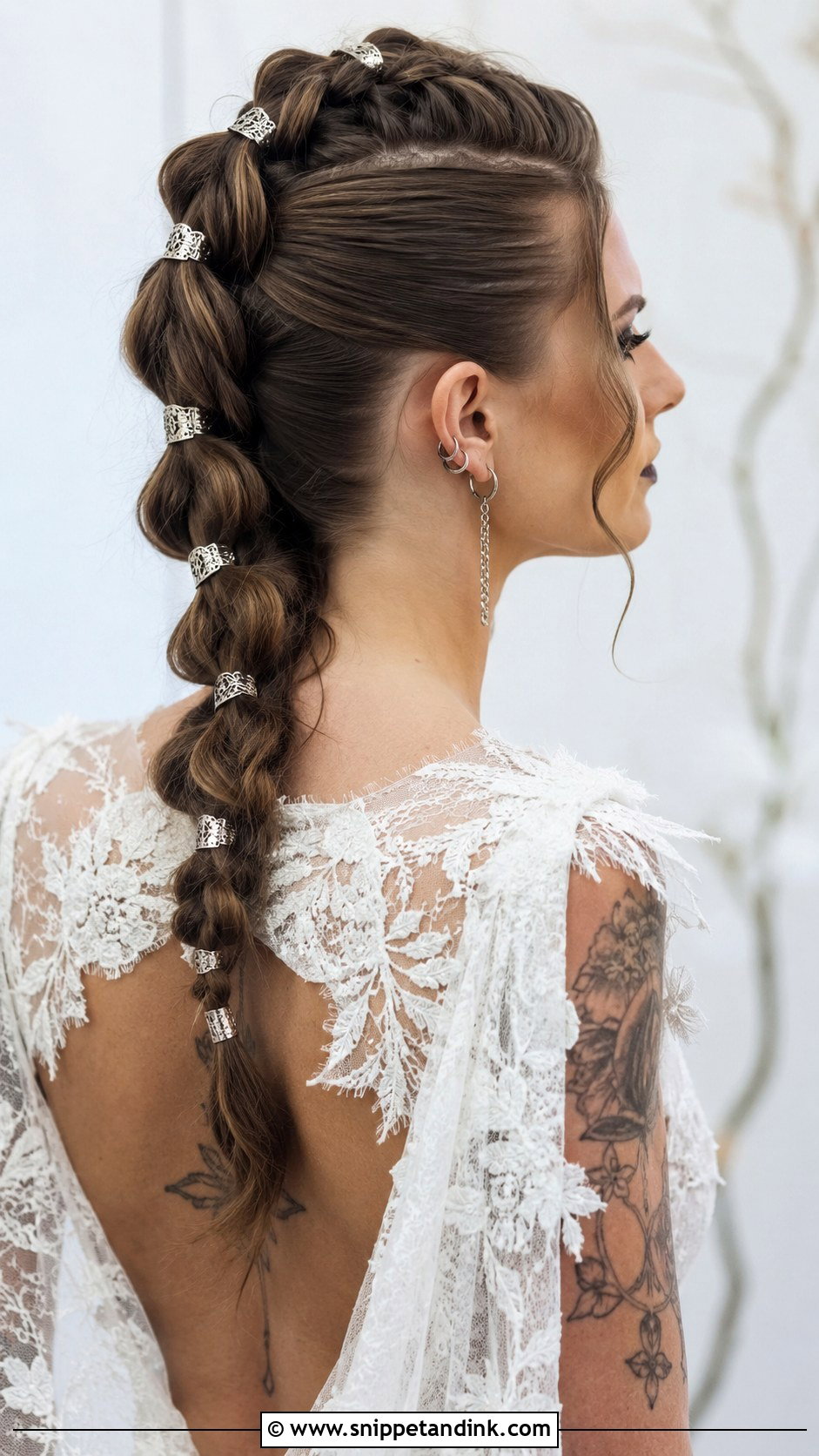
A braided mohawk style runs down the centre of the head and is the most dramatic look in this list. The middle section is braided into one line, while the sides are slicked back or braided close. I usually build it from a Dutch braid so it stands up, and I use strong pins at the sides to keep the slick lines flat. Soften it with curls below or keep it sharp. Beads or cuffs add detail. It needs confidence and a dress that’s equally bold.
23. Viking Braids With Greenery and Vines
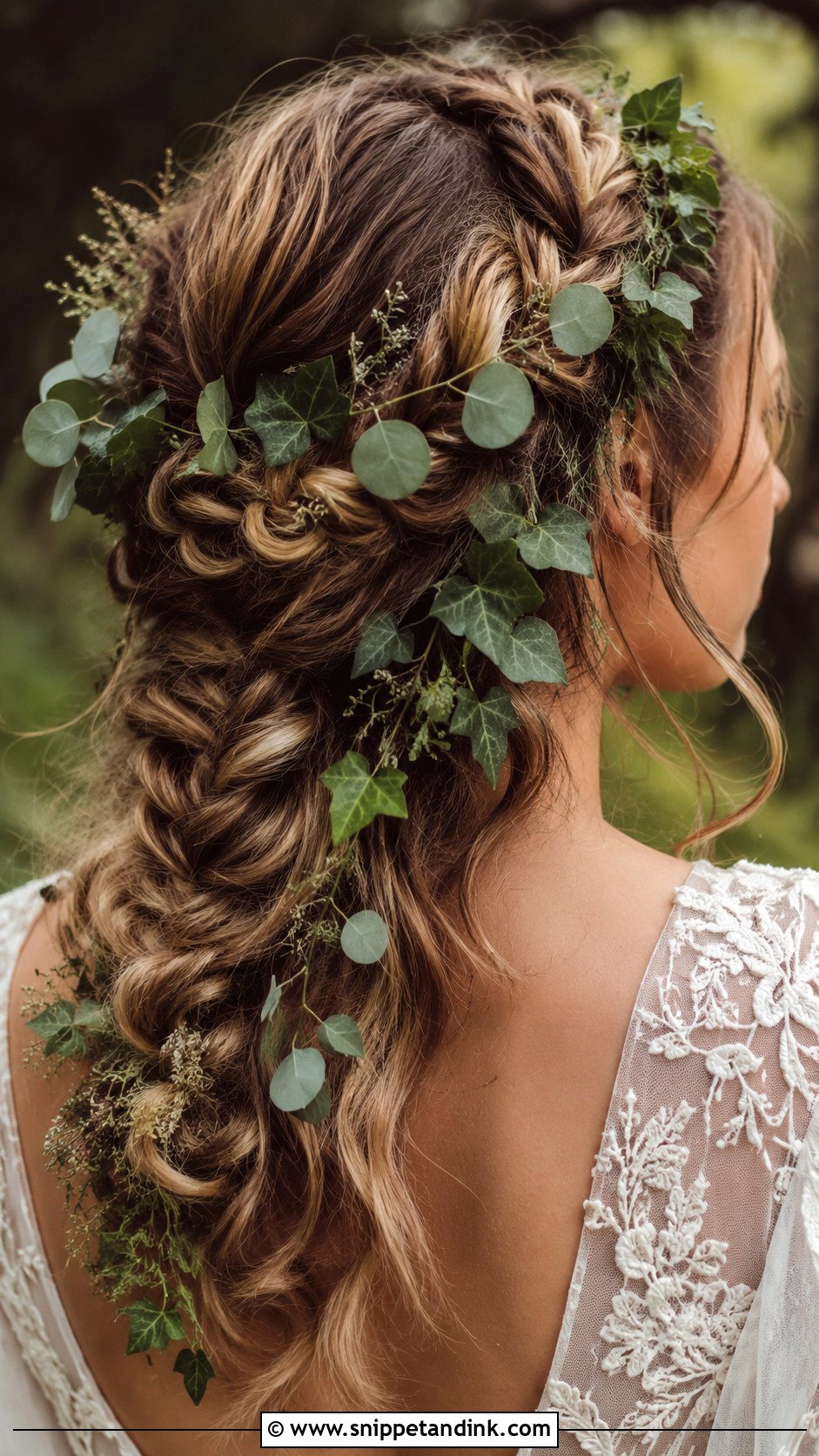
Weaving greenery and vines through braids gives a forest-inspired look. Ivy, eucalyptus or leafy strands are tucked into the braids. I wire long vines lightly first, so they follow the braid instead of springing out. Eucalyptus lasts best out of water; delicate leaves can wilt by evening. Match the foliage to your venue and season. It suits medium to long hair.
24. Viking Braided Low Bun With Tendrils
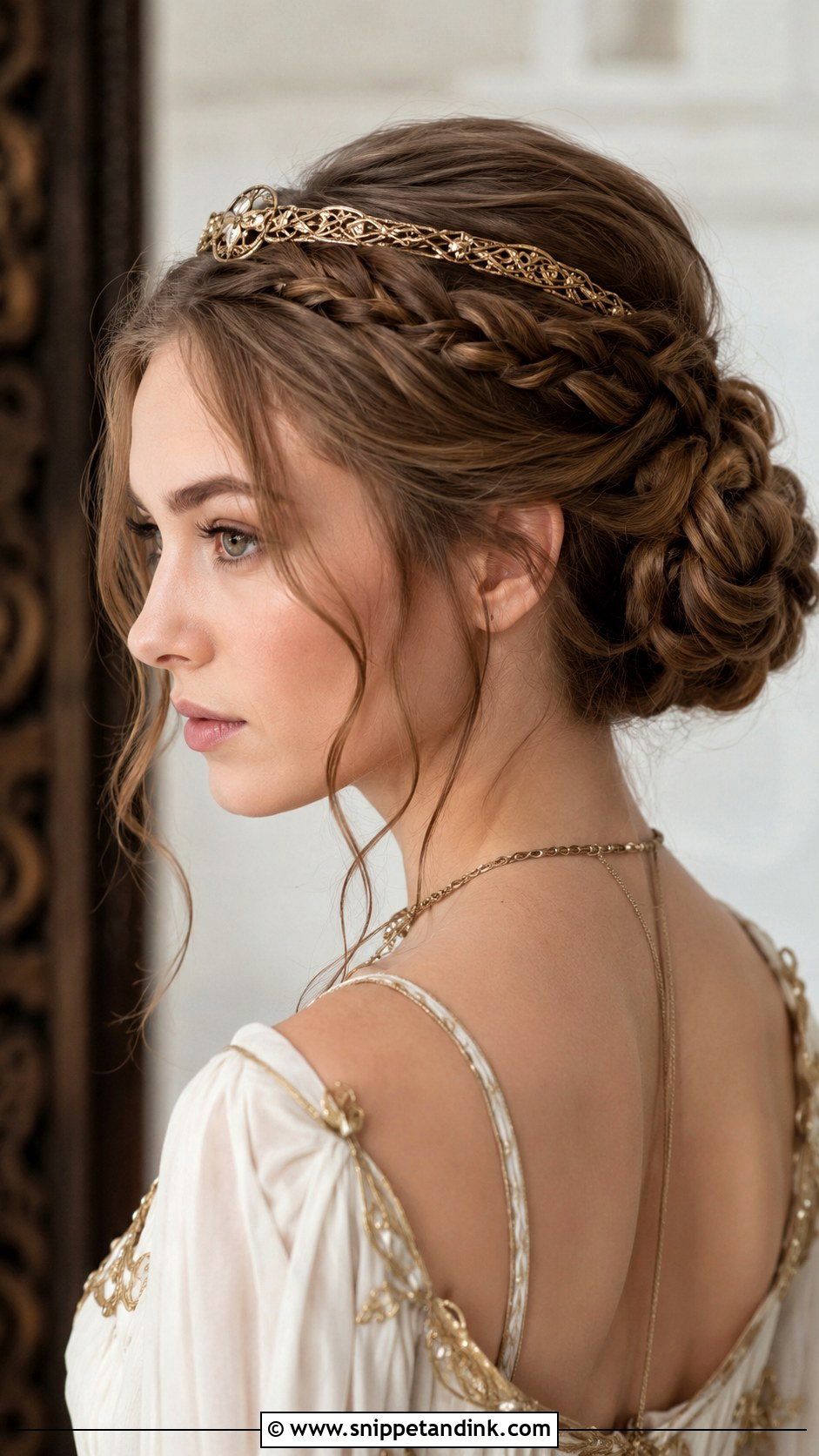
A low braided bun with a few tendrils around the face is refined without feeling stiff. Braids gather into a neat bun at the nape, and loose pieces soften the edges. I curl the tendrils with a small barrel and then break the curl with fingers, so they look natural instead of ringlets. A circlet or decorative pins finish it. Long, thick hair suits it best, and it’s at home at both formal and casual weddings.

25. Viking Braided Crown With Circlet
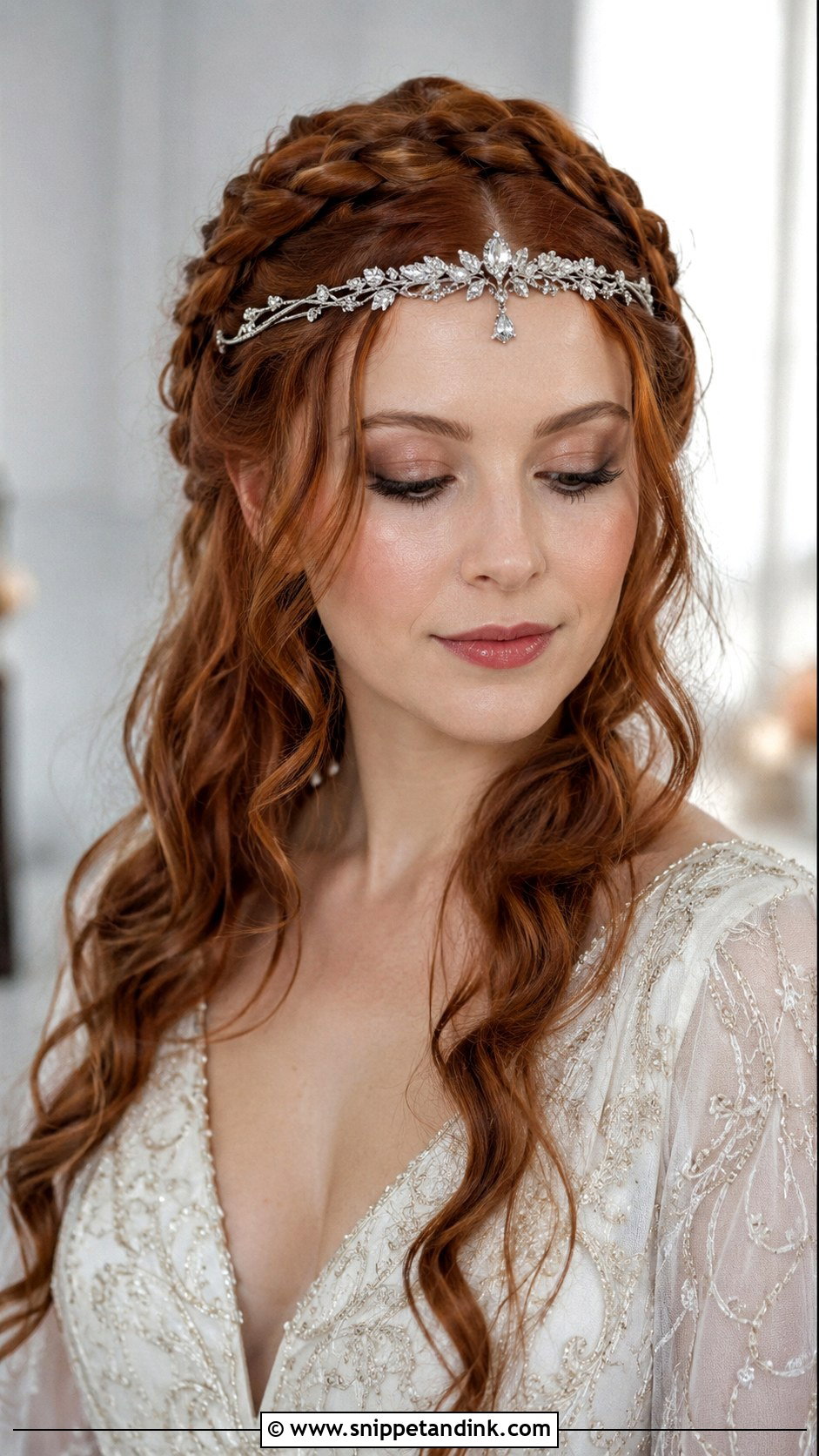
A silver circlet on a braided crown is the most regal look in this list. Braids encircle the head, and the circlet sits on top or across the forehead. I pin the circlet into the braid at both sides so it stays put when you tilt your head for photos. Choose silver, gold or a style with stones to match your jewellery. It suits medium to long hair and a grand, formal wedding.
Braiding a Whole Bridal Party Before the Ceremony
Braids take longer than curls. A detailed crown or mohawk braid can take well over an hour, and if your bridesmaids want matching Norse styles, the timeline fills fast. Count how many people need braids and ask your stylist how long each look takes, then add a buffer.
- Give bridesmaids simpler braids, like temple braids or a single fishtail, to keep the morning moving.
- Book a second stylist if more than four people need detailed braids.
- Have the bride done second to last, so the style is fresh but not rushed.
- Put accessories, beads and flowers in labelled bags for each person the night before.
Matching every bridesmaid to the bride’s braid can look like a uniform. I’d keep one shared detail, such as a bead or the same greenery, and let each person wear a braid that suits her hair.
Leave fifteen minutes at the end for photos of the finished braids from behind. Once the veil goes on and everyone heads out, nobody gets a clean shot of the back again until the evening.
Which Norse Braid Suits the Day You’re Planning?
Start with what your hair does naturally and how long your day will be. Crown braids, flowing goddess plaits and a mohawk braid all suit different textures and lengths. Add beads, cuffs, flowers or a silver circlet once the base works. Try two options at your trial, wear them for a few hours, and choose the one you forgot you were wearing.
You'll Like These Ideas:


Leave a Reply