
An updo is the safest bet I can give a bridesmaid. Once the hair is pinned, it survives hugs, dancing, wind and a ceremony that runs late far better than anything worn down. That doesn’t mean everyone gets the same bun. Bridesmaid updos can be sleek or braided, high or low, curled or twisted, and dressed with pearls or flowers. What decides it is the neckline, the hair texture, how formal the wedding is and how comfortable the bridesmaid will be after eight hours. Below are the 25 updos I put on bridesmaids most often, from classic knots to ponytails, braids and natural hair styles, with notes on who each one suits and where it tends to go wrong.
Who Sits Down First When the Whole Party Wears Updos
The running order on the morning matters more for updos than people expect. A pinned style holds its shape for hours, so updos can safely be done early. Hair worn down drops, so it should be done last. When a party mixes the two, I always start with the updos.
Within a group of updos, I put the most complicated style first, while there’s time to adjust it, and the simplest sleek buns near the end. The bride’s mother and anyone with a fixed commitment slot in where it suits them. The bride usually goes near the end, so her hair is the freshest in the photos, but not last, in case something runs over.
A rough guide to planning: a sleek bun or ponytail is the quickest, while braided and textured updos take noticeably longer, and natural hair and loc styles depend heavily on how much prep was done beforehand. Every stylist works at a different pace, so ask yours for her own timings when you book, and build in a buffer.
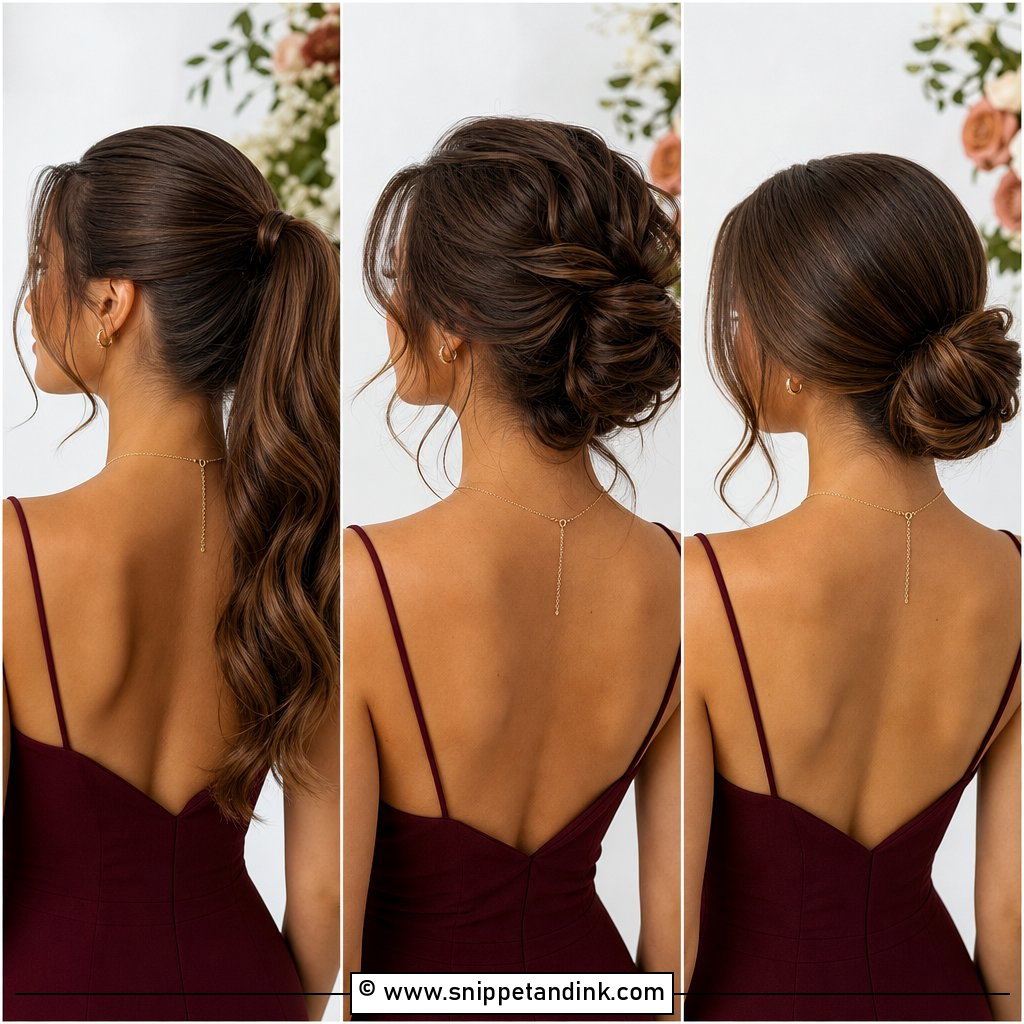
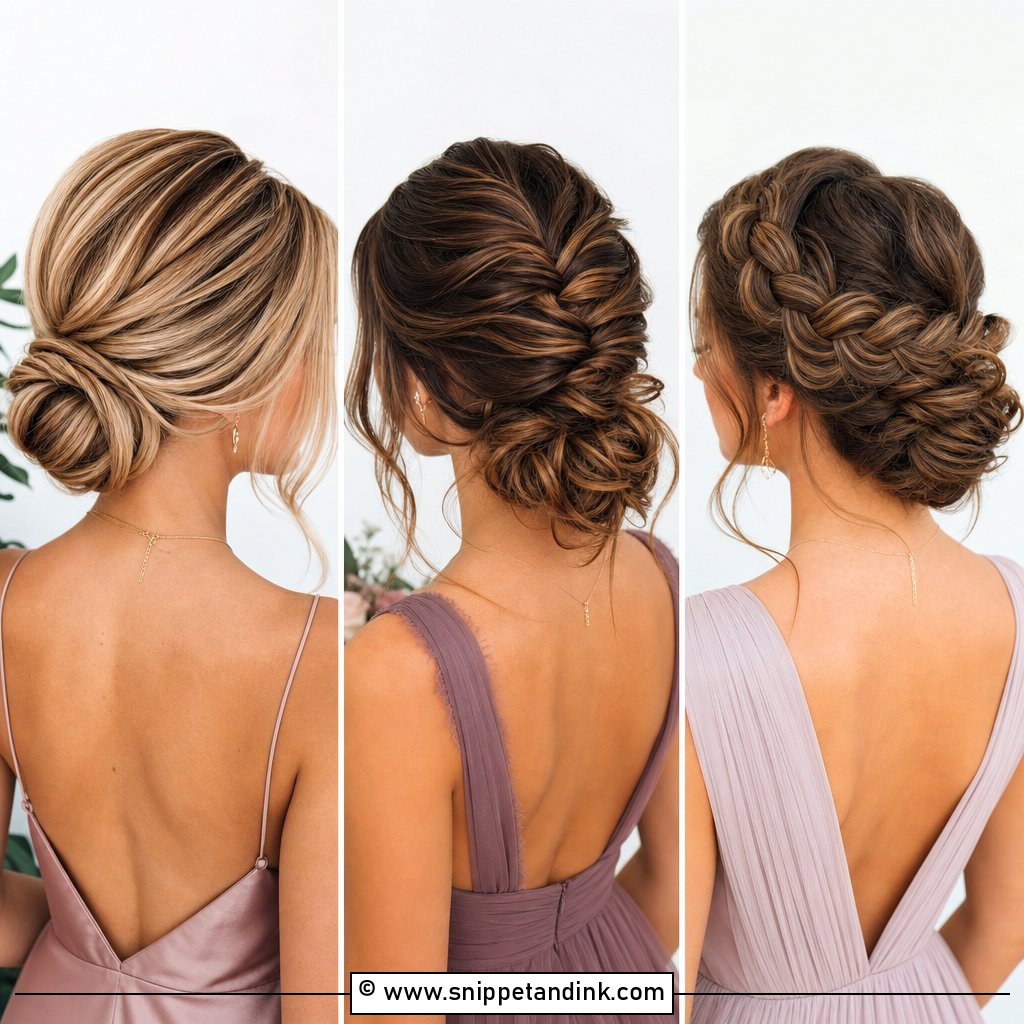
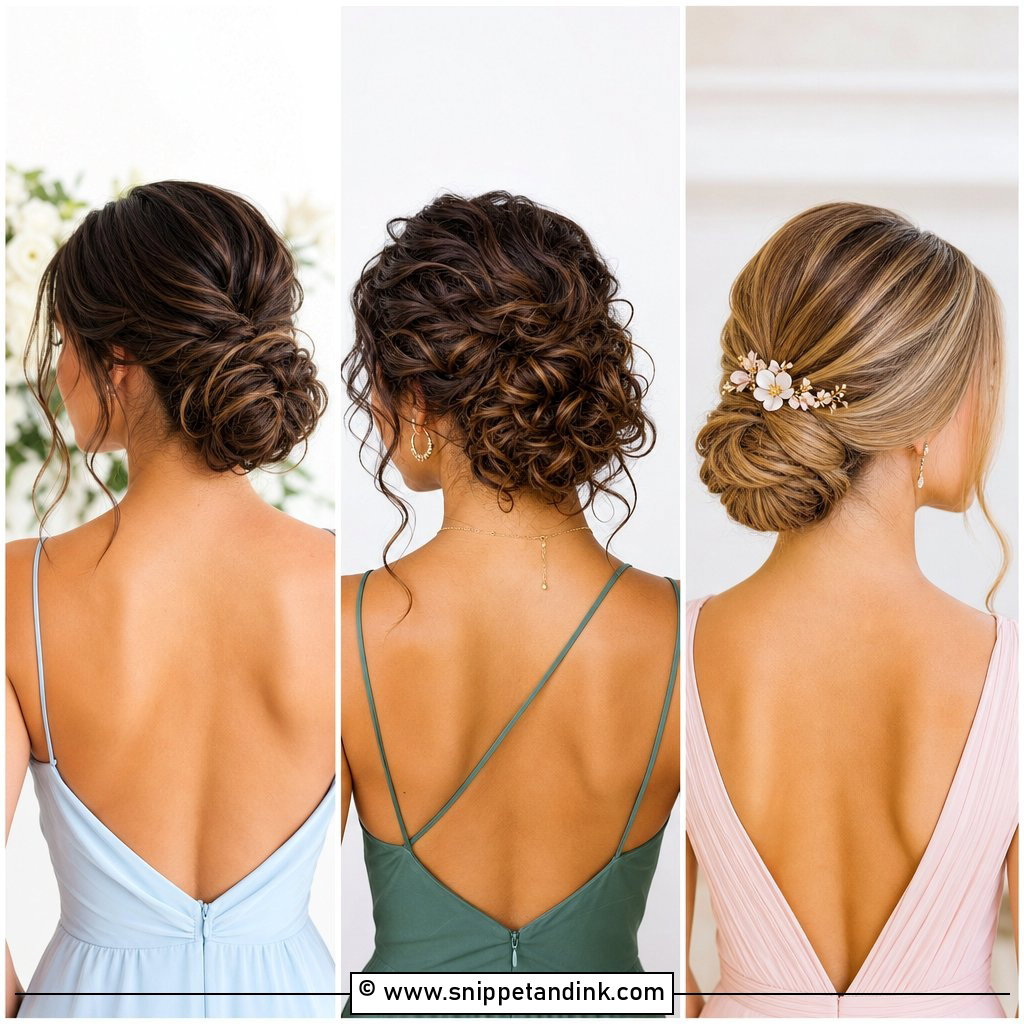
1. Bridesmaid Low Bun
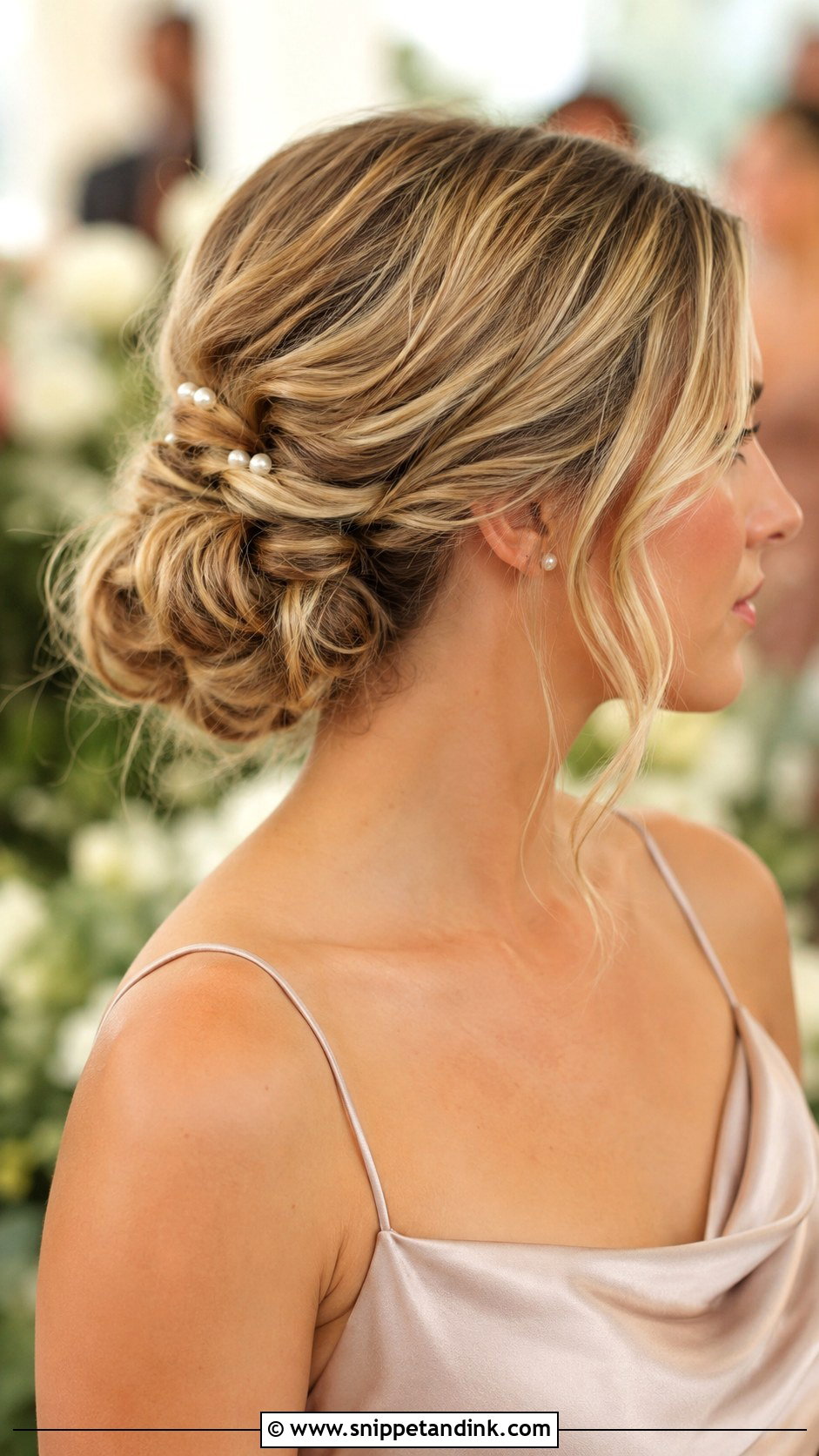
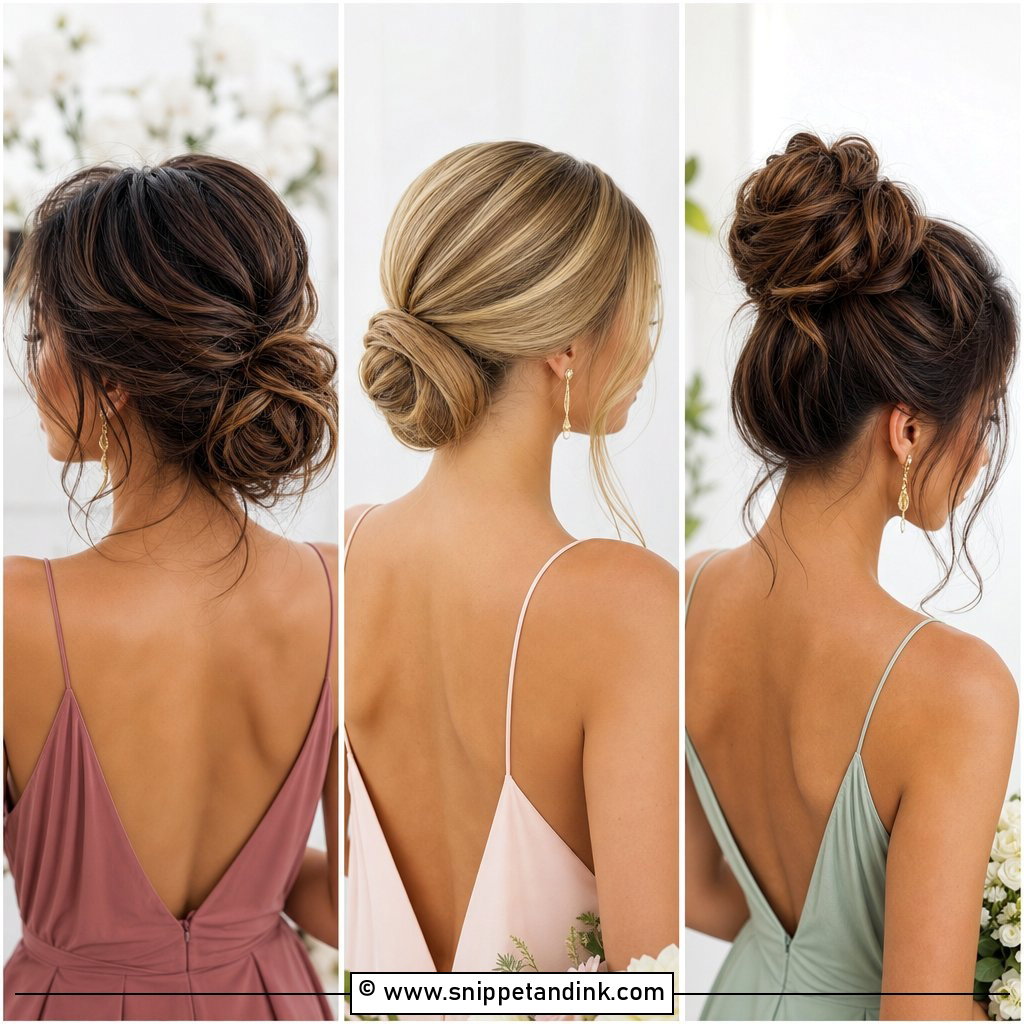
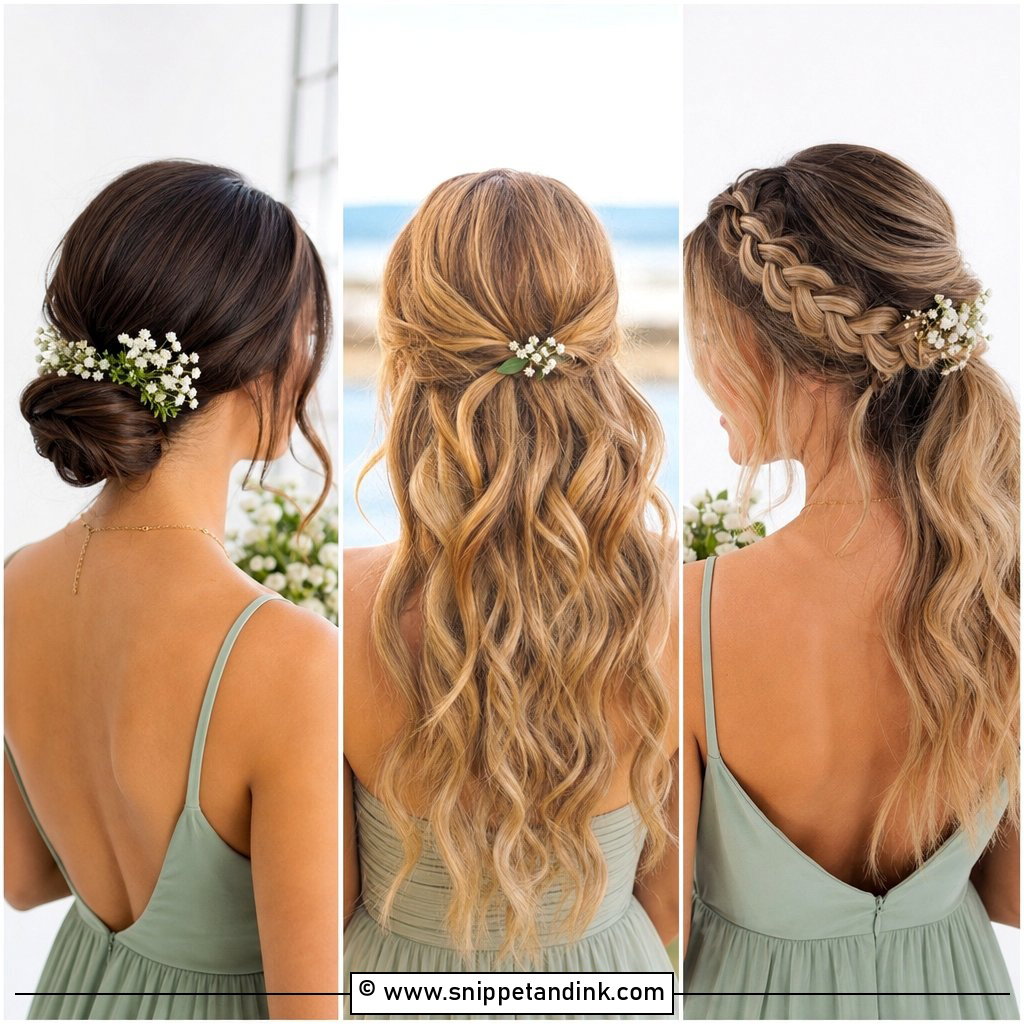
If I’m unsure what a bridesmaid will be happy in, I start with a low bun. It sits at the nape, works with almost every neckline, and puts very little strain on the scalp. A center part or a soft side part both suit it, with face-framing pieces left out. Fine hair needs some backcombing or a small padding piece to fill the shape; thick hair goes the other way, twisted and pinned in sections so the bun isn’t one heavy lump. Pearl pins, tiny florals or a comb are easy extras.
2. Bridesmaid Messy Bun
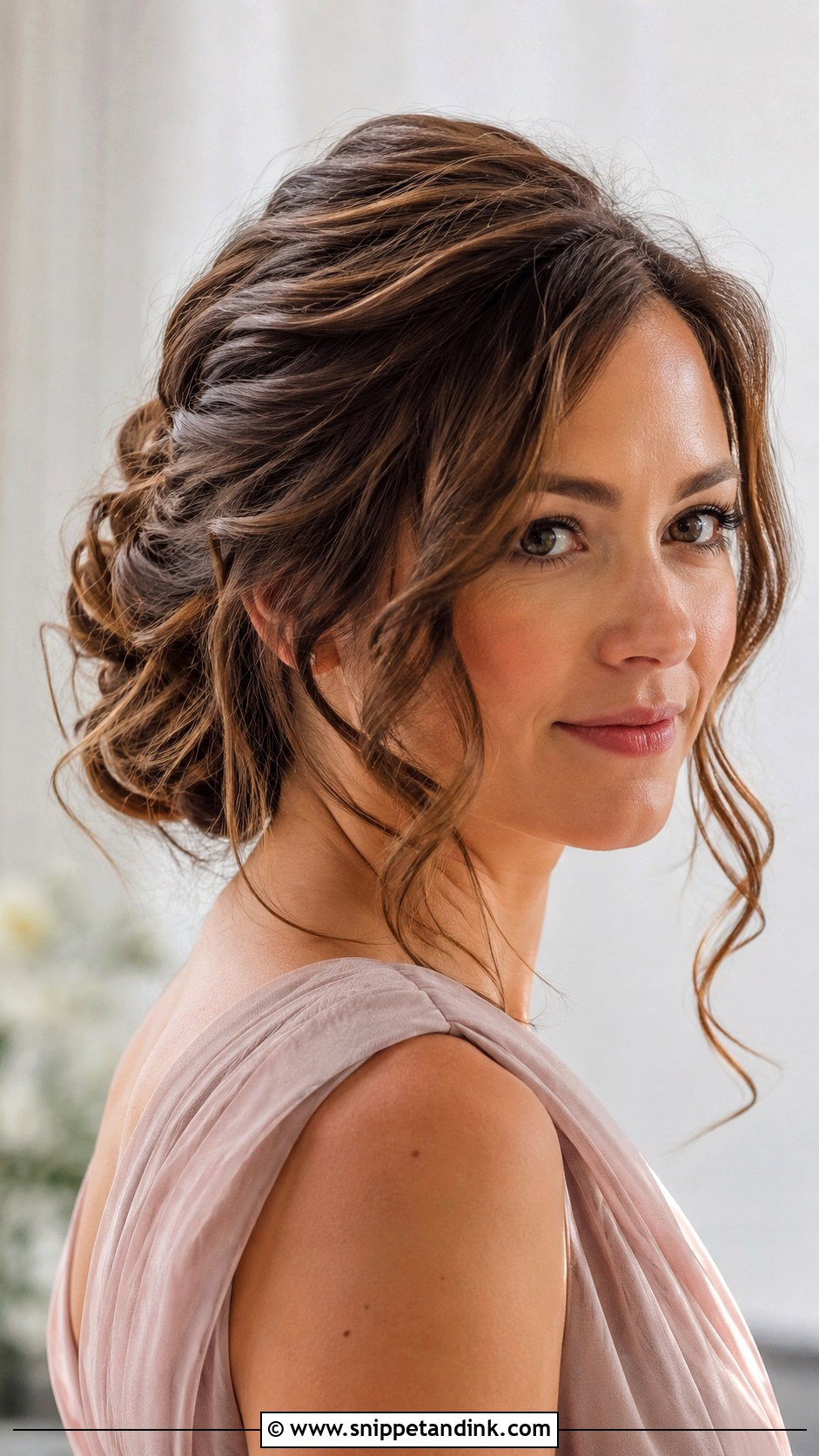
Messy buns are the most misunderstood updo I do. They look random, but every loose piece is placed. I curl the hair first so there’s texture to work with, then pin it loosely into a bun with volume at the crown. If your hair drops curl easily, tell your stylist so she can use a stronger setting product on damp hair. A few strands around the cheeks and jaw soften it. It belongs at outdoor and garden weddings and with delicate straps or open backs.
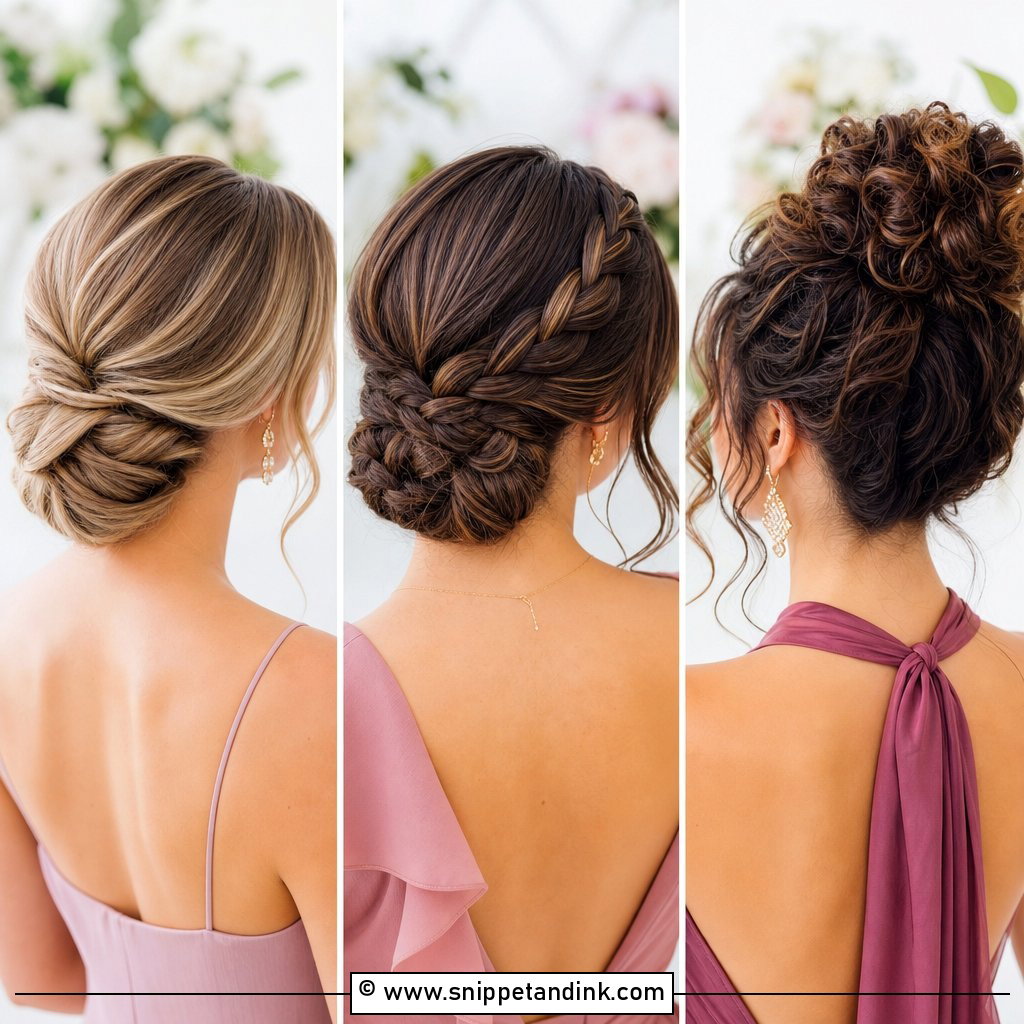
3. Bridesmaid Sleek Low Bun
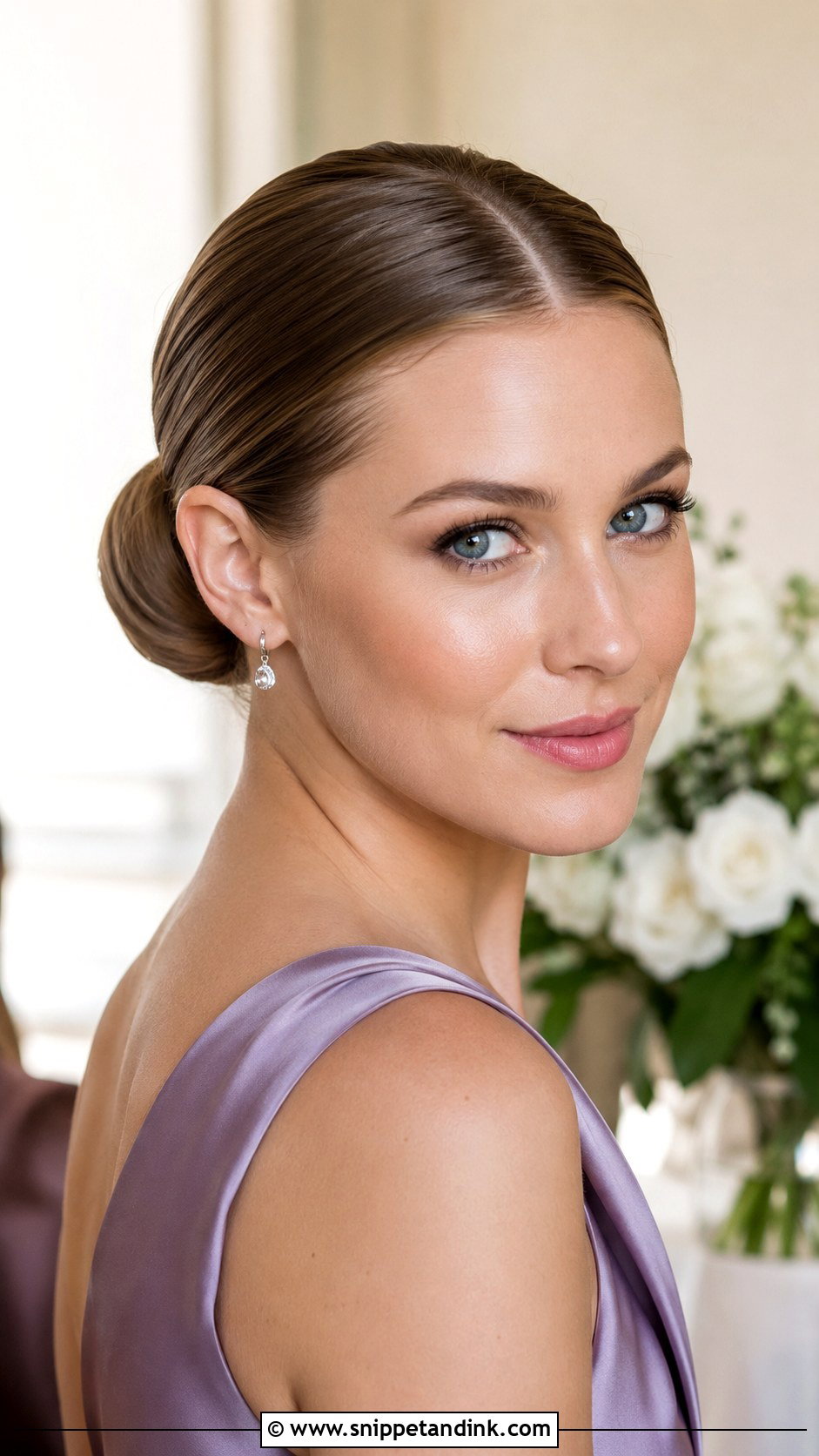
A sleek low bun is the modern option, and it is less forgiving than it looks. The hair is smoothed close to the head, parted cleanly and secured at the nape, so any bump or uneven part shows. I brush it back with a smoothing gel or cream while the hair is slightly damp, then let it set before pinning the bun. Satin dresses, high necklines and statement earrings all suit it. A shine spray at the end keeps it glossy rather than wet-looking. On a hot day it’s one of the few styles that won’t move at all.
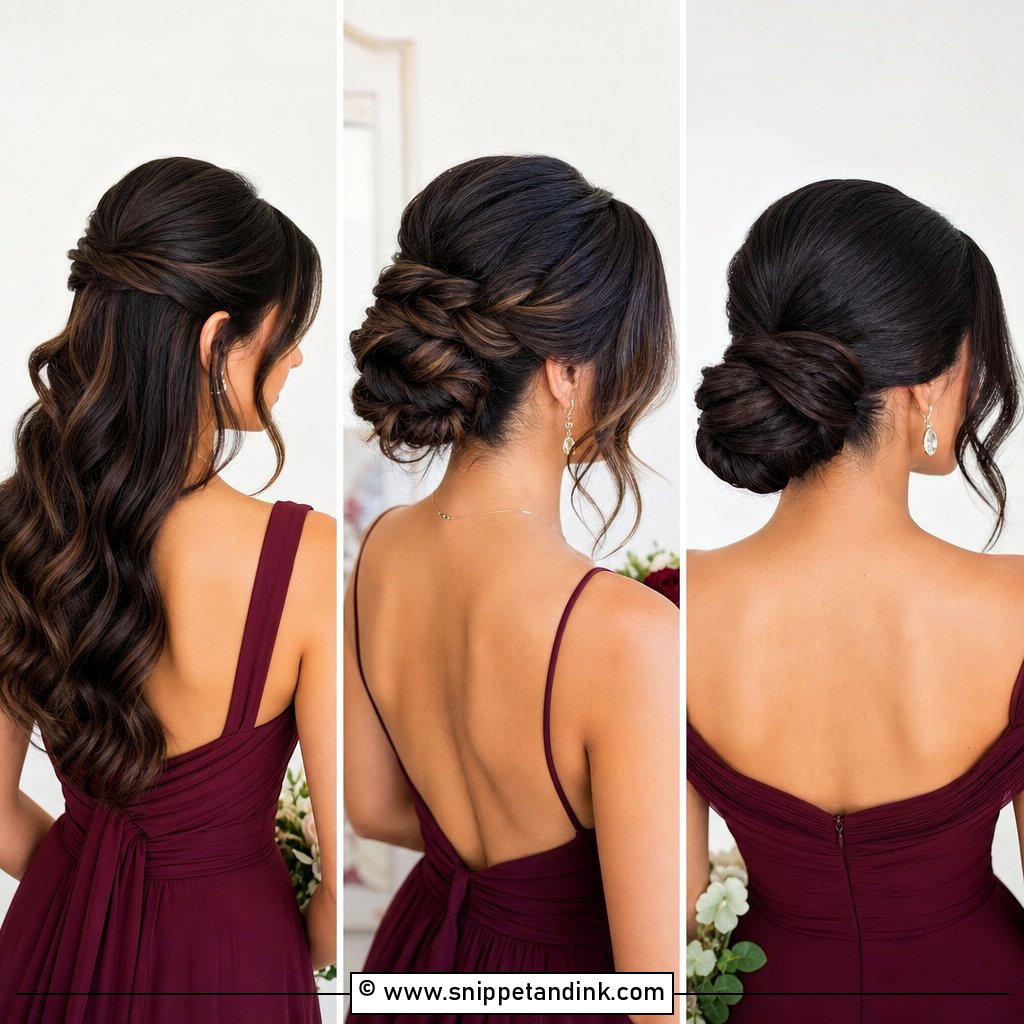
4. Bridesmaid Braided Bun
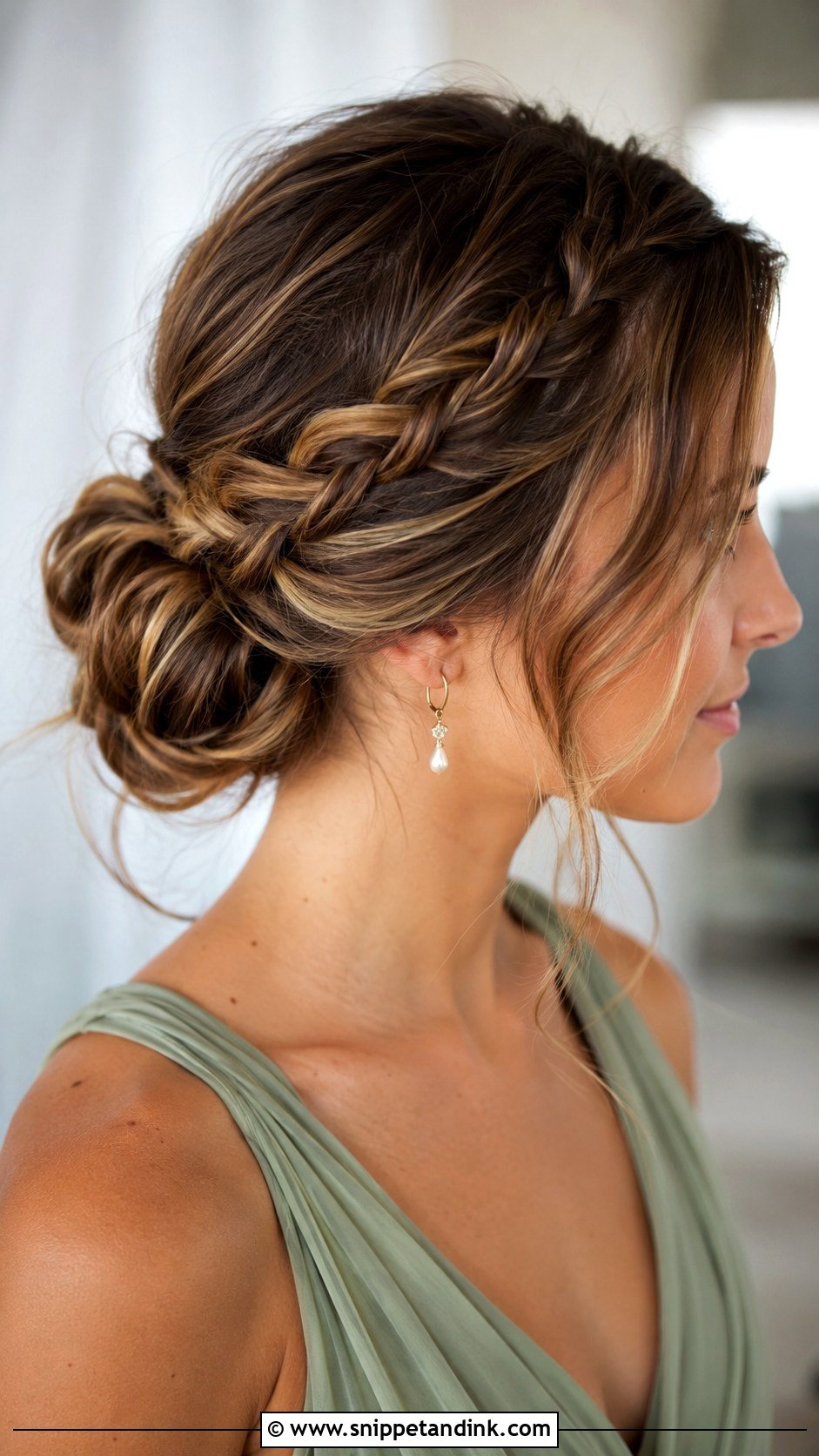
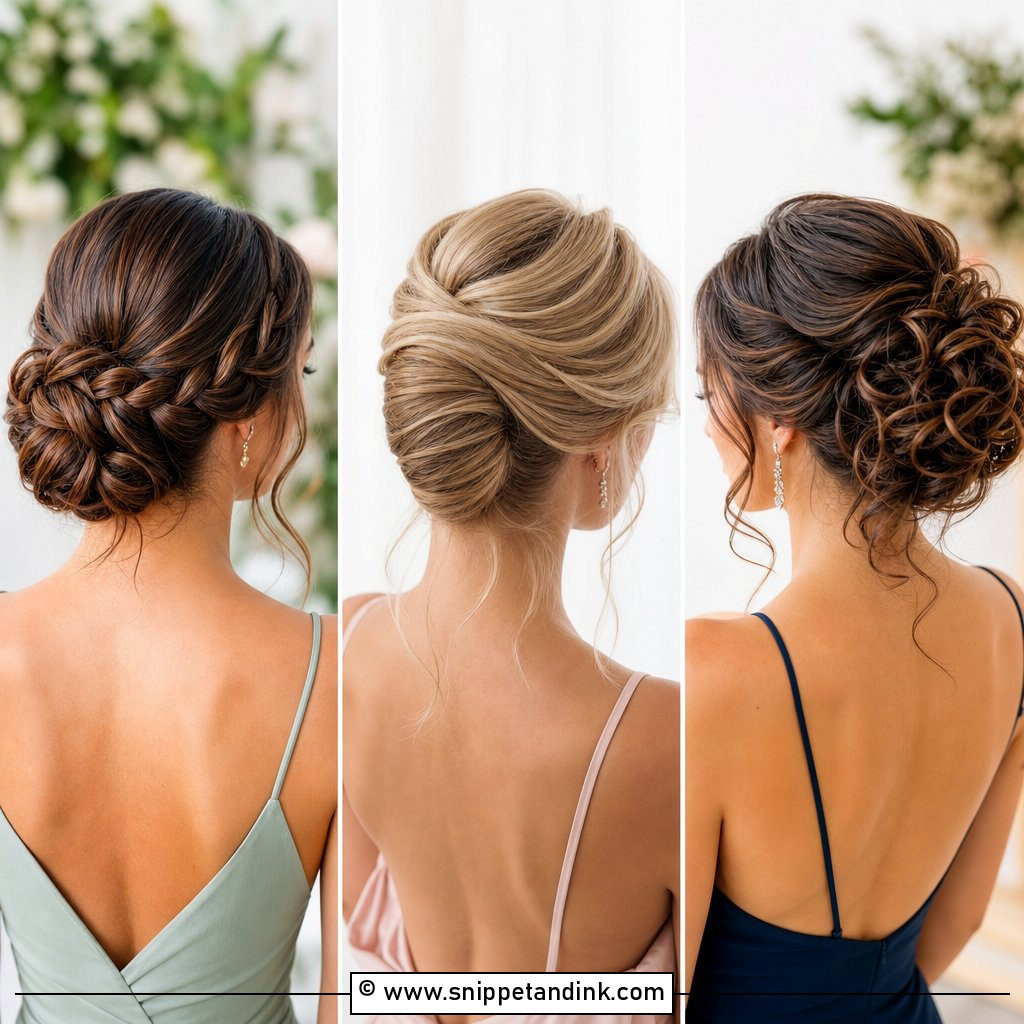
Braids hold layers that would otherwise slip out of a bun, which is why a braided bun is my go-to for medium-length hair. The braid can wrap round the bun, run from a crown braid into the updo, or appear as several small braids woven through. Highlights and balayage show clearly in the plaits. I keep the hairline soft so the style doesn’t look pulled tight. It gives a bridesmaid more detail than a plain bun while staying classic.
5. Bridesmaid Twisted Bun
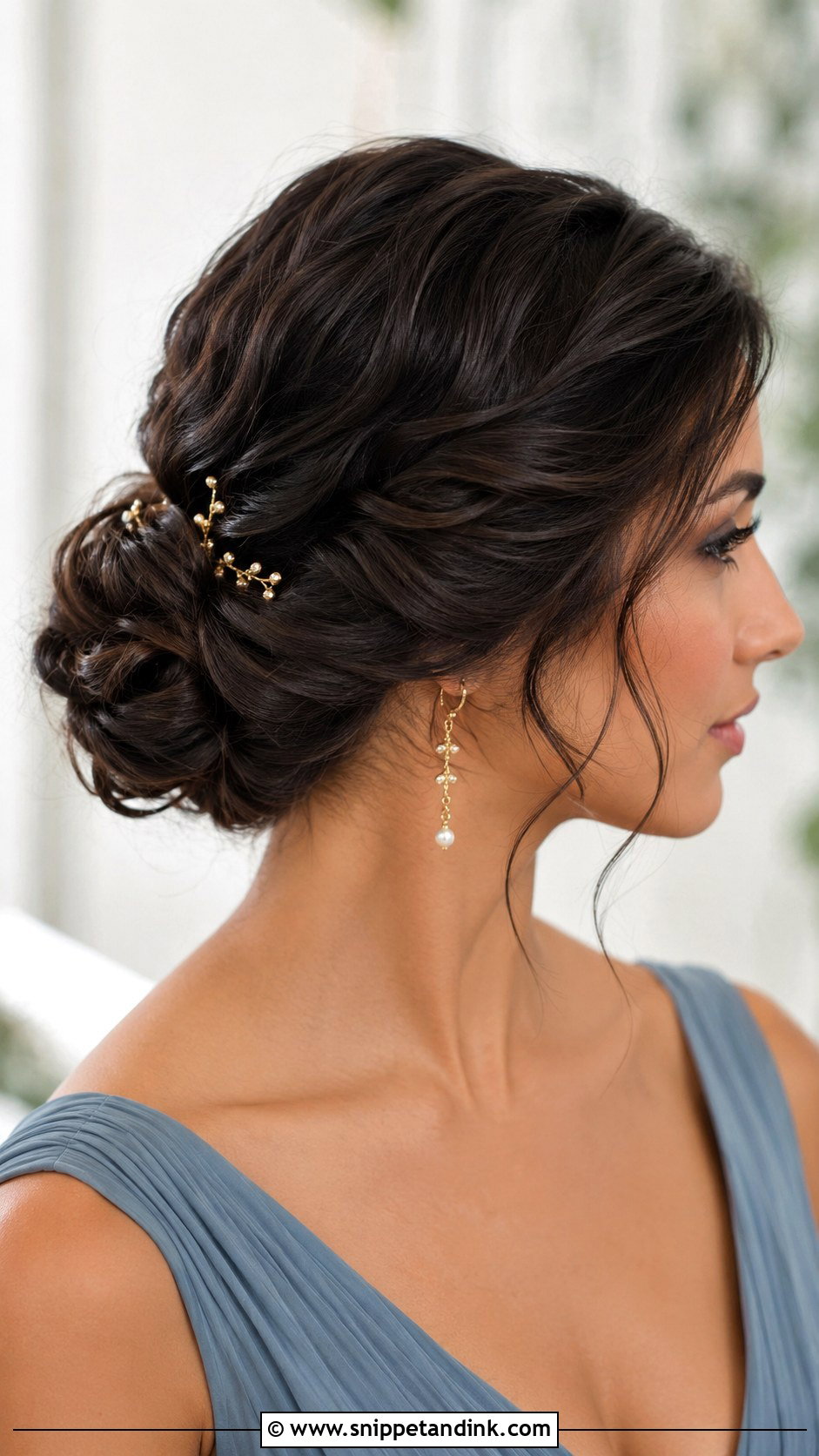
A twisted bun is quicker than a braided one and slightly softer. I divide the hair into sections and twist each back into a low or mid-height bun, which gives movement without looking busy. It suits medium to long hair. The twists need to be wound in the same direction as the bun is built, or they work loose by evening. They can be pulled out slightly for volume or kept smooth for a formal wedding. A few small pins along the twists add some sparkle.
6. Bridesmaid Chignon
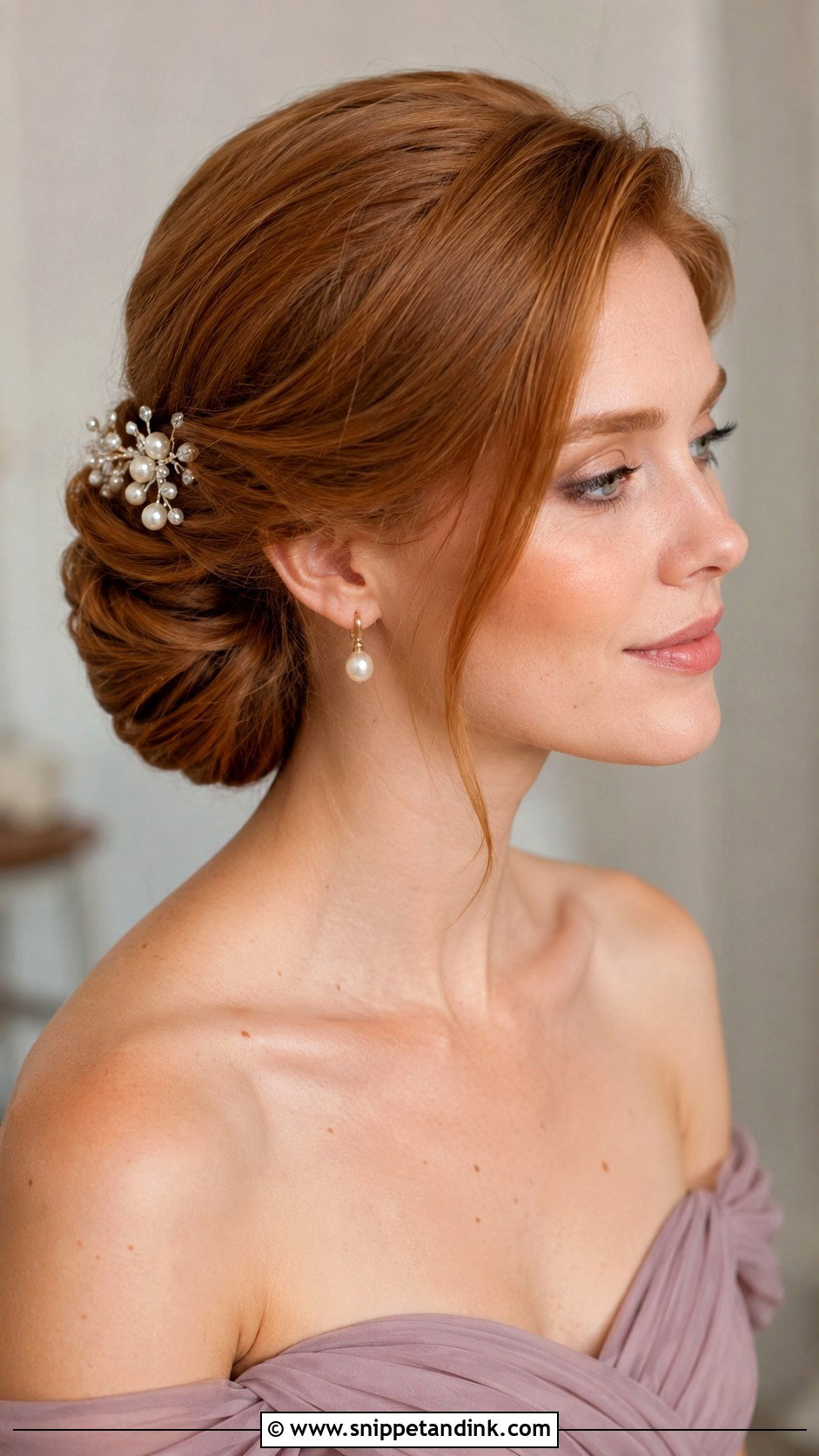
A chignon is always appropriate at a formal wedding. The hair is gathered low and tucked into a smooth, rounded shape at the nape, worn sleek for black tie or textured for a romantic ceremony. Off-the-shoulder, halter and one-shoulder dresses all benefit, because the neck and shoulders stay visible. Veils, combs and hair vines sit naturally against it. With shorter layers, I pin the sections individually into the roll rather than gathering them all at once, which keeps the finished shape neat and full.
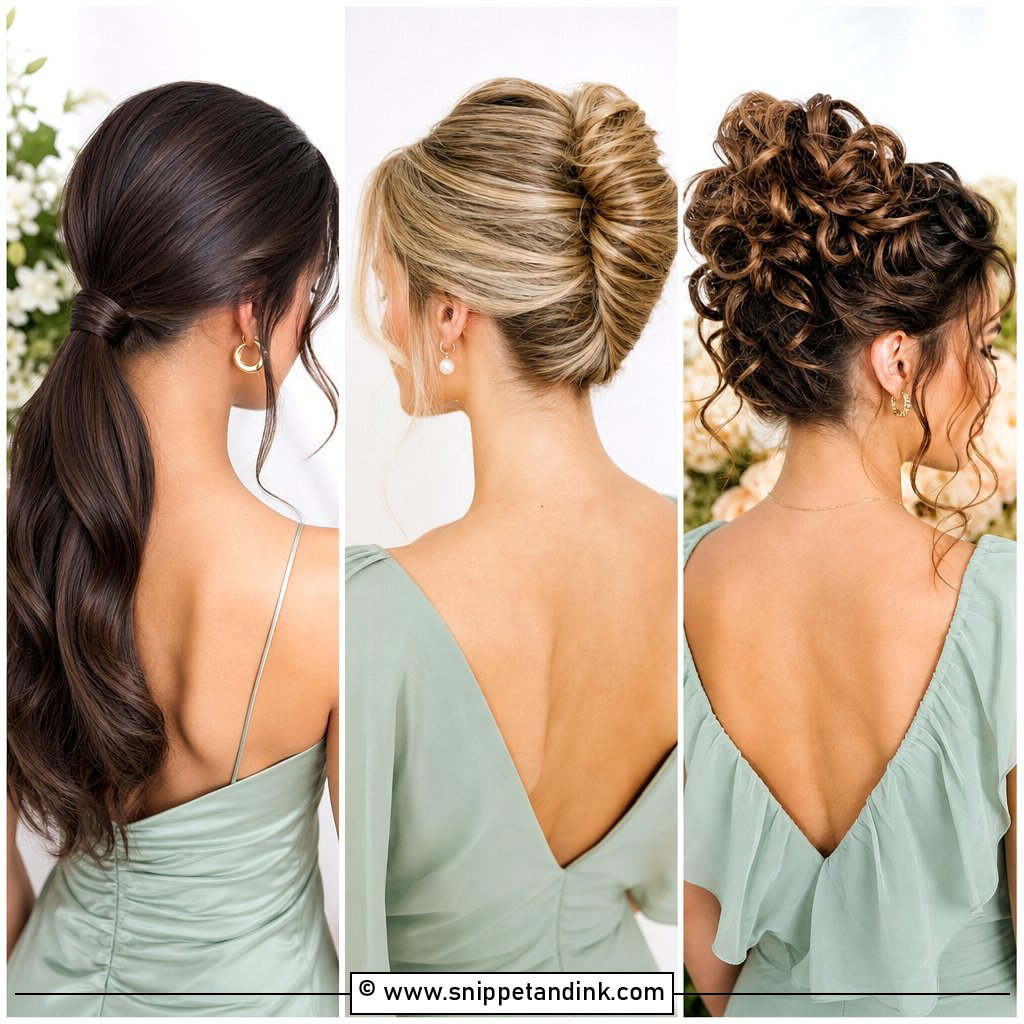
7. Bridesmaid French Twist
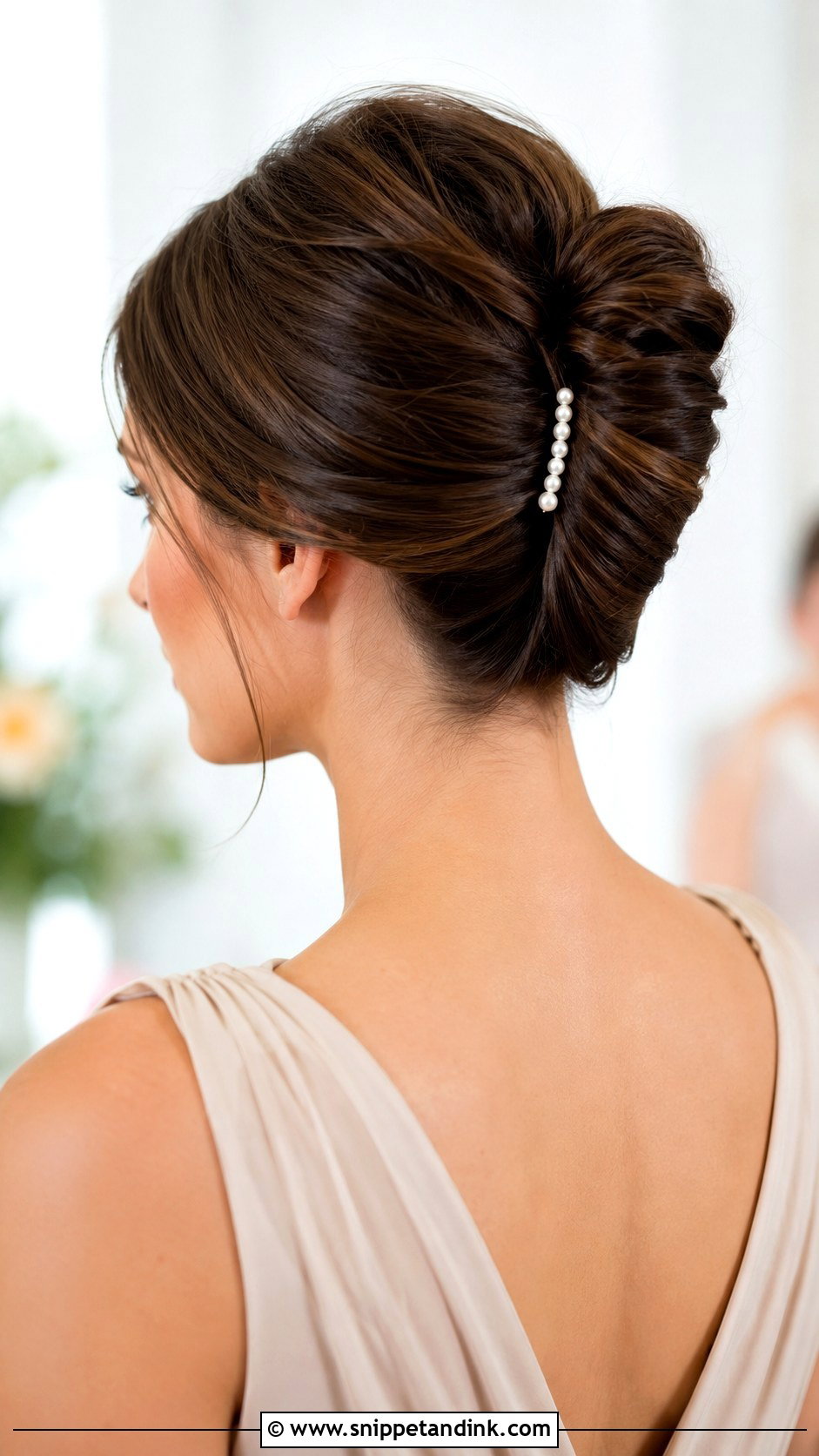
A French twist lifts the hair up and tucks it into a vertical roll, smooth from the front and dramatic from behind. I build it on a base of crossed pins running up the center of the back of the head; without that, the roll has nothing to hold onto and slides down. It suits formal venues, evening weddings and classic silhouettes. Medium-length hair can manage it, since the roll doesn’t need very long strands. It can be sleek or slightly undone with loose pieces, and a pearl comb or slim pin along the seam finishes it.
8. Bridesmaid High Bun
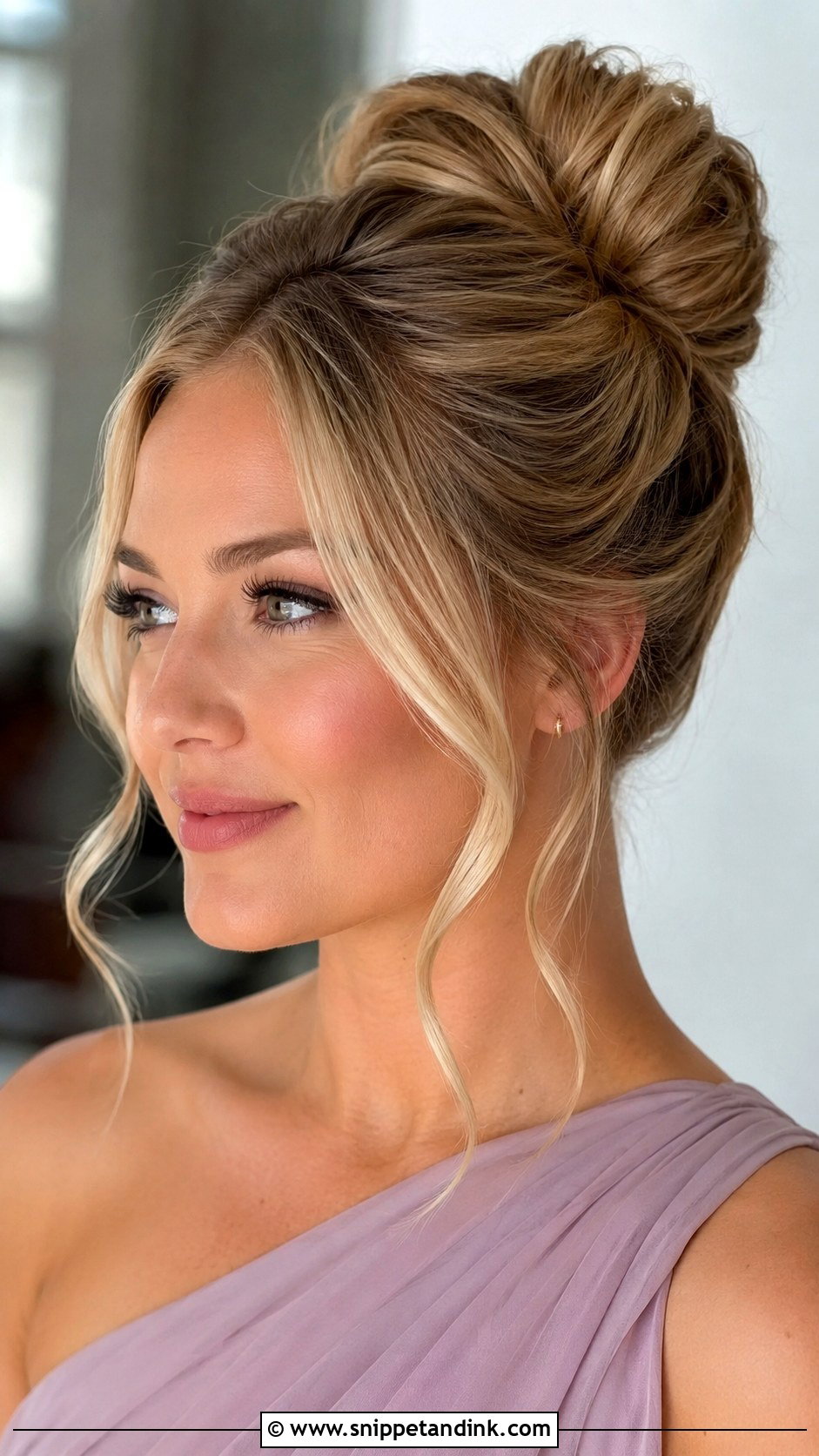
A high bun takes all the hair off the neck, which bridesmaids at summer and destination weddings are grateful for. It can be smooth, full and textured, or curled before pinning. High-neck dresses, slip dresses and detailed backs all show better with nothing covering them, and the height can help a petite bridesmaid in group photos. Soft lift at the hairline keeps it from looking severe. Weight is the thing to watch: a large, heavy bun high on the head pulls forward, so on thick hair I keep it smaller than the inspiration photo.
9. Bridesmaid Top Knot
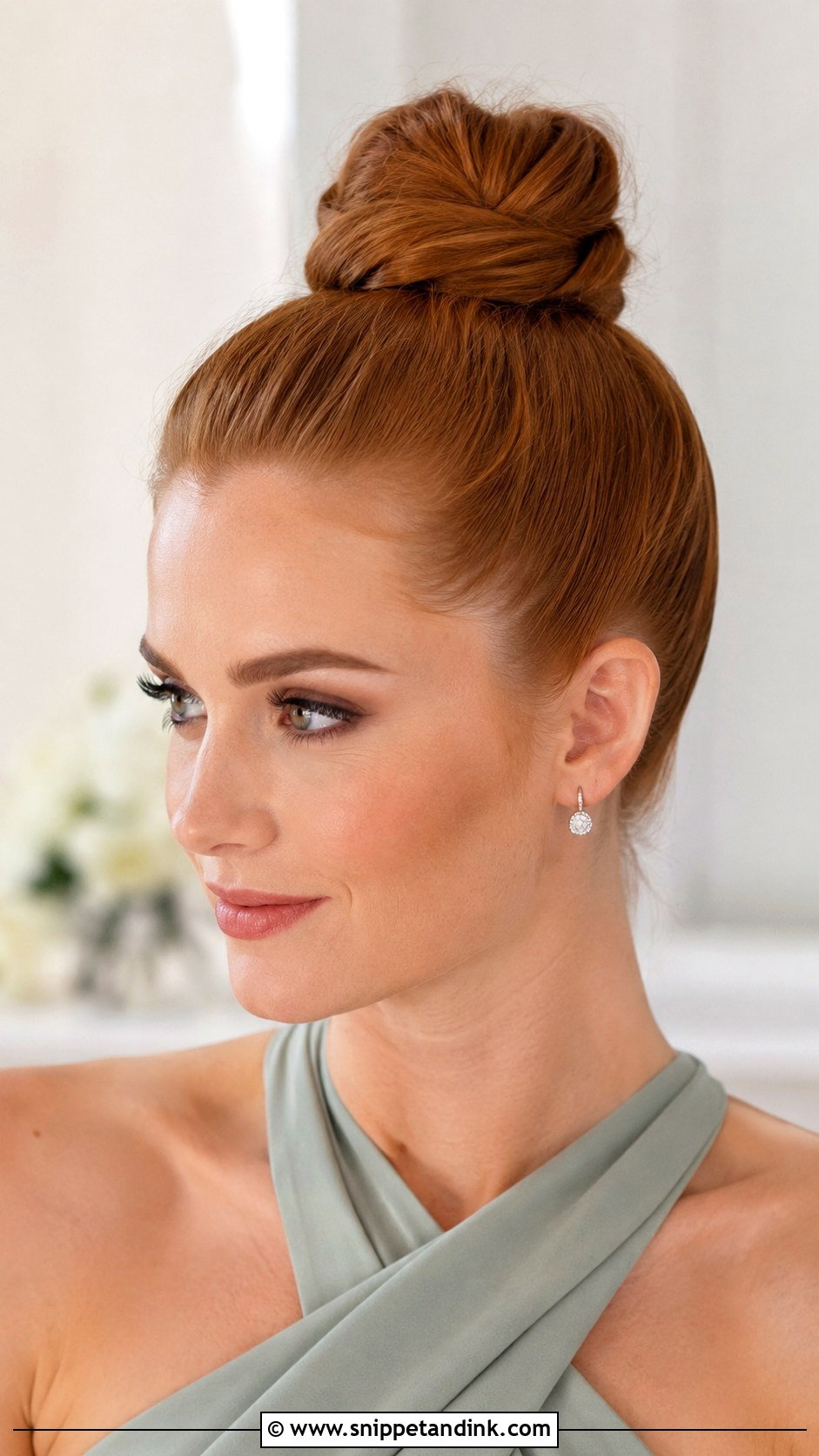
The wedding top knot is not the one you wear to the gym. It’s brushed up, secured high and wrapped into a neat, balanced knot with hidden pins. It suits sleek outfits and contemporary weddings, and it stays controlled in humidity. Bold earrings are its natural partner. For a softer version, I leave out a few tendrils or put a light wave through the hair before it goes up. If your crown has a strong cowlick, mention it, because brushing hair straight up against one can leave a visible gap.
10. Bridesmaid Curly Updo
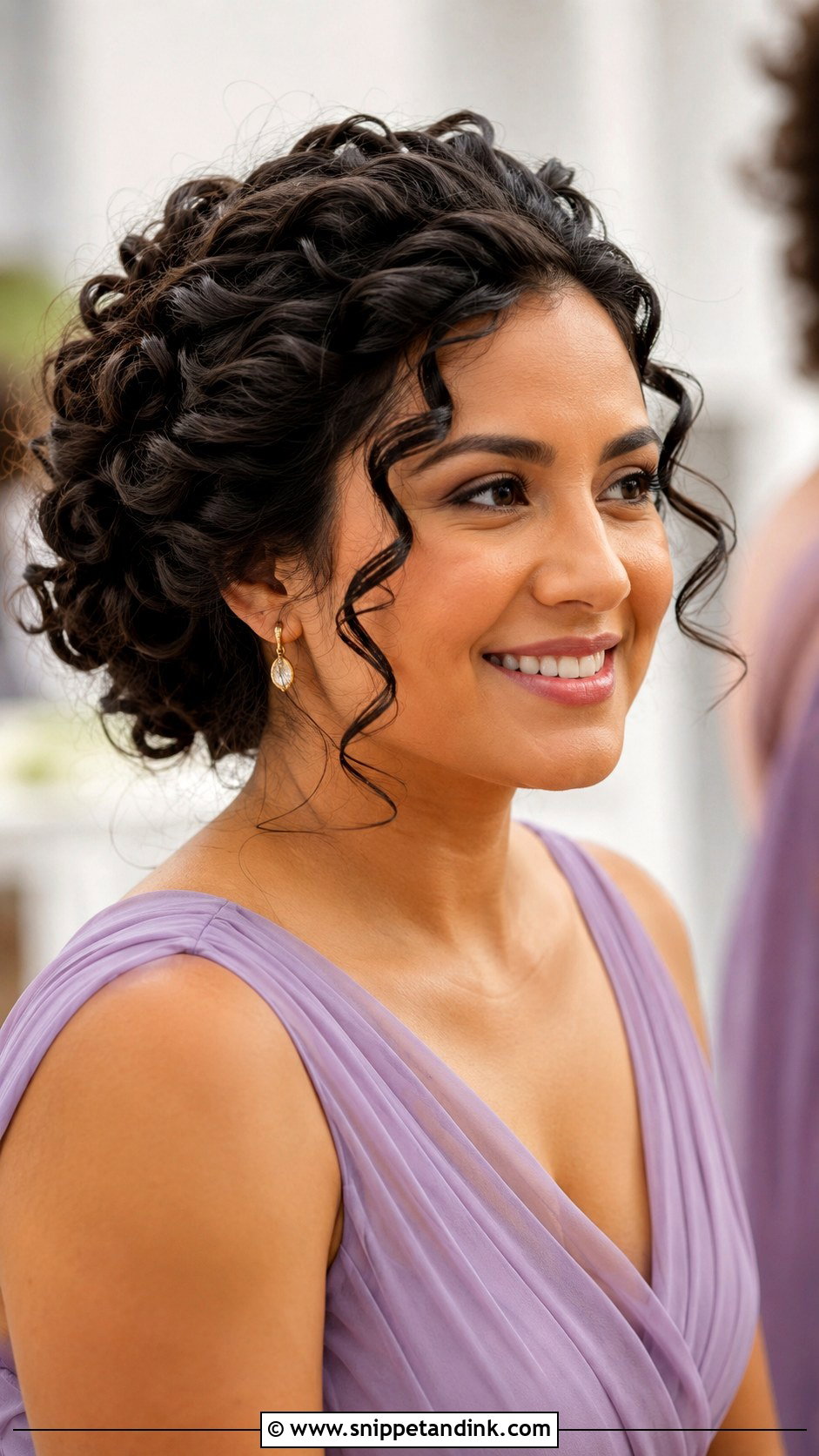
A curly updo shows the curls off instead of flattening them. I pin them upward into a soft shape, low, high or slightly to the side depending on the dress. The foundation is done before any pinning: curl cream or gel on wet hair, then careful diffusing so the pattern is defined and dry all the way through. Damp curls inside an updo stay damp for hours and frizz once they do dry. Small decorative pins can sit between curls, but the curls remain the feature.
11. Bridesmaid Natural Hair Updo
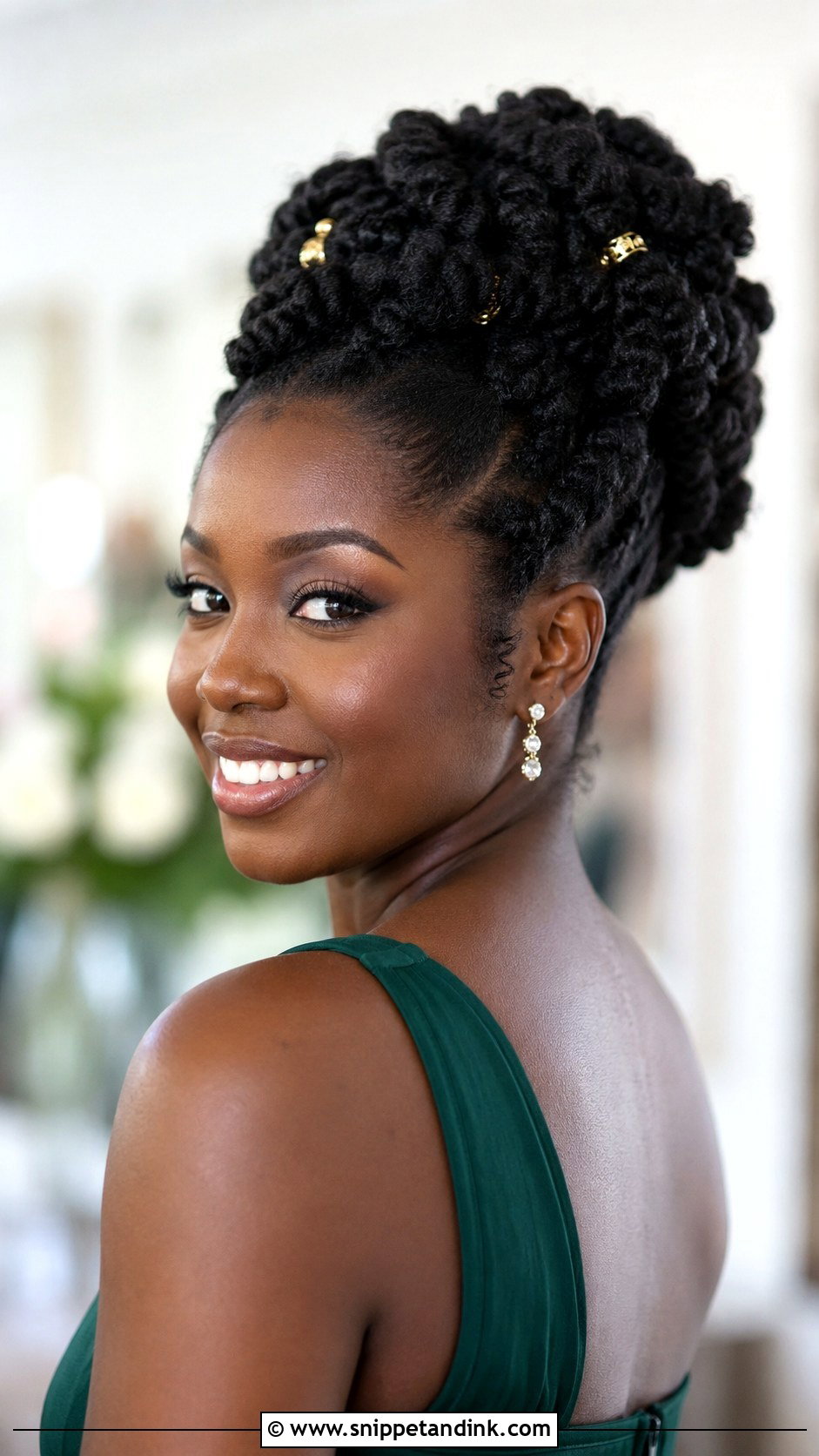
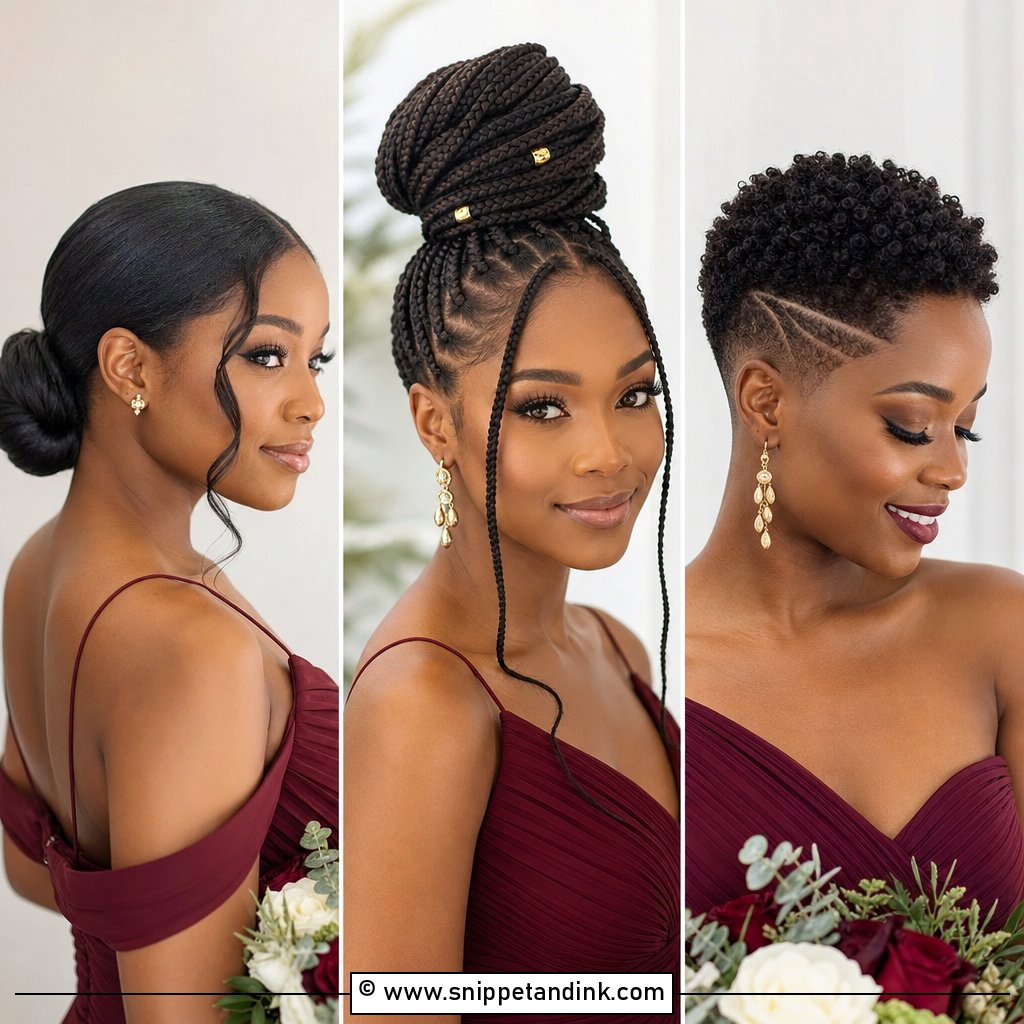
A bridesmaid natural hair updo shows off coils, kinks and volume while protecting the hair through a long day. It can be a puff, pinned curls, flat twists, cornrow details or a sculpted bun. Moisture is where I start, with a leave-in and a cream or oil sealed in before styling, especially for an outdoor wedding where heat and sun dry the hair out. Pearl pins, gold cuffs or a sleek side part suit it. It keeps hair clear of the shoulders while the texture stays visible.
12. Bridesmaid Loc Updo
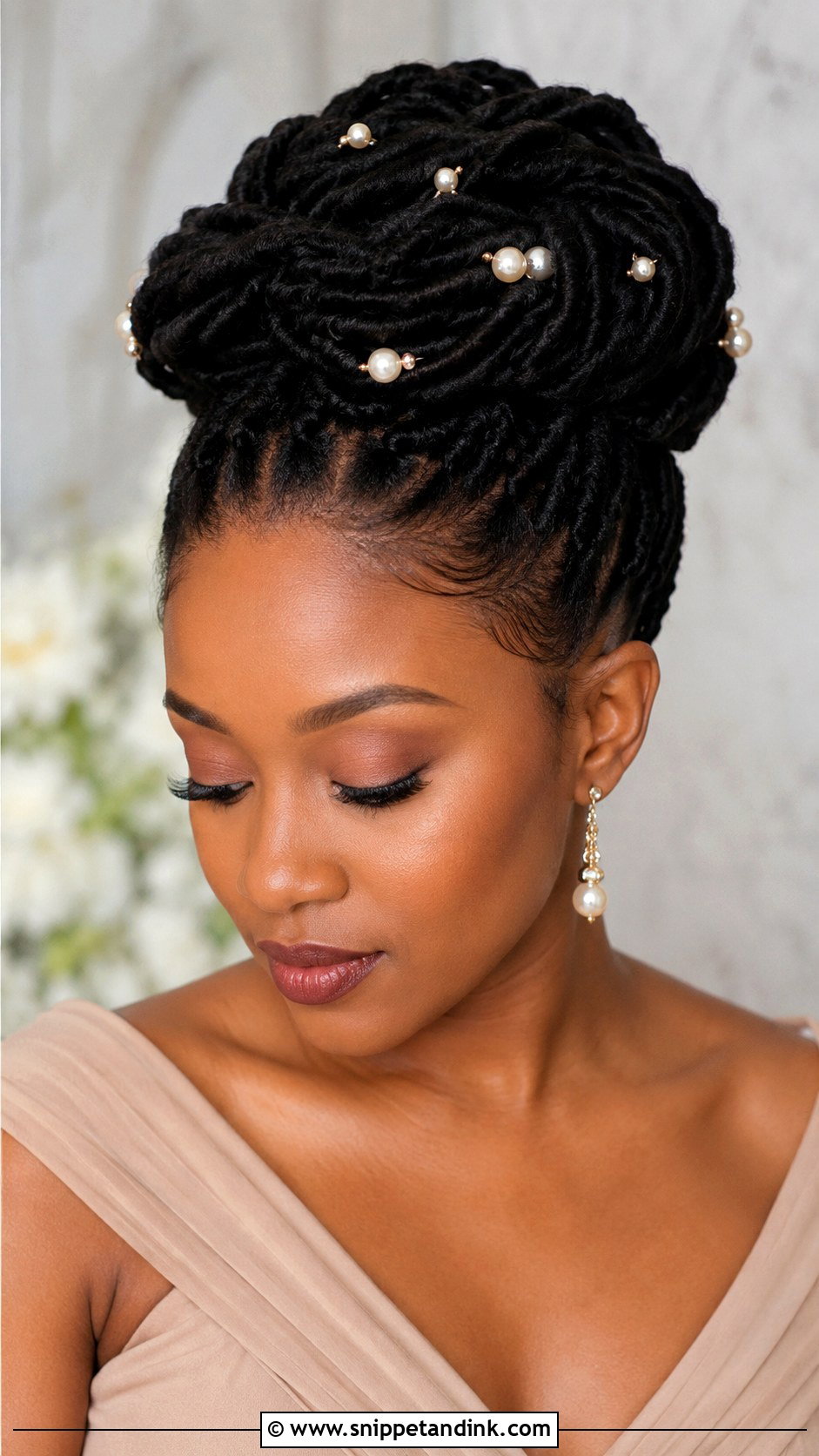
Locs hold structure well when pinned, so a bridesmaid loc updo is one of the most secure looks here. They can be twisted into a high bun, wrapped into a low chignon or pinned into a crown, with face-framing pieces if wanted. The back view is strong, especially with an open neckline or detailed straps. Mature locs are heavy, and I spread them evenly around the anchor point so the weight doesn’t drag on one spot of the scalp. Small pearls, gold cuffs or floral pins coordinate it with the rest of the party.
13. Bridesmaid Bun With Bangs
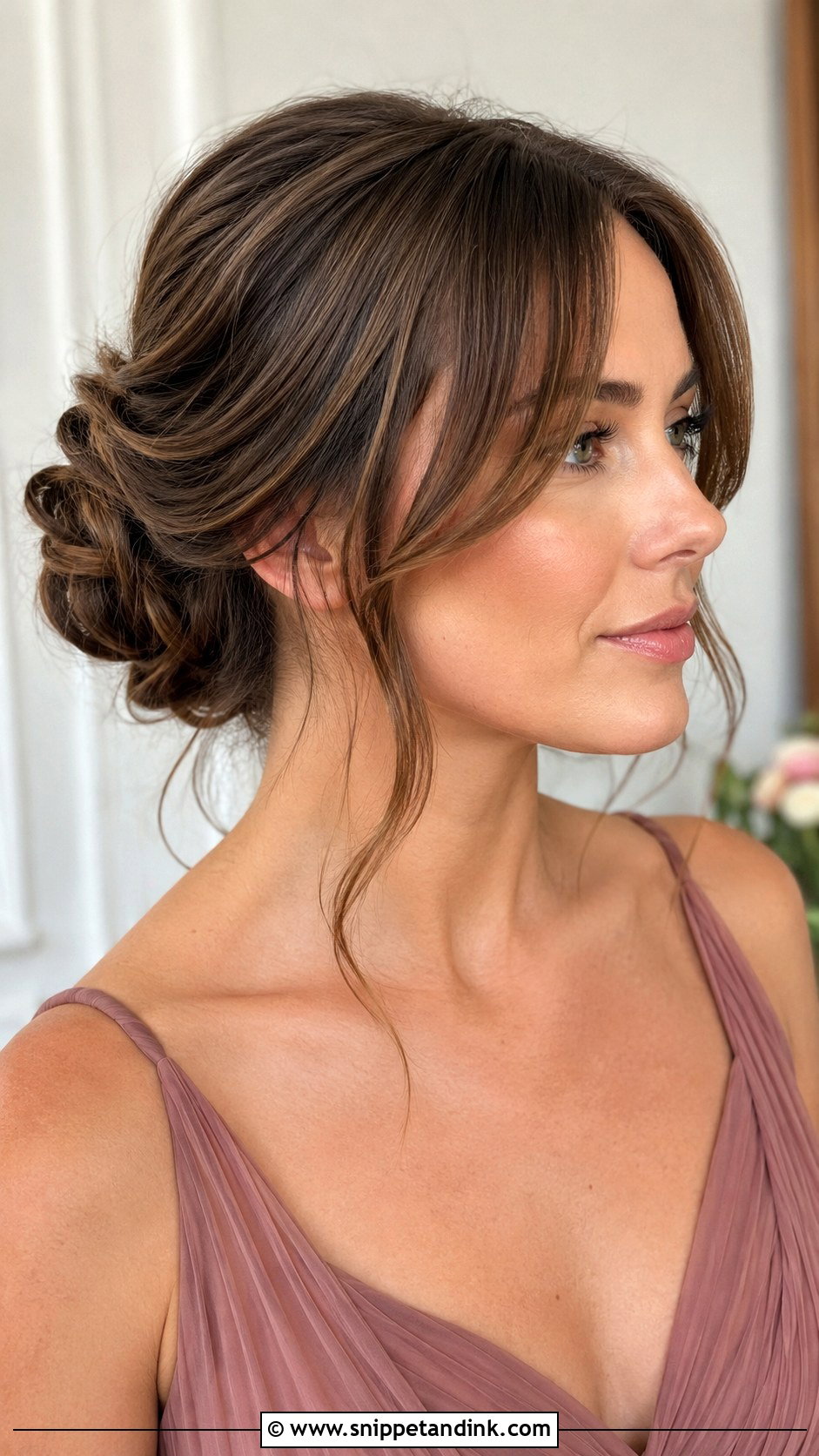
A bridesmaid bun with bangs suits anyone who feels exposed with all her hair pulled back. Curtain bangs, wispy bangs, side bangs or a full fringe all pair with a low, mid or high bun. The trick is blending the bangs into the rest of the style, so I style them at the same time as the front sections, not separately at the end. The fringe frames the eyes and softens the forehead. A light mist of flexible spray holds it without stiffness.
14. Bridesmaid Side Bun
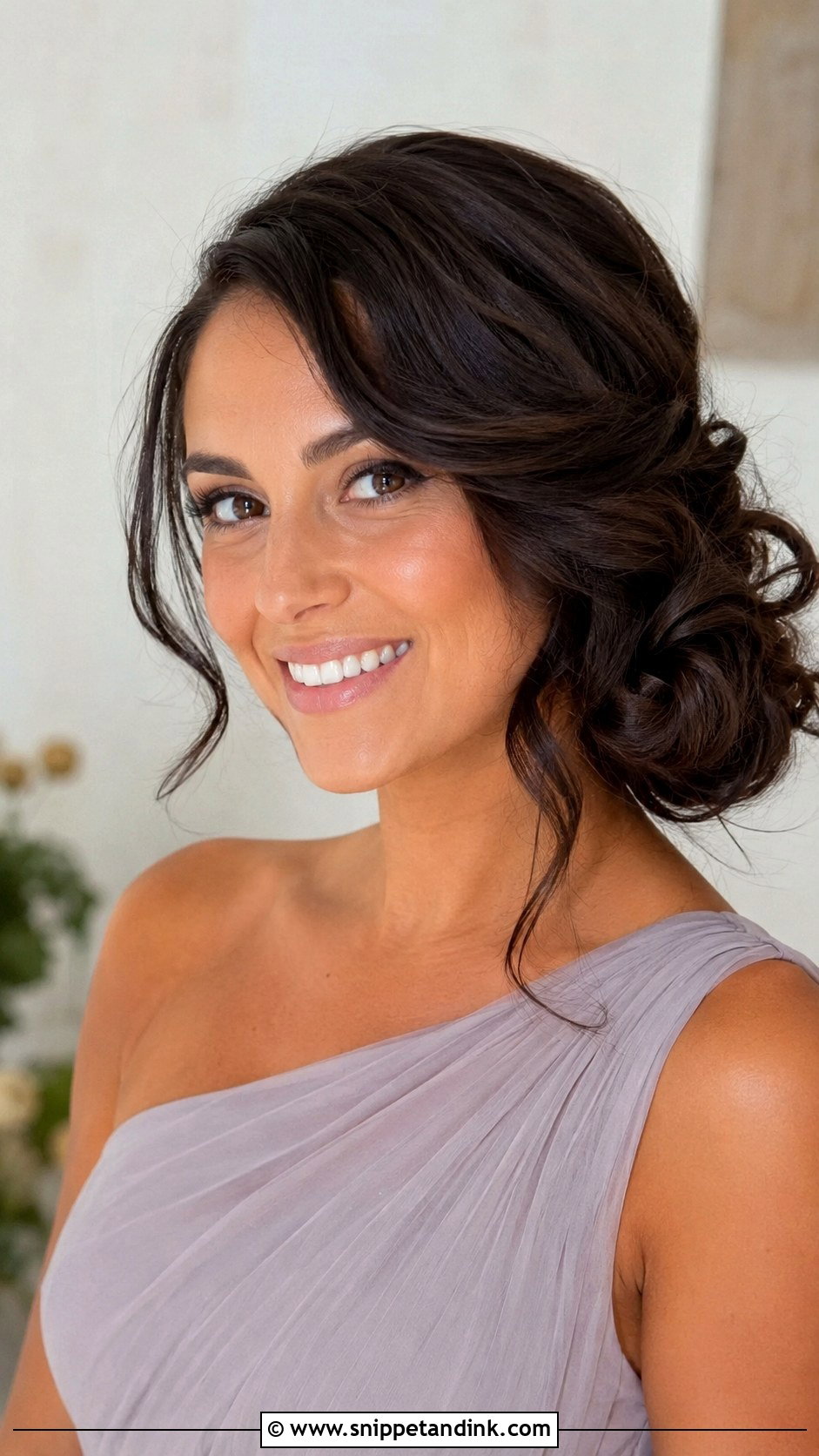
A side bun sits low near one side of the nape, with the rest of the hair swept across, so its shape is visible from the front. It suits one-shoulder dresses, soft curls and vintage-themed weddings, and it can be smooth or textured. It’s a good alternative for bridesmaids who don’t like hair pulled straight back. I place it on the opposite side to a one-shoulder strap so the two balance. Keep it modest in size, or it pulls attention sideways.
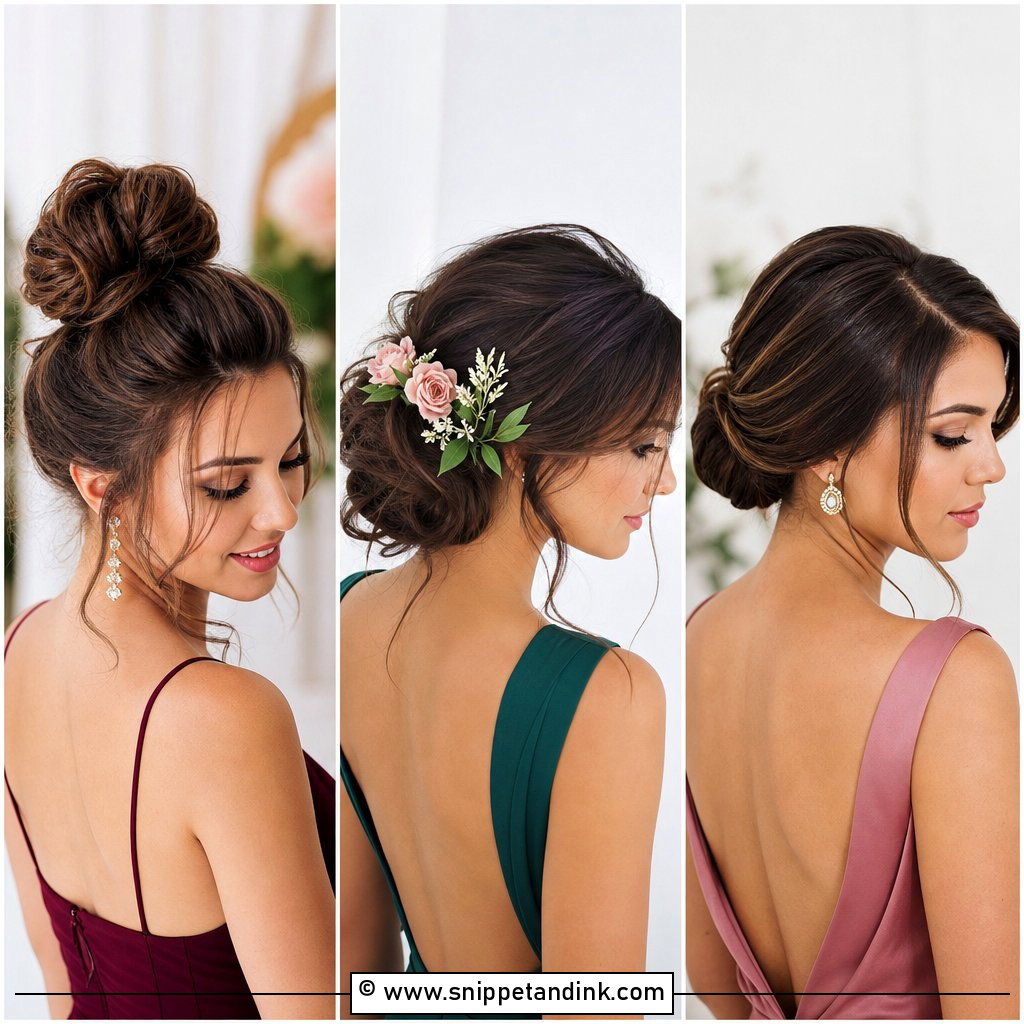
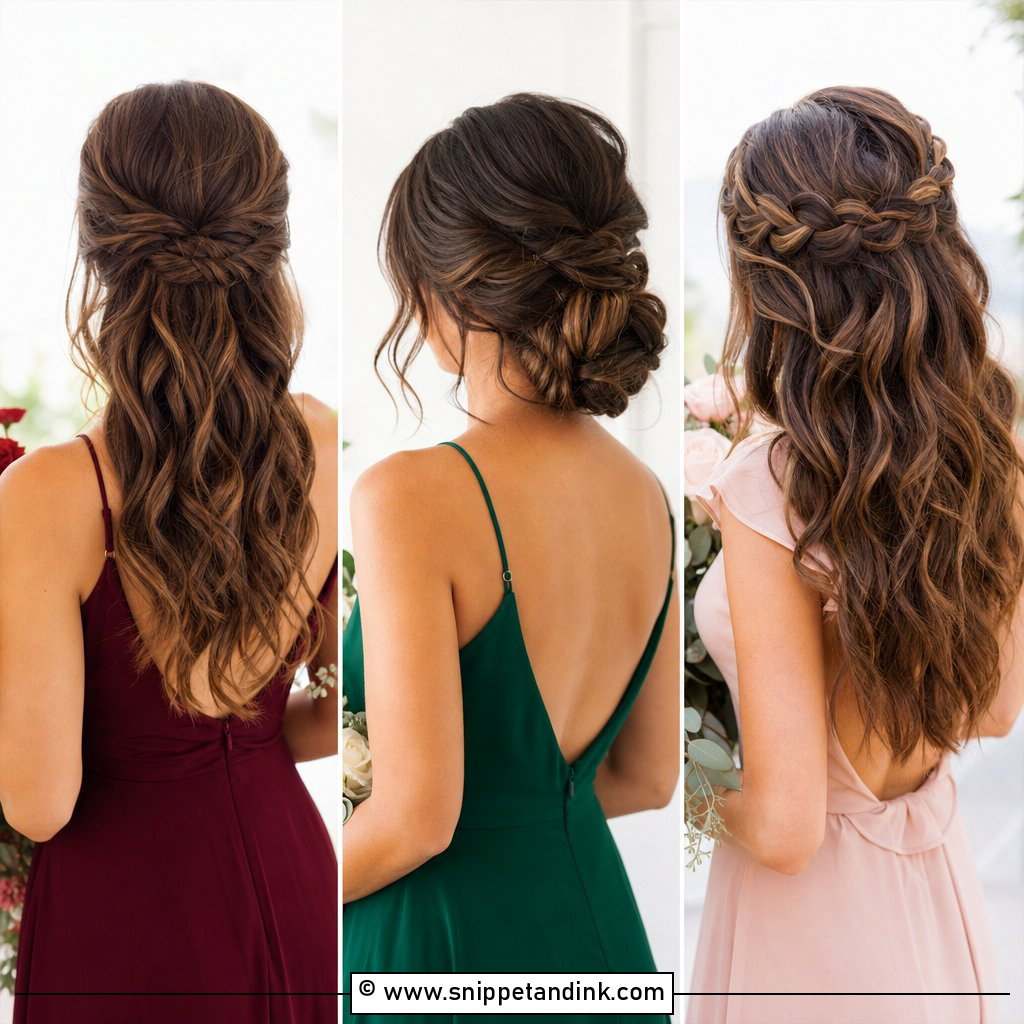
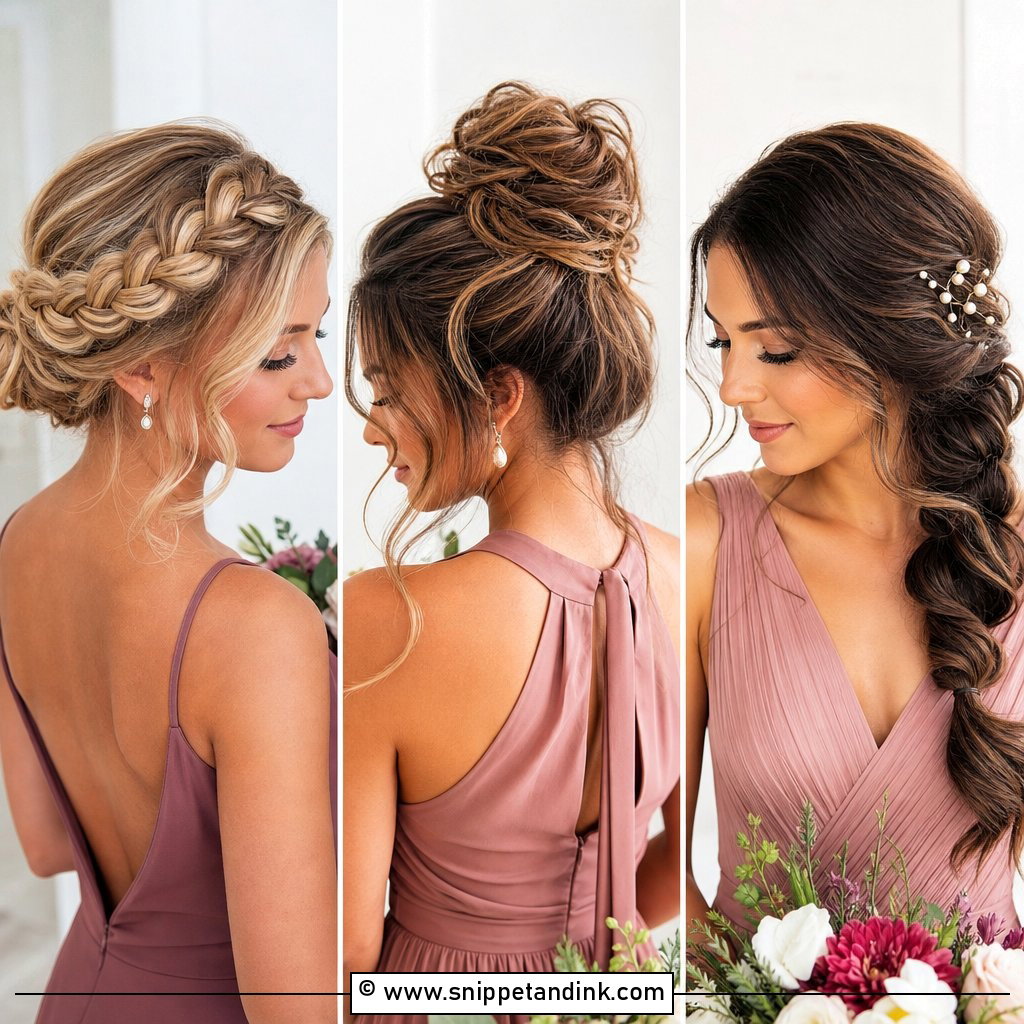
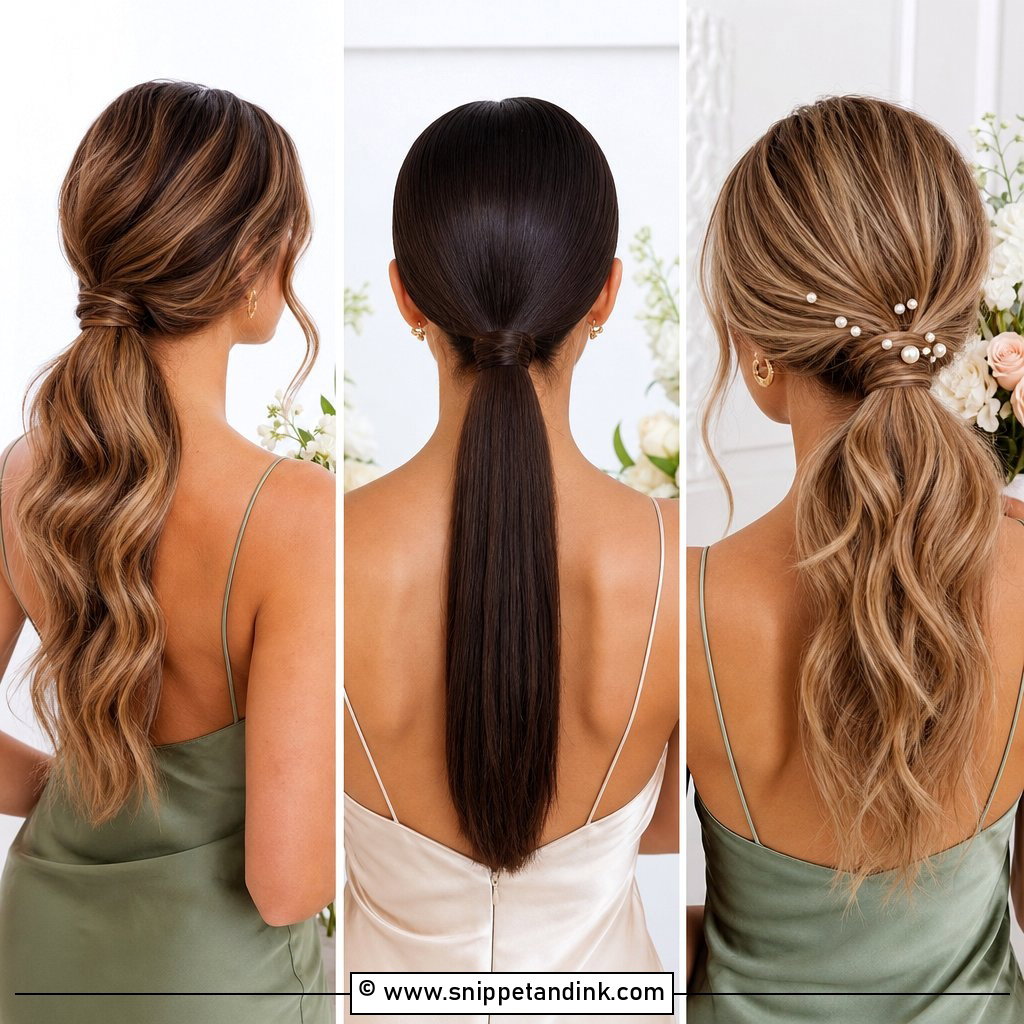
15. Bridesmaid Low Ponytail Updo
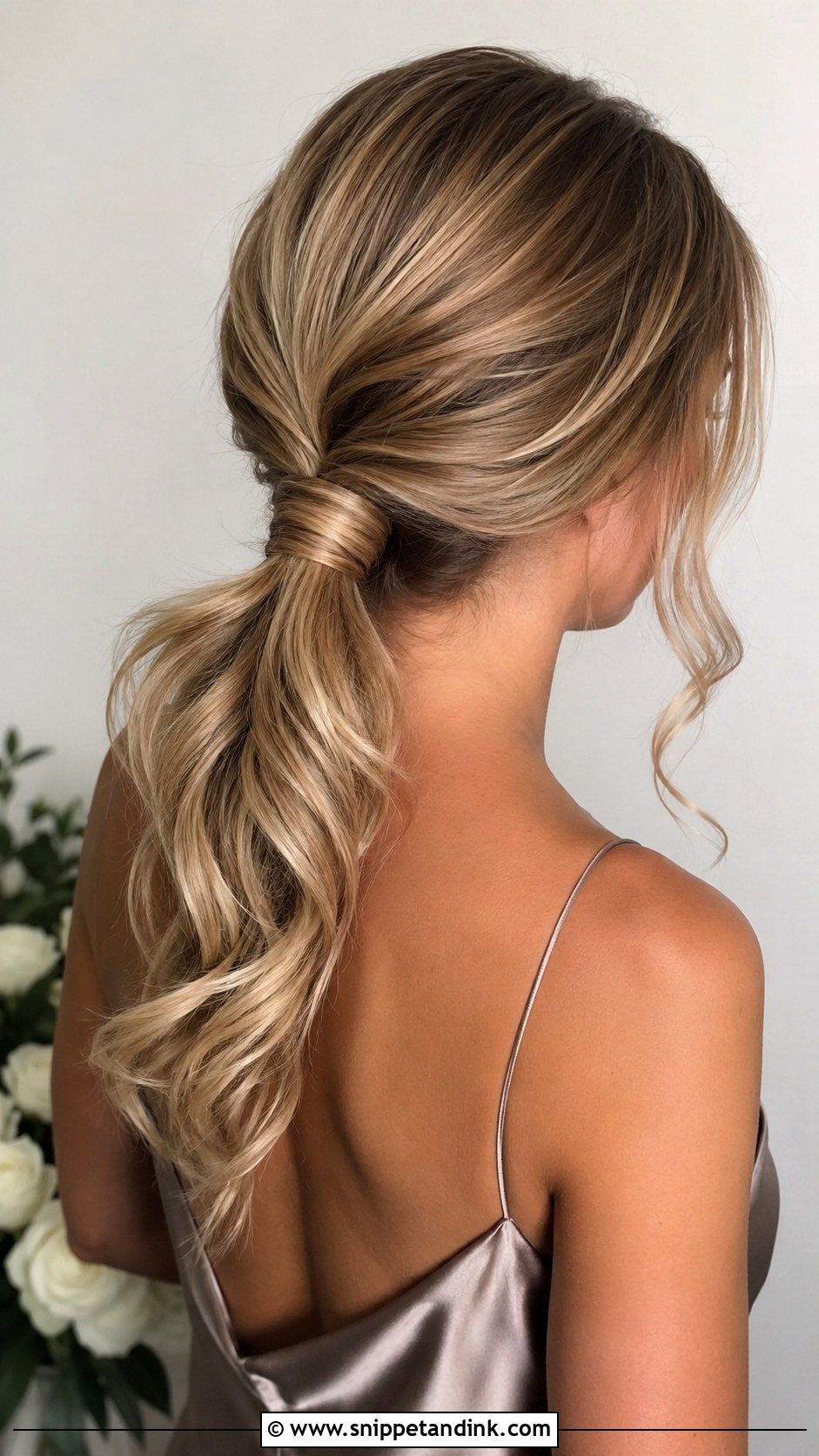
A low ponytail updo gives the security of hair up while length still shows. The crown is polished and the hair gathered low, with waves, curls or a wrapped section around the base. It’s less formal than a bun, which suits modern parties with simple dresses. For volume, I curl the ponytail and brush it out gently. With far fewer pins than a bun, it’s a kind option for anyone with a sensitive scalp. A shine spray keeps it smooth.
16. Bridesmaid High Ponytail Updo
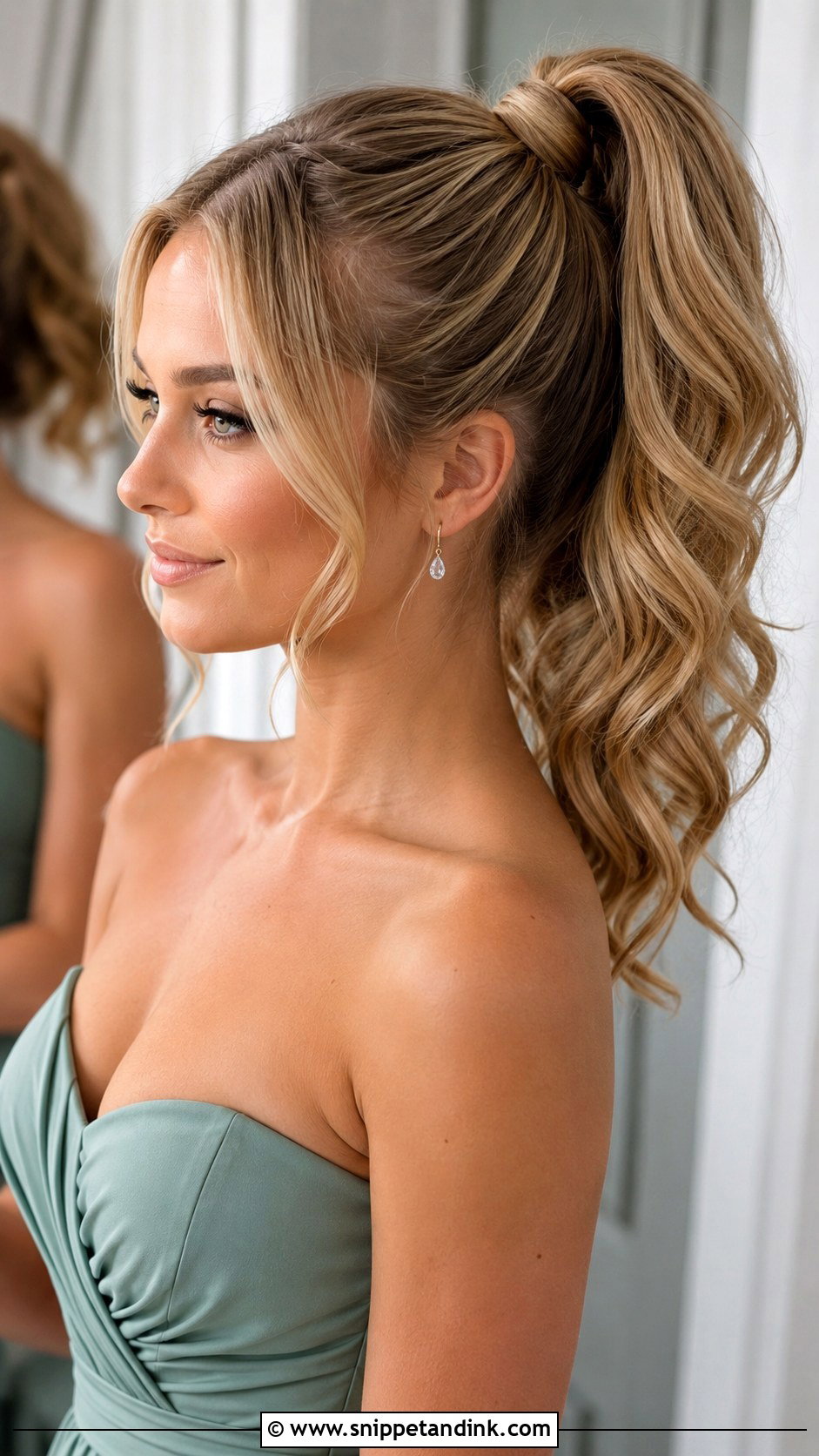
A high ponytail updo lifts everything off the face and still swings. It sits high on the crown and can be sleek, curled, waved or wrapped at the base. Strapless dresses, square necklines and statement earrings all suit it, and the height gives a slight lift to the face. Hold matters most here. I use a strong elastic and add two pins through the base into the hair beneath it, because a high ponytail carries all its weight on one point and drops as the elastic stretches. The crown should be smooth and the ends polished.
17. Bridesmaid Bubble Ponytail Updo
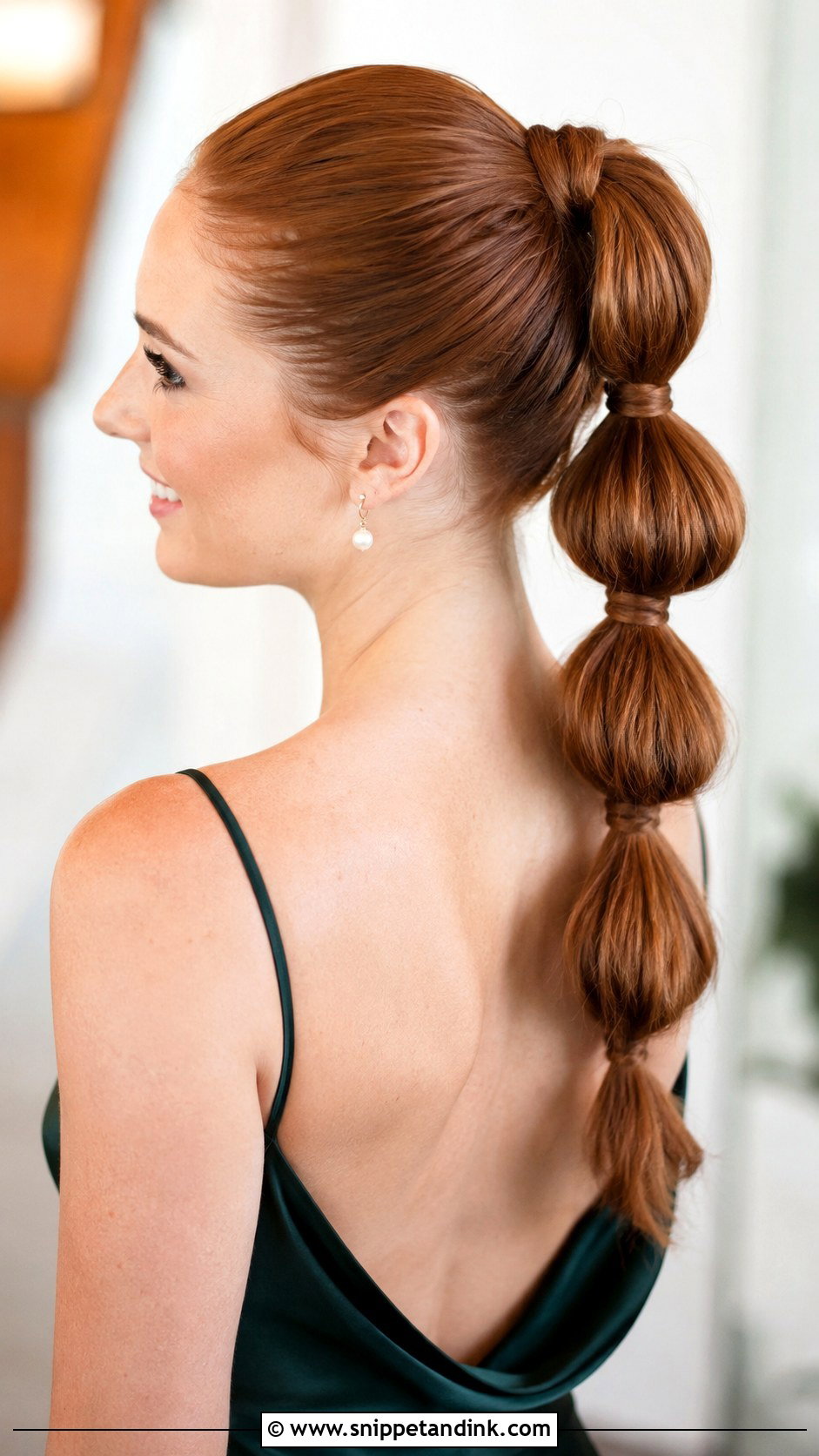
A bridesmaid bubble ponytail updo is playful but polished. The hair goes into a ponytail, small elastics divide it into rounded sections, and each bubble is gently expanded. Long hair gives the bubbles room. It fits trendier weddings, outdoor receptions and dresses with clean lines. To dress it up, I wrap each elastic with a small piece of hair or add tiny pearl accents. Keep the crown smooth so it doesn’t read as casual.
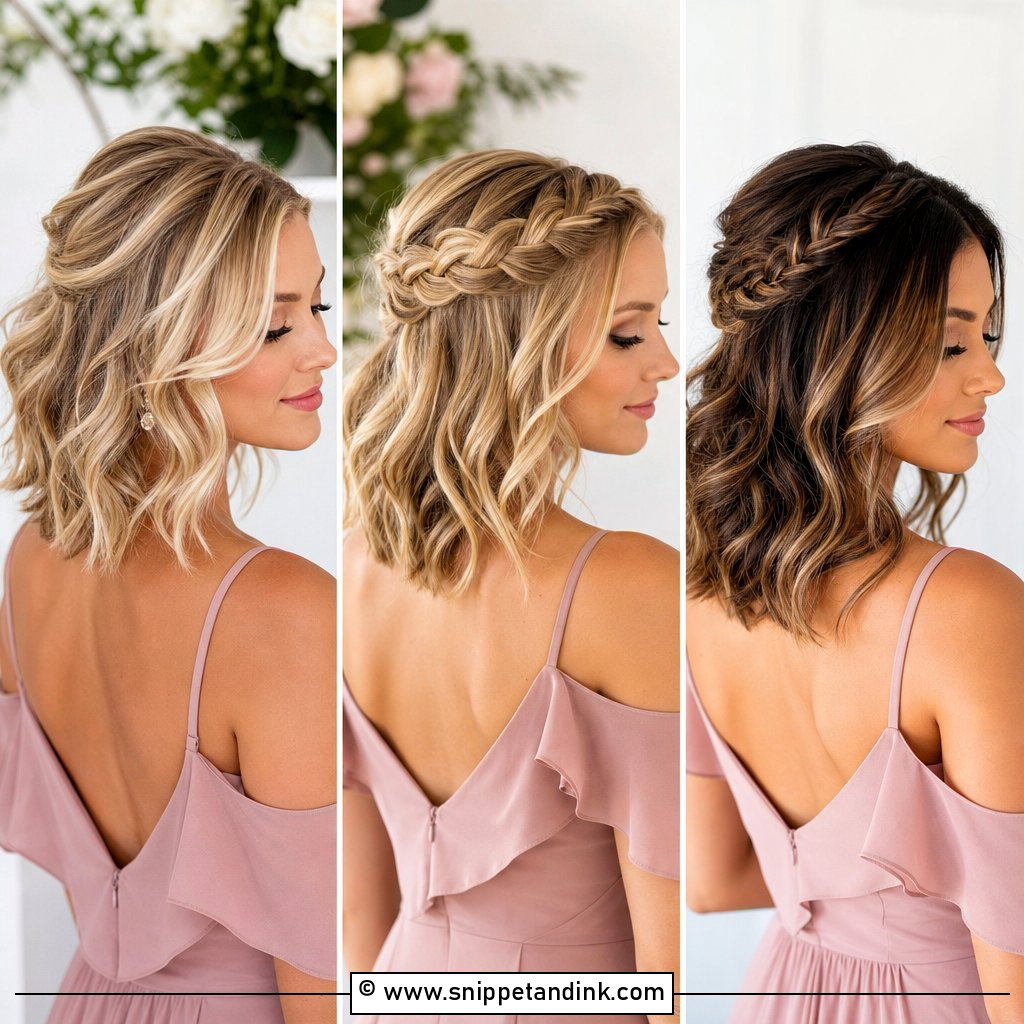
18. Bridesmaid Half Up Bun
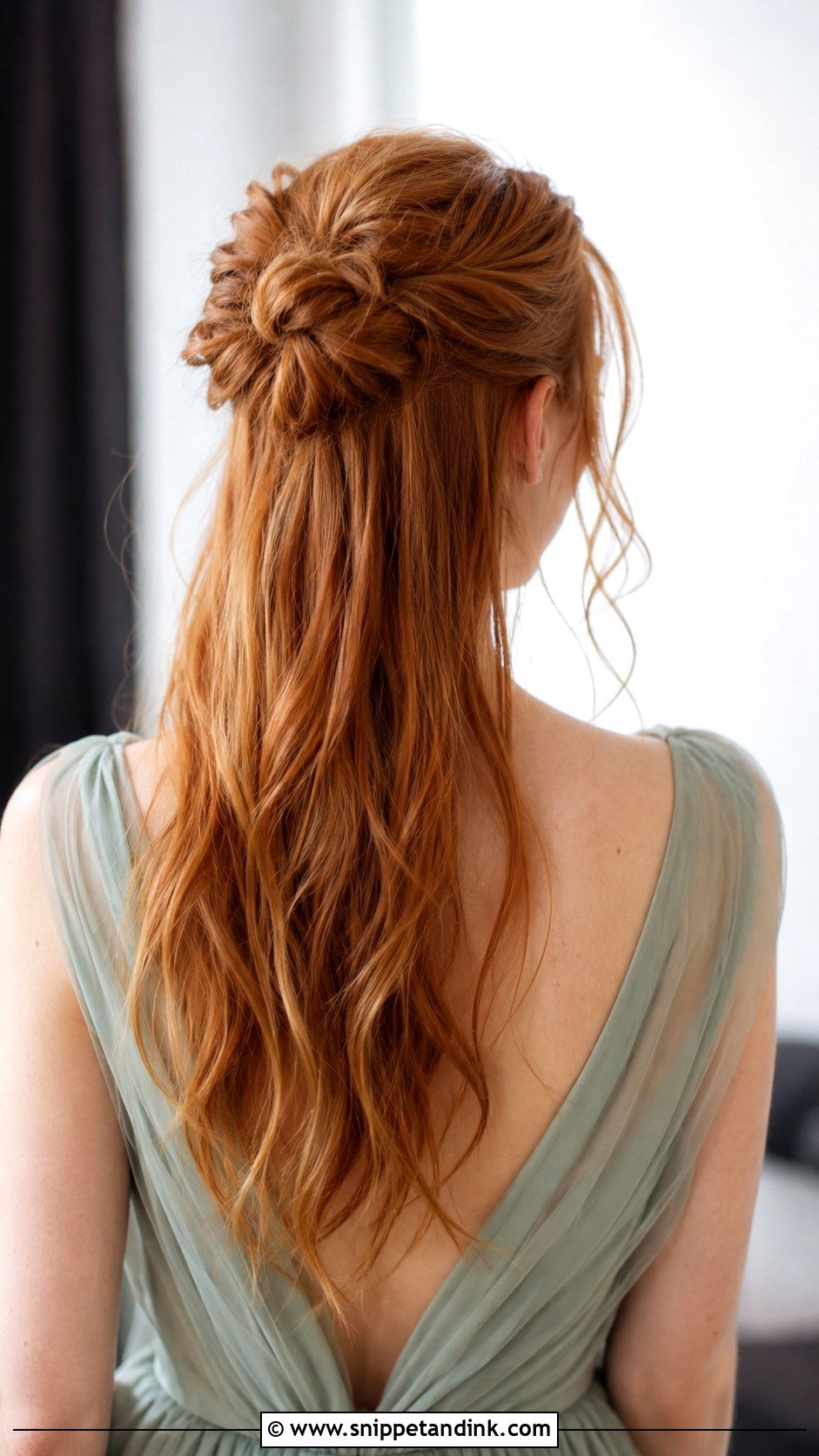
A half up bun is for the group that wants lifted hair without full updos. The top section goes into a small bun, and the rest is curled or waved underneath. It keeps the face clear while length shows, and it suits medium and long hair with relaxed or romantic dresses. Bridesmaids who don’t like every strand pinned tend to choose it. The small bun sits on the crown where most of the hair’s movement happens, so I secure it with crossed pins rather than an elastic alone. Keep the bun textured to balance the loose waves.
19. Bridesmaid Crown Braid Updo
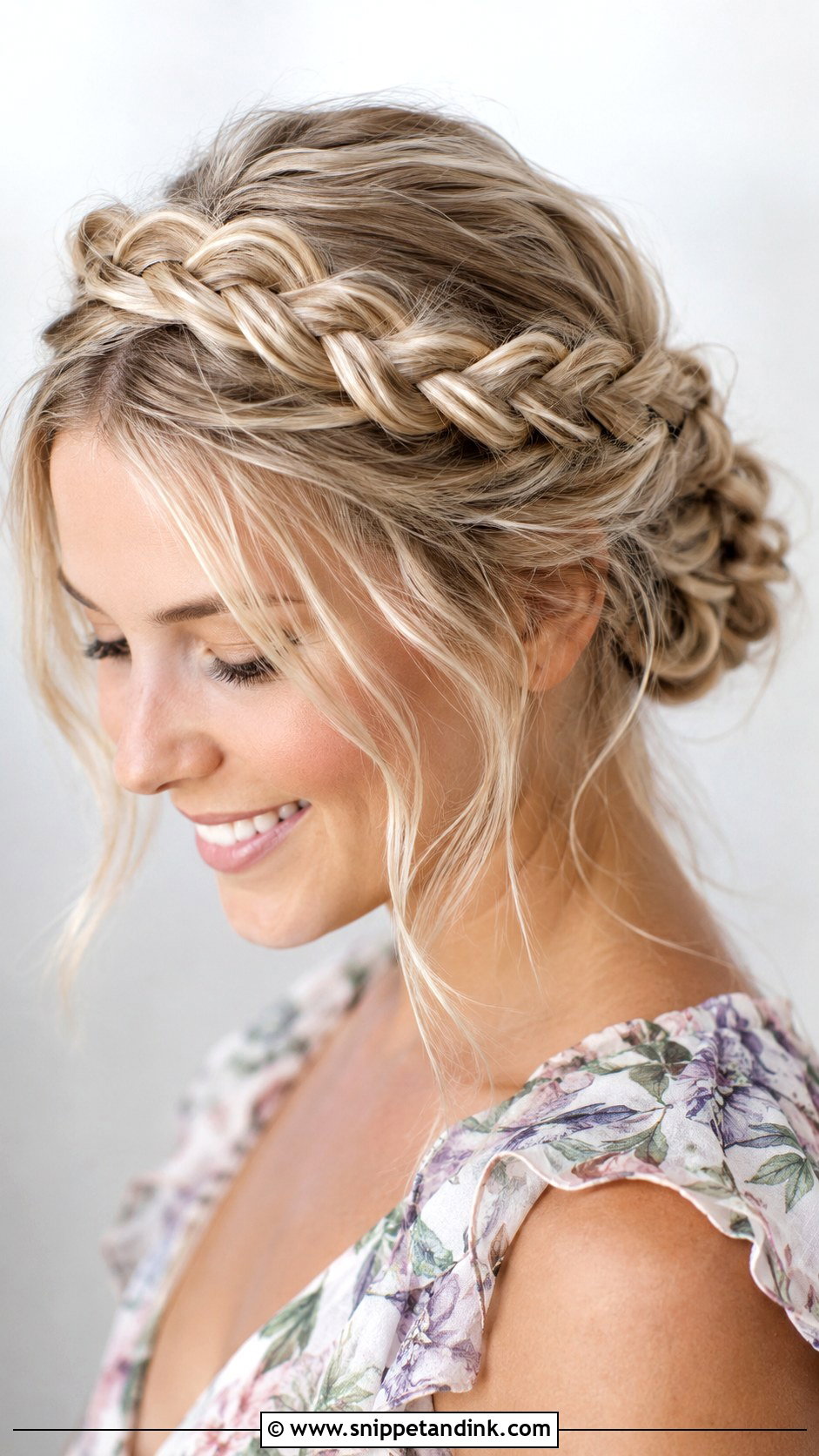
A bridesmaid crown braid updo wraps the head like a halo. It suits garden weddings, rustic venues and boho parties. The braid can be thick and full or loose, depending on how dense the hair is, and the rest of the hair can be tucked under, pinned into a bun or woven into the braid. It looks complete from every angle, which matters in a ceremony where guests see the back of your head. A few soft pieces at the temples keep it from looking rigid.
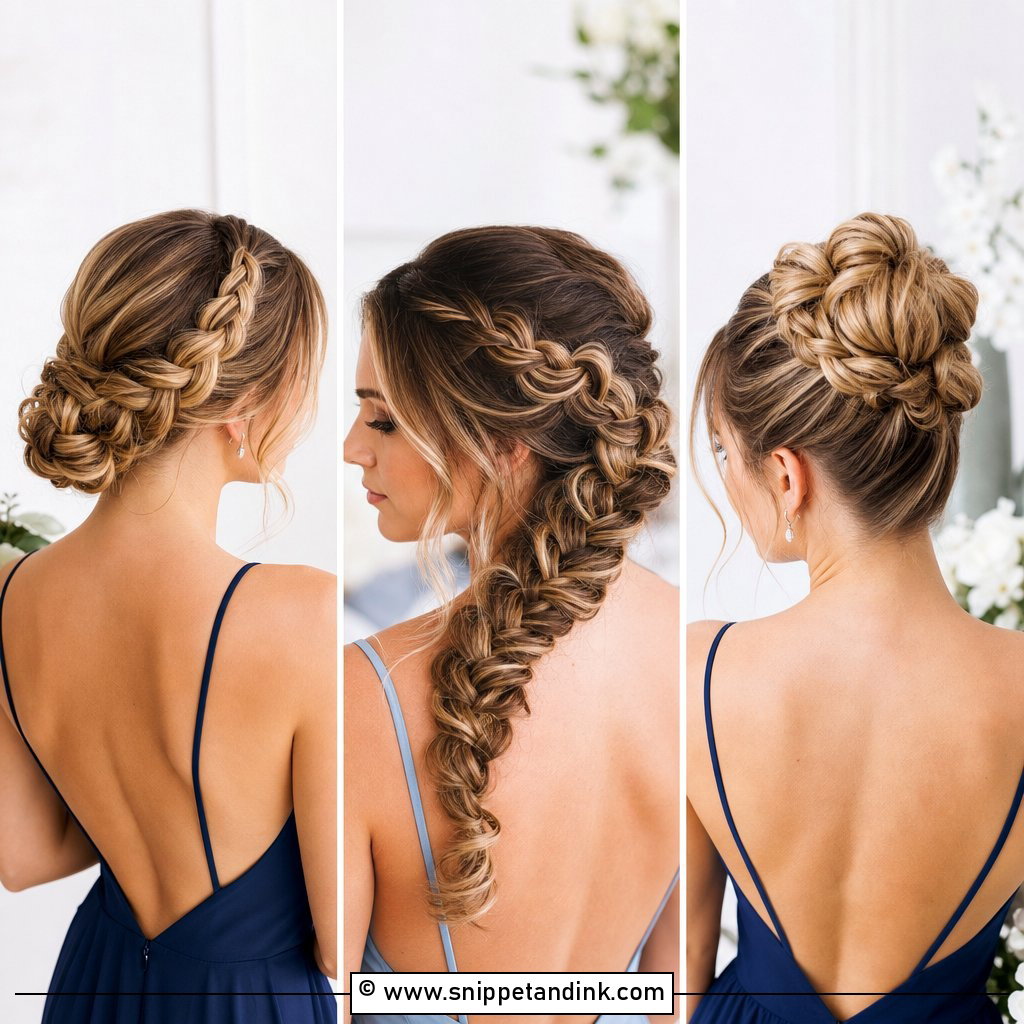
20. Bridesmaid Fishtail Braid Updo
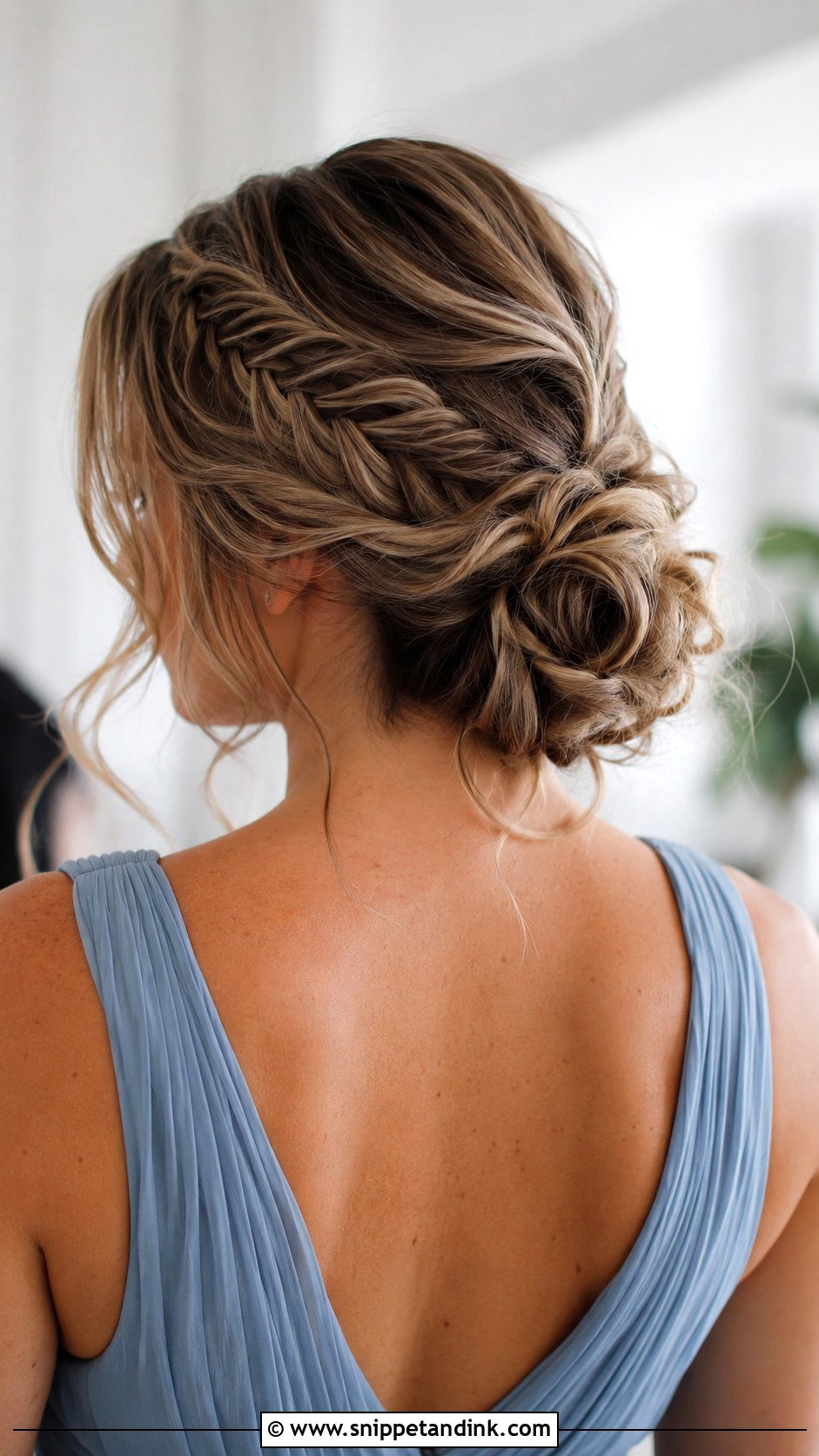
A fishtail updo has a fine woven texture that doesn’t need heavy accessories. The braid can wrap into a low bun, cross the crown or blend into a side updo. Highlights show particularly well in its small sections. I loosen it slightly after it’s pinned for a fuller shape. Fishtails take noticeably longer than three-strand braids, so I’d only book this one when the morning schedule has room. It suits romantic, beach and outdoor weddings.
21. Bridesmaid Dutch Braid Bun
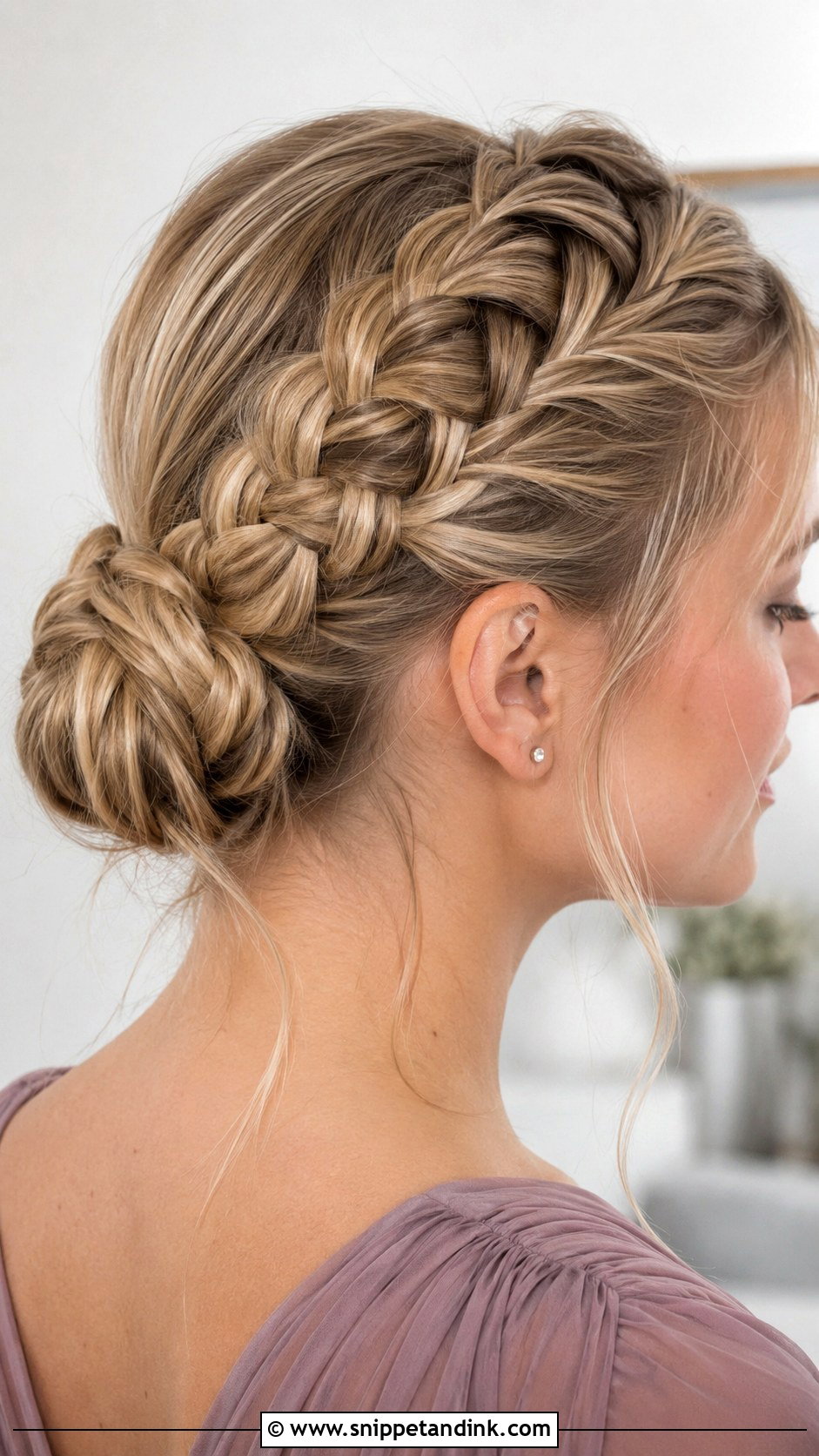
A Dutch braid bun has a raised braid that sits on top of the hair, then leads into a pinned bun, so the detail reads from the front, side and back. Thick hair is where it earns its place: the braid locks down volume that would otherwise bulge out of a bun. It also holds through active days. Low reads elegant, higher reads younger. Loosen the braid slightly once it’s secure, and add tiny pins if the look needs sparkle.
22. Bridesmaid Rope Braid Updo
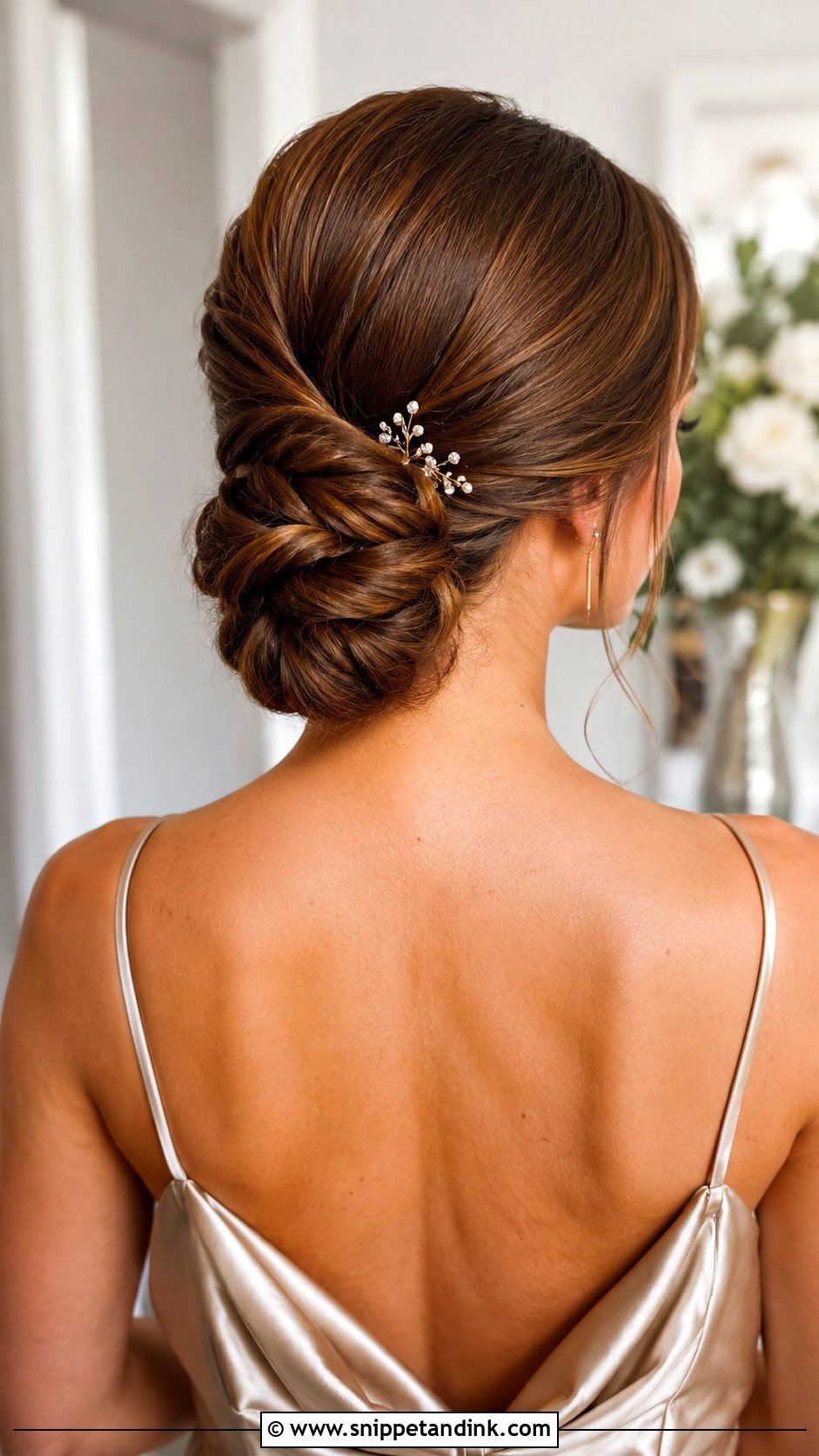
A rope braid updo is twisted rather than braided: two-strand rope sections pinned into a bun or tucked shape. It gives dimension without the complexity of a plait. Rope sections can run along the sides, across the crown or around the bun. Glossy hair shows the twists best. I twist each strand one way and wrap them the opposite way, otherwise the rope unwinds within an hour. Flexible hold products keep the ropes defined while the finish stays soft.
23. Bridesmaid Updo With Pearl Pins
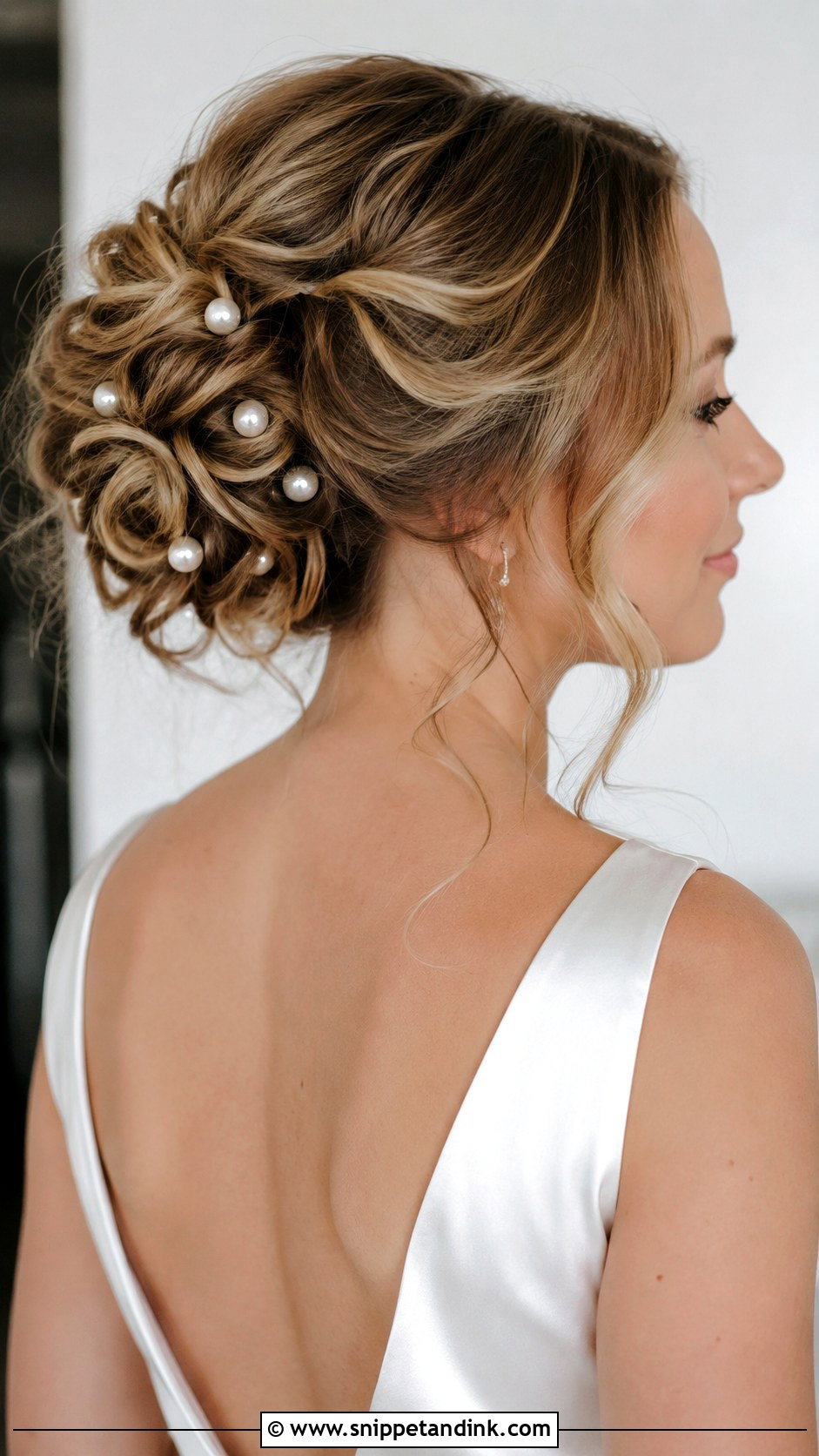
Pearl pins are my favorite way to tie a bridal party together without forcing everyone into one hairstyle. The base can be a low bun, a chignon, a twisted bun or a textured updo. Pearls sit well against most hair colors and add a bit of brightness in photos. Placement is where people overdo it. A few pins around the bun or along one side look more refined than pearls scattered over the whole head. Each pin goes into a hidden crossed bobby pin so it doesn’t slide.
24. Bridesmaid Updo With Flowers
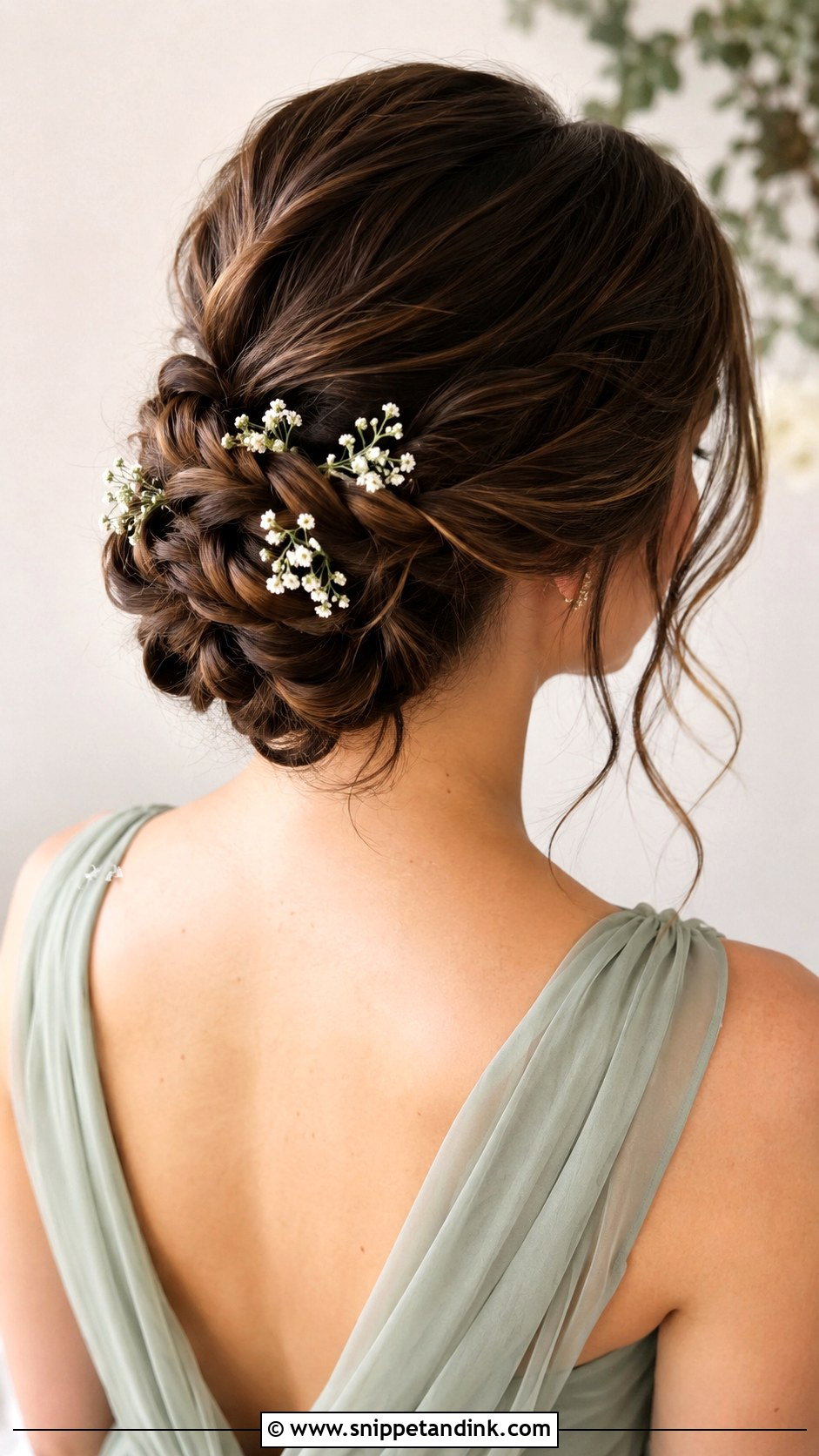
Flowers in an updo suit spring and summer weddings and garden settings. The base can be a low bun, braided bun or soft twisted updo, with small blooms tucked into the shape. Fresh flowers have to survive hours out of water, so I ask the florist for sturdy varieties: tiny roses, baby’s breath, orchids, or wax flowers hold up well. In real heat, faux flowers are the safer choice. Match the color to the bouquet without competing with the bride, and place the flowers on one side or around the bun.
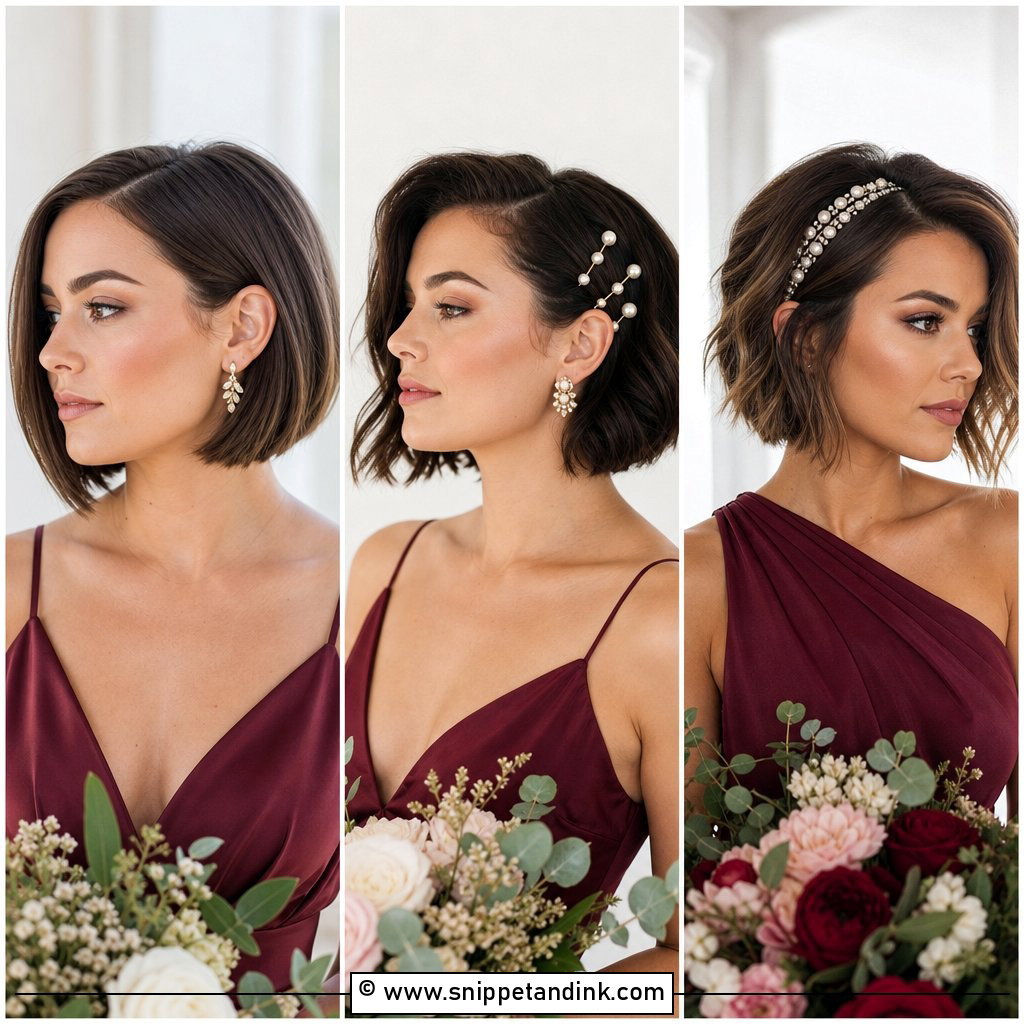
25. Bridesmaid Updo For Short Hair
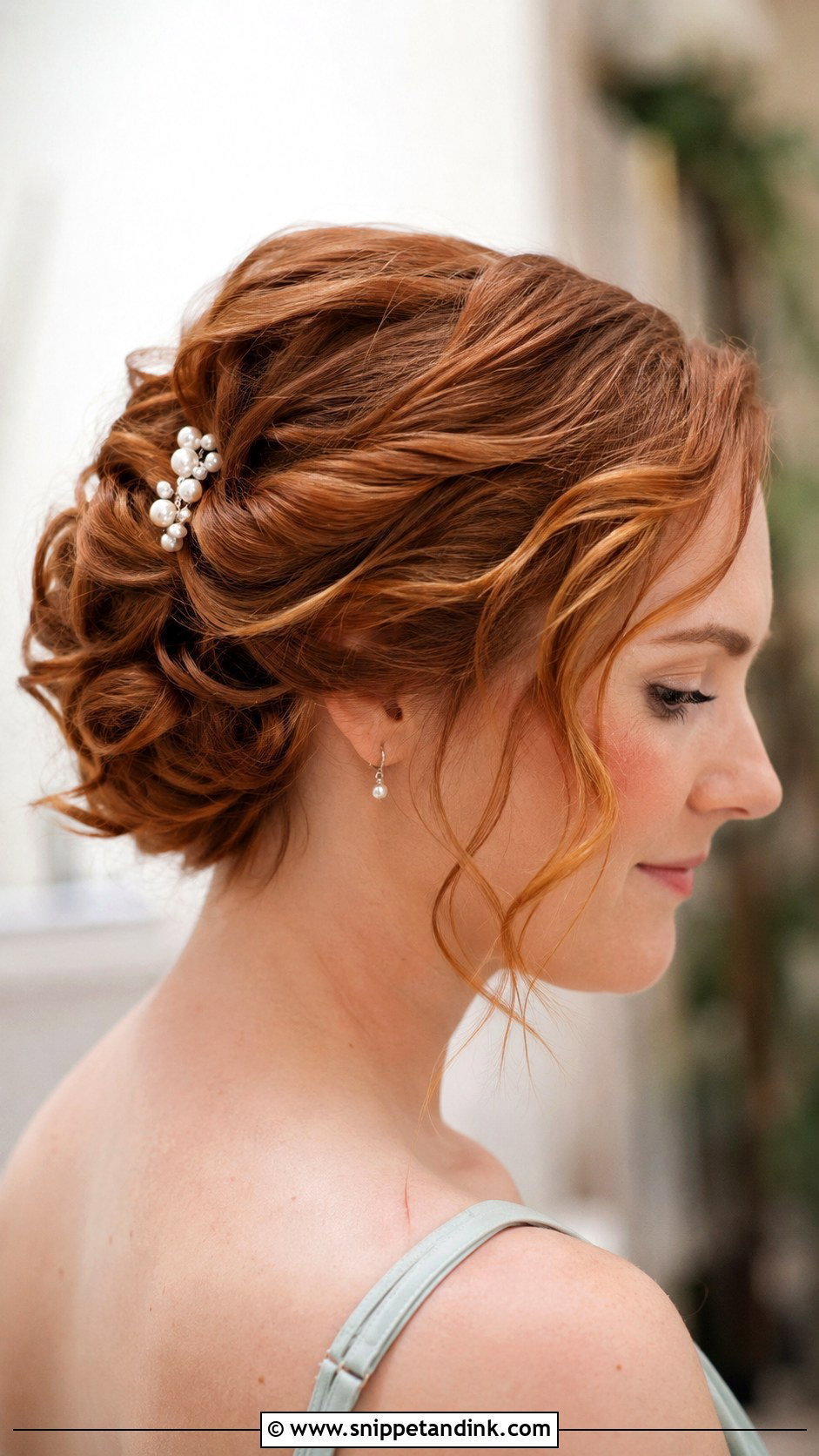
An updo on short hair is completely possible; it just uses more pins and more texture. Chin-length bobs, lobs and shoulder-length cuts can be curled, twisted and pinned into the outline of a fuller updo, tucked low at the back with the front waved or swept aside. Short nape hairs are the weak spot, so I use small pins in the hair’s own color and point them upward into the style. Mini combs or pearl clips help hold shorter pieces. The result should look deliberate, not forced into a shape that needs more length.
Does Your Updo Hurt? Fix It Before the Ceremony
A headache from an updo rarely comes from the style itself. It comes from a few pins pressing into the scalp, or from weight hanging on one point. You’ll usually feel it within the first hour, and it only gets worse. Say something while I can still fix it.
- A sharp, localised point means one pin is pushed straight in. It can be eased out and reinserted flat along the head.
- A dull ache at the back of the head means the bun is too heavy for where it sits. Moving it lower or splitting the hair into two anchors helps.
- Pulling at the hairline means the front was brushed back too tightly. Loosening the first inch with the end of a tail comb relieves it without losing the shape.
At the end of the night
Find and remove every pin before you brush anything. Then work a little conditioner or oil through the lengths and detangle from the ends upward. Brushing out hairspray and backcombing on dry hair snaps strands. If it’s late, leave it loose and wash it in the morning.
Settle on the Height, Then Let Everyone Adjust the Details
An updo should be secure and comfortable from the first photo to the last dance. Low buns, chignons, French twists, braided buns, ponytails, natural hair updos and floral styles all bring something different to a bridal party. The right one matches the dress, the weather, the hair texture and the mood of the wedding. If you want the party to look coordinated, settle on one height, such as all low updos, and let each bridesmaid adjust the details. Save photos of the looks you like early and bring them to your stylist.
You'll Like These Ideas:


Leave a Reply