
An engagement party cake has a different job from a wedding cake. It sits on a table for an hour or two, gets photographed from every side, then gets cut by someone who may never have sliced a layer cake before. That is why I usually talk couples down to one clear idea: a color, a shape, a few flowers, or your initials. A smooth buttercream finish carries most of these designs on its own. Below are twenty I’d happily make for a backyard party, a restaurant dinner or a family gathering, with notes on where each one tends to go wrong.
Sizing an Engagement Party Cake for Your Guest Count
The first question I ask isn’t about flowers or color. It’s how many people are coming and whether the cake is the only dessert. Party slices are bigger than wedding slices, because nobody has just eaten a three-course meal, so the same cake feeds fewer people at an engagement party.
- A six-inch round, three layers tall, comfortably covers a dinner for ten to fourteen.
- An eight-inch round suits roughly twenty to twenty-five guests with generous slices.
- A six-on-eight two tier feeds around thirty to forty, depending on who is cutting.
- For fifty or more, a decorated sheet cake or a small display cake backed by a kitchen sheet cake is the sensible route.
If there’s also a dessert table, I size down by about a quarter. Most bakers want simple buttercream orders two to four weeks ahead, longer in the spring and early summer when they’re booked with weddings. Anything with sugar flowers or custom toppers needs more lead time, so ask before you settle on a design.
1. Simple Engagement Cake With Fresh Flowers
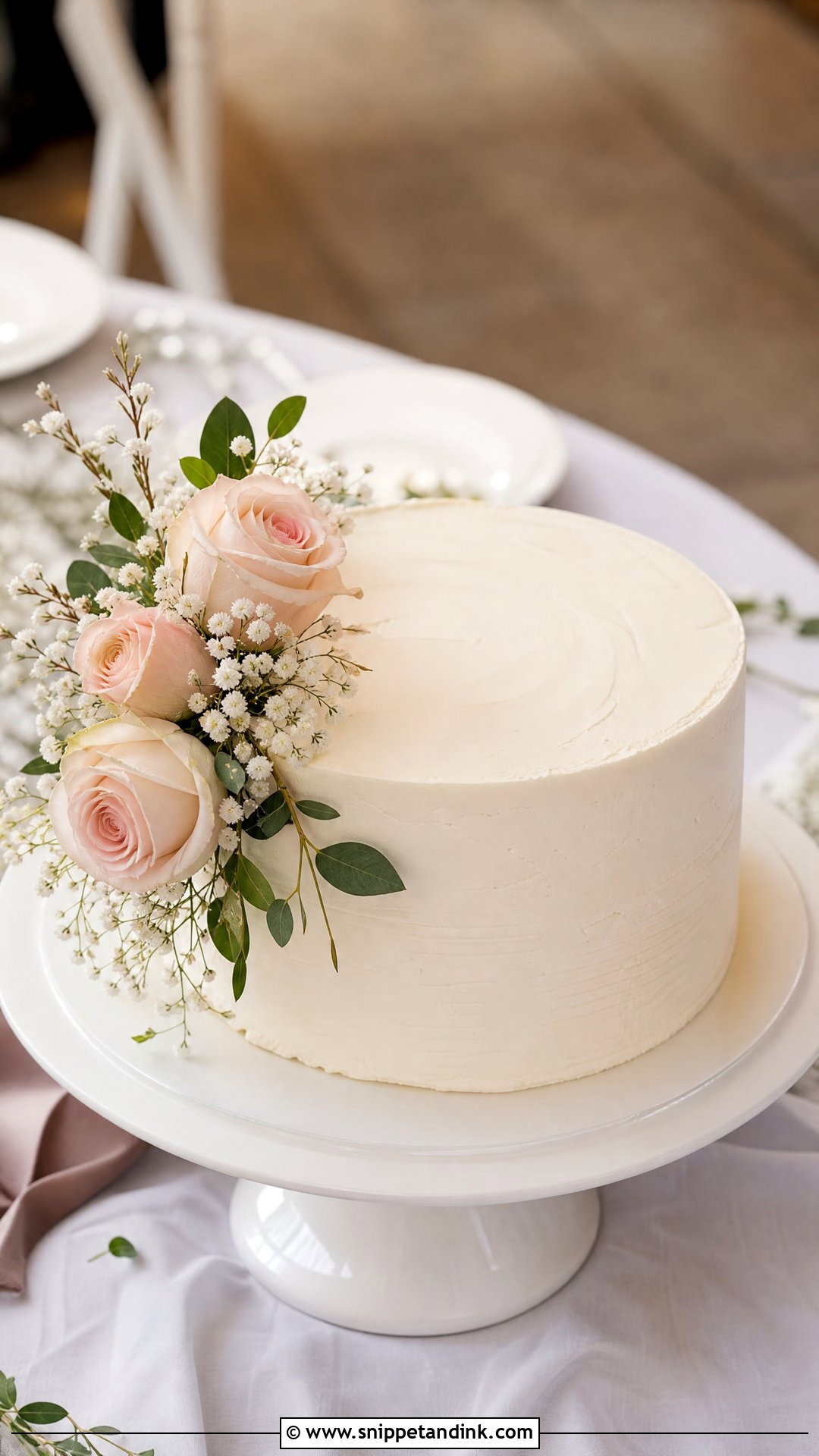
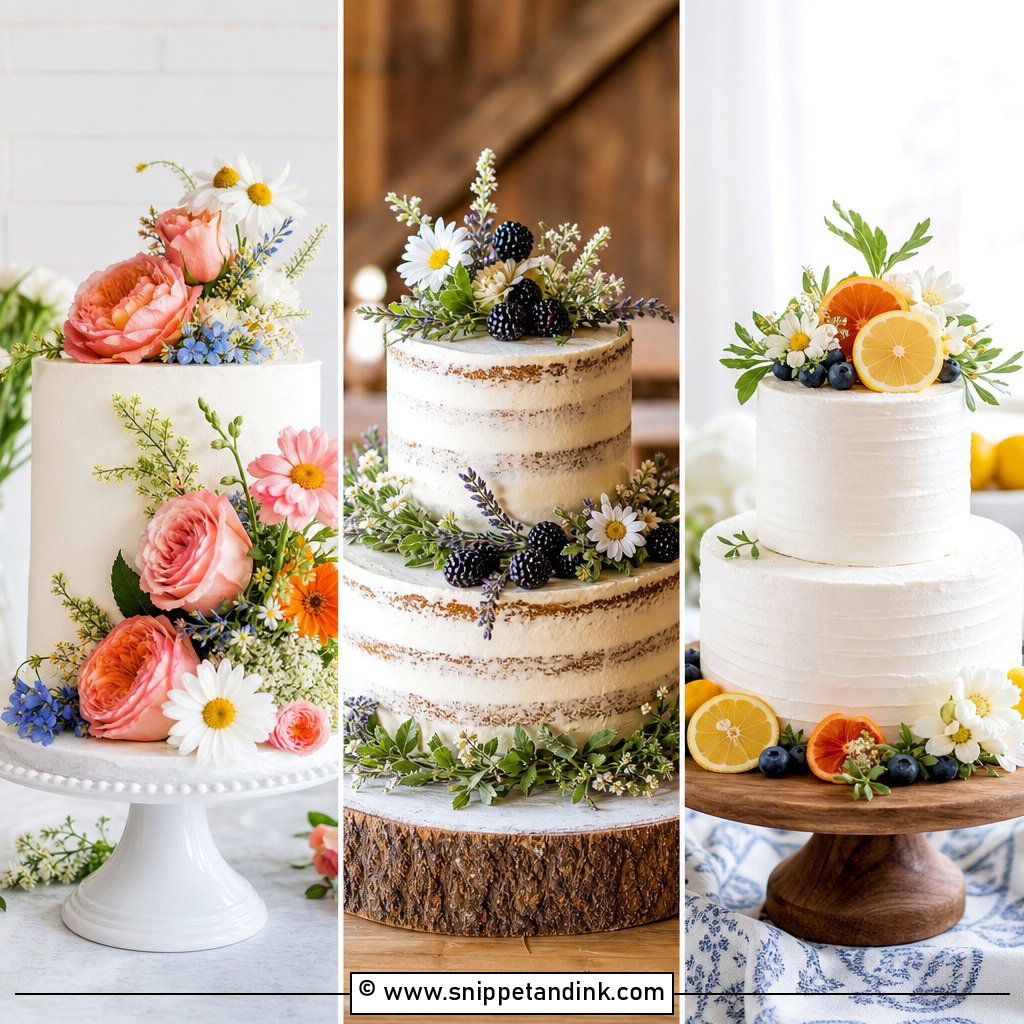
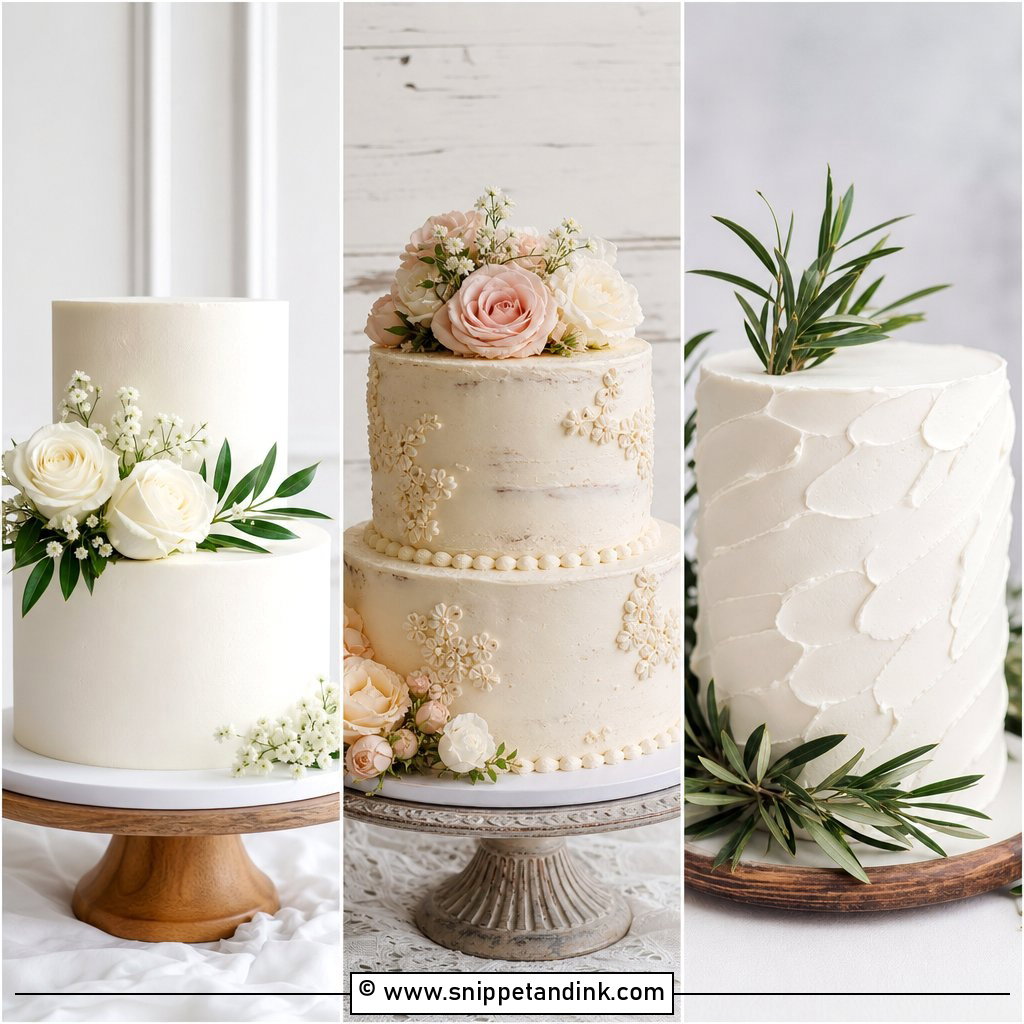
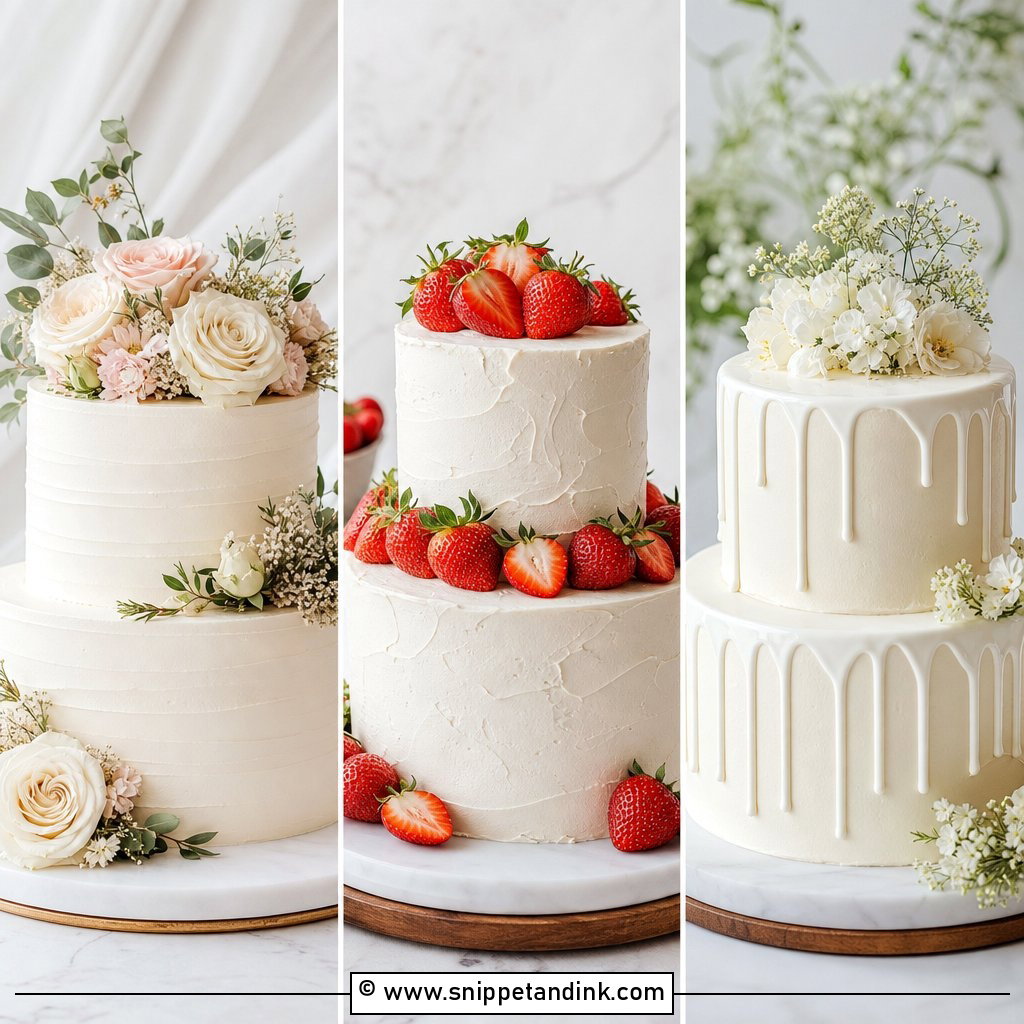
Fresh flowers are the quickest way to dress a plain round cake, and they’re also where I see the most mistakes. I start with vanilla or almond under smooth ivory buttercream, then place one tight cluster of roses, ranunculus and greenery on the top edge, falling slightly down one side. Every stem gets wrapped in floral tape or set into a plastic pick so it never touches the frosting directly. Baby’s breath is pretty, but I keep it on a pick too, because it isn’t something anyone should eat. Grouping the blooms in one spot instead of dotting them around is the single choice that makes this cake look finished.
2. Heart Engagement Cake
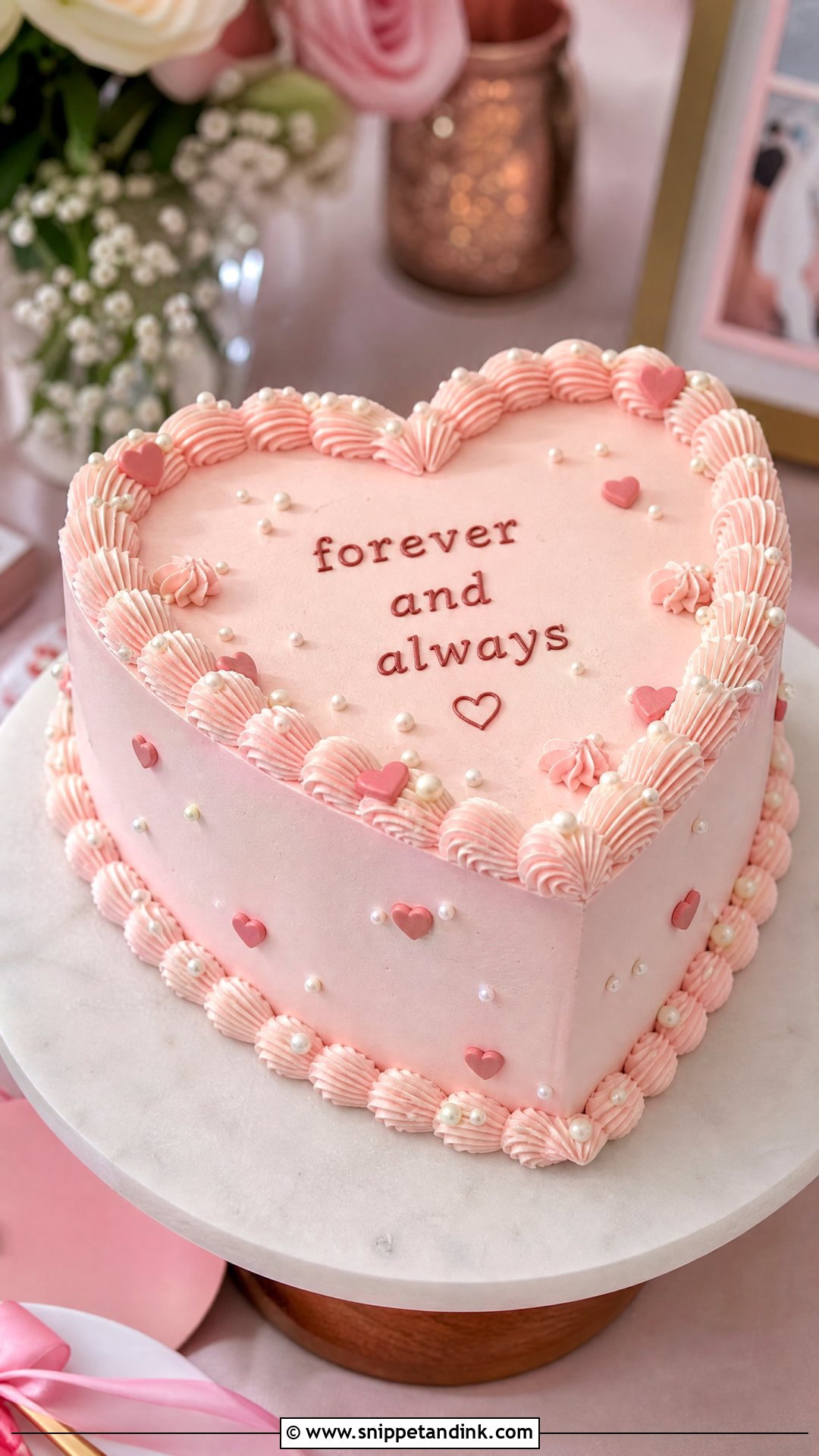
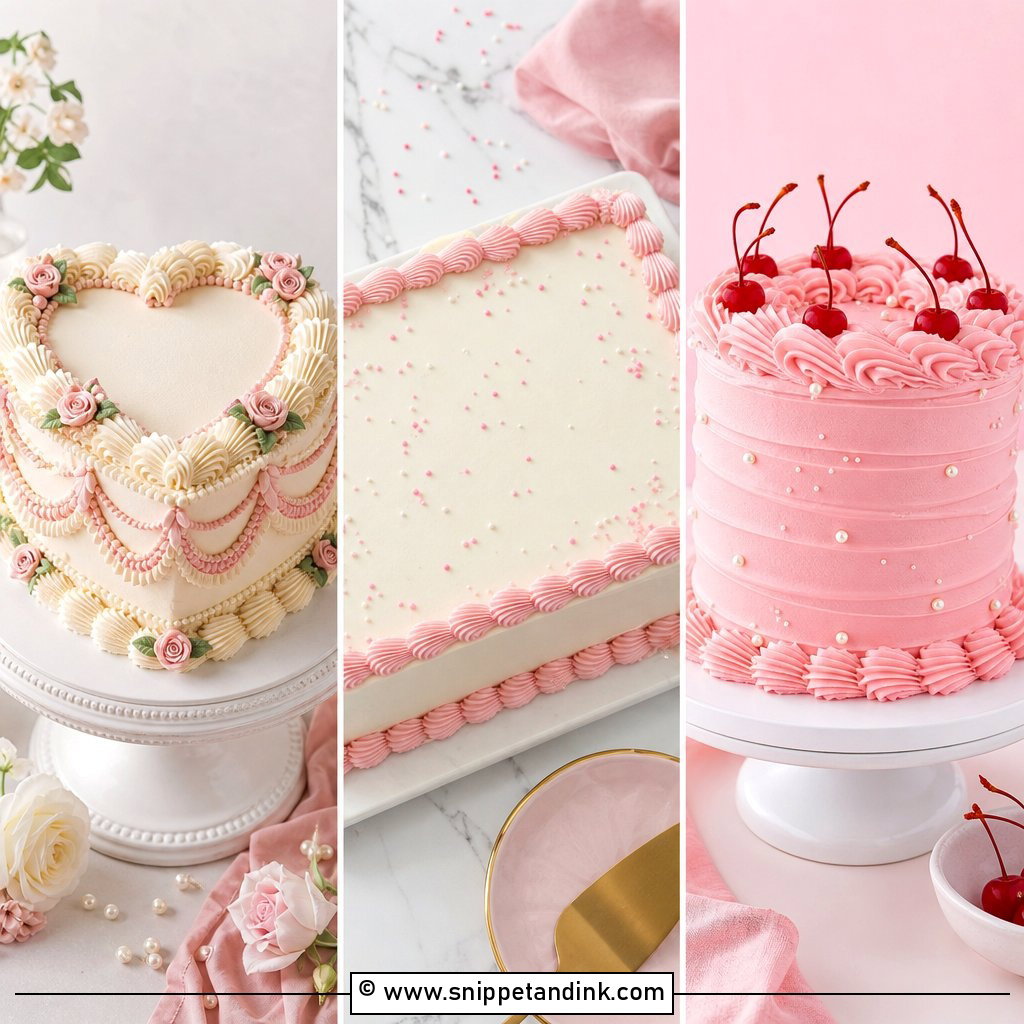
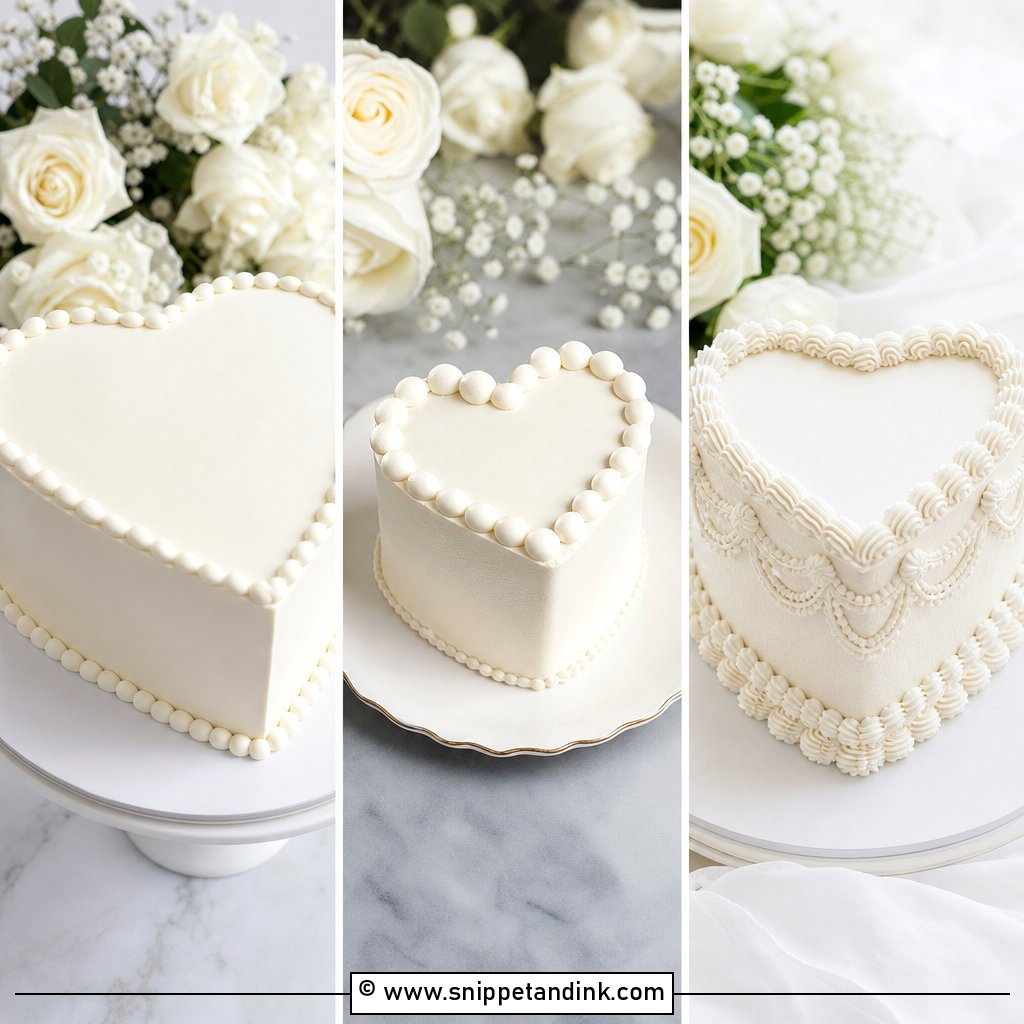
Heart cakes are cut from a round and a square, or baked in a heart tin, and the shape does nearly all the decorating for you. That means the frosting can stay plain: white, blush or a pale pink, with a short piped line like “She Said Yes” or two initials. A thin shell border hides the seam where the sides meet the board. The one thing I warn people about is the point of the heart, which is the hardest corner to keep sharp in a warm room, so keep it chilled until shortly before guests arrive.
3. Simple Ring Engagement Cake
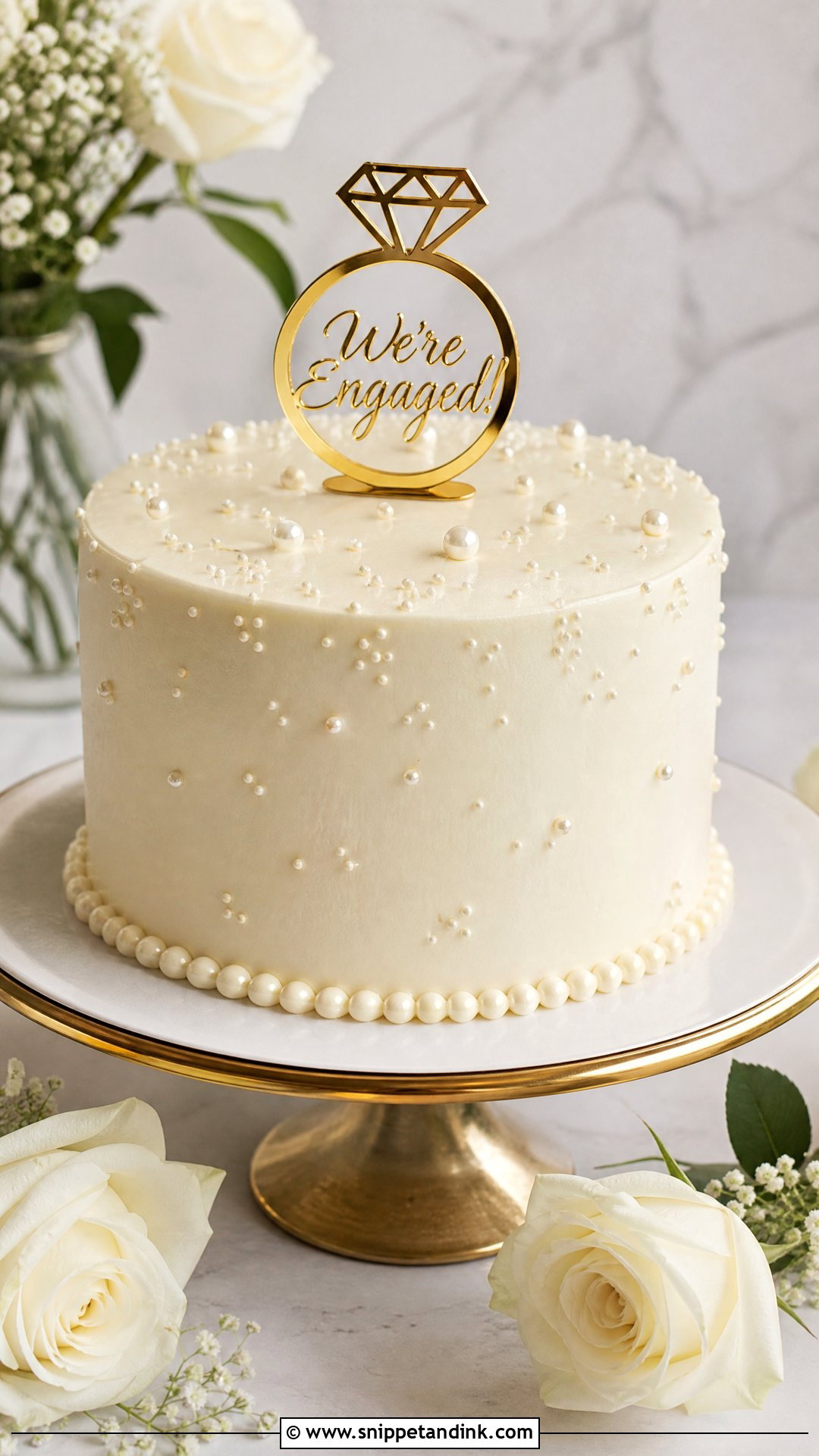
A simple ring engagement cake ties straight back to the proposal, and you don’t need a carved jewelry box to say it. One ring topper in the center of a smooth cake does the work. Acrylic gold rings are light and sit on the surface without sinking; a fondant ring needs a day to dry hard, or it slumps. I finish with a ring of tiny sugar pearls at the base for a little catch of light. Champagne, cream and blush suit this better than bright white, which can make a gold topper look brassy.
4. White Engagement Cake
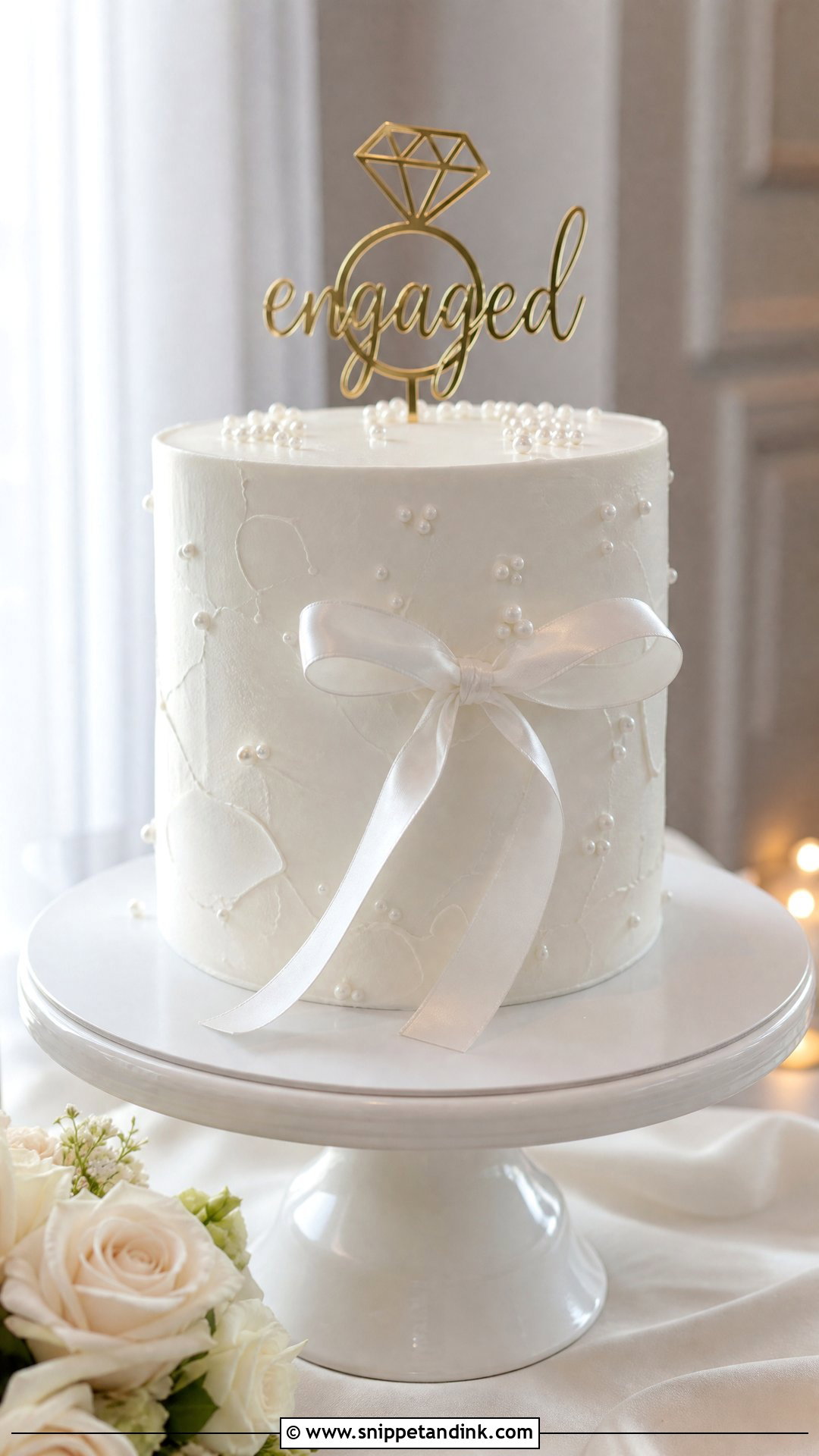
White is the hardest color to get right, oddly enough. Real butter gives buttercream a yellow cast, so for a true white I either whip it a long time or use a touch of violet coloring to cancel the yellow. Vanilla, almond or coconut sponge all sit well under it. From there the cake can take a satin bow, fine piping, a few pearls or an “Engaged” topper. On a table already crowded with balloons and flowers, a white cake gives the eye a place to rest.
5. Blush Pink Engagement Cake
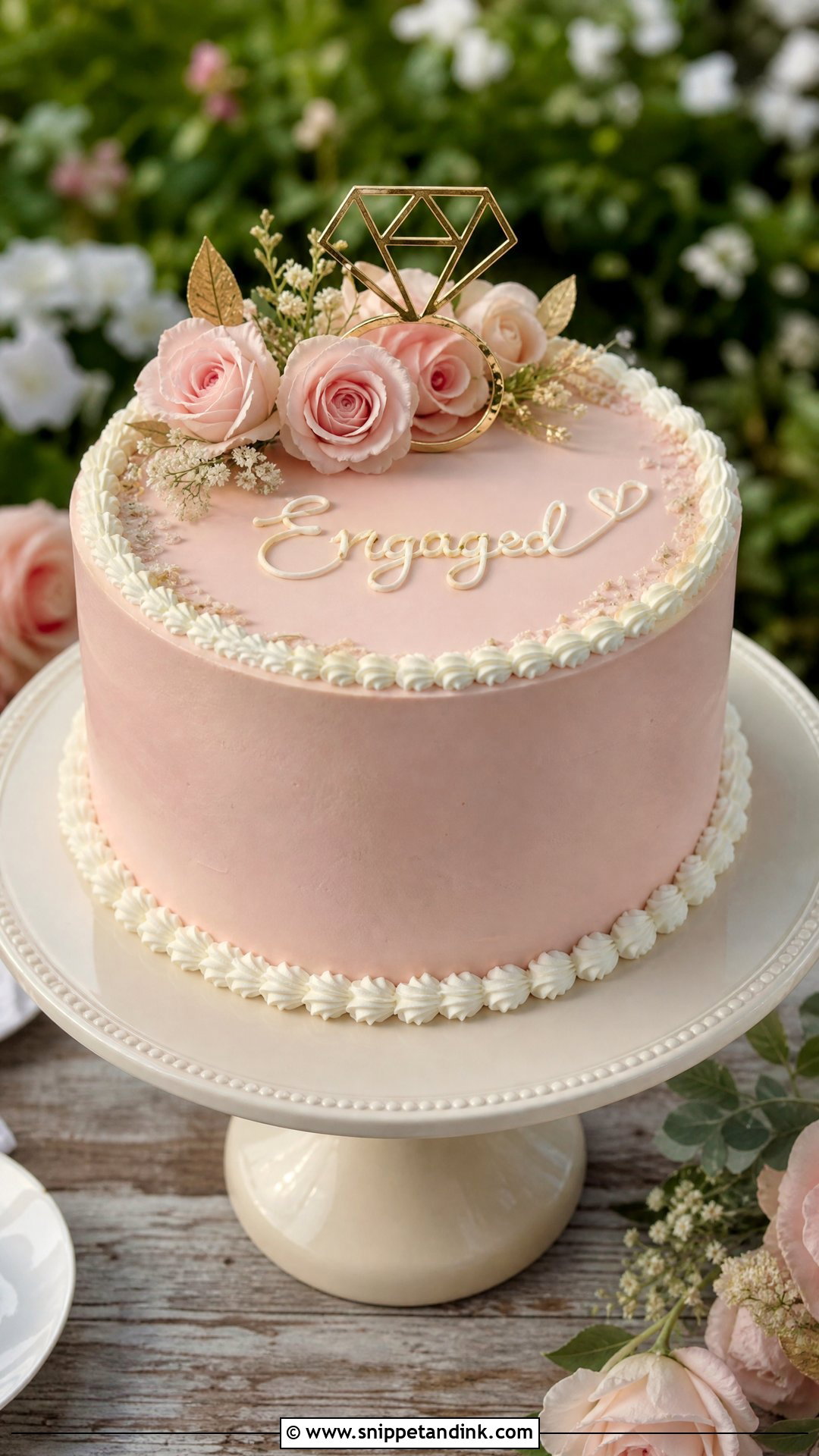
Blush works when it’s muted. I mix it with the faintest bit of brown or ivory so it reads as a soft skin tone rather than candy pink, and that is the difference between grown-up and a child’s birthday. It pairs naturally with strawberry, raspberry or vanilla sponge. Keep the sides smooth, then add white piping, a few fresh roses or a small gold topper. Brunch and garden parties suit it best, since daylight is kind to pale pink.
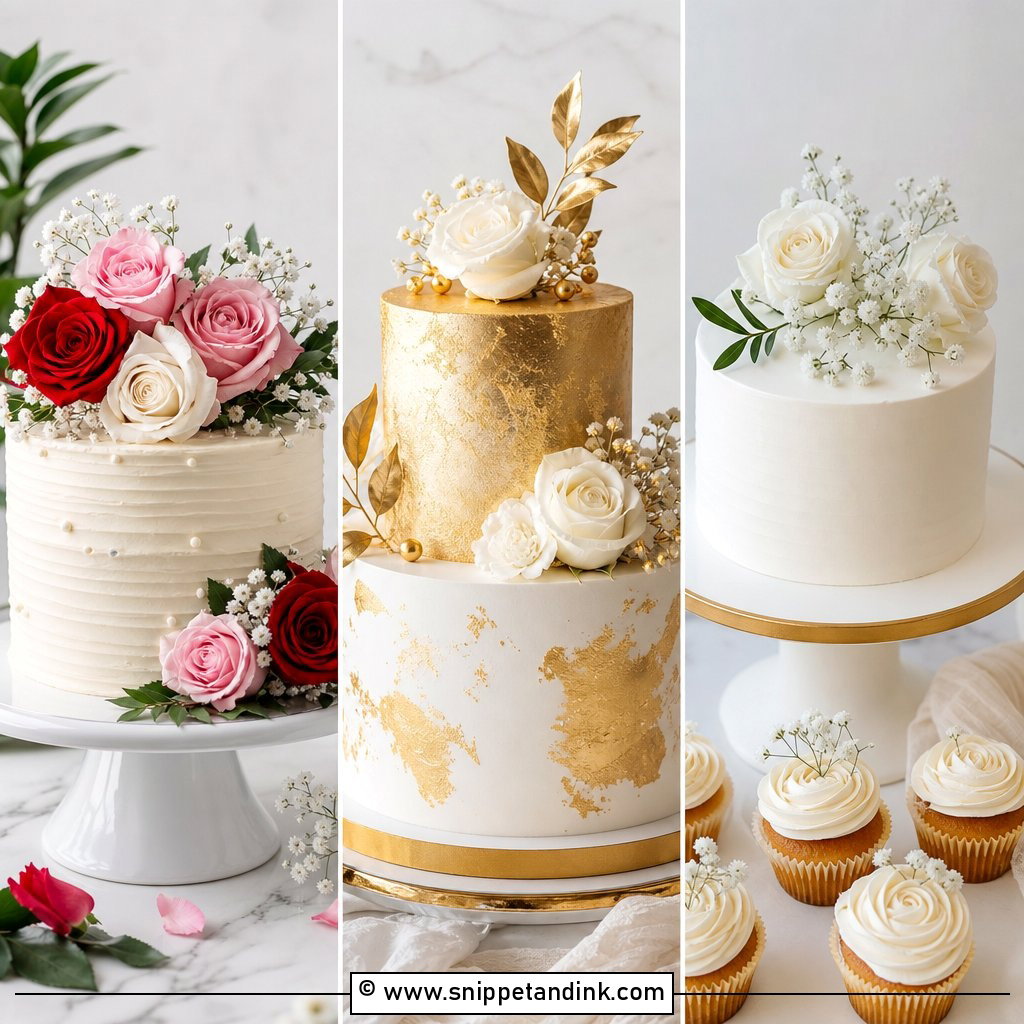
6. Gold Engagement Cake
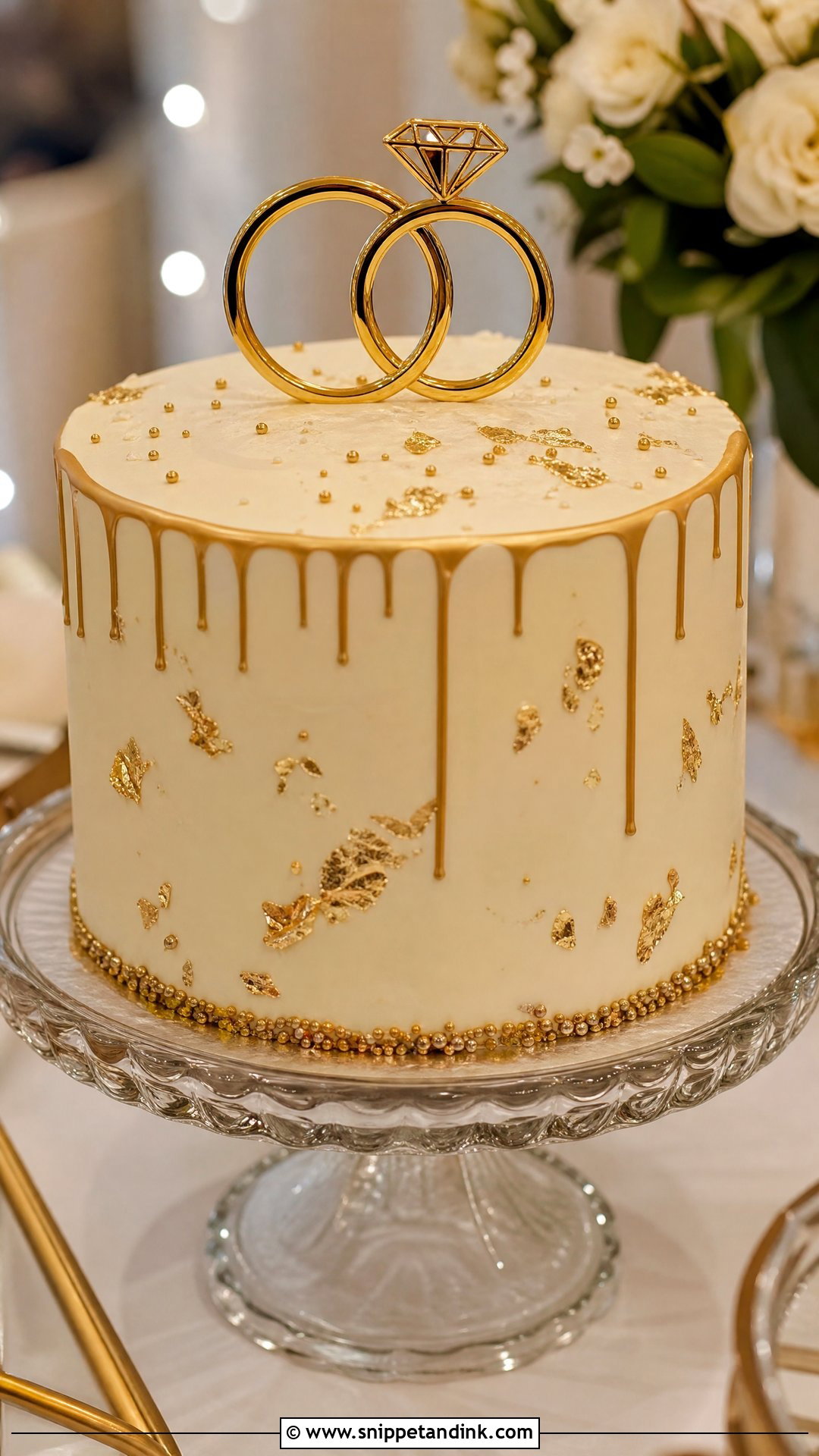
Gold looks expensive in small doses and cheap in large ones. I’d choose one gold element: a thin drip, brushed edges, a ring topper or a few flakes of leaf. Before you approve anything, ask your baker whether the gold is edible leaf or a non-toxic decorative paint, because those are not the same thing and the second should not be eaten. On a cream buttercream base, under evening lighting, a little shine is plenty.
7. Two Tier Engagement Cake
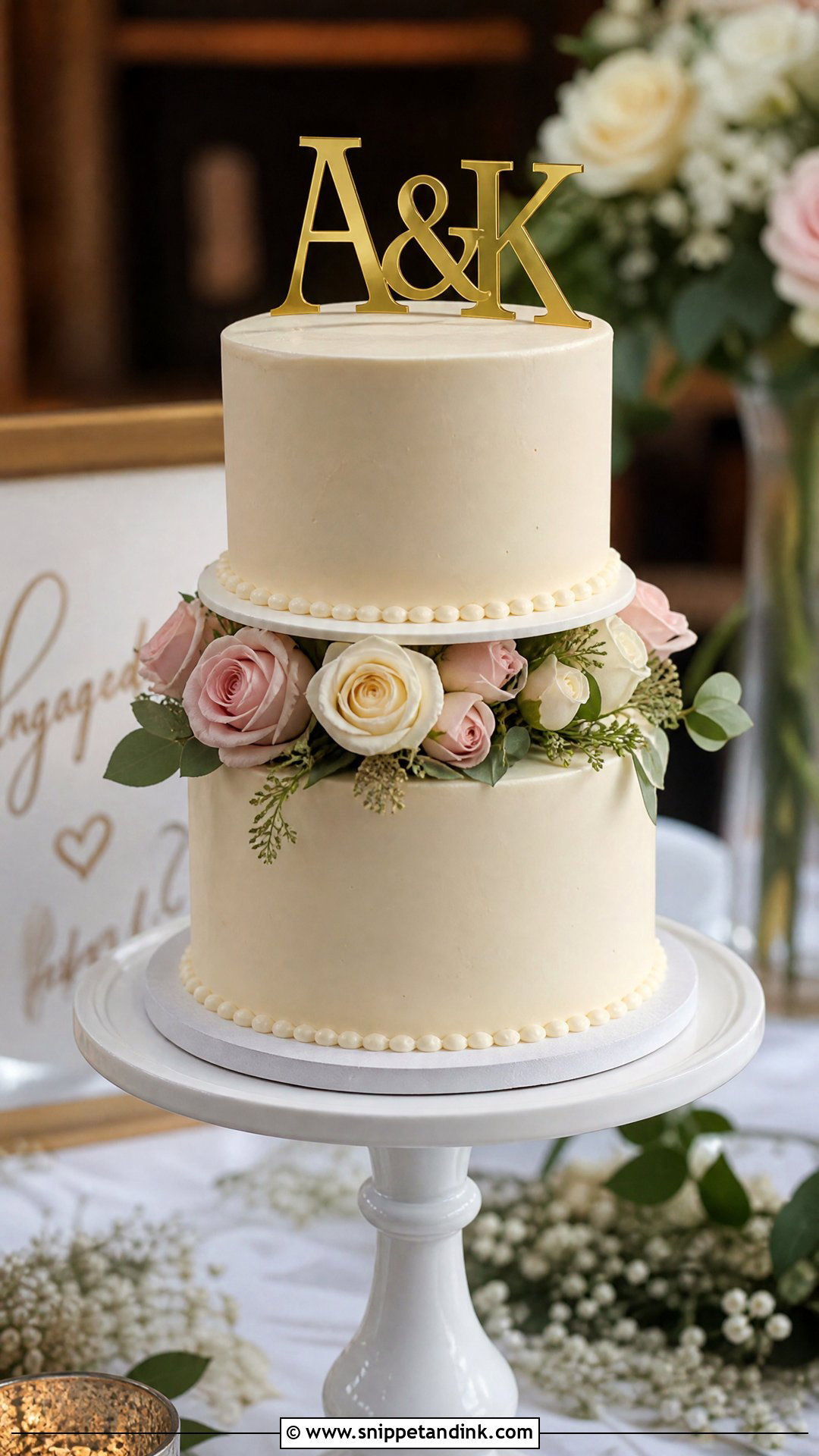
A two tier engagement cake gives height without tipping into wedding cake territory. A six inch on an eight inch is the size I suggest most often for parties of thirty or forty. Each tier sits on its own board with dowels inside the lower one; skip the dowels and the top slowly sinks into the bottom over an afternoon. White below with blush above is a classic split, though all ivory with fresh flowers tucked at the join reads calmer. Ribbon or minimal piping is all either tier needs.
8. Simple Engagement Cake With Initials
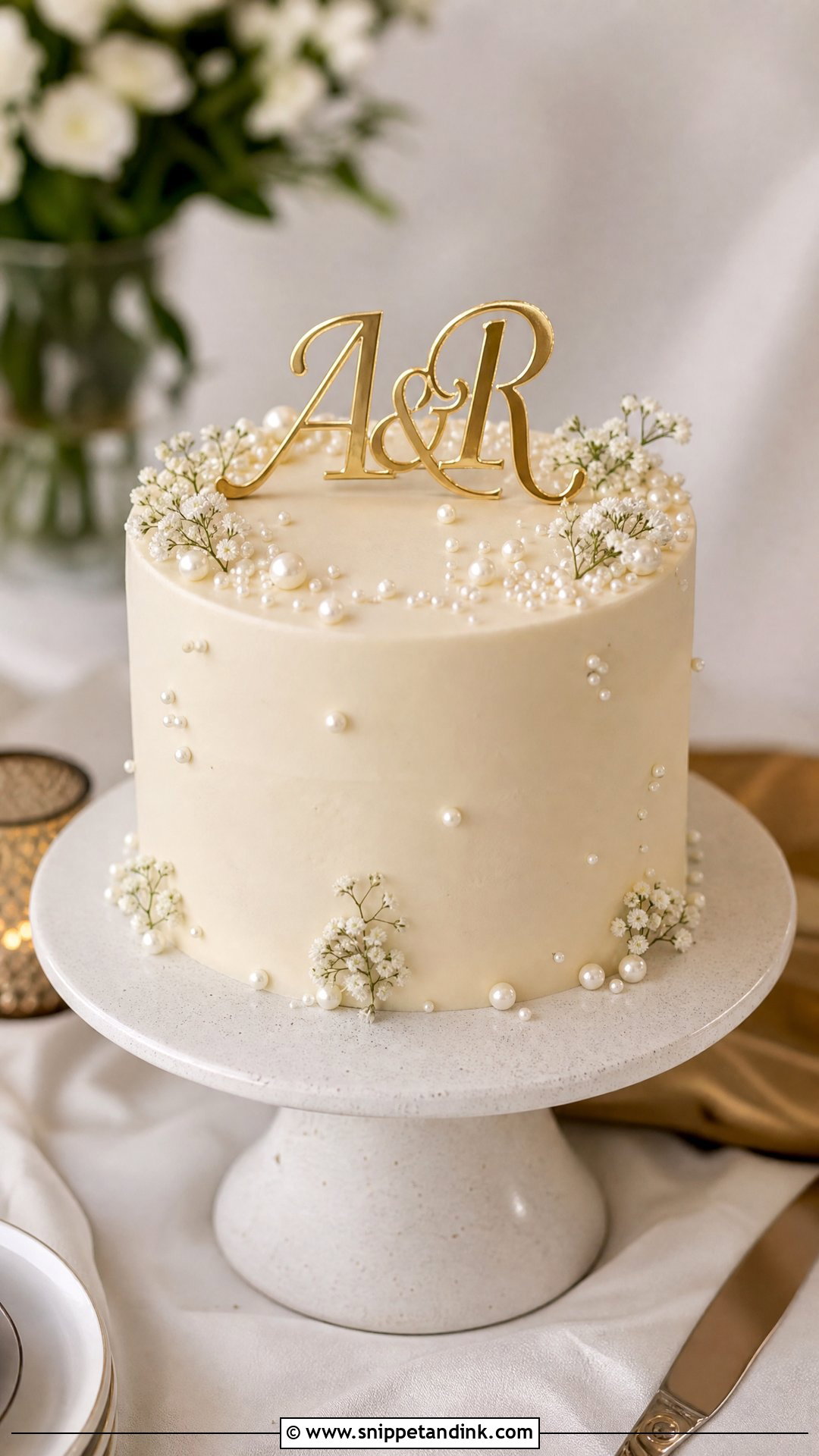
Initials do the personal work in two letters instead of a sentence. I pipe them, set them on a small sugar plaque or use a thin acrylic monogram on the front of a round cake in white, beige, blush or sage. Leave space around them; crowding initials with flowers makes them disappear in photos. If your invitations or party signs already use a monogram, ask your baker to match the font, which takes a printout and five minutes and ties the whole table together.
9. Engagement Cake With Couple Name
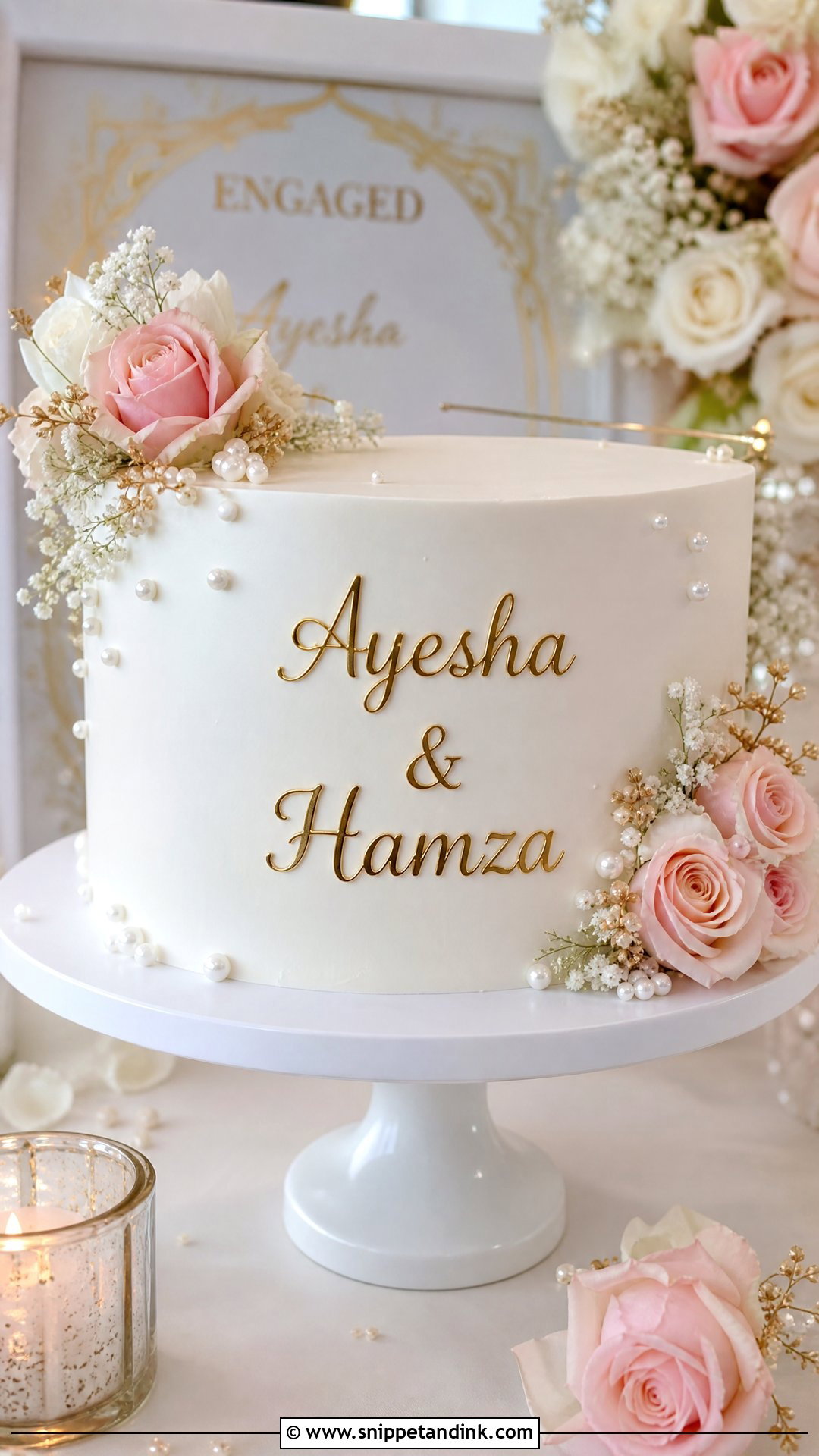
Writing the couple name across a cake sounds easy until you count the letters. Long names need a wider cake or a smaller script, so I sketch the wording at actual size before piping. Hand piping, an edible printed plaque and an acrylic topper each give a different finish; acrylic is the crispest in photos. Smooth buttercream underneath keeps the letters readable, and white with gold, blush with cream, or sage with ivory all give enough contrast. Keep decoration away from the wording.
10. Engagement Cake With Floral Topper
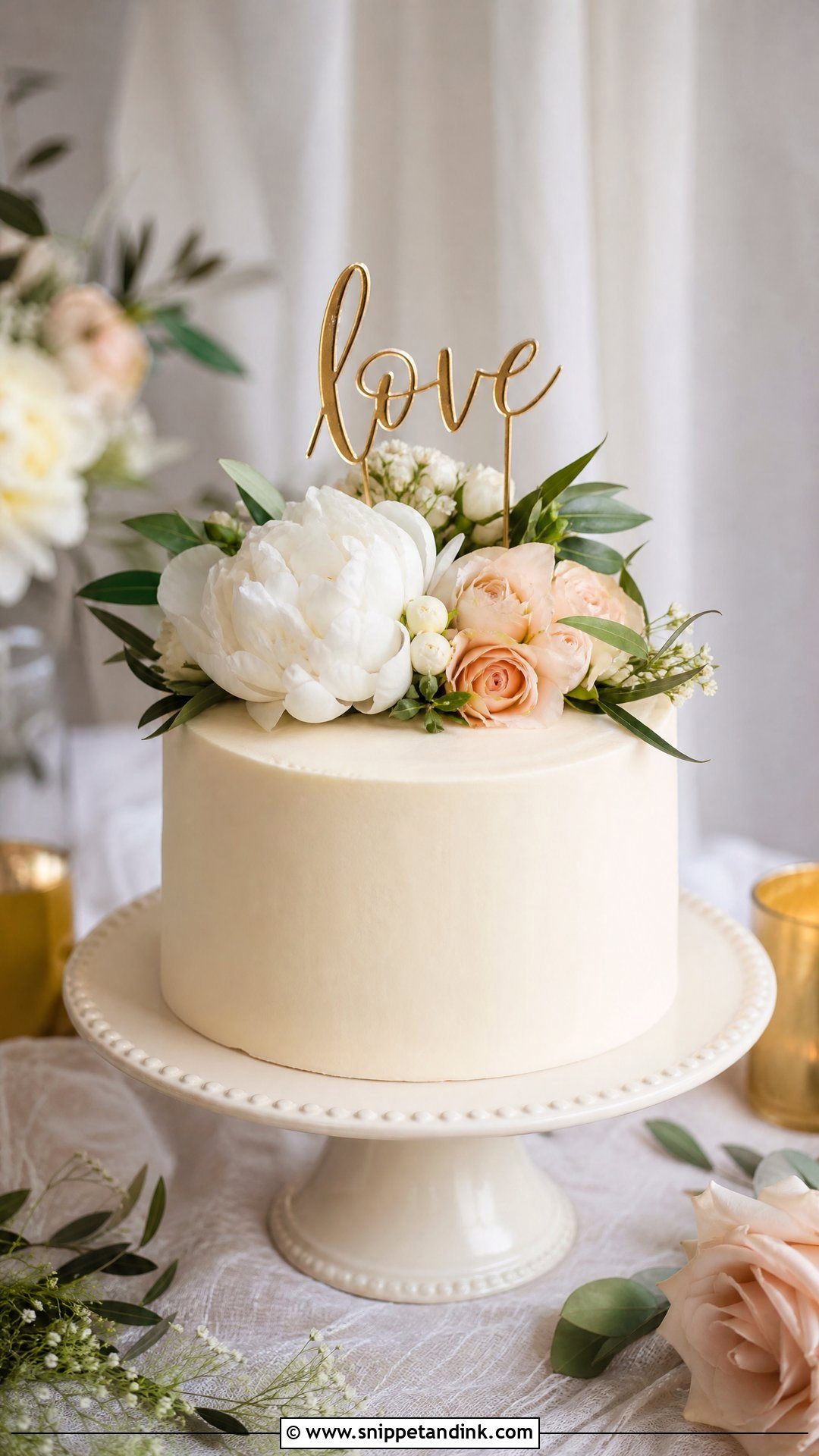
One arrangement on top is less work than a cake covered in blooms, and it usually looks better. I build the cluster off to one side so there is room to slice. Roses, peonies and orchids hold up well; seasonal flowers that match your party colors are often cheaper and fresher. An ivory base keeps the arrangement looking crisp, and a small gold “Love” or “Engaged” topper can stand just behind it. The same idea scales from a six-inch cake to a two-tier centerpiece.
11. Simple Vintage Engagement Cake
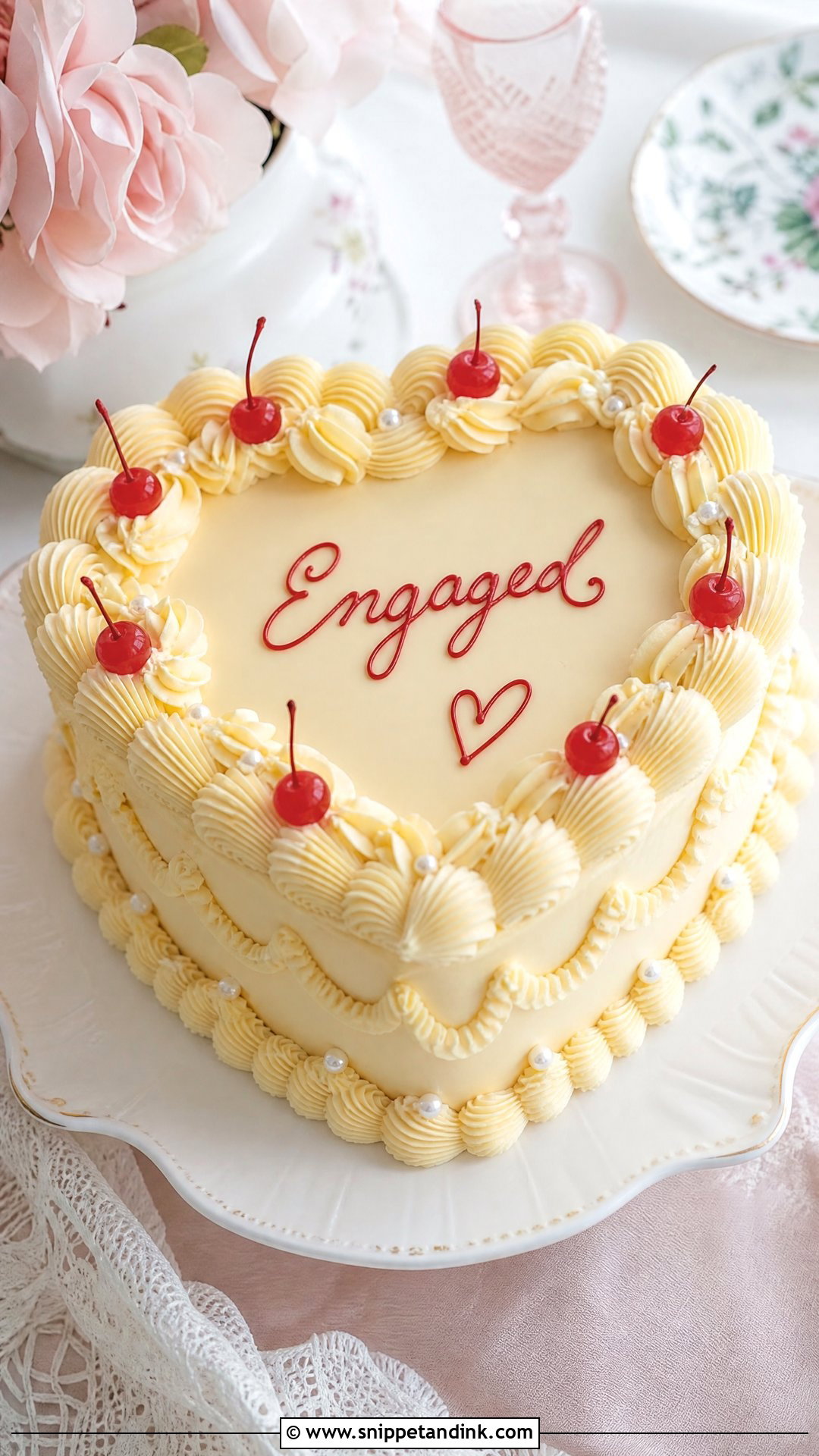
Vintage piping is all shells, rosettes and scrolled borders, the style you’d find on an old bakery cake, done neatly. Heart or round, in white, blush, butter yellow or pale blue. The technique matters more than the color: buttercream for this needs to be slightly stiffer than for smoothing, or the shells lose their ridges as the room warms. A short line like “Forever Starts Here” or “Engaged” suits it. Shot from above, the piped pattern shows up better than from the side.
12. Minimal Engagement Cake
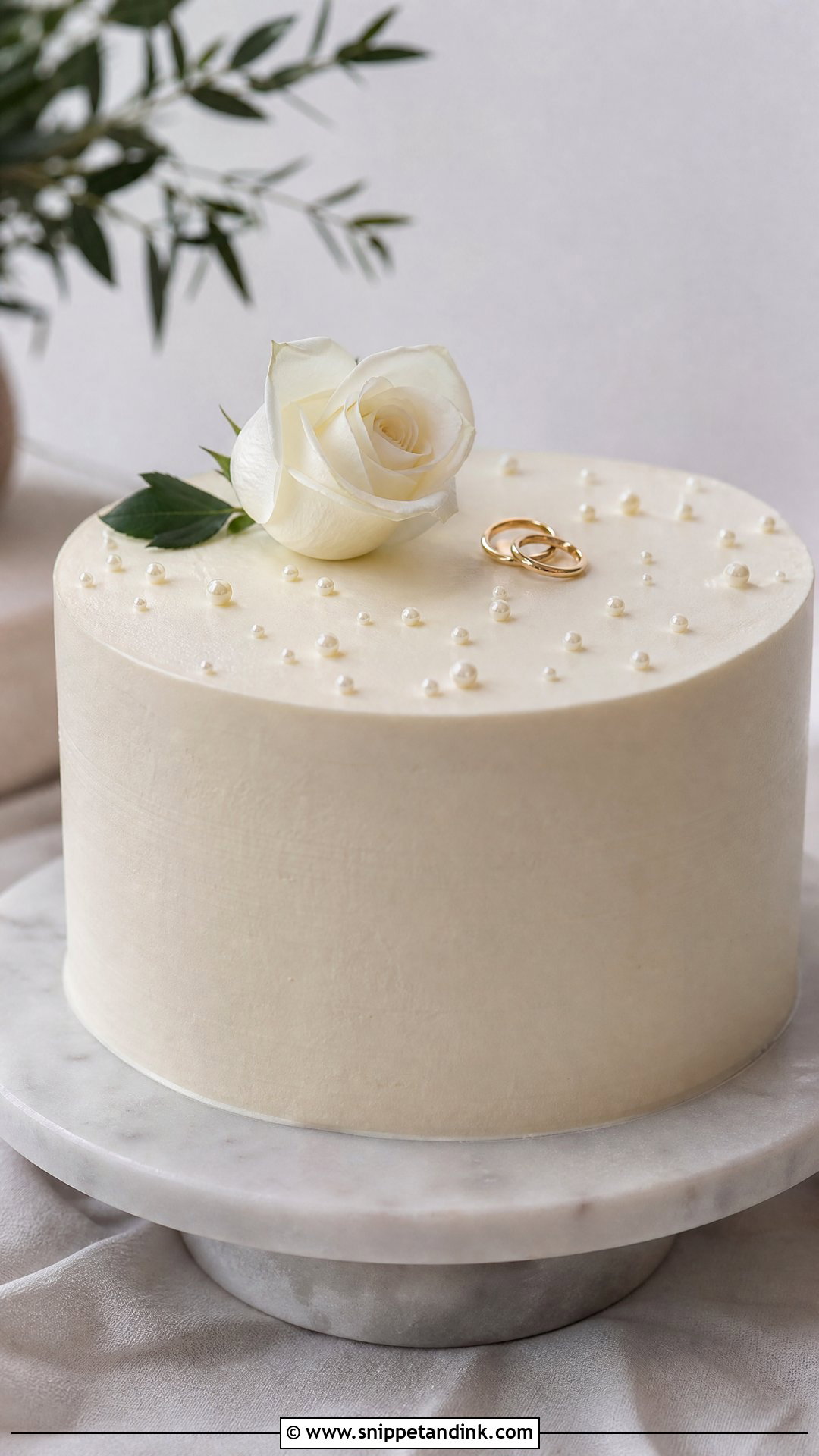
Minimal cakes are less forgiving than busy ones. With only one detail, every bump in the buttercream and every soft edge shows, so I spend most of the time on the finish: sharp top edges and straight sides. Then I add one thing, a single flower, a tiny ring or two words. Ivory, beige and soft grey suit couples who don’t like color. Put it on a good stand; a minimal cake on a paper doily looks unfinished.
13. Simple Engagement Sheet Cake
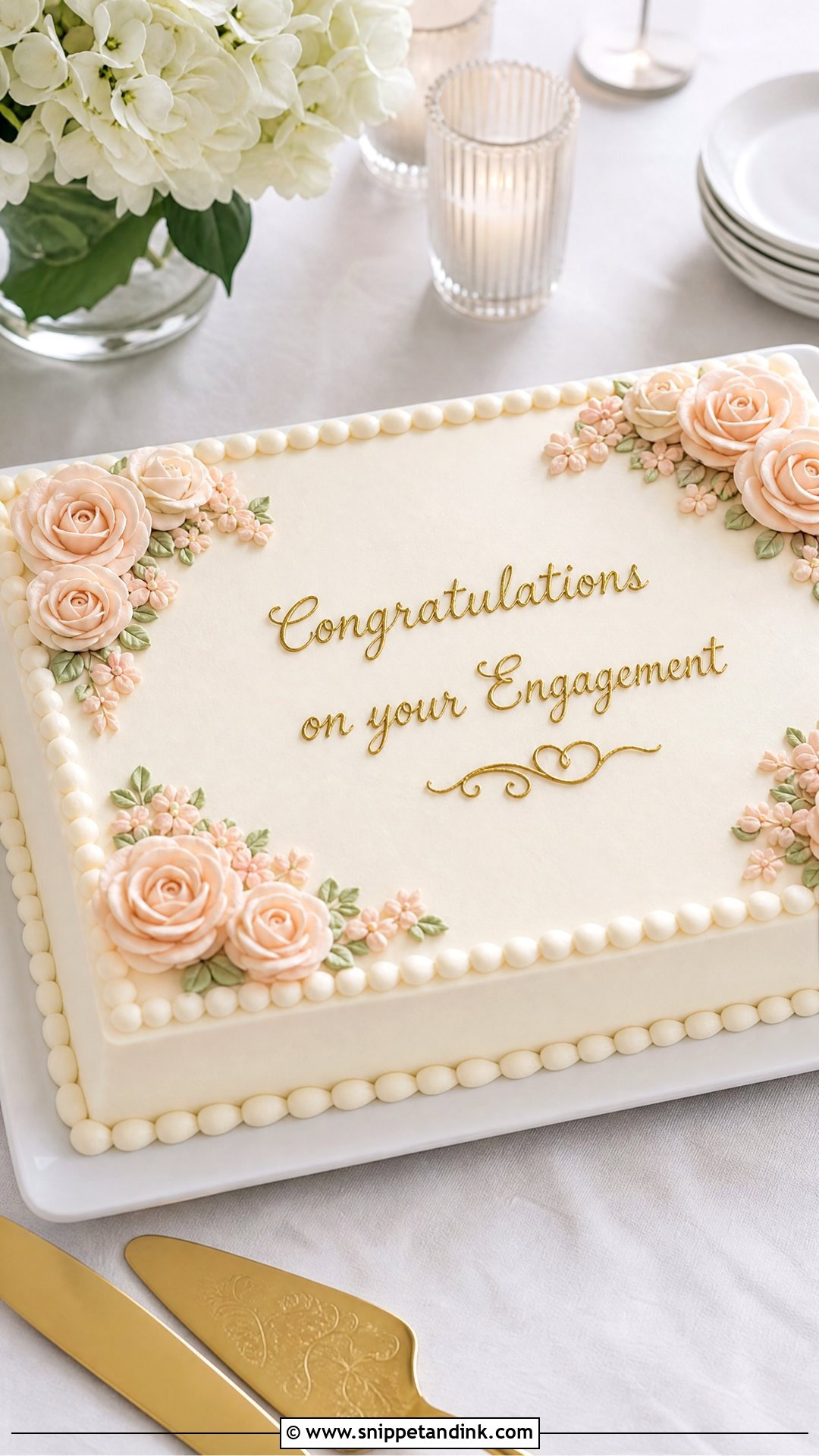
Sheet cakes get dismissed, and I think that’s a mistake for big family parties. A rectangular vanilla, chocolate or strawberry cake serves quickly, with no tall layers to wrestle, and costs less per slice. The trick is restraint: a piped border, a few floral corners and a short message in the middle. A white sheet cake with blush flowers and gold lettering can sit next to a tiered cake without looking like the poor relation.
14. Engagement Cake With Bow
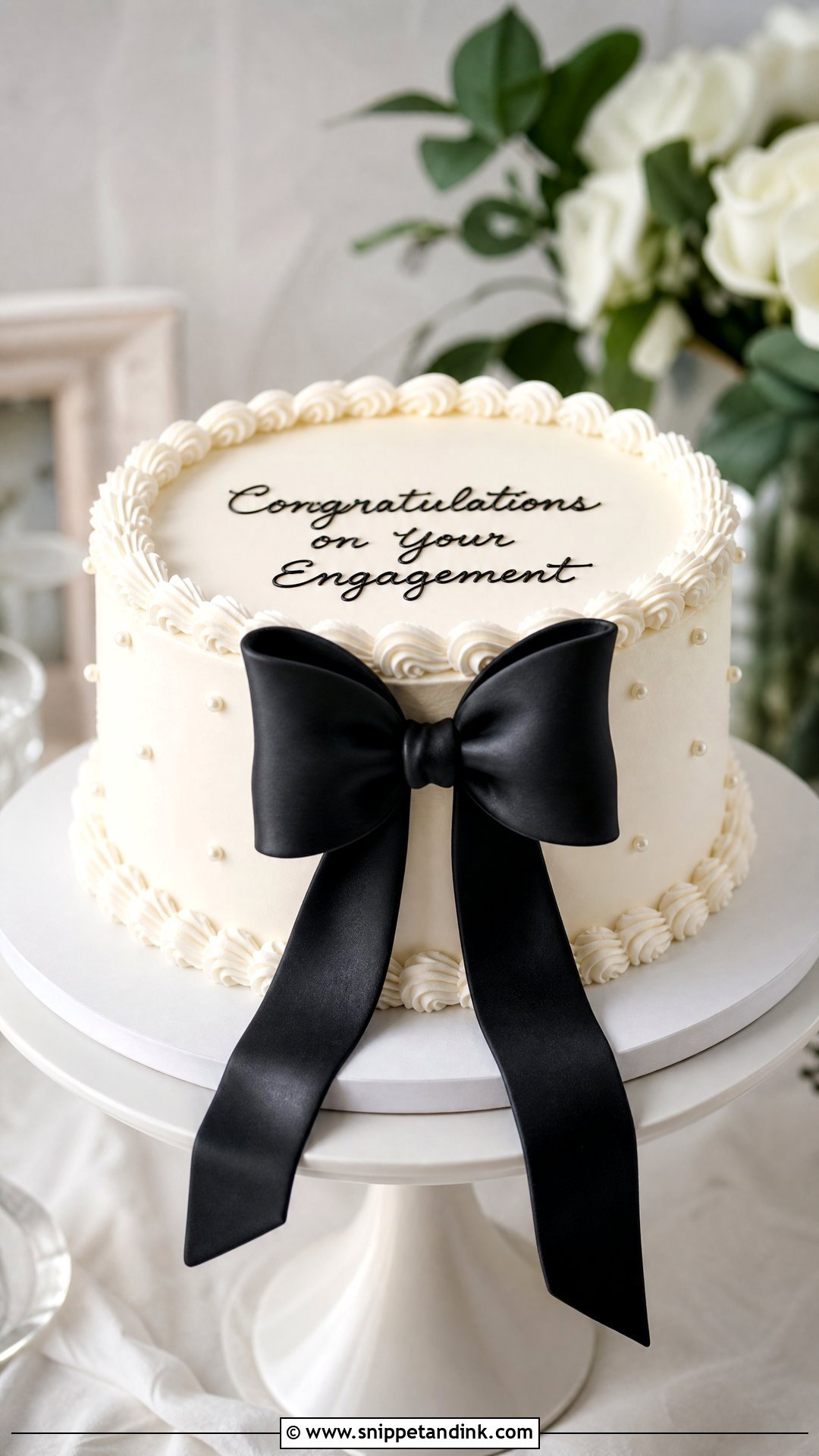
Bows can be fondant, real satin ribbon or piped buttercream, and each behaves differently. Satin ribbon against buttercream will soak up grease and darken in spots unless I line the back with a strip of acetate or clear tape first. A white cake with a black bow is the modern version; blush with ivory is the softer one. Keep everything else smooth so the bow is clearly the point, and add pearls only if the cake still looks bare.
15. Simple Engagement Cupcake Cake
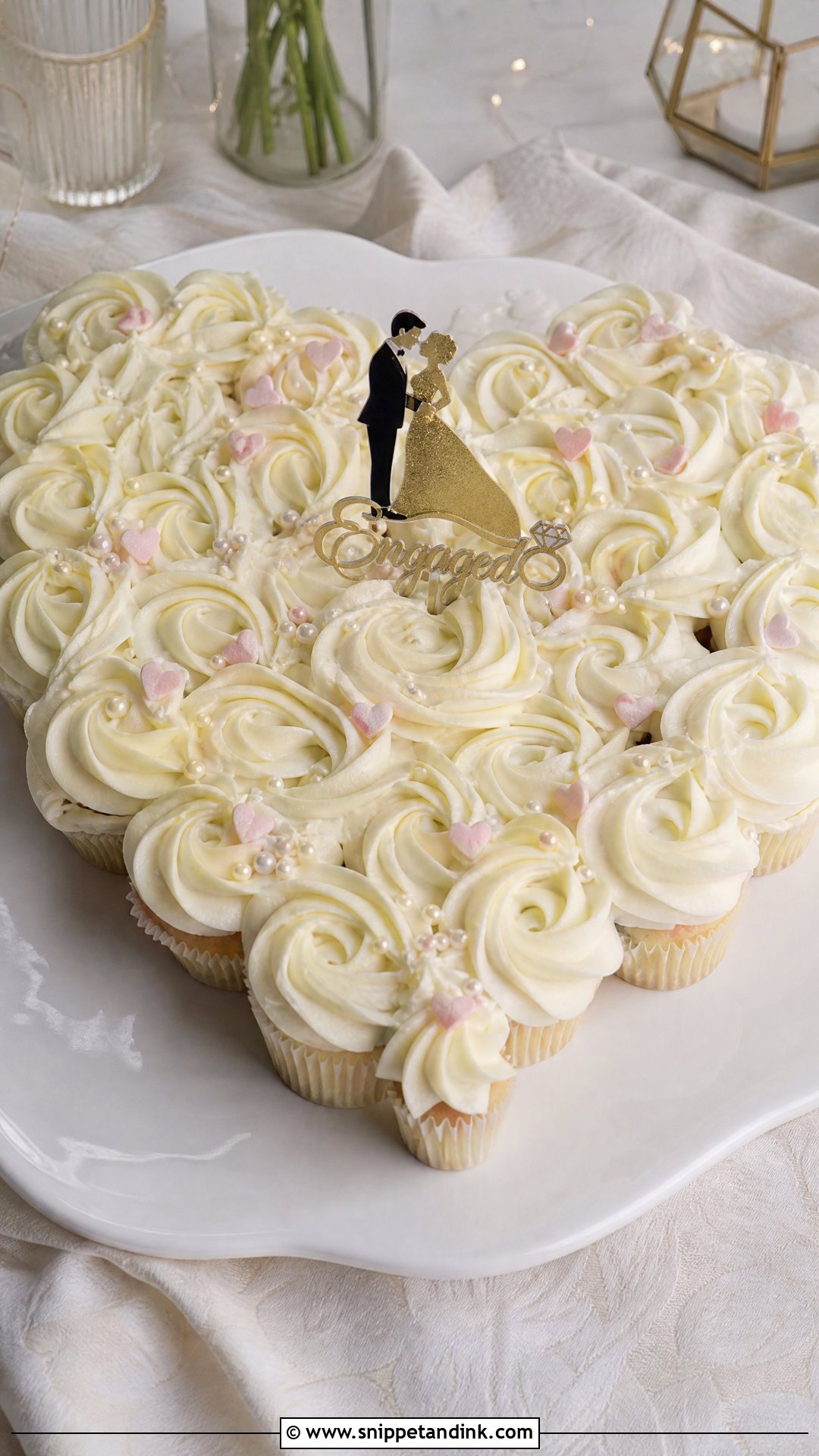
A simple engagement cupcake cake is cupcakes packed tightly into a heart, ring or round, then frosted across the tops as if they were one surface. Guests just lift one off, so no one has to cut and plate. I use a firm crusting buttercream for this, because a soft one tears when the cupcakes are pulled apart. Ivory, blush and gold keep it cohesive, with small toppers or fondant hearts on top. A tray or tiered stand makes it look planned rather than improvised.
16. Engagement Cake With Macarons
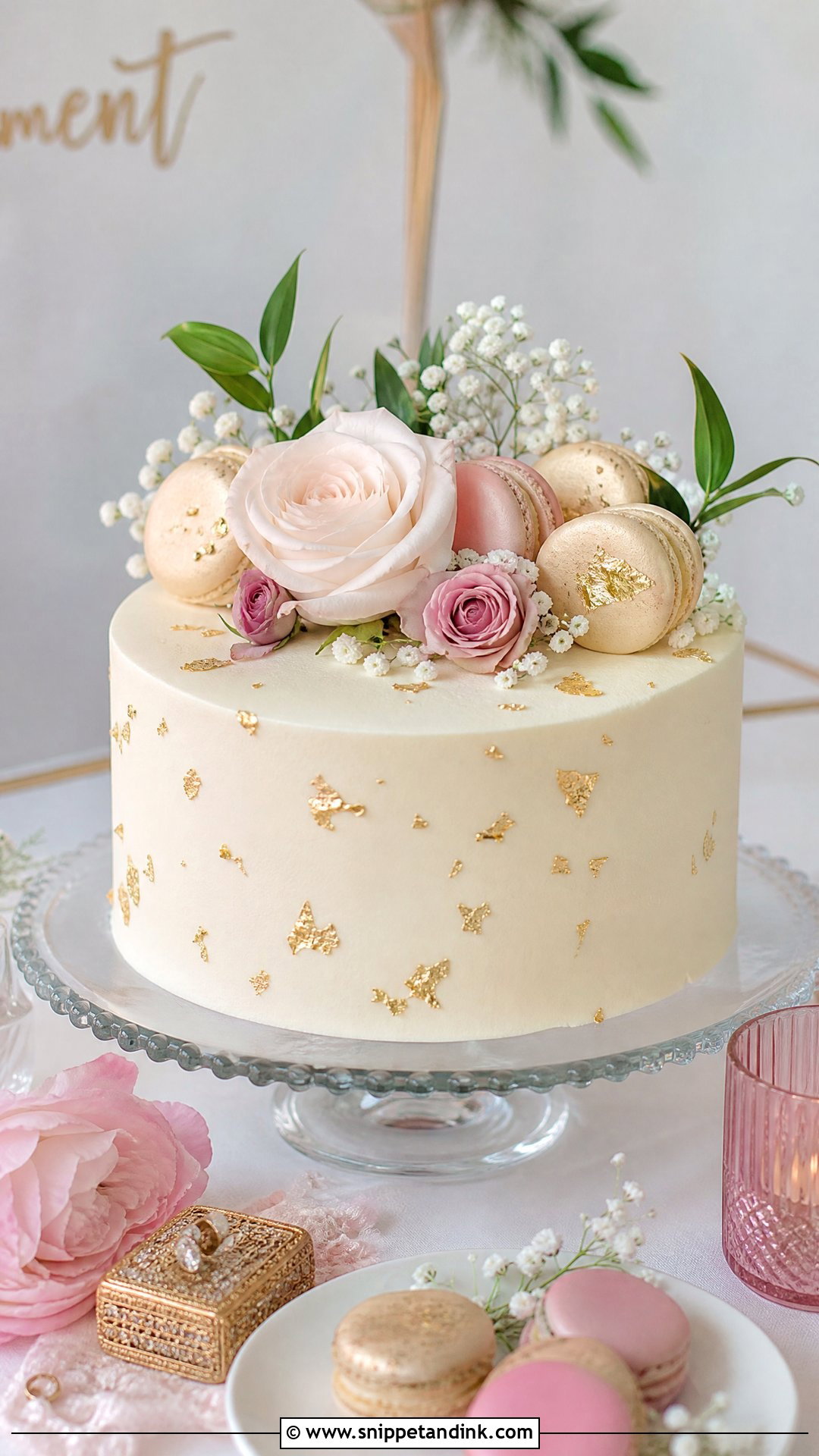
Macarons add height and color to a plain cake with almost no piping skill. I press a few into the top or stack them along one side, in shades that match the frosting: blush, ivory, champagne or pale lavender. They do soften from fridge moisture, so I add them on the day rather than the night before. A small cluster of flowers or a few flakes of gold leaf fills the gaps. Guests also get a second sweet without anyone baking twice.
17. Simple Chocolate Engagement Cake
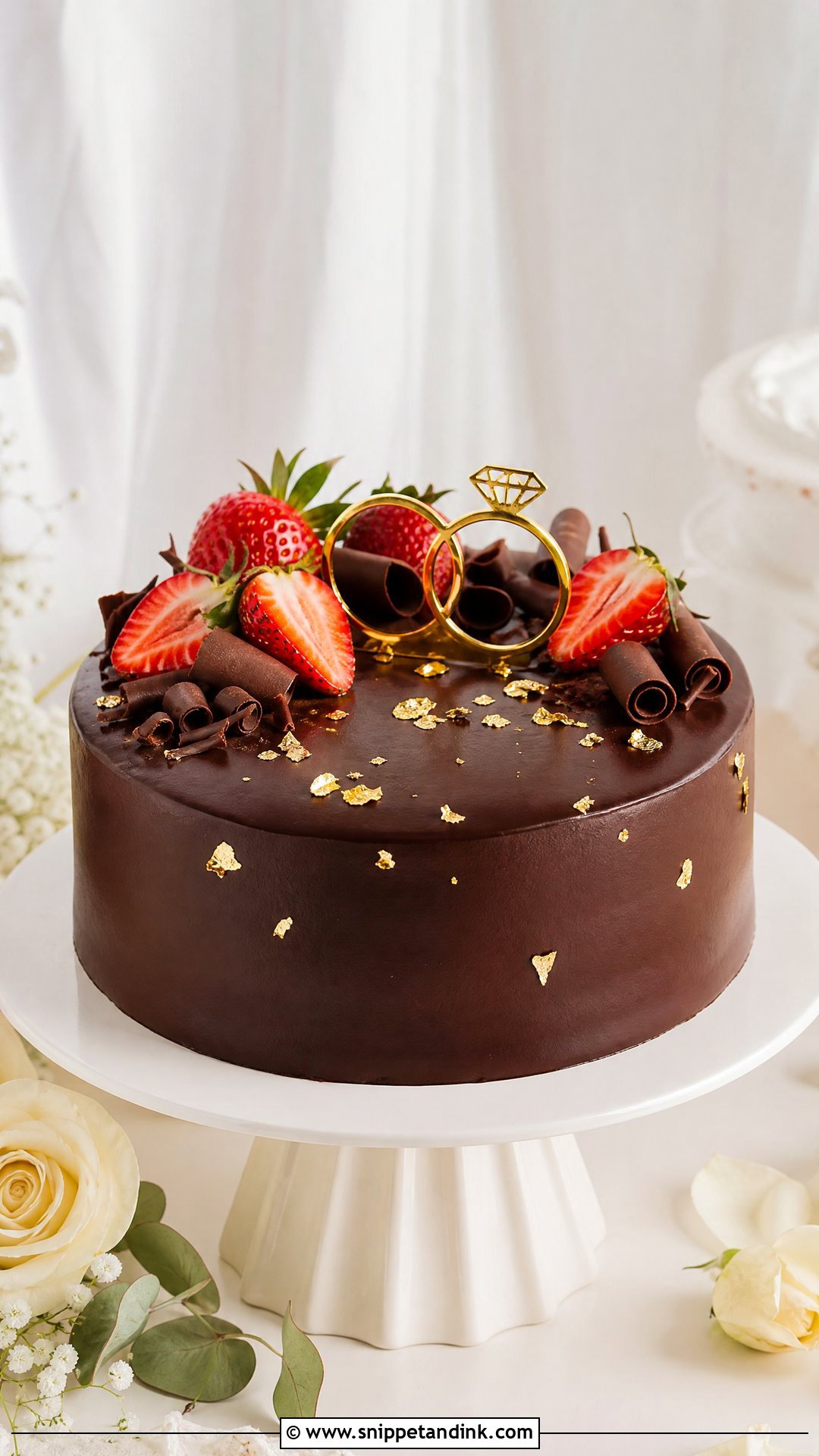
Chocolate is the right call for couples who care more about flavor than tradition. A dark sponge under chocolate buttercream or glossy ganache, finished with strawberries, curls, gold flakes or a small ring topper. Ganache sets firmer than buttercream, so it holds a sharper edge and travels better on warm evenings. On a white stand with a few pale flowers nearby, a dark cake looks rich rather than heavy, and it suits evening dinners with close family.
18. Engagement Cake With Pearl Border
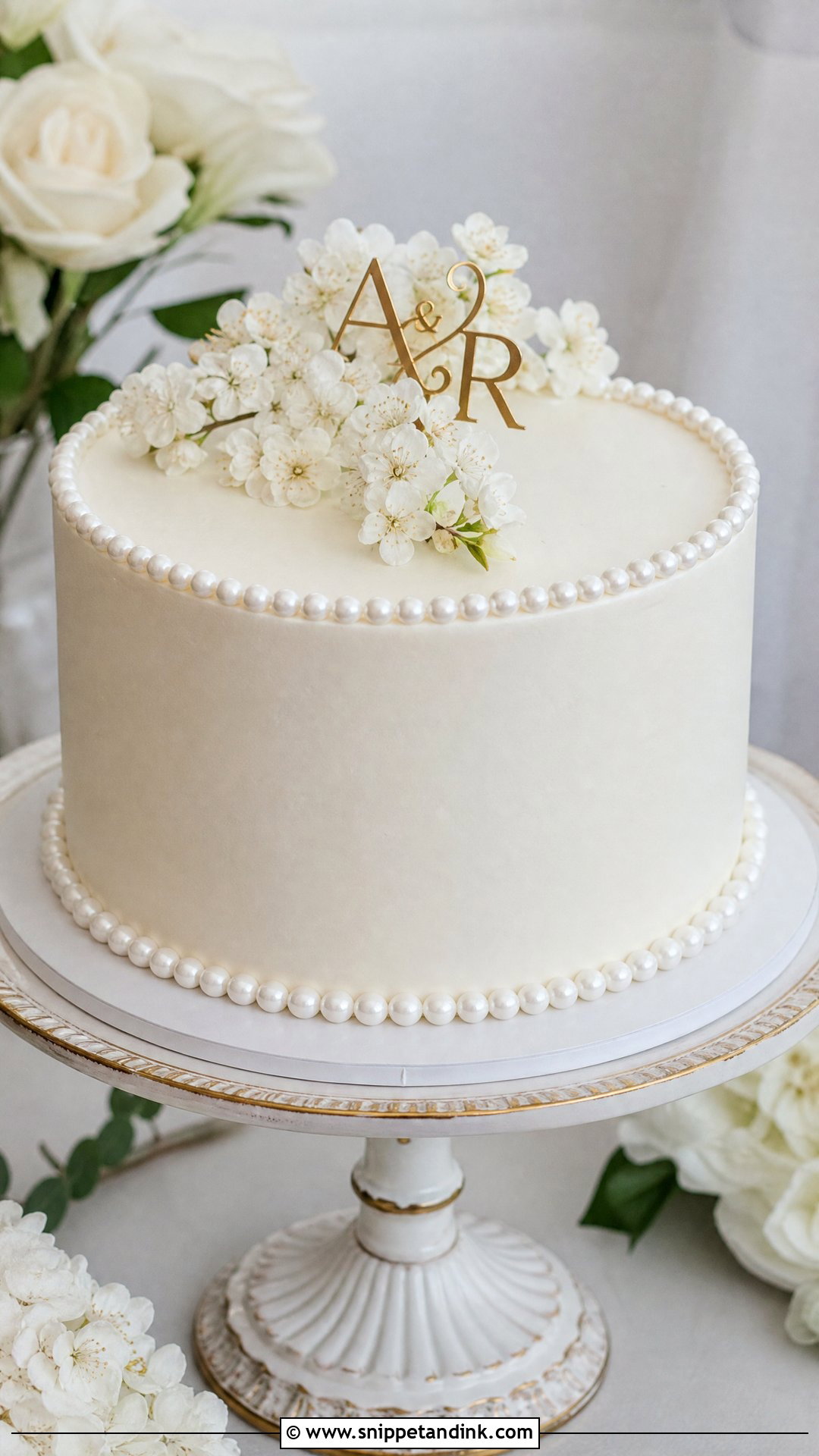
Edible pearls are a five-minute detail that changes how finished a cake looks. I set them along the bottom edge while the buttercream is still slightly tacky so they stick without glue. The center can stay plain or carry initials, a date or a small topper. One warning: hard sugar pearls are crunchy enough to surprise people, so if you have small children or elderly guests, ask for the soft pearl kind.
19. Simple Engagement Bento Cake
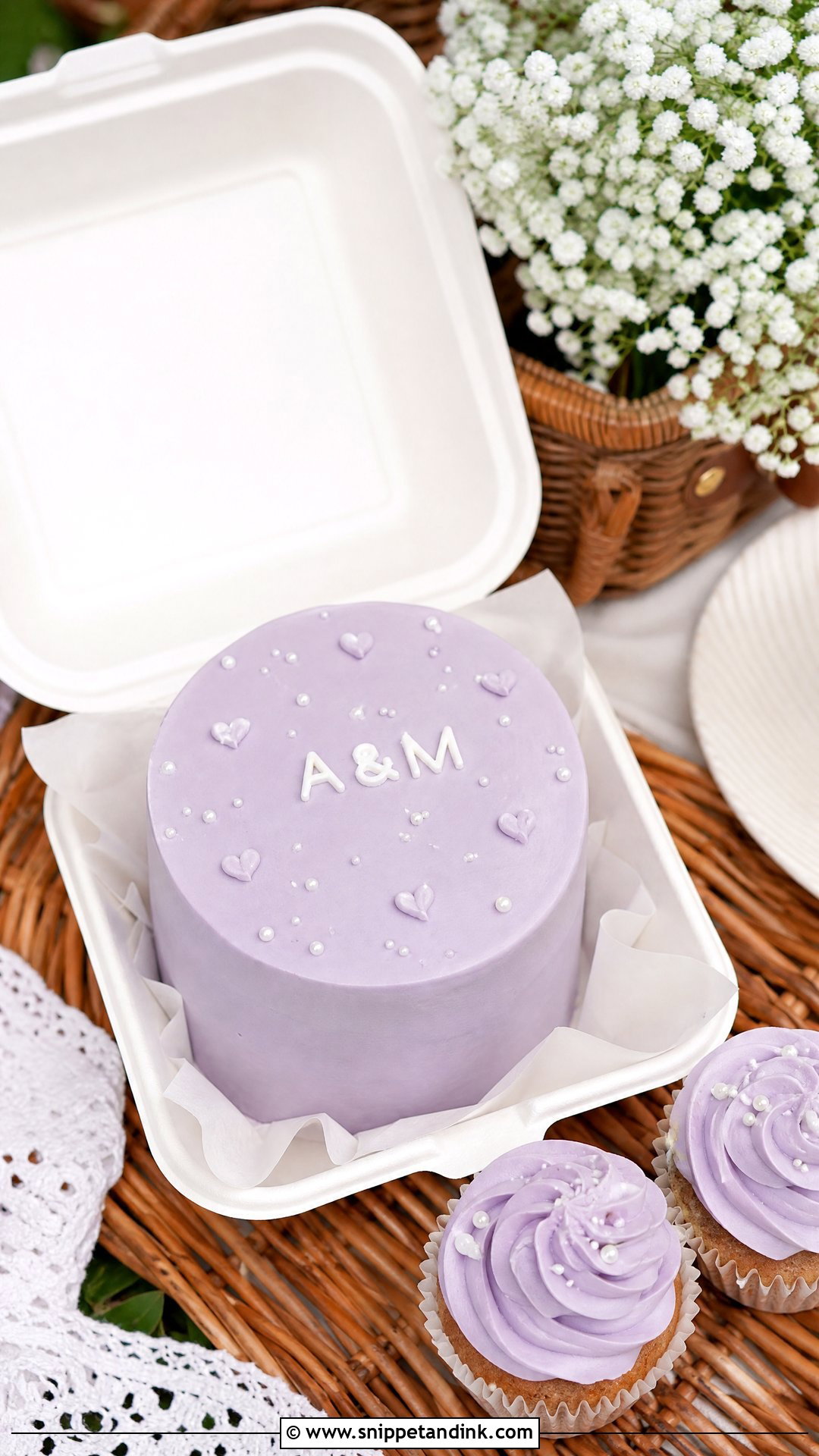
Bento cakes are tiny, usually about four inches across, and come boxed, which makes them right for a proposal picnic or dinner for two. There is only room for one idea: a few hearts, initials, or a short phrase like “Yes!” or “Engaged.” Cream, blush, lavender and sage all read well at that scale. Because the surface is small, I letter them in a thinner tip than a full cake; thick writing fills the whole top. Add matching cupcakes if more people are coming.
20. Engagement Cake With Buttercream Flowers
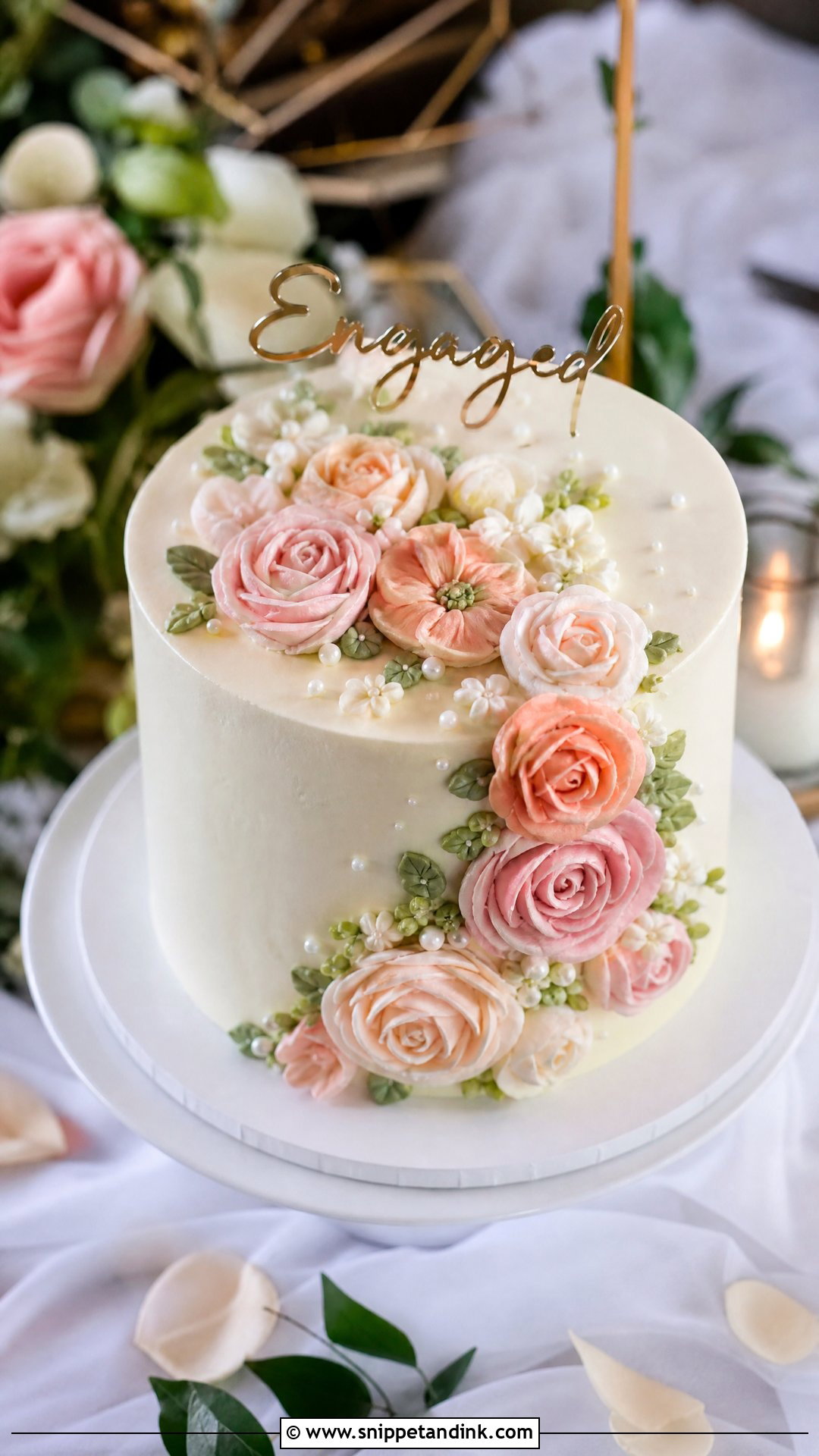
Buttercream flowers give you the floral look with nothing to remove before slicing. Roses, small blossoms and loose petals are piped straight onto the cake, in blush, peach, sage or lavender against a white or cream base. Every part of it can be eaten, which matters to some couples. For home bakers, I’d suggest practicing on parchment first, chilling the best ones and transferring them, rather than piping directly onto a finished cake. Gather them on one side or across the top.
Flowers, Gold and Toppers Sitting on Frosting
Half the designs above put something non-edible on the cake, and that is fine as long as it’s handled the way bakers handle it.
Fresh flowers
Florist flowers are grown to be looked at, not eaten, and may carry sprays. I wrap every stem in floral tape and push it into a plastic pick or straw, so nothing pierces the sponge. Some popular blooms, including lily of the valley, hydrangea and baby’s breath, should never touch frosting at all. If your florist is supplying them, ask for unsprayed stems and give them to the baker the morning of, not the night before.
Gold, glitter and toppers
Edible gold leaf is safe in small amounts. Products labeled only “non-toxic” are decorative and should be lifted off before serving. Acrylic toppers need a clean stake, and anything with batteries or glue goes on a small disc of parchment or a sugar plaque so it can come off in one piece.
Getting the Cake From the Bakery to Your Party Table
Most engagement cakes that fail do it in the car. Buttercream softens quickly once a room passes about seventy-five degrees, and a cake on a car seat slides every time you brake.
- Collect it chilled and boxed, with the car already cooled down.
- Set the box flat in the footwell or the trunk on a non-slip mat, never on a sloped seat.
- Drive as if there’s a full glass of water on the dashboard.
- Keep it out of direct sun and away from the candle-heavy part of the table.
- Bring it out about an hour before cutting so the sponge tastes soft, not fridge-cold.
Fondant cakes are the exception to that last point. Taken from a cold fridge into a humid room, they bead with moisture. I’d leave a fondant cake boxed while it warms, so the condensation forms on the box rather than the cake.
One Clear Idea Per Cake
Every cake here works because it commits to one thing: a shape, a color, flowers, a name or a flavor. When couples bring me five inspiration photos, the best result is nearly always the feature they loved in all five, done well, on smooth frosting. Get the size right for your guest count, plan how it reaches the table, and keep the rest quiet. A simple cake that arrives in one piece will be the cake people remember.
You'll Like These Ideas:





Leave a Reply