
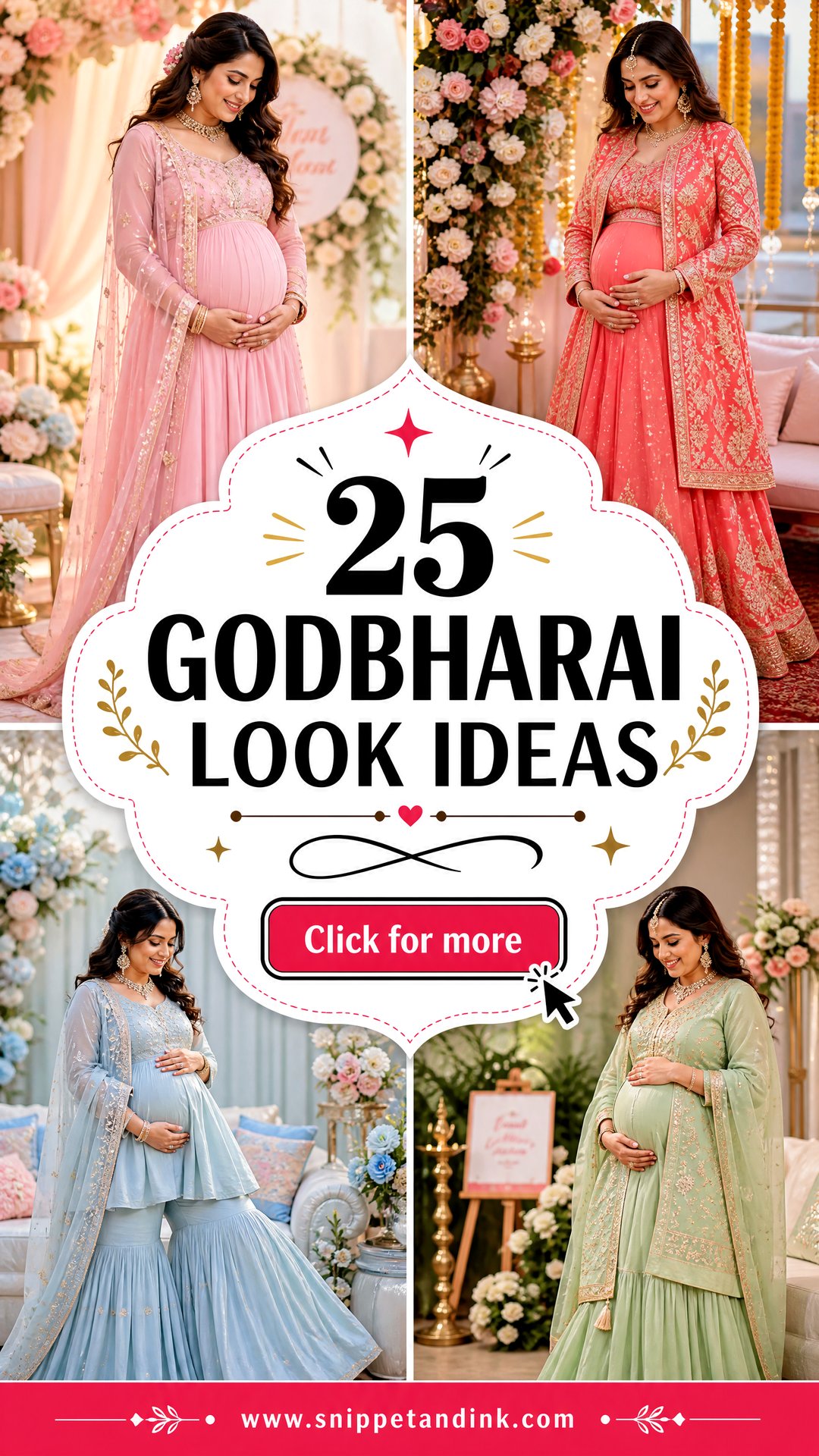
Dressing for a godh bharai is different from dressing for a wedding, because your body is still changing and you’ll spend most of the ceremony seated while relatives bless you. I plan these outfits around two things first: room for the bump and fabric light enough to sit in for hours. Anarkalis, soft sarees, relaxed lehengas and festive kaftans all handle that well. Pastels, lighter embroidery and pre-draped sarees have made the choice easier than it used to be. Your family’s customs come first, then the season, the venue and how easily you can get up from a low seat. The looks below run from quiet daytime sets to full traditional silk.
Fitting an Outfit for a Bump That Is Still Growing
The godh bharai often falls in the seventh or eighth month, and the hardest part of dressing for it is that your measurements on the order date won’t match the ceremony date. I plan for that from the first appointment instead of hoping for the best.
- Ask for adjustable waists everywhere: elastic panels, side ties or drawstrings backed with soft fabric.
- Have blouses cut with extra seam allowance at the sides and a back dori, so they can be let out in an hour.
- Book the last fitting one to two weeks before the ceremony, not a month out.
- Try the outfit sitting on a low seat or cushion, the way you’ll sit for the rituals, not just standing in the mirror.
- Wear the actual footwear to the fitting. Feet often swell late in pregnancy, so buy flats half a size roomier than usual.
If you’re borrowing a family saree, I’d still pair it with a new blouse. Old blouses rarely have the margin to let out, and squeezing into one is how a treasured heirloom becomes the most uncomfortable thing you wear all year.
1. Pastel Pink Anarkali Godbharai Look
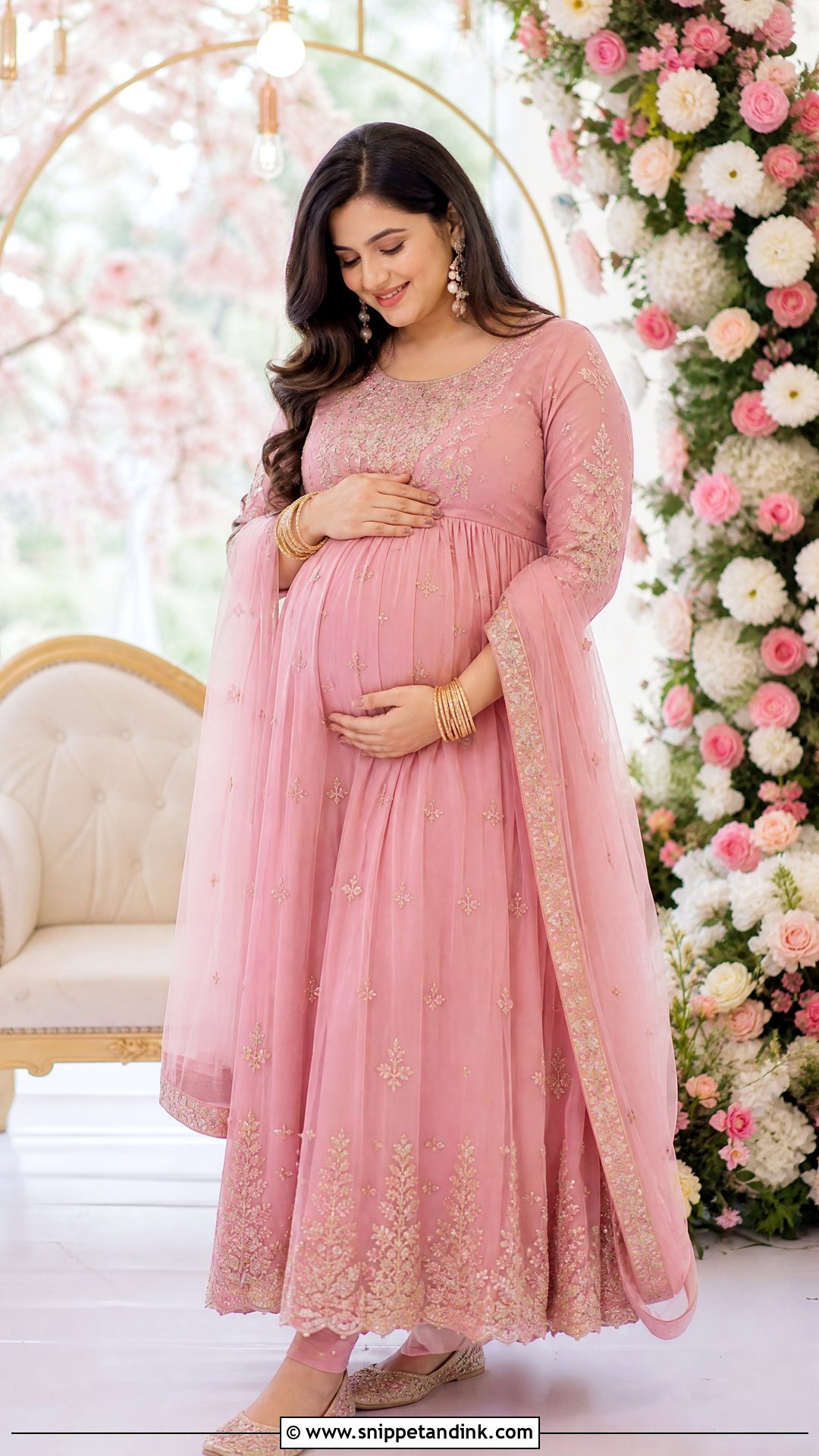
Empire-waist Anarkalis are the shape I reach for first with a mom-to-be, because the seam sits above the bump and the skirt simply falls past it. In pastel pink, I keep embroidery to the neckline and hem so the flare stays light, and pair it with a chiffon or organza dupatta. Tight sleeves are the thing to avoid; arms and wrists often swell late in pregnancy, so I ask the tailor for a little ease or a slit at the cuff. Pearl drops, slim gold bangles and embroidered flat juttis finish it. A loose low bun with a few face-framing strands, luminous skin, rosy blush and a pink lip keep it soft.
2. Yellow Floral Lehenga Godbharai Look
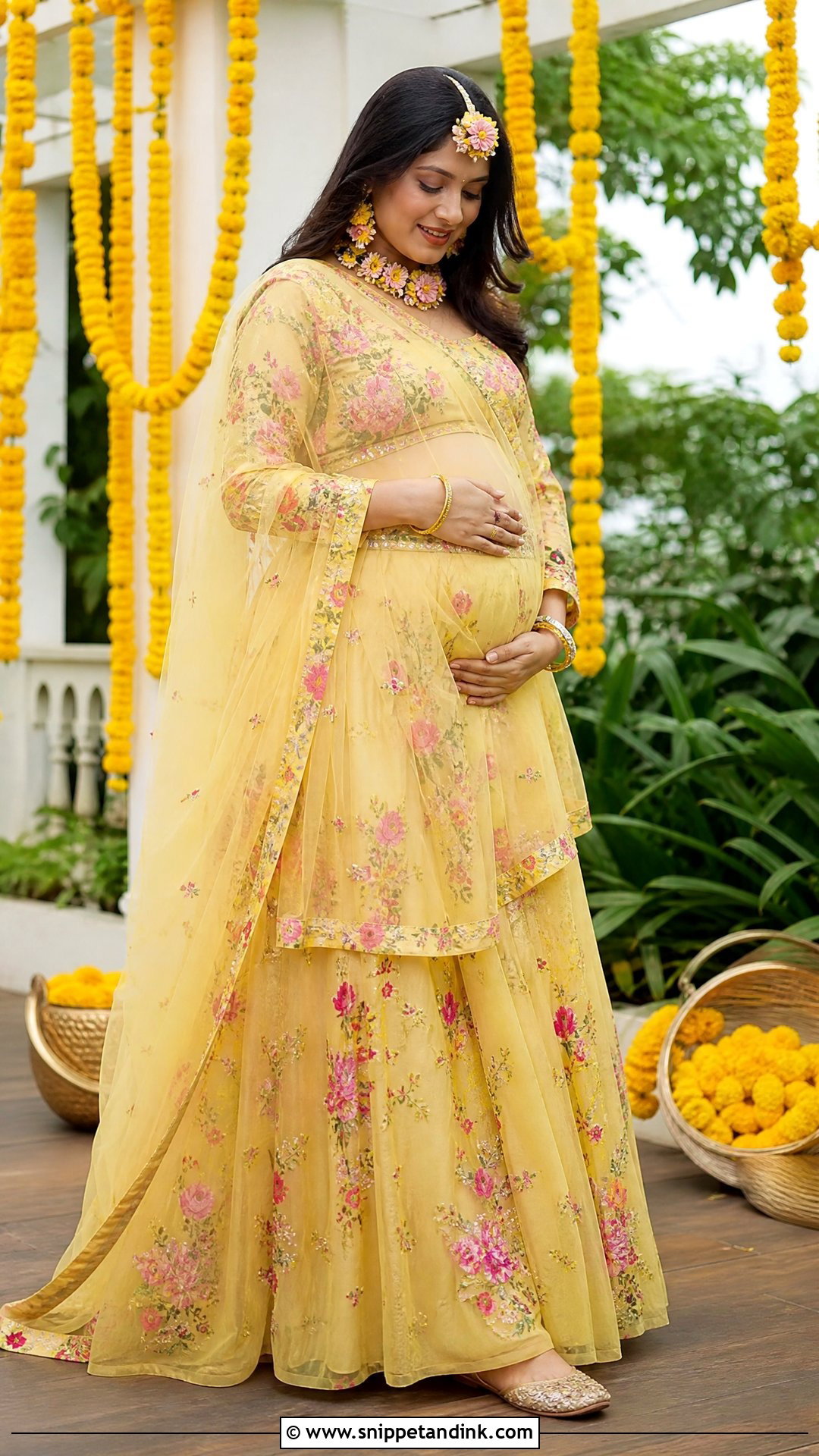
Yellow is a cheerful choice for a daytime or garden ceremony, and the outfit underneath matters more than the shade. A lightweight floral lehenga with an elastic or drawstring-adjustable waist can sit above or below the bump on the day, whichever feels better. I pair it with a longer blouse for coverage and a net dupatta over one shoulder. Light floral or pearl jewellery won’t add weight. Swap any heels for cushioned gold flats. Loose waves with tiny fresh flowers, peach blush and a coral-pink lip match the mood without stiff fabric or heavy work.
3. Green Banarasi Saree Godbharai Look
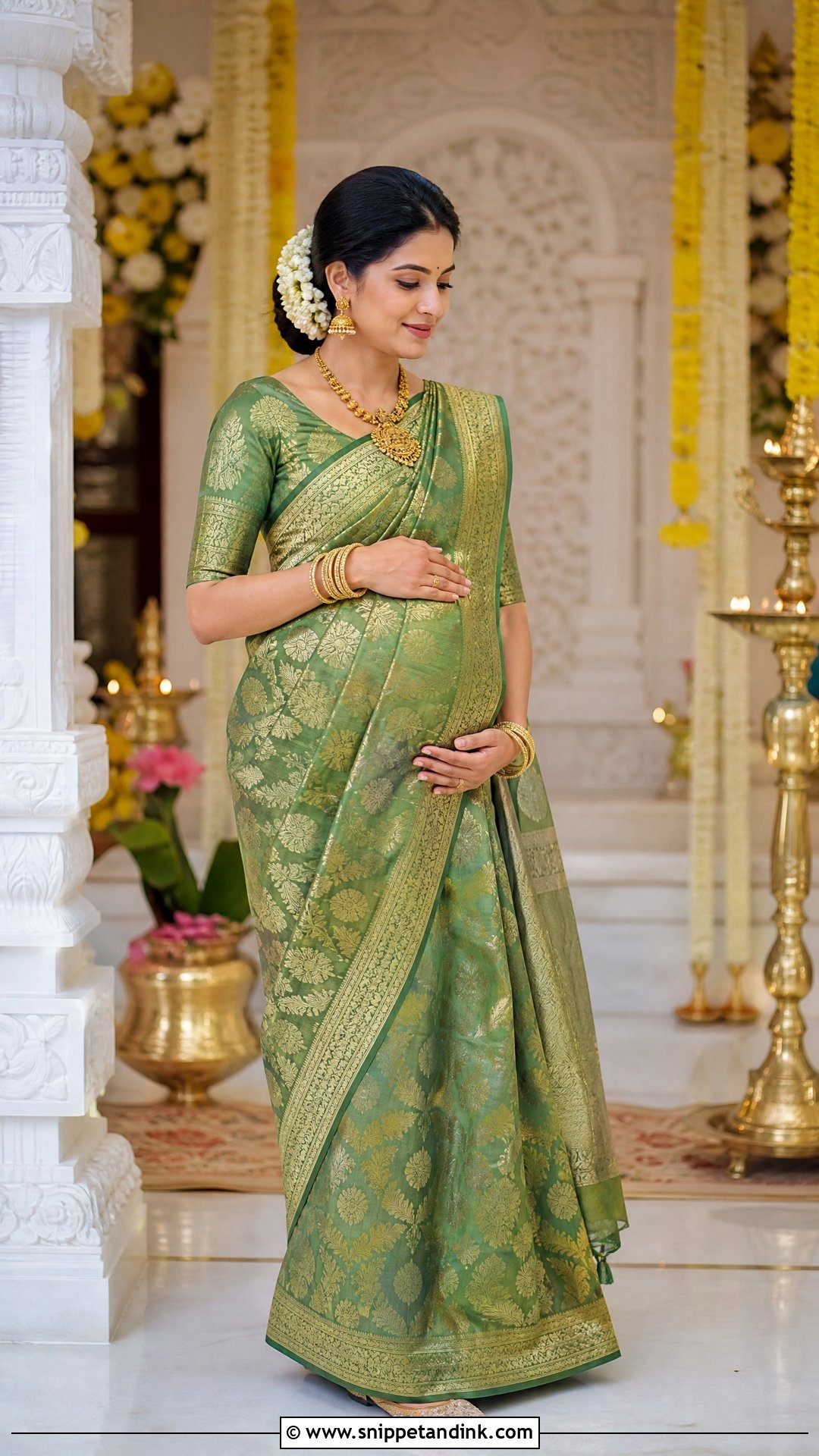
A full bridal Banarasi can be heavy enough to tire you by the second hour, so I look for a lighter weave with a narrower border. In green it still reads formal and traditional. The blouse needs elbow sleeves, soft lining and side margins the tailor can let out, since your bust may change between fitting and ceremony. I pin the pallu at the shoulder so you aren’t readjusting it during rituals. Gold choker, jhumkas, glass bangles and brocade juttis complete it, with a centre-parted bun and fresh jasmine. If the classic drape feels tight, ask for a looser tuck or a pre-stitched version on an adjustable band.
4. Lavender Pre-Draped Saree Godbharai Look
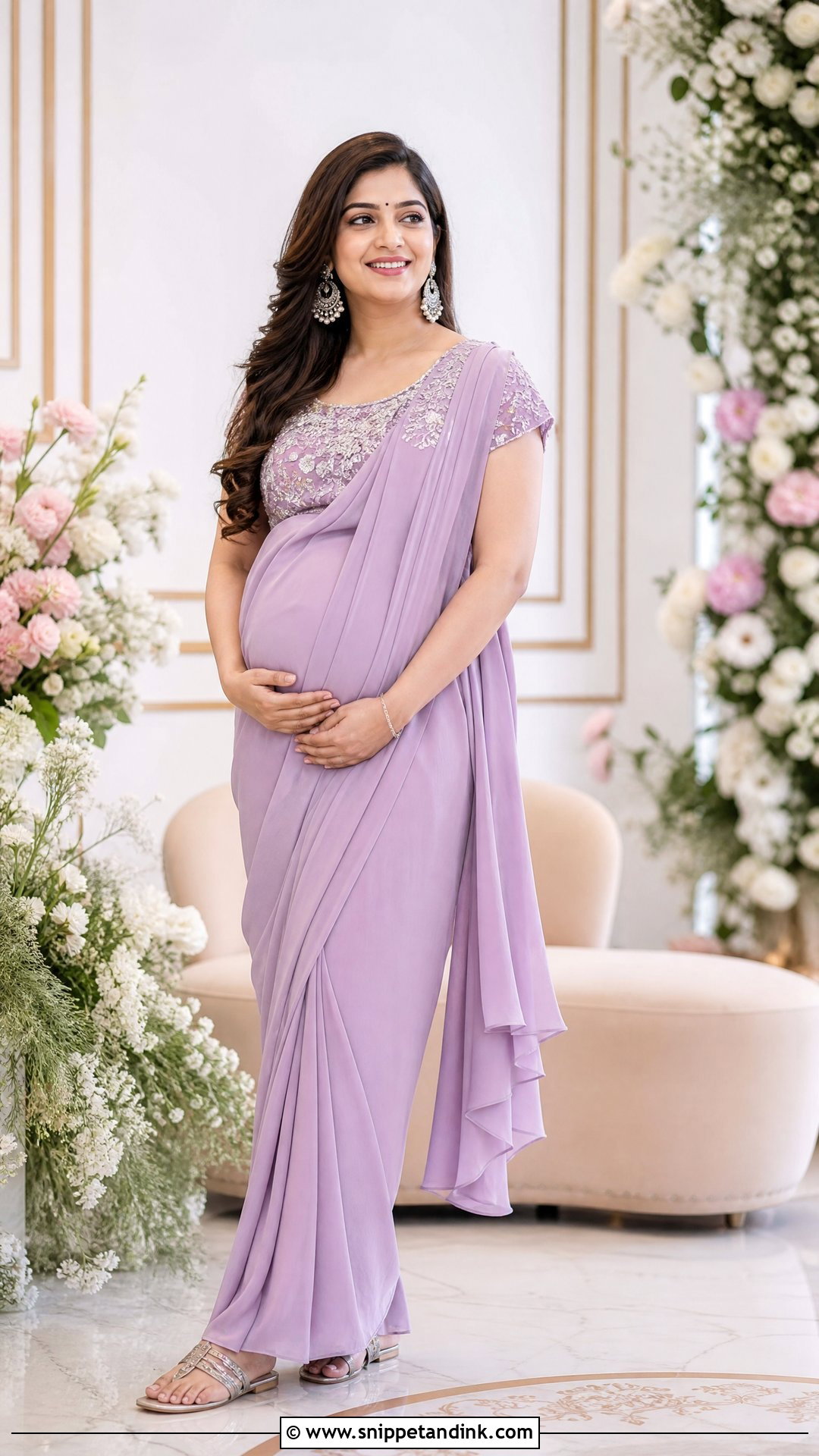
Pre-draped sarees solve the most common problem I see at these ceremonies: pleats coming loose while someone is sitting, standing and bending forward for blessings. In lavender georgette with light sequins, it looks festive without the colour shouting. The waistband should be soft and sit wherever is comfortable. I’d only add an embroidered belt if it rests above the bump without pressing. Silver earrings, a delicate bracelet and metallic flats keep the palette cool. Side-swept curls or a relaxed ponytail, mauve eyes and a muted berry lip finish the look.
5. Peach Sharara Suit Godbharai Look
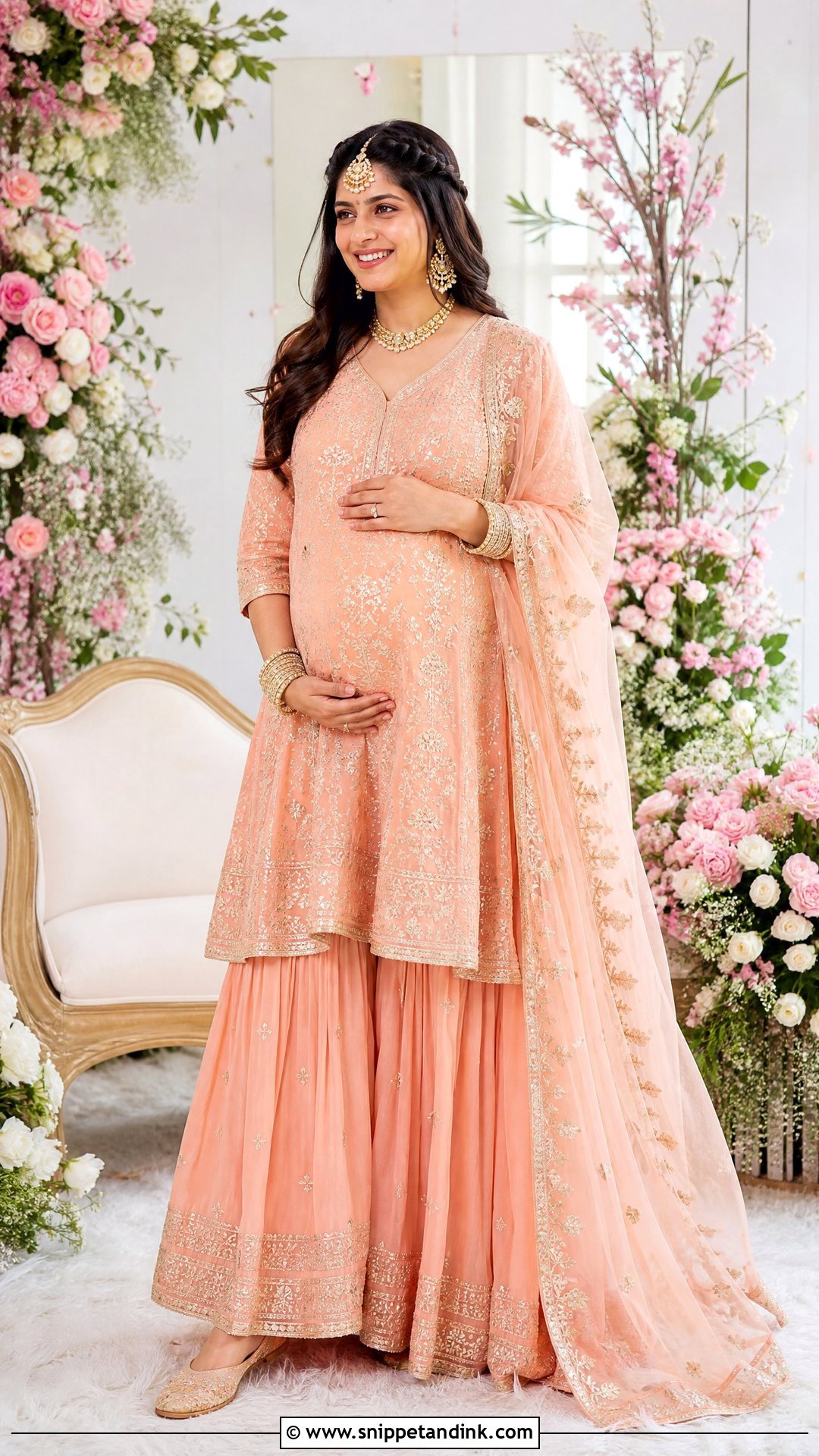
Peach is warm and kind to most skin tones in daylight. I’d pair a knee-length A-line kurta with light gota work and a flowing sharara, and the sharara’s waist is where I’m strict: a soft elastic panel, never a tight drawstring that digs in after an hour. A sheer dupatta with a narrow border adds polish without bulk. Kundan studs, a small maang tikka, stacked bangles and cushioned flats complete it. A braided half-up style keeps hair off the face when people lean in close, and peach blush with a glossy nude-pink lip suits the colour.
6. Ivory Chikankari Anarkali Godbharai Look
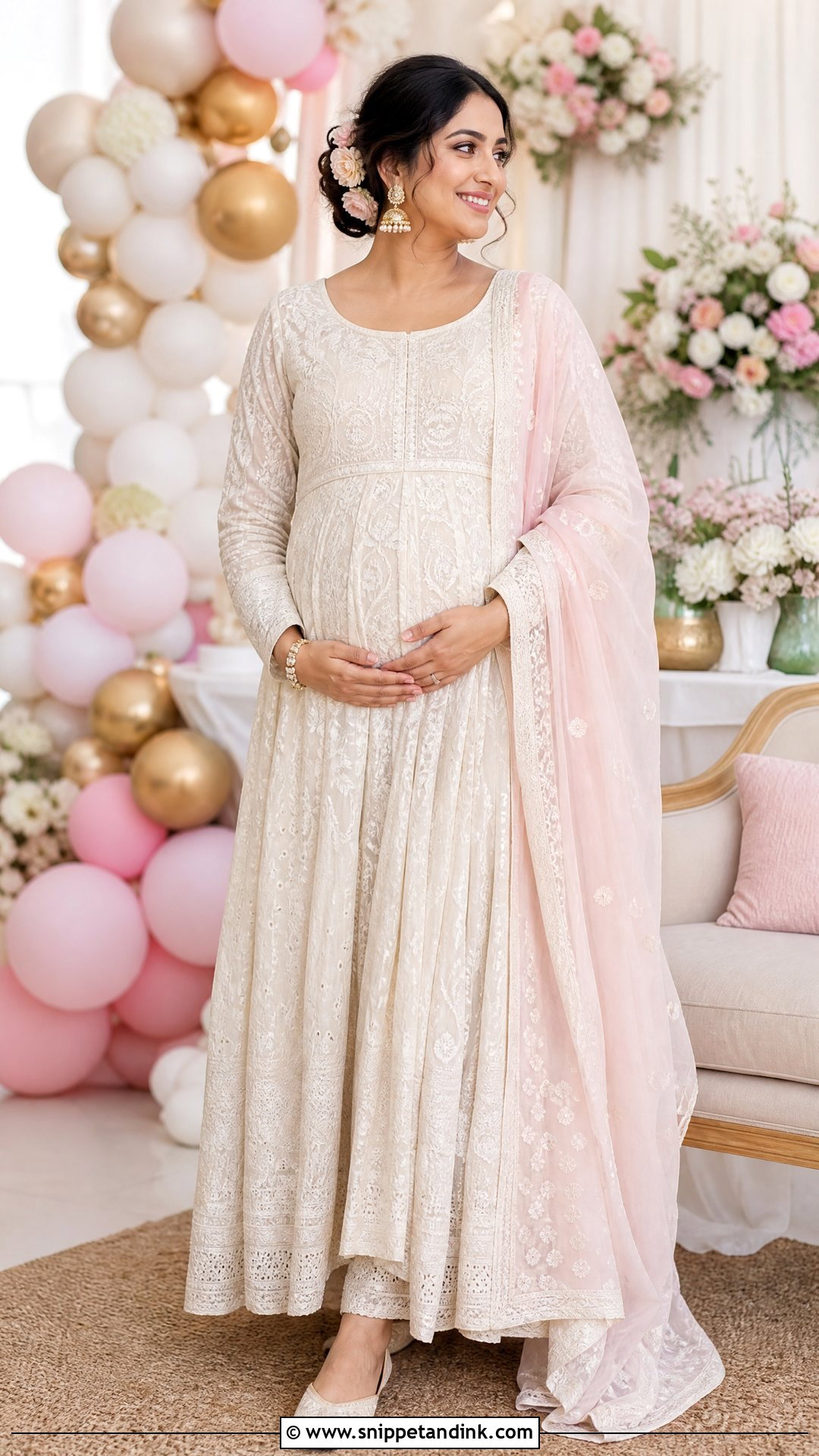
For a summer ceremony, an ivory Chikankari Anarkali is the coolest thing you can wear that still looks dressed. Chikankari is hand embroidery, usually on breathable cotton, modal or light Chanderi, and it stays airy even with dense work. Because ivory alone can look plain in group photos, I add a pastel dupatta in blush, mint or pale yellow. Pearl jhumkas, slim bangles and ivory juttis keep it tonal. Skip a belt; if you want definition, choose a kurta with embroidery gathered at the neckline. A loose bun with a few flowers, fresh skin and a rosy lip complete it.
7. Red Silk Saree Godbharai Look
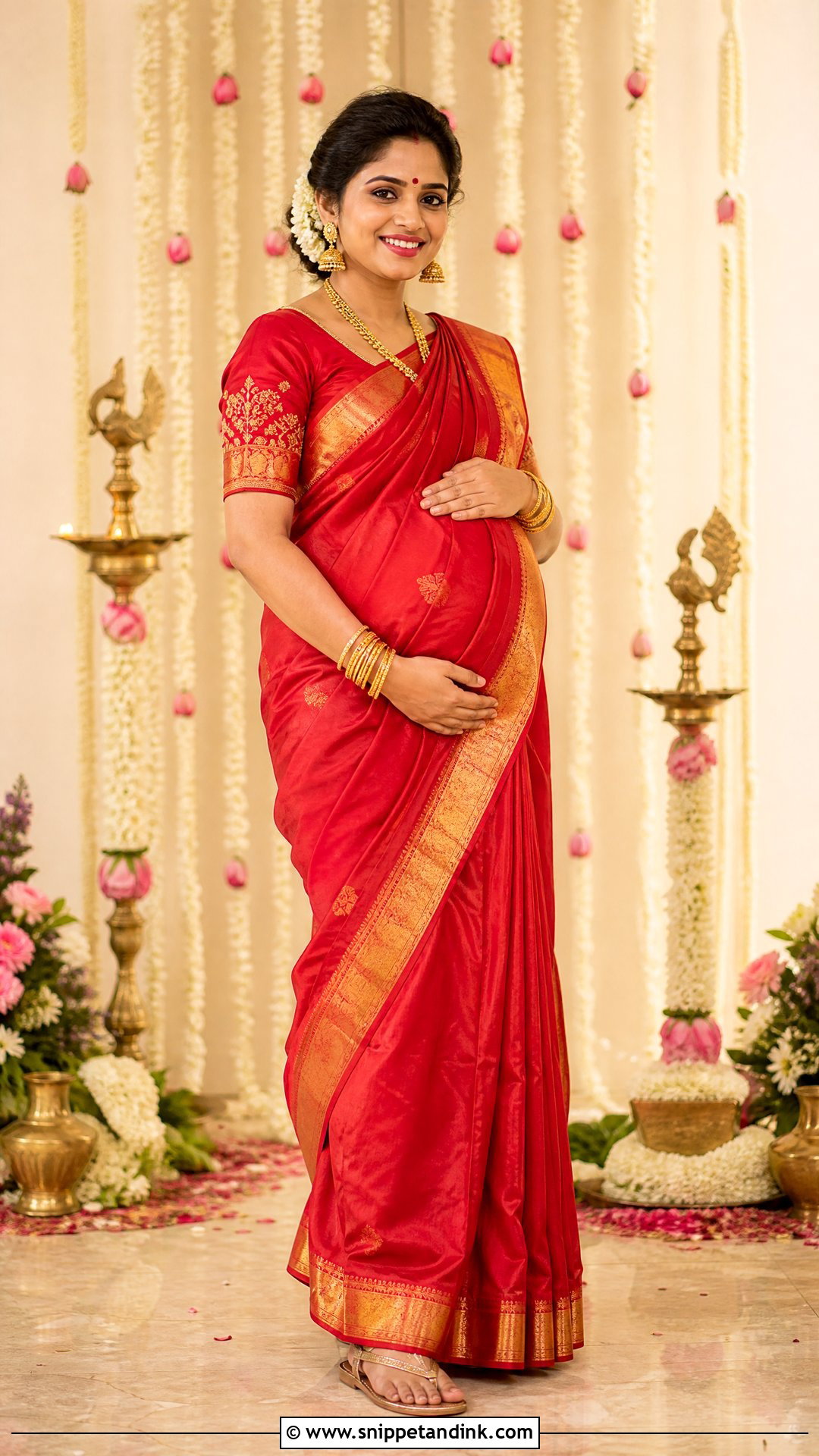
Red silk is the choice I see most in families who prefer strong traditional colour for blessings. Choose a soft silk with a medium gold border rather than a stiff, heavy one, because you’ll carry its weight all day. The blouse in gold, green or red needs elbow sleeves and a flexible closure. I keep the waist tuck relaxed and pin the pallu firmly. Temple jewellery, gold bangles and a small red bindi underline the classic feel. Flat gold sandals, a smooth bun with jasmine, warm blush and a brick-red lip. Red silk already does the work, so don’t pile on necklaces.
8. Mint Cape Lehenga Godbharai Look
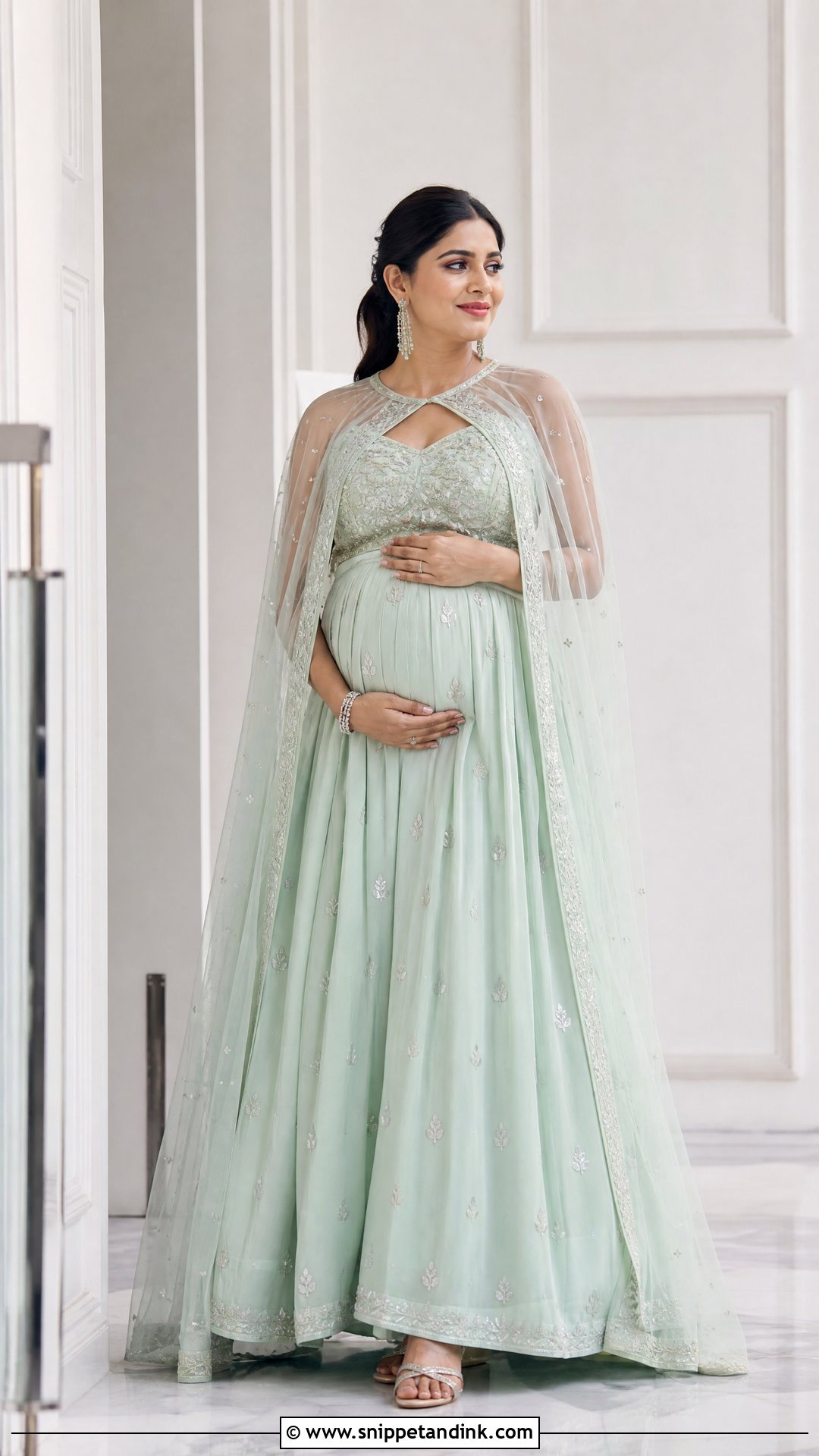
A cape lehenga takes away the one item that fights you all day, the dupatta. I pair a light mint skirt with scattered embroidery and an adjustable waist with a longline blouse, then add a sheer embroidered cape from the shoulders. The cape frames the bump without pressing on it and moves nicely in photos. Check the length: it should stop above the floor, or it catches under your heels every time you stand. Crystal earrings, a slim bracelet and champagne flats, plus a sleek low ponytail with curled ends and a nude rose lip, keep it modern.
9. Blue Embroidered Kaftan Godbharai Look
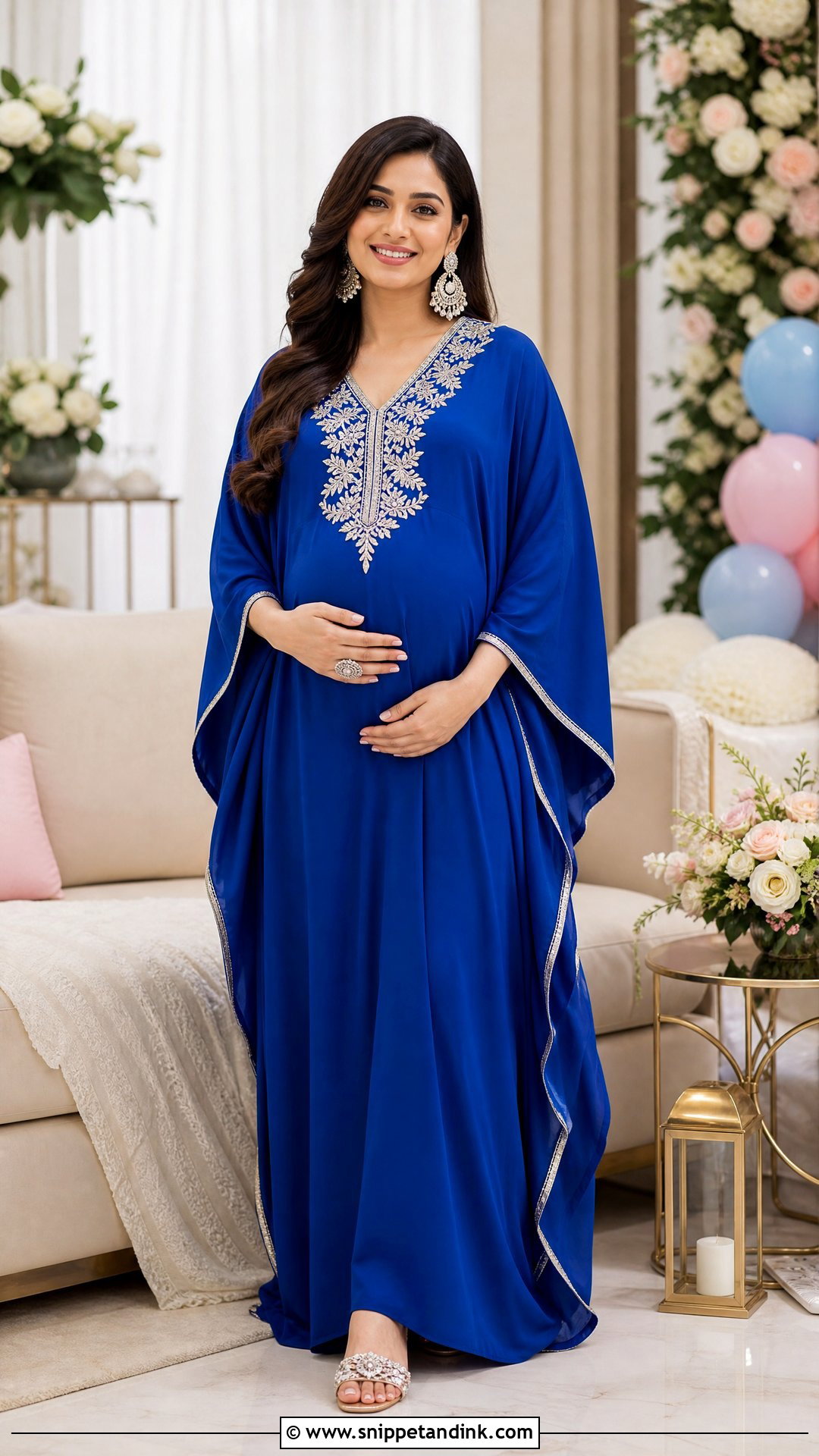
A blue kaftan is the most comfortable outfit here, and it still reads as occasion wear when the embroidery is concentrated at the neckline, cuffs and centre panel. Choose silk-blend or georgette with a lining, since thin fabric turns sheer in camera flash. I’d skip a tight waist tie; a loose seam under the bust shapes it without pressure. Silver earrings, a cocktail ring and embellished flats or low block heels add polish. Polished waves or a side braid with jewelled pins, navy liner and highlighted cheeks complete it. It suits a small ceremony at home best.
10. Marigold Gharara Godbharai Look
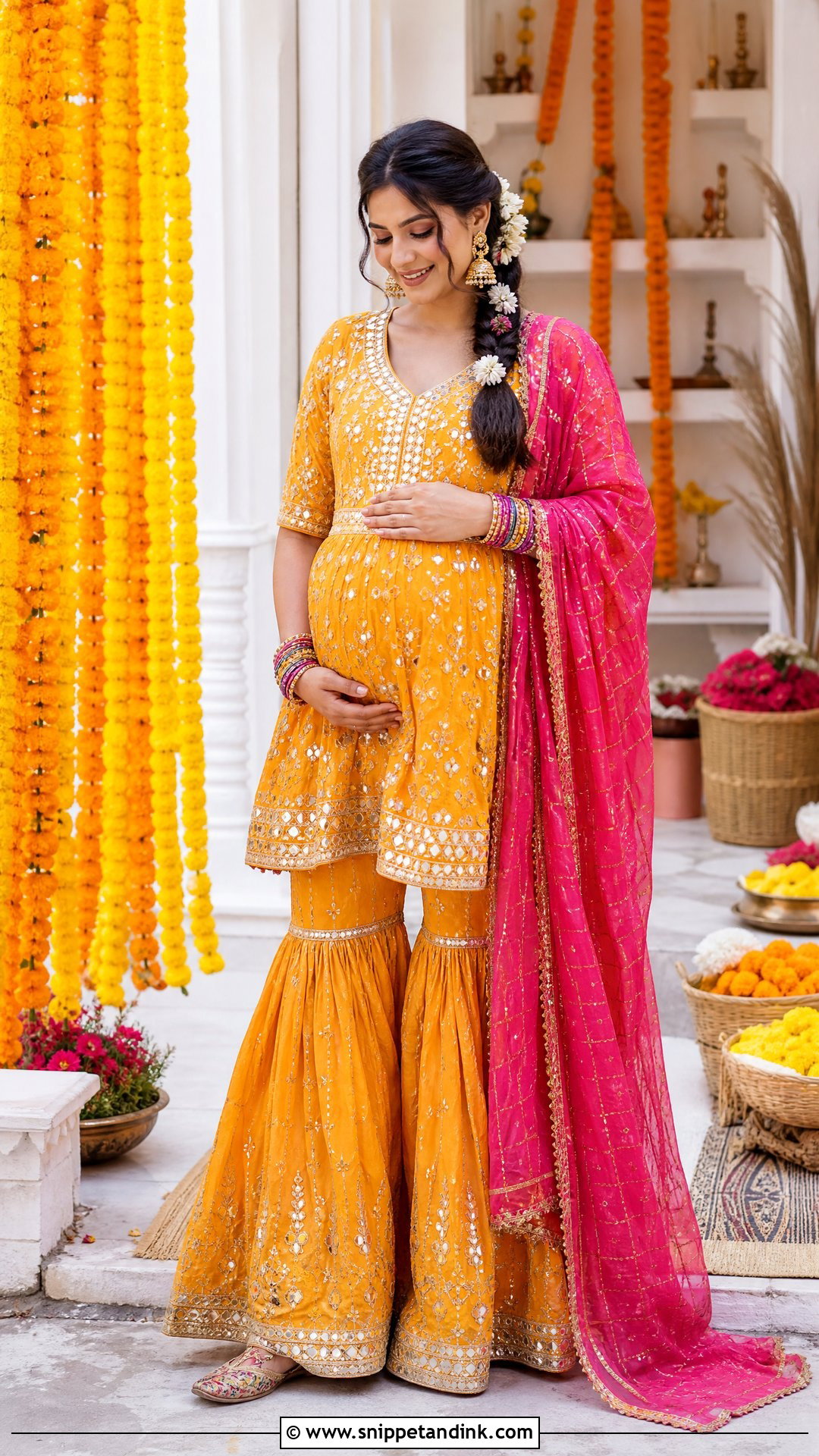
Marigold is warm, loud in a good way and suits a traditional setting. I build it from a short mirror-work kurta, a gharara and a light dupatta in pink or green for contrast. If you’re ordering weeks ahead, insist on a soft adjustable gharara waist, because the bump will be bigger by the ceremony than at the measuring appointment. Gold jhumkas, colourful bangles and embroidered juttis carry the festive mood. A low braid with small flowers stays tidy all day. Pin the dupatta on one shoulder so the flared legs of the gharara still show when you sit.
11. Rose Pink Angrakha Godbharai Look
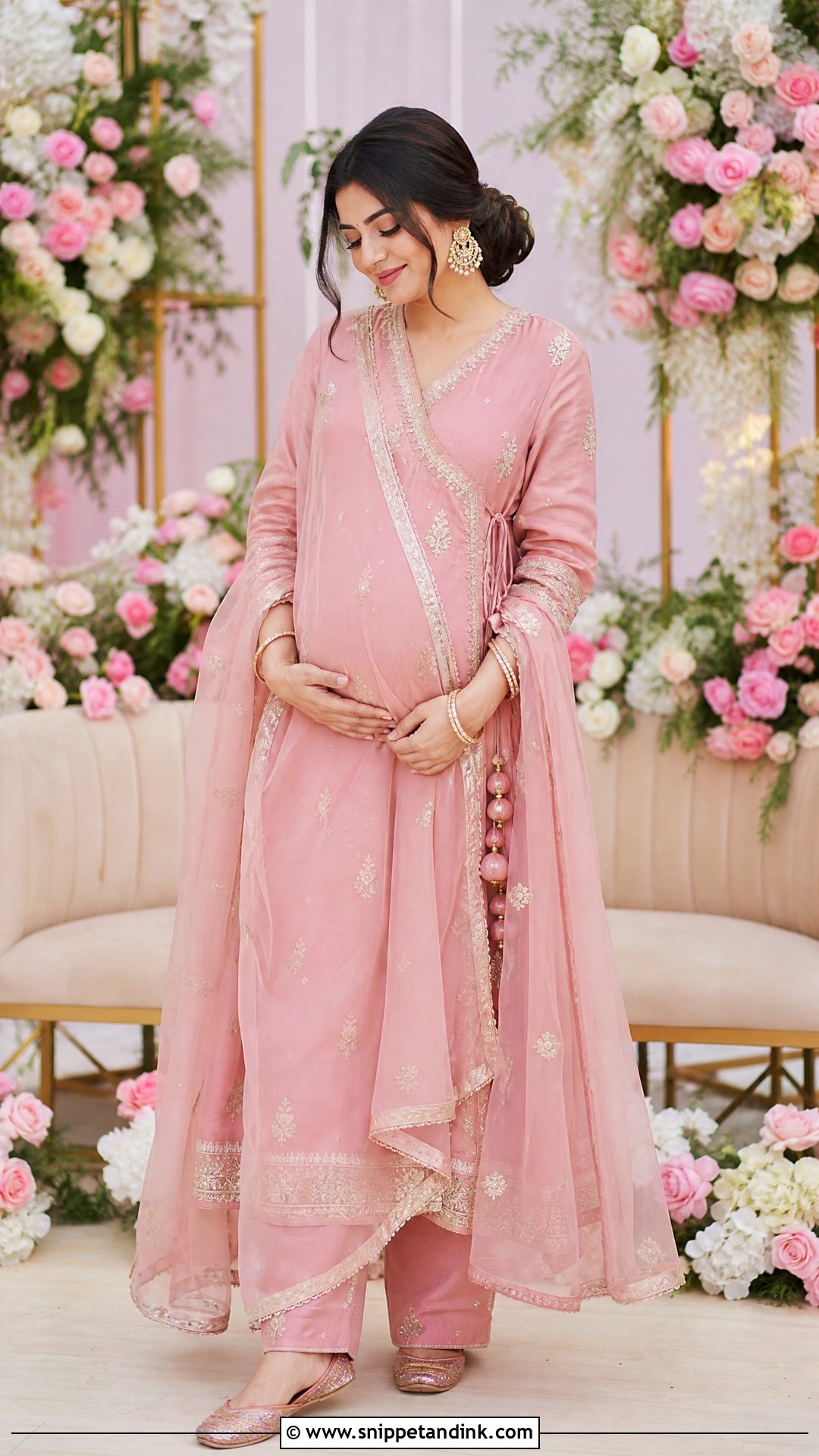
Angrakhas wrap across the body, which means the tie position decides whether this outfit is comfortable. I look for an empire-height tie, soft inner fastenings and a skirt that doesn’t pull across the bump when seated. Pair it with churidar or narrow palazzos and a light organza dupatta. Gold thread along the wrap neckline gives enough decoration. Chandbalis, slim bangles and pink-gold juttis finish it, with a soft side bun and rose tones on the face. Move any decorative tassels to the side rather than over the bump; they swing into laps and plates during rituals.
12. Teal Palazzo Suit Godbharai Look
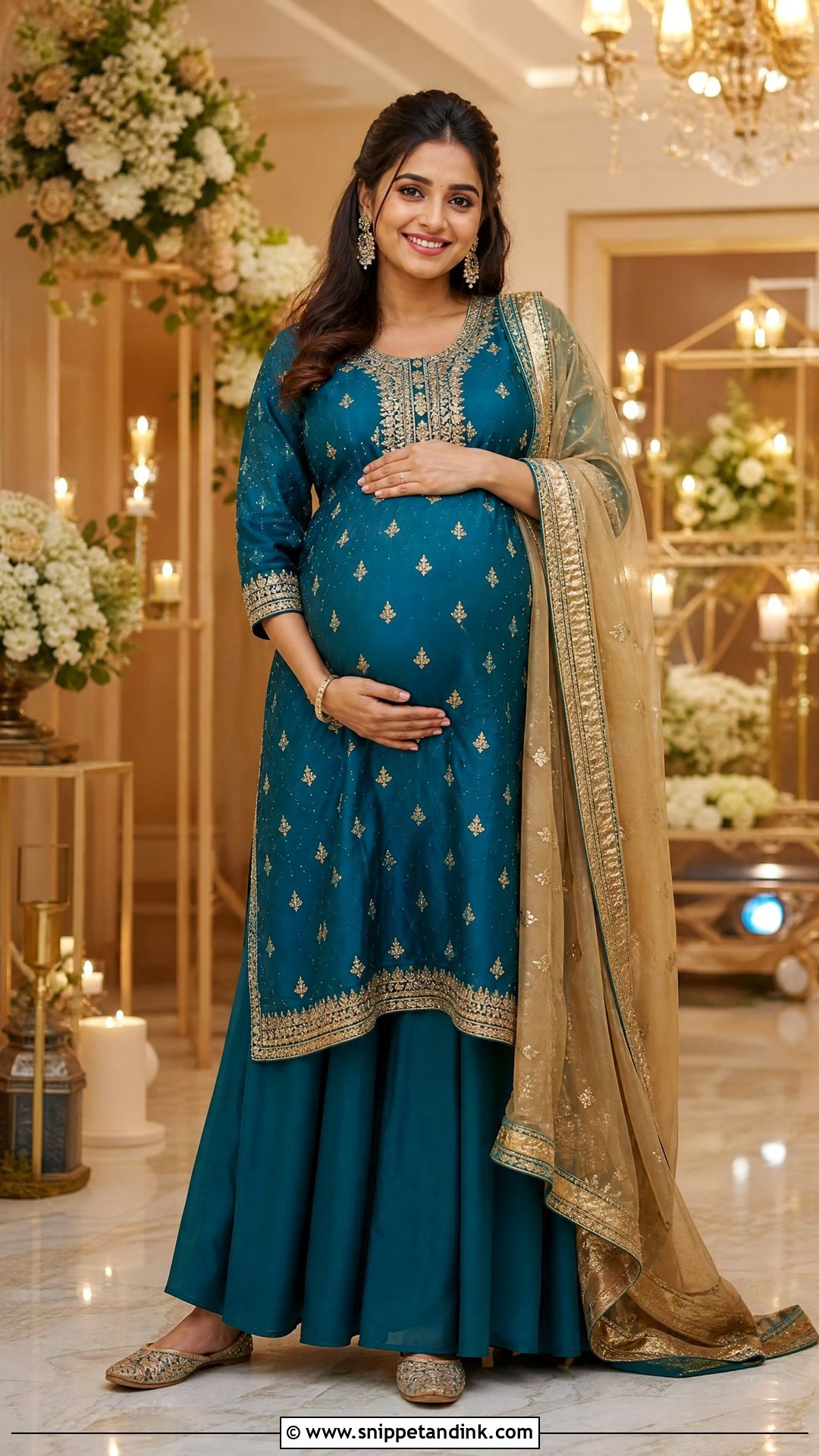
Teal suits both afternoon light and evening, and this is the look I suggest when someone dislikes volume. A long straight kurta with side slits and a little zari, cut to skim rather than cling, sits over wide palazzos with a flexible waist. A rust, mustard or antique-gold dupatta makes it ceremonial. Antique-gold earrings, a bracelet and cushioned juttis complete it. I like a half-up style here because it doesn’t pull on the scalp, which matters if you’ve been getting headaches. Keep the kurta hem above the ankle so you don’t tread on it rising from a low seat.
13. Floral Organza Saree Godbharai Look
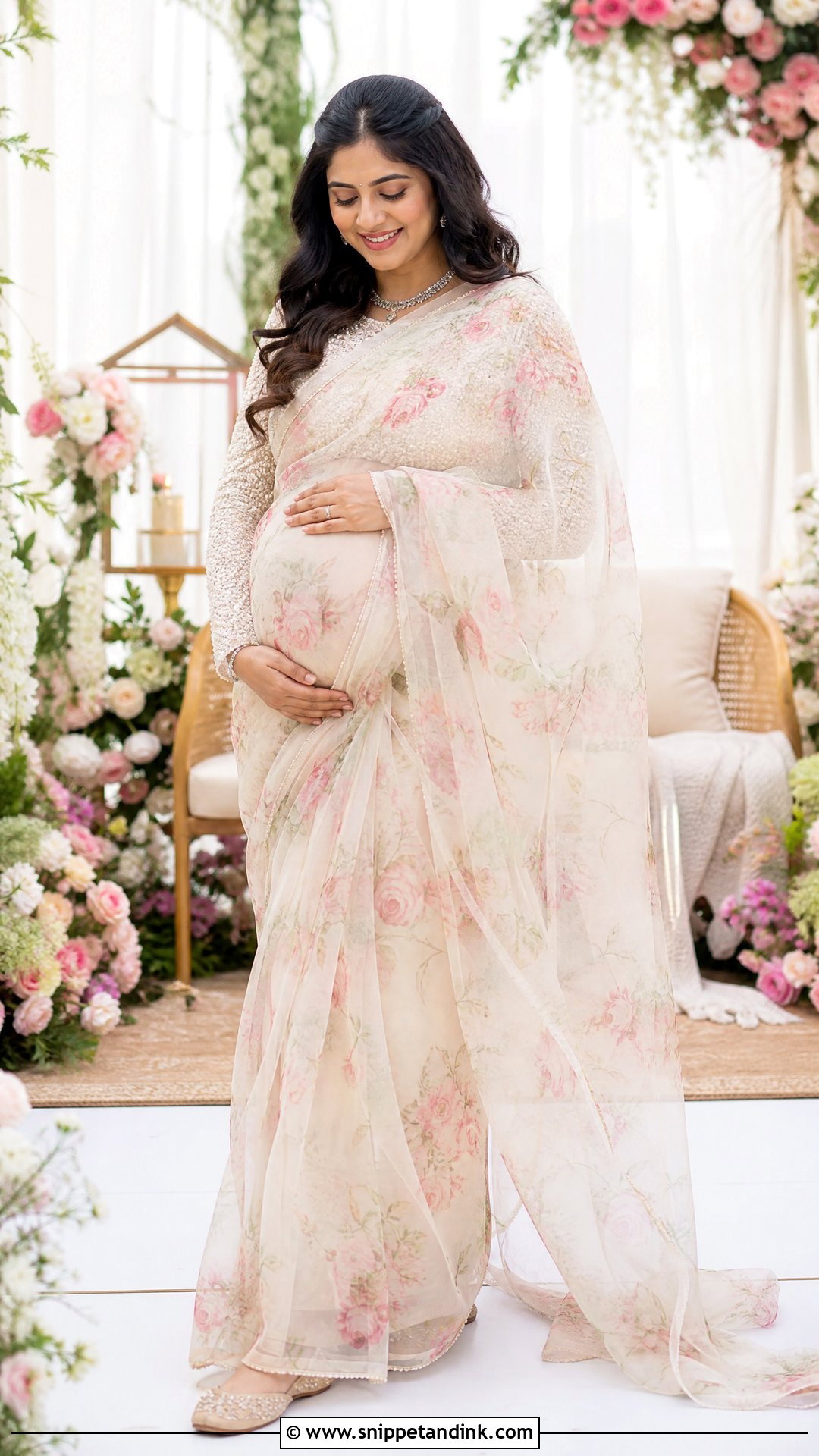
Organza varies a lot: some is crisp and stands away from the body, some is soft and drapes. For a pregnancy, choose the soft kind, or the saree adds width you don’t want. A scattered floral print in daylight looks fresh and light. Pair it with a pastel blouse with elbow sleeves and pearl or thread work, and pin the pallu loosely over one shoulder. Pearl earrings, a dainty necklace and neutral embellished flats keep it gentle. If draping feels awkward, have the pleats pre-stitched so you keep the saree look and lose the fiddling.
14. Purple Velvet Anarkali Godbharai Look
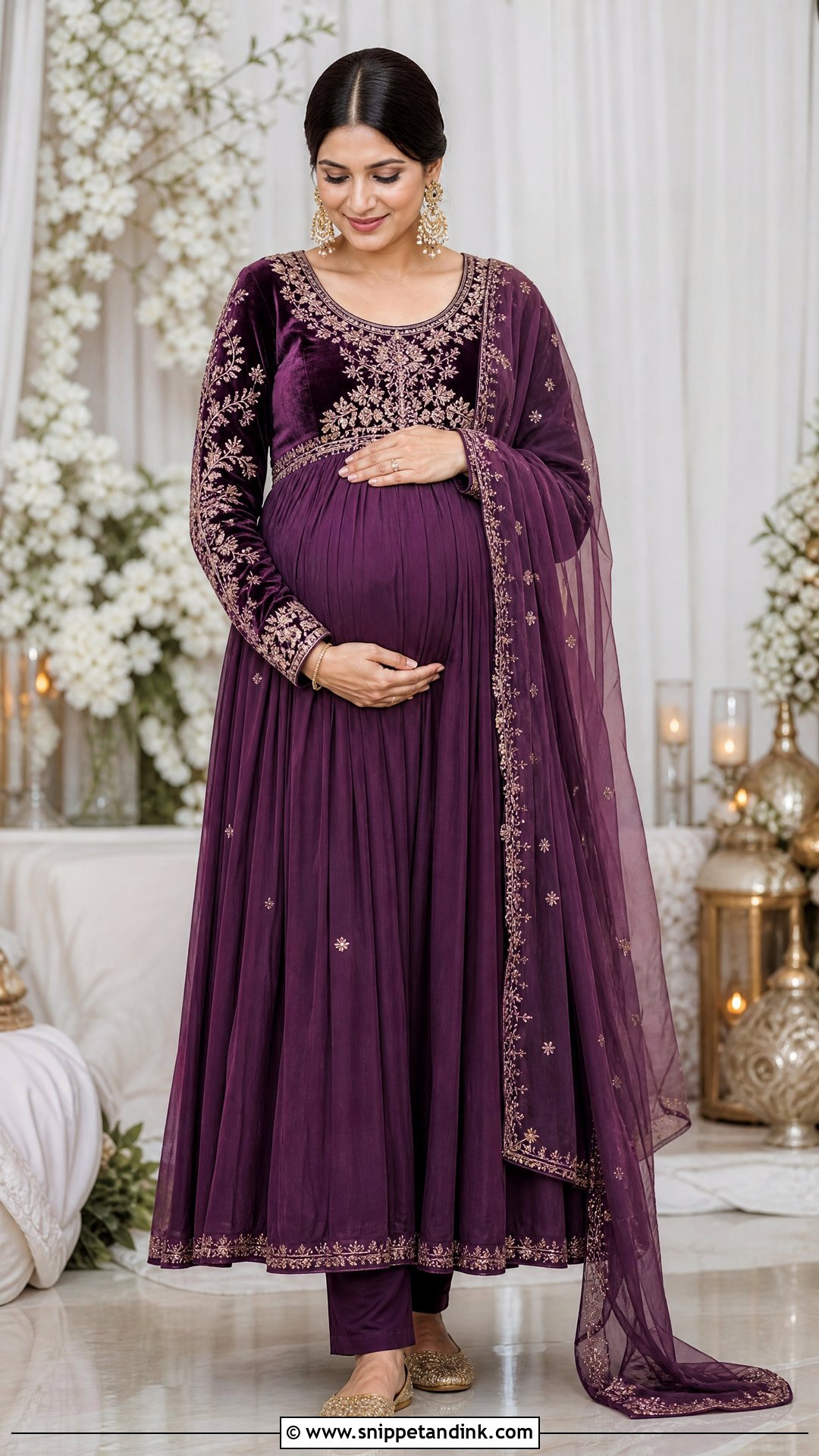
Velvet only makes sense in cool weather or a well air-conditioned hall, because it holds heat and pregnancy already raises your body temperature. Even then, I prefer a velvet bodice with a lighter, flowing skirt rather than thick fabric head to toe. Antique-gold work at the neck and cuffs gives the purple a regal edge. Narrow pants, a light net dupatta and gold juttis complete it. Choose one statement piece, chandbalis or a medium necklace, and keep the rest simple. Make sure the bodice has room to breathe deeply while seated.
15. Coral Jacket Lehenga Godbharai Look
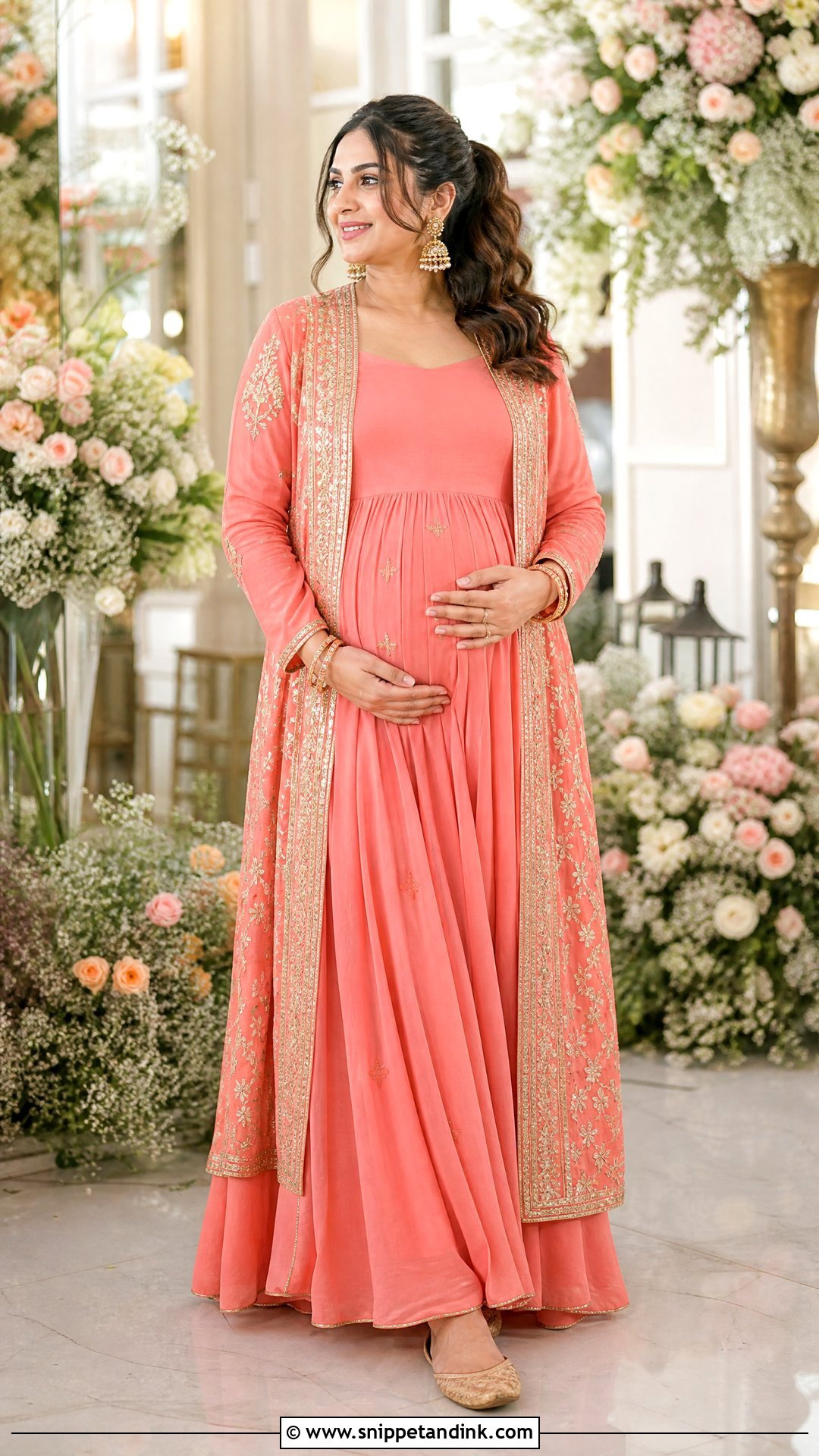
A jacket lehenga gives you layers without a dupatta to manage. I start with a light solid coral skirt and a longer maternity blouse that covers the waist, then add an open embroidered jacket to the knee or calf. The vertical opening frames the body and leaves the skirt free. Watch the shoulders: heavy embroidery there pulls on your neck and back over a long event, so choose a lighter jacket. Gold drops, a delicate bangle stack and neutral juttis or low block heels finish it, with a textured ponytail and coral blush.
16. Gold Tissue Saree Godbharai Look
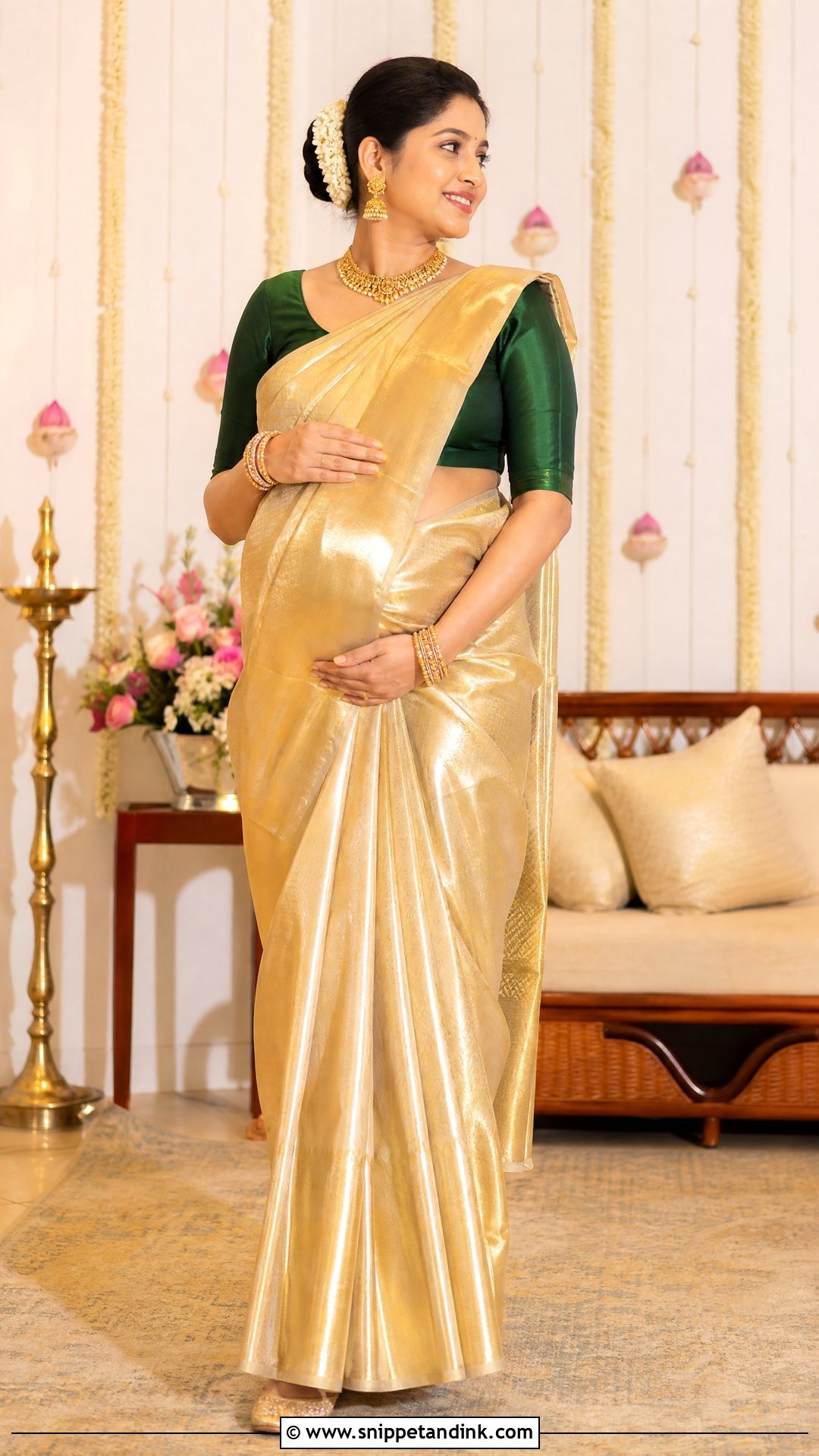
Tissue sarees have a metallic sheen woven into them, so gold tissue catches every light in the room. I balance it with a matte blouse in deep green, maroon, pink or ivory. Tissue can be slippery and springy to drape, so pre-pleating is worth it here. Prioritise a relaxed drape and a well-fitted blouse over a sharply cinched waist. Traditional gold earrings, a short necklace, bangles and cushioned metallic flats complete it, with a sleek bun and white flowers. Keep highlighter light; with shiny fabric and gold jewellery, extra glow on the skin reads as sweat in photos.
17. Powder Blue Peplum Sharara Godbharai Look
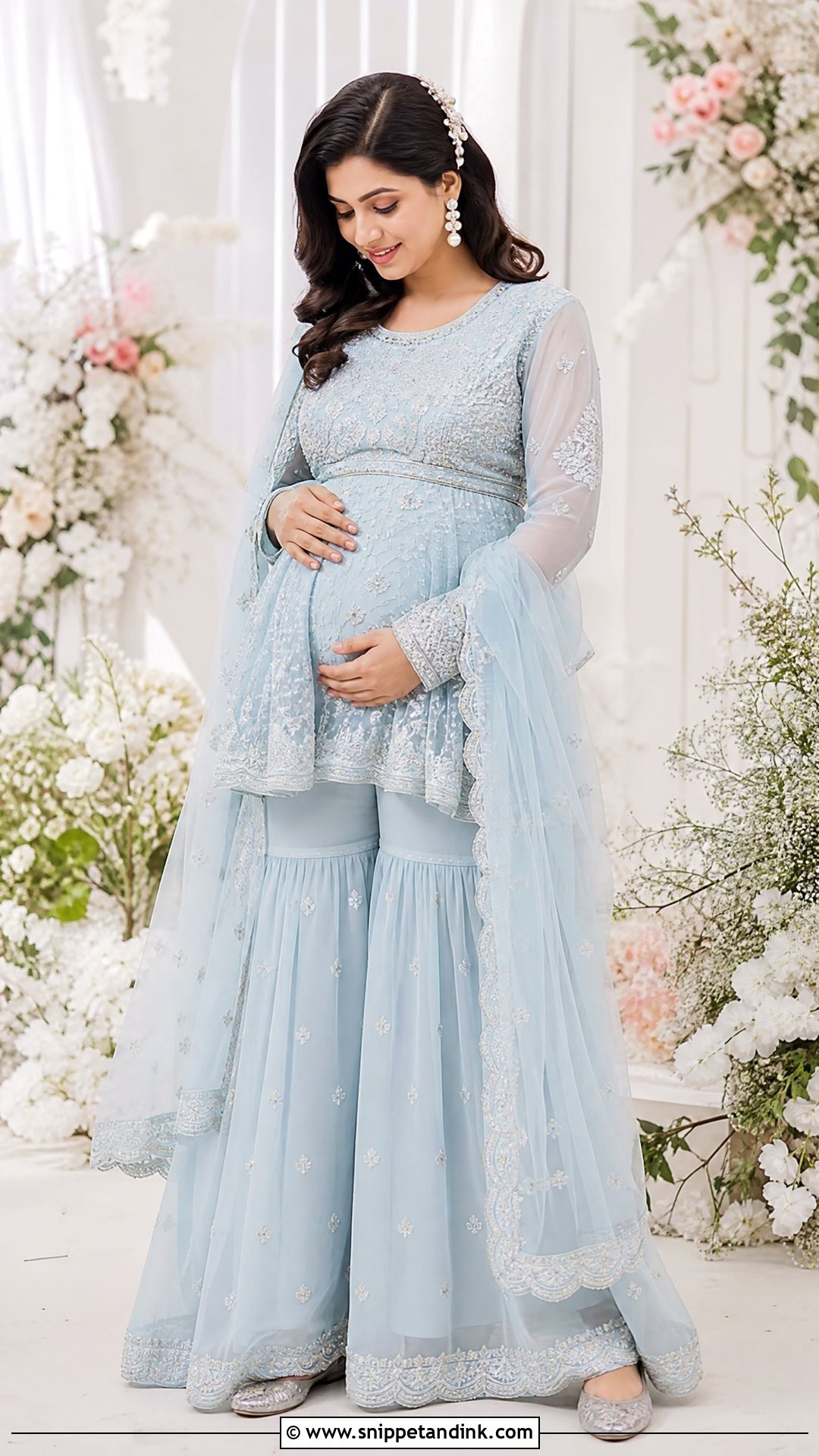
The peplum is the piece to fit carefully here. A raised waist seam that flares gently over the bump looks graceful, but a peplum that ends right at the widest point of the bump cuts the body in half. I’d go a little longer. Powder blue with silver thread, pearls or tiny mirrors suits the flowing sharara underneath. A sheer dupatta draped loosely across the arms or pinned at one shoulder, pearl drops, silver embroidered flats and soft half-up curls keep it youthful. Pale grey-blue on the lids and a satin rose lip suit the cool colour.
18. Rani Pink Bandhani Saree Godbharai Look
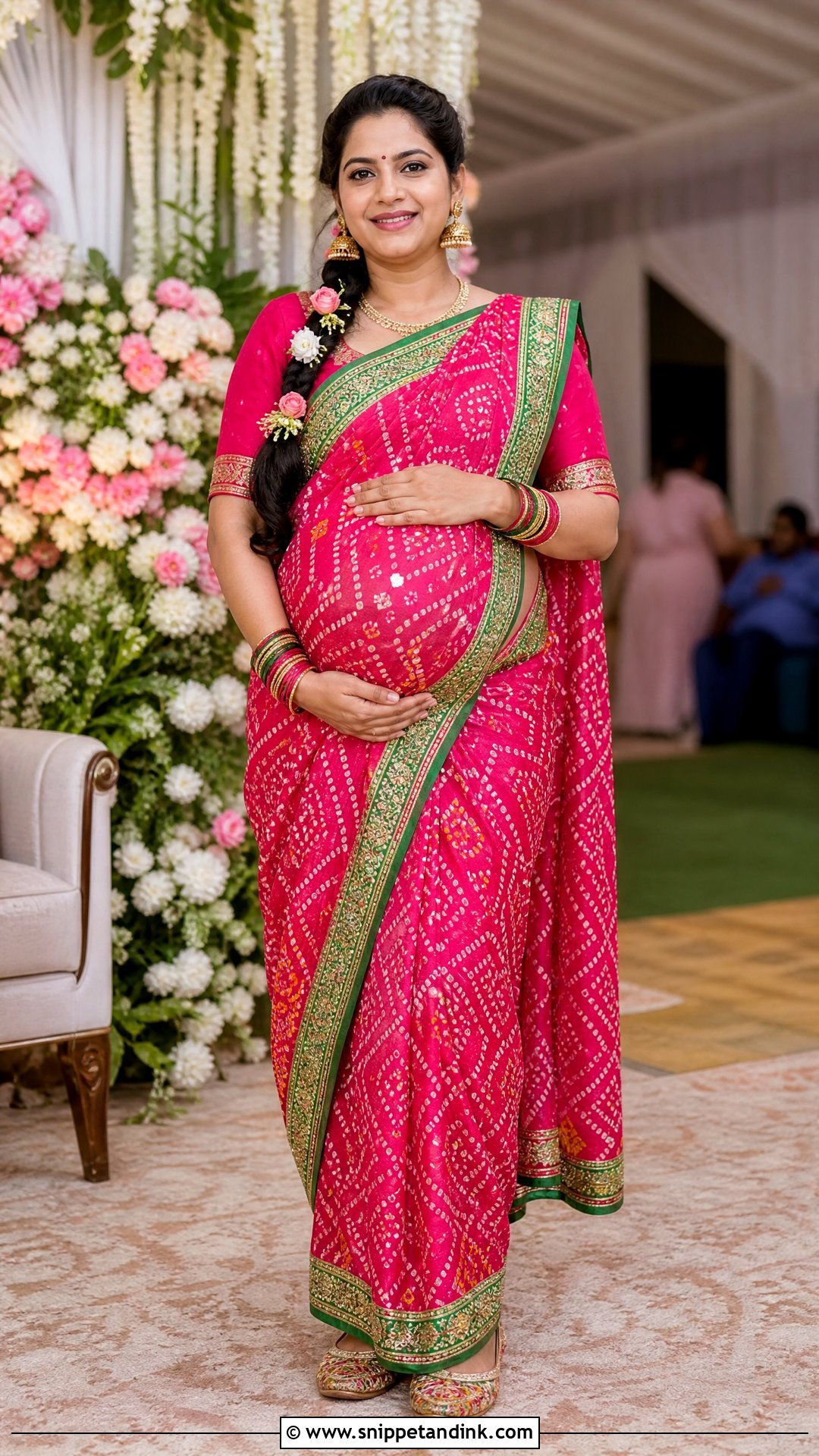
Bandhani is tie-dye made by binding tiny points of cloth before dyeing, and in rani pink it’s bold and joyful. A light georgette or silk-blend version with a green, orange or gold border is far easier to wear than heavy silk. I keep the blouse plain so the dots carry the outfit, and a pre-stitched drape helps over a long ceremony. Gold jhumkas, glass bangles, a small bindi and juttis suit it. A low braid with gold ornaments or flowers, kohl-lined eyes, warm blush and a pink that complements rather than copies the saree complete it. If the blouse neck is busy, skip the necklace.
19. Sage Green Kurta Skirt Godbharai Look
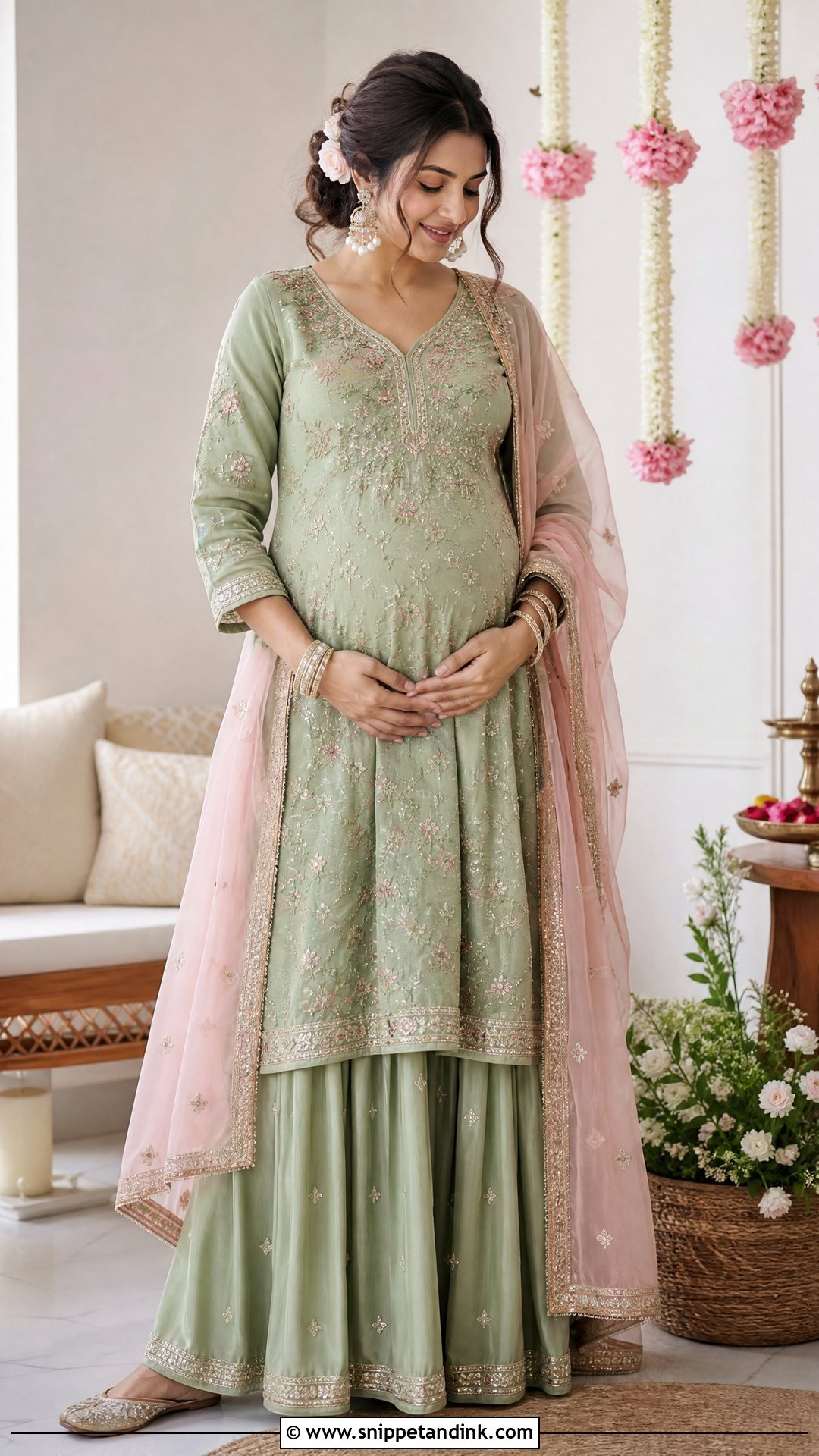
Sage green feels calm and suits a small ceremony at home. I’d pair a knee-length A-line kurta with side openings over a full skirt in matching or softly contrasting fabric, so the skirt can swing under the kurta. Embroidery stays tonal or limited to a narrow gold border. A blush or ivory dupatta, pearl jhumkas, stacked bangles and neutral flats complete it. A loose low bun with tiny flowers along one side, soft brown eyes and a nude-pink lip keep it fresh. The pieces split up nicely for rewearing after the baby arrives.
20. Orange Silk Lehenga Godbharai Look
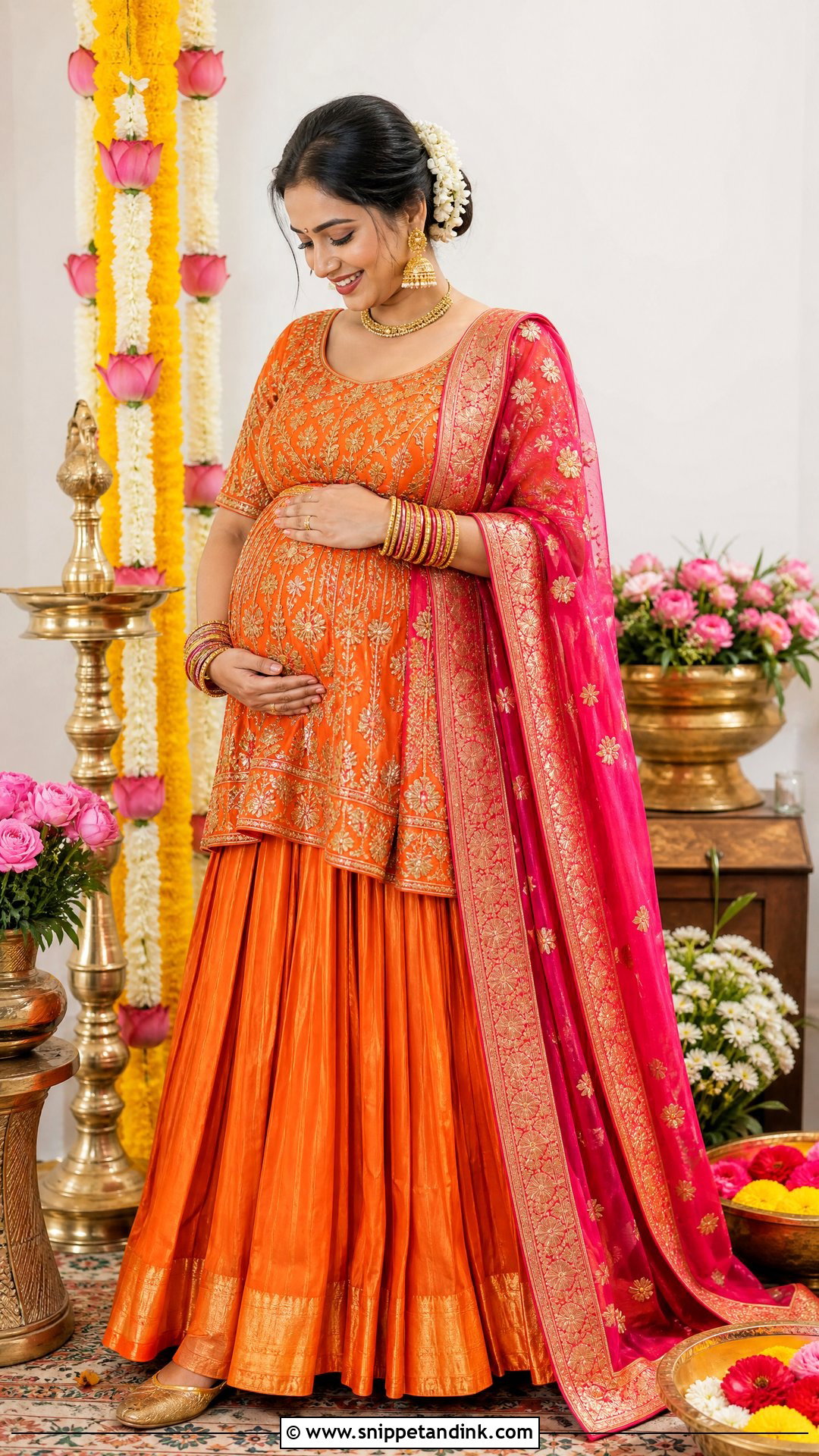
Orange silk is warm and festive, and the lehenga needs broad pleats and an adjustable waist so it sits comfortably. A longer blouse with gold embroidery and supportive sleeves gives coverage. I drape a pink or green dupatta over one shoulder, leaving the front open around the bump. Temple earrings, gold bangles and brocade juttis carry the traditional story. A centre-parted braid or bun with jasmine, a bindi and a coral-red lip finish it. Don’t put heavy borders on every piece; let either the blouse or the dupatta be the detailed one.
21. White And Gold Maternity Gown Godbharai Look
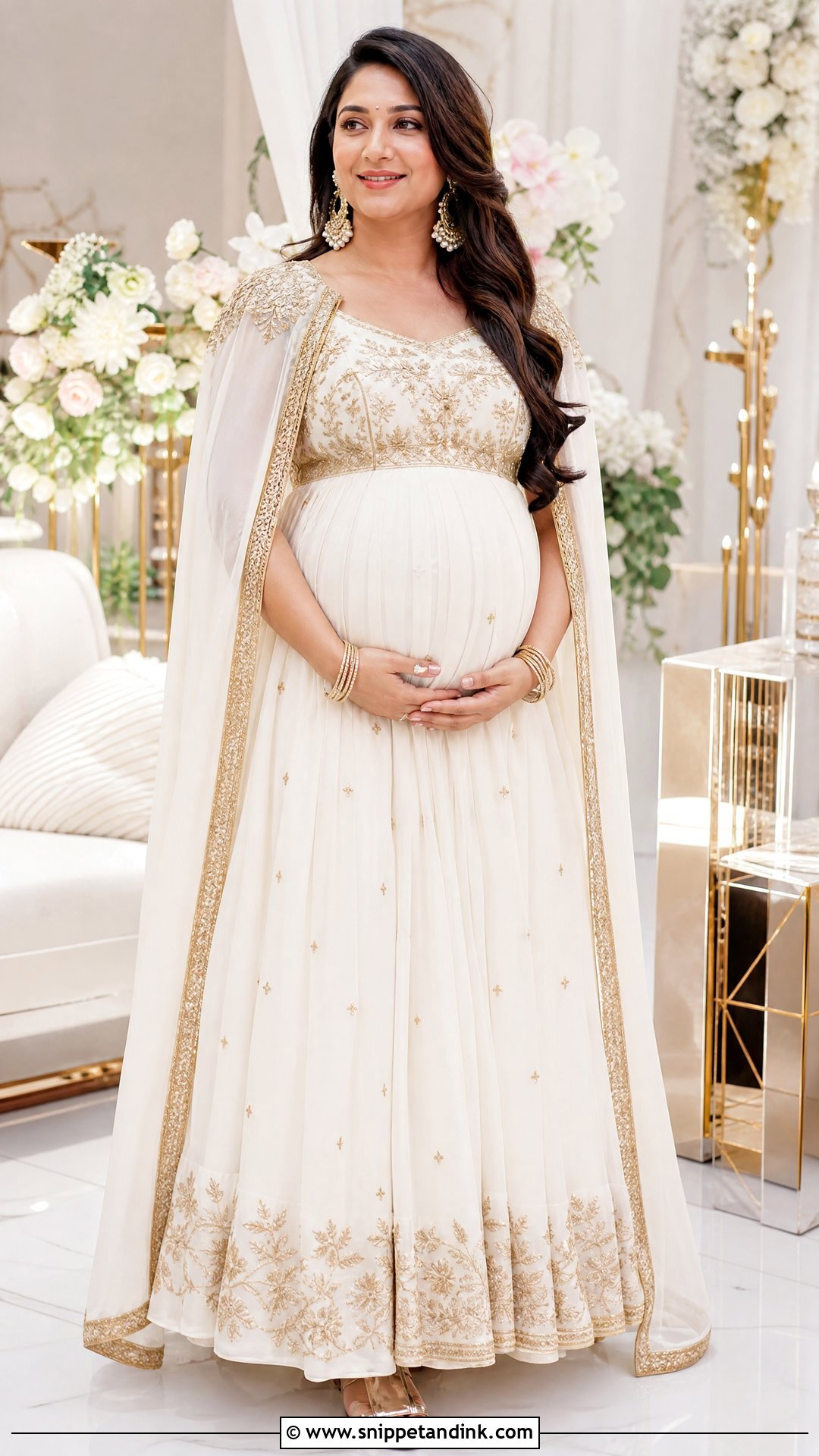
Some moms-to-be want a gown, and that can still honour the occasion. Choose a white or ivory empire-line maternity gown with gold embroidery in Indian motifs, then add a detachable embroidered cape, a draped shoulder panel or a light dupatta for the ceremonial part. Kundan earrings, gold bangles and metallic flats pull it toward tradition. I check two things at the fitting: full lining, and a hem that skims the shoes without dragging, because you’ll be stepping around trays and diyas. It suits a mixed celebration with rituals and party games.
22. Maroon A-Line Kurta Godbharai Look
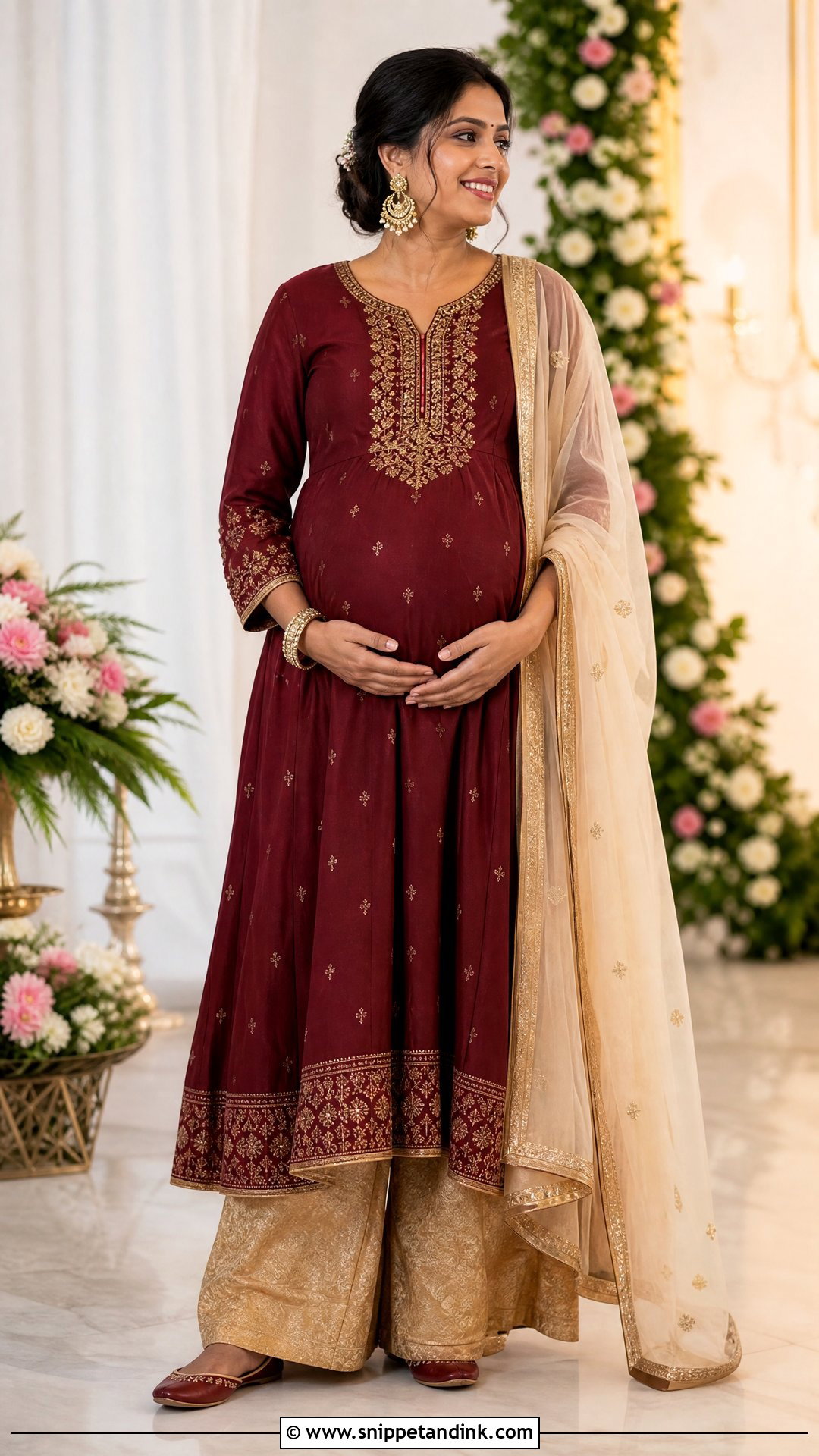
A maroon A-line kurta is the low-volume option for anyone who feels swamped by flare. Calf length, antique-gold embroidery, three-quarter sleeves and a gentle flare at the waist read formal without fuss. Straight trousers or relaxed palazzos and a light beige or gold dupatta complete the set. Antique earrings, one statement bangle and maroon or gold juttis finish it. The detail I insist on is the trouser waist: an elastic maternity panel rather than a fitted waistband, because you’ll be sitting cross-legged or on a low stool more than you expect.
23. Ombre Draped Saree Godbharai Look
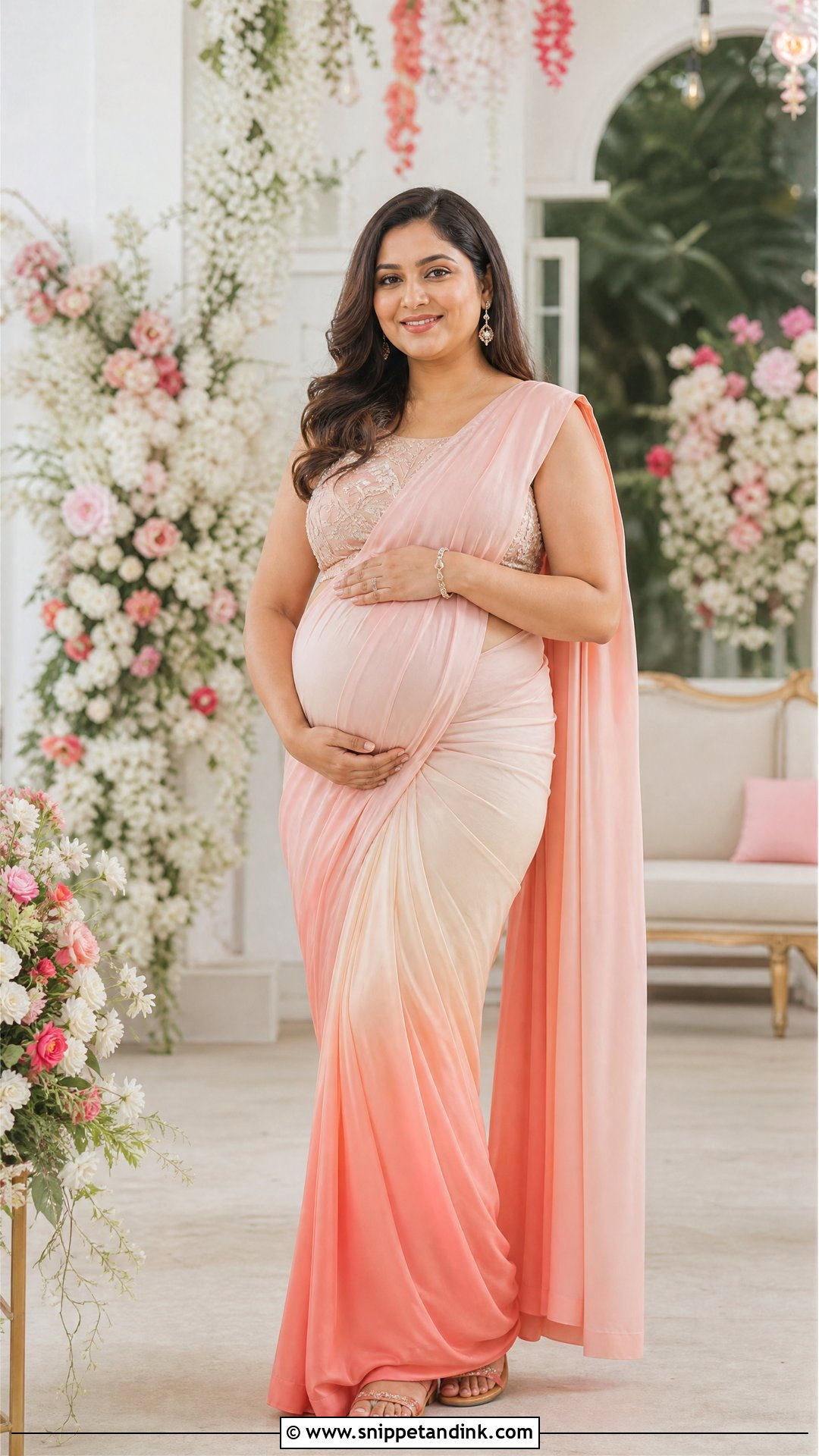
An ombre draped saree brings colour without any dense embroidery, which keeps the fabric light. Look for pre-draped chiffon or georgette that moves from blush to peach, blue to lavender or yellow to pink. I match the blouse to one shade from the gradient, usually the darker end near the pallu. A cape sleeve or lightly worked neckline means you can skip the necklace. Crystal earrings, a slim bracelet and neutral flats. Waves tucked behind one ear show the earrings. Keep makeup in one colour family, and check that the drape falls away from the bump rather than across it.
24. Printed Co-Ord Cape Godbharai Look
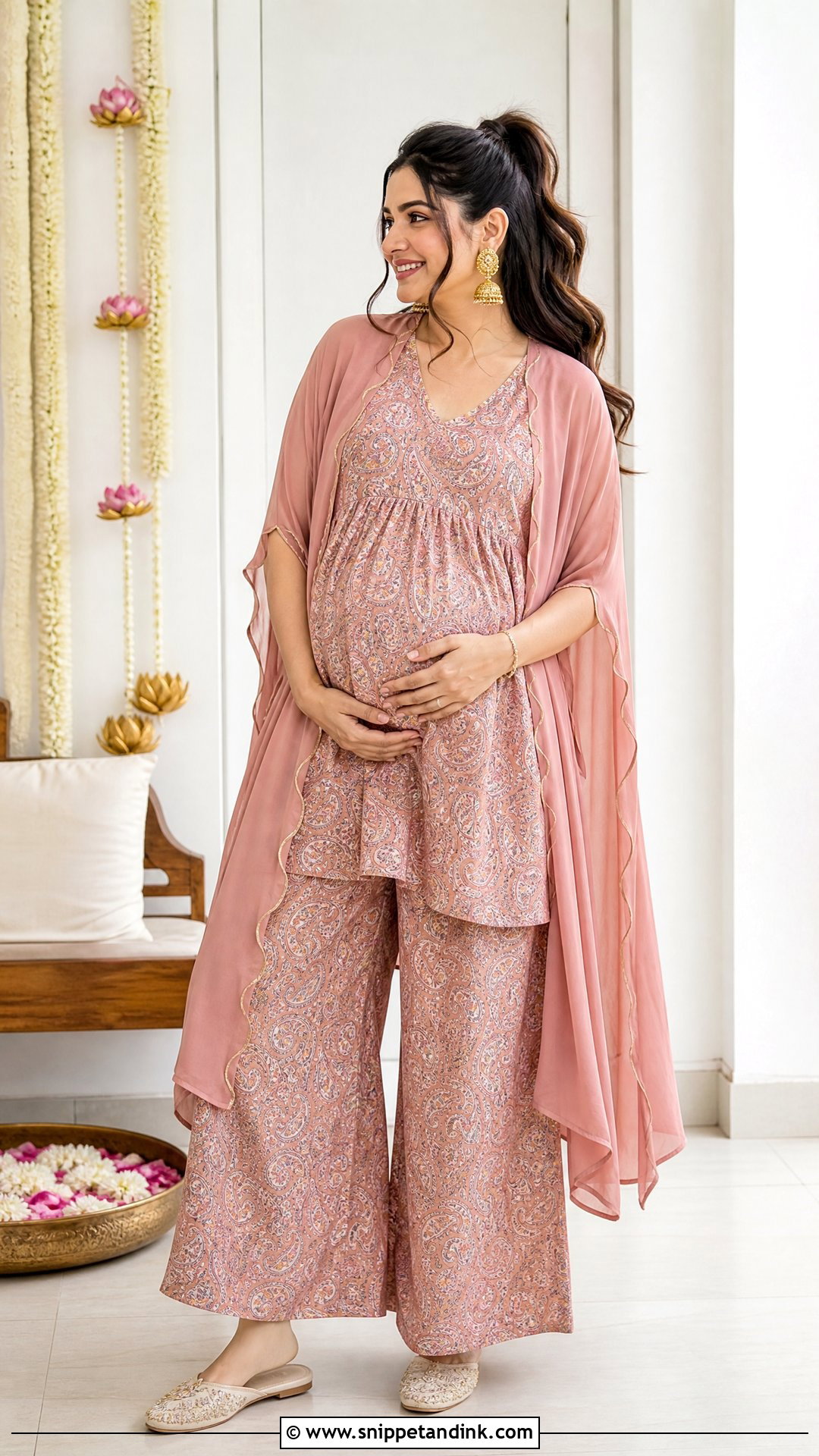
A printed co-ord with a cape is the most relaxed outfit here, and it suits a modern ceremony at home. Wide-leg pants with a soft maternity waist and a loose tunic in the same print form the base; a solid lightweight cape makes it look like occasion wear. Floral, paisley or small block prints read best in daylight. Gold hoops or jhumkas, a structured mini bag and cushioned mule flats complete it. A high ponytail with gentle waves keeps it neat. Of everything here, this is the outfit you’ll actually wear again.
25. Kanjeevaram Saree Godbharai Look
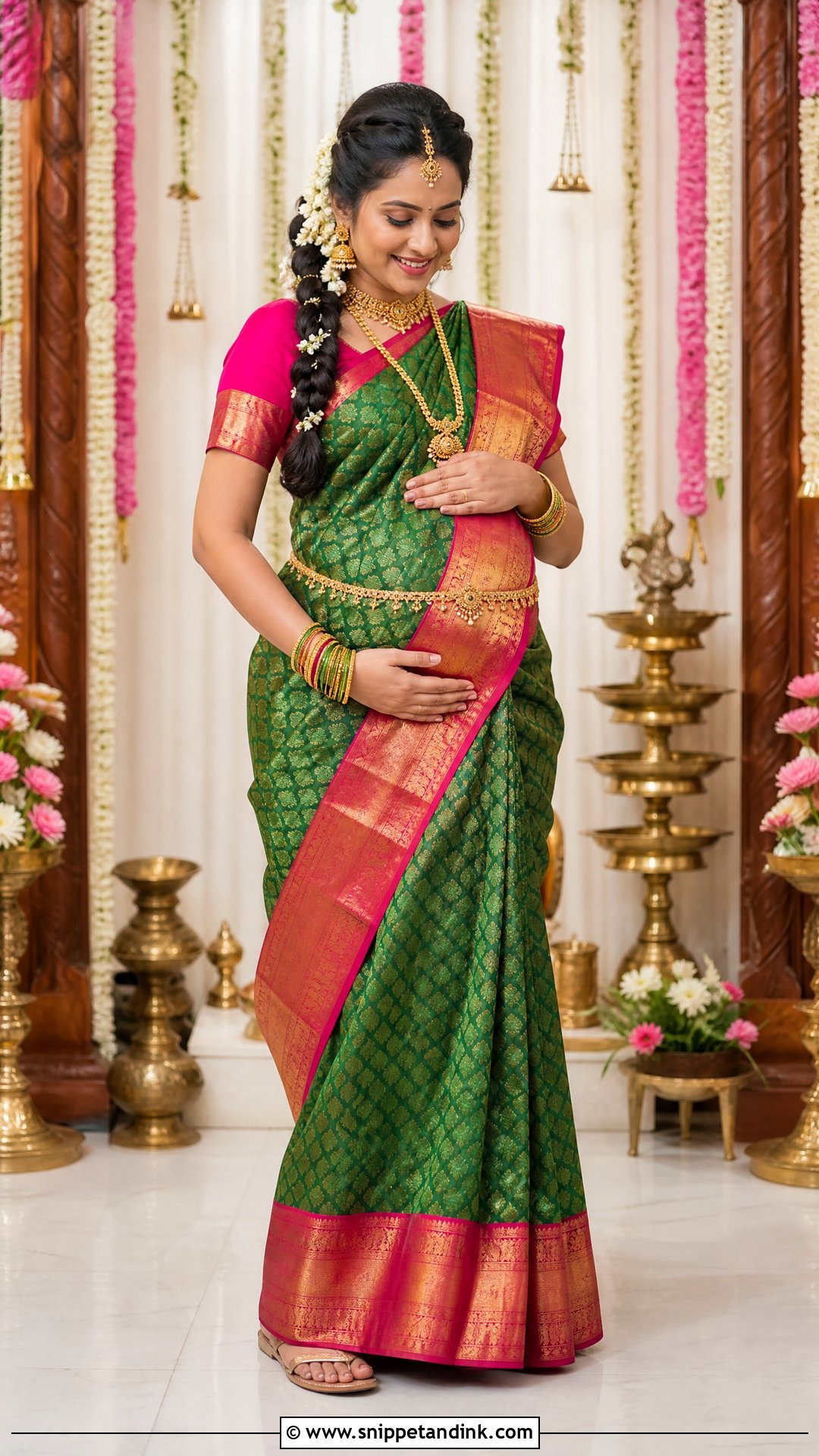
A Kanjeevaram saree gives the grandest traditional finish, and for a godh bharai I’d choose a lighter weave than a bridal one. Kanjeevaram silk is dense, and a full bridal piece can weigh enough to strain your shoulders and back over several hours. Green, magenta, mustard or blue with a contrasting border all suit it. A custom blouse with comfortable sleeves and a flexible closure, temple jewellery, bangles, a long braid with jasmine and flat sandals finish it. Ask an experienced draper for secure pleats without pulling the saree tight around the waist.
What the Lap-Filling Ritual Asks of Your Outfit
The name says it: relatives fill your lap with fruit, coconut, sweets, dry fruits and sometimes bangles, then bless you, often with an aarti. That one ritual changes several styling choices.
Your lap needs to be usable
Many families place the offerings in the pallu or dupatta spread across your knees. A slippery satin or a stiff, heavily beaded pallu lets things roll off. Soft silk, cotton or georgette holds them better. With a lehenga or gown, ask beforehand whether you’ll need a separate cloth in your lap.
Flames and fine fabric
During aarti, a lit lamp is circled in front of you. Chiffon and net dupattas catch easily and burn fast, so pin yours back over the shoulder before that part starts. I tell family members holding the plate to keep it at chest height and a little away.
Bangles and rings
If glass bangles are part of your family’s ceremony, leave your wrists free of other bracelets. Hands can be puffy by evening, so don’t wear tight rings in the morning that you’ll struggle to take off later.
Getting Through Hours of Blessings Without Aching Feet
Most moms-to-be tell me the ceremony was lovely and exhausting. A few small decisions make a big difference: ask for a chair with a back and arms instead of a floor seat if your family allows it, keep water and a light snack within reach, and have a cousin carry spare safety pins, a fan and a pair of soft slippers. Plan a short break between the ritual and the photos to change shoes and sit with your feet up.
Comfort Decides the Outfit More Than the Colour Does
The outfit you’ll remember fondly is the one you forgot about once the ceremony started. Sarees, Anarkalis, lehengas, shararas, kaftans and fusion sets can all work, as long as the fabric breathes, the waist adjusts and the drape stays put. Choose shoes you can stand in for hours and jewellery light enough not to give you a headache. Keep hair and makeup close to how you normally look. Book the final fitting as close to the date as your tailor allows, because your body will keep changing. Then sit back and let the family fuss over you.
You'll Like These Ideas:


Leave a Reply