
An Anarkali gives a bride something a lehenga can’t: one continuous line from shoulder to hem, with the flare doing the work that a separate skirt and blouse usually share. These 20 Anarkali Bridal Dress Ideas run from wedding reds and jewel tones to pastels and quiet neutrals, and they cover the ceremony as well as haldi, mehndi, sangeet and the reception. I’ve written each one the way I’d talk a bride through a fitting, so you’ll find notes on the dupatta, jewelry, shoes and hair, plus the tailoring details that decide whether the dress is still comfortable six hours in. Compare the silhouettes, then build your own version.

Where the Waist Seam Sits Matters More Than the Embroidery
Most Anarkali problems I see at a final fitting have nothing to do with color or embroidery. They come from the waist seam. The flare starts where the bodice ends, and that seam should land at your natural waist or just above it. Too low and the skirt looks dropped and heavy; too high and the bodice cuts across the bust.
What I check at the first fitting
- The seam when seated: sit down in the dress. If it digs in or rides up, the bodice length is off.
- The panels: look at how the kalis hang. More panels give a rounder, fuller flare; fewer give a straighter line that suits a lighter fabric or a slimmer frame.
- The armhole: lift both arms over your head. A higher, closer armhole moves better than a deep one, which drags the whole bodice up with it.
- The hem: wear the exact shoes. In juttis the hem should just clear the floor, and it will need re-pinning if you switch to heels for the reception.
- The weight: hold the dress up by its shoulders. If heavy embroidery pulls the shoulder seams forward, ask for stay tape or a lined yoke.
Plan for at least two fittings, and a third for a heavily embroidered or custom-dyed piece. Finished embroidery adds stiffness and weight, so a dress that fit as plain fabric can sit differently once the work is done.
1. Red Zardozi Anarkali Bridal Dress
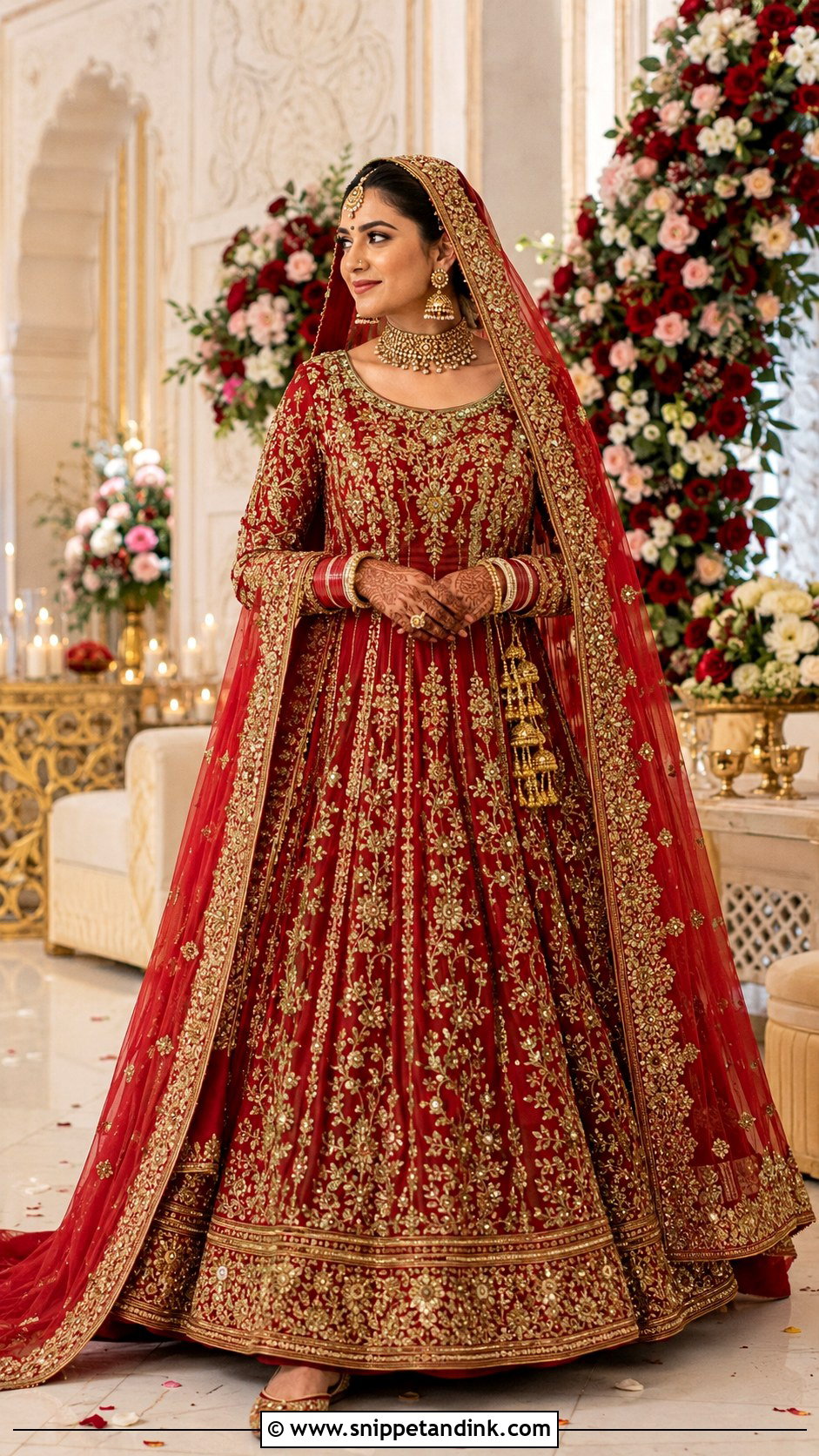
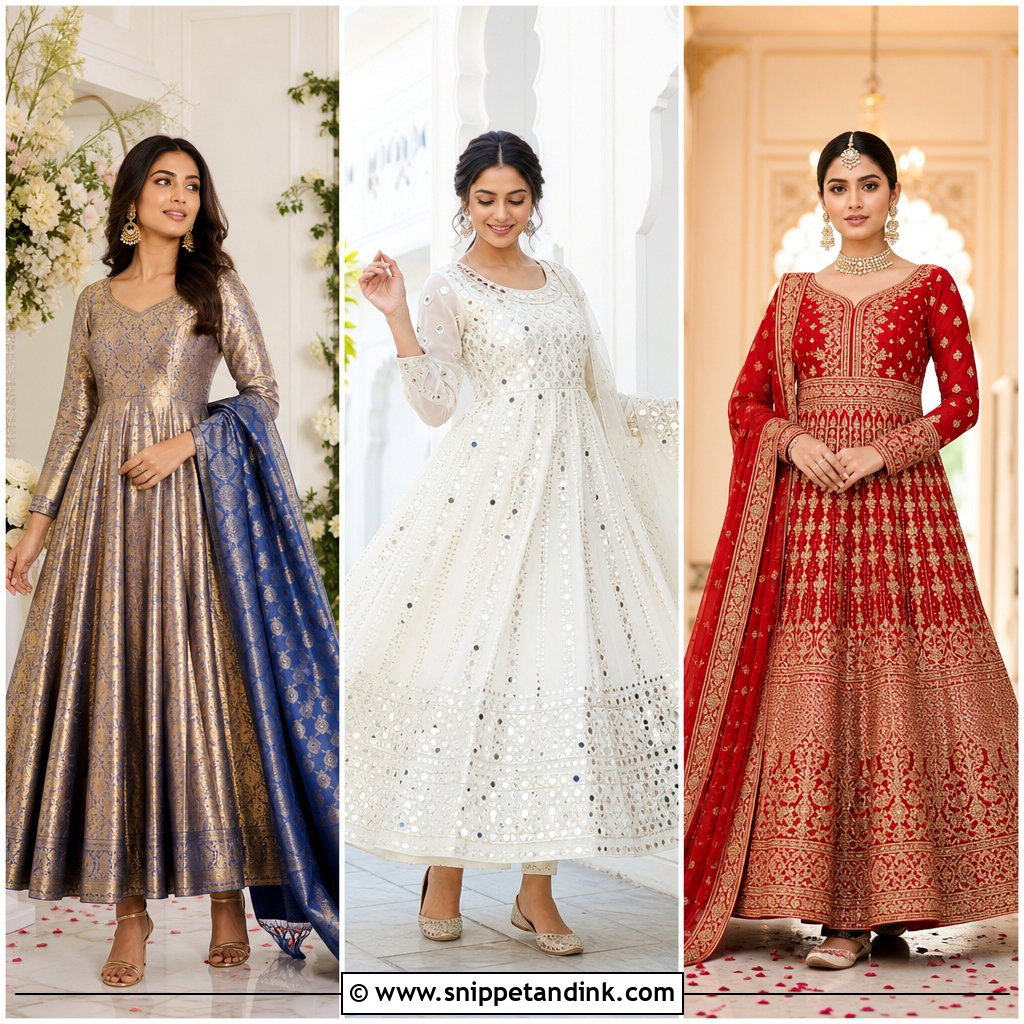
Nothing reads as classically bridal as a deep red floor-length Anarkali worked in antique gold zardozi. Zardozi is metal thread, so it’s heavy, and I always ask where that weight sits. If the dense work stays on the bodice and border, the skirt still swings; if it climbs the whole flare, the waist seam drags by evening. Keep the bodice structured, the waist defined and the flare generous but manageable, with a scalloped neckline and fitted three-quarter sleeves to frame the jewelry. A red net dupatta with a wide embroidered border can go over the head or pin across one shoulder. Add a gold choker, jhumkas, bangles, a maang tikka and gold juttis, then a sleek bun with fresh flowers and soft red lips so the neckline stays the focus.
2. Maroon Velvet Anarkali Bridal Dress
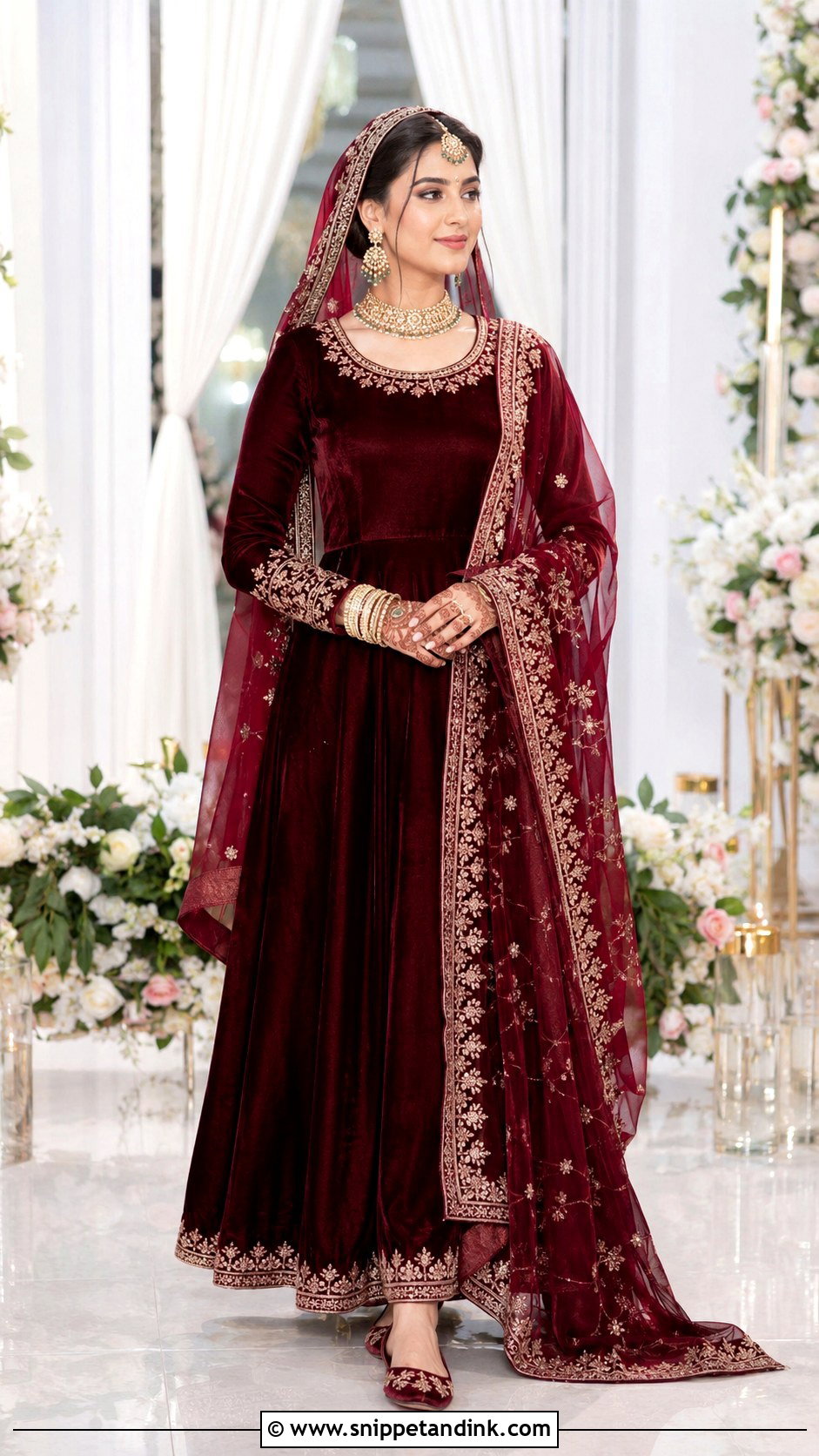
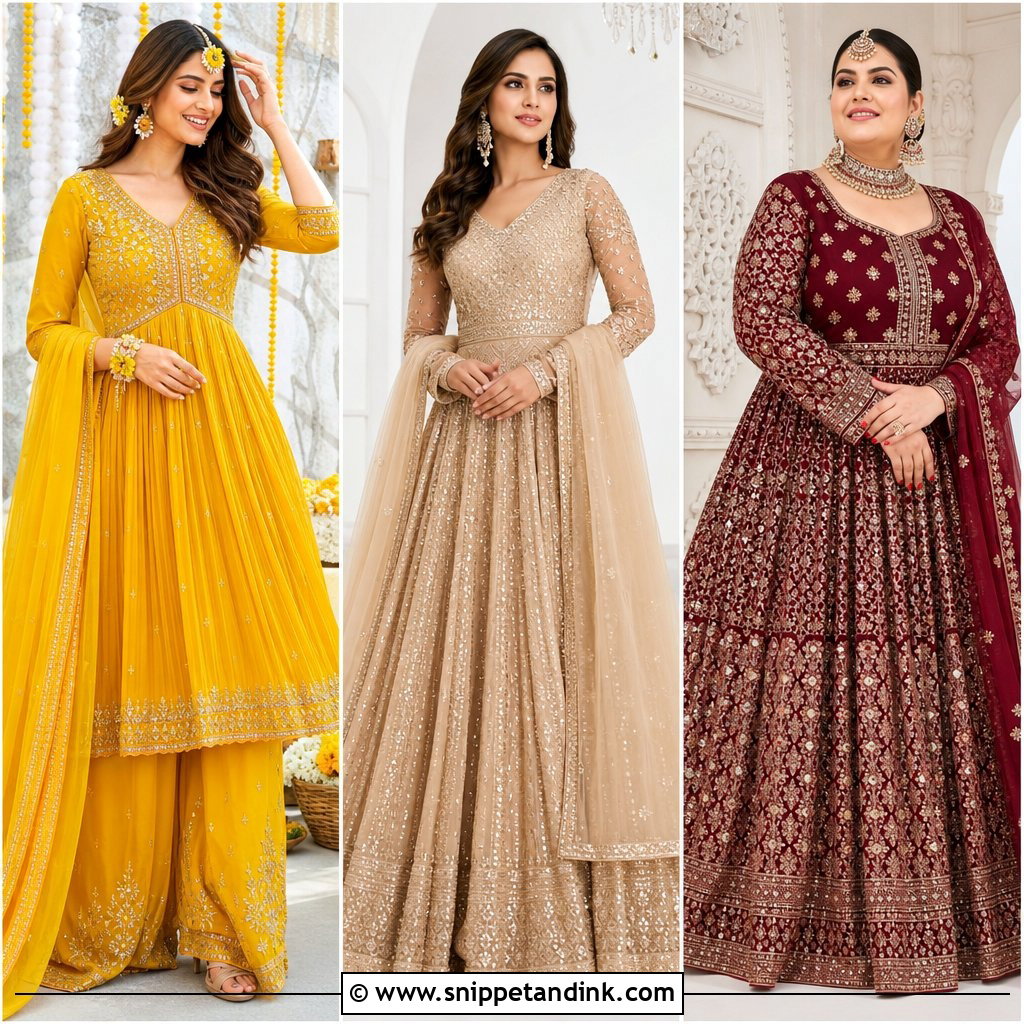
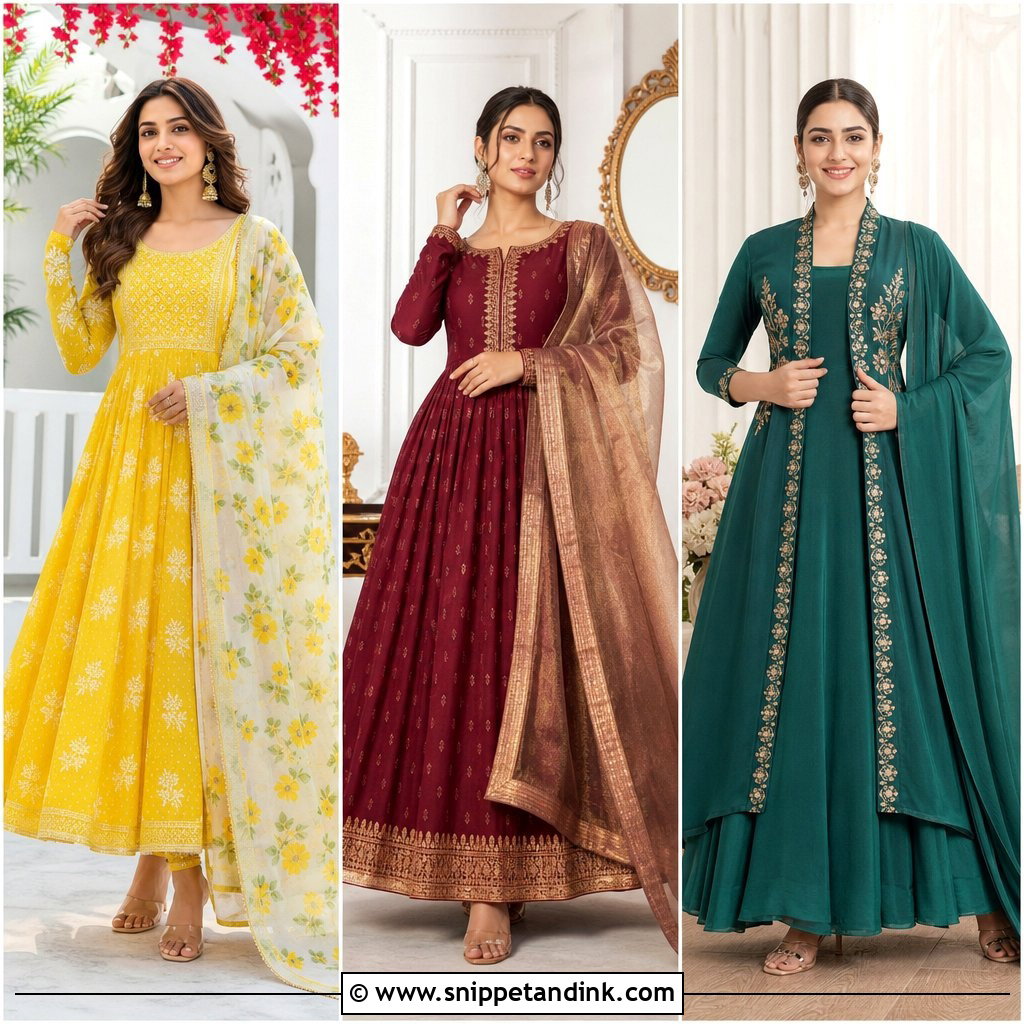
Velvet is the fabric I steer winter brides toward and summer brides away from. It holds heat and shows every crease where you sit, so a maroon velvet Anarkali belongs to a cold-month wedding, ideally indoors. Keep the gold embroidery to the neckline, cuffs, waist and hem and let the pile carry the richness; full sleeves and a square or gently curved neck finish it. Don’t put a second velvet layer on top. A lighter organza dupatta with gold edging and scattered motifs ties in without bulk. Wear an antique gold necklace, drop earrings, stacked bangles and velvet juttis with a low braided bun and glowing skin. Ask for a smooth lining in the bodice and enough flare to sit and walk easily.
3. Ivory Gold Anarkali Bridal Dress
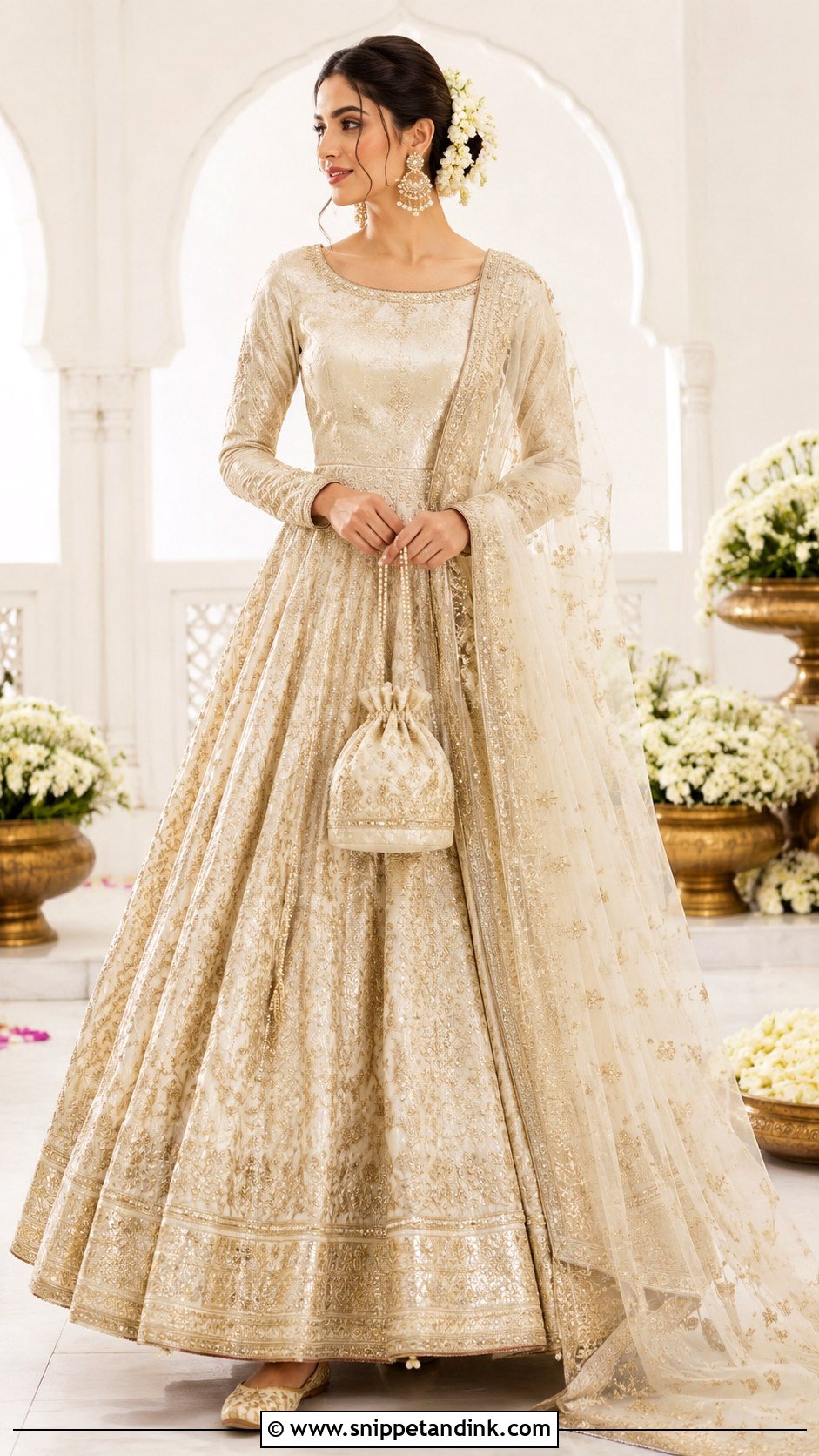
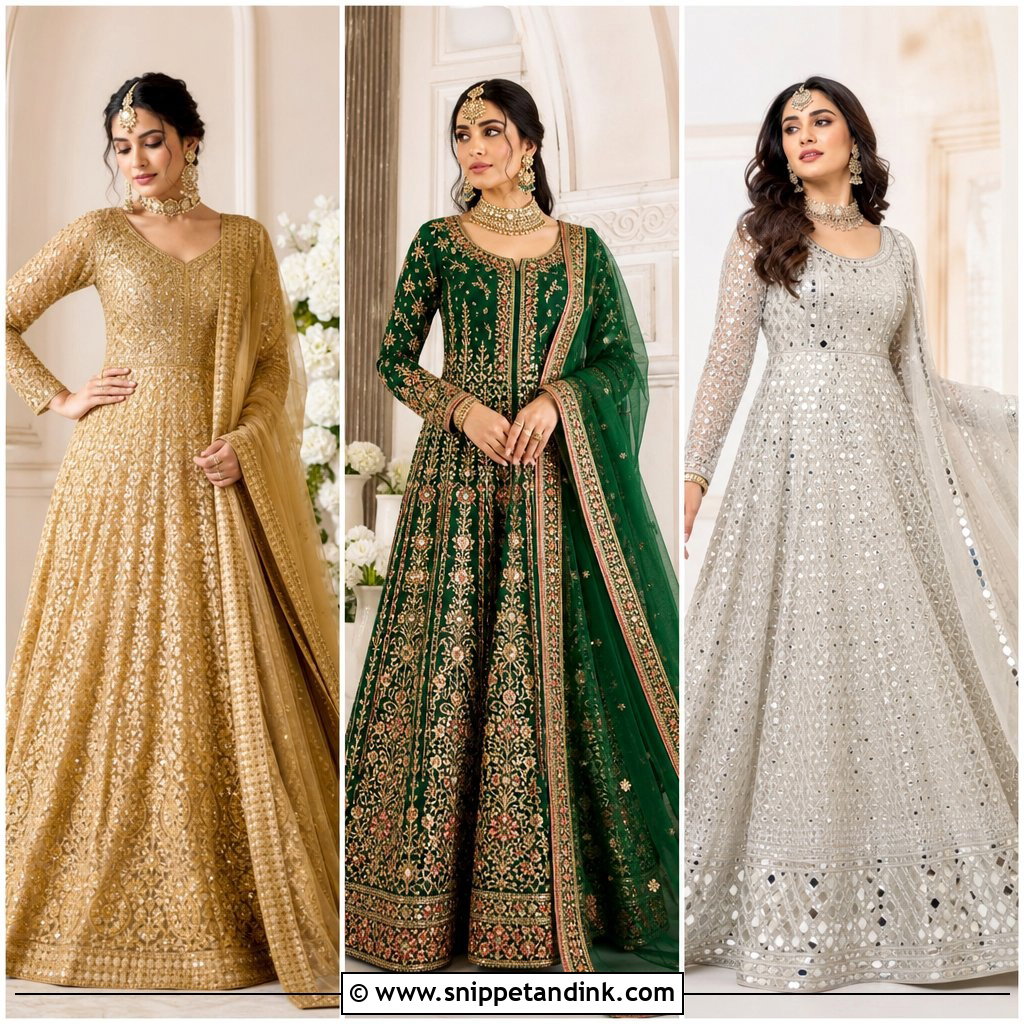
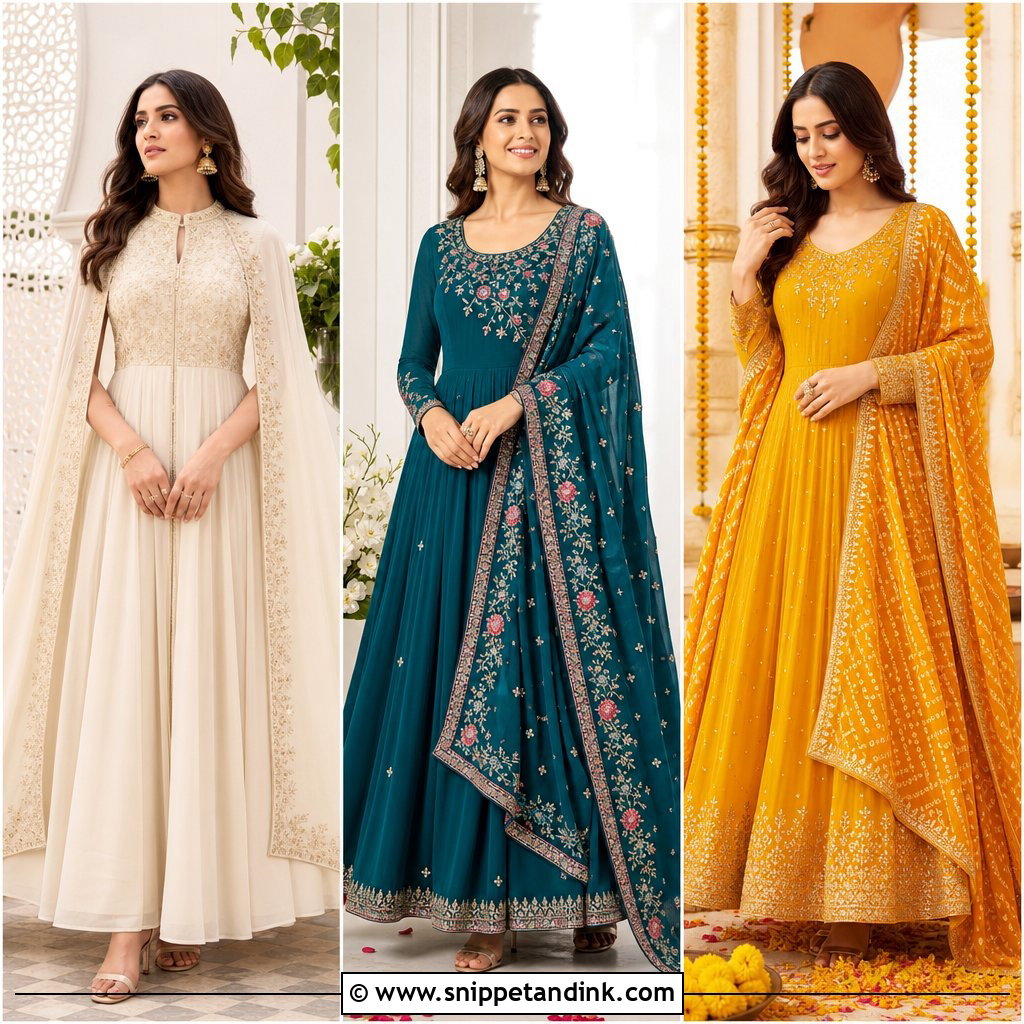
Ivory and gold suit the bride who wants a light palette, but ivory is unforgiving at a fitting. Every pin mark, makeup smudge and shadow of the lining shows, so I check the lining color against her skin before anything else. Look for silk or a silk blend with a fitted bodice and a full skirt worked in zari, sequins or fine metallic motifs. A high round neck pairs better with statement earrings than with a heavy necklace. An ivory organza dupatta with a gold border can sit over the head or across both shoulders, depending on your family’s customs. Finish with pearl-and-gold jewelry, metallic juttis, a small structured potli, a center-parted bun with white flowers and neutral, luminous makeup.
4. Blush Pink Anarkali Bridal Dress
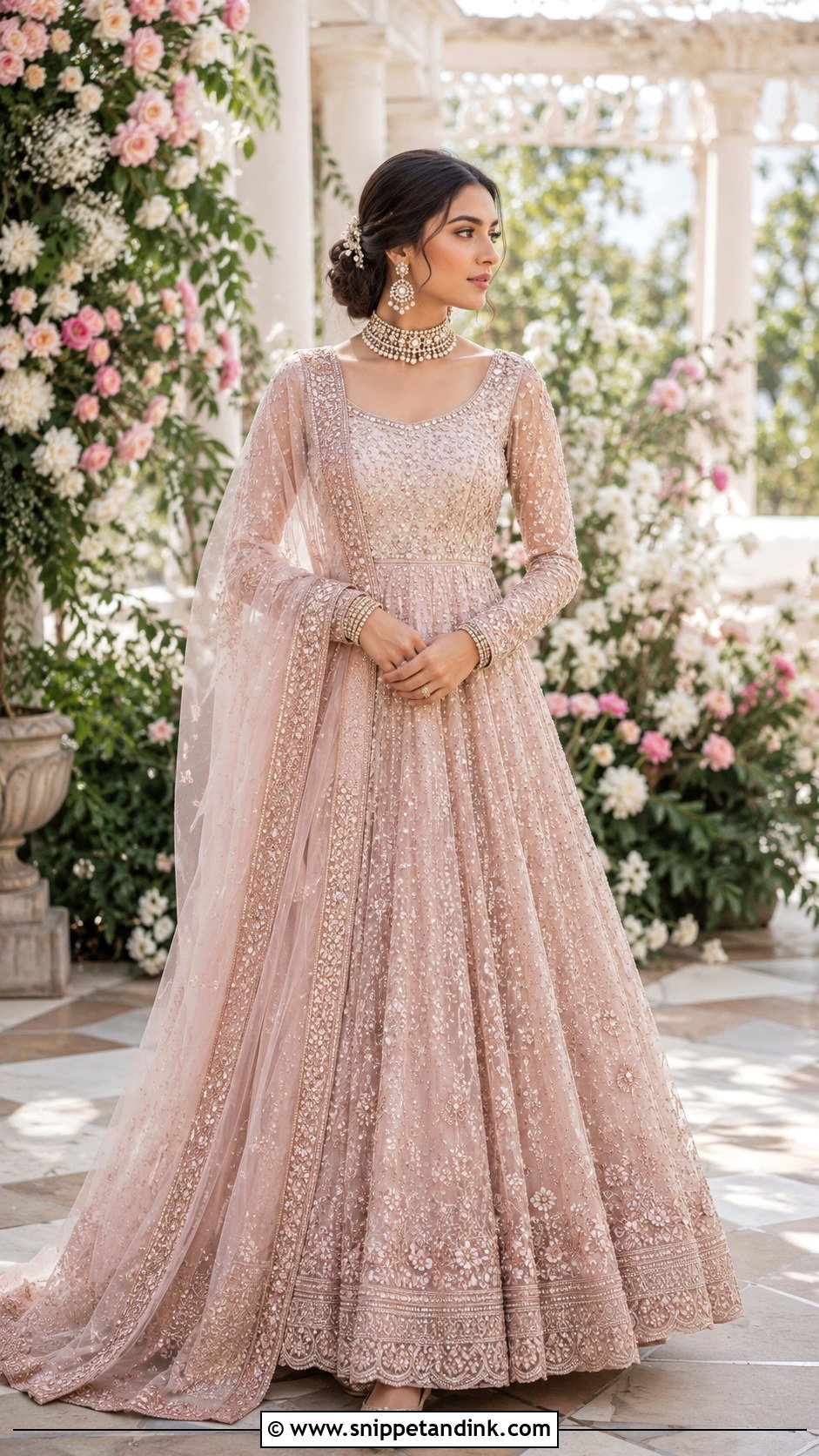
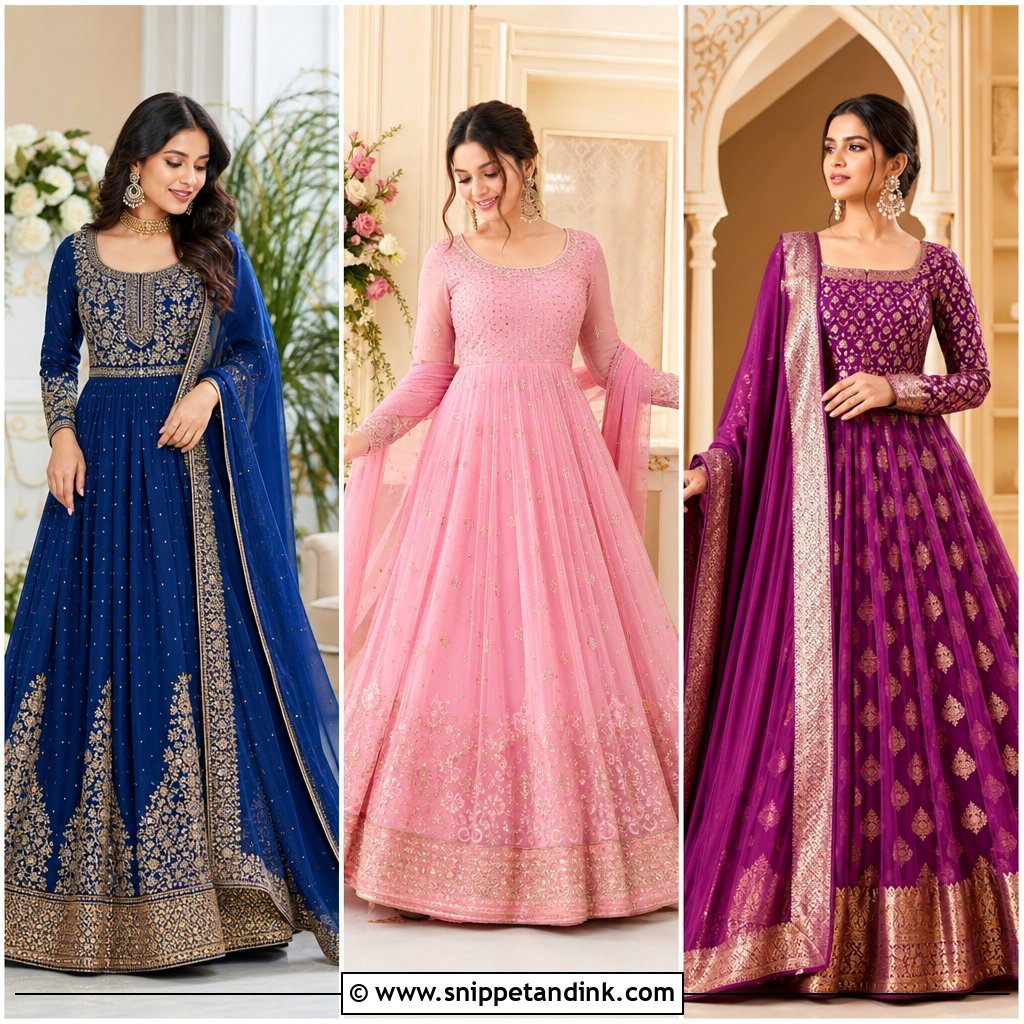
Blush pink rewards tonal work. For a daytime ceremony, engagement or reception, keep threadwork, pearls, sequins and small florals in the same color family rather than reaching for dense contrast. A sweetheart-shaped neckline under a sheer embroidered yoke gives coverage without losing the shape. Edge the net dupatta in silver, rose gold or champagne, and keep the jewelry light: kundan earrings, a slim choker, thin bangles and nude embellished juttis. The thing I watch with pale pink is the lining. Under bright mandap lights and flash, a thinly lined blush skirt turns see-through, so I hold the fabric up to a lamp at the first fitting. A loose low bun or soft waves and a muted pink lip keep the mood relaxed.
5. Emerald Green Jacket Anarkali Bridal Dress
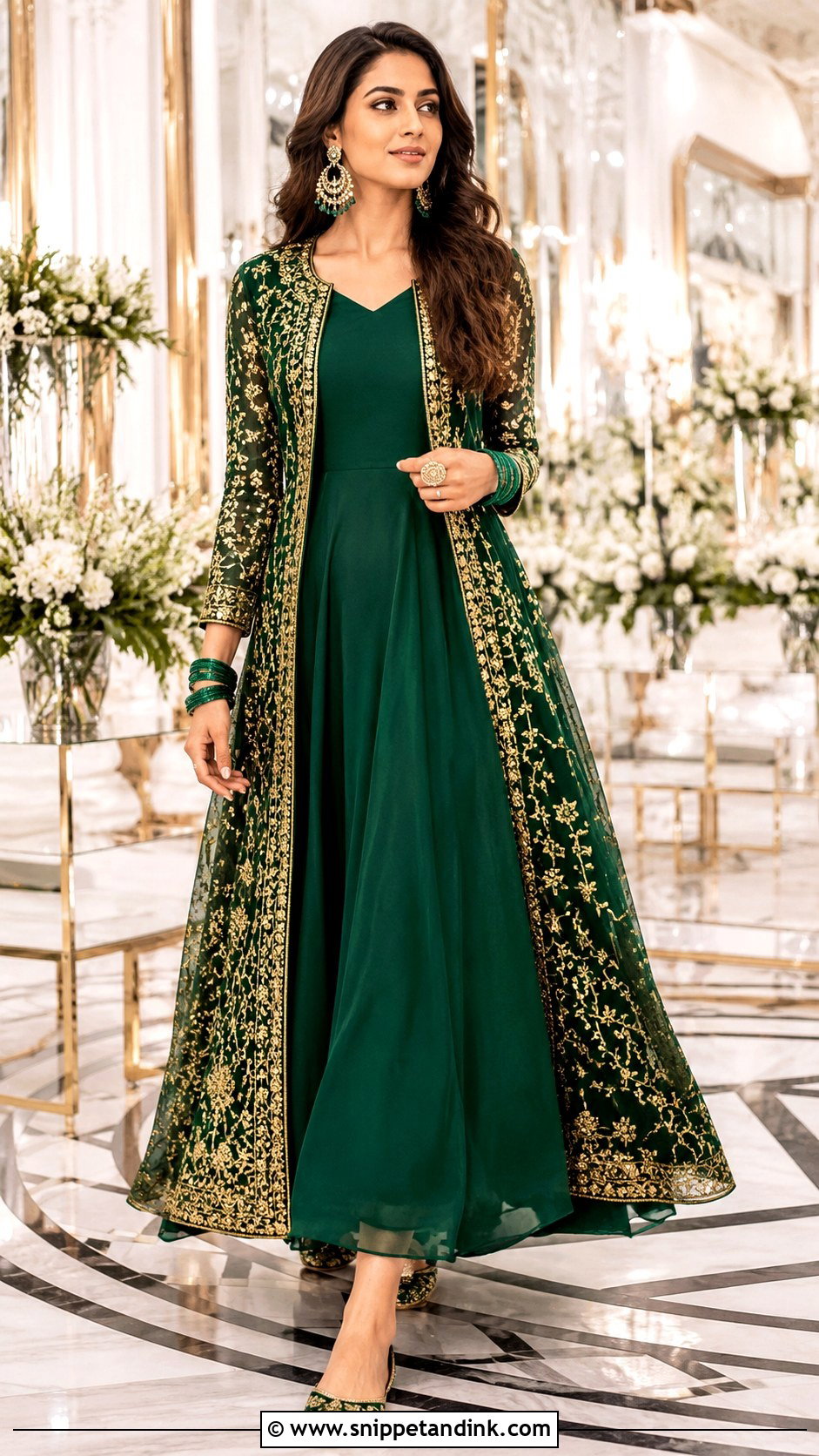
Picture walking into the sangeet in emerald, with a floor-length embroidered jacket open over the dress. The inner Anarkali can stay simple, a flowing silk or georgette skirt under a clean bodice, while the jacket carries the gold threadwork, cutwork edges and placed motifs. That outer layer gives the outfit structure and swings when you dance. The problem I see most is a jacket that slides off the shoulders the moment the arms go up, so I have the tailor add a hidden snap or thread loop at each shoulder seam to anchor it. Skip the dupatta if the jacket already holds enough detail and the event allows it. Gold chandbalis, a cocktail ring, stacked bangles and green-and-gold juttis, with a polished ponytail or half-up hair so the back of the jacket stays visible.
6. Royal Blue Anarkali Bridal Dress
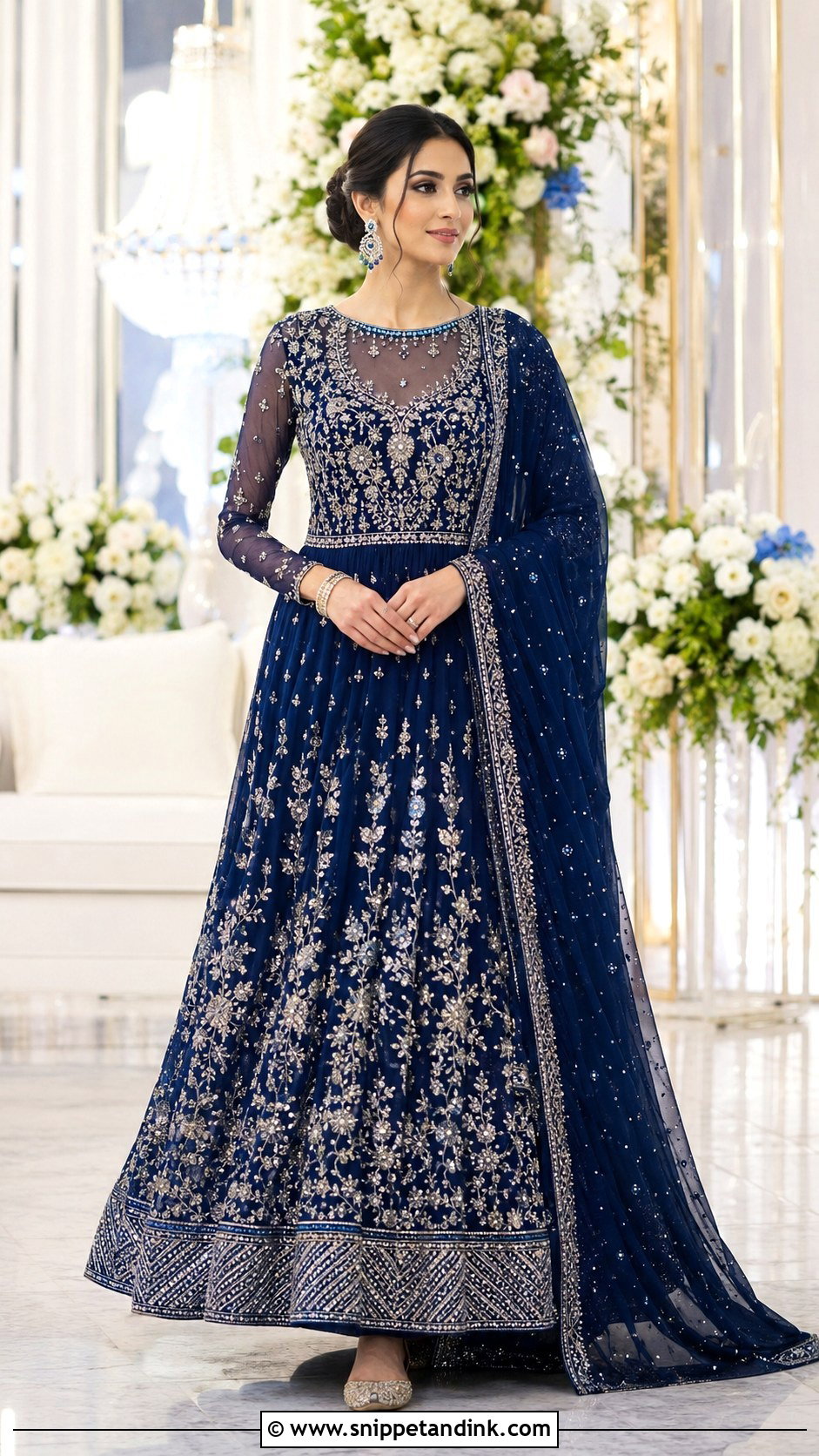
Royal blue holds its own at a reception without leaning on bridal red. In silk or georgette, keep silver, antique gold or mixed metallic embroidery on the bodice and lower border. A deep V can be backed with a sheer inset, and I’d much rather build that in at the stitching stage than rely on fashion tape on the night. Add a blue dupatta with scattered sequins and a narrow edge, cool-toned jewelry such as silver jhumkas or kundan, and metallic heels or cushioned juttis depending on hem length and venue. A smooth bun, softly smoked eyes and a berry lip finish it. Saturated blue swallows detail in low light, so keep the accessories restrained and let the color and the sweep of the skirt do the work.
7. Coral Silk Anarkali Bridal Dress
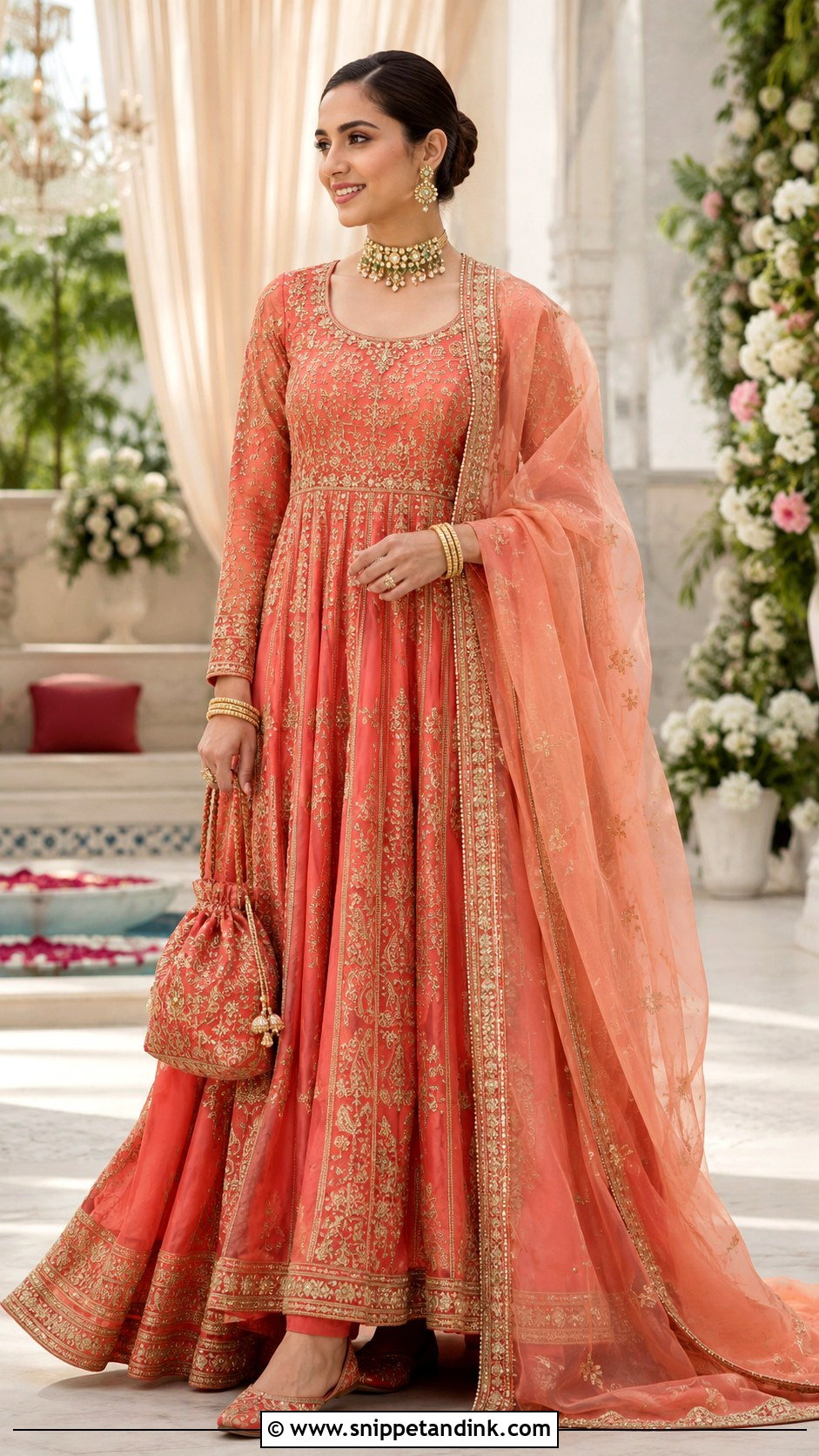
Coral looks warmer in photographs than it does on the hanger, which helps at a daytime function. I’d choose lustrous silk with antique gold aari or dori work across the neckline, sleeves and skirt panels. Panel construction matters here: the volume should come from many shaped kalis rather than gathers bunched at the waist, so the join between bodice and skirt stays flat. Straight silk pants underneath add comfort and coverage. Add a tissue or organza dupatta in coral, peach or soft gold, a kundan choker, small drop earrings, gold bangles and coral juttis, then a side-parted low bun and peach makeup. Match the metal tone across jewelry, embroidery, bag and shoes, because mixed golds look accidental next to coral.
8. Yellow Anarkali Bridal Dress
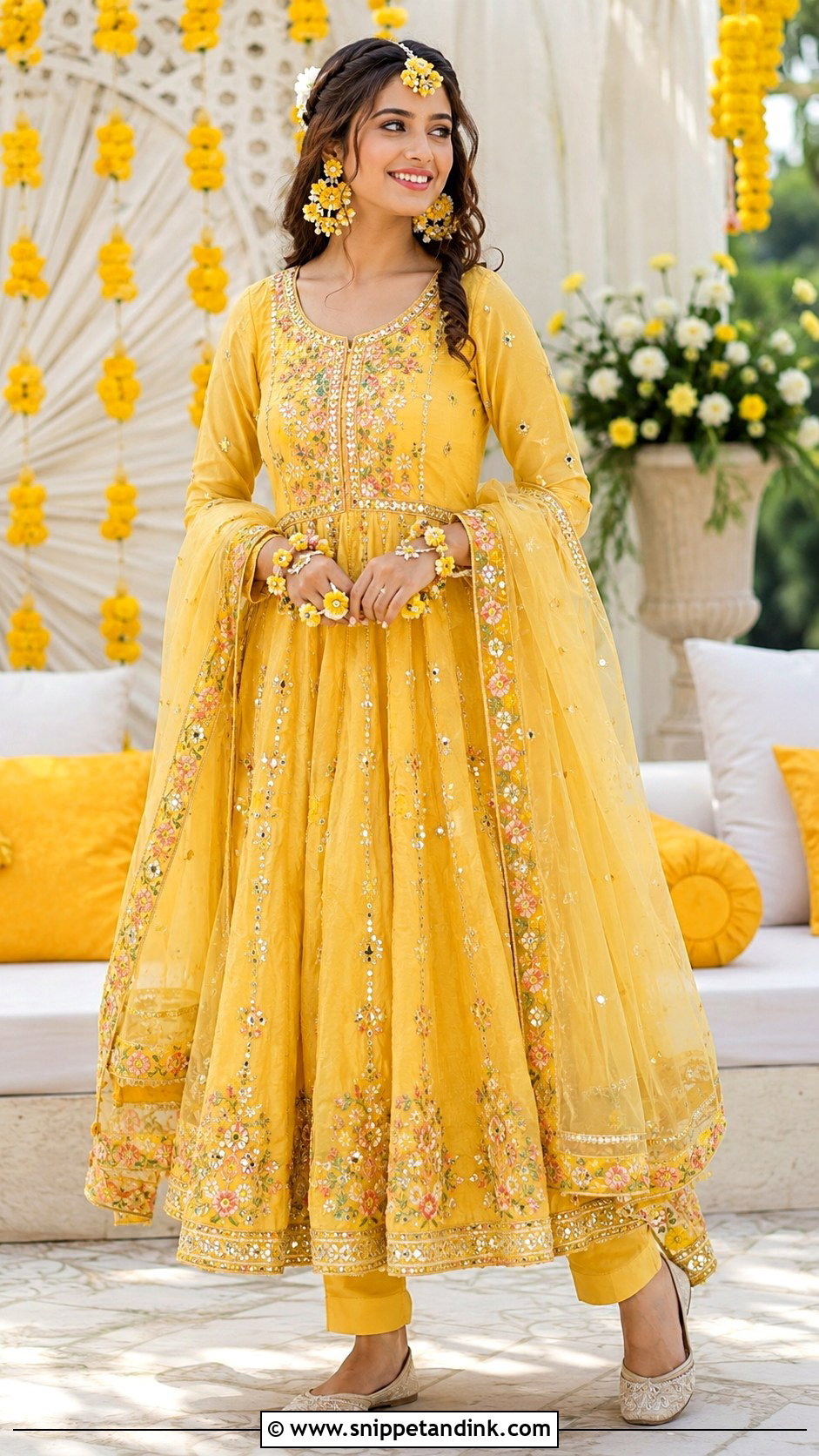
For haldi, I want a dress the bride won’t mind ruining. A bright yellow Anarkali in cotton silk, chanderi or light georgette, with floral threadwork and a few mirrors, still looks bridal and is easy to wear. Turmeric paste stains silk and synthetics alike and rarely lifts out completely, so plan around it: a calf- or ankle-length hem that stays off the floor during seated rituals, washable lining, detachable sleeves if you can get them, and a dupatta you’re happy to keep with its marks. Slim pants, a light organza dupatta and yellow or ivory juttis go underneath and on top. Floral earrings, fresh flower bangles and a simple maang tikka read as festive without heavy gold, and a braid or bun pinned with small flowers stays secure.
9. Mint Green Mirror Work Anarkali Bridal Dress
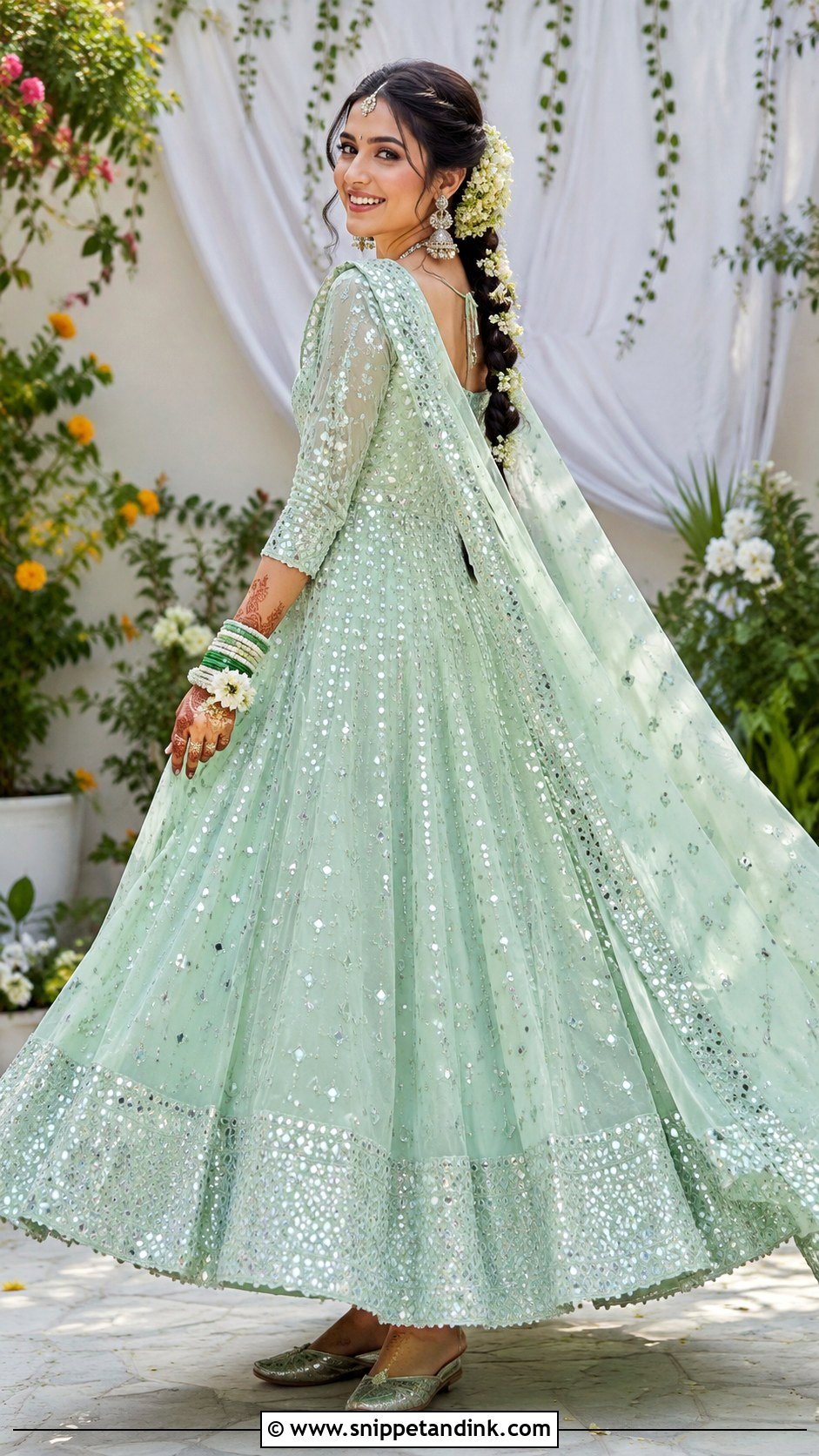
Mint green stays cool and light for a mehndi, a daytime sangeet or an outdoor function. Build it on a full-length georgette Anarkali with small mirrors and tonal thread, heavier on the bodice and cuffs so the skirt still floats. Mirror work is where I get fussy. Each mirror is held by a ring of stitching, and the ones under the arms and at the waist take friction all night, so I check every one at the final fitting and ask for a soft lining behind them so the edges never rub skin. Pair a mint net dupatta with a narrow mirror border, silver jhumkas, a delicate tikka, green bangles and flat metallic sandals or juttis. A loose braid with flowers keeps hair controlled while you dance.
10. Lavender Layered Anarkali Bridal Dress
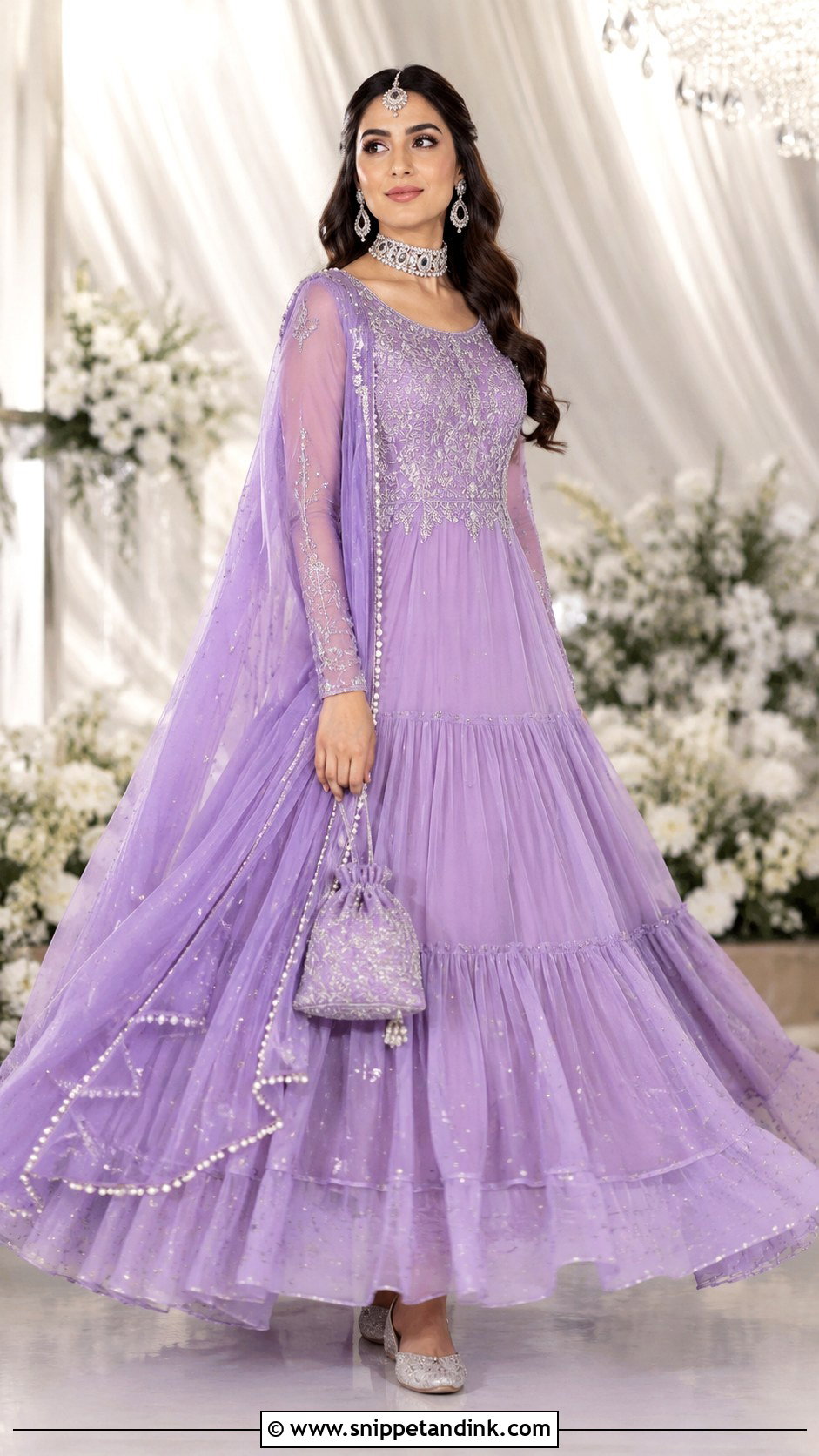
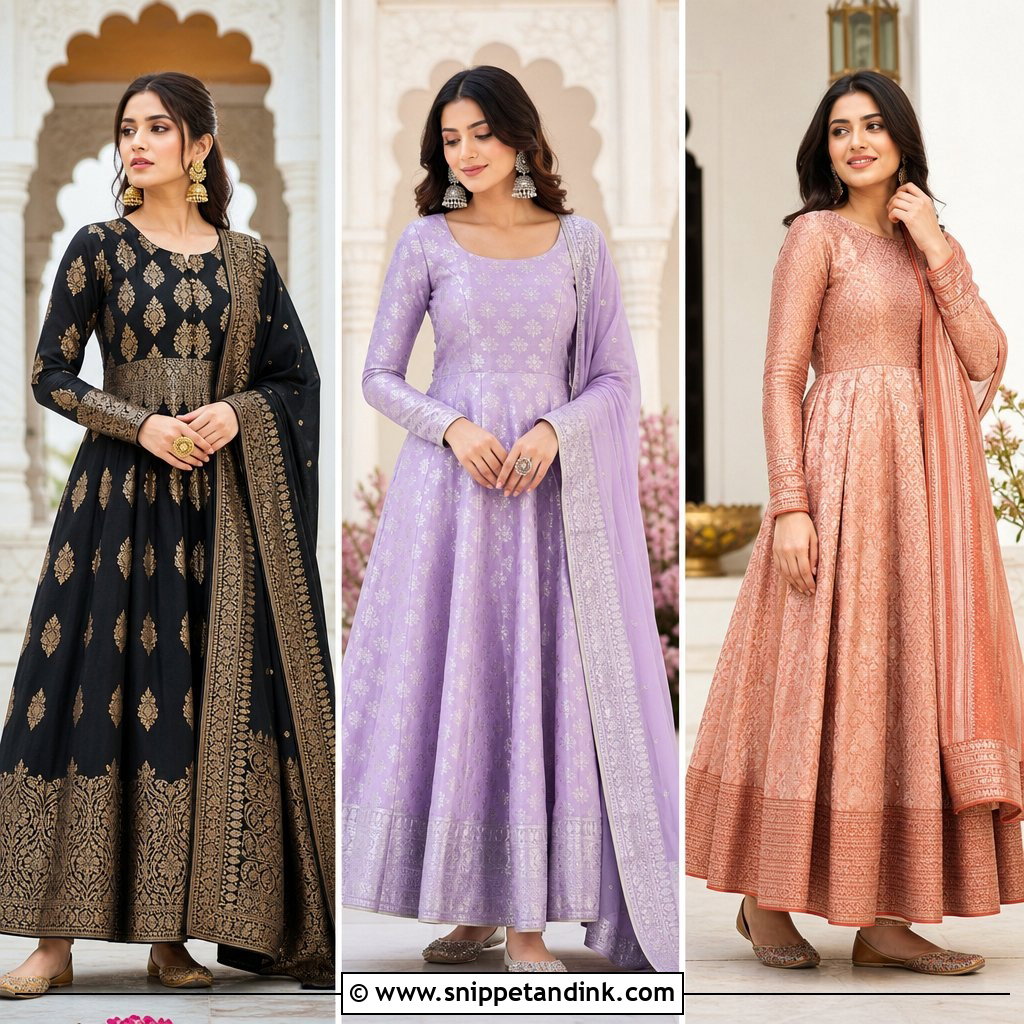
Lavender is the softer alternative to pink for an engagement or reception. Two or three lightweight skirt tiers give movement without bulk, a fitted embroidered bodice anchors them, and sheer full sleeves add coverage. A lavender net dupatta edged in silver, pearls or tiny crystals finishes the top half. Lavender is tricky on camera. Under warm tungsten light it can drift grey or pink, so I look at the fabric under lighting like the venue’s before a bride commits. Wear cool-toned kundan, a fine bracelet, a small potli and silver juttis with soft waves or a textured low bun, mauve lips and a little shimmer. Ask for a fitted inner layer so the sheer tiers don’t show your legs in backlit shots.
11. Rust Chanderi Anarkali Bridal Dress
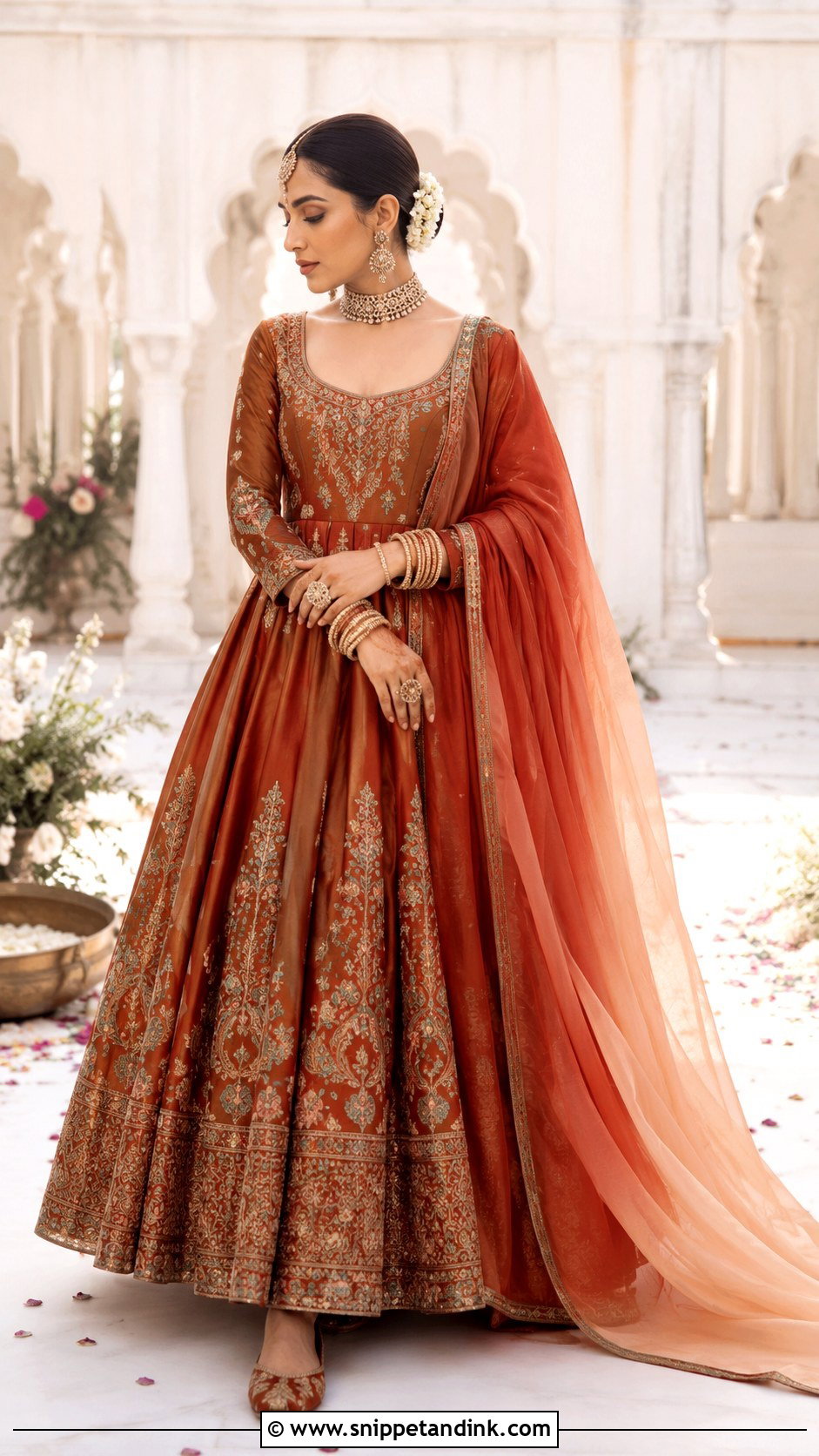
Rust feels earthy without losing the richness bridal clothing needs. Chanderi is lighter than most silks and slightly sheer, which makes it comfortable in heat but means it needs a full-length breathable lining matched closely in color; a pale lining flattens the depth of the rust. Look for multicolored thread with antique gold details and clearly defined skirt panels, a modest scoop neck and elbow-length sleeves. A rust-to-peach ombré dupatta in tissue or organza brings lightness near the face. Antique gold earrings, a medium choker, stacked bangles and rust juttis complete it, with a sleek center-parted bun and warm bronze makeup.
12. Champagne Tissue Anarkali Bridal Dress
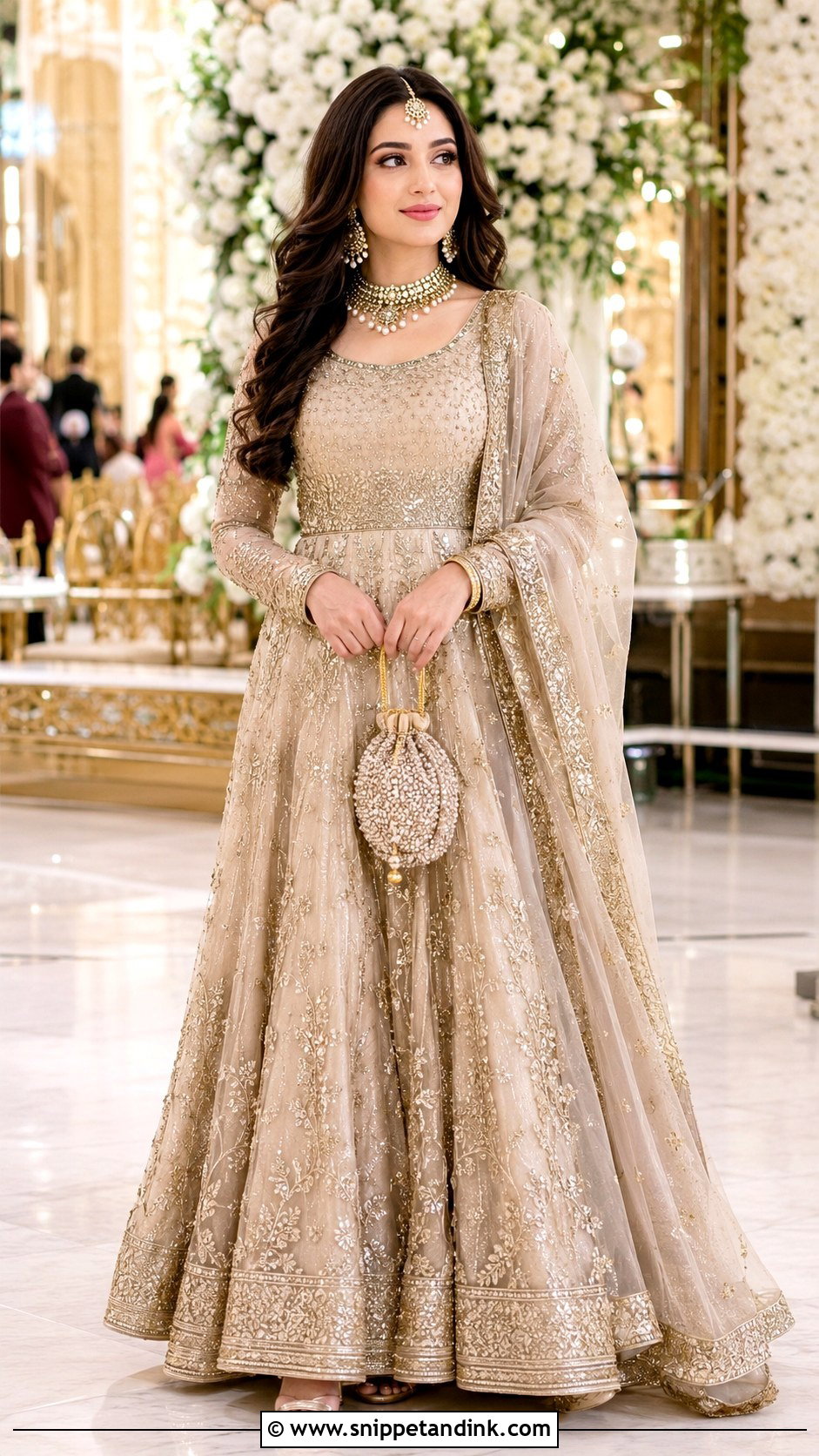
Tissue already shimmers, so a champagne tissue Anarkali needs far less embellishment than you’d expect. Too many sequins on reflective fabric just become glare in photos. Keep the silhouette clean with a structured bodice, a controlled flare and fine gold work at the neckline and hem, then add a sheer champagne organza dupatta with delicate beading. Tissue has a metallic weft that scratches the inner arm, so a soft cotton-silk lining isn’t optional to me. Pearl-and-gold earrings, a layered necklace, a crystal potli and comfortable metallic heels go with a sculpted low bun and glowing neutral makeup. Before you settle the jewelry, have someone take a few flash photos of you in the full outfit.
13. Banarasi Silk Anarkali Bridal Dress
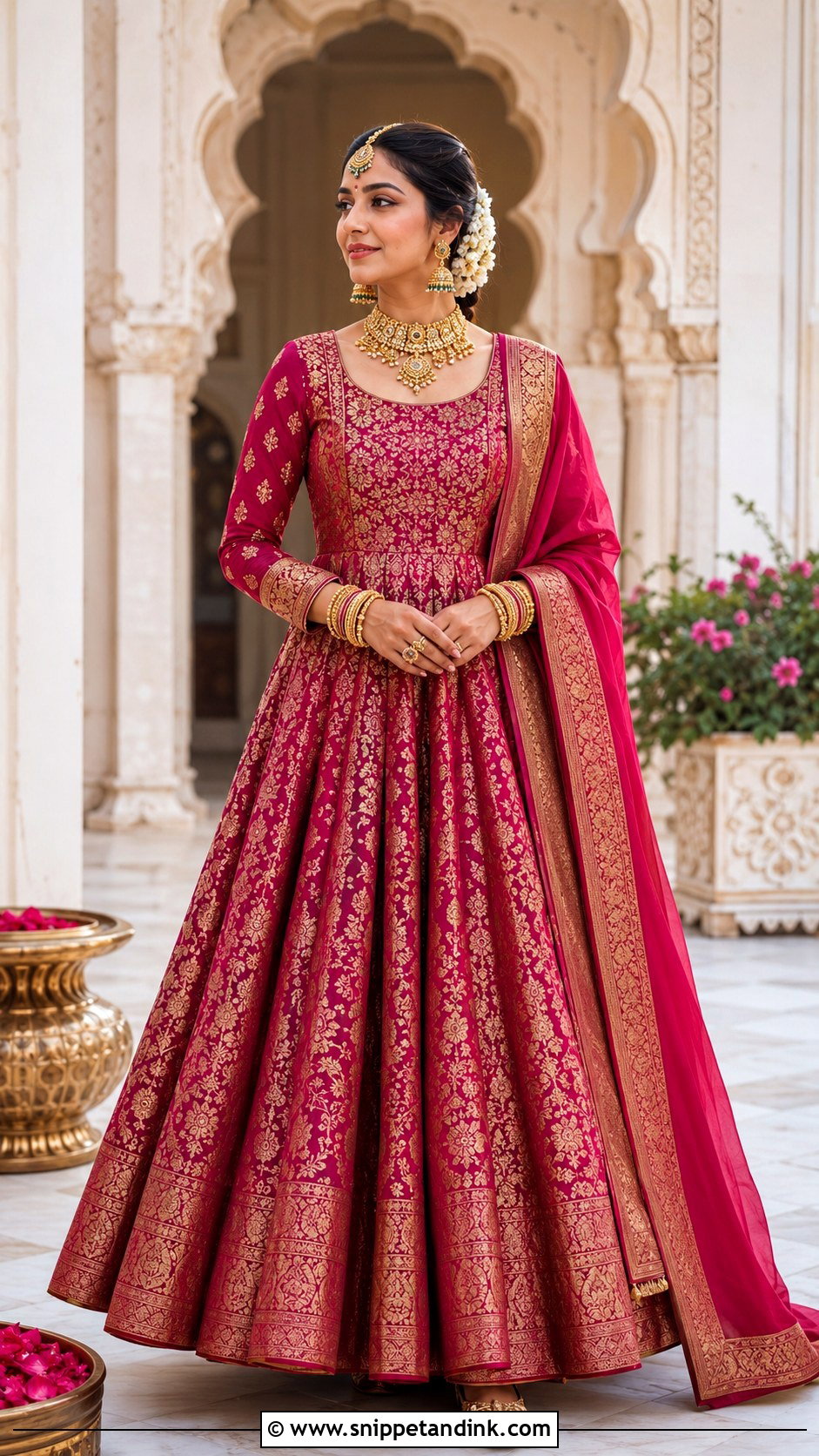
A Banarasi Anarkali is about the weave, so the cut has to respect it. I look at how the motifs fall across the panels: a well-made dress places the woven buta evenly around the flare instead of chopping a motif in half at every seam. Deep red, magenta, purple and green all suit the brocade. A contrasting solid dupatta with a Banarasi border keeps the outfit from tipping into busy. Add traditional gold jewelry, jhumkas, bangles, a maang tikka and brocade juttis, plus a braided bun with fresh flowers. Woven silk is heavy, so the bodice needs real support and a smooth lining, and I’d skip a long train if there are stairs, floor seating or a lot of moving between spaces.
14. White Chikankari Anarkali Bridal Dress
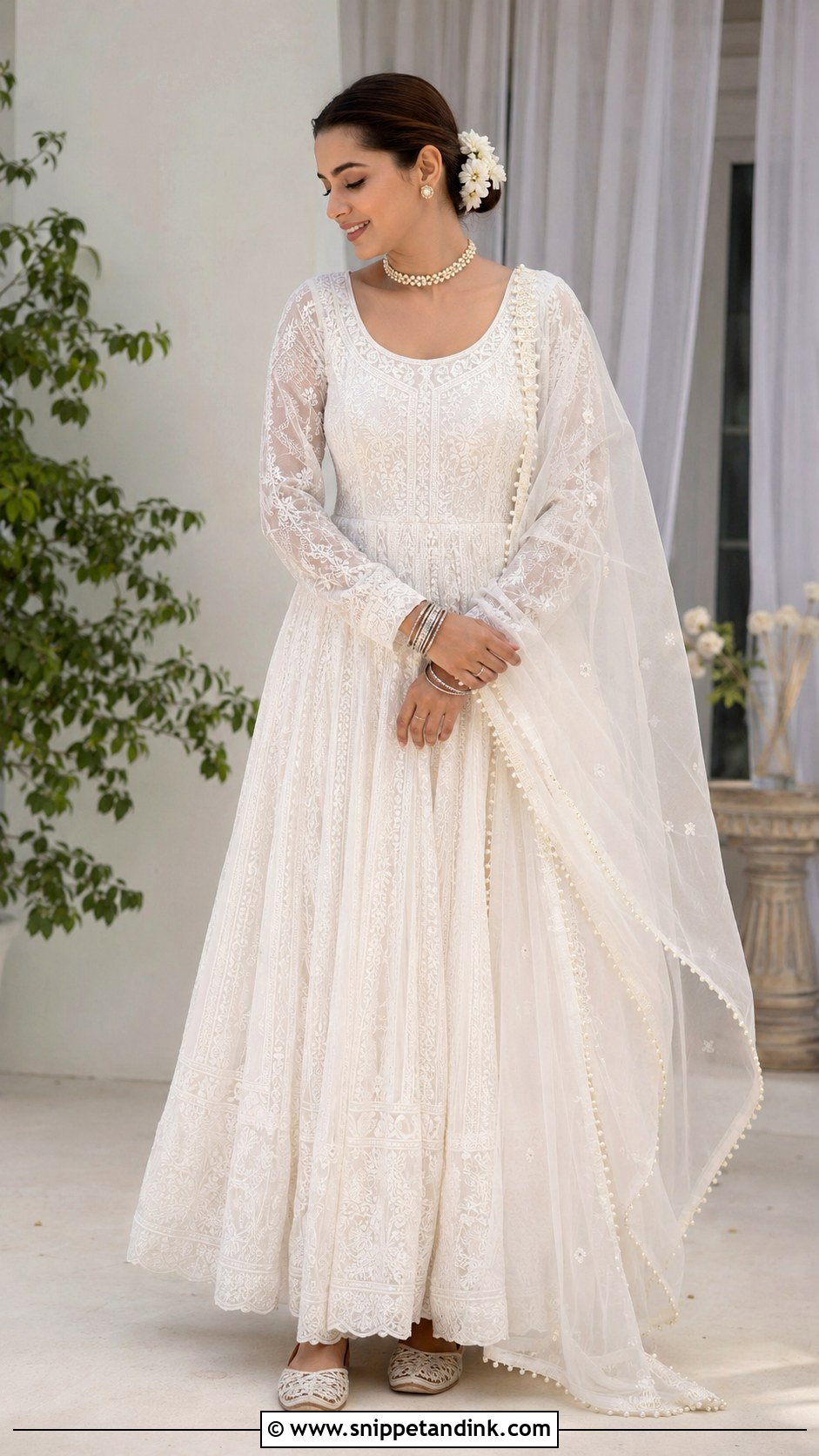
Chikankari is fine hand embroidery, and it shows best at a quiet pre-wedding event where guests stand close enough to see it. A white chikankari Anarkali in cotton-silk or georgette, with tonal handwork, a few sequins and a soft flare, looks polished without trying hard. Line the bodice and skirt for opacity but leave the sleeves sheer so the needlework shows. Choose a white organza dupatta with a narrow pearl or silver border, pearl earrings, a light choker, silver bangles and white juttis. Fresh flowers in a low bun and soft pink makeup stop the all-white palette going flat. One honest caution: some families and regions don’t wear white to a wedding ceremony, so check before you commit.

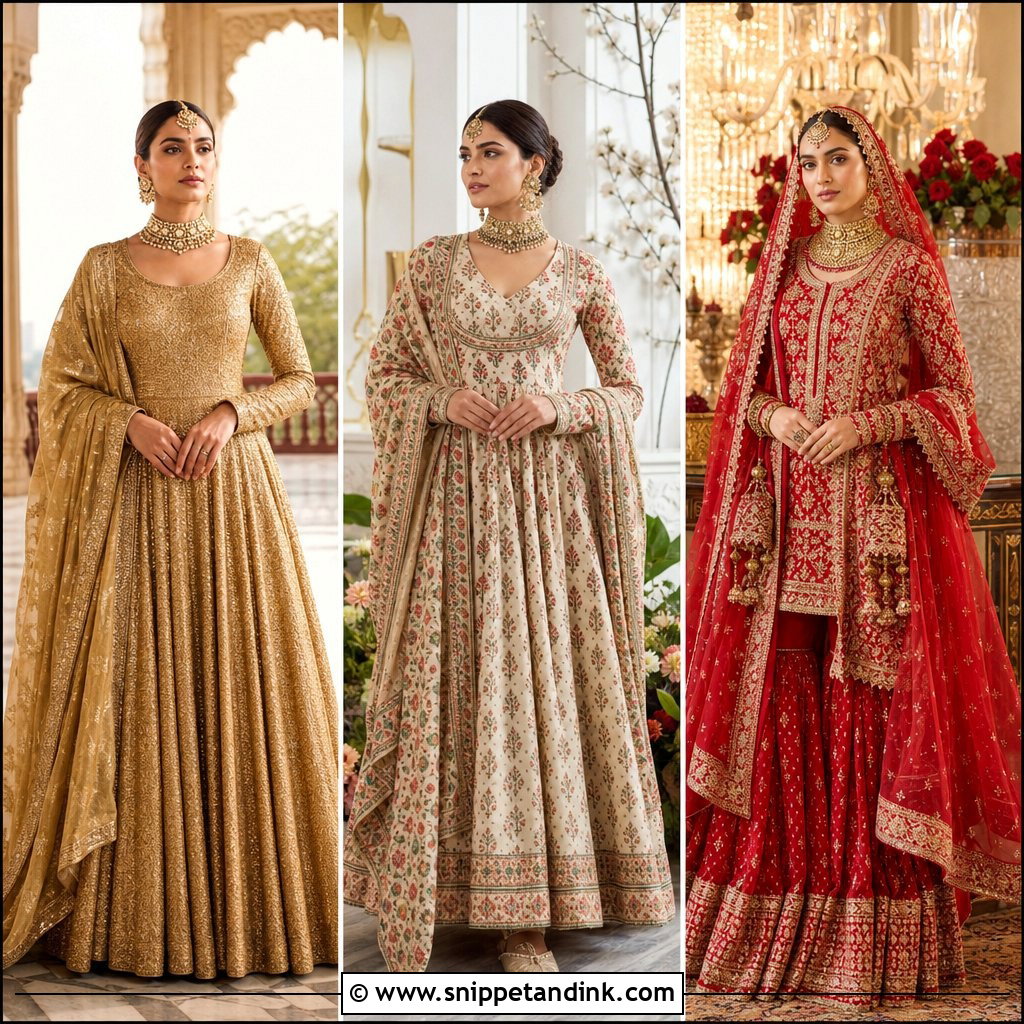
15. Floral Embroidered Anarkali Bridal Dress
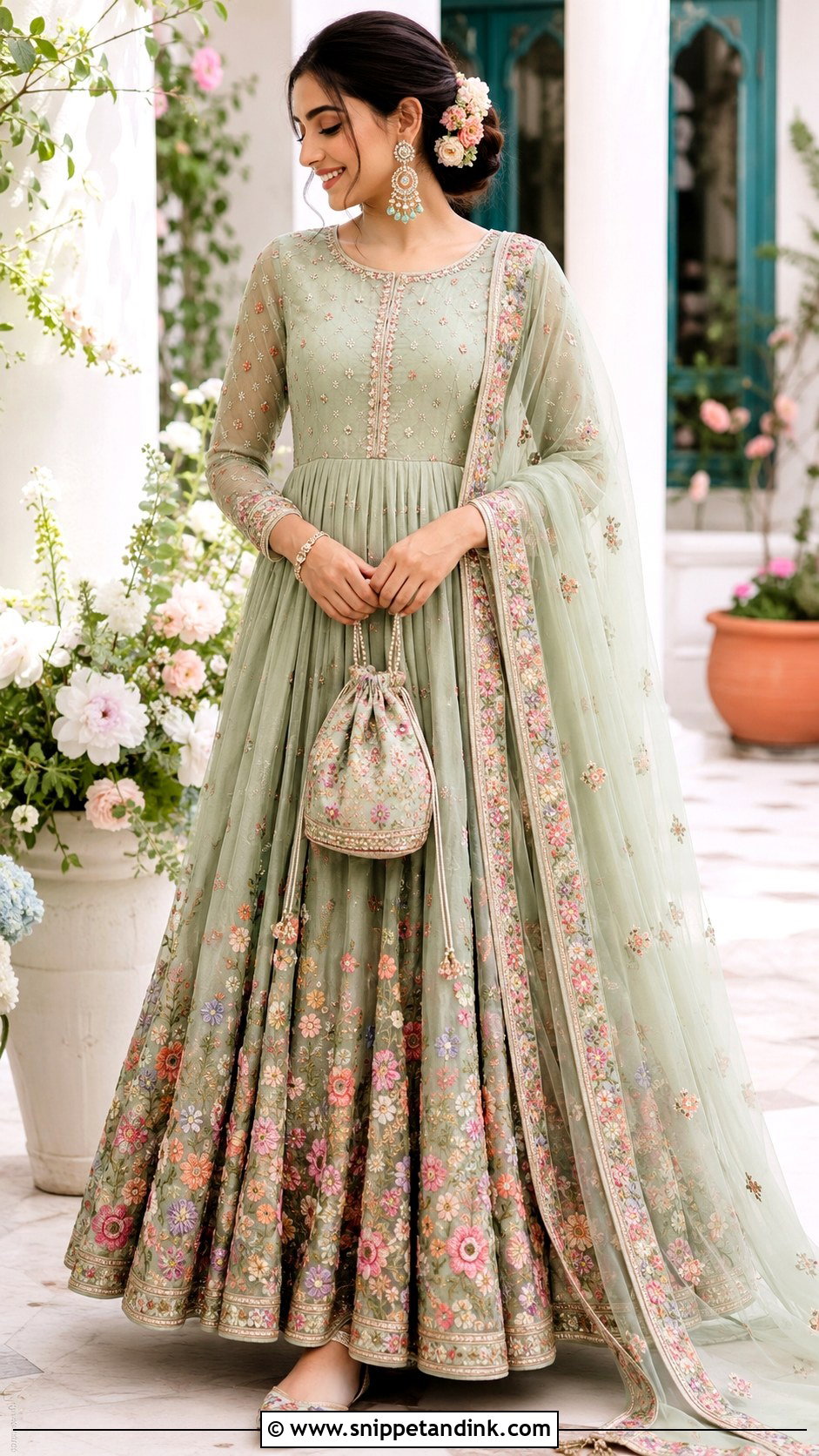
Floral embroidery is at home at a garden ceremony, a daytime engagement or a spring function. Start with a pastel base such as peach, powder blue, ivory or sage, and have the threadwork rise from the hem and thin out toward the bodice. That gradient pulls the eye up to your face instead of parking it on a busy chest. I’d keep the dupatta sheer with only a narrow floral border, and pick gemstone earrings that match one thread color rather than all of them. A fine bracelet, a floral potli and pastel juttis are enough. Wear soft waves or a flower-trimmed low bun, and keep any real flowers in one place. A single-color lining helps each embroidery shade read clearly.
16. Cape Anarkali Bridal Dress
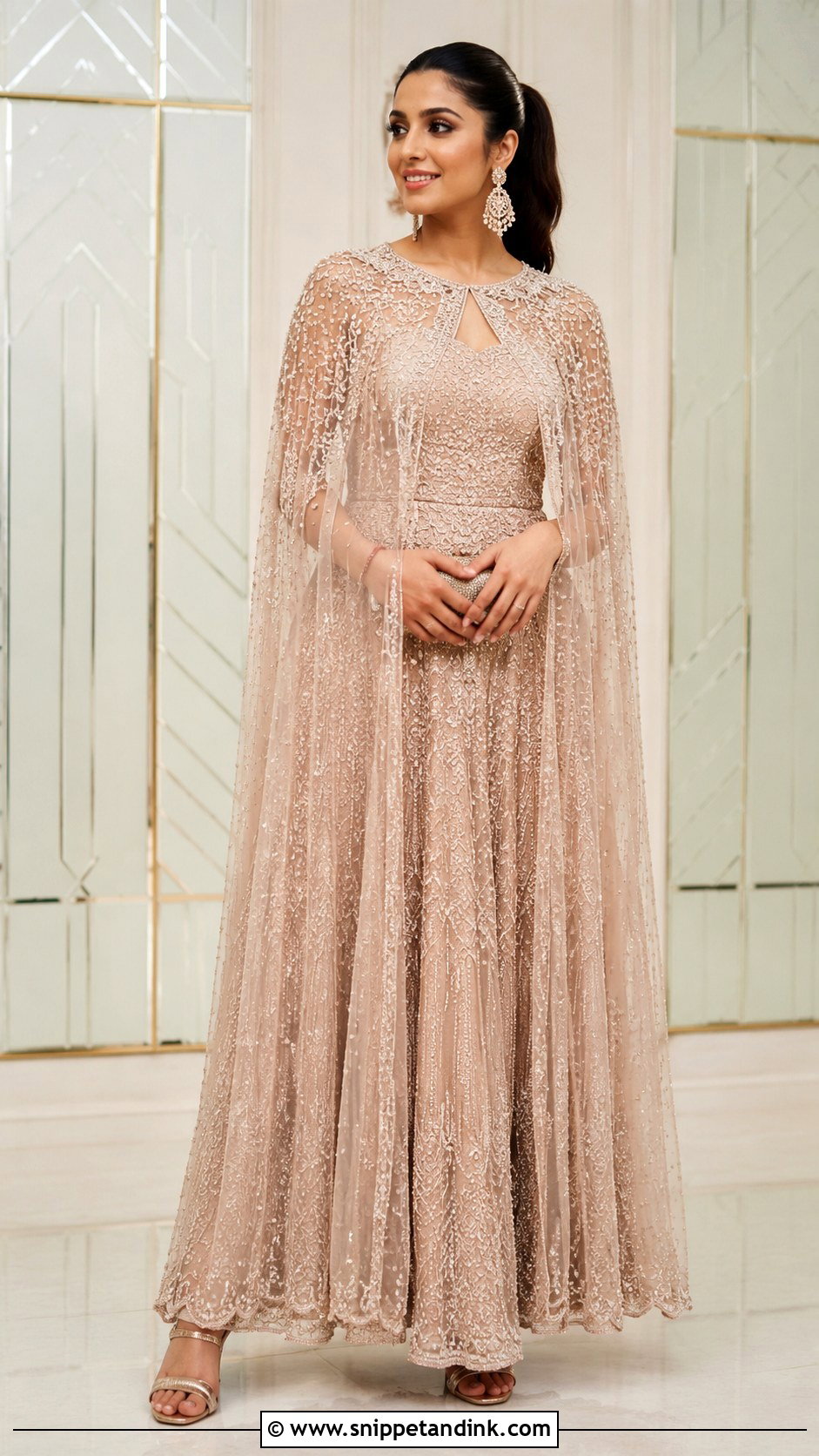
Not every bride wants to manage a dupatta all day. A cape Anarkali keeps the long line and swaps the dupatta for a sheer, embellished cape over a fitted sleeveless or short-sleeved dress, falling to the elbow, knee or floor. When I fit one, I ask the bride to lift her arms as if she’s dancing or hugging someone; if the cape pulls at the shoulder attachment, it needs more ease across the back. Match its sequins, pearls or threadwork to the dress, and leave out a heavy necklace if the collar is worked. Statement earrings, a sleek bracelet, a small clutch and metallic heels or juttis, with a neat bun or polished ponytail. It comes into its own at a reception or any function built around dancing.
17. Anarkali Bridal Dress With Sharara Pants
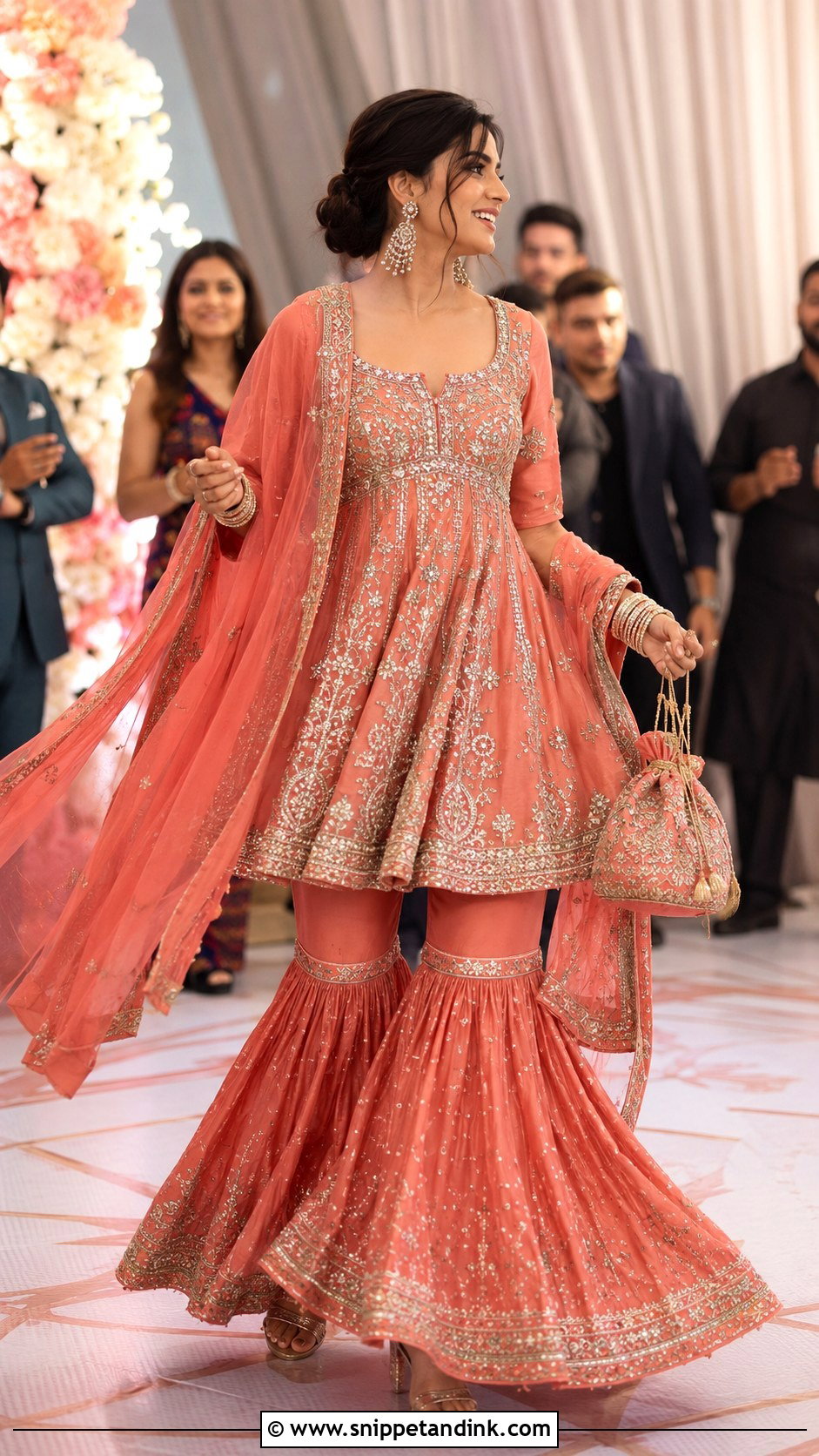
An Anarkali over sharara pants puts two hems in motion. It only works with a knee-length or high-low Anarkali, so the sharara clearly belongs to the plan, plus a fitted bodice and a moderate upper flare to keep the volume in check. Match embroidery on the sharara’s knee band and lower border. The fitting detail I never skip is the waistband: it has to sit flat under the Anarkali, ideally on a flat drawstring or elastic, and the two layers must not catch on each other when you walk or spin. Drape a light dupatta over one shoulder or around the arms, then add chandelier earrings, stacked bangles, a potli and block heels. A long braid or half-up style suits the playful shape.
18. Gray Net Anarkali Bridal Dress
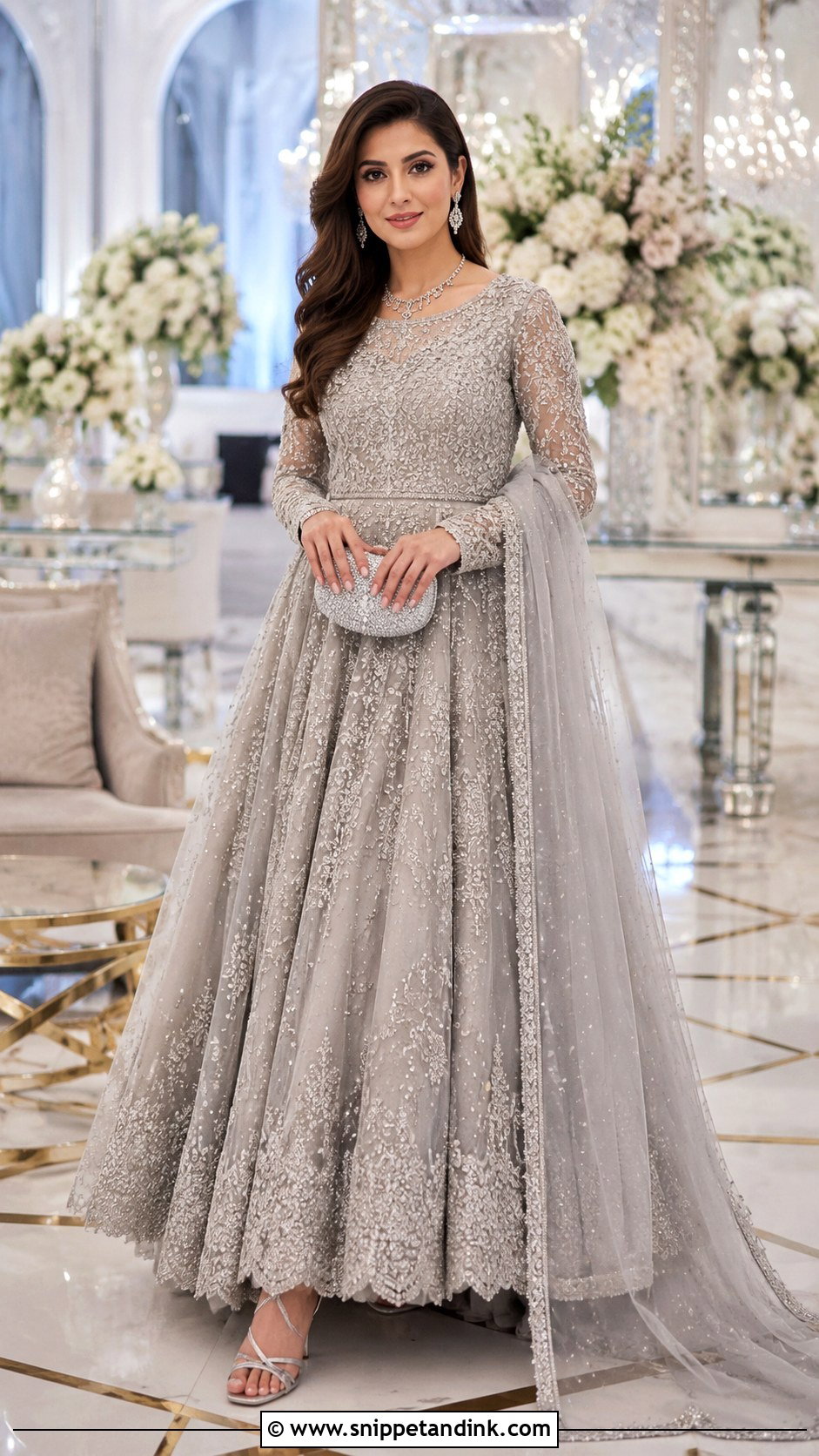
Silver-gray suits a bride who likes cool neutrals at a reception. With net, the lining decides everything: a slightly warm lining turns the gray beige, a cool one makes it read silver, so I check the swatch in daylight and under flash before cutting. Choose a fully lined floor-length design with silver thread, sequins, pearls or crystal details over a structured inner bodice. Pair it with a gray net dupatta with a narrow border, or soft silver organza for more movement. Diamond-look earrings, a slim necklace, a sparkly clutch and silver heels go with Hollywood-style waves or a sleek low bun. Cool pink lips and softly defined eyes stop the palette from looking severe.
19. Ombre Anarkali Bridal Dress
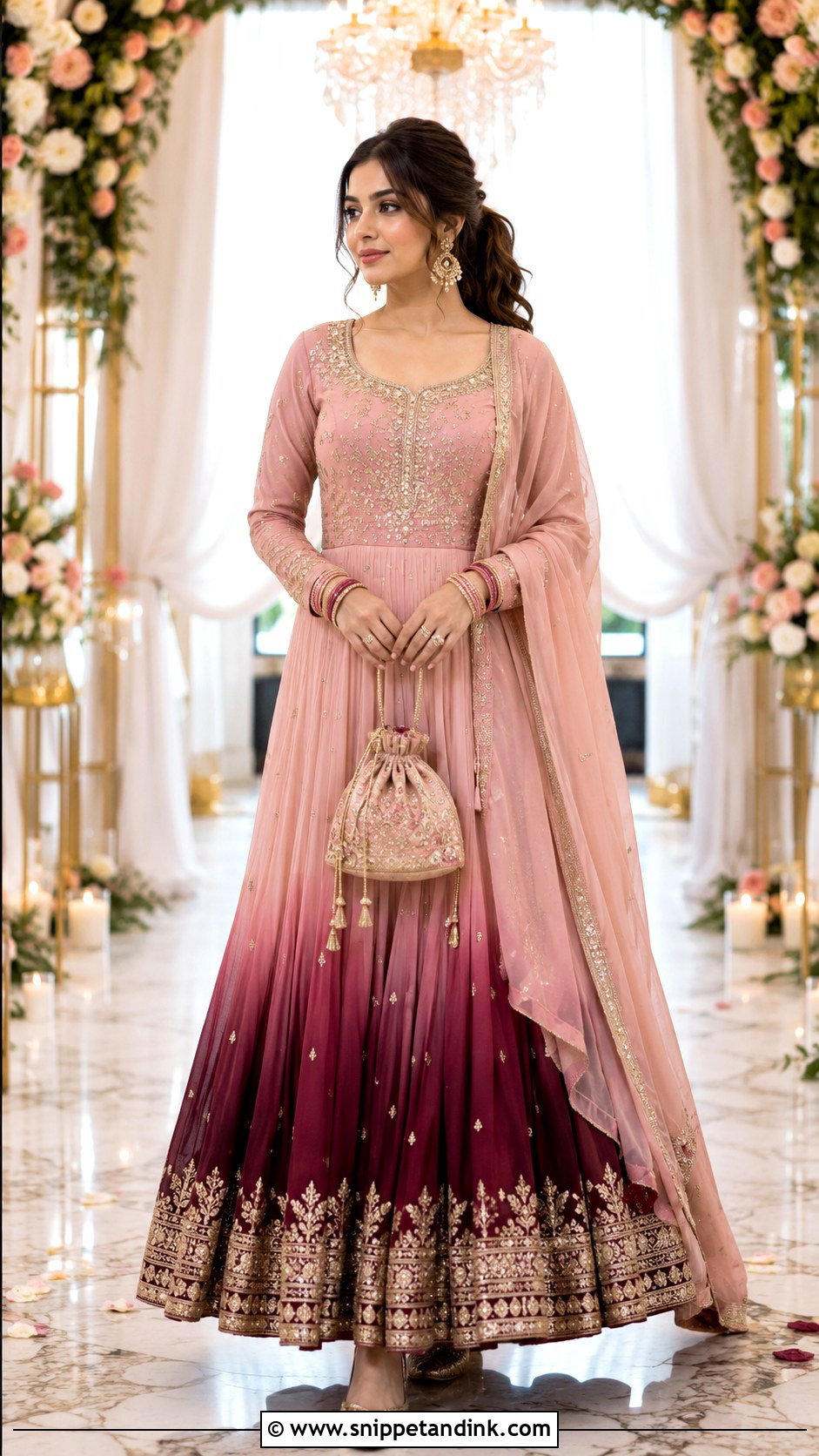
An ombré Anarkali gets its drama from color instead of dense embellishment: peach into coral, blush into maroon, ivory into gold. The gradient should move smoothly from bodice to hem, with embroidery where the colors meet or along the neckline and border. If the dye is custom, approve a sample in your exact fabric first. Silk, net and georgette take dye differently, and without that step the dupatta may not match the dress. I’d cut the dupatta from the lightest shade, keep the jewelry in the embroidery’s metal and wear neutral metallic juttis. A curled ponytail or textured bun keeps it modern, and makeup should pick up one shade from the dress without copying it.
20. Full Sleeve Modest Anarkali Bridal Dress
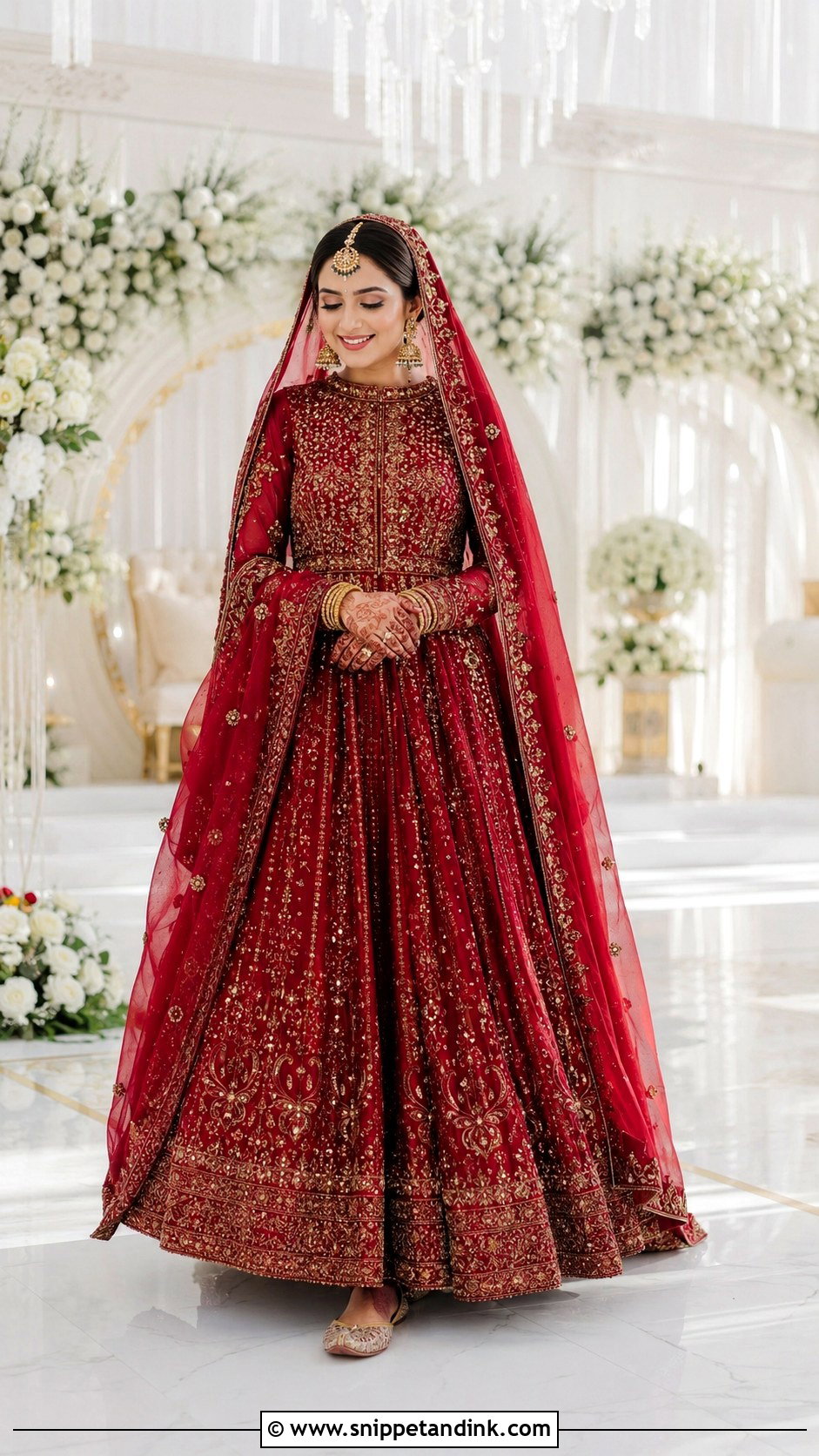
Covering up doesn’t make an Anarkali any less ceremonial. A high round, boat or soft square neck with fitted full sleeves and a floor-length flare can carry intricate work on the cuffs, shoulders, bodice and hem, as long as there’s space between motifs so it never looks heavy. Fitted full sleeves are where brides feel trapped, so I ask for underarm gussets, small diamonds of fabric that let you lift your arms for garlands and photos without the seam cutting in. Breathable lining helps too. Drape a generous organza or net dupatta over the head and shoulders and secure it with hidden pins, then add statement earrings, a maang tikka, stacked bangles and closed-toe juttis. A smooth low bun sits neatly underneath.
Sitting Through the Pheras in a Full Flare
A ceremony can mean an hour or more on the floor or a low seat, then standing, walking the rounds and sitting again. That’s harder on an Anarkali than on a lehenga, because the whole dress lifts as one piece every time you sit.
Before you sit, gather the back of the flare and sweep it forward so you aren’t sitting on the panels. They crease badly, and zardozi can press marks into the fabric beneath it. Have your churidar or pants fitted for the same seated position; churidar gathered at the ankle bunch less than straight pants when your legs are crossed.
I also ask brides to practise rising from the floor in the full outfit with the dupatta pinned. If the pins tug every time you stand, they’re anchored only to the hair and need to catch the dress or a strap as well. Whoever helps you on the day should carry safety pins and a needle threaded in the dress color.
After the Last Function: Putting Away Zari, Velvet and Net
Metallic embroidery tarnishes and silk weakens along fold lines, so how you put the dress away matters more than what it cost.
- Air it for a day on a padded hanger so perspiration and perfume dry out, but don’t leave a heavily worked dress hanging for months; the weight stretches the shoulders.
- Fold it flat with acid-free tissue or clean muslin between the layers and over the embroidery, so metal threads don’t rub the fabric.
- Wrap it in breathable muslin rather than plastic, which traps moisture.
- Refold along different lines every few months so permanent creases don’t set.
- Take haldi marks, makeup on the neckline and food spots to a cleaner who handles bridal silk, and point out each one. Don’t scrub turmeric at home.
Velvet is the exception. Keep it hanging or rolled loosely rather than pressed flat under other things, because the pile crushes under weight and doesn’t always recover.
Red Zardozi or a Mint Mirror Flare? Let the Function Decide
Start with where you’ll wear it. The venue, weather, family customs and formality of each function should decide color, fabric and embroidery before anything saved on your phone does. Then go through the list I run at every final fitting: lining, sleeve movement, bodice support, hem length and where the dupatta will sit. Let the jewelry support the neckline and surface work rather than fight it. And pick the design that feels like you, not the one that stacks every trend at once. Traditional zardozi, a cape for dancing or soft florals for a garden ceremony can all be right, as long as they suit the day you’re actually having.
You'll Like These Ideas:





Leave a Reply