
A godh bharai means hours of sitting, greeting and posing while relatives bless you, and the outfit has to cope with all of it. My first question to any mom-to-be is not about colour but about fabric and fit: will this breathe, and can you stand up from a low seat in it without help? Sarees, lehengas, Anarkalis, sharara sets and kurta sets all qualify when they’re soft and loosely cut. Yellow, green, pink, peach and ivory are the shades families ask for most, and a good dupatta or a few pieces of jewellery can lift even a plain set. Here are the outfits I’d shortlist.
Which Fabrics Stay Cool When You’re Seated Under Lights for Hours
Pregnancy raises your body temperature, and a godh bharai often puts you in one spot under strong lights with people crowded around. That’s why I judge every outfit below by its fabric before its colour. Natural fibres breathe; many budget georgettes and nets are polyester, which looks fine but traps heat and sweat.
- Coolest: cotton, mulmul, chanderi, linen blends and chikankari on cotton.
- Good middle ground: silk blends, crepe and light pure silk.
- Warm: heavy Banarasi, Kanjeevaram, velvet and anything with dense sequins or a can-can underskirt.
- Always check the lining. A cotton lining inside a synthetic outfit helps more than people expect.
If your family wants heavy silk for the rituals, I suggest wearing it for the ceremony and changing into something lighter for lunch or the party. Nobody minds, and you’ll enjoy the second half far more.
1. Yellow Silk Saree Godh Bharai Outfit
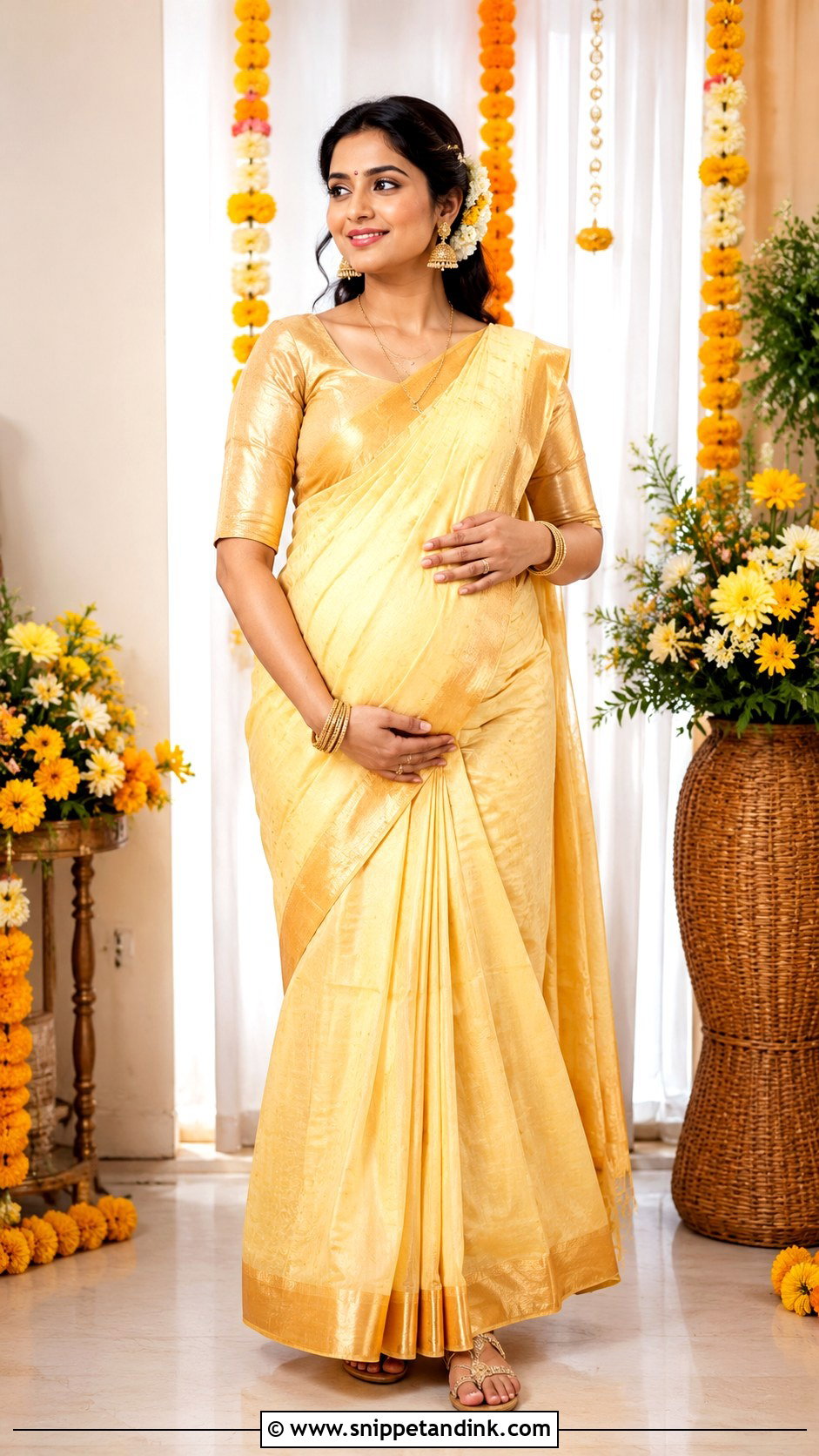
Yellow is the colour many families consider auspicious for this ceremony, so a yellow silk saree is often the first suggestion from the elders. I’d steer you to a soft silk or silk blend; stiff silk creates a hard ridge at the waist where the pleats are tucked. Gold zari or a woven border is festive enough. The blouse should have elbow sleeves and side margins to let out. Flat embellished sandals, gold bangles and a small bindi complete it, and a pre-stitched version saves you from re-pinning pleats every time you stand. Fresh flower jewellery suits the warm shade.
2. Green Banarasi Saree Godh Bharai Outfit
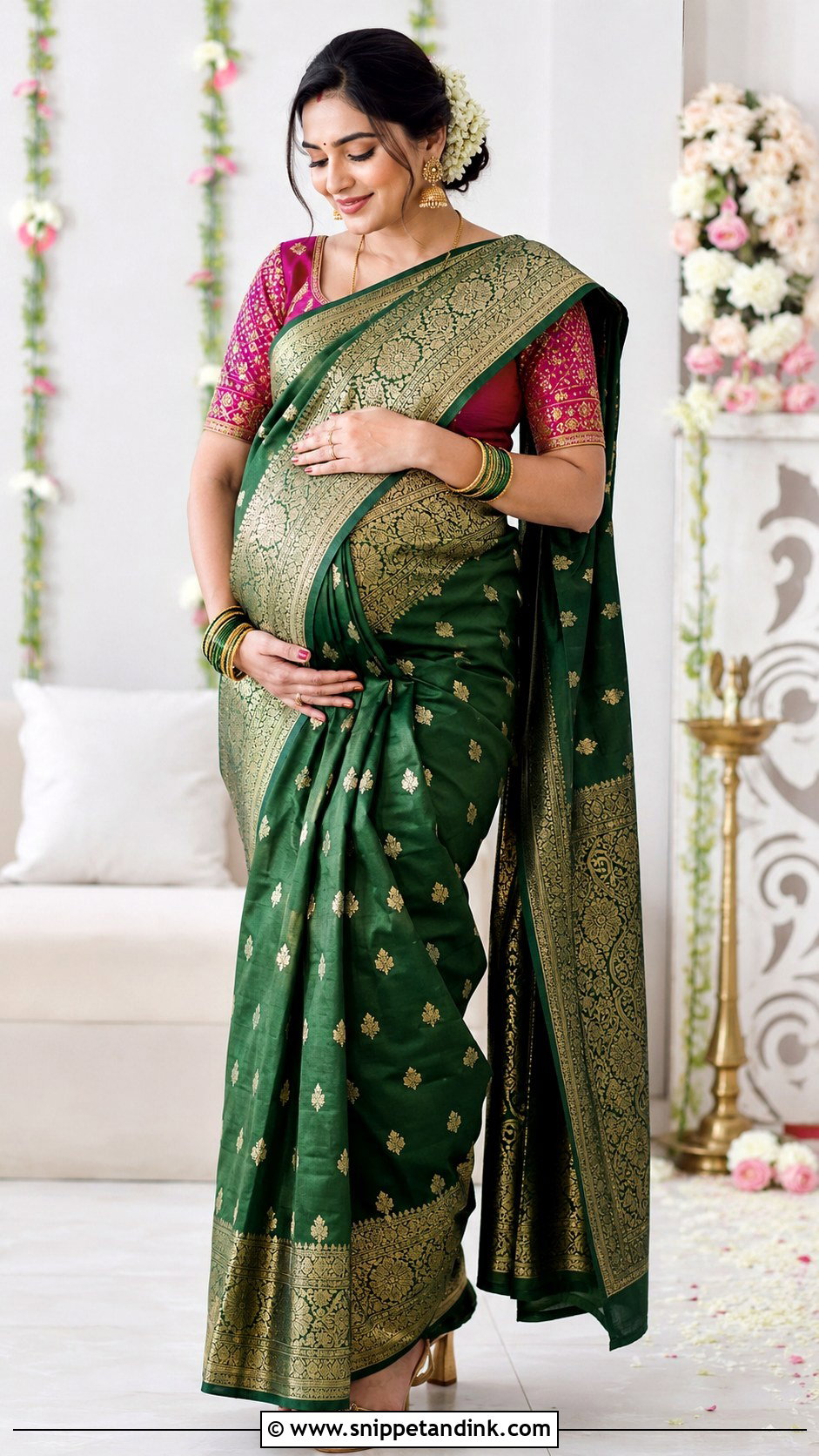
Green is a shade I match to the setting. A green Banarasi saree in a light parrot or mint green with fine weaving suits a morning ceremony at home, while emerald or bottle green with a heavier border holds its own in a banquet hall under strong lights. A matching or contrast blouse, gold jhumkas and bangles go with either. I swap block heels for flats if the ceremony involves sitting on the floor. Pin the pallu firmly so it doesn’t slide into the offerings on your lap. Finish with a low bun and flowers.
3. Pink Anarkali Suit Godh Bharai Outfit
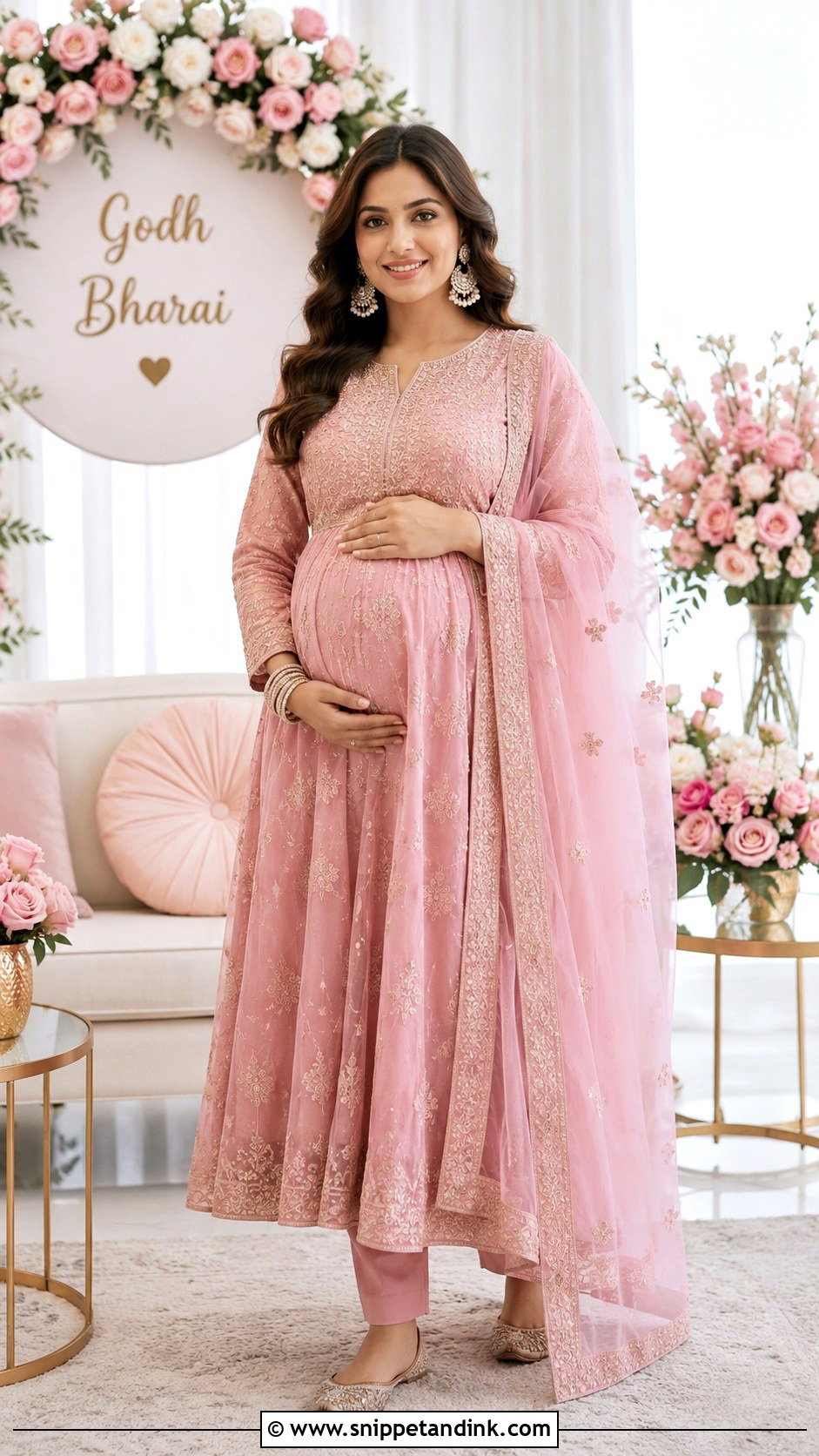
For someone who has never draped a saree, an Anarkali is the easy answer: no pleats, no pallu, and the flare falls past the bump without clinging. Blush is gentle, rose is middle ground, and rani is loud. A georgette, cotton silk or light organza dupatta adds the festive layer. Churidar can feel tight on swollen ankles late in pregnancy, so I’d often choose slim straight pants instead. Embellished flats, pearl earrings and bangles are enough. If the neckline is embroidered, leave the neck bare.
4. Peach Lehenga Godh Bharai Outfit
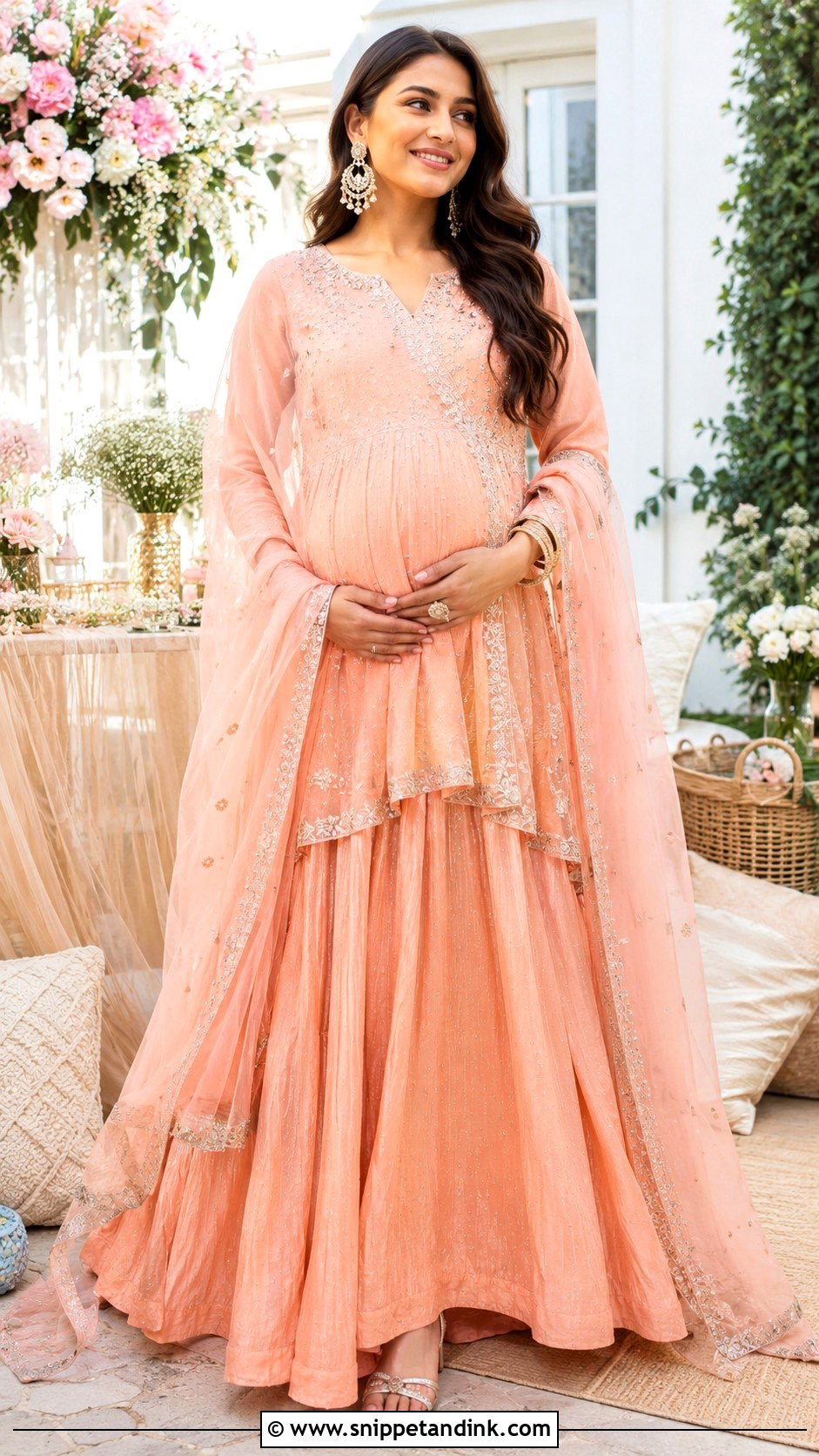
Peach suits a soft palette and a garden or pastel décor. What I look at on a lehenga for pregnancy is the waist closure: a side zip is neat but can’t grow, while an adjustable tie or drawstring can. Georgette, organza or light silk moves without bulk. A longer blouse or peplum choli gives coverage. A peach dupatta with a thin border keeps it airy. Kundan earrings, bangles, soft curls and low block heels finish it. Ask the tailor to skip the can-can underskirt, because it makes sitting cross-legged much harder.
5. Floral Sharara Set Godh Bharai Outfit
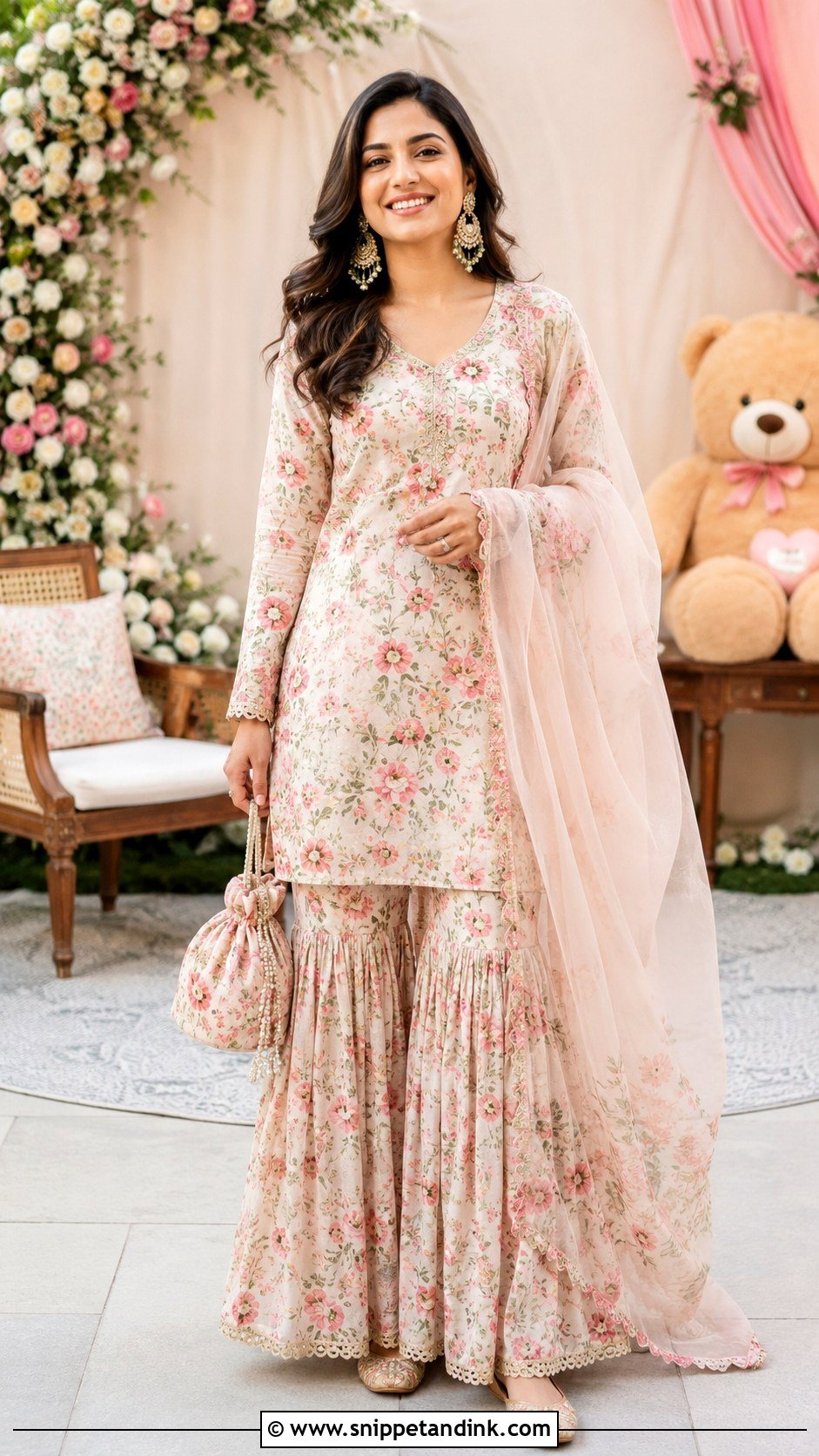
A floral sharara set is easy to sit in, which is half the battle at this ceremony. The wide legs fall over the knees when you sit cross-legged, and the kurta can be cut to skim the body. Soft florals in pink, yellow, mint or lavender suit daytime; gota patti, mirror work or light sequins make it more festive. A soft dupatta, juttis, statement earrings and a potli complete it. I recommend printed sets to sisters and cousins too, because they look dressed up without competing with the mom-to-be in silk.
6. Ivory Chikankari Kurta Set Godh Bharai Outfit
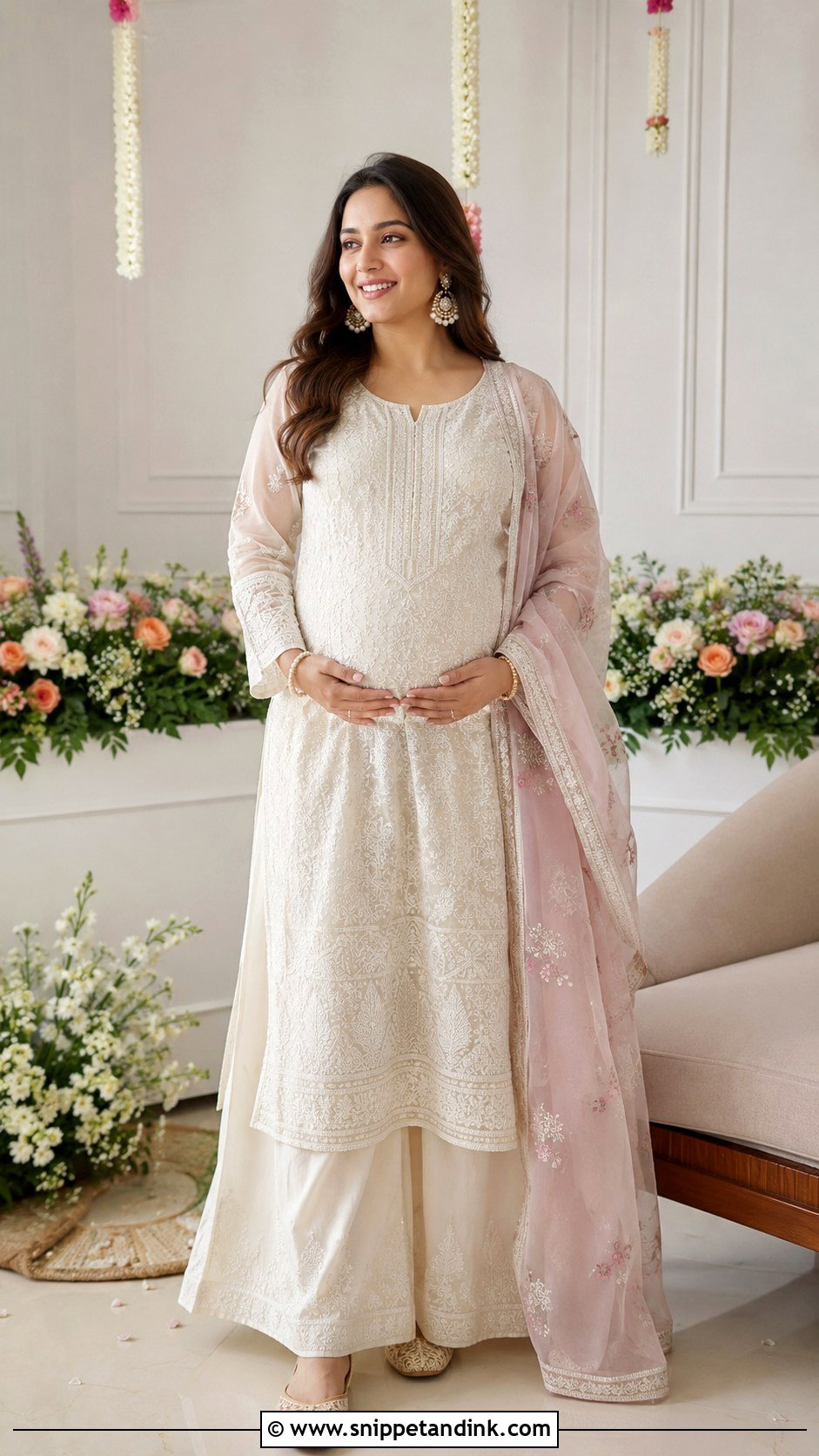
Chikankari is shadow and knot embroidery worked by hand, traditionally on fine cotton, so it is one of the coolest festive fabrics you can wear. I’d choose a long A-line or straight kurta over palazzos for room through the hips. Ivory on its own can look washed out in photos, so I add mint, blush or soft yellow through the dupatta. Pearl earrings, embroidered juttis and a light bracelet stack keep it understated. Check the lining: cheap chikankari is sometimes lined in synthetic fabric that traps heat, which defeats the purpose.
7. Lavender Gown Godh Bharai Outfit
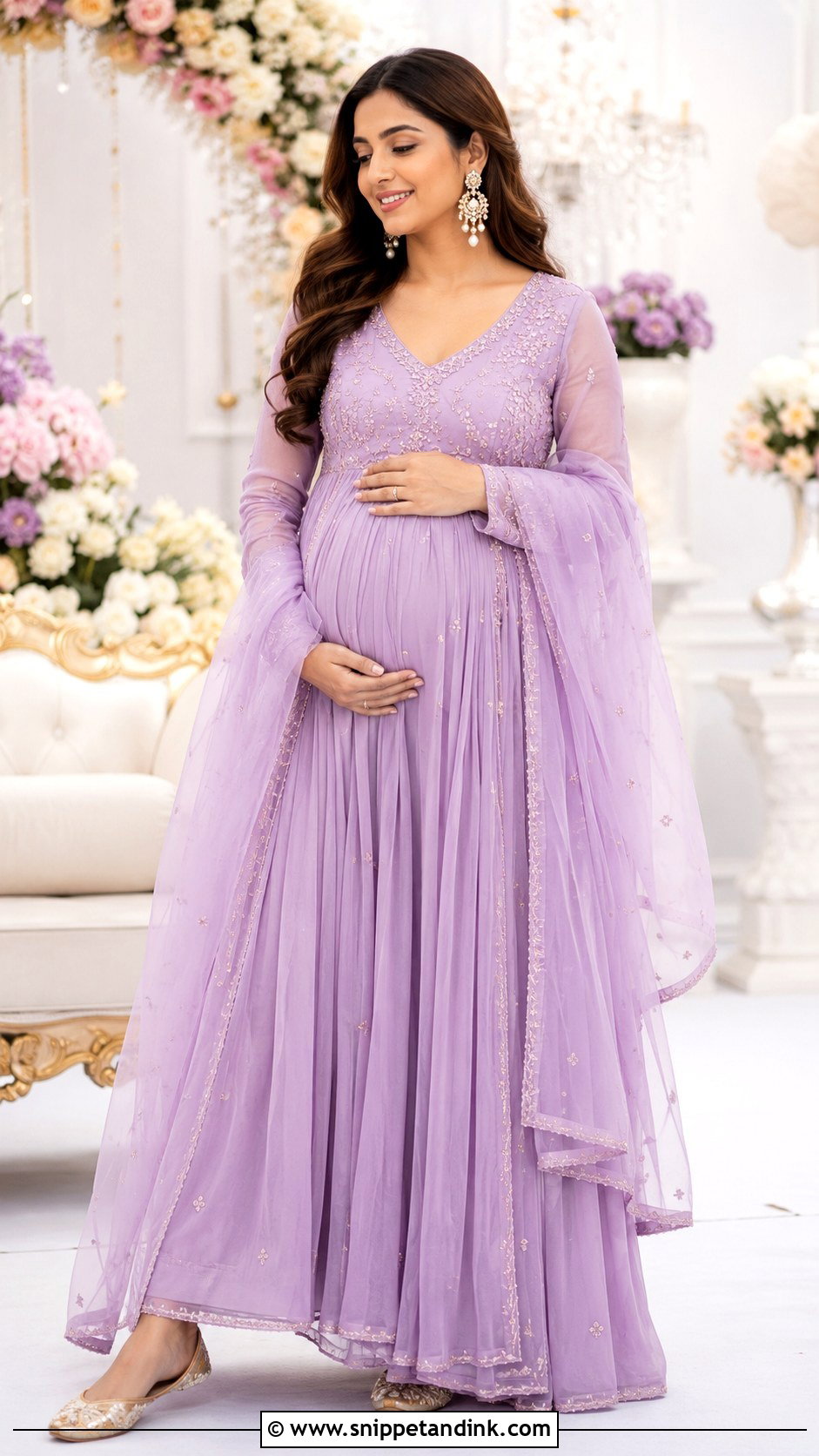
An ethnic gown in lavender has the ease of a dress and still looks festive with Indian jewellery. I look for an empire waist or gathered bodice so the fabric drops from under the bust instead of hugging the belly. Light threadwork or sparse sequins add enough sparkle without weight. Pearl drops and embellished flats, plus a soft dupatta if the family prefers something more traditional. A half-up style or loose waves keeps the mood soft. It sits naturally with pastel décor.
8. Red Silk Saree Godh Bharai Outfit
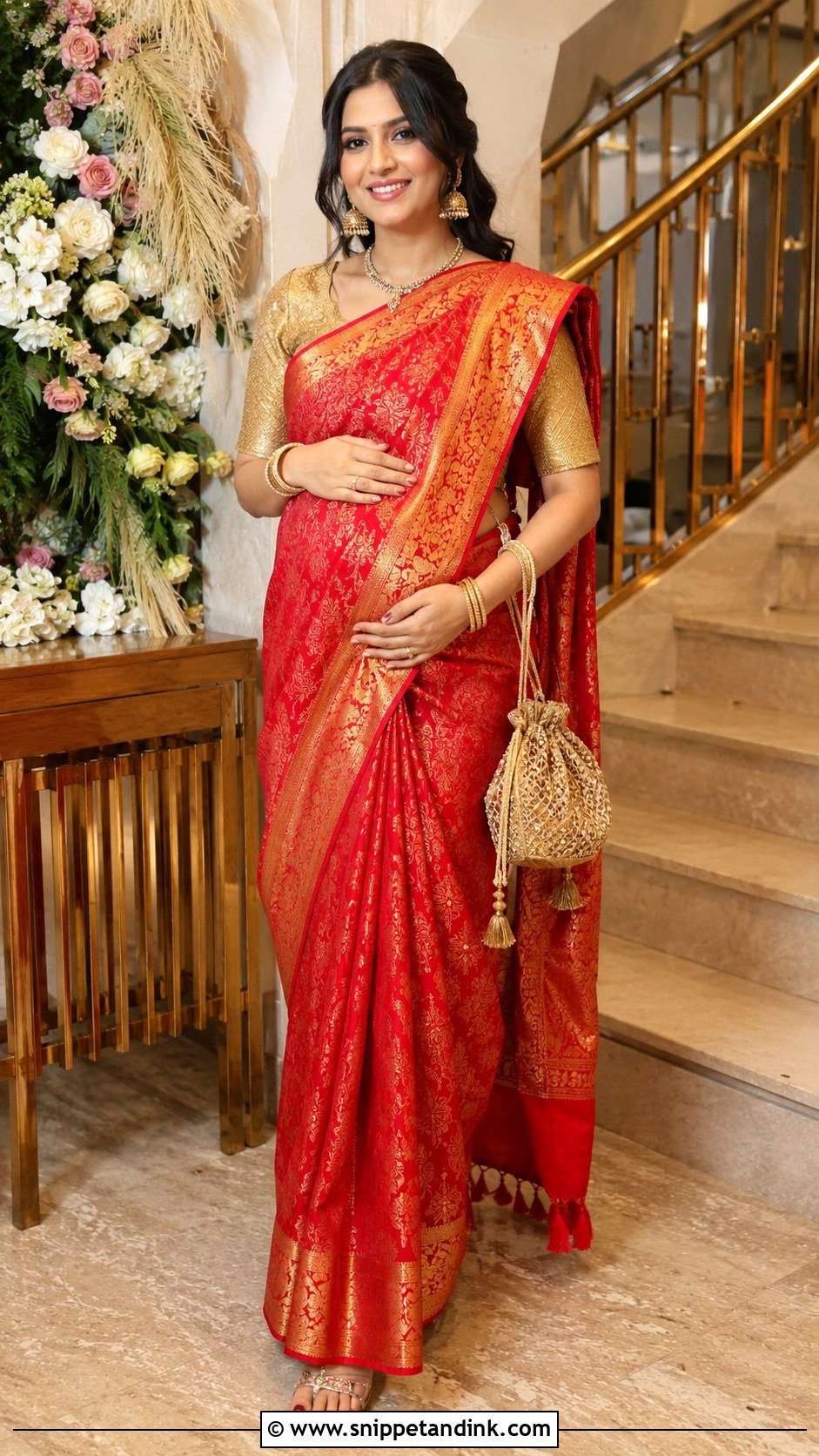
Red is a statement colour for families who love traditional richness, and the specific red matters. Sindoor red has an orange warmth, cherry is brighter, and maroon-red is deeper and easier in evening light. I’d pick a soft silk with a lighter border rather than a bridal drape, which can be genuinely heavy to carry for hours. Classic gold jewellery and a neat blouse are all it needs. Gold bangles, jhumkas, a small potli and cushioned sandals complete it. It suits an evening function or a formal ritual at home.
9. Pastel Lehenga Godh Bharai Outfit
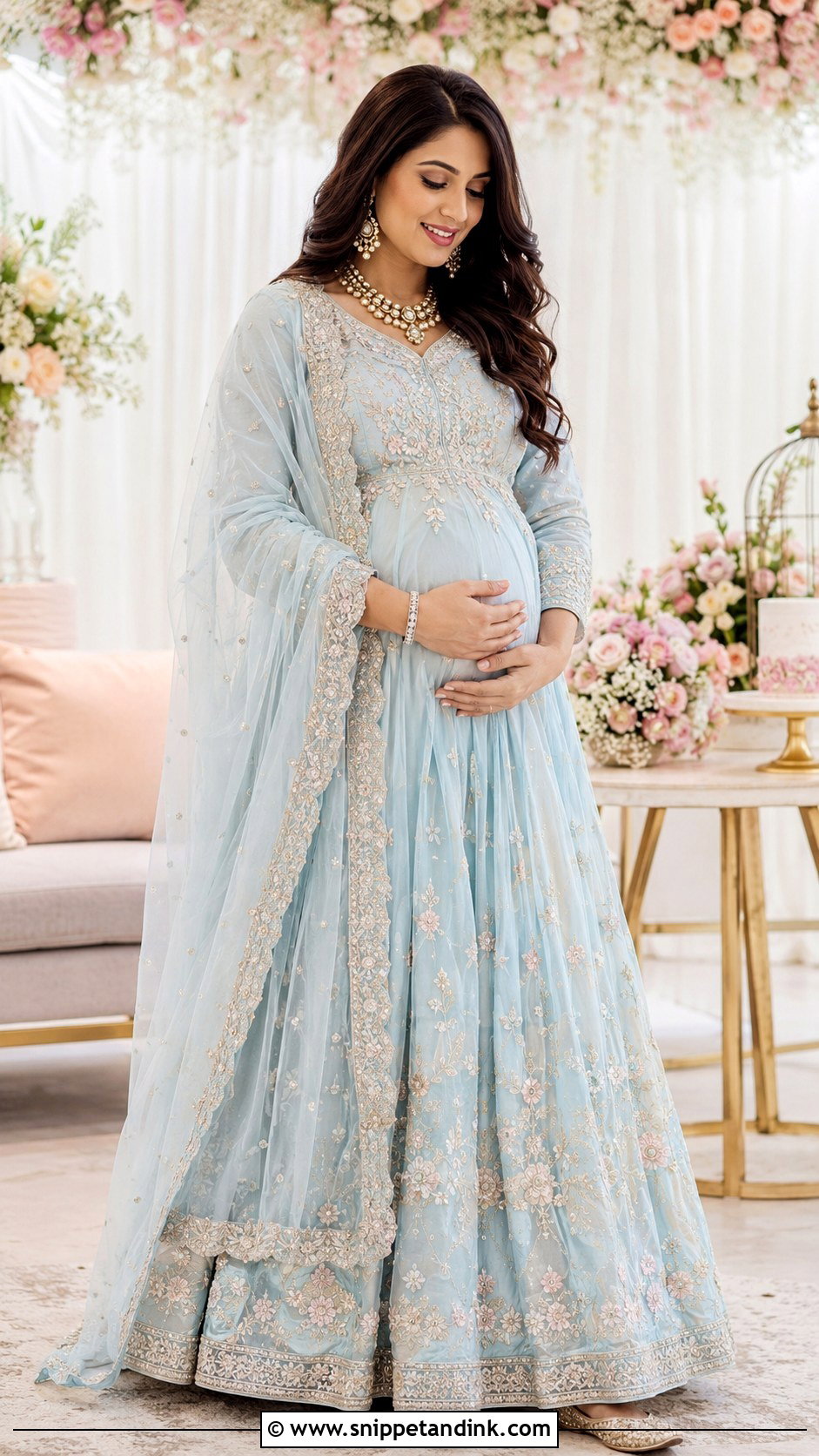
Pastel lehengas look soft against flowers and light drapes. Powder blue, blush, mint, lemon and lilac all read festive without being loud. The thing I remove first is stiffness: minimal or no can-can, because a stiff skirt fights you every time you sit down. Add a longer blouse, cape dupatta or embroidered jacket for coverage. Delicate kundan jewellery, soft makeup and flats or low block heels finish it. It’s dressy without feeling bridal, which suits a brunch-style function or an indoor venue.
10. Mustard Kurta Palazzo Godh Bharai Outfit
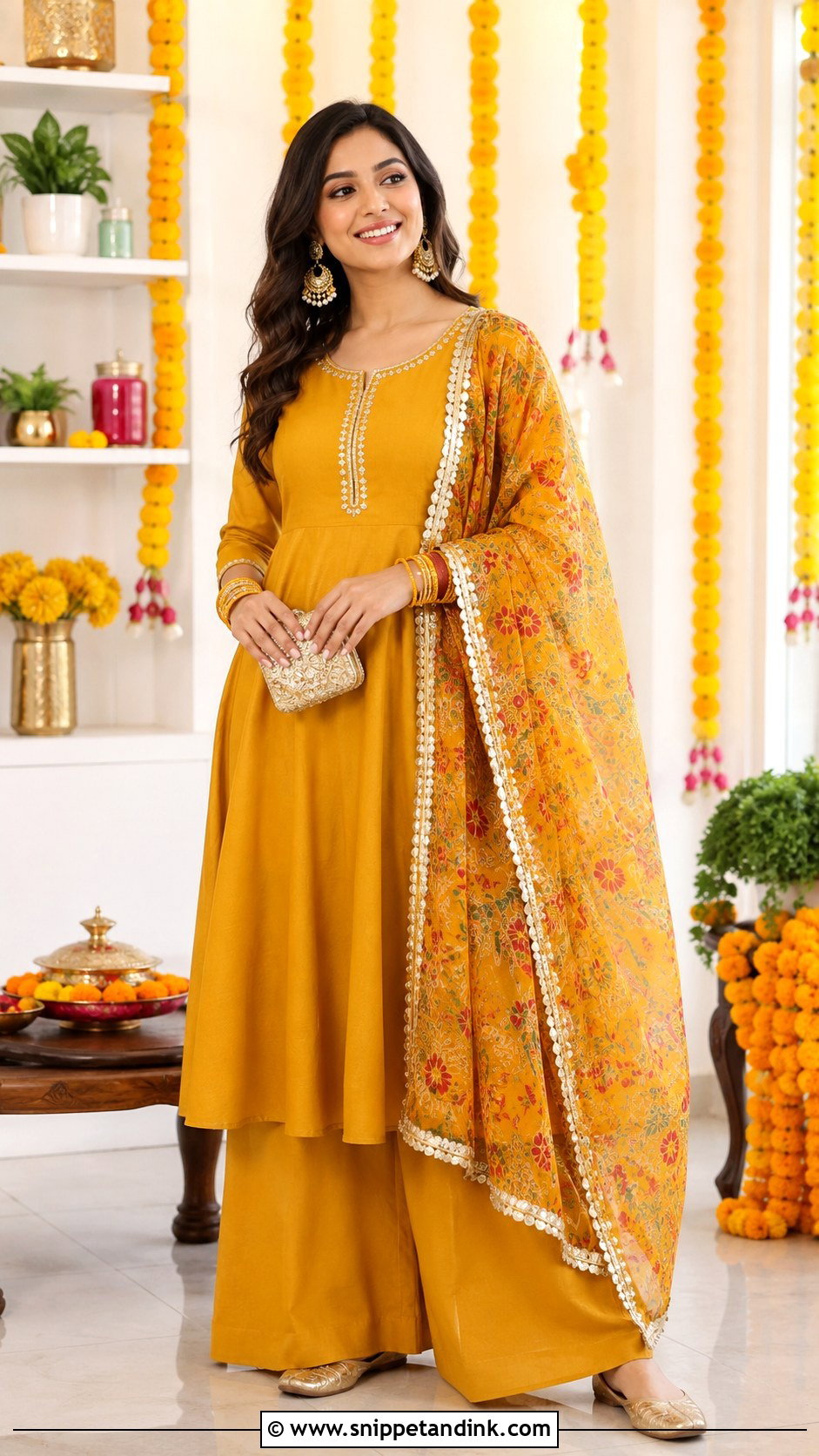
A mustard kurta and palazzo set is the outfit I’d suggest to anyone who wants to feel dressed but practically unbothered. Mustard is warm on camera and works with gold, ivory, green and pink. An A-line or angrakha-style kurta gives more room around the belly than a straight one. Palazzos beat tight bottoms for sitting. If the kurta is plain, let the dupatta carry the festivity with gota patti or a light border. Gold jhumkas, glass bangles, juttis and a small clutch round it out for a daytime ritual at home.
11. Mirror Work Lehenga Godh Bharai Outfit
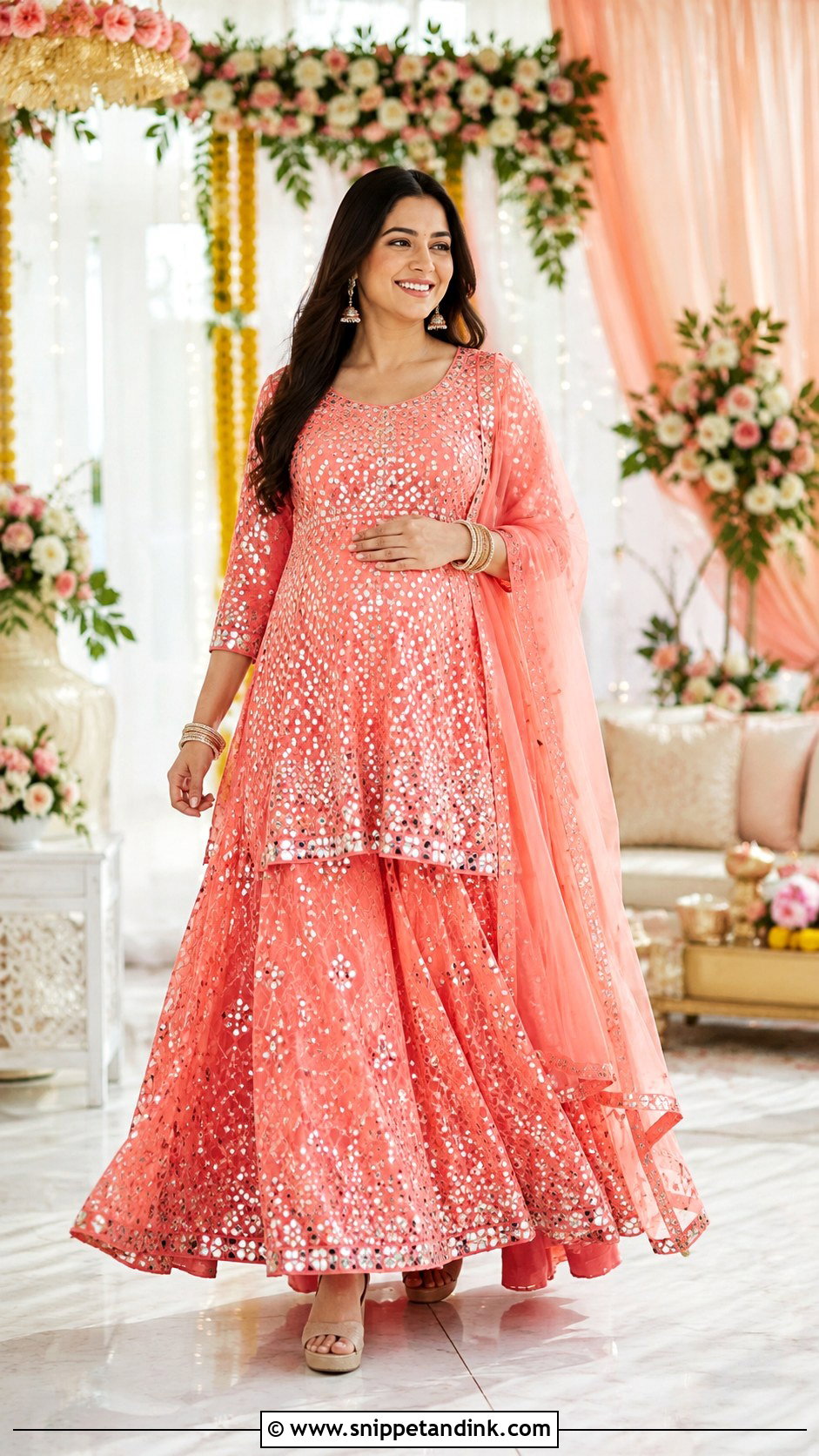
Mirror work reflects light on its own, so you can go easy on jewellery. I’d choose a soft base fabric, since mirrors are stitched on with dense thread and a stiff base plus mirrors becomes heavy fast. Yellow, coral, mint, ivory and pink all suit it. A longer blouse or jacket top gives more coverage. Wedges or block heels are practical. One watch-out: mirrored hems can scratch bare ankles and snag delicate dupattas, so ask for a soft fabric facing along the edge. Simple earrings, bangles and a sleek style finish it.
12. Blue Anarkali Godh Bharai Outfit
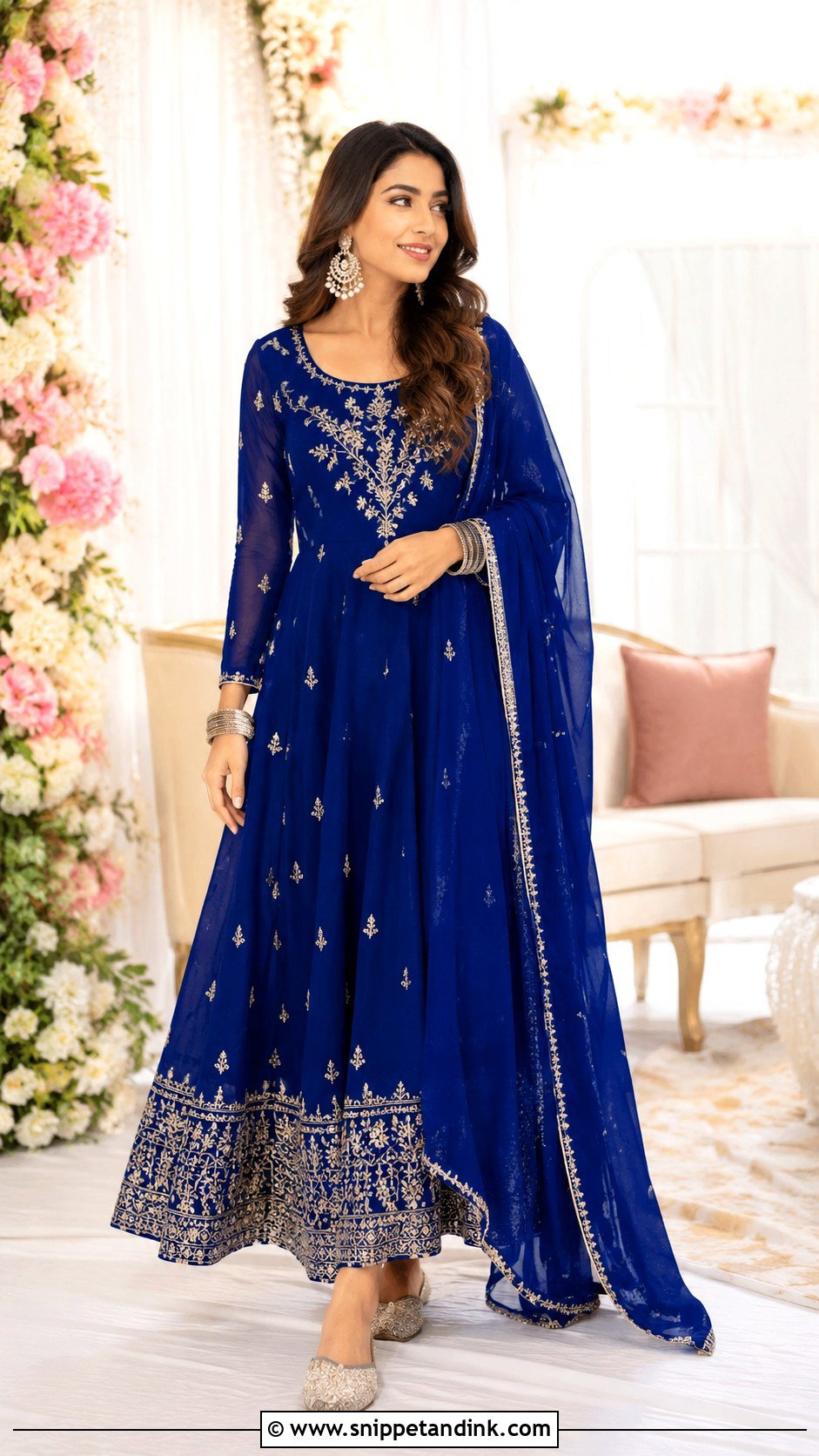
Blue Anarkalis suit almost everyone, and the shade sets the hour: sky blue for morning, royal blue or navy for evening. The flowing cut gives room without looking shapeless, because the fitted bodice still defines the shoulders. Keep the embroidery to the neckline, sleeves or hem. A matching dupatta, silver or pearl jewellery and comfortable flats complete it. If the Anarkali is heavily worked, I drop the necklace and keep earrings only. It’s also an easy pick for sisters and close friends who want something special but quieter than the guest of honour.
13. Orange Bandhani Saree Godh Bharai Outfit
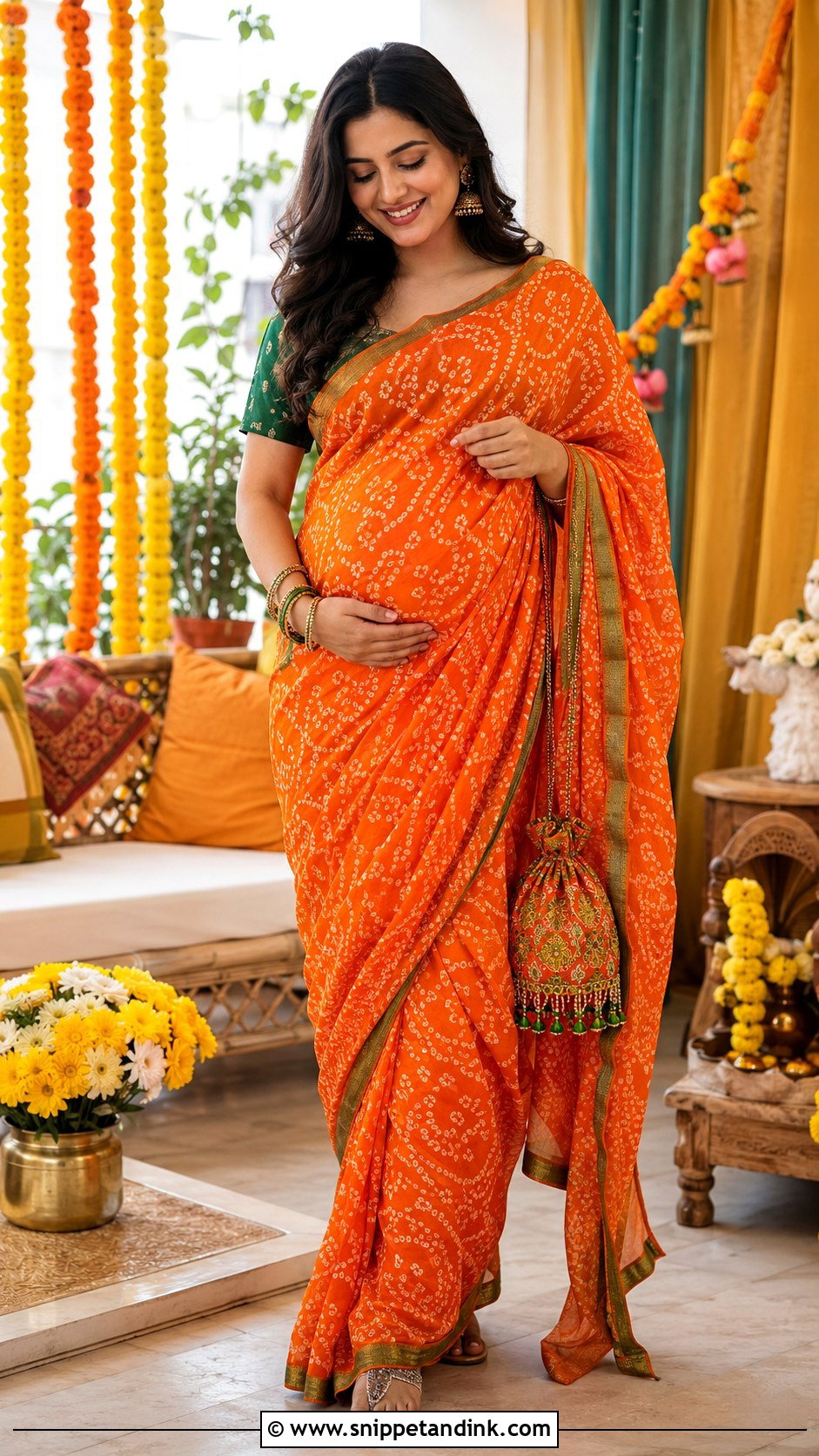
Bandhani’s tiny tied dots give texture without embellishment, and orange brings warmth to family photos. I prefer it in georgette, chiffon or a light silk blend, all of which drape softly over a bump. A green, pink or gold contrast blouse lifts the colour. Oxidised gold earrings, bangles, a potli and flat sandals suit the craft feel. Pin the pallu so you can take part in rituals without it slipping. Real hand-tied bandhani may bleed a little dye when it gets damp, so keep it away from water and wet hands during the ceremony.
14. White And Gold Suit Godh Bharai Outfit
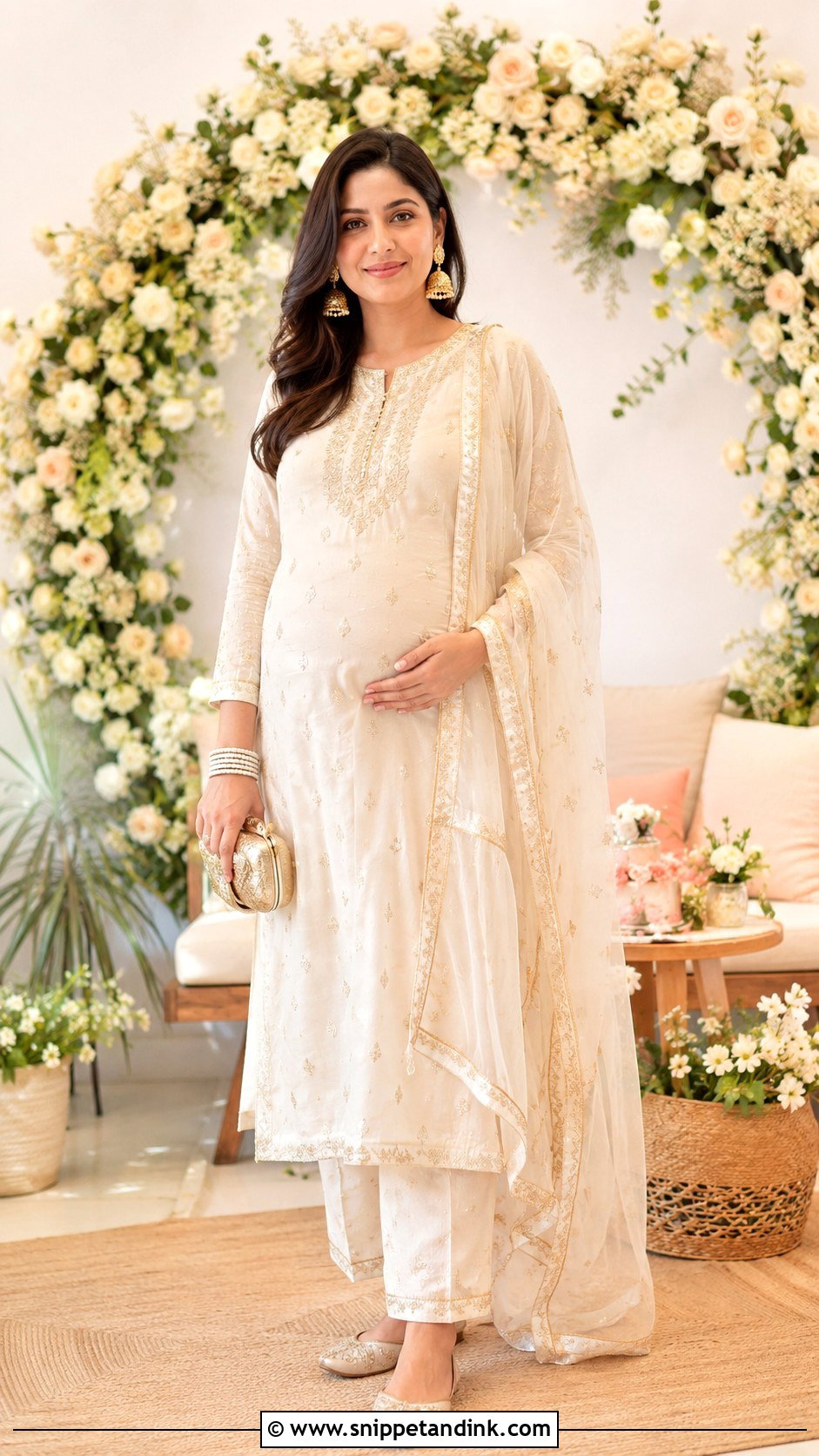
White and gold reads peaceful and clean. A long kurta with gold embroidery, straight pants and a dupatta with a matching border is the base. Stark white can look cold and flat in photographs, so I nearly always pick ivory, cream or off-white instead. Gold jhumkas, pearl bangles, nude flats and soft makeup keep it calm. For the mom-to-be, check that the lining is cotton and the pants have a relaxed waistband. A morning ceremony with flowers is where this outfit is at its best.
15. Mint Green Sharara Godh Bharai Outfit
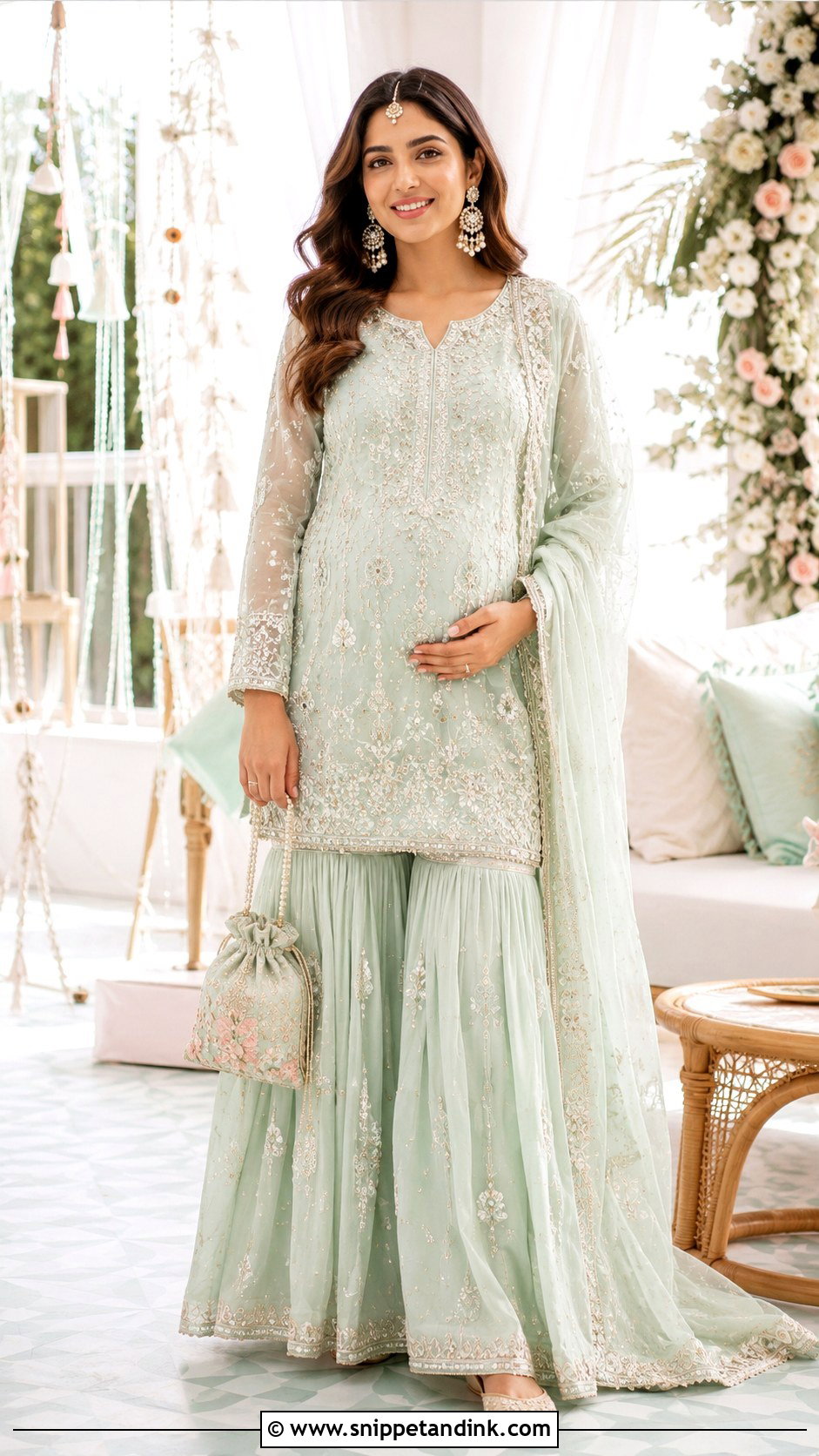
Mint suits warm weather because it looks cool even when the room isn’t. A short or mid-length kurta with a relaxed fit over flowing sharara pants works, and gota patti or embroidery makes it festive. A sheer dupatta with a delicate border adds movement. Pearl earrings, a small maang tikka, embroidered juttis and a pastel potli finish it. Guests like this colour too, because it’s cheerful without overpowering. My only caution: pale mint shows sweat marks and turmeric stains readily, so keep a stain pen handy.
16. Gold Tissue Saree Godh Bharai Outfit
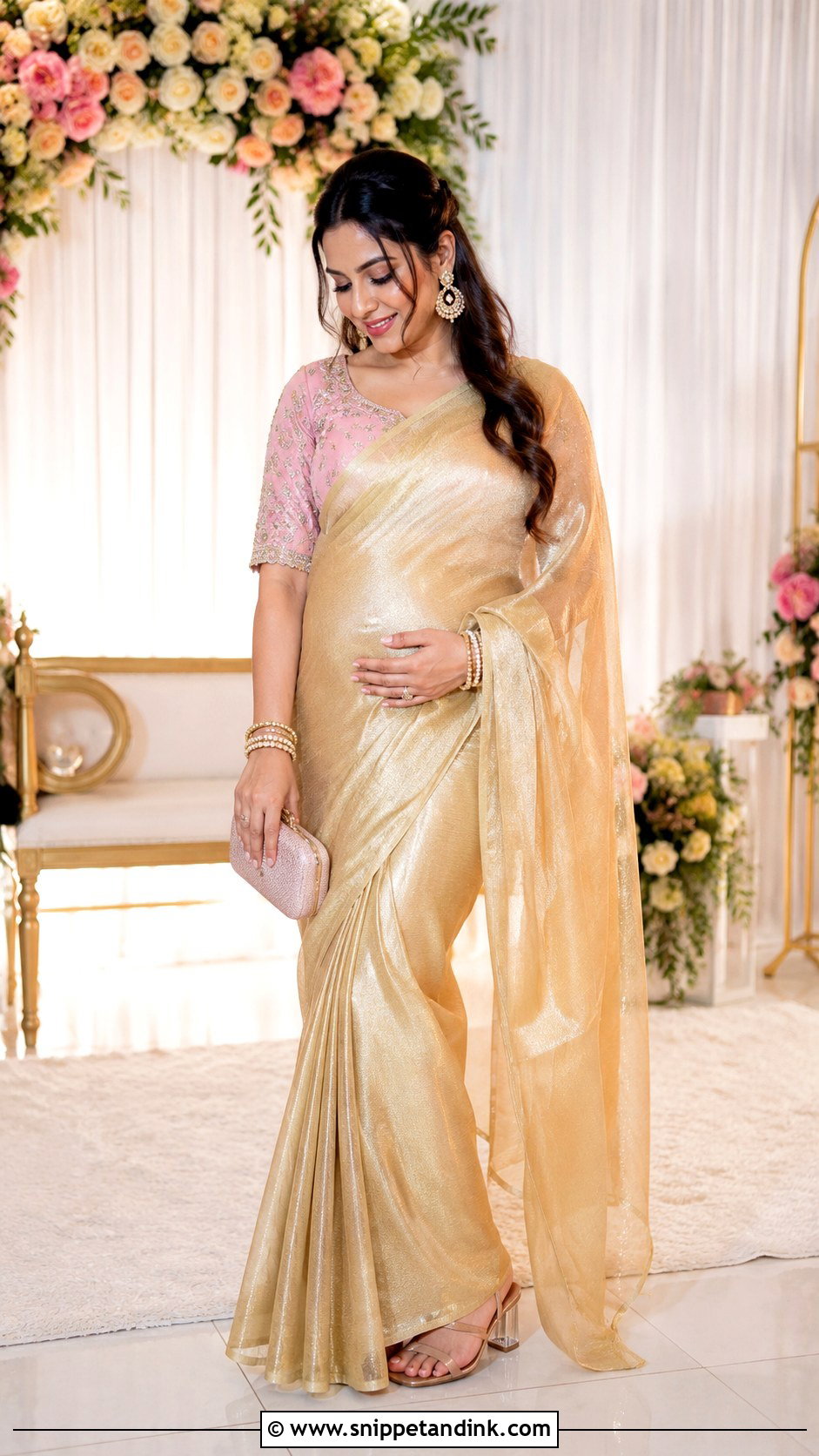
Tissue fabric has metallic yarn in the weave, so gold tissue glows under bright lights. Some tissue is crisp and stands away from the body, which adds width you don’t need right now; ask for a softer blend or have it pre-pleated. A matching gold blouse is formal, and a pink, green or maroon contrast is livelier. Kundan earrings, bangles and a neat clutch suit it, with a low bun and flowers. It gives evening richness without heavy embroidery, which keeps it wearable over a long function.
17. Printed Kaftan Set Godh Bharai Outfit
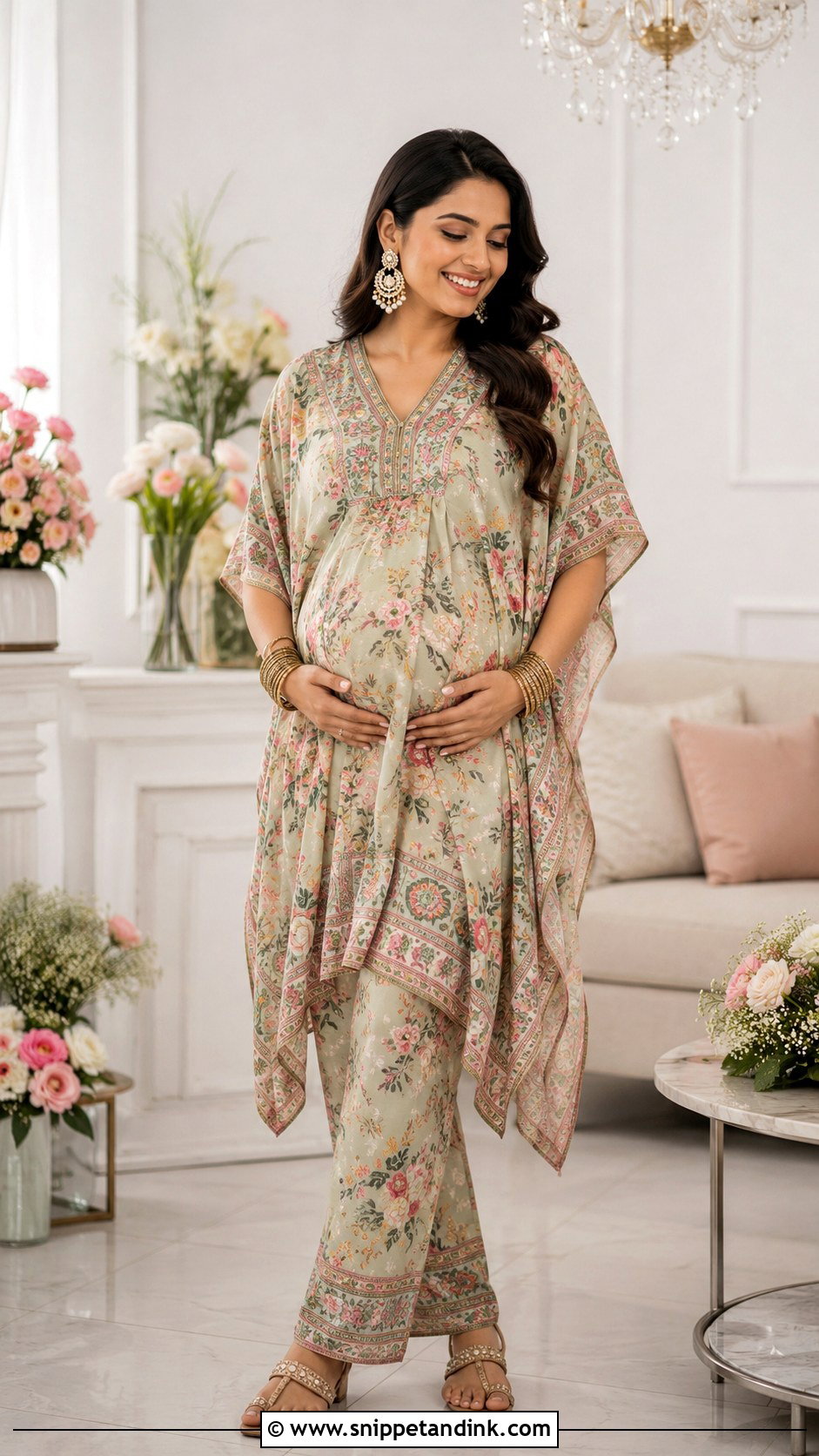
A printed kaftan set is the outfit for the mom-to-be who doesn’t want to think about waistbands at all. Silk, crepe or muslin in a floral, paisley or ethnic print looks elegant if the accessories are considered. Straight pants, soft sandals, statement earrings and stacked bangles complete it. If you add a belt, it should sit above the bump and be soft enough to forget. I’d keep this for a relaxed home celebration; at a formal banquet next to silk sarees, it can look underdressed.
18. Rani Pink Lehenga Godh Bharai Outfit
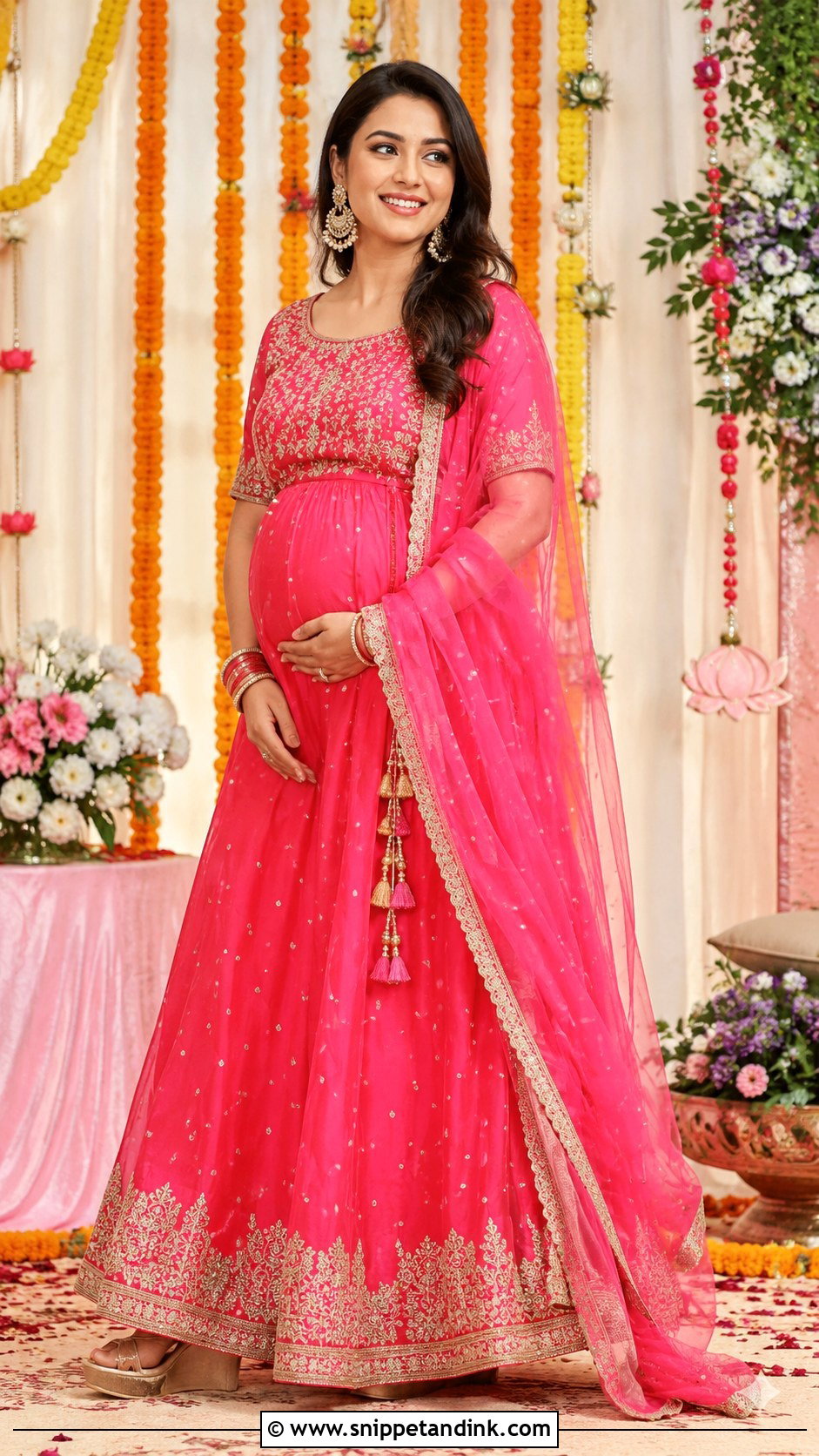
A rani pink lehenga is pure celebration, and the colour sits naturally beside gold, green and pearl. Rani is strong enough that I keep everything else simple: a light skirt with a soft waistband, a blouse with good coverage and a sheer dupatta with a plain border. Kundan earrings and bangles are plenty. I’d swap wedges for flats if the ritual involves sitting on the floor, since getting up in a wedge is awkward with a bump. Rosy makeup rather than heavy colour keeps the face from competing with the outfit.
19. Beige Embroidered Anarkali Godh Bharai Outfit
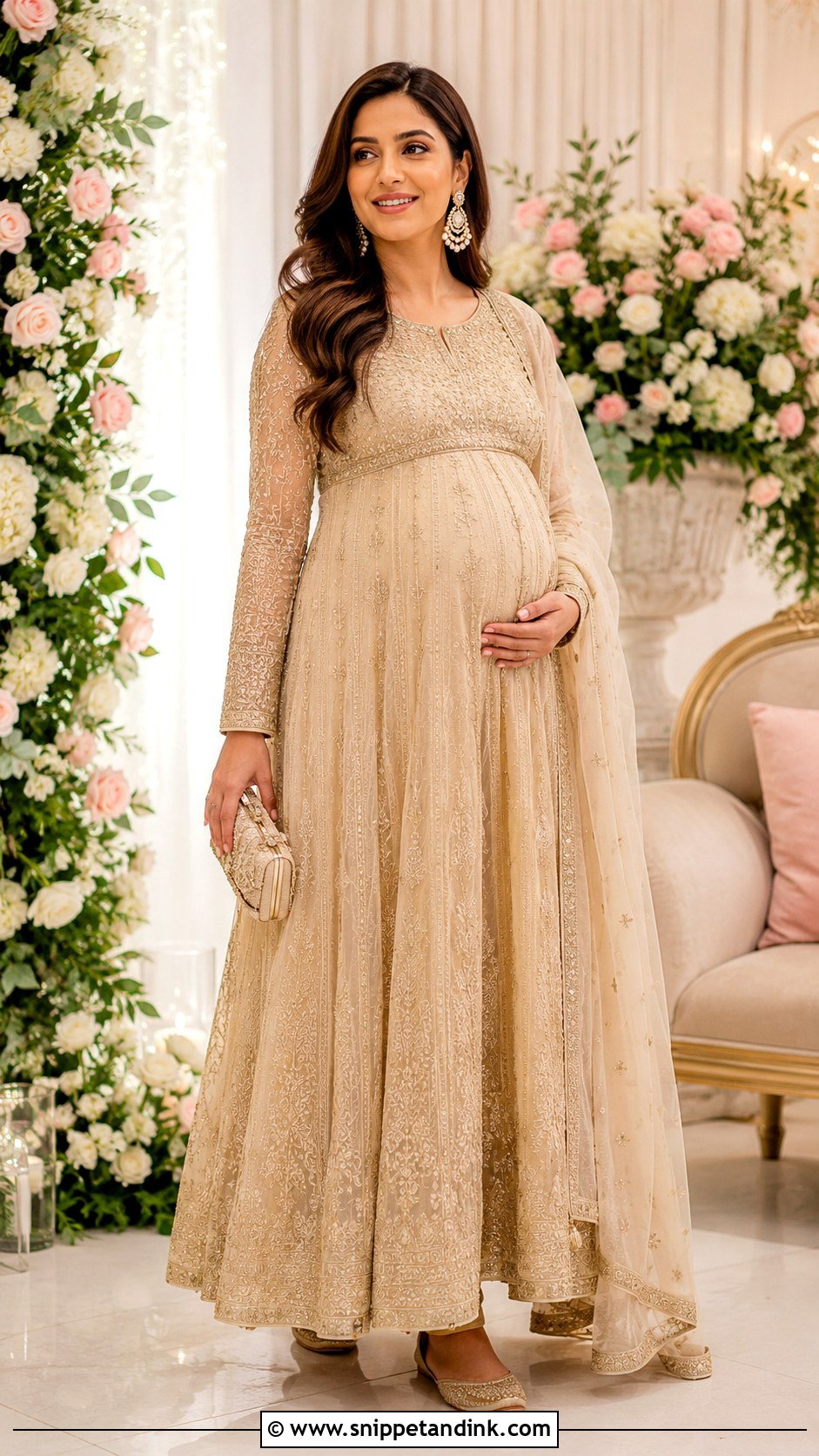
Beige is a choice for someone who loves neutrals, and it only works if the embroidery adds depth. Gold thread, pearl accents or scattered sequins keep it from fading into the background. A flowing Anarkali with a comfortable lining and soft dupatta suits it. Gold or champagne flats, pearl earrings and a small clutch complete it. If you find it too quiet in a mirror test, a blush, mint or maroon dupatta brings colour back. It reads refined indoors under warm lights.
20. Purple Silk Suit Godh Bharai Outfit
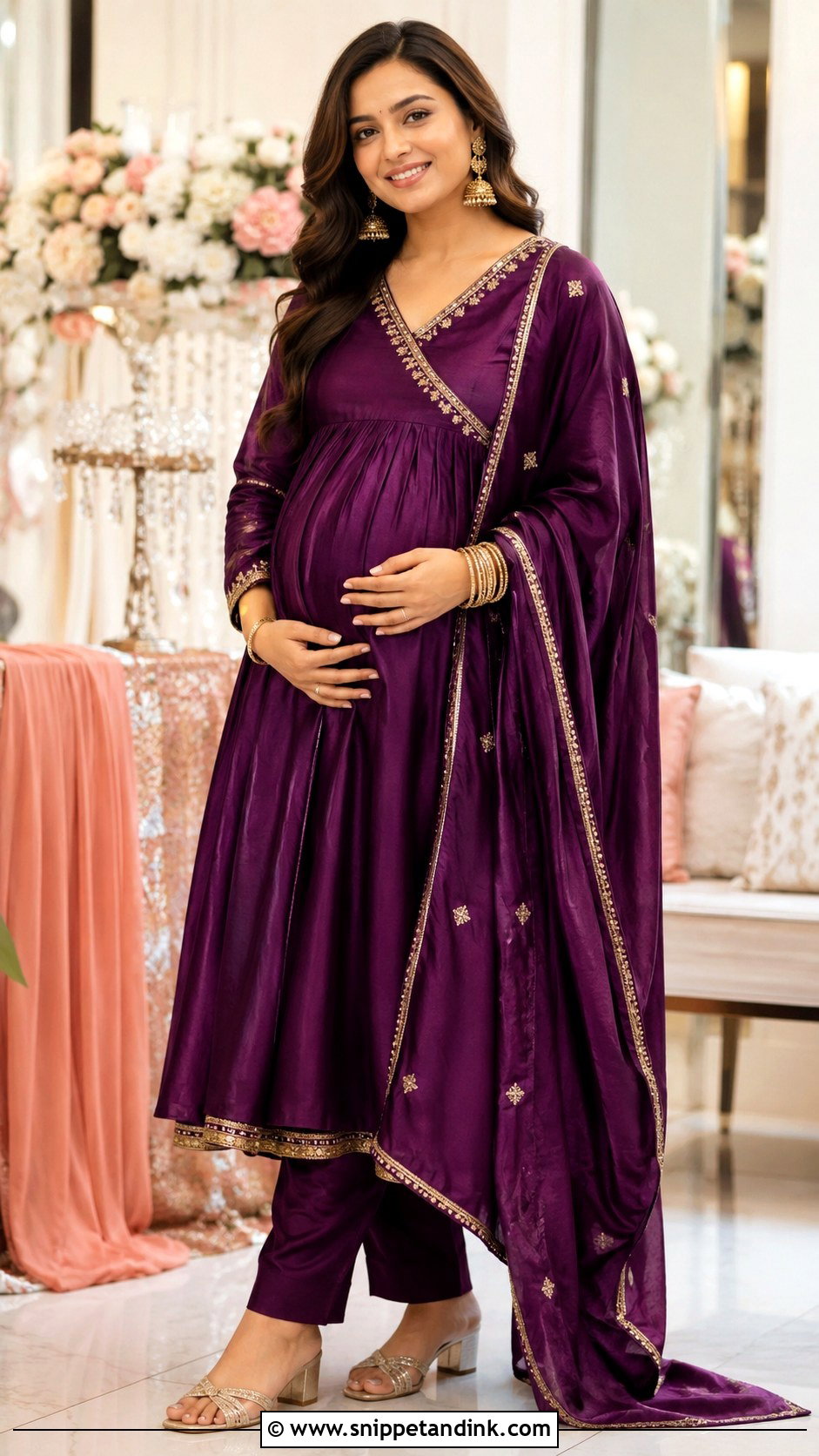
Purple in silk feels rich, and the depth of the shade changes the mood: lilac is light and daytime, grape and plum are festive, aubergine is formal. A straight or A-line kurta over palazzos, cigarette pants or churidar, depending on comfort, works. Gold zari shows up especially well against purple. A matching dupatta, jhumkas, bangles and low heels finish it. I’d suggest a silk blend over heavy pure silk at this stage of pregnancy; it’s lighter, cooler and creases less when you’ve been seated for an hour.
21. Floral Saree Godh Bharai Outfit
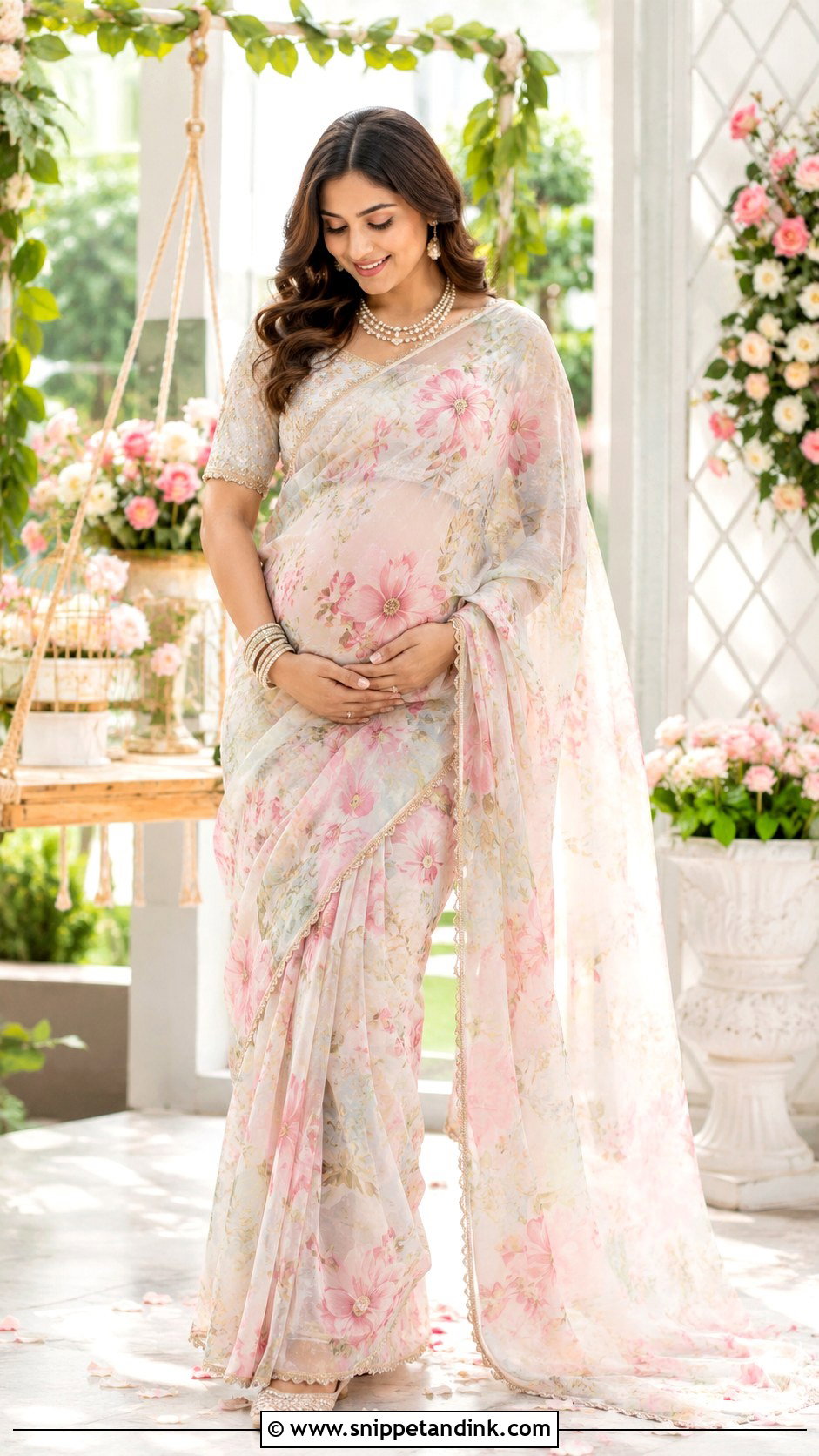
Floral sarees in chiffon, georgette, organza or crepe feel festive without weight. Big watercolour florals lean modern; small traditional prints look classic. Pastels suit daytime and darker florals suit evening. A comfortable blouse, pearl jewellery, bangles and embellished flats complete it. If draping is a worry, a pre-draped floral saree holds its place during rituals. One styling note: with a large print, I place the biggest flowers on the pallu and keep the pleats in a smaller section, so the print doesn’t swamp a petite frame.
22. Teal Jacket Lehenga Godh Bharai Outfit
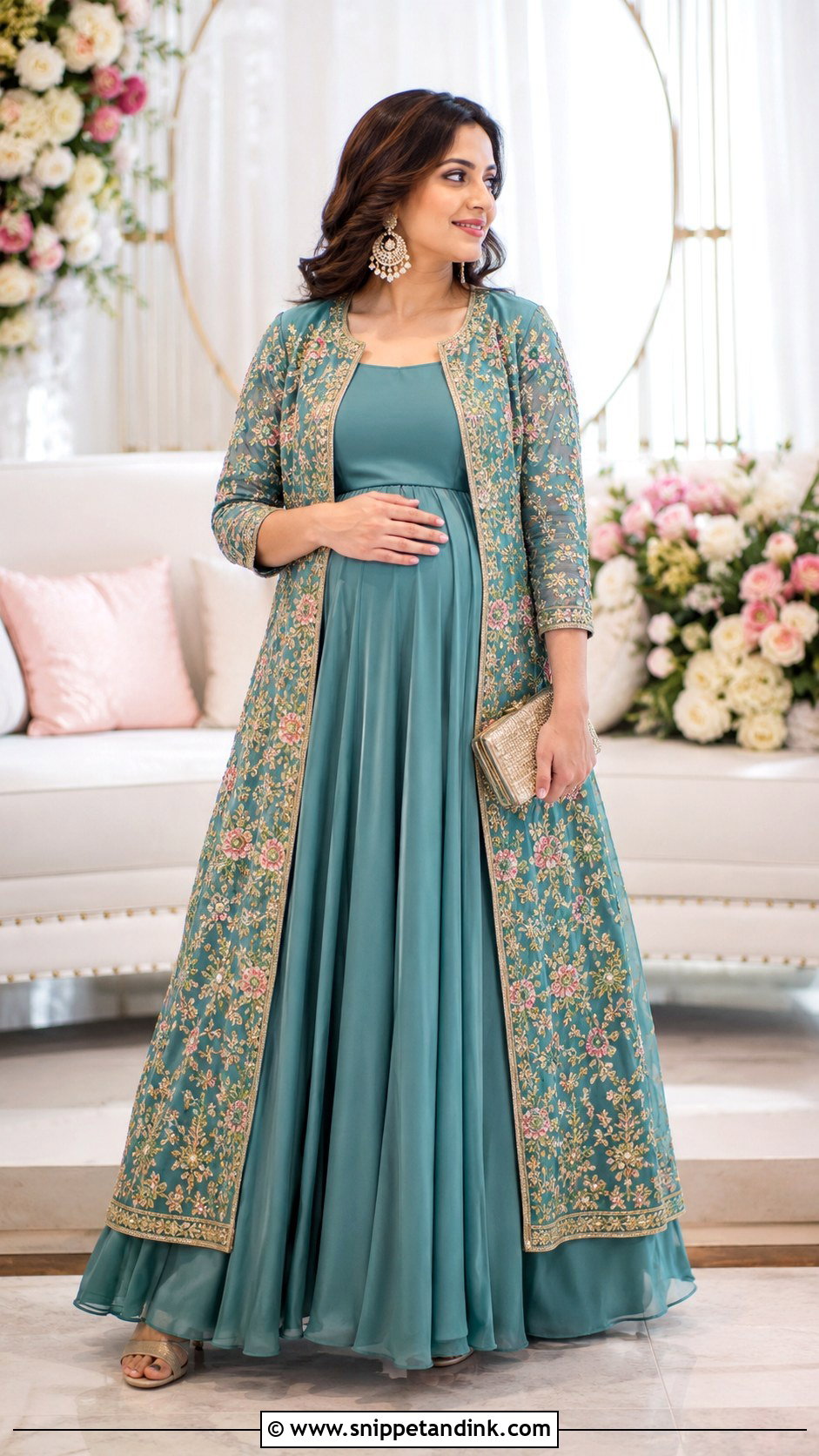
A jacket lehenga is my answer when a mom-to-be dislikes managing a dupatta. The long jacket gives coverage and structure and flows over the bump. Pair a light skirt with a soft waistband and an embroidered jacket to the calf. Teal holds its colour well under both daylight and indoor lighting, and it looks rich with gold, silver or antique jewellery. Low wedges, statement earrings and a small clutch complete it. Ask for the jacket to close with a single hook at the top only, so it hangs open over the bump instead of pulling.
23. Yellow Sharara Suit Godh Bharai Outfit
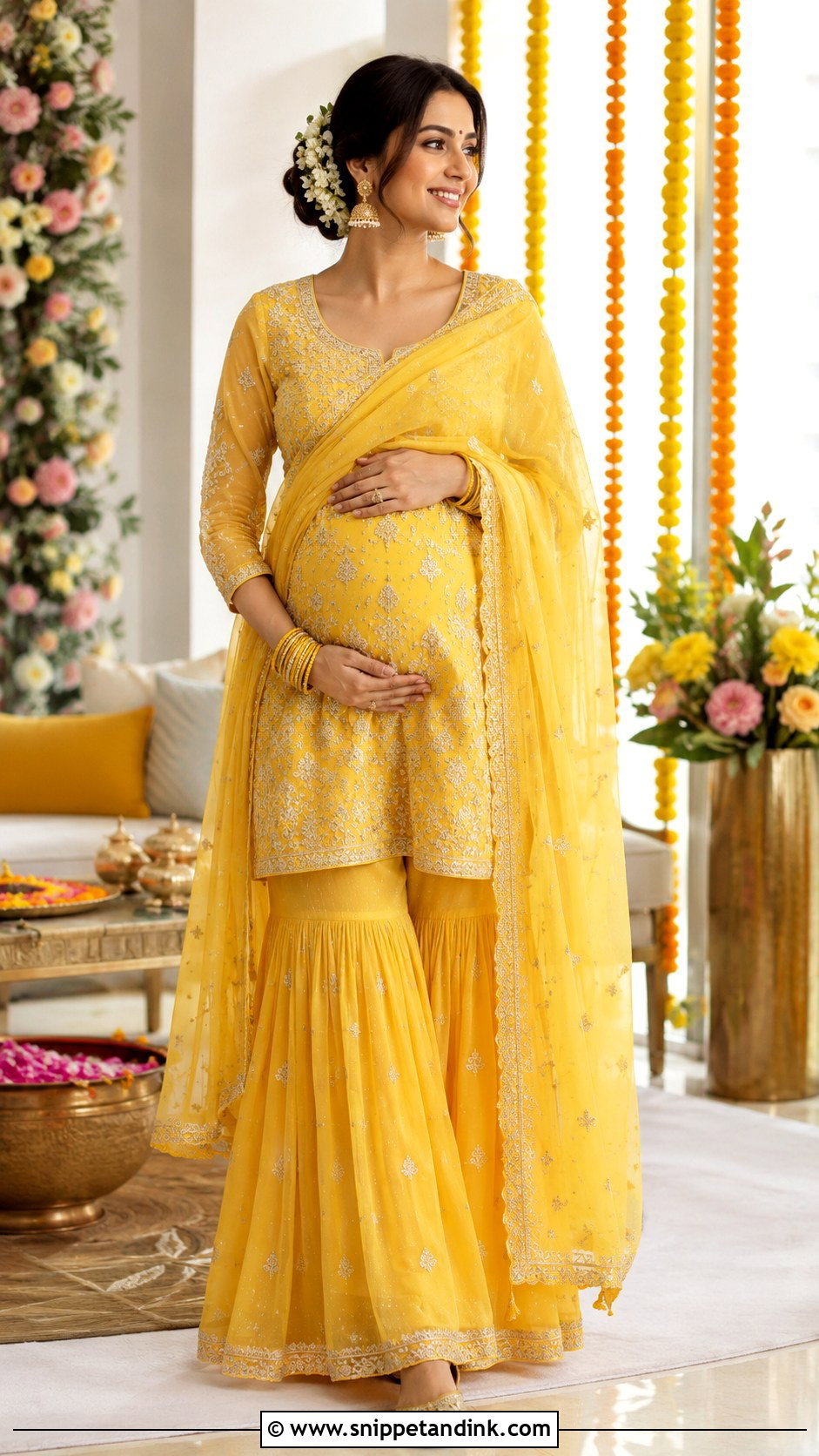
Yellow is the colour many families associate with festive rituals, and a yellow sharara suit gives you that colour in a shape that’s easy to sit and stand in. A kurta with light mirror work, gota patti or floral embroidery over flowing sharara pants, with a soft dupatta pinned on one shoulder, is the whole recipe. Gold jhumkas, bangles, juttis and fresh flowers in the hair finish it. It’s another outfit I suggest for sisters and cousins, since it looks celebratory without feeling formal. It suits daytime events best.
24. Sea Green Saree Godh Bharai Outfit
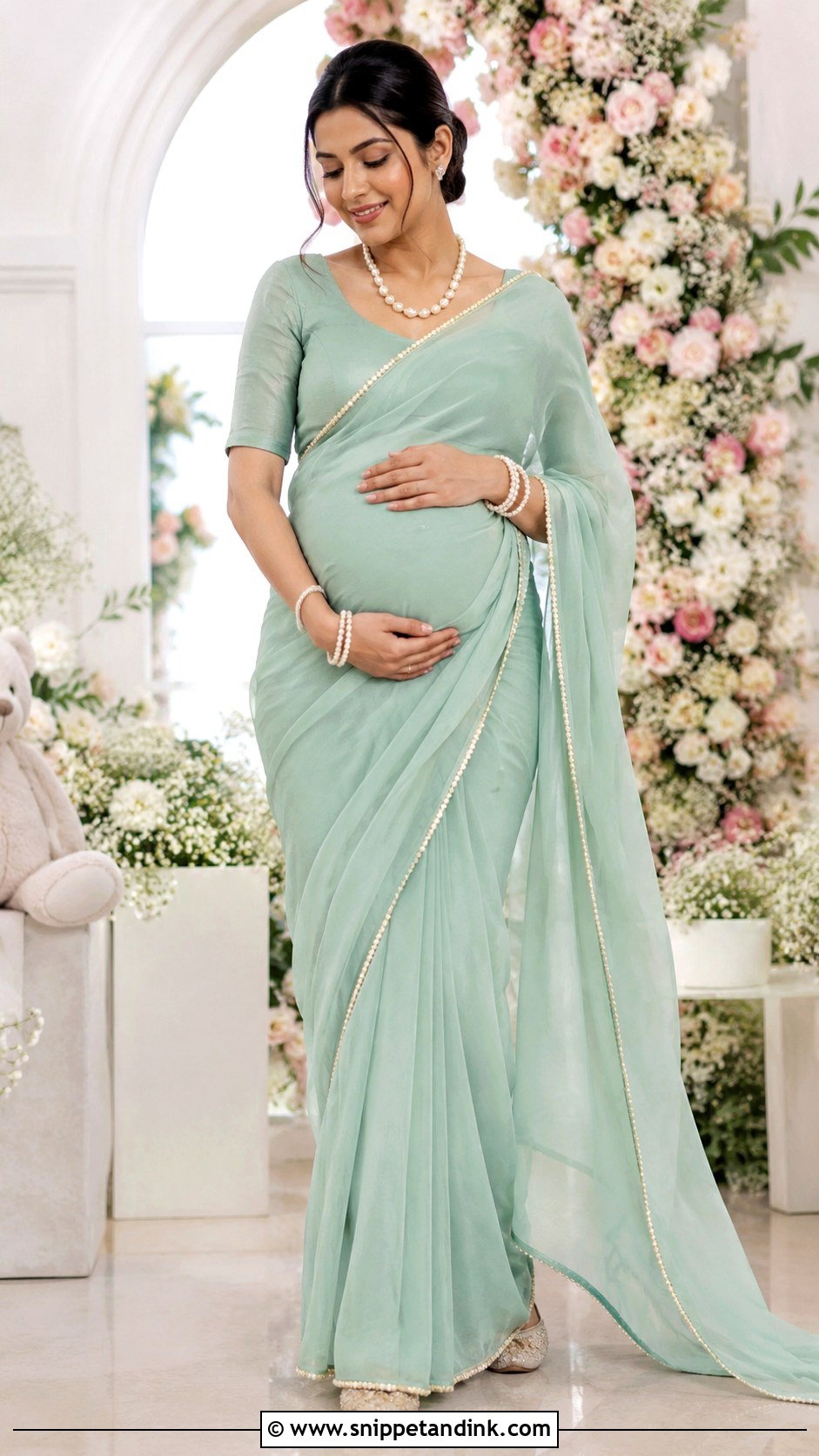
Sea green sits between blue and green, which makes it gentler than a bright emerald and fresher than mint. It suits both traditional and modern décor. Silk is dressiest; organza, chiffon or georgette are lighter. A gold or pearl border adds enough ceremony. A matching blouse, pearl jewellery, bangles and cushioned flats or low heels complete it. I keep the drape soft and the pleats loosely tucked, because sharp, starched pleats press into the belly when you sit. It’s a calm, soothing colour for a daytime gathering.
25. Maroon Velvet Suit Godh Bharai Outfit
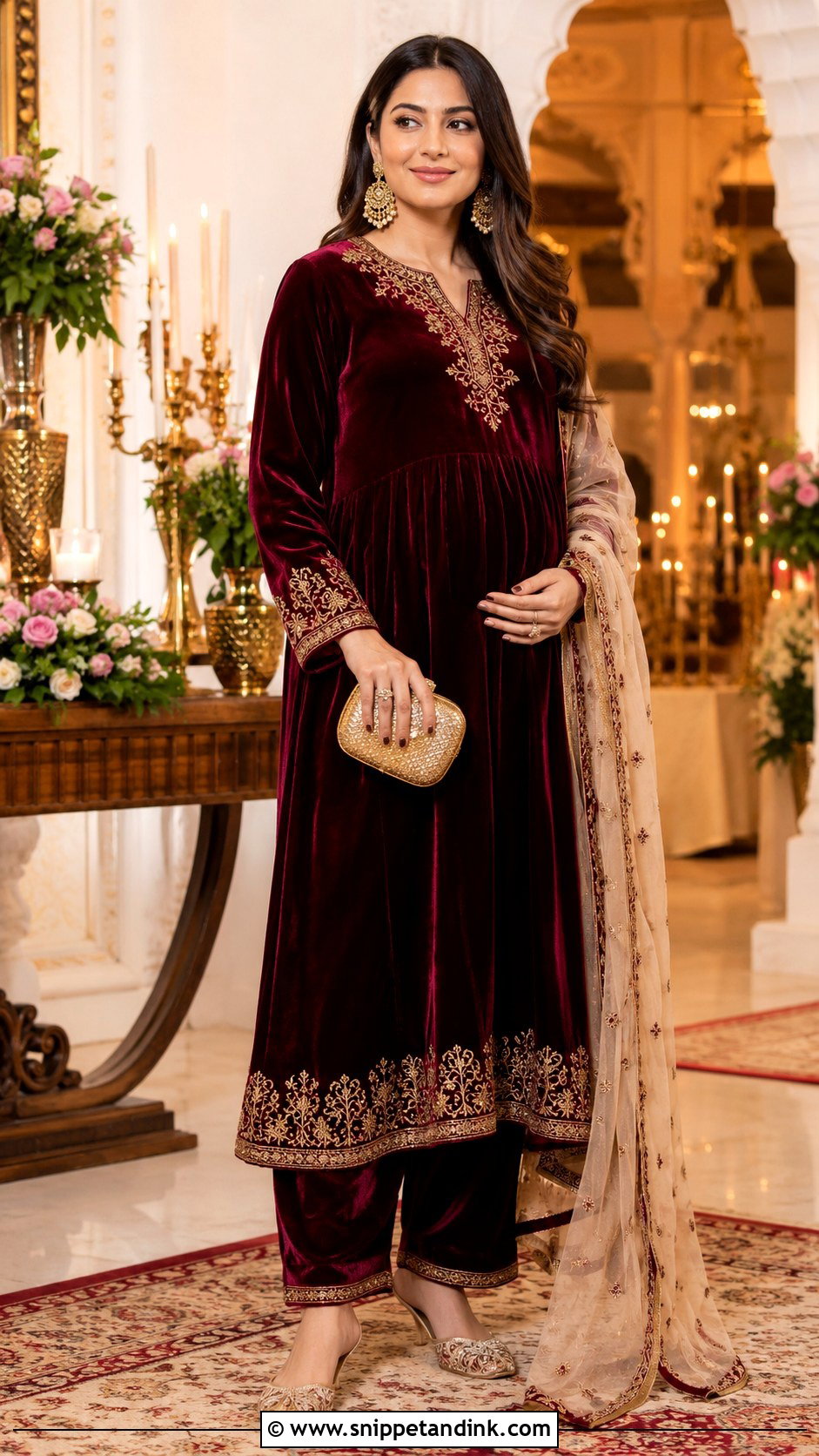
Velvet only belongs at a winter or evening function in a cool room. Its pile traps heat, and pregnant women run warm. Choose a soft, thin velvet rather than the thick upholstery kind, cut as a straight or A-line kurta over relaxed pants, with a light dupatta to balance the weight. Velvet already looks festive, so keep embroidery to a minimum. Gold details, antique jewellery and embroidered juttis suit maroon. Expect it to show crush marks where you sit; a quick steam before photos fixes most of them.
Dressing the Sisters and Cousins Around Her
Several of the looks above note that they suit guests too, and family members often ask me what they should wear. The simplest rule is that the mom-to-be’s outfit is chosen first, and everyone else plans around it.
- Avoid her exact colour. If she’s in yellow, close family can wear green, pink or ivory instead.
- Keep the heaviest fabric and most embroidery for her. Printed shararas and kurta sets suit sisters well.
- For a family photo, agree on a loose palette (say, pastels or jewel tones) rather than matching outfits.
- Whoever helps with the rituals should skip long, trailing dupattas near the lamps and food.
Can You Wear It Again After the Baby Arrives?
Most moms-to-be ask me this, and the honest answer depends on the shape. Sarees are the safest; they adjust to any body, before or after birth. Separates like a kurta and sharara or a lehenga skirt with a drawstring also come back into rotation. A fitted maternity blouse usually doesn’t, unless the tailor left generous seams that can be taken in.
If you plan to breastfeed and want to wear the outfit to a naming ceremony a few months later, ask for a front or side zip on the kurta or blouse now. It costs little at the stitching stage and saves you an awkward outfit change later.
What Makes a Godh Bharai Outfit Easy to Wear for Hours
A yellow silk saree, a pastel lehenga, a floral sharara or a simple chikankari set can all be right; what matters is how they behave after three hours of sitting and standing. Soft fabric, an adjustable waist, practical shoes and a dupatta that’s pinned in place solve most problems before they start. Add jewellery and flowers to taste. Then think about your venue, the season and what your family expects. If you’d like more to compare before deciding, browse these Godh Bharai Outfit Ideas too, and pick the one you’ll enjoy wearing.
You'll Like These Ideas:


Leave a Reply