
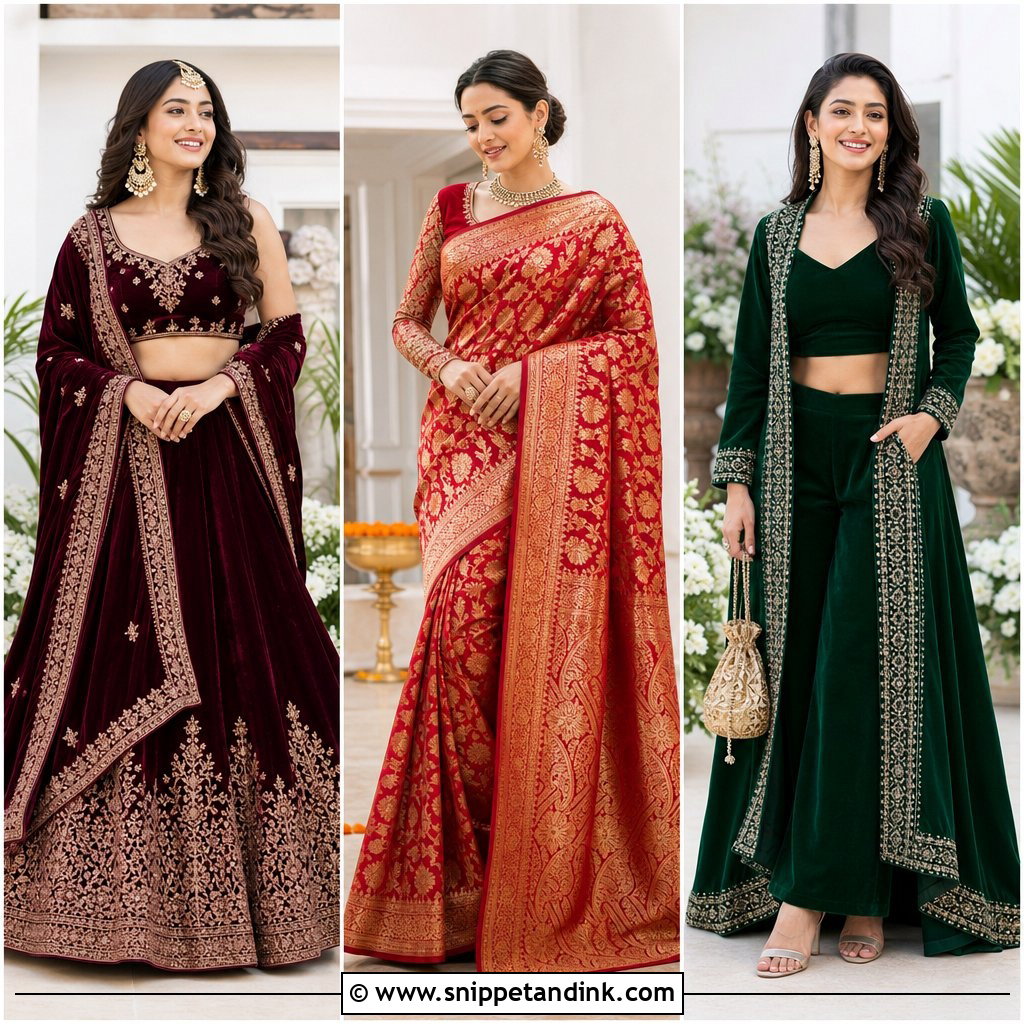
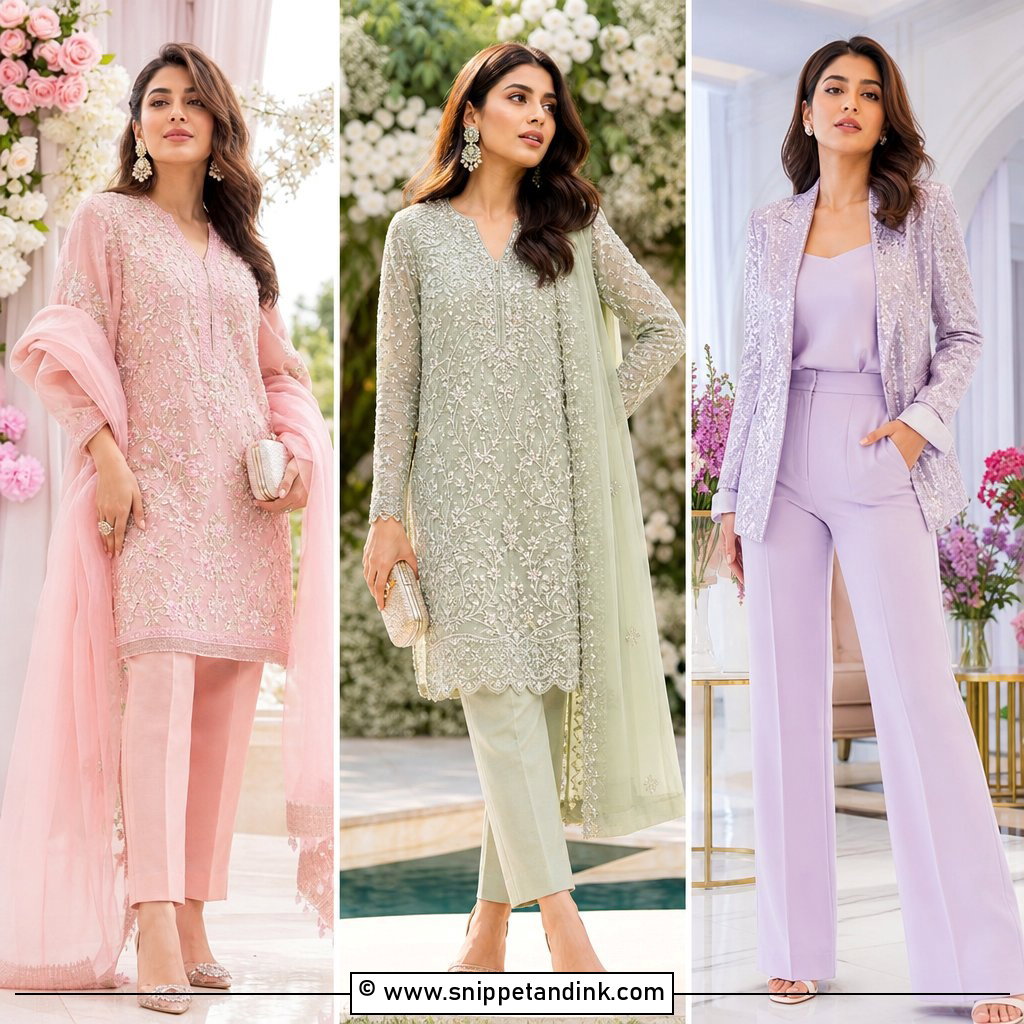
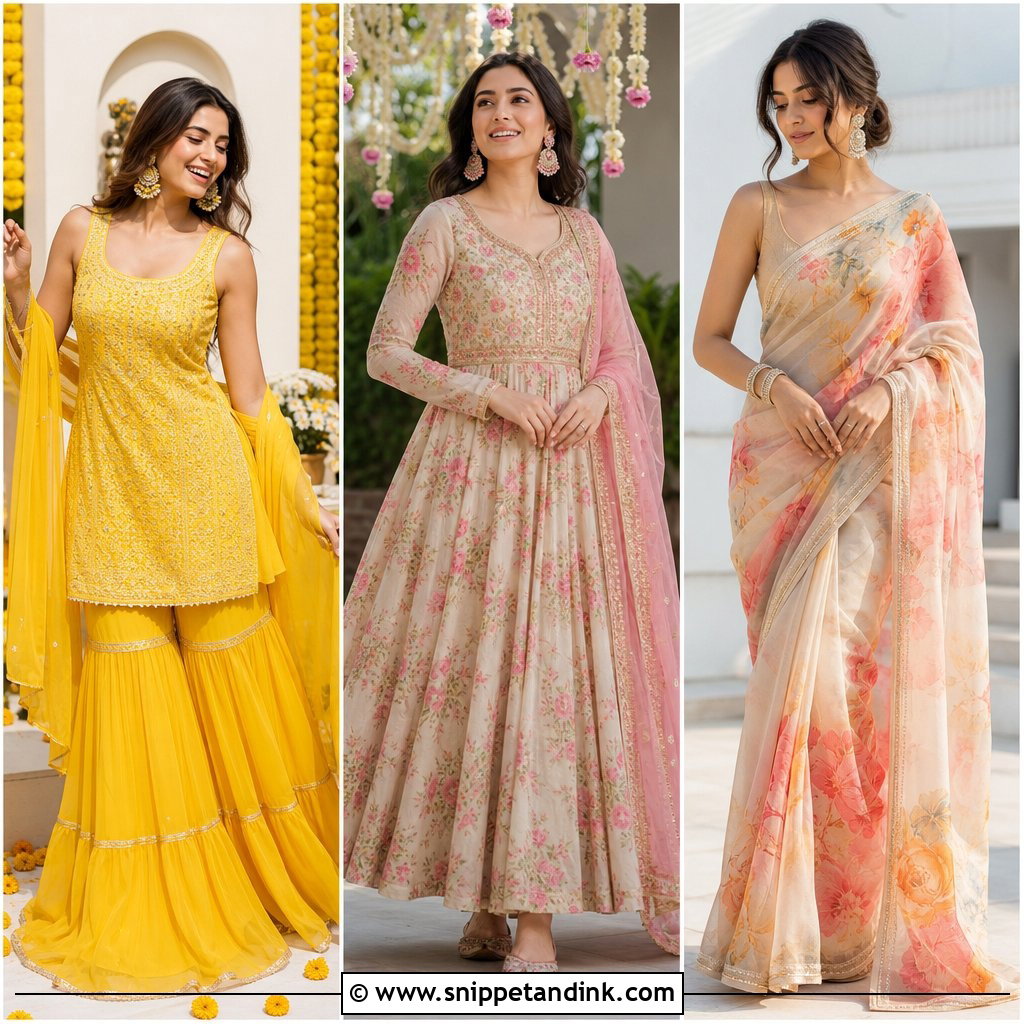
A kurta set is the guest outfit I steer people toward most when a family has three or four functions spread over one weekend. It sits on floor cushions, dances, survives a car journey and lets the dupatta do most of the restyling. The twenty sets below run from flared Anarkalis and shararas to palazzo suits, capes and skirt sets, in everything from organza to velvet. I’ve kept the vibrant colors for haldi and mehendi mornings apart from the jewel tones I’d save for night functions, and each look comes with the jewelry, shoes, bag and dupatta drape I’d actually pair with it.
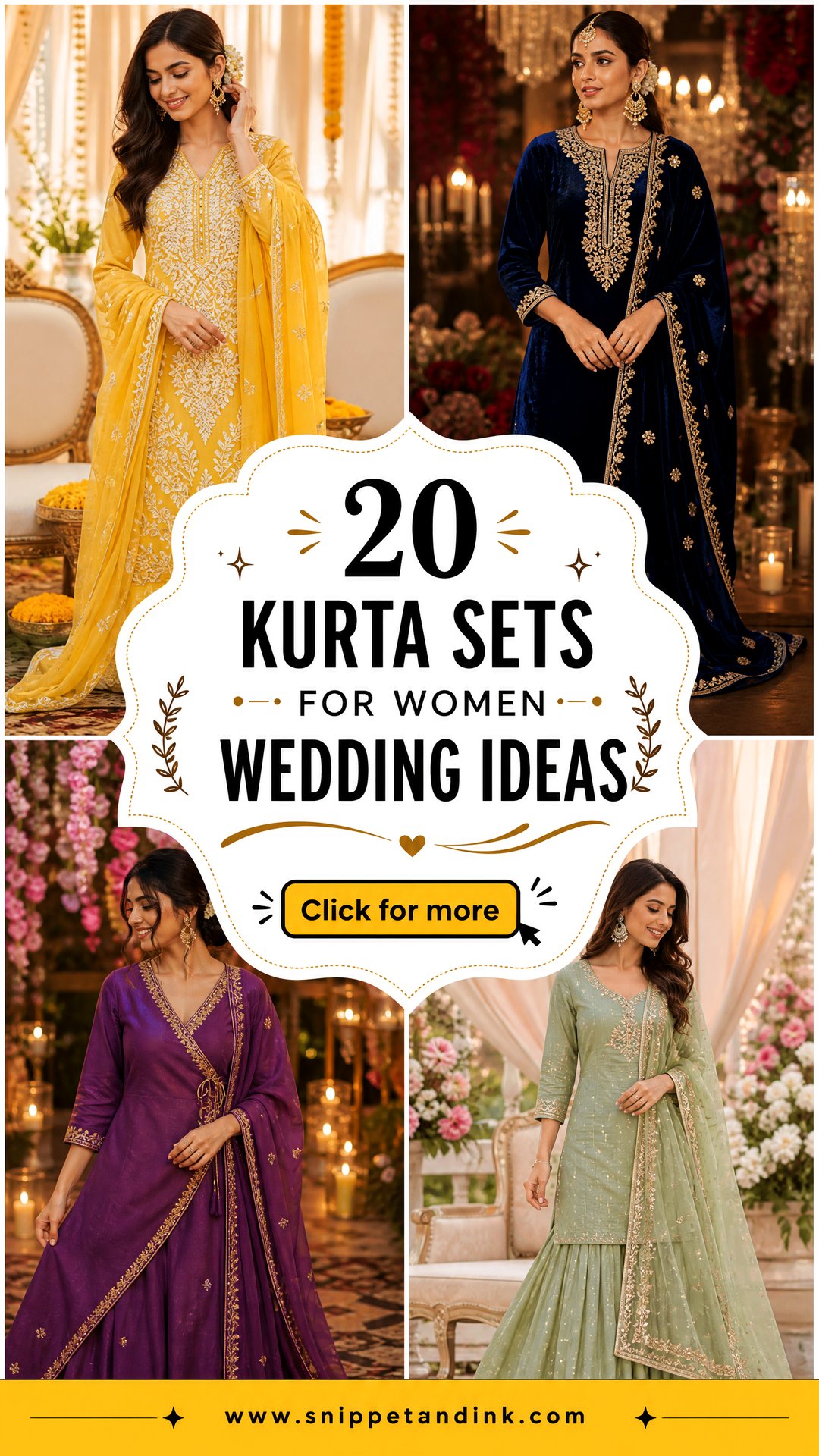
Sharara, Palazzo or Churidar? Let the Function Decide the Cut
Most guests choose the colour first and the cut second. I do it the other way round, because the cut decides whether you’ll be comfortable by the third hour. Before I suggest a single colour, I ask what happens at each event: is there floor seating, dancing, a long walk from parking, an outdoor lawn?
- Haldi: straight cotton or chikan with ankle-length pants. You’ll get paste on you, so nothing that needs dry cleaning.
- Mehendi: palazzos or a dhoti set with three-quarter sleeves, so your hands and wrists stay free while the henna dries.
- Sangeet: sharara or gharara. The flare is made for turning, and a short kurta won’t tangle in your legs.
- Ceremony: Anarkali or a long straight kurta. Ceremonies involve a lot of sitting on low seating, so check the kurta’s slit height while seated.
- Reception: velvet, sequins or a jacket set, with heels only if you know the floor.
Height plays in too. Petite guests often look swallowed by a knee-length kurta over a full gharara; a longer kurta with straight pants draws one line from shoulder to ankle. Taller guests can carry the short-kurta-and-sharara proportion that makes these sets so lively.
1. Red Silk Anarkali Kurta Set
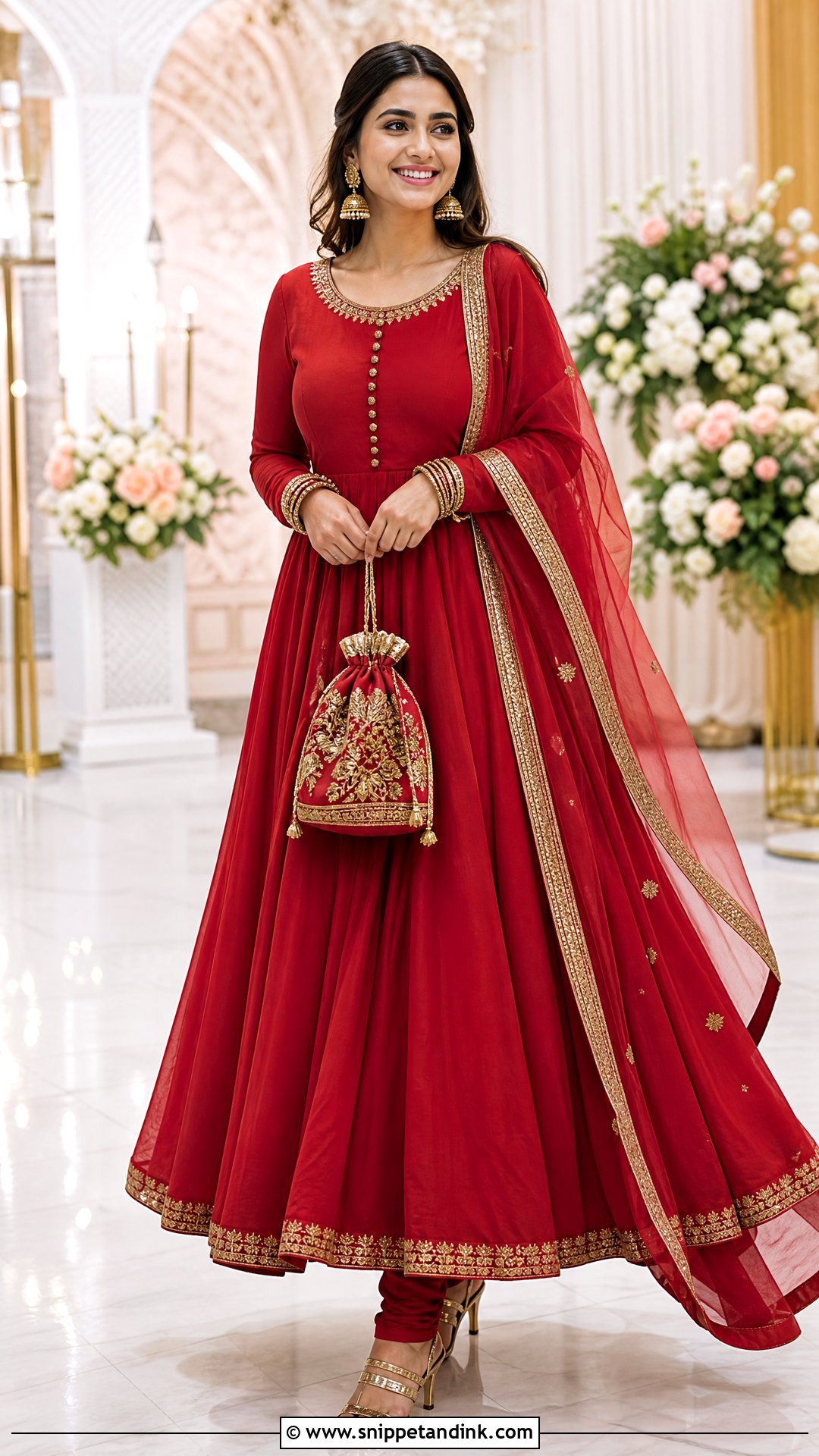
Red silk in an Anarkali cut carries the weight a traditional ceremony expects without needing a lehenga. Look for a fitted bodice that ends at your natural waist, a skirt with real flare, and zari kept to the yoke and hem. Churidar underneath keeps the base narrow, and I drape the organza dupatta over one shoulder only, because pinned across the chest it flattens the panels you paid for. When I fit these, I check the bodice seated as well as standing: silk Anarkalis pull across the ribs when you sit if the side seams are cut too close. Antique jhumkas, a few bangles, a potli and gold block heels finish it, with a muted red lip rather than a matching one.
2. Pink Sharara Kurta Set
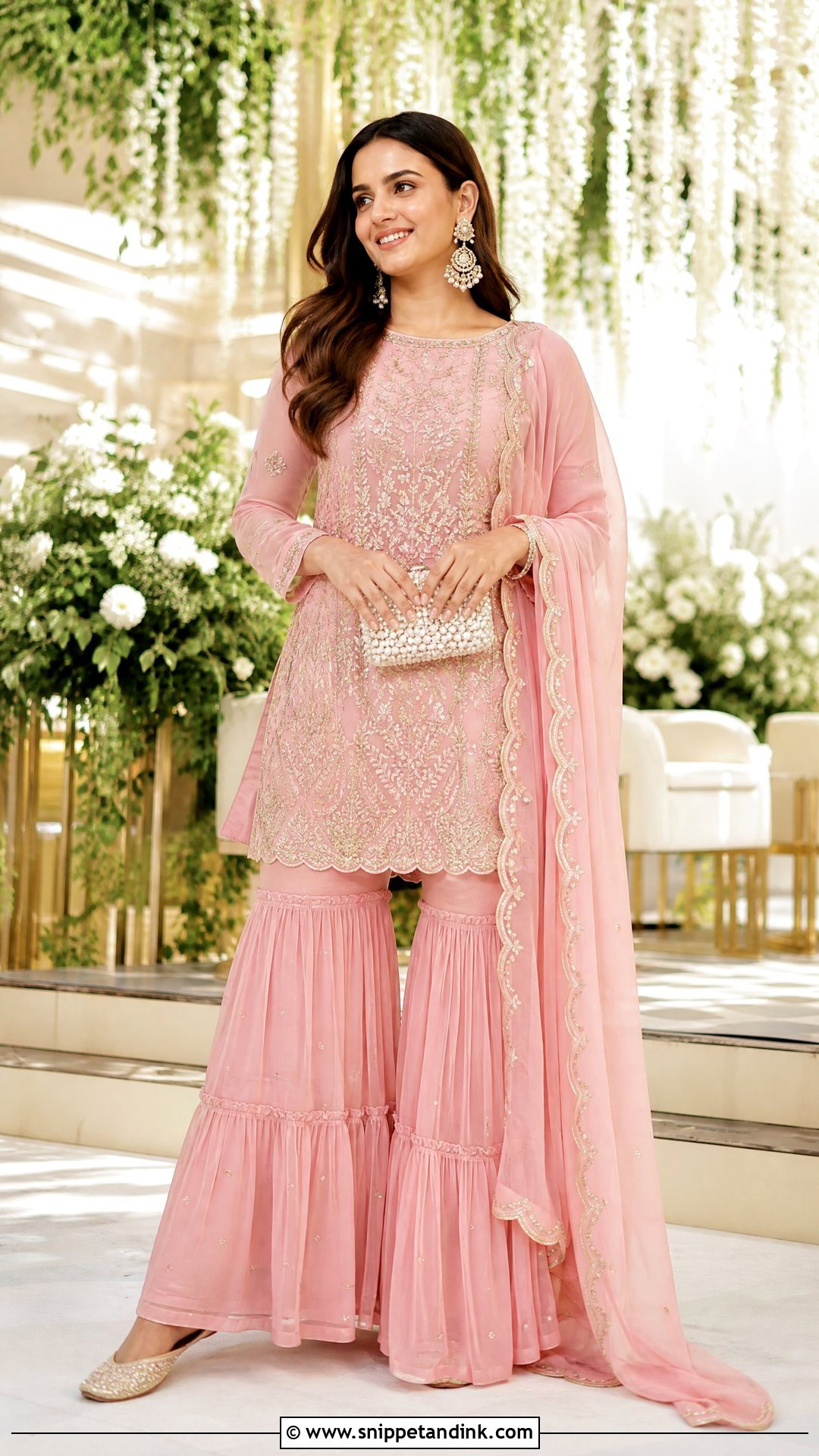
Shararas are the set I’d pick for a sangeet where you’ll be on your feet for hours. A short embroidered kurta over wide, flowing sharara pants in georgette lets the flare swing every time you turn, and bright pink reads well under coloured stage lights. Gota trim on a scalloped dupatta catches light without adding the weight that pulls a drape off the shoulder mid-dance. One pair of kundan drops and one ring are plenty. Wear embellished juttis rather than heels, and break them in a week ahead; new juttis rub at the heel by the second hour.
3. Green Gharara Kurta Set
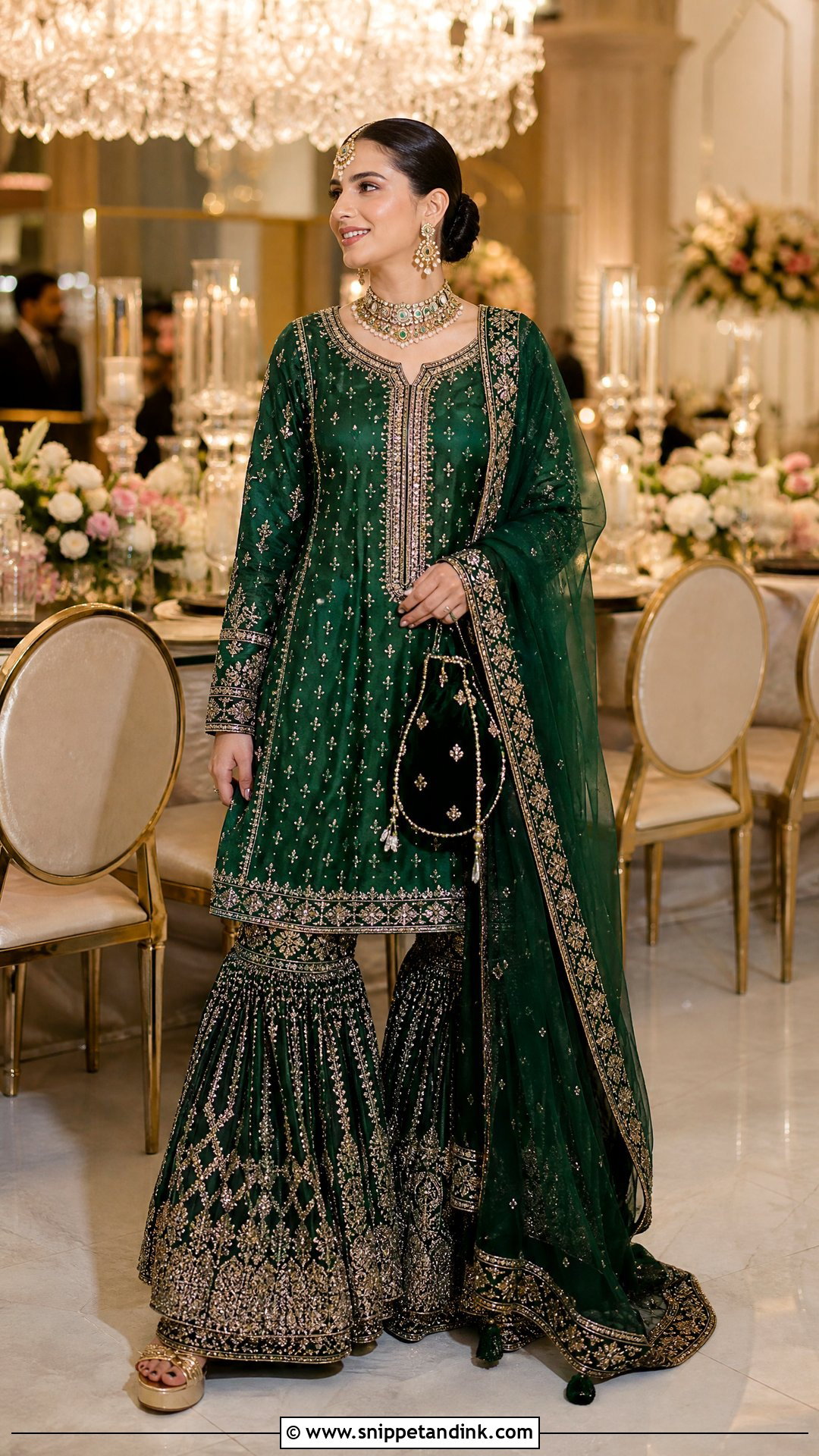
The gharara is all about where the joint sits. A good one fits close through the thigh and opens at the knee, usually with a gathered band of gota marking the break, and if that band lands above your knee the whole silhouette looks shortened. I mark it at the fitting with the client standing in her actual shoes. Deep green with zari or resham work suits an engagement or formal dinner, with a sheer dupatta carried across both arms, polki earrings and a small maang tikka. Low gold platforms are enough since the hem hides most of the shoe, but have the length taken to the floor in those platforms, not barefoot, or the flare drags.
4. Yellow Chikankari Kurta Set
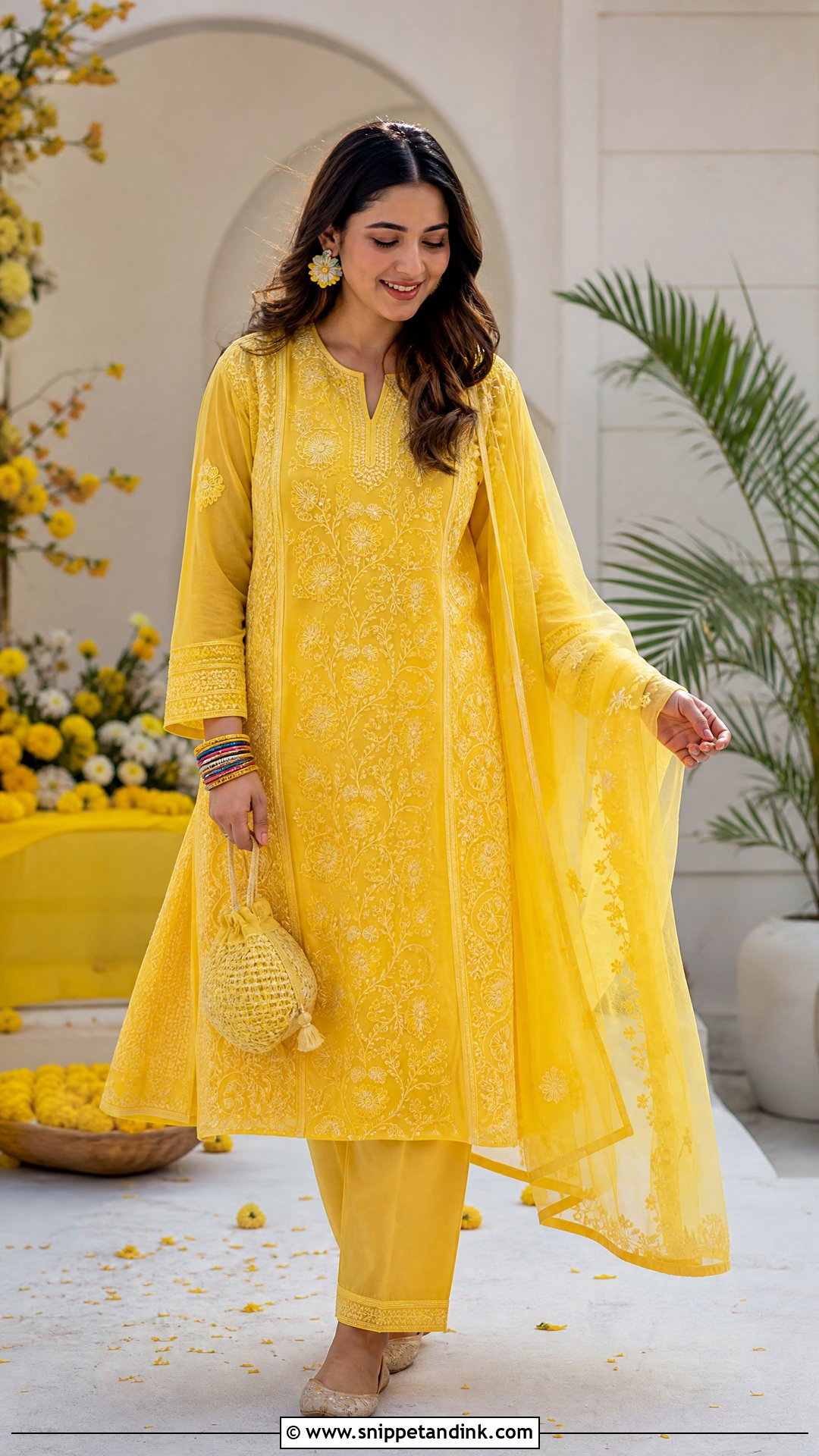
Sunshine yellow chikankari is my default for a daytime haldi celebration, and I’d choose it knowing it may come home stained. Turmeric paste lifts out of cotton chikan far more easily than out of silk, so this is the one function where a breathable cotton or mul kurta beats anything precious. Keep the hem free of trains and heavy borders, wear flat juttis or kolhapuris, and tuck small flowers into a loose braid. Waterproof mascara and a tinted lip are sensible, because someone will put paste on your face.
5. Ivory Chanderi Palazzo Kurta Set
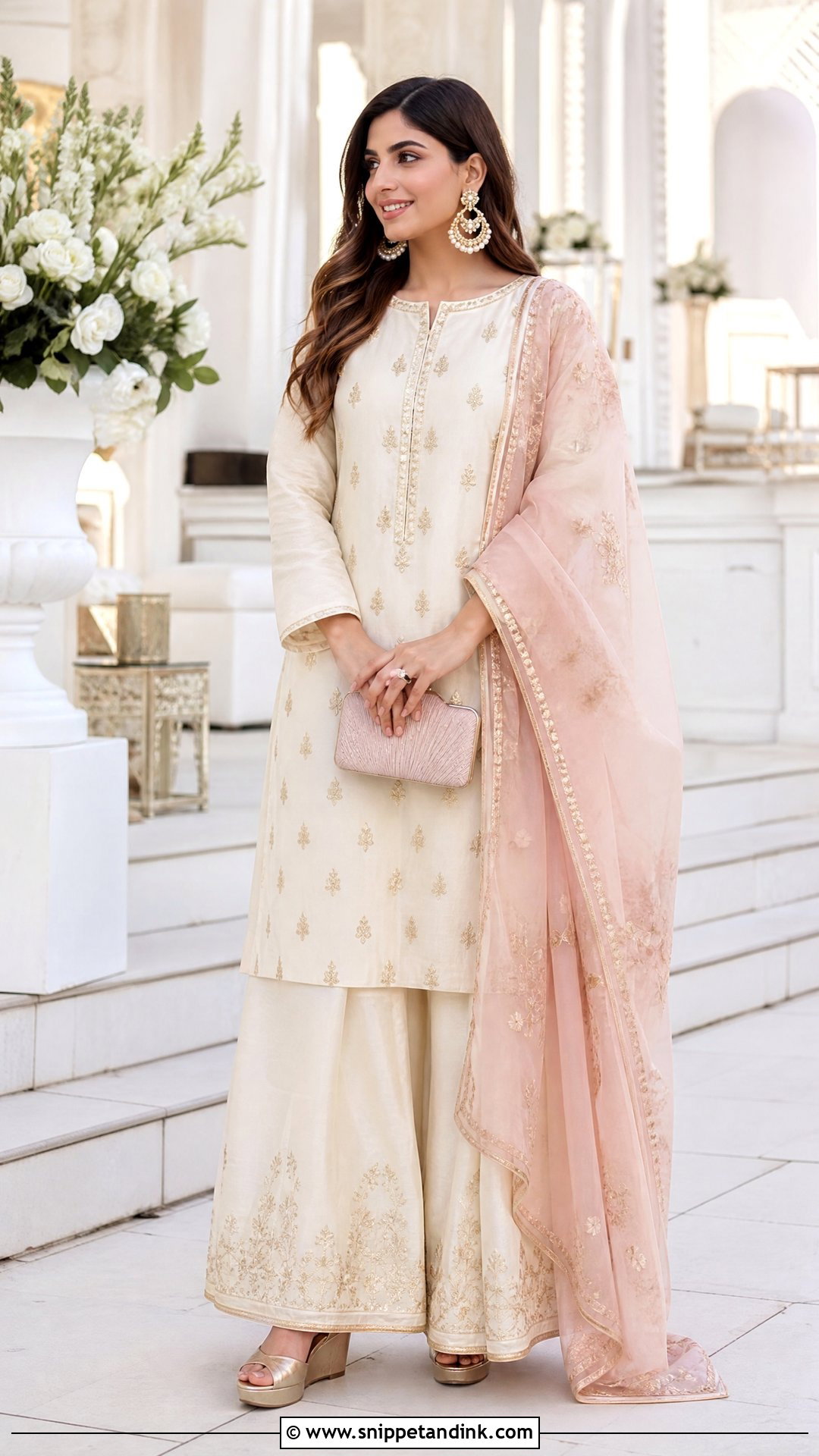
Ivory Chanderi has a dry, slightly translucent sheen that looks right in morning light, and the side slits on a calf-length kurta show just enough of the palazzo to keep the outfit moving. My one caution: an all-ivory set can read as bridal at some weddings, so I add a pastel dupatta in blush or mint to pull it clearly into guest territory. Chanderi is also sheer, so ask for a full lining in a matching tone. Pearl chandbalis, a slim bracelet and a structured pastel clutch are enough, with metallic mules that show beneath the hem.
6. Navy Blue Velvet Kurta Set
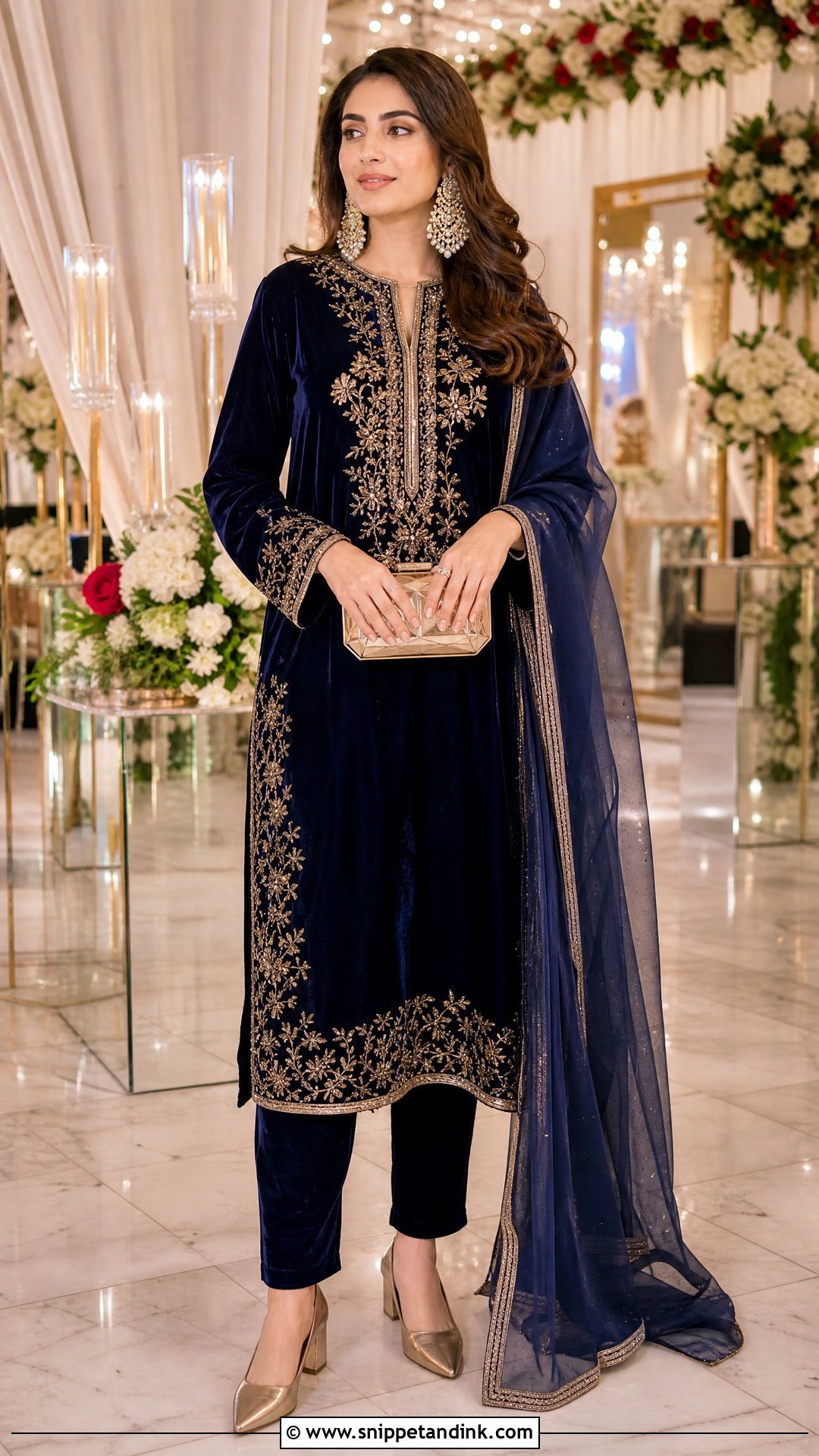
Velvet is the fabric I bring out for winter receptions, and it changes how everything else should be cut. A navy velvet kurta with antique gold at the neckline, cuffs and hem needs slim trousers underneath; velvet palazzos double the bulk and crush where you sit. Carry a tissue or organza dupatta instead of a velvet one so the outfit doesn’t feel heavy by midnight. Steam velvet from the reverse side only, since an iron on the face flattens the pile into shiny patches that photograph as stains. Statement chandeliers and a metallic box clutch suit it, with a defined eye and berry lip.
7. Maroon Brocade Straight Kurta Set
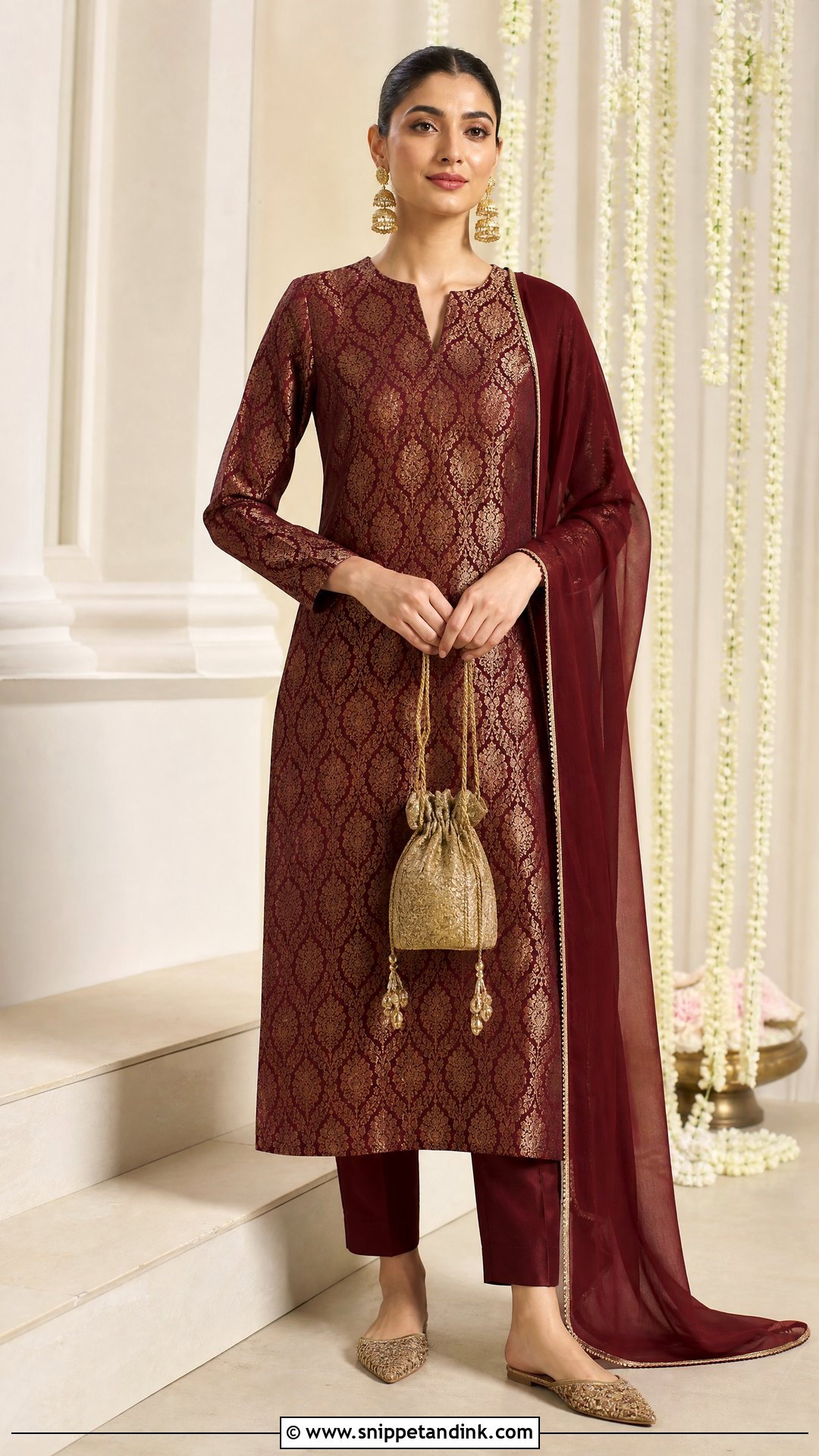
Brocade does the decorating for you, which is why I’d keep everything else on this maroon set quiet. Woven gold motifs on a long straight kurta, plain cigarette pants and a chiffon dupatta with only a narrow brocade border keep the textures from fighting. Brocade is stiff and won’t drape, so a straight cut suits it far better than flare. Traditional jhumkas, two or three bangles and a structured potli are enough. Pointed mules finish the line nicely, though they’re best for a seated dinner rather than a venue with long walks between rooms.
8. Pastel Organza Kurta Pant Set
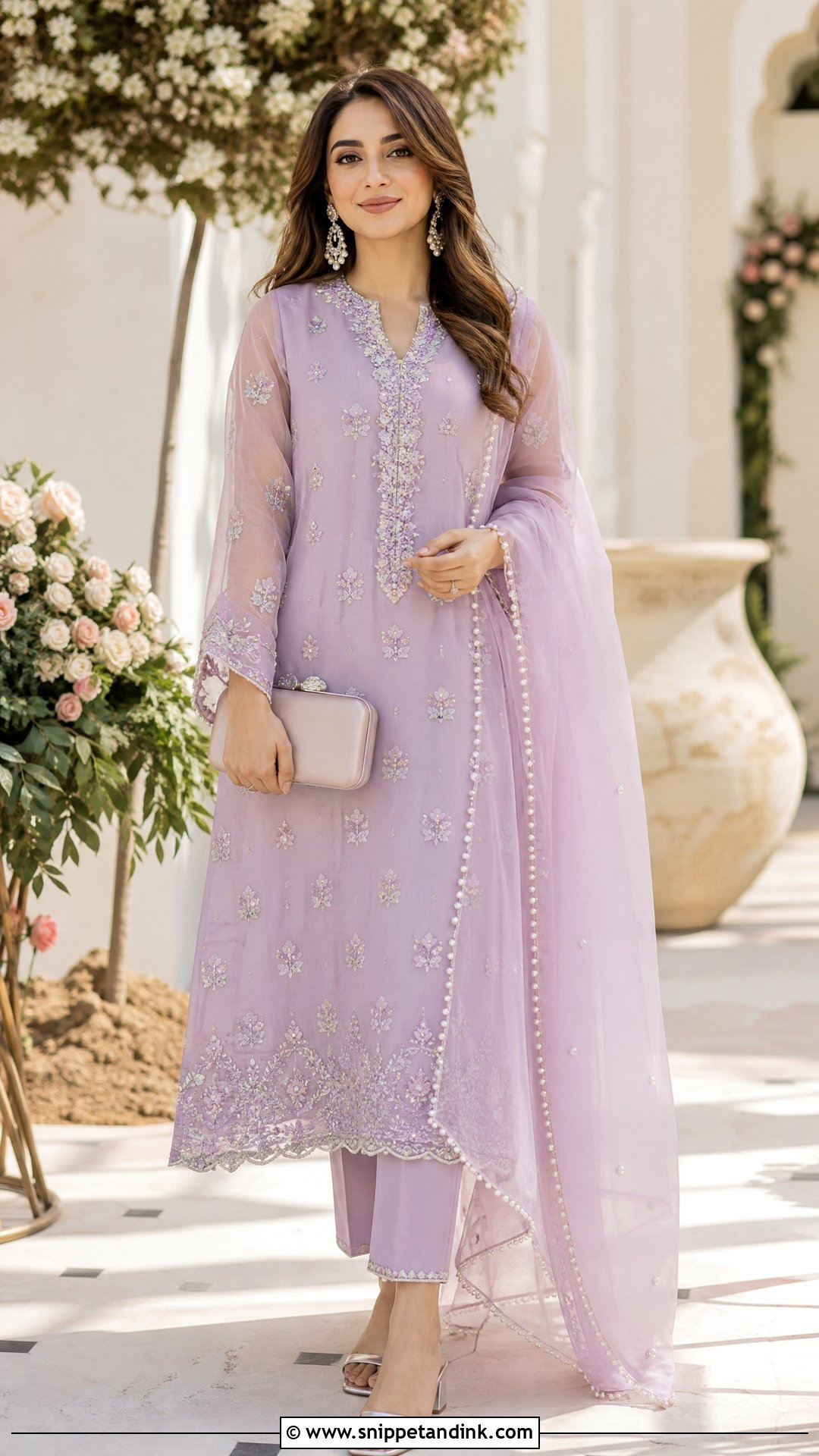
Organza only looks expensive when it’s lined properly. Unlined, it shows every seam allowance and bra strap in daylight, so the first thing I check on a pastel organza kurta is a lining in the same shade as the shell, and undergarments matched to that lining rather than to your skin. Lavender, powder blue, peach and pistachio all suit an outdoor day wedding. A relaxed A-line with floral threadwork over straight pants keeps the sheer fabric looking deliberate. Crystal earrings, a satin clutch and low metallic heels are enough, with loose waves or a half-up style.
9. Black Sequin Kurta Set
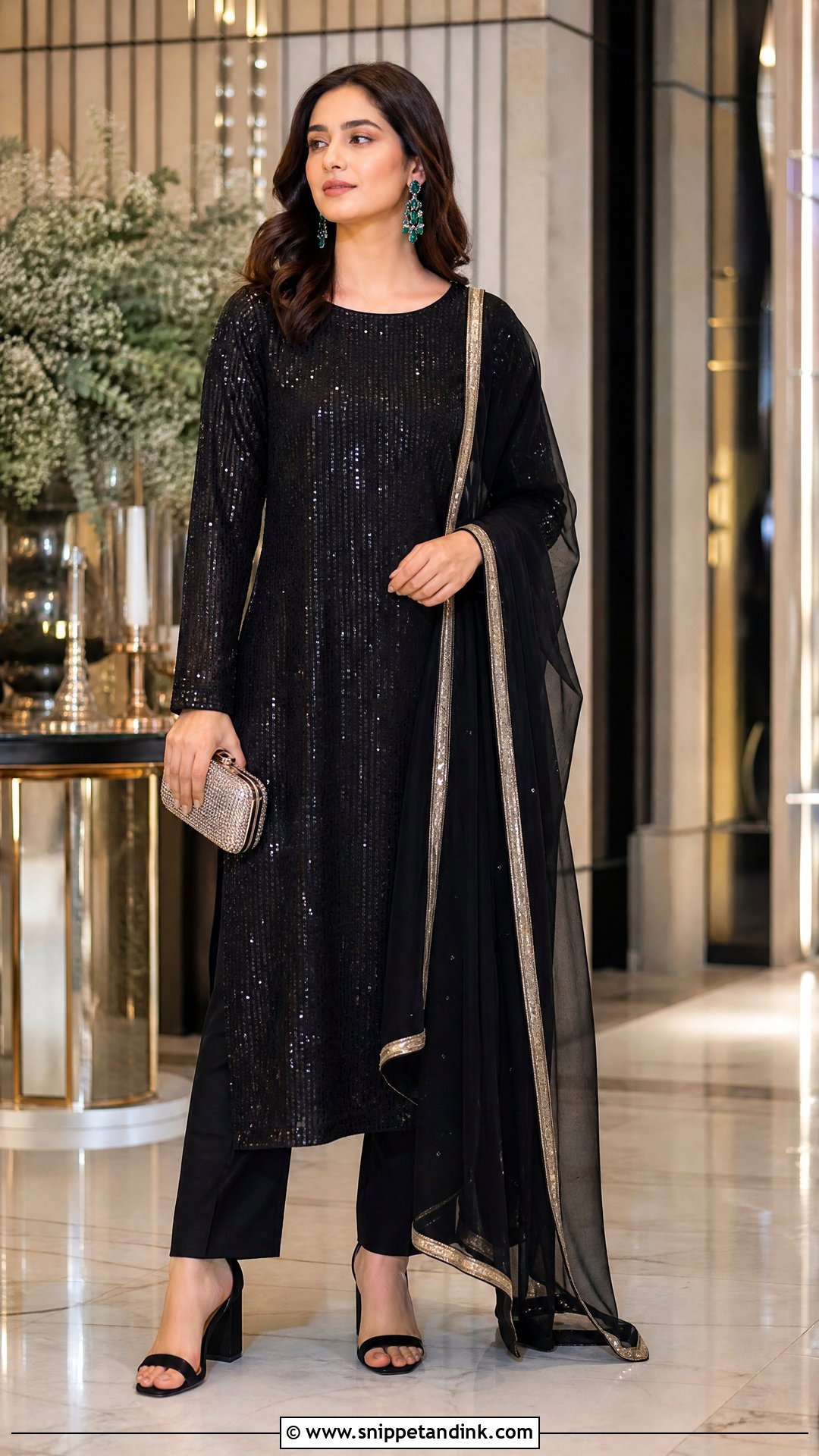
Before anything else, ask the family. Black is avoided at many Hindu and Sikh weddings as inauspicious, while plenty of modern receptions are fine with it, and you don’t want to find out on arrival. Where it’s welcome, a mid-calf black kurta with tonal sequins at the neck and sleeves, over sleek trousers, gives one long unbroken line. Sequins scratch the inner arm, so I look for a soft lining at the sleeve. Emerald or ruby earrings add one controlled spot of colour against a silver clutch and black block heels.
10. Purple Angrakha Kurta Set
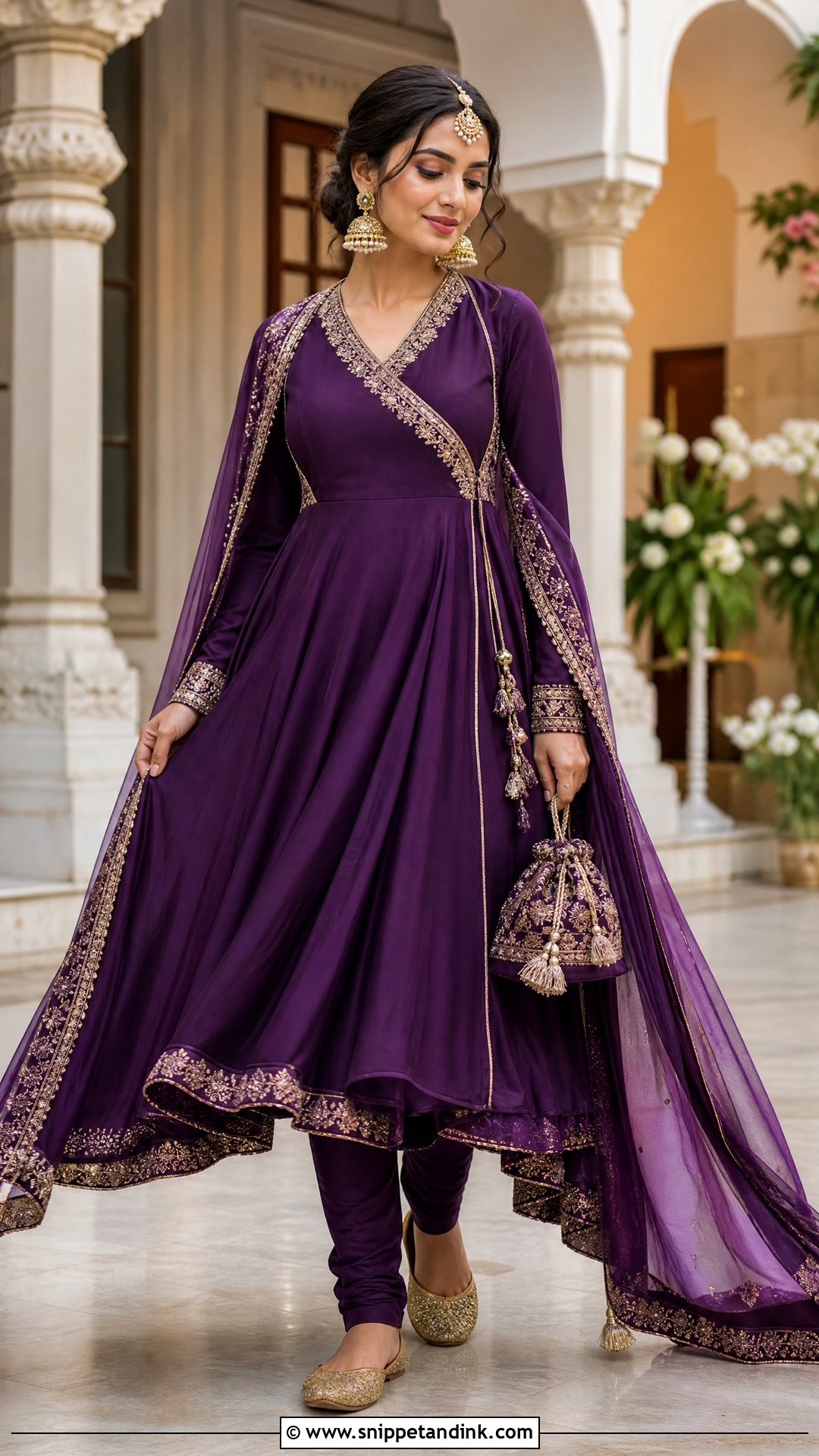
An angrakha wraps across the body and ties at one side, so it defines the waist without a tight bodice. The weak point is the closure: tie-only angrakhas gape when you lean forward to touch an elder’s feet or reach for food, and I always add a hidden hook or a press stud under the overlap. Purple with embroidered borders tracing the crossover suits a ceremony or sangeet over churidar or narrow ankle trousers. Keep the jewelry high and away from the neckline, with jhumkas and a slim maang tikka, and finish with an embroidered potli and cushioned juttis.
11. Orange Bandhani Kurta Set
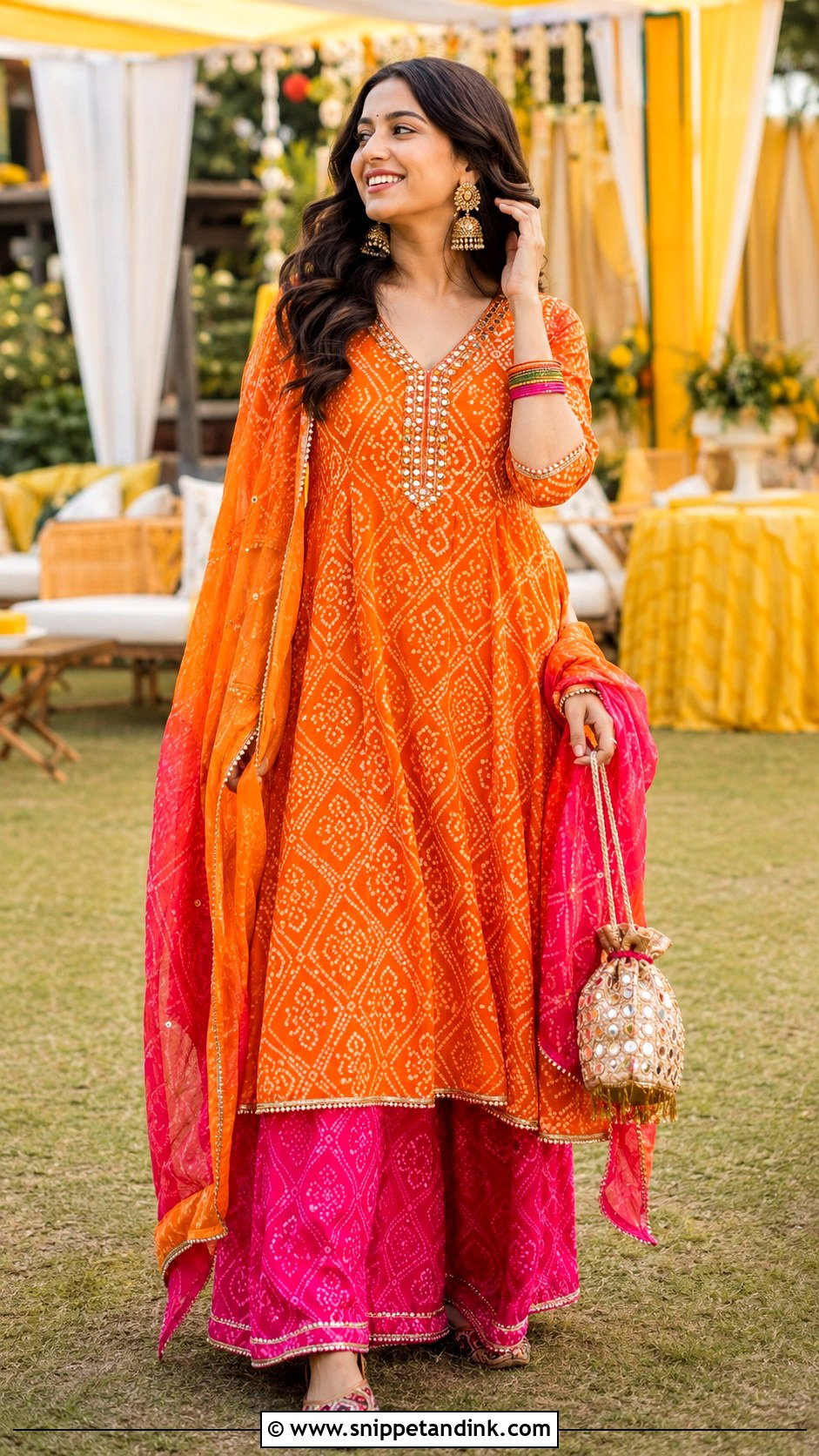
Vibrant orange Bandhani belongs at the mehendi, where the tie-dye dots read as celebration rather than formality. Bandhani is a busy print, so I pair the A-line kurta with solid palazzos in orange or pink and pick one patterned piece, not three. If the dupatta is also bandhani, keep the jewelry oxidized and simple. Three-quarter sleeves matter here more than anywhere: they stay clear of your own wet henna and of the artist’s cones. Flat juttis handle a lawn, and a mirror-work potli holds the essentials.
12. Blue Mirror Work Kurta Set
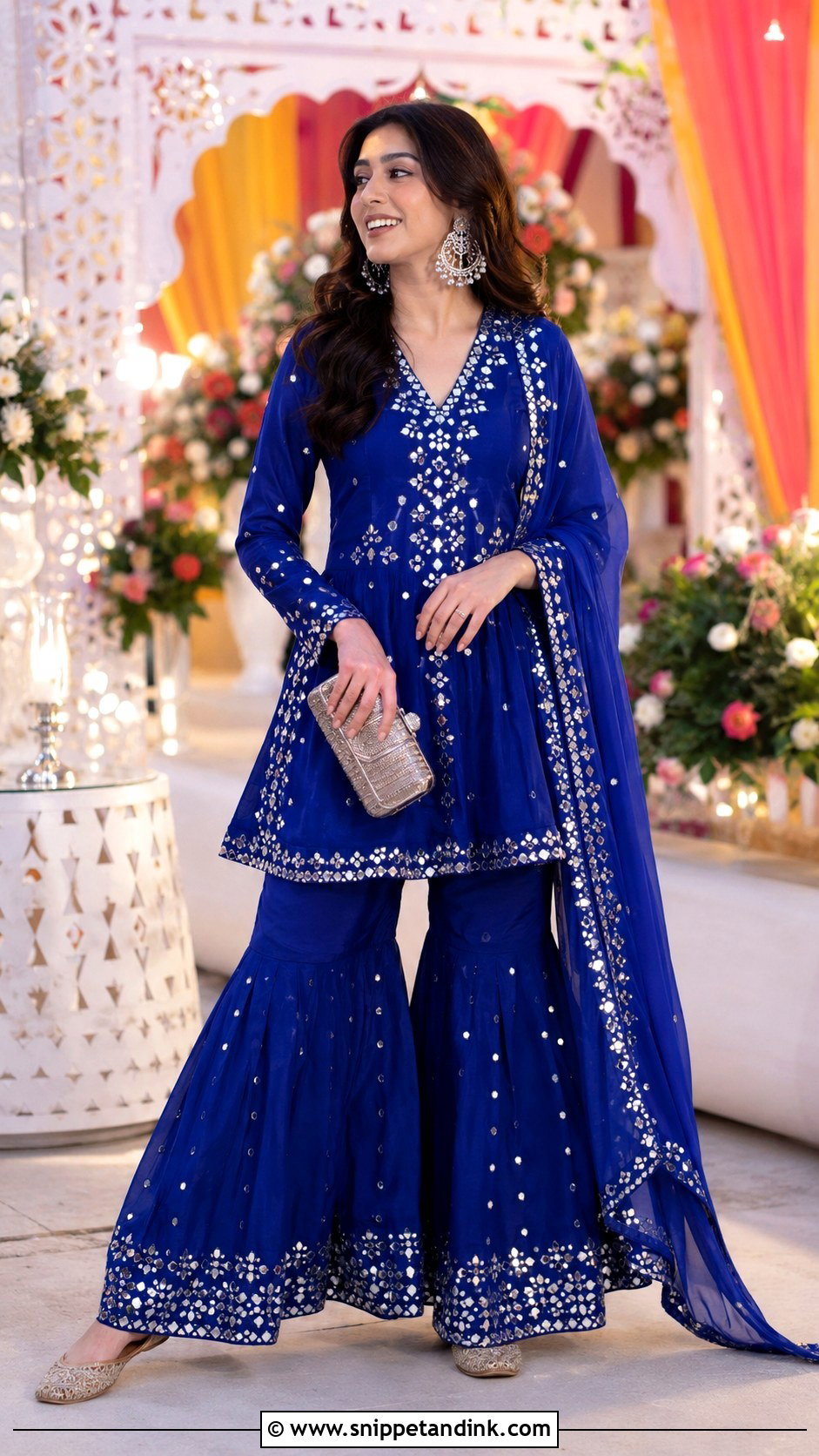
Mirror work earns its place at a sangeet because it throws back every coloured light in the room. I’d keep the mirrors concentrated at the neckline, cuffs and hem of a royal blue short kurta paired with flowing palazzo or sharara pants; an all-over mirror kurta is heavy and turns into glare in flash photos. Run your hand along the inside before you wear it, because loose threads behind the mirrors snag sheer dupattas and catch on the inner arm. A high ponytail keeps hair from tangling in the neckline. Silver chandbalis and low silver heels finish it.
13. Peach Floral Georgette Kurta Set
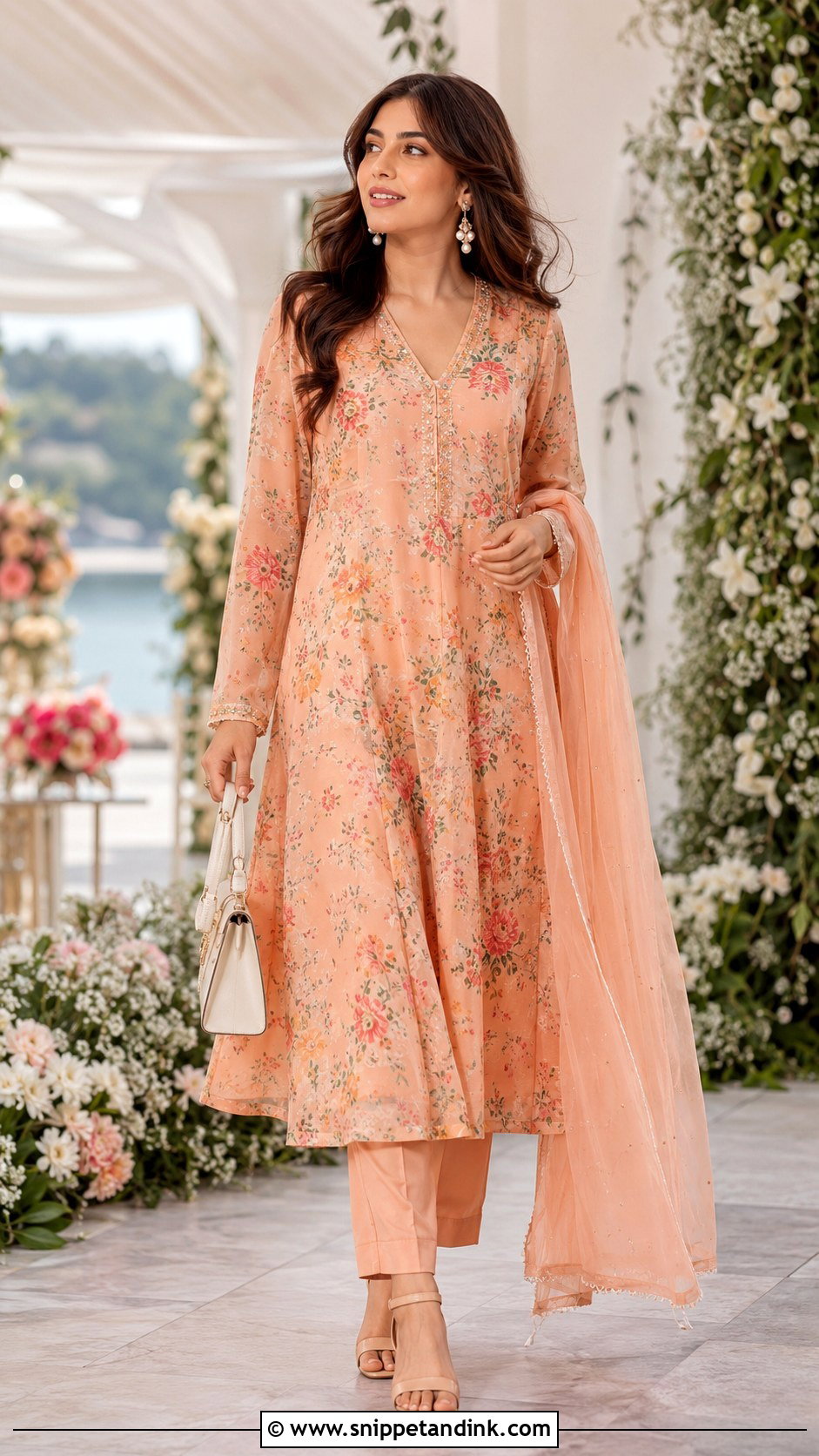
Peach georgette prints are the easiest set here to wear all day: georgette breathes, barely creases and moves with you. The print size decides the jewelry. With large florals I keep to pearl drops and a fine bracelet; smaller motifs can carry a bolder earring. A long A-line kurta with straight peach pants and a matching sheer dupatta suits a garden wedding or a daytime family lunch. Georgette does slip, so a couple of safety pins inside the dupatta at the shoulder save a lot of re-draping. Nude block heels and a cream bag keep the palette quiet.
14. Teal Jacket Kurta Set
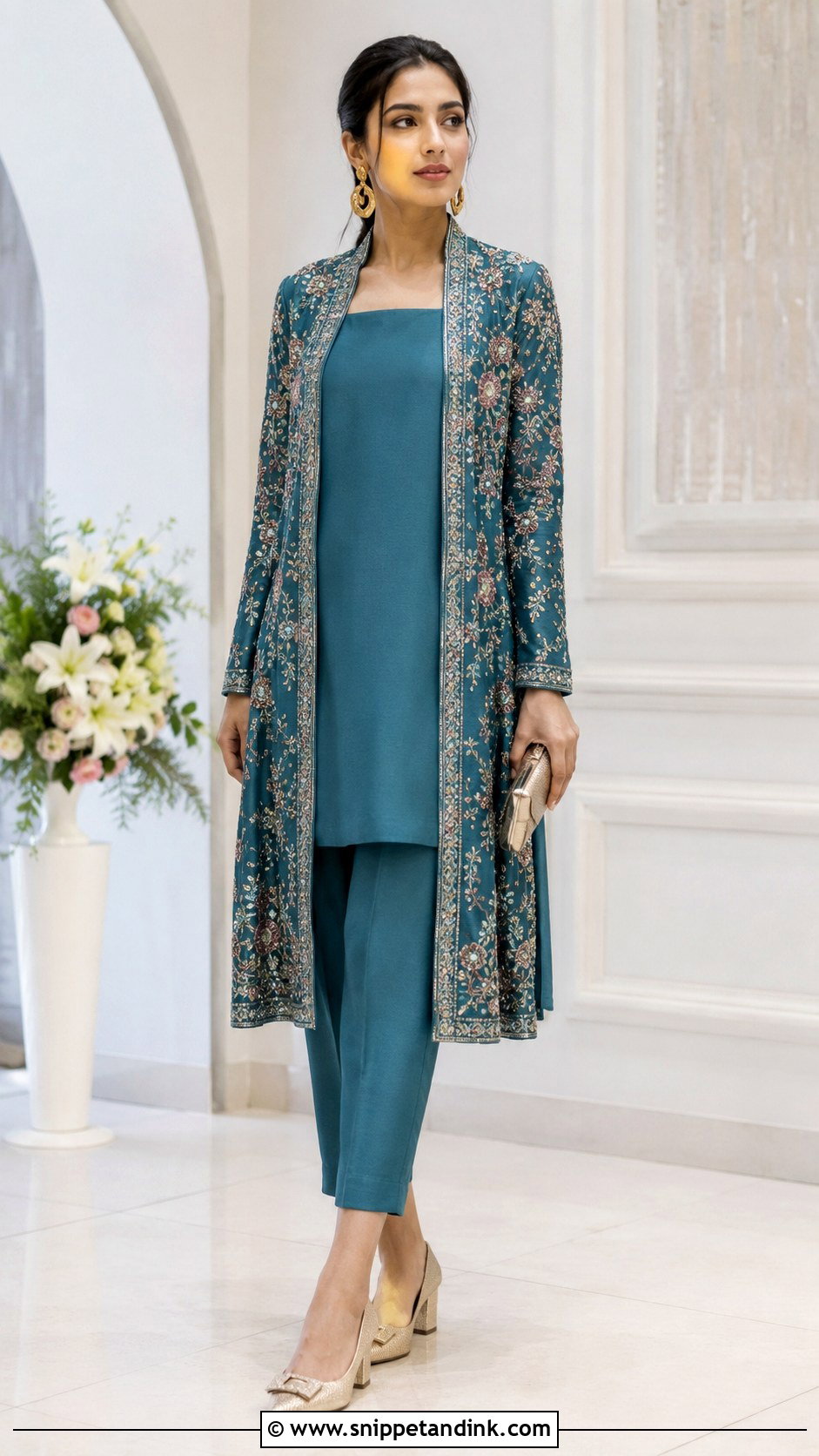
A teal jacket set is the one I suggest to guests who don’t love dupattas. The open-front jacket gives you coverage and a statement in one layer, so the dupatta can stay home. Wear a sleeveless or short-sleeved straight kurta with matching trousers underneath, and have the jacket cut to clear your shoulders when you raise your arms; a tight jacket armhole is uncomfortable within an hour. Gold threadwork or restrained sequins on the jacket carry the outfit. Sculptural earrings, a slim clutch and pointed block heels suit an indoor reception or engagement.
15. Gold Tissue Silk Kurta Set
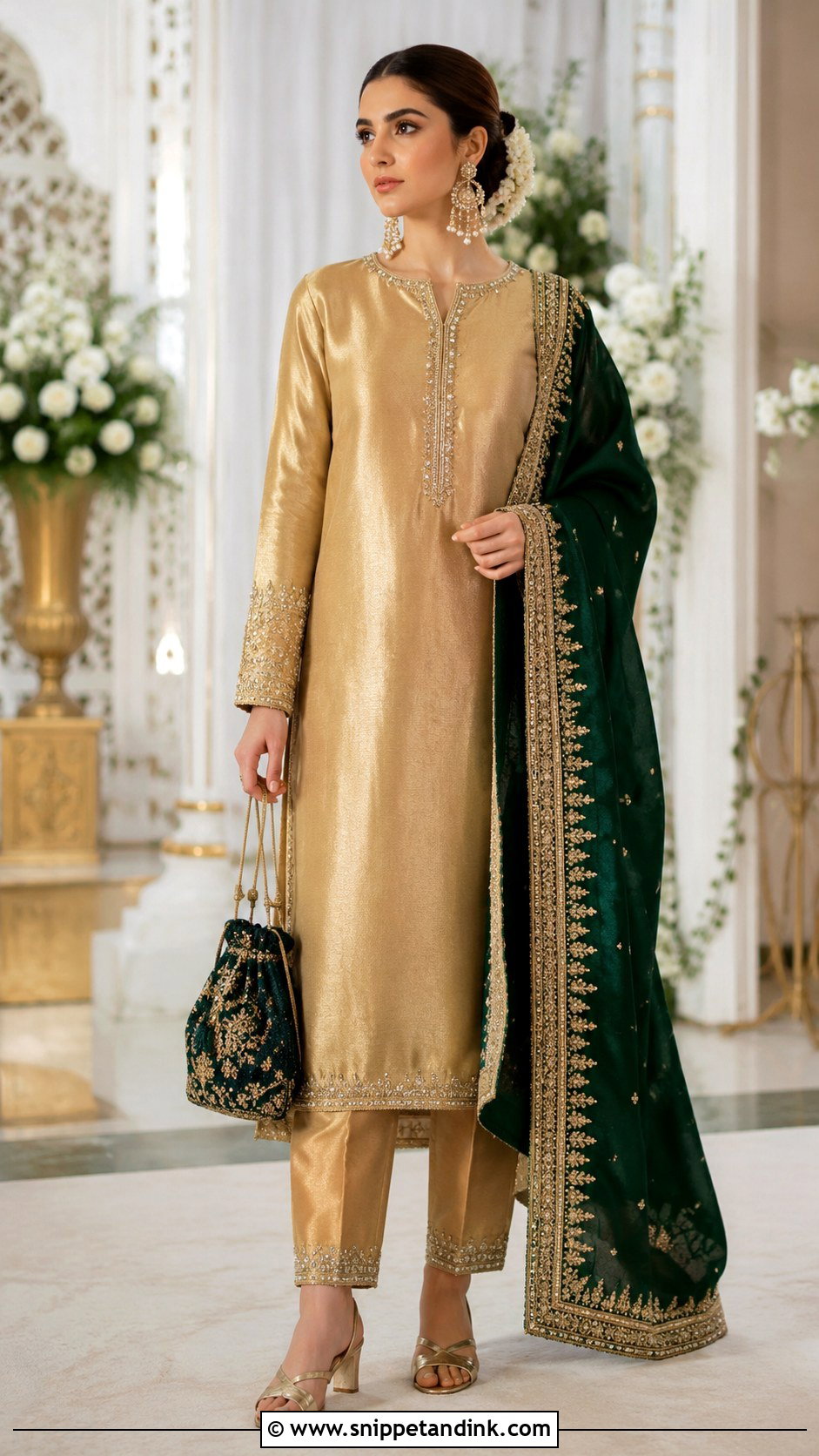
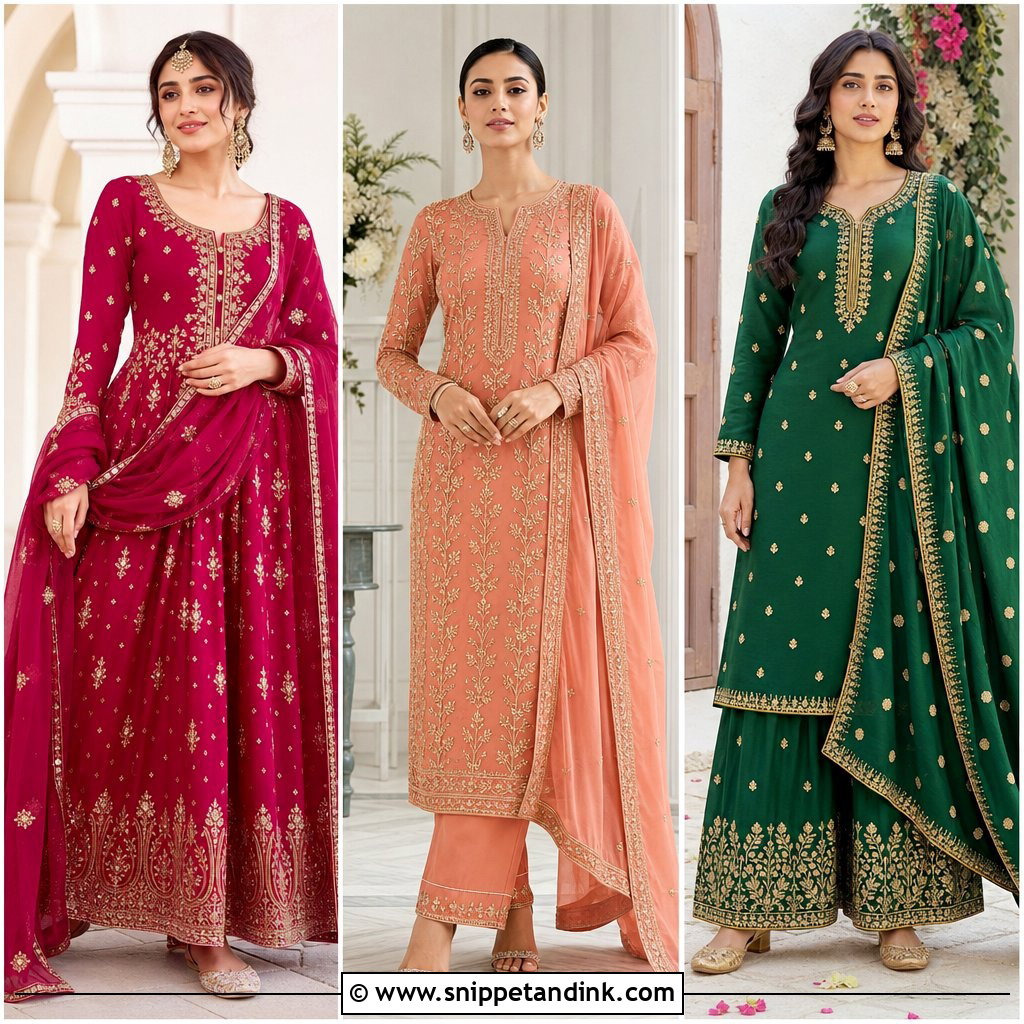
Tissue silk gives you that soft metallic shine, but it’s scratchy against bare skin, so I insist on a full cotton or silk lining before a client commits. It also creases sharply where you sit, so steam it on a hanger the morning of and avoid sitting in the car on a folded hem. A long gold kurta with a modest neckline and woven detail needs a jewel-toned dupatta in red, emerald or wine; gold on gold looks flat in photos. Kundan earrings and one bracelet are enough, with a jewel-toned potli and a low bun.
16. White And Gold Kurta Set
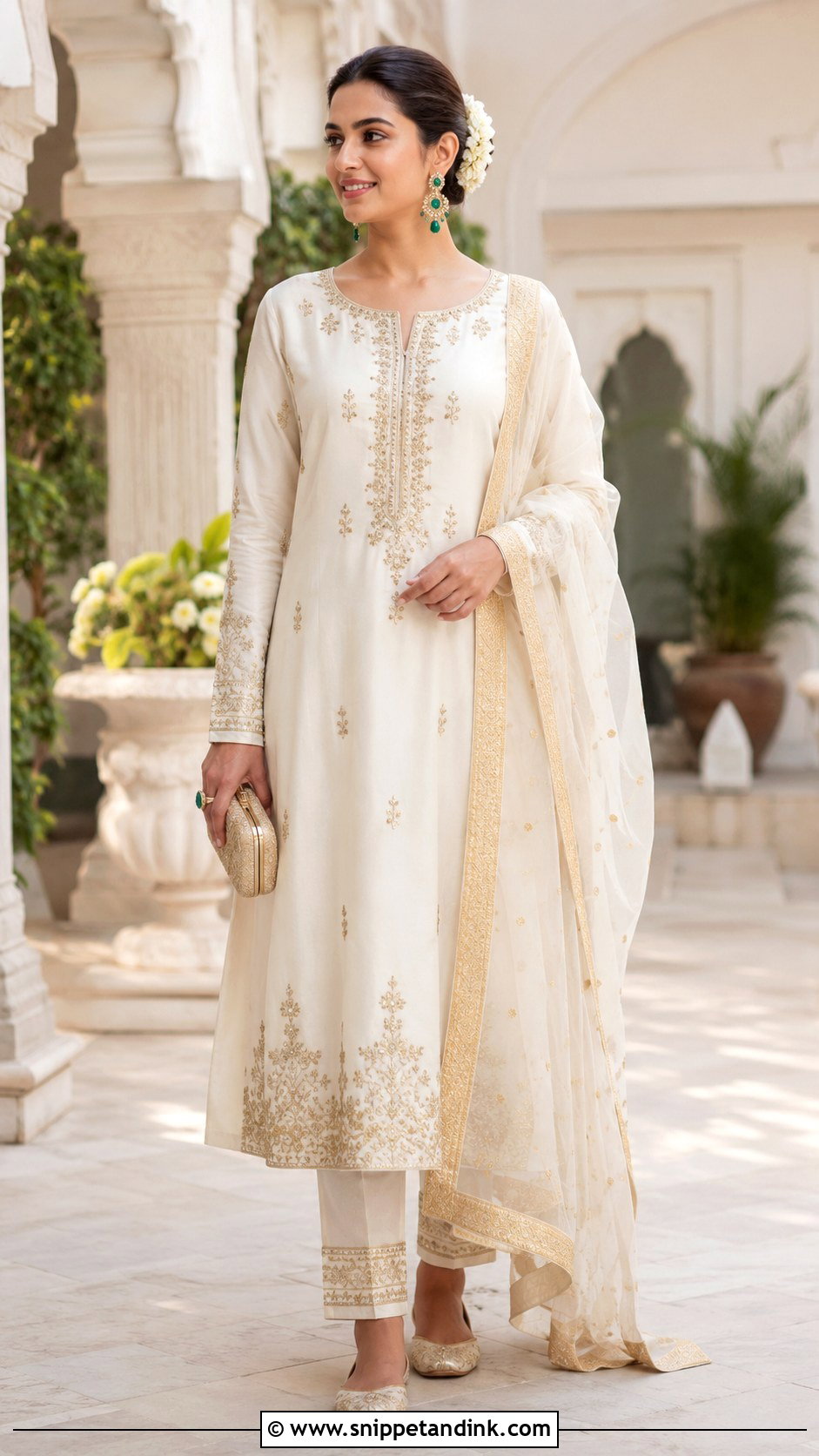
White and gold reads fresh at a morning ceremony, but white is the colour of mourning in many Hindu families, so this is one to clear with the hosts first. When it’s welcome, I like an ivory A-line kurta with gold embroidery, straight pants and a sheer zari-edged dupatta. Emerald earrings keep it from looking stark and push it toward festive. Embroidered cream juttis and a gold clutch keep the base light. White shows makeup transfer at the neckline, so set your foundation well and avoid pulling the kurta over your head once it’s on.
17. Rani Pink Dhoti Kurta Set
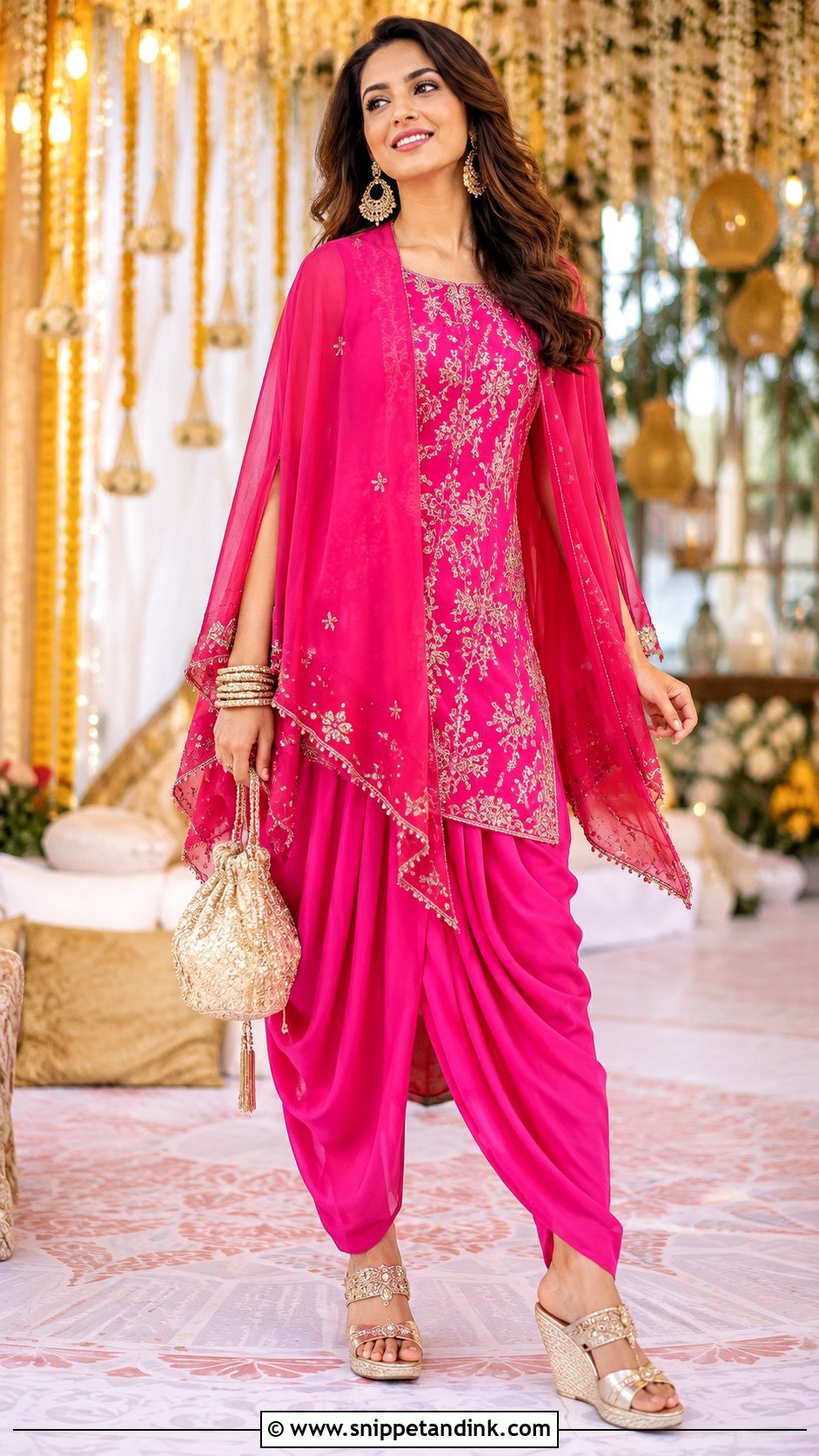
A dhoti set looks modern at a mehendi or sangeet, and it depends on tailoring more than any other cut in this list. Rani pink with an asymmetric or high-low kurta shows off the draped shape of the dhoti pants, but the drape has to sit comfortably at the waist and crotch when you squat, sit cross-legged or dance. I test that in the fitting room, not just standing in front of the mirror. A short cape or narrow dupatta adds coverage, oversized gold earrings and stacked bangles add the festive note, and metallic wedges stop the drape pooling at the ankle.
18. Mint Green Cape Kurta Set
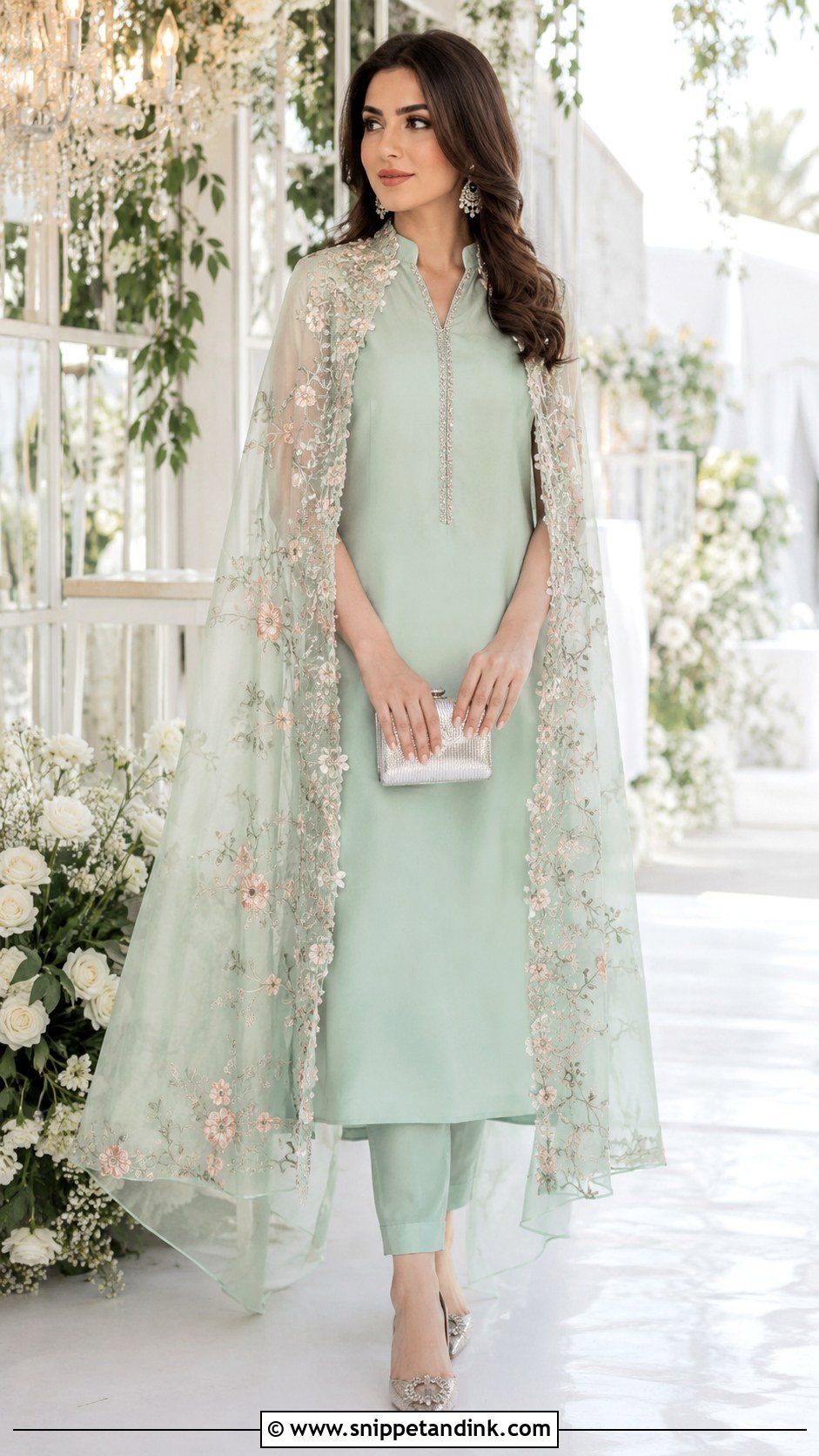
Capes solve the dupatta problem for warm weather: you get movement and coverage without fabric to manage. A sheer embroidered cape over a sleeveless mint kurta and cigarette pants should end below the hip, otherwise it reads as a shrug. Crepe or a silk blend underneath is better than georgette for this one, because the cape needs a smooth surface to fall over. Pearl or tonal floral work adds just enough shine. A low ponytail keeps the neckline clear, and crystal drops with a silver clutch match the cool palette.
19. Rust Embroidered A-Line Kurta Set
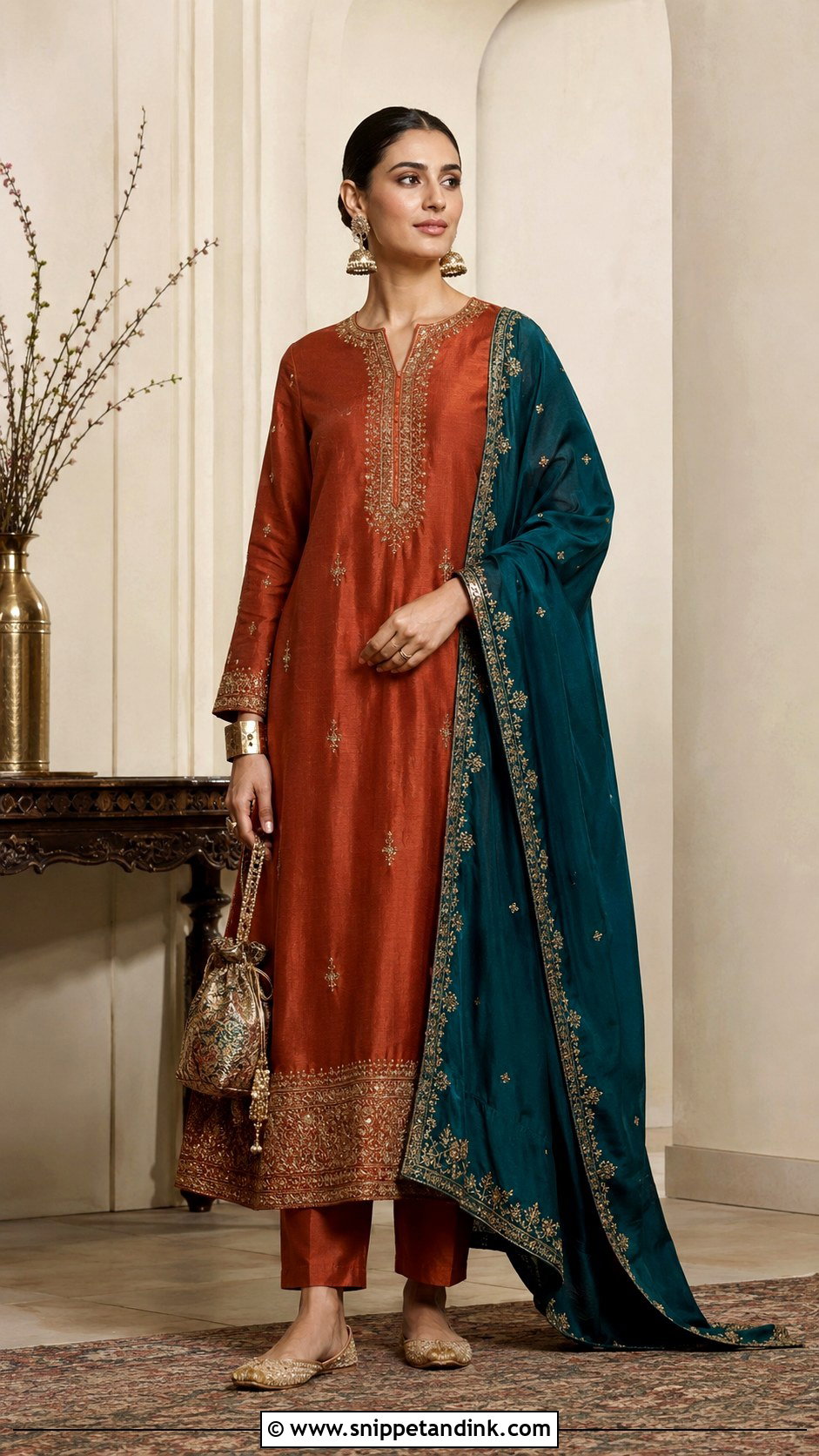
Rust is the colour I suggest to guests who want warmth without competing with a bride in red. In raw silk with gold threadwork and small beads, an A-line kurta over tailored ankle pants carries autumn and winter weddings well. Raw silk has a slub texture that hides small creases, which is a gift on a long ceremony-plus-dinner day. Add an olive or deep teal dupatta for contrast, jhumkas and a hammered cuff, then pointed juttis. A terracotta lip ties the palette together.
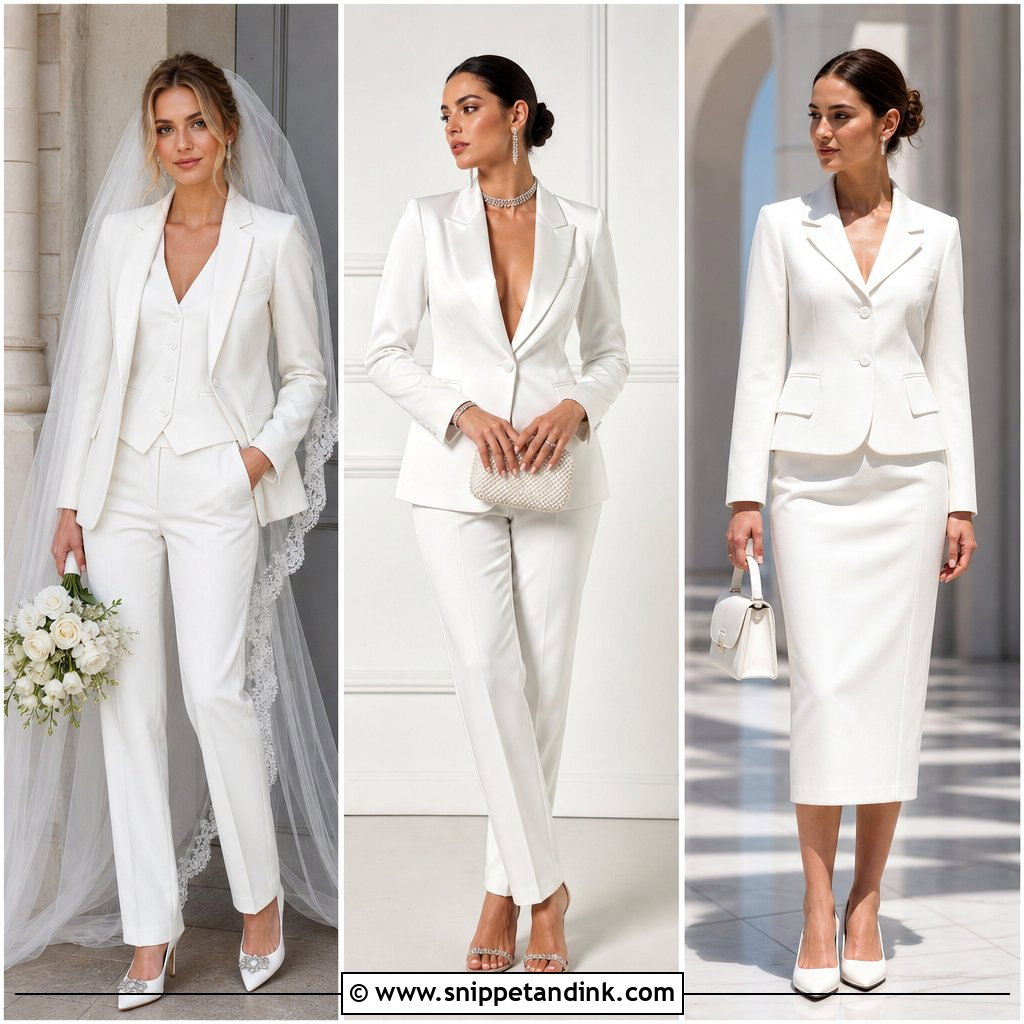

20. Sage Green Kurta Skirt Set
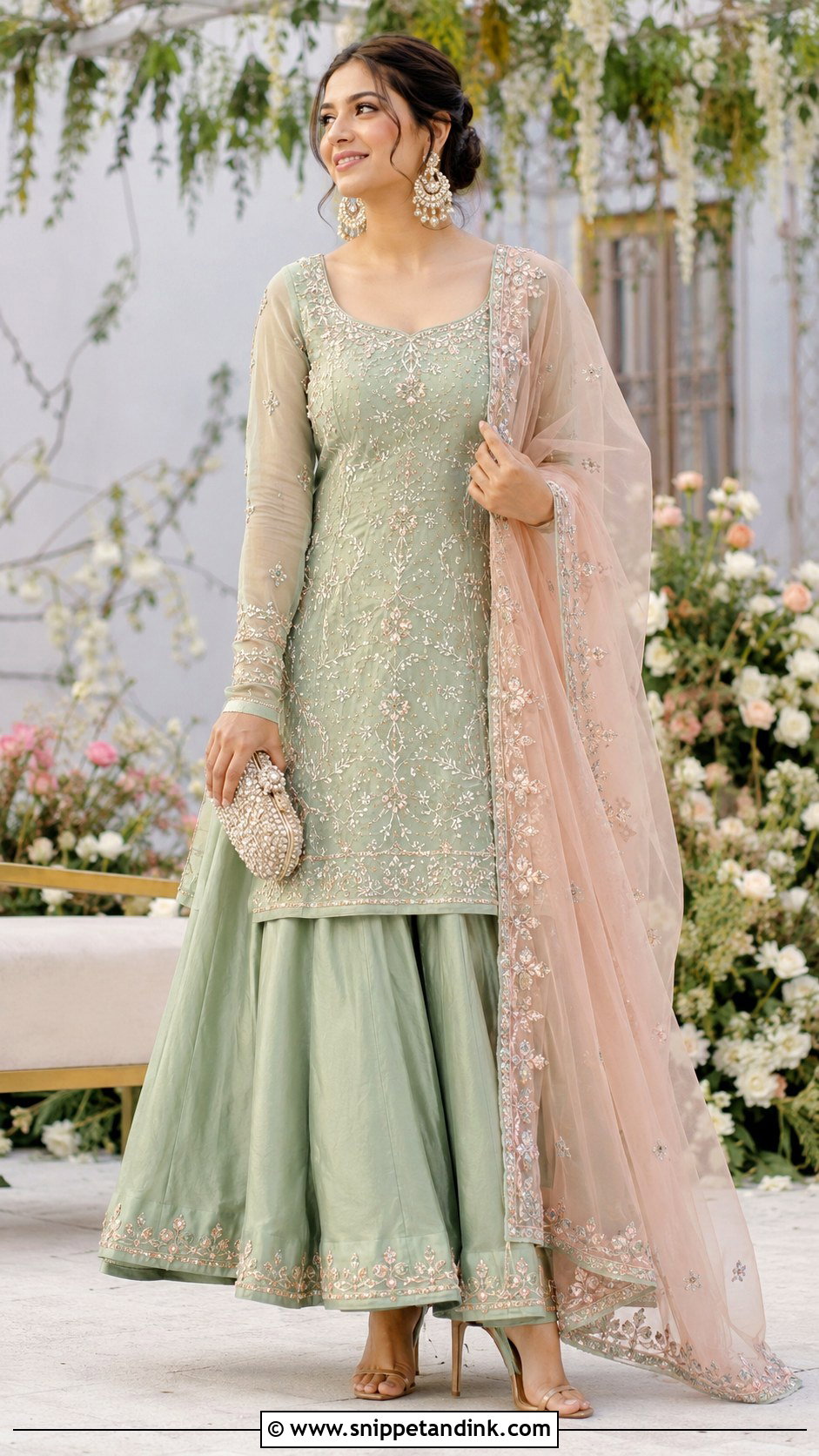
A kurta skirt set gives you the movement of a lehenga with less fabric to carry. Sage green with tonal embroidery and a contrasting blush or ivory dupatta looks soft in daylight. The detail I watch is skirt volume: a heavily gathered skirt in silk is hard to sit in on low chairs and catches on car doors, so I’d choose georgette or organza with controlled flare. Pearl chandbalis, a small beaded clutch and champagne heels finish it, with a half-up style or soft bun for a garden wedding or day reception.
Ready-Made Sets Almost Always Need a Tailor
Very few ready-made kurta sets fit off the hanger. Sizes are cut for an average bust and shoulder, and the pants are almost always long. I’d plan on alterations and leave at least three weeks before the first function; during wedding season, local tailors book up fast and rush jobs are where hems come out crooked.
What I ask the tailor to check
- Shoulder seams sitting at the edge of the shoulder, not halfway down the arm. This is the hardest fix, so buy for the shoulder.
- Armholes deep enough to lift your arms for photos and dancing.
- Side slits that stay closed when you sit. A slit that opens to the hip on a low chair is a common surprise.
- Pant and skirt hems taken up in the shoes you’ll wear, never barefoot.
- Hidden hooks or press studs on angrakha ties, jacket fronts and any dupatta you plan to pin.
Packing Zari and Mirror Work for a Wedding Weekend
Embellished sets suffer more in a suitcase than at the wedding itself. I fold heavy kurtas with a layer of soft cotton or tissue between the embroidered panels, so zari and mirrors don’t rub against each other, and I roll georgette and chiffon dupattas instead of folding them. Velvet travels best on a hanger in a garment bag. Pack a travel steamer rather than relying on a hotel iron, and keep a small kit of safety pins, a few spare hooks and clear thread in your potli. When you get home, air everything before storing it in cotton or muslin rather than plastic; trapped humidity tarnishes metallic thread.
One Kurta Set, Three Functions: What Changes and What Stays
The set you’ll enjoy wearing is the one you can sit, dance and eat in without adjusting every ten minutes. Match the silhouette to the function: flare and colour for the sangeet and mehendi, deeper tones and richer fabric for evening, washable cotton for haldi. Let the accessories support the fabric rather than compete with it. Above all, get the fit checked seated and moving, secure the dupatta, and break in your shoes. A well-tailored kurta set will hold its own next to far heavier wedding outfits.
You'll Like These Ideas:


Leave a Reply