
The sarees women asked me to style in 2023 were lighter, softer in color and easier to drape than the ones their mothers wore, but the craft underneath hadn’t gone anywhere. Pastel sequins, metallic tissue, ombre chiffon, statement blouses and pre-stitched drapes sat alongside handwoven Banarasi, Kanjivaram, Jamdani and linen. A saree only looks finished when the fabric, blouse, jewelry, shoes and drape agree with each other, so each of the twenty outfits below is a full look for a wedding, festival, reception or family event, with the fitting and fabric detail I’d check first.
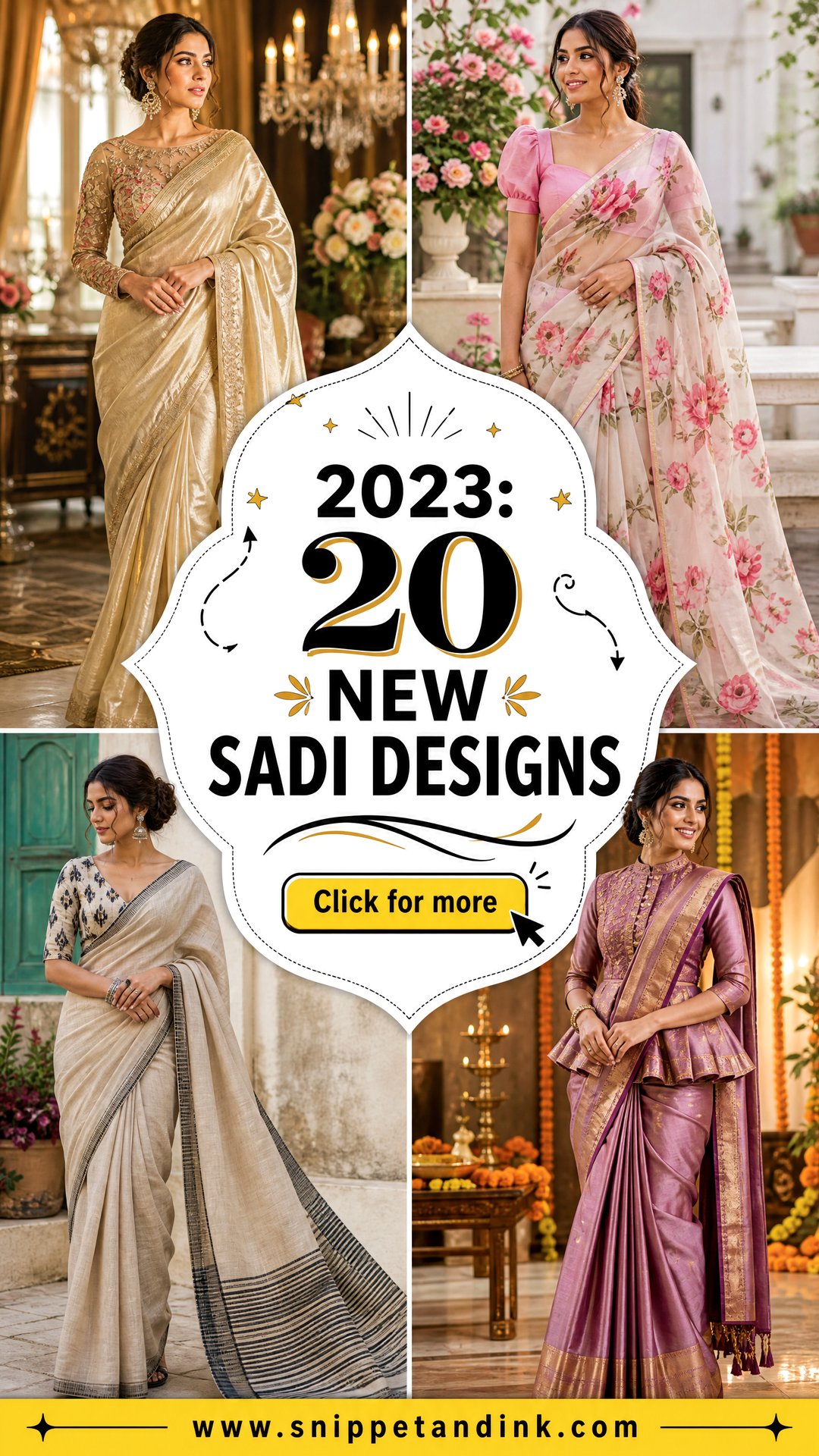
A Nivi Drape You Can Do Yourself
Most of the sarees below use the nivi drape, the one with front pleats and the pallu over the left shoulder. I teach it to anyone who’ll be dressing without help, and it goes far more smoothly with the right foundation.
- Put on your blouse, a petticoat in a matching color and your shoes first. Heel height changes where the hem should fall.
- Tie the petticoat drawstring firmly, roughly at the navel, so it can hold the weight of tucked fabric.
- Tuck the plain end into the petticoat at the right of your navel and wrap the saree once around your waist, keeping the hem just above the floor.
- Make five to seven pleats of even width, hold them together, and tuck them in just left of the navel, facing left.
- Take the remaining length around your back, bring it across the front and up over the left shoulder for the pallu.
- Pleat or spread the pallu as the fabric suits, then pin it at the shoulder from underneath the blouse.
Stiff silks need fewer, broader pleats; chiffon and georgette take more, narrower ones. If the front keeps sagging, the petticoat is too loose, not the saree too heavy.
1. Pastel Sequin Saree With Sleeveless Blouse
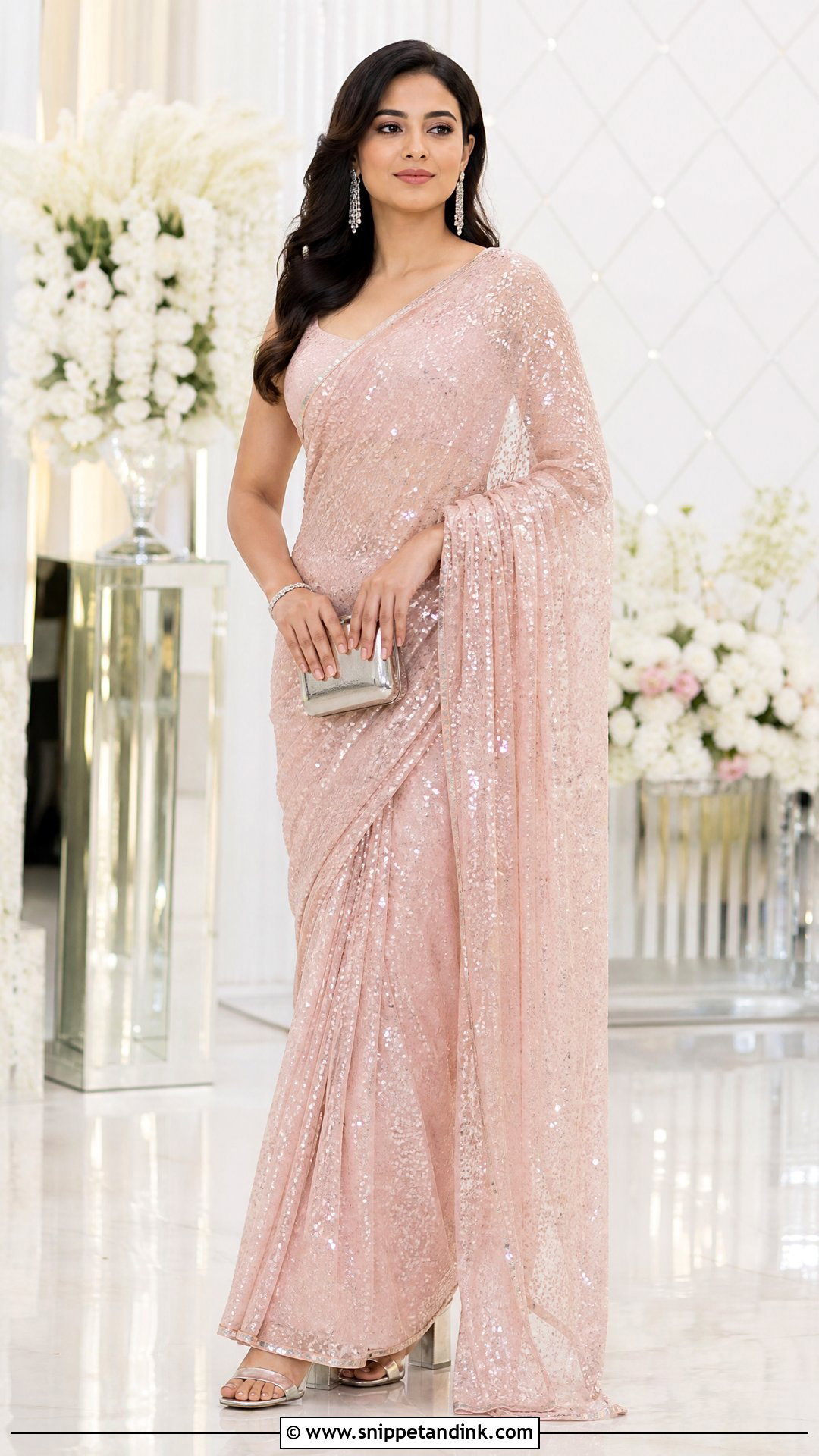
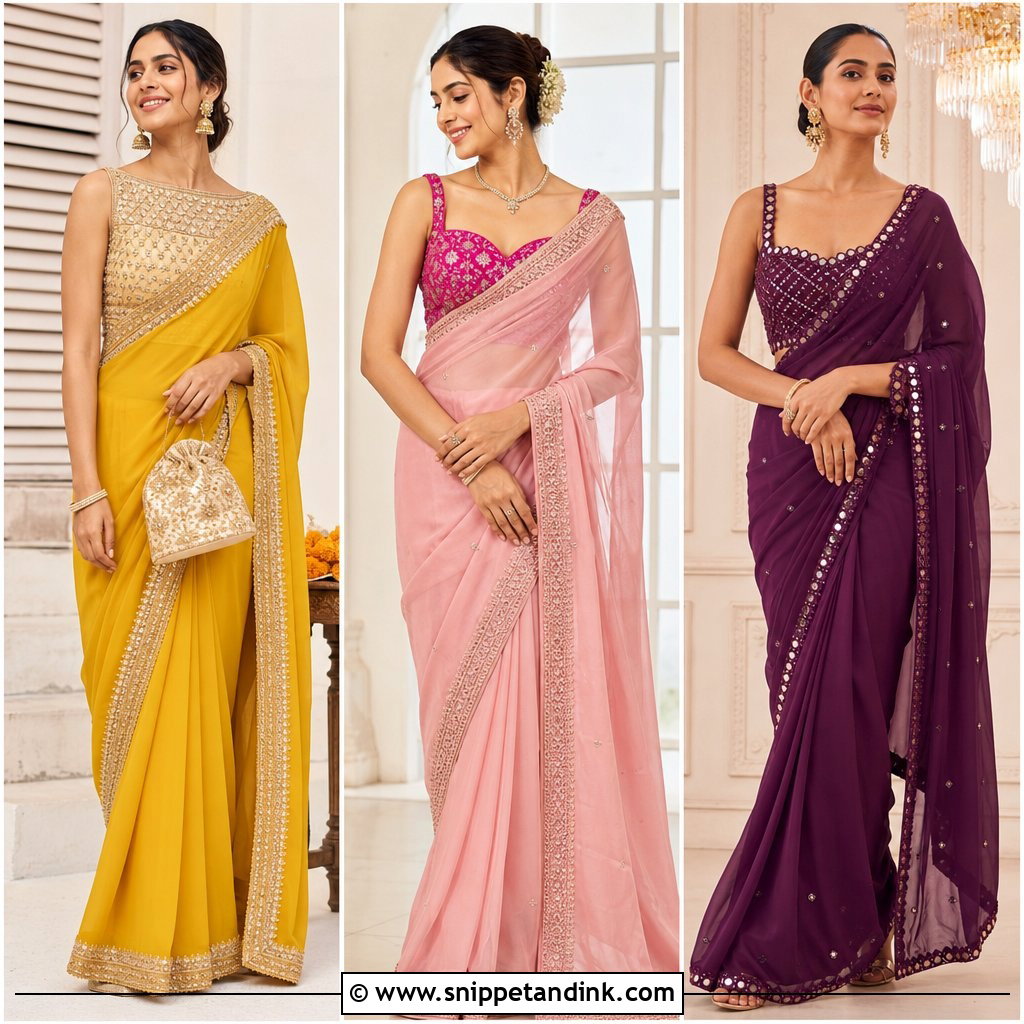
Sequins take the place of embroidery on a pastel party saree, so the outfit sparkles without the weight of bridal work. Blush, lavender, mint, peach and powder blue all stay soft. A sleeveless fitted blouse looks modern and lets the fabric lead. Sequin georgette is slippery, so I keep the waist pleats few and clean and leave the pallu open; too many pleats bunch at the navel. Crystal earrings, a slim bracelet and a small metallic clutch are enough, with silver or nude block heels. Fresh skin, defined eyes and a muted lip suit receptions and engagement evenings. Check the inside of the blouse armholes, where sequin edges rub.
2. Golden Tissue Saree With Embroidered Blouse
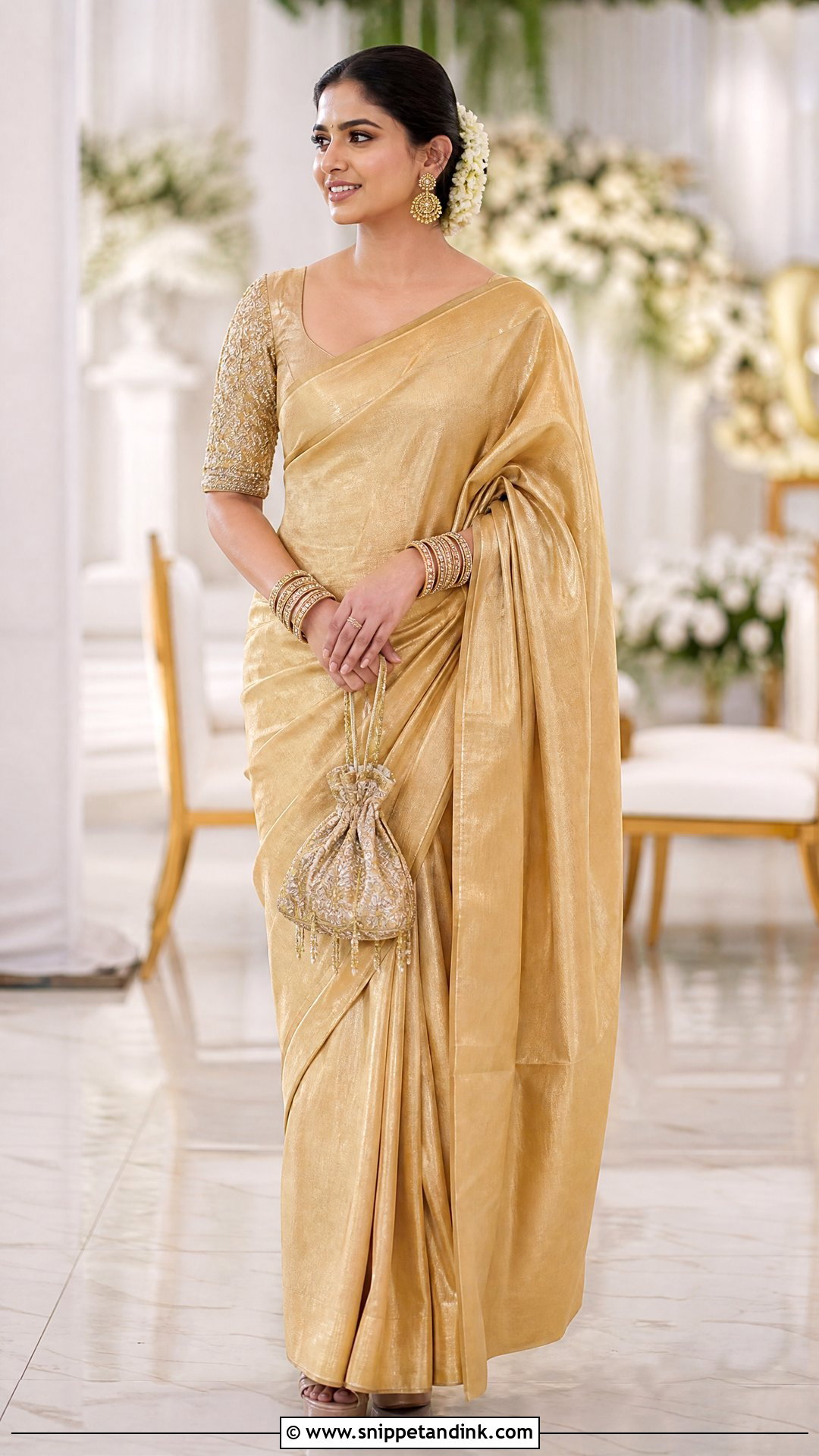
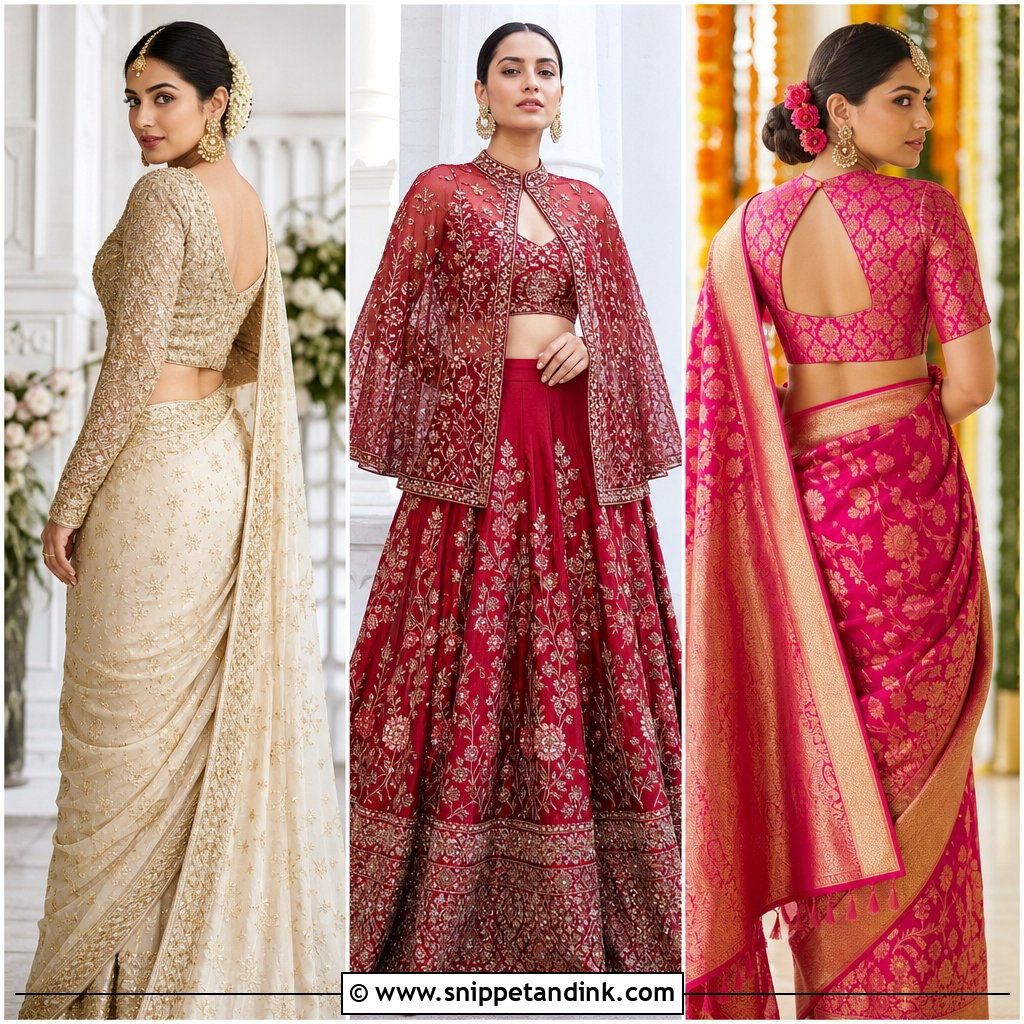
Tissue holds its shape, which makes a golden tissue saree one of the easier fabrics to pleat neatly. I make the pleats broad and let the pallu fall loosely over the shoulder, because tight pleats in tissue crackle and look stiff. A fitted blouse in fine threadwork, beads or tonal embroidery suits it; elbow sleeves feel traditional, a square neck more current. Antique gold earrings, stacked bangles and a compact potli go with it, and neutral platform heels make the length easier to manage. A smooth bun with a small flower finishes it for ceremonies and festive dinners.
3. Ombre Chiffon Saree With Halter Blouse
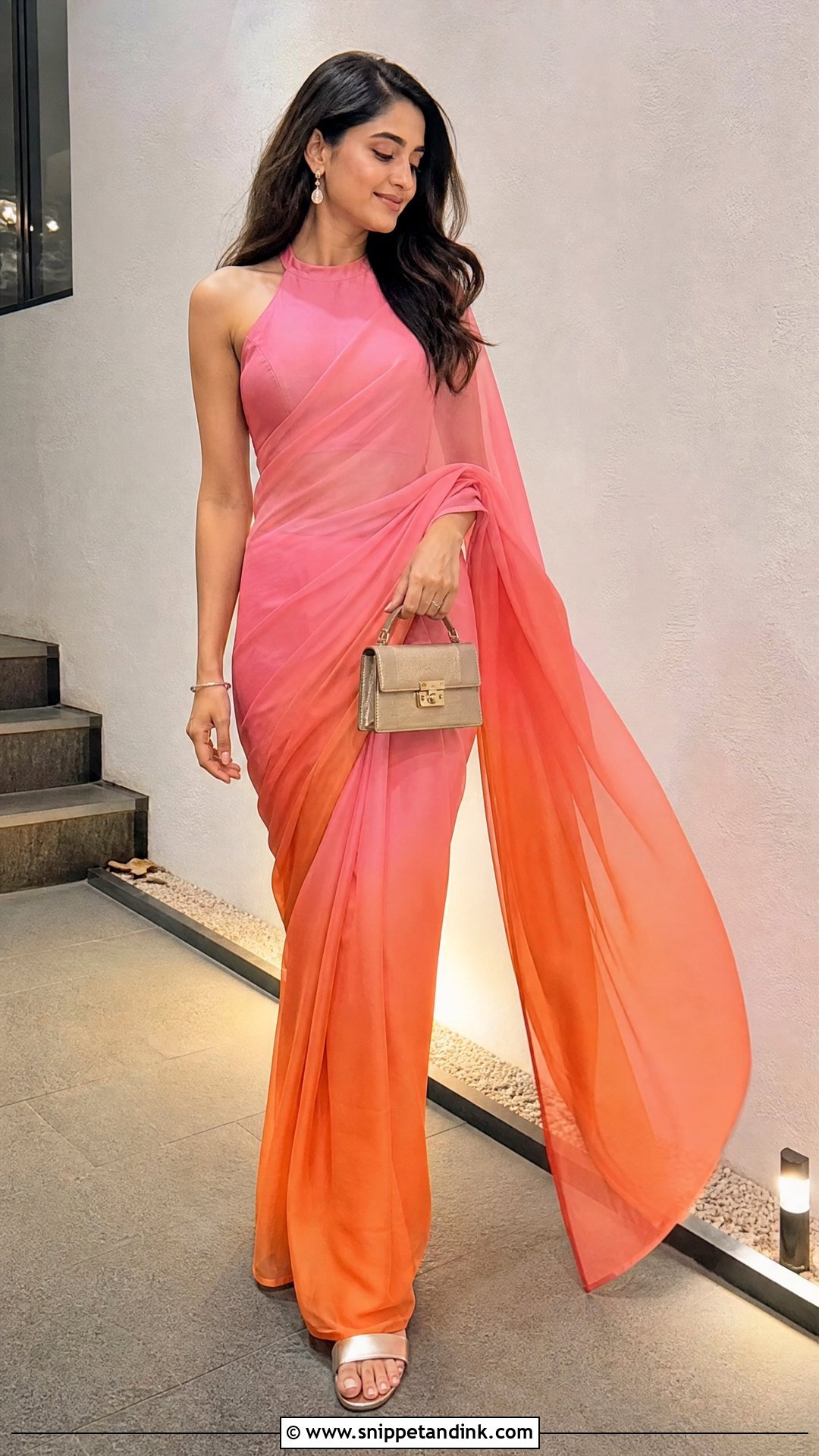
Ombre chiffon moves beautifully, and the gradient does the decorating: pink into orange, blue into lavender, ivory into pale green. I match a plain halter blouse to the darker end of the fade so the outfit has an edge without fighting the color. Keep the pleats narrow and the pallu long and open. Chiffon slides, so a well-fitted petticoat with a firm drawstring and two or three small pins at the shoulder and waist will save you all evening. Drop earrings, one fine ring, a structured mini bag, metallic sandals and soft waves are plenty for receptions, farewells and cocktail parties.
4. Banarasi Silk Saree With Contrast Blouse
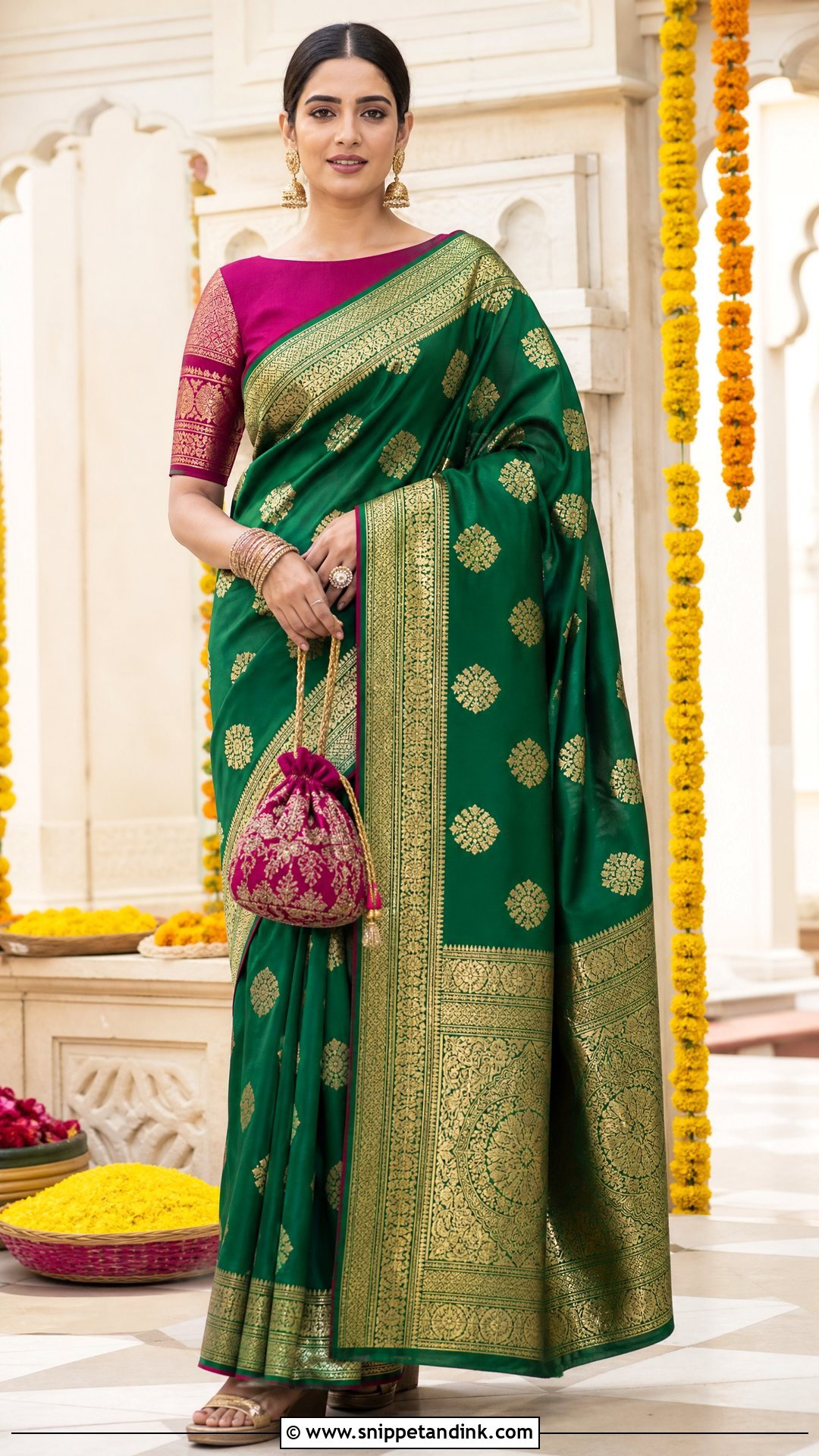
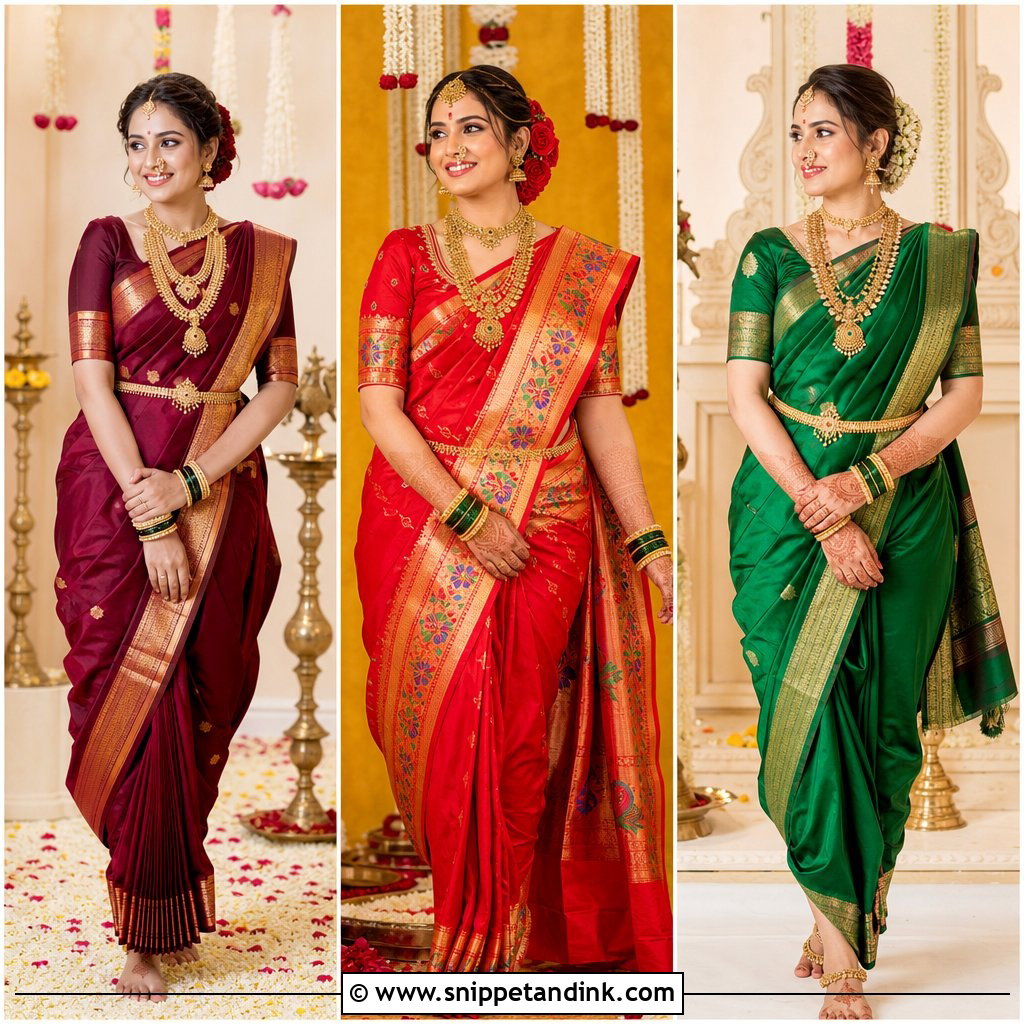
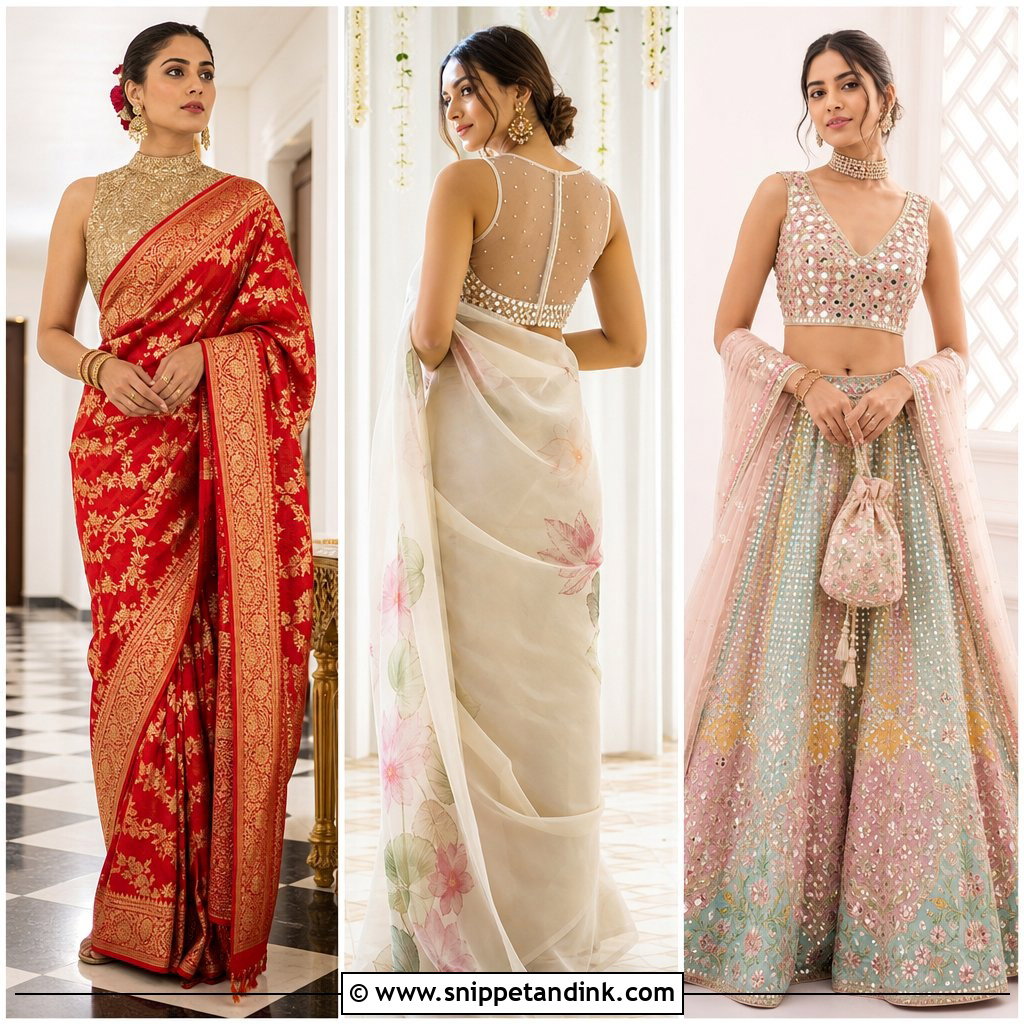
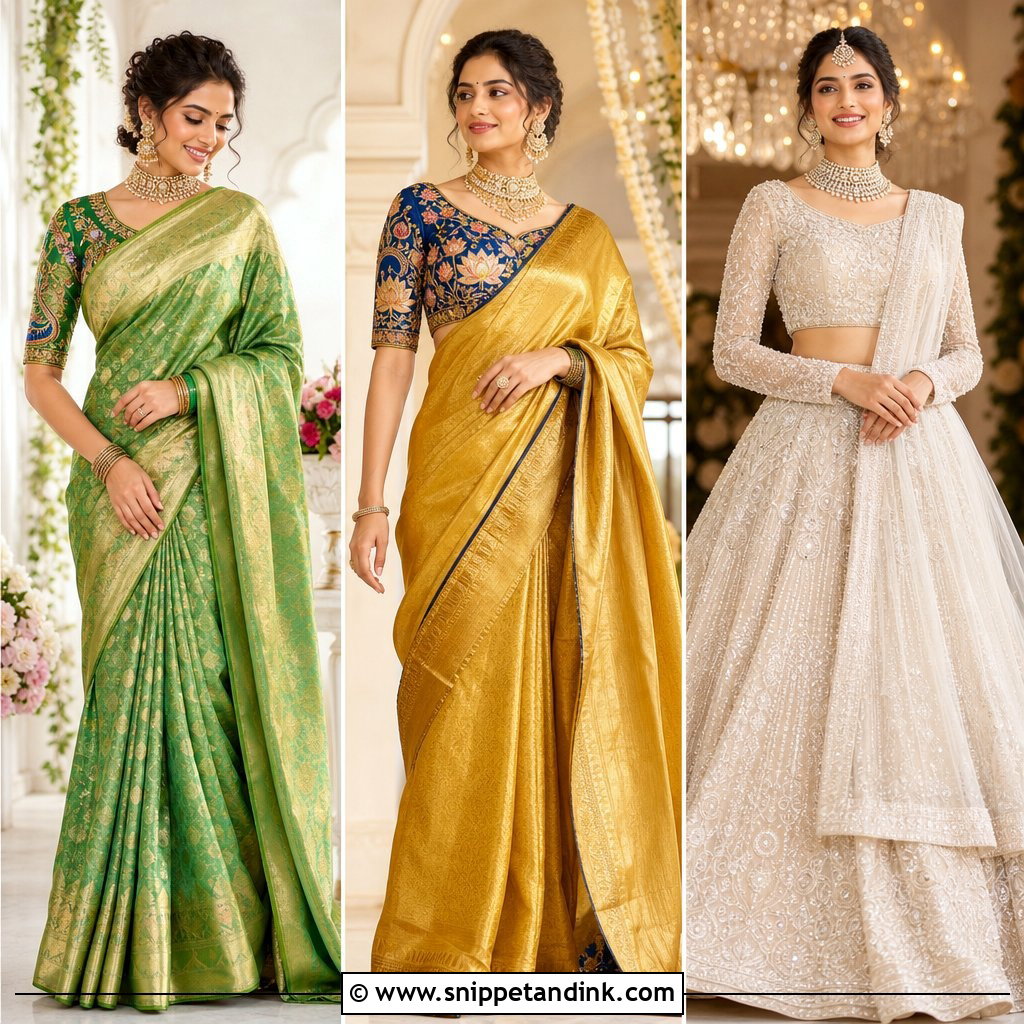
A Banarasi silk saree carries its own ceremony, so I keep the blouse simple and let a contrast color do the updating. Emerald with magenta works, and deep red looks rich beside bottle green or antique gold. A plain boat or round neck keeps the zari in charge. Banarasi silk is heavier than it looks, so structured, even pleats spread its weight and stop the front from dragging down. Jhumkas, bangles and a small embroidered bag, with traditional heels or wedges, a low bun and soft makeup, suit almost any age group at a wedding.
5. Ruffle Saree With One-Shoulder Blouse
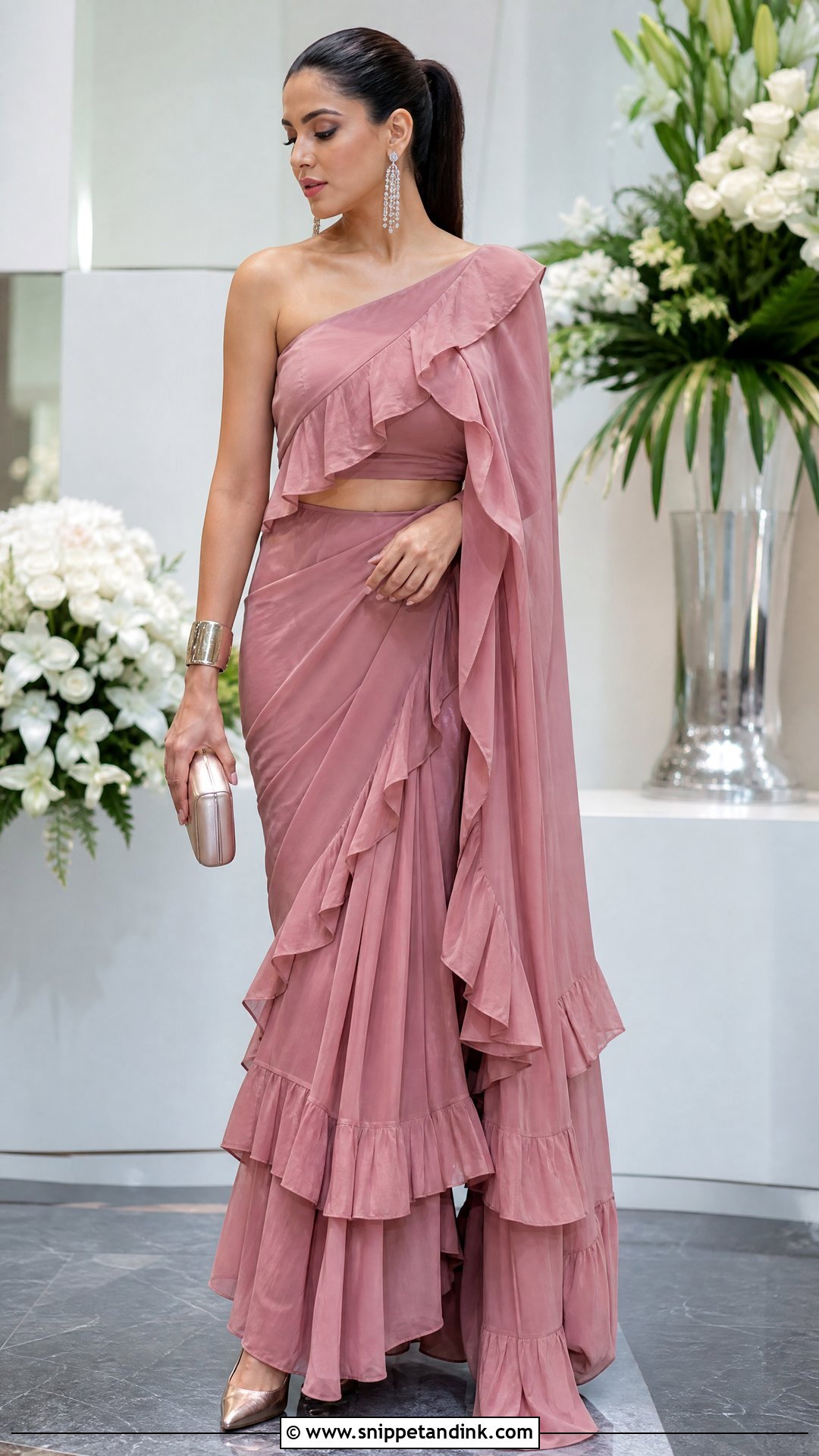
Ruffles add volume at the hem or pallu, so everything else should be plain. A fitted one-shoulder blouse in the same color gives a clean line, and black, red, navy or dusty pink worn head to toe looks deliberate. Don’t over-pin the ruffled pallu; every pin flattens a ruffle you paid for. Long statement earrings and a sleek cuff, a hard-case clutch and pointed heels sharpen the shape, with a smooth ponytail or side part. The ruffled hem is the part that catches on heels, so I set the length a little higher than for a flat saree. It’s a good evening choice when you want drama without heavy embroidery.
6. Floral Organza Saree With Puff-Sleeve Blouse
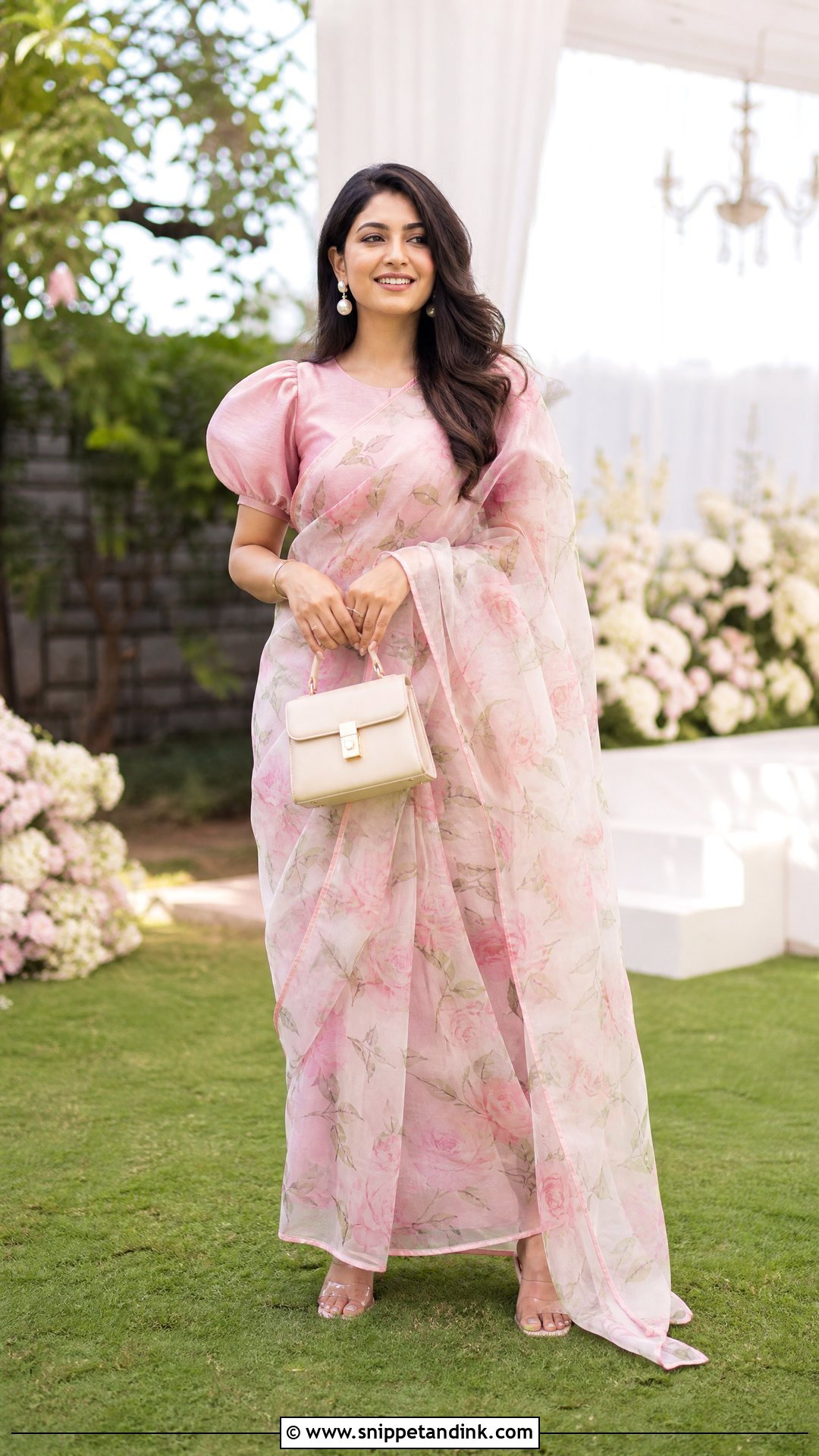
Organza is translucent and crisp, so it shows prints clearly but also puffs out at the waist if it isn’t pinned. I choose medium florals with open space between them, which keeps a busy print from swallowing the wearer. A plain puff-sleeve blouse picking up one color from the print gives structure. Pleat it sharply and pin the pallu flat. Pearl earrings, a small pastel bag, nude heels and loose waves or a low ponytail keep it fresh, and luminous makeup suits sheer fabric better than heavy contouring. It’s lovely for daytime weddings, garden parties and family lunches.
7. Pre-Draped Saree With Belted Blouse
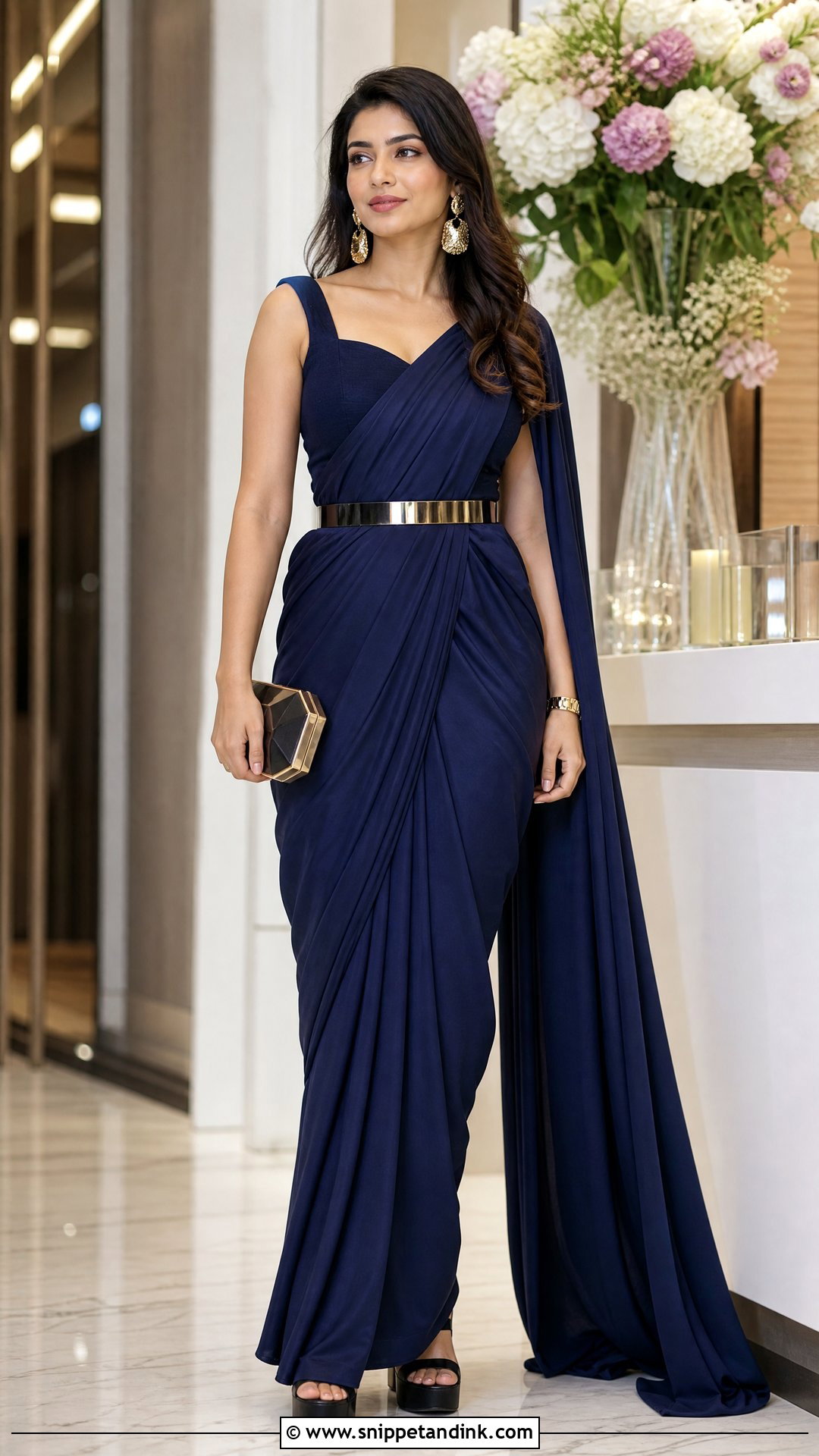
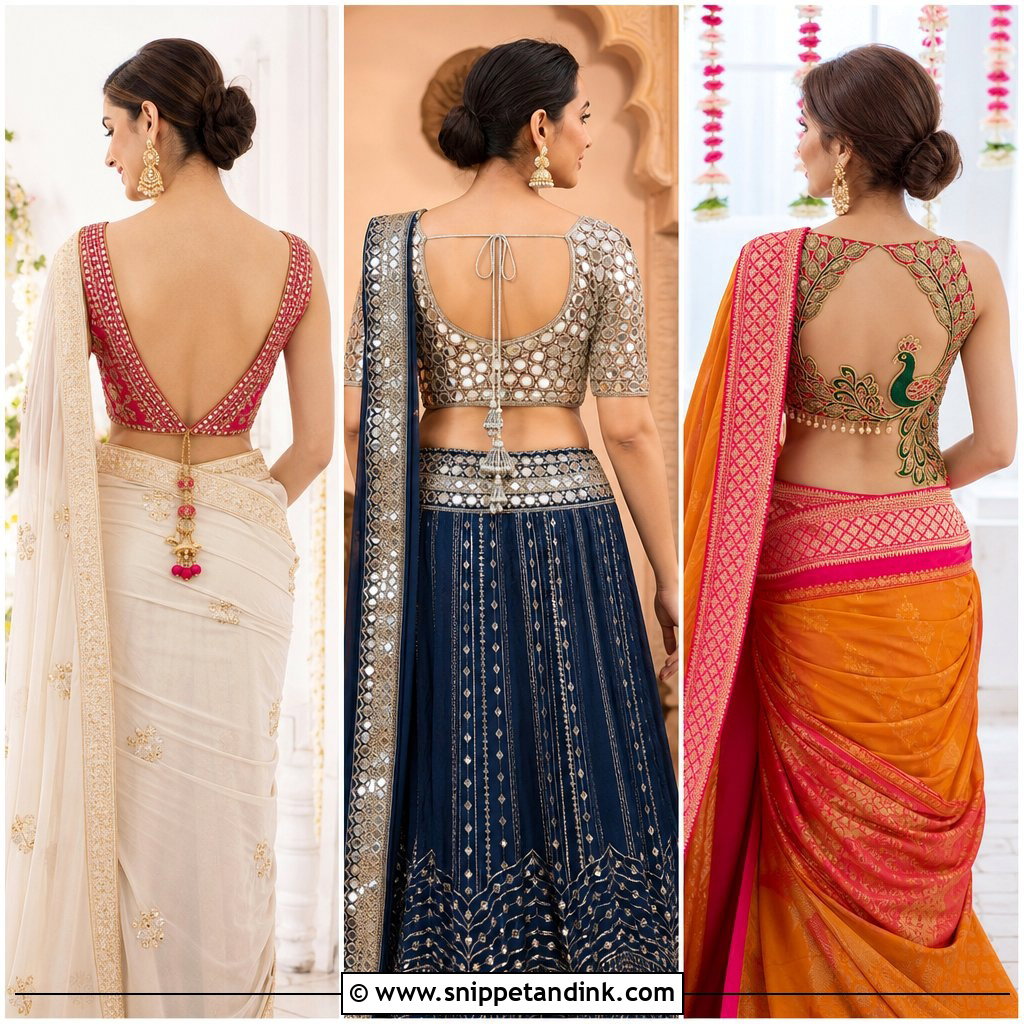
A pre-draped saree gives the same picture without anyone needing to pleat it on the morning. The lower drape is stitched, the waist is defined and the pallu is attached, so it stays put through dancing. Wear it with a fitted blouse and a matching belt. A fabric belt blends in, while a metallic one makes more of a statement. Sculptural earrings, one cocktail ring, block heels and a box clutch in the belt’s finish are enough, with a sleek bun or straight hair. Check that the stitched pleats sit at your navel, not a standard height, because a ready drape sitting too low looks borrowed. Ask your tailor to adjust the waistband if needed.
8. Black Sequin Saree With Full-Sleeve Blouse
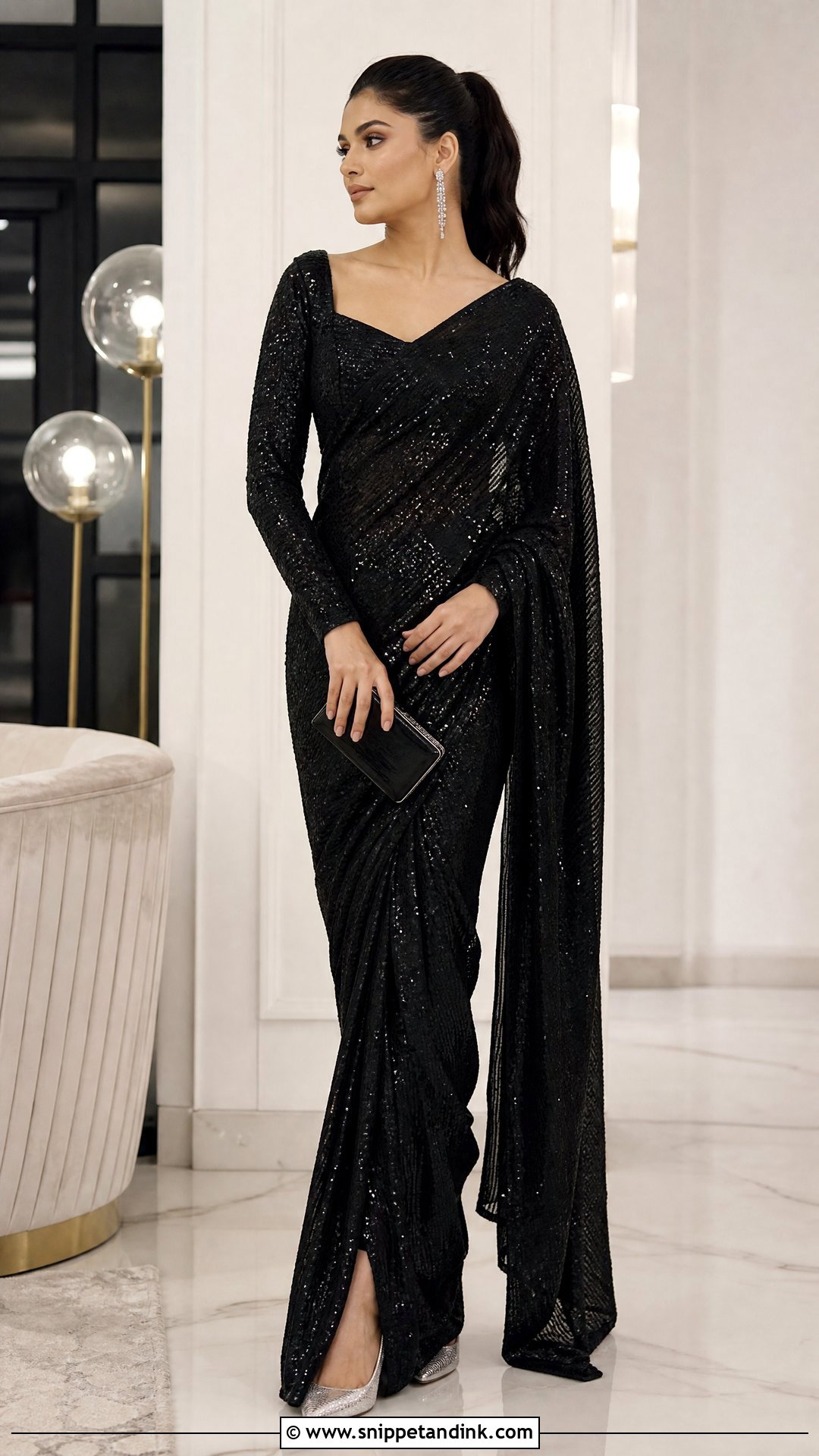
Black sequins give strong evening glamour with one color. A fitted full-sleeve blouse balances the coverage and lengthens the line. I’d choose fine, evenly spread sequins over large paillettes; they look richer and catch less on bracelets. Pin the pallu at the shoulder and let one clean panel fall down the back. Crystal studs or slim drops are enough, plus a black clutch, a silver ring and pointed heels. Straight hair or a sleek ponytail, defined eyeliner and a neutral lip suit receptions and formal dinners. Sequin fabric can scratch the inner arm, so ask for a soft lining in the sleeves.
9. Kanjivaram Silk Saree With Elbow-Sleeve Blouse
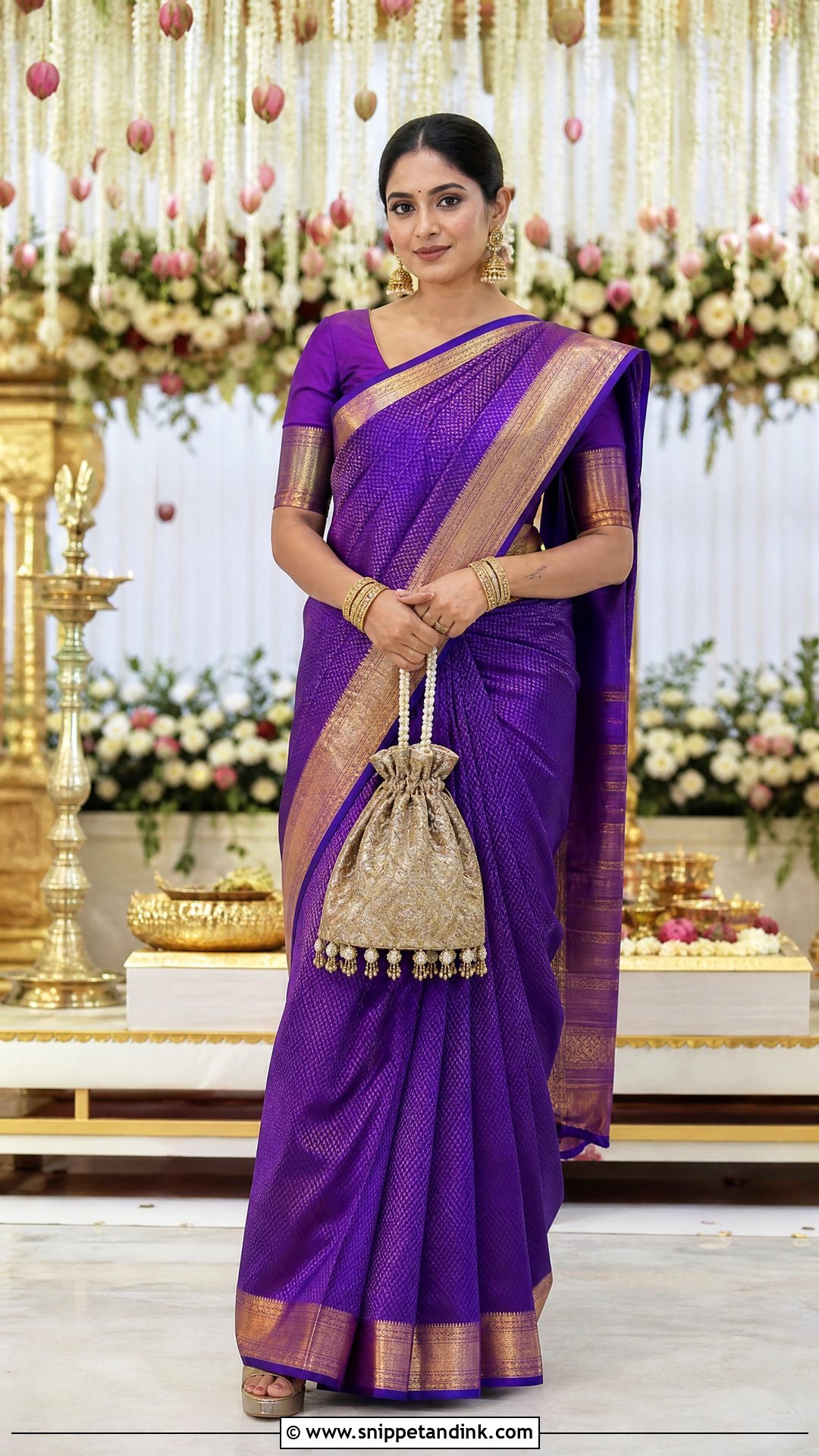
Kanjivaram silk is thick and lustrous, with borders woven in rather than stitched on, so it looks ceremonial before you add anything. Deep purple, mustard, crimson, teal and royal blue are the dependable shades. An elbow-sleeve blouse with a round neck and a sleeve border echoing the saree gives continuity. Make broad, even pleats; Kanjivaram is stiff enough that narrow pleats stand out like a fan. Temple earrings, matching bangles and a structured potli suit its heritage, with platform sandals for support. A center-parted bun and small hair ornament finish it for rituals and milestone celebrations.
10. Neon Saree With Minimal Blouse
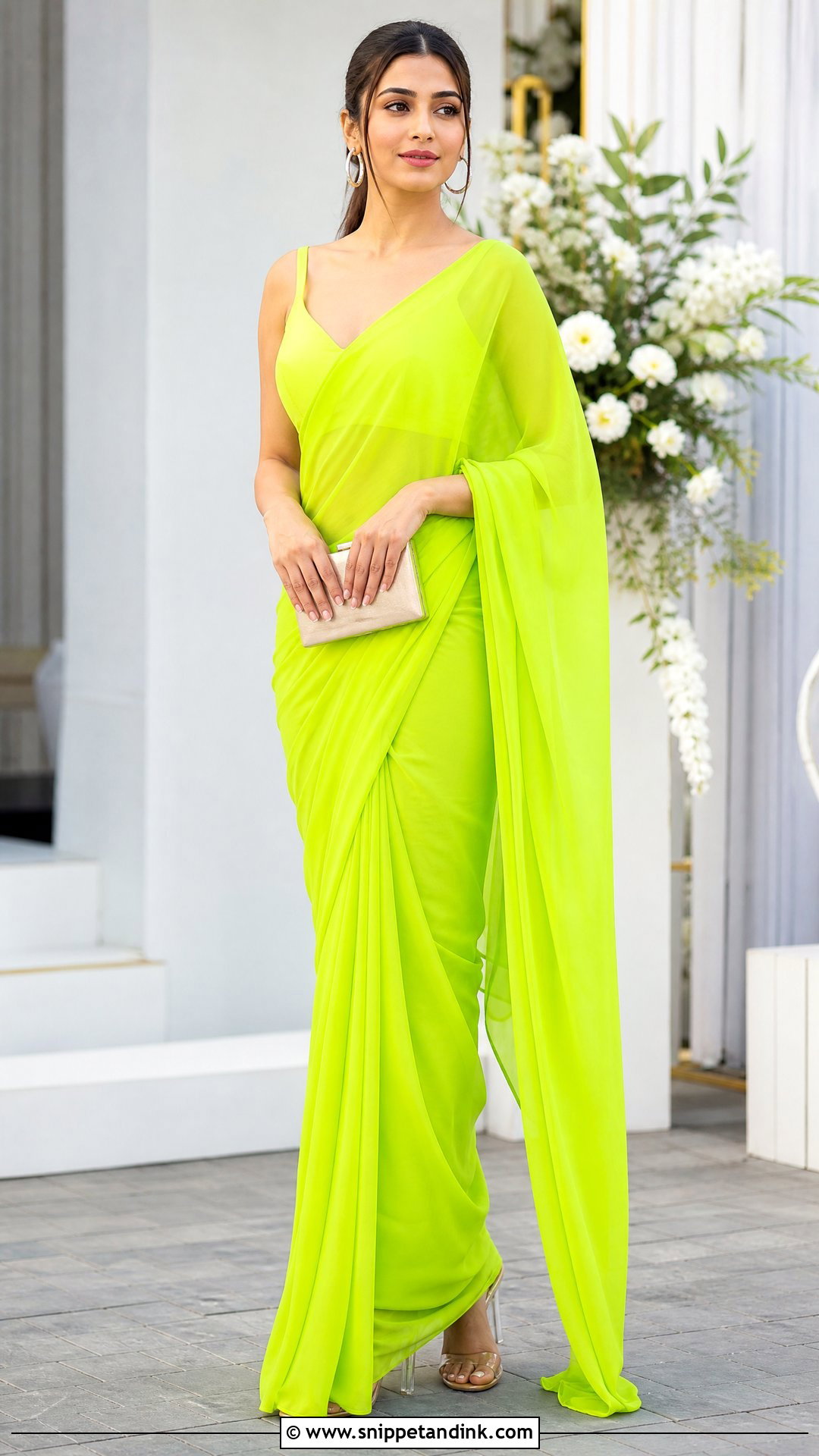
Neon turns a familiar shape into something new: lime, vivid pink, electric orange or sharp yellow in light chiffon or georgette. A minimal sleeveless blouse in the same shade makes one column of color, and embroidery would only fight it. Pin the pleats securely and wear the pallu open. Silver hoops, a plain cuff, a neutral clutch and clear or nude heels stay quiet. Keep makeup restrained and pick graphic eyeliner or a soft lip, not both. Neon reflects color onto the face in daylight, so check your foundation shade outdoors before the event. It suits upbeat daytime parties and modern receptions.
11. Multicolor Saree With Solid Blouse
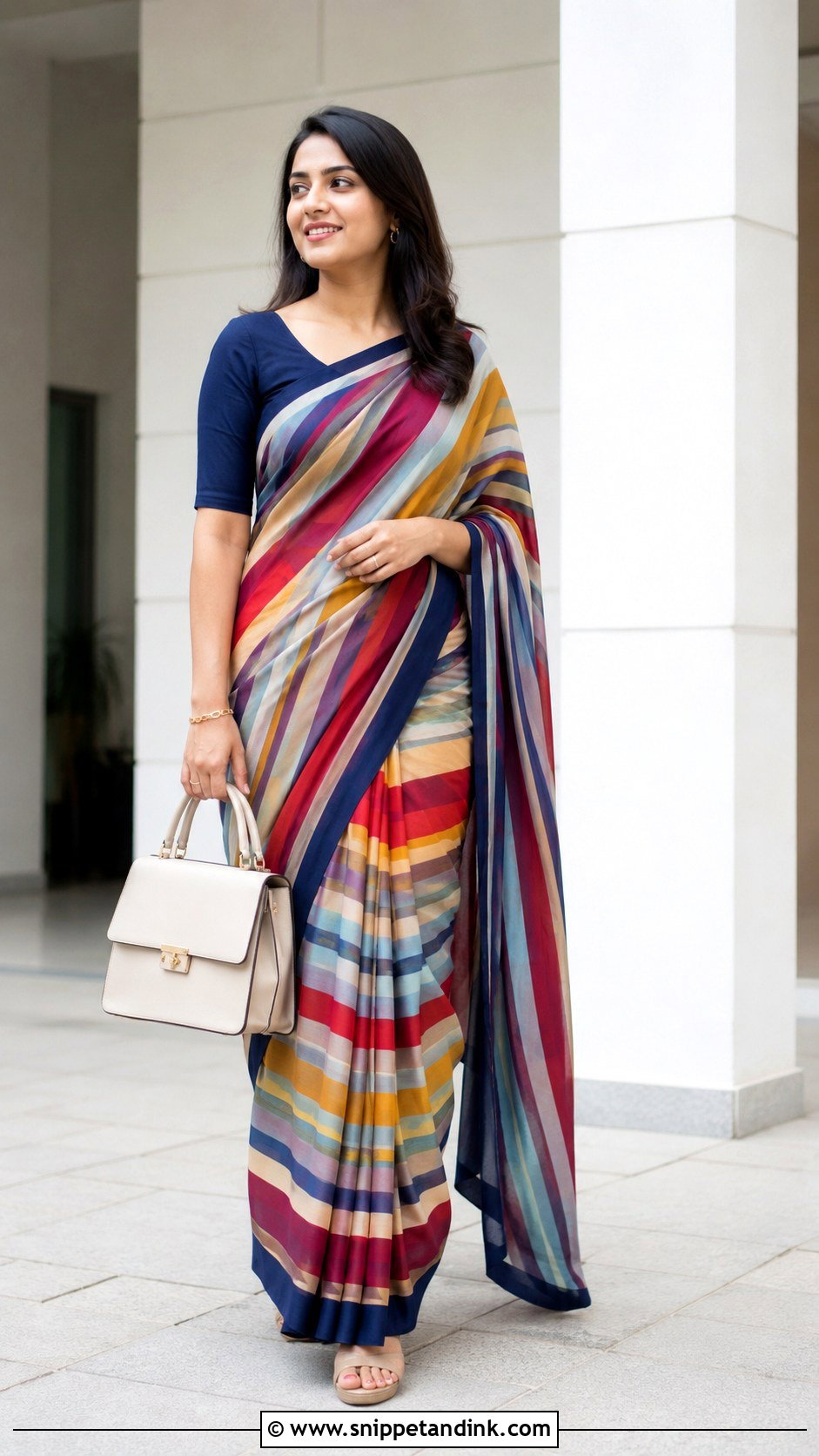
A multicolor saree makes coordination easier because the palette is already chosen. Clean color blocks, woven stripes, abstract waves or spaced geometrics all work. For the blouse, I pull the quietest shade from the fabric, usually navy, cream, maroon or forest green, so the outfit doesn’t get loud. Keep the drape neat so each color section reads clearly. Small gold hoops, a simple bracelet, a structured handbag and neutral wedges go with most palettes, plus a low ponytail and natural makeup. It suits cultural programs, office celebrations and daytime family gatherings.
12. White Saree With Gold Border Blouse
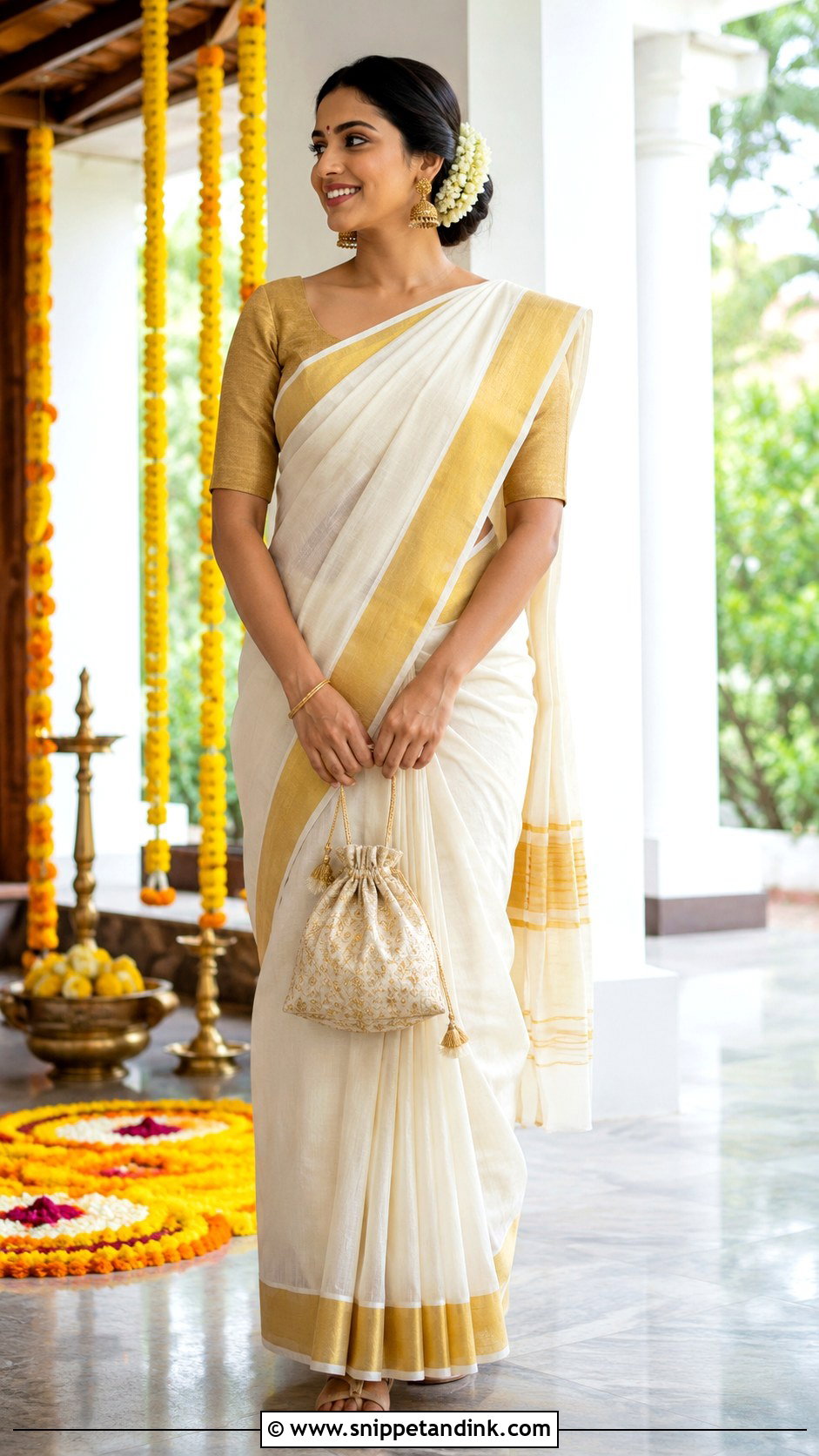
White with a gold border is easy to personalize and very bright in daylight. Soft cotton or silk cotton suits a daytime festival, while light tissue is dressier. Pair it with a gold blouse or a white one trimmed in matching metallic. A boat neck and short sleeves keep the shape simple. Pleat it precisely and show the border along the pallu. Gold jhumkas, slim bangles, a small potli, neutral sandals and fresh flowers in a low bun complete it for Onam gatherings and family ceremonies. Starched cotton holds crisp pleats; skip the starch on silk cotton, which marks.
13. Linen Saree With Printed Blouse
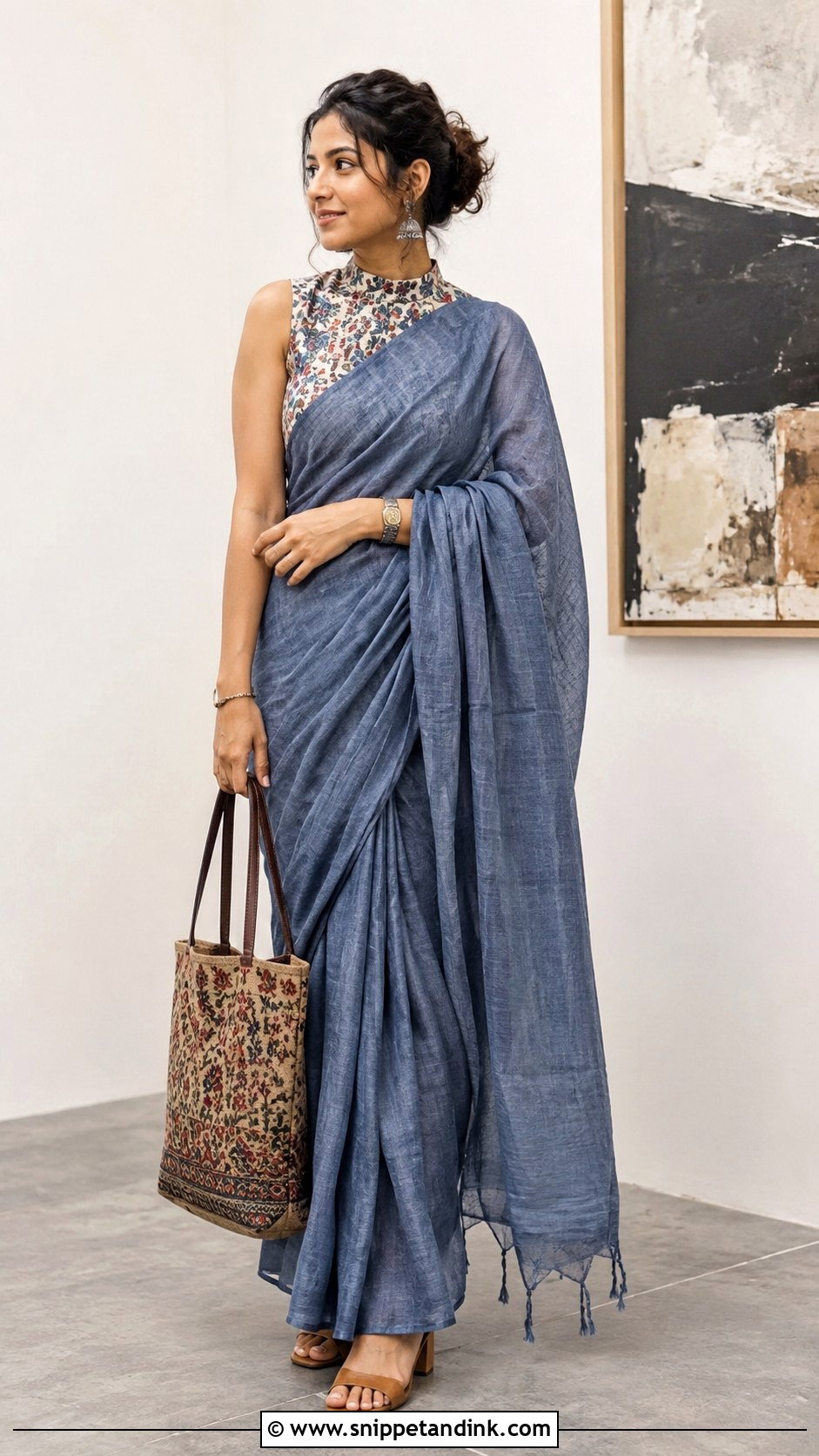
Linen breathes, which is why I suggest it for warm daytime events and long days on your feet. A solid or softly striped saree in beige, grey, blue, rust or muted green gets personality from a printed blouse in florals, checks or small geometrics. A high round neck and short sleeves look smart. Linen will crease, and that relaxed texture is part of its charm, so don’t fight it with endless ironing. Oxidized silver earrings, a handcrafted tote and low block heels or polished flats, with a loose bun or braid, suit office celebrations, exhibitions and lunches.
14. Velvet Border Saree With Matching Blouse
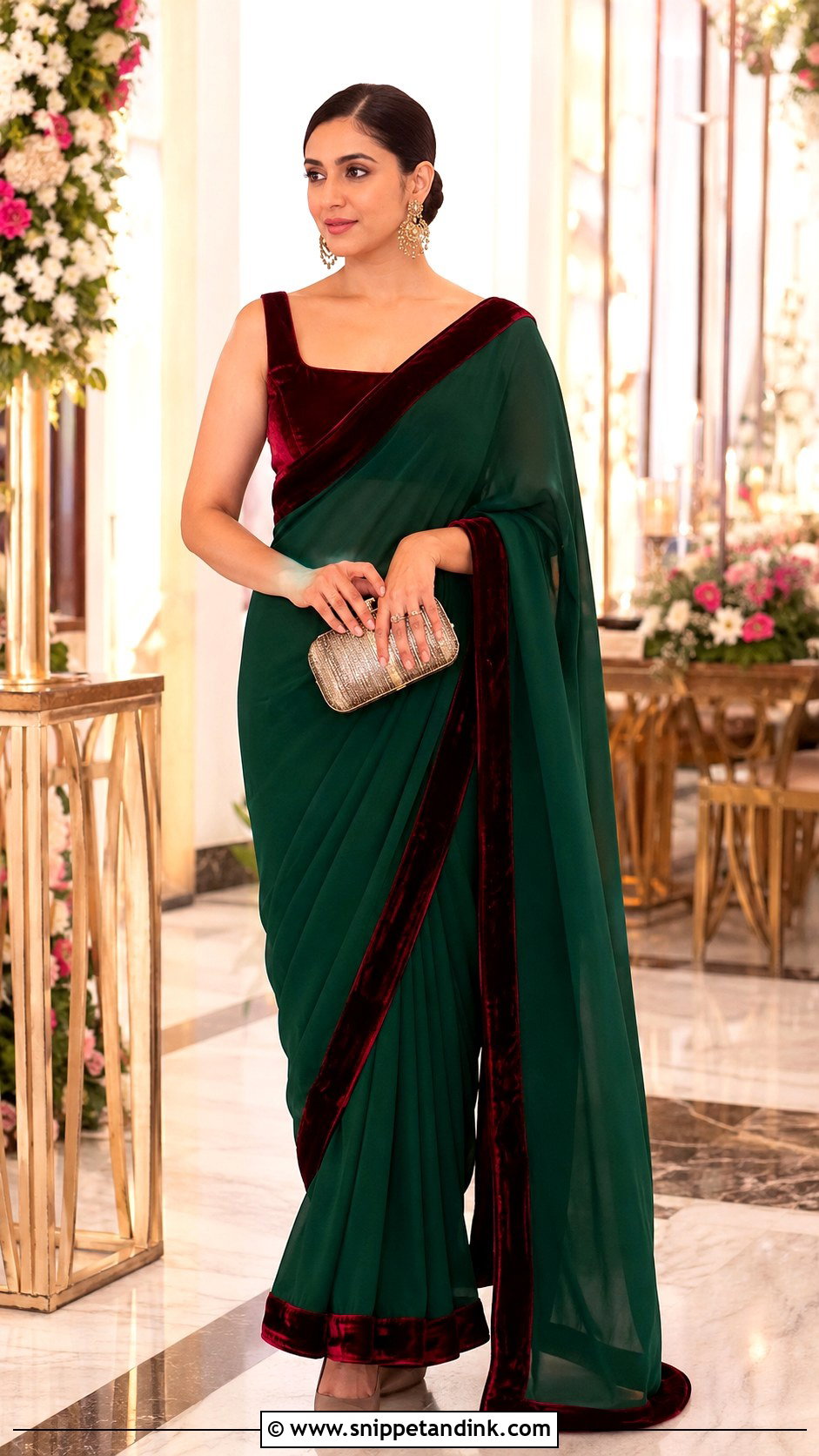
A velvet border adds rich texture without embellishing the whole saree. Chiffon, silk or georgette edged in maroon, navy, emerald or black velvet looks formal, and a matching velvet blouse ties it together. Velvet is heavier than the body fabric, so the border tends to pull the pallu down; I pin it at the shoulder a little further back than usual. A square neck or modest V with elbow sleeves balances the weight. Antique earrings, a small metallic clutch, closed heels and soft curls or a side-parted bun complete it for winter weddings and evening receptions.
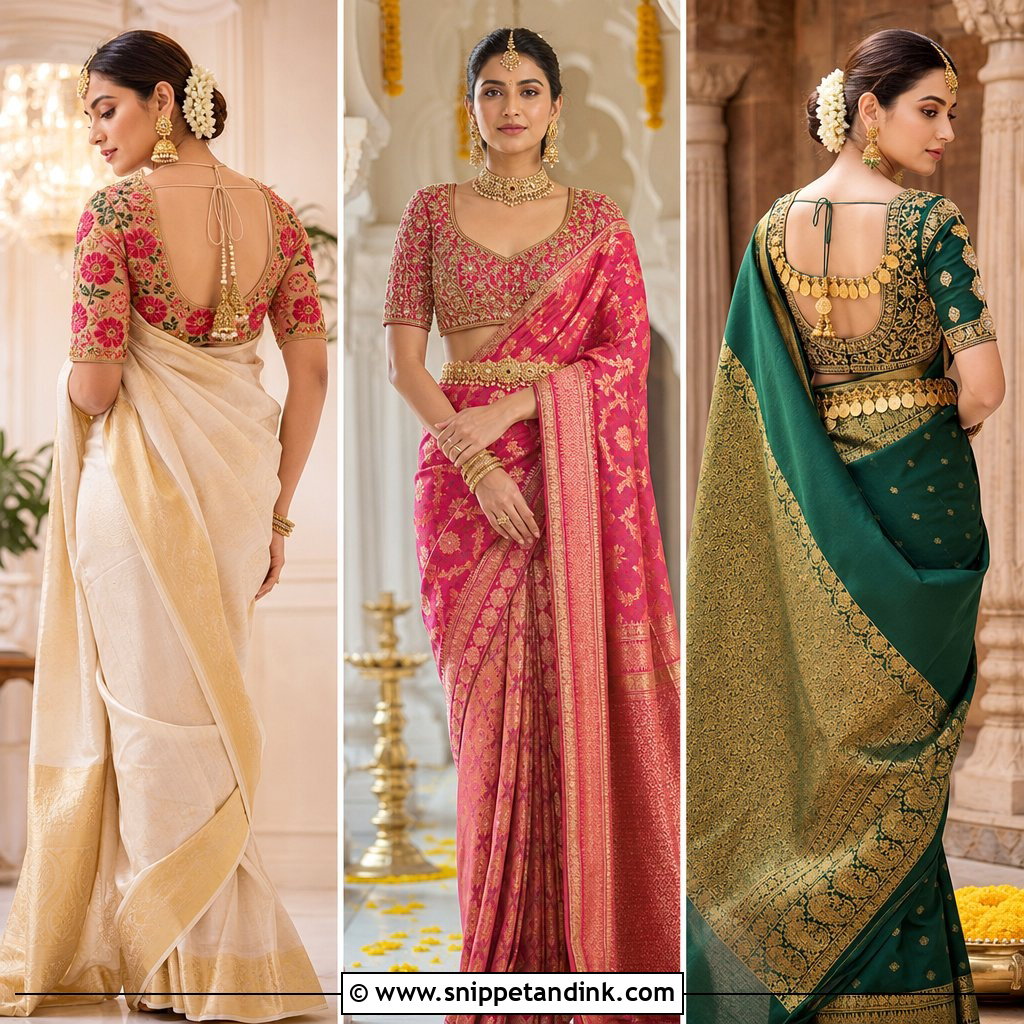
15. Printed Satin Saree With Cowl-Neck Blouse
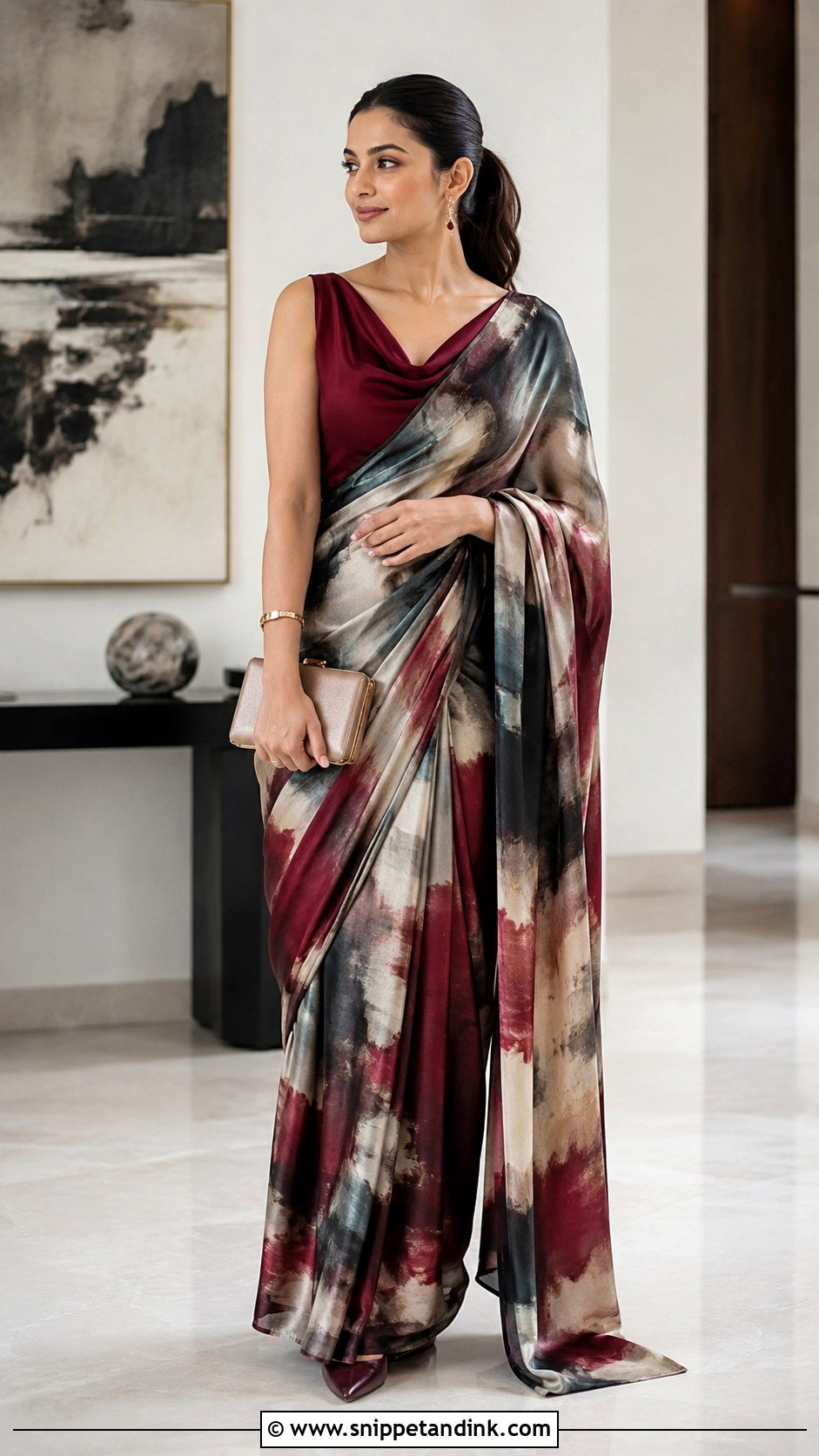
Printed satin needs very little decoration because the sheen and pattern carry it. Abstract prints, watercolor florals and geometrics look best on its fluid surface. A plain cowl-neck blouse in one of the darker print colors works, but both pieces move, so pin the shoulder discreetly and keep the pleats narrow or the whole drape slides. Delicate earrings, a fine chain bracelet, a plain clutch and pointed pumps sharpen the soft drape, with a neat ponytail and natural makeup. Satin marks with water, so keep it away from wet hands at the buffet. It’s a lighter alternative to silk for receptions and farewells.
16. Dhoti Saree With Cropped Jacket
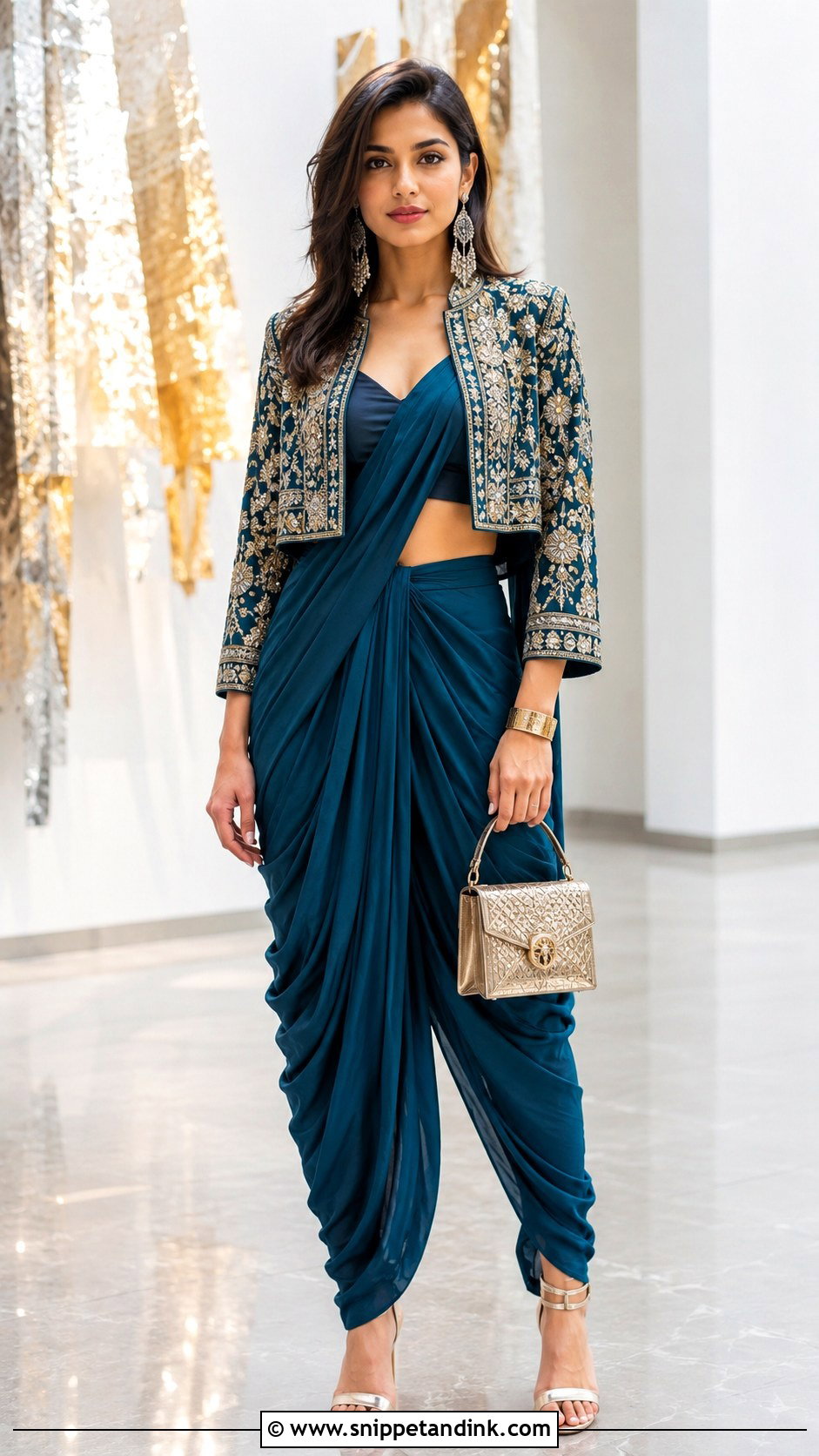
A dhoti saree keeps the pallu but swaps the pleated skirt for a trouser-like drape, so you get real freedom to move. Solid crepe or silk blends fall cleanly around the legs. Add a fitted blouse and a cropped embroidered jacket that stops near the waist, leaving the dhoti shape visible. Long earrings, a cuff, a small sling bag and heeled sandals suit it, with a high ponytail or polished bun. Fit is about the crotch depth: too low and it looks sloppy, too high and you can’t sit, so try it seated. It’s a strong choice for sangeet nights and cultural events.
17. Sheer Saree With Corset Blouse
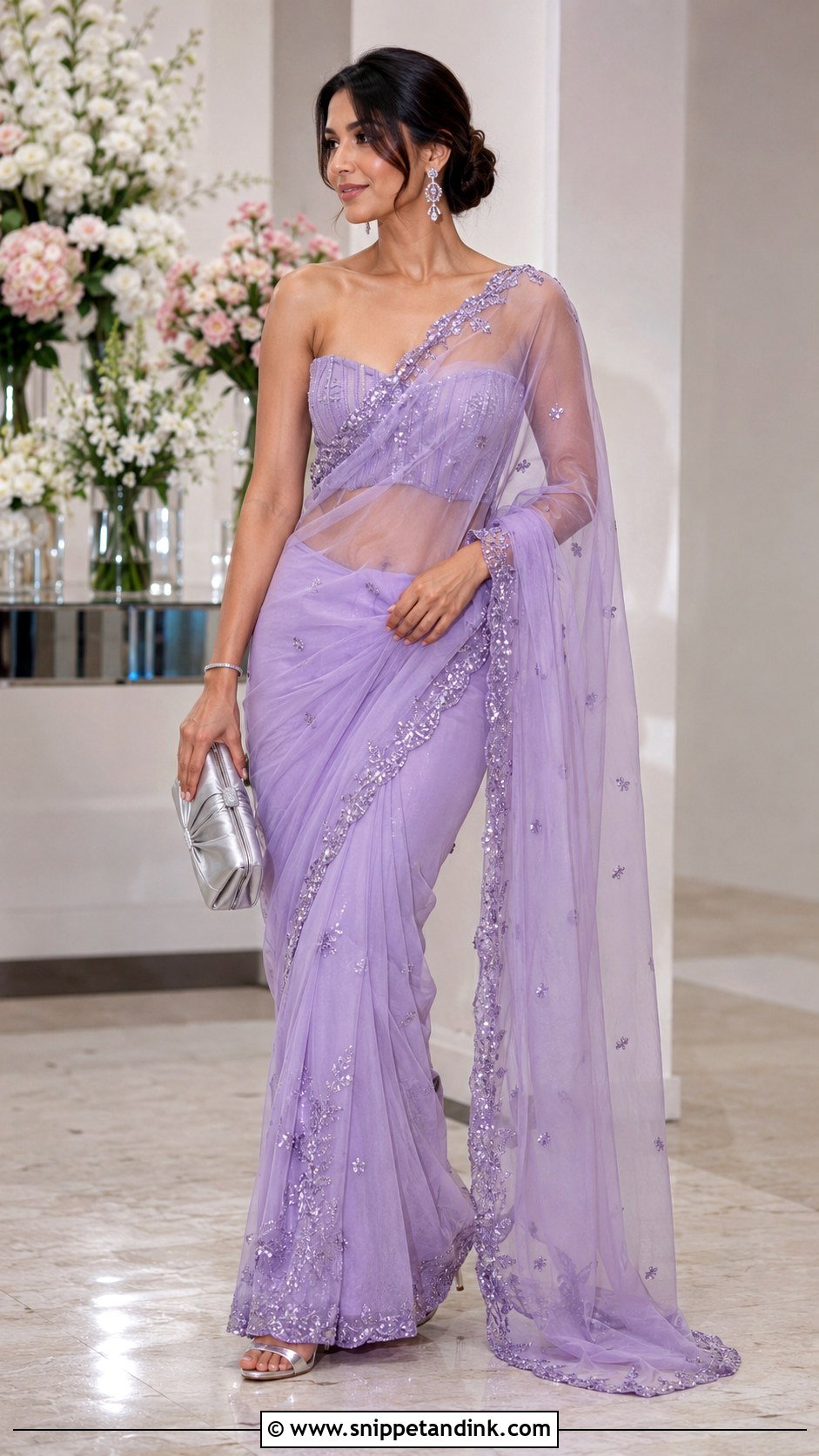
A sheer saree looks sophisticated when the blouse underneath is properly built. Soft net, organza or fine georgette with an embellished border and tonal details needs a stable base, and a boned corset-style blouse gives one. For comfortable coverage, choose a straight neckline and a secure full back. Lay the pallu neatly over one shoulder instead of wrapping extra fabric around the torso, which shows through. Drop earrings, a slim bracelet, a small satin clutch, metallic heels and a low bun complete it. Have the corset fitted with the petticoat on, since the waistband changes where the boning sits.
18. Color-Block Saree With High-Neck Blouse
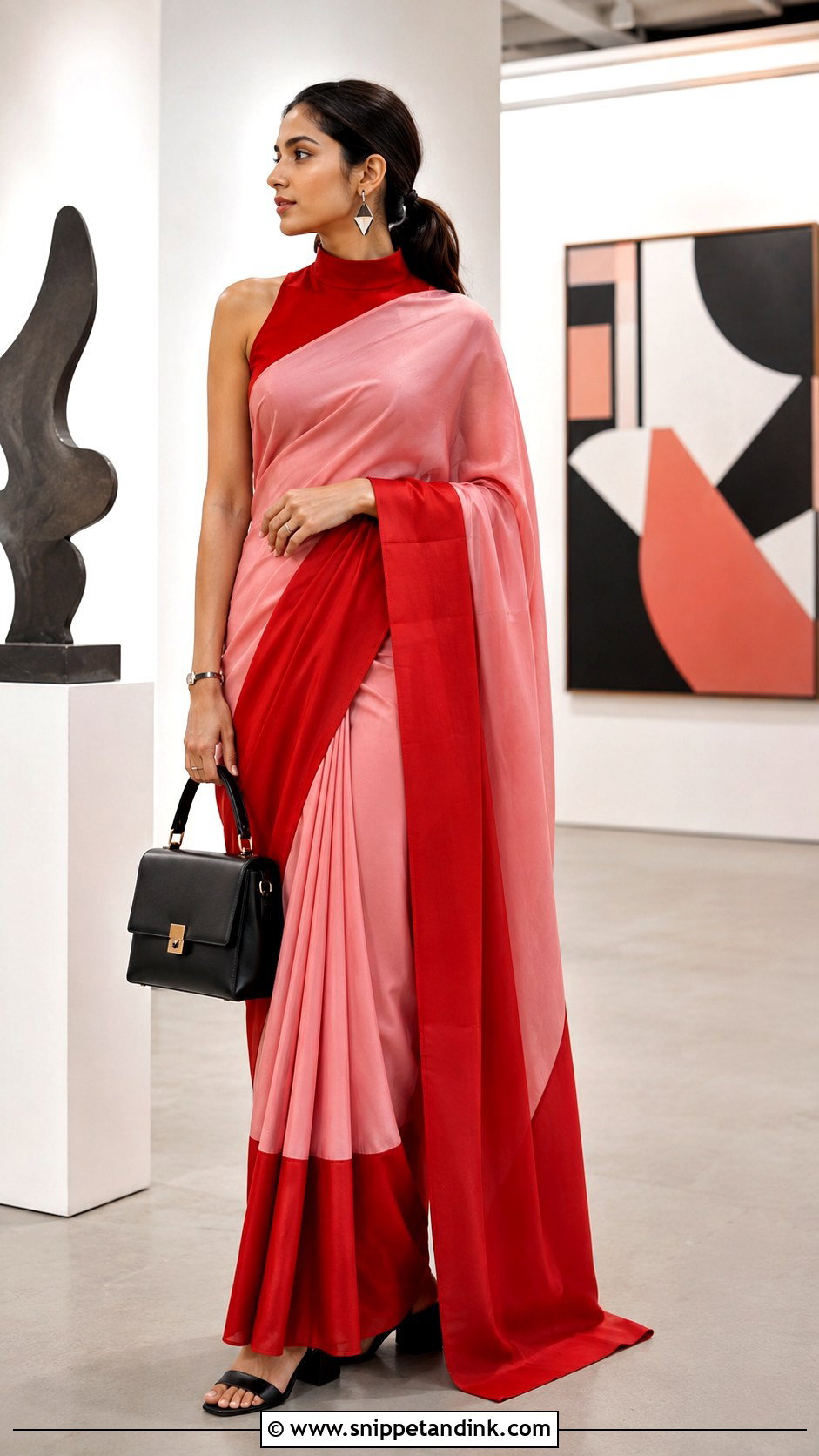
Color blocks give a saree a graphic edge: pink with red, navy with turquoise, mustard with purple, black with ivory. I anchor the palette with a high-neck blouse in the darker block, plain or with only a narrow trim at the sleeves. Drape the pallu open so the full change of color shows. Geometric earrings, a structured handbag, clean block heels and straight hair or a low ponytail keep it crisp. Skip multicolor jewelry; it competes with the fabric’s deliberate placement. Plan the drape before you dress so the color break lands at the shoulder, not mid-chest. It suits art events and daytime celebrations.
19. Soft Silk Saree With Peplum Blouse
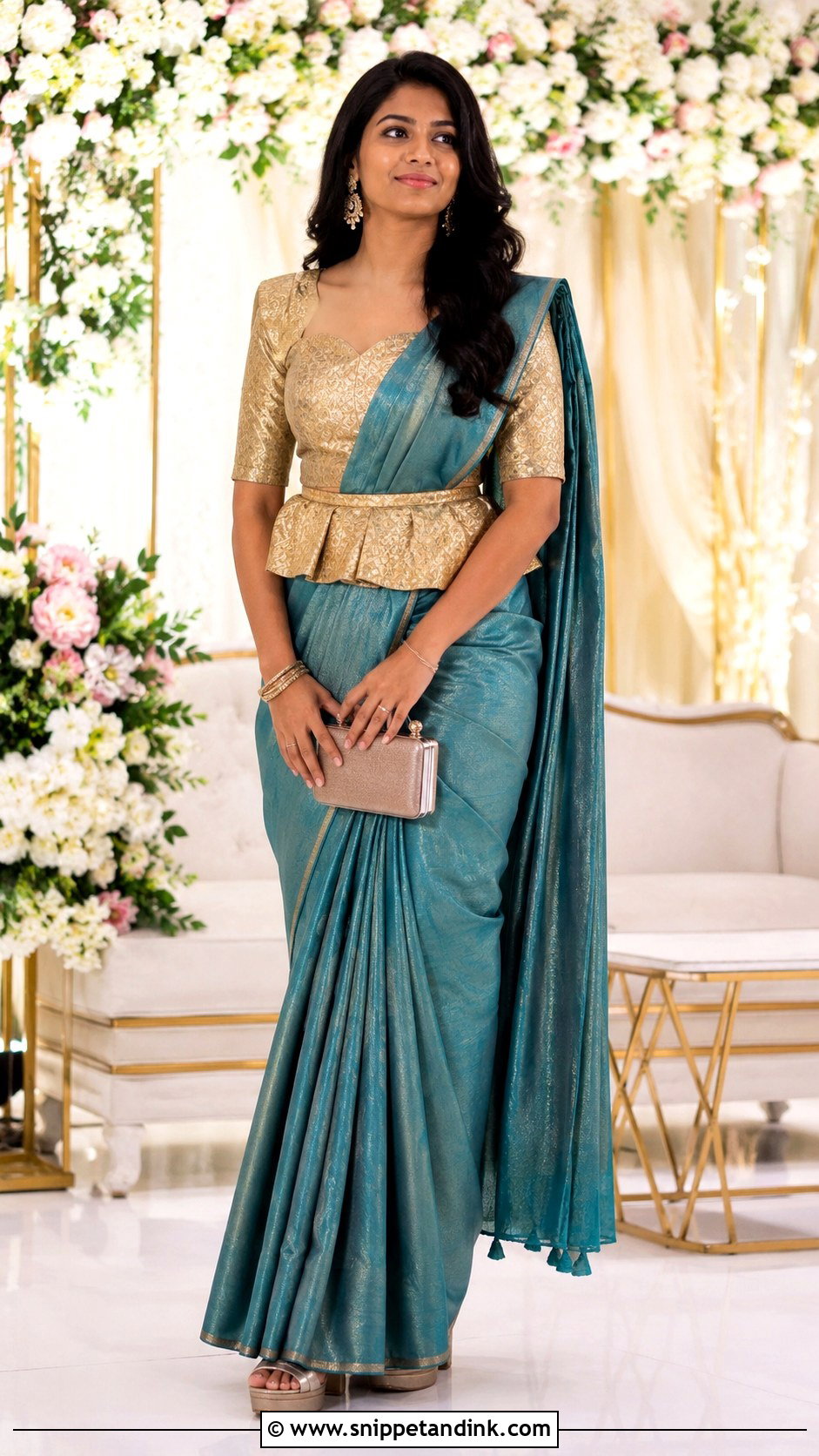
Soft silk has the richness of traditional silk with a lighter drape, which makes it easier for long functions. A short peplum blouse adds waist definition, but it should end above the pleats so the lower line stays clean; a peplum that overlaps the pleats bunches when you sit. Teal and gold, peach and coral or navy and silver all coordinate well. Medium earrings, two slim bangles, a compact handbag and platform heels suit it, with soft waves or a low textured bun. It’s well suited to engagements and wedding events where you want structure in photos without heavy embellishment.
20. Handloom Cotton Saree With Collared Blouse
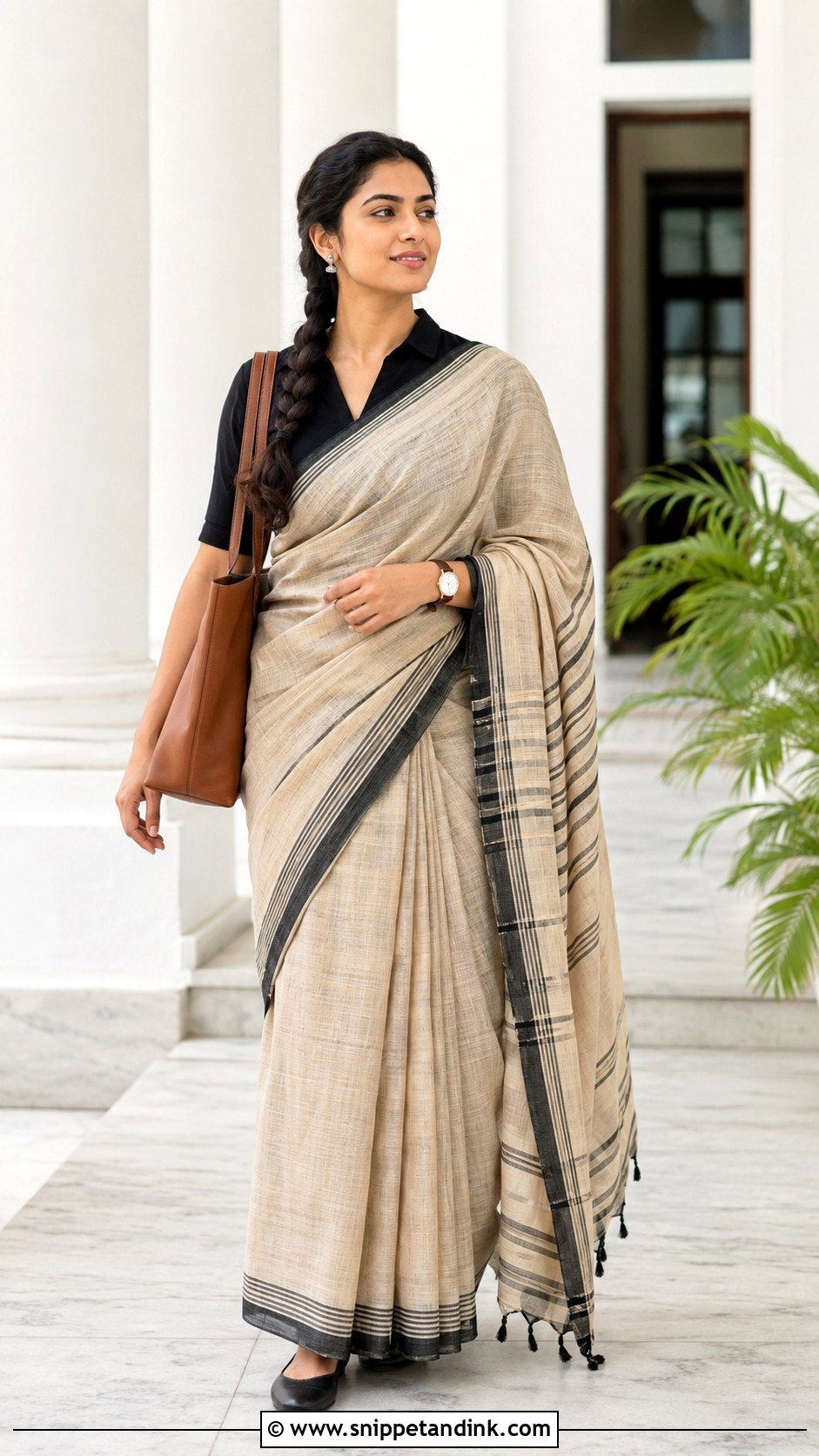
Handloom cotton is the saree I’d wear to work, and it’s comfortable all day. Natural colors, woven stripes, small checks or traditional motifs look smart with a collared blouse or fitted shirt-style top. Roll the sleeves or choose an elbow length for more structure. Keep the pleats crisp and pin the pallu so you can walk freely. Silver studs, a watch, a leather tote and low block heels or closed flats suit it, plus a braid, bun or tidy ponytail. Wash new handloom separately the first few times, because natural dyes can bleed. It shows that a saree can look polished with no sequins at all.
Why Old Silk Sarees Split Along Their Folds
Fold lines are where silk and zari wear out. When a heavy saree sits folded the same way for months, the metallic threads crack along the crease and the silk weakens beside them. Refolding along different lines every few months prevents most of that damage.
- Banarasi and Kanjivaram: dry clean only, wrap in plain muslin, and keep mothballs from touching the zari.
- Sequin and embellished sarees: fold inside out with tissue between layers rather than hanging, because the weight stretches the fabric on a hanger.
- Tissue and organza: roll around a cardboard tube if you can, since sharp folds leave lasting marks.
- Cotton and linen: wash gently, dry in shade so colors don’t fade, and iron while slightly damp.
Air silk sarees in shade a few times a year, away from direct sun. And never store a saree straight after a function; let any perspiration dry out first, because dried sweat slowly yellows silk, especially around the blouse line.
A Good Drape Matters More Than the Year’s Trend
The sarees that stood out in 2023 mixed cultural detail with practical styling. Metallic tissue, pastel sequins, ombre chiffon, ruffles, pre-draped pieces and new blouse shapes offered fresh options, while Banarasi, Kanjivaram, cotton and handloom held their place. Before you recreate any of these, think about the occasion, the weather, the fabric’s weight and how many hours you’ll wear it. A supportive petticoat, secure pins, comfortable shoes and restrained accessories improve every one of them. Pick the combinations that suit your own taste and life, and treat the outfits above as starting points for sarees you’ll wear again.
You'll Like These Ideas:



Leave a Reply