
A Vaidik ceremony asks a lot of an outfit. The bride sits on the floor for long stretches, rises for the pheras, walks around a live fire and bows for blessings, often in warm air with smoke drifting across the mandap. As a bridal stylist, I judge a Vaidik dress by how it behaves through those hours, not by how it looks on a hanger. Customs differ by region, community and family, so there is no single required outfit; a silk saree, a handloom drape, a lehenga or a regional costume can all be right once the family and the officiating priest agree. The twenty looks below run from red Banarasi to plain off-white handloom, and with each one I’ve noted what I’d check before the bride wears it to the fire.
Pinning a Saree for the Floor, the Pheras and the Fire
Most of a Vaidik ceremony happens close to the ground. The bride sits cross-legged or with her legs folded to one side for the havan, the kanyadaan and the sankalp, then stands for the pheras and the saptapadi. A drape that looks perfect standing can pull at the waist and expose the petticoat once she sits, so I always do the final drape fitting with the bride sitting down.
The order I dress a Vaidik bride in
- Petticoat first, tied firmly at the natural waist and hemmed to just clear the top of her flat shoes. A cotton petticoat grips the saree; a satin one lets it slide.
- Blouse checked with her arms raised to shoulder height, the position she’ll hold when offering ghee and rice into the fire. If the armhole cuts in, that’s when it shows.
- Pleats folded, then pinned at the waistband from the inside with two safety pins rather than one.
- Pallu pinned at the shoulder and again at the back of the blouse, so it can’t slip when the veil goes over the head.
- Sit, stand and walk one slow circle before any jewelry goes on, then re-pin whatever moved.
Give a small kit to whoever sits nearest her: spare safety pins, U-pins for the veil, double-sided fashion tape and tissues. The veil is the piece that shifts most, because she lowers and lifts her head again and again through the rituals.
1. Red Banarasi Saree Vaidik Marriage Dress
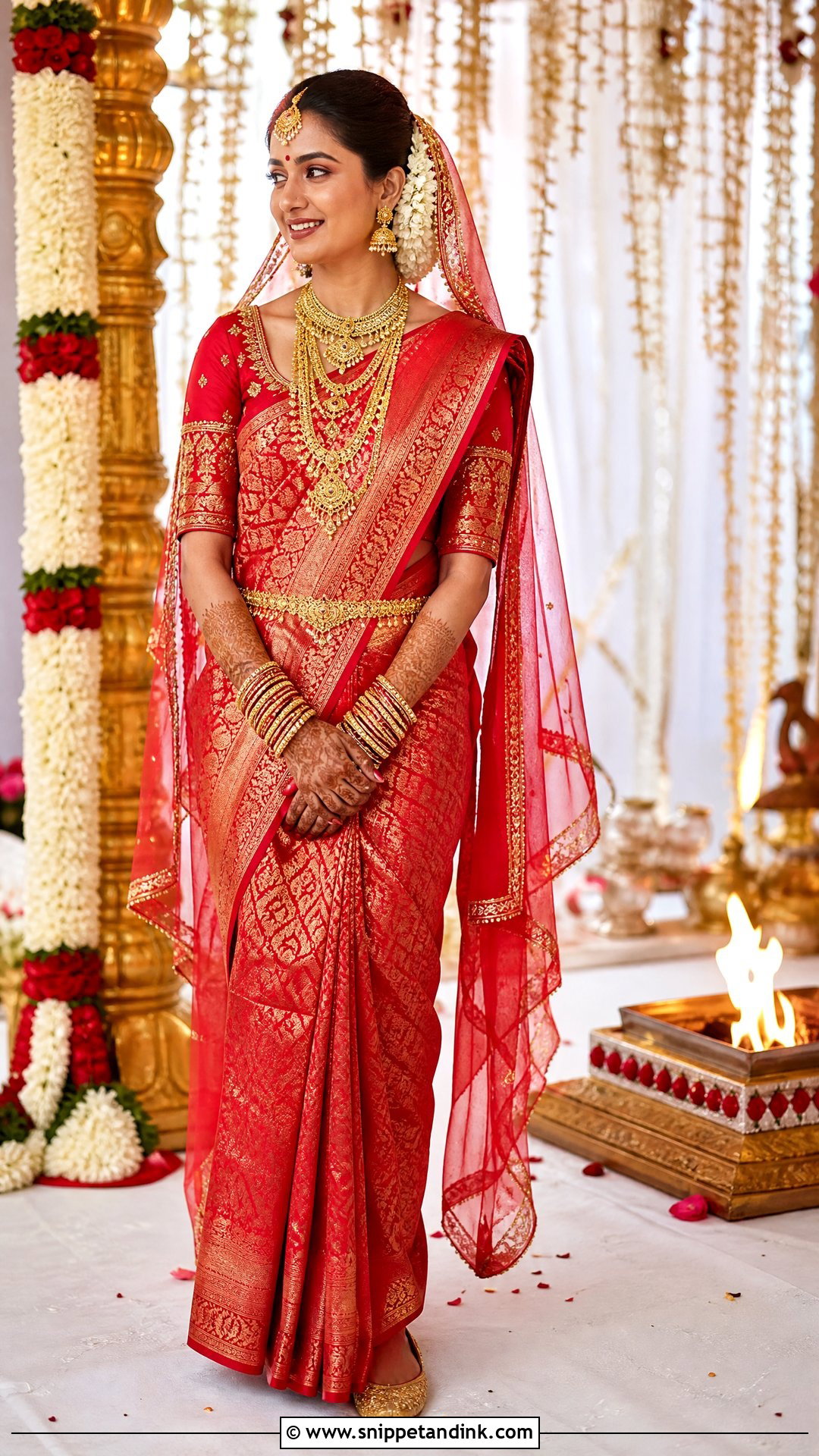
Red Banarasi is the outfit most families picture first, and it earns that place. My one adjustment is to choose a saree whose weight sits in the gold zari border rather than all over the body, because an all-over brocade can drag the pleats loose after an hour of sitting. Pair it with a fitted elbow-sleeve blouse in red or antique gold, and have the pallu pinned at the shoulder and again at the back of the blouse so it stays put through the pheras. A lightweight red veil, gold jhumkas, layered necklaces, bangles and a small nose ring finish the jewelry, with a round red bindi and a center-parted bun dressed in fresh flowers. Cushioned gold juttis go under the hem instead of heels. She will get up off the floor more times than she can count.
2. Ivory And Gold Silk Saree Vaidik Marriage Dress
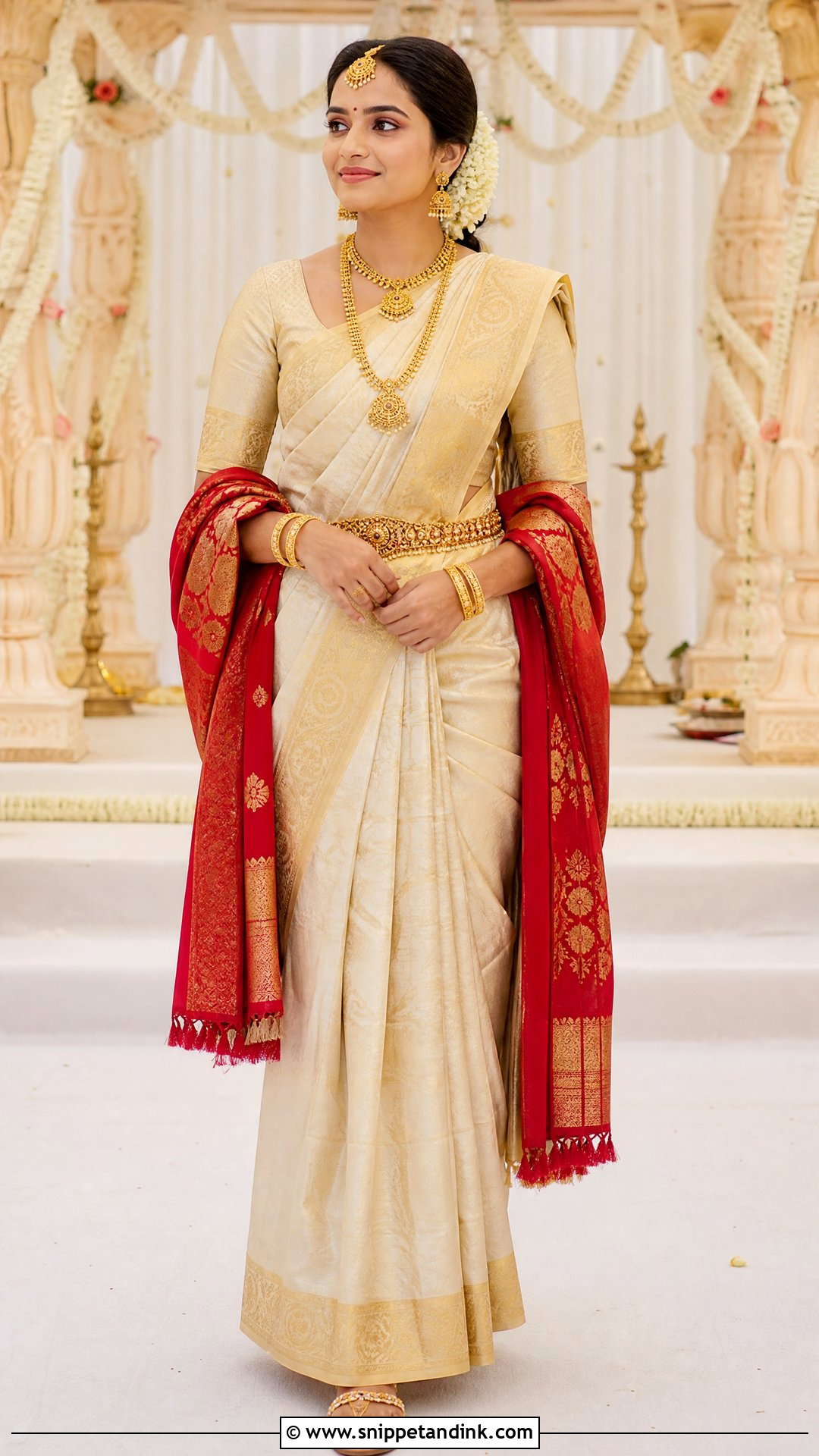
Ivory and gold read calm and clear in morning light, which is when I most often suggest this pairing. Choose an ivory silk saree with a broad gold border and a matching elbow-sleeve blouse. Pale silk can look flat in photographs if nothing near the face carries contrast, so I bring in temple jewelry, gold bangles, a waist belt and traditional earrings, plus a red, green or maroon shawl over the head if the family wants color. One caution: ivory silk marks easily, and smoke residue from the havan does not brush off. Keep makeup fresh with softly lined eyes, rose lips and a visible red bindi, cover a low bun in jasmine, and hide flat embroidered sandals under the hem.
3. Yellow Silk Saree Vaidik Marriage Dress
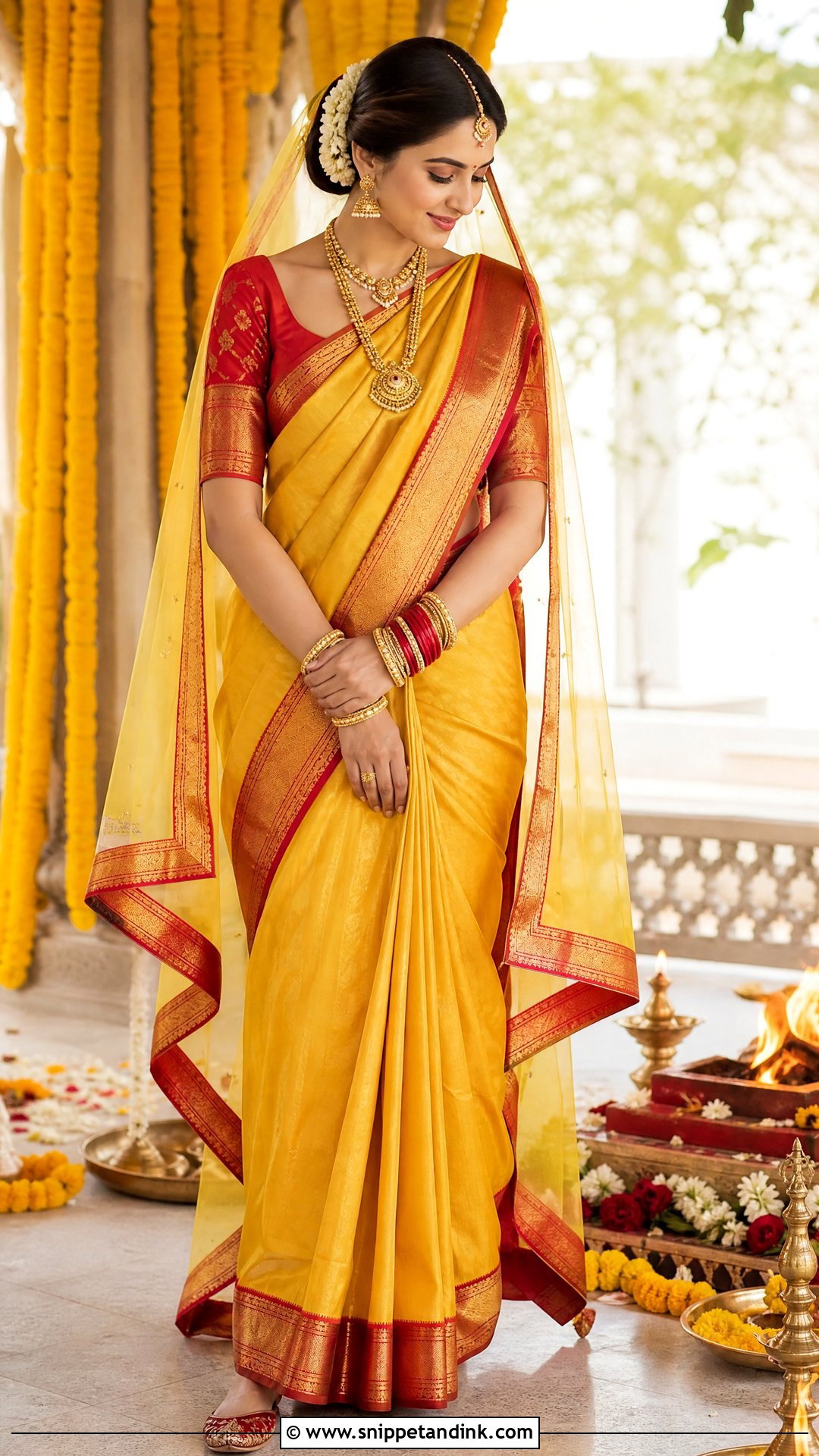
I reach for golden yellow when a family connects the color with the haldi and wants that warmth carried into the ceremony. A yellow silk saree with red or maroon borders feels festive without heavy work. Use a matching blouse, or a deep red elbow-sleeve blouse for contrast. Before pinning the pallu over one shoulder, find out whether the ganthbandhan, the knot that ties the couple’s garments together, will be made with the bride’s pallu or a separate cloth; if it’s the pallu, leave extra length free. Gold earrings, a medium necklace, stacked red-and-gold bangles and a delicate waist belt are plenty. Marigold or jasmine on a braid or low bun, a light veil for the chanting, red embroidered flats and a sindoor-ready center part keep the ceremonial character.
4. Maroon Kanjeevaram Saree Vaidik Marriage Dress
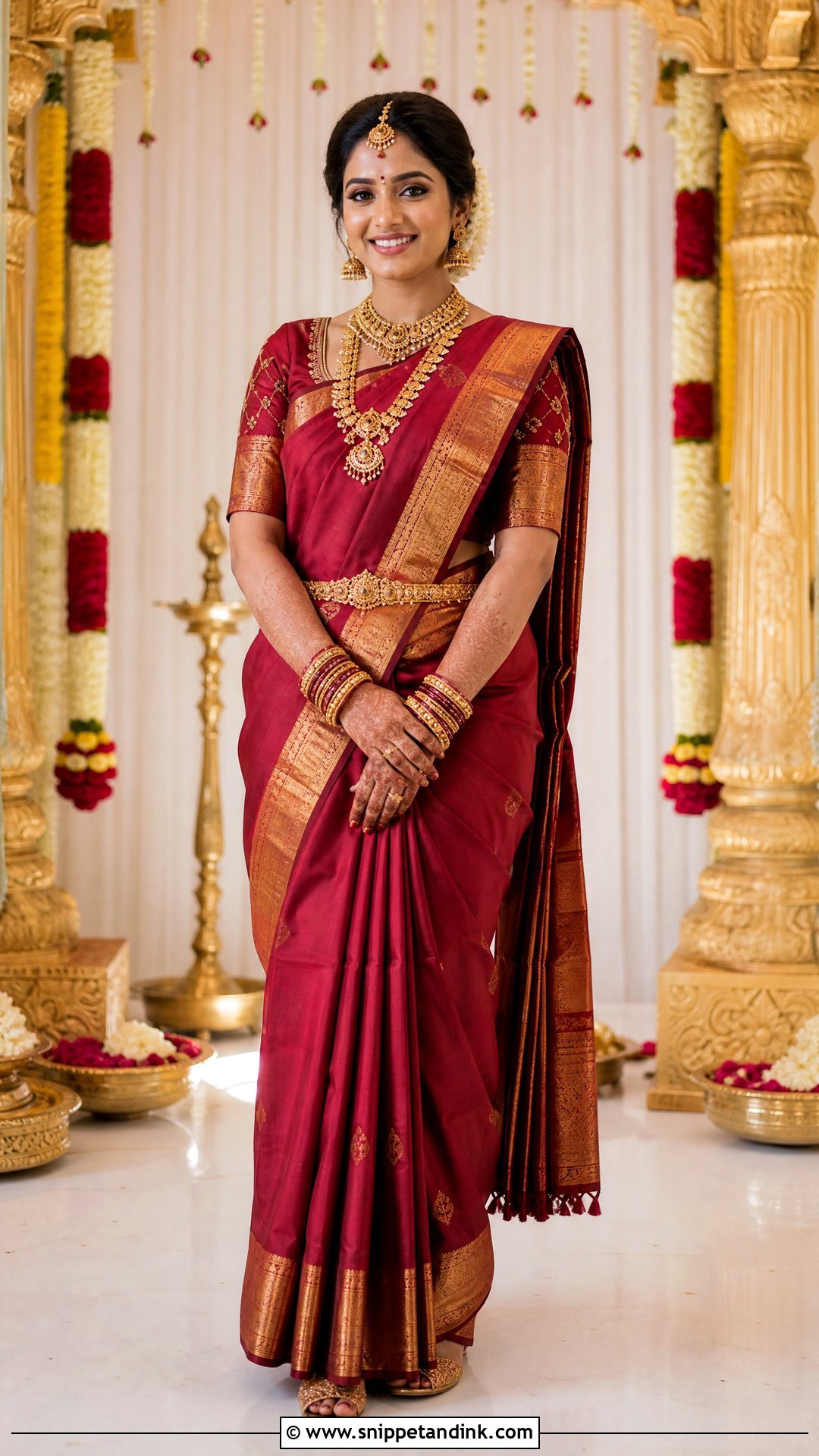
Maroon sits a step quieter than bridal red, and in Kanjeevaram silk it has real weight. That weight is what I plan around: pure Kanjeevaram is a heavy, firm silk, so I have the pleats steamed and pinned at the waist in two places before the bride ever sits down. Look for gold temple borders and small woven motifs across the body, and a maroon blouse with elbow sleeves and a structured neckline. Add a gold choker, a longer necklace, jhumkas, bangles and a waist belt. A braided hairstyle decorated with jasmine brings in a South Indian influence, though a flower-covered bun suits a bride who doesn’t want weight hanging down her back while seated. Finish with a maroon bindi, softly defined makeup and flat gold sandals.
5. Red Bridal Lehenga Vaidik Marriage Dress
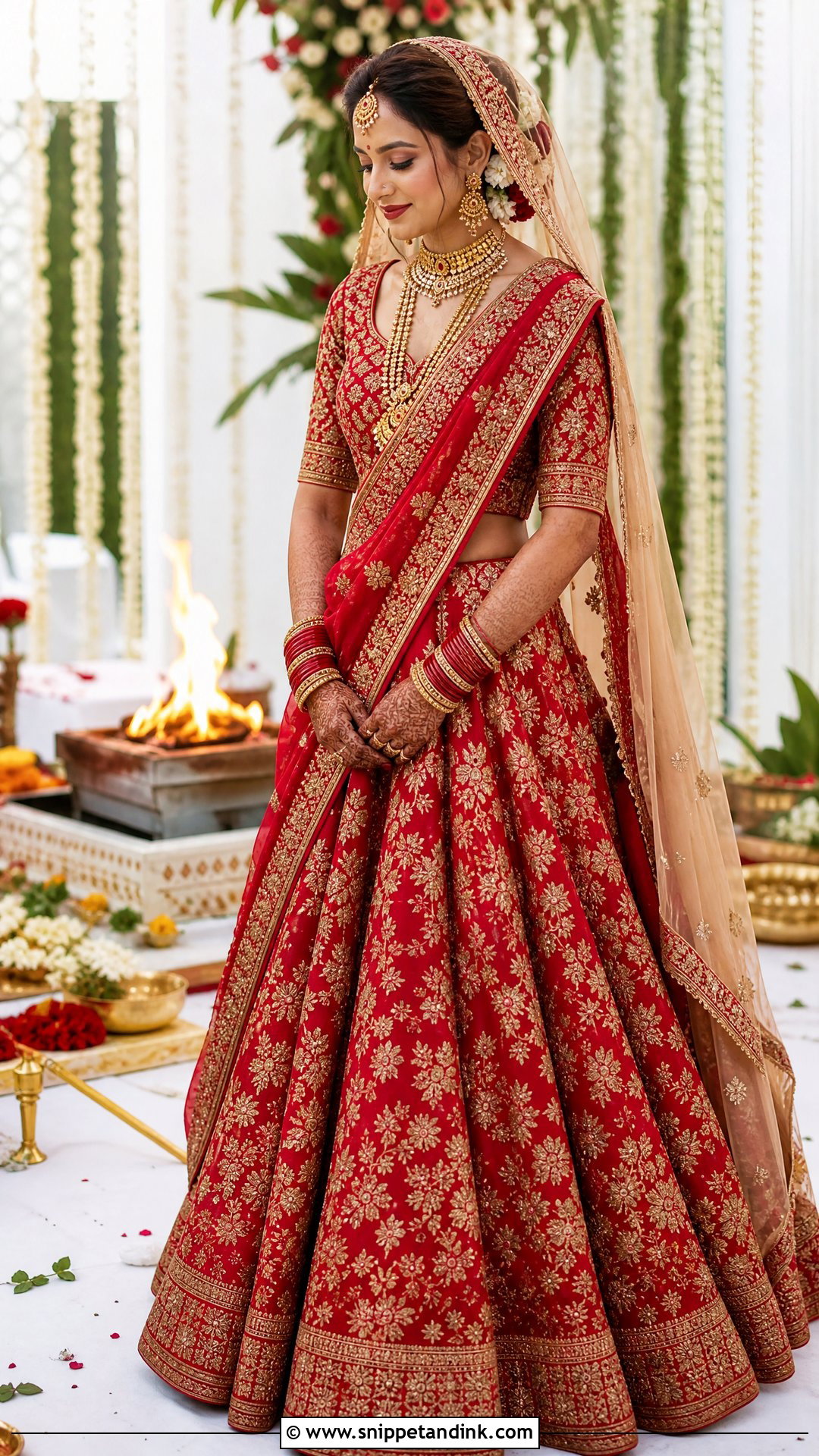
A lehenga can be right for a Vaidik ceremony, but I fit it differently than I would for a reception. Keep the flare moderate, in silk or brocade with woven gold motifs; a can-can skirt or crystal-heavy panels make floor sitting awkward and can snag the groom’s clothing during the knot. Fit the elbow-sleeve blouse while the bride is seated and leaning forward, not only standing. Use one substantial dupatta across the torso, which can also supply the cloth for the ceremonial knot, and a lighter matching one over the head. A gold choker, long necklace, earrings, bangles, maang tikka and embroidered juttis complete it. Hem the skirt so it clears the floor near the fire, and keep the hair in a center-parted low bun.
6. White And Red Bengali Saree Vaidik Marriage Dress
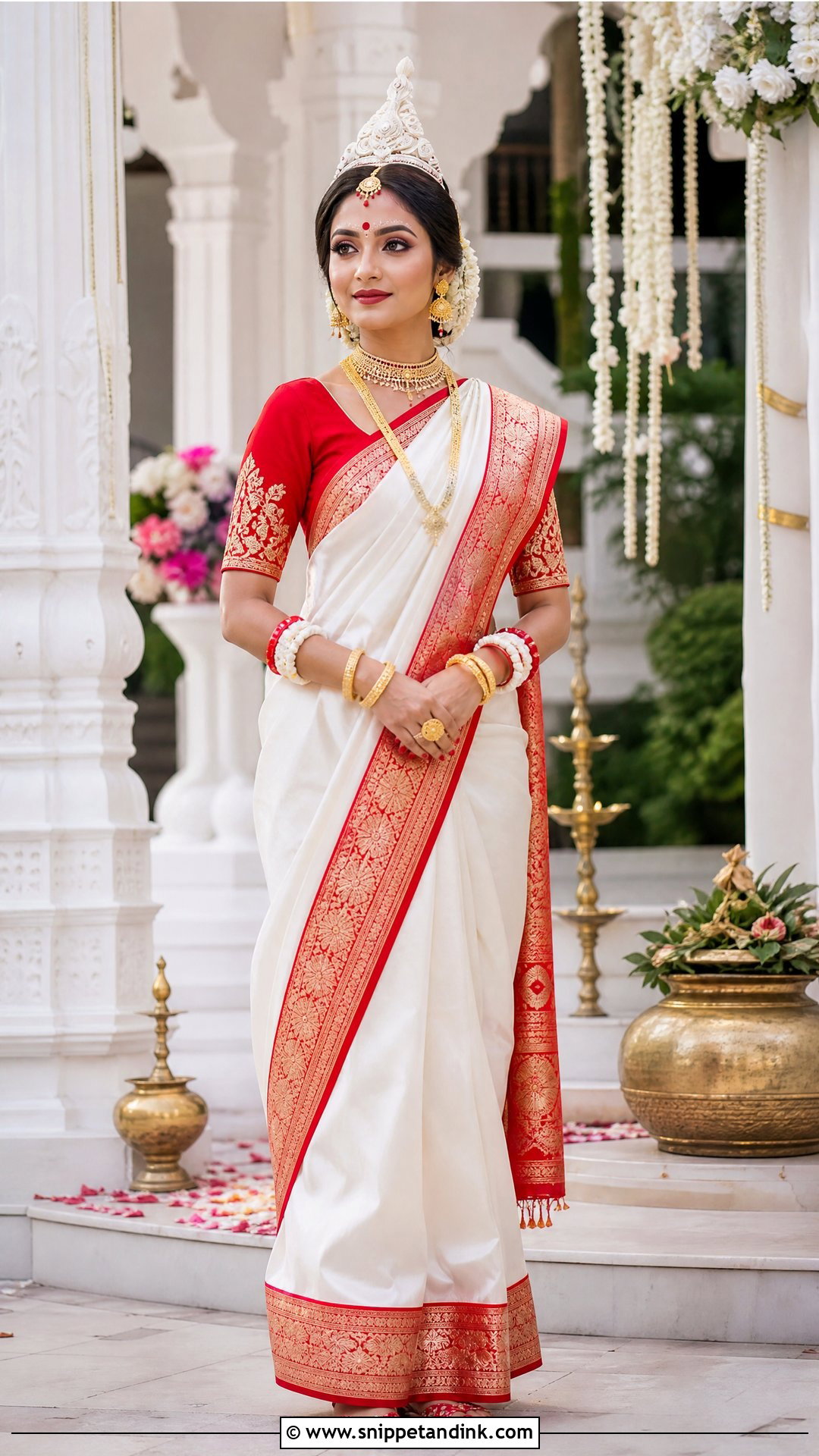
White silk with a bold red border takes its cue from Bengali bridal dress, and the whole design lives in that border. So I arrange the pallu to keep the red edge visible across the shoulder, loose enough to lift over the head for the key rituals. Pair it with a red silk blouse with elbow sleeves. Traditional gold jewelry, red-and-white bangles, a bridal headpiece and a red bindi make the two-color palette feel complete, and a neat bun with white flowers and gold pins suits it. Alta on the feet can be added if it belongs to the family’s tradition. Let it dry fully before the saree goes on, because alta transfers onto white silk and rarely comes out cleanly. Flat red sandals or juttis finish it.
7. Green Paithani Saree Vaidik Marriage Dress
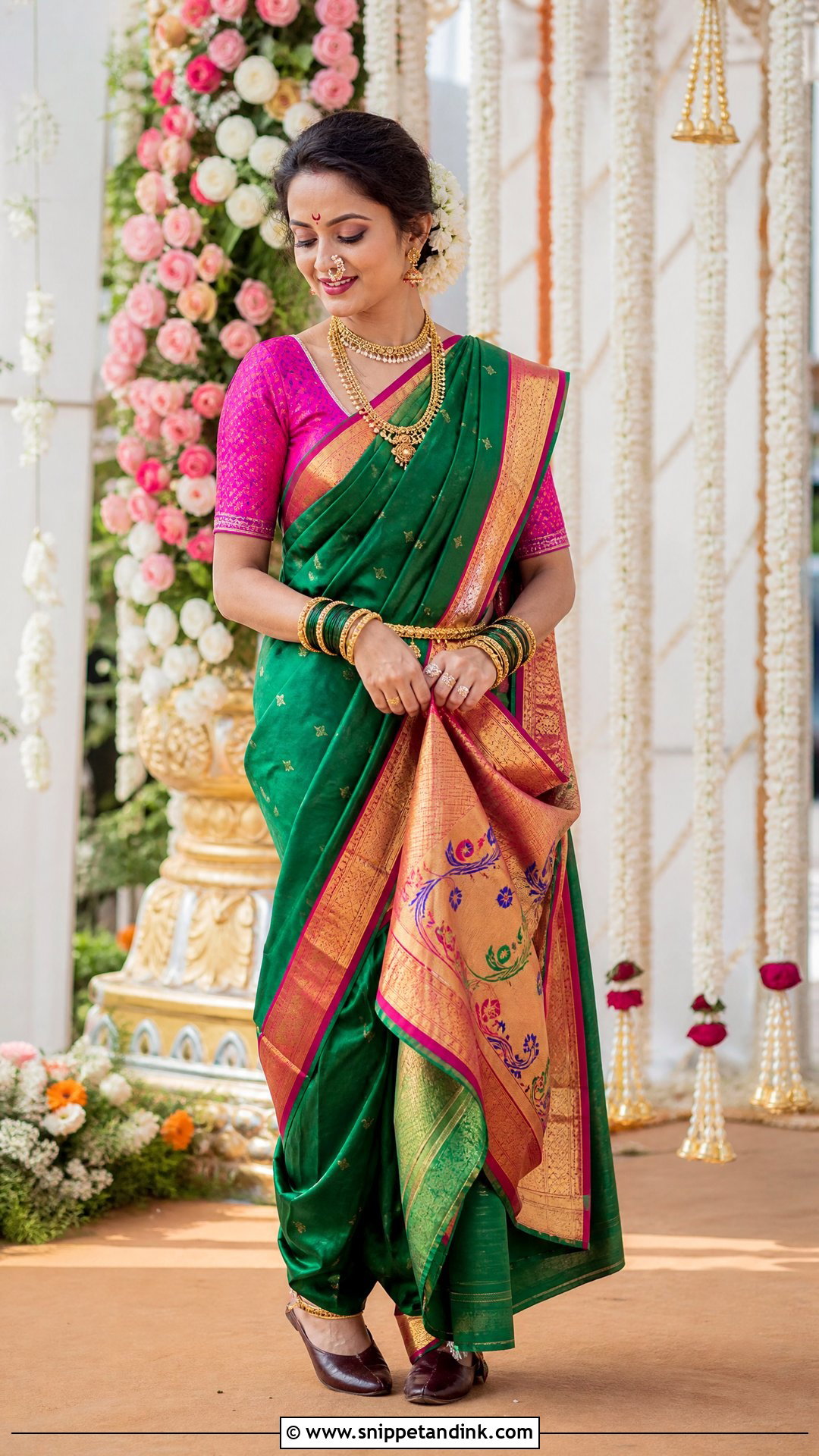
A green Paithani saree gives you traditional color without red, and its pallu is the showpiece. Look for a deep leaf-green or emerald body with a rich gold border and a colorful woven pallu, and pair it with a magenta or maroon elbow-sleeve blouse. On a handwoven Paithani the motifs show almost identically on the reverse, so a pallu that flips while she moves still looks right. A classic Maharashtrian drape makes sense if it reflects the family’s customs; otherwise a standard drape is easier to sit in. Add a traditional gold necklace, nath, earrings, green glass bangles and a crescent bindi, with a jasmine-wrapped center-parted bun and flat gold or maroon footwear. Every accessory should support the weave instead of fighting it.
8. Kerala Kasavu Saree Vaidik Marriage Dress
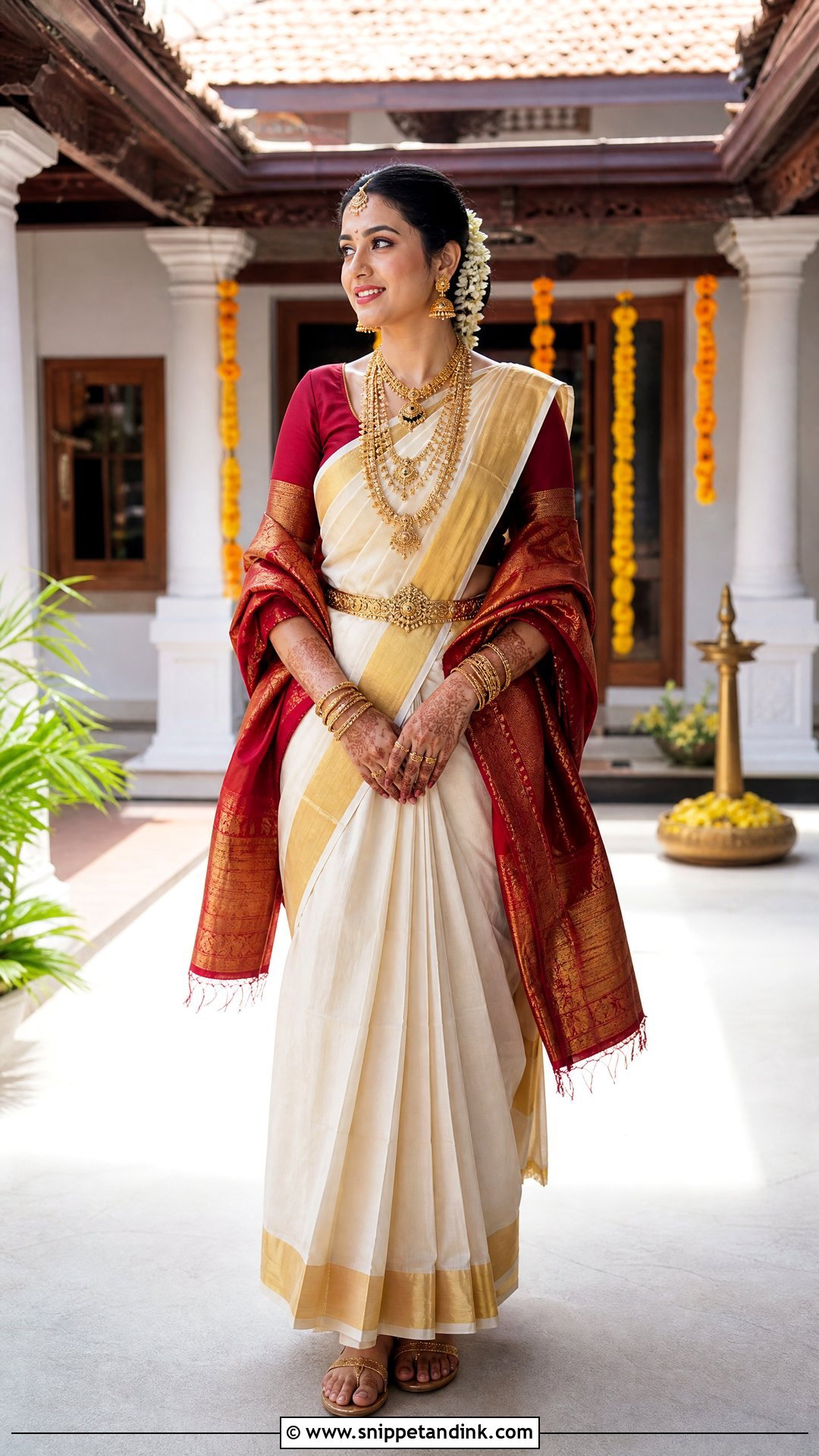
Kasavu is the saree I’d steer a bride toward for a hot daytime ceremony. Pure cotton kasavu breathes well but is soft and won’t hold a crisp pleat through the pheras, so I prefer a cotton-silk with a little body, lightly starched the day before. Wear it with a gold blouse for a monochrome effect or a deep red blouse for contrast. Layer gold necklaces in different lengths with matching earrings, bangles and a slim waist belt. A center-parted braid or low bun decorated with fresh jasmine fits the outfit’s restraint. If a head covering is needed, use a light red or ivory shawl with a narrow gold edge, and finish with flat gold sandals.
9. Rust Handloom Saree Vaidik Marriage Dress
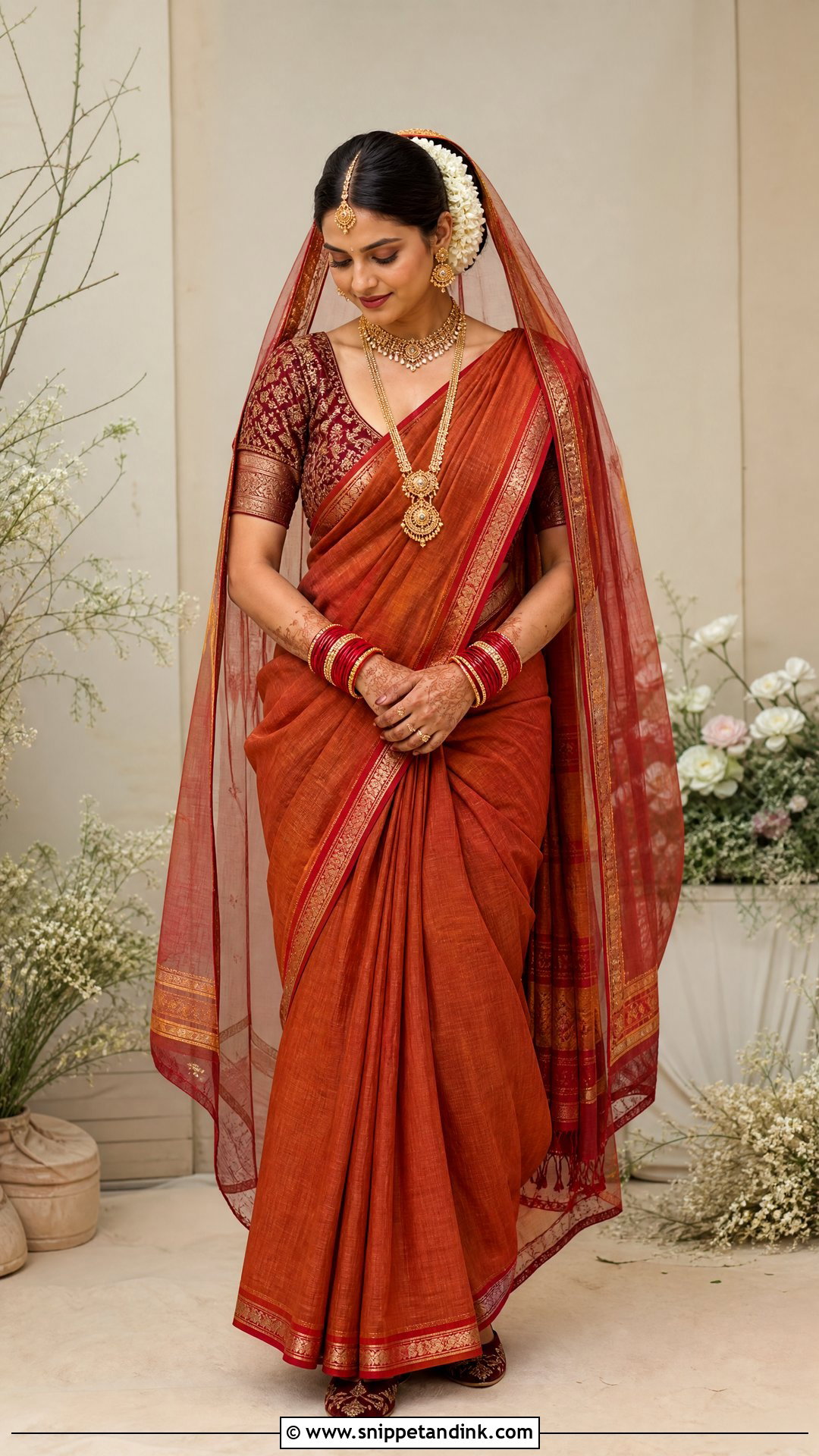
Rust, terracotta and brick tones suit a bride who cares more about weave than shine. I’d pick a silk-cotton saree with woven gold details and a contrasting red border, and pair it with a maroon brocade blouse cut for full coverage through the shoulders and back. Handloom carries small irregularities in the weave. That’s the mark of the hand, so don’t send it back for them. Antique gold suits the muted color best: a choker, a medium necklace, jhumkas, bangles and a simple maang tikka. A light red veil over a low braided bun covers the head when required, fresh white flowers lift the darker shades near the face, and flat maroon juttis keep the footing secure.
10. Pink Bandhani Saree Vaidik Marriage Dress
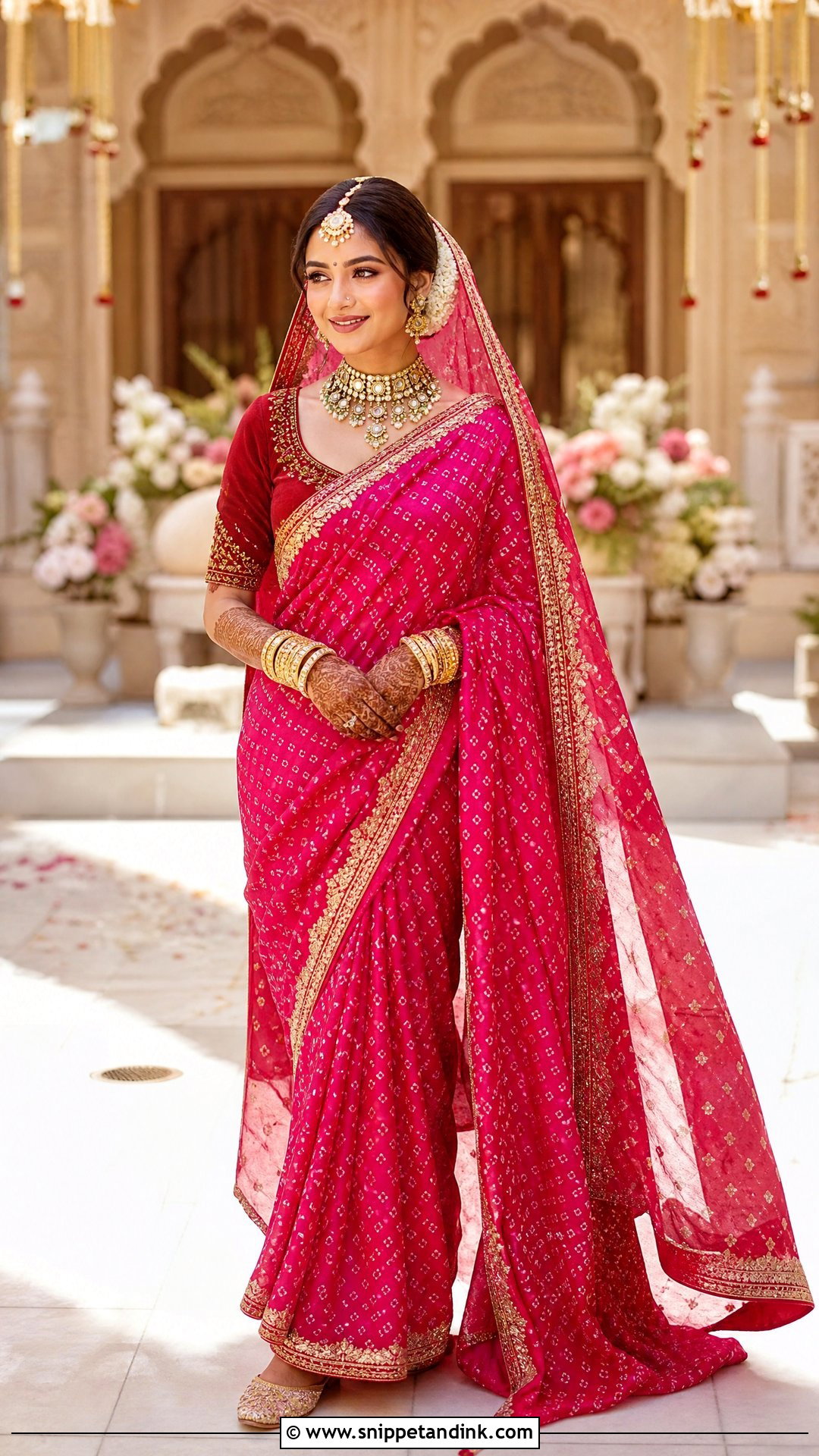
Bandhani is tie-dyed, and that tells you how to handle it. The dots come from binding and dyeing tiny points of cloth, so I keep the pleats narrow and firmly pinned; wide pleats bunch the pattern into a pink blur in photographs. Choose silk Bandhani in fuchsia, rani or rose with red panels and gold borders. A matching blouse gives an unbroken line, while a dark red one adds contrast. Kundan jewelry, gold bangles, a maang tikka and a small nose ring suit it, and a red Bandhani veil covers the head without bringing in an unrelated fabric. If the saree is new, ask whether it has been washed, since fresh Bandhani can bleed dye onto a damp blouse in a humid mandap. Finish with a jasmine-ringed low bun and gold juttis.
11. Orange And Red Silk Saree Vaidik Marriage Dress
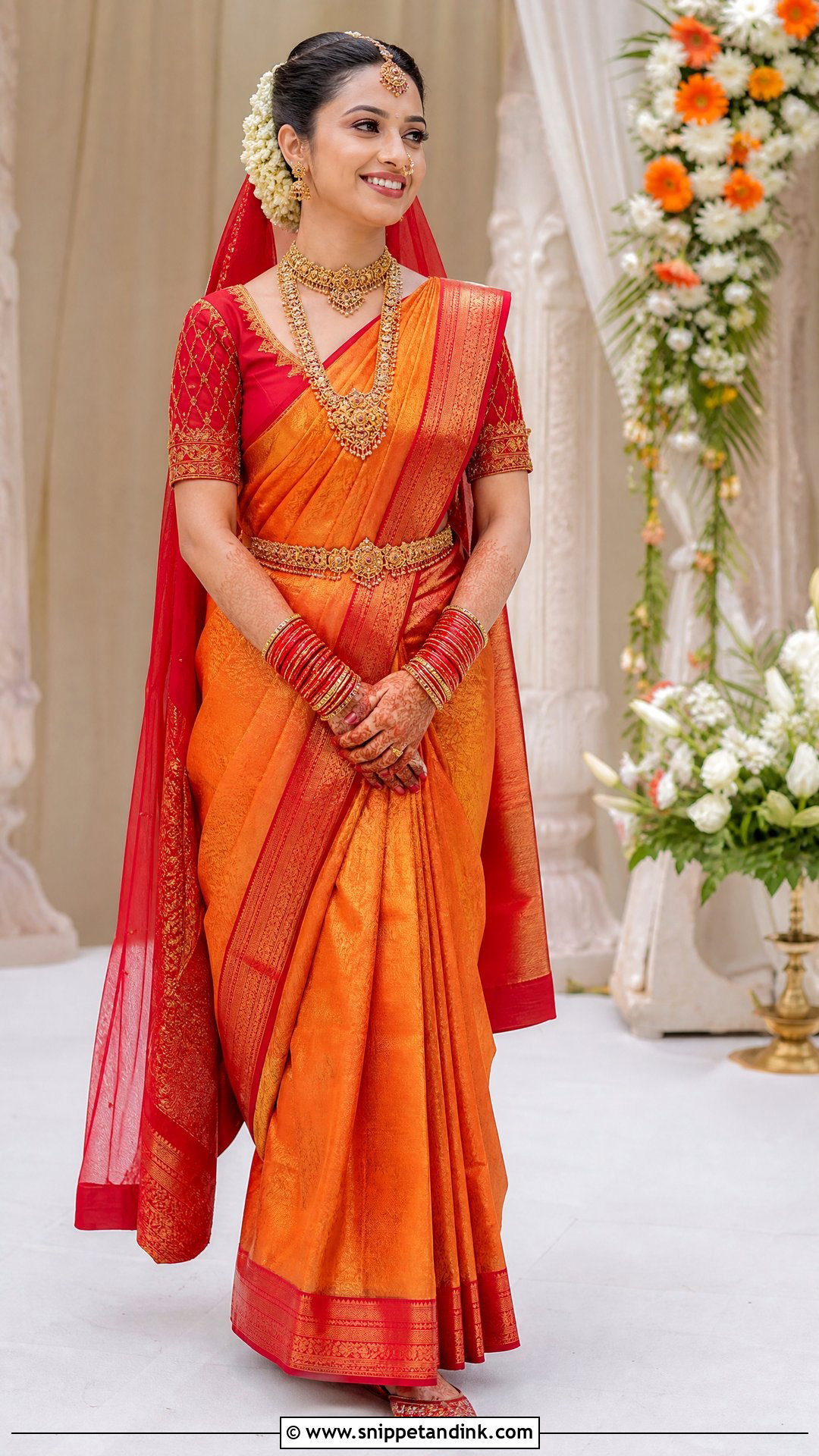
Orange and red echo the fire itself, and they need a calm backdrop. If the mandap is already heavy with marigold, I’d choose a different saree, because the bride disappears into it on camera. Select an orange silk saree with a red pallu, gold border and small motifs, and a deep red elbow-sleeve blouse to separate the two colors. Gold temple jewelry, red bangles, a waist belt and statement earrings keep it clearly bridal. Pin the light red veil near the bun with two or three U-pins so it holds when she stands and sits. A center-parted style with jasmine or small red flowers, red embroidered flats and warm, natural makeup round it out.
12. Purple Silk Saree Vaidik Marriage Dress
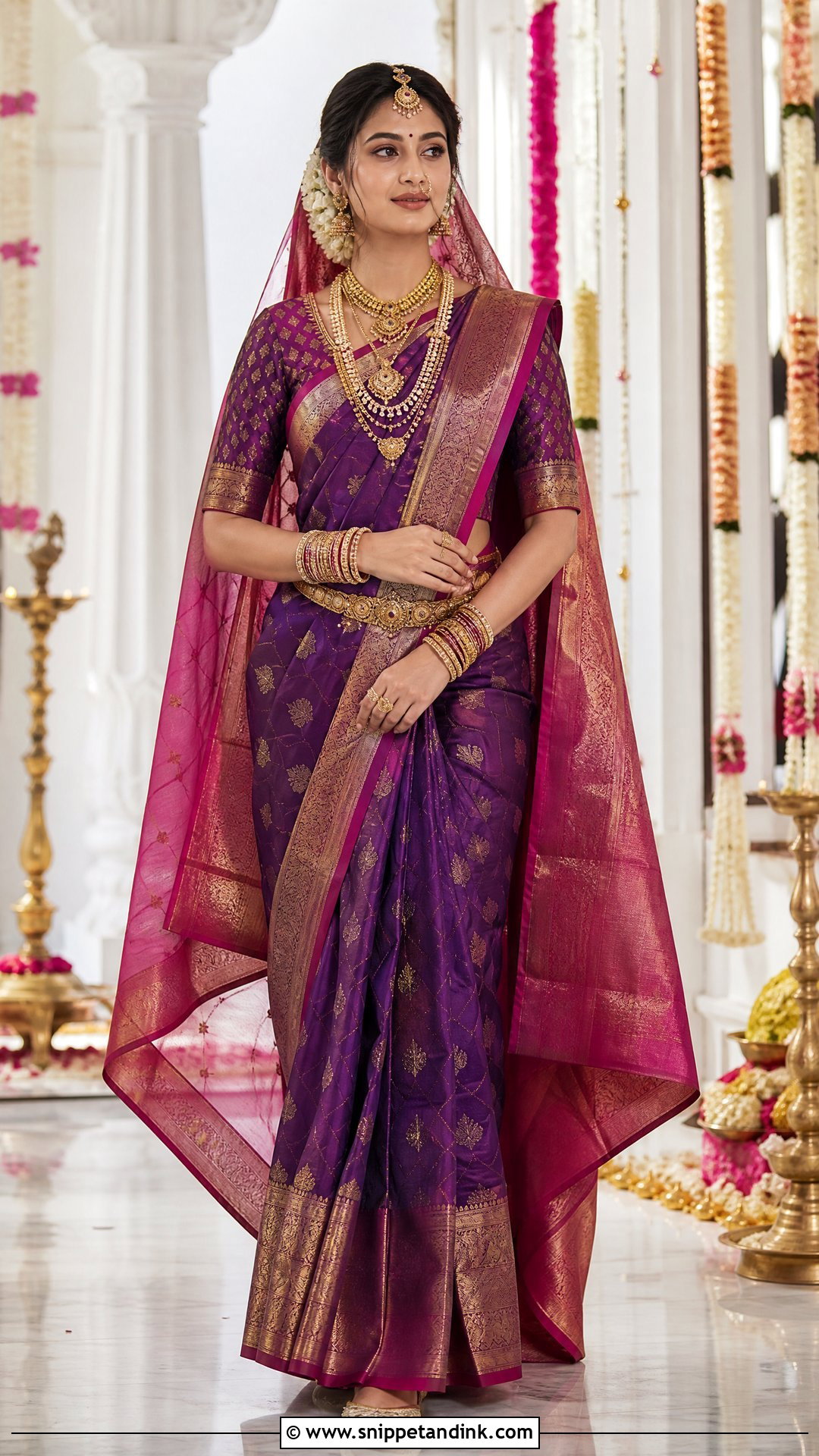
Deep purple is for the bride who is ready to leave red behind entirely. I pair it with antique gold zari and a magenta or maroon border, because purple with a cool-toned border can turn muddy under evening mandap lighting. Wear it with a matching brocade blouse with a modest neckline and elbow-length sleeves. Gold warms the color, so a choker, layered necklace, jhumkas, bangles and a delicate waist belt all earn their place. A light magenta veil can stay over the head during the key rituals. Keep the low bun smooth with white flowers for contrast, then add cushioned gold flats, a maroon bindi and a berry lip.
13. Cream And Red Temple Border Saree Vaidik Marriage Dress
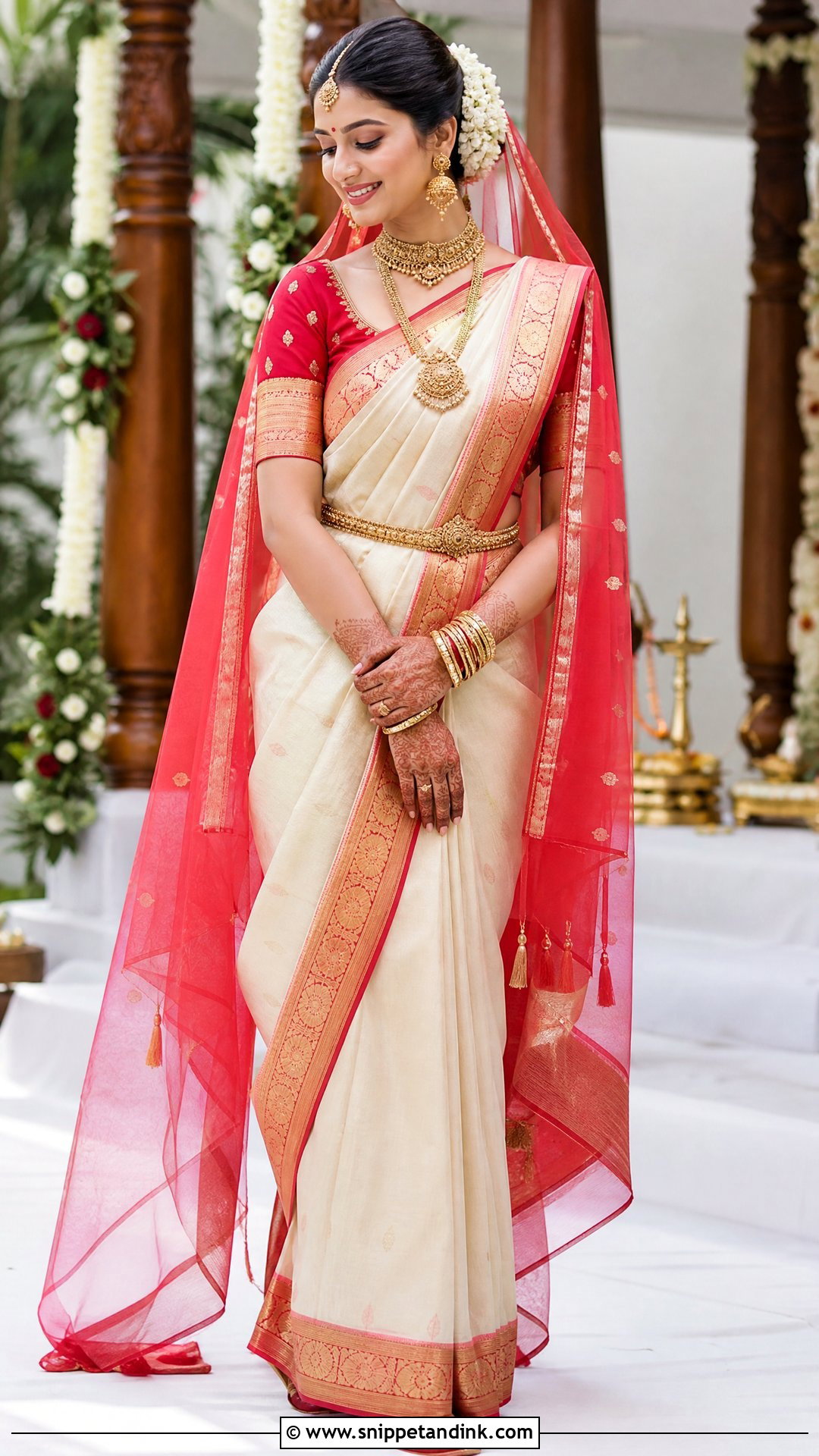
Cream with a red temple border is about clean contrast. The temple border, that row of triangular motifs along the edge, is the decoration, so I keep everything else plain: a red blouse with elbow sleeves and a supportive neckline, and a red veil with only a narrow gold edge. Silk, cotton silk or a soft handwoven fabric all work, as long as it holds a pleat. Antique gold jewelry, red glass bangles, traditional earrings and a slim waist belt are plenty. A braided bun with white flowers adds texture at the back of the head, which matters more than brides expect, since guests watch the back of the bride for much of the ceremony. Simple red juttis or flat sandals go underneath.
14. Red Patola Saree Vaidik Marriage Dress
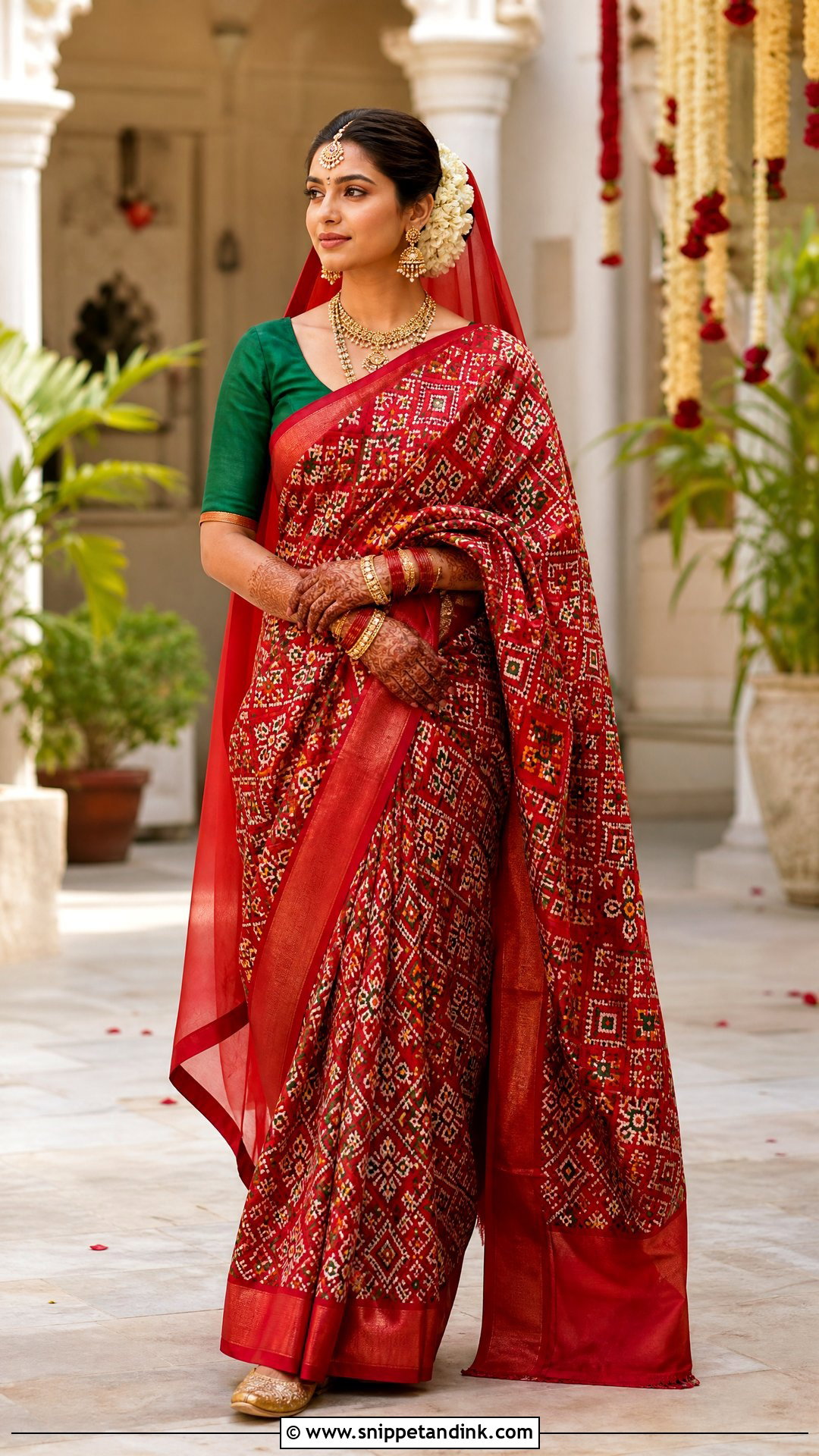
True Patola is double ikat: both warp and weft are dyed before weaving, which is why genuine pieces are rare, slow to make and expensive. Most brides will wear a Patola-inspired weave or print, and that works fine here. Choose red silk with geometric motifs in green, gold, ivory or maroon, and keep the blouse plain red or green so the pattern stays the focus. Pin the pallu neatly across the shoulder, or use a longer traditional drape if the family wears one. A gold necklace, jhumkas, stacked bangles, a maang tikka and a small nose ring are enough, with a plain red veil over the head. Style the hair in a polished low bun with jasmine flowers and finish with gold juttis.
15. Gold Tissue Saree Vaidik Marriage Dress
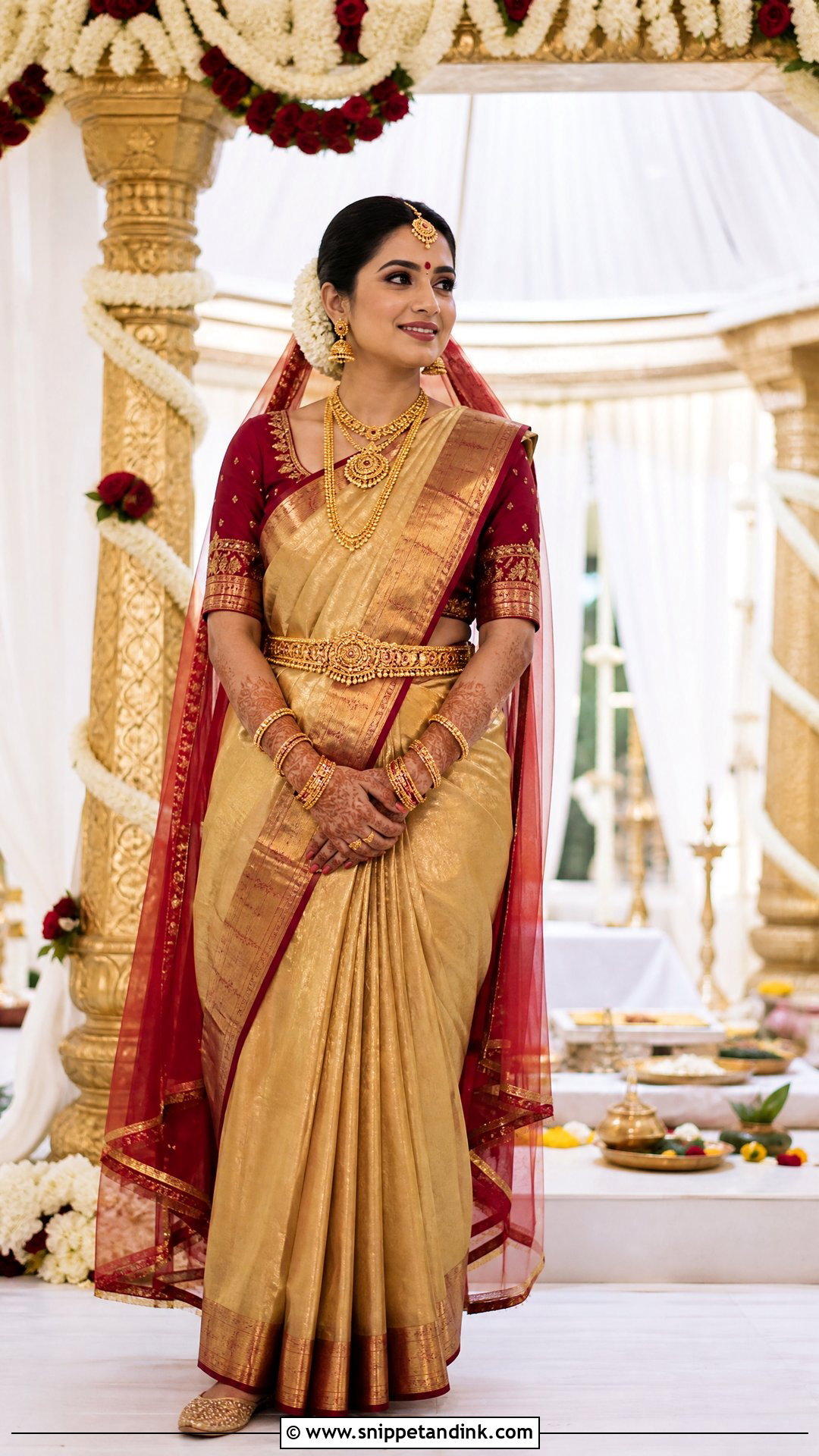
Gold tissue catches every lamp in the mandap, so it needs very little help. Choose one with minimal embroidery and a defined red or maroon border, and ground it with a deep red silk blouse. I hold back on jewelry here; a medium necklace, earrings, bangles, waist belt and maang tikka usually suffice before the outfit starts to look heavy. Drape a sheer red veil over a center-parted bun with white flowers, and go matte on the lips with a classic bindi. Tissue is slippery and lighter than it looks, so the pleats shift with every step around the fire. I pin each fold and add a second safety pin at the waistband. Flat red or gold footwear finishes it.
16. Mustard Cotton Silk Saree Vaidik Marriage Dress
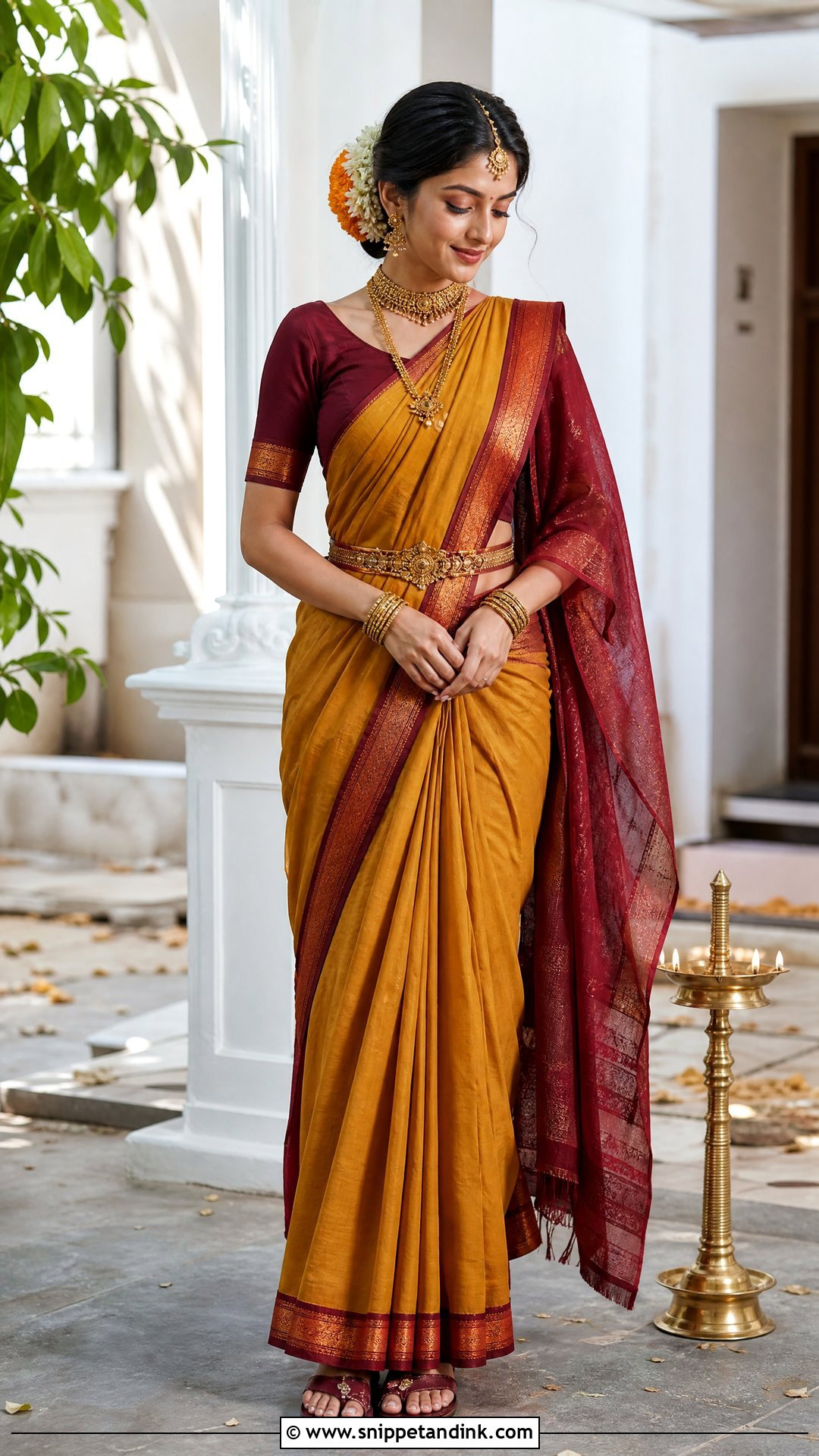
Mustard cotton silk is my answer when a bride tells me she overheats easily. It breathes better than pure silk while still carrying strong color. Look for a mustard saree with a red woven border and small gold motifs, and a maroon elbow-sleeve blouse for depth. Skip the heavy layered necklaces. A decorative waist belt defines the drape and helps hold the pleats, which a softer fabric needs. Antique gold earrings, a short necklace, bangles and a small maang tikka complete the jewelry. Cover the head with a light red shawl, style a low bun with jasmine or marigold, and add maroon flat sandals or juttis. It suits small ceremonies and warm venues best.
17. Magenta Brocade Lehenga Vaidik Marriage Dress
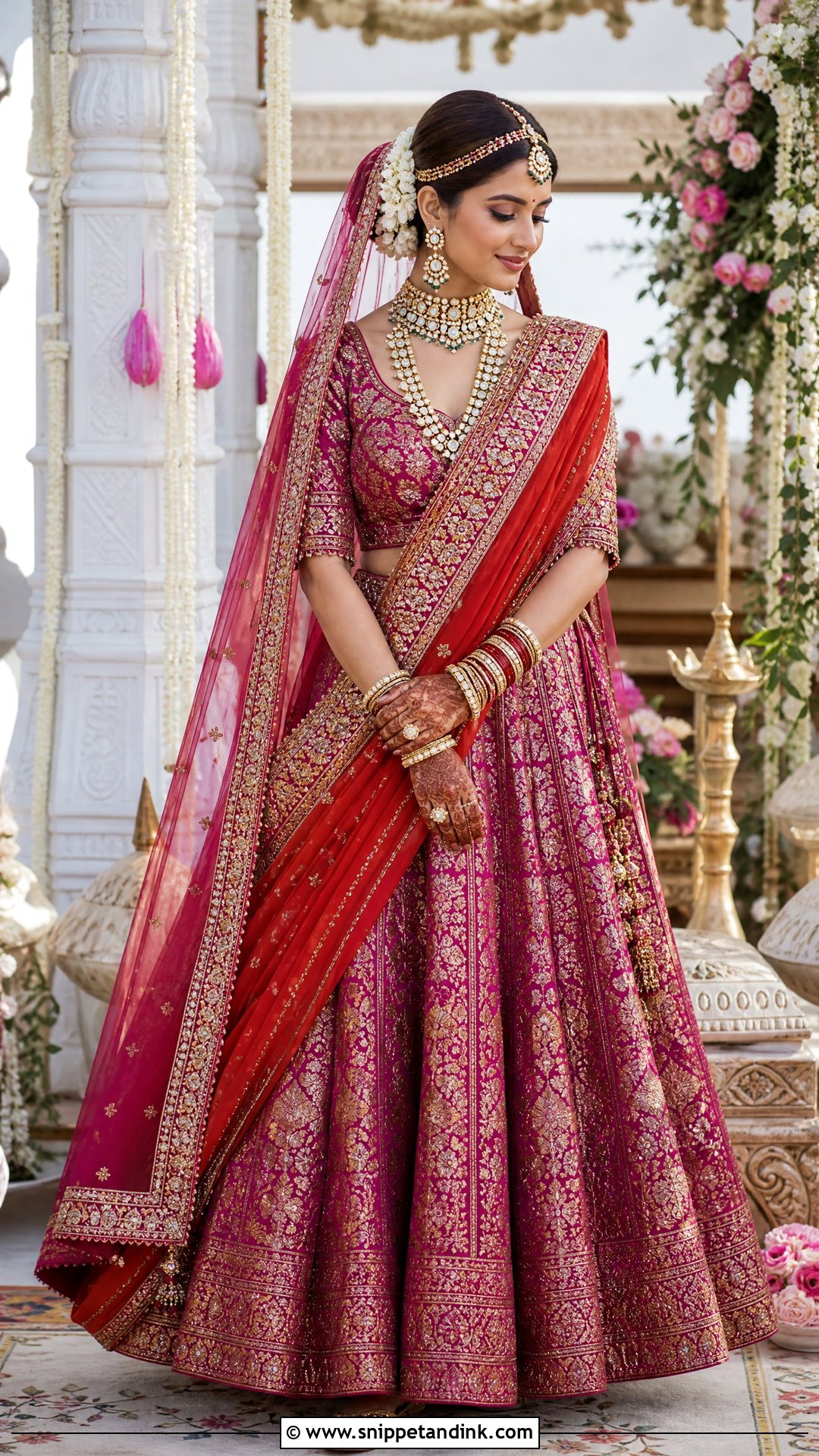
Magenta keeps the richness of red but reads a little fresher. Choose a silk brocade lehenga with woven gold designs and a moderate flare, with a matching elbow-sleeve blouse. I drape the red dupatta diagonally across the torso and pin it at the shoulder and at the hip; without that second pin it slides off the moment she sits. If the ceremony calls for longer coverage, add a second lightweight magenta or red dupatta over the head. Kundan earrings, layered necklaces, bangles, a maang tikka and gold juttis finish it. Keep the hem above the floor so nothing catches near the fire, and frame the jewelry with a smooth center-parted bun and fresh white flowers.
18. Red Nauvari Saree Vaidik Marriage Dress
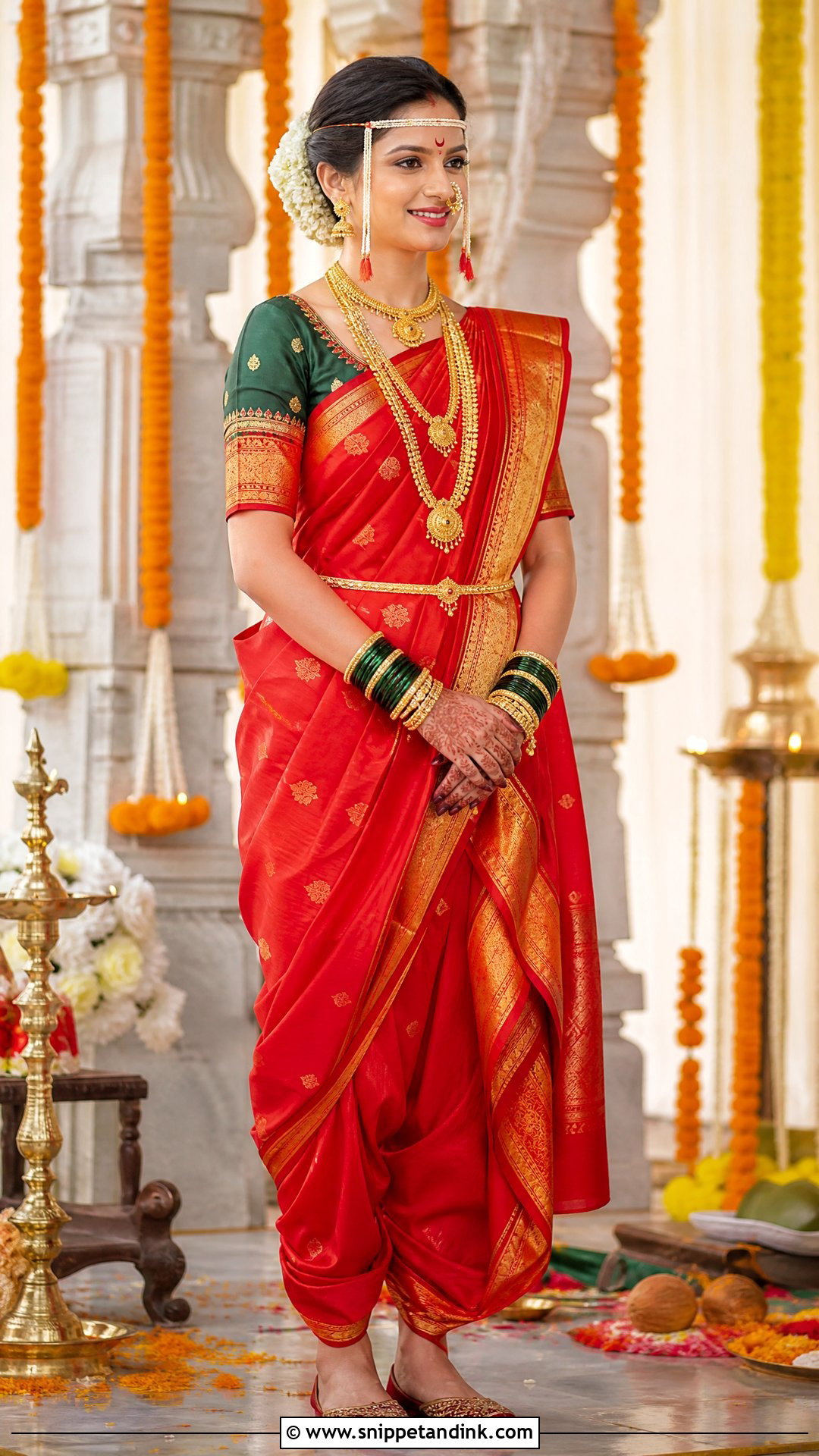
A red Nauvari saree is nine yards draped so the fabric passes between the legs, which gives a Maharashtrian bride the freedom of trousers. That same construction is why I insist on an experienced draper and a practice session. Sitting cross-legged feels different in a Nauvari, and a loose tuck at the back is hard to fix mid-ritual. Choose silk or cotton silk with a broad gold border and a green or red elbow-sleeve blouse. Add a traditional nath, layered gold necklaces, earrings, green glass bangles and a crescent bindi. A center-parted bun with jasmine and gold accessories suits it, the pallu or a shawl can cover the head as custom asks, and flat shoes with grippy soles keep her steady.
19. Off-White Handwoven Saree Vaidik Marriage Dress
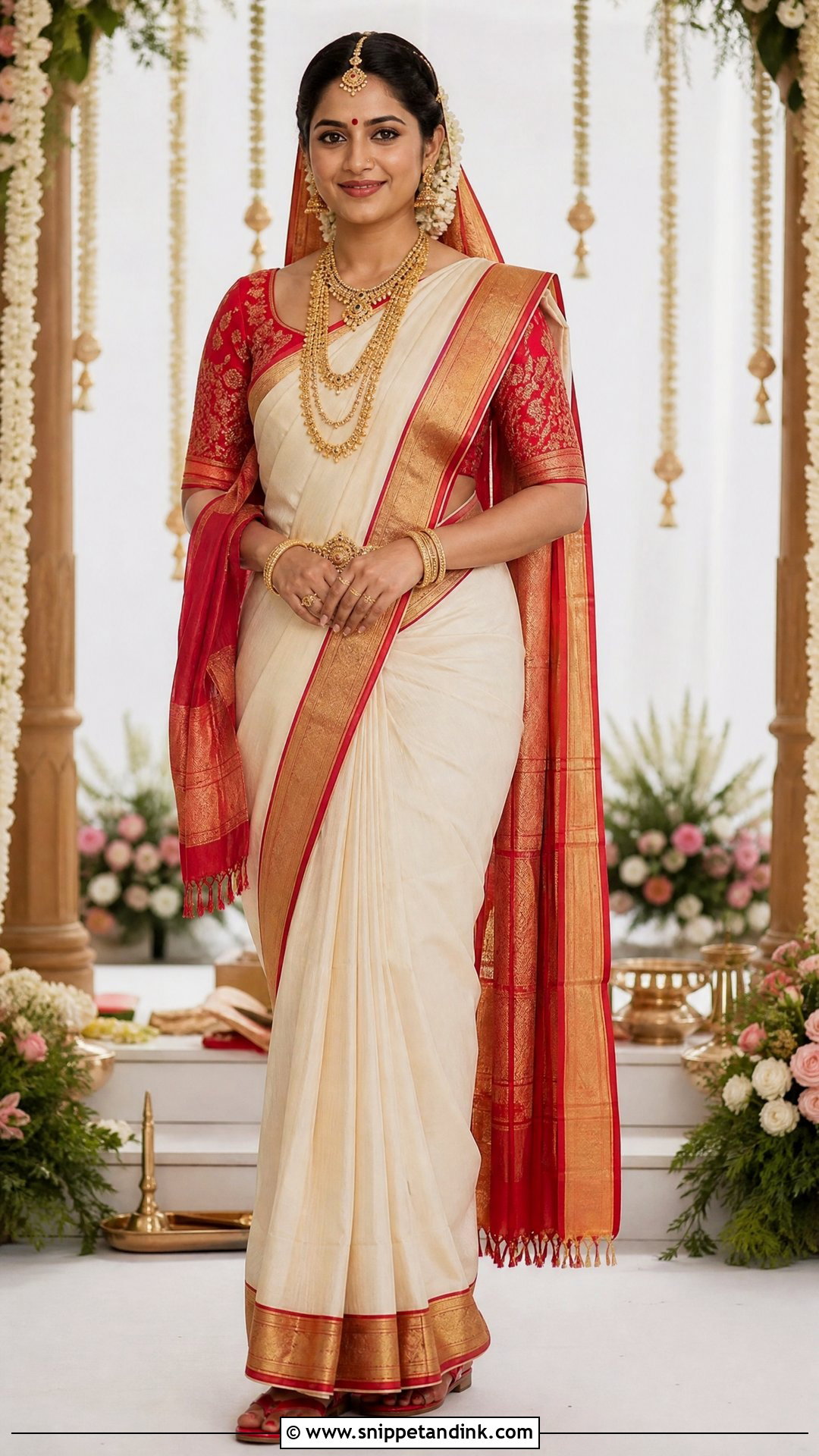
An off-white handwoven saree is a quiet base that lets the family’s colors do the talking. Look for silk or cotton-silk with red selvedges and a gold border, then add a red brocade blouse and a red shawl over the head for ceremonial definition. Traditional gold jewelry works well: jhumkas, a short necklace, a longer chain, bangles and a waist belt. A jasmine-covered low bun stays neat and fragrant, alongside a red bindi, softly defined eyes, a classic lip and flat red sandals. I’d only suggest this one to a bride who genuinely likes plainness. The impact comes from good fabric and careful draping, and a crumpled drape shows far more on off-white than on red.


20. Saffron Silk Saree Vaidik Marriage Dress
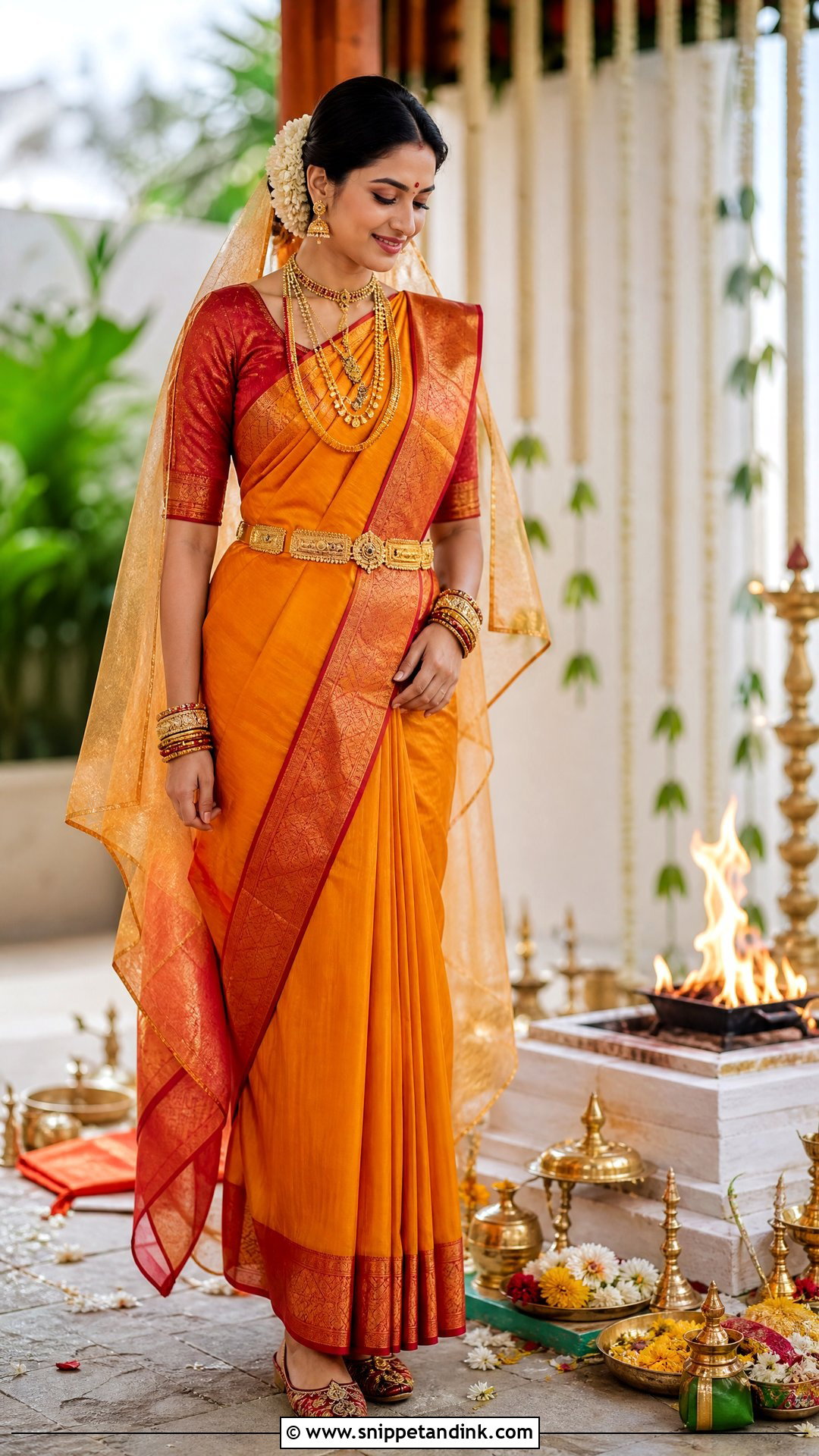
Saffron carries strong spiritual meaning in many Hindu households, so I’d confirm the family is comfortable with it as a bridal color before ordering. Aim for a shade between golden saffron and deep orange, with a red border and subtle gold motifs, and a crimson elbow-sleeve blouse that stays secure when she’s seated. A lightweight red veil handles head covering, and the ceremonial knot where needed. Gold temple earrings, layered necklaces, bangles, a waist belt and a small maang tikka complete it, along with a jasmine-wrapped low bun and red embroidered juttis for the pheras. Keep the skin natural and the eyes defined so the saree remains the brightest thing in the frame.
Silk, Synthetics and an Open Havan Flame
A havan kund is a live fire fed with wood and ghee, and sparks do jump when ghee goes in. That’s the practical reason I steer Vaidik brides toward natural fibers. Silk and cotton tend to char and smolder where a spark lands, while polyester, nylon and many net or georgette blends melt and can stick to skin. Silk is not fireproof. It simply gives someone time to brush the spark away.
Loose ends are the real risk. The pallu tip, a long net veil and a flared lehenga hem are what reach toward the flame when she leans forward to make an offering. I pin the pallu end to the back of the blouse, keep sheer veils short, and ask one person seated nearby to watch her hem during the pheras.
Smoke and ghee also mark pale silk. Ghee is an oil stain, so don’t scrub it with water on the day; blot it, leave it alone, and take the saree to a dry cleaner who knows silk and zari. For storage afterward, fold it in plain muslin and refold along different lines every few months so the zari doesn’t crack at the creases.
Settle These With the Priest and Elders Early
- How long the ceremony runs and how much of it is seated. A long havan changes which fabric and blouse cut I’d recommend.
- Whether the bride’s head must be covered, and for which rituals. That decides between a long pallu and a second dupatta.
- Which cloth is used for the ganthbandhan. Some families tie the bride’s pallu or dupatta to the groom’s scarf, while others bring a separate cloth.
- Any colors the family avoids. Black is widely avoided at Hindu weddings, and some communities hold firm views on white or saffron.
- Whether she changes outfits between rituals, so the blouse and jewelry are planned for both looks.
Get these answers before ordering, not after. A custom blouse or a handwoven Banarasi or Kanjeevaram can take weeks to source and stitch, and it’s far easier to adjust a plan than an outfit.
Color Is the Easy Part of a Vaidik Outfit
The color is the easiest decision. The harder questions are whether the bride can sit, stand, pray and walk around the fire comfortably for the full length of the ceremony, and whether the outfit respects what her family expects. Talk through color, draping, head covering and any fabric requirements with elders and the officiating priest before buying anything. Then wear the complete outfit, jewelry and footwear included, for an hour at home, spending part of it sitting on the floor. Pin every pleat, choose breathable linings and keep hems well back from the flame. If it still feels right at the end of that hour, it will carry her from the first ritual to the last blessing.
You'll Like These Ideas:





Leave a Reply